Sadly last night the Democrats won control of Senate! Wikipedia notes, “The closing argument of Warnock’s campaign focused on the $2,000 stimulus payments that he and Jon Ossoff would approve if they were to win their elections and give Democrats a majority in the Senate.[49] ”
When I was became interested in public policy, I thought Jimmy Carter was the epitome of a bad President. But as I began to learn economics, I realized that Richard Nixon and Lyndon Johnson also were terrible and belong in the Hall of Fame of bad Presidents.
Or I guess we should call it a Hall of Shame (you can click on the image to see my selections).
Whatever we call it, I’m now at the point where I realize that Woodrow Wilson and Teddy Roosevelt are the charter members. Why? Well, because they were the first Presidents to reflect the progressive ideology.
More specifically, they shared the ideology of the progressive movement, which saw a powerful and activist central government as a force for good – a radical departure from the views of America’s Founding Fathers, who hoped that the Constitution would protect people by keeping government very small.
Not surprisingly, Barack Obama is in that “progressive” tradition, even to the point of attacking the views of the Founding Fathers in a recent speech at Ohio State University.
I commented on this issue in this Fox News segment.
Dan Mitchell Commenting on Why Citizens Should Distrust Washington
That short clip only scratches the surface.
For more detail, here are some excerpts from a column by Andrew Napolitano. Like me, he isn’t impressed by the President’s statolatry.
It should come as no surprise that President Obama told Ohio State students at graduation ceremonies last week that they should not question authority… And he blasted those who incessantly warn of government tyranny. Yet, mistrust of government is as old as America itself. America was born out of mistrust of government. …Thomas Jefferson…warned that it is the nature of government over time to increase and of liberty to decrease. And that’s why we should not trust government. In the same era, James Madison himself agreed when he wrote, “All men having power should be distrusted to a certain degree.” …The reason Obama likes government and the reason it is “a dangerous fire,” as George Washington warned, and the reason I have been warning against government tyranny in my public work is all the same: The government rejects the natural law because it is an obstacle to its control over us. …Because the tyranny of the majority can be as dangerous to freedom as the tyranny of a madman, all use of governmental power should be challenged and questioned. Government is essentially the negation of liberty.
Napolitano also warns against majoritarianism in his column, which is music to my ears.
Though I’m not sure our battle today is with majoritarianism or the progressive ideology.
Our real challenge is redistributionism. Far too many people think it is okay to use the coercive power of government to obtain unearned benefits. And that’s true whether the benefits are food stamps or bailouts.
Uploaded by HeritageFoundation on Dec 16, 2010http://blog.heritage.org/2010/12/16/new-video-pork-filled-spending-bill-just-… Despite promises from President Obama last year and again last month that he opposed reckless omnibus spending bills and earmarks, the White House and members of Congress are now supporting a reckless $1.1 trillion spending bill reportedly stuffed with roughly 6,500 earmarks. ________________________ Below you see an […]
Uploaded by HeritageFoundation on Dec 16, 2010http://blog.heritage.org/2010/12/16/new-video-pork-filled-spending-bill-just-… Despite promises from President Obama last year and again last month that he opposed reckless omnibus spending bills and earmarks, the White House and members of Congress are now supporting a reckless $1.1 trillion spending bill reportedly stuffed with roughly 6,500 earmarks. ________________________ Below you see an […]
President Reagan, Nancy Reagan, Bill Clinton and Hillary Clinton attending the Dinner Honoring the Nation’s Governors. 2/22/87. ronald reagan debates walter mondale in 1984 Presidential race second clip Lee Edwards of the Heritage Foundation wrote an excellent article on Ronald Reagan and the events that transpired during the Reagan administration, and I wanted to share it […]
YOUNG FRANKENSTEIN trailer Uploaded on Dec 27, 2007 The Orpheum Film Series will present a special laughs-and-scares double-feature for Halloween, featuring both James Whale’s original 1931 “FRANKENSTEIN” and Mel Brooks’ 1974 send-up, “YOUNG FRANKENSTEIN”. The fun starts at 7pm on Halloween night, October 31! ________________________________ Authentic Frontier Gibberish young frankenstein – deleted scene 4 – […]
Barack Obama would lose badly to Ronald Reagan!!! The Spirit of Reagan Is Still With Us: The Gipper Crushes Obama in Hypothetical Matchup April 13, 2013 by Dan Mitchell Barack Obama has stated that he wants to be like Reagan, at least in the sense of wanting to be a transformational figure. But almost certainly he has […]
Dr. Milton Friedman appears at a Washington news conference in the Mayflower Hotel in Washington in connection with the American Conservative Political Action Conference, Feb. 14, 1976. (AP Photo/Peter Bregg)
Joe Biden came out of his hibernation basement and launched a blistering attack on a public figure.
Guess who! Donald Trump? No. Mike Pence? Try again. Mitch McConnell? Not even close. Any other Republican politician? No way. A Democratic office holder, maybe one who is not progressive enough to suit his new-found sharp leftism? Nope.
You had better be sitting down for this one, or you’re going to keel right over. None other than Milton Friedman is Joe Biden’s target.
Here is what the possible next president of these United States has snarked: “When did Milton Friedman die and become king?” Nor was this a one-off; instead, doubling down, Biden promised that under his administration should he be elected: “Milton Friedman isn’t running the show anymore …”
Say what?
Milton Friedman never “ran the show” nor “became king” of the economy.
Lord knows he valiantly tried to promote economic freedom, and did indeed to some degree change public policy, both by his own eloquence, his logic, his scholarly demeanor, the vast amount of empirical evidence he offered, and, also, indirectly, via his many, many students.
America would be a much different place if Milton Friedman was ever in charge.
If Milton Friedman were in charge, the U.S. would never have entered into flawed international trade agreements. Instead, our country would have made a unilateral declaration of free trade with every other jurisdiction on the planet.
That is, U.S. policy would be, with respect to all other nations, essentially: “If you are stupid or malevolent enough to impose tariffs, quantity restrictions on our exports or any other constraints on full free trade, that is your business; good luck to you. But we will not shoot yet another hole in the row boat that supports the world economy. There will be no taxes on imports to the U.S. despite your foolish protectionism.”
If Milton Friedman were in charge, the IRS would be disbanded, and replaced with a 10 percent flat tax on all incomes. The very limited U.S. government would have to live within those financial bounds, since deficits would be a thing of the past, and a 3 percent monetary increase rule would be imposed upon the Fed. His goal was no more inflation, quantitative easing, etc. No more topsy-turvy ups and downs.
If Milton Friedman were in charge, health care would truly operate in a free market system. Doctors would no longer be licensed. Instead, they would be certified by a competitive industry in charge of evaluating their skills and abilities. Think certified public accountant as the model. This in one fell swoop would have eliminated the supposed felt need for socialized medicine, for it was Friedman’s analysis that the present system limits the supply of physicians, catapulting their salaries into the stratosphere.
With more modest competitive compensation for them, medical services would be far cheaper. No one calls for car socialism, clothing socialism, not even Bernie. These are relatively competitive industries with low costs. So would this apply to health care, if Friedman had “run things.”
If Milton Friedman were in charge, there would be no subsidies for higher education. True, in his book, “Capitalism and Freedom” this author once supported that precise policy. He did so on the ground that universities offered positive spillover or neighborhood effects, which benefited the entire society, but could not charge for them. But later in an act of great courage Friedman changed his mind on this matter; he saw that colleges morphed into breeding grounds for far-left ideological fixations.
Milton Friedman was a staunch opponent of the minimum wage law, reasoning that it hurt those at the bottom of the economic pyramid the most: the young, the poor, the unskilled, and in particular members of the Black community. Yet, instead of this malevolent legislation being repealed, it is now being raised, enhanced and strengthened.
Here are some other “failures” of Friedman. Government budgets have gone up, not down both in absolute terms and as a proportion of the GDP. Similarly, the total number of pages in the U.S. Code of Federal Regulations have blown up, not receded. Government spending on health care has risen, not fallen. Apart from monetarism, one of the most heart-felt passions of his was education. Yet, charter schools comprise less than 5 percent of total enrollment, and even fewer are enrolled in voucher plans. So much for Milton Friedman running things.
There is no doubt that this one-man band for capitalism made enormous contributions in the direction of freeing up the economy. Thanks in great part to his good works, airline deregulation has occurred and we no long have a military draft. It is only a slight exaggeration to say that the Fed is a totally owned subsidiary of Milton Friedman’s. Due to his sterling efforts, tariffs and the minimum wage are lower than they otherwise would have been, and rent controls are less onerous and oppressive. Quite an accomplishment for any one person. But to say that he is “running the show” or being a “king” is a wild-eyed overestimate of his achievements.
Milton Friedman is hated with a purple passion in part because he once had the audacity to address the Chilean dictator, Augusto Pinochet. The University of Chicago professor’s message: If you want to end poverty and attain prosperity, here is what you should do: lower taxes, respect private property rights and the rule of law, free the economy of regulations. Oh, the horror.
But this long-time economist gave the same advice to scores of other countries, including China. Not a peep of criticism was ever made of his visits to these other nations by our friends on the left, although they then seethed with anger at the substance of his advice, and as this latest episode attests, still do.
I do not agree with every stance taken by this splendid scholar. To wit, he and I part company with his support for anti-trust law, school vouchers, the Fed, his critique of anarchism, of the gold standard; but these are relatively minor points.
We would all be far better off in a free market economy of the sort favored by Milton Friedman than anything else likely to occur. If Biden had even a modicum of good sense, he would embrace these policies, not sneeringly reject them out of hand.
Walter E. Block is the Harold E. Wirth Eminent Scholar Endowed Chair and Professor of Economics at Loyola University New Orleans. He is a libertarian and a member of the Austrian School of Economics.
—-
March 7, 2021
President Biden c/o The White House 1600 Pennsylvania Avenue NW Washington, DC 20500
I have written about 66 heroes of mine in the House of Representatives that voted “no” on the Obama/Biden debt ceiling increase request in 2011. I believe we must have representatives that will vote to restore our freedom and that means voting to cut spending and lower taxes like the Patriots of long ago wanted. Today the Tea Party represented my views the most closely. Lord knows I have written a lot about that in the past. . I have praised over and over and over the 66 House Republicans that voted no on that before. If they did not raise the debt ceiling then we would have a balanced budget instantly. I agree that the Tea Party has made a difference and I have personally posted 49 posts on my blog on different Tea Party heroes of mine.
THIS BRINGS ME TO ONE OF MY BIGGEST ECONOMIC HEROES AND IT IS THE LATE MILTON FRIEDMAN. Friedman had such revolutionary policies such as eliminating welfare and instituting the negative income tax and putting in school vouchers.
The problem in Washington is not lack of revenue but our lack of spending restraint. This video below makes that point.
Though there are currently more students participating in scholarship tax credit (STC) programs than voucher programs nationwide (about151,000 to 104,000), the former have not received nearly as much attention as the latter. That has begun to change in recent years as growth in the number of STC programs has outpaced growth in voucher programs.
Over the past week, I have enjoyed engaging in a spirited debate over STC programs with Professor Kevin Welner of the University of Colorado at Boulder. The debate was sparked by Valerie Strauss’blog postat the Washington Post, which contained several significant errors that I addressedhere. Welner thenrespondedat Strauss’ blog and we continued to sparhereandhere. It is my sincere hope that readers who have followed the debate have found it illuminating.
Though I suspect that Welner might not share my aspiration for universal educational choice, we have a least found common ground in the belief that, given limited resources, such programs should first aid those most in need. I also agree that our three primary areas of contention are: 1) the differences between STC programs and vouchers and their significance; 2) the fiscal impact of STC programs; and 3) who receives tax-credit scholarships. I will address Welner’s latest arguments on these matters below.
First, however, I must make two important corrections to Welner’s last post. In explaining why he did not provide context for some of his remarks, Welner wrote: “Much of this change happened in the aftermath of the 2010 midterm elections, when Republicans swept into state offices in very large numbers.” Actually,only five out of the fourteen STC programs(in Louisiana, New Hampshire, Oklahoma, Virginia and one of the two in Pennsylvania) were adopted in the wake of the 2010 midterm elections. Moreover, there was strong support among Democrats in two of those states. Pennsylvania’s 2012 STC legislation passed with thesupportof 15 of 20 Democrats in the Senate andunanimous supportin the House. In Louisiana, thelegislation passedwith the support of 11 of 15 Senate Democrats (32-7 total) and 32 of 45 House Democrats (66-37 total).
Scholarship Tax Credits vs. Vouchers
Welner wonders why I did not use the term he invented to describe scholarship tax credit programs. “Neovouchers” is a confusing term that appears nowhere in any of the fourteen STC laws. It also blurs the distinctions between STCs and vouchers, which I have described previously. I have likewise avoided the term “opportunity scholarships” because it is essentially meaningless as well. The terms “scholarship tax credits” or “education tax credits” accurately describe a program in which individuals or corporations receive tax credits for donating to scholarship organizations that fund low- and middle-income students attending nonpublic schools. I don’t begrudge Welner for using the term that shares a name with his book, but I also don’t see why he should expect that others should adopt.
In my previous posts, I argued that these two policies have similar ends but very different means and therefore should be called by different names. I then explained how the means are different, particularly their funding (public vs. private money) and administration (government-run/centralized/uniform vs. privately-run/decentralized/diverse). Welner then responds, essentially, “Yes, but their ends are nearly identical!” I would suggest that he misses the point.
Welner also takes issue with the examples I gave of courts that decided the question of whether tax credits constitute public or private money. Welner noted correctly that some of those cases did not pertain directly to scholarship tax credit programs. What he misses is that this fact strengthens my point. State courts have ruled that tax credits do not constitute “public funds” both with regard to STC programs and other forms of tax credits. This consistency shows that STC programs are not merely a legal loophole or “money laundering”, as Welner called it. The freedom of citizens to direct their own money makes such tax credit programs qualitatively different in policy terms and this difference is reflected in the law, not arbitrarily invented by it.
Credible Evidence of Savings
Welner points out that I overinterpreted his statement that he would not be surprised if Florida’s STC program generates savings. Instead, he holds that the available evidence does not support that conclusion. He argues that we do not have all the data necessary for a conclusive determination so he throws up his hands. In fact, there is credible evidence of savings.
The best available estimate of any STC program’s fiscal impact is from Florida’s Office of Program Policy Analysis and Government Accountability (OPPAGA). This is important since Florida’s STC program is the least likely candidate for realizing savings (with the possible exception of Georgia’s). Florida offers the maximum possible tax credit (100%) whereas programs inseven of the other ten statesoffer only partial credits, as low as 50% in Indiana and Oklahoma. Florida has the largest average scholarship size and the highest ratio of scholarship size to average public school operating per pupil expenditures, as shown in the table below. (Note that the National Center for Education Statistics’ calculation of total per pupil expenditures excludes unfunded pension liabilities. Moreover, low-income students generally cost the state more money than average to educate.)
[This chart excludes Arizona’s STC program for special needs students and the STC programs in Louisiana, New Hampshire, Oklahoma, Virginia and Pennsylvania’s corporate program, which were only recently launched or have yet to launch. Table includes the most recent data available in each category.]
Now Welner is certainly correct that savings depend on the ratio of switchers to stayers, but the data I’ve provided thus far indicates that the percentage of switchers does not have to be very high to realize savings in most states. Welner was rightly skeptical of OPPAGA’s2008 report, which made an educated guess that 90% of scholarship recipients were switchers. However, OPPAGA’s2010 reportand2012 revenue estimating conferencerelied on U.S. Census data and found that their previous estimate of switchers had beentoo low, since 94.6% of scholarship-eligible low-income students were attending public schools in the year before the STC program took effect. As Jon East explained inRedefinED, “The estimating conference went even further, combining American Community Survey data from 2005-09 with private school enrollment data to make projections about the actual number of low-income students enrolled in each grade level in private schools in 2012.” The more recent report projected savings of $57.9 million for Florida in 2012-13.
Welner is also correct that the analysis of the total fiscal impact of STC programs should not stop there. States that offer less than Florida’s 100% tax credit should also account for the impact of the deduction of non-credit eligible portion of the donation, as well as the caps on deductions. A complete fiscal analysis would also have to include other government programs or tax credits that are available in a given state. I agree with Welner that in most states, we need more data. However, the evidence of savings in Florida is strong, even accounting for Welner’s caveats. And if there are savings in the least likeliest of states, then there are likely savings elsewhere.
Clear Benefit to Low-Income Families
In my previous posts, I criticized Strauss for claiming that low-income families do not benefit from tax-credit scholarships. Welner admits that STC programs “provide financial assistance to many lower-income families” but says that he “didn’t read [Strauss’] statement to be saying that zero low-income families receive neovouchers. ” Once again, Strauss correctly noted that tax-credit scholarships do not cover the full cost of tuition, then incorrectly concluded: “Poor families can’t make up the difference. Guess who can.” That’s a fairly unambiguous statement. Strauss didn’t even qualify her claim by referring to “most” or “some” low-income families, let alone provide any evidence to support her claim. If she wants to be taken seriously as a responsible commentator, she should correct the record.
Likewise, Strauss has not yet rescinded her fallacious charge that STC programs are “welfare for the rich” because the donors somehow benefit from the tax credits. As I have demonstrated, the donors break even at most. Even Welner abandoned that line of argument in his latest post. Again, Strauss has a duty to correct the record.
In his latest post, Welner conceded that all of the STC programs are means-tested but for Georgia’s and one of Arizona’s two programs. However, Welner expressed skepticism about the organization that issued thestudyshowing that two-thirds of scholarship recipients in Arizona fall under 185% of the federal poverty line. He also noted correctly that the income thresholds in some states allow some middle-income families to qualify as well. That said, it is unclear why he ignored the evidence I provided from state governments showing that the average income of scholarship recipients is far below the means-testing thresholds. For example, the average income of recipient families inPennsylvaniawas only $29,000, just under half of the state’s income threshold at the time. Welner has not explained why we should assume that recipients in other states look significantly different, especially when there is evidence of similar patterns.
Welner calls for more a more comprehensive state-level reporting system. I am sympathetic to this suggestion, though I believe that states should proceed with caution. Scholarship organizations are already more regulated than ordinary nonprofits, like the Salvation Army or Red Cross. While regulations vary by state, STC programs generally have more stringent accounting standards, reporting requirements, and some states even require background checks for employees. Every STC program requires that scholarship organizations spend no more than 10% on administrative costs, the exceptions being Florida’s 3% maximum and Pennsylvania’s unnecessarily high 20% maximum. (It’s important to note that agovernment studyfound that 62% of Pennsylvania scholarship organizations disbursed 100% of their collected funds while only 5% used the maximum administrative expenses.)
Our education system should empower families to choose the education that best meets their kids’ individual needs. Scholarship tax credit programs move our education system toward that goal. As with all government programs, we should constantly reassess whether STC programs are achieving their desired ends and make any necessary changes. I would like to thank Professor Welner for taking the time to discuss this important matter.
[Update: An earlier version of this post incorrectly labeled total per pupil expenditures as operating per pupil expenditures.]
Thank you so much for your time. I know how valuable it is. I also appreciate the fine family that you have and your commitment as a father and a husband.
Sincerely,
Everette Hatcher III, 13900 Cottontail Lane, Alexander, AR 72002, ph 501-920-5733,
Sixty Six who resisted “Sugar-coated Satan Sandwich” Debt Deal (Part 49) This post today is a part of a series I am doing on the 66 Republican Tea Party favorites that resisted eating the “Sugar-coated Satan Sandwich” Debt Deal. Actually that name did not originate from a representative who agrees with the Tea Party, but […]
Sixty Six who resisted “Sugar-coated Satan Sandwich” Debt Deal (Part 48) This post today is a part of a series I am doing on the 66 Republican Tea Party favorites that resisted eating the “Sugar-coated Satan Sandwich” Debt Deal. Actually that name did not originate from a representative who agrees with the Tea Party, but […]
Sixty Six who resisted “Sugar-coated Satan Sandwich” Debt Deal (Part 47) This post today is a part of a series I am doing on the 66 Republican Tea Party favorites that resisted eating the “Sugar-coated Satan Sandwich” Debt Deal. Actually that name did not originate from a representative who agrees with the Tea Party, but […]
Sixty Six who resisted “Sugar-coated Satan Sandwich” Debt Deal (Part 46) This post today is a part of a series I am doing on the 66 Republican Tea Party favorites that resisted eating the “Sugar-coated Satan Sandwich” Debt Deal. Actually that name did not originate from a representative who agrees with the Tea Party, […]
Sixty Six who resisted “Sugar-coated Satan Sandwich” Debt Deal (Part 45) This post today is a part of a series I am doing on the 66 Republican Tea Party favorites that resisted eating the “Sugar-coated Satan Sandwich” Debt Deal. Actually that name did not originate from a representative who agrees with the Tea Party, but […]
Sixty Six who resisted “Sugar-coated Satan Sandwich” Debt Deal (Part 44) This post today is a part of a series I am doing on the 66 Republican Tea Party favorites that resisted eating the “Sugar-coated Satan Sandwich” Debt Deal. Actually that name did not originate from a representative who agrees with the Tea Party, but […]
Sixty Six who resisted “Sugar-coated Satan Sandwich” Debt Deal (Part 43) This post today is a part of a series I am doing on the 66 Republican Tea Party favorites that resisted eating the “Sugar-coated Satan Sandwich” Debt Deal. Actually that name did not originate from a representative who agrees with the Tea Party, but […]
Sixty Six who resisted “Sugar-coated Satan Sandwich” Debt Deal (Part 42) This post today is a part of a series I am doing on the 66 Republican Tea Party favorites that resisted eating the “Sugar-coated Satan Sandwich” Debt Deal. Actually that name did not originate from a representative who agrees with the Tea Party, but […]
Sixty Six who resisted “Sugar-coated Satan Sandwich” Debt Deal (Part 41) This post today is a part of a series I am doing on the 66 Republican Tea Party favorites that resisted eating the “Sugar-coated Satan Sandwich” Debt Deal. Actually that name did not originate from a representative who agrees with the Tea Party, but […]
Sixty Six who resisted “Sugar-coated Satan Sandwich” Debt Deal (Part 40) This post today is a part of a series I am doing on the 66 Republican Tea Party favorites that resisted eating the “Sugar-coated Satan Sandwich” Debt Deal. Actually that name did not originate from a representative who agrees with the Tea Party, but […]
Sixty Six who resisted “Sugar-coated Satan Sandwich” Debt Deal (Part 39) This post today is a part of a series I am doing on the 66 Republican Tea Party favorites that resisted eating the “Sugar-coated Satan Sandwich” Debt Deal. Actually that name did not originate from a representative who agrees with the Tea Party, but […]
Sixty Six who resisted “Sugar-coated Satan Sandwich” Debt Deal (Part 38) This post today is a part of a series I am doing on the 66 Republican Tea Party favorites that resisted eating the “Sugar-coated Satan Sandwich” Debt Deal. Actually that name did not originate from a representative who agrees with the Tea Party, but […]
Sixty Six who resisted “Sugar-coated Satan Sandwich” Debt Deal (Part 37) This post today is a part of a series I am doing on the 66 Republican Tea Party favorites that resisted eating the “Sugar-coated Satan Sandwich” Debt Deal. Actually that name did not originate from a representative who agrees with the Tea Party, but […]
Sixty Six who resisted “Sugar-coated Satan Sandwich” Debt Deal (Part 36) This post today is a part of a series I am doing on the 66 Republican Tea Party favorites that resisted eating the “Sugar-coated Satan Sandwich” Debt Deal. Actually that name did not originate from a representative who agrees with the Tea Party, but […]
Sixty Six who resisted “Sugar-coated Satan Sandwich” Debt Deal (Part 35) This post today is a part of a series I am doing on the 66 Republican Tea Party favorites that resisted eating the “Sugar-coated Satan Sandwich” Debt Deal. Actually that name did not originate from a representative who agrees with the Tea Party, but […]
Sixty Six who resisted “Sugar-coated Satan Sandwich” Debt Deal (Part 34) This post today is a part of a series I am doing on the 66 Republican Tea Party favorites that resisted eating the “Sugar-coated Satan Sandwich” Debt Deal. Actually that name did not originate from a representative who agrees with the Tea Party, but […]
Sixty Six who resisted “Sugar-coated Satan Sandwich” Debt Deal (Part 33) This post today is a part of a series I am doing on the 66 Republican Tea Party favorites that resisted eating the “Sugar-coated Satan Sandwich” Debt Deal. Actually that name did not originate from a representative who agrees with the Tea Party, but […]
Sixty Six who resisted “Sugar-coated Satan Sandwich” Debt Deal (Part 32) This post today is a part of a series I am doing on the 66 Republican Tea Party favorites that resisted eating the “Sugar-coated Satan Sandwich” Debt Deal. Actually that name did not originate from a representative who agrees with the Tea Party, but […]
Congressmen Tim Huelskamp on the debt ceiling Sixty Six who resisted “Sugar-coated Satan Sandwich” Debt Deal (Part 31) This post today is a part of a series I am doing on the 66 Republican Tea Party favorites that resisted eating the “Sugar-coated Satan Sandwich” Debt Deal. Actually that name did not originate from a representative […]
Sixty Six who resisted “Sugar-coated Satan Sandwich” Debt Deal (Part 30) This post today is a part of a series I am doing on the 66 Republican Tea Party favorites that resisted eating the “Sugar-coated Satan Sandwich” Debt Deal. Actually that name did not originate from a representative who agrees with the Tea Party, but […]
Sixty Six who resisted “Sugar-coated Satan Sandwich” Debt Deal (Part 29) This post today is a part of a series I am doing on the 66 Republican Tea Party favorites that resisted eating the “Sugar-coated Satan Sandwich” Debt Deal. Actually that name did not originate from a representative who agrees with the Tea Party, but […]
The Sixty Six who resisted “Sugar-coated Satan Sandwich” Debt Deal (Part 28) This post today is a part of a series I am doing on the 66 Republican Tea Party favorites that resisted eating the “Sugar-coated Satan Sandwich” Debt Deal. Actually that name did not originate from a representative who agrees with the Tea Party, […]
The Sixty Six who resisted “Sugar-coated Satan Sandwich” Debt Deal (Part 27) This post today is a part of a series I am doing on the 66 Republican Tea Party favorites that resisted eating the “Sugar-coated Satan Sandwich” Debt Deal. Actually that name did not originate from a representative who agrees with the Tea Party, […]
The Sixty Six who resisted “Sugar-coated Satan Sandwich” Debt Deal (Part 26) This post today is a part of a series I am doing on the 66 Republican Tea Party favorites that resisted eating the “Sugar-coated Satan Sandwich” Debt Deal. Actually that name did not originate from a representative who agrees with the Tea Party, […]
Uploaded by RepJoeWalsh on Jun 14, 2011 Our country’s debt continues to grow — it’s eating away at the American Dream. We need to make real cuts now. We need Cut, Cap, and Balance. The Sixty Six who resisted “Sugar-coated Satan Sandwich” Debt Deal (Part 25) This post today is a part of a series […]
The Sixty Six who resisted “Sugar-coated Satan Sandwich” Debt Deal (Part 24) This post today is a part of a series I am doing on the 66 Republican Tea Party favorites that resisted eating the “Sugar-coated Satan Sandwich” Debt Deal. Actually that name did not originate from a representative who agrees with the Tea Party, […]
The Sixty Six who resisted “Sugar-coated Satan Sandwich” Debt Deal (Part 23) This post today is a part of a series I am doing on the 66 Republican Tea Party favorites that resisted eating the “Sugar-coated Satan Sandwich” Debt Deal. Actually that name did not originate from a representative who agrees with the Tea Party, […]
The Sixty Six who resisted “Sugar-coated Satan Sandwich” Debt Deal (Part 22) This post today is a part of a series I am doing on the 66 Republican Tea Party favorites that resisted eating the “Sugar-coated Satan Sandwich” Debt Deal. Actually that name did not originate from a representative who agrees with the Tea Party, […]
The Sixty Six who resisted “Sugar-coated Satan Sandwich” Debt Deal (Part 21) This post today is a part of a series I am doing on the 66 Republican Tea Party favorites that resisted eating the “Sugar-coated Satan Sandwich” Debt Deal. Actually that name did not originate from a representative who agrees with the Tea Party, […]
The Sixty Six who resisted “Sugar-coated Satan Sandwich” Debt Deal (Part 20) This post today is a part of a series I am doing on the 66 Republican Tea Party favorites that resisted eating the “Sugar-coated Satan Sandwich” Debt Deal. Actually that name did not originate from a representative who agrees with the Tea Party, […]
The Sixty Six who resisted “Sugar-coated Satan Sandwich” Debt Deal (Part 19) This post today is a part of a series I am doing on the 66 Republican Tea Party favorites that resisted eating the “Sugar-coated Satan Sandwich” Debt Deal. Actually that name did not originate from a representative who agrees with the Tea Party, […]
The Sixty Six who resisted “Sugar-coated Satan Sandwich” Debt Deal (Part 18) This post today is a part of a series I am doing on the 66 Republican Tea Party favorites that resisted eating the “Sugar-coated Satan Sandwich” Debt Deal. Actually that name did not originate from a representative who agrees with the Tea Party, […]
The Sixty Six who resisted “Sugar-coated Satan Sandwich” Debt Deal (Part 17) This post today is a part of a series I am doing on the 66 Republican Tea Party favorites that resisted eating the “Sugar-coated Satan Sandwich” Debt Deal. Actually that name did not originate from a representative who agrees with the Tea Party, […]
The Sixty Six who resisted “Sugar-coated Satan Sandwich” Debt Deal (Part 16) This post today is a part of a series I am doing on the 66 Republican Tea Party favorites that resisted eating the “Sugar-coated Satan Sandwich” Debt Deal. Actually that name did not originate from a representative who agrees with the Tea Party, […]
Sen Obama in 2006 Against Raising Debt Ceiling The Sixty Six who resisted “Sugar-coated Satan Sandwich” Debt Deal (Part 15) This post today is a part of a series I am doing on the 66 Republican Tea Party favorites that resisted eating the “Sugar-coated Satan Sandwich” Debt Deal. Actually that name did not originate from […]
President Biden c/o The White House
1600 Pennsylvania Avenue NW
Washington, DC 20500
Dear Mr. President,
Is our country learning from history? California keeps raising their taxes on the wealthy and people keep moving from California to Texas. What does our federal government do? They also have been raising taxes on the wealthy lately. Take a look at this excellent video below and then read a great article by Dan Mitchell of the Cato Institute on what is happening in California right now.
Will Higher Tax Rates Balance the Budget?
Published on Apr 11, 2012
As the U.S. debt and deficit grows, some politicians and economist have called for higher tax rates in order to balance the budget. The question becomes: when the government raises taxes, does it actually collect a larger portion of the US economy?
Professor Antony Davies examines 50 years of economic data and finds that regardless of tax rates, the percentage of GDP that the government collects has remained relatively constant. In other words, no matter how high government sets tax rates, the government gets about the same portion. According to Davies, if we’re concerned about balancing the budget, we should worry less about raising tax revenue and more about growing the economy. The recipe for growth? Lower tax rates and a simplified tax code.
Like most people, I’m a sucker for a heartwarming story around the holidays.
Sometimes, you get that nice feeling when good things happen to good people, like you find at the end of a classic movie like “It’s a Wonderful Life.”
But since I’m a bit of a curmudgeon, I also feel all warm and fuzzy when bad things happen to bad people.
That’s why I always smile when I read stories about taxpayers moving across borders, thus preventing greedy tax-hiking politicians from collecting more revenue.
I smile because I envision the moment when some budget geek tells these sleazy politicians that projected revenues aren’t materializing and they don’t have more money to spend.
So I wish I could be a fly on the wall when this moment of truth happens to California politicians. They convinced voters in the state to enact Prop 30, a huge tax increase targeting those evil, awful, bad rich people.
Governor Brown and his fellow kleptocrats in Sacramento doubtlessly are salivating at the thought of more money to waste.
But notwithstanding a satirical suggestion from Walter Williams, there aren’t guard towers and barbed-wire fences surrounding the state. Productive people can leave, and that’s happening every day. And they take their taxable income with them.
Usually in ways that don’t attract attention. But sometimes a bunch of them leave at the same times, and that is newsworthy. Here’s an example of that happening, as reported by the San Francisco Chronicle.
Chevron Corp. will move up to 800 jobs – about a quarter of its current headquarters staff – from the Bay Area to Houston over the next two years but will remain based in San Ramon, the oil company told employees Thursday. …The company already employs far more people in Houston – about 9,000 full-time employees and contractors – than it does in San Ramon.
We don’t know a lot of details, but these were positions at the company’s headquarters and they were “technical positions dealing with information and advanced energy technologies…tied to Chevron’s worldwide oil exploration and production business.”
Let’s assume these highly skilled employees earn an average of $250,000. I imagine that’s a low-ball estimate, but this is just for purposes of a thought experiment. Now multiply that average salary by 800 workers and you get $200 million of income.
And every penny of that $200 million no longer will be subject to tax by the kleptocrats in the state’s capital.
What’s happening in a big way with Chevron is happening in small ways every single day with investors, entrepreneurs, small business owners, and other “rich’ people.
That’s good for the people escaping. And it also will warm my heart when California’s despicable politicians discover next year that there’s an “unexpected” revenue shortfall.
Thank you so much for your time. I know how valuable it is. I also appreciate the fine family that you have and your commitment as a father and a husband.
Sincerely,
Everette Hatcher III, 13900 Cottontail Lane, Alexander, AR 72002, ph 501-920-5733
(Emailed to White House on 12-21-12.) President Obama c/o The White House 1600 Pennsylvania Avenue NW Washington, DC 20500 Dear Mr. President, I know that you receive 20,000 letters a day and that you actually read 10 of them every day. I really do respect you for trying to get a pulse on […]
(Emailed to White House on 12-21-12.) President Obama c/o The White House 1600 Pennsylvania Avenue NW Washington, DC 20500 Dear Mr. President, I know that you receive 20,000 letters a day and that you actually read 10 of them every day. I really do respect you for trying to get a pulse on what is […]
(Emailed to White House on 12-21-12) President Obama c/o The White House 1600 Pennsylvania Avenue NW Washington, DC 20500 Dear Mr. President, I know that you receive 20,000 letters a day and that you actually read 10 of them every day. I really do respect you for trying to get a pulse on what is […]
The federal government has a spending problem and Milton Friedman came up with the negative income tax to help poor people get out of the welfare trap. It seems that the government screws up about everything. Then why is President Obama wanting more taxes? _______________ Milton Friedman – The Negative Income Tax Published on […]
I was sad to read that the Speaker John Boehner has been involved in punishing tea party republicans. Actually I have written letters to several of these same tea party heroes telling them that I have emailed Boehner encouraging him to listen to them. Rep. David Schweikert (R-AZ),Justin Amash (R-MI), and Tim Huelskamp (R-KS). have been contacted […]
Michael Tanner of the Cato Institute in his article, “Hitting the Ceiling,” National Review Online, March 7, 2012 noted: After all, despite all the sturm und drang about spending cuts as part of last year’s debt-ceiling deal, federal spending not only increased from 2011 to 2012, it rose faster than inflation and population growth combined. […]
Michael Tanner of the Cato Institute in his article, “Hitting the Ceiling,” National Review Online, March 7, 2012 noted: After all, despite all the sturm und drang about spending cuts as part of last year’s debt-ceiling deal, federal spending not only increased from 2011 to 2012, it rose faster than inflation and population growth combined. […]
Some of the heroes are Mo Brooks, Martha Roby, Jeff Flake, Trent Franks, Duncan Hunter, Tom Mcclintock, Devin Nunes, Scott Tipton, Bill Posey, Steve Southerland and those others below in the following posts. THEY VOTED AGAINST THE DEBT CEILING INCREASE IN 2011 AND WE NEED THAT TYPE OF LEADERSHIP NOW SINCE PRESIDENT OBAMA HAS BEEN […]
I hated to see that Allen West may be on the way out. ABC News reported: Nov 7, 2012 7:20am What Happened to the Tea Party (and the Blue Dogs?) Some of the Republican Party‘s most controversial House members are clinging to narrow leads in races where only a few votes are left to count. […]
Rep Himes and Rep Schweikert Discuss the Debt and Budget Deal Michael Tanner of the Cato Institute in his article, “Hitting the Ceiling,” National Review Online, March 7, 2012 noted: After all, despite all the sturm und drang about spending cuts as part of last year’s debt-ceiling deal, federal spending not only increased from 2011 […]
Dr. Francis schaeffer – The flow of Materialism(from Part 4 of Whatever happened to human race? Co-authored by Francis Schaeffer and Dr. C. Everett Koop)
Edith Schaeffer with her husband, Francis Schaeffer, in 1970 in Switzerland, where they founded L’Abri, a Christian commune.
________________
______________________
March 15, 2021
President Biden c/o The White House 1600 Pennsylvania Avenue NW Washington, DC 20500
Dear Mr. President,
I really do respect you for trying to get a pulse on what is going on out here. I know that you don’t agree with my pro-life views but I wanted to challenge you as a fellow Christian to re-examine your pro-choice view. Although we are both Christians and have the Bible as the basis for our moral views, I did want you to take a close look at the views of the pro-life atheist Nat Hentoff too. Hentoff became convinced of the pro-life view because of secular evidence that shows that the unborn child is human. I would ask you to consider his evidence and then of course reverse your views on abortion.
___________________
Pro-life Atheist Nat Hentoff: Mr. President, did you mean what you said at Notre Dame about “working together to reduce the number of women seeking abortions”?
Nat Hentoff is an atheist, but he became a pro-life activist because of the scientific evidence that shows that the unborn child is a distinct and separate human being and even has a separate DNA. His perspective is a very intriguing one that I thought you would be interested in. I have shared before many cases (Bernard Nathanson, Donald Trump, Paul Greenberg, Kathy Ireland) when other high profile pro-choice leaders have changed their views and this is just another case like those. I have contacted the White House over and over concerning this issue and have even received responses. I am hopeful that people will stop and look even in a secular way (if they are not believers) at this abortion debate and see that the unborn child is deserving of our protection.That is why the writings of Nat Hentoff of the Cato Institute are so crucial.
I truly believe that many of the problems we have today in the USA are due to the advancement of humanism in the last few decades in our society. Ronald Reagan appointed the evangelical Dr. C. Everett Koop to the position of Surgeon General in his administration. He partnered with Dr. Francis Schaeffer in making the video below. It is very valuable information for Christians to have. Actually I have included a video below that includes comments from him on this subject.
_____________________________________
Francis Schaeffer “BASIS FOR HUMAN DIGNITY” Whatever…HTTHR
Dr. Francis schaeffer – The flow of Materialism(from Part 4 of Whatever happened to human race?)
Dr. Francis Schaeffer – The Biblical flow of Truth & History (intro)
Francis Schaeffer – The Biblical Flow of History & Truth (1)
Dr. Francis Schaeffer – The Biblical Flow of Truth & History (part 2)
President Obama’s Notre Dame speech on abortion was applauded by the mainstream media, quoting his call for more “open hearts, open minds, fair-minded words.” But except for the pro-life, and some conservative forums, there was no mention of Obama’s omission of his own documented, chilling record on abortion that proves what he also said on that Sunday:
“No matter how much we want to fudge it … the fact is that at some level, the views of the two camps are irreconcilable.” I watched the full-scale coverage of the speech on Fox News; and the reporting, before and after, did not inform the viewers – as one glaring example – that when Obama was an Illinois state senator, he voted three times against a Born-Alive Infants Protection Act that required medical care for an infant, born alive human being, during a botched abortion.
When, during his Notre Dame speech, a protester – before being removed – called Obama a “baby killer,” he was making a literal point.
Obama has also clearly pledged a “litmus test” for his choices for the Supreme Court. In a July 17, 2007, speech to the Planned Parenthood Action Fund, he stated: “With one more vacancy on the Supreme Court, we could be looking at a majority hostile to a woman’s fundamental right to choose for the first time since Roe v. Wade. The next president may be asked to nominate that Supreme Court justice.”
Is this what he means by the need for “open minds” in the debate on abortion?
At Notre Dame, Obama glided away from the truth when he said: “Let’s honor the conscience of those who disagree with abortion, and draft a sensible conscience clause, and make sure that all of our health care policies are grounded in clear ethics and sound science, as well as respect for the equality of women.”
Compare those seemingly “fair-minded words” with this Feb. 27, 2009, headline in the Washington Post: “Obama Administration to Rescind Bush’s ‘Conscience’ Regulation.” The accompanying story began:
“The Obama administration has begun the process of rescinding sweeping new federal protections that were granted in December to healthcare workers who refuse to provide care that violates their personal, moral or religious beliefs.” How do you define “conscience,” Mr. President?
Also absent from Obama’s Notre Dame address, when he paid honor to Dr. Martin Luther King Jr., was what Jesse Jackson, a pro-lifer before deciding to run for president, called “black genocide.” A credible source of abortion statistics, Guttmacher Institute, reported in “Abortion and Woman of Color: The Bigger Picture” by Susan Cohen, its director of government:
“In the United States, the abortion rate (number of abortions per 1,000 women of childbearing age) for black women is almost five times that of white women.”
Three days after Obama was inaugurated, at the annual March for Life in Washington, Luke Robinson, a black pastor from Frederick, Maryland, said to our first black president:
“Please, Mr. President, be that agent of change that can commute the sentence of over 1,400 African American children and over 3,000 children from other ethnic groups, sentenced to die every day in this country by abortion…
“At the conclusion of your term in office, may it never be said that you presided over the largest slaughter of innocent children in the history of the country and that African Americans became an ever-increasing minority under your hand.”
To be fair to the president, he did say at Notre Dame, as he has often before: “So let us work together to reduce the number of women seeking abortions. Let’s reduce unintended pregnancies. Let’s make adoption more available. Let’s provide care and support for women who do carry their children to term.”
There is just such a bill that has been introduced by two Democrats, Mr. President, in Congress: Lincoln Davis of Tennessee in the House and Robert P. Casey Jr. in the Senate. As reported in the valuable Catholic Weekly “Our Sunday Visitor” (May 24, 2009):
“The Pregnant Women Support Act includes a number of provisions to help women faced with … Establish a federally funded, toll-free hot line to direct women to services that can provide them with assistance during and after their pregnancy. Provide support, including education grants and child care, to parents who are teenagers or college students. …
“Require institutions that offer abortions to provide accurate information to pregnant women about their options, including adoption, and the potential short-term and long-term complications associated with abortion.”
My column next week will provide more information about this measure, which should have been a law long ago. As of this writing, the offices of both Casey and Davis tell me there has been no word from the White House about supporting The Pregnant Women Support Act.
Mr. President, did you mean what you said at Notre Dame about “working together to reduce the number of women seeking abortions”?
Nat Hentoff is a nationally renowned authority on the First Amendment and the Bill of Rights. He is a member of the Reporters Committee for Freedom of the Press, and the Cato Institute, where he is a senior fellow.
______________________
Thank you so much for your time. I know how valuable it is. I also appreciate the fine family that you have and your commitment as a father and a husband. Now after presenting the secular approach of Nat Hentoff I wanted to make some comments concerning our shared Christian faith. I respect you for putting your faith in Christ for your eternal life. I am pleading to you on the basis of the Bible to please review your religious views concerning abortion. It was the Bible that caused the abolition movement of the 1800’s and it also was the basis for Martin Luther King’s movement for civil rights and it also is the basis for recognizing the unborn children.
Sincerely,
Everette Hatcher III, 13900 Cottontail Lane, Alexander, AR 72002, ph 501-920-5733,
Francis Schaeffer: “Whatever Happened to the Human Race” (Episode 1) ABORTION OF THE HUMAN RACE Published on Oct 6, 2012 by AdamMetropolis ________________ Picture of Francis Schaeffer and his wife Edith from the 1930′s above. I was sad to read about Edith passing away on Easter weekend in 2013. I wanted to pass along this fine […]
I have gone back and forth and back and forth with many liberals on the Arkansas Times Blog on many issues such as abortion, human rights, welfare, poverty, gun control and issues dealing with popular culture. Here is another exchange I had with them a while back. My username at the Ark Times Blog is Saline […]
I have gone back and forth and back and forth with many liberals on the Arkansas Times Blog on many issues such as abortion, human rights, welfare, poverty, gun control and issues dealing with popular culture. Here is another exchange I had with them a while back. My username at the Ark Times Blog is Saline […]
It is truly sad to me that liberals will lie in order to attack good Christian people like state senator Jason Rapert of Conway, Arkansas because he headed a group of pro-life senators that got a pro-life bill through the Arkansas State Senate the last week of January in 2013. I have gone back and […]
I have gone back and forth and back and forth with many liberals on the Arkansas Times Blog on many issues such as abortion, human rights, welfare, poverty, gun control and issues dealing with popular culture. Here is another exchange I had with them a while back. My username at the Ark Times Blog is Saline […]
I have gone back and forth and back and forth with many liberals on the Arkansas Times Blog on many issues such as abortion, human rights, welfare, poverty, gun control and issues dealing with popular culture. Here is another exchange I had with them a while back. My username at the Ark Times Blog is Saline […]
I have gone back and forth and back and forth with many liberals on the Arkansas Times Blog on many issues such as abortion, human rights, welfare, poverty, gun control and issues dealing with popular culture. Here is another exchange I had with them a while back. My username at the Ark Times Blog is Saline […]
Sometimes you can see evidences in someone’s life of how content they really are. I saw something like that on 2-8-13 when I confronted a blogger that goes by the name “AngryOldWoman” on the Arkansas Times Blog. See below. Leadership Crisis in America Published on Jul 11, 2012 Picture of Adrian Rogers above from 1970′s […]
In the film series “WHATEVER HAPPENED TO THE HUMAN RACE?” the arguments are presented against abortion (Episode 1), infanticide (Episode 2), euthenasia (Episode 3), and then there is a discussion of the Christian versus Humanist worldview concerning the issue of “the basis for human dignity” in Episode 4 and then in the last episode a close […]
I have gone back and forth and back and forth with many liberals on the Arkansas Times Blog on many issues such as abortion, human rights, welfare, poverty, gun control and issues dealing with popular culture. Here is another exchange I had with them a while back. My username at the Ark Times Blog is Saline […]
I have gone back and forth and back and forth with many liberals on the Arkansas Times Blog on many issues such as abortion, human rights, welfare, poverty, gun control and issues dealing with popular culture. Here is another exchange I had with them a while back. My username at the Ark Times Blog is Saline […]
I have gone back and forth and back and forth with many liberals on the Arkansas Times Blog on many issues such as abortion, human rights, welfare, poverty, gun control and issues dealing with popular culture. Here is another exchange I had with them a while back. My username at the Ark Times Blog is Saline […]
E P I S O D E 1 0 Dr. Francis Schaeffer – Episode X – Final Choices 27 min FINAL CHOICES I. Authoritarianism the Only Humanistic Social Option One man or an elite giving authoritative arbitrary absolutes. A. Society is sole absolute in absence of other absolutes. B. But society has to be […]
E P I S O D E 9 Dr. Francis Schaeffer – Episode IX – The Age of Personal Peace and Affluence 27 min T h e Age of Personal Peace and Afflunce I. By the Early 1960s People Were Bombarded From Every Side by Modern Man’s Humanistic Thought II. Modern Form of Humanistic Thought Leads […]
E P I S O D E 8 Dr. Francis Schaeffer – Episode VIII – The Age of Fragmentation 27 min I saw this film series in 1979 and it had a major impact on me. T h e Age of FRAGMENTATION I. Art As a Vehicle Of Modern Thought A. Impressionism (Monet, Renoir, Pissarro, Sisley, […]
E P I S O D E 7 Dr. Francis Schaeffer – Episode VII – The Age of Non Reason I am thrilled to get this film series with you. I saw it first in 1979 and it had such a big impact on me. Today’s episode is where we see modern humanist man act […]
E P I S O D E 6 How Should We Then Live 6#1 Uploaded by NoMirrorHDDHrorriMoN on Oct 3, 2011 How Should We Then Live? Episode 6 of 12 ________ I am sharing with you a film series that I saw in 1979. In this film Francis Schaeffer asserted that was a shift in […]
E P I S O D E 5 How Should We Then Live? Episode 5: The Revolutionary Age I was impacted by this film series by Francis Schaeffer back in the 1970′s and I wanted to share it with you. Francis Schaeffer noted, “Reformation Did Not Bring Perfection. But gradually on basis of biblical teaching there […]
Dr. Francis Schaeffer – Episode IV – The Reformation 27 min I was impacted by this film series by Francis Schaeffer back in the 1970′s and I wanted to share it with you. Schaeffer makes three key points concerning the Reformation: “1. Erasmian Christian humanism rejected by Farel. 2. Bible gives needed answers not only as to […]
Francis Schaeffer’s “How should we then live?” Video and outline of episode 3 “The Renaissance” Francis Schaeffer: “How Should We Then Live?” (Episode 3) THE RENAISSANCE I was impacted by this film series by Francis Schaeffer back in the 1970′s and I wanted to share it with you. Schaeffer really shows why we have so […]
Francis Schaeffer: “How Should We Then Live?” (Episode 2) THE MIDDLE AGES I was impacted by this film series by Francis Schaeffer back in the 1970′s and I wanted to share it with you. Schaeffer points out that during this time period unfortunately we have the “Church’s deviation from early church’s teaching in regard […]
Francis Schaeffer: “How Should We Then Live?” (Episode 1) THE ROMAN AGE Today I am starting a series that really had a big impact on my life back in the 1970′s when I first saw it. There are ten parts and today is the first. Francis Schaeffer takes a look at Rome and why […]
Dr. Francis schaeffer – The flow of Materialism(from Part 4 of Whatever happened to human race? Co-authored by Francis Schaeffer and Dr. C. Everett Koop)
Edith Schaeffer with her husband, Francis Schaeffer, in 1970 in Switzerland, where they founded L’Abri, a Christian commune.
________________
______________________
March 13, 2020
President Biden c/o The White House 1600 Pennsylvania Avenue NW Washington, DC 20500
Dear Mr. President,
I really do respect you for trying to get a pulse on what is going on out here. I know that you don’t agree with my pro-life views but I wanted to challenge you as a fellow Christian to re-examine your pro-choice view. Although we are both Christians and have the Bible as the basis for our moral views, I did want you to take a close look at the views of the pro-life atheist Nat Hentoff too. Hentoff became convinced of the pro-life view because of secular evidence that shows that the unborn child is human. I would ask you to consider his evidence and then of course reverse your views on abortion.
___________________
Nat Hentoff is an atheist, but he became a pro-life activist because of the scientific evidence that shows that the unborn child is a distinct and separate human being and even has a separate DNA. His perspective is a very intriguing one that I thought you would be interested in. I have shared before many cases (Bernard Nathanson, Donald Trump, Paul Greenberg, Kathy Ireland) when other high profile pro-choice leaders have changed their views and this is just another case like those. I have contacted the White House over and over concerning this issue and have even received responses. I am hopeful that people will stop and look even in a secular way (if they are not believers) at this abortion debate and see that the unborn child is deserving of our protection.That is why the writings of Nat Hentoff of the Cato Institute are so crucial.
by Nat Hentoff
The Washington Post, October 29, 1994
For years, women who identify themselves as pro-choice have told me with absolute assurance that it is impossible for a woman to be both pro-life and a feminist. Yet, in various parts of the country, I keep meeting women who indeed are both.
Some of them like to quote a heroine of the women’s liberation movement, Elizabeth Cady Stanton, who organized the first women’s rights meeting in 1848. “When we consider that women are treated as property,” Stanton said, “it is degrading to women that we should treat our children as property to be disposed of as we see fit.”
Pro-life feminism has finally achieved mainstream attention in Glamour magazine. Glamour had asked to hear from readers who are pro-life. Three thousand women answered, and as indicated in the February 1994 issue, many of them are feminists who resent the stereotypes of pro-lifers by journalists. Said one of them: “We are painted as fanatical zealots, usually male, and often hung up about sexual matters.”
Also often part of that stereotype is that they are poorly educated. Answering Glamour’s invitation were pro-life women university professors, legal analysts and an organizer of Science Students for Life.
One, a middle-school counselor is “a non-practicing Catholic … who disagrees with her church’s stand against birth control, premarital sex, homosexuality and women as clergy.” She contributes to Amnesty International.
Another voted a straight Democratic ticket until Bill Clinton appeared on the presidential line. (So did a good many pro-choice people I know.) The former Democrat emphasizes that ” abortion denies civil rights to unborn children.”
A woman who became pregnant after being raped at knife point brought the pregnancy to term and then gave the child up for adoption. “It is not a sin to be raped,” she told the magazine, “but it is a sin to kill your child. Killing your child doesn’t help you get over the rape.”
This disdain for self-deception in matters of life and death became familiar to me years ago as I got to know the liveliest group of pro-life feminists in the country — Feminists for Life of America, now headquartered in Washington. Most of those I met in the 1980s were veterans of the civil rights and antiwar movements. One had been arrested 11 times — demonstrating at missile bases and in front of abortion clinics.
With chapters throughout the United States and Canada, Feminists for Life belong to — among other antiviolence organizations — the National Coalition to Abolish the Death Penalty. A few years ago, the Minnesota chapter blocked a death penalty measure in that state’s legislature. (And polls have indicated that a majority of pro-lifers at large are against the death penalty.) The credo of Feminists for Life — which hardly fits the media’s coverage of pro-lifers — is: “We oppose all forms of violence, including abortion, euthanasia and capital punishment, as they are inconsistent with the core feminist principles of justice, non-violence and non-discrimination.”
In their characteristically pungent magazine, the American Feminist, they further define themselves: “We believe in a woman’s right to control her body, and she deserves this right no matter where she lives, even if she’s still living inside her mother’s womb.”
Earlier this year, Feminists for Life joined in an unprecedented coalition with such long-established pro-choice groups as Planned Parenthood, the National Organization for Women, the National Abortion and Reproductive Rights Action League and the ACLU to fight the “child exclusion provision” in the Clinton welfare plan. The provision allows states to cut off any additional benefits to women who have more children while receiving welfare.
NARAL points out that “putting women into circumstances where they are forced to choose abortion is every bit as wrong as denying women access to abortion services.” Speaking from the pro-life position, Serrin Foster, executive director of Feminists for Life, says that the Clinton welfare plan “would force mothers to chose between aborting pregnancies and accepting further impoverishment for their children.”
While this coalition may form again on matters of urgent common ground, the fundamental differences will remain. In a recent issue of the American Feminist, Barbara Newman makes that division clear: “If it is wrong to kill with guns, bombs, or poison, with the electric chair or the noose, it is most tragically wrong to kill with the physician’s tools.”
But is abortion killing? Newman answers: “Euphemism kills.”
I truly believe that many of the problems we have today in the USA are due to the advancement of humanism in the last few decades in our society. Ronald Reagan appointed the evangelical Dr. C. Everett Koop to the position of Surgeon General in his administration. He partnered with Dr. Francis Schaeffer in making the video below. It is very valuable information for Christians to have. Actually I have included a video below that includes comments from him on this subject.
Francis Schaeffer Whatever Happened to the Human Race (Episode 1) ABORTION
_____________________________________
Dr. Francis schaeffer – The flow of Materialism(from Part 4 of Whatever happened to human race?)
Dr. Francis Schaeffer – The Biblical flow of Truth & History (intro)
Francis Schaeffer – The Biblical Flow of History & Truth (1)
Dr. Francis Schaeffer – The Biblical Flow of Truth & History (part 2)
______________________________________
Thank you so much for your time. I know how valuable it is. I also appreciate the fine family that you have and your commitment as a father and a husband. Now after presenting the secular approach of Nat Hentoff I wanted to make some comments concerning our shared Christian faith. I respect you for putting your faith in Christ for your eternal life. I am pleading to you on the basis of the Bible to please review your religious views concerning abortion. It was the Bible that caused the abolition movement of the 1800’s and it also was the basis for Martin Luther King’s movement for civil rights and it also is the basis for recognizing the unborn children.
Sincerely,
Everette Hatcher III, 13900 Cottontail Lane, Alexander, AR 72002, ph 501-920-5733,
Francis Schaeffer: “Whatever Happened to the Human Race” (Episode 1) ABORTION OF THE HUMAN RACE Published on Oct 6, 2012 by AdamMetropolis ________________ Picture of Francis Schaeffer and his wife Edith from the 1930′s above. I was sad to read about Edith passing away on Easter weekend in 2013. I wanted to pass along this fine […]
ABORTION – THE SILENT SCREAM 1 / Extended, High-Resolution Version (with permission from APF). Republished with Permission from Roy Tidwell of American Portrait Films as long as the following credits are shown: VHS/DVDs Available American Portrait Films Call 1-800-736-4567 http://www.amport.com The Hand of God-Selected Quotes from Bernard N. Nathanson, M.D., Unjust laws exist. Shall we […]
I have been writing President Obama letters and have not received a personal response yet. (He reads 10 letters a day personally and responds to each of them.) However, I did receive a form letter in the form of an email on April 16, 2011. First you will see my letter to him which was mailed around April 9th(although […]
ABORTION – THE SILENT SCREAM 1 / Extended, High-Resolution Version (with permission from APF). Republished with Permission from Roy Tidwell of American Portrait Films as long as the following credits are shown: VHS/DVDs Available American Portrait Films Call 1-800-736-4567 http://www.amport.com The Hand of God-Selected Quotes from Bernard N. Nathanson, M.D., Unjust laws exist. Shall we […]
When I think of the things that make me sad concerning this country, the first thing that pops into my mind is our treatment of unborn children. Donald Trump is probably going to run for president of the United States. Tony Perkins of the Family Research Council recently had a conversation with him concerning the […]
I have gone back and forth and back and forth with many liberals on the Arkansas Times Blog on many issues such as abortion, human rights, welfare, poverty, gun control and issues dealing with popular culture. Here is another exchange I had with them a while back. My username at the Ark Times Blog is Saline […]
I have gone back and forth and back and forth with many liberals on the Arkansas Times Blog on many issues such as abortion, human rights, welfare, poverty, gun control and issues dealing with popular culture. Here is another exchange I had with them a while back. My username at the Ark Times Blog is Saline […]
It is truly sad to me that liberals will lie in order to attack good Christian people like state senator Jason Rapert of Conway, Arkansas because he headed a group of pro-life senators that got a pro-life bill through the Arkansas State Senate the last week of January in 2013. I have gone back and […]
I have gone back and forth and back and forth with many liberals on the Arkansas Times Blog on many issues such as abortion, human rights, welfare, poverty, gun control and issues dealing with popular culture. Here is another exchange I had with them a while back. My username at the Ark Times Blog is Saline […]
I have gone back and forth and back and forth with many liberals on the Arkansas Times Blog on many issues such as abortion, human rights, welfare, poverty, gun control and issues dealing with popular culture. Here is another exchange I had with them a while back. My username at the Ark Times Blog is Saline […]
I have gone back and forth and back and forth with many liberals on the Arkansas Times Blog on many issues such as abortion, human rights, welfare, poverty, gun control and issues dealing with popular culture. Here is another exchange I had with them a while back. My username at the Ark Times Blog is Saline […]
Sometimes you can see evidences in someone’s life of how content they really are. I saw something like that on 2-8-13 when I confronted a blogger that goes by the name “AngryOldWoman” on the Arkansas Times Blog. See below. Leadership Crisis in America Published on Jul 11, 2012 Picture of Adrian Rogers above from 1970′s […]
In the film series “WHATEVER HAPPENED TO THE HUMAN RACE?” the arguments are presented against abortion (Episode 1), infanticide (Episode 2), euthenasia (Episode 3), and then there is a discussion of the Christian versus Humanist worldview concerning the issue of “the basis for human dignity” in Episode 4 and then in the last episode a close […]
I have gone back and forth and back and forth with many liberals on the Arkansas Times Blog on many issues such as abortion, human rights, welfare, poverty, gun control and issues dealing with popular culture. Here is another exchange I had with them a while back. My username at the Ark Times Blog is Saline […]
I have gone back and forth and back and forth with many liberals on the Arkansas Times Blog on many issues such as abortion, human rights, welfare, poverty, gun control and issues dealing with popular culture. Here is another exchange I had with them a while back. My username at the Ark Times Blog is Saline […]
I have gone back and forth and back and forth with many liberals on the Arkansas Times Blog on many issues such as abortion, human rights, welfare, poverty, gun control and issues dealing with popular culture. Here is another exchange I had with them a while back. My username at the Ark Times Blog is Saline […]
E P I S O D E 1 0 Dr. Francis Schaeffer – Episode X – Final Choices 27 min FINAL CHOICES I. Authoritarianism the Only Humanistic Social Option One man or an elite giving authoritative arbitrary absolutes. A. Society is sole absolute in absence of other absolutes. B. But society has to be […]
E P I S O D E 9 Dr. Francis Schaeffer – Episode IX – The Age of Personal Peace and Affluence 27 min T h e Age of Personal Peace and Afflunce I. By the Early 1960s People Were Bombarded From Every Side by Modern Man’s Humanistic Thought II. Modern Form of Humanistic Thought Leads […]
E P I S O D E 8 Dr. Francis Schaeffer – Episode VIII – The Age of Fragmentation 27 min I saw this film series in 1979 and it had a major impact on me. T h e Age of FRAGMENTATION I. Art As a Vehicle Of Modern Thought A. Impressionism (Monet, Renoir, Pissarro, Sisley, […]
E P I S O D E 7 Dr. Francis Schaeffer – Episode VII – The Age of Non Reason I am thrilled to get this film series with you. I saw it first in 1979 and it had such a big impact on me. Today’s episode is where we see modern humanist man act […]
E P I S O D E 6 How Should We Then Live 6#1 Uploaded by NoMirrorHDDHrorriMoN on Oct 3, 2011 How Should We Then Live? Episode 6 of 12 ________ I am sharing with you a film series that I saw in 1979. In this film Francis Schaeffer asserted that was a shift in […]
E P I S O D E 5 How Should We Then Live? Episode 5: The Revolutionary Age I was impacted by this film series by Francis Schaeffer back in the 1970′s and I wanted to share it with you. Francis Schaeffer noted, “Reformation Did Not Bring Perfection. But gradually on basis of biblical teaching there […]
Dr. Francis Schaeffer – Episode IV – The Reformation 27 min I was impacted by this film series by Francis Schaeffer back in the 1970′s and I wanted to share it with you. Schaeffer makes three key points concerning the Reformation: “1. Erasmian Christian humanism rejected by Farel. 2. Bible gives needed answers not only as to […]
Francis Schaeffer’s “How should we then live?” Video and outline of episode 3 “The Renaissance” Francis Schaeffer: “How Should We Then Live?” (Episode 3) THE RENAISSANCE I was impacted by this film series by Francis Schaeffer back in the 1970′s and I wanted to share it with you. Schaeffer really shows why we have so […]
Francis Schaeffer: “How Should We Then Live?” (Episode 2) THE MIDDLE AGES I was impacted by this film series by Francis Schaeffer back in the 1970′s and I wanted to share it with you. Schaeffer points out that during this time period unfortunately we have the “Church’s deviation from early church’s teaching in regard […]
Francis Schaeffer: “How Should We Then Live?” (Episode 1) THE ROMAN AGE Today I am starting a series that really had a big impact on my life back in the 1970′s when I first saw it. There are ten parts and today is the first. Francis Schaeffer takes a look at Rome and why […]
My recent three-part series (here, here, and here) explained why policy makers should seek to reduce poverty rather than inequality.
I want to expand on that point today by showing why growing the pie is more important than how it is sliced.
I’ve previously opined on why economic growth is important, showing that the United States today would be almost as poor as Mexico if our rate of economic growth since 1895 was just one-percentage point less than it actually was.
Moreover, I also showed in that 2017 column how much smaller increments of additional growth over time can mean thousands of dollars of additional income for an average household.
For today’s column, I want to expand on this point using the economic growth page from Max Roser’s great site, Our World in Data. We’ll start with this chart showing how per-capita economic output dramatically increased a few hundred years ago.
This kind of data won’t be news to regular readers. I’ve already shared great videos from Deirdre McCloskey and Don Boudreaux that make the same point about the explosion of prosperity in the modern era.
And if anyone somehow thinks this growth doesn’t matter, Roser’s page shows that there are countless ways of graphing the relationship between economic output and good outcomes, such as how long we live, child mortality, access to electricity, hunger, and literacy.
The bottom line is that we are unimaginably rich compared to prior generations, largely thanks to the rule of law, expanded trade, and limited government.
That recipe for growth and prosperity works anywhere and everywhere it is tried. Here’s another chart showing how other parts of the world are being to prosper thanks to economic liberalization.
I want to cite two additional charts from Roser’s page.
First, here’s a chart showing productivity rates in selected nations. Why is this important? Because economic prosperity is basically driven by how much we work and how productive we are.
There are all sorts of interesting things embedded in the above chart.
Productivity is vitally important, which is why it is so misguided to have tax systems that punish saving and investment.
Western nations can enjoy more prosperity over time, but they won’t catch the United States so long as they are burdened with too much government.
Singapore shows that full convergence is not only possible, but also that laissez-faire countries can even surpass the United States.
P.S. I can’t resist recycling my “never-answered question” in hopes of getting any of my left-leaning friends to cite a single example of their policies producing mass prosperity.
Open letter to President Obama (Part 702)
(Emailed to White House on 6-25-13.)
President Obama c/o The White House 1600 Pennsylvania Avenue NW Washington, DC 20500
Some people doubt that Ronald Reagan conservatism still works today like it did in the 1980’s and that those kind of conservatives can still win today but they can!!!! That is the message that the USA loves.
Among the right-leaning policy wonks and intellectuals in Washington, there’s a lot of attention being given to the something called “reform conservatism.”
Underlying this school of thought is the notion that the Reagan-era message no longer works since Republicans have lost the popular vote in five out of the last six elections.
But before digging into his column, I think that some of the angst on the right is misplaced. Why blame a Reagan-era message for GOP electoral problems when all the Republicans presidential nominees in recent years have favored big government? Does anybody really think that Bush 41, Dole, Bush 43, McCain, and Romney were Reaganites?!?
Could any of those candidates have given these remarks, at least with any credibility?
President Reagan on Big Government and Personal Freedom
Uploaded on Dec 23, 2010
The surge in nostalgia for President Reagan over the past two years is no surprise. When the American people are faced with tyrannical government, arrogant leadership, and failed policies, they tend to cling to good memories (along with their guns and religion). They also tend to take action, hence the Tea Party movement and the 2010 revolution. Watch this clip from 1982 and remember.
The Founding Fathers fought tyranny, we must come together to fight again. Ronald Reagan believed that it was individual freedom that made America great
___________________________
It’s much more plausible to say that Republicans have lagged because they didn’t have candidates with a Reagan-style message.
But let’s assume, for the sake of argument, that Republicans would have fared poorly even if Reaganites had been nominated. Does “reform conservatism” offer a path to electoral salvation.
Here’s what Douthat identifies as the “two major premises” of reform conservatism.
1. First, he writes that the “core economic challenge facing the American experiment is not income inequality per se, but rather stratification and stagnation — weak mobility from the bottom of the income ladder and wage stagnation for the middle class.” Conservatives, he says, should strive to make “family life more affordable, upward mobility more likely, and employment easier to find.”
2. Second, he warns that the “existing welfare-state institutions we’ve inherited from the New Deal and the Great Society, however, often make these tasks harder rather than easier: Their exploding costs crowd out every other form of spending, require middle class tax increases and threaten to drag on economic growth.”
I’m not an expert on income mobility, so I’m not sure I would identify stratification and stagnation as the nation’s core economic challenge, but he may be right. Regardless, it’s definitely a good idea to have more mobility.
And I definitely agree that the welfare state hinders upward mobility by creating dependency. And he’s right that this is a drag on growth. That being said, I disagree with his assertion that rising entitlement expenditures crowd out other spending and lead to middle class tax hikes. Those things may happen at some point, particularly once we get into the peak years for retiring baby boomers, but they haven’t happened yet.
The more important question, at least to me, is what sort of policies do reform conservatives embrace? Here’s Douthat’s list, bolded, followed by my thoughts.
a. A tax reform that caps deductions and lowers rates, but also reduces the burden on working parents and the lower middle class, whether through an expanded child tax credit or some other means of reducing payroll tax liability. I obviously like the idea of lowering rates and reducing deductions since that moves the system closer to a flat tax. That being said, it’s difficult to reduce the tax burden on the lower middle class since they pay very little income tax under the current system (see accompanying table from CBO). But I like the idea of addressing the payroll tax, though I disagree with their approach (see section “c” below).
b. A repeal or revision of Obamacare that aims to ease us toward a system of near-universal catastrophic health insurance, and includes some kind of flat tax credit or voucher explicitly designed for that purpose. I fully agree with repeal of Obamacare, and I think an unfettered marketplace would evolve into a system of near-universal catastrophic insurance, but I don’t want the federal government subsidizing or coercing that approach (though current healthcare policy has far more subsidies and coercion, so Douthat’s plan would be a big improvement over the status quo).
c. A Medicare reform along the lines of the Wyden-Ryan premium support proposal, and a Social Security reform focused on means testing and extending work lives rather than a renewed push for private accounts. I’m glad they embrace Medicare reform, but I’m puzzled by the hostility to personal retirement accounts. If you increase the retirement age and/or means test, youforce people to pay more and get less, yet Social Security already is a bad deal for younger workers. So why make it worse? How can that be good for those with low mobility? Personal accounts would be akin to a tax cut for such workers since the payroll tax would be transformed into something much closer to deferred compensation.
d. An immigration reform that tilts much more toward Canadian-style recruitment of high-skilled workers, and that doesn’t necessarily seek to accelerate the pace of low-skilled immigration. As I noted in this interview, I very much favor bringing more high-skilled people into the country.
e. A “market monetarist” monetary policy as an alternative both to further fiscal stimulus and to the tight money/fiscal austerity combination advanced by many Republicans today. I try to avoid monetary policy. That being said, I’m a bit skeptical of “market monetarism.” No nation has ever tried this system, so it’s uncharted territory, and I’m reluctant to embrace an approach which is premised on the notion that bubbles can’t exist (what about the tech bubble of the late 1990s or the housing bubble last decade?!?). I’m also suspicious of a system which requires an activist central bank. Watch this George Selgin video if you want to know why.
f. An attack not only on explicit subsidies for powerful incumbents (farm subsidies, etc.) but also other protections and implicit guarantees, in arenas ranging from copyright law to the problem of “Too Big To Fail.” Amen. I fully agree.
Since I’m a tax policy wonk, let me address in greater detail some of the tax reform proposals put forward by reform conservatives.
Jim Pethokoukis of the American Enterprise Institute is identified in the column as a reform conservative, and he recently expressed skepticism about the flat tax in a column for National Review.
It’s an elegant, compelling model that might work splendidly if you were creating a tax code ex nihilo. …America, however, is in a much different place. Millions of individuals and businesses have made long-term plans based on expectations that the tax code will remain more or less the same. Half the nation, thanks to all those deductions and credits, pays no income tax. …it’s unlikely the U.S. can keep spending down at historical levels of 20 percent to 21 percent of GDP while also maintaining a floor for defense spending at 4 percent of output. The best a group of AEI scholars could manage was limiting spending to 23 percent of GDP by 2035.
Pethokoukis also says the flat tax is politically unrealistic. Since I’m not expecting a flat tax in my lifetime, I obviously can’t argue with that statement. But he then proposes another plan that would be far less popular – and far more dangerous.
One solution is to take the essentially flat consumption tax devised by economists Robert Hall and Alvin Rabushka and give it a progressive rate structure. Or we could combine a consumption tax with a flat income tax on wealthier Americans, as suggested by Yale’s Michael Graetz.
So we should keep the income tax as a vehicle for class warfare and augment it with a VAT?!? Yeah, good luck trying to sell that idea. And Heaven help us if it ever succeeded since politicians would have another major source of tax revenue.
Another plan, which Douthat explicitly cites in his paper, was put together by Robert Stein, a former Bush Treasury official. He thinks traditional supply-side policies today are either irrelevant or unpopular.
Lowering tax rates today could still enhance the incentives to invest, particularly in the corporate sector. But the distortions caused by marginal tax rates are not nearly as great as they were in 1980. And attempts to solve other problems caused by the tax code itself — like the biases in favor of consumption over saving, or home building over business investment — could never in themselves garner the public support necessary for a major overhaul.
As I noted, I’m not holding my breath for a flat tax, so I can’t disagree with Stein’s prognostication.
He also has a very novel way of defining the problem we should be trying to fix.
…it is time to rethink how the tax code treats parents. …raising children is hardly just another pastime: It is one of the most important services any American can perform for our country. …even as Social Security and Medicare depend on large numbers of future workers, they have created an enormous fiscal bias against procreation, undermining an important motive for raising children: to safeguard against poverty in old age. ……our system of taxes and entitlements not only fails to reward parents — it actively discourages Americans from having children. …Recent studies (especially work by Michele Boldrin, Mariacristina De Nardi, and Larry Jones and by Isaac Ehrlich and Jinyoung Kim) show that Social Security and Medicare actually reduce the fertility rate by about 0.5 children per woman. In European countries, where retirement systems are larger, the effect is closer to one child per woman.
As a libertarian, the beginning section of that passage grated on me. My children are individuals, not a “service” to prop up entitlement programs. I agree with Stein that these programs are a problem, but the solution is to reform entitlements, not to rejigger the tax code in hopes of pumping out more taxpayers.
Stein disagrees.
Unfortunately, these negative effects on fertility cannot be cured simply by converting old-age entitlement programs into mandatory savings programs, as the Bush administration proposed for Social Security in 2005. After all, requiring workers to save for retirement through private financial instruments would also crowd out the traditional motive to raise kids.
Instead, he wants to change the tax system based on the notion that today’s kids are tomorrow’s taxpayers.
…the present value of future Social Security and Medicare contributions for a typical worker born today is about $150,000. Rewarding parents for creating these future contributions suggests annual tax relief of about $8,500 per child. To correct for this inadequate treatment of households with children, the existing dependent exemption for children, the child credit, the child-care credit, and the adoption credit should be replaced with one new $4,000 credit per child that can be used to offset both income and payroll taxes. (This amount is set much closer to the $3,250 figure than the $8,500 one mostly to reduce the plan’s negative impact on federal revenue.)
I have no philosophical objection to some form of exemption – or even credit – based on family size. Almost all flat tax systems, for instance, have some sort of family allowance.
And Stein, unfortunately, would “pay” for his credits by raising marginal tax rates on a significant share of taxpayers.
Some of these costs would be offset by eliminating itemized deductions (other than mortgage interest and charitable contributions). The rest would have to be offset by allowing the top rate of 35% to touch more taxpayers than it currently affects. …who pays more? Primarily high-income workers, but also upper-middle-class taxpayers who do not have children in the home (either because they have decided not to raise children at all, or because their children have already turned 18). To be blunt, the plan is a tax hike on the rich and makes the tax code even more progressive than it is today.
To be fair, Stein also proposes some good policies such as AMT repeal and reductions in double taxation, so he’s definitely not in the Obama class-warfare camp. But it’s also fair to say that his plan won’t do much for growth. Some tax rates are lowered but others are increased.
Yet if you really want families to be in stronger shape, more growth is the only long-run solution.
Moreover, it’s not clear that Stein’s agenda would be terribly popular. Though I confess that’s just a guess since no politician has latched onto the idea in the years since the proposal was unveiled.
Returning to the broader issue of “reform conservatism,” it’s difficult to assign an overall grade to the movement since I’m not sure whether we’re supposed to interpret it as a political strategy or an economic plan.
Regardless, I guess I’m generally sympathetic. I assume the RCers want government to be smaller than it is today and I don’t think you have to be a 100 percent libertarian to be my ally in the fight to restrain excessive government. And I also think it’s a good idea for people to be thinking of how to best articulate a message of smaller government. Heck, I do that every time I go on TV or give a speech.
So I reserve the right to object to any of the specific proposals that reform conservatives put forward (such as the tax plans discussed above), but I like the project.
_____________
Thank you so much for your time. I know how valuable it is. I also appreciate the fine family that you have and your commitment as a father and a husband.
Sincerely,
Everette Hatcher III, 13900 Cottontail Lane, Alexander, AR 72002, ph 501-920-5733, lowcostsqueegees@yahoo.com
Ronald Reagan said, “We will never compromise our principles and standards.” Are the Republicans in Arkansas true Tea Party Ronald Reagan Republicans? According to Americans for Prosperity in the last 5 years Arkansas’ current Medicaid program has run a deficit of a billion dollars. Why expand it willingly with Obama? The “Do Nothing” expansion plan increases […]
Barack Obama would lose badly to Ronald Reagan!!! The Spirit of Reagan Is Still With Us: The Gipper Crushes Obama in Hypothetical Matchup April 13, 2013 by Dan Mitchell Barack Obama has stated that he wants to be like Reagan, at least in the sense of wanting to be a transformational figure. But almost certainly he has […]
Below is a discussion from Milton Friedman on Bill Clinton and Ronald Reagan. February 10, 1999 | Recorded on February 10, 1999 audio, video, and blogs » uncommon knowledge PRESIDENTIAL REPORT CARD: Milton Friedman on the State of the Union with guest Milton Friedman Milton Friedman, Senior Research Fellow, Hoover Institution and Nobel Laureate in […]
Below is a discussion from Milton Friedman on Bill Clinton and Ronald Reagan. February 10, 1999 | Recorded on February 10, 1999 audio, video, and blogs » uncommon knowledge PRESIDENTIAL REPORT CARD: Milton Friedman on the State of the Union with guest Milton Friedman Milton Friedman, Senior Research Fellow, Hoover Institution and Nobel Laureate in […]
I really enjoyed this article. A Constitutional President: Ronald Reagan and the Founding By Edwin Meese III , Lee Edwards, Ph.D. , James C. Miller III and Steven Hayward January 26, 2012 Abstract: Throughout his presidency, Ronald Reagan was guided by the principles of the American founding, especially the idea of ordered liberty. In the opening of his first inaugural address in 1981, […]
Ronald Reagan was the greatest pro-life president ever. He appointed Dr. C. Everett Koop to his administration and Dr. Koop was responsible for this outstanding pro-life film below: I was thinking about the March for Life that is coming up on Jan 20, 2013 in Little Rock and that is why I posted this today. […]
1/30/84 Part 1 of a speech to the National Religious Broadcasters. June 10, 2004, 10:30 a.m. Abortion and the Conscience of the Nation Ronald Reagan’s pro-life tract. EDITOR’S NOTE: While president, Ronald Reagan penned this article for The Human Life Review, unsolicited. It ran in the Review‘s Spring 1983, issue and is reprinted here with permission. The case […]
President Reagan, Nancy Reagan, Bill Clinton and Hillary Clinton attending the Dinner Honoring the Nation’s Governors. 2/22/87. Ronald Reagan is my favorite president and I have devoted several hundred looking at his ideas. Take a look at these links below: President Reagan and Nancy Reagan attending “All Star Tribute to Dutch Reagan” at NBC Studios(from […]
Ronald Reagan Talks About Balancing the Budget on “The Tonight Show” Uploaded by johnnycarson on Jul 30, 2011 Ronald Reagan talks about balancing the budget on “The Tonight Show” in 1975. _____________ Ronald Reagan was one of my favorite presidents. Mike Lee is one of my favorite lawmakers of today!!! Look at what he says about […]
Remarks at a Rally Supporting the Proposed Constitutional Amendment for a Balanced Federal Budget For more information on the ongoing works of President Reagan’s Foundation, please visit http://www.reaganfoundation.org _______________ Ronald Reagan was a firm believer in the Balanced Budget Amendment and Milton Friedman was a key advisor to Reagan. Friedman’s 1980 film series taught the […]
We’ve gotten to the point where you need a guide-book to keep track of all the scandals in Washington.
As a fiscal policy wonk, I focus mostly on the sleaze at the IRS, but I also recognize that the other scandals are equally troubling.
So I’m amused by Lisa Benson’s portrayal of the…um…plumbing problems at the White House.
But there’s a theme to all the scandals, regardless of whether they’re happening now under Obama or whether they happened under Bush or during the reign of previous Presidents: Many of them take place solely because government is large, bloated, and involved in areas where it doesn’t belong.
Here’s my video explaining why corruption is much more common when government is bigger.
Want Less Corruption? Shrink the Size of Government
Uploaded on Apr 21, 2009
Washington is riddled with corruption, much of which actually is legal. The politicians and other insiders claim that more ethics laws and lobbying rules are the solution. Some even say the only answer is campaign finance laws that restrict 1st Amendment rights to fully participate in the political process. This Center for Freedom and Prosperity video explores a different hypothesis and concludes that big government is inherently corrupting. http://www.freedomandprosperity.org
Thank you so much for your time. I know how valuable it is. I also appreciate the fine family that you have and your commitment as a father and a husband.
Sincerely,
Everette Hatcher III, 13900 Cottontail Lane, Alexander, AR 72002, ph 501-920-5733,
There is no free money out there. Somebody has to always pay. Bailout Nation January 13, 2013 by Dan Mitchell I have a serious question for readers. What’s worse, bailouts for government or bailouts for the private sector? Yes, both are bad, but is it worse to bail out a bankrupt entitlement program, such as Social […]
Obamanomics: A Legacy of Wasteful Spending Published on Aug 12, 2012 by CFPEcon101 This mini-documentary from the Center for Freedom and Prosperity Foundation highlights egregious examples of wasteful spending from the so-called stimulus legislation and explains why government spending hurts economic performance. **Links to additional reading material** Thomas Sowell, “Stimulus or Sedative?” http://www.realclearpolitics.com/articles/2010/03/09/stimulus_or_sedative_104… Veronique de […]
Federal Spending by the Numbers Uploaded by HeritageFoundation on Jun 10, 2010 http://blog.heritage.org/2010/06/10/new-video-federal-spending-by-the-numbers The Federal Government is addicted to spending. Watch this video from the Heritage Foundation to learn about the trouble we are in and where to find solutions. _______ President Obama c/o The White House 1600 Pennsylvania Avenue NW Washington, DC 20500 […]
President Obama c/o The White House 1600 Pennsylvania Avenue NW Washington, DC 20500 Dear Mr. President, I know that you receive 20,000 letters a day and that you actually read 10 of them every day. I really do respect you for trying to get a pulse on what is going on out here. Not […]
Federal Spending by the Numbers Uploaded by HeritageFoundation on Jun 10, 2010 http://blog.heritage.org/2010/06/10/new-video-federal-spending-by-the-numbers The Federal Government is addicted to spending. Watch this video from the Heritage Foundation to learn about the trouble we are in and where to find solutions. _______ Greece going broke before the USA? We got to control the entitlement mentality. Almost […]
Obamanomics: A Legacy of Wasteful Spending Published on Aug 12, 2012 by CFPEcon101 This mini-documentary from the Center for Freedom and Prosperity Foundation highlights egregious examples of wasteful spending from the so-called stimulus legislation and explains why government spending hurts economic performance. **Links to additional reading material** Thomas Sowell, “Stimulus or Sedative?” http://www.realclearpolitics.com/articles/2010/03/09/stimulus_or_sedative_104… Veronique de […]
Not many people know the truth about Robin Hood. Robin Hood was not a left-wing hero who stole from the rich and redistributed to the poor. Stop Maligning Robin Hood! August 20, 2012 by Dan Mitchell When I was a kid, I was a big fan of Robin Hood. I remember reading at least two books […]
Nassim Taleb: Time to Nationalize US Banking System? President Obama c/o The White House 1600 Pennsylvania Avenue NW Washington, DC 20500 Dear Mr. President, I know that you receive 20,000 letters a day and that you actually read 10 of them every day. I really do respect you for trying to get a pulse on […]
Nassim Taleb: Time to Nationalize US Banking System? President Obama’s liberal agenda has not worked out too good in the last four years. Next Career Move for President Obama: Becoming a Movie Star! May 9, 2012 by Dan Mitchell Most people know that Ronald Reagan was an actor before he became a great President. So I […]
I have written about 66 heroes of mine in the House of Representatives that voted “no” on the Obama/Biden debt ceiling increase request in 2011. I believe we must have representatives that will vote to restore our freedom and that means voting to cut spending and lower taxes like the Patriots of long ago wanted. Today the Tea Party represented my views the most closely. Lord knows I have written a lot about that in the past. . I have praised over and over and over the 66 House Republicans that voted no on that before. If they did not raise the debt ceiling then we would have a balanced budget instantly. I agree that the Tea Party has made a difference and I have personally posted 49 posts on my blog on different Tea Party heroes of mine.
THIS BRINGS ME TO ONE OF MY BIGGEST ECONOMIC HEROES AND IT IS THE LATE MILTON FRIEDMAN. Friedman had such revolutionary policies such as eliminating welfare and instituting the negative income tax and putting in school vouchers.
The problem in Washington is not lack of revenue but our lack of spending restraint. This video below makes that point.
Though there are currently more students participating in scholarship tax credit (STC) programs than voucher programs nationwide (about151,000 to 104,000), the former have not received nearly as much attention as the latter. That has begun to change in recent years as growth in the number of STC programs has outpaced growth in voucher programs.
Over the past week, I have enjoyed engaging in a spirited debate over STC programs with Professor Kevin Welner of the University of Colorado at Boulder. The debate was sparked by Valerie Strauss’blog postat the Washington Post, which contained several significant errors that I addressedhere. Welner thenrespondedat Strauss’ blog and we continued to sparhereandhere. It is my sincere hope that readers who have followed the debate have found it illuminating.
Though I suspect that Welner might not share my aspiration for universal educational choice, we have a least found common ground in the belief that, given limited resources, such programs should first aid those most in need. I also agree that our three primary areas of contention are: 1) the differences between STC programs and vouchers and their significance; 2) the fiscal impact of STC programs; and 3) who receives tax-credit scholarships. I will address Welner’s latest arguments on these matters below.
First, however, I must make two important corrections to Welner’s last post. In explaining why he did not provide context for some of his remarks, Welner wrote: “Much of this change happened in the aftermath of the 2010 midterm elections, when Republicans swept into state offices in very large numbers.” Actually,only five out of the fourteen STC programs(in Louisiana, New Hampshire, Oklahoma, Virginia and one of the two in Pennsylvania) were adopted in the wake of the 2010 midterm elections. Moreover, there was strong support among Democrats in two of those states. Pennsylvania’s 2012 STC legislation passed with thesupportof 15 of 20 Democrats in the Senate andunanimous supportin the House. In Louisiana, thelegislation passedwith the support of 11 of 15 Senate Democrats (32-7 total) and 32 of 45 House Democrats (66-37 total).
Scholarship Tax Credits vs. Vouchers
Welner wonders why I did not use the term he invented to describe scholarship tax credit programs. “Neovouchers” is a confusing term that appears nowhere in any of the fourteen STC laws. It also blurs the distinctions between STCs and vouchers, which I have described previously. I have likewise avoided the term “opportunity scholarships” because it is essentially meaningless as well. The terms “scholarship tax credits” or “education tax credits” accurately describe a program in which individuals or corporations receive tax credits for donating to scholarship organizations that fund low- and middle-income students attending nonpublic schools. I don’t begrudge Welner for using the term that shares a name with his book, but I also don’t see why he should expect that others should adopt.
In my previous posts, I argued that these two policies have similar ends but very different means and therefore should be called by different names. I then explained how the means are different, particularly their funding (public vs. private money) and administration (government-run/centralized/uniform vs. privately-run/decentralized/diverse). Welner then responds, essentially, “Yes, but their ends are nearly identical!” I would suggest that he misses the point.
Welner also takes issue with the examples I gave of courts that decided the question of whether tax credits constitute public or private money. Welner noted correctly that some of those cases did not pertain directly to scholarship tax credit programs. What he misses is that this fact strengthens my point. State courts have ruled that tax credits do not constitute “public funds” both with regard to STC programs and other forms of tax credits. This consistency shows that STC programs are not merely a legal loophole or “money laundering”, as Welner called it. The freedom of citizens to direct their own money makes such tax credit programs qualitatively different in policy terms and this difference is reflected in the law, not arbitrarily invented by it.
Credible Evidence of Savings
Welner points out that I overinterpreted his statement that he would not be surprised if Florida’s STC program generates savings. Instead, he holds that the available evidence does not support that conclusion. He argues that we do not have all the data necessary for a conclusive determination so he throws up his hands. In fact, there is credible evidence of savings.
The best available estimate of any STC program’s fiscal impact is from Florida’s Office of Program Policy Analysis and Government Accountability (OPPAGA). This is important since Florida’s STC program is the least likely candidate for realizing savings (with the possible exception of Georgia’s). Florida offers the maximum possible tax credit (100%) whereas programs inseven of the other ten statesoffer only partial credits, as low as 50% in Indiana and Oklahoma. Florida has the largest average scholarship size and the highest ratio of scholarship size to average public school operating per pupil expenditures, as shown in the table below. (Note that the National Center for Education Statistics’ calculation of total per pupil expenditures excludes unfunded pension liabilities. Moreover, low-income students generally cost the state more money than average to educate.)
[This chart excludes Arizona’s STC program for special needs students and the STC programs in Louisiana, New Hampshire, Oklahoma, Virginia and Pennsylvania’s corporate program, which were only recently launched or have yet to launch. Table includes the most recent data available in each category.]
Now Welner is certainly correct that savings depend on the ratio of switchers to stayers, but the data I’ve provided thus far indicates that the percentage of switchers does not have to be very high to realize savings in most states. Welner was rightly skeptical of OPPAGA’s2008 report, which made an educated guess that 90% of scholarship recipients were switchers. However, OPPAGA’s2010 reportand2012 revenue estimating conferencerelied on U.S. Census data and found that their previous estimate of switchers had beentoo low, since 94.6% of scholarship-eligible low-income students were attending public schools in the year before the STC program took effect. As Jon East explained inRedefinED, “The estimating conference went even further, combining American Community Survey data from 2005-09 with private school enrollment data to make projections about the actual number of low-income students enrolled in each grade level in private schools in 2012.” The more recent report projected savings of $57.9 million for Florida in 2012-13.
Welner is also correct that the analysis of the total fiscal impact of STC programs should not stop there. States that offer less than Florida’s 100% tax credit should also account for the impact of the deduction of non-credit eligible portion of the donation, as well as the caps on deductions. A complete fiscal analysis would also have to include other government programs or tax credits that are available in a given state. I agree with Welner that in most states, we need more data. However, the evidence of savings in Florida is strong, even accounting for Welner’s caveats. And if there are savings in the least likeliest of states, then there are likely savings elsewhere.
Clear Benefit to Low-Income Families
In my previous posts, I criticized Strauss for claiming that low-income families do not benefit from tax-credit scholarships. Welner admits that STC programs “provide financial assistance to many lower-income families” but says that he “didn’t read [Strauss’] statement to be saying that zero low-income families receive neovouchers. ” Once again, Strauss correctly noted that tax-credit scholarships do not cover the full cost of tuition, then incorrectly concluded: “Poor families can’t make up the difference. Guess who can.” That’s a fairly unambiguous statement. Strauss didn’t even qualify her claim by referring to “most” or “some” low-income families, let alone provide any evidence to support her claim. If she wants to be taken seriously as a responsible commentator, she should correct the record.
Likewise, Strauss has not yet rescinded her fallacious charge that STC programs are “welfare for the rich” because the donors somehow benefit from the tax credits. As I have demonstrated, the donors break even at most. Even Welner abandoned that line of argument in his latest post. Again, Strauss has a duty to correct the record.
In his latest post, Welner conceded that all of the STC programs are means-tested but for Georgia’s and one of Arizona’s two programs. However, Welner expressed skepticism about the organization that issued thestudyshowing that two-thirds of scholarship recipients in Arizona fall under 185% of the federal poverty line. He also noted correctly that the income thresholds in some states allow some middle-income families to qualify as well. That said, it is unclear why he ignored the evidence I provided from state governments showing that the average income of scholarship recipients is far below the means-testing thresholds. For example, the average income of recipient families inPennsylvaniawas only $29,000, just under half of the state’s income threshold at the time. Welner has not explained why we should assume that recipients in other states look significantly different, especially when there is evidence of similar patterns.
Welner calls for more a more comprehensive state-level reporting system. I am sympathetic to this suggestion, though I believe that states should proceed with caution. Scholarship organizations are already more regulated than ordinary nonprofits, like the Salvation Army or Red Cross. While regulations vary by state, STC programs generally have more stringent accounting standards, reporting requirements, and some states even require background checks for employees. Every STC program requires that scholarship organizations spend no more than 10% on administrative costs, the exceptions being Florida’s 3% maximum and Pennsylvania’s unnecessarily high 20% maximum. (It’s important to note that agovernment studyfound that 62% of Pennsylvania scholarship organizations disbursed 100% of their collected funds while only 5% used the maximum administrative expenses.)
Our education system should empower families to choose the education that best meets their kids’ individual needs. Scholarship tax credit programs move our education system toward that goal. As with all government programs, we should constantly reassess whether STC programs are achieving their desired ends and make any necessary changes. I would like to thank Professor Welner for taking the time to discuss this important matter.
[Update: An earlier version of this post incorrectly labeled total per pupil expenditures as operating per pupil expenditures.]
Thank you so much for your time. I know how valuable it is. I also appreciate the fine family that you have and your commitment as a father and a husband.
Sincerely,
Everette Hatcher III, 13900 Cottontail Lane, Alexander, AR 72002, ph 501-920-5733,
Sixty Six who resisted “Sugar-coated Satan Sandwich” Debt Deal (Part 49) This post today is a part of a series I am doing on the 66 Republican Tea Party favorites that resisted eating the “Sugar-coated Satan Sandwich” Debt Deal. Actually that name did not originate from a representative who agrees with the Tea Party, but […]
Sixty Six who resisted “Sugar-coated Satan Sandwich” Debt Deal (Part 48) This post today is a part of a series I am doing on the 66 Republican Tea Party favorites that resisted eating the “Sugar-coated Satan Sandwich” Debt Deal. Actually that name did not originate from a representative who agrees with the Tea Party, but […]
Sixty Six who resisted “Sugar-coated Satan Sandwich” Debt Deal (Part 47) This post today is a part of a series I am doing on the 66 Republican Tea Party favorites that resisted eating the “Sugar-coated Satan Sandwich” Debt Deal. Actually that name did not originate from a representative who agrees with the Tea Party, but […]
Sixty Six who resisted “Sugar-coated Satan Sandwich” Debt Deal (Part 46) This post today is a part of a series I am doing on the 66 Republican Tea Party favorites that resisted eating the “Sugar-coated Satan Sandwich” Debt Deal. Actually that name did not originate from a representative who agrees with the Tea Party, […]
Sixty Six who resisted “Sugar-coated Satan Sandwich” Debt Deal (Part 45) This post today is a part of a series I am doing on the 66 Republican Tea Party favorites that resisted eating the “Sugar-coated Satan Sandwich” Debt Deal. Actually that name did not originate from a representative who agrees with the Tea Party, but […]
Sixty Six who resisted “Sugar-coated Satan Sandwich” Debt Deal (Part 44) This post today is a part of a series I am doing on the 66 Republican Tea Party favorites that resisted eating the “Sugar-coated Satan Sandwich” Debt Deal. Actually that name did not originate from a representative who agrees with the Tea Party, but […]
Sixty Six who resisted “Sugar-coated Satan Sandwich” Debt Deal (Part 43) This post today is a part of a series I am doing on the 66 Republican Tea Party favorites that resisted eating the “Sugar-coated Satan Sandwich” Debt Deal. Actually that name did not originate from a representative who agrees with the Tea Party, but […]
Sixty Six who resisted “Sugar-coated Satan Sandwich” Debt Deal (Part 42) This post today is a part of a series I am doing on the 66 Republican Tea Party favorites that resisted eating the “Sugar-coated Satan Sandwich” Debt Deal. Actually that name did not originate from a representative who agrees with the Tea Party, but […]
Sixty Six who resisted “Sugar-coated Satan Sandwich” Debt Deal (Part 41) This post today is a part of a series I am doing on the 66 Republican Tea Party favorites that resisted eating the “Sugar-coated Satan Sandwich” Debt Deal. Actually that name did not originate from a representative who agrees with the Tea Party, but […]
Sixty Six who resisted “Sugar-coated Satan Sandwich” Debt Deal (Part 40) This post today is a part of a series I am doing on the 66 Republican Tea Party favorites that resisted eating the “Sugar-coated Satan Sandwich” Debt Deal. Actually that name did not originate from a representative who agrees with the Tea Party, but […]
Sixty Six who resisted “Sugar-coated Satan Sandwich” Debt Deal (Part 39) This post today is a part of a series I am doing on the 66 Republican Tea Party favorites that resisted eating the “Sugar-coated Satan Sandwich” Debt Deal. Actually that name did not originate from a representative who agrees with the Tea Party, but […]
Sixty Six who resisted “Sugar-coated Satan Sandwich” Debt Deal (Part 38) This post today is a part of a series I am doing on the 66 Republican Tea Party favorites that resisted eating the “Sugar-coated Satan Sandwich” Debt Deal. Actually that name did not originate from a representative who agrees with the Tea Party, but […]
Sixty Six who resisted “Sugar-coated Satan Sandwich” Debt Deal (Part 37) This post today is a part of a series I am doing on the 66 Republican Tea Party favorites that resisted eating the “Sugar-coated Satan Sandwich” Debt Deal. Actually that name did not originate from a representative who agrees with the Tea Party, but […]
Sixty Six who resisted “Sugar-coated Satan Sandwich” Debt Deal (Part 36) This post today is a part of a series I am doing on the 66 Republican Tea Party favorites that resisted eating the “Sugar-coated Satan Sandwich” Debt Deal. Actually that name did not originate from a representative who agrees with the Tea Party, but […]
Sixty Six who resisted “Sugar-coated Satan Sandwich” Debt Deal (Part 35) This post today is a part of a series I am doing on the 66 Republican Tea Party favorites that resisted eating the “Sugar-coated Satan Sandwich” Debt Deal. Actually that name did not originate from a representative who agrees with the Tea Party, but […]
Sixty Six who resisted “Sugar-coated Satan Sandwich” Debt Deal (Part 34) This post today is a part of a series I am doing on the 66 Republican Tea Party favorites that resisted eating the “Sugar-coated Satan Sandwich” Debt Deal. Actually that name did not originate from a representative who agrees with the Tea Party, but […]
Sixty Six who resisted “Sugar-coated Satan Sandwich” Debt Deal (Part 33) This post today is a part of a series I am doing on the 66 Republican Tea Party favorites that resisted eating the “Sugar-coated Satan Sandwich” Debt Deal. Actually that name did not originate from a representative who agrees with the Tea Party, but […]
Sixty Six who resisted “Sugar-coated Satan Sandwich” Debt Deal (Part 32) This post today is a part of a series I am doing on the 66 Republican Tea Party favorites that resisted eating the “Sugar-coated Satan Sandwich” Debt Deal. Actually that name did not originate from a representative who agrees with the Tea Party, but […]
Congressmen Tim Huelskamp on the debt ceiling Sixty Six who resisted “Sugar-coated Satan Sandwich” Debt Deal (Part 31) This post today is a part of a series I am doing on the 66 Republican Tea Party favorites that resisted eating the “Sugar-coated Satan Sandwich” Debt Deal. Actually that name did not originate from a representative […]
Sixty Six who resisted “Sugar-coated Satan Sandwich” Debt Deal (Part 30) This post today is a part of a series I am doing on the 66 Republican Tea Party favorites that resisted eating the “Sugar-coated Satan Sandwich” Debt Deal. Actually that name did not originate from a representative who agrees with the Tea Party, but […]
Sixty Six who resisted “Sugar-coated Satan Sandwich” Debt Deal (Part 29) This post today is a part of a series I am doing on the 66 Republican Tea Party favorites that resisted eating the “Sugar-coated Satan Sandwich” Debt Deal. Actually that name did not originate from a representative who agrees with the Tea Party, but […]
The Sixty Six who resisted “Sugar-coated Satan Sandwich” Debt Deal (Part 28) This post today is a part of a series I am doing on the 66 Republican Tea Party favorites that resisted eating the “Sugar-coated Satan Sandwich” Debt Deal. Actually that name did not originate from a representative who agrees with the Tea Party, […]
The Sixty Six who resisted “Sugar-coated Satan Sandwich” Debt Deal (Part 27) This post today is a part of a series I am doing on the 66 Republican Tea Party favorites that resisted eating the “Sugar-coated Satan Sandwich” Debt Deal. Actually that name did not originate from a representative who agrees with the Tea Party, […]
The Sixty Six who resisted “Sugar-coated Satan Sandwich” Debt Deal (Part 26) This post today is a part of a series I am doing on the 66 Republican Tea Party favorites that resisted eating the “Sugar-coated Satan Sandwich” Debt Deal. Actually that name did not originate from a representative who agrees with the Tea Party, […]
Uploaded by RepJoeWalsh on Jun 14, 2011 Our country’s debt continues to grow — it’s eating away at the American Dream. We need to make real cuts now. We need Cut, Cap, and Balance. The Sixty Six who resisted “Sugar-coated Satan Sandwich” Debt Deal (Part 25) This post today is a part of a series […]
The Sixty Six who resisted “Sugar-coated Satan Sandwich” Debt Deal (Part 24) This post today is a part of a series I am doing on the 66 Republican Tea Party favorites that resisted eating the “Sugar-coated Satan Sandwich” Debt Deal. Actually that name did not originate from a representative who agrees with the Tea Party, […]
The Sixty Six who resisted “Sugar-coated Satan Sandwich” Debt Deal (Part 23) This post today is a part of a series I am doing on the 66 Republican Tea Party favorites that resisted eating the “Sugar-coated Satan Sandwich” Debt Deal. Actually that name did not originate from a representative who agrees with the Tea Party, […]
The Sixty Six who resisted “Sugar-coated Satan Sandwich” Debt Deal (Part 22) This post today is a part of a series I am doing on the 66 Republican Tea Party favorites that resisted eating the “Sugar-coated Satan Sandwich” Debt Deal. Actually that name did not originate from a representative who agrees with the Tea Party, […]
The Sixty Six who resisted “Sugar-coated Satan Sandwich” Debt Deal (Part 21) This post today is a part of a series I am doing on the 66 Republican Tea Party favorites that resisted eating the “Sugar-coated Satan Sandwich” Debt Deal. Actually that name did not originate from a representative who agrees with the Tea Party, […]
The Sixty Six who resisted “Sugar-coated Satan Sandwich” Debt Deal (Part 20) This post today is a part of a series I am doing on the 66 Republican Tea Party favorites that resisted eating the “Sugar-coated Satan Sandwich” Debt Deal. Actually that name did not originate from a representative who agrees with the Tea Party, […]
The Sixty Six who resisted “Sugar-coated Satan Sandwich” Debt Deal (Part 19) This post today is a part of a series I am doing on the 66 Republican Tea Party favorites that resisted eating the “Sugar-coated Satan Sandwich” Debt Deal. Actually that name did not originate from a representative who agrees with the Tea Party, […]
The Sixty Six who resisted “Sugar-coated Satan Sandwich” Debt Deal (Part 18) This post today is a part of a series I am doing on the 66 Republican Tea Party favorites that resisted eating the “Sugar-coated Satan Sandwich” Debt Deal. Actually that name did not originate from a representative who agrees with the Tea Party, […]
The Sixty Six who resisted “Sugar-coated Satan Sandwich” Debt Deal (Part 17) This post today is a part of a series I am doing on the 66 Republican Tea Party favorites that resisted eating the “Sugar-coated Satan Sandwich” Debt Deal. Actually that name did not originate from a representative who agrees with the Tea Party, […]
The Sixty Six who resisted “Sugar-coated Satan Sandwich” Debt Deal (Part 16) This post today is a part of a series I am doing on the 66 Republican Tea Party favorites that resisted eating the “Sugar-coated Satan Sandwich” Debt Deal. Actually that name did not originate from a representative who agrees with the Tea Party, […]
Sen Obama in 2006 Against Raising Debt Ceiling The Sixty Six who resisted “Sugar-coated Satan Sandwich” Debt Deal (Part 15) This post today is a part of a series I am doing on the 66 Republican Tea Party favorites that resisted eating the “Sugar-coated Satan Sandwich” Debt Deal. Actually that name did not originate from […]
I have written about 66 heroes of mine in the House of Representatives that voted “no” on the Obama/Biden debt ceiling increase request in 2011. I believe we must have representatives that will vote to restore our freedom and that means voting to cut spending and lower taxes like the Patriots of long ago wanted. Today the Tea Party represented my views the most closely. Lord knows I have written a lot about that in the past. . I have praised over and over and over the 66 House Republicans that voted no on that before. If they did not raise the debt ceiling then we would have a balanced budget instantly. I agree that the Tea Party has made a difference and I have personally posted 49 posts on my blog on different Tea Party heroes of mine.
THIS BRINGS ME TO ONE OF MY BIGGEST ECONOMIC HEROES AND IT IS THE LATE MILTON FRIEDMAN. Friedman had such revolutionary policies such as eliminating welfare and instituting the negative income tax and putting in school vouchers.
The problem in Washington is not lack of revenue but our lack of spending restraint. This video below makes that point.
The Friedmans and Edwin Feulner with President Reagan at the Heritage Foundation’s tenth-anniversary dinner, 1982; Box 115, Milton Friedman Papers, Hoover Institution Archives –Image credit: White House PhotoImage 12 of 28
Sooner or later we are going to find out that the school voucher system that Milton Friedman came up with around 1960 is the best way to lower the costs in the schools and get our kids a better education through pure competition. Ronald Reagan believed in Milton Friedman’s ideas but was unable to get much done in this area while he was president. Here is a great paper by Friedman onthe voucher system from June 9, 2005:
Milton Friedman
Little did I know when I published an article in 1955 on “The Role of Government in Education” that it would lead to my becoming an activist for a major reform in the organization of schooling, and indeed that my wife and I would be led to establish a foundation to promote parental choice. The original article was not a reaction to a perceived deficiency in schooling. The quality of schooling in the United States then was far better than it is now, and both my wife and I were satisfied with the public schools we had attended. My interest was in the philosophy of a free society. Education was the area that I happened to write on early. I then went on to consider other areas as well. The end result was “Capitalism and Freedom,” published seven years later with the education article as one chapter.
With respect to education, I pointed out that government was playing three major roles: (1) legislating compulsory schooling, (2) financing schooling, (3) administering schools. I concluded that there was some justification for compulsory schooling and the financing of schooling, but “the actual administration of educational institutions by the government, the ‘nationalization,’ as it were, of the bulk of the ‘education industry’ is much more difficult to justify on [free market] or, so far as I can see, on any other grounds.” Yet finance and administration “could readily be separated. Governments could require a minimum of schooling financed by giving the parents vouchers redeemable for a given sum per child per year to be spent on purely educational services. . . . Denationalizing schooling,” I went on, “would widen the range of choice available to parents. . . . If present public expenditure were made available to parents regardless of where they send their children, a wide variety of schools would spring up to meet the demand. . . . Here, as in other fields, competitive enterprise is likely to be far more efficient in meeting consumer demand than either nationalized enterprises or enterprises run to serve other purposes.”
Though the article, and then “Capitalism and Freedom,” generated some academic and popular attention at the time, so far as we know no attempts were made to introduce a system of educational vouchers until the Nixon administration, when the Office of Economic Opportunity took up the idea and offered to finance the actual experiments. One result of that initiative was an ambitious attempt to introduce vouchers in the large cities of New Hampshire, which appeared to be headed for success until it was aborted by the opposition of the teachers unions and the educational administrators — one of the first instances of the oppositional role they were destined to play in subsequent decades. Another result was an experiment in California’s Alum Rock school system involving a choice of schools within a public system.
What really led to increased interest in vouchers was the deterioration of schooling, dating in particular from 1965 when the National Education Association converted itself from a professional association to a trade union. Concern about the quality of education led to the establishment of the National Commission of Excellence in Education, whose final report, “A Nation at Risk,” was published in 1983. It used the following quote from Paul Copperman to dramatize its own conclusion:
“Each generation of Americans has outstripped its parents in education, in literacy, and in economic attainment. For the first time in the history of our country, the educational skills of one generation will not surpass, will not equal, will not even approach, those of their parents.”
“A Nation at Risk” stimulated much soul-searching and a whole series of major attempts to reform the government educational system. These reforms, however extensive or bold, have, it is widely agreed, had negligible effect on the quality of the public school system. Though spending per pupil has more than doubled since 1970 after allowing for inflation, students continue to rank low in international comparisons; dropout rates are high; scores on SATs and the like have fallen and remain flat. Simple literacy, let alone functional literacy, in the United States is almost surely lower at the beginning of the 21st century than it was a century earlier. And all this is despite a major increase in real spending per student since “A Nation at Risk” was published.
* * *
One result has been experimentation with such alternatives as vouchers, tax credits, and charter schools. Government voucher programs are in effect in a few places (Wisconsin, Ohio, Florida, the District of Columbia); private voucher programs are widespread; tax credits for educational expenses have been adopted in at least three states and tax credit vouchers (tax credits for gifts to scholarship-granting organizations) in three states. In addition, a major legal obstacle to the adoption of vouchers was removed when the Supreme Court affirmed the legality of the Cleveland voucher in 2002. However, all of these programs are limited; taken together they cover only a small fraction of all children in the country.
Throughout this long period, we have been repeatedly frustrated by the gulf between the clear and present need, the burning desire of parents to have more control over the schooling of their children, on the one hand, and the adamant and effective opposition of trade union leaders and educational administrators to any change that would in any way reduce their control of the educational system.
We have been involved in two initiatives in California to enact a statewide voucher system (in 1993 and 2000). In both cases, the initiatives were carefully drawn up, and the voucher sums moderate. In both cases, nine months or so before the election, public opinion polls recorded a sizable majority in favor of the initiative. In addition, of course, there was a sizable group of fervent supporters, whose hopes ran high of finally getting control of their children’s schooling. In each case, about six months before the election, the voucher opponents launched a well-financed and thoroughly unscrupulous campaign against the initiative. Television ads blared that vouchers would break the budget, whereas in fact they would reduce spending since the proposed voucher was to be only a fraction of what government was spending per student. Teachers were induced to send home with their students misleading propaganda against the initiative. Dirty tricks of every variety were financed from a very deep purse. The result was to convert the initial majority into a landslide defeat. This has also occurred in Washington state, Colorado and Michigan. Opposition like this explains why progress has been so slow in such a good cause.
The good news is that, despite these setbacks, public interest in and support for vouchers and tax credits continues to grow. Legislative proposals to channel government funds directly to students rather than to schools are under consideration in something like 20 states. Sooner or later there will be a breakthrough; we shall get a universal voucher plan in one or more states. When we do, a competitive private educational market serving parents who are free to choose the school they believe best for each child will demonstrate how it can revolutionize schooling.
*Mr. Friedman, chairman of the Milton and Rose D. Friedman Foundation, is a senior research fellow at the Hoover Institution and a Nobel laureate in economics.
Thank you so much for your time. I know how valuable it is. I also appreciate the fine family that you have and your commitment as a father and a husband.
Sincerely,
Everette Hatcher III, 13900 Cottontail Lane, Alexander, AR 72002, ph 501-920-5733,
Regulatory policy is one of the five ingredients in the recipe for growth and prosperity.
Ideally, there should be a minimal amount of red tape, and it should be governed by sensible cost-benefit analysis (i.e., so it deals with genuine externalities such as pollution).
Unfortunately, politicians rarely favor this light-touch approach, in part because of unseemly “public choice” incentives and in part because they focus only on the benefit side of the cost-benefit equation.
But the cost is very real.
And that means that there are substantial benefits when governments reduce the regulatory burden.
Let’s look at some research published by Italy’s central bank. Sauro Mocetti, Emanuela Ciapanna, and Alessandro Notarpietro investigated the impact of liberalization last decade. Here’s what they looked at.
…the importance of structural reforms, aimed at promoting sustainable and balanced growth, has been at the center of the economic debate, in Italy… Structural reforms are measures designed for modifying the very structure of an economy; they typically act on the supply side,i.e. by removing obstacles to an efficient (and equitable) production of goods and services, and by increasing productivity, so as to improve a country’s capacity to increase its growth potential… The aim of this paper is to assess the macroeconomic impact of three major structural reforms carried out in Italy over the last decade. They include (i)liberalization of services, (ii) incentives to “business innovation” (included in the so-called “Industry 4.0” Plan) and (iii) several measures in the civil justice system aimed at increasing the courts efficiency.
And here are their results.
Our results indicate that the three reforms, introduced in different years and with different timing, starting in 2011 and up to 2017, have already begun to produce their effects on the main macroeconomic variables and on Italy’s potential output. In particular, and taking into account the uncertainty surrounding our micro-econometric estimates, by 2019 GDP was between 3 and 6% higher than it would otherwise have been in the absence of these reforms, with the largest contribution being attributable to the liberalizations in the service sector. A further increase of about 2 percentage points would be reached in the next decade, due to the unfolding of the effects of all the reforms considered here. Therefore, the long-run increase in Italy’s potential output would lie in between 4% and 8%. We also detect non-negligible effects on the labor market: employment would increase in the long term by about 0.4%, while the unemployment rate would be reduced by about 0.3 percentage points.
More output and more jobs. Hard to argue with that outcome.
Here are some charts from the study. Figure 7 shows the impact on some macroeconomic aggregates.
And Figure 8 shows the estimated improvement in the labor market.
These results are good news, but Italy still has a long way to go. It’s only ranked #51 according to Economic Freedom of the World, and it’s score for regulation has only improved by a slight margin over the past decade.
Last year, I shared this video from the Competitive Enterprise Institute to help explain how government bureaucrats are making it harder for Americans to clean their plates, bowls, and silverware.
Washington’s dishwasher mandate is just one example of how red tape diminishes the quality of life.
Bureaucrats have concocted other ways of spreading misery and frustration.
Call me crazy, but I don’t like spending extra time in the shower, flushing more than once, and risking self-immolation when I refill my lawnmower.
But there is a bit of good news. The Trump Administration wants to make it easier for us to clean up after dinner.
The Wall Street Journal’s editorial is a good summary of the issue.
For years American homes have been stuck with dishwashers that take forever and still don’t get the job done. A new Department of Energy rule…will help change that. …Regulations on energy and water usage—tightened in 2013 by the Obama Administration—mean that dishwashers now take at least two hours to complete a full wash cycle.Dishes may still emerge with pieces of last night’s lasagna baked on. …CEI petitioned the Energy Department to allow dishwashers that would reduce the average cycle to one hour from two, while also giving better performance. CEI argued that if the aim of the regulation was to conserve water and energy, it’s unlikely they achieved their purpose. People responded to poor dishwasher performance by pre-rinsing each dish before putting it through their washers, wasting more water… The revised DOE rule is…an example of how common-sense deregulation can deliver real benefits for the public.
And Sam Rutzick of Reason explains this latest development in the battle for clean dishes.
Trump’s Department of Energy finalized a rule establishing a new product class for residential dishwashers that will have a normal cycle time of up to one hour and that can use five gallons of water per cycle. Those rules effectively roll back an Obama-era rule limiting standard dishwashers to use no more than 3.1 gallons of water per cycle.That limit forced dishwasher companies to adjust their products’ cycle lengths. And the supposedly more efficient but less useful dishwashers have been a punchline…the average dishwasher cycle time has jumped from the one-hour cycle that was common a decade ago to more than two hours today. The tighter rules didn’t lead to energy savings for customers. …they actually increased water consumption by 63 billion gallons, as households would have to run their dishwashers multiple cycles, or pre-rinse their dishes by hand, in order to get dishes actually clean.
But Rutzick’s column contains a very important caveat.
Joe Biden may reverse this important bit of deregulation.
Unfortunately, the new rules may not last. While the incoming administration has been vague about which deregulatory efforts they intend to undo, they have spoken in favor of tightening environmental regulations—and the new dishwasher rules could be a casualty. If so, that’ll be bad news for consumers.
But I fear environmentalism is an area where he will push policy significantly to the left.
So I’m not overly optimistic that we’ll have better dishwashers in the future.
The only good news is that Americans, every time they do the dishes, will have an irritating reminder that government is the problem rather than the solution.
P.S. Yes, I realize better dishwashers are not as important as better tax policy (or as important as worse trade policy), but I don’t think politicians should be undermining our quality of life.
Open letter to President Obama (Part 549)
(Emailed to White House on 6-25-13.)
President Obama c/o The White House 1600 Pennsylvania Avenue NW Washington, DC 20500
But the regulatory burden goes way beyond these odd anecdotes. We’re talking about a huge cost to the economy, and it’s been getting worse for the past 12 years.
Team Obama is now the red tape record holder. …pages in the Code of Federal Regulations hit an all-time high of 174,545 in 2012, an increase of more than 21% during the last decade.…the cost of federal rules exceeded $1.8 trillion, roughly equal to the GDP of Canada. These costs are embedded in nearly everything Americans buy…at $14,768 per household, meaning that red tape is now the second largest item in the typical family budget after housing. Last year 4,062 regulations were at various stages of implementation inside the Beltway. The government completed work on 1,172, an increase of 16% over the 1,010 that the feds imposed in 2011, which was a 40% increase over 722 in 2010. …the Obama Administration did not break the all-time record of 81,405 pages it set in 2010. But the 78,961 pages it churned out in 2012 mean that the President has posted three of the four greatest paperwork years on record. And to be fair, if Mr. Obama were ever to acknowledge that this is a problem, he could reasonably blame George W. Bush for setting a lousy example. Despite the Obama myth that the Bush years were an era of deregulation, the Bush Administration routinely generated more than 70,000 pages a year in the Federal Register.
If those numbers don’t make you sit up and take notice, how about these ones?
Today’s Byzantine system is good fortax lawyers, accountants, and bureaucrats, but it’s bad news for America. We need to wipe the slate clean and get rid of this corrupt mess. And you knowhow to make that happen.
_____________
Thank you so much for your time. I know how valuable it is. I also appreciate the fine family that you have and your commitment as a father and a husband.
Sincerely,
Everette Hatcher III, 13900 Cottontail Lane, Alexander, AR 72002, ph 501-920-5733, lowcostsqueegees@yahoo.com
Dan Mitchell Talking about China, Regulation, and Wealth with Cavuto These posts are all dealing with issues that President Obama did not help on in his first term. I am hopeful that he will continue to respond to my letters that I have written him and that he will especially reconsider his view on the […]
I wondered why President Obama was claiming that he was not increasing regulations as much as Bush did. However, the real truth coming out in this article below: Chart of the Week: Obama Tops Bush With More, Costlier Major Regulations Alison Meyer March 18, 2012 at 2:40 pm President Obama famously declared in this year’s […]
In this article below you will see that the American people do not want Obamacare but yet it is being crammed down their throats and all the regulations that go with that too. Sickening Regulation by Michael D. Tanner Michael Tanner is a senior fellow at the Cato Institute and author of Leviathan on the […]
The Heritage Foundation website does it again. Take a look. CAFE Standards: Fleet-Wide Regulations Costly and Unwarranted By Diane Katz November 28, 2011 Automakers would be required to double current fleet-wide fuel economy by 2025 under regulations proposed last week by the Obama Administration. Advocates contend that this crackdown on the internal combustion engine would […]
Arkansas a model for other states on Medicaid expansion, I hope not!!!! This is a great article and I am sad that many of the Republicans in Arkansas are actually trusting the Obama administration to keep their word. Currently we have 3 scandals with this administration and that speaks volumes about their integrity. Think Again: […]
I have put up lots of cartoons from Dan Mitchell’s blog before and they have got lots of hits before. Many of them have dealt with the economy, eternal unemployment benefits, socialism, Greece, welfare state or on gun control. Reagan inherited a sluggish economy like President Obama did but he cut taxes and regulations and got the […]
I have put up lots of cartoons from Dan Mitchell’s blog before and they have got lots of hits before. Many of them have dealt with the economy, eternal unemployment benefits, socialism, Greece, welfare state or on gun control. The sad truth is Obama is wrong about the mean rich people keeping this county down. The Grinch […]
Obama is condemned by his own words from 2008 by encouraging housing loans to unworthy credit borrowers. Housing Finance Nominee: Expect Big Government Housing Policies Doomed to Fail John Ligon May 3, 2013 at 10:00 am Polaris/Newscom President Obama nominated Representative Mel Watt (D–NC) as new chief regulator to the Federal Housing Finance Agency (FHFA), […]

 And the more I studied economics and public policy, I learned that Herbert Hoover and Franklin Roosevelt were two peas in a failed big-government pod and deserve membership in that Hall of Fame.
 And as we travel farther and farther down this path, it leads to ever-greater levels of dependency and ever-higher levels of taxation. But that simply means more people decide it makes more sense to ride in the wagon rather than pull the wagon.
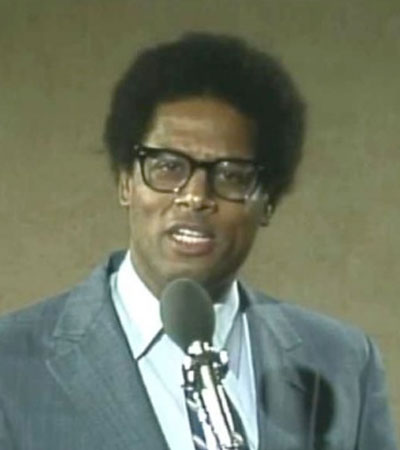


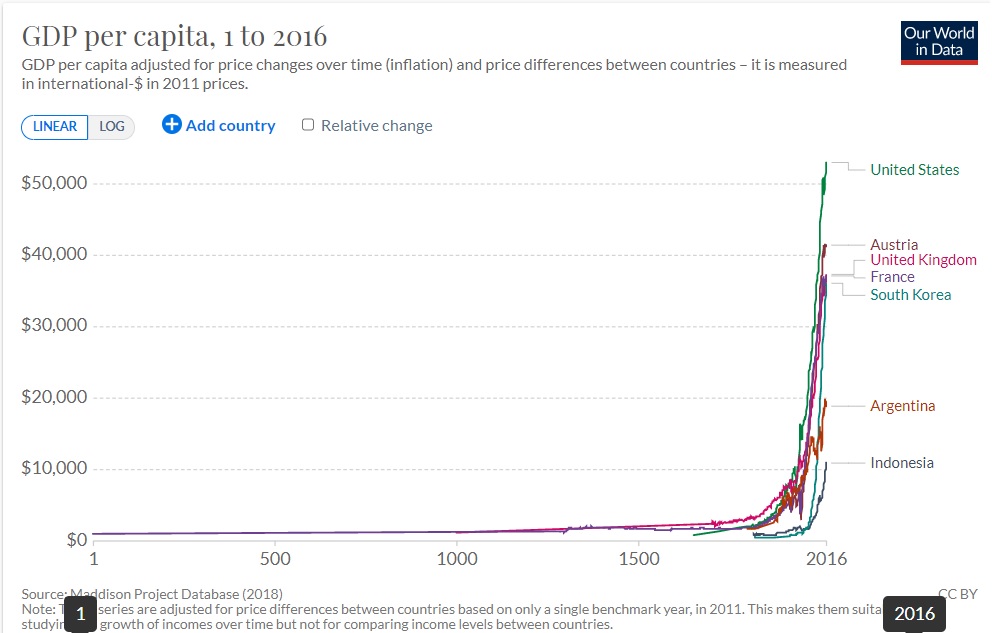
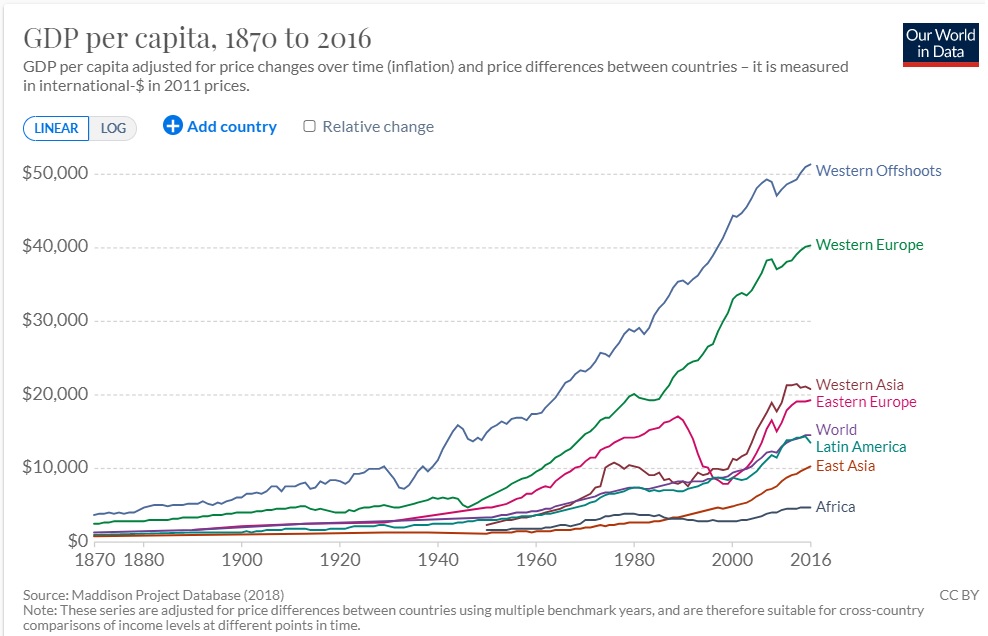

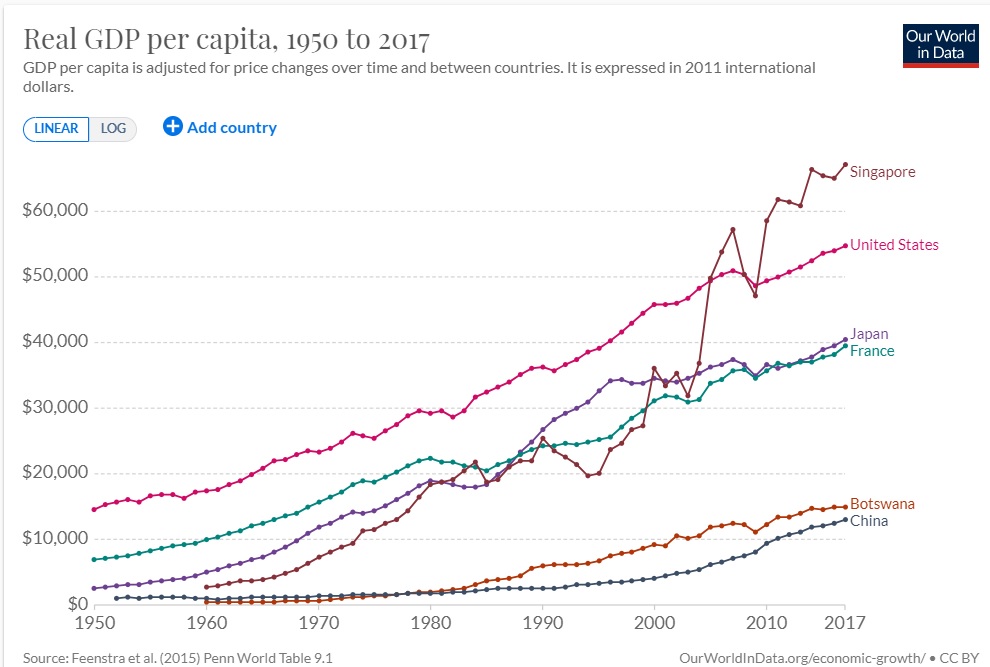






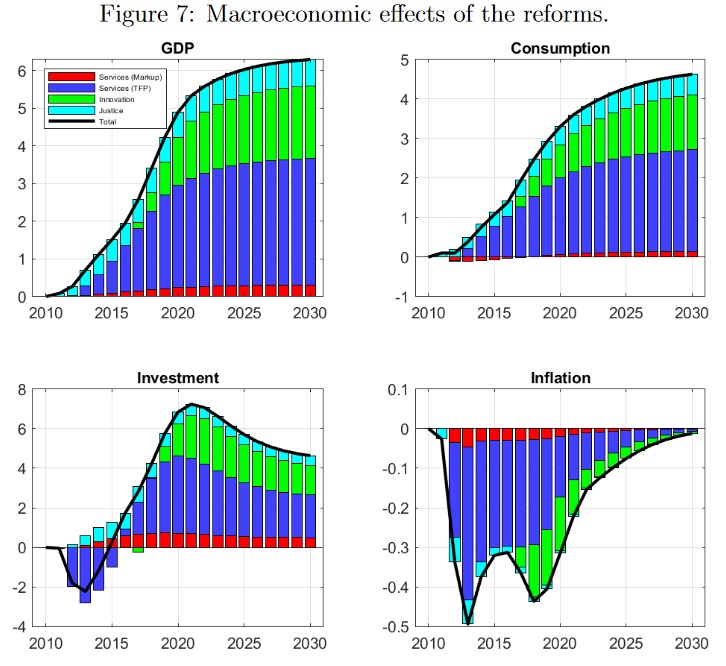
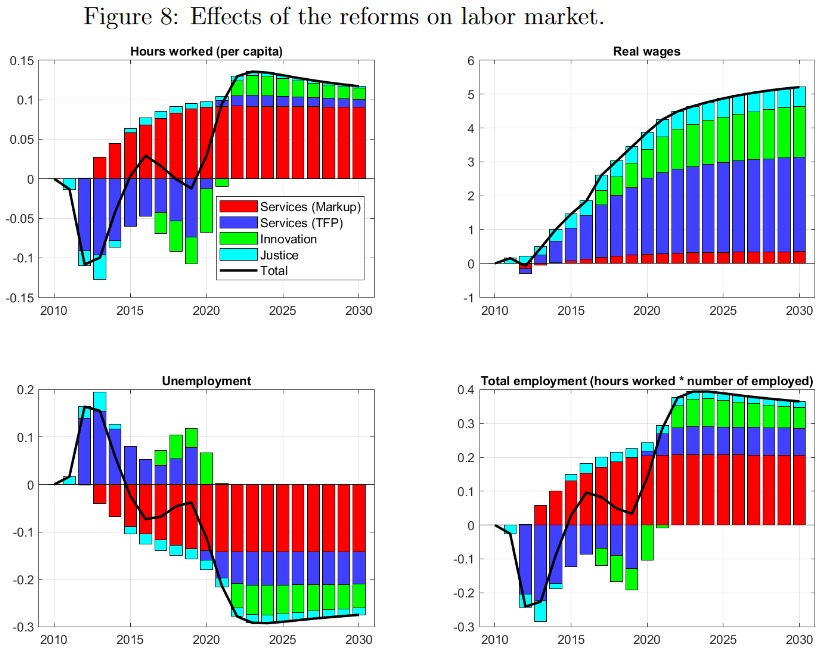




 The Daily Hatch
