E.O. Wilson: Science, Not Philosophy, Will Explain the Meaning of Existence
The Social Conquest of Earth | Edward O. Wilson
Edward O. Wilson The Meaning of Human Existence Audiobook
In the book THE MEANING OF HUMAN EXISTENCE Dr. Wilson asserted:
The Founding Fathers of the United States understood the risk of tribal religious conflict very well…. John Adams insisted that “the government of the United States is not in any sense founded on the Christian religion.” America has slipped a bit since then.
UNFORTUNATELY THAT QUOTE OF ADAMS IS INACCURATE!
Dr. Wilson recommended that a person spend lots of time in a partIcular field and I told him:
I got into a very small field about 20 years ago when I took about 2 years and read anything I could get my hands on concerning authenticating quotes that had been attributed to the founding fathers of the United States. It was a very tricky business but the end result was my article “Misquotes, Fake Quotes, and Disputed Quotes of the Founders,” It has become one of my most popular blog posts over the last 5 years.
If Dr. Wilson had gone to the link then he would have the first sentence which noted, ”Many inauthentic quotes attributed to the Founding Fathers have been in circulation for much of the 20th century. These are still being used frequently, especially by those in the religious right..”
I wish Dr. Wilson could have read this article below from an atheist!!!
Secularists, please stop quoting the Treaty of Tripoli
I’ve been to many a secular conference now where I’ve presented on the topic of “In God We Trust.” Without fail, someone in the audience will bring up the Treaty of Tripoli. I’ve also run across the Treaty of Tripoli in many atheist/secular forums and websites, including here on Patheos. I’m writing today to beseech my fellow secularists with a simple request: please, for the love of god (in the colloquial sense), stop quoting the Treaty of Tripoli.
Secularists love to quote the first clause of the first sentence to Article 11 of the 1797 treaty, which reads, “the government of the United States is in no way founded on the Christian religion.” The problem with this is that quote isn’t the entire first sentence – it isn’t even all of the first clause – and it completely takes the Treaty of Tripoli out of its historical context.
First, let’s cover a little history. In the 18thand 19th centuries, the states of North Africa collectively called the Barbary States – Algiers, Morrocco, Tunis, and Tripoli – would raid European shipping in the Mediterranean Sea. To prevent their commercial ships and sailors from being seized, the states of Europe would pay what was essentially protection money to the rulers of the Barbary coast. In 1783, when the American colonies gained their independence, Great Britain stopped paying the protection money for American shipping for obvious reasons.
Enter the Treaty of Tripoli.
In 1797, United States Commissioner Plenipotentiary David Humphreys certified the what would become known as the Treaty of Tripoli, which in its own time was known officially as the Treaty of Peace and Friendship between the United States of America and the Bey and Subjects of Tripoli of Barbary. Treat of Tripoli is a convenient shorthand. The treaty established commercial and maritime rights for the United States, acted as a sort of peace treaty (though there was no official war), and defined the amount of tribute to be paid by the United States to the Bey of Tripoli. So what does this have to do with atheism and secularism?
As mentioned above, article 11 of the treaty states that the United States government is not founded on the Christian religion. But, as mentioned above, that isn’t the whole story. Here is article 11 in full:
“As the government of the United States of America is not in any sense founded on the Christian Religion,-as it has in itself no character of enmity against the laws, religion or tranquility of Musselmen,-and as the said States never have entered into any war or act of hostility against any Mehomitan nation, it is declared by the parties that no pretext arising from religious opinions shall ever produce an interruption of the harmony existing between the two countries.”
Article 11 does not establish a historical fact about the United States in particular – which is how most secularists use it – so much as it defines the relationship between the government of the United States and the government of Tripoli. In essence, Article 11 is stating that differing religious opinions shall not be considered a pretext for violating the treaty. It should be noted that the article is careful to point out that the United States had never engaged in any armed conflict with a Muslim nation.
Still, the first clause in Article 11 is attractive to modern secularists because it seems to set a precedent for a religiously-neutral government. Taken completely on its own, I would argue that article 11 does, in fact, establish that the United States is not a Christian government. However, and any respectable academic would agree, you cannot simply look at one piece of evidence to try and establish a historical (or any other) fact. In history, you must look at evidence that is contradictory in order to gain a more precise understanding of context. Take, for example, this 1798 proclamation from President John Adams, who was president when the Treaty of Tripoli was ratified, which states,
“[T]he safety and prosperity of nations ultimately and essentially depend on the protection and the blessing of Almighty God, and the national acknowledgment of this truth is not only an indispensable duty which the people owe to Him, but a duty whose natural influence is favorable to the promotion of that morality and piety without which social happiness can not [sic] exist nor the blessings of a free government be enjoyed.”
Further on in the proclamation – which promoted a national day of humiliation, fasting and prayer – it recommends “that all religious congregations do, with the deepest humility, acknowledge before God the manifold sins and transgressions with which we are justly chargeable as individuals and as a nation, beseeching Him at the same time, of His infinite grace, through the Redeemer of the World, freely to remit all our offenses, and to incline us by His Holy Spirit to that sincere repentance and reformation which may afford us reason to hope for his inestimable favor and heavenly benediction.”
So though it may be true that the United States government did not enforce a specific sect of Christianity, it certainly wasn’t neutral when it came to religious matters. In fact, religion was viewed as necessary to a civil society and the government of the United States, through its executive, was willing to incorporate Christian beliefs and Christian symbolism into its affairs. Taken on its own, this type of proclamation suggests that the United States government is in fact founded on the Christian religion. The government saw pleas to the Almighty through Jesus Christ (aka “Redeemer of the World”) as necessary for the survival and well-being of the nation it governed. But again, that would be taking one piece of historical evidence to make a political point.
A further fact needs to be considered as well: there are multiple Treaties of Tripoli.
In 1801, the 1797 treaty was broken when Tripoli attacked American shipping after the United States refused to pay more tribute. This led to the First Barbary War – immortalized in the Marine Corps hymn lyric “to the shores of Tripoli – which ended with the signing of a second Treaty of Tripoli. This treaty was very similar to the original with a few notable exceptions, the most notable of which is the clause declaring that the United States is “not in any way founded on the Christian Religion” is completely missing. Here is part of Article 14 of the 1805 treaty:
“As the Government of the United States of America, has in itself no character of enmity against the Laws, Religion or Tranquility of Musselmen, and as the said States never have entered into any voluntary war or act of hostility against any Mahometan Nation, except in the defence [sic] of their just rights to freely navigate the High Seas: It is declared by the contracting parties that no pretext arising from Religious Opinions, shall ever produce an interruption of the Harmony existing between the two Nations…”
If the government of the United States was so adamantly not founded on the Christian religion, why so conspicuously leave that clause out when the treaty was rewritten in 1805? Now none of this is to say that the United States is or isn’t a Christian nation or founded on Christianity. That is a political battle that exists outside the world of late 18th and early 19th century America. So please, I beg you, stop quoting the Treaty of Tripoli. Not only is it not what you think it is, quoting the treaty in the context of the modern secular movement is a complete distortion of the real-world context in which it was written. It is the exact same kind of distortion that religious pseudo-historians like David Barton make when they point to things like “Creator” in the Declaration of Independence and declare that the United States is founded as a Christian nation. The past is complicated. There existed no black and white view of the world in the 18th century any more than one exists in the 21st. To cherry pick evidence from an obscure 18th-century treaty without considering its context to make a political point is not only ahistorical, but also unbecoming of a movement that prides itself on critical thought, rational inquiry, and following the evidence no matter what the conclusion.
—
Harvard University Professor E.O. Wilson in his office at Harvard University in Cambridge, MA. USACredit: Rick Friedman/Corbis via Getty.
Francis Schaeffer mentioned Edward O. Wilson in his book WHATEVER HAPPENED TO THE HUMAN RACE? co-authored by C.Everett Koop on pages 289-291 (ft note 6 0n page 504). That was when I was first introduced to Dr. Wilson’s work. Wikipedia notes, Edward Osborne Wilson (June 10, 1929 – December 26, 2021) was an American biologist, naturalist, and writer. His specialty was myrmecology, the study of ants, on which he was called the world’s leading expert,[3][4] and he was nicknamed Ant Man.[5][6][7][8]
I was honored to correspond with Dr. Wilson from 1994 to 2021!!
XXXLetter dated 3-31-17 on Isaac Newton and Book of Daniel
_______
__
__
Rembrandt, Belshazzar’s Feast, 1635,
_
___
_____
3-31-17
Dr. Edward O. Wilson, Museum of Comparative Zoology Faculty Emeritus Pellegrino University Professor, Emeritus c/o Museum of Comparative Zoology Harvard University 26 Oxford Street Cambridge, MA 02138
Dear Dr. Wilson,
In my last letter (on GROUNDHOG DAY 2-2-17) I wrote you about the fact that I have read your book THE MEANING OF HUMAN EXISTENCE four times and I keep reading it over and over and over because I want to get it all figured out before I move on just like Bill Murray has to do in the movie GROUNDHOG DAY. Now I have moved on and I have just finished reading your book LETTERS TO A YOUNG SCIENTIST and I must say that I really enjoyed it. I have also enjoyed THE SOCIAL CONQUEST OF EARTH and THE MEANING OF HUMAN EXISTENCE too. My favorite is still THE MEANING OF HUMAN EXISTENCE although I didn’t think you do anything better than that in my eyes since I have always considered the BOOK OF ECCLESIASTES my favorite book in the Bible.
Now to comment on something you wrote in LETTERS TO A YOUNG SCIENTIST:
Once you have settled upon a subject you can love, your potential to succeed will be greatly enhanced if you study it enough to become a world-class expert. This goal is not as difficult as it may seem. Even for a graduate student it is not overly ambiguous. There are thousands of subjects in science sprinkled through Chemistry and Biology and the social sciences where it is possible in a short time to attain the status of an authority. If the subject is still thinly populated, you can with diligence and hard work even become the world authority at a young age. Society needs this level of expertise, and it rewards the kind of people willing to acquire it. (Chapter 3)
I got into a very small field about 20 years ago when I took about 2 years and read anything I could get my hands on concerning authenticating quotes that had been attributed to the founding fathers of the United States. It was a very tricky business but the end result was my article “Misquotes, Fake Quotes, and Disputed Quotes of the Founders,” It has become one of my most popular blog posts over the last 5 years.
Also in your book you quoted ISAAC NEWTON who said, “If I see further than others, it is by standing on the shoulders of giants.” Many scientists that Dr. Larry Vardiman was right when he noted:
Isaac Newton is recognized today by almost all scientists to have been one of the greatest, if not the greatest, scientist who ever lived. His breadth of knowledge, his ability to analyze and synthesize the physical world, his development and use of the calculus, his formulation of the three laws of motion, and the expression of the law of gravitation have been unequaled by any other scientist before or since. Yet, it is not widely known that Newton was also a Christian and a Bible scholar. He studied the Bible diligently and wrote commentaries on portions of scripture, such as his monograph on the book of Daniel. He clearly believed that God is the Creator and sustainer of our universe. Misunderstanding the source of Newton’s creativity, some critics have suggested that Newton would have been more productive if he had not wasted so much time studying and writing about the Bible.
Just like Newton I have spent a lot of my time examining the Book of Daniel, and the thing that amazed me about it is the historical accuracy of the book. Many times it has been alleged that the author of the Book of Danielwas from a later period but how did a later author know these 5 HISTORICAL FACTS? How did he know [1] that Belshazzar was ruling during the last few years of the Babylonian Empire when the name “Belshazzar” was lost to history until 1853 when it was uncovered in the monuments? [2] The author also knew that the Babylonians executed individuals by casting them into fire, and that the Persians threw the condemned to the lions. [3] He knew the practice in the 6th Century was to mention first the Medes, then the Persians and not the other way around. [4] Plus he knew the laws made by Persian kings could not be revoked and [5] he knew that in the sixth century B.C., Susa was in the province of Elam (Dan. 8:2). Of course, the Book of Daniel (2:37-42) clearly predicted the rise of the 4 world empires in the correct order of Babylon, Medo-Persia, Greece, and Rome.
On page 35 you take up again your fascination with Darwin:
Whether you did or not, let’s go on to Darwin. As a young man in the 1850s, he made a five-year voyage on a British government vessel, the HMS Beagle, around the coast of Africa. He took that long period to explore and think broadly and deeply about the natural world. He found, for example, a lot of fossils…(page 35).
I remember watching you and your good friend James D. Watson a few years ago say basically that piratically everything that ever came out of Darwin’s mouth was accurate, but when I study the records there are huge gaps in the fossil records and also I discovered that Darwin himself was filled with doubts and tension the last few years of his life.
I read the online addition of the book Darwin, Francis ed. 1892. Charles Darwin: his life told in an autobiographical chapter, and in a selected series of his published letters [abridged edition]. London: John Murray. There are several points that Charles Darwin makes in this book that were very wise, honest, logical, shocking and some that were not so wise. The Christian Philosopher Francis Schaeffer once said of Darwin’s writings, “Darwin in his autobiography and in his letters showed that all through his life he never really came to a quietness concerning the possibility that chance really explained the situation of the biological world. You will find there is much material on this [from Darwin] extended over many many years that constantly he was wrestling with this problem.”
Nevertheless you have expressed my inward conviction, though far more vividly and clearly than I could have done, that the Universe is not the result of chance.* But then with me the horrid doubt always arises whether the convictions of man’s mind, which has been developed from the mind of the lower animals, are of any value or at all trustworthy. Would any one trust in the convictions of a monkey’s mind, if there are any convictions in such a mind?
Francis Schaeffer observed:
Can you feel this man? He is in real agony. You can feel the whole of modern man in this tension with Darwin. My mind can’t accept that ultimate of chance, that the universe is a result of chance. He has said 3 or 4 times now that he can’t accept that it all happened by chance and then he will write someone else and say something different. How does he say this (about the mind of a monkey) and then put forth this grand theory? Wrong theory I feel but great just the same. Grand in the same way as when I look at many of the paintings today and I differ with their message but you must say the mark of the mannishness of man are one those paintings titanic-ally even though the message is wrong and this is the same with Darwin. But how can he say you can’t think, you come from a monkey’s mind, and you can’t trust a monkey’s mind, and you can’t trust a monkey’s conviction, so how can you trust me? Trust me here, but not there is what Darwin is saying. In other words it is very selective.
Now we are down to the last year of Darwin’s life.
* The Duke of Argyll (Good Words, April 1885, p. 244) has recorded a few words on this subject, spoken by my father in the last year of his life. “. . . in the course of that conversation I said to Mr. Darwin, with reference to some of his own remarkable works on the Fertilisation of Orchids, and upon The Earthworms,and various other observations he made of the wonderful contrivances for certain purposes in nature—I said it was impossible to look at these without seeing that they were the effect and the expression of mind. I shall never forget Mr. Darwin’s answer. He looked at me very hard and said, ‘Well, that often comes over me with overwhelming force; but at other times,’ and he shook his head vaguely, adding, ‘it seems to go away.’”
Francis Schaeffer summarized :
And this is the great Darwin, and it makes you cry inside. This is the great Darwin and he ends as a man in total tension.
___
I would have loved to seen Darwin’s reaction if had the chance to watch you and Jim Watson on that episode of CHARLIE ROSE Show.
I wanted to personally thank you again for taking time to write me back in 2014 and I have taken your advice and read several of your books.
My Homage to the Late Harvard Biologist EO Wilson (THE SAAD TRUTH_1351)
How Should We Then Live | Season 1 | Episode 6 | The Scientific Age
How Did Writer & Biologist EO Wilson Die | The Life and Sad Ending Edwar…
Edward O Wilson has passed away 💔|| his last moment before death so touc…
Remembering the life of renowned biologist and Alabama native E.O. Wilson
—
How Should We Then Live (1977) | Full Movie | Francis Schaeffer | Edith …
–
FEATURED ARTIST IS WATTEAU
JEAN-ANTOINE WATTEAU (1684-1721)
Watteau is today considered one of the pioneers of the Rococo style. Unfortunately, he died at the height of his powers, as it is evidenced in the great portrait of “Gilles” painted in the year of his death
I have gone back and forth and back and forth with many liberals on the Arkansas Times Blog on many issues such as abortion, human rights, welfare, poverty, gun control and issues dealing with popular culture. Here is another exchange I had with them a while back. My username at the Ark Times Blog is Saline […]
On March 17, 2013 at our worship service at Fellowship Bible Church, Ben Parkinson who is one of our teaching pastors spoke on Genesis 1. He spoke about an issue that I was very interested in. Ben started the sermon by reading the following scripture: Genesis 1-2:3 English Standard Version (ESV) The Creation of the […]
At the end of this post is a message by RC Sproul in which he discusses Sagan. Over the years I have confronted many atheists. Here is one story below: I really believe Hebrews 4:12 when it asserts: For the word of God is living and active and sharper than any two-edged sword, and piercing as far as the […]
In today’s news you will read about Kirk Cameron taking on the atheist Stephen Hawking over some recent assertions he made concerning the existence of heaven. Back in December of 1995 I had the opportunity to correspond with Carl Sagan about a year before his untimely death. Sarah Anne Hughes in her article,”Kirk Cameron criticizes […]
Sean Michael preaching on April 9, 2017 Palm Sunday at Calvary Chapel in Bauxite, Arkansas and he preached on II Corinthians chapters 4 and 5:
17 Therefore, if anyone is in Christ, he is a new creation.[f]The old has passed away; behold, the new has come. 18 All this is from God, who through Christ reconciled us to himself and gave us the ministry of reconciliation; 19 that is, in
Christ God was reconciling[g] the world to himself, not counting their trespasses against them, and entrusting to us the message of reconciliation. 20 Therefore, we are ambassadors for Christ, God making his appeal through us. We implore you on behalf of Christ, be reconciled to God. 21 For our sake he made him to be sin who knew no sin, so that in him we might become the righteousness of God.
Hugh Hefner Playboy Mansion 10236 Charing Cross Road Los Angeles, CA 90024-1815
Dear Mr. Hefner,
HUGH, You are an intellectual person who graduated from the University of Illinois in 1949 with a degree in Psychology. I read on CNN’S website that you also attended the ART INSTITUTE OF CHICAGO in 1946. My niece is now in her third year at Columbia College in Chicago finishing up an art degree.
CNN also said:
The Playboy message appears in the 1953 premiere issue: “We like our apartment. We enjoy mixing up cocktails and an hors d’oeuvre or two, putting a little mood music on the phonograph and inviting in a female acquaintance for a quiet discussion on Picasso, Nietzsche, jazz, sex…”
You have always tried to emphasize the intellectual aspect of your life. In your discussion with William F. Buckley on FIRING LINE you demonstrated your intellectual abilities and I am glad that you do not shy away from doing so. Today I want to ask you to match your wit with King Solomon’s words from 3000 years ago.
In my last letter I told you that the loss of my good friend Larry Speaks has got me thinking a lot about the meaning of life. In this letter today I want to do 3 things.
First, I will tell you what the sermon and music was about today on Palm Sunday at the church service I attended.
Second, I want to take a short look at the message WHO IS JESUS? by Adrian Rogers. This is the sermon that Larry Speaks gave out constantly in the last 20 years of his life. Initially at the grocery store he owned and then later by walking McCain Mall in North Little Rock and giving them to anyone who would promise to listen to the CD.
Third, I want to start looking at the 6 L words that Solomon pursued UNDER THE SUN to try to get meaning and satisfaction in this life without God in the picture in the Book of Ecclesiastes. Today’s word is LEARNING.
Today I was invited by our family friend Sean Michelto come hear him preach at Calvary Chapel today in Bauxite, Arkansas. Not only did Sean Michel preach but he also helped provide some of the music.
Sean read the two chapters II Corinthians 4 and 5. Let me talk about chapter 5 first then finish up with chapter 4.
II Corinthians 5:10-11, 17-20
10 For we must all appear before the judgment seat of Christ, so that each one may receive what is due for what he has done in the body, whether good or evil.
11 Therefore, knowing the fear of the Lord, we persuade others. But what we are is known to God, and I hope it is known also to your conscience
17 Therefore, if anyone is in Christ, he is a new creation.[f]The old has passed away; behold, the new has come.18 All this is from God, who through Christ reconciled us to himself and gave us the ministry of reconciliation; 19 that is, in Christ God was reconciling[g] the world to himself, not counting their trespasses against them, and entrusting to us the message of reconciliation. 20 Therefore, we are ambassadors for Christ, God making his appeal through us. We implore you on behalf of Christ, be reconciled to God. 21 For our sake he made him to be sin who knew no sin, so that in him we might become the righteousness of God.
These verses in Chapter 5 seem to fit well with the praise song that we all sang along on called THIS IS AMAZING GRACE (written by Phil Wickham who Sean actually performed with a few years ago).This is Amazing GracePhil WickhamWho breaks the power of sin and darkness Whose love is mighty and so much stronger The King of Glory, the King above all kingsWho shakes the whole earth with holy thunder And leaves us breathless in awe and wonder The King of Glory, the King above all kingsThis is amazing grace This is unfailing love That You would take my place That You would bear my cross You lay down Your life That I would be set free Oh, Jesus, I sing for All that You’ve done for meWho brings our chaos back into order Who makes the orphan a son and daughter The King of Glory, the King of GloryWho rules the nations with truth and justice Shines like the sun in all of its brilliance The King of Glory, the King above all kingsThis is amazing grace This is unfailing love(Please take time to listen to the song THIS IS AMAZING GRACE on You Tube)
NOW MOVING TO CHAPTER 4 where we will discover it is NOT an uneducated head that is the problem to finding God but an UNWILLING STUBBORN HEART.II Corinthians 4:3-4 (Amplified Bible)
3 But even if our gospel is [in some sense] hidden [behind a veil], it is hidden [only] to those who are perishing;4 among them the god of this world [Satan] has blinded the minds of the unbelieving to prevent them from seeing the illuminating light of the gospel of the glory of Christ, who is the image of God.
This verse is clarified even more by Matthew 11:25 (AMP)
25 At that time Jesus said, “I praise You, Father, Lord of heaven and earth [I openly and joyfully acknowledge Your great wisdom], that You have hidden these things [these spiritual truths] from the wise and intelligent and revealed them to infants [to new believers, to those seeking God’s will and purpose].
Here we must observe that many people don’t want to find the truth just like a thief doesn’t want to find a policeman. I now want to share a portion of the sermon WHO IS JESUS? by Adrian Rogers because this very point is made:
Years ago Adrian Rogerscounseled with a NASA scientist and his severely depressed wife. The wife pointed to her husband and said, “My problem is him.” She went on to explain that her husband was a drinker, a liar, and an adulterer. Dr. Rogers asked the man if he were a Christian. “No!” the man laughed. “I’m an atheist.”
“Really?” Dr. Rogers replied. “That means you’re someone who knows that God does not exist.”
“That’s right,” said the man.
“Would it be fair to say that you don’t know all there is to know in the universe?”
“Of course.”
“Would it be generous to say you know half of all there is to know?”
“Yes.”
“Wouldn’t it be possible that God’s existence might be in the half you don’t know?”
“Okay, but I don’t think He exists.”
“Well then, you’re not an atheist; you’re an agnostic.You’re a doubter.”
“Yes, and I’m a big one.”
“It doesn’t matter what size you are. I want to know what kind you are.”
“What kinds are there?”
“There are honest doubters and dishonest doubters. An honest doubter is willing to search out the truth and live by the results; a dishonest doubter doesn’t want to know the truth. He can’t find God for the same reason a thief can’t find a policeman.”
“I want to know the truth.”
“Would you like to prove that God exists?”
“It can’t be done.”
“It can be done. You’ve just been in the wrong laboratory. Jesus said, ‘If any man’s will is to do His will, he will know whether my teaching is from God or whether I am speaking on my own authority’ (John 7:17). I suggest you read one chapter of the book of John each day, but before you do, pray something like this, ‘God, I don’t know if You’re there, I don’t know if the Bible is true, I don’t know if Jesus is Your Son. But if You show me that You are there, that the Bible is true, and that Jesus is Your Son, then I will follow You. My will is to do your will.”
The man agreed. About three weeks later he returned to Dr. Rogers’s office and invited Jesus Christ to be his Savior and Lord.
WHAT DOES SOLOMON HAVE TO SAY ABOUT PURSUING LEARNING in the Book of Ecclesiastes?
Francis Schaeffer noted that Solomon took a look at the meaning of life on the basis of human life standing alone between birth and death “under the sun.” This phrase UNDER THE SUN appears over and over in Ecclesiastes. The Christian Scholar Ravi Zacharias noted, “The key to understanding the Book of Ecclesiastes is the term UNDER THE SUN — What that literally means is you lock God out of a closed system and you are left with only this world of Time plus Chance plus matter.”
As you know Solomon was searching for for meaning in life in what I call the 6 big L words in the Book of Ecclesiastes. He looked into LEARNING (1:12-18, 2:12-17), laughter, ladies, luxuries, and liquor (2:1-2, 8, 10, 11), and labor (2:4-6, 18-20).
Here is his final conclusion concerning LEARNING:
ECCLESIASTES 1:12-18, 2:12-17 LEARNING
12 I the Preacher have been king over Israel in Jerusalem.13And I applied my heart to seek and to search out by wisdom all that is done under heaven. It is an unhappy business that God has given to the children of man to be busy with. 14 I have seen everything that is done UNDER THE SUN, and behold, all is vanity and a striving after wind.
15 What is crooked cannot be made straight, and what is lacking cannot be counted.
16 I said in my heart, “I have acquired great wisdom, surpassing all who were over Jerusalem before me, and my heart has had great experience of wisdom and knowledge.” 17 And I applied my heart to know wisdom and to know madness and folly. I perceived that this also is but a striving after wind.
18For in much wisdom is much vexation, and he who increases knowledge increases sorrow.
12So I turned to consider wisdom and madness and folly. For what can the man do who comes after the king? Only what has already been done. 13 Then I saw that there is more gain in wisdom than in folly, as there is more gain in light than in darkness. 14 The wise person has his eyes in his head, but the fool walks in darkness. And yet I perceived that the same event happens to all of them.15 Then I said in my heart, “What happens to the fool will happen to me also. Why then have I been so very wise?” And I said in my heart that this also is vanity. 16 For of the wise as of the fool there is no enduring remembrance, seeing that in the days to come all will have been long forgotten. How the wise dies just like the fool!17 So I hated life, because what is done UNDER THE SUN was grievous to me, for all is vanity and a striving after wind.
In my last letter to you I quoted Psalms chapter 22. Why not take a few minutes and just read the short chapter of Psalms 22 that was written hundreds of years before the Romans even invented the practice of Crucifixion. 1000 years BC the Jews had the practice of stoning people but we read in this chapter a graphic description of Christ dying on the cross. How do you explain that without looking ABOVE THE SUN to God. Ecclesiastes was written to those who wanted to examine life UNDER THE SUN without God in the picture and Solomon’s conclusion in the final chapter was found in Ecclesiastes 12 when he looked at life ABOVE THE SUN:
13 The end of the matter; all has been heard. Fear God and keep his commandments, for this is the whole duty of man. 14 For God will bring every deed into judgment, with every secret thing, whether good or evil.
PS: Like I promised I will continue to write you and go through these 6 L words that Solomon was pursuing UNDER THE SUN in the Book of Ecclesiastes in order to find a lasting meaning to our lives.
–
Francis Schaeffer has rightly noted concerning Hugh Hefner that Hefner’s goal with the “playboy mentality is just to smash the puritanical ethnic.” I have made the comparison throughout this series of blog posts between Hefner and King Solomon (the author of the BOOK of ECCLESIASTES). I have noticed that many preachers who have delivered sermons on Ecclesiastes have also mentioned Hefner as a modern day example of King Solomon especially because they both tried to find sexual satisfaction through the volume of women you could slept with in a lifetime.
Ecclesiastes 2:8-10 The Message (MSG)
I piled up silver and gold, loot from kings and kingdoms. I gathered a chorus of singers to entertain me with song, and—most exquisite of all pleasures— voluptuous maidens for my bed.
9-10 Oh, how I prospered! I left all my predecessors in Jerusalem far behind, left them behind in the dust. What’s more, I kept a clear head through it all. Everything I wanted I took—I never said no to myself. I gave in to every impulse, held back nothing. I sucked the marrow of pleasure out of every task—my reward to myself for a hard day’s work!
1 Kings 11:1-3 English Standard Version (ESV)
11 Now King Solomon loved many foreign women, along with the daughter of Pharaoh: Moabite, Ammonite, Edomite, Sidonian, and Hittite women, 2 from the nations concerning which the Lord had said to the people of Israel, “You shall not enter into marriage with them, neither shall they with you, for surely they will turn away your heart after their gods.” Solomon clung to these in love.3 He had 700 wives, who were princesses, and 300 concubines. And his wives turned away his heart.
Francis Schaeffer observed concerning Solomon, “You can not know woman by knowing 1000 women.”
Erin Shirreff was born in 1975 in Kelowna, British Columbia, Canada, and now lives and works in New York. Shirreff studied sculpture, but her practice is now focused on depicting and challenging the representation of three-dimensional art objects through photography and video.
Often building maquettes of large-scale works in her studio, Shirreff then manipulates the light and conditions surrounding the objects before documenting them using digital and analog tools. Her source material has included the minimalist sculpture of Tony Smith and the Oscar Niemeyer-designed United Nations Headquarters in New York as well as James Turrell’s Roden Crater and the lake where she grew up. Describing her videos as “psychologically driven,” Shirreff explains, “My videos don’t have any beginning or end. Every moment contains it, hopefully.”
Ecclesiastes 2-3 Published on Sep 19, 2012 Calvary Chapel Spring Valley | Sunday Evening | September 16, 2012 | Derek Neider _____________________________ I have written on the Book of Ecclesiastes and the subject of the meaning of our lives on several occasions on this blog. In this series on Ecclesiastes I hope to show how secular […] By Everette Hatcher III | Posted in Current Events | Edit | Comments (0)
Is Love All You Need? Jesus v. Lennon Posted on January 19, 2011 by Jovan Payes 0 On June 25, 1967, the Beatles participated in the first worldwide TV special called “Our World”. During this special, the Beatles introduced “All You Need is Love”; one of their most famous and recognizable songs. In it, John Lennon […] By Everette Hatcher III | Posted in Francis Schaeffer | Edit | Comments (0)
___________________ Something happened to the Beatles in their journey through the 1960’s and although they started off wanting only to hold their girlfriend’s hand it later evolved into wanting to smash all previous sexual standards. The Beatles: Why Don’t We Do It in the Road? _______ Beatle Ringo Starr, and his girlfriend, later his wife, […] By Everette Hatcher III | Posted in Current Events | Edit | Comments (0)
__________ Marvin Minsky __ I was sorry recently to learn of the passing of one of the great scholars of our generation. I have written about Marvin Minsky several times before in this series and today I again look at a letter I wrote to him in the last couple of years. It is my […] By Everette Hatcher III | Posted in Adrian Rogers, Francis Schaeffer | Edit | Comments (0)
Why was Tony Curtis on the cover of SGT PEPPERS? I have no idea but if I had to hazard a guess I would say that probably it was because he was in the smash hit SOME LIKE IT HOT. Above from the movie SOME LIKE IT HOT __ __ Jojo was a man who […] By Everette Hatcher III | Posted in Current Events | Edit | Comments (0)
Reaganomics generated much better results than Obamanomics. Milton Friedman had a lot to do with the success of Reagan.
Daniel J. Mitchell of the Cato Institute:
Dr. Koop with President Ronald Reagan on his appointment as Surgeon General.
“He will long be remembered as one of the great Christian thinkers of our century, with a childlike faith and a profound compassion toward others. It can rarely be said of an individual that his life touched many others and affected them for the better; it will be said of Francis Schaeffer that his life touched millions of souls and brought them to the truth of their creator.” ~ Ronald Reagan
Bernard N. Nathanson (July 31, 1926 – February 21, 2011) was an American medical doctor from New York, co-founder in 1969 of the National Association for the Repeal of Abortion Laws — NARAL — later renamed National Abortion Rights Action League. Dr. Bernard Nathanson was also the former director of New York City’s Center for Reproductive and Sexual Health, but later became a pro-life activist. He was the narrator for the controversial 1984 anti-abortion film The Silent Scream.
____
March 2, 2016
Hugh Hefner Playboy Mansion 10236 Charing Cross Road Los Angeles, CA 90024-1815
Dear Mr. Hefner,
Yesterday was SUPER TUESDAY and I had a special interest in the results of that day since I was seeking re-election to JUSTICE OF THE PEACE (District 2 of Saline County) which is located outside of Little Rock. I was able to win in the Republican Primary but I have to face a Democrat this fall in what is the most Democratic friendly district in our county. Over the last few years Saline has grown to be the 3rd largest county in Arkansas. I am glad to say that Saline County is one of only 2 counties in the whole state that do not have a countywide sales tax.
HUGH I know that you have been involved in politics for a long time so I thought this subject would interest you today. I have 3 political heroes I wanted to mention. Milton Friedman was my hero in the area of economics and his film series FREE TO CHOOSE is on You Tube and Ronald Reagan appeared in a promo for it. Friedman pointed out that liberalism will kill the economy but cutting taxes and the size of government will grow the economy. Dan Mitchell noted in his article, “Texas vs. California,” February 11, 2013:
Indeed, in the last five years Texas has gained 400,000 new jobs while California has lost 640,000. The Lone Star State’s rate of job growth was 33 percent higher than California’s last year, even as the Golden State finally pulled out of the recession. …Texas’s legislature has just trimmed its $188 billion two-year budget by 8 percent, and the state may have more revenue than it can legally spend because it is barred from raising outlays more than the rate of economic growth.
Here’s a very good Steve Breen cartoon about Perry’s fishing trip to the west coast.
__
Ronald Reagan is my second political hero for 2 reasons. First, Reagan cut taxes in a big way during his time as president. Secondly, he appointed C. Everett Koop at Surgeon General and appointed many PRO-LIFE JUDGES. This leads me to my third political hero who was C. Everett Koop’s best friend Francis Schaeffer.
This address was delivered by the late Dr. Schaeffer in 1982 at the Coral Ridge Presbyterian Church, Fort Lauderdale, Florida. It is based on one of his books, which bears the same title.
Dr. C. Everett Koop, in our seminars for Whatever Happened to the Human Race, often said that (speaking for himself), “When I graduated from medical school, the idea was ‘how can I save this life?’ But for a great number of the medical students now, it’s not, ‘How can I save this life?’, but ‘Should I save this life?'”
Believe me, it’s everywhere. It isn’t just abortion. It’s infanticide. It’s allowing the babies to starve to death after they are born. If they do not come up to some doctor’s concept of a quality of life worth living. I’ll just say in passing — and never forget it – it takes about 15 days, often, for these babies to starve to death. And I’d say something else that we haven’t stressed enough. In abortion itself, there is no abortion method that is not painful to the child — just as painful that month before birth as the baby you see a month after birth in one of these cribs down here that I passed — just as painful…
The January 11 Newsweek has an article about the baby in the womb. The first 5 or 6 pages are marvelous. If you haven’t seen it, you should see if you can get that issue. It’s January 11 and about the first 5 or 6 pages show conclusively what every biologist has known all along, and that is that human life begins at conception. There is no other time for human life to begin, except at conception. Monkey life begins at conception. Donkey life begins at conception. And human life begins at conception. Biologically, there is no discussion — never should have been — from a scientific viewpoint. I am not speaking of religion now. And this 5 or 6 pages very carefully goes into the fact that human life begins at conception. But you flip the page and there is this big black headline, “But is it a person?” And I’ll read the last sentence, “The problem is not determining when actual human life begins, but when the value of that life begins to out weigh other considerations, such as the health or even the happiness of the mother.”
We are not just talking about the health of the mother (it’s a propaganda line), or even the happiness of the mother. Listen! Spell that out! It means that the mother, FOR HER OWN HENDONISTIC HAPPINESS — selfish happiness — can take human life by her choice, by law. Do you understand what I have said? By law, on the basis of her individual choice of what makes her happy. She can take what has been declared to be, in the first five pages [of the article], without any question, human life. In other words, they acknowledge that human life is there, but it is an open question as to whether it is not right to kill that human life if it makes the mother happy.
And basically that is no different than Stalin, Mao, or Hitler, killing who they killed for what they conceived to be the good of society. There is absolutely no line between the two statements — no absolute line, whatsoever. One follows along: Once that it is acknowledged that it is human life that is involved (and as I said, this issue of Newsweek shows conclusively that it is) the acceptance of death of human life in babies born or unborn, opens the door to the arbitrary taking of any human life. From then on, it’s purely arbitrary.
I got a question for you HUGH? I understand you support financially NARAL.Did you know that the founder of NARAL left the abortion business because as technology advanced he discovered that the unborn baby experienced pain? Here is a little more about Dr. Bernard Nathanson:
In 1985, Nathanson employed the new fetal imaging technology to produce a documentary film, “The Silent Scream,” which energized the pro-life movement and threw the pro-choice side onto the defensive by showing in graphic detail the killing of a twelve-week-old fetus in a suction abortion. Nathanson used the footage to describe the facts of fetal development and to make the case for the humanity and dignity of the child in the womb. At one point, viewers see the child draw back from the surgical instrument and open his mouth: “This,” Nathanson says in the narration, “is the silent scream of a child threatened imminently with extinction.”
Publicity for “The Silent Scream” was provided by no less a figure than President Ronald Reagan, who showed the film in the White House and touted it in speeches. Like Nathanson, Reagan, who had signed one of the first abortion-legalization bills when he was Governor of California, was a zealous convert to the pro-life cause. During his term as president, Reagan wrote and published a powerful pro-life book entitled Abortion and the Conscience of the Nation—a book that Nathanson praised for telling the truth about the life of the child in the womb and the injustice of abortion.
Hefner concludes that, “If these zealots have their way, our hard-won sexual liberation — women’s rights, reproductive rights and rights to privacy — lie in peril. We won’t let that happen.
My last question to you today is WHAT ABOUT UNBORN WOMAN’S RIGHTS? Don’t little baby girls who are just months away from being born have the right to life? This letter has been about politics but the spiritual answers your heart is seeking can be found in putting your faith and trust in Jesus Christ. The Bible is true from cover to cover and can be trusted. Without the Bible then we are left with Schaeffer’s final conclusion,“If there are no absolutes by which to judge society, then society is absolute.”
PS: I have written you every week since October of 2015, and again today in this 22nd letter I challenged you on one aspect of your life and this letter centered in on your support of NARAL. Why am I involved in politics today? The answer is because God wants us to submit to the standards given in the Bible. Francis Schaeffer noted, “They founded the country on the base that there is a God who is the Creator (now I come to the next central phrase) who gave the inalienable rights. We must understand something very thoroughly. If society — if the state gives the rights, it can take them away — they’re not inalienable. If the states give the rights, they can change them and manipulate them. But this was not the view of the founding fathers of this country. They believed, although not all of them were individual Christians, that there was a Creator and that this Creator gave the inalienable rights — this upon which our country was founded and which has given us the freedoms which we still have — even the freedoms which are being used now to destroy the freedoms.”
A landscape by Jan van Goyenby H.R. Rookmaaker
Jan van Goyen is one of the most brilliant landscape painters of all time.
He was productive between 1620 and 1656, the year of his death. His art
improved in a direct line, and the works he made after 1640 are virtually
all masterpieces. We shall discuss one of his paintings from 1646,
Approaching storm.
Jan van Goyen: Approaching Storm, 1646
Jan van Goyen is almost unrivalled as a master of representing space.
He was in complete command of the devices that had been developed
for this since the beginning of the modern period, and he applied them
brilliantly. In the first place there is his perspective – figures appear
smaller the further away they are from us – but possibly even more
important is his atmospheric perspective – the tone and colour of an
object that is further from us is lighter and softer than that of a similar
object viewed at closer range (compare the sails of the boats in this
painting). He also uses repoussoir – setting a lighter object against a dark
background or a darker object against a light background so that it
thereby appears to be located to the fore while the background is
pushed back (repousser). And, finally, he uses lighter and darker strokes
in the water so that a clear spatial arrangement is achieved and things
are put in their right place, as it were. In this painting we see the
repoussoir in the sails as they stand out against the sky but also in the
dark boat set against the lighter strip of water, which is thereby clearly
pushed back. Through that repoussoir the artist can make things clear
and define them distinctly in their interconnectedness. Jan van Goyen
knows how to use this device in such a way that we hardly notice it, it
seems so natural. Only upon looking more closely do we discover the
mastery and realize that it is not a simple matter of course.
It is remarkable how the painter is able to use the darkly clouded sky
to draw our eye towards the back, where the lightest part of the painting
is at the most distant horizon. In the clouds too one can point out
repoussoir (one against the other). Yet it is still more remarkable when
we come to realize just what van Goyen accomplishes with the clouds,
how he divides them as dark tones across the flat surface to thereby
reinforce the entire construction of his composition.
With that we have arrived at the real problem, which led us to select
this painting for discussion which at first glance may appear to be just
another representation of a scene one could have witnessed any time,
and possibly still can, somewhere in the Netherlands along one of the
great rivers or the former Zuiderzee or Haarlemmermeer. For Jan van
Goyen knew, perhaps better than anyone else, that a painting is in the
first place a flat surface on which we work with our painting materials to
call up our picture. In spite of the fact that he knew infallibly how to use
the depth-depicting devices we have described, the syntax of his times,
one can never accuse him, as some modern artists have reproached the
old masters for doing, of tricking us by suggesting a ‘hole in the wall’,
namely a real depth. On the contrary, Jan van Goyen knew not only how
to maintain the surface but also how to use it in a wonderful way to serve
his purposes.
Van Goyen’s compositions are very tightly constructed and guided
by an almost symphonic feel for form. Left . . . yes, one ‘reads’ a painting
from left to right. This probably is because of the direction in which we
write (and it would therefore be the reverse for, e.g. Chinese people).
Naturally we can look at a painting from right to left or in any other way,
but only after we have read it in the right direction first. In a similar way
we have to read a sonnet first from top to bottom, and only after we have
done that can we go back and re-read one line or another, and figure out
how the way the sonnet ends is prepared and called up in earlier lines.
The correct order of reading is presupposed in the creative process. But
to return to our earlier discussion: at the left of the landscape we see the
‘introduction’ by means of a little boat, which draws us into the space
and positions us on the water, as it were. Then we come to the first
theme, which we could call ‘distance with storm cloud’. Next we have the
transitional theme in the pair of slightly larger sailboats, precisely in the
middle of the canvas. Following that we come to the second main theme:
ships tied up at a mooring, at a harbour, suggested by a few houses
entirely to the right, which at the same time form the light coda. The
main element in the second theme is the ship with the large dark sail,
which finds its direct ‘response’ in the somewhat smaller and lighter sail
just behind it. That second theme is more loaded, busier and manifests
more movement, and it fixes our eye on a less remote distance parallel
to the surface of the painting.
And now, if we look at the clouds again, we see that, like a kind of
countermelody, a bass line, they follow the themes, and so also the main
organizing principle of the painting. Thus the ‘reading direction’ from
left to right is anything but arbitrary. We cannot turn this painting
around – just try holding the page up to the light on which it is
reproduced here and look at it from the back. It immediately becomes
difficult to see the two themes. It is still possible to do so in this case, but
much more difficult in many others. That it is still possible here, at least
to a degree, is due to the serenity; it is not possible where ships are in
motion, with their sails fixing the direction of observation.
Typically, the second theme has much more complex, and plural,
constructive elements. Moving from left to right, one discovers
that matters also often become more complex in a painting. It can
be compared in this respect with a novel that begins with a single
character but in which gradually an ever larger number of people come
to play a part.
In this painting we therefore do not have some kind of copy of reality,
not a photograph of what we would have seen had we been there.
Rather, we enter another world, the world of the painting. And Jan van
Goyen has clearly set the world of painting off from our own world with
a ‘threshold’, the dark strip in the foreground.
Thus this world does not offer us exactly what we would have seen in
reality with our own eyes, had we been there. Rather, what we have here
is Jan van Goyen’s view of what was there, his own poetic view of a slice
of reality, his own ‘song’ about the beauty at the calm mouth of a river.
The things he notices and shows us are not necessarily self-evident, we
must learn to observe them. And if Dutch people today cherish such
beauties – and often, happily, they do – then they have to thank for that
the lessons in observation that they learned from this artist (and those
who followed after him), even if they are not conscious of it and, yes,
may indeed never have been personally involved with such art. Once
eyes have been opened to something so real and pure, so true, in which
there is so much humanity and in which justice is done to all the
elements, it is not easily forgotten. Fathers pass it on to their sons.
It is remarkable that this unifying effect, the distinctive quality of this
‘symphonic poem in paint’, arises in the composition. It would carry us
too far afield to introduce a great deal of comparative material here. But
it is precisely the use of two themes and the other elements we discussed
that call forth this effect. By simply drawing a certain view of a wide river
we cannot achieve such artistic content and such a suggestive result. It is
therefore no surprise, as becomes evident when we examine Jan van
Goyen’s works carefully, that the artist seldom stuck closely to a precisely
identifiable phenomenon. His art is not topographical, it does not
portray exact locations, although he occasionally incorporates a
‘citation’ or visual reference to an existing tower, for example the one in
Dordt. What he shows us, rather, is the structure of the landscape, in this
case of a river-mouth or a lake, where the beauty forms an integrating
part of the whole.
Could this view of reality not have had something to do with the
Reformation? Could it be a fruit of our having opened ourselves up once
again to reality as we learn to know it in the Bible? The Reformation
liberated art from the chains of the domination of church and devotion,
and it did so without secularization, without seeing the world as
something detached from God. Such a hymn to the unity of creation, in
its beauty, in its multiformity, in its richness and intimate connection
with humanity – without idealistic exaltation, without making the world
a sort of humanistic paradise where one is always on vacation with no
difficulty or care – is something we can look at with jealousy today. No,
this is no vacation paradise, no world of labourless rest and ‘ideal
beauty’; it is much more sober. It is as sober as the music of Heinrich
Schütz can be, without frills, direct, and always with complete unity
between means and ends.
In a painting like the one we have been discussing there is a
complete unity between the iconic elements and the aesthetic structure,
such that the content of the work cannot be considered apart from the
manner of artistic realization: the theme is not an excuse to paint
something, and the composition is not just coincidental, an
embellishment of something that could have been said just as well in a
few words.
We said that we might be looking here at one of the fruits of the
Reformation. The painting reflects the spiritual climate in Holland
during the first half of the seventeenth century. And it does so despite
the fact that van Goyen was a Roman Catholic. His view is conditioned
by the world in which he lived, and the word ‘Counter-Reformation’ has
no meaning in connection with this river scene. Nor has it any meaning
in connection with the work of van Goyen’s son-in-law Jan Steen.
Compare Steen’s art with the art of Rubens and the difference will be
even more clear.
Published in Dutch in Kunst en Amusement, Kok – Kampen, 1962.
Published in English in M. Hengelaar-Rookmaaker (ed.): H.R. Rookmaaker: The Complete Works 3, Piquant – Carlisle, 2003. Also obtainable as a CD-Rom.
piquanteditions.com/product_info.php and
piquanteditions.com/product_info.php
Ecclesiastes 2-3 Published on Sep 19, 2012 Calvary Chapel Spring Valley | Sunday Evening | September 16, 2012 | Derek Neider _____________________________ I have written on the Book of Ecclesiastes and the subject of the meaning of our lives on several occasions on this blog. In this series on Ecclesiastes I hope to show how secular […] By Everette Hatcher III | Posted in Current Events | Edit | Comments (0)
Is Love All You Need? Jesus v. Lennon Posted on January 19, 2011 by Jovan Payes 0 On June 25, 1967, the Beatles participated in the first worldwide TV special called “Our World”. During this special, the Beatles introduced “All You Need is Love”; one of their most famous and recognizable songs. In it, John Lennon […] By Everette Hatcher III | Posted in Francis Schaeffer | Edit | Comments (0)
___________________ Something happened to the Beatles in their journey through the 1960’s and although they started off wanting only to hold their girlfriend’s hand it later evolved into wanting to smash all previous sexual standards. The Beatles: Why Don’t We Do It in the Road? _______ Beatle Ringo Starr, and his girlfriend, later his wife, […] By Everette Hatcher III | Posted in Current Events | Edit | Comments (0)
__________ Marvin Minsky __ I was sorry recently to learn of the passing of one of the great scholars of our generation. I have written about Marvin Minsky several times before in this series and today I again look at a letter I wrote to him in the last couple of years. It is my […] By Everette Hatcher III | Posted in Adrian Rogers, Francis Schaeffer | Edit | Comments (0)
Why was Tony Curtis on the cover of SGT PEPPERS? I have no idea but if I had to hazard a guess I would say that probably it was because he was in the smash hit SOME LIKE IT HOT. Above from the movie SOME LIKE IT HOT __ __ Jojo was a man who […] By Everette Hatcher III | Posted in Current Events | Edit | Comments (0)
But, as explained in this video clip, the insult added to injury is that the resuscitated “Build Back Better” is being sold as the “Inflation Reduction Act.”
If a private company said that candy bars help you lose weight or that it is okay to stick your hand under a running lawnmower, it would be dragged into court for false and/or dangerous advertising.
But when politicians make utterly dishonest claims about legislation, we have to grit our teeth and endure their lies.
So why, then, did Biden, Schumer, and Manchin decide to affix such an inaccurate label to their tax-and-spend package?
The answer presumably is political. Inflation is a problem for the incumbent party, so why not pretend the budget plan will somehow reduce inflation. Heck, if they could get away with it, they would probably call it the “Inflation Reduction and Cancer Elimination Act.”
But, to be fair, perhaps some of them actually believe a big-government plan will have an impact on inflation. For instance, the misguided but honestfolks at the Committee for a Responsible Federal Budget released an endorsement letter from 55 supposed experts based on the assumption that higher taxes will lead to lower prices.
Here are some excerpts.
With inflation at a 40-year high…, we are writing to encourage you to pass legislation to reduce budget deficits in a manner that would help counter inflation… As President Biden has explained, “bringing down the deficit is one way to ease inflationary pressures.” …Given the current state of the economy, we believe passing deficit reduction would send an important message to the American people that their leaders are serious about tackling inflation.
There are two big problems with the letter.
First, it is based on Keynesian economics, which assumes higher prices are caused by excessive “aggregate demand” and that deficit reduction (whether from tax increases or spending restraint) can help by slowing the economy.
Yet this is the theory that also told us that it was impossible to have rising prices and rising unemployment, like we saw in the 1970s. And Keynesians also said we couldn’t have falling unemployment and falling inflation, like we enjoyedin the 1980s.
Second, even if one believes in the fairy tale of Keynesian economics, all of the alleged deficit reduction occurs in future years.
And even that is nonsense since every sentient adult knows that the massive expansion of the IRS’s budget is not going to generate a windfall of new tax revenue. And every honest person also knows that lawmakers plan on extending the new Obamacare handouts in the bill.
These tweets summarize why even Keynesians should realize the legislation is fraudulent.
P.S. It is very disappointing (but perhaps not entirely surprising) that former Indiana Governor Mitch Daniels signed the CRFB letter. And it also is disappointing that a couple of people from the American Enterprise Institute added their names as well. They all deserve the Charlie Brown Award.
P.P.S. As I noted in the video, deficit spending can lead to inflation if a central bank buys government bonds in order to help finance additional government spending (the crazy Modern Monetary Theory agenda). Perhaps I am being too charitable, but I don’t think that’s the reason for the Federal Reserve’s big mistake (though I fear it may be happening with the European Central Bank).
This past article below from Dan Mitchell tells the story of Ronald Reagan’s successful strategy against inflation. I had a front row seat since I got to read the book and see the film FREE TO CHOOSE by Milton Friedman in 1980 who Reagan agreed with on this issue and I have included below the episode on inflation!
He also restored America’s national defenses and reoriented foreign policy, both of which led to the collapse of the Soviet Empire, a stupendous achievement that makes Reagan worthy of Mount Rushmore.
But he also has another great achievement, one that doesn’t receive nearly the level of appreciation that it deserves. President Reagan demolished the economic cancer of inflation.
Even Paul Krugman has acknowledged that reining in double-digit inflation was a major positive achievement. Because of his anti-Reagan bias, though, he wants to deny the Gipper any credit.
Robert Samuelson, in a column for the Washington Post, corrects the historical record.
Krugman recently wrote acolumnarguing that the decline of double-digit inflation in the 1980s was the decade’s big economic event, not the cuts in tax rates usually touted by conservatives. Actually, I agree with Krugman on this. But then he asserted that Ronald Reagan had almost nothing to do with it. That’s historically incorrect. Reagan was crucial. …Krugman’s error is so glaring.
Samuelson first provides the historical context.
For those too young to remember, here’s background. From 1960 to 1980, inflation — the general rise of retail prices —marched relentlessly upward. It went from 1.4 percent in 1960 to 5.9 percent in 1969 to 13.3 percent in 1979. The higher it rose, the more unpopular it became. …Worse, government seemed powerless to defeat it. Presidents deployed complex wage and price controls and guidelines. They didn’t work. The Federal Reserve — custodian of credit policies — veered between easy money and tight money, striving both to subdue inflation and to maintain “full employment” (taken as a 4 percent to 5 percent unemployment rate). It achieved neither. From the late 1960s to the early 1980s, there werefour recessions. Inflation became a monster, destabilizing the economy.
The column then explains that there was a dramatic turnaround in the early 1980s, as Fed Chairman Paul Volcker adopted a tight-money policy and inflation was squeezed out of the system much faster than almost anybody thought was possible.
But Krugman wants his readers to think that Reagan played no role in this dramatic and positive development.
Samuelson says this is nonsense. Vanquishing inflation would have been impossible without Reagan’s involvement.
What Reagan provided was political protection. The Fed’s previous failures to stifle inflation reflected its unwillingness to maintain tight-money policies long enough… Successive presidents preferred a different approach: the wage-price policies built on the pleasing (but unrealistic) premise that these could quell inflation without jeopardizing full employment. Reagan rejected this futile path. As the gruesome social costs of Volcker’s policies mounted — the monthly unemployment rate would ultimately rise to a post-World War II high of10.8 percent— Reagan’s approval ratings plunged. In May 1981, they were at 68 percent; by January 1983, 35 percent. Still, he supported the Fed. …It’s doubtful that any other plausible presidential candidate, Republican or Democrat, would have been so forbearing.
What’s the bottom line?
What Volcker and Reagan accomplished was an economic and political triumph. Economically, ending double-digit inflation set the stage for a quarter-century of near-automatic expansion… Politically, Reagan and Volcker showed that leaders can take actions that, though initially painful and unpopular, served the country’s long-term interests. …There was no explicit bargain between them. They had what I’ve called a “compact of conviction.”
By the way, Krugman then put forth a rather lame response to Samuelson, including the rather amazing claim that “[t]he 1980s were a triumph of Keynesian economics.”
As preached and practiced since the 1960s, Keynesian economics promised to stabilize the economy at levels of low inflation and high employment. By the early 1980s, this vision was in tatters, and many economists were fatalistic about controlling high inflation. Maybe it could be contained. It couldn’t be eliminated, because the social costs (high unemployment, lost output) would be too great. …This was a clever rationale for tolerating high inflation, and the Volcker-Reagan monetary onslaught demolished it. High inflation was not an intrinsic condition of wealthy democracies. It was the product of bad economic policies. This was the 1980s’ true lesson, not the contrived triumph of Keynesianism.
If anything, Samuelson is being too kind.
One of the key tenets of Keynesian economics is that there’s a tradeoff between inflation and unemployment (the so-called Phillips Curve).
Yet in the 1970s we had rising inflation and rising unemployment.
While in the 1980s, we had falling inflation and falling unemployment.
But if you’re Paul Krugman and you already have a very long list of mistakes (see here, here, here, here,here,here,here, here, andherefor a few examples), then why not go for the gold and try to give Keynes credit for the supply-side boom of the 1980s
P.S. Since today’s topic is Reagan, it’s a good opportunity to share my favorite poll of the past five years.
P.P.S. Here are some great videos of Reagan in action. And here’s one more if you need another Reagan fix.
Milton Friedman’s FREE TO CHOOSE “How to cure inflation” Transcript and Video (60 Minutes)
In 1980 I read the book FREE TO CHOOSE by Milton Friedman and it really enlightened me a tremendous amount. I suggest checking out these episodes and transcripts of Milton Friedman’s film series FREE TO CHOOSE: “The Failure of Socialism” and “What is wrong with our schools?” and “Created Equal” and From Cradle to Grave, and – Power of the Market.“If we could just stop the printing presses, we would stop inflation,” Milton Friedman says in “How to Cure Inflation” from the Free To Choose series. Now as then, there is only one cause of inflation, and that is when governments print too much money. Milton explains why it is that politicians like inflation, and why wage and price controls are not solutions to the problem.
http://www.freetochoosemedia.org/freetochoose/detail_ftc1980_transcript.php?page=9While many people have a fairly good grasp of what inflation is, few really understand its fundamental cause. There are many popular scapegoats: labor unions, big business, spendthrift consumers, greed, and international forces. Dr. Friedman explains that the actual cause is a government that has exclusive control of the money supply. Friedman says that the solution to inflation is well known among those who have the power to stop it: simply slow down the rate at which new money is printed. But government is one of the primary beneficiaries of inflation. By inflating the currency, tax revenues rise as families are pushed into higher income tax brackets. Thus, inflation transfers wealth and resources from the private to the public sector. In short, inflation is attractive to government because it is a way of increasing taxes without having to pass new legislation to raise tax rates. Inflation is in fact taxation without representation. Wage and price controls are not the cure for inflation because they treat only the symptom (rising prices) and not the disease (monetary expansion). History records that such controls do not work; instead, they have perverse effects on both prices and economic growth and undermine the fundamental productivity of the economy. There is only one cure for inflation: slow the printing presses. But the cure produces the painful side effects of a temporary increase in unemployment and reduced economic growth. It takes considerable political courage to undergo the cure. Friedman cites the example of Japan, which successfully underwent the cure in the mid-seventies but took five years to squeeze inflation out of the system. Inflation is a social disease that has the potential for destroying a free society if it is unchecked. Prolonged inflation undermines belief in the basic equity of the free market system because it tends to destroy the link between effort and reward. And it tears the social fabric because it divides society into winners and losers and sets group against group.(Taxation without representation: Getting knocked up to higher tax brackets because of inflation pt 1)http://www.youtube.com/watch?v=b1dTWDNKH3c
Volume 9 – How to Cure Inflation
Transcript:
Friedman: The Sierra Nevada’s in California 10,000 feet above sea level, in the winter temperatures drop to 40 below zero, in the summer the place bakes in the thin mountain air. In this unlikely spot the town of Body sprang up. In its day Body was filled with prostitutes, drunkards and gamblers part of a colorful history of the American West.
A century ago, this was a town of 10,000 people. What brought them here? Gold. If this were real gold, people would be scrambling for it. The series of gold strikes throughout the West brought people from all over the world, all kinds of people. They came here for one purpose and one purpose only, to strike it rich, quick. But in the process, they built towns, cities, in places where nobody would otherwise have dreamed of building a city. Gold built these cities and when the gold was exhausted, the cities collapsed and became ghost towns. Many of the people who came here ended up the way they began, broke and unhappy. But a few struck it rich. For them, gold was real wealth. But was it for the world as a whole. People couldn’t eat the gold, they couldn’t wear the gold, they couldn’t live in houses made of gold. Because there was more gold, they had to pay a little more gold to buy goods and services. The prices of things in terms of gold went up.
At tremendous cost, at sacrifice of lives, people dug gold out of the bowels of the earth. What happened to that gold? Eventually, at long last, it was transported to distant places only to be buried again under the ground. This time in the vaults of banks throughout the world. There is hardly anything that hasn’t been used for money; rock salt in Ethiopia, brass rings in West Africa, Calgary shells in Uganda, even a toy cannon. Anything can be used as money. Crocodile money in Malaysia, absurd isn’t it?
That beleaguered minority of the population that still smokes may recognize this stuff as the raw material from which their cigarettes are made. But in the early days of the colonies, long before the U.S. was established, this was money. It was the common money of Virginia, Maryland and the Carolinas. It was used for all sorts of things. The legislature voted that it could be used legally to pay taxes. It was used to buy food, clothing and housing. Indeed, one of the most interesting sites was to see the husky young fellows at that time, lug 100 pounds of it down to the docks to pay the costs of the passage of the beauteous young ladies who had come over from England to be their brides.
Now you know how money is. There’s a tendency for it to grow, for more and more of it to be produced and that’s what happened with this tobacco. As more tobacco was produced, there was more money. And as always when there’s more money, prices went up. Inflation. Indeed, at the very end of the process, prices were 40 times as high in terms of tobacco as they had been at the beginning of the process. And as always when inflation occurs, people complained. And as always, the legislature tried to do something. And as always, to very little avail. They prohibited certain classes of people from growing tobacco. They tried to reduce the total amount of tobacco grown, they required people to destroy part of their tobacco. But it did no good. Finally, many people took it into their own hands and they went around destroying other people’s tobacco fields. That was too much. Then they passed a law making it a capital offense, punishable by death, to destroy somebody else’s tobacco. Grecian’s Law, one of the oldest laws in economics, was well illustrated. That law says that cheap money drives out dear money and so it was with tobacco. Anybody who had a debt to pay, of course, tried to pay it in the worst quality of tobacco he had. He saved the good tobacco to sell overseas for hard money. The result was that bad money drove out good money.
Finally, almost a century after they had started using tobacco as money, they established warehouses in which tobacco was deposited in barrels, certified by an inspector according to his views as to it’s quality and quantity. And they issued warehouse certificates which people gave from one to another to pay for the bills that they accumulated.
These pieces of green printed paper are today’s counterparts of those tobacco certificates. Except that they bear no relation to any commodity. In this program I want to take you to Britain to see how inflation weakens the social fabric of society. Then to Tokyo, where the Japanese have the courage to cure inflation. To Berlin, where there is a lesson to be learned from the West Germans and how so called cures are often worse than the disease. And to Washington where our government keeps these machines working overtime. And I am going to show you how inflation can be cured.
The fact is that most people enjoy the early stages of the inflationary process. Britain, in the swinging 60’s, there was plenty of money around, business was brisk, jobs were plentiful and prices had not yet taken off. Everybody seemed happy at first. But by the early 70’s, as the good times rolled along, prices started to rise more and more rapidly. Soon, some of these people are going to lose their jobs. The party was coming to an end.
The story is much the same in the U.S. Only the process started a little later. We’ve had one inflationary party after another. Yet we still can’t seem to avoid them. How come?
Before every election our representatives would like to make us think we are getting a tax break. When they are able to do it, while at the same time actually raising our taxes because of a bit of magic they have in their kit bag. That magic is inflation. They reduced the tax rates but the taxes we have to pay go up because we are automatically shoved into higher brackets by the effective inflation. A neat trick. Taxation without representation.
_________________________________________
Pt 2 Many a political leader has been tempted to turn to wage and price controls despite their repeated failure in practice. On this subject they never seem to learn. But some lessons may be learned. That happened to British P
Bob Crawford: The more I work, it seems like the more they take off me. I know if I work an extra day or two extra days, what they take in federal income tax alone is almost doubled because apparently it puts you in a higher income tax bracket and it takes more off you.
Friedman: Bob Crawford lives with his wife and three children in a suburb of Pittsburgh. They’re a fairly average American family.
Mrs. Crawford: Don’t slam the door Daphne. Okay. Alright. What are you doing? Making your favorite dish.
Friedman: We went to the Crawford’s home after he had spent a couple of days working out his federal and state income taxes for the year. For our benefit, he tried to estimate all the other taxes he had paid as well. In the end, though, he didn’t discover much that would surprise anybody.
Bob Crawford: Inflation is going up, everything is getting more expensive. No matter what you do, as soon as you walk out of the house, everything went up. Your gas bills keep going up, electric bills, your gasoline, you can name a thousand things that are going up. Everything is going sky high. Your food. My wife goes to the grocery store. We used to live on say, $60 or $50 every two weeks just for our basic food. Now it’s $80 or $90 every two weeks. Things are just going out of sight as far as expense to live on. Like I say it’s getting tough. It seems like every month it gets worse and worse. And I don’t know where it’s going to end. At the end of the day that I spend nearly $6,000 of my earnings on taxes. That leaves me with a total of $12,000 to live on. It might seem like a lot of money, but five, six years ago I was earning $12,000.
Friedman: How does taxation without representation really effect how much the Crawford family has left to spend after it’s paid its income taxes. Well in 1972 Bob Crawford earned $12,000. Some of that income was not subject to income tax. After paying income tax on the rest he had this much left to spend. Six years later he was earning $18,000 a year. By 1978 the amount free from tax was larger. But he was now in a higher tax bracket so his taxes went up by a larger percentage than his income. However, those dollars weren’t worth anything like as much. Even his wages, let alone his income after taxes, hadn’t kept up with inflation. His buying power was lower than before. That is taxation without representation in practice.
Unnamed Individual: We have with us today you brothers that are sitting here today that were with us on that committee and I’d like to tell you….
Friedman: There are many traditional scapegoats blamed for inflation. How often have you heard inflation blamed on labor unions for pushing up wages. Workers, of course, don’t agree.
Unnamed Individual: But fellows this is not true. This is subterfuge. This is a myth. Your wage rates are not creating inflation.
Friedman: And he’s right. Higher wages are mostly a result of inflation rather than a cause of it. Indeed, the impression that unions cause inflation arises partly because union wages are slow to react to inflation and then there is pressure to catch up.
Worker: On a day to day basis, try to represent our own numbers. But that in fact is not the case. Not only can we not play catch up, we can’t even maintain a wage rate commensurate with the cost of living that’s gone up in this country.
Friedman: Another scapegoat for inflation is the cost of goods coming from abroad. Inflation, we’re told, is imported. Higher prices abroad driving up prices at home. It’s another way government can blame someone else for inflation. But this argument, too, is wrong. The prices of imports and the countries from which they come are not in terms of dollars, they are in terms of lira or yen or other foreign currencies. What happens to their prices in dollars depends on exchange rates which in turn reflect inflation in the United States.
Since 1973 some governments have had a field day blaming the Arabs for inflation. But if high oil prices were the cause of inflation, how is it that inflation has been less here in Germany, a country that must import every drop of oil and gas that it uses on the roads and in industry, then for example it is in the U.S. which produces half of its own oil. Japan has no oil of its own at all. Yet at the very time the Arabs were quadrupling oil prices, the Japanese people were bringing inflation down from 30 to less than 5% a year. The fallacy is to confuse particular prices like the price of oil, with prices in general. Back at home, President Nixon understood this.
Nixon: “Now here’s what I will not do. I will not take this nation down the road of wage and price controls however politically expedient that may seem. The pros of rationing may seem like an easy way out, but they are really an easy way in for more trouble. To the explosion that follows when you try to clamp a lid on a rising head of steam without turning down the fire under the pot, wage and price controls only postpone the day of reckoning. And in so doing, they rob every American of a very important part of his freedom.
Friedman: Now listen to this:
Nixon: “The time has come for decisive action. Action that will break the vicious circle of spiraling prices and costs. I am today ordering a freeze on all prices and wages throughout the United States for a period of 90 days. In addition, I call upon corporations to extend the wage price freeze to all dividends.”
Friedman: Many a political leader has been tempted to turn to wage and price controls despite their repeated failure in practice. On this subject they never seem to learn. But some lessons may be learned. That happened to British Prime Minister James Callahan who finally discovered that a very different economic myth was wrong. He told the Labor Party Conference about it in 1976.
James Callahan: “We used to think that you could use, spend your way out of a recession and increase employment by cutting taxes and boosting government spending. I tell you in all candor that option no longer exists. It only works on each occasion since the war by injecting a bigger dose of inflation into the economy followed by a higher level of unemployment as the next step. That’s the history of the last 20 years.”
Friedman: Well, it’s one thing to say it. One reason why inflation does so much harm is because it effects different groups differently. Some benefit and of course they attribute that to their own cleverness. Some are hurt, but of course they attribute that to the evil actions of other people. And the whole problem is made far worse by the false cures which government adopts, particularly wage and price control.
The garbage collectors in London felt justifiably aggrieved because their wages had not been permitted to keep pace with the cost of living. They struck, hurting not the people who impose the controls, but their friends and neighbors who had to live with mounting piles of rat infested garbage. Hospital attendants felt justifiably aggrieved because their wages had not been permitted to keep up with the cost of living. They struck, hurting not the people who impose the controls, but cancer patients who were turned out of hospital beds. The attendants behaved as a group in a way they never would have behaved as individuals. One group is set against another group. The social fabric of society is torn apart inflicting scars that it will take decades to heal and all to no avail because wage and price controls, far from being a cure for inflation, only make inflation worse.
Within the memory of most of our political leaders, there’s one vivid example of how economic ruin can be magnified by controls. And the classic demonstration of what to do when it happens.
_______________________________________________
(Wage and Price Controls don’t work)
Inflation is just like alcoholism. In both cases when you start drinking or when you start printing too much money, the good effects come first. The bad effects only come later.
That’s why in both cases there is a strong temptation to overdo it. To drink too much and to print too much money. When it comes to the cure, it’s the other way around. When you stop drinking or when you stop printing money, the bad effects come first and the good effects only come later.
Pt 3
Germany, 1945, a devastated country. A nation defeated in war. The new governing body was the Allied Control Commission, representing the United States, Britain, France and the Soviet Union. They imposed strict controls on practically every aspect of life including wages and prices. Along with the effects of war, the results were tragic. The basic economic order of the country began to collapse. Money lost its value. People reverted to primitive barter where they used cameras, fountain pens, cigarettes, whiskey as money. That was less than 40 years ago.
This is Germany as we know it today. Transformed into a place a lot of people would like to live in. How did they achieve their miraculous recovery? What did they know that we don’t know?
Early one Sunday morning, it was June 20, 1948, the German Minister of Economics, Ludwig Earhardt, a professional economist, simultaneously introduced a new currency, today’s Deutsche Mark, and in one fell swoop, abolished almost all controls on prices and wages. Why did he do it on a Sunday morning? It wasn’t as you might suppose because the Stock Markets were closed on that day, it was, as he loved to confess, because the offices of the American, the British, and the French occupation authorities were closed that day. He was sure that if he had done it when they open they would have countermanded the order. It worked like a charm. Within days, the shops were full of goods. Within months, the German economy was humming along at full steam. Economists weren’t surprised at the results, after all, that’s what a price system is for. But to the rest of the world it seemed an economic miracle that a defeated and devastated country could in little more than a decade become the strongest economy on the continent of Europe.
In a sense this city, West Berlin, is something of a unique economic test tube. Set as it is deep in Communist East Germany. Two fundamentally different economic systems collide here in Europe. Ours and theirs, separated by political philosophies, definitions of freedom and a steel and concrete wall.
To digress from inflation, economic freedom does not stand alone. It is part of a wider order. I wanted to show you how much difference it makes by letting you see how the people live on the other side of that Berlin Wall. But the East German authorities wouldn’t let us. The people over there speak the same language as the people over here. They have the same culture. They have the same for bearers. They are the same people. Yet you don’t need me to tell you how differently they live. There is one simple explanation. The political system over there cannot tolerate economic freedom. The political system over here could not exist without it.
But political freedom cannot be preserved unless inflation is kept in bounds. That’s the responsibility of government which has a monopoly over places like this. The reason we have inflation in the United States or for that matter anywhere in the world is because these pieces of paper and the accompanying book entry or their counterparts in other nations are growing more rapidly than the quantity of goods and services produced. The truth is inflation is made in one place and in one place only. Here in Washington. This is the only place were there are presses like this that turn out these pieces of paper we call money. This is the place where the power resides to determine how rapidly the amount of money shall increase.
What happened to all that noise? That’s what would happen to inflation if we stop letting the amount of money grow so rapidly. This is not a new idea. It’s not a new cure. It’s not a new problem. It’s happened over and over again in history. Sometimes inflation has been cured this way on purpose. Sometimes it’s happened by accident. During the Civil War the North, late in the Civil War, overran the place in the South where the printing presses were sitting up, where the pieces of paper were being turned out. Prior to that point, the South had a very rapid inflation. If my memory serves me right, something like 4% a month. It took the Confederacy something over two weeks to find a new place where they could set up their printing presses and start them going again. During that two week period, inflation came to a halt. After the two week period, when the presses started running again, inflation started up again. It’s that clear, that straightforward. More recently, there’s another dramatic example of the only effective way to deal with rampant inflation.
In 1973, Japanese housewives going to market were faced with an unpleasant fact. The cash in their purses seemed to be losing its value. Prices were starting to sore as the awful story of inflation began to unfold once again. The Japanese government knew what to do. What’s more, they were prepared to do it. When it was all over, economists were able to record precisely what had happened. In 1971 the quantity of money started to grow more rapidly. As always happens, inflation wasn’t affected for a time. But by late 1972 it started to respond. In early 73 the government reacted. It started to cut monetary growth. But inflation continued to soar for a time. The delayed reaction made 1973 a very tough year of recession. Inflation tumbled only when the government demonstrated its determination to keep monetary growth in check. It took five years to squeeze inflation out of the system. Japan attained relative stability. Unfortunately, there’s no way to avoid the difficult road the Japanese had to follow before they could have both low inflation and a healthy economy. First they had to live through a recession until slow monetary growth had its delayed effect on inflation.
Inflation is just like alcoholism. In both cases when you start drinking or when you start printing too much money, the good effects come first. The bad effects only come later.
That’s why in both cases there is a strong temptation to overdo it. To drink too much and to print too much money. When it comes to the cure, it’s the other way around. When you stop drinking or when you stop printing money, the bad effects come first and the good effects only come later. That’s why it’s so hard to persist with the cure. In the United States, four times in the 20 years after 1957, we undertook the cure. But each time we lacked the will to continue. As a result, we had all the bad effects and none of the good effects. Japan on the other hand, by sticking to a policy of slowing down the printing presses for five years, was by 1978 able to reap all the benefits, low inflation and a recovering economy. But there is nothing special about Japan. Every country that has had the courage to persist in a policy of slow monetary growth has been able to cure inflation and at the same time achieve a healthy economy.
___________________________________
Pt 4
The job of the Federal Reserve is not to run government spending; it’s not to run government taxation. The job of the Federal Reserve is to control the money supply and I believe, frankly, I have always believed as you know, that these are excuses and not reasons for the performance.
DISCUSSION
Participants: Robert McKenzie, Moderator; Milton Friedman; Congressman Clarence J. Brown; William M. Martin, Chairman of Federal Reserve 1951_1970; Beryl W. Sprinkel, Executive Vice President, Harris Bank, Chicago; Otmar Emminger, President, Ieutsche Bundesbank, Frankfurt West Germany
MCKENZIE: And here at the Harper Library of the University of Chicago, our distinguished guests have their own ideas, too. So, lets join them now.
BROWN: If you could control the money supply, you can certainly cut back or control the rate of inflation. I’d have to say that that prescription is a little bit easier to write than it is to fill. I think there are some other ways to do it and I would relate the money supply __ I think inflation is a measure of the relationship between money and the goods and services that money is meant to cover. And so if you can stimulate the goods, the production of goods and services, it’s helpful. It’s a little tougher to control the money supply, although I think it can be done, than just saying that you should control it, because we’ve got the growth of credit cards, which is a form of money; created, in effect, by the free enterprise system. It isn’t all just printed in Washington, but that may sound too defensive. I think he was right in saying that the inflation is Washington based.
MCKENZIE: Mr. Martin, nobody has been in the firing line longer than you, 17 years head of the Fed. Could you briefly comment on that and we’ll go around the group.
MARTIN: I want to say 19 years.
(Laughter)
MARTIN: I wouldn’t be out here if it weren’t for Milton Friedman, today. He came down and gave us advice from time to time.
FRIEDMAN: You’ve never taken it.
(Laughter)
MCKENZIE: He’s going to do some interviewing later, I warn you.
MARTIN: And I’m rather glad we didn’t take it __
(Laughter)
MARTIN: __ all the time.
SPRINKEL: In your 19 years as Chairman of the Federal Reserve, Bill, the average growth in the money supply was 3.1 percent per year. The inflation rate was 2.2 percent. Since you left, the money supply has exactly doubled. The inflation rate is average over 7 percent, and, of course, in recent times the money supply has been growing in double-digit territory as has our inflation rate.
EMMINGER: May I, first of all, confirm two facts which have been so vividly brought out in the film of Professor Friedman; namely, that at the basis of the relatively good performance of Western Germany were really two events. One, the establishment of a new sound money which we try to preserve sound afterwards. And, secondly, the jump overnight into a free market economy without any controls over prices and wages. These are the two fundamental facts. We have tried to preserve monetary stability by just trying to follow this prescription of Professor Friedman; namely, monetary discipline. Keeping monetary growth relatively moderate. I must, however, warn you it’s not so easy as it looks. If you just say, governments have to have the courage to persist in that course.
FRIEDMAN: Nobody does disagree with the proposition that excessive growth in money supply is an essential element in the inflationary process and that the real problem is not what to do, but how to have the courage and the will to do it. And I want to go and start, if I may, on that subject; because I think that’s what we ought to explore. Why is it we haven’t had the courage and don’t, and under what circumstances will we? And I want to start with Bill Martin because his experience is a very interesting experience. His 19 years was divided into different periods. In the first period, that average that Beryl Sprinkel spoke about, averaged two very different periods. An early period of very slow growth and slow inflation; a later period of what at the time was regarded as creeping inflation __ now we’d be delighted to get back to it. People don’t remember that at the time that Mr. Nixon introduced price and wage controls in 1971 to control an outrageous inflation, the rate of inflation was four-and-a-half percent per year. Today we’d regard that as a major achievement; but the part of the period when you were Chairman, was a period when the inflation rate was starting to creep up and money growth rate was also creeping up. Now if I go from your period, you were eloquent in your statements to the public, to the press, to everyone, about the evils of inflation, and about the determination on the Federal Reserve not to be the architect of inflation. Your successor, Arthur Burns, was just as eloquent. Made exactly the same kinds of statements as effectively, and again over and over again said the Federal Reserve will not be the architect of inflation. His successor, Mr. G. William Miller, made the same speeches, and the same statements, and the same protestations. His successor, Paul Volcker, he is making the same statements. Now my question to you is: Why is it that there has been such a striking difference between the excellent pronouncements of all Chairmen of the Fed, therefore it’s not personal on you. You have a lot of company, unfortunately for the country. Why is it that there has been such a wide diversion between the excellent pronouncements on the one hand and what I regard as a very poor performance on the other?
MARTIN: Because monetary policy is not the only element. Fiscal policy is equally important.
FRIEDMAN: You’re shifting the buck to the Treasury.
MARTIN: Yes.
FRIEDMAN: To the Congress. We’ll get to Mr. Brown, don’t worry.
MARTIN: Yeah, that’s right.
(Laughter)
MARTIN: The relationship of fiscal policy to monetary policy is one of the important things.
MCKENZIE: Would you remind us, the general audience, when you say “fiscal policy”, what you mean in distinction to “monetary policy”?
MARTIN: Well, taxation.
MCKENZIE: Yeah.
MARTIN: The raising revenue.
FRIEDMAN: And spending.
MARTIN: And spending.
FRIEDMAN: And deficits.
MARTIN: And deficits, yes, exactly. And I think that you have to realize that when I’ve talked for a long time about the independence of the Federal Reserve. That’s independence within the government, not independence of the government. And I’ve worked consistently with the Treasury to try to see that the government is financed. Now this gets back to spending. The government says they’re gonna spend a certain amount, and then it turns out they don’t spend that amount. It doubles.
FRIEDMAN: The job of the Federal Reserve is not to run government spending; it’s not to run government taxation. The job of the Federal Reserve is to control the money supply and I believe, frankly, I have always believed as you know, that these are excuses and not reasons for the performance.
MARTIN: Well that’s where you and I differ, because I think we would be irresponsible if we didn’t take into account the needs and what the government is saying and doing. I think if we just went on our own, irresponsibly, I say it on this, because I was in the Treasury before I came to this __
FRIEDMAN: I know. I know.
MARTIN: __ go to the Fed; and I know the other side of the picture. I think we’d be rightly condemned by the American people and by the electorate.
FRIEDMAN: Every central bank in this world, including the German Central Bank, including the Federal Reserve System, has the technical capacity to make the money supply do over a period of two or three or four months, not daily, but over a period, has the technical capacity to control it.
(Several people talking at once.)
FRIEDMAN: I cannot explain the kind of excessive money creation that has occurred, in terms of the technical incapacity of the Federal Reserve System or of the German Central Bank, or of the Bank of England, or any other central bank in the world.
EMMINGER: I wouldn’t say technically we are incapable of doing that, although we have never succeeded in controlling the money supply month that way. But I would say we can, technically, control it half yearly, from one half-year period to the next and that would be sufficient __
FRIEDMAN: That would be sufficient.
EMMINGER: __ for controlling inflation. But however I __
VOICE OFF SCREEN: It doesn’t move.
FRIEDMAN: I’m an economic scientist, and I’m trying to observe phenomena, and I observe that every Federal Reserve Chairman says one thing and does another. I don’t mean he does, the system does.
MCKENZIE: Yeah. How different is your setup in Germany? You’ve heard this problem of governments getting committed to spending and the Fed having, one way or the other, to accommodate itself to it. Now what’s your position on this very interesting problem?
EMMINGER: We are very independent of the government, from the government, but, on the other hand, we are an advisor of the government. Also on the budget deficits and they would not easily go before Parliament with a deficit which much of it is openly criticized and disapproved by the same bank. Why because we have a tradition in our country that we can also publicly criticize the government on his account. And second, as if happened in our case too, the government goes beyond what is tolerable for the sake of moral equilibrium. We have let it come through in the capital markets. That is to say they have enough interest rates that has drawn public criticism and that has had some effect on their attitude.
_________________________________________
Pt 5
I think that is a very important point that Dr. Emminger just made because there is not a one-to-one relationship between government deficits and what happens to the money supply at all. The pressure on the Federal Reserve comes indirectly. It comes because large government deficits, if they are financed in the general capital market, will drive up interest rates and then we have the right patents in Congress and their successors pressuring the Federal Reserve to enter in and finance the deficit by printing money as a way of supposedly holding down interest rates. Now before I turn to Mr. Brown and ask him that, I just want to make one point which is very important. The Federal Reserve’s activities in trying to hold down interest rates have put us in a position where we have the highest interest rates in history. It’s another example of how, of the difference between the announced intentions of a policy, and the actual results. But now I want to come to Clarence Brown and ask him, shift the buck to him, and put him on the hot seat for a bit. The government spending has been going up rapidly, Republican administration or Democratic administration. This is a nonpartisan issue, it doesn’t matter. Government deficits have been going up rapidly. Republican administration or Democratic administration. Why is it that here again you have the difference between pronouncements and performance? There is no Congressman, no Senator, who will come out and say, “I am in favor of inflation.” There is not a single one who will say, “I am in favor of big deficits.” They’ll all say we want to balance the budget, we want to hold down spending, we want an economical government. How do you explain the difference between performance and talk on the side of Congress?
BROWN:
FRIEDMAN: I think that is a very important point that Dr. Emminger just made because there is not a one-to-one relationship between government deficits and what happens to the money supply at all. The pressure on the Federal Reserve comes indirectly. It comes because large government deficits, if they are financed in the general capital market, will drive up interest rates and then we have the right patents in Congress and their successors pressuring the Federal Reserve to enter in and finance the deficit by printing money as a way of supposedly holding down interest rates. Now before I turn to Mr. Brown and ask him that, I just want to make one point which is very important. The Federal Reserve’s activities in trying to hold down interest rates have put us in a position where we have the highest interest rates in history. It’s another example of how, of the difference between the announced intentions of a policy, and the actual results. But now I want to come to Clarence Brown and ask him, shift the buck to him, and put him on the hot seat for a bit. The government spending has been going up rapidly, Republican administration or Democratic administration. This is a nonpartisan issue, it doesn’t matter. Government deficits have been going up rapidly. Republican administration or Democratic administration. Why is it that here again you have the difference between pronouncements and performance? There is no Congressman, no Senator, who will come out and say, “I am in favor of inflation.” There is not a single one who will say, “I am in favor of big deficits.” They’ll all say we want to balance the budget, we want to hold down spending, we want an economical government. How do you explain the difference between performance and talk on the side of Congress?
BROWN: Well, first I think we have to make one point. I’m not so much with the government as I am against it.
FRIEDMAN: I understand.
BROWN: As you know, I’m a minority member of Congress.
FRIEDMAN: Again, I’m not __ I’m not directing this at you personally.
BROWN: I understand, of course; and while the administrations, as you’ve mentioned, Republican and Democratic administrations, have both been responsible for increases in spending, at least in terms of their recommendations. It is the Congress and only the Congress that appropriates the funds and determines what the taxes are. The President has no authority to do that and so one must lay it at the feet of the U.S. Congress. Now, I guess we’d have to concede that it’s a little bit more fun to give away things than it is to withhold them. And this is the reason that the Congress responds to a general public that says, “I want you to cut everybody else’s program but the one in which I am most particularly interested. Save money, but incidentally, my wife is taking care of the orphanages and so lets try to help the orphanages,” or whatever it is. Let me try to make a point, if I can, however, on what I think is a new spirit moving within the Congress and that is that inflation, as a national affliction, is beginning to have an impact on the political psychology of many Americans. Now the Germans, the Japanese and others have had this terrific postwar inflation. The Germans have been through it twice, after World War I and World War II, and it’s a part of their national psyche. But we are affected in this country by the depression. Our whole tax structure is built on the depression. The idea of the tax structure in the past has been to get the money out of the mattress where it went after the banks failed in this country and jobs were lost, and out of the woodshed or the tin box in the back yard, get it out of there and put it into circulation. Get it moving, get things going. And one of the ways to do that was to encourage inflation. Because if you held on to it, the money would depreciate; and the other way was to tax it away from people and let the government spend it. Now there’s a reaction to that and people are beginning to say, “Wait just a minute. We’re not afflicted as much as we were by depression. We’re now afflicted by inflation, and we’d like for you to get it under control.” Now you can do that in another way and that without reducing the money supply radically. I think the Joint Economic Committee has recommended that we do it gradually. But the way that you can do it is to reduce taxes and the impact of government, that is the weight of government and increase private savings so that the private savings can finance some of the debt that you have.
FRIEDMAN: There is no way you can do it without reducing, in my opinion, the rate of monetary growth. And I, recognizing the facts, even though they ought not to be that way, I wonder whether you can reduce the rate of monetary growth unless Congress actually does reduce government spending as well as government taxes.
BROWN: The problem is that every time we use demand management, we get into a kind of an iron maiden kind of situation. We twist this way and one of the spikes grabs us here, so we twist that way and a spike over here gets us. And every recession has had higher basic unemployment rates than the previous recession in the last several years and every inflation has had higher inflation. We’ve got to get that tilt out of the society.
MCKENZIE: Wouldn’t it be fair to say, though, that a fundamental difference is the Germans are more deeply fearful of a return to inflation, having had the horrifying experience between the wars, especially. We tend to be more afraid of recession turning into depression.
EMMINGER: I think there is something in it and in particular in Germany the government would have to fear very much in their electoral prospects if they went into such an election period with a high inflation rate. But there is another important difference.
MARTIN: We fear unemployment more than inflation it seems.
EMMINGER: You fear unemployment, but unemployment is feared with us, too, but inflation is just as much feared. But there is another difference; namely, once you have got into that escalating inflation, every time the base, the plateau is higher, it’s extremely difficult to get out of it. You must avoid getting into that, now that’s very cheap advice from me because you are now.
(Laughing)
EMMINGER: But we had, for the last fifteen, twenty years, always studied foreign experiences, and told ourselves we never must get into this vicious circle. Once you are in, it takes a long time to get out of it. That is what I am preaching now, that we should avoid at all costs to get again into this vicious circle as we had it already in ’73_’74. It took us, also, four years to get out of it, although we were only at eight percent inflation. Four years to get down to three percent. So you __
MCKENZIE: Those were __ yes.
EMMINGER: You have, I think, the question of whether you can do if in a gradualist way over many, many years, or whether you don’t need a sort of shock treatment.
____________________________________
her we go into a period of still higher unemployment later on and have it to do all over again. That’s the only choice we face. And when the public at large recognizes that, they will then elect people to Congress, and a President to office who is committed to less government spending and to less government printing of money and until that happens we will not cure inflation
Pt 6
SPRINKEL: The film said it took the Japanese _ what _ four years?
FRIEDMAN: Five years.
SPRINKEL: Five years. But one of my greatest concerns is that we haven’t suffered enough yet. Most of the nations that have finally got their inflations __
BROWN: Bad election speech.
SPRINKEL: __ well, I’m not running for office, Clarence.
(Laughter)
SPRINKEL: Most countries that finally got their inflation under control had 20, 30 percent or worse inflation. Germany had much worse and the public supports them. We live in a Democracy, and we’re getting constituencies that gain from inflation. You look at people that own real estate, they’ve done very well.
MCKENZIE: Yes.
SPRINKEL: And how can we get there without going through even more pain, and I doubt that we will.
FRIEDMAN: If you ask who are the constituencies that have benefited most from inflation there are no doubt, it is the homeowners.
SPRINKEL: Yes.
FRIEDMAN: But it’s also the __ it’s also the Congressmen who have been able to vote higher spending without having to vote higher taxes. They have in fact __
BROWN: That’s right.
FRIEDMAN: __ Congress has in fact voted for inflation. But you have never had a Congressman on record to that effect. It’s the government civil servants who have their own salaries are indexed and tied to inflation. They have a retirement benefit, a retirement pension that’s tied to inflation. They qualify, a large fraction of them, for Social Security as well, which is tied to inflation. So that the beneficial __
BROWN: Labor contracts that are indexed and many pricing things that are tied to it.
FRIEDMAN: But the one thing that isn’t tied to inflation and here I want to come back and ask why Congress has been so __ so bad in this area, is our taxes. It has been impossible to get Congress to index the tax system so that you don’t have the present effect where every one percent increase in inflation pushes people up into higher brackets and forces them to pay higher taxes.
BROWN: Well, as you know, I’m an advocate of that.
FRIEDMAN: I know you are.
MCKENZIE: Some countries do that, of course.
FRIEDMAN: Oh, of course.
MCKENZIE: Canada does that. Indexes the __
BROWN: And I went up to Canada on a little weekend seminar program on indexing and came back an advocate of indexing because I found out that the people who are delighted with indexing are the taxpayers.
FRIEDMAN: Absolutely.
BROWN: Because as the inflation rate goes up their tax level either maintains at the same level or goes down. The people who are least __ well, the people who are very unhappy with it are the people who have to plan government spending because it is reducing the amount of money that the government has rather than watching it go up by ten or twelve billion. You get a little dividend to spend in this country, the bureaucrats do every year, but the politicians are unhappy with it too, as Dr. Friedman points out because, you see, politicians don’t get to vote a tax reduction, it happens automatically.
MCKENZIE: Yeah.
BROWN: And so you can’t go back and in a praiseworthy way tell your constituents that I am for you, I voted a tax reduction. And I think we ought to be able to index the tax system so that tax reduction is automatic, rather than have what we’ve had in the past, and that is an automatic increase in the taxes. And the politicians say, “Well, we’re sorry about inflation, but __”.
FRIEDMAN: You’re right and I want to __ I want to go and make a very different point. I sit here and berate you and you as government officials, and so on, but I understand very well that the real culprits are not the politicians, are not the central bankers, but it’s I and my fellow citizens. I always say to people when I talk about this, “If you want to know who’s responsible for inflation, look in the mirror.” It’s not because of the way you spend you money. Inflation doesn’t arise because you got consumers who are spendthrifts; they’ve always been spendthrifts. It doesn’t arise because you’ve got businessmen who are greedy. They’ve always been greedy. Inflation arises because we as citizens have been asking you as politicians to perform an impossible task. We’ve been asking you to spend somebody else’s money on us, but not to spend our money on anybody else.
BROWN: You don’t want us to cut back those dollars for education, right?
FRIEDMAN: Right. And, therefore, __ well, no, I do.
MCKENZIE: We’ve already had a program on that.
FRIEDMAN: We’ve already had a program on that and there’s no viewer of these programs who will be in any doubt about my position on that. But the public at large has not and this is where we come to the political will that Dr. Emminger quite properly talked about. It is __ everybody talks against inflation, but what he means is that he wants the prices of the things he sells to go up and the prices of the things he buys to go down. But, sooner or later, we come to the point where it will be politically profitable to end inflation. This is the point that __
SPRINKEL: Yes.
FRIEDMAN: __ I think you were making.
SPRINKEL: The suffering idea.
FRIEDMAN: Where do you think the __ you know, what do you think the rate of inflation has to be and judged by the experience of other countries before we will be in that position and when do you think that will happen?
SPRINKEL: Well, the evidence says it’s got to be over 20 percent. Now you would think we could learn from others rather than have to repeat mistakes.
FRIEDMAN: Apparently nobody can learn from history.
SPRINKEL: But at the present time we’re going toward higher and not lower inflation.
MCKENZIE: You said earlier, if you want to see who causes inflation look in the mirror.
FRIEDMAN: Right.
MCKENZIE: Now, for everybody watching and taking part in this, there must be some moral to that. What does need __ what has to be the change of attitude of the man in the mirror you’re looking at before we can effectively implement what you call a tough policy that takes courage?
FRIEDMAN: I think that the man in the mirror has to come to recognize that inflation is the most destructive disease known to modern society. There is nothing which will destroy a society so thoroughly and so fully as letting inflation run riot. He must come to recognize that he doesn’t have any good choices. That there are no easy answers. That once you get in this situation where the economy is sick of this insidious disease, there’s gonna be no miracle drug which will enable them to be well tomorrow. That the only choices he has, do I go through a tough period for four or five years of relatively high unemployment, relatively low growth or do I try to push it off by taking some more of the hair of the dog that bit me and get around it now at the cost of still higher unemployment, as Clarence Brown said, later on. The only choice this country faces, is whether we have temporary unemployment for a short period, as a side effect of curling inflation or whether we go into a period of still higher unemployment later on and have it to do all over again. That’s the only choice we face. And when the public at large recognizes that, they will then elect people to Congress, and a President to office who is committed to less government spending and to less government printing of money and until that happens we will not cure inflation.
____________________________________
FRIEDMAN: And therefore the crucial thing is to cut down total government spending from the point of view of inflation. From the point of view of productivity, some of the other measures you were talking about are far more important.
BROWN
Pt 7
BROWN: But, Dr. Friedman, let me __
(Applause)
BROWN: Let me differ with you to this extent. I think it is important that at the time you are trying to get inflation out of the economy that you also give the man in the street, the common man, the opportunity to have a little bit more of his own resources to spend. And if you can reduce his taxes at that time and then reduce government in that process, you give him his money to spend rather than having to yield up all that money to government. If you cut his taxes in a way to encourage it, to putting that money into savings, you can encourage the additional savings in a private sense to finance the debt that you have to carry, and you can also encourage the stimulation of growth in the society, that is the investment into the capital improvements of modernization of plant, make the U.S. more competitive with other countries. And we can try to do it without as much painful unemployment as we can get by with. Don’t you think that has some merit?
FRIEDMAN: The only way __ I am all in favor, as you know, of cutting government spending. I am all in favor of getting rid of the counterproductive government regulation that reduces productivity and disrupts investment. But __
BROWN: And we do that, we can cut taxes some, can we not?
FRIEDMAN: We should __ taxes __ but you are introducing a confusion that has confused the American people. And that is the confusion between spending and taxes. The real tax on the American people is not what you label taxes. It’s total spending. If Congress spends fifty billion dollars more than it takes in, if government spends fifty billion dollars, who do you suppose pays that fifty billion dollars?
BROWN: Of course, of course.
FRIEDMAN: The Arab Sheiks aren’t paying it. Santa Claus isn’t paying it. The Tooth Fairy isn’t paying it. You and I as taxpayers are paying it indirectly through hidden taxation.
MCKENZIE: Your view __
FRIEDMAN: And therefore the crucial thing is to cut down total government spending from the point of view of inflation. From the point of view of productivity, some of the other measures you were talking about are far more important.
BROWN: But if you concede that inflation and taxes are both part and parcel of the same thing, and if you cut spending __
FRIEDMAN: They’re not part and parcel of the same thing.
BROWN: If you cut spending you __ well, but, you take the money from them in one way or another. The average citizen.
FRIEDMAN: Absolutely.
BROWN: To finance the growth of government.
FRIEDMAN: That’s right.
BROWN: So if you cut back the size of government, you can cut both their inflation and their taxes.
FRIEDMAN: That’s right.
BROWN: If you __
FRIEDMAN: I am all in favor of that.
BROWN: All right.
FRIEDMAN: All I am saying is don’t kid yourself into thinking that there is some painless way to do it. There just is not.
BROWN: One other way is productivity. If you can __ if you can increase production, then the impact of inflation is less because you have more goods chasing __
FRIEDMAN: Absolutely, but you have to have a sense of proportion. From the point of view of the real income of the American people, nothing is more important than increasing productivity. But from the point of view of inflation, it’s a bit actor. It would be a miracle if we could raise our productivity from three to five percent a year, that would reduce inflation by two percent.
BROWN: No question, it won’t happen overnight, but it’s part of the __ it’s part of a long range squeezing out of inflation.
FRIEDMAN: There is only one way to ease the __ in my opinion there is only one way to ease the pains of curing inflation and that way is not available. That way is to make it credible to the American people that you are really going to follow the policy you say you’re going to follow. Unfortunately I don’t see any way we can do that.
(Several people talking at once.)
EMMINGER: Professor Friedman, that’s exactly the point which I wanted to illustrate by our own experience. We also had to squeeze out inflation and there was a painful time of one-and-a-half years, but after that we had a continuous lowering of the inflation rate with a slow upward movement in the economy since 1975. Year by year inflation went down and we had a moderate growth rate which has led us now to full employment.
FRIEDMAN: That’s what __
EMMINGER: So you can shorten this period by just this credibility and by a consensus you must have, also with the trade unions, with the whole population that they acknowledge that policy and also play their part in it. Then the pains will be much less.
SPRINKEL: You see in our case, expectations are that inflation’s going to get worse because it always has. This means we must disappoint in a very painful way those expectations and it’s likely to take longer, at least the first time around. Now our real problem has not been that we haven’t tried. We have tried and brought inflation down. Our real problem was, we didn’t stick to it. And then you have it all to do over.
BROWN: Well I would __ I would concede that psychology plays a great, perhaps even the major part, but I do believe that if you have private savings stimulated by your tax system, rather than discouraged by your tax system, you can finance some of that public debt by private savings rather than by inflation and the result will be to ease to some degree the paint of that heavy unemployment that you seem to suggest is the only way to deal with the problem.
FRIEDMAN: The talk is fine, but the problem is that it’s used to evade the key issue: How do you make it credible to the public that you are really going to stick to a policy? Four times we’ve tried it and four times we’ve stopped before we’ve run the course.
(Several people talking at once.)
MCKENZIE: There we leave the matter for tonight, and next week’s concluding program in this series is not to be missed.
Milton Friedman The Power of the Market 1-5 How can we have personal freedom without economic freedom? That is why I don’t understand why socialists who value individual freedoms want to take away our economic freedoms. I wanted to share this info below with you from Milton Friedman who has influenced me greatly over the […]
Milton Friedman: Free To Choose – The Failure Of Socialism With Ronald Reagan (Full) Published on Mar 19, 2012 by NoNationalityNeeded Milton Friedman’s writings affected me greatly when I first discovered them and I wanted to share with you. We must not head down the path of socialism like Greece has done. Abstract: Ronald Reagan […]
Worse still, America’s depression was to become worldwide because of what lies behind these doors. This is the vault of the Federal Reserve Bank of New York. Inside is the largest horde of gold in the world. Because the world was on a gold standard in 1929, these vaults, where the U.S. gold was stored, […]
George Eccles: Well, then we called all our employees together. And we told them to be at the bank at their place at 8:00 a.m. and just act as if nothing was happening, just have a smile on their face, if they could, and me too. And we have four savings windows and we […]
Milton Friedman’s Free to Choose (1980), episode 3 – Anatomy of a Crisis. part 1 FREE TO CHOOSE: Anatomy of Crisis Friedman Delancy Street in New York’s lower east side, hardly one of the city’s best known sites, yet what happened in this street nearly 50 years ago continues to effect all of us today. […]
Friedman Friday” Free to Choose by Milton Friedman: Episode “What is wrong with our schools?” (Part 3 of transcript and video) Here is the video clip and transcript of the film series FREE TO CHOOSE episode “What is wrong with our schools?” Part 3 of 6. Volume 6 – What’s Wrong with our Schools Transcript: If it […]
Here is the video clip and transcript of the film series FREE TO CHOOSE episode “What is wrong with our schools?” Part 2 of 6. Volume 6 – What’s Wrong with our Schools Transcript: Groups of concerned parents and teachers decided to do something about it. They used private funds to take over empty stores and they […]
Here is the video clip and transcript of the film series FREE TO CHOOSE episode “What is wrong with our schools?” Part 1 of 6. Volume 6 – What’s Wrong with our Schools Transcript: Friedman: These youngsters are beginning another day at one of America’s public schools, Hyde Park High School in Boston. What happens when […]
Friedman Friday” Free to Choose by Milton Friedman: Episode “Created Equal” (Part 3 of transcript and video) Liberals like President Obama want to shoot for an equality of outcome. That system does not work. In fact, our free society allows for the closest gap between the wealthy and the poor. Unlike other countries where free enterprise and other […]
Free to Choose by Milton Friedman: Episode “Created Equal” (Part 2 of transcript and video) Liberals like President Obama want to shoot for an equality of outcome. That system does not work. In fact, our free society allows for the closest gap between the wealthy and the poor. Unlike other countries where free enterprise and other freedoms are […]
Milton Friedman and Ronald Reagan Liberals like President Obama (and John Brummett) want to shoot for an equality of outcome. That system does not work. In fact, our free society allows for the closest gap between the wealthy and the poor. Unlike other countries where free enterprise and other freedoms are not present. This is a seven part series. […]
I am currently going through his film series “Free to Choose” which is one the most powerful film series I have ever seen. PART 3 OF 7 Worse still, America’s depression was to become worldwide because of what lies behind these doors. This is the vault of the Federal Reserve Bank of New York. Inside […]
I am currently going through his film series “Free to Choose” which is one the most powerful film series I have ever seen. For the past 7 years Maureen Ramsey has had to buy food and clothes for her family out of a government handout. For the whole of that time, her husband, Steve, hasn’t […]
Friedman Friday:(“Free to Choose” episode 4 – From Cradle to Grave, Part 1 of 7) Volume 4 – From Cradle to Grave Abstract: Since the Depression years of the 1930s, there has been almost continuous expansion of governmental efforts to provide for people’s welfare. First, there was a tremendous expansion of public works. The Social Security Act […]
_________________________ Pt3 Nowadays there’s a considerable amount of traffic at this border. People cross a little more freely than they use to. Many people from Hong Kong trade in China and the market has helped bring the two countries closer together, but the barriers between them are still very real. On this side […]
Aside from its harbor, the only other important resource of Hong Kong is people __ over 4_ million of them. Like America a century ago, Hong Kong in the past few decades has been a haven for people who sought the freedom to make the most of their own abilities. Many of them are […]
“FREE TO CHOOSE” 1: The Power of the Market (Milton Friedman) Free to Choose ^ | 1980 | Milton Friedman Posted on Monday, July 17, 2006 4:20:46 PM by Choose Ye This Day FREE TO CHOOSE: The Power of the Market Friedman: Once all of this was a swamp, covered with forest. The Canarce Indians […]
Milton Friedman: Free To Choose – The Failure Of Socialism With Ronald Reagan (Full) Published on Mar 19, 2012 by NoNationalityNeeded Milton Friedman’s writings affected me greatly when I first discovered them and I wanted to share with you. We must not head down the path of socialism like Greece has done. Abstract: Ronald Reagan […]
In 1992 I began to write skeptics letters after reading their books and articles and watching their films and I was introduced to Carl Sagan’s name by a book published in 1968 by Francis Schaeffer.
Francis Schaeffer in his book HE IS THERE AND HE IS NOT SILENT (Chapter 4) asserts:
Because men have lost the objective basis for certainty of knowledge in the areas in which they are working, more and more we are going to find them manipulating science according to their own sociological or political desires rather than standing upon concrete objectivity. We are going to find increasingly what I would call sociological science, where men manipulate the scientific facts. Carl Sagan (1934-1996),professor of astronomy and space science at Cornell University, demonstrates that the concept of a manipulated science is not far-fetched. He mixes science and science fiction constantly. He is a true follower of Edgar Rice Burroughs (1875-1950). The media gives him much TV prime time and much space in the press and magazine coverage, and the United State Government spent millions of dollars in the special equipment which was included in the equipment of the Mars probe–at his instigation, to give support to his obsessive certainty that life would be found on Mars, or that even large-sized life would be found there. With Carl Sagan the line concerning objective science is blurred, and the media spreads his mixture of science and science fiction out to the public as exciting fact.
In another essay (Are We Alone in the Universe?) I summarized the calculations of Christian astronomer Hugh Ross. Ross estimated the probabilities of all the necessary conditions for life occurring by natural processes. Ross concluded that if all we have to depend on are physical and chemical processes, then we are alone in the universe. Life could have evolved nowhere else. Even the biochemical complexities of living cells are revealing that life requires intelligence (See my review of Darwin’s Black Box.). Sagan’s confidence that life is super-abundant in the universe is grossly out of proportion.
The second reason for Sagan’s hope of other civilizations was expressed well by Ellie Arroway. An international panel, assigned the task of choosing the one individual who would enter the machine and perhaps visit this alien civilization, queried each candidate what one question they would ask. Ellie said she would want to know how they survived their technological adolescence without destroying themselves. Sagan has been a tireless supporter of nuclear disarmament. He truly feared that we would destroy ourselves before we reached our full potential. In the opening scene of his Cosmos television series, he remarked that our species was “young and curious and brave; it showed much promise.”(4) Couple this fear with the conviction that there is no God, and the only source of hope for a salvation from ourselves is another civilization more advanced than us, giving us some pointers for survival.
This confidence that an alien culture that could contact us would be more advanced than us is not unreasonable. If they have the technology to purposefully contact us, and this is something we cannot do, then their technology must be beyond ours. What is never explained, however, even though it is raised in the movie, is why we would expect this alien culture to be benevolent. It is just as likely, if not more so, that an alien civilization would be more of the variety depicted in the movie Independence Day. This hope reflects more on Carl Sagan’s optimistic cosmic humanism that any scientific reality.
Who Will Save Us, God or Aliens?
The movie Contact tells us of a more realistic scenario for a first encounter with an alien civilization, than, say, Men in Black. A radio signal is received from space that is broadcast at a frequency that is equal to the value of hydrogen times pi and gets our attention by counting the prime numbers from 1 to 101 in sequence. The message is authenticated as coming from the star Vega, 26 light years away. The message is eventually decoded and found to contain the plans for constructing a machine for one person to apparently travel out into the galaxy. Ellie Arroway, a young astronomer who discovers the message, eventually boards the machine and travels out into space for a close encounter of a supposedly more realistic kind.
A very tantalizing line is repeated three times in the course of the film. When Ellie Arroway, as a child, asks her father if there are any life forms out in the universe, he says that if there isn’t, it would be an awful waste of space. Palmer Joss repeats the line to an adult Ellie as they engage in a conversation under a starry sky in Puerto Rico. It is a poignant scene as Ellie clearly is stunned as she recalls her father saying the same thing. Ellie, herself, repeats the phrase at the end of the film as she is addressing a group of school children and is asked if there is life out there in space.
Sagan has drawn a bead on the argument for the existence of God from design, or the teleological argument. Waste implies misdirected design. If the universe was created for us and we are alone, why does it have to be so big? Surely we could have survived quite well in a much smaller and economical universe. But if you think about it, Scripture proclaims that the heavens declare the glory of God, not man (Ps. 19:1). Indeed, if the universe was created only for man’s benefit, then it is a waste of space. We don’t deserve it. But if the main purpose of the universe is to glorify the splendid, eternal, all-powerful God, it could never be big enough.
Another interesting theme is the form that the alien takes. After Ellie travels through the galaxy, she arrives at a large docking space station. She is somehow transported to a beach, resembling a picture of Pensacola, Florida she drew as a child. Eventually, a figure approaches. It is her father. The alien appears to her in the form of her father. He tells her that they thought this would make it easier for her.
It’s fascinating that Sagan often complains that if God exists, why doesn’t he make himself plain? Why not a cross in the sky or a mathematical formula in the Bible? Why is everything so obscure? One answer from Philip Yancey’s book, Disappointment with God, is that God did reveal himself plainly to Israel during the Exodus and they still rebelled, and Jesus performed incredible miracles and still most rejected him. The Father does not want to coerce our love. So isn’t it interesting that in Sagan’s own story, when a superior intelligence wants to make contact with us, they put us in familiar surroundings, take on our form, and speak our language?! If they appeared to us in their true form, we would be repulsed. Isn’t that precisely what the Father did for us in sending Jesus to live among us? It appears that Carl Sagan has unwittingly answered his own objection.
The Worldview of Carl Sagan
Carl Sagan began his highly acclaimed public television series Cosmos with a grand overview of the universe and our place within it. With a crashing surf in the background, Sagan declares,
“The cosmos is all that is or ever was or ever will be.”(5)
Sagan eloquently expresses his conviction that matter and energy are all that exist. He goes on to describe his awe and wonder of the universe. He describes a tingling in the spine, a catch in the voice, as the greatest of mysteries is approached. With excitement, Sagan tells us our tiny planetary home the Earth is lost somewhere between immensity and eternity, thus poignantly emphasizing our simultaneous value and insignificance.
In the movie Contact, Dr. Ellie Arroway expresses this awe and wonder at several points in the film. The most dramatic episode occurs during her galactic space flight when she is confronted with the wonders to be seen near the center of the galaxy. She is at a loss for words in the face of such beauty and humbly suggests that a poet may have been a better choice to send on the trip.
While this is all very moving, the great emotion seems strangely misplaced and inappropriate. If the cosmos is indeed all there is or ever was or ever will be, why get excited? If we are lost between immensity and eternity, shouldn’t our reaction be one of existential terror, not awe? Sagan borrows his excitement from a Christian worldview where the heavens declare the glory of God, which should produce a tingle in the spine and a catch in the voice.
In the next to final scene in Contact, Ellie attempts to defend herself by finally admitting that she has no evidence of her trip through the galaxy. But she has been given something wonderful, a vision of the universe that tells us how tiny, insignificant, rare and precious we are. In Cosmos, Sagan reflects that while we are a species that is young and curious and brave, our place in the universe is to be compared to “a mote of dust that floats in the morning sky.”(6)
How can we be tiny and insignificant and rare and precious at the same time? Clearly Sagan cannot live consistently within his own worldview. His view of the universe dictates that all is meaningless chance and we are nothing special, yet he irrationally rejects the despair that logically follows in favor of being curious, brave, rare, and precious.
As Sagan neared death, many around the world were praying for him. Though clearly an enemy of the faith, the closing sentences of the novel Contact indicated a belief, a hope, in an intelligence that antedates the universe. Might he see the whole truth before he passes into eternity? In his final book Billions and Billions, his wife Ann Druyan writes, “Contrary to the fantasies of fundamentalists, there was no deathbed conversion…. Even at this moment when anyone would be forgiven for turning away from the reality of our situation, Carl was unflinching.”(7) In reflecting on the many cards and letters she received upon his death from people telling of the impact Sagan had on their lives, she writes, “These thoughts comfort me and lift me out of my heartache. They allow me to feel, without resorting to the supernatural, that Carl lives.”(8) Sadly, Carl does live, but not as she believes. Remember that enemies of the faith are lost and in need of a Savior. But even though they may be prayed for and witnessed to by colleagues up to the end, many, including Carl Sagan, will still, defiantly, die in their sins. It is a bitter, needless grief.
Notes
1. Carl Sagan, Contact (NY: Pocket Books [Simon and Schuster], 1986).
2. Carl Sagan, The Demon-Haunted World (New York: Ballantine Books, 1996), p. 459.
3. Sagan, Contact, p. 20.
4. Carl Sagan, Cosmos Video, “Episode 1: The Shores of the Cosmic Ocean” (Turner Home Entertainment, 1989).
5. Ibid.
6. Carl Sagan, Cosmos (New York: Random House, 1980), p. 4.
7. Carl Sagan, Billions and Billions (New York: Random House, 1997), p. 225.
Charles Darwin also tried to put a positive spin on his evolutionary views. Darwin wrote, “Believing as I do that man in the distant future will be a far more perfect creature than he now is…”
Francis Schaeffer commented:
Now you have now the birth of Julian Huxley’s evolutionary optimistic humanism already stated by Darwin. Darwin now has a theory that man is going to be better. If you had lived at 1860 or 1890 and you said to Darwin, “By 1970 will man be better?” He certainly would have the hope that man would be better as Julian Huxley does today. Of course, I wonder what he would say if he lived in our day and saw what has been made of his own views in the direction of (the mass murder) Richard Speck (and deterministic thinking of today’s philosophers). I wonder what he would say. So you have the factor, already the dilemma in Darwin that I pointed out in Julian Huxley and that is evolutionary optimistic humanism rests always on tomorrow. You never have an argument from the present or the past for evolutionary optimistic humanism.
You can have evolutionary nihilism on the basis of the present and the past. Every time you have someone bringing in evolutionary optimistic humanism it is always based on what is going to be produced tomorrow. When is it coming? The years pass and is it coming? Arthur Koestler doesn’t think it is coming. He sees lots of problems here and puts forth for another solution.
Darwin wrote, “…it is an intolerable thought that he and all other sentient beings are doomed to complete annihilation after such long-continued slow progress. To those who fully admit the immortality of the human soul, the destruction of our world will not appear so dreadful…”
Francis Schaeffer commented:
Here you feel Marcel Proust and the dust of death is on everything today because the dust of death is on everything tomorrow. Here you have the dilemma of Nevil Shute’s ON THE BEACH. If it is true that all we have left is biological continuity and biological complexity, which is all we have left in Darwinism here, or in many of the modern philosophies, then you can’t stand Shute’s ON THE BEACH. Maybe tomorrow at noon human life may be wiped out. Darwin already feels the tension, because if human life is going to be wiped out tomorrow, what is it worth today? Darwin can’t stand the thought of death of all men. Charlie Chaplin when he heard there was no life on Mars said, “I’m lonely.”
You think of the Swedish Opera (ANIARA) that is pictured inside a spaceship. There was a group of men and women going into outer space and they had come to another planet and the singing inside the spaceship was normal opera music. Suddenly there was a big explosion and the world had blown up and these were the last people left, the only conscious people left, and the last scene is the spaceship is off course and it will never land, but will just sail out into outer space. They say when it was shown in Stockholm the first time, the tough Swedes with all their modern mannishness, came out (after the opera was over) with hardly a word said, just complete silence.
Darwin already with his own position says he CAN’T STAND IT!! You can say, “Why can’t you stand it?” We would say to Darwin, “You were not made for this kind of thing. Man was made in the image of God. Your CAN’T- STAND- IT- NESS is screaming at you that your position is wrong. Why can’t you listen to yourself?”
You find all he is left here is biological continuity, and thus his feeling as well as his reason now is against his own theory, yet he holds it against the conclusions of his reason. Reason doesn’t make it hard to be a Christian. Darwin shows us the other way. He is holding his position against his reason.
Aniara is an opera in two acts by Karl-Birger Blomdahl, with a libretto by Erik Lindegren based on the poem Aniara by Harry Martinson, that was premiered in 1959.[1] Subtitle of poem and opera is the ambiguous phrase En revy om människan i tid och rum: “A revue/review about Man in Time and Space”.[2]
The score of Aniara is varied and makes full use of a range of musical idioms, including jazz, serial writing and an electronic tape. The narrative is sung primarily by Mimaroben, a bass-baritone, who operates the electronic tape, Mima, the computer, and by the chorus.[1] In essence the opera (and poem) deal with the relationship between the individual and the group through time.
Many representatives of the international press were in Stockholm for the premiere in 1959 at a time when the space age was beginning.[2] Blomdahl said in interview that the opera (in common with his next opera Herr von Hancken) was founded on “modern man’s complexity and his basically impossible situation”; Aniara dealt with “the downfall of the group”.[3] A production was mounted in Gothenburg in 1994.[4]
Controlled by the computer Mima, the space shipAniara leaves the poisoned Earth, heading for Mars. Through Mimaroben, who is the operator of Mima, the emigrants learn of the evil of mankind.
During the celebration of midsummer, the vessel is thrown off course, causing panic, and forcing a journey to the constellationLyra which commander Chefone says will last for the rest of the lives of the crew and passengers. When the Earth is destroyed, Mima cannot continue, and Sandon makes jokes about the safety on board, but when the mute describes in signs the end of the world he becomes silent. Chefone blames Mimaroben, who, with the pilot Isagel, is taken away.
The commander deals as best he can with the increased despair and moral deterioration among those aboard, depicted in a scene in a hall of mirrors, where Daisy Dodd, her lesbian partner, and the passengers dance, and the blind poetess speaks of her cult of Light, which has replaced Mima. The body of the dead chief technician is shot into outer space in the direction of the star Rigel. The 20th anniversary of the voyage is celebrated, and the blind poetess ecstatically sees the city of heaven, but is taken away.
The final scene shows the last night onboard where Isagel dances and the blind poetess sings of the joy of death. A light beam sweeps over the dead passengers and Mimaroben prepares for the end. Finally darkness descends over the occupants of the space ship, and the audience in the theatre.
The first performance was broadcast by Swedish Radio; a subsequent recording was conducted by Stig Westerberg, and included Viveka Anderberg, Björn Haugan, Stefan Parkman, Mikael Samuelson, Thomas Sunnegårdh and Jerker Arvidssonin among the cast.
Richard Dawkins on Carl Sagan, Einstein and Religion | A How To Academy …
—
Francis Schaeffer the Founder of the L’Abri community
The Cosmos Is All That Is
Francis Schaeffer wrote in 1981 in CHRISTIAN MANIFESTO chapter 3 The Destruction of Faith and Freedom:
Then there was a shift into materialistic science based on a philosophic change to the materialistic concept of final reality. This shift was based on no addition to the facts known. It was a choice, in faith, to see things that way. No clearer expression of this could be given than Carl Sagan’s arrogant statement on public television–made without any scientific proof for the statement–to 140 million viewers: “The cosmos is all that is or ever was or ever was or ever will be.” He opened the series, COSMOS, with this essentially creedal declaration and went on to build every subsequent conclusion upon it.
How Should We Then Live | Season 1 | Episode 6 | The Scientific Age
–
FEATURED ARTIST IS JENNY SAVILLE
JENNY SAVILLE (b.1970)
If Tracey Emin is the enfant terrible of the Young British Artists, Jenny Saville is their wunderkind, the artist whose works created in her early twenties changed forever the concept of the female nude in Western Art.
I have gone back and forth and back and forth with many liberals on the Arkansas Times Blog on many issues such as abortion, human rights, welfare, poverty, gun control and issues dealing with popular culture. Here is another exchange I had with them a while back. My username at the Ark Times Blog is Saline […]
On March 17, 2013 at our worship service at Fellowship Bible Church, Ben Parkinson who is one of our teaching pastors spoke on Genesis 1. He spoke about an issue that I was very interested in. Ben started the sermon by reading the following scripture: Genesis 1-2:3 English Standard Version (ESV) The Creation of the […]
At the end of this post is a message by RC Sproul in which he discusses Sagan. Over the years I have confronted many atheists. Here is one story below: I really believe Hebrews 4:12 when it asserts: For the word of God is living and active and sharper than any two-edged sword, and piercing as far as the […]
In today’s news you will read about Kirk Cameron taking on the atheist Stephen Hawking over some recent assertions he made concerning the existence of heaven. Back in December of 1995 I had the opportunity to correspond with Carl Sagan about a year before his untimely death. Sarah Anne Hughes in her article,”Kirk Cameron criticizes […]
In this post we are going to see that through the years humanist thought has encouraged artists like Michelangelo to think that the future was extremely bright versus the place today where many artist who hold the humanist and secular worldview are very pessimistic. In contrast to Michelangelo’s DAVID when humanist man thought he […]
_________ Antony Flew on God and Atheism Published on Feb 11, 2013 Lee Strobel interviews philosopher and scholar Antony Flew on his conversion from atheism to deism. Much of it has to do with intelligent design. Flew was considered one of the most influential and important thinker for atheism during his time before his death […]

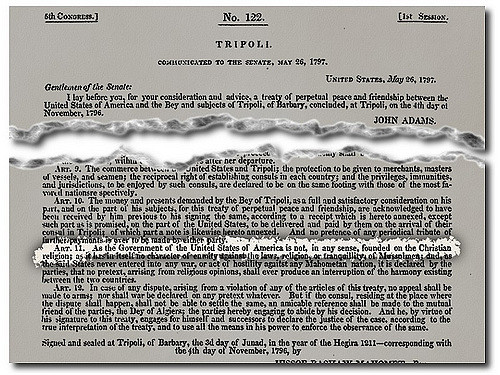
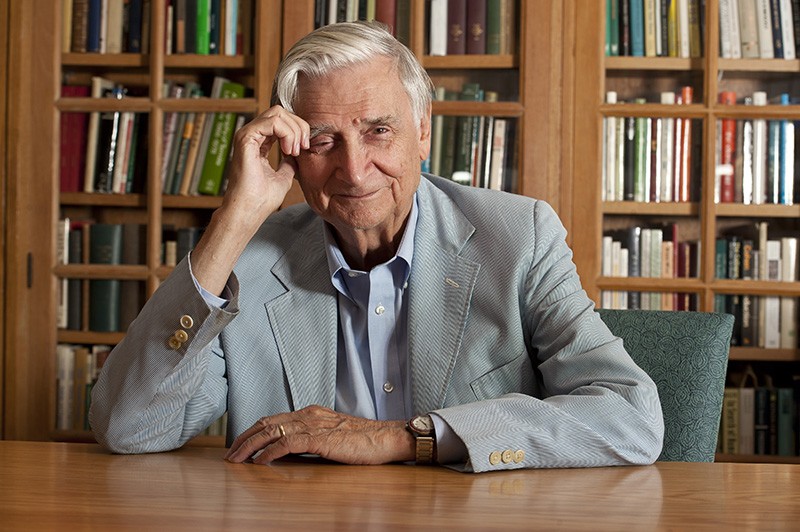









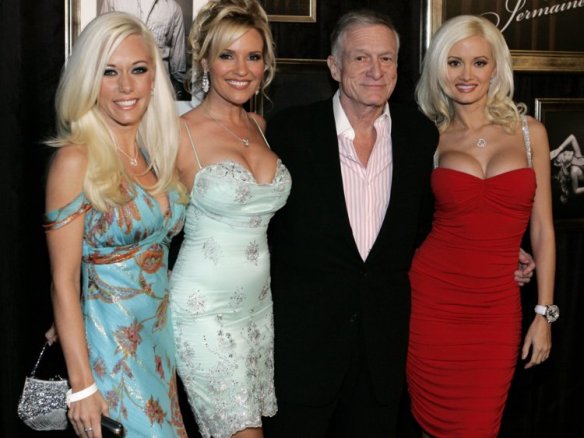


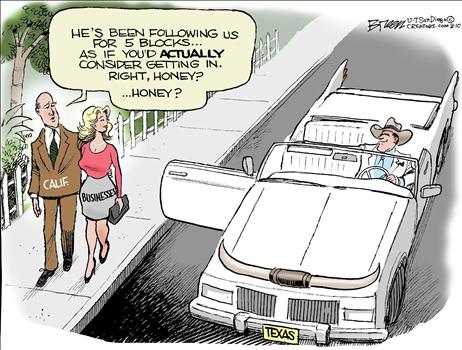

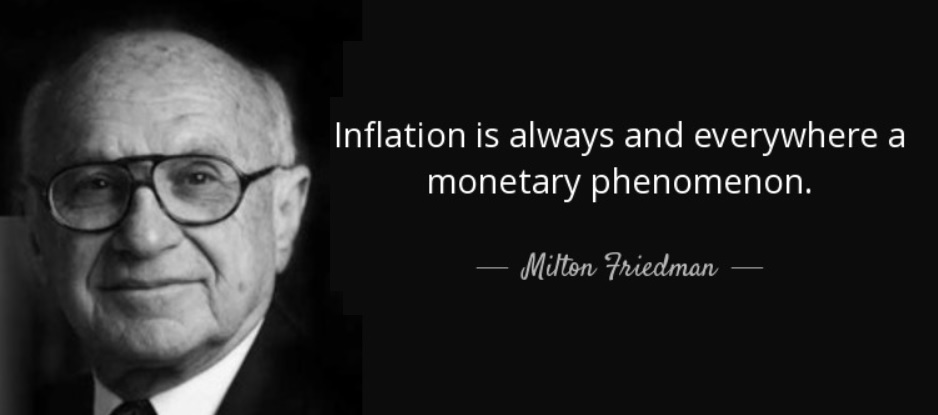
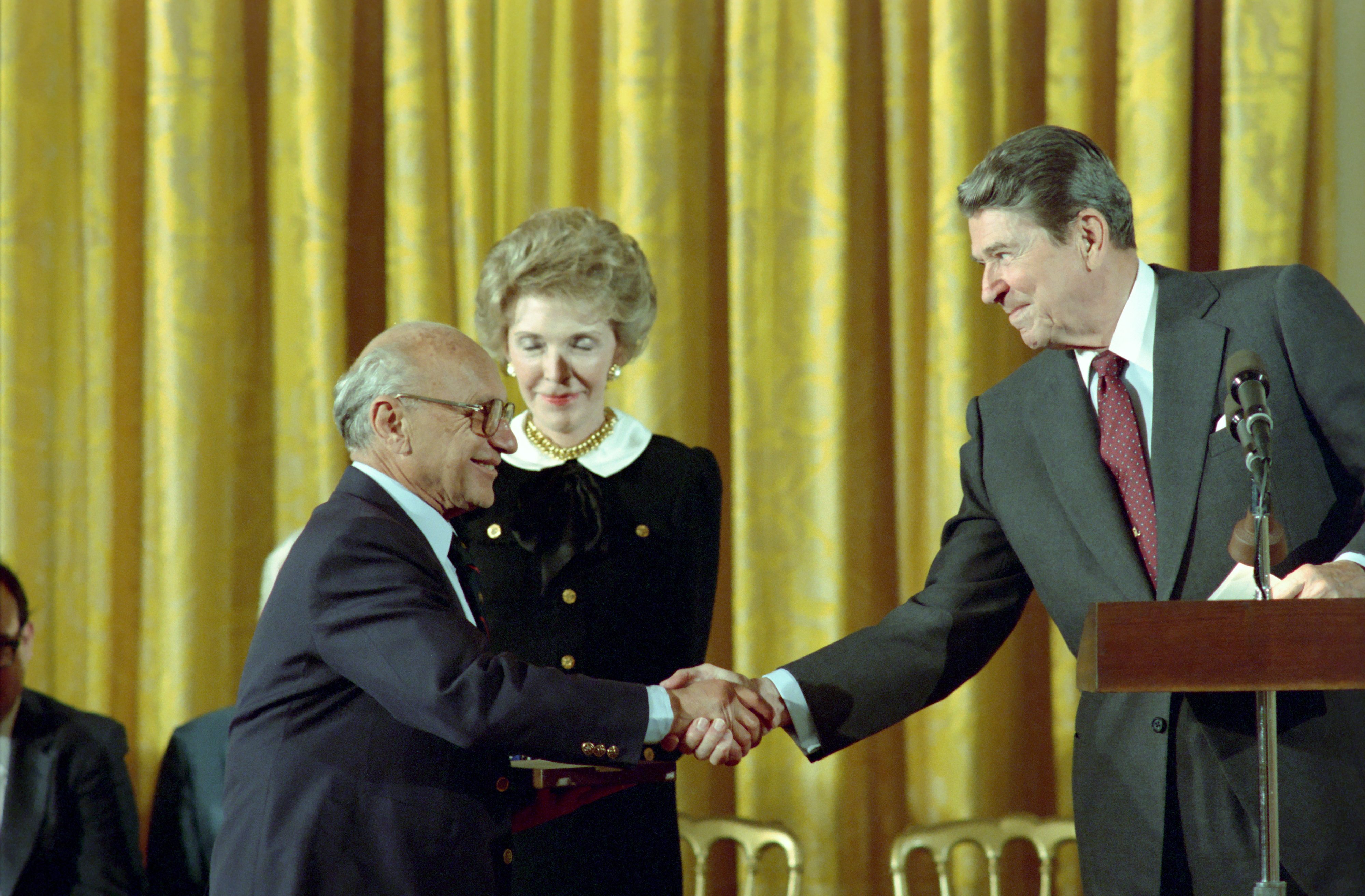


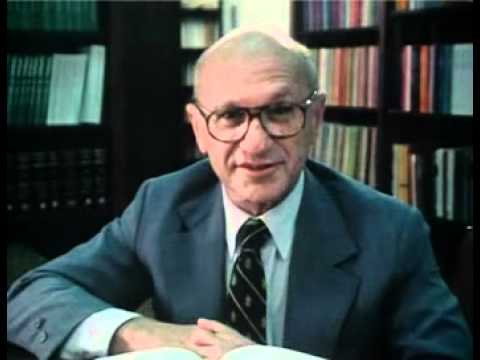







 The Daily Hatch
