

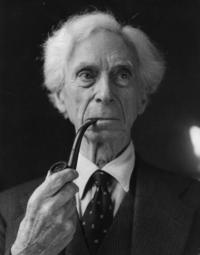
On November 21, 2014 I received a letter from Nobel Laureate Harry Kroto and it said:
…Please click on this URL http://vimeo.com/26991975
and you will hear what far smarter people than I have to say on this matter. I agree with them.
Harry Kroto
__
Harry Kroto

I have attempted to respond to all of Dr. Kroto’s friends arguments and I have posted my responses one per week for over a year now. Here are some of my earlier posts:
Arif Ahmed, Sir David Attenborough, Mark Balaguer, Horace Barlow, Michael Bate, Patricia Churchland, Aaron Ciechanover, Noam Chomsky,Alan Dershowitz, Hubert Dreyfus, Bart Ehrman, Stephan Feuchtwang, David Friend, Riccardo Giacconi, Ivar Giaever , Roy Glauber, Rebecca Goldstein, David J. Gross, Brian Greene, Susan Greenfield, Stephen F Gudeman, Alan Guth, Jonathan Haidt, Theodor W. Hänsch, Brian Harrison, Hermann Hauser, Roald Hoffmann, Bruce Hood, Herbert Huppert, Gareth Stedman Jones, Steve Jones, Shelly Kagan, Michio Kaku, Stuart Kauffman, Lawrence Krauss, Harry Kroto, George Lakoff, Elizabeth Loftus, Alan Macfarlane, Peter Millican, Marvin Minsky, Leonard Mlodinow, Yujin Nagasawa, Alva Noe, Douglas Osheroff, Jonathan Parry, Saul Perlmutter, Herman Philipse, Carolyn Porco, Robert M. Price, Lisa Randall, Lord Martin Rees, Oliver Sacks, John Searle, Marcus du Sautoy, Simon Schaffer, J. L. Schellenberg, Lee Silver, Peter Singer, Walter Sinnott-Armstrong, Ronald de Sousa, Victor Stenger, Barry Supple, Leonard Susskind, Raymond Tallis, Neil deGrasse Tyson, .Alexander Vilenkin, Sir John Walker, Frank Wilczek, Steven Weinberg, and Lewis Wolpert,
_
In the first video below in the 14th clip in this series are his words and I will be responding to them in the next few weeks since Sir Bertrand Russell is probably the most quoted skeptic of our time, unless it was someone like Carl Sagan or Antony Flew.
50 Renowned Academics Speaking About God (Part 1)
Another 50 Renowned Academics Speaking About God (Part 2)
A Further 50 Renowned Academics Speaking About God (Part 3)
__
Quote from Bertrand Russell:
Q: Why are you not a Christian?
Russell: Because I see no evidence whatever for any of the Christian dogmas. I’ve examined all the stock arguments in favor of the existence of God, and none of them seem to me to be logically valid.
Q: Do you think there’s a practical reason for having a religious belief, for many people?
Russell: Well, there can’t be a practical reason for believing what isn’t true. That’s quite… at least, I rule it out as impossible. Either the thing is true, or it isn’t. If it is true, you should believe it, and if it isn’t, you shouldn’t. And if you can’t find out whether it’s true or whether it isn’t, you should suspend judgment. But you can’t… it seems to me a fundamental dishonesty and a fundamental treachery to intellectual integrity to hold a belief because you think it’s useful, and not because you think it’s true._
Bertrand Russell’s Greatest Paradox was His Faith
Bertrand Russell was a British philosopher, logician, mathematician, and social critic. He is recognized as one of the most important logicians of the 20th Century. He is also credited for showing that the naive set theory created by Georg Cantor leads to a contradiction. This is known as “Russell’s paradox.”
Seemingly unbeknownst to Russell however, his greatest paradox was actually his faith. He was a man who placed absolute faith in the doctrine of uncertainty. He rejected the notion of absolute truth, except when it came to his firm belief in his doctrine of doubt. Russell explained it this way: “In all affairs it’s a healthy thing now and then to hang a question mark on the things you have long taken for granted.” Jesus, on the other hand, taught his disciples to always rest certain of His Word and His love for them. Russell taught people to reject any sense of certainty. He said, “I would never die for my beliefs because I might be wrong.” That worship of uncertainty was Russell’s undoing and his ultimate paradox.
On March 6, 1927, he delivered a lecture entitled, “Why I Am Not a Christian.” It is a revealing presentation which clearly shows the difference between the mind of natural man and the enlightened mind of a Christian believer. In this lecture, Russell accused religion of being “based primarily and mainly upon fear.” Not only was he mistaken on that account, but ironically he was the one actually basing his own philosophy on the fear of being wrong. He was terrified to place absolute trust in something because in his mind, it might eventually be proven false. That fear kept him bound in chains to his skepticism. This is where his longing for rationality made him irrational. He was the poster child for fear-based living. It consumed him. It enslaved him. And it motivated him to reject Christ.
Interestingly, Russell’s doubts led him to place tremendous confidence in his own intelligence. It is a very proud and misguided position. As the Scripture says, “There is a way that seems right to a man, but in the end it leads to death.” (Proverbs 14:12) For Russell, the world needs man much more than man needs God. In explaining why he was not a Christian, he said the world “needs hope for the future, not looking back all the time toward a past that is dead, which we trust will be far surpassed by the future that our intelligence can create.”
Christians trust in Jesus Christ as their personal Savior. Bertrand Russell trusted in his intelligence as his personal savior. The problem is that his savior cannot truly save. His savior is very weak when compared to God. His savior is limited to human reason and man’s understanding. There is a higher level of reason which man desperately needs to acquire. This higher level of sanctified reason is only reached after you trust Jesus Christ to forgive your sins and save your soul. Up until that point, man is basing his conclusions on a limited amount of information and an uninspired level of human reason. “For the foolishness of God is wiser than man’s wisdom, and the weakness of God is stronger than man’s strength.” (1 Corinthians 1:25)
No wonder Russell, amidst all of his intelligence, never found any ultimate satisfaction in life. He repeatedly refused to humble himself before the Lord. Yet he found himself often trying to explain away the very God which he argued wasn’t needed or real. He had made a conscious decision during his teenage years to reject God and the Bible once and for all. From that period forward, it was obvious that Russell had an axe to grind with God. There was a chip on his shoulder and Jesus Christ was one of his favorite targets.
In fact, Russell went so far as to say: “Historically it is quite doubtful whether Christ ever existed at all, and if he did we do not know anything about him.” It is astounding that a man with his intellect could be so ignorant regarding the historicity of Jesus of Nazareth. That is how far into the realm of irrationality he was driven by his doctrine of uncertainty. It is truly mind-boggling.
His rejection of Christ was very much related to his denial of his own sinful condition. In his 1927 lecture he said, “When you hear people in church debasing themselves and saying that they are miserable sinners, and all the rest of it, it seems contemptible and not worthy of self-respecting human beings.”
Rather than it being an illuminated insight, Russell’s rejection of personal sin was his Achilles’ heel. He respected himself too much to bring himself to admit before God that he was a sinner and in need of salvation. In the end, his deep struggle was not really an intellectual one. It was a moral struggle. It was a moral refusal to admit fault, blame, sin, and the need for God to save him. Therefore, he resorted to trusting his own intelligence to save him not from sin, but from fear. Even then, Russell found that his savior could not deliver him from the very thing he dreaded the most.
By the end of his earthly journey, Russell’s savior left him no different than before. He was just as fearful, if not more so. If any rational person today wants to see where “self-respecting intelligence” ultimately leads, just examine Bertrand Russell. No real hope. No real peace. And absolutely no certainty. A mind is a beautiful thing to waste. And it sure makes a sorry excuse for a savior.
Bertrand Russell was a walking paradox. His life was a permanent contradiction. He ended up doing the very thing he was most afraid of doing, and he trusted in something which he should have known would fail him. His pride blinded him to the contradiction that was his life. It became an infinite loop. A mathematician of Russell’s caliber should have been able to recognize such a thing. This loop has continued for him beyond the grave. His worst fears have now been realized.
In fear he ran from fear. In fear he also ran from God. In so doing, Russell became locked in his own mental contradiction. He couldn’t, or wouldn’t, get out of it. He lived and died without trusting in the One Person who could have delivered him from his paradoxical and misplaced faith. What a sad life and tragic end for a man who had so much human potential. If anyone could ever have been saved by logic alone, it was Bertrand Russell.
God said, “I will destroy the wisdom of the wise; the intelligence of the intelligent I will frustrate.” (1 Corinthians 1:19) Bertrand Russell experienced that frustration more than most. Unfortunately, his life’s message was seen as foolishness from the grandstand of heaven. The message of heaven is only understood by those who become humble before their Creator. “For the message of the cross is foolishness to those who are perishing, but to us who are being saved it is the power of God.” (1 Corinthians 1:18)
Bertrand Russell was too proud to allow himself to be “saved” from anything, least of all his sin before a holy God. He rejected that doctrine as being beneath his dignity and mental superiority. After all, he was Bertrand Russell. Even his four wives and many mistresses over the years seemed to do little if anything to ever make him feel personally guilty for any wrongdoing. He was too self-absorbed to sincerely love God or to truly love a woman. “He seemed detached in mind and body,” one mistress wrote, “but all the furies of hell raged in his eyes.”
With God out of the way, Russell felt free to explore relationships with many women without being burdened down by any absolute set of sexual ethics. His lustful romantic relationships were every bit as paradoxical as his faith in the doctrine of uncertainty. In fact, they fed off each other and fueled even more exploration and an unwillingness to make a lifetime commitment to one woman or to God’s one set of values. At the end of the day, the driving forces of his life were passionate sex with multiple partners and passionate uncertainty in multiple disciplines.
Bertrand Russell is a classic example of how radical skeptics come and go. Meanwhile, “God looks down from heaven on the sons of men to see if there are any who understand, any who seek God.” (Psalm 53:2) When will man wise up and recognize the limitations and contradictions of his own intelligence?
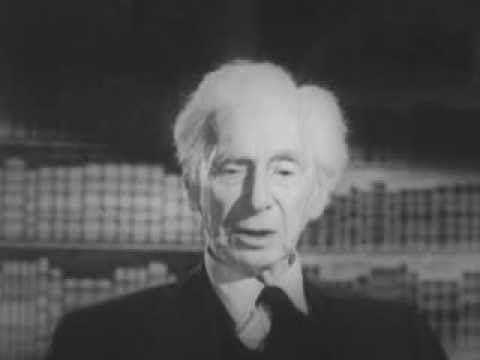
Bertrand Russell pictured above and Francis Schaeffer below:

Francis Schaeffer noted in his book HOW SHOULD WE THEN LIVE? (p. 182 in Vol 5 of Complete Works) in the chapter The Breakdown in Philosophy and Science:
In his lecture at Acapulco, George Wald finished with only one final value. It was the same one with which English philosopher Bertrand Russell (1872-1970) was left. For Wald and Russell and for many other modern thinkers, the final value is the biological continuity of the human race. If this is the only final value, one is left wondering why this then has importance.
Now having traveled from the pride of man in the High Renaissance and the Enlightenment down to the present despair, we can understand where modern people are. They have no place for a personal God. But equally they have no place for man as man, or for love, or for freedom, or for significance. This brings a crucial problem. Beginning only from man himself, people affirm that man is only a machine. But those who hold this position cannot live like machines! If they could, there would have been no tensions in their intellectual position or in their lives. But even people who believe they are machines cannot live like machines, and thus they must “leap upstairs” against their reason and try to find something which gives meaning to life, even though to do so they have to deny their reason.
Francis Schaeffer in another place worded it like this:
The universe was created by an infinite personal God and He brought it into existence by spoken word and made man in His own image. When man tries to reduce [philosophically in a materialistic point of view] himself to less than this [less than being made in the image of God] he will always fail and he will always be willing to make these impossible leaps into the area of nonreason even though they don’t give an answer simply because that isn’t what he is. He himself testifies that this infinite personal God, the God of the Old and New Testament is there.
We all know deep down that God exists and even atheists have to grapple with that knowledge.
Solomon wisely noted in Ecclesiastes 3:11 “God has planted eternity in the heart of men…” (Living Bible). No wonder Bertrand Russell wrote in his autobiography, “It is odd, isn’t it? I feel passionately for this world and many things and people in it, and yet…what is it all? There must be something more important, one feels, though I don’t believe there is. I am haunted. Some ghosts, for some extra mundane regions, seem always trying to tell me something that I am to repeat to the world, but I cannot understand that message.”
Take a look at this 7th episode from Schaeffer’s series “HOW SHOULD WE THEN LIVE? The Age of Nonreason”:
How Should We Then Live – Episode Seven – 07 – Portuguese Subtitles
_
Instead of making a leap into the area of nonreason the better choice would be to investigate the claims that the Bible is a historically accurate book and that God created the universe and reached out to humankind with the Bible.
The Bible and Archaeology – Is the Bible from God? (Kyle Butt 42 min)
You want some evidence that indicates that the Bible is true? Here is a good place to start and that is taking a closer look at the archaeology of the Old Testament times. Is the Bible historically accurate? Here are some of the posts I have done in the past on the subject: 1. The Babylonian Chronicle, of Nebuchadnezzars Siege of Jerusalem, 2. Hezekiah’s Siloam Tunnel Inscription. 3. Taylor Prism (Sennacherib Hexagonal Prism), 4. Biblical Cities Attested Archaeologically. 5. The Discovery of the Hittites, 6.Shishak Smiting His Captives, 7. Moabite Stone, 8. Black Obelisk of Shalmaneser III, 9A Verification of places in Gospel of John and Book of Acts., 9B Discovery of Ebla Tablets. 10. Cyrus Cylinder, 11. Puru “The lot of Yahali” 9th Century B.C.E., 12. The Uzziah Tablet Inscription, 13. The Pilate Inscription, 14. Caiaphas Ossuary, 14 B Pontius Pilate Part 2, 14c. Three greatest American Archaeologists moved to accept Bible’s accuracy through archaeology.,
____
Related posts:
WOODY WEDNESDAY John Piippo makes the case that Bertrand Russell would have loved Woody Allen because they both were atheists who don’t deny the ramifications of atheism!!!
Top 10 Woody Allen Movies __________ John Piippo makes the case that Bertrand Russell would have loved Woody Allen because they both were atheists who don’t deny the ramifications of atheism!!! Monday, August 06, 2012 (More On) Woody Allen’s Atheism As I wrote in a previous post, I like Woody Allen. I have long admired his […]
John Piippo makes the case that Bertrand Russell would have loved Woody Allen because they both were two atheists who don’t deny the ramifications of atheism!!!
______ Top 10 Woody Allen Movies PBS American Masters – Woody Allen A Documentary 01 PBS American Masters – Woody Allen A Documentary 02 __________ John Piippo makes the case that Bertrand Russell would have loved Woody Allen because they both were two atheists who don’t deny the ramifications of atheism!!! Monday, August 06, 2012 […]
Bertrand Russell v. Frederick Copleston debate transcript (Part 4)
THE MORAL ARGUMENT BERTRAND RUSSELL But aren’t you now saying in effect, I mean by God whatever is good or the sum total of what is good — the system of what is good, and, therefore, when a young man loves anything that is good he is loving God. Is that what you’re […]
Bertrand Russell v. Frederick Copleston debate transcript (Part 3)
Great debate Fr. Frederick C. Copleston vs Bertrand Russell – Part 1 Uploaded by riversonthemoon on Jul 15, 2009 BBC Radio Third Programme Recording January 28, 1948. BBC Recording number T7324W. This is an excerpt from the full broadcast from cassette tape A303/5 Open University Course, Problems of Philosophy Units 7-8. Older than 50 years, […]
Bertrand Russell v. Frederick Copleston debate transcript and audio (Part 2)
Uploaded by riversonthemoon on Jul 15, 2009 BBC Radio Third Programme Recording January 28, 1948. BBC Recording number T7324W. This is an excerpt from the full broadcast from cassette tape A303/5 Open University Course, Problems of Philosophy Units 7-8. Older than 50 years, out of UK/BBC copyright. Pardon the hissy audio. It was recorded 51 […]
Bertrand Russell v. Frederick Copleston debate transcript and audio (Part 1)
Fr. Frederick C. Copleston vs Bertrand Russell – Part 1 Uploaded by riversonthemoon on Jul 15, 2009 BBC Radio Third Programme Recording January 28, 1948. BBC Recording number T7324W. This is an excerpt from the full broadcast from cassette tape A303/5 Open University Course, Problems of Philosophy Units 7-8. Older than 50 years, out of […]
Bertrand Russell v. Frederick Copleston debate transcript (Part 4)
THE MORAL ARGUMENT BERTRAND RUSSELL But aren’t you now saying in effect, I mean by God whatever is good or the sum total of what is good — the system of what is good, and, therefore, when a young man loves anything that is good he is loving God. Is that what you’re […]
Bertrand Russell v. Frederick Copleston debate transcript (Part 3)
Fr. Frederick C. Copleston vs Bertrand Russell – Part 1 Uploaded by riversonthemoon on Jul 15, 2009 BBC Radio Third Programme Recording January 28, 1948. BBC Recording number T7324W. This is an excerpt from the full broadcast from cassette tape A303/5 Open University Course, Problems of Philosophy Units 7-8. Older than 50 years, out of […]


 The Daily Hatch