bob dylan plays harmonica on the song I PLEDGE MY HEAD TO HEAVEN on this Keith Green album below
I pledge my head to heaven
Published on Mar 26, 2010
And extremely god fearing text! i’d rather be found dead to love my wife more than he who saved my soul…
Check out the text here:
Well, I pledge my head to heaven for the Gospel,
And I ask no man on Earth to fill my needs.
Like the sparrow up above, I am enveloped in His love,
And I trust Him like those little ones, He feeds.
Well I pledge my wife to heaven, for the Gospel,
Though our love each passing day just seems to grow.
As I told her when we wed, I’d surely rather be found dead,
Than to love her more than the one who saved my soul.
I’m your child, and I want to be in your family forever.
I’m your child, and I’m going to follow you,
No matter whatever the cost, I’m gonna count all things lost.
Well I pledge my son to heaven for the gospel.
Though he’s kicked and beaten, ridiculed and scorn.
I will teach him to rejoice, and lift a thankful praising voice,
And to be like Him who bore the nails and crown of thorns.
I’m your child, and I want to be in your family forever.
I’m your child, and I’m going to follow you,
No matter whatever the cost, I’m gonna count all things lost.
Oh no matter whatever the cost, I’m gonna count all things lost.
Well I’ve had the chance to gain the world, and to live just like a king,
But without your love, it doesn’t mean a thing.
Oh no matter whatever the cost, I’m gonna count all things lost,
Oh no matter whatever the cost, I’m gonna count all things lost.
Well I pledge my son, I pledge my wife, I pledge my head to heaven,
I pledge my son, I pledge my wife, I pledge my head to heaven, for the gospel.
Brooklyn-born Messianic Jew Al Kasha, 75, the double Oscar winning songwriter who in 1978 prayed with Bob Dylan at a Bible study in his Beverly Hills home to receive Christ, believes that Dylan never lost his faith despite many rumors to the contrary.
Bob Dylan made a well-publicized conversion to Christianity, went through a discipleship course at a Southern California Calvary Chapel, and produced three strongly Christian albums, “Slow Train Coming” – written in Kasha’s home — “Saved” and “Shot of Love”.
However, when a fourth “Christian” album failed to materialize in 1983, a rumor was circulated that Dylan had “renounced” his faith.
His new album, “Tempest,” is replete with Christian lyrics, as Kasha notes: “I am absolutely thrilled that Bob has shown through this new record that he has never lost God’s calling in life,” he said. “He’s never given up.
“I get upset when people think that he has because you don’t write all these songs just out there. It takes time to write them and they’re all about Christ so I’ve said this in the past — the media has hurt rather than helped him.”
Kasha went on to say, “I have known Dylan since 1960 when I was at Columbia as their youngest-ever record producer and they were going to drop him from the label as his first CD only sold 7,000 copies.
“I was 22 years old and they had all of these great artists like Rosemary Clooney, Guy Mitchell as well as Johnny Mathis and Tony Bennett, and when I heard this in a meeting, I stood up and, with my legs shaking, and told all of these veteran record producers, “We can’t drop him. He’s a great song writer and they finally agreed and now the rest is history.”
Despite all of his success, having won two Oscars for the theme songs from The Poseidon Adventure (The Morning After) and The Towering Inferno (We May Never Love Like This Again), (both with Joel Hirschhorn), he had a secret that was destroying his life – he was suffering from agoraphobia.
He told me that it was destroying his life, but then one night, in the bedroom which he woulnd’t leave, he tuned into a late Christian TV show and realized that Jesus was indeed his Messiah. He prayed in his room and gave his life over to Christ and was healed of his agoraphobia.
Not long after, Kasha met up with Jess Moody, pastor of the First Baptist Church of Van Nuys, an independent congregation with some 10,000 members, who Kasha said “was very sensitive to people in Hollywood.” It was Moody who then suggested that Kasha begin studying at theological seminary, and he became an ordained Southern Baptist pastor, and started his weekly Bible study in his home where he would teach with his two Oscars on the piano, as I well know as I often would attend, as would people like Bob Dylan, Donna Summer and Mel Carter.
“We had them all coming along to my home Bible study, and that would include struggling actors and actresses, singers and dancers, but also these big stars as well,” he told me. “At that time, there was no place for them to go so we would try to solve some problems that they were facing that were biblically based.”
He then spoke about Bob Dylan who he said had been told about the study by some friends who had shared about this Jewish man who was teaching about Jesus.
“He came to the house every week for six months. In fact he wrote the album, ‘Slow Train Coming’ in in our house. Bob was, at that time, going through a spiritual search and if you look at his track record as a writer, he was always seeking after Jesus and he finally realized that Jesus was his Savior.”
Kasha said that the night that Dylan prayed the “Sinners Prayer” with him, he was with his friend called Clark Mathias and his wife, Ceil.
I asked Ceil if she could remember what happened and she replied, “I sure do, like it was yesterday. There was an amazing warm feeling in our home and in our hearts, and he [Dylan] just opened up and said [after Al Kasha had asked him if he wanted to receive Jesus into his life], ‘Yes I do, yes I do, yes I do,’ and that was that.”
Al Kasha then added, “And he wrote his whole entire ‘Slow Train Coming’ Album in front of our fireplace.”
Did Bob Dylan ever share those songs with you when he was writing them?
“Yes he did,” said Kasha. “We gave him a key to the house because we were song writers and song writers feel a sense of spirit in a room. You know, Dan, you’re a writer yourself and I am sure you would say, ‘I want to sit where I feel something good.’ So he [Dylan] had a key to our house and we trusted him. I heard the guitar playing some nights but I wouldn’t bother him. It was an incredible experience.”
Kasha added, “He [Dylan] said that he felt out home was ‘spiritually anointed’. So many other people also got saved at our home and I see many of them here tonight for this affair. I could hug every one of them.”
I asked Al Kasha what his all-time favorite of the ones Bob Dylan wrote in his home.
“He has a song called ‘Jesus is Lord’ and I love that one,” he said. “However, there are many that I love and I don’t really want to pick out one because I want everyone to buy the album, but I love a lot of them.”
Kasha said that Bob Dylan was baptized after his conversion in Santa Monica, near Malibu, by people from the Calvary Chapel affiliated church.
“So is Bob Dylan a believer?” I again asked him.
“The answer is yes,” he said firmly, “and I think the world doesn’t like to see someone like him being a believer because he’ll bring other people to the Lord, which he’s done.”
Al Kasha concluded by saying, “Looking back, it is an amazing thing that happened in our home. It’s been all these years and our Bible study eventually wound up seeing people like Donna Summer and Bob Dylan accepting Christ.”
If you would like to know God personally, here are four steps…
_ Washed Out – Within and Without (Full Album) Published on Aug 16, 2013 Within and Without is the 2011 debut album by the artist Washed Out. Track List: 1. “Eyes Be Closed” 00:00 2. “Echoes” 4:48 3. “Amor Fati” 8:56 4. “Soft” 13:23 5. “Far Away” 18:54 6. “Before” 22:55 7. “You and I (Ft. Caroline Polachek)” 27:41 8. “Within and […]
Washed Out – It All Feels Right (Live on KEXP) Washed Out – Eyes Be Closed (Live on KEXP) Published on Feb 8, 2012 Washed Out performs “Eyes Be Closed” live in the KEXP studio. Recorded on 10/11/2011. Host: DJ El Toro Engineer: Kevin Suggs Cameras: Jim Beckmann, Shelly Corbett & Scott Holpainen Editing: Christopher […]
_ Feel It All Around by Washed Out – Portlandia Theme Published on Dec 24, 2011 This is the song Feel It All Around used in the opening for the TV Series on IFC called Portlandia. I claim no rights to the song or any rights to the show. All rights go to IFC, the […]
____________________ Sixteen Candles Final Scene Movie Ending Video if you were here i could deceive you and if you were here you would believe but would you suspect my emotion wandering, yeah do not want a part of this anymore The rain water drips through a crack in the ceiling and i’ll have to spend […]
________ Elvis Presley – Scene from “Viva Las Vegas” (MGM 1964) Elvis & Ann Margret Elvis Presley, Ann Margret – The Lady Loves Me – Viva Las Vegas Come On Everybody – Elvis and Ann-Margret HD. Hollywood Legend Ann-Margret on Faith, Love and Recovery Julie Blim – 700 Club Producer Scott Ross Ann-Margret interview on […]
__ Barry McGuire – Eve Of Destruction Barry McGuire Eve of Destruction [1965] Eve of Destruction (song) From Wikipedia, the free encyclopedia This article needs additional citations for verification. Please help improve this article by adding citations to reliable sources. Unsourced material may be challenged and removed. (April 2010)(Learn how and when to remove this […]
Barry McGuire – Eve Of Destruction Machine Gun by Jimi Hendrix Marvin Gaye ” What’s Going On ” Live 1972 Bob Dylan – Knockin’ On Heaven’s Door “Blowin’ in the Wind” – Bob Dylan | Vietnam War Montage Edwin Starr – War (Original Video – 1969) Uploaded on Dec 6, 2007 Original […]
__ Faces “Stay With Me” The Faces – Had Me A Real Good Time Stay with Me (Faces song) From Wikipedia, the free encyclopedia “Stay with Me” Single by Faces from the album A Nod Is As Good As a Wink… to a Blind Horse B-side “You’re So Rude” (US) “Debris” (Intl.) Released December 1971 […]
__ It is Enough – The Waiting Published on Feb 26, 2014 John 3:16-17 King James Version (KJV) 16,For God so loved the world, that he gave his only begotten Son, that whosoever believeth in him should not perish, but have everlasting life. 17,For God sent not his Son into the world to condemn […]
__ Religious Songs That Secular People Can Love: Bob Dylan, The Byrds, Sam Cooke, Johnny Cash & Your Favorites in Music, Religion| December 15th, 2015 7 Comments There are good reasons to find the onslaught of religious music this time of year objectionable. And yet—though I want to do my part in the War on […]
Entrevista dada a BBC Ingmar Bergman fala de sua vida e sua obra – Legenda em Inglês
Breaking Down Bergman – An interview with Liv Ullmann about Liv & Ingmar
Published on May 18, 2013
Actress Liv Ullmann sat down with Breaking Down Bergman co-host David Friend while at the Montreal World Film Festival to discuss the documentary Liv & Ingmar. The film looks at her relationship with director Ingmar Bergman, and in the interview Ullmann talks about why she decided to participate in the documentary and what Bergman might think of the digital age of cinema.
Breaking Down Bergman is a web series hosted by Friend and Sonia Strimban. Together we are watching the career of the Swedish director from his first film to his last, in order, and discussing their observations. Visit the main channel for more details.
The Silence (Tystnaden) – Breaking Down Bergman – Episode #25
Published on Feb 11, 2013
WARNING: This video contains clips from Bergman’s The Silence which may not be suitable for younger viewers.
Two sisters travel with a young boy by train, but stop midtrip at a hotel as one of the sisters, who is sick, becomes increasingly ill. While at the hotel, the other sister wanders the city and encounters a random man who she has sex with, while the boy spends his time wandering a mostly empty hotel.
All related clips and images are copyrighted and property of their respective owners.
Friend and Strimban are watching the career of the Swedish director from his first film to his last, in order, and discussing their observations. Visit the main channel for more details.
_________________
Woody Allen on Ingmar Bergman (1/2)
Uploaded on Jul 30, 2008
Woody Allen on Ingmar Bergman. Interviewer: Mark Kermode.
_____________________
Woody Allen on Ingmar Bergman (2/2)
Uploaded on Jul 30, 2008
Woody Allen on Ingmar Bergman. Interviewer: Mark Kermode.
________________
The Magician (Ansiktet) – Breaking Down Bergman – Episode #20
The world of illusion becomes Bergman’s vision in The Magician, also known as The Face. Hosts David Friend and Sonia Strimban discuss some of the director’s ideas in this film, and disagree on a few of the themes.
All related clips and images are copyrighted and property of their respective owners.
Friend and Strimban are watching the career of the Swedish director from his first film to his last, in order, and discussing their observations. Visit the main channel for more details
________________________
Persona (1/2) (Persona) – Breaking Down Bergman – Episode #27
Published on Mar 25, 2013
A young nurse, a veteran actress, together they make the intellectual puzzle that is Persona, one of Ingmar Bergman’s most acclaimed and complex films. In this two-part episode co-hosts David Friend and Sonia Strimban discuss the film, with the first video focusing on the actresses and their characters.
All related clips and images are copyrighted and property of their respective owners.
Friend and Strimban are watching the career of the Swedish director from his first film to his last, in order, and discussing their observations. Visit the main channel for more details
_______________________
Persona (2/2) (Persona) – Breaking Down Bergman – Episode #27 (Part 2)
Published on Apr 15, 2013
Part 2 of the Persona discussion. A young nurse, a veteran actress, together they make the intellectual puzzle that is Persona, one of Ingmar Bergman’s most acclaimed and complex films. In this two-part episode co-hosts David Friend and Sonia Strimban discuss the film, with the second video focusing on the origins of the film and its themes.
All related clips and images are copyrighted and property of their respective owners.
Friend and Strimban are watching the career of the Swedish director from his first film to his last, in order, and discussing their observations. Visit the main channel for more details
_____________________
Cries and Whispers (Viskningar och rop) – Breaking Down Bergman – Episode #33
Published on Feb 3, 2014
Three sisters reunite when one of them is stricken with cancer, and the process unearths emotions between them that have been long repressed. Ingmar Bergman’s richly coloured film is at times one of his most epic in scale and intimate in performance. Co-hosts David Friend and Sonia Strimban discuss numerous angles of the film, including how it ties to others like Brink of Life, and how the colour palette of the production influences the storyline.
Friend and Strimban are watching the career of the Swedish director from his first film to his last, in order, and discussing their observations. Visit the main channel for more details.
All related clips and images are copyrighted and property of their respective owners.
_________________
Breaking Down Bergman – An interview with Liv Ullmann about Liv & Ingmar
Published on May 18, 2013
Actress Liv Ullmann sat down with Breaking Down Bergman co-host David Friend while at the Montreal World Film Festival to discuss the documentary Liv & Ingmar. The film looks at her relationship with director Ingmar Bergman, and in the interview Ullmann talks about why she decided to participate in the documentary and what Bergman might think of the digital age of cinema.
Breaking Down Bergman is a web series hosted by Friend and Sonia Strimban. Together we are watching the career of the Swedish director from his first film to his last, in order, and discussing their observations. Visit the main channel for more details.
Hour of the Wolf (Vargtimmen) – Breaking Down Bergman – Episode #28
Published on Jul 15, 2013
A dark and mysterious tale of an artist’s slow descent into madness is rife with uncertainties, questionable truths and plenty of surprises. David Friend and Sonia Strimban discuss the film and try to decode some of its more confusing aspects.
All related clips and images are copyrighted and property of their respective owners.
Friend and Strimban are watching the career of the Swedish director from his first film to his last, in order, and discussing their observations. Visit the main channel for more details
___________
Wild Strawberries (1/2) (Smultronstället) Breaking Down Bergman – Episode #18 Part 1
After Bergman stunned audiences and critics with The Seventh Seal, he delivers another classic with Wild Strawberries. Hosts David Friend and Sonia Strimban discuss the film in two parts, first looking at the actors and the structure of the film.
All related clips and images are copyrighted and property of their respective owners.
Friend and Strimban are watching the career of the Swedish director from his first film to his last, in order, and discussing their observations. Visit the main channel for more details.
_________________
Wild Strawberries (2/2) (Smultronstället) Breaking Down Bergman – Episode #18 Part 2
Hosts David Friend and Sonia Strimban look at Ingmar Bergman’s use of dreams in Wild Strawberries. The second part of the two-part discussion also focuses on the use of mirrors as imagery in the film, one of Bergman’s trademarks.
All related clips and images are copyrighted and property of their respective owners.
Friend and Strimban are watching the career of the Swedish director from his first film to his last, in order, and discussing their observations. Visit the main channel for more details.
___________________
The Seventh Seal (1/3) (Det sjunde inseglet) – Breaking Down Bergman – Episode #17
Ingmar Bergman’s most recognized (and likely most parodied) film is broken down into three parts for this discussion. In part one, hosts David Friend and Sonia Strimban look at the origins of the film, setting the scene for the debates that follow in the two subsequent videos, which are linked.
All related clips and images are copyrighted and property of their respective owners.
Friend and Strimban are watching the career of the Swedish director from his first film to his last, in order, and discussing their observations. Visit the main channel for more details.
________________
The Seventh Seal (2/3) (Det sjunde inseglet) – Breaking Down Bergman – Episode #17 Part 2
The second part of the discussion on Ingmar Bergman’s most recognized film takes on what most Breaking Down Bergman episodes find most important, the meaning and symbolism behind the film. Hosts David Friend and Sonia Strimban focus particularly on religion and how it relates to the characters, but also take a moment to ponder the wild strawberries that make a curious appearance in one scene.
All related clips and images are copyrighted and property of their respective owners.
Friend and Strimban are watching the career of the Swedish director from his first film to his last, in order, and discussing their observations. Visit the main channel for more details.
_____________
The Seventh Seal (3/3) (Det sjunde inseglet) – Breaking Down Bergman – Episode #17 Part 3
The final episode on The Seventh Seal looks at the importance of this legendary film in modern cinema, and whether it still resonates with today’s audiences in the same way it did during its initial release. Hosts David Friend and Sonia Strimban also talk about how Bergman’s film changed the way we watch movies.
All related clips and images are copyrighted and property of their respective owners.
Friend and Strimban are watching the career of the Swedish director from his first film to his last, in order, and discussing their observations. Visit the main channel for more details
_____________________
__________________
_____________
_____________
Francis Schaeffer below in his film series shows how this film was appealing to “nonreason” to answer our problems.
In the book HOW SHOULD WE THEN LIVE? Schaeffer notes:
Especially in the sixties the major philosophic statements which received a wide hearing were made through films. These philosophic movies reached many more people than philosophic writings or even painting and literature. Among these films were THE LAST YEAR AT MARIENBAD by Alain Resnais (1961), THE SILENCE by Ingmar Bergman (1967), JULIET OF THE SPIRITS by Federico Fellini (1965), BLOW UP by Michelangelo Antonioni (1966), BELLE DE JOUR by Luis Bunuel (1967), and THE HOUR OF THE WOLF by Ingmar Bergman (1967).
They showed pictorially (and with great force) what it is like if man is a machine and also what it is like if man tries to live in the area of non-reason. In the area of non-reason man is left without categories. He has no way to distinguish between right and wrong, or even between what is objectively true as opposed to illusion or fantasy….One could view these films a hundred times and there still would be no way to be sure what was portrayed as objectively true and what was part of a character’s imagination. if people begin only from themselves and really live in a universe in which there is no personal God to speak, they have no final way to be sure of the difference between reality and fantasy or illusion.
But Bergman (like Sartre, Camus, and all the rest) cannot really live with his own position. Therefore in The Silence the background music is Bach’s Goldberg Variations. When he was asked in the filmed interview about music, he said that there is a small holy part of the human being where music speaks. Bergman also said that while he was writing the script for the film SILENCE that he had the music of Bach’s Goldberg Variations playing in his home and the music interfered with that which was being set forth in that film (pp. 201-203).
“
____________________
__________
The above clip is from the film series by Francis Schaeffer “How should we then live?” Below is an outline of the 8th episode on the Impressionists and the age of Fragmentation. The third part discusses surrealist films like Belle de Jour that mixes our reality with our day dreams.
AGE OF FRAGMENTATION
I. Art As a Vehicle Of Modern Thought
A. Impressionism (Monet, Renoir, Pissarro, Sisley, Degas) and Post-Impressionism (Cézanne, Van Gogh, Gauguin, Seurat): appearance and reality.
1. Problem of reality in Impressionism: no universal.
2. Post-Impression seeks the universal behind appearances.
3. Painting expresses an idea in its own terms as a work of art; to discuss the idea in a painting is not to intellectualize art.
4. Parallel search for universal in art and philosophy; Cézanne.
B. Fragmentation.
1. Extremes of ultra-naturalism or abstraction: Wassily Kandinsky.
2. Picasso leads choice for abstraction: relevance of this choice.
3. Failure of Picasso (like Sartre, and for similar reasons) to be fully consistent with his choice.
C. Retreat to absurdity.
1. Dada , and Marcel Duchamp: art as absurd. (Dada gave birth to Surrealism).
2. Art followed philosophy but came sooner to logical end.
3. Chance in his art technique as an art theory impossible to practice: Pollock.
II. Music As a Vehicle of Modern Thought
A. Non-resolution and fragmentation: German and French streams.
1. Influence of Beethoven’s last Quartets.
2. Direction and influence of Debussy.
3. Schoenberg’s non-resolution; contrast with Bach.
4. Stockhausen: electronic music and concern with the element of change.
B. Cage: a case study in confusion.
1. Deliberate chance and confusion in Cage’s music.
2. Cage’s inability to live the philosophy of his music.
C. Contrast of music-by-chance and the world around us.
1. Inconsistency of indulging in expression of chaos when we acknowledge order for practical matters like airplane design.
2. Art as anti-art when it is mere intellectual statement, divorced from reality of who people are and the fullness of what the universe is.
III. General Culture As the Vehicle of Modern Thought
A. Propagation of idea of fragmentation in literature.
1. Effect of Eliot’s Wasteland and Picasso’s Demoiselles d’ Avignon
compared; the drift of general culture.
2. Eliot’s change in his form of writing when he became a Christian.
3. Philosophic popularization by novel: Sartre, Camus, de Beauvoir.
B. Cinema as advanced medium of philosophy.
1. Cinema in the 1960s used to express Man’s destruction: e.g. Blow-up.
2. Cinema and the leap into fantasy:
The Hour of the Wolf, Belle de Jour, Juliet of the Spirits,
The Last Year at Marienbad.
3. Bergman’s inability to live out his philosophy (see Cage):
Silence and The Hour of the Wolf.
IV. Only on Christian Base Can Reality Be Faced Squarely
He created indelible allegories of postwar man adrift without God. He was the movies’ great dramatist of strong, tortured women, and the finest director of actresses. More than any filmmaker, he raised the status of movies to an art form equal to novels and plays. Yet when Ingmar Bergman died on Monday, the popular description of him was: Woody Allen’s favorite director.
What did the domineering Swedish tragedian and the self-depreciating American comedian have in common? Plenty. Both created original scripts from their experiences and obsessions. Both worked fast — at least a movie a year for most of their long careers — and relatively cheap. Both forged long relationships with their sponsoring studios. And Bergman was a strong influence on Allen’s work: from his New Yorker parody of The Seventh Seal, “Death Knocks” (in which the hero plays not chess with Death but gin rummy) to a cameo by a Grim Reaper in Love and Death and, more deeply, the inspiration for the theme and tone of Interiors and Another Woman.
Shooting his new film in Spain, Allen took time out to talk with me about Bergman. We began by remarking on the death, the same day as Bergman’s, of Michelangelo Antonioni — the Italian director of L’Avventura, Eclipse, Blowup and The Passenger, and another prime depicter of modern alienation. — R.C.
RICHARD CORLISS: The insular Swede and the cosmopolitan Italian, dead on the same day.
WOODY ALLEN: Dreadful and astonishing. Two titanic film directors! Everyone here was shocked. Their work lives on, which just means their films are showing in a few places and sold on DVD. But the men are no longer with us, and that is tragic.
R.C.: But Bergman was 89, Antonioni 94. They had a great run, and you have to think they got to say what they had to say.
W.A.: Yes, they were not prematurely taken from our midst. Still, to me, the fact that it happens at all is sad, just terrible, tragic.
R.C.: Your connection with Bergman is well known. Did you know Antonioni at all?
W.A.: I knew him slightly and spent some time with him. He was thin as a wire and athletic and energetic and mentally alert. And he was a wonderful ping-pong player. I played with him; he always won because he had a great reach. That was his game.
R.C.: But it’s fair to say you’re first and foremost a Bergman guy, and that you have been for 50 years. There were a lot of young people in the ’50s who saw Bergman’s films — usually it was The Seventh Seal — and were overwhelmed with an almost religious conversion. And the doctrine of this religion was that film was an art.
W.A.: I agree. For me it was Wild Strawberries. Then The Seventh Seal and The Magician. That whole group of films that came out then told us that Bergman was a magical filmmaker. There had never been anything like it, this combination of intellectual artist and film technician. His technique was sensational.
R.C.: After long admiring Bergman, you finally met him, through Liv Ullmann, who had starred in many of his films and lived with him for a few years.
W.A.: He and I had dinner in his New York hotel suite; it was a great treat for me. I was nervous, I really didn’t want to go. But he was not at all what you might expect: the formidable, dark, brooding genius. He was a regular guy. He commiserated with me about low box-office grosses and women and having to put up with studios.
Later, he’d speak to me by phone from his oddball little island [Faro, where Bergman lived his last 40 years]. He confided about his irrational dreams: for instance, that he would show up on the set and not know where to put the camera and be completely panic-stricken. He’d have to wake up and tell himself that he is an experienced, respected director and he certainly does know where to put the camera. But that anxiety was with him long after he had created 15, 20 masterpieces.
R.C.: You knew he was Ingmar Bergman, but maybe he didn’t. He didn’t get to view his reputation from the outside.
W.A.: Exactly. The world saw him as a genius, and he was worrying about the weekend grosses. Yet he was plain and colloquial in speech, not full of profound pronunciamentos about life. Sven Nykvist [his cinematographer] told me that when they were doing all those scenes about death and dying, they’d be cracking jokes and gossiping about the actors’ sex lives.
R.C.: You worked with Nykvist on four films. And you seem to share Bergman’s work ethic.
W.A.: I copied some of that from him. I liked his attitude that a film is not an event you make a big deal out of. He felt filmmaking was just a group of people working. At times he made two and three films in a year. He worked very fast; he’d shoot seven or eight pages of script at a time. They didn’t have the money to do anything else.
R.C.: One reason that boys of a certain age were enthralled by Bergman’s films was that he had some of the world’s most beautiful and powerful actresses in his repertory company: Eva Dahlbeck, Harriet and Bibi Andersson, Ingrid Thulin, Gunnel Lindblom, Liv Ullmann, Lena Olin. These were major mesmerizers, and they all worked for him.
W.A.: He was obsessed with faces and had a wonderful way with women. He had an affinity for women that Tennessee Williams did. Some kind of closeness he felt. Their problems obsessed him.
R.C.: One difference there is that Tennessee Williams didn’t sleep with his leading ladies. Bergman was a famously imperious charmer, and had long liaisons with Harriet Andersson, then Bibi Andersson, then Liv Ullmann. There was a rumor that all seven actresses in his film All These Women were former Bergman mistresses.
W.A.: That would not surprise me because, as I heard it from Sven, that’s the way it was there. There was an enormous amount of socializing, and sexual and romantic escapades. It was a lighter situation than you would think. There’s so much feeling on the screen that you think he had to have a serious life. But he was a ladies’ man. He loved relationships with women.
R.C.: Many film critics assign Bergman to a lower rank because, they say, he makes filmed plays. I don’t see this as a limitation, but wouldn’t you agree that he was essentially a film writer who directed his own work?
W.A.: That could be said of me too. But you must also take a Bergman film like Cries and Whispers where there’s almost no dialogue at all. This could only be done on film. He invented a film vocabulary that suited what he wanted to say, that had never really been done before. He’d put the camera on one person’s face close and leave it there, and just leave it there and leave it there. It was the opposite of what you learned to do in film school, but it was enormously effective and entertaining.
R.C.: OK. So you think he’s great, and I think he’s great. But to many young people — I mean bright, film-savvy kids — he’s Ingmar Who? What relevance do his films have today?
W.A.: I think his films have eternal relevance, because they deal with the difficulty of personal relationships and lack of communication between people and religious aspirations and mortality, existential themes that will be relevant a thousand years from now. When many of the things that are successful and trendy today will have been long relegated to musty-looking antiques, his stuff will still be great.
R.C.: But not many artists worry about God’s silence these days. In the media the current battle is between militant believers and devout atheists. You get very few tortured agnostics.
W.A.: You’re right. That was his obsession. He was brought up religiously [his father was a Lutheran minister] and it wasn’t simply a question of atheism or not. He longed for the possibility of religious phenomenon. That longing tortured him his whole life. But in the end he was a great entertainer. The Seventh Seal, all those films, they grip you. It’s not like doing homework.
R.C.: If someone who hadn’t seen any of his films asked you to recommend just five, what would be your Bergman starter set?
W.A.: The Seventh Seal, Wild Strawberries, The Magician, Cries and Whispers and Persona.
R.C.: Many directors would be happy to have made just those five films.
de Kooning with painting, 1946. Photograph by Harry Bowden, 10x9in. Archives of American Art.
1904 April 24, Willem de Kooning is born in Port of Rotterdam, Holland, to Leendert de Kooning (b. February 10, 1876) and Cornelia Nobel de Kooning (b. March 3, 1877). He has one older sister, Marie (b. 1899). (His mother later gives birth to three more daughters, none of whom live past one year.)
1909 Parents divorce; court awards custody of five-year-old Willem to his father. His mother, however, kidnaps Willem and is later awarded full custody.
1916 Completes grammar school.
1916-1920 Begins training in commercial art under Jan and Jaap Giding, proprietors of a large commercial art firm, with whom he resides. Enrolls in the Academie voor Beeldende Kunsten en Technische Wetenschappen in Brussels, Belgium, attending night classes until 1924, when he graduates with certifications in both carpentry and art.
1920 Leaves the Giddings to begin training with Bernard Romein, noted art director of a large department store in Rotterdam.
1924-1926 Travels to Antwerp and enrolls in the Van Schelling School of Design, commuting to Brussels to study simultaneously at the Académie Royale des Beaux-Arts, supporting himself with commercial work.
The Kiss, 1925. Graphite on paper, 48.3×33.5cm. Allan Stone Gallery, New York City.
1926 Immigrates to United States as a stow-away on the SS Shelly, arriving in Newport News, Virginia on July 30. Takes ship to Boston, Massachusetts, then travels by train to Rhode Island. Settles in Hoboken, New Jersey, and finds lodging at the Dutch Seaman’s Home. Becomes acquainted with other artists and moves to New York City. Works as commercial artist and as a sign-painter, window dresser, and carpenter.
1927 Moves to Manhattan and begins working for Eastman Brothers, a design firm. Meets Misha Reznikoff, who is later instrumental in securing his 1948 summer teaching job at Black Mountain College.
1928 Spends the summer at the artists’ colony in Woodstock, New York.
1929 Becomes associated with modern artists John Graham and Stuart Davis. Buys Capehart hi-fi sound system, spending nearly six months’ salary. Frequents George’s in the Village and the Savoy Ballroom in Harlem with David Margoli and other artists.
1930 Meets David Smith and Arshile Gorky. Moves into studio apartment with Gorky. Works as a window dresser for A.S. Beck, a chain of shoe stores in New York. Meets Virginia “Nini” Diaz, with whom he goes to Woodstock, New York. in late May. Moves to 348 W. 55th Street with Diaz in the autumn; Diaz’s mother moves in. Diaz has first of three abortions, the last in 1935, which leaves her unable to conceive.
1932 Moves to Greenwich Village with Diaz.
1934 Joins Artist’s Union, which leads to attending John Reed Club (a pro- Communist group) meetings, despite his anti-Commuist leanings. Meets Julie Browner in May and begins relationship; Diaz moves out. Returns to Woodstock and rents home with Browner for the summer. Invites Diaz to join them, which she does, resulting in a ménage à trois. Invites Marie Marchowski and her friend to join them; they also move in. Returns to New York City, live at 40 Union Square, a home owned by friend and architect Mac Vogel. Browning returns from Woodstock; she and de Kooning move to 145 West 21st Street, then to 145 West 23rd Street.
1935 Meets Rudy Burckhardt and Edwin Denby, who become first collectors of de Kooning’s work. Begins full-time employment with the mural division of the Works Progress Administration’s Federal Art Project, one of which is the Williamsburg Federal Housing Project in Brooklyn. Makes pivotal decision to devote his life to art, inspired by WPA director Burgoyne Diller. Leaves A.S. Beck to pursue art full time. Meets art critic, Harold Rosenberg. His mother comes to visit.
1936 Moves with Browner to commercially-zoned 156 West 22nd Street. Meets artist Mark Rothko. Unfinished work for the Williamsburg mural is included in group exhibition New Horizons in American Art at the Museum of Modern Art in Manhattan, September 14-October 12; this is his first public recognition in America. Declines participation in the American Abstract Artists group.
1937System and Dialectics of Art, by John Graham, is published, naming de Kooning one of eight painters he considered “outstanding.” Arshile Gorky paints Portrait of Master Bill, a painting of de Kooning. Resigns from the WPA in August when “American citizens only” policy is announced, effective post-July. Begins work on a mural, Medicine, for the World’s Fair on the Hall of Pharmacy building; work on this continues until early 1939.
1938 Browner moves in with Diaz. Meets Elaine Marie Fried, a fellow artist and teacher. Paints a series of male figures, including Two Men Standing, A Man, and Seated Figure. Begins abstractions Pink Landscape and Elegy.
1939 Becomes influenced by the Surrealist style of Gorky and Picasso and the Gestural style of Jackson Pollock and Franz Kline. Suffers financially; tutors local art students. Becomes engaged to Fried. Visits Balcomb Greene in Fishkill. With other artists, petitions the Museum of Modern Art to show the work of Earl Kerkam after his death.
The Glazier, 1940. Oil on canvas, 54×44 in. Metropolitan Museum. Figure.
1940 Alcoholism and poverty are both significant. Becomes identified with the Abstract Expressionist movement. Drawings appear in Harper’s Bazaar. On May 14, his birthplace, Rotterdam, is hit by Germans. Harper’s Bazaar commissions four hairstyle sketches, with Elaine as model, for $75 each.
1941 Attends Miro exhibition. Is influenced by Matta, with whom he and Gorky become friends.
1942 Work is featured in the January 20-February 6 John Graham exhibition at McMillan, Inc. Drawing of a sailor with pipe is used in advertisement for Model Tobacco in Life Magazine.
1943 George Keller promises a one-man show at his Bignou Gallery; de Kooning fails to send sufficient work to exhibit. A group show included Pink Landscape and Elegy; both were bought by Helena Rubenstein for $1,050. Moved to 156 West 22nd Street. In summer, meets Franz Kline at Conrad Marca Relli’s 148 West 4th Street studio. Marries Elaine Fried on December 9. Shortly thereafter, he discovers her in bed with ex-lover, Robert Jonas.
1944Abstract and Surrealist Art in the United States features de Kooning’s work at the Cincinnati Art Museum, February 8 – March 12. After closing, the exhibition moves to the Mortimer Brandt Gallery. Sidney Janis publishes the book, Abstract and Surrealist Art in America.
1945Painting The Netherlands wins competition sponsored by the Container Corporation of America in January. The Wave is shown in the Autumn Salon at Peggy Guggenheim’s Art of This Century exhibition in the fall. Elaine sails to Provincetown with physicist Bill Hardy; de Kooning disapproves. Paints Pink Angels.
1946 Inspired by Pollock and Kline, begins first black-and-white abstracts. Charles Egan opens gallery at 63 East 57th Street. Marie Marchowsky commissions backdrop for a dance performance at New York Times Hall; de Kooning and Resnick collaborate on the project. Rents a studio with Jack Tworkov. Contacts father by letter in November requesting to see him. His father encourages him to seek more stable employment.
Valentine, 1947. Oil and enamel. Museum of Modern Art, New York. Abstract.
1947 Creates the black-and-white painting, Orestes, entitled by Tiger’s Eye magazine.
1948 Charles Egan Gallery arranges first one-man show on April 12, consisting of black-and-white enamels includingPainting, Village, Square & Dark Pond; reviews are favorable. Museum of Modern Art purchases Painting for $700; it is the only sale of the exhibition. Teaches summer session at Black Mountain College in North Carolina. Returns with student Pat Passlof.. Arshile Gorky hangs himself July 21. Elaine has affairs with Charles Egan, a brief fling with Harold Rosenburg, and then an affair withThomas Hess; the latter relationship lasts until the early 1950s. Willem has numerous trysts and involvements.Mailbox is shown at the Whitney’s annual show of American art the fall. Life magazine names de Kooning one of the five “young extremists.”
1949 Meets Mary Abbott; begins affair which extends intermittently until the mid-1950s. Is introduced to projector by Franz Kline; begins series of large canvas abstractions. Gives first public statement at The Subjects of the Artist School. Drinking increases. Rents cottage with Elaine in Provincetown. PaintsSailcloth and Two Women on a Wharf. Sidney Janis Gallery features portrait of de Kooning with Elaine in exhibition.Intrasubjectives exhibition at Samuel M. Kootz Gallery, September 4 – October 3, includes de Kooning. Opens restaurant, The Club, with other artists.
1950 Begins Woman I; at nearly seven feet in height, it is his largest, completes in 1952. Participates with Alfred Barr in the Venice Biennale exhibition of younger American Painters in the U.S. Pavilion, June 8-October 15. Young Painters in the U.S. and France exhibits Woman (1949-1950) at the Sidney Janis Gallery. Joins symposium which writes letter of protest to New York Herald Tribune regarding the national jury of selection for the Metropolitan Museum of Art; group pickets the Museum and refuses to submit work. New York Herald Tribune calls the group “The Irascible Eighteen.” Protest is covered in numerous national magazines. Teaches at Yale School of Art until 1952. Helps title Franz Kline’s first one-man show.
1951Excavation is exhibited in Abstract Painting and Sculpture in America at the Museum of Modern Art, January 23 – March 25. Speaks at symposium organized by the Museum of Modern Art. Holds one-man show at Egan Gallery in April, with limited sales and no proceeds after expenses. Participates inNinth Street Exhibition. Receives financial support from Sidney Janis, contingent upon agreement to call his studio the Janis Gallery. Excavation wins $4,000 first prize in the 60th Annual American Exhibition: Paint and Sculpture at the Art Institute of Chicago. One of 20 artists exhibited in the American Vanguard Art for Paris exhibition at Sidney Janis Gallery, December 26 – January 5, 1952.
1952 Abandons Woman I, but revisits at the urging of art historian Meyer Sharpiro in June; completes in mid-June, but begins reworking in December. Starts several new “Woman” works. Elaine accompanies him to the Hamptons. Moves to 88 East 10th Street; spends much time with Harold Rosenberg. Meets art student Joan Ward, who becomes pregnant; the pregnancy is aborted.
Woman I, 1950. Oil on canvas, 192.7×147.3. Museum of Modern Art, New York.
1953 Officially changes studio name to Janis Gallery. Exhibits small retrospective at the Workshop Center for the Arts in Washington and School of the Museum of Fine Arts in Boston. First show at Sidney Janis Gallery opens in March. Drinking increases, as does continual reworking of paintings.
1954 Participates in Venice Biennale with Excavation; becomes famous as leading Abstract Expressionism artist. Has affair with Marisol Escobar. Rents house in Bridgehampton in the summer with Elaine, Ward, Ludwig Sander, and Franz Kline. Sells pictures to Martha Jackson and uses money for fare for his mother to visit. Begins painting abstract landscapes, using bright “circus colors.”
1955 Joan Ward becomes pregnant.
1956 Ward gives birth to Johanna Lisbeth (Lisa) de Kooning on January 29. Has second one-man show at Sidney Janis Gallery, April 3; the show is a sell-out. Jackson Pollock and Edith Metzger die in car crash August 11. Elaine returns from Europe and joins de Kooning, Ward and Lisa at Martha’s Vineyard.
1957 Has affair with Pollock’s widow, Ruth Kligman. Later has affair with actress Shirley Stoler; allegedly offers her painting, which she refuses. Creates abstract landscapes, continues “Woman” art from 1957- 1961.
Two figures in landscape. Oil. National Galleyr of Australia. Painting.
1958 Takes Ruth Kligman to Cuba in February; they drift apart but reunite and spend early summer at Martha’s Vineyard together. Meets attorney Lee Eastman. Travels to Europe to meet Kligman. Hires Bernard Reis as accountant in May.
1959 Moves studio to 831 Broadway. Monograph on de Kooning by Thomas B. Hess is published by Braziller in New York. Sidney Janis Gallery opens exhibition of new large abstractions on May 4; all pieces sell. Woman series and some urban landscapes are shown at The New American Painting as shown in 8 European Countries 1958-1959 exhibition at the Museum of Modern Art, May 28 – September 8. Buys 4.2 acres in the Springs of Long Island on June 23. Stays with Kligman in Rome from July 28 until January 1960, where he begins working with black enamel mixed with pumice, also produces several collages. Ward moves to San Francisco with Lisa. Work is featured in Sixteen Americans exhibition at the Museum of Modern Art, December 16 – February 17, 1960.
1960 Michael Sonnabend and Robert Snyder make film documentary which features Sketchbook No. 1: Three Americans. Returns from Italy and hires young California artist Dane Dixon as assistant. Grove Press publishes De Kooning, by Harriet Janis and Rudi Blesh. Spends summer in Southhampton. Visits Joan Ward and Lisa in San Francisco; visits galleries and does lithographs in Berkelely. Convinces Ward to return to New York. Drinking escalates.
Waves, 1960. Lithograph, 109x73cm, Yale University Gallery. Print.
1961 Buys more land in the Springs. Has affair with Marina Ospina.
1962 Becomes American citizen. March exhibition at the Sidney Janis Gallery fails. Meets Mera McAlister in March; affair lasts until winter. Sidney Janis allows Allan Stone to handle some small works; Newman- De Kooning, an exhibition of two founding fathers opens at the Allan Stone Gallery at 48 East 86th Street, October 23. The New Realists group show runs October 31 – December 1 at the Sidney Janis Gallery. Elaine paints portrait of President Kennedy for the Harry S. Truman Library.
1963 Moves back to the Springs in March, resides with Ward and Lisa. Later moves to East Hampton, Long Island. PaintsClam Diggers. Begins affair with neighbor Susan Brockman in the summer; moves in with Brockman and her friend, Clare Hooten. Later moves with Brockman to cottage on Barnes Landing, then to house owned by Bernice D’Vorazon. Later stays with John and Rae Ferren, then rents home near studio on Woodbine Drive. Splits from Brockman, but reunites in winter. Is hospitalized for alcoholism, but drinks again after release. Produces only one painting, Two Standing Women.
1964 Plans 1968 retrospective with Eduard de Wilde from the Stedelijk Museum in Holland. Ward and Lisa move to 3rd Avenue apartment. Receives the Presidential Medal of Freedom in September. Becomes friends with art collector Joseph Hirshhorn. Harold Rosenberg writes profile for Vogue magazine.
1965 The Institute of Contemporary Art features de Kooning inThe Decisive Years, 1943 to 1953, exhibiting January 13 – February 19. Ends relationship with Sidney Janis, resulting in multiple lawsuits. Rents cottage with Brockman in the spring; relationship ends shortly thereafter. Accepts retrospective at Smith College, April 8 – May 2. Gives paintings to Ward and Lisa; draws up will, leaving most of his money to Lisa. Personal assistant John McMahon becomes part-time employee; Michael Wright is hired. Intermittent hospitalizations for alcoholism. Has affair with Molly Barnes. Police Gazette sells for $37,000, October 13.
1966 Enters Southampton Hospital for alcoholism in January. Attends Lisa’s birthday party in New York. Becomes involved with anti-war protests, grows hair. Draws Women Singing I,Women Singing II, and Screaming Girls.
1967 Walker and Company publishes 24 charcoal drawings produced in 1966. Joins prestigious New York gallery M. Knoedler and Company to start contemporary art department. Eastman negotiates $100,000 annual guarantee for first refusal of work. Provides 22 additional paintings on August 4, including several of the Women on the Sign series. Ward and Lisa return to the Springs. First exhibition at M. Knoedler and Company opens November 10; works include Woman Sag Harbour, Woman Accobanac, Woman Springs, and Woman, Montaulk. Despite negative reviews, some sell. Enters Southampton Hospital for alcoholism in December.
1968 Michael Wright resigns. Visits Europe, returns to Holland for major retrospective at Stedelijk Museum in Amsterdam, accompanied by Ward, Lisa, and Leo Cohan. (Exhibition begins there September 18, travels to London on December 8, then New York, March 5 – April 26, 1969.) Sees sister, Marie, and step-brother, Koos Lassoy; they visit their mother September 19, who dies October 8. Has car crash on Thanksgiving after drinking, he and Ward survive.
1969 Retrospect of 147 paintings, pastels, collages and drawings is held at the Museum of Modern Art, March 5 – April 26, to mixed reviews. Begins renovations of home with Ward in spring. Takes Brockman to Italy in summer; upon return, stays with her and visits Ward and Lisa. Begins sculpting in bronze. Hires David Christian to make enlarged experimental version of previous small work, Seated Woman.
1970 Visits Japan. Works on lithography; produces Love to Wakako and Mr. and Mrs. Krishner. Has affair with Emilie (Mimi) Kilgore in August; proclaims true love.
Minnie Mouse, 1971. Lithograph, National Gallery of Art, Washington, D.C. Print.
Landscape at Stanton Street, 1971. Lithograph, 75.8x56cm. Art Gallery of New South Wales. Print.
1971 Sculpts Clam Digger. Moves back into studio in August. Exhibits Seven by de Kooning at the Museum of Modern Art in December.
1972 Takes Mimi to attend the Venice Bienne in June. Has final exhibition at the Sidney Janis Gallery (part of legal settlement) in October. Lisa moves to New York, residing with de Kooning before taking apartment at 3rd Avenue and 10th Street.
1973 Enters Southampton Hospital with liver and pancreas damage in February. Undergoes rehabilitation in October and November.
1974 Traveling exhibition is organized by Fourcade, Droll. Inc., which runs until early 1977. Woman V sells for $850,000 in September, a record price for a living American artist. Dane Dixon becomes full-time assistant after McMahon leaves.
1975 Exhibits in Japan and Paris. Proposes to Kilgore, who declines. Completes 24 works in six months. Exhibits at Fourcade, Droll, Inc. in October.
Two Trees, 1975. Oil on canvas. Thought Factory. Painting.
1976 Hirshhorn Museum and the U.S. Information Agency organize major traveling exhibition to tour eleven cities in Europe. Xavier Fourcade becomes exclusive art dealer of de Kooning; mounts show of 12 new works, to favorable reviews.
1977 Attends Alcoholics Anonymous with Elaine.
1978Willem de Kooning in East Hampton exhibition at the Guggenheim Museum in New York, February 10 – April 23, is successful. American Art at Mid-Century: The Subjects of the Artist exhibit features de Kooning at the opening of the new East Building of the National Gallery in Washington in May. Goes on binge in June after several friends, including Harold Rosenberg and Thomas Hess, die.
1979 Stops painting. Drinking continues.
1980 Works becomes graphic. From 1980 to 1987, Tom Ferrarra is assistant.
1981 Lisa begins building house on studio grounds. Revises will to include Elaine as equal beneficiary with Lisa. Begins painting again in spring.
1982 February issue of Art News features Willem de Kooning: I Am Only Halfway Through, by Avis Berman; cover photograph of de Kooning ` and Paul McCartney taken by Linda Eastman, wife of McCartney and daughter of Lee Eastman. Dustin Hoffman films documentary, De Kooning on de Kooning forStrokes of Genius series in March. Attends premier. Also attends White House dinner to honor Queen Beatrix of the Netherlands in April. New work is exhibited as New Paintings: 1981- 1982 at the Fourcade, Droll Gallery, March 17 – May 1.
1983 Finishes 54 paintings with the help of staff assistants. Is encouraged by Fourcade and Eastman to authorize enlarged photographs of sculptures. Untitled #2 is cast in a sterling silver, limited edition by Gemini Foundry in California. Allan Stone buys Two Women for $1.2 million in May. Willem de Kooning: Drawing, Paintings, Sculpture opens at the Whitney Museum of Art on December 15.
1984 Finishes 51 paintings. Receives commission to paint triptych for St. Peter’s Church in New York City; paintsHallelujah, which fails to receive hoped-for price of $900,000 and is taken down at the insistence of the congregation.
1985 Paints 63 pieces. Early signs of Alzheimer’s disease are apparent. Works with help from Elaine and assistants onUntitled XIII and Untitled XX. Last show at the Fourcade, Droll Gallery, Exhibition of de Kooning’s recent work from 1984-1985is held in October.
1986 Completes 43 works. Exhibition of Willem de Kooning’s work from 1983-1986 exhibits at the Anthony d’Offay Gallery in London.
1987 Does 26 paintings via projection of old sketches onto canvases by assistants. Pink Lady sells for $3.63 million. Xavier Fourcade dies of AIDS; de Kooning is not told. Elaine is diagnosed with lung cancer.
1988 Paints 27 paintings. Elaine authorizes a series of prints; encourages the changing of the will to make Lisa sole beneficiary. Attempt is blocked by Eastman, who remains executor. Elaine undergoes radiation treatments at Sloan-Kettering.
1989 Elaine dies at age 70; de Kooning is never told. Lisa and Eastman file petition declaring de Kooning incompetent. Eastman also attempts to become sole conservator, charging Lisa with mismanagement; court rules they remain co-conservators. Enters Southampton Hospital in May for a hernia operation, then in July for prostate surgery.
Untitled XXII, 1983. Oil on canvas, 70x80in. Saint Louis Museum of Art. Painting.
1990 Stops painting. Mini-retrospective, Willem de Kooning: An Exhibition of Paintings is held at the Salander-O’Reilly Galleries, September – October. De Kooning / Dubuffet: The Woman is shown at the Pace Gallery from December until January, 1991.
1993Willem de Kooning from the Hirshhorn Museum Collection opens at the Hirshhorn Museum and Sculpture Garden on October 21. Jennifer McLaughlin resigns; she is his final assistant.
1994 The Naitonal Gallery of Art in Washington exhibitsWillem de Kooning: Paintings, May – September 5.
1996 The Academie Van Beeldende Kunsten en Technishche Wetenschappen, where de Kooning studied in Amsterdam, officially changes its name to the Willem de Kooning Academy.
1997 Dies March 19, 1997 in the Springs. Funeral is attended by some 300 friends and associates, including Ruth Kligman, Susan Brockman, Molly Barnes, and Emilie Kilgore. Lisa is guest speaker.
Willem de Kooning’s Asheville takes its name from the North Carolina town near Black Mountain College where de Kooning taught in the summer of 1948. A small but extremely complex work, it gathers together numerous, often oblique allusions, including references to the college and sections that recall de Kooning’s early training in crafts such as marbling, woodgraining, and lettering.De Kooning’s works often blur the distinctions between drawings, studies, and paintings. Rather than the traditional academic progression from study to finished painting, de Kooning creates a constant flow and exchange of ideas and forms across different media. Four other versions ofAsheville show shapes similar to those found in The Phillips Collection’s painting, suggesting that de Kooning consciously refined the seemingly random forms of the Phillips painting through his manipulations of form in the related works.Asheville is an important example of de Kooning’s intricate experiments in “collage painting” of the late 1940s in which he used collage procedures, combining different materials such as torn paper and drawings to create illusions that might be used as a source for visual ideas. These techniques assisted the artist in working out a final composition that was free from any actual collaged elements. In the completed work, de Kooning created jumps and visual ruptures between passages that mimic collage. Additional deceptions in Asheville include the illusion of a tack holding a cut-out form at the upper left and a depiction of paper peeling from the surface to the left of what appears to be a mouth at the picture’s center.De Kooning enhanced these effects by scraping down and building up the surface of the painting numerous times. This layering blends spontaneity and measured thought, giving Asheville a look of immediacy and chance, though de Kooning actually constructed the painting thoughtfully over a number of months. In addition, he interspersed sinuous black lines throughout the work with a liner’s brush, a tool with unusually long brush hairs traditionally used by sign painters. These gestures of black tracery resemble the spontaneous, unconscious marks of Surrealism’s psychic automatism, but upon closer inspection they reveal de Kooning’s technical mastery of the brush and reflect his fascination with precise line.Content in Asheville is suggested through momentary glimpses of reality. The skyline noted near the upper-center edge of the painting suggests the Blue Ridge Mountains looming over the grounds of Black Mountain College. Beneath this passage is an area of blue that may refer to Lake Eden, which was adjacent to the school. Additional fragments include eyes, hands, and a mouth, as well as a window of green, an effective foil for the interplay between indoor and outdoor space in the picture.Central to de Kooning’s art is the ambiguity and multiplicity of meanings through appropriations and transformations of reality. At the time de Kooning painted Asheville, the abstract expressionists struggled to come to terms with a multiplicity of ideas: the emotional legacy of World War II, the heritage of modernism, and the array of influences available to them in New York. De Kooning responded to this flux of ideas and experiences with an extraordinary degree of self-conscious control. His depictions of collage in Asheville are characteristic of a measured approach that allowed him to respect older traditions of figuration, illusion and craft, while simultaneously engaging more radical modern idioms.
The film served as the closing night selection at the 55th New York Film Festival, on October 14, 2017,[4] and was theatrically released on December 1, 2017, by Amazon Studios.[5]
Winslet told Entertainment Weekly that “The film revolves around Ginny, the promiscuous wife of a carousel operator, who perks up when she falls for a handsome lifeguard. But when her husband’s estranged daughter resurfaces and also sets her sights on Mickey, it begins ‘the great unraveling of Ginny.'”[6]
Kate Winslet was the first actor who came on board for the film, in July 2016,[7][8] followed by Juno Temple and Jim Belushi.[9] Allen, describing the casting process, said that, “The first person I cast was Kate Winslet, then I cast a young girl named Juno Temple who I thought very much of,” and “I cast Jim Belushi who I thought was absolutely perfect for it.”[10] Talking about the film, Winslet – who was previously attached to Allen’s 2005 drama film Match Point but left the project to spend more time with her family – said, “I play the lead. My character is called Ginny, and she’s a waitress in a clam house… It was probably like the second most stressful part I’ve ever played, but the experience itself was just utterly incredible.”[11]
Allen later signed Justin Timberlake in the role of a lifeguard,[12][13] saying that “I was doing this film and I thought, who could I get that would be an interesting guy to play a lifeguard in about 1950? I was sitting and talking with my brain trust. Someone said, ‘What about Justin Timberlake?'”[10] On August 19, 2016, Tony Sirico joined the cast.[14] In September 2016, Jack Gore, Steve Schirripa, and Max Casella rounded out the cast of the film.[15][16][17]
Principal photography began in Coney Island on September 15, 2016.[18] On the same day, filming took place at Vinegar Hill, Brooklyn around Hudson Avenue and Gold Street.[19]Timberlake and Temple were spotted filming at Brighton Beach on September 16, 2016,[20] and Winslet and Timberlake filmed scenes at Coney Island on September 19, 2016.[21]
The film premiered as the closing film of the New York Film Festival on October 14, 2017. It was theatrically released on December 1, 2017, the same day as Allen’s 82nd birthday.[5]
On review aggregatorRotten Tomatoes, the film has an approval rating of 30%, based on 138 reviews, with an average rating of 5/10. The site’s critical consensus reads, “Wonder Wheel gathers a charming cast in an inviting period setting, but they aren’t enough to consistently breathe life into a Woody Allen project that never quite comes together.”[22] On Metacritic, the film has a weighted average score of 45 out of 100, based on 38 critics, indicating “mixed or average reviews”.[23]
Graham Fuller for Screen International wrote a positive review, praising Allen, “It would be going too far to say Wonder Wheel is an instant Woody Allen classic, but it’s a reminder that he’s still a force to be reckoned with.”[24]
Peter Travers of Rolling Stone gave Wonder Wheel three out of four stars, and lauded Winslet’s performance, writing “there are valid criticisms of Wonder Wheel as a film that feels more like a stage play – its claustrophobic atmosphere can be stifling. But even covering familiar ground, Allen finds the blunt truth at its core. As Ginny is stripped of her fantasies and exposed to the harsh glare of reality, Winslet stands her ground, as if to say attention must be paid. It should be. Her performance is absolutely astounding.”[25]
Writing for Entertainment Weekly, Chris Nash found the film to be relatively weak, giving it a C- rating, and stating: “The love triangle is stagy and unfolds with way too many complications and betrayals. It’s undercooked even by the filmmaker’s own late-career standards. Yes, Coney Island has never looked more gorgeously golden-hued (thanks to cinematographer Vittorio Storaro), but Allen has seldom been less sharp.”[26]
Woody Allen believes that we live in a cold, violent and meaningless universe and it seems that his main character (Gil Pender, played by Owen Wilson) in the movie MIDNIGHT IN PARIS shares that view. Pender’s meeting with the Surrealists is by far the best scene in the movie because they are ones who can […]
In the last post I pointed out how King Solomon in Ecclesiastes painted a dismal situation for modern man in life UNDER THE SUN and that Bertrand Russell, and T.S. Eliot and other modern writers had agreed with Solomon’s view. However, T.S. Eliot had found a solution to this problem and put his faith in […]
In MIDNIGHT IN PARIS Gil Pender ponders the advice he gets from his literary heroes from the 1920’s. King Solomon in Ecclesiastes painted a dismal situation for modern man in life UNDER THE SUN and many modern artists, poets, and philosophers have agreed. In the 1920’s T.S.Eliot and his house guest Bertrand Russell were two of […]
Ernest Hemingway and Scott Fitzgerald left the prohibitionist America for wet Paris in the 1920’s and they both drank a lot. WINE, WOMEN AND SONG was their motto and I am afraid ultimately wine got the best of Fitzgerald and shortened his career. Woody Allen pictures this culture in the first few clips in the […]
In the film MIDNIGHT IN PARIS Woody Allen the best scene of the movie is when Gil Pender encounters the SURREALISTS!!! This series deals with the Book of Ecclesiastes and Woody Allen films. The first post dealt with MAGIC IN THE MOONLIGHT and it dealt with the fact that in the Book of Ecclesiastes Solomon does contend […]
In the film MIDNIGHT IN PARIS Woody Allen is really looking at one main question through the pursuits of his main character GIL PENDER. That question is WAS THERE EVER A GOLDEN AGE AND DID THE MOST TALENTED UNIVERSAL MEN OF THAT TIME FIND TRUE SATISFACTION DURING IT? This is the second post I have […]
I am starting a series of posts called ECCLESIASTES AND WOODY ALLEN’S FILMS: SOLOMON “WOULD GOT ALONG WELL WITH WOODY!” The quote from the title is actually taken from the film MAGIC IN THE MOONLIGHT where Stanley derides the belief that life has meaning, saying it’s instead “nasty, brutish, and short. Is that Hobbes? I would have […]
and you will hear what far smarter people than I have to say on this matter. I agree with them.
Harry Kroto
I have attempted to respond to all of Dr. Kroto’s friends arguments and I have posted my responses one per week for over a year now. Here are some of my earlier posts:
Bertrand Arthur William Russell(3rd Earl Russell) (AKA Sir Bertrand Russell) (1872 – 1970) was a British philosopher, logician, mathematician and historian.
He is generally credited with being one of the founders of Analytic Philosophy, and almost all the various Analytic movements throughout the 20th Century (particularly Logicism, Logical Positivism and Ordinary Language Philosophy) owe something to Russell. His major works, such as his essay “On Denoting” and the huge “Principia Mathematica” (co-author with Alfred North Whitehead), have had a considerable influence on mathematics (especially set theory), linguistics and all areas of philosophy.
He was a prominent atheist, pacifist and anti-war activist, and championed free trade between nations and anti-imperialism. He was a prolific writer on many subjects (from his adolescent years, he wrote about 3,000 words a day, with relatively few corrections), and was a great popularizer of philosophy.
In the first video below in the 14th clip in this series are his words and I will be responding to them in the next few weeks since Sir Bertrand Russell is probably the most quoted skeptic of our time, unless it was someone like Carl Sagan or Antony Flew.
50 Renowned Academics Speaking About God (Part 1)
Another 50 Renowned Academics Speaking About God (Part 2)
A Further 50 Renowned Academics Speaking About God (Part 3)
__
Quote from Bertrand Russell:
Q: Why are you not a Christian?
Russell: Because I see no evidence whatever for any of the Christian dogmas. I’ve examined all the stock arguments in favor of the existence of God, and none of them seem to me to be logically valid.
Q: Do you think there’s a practical reason for having a religious belief, for many people?
Russell: Well, there can’t be a practical reason for believing what isn’t true. That’s quite… at least, I rule it out as impossible. Either the thing is true, or it isn’t. If it is true, you should believe it, and if it isn’t, you shouldn’t. And if you can’t find out whether it’s true or whether it isn’t, you should suspend judgment. But you can’t… it seems to me a fundamental dishonesty and a fundamental treachery to intellectual integrity to hold a belief because you think it’s useful, and not because you think it’s true.
Every generation has its favorite faith bullies and mine was Bertrand Russell. Russell was a British philosopher and logician. He was also one of the leading social critics of his time. He was born in 1872 and died in 1970 – my last full year as an atheist.
I read many of Russell’s books, articles and essays in the 1960s and early 70s. Some of my favorites were “Why I Am Not A Christian,” “Free Thought and Official Propaganda,” “A Free Man’s Worship,” and “Am I An Atheist Or An Agnostic?” I say “were” because I stopped agreeing with Russell 40 years ago. Mr. Russell was wrong and my goal as a free-thinking person is to be right.
Bertrand Russell used to say, “No one can sit at the bedside of a dying child and still believe in God.” I understand the argument because I used it, but how does sitting at the bedside of a dying child prove there is no God? It doesn’t. What the question does is cause some people of faith to question God. Why would my God let an innocent child suffer and die? For people who do not believe, the question confirms what they think about faith in God. They view faith as silly, childish, infantile.
Faith bullies say things like that to attack the minds and hearts of people. Most people love children and the thought of a child dying is difficult to accept. We look at children with hope for their future. When a child dies, their future is cut short. So, if there is a God, why would He let a child die?
Why indeed! It was never God’s intention that children should die. It was never God’s intention that anyone would die. He Created the human race to live forever. So, who is to blame for the sad affairs of humanity that could see the death of a child? Let’s place the blame squarely on the shoulders of the living beings who caused this terrible thing – Satan, Adam and Eve. Satan deceived the first woman and her husband stood by and watched it happen. That’s who is to blame for the death of a child.
I realize that Russell would not agree with my defense because I believe in the God of the Bible. He didn’t believe in God. He didn’t believe in the Words of the Bible. Russell was an unbeliever. But that does not change the facts about the existence of God and the reliability of Scripture. If one person sees a burning building and another says there is no building so there could be no fire, it doesn’t change the fact that a building is on fire and people’s lives are in danger. I am not deterred from Truth just because some people don’t believe it. Who is the fool? The person saying the building is on fire or the person standing in front of the burning building saying there is no building and no fire? The fool has said in his heart, there is no God.
Bertrand Russell said and wrote many other things during his lifetime to bully people of faith. He had a profound effect on people of my generation and the generation before, and he continues to impact the thinking of atheists and agnostics today. Because of that, we will revisit Russell’s words again, along with those who are following in his bullying footsteps.
Russell may be dead, but his lies are still being told. And whose lies are they? They come from the first liar – the father of lies – Satan. Remember what we learned about how Satan attacks. Bertrand Russell was just a man. It is the spiritual power behind Russell and those like him that we need to guard against.
In Christ’s Love and Grace,
Mark McGee
Faith Defense
__
Above Bertrand Russell said he rejected Christianity “Because I see no evidence whatsoever” indicating that Christianity is true. I wish he had considered the following:
Francis Schaeffer noted in the book THE GOD WHO IS THERE:
Firstly, these are space-time proofs in written form, and consequently capable of careful consideration. Then, secondly, these proofs are of such a nature as to give good· and sufficient evidence that Christ is the Messiah as prophesied in the Old Testament, and also that he is the Son of God. So that, thirdly, we are not asked to believe until we have faced the question as to whether this is true on the basis of the space-time evidence.
_______
Schaeffer then points to the historical accuracy of the Bible in Chapter 5 of the book WHATEVER HAPPENED TO THE HUMAN RACE?
The Bible and Archaeology – Is the Bible from God? (Kyle Butt 42 min)
Today we look at the 3rd letter in the Kroto correspondence and his admiration of Bertrand Russell. (Below The Nobel chemistry laureates Harold Kroto, Robert Curl and Richard Smalley) It is with sadness that I write this post having learned of the death of Sir Harold Kroto on April 30, 2016 at the age of […]
On November 21, 2014 I received a letter from Nobel Laureate Harry Kroto and it said: …Please click on this URL http://vimeo.com/26991975 and you will hear what far smarter people than I have to say on this matter. I agree with them. Harry Kroto _________________ Below you have picture of Dr. Harry Kroto: Gareth Stedman […]
Top 10 Woody Allen Movies __________ John Piippo makes the case that Bertrand Russell would have loved Woody Allen because they both were atheists who don’t deny the ramifications of atheism!!! Monday, August 06, 2012 (More On) Woody Allen’s Atheism As I wrote in a previous post, I like Woody Allen. I have long admired his […]
______ Top 10 Woody Allen Movies PBS American Masters – Woody Allen A Documentary 01 PBS American Masters – Woody Allen A Documentary 02 __________ John Piippo makes the case that Bertrand Russell would have loved Woody Allen because they both were two atheists who don’t deny the ramifications of atheism!!! Monday, August 06, 2012 […]
THE MORAL ARGUMENT BERTRAND RUSSELL But aren’t you now saying in effect, I mean by God whatever is good or the sum total of what is good — the system of what is good, and, therefore, when a young man loves anything that is good he is loving God. Is that what you’re […]
Great debate Fr. Frederick C. Copleston vs Bertrand Russell – Part 1 Uploaded by riversonthemoon on Jul 15, 2009 BBC Radio Third Programme Recording January 28, 1948. BBC Recording number T7324W. This is an excerpt from the full broadcast from cassette tape A303/5 Open University Course, Problems of Philosophy Units 7-8. Older than 50 years, […]
Uploaded by riversonthemoon on Jul 15, 2009 BBC Radio Third Programme Recording January 28, 1948. BBC Recording number T7324W. This is an excerpt from the full broadcast from cassette tape A303/5 Open University Course, Problems of Philosophy Units 7-8. Older than 50 years, out of UK/BBC copyright. Pardon the hissy audio. It was recorded 51 […]
Fr. Frederick C. Copleston vs Bertrand Russell – Part 1 Uploaded by riversonthemoon on Jul 15, 2009 BBC Radio Third Programme Recording January 28, 1948. BBC Recording number T7324W. This is an excerpt from the full broadcast from cassette tape A303/5 Open University Course, Problems of Philosophy Units 7-8. Older than 50 years, out of […]
THE MORAL ARGUMENT BERTRAND RUSSELL But aren’t you now saying in effect, I mean by God whatever is good or the sum total of what is good — the system of what is good, and, therefore, when a young man loves anything that is good he is loving God. Is that what you’re […]
Fr. Frederick C. Copleston vs Bertrand Russell – Part 1 Uploaded by riversonthemoon on Jul 15, 2009 BBC Radio Third Programme Recording January 28, 1948. BBC Recording number T7324W. This is an excerpt from the full broadcast from cassette tape A303/5 Open University Course, Problems of Philosophy Units 7-8. Older than 50 years, out of […]
I am moving the MUSIC MONDAY to a monthly feature on http://www.thedailyhatch.org. My passion has been in the recent years to emphasize the works of Francis Schaeffer in my apologetic efforts and most of those posts are either on Tuesdays or Thursdays.
____
bob dylan plays harmonica on the song I PLEDGE MY HEAD TO HEAVEN on this Keith Green album below
I pledge my head to heaven
Published on Mar 26, 2010
And extremely god fearing text! i’d rather be found dead to love my wife more than he who saved my soul…
Check out the text here:
Well, I pledge my head to heaven for the Gospel,
And I ask no man on Earth to fill my needs.
Like the sparrow up above, I am enveloped in His love,
And I trust Him like those little ones, He feeds.
Well I pledge my wife to heaven, for the Gospel,
Though our love each passing day just seems to grow.
As I told her when we wed, I’d surely rather be found dead,
Than to love her more than the one who saved my soul.
I’m your child, and I want to be in your family forever.
I’m your child, and I’m going to follow you,
No matter whatever the cost, I’m gonna count all things lost.
Well I pledge my son to heaven for the gospel.
Though he’s kicked and beaten, ridiculed and scorn.
I will teach him to rejoice, and lift a thankful praising voice,
And to be like Him who bore the nails and crown of thorns.
I’m your child, and I want to be in your family forever.
I’m your child, and I’m going to follow you,
No matter whatever the cost, I’m gonna count all things lost.
Oh no matter whatever the cost, I’m gonna count all things lost.
Well I’ve had the chance to gain the world, and to live just like a king,
But without your love, it doesn’t mean a thing.
Oh no matter whatever the cost, I’m gonna count all things lost,
Oh no matter whatever the cost, I’m gonna count all things lost.
Well I pledge my son, I pledge my wife, I pledge my head to heaven,
I pledge my son, I pledge my wife, I pledge my head to heaven, for the gospel.
Most people who know me are well aware that Bob Dylan has been the background soundtrack of my life since my early teens. Blood on the Tracks and Street Legal were the first albums I remember, although it was Slow Train Coming which really influenced me. I was raised in a Christian home and went to a Christian high school, but I never was attracted to the Christian Music which was coming out at that time. To be honest, it was really bad. With the exception of Larry Norman and the very young Randy Stonehill and Phil Keaggy, there was not much to draw my attention. Then came Slow Train. I got a copy on 8-track tape and wore it out. (Alright, wearing out an 8-track is not that big of a deal, but I did listen to it over and over!). Dylan followed that up with Saved, some of the most honest gospel music every written. There was no doubt in my mind that Bob Dylan was (as is) a brother in Christ. But then came Shot of Love and Infidels, albums which made people doubt he was “really saved.” What kind of a Christian writes songs about Lenny Bruce? What could “Dark Eyes”mean?
I have seen video concerts from the Gospel years in which Dylan tells the crowd that the end times are coming and even asks for prayer requests. He refused to play the old songs, considering them the Devil’s music. His 1981 shows integrated more of his “hits” but still included healthy doses of Gospel songs. But like most good things, Evangelical Christians failed to understand Dylan’s conversion and subsequent lack of Christian commitment. What did they expect, Bob Dylan covering Sandi Patti songs? (He actually did cover a Dallas Holm song, but that was an exception!) Dylan has always been his own man, and he would not be co-opted by anyone (he does not work on Maggie’s Farm, ever). I am not sure Evangelicals were well-equipped mentally to deal with what it means for a secular Jewish Rock Star to convert to Christianity. So much was going on in his life, spiritually and emotionally, that it is remarkable he was able to emerge from those years and produce some of the best music of his career.
But for me, Dylan remained a spiritual beacon light. While not overtly Christian (like Saved), his lyrics continued to be spiritually motivated. Every “Grain of Sand” is one of his best songs, and probably his best “spiritual” song. “The Groom’s Still Waiting” has an apocalyptic worldview worthy of Revelation. He has never really stopped playing songs from the Gospel Years in concert, opening his controversial China concerts with “Gonna Change My Way of Thinking,” a highlight from Slow Train. As I get older with Bob, I hear much more Christianity and Judaism in his lyrics than ever before, and I amazed at how much I missed when I was younger. Maybe I am hearing him through my Christian lens, but with only a few exceptions, his resonate with the important questions of life and my ear hears echoes of eternity in them.
So here’s a happy birthday wish to Bob Dylan, may you continue to walk the paths of victory.
_ Washed Out – Within and Without (Full Album) Published on Aug 16, 2013 Within and Without is the 2011 debut album by the artist Washed Out. Track List: 1. “Eyes Be Closed” 00:00 2. “Echoes” 4:48 3. “Amor Fati” 8:56 4. “Soft” 13:23 5. “Far Away” 18:54 6. “Before” 22:55 7. “You and I (Ft. Caroline Polachek)” 27:41 8. “Within and […]
Washed Out – It All Feels Right (Live on KEXP) Washed Out – Eyes Be Closed (Live on KEXP) Published on Feb 8, 2012 Washed Out performs “Eyes Be Closed” live in the KEXP studio. Recorded on 10/11/2011. Host: DJ El Toro Engineer: Kevin Suggs Cameras: Jim Beckmann, Shelly Corbett & Scott Holpainen Editing: Christopher […]
_ Feel It All Around by Washed Out – Portlandia Theme Published on Dec 24, 2011 This is the song Feel It All Around used in the opening for the TV Series on IFC called Portlandia. I claim no rights to the song or any rights to the show. All rights go to IFC, the […]
____________________ Sixteen Candles Final Scene Movie Ending Video if you were here i could deceive you and if you were here you would believe but would you suspect my emotion wandering, yeah do not want a part of this anymore The rain water drips through a crack in the ceiling and i’ll have to spend […]
________ Elvis Presley – Scene from “Viva Las Vegas” (MGM 1964) Elvis & Ann Margret Elvis Presley, Ann Margret – The Lady Loves Me – Viva Las Vegas Come On Everybody – Elvis and Ann-Margret HD. Hollywood Legend Ann-Margret on Faith, Love and Recovery Julie Blim – 700 Club Producer Scott Ross Ann-Margret interview on […]
__ Barry McGuire – Eve Of Destruction Barry McGuire Eve of Destruction [1965] Eve of Destruction (song) From Wikipedia, the free encyclopedia This article needs additional citations for verification. Please help improve this article by adding citations to reliable sources. Unsourced material may be challenged and removed. (April 2010)(Learn how and when to remove this […]
Barry McGuire – Eve Of Destruction Machine Gun by Jimi Hendrix Marvin Gaye ” What’s Going On ” Live 1972 Bob Dylan – Knockin’ On Heaven’s Door “Blowin’ in the Wind” – Bob Dylan | Vietnam War Montage Edwin Starr – War (Original Video – 1969) Uploaded on Dec 6, 2007 Original […]
__ Faces “Stay With Me” The Faces – Had Me A Real Good Time Stay with Me (Faces song) From Wikipedia, the free encyclopedia “Stay with Me” Single by Faces from the album A Nod Is As Good As a Wink… to a Blind Horse B-side “You’re So Rude” (US) “Debris” (Intl.) Released December 1971 […]
__ It is Enough – The Waiting Published on Feb 26, 2014 John 3:16-17 King James Version (KJV) 16,For God so loved the world, that he gave his only begotten Son, that whosoever believeth in him should not perish, but have everlasting life. 17,For God sent not his Son into the world to condemn […]
__ Religious Songs That Secular People Can Love: Bob Dylan, The Byrds, Sam Cooke, Johnny Cash & Your Favorites in Music, Religion| December 15th, 2015 7 Comments There are good reasons to find the onslaught of religious music this time of year objectionable. And yet—though I want to do my part in the War on […]
Adrian Rogers (1931-2005), was pastor of Bellevue Baptist in Memphis where I grew up in the 1970’s and 1980’s.
I have been interested in studying the Book of Ecclesiastes since I heard a message by Adrian Rogers on it in 1976 at my Junior High Chapel Service at school. Today I will review some of the experiences I have had that came from my study of the book since that day in 1976.
____________
On May 15, 1984 Francis Schaeffer passed away. I had read his books and seen his films all through the 1970’s and 1980’s and they had impacted my life in a big way and give me what he would have called a Christian Worldview. Both Schaeffer and my former pastor, Adrian Rogers were fond of discussing the works of skeptics such as Carl Sagan and Nobel Prize winner George Wald. I took a lead from them and started reading books by skeptics and then writing them to discuss their works. In those letters I would use stories and quotes from Francis Schaeffer. Also I would include a cassette tape of a Rogers’ sermon on Evolution, Creationism and Romans 1, and one by my pastor at the time, Bill Elliff on Romans 1 and Charles Darwin. However, I started the cassette tape off with the 3 minute song DUST IN THE WIND by the group KANSAS because it was my view that if this life is all we have then we are all “DUST IN THE WIND.”
(George Wald above and Carl Sagan below)
(Bill Elliff of Summit Church North Little Rock, Arkansas seen below)
Adrian Rogers: Evolution Fact or Fiction (#1914)
On May 15, 1994 (the 10th anniversary of Francis Schaeffer’s passing), I sent out hundreds of these letters that I have described to leading skeptics on the subjects of Evolution, Ecclesiastes, and the ultimate meaning of our lives without God in the picture.
I got a lot of responses back dated the first week of June of 1994. Professor John Hospers (1918-2011), former close friend of the novelist Ayn Rand, wrote me back on June 2, 1994 after listening to the audio cassette tape “Dust, Darwin and Disbelief.” The late Dr. Hospers thought the idea that there is no lasting meaning to our lives as the song DUST IN THE WIND was fine with him, and he did not see how adding God into the equation would add any additional meaning to our lives:
Our lives can have profound meaning thru various activities and relationships; why do they have to be eternal? Why is it so uncomfortable for you to realize that all things pass? They are none the less real and noble because they are temporary. In another couple of thousand years. the earth will undergo another ice age; in another 6 billion years the sun will be extinguished and life on earth no longer possible.
These facts inspired the author of the song DUST IN THE WIND. Kerry Livgren of KANSAS, who wrote the song noted, “I happened to be reading a book of American Indian poetry and somewhere in it I came across the line, ‘We’re just dust in the wind.’ I remembered in the BOOK of ECCLESIASTES where it said, ‘All is vanity,’ ” Livgren said of the passage that it reminds man he came from dust and will return to dust.
I remember a visit in 1976 that Adrian Rogers made to our Junior High Chapel service at EVANGELICAL CHRISTIAN SCHOOL, and it was that day that I personally began a lifelong interest in King Solomon’s life, and his search for satisfaction as pictured in the Book of Ecclesiastes.
(Kerry Livgren, Dave Hope in back)
Solomon was searching for meaning and satisfaction in life in what Rogers called the 6 big L words in the Book of Ecclesiastes. He looked into Learning (1:16-18), Laughter, Ladies, Luxuries, and Liquor (2:1-3, 8, 10, 11), and Labor (2:4-6, 18-20).
Ecclesiastes 2:8-10The Message (MSG)
I piled up silver and gold, loot from kings and kingdoms. I gathered a chorus of singers to entertain me with song, and—most exquisite of all pleasures— voluptuous maidens for my bed.
9-10 Oh, how I prospered! I left all my predecessors in Jerusalem far behind, left them behind in the dust. What’s more, I kept a clear head through it all. Everything I wanted I took—I never said no to myself. I gave in to every impulse, held back nothing. I sucked the marrow of pleasure out of every task—my reward to myself for a hard day’s work!
(Edward John Poynter Painting below of Solomon)
Francis Schaeffer observed concerning Solomon, “You can not know woman by knowing 1000 women.”
King Solomon in Ecclesiastes 2:11 sums up his search for meaning with these words, “…behold, all was vanity and a striving after wind, and there was nothing to be gained under the sun.”
After hearing the sermon by Adrian Rogers in 1976, I took a special interest in the Book of Ecclesiastes and then the next year I bought the album POINT OF KNOW RETURN by the group rock group KANSAS. On that album was the song “Dust in the Wind” and it rose to #6 on the charts in 1978. That song told me that Kerry Livgren the writer of that song had come to the same conclusion that Solomon had. I remember mentioning to my friends at church that we may soon see some members of KANSAS become Christians because their search for the meaning of life had obviously come up empty even though they had risen from being an unknown band to the top of the music business and had all the wealth and fame that came with that. Furthermore, Solomon realized death comes to everyone and there must be something more. I was hoping the members of KANSAS would keep looking for something more than just material pursuits UNDER THE SUN.
Livgren wrote:
“All we do, crumbles to the ground though we refuse to see, Dust in the Wind, All we are is dust in the wind, Don’t hang on, Nothing lasts forever but the Earth and Sky, It slips away, And all your money won’t another minute buy.”
Both Kerry Livgren and the bass player DAVE HOPE of KANSAS became Christians eventually. Kerry Livgren first tried Eastern Religions and DAVE HOPE had to come out of a heavy drug addiction. I was elated to see their personal testimony on The 700 Club in 1981 and that same interview can be seen on youtube today. Livgren lives in Topeka, Kansas today where he teaches “Diggers,” a Sunday school class at Topeka Bible Church. DAVE HOPE is the head of Worship, Evangelism and Outreach at Immanuel Anglican Church in Destin, Florida.
Those who reject God must accept three realities of their life UNDER THE SUN. FIRST, death is the end and SECOND, chance and time are the only guiding forces in this life. FINALLY, power reigns in this life and the scales are never balanced. In contrast, Dave Hope and Kerry Livgren believe death is not the end and the Christian can face death and also confront the world knowing that it is not determined by chance and time alone and finally there is a judge who will balance the scales.
Solomon’s experiment was a search for meaning to life “UNDER the sun.” Notice this phrase UNDER THE SUN since it appears about 30 times in Ecclesiastes. Francis Schaeffer noted that Solomon took a look at the meaning of life on the basis of human life standing alone between birth and death “under the sun.”
The Christian Scholar Ravi Zacharias noted, “The key to understanding the Book of Ecclesiastes is the term UNDER THE SUN — What that literally means is you lock God out of a closed system and you are left with only this world of Time plus Chance plus matter.”
Even though this phrase is used over and over in Ecclesiastes, Solomon omits the phrase in the 12th and final chapter of Ecclesiastes. In Ecclesiastes 12 he looks ABOVE the sun and brings God back into the picture: “The conclusion, when all has been heard, is: Fear God and keep His commandments, because this applies to every person. For God will bring every act to judgment, everything which is hidden, whether it is good or evil.”
(Adrian Rogers below)
Kerry Livgren/Dave Hope: 700 Club Interview (Kansas) Part 1
____
Kerry Livgren/Dave Hope: 700 Club Interview (Kansas) Part 2
In MIDNIGHT IN PARIS Gil Pender ponders the advice he gets from his literary heroes from the 1920’s. King Solomon in Ecclesiastes painted a dismal situation for modern man in life UNDER THE SUN and many modern artists, poets, and philosophers have agreed. In the 1920’s T.S.Eliot and his house guest Bertrand Russell were two of […]
Ernest Hemingway and Scott Fitzgerald left the prohibitionist America for wet Paris in the 1920’s and they both drank a lot. WINE, WOMEN AND SONG was their motto and I am afraid ultimately wine got the best of Fitzgerald and shortened his career. Woody Allen pictures this culture in the first few clips in the […]
In the film MIDNIGHT IN PARIS Woody Allen the best scene of the movie is when Gil Pender encounters the SURREALISTS!!! This series deals with the Book of Ecclesiastes and Woody Allen films. The first post dealt with MAGIC IN THE MOONLIGHT and it dealt with the fact that in the Book of Ecclesiastes Solomon does contend […]
In the film MIDNIGHT IN PARIS Woody Allen is really looking at one main question through the pursuits of his main character GIL PENDER. That question is WAS THERE EVER A GOLDEN AGE AND DID THE MOST TALENTED UNIVERSAL MEN OF THAT TIME FIND TRUE SATISFACTION DURING IT? This is the second post I have […]
I am starting a series of posts called ECCLESIASTES AND WOODY ALLEN’S FILMS: SOLOMON “WOULD GOT ALONG WELL WITH WOODY!” The quote from the title is actually taken from the film MAGIC IN THE MOONLIGHT where Stanley derides the belief that life has meaning, saying it’s instead “nasty, brutish, and short. Is that Hobbes? I would have […]
I am moving the FRIEDMAN FRIDAY to a monthly feature on http://www.thedailyhatch.org. My passion has been recent years to emphasize the works of Francis Schaeffer in my apologetic efforts and most of those posts are either on Tuesdays or Thursdays.
The on-going debate over raising the debt ceiling has focused on many areas of disagreement between Democrats and Republicans but none bigger than the Republican determination not to raise taxes. Many pundits credit this to the political power of Grover Norquist and his Americans for Tax Reform who have spent years collecting “No Tax Increase” pledges from Republican candidates. Others attribute Republican intransigence on taxes to a near religious belief in supply side economics, a school of thought founded by economist Arthur Laffer and journalist Jude Wanniski in the late 1970s.
The true seeds of this attitude toward tax increases, in my view, actually go back farther and can be traced to an even nobler pedigree. The real inspiration for this conviction comes from the late Nobel prize-winning economist, Milton Friedman. It is only by understanding Friedman’s reasoning and his values that one can fully understand why Republican refuse to see spending cuts and tax increases as simply two sides of the same budget-balancing coin.
This was not always the Republican, or even the conservative, position. During the 1950s, it was Democrats who advocated tax cuts to stimulate the economy and President Eisenhower who insisted “we can never justify going further into debt to give ourselves a tax cut at the expense of our children.”
In 1964, the eventual Republican nominee for president, Senator Barry Goldwater, voted against the so-called Kennedy tax cuts (actually passed after Kennedy’s assassination the previous year) because he was convinced the resulting deficits would be inflationary. Even after losing the presidential election to President Lyndon Johnson in a landslide later that year, Goldwater predicted a Republican comeback, telling U.S. News & World Report that a no-win war in Vietnam and high inflation would prompt a backlash against the Democrats two years later (he was right on both counts).
So if Eisenhower and Goldwater represented Republican orthodoxy in the 1950s and ‘60s, what happened? In large part, it was an intellectual revolution in conservative/libertarian thought prompted by economist Milton Friedman. While Friedman rejected the simplistic Keynesian (and later supply-side) notion that tax cuts automatically stimulate the economy, he believed that higher taxes were bad because they led to more and bigger government, which he was convinced at best led to waste and at worse to greater government control over our economy, our lives and our freedoms.
In 1967, three year’s after the Kennedy tax cuts, the Johnson Administration was already running huge deficits thanks to the a combination of Great Society social programs and the Vietnam War. Writing in his regular Newsweek column on August 7, 1967, Friedman expresseded his concern that this would soon lead to higher taxes, using an analysis that would become familiar to his readers over the years:
“.If we adopt such programs, does not fiscal responsibility at least call for imposing taxes to pay for them? The answer is that postwar experience has demonstrated two things. First, that Congress will spend whatever the tax system will raise—plus a little (and recently, a lot) more. Second, that, surprising as it seems, it has proved difficult to get taxes down once they are raised. The special interests created by government spending have proved more potent than the general interest in tax reduction.
“If taxes are raised in order to keep down the deficit, the result is likely to be a higher norm for government spending. Deficits will again mount and the process will be repeated.”
Sure enough, a year later a 10% income tax surcharge was enacted by Congress to cut the deficit and fight inflation. His prediction having been confirmed, Friedman returned to the subject in another Newsweek column dated July 15, 1968. He now described a familiar pattern of how Democrats used the traditional view of fiscal conservatism to convince Republicans to help pay for the Democrats’ own profligate spending:
“The standard scenario has been that the Democrats—in the name of the New Deal, the Fair Deal, or the Great Society—push through large spending programs . . . generally against the opposition of the Republican leadership. The spending programs not only absorb the increased tax yield generated by the ‘fiscal drag,’ they go farther and produce deficits.
“The Democrats then appeal to the Republicans’ sense of fiscal responsibility to refrain from cutting tax rates or, as in this case, to raise them. The Republicans cooperate, thereby establishing a new higher revenue base for further spending. The Democrats get the ‘credit’ for the spending; the Republicans, the ‘blame’ for the taxes; and you and I pay the bill.”
Fast forward seven years, when Republican President Gerald Ford was proposing a tax cut to stimulate the economy during a brief recession. As an economist who believed monetary, not fiscal, policy was the best way to keep the economy on a stable path to growth, Friedman did not believe the proposed tax cut would have its intended stimulatory effect. He explained why in another Newseek column on July 15, 1975 but went on to say:
“Yet I must confess that I favor tax cuts—not as a cure for recession but for a very different reason. Our basic long-term need is to stop the explosive growth in government spending. I am persuaded that the only effective way to do so is by cutting taxes—at any time for any excuse in any way.
“The reason is that government will spend whatever the tax system raises plus a good deal more—but not an indefinite amount more. The most effective way to force each of us to economize is to reduce our income. The restraint is less rigid on government, but it is there and seems to be the only one we have.
“So hail the tax cut—but let’s do it for the right reason.”
Another six years went by and now it was the newly-elected president, Ronald Reagan, who was proposing a large, multi-year tax cut to get the economy moving. At the time, he was also proposing off-setting spending cuts (which we all know didn’t happen). Friedman wrote yet another Newsweek column dated July 27, 1981, refuting objections to the plan by liberal economists while also discounting many of the claims of supply-siders in the Reagan Administration. Friedman still supported the tax cuts, of course, and explained why liberals were suddenly worried about deficits:
“The analysis so far treats government spending and taxes as if they were two independent entities. They clearly are not. We know full well that Congress will spend every penny—and more—that is yielded by taxes. A cut in taxes will mean a cut in government spending. And there is no other way to get a cut in spending.
“That is the real reason why the big spenders and the big inflationists of the past have suddenly been converted to fiscal conservatism and to preaching the virtues of fighting inflation. They know that a multi-year tax cut will force multi-year spending reductions. They hope that a one-year tax cut will quiet public agitation and allow them to revert next year to their high-spending ways.”
Taken as a whole, these excerpts from columns written for a popular magazine by a Nobel laureate economist between 1967 and 1981—44 to 30 years ago—spell out precisely the philosophy that today motivates many Republicans in and out of Congress to firmly oppose any tax increase as part of a deficit reduction or budget-balancing plan proposed by Democrats.
Like Milton Friedman, they are firmly convinced that any taxes they raise will ultimately result in increased government spending. They believe government spending necessarily translates into more and bigger government. They believe the federal government is already too big, threatening not just the health of the economy but their freedom and way of life as well.
One can argue with Friedman’s assumptions as well as the conclusions he draws from them. But until those on the other side—including the President, Democratic congressional leaders and the media—understand the reasoning and motivations behind the anti-tax sentiments of Republicans from Capitol Hill to the Tea Party activists, it’s hard to imagine anything more than a temporary truce in the battle being waged over the budget.
Anyhow, I’ve always included Tennessee in the list of no-income-tax states, but that’s not completely accurate because (like New Hampshire) there is a tax on capital income.
That’s the bad news. The good news is that the Associated Pressreports that Tennessee is getting rid of this last vestige of income taxation.
The Tennessee Legislature has passed a measure that would reduce and eventually eliminate the Hall tax on investment income. The Hall tax imposes a general levy of 6 percent on investment income, with some exceptions. Lawmakers agreed to reduce it down to 5 percent before eliminating it completely by 2022.
It’s not completely clear if the GOP Governor of the state will allow the measure to become law, so this isn’t a done deal.
That being said, it’s a very positive sign that the state legislature wants to get rid of this invidious tax, which is a punitive form of double taxation.
Advocates are right that this will make the Volunteer State more attractive to investors, entrepreneurs, and business owners.
Keep in mind that this positive step follows the recent repeal of the state’s death tax, as noted in a column for the Chattanooga Times Free Press.
Following a four-year phase out, Tennessee’s inheritance tax finally expires on Jan. 1 and one advocacy group is hailing the demise of what it calls the “death tax.” “Tennessee taxpayers can finally breath a sigh of relief,” said Justin Owen, head of the free-market group, the Beacon Center of Tennessee, which successfully advocated for the taxes abolishment in 2012.
On the other hand, New York seems determined to make itself even less attractive. Diana Furchtgott-Roth of the Manhattan Institute writes for Market Watch about legislation that would make the state prohibitively unappealing for many investors.
New York, home to many investment partnerships, now wants to increase state taxes on capital gains… New York already taxes capital gains and ordinary income equally, but apparently that’s not good enough. …The New York legislators want to raise the taxes on carried interest to federal ordinary income tax rates, not just for New York residents, but for everyone all over the world who get returns from partnerships with a business connection to the Empire State. Bills in the New York State Assembly and Senate would increase taxes on profits earned by venture capital, private equity and other investment partnerships by imposing a 19% additional tax.
Diana correctly explains this would be a monumentally foolish step.
If the bill became law, New York would likely see part of its financial sector leave for other states, because many investors nationwide would become subject to taxes that were 19 percentage points higher….No one is going to pick an investment that is taxed at 43% when they could choose one that is taxed at 24%.
Interestingly, even the state’s grasping politicians recognize this reality. The legislation wouldn’t take effect until certain other states made the same mistake.
The sponsors of the legislation appear to acknowledge that by delaying the implementation of the provisions until Connecticut, New Jersey and Massachusetts enact “legislation having an identical effect.”
Given this condition, hopefully this bad idea will never get beyond the stage of being a feel-good gesture for the hate-n-envy crowd.
But it’s always important to reinforce why it would be economically misguided since those other states are not exactly strongholds for economic liberty. This video has everything you need to know about the taxation of carried interest in particular andthis video has the key facts about capital gains taxation in general
Not let’s take a look at the big picture. Moody’s just released a “stress test” to see which states were well positioned to deal with an economic downturn.
Is anybody surprised, as reported by theSacramento Bee, that low-tax Texas ranked at the top and high-tax California and Illinois were at the bottom of the heap?
California, whose state budget is highly dependent on volatile income taxes, is the least able big state to withstand a recession, according to a “stress test” conducted by Moody’s Investor Service. Arch-rival Texas, meanwhile, scores the highest on the test because of “lower revenue volatility, healthier reserves relative to a potential revenue decline scenario and greater revenue and spending flexibility,” Moody’s, a major credit rating organization, says. …California not only suffers in comparison to the other large states, but in a broader survey of the 20 most populous states. Missouri, Texas and Washington score highest, while California and Illinois are at the bottom in their ability to withstand a recession.
Of course, an ability to survive a fiscal stress test is actually a proxy for having decent policies.
Milton Friedman bragged on Hong Kong’s free economy in 1980 and Dan Mitchell does in 2016!!! Milton Friedman PBS Free to Choose 1980 Vol 1 of 10 Power of the Market Published on May 9, 2012 America’s freedom and prosperity derive from the combination of the idea of human liberty in America’s Declaration of Independence […]
Socialist Edward Lipinski met Milton Friedman and said, “I used to believe in socialism, I still do, but socialism is an ideal but we can’t have in the real world until we are rich enough to afford it. Socialism will be practical when every man in Poland has a house and two servants.” “Milton Friedman […]
Best quote from the speech below: However, the point that impresses me now and that I want to emphasize is that the problem is not only for them but for us. They have as much to teach us as we have to teach them. What was their problem under communism? Too big, too intrusive, […]
Milton Friedman on Donahue Show in 1979 Milton Friedman has the two solutions to the Black Teenage Unemployment Problem!!! The solutions would be first to lower the Minimum Wage Amount and second give students the opportunity to have vouchers so their parents can put them in the best schools when they start in the kindergarten […]
Milton Friedman – Public Schools / Voucher System Published on May 9, 2012 by BasicEconomics No description available. Milton Friedman – Public Schools / Voucher System (Q&A) Part 1 Milton Friedman: Why soaking the rich won’t work (Do the rich hoard their money? What are they investing in?) Uploaded by voogru on Apr 10, 2010 […]
Which Way for Capitalism Milton Friedman from the May 1978 issue WHAT IS THE FUTURE of capitalism?—by which I mean the future of competitive capitalism—free enterprise capitalism. In a certain sense, every major society is capitalist. Russia has a great deal of capital, but it is under the control of governmental officials who are […]
Milton Friedman – Free Trade vs. Protectionism If Milton Friedman was here he would attack Trump’s proposal for a 45 percent tax on Chinese products! Dissecting Trumponomics March 22, 2016 by Dan Mitchell At this stage, it’s quite likely that Donald Trump will be the Republican presidential nominee. Conventional wisdom suggests that this means Democrats […]
Milton Friedman – Free Trade vs. Protectionism Free to Choose Part 2: The Tyranny of Control (Featuring Milton Friedman Mark J. Perry@Mark_J_Perry March 5, 2016 9:26 pm | AEIdeas Some economic lessons about international trade for Donald Trump from Milton Friedman and Henry George Carpe Diem Trump vs Friedman – Trade Policy Debate In the […]
Milton Friedman – Free Trade vs. Protectionism Free to Choose Part 2: The Tyranny of Control (Featuring Milton Friedman Donald Trump: Clueless about free trade Larry Elder rebuts candidate’s ‘they’re taking our jobs’ claim Published: 02/03/2016 at 6:39 PM One of Donald Trump’s talking points and biggest applause lines is how “they” – Japan, China […]
Milton Friedman – Free Trade vs. Protectionism Free to Choose Part 2: The Tyranny of Control (Featuring Milton Friedman Trump vs Friedman – Trade Policy Debate Eight Questions for Protectionists September 23, 2011 by Dan Mitchell When asked to pick my most frustrating issue, I could list things from my policy field such as class […]
If you listen to the song HEAR ME LORD you make think it is a great Christian song but actually in the context of Eastern Mysticism the words do not reach out to a personal God. Francis Schaeffer said concerning Harrison’s Eastern Mysticism,”Modern humanistic materialism is an impersonal system. The East is no different. Both begin and end with impersonality.”
“Hear Me Lord” is a song by English musician George Harrison, released on his 1970 triple album All Things Must Pass. It appeared as the last track on side four of the original LP format and is generally viewed as the closing song on the album, disc three being the largely instrumental Apple Jam. Harrison wrote “Hear Me Lord” in January 1969 while still in the Beatles, but it was passed over for inclusion on what became the band’s final album, Let It Be (1970).
Musically, the song is in the gospel-rock style, while the lyrics take the form of a personal prayer, in which Harrison seeks help and forgiveness from his deity. Along with “My Sweet Lord“, it is among the most overtly religious selections on All Things Must Pass. The recording was co-produced by Phil Spector and features musical contributions from Eric Clapton, Gary Wright, Billy Preston, Bobby Whitlock and other musicians from Delaney & Bonnie‘s Friends band.
On release, Ben Gerson of Rolling Stone described “Hear Me Lord” as the album’s “big statement” and a “majestic plea”.[1] Harrison performed the song at the Concert for Bangladesh on 1 August 1971, during the afternoon show only, although the recording has never been issued officially.
Despite it being recognised as a deeply personal statement, “Hear Me Lord” was a composition that Harrison did not mention at all in his 1980 autobiography, I, Me, Mine.[2][3] Simon Leng, author of the first musical biography on George Harrison, describes the self-revelation evident in the lyrics to “Hear Me Lord” as “unprecedented” – “How many millionaire rock stars,” he asks, “use a song to beg forgiveness from God, or anyone else …?”[2] Leng observes three “anchors” in the song’s lyrics: the phrases “forgive me”, “help me” and “hear me”.[2]
Forgive me Lord, please
Those years when I ignored you
Forgive them Lord
Those that feel they can’t afford you.
Help me Lord, please
To rise above this dealing
Help me Lord, please
To love you with more feeling.
At both ends of the road
To the left and the right
Above and below us
Out and in –
There’s no place that you’re not in
Won’t you hear me, Lord?
In their pleas for forgiveness, acknowledgement of weakness and promise of self-improvement, Harrison’s words have been described by author Ian Inglis as offering a similar statement to the Christian Lord’s Prayer.[4] In addition, Inglis highlights the song’s final verse – particularly the lines “Help me Lord, please / To burn out this desire” – as being an “almost flagellatory … self-chastisement” on its composer’s part.[4] Religious academic Joshua Greene has recognised the same couplet as an example of Harrison the “life-lover”, prone to “sexual fantasies”, and just one facet of its parent album’s “intimately detailed account of a spiritual journey”.[5]
On Monday, 6 January 1969, during the Get Back sessions at Twickenham Film Studios, Harrison presented the song to the other Beatles, announcing that he had written it over the weekend.[6] Like “Let It Down“, “Isn’t It a Pity” and other compositions of his around this time,[7] it was met with little enthusiasm from bandmates John Lennon and Paul McCartney.[8] The band barely rehearsed “Hear Me Lord” that day,[3] during which Harrison and McCartney engaged in an on-camera argument culminating in Harrison’s resigned comment “Whatever it is that will please you, I’ll do it.”[9] Even after the location had been moved to the Apple basement later that month and keyboard player Billy Preston brought in – two developments Harrison instigated in an attempt to improve the atmosphere[10][11] – he would not play the song again at any Beatles session.[3]
At Abbey Road Studios on 20 May 1970, a month after the Beatles’ break-up, Harrison ran through “Hear Me Lord” alone on electric guitar for producer Phil Spector.[16] Leng suggests that, following Lennon and McCartney’s routine dismissal of many of his compositions, Harrison “presented his new songs with reticence, almost with a Pavlovian expectation of their being rejected”.[17] In his interview for the 2011 George Harrison: Living in the Material World documentary, Spector explains his positive reaction to Harrison’s spiritually themed songs: “He just lived by his deeds. He was spiritual and you knew it, and there was no salesmanship involved. It made you spiritual being around him.”[18] Harrison biographer Gary Tillery notes an additional need for faith on the singer’s part in mid 1970 as “pillars of Harrison’s old life were passing away”, with the demise of his former band and the fatal illness of his mother, Louise.[19]
Selected for inclusion on All Things Must Pass, the subsequent band performance of “Hear Me Lord” has been described by Leng as “slow-cooking, gospel rock”.[2] The musicians on the recording were all those with whom Harrison had briefly toured Europe in December 1969, as a member of Delaney & Bonnie‘s Friends band,[20][21] including Preston and Eric Clapton, supplemented by pianist Gary Wright, a mainstay of the extended sessions for All Things Must Pass.[22] The track begins with Jim Gordon‘s heavily treated drums and features a “rolling” piano commentary from Wright and “sweet slide guitar licks” from Harrison, Leng writes.[2] Author Bruce Spizer remarks on the “soulful” backing-vocal arrangement performed by Harrison, multi-tracked and credited to the George O’Hara-Smith Singers.[3]
The guitar interplay between Harrison and Clapton, notably what Leng terms the track’s “‘Little Wing‘ riffs”, would be reprised on “Back in My Life Again” and “A Day Without Jesus” for organ player Bobby Whitlock‘s eponymous solo album, which was recorded in January 1971.[23] In their Solo Beatles Compendium, Chip Madinger and Mark Easter observe that the official take of “Hear Me Lord” ran considerably longer than the released 5:46 running time;[24] on the 2001 reissue of All Things Must Pass, the song’s length was extended to 6:01.[25]
“Hear Me Lord” was released in November 1970 as the last track on disc two of All Things Must Pass.[26] It was effectively the final song on the album,[24] since the third LP, Apple Jam, was a bonus disc consisting almost entirely of instrumental jams recorded during the sessions.[27][28] Discussing the critical and commercial success of Harrison’s triple album, author Nicholas Schaffner wrote in 1977: “George painted his masterpiece at a time when both he and his audience still believed music could change the world. If Lennon’s studio was his soap-box, then Harrison’s was his pulpit.”[29]
Reflecting the intentions behind songs such as “Hear Me Lord” and the album’s worldwide number 1 hit single, “My Sweet Lord“,[30] Harrison said in a rare interview at the time: “Music should be used for the perception of God, not jitterbugging.”[31] He added: “I want to be God-conscious. That’s really my only ambition, and everything else in life is incidental.”[32] Former Mojo editor Mat Snow includes “Hear Me Lord” among the songs that provided “added vindication” for Harrison, after All Things Must Pass saw him become “by far the most successful” former Beatle by the Christmas of 1970.[33]
In his album review for the NME, Alan Smith described “Hear Me Lord” as an “impassioned hymn” and a “stand-out number within the whole set”.[34] To Rolling Stone‘s Ben Gerson, having bemoaned that “[Harrison’s] words sometimes try too hard; [as if] he’s taking himself or the subject too seriously”, “Hear Me Lord” was “the big statement”.[1] “Here George stops preaching,” Gerson continued, “and, speaking only to a God, delivers a simple, but majestic plea: ‘Help me Lord please / To rise a little higher …'”[1]
Reviewers in the 21st century have deemed the song a perfect album closer,[4][35][36] a point to which Madinger and Easter add: “If the Lord hadn’t heard him by now, then there wasn’t much else [Harrison] could do to get his ear.”[24] Harrison biographer Elliot Huntley praises “Hear Me Lord” as “another soulful hymn … another number given the full gospel treatment by Spector” and credits Harrison with being “the first white man to combine gospel and rock without sounding ludicrous”.[35] Writing in Rolling Stone Press’s Harrison tribute, following the singer’s death in November 2001, Greg Kot described the music as “orchestrated into a dense, echo-laden cathedral of rock in excelsis by Phil Spector” before noting: “But the real stars of this monumental effort are Harrison’s songs, which give awe-inspiring dimension to his spirituality and sobering depth to his yearning for a love that doesn’t lie.”[37]
Simon Leng concedes that the lyrics alone might make “Hear Me Lord” seem “falsely pious” yet, like Bruce Spizer,[3] he recognises Harrison’s “clear” sincerity reflected in his performance on the recording.[2] “Even more than ‘My Sweet Lord’,” Leng writes, “the closer to the album proper is the most emotionally compelling piece on an emotionally naked compilation. This is a true outpouring of feeling … A movingly impassioned vocal completes a picture that is as cathartic as anything on Lennon’s Plastic Ono Band album.”[2] Less convinced, Ian Inglis writes: “the impression is of a man cowed, rather than liberated, by his faith.”[4] Inglis notes an “uneasy self-righteousness” in Harrison’s verse-one lines “Forgive them Lord / Those that feel they can’t afford you“, and concludes: “The song’s gospel-tinged backing matches the evangelical nature of its sentiments, but [‘Hear Me Lord’] is a slightly unsettling end to a collection of songs of great power and passion.”[38]
“Hear Me Lord” was included in Harrison’s proposed setlist for the Concert for Bangladesh[40] when rehearsals got under way at Nola Studios, New York City, in the last week of July 1971.[41] Harrison then performed it during the afternoon show at Madison Square Garden on Sunday, 1 August, immediately following Bob Dylan‘s surprise set.[42] After what author Alan Clayson describes as a “creaky” performance of the song,[43] a slight reorganisation of the concert program saw it dropped for the second show.[44]
Along with Dylan’s “Love Minus Zero/No Limit“, “Hear Me Lord” was the only song performed at the Concert for Bangladesh that did not appear on the official live album of the event and in Saul Swimmer‘s 1972 concert film.[44] Following Harrison’s death in November 2001, Chris Carter, an American DJ and a consultant to Capitol Records, spoke of including “Hear Me Lord” on a planned reissue of The Concert for Bangladesh,[45] which was scheduled for release during 2002.[46] Carter added: “there are some technical problems with the recording [of the song] … so that’s still up in the air.”[45] The reissue took place in October 2005, with “Love Minus Zero/No Limit” included as a bonus track,[47] but without the addition of “Hear Me Lord”.[48]
The New Mysticism What about the spread of Eastern religions and techniques within the West – things like TM, Yoga, the cults? We have moved beyond the counterculture of the sixties, but where to? These elements from the East no longer influence just the beat generation and the dropouts. Now they are fashionable for the middle classes as well. They are everywhere.
What about those who take drugs as a means of “expanding their consciousness”? This, too, is in the same direction. Your mind is a hindrance to you: “Blow it”! As Timothy Leary put it in The Politics of Ecstasy (1968): “Our favorite concepts are standing in the way of a flood tide two billion years building up. The verbal dam is collapsing. Head for the hills or prepare your intellectual craft to flow with the current.” So we see again the rejection of the mind. The verbal dam, the concepts, the intellectual craft? These must be bypassed by the “new man.”
Wherever we look, this is what confronts us: irrational experience. We must be careful not to be bewildered by the surface differences between these movements. We are not saying they are all the same. Of course there are differences. The secular existentialists, for example, disagree with one another. Then, too, secular existentialists differ with religious existentialists; the former tend to be pessimistic, the latter optimistic. Some of the movements are serious and command our respect. Some are just bizarre. There are differences. Yet, all of them represent the new mysticism! The problem with mysticism of this sort is, interestingly enough, the same problem we considered earlier in relation to all humanistic systems. Who is going to say what is right?
As soon as one removes the checking mechanism of the mind by which to measure things, everything can then be “right” and everything can also be “wrong.” Eventually, anything and everything can be allowed! Take a simple example from life: If you are asking for directions in a city, you first listen to the directions your guide is giving and then you set off. Let us say the directions are: “Take the first turn on the right, called Twenty-fourth Street; then the next turn of the left, called Kennedy Drive; and then keep going till you come to the park where you will see the concert hall just past a big lake on your right.” Armed with there directions, you go along – checking up on what you have been told: “Yes, there is Twenty-fourth Street. Yes, there is Kennedy Drive,” and so on.
In other words, you are not just told words; you are able to see if these words relate to the outside world, the world you have to operate in if you are going to get from A to B. This is where your mind is essential. You can check to see if the information you have been given is true or false.
Imagine, on the other hand, that someone said, in answer to your request for directions, “I don’t know where or what B is. It is impossible to talk about a `concert hall.’ What is a `concert hall’ anyway? We can only say of it that it is the `Unknowable.'” How completely ridiculous for you to be told, “Go any way – because this is the way”!
The trick in all these positions is to argue first of all that the End – Final Reality – cannot be spoken of (because it cannot be known by the mind) and yet to give the directions to find it. We should notice, however, that in this setting we can never ask questions ahead of time about the directions we receive. They are directions only for blindfolded experience, the blind “leap of faith.”
We cannot ask, “How will I know that it is truth or that it is the divine I am experiencing?” The answer is always, “There is no way you can be told, for it is an answer beyond language, beyond categories, but take this path [or that one, or another one] anyway.”
Thus, modern man is bombarded from all sides by devotees of this or that experience. The media only compound the problem. So does the commercialism of our highly technological societies. The danger of manipulation from these alone is overwhelming. In the absence of a clear standard, they are a force for the control of people’s minds and behavior that is beyond anything in history. In fact, there are no clear standards in Western society now; and where there is an appearance of standards, very often there is insufficient motivation to lean against the enormous pressures. And why? In part, at least, because there is an inadequate basis for knowledge and for morality.
When we add to this that modern man has become a “mystic,” we soon realize the seriousness of the situation. For in all these mystical solutions no one can finally say anything about right and wrong. The East has had this problem for thousands of years. In a pantheistic system, whatever pious statements may be made along the way, ultimately good and evil are equal in God, the impersonal God. So we hear Yun-Men, a Zen master, saying, “If you want to get the plain truth, be not concerned with right and wrong. Conflict between right and wrong is the sickness of the mind.”
Society can have no stability on this Eastern world-view or its present Western counterpart. It just does not work. And so one finds a gravitation toward some form of authoritarian government, an individual tyrant or group of tyrants who takes the reins of power and rule. And the freedoms, the sorts of freedoms we have enjoyed in the West, are lost.
We are, then, brought back to our starting point. The inhumanities and the growing loss of freedoms in the West are the result of a world-view which as no place for “people.” Modern humanistic materialism is an impersonal system. The East is no different. Both begin and end with impersonality.
Francis Schaeffer in his book HOW SHOULD WE THEN LIVE? (page 191 Vol 5) asserted:
But this finally brings them to the place where the word GOD merely becomes the word GOD, and no certain content can be put into it. In this many of the established theologians are in the same position as George Harrison (1943-) (the former Beatles guitarist) when he wrote MY SWEET LORD (1970). Many people thought he had come to Christianity. But listen to the words in the background: “Krishna, Krishna, Krishna.” Krishna is one Hindu name for God. This song expressed no content, just a feeling of religious experience. To Harrison, the words were equal: Christ or Krishna. Actually, neither the word used nor its content was of importance.
This article is about the German painter. For people with the same or similar names, see Carl Schmidt.
Karl Schmidt-Rottluff
(mid 1910s)
Karl Schmidt-Rottluff (Karl Schmidt until 1905; 1 December 1884 –10 August 1976) was a German expressionistpainter and printmaker; he was one of the four founders of the artist group Die Brücke.
Schmidt-Rottluff was born in Rottluff, nowadays a district of Chemnitz, and was called Karl Schmidt until 1906. He attended the humanistische gymnasium (classics-oriented secondary school) in Chemnitz.[1] He began to study architecture in Dresden but gave up after a term[1] when he became one of the founders of the group Die Brücke (“The Bridge”), along with his fellow architecture students Ernst Ludwig Kirchner, Fritz Bleyl and Erich Heckel. The group was founded in Dresden on 7 June 1905, and its first exhibition opened in Leipzig in November of the same year.
Woman with a Bag by Karl Schmidt-Rottluff (1915)
In 1906 he added “Rottluff” to his surname. He spent the summer of that year on the island of Alsen, in the company of Emil Nolde. From 1907 to 1912 he spent the summers on the coast at Dangast, near Bremen. In December 1911, he and the other members of Die Brücke moved from Dresden to Berlin.[1] The group was dissolved in 1913. He served in the army on the eastern front from 1915–18 before returning to Berlin, where he spent the rest of his life along with his wife, Emy Frisch, except for a period during the Second World War, when he returned to Rottluff following the destruction of his studio in an air raid.[1] In 1924 the art historian Rosa Schapire who had been a long-time supporter, and sometimes model, published a catalogue of Schmidt-Rottluff’s graphic works.[2]
The honours bestowed on Schmidt-Rottluff after World War I, as Expressionism was officially recognized in Germany, were taken away from him after the rise to power of the Nazis. He was expelled from the Prussian Academy of Arts in 1933, two years after his admission.[3]
In 1937, 608 of Schmidt-Rottluff’s paintings were seized from museums by the Nazis and several of them shown in exhibitions of “degenerate art” (“Entartete Kunst”). By 1941 he had been expelled from the painters guild and forbidden to paint.
After the war, in 1947, Schmidt-Rottluff was appointed professor at the University of Arts in Berlin-Charlottenburg, through which he again exercised an important influence on a new generation of artists. An endowment made by him in 1964 provided the basis for the Brücke Museum in West Berlin, which opened in 1967 as a repository of works by members of the group.[3]
Schmidt-Rottluff’s works are included in the collections of, among others, the Museum of Modern Art, New York; the Neue Galerie, New York; the Los Angeles County Museum of Art. The Museum am Theaterplatz in Chemnitz has a large collection of work from Schmidt-Rottluff.[4]
In 2011, the Neue Nationalgalerie returned two paintings by Schmidt-Rottluff, a 1920 self-portrait and a 1910 landscape titled Farm in Dangast, to the heirs of Robert Graetz, a Berlin businessman who was deported by the Nazis to Poland in 1942. A German government panel, led by former constitutional judge Jutta Limbach, had previously ruled that the loss was almost certainly a result of Nazi persecution and the paintings should be returned.[5] Schmidt Rottluff’s esteemed Self Portrait with Monocle is now currently in the Staatliche Museum.
In 1997, £925,500 was paid for Schmidt-Rottluff’s Dangaster Park (1910) at Sotheby’s in London.[6] At a 2001 Phillips de Pury auction, British art dealer James Roundell bought Schmidt-Rottluff’s The Reader (1911) for $3.9 million.[7] The top price ever paid at auction for a work by Schmidt-Rottluff was almost $6 million for Akte im Freien – Drei badende Frauen (Outdoor Nudes – Three Bathing Women) (1913) at Christie’s in London in 2008.[5]
^ Jump up to:abcdCarey, Frances; Griffiths, Anthony (1984). “Karl Schmidt-Rottluff”. The Print in Germany 1880–1933. London: British Museum Publications. p. 123. ISBN0-7141-1621-1.
MUSIC MONDAY Rolling Stones New Album Part 8 Rolling Stones – Hoo Doo Blues Blue & Lonesome is the album any Rolling Stones fan would have wished for – review 9 Comments Evergreen: The Rolling Stones perform in Cuba earlier this year CREDIT: REX FEATURES Neil McCormick, music critic 22 NOVEMBER 2016 • 12:19PM The Rolling […]
MUSIC MONDAY Rolling Stones New Album Part 7 Rolling Stones – Everybody Knows About My Good Thing The Rolling Stones Alexis Petridis’s album of the week The Rolling Stones: Blue & Lonesome review – more alive than they’ve sounded for years 4/5stars Mick Jagger’s voice and harmonica drive an album of blues covers that returns […]
MUSIC MONDAY Rolling Stones New Album Part 6 Rolling Stones – Just Like I Treat You Music Review: ‘Blue & Lonesome’ by the Rolling Stones By Gregory Katz | AP November 29 The Rolling Stones, “Blue & Lonesome” (Interscope) It shouldn’t be a surprise, really, but still it’s a bit startling to hear just how well […]
MUSIC MONDAY Rolling Stones New Album Part 5 Rolling Stones – Everybody Knows About My Good Thing Review: The Rolling Stones make blues magic on ‘Blue & Lonesome’ Maeve McDermott , USATODAY6:07 p.m. EST November 30, 2016 (Photo: Frazer Harrison, Getty Images) Before the Rolling Stones were rock icons, before its members turned into sex […]
MUSIC MONDAY Rolling Stones New Album Part 4 Rolling Stones – Little Rain Rolling Stones, ‘Blue & Lonesome’: Album Review By Michael Gallucci November 30, 2016 1:34 PM Read More: Rolling Stones, ‘Blue & Lonesome’: Album Review | http://ultimateclassicrock.com/rolling-stones-blue-lonesome-review/?trackback=tsmclip The Rolling Stones were never really a thinking band. A shrewd one, for sure, […]
MUSIC MONDAY Rolling Stones New Album Part 3 The Rolling Stones Mick Jagger chats about new album “Blue & Lonesome” on BBC Breakfast 02 Dec 2016 Rolling Stones – I Gotta Go Rolling Stones – ‘Blue & Lonesome’ Review Barry Nicolson 12:52 pm – Dec 2, 2016 57shares The Stones sound their youngest […]
_____________ Carpenters Close To You Karen Carpenter’s tragic story Karen Carpenter’s velvet voice charmed millions in the 70s… but behind the wholesome image she was in turmoil. Desperate to look slim on stage – and above all desperate to please the domineering mother who preferred her brother – she became the first celebrity victim of […]
carpenters -We’ve Only Just Begun The Carpenters – Yesterday Once More (INCLUDES LYRICS) The Carpenters – There’s a kind of hush The Carpenters – Greatest Hits Related posts: MUSIC MONDAY Paul McCartney Mull Of Kintyre November 13, 2016 – 10:29 am Paul McCartney Mull Of Kintyre-Original Video-HQ Uploaded on Nov 25, 2011 Paul McCartney Mull Of […]


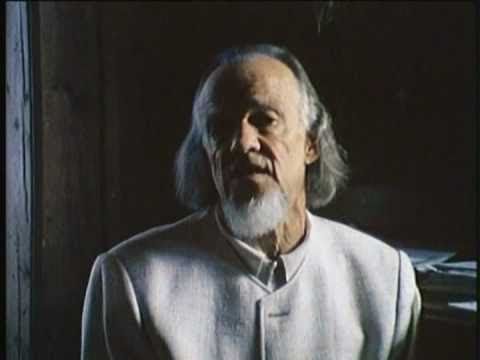






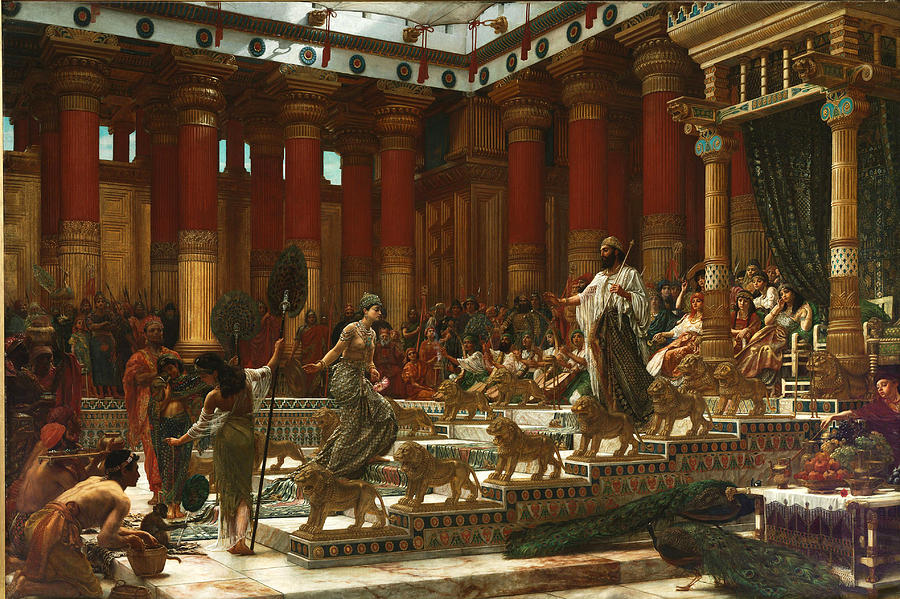
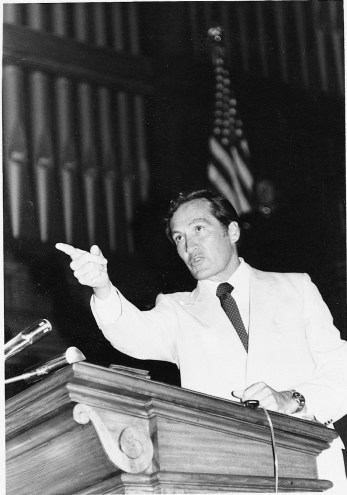


 The Daily Hatch