I have written about 66 heroes of mine in the House of Representatives that voted “no” on your debt ceiling increase request in 2011. I AM VERY PROUD OF THE FREE TRADE HEROES MENTIONED IN THE ARTICLE BELOW. Many of these same heroes voted against the proposal to raise the debt ceiling too. Lord knows I have written a lot about that in the past. . I have praised over and over and over the 66 House Republicans that voted no on that before. If they did not raise the debt ceiling then we would have a balanced budget instantly. I agree that the Tea Party has made a difference and I have personally posted 49 posts on my blog on different Tea Party heroes of mine.
THIS BRINGS ME TO ONE OF MY BIGGEST ECONOMIC HEROES AND IT IS THE LATE MILTON FRIEDMAN. Friedman had such revolutionary policies such as eliminating welfare and instituting the negative income tax and putting in school vouchers.
The problem in Washington is not lack of revenue but our lack of spending restraint. This video below makes that point.
Yesterday, WaPo’s Valerie Strauss accused scholarship tax credit (STC) programs of operating as Reverse Robin Hoods, robbing from the poor to give to the rich.
Call it welfare for the rich. Why? Wealthy businesses and individuals are the folks who get the tax credits for putting up the cash to pay the tuition. Furthermore, the amount of money for tuition made available for tuition by private scholarship organizations often does not actually cover the full cost of attending a private school. Poor families can’t make up the difference. Guess who can.
The reality is almost exactly the opposite. Donors are not benefitting financially at the expense of the poor or anyone. And while it is true that tax-credit scholarships do not always cover the full cost of tuition at private schools, thanks to low-cost options and needs-based tuition breaks, low-income families are the primary beneficiaries of STC programs.
STC Donors Do Not Benefit Financially
It is odd to claim that “wealthy businesses” are financially benefitting by receiving a tax credit for their donations. Even a 100% tax credit means that they are simply no worse off than before. A corporation with a $10,000 tax liability that made a $10,000 donation to a scholarship organization would then owe no state taxes but it would still have $10,000 less than it did before. Whether the $10,000 went to the government or a nonprofit is irrelevant to its bottom line.
Moreover, Strauss fails to mention that most state STC programs do not grant 100% credits. In fact, only four of the fourteen STC programs do. The other credits range from 50% to 90%. In these states, corporations would be better off financially if they merely paid their taxes.
STC Programs Benefit Low-Income Students
It is telling that Strauss provides only one example to support her claim that rich people benefit from the scholarships instead of the poor: “[Pennsylvania families] eligible to receive money to pay private tuition can earn more than $72,000…”
The key words in that sentence are “can earn.” The relevant question is how much do the families of scholarship recipients actually earn. The nonpartisan Pennsylvania Legislative Budget and Finance Committee reported in 2010 that the average scholarship recipient’s family earned only $29,000 annually, less than half of what the program allowed at the time.
The available evidence shows that Pennsylvania is not unique. Scholarship recipients in Florida must earn less than 185% of the federal poverty line, which is the income threshold for the federal government’s free and reduced lunch program. Nevertheless, the average annual household income of Floridian scholarship recipients is only $24,250, just 12.3% above the federal poverty line. And though Arizona’s corporate STC program has no means-testing requirement, a 2011 study found that more than two-thirds of scholarship recipients earned less than 185% of the federal poverty line.
There is clear evidence that students benefit by participating in educational choice programs. Numerous randomized-controlled studies have demonstrated that students in choice programs exhibit higher academic performance while additional studies have found higher graduation rates, increased college enrollment, and increased civic-mindedness.
Conclusion
It should be noted that in addition to Strauss’ central arguments, her broadside contained numerous significant inaccuracies. Contrary to Strauss’ assertions, scholarship tax credit programs are not the same as vouchers. They differ greatly in terms of their funding mechanisms and administration. Moreover, the U.S. Supreme Court has ruled that STC programs use private money not public money. Every state supreme court to address the matter has agreed. Finally, well-designed STC programs such as those in Arizona, Florida, and Pennsylvania actually save states money by decreasing state expenditures more than they decrease state tax revenue.
Under the status quo, wealthy families already have school choice while low-income families do not. Wealthy families can afford to live in districts with high-performing government schools or send their children to private schools. By contrast, low-income families generally only have one choice: the local assigned government school.
The good news is that scholarship tax credit programs work as intended. As the Washington Post editorial board understands, STC programs expand educational opportunities for low-income families, empowering them to meet the individual needs of their children.
Thank you so much for your time. I know how valuable it is. I also appreciate the fine family that you have and your commitment as a father and a husband.
Sincerely,
Everette Hatcher III, 13900 Cottontail Lane, Alexander, AR 72002, ph 501-920-5733, lowcostsqueegees@yahoo.com
Sixty Six who resisted “Sugar-coated Satan Sandwich” Debt Deal (Part 49) This post today is a part of a series I am doing on the 66 Republican Tea Party favorites that resisted eating the “Sugar-coated Satan Sandwich” Debt Deal. Actually that name did not originate from a representative who agrees with the Tea Party, but […]
Sixty Six who resisted “Sugar-coated Satan Sandwich” Debt Deal (Part 48) This post today is a part of a series I am doing on the 66 Republican Tea Party favorites that resisted eating the “Sugar-coated Satan Sandwich” Debt Deal. Actually that name did not originate from a representative who agrees with the Tea Party, but […]
Sixty Six who resisted “Sugar-coated Satan Sandwich” Debt Deal (Part 47) This post today is a part of a series I am doing on the 66 Republican Tea Party favorites that resisted eating the “Sugar-coated Satan Sandwich” Debt Deal. Actually that name did not originate from a representative who agrees with the Tea Party, but […]
Sixty Six who resisted “Sugar-coated Satan Sandwich” Debt Deal (Part 46) This post today is a part of a series I am doing on the 66 Republican Tea Party favorites that resisted eating the “Sugar-coated Satan Sandwich” Debt Deal. Actually that name did not originate from a representative who agrees with the Tea Party, […]
Sixty Six who resisted “Sugar-coated Satan Sandwich” Debt Deal (Part 45) This post today is a part of a series I am doing on the 66 Republican Tea Party favorites that resisted eating the “Sugar-coated Satan Sandwich” Debt Deal. Actually that name did not originate from a representative who agrees with the Tea Party, but […]
Sixty Six who resisted “Sugar-coated Satan Sandwich” Debt Deal (Part 44) This post today is a part of a series I am doing on the 66 Republican Tea Party favorites that resisted eating the “Sugar-coated Satan Sandwich” Debt Deal. Actually that name did not originate from a representative who agrees with the Tea Party, but […]
Sixty Six who resisted “Sugar-coated Satan Sandwich” Debt Deal (Part 43) This post today is a part of a series I am doing on the 66 Republican Tea Party favorites that resisted eating the “Sugar-coated Satan Sandwich” Debt Deal. Actually that name did not originate from a representative who agrees with the Tea Party, but […]
Sixty Six who resisted “Sugar-coated Satan Sandwich” Debt Deal (Part 42) This post today is a part of a series I am doing on the 66 Republican Tea Party favorites that resisted eating the “Sugar-coated Satan Sandwich” Debt Deal. Actually that name did not originate from a representative who agrees with the Tea Party, but […]
Sixty Six who resisted “Sugar-coated Satan Sandwich” Debt Deal (Part 41) This post today is a part of a series I am doing on the 66 Republican Tea Party favorites that resisted eating the “Sugar-coated Satan Sandwich” Debt Deal. Actually that name did not originate from a representative who agrees with the Tea Party, but […]
Sixty Six who resisted “Sugar-coated Satan Sandwich” Debt Deal (Part 40) This post today is a part of a series I am doing on the 66 Republican Tea Party favorites that resisted eating the “Sugar-coated Satan Sandwich” Debt Deal. Actually that name did not originate from a representative who agrees with the Tea Party, but […]
Sixty Six who resisted “Sugar-coated Satan Sandwich” Debt Deal (Part 39) This post today is a part of a series I am doing on the 66 Republican Tea Party favorites that resisted eating the “Sugar-coated Satan Sandwich” Debt Deal. Actually that name did not originate from a representative who agrees with the Tea Party, but […]
Sixty Six who resisted “Sugar-coated Satan Sandwich” Debt Deal (Part 38) This post today is a part of a series I am doing on the 66 Republican Tea Party favorites that resisted eating the “Sugar-coated Satan Sandwich” Debt Deal. Actually that name did not originate from a representative who agrees with the Tea Party, but […]
Sixty Six who resisted “Sugar-coated Satan Sandwich” Debt Deal (Part 37) This post today is a part of a series I am doing on the 66 Republican Tea Party favorites that resisted eating the “Sugar-coated Satan Sandwich” Debt Deal. Actually that name did not originate from a representative who agrees with the Tea Party, but […]
Sixty Six who resisted “Sugar-coated Satan Sandwich” Debt Deal (Part 36) This post today is a part of a series I am doing on the 66 Republican Tea Party favorites that resisted eating the “Sugar-coated Satan Sandwich” Debt Deal. Actually that name did not originate from a representative who agrees with the Tea Party, but […]
Sixty Six who resisted “Sugar-coated Satan Sandwich” Debt Deal (Part 35) This post today is a part of a series I am doing on the 66 Republican Tea Party favorites that resisted eating the “Sugar-coated Satan Sandwich” Debt Deal. Actually that name did not originate from a representative who agrees with the Tea Party, but […]
Sixty Six who resisted “Sugar-coated Satan Sandwich” Debt Deal (Part 34) This post today is a part of a series I am doing on the 66 Republican Tea Party favorites that resisted eating the “Sugar-coated Satan Sandwich” Debt Deal. Actually that name did not originate from a representative who agrees with the Tea Party, but […]
Sixty Six who resisted “Sugar-coated Satan Sandwich” Debt Deal (Part 33) This post today is a part of a series I am doing on the 66 Republican Tea Party favorites that resisted eating the “Sugar-coated Satan Sandwich” Debt Deal. Actually that name did not originate from a representative who agrees with the Tea Party, but […]
Sixty Six who resisted “Sugar-coated Satan Sandwich” Debt Deal (Part 32) This post today is a part of a series I am doing on the 66 Republican Tea Party favorites that resisted eating the “Sugar-coated Satan Sandwich” Debt Deal. Actually that name did not originate from a representative who agrees with the Tea Party, but […]
Congressmen Tim Huelskamp on the debt ceiling Sixty Six who resisted “Sugar-coated Satan Sandwich” Debt Deal (Part 31) This post today is a part of a series I am doing on the 66 Republican Tea Party favorites that resisted eating the “Sugar-coated Satan Sandwich” Debt Deal. Actually that name did not originate from a representative […]
Sixty Six who resisted “Sugar-coated Satan Sandwich” Debt Deal (Part 30) This post today is a part of a series I am doing on the 66 Republican Tea Party favorites that resisted eating the “Sugar-coated Satan Sandwich” Debt Deal. Actually that name did not originate from a representative who agrees with the Tea Party, but […]
Sixty Six who resisted “Sugar-coated Satan Sandwich” Debt Deal (Part 29) This post today is a part of a series I am doing on the 66 Republican Tea Party favorites that resisted eating the “Sugar-coated Satan Sandwich” Debt Deal. Actually that name did not originate from a representative who agrees with the Tea Party, but […]
The Sixty Six who resisted “Sugar-coated Satan Sandwich” Debt Deal (Part 28) This post today is a part of a series I am doing on the 66 Republican Tea Party favorites that resisted eating the “Sugar-coated Satan Sandwich” Debt Deal. Actually that name did not originate from a representative who agrees with the Tea Party, […]
The Sixty Six who resisted “Sugar-coated Satan Sandwich” Debt Deal (Part 27) This post today is a part of a series I am doing on the 66 Republican Tea Party favorites that resisted eating the “Sugar-coated Satan Sandwich” Debt Deal. Actually that name did not originate from a representative who agrees with the Tea Party, […]
The Sixty Six who resisted “Sugar-coated Satan Sandwich” Debt Deal (Part 26) This post today is a part of a series I am doing on the 66 Republican Tea Party favorites that resisted eating the “Sugar-coated Satan Sandwich” Debt Deal. Actually that name did not originate from a representative who agrees with the Tea Party, […]
Uploaded by RepJoeWalsh on Jun 14, 2011 Our country’s debt continues to grow — it’s eating away at the American Dream. We need to make real cuts now. We need Cut, Cap, and Balance. The Sixty Six who resisted “Sugar-coated Satan Sandwich” Debt Deal (Part 25) This post today is a part of a series […]
The Sixty Six who resisted “Sugar-coated Satan Sandwich” Debt Deal (Part 24) This post today is a part of a series I am doing on the 66 Republican Tea Party favorites that resisted eating the “Sugar-coated Satan Sandwich” Debt Deal. Actually that name did not originate from a representative who agrees with the Tea Party, […]
The Sixty Six who resisted “Sugar-coated Satan Sandwich” Debt Deal (Part 23) This post today is a part of a series I am doing on the 66 Republican Tea Party favorites that resisted eating the “Sugar-coated Satan Sandwich” Debt Deal. Actually that name did not originate from a representative who agrees with the Tea Party, […]
The Sixty Six who resisted “Sugar-coated Satan Sandwich” Debt Deal (Part 22) This post today is a part of a series I am doing on the 66 Republican Tea Party favorites that resisted eating the “Sugar-coated Satan Sandwich” Debt Deal. Actually that name did not originate from a representative who agrees with the Tea Party, […]
The Sixty Six who resisted “Sugar-coated Satan Sandwich” Debt Deal (Part 21) This post today is a part of a series I am doing on the 66 Republican Tea Party favorites that resisted eating the “Sugar-coated Satan Sandwich” Debt Deal. Actually that name did not originate from a representative who agrees with the Tea Party, […]
The Sixty Six who resisted “Sugar-coated Satan Sandwich” Debt Deal (Part 20) This post today is a part of a series I am doing on the 66 Republican Tea Party favorites that resisted eating the “Sugar-coated Satan Sandwich” Debt Deal. Actually that name did not originate from a representative who agrees with the Tea Party, […]
The Sixty Six who resisted “Sugar-coated Satan Sandwich” Debt Deal (Part 19) This post today is a part of a series I am doing on the 66 Republican Tea Party favorites that resisted eating the “Sugar-coated Satan Sandwich” Debt Deal. Actually that name did not originate from a representative who agrees with the Tea Party, […]
The Sixty Six who resisted “Sugar-coated Satan Sandwich” Debt Deal (Part 18) This post today is a part of a series I am doing on the 66 Republican Tea Party favorites that resisted eating the “Sugar-coated Satan Sandwich” Debt Deal. Actually that name did not originate from a representative who agrees with the Tea Party, […]
The Sixty Six who resisted “Sugar-coated Satan Sandwich” Debt Deal (Part 17) This post today is a part of a series I am doing on the 66 Republican Tea Party favorites that resisted eating the “Sugar-coated Satan Sandwich” Debt Deal. Actually that name did not originate from a representative who agrees with the Tea Party, […]
The Sixty Six who resisted “Sugar-coated Satan Sandwich” Debt Deal (Part 16) This post today is a part of a series I am doing on the 66 Republican Tea Party favorites that resisted eating the “Sugar-coated Satan Sandwich” Debt Deal. Actually that name did not originate from a representative who agrees with the Tea Party, […]
Sen Obama in 2006 Against Raising Debt Ceiling The Sixty Six who resisted “Sugar-coated Satan Sandwich” Debt Deal (Part 15) This post today is a part of a series I am doing on the 66 Republican Tea Party favorites that resisted eating the “Sugar-coated Satan Sandwich” Debt Deal. Actually that name did not originate from […]
How Should We then Live Episode 7 small (Age of Nonreason)
How Should We Then Live? (Promo Clip) Dr. Francis Schaeffer
10 Worldview and Truth
Two Minute Warning: How Then Should We Live?: Francis Schaeffer at 100
Francis Schaeffer Whatever Happened to the Human Race (Episode 1) ABORTION
Francis Schaeffer “BASIS FOR HUMAN DIGNITY” Whatever…HTTHR
_________________
Woody Allen – Sleeper (final scene)
_________________
I have spent alot of time talking about Woody Allen films on this blog and looking at his worldview. He has a hopeless, meaningless, nihilistic worldview that believes we are going to turn to dust and there is no afterlife. Even though he has this view he has taken the opportunity to look at the weaknesses of his own secular view. I salute him for doing that. That is why I have returned to his work over and over and presented my own Christian worldview as an alternative.
My interest in Woody Allen is so great that I have a “Woody Wednesday” on my blog www.thedailyhatch.org every week. Also I have done over 30 posts on the historical characters mentioned in his film “Midnight in Paris.” (Salvador Dali, Ernest Hemingway,T.S.Elliot, Cole Porter,Paul Gauguin, Luis Bunuel, and Pablo Picassowere just a few of the characters.) Francis Schaeffer also discussed Woody Allen several times in his writings on modern culture. Here is a section that again mentions the nihilistic conclusions that Schaeffer says that Woody Allen has come to and Schaeffer salutes Allen for being consistent with his Godless worldview unlike many of the optimistic humanists that I have encountered.
Materialistic Humanism: The World-View of Our Era
What has produced the inhumanity we have been considering in the previous chapters is that society in the West has adopted a world-view which says that all reality is made up only of matter. This view is sometimes referred to as philosophic materialism, because it holds that only matter exists; sometimes it is called naturalism, because it says that no supernatural exists. Humanism which begins from man alone and makes man the measure of all things usually is materialistic in its philosophy. Whatever the label, this is the underlying world-view of our society today. In this view the universe did not get here because it was created by a “supernatural” God. Rather, the universe has existed forever in some form, and its present form just happened as a result of chance events way back in time.
Society in the West has largely rested on the base that God exists and that the Bible is true. In all sorts of ways this view affected the society. The materialistic or naturalistic or humanistic world-view almost always takes a superior attitude toward Christianity. Those who hold such a view have argued that Christianity is unscientific, that it cannot be proved, that it belongs simply to the realm of “faith.” Christianity, they say, rests only on faith, while humanism rests on facts.
Professor Edmund R. Leach of Cambridge Universityexpressed this view clearly:
Our idea of God is a product of history. What I now believe about the supernatural is derived from what I was taught by my parents, and what they taught me was derived from what they were taught, and so on. But such beliefs are justified by faith alone, never by reason, and the true believer is expected to go on reaffirming his faith in the same verbal formula even if the passage of history and the growth of scientific knowledge should have turned the words into plain nonsense.78
So some humanists act as if they have a great advantage over Christians. They act as if the advance of science and technology and a better understanding of history (through such concepts as the evolutionary theory) have all made the idea of God and Creation quite ridiculous.
This superior attitude, however, is strange because one of the most striking developments in the last half-century is the growth of a profound pessimism among both the well-educated and less-educated people. The thinkers in our society have been admitting for a long time that they have no final answers at all.
_________________________________________________________________________ Take Woody Allen, for example. Most people know his as a comedian, but he has thought through where mankind stands after the “religious answers” have been abandoned. In an article in Esquire (May 1977), he says that man is left with: … alienation, loneliness [and] emptiness verging on madness…. The fundamental thing behind all motivation and all activity is the constant struggle against annihilation and against death. It’s absolutely stupefying in its terror, and it renders anyone’s accomplishments meaningless. As Camus wrote, it’s not only that he (the individual) dies, or that man (as a whole) dies, but that you struggle to do a work of art that will last and then you realize that the universe itself is not going to exist after a period of time. Until those issues are resolved within each person – religiously or psychologically or existentially – the social and political issues will never be resolved, except in a slapdash way.
Allen sums up his view in his film Annie Hall with these words: “Life is divided into the horrible and the miserable.”
Many would like to dismiss this sort of statement as coming from one who is merely a pessimist by temperament, one who sees life without the benefit of a sense of humor. Woody Allen does not allow us that luxury. He speaks as a human being who has simply looked life in the face and has the courage to say what he sees. If there is no personal God, nothing beyond what our eyes can see and our hands can touch, then Woody Allen is right: life is both meaningless and terrifying. As the famous artist Paul Gauguin wrote on his last painting shortly before he tried to commit suicide: “Whence come we? What are we? Whither do we go?” The answers are nowhere, nothing, and nowhere.
The humanist H. J. Blackham has expressed this with a dramatic illustration: On humanist assumptions, life leads to nothing, and every pretense that it does not is a deceit. If there is a bridge over a gorge which spans only half the distance and ends in mid-air, and if the bridge is crowded with human beings pressing on, one after the other they fall into the abyss. The bridge leads nowhere, and those who are pressing forward to cross it are going nowhere….It does not matter where they think they are going, what preparations for the journey they may have made, how much they may be enjoying it all. The objection merely points out objectively that such a situation is a model of futility.79
One does not have to be highly educated to understand this. It follows directly from the starting point of the humanists’ position, namely, that everything is just matter. That is, that which has existed forever and ever is only some form of matter or energy, and everything in our world now is this and only this in a more or less complex form. Thus, Jacob Bronowski says in The Identity of Man (1965): “Man is a part of nature, in the same sense that a stone is, or a cactus, or a camel.” In this view, men and women are by chance more complex, but not unique.
Within this world-view there is no room for believing that a human being has any final distinct value above that of an animal or of nonliving matter. People are merely a different arrangement of molecules. There are two points, therefore, that need to be made about the humanist world-view. First, the superior attitude toward Christianity – as if Christianity had all the problems and humanism had all the answers – is quite unjustified. The humanists of the Enlightenment two centuries ago thought they were going to find all the answers, but as time has passed, this optimistic hope has been proved wrong. It is their own descendants, those who share their materialistic world-view, who have been saying louder and louder as the years have passed, “There are no final answers.” Second, this humanist world-view has also brought us to the present devaluation of human life – not technology and not overcrowding, although these have played a part. And this same world-view has given us no limits to prevent us from sliding into an even worse devaluation of human life in the future.
So it is naive and irresponsible to imagine that this world-view will reverse the direction in the future. A well-meaning commitment to “do what is right” will not be sufficient. Without a firm set of principles that flows out of a world-view that gives adequate reason for a unique value to all human life, there cannot be and will not be any substantial resistance to the present evil brought on by the low view of human life we have been considering in previous chapters. It was the materialistic world-view that brought in the inhumanity; it must be a different world-view that drives it out.
An emotional uneasiness about abortion, infanticide, euthanasia, and the abuse of genetic knowledge is not enough. To stand against the present devaluation of human life, a significant percentage of people within our society must adopt and live by a world-view which not only hopes or intends to give a basis for human dignity but which really does. The radical movements of the sixties were right to hope for a better world; they were right to protest against the shallowness and falseness of our plastic society. But their radicalness lasted only during the life span of the adolescence of their members. Although these movements claimed to be radical, they lacked a sufficient root. Their world-view was incapable of giving life to the aspirations of its adherents. Why? Because it, too – like the society they were condemning – had no sufficient base. So protests are not enough. Having the right ideals is not enough. Even those with a very short memory, those who can look back only to the sixties, can see that there must be more than that. A truly radical alternative has to be found.
But where? And how?
J.I.PACKER WROTE OF SCHAEFFER, “His communicative style was not that of a cautious academic who labors for exhaustive coverage and dispassionate objectivity. It was rather that of an impassioned thinker who paints his vision of eternal truth in bold strokes and stark contrasts.Yet it is a fact that MANY YOUNG THINKERS AND ARTISTS…HAVE FOUND SCHAEFFER’S ANALYSES A LIFELINE TO SANITY WITHOUT WHICH THEY COULD NOT HAVE GONE ON LIVING.”
Francis Schaeffer in Art and the Bible noted, “Many modern artists, it seems to me, have forgotten the value that art has in itself. Much modern art is far too intellectual to be great art. Many modern artists seem not to see the distinction between man and non-man, and it is a part of the lostness of modern man that they no longer see value in the work of art as a work of art.”
Many modern artists are left in this point of desperation that Schaeffer points out and it reminds me of the despair that Solomon speaks of in Ecclesiastes. Christian scholar Ravi Zacharias has noted, “The key to understanding the Book of Ecclesiastes is the term ‘under the sun.’ What that literally means is you lock God out of a closed system, and you are left with only this world of time plus chance plus matter.” THIS IS EXACT POINT SCHAEFFER SAYS SECULAR ARTISTS ARE PAINTING FROM TODAY BECAUSE THEY BELIEVED ARE A RESULT OF MINDLESS CHANCE.
This is an archived article. It originally appeared on March 1, 1993. Some information may be outdated.
A red-haired boy sits next to his mother in the psychiatrist’s office. She is describing her son’s problems and expressing her disappointment in him. Why is he always depressed? Why can’t he be like other boys his age? The doctor turns to the boy and asks why he is depressed. In a hopeless daze the boy replies, “The universe is expanding, and if the universe is everything…and if it’s expanding…someday it will break apart and that’s the end of everything…what’s the point?”
His mother leans over, slaps the kid and scolds: “What is that your business!”
This scene from Annie Hall typifies Woody Allen’s quest for understanding! Allen touches on various topics and themes in all his cinematic works, but three subjects continually resurface: the existence of God, the fear of death and the nature of morality. These are all Jewish questions or at least theological issues. Woody Allen is a seeker who wants answers to the Ultimate Questions. His movie characters differ, yet they are all, in some way, asking these questions he wants answered. They are all “Woody Allens” wrestling with the same issues. He explains:
Maybe it’s because I’m depressed so often that I’m drawn to writers like Kafka, Dostoevski and to a filmmaker like Bergman. I think I have all the symptoms and problems that their characters are occupied with: an obsession with death, an obsession with God or the lack of God, the question of why we are here. Almost all of my work is autobiographical—exaggerated but true.1
But Woody Allen does not allow himself to dwell too long on these universal problems. The mother’s response to her red-haired son’s angst is typical of the comedic lid the filmmaker presses over his depressing outlook to close the issue. True, Woody Allen has made his mark by asking big questions. But it is the absence of satisfactory answers to those questions that causes much of the angst—and humor—we see on the screen. Off screen we see little difference.
Allen’s (authorized) biography, published in 1991, sheds some light on his life and times. Woody Allen, whose given name was Allan Konigsberg, was born and raised in Brooklyn, New York. Allen describes his Jewish family and neighborhood as being from “the heart of the old world, their values are God and carpeting.”2 While he did not embrace the religion of his youth, his Jewishness is ever present in his characters, plots and dialogue. Jewish thought is intrinsic to his life and work.
__________________________
________________________
One can see this in the 1977 film Annie Hall, where Allen’s character, Alvy, is put in contrast to his Midwestern, gentile girlfriend. In one scene he is visiting Annie’s parents. Her grandmother stares at him, picturing him as a stereotypical Chasidic Jew with side locks, black hat and a long coat. The screen splits as Alvy imagines his family on the right and hers on the left. Her parents ask what his parents will be doing for “the holidays”:
“We fast, to atone for our sins,” his mother explains.
Annie’s mother is confused. “What sins? I don’t understand.”
Alvy’s father responds with a shrug: “To tell you the truth, neither do we.”
Nothing worth knowing can be understood by the mind.3
Allen suggests that the greatest thinkers in history died knowing no more than he does now.
In Crimes and Misdemeanors Woody Allen tackles the issue of morality on a much more serious level. Wealthy ophthalmologist Judah Rosenthal has been having an extramarital affair for two years. When he attempts to end his illicit relationship, his mistress threatens to tell his wife. When backed into an impossible corner and offered an easy way out, Judah finds himself thinking the unthinkable.
Judah’s moral confusion is presented against a backdrop of the religion of his youth. Though he has long since rejected the Jewish religion, he is continually confronted with memories that activate his conscience. He remembers the words of his childhood rabbi:
“The eyes of God are on us always.”
Judah later speaks with another rabbi, a contemporary of his. The rabbi remarks on their contrasting worldviews:
“You see it [the world] as harsh and empty of values and pitiless. And I couldn’t go on living if I didn’t feel with all my heart a moral structure with real meaning and forgiveness and some kind of higher power and a reason to live. Otherwise there is no basis to know how to live.”
These words are ultimately pushed aside, as Judah succumbs to the simple solution of hiring a hit-man to murder his demanding lady in waiting. After the crime, Judah experiences gut-wrenching guilt. Judah Rosenthal finds the case for morality so strong that after the murder he blurts out:
“Without God, life is a cesspool!”
His conscience pushes him to great despair as, again, he examines the situation from a past vantage point. He envisions a Passover seder from his childhood. The conversation becomes a family debate over the importance of the celebration. Some of the relatives don’t believe in God and consider the ritual a foolish waste of time. The head of the extended family stoutly defends his faith, saying, “If necessary, I will always choose God over truth.”
Perhaps this is why Judah rejected his religion—he could not see faith as anything other than some sort of noble delusion for those who refuse to accept life’s ugly truths. As Judah continues to dwell on his crime, he has another vision in which his rabbi friend challenges him with the question: “You don’t think God sees?”
“God is a luxury I can’t afford,” Judah replies. There is a final ring to the statement as Judah decides to put the entire incident behind him.
Judah almost turns himself in; however, the price is too high and so he chooses denial, the most common escape. “In reality,” he says in the last scene, “we rationalize, we deny or else we couldn’t go on living.”
Another character, Professor Levy, speaks on morality in one of the film’s subplots. Levy is an aging philosopher much admired by the character played by Woody Allen, a filmmaker. The filmmaker is planning a documentary based on Levy’s life, and we first see the professor on videotape, discussing the paradox of the ancient Israelites:
“They created a God who cares but who also demands that you behave morally. This God asks Abraham to sacrifice his son, who is beloved to him.…After 5,000 years we have not succeeded to create a really and entirely loving image of God.”
Levy eventually commits suicide. Despite his great learning, his final note discloses nothing more than the obvious: “I’ve gone out the window.”
Professor Levy’s suicide leaves Allen’s character stunned. Still, his humor ameliorates the situation as the filmmaker protests,
“When I grew up in Brooklyn, nobody committed suicide; everyone was too unhappy.”
The final comment on Levy’s suicide is a surprising departure from Allen’s security blanket of humor:
“No matter how elaborate a philosophical system you work out, in the end it’s gotta be incomplete.”
Remember, all of the dialogue is written by Woody Allen. Though his own character supplies comic relief to this dark film, his conclusions are just as bleak. Everyone is guilty of something whether it’s considered a crime or a misdemeanor.
Yet, Allen’s theological questions rarely address the nature of that guilt. The word “sin” is reserved for the grossest offenses—the ones that make the evening news—or would, if they were discovered. Judah Rosenthal’s crime is easily recognizable as sin, while various other infidelities and compromises are mere misdemeanors.
Sin against God is not something Allen appears to take seriously in any of his films. When evangelist Billy Graham was a guest on one of Allen’s 1960s television specials, the comedian was asked (not by Graham) to name his greatest sin. He responded:
“I once had impure thoughts about Art Linkletter.”24
However, when he distances himself from the personal nature of sin and looks to crimes or sins against humanity, Allen speaks with a passion.
In Hannah and Her Sisters the viewer is introduced to the character of Frederick, an angry, isolated artist who is disgusted with the conditions of the world. Of Auschwitz, Frederick remarks to his girlfriend:
“The real question is: ‘Given what people are, why doesn’t it happen more often?’ Of course, it does, in subtler forms.…”
In Allen’s theology, all have fallen short to a greater or lesser degree, but ironically, his view of human imperfection never appears in the same discussion as his thoughts about God.
He does admit to being disconnected with the universe:
“I am two with nature.”25
But he doesn’t mention a connection with a personal God because he doesn’t see a correlation between human failures and the question of connectedness to God.
While Allen is a unique thinker, he seems to be pedestrian when it comes to wrestling with problems of immorality and even inhumanity. While he calls the existence of God into question, he does not deal with our responsibility in acknowledging God if he does exist.
It is simple to analyze sin on a human level. The more people get hurt, the bigger the sin. But the biblical perspective is quite different: Any and all sin causes separation from God. One cannot view such a cosmic separation as large or small based on degrees of sin. Ironically, one of Allen’s short stories underscores the foolishness of comparison degrees of sin:
“Astronomers talk of an inhabited planet named Quelm, so distant from earth that a man traveling at the speed of light would take six million years to get there, although they are planning a new express route that will cut two hours off the trip.”26
The biblical perspective of separation from God is similar. Having “better morals” than the drug pusher, the rapist or the ax murderer makes a big difference—in our society. We should all strive to be the best people we can be, if only to improve the overall quality of life. But in terms of a relationship with God, doing the best one can is like being two hours closer to Quelm. God is so removed from any unrighteousness that the difference between “a little unrighteous” and a lot is irrelevant.
The question his films and essays never ask is: Could being alienated from God be the root cause of our alienation from one another…and even our alienation from our own selves?
“It’s hard to get your heart and your head to agree in life. In my case they’re not even friendly.”27
Woody Allen has a unique way of expressing the uneasy terms on which many people find their heads and their hearts. Perhaps that is why he has received 14 Academy Award nominations. Allen will shoot a scene as many as twenty times, hoping to capture the actors and scenery perfectly. His biographer says “he doesn’t like to go to the next thing until what he’s working on is perfect—a process that guarantees self-defeat.”28
Is filmmaking Woody Allen’s escape from the world at large? His biographer notes, “He assigns himself mental tasks throughout the day with the intent that not a moment will pass without his mind being occupied and therefore insulated from the dilemma of eschatology.”29
It is a continual process—writing takes his mind off of the ultimate questions, yet the characters he creates are always obsessed with those very same questions. Allen determines their fate, occasionally handing out a happy ending. And he seems painfully aware that he will have little to say about the ending of his own script.
There is much to be appreciated and enjoyed in Woody Allen’s humor, but it also seems as if he uses jokes to avoid taking the possibility of God’s existence very seriously. Maybe Woody Allen is afraid to find that God doesn’t exist, or on the other hand maybe he’s afraid to find that he does. In either case, he seems to need to add a comic edge to questions about God to prove that he is not wholehearted in his hope for answers.
Will Woody Allen tackle the problem of his own halfhearted search for God in a serious way in some future film or essay? Maybe, but if the Bible can be believed, it’s an issue that God has already dealt with. The prophet Jeremiah quotes the Creator as saying: “You will seek me and find me when you seek me with all your heart.” (Jer. 29:13).
____________________________________
Endnotes
Eric Lax, Woody Allen, (New York: Knopf Publishing, 1991), p. 179.
Ibid., p. 166.
Manhattan, 1979.
Lax, p. 141.
Stardust Memories, 1980.
Lax, p. 150.
Sleeper, 1973.
Hannah and Her Sisters, 1986.
Woody Allen, “My Speech to the Graduates,” Side Effects, (New York: Random House Publ., 1980), p. 82.
Sleeper.
Lax, p. 183.
Woody Allen, “Death (A Play),” Without Feathers, (New York: Random House Publ., 1975), p. 106.
Woody Allen, “My Philosophy,” Getting Even, (New York: Warner Books, 1971), p. 25.
Allen, “Early Essays,” Without Feathers, p. 108.
Allen, “Selections From the Allen Notebook,” Without Feathers, p. 10.
Allen, “My Apology,” Side Effects, p. 54.
Stardust Memories.
Allen, “My Speech to the Graduates,” Side Effects, p. 82.
Sleeper.
Allen, “Selections From the Allen Notebook,” Without Feathers, p. 8.
Allen, “Examining Psychic Phenomena,” Without Feathers, p. 11.
Lax, p. 41.
Love and Death, 1975.
Lax, p. 132.
Ibid., p. 39.
Allen, “Fabulous Tales and Mythical Beasts,” Without Feathers, p. 194.
Crimes and Misdemeanors, 1989.
Lax, p. 322.
Ibid., p. 183.
Earlier I wrote a post about the “golden age fallacy” that Woody Allen destroys in his film MIDNIGHT IN PARIS. The thinking that things would be better if we lived in a different time or a different place. However, Allen is still searching for meaning in life and deep down he knows in his heart that God made him for a special reason and not to just live a life without any lasting meaning. That is the reason he keeps bringing up these issues in his films.
Here I wanted to make three further suggestions to Mr. Allen myself:
1. You may not have as much resources as Solomon but you can still start on a spiritual search for the afterlife. . So, go to the Grand Canyon and see if you can deny the outward witness of God’s handiwork. That leads me to the scripture in Ecclesiastes 3:11, “…{God} has planted eternity in the human heart…”
2. Read John 3:1-21 and see what happened when Jesus spoke to a true seeking skeptic of his day named Nicodemus. .
John 3:1-21
1 There was a man named Nicodemus, a Jewish religious leader who was a Pharisee. 2 After dark one evening, he came to speak with Jesus. “Rabbi,” he said, “we all know that God has sent you to teach us. Your miraculous signs are evidence that God is with you.” 3 Jesus replied, “I tell you the truth, unless you are born again,[a] you cannot see the Kingdom of God.” 4 “What do you mean?” exclaimed Nicodemus. “How can an old man go back into his mother’s womb and be born again?” 5 Jesus replied, “I assure you, no one can enter the Kingdom of God without being born of water and the Spirit.[b] 6 Humans can reproduce only human life, but the Holy Spirit gives birth to spiritual life.[c] 7 So don’t be surprised when I say, ‘You[d] must be born again.’ 8 The wind blows wherever it wants. Just as you can hear the wind but can’t tell where it comes from or where it is going, so you can’t explain how people are born of the Spirit.” 9 “How are these things possible?” Nicodemus asked. 10 Jesus replied, “You are a respected Jewish teacher, and yet you don’t understand these things? 11 I assure you, we tell you what we know and have seen, and yet you won’t believe our testimony. 12 But if you don’t believe me when I tell you about earthly things, how can you possibly believe if I tell you about heavenly things? 13 No one has ever gone to heaven and returned. But the Son of Man[e] has come down from heaven. 14 And as Moses lifted up the bronze snake on a pole in the wilderness, so the Son of Man must be lifted up, 15 so that everyone who believes in him will have eternal life.[f] 16 “For God loved the world so much that he gave his one and only Son, so that everyone who believes in him will not perish but have eternal life. 17 God sent his Son into the world not to judge the world, but to save the world through him. 18 “There is no judgment against anyone who believes in him. But anyone who does not believe in him has already been judged for not believing in God’s one and only Son. 19 And the judgment is based on this fact: God’s light came into the world, but people loved the darkness more than the light, for their actions were evil. 20 All who do evil hate the light and refuse to go near it for fear their sins will be exposed. 21 But those who do what is right come to the light so others can see that they are doing what God wants.[g]”
William Mitchell Ramsay was born on March 15, 1851 in Glasgow, Scotland. His father was a lawyer, but died when William was just six. Through the hard work of other family members, William attended the University of Aberdeen, achieving honors. Through means of a scholarship, he was then able to go to Oxford University and attend the college there named for St. John. His family resource also allowed him to study abroad, notably in Germany. It was under one of his professors that his love of history began. After receiving a new scholarship from another college at Oxford, he traveled to Asia Minor.
William, however, is most noted for beliefs pertaining to the Bible, not his early life. Originally, he labeled it as a ‘Book of Fables,’ having only third-hand knowledge. He neither read nor studied it, skeptically believing it to be of fiction and not historical fact. His interest in history would lead him on a search that would radically redefine his thoughts on that Ancient Book…
Some argue that Ramsay was originally just a product of his time. For example, the general consensus on the Acts of the Apostles (and its alleged writer Luke) was almost humouress:
“… [A]bout 1880 to 1890 the book of the Acts was regarded as the weakest part of the New Testament. No one that had any regard for his reputation as a scholar cared to say a word in its defence. The most conservative of theological scholars, as a rule, thought the wisest plan of defence for the New Testament as a whole was to say as little as possible about the Acts.”[1]
It was his dislike for Acts that launched him into a Mid-East adventure. With Bible-in-hand, he made a trip to the Holy Land. What William found, however, was not what he expected…
As it turns out, ‘ole Willy’ changed his mind. After his extensive study he concluded that Luke was one of the world’s greatest historians:
The more I have studied the narrative of the Acts, and the more I have learned year after year about Graeco-Roman society and thoughts and fashions, and organization in those provinces, the more I admire and the better I understand. I set out to look for truth on the borderland where Greece and Asia meet, and found it here [in the Book of Acts—KB]. You may press the words of Luke in a degree beyond any other historian’s, and they stand the keenest scrutiny and the hardest treatment, provided always that the critic knows the subject and does not go beyond the limits of science and of justice.[2]
Skeptics were strikingly shocked. In ‘Evidence that Demands a Verdict’ Josh Mcdowell writes,
“The book caused a furor of dismay among the skeptics of the world. Its attitude was utterly unexpected because it was contrary to the announced intention of the author years before…. for twenty years more, book after book from the same author came from the press, each filled with additional evidence of the exact, minute truthfulness of the whole New Testament as tested by the spade on the spot. The evidence was so overwhelming that many infidels announced their repudiation of their former unbelief and accepted Christianity. And these books have stood the test of time, not one having been refuted, nor have I found even any attempt to refute them.”[3]
The Bible has always stood the test of time. Renowned archaeologist Nelson Glueck put it like this:
“It may be stated categorically that no archaeological discovery has ever controverted a Biblical reference. Scores of archaeological findings have been made which conform in clear outline or exact detail historical statements in the Bible.”[4]
1) The Bearing of Recent Discovery on the Trustworthiness of the New Testament (1915) 2) Ibid 3) See page 366 4) See page 31 of: Rivers in the Desert: A History of the Negev (1959)
E P I S O D E 1 0 Dr. Francis Schaeffer – Episode X – Final Choices 27 min FINAL CHOICES I. Authoritarianism the Only Humanistic Social Option One man or an elite giving authoritative arbitrary absolutes. A. Society is sole absolute in absence of other absolutes. B. But society has to be […]
E P I S O D E 9 Dr. Francis Schaeffer – Episode IX – The Age of Personal Peace and Affluence 27 min T h e Age of Personal Peace and Afflunce I. By the Early 1960s People Were Bombarded From Every Side by Modern Man’s Humanistic Thought II. Modern Form of Humanistic Thought Leads […]
E P I S O D E 8 Dr. Francis Schaeffer – Episode VIII – The Age of Fragmentation 27 min I saw this film series in 1979 and it had a major impact on me. T h e Age of FRAGMENTATION I. Art As a Vehicle Of Modern Thought A. Impressionism (Monet, Renoir, Pissarro, Sisley, […]
E P I S O D E 7 Dr. Francis Schaeffer – Episode VII – The Age of Non Reason I am thrilled to get this film series with you. I saw it first in 1979 and it had such a big impact on me. Today’s episode is where we see modern humanist man act […]
E P I S O D E 6 How Should We Then Live 6#1 Uploaded by NoMirrorHDDHrorriMoN on Oct 3, 2011 How Should We Then Live? Episode 6 of 12 ________ I am sharing with you a film series that I saw in 1979. In this film Francis Schaeffer asserted that was a shift in […]
E P I S O D E 5 How Should We Then Live? Episode 5: The Revolutionary Age I was impacted by this film series by Francis Schaeffer back in the 1970′s and I wanted to share it with you. Francis Schaeffer noted, “Reformation Did Not Bring Perfection. But gradually on basis of biblical teaching there […]
Dr. Francis Schaeffer – Episode IV – The Reformation 27 min I was impacted by this film series by Francis Schaeffer back in the 1970′s and I wanted to share it with you. Schaeffer makes three key points concerning the Reformation: “1. Erasmian Christian humanism rejected by Farel. 2. Bible gives needed answers not only as to […]
Francis Schaeffer’s “How should we then live?” Video and outline of episode 3 “The Renaissance” Francis Schaeffer: “How Should We Then Live?” (Episode 3) THE RENAISSANCE I was impacted by this film series by Francis Schaeffer back in the 1970′s and I wanted to share it with you. Schaeffer really shows why we have so […]
Francis Schaeffer: “How Should We Then Live?” (Episode 2) THE MIDDLE AGES I was impacted by this film series by Francis Schaeffer back in the 1970′s and I wanted to share it with you. Schaeffer points out that during this time period unfortunately we have the “Church’s deviation from early church’s teaching in regard […]
Francis Schaeffer: “How Should We Then Live?” (Episode 1) THE ROMAN AGE Today I am starting a series that really had a big impact on my life back in the 1970′s when I first saw it. There are ten parts and today is the first. Francis Schaeffer takes a look at Rome and why […]
Ida Applebroog is a good choice since she has focused her work on much of the evil and pain and suffering we find in the world today and that seems to be the emphasis of Woody Allen’s films too (especially my favorite film CRIMES AND MISDEMEANORS).
Ida Applebroog has said, “My work has always been about fragmentation even the work is not comfortable work…I do a lot of work on murders, and rapes and age-ism and sexism and AIDS and child abuse. I live in this world. This is what is going on around me and I can’t change that.”
_____________________________
Ida Applebroog is pictured below.
____________
Ida Applebroog | Art21 | Preview from Season 3 of “Art in the Twenty-First Century” (2005)
Uploaded on May 21, 2008
Ida Applebroog propels her paintings and drawings into the realm of installation by arranging and stacking canvases in space, exploding the frame-by-frame logic of comic-book and film narrative into three-dimensional environments. Strong themes in her work include gender and sexual identity, power struggles, and the pernicious role of mass media in desensitizing the public to violence.
Ida Applebroog is featured in the Season 3 episode “Power” of the Art21 series “Art in the Twenty-First Century”.
This program features the work of Ida Applebroog at the Ronald Feldman Gallery in New York City. Applebroog paints stark images of everyday people engaged in the ordinary and often painful and trying business of survival in the 90’s. She uses generic images, multiple canvases and unusual techniques to create unique and powerfully haunting work. Interviews are with IDA APPLEBROOG, ELIZABETH HESS, art critic for the Village Voice and RONALD FELDMAN, her dealer.
_________________
Ida Applebroog: Inspiration | Art21 “Exclusive”
Uploaded on Jul 9, 2009
Episode #064: Ida Applebroog discusses her life as an “image scavenger” in her New York studio, while working on her “Photogenetics” series—a blend of photography, sculpture, painting and digital media.
Ida Applebroog propels her paintings and drawings into the realm of installation by arranging and stacking canvases in space, exploding the frame-by-frame logic of comic-book and film narrative into three-dimensional environments. Strong themes in her work include gender and sexual identity, power struggles, and the pernicious role of mass media in desensitizing the public to violence.
VIDEO | Producer: Wesley Miller & Nick Ravich. Interview: Susan Sollins. Camera & Sound: Mead Hunt and Merce Williams. Editor: Mary Ann Toman . Artwork Courtesy: Ida Applebroog.
Ida Applebroog is an American artist. Born in New York in 1929 and educated in Chicago, her work became well known in the 1970s. Her success has continued since then and she is still currently producing art. She has received several awards and has had her work displayed in some of the most prominent museums in the U.S.
“Now Then” (detail) 1980
Her artworks have very powerful connotations, which address issues of feminism, morality and social consciousness, and she often juxtaposes cartoonish images with far more serious subject matters.
If you would like to see more works by Ida Applebroog, click on an image to be taken directly to ARTstor. For more information about the artist, please visit Grove Art Online.
Ida Applebroog’s artists’ books have a way of making you feel slightly uncomfortable without really knowing why. At least that is the effect her small books have on me. My first encounter with them had me feeling generally uncertain, thinking not only “What are these things?” but also “Why are these things?” Even after reading several of her books, I still did not understand exactly what her images represented. I had to read about Applebroog’s books to better understand.
Ida Applebroog “It is my lunch hour”
The Smithsonian American Art/Portrait Gallery Library has a dozen of Applebroog’s artists’ books in the collection. Applebroog self-published her series of cheap, black and white books in the 1970s. They were printed in large runs of 400-500, though the idea behind each book originated from a unique art work in which she drew on and cut vellum panels of images and text. Applebroog mailed her books to friends, acquaintances and to other artists whose work she admired. In the 1960s and 70s, mail art, performance art and artists’ books were all becoming more popular means of creating and sharing art, and Applebroog took elements from each and combined them in her works. She has said she received a lot of hate mail from her books, and just as many people asking her to stop sending them as others requesting to be added to her mailing list.
Most consist of just a few pages stapled together, with the same simple cartoon-like image repeated several times, sometimes interspersed with inexplicable blank pages, sometimes with just a few words. They resemble flip books or film stills initially, but it is difficult to determine which part of the story is being portrayed. She gave each book the subtitle of “A Performance,” lending to the sense that the characters in her images were acting.
Applebroog’s “It doesn’t sound right”
For example, the book “It Doesn’t Sound Right” shows a woman standing by a bed hugging herself, framed by a picture window. This image repeats nine times, interrupted on one page with the sentence “she says ‘YOU ARE KILLING ME’” and then again with “it doesn’t sound right” followed a few pages later by the final sentence in bold capital letters “NOBODY EVER DIES OF IT”. Who is “she” and which part doesn’t sound right, and nobody ever dies of what?!?
The window frame puts the reader in the position of voyeur, looking into a woman’s bedroom, but we don’t know who is talking or whom they are addressing. The stage feels like a hospital setting, but I realize that I may only be interpreting it as such after reading the last sentence. The images, though they are the same throughout each book, seem to take on new meaning after reading Applebroog’s inserted phrases.
Applebroog’s “It doesn’t sound right”
Applebroog’s “Say Something”
Another example is “Say Something” in which a couple, a headless man and a nude woman, crouch on the floor, seen through a similar window frame. The image repeats over the pages of the book, broken up first by the question “Don’t you want me?” and later “Say something”. Characteristic of Ida Applebroog’s artists’ books, what the couple is doing is unclear and the narrator is again unknown.
And like so many of the artist’s other works, the action and words seem to fit perfectly, if uncomfortably, together.________________________________
Ida Applebroog was born in the Bronx, New York in 1929, and lives and works in New York. She attended the School of the Art Institute of Chicago and received an honorary doctorate from New School University/Parsons School of Design. Applebroog has been making pointed social commentary in the form of beguiling comic-like images for nearly half a century. She has developed an instantly recognizable style of simplified human forms with bold outlines. Anonymous ‘everyman’ figures, anthropomorphized animals, and half human-half creature characters are featured players in the uncanny theater of her work. Applebroog propels her paintings and drawings into the realm of installation by arranging and stacking canvases in space, exploding the frame-by-frame logic of comic-book and film narrative into three-dimensional environments. In her most characteristic work, she combines popular imagery from everyday urban and domestic scenes, sometimes paired with curt texts, to skew otherwise banal images into anxious scenarios infused with a sense of irony and black humor. Strong themes in her work include gender and sexual identity, power struggles both political and personal, and the pernicious role of mass media in desensitizing the public to violence. In addition to paintings, Applebroog has also created sculptures; artist’s books; several films (including a collaboration with her daughter, the artist Beth B); and animated shorts that appeared on the side of a moving truck and on a giant screen in Times Square. Applebroog has received many awards, including a John D. and Catherine T. MacArthur Foundation Achievement Award and a Lifetime Achievement Award from the College Art Association. Her work has been shown in many one-person exhibitions in the United States and abroad, including the Corcoran Gallery of Art, Washington, DC; Whitney Museum of American Art, New York; the Contemporary Arts Museum, Houston; and the High Museum of Art, Atlanta, among others.For additional biographic & bibliographic information: Ida Applebroog’s Web Site | Hauser & Wirth Ida Applebroog on the Art21 blog
_________
Ida Applebroog has said, “I do a lot of work on murders, and rapes and age-ism and sexism and AIDS and child abuse. I live in this world. This is what is going on around me and I can’t change that.”
Ida can not change the world around her but she can understand why there is evil in the world today because the Bible tells us why.
Many have asked during this tough time: How can a good God allow evil and suffering?
Their thinking is that either God is not powerful enough to prevent evil or else God is not good. He is often blamed for tragedy. “Where was God when I went through this, or when that happened.” God is blamed for natural disasters, Even my insurance company describes them as “acts of God.” How to handle this one- (O.N.E.)a. Origin of evil— man’s choice- God created a perfect world…b. Nature of God—He forgives, I John 1:9—He uses tragedy to bring us to Himself, C.S. Lewis, “God whispers to us in our pleasures, speaks in our conscience, but shouts in our pains: it is His megaphone to arouse a deaf world.”c. End of it all—Bible teaches that God will one day put an end to all evil, and pain and death. “God will wipe away every tear from their eyes; there shall be no more death, nor sorrow, nor crying. There shall be no more pain, for the former things have passed away” (Rev. 21:4).As Christians we have this hope of Heaven and eternity. Share how it has made a tremendous difference in your life and that you know for sure that when you die you are going to spend eternity in Heaven. Ask the person, “May I ask you a question? Do you have this hope? Do you know for certain that when you die you are going to Heaven, or is that something you would say you’re still working on?”How could a loving God send people to Hell?(O.N.E.)a. Origin of hell—never intended for people. Created for Satan and his demons. Jesus said, “Depart from Me, you cursed, into everlasting fire prepared for the devil and his angels” (Matt 25:41). Man chooses to sin and ignore God. The penalty is death (eternal separation from God) and, yes, Hell. But God doesn’t send anyone to Hell, we choose it by refusing or ignoring God in attitude and action. b. Nature of God—“ God is not willing that any should perish, but that all should come to repentance” (2 Peter 3:9). He is so loving that He sent His own Son to die and pay the penalty for our sin so that we could avoid Hell and have the assurance of Heaven. No one in Hell will be able to blame God. He doesn’t send people there, it’s our own choice. We must choose to repent, to stop ignoring God in attitude and action, accepting His salvation and yielding to His leadership.c. End of it all—Bible teaches that God will one day put an end to all evil, pain, death, and penalty of Hell. “God will wipe away every tear from their eyes; there shall be no more death, nor sorrow, nor crying. There shall be no more pain, for the former things have passed away” (Rev. 21:4).As Christians , we need not worry about Hell. The Bible says, “these things have been written . . . so that you may know you have eternal life” (1 John 5:13). I have complete confidence that when I die, I’m going to Heaven. May I ask you a question?___________________________-
For the past 30 or so years, I’ve done my own taxes by hand. I thought this was a good approach because it would help me better understand the practical challenges of the tax code.
Dan Mitchell has dropped out of this contest
But it’s time to confess that I broke down and used Turbotax for yesterday’s tax return.
It’s not that my financial affairs are complicated. I basically get my Cato salary and a bit of income from speeches and articles. But even that became too much of a challenge. The tipping point was the form for Health Savings Accounts. The IRS is yelling at me for how I filled out this form in past years, and I fear that I will be perpetually in their cross hairs without relying on a computer program to avoid mistakes.
To help me deal with yesterday’s traumatic experience, I’m sharing some very good cartoons.
This would be much more enjoyable if it weren’t true.
_____________
Thank you so much for your time. I know how valuable it is. I also appreciate the fine family that you have and your commitment as a father and a husband.
Sincerely,
Everette Hatcher III, 13900 Cottontail Lane, Alexander, AR 72002, ph 501-920-5733, lowcostsqueegees@yahoo.com
During the 1990′s I actually made it a practice to write famous atheists and scientists that were mentioned by Adrian Rogers and Francis Schaeffer and challenge them with the evidence for the Bible’s historicity and the claims of the gospel. Usually I would send them a cassette tape of Adrian Rogers’ messages “6 reasons I know the Bible is True,” “The Final Judgement,” “Who is Jesus?” and the message by Bill Elliff, “How to get a pure heart.” I would also send them printed material from the works of Francis Schaeffer and a personal apologetic letter from me addressing some of the issues in their work. My second cassette tape that I sent to both Antony Flew and George Wald was Adrian Rogers’ sermon on evolution.
_____________________________________
Below is the video of Rogers’ sermon on Evolution.
I think that Antony Flew may have pondered this quote from George Wald which was in Adrian Rogers’ sermon.
Dr. George Wald of Harvard:
“When it comes to the origin of life, we have only two possibilities as to how life arose. One is spontaneous generation arising to evolution; the other is a supernatural creative act of God. There is no third possibility…Spontaneous generation was scientifically disproved one hundred years ago by Louis Pasteur, Spellanzani, Reddy and others. That leads us scientifically to only one possible conclusion — that life arose as a supernatural creative act of God…I will not accept that philosophically because I do not want to believe in God. Therefore, I choose to believe in that which I know is scientifically impossible, spontaneous generationarising to evolution.” – Scientific American, August, 1954.
Adrian Rogers said the lack of an answer for the origin of life was a big reason Rogers rejected evolution. Rogers noted, “Evolution offers no answers to the origin of life. It simply pushes the question farther back in time, back to some primordial event in space or an act of spontaneous generation in which life simply sprang from nothing.”
I actually had the chance to correspond with George Wald twice before his death. He wrote me two letters and in the first one he suggested that he was just using hyperbole when he made the assertion that is quoted by Dr. Rogers. He also suggested the religion of Buddhism although he said he was not a Buddhist himself, but he thought that would be closest to the truth which he thought was atheism. This does seem to contradict what Flew says of Wald’s views in the 1990’s. Flew contended concerning Wald:
In later years, he concluded that a preexisting mind, which he posits as the matrix of physical reality, composed a physical universe that breeds life: ‘the stuff of which physical reality is constructed is mind-stuff. It is mind that has composed a physical universe that breeds life…’
Notice the quote in Antony Flew’s book: The Nobel Prize-winning physiologist George Wald once famously argued that “We choose to believe the impossible: that life arose spontaneously by chance”
A heavier read but an excellent look at the philosophical implications of modern scientific discoveries is “There is a God: How the world’s most notorious atheist changed his mind” by Anthony Flew with Roy Abraham Varghese (Harper One, 2007). This book is available for about €10 on http://www.amazon.co.uk.
Here is a taster of what the book contains:
Chapter 4 “A pilgrimage of reason”
“The leaders of science over the last hundred years, along with some of today’s most influential scientists, have built a philosophically compelling vision of a rational universe that sprang from a divine mind” (Anthony Flew).
One could say that this vision was prompted by a response to three big questions –
(a)How did the laws of nature come to be?
(b)How did life as a phenomenon originate from non-life?
(c)How did the universe, by which we mean all that is physical, come into existence?
Chapter 5 “Who wrote the laws of nature?”
The important point is not merely that there are regularities in nature, but that these regularities are mathematically precise, universal, and “tied together”. Einstein spoke of them as “reason incarnate”. The question we should ask is how nature came packaged in this fashion.
We can put the issue this way:
(a)Where do the laws of physics come from?
(b)Why is it that we have these laws instead of some other set?
(c)How is it that we have a set of laws that drives featureless gases to life, consciousness and intelligence?
Chapter 6 “Did the universe know that we were coming?”
“The more I examine the universe and study the details of its architecture, the more evidence I find that the universe in some sense knew we were coming” (Physicist Freeman Dyson).
In other words, the laws of nature seem to have been crafted and fine-tuned so as to move the universe towards the emergence and sustenance of life.
Chapter 7 “How did life go live?”
How can a universe of mindless matter produce beings with intrinsic ends, self-replication capabilities, and “coded chemistry”?
How can self-reproduction arise by natural means from a material base?
Why does living matter possess an inherent goal or end-centred organisation that is nowhere present in the matter that preceded it?
“Life is more than just complex chemical reactions. The cell is also an information-storing, processing and replicating system. We need to explain the origin of this information, and the way in which the information processing machinery came to exist”. (Paul Davies, physicist and cosmologist)
The Nobel Prize-winning physiologist George Wald once famously argued that “We choose to believe the impossible: that life arose spontaneously by chance”
Chapter 8 “Did something come from nothing?”
Here, Flew notes how modern cosmology has placed the need to explain the universe centre stage again.
“No matter how you describe the universe – as having existed for ever, or as having originated from a point outside space-time, or else in space but not in time, or as starting off so quantum-fuzzily that there was no definite point at which it started, or as having a total energy that is zero – the people who see a problem in the sheer existence of Something Rather Than Nothing will be little inclined to agree that the problem has been solved” (John Leslie).
In other words, “the universe is something that begs an explanation” (Richard Swinburne).
Chapter 9 “Finding space for God”
Flew formerly argued that the very concept of God is incoherent because it presupposes the idea of an incorporeal omnipresent spirit. In this (unsatisfactory) section, he discusses his new thinking on the subject.
___________
_________
Making Sense of Faith and Science
Uploaded on May 16, 2008
Dr. H. Fritz Schaefer confronts the assertion that one cannot believe in God and be a credible scientist. He explains that the theistic world view of Bacon, Kepler, Pascal, Boyle, Newton, Faraday and Maxwell was instrumental in the rise of modern science itself. Presented as part of the Let There be Light series. Series: Let There Be Light [5/2003] [Humanities] [Show ID: 7338]
___________________
Antony Flew – World’s Most Famous Atheist Accepts Existence of God
Uploaded on Nov 28, 2008
Has Science Discovered God?
A half-century ago, in 1955, Professor Antony Flew set the agenda for modern atheism with his Theology and Falsification, a paper presented in a debate with C.S. Lewis. This work became the most widely reprinted philosophical publication of the last 50 years. Over the decades, he published more than 30 books attacking belief in God and debated a wide range of religious believers.
Then, in a 2004 Summit at New York University, Professor Flew announced that the discoveries of modern science have led him to the conclusion that the universe is indeed the creation of infinite Intelligence.
________________ ________ Antony Flew – World’s Most Famous Atheist Accepts Existence of God Uploaded on Nov 28, 2008 Has Science Discovered God? A half-century ago, in 1955, Professor Antony Flew set the agenda for modern atheism with his Theology and Falsification, a paper presented in a debate with C.S. Lewis. This work became the most […]
____________ Jesus’ Resurrection: Atheist, Antony Flew, and Theist, Gary Habermas, Dialogue Published on Apr 7, 2012 http://www.veritas.org/talks – Did Jesus die, was he buried, and what happened afterward? Join legendary atheist Antony Flew and Christian historian and apologist Gary Habermas in a discussion about the facts surrounding the death and resurrection of Jesus Christ. Join the […]
_______ ________ Does God Exist?: William Lane Craig vs Antony Flew Uploaded on Dec 16, 2010 http://drcraigvideos.blogspot.com – William Lane Craig and Antony Flew met in 1998 on the 50th anniversary of the famous Copleston/Russell debate to discuss the question of God’s existence in a public debate. Unlike Richard Dawkins, Flew was one of the most […]
_________________ Antony Flew on God and Atheism Published on Feb 11, 2013 Lee Strobel interviews philosopher and scholar Antony Flew on his conversion from atheism to deism. Much of it has to do with intelligent design. Flew was considered one of the most influential and important thinker for atheism during his time before his […]
____ Does God Exist? Thomas Warren vs. Antony Flew Published on Jan 2, 2014 Date: September 20-23, 1976 Location: North Texas State University Christian debater: Thomas B. Warren Atheist debater: Antony G.N. Flew For Thomas Warren: http://www.warrenapologeticscenter.org/ ______________________ Antony Flew and his conversion to theism Uploaded on Aug 12, 2011 Antony Flew, a well known […]
__________ Discussion (1 of 3): Antony Flew, N.T. Wright, and Gary Habermas Uploaded on Sep 22, 2010 A discussion with Antony Flew, N.T. Wright, and Gary Habermas. This was held at Westminster Chapel March, 2008 Debate – William Lane Craig vs Christopher Hitchens – Does God Exist? Uploaded on Jan 27, 2011 April 4, 2009 – Craig […]
________ William Lane Craig versus Eddie Tabash Debate Uploaded on Feb 6, 2012 Secular Humanism versus Christianity, Lawyer versus Theologian. Evangelical Christian apologist William Lane Craig debates humanist atheist lawyer Eddie Tabash at Pepperdine University, February 8, 1999. Visit http://www.Infidels.org andhttp://www.WilliamLaneCraig.com ________________ Antony Flew on God and Atheism Published on Feb 11, 2013 Lee […]
___________ Does God Exist? Thomas Warren vs. Antony Flew Published on Jan 2, 2014 Date: September 20-23, 1976 Location: North Texas State University Christian debater: Thomas B. Warren Atheist debater: Antony G.N. Flew For Thomas Warren: http://www.warrenapologeticscenter.org/ ______________________ Antony Flew and his conversion to theism Uploaded on Aug 12, 2011 Antony Flew, a well known […]
_____________ Antony Flew on God and Atheism Published on Feb 11, 2013 Lee Strobel interviews philosopher and scholar Antony Flew on his conversion from atheism to deism. Much of it has to do with intelligent design. Flew was considered one of the most influential and important thinker for atheism during his time before his death […]
___________ Does God Exist?: William Lane Craig vs Antony Flew Uploaded on Dec 16, 2010 http://drcraigvideos.blogspot.com – William Lane Craig and Antony Flew met in 1998 on the 50th anniversary of the famous Copleston/Russell debate to discuss the question of God’s existence in a public debate. Unlike Richard Dawkins, Flew was one of the most respected […]
___________ ________ Jesus’ Resurrection: Atheist, Antony Flew, and Theist, Gary Habermas, Dialogue Published on Apr 7, 2012 http://www.veritas.org/talks –Did Jesus die, was he buried, and what happened afterward? Join legendary atheist Antony Flew and Christian historian and apologist Gary Habermas in a discussion about the facts surrounding the death and resurrection of Jesus Christ. Join […]
___________ ________ Antony Flew – World’s Most Famous Atheist Accepts Existence of God Uploaded on Nov 28, 2008 Has Science Discovered God? A half-century ago, in 1955, Professor Antony Flew set the agenda for modern atheism with his Theology and Falsification, a paper presented in a debate with C.S. Lewis. This work became the most […]
________ Antony Flew on God and Atheism Published on Feb 11, 2013 Lee Strobel interviews philosopher and scholar Antony Flew on his conversion from atheism to deism. Much of it has to do with intelligent design. Flew was considered one of the most influential and important thinker for atheism during his time before his death […]
Discussion (2 of 3): Antony Flew, N.T. Wright, and Gary Habermas ______________ Atheist Lawrence Krauss loses debate to wiser Christian Published on Sep 13, 2013 http://www.reasonablefaith.org More of this here The Bible and Science (Part 02) The Kalam Cosmological Argument (Scientific Evidence) (Henry Schaefer, PhD) Published on Jun 11, 2012 Scientist Dr. Henry “Fritz” Schaefer gives a lecture […]
Discussion (1 of 3): Antony Flew, N.T. Wright, and Gary Habermas Uploaded on Sep 22, 2010 A discussion with Antony Flew, N.T. Wright, and Gary Habermas. This was held at Westminster Chapel March, 2008 ______________________ Making Sense of Faith and Science Uploaded on May 16, 2008 Dr. H. Fritz Schaefer confronts the assertion that one cannot believe […]
__________ Robert Jastrow on God and the Big Bang Published on Jun 26, 2012 Henry “Fritz” Schaefer comments on a popular quote made by scientist Robert Jastrow. Jastrow (who Carl Sagan was too scared to debate) is an agnostic but believes that the Big Bang leaves room for the existence of God. ____________ William Lane Craig […]
Is Richard Dawkins a secular bigot? Maybe the best person to address this was the famous atheist Antony Flew who left his atheism in 2004. Flew Slams Dawkins… Labels: Books, Religion & Society By Regis Nicoll|Published Date: August 25, 2008 …as a “secular bigot.” After the world’s most influential atheist stunned the atheist community with his book There Is a […]
Today I am going to look at H.J. Blackham and the artist featured today is Arturo Herrera. Herrera’s art interests me because it is based on the idea that accidental chance can bring about something beautiful and that is the same place that materialistic modern men like Blackham have turned to when they have concluded […]
David Hodges is a Grammy award-winning writer/producer/artist hailing from Little Rock, AR.
As the former writer and keyboardist of the band Evanescence, he and his band mates took home Best New Artist as well as the Best Hard Rock Performance trophy for their hit “Bring Me To Life” in 2004. Evanescence’s debut album Fallen has sold over 15 million copies worldwide.
David went on to write and produce Kelly Clarkson’s biggest worldwide single to date, “Because Of You”, which appeared on Clarkson’s 11 million-selling album Breakaway and garnered him the 2007 BMI Song Of The Year honor. The song was covered by Reba McEntire as the first single off her Duets album, and quickly rose up the country charts in 2007 becoming McEntire’s 30th Top 2 country single.
Hodges also penned the single, “What About Now”, which appears on American Idol Chris Daughtry’s debut album Daughtry. The 4x platinum Daughtry to date is credited as the fastest selling debut rock album in Soundscan history. “What About Now” also happens to be the first single on Westlife’s album “Who We Are.” David also won a BMI Pop award for this song.
David wrote the first single “Crush” for American Idol’s David Archuleta, which had the highest chart debut of any single since January 2007. David has since written songs for & released by Carrie Underwood, Train, Christina Perri, Celine Dion, David Cook, Lauren Alaina, The Cab, & many others.
In less than 10 years, David Hodges has been nominated for 6 Grammys & 1 Golden Globe, has won 5 BMI pop awards & 1 BMI country award, has had at least one album in the Billboard 200 for the last 8 consecutive years, and has written on albums that have sold over 50 million copies worldwide.
“My Immortal” is a song by American rock band Evanescence from their debut studio album Fallen (2003). It was released by Wind-up Records on December 8, 2003 as the third single from the album. The song was entirely written by guitarist Ben Moody, with the exception of the bridge, which was later written by lead singer Amy Lee, and it was produced by Dave Fortman. “My Immortal” was included on their EP releases Evanescence (1997) and Mystary (2003) and on the demo CDOrigin (2000). The version originally from Origin was later included on Fallen. The single version of the song was called “band version” because of the additional band performing the bridge and final chorus of the song.
“My Immortal” is a piano rock song written in slow and free tempo. Moody was inspired to write it after the death of his grandfather. Lyrically, it talks about “a spirit staying with you after its death and haunting you until you actually wish that the spirit were gone because it won’t leave you alone.”[1] Critical reception towards the song were positive with critics complimenting its piano melody. In 2005 it received a nomination for Best Pop Performance by a Duo or Group with Vocals at the 47th Grammy Awards. The song was also commercially successful, peaking within the top ten in more than ten countries. It also peaked at number seven on the US Billboard Hot 100 and topped the charts in Canada, Greece and the US Adult Pop Songs chart. The single was certified gold in the US, and platinum in Australia.
An accompanying music video directed by David Mould was filmed entirely in black-and-white in Gothic Quarter, Barcelona on October 10, 2003. The video shows Lee sitting and singing on various locations, but never touching the ground. Shots of Moody are also shown but he is never together with his band or Lee. The video was nominated in the category for Best Rock Video at the 2004 MTV Video Music Awards. The song was performed by the band during their Fallen Tour and The Open Door Tour. It was also performed live during some of their television appearances and award ceremonies such as the Billboard Music Awards.
“That’s the difference between us, Ben [Moody] tends to write like a storyteller, and it’s not necessarily from any kind of personal experience. I can’t bring myself to write about anything I don’t understand completely. For me, writing is always about some specific thing that’s happened, so sometimes I feel a little distanced singing the song, but I still love it.”
The first known recording of “My Immortal” was made for the band’s self-titled EP, which solely featured Lee’s vocals accompanied by an acoustic guitar and a piano, and slightly different lyrics. The song was cut from the EP before it was released.[4] In 2000, the song was re-recorded for the band’s demo album, Origin, which contains a rearranged piano melody and lyrics, including the bridge added by Lee.[5] It was again recorded for the band’s debut full-length debut studio album, Fallen where the vocals of the demo version (that were recorded by Lee at 18 years old) were accompanied by slightly different instrumentation.[1] It is also featured on the band’s 2003 EP, Mystary, which is much similar to the band version.[6]Wind-up Records preferred the Origin version, which is why the exact vocals recorded from 2000 are again included in the song’s album version.[2] The version that was recorded and released as a single is moderately alternative to that of the album version, and is often referred to as the “band version” because of the additional band performing the bridge and final chorus of the song. The later pressings of Fallen contain the single version (or “band version”) of “My Immortal” as a hidden track.[7] Lee expressed some dissatisfaction with the early versions of the song saying, “It’s not even a real piano. And the sound quality is bad because we had to break into the studio to record it late at night when no one was around because we couldn’t afford a real session.”[2]
Composition
“My Immortal” is a piano[8][9] and power ballad[10] written in the key of A major.[11] It was described as a “goth-meets-pop” song.[12] According to the sheet music published by Alfred Music Publishing on the website Musicnotes.com, the song is set in common time and performed in slow and free tempo of 80 beats per minute. Lee’s vocal range for the song runs from the musical note of A3 to C♯5.[13] Her vocals are accompanied by a simple piano.[10] Adrien Begrand of PopMatters concluded that in “My Immortal”, Lee is “doing her McLachlan/Tori Amos schtick”.[14] The song also received comparisons to Enya‘s material.[15]
The lyrics of the song refer to a spirit that haunts the memory of a grieving loved one.[2] Similar to several other songs written by Moody, the lyrics of the song are based on a short story he had previously written.[1] According to Lee, it was “Ben [Moody]’s song.”[16] Moody said that the song talks about “a spirit staying with you after its death and haunting you until you actually wish that the spirit were gone because it won’t leave you alone.”[1] He also stated in the booklet of Fallen that he dedicated the song to his grandfather, Bill Holcomb.[1] In “My Immortal”, Lee expresses her feelings through the line, “Though you’re still with me / I’ve been alone all along.”[17] A writer for IGN said that “‘My Immortal’ is a song of pain and despair caused by the loss of a family member or very close friend and how it drove her [Lee] to the edge of insanity.”[17] Talking about the composition and the meaning of the song, Tom Reynolds of The Guardian said, “[‘My Immortal’ is] A whimpering post-breakup tune in which lead singer Amy Lee pitifully mourns the end of a relationship over a piano accompaniment that sounds like Pachelbel after the Prozac wore off. My Immortal closely follows the ‘quantum tragedy paradigm’: the shorter the time two people spent together as a couple, the more overwrought the song is that describes their break-up. Judging by the lorry-load of anguish Lee spews out, she split from someone she dated for about an hour (if her lyrics are to be believed, the guy was a real freak, too).”[18]
Critical reception
While reviewing the band’s second studio album The Open Door (2006), Alex Nunn of the website musicOMH showed incredulity that the “angelic-vocalled woman who wrote the moving/emotive/whatever My Immortal” could “churn out such dross as Call Me When You’re Sober.”[19] Kirk Miller of Rolling Stone said that “‘My Immortal’ lets Lee wail about her personal demons over simple piano and some symphonic dressings — it’s a power ballad that P.O.D. and Tori Amos fans could both appreciate.”[10] Chris Harris of the same publication found it to be a “song that’s become something of an Alanis Morissette-like battle hymn for her [Lee’s] goth disciples over the last few years.”[20] Richard Harrington of The Washington Post called “My Immortal” a “majestic” song that helped the band win a Grammy Award.[21] Blair R. Fischer from MTV News described the song as a “delicate, heartfelt ballad”.[15] IGN’s Ed Thompson concluded that “My Immortal” was “one of the first and best songs Evanescence ever wrote”.[22] Jordan Reimer, a writer of The Daily Princetonian found a “haunting beauty” in the song.[23] Bill Lamb of About.com put the song at number 61 on his list of “Top 100 Pop Songs of 2004”.[24] Tom Reynolds of The Guardian put the song at number 24 on his list “Sad songs say so much”.[18] In 2005 the band was nominated in the category for Best Pop Performance by a Duo or Group with Vocals at the 47th Grammy Awards for the song.[25][26][27]
Chart performance
The song is considered the band’s second most successful single of all time, generally peaking within the top 20 of more than 10 countries internationally. On the chart issue dated April 10, 2004, “My Immortal” peaked at number seven on the Billboard Hot 100,[28] while on the Pop Songs chart it peaked at number two on March 27, 2004.[29] It has peaked at number nineteen on the Adult Contemporary chart as well.[30] On February 17, 2009, “My Immortal” was certified Gold by the Recording Industry Association of America (RIAA) for selling more than 500,000 copies in the United States.[31] The song managed to top the charts of Canada, Greece and Billboard‘s Adult Pop Songs in the United States.[32][33][34] It also helped Fallen to move from number nine to number three on the Billboard 200 chart, selling another 69.000 copies.[35][36] On the Billboard‘s Radio Songs chart, the song peaked at number seven on April 10, 2004.[37]Nielsen Broadcast Data Systems placed the song at number six on the list of most played radio songs in 2004 with 317,577 spins.[38]
On the Australian Singles Chart, “My Immortal” debuted at number four on January 25, 2004 which later became its peak position.[39] The next eleven weeks, it remained in the top ten of the chart,[40] and it was seen on the chart at number forty-four for the week ending June 13, 2004.[41] The single was certified platinum by the Australian Recording Industry Association (ARIA).[42] On December 20, 2003, “My Immortal” debuted at number seven on the UK Singles Chart which later became its peak position.[43] On February 14, 2004 the song dropped out of the chart, and it later re-entered at number eighty-four on July 18, 2008.[44] After spending several weeks on different positions on the UK Rock Chart, on August 27, 2011, it peaked at number one.[45] The next week, “My Immortal” moved to number two being replaced by the band’s single “What You Want” (2011),[45] and one week later it returned at number one on the chart.[45] That achievement helped the song to re-enter on the UK Singles Chart at number eight-one on August 27, 2011 and at number eighty-nine on October 22, 2011.[44]
Music video
The music video for “My Immortal” was filmed in Barri Gòtic, Barcelona.
A music video directed by David Mould was filmed entirely in black-and-white in Plaça de Sant Felip Neri, Gothic Quarter (Barri Gòtic), Barcelona on October 10, 2003.[2][46] Lee described the place of the filming during an interview with MTV News: “We did it in a cool, old area of town.[…] We shot some of it at this scenic point, and there was a rooftop where you could see Barcelona below. It was really neat.”[2] The band version of the song is played throughout the video. Lee said that Evanescence initially wanted to film a video for the band version of the song, but “the label was stuck on the demo and wouldn’t let us use the version we really wanted.[…] We fought back and forth about it and finally we gave in, but we were all so angry about it.”[2] The video was filmed two weeks before Ben Moody’s departure from the band.[46] Amy Lee admitted that the visuals in the video were “striking in retrospect”, but added that the similarities between what was filmed and Moody’s departure were coincidental: “We shot it in Barcelona about a week before Ben left the band unexpectedly. I think none of us knew, including him, that he was going anywhere. And when we got the video back and watched it, it was right after he had left. And it’s bizarre how much the video is about that. We all sat there with goose bumps, like, ‘Holy crap. We’ve got to watch that again.'”[47] In an interview with the British magazine Rock Sound, Lee further explained the concept which was related with his departure:
“You know what? When you see the video it’s really amazing. Obviously we filmed it before this [Ben Moody’s departure] happened and it’s amazing irony, how much it makes sense. We’re all separated and wandering the streets looking like it’s the day after a funeral, with Ben in a suit and bare feet, and I’m never touching the ground. I’m sitting on a phone booth or lying on a car, to hint that I’m dead, that I’m singing from the dead. It’s all about separation. It’s almost like the director knew what was going to happen, but he can’t have known. It’s just one of those fate things.”[48]
The music video for “My Immortal” begins with Lee next to a fountain. Her legs and arms are covered with bandage, and she puts them in the water. She’s wearing a long white dress. While she walks around the fountain, behind her are shown children jumping on a skipping rope and playing soccer. Shots of Moody follow, who appears to be sullen and withdrawn. He is wearing a suit and his feet are bare. His shoulders sag and his head slumps forward as he delicately plays piano, and later he picks up his jacket as if he’s about to leave. When the bridge starts, the band is shot performing in one room while Moody is in another, with only his piano. Throughout the video, Lee is never filmed on ground level. She walks along the ledge of a fountain, sits in a tree and sings lying on top of a building. She also lies atop scaffolding and on the hood of a car surrounded with leaves.
The video for the song was nominated in the category for Best Rock Video at the 2004 MTV Video Music Awards.[49][50][51] According to Jon Wiederhorn from MTV News, the shots of the video are “evocative and artistic, resembling a cross between a foreign film and a Chanel advertisement.”[2] Joe D’Angelo of MTV News said that Lee’s disconnection in the video shows a “distressed and emotionally wrought heroine.”[52] Rob Sheffield of Rolling Stone praised the video saying that Lee looked like a “teen-misery titan” and that she “tiptoed through a marble castle of pain”.[53] He also concluded that she could have borrowed the dress from Stevie Nicks.[53] During an interview with Spin in 2011 Lee said that it was weird for her to watch the old videos of the band including the one for “My Immortal”. She explaind, “Just watching our oldest videos, it’s weird. I definitely remember watching ‘My Immortal,’ like, ‘That was not some dream where it was really somebody else.’ I’ve totally had a couple of those moments. It’s cool.”[54]
Live performances
Amy Lee performing during a concert in 2009.
Evanescence performed the song at the 2004 Billboard Music Awards on December 8, 2004.[55] The band was joined by an eight-piece string section during the performance and a stage backdrop of knotted, decaying trees were placed on stage in order to showcase the “powerful vocals” by Amy Lee as stated by a writer of Billboard.[55] The band additionally performed the song at Late Show with David Letterman in March, 2004.[56]
The band performed “My Immortal” on August 13, 2003 in Chicago during the Nintendo Fusion Tour.[15][57] It was also part of the set list on the band’s first Fallen Tour.[58] Evanescence also performed the song at the Webster Hall in Manhattan, New York City in September, 2003. “My Immortal” was the closing song of the concert, and Lee performed it after asking the fans “Just promise not to fall asleep.”[57] During the performance, she wore an Alice in Wonderland dress covered with scrawled words, including the words “dirty, useless, psycho and slut.”[57] She explained that there was a story behind the dress. The last time she had come to New York, she had met a D.J. from the radio station K-Rock, who had made what she described as horrible comments about exactly how much pleasure he had derived from the picture of her face on the Fallen album cover.[57] She had felt too ashamed to say anything, she went on, so she decided to respond through the dress, which represented something innocent that’s been tainted.[57]
“My Immortal” was also part of the set list during the band’s second tour, called The Open Door Tour in support of their second studio album The Open Door (2006).[59][60][61] Evanescence also played the song live at their secret New York gig which took place on November 4, 2009.[20] They also performed the song during the 2011 Rock in Rio festival on October 2, 2011.[62] The song was later added on the set list of their third worldwide tour in support of their third self-titled studio album Evanescence (2011).[63][64] A live version of the song from Le Zénith, Paris is featured on their first live album, Anywhere but Home (2004).[65][66][67] Johnny Loftus of Allmusic praised the live version saying that Lee takes a “softer approach” while performing “My Immortal” and added that it “becomes a singalong moment for 5,000 souls.”[68]
The song has been used during several television episodes. It featured during the Smallville season three episode “Memoria”. It was used in the first episode, “No Such Thing as Vampires“, of the American series Moonlight.[70]Lucy Walsh, a contestant of the show Rock the Cradle, covered the song during the fifth episode, “Judge’s Picks”.[71] Dancer Hampton Williams performed to this song during his audition for the Season 9 premiere of So You Think You Can Dance which aired on May 24, 2012, where he received a standing ovation.[72][73]
The song was used for The Voice UK winner Andrea Begley as her winning single. The song saw much success for Begley and the show.
^ Harrington, Richard (October 6, 2006). “Another ‘Door’ Opens for Amy Lee”. The Washington Post (The Washington Post Company). Retrieved July 23, 2011.
Christina Perri ‘Safe Haven’ Interview- New Album Coming! Published on Feb 6, 2013 http://bit.ly/ClevverMusic – Subscribe to ClevverMusic! We caught up with “Jar of Hearts” singer Christina Perri at the Safe Haven movie premiere where her song “Arms” is featured on the soundtrack. We chatted with her on the red carpet about the song, and […]
David Hodges is a graduate of Arkansas Baptist High School in Little Rock and he co-wrote the song “A Thousand Years,”with Christina Perri. It was featured in the movie “Breaking Dawn Part 2.” David is one of the three founding members of Evanescence and he has written for Kelly Clarkson, Celine Dion, Reba McEntire, Carrie Underwood, […]
The “American Idol” contestant-turned-actress is getting positive reviews for her role in “Smash.” The singer plays an actress who is competing for the part of Marilyn Monroe in a Broadway show. The Hollywood Reporter calls it “‘Glee’ for grownups” and Entertainment Weekly calls McPhee “mediocre” but “very likable.” Great song: Uploaded by KatharineMcPheeVEVO on Nov […]
Little Rock native and Arkansas Baptist High School graduate David Hodges co-wrote a song for the blockbuster movie “Breaking Dawn” that comes out this Friday. Interview: Breaking Dawn’s Christina Perri Twi’s Hard, Dreams Big By Leah Collins, Dose.ca Nov 1, 2011 More Images » OMG. Christina Perri went from a […]
On June 28, 2013 Underwood was back on top with a song that Little Rock native David Hodges who graduated at Arkansas Baptist High School help write. Carrie Underwood “Sees” No. 1 Again onTop 20 By Sarah Wyland | Leave a Comment Carrie Underwood photo courtesy of Sony Music Nashville. Carrie Underwood current single title is prophetic. She makes […]
I have debated with Ark Times Bloggers many times in the past on many different subjects. Abortion is probably the most often debated subject and I have noticed that many pro-life individuals are now surfacing on the Arkansas Times Blog. Here are some examples. Arhogfan501 asserted: This is the beginning of the end for recreational abortion in Arkansas. Songbird777 noted: Babies have a right to live and not be chopped up for someone else’s convenience. The person using the username “baker” commented: Planned Parenthood (PPA) does not nor cannot provide mammograms, indeed no affiliate has the necessary license. PPA is an abortion provider and at some 900 plus killings a day rather prolific.
Here is another debate I got into recently on the Arkansas Times Blog:
The outlier said “abortion is not a slippery slope to infanticide” however Justice Harry Blaackmun in his Roe v Wade related the two issues.
Abortion was present even in ancient times. Under Roman rule “[n]ot only [was] … abortion permitted; [but also] infanticide. The shriveled remains of exposed babies could be found in every countryside of the [Roman] Empire…” Supreme Court Justice Harry Blackmun referred to this culture in Roe v. Wade: “Greek and Roman law afforded little protection to the unborn … Ancient religion did not bar abortion.”
I truly believe that many of the problems we have today in the USA are due to the advancement of humanism in the last few decades in our society. Ronald Reagan appointed the evangelical Dr. C. Everett Koop to the position of Surgeon General in his administration. He partnered with Dr. Francis Schaeffer in making the video below. It is very valuable information for Christians to have. Actually I have included a video below that includes comments from him on this subject.
Once government begins to define life and humanity, there is no end to the possibilities for subjective and selective determination as to who will be allowed to live.
At one time, blacks were not recognized as human beings. This was the rationale behind the slave trade that brought black Africans to the United States. They were transported in slave ships that held them confined in the same manner that livestock is confined when shipped to the slaughter houses. In Nazi Germany, only the Aryan race was considered human, and we know the consequences of that thinking. The treatment of Jews and other non-Aryans was similar to that of animals. And the Nazi genetic experiments remain a source for horror stories even today.
Will a society which has assumed the right to kill infants in the womb – because they are unwanted, imperfect, or merely inconvenient – have difficulty in assuming the right to kill other human beings, especially older adults who are judged unwanted, deemed imperfect physically or mentally, or considered a possible social nuisance?
The next candidates for arbitrary reclassification as non-persons are the elderly. This will become increasingly so as the proportion of the old and weak in relation to the young and strong becomes abnormally large, due to the growing antifamily sentiment, the abortion rate, and medicine’s contribution to the lengthening of the normal life span. The imbalance will cause many of the young to perceive the old as a cramping nuisance in the hedonistic lifestyle they claim as their right. As the demand for affluence continues and the economic crunch gets greater, the amount of compassion that the legislature and the courts will have for the old does not seem likely to be significant considering the precedent of the non-protection given to the unborn and newborn. [Francis Schaeffer, Whatever Happened to the Human Race?]
Euthanasia
Joseph Fletcher, the popularizer of “situational ethics,” in his 1973 discussion of death with dignity gives this argument for euthanasia:
It is ridiculous to give ethical approval to the positive ending of sub-human life in utero as we do in therapeutic abortions for reasons of mercy and compassion but refuse to approve of positively ending a sub-human life in extremis. If we are morally obliged to put an end to a pregnancy when an amniocentesis reveals a terrible defective fetus, we are equally obliged to put an end to a patient’s hopeless misery when a brain scan reveals that a patient with cancer has advanced brain metastases. [Joseph Fletcher, “Ethics and Euthanasia,” American Journal of Nursing, 1973.]
One is reminded of the slave holders who devoutly espoused the theory that slavery was really for the good of the black man and that in the end he would be thankful for the opportunity to share in the white man’s culture, even from the distance of the garden shed. The Nazis also argued that their victims were being sacrificed for the high end of the general good of society. Many well-meaning people are attracted to what might seem to be the beneficial aspects of some sort of euthanasia program, because they think they can be free of the guilt of responsibility.
The “right-to-die” movement is not calling for a right to die, they’re mostly talking about a right to kill. The advocates of euthanasia are asking the government and courts to step aside and allow people who are feeble and elderly to be snuffed out.
Consider the people who were “assisted” in ending their lives by Dr. Jack Kevorkian. He wasn’t killing terminally ill patients – they had Alzheimer’s and were in a lot of pain, but they were alive and walking around. Dr. Kevorkian portrays another basic belief of humanist ideology – the extermination of the old, useless, and the infirm. Kervorkian believes that he has the right to help people out of their pain if they want to die. He claims to render “a medical service,” and his lawyer is clear that “he’s not going to stop … doing the right thing.” Already the suicide doctor has had an impact on our society’s views regarding suicide and euthanasia.
Language is an important tool in convincing others of your position. Euthanasia advocates have been skillful in masking their true intent with slogans like “death with dignity” and “a right to die.” These phrases easily capture people’s attention. Everyone believes in a death with dignity.
Though I’m sure the medical community is well intentioned, it is still a fact that their idea of mercy is increasingly to dehumanize their patients, to disguise the helpless person so that not even their family recognizes them. In time, the family’s love turns to pity, which turns to horror until, to our warped hearts, murder becomes mercy.
But these slogans take on new meaning when they are interpreted by our courts. The right to die may sound wonderful – until we realize that legally it means that you can kill yourself or someone can kill you, even if you don’t want to die. Language is powerful. But when it is interpreted by the courts it becomes much more than mere slogans. It becomes the law of the land, and often that interpretation is not at all what we expected.
Daily, senior citizens and accident victims are starved to death because their families have been convinced that even food and water are extraordinary means to preserve their life.
Over one-fifth of Medicare expenses are for persons in their last year of life. Thus in fiscal year 1978, $4.9 billion dollars was spent for such persons and if just one-quarter of those expenditures were avoided through adoption of living wills, the savings under Medicare alone would amount to $1.2 billion. [ WASHINGTON POST, June 22, 1977]
The drug company, Hoescht AG, has been granted the first patent for a euthanasia drug developed by Michigan State University. The drug is intended for use on animals but the patent is worded to include humans. (Source: UPI)
Critics of the U.S. Supreme Court’ Roe v. Wade decision have long claimed that legalized abortion would lead to legalized euthanasia. Supporters of Roe have often scoffed at the idea, insisting that decisions to eliminate a human fetus in no way devalue the lives of born persons. Yet recent court cases in Michigan and Washington have reversed the debate: Euthanasia supporters are openly citing Roe as precedent for a constitutional right to “rational” suicide. In the case of People v. Kevorkian, a trial judge has relied partly on Roe and the later abortion case, Planned Parenthood v. Casey, to find a consitutional right to assisted suicide. Jack Kevorkian’s attorney, Geoffrey Fieger argues that such a right is even better grounded than a right to abortion, because no unwilling ‘third party’ is involved.
Citing Planned Parenthood vs. Casey, on May 3, 1994, Washington U.S. District Court Judge Barbara Rothstein struck down the Washington state law that banned physician assisted suicide. Judge Rothstein stated that the terminally ill “have the same right to hasten death that they have to choose an abortion…” “Like the abortion decision, the decision of a terminally ill person to end his life involves the most intimate and personal choices a person may make in a lifetime,” the judge wrote in her decision.
Francis Schaeffer Whatever Happened to the Human Race (Episode 1) ABORTION
_____________________________________
Francis Schaeffer “BASIS FOR HUMAN DIGNITY” Whatever…HTTHR
Dr. C. Everett Koop pictured above.
__________
President Obama before appointing a Supreme Court Justice said that he wanted the judge to be empathic. Pro-life people wanted to know if that judge would care about the smallest in our society? Here is an editorial cartoon that deals with that issue.
Francis Schaeffer: “Whatever Happened to the Human Race” (Episode 1) ABORTION OF THE HUMAN RACE Published on Oct 6, 2012 by AdamMetropolis The 45 minute video above is from the film series created from Francis Schaeffer’s book “Whatever Happened to the Human Race?” with Dr. C. Everett Koop. This book really helped develop my political views […]
E P I S O D E 1 0 Dr. Francis Schaeffer – Episode X – Final Choices 27 min FINAL CHOICES I. Authoritarianism the Only Humanistic Social Option One man or an elite giving authoritative arbitrary absolutes. A. Society is sole absolute in absence of other absolutes. B. But society has to be […]
E P I S O D E 9 Dr. Francis Schaeffer – Episode IX – The Age of Personal Peace and Affluence 27 min T h e Age of Personal Peace and Afflunce I. By the Early 1960s People Were Bombarded From Every Side by Modern Man’s Humanistic Thought II. Modern Form of Humanistic Thought Leads […]
E P I S O D E 8 Dr. Francis Schaeffer – Episode VIII – The Age of Fragmentation 27 min I saw this film series in 1979 and it had a major impact on me. T h e Age of FRAGMENTATION I. Art As a Vehicle Of Modern Thought A. Impressionism (Monet, Renoir, Pissarro, Sisley, […]
E P I S O D E 7 Dr. Francis Schaeffer – Episode VII – The Age of Non Reason I am thrilled to get this film series with you. I saw it first in 1979 and it had such a big impact on me. Today’s episode is where we see modern humanist man act […]
E P I S O D E 6 How Should We Then Live 6#1 Uploaded by NoMirrorHDDHrorriMoN on Oct 3, 2011 How Should We Then Live? Episode 6 of 12 ________ I am sharing with you a film series that I saw in 1979. In this film Francis Schaeffer asserted that was a shift in […]
E P I S O D E 5 How Should We Then Live? Episode 5: The Revolutionary Age I was impacted by this film series by Francis Schaeffer back in the 1970′s and I wanted to share it with you. Francis Schaeffer noted, “Reformation Did Not Bring Perfection. But gradually on basis of biblical teaching there […]
Dr. Francis Schaeffer – Episode IV – The Reformation 27 min I was impacted by this film series by Francis Schaeffer back in the 1970′s and I wanted to share it with you. Schaeffer makes three key points concerning the Reformation: “1. Erasmian Christian humanism rejected by Farel. 2. Bible gives needed answers not only as to […]
Francis Schaeffer’s “How should we then live?” Video and outline of episode 3 “The Renaissance” Francis Schaeffer: “How Should We Then Live?” (Episode 3) THE RENAISSANCE I was impacted by this film series by Francis Schaeffer back in the 1970′s and I wanted to share it with you. Schaeffer really shows why we have so […]
Francis Schaeffer: “How Should We Then Live?” (Episode 2) THE MIDDLE AGES I was impacted by this film series by Francis Schaeffer back in the 1970′s and I wanted to share it with you. Schaeffer points out that during this time period unfortunately we have the “Church’s deviation from early church’s teaching in regard […]
Francis Schaeffer: “How Should We Then Live?” (Episode 1) THE ROMAN AGE Today I am starting a series that really had a big impact on my life back in the 1970′s when I first saw it. There are ten parts and today is the first. Francis Schaeffer takes a look at Rome and why […]
Francis Schaeffer: “Whatever Happened to the Human Race” (Episode 5) TRUTH AND HISTORY Published on Oct 7, 2012 by AdamMetropolis This crucial series is narrated by the late Dr. Francis Schaeffer and former Surgeon General Dr. C. Everett Koop. Today, choices are being made that undermine human rights at their most basic level. Practices once […]
The opening song at the beginning of this episode is very insightful. Francis Schaeffer: “Whatever Happened to the Human Race” (Episode 4) THE BASIS FOR HUMAN DIGNITY Published on Oct 7, 2012 by AdamMetropolis This crucial series is narrated by the late Dr. Francis Schaeffer and former Surgeon General Dr. C. Everett Koop. Today, choices […]
Francis Schaeffer: “Whatever Happened to the Human Race” (Episode 3) DEATH BY SOMEONE’S CHOICE Published on Oct 6, 2012 by AdamMetropolis This crucial series is narrated by the late Dr. Francis Schaeffer and former Surgeon General Dr. C. Everett Koop. Today, choices are being made that undermine human rights at their most basic level. Practices […]
Francis Schaeffer: “Whatever Happened to the Human Race?” (Episode 2) SLAUGHTER OF THE INNOCENTS Published on Oct 6, 2012 by AdamMetropolis This crucial series is narrated by the late Dr. Francis Schaeffer and former Surgeon General Dr. C. Everett Koop. Today, choices are being made that undermine human rights at their most basic level. Practices […]
It is not possible to know where the pro-life evangelicals are coming from unless you look at the work of the person who inspired them the most. That person was Francis Schaeffer. I do care about economic issues but the pro-life issue is the most important to me. Several years ago Adrian Rogers (past president of […]
This essay below is worth the read. Schaeffer, Francis – “Francis Schaeffer and the Pro-Life Movement” [How Should We Then Live?, Whatever Happened to the Human Race?, A Christian Manifesto] Editor note: <p> </p> [The following essay explores the role that Francis Schaeffer played in the rise of the pro-life movement. It examines the place of […]
Great article on Schaeffer. Who was Dr. Francis A. Schaeffer? By Francis Schaeffer The unique contribution of Dr. Francis Schaeffer on a whole generation was the ability to communicate the truth of historic Biblical Christianity in a way that combined intellectual integrity with practical, loving care. This grew out of his extensive understanding of the Bible […]
I have debated with Ark Times Bloggers many times in the past on many different subjects. Abortion is probably the most often debated subject and I have noticed that many pro-life individuals are now surfacing on the Arkansas Times Blog. Here are some examples. Arhogfan501 asserted: This is the beginning of the end for recreational abortion in Arkansas. Songbird777 noted: Babies have a right to live and not be chopped up for someone else’s convenience. The person using the username “baker” commented: Planned Parenthood (PPA) does not nor cannot provide mammograms, indeed no affiliate has the necessary license. PPA is an abortion provider and at some 900 plus killings a day rather prolific.
Here is another debate I got into recently on the Arkansas Times Blog and I go by the username “Saline Republican”:
A popular sign at the pro-choice march in Little Rock on Saturday: “If you don’t like abortion, don’t have one.”
Frank Pavone responded to that statement:
How many would say, “If you don’t like child abuse, don’t abuse your child, but if someone else wants to do it, let them?” This slogan ignores the victim.
If we’re going to think this way about abortion, then we ask why the reasoning is not applied to the unborn child. Each time the woman has an abortion, so does her baby – and it seems quite unlikely that the baby likes abortion. So if the mother is given the option of not having an abortion, why not give that same option to the child?
This also raises the question of what abortion advocates would think about choice if they were the ones being chosen. Every abortion advocate, after all, is someone who’s already been born.
_____________
Ironically Jesse Jackson back in his pro-life days used to use this same argument that abortion advocates have already been born. However, when Jesse decided to run for the Democratic Nomination he quickly adopted the prochoice view.
Your reasoning only works if one believes that the fetus is a child. For those of us for don’t, and who value the life and well being of the woman, your example is meaningless.
And your belief about the personhood of the fetus, is just that a belief. And, I assume, a religious belief. My religious beliefs are different. Why should your religious beliefs be imposed on my family?
The stunning illogic and stupidity of the troll named for contact lens solution rolls on (as does his citation of the equally absurd and idiotic Frank Pavone).
Yet it’s illustrative of the all-too-successful appeal to other unthinking idiots on the matter of abortion.
A fetus is not a child, not a baby, no matter how misogynist religious bigots conflate them.
Abortion and child abuse are entirely separate and unrelated issues, no matter how misogynist religious bigots, etc.
Ignored, as usual, is that “God” (read nature) spontaneously “aborts” some 60% of all pregnancies; many before the woman is even aware she’s pregnant.
The attempt to link child abuse (there are laws requiring reporting of known child abuse) with abortion is a cheap appeal to false sentiment, because neither medical science nor reason nor logic supports patriarchal religionists’ objections to abortions, nor their determination to legislate control over women’s choices.
Were they honest, that would be one thing. Then they’d simply say, “We oppose abortion for religious reasons,” and that would be that. Those who agree wouldn’t have abortions. Those who disagree would be free to choose (as would physicians).
Of course, that’s not their agenda. Which is why they have to lie and concoct false equivalencies. Their agenda, like all fascists, is to dictate laws based on their dogma, founded on falsehoods though it is.
Ron Paul’s book ABORTION AND LIBERTY says on pages 34 and 35:
Senator Jesse Helms [1921-2008] has written and introduced a Human Life Amendment. He contends that: “A constitutional amendment must be worded, like the Constitution itself, in terms of general principles.”
Conforming to this, the amendment he wrote is brief and general in nature:
“The paramount right to life is vested in each human being from the moment of fertilization without regard to age, health, or condition of dependency.”
_________________
I wish Ron Paul’s supporters were pro-life but I am told that a majority of them were prochoice….
Arkie stated, “And your belief about the personhood of the fetus, is just that a belief. And, I assume, a religious belief. My religious beliefs are different. Why should your religious beliefs be imposed on my family?”
My friend Dr. Kevin Henke is an atheist and a scientist (btw he is an evolutionist too). Interestingly enough he told me that he was pro-life because the unborn baby has all the genetic code at the time of conception that they will have for the rest of their life. Below are some other comments by other scientists:
Dr. Hymie Gordon (Mayo Clinic): “By all criteria of modern molecular biology, life is present from the moment of conception.”
Dr. Micheline Matthews-Roth (Harvard University Medical School): “It is scientifically correct to say that an individual human life begins at conception.”
Dr. Alfred Bongioanni (University of Pennsylvania): “I have learned from my earliest medical education that human life begins at the time of conception.”
Dr. Jerome LeJeune, “the Father of Modern Genetics” (University of Descartes, Paris): “To accept the fact that after fertilization has taken place a new human has come into being is no longer a matter of taste or opinion . . . it is plain experimental evidence.”…
Norma Bates asserts, “A fetus is not a child, not a baby, no matter how misogynist religious bigots conflate them.”
_______
There have been some one on this blog that have admitted that the unborn child exists at conception but they think that we should have our rights trump theirs. Some have said that life begins at 3 months and some have said life begins at breathing. I am glad that you have not avoided taking a stand Norma. Let me share a story with you.
Back on April 27, 2009 Fox News ran a story by Hollie McKay(“Supermodel Kathy Ireland Lashes Out Against Pro Choice,”) on Jill Ireland.
It’s no secret that the majority of Hollywood stars are strong advocates for a woman’s right to choose whether or not she wants to terminate a pregnancy, however former “Sports Illustrated” supermodel-turned-entrepreneur-turned-author Kathy Ireland has gone against the grain of the glitterati and spoken out against abortion.
“My entire life I was pro-choice — who was I to tell another woman what she could or couldn’t do with her body? But when I was 18, I became a Christian and I dove into the medical books, I dove into science,” Ireland told Tarts while promoting her insightful new book “Real Solutions for Busy Mom: Your Guide to Success and Sanity.”
“What I read was astounding and I learned that at the moment of conception a new life comes into being. The complete genetic blueprint is there, the DNA is determined, the blood type is determined, the sex is determined, the unique set of fingerprints that nobody has had or ever will have is already there.”
However Ireland admitted that she did everything she could to avoid becoming a believer in pro-life.
“I called Planned Parenthood and begged them to give me their best argument and all they could come up with that it is really just a clump of cells and if you get it early enough it doesn’t even look like a baby. Well, we’re all clumps of cells and the unborn does not look like a baby the same way the baby does not look like a teenager, a teenager does not look like a senior citizen. That unborn baby looks exactly the way human beings are supposed to look at that stage of development. It doesn’t suddenly become a human being at a certain point in time,” Ireland argued. “I’ve also asked leading scientists across our country to please show me some shred of evidence that the unborn is not a human being. I didn’t want to be pro-life, but this is not a woman’s rights issue but a human rights issue.”
So, Norma, is there any point before birth where this fetus is alive? Your lies and ignorance of science is as stunning as your defense of child rape.
Is there not some acknowledgement, among the pro choice, that even inside the womb, the fetus is a living being deserving of consideration before having a scalpel shoved in its spine and its life ended?
This shows the dichotomy of the abortion debate. You have the religious wingnuts who claim life begins at conception, and the other idiots on the far left spectrum who would make the claim that a fetus is not a bay, or a life until it is out of the womb. Both are stupendously wrong.
Does the Roe v. Wade ruling not make noted of viability? I know it would be anethem to some of your folks, but there is quite a time when that fetus is a baby, it is a living thing, and all the lies and mewling will not change that simply scientific fact.
So we are left with the hypocrisy of the left that will excoriate the religious taliban for ignoring science for religious sake, and the left will do the same for dogma’s sake
_________________
I truly believe that many of the problems we have today in the USA are due to the advancement of humanism in the last few decades in our society. Ronald Reagan appointed the evangelical Dr. C. Everett Koop to the position of Surgeon General in his administration. He partnered with Dr. Francis Schaeffer in making the video below. It is very valuable information for Christians to have. Actually I have included a video below that includes comments from him on this subject.
Francis Schaeffer and, former Surgeon General, C. Everette Koop deal directly with the devaluing of human life and its results in our society. It did not take place in a vacuum. It is a direct result of a worldview that has rejected the doctrine of man being created in the image of God. Man as a product of the impersonal, plus time and chance has no sufficient basis for worth.
Quotes From The Book
The thinkables of the eighties and nineties will certainly include things which most people today find unthinkable and immoral, even unimaginable and too extreme to suggest. Yet — since they do not have some overriding principle that takes them beyond relativistic thinking — when these become thinkable and acceptable in the eighties and nineties, most people will not even remember that they were unthinkable in the seventies. They will slide into each new thinkable without a jolt.
(Francis A. Schaeffer and C. Everette Koop, Whatever Happened to the Human Race?, Ch. 1)
In our time, humanism has replaced Christianity as the consensus of the west. This has had many results, not the least of which is to change people’s view of themselves and their attitudes toward other human beings. Here is how the change came about. Having rejected God, humanistic scientists, philosophers and professors began to teach that only what can be mathematically measured is real and that all reality is like a machine. Man is only one part of the larger cosmic machine. Man is more complicated than the machines people make, but is still a machine, nevertheless.
(Francis A. Schaeffer and C. Everette Koop, Whatever Happened to the Human Race?, Ch. 1)
For a while, Western culture — from sheer inertia — continued to live by the old Christian ethics while increasingly embracing the mechanistic, time-plus-chance view of people. People came more and more to hold that the universe is intrinsically and originally impersonal — as a stone is impersonal. Thus, by chance, life began on the earth and then, through long, long periods of time, by chance, life became more complex, until man with his special brain came into existence. By “chance” is meant that there was no reason for these things to occur; they just happened that way. No matter how loftily it is phrased, this view drastically reduces our view of self-worth as well as our estimation of the worth of others, for we are viewing ourselves as mere accidents of the universe.
(Francis A. Schaeffer and C. Everette Koop, Whatever Happened to the Human Race?, Ch. 1)
The Bible teaches that man is made in the image of God and therefore is unique. Remove that teaching, as humanism has done on both sides of the Iron Curtain, and there is no adequate basis for treating people well.
(Francis A. Schaeffer and C. Everette Koop, Whatever Happened to the Human Race?, Ch. 1)
…because the Christian consensus has been put aside, we are faced today with a flood of personal cruelty. As we have noted, the Christian consensus gave great freedoms without leading to chaos — because society in general functioned within the values given in the Bible, especially the unique value of human life. Now that humanism has taken over, the former freedoms run riot, and individuals, acting on what they are taught, increasingly practice their cruelties without restraint. And why shouldn’t they? If the modern humanistic view of man is correct and man is only a product of chance in a universe that has no ultimate values, why should an individual refrain from being cruel to another person, if that person seems to be standing in his or her way? (Francis A. Schaeffer and C. Everette Koop, Whatever Happened to the Human Race?, Ch. 1)
Modern humanism has an inherent need to manipulate and tinker with the natural processes, including human nature [through genetics], because humanism:
1. Rejects the doctrine of Creation.
2. Therefore rejects the idea that there is anything stable or “given” about human nature.
3. Sees human nature as part of a long, unfolding process of development in which everything is changing.
4. Casts around for some solution to the problem of despair that this determinist-evolutionist vision induces.
5. Can only find a solution in the activity of the human will, which — in opposition to its own system — it hopes can transcend the inexorable flow of nature and act upon nature.
6. Therefore encourages manipulation of nature, including tinkering with people, as the only way of escaping from nature’s bondage. But this manipulation cannot have any certain criteria to guide it because, with God abolished, the only remaining criterion is nature (which is precisely what humanist man wants to escape from) and nature is both noncruel and cruel.
(Francis A. Schaeffer and C. Everette Koop, Whatever Happened to the Human Race?, Ch. 1)
With nothing higher than human opinion upon which to base judgments and with ethics equaling no ethics, the justification for seeing crime and cruelty as disturbing is destroyed. The very word crime and even the word cruelty lose meaning. There is no final reason on which to forbid anything — “If nothing is forbidden, then anything is possible.”
(Francis A. Schaeffer and C. Everette Koop, Whatever Happened to the Human Race?, Ch. 1)
If man is not made in the image of God, nothing then stands in the way of inhumanity. There is no good reason why mankind should be perceived as special. Human life is cheapened. We can see this in many of the major issues being debated in our society today: abortion, infanticide, euthanasia, the increase of child abuse and violence of all kinds, pornography (and its particular kinds of violence as evidenced in sadomasochism), the routine torture of political prisoners in many parts of the world, the crime explosion, and the random violence which surrounds us.
(Francis A. Schaeffer and C. Everette Koop, Whatever Happened to the Human Race?, Ch. 1)
Francis Schaeffer: “Whatever Happened to the Human Race” (Episode 1) ABORTION OF THE HUMAN RACE Published on Oct 6, 2012 by AdamMetropolis The 45 minute video above is from the film series created from Francis Schaeffer’s book “Whatever Happened to the Human Race?” with Dr. C. Everett Koop. This book really helped develop my political views […]
E P I S O D E 1 0 Dr. Francis Schaeffer – Episode X – Final Choices 27 min FINAL CHOICES I. Authoritarianism the Only Humanistic Social Option One man or an elite giving authoritative arbitrary absolutes. A. Society is sole absolute in absence of other absolutes. B. But society has to be […]
E P I S O D E 9 Dr. Francis Schaeffer – Episode IX – The Age of Personal Peace and Affluence 27 min T h e Age of Personal Peace and Afflunce I. By the Early 1960s People Were Bombarded From Every Side by Modern Man’s Humanistic Thought II. Modern Form of Humanistic Thought Leads […]
E P I S O D E 8 Dr. Francis Schaeffer – Episode VIII – The Age of Fragmentation 27 min I saw this film series in 1979 and it had a major impact on me. T h e Age of FRAGMENTATION I. Art As a Vehicle Of Modern Thought A. Impressionism (Monet, Renoir, Pissarro, Sisley, […]
E P I S O D E 7 Dr. Francis Schaeffer – Episode VII – The Age of Non Reason I am thrilled to get this film series with you. I saw it first in 1979 and it had such a big impact on me. Today’s episode is where we see modern humanist man act […]
E P I S O D E 6 How Should We Then Live 6#1 Uploaded by NoMirrorHDDHrorriMoN on Oct 3, 2011 How Should We Then Live? Episode 6 of 12 ________ I am sharing with you a film series that I saw in 1979. In this film Francis Schaeffer asserted that was a shift in […]
E P I S O D E 5 How Should We Then Live? Episode 5: The Revolutionary Age I was impacted by this film series by Francis Schaeffer back in the 1970′s and I wanted to share it with you. Francis Schaeffer noted, “Reformation Did Not Bring Perfection. But gradually on basis of biblical teaching there […]
Dr. Francis Schaeffer – Episode IV – The Reformation 27 min I was impacted by this film series by Francis Schaeffer back in the 1970′s and I wanted to share it with you. Schaeffer makes three key points concerning the Reformation: “1. Erasmian Christian humanism rejected by Farel. 2. Bible gives needed answers not only as to […]
Francis Schaeffer’s “How should we then live?” Video and outline of episode 3 “The Renaissance” Francis Schaeffer: “How Should We Then Live?” (Episode 3) THE RENAISSANCE I was impacted by this film series by Francis Schaeffer back in the 1970′s and I wanted to share it with you. Schaeffer really shows why we have so […]
Francis Schaeffer: “How Should We Then Live?” (Episode 2) THE MIDDLE AGES I was impacted by this film series by Francis Schaeffer back in the 1970′s and I wanted to share it with you. Schaeffer points out that during this time period unfortunately we have the “Church’s deviation from early church’s teaching in regard […]
Francis Schaeffer: “How Should We Then Live?” (Episode 1) THE ROMAN AGE Today I am starting a series that really had a big impact on my life back in the 1970′s when I first saw it. There are ten parts and today is the first. Francis Schaeffer takes a look at Rome and why […]
Francis Schaeffer: “Whatever Happened to the Human Race” (Episode 5) TRUTH AND HISTORY Published on Oct 7, 2012 by AdamMetropolis This crucial series is narrated by the late Dr. Francis Schaeffer and former Surgeon General Dr. C. Everett Koop. Today, choices are being made that undermine human rights at their most basic level. Practices once […]
The opening song at the beginning of this episode is very insightful. Francis Schaeffer: “Whatever Happened to the Human Race” (Episode 4) THE BASIS FOR HUMAN DIGNITY Published on Oct 7, 2012 by AdamMetropolis This crucial series is narrated by the late Dr. Francis Schaeffer and former Surgeon General Dr. C. Everett Koop. Today, choices […]
Francis Schaeffer: “Whatever Happened to the Human Race” (Episode 3) DEATH BY SOMEONE’S CHOICE Published on Oct 6, 2012 by AdamMetropolis This crucial series is narrated by the late Dr. Francis Schaeffer and former Surgeon General Dr. C. Everett Koop. Today, choices are being made that undermine human rights at their most basic level. Practices […]
Francis Schaeffer: “Whatever Happened to the Human Race?” (Episode 2) SLAUGHTER OF THE INNOCENTS Published on Oct 6, 2012 by AdamMetropolis This crucial series is narrated by the late Dr. Francis Schaeffer and former Surgeon General Dr. C. Everett Koop. Today, choices are being made that undermine human rights at their most basic level. Practices […]
It is not possible to know where the pro-life evangelicals are coming from unless you look at the work of the person who inspired them the most. That person was Francis Schaeffer. I do care about economic issues but the pro-life issue is the most important to me. Several years ago Adrian Rogers (past president of […]
This essay below is worth the read. Schaeffer, Francis – “Francis Schaeffer and the Pro-Life Movement” [How Should We Then Live?, Whatever Happened to the Human Race?, A Christian Manifesto] Editor note: <p> </p> [The following essay explores the role that Francis Schaeffer played in the rise of the pro-life movement. It examines the place of […]
Great article on Schaeffer. Who was Dr. Francis A. Schaeffer? By Francis Schaeffer The unique contribution of Dr. Francis Schaeffer on a whole generation was the ability to communicate the truth of historic Biblical Christianity in a way that combined intellectual integrity with practical, loving care. This grew out of his extensive understanding of the Bible […]
________________ ________ Antony Flew – World’s Most Famous Atheist Accepts Existence of God Uploaded on Nov 28, 2008 Has Science Discovered God? A half-century ago, in 1955, Professor Antony Flew set the agenda for modern atheism with his Theology and Falsification, a paper presented in a debate with C.S. Lewis. This work became the most […]
____________ Jesus’ Resurrection: Atheist, Antony Flew, and Theist, Gary Habermas, Dialogue Published on Apr 7, 2012 http://www.veritas.org/talks – Did Jesus die, was he buried, and what happened afterward? Join legendary atheist Antony Flew and Christian historian and apologist Gary Habermas in a discussion about the facts surrounding the death and resurrection of Jesus Christ. Join the […]
_______ ________ Does God Exist?: William Lane Craig vs Antony Flew Uploaded on Dec 16, 2010 http://drcraigvideos.blogspot.com – William Lane Craig and Antony Flew met in 1998 on the 50th anniversary of the famous Copleston/Russell debate to discuss the question of God’s existence in a public debate. Unlike Richard Dawkins, Flew was one of the most […]
_________________ Antony Flew on God and Atheism Published on Feb 11, 2013 Lee Strobel interviews philosopher and scholar Antony Flew on his conversion from atheism to deism. Much of it has to do with intelligent design. Flew was considered one of the most influential and important thinker for atheism during his time before his […]
____ Does God Exist? Thomas Warren vs. Antony Flew Published on Jan 2, 2014 Date: September 20-23, 1976 Location: North Texas State University Christian debater: Thomas B. Warren Atheist debater: Antony G.N. Flew For Thomas Warren: http://www.warrenapologeticscenter.org/ ______________________ Antony Flew and his conversion to theism Uploaded on Aug 12, 2011 Antony Flew, a well known […]
__________ Discussion (1 of 3): Antony Flew, N.T. Wright, and Gary Habermas Uploaded on Sep 22, 2010 A discussion with Antony Flew, N.T. Wright, and Gary Habermas. This was held at Westminster Chapel March, 2008 Debate – William Lane Craig vs Christopher Hitchens – Does God Exist? Uploaded on Jan 27, 2011 April 4, 2009 – Craig […]
________ William Lane Craig versus Eddie Tabash Debate Uploaded on Feb 6, 2012 Secular Humanism versus Christianity, Lawyer versus Theologian. Evangelical Christian apologist William Lane Craig debates humanist atheist lawyer Eddie Tabash at Pepperdine University, February 8, 1999. Visit http://www.Infidels.org andhttp://www.WilliamLaneCraig.com ________________ Antony Flew on God and Atheism Published on Feb 11, 2013 Lee […]
___________ Does God Exist? Thomas Warren vs. Antony Flew Published on Jan 2, 2014 Date: September 20-23, 1976 Location: North Texas State University Christian debater: Thomas B. Warren Atheist debater: Antony G.N. Flew For Thomas Warren: http://www.warrenapologeticscenter.org/ ______________________ Antony Flew and his conversion to theism Uploaded on Aug 12, 2011 Antony Flew, a well known […]
_____________ Antony Flew on God and Atheism Published on Feb 11, 2013 Lee Strobel interviews philosopher and scholar Antony Flew on his conversion from atheism to deism. Much of it has to do with intelligent design. Flew was considered one of the most influential and important thinker for atheism during his time before his death […]
___________ Does God Exist?: William Lane Craig vs Antony Flew Uploaded on Dec 16, 2010 http://drcraigvideos.blogspot.com – William Lane Craig and Antony Flew met in 1998 on the 50th anniversary of the famous Copleston/Russell debate to discuss the question of God’s existence in a public debate. Unlike Richard Dawkins, Flew was one of the most respected […]
___________ ________ Jesus’ Resurrection: Atheist, Antony Flew, and Theist, Gary Habermas, Dialogue Published on Apr 7, 2012 http://www.veritas.org/talks –Did Jesus die, was he buried, and what happened afterward? Join legendary atheist Antony Flew and Christian historian and apologist Gary Habermas in a discussion about the facts surrounding the death and resurrection of Jesus Christ. Join […]
___________ ________ Antony Flew – World’s Most Famous Atheist Accepts Existence of God Uploaded on Nov 28, 2008 Has Science Discovered God? A half-century ago, in 1955, Professor Antony Flew set the agenda for modern atheism with his Theology and Falsification, a paper presented in a debate with C.S. Lewis. This work became the most […]
________ Antony Flew on God and Atheism Published on Feb 11, 2013 Lee Strobel interviews philosopher and scholar Antony Flew on his conversion from atheism to deism. Much of it has to do with intelligent design. Flew was considered one of the most influential and important thinker for atheism during his time before his death […]
Discussion (2 of 3): Antony Flew, N.T. Wright, and Gary Habermas ______________ Atheist Lawrence Krauss loses debate to wiser Christian Published on Sep 13, 2013 http://www.reasonablefaith.org More of this here The Bible and Science (Part 02) The Kalam Cosmological Argument (Scientific Evidence) (Henry Schaefer, PhD) Published on Jun 11, 2012 Scientist Dr. Henry “Fritz” Schaefer gives a lecture […]
Discussion (1 of 3): Antony Flew, N.T. Wright, and Gary Habermas Uploaded on Sep 22, 2010 A discussion with Antony Flew, N.T. Wright, and Gary Habermas. This was held at Westminster Chapel March, 2008 ______________________ Making Sense of Faith and Science Uploaded on May 16, 2008 Dr. H. Fritz Schaefer confronts the assertion that one cannot believe […]
__________ Robert Jastrow on God and the Big Bang Published on Jun 26, 2012 Henry “Fritz” Schaefer comments on a popular quote made by scientist Robert Jastrow. Jastrow (who Carl Sagan was too scared to debate) is an agnostic but believes that the Big Bang leaves room for the existence of God. ____________ William Lane Craig […]
Is Richard Dawkins a secular bigot? Maybe the best person to address this was the famous atheist Antony Flew who left his atheism in 2004. Flew Slams Dawkins… Labels: Books, Religion & Society By Regis Nicoll|Published Date: August 25, 2008 …as a “secular bigot.” After the world’s most influential atheist stunned the atheist community with his book There Is a […]
Today I am going to look at H.J. Blackham and the artist featured today is Arturo Herrera. Herrera’s art interests me because it is based on the idea that accidental chance can bring about something beautiful and that is the same place that materialistic modern men like Blackham have turned to when they have concluded […]
How can we have personal freedom without economic freedom? That is why I don’t understand why socialists who value individual freedoms want to take away our economic freedoms. I wanted to share this info below with you from Milton Friedman who has influenced me greatly over the last 30 plus years. Here is part five which consists of a lively discussion between Friedman and several other interested scholars concerning his film.
I’m Linda Chavez. Welcome to Free to Choose. Joining Dr. Friedman in a discussion of the power of the market are David Brooks of the Wall Street Journal, and James Galbraith of the University of Texas at Austin.
Friedman: In any event, I am not trying to defend one political party or another. As David says, a major enemy of a free market is a business interest. The business community is a major enemy and the problem in this society is to have the public at large understand the importance of free markets so as to protect themselves against the depredation of the business community with their tariffs, their quotas, their special provisions, and so on. But you cover all of these good things that society is supposed to do, you have to look at how many of them have been perverse in their influences and their effect. You mentioned the FDA and that is a very important case because that’s cost tens of thousands of lives over the course of time.
Brooks: You can start with the AIDS virus where the FDA tries again __ recently there have been reforms but they were very slow, even people who knew they were going to die and were going to die without any drug to try experimental drugs.
Chavez: Let me ask another question.
Galbraith: You have to establish that those experimental drugs would have, in fact, saved their lives.
Brooks: They couldn’t have done worse __ they were going to die.
Chavez: Let me give you another hypothetical. What if you have a social need, say a disease which is very lethal but effects very few people and you don’t have a company who has an interest because it is not going to make very much money, there is not a large market for the good to produce a drug, does the government have any role there to step in and try to stimulate certain social purposes?
Brooks: It’s hard for me to imagine how the government would, in the first place.
Friedman: In any event, you must realize that government isn’t the only recourse. The great period, when were the nonprofit hospitals of the United States founded? Almost all of them were in the 19th century, during the hay day of laissez faire. There are private charitable activities which are essentially the most effective way of handling the kinds of things you have described.
Galbraith: A little bit of faithfulness to history surely would cause you to concede that in 1937, when we inaugurated social security, 1965 when we inaugurated Medicare, we did so because the private charitable systems, the private insurance systems to care for people when they were old and when they were sick were failing in a gross way to meet the needs of the American people. And those programs, which are government programs, have at least had the virtue of extending the access to health care and extending income security when you are old to a very large part of the population that never had it before.
I would argue too that in addition to the regulatory functions and the judicial functions that we certainly agree on, that there is, in a rich society which can afford to take care of people who fell out of the market process, who aren’t lucky or gifted or fortunate in their economic lives, to take care of those people when they are old and when they are sick.
Friedman: What about the extent to which the same society that you described, the same logic you described, makes them poor. What about the minimum wage which prevents many people from getting employment. What about the rent controls which destroy housing in the cities.
Brooks: To switch over, you can point to the minimum wage which everybody agrees increases unemployment among the poor especially, but what about the environment. If you have a simple environmental law __ the reason the West is cleaner than the Eastern Bloc, the main reason is that we are richer. We can afford to do it.
Friedman: The problem, so far as the environment is concerned, the real function of the government is to define the property rights and it is quite clear that if I force you to take bad water for good water, then I ought to pay you. I am not quarreling with that. But if you look at the actual environmental measures that government takes, they often have harmful effects and not positive effects. The new Clean Air Bill that has just been passed, for example, is going to cost an enormous amount of money.
Brooks: Nobody knows how much.
Galbraith: It is in principle, of course, your argument is one which many economists are sympathetic to and I have some sympathy for it, but the technical facts of environmental control are such that it is often very costly to define the property rights in a way in which you can generate a efficiently functioning market. That is why you don’t have a private and organized market. The information cost of those transactions is extremely high. So, in some cases, what you want to have the government do is say, if there is mercury in the water, you find out who is putting it in and . . . . . that is the reasonable way to proceed because the alternative is extremely costly.
Friedman: Let’s look at what the government actually does. In the United States today, the federal government spends an amount of money which is 25% of the national income. State and local governments spend an additional 17% of the national income. That is 42% all together. Now, some of that is doing good, of course. It would be very hard to spend that amount of money. But an enormous amount of that is simply taking money from some and giving it to others and very often taking it from poor, giving it to well-to-do, . . . .
Galbraith: . . . social security in that which is taking money from the payroll tax from working people . . .
Friedman: On the whole, as far as social security is concerned, the people who pay are poorer than the people who benefit.
Chavez: Gentlemen, we are out of time. Thank you for watching Free to Choose. Next week we will be discussing what happens when government enters the marketplace.
President Obama c/o The White House 1600 Pennsylvania Avenue NW Washington, DC 20500
Dear Mr. President,
I know that you receive 20,000 letters a day and that you actually read 10 of them every day. I really do respect you for trying to get a pulse on what is going on out here. I know that you don’t agree with my pro-life views but I wanted to challenge you as a fellow Christian to re-examine your pro-choice view.
___________________
Many in the world today are taking a long look at the abortion industry because of the May 14, 2013 guilty verdict and life term penalty handed down by a jury (which included 9 out of 12 pro-choice jurors) to Dr. Kermit Gosnell. During this time of reflection I wanted to put forth some of the pro-life’s best arguments.
I truly believe that many of the problems we have today in the USA are due to the advancement of humanism in the last few decades in our society. Ronald Reagan appointed the evangelical Dr. C. Everett Koop to the position of Surgeon General in his administration. He partnered with Dr. Francis Schaeffer in making the video below. It is very valuable information for Christians to have. Actually I have included a video below that includes comments from him on this subject.
Francis Schaeffer Whatever Happened to the Human Race (Episode 1) ABORTION
_____________________________________
Francis Schaeffer “BASIS FOR HUMAN DIGNITY” Whatever…HTTHR
Closing arguments leave questions about clinics elsewhere in America.
“If I talk, maybe people will make sure it won’t happen again.”
That’s what 20-year-old Desiree Hawkins told me last week as she recounted the horror of visiting abortion doctor Kermit Gosnell in December 2009. The jury in Gosnell’s trial for the alleged murders of multiple babies and one woman heard closing arguments Monday afternoon, but they won’t hear from Hawkins.
Hawkins was forced to relive the nightmare of Gosnell’s house of horrors when she was contacted by a Drug Enforcement Administration agent this year. The agent told her that one of the severed feet found in jars at the clinic belonged to her aborted baby. She was set to testify as a rebuttal witness against Gosnell until he chose to not take the stand.
When she was 16, Hawkins sought an abortion at a National Abortion Federation-certified abortion clinic, Hagerstown (Md.) Reproductive Health Services. The clinic told her she was 19 weeks pregnant and referred her to Gosnell. When she recently retrieved her file in anticipation of testifying, she was shocked that her sonogram showed she had in fact been at 21 weeks, which meant she would have been 23 weeks pregnant by the time Gosnell performed the abortion. “I was so overwhelmed and hurt,” said Hawkins. “If I had known I was 23 weeks, I would have (chosen) adoption.”
She also would have avoided the trauma visited upon her by Gosnell. Hawkins described the licensed medical professional as laughing at her during the procedure as she cried and begged him to stop because of the pain. “Stop being a baby,” he said.
Hawkins experienced betrayal anew when she read the grand jury report replete with testimony of government officials admitting they ignored repeated complaints about Gosnell because they didn’t want to limit access to abortion.
‘People die’
Said Hawkins, “What really got me was when the (health department official) just said, ‘People die.’ They just decided to look the other way.” She is passionate that “someone needs to make sure all states’ departments of health … are preventing this from happening.”
Abortion rights advocates have asserted that Gosnell was an “extreme outlier” and opposed legislation to increase regulation of Pennsylvania abortion clinics as they have in other states. But how could they possibly know that this is an aberration?
Last week, Ohio officials shut down an abortion clinic after inspectors found that a medical assistant administered narcotics to five patients, that narcotics and powerful sedatives weren’t properly accounted for, that pharmacy licenses had expired and that four staff members hadn’t been screened for a communicable disease.
This month, a Delaware TV station reported that two Planned Parenthood nurses resigned in protest over conditions at a clinic there. One nurse, Jayne Mitchell-Werbrich, said, “It was just unsafe. I couldn’t tell you how ridiculously unsafe it was.”
Last year, an Associated Press investigation found that Illinois hadn’t inspected some abortion clinics for 10 to 15 years. After state health officials reinvigorated their clinic inspections in the wake of Gosnell, inspectors closed two clinics, including one fined for “failure to perform CPR on a patient who died after a procedure,” according to AP.
Such problems wouldn’t be a shock to Pennsylvania state Rep. Margo Davidson, the only member of the Democratic black caucus to vote for the abortion-regulation bill passed there. She told me, “We don’t know how many (Gosnells) there are. I’m not trying to overturn Roe v. Wade, but if a woman makes this difficult choice, she should at least be afforded the highest level of care.” She said the choice community knew what was going on and did nothing.
Indeed, the grand jury found that the National Abortion Federation inspected Gosnell’s clinic, refused to certify him, but didn’t tell anyone. Pennsylvania Planned Parenthood representative Dayle Steinberg has admitted that its officials knew the clinic was unsafe after women complained. What did they do? “We would always encourage them to report it to the Department of Health.”
Davidson concluded that for the choice community, “the institution was more important than the individual lives.” Davidson knows firsthand what can happen when people choose to look the other way: Her 22-year-old cousin died after an abortion at Gosnell’s clinic.
Kirsten Powers is a member of USA TODAY’s Board of Contributors, a Fox News political analyst and columnist for The Daily Beast.
Thank you so much for your time. I know how valuable it is. I also appreciate the fine family that you have and your commitment as a father and a husband. I also respect you for putting your faith in Christ for your eternal life. I am pleading to you on the basis of the Bible to please review your religious views concerning abortion. It was the Bible that caused the abolition movement of the 1800’s and it also was the basis for Martin Luther King’s movement for civil rights and it also is the basis for recognizing the unborn children.
Sincerely,
Everette Hatcher III, 13900 Cottontail Lane, Alexander, AR 72002, ph 501-920-5733, lowcostsqueegees@yahoo.com
Francis Schaeffer: “Whatever Happened to the Human Race” (Episode 1) ABORTION OF THE HUMAN RACE Published on Oct 6, 2012 by AdamMetropolis ________________ Picture of Francis Schaeffer and his wife Edith from the 1930′s above. I was sad to read about Edith passing away on Easter weekend in 2013. I wanted to pass along this fine […]
I have gone back and forth and back and forth with many liberals on the Arkansas Times Blog on many issues such as abortion, human rights, welfare, poverty, gun control and issues dealing with popular culture. Here is another exchange I had with them a while back. My username at the Ark Times Blog is Saline […]
I have gone back and forth and back and forth with many liberals on the Arkansas Times Blog on many issues such as abortion, human rights, welfare, poverty, gun control and issues dealing with popular culture. Here is another exchange I had with them a while back. My username at the Ark Times Blog is Saline […]
It is truly sad to me that liberals will lie in order to attack good Christian people like state senator Jason Rapert of Conway, Arkansas because he headed a group of pro-life senators that got a pro-life bill through the Arkansas State Senate the last week of January in 2013. I have gone back and […]
I have gone back and forth and back and forth with many liberals on the Arkansas Times Blog on many issues such as abortion, human rights, welfare, poverty, gun control and issues dealing with popular culture. Here is another exchange I had with them a while back. My username at the Ark Times Blog is Saline […]
I have gone back and forth and back and forth with many liberals on the Arkansas Times Blog on many issues such as abortion, human rights, welfare, poverty, gun control and issues dealing with popular culture. Here is another exchange I had with them a while back. My username at the Ark Times Blog is Saline […]
I have gone back and forth and back and forth with many liberals on the Arkansas Times Blog on many issues such as abortion, human rights, welfare, poverty, gun control and issues dealing with popular culture. Here is another exchange I had with them a while back. My username at the Ark Times Blog is Saline […]
Sometimes you can see evidences in someone’s life of how content they really are. I saw something like that on 2-8-13 when I confronted a blogger that goes by the name “AngryOldWoman” on the Arkansas Times Blog. See below. Leadership Crisis in America Published on Jul 11, 2012 Picture of Adrian Rogers above from 1970′s […]
In the film series “WHATEVER HAPPENED TO THE HUMAN RACE?” the arguments are presented against abortion (Episode 1), infanticide (Episode 2), euthenasia (Episode 3), and then there is a discussion of the Christian versus Humanist worldview concerning the issue of “the basis for human dignity” in Episode 4 and then in the last episode a close […]
I have gone back and forth and back and forth with many liberals on the Arkansas Times Blog on many issues such as abortion, human rights, welfare, poverty, gun control and issues dealing with popular culture. Here is another exchange I had with them a while back. My username at the Ark Times Blog is Saline […]
I have gone back and forth and back and forth with many liberals on the Arkansas Times Blog on many issues such as abortion, human rights, welfare, poverty, gun control and issues dealing with popular culture. Here is another exchange I had with them a while back. My username at the Ark Times Blog is Saline […]
I have gone back and forth and back and forth with many liberals on the Arkansas Times Blog on many issues such as abortion, human rights, welfare, poverty, gun control and issues dealing with popular culture. Here is another exchange I had with them a while back. My username at the Ark Times Blog is Saline […]
E P I S O D E 1 0 Dr. Francis Schaeffer – Episode X – Final Choices 27 min FINAL CHOICES I. Authoritarianism the Only Humanistic Social Option One man or an elite giving authoritative arbitrary absolutes. A. Society is sole absolute in absence of other absolutes. B. But society has to be […]
E P I S O D E 9 Dr. Francis Schaeffer – Episode IX – The Age of Personal Peace and Affluence 27 min T h e Age of Personal Peace and Afflunce I. By the Early 1960s People Were Bombarded From Every Side by Modern Man’s Humanistic Thought II. Modern Form of Humanistic Thought Leads […]
E P I S O D E 8 Dr. Francis Schaeffer – Episode VIII – The Age of Fragmentation 27 min I saw this film series in 1979 and it had a major impact on me. T h e Age of FRAGMENTATION I. Art As a Vehicle Of Modern Thought A. Impressionism (Monet, Renoir, Pissarro, Sisley, […]
E P I S O D E 7 Dr. Francis Schaeffer – Episode VII – The Age of Non Reason I am thrilled to get this film series with you. I saw it first in 1979 and it had such a big impact on me. Today’s episode is where we see modern humanist man act […]
E P I S O D E 6 How Should We Then Live 6#1 Uploaded by NoMirrorHDDHrorriMoN on Oct 3, 2011 How Should We Then Live? Episode 6 of 12 ________ I am sharing with you a film series that I saw in 1979. In this film Francis Schaeffer asserted that was a shift in […]
E P I S O D E 5 How Should We Then Live? Episode 5: The Revolutionary Age I was impacted by this film series by Francis Schaeffer back in the 1970′s and I wanted to share it with you. Francis Schaeffer noted, “Reformation Did Not Bring Perfection. But gradually on basis of biblical teaching there […]
Dr. Francis Schaeffer – Episode IV – The Reformation 27 min I was impacted by this film series by Francis Schaeffer back in the 1970′s and I wanted to share it with you. Schaeffer makes three key points concerning the Reformation: “1. Erasmian Christian humanism rejected by Farel. 2. Bible gives needed answers not only as to […]
Francis Schaeffer’s “How should we then live?” Video and outline of episode 3 “The Renaissance” Francis Schaeffer: “How Should We Then Live?” (Episode 3) THE RENAISSANCE I was impacted by this film series by Francis Schaeffer back in the 1970′s and I wanted to share it with you. Schaeffer really shows why we have so […]
Francis Schaeffer: “How Should We Then Live?” (Episode 2) THE MIDDLE AGES I was impacted by this film series by Francis Schaeffer back in the 1970′s and I wanted to share it with you. Schaeffer points out that during this time period unfortunately we have the “Church’s deviation from early church’s teaching in regard […]
Francis Schaeffer: “How Should We Then Live?” (Episode 1) THE ROMAN AGE Today I am starting a series that really had a big impact on my life back in the 1970′s when I first saw it. There are ten parts and today is the first. Francis Schaeffer takes a look at Rome and why […]

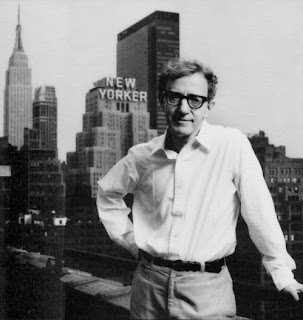













 The Daily Hatch

