Monthly Archives: April 2014

Open letter to President Obama (Part 562) FREE TO CHOOSE “Who protects the consumer?” Video and Transcript Part 4 of 7 “It’s time all of us stopped being fooled by those well-meaning bureaucrats who claim to protect us because they say we can’t protect ourselves.”

Open letter to President Obama (Part 562) (Emailed to White House on July 15, 2013)

President Obama c/o The White House
1600 Pennsylvania Avenue NW
Washington, DC 20500

Dear Mr. President,

I know that you receive 20,000 letters a day and that you actually read 10 of them every day. I really do respect you for trying to get a pulse on what is going on out here.

________________

In 1980 I read the book FREE TO CHOOSE by Milton Friedman and it really enlightened me a tremendous amount.  I suggest checking out these episodes and transcripts of Milton Friedman’s film series FREE TO CHOOSE: “The Failure of Socialism” and “What is wrong with our schools?”  and “Created Equal”  and  From Cradle to Grave, and – Power of the Market.

From the original Free To Choose series Milton asks: “Who Protects the Consumer?”. Many government agencies have been created for this purpose, yet they do so by restricting freedom and stifling beneficial innovation, and eventually become agents for the groups they have been created to regulate.

Milton Friedman correctly noted, “It’s time all of us stopped being fooled by those well-meaning bureaucrats who claim to protect us because they say we can’t protect ourselves.”
Pt 4
Nowadays, there are Corvair fan clubs throughout the country. Corvair’s have become collector items. Consumers have given their verdict on Ralph Nader and the government regulations. As Abraham Lincoln said, you can’t fool all of the people all of the time. It’s time all of us stopped being fooled by those well-meaning bureaucrats who claim to protect us because they say we can’t protect ourselves. The men and women who have fostered this movement have been sincere. They believe that we as consumers are not able to protect ourselves. That we need the help of a wise and effervescent government. But as so often happens the results have been very different from the intentions. Not only have our pockets been picked of billions of dollars, but also we are left less well protected than we were before.
DISCUSSION
Participants: Robert McKenzie, Moderator; Milton Friedman; Kathleen O’Reilly, Consumer Federation of America; Richard Landau, Professor of Medicine, University of Chicago; Joan Claybrook, National Highway Traffic Safety Administration; Robert Crandall, Brookings Institute
MCKENZIE: Now back at the University of Chicago the consumerists, themselves, get their chance to argue their case.
O’REILLY: I agree with Mr. Friedman with respect to those agencies which have had the major purpose of economically propping up a certain industry which is why consumer advocates like myself advocate the elimination of the ICC, the CAB, the Maritime Commission. But when you’re talking about consumer protection in the marketplace and when you’re talking about government watchdog in competition, consumers need and as every poll is showing, they’re demanding more and more protection. And to give just two examples of how information is simply not enough to protect the consumer, five years ago I could not have bought a child’s crib in this country that would have had the slats sufficiently close together that I did not have to worry about the child strangling. Not until the government and the Consumer Product Safety Commission stepped in did consumers then have the choice to buy that type of a crib, strangulation’s down 50 percent. And in 1975, if I had wanted to lease a Xerox machine, I could not have done it. And not until the Federal Trade Commission antitrust stepped in and forced competition into that marketplace did I have that choice and in one year the price went from 14,000 dollars to 5,000 dollars. Those are dollars back in our pocketbooks to say nothing of minimized emotional trauma.
MCKENZIE: Well, before we ask Milton Friedman to come back on that, lets establish the viewpoint of our other participants and experts. Dr. Richard Landau, what’s your reaction?
LANDAU: Well I think the cost is certainly outrageously large and the benefits are trivial if any. I think that perhaps Milton overstates it slightly to make his point, but basically I would have to agree with it in the area that I know best, which is the regulation of new drug development.
MCKENZIE: And Joan Claybrook.
CLAYBROOK: Well in the auto safety field we’ve saved about 55,000 lives and millions of injuries because of auto safety regulations since the mid_1960s. I might also comment that the cost of auto crashes each year, the American public is 48 billion dollars a year, fairly substantial when you compare it to other things, much less, again, the human trauma.
MCKENZIE: Bob Crandall.
CRANDALL: Well I think it’s impossible to disagree with Milton Friedman on the effects of economic rate regulation of the sort that the railroads and the trucking industry have been through. The intent of that legislation was, of course, to protect the railroad and to protect the trucks, and the same thing is true for maritime regulation. What sustains regulation is sort of a populist theory that somehow through government we will redistribute wealth from people who own business firms to consumers. In fact it doesn’t work that way. It doesn’t work that way in economic regulation and there’s very little evidence that it works that way in any kind of regulation. As to whether we get any value from health and safety regulation, I think much of it is too new to know.
MCKENZIE: Well now that’s the area I want to start with because remember that was the first part of his argument. The whole idea of consumer product safety action by the state. Now, is that so far working? Very close to your interest I know. What’s your reaction, Kathleen O’Reilly?
O’REILLY: Well in product safety in the state of that, the lawnmower industry had said for twenty years they could not design a safe lawnmower. Only when the Consumer Product Safety Commission forced them with the new standard suddenly their creative genius was overnight. They came up with net whips that were made out of plastic and they came up with very innovative forces. Which is why __ where that government presence actually triggered innovation that otherwise would have been left uncovered.
FRIEDMAN: It’s very easy to see the good results. The bad result it’s very much harder to see. You haven’t mentioned the products that aren’t there because the extra cost imposed by Consumer Product Safety Commission have prevented them from existing. You haven’t mentioned the case of the triss (phonetic) problem on the flammable garments. Here you had a clear case where the __ regulation of the CPSC essentially had the effect of requiring all manufacturers of children’s sleepwear to impregnate them with triss.
O’REILLY: Oh, but that’s not true at all.
FRIEDMAN: Three years __ five years later the regulation required that garments to be nonflammable and as it happened, triss was the most readily available chemical which could do it.
MCKENZIE: Kathleen O’Reilly.
O’REILLY: It’s absolutely not true.
FRIEDMAN: But let me finish the story first. Because the second half of the story is the important part of it. It turned out that triss was a carcinogen. And five years later or three years later, I’m not sure the exact time, the same agency had to prohibit the use of those sleepwear garments forcing them to be disposed of at great cost to everybody concerned.
O’REILLY: All right, lets look at the real interesting history here. In 1968, when Congress passed the Flammable Fabric Act, they did not tell the CPSC what chemicals would comply with that and what would not. And so initially when industry said, “we’re going to use triss,” the Consumer Product Safety Commission, from their initial tests, were disturbed by it and had announced informally to industry that they were not going to allow triss to be used. Industry balked and said, “we’re gonna to take you to court because the Act only says it has to be flame retardant.” You, the government, cannot tell us how to comply. And it was the industry that forced the hand of CPSC away. And they don’t even deny that now.
FRIEDMAN: I’m not trying to defend the industry. Go slowly. I am not pro-industry. I am pro-consumer. I’m like you. I’m not pro-industry. and, of course, industry will do a lot of bad things. The whole question at issue is what mechanism is more effective in protecting the interests of the consumers, the disbursed, widespread forces of the market. Take the case of the flammable fabrics, suppose you had not had the requirements.
MCKENZIE: But you believe it was right to test them, don’t you? For a government agency to test it?
FRIEDMAN: No, not at all.
MCKENZIE: No, no.
FRIEDMAN: There are private consumer testing agencies. There’s the Consumers Research. There’s Consumers Union. You speak about a widespread demand for more protection, those agencies have never __ those organizations __
CLAYBROOK: Oh, of course, they have all these publications on cars __
FRIEDMAN: Of course.
CLAYBROOK:__ but what they do is they test the brakes and steering. They never crash test them and the most important thing to know about a car when you buy it is if the car crashes are you going to be killed unnecessarily?
FRIEDMAN: The reason they __
CLAYBROOK: You can’t even get that information.
FRIEDMAN: But the reason they don’t test __
CLAYBROOK: It’s too expensive, that’s the reason why.
FRIEDMAN: Of course. Anyway it is too expensive for them because the number of consumers who are willing to buy their service and take it is very, very small.
CLAYBROOK: That is not why. The reason why is because it’s enormously expensive.
FRIEDMAN: Of course, but if they had a large enough number of customers, if there were enough customers, enough consumers who wanted the __
CLAYBROOK: Yes, but that’s a chicken and egg situation which is ridiculous.
FRIEDMAN: It’s not a chicken and egg situation. The whole situation __
CLAYBROOK: If you believe that technological information is important for consumer to have, which is that basis ad the thesis of your argument, surely that you would say that one of the things that society does as it groups together to provide basic services to the public; police, traffic services, all sorts of basic kinds of things, the mail service and the fire service and all the rest of it. Why is that they shouldn’t even do testing of technological subjects which the public has no way of knowing?
MCKENZIE: Before you reply, I want one or two others in on this, Bob Crandall.
CRANDALL: It seems to me that Professor Friedman could give a little bit on this ground. Certainly in the dissemination of information there’s a free rider problem. And one of the problems is that while you and I might value the results from a Consumer Union rather highly, we don’t have to pay for it. We can look over the shoulder of someone else, borrow the magazine from the library and so forth. I wouldn’t go so far as to say that the government should not at all be in the business of generating information though I am concerned about exactly the same forces, this evil industry that Miss O’Reilly talks about, having its influence on how this information is prepared. I don’t see how we guard ourselves against that.
FRIEDMAN: We don’t
CRANDALL: But it seems to me that there is a case to be made that the market does not supply enough information.
FRIEDMAN: It may not. But the market supplies a great deal and there is also a free rider problem in the negative sense on government provision of information because people who have no use for that information are required to pay for it.


________________

Thank you so much for your time. I know how valuable it is. I also appreciate the fine family that you have and your commitment as a father and a husband.

Sincerely,

Everette Hatcher III, 13900 Cottontail Lane, Alexander, AR 72002, ph 501-920-5733, lowcostsqueegees@yahoo.com

Related posts:

“The Power of the Market” episode of Free to Choose in 1990 by Milton Friedman (Part 1)

Milton Friedman The Power of the Market 1-5 How can we have personal freedom without economic freedom? That is why I don’t understand why socialists who value individual freedoms want to take away our economic freedoms.  I wanted to share this info below with you from Milton Friedman who has influenced me greatly over the […]

“Friedman Friday,” EPISODE “The Failure of Socialism” of Free to Choose in 1990 by Milton Friedman (Part 1)

Milton Friedman: Free To Choose – The Failure Of Socialism With Ronald Reagan (Full) Published on Mar 19, 2012 by NoNationalityNeeded Milton Friedman’s writings affected me greatly when I first discovered them and I wanted to share with you. We must not head down the path of socialism like Greece has done. Abstract: Ronald Reagan […]

________________

“Friedman Friday” (“Free to Choose” episode 3 – Anatomy of a Crisis. part 3 of 7)

Worse still, America’s depression was to become worldwide because of what lies behind these doors. This is the vault of the Federal Reserve Bank of New York. Inside is the largest horde of gold in the world. Because the world was on a gold standard in 1929, these vaults, where the U.S. gold was stored, […]

“Friedman Friday” (Part 16) (“Free to Choose” episode 3 – Anatomy of a Crisis. part 2 of 7)

  George Eccles: Well, then we called all our employees together. And we told them to be at the bank at their place at 8:00 a.m. and just act as if nothing was happening, just have a smile on their face, if they could, and me too. And we have four savings windows and we […]

“Friedman Friday” (“Free to Choose” episode 3 – Anatomy of a Crisis. part 1of 7)

Milton Friedman’s Free to Choose (1980), episode 3 – Anatomy of a Crisis. part 1 FREE TO CHOOSE: Anatomy of Crisis Friedman Delancy Street in New York’s lower east side, hardly one of the city’s best known sites, yet what happened in this street nearly 50 years ago continues to effect all of us today. […]

By Everette Hatcher III | Also posted in Current Events | Edit | Comments (0)

____________________________

_____________


________________________________________________

_____________________________________________

Friedman Friday” Free to Choose by Milton Friedman: Episode “What is wrong with our schools?” (Part 3 of transcript and video)

Friedman Friday” Free to Choose by Milton Friedman: Episode “What is wrong with our schools?” (Part 3 of transcript and video) Here is the video clip and transcript of the film series FREE TO CHOOSE episode “What is wrong with our schools?” Part 3 of 6.   Volume 6 – What’s Wrong with our Schools Transcript: If it […]

Friedman Friday” Free to Choose by Milton Friedman: Episode “What is wrong with our schools?” (Part 2 of transcript and video)

Here is the video clip and transcript of the film series FREE TO CHOOSE episode “What is wrong with our schools?” Part 2 of 6.   Volume 6 – What’s Wrong with our Schools Transcript: Groups of concerned parents and teachers decided to do something about it. They used private funds to take over empty stores and they […]

By Everette Hatcher III | Also posted in Vouchers | Edit | Comments (1)

Friedman Friday” Free to Choose by Milton Friedman: Episode “What is wrong with our schools?” (Part 1 of transcript and video)

Here is the video clip and transcript of the film series FREE TO CHOOSE episode “What is wrong with our schools?” Part 1 of 6.   Volume 6 – What’s Wrong with our Schools Transcript: Friedman: These youngsters are beginning another day at one of America’s public schools, Hyde Park High School in Boston. What happens when […]

By Everette Hatcher III | Also posted in Vouchers | Tagged , , , , | Edit | Comments (0)

Friedman Friday” Free to Choose by Milton Friedman: Episode “Created Equal” (Part 3 of transcript and video)

Friedman Friday” Free to Choose by Milton Friedman: Episode “Created Equal” (Part 3 of transcript and video) Liberals like President Obama want to shoot for an equality of outcome. That system does not work. In fact, our free society allows for the closest gap between the wealthy and the poor. Unlike other countries where free enterprise and other […]

Free to Choose by Milton Friedman: Episode “Created Equal” (Part 2 of transcript and video)

Free to Choose by Milton Friedman: Episode “Created Equal” (Part 2 of transcript and video) Liberals like President Obama want to shoot for an equality of outcome. That system does not work. In fact, our free society allows for the closest gap between the wealthy and the poor. Unlike other countries where free enterprise and other freedoms are […]

Free to Choose by Milton Friedman: Episode “Created Equal” (Part 1 of transcript and video)

 Milton Friedman and Ronald Reagan Liberals like President Obama (and John Brummett) want to shoot for an equality of outcome. That system does not work. In fact, our free society allows for the closest gap between the wealthy and the poor. Unlike other countries where free enterprise and other freedoms are not present.  This is a seven part series. […]

Milton Friedman Friday: (“Free to Choose” episode 4 – From Cradle to Grave, Part 3 of 7)

 I am currently going through his film series “Free to Choose” which is one the most powerful film series I have ever seen. PART 3 OF 7 Worse still, America’s depression was to become worldwide because of what lies behind these doors. This is the vault of the Federal Reserve Bank of New York. Inside […]

By Everette Hatcher III | Edit | Comments (0)

Milton Friedman Friday:(“Free to Choose” episode 4 – From Cradle to Grave, Part 2 of 7)

 I am currently going through his film series “Free to Choose” which is one the most powerful film series I have ever seen. For the past 7 years Maureen Ramsey has had to buy food and clothes for her family out of a government handout. For the whole of that time, her husband, Steve, hasn’t […]

Friedman Friday:(“Free to Choose” episode 4 – From Cradle to Grave, Part 1 of 7)

Friedman Friday:(“Free to Choose” episode 4 – From Cradle to Grave, Part 1 of 7) Volume 4 – From Cradle to Grave Abstract: Since the Depression years of the 1930s, there has been almost continuous expansion of governmental efforts to provide for people’s welfare. First, there was a tremendous expansion of public works. The Social Security Act […]

By Everette Hatcher III | Edit | Comments (0)

“Friedman Friday” (“Free to Choose” episode 1 – Power of the Market. part 3 of 7)

  _________________________   Pt3  Nowadays there’s a considerable amount of traffic at this border. People cross a little more freely than they use to. Many people from Hong Kong trade in China and the market has helped bring the two countries closer together, but the barriers between them are still very real. On this side […]

“Friedman Friday” (“Free to Choose” episode 1 – Power of the Market. part 2 of 7)

  Aside from its harbor, the only other important resource of Hong Kong is people __ over 4_ million of them. Like America a century ago, Hong Kong in the past few decades has been a haven for people who sought the freedom to make the most of their own abilities. Many of them are […]

“Friedman Friday” (“Free to Choose” episode 1 – Power of the Market. part 1of 7)

“FREE TO CHOOSE” 1: The Power of the Market (Milton Friedman) Free to Choose ^ | 1980 | Milton Friedman Posted on Monday, July 17, 2006 4:20:46 PM by Choose Ye This Day FREE TO CHOOSE: The Power of the Market Friedman: Once all of this was a swamp, covered with forest. The Canarce Indians […]

By Everette Hatcher III | Posted in Current Events, Milton Friedman | Edit | Comments (0)

“Friedman Friday,” EPISODE “The Failure of Socialism” of Free to Choose in 1990 by Milton Friedman (Part 1)

Milton Friedman: Free To Choose – The Failure Of Socialism With Ronald Reagan (Full) Published on Mar 19, 2012 by NoNationalityNeeded Milton Friedman’s writings affected me greatly when I first discovered them and I wanted to share with you. We must not head down the path of socialism like Greece has done. Abstract: Ronald Reagan […]

By Everette Hatcher III | Posted in Milton FriedmanPresident Obama | Edit | Comments (1)

“The Failure of Socialism” episode of Free to Choose in 1990 by Milton Friedman (Part 1)

Milton Friedman: Free To Choose – The Failure Of Socialism With Ronald Reagan (Full) Published on Mar 19, 2012 by NoNationalityNeeded Milton Friedman’s writings affected me greatly when I first discovered them and I wanted to share with you. We must not head down the path of socialism like Greece has done. Abstract: Ronald Reagan […]


WOODY WEDNESDAY Review of Woody Allen’s latest movie “Blue Jasmine” Part 17


I have spent alot of time talking about Woody Allen films on this blog and looking at his worldview. He has a hopelessmeaningless, nihilistic worldview that believes we are going to turn to dust and there is no afterlife. Even though he has this view he has taken the opportunity to look at the weaknesses of his own secular view. I salute him for doing that. That is why I have returned to his work over and over and presented my own Christian worldview as an alternative.

My interest in Woody Allen is so great that I have a “Woody Wednesday” on my blog www.thedailyhatch.org every week. Also I have done over 30 posts on the historical characters mentioned in his film “Midnight in Paris.” (Salvador Dali, Ernest Hemingway,T.S.Elliot,  Cole Porter,Paul Gauguin,  Luis Bunuel, and Pablo Picasso were just a few of the characters.)

Today we are looking at a review of Woody Allen’s latest movie Blue Jasmine.

Blue Jasmine – Official Trailer (HD) Cate Blanchett, Alec Baldwin

Published on Jun 7, 2013

http://www.joblo.com – “Blue Jasmine” – Official Trailer

A New York housewife struggles through a life crisis.

Director: Woody Allen

Writer: Woody Allen

Stars: Cate Blanchett, Alec Baldwin, Peter Sarsgaard, Louis C.K.

In theaters: July 26, 2013

_____________________________

star number 1star number 2star number 3star number 4star number 5

Late period Woody Allen movies have tended to arrive on the understanding that, though they may offer flashes of the wit, pathos and psychological acuity of his early work, they’ll never match up to Manhattan or Annie Hall.Blue Jasmine is proof that Allen’s powers are merely fluctuating, not in terminal decline: it’s his most assured, affecting work in years.

There’s no shaking the overtones of Tennessee Williams’ A Streetcar Named Desire in the opening scenes, as Jasmine (Cate Blanchett) – a broke but snooty New York socialite, still flying first class – arrives at her sister Ginger’s modest apartment in San Francisco, parks her vast collection of Louis Vuitton luggage in the tiny sitting room, and hits the nearest bottle.

Recently recovered from a breakdown, she teeters on the edge of sanity. In flashbacks, we see her enjoying the gilded Park Avenue existence afforded by her husband Hal’s fortune, until it becomes clear that the cash comes from rampant, white-collar criminality. Meanwhile, in her post-downfall present, she half-strives, half-refuses to accept her predicament, relying on Ginger, yet disdaining her lower-class lifestyle.

Blanchett has played Williams’ Blanche Dubois to raves on Broadway, and she’s magnificent as Jasmine: by turns monstrous and pitiable, never aiming for cheap sympathy or an easy laugh, though she earns some laughs all the same. Hers will be the performance to beat come awards season, and she is surrounded by Allen’s customarily excellent supporting cast.

As Ginger, the wonderful Sally Hawkins is the trusting heart of the tale, while Alec Baldwin is a sleek fit for the despicable Hal. Bobby Cannavale is winning as Chili, Ginger’s loudmouth, sub-Stanley Kowalski mechanic boyfriend, who remains morally intact despite Jasmine’s avowed disgust.

It’s telling that Chili and Ginger’s ex, Augie (Andrew Dice Clay), are not only the most conspicuously working-class characters in the film, but also the most noble. While the simplicity of his satire of the social divide may be deliberate, neither Allen’s portrayal of the super-rich, nor of the working class, rings entirely true.

The honourable grease-monkey, the Martini-sloshing socialite, the linen-suited diplomat: Allen appears to have been living in a romantic Manhattanite bubble long enough to become almost as divorced from reality as Jasmine – or as the protagonist of his last good movie, Midnight in Paris, whose idea of the world was nothing but an outdated hallucination. Blue Jasmine is unmistakably a film of 2013, but by a great filmmaker from another time.

Related posts:

I love the movie “Midnight in Paris” by Woody Allen and I have done over 30 posts on the historical characters mentioned in the film. Take a look below:

“Midnight in Paris” one of Woody Allen’s biggest movie hits in recent years, July 18, 2011 – 6:00 am

(Part 32, Jean-Paul Sartre)July 10, 2011 – 5:53 am

 (Part 29, Pablo Picasso) July 7, 2011 – 4:33 am

(Part 28,Van Gogh) July 6, 2011 – 4:03 am

(Part 27, Man Ray) July 5, 2011 – 4:49 am

(Part 26,James Joyce) July 4, 2011 – 5:55 am

(Part 25, T.S.Elliot) July 3, 2011 – 4:46 am

(Part 24, Djuna Barnes) July 2, 2011 – 7:28 am

(Part 23,Adriana, fictional mistress of Picasso) July 1, 2011 – 12:28 am

(Part 22, Silvia Beach and the Shakespeare and Company Bookstore) June 30, 2011 – 12:58 am

(Part 21,Versailles and the French Revolution) June 29, 2011 – 5:34 am

(Part 16, Josephine Baker) June 24, 2011 – 5:18 am

(Part 15, Luis Bunuel) June 23, 2011 – 5:37 am

(Part 1 William Faulkner) June 13, 2011 – 3:19 pm

I love Woody Allen’s latest movie “Midnight in Paris”, June 12, 2011 – 11:52 pm

Review of Woody Allen’s latest movie “Blue Jasmine” Part 6

Review of Woody Allen’s latest movie “Blue Jasmine” Part 6 I have spent alot of time talking about Woody Allen films on this blog and looking at his worldview. He has a hopeless, meaningless, nihilistic worldview that believes we are going to turn to dust and there is no afterlife. Even though he has this view he […]

Review of Woody Allen’s latest movie “Blue Jasmine” Part 5

Review of Woody Allen’s latest movie “Blue Jasmine” Part 5 I have spent alot of time talking about Woody Allen films on this blog and looking at his worldview. He has a hopeless, meaningless, nihilistic worldview that believes we are going to turn to dust and there is no afterlife. Even though he has this view he […]

Review of Woody Allen’s latest movie “Blue Jasmine” Part 4

Review of Woody Allen’s latest movie “Blue Jasmine” Part 4 I have spent alot of time talking about Woody Allen films on this blog and looking at his worldview. He has a hopeless, meaningless, nihilistic worldview that believes we are going to turn to dust and there is no afterlife. Even though he has this view he […]

Blue Jasmine has huge opening for Woody Allen film but I doubt it will top “Midnight in Paris” overall performance!!!!!!

Blue Jasmine — Movie Review Published on Jul 25, 2013 Blue Jasmine directed by Woody Allen and starring Cate Blanchett , Alex Baldwin, and Louis C.K. is reviewed by Ben Mankiewicz (host of Turner Classic Movies), Grae Drake (Senior Editor of Rotten Tomatoes), Alonso Duralde (TheWrap.com and Linoleum Knife podcast) and Christy Lemire (Movie critic). ___________________ […]

Review of Woody Allen’s latest movie “Blue Jasmine” Part 3

Review of Woody Allen’s latest movie “Blue Jasmine” Part 3 I have spent alot of time talking about Woody Allen films on this blog and looking at his worldview. He has a hopeless, meaningless, nihilistic worldview that believes we are going to turn to dust and there is no afterlife. Even though he has this view he […]

Review of Woody Allen’s latest movie “Blue Jasmine” Part 2

I have spent alot of time talking about Woody Allen films on this blog and looking at his worldview. He has a hopeless, meaningless, nihilistic worldview that believes we are going to turn to dust and there is no afterlife. Even though he has this view he has taken the opportunity to look at the weaknesses of […]

Review of Woody Allen’s latest movie “Blue Jasmine” Part 1

Review of Woody Allen’s latest movie “Blue Jasmine” Part 1 I have spent alot of time talking about Woody Allen films on this blog and looking at his worldview. He has a hopeless, meaningless, nihilistic worldview that believes we are going to turn to dust and there is no afterlife. Even though he has this view he […]


“Woody Wednesday” A 2010 review of Woody Allen’s Annie Hall

I have spent alot of time talking about Woody Allen films on this blog and looking at his worldview. He has a hopeless, meaningless, nihilistic worldview that believes we are going to turn to dust and there is no afterlife. Even though he has this view he has taken the opportunity to look at the weaknesses of […]

“Woody Wednesday” In 2009 interview Woody Allen talks about the lack of meaning of life and the allure of younger women

I have spent alot of time talking about Woody Allen films on this blog and looking at his worldview. He has a hopeless, meaningless, nihilistic worldview that believes we are going to turn to dust and there is no afterlife. Even though he has this view he has taken the opportunity to look at the weaknesses of […]

Woody Allen video interview in France talk about making movies in Paris vs NY and other subjects like God, etc

Woody Allen video interview in France Related posts: “Woody Wednesdays” Woody Allen on God and Death June 6, 2012 – 6:00 am Good website on Woody Allen How can I believe in God when just last week I got my tongue caught in the roller of an electric typewriter? If Jesus Christ came back today and […]

“Woody Wednesday” Woody Allen on the Emptiness of Life by Toby Simmons

I have spent alot of time talking about Woody Allen films on this blog and looking at his worldview. He has a hopeless, meaningless, nihilistic worldview that believes we are going to turn to dust and there is no afterlife. Even though he has this view he has taken the opportunity to look at the weaknesses of […]

Woody Allen interviews Billy Graham (Woody Wednesday)

A surprisingly civil discussion between evangelical Billy Graham and agnostic comedian Woody Allen. Skip to 2:00 in the video to hear Graham discuss premarital sex, to 4:30 to hear him respond to Allen’s question about the worst sin and to 7:55 for the comparison between accepting Christ and taking LSD. ___________________ The Christian Post > […]

“Woody Allen Wednesdays” can be seen on the www.thedailyhatch.org

Crimes and Misdemeanors: A Discussion: Part 1 If you like Woody Allen films as much as I do then join me every Wednesday for another look the man and his movies. Below are some of the posts from the past: “Woody Wednesday” How Allen’s film “Crimes and Misdemeanors makes the point that hell is necessary […]

“Woody Wednesday” Great Documentary on Woody Allen

I really enjoyed this documentary on Woody Allen from PBS. Woody Allen: A Documentary, Part 1 Published on Mar 26, 2012 by NewVideoDigital Beginning with Allen’s childhood and his first professional gigs as a teen – furnishing jokes for comics and publicists – WOODY ALLEN: A DOCUMENTARY chronicles the trajectory and longevity of Allen’s career: […]

“Woody Wednesday” Discussion of Woody Allen’s 1989 movie “Crimes and Misdemeanors” (Part 6)

Crimes and Misdemeanors: A Discussion: Part 3 Uploaded by camdiscussion on Sep 23, 2007 Part 3 of 3: ‘Is Woody Allen A Romantic Or A Realist?’ A discussion of Woody Allen’s 1989 movie, Crimes and Misdemeanors, perhaps his finest. By Anton Scamvougeras. http://camdiscussion.blogspot.com/ antons@mail.ubc.ca ______________ One of my favorite Woody Allen movies and I reviewed […]

“Woody Wednesday” Discussion of Woody Allen’s 1989 movie “Crimes and Misdemeanors” (Part 5)

Crimes and Misdemeanors: A Discussion: Part 2 Uploaded by camdiscussion on Sep 23, 2007 Part 2 of 3: ‘What Does The Movie Tell Us About Ourselves?’ A discussion of Woody Allen’s 1989 movie, perhaps his finest. By Anton Scamvougeras. http://camdiscussion.blogspot.com/ antons@mail.ubc.ca _________________- One of my favorite Woody Allen movies and I reviewed it earlier but […]

In 2009 interview Woody Allen talks about the lack of meaning of life and the allure of younger women

I have spent alot of time talking about Woody Allen films on this blog and looking at his worldview. He has a hopeless, meaningless, nihilistic worldview that believes we are going to turn to dust and there is no afterlife. Even though he has this view he has taken the opportunity to look at the weaknesses of […]

“Woody Allen Wednesdays” can be seen on the www.thedailyhatch.org

Crimes and Misdemeanors: A Discussion: Part 1 If you like Woody Allen films as much as I do then join me every Wednesday for another look the man and his movies. Below are some of the posts from the past: “Woody Wednesday” How Allen’s film “Crimes and Misdemeanors makes the point that hell is necessary […]

Woody Allen on the Emptiness of Life by Toby Simmons

I have spent alot of time talking about Woody Allen films on this blog and looking at his worldview. He has a hopeless, meaningless, nihilistic worldview that believes we are going to turn to dust and there is no afterlife. Even though he has this view he has taken the opportunity to look at the weaknesses of […]

“Woody Wednesday” Discussion of Woody Allen’s 1989 movie “Crimes and Misdemeanors” (Part 4)

Crimes and Misdemeanors: A Discussion: Part 1 Uploaded by camdiscussion on Sep 23, 2007 Part 1 of 3: ‘What Does Judah Believe?’ A discussion of Woody Allen’s 1989 movie, perhaps his finest. By Anton Scamvougeras. http://camdiscussion.blogspot.com/ antons@mail.ubc.ca _____________ One of my favorite films is this gem by Woody Allen “Crimes and Misdemeanors”: Film Review By […]

“Woody Wednesday” Discussion of Woody Allen’s 1989 movie “Crimes and Misdemeanors” (Part 3)

Crimes and Misdemeanors: A Discussion: Part 3 Uploaded by camdiscussion on Sep 23, 2007 Part 3 of 3: ‘Is Woody Allen A Romantic Or A Realist?’ A discussion of Woody Allen’s 1989 movie, Crimes and Misdemeanors, perhaps his finest. By Anton Scamvougeras. http://camdiscussion.blogspot.com/ antons@mail.ubc.ca ______________ One of my favorite Woody Allen movies and I reviewed […]

“Woody Wednesday” Discussion of Woody Allen’s 1989 movie “Crimes and Misdemeanors” (Part 2)

Crimes and Misdemeanors: A Discussion: Part 2 Uploaded by camdiscussion on Sep 23, 2007 Part 2 of 3: ‘What Does The Movie Tell Us About Ourselves?’ A discussion of Woody Allen’s 1989 movie, perhaps his finest. By Anton Scamvougeras. http://camdiscussion.blogspot.com/ antons@mail.ubc.ca _________________- One of my favorite Woody Allen movies and I reviewed it earlier but […]

“Woody Wednesday” Discussion of Woody Allen’s 1989 movie “Crimes and Misdemeanors” (Part 1)

Crimes and Misdemeanors: A Discussion: Part 1 Uploaded by camdiscussion on Sep 23, 2007 Part 1 of 3: ‘What Does Judah Believe?’ A discussion of Woody Allen’s 1989 movie, perhaps his finest. By Anton Scamvougeras. http://camdiscussion.blogspot.com/ antons@mail.ubc.ca _____________ Today I am starting a discusssion of the movie “Crimes and Misdemeanors” by Woody Allen. This 1989 […]

By Everette Hatcher III | Posted in Current Events | Edit | Comments (0)

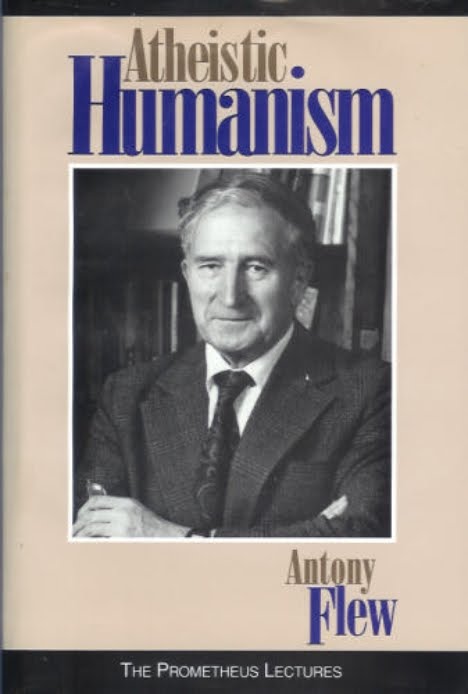
Antony Flew: 3 Factors from Science that point to God are Nature obeys laws, Intelligently organized purpose-beings and the existence of nature!!

__________________

Does God Exist?: William Lane Craig vs Antony Flew

Uploaded on Dec 16, 2010

http://drcraigvideos.blogspot.com – William Lane Craig and Antony Flew met in 1998 on the 50th anniversary of the famous Copleston/Russell debate to discuss the question of God’s existence in a public debate. Unlike Richard Dawkins, Flew was one of the most respected atheist thinkers of the 20th and early 21st century (his scholarly works on David Hume are still studied today, and his “presumption of atheism” argument is still used by atheists). He became a deist* shortly before he died in April, 2010 (although he was an atheist when he debated Craig). The debate was transcribed into a book: http://www.amazon.com/Does-God-Exist-…

* – Flew’s conversion has caused quite a scandal. Dr. Craig comments on it here: http://www.rfmedia.org/blog/index.php…

Antony Flew has comments on some of the controversies over his book and his conversion:
http://www.youtube.com/watch?v=CViBlN…
http://www.youtube.com/watch?v=qcdsRe…
http://www.youtube.com/watch?v=YUmZQh…

We welcome your comments in the Reasonable Faith forums:
http://www.reasonablefaith.org/forums/

Follow Reasonable Faith On Twitter: http://twitter.com/rfupdates

Add Reasonable Faith On Facebook: http://www.facebook.com/reasonablefai…

____________

Discussion (3 of 3): Antony Flew, N.T. Wright, and Gary Habermas

The Kalam Cosmological Argument (Scientific Evidence) (Henry Schaefer, PhD)

Published on Jun 11, 2012

Scientist Dr. Henry “Fritz” Schaefer gives a lecture on the cosmological argument and shows how contemporary science backs it up.

___________________________

_____________


During the 1990′s I actually made it a practice to write famous atheists and scientists that were mentioned by Adrian Rogers and Francis Schaeffer and challenge them with the evidence for the Bible’s historicity and the claims of the gospel. Usually I would send them a cassette tape of Adrian Rogers’ messages “6 reasons I know the Bible is True,” “The Final Judgement,” “Who is Jesus?” and the message by Bill Elliff, “How to get a pure heart.”  I would also send them printed material from the works of Francis Schaeffer and a personal apologetic letter from me addressing some of the issues in their work. My second cassette tape that I sent to both Antony Flew and George Wald was Adrian Rogers’ sermon on evolution.  

_____________________________________

Photo of Pastor Adrian Rogers Memorial Tribute

Below is the video of Rogers’ sermon on Evolution.

Check out this short article by Adrian Rogers:

I think that Antony Flew may have pondered this quote from George Wald which was in Adrian Rogers’ sermon.

Dr. George Wald of Harvard:

“When it comes to the origin of life, we have only two possibilities as to how life arose. One is spontaneous generation arising to evolution; the other is a supernatural creative act of God. There is no third possibility…Spontaneous generation was scientifically disproved one hundred years ago by Louis Pasteur, Spellanzani, Reddy and others. That leads us scientifically to only one possible conclusion — that life arose as a supernatural creative act of God…I will not accept that philosophically because I do not want to believe in God. Therefore, I choose to believe in that which I know is scientifically impossible, spontaneous generationarising to evolution.” – Scientific American, August, 1954.

Adrian Rogers said the lack of an  answer for the  origin of life was a big reason Rogers rejected evolution.  Rogers noted, “Evolution offers no answers to the origin of life. It simply pushes the question farther back in time, back to some primordial event in space or an act of spontaneous generation in which life simply sprang from nothing.”

I actually had the chance to correspond with George Wald twice before his death. He wrote me two letters and in the first one he suggested that he was just using hyperbole when he made the assertion that is quoted by Dr. Rogers. He also suggested the religion of Buddhism although he said he was not a Buddhist himself, but he thought that would be closest to the truth which he thought was atheism. This does seem to contradict what Flew says of Wald’s views in the 1990’s. Flew contended concerning Wald:

In later years, he concluded that a preexisting mind, which he posits as the matrix of physical reality, composed a physical universe that breeds life: ‘the stuff of which physical reality is constructed is mind-stuff. It is mind that has composed a physical universe that breeds life…’ 

In my letters to both Wald and Flew in the 1990’s I demonstrated that  there is evidence that points to the fact that the Bible is historically true as Schaeffer pointed out in episode 5 of WHATEVER HAPPENED TO THE HUMAN RACEThere is a basis then for faith in Christ alone for our eternal hope. This link shows how to do that.

Fortunately some modern philosophers and scientists are starting to wake up and realize that materialistic chance evolution was not responsible for the origin of the universe but it was started by a Divine Mind. In fact, Antony Flew who was probably the most famous atheist of the 20th century took time to read several letters I sent him the 1990’s which included much material from Francis Schaeffer and he listened to several cassette tapes I sent him from Adrian Rogers and then in 2004 he reversed his view that this world came about through evolution and he left his atheism behind and  because a theist.  I still have several of the letters that Dr. Flew wrote back to me and I will be posting them later on my blog at some point. One of the letters I got back in 1994 said specifically that he enjoyed listening to whole cassette tape.

 According to Antony Flew in 2007 there are 3 factors from science that point to God. 1. Nature obeys laws. 2. Intelligently organized purpose-beings. 3. The existence of nature!! Notice the George Wald quote find in Antony Flew’s book: “Since we cannot accept a transcendent source of life, we choose to believe the impossible: that life arose spontaneously by chance from matter.’

Antony Flew — Still with his head in the game!

October 30, 2007 Posted by William Dembski under PhilosophyReligion,Science 19 Comments

A friend of mine and I have been reading Antony Flew’s new book THERE IS A GOD. Flew had been the English-speaking world’s most prominent atheist until Richard Dawkins assumed that role. A few years ago, Flew announced his conversion to theism (though not full-blown Christianity). This caused a stir at the time, but true to their materialist bias, the academy and media quickly fluffed it off (“poor Antony — he’s just getting old and a bit soft in the head”). As the following excerpts (that my friend collected) attest, Flew knew exactly what he was doing in rejecting his lifelong commitment to atheism. Also, a refreshing feature of the book is Flew’s evident grace, good will, and sensitivity — the contrast with the boorishness of neo-atheists like Dawkins-Hitchens-Harris is stark.

>From p. 79 ff:

“For Dawkins, the main means for producing human behavior is to
attribute to genes characteristics that can significantly be
attributed only to humans. Then, after insisting that we are all the
choiceless creatures of our genes, he infers that we cannot help but
share the unlovely personal characteristics of those all-controlling
monads.

“Genes, of course, can be neither selfish nor unselfish any more than
they or any other nonconscious entities can engage in competition or
make selections. (Natural selection is, notoriously, not selection;
and it is a somewhat less familiar logical fact that, below the human
level, the struggle for existence is not “competetive” in the true
sense of the word.) But this did not stop Dawkins from proclaiming
that his book ‘is not science fiction; it is science …. We are
survival machines — robot vehicles blindly programmed to preserve the
selfish molecules known as genes.’ Although he later issued occasional
disavowals, Dawkins gave no warning in his book against taking him
literally. He added, sensationally, that ‘the argument of this book
is that we, and all other animals, are machines created by our genes’

“If any of this were true, it would be no use to go on, as Dawkins
does, to preach: ‘Let us try to teach generosity and altruism, because
we are born selfish.’ No eloquence can move programmed robots. But in
fact none of it is true — or even faintly sensible. Genes, as we have
seen, do not and cannot necessitate our conduct. Nor are they capable
of the calculation and understanding required to plot a course of
either ruthless selfishness or sacrificial compassion.”

>From p. 85 ff:

“Let us begin with a parable. Imagine that a satellie phone is washed
ashore on a remote island inhabited by a tribe that has never had
contact with modern civilization. The natives play with the numbers on
the dial pad and hear different voices upon hitting certain sequences.
They assume first that it’s the device that makes these noises. Some
of the cleverer natives, the scientists of the tribe, assemble an
exact replica and hit the numbers again. They hear the voices again.
The conclusion seems obvious to them. This particular combination of
crystals and metals and chemicals produces what seems like human
voices, and this means that the voices are simply properties of this
device.

“But the tribal sage summons the scientists for a discussion. He has
thought long and hard on the matter and has reached the following
conclusion: the voices coming through the instrument must be coming
from people like themselves, people who are living and conscious
although speaking in another language. Instead of assuming that the
voices are simply properties of the handset, they should investigate
the possibility that through some mysterious communication network
they are ‘in touch’ with other humans. Perhaps further study along
these lines could lead to a greater understanding of the world beyond
their island. But the scientists simply laugh at the sage and say,
‘Look, when we damage the instrument, the voices stop coming. So
they’re obviously nothing more than sounds produced by a unique
combinatino of lithium and printed circuit boards and light-emitting
diodes.

“In this parable we see how easy it is to let preconceived theories
shape the way we view evidence instead of letting the evidence shape
our theories…. And in this, it seems to me, lies the peculiar
danger, the endemic evil, of dogmatic atheism. Take such utterances as
‘We should not ask for an explanation of how it is that the world
exists; it is here and that’s all’ or “Since we cannot accept a
transcendent source of life, we choose to believe the impossible: that
life arose spontaneously by chance from matter’ or ‘The laws of
physics are “lawless laws” that arise from the void — end of
discussion.’ They look at first sight like rational arguments that
have a special authority because they have a no-nonsense air about
them. Of course, this is no more sign that they are either rational or
arguments….

“… I therefore put to my former fellow-atheists the simple central
question: ‘What would have to occur or to have occurred to constitute
for you a reason to at least consider the existence of a superior
Mind?

Moving on now from the parable, it’s time for me to lay my cards on
the table, to set out my own views and the reasons that support them.
I now believe that the universe was brought into existence by an
infinite Intelligence. I believe that this universe’s intricate laws
manifest what scientists have called the Mind of God. I believe that
life and reproduction originate in a divine Source.

Why do I believe this, given that I expounded and defended atheism for
more than half a century? The short answer is this: this is the world
picture, as I see it, that has emerged from modern science. Science
spotlights three dimensions that point to God. The first is the fact
that nature obeys laws. The second is the dimension of life, of
intelligently organized and purpose-driven beings, which arose from
matter. The third is the very existence of nature. But it is not this
alone that has guided me. I have also been helped by a renewed study
of the classical philosophical arguments.

______________

In the above book, Flew writes (pp. 88-89):

LAYING THE CARDS ON THE TABLE… I now believe that the universe was brought into existence by an infinite Intelligence…

Why do I believe this, given that I expounded and defended atheism for more than half a century? The short answer is this: this is the world picture as I see it, that has emerged from modern science. Science spotlights three dimensions of nature that point to God. The first is the fact that nature obeys laws. The second is the dimension of life, of intelligently organized and purpose-driven beings, which arose from matter. The third, is the very existence of nature…

And also on (p. 89):

My departure from atheism was not occasioned by any new phenomenon or argument. Over the last two decades my whole framework of thought has been in a stage of migration. This was a consequence of my continuing assessment of the evidence of nature …

And also on (p. 91)

Three domains of scientific enquiry have been especially important for me, and I will consider them as we proceed in the light of today’s evidence. The first is the question that puzzled and continues to puzzle most reflective scientists: How did the laws of nature come to be? The second is evident to all. How did life as a phenomenon originate from nonlife? And the third is the problem that the philosophers handed over to the cosmologists: How did the universe, by which we mean all that is physical, come into existence?

_____________

Related posts:

Former Atheist Antony Flew noted that Evolutionists failed to show “Where did a living, self-reproducing organism come from in the first place?”

____   Does God Exist? Thomas Warren vs. Antony Flew Published on Jan 2, 2014 Date: September 20-23, 1976 Location: North Texas State University Christian debater: Thomas B. Warren Atheist debater: Antony G.N. Flew For Thomas Warren: http://www.warrenapologeticscenter.org/ ______________________ Antony Flew and his conversion to theism Uploaded on Aug 12, 2011 Antony Flew, a well known […]

Educated Scholars like Antony Flew can believe in God!!!

__________ Discussion (1 of 3): Antony Flew, N.T. Wright, and Gary Habermas Uploaded on Sep 22, 2010 A discussion with Antony Flew, N.T. Wright, and Gary Habermas. This was held at Westminster Chapel March, 2008 Debate – William Lane Craig vs Christopher Hitchens – Does God Exist? Uploaded on Jan 27, 2011 April 4, 2009 – Craig […]

By Everette Hatcher III | Posted in Current Events | Tagged  | Edit | Comments (0)

Antony Flew rightly noted that Richard Dawkins’ “monkey theorem was a load of rubbish”

________   William Lane Craig versus Eddie Tabash Debate Uploaded on Feb 6, 2012 Secular Humanism versus Christianity, Lawyer versus Theologian. Evangelical Christian apologist William Lane Craig debates humanist atheist lawyer Eddie Tabash at Pepperdine University, February 8, 1999. Visit http://www.Infidels.org andhttp://www.WilliamLaneCraig.com ________________ Antony Flew on God and Atheism Published on Feb 11, 2013 Lee […]

Article from 2005 indicated Antony Flew abandoned atheism because of Law of Biogenesis!!!!

___________   Does God Exist? Thomas Warren vs. Antony Flew Published on Jan 2, 2014 Date: September 20-23, 1976 Location: North Texas State University Christian debater: Thomas B. Warren Atheist debater: Antony G.N. Flew For Thomas Warren: http://www.warrenapologeticscenter.org/ ______________________ Antony Flew and his conversion to theism Uploaded on Aug 12, 2011 Antony Flew, a well known […]

The Christian influence on society is real and that is one of the reasons Antony Flew left Atheism!!!

_____________ Antony Flew on God and Atheism Published on Feb 11, 2013 Lee Strobel interviews philosopher and scholar Antony Flew on his conversion from atheism to deism. Much of it has to do with intelligent design. Flew was considered one of the most influential and important thinker for atheism during his time before his death […]

Antony Flew, George Wald and David Noebel on the Origin of Life

___________ Does God Exist?: William Lane Craig vs Antony Flew Uploaded on Dec 16, 2010 http://drcraigvideos.blogspot.com – William Lane Craig and Antony Flew met in 1998 on the 50th anniversary of the famous Copleston/Russell debate to discuss the question of God’s existence in a public debate. Unlike Richard Dawkins, Flew was one of the most respected […]

The Fine Tuning Argument for the Existence of God from Antony Flew!

___________ ________ Jesus’ Resurrection: Atheist, Antony Flew, and Theist, Gary Habermas, Dialogue Published on Apr 7, 2012 http://www.veritas.org/talks –Did Jesus die, was he buried, and what happened afterward? Join legendary atheist Antony Flew and Christian historian and apologist Gary Habermas in a discussion about the facts surrounding the death and resurrection of Jesus Christ. Join […]

By Everette Hatcher III | Posted in Current Events | Tagged  | Edit | Comments (0)

Mark Oppenheimer of Time Magazine claims Antony Flew was convinced by PSEUDOSCIENCE that God exists!!!

___________ ________ Antony Flew – World’s Most Famous Atheist Accepts Existence of God Uploaded on Nov 28, 2008 Has Science Discovered God? A half-century ago, in 1955, Professor Antony Flew set the agenda for modern atheism with his Theology and Falsification, a paper presented in a debate with C.S. Lewis. This work became the most […]

A review of “There is a God” by Antony Flew March 31, 2012

________ Antony Flew on God and Atheism Published on Feb 11, 2013 Lee Strobel interviews philosopher and scholar Antony Flew on his conversion from atheism to deism. Much of it has to do with intelligent design. Flew was considered one of the most influential and important thinker for atheism during his time before his death […]

Review of Antony Flew Book: THERE IS A GOD Article by R.C. Sproul May 2008

Discussion (2 of 3): Antony Flew, N.T. Wright, and Gary Habermas ______________ Atheist Lawrence Krauss loses debate to wiser Christian Published on Sep 13, 2013 http://www.reasonablefaith.org More of this here The Bible and Science (Part 02) The Kalam Cosmological Argument (Scientific Evidence) (Henry Schaefer, PhD) Published on Jun 11, 2012 Scientist Dr. Henry “Fritz” Schaefer gives a lecture […]

__________________

Debating Kermit Gosnell Trial, Abortion and infanticide with Ark Times Bloggers Part 16 Denny Burk: ” The culture of death is mainstream, People are accustomed to the fact that killing unborn babies is legal”

C. Everett Koop, 1980s.jpg
Surgeon General of the United States
In office
January 21, 1982 – October 1, 1989
President Ronald Reagan
George H. W. Bush
Francis Schaeffer
Francis Schaeffer.jpg

Founder of the L’Abri community
Born Francis August Schaeffer
January 30, 1912

Died May 15, 1984 (aged 72)

I truly believe that many of the problems we have today in the USA are due to the advancement of humanism in the last few decades in our society. Ronald Reagan appointed the evangelical Dr. C. Everett Koop to the position of Surgeon General in his administration. He partnered with Dr. Francis Schaeffer in making the video below. It is very valuable information for Christians to have.  Actually I have included a video below that includes comments from him on this subject.

Francis Schaeffer Whatever Happened to the Human Race (Episode 1) ABORTION

Francis Schaeffer: What Ever Happened to the Human Race? (Full-Length Documentary)


Part 1 on abortion runs from 00:00 to 39:50, Part 2 on Infanticide runs from 39:50 to 1:21:30, Part 3 on Youth Euthanasia runs from 1:21:30 to 1:45:40, Part 4 on the basis of human dignity runs from 1:45:40 to 2:24:45 and Part 5 on the basis of truth runs from 2:24:45 to 3:00:04

I have gone back and forth and back and forth with many liberals on the Arkansas Times Blog on many issues such as abortionhuman rightswelfarepovertygun control  and issues dealing with popular culture . This time around I have discussed morality with the Ark Times Bloggers and particularly the trial of the abortionist Dr. Kermit Gosnell and through that we discuss infanticide, abortion and even partial birth abortion. Here are some of my favorite past posts on the subject of Gosnell: ,Abby Johnson comments on Dr. Gosnell’s guilty verdict, Does President Obama care about Kermit Gosnell verdict?Dr. Gosnell Trial mostly ignored by mediaKermit Gosnell is guilty of same crimes of abortion clinics are says Jennifer MasonDenny Burk: Is Dr. Gosnell the usual case or not?, Pro-life Groups thrilled with Kermit Gosnell guilty verdict,  Reactions to Dr. Gosnell guilty verdict from pro-life leaders,  Kermit Gosnell and Planned Parenthood supporting infanticide?, Owen Strachan on Dr. Gosnell Trial, Al Mohler on Kermit Gosnell’s abortion practice, Finally we get justice for Dr. Kermit Gosnell .

In July of 2013 I went back and forth with several bloggers from the Ark Times Blog concerning Dr. Kermit Gosnell’s abortion practice and his trial which had finished up in the middle of May:

Couldn’t be better wrote, ” You won’t find one person on the blog who defends Gosnell..”

How about President Barack Obama.

Denny Burk shows the logical connection below:

Pro-abortion activists long ago took the position that granting human rights to survivors of abortion would present a threat to the regime of Roe v. Wade. Their position has not been a secret. That’s why a spokesperson for Planned Parenthood recently argued against a bill that would protect the live-born infants from being left to die.

http://www.youtube.com/watch?feature=playe…

http://www.dennyburk.com/planned-parenthoo…

That’s why our own PRESIDENT OBAMA–WHEN HE WAS AN ILLINOIS STATE SENATOR–VOTED FOUR TIMES AGAINST LEGISLATION THAT WOULD HAVE PROTECTED BABIES IN THE SAME SITUATION AS THE ONES IN GOSNELL’S CLINIC.

http://www.nationalreview.com/articles/316…

This was all well-known when President Obama was a candidate, and Americans seemed to be indifferent about it as they elected him twice to be their chief executive. The bottom line is this. The culture of death is mainstream. People are accustomed to the fact that killing unborn babies is legal. What’s the difference if some of them are killed right after they pass from their mother’s body?

Gosnell did not act alone. He had many who assisted him. I’m thinking about those clinic workers. How did they sleep at night when day after day, week after week, year after year they went to work and “ensured the fetal demise” of human babies? No matter how you euphemize it, it is what it is—cold-blooded murder. What kind of culture produces a clinic full of workers who went along with this atrocity for so long? I’ll tell you what kind of culture it is. It’s the culture of sexual revolutionaries and radical feminists who sold our country a bill of goods—that a woman’s right to be free from the consequences of her fertility is sacrosanct, even if it means that human infants have to die. It’s a culture that won’t speak about what abortion really is but that euphemizes murder with bromides about “reproductive rights” and “access to healthcare.” It’s the culture of death.

In this context, what is the real significance of the Gosnell trial? The Gosnell trial exposes the abortion license for what it is. It forces Americans to look square in the face at what they usually cover up in euphemism and indifference. Gosnell killed human beings. He regularly killed them inside the womb, and he regularly killed them outside the womb. Gosnell forces us to ask the questions that the pro-abortion activists desperately try to keep us from asking. Why was it legal to kill the one and not the other? Why is it normal and right to kill a baby in the birth canal but appalling and repugnant to kill that same baby moments later outside the womb? Gosnell exposes the farce that a baby’s location should determine his right to life.

At this point, what else can be said about the Gosnell verdict? Isn’t the point of it all as plain as the nose on one’s face? For me it is. Yet I am still astonished that for so many it isn’t. Planned Parenthood and NARAL both lauded Gosnell’s conviction as reminder of the importance of providing “safe” abortions for women. Neither group acknowledged the sanctity and the worth of the human babies who were killed at Gosnell’s hands. After all the pictures of murdered human babies and after all the testimony from witnesses who watched as these children were ruthlessly killed, how can Planned Parenthood and NARAL be so cold-hearted? Will we as a culture follow pro-abortion absolutists into moral bankruptcy? Will we follow the darkened logic that says that there are no lessons to be learned about the morality of abortion from all of this?

http://www.breakpoint.org/wvc-digest/featu…

Melissa Ohden: An Abortion Survivor – CBN.com

Melissa is the survivor of a failed saline infusion abortion in 1977 (copies of her medical records that document the abortion meant to end her life can be viewed on this website’s picture page).
2013Despite the initial concerns regarding Melissa’s future after surviving the attempt to end her life and being born alive at approximately seven months gestation, she has not only survived but thrived.  With a Master’s Degree in Social Work, she has worked in the fields of substance abuse, mental health, domestic violence/sexual assault counseling, and child welfare.  Melissa and her husband Ryan have a daughter, Olivia, whose birth at the same hospital where Melissa’s life was supposed to end, has significantly shaped Melissa’s ministry.

Melissa was formerly a College Outreach Speaker with Feminists for Life and former Patron of Real Choices Australia.  She is the Founder and Director of For Olivia’s Sake, an organization which seeks to raise awareness of the intergenerational impact of abortion on men, women, children, families, and communities. The birth of Olivia, her first child, in 2008,who never would have existed if Melissa’s birthmother’s abortion would have succeeded in ending her life, prompted Melissa to create this organization that would positively raise awareness of the ripple effect of abortion across generations.

In 2012, Melissa founded The Abortion Survivors Network, www.theabortionsurvivors.com, after recognizing the number of abortion survivors and how most felt alone in this role, and after recognizing the need for the public to be educated about the reality of failed abortions and abortion survivors.  Since ASN’s inception, Melissa has been in contact with over 130 survivors and she is working on a healing ministry curriculum and a retreat for survivors.

Melissa has been featured on television and radio programs including:  The 700 Club, EWTN’s Life on the Rock and Defending Life, Fox News, Facing Life Head On, Focus on the Family, and American Family Radio, the Mike Huckabee show, and the Teresa Tomeo show.  Her life and ministry is featured in the award winning pro-life documentary, A Voice for Life.

After years of searching for her biological family and offering them forgiveness for the decision that was made to end her life, Melissa’s story, and her life, is so much more than one of survival.  Melissa’s life story is about the beauty of God’s grace in our lives, about the power of love, about the hope for joy and healing in the midst of grief and loss, and  about the transformational power of forgiveness and in answering God’s call for your life.

Fulfilling the purpose that she believes God set out for her when He saved her from the certain death of the abortion attempt, Melissa is truly a voice for the voiceless.

For more information about hosting Melissa at an upcoming event, please see the “links” section on this site for more information on Ambassador Speaker’s Bureau, the oldest and most established faith-based talent agency in the United States, who Melissa is affiliated with, or visit the Ambassador Speaker’s Bureau website directly at ambassadorspeakers.com.

Related posts:

GBCSUMC on Gosnell: What’s abortion got to do with it? #UMC

Many in the world today are taking a long look at the abortion industry because of the May 14, 2013 guilty verdict and life term penalty handed down by a jury (which included 9 out of 12 pro-choice jurors)  to Dr. Kermit Gosnell. During this time of reflection I wanted to put forth some of the […]

Kermit Gosnell and the irony of the coat hanger back alley argument

Many in the world today are taking a long look at the abortion industry because of the May 14, 2013 guilty verdict and life term penalty handed down by a jury (which included 9 out of 12 pro-choice jurors)  to Dr. Kermit Gosnell. During this time of reflection I wanted to put forth some of the […]

History’s Jury Is Out: Has Gosnell Rocked Our Conscience?

Many in the world today are taking a long look at the abortion industry because of the May 14, 2013 guilty verdict and life term penalty handed down by a jury (which included 9 out of 12 pro-choice jurors)  to Dr. Kermit Gosnell. During this time of reflection I wanted to put forth some of the […]

Evangelical Blogger Lists Eight Reasons the Media Are Ignoring the Gosnell Murder Trial

Many in the world today are taking a long look at the abortion industry because of the May 14, 2013 guilty verdict and life term penalty handed down by a jury (which included 9 out of 12 pro-choice jurors)  to Dr. Kermit Gosnell. During this time of reflection I wanted to put forth some of the […]

Cornerstone Executive Ashley Pratte on Gosnell Trial Verdict

Many in the world today are taking a long look at the abortion industry because of the May 14, 2013 guilty verdict and life term penalty handed down by a jury (which included 9 out of 12 pro-choice jurors)  to Dr. Kermit Gosnell. During this time of reflection I wanted to put forth some of the […]

Dr. Gosnell Trial ignored for a while by mainstream media

Many in the world today are taking a long look at the abortion industry because of the May 14, 2013 guilty verdict and life term penalty handed down by a jury (which included 9 out of 12 pro-choice jurors)  to Dr. Kermit Gosnell. During this time of reflection I wanted to put forth some of the […]

ANALYSIS: Will the Kermit Gosnell verdict change the abortion debate?

Many in the world today are taking a long look at the abortion industry because of the May 14, 2013 guilty verdict and life term penalty handed down by a jury (which included 9 out of 12 pro-choice jurors)  to Dr. Kermit Gosnell. During this time of reflection I wanted to put forth some of the […]

What’s So Bad About Kermit Gosnell?

Many in the world today are taking a long look at the abortion industry because of the May 14, 2013 guilty verdict and life term penalty handed down by a jury (which included 9 out of 12 pro-choice jurors)  to Dr. Kermit Gosnell. During this time of reflection I wanted to put forth some of the […]

Kermit Gosnell and the Gospel

Many in the world today are taking a long look at the abortion industry because of the May 14, 2013 guilty verdict and life term penalty handed down by a jury (which included 9 out of 12 pro-choice jurors)  to Dr. Kermit Gosnell. During this time of reflection I wanted to put forth some of the […]

VIDEO: Kermit Gosnell killings like ‘weeding your garden’

Many in the world today are taking a long look at the abortion industry because of the May 14, 2013 guilty verdict and life term penalty handed down by a jury (which included 9 out of 12 pro-choice jurors)  to Dr. Kermit Gosnell. During this time of reflection I wanted to put forth some of the […]

Gosnell: The Silence is Deafening

Many in the world today are taking a long look at the abortion industry because of the May 14, 2013 guilty verdict and life term penalty handed down by a jury (which included 9 out of 12 pro-choice jurors)  to Dr. Kermit Gosnell. During this time of reflection I wanted to put forth some of the […]

Five Thoughts on the Gosnell Conviction

Many in the world today are taking a long look at the abortion industry because of the May 14, 2013 guilty verdict and life term penalty handed down by a jury (which included 9 out of 12 pro-choice jurors)  to Dr. Kermit Gosnell. During this time of reflection I wanted to put forth some of the […]

Implications of the Kermit Gosnell Verdict

Many in the world today are taking a long look at the abortion industry because of the May 14, 2013 guilty verdict and life term penalty handed down by a jury (which included 9 out of 12 pro-choice jurors)  to Dr. Kermit Gosnell. During this time of reflection I wanted to put forth some of the […]

Godly comments on Dr. Kermit Gosnell

Many in the world today are taking a long look at the abortion industry because of the May 14, 2013 guilty verdict and life term penalty handed down by a jury (which included 9 out of 12 pro-choice jurors)  to Dr. Kermit Gosnell. During this time of reflection I wanted to put forth some of the […]

Dr. Gosnell Trial has prompted closer look at Albuquerque abortion clinic

Many in the world today are taking a long look at the abortion industry because of the May 14, 2013 guilty verdict and life term penalty handed down by a jury (which included 9 out of 12 pro-choice jurors)  to Dr. Kermit Gosnell. During this time of reflection I wanted to put forth some of the […]

Why won’t President Obama comment on Dr. Gosnell Trial?

Many in the world today are taking a long look at the abortion industry because of the May 14, 2013 guilty verdict and life term penalty handed down by a jury (which included 9 out of 12 pro-choice jurors)  to Dr. Kermit Gosnell. During this time of reflection I wanted to put forth some of the […]

Dr. Alveda King reacts to guilty verdict of Kermit Gosnell

Francis Schaeffer: “Whatever Happened to the Human Race” (Episode 1) ABORTION OF THE HUMAN RACE Published on Oct 6, 2012 by AdamMetropolis ________________ What a great article below: Dr. Alveda King: Guilty Gosnell Verdict May Spark More Justice for Women and Babies Contact: Eugene Vigil, King for America, 470-244-3302 PHILADELPHIA, May 13, 2013 /Christian Newswire/ […]

Kristen Hatten: Dr. Gosnell guilty verdict, but what about the rest?

Many in the world today are taking a long look at the abortion industry because of the May 14, 2013 guilty verdict and life term penalty handed down by a jury (which included 9 out of 12 pro-choice jurors)  to Dr. Kermit Gosnell. During this time of reflection I wanted to put forth some of the […]

Lila Rose of Live Action comments on Kermit Gosnell guilty verdict

Francis Schaeffer: “Whatever Happened to the Human Race” (Episode 1) ABORTION OF THE HUMAN RACE Published on Oct 6, 2012 by AdamMetropolis ________________ May 14, 2013 Murdered Thousands, Convicted for Three: The Kermit Gosnell Verdict By Drew Belsky Read more: http://www.americanthinker.com/2013/05/murdered_thousands_convicted_for_three_the_kermit_gosnell_verdict.html#ixzz2TMstLk1c Follow us: @AmericanThinker on Twitter | AmericanThinker on FacebookPhiladelphia abortionist Kermit Gosnell was convicted […]

Gerard M. Nadal: Dr. Gosnell Guilty, but now what?

Many in the world today are taking a long look at the abortion industry because of the May 14, 2013 guilty verdict and life term penalty handed down by a jury (which included 9 out of 12 pro-choice jurors)  to Dr. Kermit Gosnell. During this time of reflection I wanted to put forth some of the […]

Reince Priebus on Kermit Gosnell guilty verdict

Francis Schaeffer: “Whatever Happened to the Human Race” (Episode 1) ABORTION OF THE HUMAN RACE Published on Oct 6, 2012 by AdamMetropolis ________________ A Verdict Doesn’t End the Gosnell Story By: Chairman Reince Priebus (Diary)  |  May 13th, 2013 at 03:27 PM  |  28 RESIZE: AAA The horrors that unfolded in the clinic of Dr. […]

Kirsten Powers of USA Today on Dr. Gosnell Trial

Many in the world today are taking a long look at the abortion industry because of the May 14, 2013 guilty verdict and life term penalty handed down by a jury (which included 9 out of 12 pro-choice jurors)  to Dr. Kermit Gosnell. During this time of reflection I wanted to put forth some of the […]

Top 10 Revelations of Kermit Gosnell Trial

Francis Schaeffer: “Whatever Happened to the Human Race” (Episode 1) ABORTION OF THE HUMAN RACE Published on Oct 6, 2012 by AdamMetropolis ________________ All-American Horror Story: Top 10 Kermit Gosnell Trial Revelations by Kristan Hawkins | Washington, DC | LifeNews.com | 4/12/13 3:38 PM Since so many in the media have failed/refused to report on […]

Denny Burk: We have to learn from Dr. Gosnell’s Crimes

Many in the world today are taking a long look at the abortion industry because of the May 14, 2013 guilty verdict and life term penalty handed down by a jury (which included 9 out of 12 pro-choice jurors)  to Dr. Kermit Gosnell. During this time of reflection I wanted to put forth some of the […]

Tony Perkins on Kermit Gosnell Trial

Francis Schaeffer: “Whatever Happened to the Human Race” (Episode 1) ABORTION OF THE HUMAN RACE Published on Oct 6, 2012 by AdamMetropolis _____________ Tony Perkins: Gosnell Trial – FOX News Published on May 13, 2013 Tony Perkins: Gosnell Trial – FOX News ________________ Hey Obama, Kermit Gosnell Is What a Real War on Women Looks Like […]

Ross Douthat of NY Times on Dr. Gosnell

Many in the world today are taking a long look at the abortion industry because of the May 14, 2013 guilty verdict and life term penalty handed down by a jury (which included 9 out of 12 pro-choice jurors)  to Dr. Kermit Gosnell. During this time of reflection I wanted to put forth some of the […]

Family Research Council happy with Kermit Gosnell Guilty Verdict

Francis Schaeffer: “Whatever Happened to the Human Race” (Episode 1) ABORTION OF THE HUMAN RACE Published on Oct 6, 2012 by AdamMetropolis ___ _____________ Tony Perkins: Gosnell Trial – FOX News Published on May 13, 2013 Tony Perkins: Gosnell Trial – FOX News ________________ Family Research Council Praises Jury for Bringing Justice to Victims of Abortionist […]

Peter Jones on Infanticide and Dr. Gosnell

Many in the world today are taking a long look at the abortion industry because of the May 14, 2013 guilty verdict and life term penalty handed down by a jury (which included 9 out of 12 pro-choice jurors)  to Dr. Kermit Gosnell. During this time of reflection I wanted to put forth some of the […]

Is Dr. Gosnell a “one-of-a-kind anomaly”?

Many in the world today are taking a long look at the abortion industry because of the May 14, 2013 guilty verdict and life term penalty handed down by a jury (which included 9 out of 12 pro-choice jurors)  to Dr. Kermit Gosnell. During this time of reflection I wanted to put forth some of the […]

Kermit Gosnell and the Logic of “Pro-Choice”

Francis Schaeffer: “Whatever Happened to the Human Race” (Episode 1) ABORTION OF THE HUMAN RACE Published on Oct 6, 2012 by AdamMetropolis ________________ _____________ Tony Perkins: Gosnell Trial – FOX News Published on May 13, 2013 Tony Perkins: Gosnell Trial – FOX News ________________ Kermit Gosnell and the Logic of “Pro-Choice” by  Matthew J. Franck within […]

______________________

Do New York late term abortionists need more attention like Dr. Gosnell did?

Many in the world today are taking a long look at the abortion industry because of the May 14, 2013 guilty verdict and life term penalty handed down by a jury (which included 9 out of 12 pro-choice jurors)  to Dr. Kermit Gosnell. During this time of reflection I wanted to put forth some of the […]

Dr. Gosnell Trial has prompted Texas authorities to take closer look a Houston abortionist

Many in the world today are taking a long look at the abortion industry because of the May 14, 2013 guilty verdict and life term penalty handed down by a jury (which included 9 out of 12 pro-choice jurors)  to Dr. Kermit Gosnell. During this time of reflection I wanted to put forth some of the […]

Father Frank Pavone reacts to Kermit Gosnell guilty verdict

Francis Schaeffer: “Whatever Happened to the Human Race” (Episode 1) ABORTION OF THE HUMAN RACE Published on Oct 6, 2012 by AdamMetropolis ________________ Fr. Pavone: Right to choose must yield to right to life STATEN ISLAND, NY — Father Frank Pavone, National Director of Priests for Life, had the following comment on the verdict in […]

NAF reacts to Dr. Gosnell guilty verdict

Many in the world today are taking a long look at the abortion industry because of the May 14, 2013 guilty verdict and life term penalty handed down by a jury (which included 9 out of 12 pro-choice jurors)  to Dr. Kermit Gosnell. During this time of reflection I wanted to put forth some of the […]

Hope for Kermit Gosnell’s repentance?

Francis Schaeffer: “Whatever Happened to the Human Race” (Episode 1) ABORTION OF THE HUMAN RACE Published on Oct 6, 2012 by AdamMetropolis ________________ The truth of abortion … the hope for Gosnell’s repentance A conviction in the murder trial of Philadelphia abortionist Kermit Gosnell has boosted the efforts of pro-lifers to demonstrate what abortion really […]

The Selfishness of Chris Evert Part 5 (Includes videos and Pictures)

The Selfishness of Chris Evert Part 2 (Includes videos and Pictures) _________________________________ _____________________ _______________________ __________________________ Tennis – Wimbledon 1974 [ Official Film ] – 05/05 Published on May 1, 2012 John Newcombe, Ken Rosewall, Bjor Borg, Jimmy Connors, Cris Evert… ___________________ Jimmy Connors Reflects Published on May 13, 2013 Jimmy Connors visits “SportsCenter” to discuss his memoir, […]

By Everette Hatcher III | Posted in Current Events, Francis Schaeffer, Prolife | Tagged , | Edit | Comments (0)

Open letter to President Obama (Part 561) We should lower federal taxes because jobs are going to states like Texas that have low taxes

Open letter to President Obama (Part 561)

(Emailed to White House on 6-25-13.)

President Obama c/o The White House 1600 Pennsylvania Avenue NW Washington, DC 20500

Dear Mr. President,

I know that you receive 20,000 letters a day and that you actually read 10 of them every day. I really do respect you for trying to get a pulse on what is going on out here.

The federal government debt is growing so much that it is endangering us because if things keep going like they are now we will not have any money left for the national defense because we are so far in debt as a nation. We have been spending so much on our welfare state through food stamps and other programs that I am worrying that many of our citizens are becoming more dependent on government and in many cases they are losing their incentive to work hard because of the welfare trap the government has put in place. Other nations in Europe have gone down this road and we see what mess this has gotten them in. People really are losing their faith in big government and they want more liberty back. It seems to me we have to get back to the founding  principles that made our country great.  We also need to realize that a big government will encourage waste and corruptionThe recent scandals in our government have proved my point. In fact, the jokes you made at Ohio State about possibly auditing them are not so funny now that reality shows how the IRS was acting more like a monster out of control. Also raising taxes on the job creators is a very bad idea too. The Laffer Curve clearly demonstrates that when the tax rates are raised many individuals will move their investments to places where they will not get taxed as much.

______________________

We should lower federal taxes because jobs are going to states like Texas that have low taxes.

One of the great things about federalism, above and beyond the fact that it both constrains the power of governments and is faithful to the Constitution, is that is turns every state into an experiment.

We can learn what works best (though the President seems incapable of learning the right lesson).

We know, for instance, that people are leaving high-tax states and migrating to low-tax states.

We also know that low-tax states grow faster and create more jobs.

I particularly enjoy comparisons between Texas and California. Michael Barone, for instance, documented how the Lone Star State is kicking the you-know-what out of the Golden State in terms of overall economic performance.

I also shared a specific example of high-quality jobs moving from San Francisco to Houston. And I was also greatly amused by this story (and accompanying cartoons) about Texas “poaching” jobs from California.

In this discussion with Stuart Varney of Fox News, we discuss how Texas is leading the nation in job creation.

But there’s another part of this discussion that is very much worth highlighting.

As illustrated by the chart, we are enduring the worst overall job performance in any business cycle since the end of World War II.

I note in the interview that Obama inherited a bad economy and that Bush got us in the ditch in the first place with all his wasteful spending and misguided intervention.

But Obama also deserves criticism for doubling down on those failed policies.

His so-called stimulus was a flop. Dodd-Frank is a regulatory nightmare. Obamacare is looking worse and worse every day.

No wonder job creation is so anemic.

The real moral of the story, though, is that the poor are the biggest victims of Obama’s statism. They’re the ones who have been most likely to lose jobs. They’ve been the ones to suffer because of stagnant incomes.

Sort of brings to mind the old joke that leftists must really like poor people because they create more of them whenever they’re in charge.

P.S. Speaking of jokes, here’s an amusing comparison of Texas and California. If you want some California-specific humor, this Chuck Asay cartoon is great. And to maintain balance, here’s a Texas-specific joke on how to respond to an attacker.

P.P.S. To close on a serious point, California would be deteriorating even faster if it wasn’t for the fact that the state and local tax deduction basically means that the rest of the country is subsidizing the high tax rates in the not-so-Golden State. Another good argument for the flat tax.

P.P.P.S. At the bottom of this post, you’ll find a great Kevin Williamson column dismantling some sloppy anti-Texas analysis by Paul Krugman.

________________

Even though Chuck Asay is one of my favorite cartoonists (see herehereherehere, and here), I was not a big fan of one of his recent two-frame cartoons.

But he has more than made up for that slight transgression with this new gem.

I’m biased, of course, since I’ve already written about California being the Greece of America, but there’s plenty of evidence to justify Asay’s cartoon.

_____________

Thank you so much for your time. I know how valuable it is. I also appreciate the fine family that you have and your commitment as a father and a husband.

Sincerely,

Everette Hatcher III, 13900 Cottontail Lane, Alexander, AR 72002, ph 501-920-5733, lowcostsqueegees@yahoo.com

Why the world’s most famous atheist (Antony Flew) now believes in God by James A. Beverley

____________

Antony Flew on God and Atheism

Published on Feb 11, 2013

Lee Strobel interviews philosopher and scholar Antony Flew on his conversion from atheism to deism. Much of it has to do with intelligent design. Flew was considered one of the most influential and important thinker for atheism during his time before his death (he’s a much better thinker than Richard Dawkins too – even when he was an atheist). His conversion to God-belief has caused an uproar among atheists. They have done all they can to lessen the impact of his famous conversion by shamelessly suggesting he’s too old, senile and mentally deranged to understand logic and science anymore.

News on Antony Flew’s conversion:
http://www.youtube.com/watch?v=X1e4FU…

Interview and discussion with Antony Flew:
https://www.youtube.com/watch?v=53REH…

________________

 Did Jesus Rise from the Dead Gary Habermas vs Anthony Flew

Published on May 30, 2013

Gary Habermas vs Anthony Flew – Did Jesus rise from the dead?

____________

Antony Flew – World’s Most Famous Atheist Accepts Existence of God

Uploaded on Nov 28, 2008

Has Science Discovered God?

A half-century ago, in 1955, Professor Antony Flew set the agenda for modern atheism with his Theology and Falsification, a paper presented in a debate with C.S. Lewis. This work became the most widely reprinted philosophical publication of the last 50 years. Over the decades, he published more than 30 books attacking belief in God and debated a wide range of religious believers.

Then, in a 2004 Summit at New York University, Professor Flew announced that the discoveries of modern science have led him to the conclusion that the universe is indeed the creation of infinite Intelligence.

For More Info Visit:
http://ScienceFindsGod.com

__________________

Discussion (2 of 3): Antony Flew, N.T. Wright, and Gary Habermas

____________

The Kalam Cosmological Argument (Scientific Evidence) (Henry Schaefer, PhD)

Published on Jun 11, 2012

Scientist Dr. Henry “Fritz” Schaefer gives a lecture on the cosmological argument and shows how contemporary science backs it up.

__________________

Debate – Does God Exist? William Lane Craig vs Herb Silverman

Uploaded on Aug 21, 2011

University of North Carolina Wilmington (March 23, 2010) – Does God Exist? William Lane Craig debates atheist Herb Silverman on the existence of God.

Links:

http://reasonablefaith.org
http://drcraigvideos.blogspot.com

We welcome your comments in the Reasonable Faith forums:
http://www.reasonablefaith.org/forums/

Follow Reasonable Faith On Twitter: http://twitter.com/rfupdates

Add Reasonable Faith On Facebook:http://www.facebook.com/reasonablefai…

The Bible and Science (Part 02)

___________________

During the 1990′s I actually made it a practice to write famous atheists and scientists that were mentioned by Adrian Rogers and Francis Schaeffer and challenge them with the evidence for the Bible’s historicity and the claims of the gospel. Usually I would send them a cassette tape of Adrian Rogers’ messages “6 reasons I know the Bible is True,” “The Final Judgement,” “Who is Jesus?” and the message by Bill Elliff, “How to get a pure heart.” I would also send them printed material from the works of Francis Schaeffer and a personal apologetic letter from me addressing some of the issues in their work.

The famous atheist Antony Flew  actually took the time to listen to several of these messages and he wrote me back in the mid 1990′s several times.

Thinking Straighter

Why the world’s most famous atheist now believes in God.
By James A. Beverley in Salt Lake City
[ posted 4/8/2005 12:00AM ]

Antony Flew, one of the world’s leading philosophers, has changed his mind about God. And he has agnostics worried.

Some are mystified and others are angry. Typical of many responses is this one skeptical blogger: “Sounds to me like an old man, confronted by the end of life, making one final desperate attempt at salvation.” Richard Carrier of The Secular Web even accuses him of “willfully sloppy scholarship.”

His pedigree in philosophy explains the recent media frenzy and controversy. Raised in a Christian home and son of a famous Methodist minister, Flew became an atheist at age 15. A student of Gilbert Ryle’s at Oxford, Flew won the prestigious John Locke Prize in Mental Philosophy. He has written 26 books, many of them classics like God and Philosophy and How to Think Straight. A 1949 lecture given to C. S. Lewis’s Oxford Socratic Club became one of the most widely published essays in philosophy. The Times Literary Supplement said Flew fomented a change in both the theological and philosophical worlds.

Flew taught at Oxford, Aberdeen, Keele, Reading, and has lectured in North America, Australia, Africa, South America, and Asia. The Times of London referred to him as “one of the most renowned atheists of the past half-century, whose papers and lectures have formed the bedrock of unbelief for many adherents.”

Last summer he hinted at his abandonment of naturalism in a letter to Philosophy Now. Rumors began circulating on the internet about Flew’s inclinations towards belief in God, and then Richard Ostling broke the story in early December for the Associated Press. According to Craig Hazen, associate professor of comparative religions and apologetics at Biola, the school received more than 35,000 hits on their site that contains Flew’s interview for Philosophia Christi, the journal of the Evangelical Philosophical Society. At his home in Reading, west of London, Flew told me: “I have been simply amazed by the attention given to my change of mind.”

So what exactly is the reason for and nature of his “change of mind”?

Jeffersonian Deist

Flew has had to assure former students that he does not now believe in revealed religion. “Even one of my daughters asked if this meant we were going to say grace at meals,” he said. “The answer is no.”

Flew is also quick to point out that he is not a Christian. “I have become a deist like Thomas Jefferson.” He cites his affinity with Einstein who believed in “an Intelligence that produced the integrative complexity of creation.” To make things perfectly clear, he told me: “I understand why Christians are excited, but if they think I am going to become a convert to Christ in the near future, they are very much mistaken.”

“Are you Paul on the road to Damascus?” I asked him.

“Certainly not.”

Comedian Jay Leno suggested a motive for the change on The Tonight Show: “Of course he believes in God now. He’s 81 years old.” It’s something many agnostics have said more seriously. However, Flew is not worried about impending death or post-mortem salvation. “I don’t want a future life. I have never wanted a future life,” he told me. He assured the reporter for The Times: “I want to be dead when I’m dead and that’s an end to it.” He even ended an interview with the Humanist Network News by stating: “Goodbye. We shall never meet again.”

Flew’s U-turn on God lies in a far more significant reality. It is about evidence. “Since the beginning of my philosophical life I have followed the policy of Plato’s Socrates: We must follow the argument wherever it leads.” I asked him if it was tough to change his mind. “No. It was not hard. I’ve always engaged in inquiry. If I am shown to have been wrong, well, okay, so I was wrong.”

______________________

Discussion (2 of 3): Antony Flew, N.T. Wright, and Gary Habermas

______________

The Impact of Evangelical Scholars

Actually, Flew has been rethinking the arguments for a Designer for several years. When I saw him in London in the spring of 2003, he told me he was still an atheist but was impressed by Intelligent Design theorists. By early 2004 he had made the move to deism. Surprisingly, he gives first place to Aristotle in having the most significant impact on him. “I was not a specialist on Aristotle, so I was reading parts of his philosophy for the first time.” He was aided in this by The Rediscovery of Wisdom, a work on Aristotle by David Conway, one of Flew’s former students.

Flew also cites the influence of Gerald Schroeder, an Israeli physicist, and Roy Abraham Varghese, author of The Wonder of the World and an Eastern Rite Catholic. Flew appeared with both scientists at a New York symposium last May where he acknowledged his changed conviction about the necessity for a Creator. In the broader picture, both Varghese and Schroeder, author of The Hidden Face of God, argue from the fine-tuning of the universe that it is impossible to explain the origin of life without God. This forms the substance of what led Flew to move away from Darwinian naturalism.

I studied with Flew in 1985 in Toronto, and he told me then about the positive impression he had of emerging evangelical scholarship. That year Varghese had arranged a Dallas conference on God, and included atheists, like Flew, and theists. That same year Flew had his first debate with historian Gary Habermas of Liberty University on the resurrection of Jesus, recorded in Did Jesus Rise from the Dead? They have debated twice since on the same topic.

Flew has also debated Terry Miethe, who holds doctorates in both philosophy and religion, on the existence of God, and he has been involved in philosophical exchanges with J. P. Moreland, another well-known Christian philosopher. In 1998 he had a major debate in Madison, Wisconsin, with William Lane Craig, research professor at Talbot, in honor of the 50th anniversary of the famous BBC debate between Bertrand Russell and F. C. Copleston, the brilliant Catholic philosopher.

In Reading, I asked Flew more explicitly about the impact of these and other scholars. “Who amazes you the most of the defenders of Christian theism?”

He replied, “I would have to put Alvin Plantinga pretty high,” and he also complimented Miethe, Moreland, and Craig for their philosophical skills. He regards Richard Swinburne, the Oxford philosophy of religion professor, as the leading figure in the United Kingdom. “There is really no competition to him.” He said that Habermas has made “the most impressive case for Christian theism on the basis of New Testament writings.”

These Christian philosophers have uniform respect for Flew as a person and as a thinker. Craig spoke of him as “an enduring figure in positivistic philosophy” and was “rather surprised by his giving up his atheistic views.” He, Miethe, and Habermas have found Flew to be a perfect gentleman both in public debate and private conversations. Swinburne says Flew has always been a tough thinker, though less dogmatic as the years went by. Plantinga, the founder of the Society of Christian Philosophers, said that Flew’s change is “a tribute to his open-mindedness as well as an indication of the strength of current broadly scientific arguments against atheism.”

What Holds Him Back from Christianity?

Flew’s preference for deism and continued dislike of alleged revelation emerge from two deep impulses in his philosophy. First, Flew has an almost unshakable view against the supernatural, a view that he learned chiefly from David Hume, the 18th-century Scottish philosopher. Flew, a leading authority on Hume, wrote the classic essay on miracles in The Encyclopedia of Philosophy.

What is rather surprising in Flew’s dogmatism is that he believes Hume did not and could not prove that miracles are, strictly speaking, impossible. “If this is the case, why not be open to God’s possible intervention?” I asked. He replied by saying that the laws of nature are so well established that testimonies about miracles are easy for him to ignore. He is not impressed by people who hear regularly from God. He did concede, reluctantly and after considerable discussion, that God could, in principle, puncture his bias against the supernatural.

Of more significance, Flew detests any notion that a loving God would send any of his creatures to eternal flames. He cannot fathom how intelligent Christians can believe this doctrine. He even said in his debate with Terry Miethe that he has entertained the thought that the Creator should punish, though not endlessly, only those who defend the notion of eternal torment. On this matter, Flew is willing to entertain fresh approaches to divine justice. In fact, he had just obtained Lewis’s book The Great Divorce in order to assess Lewis’s unique interpretation on the topic of judgment.

When I asked Flew about his broader case for deism, he asked rhetorically: “Why should God be concerned about what his creatures think about him anymore than he should be directly concerned with their conduct?” I reminded him of biblical verses that also ask rhetorically: “He who planted the ear, does he not hear? He who formed the eye, does he not see?” (Ps. 94:9) It seems incredible to argue that any human cares more about the world than God does. “Is the Creator really morally clueless?” I asked. Flew responded to what he called this “interesting argument” with openness. Moreland, who teaches at Biola, says he hopes that Flew “will become even more curious about whether or not God has ever made himself clearly known to humanity.”

Unlike many other modern philosophers, Flew has a high regard for the person of Jesus. Early in the interview, he stated rather abruptly: “There’s absolutely no good reason for believing in Islam, whereas in Christianity you have the charismatic figure of Jesus, the defining example of what is meant by charismatic.” By charismatic, he means dynamic and impressive. He dismissed views that Jesus never existed as “ridiculous.”

Later I asked, “Are you basically impressed with Jesus?”

“Oh yes. He is a defining instance of a charismatic figure, perplexing in many ways, of course.” Beyond this, Flew remains agnostic about orthodox views of Jesus, though he has made some very positive remarks about the case for the Resurrection. In the journal Philosophia Christi he states: “The evidence for the Resurrection is better than for claimed miracles in any other religion.” No, he still does not believe that Jesus rose from the dead. However, he told me, the case for an empty tomb is “considerably better than I thought previously.”

Plantinga, the dean of Christian philosophers, told me that the radical change in Christian scholarship over Flew’s career has been remarkable. When Flew originally attacked theism more than 50 years ago, there were few Christians working in philosophy. Now there are a large and growing number of scholars committed to intellectual defense of the gospel. It is, of course, no small matter that one of the world’s leading philosophers has moved somewhat closer to the side of the angels.

James A. Beverley is professor of Christian apologetics at Tyndale Seminary in Toronto.

Copyright © 2005 Christianity Today. Click for reprint information.

Discussion (3 of 3): Antony Flew, N.T. Wright, and Gary Habermas

Related Elsewhere:

Flew’s discussion with Gary R. Habermas is available from Biola University’s website.

Charles Colson commented on Flew’s change of mind.

Alister McGrath argues in The Twilight of Atheism that the philosophy is on the decline.

For more about James A. Bererley’s interview with Flew, see his website.

More articles on or by Flew regarding his belief and unbelief is available on The Secular Web.

The Council for Secular Humanism has a dissection of Flew’s position.

Flew told the Associated Press that DNA evidence “has shown, by the almost unbelievable complexity of the arrangements which are needed to produce (life), that intelligence must have been involved” in creation.

More on atheism includes

Weblog: Atheist No More, Flew Still Rejects Revelation | Antony Flew: Science pretty much proves God’s existence (Dec. 10, 2004)

Forced by Logic | It took philosophy and a friend to convince this atheist. (June 13, 2003)

Perestroika of the Spirit | In Russia, the vocabulary of faith needs interpreters. (March 05, 2003)

Albania’s journey from atheism to model of religious growth | Albania, which in 1967 became the world’s first official atheistic state, is now fast becoming a model of religious growth and an example to the rest of Europe, according to a senior Orthodox official. (Nov. 29, 1999)

Russian Intellectuals Try to Revive Atheism | The Moscow Society of Atheists says its ideology has fallen out of fashion. (Jan. 24, 2001)

_______________

Related posts:

Former Atheist Antony Flew noted that Evolutionists failed to show “Where did a living, self-reproducing organism come from in the first place?”

____   Does God Exist? Thomas Warren vs. Antony Flew Published on Jan 2, 2014 Date: September 20-23, 1976 Location: North Texas State University Christian debater: Thomas B. Warren Atheist debater: Antony G.N. Flew For Thomas Warren: http://www.warrenapologeticscenter.org/ ______________________ Antony Flew and his conversion to theism Uploaded on Aug 12, 2011 Antony Flew, a well known […]

Educated Scholars like Antony Flew can believe in God!!!

__________ Discussion (1 of 3): Antony Flew, N.T. Wright, and Gary Habermas Uploaded on Sep 22, 2010 A discussion with Antony Flew, N.T. Wright, and Gary Habermas. This was held at Westminster Chapel March, 2008 Debate – William Lane Craig vs Christopher Hitchens – Does God Exist? Uploaded on Jan 27, 2011 April 4, 2009 – Craig […]

By Everette Hatcher III | Posted in Current Events | Tagged  | Edit | Comments (0)

Antony Flew rightly noted that Richard Dawkins’ “monkey theorem was a load of rubbish”

________   William Lane Craig versus Eddie Tabash Debate Uploaded on Feb 6, 2012 Secular Humanism versus Christianity, Lawyer versus Theologian. Evangelical Christian apologist William Lane Craig debates humanist atheist lawyer Eddie Tabash at Pepperdine University, February 8, 1999. Visit http://www.Infidels.org andhttp://www.WilliamLaneCraig.com ________________ Antony Flew on God and Atheism Published on Feb 11, 2013 Lee […]

Article from 2005 indicated Antony Flew abandoned atheism because of Law of Biogenesis!!!!

___________   Does God Exist? Thomas Warren vs. Antony Flew Published on Jan 2, 2014 Date: September 20-23, 1976 Location: North Texas State University Christian debater: Thomas B. Warren Atheist debater: Antony G.N. Flew For Thomas Warren: http://www.warrenapologeticscenter.org/ ______________________ Antony Flew and his conversion to theism Uploaded on Aug 12, 2011 Antony Flew, a well known […]

The Christian influence on society is real and that is one of the reasons Antony Flew left Atheism!!!

_____________ Antony Flew on God and Atheism Published on Feb 11, 2013 Lee Strobel interviews philosopher and scholar Antony Flew on his conversion from atheism to deism. Much of it has to do with intelligent design. Flew was considered one of the most influential and important thinker for atheism during his time before his death […]

Antony Flew, George Wald and David Noebel on the Origin of Life

___________ Does God Exist?: William Lane Craig vs Antony Flew Uploaded on Dec 16, 2010 http://drcraigvideos.blogspot.com – William Lane Craig and Antony Flew met in 1998 on the 50th anniversary of the famous Copleston/Russell debate to discuss the question of God’s existence in a public debate. Unlike Richard Dawkins, Flew was one of the most respected […]

The Fine Tuning Argument for the Existence of God from Antony Flew!

___________ ________ Jesus’ Resurrection: Atheist, Antony Flew, and Theist, Gary Habermas, Dialogue Published on Apr 7, 2012 http://www.veritas.org/talks –Did Jesus die, was he buried, and what happened afterward? Join legendary atheist Antony Flew and Christian historian and apologist Gary Habermas in a discussion about the facts surrounding the death and resurrection of Jesus Christ. Join […]

By Everette Hatcher III | Posted in Current Events | Tagged  | Edit | Comments (0)

Mark Oppenheimer of Time Magazine claims Antony Flew was convinced by PSEUDOSCIENCE that God exists!!!

___________ ________ Antony Flew – World’s Most Famous Atheist Accepts Existence of God Uploaded on Nov 28, 2008 Has Science Discovered God? A half-century ago, in 1955, Professor Antony Flew set the agenda for modern atheism with his Theology and Falsification, a paper presented in a debate with C.S. Lewis. This work became the most […]

A review of “There is a God” by Antony Flew March 31, 2012

________ Antony Flew on God and Atheism Published on Feb 11, 2013 Lee Strobel interviews philosopher and scholar Antony Flew on his conversion from atheism to deism. Much of it has to do with intelligent design. Flew was considered one of the most influential and important thinker for atheism during his time before his death […]

Review of Antony Flew Book: THERE IS A GOD Article by R.C. Sproul May 2008

Discussion (2 of 3): Antony Flew, N.T. Wright, and Gary Habermas ______________ Atheist Lawrence Krauss loses debate to wiser Christian Published on Sep 13, 2013 http://www.reasonablefaith.org More of this here The Bible and Science (Part 02) The Kalam Cosmological Argument (Scientific Evidence) (Henry Schaefer, PhD) Published on Jun 11, 2012 Scientist Dr. Henry “Fritz” Schaefer gives a lecture […]

Truth Tuesday:Schaeffer and Epistomological Despair by Bob DeWaay

How Should We then Live Episode 7 small (Age of Nonreason)

#02 How Should We Then Live? (Promo Clip) Dr. Francis Schaeffer

The clip above is from episode 9 THE AGE OF PERSONAL PEACE AND AFFLUENCE

10 Worldview and Truth

In above clip Schaeffer quotes Paul’s speech in Greece from Romans 1 (from Episode FINAL CHOICES)

Two Minute Warning: How Then Should We Live?: Francis Schaeffer at 100

A Christian Manifesto Francis Schaeffer

Dr. Francis Schaeffer: How Should We Then Live? Episode 1 of 10

HowShouldWeThenLive Episode 2 (Middle Ages)

______________________________________

I love the works of Francis Schaeffer and I have been on the internet reading several blogs that talk about Schaeffer’s work and the work below   by Bob Dewaay was really helpful. Schaeffer’s film series “How should we then live?  Wikipedia notes, “According to Schaeffer, How Should We Then Live traces Western history from Ancient Rome until the time of writing (1976) along three lines: the philosophic, scientific, and religious.[3] He also makes extensive references to art and architecture as a means of showing how these movements reflected changing patterns of thought through time. Schaeffer’s central premise is: when we base society on the Bible, on the infinite-personal God who is there and has spoken,[4] this provides an absolute by which we can conduct our lives and by which we can judge society.  Here are some posts I have done on this series: Francis Schaeffer’s “How should we then live?” Video and outline of episode 10 “Final Choices” episode 9 “The Age of Personal Peace and Affluence”episode 8 “The Age of Fragmentation”episode 7 “The Age of Non-Reason” episode 6 “The Scientific Age”  episode 5 “The Revolutionary Age” episode 4 “The Reformation” episode 3 “The Renaissance”episode 2 “The Middle Ages,”, and  episode 1 “The Roman Age,” .

In the film series “WHATEVER HAPPENED TO THE HUMAN RACE?” the arguments are presented  against abortion (Episode 1),  infanticide (Episode 2),   euthanasia (Episode 3), and then there is a discussion of the Christian versus Humanist worldview concerning the issue of “the basis for human dignity” in Episode 4 and then in the last episode a close look at the truth claims of the Bible.

Francis Schaeffer

A Biblically based commentary on current issues that impact you

Schaeffer and Epistomological Despair

by Bob DeWaay

Autonomy and Despair: A Defense of Francis A. Schaeffer’s Thesis

Francis A. Schaeffer asserted that when modern humans adopted rationalism, they thereby gave up rationality.1 At the heart of this claim is the distinction between rationalism and rationality. Schaeffer considers the essence of rationalism to be belief in “the uniformity of natural causes in a closed system.”2 The key to this idea, and the resulting despair, is the phrase “closed system.” He sees the assumptions that the universe is all there is and that humankind is autonomous as necessarily leading to despair, not just in epistemology, but in all of life. My thesis is that Schaeffer was right about this and that recent developments in epistemology have confirmed what he said.

Rationality and Rationalism

Schaeffer’s distinction between rationalism and rationality is important. The former is a philosophy. It is laden with presuppositions about the nature of humankind and the universe. “I would suggest that a serious question would have to be faced as to whether the reason why modern men reject the Christian answer, or why they often do not even consider it, is because they have already accepted with an implicit faith the presupposition of the uniformity of natural causes in a closed system.”3 This means that historical, theistic answers must be categorically rejected. If we live in a closed system universe there is nothing or no One transcendent to the universe to provide answers to our most basic questions. Even the significance of human thought must be called into question. Conversely, the Biblical answer that the personal Trinitarian God created humans in His image gives a basis for rationality. Schaeffer explains, “The Scriptures give the key to two kinds of knowledge — the knowledge of God, and the knowledge of men and nature.”4

That Schaeffer was a presuppositionalist is common knowledge. But he was not one who rejected rationality or thought of faith as a “blind leap.” He wrote extensively against those ideas. One’s presuppositions lead to conclusions, either livable ones that make sense of the data of the real world and human aspirations, or unlivable ones that end in despair or nihilism. Thus evidence and rationality are given a high value in Schaeffer’s understanding. The following quotation shows this:

I want to suggest that scientific proof, philosophical proof, and religious proof follow the same rules. We may have any problem before us that we wish to solve; it may concern a chemical reaction or the meaning of man. After the question has been defined, in each case proof consists of two steps:
A. The theory must be non-contradictory and must give an answer to the phenomenon in question.
B. We must be able to live consistently with our theory.5

The last statement shows a streak of pragmatism that was certainly part of Schaeffer’s thinking. It was not, I think, pragmatism as a conception of truth, but a pragmatism that was based on his fundamental beliefs: God made humans in His image, gave us rationality, placed us in an environment to which our basic faculties are suited, and has spoken to us through special revelation, etc. Therefore it is reasonable to expect that we can know truth and that such truth will be livable.6 God has made us and the universe in this way. Therefore it can be expected that what turns out to be unlivable is untrue, because God’s truth is livable.

The following further shows his thinking on the matter of knowing truth over a wide range:

It is an important principle to remember, in the contemporary interest in communication and in language study, that the biblical presentation is that, though we do not have exhaustive truth, we have from the Bible what I term `true truth’. In this way we know true truth about God, true truth about man and something truly about nature. Thus on the basis of the Scriptures, while we do not have exhaustive knowledge, we have true and unified knowledge.7

The rationalistic approach that trapped humans in an autonomous state with no possible valid knowledge of God, leads to epistemological despair.

Schaeffer often spoke of the contemporary despair of having a unified field of knowledge. How did we get into such a situation? Mark Worthing sees the events of the sixteenth and seventeenth centuries as pivotal: “What the sixteenth and seventeenth centuries witnessed was the dissolution of a unified world view and epistemological system that had been accepted by philosophers, theologians, and scientists alike for at least two millennia.”8 According to Worthing, “Science and theology split away from each other.”9

Operating epistemologically from these premises, no transcendent God who created the universe, no creation of humankind in God’s image, and no possible subsequent verbal and propositional communication from God, means no hope of a unified field of knowledge. Despair is the only reasonable conclusion of rationalism; this is Schaeffer’s position. Rationality is a God-given human faculty that enables us to distinguish categories and to reason from premises to conclusions. Rationalism is a humanistic philosophy.

Schaeffer’s position on rationalism and despair struck home to me as a young Christian because of an experience I had just weeks after becoming a Christian. In the Fall 1971 I was a junior in chemical engineering at Iowa State University and was enrolled in a class on the philosophy of science. The professor used the first class session to outline his philosophy of science. He said,

There are only two possibilities of obtaining knowledge, divine revelation and the scientific method. Divine revelation is hogwash, it does not happen. The other method is therefore the only way of knowing anything. In the scientific method, we formulate theories. All theories are `true’ but many of them only work in some other universe than the one we are living in. Therefore we will only consider those which work on our universe. There is no such thing as “Truth” with a capital T, we only have theories that work for us, or do not.10

I was quite shocked at his philosophy and rather disturbed that he summarily dismissed the possibility of divine revelation without discussion. So I became the only student present to venture a question. I asked, “Professor, do I understand you correctly, are you saying that it is impossible to ever know if anything is true?” He answered “yes,” which evoked gasps of surprise from my fellow students. How disturbing it is to be enrolled in a school of higher learning and to “learn” that one can never know truth. This professor was more honest than many. He willingly admitted that he had crossed Schaeffer’s “line of despair.”

Why Autonomy Leads to Despair

The ironic tragedy of fallen humankind is that we know enough to realize that we do not know everything, but we have a lust to know everything. The Biblical account of humans created in God’s image followed by a fall adequately accounts for this. Humans were created in God’s image with the rational capacities to know cognitively and relationally. This is shown by the mandate to care for the rest of creation and by their relationship to God and one another (Genesis chapters 1 & 2). Adam named the animals, but was given a wife to whom he was to cleave. This shows both the cognitive and relational aspects of knowing.

That the original humans were finite is shown by the fact of having been created, and by the first law that effectively limited their access to knowledge. The “tree of the knowledge of good and evil” offered the one forbidden fruit (Genesis 2:16,17). It has been suggested that “good and evil” is a figure of speech in which two extremities are used to signify “everything.” Examples from the scriptures are “heaven and earth,” and “alpha and omega.” If this is the significance of the tree of the knowledge of good and evil, then the first humans were tempted to seek to know everything. The temptation was to reject their contingent, creaturely status and to seek knowledge that was only the domain of the all knowing Creator. That this was involved is confirmed by the tempter’s statement in Genesis 3:5 that by partaking, the first humans could “be like God, knowing good and evil.”

The issue of autonomy is clear. Finite humans can know “true truth” by using their God-given faculties in relationship to Him and dependence on Him. But what and how much they know is limited by their own finitude and by God’s decrees. The temptation was that by transgressing the decree and challenging God’s sovereignty, they could obtain God’s knowledge and become autonomous like Him. The cruel truth of the matter is that their noetic capacities were severely diminished, not expanded like they foolishly hoped. Their relational knowledge was ruined (they hid from God and were ashamed before one another) and their cognitive abilities to interact with the rest of the creation were damaged. What knowledge fallen humans do hold about nature, when held autonomously in relationship to God, is always in question: How much if any of it is true? Deception is a constant and real danger. There is no eternal, omniscient third party to confirm or deny the validity of one’s cognitive experience. Human finitude becomes a huge problem once the relationship with the infinite Creator is gone.11 This has important implications for epistemology.

Blaise Pascal discussed humankind’s ability to doubt everything, but yet was forced back into reality by nature: “What sort of freak then is man! How novel, how monstrous, how chaotic, how paradoxical, how prodigious! Judge of all things, feeble earthworm, repository of truth, sink of doubt and error, glory and refuse of the universe.”12 Pascal thought the cause of this situation is best explained by humankind’s dual nature that results from having been created by God followed by a fall.13 The phrase he used to explain this is, “Man infinitely transcends man.”14 His advice to the skeptics and all others who despair at knowing truth about nature, God and humankind: “[H]ear from your master your true condition, which is unknown to you. Listen to God.”15 We either listen to God or live in paradoxical despair of knowing even ourselves.

Naturalism cannot explain human longings for truth and knowledge, nor can it give hope for obtaining them. If we are merely the products of the impersonal plus time plus chance, why do we have such longings for meaning and truth? These are personal longings. They are desires that, we are told, have no possible satisfaction. That is why my fellow students gasped when the professor told us that truth could not be known (perhaps also because some wondered how he could know that). Humans long to know the truth but are sinfully in rebellion against the only relationship that offers any hope for truth, a relationship with God. When this relational knowledge is dismissed as “hogwash” truth goes with it. Schaeffer describes this:

The basic position of man in rebellion against God is that man is at the centre of the universe, that he is autonomous — here lies his rebellion. Man will keep his rationalism and his rebellion, his insistence on total autonomy or partially autonomous areas, even if it means he must give up his rationality.16

Better to live in despair than to hope in God is the motto of humankind in autonomy.

It is only logical that if we are autonomous, we should be in despair. After all, we are finite and contingent beings. We are able to contemplate matters of huge complexity and formulate theories that are quite impressive. But then other humans seem always to be able to interact with any theory (particularly epistemological ones) and poke holes in it. We seem to know so much at a time when epistemology gives little hope of knowing anything.
Thomas S. Kuhn created a “revolution” in the contemporary view of the history and philosophy of science. His book, The Structure of Scientific Revolutions,17 caused the terms “paradigm” and “paradigm shift” to come into common usage. Kuhn sees science as a series of “revolutions” in which a reigning paradigm enters a crisis and is overthrown by another, rather than a gradual, incremental process of progress and discovery. Our interest here is Kuhn’s view of “progress” and science’s relationship to truth. He writes, “We may, to be more precise, have to relinquish the notion, explicit or implicit, that changes of paradigm carry scientists and those who learn from them closer and closer to the truth.”18 Kuhn views “knowledge” to be, through the process of evolution, a matter that is governed by social and neurological processes.19 He offers this definition of knowledge:

What is built into the neural process that transforms stimuli to sensations has the following characteristics: it has been transmitted through education; it has, by trial, been found more effective than its historical competitors in a group’s current environment; and, finally, it is subject to change both through further education and through discovery of misfits with the environment. Those are the characteristics of knowledge.20

Knowledge is judged an uncertain and impermanent matter. It has only helped a group sharing it survive in a particular context. What about knowing the truth? — “There is, I think, no theory-independent way to reconstruct phrases like ‘really there’; the notion of match between the ontology of a theory and its “real” counterpart in nature now seems to me illusive in principle.”21 Having read Kuhn’s book several times, I cannot find therein any hope of knowing the truth. Kuhn does hope to avoid solipsism by having “knowledge” a thing shared by a group.22

Belief in “the uniformity of natural causes in a closed system,” does lead to a rather bleak view of the condition of human existence and knowledge. Famous humanist, Paul Kurtz, explains his view:

The humanist, on the contrary, asks that we as human beings face up to the human condition as it is. Humanists accept the fact that God is dead; that we have no way of knowing that he exists; or even of knowing that this is a meaningful question. They accept the fact that human existence is probably a random occurrence existing between two oblivions, that death is inevitable, that there is a tragic aspect to our lives, and that all moral values are our own creations.23

This sounds like it fits Schaeffer’s definition of epistemological despair.

Many contemporary thinkers are adopting positions that they feel “give the best hope.” It may be less than claiming that some epistemological approach is valid, and that “Truth” with a capital “T” can be known, but it is a baby step away from despair. For example, Dirk-Marin Grube, who rejects foundationalism, sees coherentism as the best hope: “Such a coherentist view of belief-legitimation as balancing a mobile is not foreign to current epistemologists . . . It is the best we can hope for at this late age in philosophy.”24 In this approach, “The guiding criterion is whatever serves to overall balance best. There are no (principled) privileges to be attributed to any belief.”25 Grube interacts with objections that coherentism is merely linguistic and not grounded in experience or objective reality, but, in my opinion, does not solve the problem. There is merely a vague hope that the whole balanced “mobile” can holistically be accommodated to reality in some undetermined fashion.26 Evidently such vagaries are the best we can hope for at this stage.

Susan Haack’s “foundherentist” approach chooses to leave out religious experiences.27 She offers the following as she hopes to rebuild something from the rubble of epistemological despair: “I don’t claim that the considerations I have offered in ratification of the foundherentist criteria are even close to being conclusive, comprehensive, or COMPLETELY independently secure. If I am justified in believing that, if any truth-indication is possible for us, it is only to a relatively modest degree. But isn’t that a good deal better than nothing?” To her credit she does suggest that “[W]e need not give up the quest or hope of truth itself.”29

Richard Rorty does not believe that failed epistemology needs a successor. He writes, “[H]ermeneutics [his proposal] is an expression of hope that the cultural space left by the demise of epistemology will not be filled — that our culture should become one in which the demand for constraint and confrontation is no longer felt.”30 To say that Rorty’s approach gives up on Schaeffer’s hope for a unified field of knowledge would be a gross understatement. To him, such quests themselves are at the root of the problem. Rorty states, “But Dewey, Wittgenstein, Sellars, Kuhn, and the other heroes of this book all have their own ways of debunking ‘truthfulness to reality in the sense postulated by philosophical realism . . .”31 A transcendent discourse or universally applicable meta-physic is nothing more than, “[T]he philosopher’s special form of bad faith.”32

Conclusion

Schaeffer’s claim was that taking up a position of autonomy in relationship to God inevitably leads to epistemological despair. The despair originally was thought only to concern the knowledge of God. However, it turns out that more was at stake. Soon humankind, seeking to use autonomous rationality in what Schaeffer considered an ultimately irrational way, lost hope of truly knowing anything about the human mind and soul. This has been shown in recent developments. Despair finally came to include even nature as the relationship of scientific knowledge to “truth” was questioned. As Haack comments, “The old foundationalism aspired to a certitude impossible for fallible human enquirers; but the new conventionalism and the new tribalism surrender to a ‘factitious despair.’”33

In my opinion, we have the tools and evidence we need to truly know as humans, but we are both fallen and finite. Grasping for comprehensive and absolute knowledge, as typified by the forbidden tree in the Garden of Eden, has led to a disastrous autonomy in relationship to God. This in turn has damaged our noetic faculties. Now all of our knowledge is in question and subject to possible deception. Schaeffer is right that if we are to have “true truth” and substantial knowledge about God, humankind and nature, we must reject the autonomous, closed system approach. We need to seek the God of the Bible who has chosen to graciously reveal Himself to us. With a relational knowledge of God, our approach to cognitive knowledge about the important matters of life will be filled with much hope. There will again be the possibility of a valid, integrated approach to knowledge.


End Notes

Emphases are the original author’s in all quotations.

  1. Francis A. Schaeffer, Escape From Reason (Downer’s Grove: IVP, 1968), 41.
  2. Ibid., 36-37.
  3. Francis A. Schaeffer, The God Who is There (Downers Grove: IVP, 1968), 111.
  4. Schaeffer, Escape, 21.
  5. Schaeffer, God, 109.
  6. One could say that Schaeffer did not believe in epistemic pragmatism, but existential pragmatism.
  7. Schaeffer, Escape, 21.
  8. Mark William Worthing, God, Creation, and Contemporary Physics (Minneapolis: Augsburg Fortress, 1996), 9.
  9. Ibid., 8.
  10. Recounted, accurately I think, from my memory.
  11. Some think the account of Genesis 1 – 3 to be primitive mythology. If so, it is incredible how it offers such an amazingly accurate description of the epistemic status of the human race. It is more plausible to consider it inspired by God. Having read other material that was contemporary to Genesis, such as the Babylonian creation accounts, I must say that Genesis is extraordinarily profound.
  12. Blaise Pascal, Pensées no. 131, trans. A. J. Krailsheimer (New York: Penguin, 1966) 1984 ed., 64.
  13. Ibid., 65.
  14. Ibid.
  15. Ibid.
  16. Schaeffer, Escape, 42.
  17. Thomas S. Kuhn, The Structure of Scientific Revolutions (Chicago: The University of Chicago Press, 1970)
  18. Ibid., 170.
  19. Ibid., 193 – 195.
  20. Ibid., 196.
  21. Ibid., 206.
  22. Ibid., 193, 210.
  23. Paul Kurtz, “What is Humanism?” in Moral Problems in Contemporary Society; Essays in Humanistic Ethics ed. Paul Kurtz (Englewood Cliffs, N.J.: Prentice-Hall, 1969), 4.
  24. Dirk-Martin Grube, “Religious Experience After the Demise of Foundationalism,” in Religious Studies Vol. 331 #1, March 1995 (Cambridge: Cambridge University Press, 1995), 51.
  25. Ibid.
  26. Ibid., 49 – 50.
  27. Susan Haack, “Founderentism” in Evidence and Inquiry: Towards Reconstruction in Epistemology (Oxford: Basil Blackwell, 1993), 214.
  28. Ibid., 222.
  29. Ibid.
  30. Richard Rorty, Philosophy and the Mirror of Nature (Princeton: Princeton University Press, 1979), 315.
  31. Ibid., 382.
  32. Ibid., 383.
  33. Haack, Founderentism, 222 (the “factitious despair” phrase is credited to Bacon).

Critical Issues Commentary
P.O. Box 8068
Minneapolis, MN 55408
612-874-7484
info@cicministry.org

Scripture taken from the NEW AMERICAN STANDARD BIBLE, © Copyright 1960, 1962, 1963, 1968, 1971, 1972, 1973, 1975, 1977, 1988, The Lockman Foundation. Used by permission.

All italics in quoted material are in the original.

Related posts:

Francis Schaeffer’s wife Edith passes away on Easter weekend 2013 Part 7 (includes pro-life editorial cartoon)

The Francis and Edith Schaeffer Story Pt.1 – Today’s Christian Videos The Francis and Edith Schaeffer Story – Part 3 of 3 Francis Schaeffer: “Whatever Happened to the Human Race” (Episode 1) ABORTION OF THE HUMAN RACE Published on Oct 6, 2012 by AdamMetropolis ________________ Picture of Francis Schaeffer and his wife Edith from the […]

The Mark of the Christian by Francis Schaeffer Part 1

  THE MARK OF A CHRISTIAN – CLASS 1 – Introduction Published on Mar 7, 2012 This is the introductory class on “The Mark Of A Christian” by Francis Schaeffer. The class was originally taught at Redeemer Presbyterian Church in Overland Park, KS by Dan Guinn from FrancisSchaefferStudies.org as part of the adult Sunday School hour […]

Francis Schaeffer’s wife Edith passes away on Easter weekend 2013 Part 6 (includes pro-life editorial cartoon and tribute from son-in-law Ranald Macaulay)

The Francis and Edith Schaeffer Story Pt.1 – Today’s Christian Videos The Francis and Edith Schaeffer Story – Part 3 of 3 Francis Schaeffer: “Whatever Happened to the Human Race” (Episode 1) ABORTION OF THE HUMAN RACE Published on Oct 6, 2012 by AdamMetropolis ________________ Picture of Francis Schaeffer and his wife Edith from the […]

Francis Schaeffer’s wife Edith passes away on Easter weekend 2013 Part 5 (includes pro-life editorial cartoon)

The Francis and Edith Schaeffer Story Pt.1 – Today’s Christian Videos The Francis and Edith Schaeffer Story – Part 3 of 3 Francis Schaeffer: “Whatever Happened to the Human Race” (Episode 1) ABORTION OF THE HUMAN RACE Published on Oct 6, 2012 by AdamMetropolis ________________ Picture of Francis Schaeffer and his wife Edith from the […]

Francis Schaeffer’s wife Edith passes away on Easter weekend 2013 Part 4 (includes pro-life editorial cartoon)

The Francis and Edith Schaeffer Story Pt.1 – Today’s Christian Videos The Francis and Edith Schaeffer Story – Part 3 of 3 Francis Schaeffer: “Whatever Happened to the Human Race” (Episode 1) ABORTION OF THE HUMAN RACE Published on Oct 6, 2012 by AdamMetropolis ________________ Picture of Francis Schaeffer and his wife Edith from the […]

Francis Schaeffer’s wife Edith passes away on Easter weekend 2013 Part 3 (includes pro-life editorial cartoon)

The Francis and Edith Schaeffer Story Pt.1 – Today’s Christian Videos The Francis and Edith Schaeffer Story – Part 3 of 3 Francis Schaeffer: “Whatever Happened to the Human Race” (Episode 1) ABORTION OF THE HUMAN RACE Published on Oct 6, 2012 by AdamMetropolis ________________ Picture of Francis Schaeffer and his wife Edith from the […]

“Schaeffer Sundays” Francis Schaeffer’s own words concerning humanist dominated public schools in USA even though country was founded on a Christian base

Francis Schaeffer: “Whatever Happened to the Human Race?” (Episode 2) SLAUGHTER OF THE INNOCENTS Published on Oct 6, 2012 by AdamMetropolis The 45 minute video above is from the film series created from Francis Schaeffer’s book “Whatever Happened to the Human Race?” with Dr. C. Everett Koop. This book  really helped develop my political views concerning […]

“Schaeffer Sundays” Francis Schaeffer’s own words concerning where the Bible-believing Christians been the last few decades

Francis Schaeffer: “Whatever Happened to the Human Race” (Episode 1) ABORTION OF THE HUMAN RACE Published on Oct 6, 2012 by AdamMetropolis The 45 minute video above is from the film series created from Francis Schaeffer’s book “Whatever Happened to the Human Race?” with Dr. C. Everett Koop. This book  really helped develop my political views […]

Taking on Ark Times Bloggers on various issues Part E “Moral absolutes and abortion” Francis Schaeffer Quotes part 5(includes the film SLAUGHTER OF THE INNOCENTS) (editorial cartoon)

I have gone back and forth and back and forth with many liberals on the Arkansas Times Blog on many issues such as abortion, human rights, welfare, poverty, gun control  and issues dealing with popular culture. Here is another exchange I had with them a while back. My username at the Ark Times Blog is Saline […]

“Schaeffer Sundays” Francis Schaeffer’s own words concerning religious liberals and humanists

Francis Schaeffer: “Whatever Happened to the Human Race” (Episode 5) TRUTH AND HISTORY Published on Oct 7, 2012 by AdamMetropolis The 45 minute video above is from the film series created from Francis Schaeffer’s book “Whatever Happened to the Human Race?” with Dr. C. Everett Koop. This book  really helped develop my political views concerning abortion, […]

Simon Schama’s lack of faith in Old Testament Prophecy (Plus Gervais and Dawkins on Religion)

Richard Dawkins & Ricky Gervais on Religion

Trailer | The Story of the Jews | PBS

____________________________

Robert Lewis noted that many orthodox Jews believed through the centuries that God would honor the ancient prophecies that predicted that the Jews would be restored to the land of Israel, but then I notice the latest film series on the Jews done by an orthodox Jew seemed to ignore many of these scriptures. Recently I watched the 5 part PBS series Simon Schama’s THE STORY OF THE JEWS, and in the last episode Schama calls Israel “a miracle” but he is hoping that Israel can get along with the non-Jews in the area. Schama noted, “I’ve always thought that Israel is the consummation of some of the highest ethical values of Jewish traditional history, but creating a place of safety and defending it has sometimes challenged those same ethics and values”. There is an ancient book that sheds light on Israel’s plight today, and it is very clear about the struggles between the Jews and their cousins that surround them. It all comes down to what the Book of Genesis had to say concerning Abraham’s son by Hagar.  

Genesis 16:11-12

New International Version (NIV)

11 The angel of the Lord also said to her:

“You are now pregnant
    and you will give birth to a son.
You shall name him Ishmael,
    for the Lord has heard of your misery.
12 He will be a wild donkey of a man;
    his hand will be against everyone
    and everyone’s hand against him,
and he will live in hostility
    toward all his brothers.”

________

The first 90 seconds of episode 5 opened though by allowing us all to experience the sirens and silence of that day in Spring, each year, when Israel halts to mark the Holocaust and I actually wept while I thought of those who had died. Schama noted, “”Today around half the Jews in the world live here in Israel. 6 million people. 6 million defeats for the Nazi program of total extermination.”
After World War II Schama tells about the events leading up to the re-birth of Israel.  Here again Schama although a practicing Jewish believer did not bring in scripture to shed light on the issue. David O. Dykes who is pastor of Green Acres Baptist Church in Tyler, Texas has done just that:
The nation of Israel was destroyed in 70 A.D…Beginning in the early 20th century Jews started trickling back into Palestine at the risk of their lives. Then after World War II, the British government was given authority over Palestine and in 1948, Israel became a nation again through the action of the United Nations…This should not have come as a surprise to any Bible scholar, because this regathering of Israel is predicted many times in scripture. The prophet Amos wrote in Chapter 9:

14 And I will bring back the exiles of My people Israel, and they shall build the waste cities and inhabit them; and they shall plant vineyards and drink the wine from them; they shall also make gardens and eat the fruit of them.

15 And I will plant them upon their land, and they shall no more be torn up out of their land which I gave them, says the Lord your God.

Some people think the Amos prophecy was referring to the return of Israel after their Babylonian captitvity in 586 B.C. But the nation was uprooted in 70 A.D. And notice God said they would “NEVER AGAIN TO BE UPROOTED.”

Even the preservation of their language is a miracle. For centuries, Hebrew was a dead language spoken nowhere in the world. But within the last century, this dead language has been resurrected and now millions of Israelis speak Hebrew...Have you noticed how often Israel is in the news? They are only a small nation about the size of New Jersey.

I have checked out some of the details that David O. Dykes has provided and they check out. Philip Lieberman is a cognitive scientist at Brown University, and in a letter dated in 1995 he told me that only a few other languages besides Hebrew have ever been revived including some American Indian ones along with Celtic.

Also Zechariah 12:3 also verifies the newsworthiness of Israel now:  And in that day I will make Jerusalem a burdensome stone for all peoples; all who lift it or burden themselves with it shall be sorely wounded. And all the nations of the earth shall come and gather together against it.

I do think that Isaiah also predicted the Jews would come from all over the earth back to their homeland Israel. Isaiah 11:11-12 states, “And in that day the Lord shall again lift up His hand a second time to recover (acquire and deliver) the remnant of His people which is left, from Assyria, from Lower Egypt, from Pathros, from Ethiopia, from Elam [in Persia], from Shinar [Babylonia], from Hamath [in Upper Syria], and from the countries ordering on the [Mediterranean] Sea.  And He will raise up a signal for the nations and will assemble the outcasts of Israel and will gather together the dispersed of Judah from the four corners of the earth. (Amplified Bible)

 I was reading  THE BOOK OF DANIEL COMMENTARY (Cambridge University Press, 1900) by the Bible critic  Samuel Rolles Driver, and on page 100 Dr. Driver commented that the country of Israel is obviously a thing of the past and has no place in prophecy in the future and the prophet Daniel was definitely wrong about that.  I wonder what Dr. Driver would say if he lived to see the newspapers today?

_____________

_________

In fact, my former pastor Robert Lewis at Fellowship Bible Church in his sermon “Let the Prophets Speak” on 1-31-99 noted that even the great Princeton Theologian Charles Hodge erred in 1871 when he stated:

The argument from the ancient prophecies is proved to be invalid because it would prove too much. If those prophecies foretell a literal restoration, they foretell that the temple is to be rebuilt, the priesthood restored, sacrifices again offered, and that the whole Mosaic ritual is to be observed in all its details, (Systematic Theology. [New York: Charles Scribner & Sons, 1871; reprint Grand Rapids, Michigan: Eerdman’s Publishing Co., 1949], 3:807).

Portrait of Charles Hodge by the studio of Mathew Brady, Washington, D.C., 1865-1878.

________

Robert Lewis went on to point out that the prophet Amos 2700 years ago predicted the destruction of Aram, Philistia, Tyre, Edom, Ammon, Moab and Israel, but at the end of the Book he said Israel would one day be returned to their land and never removed. We saw from Isaiah 11:11-12 that the Lord “will assemble the outcasts of Israel and will gather together the dispersed of Judah from the four corners of the earth.” And that certainly did happen after World War II.  I corresponded with some secular Jewish Scholars on this back in the 1990’s such as Irving Kristol and Daniel Bell but they dismissed these type of Old Testament prophecies. In his letter of September 23, 1995, Daniel Bell wrote, “As to the survival of the Jewish people, I think of the remark of Samuel Johnson that there is nothing stronger than the knowledge that one may be hanged the next day to concentrate the mind–or the will.”

After looking at the accuracy of Old Testament, I want to turn my attention to the accuracy of the New Testament. Recently I was reading the book GOD’S NOT DEAD by Rick Broocks and in it he quotes Sir William Ramsay who was a scholar who originally went to Palestine to disprove the Book of Luke. Below is some background info on Ramsay followed by his story.

From Wikipedia:

Sir William Mitchell Ramsay (15 March 1851, Glasgow –20 April 1939) was a Scottish archaeologist and New Testament scholar. By his death in 1939 he had become the foremost authority of his day on the history of Asia Minor and a leading scholar in the study of the New Testament. From the post of Professor of Classical Art and Architecture at Oxford, he was appointed Regius Professor of Humanity (the Latin Professorship) at Aberdeen. Knighted in 1906 to mark his distinguished service to the world of scholarship, Ramsay also gained three honorary fellowships from Oxford colleges, nine honorary doctorates from British, Continental and North American universities and became an honorary member of almost every association devoted to archaeology and historical research. He was one of the original members of the British Academy, was awarded the Gold Medal of Pope Leo XIII in 1893 and the Victorian Medal of the Royal Geographical Society in 1906.

Sir William Ramsay

William Mitchell Ramsay was born on March 15, 1851 in Glasgow, Scotland. His father was a lawyer, but died when William was just six. Through the hard work of other family members, William attended the University of Aberdeen, achieving honors. Through means of a scholarship, he was then able to go to Oxford University and attend the college there named for St. John. His family resource also allowed him to study abroad, notably in Germany. It was under one of his professors that his love of history began. After receiving a new scholarship from another college at Oxford, he traveled to Asia Minor.

William, however, is most noted for beliefs pertaining to the Bible, not his early life. Originally, he labeled it as a ‘Book of Fables,’ having only third-hand knowledge. He neither read nor studied it, skeptically believing it to be of fiction and not historical fact. His interest in history would lead him on a search that would radically redefine his thoughts on that Ancient Book…

Some argue that Ramsay was originally just a product of his time. For example, the general consensus on the Acts of the Apostles (and its alleged writer Luke) was almost humouress:

“… [A]bout 1880 to 1890 the book of the Acts was regarded as the weakest part of the New Testament. No one that had any regard for his reputation as a scholar cared to say a word in its defence. The most conservative of theological scholars, as a rule, thought the wisest plan of defence for the New Testament as a whole was to say as little as possible about the Acts.”[1]

It was his dislike for Acts that launched him into a Mid-East adventure. With Bible-in-hand, he made a trip to the Holy Land. What William found, however, was not what he expected…

As it turns out, ‘ole Willy’ changed his mind. After his extensive study he concluded that Luke was one of the world’s greatest historians:

The more I have studied the narrative of the Acts, and the more I have learned year after year about Graeco-Roman society and thoughts and fashions, and organization in those provinces, the more I admire and the better I understand. I set out to look for truth on the borderland where Greece and Asia meet, and found it here [in the Book of Acts—KB]. You may press the words of Luke in a degree beyond any other historian’s, and they stand the keenest scrutiny and the hardest treatment, provided always that the critic knows the subject and does not go beyond the limits of science and of justice.[2]

Skeptics were strikingly shocked. In ‘Evidence that Demands a Verdict’ Josh Mcdowell writes,

“The book caused a furor of dismay among the skeptics of the world. Its attitude was utterly unexpected because it was contrary to the announced intention of the author years before…. for twenty years more, book after book from the same author came from the press, each filled with additional evidence of the exact, minute truthfulness of the whole New Testament as tested by the spade on the spot. The evidence was so overwhelming that many infidels announced their repudiation of their former unbelief and accepted Christianity. And these books have stood the test of time, not one having been refuted, nor have I found even any attempt to refute them.”[3]

The Bible has always stood the test of time. Renowned archaeologist Nelson Glueck put it like this:

“It may be stated categorically that no archaeological discovery has ever controverted a Biblical reference. Scores of archaeological findings have been made which conform in clear outline or exact detail historical statements in the Bible.”[4]

1) The Bearing of Recent Discovery on the Trustworthiness of the New Testament (1915)
2) Ibid
3) See page 366
4) See page 31 of: Rivers in the Desert: A History of the Negev (1959)

Is the Bible historically accurate and have I taken the time to examine the evidence? Here are some of the posts I have done in the past on the subject and if you like you could just google these subjects: 1. The Babylonian Chronicleof Nebuchadnezzars Siege of Jerusalem2. Hezekiah’s Siloam Tunnel Inscription. 3. Taylor Prism (Sennacherib Hexagonal Prism)4. Biblical Cities Attested Archaeologically. 5. The Discovery of the Hittites6.Shishak Smiting His Captives7. Moabite Stone8Black Obelisk of Shalmaneser III9A Verification of places in Gospel of John and Book of Acts., 9B Discovery of Ebla Tablets10. Cyrus Cylinder11. Puru “The lot of Yahali” 9th Century B.C.E.12. The Uzziah Tablet Inscription13. The Pilate Inscription14. Caiaphas Ossuary14 B Pontius Pilate Part 214c. Three greatest American Archaeologists moved to accept Bible’s accuracy through archaeology.,

Is the Bible from God? (Kyle Butt 42 min)

Is the Bible historically accurate and have I taken the time to examine the evidence? Here are some of the posts I have done in the past on the subject and if you like you could just google these subjects: 1. The Babylonian

_______________

Adrian Rogers: An Old Testament Portrait of Christ

Published on Jan 27, 2014

I own nothing, all the rights belong to Adrian Rogers (R.I.P.) & his website http://www.lwf.org. Story of Abraham is told.

______________________________________

Adrian Rogers: Why I Believe in Jesus Christ

Adrian Rogers: The Biography of the King

_____________________________________

Related posts:

Former atheist Antony Flew pointed out that natural selection can’t explain the origin of first life and in every other case, information necessarily points to an intelligent source!

______________ Does God Exist? Thomas Warren vs. Antony Flew Published on Jan 2, 2014 Date: September 20-23, 1976 Location: North Texas State University Christian debater: Thomas B. Warren Atheist debater: Antony G.N. Flew For Thomas Warren: http://www.warrenapologeticscenter.org/ ______________________ Antony Flew and his conversion to theism Uploaded on Aug 12, 2011 Antony Flew, a well known spokesperson […]

DARWINISM RECONSIDERED article from 2005 quotes Antony Flew, Richard Dawkins, Jonathan Miller, and Phillip Johnson

______________ William Lane Craig versus Eddie Tabash Debate Uploaded on Feb 6, 2012 Secular Humanism versus Christianity, Lawyer versus Theologian. Evangelical Christian apologist William Lane Craig debates humanist atheist lawyer Eddie Tabash at Pepperdine University, February 8, 1999. Visithttp://www.Infidels.org and http://www.WilliamLaneCraig.com ________________ Antony Flew on God and Atheism Published on Feb 11, 2013 Lee Strobel […]

Antony Flew interviewed by Benjamin Wiker and the two reasons Flew left atheism!!!

_______________________ Discussion (1 of 3): Antony Flew, N.T. Wright, and Gary Habermas Uploaded on Sep 22, 2010 A discussion with Antony Flew, N.T. Wright, and Gary Habermas. This was held at Westminster Chapel March, 2008 Debate – William Lane Craig vs Christopher Hitchens – Does God Exist? Uploaded on Jan 27, 2011 April 4, 2009 – Craig […]

Kyle Butt notes that Antony Flew left Atheism but fell short of making a profession of faith during his lifetime

_________________ Antony Flew – World’s Most Famous Atheist Accepts Existence of God Uploaded on Nov 28, 2008 Has Science Discovered God? A half-century ago, in 1955, Professor Antony Flew set the agenda for modern atheism with his Theology and Falsification, a paper presented in a debate with C.S. Lewis. This work became the most widely […]

Gary Habermas explains the reasons for Antony Flew’s change of mind

_____________   Antony Flew on God and Atheism Published on Feb 11, 2013 Lee Strobel interviews philosopher and scholar Antony Flew on his conversion from atheism to deism. Much of it has to do with intelligent design. Flew was considered one of the most influential and important thinker for atheism during his time before his […]

The finest article on Antony Flew’s long path from Atheism to Theism!!

___________________    This is the finest article yet I have read that traces Antony Flew’s long path from atheism to theism. How Anthony Flew – Flew to God Among the world’s atheists there was hardly any with the intellectual stature of Anthony Flew.  He was a contemporary with C.S. Lewis and has been a thorn in […]

Antony Flew incorrectly wrote that George Wald later abandoned atheism!!!

  Making Sense of Faith and Science Uploaded on May 16, 2008 Dr. H. Fritz Schaefer confronts the assertion that one cannot believe in God and be a credible scientist. He explains that the theistic world view of Bacon, Kepler, Pascal, Boyle, Newton, Faraday and Maxwell was instrumental in the rise of modern science itself. Presented […]

Antony Flew opened himself up to the possibility of accepting Christian teachings although never making a public profession of faith

Discussion (2 of 3): Antony Flew, N.T. Wright, and Gary Habermas ______________ Atheist Lawrence Krauss loses debate to wiser Christian Published on Sep 13, 2013 http://www.reasonablefaith.org More of this here The Bible and Science (Part 02) The Kalam Cosmological Argument (Scientific Evidence) (Henry Schaefer, PhD) Published on Jun 11, 2012 Scientist Dr. Henry “Fritz” Schaefer gives a lecture […]

Part of the reason Antony Flew left atheism can be found in this Paul Davies’ quote “Science can proceed only if the scientist adopts an essentially theological worldview!”

  Conversation with John Barrow Published on Jun 16, 2012 Templeton Prize 2006, Gifford Lectures 1988 British Academy, 1 June 2012 _______ Many Christians are involved in science and John D. Barrow is one of the leaders of science today. Here is his bio: John D Barrow John D. Barrow was born in London in […]

Antony Flew, “I was particularly impressed with Gerry Schroeder’s point-by-point refutation of what I call the MONKEY THEOREM” or the “the possibility of life arising by chance using the analogy of a multitude of monkeys banging away on computer keyboards and eventually ending up writing a Shakespearean sonnet!”

____________   Discussion (1 of 3): Antony Flew, N.T. Wright, and Gary Habermas Uploaded on Sep 22, 2010 A discussion with Antony Flew, N.T. Wright, and Gary Habermas. This was held at Westminster Chapel March, 2008 ___________   __________ Antony Flew, “I was particularly impressed with Gerry Schroeder’s point-by-point refutation of what I call the MONKEY […]

The Glaring Weakness of the Humanist Manifestos (Plus video of Ricky Gervais on the lack of an afterlife)

Ricky Gervais act outs atheist bewilderment and frustration in the face of nice Christian nonsense

Carl Sagan – Parents

Carl Sagan said that he missed his parents terribly and he wished he could believe in the afterlife but he was not convinced because of the lack of proof. I had the opportunity to correspond back and forth with Carl Sagan.  I presented him evidence that the Bible was true and there was an afterlife,  but he would not accept the evidence.

Today I want to take another approach to the issue of the afterlife and that is the pure and simple fact that without an enforcement factor people can do what they want in this life and get away with it. This is a big glaring weakness in the Humanist Manifestos that have been published so far. All three of them do not recognize the existence of God who is our final judge. (I am not claiming that this is evidence that points to an afterlife, but this post will demonstrate that atheists many times have not thought through the full ramifications of their philosophy of life.)

I had the unique opportunity to discuss this very issue with Robert Lester Mondale and his wife Rosemary  on April 14, 1996 at his cabin in Fredricktown, Missouri , and my visit was very enjoyable and informative. Mr. Mondale had the distinction of being the only person to sign all three of the Humanist Manifestos in 1933, 1973 and 2003. I asked him which signers of Humanist Manifesto Number One did he know well and he said that Raymond B. Bragg, and Edwin H. Wilson  and him were known as “the three young radicals of the group.”  Harold P. Marley used to have a cabin near his and they used to take long walks together, but Marley’s wife got a job in Hot Springs, Arkansas and they moved down there.

Roy Wood Sellars was a popular professor of philosophy that he knew. I asked if he knew John Dewey and he said he did not, but Dewey did contact him one time to ask him some questions about an article he had written, but Mondale could not recall anything else about that. 

Mondale told me some stories about his neighbors and we got to talking about some of his church members when he was an Unitarian pastor. Once during the 1930’s he was told by one of his wealthier Jewish members that he shouldn’t continue to be critical of the Nazis. This member had just come back from Germany and according to him Hitler had done a great job of getting the economy moving and things were good.

Of course, just a few years later after World War II was over Mondale discovered on a second hand basis what exactly had happened over there when he visited with a Lutheran pastor friend who had just returned from Germany. This Lutheran preacher was one of the first to be allowed in after the liberation of the concentration camps in 1945, and he told Mondale what level of devastation and destruction of  innocent lives went on inside these camps. As Mondale listened to his friend he could feel his own face turning pale.

I asked, “If those Nazis escaped to Brazil or Argentina and lived out their lives in peace would they face judgment after they died?”

Mondale responded, “I don’t think there is anything after death.”

I told Mr. Mondale that there is sense in me that says  justice will be given eventually and God will judge those Nazis even if they evade punishment here on earth. I did point out that in Ecclesiastes 4:1 Solomon did note that without God in the picture  the scales may not be balanced in this life and power could reign, but at the same time the Bible teaches that all  must face the ultimate Judge.

Then I asked him if he got to watch the O.J. Simpson trial and he said that he did and he thought that the prosecution had plenty of evidence too. Again I asked Mr. Mondale the same question concerning O.J. and he responded, “I don’t think there is a God that will intervene and I don’t believe in the afterlife.”

Dan Guinn posted on his blog at http://www.francisschaefferstudies.org concerning the Nazis and evolution: As Schaeffer points out, “…these ideas helped produce an even more far-reaching yet logical conclusion: the Nazi movement in Germany. Heinrich Himmler (1900-1945), leader of the Gestapo, stated that the law of nature must take its course in the survival of the fittest. The result was the gas chambers. Hitler stated numerous times that Christianity and its notion of charity should be “replaced by the ethic of strength over weakness.” Surely many factors were involved in the rise of National Socialism in Germany. For example, the Christian consensus had largely been lost by the undermining from a rationalistic philosophy and a romantic pantheism on the secular side, and a liberal theology (which was an adoption of rationalism in theological terminology) in the universities and many of the churches. Thus biblical Christianity was no longer giving the consensus for German society. After World War I came political and economic chaos and a flood of moral permissiveness in Germany. Thus, many factors created the situation. But in that setting the theory of the survival of the fittest sanctioned what occurred. ” 

Francis Schaeffer notes that this idea ties into today when we are actually talking about making infanticide legal in some academic settings. Look at what these three humanist scholars have written:

  • Peter Singer, who recently was seated in an endowed chair at Princeton’s Center for Human Values, said, “Killing a disabled infant is not morally equivalent to killing a person. Very often it is not wrong at all.”
  • In May 1973, James D. Watson, the Nobel Prize laureate who discovered the double helix of DNA, granted an interview to Prism magazine, then a publication of the American Medical Association. Time later reported the interview to the general public, quoting Watson as having said, “If a child were not declared alive until three days after birth, then all parents could be allowed the choice only a few are given under the present system. The doctor could allow the child to die if the parents so choose and save a lot of misery and suffering. I believe this view is the only rational, compassionate attitude to have.”
  • In January 1978, Francis Crick, also a Nobel laureate, was quoted in the Pacific News Service as saying “… no newborn infant should be declared human until it has passed certain tests regarding its genetic endowment and that if it fails these tests it forfeits the right to live.”

Woody Allen’s 1989 movie, CRIMES AND MISDEMEANORS , was on this very subject of the Nazis that Lester Mondale and I discussed on that day in 1996 at Mondale’s cabin in Missouri.  In this film, Allen attacks his own atheistic view of morality. Martin Landau plays a Jewish eye doctor named Judah Rosenthal raised by a religious father who always told him, “The eyes of God are always upon you.” However, Judah later concludes that God doesn’t exist. He has his mistress (played in the film by Anjelica Huston) murdered because she continually threatened to blow the whistle on his past questionable, probably illegal, business activities. She also attempted to break up Judah’s respectable marriage by going public with their two-year affair. Judah struggles with his conscience throughout the remainder of the movie and continues to be haunted by his father’s words: “The eyes of God are always upon you.” This is a very scary phrase to a young boy, Judah observes. He often wondered how penetrating God’s eyes are.

Later in the film, Judah reflects on the conversation his religious father had with Judah ‘s unbelieving Aunt May at the dinner table many years ago:

“Come on Sol, open your eyes. Six million Jews burned to death by the Nazis, and they got away with it because might makes right,” says aunt May

Sol replies, “May, how did they get away with it?”

Judah asks, “If a man kills, then what?”

Sol responds to his son, “Then in one way or another he will be punished.”

Aunt May comments, “I say if he can do it and get away with it and he chooses not to be bothered by the ethics, then he is home free.”

Judah ‘s final conclusion was that might did make right. He observed that one day, because of this conclusion, he woke up and the cloud of guilt was gone. He was, as his aunt said, “home free.”

Woody Allen has exposed a weakness in his own humanistic view that God is not necessary as a basis for good ethics. There must be an enforcement factor in order to convince Judah not to resort to murder. Otherwise, it is fully to Judah ‘s advantage to remove this troublesome woman from his life. CAN A MATERIALIST OR A HUMANIST THAT DOES NOT BELIEVE IN AN AFTERLIFE GIVE JUDAH ONE REASON WHY HE SHOULDN’T HAVE HIS MISTRESS KILLED?

The Bible tells us, “{God} has also set eternity in the hearts of men…” (Ecclesiastes 3:11 NIV). The secularist calls this an illusion, but the Bible tells us that the idea that we will survive the grave was planted in everyone’s heart by God Himself. Romans 1:19-21 tells us that God has instilled a conscience in everyone that points each of them to Him and tells them what is right and wrong (also Romans 2:14 -15).

It’s no wonder, then, that one of Allen’s fellow humanists would comment, “Certain moral truths — such as do not kill, do not steal, and do not lie — do have a special status of being not just ‘mere opinion’ but bulwarks of humanitarian action. I have no intention of saying, ‘I think Hitler was wrong.’ Hitler WAS wrong.” (Gloria Leitner, “A Perspective on Belief,” THE HUMANIST, May/June 1997, pp. 38-39)

Here Leitner is reasoning from her God-given conscience and not from humanist philosophy. It wasn’t long before she received criticism. Humanist Abigail Ann Martin responded, “Neither am I an advocate of Hitler; however, by whose criteria is he evil?” (THE HUMANIST, September/October 1997, p. 2)

On the April 13, 2014 episode of THE GOOD WIFE called “The Materialist,” Alicia in a custody case asks the father Professor Mercer some questions about his own academic publications. She reads from his book that he is a “materialist and he believes that “free-will is just an illusion,” and we are all just products of the physical world and that includes our thoughts and emotions and there is no basis for calling anything right or wrong. Sounds like to me the good professor would agree wholeheartedly with the humanist Abigail Ann Martin’s assertion concerning Hitler’s morality too! Jean-Paul Sartre noted, “No finite point has meaning without an infinite reference point.”

Christians agree with Judah ‘s father that “The eyes of God are always upon us.” Proverbs 5:21 asserts, “For the ways of man are before the eyes of the Lord, and He ponders all his paths.” Revelation 20:12 states, “…And the dead were judged (sentenced) by what they had done (their whole way of feeling and acting, their aims and endeavors) in accordance with what was recorded in the books” (Amplified Version). The Bible is revealed truth from God. It is the basis for our morality. Judah inherited the Jewish ethical values of the Ten Commandments from his father, but, through years of life as a skeptic, his standards had been lowered. Finally, we discover that Judah ‘s secular version of morality does not resemble his father’s biblically-based morality.

Woody Allen’s CRIMES AND MISDEMEANORS forces unbelievers to grapple with the logical conclusions of a purely secular morality, and  the secularist has no basis for asserting that Judah is wrong.

Larry King actually mentioned on his show, LARRY KING LIVE, that Chuck Colson had discussed the movie CRIMES AND MISDEMEANORS with him. Colson asked King if life was just a Darwinian struggle where the ruthless come out on top. Colson continued, “When we do wrong, is that our only choice? Either live tormented by guilt, or else kill our conscience and live like beasts?” (BREAKPOINT COMMENTARY, “Finding Common Ground,” September 14, 1993)

Josef Mengele tortured and murdered many Jews and then lived the rest of his long life out in South America in peace. Will he ever face judgment for his actions?

The ironic thing is that at the end of our visit I that pointed out to Mr. Mondale that Paul Kurtz had said  in light of the horrible events in World War II that Kurtz witnessed himself in the death camps (Kurtz entered a death camp as an U.S. Soldier to liberate it) that it was obvious that Humanist Manifesto I was way too optimistic and it was necessary to come up with another one.  I thought that might encourage  Mr. Mondale to comment further on our earlier conversion concerning evil deeds, but he just said, “That doesn’t surprise me that Kurtz would say something like that.”

I noticed in Wikipedia:

The second Humanist Manifesto was written in 1973 by Paul Kurtz and Edwin H. Wilson, and was intended to update the previous one. It begins with a statement that the excesses of Nazism and world war had made the first seem “far too optimistic”, and indicated a more hardheaded and realistic approach in its seventeen-point statement, which was much longer and more elaborate than the previous version. Nevertheless, much of the unbridled optimism of the first remained, with hopes stated that war would become obsolete and poverty would be eliminated.

_________________

This is Lester Mondale’s obituary from the American Humanist Association:

R. Lester Mondale of Fredricktown, Missouri died on August 19, 2003, he was ninety-nine years old. Mondale was the last living signer of Humanist Manifesto I (he was the youngest to sign in 1933). He was also the only person to sign all three manifestos.

An AHA member perhaps since the organization’s founding, he received the AHA’s Humanist Pioneer award in 1973 and the Humanist Founder award in 2001. Mondale became a Unitarian minister after being raised a Methodist.

He was very active with the American Humanist Association, the American Ethical Union and served as president of the Fellowship of Religious Humanists in the 60’s and 70’s. Humanists Vice President Sarah Oelberg says that Mondale’s death marks “truly the end of an era” and AHA Director of Planned Giving Bette Chambers calls him “a great man, a great Humanist.”

Lester is survived by his wife, Rosemary, and four daughters: Karen Mondale of St. Louis, Missouri; Julia Jensen of St. Cloud, Minnesota; Tarrie Swenstad of Odin, Minnesota; and Ellen Mondale of Bethesda, Maryland. Also surviving him are his three brothers: Walter Mondale, former vice president of the United States, Pete Mondale, and Morton Mondale. Lester Mondale was also a proud grandparent of seven and a great-grandparent.


The Mondale siblings: Lester, Walter, Mort, Pete, and Clifford and Eleanor Archer (adopted sister); credit: University of Minnesota Law Library Archives

______________

Crimes and Misdemeanors: A Discussion: Part 1

Uploaded by  on Sep 23, 2007

Part 1 of 3: ‘What Does Judah Believe?’
A discussion of Woody Allen’s 1989 movie, perhaps his finest.
By Anton Scamvougeras.

http://camdiscussion.blogspot.com/
antons@mail.ubc.ca

________________________

Crimes and Misdemeanors: A Discussion: Part 2

Crimes and Misdemeanors: A Discussion: Part 3

Is the Bible historically accurate? Here are some of the posts I have done in the past on the subject: 1. The Babylonian Chronicleof Nebuchadnezzars Siege of Jerusalem2. Hezekiah’s Siloam Tunnel Inscription. 3. Taylor Prism (Sennacherib Hexagonal Prism)4. Biblical Cities Attested Archaeologically. 5. The Discovery of the Hittites6.Shishak Smiting His Captives7. Moabite Stone8Black Obelisk of Shalmaneser III9A Verification of places in Gospel of John and Book of Acts., 9B Discovery of Ebla Tablets10. Cyrus Cylinder11. Puru “The lot of Yahali” 9th Century B.C.E.12. The Uzziah Tablet Inscription13. The Pilate Inscription14. Caiaphas Ossuary14 B Pontius Pilate Part 214c. Three greatest American Archaeologists moved to accept Bible’s accuracy through archaeology.

The Bible and Archaeology (2/5)

___________________

Related posts:

Former atheist Antony Flew pointed out that natural selection can’t explain the origin of first life and in every other case, information necessarily points to an intelligent source!

______________ Does God Exist? Thomas Warren vs. Antony Flew Published on Jan 2, 2014 Date: September 20-23, 1976 Location: North Texas State University Christian debater: Thomas B. Warren Atheist debater: Antony G.N. Flew For Thomas Warren: http://www.warrenapologeticscenter.org/ ______________________ Antony Flew and his conversion to theism Uploaded on Aug 12, 2011 Antony Flew, a well known spokesperson […]

DARWINISM RECONSIDERED article from 2005 quotes Antony Flew, Richard Dawkins, Jonathan Miller, and Phillip Johnson

______________ William Lane Craig versus Eddie Tabash Debate Uploaded on Feb 6, 2012 Secular Humanism versus Christianity, Lawyer versus Theologian. Evangelical Christian apologist William Lane Craig debates humanist atheist lawyer Eddie Tabash at Pepperdine University, February 8, 1999. Visithttp://www.Infidels.org and http://www.WilliamLaneCraig.com ________________ Antony Flew on God and Atheism Published on Feb 11, 2013 Lee Strobel […]

Antony Flew interviewed by Benjamin Wiker and the two reasons Flew left atheism!!!

_______________________ Discussion (1 of 3): Antony Flew, N.T. Wright, and Gary Habermas Uploaded on Sep 22, 2010 A discussion with Antony Flew, N.T. Wright, and Gary Habermas. This was held at Westminster Chapel March, 2008 Debate – William Lane Craig vs Christopher Hitchens – Does God Exist? Uploaded on Jan 27, 2011 April 4, 2009 – Craig […]

Kyle Butt notes that Antony Flew left Atheism but fell short of making a profession of faith during his lifetime

_________________ Antony Flew – World’s Most Famous Atheist Accepts Existence of God Uploaded on Nov 28, 2008 Has Science Discovered God? A half-century ago, in 1955, Professor Antony Flew set the agenda for modern atheism with his Theology and Falsification, a paper presented in a debate with C.S. Lewis. This work became the most widely […]

Gary Habermas explains the reasons for Antony Flew’s change of mind

_____________   Antony Flew on God and Atheism Published on Feb 11, 2013 Lee Strobel interviews philosopher and scholar Antony Flew on his conversion from atheism to deism. Much of it has to do with intelligent design. Flew was considered one of the most influential and important thinker for atheism during his time before his […]

The finest article on Antony Flew’s long path from Atheism to Theism!!

___________________    This is the finest article yet I have read that traces Antony Flew’s long path from atheism to theism. How Anthony Flew – Flew to God Among the world’s atheists there was hardly any with the intellectual stature of Anthony Flew.  He was a contemporary with C.S. Lewis and has been a thorn in […]

Antony Flew incorrectly wrote that George Wald later abandoned atheism!!!

  Making Sense of Faith and Science Uploaded on May 16, 2008 Dr. H. Fritz Schaefer confronts the assertion that one cannot believe in God and be a credible scientist. He explains that the theistic world view of Bacon, Kepler, Pascal, Boyle, Newton, Faraday and Maxwell was instrumental in the rise of modern science itself. Presented […]

Antony Flew opened himself up to the possibility of accepting Christian teachings although never making a public profession of faith

Discussion (2 of 3): Antony Flew, N.T. Wright, and Gary Habermas ______________ Atheist Lawrence Krauss loses debate to wiser Christian Published on Sep 13, 2013 http://www.reasonablefaith.org More of this here The Bible and Science (Part 02) The Kalam Cosmological Argument (Scientific Evidence) (Henry Schaefer, PhD) Published on Jun 11, 2012 Scientist Dr. Henry “Fritz” Schaefer gives a lecture […]

Part of the reason Antony Flew left atheism can be found in this Paul Davies’ quote “Science can proceed only if the scientist adopts an essentially theological worldview!”

  Conversation with John Barrow Published on Jun 16, 2012 Templeton Prize 2006, Gifford Lectures 1988 British Academy, 1 June 2012 _______ Many Christians are involved in science and John D. Barrow is one of the leaders of science today. Here is his bio: John D Barrow John D. Barrow was born in London in […]

Antony Flew, “I was particularly impressed with Gerry Schroeder’s point-by-point refutation of what I call the MONKEY THEOREM” or the “the possibility of life arising by chance using the analogy of a multitude of monkeys banging away on computer keyboards and eventually ending up writing a Shakespearean sonnet!”

____________   Discussion (1 of 3): Antony Flew, N.T. Wright, and Gary Habermas Uploaded on Sep 22, 2010 A discussion with Antony Flew, N.T. Wright, and Gary Habermas. This was held at Westminster Chapel March, 2008 ___________   __________ Antony Flew, “I was particularly impressed with Gerry Schroeder’s point-by-point refutation of what I call the MONKEY […]

Answering my Humanist Friends concerning the Problem of Evil (Plus Atheist Ricky Gervais says he embraces the Golden Rule)

Josh Wilson – Before The Morning (Official Music Video)

One of my favorite songs  is called “Before the Morning” and it is by  the Christian singer Josh Wilson. The lyrics start out: “Why do you have to feel the things that hurt you? If there’s a God who loves you where is He now?” Over the years I have corresponded with several atheists and many times they confront me on this  very issue such as this letter did from Dr. Brian Charlesworth, Dept of Ecology and Evolution, University of Chicago in letter dated May 10, 1994:

Thank you for your various communications. I am afraid that I formed the view many years ago that there is no foundation for any belief in a benevolent creator of the world. For me, there is too much suffering in the world to be compatible with the existence of such a being. 

Let me make three points concerning the problem of evil and suffering. First, the problem of evil and suffering hit this world in a big way because of Adam and what happened in Genesis Chapter 3. Second, if there is no God then there is no way to distinguish good from evil and there will be no ultimate punishment for Hitler and Josef Mengele. Third. Christ came and suffered and will destroy all evil from this world eventually forever.

Recently I went to see the movie GOD’S NOT DEAD in a local theater and that prompted me to read the book of the same name by Rice Broocks. In the movie the problem of evil and suffering is discussed just like it is in the book  and would love to interact further with anyone who would like to see the film is a big hit in theaters this year. On page 5 on the book you will find these words:
Atheists claim that the universe isn’t what you would expect
if a supernatural God existed. All this death and suffering, they say,
are plain evidence that a loving, intelligent God could not be behind
it all. The truth is that God has created a world where free moral
agents are able to have real choices to do good or evil. If God had
created a world without that fundamental choice and option to do
evil, then we wouldn’t be having this discussion. God made a world
where choices are real and humanity is affected by the choices of
other humans. Drunk drivers kill innocent people. Some murder
and steal from their fellow men. Though God gave clear com-
mandments to humanity, we have for the most part ignored these
directives. The mess that results is not God’s fault. It’s ours.
We are called to follow God and love Him with all our hearts
and minds. This means we have to think and investigate. Truth
is another word for reality. When something is true it’s true
everywhere. The multiplication tables are just as true in China
as they are in America. Gravity works in Africa the way it does
in Asia. The fact that there are moral truths that are true every-
where points to a transcendent morality that we did not invent
and from which we cannot escape (C.S.Lewis, MERE CHRISTIANITY,[1952:
New York: Harper Collins, 2001], p. 35).
As Creator, God has placed not only natural laws in the earth
but also spiritual laws. For instance, lying is wrong everywhere.
So is stealing. Cruelty to children is wrong regardless of what
culture you’re in or country you’re from. When these laws are
broken, people are broken. Not only does violating these spiritual
laws separate us from God, but it causes pain in our lives and
in the lives of those around us. The big question becomes, what
can be done about our condition? When we break these spiritual
laws, whom can we call for help? How can we be reconciled to
God as well as break free from this cycle of pain and dysfunction?

Francis Schaeffer in his fine book about modern man ESCAPE FROM REASON  states,

“the True Christian position is that, in space and time and history, there was an unprogrammed man who made a choice, and actually rebelled against God…without Christianity’s answer that God made a significant man in a significant history with evil being the result of Satan’s and then man’s historic space-time revolt, there is no answer but to accept Baudelaire’s answer [‘If there is a God, He is the devil’] with tears. Once the historic Christian answer is put away, all we can do is to leap upstairs and say that against all reason God is good.”(pg. 81)

Someone I knew in 1985 grew up in Germany and was part of the Hitler Youth Program, Was he wrong in his beliefs? 

On what basis does the atheist have to say “Hitler was wrong!!!”

Early in his career Hitler was popular and many of the German people bought into his anti-semetic views. Does the atheist have an intellectual basis to condemn Hitler’s actions?

____________________________________

My friend who grew up in Germany  believed until his dying day that Hitler was right. I had a basis for knowing that Hitler was wrong and here it is below.
It is my view that according the Bible all men are created by God and are valuable.  However, the atheist has no basis for coming to this same conclusion. Francis Schaeffer put it this way:
We cannot deal with people like human beings, we cannot deal with them on the high level of true humanity, unless we really know their origin—who they are. God tells man who he is. God tells us that He created man in His image. So man is some- thing wonderful.
In 1972 Schaeffer wrote the book “He is There and He is Not Silent.” Here is the statement that sums up that book:

One of philosophy’s biggest problems is that anything exists at all and has the form that it does. Another is that man exists as a personal being and makes true choices and has moral responsibility. The Bible gives sufficient answers to these problems. In fact, the only sufficient answer is that the infinite-personal triune God is there and He is not silent. He has spoken to man in the Bible.

In the movie CRIMES AND MISDEMEANORS the basic question Woody Allen is presenting to his own agnostic humanistic worldview is: If you really believe there is no God there to punish you in an afterlife, then why not murder if you can get away with it?   The secular humanist worldview that modern man has adopted does not work in the real world that God has created. God “has planted eternity in the human heart…” (Ecclesiastes 3:11). This is a direct result of our God-given conscience. The apostle Paul said it best in Romans 1:19, “For that which is known about God is evident to them and made plain in their inner consciousness, because God  has shown it to them” (Amplified Version).

It’s no wonder, then, that one of Allen’s fellow humanists would comment, “Certain moral truths — such as do not kill, do not steal, and do not lie — do have a special status of being not just ‘mere opinion’ but bulwarks of humanitarian action. I have no intention of saying, ‘I think Hitler was wrong.’ Hitler WAS wrong.” (Gloria Leitner, “A Perspective on Belief,” The Humanist, May/June 1997, pp.38-39). Here Leitner is reasoning from her God-given conscience and not from humanist philosophy. It wasn’t long before she received criticism.

Humanist Abigail Ann Martin responded, “Neither am I an advocate of Hitler; however, by whose criteria is he evil?” (The Humanist, September/October 1997, p. 2.). Humanists don’t really have an intellectual basis for saying that Hitler was wrong, but their God-given conscience tells them that they are wrong on this issue.

Here is fine film by Francis Schaeffer and Dr. C. Everett Koop that makes the case for human dignity.

Francis Schaeffer “BASIS FOR HUMAN DIGNITY” Whatever…HTTHR

Also here is the link for  another fine article on this same issue by Chuck Colson.

Crimes? What Crimes?

The Grand ‘Sez Who’

Let us take a close look at how you are going to come up with morality as an atheist. When you think about it there is no way around the final conclusion that it is just your opinion against mine concerning morality. There is no final answers. However, if God does exist and he has imparted final answers to us then everything changes.

Take a look at a portion of this paper by Greg Koukl. In this article he points out that atheists don’t even have a basis for saying that Hitler was wrong:

What doesn’t make sense is to look at the existence of evil and question the existence of God. The reason is that atheism turns out being a self-defeating philosophic solution to this problem of evil. Think of what evil is for a minute when we make this kind of objection. Evil is a value judgment that must be measured against a morally perfect standard in order to be meaningful. In other words, something is evil in that it departs from a perfect standard of good. C.S. Lewis made the point, “My argument against God was that the universe seemed so cruel and unjust. But how had I got this idea of just and unjust? A man does not call something crooked unless he has some idea of a straight line.”] He also goes on to point out that a portrait is a good or a bad likeness depending on how it compares with the “perfect” original. So to talk about evil, which is a departure from good, actually presumes something that exists that is absolutely good. If there is no God there’s no perfect standard, no absolute right or wrong, and therefore no departure from that standard. So if there is no God, there can’t be any evil, only personal likes and dislikes–what I prefer morally and what I don’t prefer morally.

This is the big problem with moral relativism as a moral point of view when talking about the problem of evil. If morality is ultimately a matter of personal taste–that’s what most people hold nowadays–then it’s just your opinion what’s good or bad, but it might not be my opinion. Everybody has their own view of morality and if it’s just a matter of personal taste–like preferring steak over broccoli or Brussels sprouts–the objection against the existence of God based on evil actually vanishes because the objection depends on the fact that some things are intrinsically evil–that evil isn’t just a matter of my personal taste, my personal definition. But that evil has absolute existence and the problem for most people today is that there is no thing that is absolutely wrong. Premarital sex? If it’s right for you. Abortion? It’s an individual choice. Killing? It depends on the circumstances. Stealing? Not if it’s from a corporation.

The fact is that most people are drowning in a sea of moral relativism. If everything is allowed then nothing is disallowed. Then nothing is wrong. Then nothing is ultimately evil. What I’m saying is that if moral relativism is true, which it seems like most people seem to believe–even those that object against evil in the world, then the talk of objective evil as a philosophical problem is nonsense. To put it another way, if there is no God, then morals are all relative. And if moral relativism is true, then something like true moral evil can’t exist because evil becomes a relative thing.

An excellent illustration of this point comes from the movie The Quarrel . In this movie, a rabbi and a Jewish secularist meet again after the Second World War after they had been separated. They had gotten into a quarrel as young men, separated on bad terms, and then had their village and their family and everything destroyed through the Second World War, both thinking the other was dead. They meet serendipitously in Toronto, Canada in a park and renew their friendship and renew their old quarrel.divider

Rabbi Hersch says to the secularist Jew Chiam, “If a person does not have the Almighty to turn to, if there’s nothing in the universe that’s higher than human beings, then what’s morality? Well, it’s a matter of opinion. I like milk; you like meat. Hitler likes to kill people; I like to save them. Who’s to say which is better? Do you begin to see the horror of this? If there is no Master of the universe then who’s to say that Hitler did anything wrong? If there is no God then the people that murdered your wife and kids did nothing wrong.”

That is a very, very compelling point coming from the rabbi. In other words, to argue against the existence of God based on the existence of evil forces us into saying something like this: Evil exists, therefore there is no God. If there is no God then good and evil are relative and not absolute, so true evil doesn’t exist, contradicting the first point. Simply put, there cannot be a world in which it makes any sense to say that evil is real and at the same time say that God doesn’t exist. If there is no God then nothing is ultimately bad, deplorable, tragic or worthy of blame. The converse, by the way, is also true. This is the other hard part about this, it cuts both ways. Nothing is ultimately good, honorable, noble or worthy of praise. Everything is ultimately lost in a twilight zone of moral nothingness. To paraphrase the late Dr. Francis Schaeffer, the person who argues against the existence of God based on the existence of evil in the world has both feet firmly planted in mid-air.

_____________

Ricky Gervais in a You Tube clip from the show Piers Morgan Tonight on  1-20-2011 said that he embraced the golden rule because it made sense to him to be good to others so they would be good to you. However, how would that work if there is no ultimate lawmaker that also is our final judge? Rabbi Hersch’s argument to the secularist Jew Chiam seems to point out that without God in the picture it really does come to : “If a person does not have the Almighty to turn to, if there’s nothing in the universe that’s higher than human beings, then what’s morality? Well, it’s a matter of opinion. I like milk; you like meat. Hitler likes to kill people; I like to save them. Who’s to say which is better?”

Francis Schaeffer

Francis Schaeffer pictured above.

_______

Many crime victims feel forsaken by God. So do many divorced people, war prisoners, and starving refugees. But this young man’s cry of desperation carried added significance because of its historical allusion.
The words had appeared about a thousand years earlier in a song written by a king. The details of the song are remarkably similar to the suffering the young man endured. It said, “All who see me mock me; they hurl insults, shaking their heads …. They have pierced my hands and my feet…. They divide my garments among them and cast lots for my clothing.”{2}
Historians record precisely this behavior during the young man’s execution.{3} It was as if a divine drama were unfolding as the man slipped into death.
Researchers have uncovered more than 300 predictions or prophesies literally fulfilled in the life and death of this unique individual. Many of these statements written hundreds of years before his birth-were beyond his human control. One correctly foretold the place of his birth. {4} Another said he would be born of a virgin. {5} He would be preceded by a messenger who would prepare the way for his work, {6} He would enter the capital city as a king but riding on a donkeys back {7} He would be betrayed for thirty pieces of Silver, {8} pierced, {9} executed among thieves, {10} and yet, though wounded, {11} he would suffer no broken bones.{12}
Peter Stoner, a California mathematics professor, calculated the chance probability of just eight of these 300 prophecies coming true in one person. Using conservative estimates, Stoner concluded that the probability is 1 in 10 to the 17th power that those eight could be fulfilled by a fluke.
He says 1017silver dollars would cover the state of Texas two feet deep. Mark one coin with red fingernail polish. Stir the whole batch thoroughly. What chance would a blindfolded person have of picking the marked coin on the first try? One in 1017, the same chance that just eight of the 300 prophecies “just happened” to come true in this man, Jesus. {13}
In his dying cry from the cross Jesus reminded His hearers that His life and death precisely fulfilled God’s previously stated plan. According to the biblical perspective, at the moment of death Jesus experienced the equivalent of eternal separation from God in our place so that we might be forgiven and find new life.
He took the penalty due for all the crime, injustice, evil, sin, and shortcomings of the world-including yours and mine.
Though sinless Himself, He likely felt guilty and abandoned. Then-again in fulfillment of prophecy{14} and contrary to natural law-He came back to life. As somewhat of a skeptic I investigated the evidence for Christ’s resurrection and found it to be one of the best-attested facts in history. {15} To the seeker Jesus Christ offers true inner peace, forgiveness, purpose, and strength for contented living.

SO WHAT?

“OK, great,” you might say, “but what hope does this give the crime or divorce victim, the hungry and bleeding refugee, the citizen paralyzed by a world gone bad?” Will Jesus prevent every crime, reconcile every troubled marriage, restore every refugee, stop every war? No. God has given us free will. Suffering–even unjust suffering–is a necessary consequence of sin.
Sometimes God does intervene to change circumstances. (I’m glad my assailant became nervous and left.) Other times God gives those who believe in Him strength to endure and confidence that He will see them through. In the process, believers mature.
Most significantly we can hope in what He has told us about the future. Seeing how God has fulfilled prophecies in the past gives us confidence to believe those not yet fulfilled. Jesus promises eternal life to all who trust Him for it: “Whoever hears my word and believes him who sent me has eternal life and will not be condemned; he has crossed over from death to life.”{16}
He promised He would return to rescue people from this dying planet.{17}
He will judge all evil.{18}
Finally justice will prevail. Those who have chosen to place their faith in Him will know true joy: “He shall wipe away every tear from their eyes; and there shall no longer be any death; there shall no longer be any mourning, or crying, or pain.”{19}
Does God intend that we ignore temporal evil and mentally float off into unrealistic ethereal bliss? Nor at all. God is in the business of working through people to turn hearts to Him, resolve conflicts, make peace. After my assailant went to prison, I felt motivated to tell him that I forgave him because of Christ. He apologized, saying he, too, has now come to believe in Jesus.
But through every trial, every injustice you suffer, you can know that God is your friend and that one day He will set things right. You can know that He is still on the throne of the universe and that He cares for you. You can know this because His Son was born (Christmas is, of course, a celebration of His birth), lived, died, and came back to life in fulfillment of prophecy. Because of Jesus, if you personally receive His free gift of forgiveness, you can have hope!
Will you trust Him?
Notes
1. Matthew 27:46.
2. Psalm 22.
3. Matthew 27:35-44; John 20:25.
4. Micah 5:2; Matthew 2:1.
5. Isaiah 7:14; Matthew 1:18, 24-25; Luke 1:26-35.
6. Malachi 3:1; Isaiah 40:3; Matthew 3:1-2.
7. Zechariah 9:9; John 12:15; Matthew 21: 1-9.
8. Zechariah 11:12; Matthew 26:15.
9. Zechariah 12:10; John 19:34, 37.
10. Isaiah 53:12.
11. Matthew 27:38; Isaiah 53:5; Zechariah 13:6; Matthew 27:26.
12. Psalm 34:20; John 19:33, 36.
13. Peter Stoner, Science Speaks, pp. 99-112.
14. Psalm 6:10; Acts 2:31-32.
15. Josh McDowell, Evidence That Demands a Verdict, pp. 185-273.
16. John 5:24.
17. 1 Thessalonians 4:13-18.
18. Revelation 20:10-15.
19. Revelation 21:4 NAS.
©1994 Rusty Wright. Used by permission. All rights reserved.
Reprinted with permission from Pursuit magazine (© 1994, Vol. III, No. 3)

About the Author
Rusty Wright, former associate speaker and writer with Probe Ministries, is an international lecturer, award-winning author, and journalist who has spoken on six continents. He holds Bachelor of Science (psychology) and Master of Theology degrees from Duke and Oxford universities, respectively. http://www.rustywright.com/

The Bible and Archaeology (1/5)

The Bible and Archaeology (2/5)

God Is A Luxury I Can’t Afford – From Crimes And Misdemeanors

___________________

Related posts:

Richard Dawkins, Alister McGrath, D. James Kennedy. Francis Schaeffer and Ravi Zacharias discuss the problem of evil!!!

______ 115. Filosofia: Richard Dawkins Vs Alister McGrath Published on Dec 21, 2012 Neste vídeo: Richard Dawkins Vs Alister McGrath Curta nossa página no facebook: https://www.facebook.com/multiversosp… ____________________ At the 40 minute mark Richard Dawkins and Alister McGrath discuss Deena Burnett’s assertion that her husband Tom was an instrument carrying out God’s will in stopping the plane […]

Evil, Evangelism and Ecclesiastes by Melvin Tinker

I have written on the Book of Ecclesiastes and the subject of the meaning of our lives on several occasions on this blog. In this series on Ecclesiastes I hope to show how secular humanist man can not hope to find a lasting meaning to his life in a closed system without bringing God back […]

Taking on Ark Times Bloggers on the “Absurdity of Life without God!!” Part 14 ( You can’t identify evil without revealed truth from the infinite personal God)

The Fruits of Atheism (Part 4) Uploaded on Apr 10, 2009 Examining the Creation/Evolution Controversy in Light of Reason and Revelation Evolutionary Hoaxes (Part 1/4) Uploaded on Apr 10, 2009 Examining the Creation/Evolution Controversy in Light of Reason and Revelation ___________________ Evolutionary Hoaxes (Part 2/4) Uploaded on Apr 10, 2009 Examining the Creation/Evolution Controversy in Light of Reason […]

Hitler’s last few hours before entering hell (never before released photos)

Below are several never released before pictures of Hitler’s bunker. These are the sights that Hitler took in last before entering hell. How do I know he entered hell? Read below and you will see why I can say that with confidence. LIFE: Hitler’s Bunker On Monday, April 30, on the anniversary of the day […]

Former atheist Antony Flew pointed out that natural selection can’t explain the origin of first life and in every other case, information necessarily points to an intelligent source!

______________ Does God Exist? Thomas Warren vs. Antony Flew Published on Jan 2, 2014 Date: September 20-23, 1976 Location: North Texas State University Christian debater: Thomas B. Warren Atheist debater: Antony G.N. Flew For Thomas Warren: http://www.warrenapologeticscenter.org/ ______________________ Antony Flew and his conversion to theism Uploaded on Aug 12, 2011 Antony Flew, a well known spokesperson […]

DARWINISM RECONSIDERED article from 2005 quotes Antony Flew, Richard Dawkins, Jonathan Miller, and Phillip Johnson

______________ William Lane Craig versus Eddie Tabash Debate Uploaded on Feb 6, 2012 Secular Humanism versus Christianity, Lawyer versus Theologian. Evangelical Christian apologist William Lane Craig debates humanist atheist lawyer Eddie Tabash at Pepperdine University, February 8, 1999. Visithttp://www.Infidels.org and http://www.WilliamLaneCraig.com ________________ Antony Flew on God and Atheism Published on Feb 11, 2013 Lee Strobel […]

Antony Flew interviewed by Benjamin Wiker and the two reasons Flew left atheism!!!

_______________________ Discussion (1 of 3): Antony Flew, N.T. Wright, and Gary Habermas Uploaded on Sep 22, 2010 A discussion with Antony Flew, N.T. Wright, and Gary Habermas. This was held at Westminster Chapel March, 2008 Debate – William Lane Craig vs Christopher Hitchens – Does God Exist? Uploaded on Jan 27, 2011 April 4, 2009 – Craig […]

Kyle Butt notes that Antony Flew left Atheism but fell short of making a profession of faith during his lifetime

_________________ Antony Flew – World’s Most Famous Atheist Accepts Existence of God Uploaded on Nov 28, 2008 Has Science Discovered God? A half-century ago, in 1955, Professor Antony Flew set the agenda for modern atheism with his Theology and Falsification, a paper presented in a debate with C.S. Lewis. This work became the most widely […]

Gary Habermas explains the reasons for Antony Flew’s change of mind

_____________   Antony Flew on God and Atheism Published on Feb 11, 2013 Lee Strobel interviews philosopher and scholar Antony Flew on his conversion from atheism to deism. Much of it has to do with intelligent design. Flew was considered one of the most influential and important thinker for atheism during his time before his […]

The finest article on Antony Flew’s long path from Atheism to Theism!!

___________________    This is the finest article yet I have read that traces Antony Flew’s long path from atheism to theism. How Anthony Flew – Flew to God Among the world’s atheists there was hardly any with the intellectual stature of Anthony Flew.  He was a contemporary with C.S. Lewis and has been a thorn in […]

Antony Flew incorrectly wrote that George Wald later abandoned atheism!!!

  Making Sense of Faith and Science Uploaded on May 16, 2008 Dr. H. Fritz Schaefer confronts the assertion that one cannot believe in God and be a credible scientist. He explains that the theistic world view of Bacon, Kepler, Pascal, Boyle, Newton, Faraday and Maxwell was instrumental in the rise of modern science itself. Presented […]

Antony Flew opened himself up to the possibility of accepting Christian teachings although never making a public profession of faith

Discussion (2 of 3): Antony Flew, N.T. Wright, and Gary Habermas ______________ Atheist Lawrence Krauss loses debate to wiser Christian Published on Sep 13, 2013 http://www.reasonablefaith.org More of this here The Bible and Science (Part 02) The Kalam Cosmological Argument (Scientific Evidence) (Henry Schaefer, PhD) Published on Jun 11, 2012 Scientist Dr. Henry “Fritz” Schaefer gives a lecture […]

Part of the reason Antony Flew left atheism can be found in this Paul Davies’ quote “Science can proceed only if the scientist adopts an essentially theological worldview!”

  Conversation with John Barrow Published on Jun 16, 2012 Templeton Prize 2006, Gifford Lectures 1988 British Academy, 1 June 2012 _______ Many Christians are involved in science and John D. Barrow is one of the leaders of science today. Here is his bio: John D Barrow John D. Barrow was born in London in […]

Antony Flew, “I was particularly impressed with Gerry Schroeder’s point-by-point refutation of what I call the MONKEY THEOREM” or the “the possibility of life arising by chance using the analogy of a multitude of monkeys banging away on computer keyboards and eventually ending up writing a Shakespearean sonnet!”

____________   Discussion (1 of 3): Antony Flew, N.T. Wright, and Gary Habermas Uploaded on Sep 22, 2010 A discussion with Antony Flew, N.T. Wright, and Gary Habermas. This was held at Westminster Chapel March, 2008 ___________   __________ Antony Flew, “I was particularly impressed with Gerry Schroeder’s point-by-point refutation of what I call the MONKEY […]