Monthly Archives: October 2013

12 Years a Slave Part 2

12 Years a Slave Part 2

12 Years a Slave (film)

From Wikipedia, the free encyclopedia
Jump to: navigation, search
12 Years a Slave
12 Years a Slave film poster.jpg

Theatrical release poster
Directed by Steve McQueen
Produced by Brad Pitt
Dede Gardner
Jeremy Kleiner
Bill Pohlad
Steve McQueen
Arnon Milchan
Anthony Katagas
Screenplay by John Ridley
Based on Twelve Years a Slave
by Solomon Northup
Starring Chiwetel Ejiofor
Michael Fassbender
Benedict Cumberbatch
Paul Dano
Paul Giamatti
Lupita Nyong’o
Sarah Paulson
Brad Pitt
Alfre Woodard
Music by Hans Zimmer
Cinematography Sean Bobbitt
Editing by Joe Walker
Studio Regency Enterprises
Film4
River Road Entertainment
Plan B Entertainment
Distributed by Fox Searchlight Pictures (US)
Summit Entertainment (International)
Release date(s)
Running time 134 minutes
Country United States
United Kingdom
Language English
Budget $20 million[1]

12 Years a Slave is a 2013 British-American historical drama film based on the 1853 autobiography Twelve Years a Slave by Solomon Northup, a free black man who was kidnapped in Washington, D.C. in 1841 and sold into slavery. He worked on plantations in the state of Louisiana for 12 years before his release. The first scholarly edition of Northup’s memoir, co-edited by Sue Eakin and Joseph Logsdon[2] in 1968,[3] carefully retraced and validated his account, finding it to be remarkably accurate.[4] The film is directed by Steve McQueen and written by John Ridley. Chiwetel Ejiofor stars as Solomon Northup. 12 Years a Slave premiered at the Telluride Film Festival on August 30, 2013. The film is scheduled to have a limited release in the United States on October 18, 2013 with a nationwide release on November 1, 2013.[5]

Synopsis

12 Years a Slave is based on the 1853 autobiography of Solomon Northup, a free black man who was kidnapped in Washington, D.C., after being lured from Saratoga Springs, New York, in 1841 and sold into slavery. He worked on plantations in the state of Louisiana for 12 years before his release. [6]

Cast

Production

12 Years a Slave is directed by Steve McQueen with John Ridley adapting a screenplay based on Solomon Northup‘s 1853 autobiography Twelve Years a Slave. McQueen’s project, in development for some time, was announced in August 2011 with McQueen to direct and Chiwetel Ejiofor to star as Solomon Northup, a free black man who was kidnapped and sold into slavery.[9] McQueen compared Ejiofor’s conduct “of class and dignity” to that of Sidney Poitier and Harry Belafonte.[8] In October 2011, Michael Fassbender (who starred in McQueen’s previous films Hunger and Shame) joined the cast.[10] In early 2012, the rest of the roles were cast, and filming was scheduled to begin at the end of June 2012.[11]

With a production budget of $20 million,[1] filming began in New Orleans, Louisiana on June 27, 2012. It lasted for seven weeks,[12] concluding on August 13, 2012.[13]

Release

12 Years a Slave premiered at the Telluride Film Festival on August 30, 2013, before screening at the 2013 Toronto International Film Festival on September 5 and New York Film Festival in October.

Fox Searchlight Pictures and Regency Enterprises will commercially release 12 Years a Slave on October 18, 2013 for a limited release with a nationwide release on November 1, 2013.[14] The film was initially scheduled to be released in late December 2013. Deadline.com reported that the film had “some exuberant test screenings” that led to the decision to move up the release date.[15] A soundtrack, 12 Years a Slave: Music from and Inspired by the Motion Picture, will be released on November 11, 2013.

Reception

Critical response

When it premiered at the 2013 Tellruride Film Festival and, more significantly, at the 2013 Toronto International Film Festival, 12 Years a Slave was universally acclaimed by critics and audiences, who greatly praised the film for its acting (particularly for Chiwetel Ejiofor, Michael Fassbender, and Lupita Nyong’o), Steve McQueen‘s direction, screenplay, production values, and its extreme faithfulness to Solomon Northup‘s eponymous autobiography. The film holds a 97% “fresh” rating on Rotten Tomatoes, based on 73 reviews with a average score of 9/10, with the sites consensus stating “It’s far from comfortable viewing, but 12 Years a Slaves unflinchingly brutal look at American slavery is also brilliant — and quite possibly essential — cinema.”[16] Metacritic, another review aggregator, assigned the film a weighted average score of 97 (out of 100) based on 31 reviews from mainstream critics, considered to be “universal acclaim”.[17]

Richard Corliss of TIME Magazine highly heralds the film and its director, Steve McQueen, by stating: “Indeed, McQueen’s film is closer in its storytelling particulars to such 1970s exploitation-exposés of slavery as Mandingo and Goodbye, Uncle Tom. Except that McQueen is not a schlockmeister sensationalist but a remorseless artist.” He also reminds everyone the harsh cruelties of discrimination towards African Americans as shown in the film: “McQueen shows that racism, aside from its barbarous inhumanity, is insanely inefficient. It can be argued that Nazi Germany lost the war both because it diverted so much manpower to the killing of Jews and because it did not exploit the brilliance of Jewish scientists in building smarter weapons. So the slave owners dilute the energy of their slaves by whipping them for sadistic sport and, as Epps does, waking them at night to dance for his wife’s cruel pleasure. It is the rare white man who will speak racial equality to the plantation owner’s power; in 12 Years a Slave, that voice is Brad Pitt’s. He tells Epps, “If you don’t treat them as humans, then you will have to answer for it.” Epps can’t even understand the question.”[18] Gregory Ellwood of HitFix gave the film an “A-” rating and stated: “”12 Years” is a powerful drama driven by McQueen’s bold direction and the finest performance of Chiwetel Ejiofor’s career.” He raved highly of the acting of Michael Fassbender and Lupita Nyong’o: “Fassbender is essentially the embodiment of evil as Northup’s last slave owner, Edwin Epps. McQueen’s frequent muse (“Hunger,” “Shame”) is relentless in depicting the inhumanity in Epps, but expertly manages to avoid making Epps one note. Instead of pretending there is some good in Epps, Fassbender and (Steve) McQueen provide him a range of combustible madness. As Patsey suffers from Epps’ affections, insecurities and jealousy, Nyong’o eloquently convinces us why her character sees death as her only viable escape. It’s the film’s breakthrough performance and may find Nyong’o making her way to the Dolby Theater next March.” He also admired the film’s “gorgeous” cinematography and the musical score, as “one of Hans Zimmer‘s more moving scores in some time.”[19] Paul MacInnes of The Guardian scored the film five out of five stars, writing “Stark, visceral and unrelenting, 12 Years a Slave is not just a great film but a necessary one.”[20]

Owen Gleiberman of Entertainment Weekly praised it as “a new movie landmark of cruelty and transcendence” and as “a movie about a life that gets taken away, and that’s why it lets us touch what life is.” He also commented very positively about Ejiofor’s performance, while further stating “12 Years a Slave lets us stare at the primal sin of America with open eyes, and at moments it is hard to watch, yet it’s a movie of such humanity and grace that at every moment, you feel you’re seeing something essential. It is Chiwetel Ejiofor’s extraordinary performance that holds the movie together, and that allows us to watch it without blinking. He plays Solomon with a powerful inner strength, yet he never soft-pedals the silent nightmare that is Solomon’s daily existence. The ultimate cruelty he’s subjected to isn’t the beatings or the humiliation. It is that he is ripped from his family, blockaded away from all that he is. Yet such is the force of Ejiofor’s acting that he made me think of Nina Simone’s sublime rendition of “Ain’t Got No/I Got Life,” the two songs from Hair that she transformed into an African-American gospel epiphany. Simone sang about how she, too, had known what it was to lose everything (“Ain’t got no clothes, no country, no friends, no nothing, ain’t got no God”), and because she had lost everything, she had only one thing left: She had life.”[21]

Peter Travers of Rolling Stone, gave the film a four star rating and said: “you won’t be able to tuck this powder keg in the corner of your mind and forget it. What we have here is a blistering, brilliant, straight-up classic.” [22] Manohla Dargis wrote, in her review for The New York Times, “the genius of “12 Years a Slave” is its insistence on banal evil, and on terror, that seeped into souls, bound bodies and reaped an enduring, terrible price.” [23] The Daily Telegraph‘s Tim Robey granted the film a maximum score of five stars, stating that “it’s the nobility of this remarkable film that pierces the soul.”, whilst praising Ejiofor and Nyong’o performance’s.[24] Tina Hassannia of Slant Magazine said that “using his signature visual composition and deafening sound design, Steve McQueen portrays the harrowing realism of Northrup’s experience and the complicated relationships between master and slave, master and master, slave and slave, and so on.” [25]

The film’s producers, director McQueen, lead actor Ejiofor, supporting actors Fassbender and Nyong’o, and writer Ridley were widely tipped for award season success. When commenting on the film’s Oscar buzz, Ejiofor said, “I love the film. I think it’s a really strong piece of work. But I also want people to come to it without all the buzz and the hype and this and that. It’s a story of a man going through an extraordinary circumstance. And I do feel it needs to be engaged with in its own quiet, reflective way.”[26]

Accolades

Awards
Year Award Category Recipient Outcome
2013 Britannia Awards[27] British Artist of the Year Benedict Cumberbatch also for August: Osage County, The Fifth Estate, The Hobbit: The Desolation of Smaug, and Star Trek Into Darkness Won
Hollywood Film Festival 2013[28] Breakthrough Directing Steve McQueen Won
New Hollywood Award Lupita Nyong’o Won
Toronto International Film Festival[29][30] People’s Choice Award Steve McQueen Won

See also

References

  1. ^ Jump up to: a b Fuller, Graham (April 10, 2012). “Steve McQueen’s ‘Twelve Years a Slave’ Set to Shine Light on Solomon Northup’s Ordeal”. Artinfo (Louise Blouin Media). Retrieved February 1, 2013.
  2. Jump up ^ “’12 Years a Slave’ prompts effort to recognize work of UNO historian in reviving tale”. http://www.nola.com. Retrieved 2013-09-27.
  3. Jump up ^ “Twelve Years A Slave by Solomon Northup”. http://lsupress.org/. Retrieved 2013-09-26.
  4. Jump up ^ “An Escape From Slavery, Now a Movie, Has Long Intrigued Historians”. http://www.nytimes.com/. Retrieved 2013-09-26.
  5. Jump up ^ “Where to see 12 YEARS A SLAVE”. foxsearchlight.com. 2 October 2013. Retrieved 16 October 2013.
  6. Jump up ^ “12 Years a Slave”. ComingSoon.net. Retrieved February 1, 2013.
  7. ^ Jump up to: a b c d e f Kroll, Justin; Sneider, Jeff (June 6, 2012). “‘Years’ ahead for pair”. Variety.
  8. ^ Jump up to: a b c d e f g h i j k l Truitt, Brian (June 18, 2013). “First look: ‘Twelve Years a Slave'”. USA Today. Retrieved June 19, 2013.
  9. Jump up ^ Sneider, Jeff (August 17, 2011). “McQueen tallying ’12 Years’ at Plan B”. Variety.
  10. Jump up ^ Kroll, Justin (October 12, 2011). “Duo team on ‘Slave'”. Variety.
  11. Jump up ^ Sneider, Jeff (May 24, 2012). “Thesps join McQueen’s ‘Slave’ cast”. Variety.
  12. Jump up ^ Scott, Mike (May 3, 2012). “Brad Pitt to shoot ’12 Years a Slave’ adaptation in New Orleans”. The Times-Picayune. Retrieved February 1, 2013.
  13. Jump up ^ Smith, Nigel M. (August 13, 2012). “‘Twelve Years a Slave’ Star Paul Giamatti Hints at What to Expect From Steve McQueen’s Next Project”. indieWire. Retrieved February 1, 2013.
  14. Jump up ^ “Where to see 12 YEARS A SLAVE”. foxsearchlight.com. 2 October 2013. Retrieved 16 October 2013.
  15. Jump up ^ Fleming, Mike (June 27, 2013). “New Regency Moves ’12 Years A Slave’ Up To An October 18 Platform Bow”. Deadline.com.
  16. Jump up ^ “12 Years a Slave”. Rotten Tomatoes. Retrieved September 09, 2013.
  17. Jump up ^ “12 Years a Slave”. Metacritic. Retrieved September 9, 2013.
  18. Jump up ^ Corliss, Richard (September 9, 2013). “’12 Years a Slave’ and ‘Mandela’: Two Tales of Racism Survived”. TIME Magazine. Retrieved October 1, 2013.
  19. Jump up ^ Ellwood, Gregory (August 31, 2013). “Review: Powerful 12 Years a Slave won’t turn away from the brutality of slavery”. HitFix. Retrieved October 1, 2013.
  20. Jump up ^ http://www.theguardian.com/film/2013/sep/07/twelve-years-a-slave-review-toronto
  21. Jump up ^ Gleiberman, Owen (September 7, 2013). “Toronto 2013: ’12 Years a Slave’ is a landmark of cruelty and transcendence”. Entertainment Weekly. Retrieved October 2, 2013.
  22. Jump up ^ http://www.rollingstone.com/movies/reviews/12-years-a-slave-20131017
  23. Jump up ^ http://www.nytimes.com/2013/10/18/movies/12-years-a-slave-holds-nothing-back-in-show-of-suffering.html?partner=rss&emc=rss&_r=1&
  24. Jump up ^ http://www.telegraph.co.uk/culture/film/toronto-film-festival/10293267/Toronto-Film-Festival-12-Years-a-Slave-brilliant-and-brutal.html
  25. Jump up ^ http://www.slantmagazine.com/house/2013/09/toronto-international-film-festival-2013-12-years-a-slave
  26. Jump up ^ Mandell, Andrea (September 9, 2013). “’12 Years a Slave’ stars react to all that Oscar buzz”. USA Today. Retrieved September 9, 2013.
  27. Jump up ^ “The Britannia Awards: Benedict Cumberbatch site”. British Academy of Film and Television Arts (BAFTA). 4 September 2013. Retrieved 5 September 2013.
  28. Jump up ^ Fienberg, Scott (September 30, 2013). “’12 Years a Slave’ Director and Actress to be Honored at Hollywood Film Awards (Exclusive)”. The Hollywood Reporter. Retrieved September 30, 2013.
  29. Jump up ^ Vlessing, Etan (September 15, 2013). “Toronto: ’12 Years a Slave’ Wins Audience Award”. The Hollywood Reporter. Retrieved September 15, 2013.
  30. Jump up ^ Hammond, Pete (September 15, 2013). “Toronto: ’12 Years A Slave’ Wins People’s Choice Award”. Deadline.com. Retrieved September 15, 2013.


Related posts:
Abraham Lincoln’s Second Inaugural Address

Abraham Lincoln (Daniel Day-Lewis) Spielberg’s film follows 56-year-old Abraham Lincoln, the 16th president of the United States, from January of 1865 until his death in April. The portrait on the left was taken in 1864. _________- From David Barton’s website: Abraham Lincoln’s Second Inaugural Address Abraham Lincoln – 03/04/1865 Fellow-Countrymen:At this second appearing to take the […]

Civil war battle of Jenkins Ferry depicted in movie “Lincoln” took place near Sheridan, Arkansas

Jenkins’ Ferry Battlefield State Park Published on Nov 23, 2012 by Joe Walker Jenkins’ Ferry Battlefield State Park, located in Grant County, Arkansas near the town of Sheridan was the scene of one of the largest Civil War battles in Arkansas history, on April 29-30, 1864. The Civil War in Arkansas: 150 Years Later, Part […]

Lila Rose gave great pro-life speech at 2013 Values Voter Summit!!!! Francis Schaeffer influenced many pro-life leaders today!!!

Lila Rose gave great pro-life speech at 2013 Values Voter Summit!!!!Francis Schaeffer influenced many pro-life leaders today!!!

_________________

Lila Rose at Values Voter Summit 2013

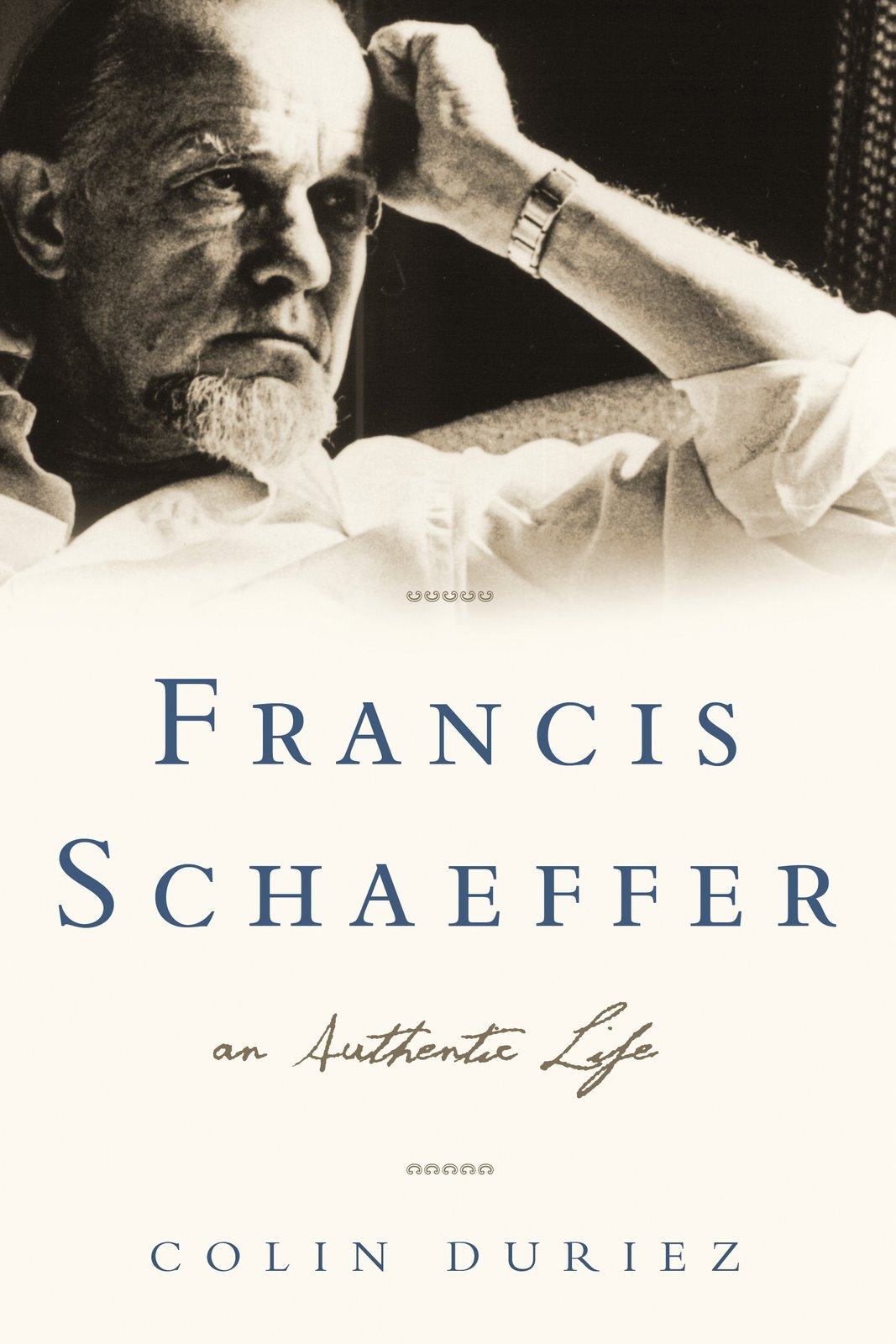
Francis Schaeffer


______________________

In the film series “WHATEVER HAPPENED TO THE HUMAN RACE?” the arguments are presented  against abortion (Episode 1),  infanticide (Episode 2),   euthanasia (Episode 3), and then there is a discussion of the Christian versus Humanist worldview concerning the issue of “the basis for human dignity” in Episode 4 and then in the last episode a close look at the truth claims of the Bible.

Francis Schaeffer: How Should We Then Live? (Full-Length Documentary)

Francis Schaeffer Whatever Happened to the Human Race (Episode 1) ABORTION

Francis Schaeffer: What Ever Happened to the Human Race? (Full-Length Documentary)


Part 1 on abortion runs from 00:00 to 39:50, Part 2 on Infanticide runs from 39:50 to 1:21:30, Part 3 on Youth Euthanasia runs from 1:21:30 to 1:45:40, Part 4 on the basis of human dignity runs from 1:45:40 to 2:24:45 and Part 5 on the basis of truth runs from 2:24:45 to 3:00:04

Francis Schaeffer “BASIS FOR HUMAN DIGNITY” Whatever…HTTHR

Dr. Francis schaeffer – The flow of Materialism(from Part 4 of Whatever happened to human race?)

Dr. Francis Schaeffer – The Biblical flow of Truth & History (intro)

Francis Schaeffer – The Biblical Flow of History & Truth (1)

Dr. Francis Schaeffer – The Biblical Flow of Truth & History (part 2)

Related posts:

Francis Schaeffer’s prayer for us in USA

 Francis Schaeffer: “Whatever Happened to the Human Race” (Episode 1) ABORTION OF THE HUMAN RACE Published on Oct 6, 2012 by AdamMetropolis The 45 minute video above is from the film series created from Francis Schaeffer’s book “Whatever Happened to the Human Race?” with Dr. C. Everett Koop. This book  really helped develop my political views […]

Francis Schaeffer’s “How should we then live?” Video and outline of episode 10 “Final Choices” (Schaeffer Sundays)

E P I S O D E 1 0   Dr. Francis Schaeffer – Episode X – Final Choices 27 min FINAL CHOICES I. Authoritarianism the Only Humanistic Social Option One man or an elite giving authoritative arbitrary absolutes. A. Society is sole absolute in absence of other absolutes. B. But society has to be […]

Francis Schaeffer’s “How should we then live?” Video and outline of episode 9 “The Age of Personal Peace and Affluence” (Schaeffer Sundays)

E P I S O D E 9 Dr. Francis Schaeffer – Episode IX – The Age of Personal Peace and Affluence 27 min T h e Age of Personal Peace and Afflunce I. By the Early 1960s People Were Bombarded From Every Side by Modern Man’s Humanistic Thought II. Modern Form of Humanistic Thought Leads […]

Francis Schaeffer’s “How should we then live?” Video and outline of episode 8 “The Age of Fragmentation” (Schaeffer Sundays)

E P I S O D E 8 Dr. Francis Schaeffer – Episode VIII – The Age of Fragmentation 27 min I saw this film series in 1979 and it had a major impact on me. T h e Age of FRAGMENTATION I. Art As a Vehicle Of Modern Thought A. Impressionism (Monet, Renoir, Pissarro, Sisley, […]

Francis Schaeffer’s “How should we then live?” Video and outline of episode 7 “The Age of Non-Reason” (Schaeffer Sundays)

E P I S O D E 7 Dr. Francis Schaeffer – Episode VII – The Age of Non Reason I am thrilled to get this film series with you. I saw it first in 1979 and it had such a big impact on me. Today’s episode is where we see modern humanist man act […]

Francis Schaeffer’s “How should we then live?” Video and outline of episode 6 “The Scientific Age” (Schaeffer Sundays)

E P I S O D E 6 How Should We Then Live 6#1 Uploaded by NoMirrorHDDHrorriMoN on Oct 3, 2011 How Should We Then Live? Episode 6 of 12 ________ I am sharing with you a film series that I saw in 1979. In this film Francis Schaeffer asserted that was a shift in […]

Francis Schaeffer’s “How should we then live?” Video and outline of episode 5 “The Revolutionary Age” (Schaeffer Sundays)

E P I S O D E 5 How Should We Then Live? Episode 5: The Revolutionary Age I was impacted by this film series by Francis Schaeffer back in the 1970′s and I wanted to share it with you. Francis Schaeffer noted, “Reformation Did Not Bring Perfection. But gradually on basis of biblical teaching there […]

Francis Schaeffer’s “How should we then live?” Video and outline of episode 4 “The Reformation” (Schaeffer Sundays)

Dr. Francis Schaeffer – Episode IV – The Reformation 27 min I was impacted by this film series by Francis Schaeffer back in the 1970′s and I wanted to share it with you. Schaeffer makes three key points concerning the Reformation: “1. Erasmian Christian humanism rejected by Farel. 2. Bible gives needed answers not only as to […]

“Schaeffer Sundays” Francis Schaeffer’s “How should we then live?” Video and outline of episode 3 “The Renaissance”

Francis Schaeffer’s “How should we then live?” Video and outline of episode 3 “The Renaissance” Francis Schaeffer: “How Should We Then Live?” (Episode 3) THE RENAISSANCE I was impacted by this film series by Francis Schaeffer back in the 1970′s and I wanted to share it with you. Schaeffer really shows why we have so […]

Francis Schaeffer’s “How should we then live?” Video and outline of episode 2 “The Middle Ages” (Schaeffer Sundays)

  Francis Schaeffer: “How Should We Then Live?” (Episode 2) THE MIDDLE AGES I was impacted by this film series by Francis Schaeffer back in the 1970′s and I wanted to share it with you. Schaeffer points out that during this time period unfortunately we have the “Church’s deviation from early church’s teaching in regard […]

Francis Schaeffer’s “How should we then live?” Video and outline of episode 1 “The Roman Age” (Schaeffer Sundays)

Francis Schaeffer: “How Should We Then Live?” (Episode 1) THE ROMAN AGE   Today I am starting a series that really had a big impact on my life back in the 1970′s when I first saw it. There are ten parts and today is the first. Francis Schaeffer takes a look at Rome and why […]

Francis Schaeffer: “Whatever Happened to the Human Race” (Episode 5) TRUTH AND HISTORY

Francis Schaeffer: “Whatever Happened to the Human Race” (Episode 5) TRUTH AND HISTORY Published on Oct 7, 2012 by AdamMetropolis This crucial series is narrated by the late Dr. Francis Schaeffer and former Surgeon General Dr. C. Everett Koop. Today, choices are being made that undermine human rights at their most basic level. Practices once […]

Francis Schaeffer: “Whatever Happened to the Human Race” (Episode 4) THE BASIS FOR HUMAN DIGNITY

The opening song at the beginning of this episode is very insightful. Francis Schaeffer: “Whatever Happened to the Human Race” (Episode 4) THE BASIS FOR HUMAN DIGNITY Published on Oct 7, 2012 by AdamMetropolis This crucial series is narrated by the late Dr. Francis Schaeffer and former Surgeon General Dr. C. Everett Koop. Today, choices […]

Francis Schaeffer: “Whatever Happened to the Human Race” (Episode 3) DEATH BY SOMEONE’S CHOICE

Francis Schaeffer: “Whatever Happened to the Human Race” (Episode 3) DEATH BY SOMEONE’S CHOICE Published on Oct 6, 2012 by AdamMetropolis This crucial series is narrated by the late Dr. Francis Schaeffer and former Surgeon General Dr. C. Everett Koop. Today, choices are being made that undermine human rights at their most basic level. Practices […]

Francis Schaeffer: “Whatever Happened to the Human Race?” (Episode 2) SLAUGHTER OF THE INNOCENTS

Francis Schaeffer: “Whatever Happened to the Human Race?” (Episode 2) SLAUGHTER OF THE INNOCENTS Published on Oct 6, 2012 by AdamMetropolis This crucial series is narrated by the late Dr. Francis Schaeffer and former Surgeon General Dr. C. Everett Koop. Today, choices are being made that undermine human rights at their most basic level. Practices […]

Francis Schaeffer: “Whatever Happened to the Human Race” (Episode 1) ABORTION OF THE HUMAN RACE

It is not possible to know where the pro-life evangelicals are coming from unless you look at the work of the person who inspired them the most. That person was Francis Schaeffer.  I do care about economic issues but the pro-life issue is the most important to me. Several years ago Adrian Rogers (past president of […]

The following essay explores the role that Francis Schaeffer played in the rise of the pro-life movement. It examines the place of How Should We Then Live?, Whatever Happened to the Human Race?, and A Christian Manifesto in that process.

This essay below is worth the read. Schaeffer, Francis – “Francis Schaeffer and the Pro-Life Movement” [How Should We Then Live?, Whatever Happened to the Human Race?, A Christian Manifesto] Editor note: <p> </p> [The following essay explores the role that Francis Schaeffer played in the rise of the pro-life movement.  It examines the place of […]

Who was Francis Schaeffer? by Udo Middelmann

Great article on Schaeffer. Who was Dr. Francis A. Schaeffer? By Francis Schaeffer The unique contribution of Dr. Francis Schaeffer on a whole generation was the ability to communicate the truth of historic Biblical Christianity in a way that combined intellectual integrity with practical, loving care. This grew out of his extensive understanding of the Bible […]

.

Taking on Ark Times bloggers about abortion on the 40th anniversary date of Roe v. Wade (Part 7) “Poverty not good reason for abortion, why not give up for adoption?”

Dr Richard Land discusses abortion and slavery – 10/14/2004 – part 3 The best pro-life film I have ever seen below by Francis Schaeffer and Dr. C. Everett Koop “Whatever happened to the human race?” Over the years I have taken on the Ark Times liberal bloggers over and over and over concerning the issue […]

Taking on Ark Times bloggers about abortion on the 40th anniversary date of Roe v. Wade (Part 6) For many pro-abortionists ” …the problem is not determining when actual human life begins, but when the value of that life begins to out weigh other considerations”

The best pro-life film I have ever seen below by Francis Schaeffer and Dr. C. Everett Koop “Whatever happened to the human race?” Francis Schaeffer pictured above._________ The 45 minute video above is from the film series created from Francis Schaeffer’s book “Whatever Happened to the Human Race?” with Dr. C. Everett Koop. This book  really […]

Taking on Ark Times bloggers about abortion on the 40th anniversary date of Roe v. Wade (Part 5) “Slavery issue compared to rights of unborn child”

The best pro-life film I have ever seen below by Francis Schaeffer and Dr. C. Everett Koop “Whatever happened to the human race?” Over the years I have taken on the Ark Times liberal bloggers over and over and over concerning the issue of abortion. I asked over and over again for one liberal blogger […]

Taking on Ark Times bloggers about abortion on the 40th anniversary date of Roe v. Wade (Part 4) “How do pro-lifers react to the movie THE CIDER HOUSE RULES?”

Francis Schaeffer pictured above._________ The best pro-life film I have ever seen below by Francis Schaeffer and Dr. C. Everett Koop “Whatever happened to the human race?” Over the years I have taken on the Ark Times liberal bloggers over and over and over concerning the issue of abortion. I asked over and over again […]

Taking on Ark Times bloggers about abortion on the 40th anniversary date of Roe v. Wade (Part 3) “What should be the punishment for abortion doctors?”

The best pro-life film I have ever seen below by Francis Schaeffer and Dr. C. Everett Koop “Whatever happened to the human race?” On 1-24-13 I took on the child abuse argument put forth by Ark Times Blogger “Deathbyinches,” and the day before I pointed out that because the unborn baby has all the genetic code […]

Taking on Ark Times bloggers about abortion on the 40th anniversary date of Roe v. Wade (Part 2) “The pro-abortion child abuse argument destroyed here”

PHOTO BY STATON BREIDENTHAL from Pro-life march in Little Rock on 1-20-13. Tim Tebow on pro-life super bowl commercial. Over the years I have taken on the Ark Times liberal bloggers over and over and over concerning the issue of abortion. Here is another encounter below. On January 22, 2013 (on the 40th anniversary of the […]

Taking on Ark Times bloggers about abortion on the 40th anniversary date of Roe v. Wade (Part 1)

Dr Richard Land discusses abortion and slavery – 10/14/2004 – part 3 The best pro-life film I have ever seen below by Francis Schaeffer and Dr. C. Everett Koop “Whatever happened to the human race?” Over the years I have taken on the Ark Times liberal bloggers over and over and over concerning the issue […]

By Everette Hatcher III | Posted in Arkansas Times, Francis Schaeffer, Prolife | Edit | Comments (0)

Politicians keep raising the debt ceiling and they don’t admit they have a spending addiction!!!!

Politicians keep raising the debt ceiling and  don’t admit they have a spending addiction!!!!

Washington Could Learn a Lot from a Drug Addict

Uploaded on Jul 8, 2011

Washington’s chronic overspending is just like a junkie’s addiction to drugs. Unless the cycle of addiction is broken, our economic and unemployment situation will continue to suffer. Washington is out of time. To avoid hitting rock bottom, Washington must cut spending today. To spread this message, Washington Could Learn a Lot has created this video. Learn more at washingtoncouldlearnalot.com.

__________________

If this blog was an episode of Jeopardy, the response to the title of this post would be “Name three things that Dan Mitchell doesn’t like.”

But this blog isn’t a game show. It’s a serious forum* for discussing how we protect freedom and prosperity from ever-expanding government.

That’s why, in this interview with John Stossel, I reiterate my mantra that government spending is the problem and that deficits and debt are symptoms of the problem.

I usually use the analogy that government spending is a brain tumor and red ink is the headache caused by the tumor when seeking to help people understand that it’s important to focus on the disease and not the symptom. But to show that I’m not just a single-analogy kind of guy, this time I said that government spending was like lung cancer and that deficits are akin to the resulting cough.

Dan Mitchell Discusses America’s Real Fiscal Crisis with John Stossel

I also concocted an analogy about government goodies being akin to heroin. If you’re an addict, it may feel good to put more junk in your veins, but you’ll be much better off if you endure the short-run discomfort of going clean. Just as it may cause angst among interest groups if we stop the federal gravy train, but they’ll be better off in the long run if we reduce the burden of government spending and restore robust growth.

And nobody will be surprised to see that I made my usual points that there was no risk of default and that it’s actually surprisingly simple to balance the budget with modest spending restraint.

Speaking of analogies, I also modified Senator Durbin’s analogy so that he and his colleagues are a bunch of drug dealers trying to buy votes by addicting people to big government.

*Okay, given all the political humor I share, perhaps it’s a semi-serious forum, but my analysis of fiscal policy is not a joking matter.


Related posts:

Some more true cartoons from Dan Mitchell’s blog on the President’s love of big government

Does Stimulus Spending Work? After the housing bubble burst, the Bush and Obama administrations turned to stimulus in an effort to “create jobs.” Does such spending lead to economic improvement? Prof. Antony Davies examines the data to see how increases in federal spending relate to economic growth from 1955 to the present. The evidence shows […]

Cartoons from Dan Mitchell’s blog that demonstrate what Obama is doing to our economy (Big government slows down economic growth)

I have put up lots of cartoon’s from Dan Mitchell’s blog before and they have got lots of hits before. Many of them have dealt with the economy, eternal unemployment benefits, socialism,  Greece,  welfare state or on gun control. Want to Know How to Define Regime Uncertainty? October 13, 2010 by Dan Mitchell My previous post looked at […]

It seems you get all the bad characteristics of big government in IRS workers

Ohio Liberty Coalition versus the I.R.S. (Tom Zawistowski) Published on May 20, 2013 The Ohio Liberty Coalition was among tea party groups that received special scrutiny from the I.R.S. Tom Zawistowski says his story is not unique. He argues the kinds of questions the I.R.S. asked his group amounts to little more than “opposition research.” Video […]

Big government will destroy the human spirit (Cartoon)

I have put up lots of cartoons from Dan Mitchell’s blog before and they have got lots of hits before. Many of them have dealt with the economy, eternal unemployment benefits, socialism,  Greece,  welfare state or on gun control. Big government will destroy the human spirit. Political Cartoon: Smothered by Big Government December 16, 2011 by Dan Mitchell […]

People’s faith in big government is dropping fast!!

People’s faith in big government is dropping fast!! UFOs, Faked Moon Landings, and Fiscal Policy May 18, 2013 by Dan Mitchell I was very pleased to report the other day that the people of France overwhelmingly favor spending cuts, even when they were asked a biased question that presupposed that Keynesian-style spending increases would “stimulate” the […]

Obama is out to outgive Romney in the big government game!!!

Real Time with Bill Maher March 16 2012 – Alexandra Pelosi Interviews Welfare Recipients in NYC Published on Mar 18, 2012 by vclubscenedotcom Real Time with Bill Maher March 16 2012 – Alexandra Pelosi Interviews Welfare Recipients _________________________ Alexandra Pelosi (Nancy’s daughter) did a great job of showing in this clip on Bill Maher’s show on […]

Obama’s big government solutions have not worked

Government Spending Doesn’t Create Jobs Uploaded by catoinstitutevideo on Sep 7, 2011 Share this on Facebook: http://on.fb.me/qnjkn9 Tweet it: http://tiny.cc/o9v9t In the debate of job creation and how best to pursue it as a policy goal, one point is forgotten: Government doesn’t create jobs. Government only diverts resources from one use to another, which doesn’t […]

4 reasons why big government does not work

4 reasons why big government does not work Liberals love big government you know. Four Reasons Why Big Government Is Bad Government Posted by Daniel J. Mitchell A new video from the Center for Freedom and Prosperity gives four reasons why big government is bad fiscal policy. I particularly like the explanation of how government spending […]

4 reasons why big government does not work

4 reasons why big government does not work Liberals love big government you know. Four Reasons Why Big Government Is Bad Government Posted by Daniel J. Mitchell A new video from the Center for Freedom and Prosperity gives four reasons why big government is bad fiscal policy. I particularly like the explanation of how government […]

Marco Rubio hates big government about as much as I do

Marco Rubio hates big government about as much as I do. Star Parker Marco Rubio’s Courageous Speech 9/5/2011 | Email Star Parker | Columnist’s Archive Florida’s young Republican Senator Marco Rubio gave an important speech at the Reagan Presidential Library in California that has set off the liberal talking head universe. He had the temerity to suggest that […]

By Everette Hatcher III | Posted in Current Events | Tagged , , , , | Edi

Open letter to President Obama (Part 433) Taking on Ark Times Bloggers on various issues Part D “If you can’t afford a child can you abort?”Francis Schaeffer Quotes part 4 includes the film ABORTION OF THE HUMAN RACE) (editorial cartoon)

(Emailed to White House on 3-4-13.)

President Obama c/o The White House
1600 Pennsylvania Avenue NW
Washington, DC 20500

Dear Mr. President,

I know that you receive 20,000 letters a day and that you actually read 10 of them every day. I really do respect you for trying to get a pulse on what is going on out here.

I wanted to share with you some about my pro-life perspective.

I have gone back and forth and back and forth with many liberals on the Arkansas Times Blog on many issues such as abortion, human rights, welfare, poverty, gun control  and issues dealing with popular culture. Here is another exchange I had with them a while back. My username at the Ark Times Blog is Saline Republican.

On 2-21-13 on the Arkansas Times Blog  I asserted: 

“Stephen Anthony Lafferty brought up the subject of selfishness. That reminds me of a story about Hillary Clinton, who I admit probably will be our next president. I got this off of Doug Lawrence’s blog:

Hillary Clinton’s encounter with Mother Teresa began, it just so happens, at the National Prayer Breakfast, way back in 1994. That year, the keynoter was a special guest: Mother Teresa. Nearly 3,000 packed a huge room. Near the dais were the president and first lady—the Clintons…Mother Teresa next spoke of love, of selfishness, of a lack of love for the unborn—and a lack of want of the unborn because of selfishness. Then, the gentle sister made this elite group uncomfortable: “But I feel that the greatest destroyer of peace today is abortion, because Jesus said, ‘If you receive a little child, you receive me.’ So every abortion is the denial of receiving Jesus.”

On 2-21-13 on the Arkansas Times Blog  the liberal Elwood responded, “Again, Saline, when should child support payments begin?”

On 2-21-13 on the Arkansas Times Blog  the liberal Amy Benton Bradley-Hole observed:

Since when does what Mother Teresa said about abortion have any bearing on U.S. abortion laws? Did someone abolish our state government overnight and establish the Catholic Church of Arkansas parochial junta? Or are we still a place where religious beliefs aren’t forced on people by the government?

Wait, don’t answer that. This is the Bible belt, after all.

Look, I’m a pretty hard core Christian. And I admire many of Mother Teresa’s qualities. But when it comes to discussions of government and science (Anybody in the legislature remember what science is? Apparently not.), I would never bring up my religious beliefs. BECAUSE MY RELIGIOUS BELIEFS HAVE NO PLACE IN GOVERNMENT, AND NO BEARING ON SCIENTIFIC FACTS.

Why is that so #*^$ing hard to understand?

On 2-21-13 on the Arkansas Times Blog  I asserted: 

Elwood you suggest if prolife people are not willing to pay for poor people’s unwanted babies’ needs then we are not part of the answer.

Hank Hanegraaff noted:

Attacking people rather than arguing principles, ad hominem arguments are a trick designed to distract attention from the real issue — namely, that abortion is the killing of an innocent human being. Comedienne Whoopi Goldberg used this tactic when she suggested that abortion rights advocates would take pro-lifers more seriously if they were willing to adopt babies slated for abortion.
What this ad hominem argument is really saying is, “If you won’t adopt my babies, don’t tell me I can’t kill them!” That, of course, makes as much sense as forbidding me from intervening when I see my neighbor physically abusing a child unless I am willing to adopt that child.

The “adoption argument” completely evades the basic morality or immorality of abortion. Instead, it is an attempt to attack character in order to avoid the case against abortion.

_______________

In the film series “WHATEVER HAPPENED TO THE HUMAN RACE?” the arguments are presented  against abortion (Episode 1),  infanticide (Episode 2),   euthenasia (Episode 3), and then there is a discussion of the Christian versus Humanist worldview concerning the issue of “the basis for human dignity” in Episode 4 and then in the last episode a close look at the truth claims of the Bible.

Francis Schaeffer and his wife Edith pictured below.

___________

In the film series “WHATEVER HAPPENED TO THE HUMAN RACE?” the arguments are presented  against abortion (Episode 1),  infanticide (Episode 2),   euthanasia (Episode 3), and then there is a discussion of the Christian versus Humanist worldview concerning the issue of “the basis for human dignity” in Episode 4 and then in the last episode a close look at the truth claims of the Bible.

Francis Schaeffer: How Should We Then Live? (Full-Length Documentary)

Francis Schaeffer Whatever Happened to the Human Race (Episode 1) ABORTION

Francis Schaeffer: What Ever Happened to the Human Race? (Full-Length Documentary)

Part 1 on abortion runs from 00:00 to 39:50, Part 2 on Infanticide runs from 39:50 to 1:21:30, Part 3 on Youth Euthanasia runs from 1:21:30 to 1:45:40, Part 4 on the basis of human dignity runs from 1:45:40 to 2:24:45 and Part 5 on the basis of truth runs from 2:24:45 to 3:00:04

Francis Schaeffer saw the issues that our society would be facing in the future because of humanism and he was right on just about everything. Take a look at some of his quotes below: (By the way one of my favorite quotes is the first one listed below.)

“If man is not made in the image of God, nothing then stands in the way of inhumanity. There is no good reason why mankind should be perceived as special. Human life is cheapened. We can see this in many of the major issues being debated in our society today: abortion, infanticide, euthanasia, the increase of child abuse and violence of all kinds, pornography … , the routine torture of political prisoners in many parts of the world, the crime explosion, and the random violence which surrounds us.”
Francis A. Schaeffer, Whatever Happened to the Human Race?
“What is the place of art in the Christian life? Is art- especially the fine arts- simply a way to bring worldliness in through the back door? What about sculpture or drama, music or painting? Do these have any place in the Christian life? Shouldn’t a Christian focus his gaze steadily on “religious things” alone and forget about art and culture?As evangelical Christians, we have tended to relegate art to the very fringe of life. The rest of human life we feel is more important.Despite our constant talk about the lordship of Christ, we have narrowed its scope to a very small area of reality. We have misunderstood the concept of the lordship of Christ over the whole man and the whole of the universe and have not taken to us the riches that the Bible gives us for ourselves, for our lives, and for our culture.The lordship of Christ over the whole of life means that there are no platonic areas in Christianity, no dichotomy or hierarchy between the body and the soul. God made the body as well as the soul, and redemption is for the whole man.”
Francis A. Schaeffer, Art & the Bible
“True spirituality covers all of reality. There are things the Bible tells us to do as absolutes which are sinful- which do not conform to the character of God. But aside from these things the Lordship of Christ covers all of life and all of life equally. It is not only that true spirituality covers all of life, but it covers all parts of the spectrum of life equally. In this sense there is nothing concerning reality that is not spiritual.”
Francis A. Schaeffer, A Christian Manifesto
“Christians . . . ought not to be threatened by fantasy and imagination. Great painting is not “photographic”: think of the Old Testament art commanded by God. There were blue pomegranates on the robes of the priest who went into the Holy of Holies. In nature there are no blue pomegranates. Christian artists do not need to be threatened by fantasy and imagination, for they have a basis for knowing the difference between them and the real world “out there.” The Christian is the really free person–he is free to have imagination. This too is our heritage. The Christian is the one whose imagination should fly beyond the stars.”
Francis A. Schaeffer, Art & the Bible
“We are not being true to the artist as a man if we consider his art work junk simply because we differ with his outlook on life. Christian schools, Christian parents, and Christian pastors often have turned off young people at just this point. Because the schools, the pastors, and the parents did not make a distinction between technical excellence and content, the whole of much great art has been rejected with scorn and ridicule. Instead, if the artist’s technical excellence is high, he is to be praised for this, even if we differ with his world view. Man must be treated fairly as man.”
Francis A. Schaeffer, Art & the Bible
“To be really Bible-believing Christians we need to practice, simultaneously, at each step of the way, two biblical principles.One principle is that of the purity of the visible church. Scripture commands that we must do more than just talk about the purity of the visible church; we must actually practice it, even when it is costly.The second principle is that of an observable love among all true Christians. In the flesh we can stress purity without love, or we can stess love without purity; we cannot stress both simultaneously. To do so we must look moment by moment to the work of Christ and to the Holy Spirit. Without that, a stress on purity becomes hard, proud, and legalistic; likewise without it a stress on love becomes sheer compromise.Spiritually begins to have real meaning in our lives as we begin to exhibit simultaneously the holiness of God and the love of God. We never do this perfectly, but we must look to the living Christ to help us do it truly.”
Francis A. Schaeffer, The Great Evangelical Disaster
“God’s Word will never pass away, but looking back to the Old Testament and since the time of Christ, with tears we must say that because of a lack of fortitude and faithfulness on the part of God’s people, God’s Word has many times been allowed to be bent, to conform to the surrounding, passing, changing culture of that moment rather than to stand as the inerrant Word of God judging the form of the world spirit and the surrounding culture of that moment. In the name of The Lord Jesus Christ, may our children and grandchildren not say that such can be said about us.”
Francis A. Schaeffer, The Great Evangelical Disaster

Thank you so much for your time. I know how valuable it is. I also appreciate the fine family that you have and your commitment as a father and a husband.

Sincerely,

Everette Hatcher III, 13900 Cottontail Lane, Alexander, AR 72002, ph 501-920-5733, lowcostsqueegees@yahoo.com

Related posts:

Francis Schaeffer’s prayer for us in USA

 Francis Schaeffer: “Whatever Happened to the Human Race” (Episode 1) ABORTION OF THE HUMAN RACE Published on Oct 6, 2012 by AdamMetropolis The 45 minute video above is from the film series created from Francis Schaeffer’s book “Whatever Happened to the Human Race?” with Dr. C. Everett Koop. This book  really helped develop my political views […]

Francis Schaeffer’s “How should we then live?” Video and outline of episode 10 “Final Choices” (Schaeffer Sundays)

E P I S O D E 1 0   Dr. Francis Schaeffer – Episode X – Final Choices 27 min FINAL CHOICES I. Authoritarianism the Only Humanistic Social Option One man or an elite giving authoritative arbitrary absolutes. A. Society is sole absolute in absence of other absolutes. B. But society has to be […]

Francis Schaeffer’s “How should we then live?” Video and outline of episode 9 “The Age of Personal Peace and Affluence” (Schaeffer Sundays)

E P I S O D E 9 Dr. Francis Schaeffer – Episode IX – The Age of Personal Peace and Affluence 27 min T h e Age of Personal Peace and Afflunce I. By the Early 1960s People Were Bombarded From Every Side by Modern Man’s Humanistic Thought II. Modern Form of Humanistic Thought Leads […]

Francis Schaeffer’s “How should we then live?” Video and outline of episode 8 “The Age of Fragmentation” (Schaeffer Sundays)

E P I S O D E 8 Dr. Francis Schaeffer – Episode VIII – The Age of Fragmentation 27 min I saw this film series in 1979 and it had a major impact on me. T h e Age of FRAGMENTATION I. Art As a Vehicle Of Modern Thought A. Impressionism (Monet, Renoir, Pissarro, Sisley, […]

Francis Schaeffer’s “How should we then live?” Video and outline of episode 7 “The Age of Non-Reason” (Schaeffer Sundays)

E P I S O D E 7 Dr. Francis Schaeffer – Episode VII – The Age of Non Reason I am thrilled to get this film series with you. I saw it first in 1979 and it had such a big impact on me. Today’s episode is where we see modern humanist man act […]

Francis Schaeffer’s “How should we then live?” Video and outline of episode 6 “The Scientific Age” (Schaeffer Sundays)

E P I S O D E 6 How Should We Then Live 6#1 Uploaded by NoMirrorHDDHrorriMoN on Oct 3, 2011 How Should We Then Live? Episode 6 of 12 ________ I am sharing with you a film series that I saw in 1979. In this film Francis Schaeffer asserted that was a shift in […]

Francis Schaeffer’s “How should we then live?” Video and outline of episode 5 “The Revolutionary Age” (Schaeffer Sundays)

E P I S O D E 5 How Should We Then Live? Episode 5: The Revolutionary Age I was impacted by this film series by Francis Schaeffer back in the 1970′s and I wanted to share it with you. Francis Schaeffer noted, “Reformation Did Not Bring Perfection. But gradually on basis of biblical teaching there […]

Francis Schaeffer’s “How should we then live?” Video and outline of episode 4 “The Reformation” (Schaeffer Sundays)

Dr. Francis Schaeffer – Episode IV – The Reformation 27 min I was impacted by this film series by Francis Schaeffer back in the 1970′s and I wanted to share it with you. Schaeffer makes three key points concerning the Reformation: “1. Erasmian Christian humanism rejected by Farel. 2. Bible gives needed answers not only as to […]

“Schaeffer Sundays” Francis Schaeffer’s “How should we then live?” Video and outline of episode 3 “The Renaissance”

Francis Schaeffer’s “How should we then live?” Video and outline of episode 3 “The Renaissance” Francis Schaeffer: “How Should We Then Live?” (Episode 3) THE RENAISSANCE I was impacted by this film series by Francis Schaeffer back in the 1970′s and I wanted to share it with you. Schaeffer really shows why we have so […]

Francis Schaeffer’s “How should we then live?” Video and outline of episode 2 “The Middle Ages” (Schaeffer Sundays)

  Francis Schaeffer: “How Should We Then Live?” (Episode 2) THE MIDDLE AGES I was impacted by this film series by Francis Schaeffer back in the 1970′s and I wanted to share it with you. Schaeffer points out that during this time period unfortunately we have the “Church’s deviation from early church’s teaching in regard […]

Francis Schaeffer’s “How should we then live?” Video and outline of episode 1 “The Roman Age” (Schaeffer Sundays)

Francis Schaeffer: “How Should We Then Live?” (Episode 1) THE ROMAN AGE   Today I am starting a series that really had a big impact on my life back in the 1970′s when I first saw it. There are ten parts and today is the first. Francis Schaeffer takes a look at Rome and why […]

Francis Schaeffer: “Whatever Happened to the Human Race” (Episode 5) TRUTH AND HISTORY

Francis Schaeffer: “Whatever Happened to the Human Race” (Episode 5) TRUTH AND HISTORY Published on Oct 7, 2012 by AdamMetropolis This crucial series is narrated by the late Dr. Francis Schaeffer and former Surgeon General Dr. C. Everett Koop. Today, choices are being made that undermine human rights at their most basic level. Practices once […]

Francis Schaeffer: “Whatever Happened to the Human Race” (Episode 4) THE BASIS FOR HUMAN DIGNITY

The opening song at the beginning of this episode is very insightful. Francis Schaeffer: “Whatever Happened to the Human Race” (Episode 4) THE BASIS FOR HUMAN DIGNITY Published on Oct 7, 2012 by AdamMetropolis This crucial series is narrated by the late Dr. Francis Schaeffer and former Surgeon General Dr. C. Everett Koop. Today, choices […]

Francis Schaeffer: “Whatever Happened to the Human Race” (Episode 3) DEATH BY SOMEONE’S CHOICE

Francis Schaeffer: “Whatever Happened to the Human Race” (Episode 3) DEATH BY SOMEONE’S CHOICE Published on Oct 6, 2012 by AdamMetropolis This crucial series is narrated by the late Dr. Francis Schaeffer and former Surgeon General Dr. C. Everett Koop. Today, choices are being made that undermine human rights at their most basic level. Practices […]

Francis Schaeffer: “Whatever Happened to the Human Race?” (Episode 2) SLAUGHTER OF THE INNOCENTS

Francis Schaeffer: “Whatever Happened to the Human Race?” (Episode 2) SLAUGHTER OF THE INNOCENTS Published on Oct 6, 2012 by AdamMetropolis This crucial series is narrated by the late Dr. Francis Schaeffer and former Surgeon General Dr. C. Everett Koop. Today, choices are being made that undermine human rights at their most basic level. Practices […]

Francis Schaeffer: “Whatever Happened to the Human Race” (Episode 1) ABORTION OF THE HUMAN RACE

It is not possible to know where the pro-life evangelicals are coming from unless you look at the work of the person who inspired them the most. That person was Francis Schaeffer.  I do care about economic issues but the pro-life issue is the most important to me. Several years ago Adrian Rogers (past president of […]

The following essay explores the role that Francis Schaeffer played in the rise of the pro-life movement. It examines the place of How Should We Then Live?, Whatever Happened to the Human Race?, and A Christian Manifesto in that process.

This essay below is worth the read. Schaeffer, Francis – “Francis Schaeffer and the Pro-Life Movement” [How Should We Then Live?, Whatever Happened to the Human Race?, A Christian Manifesto] Editor note: <p> </p> [The following essay explores the role that Francis Schaeffer played in the rise of the pro-life movement.  It examines the place of […]

Who was Francis Schaeffer? by Udo Middelmann

Great article on Schaeffer. Who was Dr. Francis A. Schaeffer? By Francis Schaeffer The unique contribution of Dr. Francis Schaeffer on a whole generation was the ability to communicate the truth of historic Biblical Christianity in a way that combined intellectual integrity with practical, loving care. This grew out of his extensive understanding of the Bible […]

SCHAEFFER SUNDAY Was modern science born out of the Christian World view?

_____________

The Scientific Age

Uploaded by  on Oct 3, 2011

_______________


I love the works of Francis Schaeffer and I have been on the internet reading several blogs that talk about Schaeffer’s work and the work below was really helpful. Schaeffer’s film series “How should we then live?  Wikipedia notes, “According to Schaeffer, How Should We Then Live traces Western history from Ancient Rome until the time of writing (1976) along three lines: the philosophic, scientific, and religious.[3] He also makes extensive references to art and architecture as a means of showing how these movements reflected changing patterns of thought through time. Schaeffer’s central premise is: when we base society on the Bible, on the infinite-personal God who is there and has spoken,[4] this provides an absolute by which we can conduct our lives and by which we can judge society.  Here are some posts I have done on this series: Francis Schaeffer’s “How should we then live?” Video and outline of episode 10 “Final Choices” episode 9 “The Age of Personal Peace and Affluence”episode 8 “The Age of Fragmentation”episode 7 “The Age of Non-Reason” episode 6 “The Scientific Age”  episode 5 “The Revolutionary Age” episode 4 “The Reformation” episode 3 “The Renaissance”episode 2 “The Middle Ages,”, and  episode 1 “The Roman Age,” .

Francis Schaeffer in his book “How should we then live?” stated that according to Alfred North Whitehead and J. Robert Oppenheimer, both renowned philosophers and scientists of our era (but not Christians themselves), modern science was born out of the Christian world view. Whitehead said that Christianity is the “mother of science” because of the insistence on the rationality of God.

Christianity and Technological Advance – The Astonishing Connection

by T. V. Varughese, Ph.D

Without question, “technology” has now become the new magic word in place of the word “science.” Since technology represents the practical applications of science, it is clearly consumer-oriented. Herein is bright economic promise to all who can provide technology.

In terms of technology, our present world can be divided into at least three groups: countries that are strong providers of technology, both original and improved; countries that are mass producers because of cheaper labor; and countries that are mostly consumers. Without a doubt, being in the position of “originating” superior technology should be a goal for any major country. The difficult question, however, is “how.”

An obvious place to start suggests itself. Why not begin with the countries that have established themselves as strong originators of technology and see if there is a common thread between them? The western nations, after the Renaissance and the Reformation of the 16th century, offer a ready example. Any book on the history of inventions, such as the Guinness Book of Answers, will reveal that the vast majority of scientific inventions have originated in Europe (including Britain) and the USA since the dawn of the 17th century. What led to the fast technological advances in the European countries and North America around that time?

The answer is that something happened which set the stage for science and technology to emerge with full force. Strange as it may seem, that event was the return to Biblical Christianity in these countries.

The Epistemological Foundation of Technology

According to Alfred North Whitehead and J. Robert Oppenheimer, both renowned philosophers and scientists of our era (but not Christians themselves), modern science was born out of the Christian world view. Whitehead said that Christianity is the “mother of science” because of the insistence on the rationality of God.[1] Entomologist Stanley Beck,though not a Christian himself, acknowledged the corner-stone premises of science which the Judeo-Christian world view offers: “The first of the unprovable premises on which science has been based is the belief that the world is real and the human mind is capable of knowing its real nature. The second and best-known postulate underlying the structure of scientific knowledge is that of cause and effect. The third basic scientific premise is that nature is unified.”[2] In other words, the epistemological foundation of technology has been the Judeo-Christian world view presented in the Bible.

This may sound incredible to some because of the popular feeling that science and religion don’t mix. Didn’t Christianity vehemently oppose Galileo and Copernicus when they proposed the modern models for the solar system?

The truth, however, is that the real conflict was not between Christianity, as presented in the Bible, and science. In fact, the true conflict was not between science and religion at all, but between the existing scientific view and a new scientific view. The geocentric world view held at that time was not based on the Bible but on the Ptolemaic system which was rooted in the views of Plato and Aristotle.

Historians have observed that the foundations for modern science were laid as early as the thirteenth century when scholars like Roger Bacon showed that Aristotle made certain mistakes about natural phenomena. Medieval science was based on authority — primarily of Aristotle — rather than observation. It developed through logic, rather than experimentation.[3] Both Copernicus and Galileo challenged Aristotle’s authority, using experimentation in the spirit of modern science. The Biblical emphasis of the Reformation, just prior to this, had already paved the way for dropping Aristotle’s authority; it also encouraged the rational investigation of our world.

Perhaps the most obvious affirmation that Biblical Christianity and science are friends and not foes comes from the fact that most of the early scientists after the Renaissance were also strong believers in the Bible as the authoritative source of knowledge concerning the origin of the universe and man’s place in it.[4] The book of Genesis, the opening book of the Bible, presents the distinctly Judeo-Christian world view of a personal Creator God behind the origin and sustenance of the universe (Genesis 1:1; Colossians 1:17; etc.).

Among the early scientists of note who held the Biblical creationist world view are Blaise Pascal (1623-1662), Sir Isaac Newton (1642-1727), and Samuel Morse (1791-1872) – what motivated them was a confidence in the “rationality” behind the universe and the “goodness” of the material world. The creation account in Genesis presents an intelligent, purposeful Creator, who, after completing the creation work, declared it to be very good (Genesis 1:31). That assures us that the physical universe operates under reliable laws which may be discovered by the intelligent mind and used in practical applications. The confidence in the divinely pronounced goodness of the material world removed any reluctance concerning the development of material things for the betterment of life in this world. The spiritual world and the material world can work together in harmony.

Genesis also gives another important motivation for the investigation of the laws of nature and application of it to technology. That is the divine mandate given to man to subdue the earth (Genesis 1:26-28). Obviously, the discovery of the laws of nature is the key to harnessing the powers of nature for man’s use and control. Herein is the key to the motivation for developing technology. Genesis 4 records the earliest technological developments by man (4:21-22).

The world view held in many cultures, however, is different from the Biblical creationist view. Religions influenced by dualistic philosophies view the material world with suspicion and hostility. The material world is considered evil, while the spiritual world is considered good and noble. Renouncing this world became the mark of holiness. Equally detrimental to the development of science were world views that did not have a concept of a supreme personal Creator God. Some of the ancient civilizations, for example, which did develop some mathematics and technologies, did not develop general scientific theories, because of the absence of a creationist perspective that gives confidence in the existence of rational laws in nature. This clearly explains the lack of interest on the part of these cultures in scientific research and technology. It also shows how the Reformation, with its return to Biblical Christianity, spurred a phenomenal interest in fundamental research and technology. The great scientific advances and the industrial revolution that followed bear this out.

The Ethical Foundation of Technology

The rise of North America to dominance in technology is related to the Judeo-Christian foundation with which it started. The founding fathers of the United States of America were theists who believed in a Creator who gave moral rules by which to live. The work ethic they practiced also contributed to the rapid progress of the country. In this ethic, all honest work was regarded as dignified, not just the “white collar” jobs. This also has Christian roots. Jesus, the founder of Christianity, Himself chose the profession of a carpenter prior to His ministry. Along with this work ethic, there was also the right climate for initiating research. The free-enterprise system allowed individuals and private groups to carry on research and to develop technology.

There is no question that technology has given us untold blessings. But technology has also been used for monstrous destruction and human misery. This should alert us to the fact that technology, by itself, is not the means of salvation. Releasing the technology genie has caused our world to go out of control. The apocalyptic vision of some superdictator controlling humanity, using the incredible power of the computer or the atom, is no longer a laughing matter. The potential for deception through technology, coupled with the illegal use of technology, has also become a serious concern.

How can we hold in check the wrong use of technology? Here again, Christianity offers its powerful contribution. Jesus summed up the right law to live by in human relationships thus: “Love your neighbor as yourself.” a powerful principle, indeed. It allows no justification for using technology to bring harm to others. On the positive side, this law encourages us to develop that which serves humanity. The ethical standards of Biblical Christianity also include the practice of honesty and integrity. The need for these in the handling of technology is being increasingly recognized.

The rise of evolutionist philosophy in the 19th century has led to the erosion of the epistemological and ethical foundations of sound technological advance. The collapse of moral absolutes resulting from it sets the stage for selfish and harmful use of technology. This poses a threat to the economic welfare of countries where easy credit is available and the appetite for more and more technological gadgets is insatiable.

There are hopeful signs, however. Evolution theory itself has now collapsed under scientific scrutiny. Further, the foundations have not been totally abandoned by scientists. They have been carrying on their research as usual, as if they believe in the design and orderly laws of the universe — a belief that has its roots in the Judeo-Christian world view. The gospel of Christ cannot only hold in check the destructive use of technology by its emphasis on loving others as ourselves, but also provides the antidote for selfish greed, which is behind our runaway buying habits. Jesus emphasized that the abundance of things does not produce happiness.

Back in 1832, Darwin, during his famous trip on the “Beagle,” visited Tierra del Fuego, the southern coastal region of South America inhabited by savage barbarians and observed man at his worst. Their depravity was shocking to him. Darwin swore that the Fuegian savages were untamable. Within a few years, however, the Fuegian savages were converted, through the efforts of a missionary sent by the South American Missionary Society who brought the gospel to these people. They were radically transformed into a rational and civilized people. Darwin was very impressed by the success of the Missionary Society. Keen to spread the blessings of civilization, Darwin sent donations to the mission for several years. Thirty-five years after his visit to Tierra del Fuego, he proudly accepted the invitation from the South American Missionary Society to become its honorary member.[5]

That power to transform individuals and nations is still available. The “Good News” Jesus brought is that the power to love others as ourselves is available to all, from the Creator. When we have that love, technology will be a blessing to all.

— References —

  1. Francis A. Schaeffer: How Should We Then Live (Revell, 1976), p. 132.
  2. Henry M. Morris, Biblical Basis for Modern Science (Baker, 1991), p. 30.
  3. Schaeffer, p. 131.
  4. Henry M. Morris, Men of Science, Men of God (Master Books, CA, 1988), 107 pp.
  5. Adrian Desmond & James Moore, Darwin (Warner Books, 1991), pp. 574,575.

* At time of publication, Dr. Varughese was Associate Professor of Computer Science in the School of Management and Technology, National University, Irvine, California, and adjunct professor of Physics at ICR.

Cite this article: Varughese, T. V. 1993. Christianity and Technological Advance – The Astonishing Connection. Acts & Facts. 22 (11).

Related posts:

Francis Schaeffer’s “How should we then live?” Video and outline of episode 10 “Final Choices” (Schaeffer Sundays)

E P I S O D E 1 0   Dr. Francis Schaeffer – Episode X – Final Choices 27 min FINAL CHOICES I. Authoritarianism the Only Humanistic Social Option One man or an elite giving authoritative arbitrary absolutes. A. Society is sole absolute in absence of other absolutes. B. But society has to be […]

Francis Schaeffer’s “How should we then live?” Video and outline of episode 9 “The Age of Personal Peace and Affluence” (Schaeffer Sundays)

E P I S O D E 9 Dr. Francis Schaeffer – Episode IX – The Age of Personal Peace and Affluence 27 min T h e Age of Personal Peace and Afflunce I. By the Early 1960s People Were Bombarded From Every Side by Modern Man’s Humanistic Thought II. Modern Form of Humanistic Thought Leads […]

Francis Schaeffer’s “How should we then live?” Video and outline of episode 8 “The Age of Fragmentation” (Schaeffer Sundays)

E P I S O D E 8 Dr. Francis Schaeffer – Episode VIII – The Age of Fragmentation 27 min I saw this film series in 1979 and it had a major impact on me. T h e Age of FRAGMENTATION I. Art As a Vehicle Of Modern Thought A. Impressionism (Monet, Renoir, Pissarro, Sisley, […]

Francis Schaeffer’s “How should we then live?” Video and outline of episode 7 “The Age of Non-Reason” (Schaeffer Sundays)

E P I S O D E 7 Dr. Francis Schaeffer – Episode VII – The Age of Non Reason I am thrilled to get this film series with you. I saw it first in 1979 and it had such a big impact on me. Today’s episode is where we see modern humanist man act […]

Francis Schaeffer’s “How should we then live?” Video and outline of episode 6 “The Scientific Age” (Schaeffer Sundays)

E P I S O D E 6 How Should We Then Live 6#1 Uploaded by NoMirrorHDDHrorriMoN on Oct 3, 2011 How Should We Then Live? Episode 6 of 12 ________ I am sharing with you a film series that I saw in 1979. In this film Francis Schaeffer asserted that was a shift in […]

Francis Schaeffer’s “How should we then live?” Video and outline of episode 5 “The Revolutionary Age” (Schaeffer Sundays)

E P I S O D E 5 How Should We Then Live? Episode 5: The Revolutionary Age I was impacted by this film series by Francis Schaeffer back in the 1970′s and I wanted to share it with you. Francis Schaeffer noted, “Reformation Did Not Bring Perfection. But gradually on basis of biblical teaching there […]

Francis Schaeffer’s “How should we then live?” Video and outline of episode 4 “The Reformation” (Schaeffer Sundays)

Dr. Francis Schaeffer – Episode IV – The Reformation 27 min I was impacted by this film series by Francis Schaeffer back in the 1970′s and I wanted to share it with you. Schaeffer makes three key points concerning the Reformation: “1. Erasmian Christian humanism rejected by Farel. 2. Bible gives needed answers not only as to […]

“Schaeffer Sundays” Francis Schaeffer’s “How should we then live?” Video and outline of episode 3 “The Renaissance”

Francis Schaeffer’s “How should we then live?” Video and outline of episode 3 “The Renaissance” Francis Schaeffer: “How Should We Then Live?” (Episode 3) THE RENAISSANCE I was impacted by this film series by Francis Schaeffer back in the 1970′s and I wanted to share it with you. Schaeffer really shows why we have so […]

Francis Schaeffer’s “How should we then live?” Video and outline of episode 2 “The Middle Ages” (Schaeffer Sundays)

  Francis Schaeffer: “How Should We Then Live?” (Episode 2) THE MIDDLE AGES I was impacted by this film series by Francis Schaeffer back in the 1970′s and I wanted to share it with you. Schaeffer points out that during this time period unfortunately we have the “Church’s deviation from early church’s teaching in regard […]

Francis Schaeffer’s “How should we then live?” Video and outline of episode 1 “The Roman Age” (Schaeffer Sundays)

Francis Schaeffer: “How Should We Then Live?” (Episode 1) THE ROMAN AGE   Today I am starting a series that really had a big impact on my life back in the 1970′s when I first saw it. There are ten parts and today is the first. Francis Schaeffer takes a look at Rome and why […]

Francis Schaeffer: “Whatever Happened to the Human Race” (Episode 5) TRUTH AND HISTORY

Francis Schaeffer: “Whatever Happened to the Human Race” (Episode 5) TRUTH AND HISTORY Published on Oct 7, 2012 by AdamMetropolis This crucial series is narrated by the late Dr. Francis Schaeffer and former Surgeon General Dr. C. Everett Koop. Today, choices are being made that undermine human rights at their most basic level. Practices once […]

Francis Schaeffer: “Whatever Happened to the Human Race” (Episode 4) THE BASIS FOR HUMAN DIGNITY

The opening song at the beginning of this episode is very insightful. Francis Schaeffer: “Whatever Happened to the Human Race” (Episode 4) THE BASIS FOR HUMAN DIGNITY Published on Oct 7, 2012 by AdamMetropolis This crucial series is narrated by the late Dr. Francis Schaeffer and former Surgeon General Dr. C. Everett Koop. Today, choices […]

Francis Schaeffer: “Whatever Happened to the Human Race” (Episode 3) DEATH BY SOMEONE’S CHOICE

Francis Schaeffer: “Whatever Happened to the Human Race” (Episode 3) DEATH BY SOMEONE’S CHOICE Published on Oct 6, 2012 by AdamMetropolis This crucial series is narrated by the late Dr. Francis Schaeffer and former Surgeon General Dr. C. Everett Koop. Today, choices are being made that undermine human rights at their most basic level. Practices […]

Francis Schaeffer: “Whatever Happened to the Human Race?” (Episode 2) SLAUGHTER OF THE INNOCENTS

Francis Schaeffer: “Whatever Happened to the Human Race?” (Episode 2) SLAUGHTER OF THE INNOCENTS Published on Oct 6, 2012 by AdamMetropolis This crucial series is narrated by the late Dr. Francis Schaeffer and former Surgeon General Dr. C. Everett Koop. Today, choices are being made that undermine human rights at their most basic level. Practices […]

Francis Schaeffer: “Whatever Happened to the Human Race” (Episode 1) ABORTION OF THE HUMAN RACE

It is not possible to know where the pro-life evangelicals are coming from unless you look at the work of the person who inspired them the most. That person was Francis Schaeffer.  I do care about economic issues but the pro-life issue is the most important to me. Several years ago Adrian Rogers (past president of […]

The following essay explores the role that Francis Schaeffer played in the rise of the pro-life movement. It examines the place of How Should We Then Live?, Whatever Happened to the Human Race?, and A Christian Manifesto in that process.

This essay below is worth the read. Schaeffer, Francis – “Francis Schaeffer and the Pro-Life Movement” [How Should We Then Live?, Whatever Happened to the Human Race?, A Christian Manifesto] Editor note: <p> </p> [The following essay explores the role that Francis Schaeffer played in the rise of the pro-life movement.  It examines the place of […]

By Everette Hatcher III | Posted in Francis

Congressman Jack Kemp introduced Francis Schaeffer to Washington insiders!!!!

Congressman Jack Kemp introduced Francis Schaeffer to Washington insiders!!!! This article below pointed this out and this video below shows Jack Kemp tracing the roots of the Conservative movement in the USA to the Bible.

Jack Kemp: An American Conservative Statesman

Published on Jul 30, 2013

Had there never been a Reagan Revolution, there might well have been a Kemp Revolution. Jack Kemp established himself as one of the conservative policy movement’s most articulate speakers and defenders of personal liberty and responsibility. The public first knew of Kemp for his exploits on the gridiron. Kemp played in all three major professional football leagues, the NFL, the AFL and the Canadian Football League. Schooled in supply-side economics, the second part of his life found Kemp serving nine terms in Congress and then as Housing Secretary under President George H.W. Bush, Kemp was a 1988 Republican candidate for President and he was the Republican 1996 nominee for Vice President. Kemp spoke to the Public Policy Foundation on October 20, 1993. Jack Kemp died May 2, 2009 and with his passing, the American conservative movement lost one of its most articulate statesmen.

_________________________________

Joe Carter|10:15 PM CT

Know Your Evangelicals: Francis Schaeffer

Name: Francis A. Schaeffer (1912-1984)

Why you should know him: Schaeffer was one of the most influential figures in American evangelicalism in the period between World War II and the mid-1980s.

Previous roles: Founder of L’Abri Fellowship International; Lecturer and author of eighteen books.

Education:
B.A., Hampden-Sydney College
B.Div. Faith Theological Seminary
Honorary D.Div., Highland College

Area of expertise/interest: Apologetics, philosophy, Western culture, abortion, neo-Calvinism

Books: The God Who is There (1968); Escape from Reason (1968); Death in the City (1969); The Church at the End of the Twentieth Century (1970); The Mark of a Christian (1970); Pollution and the Death of Man (1970); The Church Before the Watching World (1971); True Spirituality (1971); Back to Freedom and Dignity (1972); Basic Bible Studies (1972); Genesis in Space and Time (1972); He is There and He is Not Silent (1972); The New Super-Spirituality (1972); Art and the Bible (1973); Everybody Can Know (1973); No Little People (1974); Two Contents, Two Realities (1974); Joshua and the Biblical Flow of History (1975); No Final Conflict (1975); How Should We Then Live? (1976); Whatever Happened to the Human Race? (with C. Everett Koop) (1979); A Christian Manifesto (1981); The Great Evangelical Disaster (1983)

Online essays and articles:
A Christian Manifesto (A lecture based on the book of the same title.)
Francis Schaeffer’s Philosophy of History [PDF]
Schaeffer on Education

Biography and Assessment: In the late 1940’s, Schaeffer and his wife Edith moved to Switzerland as long-term missionaries. They initially began a program called “Children for Christ” and on weekends entertained groups of schoolgirls on ski holidays in their Swiss chalet. By 1955 the couple had set up their own independent ministry organization called L’Abri (“The Shelter”) in the mountain village of Huemoz. They began taking guests, and developed a regular weekend schedule that consisted of conversations about religion, philosophy, art, and culture. L’Abri became popular among student circles, and by 1957 the Schaeffers were hosting about 25 guests every weekend.

The European students that showed up at L’Abri were well-versed in the post-Enlightenment philosophers like Kierkegaard and Hegel and with the existentialist literature of Camus and Sartre. As historian Michael S. Hamilton notes,

These students tutored Francis in the details of modern post-Christian thought, while he observed its impact on their lives. They had been taught that human beings were the mere product of time and chance in a materialistic world. This left many of them unable to find any basis for distinctions between right and wrong nor meaning in the normal activities of human life. The young people’s self-destructive moral confusion, alienation from society, and sincere search for something better stirred the Schaeffers’ compassion. It made the cost of an open home worth bearing, and it compelled Francis into ever-deeper reflection on the trajectory of modern culture.

The popularity of L’Abri continued to increase and by 1960 even Time magazine was taking notice. Workers at the chalet began recording Schaeffer’s lectures on the philosophical meaning of modern theology and culture. The tapes quickly developed an international circulation prompting the evangelist to return to the states. In 1965 Schaeffer took his first speaking trip to the United States, giving a series of lectures in the Boston area. He then gave a series of talks at Wheaton College that were later published as The God Who Is There. Although he dressed like a Swiss farmer, wearing knickers and an alpine hiking outfit, the most unusual aspect about Schaeffer was the way in which he differed from other evangelicals in engaging with the broader culture. Hamilton points out,

At Wheaton College, students were fighting to show films like Bambi, while Francis was talking about the films of Bergman and Fellini. Administrators were censoring existential themes out of student publications, while Francis was discussing Camus, Sartre, and Heidegger. He quoted Dylan Thomas, knew the artwork of Salvador Dali, listened to the music of the Beatles and John Cage.

Over the next ten years Francis and Edith became increasingly influential figures within American evangelicalism. Francis published eighteen books and booklets, most of which came out of lectures and talks he had been giving since the 1950s, that sold over 2.5 million copies in the U.S.

Schaeffer often railed against the middle-class evangelical mindset that placed an emphasis on “personal peace and affluence” and became an intellectual hero to Christian counter-culture figures like Jack Sparks, founder of Berkeley’s Christian World Liberation Front, and Larry Norman, “poet laureate of the Jesus Revolution.” By the 1970’s, though, he had also begun to gain a hearing within what would later be viewed as the “religious right.” Congressman Jack Kemp introduced the Schaeffers to Washington insiders and an encounter with L’Abri student Michael Ford led to a private dinner in the Ford White House.

In 1974, Schaeffer’s son Franky, a budding filmmaker, designed a ten-part documentary film series intended as a Christian response to Kenneth Clark’s widely viewed Civilization series. The project, How Should We Then Live?, consisted of an 18-city tour that attracted tens of thousands of people and was viewed as a resounding success.

What set the film series apart was the focus on legalized abortion. By the late 1970s, Schaeffer began devoting his full attention to the issue and encouraged pediatric surgeon C. Everett Koop to collaborate on a five-part film series with accompanying book, action handbook, and international lecture tour. In Whatever Happened to the Human Race? , Schaeffer argued that secular humanism had led to the devaluation of human life while Koop presented testimony about the widespread practice of infanticide in hospitals and its links to abortion. Koop later wrote that his involvement in this project was his first step toward becoming President Reagan’s surgeon general.

Unlike his first series, Human Race failed to garner a large audience and even lost money in some of the locations it was screened. Undaunted, Schaeffer continued to focus on abortion, calling it the hinge issue for American society in his book A Christian Manifesto. The book inspired Jerry Falwell to take a stand against abortion and inspired Operation Rescue founder Randall Terry to start a new kind of abortion protest employing passive resistance techniques used in the civil-rights struggle.

In early 1984 he had just enough strength left from his battle with cancer to complete a 13-city tour lecturing on this theme. A month after the tour was complete, he died at his home in Rochester, Minnesota.

Schaeffer—who always claimed to be an evangelist and not a philosopher—was often criticized for the way his work oversimplified intellectual history and philosophy. Even his most ardent admirers admit that he made significant errors in detail and overly broad generalizations. His books, which were often edited together from lecture notes, often fail to provide a systematic coherence that would allow them to withstand greater scrutiny.

Michael Hamilton rightly acknowledges, though, that Schaeffer played a vital role in “stepping stone scholarship.” His work provided an opening to the intellectual depths of Christianity that had been sorely lacking in conservative Protestant Christianity. Schaeffer helped to restore the value of developing a Christian worldview and offered the intellectuals tools that evangelicals needed to properly engage with the secular culture. The effect of his legacy still reverberates through evangelicalism. His influence shaped such thinkers as Chuck Colson, Nancy Pearcey, Cal Thomas, Ron Sider, Harold O. J. Brown, Os Guinness, Thomas Morris, Clark Pinnock, Mark Noll, Doug Groothuis, Jim Sire, and Ronald Wells. Perhaps the best summation of the evangelist who was considered both a “missionary to intellectuals” and a “guru to fundamentalists” is the one provided by Albert Mohler:

Schaeffer served as a prophet of cultural engagement during an age of rebellion among America’s youth, and he shaped the thinking of an entire generation of theologically-minded Christian young people.

(Primary source: Michael Hamilton, The Dissatisfaction of Francis Schaeffer )

[Note: If you find a story our community should know about, please send the link to joe.carter *at* thegospelcoalition.org.]

Joe Carter is an editor for The Gospel Coalition and the co-author of How to Argue Like Jesus: Learning Persuasion from History’s Greatest Communicator. You can follow him on Twitter.

Francis Schaeffer


______________________

In the film series “WHATEVER HAPPENED TO THE HUMAN RACE?” the arguments are presented  against abortion (Episode 1),  infanticide (Episode 2),   euthanasia (Episode 3), and then there is a discussion of the Christian versus Humanist worldview concerning the issue of “the basis for human dignity” in Episode 4 and then in the last episode a close look at the truth claims of the Bible.

Francis Schaeffer Whatever Happened to the Human Race (Episode 1) ABORTION

Francis Schaeffer “BASIS FOR HUMAN DIGNITY” Whatever…HTTHR

Part 1 on abortion runs from 00:00 to 39:50, Part 2 on Infanticide runs from 39:50 to 1:21:30, Part 3 on Youth Euthanasia runs from 1:21:30 to 1:45:40, Part 4 on the basis of human dignity runs from 1:45:40 to 2:24:45 and Part 5 on the basis of truth runs from 2:24:45 to 3:00:04

Dr. Francis schaeffer – The flow of Materialism(from Part 4 of Whatever happened to human race?)

Dr. Francis Schaeffer – The Biblical flow of Truth & History (intro)

Francis Schaeffer – The Biblical Flow of History & Truth (1)

Dr. Francis Schaeffer – The Biblical Flow of Truth & History (part 2)

Related posts:

Francis Schaeffer’s prayer for us in USA

 Francis Schaeffer: “Whatever Happened to the Human Race” (Episode 1) ABORTION OF THE HUMAN RACE Published on Oct 6, 2012 by AdamMetropolis The 45 minute video above is from the film series created from Francis Schaeffer’s book “Whatever Happened to the Human Race?” with Dr. C. Everett Koop. This book  really helped develop my political views […]

Francis Schaeffer’s “How should we then live?” Video and outline of episode 10 “Final Choices” (Schaeffer Sundays)

E P I S O D E 1 0   Dr. Francis Schaeffer – Episode X – Final Choices 27 min FINAL CHOICES I. Authoritarianism the Only Humanistic Social Option One man or an elite giving authoritative arbitrary absolutes. A. Society is sole absolute in absence of other absolutes. B. But society has to be […]

Francis Schaeffer’s “How should we then live?” Video and outline of episode 9 “The Age of Personal Peace and Affluence” (Schaeffer Sundays)

E P I S O D E 9 Dr. Francis Schaeffer – Episode IX – The Age of Personal Peace and Affluence 27 min T h e Age of Personal Peace and Afflunce I. By the Early 1960s People Were Bombarded From Every Side by Modern Man’s Humanistic Thought II. Modern Form of Humanistic Thought Leads […]

Francis Schaeffer’s “How should we then live?” Video and outline of episode 8 “The Age of Fragmentation” (Schaeffer Sundays)

E P I S O D E 8 Dr. Francis Schaeffer – Episode VIII – The Age of Fragmentation 27 min I saw this film series in 1979 and it had a major impact on me. T h e Age of FRAGMENTATION I. Art As a Vehicle Of Modern Thought A. Impressionism (Monet, Renoir, Pissarro, Sisley, […]

Francis Schaeffer’s “How should we then live?” Video and outline of episode 7 “The Age of Non-Reason” (Schaeffer Sundays)

E P I S O D E 7 Dr. Francis Schaeffer – Episode VII – The Age of Non Reason I am thrilled to get this film series with you. I saw it first in 1979 and it had such a big impact on me. Today’s episode is where we see modern humanist man act […]

Francis Schaeffer’s “How should we then live?” Video and outline of episode 6 “The Scientific Age” (Schaeffer Sundays)

E P I S O D E 6 How Should We Then Live 6#1 Uploaded by NoMirrorHDDHrorriMoN on Oct 3, 2011 How Should We Then Live? Episode 6 of 12 ________ I am sharing with you a film series that I saw in 1979. In this film Francis Schaeffer asserted that was a shift in […]

Francis Schaeffer’s “How should we then live?” Video and outline of episode 5 “The Revolutionary Age” (Schaeffer Sundays)

E P I S O D E 5 How Should We Then Live? Episode 5: The Revolutionary Age I was impacted by this film series by Francis Schaeffer back in the 1970′s and I wanted to share it with you. Francis Schaeffer noted, “Reformation Did Not Bring Perfection. But gradually on basis of biblical teaching there […]

Francis Schaeffer’s “How should we then live?” Video and outline of episode 4 “The Reformation” (Schaeffer Sundays)

Dr. Francis Schaeffer – Episode IV – The Reformation 27 min I was impacted by this film series by Francis Schaeffer back in the 1970′s and I wanted to share it with you. Schaeffer makes three key points concerning the Reformation: “1. Erasmian Christian humanism rejected by Farel. 2. Bible gives needed answers not only as to […]

“Schaeffer Sundays” Francis Schaeffer’s “How should we then live?” Video and outline of episode 3 “The Renaissance”

Francis Schaeffer’s “How should we then live?” Video and outline of episode 3 “The Renaissance” Francis Schaeffer: “How Should We Then Live?” (Episode 3) THE RENAISSANCE I was impacted by this film series by Francis Schaeffer back in the 1970′s and I wanted to share it with you. Schaeffer really shows why we have so […]

Francis Schaeffer’s “How should we then live?” Video and outline of episode 2 “The Middle Ages” (Schaeffer Sundays)

  Francis Schaeffer: “How Should We Then Live?” (Episode 2) THE MIDDLE AGES I was impacted by this film series by Francis Schaeffer back in the 1970′s and I wanted to share it with you. Schaeffer points out that during this time period unfortunately we have the “Church’s deviation from early church’s teaching in regard […]

Francis Schaeffer’s “How should we then live?” Video and outline of episode 1 “The Roman Age” (Schaeffer Sundays)

Francis Schaeffer: “How Should We Then Live?” (Episode 1) THE ROMAN AGE   Today I am starting a series that really had a big impact on my life back in the 1970′s when I first saw it. There are ten parts and today is the first. Francis Schaeffer takes a look at Rome and why […]

Francis Schaeffer: “Whatever Happened to the Human Race” (Episode 5) TRUTH AND HISTORY

Francis Schaeffer: “Whatever Happened to the Human Race” (Episode 5) TRUTH AND HISTORY Published on Oct 7, 2012 by AdamMetropolis This crucial series is narrated by the late Dr. Francis Schaeffer and former Surgeon General Dr. C. Everett Koop. Today, choices are being made that undermine human rights at their most basic level. Practices once […]

Francis Schaeffer: “Whatever Happened to the Human Race” (Episode 4) THE BASIS FOR HUMAN DIGNITY

The opening song at the beginning of this episode is very insightful. Francis Schaeffer: “Whatever Happened to the Human Race” (Episode 4) THE BASIS FOR HUMAN DIGNITY Published on Oct 7, 2012 by AdamMetropolis This crucial series is narrated by the late Dr. Francis Schaeffer and former Surgeon General Dr. C. Everett Koop. Today, choices […]

Francis Schaeffer: “Whatever Happened to the Human Race” (Episode 3) DEATH BY SOMEONE’S CHOICE

Francis Schaeffer: “Whatever Happened to the Human Race” (Episode 3) DEATH BY SOMEONE’S CHOICE Published on Oct 6, 2012 by AdamMetropolis This crucial series is narrated by the late Dr. Francis Schaeffer and former Surgeon General Dr. C. Everett Koop. Today, choices are being made that undermine human rights at their most basic level. Practices […]

Francis Schaeffer: “Whatever Happened to the Human Race?” (Episode 2) SLAUGHTER OF THE INNOCENTS

Francis Schaeffer: “Whatever Happened to the Human Race?” (Episode 2) SLAUGHTER OF THE INNOCENTS Published on Oct 6, 2012 by AdamMetropolis This crucial series is narrated by the late Dr. Francis Schaeffer and former Surgeon General Dr. C. Everett Koop. Today, choices are being made that undermine human rights at their most basic level. Practices […]

Francis Schaeffer: “Whatever Happened to the Human Race” (Episode 1) ABORTION OF THE HUMAN RACE

It is not possible to know where the pro-life evangelicals are coming from unless you look at the work of the person who inspired them the most. That person was Francis Schaeffer.  I do care about economic issues but the pro-life issue is the most important to me. Several years ago Adrian Rogers (past president of […]

The following essay explores the role that Francis Schaeffer played in the rise of the pro-life movement. It examines the place of How Should We Then Live?, Whatever Happened to the Human Race?, and A Christian Manifesto in that process.

This essay below is worth the read. Schaeffer, Francis – “Francis Schaeffer and the Pro-Life Movement” [How Should We Then Live?, Whatever Happened to the Human Race?, A Christian Manifesto] Editor note: <p> </p> [The following essay explores the role that Francis Schaeffer played in the rise of the pro-life movement.  It examines the place of […]

Who was Francis Schaeffer? by Udo Middelmann

Great article on Schaeffer. Who was Dr. Francis A. Schaeffer? By Francis Schaeffer The unique contribution of Dr. Francis Schaeffer on a whole generation was the ability to communicate the truth of historic Biblical Christianity in a way that combined intellectual integrity with practical, loving care. This grew out of his extensive understanding of the Bible […]

.

Taking on Ark Times bloggers about abortion on the 40th anniversary date of Roe v. Wade (Part 7) “Poverty not good reason for abortion, why not give up for adoption?”

Dr Richard Land discusses abortion and slavery – 10/14/2004 – part 3 The best pro-life film I have ever seen below by Francis Schaeffer and Dr. C. Everett Koop “Whatever happened to the human race?” Over the years I have taken on the Ark Times liberal bloggers over and over and over concerning the issue […]

Taking on Ark Times bloggers about abortion on the 40th anniversary date of Roe v. Wade (Part 6) For many pro-abortionists ” …the problem is not determining when actual human life begins, but when the value of that life begins to out weigh other considerations”

The best pro-life film I have ever seen below by Francis Schaeffer and Dr. C. Everett Koop “Whatever happened to the human race?” Francis Schaeffer pictured above._________ The 45 minute video above is from the film series created from Francis Schaeffer’s book “Whatever Happened to the Human Race?” with Dr. C. Everett Koop. This book  really […]

Taking on Ark Times bloggers about abortion on the 40th anniversary date of Roe v. Wade (Part 5) “Slavery issue compared to rights of unborn child”

The best pro-life film I have ever seen below by Francis Schaeffer and Dr. C. Everett Koop “Whatever happened to the human race?” Over the years I have taken on the Ark Times liberal bloggers over and over and over concerning the issue of abortion. I asked over and over again for one liberal blogger […]

Taking on Ark Times bloggers about abortion on the 40th anniversary date of Roe v. Wade (Part 4) “How do pro-lifers react to the movie THE CIDER HOUSE RULES?”

Francis Schaeffer pictured above._________ The best pro-life film I have ever seen below by Francis Schaeffer and Dr. C. Everett Koop “Whatever happened to the human race?” Over the years I have taken on the Ark Times liberal bloggers over and over and over concerning the issue of abortion. I asked over and over again […]

Taking on Ark Times bloggers about abortion on the 40th anniversary date of Roe v. Wade (Part 3) “What should be the punishment for abortion doctors?”

The best pro-life film I have ever seen below by Francis Schaeffer and Dr. C. Everett Koop “Whatever happened to the human race?” On 1-24-13 I took on the child abuse argument put forth by Ark Times Blogger “Deathbyinches,” and the day before I pointed out that because the unborn baby has all the genetic code […]

Taking on Ark Times bloggers about abortion on the 40th anniversary date of Roe v. Wade (Part 2) “The pro-abortion child abuse argument destroyed here”

PHOTO BY STATON BREIDENTHAL from Pro-life march in Little Rock on 1-20-13. Tim Tebow on pro-life super bowl commercial. Over the years I have taken on the Ark Times liberal bloggers over and over and over concerning the issue of abortion. Here is another encounter below. On January 22, 2013 (on the 40th anniversary of the […]

Taking on Ark Times bloggers about abortion on the 40th anniversary date of Roe v. Wade (Part 1)

Dr Richard Land discusses abortion and slavery – 10/14/2004 – part 3 The best pro-life film I have ever seen below by Francis Schaeffer and Dr. C. Everett Koop “Whatever happened to the human race?” Over the years I have taken on the Ark Times liberal bloggers over and over and over concerning the issue […]

By Everette Hatcher III | Posted in Arkansas Times, Francis Schaeffer, Prolife | Edit | Comments (0)

“Sanctity of Life Saturday” Remembering Dr. C. Everett Koop with pictures and quotes Part 28 (includes editorial cartoon)

C. Everett Koop on being Surgeon General

Uploaded on Nov 3, 2008

Dr. Koop shares his journey to becoming Surgeon General in Part 1 of this interview at Wheaton College, IL. http://www.christianethics.org

___________________

Dr.Koop

On 2-25-13 we lost a great man when we lost Dr. C. Everett Koop. I have written over and over the last few years quoting Dr. C. Everett Koop and his good friend Francis Schaeffer. They both came together for the first time in 1973 when Dr. Koop operated on Schaeffer’s daughter and as a result they became close friends. That led to their involvement together in the book and film series “WHATEVER HAPPENED TO THE HUMAN RACE?” in 1979.

C. Everett Koop

By Carol Wallace

After a Hostile Washington Welcome, a Contentious Surgeon General Has Become the Country’s Most Visible and Aggressive Antismoking Crusader

During the summer after his junior year of college, 19-year-old Charles Everett Koop talked his way into a job at a Long Island hospital and was quickly befriended by the hospital’s chief of surgery. A serious-minded Dartmouth premed student, Koop studied the doctor’s technique the way hidden casino cameras study gamblers—he didn’t miss a move. So one day, as Koop stood by to watch him amputate a leg, the chief surgeon turned to him and said, “Koop, why don’t you do it?” Without hesitation, the youth stepped in. The operation was a success and the patient lived, even crediting Koop with saving his life. It is a story the onetime amateur carver, now Surgeon General of the United States, still relishes. And it demonstrates the fearlessness in the face of a challenge that has emerged as the man’s public trademark.

Koop is now well into his second four-year term as Surgeon General of the U.S. Public Health Service, which employs 39,000 people. In what is largely a symbolic job, he has shown himself to be the most spirited anti-smoking crusader since 1964, when Surgeon General Luther Terry issued his landmark report on the perils of the tobacco habit. “When I see the disability, the disease that smoking causes, I get very passionate,” says Koop, 69. “Besides, I’m enthusiastic about what I do. I couldn’t just sit here and sign papers.” Two years after the respected pediatric surgeon first took office in 1982, he put that passion to work, calling for a smoke-free society by the year 2000. He has supported legislation making even more fearsome those cigarette-package warnings bearing his imprimatur, and he has successfully pushed for similar labeling on all smokeless tobacco products as well. Normally a team player, Koop has even done verbal battle with Defense Secretary Caspar Weinberger, who refused to abolish the discount on cigarettes sold in military PXs, claiming it would be seen as an erosion of benefits. Countered a disappointed Koop: “How could the removal of cigarettes be viewed as a reduction of benefits, when the only benefit would be a lifetime of illness or early death?”

Naturally, none of this has set well with the tobacco industry. “I wish he’d make a crusade out of the issues that have a bigger societal impact, such as cocaine, heroin and other drugs,” says Michael J. Kerrigan, president of the Smokeless Tobacco Council. But Koop has never been too shy to court criticism. An evangelical Christian, he first attracted Ronald Reagan’s attention as an outspoken pro-life advocate. At his confirmation hearings in the fall of 1981, Koop’s highly quotable, often inflammatory remarks came back to haunt him early and often. He had called amniocentesis, a common test to detect a defective fetus, a “search and destroy mission,” and he had described legalized abortion as the first step in a grim societal slide toward infanticide and euthanasia. He had labeled as “anti-family” homosexuality, childless couples and single parenthood.

Though Koop vowed not to use the Surgeon General’s job as a pulpit, critics charged that he lacked sufficient experience in the public-health field, and some began referring to him as Dr. Kook, deeply wounding a proud man who had reigned as a near-deity during 33 years as the distinguished surgeon in chief at Philadelphia’s prestigious Children’s Hospital. What Koop naively had assumed would be a routine week-long confirmation hearing turned into a seven-month mudslinging battle. But Koop stubbornly refused to retreat. “If I were going to leave Washington, as ignominious a defeat as it was going to be, I was going to be nonconfirmed,” he says. “I was not going to leave because there were people trying to get me to leave.” Vindication of a sort came last fall, when he was reconfirmed by the Senate with nary a whimper.

Over the years, where there has been Koop there has often been controversy. “I am willing to speak my mind,” he says. “I am not somebody people feel lukewarm about.” A strong-willed man of deep moral convictions, he tends to sees things in the absolute—right or wrong, with little room for maneuvering. His formidable bulk (6’1″, 206 pounds) is complemented by an imperious veneer and a severe, neatly trimmed beard of the kind favored by his stern Dutch ancestors. (The beard was grown as a lark but retained out of vanity after Koop saw a photo of himself without it. “There were three chins,” he recalls. “I said, ‘No one is going to see those again.’ “) He has broad shoulders, a crushing handshake and the hard stare of a disapproving parent catching a child sneaking in after curfew. He is not one for small talk. “Having lunch with him was like having lunch with Moses,” remembers Donald Drake, medical writer for the Philadelphia Inquirer. “I’d kind of sit there and wait for the Commandments.”

In fact, Koop has always lived as if he were on a mission from God. One of his early tasks was to establish an outstanding department of pediatric surgery at Children’s Hospital. When he became surgeon in chief in 1948, he was only the sixth pediatric surgeon in the country; now there are about 430. “All through my training I had a terribly guilty feeling that children weren’t getting a fair shake,” says Koop. “They were being treated like their grandfathers, getting huge incisions for things that could be done with a tiny hole.” He faced immediate and widespread skepticism from general surgeons who were unhappy over the growing specialization of their field. Koop’s brashness was no help to his cause. “Some poor little kid would come into my office in a truss and I’d say to his doctor, ‘Why is he wearing that thing?’ The doctor would say, ‘I can’t operate on him until he’s 6.’ I’d say, ‘I’ll do it tomorrow.’ ”

At one point Koop operated on his 2-year-old son, Norman, for a hernia. “Anybody I knew would have made a four-inch incision and laced him up like a 39-cent football and told him to stay in the hospital for a week and then not to cough, sneeze or look cross-eyed for six more. I said, ‘This can’t happen to my child!’ ”

He challenged doubters then, as he does now, with results. Among his accomplishments at Children’s were the development of safer pediatric anesthesia procedures, a drastic lowering of the infant-surgery mortality rate, the establishment of the country’s first neonatal intensive-care unit, and numerous advances in pre-and post-operative care. It was inevitable, perhaps, that Koop should also become one of the right-to-life movement’s most eloquent supporters. He had, after all, devoted his life to healing handicapped infants. “I consider an unborn baby a human life,” says Koop, author of two books opposing abortion. “Somebody has to stand up for that life.”

Stand he did—repeatedly, and at considerable cost to his reputation. In 1976, after receiving the William E. Ladd gold medal from the American Academy of Pediatrics, he used his acceptance speech to chide his colleagues for their “involvement with infanticide” by condoning decisions to allow severely handicapped infants to starve to death. “I got a standing ovation,” he says, “but when I walked down the aisle there were some doctors who turned their backs on me and never felt the same toward me again.” Then, in 1979, he and the late theologian Francis Schaeffer undertook a 20-city audiovisual lecture tour, denouncing abortion and urging support instead for church-sponsored crisis centers and homes for unwed mothers. “If you take the average person who is pregnant and doesn’t want to be…if you find her an alternative to abortion, she’ll take it,” says Koop. “There’s an instinct about women that they don’t want to kill their babies, really.”

Some people describe Koop as self-centered and aloof, short on tolerance and long on evangelical bluster. Others say he is sensitive, compassionate and loyal. All agree he is a complex and driven man, who is happy only when he is pursuing accomplishment. Growing up an only child, a banker’s son in the Flatbush section of Brooklyn, he was a serious youngster and something of an oddball—an easy target for bullies when he traveled to advanced classes in another school district. “All the Jewish kids I went to school with would go home together, and I’d be alone and get beaten up every afternoon,” he remembers with a laugh. “I used to hide in a phone booth with a bunch of nickels, calling everybody I knew, hoping those guys outside would get tired of waiting for me.”

While his friends preoccupied themselves with the Dodgers and stickball, Koop was ever the precocious eccentric, cruising the secondhand bookshops, devouring volumes on surgical techniques. If he learned from his mother that someone in the neighborhood had just had a gall-bladder operation, he would invariably press her for details. “Someplace along the way I realized that surgeons were healers,” he says with the barely suppressed hauteur of his specialty. “They didn’t give you medicine and say, ‘Go home and let me know what it changes.’ They did it! And I’m a doer.”

After entering Dartmouth at 16, Koop met Elizabeth Flanagan, a gracious, mild-mannered Vassar student and daughter of a doctor. They married in 1938, and she has devoted herself to taking care of her husband. “I think to be used as a sounding board for a man like this is a great satisfaction,” she says. After graduating from Cornell Medical College, Koop interned at Pennsylvania Hospital in Philadelphia and moved to Children’s Hospital five years later. He was soon held in awe for his surgical wizardry. “In the operating room he was like a maestro conducting an orchestra,” remembers a colleague. Years later, in 1974, Koop made worldwide headlines when he separated Alta and Clara Rodriguez, Siamese twins from the Dominican Republic who had been born joined at the abdomen and pelvis. Though the operation was not his most difficult, it captured the public imagination and made him a hero in the girls’ country. Then, one night in 1976, he received a frantic phone call from the twins’ village priest. Alta had choked to death on a kidney bean. Remembers Betty: “He just sat on the side of the bed saying, ‘I don’t believe it.’ ” Koop delivered the eulogy at Alta’s funeral and says now: “You have to take those things in stride. It’s almost as if you’re fated not to be successful.”

It sometimes seemed incongruous that this bear of a man could have been so supremely gentle around his tiny patients. They sparred with him, cried to him, joked with him—and in the end idolized him. He revered them as well, especially his young cancer patients, and prided himself on treating a whole family, not just the patient. “I do not miss operating,” he says now. “I miss meeting a family and finding the point of their anxiety and solving their problems.” After the death of a young patient, Koop would follow up with a phone call, letter or sometimes a visit. The families, touched, would reciprocate. “There were times in my life when I got more Christmas cards from the parents of dead children than the parents of living ones,” says Koop.

His own faith was tested in 1968, when the Koops’ third son, David, 20, a Dartmouth junior, died in a climbing accident in New Hampshire’s White Mountains. “Until that time I felt very comfortable dealing with people whose child was dying,” says Koop, whose voice drops when he talks of his son. “When David died, I thought, ‘Why did this happen to me?’ And I thought to myself, ‘Well, you probably were too smug; now you know what it’s really like to lose a child. Now you’ll be more effective.’ ” It didn’t turn out that way. “The first time I had to sit down with a family I couldn’t even talk to them,” remembers Koop. “My throat was tight, I had tears coming out of my eyes. I just couldn’t do it.” It took months for him to recover most of his professional detachment, he says, “and I never walked into the situation with the same confidence because all the rawness would come back.” (The Koops have three other children: Allen, 42, an associate professor of history at Colby-Sawyer College in New London, N.H.; Norman, 40, a minister in Deer-field Street, N.J., and Elizabeth Thompson, 35, a homemaker on St. Simons Island, Ga. They also have seven grandchildren.)

In the late ’70s, as Koop edged closer toward Children’s Hospital’s mandatory retirement age, he began thinking about his future. The more he thought about it, the less he liked it. Then his second pro-life book (Whatever Happened to the Human Race?) caught the eye of Ronald Reagan’s talent scouts. The bureaucracy seemed an unlikely haven for someone as independent and impatient as Koop. And Surgeon General seemed an unlikely job for a man who eats nothing for lunch (“I’m too busy”) and enjoys a high cholesterol diet otherwise. But friends say the chance to affect the health of the entire country was an irresistible lure for a man with missionary zeal and a hefty ego to match. Says Koop: “What else was I going to do? Become honorary chairman of the Red Cross?”

In fact, he may be working harder now than ever before, if that’s possible. His day begins at 5 a.m., when he rises and prays for about 10 minutes in the suburban Washington home that goes with his job. (His yearly salary is $83,211.) He has two offices—one in Rockville, Md., and the other in downtown Washington—and is usually in one of them by 7:15. Arriving home 12 hours later, when his schedule permits, he sometimes continues his work in his study. Such diligence notwithstanding, Koop hasn’t won over all his detractors. Some say he has not shown strong leadership on issues other than smoking. (On the orders of Reagan Administration higher-ups, who wanted to handle the volatile question themselves, he had been all but silent on the matter of AIDS until this year, when the President ordered him to prepare a major report on the disease.) Others were critical of his involvement in the celebrated Baby Doe case, in which Koop took the flak for controversial federal regulations concerning the care of severely handicapped infants. Koop, as usual, is planning to have the last word. He is keeping a diary of his days on the banks of the Potomac and is hoping to turn it into a book. His Washington exit, like his stormy arrival, should be an occasion that will not go unnoticed.

________________

Dr. C. Everett Koop is pictured above.

In the film series “WHATEVER HAPPENED TO THE HUMAN RACE?” the arguments are presented  against abortion (Episode 1),  infanticide (Episode 2),   euthanasia (Episode 3), and then there is a discussion of the Christian versus Humanist worldview concerning the issue of “the basis for human dignity” in Episode 4 and then in the last episode a close look at the truth claims of the Bible.

Francis Schaeffer: How Should We Then Live? (Full-Length Documentary)

Francis Schaeffer Whatever Happened to the Human Race (Episode 1) ABORTION

Francis Schaeffer: What Ever Happened to the Human Race? (Full-Length Documentary)

Part 1 on abortion runs from 00:00 to 39:50, Part 2 on Infanticide runs from 39:50 to 1:21:30, Part 3 on Youth Euthanasia runs from 1:21:30 to 1:45:40, Part 4 on the basis of human dignity runs from 1:45:40 to 2:24:45 and Part 5 on the basis of truth runs from 2:24:45 to 3:00:04

Dr. Francis schaeffer – The flow of Materialism(from Part 4 of Whatever happened to human race?)

Dr. Francis Schaeffer – The Biblical flow of Truth & History (intro)

Francis Schaeffer – The Biblical Flow of History & Truth (1)

Dr. Francis Schaeffer – The Biblical Flow of Truth & History (part 2)

Is is a child and not a choice as this funny editorial cartoon illustrates:

The End Is Not the End

Dennis Brack / Newscom

C. Everett Koop
Dr. Koop

Related posts:

Remembering Dr. C. Everett Koop with pictures and quotes Part 12 (with editorial cartoon)

Dr. C. Everett Koop on Baby Doe, euthanasia, abortion Uploaded on Nov 3, 2008 Dr. Koop answers questions on Baby Doe, euthanasia and abortion during interview at Wheaton College, Wheaton, IL http://www.christianethics.org Dr. Koop   On 2-25-13 we lost a great man when we lost Dr. C. Everett Koop. I have written over and over […]

Remembering Dr. C. Everett Koop with pictures and quotes Part 11 (including editorial cartoon on abortion)

Dr. Koop Memorial Tribute Former Surgeon General C.Everett Koop © A Genuine G-Shot.wmv On 2-25-13 we lost a great man when we lost Dr. C. Everett Koop. I have written over and over the last few years quoting Dr. C. Everett Koop and his good friend Francis Schaeffer. They both came together for the first […]

Remembering Dr. C. Everett Koop with pictures and quotes Part 10 (includes editorial cartoon about abortion)

Newsmaker Interview with Surgeon General C. Everett Koop Published on Feb 25, 2013 The PBS NewsHour interviewed former Surgeon General, Dr. C. Everett Koop, on the anniversary of the first surgeon general’s report on smoking. Jim Lehrer interviewed Koop for a newsmaker conversation for the The MacNeil/Lehrer NewsHour from the surgeon general’s office in Washington […]

Remembering Dr. C. Everett Koop with pictures and quotes Part 9 (Picture of Joycelyn Elders with Koop)

Dr. C. Everett Koop on Baby Doe, euthanasia, abortion Uploaded on Nov 3, 2008 Dr. Koop answers questions on Baby Doe, euthanasia and abortion during interview at Wheaton College, Wheaton, IL http://www.christianethics.org Dr. Koop   Joycelyn Elders was the first black Surgeon General of the USA and I have a picture of her with Dr. C. […]

Remembering Dr. C. Everett Koop with pictures and quotes Part 8 (editorial picture about Surgeon General)

Memorial Tribute Former Surgeon General C.Everett Koop © A Genuine G-Shot.wmv Dr. Koop. C. Everett Koop Before Dr. C. Everett Koop arrived in 1981 as Surgeon General could anybody ever name who the Surgeon General was? Koop also caused lots of editorial cartoons to be drawn about him because of his positions he took on […]

Remembering Dr. C. Everett Koop with pictures and quotes Part 7 (Public Health poster)

Newsmaker Interview with Surgeon General C. Everett Koop Published on Feb 25, 2013 The PBS NewsHour interviewed former Surgeon General, Dr. C. Everett Koop, on the anniversary of the first surgeon general’s report on smoking. Jim Lehrer interviewed Koop for a newsmaker conversation for the The MacNeil/Lehrer NewsHour from the surgeon general’s office in Washington […]

Remembering Dr. C. Everett Koop with pictures and quotes Part 6 (includes funniest cartoon ever during Koop’s tenure)

Dr. C. Everett Koop on Baby Doe, euthanasia, abortion Uploaded on Nov 3, 2008 Dr. Koop answers questions on Baby Doe, euthanasia and abortion during interview at Wheaton College, Wheaton, IL http://www.christianethics.org Dr. Koop. C. Everett Koop On June 8, 1988 Ralph Dunagin of the LA Times came out with the funniest editorial cartoon I […]

Remembering Dr. C. Everett Koop with pictures and quotes Part 5 (Public Health poster developed under Koop)

Memorial Tribute Former Surgeon General C.Everett Koop © A Genuine G-Shot.wmv Dr. C. Everett Koop was active on getting the word out about how people could catch AIDS. Public Health officials during the second half of the 1980s became concerned about the spread of AIDS particularly among minorities, a disproportionate number of whom were intravenous […]

Remembering Dr. C. Everett Koop with pictures and quotes Part 4 (funny editorial cartoon too)

Dr. Koop Gary Brookings of the Richmond Times Dispatch did a very funny editorial cartoon about the time in 1988 when Dr. C. Everett Koop sent the unapproved mail  piece out to millions of homes about AIDS. There were many such cartoons at the time since everyone knew Dr. Koop got the mail piece out […]

Remembering Dr. C. Everett Koop with pictures and quotes Part 3 ( three more editorial cartoons too)

Dr. Koop with Hillary Clinton In 1980 I really was influenced at my highschool by a teacher of mine named Mark Brink. He introduced me to the film series “Whatever happened to the human race?” by Francis Schaeffer and Dr. C. Everett Koop. In this  film series that came out in 1979 they dealt with […]

Remembering Dr. C. Everett Koop with pictures and quotes Part 2 (Doonesbury cartoon by Gary Trudeau included)

Dr. Koop On 2-25-13 we lost a great man when we lost Dr. C. Everett Koop. I have written over and over the last few years quoting Dr. C. Everett Koop and his good friend Francis Schaeffer. They both came together for the first time in 1973 when Dr. Koop operated on Schaeffer’s daughter and […]

Remembering Dr. C. Everett Koop with pictures and quotes Part 1

Dr. C. Everett Koop is pictured above. Francis Schaeffer: “Whatever Happened to the Human Race” (Episode 1) ABORTION OF THE HUMAN RACE Published on Oct 6, 2012 by AdamMetropolis Dr. Koop On 2-25-13 we lost a great man when we lost Dr. C. Everett Koop. I have written over and over the last few years […]

Open letter to President Obama (Part 232 B) Dr. C. Everett Koop and Reagan pictured together

Dr. C. Everett Koop with Ronald Reagan. Dr. Koop was delayed in his confirmation by Ted Kennedy because of his film Whatever Happened to the Human Race? President Obama c/o The White House 1600 Pennsylvania Avenue NW Washington, DC 20500 Dear Mr. President, I know that you receive 20,000 letters a day and that you […]

“Sanctity of Life Saturday” Francis Schaeffer and Dr. C. Everett Koop asked Reagan to issue pro-life proclamation in 1983 (includes video ABORTION OF THE HUMAN RACE)

In the film series “WHATEVER HAPPENED TO THE HUMAN RACE?” the arguments are presented  against abortion (Episode 1),  infanticide (Episode 2),   euthenasia (Episode 3), and then there is a discussion of the Christian versus Humanist worldview concerning the issue of “the basis for human dignity” in Episode 4 and then in the last episode a close […]

Dr. C. Everett Koop on abortion’s 1973 Roe v. Wade impact on child abuse

Dr. C. Everett Koop with Ronald Reagan. Dr. Koop was delayed in his confirmation by Ted Kennedy because of his film Whatever Happened to the Human Race? Watch the film below starting at the 19 minute mark and that will lead into a powerful question from Dr. C. Everett Koop. This 1979 film is WHATEVER […]

Open letter to President Obama (Part 221 B) Dr. C. Everett Koop and Francis Schaeffer rightly called abortion “the watershed issue of our era”

 Dr. Koop was delayed in his confirmation by Ted Kennedy because of his film Whatever Happened to the Human Race? Francis Schaeffer February 21, 1982 (Part 1) Uploaded by DeBunker7 on Feb 21, 2008 READ THIS FIRST: In decline of all civilizations we first see a war against the freedom of ideas. Discussion is limited […]

Francis Schaeffer and C. Everette Koop on the Hippocratic oath (March for Life January 20, 2013)

Dr. C. Everett Koop was appointed to the Reagan administration but was held up in the Senate in his confirmation hearings by Ted Kennedy because of his work in pro-life causes. I was thinking about the March for Life that is coming up on Jan 20, 2013  and that is why I posted this today […]

Ronald Wilson Reagan pictured with Dr. C. Everett Koop

High resolution version (11,426,583 Bytes) Description: The photograph is signed by President Ronald Reagan with the inscription “To Chick Koop, With Best Wishes.” Chick, from chicken coop, was the nickname Koop gained will attending Dartmouth College in the mid-1930s. Koop maintained a cordial relationship with President Reagan, despite his disappointment over Reagan’s refusal to address […]

Francis Schaeffer and C. Everett Koop were prophetic (jh29)

Francis Schaeffer and C. Everett Koop were prophetic (jh29) What Ever Happened to the Human Race? I recently heard this Breakpoint Commentary by Chuck Colson and it just reminded me of how prophetic Francis Schaeffer and C. Everett Koop were in the late 1970′s with their book and film series “Whatever happened to the human […]

Should Michele Bachmann be punished for taking pro-life views from Schaeffer and Koop? (March for Life January 20, 2013)

  Dr. C. Everett Koop I was thinking about the March for Life that is coming up on Jan 20, 2013  and that is why I posted this today Secular leaps of faith 39 Comments Written by Janie B. Cheaney August 15, 2011, 2:17 PM I’m willing to cut Ryan Lizza some slack. His profile […]

“Schaeffer Sundays” Francis Schaeffer’s own words concerning humanism and its bad results

Francis Schaeffer: “Whatever Happened to the Human Race?” (Episode 2) SLAUGHTER OF THE INNOCENTS Published on Oct 6, 2012 by AdamMetropolis The 45 minute video above is from the film series created from Francis Schaeffer’s book “Whatever Happened to the Human Race?” with Dr. C. Everett Koop. This book  really helped develop my political views concerning […]

“Sanctity of Life Saturday”:Derek Melleby’s review of the book “Francis Schaeffer: An Authentic Life” (includes film THE BASIS FOR HUMAN DIGNITY)

  I truly believe that many of the problems we have today in the USA are due to the advancement of humanism in the last few decades in our society. Ronald Reagan appointed the evangelical Dr. C. Everett Koop to the position of Surgeon General in his administration. He partnered with Dr. Francis Schaeffer in making […]

Taking on Ark Times bloggers about abortion on the 40th anniversary date of Roe v. Wade (Part 5) “Slavery issue compared to rights of unborn child”

The best pro-life film I have ever seen below by Francis Schaeffer and Dr. C. Everett Koop “Whatever happened to the human race?” Over the years I have taken on the Ark Times liberal bloggers over and over and over concerning the issue of abortion. I asked over and over again for one liberal blogger […]

Taking on Ark Times bloggers about abortion on the 40th anniversary date of Roe v. Wade (Part 4) “How do pro-lifers react to the movie THE CIDER HOUSE RULES?”

Francis Schaeffer pictured above._________ The best pro-life film I have ever seen below by Francis Schaeffer and Dr. C. Everett Koop “Whatever happened to the human race?” Over the years I have taken on the Ark Times liberal bloggers over and over and over concerning the issue of abortion. I asked over and over again […]

Taking on Ark Times bloggers about abortion on the 40th anniversary date of Roe v. Wade (Part 3) “What should be the punishment for abortion doctors?”

The best pro-life film I have ever seen below by Francis Schaeffer and Dr. C. Everett Koop “Whatever happened to the human race?” On 1-24-13 I took on the child abuse argument put forth by Ark Times Blogger “Deathbyinches,” and the day before I pointed out that because the unborn baby has all the genetic code […]

Taking on Ark Times bloggers about abortion on the 40th anniversary date of Roe v. Wade (Part 2) “The pro-abortion child abuse argument destroyed here”

PHOTO BY STATON BREIDENTHAL from Pro-life march in Little Rock on 1-20-13. Tim Tebow on pro-life super bowl commercial. Over the years I have taken on the Ark Times liberal bloggers over and over and over concerning the issue of abortion. Here is another encounter below. On January 22, 2013 (on the 40th anniversary of the […]

Taking on Ark Times bloggers about abortion on the 40th anniversary date of Roe v. Wade (Part 6) For many pro-abortionists ” …the problem is not determining when actual human life begins, but when the value of that life begins to out weigh other considerations”

The best pro-life film I have ever seen below by Francis Schaeffer and Dr. C. Everett Koop “Whatever happened to the human race?” Francis Schaeffer pictured above._________ The 45 minute video above is from the film series created from Francis Schaeffer’s book “Whatever Happened to the Human Race?” with Dr. C. Everett Koop. This book  really […]

Taking on Ark Times bloggers about abortion on the 40th anniversary date of Roe v. Wade (Part 7) “Poverty not good reason for abortion, why not give up for adoption?”

Dr Richard Land discusses abortion and slavery – 10/14/2004 – part 3 The best pro-life film I have ever seen below by Francis Schaeffer and Dr. C. Everett Koop “Whatever happened to the human race?” Over the years I have taken on the Ark Times liberal bloggers over and over and over concerning the issue […]

Taking on Ark Times bloggers about abortion on the 40th anniversary date of Roe v. Wade (Part 1)

Dr Richard Land discusses abortion and slavery – 10/14/2004 – part 3 The best pro-life film I have ever seen below by Francis Schaeffer and Dr. C. Everett Koop “Whatever happened to the human race?” Over the years I have taken on the Ark Times liberal bloggers over and over and over concerning the issue […]

Paul Greenberg became pro-life because we are all “endowed with certain unalienable rights”

On January 20, 2013 I heard Paul Greenberg talk about the words of Thomas Jefferson that we are all “endowed with certain unalienable rights” and the most important one is the right to life. He mentioned this also in this speech below from 2011: Paul Greenberg Dinner Speech 2011 Fall 2011 Issue Some of you […]

How Pulitzer Prize-winning Paul Greenberg, one of the most respected and honored commentators in America, changed his mind about abortion and endorses now the pro-life view

It is not possible to know where the pro-life evangelicals are coming from unless you look at the work of the person who inspired them the most. That person was Francis Schaeffer.  I do care about economic issues but the pro-life issue is the most important to me. Several years ago Adrian Rogers (past president of […]

Bill Clinton rightly noted that we should lower our corporate income tax in the USA!!!

Dan Mitchell and Chris Edwards Discussing the Debt Limit, Government Shutdown, 

Hillary-Clinton-and-Bill-Clinton

Bill Clinton rightly noted that we should lower our corporate income tax in the USA!!!

I’ve always had a soft spot in my heart for Bill Clinton. In part, that’s because economic freedom increased and the burden of government spending was reduced during his time in office.

Partisans can argue whether Clinton actually deserves the credit for these good results, but I’m just happy we got better policy. Heck, Clinton was a lot more akin to Reagan that Obama, as this Michael Ramirez cartoon suggests.

Moreover, Clinton also has been the source of some very good political humor, some of which you can enjoy here, here, here, here, and here.

Most recently, he even made some constructive comments about corporate taxation and fiscal sovereignty.

Here are the relevant excerpts from a report in the Irish Examiner.

It is up to the US government to reform the country’s corporate tax system because the international trend is moving to the Irish model of low corporate rate with the burden on consumption taxes, said the former US president Bill Clinton. Moreover, …he said. “Ireland has the right to set whatever taxes you want.” …The international average is now 23% but the US tax rate has not changed. “…We need to reform our corporate tax rate, not to the same level as Ireland but it needs to come down.”

Kudos to Clinton for saying America’s corporate tax rate “needs to come down,” though you could say that’s the understatement of the year. The United States has the highest corporate tax rate among the 30-plus nations in the industrialized world. And we rank even worse – 94th out of 100 countries according to a couple of German economists – when you look at details of how corporate income is calculated.

And I applaud anyone who supports the right of low-tax nations to have competitive tax policy. This is a real issue in Europe. I noted back in 2010 that, “The European Commission originally wanted to require a minimum corporate tax rate of 45 percent. And as recently as 1992, there was an effort to require a minimum corporate tax rate of 30 percent.” And the pressure remains today, with Germany wanting to coerce Ireland into hiking its corporate rate and the OECD pushing to undermine Ireland’s corporate tax system.

All that being said – and before anyone accuses me of having a man-crush on Bill and/or of being delusional – let me now issue some very important caveats.

When Clinton says we should increase “the burden on consumption taxes,” that almost surely means he would like to see a value-added tax.

This would be a terrible idea, even if at first the revenue was used to finance a lower corporate tax rate. Simply stated, it would just be a matter of time before the politicians figured out how to use the VAT as a money machine to finance bigger government.

Indeed, it’s no coincidence that the welfare state in Europe exploded in the late 1960s/early 1970s, which was also the time when the VAT was being implemented. And it’s also worth noting that VAT rates in recent years have jumped significantly in both Europe and Japan.

Moreover, Clinton’s position on fiscal sovereignty has been very weak in the past. It was during his tenure, after all, that the OECD – with active support from the Clinton Treasury Department – launched its “harmful tax competition” attack against so-called tax havens.

In other words, he still has a long way to go if he wants to become an Adjunct Fellow at the Cato Institute.

P.S. Just in case anyone want to claim that the 1993 Clinton tax hike deserves credit for any of the good things that happened in the 1990s, look at this evidence before embarrassing yourself.

P.P.S. There’s very little reason to think that Hillary Clinton would be another Bill Clinton.

Related posts:

Open letter to President Obama (Part 432) A suggestion to cut some wasteful spending out of the government Part 2 (includes editorial cartoon)

(Emailed to White House on 3-15-13.) President Obama c/o The White House 1600 Pennsylvania Avenue NW Washington, DC 20500 Dear Mr. President, I know that you receive 20,000 letters a day and that you actually read 10 of them every day. I really do respect you for trying to get a pulse on what is […]

Dear Senator Pryor, here are some spending cut suggestions (“Thirsty Thursday”, Open letter to Senator Pryor)

Senator Pryor pictured below:  Why do I keep writing and email Senator Pryor suggestions on how to cut our budget? I gave him hundreds of ideas about how to cut spending and as far as I can tell he has taken none of my suggestions. You can find some of my suggestions here, here, here, here, here, here, here, here, here, here, here, here, here, here, here, here, here, here, here,  here, and  here, and they […]

Open letter to President Obama (Part 430) A suggestion to cut some wasteful spending out of the government Part 1 (includes editorial cartoon)

(Emailed to White House on 3-15-13.) President Obama c/o The White House 1600 Pennsylvania Avenue NW Washington, DC 20500 Dear Mr. President, I know that you receive 20,000 letters a day and that you actually read 10 of them every day. I really do respect you for trying to get a pulse on what is […]

The Dysfunction in Washington is Republicans and Democrats that are unwilling to cut spending in order to vote for more programs (Democrats want more food stamps etc but Republicans vote for their pet programs and wars too like No Child Left Behind Act, the Iraq war, the prescription drug entitlement, and the TARP bailout).

The Dysfunction in Washington is Republicans and Democrats that are unwilling to cut spending in order to vote for more programs (Democrats want more food stamps etc but Republicans vote for their pet programs and wars too like No Child Left Behind Act, the Iraq war, the prescription drug entitlement, and the TARP bailout). If […]

Dear Senator Pryor, here are some spending cut suggestions (“Thirsty Thursday”, Open letter to Senator Pryor)

Senator Pryor pictured below:  Why do I keep writing and email Senator Pryor suggestions on how to cut our budget? I gave him hundreds of ideas about how to cut spending and as far as I can tell he has taken none of my suggestions. You can find some of my suggestions here, here, here, here, here, here, here, here, here, here, here, here, here, here, here, here, here, here, here,  here, and  here, and they […]

If you want to cut wasteful spending then the disability program must be reformed radically!!!

If you want to cut wasteful spending then the disability program must be reformed radically!!! October 7, 2013 1:19PM 60 Minutes Disability Investigation By Chris Edwards Share The abuse and overspending in government disability programs is so bad that even National Public Radio and 60 Minutes have taken notice. On the heels of this excellent […]

If you really want to cut wasteful spending then why not shut down Dept of Housing and Urban Development, Dept of Education and SBA?

If you really want to cut wasteful spending then why not shut down Dept of Housing and Urban Development, Dept of Education and SBA? There are many other areas that should be cut but these should be shut down!!!   October 7, 2013 4:57PM Close Washington to Dismantle the Welfare-Warfare State By Doug Bandow Share […]

Dear Senator Pryor, here are some spending cut suggestions (“Thirsty Thursday”, Open letter to Senator Pryor)

Senator Pryor pictured below:  Why do I keep writing and email Senator Pryor suggestions on how to cut our budget? I gave him hundreds of ideas about how to cut spending and as far as I can tell he has taken none of my suggestions. You can find some of my suggestions here, here, here, here, here, here, here, here, here, here, here, here, here, here, here, here, here, here, here,  here, and  here, and they […]

We need to stop wasteful government spending by privatizing the post office!!

We need to stop wasteful government spending by privatizing the post office!! Postal Service Won’t Shut Down but Will Default on Its Debt James Gattuso October 1, 2013 at 9:30 am Newscom The U.S. Postal Service (USPS) defaulted on its debt last night. No, it has nothing to do with the partial shutdown of the […]

We need to stop the stupid spending by Bureaucrats!!!

We need to stop the stupid spending by Bureaucrats!!!   Bureaucrats Gone Wild: Government Spends Recklessly as Fiscal Year Ends Rob Bluey September 29, 2013 at 1:55 pm Credit: Tetra Images/Newscom Washington’s reckless spending is driving America into debt — and yet federal bureaucrats continue their wasteful and frivolous ways. The latest example comes courtesy […]

By Everette Hatcher III | Posted in spending out of control | Edit | Comments (0)

12 Years a Slave Part 1

12 Years a Slave Part 1

12 YEARS A SLAVE Press Conference | Festival 2013

Movie Review

The Blood and Tears, Not the Magnolias

‘12 Years a Slave’ Holds Nothing Back in Show of Suffering

“12 Years a Slave” isn’t the first movie about slavery in the United States — but it may be the one that finally makes it impossible for American cinema to continue to sell the ugly lies it’s been hawking for more than a century. Written by John Ridley and directed by Steve McQueen, it tells the true story of Solomon Northup, an African-American freeman who, in 1841, was snatched off the streets of Washington, and sold. It’s at once a familiar, utterly strange and deeply American story in which the period trappings long beloved by Hollywood — the paternalistic gentry with their pretty plantations, their genteel manners and all the fiddle-dee-dee rest — are the backdrop for an outrage.

More About This Movie

12 Years a Slave

Related

A Discussion of ’12 Years a Slave’

Nelson George discusses the film “12 Years a Slave” with its director, Steve McQueen; the artist Kara Walker; the actor Chiwetel Ejiofor; and the historian Eric Foner.

Francois Duhamel/Fox Searchlight Pictures

Chiwetel Ejiofor and Michael Fassbender in “12 Years a Slave.”

The story opens with Solomon (Chiwetel Ejiofor) already enslaved and cutting sugar cane on a plantation. A series of flashbacks shifts the story to an earlier time, when Solomon, living in New York with his wife and children, accepts a job from a pair of white men to play violin in a circus. Soon the three are enjoying a civilized night out in Washington, sealing their camaraderie with heaping plates of food, flowing wine and the unstated conviction — if only on Solomon’s part — of a shared humanity, a fiction that evaporates when he wakes the next morning shackled and discovers that he’s been sold. Thereafter, he is passed from master to master.

It’s a desperate path and a story that seizes you almost immediately with a visceral force. But Mr. McQueen keeps everything moving so fluidly and efficiently that you’re too busy worrying about Solomon, following him as he travels from auction house to plantation, to linger long in the emotions and ideas that the movie churns up. Part of this is pragmatic — Mr. McQueen wants to keep you in your seat, not force you out of the theater, sobbing — but there’s something else at work here. This is, he insists, a story about Solomon, who may represent an entire subjugated people and, by extension, the peculiar institution, as well as the American past and present. Yet this is also, emphatically, the story of one individual.

Unlike most of the enslaved people whose fate he shared for a dozen years, the real Northup was born into freedom. (His memoir’s telegraphing subtitle is “Narrative of Solomon Northup, a Citizen of New-York, Kidnapped in Washington City in 1841, and Rescued in 1853, From a Cotton Plantation Near the Red River, in Louisiana.”) That made him an exceptional historical witness, because even while he was inside slavery — physically, psychologically, emotionally — part of him remained intellectually and culturally at a remove, which gives his book a powerful double perspective. In the North, he experienced some of the privileges of whiteness, and while he couldn’t vote, he could enjoy an outing with his family. Even so, he was still a black man in antebellum America.

Mr. McQueen is a British visual artist who made a rough transition to movie directing with his first two features, “Hunger” and “Shame,” both of which were embalmed in self-promoting visuals. “Hunger” is the sort of art film that makes a show of just how perfectly its protagonist, the Irish dissident Bobby Sands (Michael Fassbender), smears his excrement on a prison wall. “Shame,” about a sex addict (Mr. Fassbender again), was little more than glossy surfaces, canned misery and preening directorial virtuosity. For “12 Years a Slave,” by contrast, Mr. McQueen has largely dispensed with the conventions of art cinema to make something close to a classical narrative; in this movie, the emphasis isn’t on visual style but on Solomon and his unmistakable desire for freedom.

There’s nothing ambivalent about Solomon. Mr. Ejiofor has a round, softly inviting face, and he initially plays the character with the stunned bewilderment of a man who, even chained, can’t believe what is happening to him. Not long after he’s kidnapped, Solomon sits huddled with two other prisoners on a slaver’s boat headed south. One man insists that they should fight their crew. A second disagrees, saying, “Survival’s not about certain death, it’s about keeping your head down.” Seated between them, Solomon shakes his head no. Days earlier he was home. “Now,” he says, “you tell me all is lost?” For him, mere survival cannot be enough. “I want to live.”

This is Solomon’s own declaration of independence, and an assertion of his humanity that sustains him. It’s also a seamlessly structured scene that turns a discussion about the choices facing enslaved people — fight, submit, live — into cinema. In large part, “12 Years a Slave” is an argument about American slavery that, in image after image, both reveals it as a system (signified in one scene by the sights and ominous, mechanical sounds of a boat water wheel) and demolishes its canards, myths and cherished symbols. There are no lovable masters here or cheerful slaves. There are also no messages, wagging fingers or final-act summations or sermons. Mr. McQueen’s method is more effective and subversive because of its primarily old-fashioned, Hollywood-style engagement.

More About This Movie

12 Years a Slave

Related

A Discussion of ’12 Years a Slave’

Nelson George discusses the film “12 Years a Slave” with its director, Steve McQueen; the artist Kara Walker; the actor Chiwetel Ejiofor; and the historian Eric Foner.

It’s a brilliant strategy that recognizes the seductions of movies that draw you wholly into their narratives and that finds Mr. McQueen appropriating the very film language that has been historically used to perpetuate reassuring (to some) fabrications about American history. One of the shocks of “12 Years a Slave” is that it reminds you how infrequently stories about slavery have been told on the big screen, which is why it’s easy to name exceptions, like Richard Fleischer’s demented, at times dazzling 1975 film, “Mandingo.” The greater jolt, though, is that “12 Years a Slave” isn’t about another Scarlett O’Hara, but about a man who could be one of those anonymous, bent-over black bodies hoeing fields in the opening credits of “Gone With the Wind,” a very different “story of the Old South.”

At one point in Northup’s memoir, which was published a year after “Uncle Tom’s Cabin” and eight years before the start of the Civil War, he interrupts an account of his own near-lynching to comment on the man largely to blame for the noose around his neck. “But whatever motive may have governed the cowardly and malignant tyrant,” he writes, “it is of no importance.” It doesn’t matter why Northup was strung up in a tree like a dead deer in the summer sun, bathed in sweat, with little water to drink. What matters is what has often been missing among the economic, social and cultural explanations of American slavery and in many of its representations: human suffering. “My wrists and ankles, and the cords of my legs and arms began to swell, burying the rope that bound them into the swollen flesh.”

Part of the significance of Northup’s memoir is its description of everyday life. Mr. McQueen recreates, with texture and sweep, scenes of slavery’s extreme privations and cruelties, but also its work rhythms and routines, sunup to sundown, along with the unsettling intimacies it produced among the owners and the owned. In Louisiana, Solomon is sold by a brutish trader (Paul Giamatti) to an outwardly decent plantation owner, William Ford (Benedict Cumberbatch), who, in turn, sells him to a madman and drunk, Edwin Epps (Mr. Fassbender). In his memoir, Northup refers to Ford charitably, doubtless for the benefit of the white readers who were the target of his abolitionist appeal. Freed from that burden, the filmmakers can instead show the hypocrisies of such paternalism.

It’s on Epps’s plantation that “12 Years a Slave” deepens, and then hardens. It’s also where the existential reality of what it meant to be enslaved, hour after hour, decade after decade, generation after generation, is laid bare, at times on the flayed backs of Epps’s human property, including that of his brutalized favorite, Patsey (Lupita Nyong’o). Mr. Fassbender, skittish and weirdly spiderlike, grabs your attention with curdled intensity. He’s so arresting that at first it seems as if the performance will soon slip out of Mr. McQueen’s control, and that the character will become just another irresistibly watchable, flamboyant heavy. Movie villainy is so easy, partly because it allows actors to showboat, but also because a lot of filmmakers can’t resist siding with power.

Mr. McQueen’s sympathies are as unqualified as his control. There is much to admire about “12 Years a Slave,” including the cleareyed, unsentimental quality of its images — this is a place where trees hang with beautiful moss and black bodies — and how Mr. Ejiofor’s restrained, open, translucent performance works as a ballast, something to cling onto, especially during the frenzies of violence. These are rightly hard to watch and bring to mind the startling moment in “Maus,” Art Spiegelman’s cartoon opus about the Holocaust, in which he asks his “shrink” to explain what it felt like to be in Auschwitz. “Boo! It felt like that. But ALWAYS!” The genius of “12 Years a Slave” is its insistence on banal evil, and on terror, that seeped into souls, bound bodies and reaped an enduring, terrible price.

“12 Years a Slave” is rated R (Under 17 requires accompanying parent or adult guardian). Slave-trade violence.

12 Years a Slave

Opens on Friday in Los Angeles and Manhattan.

Directed by Steve McQueen; written by John Ridley, based on the book by Solomon Northup; director of photography, Sean Bobbitt; edited by Joe Walker; music by Hans Zimmer; production design by Adam Stockhausen; costumes by Patricia Norris; produced by Brad Pitt, Dede Gardner, Jeremy Kleiner, Bill Pohlad, Mr. McQueen, Arnon Milchan and Anthony Katagas; released by Fox Searchlight Pictures. Running time: 2 hours 14 minutes.

WITH: Chiwetel Ejiofor (Solomon Northup), Michael Fassbender (Edwin Epps), Benedict Cumberbatch (Ford), Paul Dano (Tibeats), Garret Dillahunt (Armsby), Paul Giamatti (Freeman), Scoot McNairy (Brown), Lupita Nyong’o (Patsey), Adepero Oduye (Eliza), Sarah Paulson (Mistress Epps), Brad Pitt (Bass), Michael Kenneth Williams (Robert), Alfre Woodard (Mistress Shaw), Chris Chalk (Clemens), Taran Killam (Hamilton) and Bill Camp (Radburn).

Related posts:

Abraham Lincoln’s Second Inaugural Address

Abraham Lincoln (Daniel Day-Lewis) Spielberg’s film follows 56-year-old Abraham Lincoln, the 16th president of the United States, from January of 1865 until his death in April. The portrait on the left was taken in 1864. _________- From David Barton’s website: Abraham Lincoln’s Second Inaugural Address Abraham Lincoln – 03/04/1865 Fellow-Countrymen:At this second appearing to take the […]

Civil war battle of Jenkins Ferry depicted in movie “Lincoln” took place near Sheridan, Arkansas

Jenkins’ Ferry Battlefield State Park Published on Nov 23, 2012 by Joe Walker Jenkins’ Ferry Battlefield State Park, located in Grant County, Arkansas near the town of Sheridan was the scene of one of the largest Civil War battles in Arkansas history, on April 29-30, 1864. The Civil War in Arkansas: 150 Years Later, Part […]

Open letter to President Obama (Part 432) A suggestion to cut some wasteful spending out of the government Part 2 (includes editorial cartoon)

(Emailed to White House on 3-15-13.)

President Obama c/o The White House
1600 Pennsylvania Avenue NW
Washington, DC 20500

Dear Mr. President,

I know that you receive 20,000 letters a day and that you actually read 10 of them every day. I really do respect you for trying to get a pulse on what is going on out here.

I know that you are looking at cutting spending in order to try and get deficit reduction. I am glad that you have that as your goal and I wanted to pass on a suggestion on where to cut spending.

Does Government Have a Revenue or Spending Problem?

People say the government has a debt problem. Debt is caused by deficits, which is the difference between what the government collects in tax revenue and the amount of government spending. Every time the government runs a deficit, the government debt increases. So what’s to blame: too much spending, or too little tax revenue? Economics professor Antony Davies examines the data and concludes that the root cause of the debt is too much government spending.

______________

We got to cut wasteful spending out of the government and here is another fine suggestion from the Heritage Foundation.

Todd Thurman

March 12, 2013 at 5:40 pm

Newscom

The massive spending bill, or continuing resolution, released by the Senate this week continues spending on programs which are inappropriate or wasteful and fails to adopt good policies in many areas. Here’s a rundown of some of the worst offenders in the Senate bill:

Head Start. Increasing Head Start funding is the antithesis of good early childhood education policy. The Senate CR provides $33.5 million in new funding for one of the most ineffective federal education programs in existence today: Head Start. While the new funding is earmarked for the Obama Administration’s plan to make the worst-performing Head Start centers re-compete for funds, it represents new spending on a program the federal government has deemed totally ineffective at meeting the needs of poor children.

In December, the Department of Health and Human Services (HHS) released its long-overdue evaluation of Head Start. The agency’s scientifically rigorous evaluation of more than 5,000 Head Start children from the time they entered the program through third grade revealed that the $8 billion per year federal program had little to no impact on cognitive, social-emotional, health, or parenting practices of participants. On a few measures, access to Head Start had negative effects on children.

In addition to the evidence presented by HHS of Head Start’s ineffectiveness, in 2010 the Government Accountability Office (GAO) reported widespread fraud at Head Start centers. GAO sent undercover investigators into Head Start centers in various states, and in half they found fraudulent activity, such as Head Start employees counseling families to underreport their income in order to appear eligible for services.

Since 1965, taxpayers have expended some $180 billion on Head Start yet have not received a return on that “investment.” And now, in the wake of an objective report by HHS demonstrating that Head Start is failing the poor children it was designed to serve, the Senate CR would increase spending and eschew any suggestion of eliminating or reforming the Great Society relic.

Head Start should be eliminated. At a minimum, it should be reformed to allow states to make their Head Start dollars portable, following low-income children to a private preschool provider of choice, instead of relegating them to underperforming Head Start centers.

—Lindsey Burke, Will Skillman Fellow in Education

Given what is happening is Europe, this Henry Payne cartoon seems very appropriate.

Speaking of Greek cartoons, this one has generated plenty of laughs.

Another great cartoon from Dan Mitchell’s Blog.

___________

Thank you so much for your time. I know how valuable it is. I also appreciate the fine family that you have and your commitment as a father and a husband.

Sincerely,

Everette Hatcher III, 13900 Cottontail Lane, Alexander, AR 72002, ph 501-920-5733, lowcostsqueegees@yahoo.com