If America does not get welfare reform under control, it will bankrupt America. But the Heritage Foundation’s Robert Rector has a five-step plan to reform welfare while protecting our most vulnerable.
_________
Is the government our Santa Claus? Laughing at Obama cartoons!
Max Brantley is wrong about Tom Cotton’s accusation concerning the rise of welfare spending under President Obama. Actually welfare spending has been increasing for the last 12 years and Obama did nothing during his first four years to slow down the rate of increase of welfare spending. Rachel Sheffield of the Heritage Foundation has noted: […]
I have put up lots of cartoons from Dan Mitchell’s blog before and they have got lots of hits before. Many of them have dealt with the economy, eternal unemployment benefits, socialism, Greece, welfare state or on gun control. I think Max Brantley of the Arkansas Times Blog was right to point out on 2-6-13 that Hillary […]
I thought it was great when the Republican Congress and Bill Clinton put in welfare reform but now that has been done away with and no one has to work anymore it seems. In fact, over 40% of the USA is now on the government dole. What is going to happen when that figure gets over […]
Again we have another shooting and the gun control bloggers are out again calling for more laws. I have written about this subject below and on May 23, 2012, I even got a letter back from President Obama on the subject. Now some very interesting statistics below and a cartoon follows. (Since this just hit the […]
watch?v=llQUrko0Gqw] The federal government spends about 10% on roads and public goods but with the other money in the budget a lot of harm is done including excessive regulations on business. That makes Obama’s comment the other day look very silly. A Funny Look at Obama’s You-Didn’t-Build-That Comment July 28, 2012 by Dan Mitchell I made […]
I have written a lot about this in the past and sometimes you just have to sit back and laugh. Laughing at Obama’s Bumbling Class Warfare Agenda July 13, 2012 by Dan Mitchell We know that President Obama’s class-warfare agenda is bad economic policy. We know high tax rates undermine competitiveness. And we know tax increases […]
Dan Mitchell Discussing Dishonest Budget Numbers with John Stossel Uploaded by danmitchellcato on Feb 11, 2012 No description available. ______________ Dan Mitchell of the Cato Institute has shown before how excessive spending at the federal level has increased in recent years. A Humorous Look at Obama’s Screwy Budget Math May 31, 2012 by Dan Mitchell I’ve […]
Sometimes it is so crazy that you just have to laugh a little. The European Mess, Captured by a Cartoon June 22, 2012 by Dan Mitchell The self-inflicted economic crisis in Europe has generated some good humor, as you can see from these cartoons by Michael Ramirez and Chuck Asay. But for pure laughter, I don’t […]
Another great cartoon on President Obama’s efforts to create jobs!!! A Simple Lesson about Job Creation for Barack Obama December 7, 2011 by Dan Mitchell Even though leftist economists such as Paul Krugman and Larry Summers have admitted that unemployment insurance benefits are a recipe for more joblessness, the White House is arguing that Congress should […]
Dan Mitchell hits the nail on the head and sometimes it gets so sad that you just have to laugh at it like Conan does. In order to correct this mess we got to get people off of government support and get them in the private market place!!!! Chuck Asay’s New Cartoon Nicely Captures Mentality […]
Cato Institute scholar Dan Mitchell is right about Greece and the fate of socialism: Two Pictures that Perfectly Capture the Rise and Fall of the Welfare State July 15, 2011 by Dan Mitchell In my speeches, especially when talking about the fiscal crisis in Europe (or the future fiscal crisis in America), I often warn that […]
John Stossel report “Myth: Gun Control Reduces Crime Sheriff Tommy Robinson tried what he called “Robinson roulette” from 1980 to 1984 in Central Arkansas where he would put some of his men in some stores in the back room with guns and the number of robberies in stores sank. I got this from Dan Mitchell’s […]
I have put up lots of cartons and posters from Dan Mitchell’s blog before and they have got lots of hits before. Many of them have dealt with the economy, eternal unemployment benefits, socialism, Greece, welfare state or on gun control. Amusing Gun Control Picture – Circa 1999 April 3, 2010 by Dan Mitchell Dug this gem out […]
We got to cut spending and stop raising the debt ceiling!!! When Governments Cut Spending Uploaded on Sep 28, 2011 Do governments ever cut spending? According to Dr. Stephen Davies, there are historical examples of government spending cuts in Canada, New Zealand, Sweden, and America. In these cases, despite popular belief, the government spending […]
I have put up lots of cartons and posters from Dan Mitchell’s blog before and they have got lots of hits before. Many of them have dealt with the economy, eternal unemployment benefits, socialism, Greece, welfare state or on gun control. On 2-6-13 the Arkansas Times Blogger “Sound Policy” suggested, “All churches that wish to allow concealed […]
Gun Free Zones???? Stalin and gun control On 1-31-13 ”Arkie” on the Arkansas Times Blog the following: “Remember that the biggest gun control advocate was Hitler and every other tyrant that every lived.” Except that under Hitler, Germany liberalized its gun control laws. __________ After reading the link from Wikipedia that Arkie provided then I responded: […]
On 1-31-13 I posted on the Arkansas Times Blog the following: I like the poster of the lady holding the rifle and next to her are these words: I am compensating for being smaller and weaker than more violent criminals. __________ Then I gave a link to this poster below: On 1-31-13 also I posted […]
Review of Woody Allen’s latest movie “Blue Jasmine” Part 7
I have spent alot of time talking about Woody Allen films on this blog and looking at his worldview. He has a hopeless, meaningless, nihilistic worldview that believes we are going to turn to dust and there is no afterlife. Even though he has this view he has taken the opportunity to look at the weaknesses of his own secular view. I salute him for doing that. That is why I have returned to his work over and over and presented my own Christian worldview as an alternative.
Today we are looking at a review of Woody Allen’s latest movie Blue Jasmine.
Movie Bytes:Blue Jasmine Official Trailer 2013 + Trailer Review – Cate Blanchett, Woody Allen : HD PLUS
Published onJun 13, 2013
Blue Jasmine debuts its first official trailer for 2013, and you can see it here today plus get a trailer review! Beyond The Trailer host Grace Randolph gives you her reaction to this trailer for Blue Jasmine starring Cate Blanchett, Sally Hawkins, Bobby Cannavale, Louis CK and Andrew Dice Clay, from Woody Allen! Plus with Beyond The Trailer’s Trailer Plus, you’ll get a link to other movie news, reviews, and trailers! Enjoy this official HD trailer and trailer review for Blue Jasmine before you see the full movie in 2013! And make Beyond The Trailer your first stop for entertainment news on YouTube today!
When Cate Blanchett first cruises into Woody Allen’s “Blue Jasmine,” playing a Park Avenue matron fallen on hard times, she looks like a million bucks. She’s wearing pearls and a white Chanel jacket, with an Hermès bag as big as a Shetland pony hanging off one arm. It’s the sort of important accessory worn by women accustomed to being chauffeured around town. Soon after, though, as she stands with her monogrammed luggage on a nondescript San Francisco sidewalk, she looks frightened, alone — like someone who could benefit from some kindness. Instead, she waves off a stranger and, posing a question that’s as existential as it is practical, demands, “Where am I, exactly?”
She’s in the Mission, for starters, but Jasmine French — this lost, lonely woman brilliantly brought to quivering life by Ms. Blanchett — is more properly in a Woody Allen movie, his most sustained, satisfying and resonant film since “Match Point.” A moral fable about greed and comeuppance, crimes and misdemeanors, “Blue Jasmine” begins with a socialite brought low and evolves into a tragedy that becomes far greater than her own. It’s a familiar story with a few of the usual suspects, starting with the husband, Hal (a perfect Alec Baldwin, all smile and no soul), an investment type who has talked high yields all the way to prison. The government took him, and then it took the rest, leaving Jasmine with little more than her designer threads and luggage.
Blanchett, Blanche — the names seem fated for each. Mr. Allen has said that he didn’t see Ms. Blanchett play Tennessee Williams’s most famous creation in Liv Ullmann’s celebrated 2009 production of “A Streetcar Named Desire” at the Brooklyn Academy of Music. (Jasmine’s appalled aside about being forced to move to Brooklyn after being priced out of Manhattan amusingly suggests why he didn’t.) Whatever his inspiration, he has been rummaging around in the classics for decades, so his appropriation of “Streetcar” doesn’t surprise. What does is his reimagining Blanche by way of another figure who changes depending on how you hold her up to the light, Ruth Madoff, the wife of Bernard L. Madoff, the investor turned avatar of a fallen world. It’s a masterly stroke that puts Jasmine’s dissembling into fresh, chilling perspective.
From the moment Jasmine appears on screen she’s broken, and her contradictions — along with the vodka she guzzles and the Xanax she pops — keep her in pieces. She’s pathetic, absurd, complaining about being broke one minute and explaining why she flew first class the next. As she slips from tremulous flirtations to soused meltdowns, she elicits gasps of compassion and snorts of derision. Jasmine, née Jeanette, having reinvented herself, had risen to become a member of New York’s elite but, with everything gone, has come to San Francisco to move in with her sister, Ginger (played with anxious sincerity by Sally Hawkins). For Jasmine this isn’t a comedown, it’s a catastrophe — everything is. When she first walks into Ginger’s apartment, she stops dead, as if paralyzed by its unspeakable ordinariness.
It’s hard to know if Mr. Allen shares Jasmine’s shock at Ginger’s place. (Mere mortals will note the ample square footage, natural light and fireplace.) With a series of sharp contrapuntal flashbacks that move forward in time — Hal and Jasmine in their empty new Park Avenue apartment and then later presiding over a dinner bathed in light so burnished golden calf must have been on the menu — Mr. Allen illustrates just how drastically she’s been humbled. The flashbacks tell part of the story, as does Jasmine’s faraway stare, her mood swings and the patter that telegraphs her privilege (“I don’t know how anyone can breathe with low ceilings”) and which, over time, will sound like the ravings of a homeless woman you might see in certain neighborhoods, the one in ratty furs pushing a cart.
Once moved in with Ginger, Jasmine flutters about, cementing her resemblance to the mothlike Blanche. The allusions to “Streetcar” are copious and obvious, and spotting the quotations initially feels like a kind of humorous parlor game, from the French connection that links Blanche and Jasmine’s names to Mr. Allen’s staging of a violent skirmish, which echoes a similar one in Elia Kazan’s film adaptation. Underscoring the resemblances, Jasmine repeatedly explains that “Blue Moon” was playing when she met Hal, memories that evoke the blue piano that, as Williams wrote in “Streetcar,” expresses “the spirit of the life which goes on here.” In the play, Blanche also says that Stanley isn’t the type who goes for jasmine perfume, an aside that carries an accusation.
The specter of Stanley and his white undershirt lives on, if with critical differences, in the figures of Ginger’s ex-husband, Augie (Andrew Dice Clay), and her current lover, Chili (Bobby Cannavale). Each registers as a caricature, with a broad accent and performance, and a swagger that implies a threat. But Mr. Allen isn’t making a case against them, and neither descends into cliché partly because, for all their macho bluster, the two are openly feminized, as if their libidinal energies were being put to better use. Augie and Chili take issue with Jasmine, but they don’t brutalize her, much less set out to destroy her. She has, Mr. Allen suggests, already done the job herself.
That’s harsh and also conveniently reductive: Jasmine may be guilty of a great deal, including blinkered entitlement, but the world of big money in which she moved played its role. So, too, did Hal, perhaps the story’s only real villain, but who, like Augie and Chili, never emerges as a serious countervailing force to Jasmine as Stanley is to Blanche. As if to make up for this missing piece, Mr. Allen himself advances the strongest argument against Jasmine. If he never succeeds in diminishing her appeal, it’s both because Ms. Blanchett maintains a vise grip on the character’s humanity and because it becomes inexorably clear that, while losing her money helped push Jasmine over the edge, it was also the dirty, easy money, what it promised and delivered, that drove her nuts to begin with.
What did Jasmine know, and when did she know it? These questions come to haunt “Blue Jasmine,” and as the past catches up with the present, they help drive this moving, sometimes funny film toward its shattering end. If at times Mr. Allen seems to be answering those questions by pulling the film in one direction even as Ms. Blanchett pulls it in another, this productive dissonance deepens the tension and stakes and, as with a climactic confrontation between Jasmine and Hal, can turn a raw scene into a revelation. This particular battle takes place in their living room, a mausoleumlike shrine to their wealth, painted green, where, against the color of money, they fight for their lives, frantically taking swings at each other without a thought to everyone else they are about to take down.
“Blue Jasmine” is rated PG-13 (Parents strongly cautioned). Adult behavior and language.
Blue Jasmine
Opens on Friday in New York and Los Angeles.
Written and directed by Woody Allen; director of photography, Javier Aguirresarobe; edited by Alisa Lepselter; production design by Santo Loquasto; costumes by Suzy Benzinger; produced by Letty Aronson, Stephen Tenenbaum and Edward Walson; released by Sony Pictures Classics. Running time: 1 hour 36 minutes.
WITH: Alec Baldwin (Hal), Cate Blanchett (Jasmine), Louis C. K. (Al), Bobby Cannavale (Chili), Andrew Dice Clay (Augie), Sally Hawkins (Ginger), Peter Sarsgaard (Dwight) and Michael Stuhlbarg (Dr. Flicker).
Related posts:
I love the movie “Midnight in Paris” by Woody Allen and I have done over 30 posts on the historical characters mentioned in the film. Take a look below:
I have spent alot of time talking about Woody Allen films on this blog and looking at his worldview. He has a hopeless, meaningless, nihilistic worldview that believes we are going to turn to dust and there is no afterlife. Even though he has this view he has taken the opportunity to look at the weaknesses of […]
I have spent alot of time talking about Woody Allen films on this blog and looking at his worldview. He has a hopeless, meaningless, nihilistic worldview that believes we are going to turn to dust and there is no afterlife. Even though he has this view he has taken the opportunity to look at the weaknesses of […]
Woody Allen video interview in France Related posts: “Woody Wednesdays” Woody Allen on God and Death June 6, 2012 – 6:00 am Good website on Woody Allen How can I believe in God when just last week I got my tongue caught in the roller of an electric typewriter? If Jesus Christ came back today and […]
I have spent alot of time talking about Woody Allen films on this blog and looking at his worldview. He has a hopeless, meaningless, nihilistic worldview that believes we are going to turn to dust and there is no afterlife. Even though he has this view he has taken the opportunity to look at the weaknesses of […]
A surprisingly civil discussion between evangelical Billy Graham and agnostic comedian Woody Allen. Skip to 2:00 in the video to hear Graham discuss premarital sex, to 4:30 to hear him respond to Allen’s question about the worst sin and to 7:55 for the comparison between accepting Christ and taking LSD. ___________________ The Christian Post > […]
Crimes and Misdemeanors: A Discussion: Part 1 If you like Woody Allen films as much as I do then join me every Wednesday for another look the man and his movies. Below are some of the posts from the past: “Woody Wednesday” How Allen’s film “Crimes and Misdemeanors makes the point that hell is necessary […]
I really enjoyed this documentary on Woody Allen from PBS. Woody Allen: A Documentary, Part 1 Published on Mar 26, 2012 by NewVideoDigital Beginning with Allen’s childhood and his first professional gigs as a teen – furnishing jokes for comics and publicists – WOODY ALLEN: A DOCUMENTARY chronicles the trajectory and longevity of Allen’s career: […]
Crimes and Misdemeanors: A Discussion: Part 3 Uploaded by camdiscussion on Sep 23, 2007 Part 3 of 3: ‘Is Woody Allen A Romantic Or A Realist?’ A discussion of Woody Allen’s 1989 movie, Crimes and Misdemeanors, perhaps his finest. By Anton Scamvougeras. http://camdiscussion.blogspot.com/antons@mail.ubc.ca ______________ One of my favorite Woody Allen movies and I reviewed […]
Crimes and Misdemeanors: A Discussion: Part 2 Uploaded by camdiscussion on Sep 23, 2007 Part 2 of 3: ‘What Does The Movie Tell Us About Ourselves?’ A discussion of Woody Allen’s 1989 movie, perhaps his finest. By Anton Scamvougeras. http://camdiscussion.blogspot.com/antons@mail.ubc.ca _________________- One of my favorite Woody Allen movies and I reviewed it earlier but […]
I have spent alot of time talking about Woody Allen films on this blog and looking at his worldview. He has a hopeless, meaningless, nihilistic worldview that believes we are going to turn to dust and there is no afterlife. Even though he has this view he has taken the opportunity to look at the weaknesses of […]
Crimes and Misdemeanors: A Discussion: Part 1 If you like Woody Allen films as much as I do then join me every Wednesday for another look the man and his movies. Below are some of the posts from the past: “Woody Wednesday” How Allen’s film “Crimes and Misdemeanors makes the point that hell is necessary […]
I have spent alot of time talking about Woody Allen films on this blog and looking at his worldview. He has a hopeless, meaningless, nihilistic worldview that believes we are going to turn to dust and there is no afterlife. Even though he has this view he has taken the opportunity to look at the weaknesses of […]
Crimes and Misdemeanors: A Discussion: Part 1 Uploaded by camdiscussion on Sep 23, 2007 Part 1 of 3: ‘What Does Judah Believe?’ A discussion of Woody Allen’s 1989 movie, perhaps his finest. By Anton Scamvougeras. http://camdiscussion.blogspot.com/antons@mail.ubc.ca _____________ One of my favorite films is this gem by Woody Allen “Crimes and Misdemeanors”: Film Review By […]
Crimes and Misdemeanors: A Discussion: Part 3 Uploaded by camdiscussion on Sep 23, 2007 Part 3 of 3: ‘Is Woody Allen A Romantic Or A Realist?’ A discussion of Woody Allen’s 1989 movie, Crimes and Misdemeanors, perhaps his finest. By Anton Scamvougeras. http://camdiscussion.blogspot.com/antons@mail.ubc.ca ______________ One of my favorite Woody Allen movies and I reviewed […]
Crimes and Misdemeanors: A Discussion: Part 2 Uploaded by camdiscussion on Sep 23, 2007 Part 2 of 3: ‘What Does The Movie Tell Us About Ourselves?’ A discussion of Woody Allen’s 1989 movie, perhaps his finest. By Anton Scamvougeras. http://camdiscussion.blogspot.com/antons@mail.ubc.ca _________________- One of my favorite Woody Allen movies and I reviewed it earlier but […]
Crimes and Misdemeanors: A Discussion: Part 1 Uploaded by camdiscussion on Sep 23, 2007 Part 1 of 3: ‘What Does Judah Believe?’ A discussion of Woody Allen’s 1989 movie, perhaps his finest. By Anton Scamvougeras. http://camdiscussion.blogspot.com/antons@mail.ubc.ca _____________ Today I am starting a discusssion of the movie “Crimes and Misdemeanors” by Woody Allen. This 1989 […]
I have spent alot of time talking about Woody Allen films on this blog and looking at his worldview. He has a hopeless, meaningless, nihilistic worldview that believes we are going to turn to dust and there is no afterlife. Even though he has this view he has taken the opportunity to look at the weaknesses of his own secular view. I salute him for doing that. That is why I have returned to his work over and over and presented my own Christian worldview as an alternative.
Love this website and it is the second best website on the movie “Midnight in Paris.” Of course, my website www.thedailyhatch.org is the best website ever on the historical characters mentioned in the movie.
Woody Allen enlists Owen Wilson for a charming, hilarious trip through Paris present and past.
2012-06-22
Woody Allen
Trevor Gilks
2011
Woody Allen’s interest in giving audiences what they want has been on the wane since Small Time Crooks, but it returns with a vengeance in Midnight in Paris, a classic crowd-pleaser from a man increasingly prone to self-indulgence and alienating retreats into his own mind. Allen has formed many different relationships with his audience over the years — sometimes we’re his surrogate therapist, sometimes he’s a professor lecturing us on the ways of the world, sometimes we’re a testing ground for half-finished ideas — but this time he’s back in the role of entertainer, telling jokes and orchestrating a good time. This is not one of the movies he’s made for himself, this is a movie for us.Midnight in Paris has a lot in common with a lot of different Woody Allen movies. The one it gets compared to most often is The Purple Rose of Cairo, although I’d argue that its true spiritual successors are Bullets Over Broadway and Sweet and Lowdown — slick, streamlined comedies with energetic and slightly off-kilter senses of humor. Midnight in Paris would have fit right in with Allen’s ‘90s movies.The movie opens with establishing shots of its setting, Paris. As with Match Point and Vicky Cristina Barcelona, Midnight in Paris uses its city as more of a backdrop than an environment. Every exterior shot seems delicately framed to shout ‘Paris!’ at the top of its lungs. This suits the material of the surrounding movie perfectly — it’s about being in love with Paris, so it makes sense that the cinematography is in love too.
The opening “Best of Paris” montage is followed by Allen’s trademark white-on-black credits. Instead of music, the credits are soundtracked with the movie’s first conversation between the as-of-yet-unseen protagonists. This approach is new for Allen, but the actual conversation couldn’t be more familiar. The lead characters are Gil (Owen Wilson), a struggling novelist, and Inez (Rachel McAdams), a castrating harpy. Two characters straight out of the Woody Allen Screenplay Factory.
Gil is a wildly successful screenwriter who churns out hit movies but has nothing but disdain for his job, which is not the easiest thing to relate to. Woody Allen is one of the only people in history to have had the luxury of getting bored of making popular movies and millions of dollars at the same time, a fact which he doesn’t seem to realize. Another thing that’s not quite as universal as Allen seems to think is their style of travel — they stay in palatial hotel suites bigger than most New York apartments, just like Allen did in Wild Man Blues.
What separates Gil (slightly) from the scores of struggling, stuttering novelists that populate Woody Allen movies past is that Allen seems very affectionate towards him. If you think about Josh Brolin in You Will Meet a Tall Dark Stranger, Jason Biggs in Anything Else or even Sam Waterston in September, they’re all vaguely pathetic, a trait perhaps borne of Allen’s self-deprecation. This time, though, he’s a lovable goofball and you can feel Allen rooting for him. He even relinquishes one of his rare happy endings.
The rest of the characters, perhaps accordingly, are two-dimensional antagonists. Inez (Gil’s fiancé) and her parents are hyperbolically critical, dismissing and insulting Gil constantly, often in front of others. It’s believable that Gil and Inez would fall out of love over the course of the movie, but the fact that they’d ever be together in the first place is beyond credible (even by the standards of a movie involving time travel).
The other antagonist is Paul (Michael Sheen), who plays one of the great villains in the Woody Allen universe: the pseudo-intellectual. Remember that scene in Annie Hall where Allen righteously schools the blowhard in front of him in the movie line? That scene is now taken and elevated to subplot, with Gil filling in for Alvy Singer, Paul filling in for the guy in line, and Pablo Picasso filling in for Marshall McLuhan.
While the characters may not be deep, the performances are pitch-perfect. Wilson is effortlessly amiable, Sheen has a good time reveling in his villainy, and McAdams is as unpleasant as I’m sure she was meant to be.
What Gil really wants to do is write a novel (of course). He’s got one started about a man who operates a nostalgia shop which allows him to live in the past, in the eras in which he felt like he was meant to have lived. Gil, like all of Allen’s novelists and playwrights, has based the lead character on himself. Gil too dreams of having lived in another time, namely 1920s Paris, where he imagines he’d spend his nights hobnobbing with F. Scott Fitzgerald, Ernest Hemingway, Gertrude Stein and Pablo Picasso.
The movie’s big twist, of which I’m sure you’re aware, is that Gil stumbles upon a town car that picks him up at midnight and transports him back to the 1920s. Once there, Gil meets all of his above-mentioned idols, and many more, all of whom conveniently happen to be hanging around together and greatly interested in meeting him.
Taken on their own, the present-day Paris scenes with Inez and Paul are not much different from (or much better than) any of Allen’s weakest ‘00s comedies, but this time their obviousness and simplicity has a purpose. Like Mia Farrow’s one-dimensionally bleak reality in The Purple Rose of Cairo, they help illuminate the protagonist’s desire (and need) to escape into fantasy. If Gil’s reality was less oppressive, it wouldn’t make as much sense for him to spend his evenings traveling backwards through time, nor would it be as cathartic when he does.
As soon as Gil embarks on his journeys through time, the movie gleefully abandons the staid, over-familiar relationship drama and explodes with live-wire comic energy. Gil meets everyone from the Fitzgeralds (Scott and Zelda) to Ernest Hemingway to Salvador Dali, or, more accurately, hilariously exaggerated versions of them.
“We are Scott and Zelda Fitzgerald. The Fitzgeralds. Isn’t she beautiful?”“Ms. Stein has agreed to take a look at your work. She will be fair and true.”“Don’t you see? I’m traveling through time. I’m from the 21st century.” “Yes, this makes sense.” “Yeah, but you guys are surrealists. I’m just a normal guy.”
Gil also runs into Cole Porter, Josephine Baker, T.S. Eliot, Luis Buñuel, Man Ray, Henri Matisse, Gertrude Stein, Pablo Picasso, and perhaps others I’m forgetting (or didn’t recognize). Most of them only stick around for a minute or two, if that, but they all make an impression, and none overstay their welcome. The cameo has been described as the lowest form of entertainment, which is perhaps true, but Midnight in Paris offers the highest form of cameos.
One review (which I can’t find now) referred to it as “Night at the Museum for Liberal Arts majors,” which is funny, but only sort of true. There are a few references that wink at fans — like when Hemingway looks around the bar and says, ‘it’s like a moveable feast,’ or when Gil pitches to Luis Buñuel a film about people who go to dinner and can’t leave — but for the most part, Allen does not demand much savviness from the audience. The jokes are broad and rely on only the most widely-known biographical details. Allen typically doesn’t suffer fools who don’t share his interests, but he’s uncharacteristically egalitarian this time around.
In other words, Midnight in Paris is to these great literary figures as Mighty Aphrodite was to Greek mythology. If you’re worried you’re going to miss the jokes because you haven’t read The Great Gatsby lately, you can stop worrying.
My favorite, and the most heavily featured, of the historical guest stars is Ernest Hemingway (Corey Stoll). Not unlike Penelope Cruz in Vicky Cristina Barcelona, he hilariously operates on a slightly different plane of existence than everyone else around him and refuses to engage anyone on their own terms. The two also share a sort of casual intensity. Just as Maria Elena mentioned to Cristina in passing that she had considering killing her, Hemingway responds to Gil’s innocent questions about writing with stories about hunting lions or fighting in trenches, and is prone to spontaneously challenging people to fights.
“When a man who is brave and true looks death squarely in the face, like some rhino hunters I know, they are truly brave because they love with sufficient passion to push death out of their minds.”
The only person Gil meets that you definitely did not learn about in an English or Art History lecture is Adriana (Marion Cotillard), a beautiful (and fictional) French woman who’s serving as Picasso’s muse but has her eye on Gil. With her tendency for flightiness, she’s not as stable as Inez, but she’s sexy, fun, and not as critical. This puts Gil in that most common of Woody Allen male dilemmas. Adriana is Pearl to Inez’s Eve, Nola to her Chloe, Helen Sinclair to her Ellen, Dorie to her Isobel, Sam to her Sally, Melinda to her Susan, and so forth and so on.
As in Purple Rose of Cairo, Allen is able to make some pretty good self-aware jokes about the absurdity of the premise. Just as Tom Baxter’s cast members struggled with the ramifications of a character leaving the screen, Gil struggles to explain his situation to Inez. When a detective is assigned to follow Gil, he somehow winds up even further back in time and gets chased out of King Louis XVIII’s throne room and executed by the royal guard.
As the fantasy sequences continue, they slowly start to lose steam (the inspiration is perhaps a little front-loaded). Near the end of it, Gil and Adriana start to get a bit tired of this movie’s manic 1920s Paris as well, and are transported into a new era, La Belle Époque (pre-WWI Paris), where more famous faces start to show up: Toulouse Lautrec, Paul Gaugin, and others.
Gil finds out that Adriana disdains her present as much as Gil disdains his own, and just like he fantasizes about the 1920s, she fantasizes about the 1890s. They then find out that the Belle Époque artists dream about having lived in the renaissance with Titian and Michelangelo. So, Gil realizes, maybe the problem is not which era you happen to be a part of, it’s just that the fantasies of another time and place are bound to look better than the reality of your current existence.
“I’m having an insight right now. It’s a minor one, but I’m having it. The present is unsatisfying because life is unsatisfying. But this, this isn’t real, it doesn’t work.”
This message — about how reality is disappointing when viewed in comparison to fantasy — is similar to the one from The Purple Rose of Cairo, although there are a few differences. For one thing, Cairo was a lot more insistent — Allen was lecturing us on the nature of life, and he was not taking questions. This time the issue is raised more gently, as if Allen’s aware that, by this point, people are having a pretty good time and aren’t really in the mood for another bummer ending.
How the lesson unfolds for the characters is also different. Mia Farrow’s Celia was never the master of her own destiny, but Gil is. He takes what he learned from Adriana and acts on it, setting out to create a reality that hopefully won’t require so much fantasy. Celia, on the other hand, was never in a position to do that, so fantasy was forever going to play a major part in her life. In Purple Rose of Cairo, it was the audience being taught a lesson, but this time it’s Gil.
As the movie ends, Gil leaves Inez, moves to Paris, and walks home with a nice French girl he met at the market while a Sidney Bechet song plays them off. Happy endings are rare for Allen, and endings this conventional even more so. Gil takes the lessons he’s learned over the course of the movie and acts on them in order to improve his life, and in doing so, faces a bright new beginning as the movie ends. It’s a Frank Capra resolution in a Woody Allen world.
“Paris is most beautiful in the rain.”
As is always the case with Woody Allen period movies, the production values are outstanding. Allen’s long-time production designer Santo Loquasto, who retired after Whatever Works, has been replaced by Anne Seibel and Hélène Dubreuil, who were Oscar-nominated for their work on Midnight in Paris. The streets, bars and houses are realistic, as far as I can tell, but more importantly, they’re vivid and exciting, filmed with a nostalgic soft-focus fuzziness. Many of the period outfits, apparently, are genuine historical artifacts and nearly 100 years old. The most spectacular scene is a surrealist wedding in a dining hall flamboyantly decorated with taxidermy.
Midnight In Paris marked yet another so-called comeback for Allen, but this time it was more dramatic than usual. Its gross was double that of any Woody Allen movie since Hannah and her Sisters and over 10 times more than most of the ones in the last decade. Critics showered it with near-universal praise and it won a slew of awards, including an Oscar for Allen. Glowing reviews and awards were once things that Allen could once take for granted, but now they’re a rarity for him. The most impressive part of all is that Midnight in Paris did not, like Small Time Crooks or Husbands and Wives, get a big studio push. It received a very limited release at first, and slowly rolled out into more and more theatres based on its success. It was never destined to be a hit, it just became one by its own accord.
It makes sense that Midnight In Paris would be a huge hit, as it is funny, high-spirited and has an interesting cast, a catchy premise and even a tidy, happy ending. What doesn’t make sense, at least to me, is why the rest of Allen’s movies are so unpopular. The seemingly all-things-to-everyone comic masterpiece Bullets Over Broadway garnered a fraction of its success, and for nearly a month straight Midnight in Paris was making more money each weekend than Sweet and Lowdown made in its entirety. These are discrepancies that neither I nor Woody Allen understand (as he said in Woody Allen: A Documentary, “I’ve never been able to understand why some of my movies are so much more popular than others. To me they’re all equally appealing, or unappealing”).
Midnight In Paris doesn’t really feel like a personal movie for Allen. He seems preoccupied with craft and more concerned with making sure no one gets bored than with expounding his philosophies or probing his esoteric interests. Which is exactly what makes Midnight in Paris a good movie, but also what stops it from being a great one.
Fun Facts
The general idea for Midnight in Paris was born decades earlier, as evidenced by this old Woody Allen stand-up bit in which he imagines himself hanging out with Ernest Hemingway and Gertrude Stein:
Carla Bruni has a small role as a tour guide. She was the first lady of France at the time, but she and her husband Nicolas Sarkozy have since been booted out of office.
Owen Wilson in Midnight in Paris and Jeff Daniels in The Purple Rose of Cairo (in his role as the actor, not the adventurer) have the same name.
At one point, Zelda Fitzgerald tries to commit suicide by jumping into the Seine River, just as Peter Sellers did in What’s New Pussycat 47 years earlier.
F. Scott Fitzgerald has appeared in a Woody Allen movie before. He played himself in Zelig (sort of).
Ernest Hemingway’s granddaughter Mariel co-starred with Woody Allen in Manhattan.
When Owen Wilson was cast, Allen heavily re-wrote the character (a rarity for Allen) to better suit his laid-back sensibilities.
Wilson, like me, assumed that Allen had seen him in something like Bottle Rocket or The Royal Tenenbaums, but it turns out Woody was a big fan of Wedding Crashers (which I guess also explains Rachel McAdams’ presence).
Quentin Tarantino, a surprisingly avid Woody Allen fan, named Midnight in Paris as his favorite movie of 2011.
When offered their parts, the actors were not given the script or told the name of their character (even the ones playing famous historical figures). They were just given a handful of lines of dialogue.
Rachel McAdams and Michael Sheen met on the set of this movie and are now a couple with a child together.
Allen offered the role of Ernest Hemingway to Corey Stoll after seeing him in the play A View From a Bridge, which he had gone to see because it also starred his old pal Scarlett Johansson.
Stoll was nominated for an Independent Spirit Award.
Woody Allen won an Academy Award for Best Original Screenplay for the third time and first since Hannah and her Sisters. Of course he didn’t show up to receive the award, but his name was read out by Angelina Jolie as she splayed out her leg in now-famous fashion.
Midnight in Paris was also nominated for Best Picture (first time for an Allen movie since Hannah and her Sisters) and Best Director (first time since Bullets Over Broadway).
Since the Best Picture prize goes to a movie’s producers, that means that Allen’s sister/producer Letty Aronson is now also an Oscar nominee.
Midnight in Paris and its award-season competition had a lot in common: Martin Scorsese’s Hugo was set in Paris in 1930s, a mere decade after (some of) the events here, and is about silent film director Georges Méliès, who Gil could very easily have run into during his midnight time travels; The Artist also took place in the ‘20s, and while it wasn’t set in Paris, it did have a French writer/director and star.
Midnight in Paris was a great success to be sure, but it’s often exaggerated. To put it in perspective a little bit: Manhattan was the 6th highest grossing movie of 1979, while Midnight in Paris was the 58th highest-grossing movie of 2011, behind Water for Elephants and the Justin Bieber concert movie.
I posted this review on the same day To Rome With Love was released into theatres in the United States. The moment I catch up, I’m suddenly a year behind.
d
Related posts:
I love the movie “Midnight in Paris” by Woody Allen and I have done over 30 posts on the historical characters mentioned in the film. Take a look below:
I have spent alot of time talking about Woody Allen films on this blog and looking at his worldview. He has a hopeless, meaningless, nihilistic worldview that believes we are going to turn to dust and there is no afterlife. Even though he has this view he has taken the opportunity to look at the weaknesses of […]
I have spent alot of time talking about Woody Allen films on this blog and looking at his worldview. He has a hopeless, meaningless, nihilistic worldview that believes we are going to turn to dust and there is no afterlife. Even though he has this view he has taken the opportunity to look at the weaknesses of […]
Woody Allen video interview in France Related posts: “Woody Wednesdays” Woody Allen on God and Death June 6, 2012 – 6:00 am Good website on Woody Allen How can I believe in God when just last week I got my tongue caught in the roller of an electric typewriter? If Jesus Christ came back today and […]
I have spent alot of time talking about Woody Allen films on this blog and looking at his worldview. He has a hopeless, meaningless, nihilistic worldview that believes we are going to turn to dust and there is no afterlife. Even though he has this view he has taken the opportunity to look at the weaknesses of […]
A surprisingly civil discussion between evangelical Billy Graham and agnostic comedian Woody Allen. Skip to 2:00 in the video to hear Graham discuss premarital sex, to 4:30 to hear him respond to Allen’s question about the worst sin and to 7:55 for the comparison between accepting Christ and taking LSD. ___________________ The Christian Post > […]
Crimes and Misdemeanors: A Discussion: Part 1 If you like Woody Allen films as much as I do then join me every Wednesday for another look the man and his movies. Below are some of the posts from the past: “Woody Wednesday” How Allen’s film “Crimes and Misdemeanors makes the point that hell is necessary […]
I really enjoyed this documentary on Woody Allen from PBS. Woody Allen: A Documentary, Part 1 Published on Mar 26, 2012 by NewVideoDigital Beginning with Allen’s childhood and his first professional gigs as a teen – furnishing jokes for comics and publicists – WOODY ALLEN: A DOCUMENTARY chronicles the trajectory and longevity of Allen’s career: […]
Crimes and Misdemeanors: A Discussion: Part 3 Uploaded by camdiscussion on Sep 23, 2007 Part 3 of 3: ‘Is Woody Allen A Romantic Or A Realist?’ A discussion of Woody Allen’s 1989 movie, Crimes and Misdemeanors, perhaps his finest. By Anton Scamvougeras. http://camdiscussion.blogspot.com/antons@mail.ubc.ca ______________ One of my favorite Woody Allen movies and I reviewed […]
Crimes and Misdemeanors: A Discussion: Part 2 Uploaded by camdiscussion on Sep 23, 2007 Part 2 of 3: ‘What Does The Movie Tell Us About Ourselves?’ A discussion of Woody Allen’s 1989 movie, perhaps his finest. By Anton Scamvougeras. http://camdiscussion.blogspot.com/antons@mail.ubc.ca _________________- One of my favorite Woody Allen movies and I reviewed it earlier but […]
I have spent alot of time talking about Woody Allen films on this blog and looking at his worldview. He has a hopeless, meaningless, nihilistic worldview that believes we are going to turn to dust and there is no afterlife. Even though he has this view he has taken the opportunity to look at the weaknesses of […]
Crimes and Misdemeanors: A Discussion: Part 1 If you like Woody Allen films as much as I do then join me every Wednesday for another look the man and his movies. Below are some of the posts from the past: “Woody Wednesday” How Allen’s film “Crimes and Misdemeanors makes the point that hell is necessary […]
I have spent alot of time talking about Woody Allen films on this blog and looking at his worldview. He has a hopeless, meaningless, nihilistic worldview that believes we are going to turn to dust and there is no afterlife. Even though he has this view he has taken the opportunity to look at the weaknesses of […]
Crimes and Misdemeanors: A Discussion: Part 1 Uploaded by camdiscussion on Sep 23, 2007 Part 1 of 3: ‘What Does Judah Believe?’ A discussion of Woody Allen’s 1989 movie, perhaps his finest. By Anton Scamvougeras. http://camdiscussion.blogspot.com/antons@mail.ubc.ca _____________ One of my favorite films is this gem by Woody Allen “Crimes and Misdemeanors”: Film Review By […]
Crimes and Misdemeanors: A Discussion: Part 3 Uploaded by camdiscussion on Sep 23, 2007 Part 3 of 3: ‘Is Woody Allen A Romantic Or A Realist?’ A discussion of Woody Allen’s 1989 movie, Crimes and Misdemeanors, perhaps his finest. By Anton Scamvougeras. http://camdiscussion.blogspot.com/antons@mail.ubc.ca ______________ One of my favorite Woody Allen movies and I reviewed […]
Crimes and Misdemeanors: A Discussion: Part 2 Uploaded by camdiscussion on Sep 23, 2007 Part 2 of 3: ‘What Does The Movie Tell Us About Ourselves?’ A discussion of Woody Allen’s 1989 movie, perhaps his finest. By Anton Scamvougeras. http://camdiscussion.blogspot.com/antons@mail.ubc.ca _________________- One of my favorite Woody Allen movies and I reviewed it earlier but […]
Crimes and Misdemeanors: A Discussion: Part 1 Uploaded by camdiscussion on Sep 23, 2007 Part 1 of 3: ‘What Does Judah Believe?’ A discussion of Woody Allen’s 1989 movie, perhaps his finest. By Anton Scamvougeras. http://camdiscussion.blogspot.com/antons@mail.ubc.ca _____________ Today I am starting a discusssion of the movie “Crimes and Misdemeanors” by Woody Allen. This 1989 […]
On the late, great, Nobel Prize–winning economist Milton Friedman’s 101st birthday, it is fitting to remember his legacy of school choice and continue the fight for educational opportunity he left for us.
“A stable and democratic society is impossible without widespread acceptance of some common set of values and without a minimum degree of literacy and knowledge on the part of most citizens. Education contributes to both,” Friedman once remarked.
Friedman knew that education is essential for a free society to flourish, but he understood that government-administered schooling is not the way to achieve quality educational options for all children.
Friedman was the father of the educational choice movement, which he first conceived through the idea of school vouchers. The Friedman philosophy of education promotes educational opportunity where parents are free to choose an education that best meets the needs of their children, with money following the children to any schools of their choice: public, private, charter, virtual, or home school.
Choice releases children from government-run schools assigned to them based on their parents’ zip codes. Options such as vouchers empower parents to choose better alternatives for their children’s education. Choice improves the amount of educational options available to families and promotes competition, applying economic pressure that can lead to better performance in the public system as well.
Friedman knew that educational choice is a win-win solution for everyone.
Friedman’s legacy of educational choice continues to expand. Several states now have a plethora of educational options: school vouchers, tax credits, charter schools, online learning, and education savings accounts (ESAs).
ESAs have especially refined Friedman’s original concept of a school voucher. A family with an ESA can use 90 percent of the per-child amount of state funds that would have gone to the child’s assigned public schools to instead be deposited directly into an ESA in the child’s name. The money in the savings account follows the child and can be used by parents to finance a variety of education-related services and providers. They can, for example, use their ESA funds to pay for private school tuition, online learning, special education services, and educational therapies—all while saving taxpayer money. It is an educational option that would have made Friedman proud.
Although educational freedom continues to grow, there are still millions of children around America stuck in low-performing schools.
Friedman understood that vouchers are only a means to educational freedom:
The purpose of vouchers is to enable parents to have free choice, and the purpose of having free choice is to provide competition and allow the educational industry to get out of the 17th century and get into the 21st century and have more innovation and more evolvement.
In 2013, America faces a fork in the road: One direction is toward educational freedom; the other is toward increased centralization through one-size-fits-all efforts such as the Common Core national standards.
In honor of Friedman’s birthday, we must rededicate ourselves to the unfinished task remaining before us, the true end of his philosophy of educational choice: educational freedom in America.
On the Arkansas Times Blog the person using the username “Jake da Snake” noted, “Friedman also railed long and hard for school vouchers to be adopted, to little avail…” (June 11, 2011). Milton Friedman firmly believed, “competition is a way in which both public and private schools can be required to satisfy their customers.” Here […]
Johan Norberg – Free or Equal – Free to Choose 30 years later 4/5 Published on Jun 10, 2012 by BasicEconomics In 1980 economist and Nobel laureate Milton Friedman inspired market reform in the West and revolutions in the East with his celebrated television series “Free To Choose.” Thirty years later, in this one-hour documentary, […]
Johan Norberg – Free or Equal – Free to Choose 30 years later 3/5 Published on Jun 10, 2012 by BasicEconomics In 1980 economist and Nobel laureate Milton Friedman inspired market reform in the West and revolutions in the East with his celebrated television series “Free To Choose.” Thirty years later, in this one-hour documentary, […]
Johan Norberg – Free or Equal – Free to Choose 30 years later 2/5 Published on Jun 10, 2012 by BasicEconomics In 1980 economist and Nobel laureate Milton Friedman inspired market reform in the West and revolutions in the East with his celebrated television series “Free To Choose.” Thirty years later, in this one-hour documentary, […]
_____________________________________ Milton Friedman On Charlie Rose (Part One) The late Milton Friedman discusses economics and otherwise with Charlie Rose. _________________________________________ Milton Friedman: Life and ideas – Part 01 Milton Friedman: Life and ideas A brief biography of Milton Friedman _____________________________________ Stossel – “Free to Choose” (Milton Friedman) 1/6 6-10-10. pt.1 of 6. Stossel discusses Milton […]
Free or Equal?: Johan Norberg Updates Milton & Rose Friedman’s Free to Choose I got this below from Reason Magazine: Swedish economist Johan Norberg is the host of the new documentary Free or Equal, which retraces and updates the 1980 classic Free to Choose, featuring Milton and Rose Friedman. Like the Friedmans, Norberg travels the globe […]
______________________________________ Milton Friedman On Charlie Rose (Part One) The late Milton Friedman discusses economics and otherwise with Charlie Rose. _________________________________________ Milton Friedman: Life and ideas – Part 01 Milton Friedman: Life and ideas A brief biography of Milton Friedman _____________________________________ Stossel – “Free to Choose” (Milton Friedman) 1/6 6-10-10. pt.1 of 6. Stossel discusses Milton […]
Milton Friedman and Chile – The Power of Choice Uploaded on May 13, 2011 In this excerpt from Free To Choose Network’s “The Power of Choice (2006)”, we set the record straight on Milton Friedman’s dealings with Chile — including training the Chicago Boys and his meeting with Augusto Pinochet. Was the tremendous prosperity unleashed […]
Milton Friedman was a great economist and a fine speaker. ___________________ I have written before about Milton Friedman’s influence on the economy of Chile. Now I saw this fine article below from http://www.heritage.org and below that article I have included an article from the Wall Street Journal that talks about Milton Friedman’s influence on Chile. I […]
Biography Part 2 In 1977, when I reached the age of 65, I retired from teaching at the University of Chicago. At the invitation of Glenn Campbell, Director of the Hoover Institution at Stanford University, I shifted my scholarly work to Hoover where I remain a Senior Research Fellow. We moved to San Francisco, purchasing […]
Milton Friedman said that getting George Bush I to be his vice president was his biggest mistake because he knew that Bush was not a true conservative and sure enough George Bush did raise taxes when he later became President. Below is a speech by George W. Bush honoring Milton Friedman:
Milton Friedman Honored for Lifetime Achievements 2002/5/9
______________
President Obama c/o The White House
1600 Pennsylvania Avenue NW
Washington, DC 20500
Bipartisanship has not served us well in the past. It has resulted in going further and further in debt. We need conservatives who know what the problem is and are willing to cut spending no matter what in order to balance the budget and get our percentage of federal spending under 18% of GDP like it has been the last 50 years and not at 24.8% like it is now.
Last month George Will pushed back against the bipartisan Washington wish for bipartisanship:
Bipartisanship, the supposed scarcity of which so distresses the high-minded, actually is disastrously prevalent.
Since 2001, it has produced No Child Left Behind, a counterproductive federal intrusion in primary and secondary education; the McCain-Feingold speech rationing law (the Bipartisan Campaign Reform Act); an unfunded prescription drug entitlement; troublemaking by Fannie Mae and Freddie Mac; government-directed capitalism from the Export-Import Bank; crony capitalism from energy subsidies; unseemly agriculture and transportation bills; continuous bailouts of an unreformed Postal Service; housing subsidies; subsidies for state and local governments; and many other bipartisan deeds, including most appropriations bills.
And today I see this banner headline in the (actual paper edition of the) Washington Post:
In Senate, farm bill produces a rarity: cooperation
Some see signs of renewed bipartisanship
To the purported shortlist of certainties in life — death and taxes — add large, bipartisan support in the Senate for the farm bill.
Despite the pattern in recent years of intense partisan acrimony, backroom bickering and publicly staged fights over nearly every piece of legislation, the Senate has begun to plod through a nearly $1 trillion farm bill that is likely to get a bipartisan vote for its approval by week’s end.
A trillion dollars. For a farm bill. Have we become so accustomed to throwing around the phrase “a trillion dollars” that this isn’t headline news? Not to worry, though, Congress is thinking of the taxpayers: They say they’ve cut $23 billion out of the trillion. Sure, let’s look back in a decade and see if those cuts really happened.
Meanwhile, shoveling out money to the farmers isn’t the only time Congress can be bipartisan. There’s also shoveling out money to Boeing and a handful of other big companies with the Export-Import Bank, as the Los Angeles Times reported on May 30:
President Obama has signed into law a bill reauthorizing the Export-Import Bank, saying the rare example of bipartisan cooperation should be a model for a future legislation.
Yessiree, as George Will said, the one thing Congress can join hands and agree on is giving taxpayers’ money to interest groups — whether it’s farmers or airplane manufacturers or college students and their parents or Medicare recipients. Bipartisanship is typically a conspiracy against the taxpayers.
Thank you so much for your time. I know how valuable it is. I also appreciate the fine family that you have and your commitment as a father and a husband.
Sincerely,
Everette Hatcher III, 13900 Cottontail Lane, Alexander, AR 72002, ph 501-920-5733, lowcostsqueegees@yahoo.com
The folks at Learn Liberty also have a great video on this topic, explaining how big government creates all sorts of unfair and corrupt advantages for politically connected large corporations.
Max Brantley is wrong about Tom Cotton’s accusation concerning the rise of welfare spending under President Obama. Actually welfare spending has been increasing for the last 12 years and Obama did nothing during his first four years to slow down the rate of increase of welfare spending. Rachel Sheffield of the Heritage Foundation has noted: […]
I have put up lots of cartoons from Dan Mitchell’s blog before and they have got lots of hits before. Many of them have dealt with the economy, eternal unemployment benefits, socialism, Greece, welfare state or on gun control. I think Max Brantley of the Arkansas Times Blog was right to point out on 2-6-13 that Hillary […]
I thought it was great when the Republican Congress and Bill Clinton put in welfare reform but now that has been done away with and no one has to work anymore it seems. In fact, over 40% of the USA is now on the government dole. What is going to happen when that figure gets over […]
Again we have another shooting and the gun control bloggers are out again calling for more laws. I have written about this subject below and on May 23, 2012, I even got a letter back from President Obama on the subject. Now some very interesting statistics below and a cartoon follows. (Since this just hit the […]
watch?v=llQUrko0Gqw] The federal government spends about 10% on roads and public goods but with the other money in the budget a lot of harm is done including excessive regulations on business. That makes Obama’s comment the other day look very silly. A Funny Look at Obama’s You-Didn’t-Build-That Comment July 28, 2012 by Dan Mitchell I made […]
I have written a lot about this in the past and sometimes you just have to sit back and laugh. Laughing at Obama’s Bumbling Class Warfare Agenda July 13, 2012 by Dan Mitchell We know that President Obama’s class-warfare agenda is bad economic policy. We know high tax rates undermine competitiveness. And we know tax increases […]
Dan Mitchell Discussing Dishonest Budget Numbers with John Stossel Uploaded by danmitchellcato on Feb 11, 2012 No description available. ______________ Dan Mitchell of the Cato Institute has shown before how excessive spending at the federal level has increased in recent years. A Humorous Look at Obama’s Screwy Budget Math May 31, 2012 by Dan Mitchell I’ve […]
Sometimes it is so crazy that you just have to laugh a little. The European Mess, Captured by a Cartoon June 22, 2012 by Dan Mitchell The self-inflicted economic crisis in Europe has generated some good humor, as you can see from these cartoons by Michael Ramirez and Chuck Asay. But for pure laughter, I don’t […]
Another great cartoon on President Obama’s efforts to create jobs!!! A Simple Lesson about Job Creation for Barack Obama December 7, 2011 by Dan Mitchell Even though leftist economists such as Paul Krugman and Larry Summers have admitted that unemployment insurance benefits are a recipe for more joblessness, the White House is arguing that Congress should […]
Dan Mitchell hits the nail on the head and sometimes it gets so sad that you just have to laugh at it like Conan does. In order to correct this mess we got to get people off of government support and get them in the private market place!!!! Chuck Asay’s New Cartoon Nicely Captures Mentality […]
Cato Institute scholar Dan Mitchell is right about Greece and the fate of socialism: Two Pictures that Perfectly Capture the Rise and Fall of the Welfare State July 15, 2011 by Dan Mitchell In my speeches, especially when talking about the fiscal crisis in Europe (or the future fiscal crisis in America), I often warn that […]
John Stossel report “Myth: Gun Control Reduces Crime Sheriff Tommy Robinson tried what he called “Robinson roulette” from 1980 to 1984 in Central Arkansas where he would put some of his men in some stores in the back room with guns and the number of robberies in stores sank. I got this from Dan Mitchell’s […]
I have put up lots of cartons and posters from Dan Mitchell’s blog before and they have got lots of hits before. Many of them have dealt with the economy, eternal unemployment benefits, socialism, Greece, welfare state or on gun control. Amusing Gun Control Picture – Circa 1999 April 3, 2010 by Dan Mitchell Dug this gem out […]
We got to cut spending and stop raising the debt ceiling!!! When Governments Cut Spending Uploaded on Sep 28, 2011 Do governments ever cut spending? According to Dr. Stephen Davies, there are historical examples of government spending cuts in Canada, New Zealand, Sweden, and America. In these cases, despite popular belief, the government spending […]
I have put up lots of cartons and posters from Dan Mitchell’s blog before and they have got lots of hits before. Many of them have dealt with the economy, eternal unemployment benefits, socialism, Greece, welfare state or on gun control. On 2-6-13 the Arkansas Times Blogger “Sound Policy” suggested, “All churches that wish to allow concealed […]
Gun Free Zones???? Stalin and gun control On 1-31-13 ”Arkie” on the Arkansas Times Blog the following: “Remember that the biggest gun control advocate was Hitler and every other tyrant that every lived.” Except that under Hitler, Germany liberalized its gun control laws. __________ After reading the link from Wikipedia that Arkie provided then I responded: […]
On 1-31-13 I posted on the Arkansas Times Blog the following: I like the poster of the lady holding the rifle and next to her are these words: I am compensating for being smaller and weaker than more violent criminals. __________ Then I gave a link to this poster below: On 1-31-13 also I posted […]
Review of Woody Allen’s latest movie “Blue Jasmine” Part 6
I have spent alot of time talking about Woody Allen films on this blog and looking at his worldview. He has a hopeless, meaningless, nihilistic worldview that believes we are going to turn to dust and there is no afterlife. Even though he has this view he has taken the opportunity to look at the weaknesses of his own secular view. I salute him for doing that. That is why I have returned to his work over and over and presented my own Christian worldview as an alternative.
Cate Blanchett’s Jasmine in disguise as her alter ego, Red Jasmine.
As my friend and colleague Peter Biskind says, Blue Jasmine is the first Woody Allen film in a while that doesn’t feel like a promising draft that might have benefited from another run through the typewriter. Rather, I think the writer-director accomplished exactly what he set out to accomplish this time. It’s just, I’m not sure how much I liked the result. It’s not you, Woody, it’s me.
Blue Jasmine might be Allen’s cruelest film ever, which is saying something, since this is a director who’s never been particularly generous toward his characters. In significant ways, though, it’s also one of Allen’s most human movies. Mild spoiler alert: this is a film that draws deep from the well of A Streetcar Named Desire. Cate Blanchett, who has played Blanche du Bois onstage, is here cast as an updated version of Tennessee Williams’s anti-heroine, Blanche’s reveries about a faded Southern aristocracy replaced with contemporary delusions bred by life as lived among the 1 percent in Manhattan and the Hamptons. The film begins with Jasmine (née Jeanette) arriving in San Francisco, broke but still flying first class, the dazed victim of a financial scandal involving her former husband. Now homeless, she is forced to rely on the comfort of her estranged sister, Ginger, who is romantically involved with a blue-collar lug named Chili. (Although we see Chili in a wife-beater, he refrains from shouting, Hey,Ginnnnn-gerrrrrr!!!!)
Like Streetcar, Blue Jasmine is the story of Jasmine’s further humbling, of upper-class pretension dashing against the rock of working-class earthiness; also like Streetcar, Allen’s work shares its heroine’s snobbery, the director as appalled as Jasmine by Chili’s and Ginger’s gaucheries, their lack of interest in high culture, their aspirational void. A scene where Chili and Ginger try to set up Jasmine, still clinging to her Chanel bag, with a schlubby, grease-monkey pal of Chili’s is cringe-inducing, though more because of the writer-director’s condescension toward his working-class characters than for their cluelessness as matchmakers. That said, Allen does grant Chili and Ginger good hearts, and as a director he has elevated his occasionally tone-deaf script by casting Bobby Cannavale and Sally Hawkins, both excellent here.
I was glad to see Allen trying to break out of his usual movie universe, that hermetic Upper East Side fantasyland (extending to Europe) where money is almost never an issue and even teenagers go to the opera and dig Sidney Bechet. Blue Jasmine is engaged with contemporary culture and social politics to a degree that Allen’s films have rarely if ever been since maybe Manhattan. (Though I think in 2013 even a cosseted Park Avenue wife would know how to use a computer.) And has he ever really tackled class before, aside from Match Point, which might just as easily have been set in Balzac’s Paris? The new film means to be a post-crash fable, and the fact that we leave Jasmine as blind and delusional as we found her is, perhaps, a nice satirical point (one Elizabeth Warren might appreciate). As human drama, though, it’s all a bit cruel. Jasmine, you see, is not just blind and delusional—she is also alcoholic and mentally ill, and looked at one way the film is a serial humiliation of a woman who, no matter how awful and pretentious and complicit-or-not in her husband’s crimes she may be, we come to have affection for. This is thanks in large part to Blanchett, who allows us to glimpse the fear, panic, and vulnerability beneath Jasmine’s surface, even at its most lacquered. The performance is like watching a gorgeous vase will itself to keep from shattering as it falls floorward.
Allen has been cruel to many other of his characters, most memorably in Crimes and Misdemeanors, and he’s also left many other characters as prisoners of their own stasis and delusions—The Purple Rose of Cairo and Vicky Cristina Barcelona come to mind. But I’m not sure any of those other characters were quite as fully realized as Jasmine, which is naturally tribute to Allen and Blanchett and their alchemy together, but it also made the film, for me, hard to take. (A minority opinion given the reviews I’ve read.) I saw sadism in it, beyond the usual misanthropy. (Love misanthropy!) Or, put another way, Blue Jasmine feels like tragedy without catharsis—an interesting thing to pull off, but not particularly moving or maybe even admirable.
Related posts:
I love the movie “Midnight in Paris” by Woody Allen and I have done over 30 posts on the historical characters mentioned in the film. Take a look below:
I have spent alot of time talking about Woody Allen films on this blog and looking at his worldview. He has a hopeless, meaningless, nihilistic worldview that believes we are going to turn to dust and there is no afterlife. Even though he has this view he has taken the opportunity to look at the weaknesses of […]
I have spent alot of time talking about Woody Allen films on this blog and looking at his worldview. He has a hopeless, meaningless, nihilistic worldview that believes we are going to turn to dust and there is no afterlife. Even though he has this view he has taken the opportunity to look at the weaknesses of […]
Woody Allen video interview in France Related posts: “Woody Wednesdays” Woody Allen on God and Death June 6, 2012 – 6:00 am Good website on Woody Allen How can I believe in God when just last week I got my tongue caught in the roller of an electric typewriter? If Jesus Christ came back today and […]
I have spent alot of time talking about Woody Allen films on this blog and looking at his worldview. He has a hopeless, meaningless, nihilistic worldview that believes we are going to turn to dust and there is no afterlife. Even though he has this view he has taken the opportunity to look at the weaknesses of […]
A surprisingly civil discussion between evangelical Billy Graham and agnostic comedian Woody Allen. Skip to 2:00 in the video to hear Graham discuss premarital sex, to 4:30 to hear him respond to Allen’s question about the worst sin and to 7:55 for the comparison between accepting Christ and taking LSD. ___________________ The Christian Post > […]
Crimes and Misdemeanors: A Discussion: Part 1 If you like Woody Allen films as much as I do then join me every Wednesday for another look the man and his movies. Below are some of the posts from the past: “Woody Wednesday” How Allen’s film “Crimes and Misdemeanors makes the point that hell is necessary […]
I really enjoyed this documentary on Woody Allen from PBS. Woody Allen: A Documentary, Part 1 Published on Mar 26, 2012 by NewVideoDigital Beginning with Allen’s childhood and his first professional gigs as a teen – furnishing jokes for comics and publicists – WOODY ALLEN: A DOCUMENTARY chronicles the trajectory and longevity of Allen’s career: […]
Crimes and Misdemeanors: A Discussion: Part 3 Uploaded by camdiscussion on Sep 23, 2007 Part 3 of 3: ‘Is Woody Allen A Romantic Or A Realist?’ A discussion of Woody Allen’s 1989 movie, Crimes and Misdemeanors, perhaps his finest. By Anton Scamvougeras. http://camdiscussion.blogspot.com/antons@mail.ubc.ca ______________ One of my favorite Woody Allen movies and I reviewed […]
Crimes and Misdemeanors: A Discussion: Part 2 Uploaded by camdiscussion on Sep 23, 2007 Part 2 of 3: ‘What Does The Movie Tell Us About Ourselves?’ A discussion of Woody Allen’s 1989 movie, perhaps his finest. By Anton Scamvougeras. http://camdiscussion.blogspot.com/antons@mail.ubc.ca _________________- One of my favorite Woody Allen movies and I reviewed it earlier but […]
I have spent alot of time talking about Woody Allen films on this blog and looking at his worldview. He has a hopeless, meaningless, nihilistic worldview that believes we are going to turn to dust and there is no afterlife. Even though he has this view he has taken the opportunity to look at the weaknesses of […]
Crimes and Misdemeanors: A Discussion: Part 1 If you like Woody Allen films as much as I do then join me every Wednesday for another look the man and his movies. Below are some of the posts from the past: “Woody Wednesday” How Allen’s film “Crimes and Misdemeanors makes the point that hell is necessary […]
I have spent alot of time talking about Woody Allen films on this blog and looking at his worldview. He has a hopeless, meaningless, nihilistic worldview that believes we are going to turn to dust and there is no afterlife. Even though he has this view he has taken the opportunity to look at the weaknesses of […]
Crimes and Misdemeanors: A Discussion: Part 1 Uploaded by camdiscussion on Sep 23, 2007 Part 1 of 3: ‘What Does Judah Believe?’ A discussion of Woody Allen’s 1989 movie, perhaps his finest. By Anton Scamvougeras. http://camdiscussion.blogspot.com/antons@mail.ubc.ca _____________ One of my favorite films is this gem by Woody Allen “Crimes and Misdemeanors”: Film Review By […]
Crimes and Misdemeanors: A Discussion: Part 3 Uploaded by camdiscussion on Sep 23, 2007 Part 3 of 3: ‘Is Woody Allen A Romantic Or A Realist?’ A discussion of Woody Allen’s 1989 movie, Crimes and Misdemeanors, perhaps his finest. By Anton Scamvougeras. http://camdiscussion.blogspot.com/antons@mail.ubc.ca ______________ One of my favorite Woody Allen movies and I reviewed […]
Crimes and Misdemeanors: A Discussion: Part 2 Uploaded by camdiscussion on Sep 23, 2007 Part 2 of 3: ‘What Does The Movie Tell Us About Ourselves?’ A discussion of Woody Allen’s 1989 movie, perhaps his finest. By Anton Scamvougeras. http://camdiscussion.blogspot.com/antons@mail.ubc.ca _________________- One of my favorite Woody Allen movies and I reviewed it earlier but […]
Crimes and Misdemeanors: A Discussion: Part 1 Uploaded by camdiscussion on Sep 23, 2007 Part 1 of 3: ‘What Does Judah Believe?’ A discussion of Woody Allen’s 1989 movie, perhaps his finest. By Anton Scamvougeras. http://camdiscussion.blogspot.com/antons@mail.ubc.ca _____________ Today I am starting a discusssion of the movie “Crimes and Misdemeanors” by Woody Allen. This 1989 […]
Now, for tonight, we are going to continue our look at biblical inspiration. This is a little bit more like a classroom than it is a preaching event. I want you to think through with me some of the passages of Scripture that speak to the issue of fulfilled prophecy.
The fact that the Bible contains prophecies that are fulfilled already in history is an indication that God is the author of Scripture. One of the strongest indications, I believe, that Scripture is inspired by God is the fact that it is absolutely accurate and demonstrates divine omniscience with regard to future events. There is nothing more true of all humanity than that we cannot predict the future. We cannot predict the future. We are abysmal at predicting the future. It is impossible for us to predict the future. I remember a few weeks before I came here to be the pastor of Grace Community Church back in February of 1969, not long before that, United States Space Agency was making its efforts to place a man on the moon. And a gentleman was invited to speak here at Grace Church, a pastor who had been preaching for many years, and he came on a Sunday night and he preached on the subject, “Why God will never allow man to reach the moon.” And he had what he thought were all kinds of biblical reasons for that viewpoint. Well obviously he was wrong and shortly after that he made that terrible error in judgment and discernment, he was proven to be wrong and for all that I know that was really the end of people’s confidence in him.
We are unable to declare the future. But God is able because God knows everything and because God writes history and therefore He writes the future. Prophecy really, as we look at it tonight, is going to consider that aspect of God’s omniscience which causes Him to be able to accurately predict the future. This aspect of prophecy we’re going to look at is going to be a declaration of future events. Prophecy is a big word and it can have a lot of meanings. But we’re going to use the word in the sense of predicting the future. Prophecy can be from the Greek verbprophemi, to speak before or to speak on behalf of someone, or to speak of things before they actually happen. And we’re going to be looking at it in that sense.
Prophecy is never just a good guess. It is never conjecture. It is never partially accurate. It is always unknowable, unpredictable. It always has multiple contingencies and features that cannot be controlled and cannot be known so that as you look into the future and hear God say something is going to happen that has manifold elements to it, you have convincing proof of the divine authorship of Scripture. We can probe into the past by means of the science of historiography, if you will, the study of history. We can delve into the past. And we can do a fairly good job of reconstructing the past. But even when we look at the past there’s a lot of disagreement about many, many things and in the world today if you’ve been educated in the more recent years, you have heard often about revisionist history, efforts to rewrite history from a completely different viewpoint. We have a difficult time, we are fairly successful of being scientific about reassembling the elements of the past, and getting a pretty good idea of what happened in the past. But we have no such means to determine what will happen in the future and no faculty of pre-science or pre-knowledge about what has not occurred. I’m not talking about being able to read about a trend in business because you can discern the way the economy is going. I’m not talking about being able to predict a certain election, political election because you can sense or you can read or you can discern and assess the elements that are going to come into play in that event. We’re not talking about those kinds of things. We’re talking about specific prophecies with multiple components that are equally specific.
We shouldn’t be surprised that the Bible can do this. We shouldn’t at all be surprised because it makes so many times the claim of divine omniscience. Hear the words from Isaiah 46 verses 9 and 10, “I am God and there is none like Me, declaring the end from the beginning and from ancient times the things that are not yet done. There is no one like Me. I can tell you the ending while we’re still at the beginning. And I can tell you from ancient times the things that have not yet happened.” No one had this ability but God…not even those supposed prophets and prognosticators…Nostradomus, others that have come along in history. I think back a few years, the Jean Dixon and Edgar Casey. And then there are even the more modern quasi religious quasi Christian predictors of the future who give their nebulas prophecies and frequently specific prophecies that turn out to be wrong. There is no one who can know the future but the one who controls the future. There is no one who can tell us what will happen before it has happened except God. No man, no demon can predict specific events or persons who will appear on the scene in the future and carry out certain actions, only God knows that.
And it is such an important element of biblical literature because some have estimated about one fourth of the Bible is prophetic, about one fourth of the Bible is prophetic. Some scholars feel that even more than that, moving in the direction of a third of Scripture is prophetic. Now as far as a standard for true prophecy, let me take you in to the Old Testament. Turn to Deuteronomy chapter 18…Deuteronomy chapter 18. We have to lay a bit of a foundation and then we’ll look at some of the prophecies. We’ll do that tonight and also next Sunday night, as well. But in Deuteronomy chapter 18…I’m sorry, chapter 18, yes, verse 20, we read this, “But the prophet who shall speak a word presumptiously in My name which I have not commanded him to speak or which he shall speak in the name of other gods, that prophet shall die.” The death sentence then is pronounced upon a prophet who speaks a word presumptiously as if it comes from God when it does not. Or who speaks a word coming from some other supposed god than the one true and living God. This was to bring about his execution.
Verse 21, “And you may say in your heart, ‘How shall we know the word which the Lord has not spoken?’ When a prophet speaks in the name of the Lord, if the thing does not come about, or come true, that is the thing which the Lord has not spoken. The prophet has spoken it presumptiously, you shall not be afraid of him.” That is you shouldn’t be intimidated by him because he’s telling you a lie. If it doesn’t come to pass, it doesn’t come from God. If it’s not accurate, the prophet is to be executed.
Turn over in your Bible to the forty-first chapter of Isaiah…Isaiah chapter 41, and we’re going to be bouncing around a little bit to cover this subject tonight. In Isaiah chapter 41 we’ll look down at verse 21. “Present your case…the Lord says,Isaiah 41:21…present your case, the Lord says, bring forward your strong argument the King of Jacob says.” Verse 22, “Let them bring forth and declare to us what is going to take place.” They claim to be prophets, they claim to speak for God. All right, bring your case. “Bring it forth, declare to us what is going to take place. As for the former events, declare what they were. Tell us what has happened in the past just because you’re omniscient and you know it, tell us what will happen in the future. Do this that we may consider them and know their outcome, or announce to us what is coming. Declare the things that are going to come afterward that we may know that You are God’s.
Here’s the test. Tell us all about what has happened because You’re omniscient about the past. And tell us all that will happen because You’re also omniscient about the future. This, by the way, was a challenge to the Babylonian seers, the Babylonian wise men, the Babylonian prophets, the ones who were supposed to be able to discern the future. Tell us and if you can’t, verse 24 says, you are of no account, your work amounts to nothing, he who chooses you is an abomination. And again the test is if you tell us the truth, it comes from God…if you don’t, it does not and you are a false prophet worthy of death.
Chapter 43 of Isaiah and we’ll look at verse 9. “All the nations have gathered together in order that the peoples may be assembled it…assembled. Who among them can declare this and proclaim to us the former things? Let them present their witnesses that they may be justified or let them hear and say it is true.” You test them, first of all, by their knowledge of the past without books, without records. If they know truth beyond what is observable, they should be able to know the past. Verse 10, “You are My witnesses, declares the Lord, My servant whom I have chosen in order that you may know and believe Me and understand that I am He. Before Me there was no God formed, there will be none after Me…even I, I am the Lord, there is no Savior besides Me. It is I who have declared and saved and proclaimed and there was no strange God among you so you are My witnesses, declares the Lord, and I am God.” God is saying you know that I speak the truth and therefore you know that I am God. Bring these other people and put them to the test of their knowledge of both the past and the future to see if their claim to speak for me as prophets is legitimate.
Jeremiah also deals with this in the twenty-eighth chapter of Jeremiah. Just briefly looking at these verses, you can look at them in detail later. Verse 9 of Jeremiah 28, “The prophet who prophesies of peace when the word of the prophet shall come to pass, then that prophet will be known as one whom the Lord has truly sent.” Again when he prophesies and it comes to pass, you know that he was sent by the Lord. So the test for a true prophet was that what he prophesied came to pass, that he knew because God had revealed that knowledge to him.
Now in the Scripture there are many prophecies. The first one appears inGenesis 3:15where we read that the seed of the woman shall bruise the serpent’s head…the seed of the woman would destroy Satan. The woman does not have the seed, the seed is in the man. But there was one woman in human history who had a seed within her body apart from a man depositing that seed there and that was the virgin Mary and it was she who produced the Son that crushed the head of Satan. Therein lies the first prophecy in the Bible and it is fulfilled specifically in the coming of the Lord Jesus Christ through a virgin…a virgin-born man.
Some Bible scholars have said there are as many as a thousand different prophecies in the Scripture, all relating to future history and many of them have already been fulfilled. The Bible lays out prophecies regarding people and kings and cities and nations and even prophecies that touched the wider world. And to just show you how replete the Scripture is with prophetic truth, there are 20 consecutive chapters of prophecy in Isaiah. There are seventeen consecutive chapters of prophecy in Jeremiah, nine in Ezekiel, two in Amos, and it goes that way through all the rest of the prophets. Doom is predicted for Ammon, for Moab, for Edom, for Philistia, for Babylon, for Tyre, for Sidon and for many other places, doom which came to pass already in history. The record is already written.
In the New Testament there are prophecies in the gospels covering cities in the land of Israel, prophecies which have already come to pass regarding those cities. The record of absolute accurate fulfillment without error through all the centuries stands and while it has been assailed by critics, it has suffered not at all. No matter how hard the critics try, they cannot find a biblical prophecy that did not come to pass the way it was said to happen. And the prophets who wrote didn’t really even understand fully what they were writing. That takes us back to that important statement in the first statement in the first chapter of 1 Peter, “As to this salvation…verse 10…the prophets who prophesied of the grace that would come to you made careful search and inquiry seeking to know what person or time the Spirit of Christ within them was indicating.” They were actually studying their own prophecies concerning the Messiah to try to understand what it was that they were writing. For example, Isaiah predicted that a king would come and that that king’s name would be Cyrus. And Isaiah said there would come a king named Cyrus and he will release Israel from its Babylonian captivity. Isaiah gave us his name 150 years before he was even born. And that is found inIsaiah 44:28…Isaiah 44:28.
A passage that is striking for its simplicity and its accuracy, 1 Kings chapter 13 and verse 2. “Came a man of God from Judah…in verse 1…he cried against the altar by the Word of the Lord and said, ‘O altar, altar, thus says the Lord, behold a son shall be born to the house of David, Josiah by name and on you he shall sacrifice the priests of the high places who burn incense on you and human bones shall be burned on you.'” This is a prophecy regarding a coming king, Josiah, who would bring about the destruction of false teachers. By the way, the prophecy names him three hundred years before he was born. Prophecy does not prove the Bible is the Word of God, but it certainly could prove that it was not the Word of God if it is wrong. But it is never wrong. And this is God’s absolute test…search the Scripture, see if these things are so. Our Lord says inMark 13:23as He is talking about His Second Coming, “Take heed, behold I have told you all things.” He’s talking there about the future, the events of His Second Coming and He is essentially saying to them there in Mark 13 as in Matthew 24 and in Luke 21, when you see these things begin to happen, you know that the day of the Lord is near because I have told you all things.
So we have prophecies already given and already fulfilled. Prophecies also given and not yet fulfilled. They will be, however, be fulfilled in the future with the same kind of accuracy that they were fulfilled in the past and if I could throw in a little hermeneutical footnote here, all the prophecies in the past fulfilled in the past were fulfilled literally as they were given. We could therefore assume that all the prophecies related to the future will be fulfilled literally as they were given. They are to be understood in the normal sense that we understand language. And so when it says Christ will come, He will come. When He will come in clouds, He will come in clouds. When He shall place His feet on the Mount of Olives, that’s where He’ll place His feet. When He establishes a thousand-year Millennium, that means He will establish a thousand-year Millennium. All of those prophecies are to be understood in the normal way that prophecies have always been understood. All of the curses that were pronounced and promised to Israel and that came on Israel are only part of God’s plan for Israel. He also promised them blessing for obedience. And when they are obedient, they will be blessed and it will be the same national Israel that will be blessed as the same national Israel was once cursed. You cannot have the curses fall literally on Israel and as the amillennialists would suggest, have all of the promises fall on the church. There’s no way to divide that hermeneutic. The prophecies of the Bible in the future will be understood the way the ones in the past have been understood and so at the end of the age as the signs begin to escalate toward the day of the Lord, they will be interpreted the way you would interpret all the rest of the prophecy that Scripture lays out.
Let’s look at some illustrations of this. Ezekiel chapter 26…Ezekiel chapter 26, I’m going to move rapidly so that we can cover a few of these prophecies. A lot of these I have some notes in the footnotes in the MacArthur Study Bible that will help fill out the things that I don’t have time to say. You can check those sources and others in the commentaries written on these various prophetic books. But for us, we’ll get a good idea of the amazing fulfillment of these prophecies. Ezekiel chapter 26 through chapter 28 and even some comments in chapter 9 are prophecies against a city named Tyre…T-y-r-e. These are prophecies against a city named Tyre. It is identified in the second verse, mentioned there Tyre, verse 2. Now the prophecies start in verse 3, “Behold, I am against you, O Tyre. I will bring up many nations against you as the sea brings up its waves, nation after nation after nation hitting against Tyre like waves hitting against the shore.” And here come the details. “They will destroy the walls of Tyre and break down her towers and I will scrape her debris from her and make her a bare rock. She will be a place for the spreading of nets in the midst of the sea for I have spoken, declares the Lord God, and she will become spoil for the nations.” Go down to verse 8. “He will slay your daughters on the mainland with the sword and He will make siege walls against you, cast up a mound against you and raise up a large shield against you.” Go down to verse 12, “They will make a spoil of your riches, a prey of your merchandise, break down your walls, destroy your pleasant houses, throw your stones and your timbers and your debris into the water.” Verse 14, “I will make you a bare rock. You will be a place for the spreading of nets. You will be built no more for I, the Lord, have spoken declares the Lord God.” Verse 21, “I shall bring terrors on you and you will be no more. Thou you will be sought, you will never be found again, declares the Lord God.”
Now the elements of this prophecy are really very, very detailed. The prophecy says the mainland city of Tyre will be destroyed. The prophecy says many nations will rise against Tyre, they’ll come successively, not all at once collectively together as one force but like waves, one after another. It says that the rubble of that city will be thrown into the water. It says that Tyre will become like a bare flat rock. It says that fishermen shall dry their nets there. It says Tyre will never be rebuilt again. And there are even other details that I read you about casting a siege and breaking down the walls of that place.
Now you have to understand that when Ezekiel makes this prophecy, you’re not talking about some small town here. You’re talking about one of the greatest cities in the ancient world, the great Phoenician seaport of Tyre and the Phoenicians were one of the most advanced civilizations in ancient times and they were the sailors. They were the ones who sailed the Mediterranean. They were the great traders of the world, the greatest sailors in the world history, the greatest navigators in ancient times. They were the foremost explorers of their day and they were therefore great colonizers.
You find a ruler named Hiram I who controlled the Phoenician world, Phoenicia. This city under his reign, this city of Tyre was fortified with a wall, according to history, 150 feet high, fifteen feet thick. It had a very capable fleet. It was flourishing when Joshua led Israel into the promised land. In fact, Hiram began his reign eight years before Solomon, overlapping David’s reign. David sought help from Hiram when David wanted to build his palace and he got artisans and cedars from Hiram to help with the palace. Hiram later aided Solomon when Solomon set out to build the temple by sending cedars down, the cedars of Lebanon.
But this prophecy was given that this great city would be destroyed with all this detail laid out. Three years after the prophecy…three years…Nebuchadnezzar, the king of Babylon, laid a siege against the city of Tyre. It lasted from 585 to 573, thirteen years of siege against this city. Finally after thirteen years of being surrounded by the forces of Babylon and Nebuchadnezzar and having their supplies cut off, they finally surrendered to the terms and the first part of the prophecy was fulfilled because Nebuchadnezzar immediately broke down all the walls and broke down all the towers, verse 4, destroying the walls, breaking down all the towers. That made the city indefensible. That was not an unusual thing for conquerors to do, but you can imagine it was a serious enterprise. It doesn’t mean you have to break down the entire wall, but you had to render it ineffective by putting massive holes in it at the appropriate places.
Upon arriving, however, he was shocked to find no spoils which was a great disappointment to a conqueror because the people had used their superb fleet to remove everything of value far away, at least far enough away to an island about a half mile off shore. They had just continually over those years been shuttling everything of value off shore. By the way, in the twenty-ninth chapter of Ezekiel verses 17 to 20, Ezekiel says that the Babylonians would get no plunder and they did not get any plunder. So the mainland city was destroyed, it was flattened, it was nothing but rubble, basically. The island city then flourished a half mile off shore. It remained a powerful city, by the way, for 250 years. That was the new city of Tyre.
While during those 250 years the timbers and the stones remained in ruins on the shore for that whole duration. All the prophecy then was not fulfilled, only a portion of it was fulfilled. In the ordinary course of events, those ruins would have become a tell, t-e-l-l, a mound, such as archaeologists find and dig into as the wind-swept dirts cover over the centuries, they bury the rubble of the city. And surely when parts of the wall fell, eventually all the wall fell and normally would have been buried under a tell to be discovered long time later by archaeologists. No one, no one at all would go to the monumental effort of throwing all that debris into the water, but that is exactly what this Scripture says. Verse 12, “They will break down the walls, destroy the pleasant houses, throw your stones and your timbers and your debris into the water.” Why would anybody do that? Why would you cart down debris and throw it into the water? Well for 250 years nobody did that, it wasn’t fulfilled. Then along came Alexander the Great. Alexander the Great, at this time, is age 24, he is bent on conquering the world. He has come on his way east. He has an infantry we are told that numbers about 33 thousand men and he has about 15 thousand in his calvary and he is on his way to establish his great world empire. He has just defeated the Persians under Darius III at the battle of Isis in the year 333. He is on his march now to the east and toward Egypt. He wants to conquer the great Egyptian society. In order to get to Egypt, he has to make a bend around the eastern part of the Mediterranean and come down the coast. He comes in to Phoenicia which is now the land of Israel, basically. He calls on the Phoenician cities to open their gates to him and to supply him all the supplies that he needs. And, of course, the first place that he stops as he starts south is that northernmost place called Tyre. He sent word to the Tyrenians of what he wanted and they sent word back and said, “We’re not giving you anything.”
And so, Alexander was upset. And you don’t want to get Alexander the Great upset. It’s amazing the lengths that that man would go to achieve the satisfaction of his own agenda. He had no fleet, he had no ships. How in the world was he going to get what he needed from Tyre which was a half mile off shore? Answer? He saw all the debris that had been lying there for 250 years and to make a long story short, he built a causeway all the way to the island…at least two thousand feet long. And we are told by historians and we can see it because it’s still there in part today, at least 200 feet wide across the strait separating the old and the new. Arian, the Greek historian, has written in his book, History of Alexander in India how this was accomplished. And he gives all kinds of fascinating details.
Tyre had become fortified like Alcatraz, surrounded by powerful walls that went right down to the edge of the sea. Really a very impregnable place. So Alexander knew that if he was going to conquer them, he couldn’t just go pull up to the wall in ships, he could build ships relatively…that was a relative possibility, but he could only get up to a wall he couldn’t get across, so he decided that he would need to build a land peninsula and move massive machines that were very tall with flip-down bridges that he could set on the top of the wall to walk right in to the city. The work went well at first, until the water started getting deeper and deeper and as the water got deeper, the project moved slower and all the people in Tyre stood on the wall and threw boulders at his army, trying to build their causeway.
They stopped the work in order to protect their lives, this only made him more angry. And so he decided that he would build a great shield called a tortoise, for obvious reasons, and that he would hold up the shield. You remember in the passage that I just read you, there is reference made that there would be raised up, in verse 8, a large shield against you. You find that in history. They actually tried to shield the workers from the stones that were being thrown on them. Meanwhile, Alexander’s engineers were on the shore building monster towers called Heliopolis…Heliopolis, a hundred and sixty-feet high, twenty stories high. And they held at the top light artillery and men. Highest towers, by the way, ever used in the history of war. High above the city walls, they would just roll them across the causeway when it was finished, drop down the cause…the bridge and march into the city. They were basically resisted and resisted and resisted, raids from the people of Tyre, everything they could do to stop them, it all was for not. In the end, even using some ships that he acquired, he collected the navies from all the local places he could go. He got help from places like Sidon and Biblis(?) and Rhodes and Malous(?) and Lycia and Macedon and Cyprus and he got enough ships to move out into the deep water and continue his building.
Seven months it took him, seven months. At the end of seven months, these monstrous towers rolled across that causeway, flipped down the bridges, went into the city. Eight thousand were slain in the battle, seven thousand were executed military style, thirty thousand were sold as slaves to replenish the treasuries of Alexander. Philip Myer the historian says, “Alexander the Great reduced Tyre to ruins in 332, or 333 B.C. She recovered in a measure but never to the place she previously held in the world. The once great city is now as bare…writes this historian…as the top of a rock and is a place where fishermen dry their nets.”
By the way, that island city was repopulated and later restored…destroyed by the Muslims, 1281. The Muslims came, conquering in the name of Allah. But the main city has never been rebuilt and that is consistent with verse 21, “You will never be found again,” declares the Lord God. There’s a little village out there on that island. It’s in the news in modern times. There’s a place where the Israelis have retaliated against refugee camps in past years. Jerusalem has been rebuilt, just for information sake, seventeen times…seventeen times. Twenty-five centuries ago a Jewish prophet in exile in Babylon was told by God that the city of Tyre would never be rebuilt, and it never has. Today you can’t even find a ruin on that site.
And frankly, that’s astounding to me because the location is staggeringly beautiful, one of the most beautiful spots along the Mediterranean. There’s a fresh water spring there that has been measured some years ago that produces a flow of ten million gallons of water a day, enough for a large city. Never been rebuilt. Some mathematicians got a hold of this prophecy, took all of the little parts of this prophecy, put them all together and said, “The probability that this could all happen by chance is one in seventy-five million.” That’s probably conservative. Amos weighed in on the destruction of Tyre. Turn to Amos chapter 1 verse 9, “Thus says the Lord, for three transgressions of Tyre and for four, I will not revoke its punishment because they delivered up an entire population to Edom and did not remember the covenant of brotherhood, so I will send fire upon the wall of Tyre and it will consume her citadels.” And we know historically that Tyre was literally burned by the missiles of Nebuchadnezzar. In the original attack, Tyre was burned by missiles, fiery arrows fired by the forces of Nebuchadnezzar in the thirteen-year siege.
This is an amazing Scripture until you understand that God wrote this and God told the prophet what the prophet never could have known because God knows exactly what’s going to happen because God is in charge of exactly what’s going to happen. In the ninth chapter of Zechariah there is more against Tyre, verse 2, there is a word of the Lord against this land, Tyre and Sidon. And then in verse 3, “Tyre build herself a fortress, piled up silver like dust and gold like the mire of the streets,” and that was because the Phoenicians out of Tyre were doing this trade all over the Mediterranean area. Also they were trading with the east because the goods coming from the east would come through there to go to the Mediterranean. They were trading with the south, people coming up from Egypt and those coming down from the north, so that they were very, very wealthy. “Behold…says verse 4…the Lord will dispossess her, cast her wealth into the sea. She will be consumed with fire.” Again Zechariah noted what was true in the raid or the siege of Nebuchadnezzar that the city was set on fire. Other cities in Phoenicia that became later known as Philistine cities, Ashkelon, Gaza, Ekron, these cities also, including Ashdod in verse 6, would be a part of the prophecy as well.
Going further down the course…the coast, it’s Gaza, Ekron, Ashkelon, Ashdod, they’re all going to be captured. They all were captured. And of the five great cities, the only one left out of the prophecy because it was a little bit inland was the city of Gath…the city of Gath.
Josephus, the great historian, records for us in immense detail, and you can read Josephus’ history how all these components came to pass. The success of Alexander’s evasion of Syria and Palestine in the fourth century is known history in all its detail. He absorbed Syria. Tyre was obliterated. Her commerce destroyed to the amazement of her neighbors. Interestingly enough, not only was Gath spared in all of this, but another city was spared, the city of Sidon…Sidon did not share the same fate as Tyre.
Let’s go back to the twenty-eighth chapter of Ezekiel and look at the city of Sidon. Twin cities, twenty miles north of Tyre is the city in ancient times called Sidon. Now apparently Sidon was the center of Baal worship, the worship of Ashteroth and Tammuz, the capital city, you could say, of idolatry. It had been founded and back in Genesis 10 by one of the sons of Canaan, Genesis chapter 10 verse 15. Now look at 28:22 and let’s just see what the Bible says is going to happen to Sidon. Now it says, “The Lord God, behold, I am against you, O Sidon. I shall be glorified in your midst. Then they will know that I am the Lord when I execute judgments in her and I shall manifest My holiness in her, for I shall send pestilence to her and blood to her streets and the wounded shall fall in her midst by the sword upon her on every side, then they will know that I am the Lord.”
Three things to point out…blood in the streets, swords everywhere and no ultimate destruction. Unlike Tyre, there’s no statement that this city would not survive and today you can go there and find Sidon flourishing as the seaport city of Saida. But you won’t find Tyre.
In 351 B.C. the city was ruled by Persia and it revolted and the Persian army besieged it, 351 B.C. When all hope of saving the city was gone, forty thousand citizens chose rather to die than submit to Persian vengeance. So what they did? They shut themselves up in their houses, set their houses on fire and died in the flames. It was a horrific way to die. But the city was rebuilt again and again and again and re-conquered again and again. Floyd Hamilton says, “Blood has flowed in the streets over and over but the city stayed in existence and stands today as a monument to fulfilled prophecy. It was taken three times by the Crusaders, three times by the Muslims, all by the sword. In 1840 it was bombarded by the combined fleets of England, France and Turkey. No human eye could have seen how in the future this city would be in a bloodbath induced by swords, but would never be extinct when one twenty miles down the coast would be extinct.” But we aren’t surprised because God knows the truth. One writer says, “No well accredited prophecy is found in any other book or even oral tradition now existing or that has ever been existing in the world.” You can’t find in any religious book in the world a well-attested and accurate fulfilled prophecy. The Bible is always exactly correct about everything.
Maybe I have time for one more. Ezekiel chapter 30, since we’re having such a great time doing this. This one, chapter 30, Ezekiel chapter 30, let’s go down to verse 13. And this is Egypt, not Tennessee, just for some of you. “Thus says the Lord God, I will also destroy the idols and make the images cease from Memphis and there will no longer be a prince in the land of Egypt and I will put fear in the land of Egypt, I will make Pathros desolate, set a fire in Zoan, and execute judgments on Thebes and I will pour out My wrath on Sin…with an upper case S, proper name…the stronghold of Egypt and I will also cut off the multitude of Thebes…”now we could stop at that point.
What does this say? It says about Memphis that the idols in Memphis will be destroyed. That’s unmistakable. “I will destroy the idols and make the images cease from Memphis.” It says Thebes will be destroyed, judgments will be executed on Thebes and the multitude will be cut off. That means they will be killed. Thebes destroyed and its population killed. And then that most interesting statement, “That there will no longer be…in verse 13…a prince in the land of Egypt.” No more native ruler in Egypt.
Now let’s start with Memphis. It was a very ancient and a very important place for the origins of religious worship in Egypt. It was regarded as a very sacred place because of its original religious beginning. It was the capital of what was called middle Egypt and it was the stronghold of religion and therefore the stronghold of idols. And God said it would be destroyed and its idols in particular would be destroyed. And that is exactly what happened to Memphis. The historian Herodotus records that Cambyses did that and he did that by first attacking the city called Sin, verse 15, the stronghold of Egypt, verse 15, “I’ll pour out My wrath on Sin, the stronghold of Egypt.” It was called Pelusium, the Greek term for it. It was the key to Egypt. It was the stronghold, and if you could break through at that point, you could conquer. Herodotus says that’s where Cambyses came in and launched his attach which was successful.
Now the Egyptians were hopeless idolaters. In fact, they mummified cats. They mummified cats…you know about the holy cows in India, well they had holy cats and holy dogs and particularly cats were of interest to them because they had a cat goddess, Ugastet…Ugastet, the cat goddess and all the cats and they were all urchin cats, not domesticated cats. They all were basically the protectors of her honor, so they mummified cats when they died.
Well, Cambyses was pretty shrewd. They also worshiped dogs and so when he launched his attack against Pelusium, he launched it with a whole bunch of cats and dogs. And his army came following the cats and following the dogs. And because the animals were held to be so sacred in Egypt so that no Egyptian would use any weapon against those animals, he came in and won his victory. He slew Apis, the sacred cow and he began to destroy the idols and destroyed them all in Memphis. Memphis disappeared. It began at this point to disappear, its idols disappeared with it. Today archaeologists don’t know where Memphis was. Likely it was the second largest city in Egypt and they can’t find it.
I’ve been there, to that site, on one of my trips to Egypt. And I was absolutely fascinated to hear from the guide that there in that region although they do not know exactly where the city was, there in that region they have discovered ancient statutes buried face down in the sand that they date before Moses and after. And they find these statues with the face buried in the sand and the back rotted out. The Bible said that the idols of Memphis would be struck down, history says that’s exactly what happened.
Then there were to be judgments on Thebes, according to verse 14. Cambyses, this Persian, invaded Egypt, brought destruction on Thebes, burning their temples, destroying all their statutes, but Thebes recovered for a while. Second blow came a century before Christ, 89 B.C. A siege was laid on Thebes for three years and when Thebes fell on that time in 89 B.C., it fell into complete oblivion. It was flattened, nothing left, fulfilling prophecy. Its people were killed, never returned. And again it was an amazing city. History says 66 feet was the height of the wall and 24 feet was the width.
When the Bible says something is going to happen, it’s exactly what happens…exactly what happens. God judged that land from the top to the bottom, from Sin all the way to Thebes, top to bottom, and destroyed its idols.
The final prediction was that there would no longer be a prince in the land of Egypt. That would be the son of an Egyptian king. That has been fulfilled. From 350 B.C. and on Egypt has never had an Egyptian as a ruler. The famous rulers that you think about, Sadat, Abdulnasser, familiar names, neither of them was an Egyptian. They’ll never have an Egyptian ruler, Scripture is accurate about that.
Well there are many more such prophecies but I will save them for next time. Fascinating, isn’t it? The Word of God stands. Believe me, the critics would love to dismantle the Scripture on the basis of these things, but they cannot do that. History confirms the truthfulness of the Word of God. Let’s pray.
What a blessing and an encouragement it is to our hearts, Lord, to see the Word of God be vindicated by history. Amazing things to think about, but why would we be surprised, this is Your truth and You are God and You are omniscient and You cannot err. We thank You that Your Word has stood the test of scrutiny through the centuries and it still stands firm, accurate. And if it can be trusted in these things, it can be trusted in all that it affirms and declares and teaches and commands and prophesies. And indeed, what You have said will happen has happened and what You have said is yet to happen will happen, just as surely, just as precisely, just as accurately. Your character is at stake and You are the God of truth who knows all things, even the end from the beginning and You can tell us about the things that have not yet happened. We thank You that Your Word is so trustworthy. We trust it spiritually and believing it place our life and our eternity in Your hands, and we do it with joy and confidence because Your Word is true. And we thank You from the depths of our being for giving us this truth, in Christ’s name. Amen.
Over and over in Proverbs you hear the words “fear the Lord.” In fact, some of he references are Proverbs 1:7, 29; 2:5; 8:13; 9:10;14:26,27; 15:16 and many more. Below is a sermon by John MacArthur from the Book of Luke on 3 reasons we should fear the Lord. (I have posted John MacArthur’s amazing […]
Over and over in Proverbs you hear the words “fear the Lord.” In fact, some of he references are Proverbs 1:7, 29; 2:5; 8:13; 9:10;14:26,27; 15:16 and many more. Below is a sermon by John MacArthur from the Book of Luke on 3 reasons we should fear the Lord. (I have posted John MacArthur’s amazing […]
Over and over in Proverbs you hear the words “fear the Lord.” In fact, some of he references are Proverbs 1:7, 29; 2:5; 8:13; 9:10;14:26,27; 15:16 and many more. Below is a sermon by John MacArthur from the Book of Luke on 3 reasons we should fear the Lord. (I have posted John MacArthur’s amazing […]
Over and over in Proverbs you hear the words “fear the Lord.” In fact, some of he references are Proverbs 1:7, 29; 2:5; 8:13; 9:10;14:26,27; 15:16 and many more. Below is a sermon by John MacArthur from the Book of Luke on 3 reasons we should fear the Lord. (I have posted John MacArthur’s amazing […]
Over and over in Proverbs you hear the words “fear the Lord.” In fact, some of he references are Proverbs 1:7, 29; 2:5; 8:13; 9:10;14:26,27; 15:16 and many more. Below is a sermon by John MacArthur from the Book of Luke on 3 reasons we should fear the Lord. (I have posted John MacArthur’s amazing […]
Over and over in Proverbs you hear the words “fear the Lord.” In fact, some of he references are Proverbs 1:7, 29; 2:5; 8:13; 9:10;14:26,27; 15:16 and many more. Below is a sermon by John MacArthur from the Book of Luke on 3 reasons we should fear the Lord. (I have posted John MacArthur’s amazing […]
Over and over in Proverbs you hear the words “fear the Lord.” In fact, some of he references are Proverbs 1:7, 29; 2:5; 8:13; 9:10;14:26,27; 15:16 and many more. Below is a sermon by John MacArthur from the Book of Luke on 3 reasons we should fear the Lord. (I have posted John MacArthur’s amazing […]
Over and over in Proverbs you hear the words “fear the Lord.” In fact, some of he references are Proverbs 1:7, 29; 2:5; 8:13; 9:10;14:26,27; 15:16 and many more. Below is a sermon by John MacArthur from the Book of Luke on 3 reasons we should fear the Lord. It is tough to guard your […]
Over and over in Proverbs you hear the words “fear the Lord.” In fact, some of he references are Proverbs 1:7, 29; 2:5; 8:13; 9:10;14:26,27; 15:16 and many more. Below is a sermon by John MacArthur from the Book of Luke on 3 reasons we should fear the Lord. What does it mean to fear […]
Over and over in Proverbs you hear the words “fear the Lord.” In fact, some of he references are Proverbs 1:7, 29; 2:5; 8:13; 9:10;14:26,27; 15:16 and many more. Below is a sermon by John MacArthur from the Book of Luke on 3 reasons we should fear the Lord. In today’s lesson John MacArthur talks […]
Larry King – Dr. John MacArthur vs. “father” Manning Uploaded on Sep 26, 2011 GotoThisSite.org ___________ I have seen John MacArthur on Larry King Show many times and I thought you would like to see some of these episodes. I have posted several of John MacArthur’s sermons in the past and my favorite is his […]
Who was Jesus? (Larry King Live with John MacArthur) Published on Jul 17, 2012 http://www.gty.org/video/interviews/I… ___________ I have seen John MacArthur on Larry King Show many times and I thought you would like to see some of these episodes. I have posted several of John MacArthur’s sermons in the past and my favorite is his […]
Pt 1 John MacArthur – Larry King Live – What Happens After We Die.wmv.mp4 Uploaded on Feb 25, 2010 What happens after we die? A short series with John Mac Arthur, along with a Roman Catholic Priest, Muslim, Rabbi, spiritualist and an Atheist.. What do you think? There is no greater thought than this…billions […]
God vs. Science (Larry King Live with John MacArthur) Uploaded on Apr 10, 2012 http://www.gty.org/video/interviews/2… Every year scientists come up with more evidence that seems to support evolution. Whats a six-day, young-earth creationist to do? How can you support biblical claims that so obviously seem to contradict modern science? ___________ I have seen John MacArthur […]
(My pastor growing up was Adrian Rogers and he died 7 years ago today. He would have been 82 if he was still living. ) I love the Book of Proverbs and every day I read one chapter of Proverbs. Since there are 31 chapters, I start the 1st of ever month and read chapter […]
Abortion and the Campaign for Immorality (Selected Scriptures) John MacArthur Published on Sep 30, 2012 by JohnMacArthurGTY http://www.gty.org/resources/sermons/90-448 What a privilege and joy it is to worship the Lord here at Grace Church. Patricia and I miss it when we’re not here. There’s no place like this. Our hearts are full to overflowing to be […]
Homosexuality and the Campaign for Immorality (Selected Scriptures) John MacArthur Published on Oct 4, 2012 by JohnMacArthurGTY http://www.gty.org/resources/sermons/90-449 Earlier in the service I read from the first chapter of Romans what is really a very, very shocking portion of Scripture. Just to remind you that Romans chapter 1, verses 18 to 32, describes the wrath […]
First is what Romans says: Romans 1:18-32 New American Standard Bible (NASB) Unbelief and Its Consequences 18 For (A)the wrath of God is revealed from heaven against all ungodliness and unrighteousness of men who (B)suppress the truth [a]in unrighteousness, 19 because (C)that which is known about God is evident [b]within them; for God made it evident to […]
Prophecy–The Biblical Prophesy About Tyre.mp4 Uploaded by TruthIsLife7 on Dec 5, 2010 A short summary of the prophecy about Tyre and it’s precise fulfillment. Go to this link and watch the whole series for the amazing fulfillment from secular sources. http://www.youtube.com/watch?v=qvt4mDZUefo ________________ John MacArthur on the amazing fulfilled prophecy on Tyre and how it was fulfilled […]
Same old story it seems. Kentucky pulls out another close victory over the Vols. This is not the only story I am talking about today. Kentucky’s Alex Poythress (22) shoots between Tennessee’s Josh Richardson, left, and Yemi Makanjuola during the first half of an NCAA college basketball game at Rupp Arena in Lexington, Ky., Tuesday, […]
1 John 5:14-17 New American Standard Bible (NASB) 14 This is (A)the confidence which we have [a]before Him, that, (B)if we ask anything according to His will, He hears us. 15 And if we know that He hears us in whatever we ask, (C)we know that we have the requests which we have asked from […]
Around 20 times I have taken time to take my family down to the March for Life in January to take up for the rights of the smallest in our country. These unborn children need us to take up for them. I know that you do not hold my same views on this but I wanted to send this you today so you will know where we are coming from. Since you are a Christian like me then we have the common ground of the Bible to discuss this issue.
Dr. C. Everett Koop was appointed to the Reagan administration but was held up in the Senate in his confirmation hearings by Ted Kennedy because of his work in pro-life causes.
One of my favorite economists is Dan Mitchell and recently he noted, “Wow. I guess doctors in the UK don’t have to take the Hippocratic Oath! A society like this is not going to last very long at all. The rot is pervasive and terminal.”
This comment by Mitchell was on his blog where the subject of infanticide came up and Mitchell was surprised that many of his readers jumped on the infanticide bandwagon. There are several reasons for this but the main reason is that many of Mitchell’s readers hold a mechanistic view of man. Man is the product not of creation by a personal God like our founding fathers believed but a product of the impersonal chance driven evolutionary process.
Perhaps the most basic right that a human being possesses under the law of an organized society is the right to be born and to continue living. Much attention in recent times has been given to the right of a fetus (Latin for “little one”) to exist until the time of birth. One writer who should be commended for addressing some of the philosophical and theological issues pertaining to people with disabilities is Dr. Francis A. Schaeffer. However, his prime foci in the book he co-authored with Dr. C. Everett Koop, Whatever Happened to the Human Race?, were abortion, infanticide, and euthanasia and not issues specifically related to disability.
Within the scdpe of the abortion issue lies the matter of terminating a pregnancy if some irregularity is discovered in the fetus, thereby warding off the possibility of “burdening the parents and society” with a child with disabilities. The authors remind us that. . .
the graduates of American medical schools have traditionally taken the Hippocratic oath, which goes back more than two thousand years at the time of their commencement. The Declaration of Geneva (adopted in September 1948 by the General Assembly of the World Medical Organization and modeled closely on the Hippocratic oath) became used as the graduation oath by more and more medical schools. It includes, “I will maintain the utmost respect for human life; from the time of conception.” This concept for the preservation of human life has been the basis of the medical profession and society in general. It is significant that, when the University of Pittsburgh changed from the Hippocratic oath to the Declaration of Geneva in 1971, the students deleted “from the time of conception” from the clause beginning “I will maintain the utmost respect for human life.” The University of Toronto School of Medicine has also removed the phrase “from the time of conception” from the form of oath it now uses.4
Therefore it is not difficult for some to take the step from dismissing a fetus as being a viable life to destroying a fetus that has some irregularity. This may be done in the name of humaneness, believing that by destroying a,”nonlife” you have preserved the quality of other “valid” lives – in particular the quality of life of the parents and siblings. Furthermore, the argument may continue, “ought not the population at large be spared the financial burden of providing care for those potentially disabled children?”
Thus the question is posed: Does a child with disabilities have a right to life? Furthermore, does a fetus, for which medical experts have declared the possibility of being disabled, have any right to be protected from being killed? Necessarily, the law must address any issue pertaining to “rights;” but theologically if we debate the questions at hand on the grounds of our intrinsic or civil rights, we are approaching this subject from a wrong perspective. If we fight this battle on the grounds of rights, then what about the right of the mother to control what happens in her own body or the right of the family not to be unduly restricted by the (perhaps) relentless burden of daily care of a child with disabilities? Then what about the right of the population not to be encumbered with a heavier tax burden, higher insurance premiums, and the extra expense of architectural adjustments in its public buildings in order to accommodate the special needs of certain groups? When “your rights” infringe upon “my rights,” then the battle is truly engaged!
Theologically, the so-called “right to life” terminology is a misnomer. Who, pray tell, has a right to life? I don’t. You don’t. And neither does a person with disabilities. The Scriptures, rather, teach the sanctity of life in that all life is God-given. Life is a gift from God. Job declared, . . . the breath of the Almighty gives me life. (Job 33:4). The writer of Ecclesiastes wrote that all the days of life that a man lives. . . God has given him. . . (Ecclesiastes 5:18, 8:15). Deuteronomy 30:20 reads, For the Lord is your life, and he will give you many years in the land. . . Acts 17:28 says, For in him we live and move and have our being. Colossians 1:17 teaches that all things are held together by Him. James 4:14,15 gives us to understand that the continuance or end of our lives is subject to God’s will.
All life, then, being God-given, God-sustained, and ultimately God-terminated, belongs strictly to the province of God’s authority. If God has chosen to give life, to a person with disabilities or to a fetus who has possible disabilities, then who BUT GOD shall dare to take unto herself or himself the authority to end that life? Life, human life-all human life-belongs to God. In a sense He loans it as a trust, a sacred trust. He alone has the authority to give, withhold, sustain, and withdraw life. And so we address this issue of life on the grounds of its sacredness. not on rights, at least as far as theology is concerned.
________
Thank you so much for your time. I know how valuable it is. I also appreciate the fine family that you have and your commitment as a father and a husband.
Sincerely,
Everette Hatcher III, 13900 Cottontail Lane, Alexander, AR 72002, ph 501-920-5733, lowcostsqueegees@yahoo.com
On the Arkansas Times blog in the comment section the person using username “Hackett” asserted: Life begins when the fetus is viable outside the womb, prior to that it is parasitical and lives at the discretion of the host. I responded with this post: It seems to me the real argument lies in the personhood […]
To Mitt Romney, Box 96994, Washington, DC 20077-7556 From Everette Hatcher of http://www.thedailyhatch.org 13900 Cottontail Lane, Alexander, AR 72002 Did we forgive George Bush in 1988 for being pro-choice originally in 1980? We sure did. In fact, my former pastor, Adrian Rogers, had a chance to visit with Bush several times. He told him that the […]
On the Arkansas Times blog in the comment section the person using username “Hackett” asserted: Life begins when the fetus is viable outside the womb, prior to that it is parasitical and lives at the discretion of the host. I responded with this post today: It seems to me the real argument lies in the […]
“Jane Roe” or Roe v Wade is now a prolife Christian. She’s recently has done a commercial about it. _______________________________ I have often wondered why we got to this point in our country’s life and we allow abortion. The answer is found in the words of Schaffer. Philosopher and Theologian, Francis A. Schaeffer has argued, […]
This is such a great video series “The Silent Scream.” I have never seen it until now and I wish I had seen it 30 years ago. Take a look at the video clip below. I wanted to pass along a portion of the excellent article “Bernard Nathanson: A Life Transformed by the Truth about […]
The Arkansas Times article, “Putting the fetus first: Pro-lifers keep up attack on access, but pro-choice advocates fend off the end to abortion right” by Leslie Newell Peacock is very lengthy but I want to deal with all of it in this new series. click to enlarge ROSE MIMMS: Arkansas Right to Life director unswayed by […]
“Jane Roe” or Roe v Wade is now a prolife Christian. She’s recently has done a commercial about it. _______________________________ I have often wondered why we got to this point in our country’s life and we allow abortion. The answer is found in the words of Schaffer. Philosopher and Theologian, Francis A. Schaeffer has […]
Francis Schaeffer: “Whatever Happened to the Human Race” (Episode 1) ABORTION OF THE HUMAN RACE Published on Oct 6, 2012 by AdamMetropolis The 45 minute video above is from the film series created from Francis Schaeffer’s book “Whatever Happened to the Human Race?” with Dr. C. Everett Koop. This book really helped develop my political views […]
E P I S O D E 1 0 Dr. Francis Schaeffer – Episode X – Final Choices 27 min FINAL CHOICES I. Authoritarianism the Only Humanistic Social Option One man or an elite giving authoritative arbitrary absolutes. A. Society is sole absolute in absence of other absolutes. B. But society has to be […]
E P I S O D E 9 Dr. Francis Schaeffer – Episode IX – The Age of Personal Peace and Affluence 27 min T h e Age of Personal Peace and Afflunce I. By the Early 1960s People Were Bombarded From Every Side by Modern Man’s Humanistic Thought II. Modern Form of Humanistic Thought Leads […]
E P I S O D E 8 Dr. Francis Schaeffer – Episode VIII – The Age of Fragmentation 27 min I saw this film series in 1979 and it had a major impact on me. T h e Age of FRAGMENTATION I. Art As a Vehicle Of Modern Thought A. Impressionism (Monet, Renoir, Pissarro, Sisley, […]
E P I S O D E 7 Dr. Francis Schaeffer – Episode VII – The Age of Non Reason I am thrilled to get this film series with you. I saw it first in 1979 and it had such a big impact on me. Today’s episode is where we see modern humanist man act […]
E P I S O D E 6 How Should We Then Live 6#1 Uploaded by NoMirrorHDDHrorriMoN on Oct 3, 2011 How Should We Then Live? Episode 6 of 12 ________ I am sharing with you a film series that I saw in 1979. In this film Francis Schaeffer asserted that was a shift in […]
E P I S O D E 5 How Should We Then Live? Episode 5: The Revolutionary Age I was impacted by this film series by Francis Schaeffer back in the 1970′s and I wanted to share it with you. Francis Schaeffer noted, “Reformation Did Not Bring Perfection. But gradually on basis of biblical teaching there […]
Dr. Francis Schaeffer – Episode IV – The Reformation 27 min I was impacted by this film series by Francis Schaeffer back in the 1970′s and I wanted to share it with you. Schaeffer makes three key points concerning the Reformation: “1. Erasmian Christian humanism rejected by Farel. 2. Bible gives needed answers not only as to […]
Francis Schaeffer’s “How should we then live?” Video and outline of episode 3 “The Renaissance” Francis Schaeffer: “How Should We Then Live?” (Episode 3) THE RENAISSANCE I was impacted by this film series by Francis Schaeffer back in the 1970′s and I wanted to share it with you. Schaeffer really shows why we have so […]
Francis Schaeffer: “How Should We Then Live?” (Episode 2) THE MIDDLE AGES I was impacted by this film series by Francis Schaeffer back in the 1970′s and I wanted to share it with you. Schaeffer points out that during this time period unfortunately we have the “Church’s deviation from early church’s teaching in regard […]
Francis Schaeffer: “How Should We Then Live?” (Episode 1) THE ROMAN AGE Today I am starting a series that really had a big impact on my life back in the 1970′s when I first saw it. There are ten parts and today is the first. Francis Schaeffer takes a look at Rome and why […]
Francis Schaeffer: “Whatever Happened to the Human Race” (Episode 5) TRUTH AND HISTORY Published on Oct 7, 2012 by AdamMetropolis This crucial series is narrated by the late Dr. Francis Schaeffer and former Surgeon General Dr. C. Everett Koop. Today, choices are being made that undermine human rights at their most basic level. Practices once […]
The opening song at the beginning of this episode is very insightful. Francis Schaeffer: “Whatever Happened to the Human Race” (Episode 4) THE BASIS FOR HUMAN DIGNITY Published on Oct 7, 2012 by AdamMetropolis This crucial series is narrated by the late Dr. Francis Schaeffer and former Surgeon General Dr. C. Everett Koop. Today, choices […]
Francis Schaeffer: “Whatever Happened to the Human Race” (Episode 3) DEATH BY SOMEONE’S CHOICE Published on Oct 6, 2012 by AdamMetropolis This crucial series is narrated by the late Dr. Francis Schaeffer and former Surgeon General Dr. C. Everett Koop. Today, choices are being made that undermine human rights at their most basic level. Practices […]
Francis Schaeffer: “Whatever Happened to the Human Race?” (Episode 2) SLAUGHTER OF THE INNOCENTS Published on Oct 6, 2012 by AdamMetropolis This crucial series is narrated by the late Dr. Francis Schaeffer and former Surgeon General Dr. C. Everett Koop. Today, choices are being made that undermine human rights at their most basic level. Practices […]
It is not possible to know where the pro-life evangelicals are coming from unless you look at the work of the person who inspired them the most. That person was Francis Schaeffer. I do care about economic issues but the pro-life issue is the most important to me. Several years ago Adrian Rogers (past president of […]
This essay below is worth the read. Schaeffer, Francis – “Francis Schaeffer and the Pro-Life Movement” [How Should We Then Live?, Whatever Happened to the Human Race?, A Christian Manifesto] Editor note: <p> </p> [The following essay explores the role that Francis Schaeffer played in the rise of the pro-life movement. It examines the place of […]
Great article on Schaeffer. Who was Dr. Francis A. Schaeffer? By Francis Schaeffer The unique contribution of Dr. Francis Schaeffer on a whole generation was the ability to communicate the truth of historic Biblical Christianity in a way that combined intellectual integrity with practical, loving care. This grew out of his extensive understanding of the Bible […]
Will Metzger shares the following story in Tell The Truth (which I highly recommend for anyone interested in evangelism):
Francis Schaeffer was once asked the question, “What would you do if you met a really modern man on a train and you just had an hour to talk to him about the gospel?” He replied, “I’ve said over and over, I would spend 45-50 minutes on the negative, to really show him his dilemma – that he is morally dead – then I’d take 10-15 minutes to preach the Gospel. I believe that much of our evangelistic and personal work today is not clear simply because we are too anxious to get to the answer without having a man realize the real cause of his sickness, which is true moral guilt (and not just psychological guilt feelings) in the presence of God.”
Dr Richard Land discusses abortion and slavery – 10/14/2004 – part 3 The best pro-life film I have ever seen below by Francis Schaeffer and Dr. C. Everett Koop “Whatever happened to the human race?” Over the years I have taken on the Ark Times liberal bloggers over and over and over concerning the issue […]
The best pro-life film I have ever seen below by Francis Schaeffer and Dr. C. Everett Koop “Whatever happened to the human race?” Francis Schaeffer pictured above._________ The 45 minute video above is from the film series created from Francis Schaeffer’s book “Whatever Happened to the Human Race?” with Dr. C. Everett Koop. This book really […]
The best pro-life film I have ever seen below by Francis Schaeffer and Dr. C. Everett Koop “Whatever happened to the human race?” Over the years I have taken on the Ark Times liberal bloggers over and over and over concerning the issue of abortion. I asked over and over again for one liberal blogger […]
Francis Schaeffer pictured above._________ The best pro-life film I have ever seen below by Francis Schaeffer and Dr. C. Everett Koop “Whatever happened to the human race?” Over the years I have taken on the Ark Times liberal bloggers over and over and over concerning the issue of abortion. I asked over and over again […]
The best pro-life film I have ever seen below by Francis Schaeffer and Dr. C. Everett Koop “Whatever happened to the human race?” On 1-24-13 I took on the child abuse argument put forth by Ark Times Blogger “Deathbyinches,” and the day before I pointed out that because the unborn baby has all the genetic code […]
PHOTO BY STATON BREIDENTHAL from Pro-life march in Little Rock on 1-20-13. Tim Tebow on pro-life super bowl commercial. Over the years I have taken on the Ark Times liberal bloggers over and over and over concerning the issue of abortion. Here is another encounter below. On January 22, 2013 (on the 40th anniversary of the […]
Dr Richard Land discusses abortion and slavery – 10/14/2004 – part 3 The best pro-life film I have ever seen below by Francis Schaeffer and Dr. C. Everett Koop “Whatever happened to the human race?” Over the years I have taken on the Ark Times liberal bloggers over and over and over concerning the issue […]





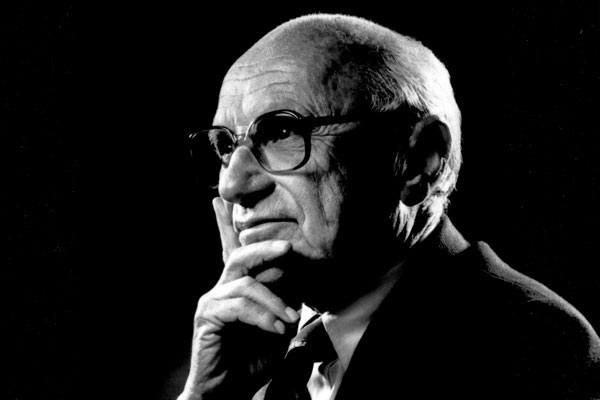


 The Daily Hatch