Milton Friedman was a great economist and a fine speaker.
___________________
I have written before about Milton Friedman’s influence on the economy of Chile. Now I saw this fine article below from www.heritage.org and below that article I have included an article from the Wall Street Journal that talks about Milton Friedman’s influence on Chile. I wish we would follow their lead more and ALLOW THE PRIVATE ECONOMY TO GROW FASTER THAN GOVERNMENT SPENDING!!!!:
Chile continues to lead Latin America in 2013 in both economic growth and economic freedom. These positive outcomes reflect well on the solid policy choices being implemented by the Chilean government of President Sebastián Piñera.
And at the beginning of the year, Bloomberg confirmed that Chile’s economy grew by 5.5 percent in last year—faster than predicted, and significant growth during a period when much of the world has seen only paltry economic expansion.
Chile has seen booming exports, particularly in the mining sector of the economy. But unlike other nations with significant exports of commodities, Chile has successfully diversified its economy away from over-dependence on those exports while using property rights to avoid the destabilizing corruption and over-regulation that have afflicted “oil-cursed” neighbors such as Venezuela. According to Caiman Valores, a prominent Latin American investment consultant,
Chile is an interesting investment location. It is stable, has solid regulations and low levels of corruption coupled with a particularly strong banking and finance sector…Chile is an important addition to any investor’s portfolio, providing geographic diversification along with access to probably the most advanced economy in Latin America.
With such ringing endorsements, the mining industry alone now predicts it will see the addition of $100 billion in foreign investments in the next decade and plans to sell an estimated $55 billion in copper in 2013. The government’s outstanding management of the mining sector, combined with a stable currency, led Standard & Poor’s to upgrade Chile’s bond rating to AA- last month, a rating considered to be on par with nations like Japan and China, according to The Financial Times.
In short, Chile’s economy is on the rise, and policy is the reason. Commenting on the upgrade, S&P said that they “expect the government to continue making gradual progress on microeconomic reforms to bolster the long-term competitiveness of the economy.”
Preliminary data released January 8 showed that due to President Piñera’s continued budgetary restraint, the private economy has been growing faster than government spending. As the Index notes, “Chile continues to be a global leader in economic freedom. With the rule of law strongly maintained by an independent and efficient judicial system, prudent public finance management has kept public debt and recent budget deficits under control.”
Chile’s continued growth is a stark contrast with David Frum’s description of South American neighbor (and fellow commodity exporter) Venezuela’s “life support” economy. As cited in a recent Heritage report:
Despite vast oil wealth, the Venezuelan economy has tumbled into terrible straits. Inflation roars at 25%, unemployment exceeds 8%, the non-oil economy stagnates, electricity flickers on and off irregularly, and basic commodities such as rice and beans have become scarce in the marketplaces and must be obtained as rations from government-controlled stores.
While Chile’s economic freedom rose in the 2013 Index, Venezuela’s score fell by 2.0 points to 36.1, to a rank of 174th. Now, “corruption is prevalent, and the rule of law is weak across the country.” Venezuela’s “regulatory encroachment on private businesses continues to increase, with heavy government control and intervention discouraging entrepreneurship.”
Contrast that bleak outlook with Chile’s entrepreneur-friendly environment, which attracted hundreds of new start-ups since 2010. Business start-ups are a crucial indicator of job creation and freedom in any economy, including the United States. Recent reports about technology start-ups in Latin America’s industry, led by Chile, indicate that the high-tech sector in South America could soon rival that of the U.S.
For the second year in a row, Chile (7th) has outpaced the United States (10th) in economic freedom. U.S. policymakers would be well advised to study the policy differences between the two, and take the better path.
__________
Milton Friedman has been dead for more than three years. But his spirit was surely hovering protectively over Chile in the early morning hours of Saturday. Thanks largely to him, the country has endured a tragedy that elsewhere would have been an apocalypse.
Earthquake magnitudes are measured on a logarithmic scale. The earthquake that hit Northridge in 1994 measured 6.7 on the Richter scale. But its seismic-energy yield was only half that of the 7.0 quake that hit Haiti in January, which was the equivalent of 2,000 Hiroshima-sized bombs exploding all at once.
By contrast, Saturday’s earthquake in Chile measured 8.8. That’s nearly 500 times more powerful than Haiti’s, or about one million Hiroshimas. Yet Chile’s reported death toll—711 as of this writing—was a tiny fraction of the 230,000 believed to have perished in Haiti.
Top: Getty Images Bottom: Associated PressChile’s presidential palace survived the quake intact. Haiti’s did not.
It’s not by chance that Chileans were living in houses of brick—and Haitians in houses of straw—when the wolf arrived to try to blow them down. In 1973, the year the proto-Chavista government of Salvador Allende was overthrown by Gen. Augusto Pinochet, Chile was an economic shambles. Inflation topped out at an annual rate of 1000%, foreign-currency reserves were totally depleted, and per capita GDP was roughly that of Peru and well below Argentina’s.
What Chile did have was intellectual capital, thanks to an exchange program between its Catholic University and the economics department of the University of Chicago, then Friedman’s academic home. Even before the 1973 coup, several of Chile’s “Chicago Boys” had drafted a set of policy proposals which amounted to an off-the-shelf recipe for economic liberalization: sharp reductions to government spending and the money supply; privatization of state-owned companies; the elimination of obstacles to free enterprise and foreign investment, and so on.
In left-wing mythology—notably Naomi Klein’s tedious 2007 screed “The Shock Doctrine”—the Chicago Boys weren’t just strange bedfellows to Pinochet’s dictatorship. They were complicit in its crimes. “If the pure Chicago economic theory can be carried out in Chile only at the price of repression, should its authors feel some responsibility?” wrote New York Times columnist Anthony Lewis in October 1975. In fact, Pinochet had been mostly indifferent to the Chicago Boys’ advice until the continuing economic crisis forced him to look for some policy alternatives. In March 1975, he had a 45-minute meeting with Friedman and asked him to write a letter proposing some remedies. Friedman responded a month later with an eight-point proposal that largely mirrored the themes of the Chicago Boys.
For his trouble, Friedman would spend the rest of his life being defamed as an accomplice to evil: at his Nobel Prize ceremony the following year, he was met by protests and hecklers. Friedman himself couldn’t decide whether to be amused or annoyed by the obloquies; he later wryly noted that he had given communist dictatorships the same advice he gave Pinochet, without raising leftist hackles.
As for Chile, Pinochet appointed a succession of Chicago Boys to senior economic posts. By 1990, the year he ceded power, per capita GDP had risen by 40% (in 2005 dollars) even as Peru and Argentina stagnated. Pinochet’s democratic successors—all of them nominally left-of-center—only deepened the liberalization drive. Result: Chileans have become South America’s richest people. They have the continent’s lowest level of corruption, the lowest infant-mortality rate, and the lowest number of people living below the poverty line.
Chile also has some of the world’s strictest building codes. That makes sense for a country that straddles two massive tectonic plates. But having codes is one thing, enforcing them is another. The quality and consistency of enforcement is typically correlated to the wealth of nations. The poorer the country, the likelier people are to scrimp on rebar, or use poor quality concrete, or lie about compliance. In the Sichuan earthquake of 2008, thousands of children were buried under schools also built according to code.
In “The Shock Doctrine,” Ms. Klein titles one of her sub-chapters “The Myth of the Chilean Miracle.” In her reading, the only thing Friedman and the Chicago Boys accomplished was to “hoover wealth up to the top and shock much of the middle class out of existence.” Actual Chileans of all classes—living in the aftermath of an actual shock—may take a different view of Friedman, who helped give them the wherewithal first to survive the quake, and now to build their lives anew.
The Machine: The Truth Behind Teachers Unions Published on Sep 4, 2012 by ReasonTV America’s public education system is failing. We’re spending more money on education but not getting better results for our children. That’s because the machine that runs the K-12 education system isn’t designed to produce better schools. It’s designed to produce more […]
Johan Norberg – Free or Equal – Free to Choose 30 years later 5/5 Published on Jun 10, 2012 by BasicEconomics In 1980 economist and Nobel laureate Milton Friedman inspired market reform in the West and revolutions in the East with his celebrated television series “Free To Choose.” Thirty years later, in this one-hour documentary, […]
Johan Norberg – Free or Equal – Free to Choose 30 years later 4/5 Published on Jun 10, 2012 by BasicEconomics In 1980 economist and Nobel laureate Milton Friedman inspired market reform in the West and revolutions in the East with his celebrated television series “Free To Choose.” Thirty years later, in this one-hour documentary, […]
Johan Norberg – Free or Equal – Free to Choose 30 years later 3/5 Published on Jun 10, 2012 by BasicEconomics In 1980 economist and Nobel laureate Milton Friedman inspired market reform in the West and revolutions in the East with his celebrated television series “Free To Choose.” Thirty years later, in this one-hour documentary, […]
The Machine: The Truth Behind Teachers Unions Published on Sep 4, 2012 by ReasonTV America’s public education system is failing. We’re spending more money on education but not getting better results for our children. That’s because the machine that runs the K-12 education system isn’t designed to produce better schools. It’s designed to produce more […]
What a great defense of Milton Friedman!!!! Defaming Milton Friedman by Johan Norberg This article appeared in Reason Online on September 26, 2008 PRINT PAGE CITE THIS Sans Serif Serif Share with your friends: ShareThis In the future, if you tell a student or a journalist that you favor free markets and limited government, there is […]
Johan Norberg – Free or Equal – Free to Choose 30 years later 2/5 Published on Jun 10, 2012 by BasicEconomics In 1980 economist and Nobel laureate Milton Friedman inspired market reform in the West and revolutions in the East with his celebrated television series “Free To Choose.” Thirty years later, in this one-hour documentary, […]
Free or Equal?: Johan Norberg Updates Milton & Rose Friedman’s Free to Choose I got this below from Reason Magazine: Swedish economist Johan Norberg is the host of the new documentary Free or Equal, which retraces and updates the 1980 classic Free to Choose, featuring Milton and Rose Friedman. Like the Friedmans, Norberg travels the globe […]
Below is a discussion from Milton Friedman on Bill Clinton and Ronald Reagan. February 10, 1999 | Recorded on February 10, 1999 audio, video, and blogs » uncommon knowledge PRESIDENTIAL REPORT CARD: Milton Friedman on the State of the Union with guest Milton Friedman Milton Friedman, Senior Research Fellow, Hoover Institution and Nobel Laureate in […]
Milton Friedman and Chile – The Power of Choice Uploaded by FreeToChooseNetwork on May 13, 2011 In this excerpt from Free To Choose Network’s “The Power of Choice (2006)”, we set the record straight on Milton Friedman’s dealings with Chile — including training the Chicago Boys and his meeting with Augusto Pinochet. Was the tremendous […]
The 45 minute video above is from the film series created from Francis Schaeffer’s book “Whatever Happened to the Human Race?” with Dr. C. Everett Koop. This book really helped develop my political views concerning abortion, infanticide, and youth euthanasia, and it gave me a good understanding of those issues.
I was able to watch Francis Schaeffer deliver a speech on a book he wrote called “A Christian Manifesto” and I heard him in several interviews on it in 1981 and 1982. I listened with great interest since I also read that book over and over again. Below is a portion of one of Schaeffer’s talks on a crucial subject that is very important today too.
This address was delivered by the late Dr. Schaeffer in 1982 at the Coral Ridge Presbyterian Church, Fort Lauderdale, Florida. It is based on one of his books, which bears the same title.
——–
Minority groups could have their rights stripped away if we are ruled by 51% vote instead of the rule of law
—–
I want to say something tonight. Not many of you are black in this audience. I can’t tell if you are Puerto Rican. But if I were in the minority group in this country, tonight, I would be afraid. I’ve had big gorgeous blacks stand up in our seminars and ask, “Sir, do you think there is a racial twist to all this?” And I have to say, “Right on! You’ve hit it right on the head!” Once this door is opened, there is something to be afraid of. Christians should be deeply concerned, and I cannot understand why the liberal lawyer of the Civil Liberties Union is not scared to death by this open door towards human life. Everyone ought to be frightened who knows anything about history — anything about the history of law, anything about the history of medicine. This is a terrifying door that is open.
Abortion itself would be worth spending much of our lifetimes to fight against, because it is the killing of human life, but it’s only a symptom of the total. What we are facing is Humanism: Man, the measure of all things — viewing final reality being only material or energy shaped by chance — therefore, human life having no intrinsic value — therefore, the keeping of any individual life or any groups of human life, being purely an arbitrary choice by society at the given moment.
The flood doors are wide open. I fear both they, and too often the Christians, do not have just relativistic values (because, unhappily, Christians can live with relativistic values) but, I fear, that often such people as the liberal lawyers of the Civil Liberties Union and Christians, are just plain stupid in regard to the lessons of history. Nobody who knows his history could fail to be shaken at the corner we have turned in our culture. Remember why: because of the shift in the concept of the basic reality!
Francis Schaeffer: “Whatever Happened to the Human Race” (Episode 1) ABORTION OF THE HUMAN RACE Published on Oct 6, 2012 by AdamMetropolis The 45 minute video above is from the film series created from Francis Schaeffer’s book “Whatever Happened to the Human Race?” with Dr. C. Everett Koop. This book really helped develop my political views […]
E P I S O D E 1 0 Dr. Francis Schaeffer – Episode X – Final Choices 27 min FINAL CHOICES I. Authoritarianism the Only Humanistic Social Option One man or an elite giving authoritative arbitrary absolutes. A. Society is sole absolute in absence of other absolutes. B. But society has to be […]
E P I S O D E 9 Dr. Francis Schaeffer – Episode IX – The Age of Personal Peace and Affluence 27 min T h e Age of Personal Peace and Afflunce I. By the Early 1960s People Were Bombarded From Every Side by Modern Man’s Humanistic Thought II. Modern Form of Humanistic Thought Leads […]
E P I S O D E 8 Dr. Francis Schaeffer – Episode VIII – The Age of Fragmentation 27 min I saw this film series in 1979 and it had a major impact on me. T h e Age of FRAGMENTATION I. Art As a Vehicle Of Modern Thought A. Impressionism (Monet, Renoir, Pissarro, Sisley, […]
E P I S O D E 7 Dr. Francis Schaeffer – Episode VII – The Age of Non Reason I am thrilled to get this film series with you. I saw it first in 1979 and it had such a big impact on me. Today’s episode is where we see modern humanist man act […]
E P I S O D E 6 How Should We Then Live 6#1 Uploaded by NoMirrorHDDHrorriMoN on Oct 3, 2011 How Should We Then Live? Episode 6 of 12 ________ I am sharing with you a film series that I saw in 1979. In this film Francis Schaeffer asserted that was a shift in […]
E P I S O D E 5 How Should We Then Live? Episode 5: The Revolutionary Age I was impacted by this film series by Francis Schaeffer back in the 1970′s and I wanted to share it with you. Francis Schaeffer noted, “Reformation Did Not Bring Perfection. But gradually on basis of biblical teaching there […]
Dr. Francis Schaeffer – Episode IV – The Reformation 27 min I was impacted by this film series by Francis Schaeffer back in the 1970′s and I wanted to share it with you. Schaeffer makes three key points concerning the Reformation: “1. Erasmian Christian humanism rejected by Farel. 2. Bible gives needed answers not only as to […]
Francis Schaeffer’s “How should we then live?” Video and outline of episode 3 “The Renaissance” Francis Schaeffer: “How Should We Then Live?” (Episode 3) THE RENAISSANCE I was impacted by this film series by Francis Schaeffer back in the 1970′s and I wanted to share it with you. Schaeffer really shows why we have so […]
Francis Schaeffer: “How Should We Then Live?” (Episode 2) THE MIDDLE AGES I was impacted by this film series by Francis Schaeffer back in the 1970′s and I wanted to share it with you. Schaeffer points out that during this time period unfortunately we have the “Church’s deviation from early church’s teaching in regard […]
Francis Schaeffer: “How Should We Then Live?” (Episode 1) THE ROMAN AGE Today I am starting a series that really had a big impact on my life back in the 1970′s when I first saw it. There are ten parts and today is the first. Francis Schaeffer takes a look at Rome and why […]
Francis Schaeffer: “Whatever Happened to the Human Race” (Episode 5) TRUTH AND HISTORY Published on Oct 7, 2012 by AdamMetropolis This crucial series is narrated by the late Dr. Francis Schaeffer and former Surgeon General Dr. C. Everett Koop. Today, choices are being made that undermine human rights at their most basic level. Practices once […]
The opening song at the beginning of this episode is very insightful. Francis Schaeffer: “Whatever Happened to the Human Race” (Episode 4) THE BASIS FOR HUMAN DIGNITY Published on Oct 7, 2012 by AdamMetropolis This crucial series is narrated by the late Dr. Francis Schaeffer and former Surgeon General Dr. C. Everett Koop. Today, choices […]
Francis Schaeffer: “Whatever Happened to the Human Race” (Episode 3) DEATH BY SOMEONE’S CHOICE Published on Oct 6, 2012 by AdamMetropolis This crucial series is narrated by the late Dr. Francis Schaeffer and former Surgeon General Dr. C. Everett Koop. Today, choices are being made that undermine human rights at their most basic level. Practices […]
Francis Schaeffer: “Whatever Happened to the Human Race?” (Episode 2) SLAUGHTER OF THE INNOCENTS Published on Oct 6, 2012 by AdamMetropolis This crucial series is narrated by the late Dr. Francis Schaeffer and former Surgeon General Dr. C. Everett Koop. Today, choices are being made that undermine human rights at their most basic level. Practices […]
It is not possible to know where the pro-life evangelicals are coming from unless you look at the work of the person who inspired them the most. That person was Francis Schaeffer. I do care about economic issues but the pro-life issue is the most important to me. Several years ago Adrian Rogers (past president of […]
This essay below is worth the read. Schaeffer, Francis – “Francis Schaeffer and the Pro-Life Movement” [How Should We Then Live?, Whatever Happened to the Human Race?, A Christian Manifesto] Editor note: <p> </p> [The following essay explores the role that Francis Schaeffer played in the rise of the pro-life movement. It examines the place of […]
Great article on Schaeffer. Who was Dr. Francis A. Schaeffer? By Francis Schaeffer The unique contribution of Dr. Francis Schaeffer on a whole generation was the ability to communicate the truth of historic Biblical Christianity in a way that combined intellectual integrity with practical, loving care. This grew out of his extensive understanding of the Bible […]
Dennis Van Roekel, president of the largest teachers union, the National Education Association, failed fifth-grade math last week. The question he failed is: If X (government spending) is growing faster than A (government tax revenue) plus B (new revenue from higher tax rates on “the rich”), when will A plus B equal X?
President Obama met with leaders of left-leaning organizations, including Mr. Van Roekel, to discuss the “fiscal cliff.” After the meeting, Mr. Van Roekel appeared on Neil Cavuto’s Fox News show to discuss the budget deficit. Mr. Van Roekel told Mr. Cavuto that he had recommended taxing the top 2 percent more to deal with the problem. Mr. Cavuto then correctly explained that taxing the top 2 percent could not solve the problem because even with the increase, spending would still be growing far faster than revenues — primarily because of entitlement programs. After some back and forth, Mr. Van Roekel could not identify one item in the budget that he was in favor of cutting and kept insisting the problem could be solved only by taxing the top 2 percent, even though Mr. Cavuto again correctly and clearly explained that even taxing the top 2 percent at a 100 percent rate would not produce enough revenue because entitlements are growing faster than the economy. Mr. Van Roekel appeared to be unable to grasp this rather simple concept.
At the end of last week, Hostess Brands Inc., the company that makes Twinkies and Wonder Bread, asked to be liquidated because the bakery workers and their union bosses could not understand this: If A (workers’ salaries and benefits) is growing faster than B (sales revenue), company H (Hostess) will run out of money and be forced into liquidation. So 18,500 workers are losing their jobs because a bunch of union bosses and many of the workers could not understand elementary school math. (Perhaps their teachers were members of the NEA. Note: There are many fine teachers who are not responsible for the folks who run the NEA, and many fine voters who are not responsible for the actions of our elected officials.)
Richard W. Rahn is a senior fellow at the Cato Institute and chairman of the Institute for Global Economic Growth.
When you first study physics and economics, you learn the difference between constants and variables. You also learn there are very few constants — the speed of light being one. Most everything is a variable, in that most everything is affected by other things or actions. A majority of the leaders and voters in California seem to have missed this basic lesson. They voted for a whole host of new taxes, including increasing the state’s income tax to more than 13 percent. For most of these tax increases, the political leaders made the assumption that people will stay put and pay these taxes — hence, big revenue gains. But how likely is this? Gov. Jerry Brown has, in effect, said that state personal income is a constant rather than a variable. If you multiply a higher tax rate by a constant income you get a bigger number and — voila — more tax revenue. However, state personal income is variable, which Mr. Brown will learn in a painful way. People can move either their personal or economic activity to another state, another country or even cease working in the above-ground economy. California will continue to lose economic market share and its budget problems will only get worse.
Many people (including a few left-wing economists who let their ideology overwhelm their knowledge of math) are arguing that, if taxes are raised on those making more than $250,000 a year, there will be no adverse effects. What theory or empirical evidence supports their assertions?
Most economists refer to themselves as Keynesian, monetarist, classical or Austrian — at least in part. None of these theories advocates increasing tax rates, particularly on labor and capital, during periods of economic stagnation, such as the United States is now experiencing. There is also no empirical evidence to show that a program of increasing the highest marginal tax rates and increasing entitlement spending leads to higher economic growth and employment. Look at what is happening to France, where the high tax-and-spend experiment is well ahead of ours. The laws of supply and demand have not been repealed. If you tax something you will get less of it, and if you subsidize something you will get more of it. If you increase the tax on labor and capital, you will get less — and economic growth requires more labor and capital, not less.
Mr. Obama said last week that he was not going to accept “dynamic scoring” (adjusting the projections to reflect changes in behavior resulting from the tax rate change) in evaluating the Republicans’ tax revenue projections. Thus, he is going to assume that the tax base is a constant rather than a variable. The president and his staff apparently fail to comprehend secondary effects of tax changes, or they are allowing leftist ideology to trump reality. Either way, it is a loss for the American people.
I have gone back and forth and back and forth with many liberals on the Arkansas Times Blog on many issues such as abortion, human rights, welfare, poverty, gun control and issues dealing with popular culture. Here is another exchange I had with them a while back. My username at the Ark Times Blog is Saline Republican.
Since Saline can never walk in a pregnant woman’s shoes (and neither can any of these portly politicians), maybe he should just keep his nose and vaginal probes out of their business. Unless the fetus is his, he should never have a say.
Saline appears to have a very bad case of ‘anti-choice Tourettes’.
Just can’t help himself. He can’t go 5 minutes without blurting out some ridiculous abortion talking point.
Norma the answer is that genetics tells us that the unborn baby has the same genetic code that a full grown human has. Here is all the quotes from scientists including my atheist friend Dr Kevin Henke. https://thedailyhatch.org/2011/06/23/ark-ti…
I was also moved by David Sanders interview with the abortionist Dr William F Harrison concerning advice he gave to abort about 25 years ago to a 16 yr old pregnant girl. The you girl did not abort and her daughter is now graduating with a masters because her mother rejected Dr Harrison’s advice. Dr Harrison admitted that sent a cold chill down his spine when thinks of his advice.
Dr. C. Everett Koop said that everyone that advocates abortion has the benefit of already being born. What if you were to ask that lady today if her mother should have taken Dr Harrison’s advice?
_________
Actually I used to write a lot of letters to the editor in the 1990’s about pro-life issues and I found that a Mr. William F. Harrison from Fayetteville was constantly taking the other side and being critical of my letters with his letters to the editor. I found out many years later that he ran the biggest abortion clinic in the state of Arkansas.
I truly believe that many of the problems we have today in the USA are due to the advancement of humanism in the last few decades in our society. Ronald Reagan appointed the evangelical Dr. C. Everett Koop to the position of Surgeon General in his administration. He partnered with Dr. Francis Schaeffer in making the video below. It is very valuable information for Christians to have. Actually I have included a video below that includes comments from him on this subject.
What happens to a society that has no basis for values? Francis Schaeffer knew where that would lead:
“Humanism, man beginning only from himself, had destroyed the old basis of values, and could find no way to generate with certainty any new values. In the resulting vacuum the impoverished values of personal peace and affluence had come to stand supreme.”
Francis Schaeffer would have celebrated his 100th birthday in January. I’m obviously a couple months late with this, but here are a few quotes in remembrance of a life well lived.
Francis Schaeffer
“Think of this great flaming phrase: “certain inalienable rights.” Who gives the rights? The state? Then they are not inalienable because the state can change them and take them away. Where do the rights come from? [Jefferson and others] understood that they were founding the country upon the concept that goes back into the Judeo-Christian thinking that there is Someone there who gave the inalienable rights.”
–
“In passing, we should note this curious mark of our own age: the only absolute allowed is the absolute insistence that there is no absolute.”
–
“Humanism, man beginning only from himself, had destroyed the old basis of values, and could find no way to generate with certainty any new values. In the resulting vacuum the impoverished values of personal peace and affluence had come to stand supreme.”
–
“Biblical orthodoxy without compassion is surely the ugliest thing in the world.”
–
“But if I live in a world of nonabsolutes and would fight social injustice on the mood of the moment, how can I establish what social justice is? What criterion do I have to distinguish between right and wrong so that I can know what I should be fighting? Is it not possible that I could in fact acquiesce in evil and stamp out good? The word love cannot tell me how to discern, for within the humanistic framework love can have no defined meaning.”
–
“There is no place for love in a totally closed cause and effect system.”
Francis Schaeffer: “Whatever Happened to the Human Race” (Episode 1) ABORTION OF THE HUMAN RACE Published on Oct 6, 2012 by AdamMetropolis The 45 minute video above is from the film series created from Francis Schaeffer’s book “Whatever Happened to the Human Race?” with Dr. C. Everett Koop. This book really helped develop my political views […]
E P I S O D E 1 0 Dr. Francis Schaeffer – Episode X – Final Choices 27 min FINAL CHOICES I. Authoritarianism the Only Humanistic Social Option One man or an elite giving authoritative arbitrary absolutes. A. Society is sole absolute in absence of other absolutes. B. But society has to be […]
E P I S O D E 9 Dr. Francis Schaeffer – Episode IX – The Age of Personal Peace and Affluence 27 min T h e Age of Personal Peace and Afflunce I. By the Early 1960s People Were Bombarded From Every Side by Modern Man’s Humanistic Thought II. Modern Form of Humanistic Thought Leads […]
E P I S O D E 8 Dr. Francis Schaeffer – Episode VIII – The Age of Fragmentation 27 min I saw this film series in 1979 and it had a major impact on me. T h e Age of FRAGMENTATION I. Art As a Vehicle Of Modern Thought A. Impressionism (Monet, Renoir, Pissarro, Sisley, […]
E P I S O D E 7 Dr. Francis Schaeffer – Episode VII – The Age of Non Reason I am thrilled to get this film series with you. I saw it first in 1979 and it had such a big impact on me. Today’s episode is where we see modern humanist man act […]
E P I S O D E 6 How Should We Then Live 6#1 Uploaded by NoMirrorHDDHrorriMoN on Oct 3, 2011 How Should We Then Live? Episode 6 of 12 ________ I am sharing with you a film series that I saw in 1979. In this film Francis Schaeffer asserted that was a shift in […]
E P I S O D E 5 How Should We Then Live? Episode 5: The Revolutionary Age I was impacted by this film series by Francis Schaeffer back in the 1970′s and I wanted to share it with you. Francis Schaeffer noted, “Reformation Did Not Bring Perfection. But gradually on basis of biblical teaching there […]
Dr. Francis Schaeffer – Episode IV – The Reformation 27 min I was impacted by this film series by Francis Schaeffer back in the 1970′s and I wanted to share it with you. Schaeffer makes three key points concerning the Reformation: “1. Erasmian Christian humanism rejected by Farel. 2. Bible gives needed answers not only as to […]
Francis Schaeffer’s “How should we then live?” Video and outline of episode 3 “The Renaissance” Francis Schaeffer: “How Should We Then Live?” (Episode 3) THE RENAISSANCE I was impacted by this film series by Francis Schaeffer back in the 1970′s and I wanted to share it with you. Schaeffer really shows why we have so […]
Francis Schaeffer: “How Should We Then Live?” (Episode 2) THE MIDDLE AGES I was impacted by this film series by Francis Schaeffer back in the 1970′s and I wanted to share it with you. Schaeffer points out that during this time period unfortunately we have the “Church’s deviation from early church’s teaching in regard […]
Francis Schaeffer: “How Should We Then Live?” (Episode 1) THE ROMAN AGE Today I am starting a series that really had a big impact on my life back in the 1970′s when I first saw it. There are ten parts and today is the first. Francis Schaeffer takes a look at Rome and why […]
Francis Schaeffer: “Whatever Happened to the Human Race” (Episode 5) TRUTH AND HISTORY Published on Oct 7, 2012 by AdamMetropolis This crucial series is narrated by the late Dr. Francis Schaeffer and former Surgeon General Dr. C. Everett Koop. Today, choices are being made that undermine human rights at their most basic level. Practices once […]
The opening song at the beginning of this episode is very insightful. Francis Schaeffer: “Whatever Happened to the Human Race” (Episode 4) THE BASIS FOR HUMAN DIGNITY Published on Oct 7, 2012 by AdamMetropolis This crucial series is narrated by the late Dr. Francis Schaeffer and former Surgeon General Dr. C. Everett Koop. Today, choices […]
Francis Schaeffer: “Whatever Happened to the Human Race” (Episode 3) DEATH BY SOMEONE’S CHOICE Published on Oct 6, 2012 by AdamMetropolis This crucial series is narrated by the late Dr. Francis Schaeffer and former Surgeon General Dr. C. Everett Koop. Today, choices are being made that undermine human rights at their most basic level. Practices […]
Francis Schaeffer: “Whatever Happened to the Human Race?” (Episode 2) SLAUGHTER OF THE INNOCENTS Published on Oct 6, 2012 by AdamMetropolis This crucial series is narrated by the late Dr. Francis Schaeffer and former Surgeon General Dr. C. Everett Koop. Today, choices are being made that undermine human rights at their most basic level. Practices […]
It is not possible to know where the pro-life evangelicals are coming from unless you look at the work of the person who inspired them the most. That person was Francis Schaeffer. I do care about economic issues but the pro-life issue is the most important to me. Several years ago Adrian Rogers (past president of […]
This essay below is worth the read. Schaeffer, Francis – “Francis Schaeffer and the Pro-Life Movement” [How Should We Then Live?, Whatever Happened to the Human Race?, A Christian Manifesto] Editor note: <p> </p> [The following essay explores the role that Francis Schaeffer played in the rise of the pro-life movement. It examines the place of […]
Great article on Schaeffer. Who was Dr. Francis A. Schaeffer? By Francis Schaeffer The unique contribution of Dr. Francis Schaeffer on a whole generation was the ability to communicate the truth of historic Biblical Christianity in a way that combined intellectual integrity with practical, loving care. This grew out of his extensive understanding of the Bible […]
http://www.aei.org/topic/nation-of-takers
In “A Nation of Takers,” author Nicholas Eberstadt of the American Enterprise Institute draws on an impressive array of data to detail the exponential growth in America’s entitlement spending, which today accounts for a full two-thirds of the federal budget. Eberstadt shows in unflinching detail how this runaway spending is having a very real, long-lasting, negative impact on the character of our citizens.
___________________
In a new video parodying Dr. Seuss’s whimsical style, the American Enterprise Institute puts the problem of growing entitlement program spending in a form elementary school kids can understand.
It’s a good thing, too, because their generation will be burdened with paying for this skyrocketing spending if Congress and the President don’t start getting serious about structural entitlement program reforms now.
The video tells the tale of the “makers,” who were once “makering all kinds of neat things, Make-dads and Make-pads and mighty Make-dings.” Then the federal government stepped in, imposing an endless slew of taxes and cultivating an entitlement state. This developed into both a moral and fiscal problem, as it bred a culture of dependency and threatened to bankrupt their country.
America is a land of makers. Despite the current economic downturn, we have a history marked by prosperity, and today we enjoy widespread liberty and economic opportunity. Yet rising government spending, a sign of an expanding government, threatens that economic health and freedom. Specifically, spending on the entitlement programs—Medicare, Medicaid, and Social Security being the largest—is driving future deficits and debt to unsustainable levels.
Already, 62 percent of the federal budget goes to entitlement programs—double the amount 50 years ago. Entitlement program spending is projected to nearly double from 10.3 percent of the economy in 2010 to 19 percent in 2050. Such staggering figures are the result of millions of baby boomers beginning to retire and health care costs that keep rising. (continues below chart)
The number of workers paying for the benefits of retirees has also fallen, making Social Security and Medicare structurally unsustainable. For example, in 1965, the ratio of workers to Medicare beneficiaries was nearly five to one, meaning five workers were paying for the benefits of each retiree. In 2011, that ratio had fallen to three to one, and by 2030 there will be just two workers shouldering the responsibility for each beneficiary.
Government-centric Obamacare will only exacerbate the increasing health care costs in both the public and private sectors and send Medicaid spending upward. As the video suggests, this is a “fiscal nightmare.”
It is possible to structurally reform the entitlement programs in a way that ensures that they are a safety net for Americans who truly need them now—and for today’s children when they retire. Doing so requires political will on the part of Congress and the President to make tough choices now.
The Heritage Foundation has a plan that does just that. It gets our spending and debt under control and preserves the freedoms that allow America’s makers to keep “makering” and succeed.
Dr. C. Everett Koop on Baby Doe, euthanasia, abortion
Uploaded on Nov 3, 2008
Dr. Koop answers questions on Baby Doe, euthanasia and abortion during interview at Wheaton College, Wheaton, IL http://www.christianethics.org
Dr. Koop
Joycelyn Elders was the first black Surgeon General of the USA and I have a picture of her with Dr. C. Everett Koop taken in 1993. I used to watch her husband Oliver coach at Hall High School and he always had a great basketball team. Sidney Moncrief was one of star players in the past.
On 2-25-13 we lost a great man when we lost Dr. C. Everett Koop. I have written over and over the last few years quoting Dr. C. Everett Koop and his good friend Francis Schaeffer. They both came together for the first time in 1973 when Dr. Koop operated on Schaeffer’s daughter and as a result they became close friends. That led to their involvement together in the book and film series “WHATEVER HAPPENED TO THE HUMAN RACE?” in 1979.
Chuck Hagel is, of course, not the first presidential nominee to face stiff opposition in the Senate. In 1981, Democrats spent eight months battling the nomination of C. Everett Koop to be surgeon general. Ronald Reagan’s choice of Koop, who was known as an outspoken foe of abortion, was seen as a sop to rightwing evangelicals and to the new right, which had successfully used opposition to abortion as a wedge issue to defeat Democrats in the 1980 election. But Koop, who died on Monday at age 96, turned out to be one of the great surprises of the Reagan years. By the time he left office in 1989 the same people who had vilified him as Dr. Kook were singing his praises, and in 1995, Bill Clinton awarded Koop the Medal of Freedom.
Koop did change his views in office, but he was also misjudged by both supporters and detractors. Koop was a highly respected surgeon, the founder of the department of pediatric surgery at Children’s Hospital in Philadelphia. He was also a devout Christian and impassioned foe of abortion. In 1975, Koop and theologian Harold O.J. Brown met at Billy Graham’s home in Minneapolis to found the Christian Action Council (CAC), the first Protestant lobby against abortion. Koop wrote two books against abortion, including a 1979 tract with evangelist Francis Schaeffer, Whatever Happened to the Human Race. Koop and Schaeffer also produced an anti-abortion movie of the same name that they took around the country. It featured photos of dolls, symbolizing aborted babies, strewn over the floor of the Dead Sea.
Koop’s position on abortion was entirely uncompromising. In The Right to Live, the Right to Die, Koop explained how he had once believed that “Christian compassion” allowed for abortion in “hard cases,” but that under the influence of Brown he had decided to taken an absolute stand “for the sanctity of life.” Koop also saw the issue of abortion in the most extreme moral and religious terms. “The legalization of abortion on demand in the United States,” Koop wrote, “will someday be looked upon by historians as the last turning point of a materialistic society in abandoning the advantages accruing to our society from a Judeo-Christian heritage.”
Prior to becoming surgeon general, Koop’s other social views were equally conservative. He denounced “women’s lib” and “gay pride” for encouraging “anti-family trends.” He declared that the establishment of “government-subsidized childcare centers” was a sign that the U.S. was following the same path as “Hitler’s Germany.” And his religious views were, if anything, even more extreme. Raised in the Dutch Reform Church, Koop was not only a Fundamentalist who rejected the theory of evolution, but also a Calvinist who believed, in Harold O. J. Brown’s words, that “government has the obligation to uphold fundamental principles of morality.” In The Right to Live, the Right to Die, Koop defended the practice of outlawing “private activity … repugnant to the moral sensitivity of the American people. That is why we have laws against such seemingly private engagements as homosexuality, sodomy, prostitution, and adultery.”
But even before taking office, Koop’s views diverged from the radical conservative of the day. Koop had no interest in using abortion as a political wedge issue. His anti-abortion activity was not part of a broader political agenda; it was entirely an expression of his religious belief. Koop worked against abortion in the same spirit that he worked with MAP International—a Third World medical relief agency—or with Philadelphia’s Evangelical Family and Child Service. Koop distrusted the rightwing anti-abortion lobbies. “He was really suspicious of ideology,” Brown explained, “so where you have political ideology that is being presented as a sort of necessary consequence of a theological position he was very suspicious of that.”
In addition, as his colleagues from Philadelphia testified at his hearings, Koop viewed his responsibility as a “health man” as being above politics. He saw “the office” of surgeon general as having a certain function that must be performed regardless of the surgeon general’s own beliefs and wishes. For instance, if there were a conflict between protecting the public health and condoning what he believed were immoral actions, the surgeon general would have to protect the public health. Similarly if there were a conflict between medical evidence and religious belief, then the surgeon general would have to act on the basis of medical evidence even if doing so went against his religious beliefs. From the beginning, this distinction put him at odds with new right activists who wanted him to use his position as a bully pulpit for their political agenda.
Koop first offended Reagan conservatives, including his chief Senate sponsor, North Carolina Republican Senator Jesse Helms, by his outspoken campaign against tobacco products. At issue was not merely an important Republican constituency, Southern tobacco growers, but also the administration’s unequivocal support for free enterprise. In May 1984, Koop issued a blistering condemnation of smoking and the tobacco industry. Attacking the effects of “passive smoking,” when non-smokers were forced in inhale smoke from others’ cigarettes, Koop called for a “smokeless society by the year 2000.” Koop also endorsed smoking bans in workplaces and other public places. In response, Helms called for his resignation, and the administration sabotaged his attempt to strengthen anti-smoking regulations.
Koop clashed directly with the administration two years later when he came out in favor of a bill banning cigarette advertising. White House Chief of Staff Don Regan had tried to prevent his appearing before Henry Waxman’s House Subcommittee on Health and the Environment, but Regan finally agreed to Koop’s appearance on the condition that a Justice Department official accompany him and speak against the bill. An incredulous Koop put on his best Dr. Johnson imitation when Ohio Rep. Buz Lukens defended cigarette advertising on the grounds that “more discussion… is the answer rather than less.” Koop replied, “I don’t think advertising, sir, is discussion.”
But Koop really began to alienate the Republican right when he started taking positions on the growing AIDS epidemic. New right conservatives like Paul Weyrich and Howard Phillips blamed the AIDS epidemic on homosexuals, and wanted the Reagan administration to use the epidemic to point out the immorality of homosexuality. During Koop’s first term, his immediate superior, Assistant Secretary Edward Brandt, ordered him not to take a public position on AIDS, but after Brandt resigned, Koop began answering reporters’ questions on the epidemic. Then, after the 1984 election, Reagan, put on the defensive about the administration’s lack of action on the disease, asked Koop to prepare a report.
After personally going through 27 drafts, Koop issued his report in October 1986. Koop’s report tried to calm the rising hysteria about AIDS by explaining that it could not be spread through casual social contact, but the report raised hackles on the right by calling for sexual education about AIDS in elementary school and by advocating the use of condoms by heterosexuals and homosexuals to prevent the spread of infection. Koop also addressed directly the new right’s attempt to blame the epidemic on gays. “At the beginning of the AIDS epidemic many Americans had little sympathy for people with AIDS,” Koop wrote. “The feeling was that somehow people from certain groups ‘deserved’ their illness. Let us put those feelings behind us. We are fighting a disease, not a people.”
Koop’s position was based on the assumption that as a “health man” he had to recommend programs that protect the public health even if they indirectly condoned behavior that he disapproved of. “With AIDS,” Koop later explained, “the law has to wink at certain things. If you find all the prostitutes in a given community are infected, you have to step in and do something about it.” Koop also believed that AIDS education had to be credible. “When you approach the 70 percent of sexually active teenagers and tell them to just say no, they laugh at you,” Koop said.
Koop’s pamphlet created a furor on the right. In its January 1987 issue, Conservative Digest charged that Koop is “proposing instructing in buggery for schoolchildren as young as the third grade on the spurious grounds that the problem is one of ignorance and not morality.” National Review accused Koop of “criminal negligence” in recommending the use of condoms. In response, Koop accused National Review of “letting politics and ideology supersede science.”
There is no doubt that Koop’s actions reflected his view that as surgeon general he had to act as a “health man” rather than as a moralist. But when Koop talked about the issues raised by the AIDS epidemic, it became evident that his morals have also changed. Koop has lost some of his most extreme Calvinist convictions. In talking about AIDS, Koop went out of his way not to blame the gay community. He now rejected the idea that the state should pass laws against homosexuality. “I don’t think such laws are enforceable,” he said.
Koop’s attitudes changed because of his encounter with the AIDS epidemic. “He suffers with the disease of AIDS and he suffers with prospect of millions of being affected. This is an agonizing situation for him, and it is very unsettling,” Harold O.J. Brown explained. Koop let the struggle against AIDS color his views on a wide range of subjects in the same way the he once let the struggle against abortion color his view of “women’s lib.” He no longer condemned homosexuality, because he saw homosexuals as innocent victims of a terrible disease. He turned away from the right and from his former allies because he believed they lack compassion for AIDS victims.
Koop’s last controversial act as Surgeon General was a report on the psychological effects of abortion is bound to raise new questions about whether he had abandoned his absolute opposition to abortion. Ironically, Reagan had asked Koop to do the report to mollify pro-life lobbyists angered by the administration’s unwillingness to press their case defending the dismissal of a pro-life activist at Health and Human Services. White House aide Dinesh D’Souza had convinced the president that by documenting the terrible psychological effects of abortion, Koop’s report would lay the basis for overturning Roe v. Wade. But in preparing the study, Koop acted as a “health man” rather than as an anti-abortion activist. He and several staff people went over the scientific evidence carefully, and became convinced that past studies demonstrating post-abortion stress were flawed.
Koop remained unalterably opposed to abortion, but he remained a professional committed to medical science and to the responsibilities of his office. “What has given me so much trouble in this job from the right,” Koop told me in 1988 when I did a profile of him for The New Republic, “is that I separate ideology, religion and other things from my sworn duty as a health officer in this country.” Koop remains a stirring example—to both left and right—of how a public official should conduct himself. He was one of the most impressive officials I ever had the chance to interview.
Joycelyn Elders was born Minnie Lee Jones in Schaal, Arkansas on August 13, 1933. In college, she changed her name to Minnie Joycelyn Lee (later using just Joycelyn). In 1952, she received her B.A. in biology from Philander Smith College in Little Rock, Arkansas. After working as a nurse’s aid in a Veterans Administration hospital in Milwaukee for a period, she joined the Army in May, 1953. During her 3 years in the Army, she was trained as a physical therapist. She then attended the University of Arkansas Medical School, where she obtained her M.D. degree in 1960. After completing an internship at the University of Minnesota Hospital and a residency in pediatrics at the University of Arkansas Medical Center, Elders earned an M.S. in Biochemistry in 1967.
Elders then received a National Institutes of Health career development award, also serving as assistant professor in pediatrics at the University of Arkansas Medical Center from 1967. She was promoted to associate professor in 1971 and professor in 1976. Her research interests focused on endocrinology, and she received certification as a pediatric endocrinologist in 1978. She became an expert on childhood sexual development.
In 1987, Elders was appointed Director of the Arkansas Department of Health by then-Governor Bill Clinton. Her accomplishments in this position included a ten-fold increase in the number of early childhood screenings annually and almost a doubling of the immunization rate for two-year-olds in Arkansas. In 1992, she was elected President of the Association of State and Territorial Health Officers.
Elders became Surgeon General of the Public Health Service on September 8, 1993, appointed by President Clinton. She was the first African American to serve in the position. As Surgeon General, Elders argued the case for universal health coverage, and was a spokesperson for President Clinton’s health care reform effort. She was a strong advocate for comprehensive health education, including sex education, in schools. She was outspoken in her views, and was forced to resign after only 15 months in the position as a result of a controversial remark about sex education. Her last day in office was December 31, 1994. She returned to the University of Arkansas Medical Center as professor of pediatrics.
Dr. C. Everett Koop is pictured above.
Francis Schaeffer: “Whatever Happened to the Human Race” (Episode 1) ABORTION OF THE HUMAN RACE
Dr. C. Everett Koop with Ronald Reagan. Dr. Koop was delayed in his confirmation by Ted Kennedy because of his film Whatever Happened to the Human Race? President Obama c/o The White House 1600 Pennsylvania Avenue NW Washington, DC 20500 Dear Mr. President, I know that you receive 20,000 letters a day and that you […]
In the film series “WHATEVER HAPPENED TO THE HUMAN RACE?” the arguments are presented against abortion (Episode 1), infanticide (Episode 2), euthenasia (Episode 3), and then there is a discussion of the Christian versus Humanist worldview concerning the issue of “the basis for human dignity” in Episode 4 and then in the last episode a close […]
Dr. C. Everett Koop with Ronald Reagan. Dr. Koop was delayed in his confirmation by Ted Kennedy because of his film Whatever Happened to the Human Race? Watch the film below starting at the 19 minute mark and that will lead into a powerful question from Dr. C. Everett Koop. This 1979 film is WHATEVER […]
Dr. Koop was delayed in his confirmation by Ted Kennedy because of his film Whatever Happened to the Human Race? Francis Schaeffer February 21, 1982 (Part 1) Uploaded by DeBunker7 on Feb 21, 2008 READ THIS FIRST: In decline of all civilizations we first see a war against the freedom of ideas. Discussion is limited […]
Dr. C. Everett Koop was appointed to the Reagan administration but was held up in the Senate in his confirmation hearings by Ted Kennedy because of his work in pro-life causes. I was thinking about the March for Life that is coming up on Jan 20, 2013 and that is why I posted this today […]
High resolution version (11,426,583 Bytes) Description: The photograph is signed by President Ronald Reagan with the inscription “To Chick Koop, With Best Wishes.” Chick, from chicken coop, was the nickname Koop gained will attending Dartmouth College in the mid-1930s. Koop maintained a cordial relationship with President Reagan, despite his disappointment over Reagan’s refusal to address […]
Francis Schaeffer and C. Everett Koop were prophetic (jh29) What Ever Happened to the Human Race? I recently heard this Breakpoint Commentary by Chuck Colson and it just reminded me of how prophetic Francis Schaeffer and C. Everett Koop were in the late 1970′s with their book and film series “Whatever happened to the human […]
Dr. C. Everett Koop I was thinking about the March for Life that is coming up on Jan 20, 2013 and that is why I posted this today Secular leaps of faith 39 Comments Written by Janie B. Cheaney August 15, 2011, 2:17 PM I’m willing to cut Ryan Lizza some slack. His profile […]
Francis Schaeffer: “Whatever Happened to the Human Race?” (Episode 2) SLAUGHTER OF THE INNOCENTS Published on Oct 6, 2012 by AdamMetropolis The 45 minute video above is from the film series created from Francis Schaeffer’s book “Whatever Happened to the Human Race?” with Dr. C. Everett Koop. This book really helped develop my political views concerning […]
I truly believe that many of the problems we have today in the USA are due to the advancement of humanism in the last few decades in our society. Ronald Reagan appointed the evangelical Dr. C. Everett Koop to the position of Surgeon General in his administration. He partnered with Dr. Francis Schaeffer in making […]
The best pro-life film I have ever seen below by Francis Schaeffer and Dr. C. Everett Koop “Whatever happened to the human race?” Over the years I have taken on the Ark Times liberal bloggers over and over and over concerning the issue of abortion. I asked over and over again for one liberal blogger […]
Francis Schaeffer pictured above._________ The best pro-life film I have ever seen below by Francis Schaeffer and Dr. C. Everett Koop “Whatever happened to the human race?” Over the years I have taken on the Ark Times liberal bloggers over and over and over concerning the issue of abortion. I asked over and over again […]
The best pro-life film I have ever seen below by Francis Schaeffer and Dr. C. Everett Koop “Whatever happened to the human race?” On 1-24-13 I took on the child abuse argument put forth by Ark Times Blogger “Deathbyinches,” and the day before I pointed out that because the unborn baby has all the genetic code […]
PHOTO BY STATON BREIDENTHAL from Pro-life march in Little Rock on 1-20-13. Tim Tebow on pro-life super bowl commercial. Over the years I have taken on the Ark Times liberal bloggers over and over and over concerning the issue of abortion. Here is another encounter below. On January 22, 2013 (on the 40th anniversary of the […]
The best pro-life film I have ever seen below by Francis Schaeffer and Dr. C. Everett Koop “Whatever happened to the human race?” Francis Schaeffer pictured above._________ The 45 minute video above is from the film series created from Francis Schaeffer’s book “Whatever Happened to the Human Race?” with Dr. C. Everett Koop. This book really […]
Dr Richard Land discusses abortion and slavery – 10/14/2004 – part 3 The best pro-life film I have ever seen below by Francis Schaeffer and Dr. C. Everett Koop “Whatever happened to the human race?” Over the years I have taken on the Ark Times liberal bloggers over and over and over concerning the issue […]
Dr Richard Land discusses abortion and slavery – 10/14/2004 – part 3 The best pro-life film I have ever seen below by Francis Schaeffer and Dr. C. Everett Koop “Whatever happened to the human race?” Over the years I have taken on the Ark Times liberal bloggers over and over and over concerning the issue […]
On January 20, 2013 I heard Paul Greenberg talk about the words of Thomas Jefferson that we are all “endowed with certain unalienable rights” and the most important one is the right to life. He mentioned this also in this speech below from 2011: Paul Greenberg Dinner Speech 2011 Fall 2011 Issue Some of you […]
It is not possible to know where the pro-life evangelicals are coming from unless you look at the work of the person who inspired them the most. That person was Francis Schaeffer. I do care about economic issues but the pro-life issue is the most important to me. Several years ago Adrian Rogers (past president of […]
The Selfishness of Chris Evert Part 2 (Includes videos and Pictures)
_________________________________
_____________________
_______________________
__________________________
Tennis – Wimbledon 1974 [ Official Film ] – 05/05
Published on May 1, 2012
John Newcombe, Ken Rosewall, Bjor Borg, Jimmy Connors, Cris Evert…
___________________
________________
___________________
In 1984 I traveled to Memphis and watched Jimmy Connors win the United States National Indoor tennis championships. I had been a big tennis fan for years. In 1971 I remember watching a 16 year old Chris Evert lose to Billie Jean King 6-3, 6-2 in the semifinals of the US Open. Both Connors and Evert won Wimbledon in 1974 while they were they engaged to be married. Sadly their wedding day would never come because of a selfish decision by Chris Evert. I have written before about those who has got an abortion for selfish reasons and when I read this story below about Chris Evert it broke my heart all over again.
Connors claims that Evert’s decision helped to end their relationship. “It was a horrible feeling, but I knew it was over,” he writes. “Getting married wasn’t going to be good for either of us.”
I can’t imagine how getting married would work after that. It’s a pretty fundamental disagreement, and not exactly the basis for a strong relationship going forward.
On the flip side, of course I have read about men entirely and totally rejecting women who choose to have the baby. I do believe this has increased since “the choice” became so pervasive, legal and accessible. Why should the woman be the only one to be able to make the decision? Pretty much the man’s only power in an unplanned pregnancy lies in walking away.
This was such a disappointing story to read. I remember that the Evert family are devoutly Catholic and Chris attended Catholic school. I had expected she would be pro-life, then read a quote in the 1990s indicating that she was pro-choice. Now this. I wonder what her three living children think. It would be nice if Chris would join Silent No More.
Q: There was also some controversy with him (John Feinstein) regarding your being pro-choice.
A: He said he heard I was pro-choice on the abortion issue. I said, “So?” And he said, “Well, you never said it.” Well, no one had asked me how I felt about a lot of things. The public doesn’t really know who I am anyway.
Dr. C. Everett Koop is pictured above.
__________________
Francis Schaeffer Whatever Happened to the Human Race (Episode 1) ABORTION
_____________________________________
Francis Schaeffer “BASIS FOR HUMAN DIGNITY” Whatever…HTTHR
Dr. Francis schaeffer – The flow of Materialism(from Part 4 of Whatever happened to human race?)
Dr. Francis Schaeffer – The Biblical flow of Truth & History (intro)
Francis Schaeffer – The Biblical Flow of History & Truth (1)
Dr. Francis Schaeffer – The Biblical Flow of Truth & History (part 2)
Francis Schaeffer and, former Surgeon General, C. Everette Koop deal directly with the devaluing of human life and its results in our society. It did not take place in a vacuum. It is a direct result of a worldview that has rejected the doctrine of man being created in the image of God. Man as a product of the impersonal, plus time and chance has no sufficient basis for worth.
In our time, humanism has replaced Christianity as the consensus of the west. This has had many results, not the least of which is to change people’s view of themselves and their attitudes toward other human beings. Here is how the change came about. Having rejected God, humanistic scientists, philosophers and professors began to teach that only what can be mathematically measured is real and that all reality is like a machine. Man is only one part of the larger cosmic machine. Man is more complicated than the machines people make, but is still a machine, nevertheless.
(Francis A. Schaeffer and C. Everette Koop, Whatever Happened to the Human Race?, Ch. 1)
___________________
We are all sinners and there is forgiveness. Jesus said to a judgmental bystander concerning a promiscuous woman that wept at Christ’s feet, kissed them, and wiped them with her hair, in Luke 7:47 “Therefore I tell you, her sins, which are many, are forgiven—for she loved much. But he who is forgiven little, loves little.” We can all have that forgiveness today. Here is a great article from Randy Alcorn on the forgiveness of Christ that I hope everyone will take time to read. Also there is a great pro-life organization called SILENT NO MORE that a great place to go involved if you need to recover from an abortion experience and help get over the guilt through finding forgiveness. Here is a story from a person involved in that ministry now:
Matt Clinger
Matt Clinger was born in Columbus, Ohio and grew up loving sports. With this passion, however, came arrogance and a sense of entitlement that led him down a road of destruction. After moving to Orlando in 1999 to pursue a career in the pop music industry, he met a girl named Kelly. After quickly becoming involved with her, Matt found himself in a life of selfishness and bad decisions. Kelly had 2 abortions and Matt’s pride and arrogance turned into addictions to alcohol and pornography. Ultimately, Matt was doing anything he thought would take him away from the pain and shame he was feeling. In 2004, Matt met Jesus and the journey of his marriage to Kelly is one that would be almost unbelievable to most. With two abortions, pornography addictions, alcohol abuse and two affairs, the fact that Matt is still married to Kelly is only attributed to their relationship with Jesus and their willingness to do whatever it took to make it work. Today, Matt and Kelly have two children, Evin (15) and Logan (9) and have been married for 10 years.Matt now works as a PGA Teaching Professional in Georgia, as well as traveling along side Kelly (a spokesperson for the Silent No More Awareness Campaign) to speak on behalf of the men who have lost fatherhood through an abortion.
The Selfishness of Chris Evert Part 4 (Includes videos and Pictures) SportsCentury Chris Evert Part 1 SportsCentury Chris Evert Part 2 ________________________ ___________________ _____________________________ ________________________________ ___________________ Jimmy Connors Reflects Published on May 13, 2013 Jimmy Connors visits “SportsCenter” to discuss his memoir, “The Outsider.” In 1984 I traveled to Memphis and watched Jimmy Connors win the […]
The Selfishness of Chris Evert Part 3 (Includes videos and Pictures) ___________________ SportsCentury Chris Evert Part 1 SportsCentury Chris Evert Part 2 Chicago 1982 Michelob – Connors vs McEnroe flare-up In 1984 I traveled to Memphis and watched Jimmy Connors win the United States National Indoor tennis championships. I had been a big tennis fan […]
Jimmy Connors Reflects Published on May 13, 2013 Jimmy Connors visits “SportsCenter” to discuss his memoir, “The Outsider.” ________________ SportsCentury Chris Evert Part 1 _______________ ______________________________ _________________ _____________________________ SportsCentury Chris Evert Part 2 Chicago 1982 Michelob – Connors vs McEnroe flare-up ____________________ I have posted stories before about this Woody Allen movie “Another Woman” and today […]
The Selfishness of Chris Evert Part 1 (Includes videos and Pictures) ___________________ Highly Questionable: Jimmy Connors Interview Published on May 14, 2013 No description available. _________________________ Connors Dishes on Evert, Doping Doc Cover-Up, Sharapova Speaks Russian _________________________ _____________________ __________________ _______________________ In 1984 I traveled to Memphis and watched Jimmy Connors win the United States National Indoor […]
Testimony David Wheaton Tennis Uploaded by TheTrueSeven on Sep 23, 2011 Testimony David Wheaton Tennis _______________ Wikipedia reports: Country United States Residence Lake Minnetonka, Minnesota Born June 2, 1969 (1969-06-02) (age 42) Minneapolis, Minnesota Height 1.93 m (6 ft 4 in) Weight 84 kg (190 lb; 13.2 st) Turned pro 1988 Retired 2001 Plays Right-handed Career prize money US$5,238,401 Singles Career record 232–191 […]
McEnroe was McNasty on and off the court By Larry Schwartz Special to ESPN.com “I wanted to spend [the night] with my family and friends and the people who had supported me, not a bunch of stiffs who were 70-80 years old, telling you that you’re acting like a jerk,” says John McEnroe on ESPN […]
Dr Richard Land discusses abortion and slavery – 10/14/2004 – part 3 The best pro-life film I have ever seen below by Francis Schaeffer and Dr. C. Everett Koop “Whatever happened to the human race?” Over the years I have taken on the Ark Times liberal bloggers over and over and over concerning the issue […]
The best pro-life film I have ever seen below by Francis Schaeffer and Dr. C. Everett Koop “Whatever happened to the human race?” Francis Schaeffer pictured above._________ The 45 minute video above is from the film series created from Francis Schaeffer’s book “Whatever Happened to the Human Race?” with Dr. C. Everett Koop. This book really […]
The best pro-life film I have ever seen below by Francis Schaeffer and Dr. C. Everett Koop “Whatever happened to the human race?” Over the years I have taken on the Ark Times liberal bloggers over and over and over concerning the issue of abortion. I asked over and over again for one liberal blogger […]
Francis Schaeffer pictured above._________ The best pro-life film I have ever seen below by Francis Schaeffer and Dr. C. Everett Koop “Whatever happened to the human race?” Over the years I have taken on the Ark Times liberal bloggers over and over and over concerning the issue of abortion. I asked over and over again […]
The best pro-life film I have ever seen below by Francis Schaeffer and Dr. C. Everett Koop “Whatever happened to the human race?” On 1-24-13 I took on the child abuse argument put forth by Ark Times Blogger “Deathbyinches,” and the day before I pointed out that because the unborn baby has all the genetic code […]
PHOTO BY STATON BREIDENTHAL from Pro-life march in Little Rock on 1-20-13. Tim Tebow on pro-life super bowl commercial. Over the years I have taken on the Ark Times liberal bloggers over and over and over concerning the issue of abortion. Here is another encounter below. On January 22, 2013 (on the 40th anniversary of the […]
Dr Richard Land discusses abortion and slavery – 10/14/2004 – part 3 The best pro-life film I have ever seen below by Francis Schaeffer and Dr. C. Everett Koop “Whatever happened to the human race?” Over the years I have taken on the Ark Times liberal bloggers over and over and over concerning the issue […]
Calvary Chapel Spring Valley | Sunday Evening | September 23, 2012 | Pastor Derek Neider
___________________
I have written on the Book of Ecclesiastes and the subject of the meaning of our lives on several occasions on this blog. In this series on Ecclesiastes I hope to show how secular humanist man can not hope to find a lasting meaning to his life in a closed system without bringing God back into the picture. This is the same exact case with Solomon in the Book of Ecclesiastes. Three thousand years ago, Solomon took a look at life “under the sun” in his book of Ecclesiastes. Christian scholar Ravi Zacharias has noted, “The key to understanding the Book of Ecclesiastes is the term ‘under the sun.’ What that literally means is you lock God out of a closed system, and you are left with only this world of time plus chance plus matter.”
Let me show you some inescapable conclusions if you choose to live without God in the picture. Solomon came to these same conclusions when he looked at life “under the sun.”
Death is the great equalizer (Eccl 3:20, “All go to the same place; all come from dust, and to dust all return.”)
Chance and time have determined the past, and they will determine the future. (Ecclesiastes 9:11-13)
Power reigns in this life, and the scales are not balanced(Eccl 4:1)
Nothing in life gives true satisfaction without God including knowledge (1:16-18), ladies and liquor (2:1-3, 8, 10, 11), and great building projects (2:4-6, 18-20).
You can only find a lasting meaning to your life by looking above the sun and bring God back into the picture.
A. Introduction: The Preacher, the author of Ecclesiastes.
1. (1a) The Preacher.
The words of the Preacher,
a. The words of the Preacher: The Book of Ecclesiastes is one of the most unusual and perhaps most difficult to understand books of the Bible. It has a spirit of hopeless despair; it has no praise or peace; it seems to promote questionable conduct. Yet these words of the Preacher show us the futility and foolishness of a life lived without an eternal perspective.
i. The question in Ecclesiastes isn’t about the existence of God; the author is no atheist, and God is always there. The question is whether or not God matters. The answer to that question is vitally connected to a responsibility to God that goes beyond this earthly life.
ii. “He does believe in ‘God,’ but, very significantly, he never uses the sacred name ‘Lord.’ He has shaken himself free, or wishes to represent a character who has shaken himself free from Revelation, and is fighting the problem of life, its meaning and worth, without any help from Law, or Prophet, or Psalm.” (Maclaren)
iii. In the search for this answer, the Preacher will search the depths of human experience, including despair. He will thoroughly examine the emptiness and futility of live lived without eternity before coming to the conclusion of the necessity of eternity.
iv. “We face the appalling inference that nothing has meaning, nothing matters under the sun. It is then that we can hear, as the good news which it is, that everything matters – ‘for God will bring every deed into judgment, with every secret thing, whether good or evil.’” (Kidner)
v. “What, then, is the purpose of Ecclesiastes? It is an essay in apologetics. It defends the life of faith in a generous God by pointing to the grimness of the alternative.” (Eaton)
vi. “He does not come as a formal philosopher; it is a word from God he has to share, despite his reflective low-key approach. He does not present half-a-dozen arguments for the existence of God. Instead he picks up our own questions. Can you cope with life without having any idea where you are going? You don’t have all the answers to life’s enigmas, do you? Your neo-pagan view of life doesn’t give you any hope of achieving very much, does it? Nature will not answer your questions, and you are bored by it anyway. History baffles your attempts to understand it. You don’t like to think about your own death; yet it is the most certain fact about your existence.” (Eaton)
vii. “Ecclesiastes does not pretend to preach the Gospel. Rather, it encourages the reader to a God-centered worldview rather than falling victim to frustrations and unanswered questions. None of its contents has to be rejected in the light of the New Testament.” (Wright)
b. The Preacher: In Hebrew, this translates the word Koheleth (or, Kobellet). The idea is of someone who might gather, lead, or speak to a group of people – a congregation.
i. “The word is connected with the Hebrew for assembling, and its form suggests some kind of office-bearer. . . . The many attempts at translating this title include: ‘Ecclesiastes’, ‘The Preacher’, ‘The Speaker’, ‘The President’, ‘The Spokesman’, ‘The Philosopher’. We might almost add, ‘The Professor’!” (Kidner)
ii. These are definitely the words of the Preacher, but in this apologetically oriented sermon his focus on God is indirect. “It makes no mention of Yahweh, the Lord, the name of the God of Israel’s covenant faith. It scarcely refers to the law of God, the only possible reference being in 12:13. It scarcely refers to the nation of Israel (only in 1:12). Why these omissions? The answer seems to be that the Preacher’s argument stands on its own feet and does not depend on Israel’s covenant faith to be valid. He is appealing to universally observable facts.” (Eaton)
2. (1b) The identity of the Preacher.
The son of David, king in Jerusalem.
a. The son of David: This identifies the Preacher as David’s son Solomon. Some believe that another wrote it in Solomon’s name, but there is no compelling reason to say that anyone other than Solomon wrote it.
i. “In view of the traditions concerning Solomon (1 Kings 2-12; 2 Chronicles 1-9), without any further definition the title would certainly lead any reader to suppose that the allusion is to him. Also the account in 2:1-11 is strongly reminiscent of Solomon; almost every phrase has its parallel in the narratives concerning Solomon.” (Eaton)
ii. “There will come another enigmatic note in verse 16, with its claim to a wisdom ‘surpassing all who were over Jerusalem before me’. This rules out any successor to the matchless Solomon.” (Kidner)
b. King in Jerusalem: From his royal standing, Solomon had the wisdom, freedom, resources, and standing to write this work.
i. In a sense, only Solomon could write this book. He had both the wisdom and the resources to work through these problems. “With Qoheleth we put on the mantle of a Solomon, that most brilliant and least limited of men, to set our on the search. With every gift and power at our command, it would be strange if we should come back empty-handed.” (Kidner)
ii. When Solomon wrote this, he did so in a style understood and appreciated in his day. “The particular brand of wisdom that characterizes Ecclesiastes is well attested in the ancient world. We may call it ‘pessimism literature’. Ecclesiastes is the only biblical example of this old literary tradition.” (Eaton)
iii. “In an Egyptian work, The Man Who Was Tired of Life, written between 2300 and 2100 bc, a man disputed with his soul whether life was worth living or whether suicide was the only logical act. ‘Life is a transitory state,’ he complained to himself; ‘you are alive but what profit do you get? Yet you yearn for life like a man of wealth.’ Death is ‘a bringer of weeping’; never again afterwards will a man ‘see the sun’. Little can be done. ‘Follow the happy day and forget care.’” (Eaton)
iv. The Puritan commentator John Trapp wrote what some other also believe, that Ecclesiastes was Solomon’s statement of error and penance, and evidence that he turned back to God at the end of his life – despite the absence of such assurance in 1 Kings 11. “He penned this penitential sermon, grown an old man, he had experimented all this that he here affirmeth, so that he might better begin his speech to his scholars.” (Trapp)
B. The problem presented: the meaninglessness of life.
1. (2) The Preacher’s summary: Life is vanity, without meaning.
“Vanity of vanities,” says the Preacher;
“Vanity of vanities, all is vanity.”
a. Vanity of vanities: The Preacher begins his sermon with his first conclusion (though not his ultimate conclusion). Looking at life all around, he judges it to be vanity – nothing, useless, meaningless.
i. “A wisp of vapour, a puff of wind, a mere breath – nothing you could get your hands on; the nearest thing to zero. That is the ‘vanity’ this book is about.” (Kidner)
ii. “Vanity (hebel) includes (i) brevity and unsubstantiality, emptiness . . . (ii) unreliability, frailty . . . (iii) futility, as in Job 9:29 (Hebrew), where ‘in vanity’ means ‘to no effect’; (iv) deceit (cf. Jeremiah 16:19; Zechariah 10:2).” (Eaton)
b. Vanity of vanities: To strengthen his point, the Preacher judged life to be the ultimate vanity, the vanity of vanities. This Hebrew phrasing is used to express intensity or the ultimate of something, as in the phrase holy of holies.
i. This phrase (or something quite like it) will be used about 30 times in this short book. It is one of the major themes of Ecclesiastes.
c. All is vanity: To further strengthen the point, Solomon noted not only that live is vanity, but that all is vanity. It seemed that every part of life suffered from this emptiness.
i. We see from the first two verses that Solomon wrote this from a certain perspective, a perspective that through the book he will expose and inadequate and wrong. Most all of Ecclesiastes is written from this perspective, through the eyes of a man who thinks and lives as if God doesn’t matter.
ii. “It is an absolutely accurate statement of life when it is lived under certain conditions; but it is not true as a statement of what life bust necessarily be.” (Morgan) If you say, “My life isn’t vanity; it isn’t meaningless. My life is filled with meaning and purpose.” That’s wonderful; but you can’t ignore the premise of the Preacher – the premise of life under the sun.
iii. Therefore Ecclesiastes is filled with what we might call true lies. Given the perspective “God does not matter,” it is true that all is vanity. Since that perspective is wrong, it is not true that all is vanity. Yet Solomon makes us think through this wrong perspective thoroughly through Ecclesiastes.
iv. Solomon thinks through this perspective, but he wasn’t the first nor the last to see life this way. Many moderns judge life to be equally futile.
·“We all live in a house on fire, no fire department to call; no way out, just the upstairs window to look out of while the fire burns the house down with us trapped, locked in it.” (Playwright Tennessee Williams)
·“Most people get a fair amount of fun out of their lives, but on balance life is suffering and only the very young or the very foolish imagine otherwise.” (Author George Orwell)
·“Life is rather like a can of sardines, were all of us looking for the key.” (Playwright Alan Bennett)
2. (3) Life and work under the sun.
What profit has a man from all his labor
In which he toils under the sun?
a. What profit has a man from all his labor: Using the language from the world of business, the Preacher asked a worthy question. He knew that life was filled with labor – but what is it worth? What does it profit?
i. Profit: “A commercial term; life ‘pays no dividends’.” (Eaton)
ii. Jesus expressed a similar though in Mark 8:36: For what will it profit a man if he gains the whole world, and loses his own soul?
iii. “All things are sweeter in the ambition than in the fruition. There is a singular vanity in this splendid misery.” (Trapp)
b. In which he toils under the sun: This is the first stating of an essential theme through Ecclesiastes. This phrase will be repeated more than 25 times through the book. The idea isn’t “on a sunny day” or something having to do with the weather. The idea is “in this world that we can see; the material world.” It is life considered without an eternal perspective.
i. “If our view of life goes no further than ‘under the sun’, all our endeavours will have an undertone of misery.” (Eaton)
ii. The use of the phrase under the sun “shows that the writer’s interest was universal and not limited to only his own people and land.” (Wright)
3. (4-7) The unending cycle of creation.
One generation passes away, and another generation comes;
But the earth abides forever.
The sun also rises, and the sun goes down,
And hastens to the place where it arose.
The wind goes toward the south,
And turns around to the north;
The wind whirls about continually,
And comes again on its circuit.
All the rivers run into the sea,
Yet the sea is not full;
To the place from which the rivers come,
There they return again.
a. One generation passes away, and another generation comes; but the earth abides forever: Using several examples, the Preacher observes that nothing seems to change very much in the seemingly unending cycle of nature.
i. “He looks out upon humanity, and sees that in one aspect the world is full of births, and in another full of deaths. Coffins and cradles seem the main furniture, and he hears the tramp, tramp, tramp of the generations passing over a soil honeycombed with tombs.” (Maclaren)
b. The sun also rises . . . The wind goes toward the south . . . the rivers run into the sea: From what Solomon could observe under the sun, these unchanging cycles expressed the unchanging monotony of life, leading to its vanity and meaninglessness.
i. “For Old Testament orthodoxy, creation rings with the praises of the Lord. Creation is his. . . . But, says the Preacher, take away its God, and creation no longer reflects his glory; it illustrates the weariness of mankind.” (Eaton)
ii. “All the rivers of earthly joy may be flowing into your heart, but they will never fill it. They may recede, or dry up, or ebb; but if not, still they will never satisfy. . . . But in Christ there is perennial interest. . . . We need not go outside of Him for new delights; and to know Him is to possess a secret which makes all things new.” (Meyer)
4. (8-11) The unending cycle of man’s labor.
All things are full of labor;
Man cannot express it.
The eye is not satisfied with seeing,
Nor the ear filled with hearing.
That which has been is what will be,
That which is done is what will be done,
And there is nothing new under the sun.
Is there anything of which it may be said,
“See, this is new”?
It has already been in ancient times before us.
There is no remembrance of former things,
Nor will there be any remembrance of things that are to come
By those who will come after.
a. All things are full of labor; man cannot express it: Solomon then observed that the meaningless of life wasn’t only reflected in nature. It was also evident in human effort and endeavor. Despite all man’s working (labor), seeing, and hearing, he is still not satisfied.
i. “It is; impossible to calculate how much anxiety, pain, labour, and fatigue are necessary in order to carry on the common operations of life. But an endless desire of gain, and an endless curiosity to witness a variety of results, cause men to, labour on.” (Clarke)
ii. “What is the difference between a squirrel in a cage who only makes his prison go round the faster by his swift race, and the man who lives toilsome days for transitory objects which he may never attain?” (Maclaren)
b. That which has been is what will be, that which is done is what will be done, and there is nothing new under the sun: Despite all man’s work and progress, life seems monotonously the same. Things that seem new get old very quickly, so it could be said “there is nothing new under the sun.”
i. The more things change, the more they stay the same. Meet the new boss, same as the old boss. “In their new guise the old ways go on. As a race, we never learn.” (Kidner)
ii. There may be nothing new under the sun; but thankfully the followers of Jesus – those born again by God’s Spirit – don’t live under the sun in that sense. Their life is filled with new things.
·A new name (Isaiah 62:2, Revelation 2:17)
·A new community (Ephesians 2:14)
·A new help from angels (Psalm 91:11)
·A new commandment (John 13:34)
·A new covenant (Jeremiah 31:33, Matthew 26:28)
·A new and living way to heaven (Hebrews 10:20)
·A new purity (1 Corinthians 5:7)
·A new nature (Ephesians 4:24)
·A new creation in Jesus Christ (2 Corinthians 5:17)
·All things become new! (2 Corinthians 5:17, Revelation 21:5)
c. There is no remembrance of former things, nor will there be any remembrance of things that are come: The futility of life seems to work both directions, both into the past and into the future. Man works hard, yet it never seems to make a lasting difference and all is simply forgotten.
i. “How many memorable matters were never recorded! How many ancient records long since perished!”
C. The failure of wisdom to satisfy.
1. (12-15) Searching by wisdom.
I, the Preacher, was king over Israel in Jerusalem. And I set my heart to seek and search out by wisdom concerning all that is done under heaven; this burdensome task God has given to the sons of man, by which they may be exercised. I have seen all the works that are done under the sun; and indeed, all is vanity and grasping for the wind.
What is crooked cannot be made straight,
And what is lacking cannot be numbered.
a. I, the Preacher, was king over Israel in Jerusalem: Solomon was internationally famous for his great wisdom. If the answers to seeming emptiness of life could be found by wisdom, Solomon was the one find them.
i. Solomon’s great wisdom was a gift of God. When God offered him whatever he pleased, he asked for wisdom, especially the wisdom to lead the people of God (1 Kings 3:5-28). Therefore God made Solomon so wise that he wrote thousands of proverbs, and he was considered to be wiser than all men of his day (1 Kings 4:29-34).
b. I set my heart to seek and search out by wisdom concerning all that is done under heaven: With the unique ability to make such a search, Solomon looked for the answers in wisdom – by which he meant human wisdom that excluded answers in the light of eternity.
i. I set my heart to seek and search out: “The two words are not synonymous. The former verb implies penetrating into the depth of an object before one; the other word taking a comprehensive survey of matters further away; so that two methods and scopes of investigation are signified.” (Deane)
ii. This is the wisdom of those who guide us to a better life in the here-and-now; how to live a healthier, happier, more prosperous life. This wisdom certainly has value, and many lives would be better for following it. Yet if it excludes a true appreciation of eternity and our responsibilities in the world to come, this wisdom has no true answer to the meaninglessness of life. It only shows us how to live our meaningless lives better.
iii. In other places in Ecclesiastes, wisdom is thought of as a blessing – as it is; even wisdom that excludes eternity (Ecclesiastes 7:11-12, 7:19). Yet this kind of under the sun wisdom can’t answer the vanity and meaninglessness of life.
c. All that is done under heaven: God’s heaven and eternity are not in view here, only the day and night skies. This is another way of saying, “under the sun.” All man’s work, accomplishment, and searching for wisdom seems to amount to nothing.
i. “All that is done under heaven shows that the total resources of a limited world-view are the object of study; the vertical aspect is not yet in view.” (Eaton)
d. This burdensome task God has given to the sons of man, by which they may be exercised: The seeming futility of life comes from God; He has given it to man. God has deliberately built a system where life seems meaningless and vanity without the understanding of a living, active God to whom we must give account.
i. It may seem cruel of God to devise such a system, but it actually evidence of His great love and mercy. He built within us the desire and need for that which brings meaning and fulfillment to live. As Augustine wrote, the Creator made a God-shaped space in each of us, which can only be filled with Him.
ii. This is true not only of us as people, but also as creation. God also subjected creation to this futility until He one day brings the promised fulfillment. For the creation was subjected to futility, not willingly, but because of Him who subjected it in hope (Romans 8:20).
iii. At the same time, this is a burdensome task. It isn’t always easy to find these answers, because our pride, self-reliance, and self-love work against finding them.
e. What is crooked cannot be made straight, and what is lacking cannot be numbered: The Preacher’s initial search for the answers in wisdom (under the sun) brought him only despair.
i. “With his usual devastating candour Qoheleth is quick to tell us the worst. The search has come to nothing.” (Kidner)
ii. “The third conclusion explains why the ‘under the sun’ thinker is so frustrated. It is because there are twists (what is crooked) and gaps (what is lacking) in all thinking. No matter how the thinker ponders, he cannot straighten out life’s anomalies, nor reduce all he sees to a neat system.” (Eaton)
2. (16-18) The failure of wisdom confirmed.
I communed with my heart, saying, “Look, I have attained greatness, and have gained more wisdom than all who were before me in Jerusalem. My heart has understood great wisdom and knowledge.” And I set my heart to know wisdom and to know madness and folly. I perceived that this also is grasping for the wind.
For in much wisdom is much grief,
And he who increases knowledge increases sorrow.
a. I communed with my heart: This is natural for anyone who looks for the answers under the sun, apart from an eternal perspective. They look inward for wisdom and answers, instead of to the God who rules eternity.
b. I set my heart to know wisdom and to know madness and folly. I perceived that this also is grasping for the wind: The repeated and intensified search for wisdom brought no ultimate meaning. The solution wasn’t to think harder and search better; it was all grasping for the wind.
c. For in much wisdom is much grief, and he who increases knowledge increases sorrow: The more the Preacher understood life under the sun, the greater his despair. The more he learned, the more he realized what he didn’t know. The more he knew, the more he knew life’s sorrows.
i. “So long as wisdom is restricted to the realm ‘under the sun’, it sees the throbbing tumult of creation, life scurrying round its ever-repetitive circuits, and nothing more. ‘The more you understand, the more you ache’ (Moffatt).” (Eaton)
This from the American Humanist website: This week we’re pleased to publish a new poem “Ecclesiastes” by Frank S. Robinson. Frank S. Robinson is a retired New York State administrative law judge, a rare coin dealer, and author of five books, most recently The Case for Rational Optimism. He is married to the poet Therese […]
Tampa Bay Rays apologize for Avril Lavigne TMZ reported: According to local reports, Avril’s mic didn’t work at the start of her show … and she responded to the cavalcade of boos by yelling obscenities at crowd. Rays rep Rick Vaughn tells TMZ, “The Rays demand profanity-free performances from all of our concert performers and […]
I have gone back and forth and back and forth with many liberals on the Arkansas Times Blog on many issues such as abortion, human rights, welfare, poverty, gun control and issues dealing with popular culture. Here is another exchange I had with them a while back. My username at the Ark Times Blog is Saline […]
I have spent alot of time talking about Woody Allen films on this blog and looking at his worldview. He has a hopeless, meaningless, nihilistic worldview that believes we are going to turn to dust and there is no afterlife. Even though he has this view he has taken the opportunity to look at the weaknesses of […]
Chris Martin revealed in his interview with Howard Stern that he was rasied an evangelical Christian but he has left the church. I believe that many words that he puts in his songs today are generated from the deep seated Christian beliefs from his childhood that find their way out in his songs. His belief in […]
Picture of Adrian Rogers above from 1970′s while pastor of Bellevue Baptist of Memphis, and president of Southern Baptist Convention. (Little known fact, Rogers was the starting quarterback his senior year of the Palm Beach High School football team that won the state title and a hero to a 7th grader at the same school named […]
Chris Martin revealed in his interview with Howard Stern that he was rasied an evangelical Christian but he has left the church. I believe that many words that he puts in his songs today are generated from the deep seated Christian beliefs from his childhood that find their way out in his songs. His belief in […]
I have gone back and forth and back and forth with many liberals on the Arkansas Times Blog on many issues such as abortion, human rights, welfare, poverty, gun control and issues dealing with popular culture. Here is another exchange I had with them a while back. My username at the Ark Times Blog is Saline […]
I have gone back and forth and back and forth with many liberals on the Arkansas Times Blog on many issues such as abortion, human rights, welfare, poverty, gun control and issues dealing with popular culture. Here is another exchange I had with them a while back. My username at the Ark Times Blog is Saline […]
I have gone back and forth and back and forth with many liberals on the Arkansas Times Blog on many issues such as abortion, human rights, welfare, poverty, gun control and issues dealing with popular culture. Here is another exchange I had with them a while back. My username at the Ark Times Blog is Saline […]
I have spent alot of time talking about Woody Allen films on this blog and looking at his worldview. He has a hopeless, meaningless, nihilistic worldview that believes we are going to turn to dust and there is no afterlife. Even though he has this view he has taken the opportunity to look at the weaknesses of […]
I have spent alot of time talking about Woody Allen films on this blog and looking at his worldview. He has a hopeless, meaningless, nihilistic worldview that believes we are going to turn to dust and there is no afterlife. Even though he has this view he has taken the opportunity to look at the weaknesses of […]
The Bible and Archaeology (3/5) For many more archaeological evidences in support of the Bible, see Archaeology and the Bible . (There are some great posts on this too at the bottom of this post.) Robert Dick Wilson at the Grove City Bible Conference in 1909. IS THE HIGHER CRITICISM SCHOLARLY?Clearly attested facts showing that thedestructive […]
I have spent alot of time talking about Woody Allen films on this blog and looking at his worldview. He has a hopeless, meaningless, nihilistic worldview that believes we are going to turn to dust and there is no afterlife. Even though he has this view he has taken the opportunity to look at the weaknesses of […]
I have spent alot of time talking about Woody Allen films on this blog and looking at his worldview. He has a hopeless, meaningless, nihilistic worldview that believes we are going to turn to dust and there is no afterlife. Even though he has this view he has taken the opportunity to look at the weaknesses of […]
Above is a clip of 12 questions for Woody Allen. Below is a list of some of his movies. WOODY’S FINEST: Philip French’s favourite five Annie Hall (1977) In his first fully achieved masterwork, a semi-autobiographical comedy in which his ex-lover Diane Keaton and best friend Tony Roberts play versions of themselves, Allen created a […]
September 3, 2011 · 5:16 PM ↓ Jump to Comments Woody Allen on the Emptiness of Life In the final scene of Manhattan, Woody Allen’s character, Isaac, is lying on the sofa with a microphone and a tape-recorder, dictating to himself an idea for a short story. It will be about “people in Manhattan,” he says, […]
As far as I know they have never done an interview together. Therefore, I have included separate interviews that they have done below and I have some links to past posts I have done on them too. Shane Warne – Chris Martin Interview (Part 1) Uploaded by HandyAndy136 on Nov 24, 2010 Originally broadcast on […]
The Bible and Archaeology (1/5) The Bible maintains several characteristics that prove it is from God. One of those is the fact that the Bible is accurate in every one of its details. The field of archaeology brings to light this amazing accuracy. _________________________- I want to make two points today. 1. There is no […]
John Lofton noted: “DR. FRIEDMAN an evolutionist with ‘values’ of unknown origin but he said they were not ‘accidental.’ “ If anyone takes time to read my blog for any length of time they can not question my respect for the life long work of Milton Friedman. He has advanced the cause of freedom […]
The age-old question of Taxes. In the early 1960’s Economist Milton Friedman adopted an idea hatched in England in the 1950’s regarding a Negative Income Tax, to replace the current system of Welfare. During the election year of 1968 the concept of the Negative Income Tax came up again and Friedman was on hand to champion it’s acceptance.
Here is an interview he did for the News Magazine Program Newsfront from NET (precursor to PBS) from May of 1968 where Friedman is asked to explain just what the Negative Tax idea is.
Milton Friedman: “Under present law we have a positive Income Tax that everybody knows about, particularly now, a couple weeks after they’ve paid their income taxes. And under the Positive Income Tax if you happen to be the head of a family of four, for example, and you have $3,000 of income, you neither pay a tax nor receive any benefit from it. You’re just on the break-even point. Suppose you have an income of $4,000. Then you have $1,000 of positive taxable income, on which at current rates (14%) you pay $140.00 in tax. Suppose today you had an income of $2,000. Well then you’re entitled to deductions and exemptions of $3,000, you have an income of $2,000. You have a negative income taxable income -$1,000. But currently under present law you get no benefit of those unused deductions. The idea of a Negative Income Tax is that, when your income is below the break-even point, you would get a fraction of it as a payment “from” the government. You would receive the funds instead of paying them.”
To a lot of people that idea sounded pretty good, especially to those who wanted “less government” floating around. The big problem, it was soon discovered, was that it was a system that could very easily to manipulated by the unscrupulous and whatever benefits it portended to have, were evaporated by the amount of large gaping holes the plan inherently had in it.
Friedman was adamant until a proposal came along to fold the Negative Tax scheme in with the present one and Friedman dropped it rather quickly.
But at the time, it was the “next big thing”
Milton Friedman interviewed by Mitchell Kraus on the NET program Newsfront for May 8, 1968
Milton Friedman “The Economic Crisis” (Part 3) 1968
Milton Friedman “The Economic Crisis” (Part 4) 1968
Many in the world today are taking a long look at the abortion industry because of the May 14, 2013 guilty verdict and life term penalty handed down by a jury (which included 9 out of 12 pro-choice jurors) to Dr. Kermit Gosnell. During this time of reflection I wanted to put forth some of the pro-life’s best arguments.
I truly believe that many of the problems we have today in the USA are due to the advancement of humanism in the last few decades in our society. Ronald Reagan appointed the evangelical Dr. C. Everett Koop to the position of Surgeon General in his administration. He partnered with Dr. Francis Schaeffer in making the video below. It is very valuable information for Christians to have. Actually I have included a video below that includes comments from him on this subject.
Francis Schaeffer: “Whatever Happened to the Human Race” (Episode 1) ABORTION OF THE HUMAN RACE
Dr. Peter Jones is Director of truthXchange, and Adjunct Professor of New Testament, as well as Scholar in Residence, at Westminster Seminary California, and an ordained minister in the Presbyterian Church in America. He has written several books including The Gnostic Empire Strikes Back (1992), Gospel Truth/Pagan Lies (1999), Capturing the Pagan Mind (2003), and The God of Sex (2006).
According to news reports, District Attorney Seth Williams will soon reveal the charges he will file against Kermit Gosnell, the 69-year-old abortion center owner who, after failed abortions, killed Karnamay Mongar and seven other infants with scissors.We have rarely seen such a grisly case of blood-letting, yet the mainstream media are not reporting it.
Even the somewhat liberal Kirsten Powers of USAToday states:
“The deafening silence of too much of the media, once a force for justice in America, is a disgrace…When Rush Limbaugh attacked Sandra Fluke, there was non-stop media hysteria…Yet, accusations of babies having their heads severed — a major human rights story if there ever was one — doesn’t make the cut.”
Had Kermit Gosnell killed dogs, we would be seeing wall-to-wall coverage, but his filthy clinic and his ghoulish collection of aborted babies (dating back thirty years!) had never been checked by the “authorities.”
Why the inaction and deafening silence? It is a question of worldview, a Oneist worldview.
Most of you who read my Inside/Outs have concluded that our American/Western society is “awful.” But how do we analyze “awful” and what can we do about it? Among the many offensive changes is the chilling holocaust of abortion.
Rare have been the times that biblical Christianity has been in such open conflict with its enemy, today calling itself by the innocuous term, “progressivism.” Elizabeth Fox-Genovese, the Marxist feminist PhD Harvard American Historian, observed about the Sixties, at the end of her life in 1998 “within a remarkably brief period …has occurred a cataclysmic transformation of the very nature of our society.”
There is a simple way to understand the deep conflict of contemporary worldviews. Don’t be intimidated by the word “worldview.” According to the Apostle Paul, there are only two: You worship creation or you worship the Creator (Rom 1:25). This is the ultimate “binary,” by which I mean things that are and remain distinct or different, and will never be fused into one.
The two irreconcilable worldviews may be described in the following ways:
Oneism
The world is self-creating and self-explanatory, and everything is made up of the same stuff, whether matter, spirit or a mixture. There is one basic kind of self-creating existence. In one way or another we worship evolving Nature as divine. Since everything shares in the same divine substance, all distinctions are eliminated and everything is god.
Twoism
The world is the work of an external Creator who caringly made it but is separate and different from it. There are two kinds of existence—the Creator who is uncreated, and everything else, which is created. This worldview celebrates two-ness. We worship as divine only the personal triune Creator, who defined distinctions as the essence of all existence.
If you can do the theological arithmetic of One or Two you will understand the deep conflict in our world. Present opposition to the Gospel is twofold:
1. The promotion of a Oneist view of all of reality, and,
2. The determined elimination of “the binary,” that is, all expressions of biblical Twoism, and especially the binary of the distinction between the Creator and the creation.
In forthcoming Inside/Outs I intend to show, in each area of life where we see conflict, how various social disagreements find their roots in the religious conflict of these two worldviews.
So let’s see how Oneism and Twoism are evident in the issue of abortionist Kermit Gosnell. Francis Schaeffer was right when he warned us a generation ago about the worldview known as secular humanism, which believed that since humanity is only the product of chance, then there are no moral reasons why we should treat fellow human beings as special, created in God’s image.
But there is now a further reason to explain this human tragedy—the “logic” of Oneism. Pro-abortion advocates argue that the fetus is part of the woman’s body. She “owns” it and is thus free to get rid of it, as she might choose to have a face lift or a tummy tuck. (Biologists understand that the mother’s own body treats the fetus as a foreigner, as evidenced by morning sickness and the biological preparation for independent life.) Planned Parenthood recently stated, without embarrassment that the decision to kill the child who survives an abortion remains with the mother and her doctor! The binary is busted in this horrendous act of infanticide.
This is a noxious form of Oneism. The distinction between two human beings, each made individually in God’s image and deserving of utmost respect, is rejected in favor of the rights of one human being. The mother is important. The baby ultimately has no existence.
Oneism claims to unite us, but without the Twoist world of morals, Oneism leads to more than “awful.” It leads to total degradation and judgment.
First published on the Truthxchange on April 12, 2013. Reprint according to policy. The Worldview Church staff recommends Jones’ book “One or Two” through the Truthxchange website.
Francis Schaeffer: “Whatever Happened to the Human Race” (Episode 1) ABORTION OF THE HUMAN RACE Published on Oct 6, 2012 by AdamMetropolis ________________ Picture of Francis Schaeffer and his wife Edith from the 1930′s above. I was sad to read about Edith passing away on Easter weekend in 2013. I wanted to pass along this fine […]
I have gone back and forth and back and forth with many liberals on the Arkansas Times Blog on many issues such as abortion, human rights, welfare, poverty, gun control and issues dealing with popular culture. Here is another exchange I had with them a while back. My username at the Ark Times Blog is Saline […]
I have gone back and forth and back and forth with many liberals on the Arkansas Times Blog on many issues such as abortion, human rights, welfare, poverty, gun control and issues dealing with popular culture. Here is another exchange I had with them a while back. My username at the Ark Times Blog is Saline […]
It is truly sad to me that liberals will lie in order to attack good Christian people like state senator Jason Rapert of Conway, Arkansas because he headed a group of pro-life senators that got a pro-life bill through the Arkansas State Senate the last week of January in 2013. I have gone back and […]
I have gone back and forth and back and forth with many liberals on the Arkansas Times Blog on many issues such as abortion, human rights, welfare, poverty, gun control and issues dealing with popular culture. Here is another exchange I had with them a while back. My username at the Ark Times Blog is Saline […]
I have gone back and forth and back and forth with many liberals on the Arkansas Times Blog on many issues such as abortion, human rights, welfare, poverty, gun control and issues dealing with popular culture. Here is another exchange I had with them a while back. My username at the Ark Times Blog is Saline […]
I have gone back and forth and back and forth with many liberals on the Arkansas Times Blog on many issues such as abortion, human rights, welfare, poverty, gun control and issues dealing with popular culture. Here is another exchange I had with them a while back. My username at the Ark Times Blog is Saline […]
Sometimes you can see evidences in someone’s life of how content they really are. I saw something like that on 2-8-13 when I confronted a blogger that goes by the name “AngryOldWoman” on the Arkansas Times Blog. See below. Leadership Crisis in America Published on Jul 11, 2012 Picture of Adrian Rogers above from 1970′s […]
In the film series “WHATEVER HAPPENED TO THE HUMAN RACE?” the arguments are presented against abortion (Episode 1), infanticide (Episode 2), euthenasia (Episode 3), and then there is a discussion of the Christian versus Humanist worldview concerning the issue of “the basis for human dignity” in Episode 4 and then in the last episode a close […]
I have gone back and forth and back and forth with many liberals on the Arkansas Times Blog on many issues such as abortion, human rights, welfare, poverty, gun control and issues dealing with popular culture. Here is another exchange I had with them a while back. My username at the Ark Times Blog is Saline […]
I have gone back and forth and back and forth with many liberals on the Arkansas Times Blog on many issues such as abortion, human rights, welfare, poverty, gun control and issues dealing with popular culture. Here is another exchange I had with them a while back. My username at the Ark Times Blog is Saline […]
I have gone back and forth and back and forth with many liberals on the Arkansas Times Blog on many issues such as abortion, human rights, welfare, poverty, gun control and issues dealing with popular culture. Here is another exchange I had with them a while back. My username at the Ark Times Blog is Saline […]
E P I S O D E 1 0 Dr. Francis Schaeffer – Episode X – Final Choices 27 min FINAL CHOICES I. Authoritarianism the Only Humanistic Social Option One man or an elite giving authoritative arbitrary absolutes. A. Society is sole absolute in absence of other absolutes. B. But society has to be […]
E P I S O D E 9 Dr. Francis Schaeffer – Episode IX – The Age of Personal Peace and Affluence 27 min T h e Age of Personal Peace and Afflunce I. By the Early 1960s People Were Bombarded From Every Side by Modern Man’s Humanistic Thought II. Modern Form of Humanistic Thought Leads […]
E P I S O D E 8 Dr. Francis Schaeffer – Episode VIII – The Age of Fragmentation 27 min I saw this film series in 1979 and it had a major impact on me. T h e Age of FRAGMENTATION I. Art As a Vehicle Of Modern Thought A. Impressionism (Monet, Renoir, Pissarro, Sisley, […]
E P I S O D E 7 Dr. Francis Schaeffer – Episode VII – The Age of Non Reason I am thrilled to get this film series with you. I saw it first in 1979 and it had such a big impact on me. Today’s episode is where we see modern humanist man act […]
E P I S O D E 6 How Should We Then Live 6#1 Uploaded by NoMirrorHDDHrorriMoN on Oct 3, 2011 How Should We Then Live? Episode 6 of 12 ________ I am sharing with you a film series that I saw in 1979. In this film Francis Schaeffer asserted that was a shift in […]
E P I S O D E 5 How Should We Then Live? Episode 5: The Revolutionary Age I was impacted by this film series by Francis Schaeffer back in the 1970′s and I wanted to share it with you. Francis Schaeffer noted, “Reformation Did Not Bring Perfection. But gradually on basis of biblical teaching there […]
Dr. Francis Schaeffer – Episode IV – The Reformation 27 min I was impacted by this film series by Francis Schaeffer back in the 1970′s and I wanted to share it with you. Schaeffer makes three key points concerning the Reformation: “1. Erasmian Christian humanism rejected by Farel. 2. Bible gives needed answers not only as to […]
Francis Schaeffer’s “How should we then live?” Video and outline of episode 3 “The Renaissance” Francis Schaeffer: “How Should We Then Live?” (Episode 3) THE RENAISSANCE I was impacted by this film series by Francis Schaeffer back in the 1970′s and I wanted to share it with you. Schaeffer really shows why we have so […]
Francis Schaeffer: “How Should We Then Live?” (Episode 2) THE MIDDLE AGES I was impacted by this film series by Francis Schaeffer back in the 1970′s and I wanted to share it with you. Schaeffer points out that during this time period unfortunately we have the “Church’s deviation from early church’s teaching in regard […]
Francis Schaeffer: “How Should We Then Live?” (Episode 1) THE ROMAN AGE Today I am starting a series that really had a big impact on my life back in the 1970′s when I first saw it. There are ten parts and today is the first. Francis Schaeffer takes a look at Rome and why […]


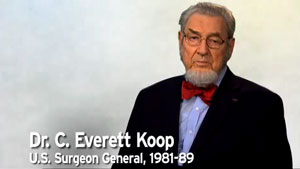


 Matt Clinger was born in Columbus, Ohio and grew up loving sports. With this passion, however, came arrogance and a sense of entitlement that led him down a road of destruction. After moving to Orlando in 1999 to pursue a career in the pop music industry, he met a girl named Kelly. After quickly becoming involved with her, Matt found himself in a life of selfishness and bad decisions. Kelly had 2 abortions and Matt’s pride and arrogance turned into addictions to alcohol and pornography. Ultimately, Matt was doing anything he thought would take him away from the pain and shame he was feeling. In 2004, Matt met Jesus and the journey of his marriage to Kelly is one that would be almost unbelievable to most. With two abortions, pornography addictions, alcohol abuse and two affairs, the fact that Matt is still married to Kelly is only attributed to their relationship with Jesus and their willingness to do whatever it took to make it work. Today, Matt and Kelly have two children, Evin (15) and Logan (9) and have been married for 10 years.Matt now works as a PGA Teaching Professional in Georgia, as well as traveling along side Kelly (a spokesperson for the Silent No More Awareness Campaign) to speak on behalf of the men who have lost fatherhood through an abortion.


 Dr. Peter Jones is Director of truthXchange, and Adjunct Professor of New Testament, as well as Scholar in Residence, at Westminster Seminary California, and an ordained minister in the Presbyterian Church in America. He has written several books including The Gnostic Empire Strikes Back (1992), Gospel Truth/Pagan Lies (1999), Capturing the Pagan Mind (2003), and The God of Sex (2006).
 Why the inaction and deafening silence? It is a question of worldview, a Oneist worldview.


 The Daily Hatch

This was such a disappointing story to read. I remember that the Evert family are devoutly Catholic and Chris attended Catholic school. I had expected she would be pro-life, then read a quote in the 1990s indicating that she was pro-choice. Now this. I wonder what her three living children think. It would be nice if Chris would join Silent No More.