Max Brantley is wrong about Tom Cotton’s accusation concerning the rise of welfare spending under President Obama. Actually welfare spending has been increasing for the last 12 years and Obama did nothing during his first four years to slow down the rate of increase of welfare spending. Rachel Sheffield of the Heritage Foundation has noted: […]
I have put up lots of cartoons from Dan Mitchell’s blog before and they have got lots of hits before. Many of them have dealt with the economy, eternal unemployment benefits, socialism, Greece, welfare state or on gun control. I think Max Brantley of the Arkansas Times Blog was right to point out on 2-6-13 that Hillary […]
I thought it was great when the Republican Congress and Bill Clinton put in welfare reform but now that has been done away with and no one has to work anymore it seems. In fact, over 40% of the USA is now on the government dole. What is going to happen when that figure gets over […]
Again we have another shooting and the gun control bloggers are out again calling for more laws. I have written about this subject below and on May 23, 2012, I even got a letter back from President Obama on the subject. Now some very interesting statistics below and a cartoon follows. (Since this just hit the […]
watch?v=llQUrko0Gqw] The federal government spends about 10% on roads and public goods but with the other money in the budget a lot of harm is done including excessive regulations on business. That makes Obama’s comment the other day look very silly. A Funny Look at Obama’s You-Didn’t-Build-That Comment July 28, 2012 by Dan Mitchell I made […]
I have written a lot about this in the past and sometimes you just have to sit back and laugh. Laughing at Obama’s Bumbling Class Warfare Agenda July 13, 2012 by Dan Mitchell We know that President Obama’s class-warfare agenda is bad economic policy. We know high tax rates undermine competitiveness. And we know tax increases […]
Dan Mitchell Discussing Dishonest Budget Numbers with John Stossel Uploaded by danmitchellcato on Feb 11, 2012 No description available. ______________ Dan Mitchell of the Cato Institute has shown before how excessive spending at the federal level has increased in recent years. A Humorous Look at Obama’s Screwy Budget Math May 31, 2012 by Dan Mitchell I’ve […]
Sometimes it is so crazy that you just have to laugh a little. The European Mess, Captured by a Cartoon June 22, 2012 by Dan Mitchell The self-inflicted economic crisis in Europe has generated some good humor, as you can see from these cartoons by Michael Ramirez and Chuck Asay. But for pure laughter, I don’t […]
Another great cartoon on President Obama’s efforts to create jobs!!! A Simple Lesson about Job Creation for Barack Obama December 7, 2011 by Dan Mitchell Even though leftist economists such as Paul Krugman and Larry Summers have admitted that unemployment insurance benefits are a recipe for more joblessness, the White House is arguing that Congress should […]
Dan Mitchell hits the nail on the head and sometimes it gets so sad that you just have to laugh at it like Conan does. In order to correct this mess we got to get people off of government support and get them in the private market place!!!! Chuck Asay’s New Cartoon Nicely Captures Mentality […]
Cato Institute scholar Dan Mitchell is right about Greece and the fate of socialism: Two Pictures that Perfectly Capture the Rise and Fall of the Welfare State July 15, 2011 by Dan Mitchell In my speeches, especially when talking about the fiscal crisis in Europe (or the future fiscal crisis in America), I often warn that […]
John Stossel report “Myth: Gun Control Reduces Crime Sheriff Tommy Robinson tried what he called “Robinson roulette” from 1980 to 1984 in Central Arkansas where he would put some of his men in some stores in the back room with guns and the number of robberies in stores sank. I got this from Dan Mitchell’s […]
I have put up lots of cartons and posters from Dan Mitchell’s blog before and they have got lots of hits before. Many of them have dealt with the economy, eternal unemployment benefits, socialism, Greece, welfare state or on gun control. Amusing Gun Control Picture – Circa 1999 April 3, 2010 by Dan Mitchell Dug this gem out […]
We got to cut spending and stop raising the debt ceiling!!! When Governments Cut Spending Uploaded on Sep 28, 2011 Do governments ever cut spending? According to Dr. Stephen Davies, there are historical examples of government spending cuts in Canada, New Zealand, Sweden, and America. In these cases, despite popular belief, the government spending […]
I have put up lots of cartons and posters from Dan Mitchell’s blog before and they have got lots of hits before. Many of them have dealt with the economy, eternal unemployment benefits, socialism, Greece, welfare state or on gun control. On 2-6-13 the Arkansas Times Blogger “Sound Policy” suggested, “All churches that wish to allow concealed […]
Gun Free Zones???? Stalin and gun control On 1-31-13 ”Arkie” on the Arkansas Times Blog the following: “Remember that the biggest gun control advocate was Hitler and every other tyrant that every lived.” Except that under Hitler, Germany liberalized its gun control laws. __________ After reading the link from Wikipedia that Arkie provided then I responded: […]
On 1-31-13 I posted on the Arkansas Times Blog the following: I like the poster of the lady holding the rifle and next to her are these words: I am compensating for being smaller and weaker than more violent criminals. __________ Then I gave a link to this poster below: On 1-31-13 also I posted […]
Mark Levin “I feel that we can do great things.” Mark is excited by the proposed Balanced Budget Amendment. He states that this would be a great thing for America to pass. He believes the Balanced Budget Amendment will help bring the nation back to it’s Constitutional roots. Mark explains what the amendment is and how it will work. In his February 1983 classic essay, Nobel Prize-winning economist Milton Friedman gives his opinion on a balanced budget amendment that requires a super majority to raise taxes. Friedman states, “The purpose of the balanced-budget-and-tax-limitation amendment is to limit the government in order to free the people—this time from excessive taxation. Its passage would go a long way to remedy the defect that has developed in our budgetary process.” Part #1 3-25-2011
___________________
President Obama c/o The White House
1600 Pennsylvania Avenue NW
Washington, DC 20500
The best article I have ever read on the Balanced Budget Amendment was written by my favorite economist Milton Friedman. Here is the second portion below:
I have been much more surprised, and dismayed, by the criticism that has been expressed by persons who share my basic outlook about the importance of limiting government in order to preserve and expand individual freedom—for example, the editors of The Wall Street Journal and a former editor and current columnist, Vermont Royster. They do not question the objectives of the amendment, but they doubt its necessity and potential effectiveness.
Those doubts are presumably shared by many other thoughtful citizens of all shades of political opinion who are united by concern about the growth of government spending and deficits. Here, for their consideration, are my answers to the principal objections to the proposed amendment that I have come across, other than those that arise from a desire to have a still-bigger government:
1. The amendment is unnecessary. Congress and the President have the power to limit spending and balance the budget.
Taken seriously, this is an argument for scrapping most of the Constitution. Congress and the President have the power to preserve freedom of the press and of speech without the First Amendment. Does that make the First Amendment unnecessary? Not surprisingly, I know of no one who has criticized the balanced-budget amendment as unnecessary—however caustic his comments on congressional hypocrisy—who would draw the conclusion that the First Amendment should be scrapped.
It is essential to look not only at the power of Congress but at the incentives of its members—to act in such a way as to be re-elected. As Phil Gramm, a Democratic congressman from Texas, has said: Every time you vote on every issue, all the people who want the program are looking over your right shoulder and nobody’s looking over your left shoulder….In being fiscally responsible under such circumstances, we’re asking more of people than the Lord asks.”
Under present arrangements, Congress will not in fact balance the budget. Similarly, a President will not produce a balanced budget by using the kind of vetoes that would be required. The function of the amendment is to remedy the defect in our legislative procedure that distorts the will of the people as it is filtered through their representatives. The amendment process is the only effective way the public can treat the budget as a whole. That is the function of the First Amendment, as well—it treats free speech as a bundle. In its absence, Congress would consider each case “on its merits.” It is not hard to envisage the way unpopular groups and views would fare.
2. The President and Congress are guilty of hypocrisy in voting simultaneously for a large current deficit and for a constitutional amendment to prevent future deficits.
Of course, I have long believed that congressional hypocrisy and shortsightedness are the only reasons there is a ghost of a chance of getting Congress to pass an amendment limiting itself. Most members of Congress will do anything to postpone the problems they face by a couple of years—only Wall Street has a shorter perspective. If the hypocrisy did not exist, if Congress behaved “responsibly,” there would be no need for the amendment. Congress’s irresponsibility is the reason we need an amendment and at the same time the reason that there is a chance of getting one.
Hypocrisy may eventually lead to the passing of the amendment. But hypocrisy will not prevent the amendment from having important effects three or four years down the line—and from casting its shadow on events even earlier. Congress will not violate the Constitution lightly. Members of Congress will wriggle and squirm; they will seek, and no doubt find, subterfuges and evasions. But their actions will be significantly affected by the existence of the amendment. The experience of several states that have passed similar tax-limitation amendments provides ample evidence of that.
3. The amendment is substantive, not procedural and the Constitution should be limited to procedural matters. The fate of the Prohibition amendment is a cautionary tale that should give us pause in enacting substantive amendments.
If this amendment is substantive, so is the income-tax (sixteenth) amendment and so are many specific provisions of the Constitution. The income-tax amendment does not specify the rate of tax. It leaves that to Congress. Similarly, this amendment does not specify the size of the budget. It simply outlines a procedure for approving it: the same as now exists if total legislated outlays do not exceed an amount determined by prior events (the prior budget and the prior growth in national income); and by a majority of 60 percent if total legislated outlays do exceed that amount. The requirement of a supernormal majority is neither substantive nor undemocratic nor unprecedented. Witness the two-thirds majority necessary to override a presidential veto or to approve a treaty.
The prohibition amendment was incompatible with the basic aim of the Constitution, because it was not directed at limiting government. On the contrary, it limited the people and freed government to control them. The balanced-budget-tax-limitation amendment is thoroughly compatible with the basic role of the Constitution, because it seeks to improve the ability of the public to limit government.
4. The amendment is unduly rigid because it requires an annually balanced budget.
This is a misconception. Section 1 of the amendment prohibits a planned budget deficit unless it is explicitly approved by three fifths of the members of the House and Senate. It further requires the Congress and the President to “ensure that actual outlays do not exceed the outlays set forth in [the budget] statement.” But it does not require that actual receipts equal or exceed statement receipts. A deficit that emerged because a recession produced a reduction in tax receipts would not be in violation of the amendment, provided that outlays were no greater than statement outlays. This is a sensible arrangement: outlays can be controlled more readily over short periods than receipts.
I have never been willing to support an amendment calling for an annually balanced budget. I do support this one, because it has the necessary flexibility.
5. The amendment will be ineffective because (a) it requires estimates of receipts and outlays which can be fudged; (b) its language is fuzzy; (c) the Congress can find loopholes to evade it; (d) it contains no specific provisions for enforcement.
(a) It will be possible to evade the amendment by overestimating receipts—but only once, for the first year the amendment is effective. Thereafter, section 2 of the amendment limits each year’s statement receipts to the prior year’s statement receipts plus the prior rate of increase of national income. No further estimates of budget receipts are called for. This is one of the overlooked subtleties in the amendment.
Any further fudging would have to be of the national-income estimates. That is possible but both unlikely and not easy. What matters is not the level of national income but the percentage change in national income. Alterations of the definition of national income that affect levels are likely to have far less effect on percentage changes. Moreover, making the change in income artificially high in one year will tend to make it artificially low the next. All in all, I do not believe that this is a serious problem.
(b) The language is not fuzzy. The only undefined technical term is “national income.” The amendment also refers to “receipts” and “outlays,” terms of long-standing usage in government accounting; in section 4, total receipts and total outlays are defined explicitly.
Nor is the amendment a hastily drawn gimmick designed to provide a fig leaf to hide Congress’s sins. On the contrary, it is a sophisticated product, developed over a period of years, that reflects the combined wisdom of the many persons who participated in its development.
(c) Loopholes are a more serious problem. One obvious loophole—off-budget outlays—has been closed by phrasing the amendment in terms of total outlays and defining them to include “all outlays of the United States except those for repayment of debt principal.” But other, less obvious, loopholes have not been closed. Two are particularly worrisome: government credit guarantees, and mandating private expenditures for public purposes (e. g., antipollution devices on automobiles). These loopholes now exist and are now being resorted to. I wish there were some way to close them. No doubt the amendment would provide an incentive to make greater use of them. Yet I find it hard to believe that they are such attractive alternatives to direct government spending that they would render the amendment useless.
(d) No constitutional provision will be enforced unless it has widespread public support. That has certainly been demonstrated. However, if a provision does have widespread support—as public-opinion polls have clearly shown that this one does—legislators are not likely to flout it, which brings us back to the loopholes.
Equally important, legislators will find it in their own interest to confer an aura of inviolability on the amendment. This point has been impressed on me by the experience of legislators in states that have adopted amendments limiting state spending. Prior to the amendments, they had no effective defense against lobbyists urging spending programs—all of them, of course, for good purposes. Now they do. They can say: Your program is an excellent one; I would like to support it, but the total amount we can spend is fixed. To get funds for your program, we shall have to cut elsewhere. Where should we cut?” The effect is to force lobbyists to compete against one another rather than form a coalition against the general taxpayer.
That is the purpose of constitutional rules: to establish arrangements under which private interest coincides with the public interest. This amendment passes that test with flying colors.
6. The key problem is not deficits but the size of government spending.
My sentiments exactly. Which is why I have never supported an amendment directed solely at a balanced budget. I have written repeatedly that while I would prefer that the budget be balanced, I would rather have government spend $500 billion and run a deficit of $100 billion than have it spend $800 billion with a balanced budget. It matters greatly how the budget is balanced, whether by cutting spending or by raising taxes.
In my eyes, the chief merit of the amendment recommended by the Senate Judiciary Committee is precisely that it does limit spending. Section 1 requires that statement outlays be no greater than statement receipts; section 2 limits the maximum increase in statement receipts; the two together effectively limit statement outlays. Moreover, if in any year Congress manages to keep statement receipts and outlays below the maximum level, the effect is to lower the maximum level for future years, thus fostering a gradual ratcheting down of spending relative to national income.
A further strength of the amendment is the provision for approving an exceptional increase in statement receipts (hence in statement outlays). The spending-limitation amendment that was drafted by the National Tax Limitation Committee required a two-thirds majority of both houses in order to justify an exceptional increase in outlays. The amendment passed by the Senate requires only “a majority of the whole number of both houses of Congress.” However, the majority must vote for an explicit tax increase. I submit that it is far easier to get a two-thirds majority of Congress to approve an exceptional increase in spending than to get a simple majority to approve an explicit increase in taxes. So this is a stronger, not a weaker, amendment.
Section 6 proposed by Senator Armstrong in the course of Senate debate, makes the debt ceiling permanent and requires a supermajority vote to raise it. That provision was approved by a narrow majority composed of a coalition of right-wing Republicans and left-wing Democrats—the one group demonstrating its hardcore conservatism, the other seeking to reduce the chances of adoption of the basic amendment.
I do not favor the debt-limit provision. Its objective—to strengthen pressure on Congress to balance the budget—is fine, and it may be that it would do little harm. But it seems to me both unnecessary and potentially harmful. I trust that it will be eliminated if and when the amendment is finally approved by Congress. I shall favor the amendment even if the debt-limit provision is left in, but less enthusiastically.
7. The amendment introduces a near economic theory into the Constitution.
It does nothing of the kind—unless the idea that there should be some connection between receipts and outlays is a new economic theory. The amendment does not even change the present budget process, if Congress enacts a balanced budget that rises by no greater a percentage than does national income. But it does significantly stiffen the requirement for passing a budget that is in deficit or for raising the fraction of our income spent on our behalf by the government.
The amendment recommended by the Senate Judiciary Committee deserves the wholehearted backing of every believer in a limited government and maximum freedom for the individual.
Milton Friedman received the Nobel Prize in economics in 1976. He is the Paul Snowden Russell Distinguished Service Professor Emeritus of Economics at the University of Chicago and a senior research fellow at the Hoover Institution at Stanford University.
________
Thank you so much for your time. I know how valuable it is. I also appreciate the fine family that you have and your commitment as a father and a husband.
Sincerely,
Everette Hatcher III, 13900 Cottontail Lane, Alexander, AR 72002, ph 501-920-5733, lowcostsqueegees@yahoo.com
On 12-13-12 I got to hear the All-American Rejects and their lead singer Tyson Ritter play at Juanita’s in Little Rock on Clinton Ave. The performance of music was very good. However, Tyson’s rock and roll lifestyle is not the way a young boy from Oklahoma should act when fame comes his way at age 17.
Now ten years later Tyson has admitted that fame turned him into a jerk especially from 2008 to 2011 when he lived in LA. His lack of respect for woman was satired in the song “Beekeeper’s Daughter.”
When I think of a young man who lives in Oklahoma who has reacted well to fame and remained down-to-earth at the same time then I think of Landry Jones.
Landry Jones and Whitney Hand are now officially the University of Oklahoma’s first couple.
The Sooners’ starting quarterback and women’s basketball team’s starting guard were married over the weekend after the pair began dating in 2009.
So where did the Sooners’ duo wed? Texas, of course.
Before Oklahoma fans throw up their hands in bedlam, the ceremony took place in Hand’s hometown of Fort Worth.
The ceremony featured an ice block in the shape of a heart (pictured below) with the letters “W + L” on it and Jones’ teammate, Drew Allen, tweeted a picture of the two with the words, “Mr. & Mrs. Landry Jones”. There’s no word on where the two will honeymoon.
Hopefully married life will have a positive effect on Jones’ senior season, as he looks to bounce back from a mediocre junior campaign in which he threw a career-high 15 interceptions.
Landry and Wendy are Christians and followed Christian teachings concerning dating. This is in contrast to Tyson Ritter’s approach of no lasting committment.
I have an article at the bottom of this post that tells about All-American Rejects and their music but first I wanted to talk a little more about Landry and Wendy.
Sports always came easy for Oklahoma quarterback Landry Jones. Everyone wanted him for their team. Everybody loved him. He had friends, girls– the world was at his fingertips. Yet he still desired more.
From the I Am Second movement (iamsecond.com) meant to inspire people of all kinds to live for God and for others.
______________________
I have a lot of respect for Landry Jones. I love the points made at the end of this article concerning scriptures in the Bible that apply to Christians dating.
Jan/Feb 2011 Dating Game Jill Ewert
“You tell it. You’re so much better at telling it than me. I always leave out too many details.” Landry Jones scoots back deeper into the couch in the middle of FCA Area Representative Kent Bowles’ sports room. He’s surrounded by everything a college athlete could find comforting: a ping pong table, framed college football jerseys, a gumball machine and his girlfriend: OU shooting guard Whitney Hand.
He says this not because he doesn’t want to tell the story himself, but because he’s humble about it—almost sheepish—and he doesn’t want to blow his own whistle.
“OK,” says Hand, her grin widening by the second. She can hardly wait to dive in and brag on Jones’ brilliant scheme.
“Landry is not my walk with Christ, and I don’t want to be in that position in his life, either. I never want him to love me more than he loves Jesus.” – Whitney Hand
They’d both arrived on the OU campus as freshman in 2008 and were immediately attracted to each other when they met through orientation and began running in the same athletic circles. Jones tested the romantic waters all summer and into the fall by jokingly asking Hand on dates, comments to which she’d always reply with rolled eyes and a playful, “Oh, shut up.” But when October rolled around, Jones decided to take a legitimate shot.
“No, I really want to go on a date with you,” he’d said. When she agreed, Jones knew he had one chance to sweep her off her feet.
Hand tells the first date story with animation. “I met him downstairs in my dorm, and immediately he tells me that he forgot his wallet at his parents’ house in Oklahoma City, which is, like, a 30-minute drive.”
She rolls her eyes.
“I’m like, ‘Are you serious?’”
Jones stares at the floor, grinning. She glances over at him, smiles and continues the story.
“We get there, and he’s like, ‘Wait here.’ So, he ran inside and left me waiting in the car. I actually called one of my friends and told her, ‘He forgot his stinking wallet!’ But then he came back outside a couple minutes later and told me to come in.”
Hand got out of the car, followed Jones through the front door and was completely shocked to find flowers and a candle-lit dinner waiting for her. Granted, it was only Raising Cane’s Chicken, but that just made the story even more interesting.
“He didn’t know that I absolutely detest fast food,” Hand reveals.
In an environment like that, though, the menu was of little concern. She’d been wooed. And while the actual relationship wouldn’t take off until three months later due to the interruption of another potential suitor from Hand’s hometown (a story for another time), it was the start of what has now been a 2.5-year dating relationship between the Sooner stars.
Officially dubbed “the First Couple of Oklahoma” by the local press, Landry Jones and Whitney Hand, both Christians since childhood, have watched as the Lord has used their time together to both bless and challenge them in life, sports and faith.
“We’re not dating experts, but the Lord has taught us so much through being together,” Hand says. “Whatever He shares with us, we want to share with others and help them grow in their faith, too. We believe that right now we’re a better witness for Him together than apart.”
Two years ago when their relationship began, neither Jones nor Hand would have guessed that they’d be called to support each other through two major injuries: one Hand suffered herself and the other sustained by then-OU starting quarterback Sam Bradford.
It was the fall of 2009, and the two athletes had been dating for almost a year. On Sept. 5, Jones, just a redshirt freshman, was called onto the field to replace Bradford, who had injured his throwing shoulder. It was an event that put tremendous pressure on Jones as he was forced to lead one of the nation’s most prominent college football programs, and he needed support.
As the faithful girlfriend, Hand utilized her position to speak words of God’s truth to Jones and encourage him. What she didn’t realize was that the favor would need to be returned just two months later when she would experience a season-ending injury of her own: a torn ACL.
Following his girlfriend’s example, Jones began speaking Scripture and godly encouragement to the discouraged shooting guard.
“I don’t think I would have made it through this injury as spiritually healthy without Landry,” says Hand, who had started her college career as one of the top freshman in the nation. “When Satan spoke lies throughout the injury about me not being good enough, being forgotten or being replaced, Landry came back with, ‘No, this is what the Lord says. This is what Jesus thinks of you.’ And that just spoke to my heart so preciously. It was like Jesus was teaming up with Landry to love on me.”
It was a defining time for them both individually and as a dating couple. By walking together through two of the most significant challenges athletes can face, they learned lessons about perseverance, patience and selflessness.
Now, looking back, they realize that, as tough as they were, the challenges only made them stronger.
“You have to fall in love with Jesus first before you can love another person correctly.” – Landry Jones
“It’s helpful to reflect on it now and be like, ‘OK, we’ve gone through an ACL injury and a tough season together. How bad could it be?’” Jones says. “I think one thing Satan tries to do is to get us to forget the hard times we’ve gone through and the lessons we learned from them. By going through them together, we can help each other remember those times and see that we can endure other things, too.”
Words of godly truth, however, would be more likely to fall on deaf ears if they weren’t spoken by someone who truly understood an athletic mind.
According to both Sooner stars, a shared understanding of sports has been an asset to their relationship, helping them not only through the career-marking challenges, but also the day-to-day irritations of sports.
“Because we’re both athletes, we’re able to be on the same page on a lot of things,” Jones says. “Whitney can come over and tell me that she had a bad practice, and I’ll be able to say, ‘Yep, I know where you’re coming from. I know that feeling, and it stinks.’”
Hand nods in agreement.
“It helps so much that he doesn’t just say, ‘Oh, it’s OK. You’re still great.’ He really understands. And when he comes back from practice and says something like, ‘Man, I wasn’t accurate today,’ I can totally relate. It’s just a different level, and it’s a huge blessing from God.”
Inevitably, though, learning to date in a godly manner has involved more than spiritual encouragement. As part of the Christian dating experience, Jones and Hand have had to face familiar battles like the one for sexual purity, and both admit to struggling with appropriate boundaries.
After early difficulties in what Hand calls their “infatuation stage”—the time in which neither could do wrong in the eyes of the other—both began being discipled and involving the accountability of others in order to maintain godly standards.
“We realized we needed help,” Hand says. “Our struggles had really put a cloud on everything and even affected how we performed in our sports. It was just an ugly domino effect.”
To counter the temptation, they turned to the Word of God, their churches, their FCA teammates and, most importantly, the Holy Spirit.
“As our relationships with Christ grew both together and apart, our desire to please Him became greater than our desire to please each other physically,” Hand says. “He helped us realize that we weren’t married and couldn’t act like we were. He loved us enough to ask us to stay pure so that He could bless us in the future.”
Jones and Hand with the OU FCA leadership team
FCA SOONER STYLE
Landry Jones and Whitney Hand have been dynamic parts of the FCA Huddle at the University of Oklahoma since arriving on campus. They both attend the Tuesday-night Huddle meetings and speak frequently at local FCA events.At a recent ministry outreach for young female athletes hosted by Central Oklahoma FCA Area Representative Sarah Roberts, Hand shared her and Jones’ dating story, including her battle with idolatry and placing Jones in a position above Christ in her life.
“It was something that all the girls really needed to hear,” Roberts said. “She was so honest with them about her personal struggles, and that made such a difference. God is really doing something special by bringing Whitney and Landry together.”
Through events like these, the FCA staff in Oklahoma are making an eternal impact on the lives of athletes and coaches. And with the help of athletes like Jones and Hand, their reach is only being extended.
“Landry and Whitney are tremendous blessings to the entire community,” said FCA Area Representative Kent Bowles, who works directly with the OU Huddle. “They are constant reminders of how God orchestrates all areas of our lives for His glory. These guys love the Lord first, and, because of that love, they are truly growing closer to Him and to each other as well.”
For more information on FCA in Oklahoma, visit okfca.org.
Their stance of purity paid off in more ways than one, blessing both their relationship and the lives of those observing it.
As OU athletes, Jones and Hand know they’re on a platform—one that is only heightened by their relationship. Instead of shrinking back from the public, the “power couple” has embraced their status and used it as an avenue for ministry by showing those around them not only two individual models of Christ, but also one example of a Christ-centered dating couple.
“It’s not what you’d expect, but when guys ask me if Whitney and I have done anything and I say no, they usually say, ‘I respect that,’” Jones says. “I know I shouldn’t say that it’s a weird response, but it is in today’s culture. But it goes along with what I’m finding out about Christ in general. More people really want to know about Him than you’d think.”
It’s something that the two Sooners take to heart: the fact that, through their relationship, they get to tell others about Jesus Christ. It’s become a great desire for them both and yet another shared passion.
They agree that they’re living blessed lives of position and influence and that they have a significant chance to make a difference for the Lord. The fact that they get to do that together is just icing on the cake.
But it’s not the cake itself. That, of course, is Jesus.
“It’s something that we’ve struggled to learn, but we both have come to understand that no other person can completely fulfill you—only Jesus can do that,” Hand says. “And until you know who you are in Christ and understand His love for you, it’s going to be difficult for you to love another person correctly. You’ll always be putting them in a position they weren’t designed by God to hold in your life.”
Says Jones, “I would agree with that. You have to fall in love with Jesus first before you can love another person correctly. As it says in the Bible, you can’t be unevenly yoked. For guys especially, because we’re so visual, we might see a girl and want to date her, but, if she’s not a Christian, it’s not going to work out.”
For Jones and Hand, it goes back to the analogy of running the race together—pursuing Christ side by side at the same pace and remaining focused on Him. And, when it comes to dating advice, both cite Matthew 6:33 (NIV)— “But seek first his kingdom and his righteousness, and all these things will be given to you as well”—and point to the greatest commandment of loving the Lord above all else.
“I want to be more in love with Christ than I am with Landry,” Hand says. “If Landry and I were to break up, I wouldn’t want my walk with Christ to disappear with him. Landry is not my walk with Christ, and I don’t want to be in that position in his life either. I never want him to love me more than he loves Jesus.”
In a candid moment, Jones looks over at his girlfriend and beams at her. The wheels of revelation turn in his mind as he sees more of Christ being revealed through her.
He can’t put it any better than she did, and he wouldn’t want to. He likes to see her shine. It’s part of the selfless thing he’s learned through the dating process. Instead, Jones embraces the chance to encourage Hand and support her point.
“Yeah, that’s great. Definitely take her advice.”
She smiles back and receives the support with gratitude.
Mission accomplished.
DATING ADVICE FROM THE WORDDating is a tricky subject, but it’s one that must be addressed. While the Bible may not offer black-and-white dating instructions, it does give clear commands regarding proper conduct in relationships. If we follow those instructions, we can be sure that we’ll find success in dating regardless of the relationship’s outcome.As a starting point, we encourage you to read the following Scriptures, which can serve as basic tips for how to date in a Godhonoring way:1. Matthew 6:33 – Seek God above all else. Staying focused on Him and letting Him guide your thoughts, words and actions is the most sure-fire way to achieve victory in any area of life, including dating. Read His Word daily, pray and prioritize your time alone with Him even as your social calendar fills up.2. Matthew 22:37-38; Romans 12:10– Love Him and love others. Keep in mind that relationships involve other people who are also God’s beloved children. Put Him first and then put the other person’s best interest second. If an action you take would displease God on their behalf, don’t do it.3. Proverbs 15:22 – Seek wise counsel. In dating, you will experience new challenges as the emotions, habits and choices of two people come together. Put yourself under the influence of godly advisers who can help you remain above reproach and make wise decisions.4. Ephesians 5:11; James 5:16– Stay accountable. Dating will expose you to areas of strong temptation. Keeping your struggles a secret is a guaranteed way to set yourself up for failure. Enlist the help of a Christian friend or mentor who can ask you tough questions about your conduct.5. 2 Corinthians 4:16-18– Don’t be weighed down. The Bible says that believers should not be “yoked” with unbelievers, and it does so for good reason. As Christians, we are clearly set apart as vessels of God’s holy light in a dark world. If another person does not have that light, according to Scripture, they are walking in darkness. While we should still love them through Christ, we should not be bound together with them or with anything that would dim the light of the Lord inside us.When done the right way, dating can be a great experience. If you choose to enter into a dating relationship, see it as a way of growing in your relationship with Christ. Take the opportunity to learn about serving and honoring another on behalf of the Lord, about pointing others to Him, and about further discovering who God created you to be.Again, there’s no formula for dating, but there are basic instructions we can follow that will help us survive the process and enter into marriage without unnecessary emotional baggage and with our godly integrity and purity intact. Our only role is to say yes to the Lord and stick to His plan.
The band achieved mainstream success with their debut self-titled studio album, The All-American Rejects, released in 2003. The album was certified platinum by the RIAA and spawned the hit single “Swing, Swing“.[6] The band’s second album, Move Along (2005), brought the band more mainstream success. The album produced three hit singles; “It Ends Tonight“, “Dirty Little Secret” and “Move Along“, all of which charted in the top fifteen on the Billboard Hot 100 chart.[7] Both “Move Along” and “Dirty Little Secret” sold over two million digital downloads in the United States. The album itself was certified double platinum by the RIAA.[6] The All-American Rejects’ third album, When the World Comes Down, was released on December 16, 2008. The album was certified gold by the RIAA.[6] The first single, “Gives You Hell“, became the band’s first song to be successful internationally: it peaked at number-four on the Hot 100 chart, number-three on the Australian ARIA Singles chart and charted in the top twenty of the UK Singles Chart.[7][8][9] On March 21, 2011, the RIAA certified “Gives You Hell” 4× multi-platinum for sales of over 4 million in the United States.[10] The band’s fourth album: Kids in the Street released worldwide on March 26, 2012 debuted at No.18 on the US Billboard 200 chart.
Since the start of their career, The All-American Rejects have sold over 10 million albums world wide.[11][12] The All-American Rejects were ranked No. 73 on the “Hot 100 Artists of the 2000s”[13] and No. 183 on Billboard magazine’s “Billboard 200 Artists of the Decade” list.[14]
The band formed in Stillwater, Oklahoma, in 1999 while members Tyson Ritter and Nick Wheeler were still in high school. The two originally met in 1997 at a club where an early band of Wheeler’s was performing. It was here that Ritter offered himself for bass duties. Eventually Ritter and Wheeler decided to form The All-American Rejects.[5]
In 2000, still in high school, the band made a demo simply labeled The All-American Rejects, with Jesse Tabish as vocalist/guitarist, Tyson Ritter as vocalist/bassist and Nick Wheeler on drums. The demo CD was engineered, mixed and mastered by Wheeler. It was also managed by Half-A-Cup Entertainment. The demo is now commonly referred to as The Blue Disc or The Blue Album. The CD consisted of twelve songs, a few of which would be included on the Same Girl, New Songs demo made in 2001. Jesse Tabish later split from the group and later became a member of the folk band other lives. Ritter and Wheeler put together the Same Girl, New Songs EP, which was soon sent to independent Doghouse Records, where an intern saved the disc from the trash, and revealed it to the label owner. The All-American Rejects were soon signed to a recording contract.[15]
In 2001, with producer Tim O’Hier, they recorded their self-titled debut album, The All-American Rejects. The album and its first single, “Swing, Swing“, were released towards the end of 2002. The band began looking for additional members for a live act.[16] Edmond, Oklahoma resident Mike Kennerty joined on as rhythm guitarist soon before the album was released. Soon after, the band was having problems with drummer Tim Campbell. Campbell was later replaced by drummer Chris Gaylor, who knew and played in another band with Kennerty.[17]
The band was then signed by DreamWorks Records. The band hit the road for eight shows in January, and DreamWorks issued a broader-scale distribution of the debut LP. The album peaked at No. 25 on the Billboard 200. The single “Swing, Swing” was also re-issued, which peaked on the Billboard Hot 100 at No. 60 as well as No. 8 on the Billboard Modern Rock Tracks chart.[18][19][20] The single “The Last Song” was also released spring 2003, and climbed to No. 29 on the Billboard Modern Rock Tracks chart.[20]
Early in 2003, the band went on tour as an opening act for CKY. While several differing stories have occurred concerning the tour, they were kicked off the tour shortly after it began.
In Spring 2003, The All-American Rejects set out on their first headlining tour, called the Too Bad For Hell Tour. In later 2003, The All-American Rejects released, Live from Oklahoma… The Too Bad for Hell DVD!, their first live DVD – which was later certified Gold by the RIAA. During this time, they performed on the Vans Warped Tour. They would later be part of the lineup again in summer 2005. In November, The All-American Rejects joined the band Motion City Soundtrack for six shows in the United Kingdom, the first date on the 16th, and the last on the 22nd.[21]
In July 2005, The All-American Rejects released their second studio album, Move Along, produced by Howard Benson. The album’s first single, “Dirty Little Secret“, was released that summer to radio stations.
In 2006, the second single and title track from Move Along, was released. Within the first weeks after premiering their video, it had been on the Total Request Live countdown, hitting number-one four days in a row. The single did not chart on the Billboard Hot 100 until almost six months after its release, in June. On March 15, 2006, the All-American Rejects began a tour of the United States that wrapped up on May 13, 2006. On May 25, The All-American Rejects performed at the first ever VH1 Rock Honors, covering Def Leppard‘s “Photograph“. In July the band sent a promotional single from Move Along, called “Top of the World” to modern rock radio. A music video was created for it from clips of The All-American Rejects on tour and in concert.
“Move Along” was also used to help promote LegoBIONICLE‘s Inika toy sets in the summer of 2006. The band also participated in a promotion for the sets called “Free the Band”. The overall priority of the promotion was that the Rejects got kidnapped by the villainous Piraka whilst sailing on a yacht and people had to assist the Inika on finding and rescuing the band via the website ‘freetheband.com’. A competition could also be entered where the winners would receive BIONICLE and All-American Rejects merchandise alike.[23]
In September 2006, a third headlining single, “It Ends Tonight“, was released from Move Along. The video debuted at No. 10 on the VH1 Top 20 countdown. The video also peaked at No. 2 on TRL.[24] Later in the year The All-American Rejects launched the Tournado tour in support of Move Along. The tour kicked off at Hartford, Connecticut on October 27, and wrapped up at Champaign, Illinois on December 20.
The All-American Rejects began writing material for their third studio album in December 2006. The band also collaborated with composer Danny Elfman on “The Future Has Arrived”, which was included on the soundtrack of Disney film Meet the Robinsons. The song was created in conjunction with the film’s musical score.
On July 17, 2007 The All-American Rejects released their second live DVD, titled Tournado, with content from the 2006 headlining tour of the same name. In December 2007, the songs “Move Along” and “Dirty Little Secret” were released as downloadable content in the video game Rock Band.[25] In the summer of 2008, The All-American Rejects canceled their dates on that year’s Warped Tour to complete When the World Comes Down. The demo for the song “Real World” was selected for the soundtrack of Madden 09. Also during the summer, they covered “Jack’s Lament” from The Nightmare Before Christmas, which was featured on Nightmare Revisited. The finished album version of the song “I Wanna” appeared in the movie, The House Bunny, which was released to theaters on August 22, 2008. Vocalist/bassist Tyson Ritter played a role in the film, and offered up “I Wanna” for the soundtrack.[26]
On September 30, 2008 the first single from When the World Comes Down, “Gives You Hell” was released on October 8, 2008. The All-American Rejects were inducted into the Oklahoma Music Hall of Fame, and were awarded with “Rising Star http://www.billboard.com/song/the-all-american-rejects/gives-you-hell/12141775#/song/the-all-american-rejects/gives-you-hell/12141775 Gives You Hell peaked at No. 1 on Pop charts on billboard.com and also peaked No. 1 on iTunes charts and No. 5 most downloaded song of the 2009 year, and the No. 1 most played song of the year 2009. “.[27] The music video for “Gives You Hell” was released November fifth and reached number one on VH1‘s Top 20 Countdown. On the sixth, in support of “Gives You Hell”, the band started the Gives You Hell Tour, which hit many small venues and clubs. Then, on the eighteenth “Mona Lisa (When the World Comes Down)”, another song from the band’s upcoming album, was released digitally on iTunes. In the first week of December, the album version of “Real World” was made available for download on Rock Band for the Xbox 360/PlayStation 3.
Finally, three years after Move Along was released, the group’s third album, When the World Comes Down (produced by Eric Valentine), was released on December 16, 2008.[28] After the Gives You Hell Tour wrapped up, the band embarked on a world tour until coming back to the states to start the I Wanna Rock Tour, which hit many major venues in the United States.
In May 2009 The All-American Rejects released a second single in the United States, entitled “The Wind Blows“, which achieved moderate success. “I Wanna” was released internationally on July 8 to Australia and the United Kingdom. Another song from When the World Comes Down, “Real World”, was featured on the “Transformers: Revenge of the Fallen” soundtrack released on June 23, 2009, but is not featured in the film. In July, “Real World” was released as a promotional single in the United States, followed by “I Wanna” as a headliner. In late summer The All-American Rejects joined Weezer, Fall Out Boy and Taking Back Sunday for the second half of the Blink-182 Reunion Tour.
On 15 August The All-American Rejects made history, performing alongside Hoobastank, Raygun, Boys Like Girls, Pixie Lott and Kasabian as one of the live acts at Asia’s very first MTV World Stage Live In Malaysia concert.[29] This performance gained them recognition in Malaysia. When the World Comes Down soon sold over 15,000 digital and physical copies in the country. On August 21 the “I Wanna” single was issued to Austria and Germany.
In October 2009, The All-American Rejects were forced to cancel shows due to an injury to frontman Tyson Ritter. He performed from a wheelchair with his leg in a brace on September 27 during a show in Tampa, Florida, amid reports suggesting the singer had undergone knee surgery to remove a tumor that had been there for many months. Ritter’s leg became infected, and he remained hospitalized for five days. Ritter made a full recovery in time to return to kick off the Battle Of The Bands Tour with Taking Back Sunday, with the first date at MSU in Michigan.[30][31]
The All-American Rejects announced that they will be performing their last show in support of When the World Comes Down at Hollywood, California on December 14. Since the date soon sold out, the band added a second date at the venue for the next day. However, the band will play one more show at the “Jingle Bell Bash” in Seattle on December 19.
In February 2010, The All-American Rejects performed at the Winter Olympics at the Whistler Medals Plaza. They also had DirecTV performances at Super Bowl XLIV and a special set aired in February. The band also wrote and recorded the song “The Poison” for the Almost Alice compilation, a collection of songs representing the 2010 Tim Burton film Alice in Wonderland. From June 25 to July 18, The All-American Rejects toured the United States and Canada as part of the Warped Tour 2010 festival.
Later that year, the band began working on a fourth studio album. The band’s songwriters Nick Wheeler and Tyson Ritter went on numerous writing retreats into secluded parts of the United States; a tradition of writing used on their previously-released albums. Recording for The All-American Rejects’s fourth album wrapped up in June 2011, with mixing commencing the following August and concluding in early September. According to lead singer Tyson Ritter, the album will be much different compared to their past releases – including their previous album, When the World Comes Down, from which the band became more experimental with their sound. On November 14, 2011 Ritter announced via his Twitter that ex Taking Back Sunday bassist Matt Rubano had joined the band as their bass player for live performances, but stated that [Ritter] is still the bass player recording-wise.[32][33]
The All-American Rejects shot a music video for a promotional song from their fourth studio album entitled “Someday’s Gone” on December 3, 2011 and released it two days after on December 5, along with the offer to download the song for free from their official website.,[34] the band quoted “We wanted to give fans an early candy cane for the holidays and this song is the teeth of the record.” In the video for the song a calendar displayed in the background claims that the release for the band’s fourth album has been pushed back to March 26, 2012. The band later announced the title and tracklisting for their fourth studio album Kids in the Street on December 16, 2011, and that the first single off the record would be titled “Beekeeper’s Daughter“, it premiered in an episode of American teen drama 90210 on January 31, 2012 before being digitally released on the same day.[35] The All-American Rejects later embarked and are currently on their Shaking Off the Rust tour, which began in San Luis Obispo, California, United States on January 18, 2012 and is to proceed throughout the year, some of which they performed as a support act for Blink-182‘s 20th Anniversary Tour in the UK.
Dr. C. Everett Koop was appointed to the Reagan administration but was held up in the Senate in his confirmation hearings by Ted Kennedy because of his work in pro-life causes.
On 2-25-13 we lost a great man when we lost Dr. C. Everett Koop. I have written over and over the last few years quoting Dr. C. Everett Koop and his good friend Francis Schaeffer. They both came together for the first time in 1973 when Dr. Koop operated on Schaeffer’s daughter and as a result they became close friends. That led to their involvement together in the book and film series “WHATEVER HAPPENED TO THE HUMAN RACE?” in 1979.
Editors’ Note: Dr. C. Everett Koop was a founding board member of the Alliance of Confessing Evangelicals. You can purchase this month’s featured resource, Classic Koop, which includes the essay referenced below, here.
With the news of C. Everett Koop’s death last week, we are given the occasion to return to a question raised only a few months ago by a blog post on CNN.com which provoked reactions far and wide. The question concerns exactly when and how evangelicals came to embrace the pro-life (or as it was known then, the right to life) position.
A week before the presidential election this past fall, Jonathan Dudley (author of Broken Words: The Abuse of Science and Faith in American Politics, 2011) surprised many people with his provocative blog piece for CNN entitled: “My Take: When evangelicals were pro-choice.”(1) Citing well-known statements in 1968 by Bruce Waltke printed in Christianity Today – and referring to the Southern Baptist Convention’s express endorsement of abortion in 1971 – Dudley concludes that evangelical faith did not and thus does not entail a pro-life position (Waltke later changed his position, a fact Dudley fails to mention). Rather, Dudley would have us believe that the rise of the pro-life movement in evangelicalism was a late addition rooted not in core convictions, but in power politics.
In his first piece, Dudley claims it was Jerry Falwell who “spearheaded the reversal of opinion on abortion in the late 1970’s,”(2) a statement that does not bear the weight of scrutiny but conveniently served to shake the faith of wavering pro-life evangelicals days before they went to the voting booth. Several responded to Dudley, including Mark Galli at Christianity Today and Al Mohler on his blog, and Dudley quickly backtracked in a follow-up piece for The Huffington Post in which he acknowledged, though somewhat dismissively, the ‘right to life’ work of Francis Schaeffer and a group called The Christian Action Council prior to Falwell’s entrance on the political scene. Dudley discounts the impact of those early efforts, however, returning to his thesis that the evangelical church was slumbering on the abortion issue up to the time when, “[i]n 1980, Falwell used his unparalleled platform to change all that.”(3)
It is true that the evangelical church was slumbering for several years after the Supreme Court handed down the Roe v. Wade decision. But it is not true that “Falwell changed all that.” Instead, Falwell and the several other figures who took the lead of the pro-life movement in the 1980s were standing on the shoulders of three men whose paths and voices converged for a brief period of time in the mid-to-late 1970s, forming a powerful trio that finally awoke the evangelical church to the necessity of speaking up for the unborn.
And this past week, with the death of C. Everett Koop, the last of these three figures went to be with the Lord. Preceding him were Francis Schaeffer (1912-1984) and Harold O. J. Brown (1933-2007). Together, Brown, Schaeffer, and Koop “successfully called evangelical leaders back from their flirtation with abortion,” writes Allan Carlson, the President of the Howard Center for Family, Religion, and Society. “These three men made opposition to abortion a defining characteristic of late twentieth-century Evangelicalism.”(4)
Harold O. J. Brown
A Harvard-educated historian and theologian, Brown was working as the associate editor of Christianity Today when the Roe v. Wade ruling was announced. Harold Lindsell, then editor of Christianity Today, let Brown write the lead article in the magazine’s next issue, “Abortion and the Court” (CT, Feb. 16, 1973). In his response to Dudley last November, Galli quotes from this editorial denouncing the Roe decision and hails the piece as “one of the finer moments in CT history.” Unknown to readers, however, is that Brown was its author.(5)
Undeterred by initial and surprising indifference among evangelicals to abortion, in 1975 Brown became the editor of The Human Life Review, founded by James McFadden. No story of the nascence of the evangelical pro-life movement is complete without reference to the influence of this review, which early on included such illustrious contributors as William F. Buckley and Malcolm Muggeridge (and eventually Ronald Reagan).
Dudley mentions in his second piece the founding of The Christian Action Council in 1975 (which became the leading Protestant ‘right to life’ advocacy group on Capitol Hill), but he does not mention who founded it. Once again, Harold O. J. Brown was the tip of the spear. With meeting space provided by Billy Graham in Montreat, Brown met with C. Everett Koop for the initial planning meetings that led to the launch of the CAC in July, chaired by Brown. It is true that the early efforts of the CAC ran up against a brick wall of evangelical indifference (and even suspicion), but it was not from Falwell that help would arrive.
Francis Schaeffer
The story of how Brown met Schaeffer in 1961, and how Brown then arranged for the relatively unknown ‘man from Switzerland’ to come to Boston in 1964 to give the second annual ‘Christian Contemporary Thought’ lectures on Harvard’s campus, is a remarkable one that has been documented by both Barry Hankins (2008) and Colin Duriez (2008). As a result of this relationship, Schaeffer was introduced to the American evangelical scene and quickly achieved an unparalleled celebrity status that he would leverage to draw attention to the right to life issue.
The film and lecture tour for How Shall We Then Live (1976) served to awaken many evangelicals to the roots and implications of their own core convictions, and concluded by connecting the right to life issue to those core convictions, as Schaeffer parsed the Supreme Court’s Roe decision in terms of his famous ‘line of despair’. This pro-life material was considered risky, and Francis Schaeffer took some persuading to include it, as his son Frank has recounted in his controversial memoir (2007). But an old friend of the Schaeffer family took notice and soon joined them in what would become the tipping-point of this story.
C. Everett Koop
A renowned pediatric surgeon in Philadelphia, Koop, who had recently come to Christ under the preaching of Donald Grey Barnhouse at Tenth Presbyterian, treated the Schaeffer’s daughter, Priscilla, in 1948. Upon learning that they were to leave as missionaries for Switzerland in a few short months, Koop opened up about his own newfound faith, and a friendship was formed that would remain through the years.
Early on, Koop was convinced that “abortion amounted to taking a sacrosanct human life” (which explains his teaming up with Brown in 1975 to found The Christian Action Council). (6)
But on one Saturday in 1976, after spending the entire day operating successfully on three newborn babies that otherwise would have died, he sat in the hospital cafeteria with two of his colleagues and said: “You know, we have given over two hundred years of life to three individuals who together barely weighed ten pounds” to which one of his residents answered: “And while we were doing that, right next door in the university hospital they were cutting up perfect formed babies of the same size just because their mothers didn’t want them.”(7)
Koop says he knew then and there that, as a surgeon, he had to speak up more forcefully for the unborn. So he rose early the next morning and began to write, and by evening the next day had completed his 120-page treatise entitled The Right to Live; the Right to Die: Famous Pediatric Surgeon Speaks Out on Abortion and Mercy Killing. “I aimed the book primarily at Christian readers,” he recalls, “as I sought to awaken the evangelical community to a vital moral issue they were choosing to ignore.”(8)
Koop evidently kept Brown’s articles close at hand as he put his own thoughts to paper. He quotes from Brown more than from any other source (other than the Bible), often whole paragraphs at a time. Koop’s The Right to Live; the Right to Die would sell over 100,000 copies in the first year alone, and another 100,000 in the years that followed.
After writing the book, Koop reconnected with the Schaeffers (father and son) to produce Whatever Happened to the Human Race? Released in 1979, Whatever Happened to the Human Race? did what no effort over the previous six years had succeeded in doing: it broke through.
The Evangelical Embrace of the Pro-Life Position
Dr. Jean Garton, reviewing Whatever Happened to the Human Race? on the twenty-fifth anniversary of Roe, remembers, “As a result, there was a dramatic change in the abortion landscape. The powerful message of both the screen and printed versions of Whatever Happened to the Human Race? educated and energized an up-till-then largely uninvolved constituency-the Evangelicals.”(9) Brown himself remembered with great appreciation the impact of Schaeffer’s and Koop’s joint efforts: “Shown in churches, schools, and homes around the country, [the film] so thoroughly aroused viewers that the term evangelical has come to be synonymous with anti-abortion.”(10)
In the years that followed, a ‘second generation’ would take the helm of pro-life advocacy, and we are familiar with their names: Jerry Falwell, James Dobson, Tim and Beverly LaHaye, and a host of others. And after their few years of potent convergence, Schaeffer, Brown, and Koop faced futures as different as their pasts. Schaeffer would die in 1982. Brown’s Christian Action Council, of which he remained chairman, would shift its primary focus to founding Gospel-centered crisis pregnancy care centers with remarkable results (the organization is now known as CareNet).(11) Upon his death in 2007, Brown was remembered in Christianity Today as one whose “most prominent work was helping form and intellectually arm the pro-life movement.”(12) As a reward for his pro-life efforts, Koop would be appointed by Reagan to be his Surgeon General in 1981, but pro-abortion advocates made Koop’s confirmation hearings so tortuous that he emerged less interested in being a figurehead for the pro-life movement, choosing instead to make campaigns against smoking and AIDS the hallmarks of his appointment. He is widely remembered as the most famous Surgeon General in modern memory.
Conclusion
Perhaps it is because none of these three carried the mantle of the pro-life movement in the 1980s and 1990s that we hear relatively little of them as pro-life champions today – except recently, when the last of them has departed from us. But it is reasonable to suppose that without Brown, Schaeffer, and Koop, there may not have been a pro-life movement in the 1980s at all, nor in the years that followed. And while it’s unlikely we’ll see any monuments in the near future singling out these three remarkable individuals, we would not only be forgetful, but truly ungrateful, if we did not remember their courageous efforts to speak up for those who cannot speak for themselves.
“Blessed are the dead which die in the Lord from henceforth: Yea, saith the Spirit, that they may rest from their labors; and their works do follow them” (Rev. 13:14).
Rev. Matthew S. Miller is the Senior Pastor of the Greenville Associate Reformed Presbyterian Church. He is currently working on a ThM at Erskine Theological Seminary.
10. Brown, “Protestantism, America, and Divine Law,” 19.
11. This change in focus was largely attributed to the vision of Curt Young, who served as the Executive Director of the Christian Action Council from 1978-1987.
Dr. Koop Gary Brookings of the Richmond Times Dispatch did a very funny editorial cartoon about the time in 1988 when Dr. C. Everett Koop sent the unapproved mail piece out to millions of homes about AIDS. There were many such cartoons at the time since everyone knew Dr. Koop got the mail piece out […]
Dr. Koop with Hillary Clinton In 1980 I really was influenced at my highschool by a teacher of mine named Mark Brink. He introduced me to the film series “Whatever happened to the human race?” by Francis Schaeffer and Dr. C. Everett Koop. In this film series that came out in 1979 they dealt with […]
Dr. Koop On 2-25-13 we lost a great man when we lost Dr. C. Everett Koop. I have written over and over the last few years quoting Dr. C. Everett Koop and his good friend Francis Schaeffer. They both came together for the first time in 1973 when Dr. Koop operated on Schaeffer’s daughter and […]
Dr. C. Everett Koop is pictured above. Francis Schaeffer: “Whatever Happened to the Human Race” (Episode 1) ABORTION OF THE HUMAN RACE Published on Oct 6, 2012 by AdamMetropolis Dr. Koop On 2-25-13 we lost a great man when we lost Dr. C. Everett Koop. I have written over and over the last few years […]
Dr. C. Everett Koop with Ronald Reagan. Dr. Koop was delayed in his confirmation by Ted Kennedy because of his film Whatever Happened to the Human Race? President Obama c/o The White House 1600 Pennsylvania Avenue NW Washington, DC 20500 Dear Mr. President, I know that you receive 20,000 letters a day and that you […]
In the film series “WHATEVER HAPPENED TO THE HUMAN RACE?” the arguments are presented against abortion (Episode 1), infanticide (Episode 2), euthenasia (Episode 3), and then there is a discussion of the Christian versus Humanist worldview concerning the issue of “the basis for human dignity” in Episode 4 and then in the last episode a close […]
Dr. C. Everett Koop with Ronald Reagan. Dr. Koop was delayed in his confirmation by Ted Kennedy because of his film Whatever Happened to the Human Race? Watch the film below starting at the 19 minute mark and that will lead into a powerful question from Dr. C. Everett Koop. This 1979 film is WHATEVER […]
Dr. Koop was delayed in his confirmation by Ted Kennedy because of his film Whatever Happened to the Human Race? Francis Schaeffer February 21, 1982 (Part 1) Uploaded by DeBunker7 on Feb 21, 2008 READ THIS FIRST: In decline of all civilizations we first see a war against the freedom of ideas. Discussion is limited […]
Dr. C. Everett Koop was appointed to the Reagan administration but was held up in the Senate in his confirmation hearings by Ted Kennedy because of his work in pro-life causes. I was thinking about the March for Life that is coming up on Jan 20, 2013 and that is why I posted this today […]
High resolution version (11,426,583 Bytes) Description: The photograph is signed by President Ronald Reagan with the inscription “To Chick Koop, With Best Wishes.” Chick, from chicken coop, was the nickname Koop gained will attending Dartmouth College in the mid-1930s. Koop maintained a cordial relationship with President Reagan, despite his disappointment over Reagan’s refusal to address […]
Francis Schaeffer and C. Everett Koop were prophetic (jh29) What Ever Happened to the Human Race? I recently heard this Breakpoint Commentary by Chuck Colson and it just reminded me of how prophetic Francis Schaeffer and C. Everett Koop were in the late 1970′s with their book and film series “Whatever happened to the human […]
Dr. C. Everett Koop I was thinking about the March for Life that is coming up on Jan 20, 2013 and that is why I posted this today Secular leaps of faith 39 Comments Written by Janie B. Cheaney August 15, 2011, 2:17 PM I’m willing to cut Ryan Lizza some slack. His profile […]
Francis Schaeffer: “Whatever Happened to the Human Race?” (Episode 2) SLAUGHTER OF THE INNOCENTS Published on Oct 6, 2012 by AdamMetropolis The 45 minute video above is from the film series created from Francis Schaeffer’s book “Whatever Happened to the Human Race?” with Dr. C. Everett Koop. This book really helped develop my political views concerning […]
I truly believe that many of the problems we have today in the USA are due to the advancement of humanism in the last few decades in our society. Ronald Reagan appointed the evangelical Dr. C. Everett Koop to the position of Surgeon General in his administration. He partnered with Dr. Francis Schaeffer in making […]
The best pro-life film I have ever seen below by Francis Schaeffer and Dr. C. Everett Koop “Whatever happened to the human race?” Over the years I have taken on the Ark Times liberal bloggers over and over and over concerning the issue of abortion. I asked over and over again for one liberal blogger […]
Francis Schaeffer pictured above._________ The best pro-life film I have ever seen below by Francis Schaeffer and Dr. C. Everett Koop “Whatever happened to the human race?” Over the years I have taken on the Ark Times liberal bloggers over and over and over concerning the issue of abortion. I asked over and over again […]
The best pro-life film I have ever seen below by Francis Schaeffer and Dr. C. Everett Koop “Whatever happened to the human race?” On 1-24-13 I took on the child abuse argument put forth by Ark Times Blogger “Deathbyinches,” and the day before I pointed out that because the unborn baby has all the genetic code […]
PHOTO BY STATON BREIDENTHAL from Pro-life march in Little Rock on 1-20-13. Tim Tebow on pro-life super bowl commercial. Over the years I have taken on the Ark Times liberal bloggers over and over and over concerning the issue of abortion. Here is another encounter below. On January 22, 2013 (on the 40th anniversary of the […]
The best pro-life film I have ever seen below by Francis Schaeffer and Dr. C. Everett Koop “Whatever happened to the human race?” Francis Schaeffer pictured above._________ The 45 minute video above is from the film series created from Francis Schaeffer’s book “Whatever Happened to the Human Race?” with Dr. C. Everett Koop. This book really […]
Dr Richard Land discusses abortion and slavery – 10/14/2004 – part 3 The best pro-life film I have ever seen below by Francis Schaeffer and Dr. C. Everett Koop “Whatever happened to the human race?” Over the years I have taken on the Ark Times liberal bloggers over and over and over concerning the issue […]
Dr Richard Land discusses abortion and slavery – 10/14/2004 – part 3 The best pro-life film I have ever seen below by Francis Schaeffer and Dr. C. Everett Koop “Whatever happened to the human race?” Over the years I have taken on the Ark Times liberal bloggers over and over and over concerning the issue […]
On January 20, 2013 I heard Paul Greenberg talk about the words of Thomas Jefferson that we are all “endowed with certain unalienable rights” and the most important one is the right to life. He mentioned this also in this speech below from 2011: Paul Greenberg Dinner Speech 2011 Fall 2011 Issue Some of you […]
It is not possible to know where the pro-life evangelicals are coming from unless you look at the work of the person who inspired them the most. That person was Francis Schaeffer. I do care about economic issues but the pro-life issue is the most important to me. Several years ago Adrian Rogers (past president of […]
Dr. Koop with Al Gore in the White House pictured above.
Dr. C. Everett Koop was appointed to the Reagan administration but was held up in the Senate in his confirmation hearings by Ted Kennedy because of his work in pro-life causes.
___________
Pictured with Ronald Reagan above.
Dr.Koop
Dr. Koop
Newsmaker Interview with Surgeon General C. Everett Koop
Published on Feb 25, 2013
The PBS NewsHour interviewed former Surgeon General, Dr. C. Everett Koop, on the anniversary of the first surgeon general’s report on smoking. Jim Lehrer interviewed Koop for a newsmaker conversation for the The MacNeil/Lehrer NewsHour from the surgeon general’s office in Washington on Jan. 11, 1989. Koop died Monday at the age of 96.
Mark Levin “I feel that we can do great things.” Mark is excited by the proposed Balanced Budget Amendment. He states that this would be a great thing for America to pass. He believes the Balanced Budget Amendment will help bring the nation back to it’s Constitutional roots. Mark explains what the amendment is and how it will work. In his February 1983 classic essay, Nobel Prize-winning economist Milton Friedman gives his opinion on a balanced budget amendment that requires a super majority to raise taxes. Friedman states, “The purpose of the balanced-budget-and-tax-limitation amendment is to limit the government in order to free the people—this time from excessive taxation. Its passage would go a long way to remedy the defect that has developed in our budgetary process.” Part #1 3-25-2011
President Obama c/o The White House
1600 Pennsylvania Avenue NW
Washington, DC 20500
The best article I have ever read on the Balanced Budget Amendment was written by my favorite economist Milton Friedman. Here is the first portion below:
An argument that the balanced-budget amendment would be a rare merging of public and private interests.
Our elected representatives in Congress have been voting larger expenditures year after year—larger not only in dollars but as a fraction of the national income. Tax revenue has been rising as well, but nothing like so rapidly. As a result, deficits have grown and grown.
At the same time, the public has demonstrated increasing resistance to higher spending, higher taxes, and higher deficits. Every survey of public opinion shows a large majority that believes that government is spending too much money, and that the government budget should be balanced.
How is it that a government of the majority produces results that the majority opposes?
The paradox reflects a defect in our political structure. We are ruled by a majority—but it is a majority composed of a coalition of minorities representing special interests. A particular minority may lose more from programs benefiting other minorities than it gains from programs benefiting itself. It might be willing to give up its own programs as part of a package deal eliminating all programs—but, currently, there is no way it can express that preference.
Similarly, it is not in the interest of a legislator to vote against a particular appropriation bill if that vote would create strong enemies while a vote in its favor would alienate few supporters. That is why simply electing the right people is not a solution. Each of us will be favorably inclined toward a legislator who has voted for a bill that confers a large benefit on us, as we perceive it. Yet who among us will oppose a legislator because he has voted for a measure that, while requiring a large expenditure, will increase the taxes on each of us by a few cents or a few dollars? When we are among the few who benefit, it pays us to keep track of the vote. When we are among the many who bear the cost, it does not pay us even to read about it.
The result is a major defect in the legislative procedure whereby a budget is enacted: each measure is considered separately, and the final budget is the sum of the separate items, limited by no effective, overriding total. That defect will not be remedied by Congress itself—as the failure of one attempt after another at reforming the budget process has demonstrated. It simply is not in the self-interest of legislators to remedy it—at least not as they have perceived their self-interest.
Dissatisfaction with ever-increasing spending and taxes first took the form of pressure on legislators to discipline themselves. When it became clear that they could not or would not do so, the dissatisfaction took the form of a drive for constitutional amendments at both the state and the federal levels. The drive captured national attention when Proposition 13, reducing property taxes, was passed in California; it has held public attention since, scoring successes in state after state. The constitutional route remains the only one by which the general interest of the public can be expressed, by which package deals, as it were, can be realized.
Two national organizations have led this drive: the National Tax Limitation Committee (NTLC), founded in 1975 as a single-issue, nonpartisan organization to serve as a clearinghouse for information on attempts to limit taxes at a local, state, or federal level, and to assist such attempts; and the National Taxpayers Union (NTU), which led the drive to persuade state legislatures to pass resolutions calling for a constitutional convention to enact an amendment requiring the federal government to balance its budget. Thirty-one states have already passed resolutions calling for a convention. If three more pass similar resolutions, the Constitution requires Congress to call such a convention—a major reason Congress has been active in producing its own amendment.
The amendment that was passed by the Senate last August 4, by a vote of 69 to 31 (two more than the two thirds required for approval of a constitutional amendment), had its origin in 1973 in a California proposition that failed at the time but passed in 1979 in improved form (not Proposition 13). A drafting committee organized by the NTLC produced a draft amendment applicable to the federal government in late 1978. The NTU contributed its own version. The Senate Judiciary Committee approved a final version on May 19, 1981, after lengthy hearings and with the cooperation of all the major contributors to the earlier work. In my opinion, the committee’s final version was better than any earlier draft. That version was adopted by the Senate except for the addition of section 6, proposed by Senator William Armstrong, of Colorado, a Republican. Approval by the Senate, like the sponsorship of the amendment, was bipartisan: forty-seven Republicans, twenty-one Democrats, and one Independent voted for the amendment.
The House Democratic leadership tried to prevent a vote on the amendment in the House before last November’s elections. However, a discharge petition forced a vote on it on October 1, the last full day of the regular session. The amendment was approved by a majority (236 to 187), but not by the necessary two thirds. Again, the majority was bipartisan: 167 Republicans, 69 Democrats. In view of its near passage and the widespread public support for it, the amendment is sure to be reintroduced in the current session of Congress. Hence it remains a very live issue.
The amendment as adopted by the Senate would achieve two related objectives: first, it would increase the likelihood that the federal budget would be brought into balance, not by prohibiting an unbalanced budget but by making it more difficult to enact a budget calling for a deficit; second, it would check the growth of government spending—again, not by prohibiting such growth but by making it more difficult.
The amendment is very much in the spirit of the first ten amendments—the Bill of Rights. Their purpose was to limit the government in order to free the people. Similarly, the purpose of the balanced-budget-and-tax-limitation amendment is to limit the government in order to free the people—this time from excessive taxation. Its passage would go a long way to remedy the defect that has developed in our budgetary process. By the same token, it would make it more difficult for supporters of ever-bigger government to attain their goals.
It is no surprise, therefore, that a torrent of criticism has been loosed against the proposed amendment by people who believe that our problems arise not from excessive government but from our failure to give government enough power, enough control over us as individuals. It is no surprise that Tip O’Neill and his fellow advocates of big government tried to prevent a vote in the House on the amendment, and used all the pressure at their command to prevent its receiving a two-thirds majority.
It is no surprise, either, that when the amendment did come to a vote in the House, a substantial majority voted for it. After all, in repeated opinion polls, more than three quarters of the public have favored such an amendment. Their representatives do not find it easy to disregard that sentiment in an open vote—which is why Democratic leaders tried to prevent the amendment from coming to a vote. When their hand was forced, they quickly introduced a meaningless substitute that was overwhelmingly defeated (346 to 77) but gave some representatives an opportunity to cast a recorded vote for a token budget-balancing amendment while at the same time voting against the real thing.
Milton Friedman received the Nobel Prize in economics in 1976. He is the Paul Snowden Russell Distinguished Service Professor Emeritus of Economics at the University of Chicago and a senior research fellow at the Hoover Institution at Stanford University.
_________
Thank you so much for your time. I know how valuable it is. I also appreciate the fine family that you have and your commitment as a father and a husband.
Sincerely,
Everette Hatcher III, 13900 Cottontail Lane, Alexander, AR 72002, ph 501-920-5733, lowcostsqueegees@yahoo.com
Johnny Cash was not ashamed of his Christian faith—though it was sometimes a messy faith—and even got some encouragement from Billy Graham along the way.
A writer once tried to paint [Johnny] Cash into a corner, baiting him to acknowledge a single denominational persuasion at the center of his heart. Finally, Cash laid down the law: “I—as a believer that Jesus of Nazareth, a Jew, the Christ of the Greeks, was the Anointed One of God (born of the seed of David, upon faith as Abraham has faith, and it was accounted to him for righteousness)—am grafted onto the true vine, and am one of the heirs of God’s covenant with Israel.”
“I’m a Christian,” Cash shot back. “Don’t put me in another box.”
Despite his Baptist/Pentecostal upbringing, Cash was never terribly concerned about denominations. Or about nickel-and-dime theology. Or about tedious doctrinal parsing. “In my travels to Europe, Asia, and Australia, many times I have remembered and realized more fully that the gospel is the only doctrine that really works, and it works for all men,” he once declared. “But when this or that denomination begins to feel, or still worse, begins to teach that their particular interpretation of the Word opens the only door to heaven, then I feel it’s dangerous.”
So, exactly what “kind” of Christian was Cash?
A staunch, conservative, Bible thumper? It sure seems so if you read the introduction to his 1986 novel about the life of the apostle Paul, Man in White: “Please understand that I believe the Bible, the whole Bible, to be the infallible, indisputable Word of God. I have been careful to take no liberties with the timeless Word.”
But based on a passage from his 1997 autobiography, Cash doesn’t seem as steadfast: “Once I learned what the Bible is—the inspired Word of God (most of it anyway) … ” (To be fair, he continues this shadow of doubt with a gushing endorsement of Scripture, noting how “truly exciting” it is to discover new interpretations and applications to his own life.)
Further, it certainly can be argued that Cash was a private man and preferred to keep his faith to himself. Stu Carnall, an early tour manager, recalled, “Johnny’s an individualist, and he’s a loner. He’s also unpredictable… . He’s a talker, and he can talk plenty about anything—but not about religion. We’d be on the road for weeks at a time, staying at motels and hotels along the way. While the other members of the troupe would sleep in, Johnny would disappear for a few hours. When he returned, if anyone asked where he’d been, he’d answer straight faced, ‘to church.'”
“I don’t compromise my religion,” Cash once declared. “If I’m with someone who doesn’t want to talk about it, I don’t talk about it. I don’t impose myself on anybody in any way, including religion. When you’re imposing you’re offending, I feel. Although I am evangelical, and I’ll give the message to anyone that wants to hear it, or anybody that is willing to listen. But if they let me know that they don’t want to hear it, they ain’t never going to hear it from me. If I think they don’t want to hear it, then I will not bring it up.”
In short, “telling others is part of our faith all right, but the way we live it speaks louder than we can say it,” Cash said. “The gospel of Christ must always be an open door with a welcome sign for all.”
But put Cash in front of a microphone … and, as you might have guessed, anything could happen.
“I’m not here tonight to exalt Johnny Cash,” he told an audience during a show following his dramatic rededication to Christ in the early ’70s. “I’m standing here as an entertainer, as a performer, as a singer who is supporting the Gospel of Jesus Christ. I’m here to invite you to listen to the good news that will be laid out for you, to analyze it, and see if you don’t think it’s the best way to live.”
Mark Levin interviews Senator Hatch 1/27/2011 about the balanced budget amendment. Mark is very excited about the balanced budget amendment being proposed by Senator Orin Hatch and John Cornyn and he discusses the amendment with Senator Hatch. Senator Hatch explains the bill it’s ramifications and limitations. Senator Hatch actually worked on this bill with renowned economist Milton Friedman. This ammendment is the first big step in saving our country.
_________________
President Obama c/o The White House
1600 Pennsylvania Avenue NW
Washington, DC 20500
I really wish we would restraint the growth of the federal budget and the only way to do that is to pass the Balanced Budget Amendment. My favorite economist was Milton Friedman and he discusses that below:
Yesterday, I did a twenty minute interview by phone with Milton Friedman. Of course, Mr. Friedman has an INCREDIBLE resume. He won the 1976 Nobel Memorial Prize for economic science, won the “Presidential Medal of Freedom in 1988 and received the National Medal of Science the same year”.
He was also an “economic adviser to Senator Barry Goldwater in his unsuccessful campaign for the presidency in 1964, to Richard Nixon in his successful 1968 campaign, to President Nixon subsequently, and to Ronald Reagan in his 1980 campaign.”
There is much, much, more I could add. But I think the fact that Mr. Friedman finished in a tie for the 15 slot when RWN had conservative bloggers select, “The Greatest Figures Of The 20th Century gives you some idea of Mr. Friedman’s stature.
Enjoy the interview!
John Hawkins:Slate’s Chris Suellentrop has pointed out that Howard Dean has said “that he would demand that other countries adopt the exact same labor, environmental, health, and safety standards as the United States” if they wanted trade agreements with us (Dean said something similar to the WAPO). If that policy were ever implemented, what sort of damage do you think it would cause to the US economy?
Milton Friedman: I think it would cause immense damage, not to the US economy, but to other economies around the world — much more to the others than to us.
John Hawkins: Really? So you don’t really think it would hurt the US economy that much?
Milton Friedman: It would hurt the US economy, but it would be disastrous for the countries that are smaller than we are. World trade depends on differences among countries, not similarities. Different countries are in different stages of development. It is appropriate for them to have different patterns, different policies for ecology, labor standards, and so forth.
From my point of view, we in the United States have gone overboard in respect to the extent of regulation and detailed control of labor standards, industry, and the like. It’s bad for us, but fortunately we had two hundred years of relatively free development to provide a strong basis to sustain the cost. But to impose this on other countries that are not at that stage would be a disgraceful thing to do.
John Hawkins: Because it would keep them from ever getting to the point we’re at?
Milton Friedman: That’s right.
John Hawkins: Do you think George Bush, with the economy being as it was, did the right thing by cutting taxes?
Milton Friedman: I am in favor of cutting taxes under any circumstances and for any excuse, for any reason, whenever it’s possible. The reason I am is because I believe the big problem is not taxes, the big problem is spending. The question is, “How do you hold down government spending?” Government spending now amounts to close to 40% of national income not counting indirect spending through regulation and the like. If you include that, you get up to roughly half. The real danger we face is that number will creep up and up and up. The only effective way I think to hold it down, is to hold down the amount of income the government has. The way to do that is to cut taxes.
John Hawkins: Now let me ask you about that. In the Reagan years, we cut taxes and it ended up leading to economic growth which increased the amount of revenue that came into the government.
Milton Friedman: Well, economic growth will inevitably increase the amount of revenue coming into the government. But so far as the Reagan years were concerned, we have to be careful there. There were initial cuts in 1981-1982 and then there was a very good income tax law in 1986. But in between that, there were increases in taxes as well. So it’s not an entirely clear picture that you can attribute the growth in revenue entirely to the tax reductions. But it’s a hard thing to disentangle the effects of several things happening at the same time. In particular, there’s no doubt that growth is very favorable to government revenue.
John Hawkins: Well let me ask you a related question about holding down the deficit. Really, I’m not seeing much political will on either side of the aisle to hold down costs. Do you think we should consider a Balanced Budget Amendment?
Milton Friedman: What we should consider and what has been considered is a Tax And Spending Limitation Amendment, an amendment to hold down total spending. I don’t think it needs to be in the form of a Balanced Budget Amendment, but that’s one form it can take.
John Hawkins: So would you favor for example a 3/5th’s majority to raise taxes like they suggested in the “Contract with America”?
Milton Friedman: Yes, but the example that comes to mind really is the Colorado Tax And Expenditure Limitation Amendment that requires the spending to increase no more from year to year than population and inflation. Also, it requires that any revenues in excess of spending have to be returned to the taxpayers.
__________
Thank you so much for your time. I know how valuable it is. I also appreciate the fine family that you have and your commitment as a father and a husband.
Sincerely,
Everette Hatcher III, 13900 Cottontail Lane, Alexander, AR 72002, ph 501-920-5733, lowcostsqueegees@yahoo.com
The 45 minute video above is from the film series created from Francis Schaeffer’s book “Whatever Happened to the Human Race?” with Dr. C. Everett Koop. This book really helped develop my political views concerning abortion, infanticide, and youth euthanasia, and it gave me a good understanding of those issues.
I was able to watch Francis Schaeffer deliver a speech on a book he wrote called “A Christian Manifesto” and I heard him in several interviews on it in 1981 and 1982. I listened with great interest since I also read that book over and over again. Below is a portion of one of Schaeffer’s talks on a crucial subject that is very important today too.
This address was delivered by the late Dr. Schaeffer in 1982 at the Coral Ridge Presbyterian Church, Fort Lauderdale, Florida. It is based on one of his books, which bears the same title.
_________
Infanticide and youth enthansia
———
So what we find then, is that the medical profession has largely changed — not all doctors. I’m sure there are doctors here in the audience who feel very, very differently, who feel indeed that human life is important and you wouldn’t take it, easily, wantonly. But, in general, we must say (and all you have to do is look at the TV programs), all you have to do is hear about the increased talk about allowing the Mongoloid child — the child with Down’s Syndrome — to starve to death if it’s born this way. Increasingly, we find on every side the medical profession has changed its views. The view now is, “Is this life worth saving?”
I look at you… You’re an older congregation than I am usually used to speaking to. You’d better think, because — this — means — you! It does not stop with abortion and infanticide. It stops at the question, “What about the old person? Is he worth hanging on to?” Should we, as they are doing in England in this awful organization, EXIT, teach older people to commit suicide? Should we help them get rid of them because they are an economic burden, a nuisance? I want to tell you, once you begin chipping away the medical profession… The intrinsic value of the human life is founded upon the Judeo-Christian concept that man is unique because he is made in the image of God, and not because he is well, strong, a consumer, a sex object or any other thing. That is where whatever compassion this country has is, and certainly it is far from perfect and has never been perfect. Nor out of the Reformation has there been a Golden Age, but whatever compassion there has ever been, it is rooted in the fact that our culture knows that man is unique, is made in the image of God. Take it away, and I just say gently, the stopper is out of the bathtub for all human life.
Francis Schaeffer: “Whatever Happened to the Human Race” (Episode 1) ABORTION OF THE HUMAN RACE Published on Oct 6, 2012 by AdamMetropolis The 45 minute video above is from the film series created from Francis Schaeffer’s book “Whatever Happened to the Human Race?” with Dr. C. Everett Koop. This book really helped develop my political views […]
E P I S O D E 1 0 Dr. Francis Schaeffer – Episode X – Final Choices 27 min FINAL CHOICES I. Authoritarianism the Only Humanistic Social Option One man or an elite giving authoritative arbitrary absolutes. A. Society is sole absolute in absence of other absolutes. B. But society has to be […]
E P I S O D E 9 Dr. Francis Schaeffer – Episode IX – The Age of Personal Peace and Affluence 27 min T h e Age of Personal Peace and Afflunce I. By the Early 1960s People Were Bombarded From Every Side by Modern Man’s Humanistic Thought II. Modern Form of Humanistic Thought Leads […]
E P I S O D E 8 Dr. Francis Schaeffer – Episode VIII – The Age of Fragmentation 27 min I saw this film series in 1979 and it had a major impact on me. T h e Age of FRAGMENTATION I. Art As a Vehicle Of Modern Thought A. Impressionism (Monet, Renoir, Pissarro, Sisley, […]
E P I S O D E 7 Dr. Francis Schaeffer – Episode VII – The Age of Non Reason I am thrilled to get this film series with you. I saw it first in 1979 and it had such a big impact on me. Today’s episode is where we see modern humanist man act […]
E P I S O D E 6 How Should We Then Live 6#1 Uploaded by NoMirrorHDDHrorriMoN on Oct 3, 2011 How Should We Then Live? Episode 6 of 12 ________ I am sharing with you a film series that I saw in 1979. In this film Francis Schaeffer asserted that was a shift in […]
E P I S O D E 5 How Should We Then Live? Episode 5: The Revolutionary Age I was impacted by this film series by Francis Schaeffer back in the 1970′s and I wanted to share it with you. Francis Schaeffer noted, “Reformation Did Not Bring Perfection. But gradually on basis of biblical teaching there […]
Dr. Francis Schaeffer – Episode IV – The Reformation 27 min I was impacted by this film series by Francis Schaeffer back in the 1970′s and I wanted to share it with you. Schaeffer makes three key points concerning the Reformation: “1. Erasmian Christian humanism rejected by Farel. 2. Bible gives needed answers not only as to […]
Francis Schaeffer’s “How should we then live?” Video and outline of episode 3 “The Renaissance” Francis Schaeffer: “How Should We Then Live?” (Episode 3) THE RENAISSANCE I was impacted by this film series by Francis Schaeffer back in the 1970′s and I wanted to share it with you. Schaeffer really shows why we have so […]
Francis Schaeffer: “How Should We Then Live?” (Episode 2) THE MIDDLE AGES I was impacted by this film series by Francis Schaeffer back in the 1970′s and I wanted to share it with you. Schaeffer points out that during this time period unfortunately we have the “Church’s deviation from early church’s teaching in regard […]
Francis Schaeffer: “How Should We Then Live?” (Episode 1) THE ROMAN AGE Today I am starting a series that really had a big impact on my life back in the 1970′s when I first saw it. There are ten parts and today is the first. Francis Schaeffer takes a look at Rome and why […]
Francis Schaeffer: “Whatever Happened to the Human Race” (Episode 5) TRUTH AND HISTORY Published on Oct 7, 2012 by AdamMetropolis This crucial series is narrated by the late Dr. Francis Schaeffer and former Surgeon General Dr. C. Everett Koop. Today, choices are being made that undermine human rights at their most basic level. Practices once […]
The opening song at the beginning of this episode is very insightful. Francis Schaeffer: “Whatever Happened to the Human Race” (Episode 4) THE BASIS FOR HUMAN DIGNITY Published on Oct 7, 2012 by AdamMetropolis This crucial series is narrated by the late Dr. Francis Schaeffer and former Surgeon General Dr. C. Everett Koop. Today, choices […]
Francis Schaeffer: “Whatever Happened to the Human Race” (Episode 3) DEATH BY SOMEONE’S CHOICE Published on Oct 6, 2012 by AdamMetropolis This crucial series is narrated by the late Dr. Francis Schaeffer and former Surgeon General Dr. C. Everett Koop. Today, choices are being made that undermine human rights at their most basic level. Practices […]
Francis Schaeffer: “Whatever Happened to the Human Race?” (Episode 2) SLAUGHTER OF THE INNOCENTS Published on Oct 6, 2012 by AdamMetropolis This crucial series is narrated by the late Dr. Francis Schaeffer and former Surgeon General Dr. C. Everett Koop. Today, choices are being made that undermine human rights at their most basic level. Practices […]
It is not possible to know where the pro-life evangelicals are coming from unless you look at the work of the person who inspired them the most. That person was Francis Schaeffer. I do care about economic issues but the pro-life issue is the most important to me. Several years ago Adrian Rogers (past president of […]
This essay below is worth the read. Schaeffer, Francis – “Francis Schaeffer and the Pro-Life Movement” [How Should We Then Live?, Whatever Happened to the Human Race?, A Christian Manifesto] Editor note: <p> </p> [The following essay explores the role that Francis Schaeffer played in the rise of the pro-life movement. It examines the place of […]
Great article on Schaeffer. Who was Dr. Francis A. Schaeffer? By Francis Schaeffer The unique contribution of Dr. Francis Schaeffer on a whole generation was the ability to communicate the truth of historic Biblical Christianity in a way that combined intellectual integrity with practical, loving care. This grew out of his extensive understanding of the Bible […]
A satirical short film taking a look at the national debt and how it applies to just one family. Watch the guy from the Ferris Bueller Superbowl Spot! Produced by Seth William Meier, DP/Edited by Craig Evans, 1st AC Brian Andrews, Sound Mixer Gus Salazar, Written and Directed by Brian Stepanek. Help us spread the word by clicking ads or at http://www.debtlimitusa.org.
________
I am a conservative who believes in limited government and I am very upset that George W. Bush spent so much.
I get several emails per week asking my view on various topics and many of the questions raise very interesting issues.
So I’ve decided to start a new feature. Every weekend, I will endeavor to answer one question.
My first chore is to explain why I hate Republicans, and as you can see here and here, there’s certainly ample reason to think I hold GOPers in low esteem. The actual question, though, is:
You seem to be more critical of Republicans than Democrats and you went out of your way to attack Romney. Doesn’t that play into the hands of Obama?
The answer is yes and no. I don’t mean to sound like a politician, but I view my job as providing nonpartisan analysis on public policy issues. That means I criticize the statist schemes of the folks in Washington, regardless of whether the politicians have a “D” or an “R” at the end of their names.
To be fair, I’m probably a bit harder on Republicans, but only because they’re the ones who often pretend that they are on my side.
And sometimes they are on my side. My two favorite presidents are Reagan and Coolidge, and I have great admiration for those few politicians – such as Ron Paul – who almost always do the right thing.
And even the politicians I’m willing to praise, including Ron Paul, sometimes do the wrong thing. And as much as I praise Reagan, he had some huge mistakes, such as the catastrophic health insurance program.
My simple rule of thumb is I will support a politicians who, in my estimation, will be a net plus for liberty. So notwithstanding my reputation for being a libertarian ideologue, I have a very practical approach to politics.
That’s the good news. The bad news is that it’s rather disappointing that so few Republicans satisfy that simple test.
But now let’s return to the question. Doesn’t that view play into the hands of Obama? As I said, yes and no
“Hey, you libertarians should vote for me”
I want to maximize liberty (or minimize statism) in the long run. So if I have a choice between a big-government Republican and big-government Democrat, I sometimes think we’re better off if the Democrat prevails.
Jimmy Carter, for instance, probably wasn’t that much worse than Gerald Ford. And he paved the way for Reagan.
And Bill Clinton, in retrospect, was a much better choice than Bush 41. And he paved the way for the GOP landslide in 1994.
So the question before us today is whether Barack Obama is paving the way for a good Republican…or whether he’s a Lyndon Johnson paving the way for a Richard Nixon.
I have never read such a great overview of the pro-life movement as the one below. I learned a lot from it and wanted to pass it on to you.
I truly believe that many of the problems we have today in the USA are due to the advancement of humanism in the last few decades in our society. Ronald Reagan appointed the evangelical Dr. C. Everett Koop to the position of Surgeon General in his administration. He partnered with Dr. Francis Schaeffer in making the video below. It is very valuable information for Christians to have. Actually I have included a video below that includes comments from him on this subject.
___________
Francis Schaeffer: “Whatever Happened to the Human Race” (Episode 5) TRUTH AND HISTORY
Today more than 3,000 children will be murdered in the womb through surgical abortion. These dead children will be heaped on the more than 54 million others who have preceded them since the darkest day in American legal history which occurred when the Roe v. Wade decision was rendered by the U.S. Supreme Court. Forty years ago today, our nation’s highest court legally sanctioned the killing of the unborn.
As we consider this bloody slaughter, it behooves us to ask three key questions: How did Roe v. Wade come about? What has been the Church’s response over the last forty years? And, where do we go from here?
The Legal Backdrop for Roe: The Abandonment of Original Intent
In examining America’s legal history, it is clear that Roe v. Wade did not arise out of a vacuum. The decision flowed from a legal trend that had been in motion for more a hundred years in which the meaning of the U.S. Constitution was being increasingly redefined based on the view that it was an “evolving document.” Rather than defending its original intent as envisioned by the drafters of the Constitution, the black robed judges who presided over our nation’s courts were interpreting it to suit their own personal notions of what they deemed best for society.
This trend is pointedly illustrated in a seminal case that the Supreme Court handed down in 1965, eight years before Roe was decided — Griswold v. Connecticut.
Doug Phillips, a constitutional attorney and the founder of Vision Forum Ministries, notes the significance of this earlier landmark decision: “You cannot understand Roe unless you understand Griswold, and you cannot understand Griswold unless you understand the changing nature of judicial interpretation.”
In Griswold v. Connecticut, the Supreme Court struck down a law which forbade contraception use on the basis of “the right to privacy,” a doctrine found nowhere in the Constitution, yet one the justices derived from the “penumbras” and “emanations” of the document.
Phillips explains the Court’s strategy in invoking these terms in Griswold:
[The court] is speaking of little glowing halos around the broad-sweeping principles that are somehow emitted from the Constitution. In point of fact, they are telling us there is nothing in the Constitution that grants ‘the right to privacy,’ but it sure seems like it should be there. . . . What happened in Griswold laid the groundwork for Roe and the murder of unborn children.
The Hammer Falls: “Unborn Children are Not Persons”
The case of Roe v. Wade involved a suit made on behalf of Norma McCorvey (under the alias of “Jane Roe ”) who was unable to secure an abortion in Texas based on the state’s law at the time. While she had already given birth to her child by the time the case was heard, the Supreme Court ruled in favor of McCorvey on appeal in a 7-2 decision, invoking the “right of privacy” rationale that had been invented in Griswold.
While the Court was less than confident in defending the “right of privacy” doctrine from the Constitution itself, it nonetheless expanded it to include the right of a mother to murder her unborn child. In writing the majority opinion for the court, Justice Harry Blackmun stated:
[The] right of privacy, whether it be founded in the Fourteenth Amendment’s concept of personal liberty and restrictions upon state action, as we feel it is, or . . . in the Ninth Amendment’s reservation of rights to the people, is broad enough to encompass a woman’s decision whether or not to terminate her pregnancy.
Even as the justices in the majority invoked the Fourteenth Amendment as a purported “source” for the so-called “right to privacy,” the Supreme Court did an in-run around the Amendment’s Equal Protection Clause — which stipulates that “no state shall . . . deny to any person within its jurisdiction the equal protection of the laws” — by denying the personhood of children in the womb.
Blackmun wrote: “the word ‘person,’ as used in the Fourteenth Amendment, does not include the unborn.”
Justice Byron White and William Rehnquist — the two judges who opposed the decision — took the majority’s reasoning to task in their dissent:
I find nothing in the language or history of the Constitution to support the Court’s judgment. The Court simply fashions and announces a new constitutional right for pregnant women and, with scarcely any reason or authority for its action, invests that right with sufficient substance to override most existing state abortion statutes.
The Cultural Landscape: A Weak and Abdicated Church
Though the legal trends that lead to Roe v. Wade are important to examine, even more important is where the Church was during this time.
Dan Becker, President of Georgia Right to Life and Field Director of Personhood USA, puts the matter bluntly: “How did [Roe] come about? It came about because of the absence of the Church.”
Doug Phillips agrees:
The Church completely abdicated from speaking to the legal, ethical, and biblical principles that apply to culture and to law. When Roe was ultimately declared by the Court, many Evangelical Christians had nothing to say to it, because they didn’t have a biblical worldview. For more than a century, the Church had increasingly resorted to a form of religious pietism which had no practical application to life and important cultural issues. The result was lamentable — the withdraw of the Church from every area of society meant the demise of our culture and our law system.
Dr. George Grant, a pro-life advocate who has written prolifically in defense of the unborn, offers a similar view.
As the Church, Grant states, “we were not preaching the Word of God, we were not training and equipping disciples, we were not reinforcing and strengthening the family and the other spheres.”
This led, argues Grant, to “a Church that had so marginalized itself intellectually and culturally that it was constitutionally incapable of speaking to the problems [of the day] articulately. That set up Roe v. Wade.”
Delving deeper, Phillips points to the blights of social Darwinism, utilitarianism, and radical feminism as key cultural forces that paved the way for Roe.
While the Church, for example, has historically embraced the sanctity of life from conception to death and welcomed children as a blessing, American Evangelicals in the twentieth century forsook these roots for a selfish course rooted in humanistic, evolutionary theory. Phillips observes:
The Church embraced the basic tenets of Margaret Sanger’s vision for the eugenic age which said that some people life is not worth living; that men can lawfully manipulate their reproduction; and that some babies shouldn’t be brought into this world.
One result attending this shift was that, by the middle decades of the twentieth century, mainline evangelical churches had embraced contraceptive use as a legitimate practice. In 1960, the Church accepted use of the Pill, which is known to act as an abortifacient. This occurred despite the fact that, prior to the last century, the orthodox Church has universally condemned contraceptive use as a selfish perversion of God’s design for human intimacy between husband and wife.
To paraphrase Hosea’s indictment: We sowed the wind — and when Roe was handed down on January 22, 1973 — we reaped the worldwind.
The Church Awakes: Whatever Happened to the Human Race?
Though the pall of death loomed over America’s unborn with the Roedecision, the Evangelical Church was not quick to wake from its slumber. While Roman Catholics were faster on point in the battle over the sanctity of human life, Protestants throughout the ’70s largely stayed on the sidelines.
Many longstanding leaders in the pro-life movement who are still active today credit Francis Schaeffer as a key prod who prompted Protestants to enter the fight. Dr. George Grant notes the significance of Schaeffer’s 1979 book and accompanying video, Whatever Happened to the Human Race?, which confronted the issues of abortion, euthanasia, and infanticide; as well as Schaeffer’s best-selling book, A Christian Manifesto, released in 1981, as works that spurred many Evangelicals to engage the arena in defense of life.
Dan Becker of Georgia Right to Life offers these comments:
“Francis Schaeffer was the one who brought most of the evangelical church to the pro-life movement itself back in the early ’80s. It was totally absent from the culture completely, prior to anything having to do with the sanctity of life. It wasn’t on the radar of [most] churches” until Schaeffer brought it to their attention.
Jim Zes, a Reformed Baptist who has been fighting for the sanctity of life for many years in the St. Louis area, remembers a billboard Schaeffer took out in a major Florida city that said, in essence, “Abortions clinics are open with permission by the Church of Jesus Christ.”
Schaeffer’s salvo on the Church’s lethargy is a theme that has motivated Zes to remain engaged in this battle for the long haul.
The Roaring ’80s: Progress and Compromise
As the ’80s progressed, pro-life Evangelicals gained more traction, notoriety, and influence. 1988 was a particularly noteworthy year for the movement on several fronts. On the fifteenth anniversary of Roe, Dr. George Grant published Grand Illusions, an earth-shattering expose of the legacy of Planned Parenthood that became a best-seller which has since been reissued in numerous languages and editions.
Also that year, Operation Rescue, under Randall Terry’s leadership, staged a series of controversial abortion clinic blockades in Atlanta, Georgia, surrounding the Democratic National Convention which resulting in more than 1,200 arrests.
Yet while the pro-life movement gained remarkable ascendancy and public awareness at this time, it was during this same general period that the movement on the whole took a turn for the worse, in terms of its core commitments.
The derailment occurred in conjunction with proposed changes to the Hyde Amendment, which since 1976 had banned federal Medicaid funding for abortion. In 1981, pro-lifers strenuously fought for rape, incest, and health of the mother exceptions of the mother to be dropped from the Hyde Amendment and won. Throughout the ’80s, the advocacy of such exceptions was deemed unacceptable by the major pro-life organizations, both Catholic and Protestant.
However, as the ’80s were coming to a close, the debate over the Hyde Amendment was reopened on Capitol Hill, and the exceptions of rape and incest came to the fore of the discussion.
“This led to a debate within the [pro-life] movement about whether or not it would damage the underlying presupposition that all life is sacred and should be protected as an inalienable right,” notes Dan Becker.
In a radical departure, the U.S. Conference of Catholic Bishops, the National Right to Life Committee, and other leading pro-life organizations signed off on the changes and created a “new normal” of what it means to be pro-life — that a politician or other operative in the political arena can support the murder of one category of children and still be deemed “pro-life.”
Looking back on this titanic sea-change, Becker notes the fall-out that resulted: “By abandoning the basic Christian premise of imago Dei, we invited a pragmatism based on natural law. We compromised and capitulated to the point in the pro-life movement where it became ineffectual—both politically and as a preservative agent as salt.”
Becker explains the folly of the rape and incest exception according to God’s law, a principle long recognized in English common law:
Deuteronomy 24:16 says that a child shall not be put to death for the crimes of its father. That means that if a rapist commits an act of violence against a woman, and she conceives, we [must] protect that child, and we [must] advocate that that child should not pay the penalty for its father’s sin.
In assenting to the Hyde Amendment exceptions, a Pandora’s box of compromise was opened. From it came a broader unbiblical strategy that included support of parental notification laws, 24-hour waiting periods, and various other legislation that conceded the premise of the debate.
Pro-lifers were now supporting bills which said in so many words, “You can kill your child, so long as your parents approve; you can kill your child, so long as you wait 24 hours before the knife falls.”
Incrementalism: The Good and the Bad
Many critical of such compromises don’t suggest that incrementalism in the fight for of life is wrong in all cases, but that incrementalism should only be pursued when the core principles of the sanctity of all human life are maintained, not undermined.
Doug Phillips remarks: “If we can pass pro-life laws that don’t ratify the foundation of abortion’s ‘lawfulness,’ or reinforce the wickedness of abortion as a practice, this is something worth pursuing.”
Dan Becker notes that creating tension over competing legal precedents has warrant when done on the right terms: “You can identify a class of human life that you can protect, as long as you don’t name a physical class that you won’t protect, and therefore become complicit.”
In considering positive examples of incrementalism, Dr. Grant commends William Wilberforce for consideration: “When you look at the incrementalism strategies of someone like a Wilberforce . . . the incrementalism reforms were never couched in such a way as to concede the original premise.”
Grant also highlights the wrong approach to incrementalism that officials in Amsterdam took in response to prostitution, “They said we are not going to be able to ban prostitution, so we’ll isolate it and stigmatize it. So what happens then is that it becomes a tourist attraction. You can’t concede the premise of an opponent’s argument.”
Phillips warns of the danger of so-called “victories” that concede the foundation:
The idea that we are accomplishing a victory by ratifying the execution of children on the condition that the mother or father of the baby have sort of warning of the emotional or psychological effect that may occur if they murder their child, or that a cancerous effect may result — that it’s okay to kill as long as we “notify” — is simply horrific. It’s an ethical nightmare which reinforces the very thing we are fighting against.
Score-Card Gamesmanship: Pro-Death is the New Pro-Life
A prominent feature of the compromised political strategy employed by Evangelical pro-life groups is how they have score-carded candidates on the issues.
The National Right to Life Committee has been particularly notorious in this regard. The NRLC, for example, endorsed Republican presidential candidates Sen. John McCain and Gov. Mitt Romney as “pro-life” when their past track records as well as contemporary statements provided no defensible basis for such recognition. Both McCain and Romney have consistently supported the murder of children conceived by rape and incest, and have vocally advocated weakening the Republican Party Platform on abortion, among other troubling actions on their part that have threatened the sanctity of life.
But it’s not just presidential races where National Right to Life has gone askew. Last year, the NRLC got well-deserved blowback from the Boston Globe when they spent $45,000 sending out mailers in support of Sen. Scott Brown, who openly supports legalized abortion.
Globe columnist Yvonne Abraham leveled the boom on NRLC: “Even though Brown has been loudly proclaiming that he favors abortion rights, the antiabortion group gave him a 100 percent rating in his first year as a senator, and an 80 percent rating in his second. And it continues to shower him with paper roses.”[1]
The flier that the NRLC mailed in support of Sen. Brown showed a picture of a fetus, a little baby, and an older woman. The flier’s headline was hardly subtle: “It’s time to take America back. . . for LIFE!”[2]
When confronted on this hypocrisy, David O’Steen, executive director of the National Right to Life, admitted that the NRLC sometime supports candidates who favor legalized abortion.
“He is pro-choice,” O’Steen stated. But “if you look at the two candidates, Elizabeth Warren’s position is very extreme. She can only be characterized as pro-abortion.”[3]
Dr. George Grant comments on this trend which he has observed for more than two decades.
The reality is that Al Gore was never pro-life. When he was a [U.S.] rep and then a Senator [from Tennessee], he was never the pro-life, southern Conservative he was made out to be,” who then “converted” to become pro-choice when he was tagged to run as Bill Clinton’s running mate in 1992.
“It was the silly scorecards that took such a shallow representations of [Gore’s] voting record and declared him to be pro-life,” remarks Grant. “But he was always . . . rooted in Bismarkian, Nietzschean, real politick.”
The way a policy group scores candidates reveals their priorities, Grant maintains.
“Most scorecards emerge from institutions that have agendas, and the scorecards usually say more about the agenda of the organization than the candidates themselves,” he notes. “The onus is on pastors to inform their congregations that this is the case.”
This said, Grant does see some value in scorecards, but encourages them to be used only as a first to step getting an education about a particular candidate or candidates, as they have inherent limitations.“There are always hazards to any kind of shorthand, any kind of abbreviated declaration.”
Doug Phillips argues that policy groups should stop misleading others about candidates’ positions when life is at stake and simply tell the truth. “What we need to be saying is not, ‘This candidate is pro-life with exceptions; but this candidate is pro-death with exceptions. This person believes that it’s okay to kill some babies, but not all of them.’”
Appealing to the fundamentals, Phillips offers this as the benchmark in endorsing candidates for public office:
We should never support a candidate who supports the murder of any children through abortion. And until our candidates know that, they are going to keep saying and doing only as much as they have to in order to appease us.
Back on Track: Saving the 100, Not Just the 99
Despite negative trends among various leading pro-life groups, the leadership of a number of state organizations has openly repented of past compromise and purposed to return to biblical foundations and definitions in the battle for human life.
Among them is Georgia Right to Life who, in the year 2000, jettisoned the “rape and incest exception” as an acceptable “pro-life” position and has self-consciously sought to return the national debate back to the foundational argument of “personhood” that was a main focus of the pro-life movement prior to the Hyde Amendment compromise.
Tennessee and Alabama’s pro-life groups have followed suit in rejecting “rape and incest exception” in their candidate endorsement policy.
Dan Becker, who is the current president of Georgia Right to Life, notes the blessing that has occurred since GRL made this change twelve years ago.
“Georgia is the only state in the nation where all nine statewide offices that are elected by the voters statewide are pro-life without exception,” he observes. “We have gone from the 50th most protected state in the nation to the 9th.”
Becker adds this salvo: “No longer do we say, ‘We’re going to save the 99 and pray for the 1.’ We’re going to save all 100.”
While GRL’s position is not without major detractors in the movement, Becker is positive about the opportunities that their stand for principle has opened up for them.
“We are impacting the movement in ways that are exciting, new, and effective,” he remarks. “I’ve [now] been tasked to implement the Georgia model in other states. The [fight for personhood] is the new paradigm of pro-life activity for the 21st Century.”
Personhood Is the Battle: The Challenges that Lie Ahead
Becker’s insistence that “personhood” return to the center of the debate is based squarely on principle — yet it also anticipates the future horrors on the horizon that will come if this standard is not thoroughly defended and upheld. And the battleground, Becker maintains, is far broader than simply abortion.
“Because we’ve only been anti-abortion — instead of thoroughly defending the doctrine of imago Dei [in all that it entails] — we are only operating on one cylinder, while the culture is running on twelve cylinders,” Becker notes.
He then explains the implications:
We have ceded a lot of battleground in the emerging technologies and on the issue of personhood for the elderly. Because of the burgeoning [aging Baby Boomers], we will see the fight for personhood become increasing important for the elderly, as their personhood is denied through rationed healthcare decisions that define who is protected under the law and who is not.
Great challenges already exist in the field of genetics, as arguments for trans-humanism are being advanced by medical practitioners and ethicists who deny that man is created in God’s image with certain inherent limitations that he, as a creature, is not free to manipulate.
“’When are we human?’ is being debated — what is a human being? — the definition is up for grabs right now,” remarks Becker. “What if we’re okay with trans-genic animal/human hybrids, and we start tinkering with that in our law to allow for it?”
He also comments on the popularity of Spiderman, the Hulk, Ironman, etc. and states that the genetic-manipulation and “enhancements” of these Comic Book icons so popular on the big screen reflect part of a real, raging debate in academia that is hardly fiction.
As complicated and thorny as all of this is, Becker argues that the answer at its core is really quite simple.
“It’s the doctrine of imago Dei,” he says. “As a culture and as a political system . . . [we must call on all] to recognize what God has already granted — an inalienable right to life based on the doctrinal teaching we have understood that has shaped Western history two or three times over the last two thousand years.”
A Blueprint for Victory: Humble Repentance for Our Sins
The last forty years have been one of horror and bloodshed for the unborn.
The question now is: Where do we go from here?
Dr. George Grant asserts that the Evangelical Church must begin by getting its priorities straight.
Commenting on the recent Newtown massacre, he laments, “More Christians are concerned that their Second Amendment gun rights are being taken away than seeing the inconsistencies in this rhetoric, given the murder today of 3,300 children, and tomorrow of 3,300 children, and the next day of 3,300 children.”
Jim Zes emphasizes the need for the Church to not only focus on missions of mercy, such as crisis pregnancies centers and adoption — both of which play an important role in Christian outreach — but for the Church to reclaim its prophetic voice and, once again, call good, “good” and evil “evil” and to confront the culture courageously.
Zes says we must affirm God’s law as the standard as part of a clear Gospel message of repentance and hope.
Dr. Grant agrees with this assessment, but says our voice of confrontation to the culture should only sound once we as the Church confess our own sins and repent. “The need in our day is to not so much practice Jeremiads, but Nehemiads.”
He then explains the quandary. “There’s much to lament; there’s much to critique in our culture,” he confesses. “[Y]et the Church is in no position to give our culture Jeremiads because we are so compromised. We can’t give Jeremiads of substance because we are guilty of virtually anything we might lament.”
Our first step, Grant asserts, is for Christians “to come to the ruin and cry out to Almighty God in all humility, as Nehemiah does in Nehemiah 1, and get busy with the hard work of cleaning up the rubble.”
Grant’s main point is this: We can’t take our axe to the culture’s idols until we’ve cleaned up our own house.
Doug Phillips offers these sobering words in closing the discussion: “How can we possibly expect to win the battle for life when we are killing our own children in the womb through abortifacient contraception-when we’re refusing to take an uncompromising stand for all of life?”
Hosea’s pointed words are timely for today’s wayward Church:
Come, and let us return unto the LORD: for he hath torn, and he will heal us; he hath smitten, and he will bind us up. . . . Then shall we know, if we follow on to know the LORD: his going forth is prepared as the morning; and he shall come unto us as the rain, as the latter and former rain unto the earth.” (Hosea 6:1-3)
As we battle for the sanctity of all human life, we as the Church must forsake our wickedness, fall on our face in humility, and repent.
Only then should we expect God’s favor on our land.
[1] Yvonne Abraham, “Senator Brown trying to have it both ways,” Boston Globe, October 28, 2012. [2] Noah Bierman, “Antiabortion group sends out mailers for Scott Brown, who favors legalized abortion,” Boston Globe, October 25, 2012. [3]Ibid.
Francis Schaeffer: “Whatever Happened to the Human Race” (Episode 1) ABORTION OF THE HUMAN RACE Published on Oct 6, 2012 by AdamMetropolis The 45 minute video above is from the film series created from Francis Schaeffer’s book “Whatever Happened to the Human Race?” with Dr. C. Everett Koop. This book really helped develop my political views […]
E P I S O D E 1 0 Dr. Francis Schaeffer – Episode X – Final Choices 27 min FINAL CHOICES I. Authoritarianism the Only Humanistic Social Option One man or an elite giving authoritative arbitrary absolutes. A. Society is sole absolute in absence of other absolutes. B. But society has to be […]
E P I S O D E 9 Dr. Francis Schaeffer – Episode IX – The Age of Personal Peace and Affluence 27 min T h e Age of Personal Peace and Afflunce I. By the Early 1960s People Were Bombarded From Every Side by Modern Man’s Humanistic Thought II. Modern Form of Humanistic Thought Leads […]
E P I S O D E 8 Dr. Francis Schaeffer – Episode VIII – The Age of Fragmentation 27 min I saw this film series in 1979 and it had a major impact on me. T h e Age of FRAGMENTATION I. Art As a Vehicle Of Modern Thought A. Impressionism (Monet, Renoir, Pissarro, Sisley, […]
E P I S O D E 7 Dr. Francis Schaeffer – Episode VII – The Age of Non Reason I am thrilled to get this film series with you. I saw it first in 1979 and it had such a big impact on me. Today’s episode is where we see modern humanist man act […]
E P I S O D E 6 How Should We Then Live 6#1 Uploaded by NoMirrorHDDHrorriMoN on Oct 3, 2011 How Should We Then Live? Episode 6 of 12 ________ I am sharing with you a film series that I saw in 1979. In this film Francis Schaeffer asserted that was a shift in […]
E P I S O D E 5 How Should We Then Live? Episode 5: The Revolutionary Age I was impacted by this film series by Francis Schaeffer back in the 1970′s and I wanted to share it with you. Francis Schaeffer noted, “Reformation Did Not Bring Perfection. But gradually on basis of biblical teaching there […]
Dr. Francis Schaeffer – Episode IV – The Reformation 27 min I was impacted by this film series by Francis Schaeffer back in the 1970′s and I wanted to share it with you. Schaeffer makes three key points concerning the Reformation: “1. Erasmian Christian humanism rejected by Farel. 2. Bible gives needed answers not only as to […]
Francis Schaeffer’s “How should we then live?” Video and outline of episode 3 “The Renaissance” Francis Schaeffer: “How Should We Then Live?” (Episode 3) THE RENAISSANCE I was impacted by this film series by Francis Schaeffer back in the 1970′s and I wanted to share it with you. Schaeffer really shows why we have so […]
Francis Schaeffer: “How Should We Then Live?” (Episode 2) THE MIDDLE AGES I was impacted by this film series by Francis Schaeffer back in the 1970′s and I wanted to share it with you. Schaeffer points out that during this time period unfortunately we have the “Church’s deviation from early church’s teaching in regard […]
Francis Schaeffer: “How Should We Then Live?” (Episode 1) THE ROMAN AGE Today I am starting a series that really had a big impact on my life back in the 1970′s when I first saw it. There are ten parts and today is the first. Francis Schaeffer takes a look at Rome and why […]
Francis Schaeffer: “Whatever Happened to the Human Race” (Episode 5) TRUTH AND HISTORY Published on Oct 7, 2012 by AdamMetropolis This crucial series is narrated by the late Dr. Francis Schaeffer and former Surgeon General Dr. C. Everett Koop. Today, choices are being made that undermine human rights at their most basic level. Practices once […]
The opening song at the beginning of this episode is very insightful. Francis Schaeffer: “Whatever Happened to the Human Race” (Episode 4) THE BASIS FOR HUMAN DIGNITY Published on Oct 7, 2012 by AdamMetropolis This crucial series is narrated by the late Dr. Francis Schaeffer and former Surgeon General Dr. C. Everett Koop. Today, choices […]
Francis Schaeffer: “Whatever Happened to the Human Race” (Episode 3) DEATH BY SOMEONE’S CHOICE Published on Oct 6, 2012 by AdamMetropolis This crucial series is narrated by the late Dr. Francis Schaeffer and former Surgeon General Dr. C. Everett Koop. Today, choices are being made that undermine human rights at their most basic level. Practices […]
Francis Schaeffer: “Whatever Happened to the Human Race?” (Episode 2) SLAUGHTER OF THE INNOCENTS Published on Oct 6, 2012 by AdamMetropolis This crucial series is narrated by the late Dr. Francis Schaeffer and former Surgeon General Dr. C. Everett Koop. Today, choices are being made that undermine human rights at their most basic level. Practices […]
It is not possible to know where the pro-life evangelicals are coming from unless you look at the work of the person who inspired them the most. That person was Francis Schaeffer. I do care about economic issues but the pro-life issue is the most important to me. Several years ago Adrian Rogers (past president of […]
This essay below is worth the read. Schaeffer, Francis – “Francis Schaeffer and the Pro-Life Movement” [How Should We Then Live?, Whatever Happened to the Human Race?, A Christian Manifesto] Editor note: <p> </p> [The following essay explores the role that Francis Schaeffer played in the rise of the pro-life movement. It examines the place of […]
Great article on Schaeffer. Who was Dr. Francis A. Schaeffer? By Francis Schaeffer The unique contribution of Dr. Francis Schaeffer on a whole generation was the ability to communicate the truth of historic Biblical Christianity in a way that combined intellectual integrity with practical, loving care. This grew out of his extensive understanding of the Bible […]


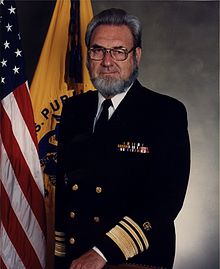





 The Daily Hatch