Every year scientists come up with more evidence that seems to support evolution. Whats a six-day, young-earth creationist to do? How can you support biblical claims that so obviously seem to contradict modern science?
___________
I have seen John MacArthur on Larry King Show many times and I thought you would like to see some of these episodes. I have posted several of John MacArthur’s sermons in the past and my favorite is his sermon on the Tyre prophecy.
The Bible and Archaeology (1/5) The Bible maintains several characteristics that prove it is from God. One of those is the fact that the Bible is accurate in every one of its details. The field of archaeology brings to light this amazing accuracy. _________________________- I want to make two points today. 1. There is no […]
The Book of Mormon vs The Bible, Part 6 of an indepth study of Latter Day Saints Archeology The Book of Mormon verses The Bible, Part 6 of an indepth study With the great vast amounts of evidence we find in the Bible through archeology, why is there no evidence for anything writte in the Book […]
The Book of Mormon vs The Bible, Part 5 of an indepth study of Latter Day Saints Archeology The Book of Mormon verses The Bible, Part 5 of an indepth study With the great vast amounts of evidence we find in the Bible through archeology, why is there no evidence for anything writte in the […]
The Book of Mormon vs The Bible, Part 3 of an indepth study of Latter Day Saints Archeology The Book of Mormon verses The Bible, Part 1 of an indepth study With the great vast amounts of evidence we find in the Bible through archeology, why is there no evidence for anything writte in the […]
The Book of Mormon vs The Bible, Part 2 of an indepth study of Latter Day Saints Archeology The Book of Mormon verses The Bible, Part 2 of an indepth study With the great vast amounts of evidence we find in the Bible through archeology, why is there no evidence for anything writte in the […]
“In Christ Alone” music video featuring scenes from “The Passion of the Christ”. It is sung by Lou Fellingham of Phatfish and the writer of the hymn is Stuart Townend. On this Easter Morning April 24, 2011 there is no other better time to take a look at the truth and accuracy of the Bible. […]
Critics – Part 1 By Dr In my ongoing debate with other bloggers on the Arkansas Times Blog, I had an interesting response from Dobert: You can’t have it both ways. If the Gospel writers were allowed to adapt their message to a particular audience then it can’t be claimed that God literally took their […]
The Institute for Creation Research equips believers with evidences of the Bible’s accuracy and authority through scientific research, educational programs, and media presentations, all conducted within a thoroughly biblical framework. info@icr.orghttp://www.icr.org Last night I had the opportunity to go back and forth with a couple of bloggers on the Arkansas Times Blog and this […]
This is a quick summary of the Bible’s reliability by a famous and well-respected former atheist. Please check out his website (http://www.leestrobel.com) for hundreds of FREE high quality videos investigating the critical aspects of our faith. Todd Tyszka http://www.toddtyszka.com On April 19, 2011 on the Arkansas Blog an entry of mine got this response from […]
Many Kings and important people in the Bible are also verified by secular documents. From time to time you will read articles in the Arkansas press by such writers as John Brummett, Max Brantley and Gene Lyons that poke fun at those that actually believe the Bible is historically accurate when in fact the Bible […]
Dr Price, who directs excavations at the Qumran plateau in Israel, the site of the community that produced the dead sea scrolls some 2,000 years ago, expertly guides you through the latest archaeological finds that have changed the way we understand the world of the bible. (Part 6 of 6 in the film series The Stones […]
My sons Wilson and Hunter went to California and visited Yosemite National Park with our friend Sherwood Haisty Jr. (Sherwood on left) March 21-27. Here you can see all the snow they had to deal with. Dr Price, who directs excavations at the Qumran plateau in Israel, the site of the community that produced the […]
Dr Price, who directs excavations at the Qumran plateau in Israel, the site of the community that produced the dead sea scrolls some 2,000 years ago, expertly guides you through the latest archaeological finds that have changed the way we understand the world of the bible. (Part 4 of 6 in the film series The Stones […]
Do governments ever cut spending? According to Dr. Stephen Davies, there are historical examples of government spending cuts in Canada, New Zealand, Sweden, and America. In these cases, despite popular belief, the government spending cuts did not cause economic stagnation. In fact, the spending cuts often accelerated economic growth by freeing up resources for the private sector.
_________
More and more government is not the answer to our problems.
The Laffer Curve charts a relationship between tax rates and tax revenue. While the theory behind the Laffer Curve is widely accepted, the concept has become very controversial because politicians on both sides of the debate exaggerate. This video shows the middle ground between those who claim “all tax cuts pay for themselves” and those who claim tax policy has no impact on economic performance. This video, focusing on the theory of the Laffer Curve, is Part I of a three-part series. Part II reviews evidence of Laffer-Curve responses. Part III discusses how the revenue-estimating process in Washington can be improved. For more information please visit the Center for Freedom and Prosperity’s web site: http://www.freedomandprosperity.org
________
President Obama c/o The White House
1600 Pennsylvania Avenue NW
Washington, DC 20500
The left has been loudly asserting that the middle class would lose under Mitt Romney’s plan to cut tax rates by 20 percent and finance those reductions by closing loopholes.
That class-warfare accusation struck me as a bit sketchy because when I looked at the data a couple of years ago, I put together this chart showing that rich people, on average, enjoyed deductions that were seven times as large as the deductions of middle-income taxpayers.
And the chart includes only the big itemized deductions. There are dozens of other special tax preferences, as shown in this depressing image, and you can be sure that rich people are far more likely to have the lawyers, lobbyists, and accountants needed to exploit those provisions.
But this chart doesn’t disprove the leftist talking point, so I’m glad that Martin Feldstein addressed the issue in today’s Wall Street Journal. Here’s some of what he wrote.
The IRS data show that taxpayers with adjusted gross incomes over $100,000 (the top 21% of all taxpayers) made itemized deductions totaling $636 billion in 2009. Those high-income taxpayers paid marginal tax rates of 25% to 35%, with most $200,000-plus earners paying marginal rates of 33% or 35%. And what do we get when we apply a 30% marginal tax rate to the $636 billion in itemized deductions? Extra revenue of $191 billion—more than enough to offset the revenue losses from the individual income tax cuts proposed by Gov. Romney. …Additional revenue could be raised from high-income taxpayers by limiting the use of the “preferences” identified for the Alternative Minimum Tax (such as excess oil depletion allowances) or the broader list of all official individual “tax expenditures” (such as tax credits for energy efficiency improvements in homes), among other credits and exclusions. None of this base-broadening would require taxing capital gains or making other changes that would reduce the incentives for saving and investment. …Since broadening the tax base would produce enough revenue to pay for cutting everyone’s tax rates, it is clear that the proposed Romney cuts wouldn’t require any middle-class tax increase, nor would they produce a net windfall for high-income taxpayers. The Tax Policy Center and others are wrong to claim otherwise.
In other words, even with a very modest assumption about the Laffer Curve, it would be quite possible to implement something akin to what Romney’s proposing and not “lose” tax revenue.
This doesn’t mean, of course, that Romney seriously intends to push for good policy. I’m much more concerned, for instance, that he’ll wander in the wrong direction and propose something very bad such as a value-added tax.
But Romney certainly can do the right thing if he wins. Assuming that’s what he wants to do.
Thank you so much for your time. I know how valuable it is. I also appreciate the fine family that you have and your commitment as a father and a husband.
Sincerely,
Everette Hatcher III, 13900 Cottontail Lane, Alexander, AR 72002, ph 501-920-5733, lowcostsqueegees@yahoo.com
______
The Laffer Curve, Part II: Reviewing the Evidence
This video is second installment of a three-part series. Part I reviews theoretical relationship between tax rates, taxable income, and tax revenue. Part III discusses how the revenue-estimating process in Washington can be improved. For more information please visit the Center for Freedom and Prosperity’s web site: http://www.freedomandprosperity.org.
I have put up lots of cartoons from Dan Mitchell’s blog before and they have got lots of hits before. Many of them have dealt with the economy, eternal unemployment benefits, socialism, Greece,welfare state or on gun control. Here is a couple of cartoons below I thought you would enjoy.
This Nate Beeler cartoon effectively captures the mindset of Washington’s big spenders.
Let’s take a serious look at this topic.
George Will is appropriately disgusted by the antics of the political class. Here’s some of his column on the topic.
The sequester has forced liberals to clarify their conviction that whatever the government’s size is at any moment, it is the bare minimum necessary to forestall intolerable suffering. At his unintentionally hilarious hysteria session Tuesday, Obama said: The sequester’s “meat-cleaver approach” of “severe,” “arbitrary” and “brutal” cuts will “eviscerate” education, energy and medical research spending. “And already, the threat of these cuts has forced the Navy to delay an aircraft carrier that was supposed to deploy to the Persian Gulf.”
Will elaborates on the Navy’s shameful stunt.
“Forced”? The Navy did indeed cite the sequester when delaying deployment of the USS Truman. …the Navy is saying it cannot find cuts to programs or deployments less essential than the Truman deployment. The Navy’s participation in the political campaign to pressure Congress into unraveling the sequester is crude, obvious and shameful, and it should earn the Navy’s budget especially skeptical scrutiny by Congress. The Defense Department’s civilian employment has grown 17 percent since 2002. In 2012, defense spending on civilian personnel was 21 percent higher than in 2002. And the Truman must stay in Norfolk? This is, strictly speaking, unbelievable.
Obama, who believes government spends money more constructively than do those who earn it, warns that the sequester’s budgetary nicks, amounting to one-half of 1 percent of gross domestic product, will derail the economy. A similar jeremiad was heard in 1943 when economist Paul Samuelson, whose Keynesian assumptions have trickled down to Obama, said postwar cuts in government would mean “the greatest period of unemployment and industrial dislocation which any economy has ever faced.” Federal spending did indeed shrink an enormous 40 percent in one year. And the economy boomed.
And the Wall Street Journal also has opined on this topic, showing not only that lawmakers wisely rejected another round of Keynesian foolishness, but also that post-war tax cuts were one of the reasons why the economy quickly rebounded.
Let’s close with some more mockery of the clowns in Washington.
This Gary Varvel cartoon shows what’s happening, though I’ve would have drawn Chicken Little to resemble Obama.
But what about the second frame of the cartoon? If the sequester happens, will the statists be forced to admit that they were creating false fears in hopes of protecting their spots at the federal trough?
“…The bad news is, the world doesn’t end March 2,” said Emily Holubowich, a Washington health-care lobbyist who leads a coalition of 3,000 nonprofit groups fighting the cuts. “The worst-case scenario for us is the sequester hits and nothing bad really happens. And Republicans say: See, that wasn’t so bad.”
Since the sequester takes effect on March 1, we’ll soon find out.
Some bureaucracies will deliberately try to make the sequester as inconvenient and painful as possible for the American people. As I said in this Larry Kudlow interview, the heads of those agencies should be fired.
Of course, Obama will probably try to reward them, but those who favor responsible fiscal policy should do everything possible to expose the shameful game being played by these political hacks.
Max Brantley is wrong about Tom Cotton’s accusation concerning the rise of welfare spending under President Obama. Actually welfare spending has been increasing for the last 12 years and Obama did nothing during his first four years to slow down the rate of increase of welfare spending. Rachel Sheffield of the Heritage Foundation has noted: […]
I have put up lots of cartoons from Dan Mitchell’s blog before and they have got lots of hits before. Many of them have dealt with the economy, eternal unemployment benefits, socialism, Greece, welfare state or on gun control. I think Max Brantley of the Arkansas Times Blog was right to point out on 2-6-13 that Hillary […]
I thought it was great when the Republican Congress and Bill Clinton put in welfare reform but now that has been done away with and no one has to work anymore it seems. In fact, over 40% of the USA is now on the government dole. What is going to happen when that figure gets over […]
Again we have another shooting and the gun control bloggers are out again calling for more laws. I have written about this subject below and on May 23, 2012, I even got a letter back from President Obama on the subject. Now some very interesting statistics below and a cartoon follows. (Since this just hit the […]
watch?v=llQUrko0Gqw] The federal government spends about 10% on roads and public goods but with the other money in the budget a lot of harm is done including excessive regulations on business. That makes Obama’s comment the other day look very silly. A Funny Look at Obama’s You-Didn’t-Build-That Comment July 28, 2012 by Dan Mitchell I made […]
I have written a lot about this in the past and sometimes you just have to sit back and laugh. Laughing at Obama’s Bumbling Class Warfare Agenda July 13, 2012 by Dan Mitchell We know that President Obama’s class-warfare agenda is bad economic policy. We know high tax rates undermine competitiveness. And we know tax increases […]
Dan Mitchell Discussing Dishonest Budget Numbers with John Stossel Uploaded by danmitchellcato on Feb 11, 2012 No description available. ______________ Dan Mitchell of the Cato Institute has shown before how excessive spending at the federal level has increased in recent years. A Humorous Look at Obama’s Screwy Budget Math May 31, 2012 by Dan Mitchell I’ve […]
Sometimes it is so crazy that you just have to laugh a little. The European Mess, Captured by a Cartoon June 22, 2012 by Dan Mitchell The self-inflicted economic crisis in Europe has generated some good humor, as you can see from these cartoons by Michael Ramirez and Chuck Asay. But for pure laughter, I don’t […]
Another great cartoon on President Obama’s efforts to create jobs!!! A Simple Lesson about Job Creation for Barack Obama December 7, 2011 by Dan Mitchell Even though leftist economists such as Paul Krugman and Larry Summers have admitted that unemployment insurance benefits are a recipe for more joblessness, the White House is arguing that Congress should […]
Dan Mitchell hits the nail on the head and sometimes it gets so sad that you just have to laugh at it like Conan does. In order to correct this mess we got to get people off of government support and get them in the private market place!!!! Chuck Asay’s New Cartoon Nicely Captures Mentality […]
Cato Institute scholar Dan Mitchell is right about Greece and the fate of socialism: Two Pictures that Perfectly Capture the Rise and Fall of the Welfare State July 15, 2011 by Dan Mitchell In my speeches, especially when talking about the fiscal crisis in Europe (or the future fiscal crisis in America), I often warn that […]
John Stossel report “Myth: Gun Control Reduces Crime Sheriff Tommy Robinson tried what he called “Robinson roulette” from 1980 to 1984 in Central Arkansas where he would put some of his men in some stores in the back room with guns and the number of robberies in stores sank. I got this from Dan Mitchell’s […]
I have put up lots of cartons and posters from Dan Mitchell’s blog before and they have got lots of hits before. Many of them have dealt with the economy, eternal unemployment benefits, socialism, Greece, welfare state or on gun control. Amusing Gun Control Picture – Circa 1999 April 3, 2010 by Dan Mitchell Dug this gem out […]
We got to cut spending and stop raising the debt ceiling!!! When Governments Cut Spending Uploaded on Sep 28, 2011 Do governments ever cut spending? According to Dr. Stephen Davies, there are historical examples of government spending cuts in Canada, New Zealand, Sweden, and America. In these cases, despite popular belief, the government spending […]
I have put up lots of cartons and posters from Dan Mitchell’s blog before and they have got lots of hits before. Many of them have dealt with the economy, eternal unemployment benefits, socialism, Greece, welfare state or on gun control. On 2-6-13 the Arkansas Times Blogger “Sound Policy” suggested, “All churches that wish to allow concealed […]
Gun Free Zones???? Stalin and gun control On 1-31-13 ”Arkie” on the Arkansas Times Blog the following: “Remember that the biggest gun control advocate was Hitler and every other tyrant that every lived.” Except that under Hitler, Germany liberalized its gun control laws. __________ After reading the link from Wikipedia that Arkie provided then I responded: […]
On 1-31-13 I posted on the Arkansas Times Blog the following: I like the poster of the lady holding the rifle and next to her are these words: I am compensating for being smaller and weaker than more violent criminals. __________ Then I gave a link to this poster below: On 1-31-13 also I posted […]
The 45 minute video above is from the film series created from Francis Schaeffer’s book “Whatever Happened to the Human Race?” with Dr. C. Everett Koop. This book really helped develop my political views concerning abortion, infanticide, and youth euthanasia, and it gave me a good understanding of those issues.
I was able to watch Francis Schaeffer deliver a speech on a book he wrote called “A Christian Manifesto” and I heard him in several interviews on it in 1981 and 1982. I listened with great interest since I also read that book over and over again. Below is a portion of one of Schaeffer’s talks on a crucial subject that is very important today too.
This address was delivered by the late Dr. Schaeffer in 1982 at the Coral Ridge Presbyterian Church, Fort Lauderdale, Florida. It is based on one of his books, which bears the same title.
Our problem is humanism and the results are bad.
——————–
Christians, in the last 80 years or so, have only been seeing things as bits and pieces which have gradually begun to trouble them and others, instead of understanding that they are the natural outcome of a change from a Christian World View to a Humanistic one; things such as overpermissiveness, pornography, the problem of the public schools, the breakdown of the family, abortion, infanticide (the killing of newborn babies), increased emphasis upon the euthanasia of the old and many, many other things.
All of these things and many more are only the results. We may be troubled with the individual thing, but in reality we are missing the whole thing if we do not see each of these things and many more as only symptoms of the deeper problem. And that is the change in our society, a change in our country, a change in the Western world from a Judeo-Christian consensus to a Humanistic one. That is, instead of the final reality that exists being the infinite creator God; instead of that which is the basis of all reality being such a creator God, now largely, all else is seen as only material or energy which has existed forever in some form, shaped into its present complex form only by pure chance.
I want to say to you, those of you who are Christians or even if you are not a Christian and you are troubled about the direction that our society is going in, that we must not concentrate merely on the bits and pieces. But we must understand that all of these dilemmas come on the basis of moving from the Judeo-Christian world view — that the final reality is an infinite creator God — over into this other reality which is that the final reality is only energy or material in some mixture or form which has existed forever and which has taken its present shape by pure chance.
The word Humanism should be carefully defined. We should not just use it as a flag, or what younger people might call a “buzz” word. We must understand what we are talking about when we use the word Humanism. Humanism means that the man is the measure of all things. Man is the measure of all things. If this other final reality of material or energy shaped by pure chance is the final reality, it gives no meaning to life. It gives no value system. It gives no basis for law, and therefore, in this case, man must be the measure of all things. So, Humanism properly defined, in contrast, let us say, to the humanities or humanitarianism, (which is something entirely different and which Christians should be in favor of) being the measure of all things, comes naturally, mathematically, inevitably, certainly. If indeed the final reality is silent about these values, then man must generate them from himself.
Francis Schaeffer: “Whatever Happened to the Human Race” (Episode 1) ABORTION OF THE HUMAN RACE Published on Oct 6, 2012 by AdamMetropolis The 45 minute video above is from the film series created from Francis Schaeffer’s book “Whatever Happened to the Human Race?” with Dr. C. Everett Koop. This book really helped develop my political views […]
E P I S O D E 1 0 Dr. Francis Schaeffer – Episode X – Final Choices 27 min FINAL CHOICES I. Authoritarianism the Only Humanistic Social Option One man or an elite giving authoritative arbitrary absolutes. A. Society is sole absolute in absence of other absolutes. B. But society has to be […]
E P I S O D E 9 Dr. Francis Schaeffer – Episode IX – The Age of Personal Peace and Affluence 27 min T h e Age of Personal Peace and Afflunce I. By the Early 1960s People Were Bombarded From Every Side by Modern Man’s Humanistic Thought II. Modern Form of Humanistic Thought Leads […]
E P I S O D E 8 Dr. Francis Schaeffer – Episode VIII – The Age of Fragmentation 27 min I saw this film series in 1979 and it had a major impact on me. T h e Age of FRAGMENTATION I. Art As a Vehicle Of Modern Thought A. Impressionism (Monet, Renoir, Pissarro, Sisley, […]
E P I S O D E 7 Dr. Francis Schaeffer – Episode VII – The Age of Non Reason I am thrilled to get this film series with you. I saw it first in 1979 and it had such a big impact on me. Today’s episode is where we see modern humanist man act […]
E P I S O D E 6 How Should We Then Live 6#1 Uploaded by NoMirrorHDDHrorriMoN on Oct 3, 2011 How Should We Then Live? Episode 6 of 12 ________ I am sharing with you a film series that I saw in 1979. In this film Francis Schaeffer asserted that was a shift in […]
E P I S O D E 5 How Should We Then Live? Episode 5: The Revolutionary Age I was impacted by this film series by Francis Schaeffer back in the 1970′s and I wanted to share it with you. Francis Schaeffer noted, “Reformation Did Not Bring Perfection. But gradually on basis of biblical teaching there […]
Dr. Francis Schaeffer – Episode IV – The Reformation 27 min I was impacted by this film series by Francis Schaeffer back in the 1970′s and I wanted to share it with you. Schaeffer makes three key points concerning the Reformation: “1. Erasmian Christian humanism rejected by Farel. 2. Bible gives needed answers not only as to […]
Francis Schaeffer’s “How should we then live?” Video and outline of episode 3 “The Renaissance” Francis Schaeffer: “How Should We Then Live?” (Episode 3) THE RENAISSANCE I was impacted by this film series by Francis Schaeffer back in the 1970′s and I wanted to share it with you. Schaeffer really shows why we have so […]
Francis Schaeffer: “How Should We Then Live?” (Episode 2) THE MIDDLE AGES I was impacted by this film series by Francis Schaeffer back in the 1970′s and I wanted to share it with you. Schaeffer points out that during this time period unfortunately we have the “Church’s deviation from early church’s teaching in regard […]
Francis Schaeffer: “How Should We Then Live?” (Episode 1) THE ROMAN AGE Today I am starting a series that really had a big impact on my life back in the 1970′s when I first saw it. There are ten parts and today is the first. Francis Schaeffer takes a look at Rome and why […]
Francis Schaeffer: “Whatever Happened to the Human Race” (Episode 5) TRUTH AND HISTORY Published on Oct 7, 2012 by AdamMetropolis This crucial series is narrated by the late Dr. Francis Schaeffer and former Surgeon General Dr. C. Everett Koop. Today, choices are being made that undermine human rights at their most basic level. Practices once […]
The opening song at the beginning of this episode is very insightful. Francis Schaeffer: “Whatever Happened to the Human Race” (Episode 4) THE BASIS FOR HUMAN DIGNITY Published on Oct 7, 2012 by AdamMetropolis This crucial series is narrated by the late Dr. Francis Schaeffer and former Surgeon General Dr. C. Everett Koop. Today, choices […]
Francis Schaeffer: “Whatever Happened to the Human Race” (Episode 3) DEATH BY SOMEONE’S CHOICE Published on Oct 6, 2012 by AdamMetropolis This crucial series is narrated by the late Dr. Francis Schaeffer and former Surgeon General Dr. C. Everett Koop. Today, choices are being made that undermine human rights at their most basic level. Practices […]
Francis Schaeffer: “Whatever Happened to the Human Race?” (Episode 2) SLAUGHTER OF THE INNOCENTS Published on Oct 6, 2012 by AdamMetropolis This crucial series is narrated by the late Dr. Francis Schaeffer and former Surgeon General Dr. C. Everett Koop. Today, choices are being made that undermine human rights at their most basic level. Practices […]
It is not possible to know where the pro-life evangelicals are coming from unless you look at the work of the person who inspired them the most. That person was Francis Schaeffer. I do care about economic issues but the pro-life issue is the most important to me. Several years ago Adrian Rogers (past president of […]
This essay below is worth the read. Schaeffer, Francis – “Francis Schaeffer and the Pro-Life Movement” [How Should We Then Live?, Whatever Happened to the Human Race?, A Christian Manifesto] Editor note: <p> </p> [The following essay explores the role that Francis Schaeffer played in the rise of the pro-life movement. It examines the place of […]
Great article on Schaeffer. Who was Dr. Francis A. Schaeffer? By Francis Schaeffer The unique contribution of Dr. Francis Schaeffer on a whole generation was the ability to communicate the truth of historic Biblical Christianity in a way that combined intellectual integrity with practical, loving care. This grew out of his extensive understanding of the Bible […]
I truly believe that many of the problems we have today in the USA are due to the advancement of humanism in the last few decades in our society. Ronald Reagan appointed the evangelical Dr. C. Everett Koop to the position of Surgeon General in his administration. He partnered with Dr. Francis Schaeffer in making the video below. It is very valuable information for Christians to have. Actually I have included a video below that includes comments from him on this subject.
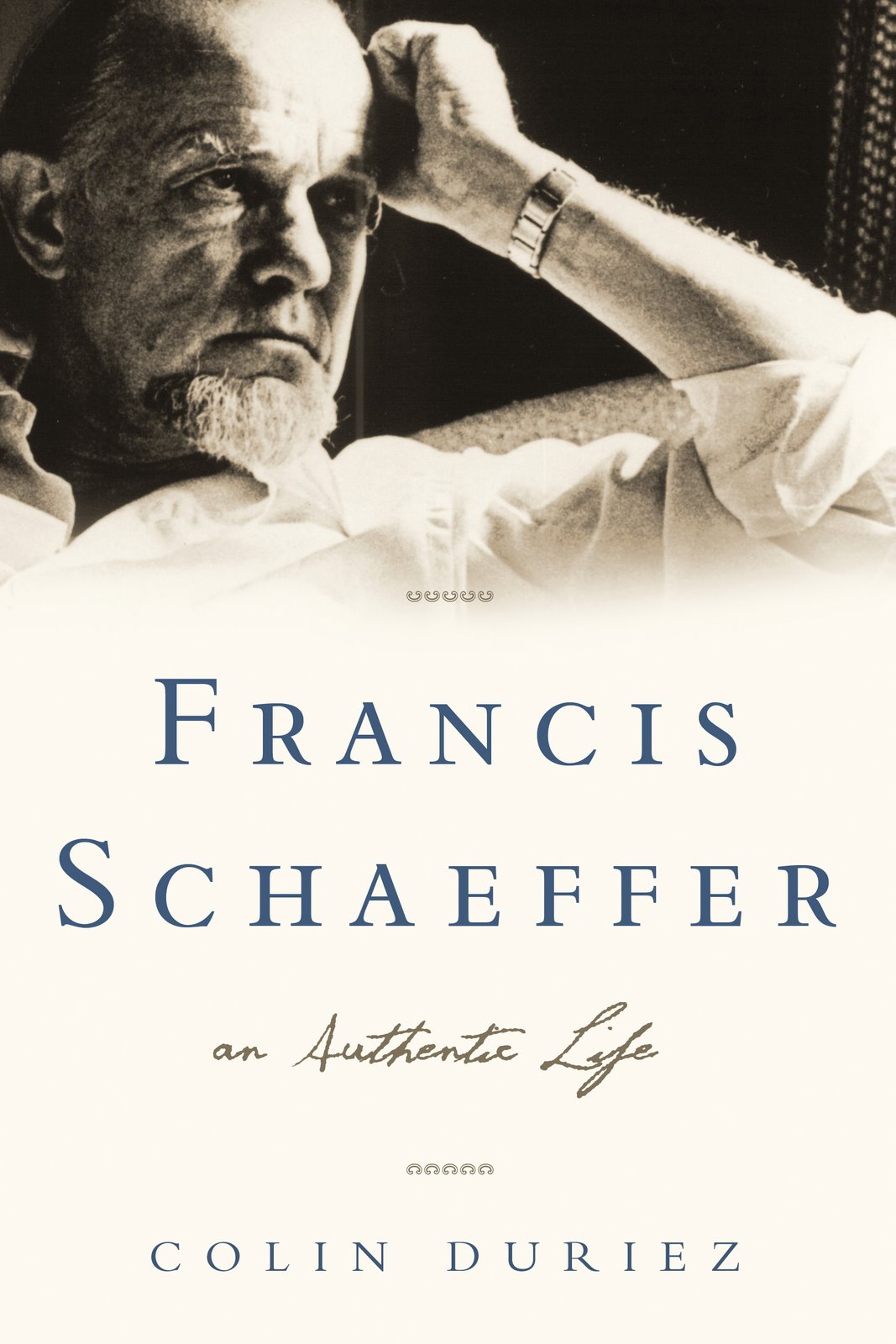
Francis Schaeffer: An Authentic Life, Colin Duriez (Crossway, 2008)Reviewed by Derek Melleby“Who is Francis Schaeffer?” The question came from a young, bright, Christian college student who over heard me talking about the new biography Francis Schaeffer: An Authentic Lifeby Colin Duriez. “Are you serious? You don’t know who Francis Schaeffer is?” I responded. It was as if someone from a far-off tribe had asked me “Who is this Jesus of Nazareth that you speak of?” My heart began to beat a little faster, and I had the privilege of introducing this young student to the giver of Christian intellectual life, my savior, I mean, my hero, Francis Schaeffer.There was irony in this conversation, of course. I was talking to a young, Christian student, who is passionate about developing a Christian approach to sustainable agriculture, linking it to deeper, local community life. We have had numerous conversations about the church in the 21st century, the kingdom of God, and environmental concerns. She was beginning to make connections with her deepest convictions about the environment and the Gospel and was living them out at a summer internship on an organic farm. Connecting what she believed about the world with how she lived in the world, was being manifested (incarnated) in tangible ways, and she had a plethora of resources to draw from: books, conferences, mentors and MP3 lectures. Here’s the irony: while she had no idea who Francis Schaeffer was, he had pioneered a movement of Christians to not only think more deeply about the Christian faith and how it sustains the attacks of modernity and the scientific revolution, but he also pleaded with believers to live-out faith in ways that showed the world the “Truth” of the Gospel. My guess, and it’s only a guess, is that if this same college student would have had similar convictions 50 years ago, the only place on the planet where she could have had an opportunity to wrestle with these questions, network with like-minded people and seek a Christian understanding of her concerns would have been under the teaching of Francis Schaeffer at his L’Abri ministry in Switzerland.I don’t want to overstate this. Certainly Francis Schaeffer wasn’t the only “thinking Christian” in the 20th Century. But it did dawn on me that while this student didn’t know who Francis Schaeffer was, she was certainly living in his legacy. Francis Schaeffer (1912-1984) was a Presbyterian pastor who became a missionary in Europe to expand a children’s ministry that he had started with his wife Edith. He was also deeply concerned with the “liberalization” of the church, especially the “higher criticism” approach to scripture. Not only did Schaeffer travel from city to city starting children’s ministries, but he would also lecture on the contemporary challenges to biblical, evangelical faith. In 1955, the Schaeffers started L’Abri (French for shelter), a place for “truth-seekers” to come and ask questions, wrestle with faith, and study Christianity more deeply. People came from all over the world, many converting to Christianity and many being energized to live-out their faith in powerful ways. You can learn more about this amazing ministry in Edith Schaeffer’s book L’Abri.Colin Duriez’s biography is an excellent place to start to learn more about this remarkable man. I recommend it highly, not only for those wanting to learn more about Schaeffer but for anyone who is interested in a deeper engagement with the Christian faith and culture. Schaeffer’s story needs to be known for generations to come and Duriez has told his story beautifully. Instead of retelling his story here, I’d rather discuss what I learned. What follows are three important things that I learned about Schaeffer through reading this book, and why I think each one is vital for the church today:First, Schaeffer was not afraid to ask tough questions about his faith. Before starting L’Abri, Schaeffer went through a grueling period of doubt and reconsideration of the Christian worldview. In fact, his wife thought that there was a chance that he was going to walk away from his faith altogether. Fortunately, this crisis of faith led Schaeffer to an even deeper commitment to the Truth of the gospel and to starting one of the most influential ministries of the 20th century. Probably the most significant aspect of Schaeffer’s legacy is his belief in the Christian faith for the sole reason that it is True. Because of this, he wasn’t afraid to meet intellectual challenges head on, even opening himself up to the possibility that he could be wrong. Humility became one of his defining characteristics. What a legacy for the church to consider. Do we, as the body of Christ, welcome times of questions and doubts? Do we take the time to fully understand opposing viewpoints? Is humility one of our defining characteristics? In order to engage the culture around us in effective ways, we can learn much from Schaeffer’s approach.
Second, Schaeffer was not only concerned with a “thinking” faith, but also a “living” faith. Schaeffer thought that too many Christians were not living out what they believed. Following his faith crisis, Schaeffer was determined to live in a way that revealed the Gospel to be true. If there truly was a God who was present, working in history and in our lives, then we should live in a way that conformed to this reality. We should expect God to meet our needs, provide opportunities to minister and make Himself known to others. In many ways, L’Abri could almost be seen as Schaeffer forcing God’s hand, making Him be true to his word. And the story of L’Abri is, itself, confirmation of the Truth of the Christian faith. Do we live in ways that require the Gospel to be true? Or do we simply live out an American, Western lifestyle and hope God is there to bless us? I think Schaeffer would challenge us to evaluate our lives to see if we really live as if the Biblical story is the True story of the world. Schaeffer’s words from an interview in 1980:
“I think there are many Christians – I mean, real Christians, real brothers and sisters in Christ, people I’m really fond of – who believe that certain things in the Christian faith are true, and yet, somehow or other, never relate this to truth. I don’t know if it comes across, what I’m trying to say, but I believe it’s truth – and not just religious truth, but the truth of what is. This gives you a different perspective.” (p. 189)
Third, Schaeffer was willing to partner with people outside of the evangelical Christian faith who supported a common cause. While not wavering on his personal convictions regarding evangelical faith and the authority of Scripture, he had no problem joining others who had similar concerns regarding public policy and social justice. This is certainly more widespread today, but in Schaeffer’s day, as a reformed Presbyterian pastor, it was almost unheard of to work along side Catholics or Mormons or agnostics who were united to confront injustices in the world. The church today should glean needed wisdom from Schaeffer’s willingness to work with and learn from others outside of his Christian tradition.Schaeffer’s story is one that needs to be told and retold. Thanks to this new biography, more people can learn about this important person in Christian history. Christian college students, especially, need to be reminded of the coherence and Truth of the Gospel and how it applies to all areas of life. Duriez’s biography reminds us that the life and writings of Francis Schaeffer is a good model for how to put this into practice.
Francis Schaeffer: “Whatever Happened to the Human Race” (Episode 1) ABORTION OF THE HUMAN RACE Published on Oct 6, 2012 by AdamMetropolis The 45 minute video above is from the film series created from Francis Schaeffer’s book “Whatever Happened to the Human Race?” with Dr. C. Everett Koop. This book really helped develop my political views […]
E P I S O D E 1 0 Dr. Francis Schaeffer – Episode X – Final Choices 27 min FINAL CHOICES I. Authoritarianism the Only Humanistic Social Option One man or an elite giving authoritative arbitrary absolutes. A. Society is sole absolute in absence of other absolutes. B. But society has to be […]
E P I S O D E 9 Dr. Francis Schaeffer – Episode IX – The Age of Personal Peace and Affluence 27 min T h e Age of Personal Peace and Afflunce I. By the Early 1960s People Were Bombarded From Every Side by Modern Man’s Humanistic Thought II. Modern Form of Humanistic Thought Leads […]
E P I S O D E 8 Dr. Francis Schaeffer – Episode VIII – The Age of Fragmentation 27 min I saw this film series in 1979 and it had a major impact on me. T h e Age of FRAGMENTATION I. Art As a Vehicle Of Modern Thought A. Impressionism (Monet, Renoir, Pissarro, Sisley, […]
E P I S O D E 7 Dr. Francis Schaeffer – Episode VII – The Age of Non Reason I am thrilled to get this film series with you. I saw it first in 1979 and it had such a big impact on me. Today’s episode is where we see modern humanist man act […]
E P I S O D E 6 How Should We Then Live 6#1 Uploaded by NoMirrorHDDHrorriMoN on Oct 3, 2011 How Should We Then Live? Episode 6 of 12 ________ I am sharing with you a film series that I saw in 1979. In this film Francis Schaeffer asserted that was a shift in […]
E P I S O D E 5 How Should We Then Live? Episode 5: The Revolutionary Age I was impacted by this film series by Francis Schaeffer back in the 1970′s and I wanted to share it with you. Francis Schaeffer noted, “Reformation Did Not Bring Perfection. But gradually on basis of biblical teaching there […]
Dr. Francis Schaeffer – Episode IV – The Reformation 27 min I was impacted by this film series by Francis Schaeffer back in the 1970′s and I wanted to share it with you. Schaeffer makes three key points concerning the Reformation: “1. Erasmian Christian humanism rejected by Farel. 2. Bible gives needed answers not only as to […]
Francis Schaeffer’s “How should we then live?” Video and outline of episode 3 “The Renaissance” Francis Schaeffer: “How Should We Then Live?” (Episode 3) THE RENAISSANCE I was impacted by this film series by Francis Schaeffer back in the 1970′s and I wanted to share it with you. Schaeffer really shows why we have so […]
Francis Schaeffer: “How Should We Then Live?” (Episode 2) THE MIDDLE AGES I was impacted by this film series by Francis Schaeffer back in the 1970′s and I wanted to share it with you. Schaeffer points out that during this time period unfortunately we have the “Church’s deviation from early church’s teaching in regard […]
Francis Schaeffer: “How Should We Then Live?” (Episode 1) THE ROMAN AGE Today I am starting a series that really had a big impact on my life back in the 1970′s when I first saw it. There are ten parts and today is the first. Francis Schaeffer takes a look at Rome and why […]
Francis Schaeffer: “Whatever Happened to the Human Race” (Episode 5) TRUTH AND HISTORY Published on Oct 7, 2012 by AdamMetropolis This crucial series is narrated by the late Dr. Francis Schaeffer and former Surgeon General Dr. C. Everett Koop. Today, choices are being made that undermine human rights at their most basic level. Practices once […]
The opening song at the beginning of this episode is very insightful. Francis Schaeffer: “Whatever Happened to the Human Race” (Episode 4) THE BASIS FOR HUMAN DIGNITY Published on Oct 7, 2012 by AdamMetropolis This crucial series is narrated by the late Dr. Francis Schaeffer and former Surgeon General Dr. C. Everett Koop. Today, choices […]
Francis Schaeffer: “Whatever Happened to the Human Race” (Episode 3) DEATH BY SOMEONE’S CHOICE Published on Oct 6, 2012 by AdamMetropolis This crucial series is narrated by the late Dr. Francis Schaeffer and former Surgeon General Dr. C. Everett Koop. Today, choices are being made that undermine human rights at their most basic level. Practices […]
Francis Schaeffer: “Whatever Happened to the Human Race?” (Episode 2) SLAUGHTER OF THE INNOCENTS Published on Oct 6, 2012 by AdamMetropolis This crucial series is narrated by the late Dr. Francis Schaeffer and former Surgeon General Dr. C. Everett Koop. Today, choices are being made that undermine human rights at their most basic level. Practices […]
It is not possible to know where the pro-life evangelicals are coming from unless you look at the work of the person who inspired them the most. That person was Francis Schaeffer. I do care about economic issues but the pro-life issue is the most important to me. Several years ago Adrian Rogers (past president of […]
This essay below is worth the read. Schaeffer, Francis – “Francis Schaeffer and the Pro-Life Movement” [How Should We Then Live?, Whatever Happened to the Human Race?, A Christian Manifesto] Editor note: <p> </p> [The following essay explores the role that Francis Schaeffer played in the rise of the pro-life movement. It examines the place of […]
Great article on Schaeffer. Who was Dr. Francis A. Schaeffer? By Francis Schaeffer The unique contribution of Dr. Francis Schaeffer on a whole generation was the ability to communicate the truth of historic Biblical Christianity in a way that combined intellectual integrity with practical, loving care. This grew out of his extensive understanding of the Bible […]
Ronald Reagan and Bill Clinton both reduced the relative burden of government, largely because they were able to restrain the growth of domestic spending. The mini-documentary from the Center for Freedom and Prosperity uses data from the Historical Tables of the Budget to show how Reagan and Clinton succeeded and compares their record to the fiscal profligacy of the Bush-Obama years.
________________
If we want to get on the right track again in this country then we must lower taxes for the job creators. Dan Mitchell points out that tax policy is not the only policy you need to pay attention to:
There are five major policy areas, each of which counts for 20 percent of a nation’s grade.
They attract jobs and investment from other nations.
As you can see, there’s nothing surprising or unusual on my list. Just basic microeconomic analysis.
Yet some people argue that lower tax rates don’t make a difference. And if lower tax rates don’t help an economy, then presumably there is no downside if Obama’s class-warfare tax policy is implemented.
Many of these people are citing David Leonhardt’s column in Saturday’s New York Times. The basic argument is that Bush cut tax rates, but the economy stunk, while Clinton increased tax rates and the economy did well.
The defining economic policy of the last decade, of course, was the Bush tax cuts. President George W. Bush and Congress, including Mr. Ryan, passed a large tax cut in 2001, sped up its implementation in 2003 and predicted that prosperity would follow. The economic growth that actually followed — indeed, the whole history of the last 20 years — offers one of the most serious challenges to modern conservatism. Bill Clinton and the elder George Bush both raised taxes in the early 1990s, and conservatives predicted disaster. Instead, the economy boomed, and incomes grew at their fastest pace since the 1960s. Then came the younger Mr. Bush, the tax cuts, the disappointing expansion and the worst downturn since the Depression. Today, Mitt Romney and Mr. Ryan are promising another cut in tax rates and again predicting that good times will follow. …Mr. Romney and Mr. Ryan would do voters a service by explaining why a cut in tax rates would work better this time than last time.
While I’ll explain below why I think he’s wrong, Leonhardt’s column is reasonably fair. He gives some space to both Glenn Hubbard and Phil Swagel, both of whom make good points.
“To me, the Bush tax cuts get too much attention,” said R. Glenn Hubbard, who helped design them as the chairman of Mr. Bush’s Council of Economic Advisers and is now a Romney adviser. “The pro-growth elements of the tax cuts were fairly modest in size,” he added, because they also included politically minded cuts like the child tax credit. Phillip L. Swagel, another former Bush aide, said that even a tax cut as large as Mr. Bush’s “doesn’t translate quickly into higher growth.” Why not? The main economic argument for tax cuts is simple enough. In the short term, they put money in people’s pockets. Longer term, people will presumably work harder if they keep more of the next dollar they earn. They will work more hours or expand their small business. This argument dominates the political debate.
I hope, by the way, that neither Hubbard nor Swagel made the Keynesian argument that tax cuts are pro-growth because “they put money in people’s pockets.” Leonhardt doesn’t directly attribute that argument to either of them, so I hope they’re only guilty of proximity to flawed thinking.
But that’s besides the point. Several people have asked my reaction to the column, so it’s time to recycle something I wrote back in February. It was about whether a nation should reform its tax system, but the arguments are the same if we replace “a flat tax” with “lower tax rates.”
…even though I’m a big advocate for better tax policy, the lesson from the Economic Freedom of the World Index…is that adopting a flat tax won’t solve a nation’s economic problems if politicians are doing the wrong thing in other areas.
There are five major policy areas, each of which counts for 20 percent of a nation’s grade.
Size of government
Regulation
Monetary Policy
Trade
Rule of Law/Property Rights
Now let’s pick Ukraine as an example. As a proponent of tax reform, I like that lawmakers have implemented a 15 percent flat tax.
But that doesn’t mean Ukraine is a role model. When looking at the mix of all policies, the country gets a very poor score from Economic Freedom of the World Index, ranking 125 out of 141 nations.
In other words, tax policy isn’t some sort of magical elixir. The “size of government” variable accounts for just one-fifth on a country’s grade, and keep in mind that this also includes key sub-variables such as the burden of government spending.
Yes, lower tax rates are better for economic performance, just as wheels matter for a car’s performance. But if a car doesn’t have an engine, transmission, steering wheel, and brakes, it’s not going to matter how nice the wheels are.
Not let’s shift from theory to reality. Here’s the historical data for the United States from Economic Freedom of the World. As you can see, overall economic policy moved in the right direction during the Clinton years and in the wrong direction during the Bush-Obama years.
To be more specific, the bad policy of higher tax rates in the 1990s was more than offset by good reforms such as lower trade barriers, a lower burden of government spending, and less regulation.
Similarly, the good policy of lower tax rates last decade was more than offset by bad developments such as a doubling of the federal budget, imposition of costly regulations, and adoption of two new health entitlements.
Sadly, “The U.S. is now on the verge of a symbolic threshold: the point at which more than half of all American households receive and accept transfer benefits from the government.” I really do hate it because it affects so many people’s attitudes towards hard work and government dependency. However, after reading this article below I am very aware of that sad fact. Mr. President you need to reverse this trend!!!
I wrote a celebratory post last November about the dramatic difference between Americans and Europeans. There truly is American exceptionalism in that Europeans are much more likely to think it is government’s responsibility to provide the basics of life.
Another poll in 2010 showed Americans, by a 20-percentage point margin, want smaller government and lower taxes. A 2011 poll revealed negative views, by an almost 2-1 margin, of the federal government. And it’s not scientific, or even a poll, but I also enjoyed this Mark Steyn column describing how Americans were the only people in the world to protest for less government when the financial crisis hit.
Based on what’s already happened, Nicholas Eberstadt of the American Enterprise Institute is worried that the narcotic of dependency may be diluting American exceptionalism.
From the founding of our nation until quite recently, the U.S. and its citizens were regarded, at home and abroad, as exceptional in a number of deep and important respects. One of these was their fierce and principled independence, which informed not only the design of the political experiment that is the U.S. Constitution but also their approach to everyday affairs. The proud self-reliance that struck Alexis de Tocqueville in his visit to the U.S. in the early 1830s extended to personal finances. The American “individualism” about which he wrote did not exclude social cooperation—the young nation was a hotbed of civic associations and voluntary organizations. But in an environment bursting with opportunity, American men and women viewed themselves as accountable for their own situation through their own achievements—a novel outlook at that time, markedly different from the prevailing attitudes of the Old World (or at least the Continent). The corollaries of this American ethos were, on the one hand, an affinity for personal enterprise and industry and, on the other, a horror of dependency and contempt for anything that smacked of a mendicant mentality. Although many Americans in earlier times were poor, even people in fairly desperate circumstances were known to refuse help or handouts as an affront to their dignity and independence. People who subsisted on public resources were known as “paupers,” and provision for them was a local undertaking. Neither beneficiaries nor recipients held the condition of pauperism in high regard.
That’s the good news. Now for the bad news.
The U.S. is now on the verge of a symbolic threshold: the point at which more than half of all American households receive and accept transfer benefits from the government. From cradle to grave, a treasure chest of government-supplied benefits is there for the taking for every American citizen—and exercising one’s legal rights to these many blandishments is now part of the American way of life. …Citizens have become ever more broad-minded about the propriety of tapping new sources of finance for supporting their appetite for more entitlements. The taker mentality has thus ineluctably gravitated toward taking from a pool of citizens who can offer no resistance to such schemes: the unborn descendants of today’s entitlement-seeking population. …The U.S. is a very wealthy society. If it so chooses, it has vast resources to squander. And internationally, the dollar is still the world’s reserve currency; there remains great scope for financial abuse of that privilege. Such devices might well postpone the day of fiscal judgment: not so the day of reckoning for American character, which may be sacrificed long before the credibility of the U.S. economy. Some would argue that it is an asset already wasting away before our very eyes.
If you think Eberstadt is being needlessly pessimistic, you may change your mind if you read this and this.
To be sure, it’s possible to reverse this trend if we implement entitlement reform. But how likely is that given the short-sighted outlook and self-interested attitude of the political class.
P.P.S. Redistribution is bad for prosperity because you’re paying some people not to produce and you’re penalizing some people who do produce. To get a better idea of how the former kills incentives, look at this amazing chart.
_________
Thank you so much for your time. I know how valuable it is. I also appreciate the fine family that you have and your commitment as a father and a husband.
Sincerely,
Everette Hatcher III, 13900 Cottontail Lane, Alexander, AR 72002, ph 501-920-5733, lowcostsqueegees@yahoo.com
Milton Friedman is a senior research fellow at the Hoover Institution at Stanford University and a professor emeritus of economics at the University of Chicago, where he taught from 1946-1976. Dr. Friedman received the Nobel Memorial Prize for Economic Science in 1976, and the National Medal of Science and the Presidential Medal of Freedom in 1988. He served as an unofficial adviser to presidential candidate Barry Goldwater and Presidents Nixon and Reagan. He is the author of numerous books, including Two Lucky People (with Rose Friedman).
The following is an edited transcript of a conversation between Hillsdale College President Larry Arnn and Milton Friedman, which took place on May 22, 2006, at the Ritz-Carlton Hotel in San Francisco, California, during a two-day Hillsdale College National Leadership Seminar celebrating the 25th anniversary of Milton and Rose Friedman’s book, Free to Choose: A Personal Statement.
_______
LA: In Free to Choose you discuss Abraham Lincoln’s “House Divided” speech, which you relate to the great task that the American people face. Like Lincoln, you argue that a house divided against itself cannot stand: America is going to be a government intervention country or it’s going to be a free market country, but it cannot continue indefinitely as a mixture of both. Do you still believe that?
MF: Yes, I very much believe that, and I believe that we’ve been making some headway since Free to Choose appeared. However, even though it is real headway compared to what was happening before, we are mostly holding ground.
LA: What do you think are the major factors behind the economic growth we have experienced since the publication of Free to Choose?
MF: Economic growth since that time has been phenomenal, which has very little to do with most of what we’ve been talking about in terms of the conflict between government and private enterprise. It has much more to do with the technical problem of establishing sound monetary policy. The economic situation during the past 20 years has been unprecedented in the history of the world. You will find no other 20-year period in which prices have been as stable—relatively speaking—in which there has been as little variability in price levels, in which inflation has been so well-controlled, and in which output has gone up as regularly. You hear all this talk about economic difficulties, when the fact is we are at the absolute peak of prosperity in the history of the world. Never before have so many people had as much as they do today. I believe a large part of that is to be attributed to better monetary policy. The improved policy is a result of the acceptance of the view that inflation is a monetary phenomenon, not a real phenomenon. We have accepted the view that central banks are primarily responsible for maintaining stable prices and nothing else.
LA: Do you think the Great Depression was triggered by bad monetary policy at a crucial moment?
MF: Absolutely. Unfortunately, it is still the case that if you ask people what caused the Great Depression, nine out of ten will probably tell you it was a failure of business. But it’s absolutely clear that the Depression was a failure of government and not a failure of business.
LA: You don’t think the Smoot-Hawley tariff caused the Depression?
MF: No. I think the Smoot-Hawley tariff was a bad law. I think it did harm. But the Smoot-Hawley tariff by itself would not have made one quarter of the labor force unemployed. However, reducing the quantity of money by one third did make a quarter of the labor force unemployed. When I graduated from undergraduate college in 1932, I was baffled by the fact that there were idle machines and idle men and you couldn’t get them together. Those men wanted to cooperate; they wanted to work; they wanted to produce what they wore; and they wanted to produce the food they ate. Yet something had gone wrong: The government was mismanaging the money supply.
LA: Do you think our government has learned its lesson about how to manage the money supply?
MF: I think that the lesson has been learned, but I don’t think it will last forever. Sooner or later, government will want to raise funds without imposing taxes. It will want to spend money it does not have. So I hesitate to join those who are predicting two percent inflation for the next 20 years. The temptation for government to lay its hands on that money is going to be very hard to resist. The fundamental problem is that you shouldn’t have an institution such as the Federal Reserve, which depends for its success on the abilities of its chairman. My first preference would be to abolish the Federal Reserve, but that’s not going to happen.
LA: I want to talk now about education and especially about vouchers, because I know they are dear to your heart. Why do you think teachers unions oppose vouchers?
MF: The president of the National Education Association was once asked when his union was going to do something about students. He replied that when the students became members of the union, the union would take care of them. And that was a correct answer. Why? His responsibility as president of the NEA was to serve the members of his union, not to serve public purposes. I give him credit: The trade union has been very effective in serving its members. However, in the process, they’ve destroyed American education. But you see, education isn’t the union’s function. It’s our fault for allowing the union to pursue its agenda. Consider this fact: There are two areas in the United States that suffer from the same disease—education is one and health care is the other. They both suffer from the disease that takes a system that should be bottom-up and converts it into a system that is top-down. Education is a simple case. It isn’t the public purpose to build brick schools and have students taught there. The public purpose is to provide education. Think of it this way: If you want to subsidize the production of a product, there are two ways you can do it. You can subsidize the producer or you can subsidize the consumer. In education, we subsidize the producer—the school. If you subsidize the student instead—the consumer—you will have competition. The student could choose the school he attends and that would force schools to improve and to meet the demands of their students.
LA: Although you discuss many policy issues in Free to Choose, you have turned much of your attention to education, and to vouchers as a method of education reform. Why is that your focus?
MF: I don’t see how we can maintain a decent society if we have a world split into haves and have-nots, with the haves subsidizing the have-nots. In our current educational system, close to 30 percent of the youngsters who start high school never finish. They are condemned to low-income jobs. They are condemned to a situation in which they are going to be at the bottom. That leads in turn to a divisive society; it leads to a stratified society rather than one of general cooperation and general understanding. The effective literacy rate in the United States today is almost surely less than it was 100 years ago. Before government had any involvement in education, the majority of youngsters were schooled, literate, and able to learn. It is a disgrace that in a country like the United States, 30 percent of youngsters never graduate from high school. And I haven’t even mentioned those who drop out in elementary school. It’s a disgrace that there are so many people who can’t read and write. It’s hard for me to see how we can continue to maintain a decent and free society if a large subsection of that society is condemned to poverty and to handouts.
LA: Do you think the voucher campaign is going well?
MF: No. I think it’s going much too slowly. What success we have had is almost entirely in the area of income-limited vouchers. There are two kinds of vouchers: One is a charity voucher that is limited to people below a certain income level. The other is an education voucher, which, if you think of vouchers as a way of transforming the educational industry, is available to everybody. How can we make vouchers available to everybody? First, education ought to be a state and local matter, not a federal matter. The 1994 Contract with America called for the elimination of the Department of Education. Since then, the budget for the Department of Education has tripled. This trend must be reversed. Next, education ought to be a parental matter. The responsibility for educating children is with parents. But in order to make it a parental matter, we must have a situation in which parents are Free to Choose the schools their children attend. They aren’t free to do that now. Today the schools pick the children. Children are assigned to schools by geography—by where they live. By contrast, I would argue that if the government is going to spend money on education, the money ought to travel with the children. The objective of such an expenditure ought to be educated children, not beautiful buildings. The way to accomplish this is to have a universal voucher. As I said in 1955, we should take the amount of money that we’re now spending on education, divide it by the number of children, and give that amount of money to each parent. After all, that’s what we’re spending now, so we might as well let parents spend it in the form of vouchers.
LA: I have one more question for you. You describe a society in which people look after themselves because they know the most about themselves, and they will flourish if you let them. You, however, are a crusader for the rights of others. For example, you say in Free to Choose—and it’s a very powerful statement—a tiny minority is what matters. So is it one of the weaknesses of the free market that it requires certain extremely talented and disinterested people who can defend it?
MF: No, that’s not right. The self-interest of the kind of people you just described is promoting public policy. That’s what they’re interested in doing. For example, what was my self-interest in economics? My self-interest to begin with was to understand the real mystery and puzzle that was the Great Depression. My self-interest was to try to understand why that happened, and that’s what I enjoyed doing—that was my self-interest. Out of that I grew to learn some things—to have some knowledge. Following that, my self-interest was to see that other people understood the same things and took appropriate action.
LA: Do you define self-interest as what the individual wants?
MF: Yes, self-interest is what the individual wants. Mother Teresa, to take one example, operated on a completely self-interested basis. Self-interest does not mean narrow self-interest. Self-interest does not mean monetary self-interest. Self-interest means pursuing those things that are valuable to you but which you can also persuade others to value. Such things very often go beyond immediate material interest.
LA: Does that mean self-interest is a synonym for self-sacrifice?
MF: If you want to see how pervasive this sort of self-interest is that I’m describing, look at the enormous amount of money contributed after Hurricane Katrina. That was a tremendous display of self-interest: The self-interest of people in that case was to help others. Self-interest, rightly understood, works for the benefit of society as a whole.
Why do the liberals want to increase unemployment more by increasing minimum wage? The result is anything but compassionate to the poor. Let the young black youth that suffer under the high minimum wage law get a chance to get into the workforce. Thomas Sowell and Walter Williams have written about this over and over. Here is a piece below from Dan Mitchell.
This high level of joblessness presumably reduces Obama’s chances of getting reelected, so you would think that Democrats would be very leery of proposals that increase the cost of job creation.
Now there’s talk of pushing for a higher minimum wage. Here are some details from a report in The Hill.
Advocates pushing for a minimum wage increase are looking to turn it into an election-year issue as the campaign season heats up this fall. Such a hike is expected to be included in the Democrats’ 2012 platform — which will be presented to delegates at the party’s convention in Charlotte, N.C., next week — a member of the drafting committee told The Hill. …In the eyes of labor unions, consumer advocates and liberal Democrats, the strategy is a no-brainer in an election season that’s featured the birth of the Occupy Wall St. movement, questions about Mitt Romney’s financial practices and a highly partisan debate over which class of workers deserve an extended tax break next year. …A minimum wage hike is not without political risks, however, as Republicans and business groups are warning that such a move would burden small businesses amid an employment crisis when Congress is urging them to hire.
Regarding the last sentence in the excerpt, I agree that a minimum wage hike entails risk, but I fear those risks are to the economy rather than to politicians. Much to my dismay, a majority of voters generally support this misguided policy.
In my attempts to educate these misguided souls, I try to figure out why they favor certain policies. In the case of the minimum wage, this is my rough-draft list of why some people support this perverse form of government intervention.
1. They understand low-income people will suffer if the minimum wage is increased, but that is acceptable collateral damage in the quest for political power.
2. They understand low-income people will suffer in the short run, but they rationalize this harm because there will be more redistribution in the long run if they obtain political power.
3. They understand low-income people will suffer, but that is an acceptable price to pay since it means unions will have more negotiating leverage once low-income workers are priced out of the market.
4. They think low-income people will benefit because the economy is a fixed pie and a mandate to pay more to low-income workers will merely result in less income for the rich.
5. They think low-income people will benefit because of the magic of Keynesian economics – i.e., beneficiaries will have more income, which will then get spent, thus stimulating the economy.
6. They are impervious to evidence and instead are motivated solely by a sense that there should be a minimum income in a “fair” and “compassionate” society.
It’s quite possible, of course, for someone to support higher minimum wages for more than just one reason. Indeed, I suspect supporters of the minimum wage can be divided into two groups. The politicians and union bosses tend to believe in higher minimum wages for reasons 1, 2, and 3, while ordinary people are likely to support intervention for reasons 4, 5, and 6.
But regardless of what they believe, they’re wrong. This Cato study has all the evidence you could possibly want. But if you don’t have time to read the paper, this video is well worth a few minutes of your time.
Minimum wage laws seem like a good idea, but arbitrarily mandating a certain wage can have terrible consequences. This CF&P Foundation mini-documentary reveals that business are not charities, so if the minimum wage is set above the market level, this eliminates job opportunities — particularly for the less fortunate members of society. Since employees and employers should have freedom of contract, the right minimum wage is zero. http://www.freedomandprosperity.org
Sadly, this is one of those issues where it might not make a difference which party wins in November. Romney already has said he favors not only an increase in the minimum wage, but also indexing, which means automatic increases in the future.
P.S. Here’s a very good cartoon showing the impact of raising the minimum wage.
_________
Thank you so much for your time. I know how valuable it is. I also appreciate the fine family that you have and your commitment as a father and a husband.
Sincerely,
Everette Hatcher III, 13900 Cottontail Lane, Alexander, AR 72002, ph 501-920-5733, lowcostsqueegees@yahoo.com



 including Mr. Ryan, passed a large tax cut in 2001, sped up its implementation in 2003 and predicted that prosperity would follow. The economic growth that actually followed — indeed, the whole history of the last 20 years — offers one of the most serious challenges to modern conservatism. Bill Clinton and the elder George Bush both raised taxes in the early 1990s, and conservatives predicted disaster. Instead, the economy boomed, and incomes grew at their fastest pace since the 1960s. Then came the younger Mr. Bush, the tax cuts, the disappointing expansion and the worst downturn since the Depression. Today, Mitt Romney and Mr. Ryan are promising another cut in tax rates and again predicting that good times will follow. …Mr. Romney and Mr. Ryan would do voters a service by explaining why a cut in tax rates would work better this time than last time.


