“Sanctity of Life Saturday” Remembering Dr. C. Everett Koop with pictures and quotes Part 23 (includes editorial cartoon)

Dr. C. Everett Koop on Baby Doe, euthanasia, abortion

Uploaded on Nov 3, 2008

Dr. Koop answers questions on Baby Doe, euthanasia and abortion during interview at Wheaton College, Wheaton, IL http://www.christianethics.org

Dr. Koop with Al Gore in the White House pictured above.

On 2-25-13 we lost a great man when we lost Dr. C. Everett Koop. I have written over and over the last few years quoting Dr. C. Everett Koop and his good friend Francis Schaeffer. They both came together for the first time in 1973 when Dr. Koop operated on Schaeffer’s daughter and as a result they became close friends. That led to their involvement together in the book and film series “WHATEVER HAPPENED TO THE HUMAN RACE?” in 1979.

This Day in Presbyterian History:

To Spare a Mother’s Life is a Myth of Abortion

The statement of the medical doctor blew the lid off of one of the more famous grounds of abortion.  He said, “protection of the life of the mother as an exercise of abortion is a smoke screen. In my thirty-six years of pediatric surgery, I have never known of one instances where the child had to be aborted to save the mother’s life. If toward the end of the pregnancy complications would arise that threaten the mother’s life, the doctor will induce labor or perform a Caesarean section.  His intention is to save the life of both the mother and the baby. The baby’s life is never willfully destroyed because the mother’s life is in danger. To spare a mother’s life is a myth of abortion.”
Who said this?  None other than C. Everett Koop, who served for two terms  under President Ronald Reagan as Surgeon General of the United States in the nineteen eighties (1982 – 1989). C. Everett Koop was pro-life in his views of life in the womb.

Born in  Brooklyn, New York on October 14, 1916, “Chick” Koop, as he was known by his friends, certainly had the education to make him the top doctor in the country.  Educated at Dartmouth College in his undergraduate years, he went on to receive degree after degree at the top medical hospitals in the country.  In addition, he received forty-one honorary  doctorates.

While in Philadelphia, Pennsylvania, he joined Tenth Presbyterian Church, serving as a ruling elder of that P.C.A. congregation. He cooperated with Francis Schaeffer in producing the “How Then Shall We Live” series, which informed American Christians of their duty to be salt and light in the midst of a corrupting and darksome  culture.

As of this writing, he lives up in New Hampshire.

Words to live by:  If you check on the world-wide web, you can find some other statements by Dr. Koop dealing with the issues which define our world, such as euthanasia, which he decries that medicine cannot be considered our healer and our killer at the same time.  We can thank God that he was raised up for such a time and age as this, when sound biblical conclusions needed to be raised in a culture which devalues life.

Through the Scriptures: Malachi 1 – 4

Through the Standards: The tests of church purity

WCF 25:4
“This catholic Church has been sometimes more, sometimes less visible. And particular Churches, what are members thereof, are more or less pure, according as the doctrine of the Gospel is taught and embraced, ordinances administered, and public worship performed more or less purely in them.”

For further study : The papers of Dr. C. Everett Koop are preserved at the National Library of Medicine. And additional, smaller collection pertaining mostly to several of Dr. Koop’s published works, can be found at Wheaton College.

In the film series “WHATEVER HAPPENED TO THE HUMAN RACE?” the arguments are presented  against abortion (Episode 1),  infanticide (Episode 2),   euthenasia (Episode 3), and then there is a discussion of the Christian versus Humanist worldview concerning the issue of “the basis for human dignity” in Episode 4 and then in the last episode a close look at the truth claims of the Bible.

In this 1979 film series they dealt with the big social issues and predicted what social problems we have in the future because of humanism. For instance, they knew that the Jack Kevorkians of the world would be coming down the pike. They predicted that there was a slippery slope from abortion to infanticide to youth euthanasia brought on by the materialistic worldview.

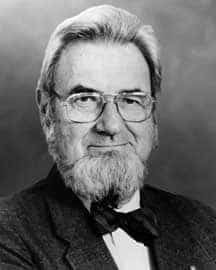
Dr. C. Everett Koop is pictured above.

Francis Schaeffer: “Whatever Happened to the Human Race” (Episode 1) ABORTION OF THE HUMAN RACE

Abortion is a dirty business and this editorial cartoon touches on this issue.

Dr. Koop.

C. Everett Koop

Related posts:

Remembering Dr. C. Everett Koop with pictures and quotes Part 12 (with editorial cartoon)

Dr. C. Everett Koop on Baby Doe, euthanasia, abortion Uploaded on Nov 3, 2008 Dr. Koop answers questions on Baby Doe, euthanasia and abortion during interview at Wheaton College, Wheaton, IL http://www.christianethics.org Dr. Koop   On 2-25-13 we lost a great man when we lost Dr. C. Everett Koop. I have written over and over […]

Remembering Dr. C. Everett Koop with pictures and quotes Part 11 (including editorial cartoon on abortion)

Dr. Koop Memorial Tribute Former Surgeon General C.Everett Koop © A Genuine G-Shot.wmv On 2-25-13 we lost a great man when we lost Dr. C. Everett Koop. I have written over and over the last few years quoting Dr. C. Everett Koop and his good friend Francis Schaeffer. They both came together for the first […]

Remembering Dr. C. Everett Koop with pictures and quotes Part 10 (includes editorial cartoon about abortion)

Newsmaker Interview with Surgeon General C. Everett Koop Published on Feb 25, 2013 The PBS NewsHour interviewed former Surgeon General, Dr. C. Everett Koop, on the anniversary of the first surgeon general’s report on smoking. Jim Lehrer interviewed Koop for a newsmaker conversation for the The MacNeil/Lehrer NewsHour from the surgeon general’s office in Washington […]

Remembering Dr. C. Everett Koop with pictures and quotes Part 9 (Picture of Joycelyn Elders with Koop)

Dr. C. Everett Koop on Baby Doe, euthanasia, abortion Uploaded on Nov 3, 2008 Dr. Koop answers questions on Baby Doe, euthanasia and abortion during interview at Wheaton College, Wheaton, IL http://www.christianethics.org Dr. Koop   Joycelyn Elders was the first black Surgeon General of the USA and I have a picture of her with Dr. C. […]

Remembering Dr. C. Everett Koop with pictures and quotes Part 8 (editorial picture about Surgeon General)

Memorial Tribute Former Surgeon General C.Everett Koop © A Genuine G-Shot.wmv Dr. Koop. C. Everett Koop Before Dr. C. Everett Koop arrived in 1981 as Surgeon General could anybody ever name who the Surgeon General was? Koop also caused lots of editorial cartoons to be drawn about him because of his positions he took on […]

Remembering Dr. C. Everett Koop with pictures and quotes Part 7 (Public Health poster)

Newsmaker Interview with Surgeon General C. Everett Koop Published on Feb 25, 2013 The PBS NewsHour interviewed former Surgeon General, Dr. C. Everett Koop, on the anniversary of the first surgeon general’s report on smoking. Jim Lehrer interviewed Koop for a newsmaker conversation for the The MacNeil/Lehrer NewsHour from the surgeon general’s office in Washington […]

Remembering Dr. C. Everett Koop with pictures and quotes Part 6 (includes funniest cartoon ever during Koop’s tenure)

Dr. C. Everett Koop on Baby Doe, euthanasia, abortion Uploaded on Nov 3, 2008 Dr. Koop answers questions on Baby Doe, euthanasia and abortion during interview at Wheaton College, Wheaton, IL http://www.christianethics.org Dr. Koop. C. Everett Koop On June 8, 1988 Ralph Dunagin of the LA Times came out with the funniest editorial cartoon I […]

Remembering Dr. C. Everett Koop with pictures and quotes Part 5 (Public Health poster developed under Koop)

Memorial Tribute Former Surgeon General C.Everett Koop © A Genuine G-Shot.wmv Dr. C. Everett Koop was active on getting the word out about how people could catch AIDS. Public Health officials during the second half of the 1980s became concerned about the spread of AIDS particularly among minorities, a disproportionate number of whom were intravenous […]

Remembering Dr. C. Everett Koop with pictures and quotes Part 4 (funny editorial cartoon too)

Dr. Koop Gary Brookings of the Richmond Times Dispatch did a very funny editorial cartoon about the time in 1988 when Dr. C. Everett Koop sent the unapproved mail  piece out to millions of homes about AIDS. There were many such cartoons at the time since everyone knew Dr. Koop got the mail piece out […]

Remembering Dr. C. Everett Koop with pictures and quotes Part 3 ( three more editorial cartoons too)

Dr. Koop with Hillary Clinton In 1980 I really was influenced at my highschool by a teacher of mine named Mark Brink. He introduced me to the film series “Whatever happened to the human race?” by Francis Schaeffer and Dr. C. Everett Koop. In this  film series that came out in 1979 they dealt with […]

Remembering Dr. C. Everett Koop with pictures and quotes Part 2 (Doonesbury cartoon by Gary Trudeau included)

Dr. Koop On 2-25-13 we lost a great man when we lost Dr. C. Everett Koop. I have written over and over the last few years quoting Dr. C. Everett Koop and his good friend Francis Schaeffer. They both came together for the first time in 1973 when Dr. Koop operated on Schaeffer’s daughter and […]

Remembering Dr. C. Everett Koop with pictures and quotes Part 1

Dr. C. Everett Koop is pictured above. Francis Schaeffer: “Whatever Happened to the Human Race” (Episode 1) ABORTION OF THE HUMAN RACE Published on Oct 6, 2012 by AdamMetropolis Dr. Koop On 2-25-13 we lost a great man when we lost Dr. C. Everett Koop. I have written over and over the last few years […]

Open letter to President Obama (Part 232 B) Dr. C. Everett Koop and Reagan pictured together

Dr. C. Everett Koop with Ronald Reagan. Dr. Koop was delayed in his confirmation by Ted Kennedy because of his film Whatever Happened to the Human Race? President Obama c/o The White House 1600 Pennsylvania Avenue NW Washington, DC 20500 Dear Mr. President, I know that you receive 20,000 letters a day and that you […]

“Sanctity of Life Saturday” Francis Schaeffer and Dr. C. Everett Koop asked Reagan to issue pro-life proclamation in 1983 (includes video ABORTION OF THE HUMAN RACE)

In the film series “WHATEVER HAPPENED TO THE HUMAN RACE?” the arguments are presented  against abortion (Episode 1),  infanticide (Episode 2),   euthenasia (Episode 3), and then there is a discussion of the Christian versus Humanist worldview concerning the issue of “the basis for human dignity” in Episode 4 and then in the last episode a close […]

Dr. C. Everett Koop on abortion’s 1973 Roe v. Wade impact on child abuse

Dr. C. Everett Koop with Ronald Reagan. Dr. Koop was delayed in his confirmation by Ted Kennedy because of his film Whatever Happened to the Human Race? Watch the film below starting at the 19 minute mark and that will lead into a powerful question from Dr. C. Everett Koop. This 1979 film is WHATEVER […]

Open letter to President Obama (Part 221 B) Dr. C. Everett Koop and Francis Schaeffer rightly called abortion “the watershed issue of our era”

 Dr. Koop was delayed in his confirmation by Ted Kennedy because of his film Whatever Happened to the Human Race? Francis Schaeffer February 21, 1982 (Part 1) Uploaded by DeBunker7 on Feb 21, 2008 READ THIS FIRST: In decline of all civilizations we first see a war against the freedom of ideas. Discussion is limited […]

Francis Schaeffer and C. Everette Koop on the Hippocratic oath (March for Life January 20, 2013)

Dr. C. Everett Koop was appointed to the Reagan administration but was held up in the Senate in his confirmation hearings by Ted Kennedy because of his work in pro-life causes. I was thinking about the March for Life that is coming up on Jan 20, 2013  and that is why I posted this today […]

Ronald Wilson Reagan pictured with Dr. C. Everett Koop

High resolution version (11,426,583 Bytes) Description: The photograph is signed by President Ronald Reagan with the inscription “To Chick Koop, With Best Wishes.” Chick, from chicken coop, was the nickname Koop gained will attending Dartmouth College in the mid-1930s. Koop maintained a cordial relationship with President Reagan, despite his disappointment over Reagan’s refusal to address […]

Francis Schaeffer and C. Everett Koop were prophetic (jh29)

Francis Schaeffer and C. Everett Koop were prophetic (jh29) What Ever Happened to the Human Race? I recently heard this Breakpoint Commentary by Chuck Colson and it just reminded me of how prophetic Francis Schaeffer and C. Everett Koop were in the late 1970′s with their book and film series “Whatever happened to the human […]

Should Michele Bachmann be punished for taking pro-life views from Schaeffer and Koop? (March for Life January 20, 2013)

  Dr. C. Everett Koop I was thinking about the March for Life that is coming up on Jan 20, 2013  and that is why I posted this today Secular leaps of faith 39 Comments Written by Janie B. Cheaney August 15, 2011, 2:17 PM I’m willing to cut Ryan Lizza some slack. His profile […]

“Schaeffer Sundays” Francis Schaeffer’s own words concerning humanism and its bad results

Francis Schaeffer: “Whatever Happened to the Human Race?” (Episode 2) SLAUGHTER OF THE INNOCENTS Published on Oct 6, 2012 by AdamMetropolis The 45 minute video above is from the film series created from Francis Schaeffer’s book “Whatever Happened to the Human Race?” with Dr. C. Everett Koop. This book  really helped develop my political views concerning […]

“Sanctity of Life Saturday”:Derek Melleby’s review of the book “Francis Schaeffer: An Authentic Life” (includes film THE BASIS FOR HUMAN DIGNITY)

  I truly believe that many of the problems we have today in the USA are due to the advancement of humanism in the last few decades in our society. Ronald Reagan appointed the evangelical Dr. C. Everett Koop to the position of Surgeon General in his administration. He partnered with Dr. Francis Schaeffer in making […]

Taking on Ark Times bloggers about abortion on the 40th anniversary date of Roe v. Wade (Part 5) “Slavery issue compared to rights of unborn child”

The best pro-life film I have ever seen below by Francis Schaeffer and Dr. C. Everett Koop “Whatever happened to the human race?” Over the years I have taken on the Ark Times liberal bloggers over and over and over concerning the issue of abortion. I asked over and over again for one liberal blogger […]

Taking on Ark Times bloggers about abortion on the 40th anniversary date of Roe v. Wade (Part 4) “How do pro-lifers react to the movie THE CIDER HOUSE RULES?”

Francis Schaeffer pictured above._________ The best pro-life film I have ever seen below by Francis Schaeffer and Dr. C. Everett Koop “Whatever happened to the human race?” Over the years I have taken on the Ark Times liberal bloggers over and over and over concerning the issue of abortion. I asked over and over again […]

Taking on Ark Times bloggers about abortion on the 40th anniversary date of Roe v. Wade (Part 3) “What should be the punishment for abortion doctors?”

The best pro-life film I have ever seen below by Francis Schaeffer and Dr. C. Everett Koop “Whatever happened to the human race?” On 1-24-13 I took on the child abuse argument put forth by Ark Times Blogger “Deathbyinches,” and the day before I pointed out that because the unborn baby has all the genetic code […]

Taking on Ark Times bloggers about abortion on the 40th anniversary date of Roe v. Wade (Part 2) “The pro-abortion child abuse argument destroyed here”

PHOTO BY STATON BREIDENTHAL from Pro-life march in Little Rock on 1-20-13. Tim Tebow on pro-life super bowl commercial. Over the years I have taken on the Ark Times liberal bloggers over and over and over concerning the issue of abortion. Here is another encounter below. On January 22, 2013 (on the 40th anniversary of the […]

Taking on Ark Times bloggers about abortion on the 40th anniversary date of Roe v. Wade (Part 6) For many pro-abortionists ” …the problem is not determining when actual human life begins, but when the value of that life begins to out weigh other considerations”

The best pro-life film I have ever seen below by Francis Schaeffer and Dr. C. Everett Koop “Whatever happened to the human race?” Francis Schaeffer pictured above._________ The 45 minute video above is from the film series created from Francis Schaeffer’s book “Whatever Happened to the Human Race?” with Dr. C. Everett Koop. This book  really […]

Taking on Ark Times bloggers about abortion on the 40th anniversary date of Roe v. Wade (Part 7) “Poverty not good reason for abortion, why not give up for adoption?”

Dr Richard Land discusses abortion and slavery – 10/14/2004 – part 3 The best pro-life film I have ever seen below by Francis Schaeffer and Dr. C. Everett Koop “Whatever happened to the human race?” Over the years I have taken on the Ark Times liberal bloggers over and over and over concerning the issue […]

Taking on Ark Times bloggers about abortion on the 40th anniversary date of Roe v. Wade (Part 1)

Dr Richard Land discusses abortion and slavery – 10/14/2004 – part 3 The best pro-life film I have ever seen below by Francis Schaeffer and Dr. C. Everett Koop “Whatever happened to the human race?” Over the years I have taken on the Ark Times liberal bloggers over and over and over concerning the issue […]

Paul Greenberg became pro-life because we are all “endowed with certain unalienable rights”

On January 20, 2013 I heard Paul Greenberg talk about the words of Thomas Jefferson that we are all “endowed with certain unalienable rights” and the most important one is the right to life. He mentioned this also in this speech below from 2011: Paul Greenberg Dinner Speech 2011 Fall 2011 Issue Some of you […]

How Pulitzer Prize-winning Paul Greenberg, one of the most respected and honored commentators in America, changed his mind about abortion and endorses now the pro-life view

It is not possible to know where the pro-life evangelicals are coming from unless you look at the work of the person who inspired them the most. That person was Francis Schaeffer.  I do care about economic issues but the pro-life issue is the most important to me. Several years ago Adrian Rogers (past president of […]

Cole Porter’s song “So in Love”

Cole Porter’s song “So in Love”

__________________

So in love – De-lovely

So in Love

From Wikipedia, the free encyclopedia
Jump to: navigation, search
“So in Love“
from the Broadway musical Kiss Me, Kate, based on Shakespeare‘s Taming of the Shrew
Written by Cole Porter
Published 1948
Language English
Original artist Alfred Drake
Recorded by Patti Page,
many other artists (see #Recorded versions)

“So in Love” is a popular song, written by Cole Porter, from his musical Kiss Me, Kate, (opening on Broadway in 1948)[1] based on Shakespeare‘s Taming of the Shrew. It was sung in the show by Patricia Morison, reprised by Alfred Drake[1] and further popularized by Patti Page in 1949.

The Page recording was issued by Mercury Records as catalog number 5230,[1][2] and first reached the Billboard chart on February 12, 1949, lasting 2 weeks and peaking at #13.[3]

Other versions which were popular that year were by Gordon MacRae and Dinah Shore.[1]

The song has been recorded by many other significant female singers, including Peggy Lee and Ella Fitzgerald.

Recorded versions

References

Related posts:

Cole Porter “Let’s Do it, Let’s Fall in Love” in the movie MIDNIGHT IN PARIS

Cole Porter “Let’s Do it, Let’s Fall in Love” in the movie MIDNIGHT IN PARIS Midnight in Paris – Let’s Do It Let’s do it : Cole Porter.( Midnight in Paris ) Celebrate Wikipedia Loves Libraries at your institution in October/November. Let’s Do It, Let’s Fall in Love From Wikipedia, the free encyclopedia Jump to: […]

The Characters referenced in Woody Allen’s “Midnight in Paris” (Part 2 Cole Porter)

The song used in “Midnight in Paris” I am going through the famous characters that Woody Allen presents in his excellent movie “Midnight in Paris.”  By the way, I know that some of you are wondering how many posts I will have before I am finished. Right now I have plans to look at Fitzgerald, Heminingway, Juan […]


Lazy Bureaucrats have overinflated opinions of themselves!!!!

Lazy Bureaucrats have overinflated opinions of themselves!!!!

_____________

In this piece below Dan Mitchell puts forth the theory that bureaucrats are more lazy than those that are working in the private sector and that this is a behavior that is acquired over time after working in government for some time. Let me put forth a couple more observations which I got from King Solomon was the wisest man who ever lived. Proverbs 26: 16 says, “THE SLUGGARD IS WISER IN HIS OWN EYES THAN SEVEN MEN WHO ANSWER DISCREETLY.”It is my view that government workers are more arrogant and have a overinflated opinion of their selves.

Secondly, many government workers will come up with excuses to pass work down the line to other bureaucrats so they don’t have to do the work. In other words they think up excuses why their department does not have to handle a request and they send it over to another department. I have seen this myself when I needed a ruling or an opinion from a government office and they kept sending me over to another department which in turn would send me to a third department. This reminds me of the quick thinking sluggard noted by King Solomon, “The loafer says, ‘There’s a lion on the loose!  If I go out I’ll be eaten alive!’ ”  WHAT A GREAT EXCUSE MAKER A SLUGGARD CAN BE!!!!

I’ve shared some remarkable data showing that bureaucrats get paid more than people in the private sector.

JOLTS dataI’ve also dug into the Department of Labor’s JOLTS data to debunk those who argue bureaucrats aren’t overpaid.

I’ve even showed that they work fewer hours (though that’s probably a good thing since presumably the nation will be in better shape if bureaucrats are out of the office rather than molesting people in the economy’s productive sector).

Well, now we can add something else to the list, though it won’t surprise anybody who has been to the Post Office, DMV, or tried to generate any sort of action from a government agency. It turns out that bureaucrats are lazy. Here are some interesting excerpts from a National Post column from Canada.

Who says civil servants are lazy? Well, they do actually. The study that finds these effects is based on a social survey that asked people to agree or disagree, on a scale of one to seven, with the statement “I see myself as someone who tends to be lazy,” with the endpoint options being “Does not apply to me at all” and “Applies to me perfectly.” …the survey in question was for Germany for the years 2004-5. (The just-published analysis of its results has been done by Robert Dur and Robin Zoutenbier, economists at the Erasmus University Rotterdam.) …if there was a country where you’d think people would be ashamed to admitting to laziness, it’s probably Germany. So if the story holds there, it probably holds everywhere. …What results do the Rotterdam economists get? When they control for other things that are both correlated with self-declarations of…laziness and also differ systematically across sectors, such as age, gender, education, family status and so on, it does turn out that public-sector workers tend to be…more lazy than private-sector workers. A one-unit increase in self-declared laziness on that seven-unit scale increases the likelihood of a person’s being in the public sector by almost one per cent. …Turning the data around, the results suggest that workers who are…lazy have a probability of almost exactly one-third of working in the public sector. By contrast, workers who self-declare as…energetic have only about a one-fifth chance of ending up in the public sector.

Gee, knock me over with a feather. Lazy people are more likely to work for the government. And they even admit it!

However, it seems that there are some causation/correlation issues. It may be that you don’t work for the government because you’re lazy. Instead, working for the government may make you lazy.

When the researchers looked only at younger workers they found that…there was no difference in laziness. Only with people further along in their careers did the correlation between laziness and the public sector show up. Either it takes time for lazy people to find their public sector niche or naturally energetic people get worn down by the bureaucracy. They learn laziness.

As a taxpayer, I confess this causes me some mixed feelings. I’m irked that bureaucrats are getting lavishly compensated at my expense. And I don’t like the idea of them goofing off while playing Solitaire or updating their Facebook pages.

But then I remind myself that this may be the least-destructive way for them to occupy their time. Sure beats them being hard at work coming up with crazy new regulations.

In any event, this chart shows that American taxpayers at least can be thankful we’re not in Denmark.

Or any of the Nordic countries. I don’t know if bureaucrats in those nations are lazy, but they sure are expensive.

And I’m surprised that Japanese bureaucrats are relatively inexpensive, particularly when the nation’s long-run fiscal outlook is so bad.

P.S. Since we’re making fun of bureaucrats, here’s a good jab at the Post Office from Jimmy Kimmel. And to see how government operates, we have the Fable of the Ant. But this Pearls before Swine cartoon strip is my favorite.


Related posts:

Overpaid Bureaucrats

Hard to believe. Everything You Need to Know about Whether State and Local Bureaucrats Are Over-Compensated, in One Chart Posted by Daniel J. Mitchell The showdown in Wisconsin has generated competing claims about whether state and local government bureaucrats are paid too much or paid too little compared to their private sector counterparts. The data […]

Bureaucrats raking in lots of money

Bureaucrats raking in lots of money Hard to believe. Everything You Need to Know about Whether State and Local Bureaucrats Are Over-Compensated, in One Chart Posted by Daniel J. Mitchell The showdown in Wisconsin has generated competing claims about whether state and local government bureaucrats are paid too much or paid too little compared to […]

“Friedman Friday” Defending Milton Friedman

What a great defense of Milton Friedman!!!!   Defaming Milton Friedman by Johan Norberg This article appeared in Reason Online on September 26, 2008  PRINT PAGE  CITE THIS      Sans Serif      Serif Share with your friends: ShareThis In the future, if you tell a student or a journalist that you favor free markets and limited government, there is […]

Dear Senator Pryor, here are some spending cut suggestions (“Thirsty Thursday”, Open letter to Senator Pryor)

Senator Pryor pictured below:  Why do I keep writing and email Senator Pryor suggestions on how to cut our budget? I gave him hundreds of ideas about how to cut spending and as far as I can tell he has taken none of my suggestions. You can find some of my suggestions here, here, here, here, here, here, here, here, here, here, here, here, here, here, here, here, here, here, here,  here, and  here, and they […]

Why not cut out all the dollars that are being wasted on green technology programs?

If you want to cut waste out of government then why not cut out all the dollars that are being wasted on green technology programs? Must-Read Article about Germany’s Green-Energy Disaster September 6, 2013 by Dan Mitchell I’ve written before that Obama’s Solyndra-style handouts have been a grotesque waste of tax dollars. I’ve argued that they […]

FREE TO CHOOSE “Who protects the consumer?” Video and Transcript Part 1 of 7 Milton Friedman: “Allowing the free market to work is the best thing for consumers”

In 1980 I read the book FREE TO CHOOSE by Milton Friedman and it really enlightened me a tremendous amount.  I suggest checking out these episodes and transcripts of Milton Friedman’s film series FREE TO CHOOSE: “The Failure of Socialism” and “What is wrong with our schools?”  and “Created Equal”  and  From Cradle to Grave, […]

Editorial cartoon from Dan Mitchell’s blog on California’s sorry state of affairs

I have put up lots of cartoons from Dan Mitchell’s blog before and they have got lots of hits before. Many of them have dealt with the sequester, economy, eternal unemployment benefits, socialism,  minimum wage laws, tax increases, social security, high taxes in California, Obamacare,  Greece,  welfare state or on gun control. President Obama’s favorite state must be California because […]

Milton Friedman’s FREE TO CHOOSE “How to Stay Free,” Transcript and Video (60 Minutes)

Milton Friedman’s FREE TO CHOOSE “How to Stay Free,” Transcript and Video (60 Minutes) In 1980 I read the book FREE TO CHOOSE by Milton Friedman and it really enlightened me a tremendous amount.  I suggest checking out these episodes and transcripts of Milton Friedman’s film series FREE TO CHOOSE: “The Failure of Socialism” and […]

Open letter to President Obama (Part 390)

Dan Mitchell Talking about China, Regulation, and Wealth with Cavuto Published on Mar 21, 2012 by danmitchellcato No description available. ___________________   President Obama c/o The White House 1600 Pennsylvania Avenue NW Washington, DC 20500 Dear Mr. President, I know that you receive 20,000 letters a day and that you actually read 10 of them […]

No wonder Obama won the election since it pays more to be on welfare than to work in the USA!!!!

No wonder Obama won the election since it pays more to be on welfare than to work in the USA!!!! Mirror, Mirror, on the Wall, Which States Provide the Most Handouts of All? August 20, 2013 by Dan Mitchell About two years ago, I shared a map put together by a pro-statism organization that supposedly showed that welfare benefits […]

Tom Osborne at the Little Rock Touchdown Club Part 5

Tom Osborne at the Little Rock Touchdown Club Part 5

Tom Osborne Tribute Video – #ThanksTO

Published on Nov 17, 2012

HuskerVision tribute to Athletic Director Tom Osborne during the Nebraska vs Minnesota Football game on November 17, 2012.

___________

_______

1998 Orange Bowl – The Nebraska Cornhuskers vs. The Tennessee Volunteers

__________________

I really enjoyed hearing Tom Osborne speak at the Little Rock Touchdown Club on 9-9-13 and Osborne started off his talk by telling a story. He said that at the end of the 1997 season his Nebraska team was undefeated and they faced Tennessee in the national championship game. He was amazed at how many press conferences they had leading up to the game. At the final press conference before the game he was sitting next to Phillip Fulmer and the Tennessee coach kept going on and on about how brilliant Peyton Manning is and how he knows so much. Then Fulmer called Manning up and asked him, “Peyton show people how smart you are, WHO IS YOUR FATHER’S BROTHER’S NEPHEW?” Peyton thought about it briefly   and he said, “That would be me.” Coach Fulmer responded, “That is the correct answer.”

Coach Osborne said he did not want to be outdone so he asked Steve Foster his starting QB to come up and Coach Osborne asked him the same question, “Who is your father’s brother’s nephew.” Foster leaned over and asked  Matt Davison and Davison told Foster, “The answer is ME.” Then Foster spoke loudly “The answer is Matt Davison.” Coach Osborne exclaimed, “No that is not the right answer!!! The answer is PEYTON MANNING!!!”

Tom Osborne’s Highlights
Administrative Experience
Nebraska, Athletic Director 2007-present
U.S Congress, Third District (Nebraska) 2000-06
Nebraska, Head Football Coach 1973-97
Nebraska, Assistant Head Football Coach 1972
Nebraska, Assistant Football Coach 1967-71
Educational Ledger
Nebraska, Ph.D. in Educational Psychology 1965
Nebraska, M.A. in Educational Psychology 1963
Hastings College, B.A. in History 1959
Personal Information
Date of Birth: Feb. 23, 1937
Family: Wife: Nancy; Son: Mi
ke; Daughters: Ann and Suzanne
Tom Osborne’s Honors
and Accomplishments
University of Nebraska Head Coach (1973-97)
Three National Titles (1994-95-97)
1999 College Football Hall of Fame
Inductee
U.S. Congressman (Nebraska’s Third District
, Three Terms)
Nebraska Athletic Director
(Oct. 16, 2007-present)
Related posts:

Dan Hampton at the Little Rock Touchdown Club Part 4 (Learning a lesson from Hampton’s mistakes)

Dan Hampton at the Little Rock Touchdown Club Part 4 Mike Singletary: Christ Means Everything – CBN.com Uploaded on Aug 25, 2010 Shawn Brown talks to the tough-as-nails coach of the San Francisco 49ers about how he wins in life and in football… The Christian Broadcasting Network CBN http://www.cbn.com __________________________ No one has more respect […]

Dan Hampton at the Little Rock Touchdown Club Part 3

Dan Hampton at the Little Rock Touchdown Club Part 3 Before Dan Hampton got to speak at the touchdown club this week, Rex Nelson got up and spoke and when he talked about Bobby Petrino taking his Western Kentucky team into Knoxville, he asked, “How many of you think Petrino will get a victory in […]

Dan Hampton at the Little Rock Touchdown Club Part 2

Dan Hampton at the Little Rock Touchdown Club Part 2 https://www.youtube.com/watch?v=nCPWDMKzVs4 Dan Hampton told about the  year with the Chicago Bears when they took on the Vikings and they sacked Archie Manning 11 times.  In October on 1984 the Bears beat the Vikings but in the process Dan Hampton got to play against one of […]

Dan Hampton at the Little Rock Touchdown Club Part 1

Dan Hampton at the Little Rock Touchdown Club Part 1  Dan Hampton I really enjoyed the Little Rock Touchdown Club today when Dan Hampton was our speaker. Hampton said that Jimmy Johnson was a great defensive coordinator for him to learn under when he played for Frank Broyles in 1975. Then when Lou Holtz came […]

My favorite past speakers of the Little Rock Touchdown Club and the 2013 lineup (Part 4)

Rex Nelson impersonates Houston Nutt at LRTC 08 27 12 Published on Oct 2, 2012 Little Rock Touchdown Club has Rex Nelson do the stats for the games played that week. Rex does a lot of impersonations of different people but I like his Houston Nutt the best. Video by Popeye Video – Mrpopeyevideo I have […]

My favorite past speakers of the Little Rock Touchdown Club and the 2013 lineup (Part 3) (Vince Dooley did a great job)

I have written about my past visits to the Little Rock Touchdown Club many times and I have been amazed at the quality of the speakers. Frank Broyles was one of my favorites but Phillip Fulmer, Paul Finebaum, Mike Slive, Willie Roaf, Randy White, Howard Schnellenberger, John Robinson, Mark May, Gene Stallings, Bobby Bowden, Lloyd […]

My favorite past speakers of the Little Rock Touchdown Club and the 2013 lineup (Part 2) (Frank Broyles was outstanding!!)

I have written about my past visits to the Little Rock Touchdown Club many times and I have been amazed at the quality of the speakers. (Yesterday I talked about Phillip Fulmer.)Frank Broyles was one of my favorites but Phillip Fulmer, Paul Finebaum, Mike Slive, Willie Roaf, Randy White, Howard Schnellenberger, John Robinson, Mark May, […]

My favorite past speakers of the Little Rock Touchdown Club and the 2013 lineup (Part 1)

Rex Nelson impersonates Houston Nutt at LRTC 08 27 12 Published on Oct 2, 2012 Little Rock Touchdown Club has Rex Nelson do the stats for the games played that week. Rex does a lot of impersonations of different people but I like his Houston Nutt the best. Video by Popeye Video – Mrpopeyevideo ______________ I […]

Gus Malzahn does a great job at Little Rock Touchdown Club (Part 2)

I really enjoyed hearing Gus Malzahn speak at the final Little Rock Touchdown meeting on Nov 19, 2012. He covered several subjects that he covered a few days earlier at a touchdown club in Huntsville. Here are some of his comments from that meeting: But reports that he could be the next coach at Auburn, […]

Open letter to President Obama (Part 407)Bill Muehlenberg’s review of Schaeffer biography (includes video SLAUGHTER OF THE INNOCENTS)

(Emailed to White House on 2-1-13.)

President Obama c/o The White House
1600 Pennsylvania Avenue NW
Washington, DC 20500

Dear Mr. President,

I know that you receive 20,000 letters a day and that you actually read 10 of them every day. I really do respect you for trying to get a pulse on what is going on out here.

I truly believe that many of the problems we have today in the USA are due to the advancement of humanism in the last few decades in our society. Ronald Reagan appointed the evangelical Dr. C. Everett Koop to the position of Surgeon General in his administration. He partnered with Dr. Francis Schaeffer in making the video below. It is very valuable information for Christians to have.  Actually I have included a video below that includes comments from him on this subject.

In the film series “WHATEVER HAPPENED TO THE HUMAN RACE?” the arguments are presented  against abortion (Episode 1),  infanticide (Episode 2),   euthenasia (Episode 3), and then there is a discussion of the Christian versus Humanist worldview concerning the issue of “the basis for human dignity” in Episode 4 and then in the last episode a close look at the truth claims of the Bible. 

Francis Schaeffer: “Whatever Happened to the Human Race?” (Episode 2) SLAUGHTER OF THE INNOCENTS

Published on Oct 6, 2012 by

_______________

Francis Schaeffer pictured above. I really have so much respect for Francis Schaeffer and the way he taught so many people about the importance of getting involved in the pro-life movement.

Notable Christians: Francis Schaeffer


By: Bill Muehlenberg
Christian Today Australia Columnist
Friday, 16 October 2009, 11:16 (EST)
Font Scale:A A A
 
 
This pastor, apologist and writer had a profound impact on evangelicalism in the second half of the twentieth century, and his impact is still very much felt today. Although he has been dead now for a quarter of a century (he died in 1984), this great Christian continues to influence believers around the world.Born in 1912, he studied under Cornelius Van Til and J. Gresham Machen at Westminster Theological Seminary. He became a Presbyterian pastor in the US. But his global impact took off when he went to Europe in 1948.In Holland he met art historian Hans Rookmaaker, and was introduced to the thinking of Abraham Kuyper and Dutch neo-Calvinism. Thus the presuppositional apologetics and worldview thinking he learned at Westminster was further augmented in Europe.He and his wife Edith soon settled in Switzerland, and established a ministry which would influence millions of people. In 1955 they started L’Abri (French for ’shelter’) in the Swiss Alps. There he taught Christian truths to anyone who would listen, and soon travellers worldwide were coming to the Swiss chalets to hear and learn and work.This ministry became especially vital during the counterculture of the 60s. Westerners seeking truth and gurus in the East would often travel along the “hippy trail”. From London and Amsterdam, Western young people would travel through Europe to India, Nepal and other exotic locations hoping to find truth in the wisdom of the East.As they often stopped at L’Abri along the way, they were exposed to the truth about Jesus Christ and biblical Christianity. The routine there was fairly simple. They could stay at the chalets, do some work during the day, and study and listen to lectures by Schaeffer, Rookmaaker, Oz Guinness and others during evenings and weekends.

Edith Schaeffer especially developed a hospitality ministry (which she wrote up in Hidden Art and L’Abri). Sure, people would throw up on the carpets and cause other headaches for the Schaeffers, but they loved these young people and were intent on reaching them with the Gospel of Christ.

The evening lectures and debates were the highlight of life at L’Abri. Many young intellectuals and seekers were warmly yet forthrightly confronted with the logical contradictions of their own non-Christian thought systems, and the coherence and beauty of the Christian worldview. Many people were saved through this ministry, and countless others were strongly influenced by it.

The core of his thought appeared in his first three works: Escape from Reason (1968), The God Who is There (1968), and He is There and He is Not Silent (1972). This trilogy serves as the basis of all his other thought. In it he lays out the case for the biblical worldview, and offers penetrating critiques of non-Christian philosophies and worldviews.

His apologetic method was full-orbed, with many discussions of art, film, literature, culture, sociology, philosophy, theology and history along the way. He firmly believed that Christianity spoke to every area of life, and that believers must love God with their minds as well as the rest of their being.

He insisted that Christians develop a complete biblical worldview, and see how their faith impacts on all aspects of life. He said, “The basic problem of the Christians in this country in the last eighty years or so is that they have seen things in bits and pieces instead of totals.”

And his apologetics was not just about right thinking. He was a pastor, and he knew that right behaviour was also critical. This was a constant theme in his writings, especially in his The Mark of the Christian (1970) and True Spirituality (1971). He insisted that we not only defend the truthfulness of the Gospel, but that we live the truth of the Gospel as well.

As he said in his important 1976 volume How Should We Then Live?, “As Christians we are not only to know the right worldview, the worldview that tells us the truth of what is, but consciously to act upon that worldview so as to influence society in all its parts and facets across the whole spectrum of life, as much as we can.”

He was certainly no mere egghead. All his learning and brilliance was aimed only at one thing: to help people come to know Christ, and to make Christianity known as the sole answer to mankind’s problems. He engaged with all the important thinkers and philosophers of the day, not as a simple academic exercise, but so that he could effectively speak to them and their followers about the truth claims of Christianity.

Consider an illustration of his real heart on this: after delivering a learned lecture on a deep philosophical and apologetic topic, he said in the ensuing question time that he was ‘just a plain old evangelist’. The audience broke into laughter, trying to square this with his eloquent discourse. But deep down that was what Schaeffer was all about: an evangelist.

Schaeffer was greatly concerned that the church was just not doing its job in terms of having a holistic witness to the surrounding culture: “Our culture, society, government, and law are in the condition they are in, not because of a conspiracy, but because the church has forsaken its duty to be the salt of the culture.”

Thus he wrote books on a wide variety of themes, including Art and the Bible (1973), and Pollution and the Death of Man: The Christian View of Ecology (1970). Toward the latter part of his career he made two important series of videos dealing with contemporary issues: How Should We Then Live? and Whatever Happened to the Human Race?

His concerns especially moved in the direction of the life issues, and he became an outspoken critic of the culture of death, taking a strong stand against abortion and euthanasia at a time when few other evangelicals were concerned about such matters.

Indeed, he became increasingly concerned about the state of evangelical Christianity, and how it had in so many ways simply followed the dead-end paths of the surrounding culture. His last book, The Great Evangelical Disaster, written the year he died (1984), was a clarion call for the church to rouse from its slumbers, and become a true beacon of hope, truth and light in a dark and broken world.

He was greatly concerned about the erosion of truth and the collapse of moral absolutes, and offered a genuine prophetic voice to a dying world. His works and influence were enormous, and he was one of the great Christian apologists and activists of last century.

No committed Christian should be ignorant of his life and work. For those who want to go further with Schaeffer, his twenty or so books can still be found, but a 5-volume Complete Works of Francis Schaeffer came out in 1985 and is still widely available. It is well worth getting if you don’t have his original volumes.

Also, helpful works about Schaeffer include:

Scott Burson and Jerry Walls, CS Lewis & Francis Schaeffer (IVP, 1998).
Colin Duriez, Francis Schaeffer: An Authentic Life (IVP, 2008).
Bryan Follis, Truth and Love: The Apologetics of Francis Schaeffer. (Crossway, 2006).
Barry Hankins, Francis Schaeffer and the Shaping of Evangelical America. (Eerdmans, 2008).

Schaeffer was a prophetic voice, both to the non-Christian culture around him, and to the church as well. He took his faith seriously, and wanted all believers to engage with their culture in order to reach it for Christ and his Kingdom. We will all benefit greatly by reading – or re-reading – the works of this great Christian thinker, pastor, evangelist and apologist.

____________

Thank you so much for your time. I know how valuable it is. I also appreciate the fine family that you have and your commitment as a father and a husband.

Sincerely,

Everette Hatcher III, 13900 Cottontail Lane, Alexander, AR 72002, ph 501-920-5733, lowcostsqueegees@yahoo.com

Related posts:

Why is the Dept of Energy wasting our money again playing favorites?

Why is the Dept of Energy wasting our money again playing favorites?

What’s Another $45 Million at the Energy Department?

September 6, 2013 at 12:30 pm

doe-sign copy

Newscom

The Department of Energy (DOE) announced it is spending $45 million of taxpayer money for 38 different projects for advanced transportation technologies. But private companies should be making these investments on their own to provide the best products available for consumers.

The 38 projects funded by DOE are going to universities, laboratories, and private companies for development of more efficient batteries for electric vehicles, advanced fuels and lubricants, efficient heating ventilations and air conditioning systems, and the next generation of lightweight materials to make cars lighter while not compromising safety.

The list of projects come across as innovative, cutting-edge, and perhaps transformative of the transportation industry. But automakers and other manufacturers are not paying for this research themselves; they’re relying on taxpayer money.

If companies believe it is in their best interest to invest in research and development, they should make those investments with their own money. The companies that identify opportunities will capture the economic benefits, and those that don’t will remain stagnant or suffer. When companies have to make those choices with their own money, risk and reward are properly aligned.

In some instances, the DOE spending is blatant corporate welfare. DOE awarded $1.5 million to Caterpillar, $1.75 million to General Electric, $3 million to 3M Company, and $350,000 to Ford Motor Company. If these companies believe it is valuable to work with the DOE laboratories and universities, they should do so, but there is no need for taxpayers to subsidize them.

Proponents of the $45 million in spending argue that private-sector spending on research and development has atrophied and that the research will help the auto industry broadly. But there are a lot of companies that still invest in research, and those that don’t have good reasons for doing so.

First, there is little reason to invest your own money when you can get someone else to pay for it. Government-funded research is crowding out research that could be done privately.

Further, these companies may have better uses for their money and may not find the research investments worthwhile. Removing DOE initiatives such as this latest one would prevent the government from nudging private-sector investments in the wrong direction and allow companies to manage their resources as they see fit to capture the most value for their company and the best product for the buyer. The ones that succeed in being entrepreneurial and innovative will be properly rewarded.

Markets drive innovation forward, creating new wealth and new opportunities and improving efficiency along the way. Some of these research initiatives may be worthwhile projects, and if they are, the private sector will recognize that and find ways to finance it. Having the DOE fund the research merely wastes taxpayer money.

Related posts:

President Obama and government spending (GSA Govt waste tip of iceberg)

I wish President Obama would try to cut spending instead of increasing spending and our debt. Two Very Good GSA Waste Cartoons April 21, 2012 by Dan Mitchell One of my first blog posts back in 2009 featured a column about the Social Security Administration squandering $750,000 on a “conference” at a fancy golf resort in […]

A suggestion to cut some wasteful spending out of the government Part 8 (includes editorial cartoon)

Does Government Have a Revenue or Spending Problem? People say the government has a debt problem. Debt is caused by deficits, which is the difference between what the government collects in tax revenue and the amount of government spending. Every time the government runs a deficit, the government debt increases. So what’s to blame: too […]

A suggestion to cut some wasteful spending out of the government Part 7 (includes editorial cartoon)

What Are the Dangers of Too Much Debt? Published on Mar 20, 2012 Interest payments on U.S. government debt are three times spending in the Iraq and Afghanistan wars already, and that is with the lowest interest rate we have seen since the 1960s. A rise in interest rates would increase interest payments dramatically. What […]

A suggestion to cut some wasteful spending out of the government Part 6 (includes editorial cartoon)

Funding Government by the Minute Published on Mar 28, 2012 At the rate the federal government spends, it runs out of money on July 31. What programs should be cut to balance the budget and fund the government for the remaining five months of the year? Cutting NASA might buy two days; cutting the Navy […]

A suggestion to cut some wasteful spending out of the government Part 5 (includes editorial cartoon)

Does Government Have a Revenue or Spending Problem? People say the government has a debt problem. Debt is caused by deficits, which is the difference between what the government collects in tax revenue and the amount of government spending. Every time the government runs a deficit, the government debt increases. So what’s to blame: too […]

A suggestion to cut some wasteful spending out of the government Part 4 (includes editorial cartoon)

What Are the Dangers of Too Much Debt? Published on Mar 20, 2012 Interest payments on U.S. government debt are three times spending in the Iraq and Afghanistan wars already, and that is with the lowest interest rate we have seen since the 1960s. A rise in interest rates would increase interest payments dramatically. What […]

A suggestion to cut some wasteful spending out of the government Part 3 (includes editorial cartoon)

What Can We Cut to Balance the Budget Published on Oct 16, 2012 Will Rogers has a great quote that I love. He noted, “Lord, the money we do spend on Government and it’s not one bit better than the government we got for one-third the money twenty years ago”(Paula McSpadden Love, The Will Rogers Book, (1972) […]

A suggestion to cut some wasteful spending out of the government Part 2 (includes editorial cartoon)

Does Government Have a Revenue or Spending Problem? People say the government has a debt problem. Debt is caused by deficits, which is the difference between what the government collects in tax revenue and the amount of government spending. Every time the government runs a deficit, the government debt increases. So what’s to blame: too […]

A suggestion to cut some wasteful spending out of the government Part 1 (includes editorial cartoon)

What Are the Dangers of Too Much Debt? Published on Mar 20, 2012 Interest payments on U.S. government debt are three times spending in the Iraq and Afghanistan wars already, and that is with the lowest interest rate we have seen since the 1960s. A rise in interest rates would increase interest payments dramatically. What […]

Lots of wasteful spending by federal government

I wish the federal government would go back to spending less than 5% of GDP like they did the first 150 years of our country’s history. We could cut down on a lot of wasteful spending if we did that. Morning Bell: The Governing Class and Us Mike Brownfield April 19, 2012 at 8:57 am […]

“Friedman Friday” Defending Milton Friedman

What a great defense of Milton Friedman!!!!


Defaming Milton Friedman

by Johan Norberg

This article appeared in Reason Online on September 26, 2008

     Sans Serif
     Serif

Share with your friends:

ShareThis

In the future, if you tell a student or a journalist that you favor free markets and limited government, there is a risk that they will ask you why you support dictatorships, torture, and corporate welfare. The reason for the confusion will be Naomi Klein’s book The Shock Doctrine: The Rise of Disaster Capitalism.

In a very short time, the book has become a 21st-century bible for anticapitalists. It has also drawn praise from mainstream reviewers: “There are very few books that really help us understand the present,” gushed The Guardian. “The Shock Doctrine is one of those books.” Writing in The New York Times, the Nobel-winning economist Joseph Stiglitz called it “a rich description of the political machinations required to force unsavory economic policies on resisting countries.”

Klein’s basic argument is that economic liberalization is so unpopular that it can only win through deception or coercion. In particular, it relies on crises. During a natural disaster, a war, or a military coup, people are disoriented, confused, and preoccupied with their own immediate survival, allowing regimes to liberalize trade, to privatize, and to reduce public spending with little opposition. According to Klein, “neoliberal” economists have welcomed Hurricane Katrina, the Southeast Asian tsunami, the Iraq war, and the South American military coups of the 1970s as opportunities to introduce radical free market policies. The chief villain in her story is Milton Friedman, the economist who did more than anyone in the 20th century to popularize free market ideas.

To make her case, Klein exaggerates the market reforms in question, often ignoring central events and rewriting chronologies. She confuses libertarianism with the quite different concepts of corporatism and neoconservatism. And she subjects Milton Friedman to one of the most malevolent distortions of a thinker’s ideas in recent history.

Johan Norberg is a senior fellow of the Cato Institute and the author of In Defense of Global Capitalism.

More by Johan Norberg

Exhibit A against Friedman is a quote from what Klein calls “one of his most influential essays”: “Only a crisis-actual or perceived-produces real change. When that crisis occurs, the actions that are taken depend on the ideas that are lying around. That, I believe, is our basic function: to develop alternatives to existing policies, to keep them alive and available until the politically impossible becomes politically inevitable.” This, says Klein, is “the shock doctrine.” In a not-very-subtle short film based on the book, the quote appears over images of prisoners being tortured.

The quote is not, in fact, from one of Friedman’s most influential essays; it’s from a very brief introduction to a reprint of his book Capitalism and Freedom. And it is not a rationale for welcoming disasters; it’s about the uncontroversial fact that people change their minds when the old ways seem to fail. Friedman provides a telling example, which Klein neglects to quote: Young Americans joined him in opposing the military draft after the Vietnam War forced them to risk their lives on another continent.

She also distorts other Friedman quotes to support her case. She pretends that Friedman’s concept of “the tyranny of the status quo” refers the tyranny of voters, and that he believed crises were needed to bypass the democratic process. But for Friedman, the tyranny was something entirely different: an iron triangle of politicians, bureaucrats, and special interest groups (businesses, for example) that deceive voters.

Discussing Friedman’s proposal to reduce inflation through sweeping market reforms, Klein writes, “Friedman predicted that the speed, suddenness and scope of the economic shifts would provoke psychological reactions in the public that ‘facilitate the adjustment.'” This gives the impression that Friedman wanted to disorient people through pain in order to push through his reforms. But the quote in its entirety shows that Friedman had something very different in mind. If a government chooses to attack inflation in this way, he wrote, “it should be announced publicly in great detail….The more fully the public is informed, the more will its reactions facilitate the adjustment.” In other words, if voters are not ignorant and not disoriented, but fully informed of the reform steps, they will facilitate the adjustment by changing their saving, consuming, and bargaining behavior. Friedman’s view was the opposite of what Klein claims.

Not content to misrepresent Friedman’s opinions, Klein blames him for various crimes committed around the world. Most notably, she links him to Augusto Pinochet’s brutal military dictatorship in Chile in the 1970s, writing that Friedman acted as “adviser to the Chilean dictator.”

In fact, Friedman never worked as an adviser to, and never accepted a penny from, the Chilean regime. He even turned down two honorary degrees from Chilean universities that received government funding, because he did not want to be seen as endorsing a dictatorship he considered “terrible” and “despicable.” He did spend six days in Chile in March 1975 to give public lectures, at the invitation of a private foundation. When he was there he met with Pinochet for about 45 minutes and wrote him a letter afterward, arguing for a plan to end hyperinflation and liberalize the economy. He gave the same kind of advice to communist dictatorships as well, including the Soviet Union, China, and Yugoslavia.

Klein twists this relationship beyond recognition, claiming Pinochet’s 1973 coup was executed to allow free market economists (“the Chicago Boys,” as the economists from Friedman’s University of Chicago were called) to enact their reforms. This false link is crucial for giving the impression that the Friedmanites have blood on their hands, since the most violent period of the regime came right after the coup. But Friedman’s visit, which Klein claims started the real transformation, came two years later. Klein insists on having it both ways.

The reality was that Chile’s military officials were initially in charge of the economy. They were corporatist and paternalist, and they opposed the Chicago Boys’ ideas. The air force controlled social policy, for example, and it blocked market reforms until 1979. It wasn’t until this approach led to runaway inflation that Pinochet belatedly threw his weight behind liberalization and gave civilians ministerial positions. Their success in fighting inflation impressed Pinochet, so they were given a larger role.

Klein could have used the real chronology to attack Friedman for visiting a dictatorship that tortured its opponents — a commonly heard criticism of the economist — but that’s not enough for her. To find support for her central thesis that economic liberalism requires violence, she has to make it look like torture and violence were the direct outcome of Friedman’s ideas.

Klein also blames Friedmanite economics for the Iraq war, for the International Monetary Fund’s actions during the Asian economic crisis of the late 1990s, and for the Sri Lankan government’s confiscation of fishermen’s property to build luxury hotels after the deadly tsunami of 2005. In a 576-page book about such evils, why wasn’t there room to mention that Milton Friedman opposed the Iraq war, thought the IMF shouldn’t be involved in Asia, and believed governments should be prohibited from expropriating property to give it to private developers? Klein quotes from some interviews in which Friedman voiced these views, but she declines to mention Friedman’s long held positions that directly undermine her thesis.

Even though Klein is dead wrong about Friedman, she may well be right in her broader thesis that it’s easier to liberalize in times of crisis, and that there is a close connection between economic liberalization and political violence. It’s true that several dictators have liberalized their economies in recent years and that some of them have tortured their opponents.

But how strong is this connection? If we look at the Economic Freedom of the World statistics assembled by the Fraser Institute, a Canadian free market think tank, we find only four economies on the planet that haven’t liberalized at all since 1980, so obviously reform has taken place in all sorts of countries. But the statistics clearly show that most classical liberal reforms happen in democracies, not dictatorships. Klein never talks about such rapidly liberalizing democracies as Iceland, Ireland, Estonia, or Australia, where reforms were given renewed support in several elections. Presumably these countries just aren’t undemocratic and brutal enough. She does discuss Britain under Margaret Thatcher, but only to argue that Thatcher too relied on shocks and violence.

The Iron Lady won re-election in 1983, Klein says, because of the boost she got from the Falklands War. She doesn’t mention another reason for Thatcher’s growing popularity: The British economy was improving rapidly at the time. A 1987 study in the British Journal of Political Science looked in detail at the timing of events and British voters’ perception of them, and made a strong case that the Tories gained only three percentage points from the war; the vast majority of the gain came from improved economic prospects. And the Falklands War certainly cannot explain why Tories won two more elections after that, nor why Tony Blair’s New Labour had to dress itself in Thatcherite clothes to be elected.

Naomi Klein usually exaggerates the economic liberalization that has been carried out by brutal dictators. She needs to demonstrate that Pinochet’s interest in market reforms was typical of authoritarian regimes — otherwise, her arch-villain Friedman might have been right when he said that the surprising thing in Chile was not that the market worked but that the generals allowed it to work. So Klein ropes in the Argentinean dictatorship of 1976-1983. Based on those two examples, she claims the southern part of Latin America is where “contemporary capitalism was born.” She even calls the countries “Chicago School juntas.”

There were indeed advisers from the University of Chicago in Argentina; since there is strong global demand for Chicago economists, they have visited many countries. But their influence in Argentina was barely noticeable. In the Fraser Institute index of economic freedom, which gives scores from 1 (the least free) to 10 (the most), Argentina moved from 3.25 in 1975 to 3.86 in 1985. Compare this with the countries Klein mentions as superior alternatives to the Chicago Boys’ brutal “neoliberal” models: Sweden went from 5.62 in 1975 to 6.63 in 1985; Malaysia, one of the “mixed, managed economies” Klein prefers, went from 6.43 to 7.13. In 1985, after Argentina allegedly applied Friedman’s ideas, the country’s economy was less market oriented than all the Eastern European communist economies tracked by Fraser, including Poland, Hungary, and Romania. But Argentina tortured people, so in Klein’s mind it must have been on the fast track to free markets.

By Klein’s account, China is another country that violently imposed Friedmanite reforms. To make this case, she rewrites the history of the Tiananmen Square massacre of 1989, claiming the protesters were primarily opposed to economic liberalization, instead of one-party dictatorship. According to Klein, the Communist Party, led by Deng Xiaoping, attacked them to save its free market program and advance yet more sweeping reforms while people were still in shock.

If the students were indeed protesting economic reform, they seldom expressed that grievance at the time. Instead, they demonstrated in favor of democracy, government transparency, and equality before the law, and against bureaucracy and violence. The protesters first gathered to mourn former Secretary General Hu Yaobang, one of China’s most important economic reformers. The protests soon grew to include everybody who wanted liberal democracy — both those who wanted more economic reform and those who wanted less. Klein equates the second element with the whole protest.

Chinese officials suppressed the demonstrations because they wanted to protect the party’s power, not because they wanted to liberalize the economy. The majority were economic conservatives who were skeptical of markets; some even refused to visit Chinese free trade zones on principle. And the economic reforms did not accelerate after the massacre, as Klein claims. For the first time since their inception, they stalled.

The most consistent free marketeer in the leadership, General Secretary Zhao Ziyang, was purged because he supported the protesters, and he spent the rest of his life under house arrest. (Friedman had met him in Beijing in 1988 and wrote him a letter of advice. For Klein, this is yet another meeting with a tyrant.) Zhao’s rivals — including Premier Li Peng, who was pushing for a violent crackdown on the protesters — then tried to roll the market reforms back and reintroduce economic controls. The conservatives blamed the unrest on the openness associated with economic liberalization, and Deng’s position in the party was weakened. Far from being the start of “shock therapy,” Tiananmen Square was almost the end of China’s economic liberalization. Klein writes that “Tiananmen paved the way for a radical transformation free from fear of rebellion,” but according to the Fraser statistics, China was actually less economically open in 1990 than it was in 1985.

Klein writes that Deng opened the Chinese economy “in the three years immediately following the bloodbath.” This is true only if “immediately” means “three years later.” Reform faltered so much in the years following the crackdown that Deng felt he needed to go outside normal channels and jump-start liberalization in the spring of 1992, even though he was 87 years old and had formally retired. His “southern tour” was a trip filled with speeches and networking aimed at saving the reform program. The tour was not initially reported in the national media, since they were controlled by Deng’s rivals. Deng even found himself forced to write articles supporting his agenda under a pen name to get access. But he was eventually successful in winning local support and building alliances with provincial governors who favored liberalization. Only then did President Jiang Zemin reluctantly support Deng’s reforms.

To show that radical economic liberalization can happen only in dictatorships, Klein compares China to democratic Poland in the late 1980s and early ’90s: “In China, where the state used the gloves-off method of terror, torture and assassination, the result was, from a market perspective, an unqualified success. In Poland, where only the shock of economic crisis and rapid change was harnessed — and there was no overt violence — the effects of the shock eventually wore off, and the results were far more ambiguous.” Once again, the statistics tell a different story. According to the Fraser data, Poland actually took reform farther and faster. In 1985 its economy was much less open, with a score of 3.93 versus China’s 5.11. In 1995, both scored 5.3. In 2005 Poland was way ahead, with 6.83 to China’s 5.9.

Klein also exaggerates the free market elements in anything she can associate with a crisis. She writes that politicians used Hurricane Katrina to introduce “a fundamentalist version of capitalism” in New Orleans. The “fundamentalist” reform in question? The introduction of more charter schools. Not satisfied to exaggerate just the nature of the change, Klein also stretches its extent: She writes that the school board used to run 123 public schools but after the hurricane ran only four, whereas the number of charter schools increased from seven to 31. She doesn’t mention that these figures date to the period immediately after the hurricane, when the school board was much slower to reopen its schools. As of September 2007, ordinary public schools again outnumbered charter schools, 47 to 44.

The strangest thing about Klein’s suggestion that crises benefit free markets and limited government is that there is such a long record of the exact opposite. World War I led to communism in Russia; economic depression gave us Nazi Germany. Wars and other disasters are rarely friends of freedom. On the contrary, politicians and government officials often use crises as an opportunity to increase their budgets and powers. As one prominent economist put it while explaining his opposition to war in Iraq: “War is a friend of the state….In time of war, government will take powers and do things that it would not ordinarily do.” The economist? Milton Friedman.

Friedman was right about the Iraq war: The Bush administration has used that conflict and the larger War on Terror to dramatically expand the federal government’s powers and expenditures. Bizarrely, Klein points to the U.S. after 9/11 as a major illustration of her thesis. She claims the terrorist attacks gave the Bush administration an opportunity to implement Friedman’s ideas by benefiting friends in the defense and security industries with new contracts and unprecedented sums of money. Klein never clearly explains how this could possibly be Friedmanite. In the real world, Friedman “had always emphasized waste in defense spending and the danger to political freedom posed by militarism,” in the words of his biographer Lanny Ebenstein. Somehow, Klein has confused Friedman’s limited-government liberalism with corporatism.

As Klein sees it, in Bush’s America “you have corporatism: big business and big government combining their formidable power to regulate and control the citizenry.” This sounds like a healthy libertarian critique of the administration — something Friedman himself might say. But Klein thinks that Bush-style corporatism is the “pinnacle of the counterrevolution launched by Friedman” and that the team that implemented it is “Friedmanite to the core.”

So even when the U.S. government breaks all the rules in Milton Friedman’s book, Klein blames Friedman. At one point she writes about the lack of openness in the Iraqi economy: “All the…U.S. corporations that were in Iraq to take advantage of the reconstruction were part of a vast protectionist racket whereby the U.S. government had created their markets with war, barred their competitors from even entering the race, then paid them to do the work, while guaranteeing them a profit to boot — all at taxpayer expense.” This would be an excellent Friedmanite critique of how governments enrich their friends at the expense of competitors and taxpayers — if it weren’t for the conclusion to the paragraph: “The Chicago School crusade…had finally reached its zenith in this corporate New Deal.”

For Klein, tax-funded corporate welfare is the zenith of Chicago’s free market revolution. The idea seems to be that Milton Friedman likes corporations, so if governments give corporations contracts, subsidies, protection, and privileges, that must be Friedmanite. At times it seems like Klein thinks any policy is Friedmanite if private companies are involved. But you would have a hard time finding an economist more persistent than Friedman in warning how corporations and capitalists conspire against the public to obtain special privileges. As Friedman wrote inReason in 1978: “Business corporations in general are not defenders of free enterprise. On the contrary, they are one of the chief sources of danger….Every businessman is in favor of freedom for everybody else, but when it comes to himself that’s a different question. We have to have that tariff to protect us against competition from abroad. We have to have that special provision in the tax code. We have to have that subsidy.”

In the absence of serious arguments against free markets, we are left with Klein’s reasonable critiques of torture, dictatorships, corruption, and corporate welfare. In essence, her book says that Milton Friedman’s limited government ideals are bad because governments are incompetent, corrupt, and cruel. If there is a disaster here, it is not one of Friedman’s making.

Antony Davies’ video “Social Security vs. Private Retirement” (includes cartoon)

Social Security vs. Private Retirement

Is Social Security a good retirement plan? Economics professor Antony Davies shows that Americans stand to earn significantly less and assume more risk with Social Security than other investment options. According to Davies, taxpayers would be better off both in terms of financial security and return on investment by investing their money privately. Social security is extremely expensive, soon to be insolvent, and doesn’t even offer taxpayers the most bang for their buck. For those reasons, Prof. Davies argues that it is time for the government to phase out Social Security. Davies’ solution: the government should honor its obligations to current retirees while giving Americans the freedom to invest their money as they see fit.

__________-

The current Social Security system is a ponzi scheme.

A picture says a thousand words, and this Gary Varvel cartoon definitely exposes the government’s Ponzi system.

Prediction for 2014 Basketball Hogs!!!

__________

Last year I got to go to the Kentucky at Arkansas basketball game and I loved every minute of our 73-60 victory in March of 2013. Marshawn Powell had 15 points and B.J.Young added 13 and Archie Goodwin who I saw play in high school for Sylvan Hills had 14 points for Kentucky.  My niece used to go to high school with John Calipari’s daughter and they were good friends, but it still annoys me when she pulls for Kentucky!!!!

This year I am sure that Kentucky will be loaded with those 6 highly sought after recruits they brought in, but I am looking at Arkansas hopefully making a move in the near future. I think they will be improved this year and probably have a chance to really make some major improvement one year later. Tennessee’s coach has shown an ability to bring in some great recruits and Missouri has a coach that has done a very good job too. It is true that this is the 20th year since the opening of Bud Walton Arena but I don’t look for us to be as good back in that magical year!!! I predict we will get 19 wins and miss out again on the NCAA but next year we get in and even advance.


L

2013-2014 Schedule below:

2013-14 Men’s Basketball SEC Schedule
Date Opponent Location Time (CT) Results Media
  Fri, Nov 01  Missouri Southern (Exh.) Fayetteville, Ark.   TBA TBA
  Tue, Nov 05  Northeastern State (Exh.) Fayetteville, Ark.   TBA TBA
  Fri, Nov 08  SIU-Edwardsville Fayetteville, Ark.   TBA TBA
  Fri, Nov 15  Louisiana Fayetteville, Ark.   TBA
  Mon, Nov 18  SMU Fayetteville, Ark.   TBA TBA
EA SPORTS Maui Invitational
  Mon, Nov 25  California Maui, Hawaii   2:00 p.m. ESPN2
  Tue, Nov 26  Syracuse/Minnesota Maui, Hawaii   TBA
  Wed, Nov 27  TBD Maui, Hawaii   TBA
spacer
  Tue, Dec 03  Southeastern Louisiana Fayetteville, Ark.   TBA TBA
  Sat, Dec 07  Clemson Fayetteville, Ark.   TBA TBA
  Thu, Dec 12  Savannah State Fayetteville, Ark.   TBA TBA
  Thu, Dec 19  Tennessee-Martin Fayetteville, Ark.   TBA TBA
  Sat, Dec 21  South Alabama North Little Rock, Ark.   TBA TBA
  Sat, Dec 28  High Point Fayetteville, Ark.   TBA TBA
  Sat, Jan 04  Texas-San Antonio Fayetteville, Ark.   TBA TBA
  Wed, Jan 08  Texas A&M * College Station, Texas   8:00 p.m. FSN
  Sat, Jan 11  Florida * Fayetteville, Ark.   12:00 p.m. ESPN2
  Tue, Jan 14  Kentucky * Fayetteville, Ark.   8:00 p.m. ESPN
  Sat, Jan 18  Georgia * Athens, Ga.   12:30 p.m. SEC Network
  Wed, Jan 22  Tennessee * Knoxville, Tenn.   7:00 p.m. SEC Network
  Sat, Jan 25  Auburn * Fayetteville, Ark.   5:00 p.m. FSN
  Tue, Jan 28  Missouri * Fayetteville, Ark.   6:00 p.m. ESPNU
  Sat, Feb 01  LSU * Baton Rouge, La.   4:00 p.m. ESPNU
  Wed, Feb 05  Alabama * Fayetteville, Ark.   7:00 p.m. SEC Network
  Sat, Feb 08  Vanderbilt * Nashville, Tenn.   3:00 p.m. SEC Network
  Thu, Feb 13  Missouri * Columbia, Mo.   6:00 p.m. ESPN or ESPN2
  Sat, Feb 15  LSU * Fayetteville, Ark.   4:00 p.m. ESPNU
  Wed, Feb 19  South Carolina * Fayetteville, Ark.   8:00 p.m. CSS
  Sat, Feb 22  Mississippi State * Starkville, Miss.   3:00 p.m. SEC Network
  Thu, Feb 27  Kentucky * Lexington, Kent.   6:00 p.m. ESPN or ESPN2
  Sat, Mar 01  Georgia * Fayetteville, Ark.   3:00 p.m. SEC Network
  Wed, Mar 05  Ole Miss * Fayetteville, Ark.   TBA ESPN3
  Sat, Mar 08  Alabama * Tuscaloosa, Ala.   TBA ESPN3
SEC Tournament
  Wed, Mar 12  First Round Atlanta, Ga.   TBA ESPN3 | SEC Network
  Thu, Mar 13  Second Round Atlanta, Ga.   TBA ESPN3 | SEC Network
  Fri, Mar 14  Quarterfinals Atlanta, Ga.   TBA ESPNU | SEC Network
  Sat, Mar 15  Semifinals Atlanta, Ga.   TBA ABC
  Sun, Mar 16  Championship Atlanta, Ga.   TBA ABC
spacer
NCAA Tournament
  Tue, Mar 18  First Round Dayton, Ohio   TBA
* Conference Games


____________

Related posts:


7 SEC Teams listed in top 20 list of most all time wins in College Football!!!!!

Butch Jones Postgame Media Session (8/31/13) It was the 800th victory for the Tennessee Vols football program which is an amazing figure. All Tennessee fans should be proud of that. You will notice that both Arkansas and Tennessee are listed in the top 20 of all time football wins. Here is a list of all […]


SEC Football Schedule has in past and still is benefitting Alabama and Georgia

Alabama last year had to play Tennessee and Kentucky from the East and their conference record was 1-15 while LSU had to play Florida and Georgia and their record was 14-2. Doesn’t seem fair does it? In the old days Tennessee would have been a top 10 team almost every year and playing them as […]


David Climer: Titles can’t erase SEC football’s weaknesses

SEC has proved how good we are, but it doesn’t mean every team in the SEC could win a national title in 2013. David Climer: Titles can’t erase SEC football’s weaknesses Alabama players celebrates after their 32-28 win in the Southeastern Conference championship NCAA college football game against Georgia, Saturday, Dec. 1, 2012, in Atlanta. (AP […]


SEC football recruiting Part 1

ESPN’s final recruiting rankings are not as good as others as I have seen. I do have a hard time with Missouri (38) having such a good ranking when other services had the tigers tanking their class this year compared to other SEC schools. However, Kentucky (36) is almost as bad when there is vast […]


SEC football recruiting roundup 2013

Nick Saban Streeter Lecka We finally found a Top 25 in which the SEC is more dominant than the USA Today Coaches’ Poll: the post-Signing Day recruiting class rankings. ________   I have to say the SEC is really doing well these days. Everyone expects Alabama is going to be on top on most years […]


SEC has 7 teams in top 12 in football recruiting, Ark is last in SEC!!!

It is really troubling to me that my Arkansas Razorbacks are 14th in the SEC in football recruiting this year and there are only a couple of days left till signing day. Alabama came in and got our best running back from North Little Rock high and I was told yesterday that Hunter Henry of […]


Ghosts of Ole Miss broadcast Part 3 #6 Arkansas v. #3 Ole Miss wrapped up 1962 football season in 1963 Sugar Bowl.

America’s Game – 1962 Ole Miss Rebels National Champions – John Vaught I am doing a series on the “Ghosts of Ole Miss broadcast.” I enjoyed watching the Ghosts of Ole Miss broadcast on ESPN on 1-27-13 with my mother. She went to Ole Miss in the early 1960′s. Also living in Little Rock my […]


SEC Football Recruiting

I am not so mad anymore about Arkansas being ranked number 64 in recruiting this year while Auburn is #20 and Tennessee is #30 and even Kentucky is doing better than us. That is because they racked up lots of players when they had coaches during the year while we had John L. Smith. What […]


Ghosts of Ole Miss broadcast Part 2 Both Arkansas and Ole Miss had racial problems in 1960′s while also have their best years in football then

Ole Miss Applauds 1962 Undefeated Rebels I am doing a series on the “Ghosts of Ole Miss broadcast.” I enjoyed watching the Ghosts of Ole Miss broadcast on ESPN on 1-27-13 with my mother. She went to Ole Miss in the early 1960′s. Also living in Little Rock my wife has relatives that were also […]


Hogs mentioned in national football recruiting article (Lane Kiffin is an idiot by the way)


_______

SEC Games this week

______________

The Ole Miss v. Texas game is a very interesting game this week but I am going to spend all my time previewing two SEC games this week. (The Hogs should win easy since Southern Miss has the nation’s longest losing streak!!!!!) Tennessee at Oregon and Alabama at Texas A&M. My good friend George used to work in Oregon as their lead sports editor and he has written about Tennessee and Oregon before when they played 3 years ago. Now I have included an article below from him on the Alabama and Texas A&M game because he is now working for USA Today.  Below is an article from George on that followed by an article on the Tennessee v Oregon game.  I think that Tennessee only has a chance if they can have long sustained drives and not turn the ball over at all. That seems unlikely and most people are predicting that Oregon will roll. I personally don’t think the Ducks will have many competitive contests this year in their conference either especially since it appears that USC is disappearing off the map as Lane Kiffin implodes.

Silence from Johnny Manziel, except on the football field

SHARE 30 21 10 COMMENTMORE

COLLEGE STATION, Texas — Johnny Manziel is not talking. At least, not publicly. No interviews. No TV time. More than likely, no tweets. That was the word from Texas A&M officials Tuesday – but it’s the quarterback’s choice.

“I’ll respect his wishes for that,” Aggies coach Kevin Sumlin said, adding that Manziel’s decision was made after consulting with “his lawyers and his family.”

ALABAMA: Pays respect for Johnny Manziel

Which only speaks to how odd the situation is. The buildup for No. 1 Alabama’s visit to No. 6 Texas A&M is enormous, and the overarching storyline is pretty simple: Can Manziel and Texas A&M roll Nick Saban and the Crimson Tide again? But the reigning Heisman Trophy winner has clammed up on the advice of attorneys.

The reasons for Manziel’s silence are well-known. He hasn’t yet publicly discussed the pay-for-autograph scandal that enveloped him during the preseason and led to a one-half game suspension in the Aggies’ season opener against Rice. But if he’s not talking, it’s not that dissimilar from the last time these teams met, last November in Tuscaloosa, Ala.

RELATED: Alabama ignores ‘hype’ of Manziel, revenge theme

The legend of Johnny Football wasn’t born that day, exactly – he was already a burgeoning folk hero – but it fully blossomed. Manziel’s performance in the Aggies’ upset propelled a nice little story into superstardom. Manziel was restricted by Sumlin’s no-interview policy for freshmen, but Johnny’s football spoke loudly. We’ve all seen endless replays of the scramble-fumble-turned-touchdown-pass – the best illustration of Manziel’s freelancing ability – and of his late-game passing for the winning score.

“It was a stage for the whole world to see what kind of player he is,” Texas A&M senior running back Ben Malena said.

And junior offensive tackle Cedric Ogbuehi, who bumped into Manziel, jarring the football free briefly before the quarterback gathered it in and created that highlight TD, said the moment won Manziel the Heisman.

MORNING TAILGATE: Alabama-Texas A&M week

“Every Heisman guy needs that one game, and that was it,” Ogbuehi said. “He just came out there, he played really good and confident. I’m hoping he does the same thing this Saturday.”

The Heisman came soon after. It was followed by the endless offseason with Drake and LeBron, followed finally, just before the start of preseason practices, by the autograph scandal, which led to the half-game suspension and, for the last six weeks (with one brief post-game exception Saturday) a muzzled Manziel.

This week, we won’t hear his take on beating Alabama a year ago, what it meant to him and the program – or how he’s looking forward to the rematch. Last spring, Manziel told USA TODAY Sports he knew the Alabama game “was gonna be fun,” and that he expected some of his new celebrity acquaintances to attend.

“It’s big on the schedule,” Manziel said then. “Look how we went in there last year and we were able to take care of business at their home, and now they’re coming in here, trying to take care of business at our home.”

RELATED: Alabama bar features a Johnny Manziel piñata

ALABAMA: Can Saban solve Johnny Football riddle?

Coaches and teammates said Manziel is a better quarterback now than last November. He worked during the offseason to become a better passer, and the Aggies’ emphasis has been on remaining in the pocket longer and scrambling less often, without reining in his improvisational skills.

“He’s come a long way,” junior receiver Malcome Kennedy said. “Obviously, he’s a unique quarterback. What he does makes him who he is. He’s really been focusing on proving to everyone that he can be a great quarterback and make all the throws.”

Sumlin spoke Tuesday of harnessing Manziel’s intensity and passion. During the season opener, TV cameras captured Manziel talking with Rice defenders and making various gestures. Sumlin yanked him from the game after he was flagged for unsportsmanlike conduct. Sumlin said Manziel’s behavior “was not the norm.”

“He plays with great emotion and intensity,” Sumlin said, “and it’s my job to have that emotion and intensity moving in a positive direction because when that happens, great things happen.”

TIMELINE: Manziel’s tumultuous offseason

Whatever happens, the TV audience is likely to see it. CBS plans to focus a camera solely on Manziel – the “Johnny Cam.” It’s not a completely new idea; the network did it, for example, with Tim Tebow a few years back. But Sumlin didn’t sound happy with the development.

“Saturday afternoon, you’re gonna have two football teams on the field,” Sumlin said. “And I just don’t understand why there’s got to be one guy singled out to put a camera on the whole time. That’s not what we’re trying to be about and not what we’re trying to promote. … With all the criticism about individualism on a football team, I don’t think this helps enhance a team concept one bit.”

Manziel has spoken publicly once since the autograph allegations surfaced. Last Saturday night, after a victory over Sam Houston State, he answered a few questions during the postgame interview session.

“I thought he did a great job,” Sumlin said. “He expressed his feelings about his play Saturday and his teammates’ play.”

Many reporters were in the press box, on deadline. Manziel was not asked about and did not express his feelings on the autograph controversy or the suspension. Those questions undoubtedly would have been asked this week, and will be asked whenever the quarterback is finally available.

Until then – and especially Saturday – we’ll all watch to see what Johnny’s football has to say.

George Schroeder, a national college football reporter for USA TODAY Sports, is on Twitter @GeorgeSchroeder.

Butch Jones And Tennessee Volunteers Face Huge Test At Oregon

Sep 9th, 2013 at 12:29 pm by

Two weeks into the Butch Jones tenure at the University of Tennessee, the Tennessee Volunteers have gotten off to about as good of a start as they could imagine. The Vols pitched a shutout in a glorified tuneup game to start the year against overmatched Austin Peay before earning a dominating victory against Bobby Petrino’s Western Kentucky Hilltoppers on Saturday.

Neither victory was the kind that you hang your hat on as a football team, but seeing a Tennessee team that clearly overmatched their opponent go out and dictate the way the Vols have is a welcomed departure from the three years of futility Tennessee fans endured under Derek Dooley. However, now things really start to get difficult for Butch Jones and Tennessee.

A trip to Eugene to pay the Oregon Ducks looms on the horizon, and despite having lost head coach Chip Kelly to the Philadelphia Eagles, Oregon looks as explosive as ever. They enter the week ranked at No. 2 in the nation and are coming off a 59-10 dismantling of the Virginia Cavaliers in Virginia.

Mark Helfrich has Oregon’s offense clicking on all cylinders and these Oregon Ducks look as good or better than the 2010 team that absolutely destroyed the Vols in Neyland Stadium on their way to a national title game appearance. Saturday, they’ll be over three touchdown favorites over the Vols.

So what exactly is reasonable in terms of expectations for Butch Jones and Tennessee?

Competitive aspirations aside, if the Vols were to play with any sort of intensity for four entire quarters, that’d certainly be an improvement over their last game with the Ducks. It seems a given that you demand a team give maximum effort for four quarters, but given this team’s propensity to give up when overmatched under Derek Dooley, it’s only natural that you’d fear effort could be a lingering issue.

The Vols routinely rolled over in the second half in game’s against upper-echelon opponents, and playing the role of massive underdog in a place like Autzen Stadium can break the confidence and focus of even the most veteran of teams. Unfortunely, this Tennessee team is far from veteran.

Of course, the Tennessee Volunteers will have to lean heavily on a running game that has impressed through the first two weeks of the season. With Oregon’s explosive offense, Tennessee will desperately want to try to do whatever they can to control the tempo and keep that high-powered offense off the field.

A veteran offensive line combined with two experienced (and improved) options at tailback shouldn’t be rattled by a hostile environment, having dealt with week-to-week life in the SEC over the last few years. However, expect Oregon to plan accordingly and load the box, encouraging new junior starting quarterback Justin Worley to try to beat the Ducks with his arm.

Worley has been erratic in his first two starts, struggling with accuracy in limited passing attempts during the first two weeks of the season. Oregon will undoubtedly bait Worley into taking shots downfield, and Worley will have to be able to take advantage if the Vols are going to have any shot.

Defensively, the Tennessee Volunteers will have to continue to swarm the football and wreak havoc. Oregon led the nation last year in turnover margin, and, thus far, they’ve forced opponents into six turnovers in 2013 to their own zero.

Defensive coordinator John Jancek’s unit forced seven turnovers (five in six plays) on Saturday, and while it isn’t realistic to expect a team as well-coached as Oregon to give the football away over a half-dozen times, the Vols will have to force Oregon into mistakes if they hope to notch the upset victory on the road.

Ultimately, the Vols are looking at the prospects of being massive underdogs because they don’t have the type of talent Oregon does, and everything will have to go right for the Vols to be competitive in this one in Autzen. However, don’t expect Butch Jones’ squad to rollover the way they may have in the past.

The Tennessee Volunteers have a new energy about them under Butch Jones, and I expect the effort to be there on Saturday at the very least. And while effort alone won’t be enough to beat Oregon, that’s about the most reasonable expectation you could have this weekend.

Then again, when has an SEC fanbase ever been collectively reasonable?

______________

Related posts:

7 SEC Teams listed in top 20 list of most all time wins in College Football!!!!!

Butch Jones Postgame Media Session (8/31/13) It was the 800th victory for the Tennessee Vols football program which is an amazing figure. All Tennessee fans should be proud of that. You will notice that both Arkansas and Tennessee are listed in the top 20 of all time football wins. Here is a list of all […]

SEC Football Schedule has in past and still is benefitting Alabama and Georgia

Alabama last year had to play Tennessee and Kentucky from the East and their conference record was 1-15 while LSU had to play Florida and Georgia and their record was 14-2. Doesn’t seem fair does it? In the old days Tennessee would have been a top 10 team almost every year and playing them as […]

David Climer: Titles can’t erase SEC football’s weaknesses

SEC has proved how good we are, but it doesn’t mean every team in the SEC could win a national title in 2013. David Climer: Titles can’t erase SEC football’s weaknesses Alabama players celebrates after their 32-28 win in the Southeastern Conference championship NCAA college football game against Georgia, Saturday, Dec. 1, 2012, in Atlanta. (AP […]

SEC football recruiting Part 1

ESPN’s final recruiting rankings are not as good as others as I have seen. I do have a hard time with Missouri (38) having such a good ranking when other services had the tigers tanking their class this year compared to other SEC schools. However, Kentucky (36) is almost as bad when there is vast […]

SEC football recruiting roundup 2013

Nick Saban Streeter Lecka We finally found a Top 25 in which the SEC is more dominant than the USA Today Coaches’ Poll: the post-Signing Day recruiting class rankings. ________   I have to say the SEC is really doing well these days. Everyone expects Alabama is going to be on top on most years […]

SEC has 7 teams in top 12 in football recruiting, Ark is last in SEC!!!

It is really troubling to me that my Arkansas Razorbacks are 14th in the SEC in football recruiting this year and there are only a couple of days left till signing day. Alabama came in and got our best running back from North Little Rock high and I was told yesterday that Hunter Henry of […]

Ghosts of Ole Miss broadcast Part 3 #6 Arkansas v. #3 Ole Miss wrapped up 1962 football season in 1963 Sugar Bowl.

America’s Game – 1962 Ole Miss Rebels National Champions – John Vaught I am doing a series on the “Ghosts of Ole Miss broadcast.” I enjoyed watching the Ghosts of Ole Miss broadcast on ESPN on 1-27-13 with my mother. She went to Ole Miss in the early 1960′s. Also living in Little Rock my […]

SEC Football Recruiting

I am not so mad anymore about Arkansas being ranked number 64 in recruiting this year while Auburn is #20 and Tennessee is #30 and even Kentucky is doing better than us. That is because they racked up lots of players when they had coaches during the year while we had John L. Smith. What […]

Ghosts of Ole Miss broadcast Part 2 Both Arkansas and Ole Miss had racial problems in 1960′s while also have their best years in football then

Ole Miss Applauds 1962 Undefeated Rebels I am doing a series on the “Ghosts of Ole Miss broadcast.” I enjoyed watching the Ghosts of Ole Miss broadcast on ESPN on 1-27-13 with my mother. She went to Ole Miss in the early 1960′s. Also living in Little Rock my wife has relatives that were also […]

Hogs mentioned in national football recruiting article (Lane Kiffin is an idiot by the way)