
____________
Christian Rock Pioneer Larry Norman’s Songs Part 1
I posted a lot in the past about my favorite Christian musicians such as Keith Green (I enjoyed reading Green’s monthly publications too), and 2nd Chapter of Acts and others. Today I wanted to talk about one of Larry Norman’s songs. David Rogers introduced me to Larry Norman’s music in the 1970’s and his album IN ANOTHER LAND came out in 1976 and sold an enormous amount of copies for a Christian record back then.
Larry Norman – The Great American Novel ~ [Lyrics]
Larry Norman – 1 – The Rock That Doesn’t Roll – In Another Land (1976)
Larry Norman – 2 – I Love You – In Another Land (1976)
Larry Norman and Michael Norman
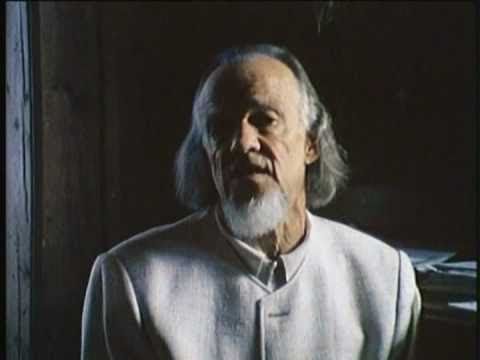
Francis Schaeffer pictured below:
_________

_______________
C. S. Lewis, Francis Schaeffer . . . and Larry Norman
February 26, 2008
Larry Norman, “father of Christian rock,” has gone home. After suffering a severe heart attack and other ailments, he slipped away at 61.
Larry Norman was the writer of a number of popular Christian songs, including “I Wish We’d All Been Ready,” many people’s first encounter with the chilling eschatology of the Rapture. He popularized, and perhaps even invented, the “One Way” gesture of the index finger pointing straight up. He helped launch the careers of many talented artists, including Randy Stonehill (my personal favourite, from whom Norman later became estranged), the Daniel Amos band, and many others on his “Street Level” and then “Solid Rock” labels.
For me, however, Larry Norman in particular was a larger-than-life figure who, with authors C. S. Lewis and Francis Schaeffer, helped this Plymouth Brethren teenager, in the backwoods (literally) of northern Ontario, look out onto a larger world of Christian possibilities. Indeed, he helped me to look out onto the larger world itself and feel that perhaps I could actually live there, rather than just briefly venture out into it to evangelize a soul or two and then hurriedly withdraw to the sanctuary of my sect.
I saw Norman in concert only once, but it was while I was attending a Brethren Bible school in Edmonton, Alberta. And the contrast between his “cool,” his sarcasm (God bless him), and his driving rock’n’roll over against the staid and square culture of my denomination and Bible school experience was paradigm-shattering.
He was electric and we were acoustic. He was backbeat and we were 6/8. (Take that, Bob Larson.) He was wild and we were repressed. He was “out there” and we were definitely “in here.”
He gave us permission to like stacks of Marshalls and fuzz boxes and wah-wah pedals and countertenor wailings (let the reader understand). He sanctified the idea of being a smarty-pants for Jesus–while also producing art of accessibility, wit, beauty, and fun.
“Why Should the Devil Have All the Good Music?” Larry asked, echoing William Booth of the Salvation Army a century before. It was a good question then, and it’s a good question now–in this era of unrelentingly derivative “CCM” (Christian Contemporary Music).
But the bigger question was simply, “Why should we yield the world to the devil–the world of rock music, the world of clever joking, the world of funky fashion, the world of authentic protest?” As Lewis and Schaeffer helped my generation engage the most intimidating of philosophers, Norman helped us engage the music our parents feared—and loathed.
The rest of my youth group was into “The Imperials” (a pop-country Nashville quartet–whom I liked, too) and the really edgy ones listened to Andrae Crouch, a good black gospel singer. For this one and only time in my life I was actually cool, because I listened to the “Jesus Rock” of Norman, Stonehill & Co.—much too racy for my peers. (Thanks, Larry.)
But ‘way beyond “cool” was Larry Norman’s prickly integrity. Norman was a rocker and used that language to express good things about Jesus and the world. And if rock’n’roll could be claimed and used for Christ–well, what couldn’t be?
Rest in peace, Uncle Larry. I look forward to turning up the amps with you in the Great Jam Session to Come.
______________
Related posts:
Series “FRANCIS SCHAEFFER ANALYZES ART AND CULTURE” traces Schaeffer’s comments on modern culture and can be found weekly on www.thedailyhatch.org !!!!!Andy Warhol, “I haven’t thought about my films. They just keep me busy!”
_________ This series of posts entitled “FRANCIS SCHAEFFER ANALYZES ART AND CULTURE” touches things that affect our culture today. The first post took a look at the foundations of our modern society today that were set by the Roman Democracy 2000 years ago and then it related it to the art we see today. […]
“FRANCIS SCHAEFFER ANALYZES ART AND CULTURE” can be found weekly on www.thedailyhatch.org ! Secular man is left according to Woody Allen with “alienation, loneliness [and] emptiness verging on madness!”
This series of posts entitled “FRANCIS SCHAEFFER ANALYZES ART AND CULTURE” touches things that affect our culture today. The first post took a look at the foundations of our modern society today that were set by the Roman Democracy 2000 years ago and then it related it to the art we see today. The […]
Series “FRANCIS SCHAEFFER ANALYZES ART AND CULTURE” traces Schaeffer’s comments on modern culture and can be found weekly on www.thedailyhatch.org !!!!! Bob Dylan asked the right questions but did he have the right answers?
_________ This series of posts entitled “FRANCIS SCHAEFFER ANALYZES ART AND CULTURE” touches things that affect our culture today. The first post took a look at the foundations of our modern society today that were set by the Roman Democracy 2000 years ago and then it related it to the art we see today. […]
Series “FRANCIS SCHAEFFER ANALYZES ART AND CULTURE” traces Schaeffer’s comments on modern culture and can be found weekly on www.thedailyhatch.org !!!!! Impressionism down to Modern Art examined!!
__________ Francis Schaeffer pictured below: ______________ Francis Schaeffer pictured below: _____________ This series of posts entitled “FRANCIS SCHAEFFER ANALYZES ART AND CULTURE” touches things that affect our culture today. The first post took a look at the foundations of our modern society today that were set by the Roman Democracy 2000 years ago and […]
“FRANCIS SCHAEFFER ANALYZES ART AND CULTURE” can be found weekly on www.thedailyhatch.org ! John Cage noted, “I became aware that if I approached mushrooms in the spirit of my chance operations, I would die shortly!”
__________ This series of posts entitled “FRANCIS SCHAEFFER ANALYZES ART AND CULTURE” touches things that affect our culture today. The first post took a look at the foundations of our modern society today that were set by the Roman Democracy 2000 years ago and then it related it to the art we see today. […]
Series “FRANCIS SCHAEFFER ANALYZES ART AND CULTURE” traces Schaeffer’s comments on modern culture and can be found weekly on www.thedailyhatch.org !!!!! Paul Gauguin and his life questions!
___________ Francis Schaeffer pictured below: _____________ Series “FRANCIS SCHAEFFER ANALYZES ART AND CULTURE” traces Schaeffer’s comments on modern culture and can be found weekly onhttp://www.thedailyhatch.org !!!!! Paul Gauguin and his life questions! This series of posts entitled “FRANCIS SCHAEFFER ANALYZES ART AND CULTURE” touches things that affect our culture today. The first post took […]
“FRANCIS SCHAEFFER ANALYZES ART AND CULTURE” can be found weekly on www.thedailyhatch.org ! Filmmakers such as Resnais, Bergman, Fellini, Antonioni, Bunuel,and Bergman all attempted to show what it is like to live in the area of nonreason!!!
This series of posts entitled “FRANCIS SCHAEFFER ANALYZES ART AND CULTURE” touches things that affect our culture today. The first post took a look at the foundations of our modern society today that were set by the Roman Democracy 2000 years ago and then it related it to the art we see today. The […]
“FRANCIS SCHAEFFER ANALYZES ART AND CULTURE” can be found weekly on www.thedailyhatch.org ! Why Communism catches the attention of young people but never comes through!!!
____________________________________________ “FRANCIS SCHAEFFER ANALYZES ART AND CULTURE” can be found weekly onhttp://www.thedailyhatch.org ! Why Communism catches the attention of young people but never comes through!!! Dr. Francis Schaeffer – Episode 9 – The Age of Personal Peace and Affluence NoMirrorHDDHrorriMoN This series of posts entitled “FRANCIS SCHAEFFER ANALYZES ART AND CULTURE” touches things […]




 I recently finished re-reading


Death and taxes are two of life’s certainties, but the tax on death itself should certainly be eliminated. A recent analysis by The Heritage Foundation’s Center for Data Analysis found that doing away with the federal death tax would provide a much-needed, long-lasting boost to the nation’s economy. Indeed, it would increase economic growth by $46 billion over the next 10 years and add an average of 18,000 jobs per year throughout that period.
The federal death tax (officially known as the “estate tax”) confiscates 40 percent of the income and assets, above a specified exemption, that individuals leave behind after their death. The exemption currently stands at $5.34 million. Because of this high exemption level, the death tax hits only a small fraction of Americans directly — a fact that makes the levy popular among those who believe it is good tax policy to “soak the rich.” Yet for years pollsters have found widespread popular support for eliminating death taxes.
Perhaps Americans despise the death tax because taxing someone for dying just seems wrong. Or perhaps they recognize that income and assets seized by the death tax have already been taxed once — if not twice — by the feds. Or maybe antipathy toward the tax abounds because the American Dream instills the hope that we, too, may someday accumulate significant wealth to pass on to our children.
Americans’ disapproval of the death tax is primarily rooted in fairness, but the economics confirm that the death tax is also inefficient. For starters, some can avoid the death tax through careful — albeit expensive and time consuming — financial planning. But this kind of planning promotes second-rate decision making; in attempting to avoid the death tax, individuals spend more and invest less, while companies voluntarily restrict their growth. These substandard choices mean other companies lose out on investments that are not made, and other workers and consumers lose out on jobs, products and services that are never created.
Despite careful planning, some individuals and businesses cannot avoid the death tax. For example, many small, family-owned businesses are asset-rich but cash-poor. When the owner of such a business dies and the government comes to collect 40 percent of the assets left behind, many of those family-run operations are forced to sell off part or all of their business. This is great news for large corporations who can swoop in and buy up those enterprises at fire-sale prices, or who reap the benefits of reduced competition, but it is bad news for the employees of those businesses who lose their jobs and for the communities who lose their products, services and community involvement. Despite the devastating impacts on those it affects, the death tax brings in only a minuscule amount of federal tax revenue, making it one of the most inefficient forms of taxation. The death tax is a tax on capital, which often has been double-taxed (as regular income and dividend income) before death. Higher taxes on capital reduce the amount of investment in the economy. Lower investment means workers are less productive. Lower productivity means lower wages. And lower wages, in turn, generate less tax revenue.
Although estimates of the death tax’s effects on economic growth and tax revenues vary, the inefficiency of the death tax is well documented. An extra $46 billion in economic growth over the next 10 years may not sound like all that much in a $17 trillion economy. But considering that the death tax generates just about one-half of 1 percent of all federal tax revenues, its elimination would actually provide a lot of bang for the buck. What’s more, incorporating additional distortions of the death tax — such as its compliance costs and cause of inferior decision-making — would lead to even bigger economic gains. Some estimates have even found that eliminating the death tax would generate so much economic growth that tax revenues would rise.
Federal policymakers should heed the will of the people and kill the death tax once and for all.
Originally appeared in the Washington Times.