Category Archives: President Obama

My rough draft letter to President Elect Biden that will be mailed on March 23, 2021! (Part 63) Pro-life atheist Nat Hentoff quotes wise 9 yr kid concerning abortion, “It doesn’t matter what month. It still means killing the babies.”

—-

Dr. Francis schaeffer – The flow of Materialism(from Part 4 of Whatever happened to human race? Co-authored by Francis Schaeffer and Dr. C. Everett Koop)

C. Everett Koop
C. Everett Koop, 1980s.jpg
13th Surgeon General of the United States
In office
January 21, 1982 – October 1, 1989

Dr. Francis Schaeffer – The Biblical flow of Truth & History (intro)

Francis Schaeffer – The Biblical Flow of History & Truth (1)

Mr. Hentoff with the clarinetist Edmond Hall in 1948 at the Savoy, a club in Boston.

Dr. Francis Schaeffer – The Biblical Flow of Truth & History (part 2)

Image<img class=”i-amphtml-blurry-placeholder” src=”data:;base64,Edith Schaeffer with her husband, Francis Schaeffer, in 1970 in Switzerland, where they founded L’Abri, a Christian commune.

________________

______________________

March 23, 2021

President Biden c/o The White House 1600 Pennsylvania Avenue NW Washington, DC 20500

Dear Mr. President,

I really do respect you for trying to get a pulse on what is going on out here. I know that you don’t agree with my pro-life views but I wanted to challenge you as a fellow Christian to re-examine your pro-choice view. Although we are both Christians and have the Bible as the basis for our moral views, I did want you to take a close look at the views of the pro-life atheist Nat Hentoff too.  Hentoff became convinced of the pro-life view because of secular evidence that shows that the unborn child is human. I would ask you to consider his evidence and then of course reverse your views on abortion.

___________________

The pro-life atheist Nat Hentoff wrote a fine article below I wanted to share with you.

Nat Hentoff is an atheist, but he became a pro-life activist because of the scientific evidence that shows that the unborn child is a distinct and separate human being and even has a separate DNA. His perspective is a very intriguing one that I thought you would be interested in. I have shared before many   cases (Bernard Nathanson, Donald Trump, Paul Greenberg, Kathy Ireland)    when other high profile pro-choice leaders have changed their views and this is just another case like those. I have contacted the White House over and over concerning this issue and have even received responses. I am hopeful that people will stop and look even in a secular way (if they are not believers) at this abortion debate and see that the unborn child is deserving of our protection.That is why the writings of Nat Hentoff of the Cato Institute are so crucial.

In the film series “WHATEVER HAPPENED TO THE HUMAN RACE?” the arguments are presented  against abortion (Episode 1),  infanticide (Episode 2),   euthanasia (Episode 3), and then there is a discussion of the Christian versus Humanist worldview concerning the issue of “the basis for human dignity” in Episode 4 and then in the last episode a close look at the truth claims of the Bible.

Francis Schaeffer

__________________________

I truly believe that many of the problems we have today in the USA are due to the advancement of humanism in the last few decades in our society. Ronald Reagan appointed the evangelical Dr. C. Everett Koop to the position of Surgeon General in his administration. He partnered with Dr. Francis Schaeffer in making the video below. It is very valuable information for Christians to have.  Actually I have included a video below that includes comments from him on this subject.

Francis Schaeffer Whatever Happened to the Human Race (Episode 1) ABORTION

_____________________________________

Dr. Francis schaeffer – The flow of Materialism(from Part 4 of Whatever happened to human race?)

Dr. Francis Schaeffer – The Biblical flow of Truth & History (intro)

Francis Schaeffer – The Biblical Flow of History & Truth (1)

Dr. Francis Schaeffer – The Biblical Flow of Truth & History (part 2)

________________

Jewish World Review June 12, 2006/ 16 Sivan, 5766

Insisting on life

http://www.NewsandOpinion.com | A longtime friend of mine is married to a doctor who also performs abortions. At the dinner table one recent evening, their 9-year-old son — having heard a word whose meaning he didn’t know — asked, “What is an abortion?” His mother, choosing her words carefully, described the procedure in simple terms.

“But,” said her son, “that means killing the baby.” The mother then explained that there are certain months during which an abortion cannot be performed, with very few exceptions. The 9-year-old shook his head. “But,” he said, “it doesn’t matter what month. It still means killing the babies.”

Hearing the story, I wished it could be repeated to the justices of the Supreme Court, in the hope that at least five of them might act on this 9-year-old’s clarity of thought and vision.

The boy’s spontaneous insistence on the primacy of life also reminded me of a powerful pro-life speaker and writer who, many years ago, helped me become a pro-lifer. He was a preacher, a black preacher. He said: “There are those who argue that the right to privacy is of a higher order than the right to life.

“That,” he continued, “was the premise of slavery. You could not protest the existence or treatment of slaves on the plantation because that was private and therefore out of your right to be concerned.”

This passionate reverend used to warn: “Don’t let the pro-choicers convince you that a fetus isn’t a human being. That’s how the whites dehumanized us … The first step was to distort the image of us as human beings in order to justify what they wanted to do — and not even feel they’d done anything wrong.”

That preacher was Jesse Jackson. Later, he decided to run for the presidency — and it was a credible campaign that many found inspiring in its focus on what still had to be done on civil rights. But Jackson had by now become “pro-choice” — much to the appreciation of most of those in the liberal base.

The last time I saw Jackson was years later, on a train from Washington to New York. I told him of a man nominated, but not yet confirmed, to a seat on a federal circuit court of appeals. This candidate was a strong supporter of capital punishment — which both the Rev. Jackson and I oppose, since it involves the irreversible taking of a human life by the state.

I asked Jackson if he would hold a press conference in Washington, criticizing the nomination, and he said he would. The reverend was true to his word; the press conference took place; but that nominee was confirmed to the federal circuit court. However, I appreciated Jackson’s effort.

On that train, I also told Jackson that I’d been quoting — in articles, and in talks with various groups — from his compelling pro-life statements. I asked him if he’d had any second thoughts on his reversal of those views.

Usually quick to respond to any challenge that he is not consistent in his positions, Jackson paused, and seemed somewhat disquieted at my question. Then he said to me, “I’ll get back to you on that.” I still patiently await what he has to say.

As time goes on, my deepening concern with the consequences of abortion is that its validation by the Supreme Court, as a constitutional practice, helps support the convictions of those who, in other controversies — euthanasia, assisted suicide and the “futility doctrine” by certain hospital ethics committees — believe that there are lives not worth continuing.

Around the time of my conversation with Jackson on the train, I attended a conference on euthanasia at Clark College in Worcester, Mass. There, I met Derek Humphry, the founder of the Hemlock Society, and already known internationally as a key proponent of the “death with dignity” movement.

He told me that for some years in this country, he had considerable difficulty getting his views about assisted suicide and, as he sees it, compassionate euthanasia into the American press.

“But then,” Humphry told me, “a wonderful thing happened. It opened all the doors for me.”

“What was that wonderful thing?” I asked.

“Roe v. Wade,” he answered.

The devaluing of human life — as the 9-year-old at the dinner table put it more vividly — did not end with making abortion legal, and therefore, to some people, moral. The word “baby” does not appear in Roe v. Wade — let alone the word “killing.”

And so, the termination of “lives not worth living” goes on.

______________________

Thank you so much for your time. I know how valuable it is. I also appreciate the fine family that you have and your commitment as a father and a husband. Now after presenting the secular approach of Nat Hentoff I wanted to make some comments concerning our shared Christian faith.  I  respect you for putting your faith in Christ for your eternal life. I am pleading to you on the basis of the Bible to please review your religious views concerning abortion. It was the Bible that caused the abolition movement of the 1800’s and it also was the basis for Martin Luther King’s movement for civil rights and it also is the basis for recognizing the unborn children.

Sincerely,

Everette Hatcher III, 13900 Cottontail Lane, Alexander, AR 72002, ph 501-920-5733,

Related posts:

Al Mohler on Kermit Gosnell’s abortion practice

Francis Schaeffer: “Whatever Happened to the Human Race” (Episode 1) ABORTION OF THE HUMAN RACE Published on Oct 6, 2012 by AdamMetropolis ________________ Picture of Francis Schaeffer and his wife Edith from the 1930′s above. I was sad to read about Edith passing away on Easter weekend in 2013. I wanted to pass along this fine […]

Taking on Ark Times Bloggers on various issues Part U “Do men have a say in the abortion debate?” (includes the film SLAUGHTER OF THE INNOCENTS and editorial cartoon)

I have gone back and forth and back and forth with many liberals on the Arkansas Times Blog on many issues such as abortion, human rights, welfare, poverty, gun control  and issues dealing with popular culture. Here is another exchange I had with them a while back. My username at the Ark Times Blog is Saline […]

Taking on Ark Times Bloggers on various issues Part T “Abortion is a dirty business” (includes video “Truth and History” and editorial cartoon)

I have gone back and forth and back and forth with many liberals on the Arkansas Times Blog on many issues such as abortion, human rights, welfare, poverty, gun control  and issues dealing with popular culture. Here is another exchange I had with them a while back. My username at the Ark Times Blog is Saline […]

“Sanctity of Life Saturday” Abortion supporters lying in order to further their clause? Window to the Womb (includes video ABORTION OF THE HUMAN RACE)

It is truly sad to me that liberals will lie in order to attack good Christian people like state senator Jason Rapert of Conway, Arkansas because he headed a group of pro-life senators that got a pro-life bill through the Arkansas State Senate the last week of January in 2013. I have gone back and […]

Taking on Ark Times Bloggers on various issues Part D “If you can’t afford a child can you abort?”Francis Schaeffer Quotes part 4 includes the film ABORTION OF THE HUMAN RACE) (editorial cartoon)

I have gone back and forth and back and forth with many liberals on the Arkansas Times Blog on many issues such as abortion, human rights, welfare, poverty, gun control  and issues dealing with popular culture. Here is another exchange I had with them a while back. My username at the Ark Times Blog is Saline […]

Taking on Ark Times Bloggers on various issues Part C “Abortion” (Francis Schaeffer Quotes part 3 includes the film SLAUGHTER OF THE INNOCENTS) (editorial cartoon)

I have gone back and forth and back and forth with many liberals on the Arkansas Times Blog on many issues such as abortion, human rights, welfare, poverty, gun control  and issues dealing with popular culture. Here is another exchange I had with them a while back. My username at the Ark Times Blog is Saline […]

Taking on Ark Times Bloggers on various issues Part B “Gendercide” (Francis Schaeffer Quotes Part 2 includes the film ABORTION OF THE HUMAN RACE) (editorial cartoon)

I have gone back and forth and back and forth with many liberals on the Arkansas Times Blog on many issues such as abortion, human rights, welfare, poverty, gun control  and issues dealing with popular culture. Here is another exchange I had with them a while back. My username at the Ark Times Blog is Saline […]

SANCTITY OF LIFE SATURDAY “AngryOldWoman” blogger argues that she has no regrets about past abortion

Sometimes you can see evidences in someone’s life of how content they really are. I saw  something like that on 2-8-13 when I confronted a blogger that goes by the name “AngryOldWoman” on the Arkansas Times Blog. See below. Leadership Crisis in America Published on Jul 11, 2012 Picture of Adrian Rogers above from 1970′s […]

“Sanctity of Life Saturday” The Church Awakens: Whatever Happened to the Human Race? (includes the video ABORTION OF THE HUMAN RACE)

In the film series “WHATEVER HAPPENED TO THE HUMAN RACE?” the arguments are presented  against abortion (Episode 1),  infanticide (Episode 2),   euthenasia (Episode 3), and then there is a discussion of the Christian versus Humanist worldview concerning the issue of “the basis for human dignity” in Episode 4 and then in the last episode a close […]

Taking on Ark Times Bloggers on various issues Part H “Are humans special?” includes film ABORTION OF THE HUMAN RACE) Reagan: ” To diminish the value of one category of human life is to diminish us all”

I have gone back and forth and back and forth with many liberals on the Arkansas Times Blog on many issues such as abortion, human rights, welfare, poverty, gun control  and issues dealing with popular culture. Here is another exchange I had with them a while back. My username at the Ark Times Blog is Saline […]

Taking on Ark Times Bloggers on various issues Part G “How do moral nonabsolutists come up with what is right?” includes the film “ABORTION OF THE HUMAN RACE”)

I have gone back and forth and back and forth with many liberals on the Arkansas Times Blog on many issues such as abortion, human rights, welfare, poverty, gun control  and issues dealing with popular culture. Here is another exchange I had with them a while back. My username at the Ark Times Blog is Saline […]

Taking on Ark Times Bloggers on various issues Part E “Moral absolutes and abortion” Francis Schaeffer Quotes part 5(includes the film SLAUGHTER OF THE INNOCENTS) (editorial cartoon)

I have gone back and forth and back and forth with many liberals on the Arkansas Times Blog on many issues such as abortion, human rights, welfare, poverty, gun control  and issues dealing with popular culture. Here is another exchange I had with them a while back. My username at the Ark Times Blog is Saline […]

Francis Schaeffer’s “How should we then live?” Video and outline of episode 10 “Final Choices” (Schaeffer Sundays)

E P I S O D E 1 0   Dr. Francis Schaeffer – Episode X – Final Choices 27 min FINAL CHOICES I. Authoritarianism the Only Humanistic Social Option One man or an elite giving authoritative arbitrary absolutes. A. Society is sole absolute in absence of other absolutes. B. But society has to be […]

Francis Schaeffer’s “How should we then live?” Video and outline of episode 9 “The Age of Personal Peace and Affluence” (Schaeffer Sundays)

E P I S O D E 9 Dr. Francis Schaeffer – Episode IX – The Age of Personal Peace and Affluence 27 min T h e Age of Personal Peace and Afflunce I. By the Early 1960s People Were Bombarded From Every Side by Modern Man’s Humanistic Thought II. Modern Form of Humanistic Thought Leads […]

Francis Schaeffer’s “How should we then live?” Video and outline of episode 8 “The Age of Fragmentation” (Schaeffer Sundays)

E P I S O D E 8 Dr. Francis Schaeffer – Episode VIII – The Age of Fragmentation 27 min I saw this film series in 1979 and it had a major impact on me. T h e Age of FRAGMENTATION I. Art As a Vehicle Of Modern Thought A. Impressionism (Monet, Renoir, Pissarro, Sisley, […]

Francis Schaeffer’s “How should we then live?” Video and outline of episode 7 “The Age of Non-Reason” (Schaeffer Sundays)

E P I S O D E 7 Dr. Francis Schaeffer – Episode VII – The Age of Non Reason I am thrilled to get this film series with you. I saw it first in 1979 and it had such a big impact on me. Today’s episode is where we see modern humanist man act […]

Francis Schaeffer’s “How should we then live?” Video and outline of episode 6 “The Scientific Age” (Schaeffer Sundays)

E P I S O D E 6 How Should We Then Live 6#1 Uploaded by NoMirrorHDDHrorriMoN on Oct 3, 2011 How Should We Then Live? Episode 6 of 12 ________ I am sharing with you a film series that I saw in 1979. In this film Francis Schaeffer asserted that was a shift in […]

Francis Schaeffer’s “How should we then live?” Video and outline of episode 5 “The Revolutionary Age” (Schaeffer Sundays)

E P I S O D E 5 How Should We Then Live? Episode 5: The Revolutionary Age I was impacted by this film series by Francis Schaeffer back in the 1970′s and I wanted to share it with you. Francis Schaeffer noted, “Reformation Did Not Bring Perfection. But gradually on basis of biblical teaching there […]

Francis Schaeffer’s “How should we then live?” Video and outline of episode 4 “The Reformation” (Schaeffer Sundays)

Dr. Francis Schaeffer – Episode IV – The Reformation 27 min I was impacted by this film series by Francis Schaeffer back in the 1970′s and I wanted to share it with you. Schaeffer makes three key points concerning the Reformation: “1. Erasmian Christian humanism rejected by Farel. 2. Bible gives needed answers not only as to […]

“Schaeffer Sundays” Francis Schaeffer’s “How should we then live?” Video and outline of episode 3 “The Renaissance”

Francis Schaeffer’s “How should we then live?” Video and outline of episode 3 “The Renaissance” Francis Schaeffer: “How Should We Then Live?” (Episode 3) THE RENAISSANCE I was impacted by this film series by Francis Schaeffer back in the 1970′s and I wanted to share it with you. Schaeffer really shows why we have so […]

Francis Schaeffer’s “How should we then live?” Video and outline of episode 2 “The Middle Ages” (Schaeffer Sundays)

  Francis Schaeffer: “How Should We Then Live?” (Episode 2) THE MIDDLE AGES I was impacted by this film series by Francis Schaeffer back in the 1970′s and I wanted to share it with you. Schaeffer points out that during this time period unfortunately we have the “Church’s deviation from early church’s teaching in regard […]

Francis Schaeffer’s “How should we then live?” Video and outline of episode 1 “The Roman Age” (Schaeffer Sundays)

Francis Schaeffer: “How Should We Then Live?” (Episode 1) THE ROMAN AGE   Today I am starting a series that really had a big impact on my life back in the 1970′s when I first saw it. There are ten parts and today is the first. Francis Schaeffer takes a look at Rome and why […]

By Everette Hatcher III | Posted in Francis Schaeffer | Edit | Comments (0)

6 Key Points on Efforts to Oust Trump in Final Days


________________

_____

President Donald Trump greets the crowd at the “Save America” rally Wednesday just south of the White House before rioters breached the Capitol. (Photo: Tasos Katopodis/Getty Images)

After the riot at the Capitol, congressional Democrats increasingly are calling for the removal of President Donald Trump before his term expires Jan. 20, either through a second impeachment or by invoking the 25th Amendment. 

Rep. Katherine Clark, D-Mass., an assistant House speaker, said  lawmakers could vote on impeachment within a week. 

After vowing never to concede the 2020 presidential contest at a rally Wednesday, Trump announced the next day that he is committed to an orderly transition to the presidency of Joe Biden. 

Theoretically, if Trump were removed from office, it would create two historic precedents. 

The demand for socialism is on the rise from young Americans today. But is socialism even morally sound? Find out more now >>

First, Trump would be the first president to be impeached twice. And second, if Vice President Mike Pence were to become the 46th president–with a term expiring Jan. 20–it would be the shortest presidential term American history. President William Henry Harrison died 31 days into his term. 

Here are six things to know about efforts to boot Trump from office before his term ends in less than two weeks. 

1. Could Opponents Use 25th Amendment?

House Speaker Nancy Pelosi, D-Calif., and Senate Democratic Leader Charles Schumer, D-N.Y., have called for Pence and the Trump Cabinet to use the 25th Amendment to remove Trump from office. 

Pelosi said the House could move to impeach Trump if his Cabinet didn’t act. On Friday, she issued a statement calling for Trump to resign or face impeachment:

It is the hope of Members that the president will immediately resign. But if he does not, I have instructed the Rules Committee to be prepared to move forward with Congressman Jamie Raskin’s 25th Amendment legislation and a motion for impeachment. Accordingly, the House will preserve every option–including the 25th Amendment, a motion to impeach or a privileged resolution for impeachment.

Raskin, a Maryland Democrat, introduced his 25th Amendment legislation in October. 

But legal experts say the 25th Amendment is not in play in this case, primarily because Pence reportedly has no plans to call the Cabinet together to remove Trump. 

“The 25th Amendment wouldn’t be applicable here,” Ross Garber, a lawyer who specializes in political investigations and impeachment and teaches at Tulane Law School, told The Daily Signal. 

Garber represented four governors who faced state impeachment investigations in Connecticut, South Carolina, Alabama, and Missouri. 

The 25th Amendment to the Constitution allowsfor the vice president and a majority of Cabinet secretaries to determine that a president is physically or mentally unfit to carry out the duties of the office. It provides for the vice president to become acting president on a temporary basis. 

Congress then could remove the president from office permanently with a two-thirds vote of both the House and Senate. That would be an even higher bar to reach than impeachment, because the latter requires only a simple majority in the House to remove a president, but two-thirds of the Senate.

Congress adopted the 25th Amendment in 1967, about three years after the assassination of President John F. Kennedy. The move was based on the concern about what to do while a president was still alive but experiencing a health crisis.

“The 25th Amendment is for when a president is unable to fulfill the duties of the office for either physically or mental reasons,” John Malcolm, director of the Meese Center for Legal and Judicial Studies at The Heritage Foundation, told The Daily Signal. 

“I don’t think it’s appropriate as a matter of constitutional law,” added Malcolm, also a former deputy assistant attorney general in the Justice Department’s Criminal Division. 

And it’s not practical since Pence doesn’t plan to invoke the option, he said. 

Rep. Adam Kinzinger, R-Ill., became the first GOP lawmaker to call for Trump’s removal under the 25th Amendment. 

“It’s time to invoke the 25th Amendment and end this nightmare,” said Kinzinger, who also said he would back impeaching Trump. 

2. What Could Trump Be Impeached For?

The charges that Democrats most often talk about are sedition, incitement to riot, and insurrection, or in aiding and abetting a riot or seditious acts. 

This approach would be different from the House’s 2019 impeachment of Trump on two articles that did not allege a crime, but specified abuse of power and obstruction of Congress.

“It’s not sedition, that would be ridiculous, or aiding and abetting,” said Robert Ray, a former independent counsel who investigated President Bill Clinton and was a lawyer for Trump in the 2020 Senate impeachment trial.

“But an impeachment alleging incitement [of a riot] or aiding and abetting would not suffer the same defect as the earlier impeachment,” Ray told The Daily Signal. “At least there would be an alleged crime. A factual basis would be the challenge.” 

The federal statute on sedition defines it as conduct promoting the overthrow of the U.S. government. 

Both Republicans and Democrats referred to the mob that broke into the Capitol and overwhelmed police as an “insurrection.” 

Federal law defines an insurrectionist as “Whoever incites, sets on foot, assists, or engages in any rebellion or insurrection against the authority of the United States or the laws thereof, or gives aid or comfort thereto.”

Federal riot law includes provision on those “with intent” to “incite a riot,” or to “aid and abet any person in inciting or participating in or carrying out a riot.”

In Trump’s speech Wednesday at the “Save America Rally” before the riot, which many on both sides criticized as inflammatory, the president said at one point: “ I know that everyone here will soon be marching over to the Capitol building to peacefully and patriotically make your voices heard.”

However, Trump also told the crowd: “Fraud breaks up everything, doesn’t it? When you catch somebody in a fraud, you’re allowed to go by very different rules.” 

The president also said: “We fight like hell and if you don’t fight like hell, you’re not going to have a country anymore.”

U.S. Capitol Police announced Thursday night that Officer Brian Sicknick, 42, had died of his injuries and that authorities were treating the 12-year veteran’s death as a homicide. He was the fifth person to die as a result of the chaos at the Capitol.

Twitter, the social media platform that Trump long has used to spread his message, announcedlate Friday that it had “permanently suspended” his account “due to the risk of further incitement of violence.”

Heritage’s Malcolm said earlier that he didn’t want to guess what the House’s articles of impeachment would say, but said he thought sedition would be a stretch. 

“I don’t think the president was trying to set up a coup to take over the government, but his words were certainly unwise and inflammatory,” Malcolm said. 

Beyond his words at the rally are news reports that the president   resisted securing the Capitol and that senior Trump administration officials had to go around him to bring in the D.C. National Guard to help bring order to the building. 

“A key issue to focus on is what the president did after the riots and whether he refused to deploy forces to secure the Capitol,” Garber said. “If that is true, it’s hard to justify.”

All impeachment proceedings should be based on whether an officeholder poses a danger to the country, the government, or  the office, Garber said. 

“That should always be the justification for impeachment,” Garber said. “It’s not to censure or punish. It’s meant to protect the country. … You could make an argument that the president has enormous power he could exercise in 12 days.” 

Rep. Ilhan Omar, D-Minn., announced Wednesday that she was drawing up articles of impeachment against Trump. 

The House impeached Trump on Dec. 18, 2019, on charges of abuse of power and obstruction of Congress in connection with his telephone conversation with Ukrainian President Volodymyr Zelenskyy in which the two leaders discussed Biden’s son, Hunter Biden, as well as U.S. military aid. 

The Senate acquitted Trump on Feb. 5, 2020. 

3. Time Expiring for a Senate Trial?

Although only one Senate Republican, Mitt Romney of Utah, voted to remove Trump in last year’s trial, Sen. Ben Sasse, R-Neb., said Friday morning that he would consider supporting articles of impeachment if the House sent them to the Senate. 

Sen. Lisa Murkowski, R-Alaska, called Friday for Trump to resign. 

Even if the House impeaches Trump next week, the likelihood that the Senate could or would reconvene in time to hold a trial before President-elect Joe Biden’s inauguration Jan. 20 seems unlikely, Malcolm said. 

“The House could draft articles of impeachment and vote on it in 12 days,” Malcolm said. “I do not think there is time for a Senate trial. But Trump could be the first president in American history to be impeached twice.”

The Senate would have to come back into session to address House charges against Trump. The Senate calendar has the body scheduled to be in recess until Jan. 20. 

Still, that early return to Washington is not impossible, Garber said. 

“There is conceivably time to do this. Impeachment doesn’t have to be drawn out,” he said. “Impeachment is intended to be a measure in an emergency.”

4. What’s the Point of Impeaching Trump Now? 

Article I, Section 3, Clause 7 of the Constitution says that if a federal official is convicted in an impeachment trial, “judgment in cases of impeachment shall not extend further than to removal from office, and disqualification to hold and enjoy any office of honor, trust or profit under the United States.” 

Legal experts debate whether disqualification from running for future office requires the same two-thirds majority as removal from office, or just a simple majority. 

“It would not be wise to rush an impeachment for the purpose of preventing him from holding office again and bar him from running in 2024,” Ray said. “That should be something voters could decide.”

So the House could impeach and the Senate–soon to be under slim Democratic control–could hold a trial even after Trump leaves office. It basically would be to disqualify Trump from running for president again, as many suspect he will do in 2024. 

5. Could Trump Be Impeached After Leaving? 

Precedent going back to the scandal-plagued Grant administration’s War Secretary William Belknap suggests that retroactive impeachment could occur.

Belknap ran what is now the Defense Department for almost eight years. In 1876,  a House investigation found evidence that he took part in kickbacks and corruption involving a military vendor that paid $20,000 to the war secretary. 

On March 2, 1876, Belknap resigned from office just minutes before the House was scheduled to impeach him. If he thought this would preclude impeachment, he was wrong. 

The House approved five articles of impeachment, including one that accused Belknap of “criminally disregarding his duty as Secretary of War and basely prostituting his high office to his lust for private gain.”

The fact that Belknap no longer held office didn’t prevent the Senate from holding a trial. On Aug. 1, 1876, a Senate majority voted in favor of all five articles of impeachment–well short of the two-thirds required to convict. The former war secretary was acquitted and never prosecuted. 

Such drama would consume much of Washington if it occurred with Trump, Ray said, and that likely isn’t what Biden wants. 

“Is this really how Biden wants to begin his administration?” Ray said. “It’s not really in the country’s best interest, and it isn’t in the Democratic Party’s best interest.” 

6. Could Biden Justice Department Charge Trump After He Leaves?

Many on the left have clamored for Trump to be prosecuted for something–anything–after leaving office well before the Capitol riot occurred. 

Biden announced this week that he will nominate a federal judge, Merrick Garland, to be his attorney general. President Barack Obama nominated Garland to the Supreme Court in 2015, but the Republican-led Senate declined to consider the nomination.

The Garland choice makes a political prosecution somewhat unlikely, Ray said. 

Ray secured a plea deal with Bill Clinton just before the 43rd president left office in which Clinton agreed to surrender his law license and admit to making misleading statements under oath to avoid future prosecution. 

“In the past, the judgment of the Justice Department was to leave well enough alone with former presidents,” Ray said.

Ken McIntyre contributed to this report.


_________________

March 8, 2021

President Biden c/o The White House

1600 Pennsylvania Avenue NW
Washington, DC 20500

Dear Mr. President,

I read in A PROMISED LAND these words about the transition period for Obama/Biden:

President Bush would end up doing all he could to make the eleven weeks between my election and his departure go smoothly. Every office in the White House provided my team with detailed ‘how to’ manuals. His staffers made themselves available to meet with their successors, answer questions, and even be shadowed as they carried out their duties. The Bush daughters, Barbara and Jenna, by that time young adults, rearranged their schedules to give Malia and Sasha their own tour of the ‘fun’ parts of the White House. I promised myself that when the time came, I would treat my successor the same way.” 

How did you and President Obama treat Donald Trump’s transition to power? Also Bush did not say one thing negative about you and President Obama during your time in White House! Did you and President Obama extend the same courtesy that the President who followed you?

Former Vice President Joe Biden speaks prior to the holiday at The Queen theater Dec. 22, 2020, in Wilmington, Delaware. (Photo: Joshua Roberts/Stringer/Getty Images)

After Nov. 3, the meaning of some words and concepts abruptly changed. Have you noticed how new realities have replaced old ones?

Media cross-examination of the president is now an out-of-date idea. The time for gotcha questions has come and gone. Why ask a president whether he is a traitor or a crook when you can focus on his favorite flavor of milkshake or compliment him on his socks?

The old pre-election truth was that new vaccines take years to develop. The new postelection truth is that it’s no big deal to bring out new vaccines in nine months.

Impeaching a first-term president after his first midterm election—on a strictly partisan vote, for political reasons other than the Constitution’s “treason, bribery, or other high crimes and misdemeanors”—is now a terrible idea.

Stand for your principles in 2021—even in the face of Congress, the media, and the radical Left ganging up on conservatives and our values. Learn more now >>

Worse would be to appoint a special counsel to harass a president on unfounded charges of collusion with China. An even scarier notion would be a conservative dream team of partisan lawyers hounding a President Joe Biden—using a 22-month, $40 million blank check.

It would be unprofessional for university psychologists and physicians from a distance to diagnose, in pop fashion, the mental faculties of a President Biden.

Certainly, there would never be talk about Department of Justice officials contemplating wearing a wire as part of an entrapment scheme to remove a President Biden through the 25th Amendment. That would almost constitute a coup attempt.

Almost as bad would be for the holdover FBI director to start “memorializing” his private conversations with Biden on FBI devices. He might then leak such memos to the press—just in case he were to be fired for secretly investigating Biden for “Chinese collusion” and then lying about such a probe.

What happened to the Logan Act? Not long ago it was assumed to be a critically needed guardrail. Wouldn’t it now ensure that presidential transition team members were not calling foreign leaders while Donald Trump is still president? How has it suddenly become a defunct, ossified relic?

Leaking classified material would be about the worst thing government officials could do. Imagine if a Trump holdover, burrowed into the new Biden administration, released a transcript of Biden’s private conversations with the Mexican president or the Australian prime minister.

Such a breach of trust would be almost as bad as a turncoat anti-Biden mole seeking to resist presidential directives. Imagine if this anonymous staffer were given an op-ed in The New York Times to claim that a cadre of old-time Democrats was shocked by Biden’s cognitive decline and resisting his directives.

Is extending security clearances to former high-level officials-turned-cable TV pundits still a bad idea? Who would wish to see, for instance, former Director of National Intelligence John Ratcliffe issuing warnings each night on Fox News? With a wink-and-nod hat tip to his “confidential sources,” Ratcliffe could spin conspiracy theories that Biden is facing bombshell disclosures about his family misadventures with the Chinese.

Is it still important that we keep the tradition of retired high-ranking military officers—all subject to the requirements of the Uniform Code of Military Justice—not disparaging the president?

Who would want former Pentagon officials, some of them serving on the boards of military contractors, warning us that Biden should be removed because of cognitive challenges? Certainly, generals and admirals should not compare a President Biden’s policies to those of Mussolini or the Nazis.

At least “dark money” no longer exists. The old idea of right-wing billionaires pouring money into candidates’ political campaigns was supposedly a dangerous practice. It would be far more civic-minded for left-wing billionaires to pour hundreds of millions of dollars into the coffers of nonpartisan state bureaucracies entrusted with guaranteeing the sanctity of national elections.

And apparently after, not before, an election is the proper time to announce critically important news.

Like the rollout of a safe and effective COVID-19 vaccine?

Like a $900 billion stimulus package?

Like a revised upward Fannie Mae report on the economy?

Like the ties between a Democratic member of the House Intelligence Committee and a suspected Chinese spy?

Like a federal investigation of Biden’s son and his possible profiteering with rich Chinese elites affiliated with China’s government?

To keep track of our brave new American world is easy.

Just consider everything said to be bad by the “Animal Farm” media before Nov. 3 as now good. And remember that everything said to be good two months ago is now actually bad.

(C)2020 Tribune Content Agency, LLC

________

Thank you so much for your time. I know how valuable it is. I also appreciate the fine family that you have and your commitment as a father and a husband.

Sincerely,

Everette Hatcher III, 13900 Cottontail Lane, Alexander, AR 72002, ph 501-920-5733

Related Posts:

Abortionist Bernard Nathanson turned pro-life activist (part 11)

ABORTION – THE SILENT SCREAM 1 / Extended, High-Resolution Version (with permission from APF). Republished with Permission from Roy Tidwell of American Portrait Films as long as the following credits are shown: VHS/DVDs Available American Portrait Films Call 1-800-736-4567 http://www.amport.com The Hand of God-Selected Quotes from Bernard N. Nathanson, M.D., Unjust laws exist. Shall we […]

Abortionist Bernard Nathanson turned pro-life activist (part 10)

Dr. Bernard N. Nathanson, a leading pro-life advocate and convert to Catholicism, died at the age of 84 on Monday a week ago in his New York home, after a long struggle with cancer. The Hand of God-Selected Quotes from Bernard N. Nathanson, M.D., Chapter 12 is titled To The Thanatoriums, an allusion the Walker […]

:


Francis Schaeffer’s prayer for us in USA

 Francis Schaeffer: “Whatever Happened to the Human Race” (Episode 1) ABORTION OF THE HUMAN RACE Published on Oct 6, 2012 by AdamMetropolis The 45 minute video above is from the film series created from Francis Schaeffer’s book “Whatever Happened to the Human Race?” with Dr. C. Everett Koop. This book  really helped develop my political views […]


Francis Schaeffer’s “How should we then live?” Video and outline of episode 10 “Final Choices” (Schaeffer Sundays)

E P I S O D E 1 0   Dr. Francis Schaeffer – Episode X – Final Choices 27 min FINAL CHOICES I. Authoritarianism the Only Humanistic Social Option One man or an elite giving authoritative arbitrary absolutes. A. Society is sole absolute in absence of other absolutes. B. But society has to be […]

Francis Schaeffer’s “How should we then live?” Video and outline of episode 9 “The Age of Personal Peace and Affluence” (Schaeffer Sundays)

E P I S O D E 9 Dr. Francis Schaeffer – Episode IX – The Age of Personal Peace and Affluence 27 min T h e Age of Personal Peace and Afflunce I. By the Early 1960s People Were Bombarded From Every Side by Modern Man’s Humanistic Thought II. Modern Form of Humanistic Thought Leads […]

Francis Schaeffer’s “How should we then live?” Video and outline of episode 8 “The Age of Fragmentation” (Schaeffer Sundays)

E P I S O D E 8 Dr. Francis Schaeffer – Episode VIII – The Age of Fragmentation 27 min I saw this film series in 1979 and it had a major impact on me. T h e Age of FRAGMENTATION I. Art As a Vehicle Of Modern Thought A. Impressionism (Monet, Renoir, Pissarro, Sisley, […]

Francis Schaeffer’s “How should we then live?” Video and outline of episode 7 “The Age of Non-Reason” (Schaeffer Sundays)

E P I S O D E 7 Dr. Francis Schaeffer – Episode VII – The Age of Non Reason I am thrilled to get this film series with you. I saw it first in 1979 and it had such a big impact on me. Today’s episode is where we see modern humanist man act […]

Francis Schaeffer’s “How should we then live?” Video and outline of episode 6 “The Scientific Age” (Schaeffer Sundays)

E P I S O D E 6 How Should We Then Live 6#1 Uploaded by NoMirrorHDDHrorriMoN on Oct 3, 2011 How Should We Then Live? Episode 6 of 12 ________ I am sharing with you a film series that I saw in 1979. In this film Francis Schaeffer asserted that was a shift in […]

Francis Schaeffer’s “How should we then live?” Video and outline of episode 5 “The Revolutionary Age” (Schaeffer Sundays)

E P I S O D E 5 How Should We Then Live? Episode 5: The Revolutionary Age I was impacted by this film series by Francis Schaeffer back in the 1970′s and I wanted to share it with you. Francis Schaeffer noted, “Reformation Did Not Bring Perfection. But gradually on basis of biblical teaching there […]

Francis Schaeffer’s “How should we then live?” Video and outline of episode 4 “The Reformation” (Schaeffer Sundays)

Dr. Francis Schaeffer – Episode IV – The Reformation 27 min I was impacted by this film series by Francis Schaeffer back in the 1970′s and I wanted to share it with you. Schaeffer makes three key points concerning the Reformation: “1. Erasmian Christian humanism rejected by Farel. 2. Bible gives needed answers not only as to […]

“Schaeffer Sundays” Francis Schaeffer’s “How should we then live?” Video and outline of episode 3 “The Renaissance”

Francis Schaeffer’s “How should we then live?” Video and outline of episode 3 “The Renaissance” Francis Schaeffer: “How Should We Then Live?” (Episode 3) THE RENAISSANCE I was impacted by this film series by Francis Schaeffer back in the 1970′s and I wanted to share it with you. Schaeffer really shows why we have so […]

Francis Schaeffer’s “How should we then live?” Video and outline of episode 2 “The Middle Ages” (Schaeffer Sundays)

  Francis Schaeffer: “How Should We Then Live?” (Episode 2) THE MIDDLE AGES I was impacted by this film series by Francis Schaeffer back in the 1970′s and I wanted to share it with you. Schaeffer points out that during this time period unfortunately we have the “Church’s deviation from early church’s teaching in regard […]

Francis Schaeffer’s “How should we then live?” Video and outline of episode 1 “The Roman Age” (Schaeffer Sundays)

Francis Schaeffer: “How Should We Then Live?” (Episode 1) THE ROMAN AGE   Today I am starting a series that really had a big impact on my life back in the 1970′s when I first saw it. There are ten parts and today is the first. Francis Schaeffer takes a look at Rome and why […]

Francis Schaeffer: “Whatever Happened to the Human Race” (Episode 5) TRUTH AND HISTORY

Francis Schaeffer: “Whatever Happened to the Human Race” (Episode 5) TRUTH AND HISTORY Published on Oct 7, 2012 by AdamMetropolis This crucial series is narrated by the late Dr. Francis Schaeffer and former Surgeon General Dr. C. Everett Koop. Today, choices are being made that undermine human rights at their most basic level. Practices once […]

Francis Schaeffer: “Whatever Happened to the Human Race” (Episode 4) THE BASIS FOR HUMAN DIGNITY

The opening song at the beginning of this episode is very insightful. Francis Schaeffer: “Whatever Happened to the Human Race” (Episode 4) THE BASIS FOR HUMAN DIGNITY Published on Oct 7, 2012 by AdamMetropolis This crucial series is narrated by the late Dr. Francis Schaeffer and former Surgeon General Dr. C. Everett Koop. Today, choices […]

Francis Schaeffer: “Whatever Happened to the Human Race” (Episode 3) DEATH BY SOMEONE’S CHOICE

Francis Schaeffer: “Whatever Happened to the Human Race” (Episode 3) DEATH BY SOMEONE’S CHOICE Published on Oct 6, 2012 by AdamMetropolis This crucial series is narrated by the late Dr. Francis Schaeffer and former Surgeon General Dr. C. Everett Koop. Today, choices are being made that undermine human rights at their most basic level. Practices […]

Francis Schaeffer: “Whatever Happened to the Human Race?” (Episode 2) SLAUGHTER OF THE INNOCENTS

Francis Schaeffer: “Whatever Happened to the Human Race?” (Episode 2) SLAUGHTER OF THE INNOCENTS Published on Oct 6, 2012 by AdamMetropolis This crucial series is narrated by the late Dr. Francis Schaeffer and former Surgeon General Dr. C. Everett Koop. Today, choices are being made that undermine human rights at their most basic level. Practices […]


Francis Schaeffer: “Whatever Happened to the Human Race” (Episode 1) ABORTION OF THE HUMAN RACE

It is not possible to know where the pro-life evangelicals are coming from unless you look at the work of the person who inspired them the most. That person was Francis Schaeffer.  I do care about economic issues but the pro-life issue is the most important to me. Several years ago Adrian Rogers (past president of […]

The following essay explores the role that Francis Schaeffer played in the rise of the pro-life movement. It examines the place of How Should We Then Live?, Whatever Happened to the Human Race?, and A Christian Manifesto in that process.

This essay below is worth the read. Schaeffer, Francis – “Francis Schaeffer and the Pro-Life Movement” [How Should We Then Live?, Whatever Happened to the Human Race?, A Christian Manifesto] Editor note: <p> </p> [The following essay explores the role that Francis Schaeffer played in the rise of the pro-life movement.  It examines the place of […]

Who was Francis Schaeffer? by Udo Middelmann

Great article on Schaeffer. Who was Dr. Francis A. Schaeffer? By Francis Schaeffer The unique contribution of Dr. Francis Schaeffer on a whole generation was the ability to communicate the truth of historic Biblical Christianity in a way that combined intellectual integrity with practical, loving care. This grew out of his extensive understanding of the Bible […]

My rough draft letter to President Elect Biden that will be mailed on March 22, 2021! (Part 62) Pro-life Atheist Nat Hentoff: “Link between pro-lifers (of today) to the Abolitionists of 19th century who would not be deterred from their goal of ensuring equal rights for all human beings in this land”

—-

Dr. Francis schaeffer – The flow of Materialism(from Part 4 of Whatever happened to human race? Co-authored by Francis Schaeffer and Dr. C. Everett Koop)

C. Everett Koop
C. Everett Koop, 1980s.jpg
13th Surgeon General of the United States
In office
January 21, 1982 – October 1, 1989

Dr. Francis Schaeffer – The Biblical flow of Truth & History (intro)

Francis Schaeffer – The Biblical Flow of History & Truth (1)

Mr. Hentoff with the clarinetist Edmond Hall in 1948 at the Savoy, a club in Boston.

Dr. Francis Schaeffer – The Biblical Flow of Truth & History (part 2)

Image<img class=”i-amphtml-blurry-placeholder” src=”data:;base64,Edith Schaeffer with her husband, Francis Schaeffer, in 1970 in Switzerland, where they founded L’Abri, a Christian commune.

________________

______________________

March 22, 2021

President Biden c/o The White House 1600 Pennsylvania Avenue NW Washington, DC 20500

Dear Mr. President,

I really do respect you for trying to get a pulse on what is going on out here. I know that you don’t agree with my pro-life views but I wanted to challenge you as a fellow Christian to re-examine your pro-choice view. Although we are both Christians and have the Bible as the basis for our moral views, I did want you to take a close look at the views of the pro-life atheist Nat Hentoff too.  Hentoff became convinced of the pro-life view because of secular evidence that shows that the unborn child is human. I would ask you to consider his evidence and then of course reverse your views on abortion.

___________________

Nat Hentoff is an atheist, but he became a pro-life activist because of the scientific evidence that shows that the unborn child is a distinct and separate human being and even has a separate DNA. His perspective is a very intriguing one that I thought you would be interested in. I have shared before many   cases (Bernard Nathanson, Donald Trump, Paul Greenberg, Kathy Ireland)    when other high profile pro-choice leaders have changed their views and this is just another case like those. I have contacted the White House over and over concerning this issue and have even received responses. I am hopeful that people will stop and look even in a secular way (if they are not believers) at this abortion debate and see that the unborn child is deserving of our protection.That is why the writings of Nat Hentoff of the Cato Institute are so crucial.

Civil Rights And Anti- Abortion Protests

by Nat Hentoff
The Washington Post, February 6, 1989

Planned Parenthood recently assembled 13 distinguished civil rights leaders so that they might express their scorn for the notion that there is any moral connection between the Operation Rescue demonstrations “and the civil rights struggles of the 1960s.”

The leaders — including Jesse Jackson, Andrew Young, Julian Bond, John Jacob, Mary King and Roger Wilkins — deplored the pro-lifers’ “protests to deny Americans their constitutional right to freedom of choice. They want the Constitution rewritten.” And in the unkindest cut of all, these leaders — once themselves demonstrators against laws they considered profoundly unjust — compared the nonviolent Operation Rescue workers to “the segregationists who fought desperately to block black Americans from access to their rights.”

Actually, however, a more accurate analogy would link these pro-lifers to the civil rights workers of the 19th century, the Abolitionists, who would not be deterred from their goal of ensuring equal rights for all human beings in this land. They believed, as these 13 civil rights leaders later did, that social change comes only after social upheaval.

What the Abolitionists were opposing was the rule of law — ultimately underlined by the Supreme Court in its Dred Scott decision — that people of African descent, whether free or slaves, had “never been regarded as a part of the people or citizens of the State.” They had no rights whatever. They were the property of their owners, no more. The Abolitionists did indeed want the Constitution rewritten.

Now, the pro-lifers, aware that the Supreme Court has declared itself in error before, are protesting the holding in Roe v. Wade that “the unborn have never been recognized in the law as persons in the whole sense.” Although that decision also spoke of a time when the fetus becomes viable and then may be protected by the state, in fact we have abortion on demand.

As Justice Harry Blackmun said in Doe v. Bolton — decided on the same day as Roe v. Wade — the mother’s health is paramount, and that includes, among other things, “physical, emotional, psychological, familial” factors. Abortions can be obtained for these reasons, and more.

So, like the slave, the fetus is property and its owner can dispose of it. Increasingly, for instance, women are undergoing prenatal testing to find out the gender of the developing human being inside them. If it’s the wrong sex, it is aborted.

Pro-lifers who maintain the fetus should have equal protection under the law are not limited to those driven by religious convictions. There is the biological fact that after conception, a being has been formed with unique human characteristics. He or she, if allowed to survive, will be unlike anyone born before. From their point of view, therefore, pro-lifers are engaged in a massive civil rights movement. In 16 years, after all, there have been some 20 million abortions.

Some pro-lifers, like some of the abolitionists, feel that nonviolence, however direct, is insufficient. They are of the order of John Brown. As noted by James McPherson in “Battle Cry of Freedom,” Brown stalked out of a meeting of the New England Antislavery Society, grumbling, “Talk! Talk! Talk! That will never free the slaves. What is needed is action — action!”

Those relatively few — and invariably isolated — pro-lifers who follow John Brown’s flag are surely not in the tradition of Martin Luther King, and the 13 civil rights leaders have reason to keep them at a far distance. But Operation Rescue, and similar demonstrations, are not violent. Entrances are blocked, and so they were in some nonviolent civil rights demonstrations. There is shouting, some of it not very civil, back and forth across the lines, but so there was in the 1960s.

The only actual violence connected with Operation Rescue has been inflicted by the police, most viciously, in Atlanta where one of the Planned Parenthood’s 13 civil rights leaders is mayor. A member of the Atlanta City Council, Josea Williams — himself a close associate of Martin Luther King — has said: “We who were the leaders of the movement in the ’50s and ’60s are now political leaders. And we are doing the same thing to demonstrators that George Wallace and Bull Connor did to us.”

Twelve years ago, another associate of Dr. King argued against the Roe v. Wade thesis that a woman’s privacy rights justify abortion. That, he said, “was the premise of slavery. You could not protest the . . . treatment of slaves . . . because that was private.”

The civil rights leader who said that was Jesse Jackson — before he became a member of the pro- abortion congregation. By then, he was also a political leader.

Copyright 1989 The Washington Post

In the past I have spent most of my time looking at this issue from the spiritual side. In the film series “WHATEVER HAPPENED TO THE HUMAN RACE?” the arguments are presented  against abortion (Episode 1),  infanticide (Episode 2),   euthanasia (Episode 3), and then there is a discussion of the Christian versus Humanist worldview concerning the issue of “the basis for human dignity” in Episode 4 and then in the last episode a close look at the truth claims of the Bible.

Francis Schaeffer

__________________________

I truly believe that many of the problems we have today in the USA are due to the advancement of humanism in the last few decades in our society. Ronald Reagan appointed the evangelical Dr. C. Everett Koop to the position of Surgeon General in his administration. He partnered with Dr. Francis Schaeffer in making the video below. It is very valuable information for Christians to have.  Actually I have included a video below that includes comments from him on this subject.

___________________

Francis Schaeffer Whatever Happened to the Human Race (Episode 1) ABORTION

_____________________________________

Dr. Francis schaeffer – The flow of Materialism(from Part 4 of Whatever happened to human race?)

Dr. Francis Schaeffer – The Biblical flow of Truth & History (intro)

Francis Schaeffer – The Biblical Flow of History & Truth (1)

Dr. Francis Schaeffer – The Biblical Flow of Truth & History (part 2)

______________________________________

Thank you so much for your time. I know how valuable it is. I also appreciate the fine family that you have and your commitment as a father and a husband. Now after presenting the secular approach of Nat Hentoff I wanted to make some comments concerning our shared Christian faith.  I  respect you for putting your faith in Christ for your eternal life. I am pleading to you on the basis of the Bible to please review your religious views concerning abortion. It was the Bible that caused the abolition movement of the 1800’s and it also was the basis for Martin Luther King’s movement for civil rights and it also is the basis for recognizing the unborn children.

Sincerely,

Everette Hatcher III, 13900 Cottontail Lane, Alexander, AR 72002, ph 501-920-5733,

Related posts:

Al Mohler on Kermit Gosnell’s abortion practice

Francis Schaeffer: “Whatever Happened to the Human Race” (Episode 1) ABORTION OF THE HUMAN RACE Published on Oct 6, 2012 by AdamMetropolis ________________ Picture of Francis Schaeffer and his wife Edith from the 1930′s above. I was sad to read about Edith passing away on Easter weekend in 2013. I wanted to pass along this fine […]

A man of pro-life convictions: Bernard Nathanson (part4)

ABORTION – THE SILENT SCREAM 1 / Extended, High-Resolution Version (with permission from APF). Republished with Permission from Roy Tidwell of American Portrait Films as long as the following credits are shown: VHS/DVDs Available American Portrait Films Call 1-800-736-4567 http://www.amport.com The Hand of God-Selected Quotes from Bernard N. Nathanson, M.D., Unjust laws exist. Shall we […]

Abortionist Bernard Nathanson turned pro-life activist (part 11)

ABORTION – THE SILENT SCREAM 1 / Extended, High-Resolution Version (with permission from APF). Republished with Permission from Roy Tidwell of American Portrait Films as long as the following credits are shown: VHS/DVDs Available American Portrait Films Call 1-800-736-4567 http://www.amport.com The Hand of God-Selected Quotes from Bernard N. Nathanson, M.D., Unjust laws exist. Shall we […]

Abortionist Bernard Nathanson turned pro-life activist (part 9)(Donald Trump changes to pro-life view)

When I think of the things that make me sad concerning this country, the first thing that pops into my mind is our treatment of unborn children. Donald Trump is probably going to run for president of the United States. Tony Perkins of the Family Research Council recently had a conversation with him concerning the […]

Taking on Ark Times Bloggers on various issues Part U “Do men have a say in the abortion debate?” (includes the film SLAUGHTER OF THE INNOCENTS and editorial cartoon)

I have gone back and forth and back and forth with many liberals on the Arkansas Times Blog on many issues such as abortion, human rights, welfare, poverty, gun control  and issues dealing with popular culture. Here is another exchange I had with them a while back. My username at the Ark Times Blog is Saline […]

Taking on Ark Times Bloggers on various issues Part T “Abortion is a dirty business” (includes video “Truth and History” and editorial cartoon)

I have gone back and forth and back and forth with many liberals on the Arkansas Times Blog on many issues such as abortion, human rights, welfare, poverty, gun control  and issues dealing with popular culture. Here is another exchange I had with them a while back. My username at the Ark Times Blog is Saline […]

“Sanctity of Life Saturday” Abortion supporters lying in order to further their clause? Window to the Womb (includes video ABORTION OF THE HUMAN RACE)

It is truly sad to me that liberals will lie in order to attack good Christian people like state senator Jason Rapert of Conway, Arkansas because he headed a group of pro-life senators that got a pro-life bill through the Arkansas State Senate the last week of January in 2013. I have gone back and […]

Taking on Ark Times Bloggers on various issues Part D “If you can’t afford a child can you abort?”Francis Schaeffer Quotes part 4 includes the film ABORTION OF THE HUMAN RACE) (editorial cartoon)

I have gone back and forth and back and forth with many liberals on the Arkansas Times Blog on many issues such as abortion, human rights, welfare, poverty, gun control  and issues dealing with popular culture. Here is another exchange I had with them a while back. My username at the Ark Times Blog is Saline […]

Taking on Ark Times Bloggers on various issues Part C “Abortion” (Francis Schaeffer Quotes part 3 includes the film SLAUGHTER OF THE INNOCENTS) (editorial cartoon)

I have gone back and forth and back and forth with many liberals on the Arkansas Times Blog on many issues such as abortion, human rights, welfare, poverty, gun control  and issues dealing with popular culture. Here is another exchange I had with them a while back. My username at the Ark Times Blog is Saline […]

Taking on Ark Times Bloggers on various issues Part B “Gendercide” (Francis Schaeffer Quotes Part 2 includes the film ABORTION OF THE HUMAN RACE) (editorial cartoon)

I have gone back and forth and back and forth with many liberals on the Arkansas Times Blog on many issues such as abortion, human rights, welfare, poverty, gun control  and issues dealing with popular culture. Here is another exchange I had with them a while back. My username at the Ark Times Blog is Saline […]

SANCTITY OF LIFE SATURDAY “AngryOldWoman” blogger argues that she has no regrets about past abortion

Sometimes you can see evidences in someone’s life of how content they really are. I saw  something like that on 2-8-13 when I confronted a blogger that goes by the name “AngryOldWoman” on the Arkansas Times Blog. See below. Leadership Crisis in America Published on Jul 11, 2012 Picture of Adrian Rogers above from 1970′s […]

“Sanctity of Life Saturday” The Church Awakens: Whatever Happened to the Human Race? (includes the video ABORTION OF THE HUMAN RACE)

In the film series “WHATEVER HAPPENED TO THE HUMAN RACE?” the arguments are presented  against abortion (Episode 1),  infanticide (Episode 2),   euthenasia (Episode 3), and then there is a discussion of the Christian versus Humanist worldview concerning the issue of “the basis for human dignity” in Episode 4 and then in the last episode a close […]

Taking on Ark Times Bloggers on various issues Part H “Are humans special?” includes film ABORTION OF THE HUMAN RACE) Reagan: ” To diminish the value of one category of human life is to diminish us all”

I have gone back and forth and back and forth with many liberals on the Arkansas Times Blog on many issues such as abortion, human rights, welfare, poverty, gun control  and issues dealing with popular culture. Here is another exchange I had with them a while back. My username at the Ark Times Blog is Saline […]

Taking on Ark Times Bloggers on various issues Part G “How do moral nonabsolutists come up with what is right?” includes the film “ABORTION OF THE HUMAN RACE”)

I have gone back and forth and back and forth with many liberals on the Arkansas Times Blog on many issues such as abortion, human rights, welfare, poverty, gun control  and issues dealing with popular culture. Here is another exchange I had with them a while back. My username at the Ark Times Blog is Saline […]

Taking on Ark Times Bloggers on various issues Part E “Moral absolutes and abortion” Francis Schaeffer Quotes part 5(includes the film SLAUGHTER OF THE INNOCENTS) (editorial cartoon)

I have gone back and forth and back and forth with many liberals on the Arkansas Times Blog on many issues such as abortion, human rights, welfare, poverty, gun control  and issues dealing with popular culture. Here is another exchange I had with them a while back. My username at the Ark Times Blog is Saline […]

Francis Schaeffer’s “How should we then live?” Video and outline of episode 10 “Final Choices” (Schaeffer Sundays)

E P I S O D E 1 0   Dr. Francis Schaeffer – Episode X – Final Choices 27 min FINAL CHOICES I. Authoritarianism the Only Humanistic Social Option One man or an elite giving authoritative arbitrary absolutes. A. Society is sole absolute in absence of other absolutes. B. But society has to be […]

Francis Schaeffer’s “How should we then live?” Video and outline of episode 9 “The Age of Personal Peace and Affluence” (Schaeffer Sundays)

E P I S O D E 9 Dr. Francis Schaeffer – Episode IX – The Age of Personal Peace and Affluence 27 min T h e Age of Personal Peace and Afflunce I. By the Early 1960s People Were Bombarded From Every Side by Modern Man’s Humanistic Thought II. Modern Form of Humanistic Thought Leads […]

Francis Schaeffer’s “How should we then live?” Video and outline of episode 8 “The Age of Fragmentation” (Schaeffer Sundays)

E P I S O D E 8 Dr. Francis Schaeffer – Episode VIII – The Age of Fragmentation 27 min I saw this film series in 1979 and it had a major impact on me. T h e Age of FRAGMENTATION I. Art As a Vehicle Of Modern Thought A. Impressionism (Monet, Renoir, Pissarro, Sisley, […]

Francis Schaeffer’s “How should we then live?” Video and outline of episode 7 “The Age of Non-Reason” (Schaeffer Sundays)

E P I S O D E 7 Dr. Francis Schaeffer – Episode VII – The Age of Non Reason I am thrilled to get this film series with you. I saw it first in 1979 and it had such a big impact on me. Today’s episode is where we see modern humanist man act […]

Francis Schaeffer’s “How should we then live?” Video and outline of episode 6 “The Scientific Age” (Schaeffer Sundays)

E P I S O D E 6 How Should We Then Live 6#1 Uploaded by NoMirrorHDDHrorriMoN on Oct 3, 2011 How Should We Then Live? Episode 6 of 12 ________ I am sharing with you a film series that I saw in 1979. In this film Francis Schaeffer asserted that was a shift in […]

Francis Schaeffer’s “How should we then live?” Video and outline of episode 5 “The Revolutionary Age” (Schaeffer Sundays)

E P I S O D E 5 How Should We Then Live? Episode 5: The Revolutionary Age I was impacted by this film series by Francis Schaeffer back in the 1970′s and I wanted to share it with you. Francis Schaeffer noted, “Reformation Did Not Bring Perfection. But gradually on basis of biblical teaching there […]

Francis Schaeffer’s “How should we then live?” Video and outline of episode 4 “The Reformation” (Schaeffer Sundays)

Dr. Francis Schaeffer – Episode IV – The Reformation 27 min I was impacted by this film series by Francis Schaeffer back in the 1970′s and I wanted to share it with you. Schaeffer makes three key points concerning the Reformation: “1. Erasmian Christian humanism rejected by Farel. 2. Bible gives needed answers not only as to […]

“Schaeffer Sundays” Francis Schaeffer’s “How should we then live?” Video and outline of episode 3 “The Renaissance”

Francis Schaeffer’s “How should we then live?” Video and outline of episode 3 “The Renaissance” Francis Schaeffer: “How Should We Then Live?” (Episode 3) THE RENAISSANCE I was impacted by this film series by Francis Schaeffer back in the 1970′s and I wanted to share it with you. Schaeffer really shows why we have so […]

Francis Schaeffer’s “How should we then live?” Video and outline of episode 2 “The Middle Ages” (Schaeffer Sundays)

  Francis Schaeffer: “How Should We Then Live?” (Episode 2) THE MIDDLE AGES I was impacted by this film series by Francis Schaeffer back in the 1970′s and I wanted to share it with you. Schaeffer points out that during this time period unfortunately we have the “Church’s deviation from early church’s teaching in regard […]

Francis Schaeffer’s “How should we then live?” Video and outline of episode 1 “The Roman Age” (Schaeffer Sundays)

Francis Schaeffer: “How Should We Then Live?” (Episode 1) THE ROMAN AGE   Today I am starting a series that really had a big impact on my life back in the 1970′s when I first saw it. There are ten parts and today is the first. Francis Schaeffer takes a look at Rome and why […]

By Everette Hatcher III | Posted in Francis Schaeffer | Edit | Comments (0)
My rough draft letter to President Elect Biden that will be mailed on March 21, 2021! (Part 61) Negative income tax

Ep. 4 – From Cradle to Grave [6/7]. Milton Friedman’s Free to Choose (1980)

March 21, 2021

President Biden c/o The White House
1600 Pennsylvania Avenue NW
Washington, DC 20500

Dear Mr. President,

With the national debt increasing faster than ever we must make the hard decisions to balance the budget now. If we wait another decade to balance the budget then we will surely risk our economic collapse.

The first step is to remove all welfare programs and replace them with the negative income tax program that Milton Friedman first suggested.

Milton Friedman points out that though many government welfare programs are well intentioned, they tend to have pernicious side effects. In Dr. Friedman’s view, perhaps the most serious shortcoming of governmental welfare activities is their tendency to strip away individual independence and dignity. This is because bureaucrats in welfare agencies are placed in positions of tremendous power over welfare recipients, exercising great influence over their lives. In addition, welfare programs tend to be self-perpetuating because they destroy work incentives. Dr. Friedman suggests a negative income tax as a way of helping the poor. The government would pay money to people falling below a certain income level. As they obtained jobs and earned money, they would continue to receive some payments from the government until their outside income reached a certain ceiling. This system would make people better off who sought work and earned income.

Here is a  portion of the trancript of the “Free to Choose” program called “From Cradle to Grave” (program #4 in the 10 part series):

DISCUSSION

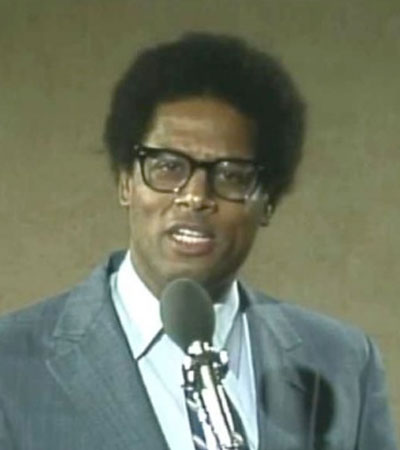
Participants: Robert McKenzie, Moderator; Milton Friedman; James R. Dumpson, Chief Administrator, Human Resources Admin., NYC; Thomas Sowell, Professor of Economics, UCLA; Robert Lampman, Professor of Economics, Institute of Poverty; Helen Bohen O’Bannon, Secretary of Welfare, State of Pennsylvania

LAMPMAN: I think it’s a viable approach to some part of the problems of poverty. It involves, first of all, cash payments rather than in kind payments as I understand it? It involves payments on a non-categorical basis.

MCKENZIE: What do you mean non-categorical?

LAMPMAN: That is to say, it doesn’t matter whether you’re a female-headed family or a male-headed family or whether you’re young or old, you’re sick or well.

MCKENZIE: If your income falls below a certain level you __

LAMPMAN: Pay some guaranteed income level for people based on family size and then it has a take-back rate which is modest, I suppose, by definition. Now, the question is: How many things you want to use that program to replace? How many things you want to replace with such a negative income tax program.

MCKENZIE: Would you replace everything with it __ just __ we clear that point up. Would you virtually wipe out the remaining forms of welfare if you got this program going?

FRIEDMAN: Yes, I would not __ I think its purpose is precisely to provide a transition between where we are now and where we would like to go because while __ because I agree with you, that given that we’ve corrupted the people on welfare and gotten them on there. We do have an obligation not to throw them out in the street and put them in the difficult adjustment you’ve made. We’ve got to ease the __

MCKENZIE: Yeah. Okay. Right.

FRIEDMAN: __ ease it off __

MCKENZIE: Sure. Yeah.

FRIEDMAN: __ and so __ but I would want to replace all __

MCKENZIE: Yeah. Okay.

FRIEDMAN: __ present welfare programs.

MCKENZIE: Let’s get reactions to this and then we’ll come back to you.

SOWELL: Well, I saw some figures recently which said that if you took all the money spent on poverty in the United States and divided it by all the poverty families you’d come out with a figure of $32,000 per family. Now, the average poverty family is apparently not getting the $32,000 and so clearly someone in between the treasury and those families is getting an awful lot of that money and I think if you simply eliminated the middle man, as they say in the commercials, that there’d be an awful lot of benefit both to the poor and to the taxpayers.

DUMPSON: I’m supportive of the negative income tax concept and the objective of it. I’d like to point out, however, that administratively we have another bureaucracy set up. Somebody has to take into account earnings. Someone has to decide when to pay back that which they’re entitled to. There’s a time lag between the paying back __ the earning and the paying back. There are a variety of problems in there that I will be prepared to accept but I want you to know that government intervention is not going to be eliminated.

O’BANNON: The issue that I have is: Where do children come in? What are their rights under a negative income tax? And are we, by building in a negative income tax, in fact subsidizing the illegitimacy that Tom Sowell is so concerned about?

FRIEDMAN: The major reason it is not feasible today to have a negative income tax is because the present welfare bureaucracy would be out of work. They are the major objectors and as Senator Pat __ he’s now a senator, Pat Moynihan demonstrated in his book on the Nixon program, the chief obstacle to getting it enacted was the welfare bureaucracy. So that I don’t believe these administrative problems, if you got it enacted, would be at all serious.

O’BANNON: I think the other assumption under the negative income tax, and it’s one that I’m not sure I can buy, is that everybody has a minimum level of understanding about how to spend money. In other words, how to use the marketplace to satisfy wishes. And I, as an economist, would say, yes, we do. We __ everybody from age four to a hundred knows how to use money to satisfy wants and that’s the __

FRIEDMAN: But they don’t. They don’t. There are all sorts of problems of people who are not going to be able to. But that’s a minority problem. That’s a problem for private activity and private charity. One thing is sure: They’re spending __ they would be spending their own money and that however knowledgeable you are about money __

O’BANNON: They would be spending my money.

FRIEDMAN: They would be spending my money, but it would be one stage less then. Right now, the welfare worker is spending Mr. A’s money to help Mr. C. And there’s a big takeoff in the middle as Tom Sowell said.

SOWELL: The question is not whether the people on welfare or low incomes can all spend their money effectively; the question is: How effectively do they spend it as compared to how effectively the bureaucrats spend it for them. Comparing anything to perfection or to some arbitrary standard settles nothing. The same thing is true in the education area. They’re saying “Would families be able to spend their __ select schools for their kids under a voucher system,” for example. Well, the question is: Could they possibly do much worse than the current bureaucrats are doing in the public school system.

O’BANNON: Oh __

MCKENZIE: We’ve run on education on another program. Bob Lampman.

(Laughing)

LAMPMAN: I want to quibble with something you said, Tom, about half of the money not going to the poor or something. That doesn’t __ shouldn’t leave the viewer to think that all the money is going to the administrators of programs. A lot of what you are talking about goes to non-poor recipients. For example, social security, as a program, pays a roughly half of its benefits to people who otherwise would not be poor. Unemployment insurance pays about two-thirds of its benefits or so to non-poor persons. And those are, in some definitions, welfare or anti-poverty programs and that’s how statisticians come up with this horrendous sounding discrepancy between the total amount of money spent and the total cash benefits that go to the poor.

SOWELL: Well, I think, I think it’s a perfectly valid point though, because supposedly we were not setting up unemployment benefits and social security in order to keep the affluent.

LAMPMAN: Well, this goes back to its big philosophy, debate we might have. I think that it’s easy to oversimplify things and say that all these programs, including the public schools are there to be a help to the poor and poor only.

FRIEDMAN: Yeah, but I was saying __

LAMPMAN: But let me mention that the negative income tax has some of its impetus in that it would be a way of confining benefit payments to people who are __

SOWELL: Yes. Yes.

LAMPMAN: __ and it would cut out benefits for an awful lot of people who now have expectations that they’re going to get them, not in the form of public assistance, but in the form of social insurance as we use the term.

SOWELL: Well, in order to be made for not disappointing the expectations on which people have built their lives for one generation, but not of continuing for eternity in order to avoid one generation of transition.

MCKENZIE: What are the other hurdles toward getting underway. Now, you said, I don’t know how seriously, the biggest almost the only hurdle is the welfare bureaucracy.

FRIEDMAN: No. Now, there’d be the biggest immediate group of lobbyists that will lobby against it.

MCKENZIE: Yep.

FRIEDMAN: The biggest hurdle in getting it over at the moment is that there is no way of constructing a sensible negative income tax system that will not hurt some people. There will be some people who will get less money than they are now getting under __ particularly those in the upper income groups. Particularly the affluent who are now being subsidized by the welfare and they, will make it politically difficult for the people to put it into effect. The attempt is to put a negative income tax in effect which costs less money, is easier to administer, and yet which doesn’t pay anybody in the society one dollar less than he’s now getting. There’s no way in which you can construct such a program. But, although it’s not politically feasible now, the force of history is on its side, it’s going to become political __

MCKENZIE: Dr. James Dumpson.

DUMPSON: Let’s not say that the __ give the impression that welfare administrators were against negative income tax, the fat program for example, as Moynihan says, because they would lose their jobs, for example. Many of us were opposed to it because of certain features in that program: A $24 __ $2,400 level for a family of four. We were opposed to that. And if one goes down the Congressional record, those who testified, will be shown to be saying, “Yes, we’re for it conceptually. But we’re against this piece and this piece, if you change that you’ll have our support.”

FRIEDMAN: I was in the same position. I first proposed the negative income tax twenty-five years ago but I testified against the final version of the Nixon plan. Why? Because the welfare bureaucrats had led them to introduce changes in it which converted it from a decent satisfactory negative income tax to one which would have been just as bad as what you have now. Would have been added on top of everything else.

O’BANNON: Cold reality.

FRIEDMAN: It’s political reality __

O’BANNON: That’s right.

_____________

Thank you so much for your time. I know how valuable it is. I also appreciate the fine family that you have and your commitment as a father and a husband.

Sincerely,

Everette Hatcher III, 13900 Cottontail Lane, Alexander, AR 72002, ph 501-920-5733

Williams with Sowell – Minimum Wage

Thomas Sowell

Thomas Sowell – Reducing Black Unemployment

By WALTER WILLIAMS

—-

Ronald Reagan with Milton Friedman
Milton Friedman The Power of the Market 2-5

Victorious 2021 Georgia Democrats should remember Dan Mitchell’s words, “In the real world of Washington (as opposed to blackboard theorizing), higher taxes lead to higher deficits and more debt!” (Thomas Sowell on Biden)

 Sadly last night the Democrats won control of Senate!

Victorious 2021 Georgia Democrats should remember Dan Mitchell’s words, “In the real world of Washington (as opposed to blackboard theorizing), higher taxes lead to higher deficits and more debt!”

Debt, Deficits, and Goldilocks

At the risk of oversimplification and exaggeration, these six principles tell you everything you need to know about fiscal policy.

For purposes of today’s column, let’s focus on Principle #3, which is that “Deficits and debt are symptoms of the underlying problem” of excessive spending.

I’ve been making that point over and over and over and over and over again, but I feel motivated to address the issue again after reading two columns about government debt.

First, here’s some of what Paul Krugman wrote on the topic for his column in the New York Times.

…we’ve learned a lot about the economics of government debt over the past few years — enough so that Olivier Blanchard, the eminent former chief economist of the International Monetary Fund, is talking about a “shift in fiscal paradigm.” And the new paradigm suggests both that public debt isn’t a major problem and that government borrowing for the right purposes is actually the responsible thing to do.…It made some sense, nine or 10 years ago, to worry that the financial crisis in Greece was a harbinger of potential debt crises in other countries. …What briefly seemed like a spread of Greek-style problems across southern Europe turned out to be a temporary investor panic, quickly ended by a promise from the European Central Bank that it would lend money to cash-short governments if necessary. …We weren’t and aren’t anywhere close to that kind of crisis, and probably never will be. …But what about the longer term? …The important point for current discussion is that government borrowing costs are now very low and likely to stay low for a long time. …given what we’ve learned and where we are, it’s clear that the U.S. government should be investing heavily in the nation’s future, and that it’s OK, indeed desirable, to borrow the money we need to make those investments.

Second, Brian Riedl of the Manhattan Institute provides a different perspective in a column for today’s Washington Post, .

The election of Joe Biden to the presidency has prompted liberal calls to set aside pesky budget deficit concerns and go deeper into debt to finance large new spending initiatives… All these writers share the view that the persistence of low interest rates — currently about 1 percent for a 10-year Treasury bill — means the rules of the fiscal game have fundamentally changed. …But…deficit advocates must face two fundamental realities: First, the debt is already set to soar in the absence of any new spending. And second, these bloated debt levels will mean that any future rise in interest rates could bring a full-scale debt crisis. …Deficit doves are essentially gambling the future of the U.S. economy on the expectation that interest rates never again exceed 4 percent or 5 percent. …they are wrong to assume that state of affairs will continue. …Exceeding the projections by two or three points would mean annual interest costs consuming all projected tax revenue, leaving no taxes to finance normal federal programs. These debt spirals become nearly impossible to escape, as rising interest costs necessitate more borrowing, which in turn brings higher interest costs… Deficit doves would gamble America’s economic future on the hope that interest rates will never again top 4 or 5 percent. Are you feeling lucky?

At the risk of sounding like a muddle-headed, finger-in-the-wind moderate, I’m going to disagree with both of them (I’m like Goldilocks, who doesn’t want the porridge too hot or too cold).

I have a fundamental disagreement with Krugman because he’s overtly arguing for a bigger burden of government. Based on his past writings, he is willing to use higher taxes to finance some additional spending.

But the aforementioned column confirms that he’s in favor of a big amount of additional debt-financed spending as well.

He presumably wants to move the country into the lower-right quadrant of this 2×2 matrix, but doesn’t mind getting there by detouring through the lower-left quadrant.

My disagreement with Brian is probably more a matter of rhetoric. Based on his past writings, I think he wants to be in the upper-left quadrant, but he has an unfortunate tendency to fixate on the symptom of debt and deficits when he should be focusingon the underlying disease of excessive government spending.

My bottom line if that bigger government is a bad idea when it’s financed by debt, but it’s an equally bad idea if it’s financed by taxes.

Moreover, I worry when well-meaning people grouse about red ink because that creates an opening for not-so-well-meaning people to say, “I agree with you, so let’s raise taxes.”

P.S. In the real world of Washington (as opposed to blackboard theorizing), higher taxes lead to higher deficits and more debt.

P.P.S. Assuming they’re both sincere and guided by empiricism, people who care about red ink should support a spending cap.

P.P.P.S. Maintained for a sufficient period of time, spending restraint can even eliminate huge debt burdens.

Economic Growth and the “Size of the Pie”

My recent three-part series (here, here, and here) explained why policy makers should seek to reduce poverty rather than inequality.

I want to expand on that point today by showing why growing the pie is more important than how it is sliced.

I’ve previously opined on why economic growth is important, showing that the United States today would be almost as poor as Mexico if our rate of economic growth since 1895 was just one-percentage point less than it actually was.

Moreover, I also showed in that 2017 column how much smaller increments of additional growth over time can mean thousands of dollars of additional income for an average household.

And, the previous year, I shared two excellent videos from Marginal Revolution University while writing about Hong Kong’s remarkable jump from poverty to prosperity.

For today’s column, I want to expand on this point using the economic growth page from Max Roser’s great site, Our World in Data. We’ll start with this chart showing how per-capita economic output dramatically increased a few hundred years ago.

This kind of data won’t be news to regular readers. I’ve already shared great videos from Deirdre McCloskey and Don Boudreaux that make the same point about the explosion of prosperity in the modern era.

And if anyone somehow thinks this growth doesn’t matter, Roser’s page shows that there are countless ways of graphing the relationship between economic output and good outcomes, such as how long we live, child mortality, access to electricity, hunger, and literacy.

The bottom line is that we are unimaginably rich compared to prior generations, largely thanks to the rule of law, expanded trade, and limited government.

That recipe for growth and prosperity works anywhere and everywhere it is tried. Here’s another chart showing how other parts of the world are being to prosper thanks to economic liberalization.

I want to cite two additional charts from Roser’s page.

First, here’s a chart showing productivity rates in selected nations. Why is this important? Because economic prosperity is basically driven by how much we work and how productive we are.

There are all sorts of interesting things embedded in the above chart.

Our final chart shows the importance of convergence.

Once again, there are some important observations embedded in the above chart.

  • Very poor nations such as Botwsana and China can enjoy meaningful gains with partial economic liberalization.
  • Western nations can enjoy more prosperity over time, but they won’t catch the United States so long as they are burdened with too much government.
  • Singapore shows that full convergence is not only possible, but also that laissez-faire countries can even surpass the United States.

P.S. I can’t resist recycling my “never-answered question” in hopes of getting any of my left-leaning friends to cite a single example of their policies producing mass prosperity.

Open letter to President Obama (Part 702)

(Emailed to White House on 6-25-13.)

President Obama c/o The White House 1600 Pennsylvania Avenue NW Washington, DC 20500

Dear Mr. President,

I know that you receive 20,000 letters a day and that you actually read 10 of them every day. I really do respect you for trying to get a pulse on what is going on out here.

The federal government debt is growing so much that it is endangering us because if things keep going like they are now we will not have any money left for the national defense because we are so far in debt as a nation. We have been spending so much on our welfare state through food stamps and other programs that I am worrying that many of our citizens are becoming more dependent on government and in many cases they are losing their incentive to work hard because of the welfare trap the government has put in place. Other nations in Europe have gone down this road and we see what mess this has gotten them in. People really are losing their faith in big government and they want more liberty back. It seems to me we have to get back to the founding  principles that made our country great.  We also need to realize that a big government will encourage waste and corruptionThe recent scandals in our government have proved my point. In fact, the jokes you made at Ohio State about possibly auditing them are not so funny now that reality shows how the IRS was acting more like a monster out of control. Also raising taxes on the job creators is a very bad idea too. The Laffer Curve clearly demonstrates that when the tax rates are raised many individuals will move their investments to places where they will not get taxed as much.

______________________

Some people doubt that Ronald Reagan conservatism still works today like it did in the 1980’s and that those kind of conservatives can still win today but they can!!!! That is the message that the USA loves.

Among the right-leaning policy wonks and intellectuals in Washington, there’s a lot of attention being given to the something called “reform conservatism.”

Underlying this school of thought is the notion that the Reagan-era message no longer works since Republicans have lost the popular vote in five out of the last six elections.

A few people have asked my opinion about this movement, and since Ross Douthat of the New York Times just put together a good description of this school of thought, it makes it easy for me to offer my thoughts.

But before digging into his column, I think that some of the angst on the right is misplaced. Why blame a Reagan-era message for GOP electoral problems when all the Republicans presidential nominees in recent years have favored big government? Does anybody really think that Bush 41, Dole, Bush 43, McCain, and Romney were Reaganites?!?

Could any of those candidates have given these remarks, at least with any credibility?

President Reagan on Big Government and Personal Freedom

Uploaded on Dec 23, 2010

The surge in nostalgia for President Reagan over the past two years is no surprise. When the American people are faced with tyrannical government, arrogant leadership, and failed policies, they tend to cling to good memories (along with their guns and religion). They also tend to take action, hence the Tea Party movement and the 2010 revolution. Watch this clip from 1982 and remember.

_____________________

Or made these comments in a sincere fashion?

Ronald Reagan on Individual Freedom

Uploaded on Mar 6, 2010

The Founding Fathers fought tyranny, we must come together to fight again. Ronald Reagan believed that it was individual freedom that made America great

___________________________

It’s much more plausible to say that Republicans have lagged because they didn’t have candidates with a Reagan-style message.

But let’s assume, for the sake of argument, that Republicans would have fared poorly even if Reaganites had been nominated. Does “reform conservatism” offer a path to electoral salvation.

Here’s what Douthat identifies as the “two major premises” of reform conservatism.

1. First, he writes that the “core economic challenge facing the American experiment is not income inequality per se, but rather stratification and stagnation — weak mobility from the bottom of the income ladder and wage stagnation for the middle class.” Conservatives, he says, should strive to make “family life more affordable, upward mobility more likely, and employment easier to find.”

2. Second, he warns that the “existing welfare-state institutions we’ve inherited from the New Deal and the Great Society, however, often make these tasks harder rather than easier: Their exploding costs crowd out every other form of spending, require middle class tax increases and threaten to drag on economic growth.”

I’m not an expert on income mobility, so I’m not sure I would identify stratification and stagnation as the nation’s core economic challenge, but he may be right. Regardless, it’s definitely a good idea to have more mobility.

And I definitely agree that the welfare state hinders upward mobility by creating dependency. And he’s right that this is a drag on growth. That being said, I disagree with his assertion that rising entitlement expenditures crowd out other spending and lead to middle class tax hikes. Those things may happen at some point, particularly once we get into the peak years for retiring baby boomers, but they haven’t happened yet.

The more important question, at least to me, is what sort of policies do reform conservatives embrace? Here’s Douthat’s list, bolded, followed by my thoughts.

a. A tax reform that caps deductions and lowers rates, but also reduces the burden on working parents and the lower middle class, whether through an expanded child tax credit or some other means of reducing payroll tax liabilityTax Distribution CBOI obviously like the idea of lowering rates and reducing deductions since that moves the system closer to a flat tax. That being said, it’s difficult to reduce the tax burden on the lower middle class since they pay very little income tax under the current system (see accompanying table from CBO). But I like the idea of addressing the payroll tax, though I disagree with their approach (see section “c” below).

b. A repeal or revision of Obamacare that aims to ease us toward a system of near-universal catastrophic health insurance, and includes some kind of flat tax credit or voucher explicitly designed for that purpose. I fully agree with repeal of Obamacare, and I think an unfettered marketplace would evolve into a system of near-universal catastrophic insurance, but I don’t want the federal government subsidizing or coercing that approach (though current healthcare policy has far more subsidies and coercion, so Douthat’s plan would be a big improvement over the status quo).

c. A Medicare reform along the lines of the Wyden-Ryan premium support proposal, and a Social Security reform focused on means testing and extending work lives rather than a renewed push for private accounts. I’m glad they embrace Medicare reform, but I’m puzzled by the hostility to personal retirement accounts.  If you increase the retirement age and/or means test, youforce people to pay more and get less, yet Social Security already is a bad deal for younger workers. So why make it worse? How can that be good for those with low mobility? Personal accounts would be akin to a tax cut for such workers since the payroll tax would be transformed into something much closer to deferred compensation.

d. An immigration reform that tilts much more toward Canadian-style recruitment of high-skilled workers, and that doesn’t necessarily seek to accelerate the pace of low-skilled immigration. As I noted in this interview, I very much favor bringing more high-skilled people into the country.

e. A “market monetarist” monetary policy as an alternative both to further fiscal stimulus and to the tight money/fiscal austerity combination advanced by many Republicans today. I try to avoid monetary policy. That being said, I’m a bit skeptical of “market monetarism.” No nation has ever tried this system, so it’s uncharted territory, and I’m reluctant to embrace an approach which is premised on the notion that bubbles can’t exist (what about the tech bubble of the late 1990s or the housing bubble last decade?!?). I’m also suspicious of a system which requires an activist central bank. Watch this George Selgin video if you want to know why.

f. An attack not only on explicit subsidies for powerful incumbents (farm subsidies, etc.) but also other protections and implicit guarantees, in arenas ranging from copyright law to the problem of “Too Big To Fail.” Amen. I fully agree.

Since I’m a tax policy wonk, let me address in greater detail some of the tax reform proposals put forward by reform conservatives.

Jim Pethokoukis of the American Enterprise Institute is identified in the column as a reform conservative, and he recently expressed skepticism about the flat tax in a column for National Review.

It’s an elegant, compelling model that might work  splendidly if you were creating a tax code ex nihilo. …America, however, is in a much different place. Millions of individuals and businesses have made long-term plans based on expectations that the tax code will remain more or less the same. Half the nation, thanks to all those deductions and credits, pays no income tax. …it’s unlikely the U.S. can keep spending down at historical levels of 20 percent to 21 percent of GDP while also maintaining a floor for defense spending at 4 percent of output. The best a group of AEI scholars could manage was limiting spending to 23 percent of GDP by 2035.

The clear implication of his column is that we need a tax system that raises more revenue. I obviously disagree. We should never “feed the beast” by giving politicians more money to spend.

Pethokoukis also says the flat tax is politically unrealistic. Since I’m not expecting a flat tax in my lifetime, I obviously can’t argue with that statement. But he then proposes another plan that would be far less popular – and far more dangerous.

One solution is to take the essentially flat consumption tax devised by economists Robert Hall and Alvin Rabushka and give it a progressive rate structure. Or we could combine a consumption tax with a flat income tax on wealthier Americans, as suggested by Yale’s Michael Graetz.

So we should keep the income tax as a vehicle for class warfare and augment it with a VAT?!? Yeah, good luck trying to sell that idea. And Heaven help us if it ever succeeded since politicians would have another major source of tax revenue.

Another plan, which Douthat explicitly cites in his paper, was put together by Robert Stein, a former Bush Treasury official. He thinks traditional supply-side policies today are either irrelevant or unpopular.

Lowering tax rates today could still enhance the incentives to invest, particularly in the corporate sector. But the distortions caused by marginal tax rates are not nearly as great as they were in 1980. And attempts to solve other problems caused by the tax code itself — like the biases in favor of consumption over saving, or home building over business investment — could never in themselves garner the public support necessary for a major overhaul.

As I noted, I’m not holding my breath for a flat tax, so I can’t disagree with Stein’s prognostication.

He also has a very novel way of defining the problem we should be trying to fix.

…it is time to rethink how the tax code treats ­parents. …raising children is hardly just another pastime: It is one of the most important services any American can perform for our country. …even as Social Security and Medicare depend on large numbers of future workers, they have created an enormous fiscal bias against procreation, undermining an important motive for raising children: to safeguard against poverty in old age. ……our system of taxes and entitlements not only fails to reward parents — it actively discourages Americans from having children. …Recent studies (especially work by Michele Boldrin, ­Mariacristina De Nardi, and Larry Jones and by Isaac Ehrlich and Jinyoung Kim) show that Social Security and Medicare actually reduce the fertility rate by about 0.5 children per woman. In European countries, where retirement systems are larger, the effect is closer to one child per woman.

As a libertarian, the beginning section of that passage grated on me. My children are individuals, not a “service” to prop up entitlement programs. I agree with Stein that these programs are a problem, but the solution is to reform entitlements, not to rejigger the tax code in hopes of pumping out more taxpayers.

Stein disagrees.

Unfortunately, these negative effects on fertility cannot be cured simply by converting old-age entitlement programs into mandatory savings programs, as the Bush administration proposed for Social Security in 2005. After all, requiring workers to save for retirement through private financial instruments would also crowd out the traditional motive to raise kids.

Instead, he wants to change the tax system based on the notion that today’s kids are tomorrow’s taxpayers.

…the present value of future Social Security and Medicare contributions for a typical worker born today is about $150,000. Rewarding parents for creating these future contributions suggests annual tax relief of about $8,500 per child. To correct for this inadequate treatment of households with ­children, the existing dependent exemption for children, the child credit, the ­child-care credit, and the adoption credit should be replaced with one new $4,000 credit per child that can be used to offset both income and payroll taxes. (This amount is set much closer to the $3,250 figure than the $8,500 one mostly to reduce the plan’s negative impact on federal revenue.)

I have no philosophical objection to some form of exemption – or even credit – based on family size. Almost all flat tax systems, for instance, have some sort of family allowance.

But it’s also important to realize that bigger family allowances generally don’t have pro-growth effects. It’s the marginal tax rate that impacts incentives.

And Stein, unfortunately, would “pay” for his credits by raising marginal tax rates on a significant share of taxpayers.

Some of these costs would be offset by eliminating itemized deductions (other than mortgage interest and charitable contributions). The rest would have to be offset by ­allowing the top rate of 35% to touch more taxpayers than it currently affects. …who pays more? Primarily high-income workers, but also upper-middle-class taxpayers who do not have children in the home (either because they have decided not to raise children at all, or because their children have already turned 18). To be blunt, the plan is a tax hike on the rich and makes the tax code even more progressive than it is today.

To be fair, Stein also proposes some good policies such as AMT repeal and reductions in double taxation, so he’s definitely not in the Obama class-warfare camp. But it’s also fair to say that his plan won’t do much for growth. Some tax rates are lowered but others are increased.

Yet if you really want families to be in stronger shape, more growth is the only long-run solution.

Moreover, it’s not clear that Stein’s agenda would be terribly popular. Though I confess that’s just a guess since no politician has latched onto the idea in the years since the proposal was unveiled.

Returning to the broader issue of “reform conservatism,” it’s difficult to assign an overall grade to the movement since I’m not sure whether we’re supposed to interpret it as a political strategy or an economic plan.

Regardless, I guess I’m generally sympathetic. I assume the RCers want government to be smaller than it is today and I don’t think you have to be a 100 percent libertarian to be my ally in the fight to restrain excessive government. And I also think it’s a good idea for people to be thinking of how to best articulate a message of smaller government. Heck, I do that every time I go on TV or give a speech.

So I reserve the right to object to any of the specific proposals that reform conservatives put forward (such as the tax plans discussed above), but I like the project.

_____________

Thank you so much for your time. I know how valuable it is. I also appreciate the fine family that you have and your commitment as a father and a husband.

Sincerely,

Everette Hatcher III, 13900 Cottontail Lane, Alexander, AR 72002, ph 501-920-5733, lowcostsqueegees@yahoo.com

Related:

Are the Republicans in Arkansas true Tea Party Ronald Reagan Republicans?

Ronald Reagan said, “We will never compromise our principles and standards.” Are the Republicans in Arkansas true Tea Party Ronald Reagan Republicans? According to Americans for Prosperity in the last 5 years Arkansas’ current Medicaid program has run a deficit of a billion dollars. Why expand it willingly with Obama? The “Do Nothing” expansion plan increases […]

Barack Obama would lose badly to Ronald Reagan!!!

Barack Obama would lose badly to Ronald Reagan!!! The Spirit of Reagan Is Still With Us: The Gipper Crushes Obama in Hypothetical Matchup April 13, 2013 by Dan Mitchell Barack Obama has stated that he wants to be like Reagan, at least in the sense of wanting to be a transformational figure. But almost certainly he has […]

“Friedman Friday” Transcript and video of Milton Friedman on Bill Clinton and Ronald Reagan (Part 2)

Below is a discussion from Milton Friedman on Bill Clinton and Ronald Reagan. February 10, 1999 | Recorded on February 10, 1999 audio, video, and blogs » uncommon knowledge PRESIDENTIAL REPORT CARD: Milton Friedman on the State of the Union with guest Milton Friedman Milton Friedman, Senior Research Fellow, Hoover Institution and Nobel Laureate in […]

“Friedman Friday” Transcript and video of Milton Friedman on Bill Clinton and Ronald Reagan (Part 1)

Below is a discussion from Milton Friedman on Bill Clinton and Ronald Reagan. February 10, 1999 | Recorded on February 10, 1999 audio, video, and blogs » uncommon knowledge PRESIDENTIAL REPORT CARD: Milton Friedman on the State of the Union with guest Milton Friedman Milton Friedman, Senior Research Fellow, Hoover Institution and Nobel Laureate in […]

Ronald Reagan and the Founding Fathers

I really enjoyed this article. A Constitutional President: Ronald Reagan and the Founding By Edwin Meese III , Lee Edwards, Ph.D. , James C. Miller III and Steven Hayward January 26, 2012 Abstract: Throughout his presidency, Ronald Reagan was guided by the principles of the American founding, especially the idea of ordered liberty. In the opening of his first inaugural address in 1981, […]

March for Life March in Little Rock on Jan 20, 2013!!!Ronald Reagan’s videos and pictures displayed here on the www.thedailyhatch.org

Ronald Reagan was the greatest pro-life president ever. He appointed Dr. C. Everett Koop to his administration and Dr. Koop was responsible for this outstanding pro-life film below: I was thinking about the March for Life that is coming up on Jan 20, 2013 in Little Rock and that is why I posted this today. […]

Ronald Reagan’s pro-life tract

1/30/84 Part 1 of a speech to the National Religious Broadcasters. June 10, 2004, 10:30 a.m. Abortion and the Conscience of the Nation Ronald Reagan’s pro-life tract. EDITOR’S NOTE: While president, Ronald Reagan penned this article for The Human Life Review, unsolicited. It ran in the Review‘s Spring 1983, issue and is reprinted here with permission. The case […]

Ronald Reagan’s videos and pictures displayed here on the www.thedailyhatch.org

President Reagan, Nancy Reagan, Bill Clinton and Hillary Clinton attending the Dinner Honoring the Nation’s Governors. 2/22/87. Ronald Reagan is my favorite president and I have devoted several hundred looking at his ideas. Take a look at these links below: President Reagan and Nancy Reagan attending “All Star Tribute to Dutch Reagan” at NBC Studios(from […]

Ronald Reagan and Johnny Carson discussing Balanced Budget Amendment on “Tonight Show”

Ronald Reagan Talks About Balancing the Budget on “The Tonight Show” Uploaded by johnnycarson on Jul 30, 2011 Ronald Reagan talks about balancing the budget on “The Tonight Show” in 1975. _____________ Ronald Reagan was one of my favorite presidents. Mike Lee is one of my favorite lawmakers of today!!! Look at what he says about […]

Ronald Reagan and Milton Friedman supported Balanced Budget Amendment

Remarks at a Rally Supporting the Proposed Constitutional Amendment for a Balanced Federal Budget For more information on the ongoing works of President Reagan’s Foundation, please visit http://www.reaganfoundation.org _______________ Ronald Reagan was a firm believer in the Balanced Budget Amendment and Milton Friedman was a key advisor to Reagan. Friedman’s 1980 film series taught the […]

2021 Democrats should remember Dan Mitchell’s words: “Regardless of whether it is financed by taxing or borrowing, every penny of spending diverts resources from the productive sector of the economy” (Thomas Sowell on Biden)

 Sadly last night the Democrats won control of Senate!

2021 Democrats should remember Dan MitcRegardless of whether it is financed by taxing or borrowing, every penny of spending diverts resources from the productive sector of the economy

The National Debt is Huge, but Unfunded Liabilities Are America’s Real Red-Ink Challenge

This blog frequently explains that government spending is the problem, not budget deficits. Regardless of whether it is financed by taxing or borrowing, every penny of spending diverts resources from the productive sector of the economy. I narrated a video explaining why excessive spending is bad from a theoretical perspective. I did another looking at the empirical evidence for smaller government. And I had another video discussing why deficits are a symptom and the real problem is bloated budgets.

Nonetheless, some people seem convinced that deficits and debt are the real problem. While I think that focus is a bit misguided, I certainly agree that there is something utterly immoral about spending today and imposing a fiscal burden on future taxpayers (especially since so much government spending is for current consumption and transfers).

But here’s some really depressing news for the anti-debt crowd. Today’s deficits and debt actually are just the tip of the iceberg. Here’s a new video from the Center for Freedom and Prosperity that reveals the enormous unfunded liabilities resulting from entitlement programs. As the video explains, unfunded liabilities are promises by politicians that impose enormous long-term obligations for more spending and debt.

The narrator of the video is Kelly McDonough, a student at American University and a former Cato Institute intern. If this video is anywhere near as successful as the other video narrated by a former Cato intern, perhaps this will become a new tradition.

Barack Obama new book "A Promised Land"

Republican presidents besides Reagan have done a bad job of slowing the growth of spending.

President Obama wrote in his autobiography on page 415 in A PROMISED LAND:

There was a reason I told Valerie, why Republicans tended to do the opposite—why Ronald Reagan could preside over huge increases in the federal budget, and federal workforce and still be lionized by the GOP faithful as the guy who successfully shrank the federal government.

Take a look at Daniel Mitchell analysis of Presidents’ spending restraints!!!


Spending Restraint, Part I: Lessons from Ronald Reagan and Bill Clinton

Uploaded by on Feb 14, 2011

Ronald Reagan and Bill Clinton both reduced the relative burden of government, largely because they were able to restrain the growth of domestic spending. The mini-documentary from the Center for Freedom and Prosperity uses data from the Historical Tables of the Budget to show how Reagan and Clinton succeeded and compares their record to the fiscal profligacy of the Bush-Obama years.

___________________

Ronald Reagan was my hero and he did slow the growth of federal spending. In this post I did want to admit that Republicans have spent way too much in the past too, but we do have some spending cut heroes too. I have a lot of respect for Tea Party heroes like Tim Huelskamp and Justin Amash who are willing to propose deep spending cuts so we can eventually balance our budget.

Look at how things have been going the last four years and no matter how anyone tries to spin it, we are going down the financial drain fast. We got to balance the budget as soon as possible. Dan Mitchell of the Cato Institute showed in an article that I posted earlier about how much spending has exploded the last four years.

John Brummett wrote in the online addition of the Arkansas Democrat-Gazette on May 30, 2012:

Obama did indeed run up the deficit with a stimulus measure to keep the economy from collapsing as he entered office…But in regard to budgets that he actually has proposed as president, beginning with the one for the fiscal year starting nearly a year after his election, Obama has raised spending at a slower rate than Clinton…

Republicans simply are more effective than Democrats at declaring a simple untruth loudly and repetitively through a pliable and powerful echo chamber of talk radio and cable news, thus embedding that untruth beneath the superficial consciousness of people otherwise disengaged.

__________

Now the truth of the matter is that Obama has spent around 25% of GDP when Clinton and most of the other presidents spent 20% or less. This fact allow disproves Brummett’s assertions listed above, but I will admit the Republicans have been guilty of spending too much also.

Dan Mitchell of the Cato Institute sets the record straight concerning the Republican’s spending which has been excessive too at times:

In a post last week, I explained that Obama has been a big spender, but noted his profligacy is disguised because TARP outlays caused a spike in spending during Bush’s last fiscal year (FY2009, which began October 1, 2008). Meanwhile, repayments from banks in subsequent years count as “negative spending,” further hiding the underlying trend in outlays.

When you strip away those one-time factors, it turns out that Obama has allowed domestic spending to increase at the fastest rate since Richard Nixon.

I then did another post yesterday, where I looked at total spending (other than interest payments and bailout costs) and showed that Obama has presided over the biggest spending increases since Lyndon Johnson.

Looking at the charts, it’s also rather obvious that party labels don’t mean much. Bill Clinton presided during a period of spending restraint, while every Republican other than Reagan has a dismal track record.

President George W. Bush, for instance, scores below both Clinton and Jimmy Carter, regardless of whether defense outlays are included in the calculations. That’s not a fiscally conservative record, even if you’re grading on a generous curve.

This leads Jonah Goldberg to offer some sage advice to the GOP.

Here’s a simple suggestion for Mitt Romney: Admit that the Democrats have a point. Right before the Memorial Day weekend, Washington was consumed by a debate over how much Barack Obama has spent as president, and it looks like it’s picking up again. …all of these numbers are a sideshow: Republicans in Washington helped create the problem, and Romney should concede the point. Focused on fighting a war, Bush — never a tightwad to begin with — handed the keys to the Treasury to Tom DeLay and Denny Hastert, and they spent enough money to burn a wet mule. On Bush’s watch, education spending more than doubled, the government enacted the biggest expansion in entitlements since the Great Society (Medicare Part D), and we created a vast new government agency (the Department of Homeland Security). …Nearly every problem with spending and debt associated with the Bush years was made far worse under Obama. The man campaigned as an outsider who was going to change course before we went over a fiscal cliff. Instead, when he got behind the wheel, as it were, he hit the gas instead of the brakes — and yet has the temerity to claim that all of the forward momentum is Bush’s fault. …Romney is under no obligation to defend the Republican performance during the Bush years. Indeed, if he’s serious about fixing what’s wrong with Washington, he has an obligation not to defend it. This is an argument that the Tea Party — which famously dealt Obama’s party a shellacking in 2010 — and independents alike are entirely open to. Voters don’t want a president to rein in runaway Democratic spending; they want one to rein in runaway Washington spending.

Jonah’s point about “fixing what’s wrong with Washington” is not a throwaway line. Romney has pledged to voters that he won’t raise taxes. He also has promised to bring the burden of federal spending down to 20 percent of GDP by the end of a first term.

But even those modest commitments will be difficult to achieve if he isn’t willing to gain credibility with the American people by admitting that Republicans helped create the fiscal mess in Washington. Especially since today’s GOP leaders in the House and Senate were all in office last decade and voted for Bush’s wasteful spending.

It actually doesn’t even take much to move fiscal policy in the right direction. All that’s required is to restrain spending so that is grows more slowly than the private sector (with the kind of humility you only find in Washington, I call this “Mitchell’s Golden Rule“). The entitlement reforms in the Ryan budget would be a good start, along with some much-needed pruning of discretionary spending.

And if you address the underlying problem by limiting spending growth to about 2 percent annually, you can balance the budget in about 10 years. No need for higher taxes, notwithstanding the rhetoric of the fiscal frauds in Washington who salivate at the thought of another failed 1990s-style tax hike deal.

Sadly last night America voted to run up debt even more by electing two liberals to senate in Georgia! This article below shows how our Founders restrained spending and we are not restraining it anymore!!!!!!

—-

 Sadly last night the Democrats won control of Senate!

Sadly last night America voted to run up debt even more by electing two liberals to senate in Georgia!!!!! This article below shows how our Founders restrained spending and we are not restraining it anymore!!!!!!

By the Numbers: America’s Unfortunate Fiscal Evolution from Madisonian Constitutionalism to Wilsonian Statism

I’m a big fan of fiscal data.

In part this is because I’m a policy wonk, but I also like budget numbers because they generally provide strong evidence for my philosophical belief in small government and spending restraint.

For instance, I enjoy sharing my table showing nations that have experienced great success with multi-year limits on spending growth, particularly since I enjoy putting my leftist friends in an uncomfortable position by asking them for a similar list of countries that have made progress by raising taxes (hint: that’s called the null set).

Given my affinity for budget data, I was excited to learn that the Joint Economic Committee (JEC) just released “An Economic History of Federal Spending and Debt.”

This new publication is filled with fiscal information starting in the late 1700s.

To give you an indication, check out this chart which, in one fell swoop, provides more than 200 years of data on spending, revenue, and debt, along with information on major wars and economic dislocations.

Since that’s an intimidating amount of information, I thought it might be a good idea to break out the most important set of numbers in that chart.

But I warn you that I’m not about to share good news. This chart shows how peacetime federal spending dramatically expanded during the 20th century.

Since I’ve already decided that data on dependency in Denmark was the most depressing powerpoint slide in the world, I guess we’ll call this the most tragic chart in the world.

Especially since it symbolizes a very unfortunate change in the attitude about the proper role of the federal government.

A progressive philosophical shift in federal spending began under President Woodrow Wilson. …George Will—writing on Wilson’s underlying philosophy—succinctly contrasted Wilson with James Madison by noting, “Wilsonian government, meaning (in Wilson’s words) government with ‘unstinted power,’ is hostile to Madison’s Constitution, which, Madison said, obliges government ‘to control itself.’”

In other words, the left decided that government was a force for progress rather than a threat to liberty, so they wanted to undermine the Constitution’s limits on the federal government.

And once the Supreme Court acquiesced to this perversion of the Constitution’s clear intent, any limits of federal power were swept away (evinced most recently by John Roberts’ tortured Obamacare decision).

And if you want to feel even sadder, check out the projections showing that America will become Greece in the absence of genuine entitlement reform.

Here’s a table from the JEC report that shows how bad attitudes, bad jurisprudence, and bad policy have led to a dramatic expansion in the burden of government spending. The most important column, which I’ve circled, shows that we used to have a very small federal government that consumed, on average, less than 3 percent of economic output. But now we have a Leviathan that diverts more than 20 percent of GDP to Washington programs.

The report isn’t just numbers. There’s also some very useful analysis.

For instance, it notes that FDR’s New Deal did not work (as I’ve repeatedly explained, though it also should have acknowledged that Hoover made the same mistakes).

On balance, empirical research provides little support for the contention that President Franklin D. Roosevelt’s Keynesian policies helped to pull the United States out of the Great Depression.

It also makes important points about the economic impact of government spending.

While more spending and a bigger federal government can mean more federal jobs, these jobs come at the expense of private sector resources, meaning fewer private sector jobs and lost economic opportunities. …there is an inverse relationship between federal spending and private payroll employment.

And it echoes arguments that I’ve made about the progress that was achieved during the Clinton years.

…though spending increased in real dollar terms during this period, as a percent of the economy, spending actually declined. In FY1995, non-interest mandatory spending equaled 9.75 percent of GDP and discretionary spending equaled 7.19 percent of GDP. In spite of the spending increases, by FY2001, mandatory spending amounted to only 9.56 percent of GDP and discretionary spending amounted to only 6.16 percent of GDP.

Perhaps most important, the study endorses Mitchell’s Golden Rule!

…a politically viable path to a balanced budget and fiscal stability: Restrain the growth in federal spending below the rate of economic growth, and a sustainable fiscal environment will follow.

Last but not least, it endorses a spending cap modeled after the Swiss Debt Brake.

The ideal base for a spending cap would be similar to a GDP-cap, but it would provide greater spending restraint in economic booms and greater flexibility in economic downturns. Fortunately, such a measurement, which helps to smooth the business cycle, does exist: Potential GDP. …basing a spending cap on potential GDP is very helpful for budgeting purposes, as it creates a more predictable budget path over an extended period of time.

There is a lot of additional information in the JEC report, so if you have any interest in America’s fiscal history, it’s worth your time to read the whole thing.

P.S. Other developed nations basically have made the same fiscal mistake as the United States. Nations in Western Europe and Japan also used to have very small governments. Once the welfare state began, however, economic liberty morphed into bloated welfare states.

OPEN LETTER

January 31, 2021

President Obama c/o The White House 1600 Pennsylvania Avenue NW Washington, DC 20500

Dear Mr. President,

The federal government debt is growing so much that it is endangering us because if things keep going like they are now we will not have any money left for the national defense because we are so far in debt as a nation. We have been spending so much on our welfare state through food stamps and other programs that I am worrying that many of our citizens are becoming more dependent on government and in many cases they are losing their incentive to work hard because of the welfare trap the government has put in place. Other nations in Europe have gone down this road and we see what mess this has gotten them in. People really are losing their faith in big government and they want more liberty back. It seems to me we have to get back to the founding  principles that made our country great.  We also need to realize that a big government will encourage waste and corruptionThe recent scandals in our government have proved my point. In fact, the jokes you made at Ohio State about possibly auditing them are not so funny now that reality shows how the IRS was acting more like a monster out of control. Also raising taxes on the job creators is a very bad idea too. The Laffer Curve clearly demonstrates that when the tax rates are raised many individuals will move their investments to places where they will not get taxed as much.

______________________

17 Reasons the large national debt is a big deal!!!

We got to stop spending so much money and start paying off our national debt or the future of our children and grandchildren will be very sad indeed. Everyone knows that entitlement spending must be cut but it seems we are not brave enough to do it. I have contacted my Congressmen and Senators over and over but nothing is getting done!!! At least there are 66 conservative Republicans in the House that have stood up  and voted against raising the debt ceiling.

June 17, 2013 at 7:13 am

GO-Debt-Denial-rev_600

Remember the debt? That $17 trillion problem? Some in Washington seem to think it’s gone away.

The Washington Post reported that “the national debt is no longer growing out of control.” Lawmakers and liberal inside-the-Beltway organizations are floating the notion that it’s not a high priority any more.

We beg to differ, so we came up with 17 reasons that $17 trillion in debt is still a big, bad deal.

1. $53,769 – Your share of the national debt.  

As Washington continues to spend more than it can afford, every American will be on the hook for this massive debt burden.

willrogers_450

SHARE this graphic.

2. Personal income will be lower.

The skyrocketing debt could cause families to lose up to $11,000 on their income every year. That’s enough to send the kids to a state college or move to a nicer neighborhood.

3. Fewer jobs and lower salaries.

High government spending with no accountability eliminates opportunities for career advancement, paralyzes job creation, and lowers wages and salaries.

4. Higher interest rates.

Some families and businesses won’t be able to borrow money because of high interest rates on mortgages, car loans, and more – the dream of starting a business could be out of reach.

5. High debt and high spending won’t help the economy.

Journalists should check with both sides before committing pen to paper, especially those at respectable outlets like The Washington Post and The New York Times. A $17 trillion debt only hurts the economy.

6. What economic growth?

High-debt economies similar to America’s current state grew by one-third less  than their low-debt counterparts.

7. Eventually, someone has to pay the nation’s $17 trillion credit card bill, and Washington has nominated your family.

It’s wildly irresponsible to never reduce expenses, yet Washington continues to spend, refusing to acknowledge the repercussions.

>>>Watch this video to see how scary $17 trillion really is for your family.

8. Jeopardizes the stability of Medicare, Social Security, and Medicaid.

Millions of people depend on Medicare, Medicaid, and Social Security, but these programs are also the main drivers of the growing debt. Congress has yet to take the steps needed to make these programs affordable and sustainable to preserve benefits for those who need them the most.

9. Washington collects a lot, and then spends a ton. Where are your tax dollars going?

In 2012, Washington collected $2.4 trillion in taxes—more than $20,000 per household. But it wasn’t enough for Washington’s spending habits. The federal government actually spent $3.5 trillion.

>>> Reality check: See where your tax dollars really went.

10. Young people face a diminished future.

College students from all over the country got together in February at a “Millennial Meetup” to talk about how the national debt impacts their generation.

>>>Shorter version: They’re not happy. Watch now.

11. Without cutting spending and reducing the debt, big-government corruption and special interests only get bigger.

The national debt is an uphill battle in a city where politicians too often refuse to relinquish power, to the detriment of America.

12. Harmful effects are permanent.

Astronomical debt lowers incomes and well-being permanently, not just temporarily. A one-time major increase in government debt is typically a permanent addition, and the dragging effects on the economy are long-lasting.

13. The biggest threat to U.S. security.

Even President Obama’s former Chairman of the Joint Chiefs of Staff thinks so:

Mullen_450

SHARE this graphic.

14. Makes us more vulnerable to the next economic crisis.

According to the Congressional Budget Office’s 2012 Long-Term Budget Outlook, “growing federal debt also would increase the probability of a sudden fiscal crisis.”

15. Washington racked up $300 billion in more debt in less than four months.

Our nation is on a dangerous fiscal course, and it’s time for lawmakers to steer us out of the coming debt storm.

16. High debt makes America weaker.

Even Britain’s Liam Fox warns America: Fix the debt problem now, or suffer the consequences of less power on the world stage.

17. High debt crowds out the valuable functions of government.

By disregarding the limits on government in the Constitution, Congress thwarts the foundation of our freedoms.

Read the Morning Bell and more en español every day at Heritage Libertad.

_____________

Thank you so much for your time. I know how valuable it is. I also appreciate the fine family that you have and your commitment as a father and a husband.

Sincerely,

Everette Hatcher III, 13900 Cottontail Lane, Alexander, AR 72002, ph 501-920-5733,

Related posts:

Milton Friedman’s Free to Choose (1980), episode 3 – Anatomy of a Crisis. part 1

“The Power of the Market” episode of Free to Choose in 1990 by Milton Friedman (Part 5)

Milton Friedman The Power of the Market 5-5 How can we have personal freedom without economic freedom? That is why I don’t understand why socialists who value individual freedoms want to take away our economic freedoms.  I wanted to share this info below with you from Milton Friedman who has influenced me greatly over the […]

“The Power of the Market” episode of Free to Choose in 1990 by Milton Friedman (Part 4)

Milton Friedman The Power of the Market 4-5 How can we have personal freedom without economic freedom? That is why I don’t understand why socialists who value individual freedoms want to take away our economic freedoms.  I wanted to share this info below with you from Milton Friedman who has influenced me greatly over the […]

“The Power of the Market” episode of Free to Choose in 1990 by Milton Friedman (Part 3)

Milton Friedman The Power of the Market 3-5 How can we have personal freedom without economic freedom? That is why I don’t understand why socialists who value individual freedoms want to take away our economic freedoms.  I wanted to share this info below with you from Milton Friedman who has influenced me greatly over the […]

“The Power of the Market” episode of Free to Choose in 1990 by Milton Friedman (Part 2)

Milton Friedman The Power of the Market 2-5 How can we have personal freedom without economic freedom? That is why I don’t understand why socialists who value individual freedoms want to take away our economic freedoms.  I wanted to share this info below with you from Milton Friedman who has influenced me greatly over the […]

“The Power of the Market” episode of Free to Choose in 1990 by Milton Friedman (Part 1)

Milton Friedman The Power of the Market 1-5 How can we have personal freedom without economic freedom? That is why I don’t understand why socialists who value individual freedoms want to take away our economic freedoms.  I wanted to share this info below with you from Milton Friedman who has influenced me greatly over the […]

Let’s spend someone else’s money to solve our problems!!! That is the number one reason we have a national debt so high!!!

“The credit of the United States ‘is not a bargaining chip,’ Obama said on 1-14-13. However, President Obama keeps getting our country’s credit rating downgraded as he raises the debt ceiling higher and higher!!!! Washington Could Learn a Lot from a Drug Addict Just spend more, don’t know how to cut!!! Really!!! That is not […]

New Video shows how Obama has run up the national debt

We got to stop all the red ink. New Video Is a Strong Indictment of Obama’s Dismal Record on Spending August 13, 2012 by Dan Mitchell The burden of federal spending in the United States was down to 18.2 percent of gross domestic product when Bill Clinton left office. But this progress didn’t last long. Thanks […]

In One Year, Spending on Interest on the National Debt Is Greater Than Funding for Most Programs

In One Year, Spending on Interest on the National Debt Is Greater Than Funding for Most Programs Everyone wants to know more about the budget and here is some key information with a chart from the Heritage Foundation and a video from the Cato Institute. In 2010, the U.S. spent more on interest on the national debt than […]

National Debt Set to Skyrocket

National Debt Set to Skyrocket Everyone wants to know more about the budget and here is some key information with a chart from the Heritage Foundation and a video from the Cato Institute. In the past, wars and the Great Depression contributed to rapid but temporary increases in the national debt. Over the next few decades, runaway spending […]

Each American’s Share of National Debt Is Growing

Each American’s Share of National Debt Is Growing Everyone wants to know more about the budget and here is some key information with a chart from the Heritage Foundation and a video from the Cato Institute. As Washington continues to spend more than it can afford, future generations of taxpayers will be on the hook for increasing levels […]

“Feedback Friday” Letter to White House generated form letter response (on spending and national debt) May 9, 2012 (part 6)

I have been writing President Obama letters and have not received a personal response yet.  (He reads 10 letters a day personally and responds to each of them.) However, I did receive a form letter in the form of an email on May 9, 2012. I don’t know which letter of mine generated this response so I have […]

How can the Federal Reserve buy trillions dollars of our national debt without any money?

Uploaded by PBS on Jan 4, 2008 Thousands of media outlets descended on Iowa, erecting a powerful wall of TV cameras and reporters between the voters and candidates. Bill Moyers talks with Ron Paul who knows well the power of the press to set expectations and transform the agenda. ____________________________ We should not be running […]

An open letter to President Obama (Part 58) “Our national debt threatens our security”

Liam Fox Issues a Warning to America Uploaded by HeritageFoundation on Feb 28, 2012 Britain’s Liam Fox has a warning for America: Fix the debt problem now or suffer the consequences of less power on the world stage. The former U.K. secretary of state for defense visited Heritage to explain why the America’s debt is […]

USA’s biggest defense problem is our national debt

Liam Fox Issues a Warning to America Uploaded by HeritageFoundation on Feb 28, 2012 Britain’s Liam Fox has a warning for America: Fix the debt problem now or suffer the consequences of less power on the world stage. The former U.K. secretary of state for defense visited Heritage to explain why the America’s debt is […]

Each American’s Share of National Debt Is Growing

Each American’s Share of National Debt Is Growing Everyone wants to know more about the budget and here is some key information with a chart from the Heritage Foundation and a video from the Cato Institute. As Washington continues to spend more than it can afford, future generations of taxpayers will be on the hook for increasing levels […]

By Everette Hatcher III | Posted in Current Events | Edit | Comments (0)

Sadly Georgia puts in Democratic Senate in order to get $2,000 checks! Dan Mitchell rightly noted, “Our real challenge is redistributionism. Far too many people think it is okay to use the coercive power of government to obtain unearned benefits”

 Sadly last night the Democrats won control of Senate!
Wikipedia notes, “The closing argument of Warnock’s campaign focused on the $2,000 stimulus payments that he and Jon Ossoff would approve if they were to win their elections and give Democrats a majority in the Senate.[49]  ”

Several years ago I wrote about President Obama’s speech on the founding fathers given at Ohio State and today I am doing it again.

When I was became interested in public policy, I thought Jimmy Carter was the epitome of a bad President. But as I began to learn economics, I realized that Richard Nixon and Lyndon Johnson also were terrible and belong in the Hall of Fame of bad Presidents.

Presidential Hall of ShameAnd the more I studied economics and public policy, I learned that Herbert Hoover and Franklin Roosevelt were two peas in a failed big-government pod and deserve membership in that Hall of Fame.

Or I guess we should call it a Hall of Shame (you can click on the image to see my selections).

Whatever we call it, I’m now at the point where I realize that Woodrow Wilson and Teddy Roosevelt are the charter members. Why? Well, because they were the first Presidents to reflect the progressive ideology.

More specifically, they shared the ideology of the progressive movement, which saw a powerful and activist central government as a force for good – a radical departure from the views of America’s Founding Fathers, who hoped that the Constitution would protect people by keeping government very small.

Not surprisingly, Barack Obama is in that “progressive” tradition, even to the point of attacking the views of the Founding Fathers in a recent speech at Ohio State University.

I commented on this issue in this Fox News segment.

Dan Mitchell Commenting on Why Citizens Should Distrust Washington

That short clip only scratches the surface.

For more detail, here are some excerpts from a column by Andrew Napolitano. Like me, he isn’t impressed by the President’s statolatry.

It should come as no surprise that President Obama told Ohio State students at graduation ceremonies last week that they should not question authority… And he blasted those who incessantly warn of government tyranny. Yet, mistrust of government is as old as America itself. America was born out of mistrust of government. …Thomas Jefferson…warned that it is the nature of government over time to increase and of liberty to decrease. And that’s why we should not trust government. In the same era, James Madison himself agreed when he wrote, “All men having power should be distrusted to a certain degree.” …The reason Obama likes government and the reason it is “a dangerous fire,” as George Washington warned, and the reason I have been warning against government tyranny in my public work is all the same: The government rejects the natural law because it is an obstacle to its control over us. …Because the tyranny of the majority can be as dangerous to freedom as the tyranny of a madman, all use of governmental power should be challenged and questioned. Government is essentially the negation of liberty.

Napolitano also warns against majoritarianism in his column, which is music to my ears.

Though I’m not sure our battle today is with majoritarianism or the progressive ideology.

Our real challenge is redistributionism. Far too many people think it is okay to use the coercive power of government to obtain unearned benefits. And that’s true whether the benefits are food stamps or bailouts.

Welfare State Wagon CartoonsAnd as we travel farther and farther down this path, it leads to ever-greater levels of dependency and ever-higher levels of taxation. But that simply means more people decide it makes more sense to ride in the wagon rather than pull the wagon.

Somehow, we have to reverse this downward spiral.

Unless we want America to become Greece or France, at which point productive people may be forced to emigrate – assuming there are still some sensible nations left in the world.

Related posts:

Reagan and Clinton had good fiscal policies according to Cato Institute

Uploaded by HeritageFoundation on Dec 16, 2010http://blog.heritage.org/2010/12/16/new-video-pork-filled-spending-bill-just-&#8230; Despite promises from President Obama last year and again last month that he opposed reckless omnibus spending bills and earmarks, the White House and members of Congress are now supporting a reckless $1.1 trillion spending bill reportedly stuffed with roughly 6,500 earmarks. ________________________ Below you see an […]

Reagan and Clinton had good fiscal policies according to Cato Institute

Uploaded by HeritageFoundation on Dec 16, 2010http://blog.heritage.org/2010/12/16/new-video-pork-filled-spending-bill-just-&#8230; Despite promises from President Obama last year and again last month that he opposed reckless omnibus spending bills and earmarks, the White House and members of Congress are now supporting a reckless $1.1 trillion spending bill reportedly stuffed with roughly 6,500 earmarks. ________________________ Below you see an […]

Bill Clinton with Ronald Wilson Reagan (Part 92)

President Reagan, Nancy Reagan, Bill Clinton and Hillary Clinton attending the Dinner Honoring the Nation’s Governors. 2/22/87. ronald reagan debates walter mondale in 1984 Presidential race second clip Lee Edwards of the Heritage Foundation wrote an excellent article on Ronald Reagan and the events that transpired during the Reagan administration,  and I wanted to share it […]

Bill Clinton has a great appreciation for Mel Brooks’ movies like I do!!!

YOUNG FRANKENSTEIN trailer Uploaded on Dec 27, 2007 The Orpheum Film Series will present a special laughs-and-scares double-feature for Halloween, featuring both James Whale’s original 1931 “FRANKENSTEIN” and Mel Brooks’ 1974 send-up, “YOUNG FRANKENSTEIN”. The fun starts at 7pm on Halloween night, October 31! ________________________________ Authentic Frontier Gibberish young frankenstein – deleted scene 4 – […]

Barack Obama would lose badly to Ronald Reagan!!!

Barack Obama would lose badly to Ronald Reagan!!! The Spirit of Reagan Is Still With Us: The Gipper Crushes Obama in Hypothetical Matchup April 13, 2013 by Dan Mitchell Barack Obama has stated that he wants to be like Reagan, at least in the sense of wanting to be a transformational figure. But almost certainly he has […]

My rough draft letter to President Elect Biden that will be mailed on March 20, 2021! (Part 60) FREE TO CHOOSE “Who protects the worker?” Video and Transcript Part 6 of 7 “The source of the prosperity of this country was freedom of enterprise, freedom of employers to hire, of workers to work for whom they wanted to; and insofar as unions have played a role, they have protected some workers at the expense of others, and have retarded the prosperity of this country”

March 20, 2021

President Biden c/o The White House
1600 Pennsylvania Avenue NW
Washington, DC 20500

Dear Mr. President,

______________________________

FREE TO CHOOSE “Who protects the worker?” Video and Transcript Part 6 of 7

In 1980 I read the book FREE TO CHOOSE by Milton Friedman and it really enlightened me a tremendous amount.  I suggest checking out these episodes and transcripts of Milton Friedman’s film series FREE TO CHOOSE: “The Failure of Socialism” and “What is wrong with our schools?”  and “Created Equal”  and  From Cradle to Grave, and – Power of the Market. Milton Friedman shows in this episode how the worker is best protected and it is not by the government!!!!!!!

The best point made in this part of the debate in this episode of “Free to Choose” was made by the economist Walter Williams when he stated:

“Yes. Okay, well, at least form the standpoint of teenagers, particularly minority teenagers, the minimum wage law has acted to destroy a number of employment opportunities. For example, back in 1948, the black youth between 16 and 18 had an unemployment rate of 9.4 percent and white youth was 10.4 percent or 10.2 percent. The labor force participation rates of blacks was considerably higher than that of whites. And with each increase in the minimum wage law, we had the dramatic reversal that we have now. And so the minimum wage law has the effect of saying that if you cannot produce $2.90 worth of goods an hour, you don’t deserve a job….The point is, is that, I think that both these gentlemen, we all should recognize is that unions in the United States support the minimum wage. They are the major supporters. They spend millions and millions of dollars in lobbying for the minimum wage law. They do it out of the name of concern and being in the interest of people. Now, in South Africa the unions are far more honest. That is those white racist unions over there they say we support minimum wages and equal pay for equal work so as to protect white jobs. That is to protect white jobs__”

Pt 6

MCKENZIE: Let’s raise the question, which certainly is dealt with in the film: have minimum wages __ which is a form of government intervention __ served the interests of the poor and indeed of the working class generally? Now I know you’ve spent a good deal of time looking at this __

W. WILLIAMS: Yes. Okay, well, at least form the standpoint of teenagers, particularly minority teenagers, the minimum wage law has acted to destroy a number of employment opportunities. For example, back in 1948, the black youth between 16 and 18 had an unemployment rate of 9.4 percent and white youth was 10.4 percent or 10.2 percent. The labor force participation rates of blacks was considerably higher than that of whites. And with each increase in the minimum wage law, we had the dramatic reversal that we have now. And so the minimum wage law has the effect of saying that if you cannot produce $2.90 worth of goods an hour, you don’t deserve a job.

GREEN: I don’t think __ you can’t look just at the minimum wages __

W. WILLIAMS: But __

GREEN: __ you’ve got to look at the relocation of firms. You’ve got to __ you’ve got to look at the movement of people. You’ve __ I mean you can’t __ you can’t do that.

W. WILLIAMS: Well, can’t we just __ well you look at the relocation of firms. A lot of people try to say a lot of jobs move out to the suburbs. Well, you find black an white unemployment ratios the same in the suburbs as you find in the cities. So it’s __ I mean, it’s the minimum wages.

L. WILLIAMS: Yes, but taking one element __ you’re taking one element out of a long historic development and you start comparing 1920 __

GREEN: Even if you hold constant __ if you hold constant __

(Several people talking at once.)

MCKENZIE: Lynn is next, Lynn and then Ernest Green. Come on now.

GREEN: I understand the law of educational achievement.

MCKENZIE: Lynn and then Ernest Green.

GREEN: You get a differential between black and white unemployment rates __

MCKENZIE: I’ll bang the gavel. Come on. Lynn.

L. WILLIAMS: Well you’re taking __ you’re taking one element, years ago in a situation that’s entirely different that we’re in today and drawing some conclusions__

W. WILLIAMS: Minimum wage. That’s what’s different.

L. WILLIAMS: No, no. There are many other things that are different. The enormous movement of black people in this country between 1948 and now. You can’t just wipe that out. And you can’t say that’s __

W. WILLIAMS: White people move too.

L. WILLIAMS: __ you certainly can’t say that’s the minimum wage. But you know __

MCKENZIE: Wait now. I want this case made. Has the minimum wage served the interests of the working people in this country?

L. WILLIAMS: I don’t think there’s any question __ I don’t think there’s any question that the working people of this country would be much worse off than they are today, the youth of this country would be much worse off than they are today if we didn’t have minimum wage.

MCKENZIE: All right, now, Bill Brady. You __ come on.

BRADY: No, it’s I __

MCKENZIE: On minimum wages __ good idea or not? You’re an industrialist.

BRADY: No. It’s a bad idea. It is patently one of the, one of the worst things that can __ that we can do to our youth. We prevent them from __

GREEN: Bill, how many kids do you have?

BRADY: __ we prevent __what’s that?

GREEN: How many kids do you have?

BRADY: I have two.

VOICE OFF SCREEN: It’s not important how many kids you have.

GREEN: But it is. Minimum wage doesn’t affect his industry. His wages are far above the minimum wage.

FRIEDMAN: Minimum wage doesn’t affect a single one of his members.

(Several people talking at once.)

MCKENZIE: Hold it. Hold it. Hold it. Milton has the floor.

L. WILLIAMS: We have not gone to support minimum wage legislation in this country __

MCKENZIE: Gentlemen, hold it a moment.

L. WILLIAMS: __ simply to look after our own interests in something as you describe.

MCKENZIE: Hold it a moment.

(Several people talking at once.)

MCKENZIE: Hold it a moment now. Milton __

L. WILLIAMS: Of course we have not. We are a people’s organization __

MCKENZIE: Lynn __ the Chairman has said the floor is Milton’s.

FRIEDMAN: I was saying that there is not a single one, I suspect, of the members of your union who is affected by the minimum wage. They are much higher.

L. WILLIAMS: As a matter of fact that is a deduction.

FRIEDMAN: You say that you are a public service organization.

L. WILLIAMS: I say we’re a people’s organization.

FRIEDMAN: You’re an organization of your workers. And if you aren’t representing the interests of your workers they ought to fire you.

L. WILLIAMS: And we’re out __

FRIEDMAN: If you tell us that you are going against the interests of your workers and you are simultaneously saying to your workers __ I’m not doing what you hired me for.

L. WILLIAMS: Oh, come on. This is, this is pure sophistry. I’m not __

FRIEDMAN: It’s not sophistry in the slightest.

L. WILLIAMS: __ I am not talking __

FRIEDMAN: I’m just trying to __

L. WILLIAMS: I am not talking about representing the interests of our workers. Our union represents a lot of people.

FRIEDMAN: Right. Right. It does.

L. WILLIAMS: And some of the people are the ones that you’re probably aware of, the people who work in big steel mills __

FRIEDMAN: That’s right.

L. WILLIAMS: __ and all the rest of that.

FRIEDMAN: Absolutely.

L. WILLIAMS: But we also go out and organize workers all the time and win certification votes despite Bill Brady’s comment about that and many of the workers we organize are workers who are affected by minimum wage. And the result of our organizing them is that we’re able to bring them above the minimum wage.

MCKENZIE: Yes.

W. WILLIAMS: The point is, is that, I think that both these gentlemen, we all should recognize is that unions in the United States support the minimum wage. They are the major supporters. They spend millions and millions of dollars in lobbying for the minimum wage law. They do it out of the name of concern and being in the interest of people. Now, in South Africa the unions are far more honest. That is those white racist unions over there they say we support minimum wages and equal pay for equal work so as to protect white jobs. That is to protect white jobs__

L. WILLIAMS: Are you implying __

W. WILLIAMS: __ from low price competition.

L. WILLIAMS: Are you now implying, wait, that we’re white racists?

W. WILLIAMS: No, I’m not saying that. I’m saying that it doesn’t make any difference about the intent. The effects are __ the effects are __

GREEN: Walter, the Urban League supports minimum wage the __ Ben Hooks at NAACP supports minimum wage.

MCKENZIE: The floor belongs to Ernest.

W. WILLIAMS: They have very good reasons to support minimum wage.

GREEN: Why?

W. WILLIAMS: Their group that they represent __

GREEN: Why __

W. WILLIAMS: They represent middle class blacks.

GREEN: No, no, no.

W. WILLIAMS: They don’t represent the poor blacks on the streets.

GREEN: The membership of the NAACP probably has as many __

W. WILLIAMS: And they’re owned by them. They’re owned by the AFL-CIO.

L. WILLIAMS: They aren’t owned by the AFL-CIO.

MCKENZIE: Order. Order.

L. WILLIAMS: That is a conservative’s view __

MCKENZIE: Order. Order.

L. WILLIAMS: That is a conservative’s view __

(Several people talking at once.)

MCKENZIE: Order! I’m going to __ I’m going to __ I’m going to __ I’m going to turn to Milton now. Are you saying, then, that you would advocate the repeal of minimum wage legislation?

FRIEDMAN: Of course.

MCKENZIE: You would.

FRIEDMAN: Of course I would.

MCKENZIE: Bill Brady, Bill Brady.

BRADY: I should like to ask Ernest and Lynn why they want to restrict a minimum price to labor. Why don’t you let me have a minimum price on the products that we manufacture?

L. WILLIAMS: Well we aren’t hare, as I understand it, to discuss your problems at the moment in terms of the owners __

BRADY: Is there a difference why a minimum amount of profit ___

L. WILLIAMS: Well, you’re the people I assume who are so anxious to have the free market system and to compete with each other and all the rest of it, we’re talking about the needs of the workers and we’re talking about the needs of the people who come into a society which isn’t providing enough employment for them; which clearly doesn’t seem to be able to provide enough employment for them and what are we going to do? And I think this notion that somehow if we just let every guy who is running a hamburg stand or whatever, we just let all these people exploit the young people of this nation in any way they chose, pay them any little rate they could get away with, that everybody would then go to work, would everybody then have a job, is absolute nonsense.

MCKENZIE: I want to bring Milton to one of the final stages of his film, which is Spartanburg, South Carolina.

FRIEDMAN: Sure.

MCKENZIE: And I want to know what your __ what conclusion you’re drawing from that. Would you, in effect, like to see the whole of the United States become as it were, Spartanburg writ large?

FRIEDMAN: Absolutely.

MCKENZIE: Yeah. What would that mean? And then we’ll get their reaction to it.

FRIEDMAN: It would mean a widening of the opportunity for everybody. It would mean an opportunity for employers all over to compete with one another for workers. It would mean an opportunity for workers to find jobs which can make the greatest use of their own skills and their own capacities. It would mean that consumers would be able to get better products at lower prices. You know, consumers enter into this situation, too. You might think that somehow or other, you know __one of the things that’s always a mystery to me, if a $2.90 minimum wage benefits people why wouldn’t a $6 minimum wage be better? Wouldn’t a $10 minimum wage be better? Why don’t these people come out for a $200 figure minimum wage? If all you had to do to make a country __

VOICE OFF SCREEN: You’re pretty smart __

FRIEDMAN: Two hundred dollars an hour.

W. WILLIAMS: Or extend it to babysitters.

FRIEDMAN: Yeah. If all you need to improve the lot and the conditions of people is to legislate a higher __

MCKENZIE: You’re back on minimum wages. I want to know how Spartanburg __

FRIEDMAN: All right. Spartanburg improves matters because it introduces a wider range of competition and the real thing that protects the worker is the existence of alternative employers seeking his services, just as what protects the consumer is alternative sellers.

BRADY: Milton, you omit one thing that it would do. And it would result in a very substantial increase in capital investment.

FRIEDMAN: Absolutely. It would.

BRADY: And capital is the worker’s second best friend.

___________________________

Thank you so much for your time. I know how valuable it is. I also appreciate the fine family that you have and your commitment as a father and a husband.

Sincerely,

Everette Hatcher III, 13900 Cottontail Lane, Alexander, AR 72002, ph 501-920-5733,

Williams with Sowell – Minimum Wage

Thomas Sowell

Thomas Sowell – Reducing Black Unemployment

By WALTER WILLIAMS

—-

Ronald Reagan with Milton Friedman
Milton Friedman The Power of the Market 2-5

____________________________________

Related posts:

“The Power of the Market” episode of Free to Choose in 1990 by Milton Friedman (Part 1)

Milton Friedman The Power of the Market 1-5 How can we have personal freedom without economic freedom? That is why I don’t understand why socialists who value individual freedoms want to take away our economic freedoms.  I wanted to share this info below with you from Milton Friedman who has influenced me greatly over the […]

“Friedman Friday,” EPISODE “The Failure of Socialism” of Free to Choose in 1990 by Milton Friedman (Part 1)

Milton Friedman: Free To Choose – The Failure Of Socialism With Ronald Reagan (Full) Published on Mar 19, 2012 by NoNationalityNeeded Milton Friedman’s writings affected me greatly when I first discovered them and I wanted to share with you. We must not head down the path of socialism like Greece has done. Abstract: Ronald Reagan […]

________________

“Friedman Friday” (“Free to Choose” episode 3 – Anatomy of a Crisis. part 3 of 7)

Worse still, America’s depression was to become worldwide because of what lies behind these doors. This is the vault of the Federal Reserve Bank of New York. Inside is the largest horde of gold in the world. Because the world was on a gold standard in 1929, these vaults, where the U.S. gold was stored, […]

“Friedman Friday” (Part 16) (“Free to Choose” episode 3 – Anatomy of a Crisis. part 2 of 7)

  George Eccles: Well, then we called all our employees together. And we told them to be at the bank at their place at 8:00 a.m. and just act as if nothing was happening, just have a smile on their face, if they could, and me too. And we have four savings windows and we […]

“Friedman Friday” (“Free to Choose” episode 3 – Anatomy of a Crisis. part 1of 7)

Milton Friedman’s Free to Choose (1980), episode 3 – Anatomy of a Crisis. part 1 FREE TO CHOOSE: Anatomy of Crisis Friedman Delancy Street in New York’s lower east side, hardly one of the city’s best known sites, yet what happened in this street nearly 50 years ago continues to effect all of us today. […]

By Everette Hatcher III | Also posted in Current Events | Edit | Comments (0)
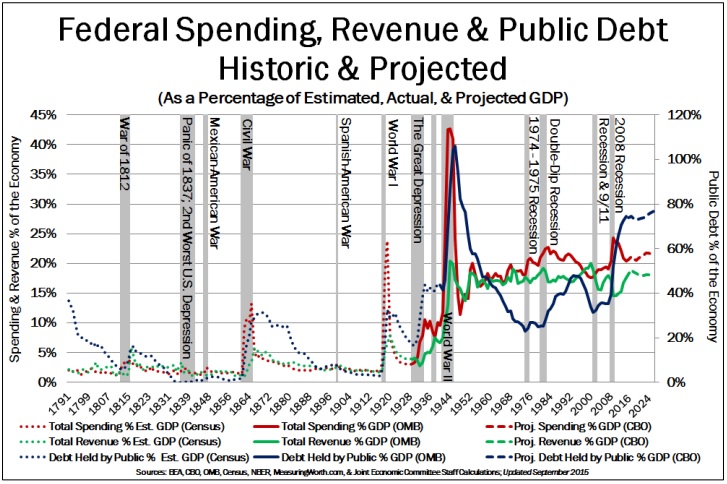
____________________________

_____________


________________________________________________

_____________________________________________

Friedman Friday” Free to Choose by Milton Friedman: Episode “What is wrong with our schools?” (Part 3 of transcript and video)

Friedman Friday” Free to Choose by Milton Friedman: Episode “What is wrong with our schools?” (Part 3 of transcript and video) Here is the video clip and transcript of the film series FREE TO CHOOSE episode “What is wrong with our schools?” Part 3 of 6.   Volume 6 – What’s Wrong with our Schools Transcript: If it […]

Friedman Friday” Free to Choose by Milton Friedman: Episode “What is wrong with our schools?” (Part 2 of transcript and video)

Here is the video clip and transcript of the film series FREE TO CHOOSE episode “What is wrong with our schools?” Part 2 of 6.   Volume 6 – What’s Wrong with our Schools Transcript: Groups of concerned parents and teachers decided to do something about it. They used private funds to take over empty stores and they […]

By Everette Hatcher III | Also posted in Vouchers | Edit | Comments (1)

Friedman Friday” Free to Choose by Milton Friedman: Episode “What is wrong with our schools?” (Part 1 of transcript and video)

Here is the video clip and transcript of the film series FREE TO CHOOSE episode “What is wrong with our schools?” Part 1 of 6.   Volume 6 – What’s Wrong with our Schools Transcript: Friedman: These youngsters are beginning another day at one of America’s public schools, Hyde Park High School in Boston. What happens when […]

By Everette Hatcher III | Also posted in Vouchers | Tagged , , , , | Edit | Comments (0)
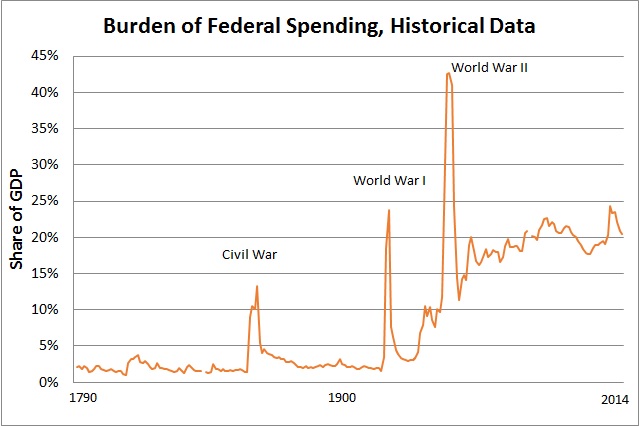
Friedman Friday” Free to Choose by Milton Friedman: Episode “Created Equal” (Part 3 of transcript and video)

Friedman Friday” Free to Choose by Milton Friedman: Episode “Created Equal” (Part 3 of transcript and video) Liberals like President Obama want to shoot for an equality of outcome. That system does not work. In fact, our free society allows for the closest gap between the wealthy and the poor. Unlike other countries where free enterprise and other […]

Free to Choose by Milton Friedman: Episode “Created Equal” (Part 2 of transcript and video)

Free to Choose by Milton Friedman: Episode “Created Equal” (Part 2 of transcript and video) Liberals like President Obama want to shoot for an equality of outcome. That system does not work. In fact, our free society allows for the closest gap between the wealthy and the poor. Unlike other countries where free enterprise and other freedoms are […]

Free to Choose by Milton Friedman: Episode “Created Equal” (Part 1 of transcript and video)

 Milton Friedman and Ronald Reagan Liberals like President Obama (and John Brummett) want to shoot for an equality of outcome. That system does not work. In fact, our free society allows for the closest gap between the wealthy and the poor. Unlike other countries where free enterprise and other freedoms are not present.  This is a seven part series. […]

Milton Friedman Friday: (“Free to Choose” episode 4 – From Cradle to Grave, Part 3 of 7)

 I am currently going through his film series “Free to Choose” which is one the most powerful film series I have ever seen. PART 3 OF 7 Worse still, America’s depression was to become worldwide because of what lies behind these doors. This is the vault of the Federal Reserve Bank of New York. Inside […]

By Everette Hatcher III | Edit | Comments (0)

Milton Friedman Friday:(“Free to Choose” episode 4 – From Cradle to Grave, Part 2 of 7)

 I am currently going through his film series “Free to Choose” which is one the most powerful film series I have ever seen. For the past 7 years Maureen Ramsey has had to buy food and clothes for her family out of a government handout. For the whole of that time, her husband, Steve, hasn’t […]

Friedman Friday:(“Free to Choose” episode 4 – From Cradle to Grave, Part 1 of 7)

Friedman Friday:(“Free to Choose” episode 4 – From Cradle to Grave, Part 1 of 7) Volume 4 – From Cradle to Grave Abstract: Since the Depression years of the 1930s, there has been almost continuous expansion of governmental efforts to provide for people’s welfare. First, there was a tremendous expansion of public works. The Social Security Act […]

By Everette Hatcher III | Edit | Comments (0)

“Friedman Friday” (“Free to Choose” episode 1 – Power of the Market. part 3 of 7)

  _________________________   Pt3  Nowadays there’s a considerable amount of traffic at this border. People cross a little more freely than they use to. Many people from Hong Kong trade in China and the market has helped bring the two countries closer together, but the barriers between them are still very real. On this side […]

“Friedman Friday” (“Free to Choose” episode 1 – Power of the Market. part 2 of 7)

  Aside from its harbor, the only other important resource of Hong Kong is people __ over 4_ million of them. Like America a century ago, Hong Kong in the past few decades has been a haven for people who sought the freedom to make the most of their own abilities. Many of them are […]

“Friedman Friday” (“Free to Choose” episode 1 – Power of the Market. part 1of 7)

“FREE TO CHOOSE” 1: The Power of the Market (Milton Friedman) Free to Choose ^ | 1980 | Milton Friedman Posted on Monday, July 17, 2006 4:20:46 PM by Choose Ye This Day FREE TO CHOOSE: The Power of the Market Friedman: Once all of this was a swamp, covered with forest. The Canarce Indians […]

By Everette Hatcher III | Posted in Current Events, Milton Friedman | Edit | Comments (0)

“Friedman Friday,” EPISODE “The Failure of Socialism” of Free to Choose in 1990 by Milton Friedman (Part 1)

Milton Friedman: Free To Choose – The Failure Of Socialism With Ronald Reagan (Full) Published on Mar 19, 2012 by NoNationalityNeeded Milton Friedman’s writings affected me greatly when I first discovered them and I wanted to share with you. We must not head down the path of socialism like Greece has done. Abstract: Ronald Reagan […]

By Everette Hatcher III | Posted in Milton FriedmanPresident Obama | Edit | Comments (1)

“The Failure of Socialism” episode of Free to Choose in 1990 by Milton Friedman (Part 1)

Milton Friedman: Free To Choose – The Failure Of Socialism With Ronald Reagan (Full) Published on Mar 19, 2012 by NoNationalityNeeded Milton Friedman’s writings affected me greatly when I first discovered them and I wanted to share with you. We must not head down the path of socialism like Greece has done. Abstract: Ronald Reagan […]

My rough draft letter to President Elect Biden that will be mailed on March 19, 2021! (Part 59) The Kermit Gosnell Verdict: Implications for Pro-Life Lutheran Christians–A statement by LCMS Life Ministries

Dr. Francis schaeffer – The flow of Materialism(from Part 4 of Whatever happened to human race? Co-authored by Francis Schaeffer and Dr. C. Everett Koop)

C. Everett Koop
C. Everett Koop, 1980s.jpg
13th Surgeon General of the United States
In office
January 21, 1982 – October 1, 1989

Dr. Francis Schaeffer – The Biblical flow of Truth & History (intro)

Francis Schaeffer – The Biblical Flow of History & Truth (1)

Mr. Hentoff with the clarinetist Edmond Hall in 1948 at the Savoy, a club in Boston.

Dr. Francis Schaeffer – The Biblical Flow of Truth & History (part 2)

Image<img class=”i-amphtml-blurry-placeholder” src=”data:;base64,Edith Schaeffer with her husband, Francis Schaeffer, in 1970 in Switzerland, where they founded L’Abri, a Christian commune.

________________

______________________

March 19, 2021

President Biden c/o The White House 1600 Pennsylvania Avenue NW Washington, DC 20500

Dear Mr. President,

I really do respect you for trying to get a pulse on what is going on out here. I know that you don’t agree with my pro-life views but I wanted to challenge you as a fellow Christian to re-examine your pro-choice view.

___________________

Many in the world today are taking a long look at the abortion industry because of the May 14, 2013 guilty verdict and life term penalty handed down by a jury (which included 9 out of 12 pro-choice jurors)  to Dr. Kermit Gosnell. During this time of reflection I wanted to put forth some of the pro-life’s best arguments.

In the film series “WHATEVER HAPPENED TO THE HUMAN RACE?” the arguments are presented  against abortion (Episode 1),  infanticide (Episode 2),   euthanasia (Episode 3), and then there is a discussion of the Christian versus Humanist worldview concerning the issue of “the basis for human dignity” in Episode 4 and then in the last episode a close look at the truth claims of the Bible.

Francis Schaeffer

__________________________

I truly believe that many of the problems we have today in the USA are due to the advancement of humanism in the last few decades in our society. Ronald Reagan appointed the evangelical Dr. C. Everett Koop to the position of Surgeon General in his administration. He partnered with Dr. Francis Schaeffer in making the video below. It is very valuable information for Christians to have.  Actually I have included a video below that includes comments from him on this subject.

Francis Schaeffer Whatever Happened to the Human Race (Episode 1) ABORTION

_____________________________________

Dr. Francis schaeffer – The flow of Materialism(from Part 4 of Whatever happened to human race?)

Dr. Francis Schaeffer – The Biblical flow of Truth & History (intro)

Francis Schaeffer – The Biblical Flow of History & Truth (1)

Dr. Francis Schaeffer – The Biblical Flow of Truth & History (part 2)

________________

The Kermit Gosnell Verdict: Implications for Pro-Life Lutheran Christians–A statement by LCMS Life Ministries

The Kermit Gosnell Verdict: Implications for Pro-Life Lutheran Christians

A statement by LCMS Life Ministries

May 13, 2013

After a nine-week trial, which included weeks of graphic testimony, a Pennsylvania jury found Dr. Kermit Gosnell guilty of three of four counts of first-degree murder in the deaths of babies who were born alive, but who died after their spinal cords were severed in procedures Gosnell called “abortions.” He was acquitted on the fourth murder charge. Gosnell also was convicted of involuntary manslaughter  in the botched abortion death of one mother. He faced 258 counts total, including 24 counts of performing abortions after 24 weeks gestation, which is illegal in Pennsylvania, and hundreds of charges of violating Pennsylvania’s informed consent and 24-hour waiting period laws. The jury is now in the penalty phase.

Gosnell’s murder trial became the subject of much debate nationally after pro-life activists and others criticized the mainstream media for ignoring the trial early on.

As pro-life Christians devoted to the biblical understanding of the sanctity of human life, we grieve over the tragic loss of these lives and the thousands of other children and mothers who die daily as a result of abortion. Today’s conviction of Gosnell brings justice for the many victims of this horrific abortion facility and demonstrates that abortion is clearly a slippery slope that seeks to deprive the most helpless of their basic human right: life.

The LCMS develops and promotes resources and support for pregnant women so they can avoid seeking abortions. Abortion doesn’t solve — but only masks — problems many women face and leaves many of them grieving the death of a child.

The Gosnell case generated a larger debate and rightly caused people to consider the philosophical issue of why an abortion procedure performed in utero is legal, but also how a similar act a few minutes later, outside the womb, is considered homicide.

Clearly, the case was about the death of five persons and no one can argue against the personhood of these four smaller humans. This case has exposed the ugly underbelly of the pro-abortion movement and it has brought the humanity of unborn children before the public conscience.

We call upon legislators and citizens to examine the brutality of abortion, which takes the lives of 1.2 million children every year, and the mothers who die as well. (The Center for Disease Control reports that about 400 women have died as a result of legal abortions since 1973, and 12 died in 2008, the last time such research was gathered.)

Our church aims to be a place of forgiveness, mercy and healing for all people as we continue to proclaim Christ’s comfort and truth in love. As we move forward following this ruling, we offer up our prayers for women and children in need, for families, that those still participating in the abortion industry would stop, and for our nation.

Additional Information

For more information, contact:

Maggie Karner, director, Life Ministries

The Lutheran Church—Missouri Synod

maggie.karner@lcms.org

_____________

Tony Perkins: Gosnell Trial – FOX News

Published on May 13, 2013

Tony Perkins: Gosnell Trial – FOX News

______________________

Thank you so much for your time. I know how valuable it is. I also appreciate the fine family that you have and your commitment as a father and a husband. I also respect you for putting your faith in Christ for your eternal life. I am pleading to you on the basis of the Bible to please review your religious views concerning abortion. It was the Bible that caused the abolition movement of the 1800’s and it also was the basis for Martin Luther King’s movement for civil rights and it also is the basis for recognizing the unborn children.

Sincerely,

Everette Hatcher III, 13900 Cottontail Lane, Alexander, AR 72002, ph 501-920-5733,

Related posts:

Al Mohler on Kermit Gosnell’s abortion practice

Francis Schaeffer: “Whatever Happened to the Human Race” (Episode 1) ABORTION OF THE HUMAN RACE Published on Oct 6, 2012 by AdamMetropolis ________________ Picture of Francis Schaeffer and his wife Edith from the 1930′s above. I was sad to read about Edith passing away on Easter weekend in 2013. I wanted to pass along this fine […]

Taking on Ark Times Bloggers on various issues Part U “Do men have a say in the abortion debate?” (includes the film SLAUGHTER OF THE INNOCENTS and editorial cartoon)

I have gone back and forth and back and forth with many liberals on the Arkansas Times Blog on many issues such as abortion, human rights, welfare, poverty, gun control  and issues dealing with popular culture. Here is another exchange I had with them a while back. My username at the Ark Times Blog is Saline […]

Taking on Ark Times Bloggers on various issues Part T “Abortion is a dirty business” (includes video “Truth and History” and editorial cartoon)

I have gone back and forth and back and forth with many liberals on the Arkansas Times Blog on many issues such as abortion, human rights, welfare, poverty, gun control  and issues dealing with popular culture. Here is another exchange I had with them a while back. My username at the Ark Times Blog is Saline […]

“Sanctity of Life Saturday” Abortion supporters lying in order to further their clause? Window to the Womb (includes video ABORTION OF THE HUMAN RACE)

It is truly sad to me that liberals will lie in order to attack good Christian people like state senator Jason Rapert of Conway, Arkansas because he headed a group of pro-life senators that got a pro-life bill through the Arkansas State Senate the last week of January in 2013. I have gone back and […]

Taking on Ark Times Bloggers on various issues Part D “If you can’t afford a child can you abort?”Francis Schaeffer Quotes part 4 includes the film ABORTION OF THE HUMAN RACE) (editorial cartoon)

I have gone back and forth and back and forth with many liberals on the Arkansas Times Blog on many issues such as abortion, human rights, welfare, poverty, gun control  and issues dealing with popular culture. Here is another exchange I had with them a while back. My username at the Ark Times Blog is Saline […]

Taking on Ark Times Bloggers on various issues Part C “Abortion” (Francis Schaeffer Quotes part 3 includes the film SLAUGHTER OF THE INNOCENTS) (editorial cartoon)

I have gone back and forth and back and forth with many liberals on the Arkansas Times Blog on many issues such as abortion, human rights, welfare, poverty, gun control  and issues dealing with popular culture. Here is another exchange I had with them a while back. My username at the Ark Times Blog is Saline […]

Taking on Ark Times Bloggers on various issues Part B “Gendercide” (Francis Schaeffer Quotes Part 2 includes the film ABORTION OF THE HUMAN RACE) (editorial cartoon)

I have gone back and forth and back and forth with many liberals on the Arkansas Times Blog on many issues such as abortion, human rights, welfare, poverty, gun control  and issues dealing with popular culture. Here is another exchange I had with them a while back. My username at the Ark Times Blog is Saline […]

SANCTITY OF LIFE SATURDAY “AngryOldWoman” blogger argues that she has no regrets about past abortion

Sometimes you can see evidences in someone’s life of how content they really are. I saw  something like that on 2-8-13 when I confronted a blogger that goes by the name “AngryOldWoman” on the Arkansas Times Blog. See below. Leadership Crisis in America Published on Jul 11, 2012 Picture of Adrian Rogers above from 1970′s […]

“Sanctity of Life Saturday” The Church Awakens: Whatever Happened to the Human Race? (includes the video ABORTION OF THE HUMAN RACE)

In the film series “WHATEVER HAPPENED TO THE HUMAN RACE?” the arguments are presented  against abortion (Episode 1),  infanticide (Episode 2),   euthenasia (Episode 3), and then there is a discussion of the Christian versus Humanist worldview concerning the issue of “the basis for human dignity” in Episode 4 and then in the last episode a close […]

Taking on Ark Times Bloggers on various issues Part H “Are humans special?” includes film ABORTION OF THE HUMAN RACE) Reagan: ” To diminish the value of one category of human life is to diminish us all”

I have gone back and forth and back and forth with many liberals on the Arkansas Times Blog on many issues such as abortion, human rights, welfare, poverty, gun control  and issues dealing with popular culture. Here is another exchange I had with them a while back. My username at the Ark Times Blog is Saline […]

Taking on Ark Times Bloggers on various issues Part G “How do moral nonabsolutists come up with what is right?” includes the film “ABORTION OF THE HUMAN RACE”)

I have gone back and forth and back and forth with many liberals on the Arkansas Times Blog on many issues such as abortion, human rights, welfare, poverty, gun control  and issues dealing with popular culture. Here is another exchange I had with them a while back. My username at the Ark Times Blog is Saline […]

Taking on Ark Times Bloggers on various issues Part E “Moral absolutes and abortion” Francis Schaeffer Quotes part 5(includes the film SLAUGHTER OF THE INNOCENTS) (editorial cartoon)

I have gone back and forth and back and forth with many liberals on the Arkansas Times Blog on many issues such as abortion, human rights, welfare, poverty, gun control  and issues dealing with popular culture. Here is another exchange I had with them a while back. My username at the Ark Times Blog is Saline […]

Francis Schaeffer’s “How should we then live?” Video and outline of episode 10 “Final Choices” (Schaeffer Sundays)

E P I S O D E 1 0   Dr. Francis Schaeffer – Episode X – Final Choices 27 min FINAL CHOICES I. Authoritarianism the Only Humanistic Social Option One man or an elite giving authoritative arbitrary absolutes. A. Society is sole absolute in absence of other absolutes. B. But society has to be […]

Francis Schaeffer’s “How should we then live?” Video and outline of episode 9 “The Age of Personal Peace and Affluence” (Schaeffer Sundays)

E P I S O D E 9 Dr. Francis Schaeffer – Episode IX – The Age of Personal Peace and Affluence 27 min T h e Age of Personal Peace and Afflunce I. By the Early 1960s People Were Bombarded From Every Side by Modern Man’s Humanistic Thought II. Modern Form of Humanistic Thought Leads […]

Francis Schaeffer’s “How should we then live?” Video and outline of episode 8 “The Age of Fragmentation” (Schaeffer Sundays)

E P I S O D E 8 Dr. Francis Schaeffer – Episode VIII – The Age of Fragmentation 27 min I saw this film series in 1979 and it had a major impact on me. T h e Age of FRAGMENTATION I. Art As a Vehicle Of Modern Thought A. Impressionism (Monet, Renoir, Pissarro, Sisley, […]

Francis Schaeffer’s “How should we then live?” Video and outline of episode 7 “The Age of Non-Reason” (Schaeffer Sundays)

E P I S O D E 7 Dr. Francis Schaeffer – Episode VII – The Age of Non Reason I am thrilled to get this film series with you. I saw it first in 1979 and it had such a big impact on me. Today’s episode is where we see modern humanist man act […]

Francis Schaeffer’s “How should we then live?” Video and outline of episode 6 “The Scientific Age” (Schaeffer Sundays)

E P I S O D E 6 How Should We Then Live 6#1 Uploaded by NoMirrorHDDHrorriMoN on Oct 3, 2011 How Should We Then Live? Episode 6 of 12 ________ I am sharing with you a film series that I saw in 1979. In this film Francis Schaeffer asserted that was a shift in […]

Francis Schaeffer’s “How should we then live?” Video and outline of episode 5 “The Revolutionary Age” (Schaeffer Sundays)

E P I S O D E 5 How Should We Then Live? Episode 5: The Revolutionary Age I was impacted by this film series by Francis Schaeffer back in the 1970′s and I wanted to share it with you. Francis Schaeffer noted, “Reformation Did Not Bring Perfection. But gradually on basis of biblical teaching there […]

Francis Schaeffer’s “How should we then live?” Video and outline of episode 4 “The Reformation” (Schaeffer Sundays)

Dr. Francis Schaeffer – Episode IV – The Reformation 27 min I was impacted by this film series by Francis Schaeffer back in the 1970′s and I wanted to share it with you. Schaeffer makes three key points concerning the Reformation: “1. Erasmian Christian humanism rejected by Farel. 2. Bible gives needed answers not only as to […]

“Schaeffer Sundays” Francis Schaeffer’s “How should we then live?” Video and outline of episode 3 “The Renaissance”

Francis Schaeffer’s “How should we then live?” Video and outline of episode 3 “The Renaissance” Francis Schaeffer: “How Should We Then Live?” (Episode 3) THE RENAISSANCE I was impacted by this film series by Francis Schaeffer back in the 1970′s and I wanted to share it with you. Schaeffer really shows why we have so […]

Francis Schaeffer’s “How should we then live?” Video and outline of episode 2 “The Middle Ages” (Schaeffer Sundays)

  Francis Schaeffer: “How Should We Then Live?” (Episode 2) THE MIDDLE AGES I was impacted by this film series by Francis Schaeffer back in the 1970′s and I wanted to share it with you. Schaeffer points out that during this time period unfortunately we have the “Church’s deviation from early church’s teaching in regard […]

Francis Schaeffer’s “How should we then live?” Video and outline of episode 1 “The Roman Age” (Schaeffer Sundays)

Francis Schaeffer: “How Should We Then Live?” (Episode 1) THE ROMAN AGE   Today I am starting a series that really had a big impact on my life back in the 1970′s when I first saw it. There are ten parts and today is the first. Francis Schaeffer takes a look at Rome and why […]

By Everette Hatcher III | Posted in Francis Schaeffer | Edit | Comments (0)