Woody Allen believes that we live in a cold, violent and meaningless universe and it seems that his main character (Gil Pender, played by Owen Wilson) in the movie MIDNIGHT IN PARIS shares that view. Pender’s meeting with the Surrealists is by far the best scene in the movie because they are ones who can understand his predicament concerning the absurdity of life UNDER THE SUN (as Solomon used to phrase it.) If we are here as a result of chance then what lasting purpose can be found? The Surrealists truly grasped the problem and it seems that Gil does too realize the full weight of the predicament. HOWEVER, DOES THE UNIVERSE MATCH UP WITH THIS IDEA OF TIME AND CHANCE OR IS IT COMPATIBLE WITH A DESIGNER? (John Cage and Jackson Pollock attempted to live their lives according to time and change and how did that turn out? How the existence of love explained by time and chance?)
Woody Allen’s main character GIL PENDER in the movie MIDNIGHT IN PARIS firmly believes that we live in a cold, violent, and meaningless universe brought to us by Darwinism chance plus time.
Let’s see what King Solomon had to say about that. Solomon said in Ecclesiastes 9:11-13 “I have seen something else UNDER THE SUN: The race is not to the swift or the battle to the strong, nor does food come to the wise or wealth to the brilliant or favor to the learned; but time and chance happen to them all. Moreover, no one knows when their hour will come: As fish are caught in a cruel net, or birds are taken in a snare, so people are trapped by evil times that fall unexpectedly upon them.”
WHY IS SOLOMON CAUGHT IN DESPAIR IN THE BOOK OF ECCLESIASTES? Christian scholar Ravi Zacharias has noted, “The key to understanding the Book of Ecclesiastes is the term ‘UNDER THE SUN.’ What that literally means is you lock God out of a closed system, and you are left with only this world of time plus chance plus matter.” THIS IS EXACT POINT SCHAEFFER SAYS SECULAR ARTISTS ARE PAINTING FROM TODAY BECAUSE THEY BELIEVED ARE A RESULT OF MINDLESS CHANCE.
By the way, the final chapter of Ecclesiastes finishes with Solomon emphasizing that serving God is the only proper response of man. Solomon LOOKS ABOVE THE SUN AND BRINGS GOD BACK INTO THE PICTURE in the final chapter of the book in Ecclesiastes 12:13-14, “ Now all has been heard; here is the conclusion of the matter: Fear God and keep his commandments, for this is the whole duty of man. For God will bring every deed into judgment, including every hidden thing, whether it is good or evil.”
(Francis Schaeffer pictured below)
Francis Schaeffer in Art and the Bible noted, “Many modern artists, it seems to me, have forgotten the value that art has in itself. Much modern art is far too intellectual to be great art. Many modern artists seem not to see the DISTINCTION BETWEEN MAN AND NON-MAN, and it is a part of the lostness of modern man that they no longer see value in the work of art as a work of art.”
Many modern artists are left in this point of desperation that Schaeffer points out and it reminds me of the despair that Solomon speaks of in Ecclesiastes as you looks at life UNDER THE SUN. Another group of artists reached this point of desperation and it is those involved in the Dada movement and then the later Surrealist movement.
Francis Schaeffer noted:
Dada was started in Zurich and came along in modern art. Dada means nothing. The word “Dada” means rocking horse, but it was chosen by chance. The whole concept of Dada is everything means nothing. [In this materialistic mindset Chance and Time have determined the past, and they will determine the future according to Solomon in life UNDER THE SUN]… Dada carried to its logical conclusion the notion of all having come about by chance; the result was the final absurdity of everything, including humanity.
(Surrealists: Man Ray, Jean Arp, Yves Tanguy, André Breton; Tristan Tzara, Salvador Dalí, Paul Eluard, Max Ernst and Rene Clevel, 1930.)
Jean Arp below.
Below is a portion from the Francis Schaeffer book HOW SHOULD WE THEN LIVE?:
Hans (Jean) Arp (1887-1966), an Alsatian sculptor, wrote a poem which appeared in the final issue of the magazine De Stijl (The Style) which was published by the De Stijl group of artists led by Piet Mondrian and Theo van Doesburg. Mondrian (1872-1944) was the best-known artist of this school. He was not of the Dada school which accepted and portrayed absurdity. Rather, Mondrian was hoping to paint the absolute. Hand Arp, however, was a Dadaist artist connected with De Stijl. His power “Für Theo Van Doesburg,” translated from German reads:
the head downward the legs upward he tumbles into the bottomless from whence he came
he has no more honour in his body he bites no more bite of any short meal he answers no greeting and is not proud when being adored
the head downward the legs upward he tumbles into the bottomless from whence he came
like a dish covered with hair like a four-legged sucking chair like a deaf echotrunk half full half empty
the head downward the legs upward he tumbles into the bottomless from whence he came
Jean Arp (Hans Arp)
Jean Arp is associated with the DADA movement. His collages were of torn pieces of paper dropped and affixed where they would land. His use of chance is intended to create free of human intervention. “Dada,” wrote Arp, “wished to destroy the hoaxes of reason and to discover an unreasoned order.”
Collage with Squares Arranged According to the Laws of Chance
Random Collage
Torn Paper and Gouache
Dada carried to its logical conclusion the notion of all having come about by chance; the result was the final absurdity of everything, including humanity.
Pictured below: Salvador Dalí (lower center) and Marcel Duchamp (upper left) attending a bullfight.
_____
Nude Descending a Staircase (1912) by Marcel Duchamp
Francis Schaeffer continues:
The man who perhaps most clearly and consciously showed this understanding of the resulting absurdity fo all things was Marcel Duchamp (1887-1969). He carried the concept of fragmentation further in Nude Descending a Staircase (1912), one version of which is now in the Philadelphia Museum of Art–a painting in which the human disappeared completely. The chance and fragmented concept of what is led to the devaluation and absurdity of all things. All one was left with was a fragmented view of a life which is absurd in all its parts. Duchamp realized that the absurdity of all things includes the absurdity of art itself. His “ready-mades” were any object near at hand, which he simply signed. It could be a bicycle wheel or a urinal. Thus art itself was declared absurd.
_____
(Jackson Pollock pictured below dripping his paint)
Francis Schaeffer in his book HOW SHOULD WE THEN LIVE? noted on pages 200-203:
Jackson Pollock (1912-1956) is perhaps the clearest example in the United States of painting deliberately in order to make the statements that all is chance. He placed canvases horizontally on the floor and dripped paint on them from suspended cans swinging over them. Thus, his paintings were a product of chance. But wait a minute! Is there not an order in the lines of paint on his canvases? Yes, because it was not really chance shaping his canvases! The universe is not a random universe; it has order. Therefore, as the dripping paint from the swinging cans moved over the canvases, the lines of paint were following the order of the universe itself. The universe is not what these painters said it is.
(John Cage pictured above)
(Woody Allen, Peter O’Toole and Capucine)
________
(Marcel Duchamp plays white, John Cage plays black, on a chessboard modified to generate tones depending on where the chess pieces are. Toronto, 1968. Teeny Duchamp at far left, camerman in the background. This was a performance.)
John Cage provides perhaps the clearest example of what is involved in the shift of music. Cage believed the universe is a universe of chance. He tried carrying this out with great consistency. For example, at times he flipped coins to decide what the music should be. At other times he erected a machine that led an orchestra by chance motions so that the orchestra would not know what was coming next. Thus there was no order. Or again, he placed two conductors leading the same orchestra, separated from each other by a partition, so that what resulted was utter confusion. There is a close tie-in again to painting; in 1947 Cage made a composition he called MUSIC FOR MARCEL DUCHAMP. But the sound produced by his music was composed only of silence (interrupted only by random environmental sounds), but as soon as he used his chance methods sheer noise was the outcome.
But Cage also showed that one cannot live on such a base, that the chance concept of the universe does not fit the universe as it is. Cage is an expert in mycology, the science of mushrooms. And he himself said, “I became aware that if I approached mushrooms in the spirit of my chance operation, I would die shortly.” Mushroom picking must be carefully discriminative. His theory of the universe does not fit the universe that exists.
All of this music by chance, which results in noise, makes a strange contrast to the airplanes sitting in our airports or slicing through our skies. An airplane is carefully formed; it is orderly (and many would also think it beautiful). This is in sharp contrast to the intellectualized art which states that the universe is chance. Why is the airplane carefully formed and orderly, and what Cage produced utter noise? Simply because an airplane must fit the orderly flow lines of the universe if it is to fly!
!Midnight in the Paris-best scene of the movie Salvador Dali, Man Ray and Woody Allen
published on Dec 18, 2012
Woody Allen talking with Salvador Dali and Man Ray and Luis Bunuel.
This is the transcript of
DALI: We met, earlier tonight…At the party! Dali.
GIL: I remember!-
DALI: A bottle of red wine!
GIL: It can’t be… Yeah….So?
DALI: Another glass for this man, please. I love the language!The French! The waiters? No.You like the shape of the rhinoceros?
GIL: The rhinoceros? Uh…Haven’t really thought about it.I paint the rhinoceros.
DALI: I paint you. Your sad eyes.Your big lips, melting over the hot sand,with one tear.Yes! And in your tear, another face.The Christ’s face!Yes, in the rhinoceros.
GIL: Yeah. I mean, I probably do look sad. I’m in…a very perplexing situation.
DALI: Diablo…Luis! Oye, Luis!(Damn. Luis! Hey, Luis!)My friends.This… is Luis Bunuel…and…Mr. Man Ray.-
GIL: Man Ray? My Gosh!- How ’bout that?
DALI: This is Pen-der. Pen-der. Pender!- Yes. And I am DalÃ!- DalÃ. Yes.You have to remember. Pender is in a perplexing situation.
GIL: It sounds so crazy to say.You guys are going to think I’m drunk, but I have to tell someone. I’m…from a…a different time. Another era.The future. OK? I come…from the 2000th millennium to here.I get in a car, and I slide through time.
MAN RAY: Exactly correct.You inhabit two worlds.- So far, I see nothing strange.- Why?
GIL: Yeah, you’re surrealists!But I’m a normal guy. See, in one life,I‘m engaged to marry a woman I love.At least, I think I love her.Christ! I better love her! I’m marrying her!
DALI: The rhinoceros makes love by mounting the female.But…is there a difference in the beauty between two rhinoceroses?
MAN RAY: There is another woman?Adriana. Yes, and I’m…very drawn to her.I find her extremely alluring.The problem is that other men,great artists – geniuses- also find her alluring,and she finds them. So, there’s that…
MAN RAY: A man in love with a woman from a different era.I see a photograph.
LUIS BUNUEL: I see a film.I see an insurmountable problem.I see……a rhinoceros.
Let me make a few points here. We see that Gil Pender’s perplexing problem is that he is in love and this goes against his views that we are not put here for a purpose, but by mindless chance. God created us so we can’t deny that we are created for a purpose and when a person falls truly in love with another person then they have a hard time maintaining this is only just a product of evolution and has no lasting significance.
Solomon wisely noted in Ecclesiastes 3:11 “God has planted eternity in the heart of men…” (Living Bible). No wonder Bertrand Russell wrote in his autobiography, “It is odd, isn’t it? I feel passionately for this worldand many things and people in it, and yet…what is it all? There must be something more important, one feels, though I don’t believe there is. I am haunted. Some ghosts, for some extra mundane regions, seem always trying to tell me something that I am to repeat to the world, but I cannot understand that message.”
Bertrand Russell playing chess with his son (1940).
The Bible teaches that we all know that God exists and has made us in his image and if we deny that then we are suppressing the knowledge of our conscience in unrighteousness. Romans 1:18-19 (Amplified Bible) ” For God’s wrath and indignation are revealed from heaven against all ungodliness and unrighteousness of men, who in their wickedness REPRESSandHINDER the truth and make it inoperative. For that which is KNOWN about God is EVIDENT to them andMADE PLAIN IN THEIR INNER CONSCIOUSNESS, because God has SHOWN IT TO THEM,”(emphasis mine).
Being in Woody’s shoes is not the most cheerful place to be: he sees the universe as a cold place, with no ultimate meaning; transient, unsatisfying; with nothing to hold onto other than temporary distractions from these cold truths. Allen’s favorite distraction is getting absorbed in work (which explains the volume of his creative output). Another distraction we fall into are relationships with other people.
Woody is keenly aware why the life feels unsatisfactory, and he is good at unmasking the fallacies of the usual ‘coping strategies’(such as hoping to achieve satisfaction by leaving something behind which would outlast oneself, or even his self-prescribed absorption in work). Because of this, our life and Allen’s films are full of illusions that we build like walls between ourselves and the reality….At the end, the protagonist gets the point: “That’s what the present is. It’s a little unsatisfying because life is unsatisfying.” The problem is not in the when or where we live, but it is inherent in the experience of living. Allen’s films are moving because there is the realization of the distraction being just that, a distraction, but embracing it never-the-less because it is the best thing we have.
I am grateful for having Allen’s movies as beautiful distractions. It is hard for me to distinguish whether Allen’s worldview happens to coincide with mine, or whether my views were shaped so much by watching and admiring his films since my early teenage years. Where we differ is that I also hope that when we face the cold universe – as we do from time to time whether we want to or not – we can wait a while before blocking it out again, and perhaps discern something that has a real value amidst the fleeting time. But Paris might still be the preferred place for this.
I know that there are many people like Pavel Soukenikout there who do not accept the existence of the supernatural and if there are correct then I would agree with them that all we have left is the “cold universe.” But let me respond further with the words of Francis Schaeffer from his book HE IS THERE AND HE IS NOT SILENT (the chapter is entitled, “Is Propositional Revelation Nonsense?”
Of course, if the infinite uncreated Personal communicated to the finite created personal, he would not exhaust himself in his communication; but two things are clear here:
1. Even communication between once created person and another is not exhaustive, but that does not mean that for that reason it is not true.
2. If the uncreated Personal really cared for the created personal, it could not be thought unexpected for him to tell the created personal things of a propositional nature; otherwise as a finite being the created personal would have numerous things he could not know if he just began with himself as a limited, finite reference point. In such a case, there is no intrinsic reason why the uncreated Personal could communicate some vaguely true things, but could not communicate propositional truth concerning the world surrounding the created personal – for fun, let’s call that science. Or why he could not communicate propositional truth to the created personal concerning the sequence that followed the uncreated Personal making everything he made – let’s call thathistory. There is no reason we could think of why he could not tell these two types of propositional things truly. They would not be exhaustive; but could we think of any reason why they would not be true? The above is, of course, what the Bible claims for itself in regard to propositional revelation.
The only alternative to believing that we were made for a purpose by God is to embrace the chance universe that Woody Allen has demonstrated so well in his films. Below is such a scene from the movie PLAY IT AGAIN SAM.
In 1972’s Play It Again, Sam, Allen plays a film critic trying to get over his wife’s leaving him by dating again. In one scene, Allen tries to pick up a depressive woman in front of the early Jackson Pollock work. This painting, because of its elusive title, has been the subject of much debate as to what it portrays. This makes for a nifty gag when Allen strolls up and asks the suicidal belle, “What does it say to you?”
______________
Woody Allen in Play It Again Sam
Uploaded on May 20, 2009
Scene from ‘Play it Again Sam’ (1972)
____________
Allan: That’s quite a lovely Jackson Pollock, isn’t it?
Museum Girl: It restates the negativeness of the universe. The hideous lonely emptiness of existence. Nothingness. The predicament of Man forced to live in a barren, Godless eternity like a tiny flame flickering in an immense void with nothing but waste, horror and degradation, forming a useless bleak straitjacket in a black absurd cosmos.
Great article by Ken Ham on Alberto Giubilini, Francesca Minerva, and Peter Singer and their view that parents should be allowed to abort their newborn infants!
Francis Schaeffer
Dr. Francis Schaeffer: Whatever Happened to the Human Race Episode 1 ABORTION
Whatever Happened to the Human Race?
Abortion
Dr. Francis Schaeffer
Recently, the Journal of Medical Ethics caused an uproar when it published an article titled, “After-birth Abortion: Why Should the Baby Live?” News reports initially focused on the short abstract of the article that was available for free online (the full paper cost $30 to purchase, according to one report www.ncregister.com/blog/matthew-archbold/ethicists-argue-for-post-birth-abortions), when the paper was suddenly made available in full shortly after the controversy began. Although I already posted about this story on my Facebook page, I thought it worth looking at the full report for today’s blog and including this link so now you can all read the four-page paper for yourself here (jme.bmj.com/content/early/2012/02/22/medethics-2011-100411.full.pdf+html).
The authors of the paper were Alberto Giubilini, who works with the Centre for Human Bioethics at Monash University in Australia, and Francesca Minerva, who works with the Centre for Applied Philosophy and Public Ethics at the University of Melbourne, Australia. Their thesis? They believe that parents should be allowed to abort their newborn infants.
The authors stated their argument as follows:
Abortion is largely accepted even for reasons that do not have anything to do with the fetus’ health. By showing that (1) both fetuses and newborns do not have the same moral status as actual persons, (2) the fact that both are potential persons is morally irrelevant and (3) adoption is not always in the best interest of actual people, the authors argue that what we call ‘after-birth abortion’ (killing a newborn) should be permissible in all the cases where abortion is, including cases where the newborn is not disabled. (p. 1)
Giubilini and Minerva take abortion a step further, arguing that parents should be allowed to abort their newborns. They justify their position by claiming that an infant is not technically a person:
Both a fetus and a newborn certainly are human beings and potential persons, but neither is a ‘person’ in the sense of ‘subject of a moral right to life’. We take ‘person’ to mean an individual who is capable of attributing to her own existence some (at least) basic value such that being deprived of this existence represents a loss to her. (p. 2)
At which point do Giubilini and Minerva consider infants to be persons? They declined to say: “we do not put forward any claim about the moment at which after-birth abortion would no longer be permissible” (p. 3).
To give you an idea of just where this sort of thinking leads, consider this paragraph from the article:
Failing to bring a new person into existence cannot be compared with the wrong caused by procuring the death of an existing person. The reason is that, unlike the case of death of an existing person, failing to bring a new person into existence does not prevent anyone from accomplishing any of her future aims. However, this consideration entails a much stronger idea than the one according to which severely handicapped children should be euthanised. If the death of a newborn is not wrongful to her on the grounds that she cannot have formed any aim that she is prevented from accomplishing, then it should also be permissible to practise an after-birth abortion on ahealthy newborn too, given that she has not formed any aim yet. (p. 2)
What we’re seeing here is what happens when society loses its biblical foundation. Once people abandon a basis in the absolute authority of God’s Word, then moral relativism will permeate the culture. This is what is happening in our once Christianized West. The situation is akin to that described in the book of Judges:
In those days there was no king in Israel; everyone did what was right in his own eyes. (Judges 21:25)
It also reminds me of Isaiah 5:20: “Woe to those who call evil good and good evil, who put darkness for light and light for darkness.” These people are so blinded by evil that they believe allowing after-birth abortions will be good for society—that it will be good for parents to be able to abort kill their own newborn children for any reason.
This type of thinking may shock many Christians who understand that all life, both inside and outside of the womb, is precious, but it is not really new. Another “ethicist” named Peter Singer has advocated similar ideas for years. (See Singer, Peter. 1979. Practical Ethics, 1st ed., pp. 122–123. Cambridge: Cambridge University Press.) And it won’t just stop at what this article is reporting on—much evil will be claimed as okay as God turns our nations over to judgment because of their rebellion, and as sinful man determines to do what is right in his own eyes.
Romans 1:28–32 delivers the sobering reality of what society will look like when the people willfully reject their Creator. Among other things, they invent ways of doing evil, and even though they know that those who practice such things deserve death, they not only engage in those activities, but approve of those who practice them.
What these two “ethicists” believe about life is exactly contrary to what God teaches about life. The Psalmist praises God, saying, “For you formed my inward parts; you knitted me together in my mother’s womb. I praise you, for I am fearfully and wonderfully made.” God tells Jeremiah, “Before I formed you in the womb, I knew you” (Jeremiah 1:5). Our God is about life—He values it—and He makes clear in His Word that every person—unborn babies and newborn infants alike—are known by Him and exist from conception.
For more on this shocking pro-infanticide thinking, see today’s News to Note and read the commentary by a medical doctor and AiG researcher, Dr. Elizabeth Mitchell.
Thanks for stopping by and thanks for praying,
Ken
Francis Schaeffer predicted July 21, 2015 would come when the video “Second Planned Parenthood Senior Executive Haggles Over Baby Parts Prices, Changes Abortion Methods” would be released!!!! Al Mohler wrote the article ,”FIRST-PERSON: They indeed were prophetic,” Jan 29, 2004, and in this great article he noted: . “We stand today on the edge of a […]
I just wanted to note that I have spoken on the phone several times and corresponded with Dr. Paul D. Simmons who is very much pro-choice. (He is quoted in the article below.) He actually helped me write an article to submit to Americans United for the Separation of Church and State back in the […]
On November 21, 2014 I received a letter from Nobel Laureate Harry Kroto and it said: …Please click on this URL http://vimeo.com/26991975 and you will hear what far smarter people than I have to say on this matter. I agree with them. Harry Kroto _________________ Below you have picture of 1996 Chemistry Nobel Prize Winner Dr. […]
_______________________ Very good article on Francis Schaeffer. Tom Wolfe. Peter Singer!! Presuppositional Life and Learning Posted on November 19, 2013 by Dr. Steven Garber Francis Schaeffer. Tom Wolfe. Peter Singer. I spent the morning with the Capitol Fellows thinking about these three men, and their ideas. The first one I studied and studied with many […]
The Staple Singers Part 1 click to enlarge Mavis Staples From Wikipedia, the free encyclopedia Jump to: navigation, search Mavis Staples Staples performing in Brooklyn, New York in 2007 Background information Birth name Mavis Staples Born July 10, 1939 (age 74) Origin Chicago, Illinois, U.S. Genres Rhythm and blues, soul, gospel […]
Francis Schaeffer noted, “In this flow there was also the period of psychedelic rock, an attempt to find this experience without drugs, by the use of a certain type of music. This was the period of the Beatles’ Revolver (1966) and Strawberry Fields Forever (1967)…The psychedelic began with their records REVOLVER, STRAWBERRY FIELDS FOREVER, AND […]
The Staple Singers Part 1 Mavis Staples to give concert at Christ Church in Little Rock Posted by Lindsey Millar on Fri, Sep 6, 2013 at 2:48 PM click to enlarge Whoa. One of the greatest soul divas OF ALL TIME is coming to Little Rock next month. Christ Church Little Rock is hosting Mavis […]
In my last post I demonstrated that George Bernard Shaw was a vocal communist and that probably had a lot to do with his inclusion on the cover of SGT PEPPER’S but today I will look more into more this great playwright’s views. Did you know that Shaw wrote the play that MY FAIR LADY […]
Transcript and Video of Francis Schaeffer speech in 1983 on the word “Evangelical” _____________ SOUNDWORD LABRI CONFERENCE VIDEO – Names and Issues – Francis A. Schaeffer Published on Apr 20, 2014 This video is from the 1983 L’Abri Conference in Atlanta. The full lecture with Q&A time has been included. The lecture was also previously […]
Surgeon General of the United States In office January 21, 1982 – October 1, 1989 President Ronald Reagan George H. W. Bush Francis Schaeffer Founder of the L’Abri community Born Francis August Schaeffer January 30, 1912 Died May 15, 1984 (aged 72) I truly believe that many of the problems we have today in the USA are […]
My good friend Rev. Sherwood Haisty Jr. and I used to discuss which men were the ones who really influenced our lives and Adrian Rogers had influenced us both more than anybody else. During the 1990′s I actually made it a practice to write famous atheists and scientists that were mentioned by Adrian Rogers and […]
David Livingston–Getty ImagesJoaquin Phoenix and Emma Stone attend the premiere of “Irrational Man” in Los Angeles on July 9, 2015.
Leave it to Woody Allen to make a movie that doubles as a philosophy lecture
Depending on your tolerance for the existential anguish that defines so many of Woody Allen’s characters, a philosophy professor is either the perfect protagonist for one of his movies, or the worst. In the director’s new film Irrational Man (out July 17), Joaquin Phoenix is the latest actor to take the lead, with Allen now outsourcing roles he once played himself to younger actors carrying out onscreen affairs with actresses even younger still (in this case, it’s Emma Stone).
Phoenix’s Abe Lucas is a reputed but heavy-drinking philosophy professor whose morose detachment elicits lust—both intellectual and sexual—from faculty and students alike. After a series of personal misfortunes and a few too many nights wrestling with long-dead existentialists, he has come to possess what his student Jill (Stone) describes as a “bleak view of existence.” He’s also come to seriously question whether his chosen discipline isn’t merely “verbal masturbation,” a “theoretical world of bulls–t” that’s no match for the trials of real life.
As Abe navigates his feelings for Jill, the advances of his colleague Rita Richards (Parker Posey) and a disturbing plan to inject purpose into his meaningless existence—by murdering a perfect stranger to improve the life of another stranger—hardly ten minutes pass without hearing him name-drop a philosopher. Though Philosophy 101 isn’t a prerequisite for the film, a refresher on the thinkers whose theories connect the plot’s dots will keep audiences in step with Abe’s evolving existential circumstances.
Immanuel Kant: None of these philosophers can be summarized in a tidy paragraph—least of all Kant—but of all the 18th century philosopher’s work on metaphysics, epistemology, ethics and aesthetics, his notion of a categorical imperative is the one referenced most frequently in Irrational Man. The concept on morality and reason, introduced in 1785, states that one must “Act only according to that maxim by which you can, at the same time, will that it should become a universal law.” Practically speaking, the moral thing to do in a situation is the action that would be universally moral no matter the circumstances. The action’s consequences are inconsequential, because the morality exists in the act itself.
The categorical imperative also suggests that one can never lie to another person, for any reason, even if the asker is a murderer seeking information to help carry out a killing. Abe chooses to ignore the categorical imperative, making a decision the morality of which is explicitly wrapped up in the specifics of the circumstance—one which, if universalized, would spell disaster. Allen, for his part, told the New York Times he believes the concept to be limited: “The problem with the categorical imperative is that you always try to use it in these trivial life decisions… The truth is there are decisions you make in life where you can’t go by it, it’s not a reliable thing.”
Søren Kierkegaard: Often considered the father of existentialism, Kierkegaard, like Allen, was rather preoccupied with death—possibly because his parents and all but one of his siblings died by the time he was in his mid-twenties. He is attributed with the term “angst,” a human condition linked to the terror that results from our freedom of choice. In facing this “dizziness of freedom,” he believed, humans are overwhelmed by possibilities—to jump or not to jump, for instance—but we also reach a deeper self-awareness.
Abe references Kierkegaard’s The Sickness Unto Death, which the philosopher wrote under the pseudonym Anti-Climacus in 1849. For the Christian existentialist Kierkegaard, this sickness was, in a word, despair, which he believed resulted from failing to align with God’s plan for oneself. Phoenix’s Abe is certainly characterized by some kind of despair—but his antidote, rather than seeking out a god, is to play one himself.
Martin Heidegger: That Abe references Heidegger with derision, in the same breath as “fascism,” isn’t surprising given the German philosopher’s affiliation with the Nazi Party. Though he made significant contributions in the realms of existentialism, political theory, hermeneutics and other fields, his anti-Semitic writings have come to contaminate his reputation.
Abe’s equation of Heidegger with fascism, in a breezy aside, is a bit of an oversimplification. Heidegger was concerned with what it means to be, as he explored in his seminal 1927 work, Being and Time. While fascism presupposes a dictator ruling over a faceless crowd, Heidegger’s thoughts on being encourage accepting the inevitability of death as motivation to live for oneself, and acknowledging other people as ends rather than means. Still, Heidegger’s adherents today grapple with the cloud that hangs over his career.
Jean-Paul Sartre: A key 20th century figure in existentialism, phenomenology and Marxism, Sartre wrote that we are “condemned to be free.” Free will exists, he believed, and humans must acknowledge that freedom and make meaning of our existence as we go along, for meaning does not exist just because we exist. We must not live in accordance with a set of preordained meanings (capitalism, for example), for to do so falsely removes the burden of our own freedom.
Abe quotes Sartre as having said that “hell is other people,” which is, in a way, a misquote, or at least an oft-misinterpreted line. It comes from a 1944 play by Sartre, “No Exit” (Sartre, therefore, penned but did not himself utter the words), and is often misinterpreted to mean exactly what it implies. Sartre said that what he actually meant is that our own self-judgment is colored by how we perceive others to judge us. Abe seems immune to such a notion, as he justifies his actions without regard for the potential judgment of others.
Hannah Arendt: It bears mentioning that Arendt, though often labeled a philosopher, described herself as a political theorist, as she dealt with men (and women) in the plural, as opposed to “man,” singular. She wrote on many subjects, from totalitarianism to revolution to the nature of freedom, but one of her best known works is Eichmann in Jerusalem: A Report on the Banality of Evil (1963), and this reverberating catchphrase— “the banality of evil” —is the concept invoked by Allen in Irrational Man.
The phrase describes a phenomenon Arendt observed in Adolf Eichmann and other Nazis who claimed that in carrying out the Holocaust, they were simply following orders and doing their jobs, which in their views abdicated them of responsibility. Arendt wrote that even under a totalitarian regime, moral choice remains. Eichmann, rather than acting on evil impulses, acted in an unthinking manner: a bureaucrat incapable of comprehending the consequences of his actions on his victims. As far as the banality of evil plays out in Abe’s world, his decision to do evil does not originate from outside of himself, nor is he a cog in the regime—he just chooses to create his own framework of morality and evil.
Simone de Beauvoir: Though she produced work on a wide array of subjects, de Beauvoir’s most influential writing is The Second Sex, a 1949 treatise on the oppression of women, which is often credited with inspiring second-wave feminism. In the book, de Beauvoir traces the position of women through the perspectives of biology, psychology, social structures, history, religion and politics, concluding, among other things, that “it is not women’s inferiority that has determined their historical insignificance: it is their historical insignificance that has doomed them to inferiority.”
Abe and Jill can both quote de Beauvoir from memory, though the way Jill’s character is written—her whole world revolves around her infatuation with her professor—shows she’s not exactly a living embodiment of the philosopher’s ideas. De Beauvoir’s writings on ethics, and the responsibility of individual human beings to their fellow humans, are actually much more relevant to the themes explored in Irrational Man.
As to the feminism of Allen’s works, that’s a topic for another day.
Dr. Francis Schaeffer: Whatever Happened to the Human Race Episode 1 ABORTION
Published on Jan 10, 2015
Whatever Happened to the Human Race?
Abortion
Dr. Francis Schaeffer
Dr. Francis schaeffer – The flow of Materialism(from Part 4 of Whatever happened to human race?)
Dr. Francis Schaeffer – The Biblical flow of Truth & History (intro)
Francis Schaeffer predicted July 21, 2015 would come when the video “Second Planned Parenthood Senior Executive Haggles Over Baby Parts Prices, Changes Abortion Methods” would be released!!!! Al Mohler wrote the article ,”FIRST-PERSON: They indeed were prophetic,” Jan 29, 2004, and in this great article he noted: . “We stand today on the edge of a […]
I just wanted to note that I have spoken on the phone several times and corresponded with Dr. Paul D. Simmons who is very much pro-choice. (He is quoted in the article below.) He actually helped me write an article to submit to Americans United for the Separation of Church and State back in the […]
On November 21, 2014 I received a letter from Nobel Laureate Harry Kroto and it said: …Please click on this URL http://vimeo.com/26991975 and you will hear what far smarter people than I have to say on this matter. I agree with them. Harry Kroto _________________ Below you have picture of 1996 Chemistry Nobel Prize Winner Dr. […]
_______________________ Very good article on Francis Schaeffer. Tom Wolfe. Peter Singer!! Presuppositional Life and Learning Posted on November 19, 2013 by Dr. Steven Garber Francis Schaeffer. Tom Wolfe. Peter Singer. I spent the morning with the Capitol Fellows thinking about these three men, and their ideas. The first one I studied and studied with many […]
The Staple Singers Part 1 click to enlarge Mavis Staples From Wikipedia, the free encyclopedia Jump to: navigation, search Mavis Staples Staples performing in Brooklyn, New York in 2007 Background information Birth name Mavis Staples Born July 10, 1939 (age 74) Origin Chicago, Illinois, U.S. Genres Rhythm and blues, soul, gospel […]
Francis Schaeffer noted, “In this flow there was also the period of psychedelic rock, an attempt to find this experience without drugs, by the use of a certain type of music. This was the period of the Beatles’ Revolver (1966) and Strawberry Fields Forever (1967)…The psychedelic began with their records REVOLVER, STRAWBERRY FIELDS FOREVER, AND […]
The Staple Singers Part 1 Mavis Staples to give concert at Christ Church in Little Rock Posted by Lindsey Millar on Fri, Sep 6, 2013 at 2:48 PM click to enlarge Whoa. One of the greatest soul divas OF ALL TIME is coming to Little Rock next month. Christ Church Little Rock is hosting Mavis […]
In my last post I demonstrated that George Bernard Shaw was a vocal communist and that probably had a lot to do with his inclusion on the cover of SGT PEPPER’S but today I will look more into more this great playwright’s views. Did you know that Shaw wrote the play that MY FAIR LADY […]
Transcript and Video of Francis Schaeffer speech in 1983 on the word “Evangelical” _____________ SOUNDWORD LABRI CONFERENCE VIDEO – Names and Issues – Francis A. Schaeffer Published on Apr 20, 2014 This video is from the 1983 L’Abri Conference in Atlanta. The full lecture with Q&A time has been included. The lecture was also previously […]
Surgeon General of the United States In office January 21, 1982 – October 1, 1989 President Ronald Reagan George H. W. Bush Francis Schaeffer Founder of the L’Abri community Born Francis August Schaeffer January 30, 1912 Died May 15, 1984 (aged 72) I truly believe that many of the problems we have today in the USA are […]
My good friend Rev. Sherwood Haisty Jr. and I used to discuss which men were the ones who really influenced our lives and Adrian Rogers had influenced us both more than anybody else. During the 1990′s I actually made it a practice to write famous atheists and scientists that were mentioned by Adrian Rogers and […]
Donald Demarco rightly notes, “[Singer’s view] plays into the Culture of Death because it distrusts the province of the heart, fails to discern the true dignity of the human person, and elevates the killing of innocent human beings — young and old — to the level of a social therapeutic.
Francis Schaeffer “BASIS FOR HUMAN DIGNITY” Whatever…HTTHR
The new tradition that Peter Singer welcomes is founded on a “quality-of-life” ethic. It allegedly replaces the outgoing morality that is based on the “sanctity-of-life.”
Peter Singer
“After ruling our thoughts and our decisions about life and death for nearly two thousand years, the traditional Western ethic has collapsed.”
On this triumphant note, Professor Peter Singer begins his milestone book, Rethinking Life and Death. It conveys an attitude of revolutionary confidence that brings to mind another atheistic iconoclast, Derek Humphry, who has said, “We are trying to overturn 2,000 years of Christian tradition.”
The new tradition that Singer welcomes is founded on a “quality-of-life” ethic. It allegedly replaces the outgoing morality that is based on the “sanctity-of-life.” Wesley J. Smith states that Rethinking Life and Death can fairly be called the Mein Kampf of the euthanasia movement, in that it drops many of the euphemisms common to pro-euthanasia writing and acknowledges euthanasia for what it is: killing.” A disability advocacy group that calls itself “Not Dead Yet” has fiercely objected to Singer’s views on euthanasia. Some refer to him as “Professor Death.” Others have gone as far as to liken him to Josef Mengele. Troy McClure, an advocate for the disabled, calls him “the most dangerous man in the world today.” There is indeed a bluntness to Singer’s pronouncements that gives his thought a certain transparency. This makes his philosophy, comparatively speaking, easy to understand and to evaluate.
Despite the vehemence of some of his opponents, Professor Singer is regarded, in other circles, as an important and highly respected philosopher and bioethicist. His books are widely read, his articles frequently appear in anthologies, he is very much in demand throughout the world as a speaker, and has lectured at prestigious universities in different countries. He currently holds the Ira W. Decamp chair of Bioethics at Princeton University’s Center for the Study of Human Values. And he has written a major article for Encyclopedia Britannica.
Singer’s philosophy begins in a broad egalitarianism and culminates in a narrow preferentialism. His egalitarianism has won him many supporters; his preferentialism has earned him his detractors. Hence, he is both strongly admired and soundly vilified. In his widely read article, “All Animals Are Equal,” Singer expresses his disdain for racism and sexism. Here he is on solid ground. From this beachhead, he invites his readers to conquer “the last remaining form of discrimination,” which is discrimination against animals. He refers to this form of discrimination, borrowing the term from Richard Ryder, “speciesism.” This latter form of discrimination rests on the wholly unwarranted assumption, in Singer’s view, that one species is superior to another. “I am urging,” he writes, “that we extend to other species the basic principle of equality that most of us recognize should be extended to all members of our own species.” Here Singer endears himself to animal “rights” activists. In 1992, he devoted an entire book to the subject, Animal Liberation: A New Ethic for Our Treatment of Animals.
Singer rejects what he regards as non-philosophical ways of understanding human beings and non-human animals. He finds notions of “sanctity-of-life,” “dignity,” “created in the image of God,” and so on to be spurious. “Fine phrases,” he says, “are the last resource of those who have run out of argument.” He also sees no moral or philosophical significance to traditional teens such as “being,” “nature” and “essence.” He takes pride in being a modern philosopher who has cast off such “metaphysical and religious shackles.”
What is fundamentally relevant, for Singer, is the capacity of humans and non-human animals tosuffer. Surely non-human animals, especially mammals, suffer. At this point, Singer adds to his egalitarian followers those who base their ethics on compassion. Singer deplores the fact that we cruelly and unconscionably oppress and misuse non-human animals by eating their flesh and experimenting on them. Thus he advocates a vegetarian diet for everyone and a greatly restricted use of animal experimentation.
By using a broad egalitarian base that elicits a compassionate response to the capacity of human and non-human animals to suffer, Singer thereby replaces the sanctity-of-life ethic with a quality-of-life ethic that, in his view, has a more solid and realistic foundation. In this way Singer appears to possess a myriad of modern virtues. He is broadminded, fair, non-discriminatory, compassionate, innovative, iconoclastic, and consistent. It is the quality of life that counts, not some abstract and gratuitous notion that cannot be validated or substantiated through rational inquiry.
Charles Darwin once conjectured that “animals, our fellow brethren in pain, disease, suffering and famine … may partake of our origin in one common ancestor — we may all be melted together.” Singer takes Darwin’s “conjecture” and turns it into a conviction. Thus he adds to his coterie of adherents, Darwinists and assorted evolutionists.
Humans and non-human animals are fundamentally sufferers. They possess consciousness that gives them the capacity to suffer or to enjoy life, to be miserable or to be happy. This incontrovertible fact gives Singer a basis, ironically, for a new form of discrimination that is more invidious than the ones he roundly condemns. Singer identifies the suffering/enjoying status of all animals with their quality of life. It follows from this precept, then, that those who suffer more than others have less quality-of-life, and those who do not possess an insufficiently developed consciousness fall below the plane of personhood. He argues, for example, that where a baby has Down syndrome, and in other instances of “life that has begun very badly,” parents should be free to kill the child within 28 days after birth. Here he is in fundamental agreement with Michael Tooley, a philosopher he admires, who states that “new-born humans are neither persons nor quasi-persons, and their destruction is in no way intrinsically wrong.” Tooley believes that killing infants becomes wrong when they acquire “morally significant properties,” an event he believes occurs about three months after their birth.
According to Singer, some humans are non-persons, while some non-human animals are persons. The key is not nature or species membership, but consciousness. A pre-conscious human cannot suffer as much as a conscious horse. In dealing with animals, we care only about their quality of life. We put a horse that has broken its leg out of its misery as quickly as possible. This merciful act spares the animal an untold amount of needless suffering. If we look upon human animals in the same fashion, our opposition to killing those who are suffering will begin to dissolve. The “quality-of-life” ethic has a tangible correlative when it relates to suffering; the “sanctity-of-life” seemingly relates to a mere vapor.
Here is where Singer picks up his detractors. According to this avant garde thinker, unborn babies or neonates, lacking the requisite consciousness to qualify as persons, have less right to continue to live than an adult gorilla. By the same token, a suffering or disabled child would have a weaker claim not to be killed than a mature pig. Singer writes, in Rethinking Life and Death:
Human babies are not born self-aware or capable of grasping their lives over time. They are not persons. Hence their lives would seem to be no more worthy of protection that the life of a fetus.
And writing specifically about Down syndrome babies, he advocates trading a disabled or defective child (one who is apparently doomed to too much suffering) for one who has better prospects for happiness:
We may not want a child to start on life’s uncertain voyage if the prospects arc clouded. When this can be known at a very early stage in the voyage, we may still have a chance to make a fresh start. This means detaching ourselves from the infant who has been born, cutting ourselves free before the ties that have already begun to bind us to our child have become irresistible. Instead of going forward and putting all our effort into making the best of the situation, we can still say no, and start again from the beginning.
Needless to say, we all begin our lives on an uncertain voyage. Life is full of surprises. A Helen Keller can enjoy a fulfilling life, despite her limitations; Loeb and Leopold can become hardened killers, despite the fact that they were darlings of fortune. Who can prognosticate? Human beings should not be subject to factory control criteria. Even in starting again, one still does not generate the same individual that was lost. Singer’s concern for quality-of-life causes him to miss the reality and the value of the underlying life.
Ironically, the man who claimed to be conquering the last domain of discrimination was offending his readers precisely because of his penchant for discrimination (and even in failing to discriminate). A number of statements that appeared in the first edition of his Practical Ethicswere expurgated from the second edition. They include his demeaning of persons with Down syndrome, reviling mentally challenged individuals as “vegetables,” rating the mind of a one-year-old human below that of many brute animals, and stating that “not … everything the Nazis did was horrendous; we cannot condemn euthanasia just because the Nazis did it.”
For Peter Singer a human being is not a subject who suffers, but a sufferer. Singer’s error here is to identify the subject with consciousness. This is an error that dates back to 17th Century Cartesianism — “I think therefore I am” (which is to identify being with thinking). Descartes defined man solely in terms of his consciousness as a thinking thing (res cogitans) rather than as a subject who possesses consciousness.
At the heart of Pope John Paul II’s personalism (his philosophy of the person) is the recognition that it is the concrete individual person who is the subject of consciousness. The subject comes before consciousness. That subject may exist prior to consciousness (as in the case of the human embryo) or during lapses of consciousness (as in sleep or in a coma). But the existing subject is not to be identified with consciousness itself, which is an operation or activity of the subject. The Holy Father rejects what he calls the “hypostatization of the cogito” (the reification of consciousness) precisely because it ignores the fundamental reality of the subject of consciousness — the person — who is also the object of love. “Consciousness itself’ is to be regarded “neither as an individual subject nor as an independent faculty.”
John Paul refers to the elevation of consciousness to the equivalent of the person’s being as “the great anthropocentric shift in philosophy.” What he means by this “shift” is a movement away from existence to a kind of absolutization of consciousness. Referring to Saint Thomas Aquinas, the Holy Father reiterates that “it is not thought which determines existence, but existence, “esse,” which determines thought!”
Dr. Francis Schaeffer: Whatever Happened to the Human Race Episode 1 ABORTION
Published on Jan 10, 2015
Whatever Happened to the Human Race?
Abortion
Dr. Francis Schaeffer
____________
Singer, by trying to be more broadminded than is reasonable, has created a philosophy that actually dehumanizes people, reducing them to points of consciousness that are indistinguishable from those of many non-human animals. Therefore, what is of primary importance for the Princeton bioethicists is not the existence of the being in question, but itsquality of life. But this process of dehumanization leads directly to discrimination against those whose quality of life is not sufficiently developed. Singer has little choice but to divide humanity into those who have a preferred state of life from those who do not. In this way, his broad egalitarianism decays into a narrow preferentialism:
When we reject belief in God we must give up the idea that life on this planet has some preordained meaning. Life as a whole has no meaning. Life began, as the best available theories tell us, in a chance combination of gasses; it then evolved through random mutation and natural selection. All this just happened; it did not happen to any overall purpose. Now that it has resulted in the existence of beings who prefer some states of affairs to others, however, it may be possible for particular lives to be meaningful. In this sense some atheists can find meaning in life.
Life can be meaningful for an atheist when he is able to spend his life in a “preferred state.” The atheistic perspective here does not center on people, however, it centers on happiness. This curious preference for happiness over people engenders a rather chilling logic. It is not human life or the existing human being that is good, but the “preferred state.” Human life is not sacrosanct, but a certain kind of life can be “meaningful.” If one baby is disabled, does it not make sense to kill it and replace it with one who is not and “therefore” has a better chance for happiness? “When the death of the disabled infant,” writes Singer, “will lead to the birth of another infant with better prospects of a happy life, the total amount of happiness will be greater if the disabled infant is killed.”
Singer has a point, though perhaps marginal at best, that all other things being equal, it is better to be more happy than to be less happy. Yet this point hardly forms a basis for ending the life of a person who has less happiness than the hypothetically conceived greater happiness of his possible replacement. Ethics should center on the person, not the quantum of happiness a person may or may not enjoy. It is the subject who exists that has the right to life, and neither Peter Singer nor anyone else who employs a “relative happiness calculator” should expropriate that right.
Having neglected concrete existence, Singer inevitably wanders into abstractions. He is a humanist, one might say, because he wants people to enjoy better and happier states of life. But the more relevant point is that he is not particularly interested in the actual lives of those who are faced with states that he believes to be less than preferable. On the other hand, Pope John Paul II stresses that each human life is “inviolable, unrepeatable, and irreplaceable.” In stating this, the Pontiff is implying that our first priority should be loving human beings rather than preferring better states.
In a 1995 article in the London Spectator entitled “Killing Babies Isn’t Always Wrong,” Singer said of the Pope, “I sometimes think that he and I at least share the virtue of seeing clearly what is at stake.” The Culture of Life based on the sanctity-of-life ethic is at stake. The Pope and the Meister Singer are poles apart. “That day had to come,” states Singer, “when Copernicus proved that the earth is not at the center of the universe. It is ridiculous to pretend that the old ethics make sense when plainly they do not. The notion that human life is sacred just because it’s human is medieval.”
There are a number of things that are “plain.” One is that Copernicus did not “prove” that the earth is not at the center of the universe. He proposed a theory based on the erroneous assumption that planets travel in perfect circles and hypothesized that the sun was at the center, not of the universe, but of what we now refer to as the solar system, Another is that the sacredness of life is a Judaeo-Christian notion, not an arbitrary fabrication of the Middle Ages. Yet another is that it is unethical to kill disabled people just because they are disabled.
At a Princeton forum Professor Singer remarked that he would have supported the parents of his disabled protesters, if they had sought to kill their disabled offspring in infancy. This is the kind of unkind remark that will ensure that his disabled protesters will continue to protest.
An additional error in Singer’s thinking is the assumption he makes that the suffering (or happiness) of individuals can somehow be added to each other and thus create “all this suffering in the world.” C. S. Lewis explains that if you have a toothache of intensity x and another person in the room with you also has a toothache of intensity x, “You may, if you choose, say that the total amount of pain in the room is now 2x. But you must remember that no one is suffering 2x.” There is no composite pain in anyone’s consciousness. There is no such thing as the sum of collective human suffering, because no one suffers it.
Yet another error in Singer’s thinking is that philosophy should be built up solely on the basis of rational thinking, and that feelings and emotions should be distrusted, if not uprooted. Concerning the infant child, he advises us, in Practical Ethics, to “put aside feelings based on its small, helpless and — sometimes — cute appearance,” so we can look at the more ethically relevant aspects, such as its quality of life. This coldly cerebral approach is radically incompatible with our ability to derive any enjoyment whatsoever from life. By “putting feelings aside,” we would be putting enjoyment aside. It is not the mind that becomes filled with joy, but the heart. Thus the man (Peter Singer) who allegedly prizes happiness is eager to de-activate the very faculty that makes happiness possible. Dr. David Gend, who is a general practitioner and secretary of the Queensland, Australia, branch of the World Federation of Doctors who Respect Human Life, suggests that Singer’s announcement of the collapse of the sanctity-of-life ethic is premature:
Nevertheless, Herod could not slaughter all the innocents, and Singer will not corrupt the love of innocence in every reader. As long as some hearts are softened by the image of an infant stirring in its sleep, or even by their baby’s movements on ultrasound at sixteen weeks, Singer’s call to “put feelings aside” in killing babies will reek of decay.”
Reason and emotion are not antagonistic to each other. This is the assumption intrinsic to Cartesian dualism in the integrated person, reason and emotion form an indissoluble unity. For a person to set aside his feelings, therefore, in order to view a situation “ethically” is tantamount to setting aside his humanity. It is precisely this utter detachment from one’s moral feelings, particularly relevant in the case where an individual experiences no emotions whatsoever while holding an infant, that is suggestive of a moral disorder. Singer seems to view practical ethics the way one views practical mathematics. But this is to dehumanize ethics. Perceiving the ethical significance of things is not a specialized activity of reason. There is a “moral sense” (James Q. Wilson) and a “wisdom in disgust” (Leon Kass), a “knowledge through connaturality” (Jacques Maritain), and a “copresence” (Gabriel Marcel), that involves the harmonious integration of reason and emotion.
“The heart has reasons that reason knows nothing of,” said Pascal. Neurobiologist Antonio Damasio, author of Descartes’ Error: Emotion, Reason, and the Human Brain, finds scientific evidence that “Absence of emotion appears to be at least as pernicious for rationality as excessive emotion … Emotion may well be the support system without which the edifice of reason cannot function properly and may even collapse.” The ethic that is more likely to “collapse,” therefore is not one that is based on the personal integration of reason and emotion, but the rational approach that is dissociated from emotion and thereby left one-sided, vulnerable, and counterproductive.
Professor Singer underscores the importance of reason, broadmindedness, and compassion. But his emphasis on reason displaces human feelings. His advocacy of broadmindedness causes him to lose sight of the distinctiveness of the human being (he does not object to sexual “relationships” between humans and non-human animals). And his sensitivity for compassion is exercised at the expense of failing to understand how suffering can have personal meaning. In the end, his philosophy is one-sided and distorted. It plays into the Culture of Death because it distrusts the province of the heart, fails to discern the true dignity of the human person, and elevates the killing of innocent human beings — young and old — to the level of a social therapeutic.
ACKNOWLEDGEMENT
DeMarco, Donald. “Peter Singer: Architect of the Culture of Death.” Social Justice Review 94 no. 9-10 (September/October 2003):154-157
Reprinted with permission of Social Justice Review.
Social Justice Review is a pioneer American journal of Catholic social action founded in 1908 by Frederick P. Kenkel. It is the official organ of the Catholic Central Union of America. SJR is published bi-monthly. Subscribe by calling 314-371-1653 or click here.
THE AUTHOR
Donald DeMarco is adjunct professor at Holy Apostles College & Seminary in Cromwell, Connecticut and Professor Emeritus at St. Jerome’s University in Waterloo Ontario. He also continues to work as a corresponding member of the Pontifical Acadmy for Life. Donald DeMarco has written hundreds of articles for various scholarly and popular journals, and is the author of twenty books, including The Heart of Virtue, The Many Faces of Virtue, Virtue’s Alphabet: From Amiability to Zeal andArchitects Of The Culture Of Death. Donald DeMarco is on the Advisory Board of The Catholic Education Resource Center.
Francis Schaeffer predicted July 21, 2015 would come when the video “Second Planned Parenthood Senior Executive Haggles Over Baby Parts Prices, Changes Abortion Methods” would be released!!!! Al Mohler wrote the article ,”FIRST-PERSON: They indeed were prophetic,” Jan 29, 2004, and in this great article he noted: . “We stand today on the edge of a […]
I just wanted to note that I have spoken on the phone several times and corresponded with Dr. Paul D. Simmons who is very much pro-choice. (He is quoted in the article below.) He actually helped me write an article to submit to Americans United for the Separation of Church and State back in the […]
On November 21, 2014 I received a letter from Nobel Laureate Harry Kroto and it said: …Please click on this URL http://vimeo.com/26991975 and you will hear what far smarter people than I have to say on this matter. I agree with them. Harry Kroto _________________ Below you have picture of 1996 Chemistry Nobel Prize Winner Dr. […]
_______________________ Very good article on Francis Schaeffer. Tom Wolfe. Peter Singer!! Presuppositional Life and Learning Posted on November 19, 2013 by Dr. Steven Garber Francis Schaeffer. Tom Wolfe. Peter Singer. I spent the morning with the Capitol Fellows thinking about these three men, and their ideas. The first one I studied and studied with many […]
The Staple Singers Part 1 click to enlarge Mavis Staples From Wikipedia, the free encyclopedia Jump to: navigation, search Mavis Staples Staples performing in Brooklyn, New York in 2007 Background information Birth name Mavis Staples Born July 10, 1939 (age 74) Origin Chicago, Illinois, U.S. Genres Rhythm and blues, soul, gospel […]
Francis Schaeffer noted, “In this flow there was also the period of psychedelic rock, an attempt to find this experience without drugs, by the use of a certain type of music. This was the period of the Beatles’ Revolver (1966) and Strawberry Fields Forever (1967)…The psychedelic began with their records REVOLVER, STRAWBERRY FIELDS FOREVER, AND […]
The Staple Singers Part 1 Mavis Staples to give concert at Christ Church in Little Rock Posted by Lindsey Millar on Fri, Sep 6, 2013 at 2:48 PM click to enlarge Whoa. One of the greatest soul divas OF ALL TIME is coming to Little Rock next month. Christ Church Little Rock is hosting Mavis […]
In my last post I demonstrated that George Bernard Shaw was a vocal communist and that probably had a lot to do with his inclusion on the cover of SGT PEPPER’S but today I will look more into more this great playwright’s views. Did you know that Shaw wrote the play that MY FAIR LADY […]
Transcript and Video of Francis Schaeffer speech in 1983 on the word “Evangelical” _____________ SOUNDWORD LABRI CONFERENCE VIDEO – Names and Issues – Francis A. Schaeffer Published on Apr 20, 2014 This video is from the 1983 L’Abri Conference in Atlanta. The full lecture with Q&A time has been included. The lecture was also previously […]
Surgeon General of the United States In office January 21, 1982 – October 1, 1989 President Ronald Reagan George H. W. Bush Francis Schaeffer Founder of the L’Abri community Born Francis August Schaeffer January 30, 1912 Died May 15, 1984 (aged 72) I truly believe that many of the problems we have today in the USA are […]
My good friend Rev. Sherwood Haisty Jr. and I used to discuss which men were the ones who really influenced our lives and Adrian Rogers had influenced us both more than anybody else. During the 1990′s I actually made it a practice to write famous atheists and scientists that were mentioned by Adrian Rogers and […]
“With respect to those meanings of ‘human’ that are relevant to the morality of abortion, any fetus is less human than an adult pig.” – A tweet from Richard Dawkins, echoing philosopher Peter Singer, who has made the same comparison.
Francis Schaeffer “BASIS FOR HUMAN DIGNITY” Whatever…HTTHR
“With respect to those meanings of ‘human’ that are relevant to the morality of abortion, any fetus is less human than an adult pig.” – A tweet from Richard Dawkins, echoing philosopher Peter Singer, who has made the same comparison.
(Dawkins is probably the world’s most famous, or infamous, proponent of atheism, but a belief in atheism need not entail the pro-choice position on the ethics of abortion that Dawkins holds. Indeed, that position is contravened by science and reason accessible to people of any or no faith, independent of any religious teaching or texts. (See here.)
A clarification must be made regarding Dawkins’ use of the term “human.” It can be used in a biological sense to mean a living human organism—a member of the species Homo sapiens—and in that sense the fetus, from the beginning of his or her existence at conception, is a full-fledged human being, like you and me only at an earlier developmental stage, while the pig is not and never will be. But Dawkins uses “human” in a different sense to refer to certain characteristically-human qualities that he considers morally relevant with respect to how a being ought to be treated—qualities that may not be possessed by all human beings (those who have yet to acquire them, or who have lost them, are excluded from serious moral regard) and that may be possessed by some non-human animals (such as pigs).
Dawkins went on to further discuss abortion and clarify his position. He considers the ability to experience pain the decisive factor: Only beings who can feel pain deserve the sort of moral respect that would preclude killing them. Only when an unborn child is developed enough to feel pain is abortion (presumably) morally impermissible.
But this position does not seem defensible. Surely we may not kill people as long as we do so in a painless fashion. So it must be, as Dawkins puts it, the ability to feel pain that counts. But what about people who are under anesthesia or temporarily comatose? What about people with the condition called congenital insensitivity to pain? They cannot experience pain. Do they not still have a right to life? Imagine a person whose brain has been surgically altered to prevent the experience of pain. Are these people not still people?
Even normal, adult human beings who can suffer pain have that ability in varying degrees. Does that mean that our moral worth, our right not to be killed, is also a matter of degree? Are some people more valuable than others? Philosopher Christopher Kaczor writes:
“The kung fu master can put his arms around a burning cauldron, endure the searing of flesh, and carry the weighty object. The proverbial princess cannot stand the pea under her multiple mattresses. Many men cannot bear the least discomfort, and many women endure childbirth without anesthetic. Certain injuries and diseases greatly hinder the human capacity for pain, as do drugs of various kinds, as do differences in degrees of concentration and experience. … Our experiences of pains and pleasures are conditioned by our prior experiences, beliefs, and habits. Since no two human persons have the same experiences, beliefs, and habits, no two human persons have equal capacities for pleasure and pain, and therefore human persons do not have equal rights” [if rights depends on the ability to feel pain, which Kaczor rejects].
This is not to say that pain and suffering are morally irrelevant—clearly they matter a great deal. But it is just as clear that the ability to experience pain is not a necessary criterion for having a right to life or for deserving the kind of moral respect that precludes killing for socio-economic reasons. Nor can the ability to experience pain serve as the basis for equal dignity and rights.
Dawkins will have to rethink his position. (In the meantime, he can at least support current legislation in the United States to stop the dismemberment and killing of unborn children developed enough to feel pain.)
Editor’s note. Mr. Stark is Communications Associate for MCCL, NRLC’s state affiliate. This first appeared at prolifemn.blogspot.com.
Dr. Francis Schaeffer: Whatever Happened to the Human Race Episode 1 ABORTION
Published on Jan 10, 2015
Whatever Happened to the Human Race?
Abortion
Dr. Francis Schaeffer
Dr. Francis schaeffer – The flow of Materialism(from Part 4 of Whatever happened to human race?)
Dr. Francis Schaeffer – The Biblical flow of Truth & History (intro)
Francis Schaeffer predicted July 21, 2015 would come when the video “Second Planned Parenthood Senior Executive Haggles Over Baby Parts Prices, Changes Abortion Methods” would be released!!!! Al Mohler wrote the article ,”FIRST-PERSON: They indeed were prophetic,” Jan 29, 2004, and in this great article he noted: . “We stand today on the edge of a […]
I just wanted to note that I have spoken on the phone several times and corresponded with Dr. Paul D. Simmons who is very much pro-choice. (He is quoted in the article below.) He actually helped me write an article to submit to Americans United for the Separation of Church and State back in the […]
On November 21, 2014 I received a letter from Nobel Laureate Harry Kroto and it said: …Please click on this URL http://vimeo.com/26991975 and you will hear what far smarter people than I have to say on this matter. I agree with them. Harry Kroto _________________ Below you have picture of 1996 Chemistry Nobel Prize Winner Dr. […]
_______________________ Very good article on Francis Schaeffer. Tom Wolfe. Peter Singer!! Presuppositional Life and Learning Posted on November 19, 2013 by Dr. Steven Garber Francis Schaeffer. Tom Wolfe. Peter Singer. I spent the morning with the Capitol Fellows thinking about these three men, and their ideas. The first one I studied and studied with many […]
The Staple Singers Part 1 click to enlarge Mavis Staples From Wikipedia, the free encyclopedia Jump to: navigation, search Mavis Staples Staples performing in Brooklyn, New York in 2007 Background information Birth name Mavis Staples Born July 10, 1939 (age 74) Origin Chicago, Illinois, U.S. Genres Rhythm and blues, soul, gospel […]
Francis Schaeffer noted, “In this flow there was also the period of psychedelic rock, an attempt to find this experience without drugs, by the use of a certain type of music. This was the period of the Beatles’ Revolver (1966) and Strawberry Fields Forever (1967)…The psychedelic began with their records REVOLVER, STRAWBERRY FIELDS FOREVER, AND […]
The Staple Singers Part 1 Mavis Staples to give concert at Christ Church in Little Rock Posted by Lindsey Millar on Fri, Sep 6, 2013 at 2:48 PM click to enlarge Whoa. One of the greatest soul divas OF ALL TIME is coming to Little Rock next month. Christ Church Little Rock is hosting Mavis […]
In my last post I demonstrated that George Bernard Shaw was a vocal communist and that probably had a lot to do with his inclusion on the cover of SGT PEPPER’S but today I will look more into more this great playwright’s views. Did you know that Shaw wrote the play that MY FAIR LADY […]
Transcript and Video of Francis Schaeffer speech in 1983 on the word “Evangelical” _____________ SOUNDWORD LABRI CONFERENCE VIDEO – Names and Issues – Francis A. Schaeffer Published on Apr 20, 2014 This video is from the 1983 L’Abri Conference in Atlanta. The full lecture with Q&A time has been included. The lecture was also previously […]
Surgeon General of the United States In office January 21, 1982 – October 1, 1989 President Ronald Reagan George H. W. Bush Francis Schaeffer Founder of the L’Abri community Born Francis August Schaeffer January 30, 1912 Died May 15, 1984 (aged 72) I truly believe that many of the problems we have today in the USA are […]
My good friend Rev. Sherwood Haisty Jr. and I used to discuss which men were the ones who really influenced our lives and Adrian Rogers had influenced us both more than anybody else. During the 1990′s I actually made it a practice to write famous atheists and scientists that were mentioned by Adrian Rogers and […]
I truly believe that many of the problems we have today in the USA are due to the advancement of humanism in the last few decades in our society. Ronald Reagan appointed the evangelical Dr. C. Everett Koop to the position of Surgeon General in his administration. He partnered with Dr. Francis Schaeffer in making the video below. It is very valuable information for Christians to have. Actually I have included a video below that includes comments from him on this subject.
Francis Schaeffer “BASIS FOR HUMAN DIGNITY” Whatever…HTTHR
Dr. Francis Schaeffer: Whatever Happened to the Human Race Episode 1 ABORTION
Dr. Francis schaeffer – The flow of Materialism(from Part 4 of Whatever happened to human race?)
Dr. Francis Schaeffer – The Biblical flow of Truth & History (intro)
Francis Schaeffer – The Biblical Flow of History & Truth (1)
Dr. Francis Schaeffer – The Biblical Flow of Truth & History (part 2)
Couldn’t be better wrote, ” You won’t find one person on the blog who defends Gosnell..”
How about President Barack Obama.
Denny Burk shows the logical connection below:
Pro-abortion activists long ago took the position that granting human rights to survivors of abortion would present a threat to the regime of Roe v. Wade. Their position has not been a secret. That’s why a spokesperson for Planned Parenthood recently argued against a bill that would protect the live-born infants from being left to die.
That’s why our own PRESIDENT OBAMA–WHEN HE WAS AN ILLINOIS STATE SENATOR–VOTED FOUR TIMES AGAINST LEGISLATION THAT WOULD HAVE PROTECTED BABIES IN THE SAME SITUATION AS THE ONES IN GOSNELL’S CLINIC.
This was all well-known when President Obama was a candidate, and Americans seemed to be indifferent about it as they elected him twice to be their chief executive. The bottom line is this. The culture of death is mainstream. People are accustomed to the fact that killing unborn babies is legal. What’s the difference if some of them are killed right after they pass from their mother’s body?
Gosnell did not act alone. He had many who assisted him. I’m thinking about those clinic workers. How did they sleep at night when day after day, week after week, year after year they went to work and “ensured the fetal demise” of human babies? No matter how you euphemize it, it is what it is—cold-blooded murder. What kind of culture produces a clinic full of workers who went along with this atrocity for so long? I’ll tell you what kind of culture it is. It’s the culture of sexual revolutionaries and radical feminists who sold our country a bill of goods—that a woman’s right to be free from the consequences of her fertility is sacrosanct, even if it means that human infants have to die. It’s a culture that won’t speak about what abortion really is but that euphemizes murder with bromides about “reproductive rights” and “access to healthcare.” It’s the culture of death.
In this context, what is the real significance of the Gosnell trial? The Gosnell trial exposes the abortion license for what it is. It forces Americans to look square in the face at what they usually cover up in euphemism and indifference. Gosnell killed human beings. He regularly killed them inside the womb, and he regularly killed them outside the womb. Gosnell forces us to ask the questions that the pro-abortion activists desperately try to keep us from asking. Why was it legal to kill the one and not the other? Why is it normal and right to kill a baby in the birth canal but appalling and repugnant to kill that same baby moments later outside the womb? Gosnell exposes the farce that a baby’s location should determine his right to life.
At this point, what else can be said about the Gosnell verdict? Isn’t the point of it all as plain as the nose on one’s face? For me it is. Yet I am still astonished that for so many it isn’t. Planned Parenthood and NARAL both lauded Gosnell’s conviction as reminder of the importance of providing “safe” abortions for women. Neither group acknowledged the sanctity and the worth of the human babies who were killed at Gosnell’s hands. After all the pictures of murdered human babies and after all the testimony from witnesses who watched as these children were ruthlessly killed, how can Planned Parenthood and NARAL be so cold-hearted? Will we as a culture follow pro-abortion absolutists into moral bankruptcy? Will we follow the darkened logic that says that there are no lessons to be learned about the morality of abortion from all of this?
Melissa was formerly a College Outreach Speaker with Feminists for Life and former Patron of Real Choices Australia. She is the Founder and Director of For Olivia’s Sake, an organization which seeks to raise awareness of the intergenerational impact of abortion on men, women, children, families, and communities. The birth of Olivia, her first child, in 2008,who never would have existed if Melissa’s birthmother’s abortion would have succeeded in ending her life, prompted Melissa to create this organization that would positively raise awareness of the ripple effect of abortion across generations.
In 2012, Melissa founded The Abortion Survivors Network, www.theabortionsurvivors.com, after recognizing the number of abortion survivors and how most felt alone in this role, and after recognizing the need for the public to be educated about the reality of failed abortions and abortion survivors. Since ASN’s inception, Melissa has been in contact with over 130 survivors and she is working on a healing ministry curriculum and a retreat for survivors.
Melissa has been featured on television and radio programs including: The 700 Club, EWTN’s Life on the Rock and Defending Life, Fox News, Facing Life Head On, Focus on the Family, and American Family Radio, the Mike Huckabee show, and the Teresa Tomeo show. Her life and ministry is featured in the award winning pro-life documentary, A Voice for Life.
After years of searching for her biological family and offering them forgiveness for the decision that was made to end her life, Melissa’s story, and her life, is so much more than one of survival. Melissa’s life story is about the beauty of God’s grace in our lives, about the power of love, about the hope for joy and healing in the midst of grief and loss, and about the transformational power of forgiveness and in answering God’s call for your life.
Fulfilling the purpose that she believes God set out for her when He saved her from the certain death of the abortion attempt, Melissa is truly a voice for the voiceless.
For more information about hosting Melissa at an upcoming event, please see the “links” section on this site for more information on Ambassador Speaker’s Bureau, the oldest and most established faith-based talent agency in the United States, who Melissa is affiliated with, or visit the Ambassador Speaker’s Bureau website directly at ambassadorspeakers.com.
Many in the world today are taking a long look at the abortion industry because of the May 14, 2013 guilty verdict and life term penalty handed down by a jury (which included 9 out of 12 pro-choice jurors) to Dr. Kermit Gosnell. During this time of reflection I wanted to put forth some of the […]
Many in the world today are taking a long look at the abortion industry because of the May 14, 2013 guilty verdict and life term penalty handed down by a jury (which included 9 out of 12 pro-choice jurors) to Dr. Kermit Gosnell. During this time of reflection I wanted to put forth some of the […]
Many in the world today are taking a long look at the abortion industry because of the May 14, 2013 guilty verdict and life term penalty handed down by a jury (which included 9 out of 12 pro-choice jurors) to Dr. Kermit Gosnell. During this time of reflection I wanted to put forth some of the […]
Many in the world today are taking a long look at the abortion industry because of the May 14, 2013 guilty verdict and life term penalty handed down by a jury (which included 9 out of 12 pro-choice jurors) to Dr. Kermit Gosnell. During this time of reflection I wanted to put forth some of the […]
Many in the world today are taking a long look at the abortion industry because of the May 14, 2013 guilty verdict and life term penalty handed down by a jury (which included 9 out of 12 pro-choice jurors) to Dr. Kermit Gosnell. During this time of reflection I wanted to put forth some of the […]
Many in the world today are taking a long look at the abortion industry because of the May 14, 2013 guilty verdict and life term penalty handed down by a jury (which included 9 out of 12 pro-choice jurors) to Dr. Kermit Gosnell. During this time of reflection I wanted to put forth some of the […]
Many in the world today are taking a long look at the abortion industry because of the May 14, 2013 guilty verdict and life term penalty handed down by a jury (which included 9 out of 12 pro-choice jurors) to Dr. Kermit Gosnell. During this time of reflection I wanted to put forth some of the […]
Many in the world today are taking a long look at the abortion industry because of the May 14, 2013 guilty verdict and life term penalty handed down by a jury (which included 9 out of 12 pro-choice jurors) to Dr. Kermit Gosnell. During this time of reflection I wanted to put forth some of the […]
Many in the world today are taking a long look at the abortion industry because of the May 14, 2013 guilty verdict and life term penalty handed down by a jury (which included 9 out of 12 pro-choice jurors) to Dr. Kermit Gosnell. During this time of reflection I wanted to put forth some of the […]
Many in the world today are taking a long look at the abortion industry because of the May 14, 2013 guilty verdict and life term penalty handed down by a jury (which included 9 out of 12 pro-choice jurors) to Dr. Kermit Gosnell. During this time of reflection I wanted to put forth some of the […]
Many in the world today are taking a long look at the abortion industry because of the May 14, 2013 guilty verdict and life term penalty handed down by a jury (which included 9 out of 12 pro-choice jurors) to Dr. Kermit Gosnell. During this time of reflection I wanted to put forth some of the […]
Many in the world today are taking a long look at the abortion industry because of the May 14, 2013 guilty verdict and life term penalty handed down by a jury (which included 9 out of 12 pro-choice jurors) to Dr. Kermit Gosnell. During this time of reflection I wanted to put forth some of the […]
Many in the world today are taking a long look at the abortion industry because of the May 14, 2013 guilty verdict and life term penalty handed down by a jury (which included 9 out of 12 pro-choice jurors) to Dr. Kermit Gosnell. During this time of reflection I wanted to put forth some of the […]
Many in the world today are taking a long look at the abortion industry because of the May 14, 2013 guilty verdict and life term penalty handed down by a jury (which included 9 out of 12 pro-choice jurors) to Dr. Kermit Gosnell. During this time of reflection I wanted to put forth some of the […]
Many in the world today are taking a long look at the abortion industry because of the May 14, 2013 guilty verdict and life term penalty handed down by a jury (which included 9 out of 12 pro-choice jurors) to Dr. Kermit Gosnell. During this time of reflection I wanted to put forth some of the […]
Many in the world today are taking a long look at the abortion industry because of the May 14, 2013 guilty verdict and life term penalty handed down by a jury (which included 9 out of 12 pro-choice jurors) to Dr. Kermit Gosnell. During this time of reflection I wanted to put forth some of the […]
Francis Schaeffer: “Whatever Happened to the Human Race” (Episode 1) ABORTION OF THE HUMAN RACE Published on Oct 6, 2012 by AdamMetropolis ________________ What a great article below: Dr. Alveda King: Guilty Gosnell Verdict May Spark More Justice for Women and Babies Contact: Eugene Vigil, King for America, 470-244-3302 PHILADELPHIA, May 13, 2013 /Christian Newswire/ […]
Many in the world today are taking a long look at the abortion industry because of the May 14, 2013 guilty verdict and life term penalty handed down by a jury (which included 9 out of 12 pro-choice jurors) to Dr. Kermit Gosnell. During this time of reflection I wanted to put forth some of the […]
Francis Schaeffer: “Whatever Happened to the Human Race” (Episode 1) ABORTION OF THE HUMAN RACE Published on Oct 6, 2012 by AdamMetropolis ________________ May 14, 2013 Murdered Thousands, Convicted for Three: The Kermit Gosnell Verdict By Drew Belsky Read more: http://www.americanthinker.com/2013/05/murdered_thousands_convicted_for_three_the_kermit_gosnell_verdict.html#ixzz2TMstLk1c Follow us: @AmericanThinker on Twitter | AmericanThinker on FacebookPhiladelphia abortionist Kermit Gosnell was convicted […]
Many in the world today are taking a long look at the abortion industry because of the May 14, 2013 guilty verdict and life term penalty handed down by a jury (which included 9 out of 12 pro-choice jurors) to Dr. Kermit Gosnell. During this time of reflection I wanted to put forth some of the […]
Francis Schaeffer: “Whatever Happened to the Human Race” (Episode 1) ABORTION OF THE HUMAN RACE Published on Oct 6, 2012 by AdamMetropolis ________________ A Verdict Doesn’t End the Gosnell Story By: Chairman Reince Priebus (Diary) | May 13th, 2013 at 03:27 PM | 28 RESIZE: AAA The horrors that unfolded in the clinic of Dr. […]
Many in the world today are taking a long look at the abortion industry because of the May 14, 2013 guilty verdict and life term penalty handed down by a jury (which included 9 out of 12 pro-choice jurors) to Dr. Kermit Gosnell. During this time of reflection I wanted to put forth some of the […]
Francis Schaeffer: “Whatever Happened to the Human Race” (Episode 1) ABORTION OF THE HUMAN RACE Published on Oct 6, 2012 by AdamMetropolis ________________ All-American Horror Story: Top 10 Kermit Gosnell Trial Revelations by Kristan Hawkins | Washington, DC | LifeNews.com | 4/12/13 3:38 PM Since so many in the media have failed/refused to report on […]
Many in the world today are taking a long look at the abortion industry because of the May 14, 2013 guilty verdict and life term penalty handed down by a jury (which included 9 out of 12 pro-choice jurors) to Dr. Kermit Gosnell. During this time of reflection I wanted to put forth some of the […]
Francis Schaeffer: “Whatever Happened to the Human Race” (Episode 1) ABORTION OF THE HUMAN RACE Published on Oct 6, 2012 by AdamMetropolis _____________ Tony Perkins: Gosnell Trial – FOX News Published on May 13, 2013 Tony Perkins: Gosnell Trial – FOX News ________________ Hey Obama, Kermit Gosnell Is What a Real War on Women Looks Like […]
Many in the world today are taking a long look at the abortion industry because of the May 14, 2013 guilty verdict and life term penalty handed down by a jury (which included 9 out of 12 pro-choice jurors) to Dr. Kermit Gosnell. During this time of reflection I wanted to put forth some of the […]
Francis Schaeffer: “Whatever Happened to the Human Race” (Episode 1) ABORTION OF THE HUMAN RACE Published on Oct 6, 2012 by AdamMetropolis ___ _____________ Tony Perkins: Gosnell Trial – FOX News Published on May 13, 2013 Tony Perkins: Gosnell Trial – FOX News ________________ Family Research Council Praises Jury for Bringing Justice to Victims of Abortionist […]
Many in the world today are taking a long look at the abortion industry because of the May 14, 2013 guilty verdict and life term penalty handed down by a jury (which included 9 out of 12 pro-choice jurors) to Dr. Kermit Gosnell. During this time of reflection I wanted to put forth some of the […]
Many in the world today are taking a long look at the abortion industry because of the May 14, 2013 guilty verdict and life term penalty handed down by a jury (which included 9 out of 12 pro-choice jurors) to Dr. Kermit Gosnell. During this time of reflection I wanted to put forth some of the […]
Francis Schaeffer: “Whatever Happened to the Human Race” (Episode 1) ABORTION OF THE HUMAN RACE Published on Oct 6, 2012 by AdamMetropolis ________________ _____________ Tony Perkins: Gosnell Trial – FOX News Published on May 13, 2013 Tony Perkins: Gosnell Trial – FOX News ________________ Kermit Gosnell and the Logic of “Pro-Choice” by Matthew J. Franck within […]
Many in the world today are taking a long look at the abortion industry because of the May 14, 2013 guilty verdict and life term penalty handed down by a jury (which included 9 out of 12 pro-choice jurors) to Dr. Kermit Gosnell. During this time of reflection I wanted to put forth some of the […]
Many in the world today are taking a long look at the abortion industry because of the May 14, 2013 guilty verdict and life term penalty handed down by a jury (which included 9 out of 12 pro-choice jurors) to Dr. Kermit Gosnell. During this time of reflection I wanted to put forth some of the […]
Francis Schaeffer: “Whatever Happened to the Human Race” (Episode 1) ABORTION OF THE HUMAN RACE Published on Oct 6, 2012 by AdamMetropolis ________________ Fr. Pavone: Right to choose must yield to right to life STATEN ISLAND, NY — Father Frank Pavone, National Director of Priests for Life, had the following comment on the verdict in […]
Many in the world today are taking a long look at the abortion industry because of the May 14, 2013 guilty verdict and life term penalty handed down by a jury (which included 9 out of 12 pro-choice jurors) to Dr. Kermit Gosnell. During this time of reflection I wanted to put forth some of the […]
Francis Schaeffer: “Whatever Happened to the Human Race” (Episode 1) ABORTION OF THE HUMAN RACE Published on Oct 6, 2012 by AdamMetropolis ________________ The truth of abortion … the hope for Gosnell’s repentance A conviction in the murder trial of Philadelphia abortionist Kermit Gosnell has boosted the efforts of pro-lifers to demonstrate what abortion really […]
The Selfishness of Chris Evert Part 2 (Includes videos and Pictures) _________________________________ _____________________ _______________________ __________________________ Tennis – Wimbledon 1974 [ Official Film ] – 05/05 Published on May 1, 2012 John Newcombe, Ken Rosewall, Bjor Borg, Jimmy Connors, Cris Evert… ___________________ Jimmy Connors Reflects Published on May 13, 2013 Jimmy Connors visits “SportsCenter” to discuss his memoir, […]
Hinduism tells us good and evil come from the same impersonal force and that is exactly the lesson from STAR WARS:THE FORCE AWAKENS. There is a lot of talk of a “balance needed in the force” but should there be a balance between light and darkness or good and evil?
________
Star Wars: The Force Awakens Official Teaser Trailer #1 (2015) – J.J. Abrams Movie HD
Starring: Harrison Ford, Carrie Fisher,
Mark Hamill, Daisy Ridley,
John Boyega, Adam Driver,
Oscar Isaac, Anthony Daniels,
Peter Mayhew, Andy Serkis,
Domnhall Gleeson, Lupita
Nyong’o, Gwendolyn Christie
Writer: Lawrence Kasdan, J.J. Abrams,
Michael Arndt
Address Comments To:
Robert Iger, President/CEO, The Walt Disney Company (Walt Disney Pictures, Pixar, Marvel Studios, Lucasfilm, Touchstone Pictures)
Alan Horn, Chairman, Walt Disney Studios
500 South Buena Vista Street
Burbank, CA 91521
Phone: (818) 560-1000; Website: http://www.disney.com
Content:
(PaPaPa, FRFR, O, Ro, BB, C, ACAC, L, VV, A, M) Strong pagan, somewhat mixed, worldview with New Age monism regarding the impersonal and all-encompassing Force, (including confusing talk about restoring “balance” to the Force although it’s clear that the “good side” of the Force must overcome and perhaps even destroy the “dark side” of the Force), characters use the occult power of the Force to control minds and move objects and people without physically touching them, some pagan mysticism includes mystical visions, but mitigated by strong moral elements and some redemptive elements including strong anti-totalitarian message, villains try to control people and make them conform, but one character resists, doing the right thing is explicitly extolled, strong pro-family sentiments expressed, and sacrifice and repentance promoted; two “h” obscenities; strong, exciting action violence includes explosions, laser gunfights, lightsaber battles, people killed, spaceships flying about and chasing one another, fighting, character thrown against tree, characters wounded, large monsters attack people, brief images of blood, and character apparently has been beaten up, and villain tries to torture characters to talk; no sexual content, but some implied romance and hugs; no nudity; implied alcohol use; no smoking or drugs; and, brief lying but exposed and lead villain gets uncontrollably angry when things don’t go his way.
Summary:
STAR WARS: THE FORCE AWAKENS combines some old familiar faces with some new ones in a story about a hunt for Luke Skywalker, who has disappeared but is desperately needed to train some new Jedi warriors to fight a new threat to the peace of the galaxy. STAR WARS: THE FORCE AWAKENS provides nearly constant, inspiring fun in a new battle of good versus evil, but it’s marred by a little too much New Age paganism and unbiblical monism. Parents please teach your children to be media wise.
Review:
First, the good news. STAR WARS: THE FORCE AWAKENS is the best, most exciting, and best written, directed and acted STAR WARS movie since the first trilogy, probably since THE EMPIRE STRIKES BACK. It also has some strong moral content, redemptive moments and pro-family sentiments. However, although it only lags a couple brief moments during its 132 minutes, the movie sometimes could use a little bit better dialogue (especially during the second half) and a stronger, slightly more satisfying redemptive climax, which is always the key to making a really great movie.
Above all, though, the movie’s biggest problem has nothing to do with bad storytelling or bad filmmaking, or even a better climax. Far from it! The biggest problem is that the movie has a very strong New Age pagan worldview promoting impersonal Eastern monism, a worldview that, ultimately, is irrational and warrants strong caution.
The setup for the story is that a new threat to the new republic has arisen. A group of really bad guys calling themselves the First Order (and still using the old empire’s cloned storm troopers) is trying to destroy the republic. Meanwhile, General Leia Organa has sent her best pilot, Poe Dameron, to find her brother, Luke Skywalker, who disappeared years ago. Poe is headed to see a man who might have a map to Luke’s whereabouts. If the republic’s resistance fighters can find Luke, perhaps he can raise up a new Jedi order to defeat the First Order.
Eventually, everything depends on a repentant storm trooper whom Poe names Finn and a feisty female scavenger named Rey. Will the ambivalent Force be with them?
STAR WARS: THE FORCE AWAKENS is, in many ways, the STAR WARS movie that fans and moviegoers have been longing to see. With STAR WARS screenwriting veteran Lawrence Kasdan (SILVERADO) and Director J.J. Abrams (STAR TREK) on board, THE FORCE AWAKENS has a tight script with lots of exciting action and great characterizations. The movie makes excellent use of veteran STAR WARS performers Harrison Ford, Carrie Fisher and Mark Hamill. After all, the story’s premise involves the hunt for the missing Luke Skywalker, Hamill’s iconic hero. That said, the movie relies the most on Harrison Ford’s lovable rogue, Han Solo, and his trusty companion, Chewbacca (Peter Mayhew). Their appearance early in the movie will get a big cheer not only from STAR WARS fans but also from movie lovers everywhere.
Also holding the film together are newcomers Daisy Ridley and John Boyega, who play Rey and Finn. Daisy Ridley in particular is a real find. Her appearance is one of the most striking first appearances in a major movie role since . . . well, since Harrison Ford first donned the persona of Han Solo in the original STAR WARS in 1977. As for Boyega, he easily fits in well with whoever is onscreen, whether it’s Daisy Ridley, Harrison Ford, Oscar Isaac as Poe, or even Chewbacca. To top it all, Adam Driver makes an imposing antagonist as the lead villain, even when he takes off his mask.
Director J.J. Abrams is one of the best action directors around. THE FORCE AWAKENS is his best movie since MISSION: IMPOSSIBLE III. He also does very well with all the actors. A few lines of expository dialogue occasionally let him down, John Williams’ newer music is sometimes a little repetitive, and the script should have developed Oscar Isaac’s character a bit better. Still, THE FORCE AWAKENS has plenty of nifty twists, exhilarating action, nostalgic moments, clever one-liners, and emotional scenes to help Abrams keep things moving and keep viewers engaged.
All in all, therefore, STAR WARS: THE FORCE AWAKENS is clearly one of the better popcorn movies of the year. However, despite its strong moral elements and lightly conservative, but strong, opposition to totalitarian bullies, THE FORCE AWAKENS has a strong New Age pagan worldview overall.
For instance, the movie has a couple mystical moments where characters establish an emotional connection to the Force or through it. In regard to the infamous Force, the movie also promotes modern monism, a New Age theology claiming that there’s a universal, but impersonal, energy or “Force” that is part of everything and surrounds everyone. This is typical STAR WARS mythology. However, in THE FORCE AWAKENS, it’s suggested a couple times that there must be a “balance” not only in the Force but also between the “good side” and the “dark side” of the Force. This is Non-Christian Eastern monism and moral dualism.
In this light, it’s interesting to note that these lines in the movie logically contradict the rest of the story, which clearly and strongly says the good must defeat and overcome, if not destroy, the dark side.The movie also suggests, in a redemptive way, that characters who succumb to the dark side can actually redeem themselves by rejecting the dark side and coming into the light.That’s not really “balance.” It also reflects an ethical monotheistic theology, not a monistic, pantheistic one where morality is “maya,” or an illusion.
Thus, Christians, and especially Christian parents and grandparents, should teach their children and other people about the logical contradictions and irrational mysticism of the STAR WARS movies, including THE FORCE AWAKENS. They should also note how such New Age thinking differs from the ethical monotheism and redemption of the Gospel of Jesus Christ and the enlightenment and divine fellowship or communion that comes from a personal relationship with Jesus and from the power of the Holy Spirit.
MOVIEGUIDE® recommends people focus on the positive moral and redemptive content or messages in STAR WARS: THE FORCE AWAKENS. Strong or extreme caution is warranted when it comes to the movie’s confused, impersonal, pagan monism. Christians have a better, more personal “Force” – our Lord and Savior, Jesus Christ, who created everything and redeems us and comes to us through the personal, divine power of the Holy Spirit.
Parents please teach your children to be media wise. A great way to learn how to teach them to keep the faith and be media-wise is by reading THE CULTURE-WISE FAMILY®.
Star Wars: The Force Awakens Trailer (Official)
In Brief:
STAR WARS: THE FORCE AWAKENS combines old familiar faces with new ones. A new group of bad guys called the First Order is threatening the new republic. General Leia Organa has sent her best pilot to obtain a map revealing the whereabouts of her brother, Luke Skywalker, who disappeared years ago. The republic needs Luke to train new Jedi knights to save the galaxy. Han Solo and Chewbacca team up with a repentant storm trooper and a female scavenger to get the map to Leia and her resistance fighters.
STAR WARS: THE FORCE AWAKENS is the STAR WARS movie that fans and moviegoers have been longing to see. It’s exciting, emotional and well made, with standout performances by Harrison Ford and newcomer Daisy Ridley. It also has some strong moral content, redemptive moments and pro-family sentiments. However, the movie’s pagan, somewhat mixed worldview contains some New Age mysticism and a renewed, rather contradictory, monistic take on the Force and the morality behind it. So, MOVIEGUIDE® advises strong or extreme caution for THE FORCE AWAKENS. Parents please teach your children to be media wise.
Obi-Wan: Let… her… go.[Vader releases Padmé; she collapses into unconsciousness]
Vader: You turned her against me!
Obi-Wan: You have done that yourself!
Vader: YOU WILL NOT TAKE HER FROM ME!!
Obi-Wan: Your anger and your lust for power have already done that. You have allowed this Dark Lord to twist your mind, until now…until now you have become the very thing you swore to destroy.
Vader: Don’t lecture me, Obi-Wan! I see through the lies of the Jedi! I do not fear the Dark Side as you do! I have brought peace, freedom, justice, and security to my new Empire!
Obi-Wan: [incredulously] Your new Empire?
Vader: Don’t make me kill you.
Obi-Wan: Anakin, my allegiance is to the Republic! To democracy!!
Vader: If you’re not with me, then you’re my enemy!
Obi-Wan: Only a Sith deals in absolutes. I will do what I must.
Vader: You will try.[They duel]
LET ME GIVE THE SHORT ANSWER TO THIS FIRST:
Philosopher and Theologian, Francis A. Schaeffer has argued, “If there are no absolutes by which to judge society, then society is absolute.” Francis Schaeffer, How Shall We Then Live? (Old Tappan NJ: Fleming H Revell Company, 1976), p. 224.
While tweaking the original Star Wars movie for re-release, director George Lucas decided that he needed to clarify the status of pilot Han Solo’s soul.
In the old version, Solo shot first in his cantina showdown with a bounty hunter. But in the new one, Lucas addressed this moral dilemma with a slick edit that showed Greedo firing first. Thus, Solo was not a murderer, but a mere scoundrel on the way to redemption.
“Lucas wanted to make sure that people knew that Han didn’t shoot someone in cold blood,” said broadcaster Dick Staub. “That would raise serious questions about his character, because we all know that murder if absolutely wrong.”
The Star Wars films do, at times, have a strong sense of good and evil.
Yet in the climactic scene of the new “Revenge of the Sith,” the evil Darth Vader warns his former master: “If you’re not with me, you’re my enemy.” Obi-Wan Kenobi replies, “Only a Sith deals in absolutes.”
Say what? If that is true, how did Lucas decide it was wrong for Solo to gun down a bounty hunter? Isn’t that a moral absolute? If so, why are absolutes absolutely wrong in the saga’s latest film? Good questions, according to Staub.
While we’re at it, the Jedi knights keep saying they must resist the “dark side” of the mysterious, deistic Force. But they also yearn for a “chosen one” who will “bring balance” to the Force, a balance between good and evil.
“There is this amazing internal inconsistency in Lucas that shows how much conflict there is between the Eastern religious beliefs that he wants to embrace and all those Judeo-Christian beliefs that he grew up with,” said Staub, author of a book for young people entitled “Christian Wisdom of the Jedi Masters.”
“I mean, you’re supposed balance the light and the dark? How does that work?”
The key is that Lucas — who calls himself a “Buddhist Methodist” — believes all kinds of things, even when the beliefs clash. This approach allows the digital visionary to take chunks of the world’s major religions and swirl them in the blender of his imagination. Thus, the Force contains elements of Judaism, Christianity, Animism, Hinduism, Buddhism, Taoism and even Islam.
OK, it’s finally over. My childhood movie fascination is now complete—I’ve seen “Episode Three.” I have in many ways “grown-up” with Star Wars. I was six when the first (I mean the fourth) movie came out, and I saw all of the original three (Episodes 4, 5, and 6) in the theater when they first came out. I had all the Star Wars figures, the Death Star, the Millennium Falcon, the Land Speeder—you name it, I had it. All of my friends had them too…we were the Star Wars generation.
Incredibly though, the new trilogy of movies (Episodes 1, 2, and 3) has captured the imagination of a whole new generation. My son was more excited to see the movie than I was. He wore his Darth Vader tee shirt and sat in patient anticipation through the obligatory “coming attractions.” And it was interesting to observe the reactions of people as they were walking out of the theater two and a half hours later. For the fathers and mothers, it was sort of like a sigh of relief, a moment of closure. They weren’t so much energized by the movie as they were contemplating it. You could see wheels turning and brains buzzing putting all of the Star Wars pieces together. The kids on the other hand were all ablaze with what they just witnessed, they were talking about their favorite parts and “Anakin this” and “Yoda that.” One movie—two very different reactions.
Being a parent and well on the “contemplative” side of the age gap, I found myself mulling over what I had just seen as we walked to the car. With my son talking a mile a minute about his favorite parts, I kept replaying a certain scene in my mind. If you’ve seen the movie you’ll remember the scene, if not, let me try to paint the picture. Anakin (Darth Vader) and Obi-Wan are fighting. They stop fighting to discuss why they’re fighting (in typical Hollywood style). After voicing his displeasure with the Jedi (the “good” side), Anakin turns his back to the audience and tells Obi-Wan, “Whoever is not with me is my enemy.” Obi-Wan looks at Anakin unbelievingly and states emphatically, “Only the Sith deal in absolutes.” The Sith are the Dark Side’s equivalent of the Jedi. Obi-Wan is saying that Anakin is now a full-fledged “bad guy.” This scene took the magic of the whole Star Wars series that has been building ever since I was six and instantly deflated it. The whole “good vs. evil” story that had been the staple of all of the Star Wars episodes was a sham. I had been had.
I realized at this point in the movie that Darth Vader wasn’t the “bad guy” because he was on the bad side of the force, it was because he was so sure he was right. Obi-Wan and Yoda constantly lament Anakin’s association with the Chancellor of the Senate, Palpatine (who becomes the Emperor). They begin to fear that Palpatine is a Sith. About this they are right, Palpatine is a Sith and he is slowly turning Anakin against his former mentors. The turning point for Anakin comes when a member of the Jedi council, Mace Windu, is ready to kill Palpatine because he is “too dangerous” to leave alive. Anakin tells Windu that this is not the Jedi way (which it’s not), but situational ethics are the name of the game for Windu. Anakin sees the hypocrisy in this and his view of the Jedi instantly changes, and he does nothing as Palpatine (now the Emperor) proceeds to kill Windu. Anakin becomes Palpatine’s disciple—and consequently, Darth Vader—on the spot.
The troubling part about all of this for me was the post-modern double standard that we are faced with in our own day and galaxy. You see, Anakin is constantly counseled in all of the first three episodes that the Dark Side of the force is bad and the Jedi are good. But we get to the real deal in Episode Three when Obi-Wan makes this revealing statement about only the Sith dealing in absolutes. What does the Jedi deal in then? Feelings, emotions, hopes? On what basis does Obi-Wan make his assessment that the Dark Side and the Emperor are “evil?” This is exactly the same dilemma that the court at the Nuremberg Trial found itself in. The Nazis argued that they acted in accord with the laws of Germany and were simply following orders, yet were on trial for crimes against humanity. The “sovereign nation” ideal had its limits. Obi-Wan wants the same thing here. It’s easy enough to proclaim that the Dark Side is evil, but it’s really another thing to prove it when the Jedi are also out trying to eliminate those that they deem “dangerous.” It all becomes relative; the only true “bad guy” is one who “deals in absolutes.”
What would Obi-Wan have said to Jesus, who said much the same thing as Anakin in Matthew 12:30, “He who is not with Me is against Me; and he who does not gather with Me scatters.” Jesus makes an emphatic statement here. He is declaring for all who read and hear that there is no middle-ground, there is no neutrality. As much as our post-modern world would like to have each viewpoint as valid as the next, they can’t live this way. Obi-Wan couldn’t live this way either. If Anakin’s absolutist worldview was just another valid viewpoint (presumably Obi-Wan doesn’t deal in absolutes), then why bother fighting him. Why not shake hands and wish him well in his future galaxy-conquesting endeavors? Why not? Because Obi-Wan is an absolutist too, he just doesn’t want to admit it.
As I said, this scene revealed the whole Star Wars series for what it really was. George Lucas showed his true colors here. He was not making a grand good vs. evil epic. He was making a modern commentary, complete with double-standards and non-sequiturs. Lucas was simply toeing the line of modern politics. The only real enemy in today’s world is the one who thinks in terms of black and white—the fundamentalist. Whether they are Christian, Muslim, Democrat or Republican, the only one who is wrong, is the one who thinks he’s right. But we, as Christians, must remember Jesus’ (and Anakin’s) words. There is a war of ideas going on, and you must fall on one side or the other. Neutrality is not an option…as much as we would like it to be.
In the second produced film, The Empire Strikes Back, Yoda, the little green 900-year-old Jedi master, describes the Force to a troubled, weak-in-faith Luke Skywalker. He explains, “For my ally is the Force. And a powerful ally it is. Life creates it and makes it grow. Its energy surrounds us and binds us. Luminous beings are we, not this crude matter. You must feel the Force around you. You—between you and me—the tree—the rock—everywhere. Yes, even between the land and the ship.” If the Force represents God, then the Star Wars God is very impersonal!
Let’s be honest. The Force represents evolution and nature worship far better than the worship of a personal God. Did you realize that people who practice witchcraft love the concept of the Force? Why? They believe it represents nature worship!
Published 3:00 pm EST, December 17, 2015 Updated 11:58 pm EST, December 17, 2015 1 CommentBy Lauren Weigle
77.8k
This entire post is one big spoiler, so if you don’t want to hear about a major moment in Star Wars history, stop reading. Star Wars: The Force Awakens brings about the end of an era with the sad, yet heroic death of Han Solo. Harrison Ford returns to the franchise, reprising his role as Han Solo, and we are introduced to his son Kylo Ren (aka Ben Solo), played by actor Adam Driver. Han Solo’s son Kylo is actually the one who kills him, as Kylo needs to cut off his last emotional tie in order to fully join the Dark Side. This may sound familiar as it is the same kind of idea that Luke Skywalker and Darth Vader battled with years ago.
The death scene occurs in the third act of the movie with Kylo stabbing Han Solo with his lightsaber before Solo falls off of a bridge. Here is a Twit pic of the scene below.
(Twitter)
Solo confronts his son and tries to convince him that Snoke is just using him for his power, but Kylo stands firm. Solo tells Kylo that when Snoke gets what he wants, he’ll crush him. Both men’s eyes well up with tears as Solo pleads with his son to return home. Kylo tells him that it’s too late and that he wants to be “free of this pain.” Kylo says he knows what he has to do but he doesn’t know if he has the strength to do it. He then asks his father to help him and Solo says he’ll do anything for him. Kylo pulls out the lightsaber and the two share a long last look at each other. Kylo suddenly stabs his father with tears in his eyes and tells him, “Thank you.” Solo then reaches out to lovingly touch his son’s face before he falls limply off the bridge. As Solo is stabbed to death, Chewbacca and main character Rey cry out in upset. It is a truly heartbreaking scene.
Top 15 Star Wars The Force Awakens Facts You Should Know
Take a look at this excellent article by Steven J. Rosen on Hinduism and Star Wars:
The Bhagavad-Gita may well have been Yoda’s manual for teaching Luke Skywalker the way of the Jedi.
BY: Steven J. Rosen
At first glance, it might seem that “Star Wars” and Hinduism have little in common. The “Star Wars” films are modern science-fiction classics, created as entertainment. They make use of futuristic spaceships and imaginative weapons that the real world has not yet seen. Hinduism, for its part, is an ancient religious tradition-or, more explicitly, a family of religious traditions, such as Vaishnavism, Shaivism, and Shaktism–meant for spiritual enhancement and personal fulfillment. What, if anything, do the films have to do with the religion?
My thesis is simple. Lucas, the creator of “Star Wars,” was heavily influenced by Joseph Campbell, the famed mythologist. Campbell’s preferred stock of philosophical stories comes from India. This is well known. Campbell explained the Mahabharata and the Ramayana, the principal epics of contemporary Hinduism, to Lucas, who digested their many stories and gave them back to us as “Star Wars.” Lucas himself says that he was “influenced by Eastern myths.” Here’s one example I use in my forthcoming book, drawing on the first film of the series, which was released in 1977:
A beautiful princess is kidnapped by a powerful but evil warlord. With determined urgency, a mysterious non-human entity delivers a distress call to a budding young hero. The youthful hero, a prince, comes to the princess’s rescue, aided by a noble creature that is half-man and half-animal. In the end, after a war that epitomizes the perennial battle between good and evil, the beautiful maiden returns home. The valiant efforts of the prince and his comrade, who were assisted by an army of anthropomorphic bears in the fight to return the princess to safety, are duly rewarded, and peace and righteousness once again engulf the kingdom.
In the Eastern part of the world, the story evokes memories of the Ramayana, an ancient epic from which many of India’s myths and religious traditions originate: The princess is Sita, kidnapped by the power-mad Ravana. Her loving husband Rama, the archetypal hero who, as the story goes, is Vishnu (God) in human form, soon becomes aware of her plight and anxiously pursues her.
How did he learn of Ravana’s nefarious deed? The good-hearted Jatayu, a talking vulture-like creature, sworn to protect the princess, sees the demon-king abduct Sita. He attempts to rescue her on his own, but Ravana mercilessly cuts him down. Luckily, Rama happens upon the dying Jatayu, who manages to recount all that has taken place before he expires.
After a period of intense grieving, Rama engages his devoted half-human/half monkey companion, Hanuman, in a lengthy search for the princess and, after a complex series of events, they wage war to get Sita back. Aided by an army of Vanaras (bears and monkeys who have anthropomorphic characteristics), Rama rescues Sita from Ravana. The forces of the underworld defeated, Rama-raja (the kingdom of truth and righteousness) reigns supreme.
In Western countries, the story would remind most readers of the first “Star Wars” movie. Here, too, the princess–this time, Princess Leia–is kidnapped. In the “Star Wars” universe, evil incarnates as Darth Vader, who holds Leia against her will. Artoo-Deetoo (R2-D2), an android, carries a desperate cry for help. The princess, just before being captured, managed to conceal a holographic message in the droid’s memory banks. Thus, through this futuristic robot, she asks for the assistance of Obi-Wan Kenobi, a master among the mystical Jedi knights, hoping he would come to her aid.
Luke Skywalker, a farm boy from the planet Tatooine, is the one who first receives this message, however, and it is he who turns to the retired Obi-Wan to alert him to the princess’s plight. Luke himself is reluctant to travel into unknown territory, into a world of action and intrigue. But Obi-Wan convinces him to go, telling him that “the Force” will protect him.
The two team up with Han Solo, a renegade space cowboy, and Chewbacca, a “half-man/ half-monkey” creature who devotedly assists them. By the end of the original “Star Wars” trilogy, in the company of legions of bear soldiers, they wage a war to end all wars–Darth Vader and his evil empire are defeated and the princess is returned to safety.
Is it a stretch to say that Lucas was directly and/ or indirectly influenced by the Ramayana? This author, obviously, thinks not. And there are many other parallels between Star Wars and Hindu tradition as well. Consider the example of the relationship between Yoda and Luke–a dead-ringer for the traditional Guru/ disciple relationship, especially as depicted in the ancient Hindu text, the Bhagavad-gita.
Yoda teaches Luke self-control, the importance of restraining the senses. Every Jedi, he says, must overcome desire and anger. The Gita must have been Yoda’s sourcebook: “A faithful man who is dedicated to the pursuit of knowledge–and who subdues his senses–is eligible to achieve such knowledge, and having achieved it he quickly attains the supreme spiritual peace.” (4.39) Again, “By the time death arrives, one must be able to tolerate the urges of the material senses and overcome the force of desire and anger. If one does so, he will be well situated and able to leave his body without regret.” (5.23)
It is interesting, too, that Yoda locates the source of the Jedis’ strength as flowing from “the Force,” which he essentially defines as the ground of all being. Indeed, Yoda tells Luke that all ability comes from the Force, but that this is especially true of the Jedis’ supernatural powers. The Gita also says that all power flows from the “Force,” i.e., the metaphysical source of all that is: “Of all that is material and all that is spiritual, know for certain that I am both the origin and dissolution. . . .Everything rests upon Me, as pearls are strung on a thread. . . . I am the ability in man.” (7.6-8)
Yoda’s name is closely linked to the Sanskrit “yuddha,” which means “war.” Accordingly, he teaches a chivalrous form of warfare, imbued with ethics and spirituality, to the Jedi knights. The non-aggressive but valiant ways of these knights are exactly like those of Kshatriyas, ancient Indian warriors who emphasized yogic codes and the art of protective combat. In this, Yoda resembles Dronacharya from the Mahabharata, who, in the forest (again like Yoda), trains the Pandava heroes to be righteous protectors of the innocent.
In the Ramayana, Vishvamitra Muni, as Rama’s spiritual master, teaches the great avatar (incarnation of God) to be adept in the art of war, but he also teaches him that fighting must always be based on yogic principles–he teaches Rama while they are living in the forest as well. Both Dronacharya and Vishvamitra seem like earlier incarnations of Yoda.
In this sense, and in many others, the Hindu scriptures may be the ultimate guidebooks for aspiring Jedis: Consider the Bhagavad-gita yet again: Lust, anger, and greed, the Gita tells us, are deeply embedded in our consciousness. Just ask Anakin. And deep-rooted habits are not always easy to overcome. Nonetheless, in the Gita, Krishna helps us through the darkest of battles by explaining the source of our dilemma, the gradual steps by which we delude ourselves, and by putting us in touch with the spiritual element lying dormant within our hearts. He tells us that those who are enamored by materialistic life begin simply by contemplating the objects of the senses.
Again, just ask Anakin. Such contemplation naturally leads to self-interested action and, finally, attachment. This, in turn, gives rise to anger. Why anger? Because everything in the world is temporary, and so we eventually lose the objects of our attachment. Anger, Krishna says, leads to bewilderment, and bewilderment to loss of memory. At this point, intelligence is lost. We can watch this happening to Anakin in “Attack of the Clones” and, further, in the latest film, “Revenge of the Sith.”
Other connections to Hinduism are also apparent in the prequels. For example, the idea of midi-chlorians, or living cells found in high concentration in Jedi blood, resonates with the idea of Paramatma, or the Lord in the Heart. Vaishnava Hinduism uses this concept to explain how God (the Force?) exists inside our bodies as a symbiont, as it were, allowing living entities to commune with Him. Also, young Anakin Skywalker, a Jedi priest, wears a shikha, or a tuft of hair, on the back of his head. While this religious symbolism is found in several ancient monastic traditions, it is nowhere as pronounced as in the Vaishnava Hindu tradition. In the Bhagavad-Gita, Krishna teaches that intelligence means good memory and fine discretion–both of which fall away when we adopt a materialistic and self-centered approach to life. This vicious cycle puts us in a non-spiritual frame of mind, in which we forget who we are and what life is really all about. Krishna refers to this as “a material whirlpool” that drags people ever lower; it is a complex downward spiral that begins, as He says in the Gita, simply by one’s contemplating the objects of the senses. (2.61-64) Krishna thus tells Arjuna not to be fooled by sensual stimulation and, instead, to control his senses for a higher purpose. This, indeed, is the teaching of the Jedi and a lesson that is valuable to each and every one of us.
Can people learn this Hindu wisdom from watching “Star Wars”? Most likely not. They’ll have to go to established religious texts and the paths traversed by the sages. But something is definitely afoot here. More than 70,000 people in Australia, in a census poll, declared that they are followers of the Jedi faith, the “religion” engendered by the “Star Wars” films. Despite the extremism and absurdity of this statistic-of people adhering to a faith concocted in a fictional film series-experts see in it a manifestation of the movies’ spiritual dimension.
In light of this enthusiasm, it’s not surprising that the “Star Wars” universe continues to grow. Lucas is now re-mastering the entire series into special 3-D versions, updated for modern times. New TV shows based on “Star Wars” are planned for upcoming seasons. And you now learn of parallels between this consequential film epic and one of the earliest religious traditions known to humankind. What’s next?! Only the Force is likely to know!
Francis Schaeffer “BASIS FOR HUMAN DIGNITY” Whatever…HTTHR
At the 20:15 mark in the above video Francis Schaeffer discusses how Eastern Religions unsuccessfully attempt to relieve the tension.
Relieving the Tension in the East
Within Eastern thinking, attempts to relieve the tension have been made by introducing “personal gods.” To the uninitiated these gods seem to be real persons; they are said to appear to human beings and even have sexual intercourse with them. But they are not really personal. Behind them their source is the “impersonal everything” of which they are simply emanations. We find a multitude of gods and goddesses with their attendant mythologies, like the Ramayana, which then give the simple person a “feeling” of personality in the universe. People need this, because it is hard to live as if there is nothing out there in or beyond the universe to which they can relate personally. The initiated, however, understand. They know that ultimate reality is impersonal. So they submit themselves to the various techniques of the Eastern religions to eliminate their “personness.” Their goal is to achieve a state of consciousness not bounded by the body and the senses or even by such ideals as “love” or “good.”
Probably the most sophisticated Eastern attempt to deal with the tension we are considering is the Bhagavad-Gita. This is a religious writing probably produced around 200 B.C. in India. It has been the inspiration for multitudes of Hindus through the centuries and most notably for Indian spiritual and political leader Mahatma Gandhi. In it the individual is urged to participate in acts of charity. At the same time, however, the individual is urged to enter into these acts in “a spirit of detachment.” Why? Because the proper attitude is to understand that none of these experiences really matter. It is the state of consciousness that rises above personality which is important, for personality is, after all, an abnormality within the impersonal universe.
Alternatively, the East proposes a system of “endless cycles” to try to give some explanation for things which exist about us. This has sometimes been likened to the ocean. The ocean casts up waves for a time, but the waves are still a part of the ocean, and then the waves pull back into the ocean and disappear. Interestingly enough, the Western materialist also tries to explain the form of the universe by a theory of endless cycles. He says that impersonal material or energy always exists, but that this goes through endless cycles, taking different forms – the latest of which began with the “big bang” which spawned the present expanding universe. Previously, billions and billions of years ago, this eternal material or energy had a different form and had contracted into the heavy mass from which came the present cycle of our universe. Both the Eastern thought and the Western put forth this unproven idea of endless cycles because their answers finally answer nothing.
We have emphasized the problems involved in these two alternatives because they are real. It is helpful to see that the only serious intellectual alternatives to the Christian position have such endless difficulties that they actually are non-answers. We do it, too, because we find people in the West who imagine that Christianity has nothing to say on these big issues and who discard the Bible without ever considering it. This superior attitude, as we said earlier, is quite unfounded. The real situation is very different. The humanists of the Enlightenment acted as if they would conquer all before them, but two centuries have changed that.
One would have imagined at this point that Western man would have been glad for a solution to the various dilemmas facing him and would have welcomed answers to the big questions. But people are not as eager to find the truth as is sometimes made out. The history of Western thought during the past century confirms this.
One would think that the young people of the 1960’s thought little of death but is that true? The most successful song on the SGT PEPPER’S album was about the sudden death of a close friend and the album cover was pictured in front of a burial scene. Francis Schaeffer’s favorite album was SGT. […]
_________ I think it is revolutionary for a 18 year old Paul McCartney to write a song about an old person nearing death. This demonstrates that the Beatles did really think about the process of life and its challenges from birth to day in a complete way and the possible answer. Solomon does that too […]
_____________ Karlheinz Stockhausen was friends with both Lennon and McCartney and he influenced some of their music. Today we will take a close look at his music and his views and at some of the songs of the Beatles that he influenced. Dr. Francis Schaeffer: How Should We Then Live? Episode 9 (Promo Clip) […]
Mia and Prudence Farrow both joined the Beatles in their trip to India to check out Eastern Religions. Francis Schaeffer noted, ” The younger people and the older ones tried drug taking but then turned to the eastern religions. Both drugs and the eastern religions seek truth inside one’s own head, a negation of reason. […]
Dylan Thomas was included on SGT PEPPER’S cover because of words like this, “Too proud to cry, too frail to check the tears, And caught between two nights, blindness and death.” Francis Schaeffer noted: This is sensitivity crying out in darkness. But it is not mere emotion; the problem is not on this […]
John Lennon was writing about a drug trip when he wrote the song LUCY IN THE SKY WITH DIAMONDS and Paul later confirmed that many years later. Francis Schaeffer correctly noted that the Beatles’ album Sgt. Pepper’s brought the message of drugs and Eastern Religion to the masses like no other means of communication could. Today […]
______________ Why was William S. Burroughs put on the cover of Sgt. Pepper’s Lonely Hearts Club Band? Burroughs was challenging the norms of the 1960’s but at the same time he was like the Beatles in that he was also searching for values and he never found the solution. (In the last post in this […]
The Beatles were “inspired by the musique concrète of German composer and early electronic music pioneer Karlheinz Stockhausen…” as SCOTT THILL has asserted. Francis Schaeffer noted that ideas of “Non-resolution” and “Fragmentation” came down German and French streams with the influence of Beethoven’s last Quartets and then the influence of Debussy and later Schoenberg’s non-resolution which is in total contrast […]
It was the famous atheist Bertrand Russell who pointed out to Paul McCartney early on that the Beatles needed to bring more attention to the Vietnam war protests and Paul promptly went back to the group and reported Russell’s advice. We will take a closer look at some of Russell’s views and break them down […]
Francis Schaeffer correctly noted: In this flow there was also the period of psychedelic rock, an attempt to find this experience without drugs, by the use of a certain type of music. This was the period of the Beatles’ Revolver (1966) and Strawberry Fields Forever (1967). In the same period and in the same direction […]
Peter May rightly notes, “Peter Singer is arguably the most famous and influential modern philosopher, offering the most radical challenge to traditional Judeo-Christian values.”
Francis Schaeffer “BASIS FOR HUMAN DIGNITY” Whatever…HTTHR
Dr. Francis Schaeffer: Whatever Happened to the Human Race Episode 1 ABORTION
Published on Jan 10, 2015
Whatever Happened to the Human Race?
Abortion
Dr. Francis Schaeffer
Dr. Francis schaeffer – The flow of Materialism(from Part 4 of Whatever happened to human race?)
Peter Singer is arguably the most famous and influential modern philosopher, offering the most radical challenge to traditional Judeo-Christian values. It has been said of him, that as an original and influential moral pioneer, he surpasses any philosopher since Bertrand Russell. On his website he says, ‘My work is based on the assumption that clarity and consistency in our moral thinking is likely, in the long run, to lead us to hold better views on ethical issues.’
Born in Australia in 1946, Peter Singer is the son of Jews who fled from Vienna to avoid persecution from the Nazis. His grandparents and other relatives, who stayed behind, were killed. His mother was a doctor. His father, a keen animal lover, was a businessman. Studying initially in Melbourne, Singer went on to obtain a B.Phil in Philosophy at Oxford, where he also developed his concerns for the well-being of animals. Subsequently, he taught in Oxford, New York, Colorado and California. He then returned to Melbourne to become Professor in Human Bioethics. In 1999 then became Professor of Bioethics at the Centre for Human Values at Princeton University.
Peter Singer is influential, not least because he is a prolific writer on his subject of ethics and related areas of philosophy. His best known book, Animal Liberation: A New Ethic for Our Treatment of Animals (1976),[1] gave birth to the worldwide animal rights movement. Widespread contemporary interest in vegetarianism and in militant animal rights campaigning has flowed from it. He has written many other books, a major entry on ethics in Encyclopaedia Britannica and countless journal and review articles, as well as editing influential journals. Much of what follows is focused on his book How Are We To Live?[2] with various references to other writings.
His broad perspective
Singer is an atheist who very easily dismisses Judeo-Christian ethics as being out of date and irrelevant: ‘We have no need to postulate gods who hand down commandments to us because we understand ethics as a natural phenomenon.’[3]He asks, ‘What do I think of as a good life in the fullest sense of that term? This is an ultimate question.’[4] The choice is ours because, in Singer’s view, ethical principles are not laws written up in heaven. Nor are they absolute truths about the universe, known by intuition. The principles of ethics come from our own nature as social, reasoning beings. So he writes, ‘We are free to choose what we are to be, because we have no essential nature, that is, no given purpose outside ourselves. Unlike say, an apple tree that has come into existence as a result of someone else’s plan, we simply exist, and the rest is up to us’.[5]
His principle reason for rejecting the Christian God is the existence of suffering in the world. In particular, he dismisses the idea that mankind is distinct from other animals by being ‘made in the image of God’. Hence the ‘Sanctity of Human Life’ argument, which hangs on that distinctive, goes out of the window. All that remains are ‘Quality of Life’ issues. This leads him to the utilitarian principle of ‘The greatest happiness for the greatest number’, which undergirds so much modern political thought.[6] Pleasure (or, rather, ‘preference satisfaction’) becomes the greatest good; suffering and pain the only evils. Utilitarianism, therefore, invites an examination of the consequences of our actions, studying the effects of our choices on others. Our actions themselves have no intrinsic moral value – what matters is what happens. Our intentions count for nothing; the starting point is preference not idealistic motivation. Reducing ethical choices to a concern for personal preferences and useful consequences sounds like a simplification of life’s moral dilemmas. However, the ethical process involved in arriving at such a decision can be extremely complicated. He writes:
I must, if I am thinking ethically, imagine myself in the situation of all those affected by my action (with the preferences that they have). I must consider the interests of my enemies as well as my friends, and of strangers as well as family. Only if, after taking fully into account the interests and preferences of all these people, I still think the action is better than any alternative open to me, can I genuinely say that I ought to do it. At the same time I must not ignore the long-term effects of fostering family ties, of establishing and promoting reciprocal relationships, and of allowing wrongdoers to benefit from their wrong doing. [7]
Abortion and infanticide
Suffering is, of course, more than just the experience of pain. It has to do with self-conscious awareness of suffering, involving the memory of past freedom from suffering, understanding the causes of suffering, and anticipating the future implications and possible options. An unborn child cannot suffer in this way – and, of course, cannot be said to have personal preferences, whether or not they could ever be expressed. If other people have preferences that the unborn child should not survive, and assuming the procedure can be done painlessly, there remains no moral barrier to terminating the pregnancy. So in his view:
Those who regard the interests of women as overriding the merely potential interests of the foetus are taking their stand on a morally impregnable position.[8]
Furthermore, the situation is essentially unchanged for the newborn child, who does not understand what life is about and therefore can have no preference in the matter. If no one else has a preference that the child should live, infanticide within the first month of life can be morally justified. Here Singer introduces his ethic ofreplaceability. A child may not be wanted for various reasons, such as timing, gender or congenital disease. The decision-making process can be profoundly influenced if the death of an unwanted child subsequently allows the parents the freedom to have a wanted child who would replace it. Such ethics have not endeared him to the disabled community in general. They fear that his views support discrimination against them. Neither have they gone down well in Germany with its painful memories of the eugenics movement for genetic purity.
Euthanasia – voluntary & non-voluntary
Singer’s overthrow of the ‘Sanctity of Human Life Ethic’, replacing it with a ‘Quality of Life Ethic’, comes most sharply into focus when considering voluntary euthanasia. This is most fully discussed in his book, Rethinking Life and Death, where he offers some new rules:[9]
Firstly, we should not see all human lives as of equal worth but recognise that some are more valuable than others. Such judgements should be made on the basis of the individual’s capacity to think, relate and experience. Patients in a persistent vegetative state have none of these faculties. Without consciousness, life has no value. In cases of brain damage making it impossible for the patient to express a preference, this principle obviously opens the door to non-voluntary euthanasia.
Secondly, the taking of human life is not a moral issue in itself; the consequences of the action determine the ethical rightness of it. The preferences of the individual – if they can be expressed – are of central importance.
Thirdly, suicide is not intrinsically wrong. An individual’s desire to die should be respected. Hence, it is ethical for a doctor to assist a suicide in fulfilling the patient’s considered preference.
Animal liberation and vegetarianism
Singer distinguishes human beings in the biological sense from persons, who are rational and self conscious beings. He has no basis for seeing human beings in a different category from other animals. In general, humans have more intelligence and greater self-awareness, but some humans lack these faculties. In the newborn they are undeveloped; in the severely brain damaged they are lost; and in the dementing they are fading day by day. They are humans, but not persons. Some adult animals, however, are remarkably intelligent. They are persons, though not human.
More important for Singer is the division between sentient creatures, which can experience pleasure and suffering, and non-sentient creatures which cannot. Most – but not all – humans come in the first category, as do many animals. Hence the protection afforded to persons should be extended to such non-humans. The division between these categories is not always obvious.[10] Some animals even seem to demonstrate a moral awareness by altruistic behaviour. He cites dolphins helping injured dolphins to breathe, wolves taking food back to the pack, chimpanzees calling others when they find ripe fruit, and gazelles putting their own lives at risk by warning of predators.[11]
The focus of Singer’s concern about animals is the human tendency to think in terms of species. While sexism and racism assert the superiority of one sex or race over another, speciesism asserts that humans are superior to other animals. Such discrimination, in Singer’s view, is indefensible.[12] His philosophy not only rules out all cruelty to self-conscious, sentient beings, which includes adult mammals, but also rules out their killing. Fur coats and leather shoes cannot then be justified, and neither, in general, can eating meat.[13] If animal experimentation can ever be justified, then it must be equally justifiable to perform such experiments on severely mentally-retarded human adults, or normal infants who are not aware of what is being done to them. [14]
Sexuality
‘The moral case for acceptance of sexual relationships between consenting adults that do not harm others is … clear-cut,’ he writes.[15] As long as the consequences of sexual acts fulfil the preferences of those involved and do not harm others, sexual ethics are of little or no importance. In his view, the important ethical issues in the world today are the fact that racial hatred stops people living together, that people are starving in an affluent world, that animals are bred in factory farms, and that we are damaging the ecological system of our planet. He writes:
Once it is generally understood that ethics has no necessary connection with the sexually-obsessed morality of conservative Christianity, a humane and positive ethic could be the basis for a renewal of our social, political and ecological life.[16]
In a review article entitled Heavy Petting,[17] Singer asks what is wrong with human sexual activity with animals. The argument that bestiality is unnatural because it cannot lead to procreation is not good enough, he says, because many widely practised sexual activities, which are seen to be natural, cannot lead to procreation either. Isn’t bestiality cruel and harmful? Not necessarily. Can animals meaningfully give consent to sex? Well, sometimes they initiate it, as for instance a dog rubbing its genitals against a human leg. If the animal shows a preference and there are no harmful consequences, there appear to be no grounds in Singer’s ethical framework to object.
World poverty
Singer castigates Christians for their attitude to world poverty.[18] He sees a major discrepancy between their passion for the sanctity of life argument as it relates to the embryo, the unwanted infant and the terminally ill, and their failure to take seriously – in his view – Christ’s teaching about possessions and the needs of the poor. He sees Christians being concerned for those who express no desire to live while ignoring the lives of countless people who long to hang on to life. Christ’s teaching to the rich young ruler is certainly stark, and the wealth of western Christians is disturbingly great.
Critique of Singer on Christianity
Singer finds it easy not to take Christianity seriously, He writes:
Once we admit that Darwin was right when he argued that human ethics evolved from the social instincts that we inherited from our non-human ancestors, we can put aside the hypothesis of a divine origin for ethics.[19]
He has not written a substantial critique of Christianity, but his general antipathy is clear. He does not understand the dynamics of the gospel of grace, and so has a ‘salvation by works’ understanding of Christian theology, where ethical behaviour is driven by self-interest in rewards [20] and fear of punishments.[21] He is left with ‘a man of straw’ to knock down – or rather, marginalise.
As we have seen, central to his concerns is speciesism and the Judeo-Christian view that mankind is made uniquely in the image of God. He emphasises the Bible’s view that humanity has been given dominion over the animals. This he always describes in terms of dominating rule, never as responsible, caring stewardship. Christians, however, do not believe that animals are their possession, to do with as they think fit. Singer emphasises Genesis 1:28 which speaks of ‘rule’ but ignores Genesis 2 which introduces the ideas of a ‘duty of care’ and also companionship. In fact, there are many references in the Bible to the well-being of animals, which Singer chooses to ignore. These passages qualify and describe how ‘dominion’ over the animals is to be expressed.[22]
In the New Testament, Jesus pointed to God’s provision for the birds, but in saying that people are more valuable than they are, he is clearly not saying that they are without value before God.[23] Singer clearly does not like the way that Jesus cast out demons and sent them into a herd of pigs,[24] but he ignores the significance of Christ challenging the legalism of the Pharisees by asking, ‘If one of you has a son or an ox that falls into a well on the Sabbath day, will you not immediately pull him out?’[25] Graham Cole comments that juxtaposing a child at risk and an ox at risk indicates the expanse of Christ’s circle of compassion.[26] Cole also notes that in his letters, Paul describes God’s ultimate purposes for the whole of creation[27] which Singer fails to consider. In other words, Singer’s treatment of Scripture is misleading and unbalanced, if not unethical. He selects proof texts to support his argument, without trying to see them in their wider context.
Critique of Singer’s utilitarianism
There are several well-documented difficulties with utilitarian philosophy.[28]
1. Consequences
The intellectual challenge of chess is to think through the consequences of a move and predict the knock-on effects. A move you think is brilliant may prove a short cut to being caught in checkmate. The game must be played slowly. The difficulty is that we cannot cope with too many possible alternatives, which is why most of us play chess badly! Only God can see the future; the rest of us have to settle for shrewd guesses. One amusing story about Singer is that he fed a vegetarian diet to his cat – with the result that the cat became very skilled at catching mice! According to Craig and Moreland, the consequences by which the action is to be judged have, ‘an uncertainty that paralyses moral decision-making.’ Furthermore, it ‘brings to centre stage a tentativeness about duty that is not conducive to the development of conviction and character’.[29]
Consider the consequences of sexual activity. Commonly regarded as harmless pleasure, it is far from easy to predict the implications of a given sexual encounter, either emotionally, physically or socially. The consequences of an unwanted pregnancy should be obvious enough, but are frequently overlooked. Many, presumably to their great surprise, have found themselves quickly addicted to a new sexual partner or a new sexual behaviour that becomes very destructive to them and their families. Sexually transmitted diseases – often leading to infertility or cervical cancer – occur commonly and may be incurable, but they rarely seem to be anticipated. The single greatest cause of pain and suffering in the world today is due to the devastation brought by the sexual transmission of HIV, which does not even feature in Singer’s list of ‘the crucial moral questions of our day’.[30] How could he overlook it? We do not know how the virus crossed from monkeys to humans – it could even have occurred through bestiality; whatever happened, the consequences could not have been imagined. Less surprising is his failure to even begrudgingly acknowledge that the only practice that could resolve the HIV epidemic (and do so largely within a generation) is the biblical ideal of one sexual partner for life. How can he think that sexual ethics are irrelevant?
2. Happiness
Each attempt to explain the principle of utilitarianism presents its own difficulties. The best known description is that it seeks ‘the greatest happiness for the greatest number’. Two issues immediately arise that may well be in conflict.
Imagine that I have £1,000,000 to give away. If I was concerned for the greatest happiness, I might decide to give it all to one person and make him very happy indeed. However, if I was concerned for the greatest number, I might give £1 to each of a million people. Many would not even consider thanking me! Yet one might think that giving away money would be among the simpler moral decisions.
But there is a second, more fundamental problem. What exactly is happiness? And if I knew, how might I obtain it and then hold on to it? Those who experience the most intense happiness find they cannot maintain it. It inevitably fades. Similarly, those who experience the deepest tragedies seem, in the passage of time, to recover and once more find things to smile about. It is an extraordinary feature of life that some of the poorest people are among the most contented, while some of the wealthiest are among the most wretched. This is true of individuals, but it is also true of societies: ‘Ghana, Mexico, Sweden, the United Kingdom and the United States all share similar life satisfaction scores despite per capita income varying ten-fold between the richest and the poorest country’.[31] If happiness is so poorly correlated to wealth, the same study, among others, shows that it is strongly correlated to the traditional family unit. The divorce rate in Britain has quadrupled since 1970, and currently 40,000 children a year are prescribed anti-depressants. Therefore, one might suppose that the morality of actions that undermine the family unit, cannot be advocated on utilitarian grounds – again underlining the central importance of sexual ethics for human well-being.
3. Reductionism
Preference consequentialism seems a flat earth way of doing ethics. The whole process is reduced to a two-dimensional view of life: our actions are evaluated only in terms of preferences and consequences (whether or not they are actually predictable or measurable). There is no recognition of ultimate goodness, no acknowledgement of the importance of motive and intent, no significance attached to the agonies of conscience or the depths of moral revulsion, no sense of overall meaning and purpose, no exploration of the nature of self-denying love rather than ‘preference satisfaction’, no realisation of the need for forgiveness, no understanding of the fallibility of human moral character and no basis for considering justice. Nor does Singer allow the subtle influences of our relationships in moral decision making, even though his own rationality proved an insufficient guide in dealing with his mother’s death from Alzheimer’s disease.[32] His tough talk about euthanasia evaporated in the face of the personal reality. Morality is evaluated only on our preferences and the consequences of our actions, butmost of us realize that there is rather more going on here as we make our choices.
In his letter to the Romans, Paul teaches that certain truths about right behaviour are instinctive. We don’t need to be taught them, but if we suppress such intuitive awareness, it will affect our rational grasp of ethical judgements.[34] In Paul’s phrase, we will become ‘futile in our thinking.’
Several aspects of Singer’s teaching cause deep intuitive revulsion – not just in Christians, but in people who make many different assumptions about the nature of truth and ethics. Singer claims the taboos are falling one by one [35] (late abortion, infanticide in the first month of life, non-voluntary euthanasia and bestiality are four such categories, which he clearly advocates). However, there are some taboos he seems reluctant to discuss. Given his grounds for justifying sexual activities between consenting adults, how can he raise adequate objections to promiscuity or, indeed, prostitution?[36] And what about incest, if there are no harmful consequences and both parties desire it? As there is no internationally agreed age at which children become adults, he is also left without strong grounds for condemning paedophilia. Why is he so quiet about that explosive subject? Is it not another major, modern, ethical issue? What has he got to say about it? Chuck Colson has written:
Every rationale that Singer employs to justify (sexual) activities with animals can be applied to relations with children. Actually, the case is stronger since the “physical similarities” Singer identifies are greater in the case of children.[37]
5. Is it liveable?
Gordon Preece maintains that preference utilitarianism is actually unliveable: Singer’s demanding universal utilitarianism is much more opposed to individual pleasure and almost infinitely guilt-inducing compared to Christianity.[38] The problems of the entire world are set before us. And it is not just the greatest happiness for the greatest number of humans which must direct our moral choices, but of all sentient mammals. The task is overwhelming.
Of course, the demands of world poverty distress us all. Historically, however, it has never been like this. In apostolic times, for instance, a church community might learn from a traveller about a distant fellowship experiencing hard times, and collect some money to help them. In general, they remained entirely ignorant of the human condition worldwide. For the most part, people lived in small, self-contained communities within which they learned to carry one another’s burdens.[39] In such communities, the New Testament asserts our primary responsibility for our immediate family,[40] but then to care for widows and orphans,[41] to show hospitality to strangers[42] and, as opportunity arises, to do good to everyone.[43]But in all this, the family is central. As the fundamental building block of society, it is without rival. Certainly states should provide welfare, but who would prefer institutionalized care? Any philosophy or political policy which damages or undermines the integrity of the family unit, as Singer does in dismissing the importance of sexual ethics, undermines the central structure of care in the community throughout the world. (I think immediately of my patients: a man struck blind in his 30s from Multiple Sclerosis, cared for by his wife and 10 yr old daughter; a single mother helped by her grand-parents to care for her teenage daughter with Cystic Fibrosis; the mutual care a 90 yr old couple give to each other, supported by their children; an awkward old man living alone in a caravan, scooped up and taken home by his caring nephew.) Singer’s quest for a renewal of our social and political life, disconnected from traditional sexual ethics, is a pipe-dream.[44]
Today, however, the tragedies of the world find their way onto the screens in our living rooms. We are not absolved responsibility for how we respond,[45] but the New Testament is realistic saying that we should ‘not grow weary of doing good … as we have opportunity.’[46] We are not to lay up treasures on earth but in heaven,[47] and hard choices face each of us. For all that Christians say in criticizing our consumerist society, we still drive expensive cars, make our homes very comfortable and fly around the world for pleasure with seemingly little concern. So we should take note of Singer’s serious challenge for Christians to behave Christianly.[48]
Yet utilitarianism gives us no respite. If we were to take Singer at face value, our lives would be minimalist. We could hardly waste money buying books of any sort; education would be basic and presumably prevent the sort of expensive researches which might lead to significant benefits for the world’s poor. We could forget about the arts and entertainment – luxuries no one should afford. In order to remain sane with such pressing demands, Singer apparently gives away 20% of his income. This is impressive, and certainly puts many Christians to shame. [49] But given the needs of the world, the figure is quite arbitrary. If you have a large income, far more than enough to supply your basic needs, why not make it 50%? However, on consequentialist thinking, any such self-inflicted poverty/misery is endured to bring the greatest amount of happiness to the greatest number. Is it defeating the primary objective of happiness to advocate miserly restraint? So we return to some very basic questions. Perhaps we should not give away more than we are happy to give, so that we don’t add to the pot of suffering. We are told, ‘God loves a cheerful giver’.[50]
At the end of the day, we can understand the idea of acting morally towards the people we meet. It is quite possible, if more difficult, to act morally to those we do not know. Acting morally to everyone in the world is quite beyond us, but acting morally and equally to every sentient mammal robs morality of any real meaning. The best we can do is respond as and when we have the opportunity. Christians have grounds for believing that God is ultimately responsible for his world, but has put us in caring and supportive family units so that we might be agents of his mercy and compassion.
The point of view of the universe
Jesus took as the central plank of his ethical teaching, the Old Testament commandment, ‘You should love your neighbour as yourself.’[51] Not surprisingly, he was then asked the crucial question, ‘Who is my neighbour?’ In answering it, Jesus told one of the world’s greatest stories: ‘A certain man went down from Jerusalem to Jericho …’[52] The despised foreigner from Samaria is cast as the rescuer, going out of his way to help the injured man at significant personal inconvenience, risk and cost – he is the true neighbour. Singer sees the commandment, with Christ’s explanation as to who our neighbour is, as a universal ethic. It is also expressed as Christ’s ‘golden rule’ that you should, ‘Do to others what you would have them do to you.’[53] Singer claims it lifts us from our subjective, personal point of view to a wider, objective perspective, encouraging equal consideration of interests, ultimately even what he calls ‘the point of view of the universe’.[54] In supporting this idea, he appeals to ‘all the major ethical traditions’, naming Rabbinic Judaism, Hinduism and the teaching of Confucius, whom he claims ‘appear to have reached the same position independently of each other.’[55] He does not mention the Koran, which has no similar statement, nor any other religion.
What he fails to notice is that Christ alone puts the golden rule in the positive form. The other three all say in effect that you should not do to others what you would notwant them to do to you.[56] The Rabbinic version says, “Do not do to your neighbour what is hateful to you; this is the whole law, all the rest is commentary”, which seems a far cry from the tone and intention of the Old Testament commandment. Confucius justified his saying with self-interest: “What you do not wish upon yourself, extend not to others. Then there will be no resentment against you, either in the family or in the state.” This, it seems, is the wisdom of the world. It is a recipe for detachment. It concerns what you shouldn’t do, not what you should do. It presumably, in Christ’s story of the Good Samaritan, enabled the priest and the Levite to pass by on the other side. What Christ taught was quite unique. We cannot pass by. We are under obligation to treat others as we would wish to be treated.
In the modern world of instant communications about the most awful disasters, Christ’s golden rule may seem overwhelming. However, acknowledging our failings before a merciful God, finding his forgiveness, realising that he understands our limitations, opening our selves up to his good purposes, realizing, as Jesus taught, that ‘each day has enough trouble of its own’,[57] and also that this is God’s world and not ours, the Christian is not overwhelmed – either by guilt or the size of the task. We are called to do good according to the opportunity we have, knowing that ‘to him whom much is given, much is required.’[58] So Christ’s way is quite possible, but Singer’s is crushing.
Conclusion
In dismissing Christianity, Singer recognises that he has been unable to find a higher ethic than Christ’s, but is less than persuaded that he has found a compelling alternative as a basis for such ethical thinking. He writes:
Ethical truths are not written into the fabric of the universe … If there were no beings with desires or preferences of any kind, nothing would be of value and ethics would lack all content.[59]
However, there are not only the subjective values of each individual. He writes:
The possibility of being led, by reasoning,[60] to the point of view of the universe [i.e. Christ’s golden rule] provides as much ‘objectivity’ as there can be … it is as close to an objective basis for ethics as there is to find.[61]
Again he concedes:
It would be nice to be able to reach a stronger conclusion than this about the basis for ethics.[62]
Unfortunately, he does not explore the objective, rational evidence that an ultimate moral being exists, who has uniquely revealed his own character as the basis for our ethics. The existence of God, for instance, can be argued on the basis of the very existence of moral values. As philosopher William Lane Craig expresses it:[63]
If God does not exist, objective moral values do not exist.
However, evil exists
Therefore objective moral values exist – namely, some things are evil
Therefore God exists
By creating humans in his image, God not only gives us an inherent foundation for our moral values, he also equips us with the intelligence we need to make moral and rational choices. Had Singer acknowledged the uniqueness of Christ’s golden rule, seeing it as ‘the point of view of the universe’ just might have been a clue to the unique authority of Christ the Teacher! Without such an understanding, Singer is left floundering when he writes about the meaning and significance of human life:
The possibility of taking the point of view of the universe overcomes the problem of finding meaning in our lives.[64]
He concludes:
Most important of all, you will know that you have not lived and died for nothing, because you will have become part of the great tradition of those who have responded to the amount of pain and suffering in the universe by trying to make the world a better place.[65]
As the violins fade, we might well ask, ‘Is that enough to live by?’
References
[1] He has recently updated the subject in In Defence of Animals: The Second Wave (Blackwells, 2005)
[2] Peter Singer, How Are We To Live? (Oxford University Press, 1993)
[3] Peter Singer, Ethics, (Oxford Readers (OUP), 1994) p.5
[4] Peter Singer, How are we to live? (Opus (OUP), 1993) p.9
[6] Singer stands in the tradition of the utilitarianism of Jeremy Bentham (1748-1832) and John Stuart Mill (1806-73). For more information, see New Dictionary of Christian Ethics and Pastoral Theology under ‘Bentham’ and ‘Mill’, or http://www.wikipedia.org/wiki/Jeremy_Bentham and www. wikipedia.org/wiki/John_Stuart_Mill (accessed on 25 January 2006)
[9] Peter Singer, Rethinking Life and Death. (Melbourne 1994) pp. 190–198
[10] Singer says that people write to him with their questions – ‘whether I think prawns can feel pain,’ for example (Singer, How are we to live? p. 191
[22] For instance, there are laws for the well-being of animals (e.g. Deut. 25:4). The wisdom literature teaches that, ‘A righteous man cares for the needs of his animal’ (Prov. 12:10). Singer also fails to notice God’s compassion expressed in the story of Jonah: ‘Nineveh has more than 120,000 people living in spiritual darkness, not to mention all the animals. Shouldn’t I feel sorry for such a great city?’ (Jon. 4:11).
[31] E. Crooks and S. Briscoe, ‘How to be Happy’, FinancialTimes, 27 December 2003, as reported by Dean Giustini, British Medical Journal, 24 December 2005
[32] Apparently, when Singer’s mother was suffering from advanced Alzheimer’s Disease, he paid for her nursing care himself but did not advise euthanasia. He defended this by saying that his sister’s preferences had been an important factor. See Stuart Jeffries, ‘Moral Maze’, The Observer, 23 July 2005 –books.guardian.co.uk/review/story/0,12084,1533705,00.html (accessed on 30 January 2006)
[36] The use of prostitutes in UK has apparently doubled in the past 10 years, especially among young men who buy sex much as they would any other leisure activity. (Survey reported in Journal of Sexually Transmitted Diseases, December 2005)
[49] Recent evidence has shown that Christians are not as mean as Singer implies. A survey of 1,200 evangelical Christians shows that they give away nine times as much as the average householder in the UK, donating, on average, 12% of their net income annually (reported by Ruth Gledhill, The Times, 4 January 2006)
[60] Singer wrongly asserts that others got there by reasoning. Jesus said he taught what the Father gave him to say (John 12: 49), and Christians, too, understand it by revelation through the Spirit-inspired gospel accounts of Jesus’s life and teaching. No-one, it seems, got there by reason alone.
Francis Schaeffer predicted July 21, 2015 would come when the video “Second Planned Parenthood Senior Executive Haggles Over Baby Parts Prices, Changes Abortion Methods” would be released!!!! Al Mohler wrote the article ,”FIRST-PERSON: They indeed were prophetic,” Jan 29, 2004, and in this great article he noted: . “We stand today on the edge of a […]
I just wanted to note that I have spoken on the phone several times and corresponded with Dr. Paul D. Simmons who is very much pro-choice. (He is quoted in the article below.) He actually helped me write an article to submit to Americans United for the Separation of Church and State back in the […]
On November 21, 2014 I received a letter from Nobel Laureate Harry Kroto and it said: …Please click on this URL http://vimeo.com/26991975 and you will hear what far smarter people than I have to say on this matter. I agree with them. Harry Kroto _________________ Below you have picture of 1996 Chemistry Nobel Prize Winner Dr. […]
_______________________ Very good article on Francis Schaeffer. Tom Wolfe. Peter Singer!! Presuppositional Life and Learning Posted on November 19, 2013 by Dr. Steven Garber Francis Schaeffer. Tom Wolfe. Peter Singer. I spent the morning with the Capitol Fellows thinking about these three men, and their ideas. The first one I studied and studied with many […]
The Staple Singers Part 1 click to enlarge Mavis Staples From Wikipedia, the free encyclopedia Jump to: navigation, search Mavis Staples Staples performing in Brooklyn, New York in 2007 Background information Birth name Mavis Staples Born July 10, 1939 (age 74) Origin Chicago, Illinois, U.S. Genres Rhythm and blues, soul, gospel […]
Francis Schaeffer noted, “In this flow there was also the period of psychedelic rock, an attempt to find this experience without drugs, by the use of a certain type of music. This was the period of the Beatles’ Revolver (1966) and Strawberry Fields Forever (1967)…The psychedelic began with their records REVOLVER, STRAWBERRY FIELDS FOREVER, AND […]
The Staple Singers Part 1 Mavis Staples to give concert at Christ Church in Little Rock Posted by Lindsey Millar on Fri, Sep 6, 2013 at 2:48 PM click to enlarge Whoa. One of the greatest soul divas OF ALL TIME is coming to Little Rock next month. Christ Church Little Rock is hosting Mavis […]
In my last post I demonstrated that George Bernard Shaw was a vocal communist and that probably had a lot to do with his inclusion on the cover of SGT PEPPER’S but today I will look more into more this great playwright’s views. Did you know that Shaw wrote the play that MY FAIR LADY […]
Transcript and Video of Francis Schaeffer speech in 1983 on the word “Evangelical” _____________ SOUNDWORD LABRI CONFERENCE VIDEO – Names and Issues – Francis A. Schaeffer Published on Apr 20, 2014 This video is from the 1983 L’Abri Conference in Atlanta. The full lecture with Q&A time has been included. The lecture was also previously […]
Surgeon General of the United States In office January 21, 1982 – October 1, 1989 President Ronald Reagan George H. W. Bush Francis Schaeffer Founder of the L’Abri community Born Francis August Schaeffer January 30, 1912 Died May 15, 1984 (aged 72) I truly believe that many of the problems we have today in the USA are […]
My good friend Rev. Sherwood Haisty Jr. and I used to discuss which men were the ones who really influenced our lives and Adrian Rogers had influenced us both more than anybody else. During the 1990′s I actually made it a practice to write famous atheists and scientists that were mentioned by Adrian Rogers and […]
Why was H.G.Wells chosen to be on the cover of SGT PEPPERS? Like many of the Beatles he had been raised in Christianity but had later rejected it in favor of an atheistic, hedonistic lifestyle that many people in the 1960’s moved towards. Wells had been born 100 years before the release of SGT PEPPERS but many of his views influenced people in the 1960’s and we will take a look at some of his ideas too in the second post about him next week.
# Marilyn Monroe (actress) # William S. Burroughs (writer) # Sri Mahavatar Babaji (Hindu guru) # Stan Laurel (actor/comedian) # Richard Lindner (artist) # Oliver Hardy (actor/comedian) # Karl Marx (political philosopher) # H. G. Wells (writer) # Sri Paramahansa Yogananda (Hindu guru) # Sigmund Freud (psychiatrist) – barely visible below Bob Dylan # Anonymous (hairdresser’s wax dummy)
We just had to include the Beatles somewhere on our list of Top 10 Sex Songs, and while so many of the Fab Four’s tunes engaged in unrequited love or, at most, very discreet erotic wordplay, they sure let it ALL hang out on ‘I Want You (She’s so Heavy).’ Indeed, over the course of these eight, tension-filled minutes, John Lennon’s exasperated vocal leaves no doubt about the depths of his attraction to Yoko Ono, so can you really blame Paul, George and Ringo for often wishing they’d just get a room, already?
The history of pop music is littered with lyrics that are absolutely filthy. After all, sex and rock and roll go together almost as well as drugs and rock and roll. Most songs about sex, however, are laughably transparent. These songs hid their salacious intent so well that they fooled just about everyone.
Beatles – Ticket to Ride (Live at Wembley Stadium 1965)
The Beatles – I Want You (She’s So Heavy) HQ (Original)
Paul McCartney – Maxwell’s Silver Hammer/ Why Don’t We Do It In The Road (reading)
Why Don’t We Do It In The Road?
sgt pepper’s // Art-directed by Robert Fraser, designed by Peter Blake and his wife Jann Haworth, and photographed by Michael Cooper.
Grateful Dead “Why don’t we do it in the road” SBD – Beatles
GRAHAM BALL examines a new biography that reveals the science fiction author was a magnet to many women, whose adulterous passions would lead them to almost die for him.
PUBLISHED: 00:00, Tue, Mar 30, 2010
HG Wells with his wife Jane in 1895 []
Herbert George Wells was one of modern Britain’s greatest writers. He was a prolific author finding a huge readership for his science fiction novels, The Time Machine, The War Of The Worlds and The Invisible Man. He also wrote best-selling contemporary works and dozens of short stories.He was a passionate believer in progressive politics and his success as a writer turned him into an international celebrity who became a close friend of world leaders and intellectuals.However, unknown to his adoring readers, Wells’s extraordinary literary output was matched by his overactive libido. Despite an unprepossessing appearance (he was short, tubby and had a high-pitched voice), Wells was an unrivalled champion of illicit affairs.Author Michael Sherborne has spent more than 30 years researching the life of Wells. His new biography, HG Wells: Another Kind Of Life, explores aspects of the writer’s life that have been kept under wraps since Wells died in 1946.
HG Wells with Russian writer Maxim Gorky and mistress Moura Benckendorf
Here he discusses three of HG Wells’s most important affairs.Amber Reeves was the daughter of William Pember Reeves, High Commissioner for New Zealand, and his suffragist wife Maud.Amber met Wells through her parents when she was 17 or 18. Wells records that she had a “sharp, bright” face, “a shock of very fine, abundant black hair, a slender, nimble body very much alive, and a quick, greedy mind”.A brilliant student, Amber entered Newnham College, Cambridge, to study Politics, Philosophy and Economics, emerging with the equivalent of a double first.Fiercely intelligent and a tireless admirer who shared Wells’s opinions and enthusiastically read his books, Amber was Wells’s ideal come to life. Whatever feelings he may have been experiencing about his young fan, however, he had his hands more than full in dealing with his other lovers Dorothy Richardson, Violet Hunt and Rosamund Bland.Wells claims that for a long time the relationship with Amber remained above board. Nevertheless, their frequent close contact and enjoyment of one another’s company developed step by step towards intimacy.Inevitably, Wells tells us that the shift in the relationship was Amber’s doing and he makes the affair sound romantically spontaneous: he was swept away by Amber’s youthful enthusiasm.Once she had completed her degree, Amber moved back to her parents’ home in Kensington. Every eight or 10 days, however, she would go off to a room that Wells had rented in Warwick Street, behind Victoria Station, where they were known as “Mr and Mrs Graham Wells”.Using the room as their base, they would go for long walks, dine at restaurants or eat chicken salad in the room “like two buff savages”. Sometimes they roved further afield, making love “among bushes in a windy twilight near Hythe” and asking a sexton if they could inspect a belfry but instead enjoying sex inside the church, then again in the woods on the way home.Wells tells us they relished the sense of sin and, looking back a quarter of a century later, he still felt “unregretted exhilaration and happiness” at what they got up to in the summer of 1908.It was inevitable that such an affair should become a public scandal. Wells blamed Amber for telling some of her lecturers at Newnham, her mother and her student friends. Amber’s decisive attitude produced a swift response to all the attempts by family and friends to part her from Wells.She phoned her lover and arranged a final meeting at Warwick Street. “Give me a child,” said Amber, “whatever happens.”At this point Wells might reasonably have replied that he was married to second wife Jane, with two children, who had a career as an author and as an intellectual journalist and whom he valued enormously. His marriage and career would very likely be destroyed if Amber became pregnant, along with her own chance to achieve such things for herself. That was not, however, Wells’s response. He compliedenthusiastically.Wells sent several affectionate notes, one addressing baby Anna-Jane as “Dear Pup” and assuring her, “Your daddy adores you”.Some 20 years later Wells visited the esteemed Russian writer Maxim Gorky, where the author’s official guide and interpreter, Moura Benckendorf, made a major impact. She was to become the most enigmatic of his mistresses.She had married an Estonian aristocrat and while her husband was away fighting in the Great War, threw parties at their estate that drew many officials from the British embassy and had a love affair with British master spy Robert Bruce Lockhart. She found Wells engaging and his potential use to her as an influential foreign contact would have done nothing to diminish his charm.Even after she had become his chief mistress, Wells found Moura elusive and full of disturbing surprises. At one point she wrote to announce that she would be able to join him in Portmeirion for only two weeks of a promised four because she had discovered she was pregnant with his child and had arranged an abortion. The pregnancy, however, suggests it was a cover story for one of Moura’s clandestine journeys.Their relationship is epitomised by an ambiguous event held at the Quo Vadis restaurant in Soho. Invitations went out to many eminent acquaintances, announcing a dinner party to celebrate Wells and Moura’s union. The recipients were expecting an engagement party but discovered the event merely marked the permanence of the open liaison. It seems that Wells himself had not realised this: some accounts claim he actually proposed to Moura in front of the whole company and was ignominiously refused.Some years later Wells met Odette Keun, a Wells fan, socialist travel writer and daughter of a Dutch diplomat. Hearing he was in Geneva, she moved into a hotel there and phoned him with an invitation. On arrival he was shown up to a dimly lit room, where a “dark slender young woman in a flimsy wrap and an aroma of jasmine flung herself upon me with protests of adoration”.She turned out to be an animated, eccentric and entertaining character and within a short time they were living together in France, at a farmhouse near Grasse, which soon became Wells’s winter residence. Wells was frequently aghast at her antics though, which included recounting intimate details of their sex life to visitors, using the f-word in polite company, then blaming him for teaching it to her.Despite his fixation on Moura, on whom he had settled £200 per year, Wells could not bring himself to leave Odette. At a meeting in the Queen’s restaurant, Sloane Square, she told Wells that if he did not agree to her terms, she would write a book exposing his private life and publish the hundreds of letters he had sent her, often indecent.Though inwardly disturbed, Wells shrugged off the threats. If the book found a publisher, he would sue. If the letters appeared in print, he would rather enjoy his reputation as a ladies’ man.On one occasion Odette turned up at Amber’s house with her revolver and proposed the pair of them set off to avenge themselves on the man who had wronged them. Most likely this was a theatrical gesture intended to give Wells a nasty shock.Wells laughed off the episode with the comment: “And to think she has the nerve to call me a comedian.”In the late Twenties Wells was at the height of his reputation and despite his squeaky voice, thinning hair, short stature and increasingly stout shape, he remained irresistible to literary groupies. By their nature the brief episodes of casual sex that he called “passades” went largely undocumented.The most notable exception, however, is his involvement with an Austrian journalist in her late 20s called Hedwig Gatternigg. She contacted him to discuss developments in her native country and visited Wells and his wife Jane and volunteered to translate some of his work into German.Wells found Hedy “an extremely appetizing young woman” and one thing soon led to another. Before long he was worried that her obsession with him was out of control but by his own account he could not resist her advances.She turned up at Wells’s home one evening in a determined mood. Wells had left instructions that she was not to be admitted but she managed to get through to his study.When Wells entered the room, he found her stretched out on the hearth rug in a mac, which she flung open to reveal herself naked except for stockings and shoes. She demanded that he make love to her then and there or she would kill herself and produced a razor from her pocket to emphasize the point.For once Wells did not rise to the occasion. Not only was she armed and dangerous, he was about to go for dinner with the secretary of state for India. Feeling a need for witnesses, he opened the door wide and shouted for the maid to get the hall porter.Slashing her arms, the hapless Hedy yelled, “Let me die!” and, “I love him!” but was soon bundled off to Charing Cross Hospital by the porter and two policemen.Wells, having recovered sufficiently from the shock, contacted his solicitor, who had her swiftly and discreetly transferred at his client’s expense to a private ward at the Westminster Infirmary.HG Wells: Another Kind Of Life by Michael Sherborne is published by Peter Owen Ltd, priced £25. To order your copy with free UK delivery, send a cheque or PO made payable to Sunday Express Bookshop to PO Box 200, Falmouth TR11 4WJ, or call 0871 988 8366 (calls cost 10p per minute from UK landlines), or order online atwww.expressbookshop.co.uk
_____
Francis Schaeffer and Dr. C. Everett Koop both authored the book and film series WHATEVER HAPPENED TO THE HUMAN RACE? In Episode 4 of film series is the episode THE BASIS OF HUMAN DIGNITY and you will find these words:
People act in general upon their worldview and their worldview rests upon what to them is the ultimate truth. Whether or not they are aware of it the way a person looks at the world influences the way he sees things, the way he thinks and his day by day behavior. This is what I call a worldview.
The Beatles Started a Cultural Revolution
by John W. Whitehead
10/31/2005It seemed to me a definite line was being drawn. This was something that never happened before.—Bob DylanTo celebrate its 100th anniversary, Variety, considered the premiere entertainment magazine, recently picked the top 100 entertainment icons of the century. These are the men and women who have had the greatest impact on the world of entertainment in the last 100 years.On the list are film actors, directors, screenwriters, musicians, television performers, animals, comedians, even cartoon characters. Named the top entertainers were the Beatles—over such icons as Elvis, Humphrey Bogart, Bob Dylan, Alfred Hitchcock and Rogers and Hammerstein, among others. According to the article, the Beatles sit at the top because they transformed pop music.However, their impact was much greater than that. In fact, John, Paul, George and Ringo unknowingly set in motion forces that made an entire era what it was and, by extension, what it is today. The Beatles “presided over an epochal shift comparable in scale to that bridging Classical Antiquity and the Middle Ages,” writes professor Henry Sullivan, “or the transition from the Middle Ages to the Renaissance.” Indeed, they played a central role in catalyzing a transition from the Modern to the post-Modern Age.Beatlemania hit the United States with full force in 1964. When the nation tuned in to the Ed Sullivan Show, some 70 million Americans got their first glimpse of the Beatles—the streets emptied and crime stopped.It was February 9, and four English lads were singing to an assassination-wearied country. That night, along with the Beatles, the guests on the popular Sullivan show included Georgia Brown singing a Broadway tune, several comedians, an Olympic athlete and an acrobatic act. Amid this series of well-worn, non-controversial vaudeville acts came the Beatles. With their mop-top haircuts and original music, they seemed like visitors from another planet. Obviously, a cultural revolution was at hand.There are several important ways the Beatles altered western history. First, perhaps unintentionally, the Beatles helped feminize the culture. Presley may have been revolutionary, but there was no gender revolution until the Beatles came along. With the prominence they accorded women in their songs and lives and the way they spoke to millions of young teenage girls about new possibilities, the Beatles tapped into something much larger than themselves. It eventually led to the empowerment of young women.The implications of the Beatles’ relatively androgynous appearance had a far more profound effect on sexual and women’s liberation than anyone could have guessed at the time. “The Beatles set the tone for feminism,” according to professor Elaine Tyler May.Moreover, as Steven Stark points out in his insightful book on the group, Meet The Beatles, the Beatles also “challenged the definition that existed during their time of what it meant to be a man.” This ultimately allowed them to help change the way men feel and look. The Beatles, as Dr. Joyce Brothers recognized at the time, “display a few mannerisms which almost seem a shade on the feminine side, such as tossing of their long manes of hair. Very young ‘women’ are still a little frightened of the idea of sex. Therefore they feel safer worshipping idols who don’t seem too masculine, or too much the ‘he-man’.” To this effeminacy should be added the early Beatles’ preference for high falsetto leaps in their vocals.Second, the Beatles converged with their era—the sixties generation—in an almost unprecedented way. At no other time in history, or since, has a generation been so connected. The vehicle was rock music. And the Beatles helped create an aural culture.American demographics also played a major role in what was happening with the emerging generation. The baby boom began in 1946 and lasted until 1964, producing 78 million children. In the first years of American Beatlemania, these boomers were aged from 18 on down to a couple of days old. This represented a tremendous concentration of the population—over a third of the nation’s total—in the teen and sub-teen bracket. This was a vast army of potential Beatle fans hooked on music.This fascination with music brought the sixties generation into a collective whole. “Perhaps the most important aspect of the Beatles’ attraction,” writes Stark, “during that influential era was their collective synergy.” In other words, the Beatles popularized the sanctity of “the group.” With the Beatles, the whole, thus, was always greater than the sum of the parts. This gave them a dazzling appeal to millions who worshipped them.
Third, the religious allure of the Beatles was a vital factor in allowing the group to endure. John Lennon was onto something in 1966 when he compared the group’s popularity with that of Jesus Christ. Multitudes flocked to them and even brought sick children to see if the Beatles could somehow heal them. Thus, those who have seen elements of religious ecstasy in Beatlemania are not wrong.
Religion, it must not be forgotten, has its roots in spiritual bonding. And the Beatles had a powerful appeal to a generation in calling forth a spiritual bonding. It was so intoxicating that it created mass hysteria. In this way, the Beatles—especially with their elevation to a kind of sainthood—have become modern counterparts to the religious figures of the past.
As such, the Beatles, as new spiritual leaders, came to embody the values of the counterculture in its challenge to “the Establishment.” They celebrated an alternative worldview. It was a vision of a new possibility. And they sang and lived this vision for others.
Finally, the Beatles had a worldwide power over millions of people that was singular in history among artists. In 1967, with the release of their Sgt. Peppers Lonely Hearts Club Band album, as one critic noted, it was the closest Europe had been to unification since the Congress of Vienna in 1815. Most thought North America could have been included as well. And the Beatles became the embodiment of the Summer of Love with their live global BBC television broadcast of “All You Need Is Love” in June 1967. Approximately 400 million people across five continents tuned in.
This type of power was something new. Before, only popes, kings and perhaps a few intellectuals could hope to wield such influence in their lifetimes: “Only Hitler ever duplicated their power over crowds,” said Sid Bernstein, the promoter who set up some of their first concerts in America.
The Beatles had the good fortune to emerge at a unique time when musicians could become forces for social change. It was a time when music was the most vital force in young people’s lives—something that will never happen again and something that was never intended by the Beatles themselves. As George Harrison said: “We were four relatively sane people in the middle of madness.”
The 1960s began with the election of the first president born in the twentieth century — John Kennedy. For many Americans, the young president was the symbol of a spirit of hope for the nation. When Kennedy was murdered in 1963, many felt that their hopes died, too. This was especially true of young people, and members and supporters of minority groups.
A time of innocence and hope soon began to look like a time of anger and violence. More Americans protested to demand an end to the unfair treatment of black citizens. More protested to demand an end to the war in Vietnam. And more protested to demand full equality for women.
By the middle of the 1960s, it had become almost impossible for President Lyndon Johnson to leave the White House without facing protesters against the war in Vietnam. In March of 1968, he announced that he would not run for another term.
In addition to President John Kennedy, two other influential leaders were murdered during the 1960s. Civil rights leader Martin Luther King Junior was shot in Memphis, Tennessee in 1968. Several weeks later, Robert Kennedy–John Kennedy’s brother–was shot in Los Angeles, California. He was campaigning to win his party’s nomination for president. Their deaths resulted in riots in cities across the country.
The unrest and violence affected many young Americans. The effect seemed especially bad because of the time in which they had grown up. By the middle 1950s, most of their parents had jobs that paid well. They expressed satisfaction with their lives. They taught their children what were called “middle class” values. These included a belief in God, hard work, and service to their country.
Later, many young Americans began to question these beliefs. They felt that their parents’ values were not enough to help them deal with the social and racial difficulties of the 1960s. They rebelled by letting their hair grow long and by wearing strange clothes. Their dissatisfaction was strongly expressed in music.
Rock-and-roll music had become very popular in America in the 1950s. Some people, however, did not approve of it. They thought it was too sexual. These people disliked the rock-and-roll of the 1960s even more. They found the words especially unpleasant.
The musicians themselves thought the words were extremely important. As singer and song writer Bob Dylan said, “There would be no music without the words,” Bob Dylan produced many songs of social protest. He wrote anti-war songs before the war in Vietnam became a violent issue. One was called Blowin’ in the Wind.
In addition to songs of social protest, rock-and-roll music continued to be popular in America during the 1960s. The most popular group, however, was not American. It was British — the Beatles — four rock-and-roll musicians from Liverpool.
That was the Beatles’ song I Want to Hold Your Hand. It went on sale in the United States at the end of 1963. Within five weeks, it was the biggest-selling record in America.
Other songs, including some by the Beatles, sounded more revolutionary. They spoke about drugs and sex, although not always openly. “Do your own thing” became a common expression. It meant to do whatever you wanted, without feeling guilty.
Five hundred thousand young Americans “did their own thing” at the Woodstock music festival in 1969. They gathered at a farm in New York State. They listened to musicians such as Jimi Hendrix and Joan Baez, and to groups such as The Who and Jefferson Airplane. Woodstock became a symbol of the young peoples’ rebellion against traditional values. The young people themselves were called “hippies.” Hippies believed there should be more love and personal freedom in America.
In 1967, poet Allen Ginsberg helped lead a gathering of hippies in San Francisco. No one knows exactly how many people considered themselves hippies. But twenty thousand attended the gathering.
Another leader of the event was Timothy Leary. He was a former university professor and researcher. Leary urged the crowd in San Francisco to “tune in and drop out”. This meant they should use drugs and leave school or their job. One drug that was used in the 1960s was lysergic acid diethylamide, or L-S-D. L-S-D causes the brain to see strange, colorful images. It also can cause brain damage. Some people say the Beatles’ song Lucy in the Sky with Diamonds was about L-S-D.
As many Americans were listening to songs about drugs and sex, many others were watching television programs with traditional family values. These included The Andy Griffith Show and The Beverly Hillbillies. At the movies, some films captured the rebellious spirit of the times. These includedDoctor Strangelove and The Graduate. Others offered escape through spy adventures, like the James Bond films.
Many Americans refused to tune in and drop out in the 1960s. They took no part in the social revolution. Instead, they continued leading normal lives of work, family, and home. Others, the activists of American society, were busy fighting for peace, and racial and social justice. Women’s groups, for example, were seeking equality with men. They wanted the same chances as men to get a good education and a good job. They also demanded equal pay for equal work.
A widely popular book on women in modern America was called The Feminine Mystique. It was written by Betty Friedan and published in 1963. The idea known as the feminine mystique was the traditional idea that women have only one part to play in society. They are to have children and stay at home to raise them. In her book, Mizz Friedan urged women to establish professional lives of their own.
That same year, a committee was appointed to investigate the condition of women. It was led by Eleanor Roosevelt. She was a former first lady. The committee’s findings helped lead to new rules and laws. The 1964 civil rights act guaranteed equal treatment for all groups. This included women. After the law went into effect, however, many activists said it was not being enforced. The National Organization for Women — NOW — was started in an effort to correct the problem.
The movement for women’s equality was known as the women’s liberation movement. Activists were called “women’s libbers.” They called each other “sisters.” Early activists were usually rich, liberal, white women. Later activists included women of all ages, women of color, rich and poor, educated and uneducated. They acted together to win recognition for the work done by all women in America.
H. G. Wells had been a friend of Amber’s parents and one of the most popular speakers to address the CUFS. After Amber’s address to the Philosophical Society it was rumoured that she and Wells, one of the most prominent and prolific writers of the first half of the twentieth century, had gone to Paris for a weekend. Their appearance together at a supper party thrown for fellow Fabian and Governor of Jamaica Sir Sydney Olivier, 1st Baron Olivier was the first open declaration of the romantic relationship between the pair. Wells claimed that Reeves responded to his taste for adventurous eroticism, and the “sexual imaginativess” that his wife Jane could not cope with. Wells maintained that their relationship be kept silent, though Reeves saw no reason their exciting affair be kept a secret. Once their relationship became well known there were numerous attempts to break it up, particularly from Amber’s mother and from George Rivers Blanco White, a lawyer who would later marry her.
Reeves was anxious not to break up Wells’s marriage, though she wanted to have his child. The news that she was pregnant in the spring of 1909 shocked the Reeves family, and the couple fled to Le Touquet-Paris-Plage where they attempted domestic life together. Neither of them did well with domesticity; loneliness and anxiety concerning her pregnancy, as well as the complexity of the situation drove her to depression, and after three months they decided to leave Le Touquet. Wells took her toBoulogne and put her on the ferry to England, while he stayed to continue his writing. Reeves went to stay with Wells and his wife Jane when they returned to Sandgate. But then on 7 May 1909 she was married to Rivers Blanco White. In her latter life she wrote “I did not arrange to marry Rivers, he arranged it with H.G, but I have always thought it the best that could possibly have happened”.
Wells wrote the roman à clef, Ann Veronica based on his relationship with Reeves. The novel was rejected by his publisher, Frederick Macmillan, because of the possible damage it would do; however, T. Fisher Unwin published it in the autumn of 1909, when gossip concerning Wells was rampant. Wells later wrote that while the character of Ann Veronica was based on Amber, the character he believed came closest to her was Amanda in his novel The Research Magnificent. On 31 December 1909 she bore a daughter, Anna-Jane, who did not learn that her real father was H. G. Wells until she was 18.[1]
Amber was employed by the Ministry of Labour, in charge of a section that dealt with the employment of women. Part of her job was encouraging workers and employers to see that women were capable of a much wider range of tasks than was usually expected. She later took responsibility for women’s wages at the Ministry of Munitions. In 1919 she was appointed to the Whitley Council, but in that same year her appointment was terminated. Humber Wolfe, a public servant, wrote to Matthew Nathan, the secretary of the council, pointing out that Amber’s termination was chiefly on the grounds that she was a married woman, and that letting her go from the public service was “really stupid”.
By 1921 her vigour in the women workers’ cause had led her to come up against ex-servicemen who exercised considerable power through their associations. She was told a deputation of MPs had approached the minister and claimed that no ex-serviceman could sleep in peace while she remained in the civil service. She received a dismissal notice and, aside from time with the Ministry of Labour in 1922, that was the end of her civil service career. She began to work on her book Give and Take, which was published in 1923. Amber didn’t take well to being a housewife; at one point she wrote:
“The life of washing up dishes in little separate houses and being necessarily subordinate in everything to the wage-earning man is I think very destructive to the women and to any opinion they may influence. It is humiliating and narrowing and there is nothing to be said in its favour… …Oh how I should like some hard work again that brought one up against outside life.”
There was some strain in her marriage with George Rivers Blanco White. In their youth they had both adopted positive attitudes toward the free expression of love that were common in the literary, intellectual and left-wing society at the time, but as they grew older these attitudes were beginning to change. Writing of marriage in her book Worry in Women, she stated that if people choose to break ethical codes they had to be prepared to cope with guilt. She also stated that if a wife was unfaithful, she should not tell her husband, writing, “if ever there is a case for a downright lie, this is it”[1]
In addition to Anna-Jane, Reeves had two children, Thomas and Justin. Her daughter, Justin, who married the biologist Conrad Hal Waddington, is the mother of mathematician Dusa McDuff.
Amber Reeves published four novels and four non-fiction works, dealing with a variety of subjects, but all sharing a common socialist and feminist critique of capitalist society. These are:
Reeves collaborated with Wells on The Work, Wealth and Happiness of Mankind (1931). in this book, she researched and put together material on the devastation of the rubber trade on the native populations of Putumayo Department, Peru, and Belgian Congo (see the Casement Report for an account of the tremendous human rights abuses in the latter). She also contributed to a section on how wealth is accumulated by supplying case histories of new powers and forces “running wild and crazy in a last frenzy for private and personal gain”. The chapter “The Role of Women in the World’s Work” was included by Wells at Amber’s suggestion, though after reading the chapter she asked him to include a disclaimer that she did not necessarily agree with what he said.[1]
During the 1924 election campaign, Reeves was asked to speak on behalf of both the Liberal and Labour Party candidates. She choose to support Labour: “The Liberal audiences were nice narrow decent people. They sat upright in rows and clapped their cotton gloves… But when I got to the Labour meetings in the slums, among the costers and the railway men and the women in tenth hand velvet hats – when I saw their pinched grey-and-yellow faces in those steamy halls, I knew all of a sudden that they were my people”. She soon became a member of the party and supported her husband as the Labour Party candidate for Holland-with-Boston in Lincolnshire. The seat had gone to the Liberals in a by election earlier that year and Rivers failed to win it back. Amber attempted to get her theories on currency, later brought together in her book The Nationalisation of Banking, adopted by the Labour Party, and she and Rivers became responsible for a party publication called Womens Leader. Amber remained active in the Fabian Society, and by this time many Fabians agreed that there was a need to work through the parliamentary Labour Party. She stood twice as a candidate for Hendon, in 1933 and 1935[1]
For some time Reeves taught at Morley College in London. Initially invited by her friend from Cambridge Eva Hubback to help out, she became part of a team of lecturers in 1928, giving twice weekly classes on ethics and psychology. In 1929 (the year after the passing of the Equal Franchise Act which gave women the vote) she was billed by the Fabian Society to lecture on “The New Woman Voters and the Coming Election”. However, she withdrew from this lecture to work on a by-election campaign for her husband in Holland-with-Boston. She lectured at Morley for thirty-seven years, regularly revising her courses to incorporate an increased body of psychological thought. In 1946 she became acting principal after the death of Eva Hubback. When a new principal was appointed in 1947 she returned to lecturing and writing her book Ethics for Unbelievers[1]
In July 1960 Rivers suffered from a stroke which left him paralysed down his right side. Amber was distraught and during the last years of his life she worried a lot and became depressed. She wrote to her daughter Anna-Jane, who was in Singapore at the time, “If there is a Confucian temple in K.L., you might make a little offering (if he does like offerings)… …I have more faith in him now than in our own deity who seems to be letting us down all round.” When Rivers died on 28 March 1966, Amber was determined to keep living as normally as possible. She was visited by New Zealand historian Keith Sinclair who was writing a biography of her father, and twice by interviewers from the BBC. Although she enjoyed discussing politics and world affairs, she felt disillusioned about the socialist hopes of her youth, and supported the Conservatives in the 1970 election. She believed that the wrong people were leading the left and that only diehards would vote for them.
In December 1981 she was admitted to a hospital in St John’s Wood and died on 26 December.[1]
Interview with Visual Artist Ellsworth Kelly at Art Basel
Uploaded on Jun 4, 2008
http://www.vernissage.tv | In honor of Ellsworth Kelly’s 85th birthday, Matthew Marks Gallery presents a one-person exhibition by the artist at Art 39 Basel. On display at the gallery’s booth at Art Basel are 20 works by Ellsworth Kelly made over the course of his nearly 60 year career. VernissageTV correspondent Sabine Trieloff met Ellsworth Kelly on the occasion of his exhibition. In this conversation, Ellsworth Kelly talks about his work and present and future projects. Ellsworth Kelly is also featured in the Fernand Léger exhibition at the Fondation Beyeler in Basel (on view through September 7, 2008). Basel, June 3, 2008.
“I have worked to free shape from its ground, and then to work the shape so that it has a definite relationship to the space around it; so that it has a clarity and a measure within itself of its parts (angles, curves, edges and mass); and so that, with color and tonality, the shape finds its own space and always demands its freedom and separateness.”
Synopsis
Ellsworth Kelly has been a widely influential force in the post-war art world. He first rose to critical acclaim in the 1950s with his bright, multi-paneled and largely monochromatic canvases. Maintaining a persistent focus on the dynamic relationships between shape, form and color, Kelly was one of the first artists to create irregularly shaped canvases. His subsequent layered reliefs, flat sculptures, and line drawings further challenged viewers’ conceptions of space. While not adhering to any one artistic movement, Kelly vitally influenced the development of Minimalism, Hard-edge painting, Color Field, and Pop art.
Key Ideas
Kelly intends for viewers to experience his artwork with instinctive, physical responses to the work’s structure, color, and surrounding space rather than with contextual or interpretive analysis. He encourages a kind of silent encounter, or bodily participation by the viewer with the artwork, chiefly by presenting bold and contrasting colors free of gestural brushstrokes or recognizable imagery, panels protruding gracefully from the wall, and irregular forms inhabiting space as confidently as the viewer before them.
Real-life observations are the backbone of Kelly’s abstraction works, which are replications of the shapes, shadows, and other visual sensations he experiences in the world around him. As did the early twentieth century Dadaists, Kelly delights in the spontaneous, the casual, and the ephemeral means of finding such “readymade” subjects.
The subtle fluctuation between the meditative, decorative and industrial in much of Kelly’s work can be traced in part to this design training in art school. In this sense, Kelly continuesHenri Matisse’s lyrical and decorative ideal of creating an art of visual serenity, even as the painted motif is now reduced to its simplest and sometimes most mysterious configuration. The special camouflage unit of which Kelly was a part during his service in World War II, and the principles of visual scrambling he undertook, has also contributed greatly to Kelly’s intense visual motifs.
Most Important Art
Red Blue Green (1963)
Kelly put great emphasis on the tensions between the ‘figure’ and the ‘ground’ in his paintings, aiming to establish dynamism within otherwise flat surfaces. In Red Blue Green, part of his crucial series exploring this motif, Kelly’s sharply delineated, bold red and blue shapes both contrast and resonate with the solid green background, taking natural forms as inspiration. The relationship between the two balanced forms and the surrounding color anticipates the powerful depth that defined Kelly’s later relief paintings. Therefore, these works serve an important bridge connecting his flat, multi-panel paintings to his sculptural, layered works.
By submitting above you agree to the ArtStory privacy policy.
Biography
Childhood
Born in Newburgh, New York in 1923, Ellsworth Kelly was the second of three boys. He grew up in northern New Jersey, where he spent much of his time alone, often watching birds and insects. These observations of nature would later inform his unique way of creating and looking at art. After graduating from high school, he studied technical art and design at the Pratt Institute from 1941-1942. His parents, an insurance company executive and a teacher, were practical and supported his art career only if he pursued this technical training. In 1943, Kelly enlisted in the army and joined the camouflage unit called “the Ghost Army,” which had among its members many artists and designers. The unit’s task was to misdirect enemy soldiers with inflatable tanks. While in the army, Kelly served in France, England and Germany, including a brief stay in Paris. His visual experiences with camouflage and shadows, as well as his short time in Paris strongly impacted Kelly’s aesthetic and future career path.
Early Training
After his army discharge in 1945, Kelly studied at the Boston Museum of the Fine Arts School for two years, where his work was largely figurative and classical. In 1948, with support from the G.I. Bill, he returned to Paris and began a six-year stay. Abstract Expressionism was taking shape in the U.S., but Kelly’s physical distance allowed him to develop his style away from its dominating influence. He enrolled at the Ecole des Beaux-Arts, saying at that point, “I wasn’t interested in abstraction at all. I was interested in Picasso, in the Renaissance.” Romanesqueand Byzantine art appealed to him, as did the Surrealist method of automatic drawing and the concept of art dictated by chance.
While absorbing the work of these many movements and artists, Kelly has said, “I was deciding what I didn’t want in a painting, and just kept throwing things out – like marks, lines and the painted edge.” During a visit to the Musee d’Art Moderne in Paris, he paid more attention to the museum’s windows than to the art on display. Directly inspired by this observation, he created his own version of these windows. After that point, he has said, “Painting as I had known it was finished for me. Everywhere I looked, everything I saw, became something to be made, and it had to be made exactly as it was, with nothing added.” This view shaped what would become Kelly’s overarching artistic perspective throughout his career, and his way of transforming what he saw in reality into the abstracted content, form, and colors of his art.
Mature Period
After being well received within the Paris art world, Kelly left for New York in 1954, at the height of Abstract Expressionism. While his work markedly differed from that of his New York colleagues, he said, “By the time I got to New York I felt like I was already through with gesture. I wanted something more subdued, less conscious.. I didn’t want my personality in it. The space I was interested in was not the surface of the painting, but the space between you and the painting.” Although his work was not a reaction to Abstract Expressionism, Kelly did find inspiration in the large scale of the Abstract Expressionist works and continued creating ever-larger paintings and sculptures.
In New York City, while creating canvases with precise blocks of solid color, he lived in a community with such artists as James Rosenquist, Jack Youngerman, and Agnes Martin. The Betty Parsons Gallery gave Kelly his first solo show in 1956. In 1959, he was part of the Museum of Modern Art’s major Sixteen Americans exhibition, alongside Jasper Johns, Frank Stella and Robert Rauschenberg.
His rectangular panels gave way to unconventionally shaped canvases, painted in bold, monochromatic colors. At the same time, Kelly was making sculptures comprised of flat shapes and bright color. His sculptures were largely two-dimensional and shallow, more so than his paintings. Conversely, in the paintings he was experimenting with relief. During the 1960s, Kelly began printmaking as well. Throughout his career, frequent subjects for his lithographs and drawings have been simple, lined renditions of plants, leaves and flowers. In these works, as with his abstracted paintings, Kelly placed primary importance in form and shape.
Late Period
In 1970, Kelly moved to upstate New York, where he continues to reside and work today. Over the next two decades, he made use of his bigger studio space by creating even larger multi-panel works and outdoor steel, aluminum and bronze sculptures. He also adopted more curved forms in both canvas shapes and areas of precisely painted color. In addition to creating totemic sculptures, Kelly began making publicly commissioned artwork, including a sculpture for the city of Barcelona in 1978 and an installation for the United States Holocaust Memorial Museum in Washington, D.C. in 1993. He continues to make new paintings, sculptures, drawings and lithographs, even re-visiting older collages and drawings and turning them into new works. The more recent creations have expanded his use of relief and layering, while continuing to utilize brightly colored, abstracted shapes. Kelly is currently represented by Matthew Marks Gallery in New York City.
Legacy
When Kelly returned to the United States from Paris in 1954, he joined a new wave of American painters coming of age in the wake of Abstract Expressionism, many wishing to turn away from the New York School’s preoccupation with inner, ego-based psychological expression toward a new mode of working with broad fields of color, the empirical observation of nature, and the referencing of everyday life. Kelly was increasingly influential during the early 1960s and 1970s among his own circle, including Robert Indiana, Agnes Martin, and James Rosenquist. He also provided an example of abstract, scaled-down visual reflection to evolving Minimalist sculptors such as Donald Judd, Carl Andre, and Richard Serra. More recently, Donald Sultan’s schematic, abstract still lives of fruit, flowers, and other everyday subjects clearly owe a debt to Kelly’s example, as does the work of many graphic designers of the postwar period.
Ellsworth Kelly, Curves on White (Four Panels) (2011), via Matthew Marks Gallery
Capping off a trio of New York shows this spring, Ellsworth Kelly has brought a his work to Matthew Marks Gallery, taking up all three of the gallery’s New York City locations with a series of new paintings and sculptures that illustrate the artist’s continued interest in location, color and form.
Ellsworth Kelly, At Ninety (Installation View), via Matthew Marks Gallery
Having recently celebrated his 90th birthday, Kelly’s near ubiquity this year serves as an emphatic reappraisal of the artist’s impact on contemporary art, while offering a studied, near-linear perspective on his work. With his early examinations on view at Mnuchin last month, and his groundbreaking Chatham Series on view at MoMA this summer, Kelly’s new work at Matthew Marks illustrates the artist’s highly refined creative language, and his increasingly diversified approaches to the color field and shaped canvas throughout his career.
Ellsworth Kelly, White Relief Over Black (2012), via Matthew Marks Gallery
Perpetually evolving in his approach to the wall mounted work, Kelly’s pieces on view delve into the paint itself as an element to both the canvas and its surroundings. Varying the levels of reflectivity from piece to piece, Kelly makes explicit use of the work’s environment to create new elements in their exhibition. Works cast pale, colored shadows on the floors, or gleam with sharp beams of light bouncing off the brightly painted works. Driving directly at elements of difference and interaction between elements, the work welcomes an open dialogue, based on the movement between forms, colors and light.
Ellsworth Kelly, Gray Curved Relief (2012), via Matthew Marks Gallery
In other works, Kelly experiments with joining and fixing canvases together, creating layered explorations of color and contrast that combine the artist’s early explorations with shaped works with his later investigations into the powerful contrasts of absolute color (as documented in the previously mentioned Chatham Series). Throughout several of the works, Kelly’s geometrical intrusions and interactions toy with the perception of the canvas at large, slowly moving out towards the viewer as its elliptical lines and vibrant surfaces redefine the painted space. It’s almost as if Kelly, by stacking his canvases, is only able to complete the work by filling its space completely, redefining the act of painting as a condition of the canvas and its shape.
Ellsworth Kelly, At Ninety (Installation View), via Matthew Marks Gallery
As his works have evolved, Kelly seems to have adopted a new sense of delicacy in his practice. The soft contours and unassuming shades of Gray Curved Relief (2012) go beyond much of Kelly’s boldfaced palettes, using the work’s milky white surface to add a certain ephemeral quality rarely seen in the artist’s work. In another canvas, Gold with Orange Reliefs, Kelly uses the color contrast and a slight manipulation of shading to create a subtle gradient on canvas. Masterfully wrought, these minimalist exercises in color and tone signal a new direction for Kelly’s work.
Ellsworth Kelly, Gold with Orange Reliefs (2013), via Matthew Marks Gallery
Working between subdued exercises in shading and vibrant floods of color, Ellsworth Kelly continues his pioneering practice, showcasing the artist’s ever-changing body of work almost 60 years after his first exhibition. At Ninety is on view until June 29th.
Ellsworth Kelly, Four Panels (2012), via Matthew Marks Gallery
Ellsworth Kelly, At Ninety (Installation View), via Matthew Marks Gallery
One would think that the young people of the 1960’s thought little of death but is that true? The most successful song on the SGT PEPPER’S album was about the sudden death of a close friend and the album cover was pictured in front of a burial scene. Francis Schaeffer’s favorite album was SGT. […]
_________ I think it is revolutionary for a 18 year old Paul McCartney to write a song about an old person nearing death. This demonstrates that the Beatles did really think about the process of life and its challenges from birth to day in a complete way and the possible answer. Solomon does that too […]
_____________ Karlheinz Stockhausen was friends with both Lennon and McCartney and he influenced some of their music. Today we will take a close look at his music and his views and at some of the songs of the Beatles that he influenced. Dr. Francis Schaeffer: How Should We Then Live? Episode 9 (Promo Clip) […]
Mia and Prudence Farrow both joined the Beatles in their trip to India to check out Eastern Religions. Francis Schaeffer noted, ” The younger people and the older ones tried drug taking but then turned to the eastern religions. Both drugs and the eastern religions seek truth inside one’s own head, a negation of reason. […]
Dylan Thomas was included on SGT PEPPER’S cover because of words like this, “Too proud to cry, too frail to check the tears, And caught between two nights, blindness and death.” Francis Schaeffer noted: This is sensitivity crying out in darkness. But it is not mere emotion; the problem is not on this […]
John Lennon was writing about a drug trip when he wrote the song LUCY IN THE SKY WITH DIAMONDS and Paul later confirmed that many years later. Francis Schaeffer correctly noted that the Beatles’ album Sgt. Pepper’s brought the message of drugs and Eastern Religion to the masses like no other means of communication could. Today […]
______________ Why was William S. Burroughs put on the cover of Sgt. Pepper’s Lonely Hearts Club Band? Burroughs was challenging the norms of the 1960’s but at the same time he was like the Beatles in that he was also searching for values and he never found the solution. (In the last post in this […]
The Beatles were “inspired by the musique concrète of German composer and early electronic music pioneer Karlheinz Stockhausen…” as SCOTT THILL has asserted. Francis Schaeffer noted that ideas of “Non-resolution” and “Fragmentation” came down German and French streams with the influence of Beethoven’s last Quartets and then the influence of Debussy and later Schoenberg’s non-resolution which is in total contrast […]
It was the famous atheist Bertrand Russell who pointed out to Paul McCartney early on that the Beatles needed to bring more attention to the Vietnam war protests and Paul promptly went back to the group and reported Russell’s advice. We will take a closer look at some of Russell’s views and break them down […]
Francis Schaeffer correctly noted: In this flow there was also the period of psychedelic rock, an attempt to find this experience without drugs, by the use of a certain type of music. This was the period of the Beatles’ Revolver (1966) and Strawberry Fields Forever (1967). In the same period and in the same direction […]
What is the impact of worldview on our culture and our society? Are we alarmists to suggest that we are engaged in a war between two worldviews–Christianity and Humanism that may determine the fate of our lives on earth and for many, in their lives to come? A worldview assumes statements about where we came from, what is wrong with our world, and what needs to be done to fix it, to be true. These two worldviews provide antithetical answers to these questions. Today, in the United States and in many Western world countries, the humanistic worldview has the upper hand.
Worldview influences our day to day living. Francis Schaeffer has communicated the point throughout our study that “people function on the basis of their worldview more consistently than even they themselves may realize. The problem is not outward things. The problem is having, and then acting upon, the right worldview–the worldview which gives men and women the truth of what is.” The effects of worldview spread throughout society. To understand the practical consequences of worldview on our culture and society we will consider its force on the value we place on human life, the family and morality. In this session we will look at the consequences of worldview on human life.
What is the meaning of life? What is the meaning of human existence? What is the value of human life? These are among some of the most difficult and perplexing questions that our culture struggles to answer. Consider the key problems of our time that revolve around these questions of the value of human life. Abortion, euthanasia, genetic engineers, cloning, assisted suicide, are difficulties whose answers will depend on the value one gives to a human life. These answers will depend on how one answers the question of where we came from.
From the perspective of Christianity and Judaism, life is a miracle, a sacred gift from God. Man and woman created in the image of God. If life is a gift from God, then, He, as our creator, establishes the boundaries of when we live and when we die.
Humanism suggests several possible answers to where life came from and none these answers consider God. A chance biological accident, a big bang, millions of years spent evolving from a little germ to become a big germ, or nothing created from nothing becoming something. Today, millions accept the Humanist view of where we came from, that man and life, is an accident.
How we understand, the origin of life is crucial in determining what we believe about whom we are, the value of life and the reason for man’s existence. What we understand about the origin of life has become the “defining debate of our age.” The Christian’s conviction about the worth of life is driven by the biblical revelation of man’s origins. Realize that one does not have to be a Christian or a Jew to hold to this belief. For centuries, those raised in a culture of Judeo-Christian traditions, understood life to have value because all life was made in the image of God. However, today, we are now living in a culture of death rather than a culture of life.
At the foot of the culture of death is the belief that man is an accident, a machine that has a useful purpose but when he can no longer fill that useful purpose that his life is no longer worthwhile–destroy it. From the womb with the unborn to the bed of the old, the sick, the dying, the disabled, the weak, and the defenseless, by denying the value of life that has been created in the image of God, we now follow the path of pragmatism and utilitarianism and destroy life when it becomes a practical matter to do so. How else can one understand how assisted suicide (euthanasia) is a protected constitutional right in one state and paid for occasionally by the state’s Medicaid program? Infanticide is now being openly advocated and practiced by many doctors around the world.
If man is the judge of all truth and not God, as Rene’ Descartes believed, God is irrelevant and if God is irrelevant, the morality and social order that are based on a belief in God are irrelevant as well. The “death of God” brings the “death of morality.” Whether it is the utopia promised by Sigmund Freud when man learned to release his “impulses” or the drug culture of the 60’s, or the absolute freedom from biblical values, the disposing of life has come to have no ethical consequence in our culture. Schaeffer uses Roe versus Wade (1973) as an example of the results of culture that no longer sees life but “choice” as important. How else can we explain that the Supreme Court arrived at the conclusion that a “human fetus” is not a person? The Court had to argue that although the fetus is biologically human, it is not a person. Does this remind you of the parsing of the word “is” by the prominent linguist “who shall not be named?”
A famous test case occurred in 1982 in Indiana, when an infant known as Baby Doe was born with Down syndrome. Children with Down syndrome typically suffer some retardation and other difficulties; while presenting a great challenge to their parents and families, they often live joyful and relatively independent lives. As it happened, Baby Doe also had an improperly formed esophagus, which meant that food put into his mouth could not reach his stomach. Surgery might have remedied this problem, but his parents and physician decided against it, opting for painkillers instead. Within a few days, Baby Doe starved to death. The Reagan administration responded to the case by drafting the ‘Baby Doe guidelines,’ which mandated life-sustaining care for such handicapped newborns. But the guidelines were opposed by the American Medical Association and were eventually struck down by the Supreme Court.
It appears, in this case, the baby was murdered because it was retarded.
Peter Singer of Princeton University argues that infanticide should be seen as an ethical option and an essential part of a woman’s reproductive choice. Singer argues that parents may have a responsibility to terminate the life of a child born with serious genetic abnormalities or physical disabilities. According to Singer, human dignity is not inherent in every human, but is achieved when one demonstrates specific human abilities such as the capacity to communicate and to relate to others. In a book coauthored by Singer in 1985, he says: “We think that some infants with severe disability should be killed.” How, does a professor, who holds one of the most respected chairs in bioethics at one of our leading universities, have such a cavalier attitude about taking the life of a fellow human being?
Yet it is not just a problem in the United States. In 2006 it was reported that the government of the Netherlands is now considering what many think to be unthinkable–the creation of legal standards for pediatric euthanasia. According to the London Times, a committee will soon be set up to regulate the practice, which doctors have quietly been performing for years in the Netherlands.
The London Times article suggests that the Netherlands would likely issue regulations similar to the Groningen Protocol, a document drawn up in 2004 by the Groningen University Medical Center to establish internal guidelines for its euthanasia program that ended the lives of 22 disabled newborns from 1997 to 2004.
According to Colleen Campbell, a fellow at the Ethics and Public Policy Center, theGroningen Protocol declared a newborn subject to euthanasia if “his diagnosis and prognosis are certain,” his suffering is “hopeless and unbearable,” and his quality of life is “very poor,” according to the child’s parents and “at least one independent doctor.” What do we do when the “quality of life” used in considering to let a baby die includes things like race, ethnicity, and family income?
Peter Singer pictured below:
Return for a moment to Professor Singer, who advocates allowing parents to kill disabled babies because they are “nonpersons.” Professor Singer believes that one is a nonperson until they are rational and self-conscious. Singer does not stop here, he goes on to advocate the killing of any people, of any age, who are deemed incompetent, if their families decide that their lives are not worth living. What do you think will happen to a culture that popularizes such beliefs?
The battle being fought here is not abortion or infanticide or euthanasia, the battle is about worldview. A worldview that believes in God and the sanctity of life versus a worldview that believes in the autonomy of man, the individual’s right to do as they see fit. The argument for the autonomy of man is couched in terms like compassion, patients’ rights, and there are few voices willing to stand and defend the defenseless. We are in a rush to get the defenseless, the unborn, the unproductive, the infirm, the disabled and the aged out of our way so we can get back to living life as it was meant to be lived without all these useless lives being in our way or draining our resources. Is it not ironic that “a supposedly exalted view of human reason has led to a degraded view of life?” The Christian worldview remains rooted in the “imago Dei,” the image of God in us. It is by the biblical doctrine of creation that the Christian understands that life has value, that life has a worth that is not to be traded for convenience. Life does have meaning and value.
An example, of what our future world might be like, is given us in a strangely prophetic novel written in 1932 by Aldous Huxley, Brave New World (BNW). Brave New Worldtouches on much that we have spoken of in Francis Schaeffer’s How Should We Then Live? BNW stresses the State’s control over new and powerful technologies. The State uses its rigid control over sexual mores and reproductive rights to control society. Reproductive rights are controlled through an authoritarian system which, sterilizes about two-thirds of women, requires the rest to use contraceptives, and surgically removes ovaries when it needs to produce new humans. The act of sex is controlled by a system of social rewards for promiscuity and lack of commitment. The process is to ensure a perfect species capable of living in perfect harmony. It promotes a society that is free from all the encumbrances of family and child rearing as those are handled by the state. By using an all-purpose drug and free sex, the State strives to provide an environment where the pursuit of happiness is virtually guaranteed. Life is perpetual bliss and when life becomes a burden or inconvenient, it is ended.
Today, we live in our own BNW. Genetic engineering has almost reached the point that we can create people without defects–this is the final expression of man’s autonomy. By developing artificial wombs to house fertilized eggs, we have come perilously close to attaining the moment when our capabilities exceed our moral and ethical reach. Most of us would support assisted reproduction if it were used to aid in restoring a natural function but what about when it involves something that goes way beyond natural function. How do we deal with the capability of a woman being impregnated by her son-in-law and gives birth to her daughter’s child? How should we handle the disposal of fertilized eggs that could become fetuses? How should we deal with surrogate parenthood?
The future of the world does not lie in the test tube or artificial wombs. The future of the world does not lie in a government focused on providing complete happiness for its citizens. The future of the world does not lie in removing the infirm, the aged, the ugly, the disabled, the dying. The future of mankind lies in the simple truth that mankind was created in the image of God and that life was and is a gift from God–not man. Life has worth, value, meaning, only because we are created in God’s image. Woes be on us when the day comes and man is created in his own image.
Dr. Francis Schaeffer – The Biblical flow of Truth & History (intro)
Francis Schaeffer predicted July 21, 2015 would come when the video “Second Planned Parenthood Senior Executive Haggles Over Baby Parts Prices, Changes Abortion Methods” would be released!!!! Al Mohler wrote the article ,”FIRST-PERSON: They indeed were prophetic,” Jan 29, 2004, and in this great article he noted: . “We stand today on the edge of a […]
I just wanted to note that I have spoken on the phone several times and corresponded with Dr. Paul D. Simmons who is very much pro-choice. (He is quoted in the article below.) He actually helped me write an article to submit to Americans United for the Separation of Church and State back in the […]
On November 21, 2014 I received a letter from Nobel Laureate Harry Kroto and it said: …Please click on this URL http://vimeo.com/26991975 and you will hear what far smarter people than I have to say on this matter. I agree with them. Harry Kroto _________________ Below you have picture of 1996 Chemistry Nobel Prize Winner Dr. […]
_______________________ Very good article on Francis Schaeffer. Tom Wolfe. Peter Singer!! Presuppositional Life and Learning Posted on November 19, 2013 by Dr. Steven Garber Francis Schaeffer. Tom Wolfe. Peter Singer. I spent the morning with the Capitol Fellows thinking about these three men, and their ideas. The first one I studied and studied with many […]
The Staple Singers Part 1 click to enlarge Mavis Staples From Wikipedia, the free encyclopedia Jump to: navigation, search Mavis Staples Staples performing in Brooklyn, New York in 2007 Background information Birth name Mavis Staples Born July 10, 1939 (age 74) Origin Chicago, Illinois, U.S. Genres Rhythm and blues, soul, gospel […]
Francis Schaeffer noted, “In this flow there was also the period of psychedelic rock, an attempt to find this experience without drugs, by the use of a certain type of music. This was the period of the Beatles’ Revolver (1966) and Strawberry Fields Forever (1967)…The psychedelic began with their records REVOLVER, STRAWBERRY FIELDS FOREVER, AND […]
The Staple Singers Part 1 Mavis Staples to give concert at Christ Church in Little Rock Posted by Lindsey Millar on Fri, Sep 6, 2013 at 2:48 PM click to enlarge Whoa. One of the greatest soul divas OF ALL TIME is coming to Little Rock next month. Christ Church Little Rock is hosting Mavis […]
In my last post I demonstrated that George Bernard Shaw was a vocal communist and that probably had a lot to do with his inclusion on the cover of SGT PEPPER’S but today I will look more into more this great playwright’s views. Did you know that Shaw wrote the play that MY FAIR LADY […]
Transcript and Video of Francis Schaeffer speech in 1983 on the word “Evangelical” _____________ SOUNDWORD LABRI CONFERENCE VIDEO – Names and Issues – Francis A. Schaeffer Published on Apr 20, 2014 This video is from the 1983 L’Abri Conference in Atlanta. The full lecture with Q&A time has been included. The lecture was also previously […]
Surgeon General of the United States In office January 21, 1982 – October 1, 1989 President Ronald Reagan George H. W. Bush Francis Schaeffer Founder of the L’Abri community Born Francis August Schaeffer January 30, 1912 Died May 15, 1984 (aged 72) I truly believe that many of the problems we have today in the USA are […]
My good friend Rev. Sherwood Haisty Jr. and I used to discuss which men were the ones who really influenced our lives and Adrian Rogers had influenced us both more than anybody else. During the 1990′s I actually made it a practice to write famous atheists and scientists that were mentioned by Adrian Rogers and […]


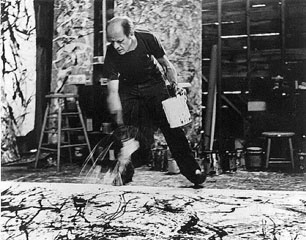


 Image via Complex / APJAC Productions

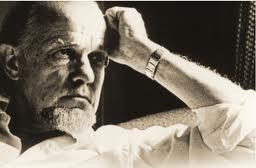

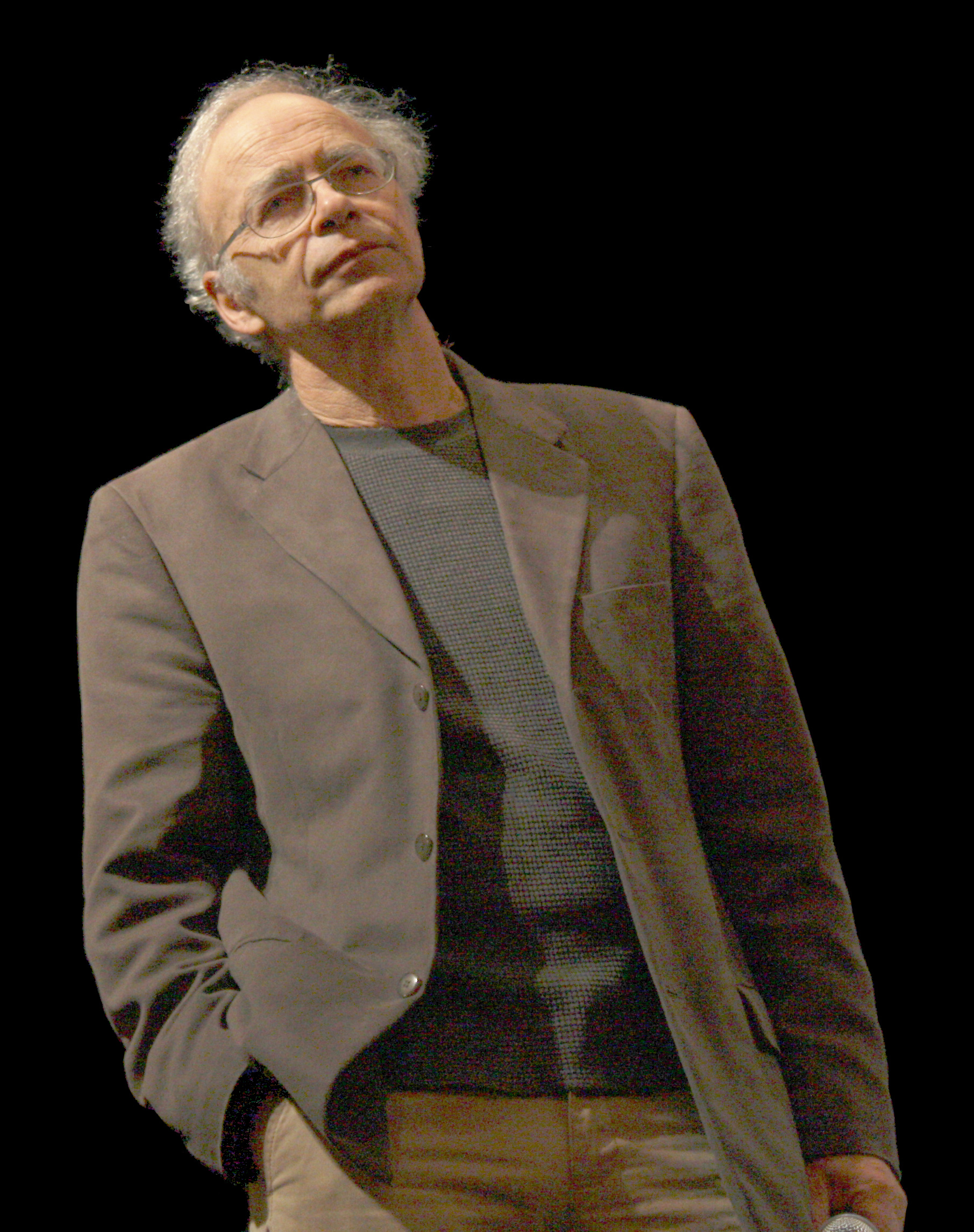


 Despite the initial concerns regarding Melissa’s future after surviving the attempt to end her life and being born alive at approximately seven months gestation, she has not only survived but thrived. With a Master’s Degree in Social Work, she has worked in the fields of substance abuse, mental health, domestic violence/sexual assault counseling, and child welfare. Melissa and her husband Ryan have a daughter, Olivia, whose birth at the same hospital where Melissa’s life was supposed to end, has significantly shaped Melissa’s ministry.



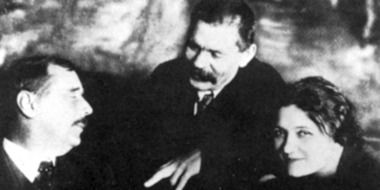





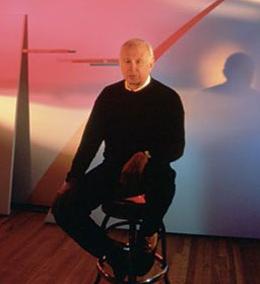


 The Daily Hatch