As my book reveals, Francis Schaeffer in the twilight of his life was as convinced of the truth-claims of Christianity and the efficacy of what he called the finished work of Christ as he was after his struggles in the early 1950s and even immediately after his conversion in 1930. Indeed, his conviction continued to deepen into his closing years, allowing him no respite from his grief over the lost condition of human beings and still expanding his empathy for those whom he encountered. In his final film series, Whatever Happened to the Human Race? He included a powerful episode about the historical underpinnings of Christian conviction.
What is the essence of Francis Schaeffer? Is it his system of theology, his books, his political campaigning, the existence of L’Abri? Ironically, though he attacked first the “old” modernism, then the “new” modernism of existentialism, neo-orthodoxy, and even, in anticipation, postmodernism, he demonstrates what might be called an existential Christianity—living in the moment; embracing the reality of existence; seeing the underpinning certainty of Christian faith in the historical death and resurrection of Jesus Christ; and reckoning on the specific intervention of the Holy Spirit in conversion at a point in time in a person’s life, after which he or she passes from death to life. Schaeffer might be dismissed as a scholar or even original thinker (though it can be argued he was both, but particularly the latter), but his realistic, existential Christianity is remarkable and perhaps unique for someone of his biblical orthodoxy in his generation and is the secret, perhaps, of his impact on many people of diverse backgrounds and nationalities.
A full list of acknowledgments appears toward the end of this book, but I must here especially express my thanks to Christopher and Paulette Catherwood, for their brilliant and enthusiastic help with the interviewing for this book; to Ted Griffin, for his wise and thorough editing; to others who added to this book in a very special way, including Lane Dennis, John and Prisca Sandri, Ranald and Susan Macaulay, and Udo and Deborah Middelmann. Though not well enough to give me more than a warm smile and greeting, Edith Schaeffer’s published records of the family and L’Abri history, and unpublished Family Letters must have a special mention. While Christopher, Paulette, and I interviewed, we received kindness and hospitality of a Dutch, Swiss, English, Irish, and American variety. I particularly remember the kindness of Marleen and Albert Hengelaar and the inspiring memories of the late Anky Rookmaaker as she reached back in her mind to the war years; the events she recounted seemed as yesterday. It is a privilege even to share a little in others’ lives.
All rights reserved. No part of this publication may be reproduced, stored in a retrieval system or transmitted in any form by any means, electronic, mechanical, photocopy, recording or otherwise, without the prior permission of the publisher, except as provided for by USA copyright law.
The Francis and Edith Schaeffer Story Pt.1 – Today’s Christian Videos The Francis and Edith Schaeffer Story – Part 3 of 3 Francis Schaeffer: “Whatever Happened to the Human Race” (Episode 1) ABORTION OF THE HUMAN RACE Published on Oct 6, 2012 by AdamMetropolis ________________ Picture of Francis Schaeffer and his wife Edith from the […]
THE MARK OF A CHRISTIAN – CLASS 1 – Introduction Published on Mar 7, 2012 This is the introductory class on “The Mark Of A Christian” by Francis Schaeffer. The class was originally taught at Redeemer Presbyterian Church in Overland Park, KS by Dan Guinn from FrancisSchaefferStudies.org as part of the adult Sunday School hour […]
The Francis and Edith Schaeffer Story Pt.1 – Today’s Christian Videos The Francis and Edith Schaeffer Story – Part 3 of 3 Francis Schaeffer: “Whatever Happened to the Human Race” (Episode 1) ABORTION OF THE HUMAN RACE Published on Oct 6, 2012 by AdamMetropolis ________________ Picture of Francis Schaeffer and his wife Edith from the […]
The Francis and Edith Schaeffer Story Pt.1 – Today’s Christian Videos The Francis and Edith Schaeffer Story – Part 3 of 3 Francis Schaeffer: “Whatever Happened to the Human Race” (Episode 1) ABORTION OF THE HUMAN RACE Published on Oct 6, 2012 by AdamMetropolis ________________ Picture of Francis Schaeffer and his wife Edith from the […]
The Francis and Edith Schaeffer Story Pt.1 – Today’s Christian Videos The Francis and Edith Schaeffer Story – Part 3 of 3 Francis Schaeffer: “Whatever Happened to the Human Race” (Episode 1) ABORTION OF THE HUMAN RACE Published on Oct 6, 2012 by AdamMetropolis ________________ Picture of Francis Schaeffer and his wife Edith from the […]
The Francis and Edith Schaeffer Story Pt.1 – Today’s Christian Videos The Francis and Edith Schaeffer Story – Part 3 of 3 Francis Schaeffer: “Whatever Happened to the Human Race” (Episode 1) ABORTION OF THE HUMAN RACE Published on Oct 6, 2012 by AdamMetropolis ________________ Picture of Francis Schaeffer and his wife Edith from the […]
Francis Schaeffer: “Whatever Happened to the Human Race?” (Episode 2) SLAUGHTER OF THE INNOCENTS Published on Oct 6, 2012 by AdamMetropolis The 45 minute video above is from the film series created from Francis Schaeffer’s book “Whatever Happened to the Human Race?” with Dr. C. Everett Koop. This book really helped develop my political views concerning […]
Francis Schaeffer: “Whatever Happened to the Human Race” (Episode 1) ABORTION OF THE HUMAN RACE Published on Oct 6, 2012 by AdamMetropolis The 45 minute video above is from the film series created from Francis Schaeffer’s book “Whatever Happened to the Human Race?” with Dr. C. Everett Koop. This book really helped develop my political views […]
I have gone back and forth and back and forth with many liberals on the Arkansas Times Blog on many issues such as abortion, human rights, welfare, poverty, gun control and issues dealing with popular culture. Here is another exchange I had with them a while back. My username at the Ark Times Blog is Saline […]
Francis Schaeffer: “Whatever Happened to the Human Race” (Episode 5) TRUTH AND HISTORY Published on Oct 7, 2012 by AdamMetropolis The 45 minute video above is from the film series created from Francis Schaeffer’s book “Whatever Happened to the Human Race?” with Dr. C. Everett Koop. This book really helped develop my political views concerning abortion, […]
Picture of Francis Schaeffer and his wife Edith from the 1930′s above. I was sad to read about Edith passing away on Easter weekend in 2013. I wanted to pass along this fine article below although I don’t agree with all of it.
Edith Seville Schaeffer, co-founder of L’Abri and author of more than a dozen books, died Saturday at age 98.
In her autobiography, The Tapestry, Edith emerges as a woman overflowing with beauty, energy, creativity, and love, a woman whose every encounter seems to have been “charg’d with the grandeur of God.” In a time when evangelicals were suspicious of all things worldly, Edith reveled in music and dance, in her neat little figure and in beautiful clothes: “I was 5-foot-2 and weighed 102 pounds and wore clothes that looked like they had come out of the best shops” she tells us, breathlessly, as an example of why she didn’t measure up to the standards of Christian womanhood at that time, which, apparently, included dowdiness as well as a rejection of culture. She was intelligent and full of conviction. She had a lot to say.
Despite not measuring up in some ways, Edith epitomized, and perhaps helped to establish, standards of Christian womanhood: resourcefulness, self-denial, femininity. She worked tirelessly as a seamstress in their Philadelphia apartment while her husband Francis Schaeffer studied in seminary, thoughtfully packing identical lunches for them as a way of being “together when apart,” so that they could taste the same flavors and feel the same “degree of hunger” by dinnertime. As a young pastor’s wife and mother, she single-handedly catered weddings, complete with hand-filled cream puffs. She sewed beautiful clothes for her children, read to them from the classics, and took them to art museums, all, of course, while keeping her figure and continuing to wear good clothes, pearls, makeup, Chanel No. 5., and, after the children were tucked into bed, a black negligee.
When I was growing up, my dad had the hardback, rainbow colored Complete Works of Francis Schaeffer on his bookshelves; Edith’s books—What is a Family?, Common Sense Christian Living, The Hidden Art of Homemaking, and of course, L’Abri, were scattered throughout the house. Elementary days homeschooling often began with an object lesson from Everybody Can Know; before I was out of high school I’d read every Edith Schaeffer book in the house, studying what it meant to be a good Christian woman. As a college student living in decidedly ugly dormitories, I read and re-read a library copy of Hidden Art trying to bring an aesthetic sensibility to my everyday life: writing out my notes neatly and beautifully, artistically arranging the loathsome cafeteria food on the unaesthetic plates and trays, and, occasionally, bringing in fresh flowers. Seeing the copy of Hidden Art tucked into my bag, a friend who also felt the aesthetic deprivations of college life remarked, “Yes. That book is nourishment.”
Though I was never at L’Abri, my husband and I read all the F. Schaeffer books we could and I read a couple of Edith’s. I always thought of her as the perfect wife–calming, partnering–to Francis and a great creative woman of God on her own. Thanks for this article, Rachel. Though there is sadness in the “revelations” about the family, there has always been the awareness the God is sovereign.
Rob Shearer
April 02, 2013
Frank Schaeffer’s provocative charges about his father remain unsubstantiated. Frank has, throughout his life, been much given to hyperbole, and has adopted a decidedly negative view of evangelical culture and theology. I’m sure he is convinced of the truth of what he has written. Others who knew the Schaeffers intimately do not share his views or judgments. The daughters & sons-in-law of Francis & Edith have refused to engage in a public debate with their brother (-in-law). I would encourage charity and respect for both Edith and Francis, and a bit of skepticism about Frank’s charges.
Daniel Becker
April 02, 2013
Arriving at L’abri late one evening, my betrothed and I found there was “no room in the inn” (the men’s and women’s dorms). When Edith found out she immediately offered us a spot on her living room floor at their home Chalet Les Melez. She suggested we roll out our sleeping bags under her dining room table. The next morning we awoke to the sun shining through the picture window revealing an brilliant alpine panorama. Susan was asked by Edith to help make breakfast for the other guests. I remember how the simple meal of peanut butter and jelly sandwiches was transformed by the cutting of this simple fare into a variety of differently shaped pinafores. Susan never forgot this small act of creativity. Our own home of 31 years enjoyed this same expression of hospitality—all because of a small petite woman who loved God and expressed her devotion through many simple acts of love, kindness and a generous spirit of hospitality.
MILDRED B SALMON
April 01, 2013
“apparently included dowdiness…” Maybe, if you are in the here and now trying to look back. More likely a desire to obey Paul’s “dress modestly” with very modest means. Or sending children to school acceptably dressed and Mom’s dress based on what was left in the budget. Many of those perceived as “doudy” were also full of conviction. Edith’s viewpoints inspired them to use their own creativity and available resources to enhance their world of home and family, just as she inspired you –and me.
(Francis did a great job in his film series “How Should we then live?” in looking at how humanism has affected art and culture in the Western World in the last 2000 years. My favorite episodes include his study of the Renaissance, the Revolutionary age, the age of Nonreason, and the age of Fragmentation.)
E P I S O D E 1 0 Dr. Francis Schaeffer – Episode X – Final Choices 27 min FINAL CHOICES I. Authoritarianism the Only Humanistic Social Option One man or an elite giving authoritative arbitrary absolutes. A. Society is sole absolute in absence of other absolutes. B. But society has to be […]
E P I S O D E 9 Dr. Francis Schaeffer – Episode IX – The Age of Personal Peace and Affluence 27 min T h e Age of Personal Peace and Afflunce I. By the Early 1960s People Were Bombarded From Every Side by Modern Man’s Humanistic Thought II. Modern Form of Humanistic Thought Leads […]
E P I S O D E 8 Dr. Francis Schaeffer – Episode VIII – The Age of Fragmentation 27 min I saw this film series in 1979 and it had a major impact on me. T h e Age of FRAGMENTATION I. Art As a Vehicle Of Modern Thought A. Impressionism (Monet, Renoir, Pissarro, Sisley, […]
E P I S O D E 7 Dr. Francis Schaeffer – Episode VII – The Age of Non Reason I am thrilled to get this film series with you. I saw it first in 1979 and it had such a big impact on me. Today’s episode is where we see modern humanist man act […]
E P I S O D E 6 How Should We Then Live 6#1 Uploaded by NoMirrorHDDHrorriMoN on Oct 3, 2011 How Should We Then Live? Episode 6 of 12 ________ I am sharing with you a film series that I saw in 1979. In this film Francis Schaeffer asserted that was a shift in […]
E P I S O D E 5 How Should We Then Live? Episode 5: The Revolutionary Age I was impacted by this film series by Francis Schaeffer back in the 1970′s and I wanted to share it with you. Francis Schaeffer noted, “Reformation Did Not Bring Perfection. But gradually on basis of biblical teaching there […]
Dr. Francis Schaeffer – Episode IV – The Reformation 27 min I was impacted by this film series by Francis Schaeffer back in the 1970′s and I wanted to share it with you. Schaeffer makes three key points concerning the Reformation: “1. Erasmian Christian humanism rejected by Farel. 2. Bible gives needed answers not only as to […]
Francis Schaeffer’s “How should we then live?” Video and outline of episode 3 “The Renaissance” Francis Schaeffer: “How Should We Then Live?” (Episode 3) THE RENAISSANCE I was impacted by this film series by Francis Schaeffer back in the 1970′s and I wanted to share it with you. Schaeffer really shows why we have so […]
Francis Schaeffer: “How Should We Then Live?” (Episode 2) THE MIDDLE AGES I was impacted by this film series by Francis Schaeffer back in the 1970′s and I wanted to share it with you. Schaeffer points out that during this time period unfortunately we have the “Church’s deviation from early church’s teaching in regard […]
Francis Schaeffer: “How Should We Then Live?” (Episode 1) THE ROMAN AGE Today I am starting a series that really had a big impact on my life back in the 1970′s when I first saw it. There are ten parts and today is the first. Francis Schaeffer takes a look at Rome and why […]
Thanks for sending that over! I must admit I haven’t read much of Sartre, so the lecture you sent helped remedy that.
I have a hard time differentiating existentialism from hedonism, something Sartre seems to acknowledge at least by accident when he talks about how existentialism got an early reputation for exalting man’s baser actions.
I suppose if we are to consider existence to come before essence then it logically follows that whatever I experience (ie. my present state of existence) should be considered of greater value than what I know (ie. knowledge of a transcendent essence). And if we are to begin with the subjective then it stands to reason that we can never attain knowledge of the divine. This struggle of where to begin epistemologically was also wrestled with by Plato and Aristotle (succinctly captured in this piece of art which depicts Plato’s notion of idealism which is the polar opposite of what Sartre is arguing for) and was also eloquently expressed by Francis Schaeffer (notably in his “Modern Man & Epistemology” lecture).
The third objection, stated by saying, “You take with one hand what you give with the other,” means, at bottom, “your values are not serious, since you choose them yourselves.” To that I can only say that I am very sorry that it should be so; but if I have excluded God the Father, there must be somebody to invent values.
One of the most instrumental Christian philosophers who paved the way for this kind of thinking, at least in the Church, was Friedrich Schleiermacher who argued that the primary way we know God is through our emotions and not through revelation/reason.
Its interesting how Sartre calls for men to be stewards of the emerging essence of mankind at the same time he claims that there is no ideal essence we are obliged to grow towards. I would agree with his notion that we should act as if all of mankind is defined by our actions, but that only makes sense if there is an objective and external observer whose favor or disapproval mattered. Sartre borrows much from the Christianity he misrepresents (ie. that Christian teaching is determined by the subjective whims of priests) and loathes. In fact, his a priori assumption that moral ideals would remain unchanged if we were to find that God doesn’t exist stands in direct opposition to his admission that Dostoevsky’s notion that “without God all things are permissible”. And he further contradicts himself when he talks about an ideal form of morality whose particulars are subject to change!
I understand why he claims that existentialism is a form of humanism, mostly because it puts man in the center of the universe. But like all other humanistic variants, it suffers from the same frailties that all men do. Namely our lack of omniscience and immortality, both of which it seems Sartre struggles with mightily to no avail.
Thanks again for the paper. Here are some movies on existentialism in case you’re interested to see what Hollywood does with this philosophy. There are a lot of big name actors in these movies which leads me to believe that existentialism is held in high esteem by much of Hollywood.
eXistenZ – The director required the cast to read Sartre and other existential philosophers in preparation for the movie
I heart Huckabees – Plot centers around a team of existential detectives
I have gone back and forth and back and forth with many liberals on the Arkansas Times Blog on many issues such as abortion, human rights, welfare, poverty, gun control and issues dealing with popular culture. Here is another exchange I had with them a while back. My username at the Ark Times Blog is Saline […]
It is not possible to know where the pro-life evangelicals are coming from unless you look at the work of the person who inspired them the most. That person was Francis Schaeffer. I do care about economic issues but the pro-life issue is the most important to me. Several years ago Adrian Rogers (past president of […]
I got this off a Christian blog spot. This person makes some good points and quotes my favorite Christian philosopher Francis Schaeffer too. Prostitution, Chaos, and Christian Art The newest theatrical release of Victor Hugo’s 1862 novel “Les Miserables” was released on Christmas, but many Christians are refusing to see the movie. The reason simple — […]
Francis Schaeffer was truly a great man and I enjoyed reading his books. A theologian #2: Rev. Francis Schaeffer Duriez, Colin. Francis Schaeffer: An Authentic Life. Wheaton, IL: Crossway Books, 2008. Pp. 240. Francis Schaeffer is one of the great evangelical theologians of our modern day. I was already familiar with some of his books and his […]
Francis Schaeffer: “Whatever Happened to the Human Race?” (Episode 2) SLAUGHTER OF THE INNOCENTS Published on Oct 6, 2012 by AdamMetropolis ___________ The 45 minute video above is from the film series created from Francis Schaeffer’s book “Whatever Happened to the Human Race?” with Dr. C. Everett Koop. This book really helped develop my political views […]
The Francis and Edith Schaeffer Story Pt.1 – Today’s Christian Videos The Francis and Edith Schaeffer Story – Part 3 of 3 Francis Schaeffer: “Whatever Happened to the Human Race” (Episode 1) ABORTION OF THE HUMAN RACE Published on Oct 6, 2012 by AdamMetropolis ________________ Picture of Francis Schaeffer and his wife Edith from the […]
THE MARK OF A CHRISTIAN – CLASS 1 – Introduction Published on Mar 7, 2012 This is the introductory class on “The Mark Of A Christian” by Francis Schaeffer. The class was originally taught at Redeemer Presbyterian Church in Overland Park, KS by Dan Guinn from FrancisSchaefferStudies.org as part of the adult Sunday School hour […]
Francis Schaeffer: “Whatever Happened to the Human Race?” (Episode 2) SLAUGHTER OF THE INNOCENTS Published on Oct 6, 2012 by AdamMetropolis The 45 minute video above is from the film series created from Francis Schaeffer’s book “Whatever Happened to the Human Race?” with Dr. C. Everett Koop. This book really helped develop my political views concerning […]
Francis Schaeffer: “Whatever Happened to the Human Race” (Episode 1) ABORTION OF THE HUMAN RACE Published on Oct 6, 2012 by AdamMetropolis The 45 minute video above is from the film series created from Francis Schaeffer’s book “Whatever Happened to the Human Race?” with Dr. C. Everett Koop. This book really helped develop my political views […]
I have gone back and forth and back and forth with many liberals on the Arkansas Times Blog on many issues such as abortion, human rights, welfare, poverty, gun control and issues dealing with popular culture. Here is another exchange I had with them a while back. My username at the Ark Times Blog is Saline […]
Francis Schaeffer: “Whatever Happened to the Human Race” (Episode 5) TRUTH AND HISTORY Published on Oct 7, 2012 by AdamMetropolis The 45 minute video above is from the film series created from Francis Schaeffer’s book “Whatever Happened to the Human Race?” with Dr. C. Everett Koop. This book really helped develop my political views concerning abortion, […]
I have gone back and forth and back and forth with many liberals on the Arkansas Times Blog on many issues such as abortion, human rights, welfare, poverty, gun control and issues dealing with popular culture. Here is another exchange I had with them a while back. My username at the Ark Times Blog is Saline Republican.
LOL Saline. Other than Roe, everyone else mentioned in your little rant [is a male].
One can be pro life and still want abortion to be legal. I know that concept confuses you. It’s not about selfishness, either.
[As a woman I can conceive and] you, Saline, cannot conceive.
In other words: You don’t get it. You never will. It’s not that you cannot possible ‘get it’ though you will never have a womb, because dbi gets it and… there is a time for all things. A time to be born, and a time to die; a time to plant, and a time to pluck up that which is planted. Ecclesiastes is still part of the bible, isn’t it, Saline?
Until you and your ilk start working to improve the lives of babies after they are born and even if you’re not gonna promote birth control and it’s use at least get out of the way so that it’s easily available, then it’s not about life with y’all, it’s about control.
I agree [males] need to keep their lips off abortion discussions. I can attest that all the millions of abortions that occurred since I was 20 didn’t cause me any pain in the slightest. I didn’t feel the slightest of pricks.
Mother T was indeed a woman, but if we’re going to believe all the gobblledygook she was never pronged nor gave birth nor had an abortion, so her word doesn’t really count…
There are some threads we shouldn’t pull at. Abortion is one of them. If you don’t like abortion don’t have one.
Beautifully said, Vanessa….A fetus is not a human being. Abortion is not a slippery slope to infanticide and euthanasia….SalineSolution/Everette, you refused to answer my question. Figures! It has nothing to do with pregnancy, but the rights of living sperm and eggs. Or are YOU a supporter of genocide?
DeathByInches hit the nail squarely on the head:
1) If you don’t support abortion, don’t get one.
2) If you’re male, quit thinking you have any right to tell a woman what she can or cannot do with her body (actually, that advice applies to women controlling other women too).
I’ll add one more: if you’re a male who thinks you have a right to tell any woman what she can or cannot do with her own body, then that means women also have the right to tell you what you can and cannot do with your body…
Quit being such a slave re controlling other people’s lives, SalineSolution/Everette. We don’t need you playing god (small ‘g’).
Vanessa I started out with this quote from a lady:
“It is a great poverty to kill an unborn child so you may live as you wish.” ~ Mother Teresa of Calcutta, India
_________
This issue of abortion is critical. According to Francis Schaeffer, ‘Of all the subjects relating to the erosion of the sanctity of human life, abortion is the keystone. It is the first and crucial issue that has been overwhelming in changing attitudes toward the value on life in general.’
‘If, in this last part of the twentieth century, the Christian community does not take a prolonged and vocal stand for the dignity of the individual each person’s right to life – for the right of each individual to be treated as created in the image of God – we feel that as Christians we have failed the greatest moral test to be put before us in this century.
‘Future generations will look back, and many will either scoff or believe in Christ on the basis of whether we Christians of today took a sacrificial stand in our various walks of life on these overwhelmingly important issues. If we do not take a stand here and now, we certainly cannot lay any claim to being the salt of the earth in our generation. We are neither preserving moral values and the dignity of the individual nor showing compassion for our fellow human beings.’
_________
I am so proud of the Catholics that I see in West Little Rock silently standing there with their pro-life signs for 40 days in a row leading up to March 31st. They are real heroes to me.
You’re right Saline. My bad. You did mention Mother Teresa. But I fail to see how that changes anything else I said. Women don’t get pregnant by themselves. Not even Mary did that. You want to decrease the number of abortions, then get men to accept responsibility for their sperm. There is a [male] behind *every* abortions, Saline. Didja ever stop to contemplate that reality?
Vanessa you and DBI want me to stop quoting men so I will give in this time for this next post. Here is the testimony of a nurse who helped on three abortions in one day and it changed her life dramatically.
In September, 1993, Brenda Pratt Shafer, a registered nurse with eleven years of experience, was assigned by her nursing agency to an abortion clinic in Ohio. Because of her “strong pro-choice” views, Nurse Shafer did not think this assignment would be a problem. This is her story.
I was present for three of these partial-birth procedures. It is the first one that I will describe to you in detail.
The mother was 6 months pregnant, 26½ weeks. A doctor told her that the baby had Down Syndrome, and she had to have an abortion. She decided to have this abortion. She came in the first 2 days to have the laminaria inserted and changed [to dilate the cervix], and she cried the whole time she was there. On the third day, she came in to have the partial-birth abortion procedure.
The doctor brought the ultrasound in and hooked it up so that he could see the baby. On the ultrasound screen, I could see the heartbeat. As the doctor watched the baby on the ultrasound screen, the baby’s heartbeat was clearly visible on the ultrasound screen.
The doctor went in with forceps and grabbed the baby’s legs and pulled them down into the birth canal. Then he delivered the baby’s body and the arms — everything but the head. The doctor kept the head right inside the uterus.
The baby’s little fingers were clasping and unclasping, and his little feet were kicking. Then the doctor stuck the scissors in the back of his head, and the baby’s arms jerked out, like a startle reaction, like a flinch, like a baby does when he thinks he is going to fall.
The doctor opened up the scissors, stuck a high-powered suction tube into the opening, and sucked the baby’s brains out. Now the baby went completely limp. I was really completely unprepared for what I was seeing. I almost threw up as I watched the doctor doing these things.
Next, the doctor delivered the baby’s head. He cut the umbilical cord and delivered the placenta. He threw the baby in a pan, along with the placenta and the instruments he had just used. I saw the baby move in the pan. I asked another nurse, and she said it was just reflexes.
I have been a nurse for a long time, and I have seen a lot of death — people maimed in auto accidents, gunshot wounds, you name it. I have seen surgical procedures of every sort. But in all my professional years, I had never witnessed anything like this.
The woman wanted to see her baby, so they cleaned up the baby and put it in a blanket and handed it to her. She cried the whole time. She kept saying, “I am so sorry, please forgive me.” I was crying, too. I couldn’t take it. That baby boy had the most perfect, angelic face I think I have ever seen in my life.
I was present in the room during two more such procedures that day, but I was really in shock. I tried to pretend I was somewhere else, to not think about what was happening. I just couldn’t wait to get out of there. After I left that day, I never went back. The last two procedures, by the way, involved healthy mothers with healthy babies.
I was very much affected by what I saw. For a long time –and sometimes still — I had nightmares about what I saw that day.
I wish I hadn’t seen what I saw. But I did see it, and I will never be able to forget it. That baby boy was only inches, seconds, away from being entirely born, when he was killed. What I saw done to that little boy, and to those other babies, should not be allowed in this country.
As told to the U.S. Senate Judiciary Committee, November 17, 1995, and the U.S. House of Representatives Judiciary Committee, Subcommittee on the Constitution, March 21, 1996.
__________
The discussion of abortion with many abortion advocates many times gets back to them claiming that as women no one can tell them what to do with their body. This editorial cartoon takes a look at this issue:
I truly believe that many of the problems we have today in the USA are due to the advancement of humanism in the last few decades in our society. Ronald Reagan appointed the evangelical Dr. C. Everett Koop to the position of Surgeon General in his administration. He partnered with Dr. Francis Schaeffer in making the video below. It is very valuable information for Christians to have. Actually I have included a video below that includes comments from him on this subject.
Francis Schaeffer’s enduring influence upon evangelicals and evangelicalism cannot be overlooked. In great measure, Francis Schaeffer taught evangelicals the value of intellectual engagement. While in Europe, Schaeffer began to see the fault of fundamentalism lying primarily in its strident separatism. As he would interact with young unbelievers who were persuaded by nihilism, atheism, and existentialism, Schaeffer learned that merely attacking liberalism and other evangelicals was less than profitable. He needed to provide a positive response to modern philosophies and thoughtfully interact with opposing ideas on the level of world-view so unbelievers could see the incoherence of their positions and subsequently embrace the truth of Christianity.
Schaeffer’s desire to demonstrate the reasonableness of Christianity to unbelievers led him to begin to think more and more about how world-views had played a significant role in the formation of Western thought and culture. As such, Schaeffer sought to engage with and think critically about past and present culture; not for its own sake, but so he might listen to the voice of those who were drowning in meaninglessness because they had embraced a world-view that erased the existence of a personal God—a world-view that inevitably led to the loss of a sense of humanness and overall purpose.
Schaeffer’s endeavor to wrestle with ancient and contemporary culture, especially in the realm of ideas and world-view, would have a tremendous influence on how Christians thought about and interacted with culture. Ronald Nash summarizes his impact in this area well when he writes,
Francis Schaeffer was the instrument through whom hundreds of thousands of people became conscious of [the] intellectual dimension of the Christian faith, of the importance of philosophy, of the significance of world views and their presuppositions, of the message that ideas have consequences (Parkhurst, 69).
Among these hundreds of thousands to be profoundly influenced by Schaeffer would belong Christian apologists, philosophers and authors. Nancy Pearcy, popular editor and author, tells of her trip to L’Abri and how she was immediately intrigued by Christians who were engaged with the intellectual and cultural world. As she read works by Christian apologists and interacted with Schaeffer and others at L’Abri, Pearcy interacted with many good and sufficient arguments that did much to challenge her unbelief (Nancy Pearcy, Total Truth, 55). Pearcy would eventually embrace Jesus Christ and a biblical world-view.
Pearcy also notes how Schaeffer provided her and other Christians with the apparatus with which to properly enjoy and accurately evaluate culture. She writes,
There is no need to avoid the secular world and hide out behind the walls of an evangelical subculture; instead, Christians can appreciate works of art and culture as products of human creativity expressing the image of God. On the other hand, there is no danger of being naïve or uncritical about false and dangerous messages embedded in secular culture, because a worldview gives the conceptual tools needed to analyze and critique them (Pearcy, 56).
Pearcy here testifies to what Barry Hankins believes was Schaeffer’s “signal achievement and most lasting influence;” namely, the “important task of world-view formation” (Hankins, 227).
On the other hand, we would be remiss if we did not reflect here on what motivated Schaeffer in his whole enterprise. It was not merely an interest in ideas; it was love for people. Bryan Follis guards us from turning Francis Schaeffer into a stuffy, intellectually smug apologist when he writes, “To understand Schaeffer, we need to understand the love he had for the individual person” (Follis, Truth with Love, 53). Love for others appeared to free Schaeffer to engage the surrounding culture for the sake of people’s good and salvation. As Schaeffer traveled to America and shared his message with young evangelicals, his point was unmistakable in this regard. Barry Hankins notes,
…[Schaeffer’s] message to American evangelical college students was that to be effective witnesses they would have to move beyond fundamentalist separation from secular ideas and beyond mere denunciation of liberals. Instead, evangelicals needed to take their ideas seriously and to understand and engage their culture (Hankins, 233).
Schaeffer would not merely seek to understand and exhibit the impotence of unbiblical world-views; he would sympathize with and weep over those who struggled desperately with the essential questions of life—even if their answers came in the form of unbelieving, incoherent philosophy, art, and poetry—and he encouraged following generations of evangelicals to do the same.
Francis Schaeffer: “Whatever Happened to the Human Race” (Episode 1) ABORTION OF THE HUMAN RACE Published on Oct 6, 2012 by AdamMetropolis The 45 minute video above is from the film series created from Francis Schaeffer’s book “Whatever Happened to the Human Race?” with Dr. C. Everett Koop. This book really helped develop my political views […]
E P I S O D E 1 0 Dr. Francis Schaeffer – Episode X – Final Choices 27 min FINAL CHOICES I. Authoritarianism the Only Humanistic Social Option One man or an elite giving authoritative arbitrary absolutes. A. Society is sole absolute in absence of other absolutes. B. But society has to be […]
E P I S O D E 9 Dr. Francis Schaeffer – Episode IX – The Age of Personal Peace and Affluence 27 min T h e Age of Personal Peace and Afflunce I. By the Early 1960s People Were Bombarded From Every Side by Modern Man’s Humanistic Thought II. Modern Form of Humanistic Thought Leads […]
E P I S O D E 8 Dr. Francis Schaeffer – Episode VIII – The Age of Fragmentation 27 min I saw this film series in 1979 and it had a major impact on me. T h e Age of FRAGMENTATION I. Art As a Vehicle Of Modern Thought A. Impressionism (Monet, Renoir, Pissarro, Sisley, […]
E P I S O D E 7 Dr. Francis Schaeffer – Episode VII – The Age of Non Reason I am thrilled to get this film series with you. I saw it first in 1979 and it had such a big impact on me. Today’s episode is where we see modern humanist man act […]
E P I S O D E 6 How Should We Then Live 6#1 Uploaded by NoMirrorHDDHrorriMoN on Oct 3, 2011 How Should We Then Live? Episode 6 of 12 ________ I am sharing with you a film series that I saw in 1979. In this film Francis Schaeffer asserted that was a shift in […]
E P I S O D E 5 How Should We Then Live? Episode 5: The Revolutionary Age I was impacted by this film series by Francis Schaeffer back in the 1970′s and I wanted to share it with you. Francis Schaeffer noted, “Reformation Did Not Bring Perfection. But gradually on basis of biblical teaching there […]
Dr. Francis Schaeffer – Episode IV – The Reformation 27 min I was impacted by this film series by Francis Schaeffer back in the 1970′s and I wanted to share it with you. Schaeffer makes three key points concerning the Reformation: “1. Erasmian Christian humanism rejected by Farel. 2. Bible gives needed answers not only as to […]
Francis Schaeffer’s “How should we then live?” Video and outline of episode 3 “The Renaissance” Francis Schaeffer: “How Should We Then Live?” (Episode 3) THE RENAISSANCE I was impacted by this film series by Francis Schaeffer back in the 1970′s and I wanted to share it with you. Schaeffer really shows why we have so […]
Francis Schaeffer: “How Should We Then Live?” (Episode 2) THE MIDDLE AGES I was impacted by this film series by Francis Schaeffer back in the 1970′s and I wanted to share it with you. Schaeffer points out that during this time period unfortunately we have the “Church’s deviation from early church’s teaching in regard […]
Francis Schaeffer: “How Should We Then Live?” (Episode 1) THE ROMAN AGE Today I am starting a series that really had a big impact on my life back in the 1970′s when I first saw it. There are ten parts and today is the first. Francis Schaeffer takes a look at Rome and why […]
Francis Schaeffer: “Whatever Happened to the Human Race” (Episode 5) TRUTH AND HISTORY Published on Oct 7, 2012 by AdamMetropolis This crucial series is narrated by the late Dr. Francis Schaeffer and former Surgeon General Dr. C. Everett Koop. Today, choices are being made that undermine human rights at their most basic level. Practices once […]
The opening song at the beginning of this episode is very insightful. Francis Schaeffer: “Whatever Happened to the Human Race” (Episode 4) THE BASIS FOR HUMAN DIGNITY Published on Oct 7, 2012 by AdamMetropolis This crucial series is narrated by the late Dr. Francis Schaeffer and former Surgeon General Dr. C. Everett Koop. Today, choices […]
Francis Schaeffer: “Whatever Happened to the Human Race” (Episode 3) DEATH BY SOMEONE’S CHOICE Published on Oct 6, 2012 by AdamMetropolis This crucial series is narrated by the late Dr. Francis Schaeffer and former Surgeon General Dr. C. Everett Koop. Today, choices are being made that undermine human rights at their most basic level. Practices […]
Francis Schaeffer: “Whatever Happened to the Human Race?” (Episode 2) SLAUGHTER OF THE INNOCENTS Published on Oct 6, 2012 by AdamMetropolis This crucial series is narrated by the late Dr. Francis Schaeffer and former Surgeon General Dr. C. Everett Koop. Today, choices are being made that undermine human rights at their most basic level. Practices […]
It is not possible to know where the pro-life evangelicals are coming from unless you look at the work of the person who inspired them the most. That person was Francis Schaeffer. I do care about economic issues but the pro-life issue is the most important to me. Several years ago Adrian Rogers (past president of […]
This essay below is worth the read. Schaeffer, Francis – “Francis Schaeffer and the Pro-Life Movement” [How Should We Then Live?, Whatever Happened to the Human Race?, A Christian Manifesto] Editor note: <p> </p> [The following essay explores the role that Francis Schaeffer played in the rise of the pro-life movement. It examines the place of […]
Great article on Schaeffer. Who was Dr. Francis A. Schaeffer? By Francis Schaeffer The unique contribution of Dr. Francis Schaeffer on a whole generation was the ability to communicate the truth of historic Biblical Christianity in a way that combined intellectual integrity with practical, loving care. This grew out of his extensive understanding of the Bible […]
Francis Schaeffer (1912-1984) has been gone for a quarter of a century now, and responsible evaluation of his impact on Christian culture is just getting underway. Two major biographies have been published recently: Barry Hankins’ Francis Schaeffer and the Shaping of Evangelical America (Eerdmans, 2009) and Colin Duriez’sFrancis Schaeffer: An Authentic Life (Crossway, 2008).
Perhaps the evangelical culture at large has passed through some of the same stages I passed through in appreciating Schaeffer. When a friend gave me my first Francis Schaeffer book (How Should We Then Live), it knocked my socks off so far that I had to read it barefoot. This author exuded passion and confidence as he opined about Michelangelo, John Cage, Thomas Aquinas, and the Beatles. He was full of wonder about all these things that I had never heard a Christian critic talking about, and he read the world as if every cultural artifact were a clue that led inexorably to solving his big presuppositional apologetic crime of the century. Here was a renaissance man who could explain Renaissance Man.
Then as I studied more of these things myself, I began to see how tendentious many of Schaeffer’s interpretations were. Whereas at first I had been forced to take his word for it, as I became more familiar with art and philosophy and culture, I was able to render independent judgments on my own, and compare them to his. He hadn’t quite grasped what Aquinas was up to, had he? And the way he described Kant… peculiar. Was cubism really all about the dissolving of form? Had he actually read a single page of Karl Barth, or did he just dismiss him unread? And so on. I think my first judgments about all those things had been pretty facile, and as I refined and developed my understanding, I imputed my facile judgments to Schaeffer’s bold simplifications and generalizations, and told myself I had outgrown Francis Schaeffer.
But when I finally pulled the dusty volumes of Schaeffer’s books back down from the shelf, I had to admit this was still powerful stuff. Anybody who moved as nimbly as Schaeffer over so much territory was bound to work by intuition and rough-and-ready summary. For what it is, this is great stuff. He was fundamentally right about existentialism in its many guises, wasn’t he? And that actually did explain a lot of modern art and music –not all of it, but a lot. Time after time, Schaeffer scored direct hits and said what mattered most for his audience:
It is not more spiritual to believe without asking questions. It is not more biblical. It is less biblical and eventually it will be less spiritual, because the whole man will not be involved… It must be the whole man who comes to understand that the gospel is truth and believes because he is convinced on the basis of good and sufficient reason that it is truth.
I think Schaeffer’s published work continues to speak to new audiences today, and the many students whose lives were changed by personal interaction with him continue to be important influences in the world.
The Francis and Edith Schaeffer Story Pt.1 – Today’s Christian Videos The Francis and Edith Schaeffer Story – Part 3 of 3 Francis Schaeffer: “Whatever Happened to the Human Race” (Episode 1) ABORTION OF THE HUMAN RACE Published on Oct 6, 2012 by AdamMetropolis ________________ Picture of Francis Schaeffer and his wife Edith from the […]
THE MARK OF A CHRISTIAN – CLASS 1 – Introduction Published on Mar 7, 2012 This is the introductory class on “The Mark Of A Christian” by Francis Schaeffer. The class was originally taught at Redeemer Presbyterian Church in Overland Park, KS by Dan Guinn from FrancisSchaefferStudies.org as part of the adult Sunday School hour […]
The Francis and Edith Schaeffer Story Pt.1 – Today’s Christian Videos The Francis and Edith Schaeffer Story – Part 3 of 3 Francis Schaeffer: “Whatever Happened to the Human Race” (Episode 1) ABORTION OF THE HUMAN RACE Published on Oct 6, 2012 by AdamMetropolis ________________ Picture of Francis Schaeffer and his wife Edith from the […]
The Francis and Edith Schaeffer Story Pt.1 – Today’s Christian Videos The Francis and Edith Schaeffer Story – Part 3 of 3 Francis Schaeffer: “Whatever Happened to the Human Race” (Episode 1) ABORTION OF THE HUMAN RACE Published on Oct 6, 2012 by AdamMetropolis ________________ Picture of Francis Schaeffer and his wife Edith from the […]
The Francis and Edith Schaeffer Story Pt.1 – Today’s Christian Videos The Francis and Edith Schaeffer Story – Part 3 of 3 Francis Schaeffer: “Whatever Happened to the Human Race” (Episode 1) ABORTION OF THE HUMAN RACE Published on Oct 6, 2012 by AdamMetropolis ________________ Picture of Francis Schaeffer and his wife Edith from the […]
The Francis and Edith Schaeffer Story Pt.1 – Today’s Christian Videos The Francis and Edith Schaeffer Story – Part 3 of 3 Francis Schaeffer: “Whatever Happened to the Human Race” (Episode 1) ABORTION OF THE HUMAN RACE Published on Oct 6, 2012 by AdamMetropolis ________________ Picture of Francis Schaeffer and his wife Edith from the […]
Francis Schaeffer: “Whatever Happened to the Human Race?” (Episode 2) SLAUGHTER OF THE INNOCENTS Published on Oct 6, 2012 by AdamMetropolis The 45 minute video above is from the film series created from Francis Schaeffer’s book “Whatever Happened to the Human Race?” with Dr. C. Everett Koop. This book really helped develop my political views concerning […]
Francis Schaeffer: “Whatever Happened to the Human Race” (Episode 1) ABORTION OF THE HUMAN RACE Published on Oct 6, 2012 by AdamMetropolis The 45 minute video above is from the film series created from Francis Schaeffer’s book “Whatever Happened to the Human Race?” with Dr. C. Everett Koop. This book really helped develop my political views […]
I have gone back and forth and back and forth with many liberals on the Arkansas Times Blog on many issues such as abortion, human rights, welfare, poverty, gun control and issues dealing with popular culture. Here is another exchange I had with them a while back. My username at the Ark Times Blog is Saline […]
Francis Schaeffer: “Whatever Happened to the Human Race” (Episode 5) TRUTH AND HISTORY Published on Oct 7, 2012 by AdamMetropolis The 45 minute video above is from the film series created from Francis Schaeffer’s book “Whatever Happened to the Human Race?” with Dr. C. Everett Koop. This book really helped develop my political views concerning abortion, […]
Francis A. Schaeffer, How Should We Then Live? The Rise and Decline of Western Thought and Culture. L’Abri 50th Anniversary Edition. Wheaton, IL: Crossway Books, 2005. Original publication, 1976. 288 pages.
We should be grateful to Crossway publishers for recently reissuing several important works by Francis A. Schaeffer (1912-1984). At once an evangelist, apologist, theologian, and social critic, Schaeffer’s work inspired a generation of evangelicals to adopt a robust and well-integrated Christian worldview and to live out its convictions courageously. It is a shame and a scandal that some postmodernist-leaning evangelicals have dismissed Schaeffer as an outmoded “rationalist” or “modernist.” There is, in truth, nothing outmoded about this remarkable man’s passion or vision.
I first encountered Schaeffer’s writings a few months after my conversion in the summer of 1976. At the time I was intellectually adrift, unsure of how my faith related to the world of ideas. By reading The God Who is There (InterVarsity Press, 1968) a new, refreshing, and inviting world unfolded before me. Christianity, Schaeffer explained, is not merely something that is personally meaningful and instructive for individual behavior. Christianity is, rather, “true to what is.” It speaks credibly to all the things that matter most. Nothing should be shunted aside as merely “secular,” since Jesus Christ is Lord of all. The Christian has nothing to fear from the world of ideas because the Christian worldview is sufficient to meet the intellectual challenges posed by secular philosophy or by other religions. Moreover, Christianity offers the world “true truth” (as Schaeffer put it) that cannot be found by any other means. Without this revelation, men and women are lost, both philosophically (they do not know who they are) and morally (they do not know how to live).
Schaeffer’s message was heady stuff to young Christian thinkers in the 1970s and early 1980s. He confidently, but not arrogantly, ranged over literature, music, painting, philosophy, theology, and ethics—and seemed to bring it all together conceptually and historically for Christian critique. He painted with a broad and colorful brush, despite his rather lackluster prose. (In his book In Philosophy and Christian Faith [InterVarsity, 1968], Colin Brown referred to his approach as “swashbuckling.”) Despite his lack of professorial status or an earned doctorate, Schaeffer became one of evangelicalism’s most influential thinkers. To borrow a Quaker phrase, he “spoke to the condition” of many searching people. Furthermore, he lived out his convictions about reaching the lost. He considered himself an evangelist above all. His books, which came later in his life, were forged through conversations with young believers and unbelievers who were trying to make sense of intellectual trends sweeping Europe and the United States, such as existentialism, Marxism, and Eastern thought. These conversations were carried on at a retreat center in the Swiss Alps called L’Abri (meaning “shelter”), founded by Schaeffer and his wife Edith (also an author). The Schaeffers lived out a radical theology of community long before the subject became popular among evangelicals.
In this ambitious book, Schaeffer canvasses nothing less than the history of Western civilization up until the time of his writing. (The book was paired with a film series of the same name that is still available.) On one level, scholars might say that the whole project is pretentious. How could this feat be accomplished in one medium-sized volume, especially when written by someone lacking bona fide academic credentials? But Schaeffer did not attempt an encyclopedic effort, as he makes clear in his “Author’s Note.” He focused on how worldviews affect cultures, beginning with ancient Rome, whose polytheistic worldview could not support its civilization. I first read this volume and saw the films while in college in the middle to late 1970s. Schaeffer was covering wide swaths of ground, but what he claimed made sense, given my knowledge as a philosophy major who had taken Western Civilization. (Since most universities stopped requiring Western Civilization courses some years ago, it becomes all the more imperative for those so deprived to study this volume.) Reading the book recently, I was impressed by its clarity, insights, and its qualifications and lack of grandiosity.
Schaeffer argued that there is a flow to biblical history (see his Joshua and the Flow of Biblical History) and a flow to extra-biblical history. As Schaeffer states it in the opening sentences of the book, “There is a flow to history and culture. This flow is rooted and has its wellspring in the thoughts of people. People are unique in the inner life of the mind—what they are in their thought world determines how they act. This is true of their value systems and it is true of their creativity. It is true of their corporate actions, such as political decisions, and it is true of their personal lives” (19).
Schaeffer spends one chapter each on ancient Rome and the Middle Ages, then moves to the Renaissance, which introduced significant themes into the modern West such as the rediscovery of nature as valuable in itself (seen in its art) and, more auspiciously, the sense of human autonomy from Christian claims on reality as expressed in Scripture. As a man of the Reformation, Schaeffer devotes two chapters to that period, explaining both its history and theological convictions clearly and cogently. He notes that the Reformation worldview was felicitous not only for the church, but for culture as a whole. This is because it challenged ecclesiastical authoritarianism and opened the doors to freedom of religion and representative forms of government—not that this was achieved all at once.
The Enlightenment further developed the Renaissance themes of autonomy from received religious authority and gave anchorage to a more secular worldview. While modern science was inspired by an essentially Christian worldview, which taught that nature was knowable and valuable because created by a good and rational God, secularized science removed God from the picture. This made nature a self-enclosed system, the received view of the institutions of science in the West today. Post-Enlightenment philosophy also lost the sense of unity and purpose given by a Christian worldview and struggled to find any objective meaning in human affairs or the universe as a whole. This was especially evident in existentialism, which heralded the meaninglessness of life as well as the need to assert personal meaning in spite of it all (and for no objective reason whatsoever). While the blush is off the rose of existentialism today, secular postmodernists offer similar answers. They too have escaped from reason into a world of nonsense posing as profundity. (On this see my book, Truth Decay: Defending Christianity Against the Challenges of Postmodernism [InterVarsity, 2000].)
A veteran of the Fundamentalist-Modernist split, Schaeffer also warns of the dangers of theological liberalism, a theology drained of biblical content but replete with traditional theological words. Schaeffer rightly exposes this as little more than naturalism in religious garb. The Bible is not a record of humans groping about in hopes of encountering the unnamable sacred. It is, rather, God’s true and rational propositional revelation. Schaeffer further explores the “breakdown” of modern art and culture in general, never without strong feeling for the “lostness of modern man,” as he put it.
The last three chapters lament that modern Western society has lost its worldview moorings; it has largely forfeited the Reformation base that helped constitute its greatness. As such, it is imperiled. As Os Guinness put it in The American Hour (Free Press, 1992), post-Christian Western culture is in the throes of a “crisis of moral authority.” Without a transcendent source for meaning and law, societies move into either anarchy or authoritarianism, such as Marxism. In spite of this dire situation, many in the West (including many Christians) opt for pursuing “personal peace and affluence” above any passion for justice and goodness that honor God. Schaeffer thus warns of “sociological law” that is cut off from any stable source of meaning and authority, and instead relies on either the assertion of “arbitrary absolutes” based on a fifty-one percent majority vote or the dictates of a statist government that is unaccountable to either the people or to God. If the state declares the unborn (or anyone else) to possess no rights, their rights are taken away by legal fiat. (Schaeffer elaborated on this point in Whatever Happened to the Human Race, co-authored with C. Everett Koop in 1979.)
Schaeffer also warned that modern culture is susceptible to manipulation through the media, especially through television. “Television manipulates viewers just by its normal way of operating,” because its images seem so compelling. The truth, however, is otherwise because the viewer is not granted a pristine receipt of objective reality, but an “edited symbol or an edited image of the event” (240).
What Schaeffer warned about is happening in our midst today. While America’s Declaration of Independence declares that “all men are created equal” and “endowed by our Creator with certain inalienable rights,” society allows abortion on demand at any stage of pregnancy. In April of 2005, the world watched as a severely disabled but not terminally ill woman, Terry Schiavo, was dehydrated to death—simply because her legal guardian husband and his lawyer did not want her to live.
One can take issue with Schaeffer at some points. One who paints with a broad bush may blur some themes and obscure others, but the strengths of this book greatly outnumber its weaknesses. How Should We Then Live remains an incisive and prophetic work that should not be ignored. We need big-picture thinkers (or generalists) to help us orient ourselves historically, theologically, and ethically. Francis Schaeffer was such a thinker. Let us give him the last word. “This book is written in the hope that this generation may turn from the greatest wickedness, the placing of any created thing in the place of the Creator, and that this generation may get its feet out of the paths of death and may live” (258).
Douglas Groothuis, Ph.D. Professor of Philosophy Denver Seminary June 2005
The Francis and Edith Schaeffer Story Pt.1 – Today’s Christian Videos The Francis and Edith Schaeffer Story – Part 3 of 3 Francis Schaeffer: “Whatever Happened to the Human Race” (Episode 1) ABORTION OF THE HUMAN RACE Published on Oct 6, 2012 by AdamMetropolis ________________ Picture of Francis Schaeffer and his wife Edith from the […]
THE MARK OF A CHRISTIAN – CLASS 1 – Introduction Published on Mar 7, 2012 This is the introductory class on “The Mark Of A Christian” by Francis Schaeffer. The class was originally taught at Redeemer Presbyterian Church in Overland Park, KS by Dan Guinn from FrancisSchaefferStudies.org as part of the adult Sunday School hour […]
The Francis and Edith Schaeffer Story Pt.1 – Today’s Christian Videos The Francis and Edith Schaeffer Story – Part 3 of 3 Francis Schaeffer: “Whatever Happened to the Human Race” (Episode 1) ABORTION OF THE HUMAN RACE Published on Oct 6, 2012 by AdamMetropolis ________________ Picture of Francis Schaeffer and his wife Edith from the […]
The Francis and Edith Schaeffer Story Pt.1 – Today’s Christian Videos The Francis and Edith Schaeffer Story – Part 3 of 3 Francis Schaeffer: “Whatever Happened to the Human Race” (Episode 1) ABORTION OF THE HUMAN RACE Published on Oct 6, 2012 by AdamMetropolis ________________ Picture of Francis Schaeffer and his wife Edith from the […]
The Francis and Edith Schaeffer Story Pt.1 – Today’s Christian Videos The Francis and Edith Schaeffer Story – Part 3 of 3 Francis Schaeffer: “Whatever Happened to the Human Race” (Episode 1) ABORTION OF THE HUMAN RACE Published on Oct 6, 2012 by AdamMetropolis ________________ Picture of Francis Schaeffer and his wife Edith from the […]
The Francis and Edith Schaeffer Story Pt.1 – Today’s Christian Videos The Francis and Edith Schaeffer Story – Part 3 of 3 Francis Schaeffer: “Whatever Happened to the Human Race” (Episode 1) ABORTION OF THE HUMAN RACE Published on Oct 6, 2012 by AdamMetropolis ________________ Picture of Francis Schaeffer and his wife Edith from the […]
Francis Schaeffer: “Whatever Happened to the Human Race?” (Episode 2) SLAUGHTER OF THE INNOCENTS Published on Oct 6, 2012 by AdamMetropolis The 45 minute video above is from the film series created from Francis Schaeffer’s book “Whatever Happened to the Human Race?” with Dr. C. Everett Koop. This book really helped develop my political views concerning […]
Francis Schaeffer: “Whatever Happened to the Human Race” (Episode 1) ABORTION OF THE HUMAN RACE Published on Oct 6, 2012 by AdamMetropolis The 45 minute video above is from the film series created from Francis Schaeffer’s book “Whatever Happened to the Human Race?” with Dr. C. Everett Koop. This book really helped develop my political views […]
I have gone back and forth and back and forth with many liberals on the Arkansas Times Blog on many issues such as abortion, human rights, welfare, poverty, gun control and issues dealing with popular culture. Here is another exchange I had with them a while back. My username at the Ark Times Blog is Saline […]
Francis Schaeffer: “Whatever Happened to the Human Race” (Episode 5) TRUTH AND HISTORY Published on Oct 7, 2012 by AdamMetropolis The 45 minute video above is from the film series created from Francis Schaeffer’s book “Whatever Happened to the Human Race?” with Dr. C. Everett Koop. This book really helped develop my political views concerning abortion, […]
Picture of Francis Schaeffer and his wife Edith from the 1930′s above. I was sad to read about Edith passing away on Easter weekend in 2013. I wanted to pass along this fine article below.
During my second year in New York City I had the opportunity to meet Edith Schaeffer, the widow of the Presbyterian theologian, Francis A. Schaeffer (1912–1984), whose published works were influential in my decision to pursue graduate work in philosophy. Mrs. Schaeffer was in New York for a book-signing event at the massive Christian Book Distributors retail outlet in Midtown Manhattan. When I arrived there in the mid-afternoon, the crowds had dissipated and Mrs. Schaeffer was sitting alone at a table. I introduced myself to her and told her about her late husband’s influence on me. She seemed sincerely interested in my story. She then kindly asked if I wanted her to sign one of her books. I said “yes,” and handed her a
Edith and Francis Schaeffer
copy of Common Sense Christian Living. She then opened up the book to the first blank page and proceeded to draw a sketch of the Swiss Alps, with birds flying between the mountains and a small flower at the base. (For years, her and her husband lived in Switzerland where they founded the ministry, L’Abri). She then wrote in large letters [photograph of the inscription is below]:
April 29, 1986
To Francis with love, Edith Schaeffer. I’ve written many notes to another Francis—-I do pray your life may be as significant in History.
It was only when I reread Mrs. Schaeffer’s inscription while writing this book that I realized that the day of her written prayer for me is the same day that in 2007 I was publicly received back into the Catholic Church, April 29. This is one of those “coincidences” that really spooks me, but in a good way.
(Francis did a great job in his film series “How Should we then live?” in looking at how humanism has affected art and culture in the Western World in the last 2000 years. My favorite episodes include his study of the Renaissance, the Revolutionary age, the age of Nonreason, and the age of Fragmentation.)
E P I S O D E 1 0 Dr. Francis Schaeffer – Episode X – Final Choices 27 min FINAL CHOICES I. Authoritarianism the Only Humanistic Social Option One man or an elite giving authoritative arbitrary absolutes. A. Society is sole absolute in absence of other absolutes. B. But society has to be […]
E P I S O D E 9 Dr. Francis Schaeffer – Episode IX – The Age of Personal Peace and Affluence 27 min T h e Age of Personal Peace and Afflunce I. By the Early 1960s People Were Bombarded From Every Side by Modern Man’s Humanistic Thought II. Modern Form of Humanistic Thought Leads […]
E P I S O D E 8 Dr. Francis Schaeffer – Episode VIII – The Age of Fragmentation 27 min I saw this film series in 1979 and it had a major impact on me. T h e Age of FRAGMENTATION I. Art As a Vehicle Of Modern Thought A. Impressionism (Monet, Renoir, Pissarro, Sisley, […]
E P I S O D E 7 Dr. Francis Schaeffer – Episode VII – The Age of Non Reason I am thrilled to get this film series with you. I saw it first in 1979 and it had such a big impact on me. Today’s episode is where we see modern humanist man act […]
E P I S O D E 6 How Should We Then Live 6#1 Uploaded by NoMirrorHDDHrorriMoN on Oct 3, 2011 How Should We Then Live? Episode 6 of 12 ________ I am sharing with you a film series that I saw in 1979. In this film Francis Schaeffer asserted that was a shift in […]
E P I S O D E 5 How Should We Then Live? Episode 5: The Revolutionary Age I was impacted by this film series by Francis Schaeffer back in the 1970′s and I wanted to share it with you. Francis Schaeffer noted, “Reformation Did Not Bring Perfection. But gradually on basis of biblical teaching there […]
Dr. Francis Schaeffer – Episode IV – The Reformation 27 min I was impacted by this film series by Francis Schaeffer back in the 1970′s and I wanted to share it with you. Schaeffer makes three key points concerning the Reformation: “1. Erasmian Christian humanism rejected by Farel. 2. Bible gives needed answers not only as to […]
Francis Schaeffer’s “How should we then live?” Video and outline of episode 3 “The Renaissance” Francis Schaeffer: “How Should We Then Live?” (Episode 3) THE RENAISSANCE I was impacted by this film series by Francis Schaeffer back in the 1970′s and I wanted to share it with you. Schaeffer really shows why we have so […]
Francis Schaeffer: “How Should We Then Live?” (Episode 2) THE MIDDLE AGES I was impacted by this film series by Francis Schaeffer back in the 1970′s and I wanted to share it with you. Schaeffer points out that during this time period unfortunately we have the “Church’s deviation from early church’s teaching in regard […]
Francis Schaeffer: “How Should We Then Live?” (Episode 1) THE ROMAN AGE Today I am starting a series that really had a big impact on my life back in the 1970′s when I first saw it. There are ten parts and today is the first. Francis Schaeffer takes a look at Rome and why […]
The 45 minute video above is from the film series created from Francis Schaeffer’s book “Whatever Happened to the Human Race?” with Dr. C. Everett Koop. This book really helped develop my political views concerning abortion, infanticide, and youth euthanasia, and it gave me a good understanding of those issues.
I was able to watch Francis Schaeffer deliver a speech on a book he wrote called “A Christian Manifesto” and I heard him in several interviews on it in 1981 and 1982. I listened with great interest since I also read that book over and over again. Below is a portion of one of Schaeffer’s talks on a crucial subject that is very important today too.
This address was delivered by the late Dr. Schaeffer in 1982 at the Coral Ridge Presbyterian Church, Fort Lauderdale, Florida. It is based on one of his books, which bears the same title.
Social change has followed every great revival in USA
—
We have forgotten our heritage. A lot of the evangelical complex like to talk about the old revivals and they tell us we ought to have another revival. We nee another revival — you and I need revival. We need another revival in our hearts. But they have forgotten something. Most of the Christians have forgotten and most of the pastors have forgotten something. That is the factor that every single revival that has ever been a real revival, whether it was the great awakening before the American Revolution; whether it was the great revivals of Scandinavia; whether it was Wesley and Whitefield; wherever you have found a great revival, it’s always had three parts. First, it has called for the individual to accept Christ as Savior, and thankfully, in all of these that I have named, thousands have been saved. Then, it has called upon the Christians to bow their hearts to God and really let the Holy Spirit have His place in fullness in their life. But there has always been, in every revival, a third element. It has always brought SOCIAL CHANGE!
Cambridge historians who aren’t Christians would tell you that if it wasn’t for the Wesley revival and the social change that Wesley’s revival had brought, England would have had its own form of the French Revolution. It was Wesley saying people must be treated correctly and dealing down into the social needs of the day that made it possible for England to have its bloodless revolution in contrast to France’s bloody revolution.
The Wall Street Journal, not too long ago, and I quote it again in A Christian Manifesto, pointed out that it was the Great Awakening, that great revival prior to the founding of the United States, that opened the way and prepared for the founding of the United States. Every one of the great revivals had tremendous social implications.
Francis Schaeffer: “Whatever Happened to the Human Race” (Episode 1) ABORTION OF THE HUMAN RACE Published on Oct 6, 2012 by AdamMetropolis The 45 minute video above is from the film series created from Francis Schaeffer’s book “Whatever Happened to the Human Race?” with Dr. C. Everett Koop. This book really helped develop my political views […]
E P I S O D E 1 0 Dr. Francis Schaeffer – Episode X – Final Choices 27 min FINAL CHOICES I. Authoritarianism the Only Humanistic Social Option One man or an elite giving authoritative arbitrary absolutes. A. Society is sole absolute in absence of other absolutes. B. But society has to be […]
E P I S O D E 9 Dr. Francis Schaeffer – Episode IX – The Age of Personal Peace and Affluence 27 min T h e Age of Personal Peace and Afflunce I. By the Early 1960s People Were Bombarded From Every Side by Modern Man’s Humanistic Thought II. Modern Form of Humanistic Thought Leads […]
E P I S O D E 8 Dr. Francis Schaeffer – Episode VIII – The Age of Fragmentation 27 min I saw this film series in 1979 and it had a major impact on me. T h e Age of FRAGMENTATION I. Art As a Vehicle Of Modern Thought A. Impressionism (Monet, Renoir, Pissarro, Sisley, […]
E P I S O D E 7 Dr. Francis Schaeffer – Episode VII – The Age of Non Reason I am thrilled to get this film series with you. I saw it first in 1979 and it had such a big impact on me. Today’s episode is where we see modern humanist man act […]
E P I S O D E 6 How Should We Then Live 6#1 Uploaded by NoMirrorHDDHrorriMoN on Oct 3, 2011 How Should We Then Live? Episode 6 of 12 ________ I am sharing with you a film series that I saw in 1979. In this film Francis Schaeffer asserted that was a shift in […]
E P I S O D E 5 How Should We Then Live? Episode 5: The Revolutionary Age I was impacted by this film series by Francis Schaeffer back in the 1970′s and I wanted to share it with you. Francis Schaeffer noted, “Reformation Did Not Bring Perfection. But gradually on basis of biblical teaching there […]
Dr. Francis Schaeffer – Episode IV – The Reformation 27 min I was impacted by this film series by Francis Schaeffer back in the 1970′s and I wanted to share it with you. Schaeffer makes three key points concerning the Reformation: “1. Erasmian Christian humanism rejected by Farel. 2. Bible gives needed answers not only as to […]
Francis Schaeffer’s “How should we then live?” Video and outline of episode 3 “The Renaissance” Francis Schaeffer: “How Should We Then Live?” (Episode 3) THE RENAISSANCE I was impacted by this film series by Francis Schaeffer back in the 1970′s and I wanted to share it with you. Schaeffer really shows why we have so […]
Francis Schaeffer: “How Should We Then Live?” (Episode 2) THE MIDDLE AGES I was impacted by this film series by Francis Schaeffer back in the 1970′s and I wanted to share it with you. Schaeffer points out that during this time period unfortunately we have the “Church’s deviation from early church’s teaching in regard […]
Francis Schaeffer: “How Should We Then Live?” (Episode 1) THE ROMAN AGE Today I am starting a series that really had a big impact on my life back in the 1970′s when I first saw it. There are ten parts and today is the first. Francis Schaeffer takes a look at Rome and why […]
Francis Schaeffer: “Whatever Happened to the Human Race” (Episode 5) TRUTH AND HISTORY Published on Oct 7, 2012 by AdamMetropolis This crucial series is narrated by the late Dr. Francis Schaeffer and former Surgeon General Dr. C. Everett Koop. Today, choices are being made that undermine human rights at their most basic level. Practices once […]
The opening song at the beginning of this episode is very insightful. Francis Schaeffer: “Whatever Happened to the Human Race” (Episode 4) THE BASIS FOR HUMAN DIGNITY Published on Oct 7, 2012 by AdamMetropolis This crucial series is narrated by the late Dr. Francis Schaeffer and former Surgeon General Dr. C. Everett Koop. Today, choices […]
Francis Schaeffer: “Whatever Happened to the Human Race” (Episode 3) DEATH BY SOMEONE’S CHOICE Published on Oct 6, 2012 by AdamMetropolis This crucial series is narrated by the late Dr. Francis Schaeffer and former Surgeon General Dr. C. Everett Koop. Today, choices are being made that undermine human rights at their most basic level. Practices […]
Francis Schaeffer: “Whatever Happened to the Human Race?” (Episode 2) SLAUGHTER OF THE INNOCENTS Published on Oct 6, 2012 by AdamMetropolis This crucial series is narrated by the late Dr. Francis Schaeffer and former Surgeon General Dr. C. Everett Koop. Today, choices are being made that undermine human rights at their most basic level. Practices […]
It is not possible to know where the pro-life evangelicals are coming from unless you look at the work of the person who inspired them the most. That person was Francis Schaeffer. I do care about economic issues but the pro-life issue is the most important to me. Several years ago Adrian Rogers (past president of […]
This essay below is worth the read. Schaeffer, Francis – “Francis Schaeffer and the Pro-Life Movement” [How Should We Then Live?, Whatever Happened to the Human Race?, A Christian Manifesto] Editor note: <p> </p> [The following essay explores the role that Francis Schaeffer played in the rise of the pro-life movement. It examines the place of […]
Great article on Schaeffer. Who was Dr. Francis A. Schaeffer? By Francis Schaeffer The unique contribution of Dr. Francis Schaeffer on a whole generation was the ability to communicate the truth of historic Biblical Christianity in a way that combined intellectual integrity with practical, loving care. This grew out of his extensive understanding of the Bible […]
Dr. C. Everett Koop was active on getting the word out about how people could catch AIDS. Public Health officials during the second half of the 1980s became concerned about the spread of AIDS particularly among minorities, a disproportionate number of whom were intravenous drug users, had no health coverage, and were thus were an increased risk to contract the disease. A poster was developed and sent out across the country. Below in the post you will a copy of that poster.
On 2-25-13 we lost a great man when we lost Dr. C. Everett Koop. I have written over and over the last few years quoting Dr. C. Everett Koop and his good friend Francis Schaeffer. They both came together for the first time in 1973 when Dr. Koop operated on Schaeffer’s daughter and as a result they became close friends. That led to their involvement together in the book and film series “WHATEVER HAPPENED TO THE HUMAN RACE?” in 1979.
As we reflect on the passing of C. Everett Koop who passed away today (Feb. 25th, 2013), at the age of 96, it is probably best to remember him first as a gifted Christian physician who lovingly cared for so many children and was instrumental in the growth of pediatric surgery we know today. Long before he collaborated with Dr. Schaeffer on Whatever Happened to the Human Race? or became the Surgeon General under Ronald Reagan’s administration, Dr. Koop was on the front lines of care for children. His skill in this area is what providentially would bring him into contact with the Schaeffers.
In 1946 Koop established the pediatric surgical division at the Children’s Hospital of Philadelphia. It was the first in Philadelphia and only the second of it’s type in America. It was also in Schaeffer’s home town.
The Schaeffers who likewise had an interest in children had founded their work called Children for Christ just three years earlier in 1943. In 1947 Schaeffer would be asked by the Independent Board of Presbyterian Foreign Missions to tour post-war Europe to determine the state of children and the condition of the church. The following year, in 1948, the Schaeffer’s were called to be missionaries to Europe. After accepting this call, Francis would travel for six months in the United States lecturing on his discoveries in regard to the state of the church in Europe. This time away from the family was a period of trial and hardship for Edith with various difficulties. One of which was that their daughter Priscilla had contracted a rare ailment that the doctor they were seeing was unable to diagnose. As the story goes, Priscilla was waiting to be x-rayed when a young pediatric surgeon “who had a specialist knowledge of mesenteric adenitis” happened to spot her and notice she had recognizable symptoms. He arranged to have her appendix removed the following day, which cured her ailment. That young surgeon was C. Everett Koop.
During Priscilla’s treatment Dr. Koop was impressed with the Schaeffers and their visible faith and he mentioned to Edith that he had just become a Christian. Edith at some point gave Dr. Koop a message from Priscilla from Francis, so as he wheeled Priscilla’s cart into the operating area he read aloud the telegram: “Dear Priscilla, Remember underneath are the everlasting arms. Love Daddy.” Now, this all might sound quite unusual for a surgeon to do such a thing, but it shows us two things. Firstly, that there was an immediate connection between Dr. Koop and the Schaeffers, but also that Dr. Koop had a true love for children and his work.
This seemingly chance meeting speaks of providence at work. The fact that the Schaeffer’s met Dr. Koop just months away from their move to Europe, and a short time after his conversion and that he had just the right knowledge of Priscilla’s ailment is cause for reflection. The fact that this providence would eventually unite two great minds in both friendship and significant subjects of life is very significant. Not surprisingly Dr. Schaeffer and Dr. Koop would become close and a long friendship would begin.
Uniting In The Cause of Life
Most notably and against perhaps Dr. Koop and Francis Schaeffer’s wishes the cause of life has been most often reduced to abortion alone. While abortion is no small matter and should not be in any way minimized, yet what both men were interested in was not a single issue of abortion alone, but life. The reality was that the secular humanistic worldview was challenging life itself on may fronts. This conception most definitely includes both abortion, euthanasia, but also the loss of the high view of man and human dignity.
“If man is not made in the image of God, nothing then stands in the way of inhumanity. There is no good reason why mankind should be perceived as special. Human life is cheapened. We can see this in many of the major issues being debated in our society today: abortion, infanticide, euthanasia, the increase of child abuse and violence of all kinds, pornography (and its particular kinds of violence as evidenced in sadomasochism), the routine torture of political prisoners in many parts of the world, the crime explosion, and the random violence which surrounds us.
In communist countries, where materialism and humanistic thinking have been dominant for over several generations, a low view of people has been standard for years. This is apparent not only in the early legislation about abortion but also in the thousands of political prisoners who have been systematically oppressed, tortured, and killed as part of the very fabric of communism. Now, however, as humanism dominates the West, we have a low view of mankind in the West as well. Let us consider some more of the direct and indirect results that this low view of people has brought into our society in the noncommunist world.” ~ Schaeffer, Whatever Happened to the Human Race?
Yet instead of acknowledging this, the culture attacked the person rather than the core argument, much to Schaeffer’s lament:
“For example, all you have to do is to consider the way the media treated Dr. C. Everett Koop. Dr. Koop is one of the foremost pediatric surgeons in the United States, and among other honors, he was given the highest honor of the French government for his pioneering work in pediatric surgery. But when he was nominated for the position of Surgeon General, he was attacked by the secular media with total disregard for objective reporting — and with total disregard for his brilliant humanitarian record as a surgeon. Those in the media holding the humanist world view could not tolerate Dr. Koop’s voice to be heard — they could not tolerate his articulate defense of the sanctity of human life to be expressed.” ~ Schaeffer, A Christian Manifesto
Do we still value life?
Now is as good a time as any to remember what Dr. Koop and Dr. Schaeffer were striving for. For the church and culture to wake up and sees the cultural monolith that advances on every front… advancing a cause that will always be inhuman and always jeopardize life and human dignity. Today, we must ourselves find ways to speak around the political marginalization that has marginalized us much as those who are being put to death. Our compassion must be evident and our message must not fail to sound, as life depends upon it.
Dr. C. Everett Koop with Ronald Reagan. Dr. Koop was delayed in his confirmation by Ted Kennedy because of his film Whatever Happened to the Human Race? President Obama c/o The White House 1600 Pennsylvania Avenue NW Washington, DC 20500 Dear Mr. President, I know that you receive 20,000 letters a day and that you […]
In the film series “WHATEVER HAPPENED TO THE HUMAN RACE?” the arguments are presented against abortion (Episode 1), infanticide (Episode 2), euthenasia (Episode 3), and then there is a discussion of the Christian versus Humanist worldview concerning the issue of “the basis for human dignity” in Episode 4 and then in the last episode a close […]
Dr. C. Everett Koop with Ronald Reagan. Dr. Koop was delayed in his confirmation by Ted Kennedy because of his film Whatever Happened to the Human Race? Watch the film below starting at the 19 minute mark and that will lead into a powerful question from Dr. C. Everett Koop. This 1979 film is WHATEVER […]
Dr. Koop was delayed in his confirmation by Ted Kennedy because of his film Whatever Happened to the Human Race? Francis Schaeffer February 21, 1982 (Part 1) Uploaded by DeBunker7 on Feb 21, 2008 READ THIS FIRST: In decline of all civilizations we first see a war against the freedom of ideas. Discussion is limited […]
Dr. C. Everett Koop was appointed to the Reagan administration but was held up in the Senate in his confirmation hearings by Ted Kennedy because of his work in pro-life causes. I was thinking about the March for Life that is coming up on Jan 20, 2013 and that is why I posted this today […]
High resolution version (11,426,583 Bytes) Description: The photograph is signed by President Ronald Reagan with the inscription “To Chick Koop, With Best Wishes.” Chick, from chicken coop, was the nickname Koop gained will attending Dartmouth College in the mid-1930s. Koop maintained a cordial relationship with President Reagan, despite his disappointment over Reagan’s refusal to address […]
Francis Schaeffer and C. Everett Koop were prophetic (jh29) What Ever Happened to the Human Race? I recently heard this Breakpoint Commentary by Chuck Colson and it just reminded me of how prophetic Francis Schaeffer and C. Everett Koop were in the late 1970′s with their book and film series “Whatever happened to the human […]
Dr. C. Everett Koop I was thinking about the March for Life that is coming up on Jan 20, 2013 and that is why I posted this today Secular leaps of faith 39 Comments Written by Janie B. Cheaney August 15, 2011, 2:17 PM I’m willing to cut Ryan Lizza some slack. His profile […]
Francis Schaeffer: “Whatever Happened to the Human Race?” (Episode 2) SLAUGHTER OF THE INNOCENTS Published on Oct 6, 2012 by AdamMetropolis The 45 minute video above is from the film series created from Francis Schaeffer’s book “Whatever Happened to the Human Race?” with Dr. C. Everett Koop. This book really helped develop my political views concerning […]
I truly believe that many of the problems we have today in the USA are due to the advancement of humanism in the last few decades in our society. Ronald Reagan appointed the evangelical Dr. C. Everett Koop to the position of Surgeon General in his administration. He partnered with Dr. Francis Schaeffer in making […]
The best pro-life film I have ever seen below by Francis Schaeffer and Dr. C. Everett Koop “Whatever happened to the human race?” Over the years I have taken on the Ark Times liberal bloggers over and over and over concerning the issue of abortion. I asked over and over again for one liberal blogger […]
Francis Schaeffer pictured above._________ The best pro-life film I have ever seen below by Francis Schaeffer and Dr. C. Everett Koop “Whatever happened to the human race?” Over the years I have taken on the Ark Times liberal bloggers over and over and over concerning the issue of abortion. I asked over and over again […]
The best pro-life film I have ever seen below by Francis Schaeffer and Dr. C. Everett Koop “Whatever happened to the human race?” On 1-24-13 I took on the child abuse argument put forth by Ark Times Blogger “Deathbyinches,” and the day before I pointed out that because the unborn baby has all the genetic code […]
PHOTO BY STATON BREIDENTHAL from Pro-life march in Little Rock on 1-20-13. Tim Tebow on pro-life super bowl commercial. Over the years I have taken on the Ark Times liberal bloggers over and over and over concerning the issue of abortion. Here is another encounter below. On January 22, 2013 (on the 40th anniversary of the […]
The best pro-life film I have ever seen below by Francis Schaeffer and Dr. C. Everett Koop “Whatever happened to the human race?” Francis Schaeffer pictured above._________ The 45 minute video above is from the film series created from Francis Schaeffer’s book “Whatever Happened to the Human Race?” with Dr. C. Everett Koop. This book really […]
Dr Richard Land discusses abortion and slavery – 10/14/2004 – part 3 The best pro-life film I have ever seen below by Francis Schaeffer and Dr. C. Everett Koop “Whatever happened to the human race?” Over the years I have taken on the Ark Times liberal bloggers over and over and over concerning the issue […]
Dr Richard Land discusses abortion and slavery – 10/14/2004 – part 3 The best pro-life film I have ever seen below by Francis Schaeffer and Dr. C. Everett Koop “Whatever happened to the human race?” Over the years I have taken on the Ark Times liberal bloggers over and over and over concerning the issue […]
On January 20, 2013 I heard Paul Greenberg talk about the words of Thomas Jefferson that we are all “endowed with certain unalienable rights” and the most important one is the right to life. He mentioned this also in this speech below from 2011: Paul Greenberg Dinner Speech 2011 Fall 2011 Issue Some of you […]
It is not possible to know where the pro-life evangelicals are coming from unless you look at the work of the person who inspired them the most. That person was Francis Schaeffer. I do care about economic issues but the pro-life issue is the most important to me. Several years ago Adrian Rogers (past president of […]
Picture of Francis Schaeffer and his wife Edith from the 1930′s above. I was sad to read about Edith passing away on Easter weekend in 2013. I wanted to pass along this fine article below.
When I think of Edith Schaeffer then I think of L’Abri. Here is an article from Wikipedia on L’Abri:
L’Abri (French for “the Shelter”) is an evangelical Christian organization founded by Francis Schaeffer and his wife Edith in Huémoz-sur-Ollon, Switzerland on June 5, 1955. They opened their alpine home as a ministry to curious travellers and as a forum to discuss philosophical and religious beliefs.
Development of L’Abri
Schaeffer became an evangelical Christian as a teenager. In 1947, Francis and Edith moved to Switzerland to work as missionaries for the Independent Board for Presbyterian Foreign Missions (IBPFM) in Europe.[1][2] Following a spiritual crisis in 1951,[1] and disagreements with theologians such as Carl McIntire, Schaeffer and his wife left IBPFM in 1955, to pursue their dream of working with young people.[3] They moved to Huémoz, where they established L’Abri, without assurance that it would be successful.[4] Word-of-mouth soon led to an increasing stream of visitors, with one period in the summer of 1956 averaging 31 visitors per week.[5] International distribution of tapes of Schaeffer’s lectures also helped to raise awareness of Schaeffer’s work.[6]
As it grew, the L’Abri organization came to own and operate several buildings in Huémoz.[7] It came to include four kinds of people: short-term guests; students, who divided their time between study and communal work; workers, who participated in discussions and the work of hospitality; and members, who were part of the decision-making process.[7]
Schaeffer died in 1984,[8] but the ministry he founded has continued to grow. Now, L’Abri has operations in a number of different countries, each staffed by workers who encourage visitors to study and consider their religious and philosophical beliefs. As of 2011, L’Abri has residential “Study Centres” in the United States (Minnesota and Massachusetts), Canada, South Korea, Australia, the United Kingdom, the Netherlands, and Sweden, as well as the original centre in Switzerland. It also has non-residential “Resource Centres”, run by friends of the organisation, in Brazil and Germany.[8][9]
A L’Abri centre is not a retreat, a commune, or a seminary, although it incorporates elements of all of these. Visitors are referred to as students, and personal study remains central to L’Abri’s work, but there are no fixed “classes” or courses. Rather students (who may spend any time from one day to a whole “term,” usually 2–3 months, at L’Abri) meet regularly with a member of staff to discuss the issues they wish to study, and are recommended resources from L’Abri’s library of books and of recorded lectures and talks by L’Abri staff and others. A student’s day is divided into “study time” and “work time.” During “work time,” a student will help with the necessary activities of the community—-cooking meals, cleaning, maintenance etc. This division is based on Schaeffer’s constant emphasis that Christianity, and the work of L’Abri, were not only intellectual but had to incorporate all of life, and that a demonstration of “Christian Community” was as central to L’Abri’s work as the intellectual demonstration that he believed could be made of the reasonableness and truthfulness of Christian belief.[citation needed]
The importance of Schaeffer’s belief in the relevance of Christianity to all of life can be seen in many aspects of L’Abri. Even so, some articles have suggested there is less of an emphasis on serving philosophical skeptics and more of an emphasis on serving disaffected evangelicals. In a recent article on the group, Molly Worthen suggests that students today come with very different questions, and that they tend to look at the politicized evangelical faith that Schaeffer helped create with suspicion.[10]
The L’Abri day revolves around communal meals, often used as an opportunity for formal open discussion, and students are encouraged to pursue interests in art, music and literature.[11]
The L’Abri study center in Rochester, Minnesota also organizes bi-annual “L’Abri Conferences” in the USA and Canada at which L’Abri staff from across the world and other speakers supportive of the vision of L’Abri speak and lead seminars on a wide range of topics.[17]
In 2005, a conference was held in St. Louis, Missouri to celebrate the 50th anniversary of the organization, and over 1,000 attendees were present to hear speakers such as Os Guinness, Harold O. J. Brown, and Chuck Colson.[18]
(Francis did a great job in his film series “How Should we then live?” in looking at how humanism has affected art and culture in the Western World in the last 2000 years. My favorite episodes include his study of the Renaissance, the Revolutionary age, the age of Nonreason, and the age of Fragmentation.)
E P I S O D E 1 0 Dr. Francis Schaeffer – Episode X – Final Choices 27 min FINAL CHOICES I. Authoritarianism the Only Humanistic Social Option One man or an elite giving authoritative arbitrary absolutes. A. Society is sole absolute in absence of other absolutes. B. But society has to be […]
E P I S O D E 9 Dr. Francis Schaeffer – Episode IX – The Age of Personal Peace and Affluence 27 min T h e Age of Personal Peace and Afflunce I. By the Early 1960s People Were Bombarded From Every Side by Modern Man’s Humanistic Thought II. Modern Form of Humanistic Thought Leads […]
E P I S O D E 8 Dr. Francis Schaeffer – Episode VIII – The Age of Fragmentation 27 min I saw this film series in 1979 and it had a major impact on me. T h e Age of FRAGMENTATION I. Art As a Vehicle Of Modern Thought A. Impressionism (Monet, Renoir, Pissarro, Sisley, […]
E P I S O D E 7 Dr. Francis Schaeffer – Episode VII – The Age of Non Reason I am thrilled to get this film series with you. I saw it first in 1979 and it had such a big impact on me. Today’s episode is where we see modern humanist man act […]
E P I S O D E 6 How Should We Then Live 6#1 Uploaded by NoMirrorHDDHrorriMoN on Oct 3, 2011 How Should We Then Live? Episode 6 of 12 ________ I am sharing with you a film series that I saw in 1979. In this film Francis Schaeffer asserted that was a shift in […]
E P I S O D E 5 How Should We Then Live? Episode 5: The Revolutionary Age I was impacted by this film series by Francis Schaeffer back in the 1970′s and I wanted to share it with you. Francis Schaeffer noted, “Reformation Did Not Bring Perfection. But gradually on basis of biblical teaching there […]
Dr. Francis Schaeffer – Episode IV – The Reformation 27 min I was impacted by this film series by Francis Schaeffer back in the 1970′s and I wanted to share it with you. Schaeffer makes three key points concerning the Reformation: “1. Erasmian Christian humanism rejected by Farel. 2. Bible gives needed answers not only as to […]
Francis Schaeffer’s “How should we then live?” Video and outline of episode 3 “The Renaissance” Francis Schaeffer: “How Should We Then Live?” (Episode 3) THE RENAISSANCE I was impacted by this film series by Francis Schaeffer back in the 1970′s and I wanted to share it with you. Schaeffer really shows why we have so […]
Francis Schaeffer: “How Should We Then Live?” (Episode 2) THE MIDDLE AGES I was impacted by this film series by Francis Schaeffer back in the 1970′s and I wanted to share it with you. Schaeffer points out that during this time period unfortunately we have the “Church’s deviation from early church’s teaching in regard […]
Francis Schaeffer: “How Should We Then Live?” (Episode 1) THE ROMAN AGE Today I am starting a series that really had a big impact on my life back in the 1970′s when I first saw it. There are ten parts and today is the first. Francis Schaeffer takes a look at Rome and why […]


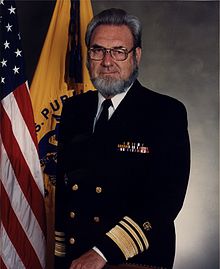

 High resolution version (17,798,002 Bytes)


 The Daily Hatch



Comments
Displaying 1–10 of 12 comments
See all comments
Joan Oliver
Though I was never at L’Abri, my husband and I read all the F. Schaeffer books we could and I read a couple of Edith’s. I always thought of her as the perfect wife–calming, partnering–to Francis and a great creative woman of God on her own. Thanks for this article, Rachel. Though there is sadness in the “revelations” about the family, there has always been the awareness the God is sovereign.
Rob Shearer
Frank Schaeffer’s provocative charges about his father remain unsubstantiated. Frank has, throughout his life, been much given to hyperbole, and has adopted a decidedly negative view of evangelical culture and theology. I’m sure he is convinced of the truth of what he has written. Others who knew the Schaeffers intimately do not share his views or judgments. The daughters & sons-in-law of Francis & Edith have refused to engage in a public debate with their brother (-in-law). I would encourage charity and respect for both Edith and Francis, and a bit of skepticism about Frank’s charges.
Daniel Becker
Arriving at L’abri late one evening, my betrothed and I found there was “no room in the inn” (the men’s and women’s dorms). When Edith found out she immediately offered us a spot on her living room floor at their home Chalet Les Melez. She suggested we roll out our sleeping bags under her dining room table. The next morning we awoke to the sun shining through the picture window revealing an brilliant alpine panorama. Susan was asked by Edith to help make breakfast for the other guests. I remember how the simple meal of peanut butter and jelly sandwiches was transformed by the cutting of this simple fare into a variety of differently shaped pinafores. Susan never forgot this small act of creativity. Our own home of 31 years enjoyed this same expression of hospitality—all because of a small petite woman who loved God and expressed her devotion through many simple acts of love, kindness and a generous spirit of hospitality.
MILDRED B SALMON
“apparently included dowdiness…” Maybe, if you are in the here and now trying to look back. More likely a desire to obey Paul’s “dress modestly” with very modest means. Or sending children to school acceptably dressed and Mom’s dress based on what was left in the budget. Many of those perceived as “doudy” were also full of conviction. Edith’s viewpoints inspired them to use their own creativity and available resources to enhance their world of home and family, just as she inspired you –and me.
____________