Category Archives: Francis Schaeffer

“Sanctity of Life Saturday” Remembering Dr. C. Everett Koop with pictures and quotes Part 8 (editorial picture about Surgeon General)

Memorial Tribute Former Surgeon General C.Everett Koop © A Genuine G-Shot.wmv

Dr. Koop.
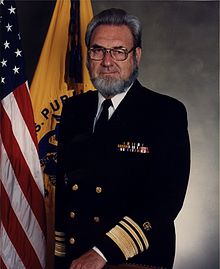
C. Everett Koop

Before Dr. C. Everett Koop arrived in 1981 as Surgeon General could anybody ever name who the Surgeon General was? Koop also caused lots of editorial cartoons to be drawn about him because of his positions he took on health issues. Today’s cartoon below sums up the issues he tackled.

On 2-25-13 we lost a great man when we lost Dr. C. Everett Koop. I have written over and over the last few years quoting Dr. C. Everett Koop and his good friend Francis Schaeffer. They both came together for the first time in 1973 when Dr. Koop operated on Schaeffer’s daughter and as a result they became close friends. That led to their involvement together in the book and film series “WHATEVER HAPPENED TO THE HUMAN RACE?” in 1979.

In the film series “WHATEVER HAPPENED TO THE HUMAN RACE?” the arguments are presented  against abortion (Episode 1),  infanticide (Episode 2),   euthenasia (Episode 3), and then there is a discussion of the Christian versus Humanist worldview concerning the issue of “the basis for human dignity” in Episode 4 and then in the last episode a close look at the truth claims of the Bible.

In this 1979 film series they dealt with the big social issues and predicted what social problems we have in the future because of humanism. For instance, they knew that the Jack Kevorkians of the world would be coming down the pike. They predicted that there was a slippery slope from abortion to infanticide to youth euthanasia brought on by the materialistic worldview.

Koop exhorted evangelicals to protect unborn

Posted on Feb 26, 2013 | by Diana Chandler

HANOVER, N.H. (BP) — Former U.S. Surgeon General C. Everett Koop, widely credited with energizing evangelicals against abortion, died peacefully Feb. 25 at his home in Hanover, N.H., at age 96.

The trailblazing pediatric surgeon developed a reputation as a preserver of life not only through groundbreaking surgeries and medical procedures, but through a morally, biblically based platform against sexual promiscuity and abortion, most notably before and after his two terms in the 1980s as surgeon general.

Koop also promoted the power of prayer in conjunction with medical science, famously praying at the bedsides of his patients.

In the 1979 book “Whatever Happened to the Human Race?” Koop and the late Frances Schaeffer made a case for the importance of mankind’s intrinsic God-given value in the preservation of humanity.

“If man is not made in the image of God, nothing then stands in the way of inhumanity. There is no good reason why mankind should be perceived as special. Human life is cheapened,” the two wrote. “We can see this in many of the major issues being debated in our society today: abortion, infanticide, euthanasia, the increase of child abuse and violence of all kinds, pornography (and its particular kinds of violence as evidenced in sadomasochism), the routine torture of political prisoners in many parts of the world, the crime explosion, and the random violence which surrounds us.”

Koop and Schaeffer endeavored to “awaken the evangelical world — and anyone else who would listen — to the Christian imperative to do something to reverse the perilous realignment of American values on these life-and-death issues” including abortion and infanticide, Koop reflected in his 1991 autobiography, “Koop: The Memoirs of America’s Family Doctor.”

Southern Baptist ethicist Richard Land has written that “it is difficult to overestimate the incredible impact” Koop and Schaeffer had on evangelicals in the 20th century.

“Everyone devoted to the pro-life cause owes an incalculable debt of gratitude to Francis Schaeffer and to Dr. C. Everett Koop,” Land wrote for National Right to Life in 2003. “First Schaeffer, and then Dr. Koop, helped inform and energize a whole generation of evangelical Christians to engagement with a culture that had veered dangerously off course from its Judeo-Christian foundations. The pro-life movement owes them an enormous debt.”

C. Ben Mitchell, professor of moral philosophy at Union University in Jackson, Tenn., hailed Koop’s legacy.

“We have lost the nation’s doctor,” Mitchell told Baptist Press. “As a gifted physician and faithful Christian, he taught us how to heal both body and soul. As a public servant he helped us navigate some tumultuous waves, even causing a few of his own. As a protector of human dignity and the sanctity of human life he cared for the tiniest and most vulnerable among us.”

After the U.S. legalized abortion, Koop predicted the practice would lead to infanticide, passive and active euthanasia and toward a political climate that, in Nazi Germany, led to Auschwitz and other concentration camps, according to news accounts of his speeches.

Koop, a Presbyterian, vowed during confirmation hearings before the U.S. Senate not to use his post as surgeon general to promote his religious ideology and occasionally angered evangelicals as he worked to keep his pledge.

Koop provoked controversy among evangelicals by encouraging sex education in elementary school, the use of condoms to prevent sexually transmitted diseases and compassionate health care for AIDS patients, who were then overwhelmingly within the homosexual community. Yet personally, he opposed homosexuality and promoted pre-marital sexual abstinence.

Among Koop’s other initiatives were calls for a smoking ban and campaigns promoting healthy eating and physical exercise education.

Melinda Delahoyde, president of the Care Net crisis pregnancy centers which Koop helped found, mourned Koop’s death.

“Dr. Koop took a courageous stand on the issue of life when not many were willing to do the same,” Delahoyde wrote on Care Net’s website. “He truly made a lasting impact, as his legacy lives on today through Care Net’s life-saving work to people facing unplanned pregnancies.”

As surgeon-in-chief at Children’s Hospital in Philadelphia, Koop pioneered surgery on newborns, successfully separating three sets of conjoined twins and reconstructing the chest of a baby born with the heart outside the body.

Koop’s recent outreach includes a letter he wrote in 2009 to Sen. Harry Reid urging that congressional health care legislation include a provision allowing doctors and medical students to opt out of performing abortions.

Koop was born Oct 14, 1916, in Brooklyn, N.Y., and, according to Reuters News, became interested in medicine after being badly injured as a child in a skiing accident and in playing football.

He was preceded in death by his first wife, Elizabeth, and by their son David. He is survived by their children Allen Koop, Norman Koop and Elizabeth Thompson, as well as by his second wife Cora, whom he married in 2010, according to news reports.
–30–
Diana Chandler is Baptist Press’ staff writer. Get Baptist Press headlines and breaking news on Twitter (@BaptistPress), Facebook (Facebook.com/BaptistPress ) and in your email ( baptistpress.com/SubscribeBP.asp).

Dr. C. Everett Koop is pictured above.

Francis Schaeffer: “Whatever Happened to the Human Race” (Episode 1) ABORTION OF THE HUMAN RACE

Published on Oct 6, 2012 by

Related posts:

Open letter to President Obama (Part 232 B) Dr. C. Everett Koop and Reagan pictured together

Dr. C. Everett Koop with Ronald Reagan. Dr. Koop was delayed in his confirmation by Ted Kennedy because of his film Whatever Happened to the Human Race? President Obama c/o The White House 1600 Pennsylvania Avenue NW Washington, DC 20500 Dear Mr. President, I know that you receive 20,000 letters a day and that you […]

“Sanctity of Life Saturday” Francis Schaeffer and Dr. C. Everett Koop asked Reagan to issue pro-life proclamation in 1983 (includes video ABORTION OF THE HUMAN RACE)

In the film series “WHATEVER HAPPENED TO THE HUMAN RACE?” the arguments are presented  against abortion (Episode 1),  infanticide (Episode 2),   euthenasia (Episode 3), and then there is a discussion of the Christian versus Humanist worldview concerning the issue of “the basis for human dignity” in Episode 4 and then in the last episode a close […]

Dr. C. Everett Koop on abortion’s 1973 Roe v. Wade impact on child abuse

Dr. C. Everett Koop with Ronald Reagan. Dr. Koop was delayed in his confirmation by Ted Kennedy because of his film Whatever Happened to the Human Race? Watch the film below starting at the 19 minute mark and that will lead into a powerful question from Dr. C. Everett Koop. This 1979 film is WHATEVER […]

Open letter to President Obama (Part 221 B) Dr. C. Everett Koop and Francis Schaeffer rightly called abortion “the watershed issue of our era”

 Dr. Koop was delayed in his confirmation by Ted Kennedy because of his film Whatever Happened to the Human Race? Francis Schaeffer February 21, 1982 (Part 1) Uploaded by DeBunker7 on Feb 21, 2008 READ THIS FIRST: In decline of all civilizations we first see a war against the freedom of ideas. Discussion is limited […]

Francis Schaeffer and C. Everette Koop on the Hippocratic oath (March for Life January 20, 2013)

Dr. C. Everett Koop was appointed to the Reagan administration but was held up in the Senate in his confirmation hearings by Ted Kennedy because of his work in pro-life causes. I was thinking about the March for Life that is coming up on Jan 20, 2013  and that is why I posted this today […]

Ronald Wilson Reagan pictured with Dr. C. Everett Koop

High resolution version (11,426,583 Bytes) Description: The photograph is signed by President Ronald Reagan with the inscription “To Chick Koop, With Best Wishes.” Chick, from chicken coop, was the nickname Koop gained will attending Dartmouth College in the mid-1930s. Koop maintained a cordial relationship with President Reagan, despite his disappointment over Reagan’s refusal to address […]

Francis Schaeffer and C. Everett Koop were prophetic (jh29)

Francis Schaeffer and C. Everett Koop were prophetic (jh29) What Ever Happened to the Human Race? I recently heard this Breakpoint Commentary by Chuck Colson and it just reminded me of how prophetic Francis Schaeffer and C. Everett Koop were in the late 1970′s with their book and film series “Whatever happened to the human […]

Should Michele Bachmann be punished for taking pro-life views from Schaeffer and Koop? (March for Life January 20, 2013)

  Dr. C. Everett Koop I was thinking about the March for Life that is coming up on Jan 20, 2013  and that is why I posted this today Secular leaps of faith 39 Comments Written by Janie B. Cheaney August 15, 2011, 2:17 PM I’m willing to cut Ryan Lizza some slack. His profile […]

“Schaeffer Sundays” Francis Schaeffer’s own words concerning humanism and its bad results

Francis Schaeffer: “Whatever Happened to the Human Race?” (Episode 2) SLAUGHTER OF THE INNOCENTS Published on Oct 6, 2012 by AdamMetropolis The 45 minute video above is from the film series created from Francis Schaeffer’s book “Whatever Happened to the Human Race?” with Dr. C. Everett Koop. This book  really helped develop my political views concerning […]

“Sanctity of Life Saturday”:Derek Melleby’s review of the book “Francis Schaeffer: An Authentic Life” (includes film THE BASIS FOR HUMAN DIGNITY)

  I truly believe that many of the problems we have today in the USA are due to the advancement of humanism in the last few decades in our society. Ronald Reagan appointed the evangelical Dr. C. Everett Koop to the position of Surgeon General in his administration. He partnered with Dr. Francis Schaeffer in making […]

Taking on Ark Times bloggers about abortion on the 40th anniversary date of Roe v. Wade (Part 5) “Slavery issue compared to rights of unborn child”

The best pro-life film I have ever seen below by Francis Schaeffer and Dr. C. Everett Koop “Whatever happened to the human race?” Over the years I have taken on the Ark Times liberal bloggers over and over and over concerning the issue of abortion. I asked over and over again for one liberal blogger […]

Taking on Ark Times bloggers about abortion on the 40th anniversary date of Roe v. Wade (Part 4) “How do pro-lifers react to the movie THE CIDER HOUSE RULES?”

Francis Schaeffer pictured above._________ The best pro-life film I have ever seen below by Francis Schaeffer and Dr. C. Everett Koop “Whatever happened to the human race?” Over the years I have taken on the Ark Times liberal bloggers over and over and over concerning the issue of abortion. I asked over and over again […]

Taking on Ark Times bloggers about abortion on the 40th anniversary date of Roe v. Wade (Part 3) “What should be the punishment for abortion doctors?”

The best pro-life film I have ever seen below by Francis Schaeffer and Dr. C. Everett Koop “Whatever happened to the human race?” On 1-24-13 I took on the child abuse argument put forth by Ark Times Blogger “Deathbyinches,” and the day before I pointed out that because the unborn baby has all the genetic code […]

Taking on Ark Times bloggers about abortion on the 40th anniversary date of Roe v. Wade (Part 2) “The pro-abortion child abuse argument destroyed here”

PHOTO BY STATON BREIDENTHAL from Pro-life march in Little Rock on 1-20-13. Tim Tebow on pro-life super bowl commercial. Over the years I have taken on the Ark Times liberal bloggers over and over and over concerning the issue of abortion. Here is another encounter below. On January 22, 2013 (on the 40th anniversary of the […]

Taking on Ark Times bloggers about abortion on the 40th anniversary date of Roe v. Wade (Part 6) For many pro-abortionists ” …the problem is not determining when actual human life begins, but when the value of that life begins to out weigh other considerations”

The best pro-life film I have ever seen below by Francis Schaeffer and Dr. C. Everett Koop “Whatever happened to the human race?” Francis Schaeffer pictured above._________ The 45 minute video above is from the film series created from Francis Schaeffer’s book “Whatever Happened to the Human Race?” with Dr. C. Everett Koop. This book  really […]

Taking on Ark Times bloggers about abortion on the 40th anniversary date of Roe v. Wade (Part 7) “Poverty not good reason for abortion, why not give up for adoption?”

Dr Richard Land discusses abortion and slavery – 10/14/2004 – part 3 The best pro-life film I have ever seen below by Francis Schaeffer and Dr. C. Everett Koop “Whatever happened to the human race?” Over the years I have taken on the Ark Times liberal bloggers over and over and over concerning the issue […]

Taking on Ark Times bloggers about abortion on the 40th anniversary date of Roe v. Wade (Part 1)

Dr Richard Land discusses abortion and slavery – 10/14/2004 – part 3 The best pro-life film I have ever seen below by Francis Schaeffer and Dr. C. Everett Koop “Whatever happened to the human race?” Over the years I have taken on the Ark Times liberal bloggers over and over and over concerning the issue […]

Paul Greenberg became pro-life because we are all “endowed with certain unalienable rights”

On January 20, 2013 I heard Paul Greenberg talk about the words of Thomas Jefferson that we are all “endowed with certain unalienable rights” and the most important one is the right to life. He mentioned this also in this speech below from 2011: Paul Greenberg Dinner Speech 2011 Fall 2011 Issue Some of you […]

How Pulitzer Prize-winning Paul Greenberg, one of the most respected and honored commentators in America, changed his mind about abortion and endorses now the pro-life view

It is not possible to know where the pro-life evangelicals are coming from unless you look at the work of the person who inspired them the most. That person was Francis Schaeffer.  I do care about economic issues but the pro-life issue is the most important to me. Several years ago Adrian Rogers (past president of […]

Father Frank Pavone reacts to Kermit Gosnell guilty verdict

Francis Schaeffer: “Whatever Happened to the Human Race” (Episode 1) ABORTION OF THE HUMAN RACE

Published on Oct 6, 2012 by

________________

Fr. Pavone: Right to choose must yield to right to life

STATEN ISLAND, NY — Father Frank Pavone, National Director of Priests for Life, had the following comment on the verdict in the Kermit Gosnell trial:

“The guilty verdict on charges of killing babies following abortion shows that the law recognizes a point at which the ‘right to choose’ must yield to the right to life, and also shows that abortionists don’t know where that point is. Such laws must be strengthened in every state.”

Note: the babies in this case have been given names by Priests for Life and more information on that can be found here: www.priestsforlife.org/library/4620-naming-the-gosnell-babies.

“Gosnell’s guilty verdict in the death of Karnamaya Mongar is different. Gosnell didn’t slit her neck but he did create conditions that caused her death. And Mongar is not the only mother harmed or killed in the hundreds of dangerous, unregulated, legal abortion clinics across our country. There are hundreds of Gosnells and they have to be stopped.

“The lessons to be learned from this case, and the actions that should follow upon it, are largely independent of the verdict rendered today. Those lessons and actions are summarized in my public statement about the case. http://www.priestsforlife.org/blog/index.php/statement-of-fr-frank-pavone-as-we-await-verdict-in-gosnell-trial#respond

Janet Morana, executive director of Priests for Life and co-founder of the Silent  No More Awareness Campaign, also commented on Gosnell’s conviction in the death of Karnamaya Mongar:

“On behalf of the many women who have died and the countless numbers of women who have been physically injured in abortion clinics across our nation, and whose abortionists have not been brought to justice, I applaud the jury for recognizing that what happened to Karnamaya Mongar was not an accident.  Justice for Karnamaya provides a measure of justice for all women harmed by abortion. The abortion procedure kills a child, sometimes kills a mother and is always  damaging to women. This product called abortion should be recalled by the government.”

Dr. Alveda King, director of African-American Outreach for Priests for Life, said of the guilty verdicts:

“Justice was served with these verdicts, but injustice will continue unless we end abortion in this country. Gosnell was not the only abortionist who killed newborn babies and their mothers, he was just the one who got caught. Now we have to turn out attention to charging, trying and convicting others like him.”

Father Pavone said Priests for Life continues to pray for Ms. Mongar and her family, for Dr. Gosnell and for all involved in the case.

Priests for Life is the nation’s largest Catholic pro-life organization dedicated to ending abortion and euthanasia. For more information, visit www.priestsforlife.org.

Related posts:

  1. Priests for Life to name the babies killed in Gosnell clinic
  2. Fr. Pavone on “Choose Life” License Plate Victory
  3. What Americans Should Learn From the Gosnell Trial
  4. Statement of Fr. Frank Pavone as we await verdict in Gosnell trial
  5. The Power to Choose Life

Political Cartoons by Chuck Asay

By Chuck Asay – May 09, 2013

Related posts:

Francis Schaeffer’s “How should we then live?” Video and outline of episode 10 “Final Choices” (Schaeffer Sundays)

E P I S O D E 1 0   Dr. Francis Schaeffer – Episode X – Final Choices 27 min FINAL CHOICES I. Authoritarianism the Only Humanistic Social Option One man or an elite giving authoritative arbitrary absolutes. A. Society is sole absolute in absence of other absolutes. B. But society has to be […]

Francis Schaeffer’s “How should we then live?” Video and outline of episode 9 “The Age of Personal Peace and Affluence” (Schaeffer Sundays)

E P I S O D E 9 Dr. Francis Schaeffer – Episode IX – The Age of Personal Peace and Affluence 27 min T h e Age of Personal Peace and Afflunce I. By the Early 1960s People Were Bombarded From Every Side by Modern Man’s Humanistic Thought II. Modern Form of Humanistic Thought Leads […]

Francis Schaeffer’s “How should we then live?” Video and outline of episode 8 “The Age of Fragmentation” (Schaeffer Sundays)

E P I S O D E 8 Dr. Francis Schaeffer – Episode VIII – The Age of Fragmentation 27 min I saw this film series in 1979 and it had a major impact on me. T h e Age of FRAGMENTATION I. Art As a Vehicle Of Modern Thought A. Impressionism (Monet, Renoir, Pissarro, Sisley, […]

Francis Schaeffer’s “How should we then live?” Video and outline of episode 7 “The Age of Non-Reason” (Schaeffer Sundays)

E P I S O D E 7 Dr. Francis Schaeffer – Episode VII – The Age of Non Reason I am thrilled to get this film series with you. I saw it first in 1979 and it had such a big impact on me. Today’s episode is where we see modern humanist man act […]

Francis Schaeffer’s “How should we then live?” Video and outline of episode 6 “The Scientific Age” (Schaeffer Sundays)

E P I S O D E 6 How Should We Then Live 6#1 Uploaded by NoMirrorHDDHrorriMoN on Oct 3, 2011 How Should We Then Live? Episode 6 of 12 ________ I am sharing with you a film series that I saw in 1979. In this film Francis Schaeffer asserted that was a shift in […]

Francis Schaeffer’s “How should we then live?” Video and outline of episode 5 “The Revolutionary Age” (Schaeffer Sundays)

E P I S O D E 5 How Should We Then Live? Episode 5: The Revolutionary Age I was impacted by this film series by Francis Schaeffer back in the 1970′s and I wanted to share it with you. Francis Schaeffer noted, “Reformation Did Not Bring Perfection. But gradually on basis of biblical teaching there […]

Francis Schaeffer’s “How should we then live?” Video and outline of episode 4 “The Reformation” (Schaeffer Sundays)

Dr. Francis Schaeffer – Episode IV – The Reformation 27 min I was impacted by this film series by Francis Schaeffer back in the 1970′s and I wanted to share it with you. Schaeffer makes three key points concerning the Reformation: “1. Erasmian Christian humanism rejected by Farel. 2. Bible gives needed answers not only as to […]

“Schaeffer Sundays” Francis Schaeffer’s “How should we then live?” Video and outline of episode 3 “The Renaissance”

Francis Schaeffer’s “How should we then live?” Video and outline of episode 3 “The Renaissance” Francis Schaeffer: “How Should We Then Live?” (Episode 3) THE RENAISSANCE I was impacted by this film series by Francis Schaeffer back in the 1970′s and I wanted to share it with you. Schaeffer really shows why we have so […]

Francis Schaeffer’s “How should we then live?” Video and outline of episode 2 “The Middle Ages” (Schaeffer Sundays)

  Francis Schaeffer: “How Should We Then Live?” (Episode 2) THE MIDDLE AGES I was impacted by this film series by Francis Schaeffer back in the 1970′s and I wanted to share it with you. Schaeffer points out that during this time period unfortunately we have the “Church’s deviation from early church’s teaching in regard […]

Francis Schaeffer’s “How should we then live?” Video and outline of episode 1 “The Roman Age” (Schaeffer Sundays)

Francis Schaeffer: “How Should We Then Live?” (Episode 1) THE ROMAN AGE   Today I am starting a series that really had a big impact on my life back in the 1970′s when I first saw it. There are ten parts and today is the first. Francis Schaeffer takes a look at Rome and why […]

By Everette Hatcher III | Posted in Francis Schaeffer | Edit | Comments (0)

Not Your Father’s L’Abri The Swiss retreat now tends less to philosophical skeptics than to disaffected evangelicals. Molly Worthen

Not Your Father’s L’Abri The Swiss retreat now tends less to philosophical skeptics than to disaffected evangelicals. Molly Worthen

L’Abri : Sounds & Sites of a Shelter

Uploaded by on Nov 12, 2006

A fun video of the day in the life at L’Abri Fellowship in Switzerland. I made this video in 2003 while there and I was trying to capture the sounds and everyday life of it. Was on the Labri.org site for quite sometime. Not meant to be the end all video of what L’Abri is like today, but trying to make an entertaining video for the students and people who are curious about what L’Abri is.

______________________

L’Abri crew in the Vaud Alps

Uploaded on Jun 10, 2006

hiking up high – the sound is a little behind the picture for some reason

SOUNDWORD LABRI CONFERENCE VIDEO – Five Ideas – An Introduction to L’Abri – DICK KEYES – 1984

Published on Jan 27, 2014

This video is part of the Sound Word L’Abri Conference videos from the last two years of Dr. Schaeffer’s life. Here Dick Keyes gives five points of emphasis that describe the work of L’Abri Fellowship.

Read more about this series here: http://francisschaefferstudies.blogsp…

A Day at Swiss L’Abri – pt 1

Uploaded on Nov 20, 2007

This is part one of a series of videos I made during one day at Swiss L’Abri in Huemoz, Switzerland. If you want to know more about L’Abri you can go to http://www.labri.org or my blog at iamchrismartin.blogspot.com

A Day at Swiss L’Abri – pt 2

A Day at Swiss L’Abri – pt 3

A Day at Swiss L’Abri – pt 4

A Day at Swiss L’Abri – pt 5

A Day at Swiss L’Abri – pt 6

L’abri

Swiss L’abri

Uploaded on Jul 22, 2006

L’abri is many things–a shelter, a community, a thinktank, study center, and a home. I lived here for two months in the summer of 2006, and this video is an attempt to capture some of the memories.

_____________________________

L’Abri: 6 Months

Uploaded on Jan 27, 2007

Video I made for the L’Abri website with music by Jozef Luptak. It’s a montage of the people and the day in the life of at L’Abri Fellowship in Switzerland. Music performed live by Jozef Luptak in the Chapel in Huemoz.

___________________________________________

I love the works of Francis Schaeffer and I have been on the internet reading several blogs that talk about Schaeffer’s work and the work below by Molly Worthen   was really helpful. Schaeffer’s film series “How should we then live?  Wikipedia notes, “According to Schaeffer, How Should We Then Live traces Western history from Ancient Rome until the time of writing (1976) along three lines: the philosophic, scientific, and religious.[3] He also makes extensive references to art and architecture as a means of showing how these movements reflected changing patterns of thought through time. Schaeffer’s central premise is: when we base society on the Bible, on the infinite-personal God who is there and has spoken,[4] this provides an absolute by which we can conduct our lives and by which we can judge society.  Here are some posts I have done on this series: Francis Schaeffer’s “How should we then live?” Video and outline of episode 10 “Final Choices” episode 9 “The Age of Personal Peace and Affluence”episode 8 “The Age of Fragmentation”episode 7 “The Age of Non-Reason” episode 6 “The Scientific Age”  episode 5 “The Revolutionary Age” episode 4 “The Reformation” episode 3 “The Renaissance”episode 2 “The Middle Ages,”, and  episode 1 “The Roman Age,” .

In the film series “WHATEVER HAPPENED TO THE HUMAN RACE?” the arguments are presented  against abortion (Episode 1),  infanticide (Episode 2),   euthanasia (Episode 3), and then there is a discussion of the Christian versus Humanist worldview concerning the issue of “the basis for human dignity” in Episode 4 and then in the last episode a close look at the truth claims of the Bible.

Francis Schaeffer

Not Your Father’s L’Abri

The Swiss retreat now tends less to philosophical skeptics than to disaffected evangelicals.
Molly Worthen
[ posted 3/28/2008 8:48AM ]

Amelia Hendrix, a tall brunette and the daughter of a Presbyterian Church in America minister, has spent her life as “a poster child for the church.” Toward the end of her four years at the University of Tennessee, however, that role proved harder to play. Her “Christian bubble” dissipated as friends from church got married, and she found herself befriending people with different values: non-Christians, gay students, and pot smokers at the record store where she worked.

At university, Amelia took classes on modern American religion. “That was eye-opening,” she said. “I did a lot on Jerry Falwell, the conservative party, and the consolidating of the Christian right. It made me question everything I’d been taught. I was raised conservative, pro-life, anti-gay; I was taught that Christians should be in power. I came out thinking nothing I was taught had been right.”

When Amelia graduated last December, she told her father she was thinking of going to L’Abri, the Christian study center and commune in the Swiss Alps founded by celebrity apologist Francis Schaeffer. “When I brought up the idea, Dad said, ‘That’s great, I love Schaeffer,'” she said.

If her father remembers L’Abri as it was when Schaeffer was alive—a place where thoughtful young Christians went to breathe the fortifying Alpine air and to sit at the feet of their goateed guru—Amelia embodies what L’Abri has become: a community ambivalent about Schaeffer’s legacy and ill at ease with mainstream evangelical culture. Half a century after L’Abri’s founding and more than 20 years after Schaeffer’s death, students come with very different questions, and they look askance at the politicized faith that Schaeffer helped create.

From Radical to Politico

Shortly after Francis and Edith Schaeffer came to Switzerland as Presbyterian missionaries, their eldest daughter, Prisca, began bringing college friends home to talk with her father about religion. Word spread of Edith’s hospitality and Francis’s willingness to take on questions that many Christians avoided. The stream of visitors grew, and L’Abri was born.

Between L’Abri’s 1955 founding and the early 1970s, the ministry attracted European students schooled in modern philosophy and existentialism, as well as young Americans backpacking through Europe. “At that time, you would have found a countercultural temperament at L’Abri,” said Ronald Wells, professor emeritus at Calvin College, who visited three times in the late 1960s. “You know the old joke—ten ponytails, but only three women.”

Once a fundamentalist who worked with Carl McIntire, Schaeffer at this time believed a true Christian spirit demanded that he and Edith welcome into their home—and admit that they might learn from—young people trying to square the Bible with Sartre and Kierkegaard. Timothy Leary, countercultural icon and proponent of lsd’s spiritual benefits, visited twice.

The atmosphere at L’Abri changed as Schaeffer’s profile among evangelical Americans rose. In 1965, Harold O. J. Brown, then minister at Park Street Church in Boston, arranged for Schaeffer to give a series of lectures in the area, followed by a visit to Wheaton College. The lectures were unlike anything his audiences had heard before. Using his famous “line of despair” diagram to trace the decline of the West, Schaeffer wove thinkers as diverse as Leonardo da Vinci and Karl Barth into a confident narrative that sought to demolish modern secular philosophy and vindicate Christianity.

“He was talking about [filmmakers] Fellini and Bergman when Wheaton required students not to see films,” said Greg Laughery, L’Abri’s current director. Wells recalled, “We didn’t so much listen as levitate.”

Schaeffer’s fame grew. He spent more and more time lecturing in America, published bestselling books, and—when he could get back to Switzerland—entertained a flood of fawning pilgrims. By the mid-1970s, the dynamic at L’Abri had changed radically.

“Students argued quite a bit with him in the early days,” said John Sandri, who eventually married Prisca after a mutual friend invited him to visit the Schaeffers. “But later, you’d ask a question and get a 40-minute monologue. It was just not possible to argue.” Laughery, who first visited L’Abri in 1980 after a misspent youth in the Haight-Ashbury district of San Francisco, spent his time listening to reel-to-reel recordings of bygone days’ lively debates. Most of his peers came to L’Abri not seeking healthy debate, he said, but “to get filled up with apologetic ammunition.”

By this time, some of the young evangelicals whom Schaeffer had inspired to pursue the life of the mind had become respected scholars—and had developed a jaundiced view of their old intellectual hero. Those who knew Schaeffer agree that he considered himself an evangelist, not a scholar. “Schaeffer didn’t read books,” said Sandri. “He got his material from magazines. Newsweek, Time—he’d take them to the beach. He did go to seminary, too, so he had that. … [But] he was out to give broad strokes. It was not necessary to give you the details of Kierkegaard.”

Many evangelical scholars distanced themselves from Schaeffer during the last years of his career—the time when he most fervently demanded their loyalty. Beginning in the early 1970s, Schaeffer began to make connections with conservative politicians. The 1973 Roe v. Wade decision pushed him further. In 1974, his son, Frank, persuaded him to collaborate on a documentary film series conceived as a Christian answer to Kenneth Clark’s Civilisation—a series that would depict legalized abortion as the final act in the West’s moral erosion.

Following the massive success of the series How Should We Then Live?, Schaeffer continued his pattern of cutting scholarly corners and reshaping history to support his own arguments. In the early 1980s, he hired John Whitehead, founder of the Christian libertarian Rutherford Institute, to research a book about the Christian foundation of America. The result was a historically dubious but highly influential volume entitled A Christian Manifesto (1981).

Schaeffer was outraged by evangelical historians’ refusal to support the book’s claim that the Founding Fathers had acted out of explicitly Christian motivations. “He had written Manifesto not as a dispassionate historical treatise,” historian Barry Hankins wrote, “but as a tract in the culture wars.”

Schaeffer continued lecturing and writing against abortion and Christian political apathy until his death in 1984. Workers and family members at L’Abri worried about the political turn that their leader’s career had taken. “I talked to Schaeffer about his cobelligerency with the Moral Majority,” said Laughery, who has a Ph.D. in theology from the University of Fribourg. “From my perspective, that was a mistake.”

There was little trace of the open-minded, countercultural Schaeffer that had entertained flocks of skeptical hippies in decades past. By the 1980s, he had little tolerance for anyone who deviated from his notion of Christian orthodoxy. When John Sandri’s studies in literature led him to reread the Bible through the lens of narrative theology, Schaeffer was appalled. “He wanted me to withdraw from a teaching role in the community,” said Sandri, who is bronzed and wiry at 71, thanks to his hobby of long-distance Alpine running. Sandri had come to question everything from the Trinity to predestination, “but the one that broke the camel’s back was [biblical] inerrancy. Schaeffer felt this was the issue of the day, where Christians have to dig into the trenches,” Sandri said. “I’m not an inerrantist, but I’m not an ‘errantist’ either. Both are wrong. Man makes these opposing points of view. The modernist agenda is behind both.”

Sandri, who still lives at L’Abri with his wife, calls himself a “radical.” Twenty-three years after Schaeffer’s death, his unorthodox views are a telling expression of what L’Abri has become.

Recovering Evangelicals

To reach L’Abri, I rode a train along the coast of Lake Geneva to the winery town of Aigle, where I caught a bus into the mountains. After a stomach-lurching ride along switchback roads, the bus deposited me in front of an imposing chalet built of dark pine and white stucco. Geraniums hung over the porch railings beneath the second and third-floor windows. Laundry fluttered on clotheslines. Down the mountain, smaller chalets sat nestled between vegetable gardens and cow pastures. On that clear afternoon, I could see miles across the valley to mountains whiskered with snow.

I met Chris Martin over supper on the first night of fall term. A lanky 23-year-old whose hair hung in a shaggy curtain over his eyes, Chris first heard of L’Abri during his junior year at the University of South Carolina, when a L’Abri worker came to speak. Like Amelia, Chris had felt paralyzed by expectations at home. His leadership role in Campus Crusade left him no time to sort out his spiritual doubts. When he got here last spring, Laughery recommended that he read Schaeffer’s He Is There and He Is Not Silent (1972). Chris wasn’t impressed. “Schaeffer seemed to make a ton of assumptions, and he didn’t back up many,” Chris said. “It was too didactic.”

Neither Amelia nor Chris knew exactly what they wanted out of their experience at L’Abri, but they had a word for it: “authenticity.” That idea is far more important to today’s L’Abri students than winning debates with secular intellectuals or strategizing to overturn Roe v. Wade. Though most hold firmly to conservative social values, they resent the assumption that their faith is chained to a prescribed political position. As Amelia said, “I don’t want to be a white American girl who votes for Bush.”

The personal spiritual quest has always been a priority for those who come to L’Abri. The daily routine has changed little over the years, a combination of communal interaction and private study meant to facilitate personal growth. Chores occupy half of each day, and students spend the other half reading and listening to recorded lectures at Farel House, the clapboard chalet that serves as L’Abri’s chapel and houses a modest library. There, students hunch over tables and lean against the ledge of the stone fireplace in the wood-paneled room, adjusting their headphones and taking notes. In cold weather, Farel House is drafty, and they wrap themselves in blankets. In the summertime, they pull their chairs onto the balcony, prop their feet on the railing, and watch the mountains over the edges of their books.

Alumni from decades past who have visited recently say they notice a change. “The people here when I’ve been visiting are not as serious,” said Kyle McCormick, who first came in 1982. Of course, everyone seems to believe that L’Abri was at its best when they were there. The faddish intellectualism of L’Abri’s earliest years must be taken with a grain of salt. But current workers agree that, as Laughery put it, “the emphasis has shifted to personal issues, which people less readily see as related to ideas.”

The workers, who meet with students one-on-one each week to guide their studies, struggle to pull them out of their own heads. “For a lot of people, [L’Abri] is more about personal spirituality, which makes sense—that’s the way religion is branded in the U.S.,” said Jasie Peltier, a tall blonde from Houston who became a Christian at L’Abri when she came four years ago. Peltier tutors mostly female students, and though she’d prefer to talk about philosophy and theology, she usually ends up talking about boys. “No one has a clue what ‘authenticity’ is,” she said. “They think it’s spilling your guts, purging. They think, I’m going to be real here, and being real means sharing, over-sharing.” In the evenings, students crowd into the small office on the first floor, which houses a single computer open for use after dinner. They squeeze onto the futon and sit cross-legged on the floor, swapping stories about past romances, crushes, and relationships gone sour.

Workers say this slumber-party atmosphere often fades a month or so after the start of each term, as students settle in and begin to confront their real reasons for taking several months off from school or work to come to L’Abri. Between peeling potatoes, hacking at weeds, and laughing through volleyball games on the grassy court overlooking the valley, students explore their faith (or lack of it—the occasional atheist finds his way here) by means very different from the apologetics of Francis Schaeffer. Those few students who have read any of his books consider him largely obsolete. The modernist philosophy that he targeted in most of his writings, the bogeyman of existentialism, is passé. “Now the question is, Is there truth at all?” said worker Thomas Rauchenstein, a soft-spoken Canadian with sandy brown hair and a close-cropped beard. “Postmodernism’s critique of truth is more of a factor in students’ thinking.”

During one lunch at L’Abri, Rauchenstein led a discussion of biblical inerrancy over ham sandwiches on homemade bread (despite its meager budget of 2 Swiss Francs per person, per meal, L’Abri feeds visitors well). Students hunched forward in their chairs. They offered ideas about what it meant to interpret the Bible literally or call Scripture inerrant. Some strayed into fairly liberal territory; a quiet Presbyterian boy sitting across from me, fresh out of Southeastern Bible College, looked stricken.

No one, however, challenged the idea that the central events of the Gospels are literally true. Indeed, a few of the students told me afterward that they wished more atheists were around, like in the old days. Rachel Davies, 23, a Seventh-day Adventist from Washington State who heard about L’Abri from a pastor who came in the 1970s, said she’d expected “a backpacker atmosphere and hippies. … When I walked in, I was taken aback by all the Christian people. I saw the crosses dangling around their necks, and I thought, This will be different from what I expected.

Though they sometimes come seeking debate, students and workers today have no use for Schaeffer’s presuppositionalist apologetics, which he adapted from the teachings of his professor at Westminster Theological Seminary, Cornelius Van Til. Van Til’s aim “was to show the non-Christian that his worldview in toto and in all its parts must logically lead back to full irrationalism, and then to show him that the Christian system provides the universal which gives a valid explanation of the universe.

“It is Christianity or nothing,” Schaeffer explained in a 1964 lecture at L’Abri. He believed that a Christian could reason with a nonbeliever, but only because nonbelievers’ worldviews were inconsistent. Without realizing it, Schaeffer believed, they operated from uniquely Christian presuppositions, such as universal morality, an orderly universe, and ultimate meaning in life. If they were logically consistent, Schaeffer said, cynics would reject these assumptions and commit suicide.

“Presuppositionalism can appear to be humble, but actually it’s quite arrogant,” said Rauchenstein as we sat in an alcove off the dining room, surrounded by shelves of glossy art books. “It says, ‘You can’t critique my assumptions.’ Students today have the despair of having lost that certainty.” The postmodern critique of objectivity has saturated them. “We’re at a transition point, philosophically,” said Peltier. “People talk in the language of postmodernism, but what they want from Christianity is very much modern.”

In other words, when students say they seek authenticity, what they really want is certainty, an inner knowing. Convinced that they won’t find it intellectually, many pursue that feeling of conviction through experience: in the communal life and worship at L’Abri; in the books by emerging church authors that are popular with many students, and in the charismatic worship style, that—though Pentecostals have never been a significant presence —is no longer taboo here.

Uncertain Legacy

L’Abri’s remote location has always provided a haven for Christians who feel exhausted by the culture that raised them. To Charlie Hamill, a blond 31-year-old who wanted a break after a decade of post-college bartending in Missouri, L’Abri offered an opportunity to “get away from American life—the culture of ‘I’ve got to have everything and be doing everything,'” he said. Nichole Mick, from outside Vancouver, felt “really tired of North American evangelical culture,” she said. “One of the worst times in my faith was at a Christian university. You see a lot of phoniness. … We go to church, do the handshake, smile, but inside we don’t know.”

Even during his final years, Schaeffer remained a critic of mainstream evangelicalism, which he considered unconscionably apathetic. But the political action that he advocated turns off most current L’Abri students, and the workers are pointedly critical of American culture and national policy. They try to awaken students to the underlying assumptions that frame how they see the world, just as Schaeffer did, and to explore the arts and sciences without worrying that such realms are “anti-Christian.”

“I don’t necessarily agree with [Schaeffer],” said George Diepstra, who taught biology courses at Northeastern Illinois University in Chicago before retiring to L’Abri to work with students. “He opened doors for us to engage with culture more, but I’m not sure he often did it himself.”

A quarter-century after the death of its charismatic founder, during a new era in which—largely due to Schaeffer’s influence—L’Abri is far from the only or the best place for a budding Christian intellectual to go, the peculiar Alpine retreat is unsure of its role. For one thing, it is not the sole arbiter of Schaeffer’s legacy. Shortly after L’Abri was founded, Schaeffer’s daughter Susan and her husband, Ranald Macaulay, established a branch outside of Cambridge, England. More recently, L’Abris have popped up as far afield as Massachusetts, Sweden, and Korea. Members of the L’Abri Fellowship are far from agreement on their obligations to their heritage.

Laughery, who was cagey on the subject, implied that other branches have remained more conservative. Shortly after Schaeffer’s death, the family divided over leadership of the original L’Abri: Prisca’s younger sister Deborah and her husband, Udo Middelmann, left to found the Schaeffer Foundation across the valley in Gryon, Switzerland. They have told mutual acquaintances that “our theology is bad,” said Prisca. “They think John [Sandri] doesn’t believe in inerrancy the way they do—but I know they’ve liberalized on some things, too.”

The staff would like to believe that L’Abri is “ahead of culture, the vanguard, a light to Christians,” said Greg Laughery. But they admit that their community is a marginal place: a safety valve for the few who find their way to it. “L’Abri will continue to exist as long as the evangelical church is putting off so much of its youth,” said Sandri. “Ninety percent of the students are [saying]: I believe all the right things, but there’s no reality to my faith.”

Molly Worthen, a New Haven, Connecticut–based writer, is working on a book about evangelical intellectual life.

Copyright © 2008 Christianity Today. Click for reprint information.

Related Elsewhere:

L’Abri’s website hosts blogs from its Switzerland and England sites.

Previous articles on the Schaeffers and L’Abri include:

Francis Schaeffer, the Pastor-Evangelist | Bryan A. Follis on his book, Truth with Love. (May 22, 2007)

Learning to Cry for the Culture | Let’s remember Francis Schaeffer’s most crucial legacy — tears. (March 19, 2007)

L’Abri Turns 50 | Francis Schaeffer’s ministry is bigger than ever. (May, 2005)

The Book Report: Things We Ought to Know | Charles Colson’s apologetic—and call to action—is in the tradition of Francis Schaeffer. (January 10, 2000)

The Dissatisfaction of Francis Schaeffer (Parts 1 and 2) | Thirteen years after his death, Schaeffer’s vision and frustrations continue to haunt evangelicalism. (March 1997)

Inside CT: Midwives of Francis Schaeffer | March 3, 1997

Books & Culture recently hosted a discussion between Os Guinness and Frank Schaeffer on Schaeffer’s new book about his parents.

Related posts:

Francis Schaeffer’s wife Edith passes away on Easter weekend 2013 Part 7 (includes pro-life editorial cartoon)

The Francis and Edith Schaeffer Story Pt.1 – Today’s Christian Videos The Francis and Edith Schaeffer Story – Part 3 of 3 Francis Schaeffer: “Whatever Happened to the Human Race” (Episode 1) ABORTION OF THE HUMAN RACE Published on Oct 6, 2012 by AdamMetropolis ________________ Picture of Francis Schaeffer and his wife Edith from the […]

The Mark of the Christian by Francis Schaeffer Part 1

  THE MARK OF A CHRISTIAN – CLASS 1 – Introduction Published on Mar 7, 2012 This is the introductory class on “The Mark Of A Christian” by Francis Schaeffer. The class was originally taught at Redeemer Presbyterian Church in Overland Park, KS by Dan Guinn from FrancisSchaefferStudies.org as part of the adult Sunday School hour […]

Francis Schaeffer’s wife Edith passes away on Easter weekend 2013 Part 6 (includes pro-life editorial cartoon and tribute from son-in-law Ranald Macaulay)

The Francis and Edith Schaeffer Story Pt.1 – Today’s Christian Videos The Francis and Edith Schaeffer Story – Part 3 of 3 Francis Schaeffer: “Whatever Happened to the Human Race” (Episode 1) ABORTION OF THE HUMAN RACE Published on Oct 6, 2012 by AdamMetropolis ________________ Picture of Francis Schaeffer and his wife Edith from the […]

Francis Schaeffer’s wife Edith passes away on Easter weekend 2013 Part 5 (includes pro-life editorial cartoon)

The Francis and Edith Schaeffer Story Pt.1 – Today’s Christian Videos The Francis and Edith Schaeffer Story – Part 3 of 3 Francis Schaeffer: “Whatever Happened to the Human Race” (Episode 1) ABORTION OF THE HUMAN RACE Published on Oct 6, 2012 by AdamMetropolis ________________ Picture of Francis Schaeffer and his wife Edith from the […]

Francis Schaeffer’s wife Edith passes away on Easter weekend 2013 Part 4 (includes pro-life editorial cartoon)

The Francis and Edith Schaeffer Story Pt.1 – Today’s Christian Videos The Francis and Edith Schaeffer Story – Part 3 of 3 Francis Schaeffer: “Whatever Happened to the Human Race” (Episode 1) ABORTION OF THE HUMAN RACE Published on Oct 6, 2012 by AdamMetropolis ________________ Picture of Francis Schaeffer and his wife Edith from the […]

Francis Schaeffer’s wife Edith passes away on Easter weekend 2013 Part 3 (includes pro-life editorial cartoon)

The Francis and Edith Schaeffer Story Pt.1 – Today’s Christian Videos The Francis and Edith Schaeffer Story – Part 3 of 3 Francis Schaeffer: “Whatever Happened to the Human Race” (Episode 1) ABORTION OF THE HUMAN RACE Published on Oct 6, 2012 by AdamMetropolis ________________ Picture of Francis Schaeffer and his wife Edith from the […]

“Schaeffer Sundays” Francis Schaeffer’s own words concerning humanist dominated public schools in USA even though country was founded on a Christian base

Francis Schaeffer: “Whatever Happened to the Human Race?” (Episode 2) SLAUGHTER OF THE INNOCENTS Published on Oct 6, 2012 by AdamMetropolis The 45 minute video above is from the film series created from Francis Schaeffer’s book “Whatever Happened to the Human Race?” with Dr. C. Everett Koop. This book  really helped develop my political views concerning […]

“Schaeffer Sundays” Francis Schaeffer’s own words concerning where the Bible-believing Christians been the last few decades

Francis Schaeffer: “Whatever Happened to the Human Race” (Episode 1) ABORTION OF THE HUMAN RACE Published on Oct 6, 2012 by AdamMetropolis The 45 minute video above is from the film series created from Francis Schaeffer’s book “Whatever Happened to the Human Race?” with Dr. C. Everett Koop. This book  really helped develop my political views […]

Taking on Ark Times Bloggers on various issues Part E “Moral absolutes and abortion” Francis Schaeffer Quotes part 5(includes the film SLAUGHTER OF THE INNOCENTS) (editorial cartoon)

I have gone back and forth and back and forth with many liberals on the Arkansas Times Blog on many issues such as abortion, human rights, welfare, poverty, gun control  and issues dealing with popular culture. Here is another exchange I had with them a while back. My username at the Ark Times Blog is Saline […]

“Schaeffer Sundays” Francis Schaeffer’s own words concerning religious liberals and humanists

Francis Schaeffer: “Whatever Happened to the Human Race” (Episode 5) TRUTH AND HISTORY Published on Oct 7, 2012 by AdamMetropolis The 45 minute video above is from the film series created from Francis Schaeffer’s book “Whatever Happened to the Human Race?” with Dr. C. Everett Koop. This book  really helped develop my political views concerning abortion, […]

NAF reacts to Dr. Gosnell guilty verdict

Many in the world today are taking a long look at the abortion industry because of the May 14, 2013 guilty verdict and life term penalty handed down by a jury (which included 9 out of 12 pro-choice jurors)  to Dr. Kermit Gosnell. During this time of reflection I wanted to put forth some of the pro-life’s best arguments.

In the film series “WHATEVER HAPPENED TO THE HUMAN RACE?” the arguments are presented  against abortion (Episode 1),  infanticide (Episode 2),   euthanasia (Episode 3), and then there is a discussion of the Christian versus Humanist worldview concerning the issue of “the basis for human dignity” in Episode 4 and then in the last episode a close look at the truth claims of the Bible.

Francis Schaeffer

__________________________

I truly believe that many of the problems we have today in the USA are due to the advancement of humanism in the last few decades in our society. Ronald Reagan appointed the evangelical Dr. C. Everett Koop to the position of Surgeon General in his administration. He partnered with Dr. Francis Schaeffer in making the video below. It is very valuable information for Christians to have.  Actually I have included a video below that includes comments from him on this subject.

Francis Schaeffer: “Whatever Happened to the Human Race” (Episode 1) ABORTION OF THE HUMAN RACE

Published on Oct 6, 2012 by 

________________

NAF Has the Gall to React to Gosnell, Too

And not say a damned word about the babies.It’s all about the women!Even when it’s not!

But additional regulations are not necessary—abortion was already highly regulated in Pennsylvania, and no level of restrictions would have stopped Gosnell, as he blatantly chose to operate outside of established standards of care and the law.

But those restrictions and regulations helped nail the bastard.

Laws don’t stop every criminal, but they impose consequences when they do commit crime.

As if Gosnell shouldn’t go to jail for killing a baby in the womb over 24 weeks!

NAF members must complete a rigorous application process, including a site visit, and must comply with our Clinical Policy Guidelines, which set the standards for quality abortion care in North America. Women can be assured of receiving high-quality care at NAF member facilities.

But if the applicant fails the inspection badly, you won’t report him to the police.

Look pro-choice, either swallow your pride and condemn the killing of three babies, or just go slink into a corner and shut up. Have a heart for the real victims or just say nothing at all.

Posted by Suzanne F. at 1:01 AM

_____________

Tony Perkins: Gosnell Trial – FOX News

Published on May 13, 2013

Tony Perkins: Gosnell Trial – FOX News

Political Cartoons by Glenn McCoy

By Glenn McCoy – May 06, 2013

________________

Related posts:

Al Mohler on Kermit Gosnell’s abortion practice

Francis Schaeffer: “Whatever Happened to the Human Race” (Episode 1) ABORTION OF THE HUMAN RACE Published on Oct 6, 2012 by AdamMetropolis ________________ Picture of Francis Schaeffer and his wife Edith from the 1930′s above. I was sad to read about Edith passing away on Easter weekend in 2013. I wanted to pass along this fine […]

Taking on Ark Times Bloggers on various issues Part U “Do men have a say in the abortion debate?” (includes the film SLAUGHTER OF THE INNOCENTS and editorial cartoon)

I have gone back and forth and back and forth with many liberals on the Arkansas Times Blog on many issues such as abortion, human rights, welfare, poverty, gun control  and issues dealing with popular culture. Here is another exchange I had with them a while back. My username at the Ark Times Blog is Saline […]

Taking on Ark Times Bloggers on various issues Part T “Abortion is a dirty business” (includes video “Truth and History” and editorial cartoon)

I have gone back and forth and back and forth with many liberals on the Arkansas Times Blog on many issues such as abortion, human rights, welfare, poverty, gun control  and issues dealing with popular culture. Here is another exchange I had with them a while back. My username at the Ark Times Blog is Saline […]

“Sanctity of Life Saturday” Abortion supporters lying in order to further their clause? Window to the Womb (includes video ABORTION OF THE HUMAN RACE)

It is truly sad to me that liberals will lie in order to attack good Christian people like state senator Jason Rapert of Conway, Arkansas because he headed a group of pro-life senators that got a pro-life bill through the Arkansas State Senate the last week of January in 2013. I have gone back and […]

Taking on Ark Times Bloggers on various issues Part D “If you can’t afford a child can you abort?”Francis Schaeffer Quotes part 4 includes the film ABORTION OF THE HUMAN RACE) (editorial cartoon)

I have gone back and forth and back and forth with many liberals on the Arkansas Times Blog on many issues such as abortion, human rights, welfare, poverty, gun control  and issues dealing with popular culture. Here is another exchange I had with them a while back. My username at the Ark Times Blog is Saline […]

Taking on Ark Times Bloggers on various issues Part C “Abortion” (Francis Schaeffer Quotes part 3 includes the film SLAUGHTER OF THE INNOCENTS) (editorial cartoon)

I have gone back and forth and back and forth with many liberals on the Arkansas Times Blog on many issues such as abortion, human rights, welfare, poverty, gun control  and issues dealing with popular culture. Here is another exchange I had with them a while back. My username at the Ark Times Blog is Saline […]

Taking on Ark Times Bloggers on various issues Part B “Gendercide” (Francis Schaeffer Quotes Part 2 includes the film ABORTION OF THE HUMAN RACE) (editorial cartoon)

I have gone back and forth and back and forth with many liberals on the Arkansas Times Blog on many issues such as abortion, human rights, welfare, poverty, gun control  and issues dealing with popular culture. Here is another exchange I had with them a while back. My username at the Ark Times Blog is Saline […]

SANCTITY OF LIFE SATURDAY “AngryOldWoman” blogger argues that she has no regrets about past abortion

Sometimes you can see evidences in someone’s life of how content they really are. I saw  something like that on 2-8-13 when I confronted a blogger that goes by the name “AngryOldWoman” on the Arkansas Times Blog. See below. Leadership Crisis in America Published on Jul 11, 2012 Picture of Adrian Rogers above from 1970′s […]

“Sanctity of Life Saturday” The Church Awakens: Whatever Happened to the Human Race? (includes the video ABORTION OF THE HUMAN RACE)

In the film series “WHATEVER HAPPENED TO THE HUMAN RACE?” the arguments are presented  against abortion (Episode 1),  infanticide (Episode 2),   euthenasia (Episode 3), and then there is a discussion of the Christian versus Humanist worldview concerning the issue of “the basis for human dignity” in Episode 4 and then in the last episode a close […]

Taking on Ark Times Bloggers on various issues Part H “Are humans special?” includes film ABORTION OF THE HUMAN RACE) Reagan: ” To diminish the value of one category of human life is to diminish us all”

I have gone back and forth and back and forth with many liberals on the Arkansas Times Blog on many issues such as abortion, human rights, welfare, poverty, gun control  and issues dealing with popular culture. Here is another exchange I had with them a while back. My username at the Ark Times Blog is Saline […]

Taking on Ark Times Bloggers on various issues Part G “How do moral nonabsolutists come up with what is right?” includes the film “ABORTION OF THE HUMAN RACE”)

I have gone back and forth and back and forth with many liberals on the Arkansas Times Blog on many issues such as abortion, human rights, welfare, poverty, gun control  and issues dealing with popular culture. Here is another exchange I had with them a while back. My username at the Ark Times Blog is Saline […]

Taking on Ark Times Bloggers on various issues Part E “Moral absolutes and abortion” Francis Schaeffer Quotes part 5(includes the film SLAUGHTER OF THE INNOCENTS) (editorial cartoon)

I have gone back and forth and back and forth with many liberals on the Arkansas Times Blog on many issues such as abortion, human rights, welfare, poverty, gun control  and issues dealing with popular culture. Here is another exchange I had with them a while back. My username at the Ark Times Blog is Saline […]

Francis Schaeffer’s “How should we then live?” Video and outline of episode 10 “Final Choices” (Schaeffer Sundays)

E P I S O D E 1 0   Dr. Francis Schaeffer – Episode X – Final Choices 27 min FINAL CHOICES I. Authoritarianism the Only Humanistic Social Option One man or an elite giving authoritative arbitrary absolutes. A. Society is sole absolute in absence of other absolutes. B. But society has to be […]

Francis Schaeffer’s “How should we then live?” Video and outline of episode 9 “The Age of Personal Peace and Affluence” (Schaeffer Sundays)

E P I S O D E 9 Dr. Francis Schaeffer – Episode IX – The Age of Personal Peace and Affluence 27 min T h e Age of Personal Peace and Afflunce I. By the Early 1960s People Were Bombarded From Every Side by Modern Man’s Humanistic Thought II. Modern Form of Humanistic Thought Leads […]

Francis Schaeffer’s “How should we then live?” Video and outline of episode 8 “The Age of Fragmentation” (Schaeffer Sundays)

E P I S O D E 8 Dr. Francis Schaeffer – Episode VIII – The Age of Fragmentation 27 min I saw this film series in 1979 and it had a major impact on me. T h e Age of FRAGMENTATION I. Art As a Vehicle Of Modern Thought A. Impressionism (Monet, Renoir, Pissarro, Sisley, […]

Francis Schaeffer’s “How should we then live?” Video and outline of episode 7 “The Age of Non-Reason” (Schaeffer Sundays)

E P I S O D E 7 Dr. Francis Schaeffer – Episode VII – The Age of Non Reason I am thrilled to get this film series with you. I saw it first in 1979 and it had such a big impact on me. Today’s episode is where we see modern humanist man act […]

Francis Schaeffer’s “How should we then live?” Video and outline of episode 6 “The Scientific Age” (Schaeffer Sundays)

E P I S O D E 6 How Should We Then Live 6#1 Uploaded by NoMirrorHDDHrorriMoN on Oct 3, 2011 How Should We Then Live? Episode 6 of 12 ________ I am sharing with you a film series that I saw in 1979. In this film Francis Schaeffer asserted that was a shift in […]

Francis Schaeffer’s “How should we then live?” Video and outline of episode 5 “The Revolutionary Age” (Schaeffer Sundays)

E P I S O D E 5 How Should We Then Live? Episode 5: The Revolutionary Age I was impacted by this film series by Francis Schaeffer back in the 1970′s and I wanted to share it with you. Francis Schaeffer noted, “Reformation Did Not Bring Perfection. But gradually on basis of biblical teaching there […]

Francis Schaeffer’s “How should we then live?” Video and outline of episode 4 “The Reformation” (Schaeffer Sundays)

Dr. Francis Schaeffer – Episode IV – The Reformation 27 min I was impacted by this film series by Francis Schaeffer back in the 1970′s and I wanted to share it with you. Schaeffer makes three key points concerning the Reformation: “1. Erasmian Christian humanism rejected by Farel. 2. Bible gives needed answers not only as to […]

“Schaeffer Sundays” Francis Schaeffer’s “How should we then live?” Video and outline of episode 3 “The Renaissance”

Francis Schaeffer’s “How should we then live?” Video and outline of episode 3 “The Renaissance” Francis Schaeffer: “How Should We Then Live?” (Episode 3) THE RENAISSANCE I was impacted by this film series by Francis Schaeffer back in the 1970′s and I wanted to share it with you. Schaeffer really shows why we have so […]

Francis Schaeffer’s “How should we then live?” Video and outline of episode 2 “The Middle Ages” (Schaeffer Sundays)

  Francis Schaeffer: “How Should We Then Live?” (Episode 2) THE MIDDLE AGES I was impacted by this film series by Francis Schaeffer back in the 1970′s and I wanted to share it with you. Schaeffer points out that during this time period unfortunately we have the “Church’s deviation from early church’s teaching in regard […]

Francis Schaeffer’s “How should we then live?” Video and outline of episode 1 “The Roman Age” (Schaeffer Sundays)

Francis Schaeffer: “How Should We Then Live?” (Episode 1) THE ROMAN AGE   Today I am starting a series that really had a big impact on my life back in the 1970′s when I first saw it. There are ten parts and today is the first. Francis Schaeffer takes a look at Rome and why […]

By Everette Hatcher III | Posted in Francis Schaeffer | Edit | Comments (0)

Taking on Ark Times Bloggers on various issues Part Z “George Washington’s Farewell Speech and morality in government”(includes the film TRUTH AND HISTORY and editorial cartoon)

I have gone back and forth and back and forth with many liberals on the Arkansas Times Blog on many issues such as abortion, human rights, welfare, poverty, gun control  and issues dealing with popular culture. Here is another exchange I had with them a while back. My username at the Ark Times Blog is Saline Republican.

On the Arkansas Times Blog on 3-7-13 the person using the username “the outlier” wrote:

Saline, every author you cite in your anti-abortion, copy and paste screeds is a fundamentalist Christian. We ARE NOT a fundamentalist theocracy. Many Christians do not share your view that the bible is inerrant and literally true. Like Rapert, you don’t think they are “real” Christians.

Guess what! You and Rapert don’t get to decide that issue.

I replied:

Outlier, on what basis do you say that murder is wrong? The founding fathers made it clear that our rights to life and liberty came to us from the lawgiver which was the God that revealed himself in the Bible. Read George Washington’s Farewell Speech.
Here is an outline of some of points he made in that speech, but the way when he said “religion” in this speech he was talking about Christianity.

Religion and Morality.
Are “indispensable supports” for “political prosperity.”
Are the “firmest props of the duties of Men and Country.”
The oaths in our courts would be useless without “the sense of religious obligation.”
“And let us with caution indulge the supposition, that morality can be maintained without religion.”
“Reason and experience both forbid us to expect, that national morality can prevail in exclusion of religious principle.”
“Promote, then, as an object of primary importance, institutions for the general diffusion of knowledge.”

__________

On the Arkansas Times Blog on 3-7-13 the person using the username “the outlier” commented:

“Read George Washington’s Falwell Speech.”—Saline

That is the mother lode of Freudian slips.

Next the person using the username “Perplexed” observed:
Without a doubt! The Arkansas ledge is hell-bent on creating a “Falwellian Society.” And I used the term “hell-bent” intentionally.

Arhogfan501 asserted:

How dare the Government require citizens to take responsibility for their sex lives! No one should have to endure the process of putting on a condom or popping a pill once a day!

Next thing you know, these liberals will be putting an abortion clinic next to the Food Court in that Tech Park they slapped us with last fall.

This is the beginning of the end for recreational abortion in Arkansas.

Songbird777 noted:

Babies have a right to live and not be chopped up for someone else’s convenience.

I commented:

Morality from religion is necessary for a government such as the founders set up in the USA. Don’t take my word for it but look at some of these comments from some of our founding fathers.

Joseph Story

Supreme Court Justice

Indeed, the right of a society or government to [participate] in matters of religion will hardly be contested by any persons who believe that piety, religion, and morality are intimately connected with the well being of the state and indispensable to the administrations of civil justice. The promulgation of the great doctrines of religion—the being, and attributes, and providence of one Almighty God; the responsibility to Him for all our actions, founded upon moral accountability; a future state of rewards and punishments; the cultivation of all the personal, social, and benevolent virtues—these never can be a matter of indifference in any well-ordered community. It is, indeed, difficult to conceive how any civilized society can well exist without them. (Source: Joseph Story, A Familiar Exposition of the Constitution of the United States (New York: Harper & Brothers, 1847), p. 260, §442.)

George Washington

“Father of Our Country”

While just government protects all in their religious rights, true religion affords to government its surest support. (Source: George Washington, The Writings of George Washington, John C. Fitzpatrick, editor (Washington, D.C.: U.S. Government Printing Office, 1932), Vol. XXX, p. 432 n., from his address to the Synod of the Dutch Reformed Church in North America, October 9, 1789.) Of all the dispositions and habits which lead to political prosperity, religion and morality are indispensable supports. In vain would that man claim the tribute of patriotism who should labor to subvert these great pillars of human happiness, these firmest props of the duties of man and citizens. The mere politician, equally with the pious man, ought to respect and to cherish them. A volume could not trace all their connexions with private and public felicity. Let it simply be asked, Where is the security for property, for reputation, for life, if the sense of religious obligation desert the oaths, which are the instruments of investigation in Courts of Justice? And let us with caution indulge the supposition that morality can be maintained without religion. Whatever may be conceded to the influence of refined education on minds of peculiar structure, reason and experience both forbid us to expect that national morality can prevail in exclusion of religious principle. It is substantially true, that virtue or morality is a necessary spring of popular government. The rule, indeed, extends with more or less force to every species of free government. Who, that is a sincere friend to it, can look with indifference upon attempts to shake the foundation of the fabric? (Source: George Washington, Address of George Washington, President of the United States . . . Preparatory to His Declination (Baltimore: George and Henry S. Keatinge), pp. 22-23. In his Farewell Address to the United States in 1796.) [T]he [federal] government . . . can never be in danger of degenerating into a monarchy, and oligarchy, an aristocracy, or any other despotic or oppressive form so long as there shall remain any virtue in the body of the people. (Source: George Washington, The Writings of George Washington, John C. Fitzpatrick, editor (Washington: U. S. Government Printing Office, 1939), Vol. XXIX, p. 410. In a letter to Marquis De Lafayette, February 7, 1788.) * For the full text of Geo. Washington’s Farewell Address, click here.

Daniel Webster

Early American Jurist and Senator

[I]f we and our posterity reject religious instruction and authority, violate the rules of eternal justice, trifle with the injunctions of morality, and recklessly destroy the political constitution which holds us together, no man can tell how sudden a catastrophe may overwhelm us that shall bury all our glory in profound obscurity. (Source: Daniel Webster, The Writings and Speeches of Daniel Webster (Boston: Little, Brown, & Company, 1903), Vol. XIII, p. 492. From “The Dignity and Importance of History,” February 23, 1852.)

Noah Webster

Founding Educator

The most perfect maxims and examples for regulating your social conduct and domestic economy, as well as the best rules of morality and religion, are to be found in the Bible. . . . The moral principles and precepts found in the scriptures ought to form the basis of all our civil constitutions and laws. These principles and precepts have truth, immutable truth, for their foundation. . . . All the evils which men suffer from vice, crime, ambition, injustice, oppression, slavery and war, proceed from their despising or neglecting the precepts contained in the Bible. . . . For instruction then in social, religious and civil duties resort to the scriptures for the best precepts. (Source: Noah Webster, History of the United States, “Advice to the Young” (New Haven: Durrie & Peck, 1832), pp. 338-340, par. 51, 53, 56.)

James Wilson

Signer of the Constitution

Far from being rivals or enemies, religion and law are twin sisters, friends, and mutual assistants. Indeed, these two sciences run into each other. The divine law, as discovered by reason and the moral sense, forms an essential part of both. (Source: James Wilson, The Works of the Honourable James Wilson (Philadelphia: Bronson and Chauncey, 1804), Vol. I, p. 106.)

In the film series “WHATEVER HAPPENED TO THE HUMAN RACE?” the arguments are presented  against abortion (Episode 1),  infanticide (Episode 2),   euthenasia (Episode 3), and then there is a discussion of the Christian versus Humanist worldview concerning the issue of “the basis for human dignity” in Episode 4 and then in the last episode a close look at the truth claims of the Bible.

I truly believe that many of the problems we have today in the USA are due to the advancement of humanism in the last few decades in our society. Ronald Reagan appointed the evangelical Dr. C. Everett Koop to the position of Surgeon General in his administration. He partnered with Dr. Francis Schaeffer in making the video below. It is very valuable information for Christians to have.  Actually I have included a video below that includes comments from him on this subject.

___________

Francis Schaeffer: “Whatever Happened to the Human Race” (Episode 5) TRUTH AND HISTORY

Published on Oct 7, 2012 by

________________

No one engaged a humanist society with the gospel better than Francis Schaeffer.

Compassionate Engagement: A Brief Survey of the Life of Francis Schaeffer, Part 1

By Derek Brown on January 5, 2012

Francis Schaeffer was one of the first well-known evangelicals in the twentieth century to promote Christian thinking about philosophy, art, culture, and other important areas of modern learning.   Prior to Schaeffer, evangelicals, beginning in the early to mid-20th century, had been, in large measure, guilty of shirking these kinds of intellectual pursuits and retreating into pietism, anti-intellecutalism, prophetic fanaticism, and separatism.

Schaeffer’s lasting legacy, however, is not found primarily in the soundness of his philosophical reasoning or the strength of his historical interpretations; some suggest his arguments here were sometimes lacking detail and far too simplistic.  Rather, Francis Schaeffer’s greatness should be centered in his enduring influence upon a Christian subculture that had determined cultural engagement was unworthy of its attention.  Barry Hankins, author of Francis Schaeffer and the Shaping of Evangelical America, interprets Schaeffer’s legacy succinctly: “Schaeffer was the most popular and influential American evangelical of his time in reshaping evangelical attitudes toward culture, helping to move evangelicals from separatism to engagement” (xv).

In the next few posts I will trace the life of Francis Schaeffer and the development of his thought, following him from his early days as a separatist pastor to his time in Europe and the subsequent opening of L’abri, ending with the latter part of his life as a Christian activist.  After this biographical sketch and a survey of a few of his most significant works, I will end with a brief concluding post on Schaeffer’s lasting legacy upon evangelicals and Evangelicalism.

This survey of Schaeffer’s life self-consciously omits discussion of Schaeffer’s involvement the inerrancy debate of the 1970s and early 1980s.  Although Schaeffer’s involvement with the issue of inerrancy is a significant aspect of his life, I focus here on his influence among evangelicals with regard to their intellectual engagement with wider culture. 

Next: Schaeffer’s Early Life and Pastoral Ministry

President Obama is a Christian man and he quotes the Bible. Here is a political cartoon of him quoting a scripture that is ironic given his abortion views and the fact that blacks used to be treated differently than whites many years ago. No longer are blacks considered as nonpersons as they were in Civil War times in the South, but now the unborn child is considered a nonperson today.

Related posts:

Review of “How to Not Be an Existentialist” by Douglas Groothuis

Review of “How to Not Be an Existentialist” by Douglas Groothuis

Episode 8: The Age Of Fragmentation

Published on Jul 24, 2012

Dr. Schaeffer’s sweeping epic on the rise and decline of Western thought and Culture

_______________________

I love the works of Francis Schaeffer and I have been on the internet reading several blogs that talk about Schaeffer’s work and the work below by Douglas Groothuis was really helpful. Schaeffer’s film series “How should we then live?  Wikipedia notes, “According to Schaeffer, How Should We Then Live traces Western history from Ancient Rome until the time of writing (1976) along three lines: the philosophic, scientific, and religious.[3] He also makes extensive references to art and architecture as a means of showing how these movements reflected changing patterns of thought through time. Schaeffer’s central premise is: when we base society on the Bible, on the infinite-personal God who is there and has spoken,[4] this provides an absolute by which we can conduct our lives and by which we can judge society.  Here are some posts I have done on this series: Francis Schaeffer’s “How should we then live?” Video and outline of episode 10 “Final Choices” episode 9 “The Age of Personal Peace and Affluence”episode 8 “The Age of Fragmentation”episode 7 “The Age of Non-Reason” episode 6 “The Scientific Age”  episode 5 “The Revolutionary Age” episode 4 “The Reformation” episode 3 “The Renaissance”episode 2 “The Middle Ages,”, and  episode 1 “The Roman Age,” .

In the film series “WHATEVER HAPPENED TO THE HUMAN RACE?” the arguments are presented  against abortion (Episode 1),  infanticide (Episode 2),   euthanasia (Episode 3), and then there is a discussion of the Christian versus Humanist worldview concerning the issue of “the basis for human dignity” in Episode 4 and then in the last episode a close look at the truth claims of the Bible.

Francis Schaeffer

__________________________

Good review by Douglas Groothuis:

Friday, January 18, 2013

Gary Cox, How to Be an Existentialist. Or How to Get Real, Get a Grip, and Stop Making Excuses.  Great Britain: Continuum, 2009. 123 pages. Hardback. ISBN-10: 1441139877; ISBN-13: 978-1441139870.
HowtobeanExistentialistExistentialism, although not in its heyday, is not dead. It claims that God is dead and that man is alone, permanently alienated in an absurd universe. Recent books and articles seem to attempt to revive the philosophy initiated in post-war Germany and France in the 1950s and 1960s. Francis Schaeffer interacted with the leading atheistic existentialists of his day, such as Martin Heidegger, Jean-Paul Sartre, Albert Camus, and Karl Jaspers (see The God Who is There[InterVarsity, 1968] and How Shall We Then Live? [Fleming Revel, 1976]). But many claim postmodernism has taken over the helm from existentialism as the more appealing and trendy secular philosophy—at least for those not committed to philosophical materialism of the tough-minded sort. For example, Richard Dawkins would claim neither existentialism nor postmodernism as his worldview.
Gary Cox, a proud atheistic existentialist, has written a brief and punchy treatise calledHow to Be an Existentialist: Or How to Get Real, Get a Grip, and Stop Making Excuses. The subtitle may prove attractive to those tired of victimology, psychobabble whining, and the naturalistic determinism that claims we have no free will. The cleverness of Cox’s title and book is that he defends existentialism in a how-to format, a genre enormously attractive to Americans with their optimistic proclivities. But this mood comes as a bit of a shock, since atheistic existentialism typically affirms the grim story of a meaningless (because godless) universe in which there is no life after death, and no divine guidance. To cite Sartre, we are “condemned to be free,” and man exists as a “useless passion”
Unlike postmodernism, which tends to emphasize culturally-formed beliefs at the expense of individual choice (“the disappearance of the subject”) without appealing to objective truth, atheistic existentialism tries to root itself in objective truth and place the individual in the driver’s seat. There are no supernatural consolations. You are responsible for your life. Meaning is in your own dying hands. Enjoy it while it lasts. Or, as Cox, sums up his thesis in the last sentence of the book, “Life has only the meaning you chose to give it” (113). (Please do not let the aspiring pedophiles, Nazis, sadists, rapists, and their ilk know about this philosophy.)
While many existentialist works are bulky tomes suffused with technical vocabulary (often including vexing neologisms) and convoluted reasoning, Cox’s book is crisp and clear. He knows the works of the big boys (particularly Sartre), but he can bring the gist of it to the masses.
Cox is exclusively concerned with atheistic existentialism, although various theists have claimed the mantle, such Martin Buber, Gabriel Marcel; and, most influentially, SØren Kierkegaard. But Cox spends little time attacking theism. He pronounces God dead, and then teaches us how to celebrate after the funeral.
There lies the first devastating defect. The case for theism is strong and getting stronger through scientific evidence (courtesy of the Intelligent Design movement) and philosophical argument. All the classic arguments for God’s existence have been refined and strengthened in recent decades. (See Douglas Groothuis, Christian Apologetics [InterVarsity Press, 2011], chapters 9-17.)
However, Cox is correct that without God, everything changes. We cannot cling to uniquely theistically-based beliefs, if we deny theism itself. As Friedrich Nietzsche wrote in his parable called “The Madman” in The Gay Science, when we stop believing in God, our entire view of ourselves and the universe changes radically. There are no objective standards for goodness. There is no meaning to history.
But there is a very simple and direct critique of Cox’s program of meaning- making and personal responsibility in an absurd universe.
  1. Because there is no God, everything is absurd. (Cox takes Sartre’s position on this, as opposed to that of some atheists who try to find objective moral meaning.)
  2. Humans are simply parts of the godless and absurd universe.
  3. The part shares the quality of the whole.
  4. Therefore (a), there is no room for meaning-making or personal responsibility.
  5. Therefore (b), everything I do is absurd, including my “choices.”
This is deductively valid argument.  If the premises are true, then the conclusion must be true. Cox falls into the same philosophical trap as Sartre (his hero): They posit the radical freedom of human beings in an otherwise determined and meaningless world. As apologist Cornelius Van Til would say, this is akin to building “a ladder of water.” When Sartre was once pressed as to how meaningful human freedom could emerge from an impersonal and material world, he simply replied that it was “a mysterious upsurge of freedom.” This is hardly an explanation.
As Albert Camus said, existentialism attempts to transcend nihilism, the worldview that says everything (human choices included) is absurd and pointless. The German philosopher, Max Stirner, embraced this worldview, as did some twentieth century painters. However, this attempt to transcend nihilism misses the mark, since there is no basis on which to dignify the human person, according to atheism. Materialism leads to nihilism, and there is no exit.
Christianity, on the other hand, teaches that humans are made in God’s image and likeness, are placed into a world of objective meaning given by God, and are morally responsible to God for all their thoughts and actions. The existentialist objects that this limits human “freedom.” But it only limits autonomy from God, which is hardly meaningful freedom. This attempted autonomy from God—wherein the human will arrogantly claim supremacy—only ends in a vain attempt to transcend the prison of an impersonal, immaterial, and purposeless universe that is, in the words of Bertrand Russell, “just there.”
Therefore, however breathless or pugnacious Cox’s advice may be, it is built on sand; and, as Jesus said, the building cannot stand (Matthew 7:24-27). Or in the words of the Psalmist:
Unless the LORD builds the house, its builders labor in vain. Unless the LORD watches over the city, the watchmen stand guard in vain (Psalm 127:1).
Douglas Groothuis, Ph.D. Professor of Philosophy Denver Seminary January 2013

posted by Douglas Groothuis, Ph.D. at 1:52 PM

Related posts:

Taking on Ark Times Bloggers on various issues Part A “The Pro-life Issue” (Francis Schaeffer Quotes Part 1 includes the film SLAUGHTER OF THE INNOCENTS) (editorial cartoon)

I have gone back and forth and back and forth with many liberals on the Arkansas Times Blog on many issues such as abortion, human rights, welfare, poverty, gun control  and issues dealing with popular culture. Here is another exchange I had with them a while back. My username at the Ark Times Blog is Saline […]

“Schaeffer Sunday” Francis Schaeffer: “Whatever Happened to the Human Race” (Episode 1) ABORTION OF THE HUMAN RACE

It is not possible to know where the pro-life evangelicals are coming from unless you look at the work of the person who inspired them the most. That person was Francis Schaeffer.  I do care about economic issues but the pro-life issue is the most important to me. Several years ago Adrian Rogers (past president of […]

The movie “Les Miserables” and Francis Schaeffer

I got this off a Christian blog spot. This person makes some good points and quotes my favorite Christian philosopher Francis Schaeffer too. Prostitution, Chaos, and Christian Art The newest theatrical release of Victor Hugo’s 1862 novel “Les Miserables” was released on Christmas, but many Christians are refusing to see the movie. The reason simple — […]

“Schaeffer Sunday” Francis Schaeffer is one of the great evangelical theologians of our modern day

Francis Schaeffer was truly a great man and I enjoyed reading his books. A theologian #2: Rev. Francis Schaeffer Duriez, Colin. Francis Schaeffer: An Authentic Life. Wheaton, IL: Crossway Books, 2008. Pp. 240. Francis Schaeffer is one of the great evangelical theologians of our modern day. I was already familiar with some of his books and his […]

“Schaeffer Sundays” Francis Schaeffer’s own words concerning infanticide and youth enthansia

Francis Schaeffer: “Whatever Happened to the Human Race?” (Episode 2) SLAUGHTER OF THE INNOCENTS Published on Oct 6, 2012 by AdamMetropolis ___________ The 45 minute video above is from the film series created from Francis Schaeffer’s book “Whatever Happened to the Human Race?” with Dr. C. Everett Koop. This book  really helped develop my political views […]

Francis Schaeffer’s wife Edith passes away on Easter weekend 2013 Part 7 (includes pro-life editorial cartoon)

The Francis and Edith Schaeffer Story Pt.1 – Today’s Christian Videos The Francis and Edith Schaeffer Story – Part 3 of 3 Francis Schaeffer: “Whatever Happened to the Human Race” (Episode 1) ABORTION OF THE HUMAN RACE Published on Oct 6, 2012 by AdamMetropolis ________________ Picture of Francis Schaeffer and his wife Edith from the […]

The Mark of the Christian by Francis Schaeffer Part 1

  THE MARK OF A CHRISTIAN – CLASS 1 – Introduction Published on Mar 7, 2012 This is the introductory class on “The Mark Of A Christian” by Francis Schaeffer. The class was originally taught at Redeemer Presbyterian Church in Overland Park, KS by Dan Guinn from FrancisSchaefferStudies.org as part of the adult Sunday School hour […]

“Schaeffer Sundays” Francis Schaeffer’s own words concerning humanist dominated public schools in USA even though country was founded on a Christian base

Francis Schaeffer: “Whatever Happened to the Human Race?” (Episode 2) SLAUGHTER OF THE INNOCENTS Published on Oct 6, 2012 by AdamMetropolis The 45 minute video above is from the film series created from Francis Schaeffer’s book “Whatever Happened to the Human Race?” with Dr. C. Everett Koop. This book  really helped develop my political views concerning […]

“Schaeffer Sundays” Francis Schaeffer’s own words concerning where the Bible-believing Christians been the last few decades

Francis Schaeffer: “Whatever Happened to the Human Race” (Episode 1) ABORTION OF THE HUMAN RACE Published on Oct 6, 2012 by AdamMetropolis The 45 minute video above is from the film series created from Francis Schaeffer’s book “Whatever Happened to the Human Race?” with Dr. C. Everett Koop. This book  really helped develop my political views […]

Taking on Ark Times Bloggers on various issues Part E “Moral absolutes and abortion” Francis Schaeffer Quotes part 5(includes the film SLAUGHTER OF THE INNOCENTS) (editorial cartoon)

I have gone back and forth and back and forth with many liberals on the Arkansas Times Blog on many issues such as abortion, human rights, welfare, poverty, gun control  and issues dealing with popular culture. Here is another exchange I had with them a while back. My username at the Ark Times Blog is Saline […]

“Schaeffer Sundays” Francis Schaeffer’s own words concerning religious liberals and humanists

Francis Schaeffer: “Whatever Happened to the Human Race” (Episode 5) TRUTH AND HISTORY Published on Oct 7, 2012 by AdamMetropolis The 45 minute video above is from the film series created from Francis Schaeffer’s book “Whatever Happened to the Human Race?” with Dr. C. Everett Koop. This book  really helped develop my political views concerning abortion, […]

The Mark of the Christian by Francis Schaeffer Part 6

The Mark of the Christian by Francis Schaeffer Part 6

THE MARK OF A CHRISTIAN – CLASS 6 – True Oneness/Visible Love

Published on Sep 28, 2012

The class was originally taught at Redeemer Presbyterian Church in Overland Park, KS by Dan Guinn from FrancisSchaefferStudies.org as part of the adult Sunday School hour on April. 1st, 2012.

This class covers (section headings by Schaeffer)
Section 10 – True Oneness
Section 11 – Visible Love

________________

Published on Jan 5, 2013

The class was originally taught at Redeemer Presbyterian Church in Overland Park, KS by Dan Guinn from FrancisSchaefferStudies.org as part of the adult Sunday School hour on April, 8th 2012. 

This class covers (section headings by Schaeffer)
Section 11 – “Forgiveness”
Section 12 – “When Christians Disagree”

__________________

I have several spiritual heroes in my life and Francis Schaeffer was one of those. In the film series “WHATEVER HAPPENED TO THE HUMAN RACE?” the arguments are presented  against abortion (Episode 1),  infanticide (Episode 2),   euthenasia (Episode 3), and then there is a discussion of the Christian versus Humanist worldview concerning the issue of “the basis for human dignity” in Episode 4 and then in the last episode a close look at the truth claims of the Bible.
Christians should present the truth in love and that is what Francis Schaeffer’s book “The Mark of the Christian” is about. I have a portion of that book below:
Christians have not always presented a pretty picture to the world.

Divided but one The principle we are talking about is universal, applicable in all times and places. Let me, then, give you a second illustration – a different practice of the same principle.

I have been waiting for years for a time when two groups of born-again Christians who for good reasons find it impossible to work together separate without saying bitter things against each other. I have longed for two groups who would continue to show a love to the watching world when they came to the place where organizational unity seems no longer possible between them.

Theoretically, of course, every local church ought to be able to minister to the whole spectrum of society. But in practice we must acknowledge that in certain places it becomes very difficult. The needs of different segments of society are different.

A problem of this nature arose in a church in a large city in the United States. A number of people attuned to the modern age were going to a certain church, but the pastor gradually concluded that he was not able to preach and minister to the two groups together. Some men can, but he personally did not find it possible to minister to the whole spectrum of his congregation – the counterculture people and the far-out ones they brought, and at the same time the people of the surrounding neighborhood.

The example of observable love I am going to present now must not be taken as an “of course” situation in our day. In our generation the lack of love can easily cut both ways. A middle-class people can all too easily be snobbish and unloving against the counterculture Christians, and the counterculture Christians can be equally snobbish and unloving against the middle-class Christians.

After trying for a long time to work together, the elders met and decided that they would make two churches. They made it very plain that they were not dividing because their doctrine was different; they were dividing as a matter of practicability. One member of the old session went to the new group. They worked under the whole session to make an orderly transition. Gradually they had two churches, and they were consciously practicing love toward each other.

Here is a lack of organizational unity that is a true love and unity which the world may observe. The Father has sent the Son!

I want to say with all my heart that as we struggle with the proper preaching of the gospel in the midst of the twentieth century, the importance of observable love must come into our message. We must not forget the final apologetic. The world has a right to look upon us as we, as true Christians, come to practical differences, and it should be able to observe that we do love each other. Our love must have a form that the world may observe; it must be visible.

The one true mark

Let us look again at the biblical texts which so clearly indicate the mark of the Christian:

A new commandment I give you: Love one another. As I have loved you, so you must love one another. By this all men will know that you are my disciples, if you love one another. (John 13:33-35)

That all of them may be one, Father, just as you are in me and I am in you. May they also be in us so that the world may believe that you have sent me. (John 17:21)

What then shall we conclude but that as the Samaritan loved the wounded man, we as Christians are called upon to love all people as neighbors, loving them as ourselves. Second, that we are to love all true Christians in a way that the world may observe. This means showing love to our fellow Christians in the midst of our differences-great or small-loving them when it costs us something, loving them even under times of tremendous emotional tension, loving them in a way the world can see.

In short, we are to practice and exhibit the holiness of God and the love of God, for without this we grieve the Holy Spirit.

Love-and the unity it attests to-is the mark Christ gave Christian’s to wear before the world. Only with this mark may the world know that Christians are indeed Christians and that Jesus was sent by the Father.

The Mark of the Christian by Francis Schaeffer © 1970 by L’Abri Fellowship. Used by permission of Norfolk Press, London. All rights reserved. No portion of this online edition of the book may be reproduced in any form or by any means, except for brief quotations for the purpose of review, comment, or scholarship, without written permission from the copyright holder.
Francis A. Schaeffer Institute of Church Leadership Development http://www.truespirituality.org/

I truly believe that many of the problems we have today in the USA are due to the advancement of humanism in the last few decades in our society. Ronald Reagan appointed the evangelical Dr. C. Everett Koop to the position of Surgeon General in his administration. He partnered with Dr. Francis Schaeffer in making the video below. It is very valuable information for Christians to have.  Actually I have included a video below that includes comments from him on this subject.

Many liberals actually truly do argue for abortion rights over human rights. Prochoice advocate Elizabeth Williams came out and said that on 1-23-13 in her article on Salon. We hear reasons for abortion such as poverty,and  child abuse,  but why not consider adoption? Instead, the political left will stop at nothing to push the pro-abortion agenda. Why not stop and take an honest look at when life begins for the unborn child and when she begins to feel pain?

Francis Schaeffer

Francis Schaeffer: “Whatever Happened to the Human Race” (Episode 1) ABORTION OF THE HUMAN RACE

Published on Oct 6, 2012

since I’ve been reading his sermons & am on the last one tomorrow, I thought it’d be fitting to put up this video of Dr. Schaeffer & Dr. Everett Koop. his other video series which is highly entertaining is “How Should We Then Live”

Related posts:

Francis Schaeffer’s prayer for us in USA

 Francis Schaeffer: “Whatever Happened to the Human Race” (Episode 1) ABORTION OF THE HUMAN RACE Published on Oct 6, 2012 by AdamMetropolis The 45 minute video above is from the film series created from Francis Schaeffer’s book “Whatever Happened to the Human Race?” with Dr. C. Everett Koop. This book  really helped develop my political views […]

Francis Schaeffer’s “How should we then live?” Video and outline of episode 10 “Final Choices” (Schaeffer Sundays)

E P I S O D E 1 0   Dr. Francis Schaeffer – Episode X – Final Choices 27 min FINAL CHOICES I. Authoritarianism the Only Humanistic Social Option One man or an elite giving authoritative arbitrary absolutes. A. Society is sole absolute in absence of other absolutes. B. But society has to be […]

Francis Schaeffer’s “How should we then live?” Video and outline of episode 9 “The Age of Personal Peace and Affluence” (Schaeffer Sundays)

E P I S O D E 9 Dr. Francis Schaeffer – Episode IX – The Age of Personal Peace and Affluence 27 min T h e Age of Personal Peace and Afflunce I. By the Early 1960s People Were Bombarded From Every Side by Modern Man’s Humanistic Thought II. Modern Form of Humanistic Thought Leads […]

Francis Schaeffer’s “How should we then live?” Video and outline of episode 8 “The Age of Fragmentation” (Schaeffer Sundays)

E P I S O D E 8 Dr. Francis Schaeffer – Episode VIII – The Age of Fragmentation 27 min I saw this film series in 1979 and it had a major impact on me. T h e Age of FRAGMENTATION I. Art As a Vehicle Of Modern Thought A. Impressionism (Monet, Renoir, Pissarro, Sisley, […]

Francis Schaeffer’s “How should we then live?” Video and outline of episode 7 “The Age of Non-Reason” (Schaeffer Sundays)

E P I S O D E 7 Dr. Francis Schaeffer – Episode VII – The Age of Non Reason I am thrilled to get this film series with you. I saw it first in 1979 and it had such a big impact on me. Today’s episode is where we see modern humanist man act […]

Francis Schaeffer’s “How should we then live?” Video and outline of episode 6 “The Scientific Age” (Schaeffer Sundays)

E P I S O D E 6 How Should We Then Live 6#1 Uploaded by NoMirrorHDDHrorriMoN on Oct 3, 2011 How Should We Then Live? Episode 6 of 12 ________ I am sharing with you a film series that I saw in 1979. In this film Francis Schaeffer asserted that was a shift in […]

Francis Schaeffer’s “How should we then live?” Video and outline of episode 5 “The Revolutionary Age” (Schaeffer Sundays)

E P I S O D E 5 How Should We Then Live? Episode 5: The Revolutionary Age I was impacted by this film series by Francis Schaeffer back in the 1970′s and I wanted to share it with you. Francis Schaeffer noted, “Reformation Did Not Bring Perfection. But gradually on basis of biblical teaching there […]

Francis Schaeffer’s “How should we then live?” Video and outline of episode 4 “The Reformation” (Schaeffer Sundays)

Dr. Francis Schaeffer – Episode IV – The Reformation 27 min I was impacted by this film series by Francis Schaeffer back in the 1970′s and I wanted to share it with you. Schaeffer makes three key points concerning the Reformation: “1. Erasmian Christian humanism rejected by Farel. 2. Bible gives needed answers not only as to […]

“Schaeffer Sundays” Francis Schaeffer’s “How should we then live?” Video and outline of episode 3 “The Renaissance”

Francis Schaeffer’s “How should we then live?” Video and outline of episode 3 “The Renaissance” Francis Schaeffer: “How Should We Then Live?” (Episode 3) THE RENAISSANCE I was impacted by this film series by Francis Schaeffer back in the 1970′s and I wanted to share it with you. Schaeffer really shows why we have so […]

Francis Schaeffer’s “How should we then live?” Video and outline of episode 2 “The Middle Ages” (Schaeffer Sundays)

  Francis Schaeffer: “How Should We Then Live?” (Episode 2) THE MIDDLE AGES I was impacted by this film series by Francis Schaeffer back in the 1970′s and I wanted to share it with you. Schaeffer points out that during this time period unfortunately we have the “Church’s deviation from early church’s teaching in regard […]

Francis Schaeffer’s “How should we then live?” Video and outline of episode 1 “The Roman Age” (Schaeffer Sundays)

Francis Schaeffer: “How Should We Then Live?” (Episode 1) THE ROMAN AGE   Today I am starting a series that really had a big impact on my life back in the 1970′s when I first saw it. There are ten parts and today is the first. Francis Schaeffer takes a look at Rome and why […]

Francis Schaeffer: “Whatever Happened to the Human Race” (Episode 5) TRUTH AND HISTORY

Francis Schaeffer: “Whatever Happened to the Human Race” (Episode 5) TRUTH AND HISTORY Published on Oct 7, 2012 by AdamMetropolis This crucial series is narrated by the late Dr. Francis Schaeffer and former Surgeon General Dr. C. Everett Koop. Today, choices are being made that undermine human rights at their most basic level. Practices once […]

Francis Schaeffer: “Whatever Happened to the Human Race” (Episode 4) THE BASIS FOR HUMAN DIGNITY

The opening song at the beginning of this episode is very insightful. Francis Schaeffer: “Whatever Happened to the Human Race” (Episode 4) THE BASIS FOR HUMAN DIGNITY Published on Oct 7, 2012 by AdamMetropolis This crucial series is narrated by the late Dr. Francis Schaeffer and former Surgeon General Dr. C. Everett Koop. Today, choices […]

Francis Schaeffer: “Whatever Happened to the Human Race” (Episode 3) DEATH BY SOMEONE’S CHOICE

Francis Schaeffer: “Whatever Happened to the Human Race” (Episode 3) DEATH BY SOMEONE’S CHOICE Published on Oct 6, 2012 by AdamMetropolis This crucial series is narrated by the late Dr. Francis Schaeffer and former Surgeon General Dr. C. Everett Koop. Today, choices are being made that undermine human rights at their most basic level. Practices […]

Francis Schaeffer: “Whatever Happened to the Human Race?” (Episode 2) SLAUGHTER OF THE INNOCENTS

Francis Schaeffer: “Whatever Happened to the Human Race?” (Episode 2) SLAUGHTER OF THE INNOCENTS Published on Oct 6, 2012 by AdamMetropolis This crucial series is narrated by the late Dr. Francis Schaeffer and former Surgeon General Dr. C. Everett Koop. Today, choices are being made that undermine human rights at their most basic level. Practices […]

Francis Schaeffer: “Whatever Happened to the Human Race” (Episode 1) ABORTION OF THE HUMAN RACE

It is not possible to know where the pro-life evangelicals are coming from unless you look at the work of the person who inspired them the most. That person was Francis Schaeffer.  I do care about economic issues but the pro-life issue is the most important to me. Several years ago Adrian Rogers (past president of […]

The following essay explores the role that Francis Schaeffer played in the rise of the pro-life movement. It examines the place of How Should We Then Live?, Whatever Happened to the Human Race?, and A Christian Manifesto in that process.

This essay below is worth the read. Schaeffer, Francis – “Francis Schaeffer and the Pro-Life Movement” [How Should We Then Live?, Whatever Happened to the Human Race?, A Christian Manifesto] Editor note: <p> </p> [The following essay explores the role that Francis Schaeffer played in the rise of the pro-life movement.  It examines the place of […]

Who was Francis Schaeffer? by Udo Middelmann

Great article on Schaeffer. Who was Dr. Francis A. Schaeffer? By Francis Schaeffer The unique contribution of Dr. Francis Schaeffer on a whole generation was the ability to communicate the truth of historic Biblical Christianity in a way that combined intellectual integrity with practical, loving care. This grew out of his extensive understanding of the Bible […]

By Everette Hatcher III | Posted in Francis Schaeffer | Edit | Comments (0)

Hope for Kermit Gosnell’s repentance?

Francis Schaeffer: “Whatever Happened to the Human Race” (Episode 1) ABORTION OF THE HUMAN RACE

Published on Oct 6, 2012 by

________________

The truth of abortion … the hope for Gosnell’s repentance

A conviction in the murder trial of Philadelphia abortionist Kermit Gosnell has boosted the efforts of pro-lifers to demonstrate what abortion really is.

The 72-year-old Gosnell, who operated a filthy abortion clinic on Philadelphia’s west side, was found guilty Monday of killing three babies born alive during late-term abortions and causing the death of an abortion patient. The jury is to return later this month to determine punishment for the former abortionist.

What’s your hope following the murder conviction of abortionist Kermit Gosnell? VOTE

Gosnell faces a possible death penalty for his crimes, but Troy Newman of Operation Rescue is hopeful that Gosnell will receive life in prison. “I want to see people be given the opportunity to repent,” he says. “I like the idea of extending grace even in the midst of judgment like God does in our lives – then [Gosnell] can spend the rest of his days in an isolated cell contemplating what he’s done.”

A life sentence, says Newman, is Gosnell’s only hope for repenting and coming to a saving knowledge of Jesus Christ.

Gosnell’s co-defendant, Eileen O’Neill, also was found guilty by the same jury of conspiracy, participation in a corrupt organization, and theft by deception.

More ‘Gosnells’

Newman tells OneNewsNow the most damaging testimony during the trial came from former clinic workers, “saying that they delivered babies who were breathing and screaming, and then they slit their necks or clipped their spinal columns.”

“That is not done to a clump of cells,” states Newman. “So the jury – and really all of America – was put face to face with the graphic reality” that what emerged from the womb was a living human being who was killed. That, he says, is abortion.

Dr. Alveda King with Priests for Life says the trial exposed the fact that abortion kills a human being. “In the pro-life movement, this is definitely a victory,” says the niece of the late Dr. Martin Luther King.

The pro-life activist counters the recurring theme of abortionists that the womb contains just a blob of tissue. “Life begins from natural conception or fertilization until natural death. And that means that we don’t kill people in the womb,” she offers. “Once people are born we don’t kill the infirm, the sick, the elderly, or the poor.”

King contends there are “Gosnells” in the abortion industry throughout the country who need to be exposed and prosecuted as well.

According to Newman, Operation Rescue has documented abortionists similar to Gosnell for years. “And now that we have a first-degree murder conviction on this, you can rest assured that the pro-life movement is going to press for further murder charges against abortionists in every community,” he adds.

Tony Perkins of the Family Research Council says it is critically important that the American people realize this sort of thing really does happen all across the United States.

“I’ve talked about it before, but back in 1999, I authored in my home state of Louisiana a Clinic Regulation Act, which passed, was struck down in court, and we came back and did it again the following year,” he shares. “But the reason was because of what happened at a clinic in Baton Rouge. There was an undercover investigation [which] showed the rusty instruments, the bloody floors, just the unsanitary conditions because a woman almost died because of a botched abortion.”

Perkins also addresses the mainstream media’s reluctance to cover the trial itself, despite its usual fascination with such graphic evidence and testimonies.

“We’ve been following this story now for over two years, but it took a recent social media campaign for the mainstream media to give it any attention,” he says in reference to last month’s “Tweetfest” calling attention to the media’s lack of coverage.

“In fact, a recent Gallup survey showed that this case is one of the least-followed news stories out of the 200 that the group has measured since 1991 with only 25 percent of the American [adult] population following it very closely or somewhat closely, compared to 61 percent average level of attention.

“Well, there’s a reason they haven’t been following it,” the FRC president concludes: “Because the media hasn’t followed it.”

Perkins made his comments Monday afternoon on Washington Watch.

– See more at: http://www.onenewsnow.com/pro-life/2013/05/14/the-truth-of-abortion-the-hope-for-gosnell%E2%80%99s-repentance#sthash.yvAVXQMs.dpufPolitical Cartoons by Bob Gorrell

By Bob Gorrell – May 03, 2013

Related posts:

Francis Schaeffer’s “How should we then live?” Video and outline of episode 10 “Final Choices” (Schaeffer Sundays)

E P I S O D E 1 0   Dr. Francis Schaeffer – Episode X – Final Choices 27 min FINAL CHOICES I. Authoritarianism the Only Humanistic Social Option One man or an elite giving authoritative arbitrary absolutes. A. Society is sole absolute in absence of other absolutes. B. But society has to be […]

Francis Schaeffer’s “How should we then live?” Video and outline of episode 9 “The Age of Personal Peace and Affluence” (Schaeffer Sundays)

E P I S O D E 9 Dr. Francis Schaeffer – Episode IX – The Age of Personal Peace and Affluence 27 min T h e Age of Personal Peace and Afflunce I. By the Early 1960s People Were Bombarded From Every Side by Modern Man’s Humanistic Thought II. Modern Form of Humanistic Thought Leads […]

Francis Schaeffer’s “How should we then live?” Video and outline of episode 8 “The Age of Fragmentation” (Schaeffer Sundays)

E P I S O D E 8 Dr. Francis Schaeffer – Episode VIII – The Age of Fragmentation 27 min I saw this film series in 1979 and it had a major impact on me. T h e Age of FRAGMENTATION I. Art As a Vehicle Of Modern Thought A. Impressionism (Monet, Renoir, Pissarro, Sisley, […]

Francis Schaeffer’s “How should we then live?” Video and outline of episode 7 “The Age of Non-Reason” (Schaeffer Sundays)

E P I S O D E 7 Dr. Francis Schaeffer – Episode VII – The Age of Non Reason I am thrilled to get this film series with you. I saw it first in 1979 and it had such a big impact on me. Today’s episode is where we see modern humanist man act […]

Francis Schaeffer’s “How should we then live?” Video and outline of episode 6 “The Scientific Age” (Schaeffer Sundays)

E P I S O D E 6 How Should We Then Live 6#1 Uploaded by NoMirrorHDDHrorriMoN on Oct 3, 2011 How Should We Then Live? Episode 6 of 12 ________ I am sharing with you a film series that I saw in 1979. In this film Francis Schaeffer asserted that was a shift in […]

Francis Schaeffer’s “How should we then live?” Video and outline of episode 5 “The Revolutionary Age” (Schaeffer Sundays)

E P I S O D E 5 How Should We Then Live? Episode 5: The Revolutionary Age I was impacted by this film series by Francis Schaeffer back in the 1970′s and I wanted to share it with you. Francis Schaeffer noted, “Reformation Did Not Bring Perfection. But gradually on basis of biblical teaching there […]

Francis Schaeffer’s “How should we then live?” Video and outline of episode 4 “The Reformation” (Schaeffer Sundays)

Dr. Francis Schaeffer – Episode IV – The Reformation 27 min I was impacted by this film series by Francis Schaeffer back in the 1970′s and I wanted to share it with you. Schaeffer makes three key points concerning the Reformation: “1. Erasmian Christian humanism rejected by Farel. 2. Bible gives needed answers not only as to […]

“Schaeffer Sundays” Francis Schaeffer’s “How should we then live?” Video and outline of episode 3 “The Renaissance”

Francis Schaeffer’s “How should we then live?” Video and outline of episode 3 “The Renaissance” Francis Schaeffer: “How Should We Then Live?” (Episode 3) THE RENAISSANCE I was impacted by this film series by Francis Schaeffer back in the 1970′s and I wanted to share it with you. Schaeffer really shows why we have so […]

Francis Schaeffer’s “How should we then live?” Video and outline of episode 2 “The Middle Ages” (Schaeffer Sundays)

  Francis Schaeffer: “How Should We Then Live?” (Episode 2) THE MIDDLE AGES I was impacted by this film series by Francis Schaeffer back in the 1970′s and I wanted to share it with you. Schaeffer points out that during this time period unfortunately we have the “Church’s deviation from early church’s teaching in regard […]

Francis Schaeffer’s “How should we then live?” Video and outline of episode 1 “The Roman Age” (Schaeffer Sundays)

Francis Schaeffer: “How Should We Then Live?” (Episode 1) THE ROMAN AGE   Today I am starting a series that really had a big impact on my life back in the 1970′s when I first saw it. There are ten parts and today is the first. Francis Schaeffer takes a look at Rome and why […]

By Everette Hatcher III | Posted in Francis Schaeffer | Edit | Comments (0)

Francis Schaeffer’s wife Edith passes away on Easter weekend 2013 Part 28 (includes pro-life editorial cartoon)

The Francis and Edith Schaeffer Story Pt.1 – Today’s Christian Videos

The Francis and Edith Schaeffer Story – Part 3 of 3

Francis Schaeffer: “Whatever Happened to the Human Race” (Episode 1) ABORTION OF THE HUMAN RACE

Published on Oct 6, 2012 by

________________

Mrs. Schaeffer became a missionary in Switzerland. Mrs. Schaeffer became a missionary in Switzerland.

Associated Press / April 4, 2013

____

Picture of Francis Schaeffer and his wife Edith from the 1930′s above. I was sad to read about Edith passing away on Easter weekend in 2013. I wanted to pass along this fine article below from the blog of Dora Dueck.

April 2, 2013 · 8:04 am

A gesture and a death

A gesture and a death jostle for my attention at Borrowing Bones this morningso I think I’ll let both of them be and if they illuminate one another in any way, well, so much the better.

Like so many other ‘watchers from afar’ I followed news of the papal conclave and the election of Pope Francis with keen interest, then satisfaction. It’s too early to know how, or if, he’ll manage the challenges facing the church, but media reports are full of pleasure at the signs of difference and new direction: the name, the simpler quarters, the calmer clothing (black shoes, not red), the washing (in the ritual footwashing ceremony just past) of two women’s feet as well as a Muslim’s, his warmth with people. Much of this is gesture, perhaps, though genuine gesture, it seems, and thus: so far so good. (I like Martin Marty’s take on it with an April Fools theme at Sightings.)DownloadedFile_2

One gesture on Easter Sunday was especially moving — the one where he kissed the handicapped child. The way the child embraced him in return and how he then stayed with that embrace seemed to me not so much a sign of Pope Francis’ ‘new style’ as it was an unplanned revelation of his essential spirit. (It can be seen near the end of this short news clip.)  http://abcnews.go.com/GMA/video/pope-francis-celebrates-easter-sunday-18848773

Then I heard that Edith Schaeffer had died Easter Sunday, at age 98. Edith and Francis Schaeffer were a kind of celebrity couple in the Christian world during my youth and early parenting years, famous not just for their ministry of L’Abri in beautiful Switzerland but also for their writings. What they gave me was the assurance I needed that religious faith could be strong intellectually and also culturally rich. I enjoyed Edith Schaeffer’s writing style, somewhat rambling but smart and spiritual and packed with ideas. What is a Family gave me metaphors for the family life we were trying to create (family is a mobile, for example), ditto The Hidden Art of Homemaking with its encouragement of small gestures that enliven acts of service (a flower on the tray, for example, alongside the soup and sandwich). And the autobiographical The Tapestry, with its much wisdom tucked into the narrative. DownloadedFile

Francis died and Edith grew older and eventually stopped writing, and then son Frank Schaeffer began writing about his parents, exposing their many faults as well as his own, and so my heroes were greatly reduced, no matter how many grains of salt I put to what he was saying. And yet, and yet, as Frank himself remarks in his tribute to his mother this weekend, she was a brilliant and marvellous woman. In the years of my early adulthood, I was hungry for models, and through her books she taught me one good thing after the other. I’m so grateful for her role in my life.

Here’s one lesson in The Tapestry, from the first hours of her honeymoon, that I’ve thought of often in the 30-some years since reading it, and have had my share of occasions to try to emulate. Edith writes of how she and Francis left the wedding festivities and stopped at a drug store to cool off with a milkshake. She was wearing an elegant white going-away suit she had sewn herself.

…then when swirling around to get off, I found that someone else’s milk shake had been spilled on the stool. My skirt was hopelessly stained with chocolate milk, ruined….that stained skirt kept going through my mind’s eye, with all the carefully hand-whipped seams and Paris-couturier type of work I’d done on it… It was a vivid first lesson..of the basic fact of relationships –that people matter more than things!…I had started to make a fuss about it, but…I stopped short and didn’t mention it again. Stopped in mid-air, so to speak, I had made a decision that was not perfectly kept in our lives together, but which was made time after time. The decision was to stop, try to recognize the total value of what was happening, and make a deliberate choice that the broken, torn, spilled, crushed, burned, scratched, smashed, spoiled thing was not as important as the person, or the moment of history, or the memory.

President Obama talks a lot about hope and change but how does that apply to unborn babies? This editorial cartoon touches on this issue.

(Francis did a great job in his film series “How Should we then live?” in looking at how humanism has affected art and culture in the Western World in the last 2000 years. My favorite episodes include his study of the Renaissance, the Revolutionary age, the age of Nonreason, and the age of Fragmentation.)

Related posts:

Francis Schaeffer’s “How should we then live?” Video and outline of episode 10 “Final Choices” (Schaeffer Sundays)

E P I S O D E 1 0   Dr. Francis Schaeffer – Episode X – Final Choices 27 min FINAL CHOICES I. Authoritarianism the Only Humanistic Social Option One man or an elite giving authoritative arbitrary absolutes. A. Society is sole absolute in absence of other absolutes. B. But society has to be […]

Francis Schaeffer’s “How should we then live?” Video and outline of episode 9 “The Age of Personal Peace and Affluence” (Schaeffer Sundays)

E P I S O D E 9 Dr. Francis Schaeffer – Episode IX – The Age of Personal Peace and Affluence 27 min T h e Age of Personal Peace and Afflunce I. By the Early 1960s People Were Bombarded From Every Side by Modern Man’s Humanistic Thought II. Modern Form of Humanistic Thought Leads […]

Francis Schaeffer’s “How should we then live?” Video and outline of episode 8 “The Age of Fragmentation” (Schaeffer Sundays)

E P I S O D E 8 Dr. Francis Schaeffer – Episode VIII – The Age of Fragmentation 27 min I saw this film series in 1979 and it had a major impact on me. T h e Age of FRAGMENTATION I. Art As a Vehicle Of Modern Thought A. Impressionism (Monet, Renoir, Pissarro, Sisley, […]

Francis Schaeffer’s “How should we then live?” Video and outline of episode 7 “The Age of Non-Reason” (Schaeffer Sundays)

E P I S O D E 7 Dr. Francis Schaeffer – Episode VII – The Age of Non Reason I am thrilled to get this film series with you. I saw it first in 1979 and it had such a big impact on me. Today’s episode is where we see modern humanist man act […]

Francis Schaeffer’s “How should we then live?” Video and outline of episode 6 “The Scientific Age” (Schaeffer Sundays)

E P I S O D E 6 How Should We Then Live 6#1 Uploaded by NoMirrorHDDHrorriMoN on Oct 3, 2011 How Should We Then Live? Episode 6 of 12 ________ I am sharing with you a film series that I saw in 1979. In this film Francis Schaeffer asserted that was a shift in […]

Francis Schaeffer’s “How should we then live?” Video and outline of episode 5 “The Revolutionary Age” (Schaeffer Sundays)

E P I S O D E 5 How Should We Then Live? Episode 5: The Revolutionary Age I was impacted by this film series by Francis Schaeffer back in the 1970′s and I wanted to share it with you. Francis Schaeffer noted, “Reformation Did Not Bring Perfection. But gradually on basis of biblical teaching there […]

Francis Schaeffer’s “How should we then live?” Video and outline of episode 4 “The Reformation” (Schaeffer Sundays)

Dr. Francis Schaeffer – Episode IV – The Reformation 27 min I was impacted by this film series by Francis Schaeffer back in the 1970′s and I wanted to share it with you. Schaeffer makes three key points concerning the Reformation: “1. Erasmian Christian humanism rejected by Farel. 2. Bible gives needed answers not only as to […]

“Schaeffer Sundays” Francis Schaeffer’s “How should we then live?” Video and outline of episode 3 “The Renaissance”

Francis Schaeffer’s “How should we then live?” Video and outline of episode 3 “The Renaissance” Francis Schaeffer: “How Should We Then Live?” (Episode 3) THE RENAISSANCE I was impacted by this film series by Francis Schaeffer back in the 1970′s and I wanted to share it with you. Schaeffer really shows why we have so […]

Francis Schaeffer’s “How should we then live?” Video and outline of episode 2 “The Middle Ages” (Schaeffer Sundays)

  Francis Schaeffer: “How Should We Then Live?” (Episode 2) THE MIDDLE AGES I was impacted by this film series by Francis Schaeffer back in the 1970′s and I wanted to share it with you. Schaeffer points out that during this time period unfortunately we have the “Church’s deviation from early church’s teaching in regard […]

Francis Schaeffer’s “How should we then live?” Video and outline of episode 1 “The Roman Age” (Schaeffer Sundays)

Francis Schaeffer: “How Should We Then Live?” (Episode 1) THE ROMAN AGE   Today I am starting a series that really had a big impact on my life back in the 1970′s when I first saw it. There are ten parts and today is the first. Francis Schaeffer takes a look at Rome and why […]

The God Who Saves: A Look at Francis Schaeffer’s View of Salvation

The God Who Saves: A Look at Francis Schaeffer’s View of Salvation

Episode 8: The Age Of Fragmentation

Published on Jul 24, 2012

Dr. Schaeffer’s sweeping epic on the rise and decline of Western thought and Culture

_______________________

I love the works of Francis Schaeffer and I have been on the internet reading several blogs that talk about Schaeffer’s work and the work below by Joel  was really helpful. Schaeffer’s film series “How should we then live?  Wikipedia notes, “According to Schaeffer, How Should We Then Live traces Western history from Ancient Rome until the time of writing (1976) along three lines: the philosophic, scientific, and religious.[3] He also makes extensive references to art and architecture as a means of showing how these movements reflected changing patterns of thought through time. Schaeffer’s central premise is: when we base society on the Bible, on the infinite-personal God who is there and has spoken,[4] this provides an absolute by which we can conduct our lives and by which we can judge society.  Here are some posts I have done on this series: Francis Schaeffer’s “How should we then live?” Video and outline of episode 10 “Final Choices” episode 9 “The Age of Personal Peace and Affluence”episode 8 “The Age of Fragmentation”episode 7 “The Age of Non-Reason” episode 6 “The Scientific Age”  episode 5 “The Revolutionary Age” episode 4 “The Reformation” episode 3 “The Renaissance”episode 2 “The Middle Ages,”, and  episode 1 “The Roman Age,” .

In the film series “WHATEVER HAPPENED TO THE HUMAN RACE?” the arguments are presented  against abortion (Episode 1),  infanticide (Episode 2),   euthanasia (Episode 3), and then there is a discussion of the Christian versus Humanist worldview concerning the issue of “the basis for human dignity” in Episode 4 and then in the last episode a close look at the truth claims of the Bible.

Francis Schaeffer

The God Who Saves: A Look at Francis Schaeffer’s View of Salvation

Posted by ⋅ April 6, 2008 ⋅ 3 Comments

No other theologian in the 20th century had as big an impact on conservative evangelical Christianity than Francis Schaeffer; but often his view of salvation as substitutionary and ongoing is ignored when discussing his philosophy and theology. Schaeffer believed that salvation was a past, present, and future event that Christians partook in. Though Christians were justified at one time through the substitution of Christ on the cross – an irrevocable justification – he also taught that salvation was ongoing through sanctification and culminated in glorification. Though he might have put too much emphasis on the rational aspect of salvation in certain works, his works as a whole do an excellent job to show that salvation is both rational and relational. Though the apologetic works of Schaeffer are important, his teachings on salvation are invaluable.

Francis Schaeffer was born January 30, 1912 in Pennsylvania to a nominally Christian home. Schaeffer parents groomed him to be an electrician by trade, but early in his teens he began to read philosophical works by Greek philosophers. After going through an agnostic stage in his walk, at the age of eighteen Francis Schaeffer was drawn to Christ. After coming to Christ he began to realize that one must believe in the inerrancy of the Bible and also live the truth of the Bible. Though he was raised in a nominally Christian home, Christ drew him to a deeper walk with the Lord.

Though he did not have the intellectual fortitude earl in his Christian walk – the same fortitude that would define him later in his Christianity – he did see the importance of living and practicing the Christian faith. In the 1930s, when segregation was not only rampant, but seen as moral, Schaeffer would walk to an African American church to teach Sunday school to little children. Later, in the 1940s when Schaeffer was a pastor at a church, a family in his church couldn’t afford to send their child with Down’s syndrome to a special school. Schaeffer voluntarily went to that family’s house and tutored the child himself, on top of his other duties. These actions are best summed up by Bryan Follis when he states, “This is true Christian love – a compassion for those considered by society to be unimportant and a compassion that is costly in terms of time effort, and commitment.” This idea of Christian love – practicing the faith – was central to Schaeffer’s idea of sanctification within salvation.

Even as Schaeffer grew in his intellectual understanding of Christianity, he never once deviated from the idea that salvation is a continuous action on this earth, manifested in the actions of Christians. In the 1950′s, Schaeffer founded L’Abri (“shelter”) in order to reach out to students in colleges. Students would come to Schaeffer with intellectual questions and while there were taken care of physically and spiritually. Schaeffer would feed them, give them a place to sleep, but also deal with the difficult questions they posed. To his death, Schaeffer was always concentrated on the person and never on the multitude of people. One time shortly before his death in 1984, Schaeffer was late for a speaking engagement for several thousand people, while staying in the United States. When the organizers finally found him, they discovered he was in his hotel room having a conversation about the Gospel with the maid. Schaeffer never abandoned his view that the Gospel was to be lived out.

The Three Views of Salvation: Past, Present, and Future

            Francis Schaeffer held that there were three views of salvation: the past, the present and the future. He attempted to develop (or rediscover according to some) a synthesis between the Protestant view of salvation – that it is a one-time event – and the Catholic view of salvation – that salvation is an ongoing process. By describing salvation as a past, present, and future action, Schaeffer subsequently divided salvation into Justification, Sanctification, and glorification.

Schaeffer believed that justification was a one-time act that occurred on the cross when Christ was substituted for man’s sins. Though Schaeffer flirted with the idea that other views of Christ’s death might be valid, he was unwavering on his view that the substitutionary atonement stood at the center. He even said, “The Bible makes plain that there was no other way that even God could provide a way of salvation except by Jesus paying the price for the guilt of our sins.” To Schaeffer, man had sinned against God and therefore owed a debt to God; Jesus served as a substitution for this debt.

Schaeffer used the example of how one time in Switzerland one of his daughters had gone to the local town and begun to buy things and charge it to her credit. When the storeowner brought this to his attention, Schaeffer went to the town and had the storeowner charge Schaeffer the debt instead of charging his daughter. He then explained Romans 4:1-9, 22-25 in a similar way, explaining that the passage “…means that God charges our sins to Christ’s account.” Thus, all Christians owed a debt to God through sin, but God provided Christ as a substitution to this debt, much like Schaeffer’s payment to the storeowner was a substitutionary act for his daughter’s debt.

Though justification was a one-time act that occurred on the cross, according to Schaeffer it is also a one-time act that occurs when one accepts Christ. Schaeffer says, “…we died with Christ when we accepted Him as Savior. If I have accepted Christ as Savior, this is now a past thing in history.” Thus, a person is justified one time when he accepts Christ. This justification cannot be nullified or redone; therefore a person cannot fall away from salvation since justification is a one-time act.

Schaeffer argued that justification merely began the process of salvation and, though irrevocable, Christians would continue the process of salvation through sanctification. He believed that sanctification was the process by which a Christian overcame sin and became more Christ-like; justification provided the forgiveness of all sins (past, present, and future), but sanctification gave Christians the power to overcome sin while living on this earth.Under many views of salvation, sanctification is viewed as a “second-grace” – justification allows a believer to begin sanctification, but one can lose salvation during the sanctification process. Schaeffer did not adhere to this view of sanctification. Instead, sanctification aided the Christian in overcoming the battle with sin by reaching for perfection and changing his view of the world. He even stated, “While we will always have new ground to gain for Christ in our lives, our standard for every moment must be no lower than God’s command – that is, perfection.”Sanctification, according to Schaeffer, is the process Christians use to grow closer to God, not to obtain salvation, but to perfect it.

Under Schaeffer’s view of Sanctification, the Christian’s view of the world is to also change, not just his level of personal piety. For Schaeffer, this included accepting the beauty of the world in creation and art. Schaeffer was somewhat unique in this teaching among 20th century theologians in that, while others placed an emphasis on personal piety after salvation, Schaeffer taught on personal piety and a new view of the world.

Finally, Schaeffer believed that the future context of salvation would culminate in glorification, which occurs after death in Heaven. Schaeffer believed that Christians are glorified at death, which is the final “step” in salvation. At this point, Christians are finally free from the bondage of sin. Though the soul of man is glorified at death, the whole of man (body and soul) is glorified in the resurrection of the dead. On this matter, he said, “As Christ rose physically from the dead, so the bodies of Christians will also be raised physically. When this happens, our redemption, our salvation, will be complete. Just as God made the whole man and the whole man fell, so the whole man will be redeemed.” For Schaeffer, death is the final release for Christians that brings them to the culmination of salvation.

Sola ratio?

            One critique of Schaeffer’s view of salvation doesn’t deal with his believe in what salvation is, but in how it is obtained. In his apologetic Trilogy, Schaeffer taught that Christianity was a rational faith that relied on propositional truth and that without this propositional truth, Christianity would collapse. This led him to critique the Existentialist experiences within Christianity, where the experience validates the believer’s faith and not the propositional truth of the Bible. Such criticisms have led people, such as T. A. Noble to say that Schaeffer often associated experiences with “…liberalism, existentialism and subjectivism.” Noble goes on to state that Schaeffer was too rationalistic in his view of the Christian faith and downplayed experiences and relationships within Christianity. Thus, Noble did not disagree with Schaeffer’s view of what salvation is, but certainly had issues with Schaeffer’s emphasis on reason in obtaining salvation.

Another argument levied against Schaeffer is that he shifted from his relational view of the Gospel to a more political view of the Gospel. Christianity Today recently published an article accusing Schaeffer of moving from the personal Gospel that he preached in the 60s and 70s to a political Gospel in the 80s. Though Schaeffer dealt with people on a personal level and lived his view of the Gospel personally early in his life, he later became too political and too rational in his approach to the Gospel, so the article claims.

Relational AND Rational

            These critiques of Schaeffer, however, are highly inadequate and ignore that Schaeffer always taught that one came to salvation through both a rational and relational view of the Gospel. Schaeffer even stated that salvation was ultimately about a relationship with Christ in Two Contents, Two Realities by saying, “But after having the correct propositions, the end of the matter is to love God with all our hearts and souls and minds.” He was saying that after the propositions, after the intellectual aspects of the faith, the ultimate end of man was to pursue God relationally and in a loving manner. Schaeffer was not a rationalist nor did he ascribe to the Enlightenment ideal of sola ratio, but instead believed that a relationship was a key and necessary component of obtaining salvation.

At the same time, Schaeffer never once taught that salvation was purely experiential either; he believed that there was a rational element to Christianity. He didn’t believe in an empty, mindless faith, but instead taught that Christianity has “…answers which will stand up to the test of rationality and the whole of life as we must live it.” Christianity, according to Schaeffer, isn’t just relational or just rational, but both; Christianity is a series of relational experiences validated by rational and truthful propositions.

Ultimately, Schaeffer’s view of salvation was consistent and never changed; there is no “early Schaeffer” and “later Schaeffer.” Schaeffer always believed that salvation was obtained on a rational basis through experiential means. One had to believe that Christ existed in time and space and that He literally came to die as a substitution for mankind’s sins, but one also had to have a personal relationship with this very real Christ. His political writings and writings on philosophy were extensions of his view of salvation and neither can properly be understood until one explores his soteriological view.

Conclusion

            Francis Schaeffer is one of the greatest, if not the greatest, theologian of the twentieth century. His view of salvation is something that all Christians should, at the very least, reflect upon and study. The idea that salvation past, present, and future is a very Biblical view. He appeases the Protestant view of justification as a one-time act, but does not promote a lazy faith and therefore teaches about the importance of sanctification. Though accused and misunderstood as a rationalist or as abandoning his earlier beliefs, a proper reading of Schaeffer’s works will show that his view of salvation – what it is and how it is obtained – never changed. Schaeffer’s impact in apologetics still exists nearly three decades after his death, but his often overlooked view of salvation is what makes his theology so great.


Scott R. and Walls Burson, Jerry L, C.S. Lewis and Francis Schaeffer: Lessons for a New Century from the Most Influential Apologists of Our Time (Downers Grove: InterVarsity Press, 1998), 37.

Edith Schaeffer, The Tapestry: The Life and Times of Francis and Edith Schaeffer (Nashville: World Books, 1981), 223.

Bryan A. Follis, Truth With Love: The Apologetics of Francis Schaeffer (Wheaton: Crossway, 2006), 137.

Ibid. 170

Burson & Walls, 57

Schaeffer, Francis, Letters of Francis A. Schaeffer, ed. Lane T. Dennis (Wheaton: Crossway Books, 1985), 126.

Schaeffer, Francis, The Complete Works of Francis A. Schaeffer, ed. Francis A. Schaeffer, Basic Bible Studies (Wheaton: Crossway, 1985), 349.

Schaeffer, Francis A, The Complete Works of Francis A. Schaeffer, ed. Francis A. Schaeffer, True Spirituality (Wheaton: Crossway, 1985), 235.

Burson & Walls, 56

Ibid., 57

Bible Studies, 362

Schaeffer, Francis A, The Complete Works of Francis A. Schaeffer, ed. Francis A. Schaeffer, The New Super-Spirituality (Wheaton: Crossway, 1985), 388.

Bible Studies, 364

Bible Studies, 365

T.A Noble, “Scripture and Experience,” Themelios 23, no. 1 (October 1997): 30.

Molly Worthen, “Not Your Father’s L’Abri,” Christianity Today, March 28, 2008.

Schaeffer, Francis A, The Complete Works of Francis A. Schaeffer, ed. Francis A. Schaeffer, Two Contents, Two Realities (Wheaton: Crossway, 1985), 416.

Francis Schaeffer, The God Who is There (Leicester: IVP, 1990), 93.

Related posts:

Taking on Ark Times Bloggers on various issues Part A “The Pro-life Issue” (Francis Schaeffer Quotes Part 1 includes the film SLAUGHTER OF THE INNOCENTS) (editorial cartoon)

I have gone back and forth and back and forth with many liberals on the Arkansas Times Blog on many issues such as abortion, human rights, welfare, poverty, gun control  and issues dealing with popular culture. Here is another exchange I had with them a while back. My username at the Ark Times Blog is Saline […]

“Schaeffer Sunday” Francis Schaeffer: “Whatever Happened to the Human Race” (Episode 1) ABORTION OF THE HUMAN RACE

It is not possible to know where the pro-life evangelicals are coming from unless you look at the work of the person who inspired them the most. That person was Francis Schaeffer.  I do care about economic issues but the pro-life issue is the most important to me. Several years ago Adrian Rogers (past president of […]

The movie “Les Miserables” and Francis Schaeffer

I got this off a Christian blog spot. This person makes some good points and quotes my favorite Christian philosopher Francis Schaeffer too. Prostitution, Chaos, and Christian Art The newest theatrical release of Victor Hugo’s 1862 novel “Les Miserables” was released on Christmas, but many Christians are refusing to see the movie. The reason simple — […]

“Schaeffer Sunday” Francis Schaeffer is one of the great evangelical theologians of our modern day

Francis Schaeffer was truly a great man and I enjoyed reading his books. A theologian #2: Rev. Francis Schaeffer Duriez, Colin. Francis Schaeffer: An Authentic Life. Wheaton, IL: Crossway Books, 2008. Pp. 240. Francis Schaeffer is one of the great evangelical theologians of our modern day. I was already familiar with some of his books and his […]

“Schaeffer Sundays” Francis Schaeffer’s own words concerning infanticide and youth enthansia

Francis Schaeffer: “Whatever Happened to the Human Race?” (Episode 2) SLAUGHTER OF THE INNOCENTS Published on Oct 6, 2012 by AdamMetropolis ___________ The 45 minute video above is from the film series created from Francis Schaeffer’s book “Whatever Happened to the Human Race?” with Dr. C. Everett Koop. This book  really helped develop my political views […]

Francis Schaeffer’s wife Edith passes away on Easter weekend 2013 Part 7 (includes pro-life editorial cartoon)

The Francis and Edith Schaeffer Story Pt.1 – Today’s Christian Videos The Francis and Edith Schaeffer Story – Part 3 of 3 Francis Schaeffer: “Whatever Happened to the Human Race” (Episode 1) ABORTION OF THE HUMAN RACE Published on Oct 6, 2012 by AdamMetropolis ________________ Picture of Francis Schaeffer and his wife Edith from the […]

The Mark of the Christian by Francis Schaeffer Part 1

  THE MARK OF A CHRISTIAN – CLASS 1 – Introduction Published on Mar 7, 2012 This is the introductory class on “The Mark Of A Christian” by Francis Schaeffer. The class was originally taught at Redeemer Presbyterian Church in Overland Park, KS by Dan Guinn from FrancisSchaefferStudies.org as part of the adult Sunday School hour […]

“Schaeffer Sundays” Francis Schaeffer’s own words concerning humanist dominated public schools in USA even though country was founded on a Christian base

Francis Schaeffer: “Whatever Happened to the Human Race?” (Episode 2) SLAUGHTER OF THE INNOCENTS Published on Oct 6, 2012 by AdamMetropolis The 45 minute video above is from the film series created from Francis Schaeffer’s book “Whatever Happened to the Human Race?” with Dr. C. Everett Koop. This book  really helped develop my political views concerning […]

“Schaeffer Sundays” Francis Schaeffer’s own words concerning where the Bible-believing Christians been the last few decades

Francis Schaeffer: “Whatever Happened to the Human Race” (Episode 1) ABORTION OF THE HUMAN RACE Published on Oct 6, 2012 by AdamMetropolis The 45 minute video above is from the film series created from Francis Schaeffer’s book “Whatever Happened to the Human Race?” with Dr. C. Everett Koop. This book  really helped develop my political views […]

Taking on Ark Times Bloggers on various issues Part E “Moral absolutes and abortion” Francis Schaeffer Quotes part 5(includes the film SLAUGHTER OF THE INNOCENTS) (editorial cartoon)

I have gone back and forth and back and forth with many liberals on the Arkansas Times Blog on many issues such as abortion, human rights, welfare, poverty, gun control  and issues dealing with popular culture. Here is another exchange I had with them a while back. My username at the Ark Times Blog is Saline […]

“Schaeffer Sundays” Francis Schaeffer’s own words concerning religious liberals and humanists

Francis Schaeffer: “Whatever Happened to the Human Race” (Episode 5) TRUTH AND HISTORY Published on Oct 7, 2012 by AdamMetropolis The 45 minute video above is from the film series created from Francis Schaeffer’s book “Whatever Happened to the Human Race?” with Dr. C. Everett Koop. This book  really helped develop my political views concerning abortion, […]