Category Archives: Francis Schaeffer

Ross Douthat of NY Times on Dr. Gosnell

Many in the world today are taking a long look at the abortion industry because of the May 14, 2013 guilty verdict and life term penalty handed down by a jury (which included 9 out of 12 pro-choice jurors)  to Dr. Kermit Gosnell. During this time of reflection I wanted to put forth some of the pro-life’s best arguments.

In the film series “WHATEVER HAPPENED TO THE HUMAN RACE?” the arguments are presented  against abortion (Episode 1),  infanticide (Episode 2),   euthanasia (Episode 3), and then there is a discussion of the Christian versus Humanist worldview concerning the issue of “the basis for human dignity” in Episode 4 and then in the last episode a close look at the truth claims of the Bible.

Francis Schaeffer

__________________________

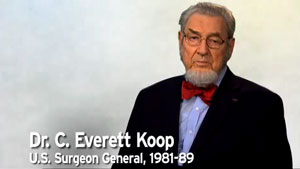
I truly believe that many of the problems we have today in the USA are due to the advancement of humanism in the last few decades in our society. Ronald Reagan appointed the evangelical Dr. C. Everett Koop to the position of Surgeon General in his administration. He partnered with Dr. Francis Schaeffer in making the video below. It is very valuable information for Christians to have.  Actually I have included a video below that includes comments from him on this subject.

Francis Schaeffer: “Whatever Happened to the Human Race” (Episode 1) ABORTION OF THE HUMAN RACE

Published on Oct 6, 2012 by 

________________

_____________

Tony Perkins: Gosnell Trial – FOX News

Published on May 13, 2013

Tony Perkins: Gosnell Trial – FOX News

April 18, 2013, 3:51 pm 140 Comments

Kermit Gosnell and the Politics of Abortion

Several years ago, Jennifer Senior wrote a fascinating, agonized essay for New York Magazine on abortion and the challenges facing the pro-choice cause. Of the piece’s many memorable passages, this stretch in particular stood out:

… if you want to hear honest talk about the realities of abortion, go speak with those abortion counselors and providers. Even the most radically pro-choice will tell you that the political discourse they hear about the subject, with its easy dichotomies and bumper-sticker boilerplate, has little correspondence to the messy, intricate stories of her patients. They hear about peace and guilt, relief and sin. And it is they who will acknowledge, whether we like it or not, that the rhetoric and imagery of the pro-life movement can touch on some basic emotional truths. Peg Johnston, who manages Access for Women in upstate New York, remembers the first time her patients unconsciously began to co-opt the language of the protesters outside. “And it wasn’t that these protesters were brainwashing them,” she says. “It’s that they were tapping into things we all have some discomfort about.”

This is quite a brave confession for Johnston—or any pro-choice person—to make. It means making oneself vulnerable to opportunist pro-life activists, who’ll happily take those words about uncertainty or moral qualms and repurpose them for their own ends. Back in the late eighties, Charlotte Taft, who first pioneered the practice of writing notes on hearts in her Dallas clinic, mentioned to a journalist that women knew “abortion is a kind of killing,” and poor Kate Michelman, at NARAL, was forced to go on the defensive for days. Last year, Lisa Harris, a Michigan doctor, wrote an incredibly powerful essay for Reproductive Health Matters, trying to come to terms with the goriness of second-trimester abortions while simultaneously recognizing their validity: “What do we do when caught between pro-choice discourse that, while it reflects our values, does not accurately reflect the full extent of our experience of abortion and in fact contradicts an enormous part of it, and the anti-abortion discourse and imagery that may actually be more closely aligned to our experience but is based in values we do not share?”

… [her essay described] performing an abortion on a woman who was 23 weeks along and then immediately running to deliver a premature baby … of 23 to 24 weeks. “I thought to myself how bizarre it was that I could have legally dismembered this fetus-now-newborn if it were inside its mother’s uterus,” she writes, “but that the same kind of violence against it now would be illegal, and unspeakable.” Later she notes, “Currently, the violence and, frankly, the gruesomeness of abortion is owned only by those who would like to see abortion (at any time in pregnancy) disappear.”

I’ve been thinking a lot about this passage, and the tensions it illuminates, while following the debate over whether the national media has adequately covered the case of Dr. Kermit Gosnell, the Philadelphia M.D. charged with murdering both the women who went to him for late-term abortions and the post-birth infants whose spines he allegedly severed with scissors after they were delivered. Since the story was finally forced into prominence late last week, it has inspired a number of eloquent critiques of how the press covers abortion (I recommend reading Carl Cannon and Melinda Henneberger, in particular) as well as various pieces defending the media from charges of bias and pinning the lack of coverage on other factors.

But the most interesting response by far has come from voices on the uncompromisingly pro-choice left. These writers have basically made two interlocking arguments: First, that there was no “liberal media” blackout, because feminist bloggers wrote about the story from the beginning, and second, that if there was a breakdown in mainstream coverage, it was the failure to recognize the ways in which the Gosnell story is actually about inequities in access to medical care and the perverse consequences of abortion restrictions, rather than (as the pro-life side would have it) the inherent horror of the procedure itself.

These arguments have showed up in a lot of places, but they’ve been developed most extensively by Irin Carmon at Salon. From her initial piece on the case:

If you’ve never heard of the Gosnell story, it’s … probably because you failed to pay attention to the copious coverage among pro-choice and feminist journalists, as well as the big news organizations, when the news first broke in 2011. There would be something rich, if it weren’t so infuriating, about these (almost uniformly male, as it happens) reporters and commentators scrambling to break open this shocking untold story. You know, the one that was written about herehere and here, to name some disparate sources.

I can’t speak for big news organizations like CNN and the networks, but let’s think about this question another way: How often do such places devote their energies to covering the massive health disparities and poor outcomes that are wrought by our current system? How often are the travails of the women whose vulnerabilities Gosnell exploited — the poor, immigrants and otherwise marginalized people — given wall-to-wall, trial-level coverage? If you’re surprised that in the face of politicized stigma, lack of public funding or good information, and a morass of restrictive laws allegedly meant to protect women, the vacuum was filled by a monster — well, the most generous thing I can say is that you haven’t been paying attention.

And then, in a follow-up piece:

By all means, let’s talk about Kermit Gosnell — who is accused of acts that are already illegal — but in a fact-based fashion. As Philadelphia Weekly reporter Tara Murtha put it, this was about a “multi-level, panoramic, institutional negligence, a culture of passing the buck and flagrant disregard for patient’s welfare, [which] prevented any meaningful investigation.” This is not about how Gosnell performed “late term abortions” (a highly imprecise term) as much as it is about the fact that the women who went to him felt they had nowhere else to go, an issue I have yet to see all the right-wing grandstanders fully address. As Erin Grant of the Philadelphia Women’s Center wrote, ”Now, instead of people who morally oppose what I do just being outside my door on Thursdays, Fridays, and Saturdays, they are emboldened on the state Senate floor to ‘save women’s lives.’ Yet, nothing has been done to provide low-income women with dignified health care, including safe abortion care.”

Some of Carmon’s commentary on the press coverage feels like obfuscation: The voices complaining about the media blackout obviously weren’t talking about a lack of coverage in The Nation, and the claim that the people taking an interest in the story are “uniformly male” is just nonsense. (As I noted in my Sunday column, the two writers who put the most energy into pushing this story into the mainstream were Kirsten Powers in U.S.A. Today and Mollie Ziegler Hemingway of GetReligion; it’s one recent appearance on a Sunday roundtable was courtesy of Peggy Noonan; one of the best pieces on the lack of media coverage was the Melinda Henneberger column I noted above … you get the idea.)

But her obfuscation is woven together with a legitimate point. The most rigorously pro-choice writers really did cover the Gosnell case more assiduously than the mainstream media, because they really do see it, not as an embarrassment to the cause of abortion rights, but a vindication of their worldview.

And not without reason. In a society more comprehensively pro-abortion than our own, there would presumably be more doctors willing to perform late-term abortions and certainly more government funding for abortion generally, both of which would reduce the “market share,” if you will, available for a monster like Gosnell to exploit. His practice allegedly operated in a gray area created by the combination of 1) Pennsylvania’s restrictions on post-viability abortions and 2) pro-choice Pennsylvania administrations that didn’t want to enforce those restrictions. But obviously if the state had no restrictions whatsoever and spent public money subsidizing abortion, his abattoir would have had more clean, well-lit, sanitary competitors. Thus Matt Yglesias’s conclusion that from a rigorously pro-choice, pro-Roe v. Wade perspective the lesson of the Gosnell horror show is not that the regulations he flouted should have been better enforced; rather, it’s that Pennsylvania needed an ”above-board competitive marketplace with multiple legal providers of late-term abortion facilities,” and the restrictions on late-term abortion unfortunately prevented that marketplace from emerging.

The only things missing from this clean, airtight, entirely consistent argument are, well, all the dead babies in the Gosnell clinic — or the dead “precipitated fetuses,” to employ the language Gosnell and his associates used to euphemize their practice of delivering and then “snipping” rather than aborting in utero. Their absence is not necessarily a problem if you’re willing to argue that those babies were non-persons before delivery and became persons immediately after (in which case Gosnell is guilty of infanticide but a more competent late-term abortion facility wouldn’t be), or if you’re willing to argue, with Peter Singer and some others, that personhood is something that emerges gradually at some indeterminate time after birth (in which case Gosnell’s “snipping” wasn’t murder at all). The former, I think, is the more common form of pro-choice absolutism, and the latter belongs to the more philosophically-inclined fringe (although the debate over “born-alive” bills has moved the official consensus fringeward). But if you’re already committed to absolute support for abortion rights, either argument will suffice to justify treating Gosnell’s conduct as irrelevant to the broader abortion controversy.

What neither argument seems likely to do, however, is do much to persuade the many, many “pro-choice but …” people who aren’t already so committed, and whose support for abortion rights tends to waver most when they’re confronted with the reality of what abortion actually does to fetal life — in clean, well-funded facilities as well as filthy ones, and in the womb as much as on Gosnell’s operating tables. This is, of course, the central reason why the pro-life side assumes that mainstream reporters didn’t particularly want to cover the trial: Because the mainstream press leans pro-choice, because mainstream journalism is pitched to readers in the mushy middle on abortion, and because the practice of “after-birth abortion” makes fetal humanity manifest in ways that almost inevitably push that middle in a more pro-life direction.

And it’s this reality that the pro-choice commentary on the case, with its focus on making these procedures safer and more accessible (and keeping them in utero), has a very hard time addressing. If you’re one of the 28 percent of Americans who believe that abortion should be legal in all circumstances (or, to take a more specific Gallup question, one of the 14 percent who think that “all circumstances” should include the third trimester), then Carmon’s points, or Yglesias’s, will tend to confirm you in that position. But if you’re a typically-conflicted American — the kind of person for whom stories about neonates gasping for breath before their spines get severed makes you question whether abortion isn’t murder after all — then the insistence that Gosnell case just reveals the advantages of an “above-board competitive marketplace” in late-term abortion isn’t really much of a response.

Which brings us back to that Senior essay, because I think what you’re seeing from the pro-choice side of the Gosnell debate is exactly the dilemma she describes. To respond effectively to the doubts about abortion that fetal snipping summons up, pro-choice advocates would need arguments that (to rephrase Senior’s language) acknowledge and come to terms with the goriness of third-trimester abortions while simultaneously persuading the conflicted and uncommitted of their validity, and that somehow take ownership of the “violence” and “gruesomeness” of abortion (to borrow Harris’s words) without giving aid and comfort to the pro-life cause. And in the absence of such arguments, the pro-choice response to Gosnell feels either evasive and euphemistic, or else logically consistent in ways that tend to horrify the unconvinced — and in either case, inadequate to the challenge his case presents to the cause of abortion rights.

But of course it’s possible that those arguments are absent because they simply don’t exist.

Political Cartoons by Steve Breen

By Steve Breen – April 23, 2013

________________

Related posts:

Al Mohler on Kermit Gosnell’s abortion practice

Francis Schaeffer: “Whatever Happened to the Human Race” (Episode 1) ABORTION OF THE HUMAN RACE Published on Oct 6, 2012 by AdamMetropolis ________________ Picture of Francis Schaeffer and his wife Edith from the 1930′s above. I was sad to read about Edith passing away on Easter weekend in 2013. I wanted to pass along this fine […]

Taking on Ark Times Bloggers on various issues Part U “Do men have a say in the abortion debate?” (includes the film SLAUGHTER OF THE INNOCENTS and editorial cartoon)

I have gone back and forth and back and forth with many liberals on the Arkansas Times Blog on many issues such as abortion, human rights, welfare, poverty, gun control  and issues dealing with popular culture. Here is another exchange I had with them a while back. My username at the Ark Times Blog is Saline […]

Taking on Ark Times Bloggers on various issues Part T “Abortion is a dirty business” (includes video “Truth and History” and editorial cartoon)

I have gone back and forth and back and forth with many liberals on the Arkansas Times Blog on many issues such as abortion, human rights, welfare, poverty, gun control  and issues dealing with popular culture. Here is another exchange I had with them a while back. My username at the Ark Times Blog is Saline […]

“Sanctity of Life Saturday” Abortion supporters lying in order to further their clause? Window to the Womb (includes video ABORTION OF THE HUMAN RACE)

It is truly sad to me that liberals will lie in order to attack good Christian people like state senator Jason Rapert of Conway, Arkansas because he headed a group of pro-life senators that got a pro-life bill through the Arkansas State Senate the last week of January in 2013. I have gone back and […]

Taking on Ark Times Bloggers on various issues Part D “If you can’t afford a child can you abort?”Francis Schaeffer Quotes part 4 includes the film ABORTION OF THE HUMAN RACE) (editorial cartoon)

I have gone back and forth and back and forth with many liberals on the Arkansas Times Blog on many issues such as abortion, human rights, welfare, poverty, gun control  and issues dealing with popular culture. Here is another exchange I had with them a while back. My username at the Ark Times Blog is Saline […]

Taking on Ark Times Bloggers on various issues Part C “Abortion” (Francis Schaeffer Quotes part 3 includes the film SLAUGHTER OF THE INNOCENTS) (editorial cartoon)

I have gone back and forth and back and forth with many liberals on the Arkansas Times Blog on many issues such as abortion, human rights, welfare, poverty, gun control  and issues dealing with popular culture. Here is another exchange I had with them a while back. My username at the Ark Times Blog is Saline […]

Taking on Ark Times Bloggers on various issues Part B “Gendercide” (Francis Schaeffer Quotes Part 2 includes the film ABORTION OF THE HUMAN RACE) (editorial cartoon)

I have gone back and forth and back and forth with many liberals on the Arkansas Times Blog on many issues such as abortion, human rights, welfare, poverty, gun control  and issues dealing with popular culture. Here is another exchange I had with them a while back. My username at the Ark Times Blog is Saline […]

SANCTITY OF LIFE SATURDAY “AngryOldWoman” blogger argues that she has no regrets about past abortion

Sometimes you can see evidences in someone’s life of how content they really are. I saw  something like that on 2-8-13 when I confronted a blogger that goes by the name “AngryOldWoman” on the Arkansas Times Blog. See below. Leadership Crisis in America Published on Jul 11, 2012 Picture of Adrian Rogers above from 1970′s […]

“Sanctity of Life Saturday” The Church Awakens: Whatever Happened to the Human Race? (includes the video ABORTION OF THE HUMAN RACE)

In the film series “WHATEVER HAPPENED TO THE HUMAN RACE?” the arguments are presented  against abortion (Episode 1),  infanticide (Episode 2),   euthenasia (Episode 3), and then there is a discussion of the Christian versus Humanist worldview concerning the issue of “the basis for human dignity” in Episode 4 and then in the last episode a close […]

Taking on Ark Times Bloggers on various issues Part H “Are humans special?” includes film ABORTION OF THE HUMAN RACE) Reagan: ” To diminish the value of one category of human life is to diminish us all”

I have gone back and forth and back and forth with many liberals on the Arkansas Times Blog on many issues such as abortion, human rights, welfare, poverty, gun control  and issues dealing with popular culture. Here is another exchange I had with them a while back. My username at the Ark Times Blog is Saline […]

Taking on Ark Times Bloggers on various issues Part G “How do moral nonabsolutists come up with what is right?” includes the film “ABORTION OF THE HUMAN RACE”)

I have gone back and forth and back and forth with many liberals on the Arkansas Times Blog on many issues such as abortion, human rights, welfare, poverty, gun control  and issues dealing with popular culture. Here is another exchange I had with them a while back. My username at the Ark Times Blog is Saline […]

Taking on Ark Times Bloggers on various issues Part E “Moral absolutes and abortion” Francis Schaeffer Quotes part 5(includes the film SLAUGHTER OF THE INNOCENTS) (editorial cartoon)

I have gone back and forth and back and forth with many liberals on the Arkansas Times Blog on many issues such as abortion, human rights, welfare, poverty, gun control  and issues dealing with popular culture. Here is another exchange I had with them a while back. My username at the Ark Times Blog is Saline […]

Francis Schaeffer’s “How should we then live?” Video and outline of episode 10 “Final Choices” (Schaeffer Sundays)

E P I S O D E 1 0   Dr. Francis Schaeffer – Episode X – Final Choices 27 min FINAL CHOICES I. Authoritarianism the Only Humanistic Social Option One man or an elite giving authoritative arbitrary absolutes. A. Society is sole absolute in absence of other absolutes. B. But society has to be […]

Francis Schaeffer’s “How should we then live?” Video and outline of episode 9 “The Age of Personal Peace and Affluence” (Schaeffer Sundays)

E P I S O D E 9 Dr. Francis Schaeffer – Episode IX – The Age of Personal Peace and Affluence 27 min T h e Age of Personal Peace and Afflunce I. By the Early 1960s People Were Bombarded From Every Side by Modern Man’s Humanistic Thought II. Modern Form of Humanistic Thought Leads […]

Francis Schaeffer’s “How should we then live?” Video and outline of episode 8 “The Age of Fragmentation” (Schaeffer Sundays)

E P I S O D E 8 Dr. Francis Schaeffer – Episode VIII – The Age of Fragmentation 27 min I saw this film series in 1979 and it had a major impact on me. T h e Age of FRAGMENTATION I. Art As a Vehicle Of Modern Thought A. Impressionism (Monet, Renoir, Pissarro, Sisley, […]

Francis Schaeffer’s “How should we then live?” Video and outline of episode 7 “The Age of Non-Reason” (Schaeffer Sundays)

E P I S O D E 7 Dr. Francis Schaeffer – Episode VII – The Age of Non Reason I am thrilled to get this film series with you. I saw it first in 1979 and it had such a big impact on me. Today’s episode is where we see modern humanist man act […]

Francis Schaeffer’s “How should we then live?” Video and outline of episode 6 “The Scientific Age” (Schaeffer Sundays)

E P I S O D E 6 How Should We Then Live 6#1 Uploaded by NoMirrorHDDHrorriMoN on Oct 3, 2011 How Should We Then Live? Episode 6 of 12 ________ I am sharing with you a film series that I saw in 1979. In this film Francis Schaeffer asserted that was a shift in […]

Francis Schaeffer’s “How should we then live?” Video and outline of episode 5 “The Revolutionary Age” (Schaeffer Sundays)

E P I S O D E 5 How Should We Then Live? Episode 5: The Revolutionary Age I was impacted by this film series by Francis Schaeffer back in the 1970′s and I wanted to share it with you. Francis Schaeffer noted, “Reformation Did Not Bring Perfection. But gradually on basis of biblical teaching there […]

Francis Schaeffer’s “How should we then live?” Video and outline of episode 4 “The Reformation” (Schaeffer Sundays)

Dr. Francis Schaeffer – Episode IV – The Reformation 27 min I was impacted by this film series by Francis Schaeffer back in the 1970′s and I wanted to share it with you. Schaeffer makes three key points concerning the Reformation: “1. Erasmian Christian humanism rejected by Farel. 2. Bible gives needed answers not only as to […]

“Schaeffer Sundays” Francis Schaeffer’s “How should we then live?” Video and outline of episode 3 “The Renaissance”

Francis Schaeffer’s “How should we then live?” Video and outline of episode 3 “The Renaissance” Francis Schaeffer: “How Should We Then Live?” (Episode 3) THE RENAISSANCE I was impacted by this film series by Francis Schaeffer back in the 1970′s and I wanted to share it with you. Schaeffer really shows why we have so […]

Francis Schaeffer’s “How should we then live?” Video and outline of episode 2 “The Middle Ages” (Schaeffer Sundays)

  Francis Schaeffer: “How Should We Then Live?” (Episode 2) THE MIDDLE AGES I was impacted by this film series by Francis Schaeffer back in the 1970′s and I wanted to share it with you. Schaeffer points out that during this time period unfortunately we have the “Church’s deviation from early church’s teaching in regard […]

Francis Schaeffer’s “How should we then live?” Video and outline of episode 1 “The Roman Age” (Schaeffer Sundays)

Francis Schaeffer: “How Should We Then Live?” (Episode 1) THE ROMAN AGE   Today I am starting a series that really had a big impact on my life back in the 1970′s when I first saw it. There are ten parts and today is the first. Francis Schaeffer takes a look at Rome and why […]

By Everette Hatcher III | Posted in Francis Schaeffer | Edit | Comments (0)

Truth Tuesday:The Truth and Knowing: Part 2. How do you see the Bible? by Tanner Brumbarger

_______________

Episode VII – The Age of Non Reason

_______________________

I love the works of Francis Schaeffer and I have been on the internet reading several blogs that talk about Schaeffer’s work and the work below was really helpful. Schaeffer’s film series “How should we then live?  Wikipedia notes, “According to Schaeffer, How Should We Then Live traces Western history from Ancient Rome until the time of writing (1976) along three lines: the philosophic, scientific, and religious.[3] He also makes extensive references to art and architecture as a means of showing how these movements reflected changing patterns of thought through time. Schaeffer’s central premise is: when we base society on the Bible, on the infinite-personal God who is there and has spoken,[4] this provides an absolute by which we can conduct our lives and by which we can judge society.  Here are some posts I have done on this series: Francis Schaeffer’s “How should we then live?” Video and outline of episode 10 “Final Choices” , episode 9 “The Age of Personal Peace and Affluence”, episode 8 “The Age of Fragmentation”, episode 7 “The Age of Non-Reason” , episode 6 “The Scientific Age”  episode 5 “The Revolutionary Age” , episode 4 “The Reformation” episode 3 “The Renaissance”, episode 2 “The Middle Ages,”, and  episode 1 “The Roman Age,” .

In the film series “WHATEVER HAPPENED TO THE HUMAN RACE?” the arguments are presented  against abortion (Episode 1),  infanticide (Episode 2),   euthanasia (Episode 3), and then there is a discussion of the Christian versus Humanist worldview concerning the issue of “the basis for human dignity” in Episode 4 and then in the last episode a close look at the truth claims of the Bible.

Francis Schaeffer

The Truth & Knowing: Part 2. How do you see the Bible?

“For 500 years, faith has been in retreat, abandoning the battlefield of the physical world yard by yard, until not it sits within its last defense, it’s final redoubt in the place of revelation, under the cloud of unknowing. Meanwhile, science in ascendance has swarmed across the landscape, capturing everything from quark to quasar: Yet now, even as the victory seems at hand, the armies of empiricism appear confused by causality, crippled by uncertainty. Suddenly, the banner under which it fought looks indistinguishable from the torn one waving weakly above the enemies’ trenches. The simple truths over which the war began now seem neither simple nor true.”

 What is True- Forbes ASAP

Thanks for taking the time to read my blog! If you are new, I would encourage you to read the first part of this article before you continue. Some of it may not make sense! Until then, carry on wayward son.

The tug of war between revelation and reason, nature and grace, and the upper and lower stories became even more profound in the years that followed the Renaissance. If you remember your history correctly, the Reformation was an effort to bring the superior upper lower story and the in-logical lower stories together in harmony.  But by the 1700s, the hearts and minds of men were once again seized by “reason” and truth was once again referenced to science and man himself, rather than God and the church.

Francis Schaeffer phrased it this way-“The humanistic elements which had risen during the Renaissance came to flood tide in the Enlightenment. Here was man starting from himself absolutely.”

As a result questions such as “What can we know?” were no answered by reason and not revelation. With Revelation not being considered, man’s thinking shifted in three major ways:

1. The Upper Story was closed by the public and man was now left to answer every question he faced from a cognitive or empirical lower story point of view.

2. When reason was elevated and revelation was eliminated and the deist worldview was allowed to enter.

3. The door opened for the works of Immanuel Kant and George Wilhelm Frederich Hegel.

Allow me to explain these two men briefly. Immanuel Kant was the one who drove the wedge between reason and faith. Kant, invented a theory which revolved around the notion that one could know knowledge without knowing God. To Kant, “Faith is a matter of individual experience, a personal intuition, not an acceptance of theological propositions.”

Immanuel Kant (22 April 1724 – 12 February 1804)

In his book he also said: “True religion is to consist of not knowing or considering what God has done for our salvation but what we must do to be worthy of it…and of whose necessity every man can become wholly certain without any Scriptural learning whatsoever…Man himself must make or have made himself into whatever, in a moral sense, whether good or evil, he is or is to become.”

Hegel who had a much impact on modern thought, he is famous for introducing Hegel’s Dialectical. Prior to this theory the understanding of the world was based a thesis/antithesis principle. This states that there are certain things which are true and certain things which are not true.  In logical form it would say A is A, but A is not non-A. Hegel rejected this premise. According to him, a thesis is a starting point-not and end. For with every thesis comes an antithesis or opposite. If we assume the thesis to be true, then we will also encounter its opposite or it’s contradiction.

This was one of the founding theories which can be seen in the world of people like Karl Marx. I won’t go into depth about the complexity of his works, only because of length. I would love it if you would read his works and form your own opinion.

Georg Wilhelm Friedrich Hegel (August 27, 1770 – November 14, 1831)

Hegel’s thoughts have dominated the modern man’s thought and have been great influenced by contemporary culture through the 20th century. The Universities widely adopted his beliefs across western civilization and ultimately, his thoughts were adapted by the general population from the 20th century and forward, thus he impacted everybody’s thinking even yours, even if you did not know it.

Francis Schaeffer summed this up flawlessly. He said “One cannot understand modern man in philosophy, in other disciplines, in other morals, in political thought, without understanding that Hegel has won.”

The reason he is ultimately important to understand, is because he, along with Søren Aabye Kierkegaard helped lay the foundations for the birth of Existentialism. This is the belief that purports meaning can only be applied to what already is within an individual’s experience. Therefore, meaning is found in the experience or the moment you live, rather than in objective truth. (See the works of Jean-Paul Sartre, Albert Camus, Martin Heidegger and Karl Jaspers, they all contributed to the development of this philosophy.)

As a result of these men’s works, three worldviews on the bible were formed.

1. The Thesis/antithesis principle which says that the Bible is accepted as the Word of God.

2. As a result of the Enlightenment, the liberal view was established which said that the Bible is not the word of God.

3. Neo-Orthodoxy fuses existential thought with theology and says the Bibles become the world of God. Or it may become the word of God, or it may not.

Do you see how these men developed your view of thinking? Which belief do you fall into? Thanks for reading my post about some inspirational dead guys!

Related posts:

Francis Schaeffer’s wife Edith passes away on Easter weekend 2013 Part 7 (includes pro-life editorial cartoon)

The Francis and Edith Schaeffer Story Pt.1 – Today’s Christian Videos The Francis and Edith Schaeffer Story – Part 3 of 3 Francis Schaeffer: “Whatever Happened to the Human Race” (Episode 1) ABORTION OF THE HUMAN RACE Published on Oct 6, 2012 by AdamMetropolis ________________ Picture of Francis Schaeffer and his wife Edith from the […]

The Mark of the Christian by Francis Schaeffer Part 1

  THE MARK OF A CHRISTIAN – CLASS 1 – Introduction Published on Mar 7, 2012 This is the introductory class on “The Mark Of A Christian” by Francis Schaeffer. The class was originally taught at Redeemer Presbyterian Church in Overland Park, KS by Dan Guinn from FrancisSchaefferStudies.org as part of the adult Sunday School hour […]

Francis Schaeffer’s wife Edith passes away on Easter weekend 2013 Part 6 (includes pro-life editorial cartoon and tribute from son-in-law Ranald Macaulay)

The Francis and Edith Schaeffer Story Pt.1 – Today’s Christian Videos The Francis and Edith Schaeffer Story – Part 3 of 3 Francis Schaeffer: “Whatever Happened to the Human Race” (Episode 1) ABORTION OF THE HUMAN RACE Published on Oct 6, 2012 by AdamMetropolis ________________ Picture of Francis Schaeffer and his wife Edith from the […]

Francis Schaeffer’s wife Edith passes away on Easter weekend 2013 Part 5 (includes pro-life editorial cartoon)

The Francis and Edith Schaeffer Story Pt.1 – Today’s Christian Videos The Francis and Edith Schaeffer Story – Part 3 of 3 Francis Schaeffer: “Whatever Happened to the Human Race” (Episode 1) ABORTION OF THE HUMAN RACE Published on Oct 6, 2012 by AdamMetropolis ________________ Picture of Francis Schaeffer and his wife Edith from the […]

Francis Schaeffer’s wife Edith passes away on Easter weekend 2013 Part 4 (includes pro-life editorial cartoon)

The Francis and Edith Schaeffer Story Pt.1 – Today’s Christian Videos The Francis and Edith Schaeffer Story – Part 3 of 3 Francis Schaeffer: “Whatever Happened to the Human Race” (Episode 1) ABORTION OF THE HUMAN RACE Published on Oct 6, 2012 by AdamMetropolis ________________ Picture of Francis Schaeffer and his wife Edith from the […]

Francis Schaeffer’s wife Edith passes away on Easter weekend 2013 Part 3 (includes pro-life editorial cartoon)

The Francis and Edith Schaeffer Story Pt.1 – Today’s Christian Videos The Francis and Edith Schaeffer Story – Part 3 of 3 Francis Schaeffer: “Whatever Happened to the Human Race” (Episode 1) ABORTION OF THE HUMAN RACE Published on Oct 6, 2012 by AdamMetropolis ________________ Picture of Francis Schaeffer and his wife Edith from the […]

“Schaeffer Sundays” Francis Schaeffer’s own words concerning humanist dominated public schools in USA even though country was founded on a Christian base

Francis Schaeffer: “Whatever Happened to the Human Race?” (Episode 2) SLAUGHTER OF THE INNOCENTS Published on Oct 6, 2012 by AdamMetropolis The 45 minute video above is from the film series created from Francis Schaeffer’s book “Whatever Happened to the Human Race?” with Dr. C. Everett Koop. This book  really helped develop my political views concerning […]

“Schaeffer Sundays” Francis Schaeffer’s own words concerning where the Bible-believing Christians been the last few decades

Francis Schaeffer: “Whatever Happened to the Human Race” (Episode 1) ABORTION OF THE HUMAN RACE Published on Oct 6, 2012 by AdamMetropolis The 45 minute video above is from the film series created from Francis Schaeffer’s book “Whatever Happened to the Human Race?” with Dr. C. Everett Koop. This book  really helped develop my political views […]

Taking on Ark Times Bloggers on various issues Part E “Moral absolutes and abortion” Francis Schaeffer Quotes part 5(includes the film SLAUGHTER OF THE INNOCENTS) (editorial cartoon)

I have gone back and forth and back and forth with many liberals on the Arkansas Times Blog on many issues such as abortion, human rights, welfare, poverty, gun control  and issues dealing with popular culture. Here is another exchange I had with them a while back. My username at the Ark Times Blog is Saline […]

“Schaeffer Sundays” Francis Schaeffer’s own words concerning religious liberals and humanists

Francis Schaeffer: “Whatever Happened to the Human Race” (Episode 5) TRUTH AND HISTORY Published on Oct 7, 2012 by AdamMetropolis The 45 minute video above is from the film series created from Francis Schaeffer’s book “Whatever Happened to the Human Race?” with Dr. C. Everett Koop. This book  really helped develop my political views concerning abortion, […]

Francis Schaeffer on liberal theology by Peter Cockrell

Francis Schaeffer on liberal theology by Peter Cockrell

Episode 8: The Age Of Fragmentation

Published on Jul 24, 2012

Dr. Schaeffer’s sweeping epic on the rise and decline of Western thought and Culture

_______________________

I love the works of Francis Schaeffer and I have been on the internet reading several blogs that talk about Schaeffer’s work and the work below by Peter Cockrell  was really helpful. Schaeffer’s film series “How should we then live?  Wikipedia notes, “According to Schaeffer, How Should We Then Live traces Western history from Ancient Rome until the time of writing (1976) along three lines: the philosophic, scientific, and religious.[3] He also makes extensive references to art and architecture as a means of showing how these movements reflected changing patterns of thought through time. Schaeffer’s central premise is: when we base society on the Bible, on the infinite-personal God who is there and has spoken,[4] this provides an absolute by which we can conduct our lives and by which we can judge society.  Here are some posts I have done on this series: Francis Schaeffer’s “How should we then live?” Video and outline of episode 10 “Final Choices” episode 9 “The Age of Personal Peace and Affluence”episode 8 “The Age of Fragmentation”episode 7 “The Age of Non-Reason” episode 6 “The Scientific Age”  episode 5 “The Revolutionary Age” episode 4 “The Reformation” episode 3 “The Renaissance”episode 2 “The Middle Ages,”, and  episode 1 “The Roman Age,” .

In the film series “WHATEVER HAPPENED TO THE HUMAN RACE?” the arguments are presented  against abortion (Episode 1),  infanticide (Episode 2),   euthanasia (Episode 3), and then there is a discussion of the Christian versus Humanist worldview concerning the issue of “the basis for human dignity” in Episode 4 and then in the last episode a close look at the truth claims of the Bible.

Francis Schaeffer

__________________________

Francis Schaeffer on liberal theology

Francis Schaeffer“What is the liberal theology like? It can only be paralleled with what God says in Proverbs 30:20 about the adulterous woman: ‘Such is the way of an adulterous woman; she eateth, and wipeth her mouth, and saith, I have done no wickedness.’ What a picture! Not everyone whose theology has been somewhat infiltrated by liberal theology should be likened to this, but the real liberal theologian (whether the old liberal-type theologian or the newer existential theologian) stands in this place. They say they have done no evil by their spiritual adultery, while not only the church but the whole post-Christian culture shows the results of their unfaithfulness.

“There is no adulterous woman who has ever been so soiled as the liberal theology, which has had all the gifts of God and has turned away to a worship of something that is more destructive than Molech was to the babies whose parents were led astray from the living God to worship this idol. This is not a thing to take lightly. We must show love to the man with whom we discuss. Yes, and we fight for this at L’Abri. We must fight for the fact that he is not to be treated as less than a man. Nothing is more ugly than the orthodox man treating another man as less than a man and failing to show that he takes seriously Christ’s teaching that all men are our neighbors. We do not discuss with the liberal only to win, but to help others, and to try to help him as well. But to treat lightly what liberal theology has done — not for a moment.”

– Francis A. Schaeffer, The Church at the End of the 20th Century(Downer’s Grove, Illinois: InterVarsity, 1970), 126-127.

Related posts:

Taking on Ark Times Bloggers on various issues Part A “The Pro-life Issue” (Francis Schaeffer Quotes Part 1 includes the film SLAUGHTER OF THE INNOCENTS) (editorial cartoon)

I have gone back and forth and back and forth with many liberals on the Arkansas Times Blog on many issues such as abortion, human rights, welfare, poverty, gun control  and issues dealing with popular culture. Here is another exchange I had with them a while back. My username at the Ark Times Blog is Saline […]

“Schaeffer Sunday” Francis Schaeffer: “Whatever Happened to the Human Race” (Episode 1) ABORTION OF THE HUMAN RACE

It is not possible to know where the pro-life evangelicals are coming from unless you look at the work of the person who inspired them the most. That person was Francis Schaeffer.  I do care about economic issues but the pro-life issue is the most important to me. Several years ago Adrian Rogers (past president of […]

The movie “Les Miserables” and Francis Schaeffer

I got this off a Christian blog spot. This person makes some good points and quotes my favorite Christian philosopher Francis Schaeffer too. Prostitution, Chaos, and Christian Art The newest theatrical release of Victor Hugo’s 1862 novel “Les Miserables” was released on Christmas, but many Christians are refusing to see the movie. The reason simple — […]

“Schaeffer Sunday” Francis Schaeffer is one of the great evangelical theologians of our modern day

Francis Schaeffer was truly a great man and I enjoyed reading his books. A theologian #2: Rev. Francis Schaeffer Duriez, Colin. Francis Schaeffer: An Authentic Life. Wheaton, IL: Crossway Books, 2008. Pp. 240. Francis Schaeffer is one of the great evangelical theologians of our modern day. I was already familiar with some of his books and his […]

“Schaeffer Sundays” Francis Schaeffer’s own words concerning infanticide and youth enthansia

Francis Schaeffer: “Whatever Happened to the Human Race?” (Episode 2) SLAUGHTER OF THE INNOCENTS Published on Oct 6, 2012 by AdamMetropolis ___________ The 45 minute video above is from the film series created from Francis Schaeffer’s book “Whatever Happened to the Human Race?” with Dr. C. Everett Koop. This book  really helped develop my political views […]

Francis Schaeffer’s wife Edith passes away on Easter weekend 2013 Part 7 (includes pro-life editorial cartoon)

The Francis and Edith Schaeffer Story Pt.1 – Today’s Christian Videos The Francis and Edith Schaeffer Story – Part 3 of 3 Francis Schaeffer: “Whatever Happened to the Human Race” (Episode 1) ABORTION OF THE HUMAN RACE Published on Oct 6, 2012 by AdamMetropolis ________________ Picture of Francis Schaeffer and his wife Edith from the […]

The Mark of the Christian by Francis Schaeffer Part 1

  THE MARK OF A CHRISTIAN – CLASS 1 – Introduction Published on Mar 7, 2012 This is the introductory class on “The Mark Of A Christian” by Francis Schaeffer. The class was originally taught at Redeemer Presbyterian Church in Overland Park, KS by Dan Guinn from FrancisSchaefferStudies.org as part of the adult Sunday School hour […]

“Schaeffer Sundays” Francis Schaeffer’s own words concerning humanist dominated public schools in USA even though country was founded on a Christian base

Francis Schaeffer: “Whatever Happened to the Human Race?” (Episode 2) SLAUGHTER OF THE INNOCENTS Published on Oct 6, 2012 by AdamMetropolis The 45 minute video above is from the film series created from Francis Schaeffer’s book “Whatever Happened to the Human Race?” with Dr. C. Everett Koop. This book  really helped develop my political views concerning […]

“Schaeffer Sundays” Francis Schaeffer’s own words concerning where the Bible-believing Christians been the last few decades

Francis Schaeffer: “Whatever Happened to the Human Race” (Episode 1) ABORTION OF THE HUMAN RACE Published on Oct 6, 2012 by AdamMetropolis The 45 minute video above is from the film series created from Francis Schaeffer’s book “Whatever Happened to the Human Race?” with Dr. C. Everett Koop. This book  really helped develop my political views […]

Taking on Ark Times Bloggers on various issues Part E “Moral absolutes and abortion” Francis Schaeffer Quotes part 5(includes the film SLAUGHTER OF THE INNOCENTS) (editorial cartoon)

I have gone back and forth and back and forth with many liberals on the Arkansas Times Blog on many issues such as abortion, human rights, welfare, poverty, gun control  and issues dealing with popular culture. Here is another exchange I had with them a while back. My username at the Ark Times Blog is Saline […]

“Schaeffer Sundays” Francis Schaeffer’s own words concerning religious liberals and humanists

Francis Schaeffer: “Whatever Happened to the Human Race” (Episode 5) TRUTH AND HISTORY Published on Oct 7, 2012 by AdamMetropolis The 45 minute video above is from the film series created from Francis Schaeffer’s book “Whatever Happened to the Human Race?” with Dr. C. Everett Koop. This book  really helped develop my political views concerning abortion, […]

Article from Adrian Rogers, “Bring back the glory”

I truly believe that many of the problems we have today in the USA are due to the advancement of humanism in the last few decades in our society. Ronald Reagan appointed the evangelical Dr. C. Everett Koop to the position of Surgeon General in his administration. He partnered with Dr. Francis Schaeffer in making the video below. It is very valuable information for Christians to have.  Actually I have included a video below that includes comments from him on this subject.

Francis Schaeffer: “Whatever Happened to the Human Race?” (Episode 2) SLAUGHTER OF THE INNOCENTS

Published on Oct 6, 2012 by

_______________

Picture of Adrian Rogers above from 1970’s while pastor of Bellevue Baptist of Memphis, and president of Southern Baptist Convention. (Little known fact, Rogers was the starting quarterback his senior year of the Palm Beach High School football team that won the state title and a hero to a 7th grader at the same school named Burt Reynolds.)

__________________

I have a lot of respect for the teachings of Adrian Rogers and I have posted many of his videos over and over and over  before. He has taken up many issues such as alcohol, drunk driving, evolution,  character,  9/11, profanityconfronting atheists (like Antony Flew, , Carl Sagan),   and he has impacted millions of lives throughout this country through his Love Worth Finding tv  and radio ministry.

Another great article by Adrian Rogers.

Bring Back the Glory

taken from a message given by Adrian Rogers

Apart from Israel, no other nation has had such a Christian beginning as America. Under the blessing of God, Israel began with a glorious heritage. Like Israel of old, God’s blessing rested upon early America. In the Mayflower Compact, our Pilgrim forefathers said their express purpose for coming to these shores was to propagate the Gospel. We were founded as a Christian nation to the very core. Yet like Israel, America has not only forgotten our heritage, we’ve forgotten God and abandoned the Gospel’s influence on our national life. America has lost her glory. How did this happen? The same way it happened in Israel.

In Israel, a new generation arose which forgot their relationship with God (Judges 2:10). We have a generation today who doesn’t know the true history and spiritual heritage of our nation. Like Israel in the days of the judges, America is doing “that which was right in [its] own eyes” (Judges 17:6).

Who upholds the standards of God’s principles today? Is it Washington? No. Legalized abortion, partial-birth abortion, prohibition of prayer and the Ten Commandments in public—the legislation and pronouncements coming out of Washington would shock and grieve our forefathers.

Is society upholding godly standards? No. As we become desensitized, immoral perversions have gone from “sin” to “sickness” to stoically accepted practice. Today’s generation doesn’t know how to blush—or why!

America’s situation today parallels Israel’s in those days. So what can we do to bring the glory back to America? The following three problems that characterized Israel—and America today—must be addressed.

The Need for Gratitude

In Judges 9, Abimelech, an ungodly man, seizes power in Israel through violence and deceit and leads the nation straight into God’s judgment—amazingly just after Gideon’s great victory.

The key to Israel’s slide is found in Judges 8:33-35. As soon as Gideon was dead, the Israelites forgot the God who gave them victory and chased after other gods. An unthankful people, Israel’s ingratitude led them into apostasy. And for America, it has become a thankless nation, too. We’ve forgotten the God who made us great. We must become a thankful people again.

The Need for Godly Leaders

Israel’s “reward” for its thanklessness was Abimelech, whose arrogant reign is detailed in Judges 9. Abimelech built his administration on a godless coalition in which he bought his supporters with silver (Judges 9:2-4) and the blood of the innocent (v. 5). Many American politicians achieve office with the “silver” of campaign promises and the blood of the innocent unborn. We must elect godly leaders who have the courage to put a stop to this ungodliness.

The Need for Committed People

In Judges 9:7-15, a prophet named Jotham stood up and told a parable of the trees. All the good trees and vines were “too busy” to take the reins of leadership, so the bramble—a useless, thorn-covered bush—gladly agreed to be
king.

The apathy of Israel has its parallel in America. Edmund Burke’s great statement is still true: “All that is necessary for evil to triumph is for good men to do nothing.” Every Christian must do what is necessary to place godly people in leadership and take action to stand against evil.

The Return to Glory

If the glory is to return to America, we must return to God, the source of glory. He is waiting for us to return to Him, for He works through His people.

There is hope for America. The book of Judges shows how God sent deliverers to rally the people to the Word of God and repentance. God brought restoration and forgiveness. The God Who did that for Israel so long ago can do that for America today, when we humble ourselves, pray, and seek Him with all our hearts. (2 Chronicles 7:14)

God would much rather forgive than judge! I know you have heard these comparisons of Israel and America before, but if we will stain heaven with our prayers and press the battle, we can take this country back for Jesus Christ. Will you humbly pray and ask for God’s forgiveness on our land today? Pray for a mighty revival! Will you seek Him with all your heart? May the fire of His Holy Spirit fall and cleanse our land.


This article is taken from a sermon by Adrian Rogers.

Related posts:

Family Research Council happy with Kermit Gosnell Guilty Verdict

Francis Schaeffer: “Whatever Happened to the Human Race” (Episode 1) ABORTION OF THE HUMAN RACE

Published on Oct 6, 2012 by

___

_____________

Tony Perkins: Gosnell Trial – FOX News

Published on May 13, 2013

Tony Perkins: Gosnell Trial – FOX News

________________

Family Research Council Praises Jury for Bringing Justice to Victims of Abortionist Kermit Gosnell

PR NewswirePR Newswire – Mon, May 13, 2013

WASHINGTON, May 13, 2013 /PRNewswire-USNewswire/ — Anna Higgins, J.D., director of the Center for Human Dignity at the Family Research Council (FRC), commented today on the conviction of Dr. Kermit Gosnell, who performed hundreds of late term abortions and was convicted of the murder of three babies born alive and involuntary manslaughter of Karnamaya Mongar among other charges.

(Logo: http://photos.prnewswire.com/prnh/20080930/FRCLOGO)

“The jury’s verdict in the trial of abortionist Kermit Gosnell brings a just conclusion to a horrific case.

“The Gosnell case serves to highlight two major problems with the abortion industry in this country – its callous disregard for the health and safety of women and the inhumanity of abortion, especially late-term abortion.

“The murders of babies and of at least one woman at the hands of Gosnell could have been prevented had the Pennsylvania health department inspected the Gosnell facility immediately after receiving numerous complaints.  Instead, the department ignored the dangerous conditions for 17 years. In order to protect women like Karnamaya Mongar and prevent infanticide from being practiced in this country, Congress must work with states to require abortion clinics to apply the same safety standards as those followed by other medical facilities, including veterinary offices.

“For too long, abortion facilities have been allowed to self-regulate. Since these atrocities have been made public, other clinics, such as Planned Parenthood of Wilmington, Delaware, have had to shut their doors due to the discovery of unsafe and unsanitary conditions. These recent closings are indicative of a more widespread problem.

“The lack of concern for both unborn babies and babies that survive an abortion is not an attitude isolated to Kermit Gosnell. More recent reports show other abortionists have no respect for human life and are willing to kill babies very late-term or even let babies who are born alive die. One report reveals LeRoy Carhart aborted an unborn baby at 33-weeks gestation in February, and sadly the mother later died from complications. Another report shows D.C. abortionist Cesare Santangelo admitting he would let a child who survives an abortion die.

“Family Research Council calls on Congress to stop the brutal abortion of pain-capable children. Congress can prevent this in the nation’s capitol by passing such protective measures as the ‘District of Columbia Pain-Capable Unborn Child Protection Act.’ The killing of pain-capable unborn babies is inhumane and late-term abortions are dangerous for women,” concluded Higgins.

SOURCE Family Research Council

_____________

Political Cartoons by Chip Bok

Related posts:

Francis Schaeffer’s “How should we then live?” Video and outline of episode 10 “Final Choices” (Schaeffer Sundays)

E P I S O D E 1 0   Dr. Francis Schaeffer – Episode X – Final Choices 27 min FINAL CHOICES I. Authoritarianism the Only Humanistic Social Option One man or an elite giving authoritative arbitrary absolutes. A. Society is sole absolute in absence of other absolutes. B. But society has to be […]

Francis Schaeffer’s “How should we then live?” Video and outline of episode 9 “The Age of Personal Peace and Affluence” (Schaeffer Sundays)

E P I S O D E 9 Dr. Francis Schaeffer – Episode IX – The Age of Personal Peace and Affluence 27 min T h e Age of Personal Peace and Afflunce I. By the Early 1960s People Were Bombarded From Every Side by Modern Man’s Humanistic Thought II. Modern Form of Humanistic Thought Leads […]

Francis Schaeffer’s “How should we then live?” Video and outline of episode 8 “The Age of Fragmentation” (Schaeffer Sundays)

E P I S O D E 8 Dr. Francis Schaeffer – Episode VIII – The Age of Fragmentation 27 min I saw this film series in 1979 and it had a major impact on me. T h e Age of FRAGMENTATION I. Art As a Vehicle Of Modern Thought A. Impressionism (Monet, Renoir, Pissarro, Sisley, […]

Francis Schaeffer’s “How should we then live?” Video and outline of episode 7 “The Age of Non-Reason” (Schaeffer Sundays)

E P I S O D E 7 Dr. Francis Schaeffer – Episode VII – The Age of Non Reason I am thrilled to get this film series with you. I saw it first in 1979 and it had such a big impact on me. Today’s episode is where we see modern humanist man act […]

Francis Schaeffer’s “How should we then live?” Video and outline of episode 6 “The Scientific Age” (Schaeffer Sundays)

E P I S O D E 6 How Should We Then Live 6#1 Uploaded by NoMirrorHDDHrorriMoN on Oct 3, 2011 How Should We Then Live? Episode 6 of 12 ________ I am sharing with you a film series that I saw in 1979. In this film Francis Schaeffer asserted that was a shift in […]

Francis Schaeffer’s “How should we then live?” Video and outline of episode 5 “The Revolutionary Age” (Schaeffer Sundays)

E P I S O D E 5 How Should We Then Live? Episode 5: The Revolutionary Age I was impacted by this film series by Francis Schaeffer back in the 1970′s and I wanted to share it with you. Francis Schaeffer noted, “Reformation Did Not Bring Perfection. But gradually on basis of biblical teaching there […]

Francis Schaeffer’s “How should we then live?” Video and outline of episode 4 “The Reformation” (Schaeffer Sundays)

Dr. Francis Schaeffer – Episode IV – The Reformation 27 min I was impacted by this film series by Francis Schaeffer back in the 1970′s and I wanted to share it with you. Schaeffer makes three key points concerning the Reformation: “1. Erasmian Christian humanism rejected by Farel. 2. Bible gives needed answers not only as to […]

“Schaeffer Sundays” Francis Schaeffer’s “How should we then live?” Video and outline of episode 3 “The Renaissance”

Francis Schaeffer’s “How should we then live?” Video and outline of episode 3 “The Renaissance” Francis Schaeffer: “How Should We Then Live?” (Episode 3) THE RENAISSANCE I was impacted by this film series by Francis Schaeffer back in the 1970′s and I wanted to share it with you. Schaeffer really shows why we have so […]

Francis Schaeffer’s “How should we then live?” Video and outline of episode 2 “The Middle Ages” (Schaeffer Sundays)

  Francis Schaeffer: “How Should We Then Live?” (Episode 2) THE MIDDLE AGES I was impacted by this film series by Francis Schaeffer back in the 1970′s and I wanted to share it with you. Schaeffer points out that during this time period unfortunately we have the “Church’s deviation from early church’s teaching in regard […]

Francis Schaeffer’s “How should we then live?” Video and outline of episode 1 “The Roman Age” (Schaeffer Sundays)

Francis Schaeffer: “How Should We Then Live?” (Episode 1) THE ROMAN AGE   Today I am starting a series that really had a big impact on my life back in the 1970′s when I first saw it. There are ten parts and today is the first. Francis Schaeffer takes a look at Rome and why […]

By Everette Hatcher III | Posted in Francis Schaeffer | Edit | Comments (0)

Schaeffer and Epistomological Despair by Bob DeWaay

How Should We then Live Episode 7 small (Age of Nonreason)

#02 How Should We Then Live? (Promo Clip) Dr. Francis Schaeffer

The clip above is from episode 9 THE AGE OF PERSONAL PEACE AND AFFLUENCE

10 Worldview and Truth

In above clip Schaeffer quotes Paul’s speech in Greece from Romans 1 (from Episode FINAL CHOICES)

Two Minute Warning: How Then Should We Live?: Francis Schaeffer at 100

A Christian Manifesto Francis Schaeffer

Dr. Francis Schaeffer: How Should We Then Live? Episode 1 of 10

HowShouldWeThenLive Episode 2 (Middle Ages)

_______________________

I love the works of Francis Schaeffer and I have been on the internet reading several blogs that talk about Schaeffer’s work and the work below   by Bob Dewaay was really helpful. Schaeffer’s film series “How should we then live?  Wikipedia notes, “According to Schaeffer, How Should We Then Live traces Western history from Ancient Rome until the time of writing (1976) along three lines: the philosophic, scientific, and religious.[3] He also makes extensive references to art and architecture as a means of showing how these movements reflected changing patterns of thought through time. Schaeffer’s central premise is: when we base society on the Bible, on the infinite-personal God who is there and has spoken,[4] this provides an absolute by which we can conduct our lives and by which we can judge society.  Here are some posts I have done on this series: Francis Schaeffer’s “How should we then live?” Video and outline of episode 10 “Final Choices” episode 9 “The Age of Personal Peace and Affluence”episode 8 “The Age of Fragmentation”episode 7 “The Age of Non-Reason” episode 6 “The Scientific Age”  episode 5 “The Revolutionary Age” episode 4 “The Reformation” episode 3 “The Renaissance”episode 2 “The Middle Ages,”, and  episode 1 “The Roman Age,” .

In the film series “WHATEVER HAPPENED TO THE HUMAN RACE?” the arguments are presented  against abortion (Episode 1),  infanticide (Episode 2),   euthanasia (Episode 3), and then there is a discussion of the Christian versus Humanist worldview concerning the issue of “the basis for human dignity” in Episode 4 and then in the last episode a close look at the truth claims of the Bible.

Francis Schaeffer

A Biblically based commentary on current issues that impact you

Schaeffer and Epistomological Despair

by Bob DeWaay

Autonomy and Despair: A Defense of Francis A. Schaeffer’s Thesis

Francis A. Schaeffer asserted that when modern humans adopted rationalism, they thereby gave up rationality.1 At the heart of this claim is the distinction between rationalism and rationality. Schaeffer considers the essence of rationalism to be belief in “the uniformity of natural causes in a closed system.”2 The key to this idea, and the resulting despair, is the phrase “closed system.” He sees the assumptions that the universe is all there is and that humankind is autonomous as necessarily leading to despair, not just in epistemology, but in all of life. My thesis is that Schaeffer was right about this and that recent developments in epistemology have confirmed what he said.

Rationality and Rationalism

Schaeffer’s distinction between rationalism and rationality is important. The former is a philosophy. It is laden with presuppositions about the nature of humankind and the universe. “I would suggest that a serious question would have to be faced as to whether the reason why modern men reject the Christian answer, or why they often do not even consider it, is because they have already accepted with an implicit faith the presupposition of the uniformity of natural causes in a closed system.”3 This means that historical, theistic answers must be categorically rejected. If we live in a closed system universe there is nothing or no One transcendent to the universe to provide answers to our most basic questions. Even the significance of human thought must be called into question. Conversely, the Biblical answer that the personal Trinitarian God created humans in His image gives a basis for rationality. Schaeffer explains, “The Scriptures give the key to two kinds of knowledge — the knowledge of God, and the knowledge of men and nature.”4

That Schaeffer was a presuppositionalist is common knowledge. But he was not one who rejected rationality or thought of faith as a “blind leap.” He wrote extensively against those ideas. One’s presuppositions lead to conclusions, either livable ones that make sense of the data of the real world and human aspirations, or unlivable ones that end in despair or nihilism. Thus evidence and rationality are given a high value in Schaeffer’s understanding. The following quotation shows this:

I want to suggest that scientific proof, philosophical proof, and religious proof follow the same rules. We may have any problem before us that we wish to solve; it may concern a chemical reaction or the meaning of man. After the question has been defined, in each case proof consists of two steps:
A. The theory must be non-contradictory and must give an answer to the phenomenon in question.
B. We must be able to live consistently with our theory.5

The last statement shows a streak of pragmatism that was certainly part of Schaeffer’s thinking. It was not, I think, pragmatism as a conception of truth, but a pragmatism that was based on his fundamental beliefs: God made humans in His image, gave us rationality, placed us in an environment to which our basic faculties are suited, and has spoken to us through special revelation, etc. Therefore it is reasonable to expect that we can know truth and that such truth will be livable.6 God has made us and the universe in this way. Therefore it can be expected that what turns out to be unlivable is untrue, because God’s truth is livable.

The following further shows his thinking on the matter of knowing truth over a wide range:

It is an important principle to remember, in the contemporary interest in communication and in language study, that the biblical presentation is that, though we do not have exhaustive truth, we have from the Bible what I term `true truth’. In this way we know true truth about God, true truth about man and something truly about nature. Thus on the basis of the Scriptures, while we do not have exhaustive knowledge, we have true and unified knowledge.7

The rationalistic approach that trapped humans in an autonomous state with no possible valid knowledge of God, leads to epistemological despair.

Schaeffer often spoke of the contemporary despair of having a unified field of knowledge. How did we get into such a situation? Mark Worthing sees the events of the sixteenth and seventeenth centuries as pivotal: “What the sixteenth and seventeenth centuries witnessed was the dissolution of a unified world view and epistemological system that had been accepted by philosophers, theologians, and scientists alike for at least two millennia.”8 According to Worthing, “Science and theology split away from each other.”9

Operating epistemologically from these premises, no transcendent God who created the universe, no creation of humankind in God’s image, and no possible subsequent verbal and propositional communication from God, means no hope of a unified field of knowledge. Despair is the only reasonable conclusion of rationalism; this is Schaeffer’s position. Rationality is a God-given human faculty that enables us to distinguish categories and to reason from premises to conclusions. Rationalism is a humanistic philosophy.

Schaeffer’s position on rationalism and despair struck home to me as a young Christian because of an experience I had just weeks after becoming a Christian. In the Fall 1971 I was a junior in chemical engineering at Iowa State University and was enrolled in a class on the philosophy of science. The professor used the first class session to outline his philosophy of science. He said,

There are only two possibilities of obtaining knowledge, divine revelation and the scientific method. Divine revelation is hogwash, it does not happen. The other method is therefore the only way of knowing anything. In the scientific method, we formulate theories. All theories are `true’ but many of them only work in some other universe than the one we are living in. Therefore we will only consider those which work on our universe. There is no such thing as “Truth” with a capital T, we only have theories that work for us, or do not.10

I was quite shocked at his philosophy and rather disturbed that he summarily dismissed the possibility of divine revelation without discussion. So I became the only student present to venture a question. I asked, “Professor, do I understand you correctly, are you saying that it is impossible to ever know if anything is true?” He answered “yes,” which evoked gasps of surprise from my fellow students. How disturbing it is to be enrolled in a school of higher learning and to “learn” that one can never know truth. This professor was more honest than many. He willingly admitted that he had crossed Schaeffer’s “line of despair.”

Why Autonomy Leads to Despair

The ironic tragedy of fallen humankind is that we know enough to realize that we do not know everything, but we have a lust to know everything. The Biblical account of humans created in God’s image followed by a fall adequately accounts for this. Humans were created in God’s image with the rational capacities to know cognitively and relationally. This is shown by the mandate to care for the rest of creation and by their relationship to God and one another (Genesis chapters 1 & 2). Adam named the animals, but was given a wife to whom he was to cleave. This shows both the cognitive and relational aspects of knowing.

That the original humans were finite is shown by the fact of having been created, and by the first law that effectively limited their access to knowledge. The “tree of the knowledge of good and evil” offered the one forbidden fruit (Genesis 2:16,17). It has been suggested that “good and evil” is a figure of speech in which two extremities are used to signify “everything.” Examples from the scriptures are “heaven and earth,” and “alpha and omega.” If this is the significance of the tree of the knowledge of good and evil, then the first humans were tempted to seek to know everything. The temptation was to reject their contingent, creaturely status and to seek knowledge that was only the domain of the all knowing Creator. That this was involved is confirmed by the tempter’s statement in Genesis 3:5 that by partaking, the first humans could “be like God, knowing good and evil.”

The issue of autonomy is clear. Finite humans can know “true truth” by using their God-given faculties in relationship to Him and dependence on Him. But what and how much they know is limited by their own finitude and by God’s decrees. The temptation was that by transgressing the decree and challenging God’s sovereignty, they could obtain God’s knowledge and become autonomous like Him. The cruel truth of the matter is that their noetic capacities were severely diminished, not expanded like they foolishly hoped. Their relational knowledge was ruined (they hid from God and were ashamed before one another) and their cognitive abilities to interact with the rest of the creation were damaged. What knowledge fallen humans do hold about nature, when held autonomously in relationship to God, is always in question: How much if any of it is true? Deception is a constant and real danger. There is no eternal, omniscient third party to confirm or deny the validity of one’s cognitive experience. Human finitude becomes a huge problem once the relationship with the infinite Creator is gone.11 This has important implications for epistemology.

Blaise Pascal discussed humankind’s ability to doubt everything, but yet was forced back into reality by nature: “What sort of freak then is man! How novel, how monstrous, how chaotic, how paradoxical, how prodigious! Judge of all things, feeble earthworm, repository of truth, sink of doubt and error, glory and refuse of the universe.”12 Pascal thought the cause of this situation is best explained by humankind’s dual nature that results from having been created by God followed by a fall.13 The phrase he used to explain this is, “Man infinitely transcends man.”14 His advice to the skeptics and all others who despair at knowing truth about nature, God and humankind: “[H]ear from your master your true condition, which is unknown to you. Listen to God.”15 We either listen to God or live in paradoxical despair of knowing even ourselves.

Naturalism cannot explain human longings for truth and knowledge, nor can it give hope for obtaining them. If we are merely the products of the impersonal plus time plus chance, why do we have such longings for meaning and truth? These are personal longings. They are desires that, we are told, have no possible satisfaction. That is why my fellow students gasped when the professor told us that truth could not be known (perhaps also because some wondered how he could know that). Humans long to know the truth but are sinfully in rebellion against the only relationship that offers any hope for truth, a relationship with God. When this relational knowledge is dismissed as “hogwash” truth goes with it. Schaeffer describes this:

The basic position of man in rebellion against God is that man is at the centre of the universe, that he is autonomous — here lies his rebellion. Man will keep his rationalism and his rebellion, his insistence on total autonomy or partially autonomous areas, even if it means he must give up his rationality.16

Better to live in despair than to hope in God is the motto of humankind in autonomy.

It is only logical that if we are autonomous, we should be in despair. After all, we are finite and contingent beings. We are able to contemplate matters of huge complexity and formulate theories that are quite impressive. But then other humans seem always to be able to interact with any theory (particularly epistemological ones) and poke holes in it. We seem to know so much at a time when epistemology gives little hope of knowing anything.
Thomas S. Kuhn created a “revolution” in the contemporary view of the history and philosophy of science. His book, The Structure of Scientific Revolutions,17 caused the terms “paradigm” and “paradigm shift” to come into common usage. Kuhn sees science as a series of “revolutions” in which a reigning paradigm enters a crisis and is overthrown by another, rather than a gradual, incremental process of progress and discovery. Our interest here is Kuhn’s view of “progress” and science’s relationship to truth. He writes, “We may, to be more precise, have to relinquish the notion, explicit or implicit, that changes of paradigm carry scientists and those who learn from them closer and closer to the truth.”18 Kuhn views “knowledge” to be, through the process of evolution, a matter that is governed by social and neurological processes.19 He offers this definition of knowledge:

What is built into the neural process that transforms stimuli to sensations has the following characteristics: it has been transmitted through education; it has, by trial, been found more effective than its historical competitors in a group’s current environment; and, finally, it is subject to change both through further education and through discovery of misfits with the environment. Those are the characteristics of knowledge.20

Knowledge is judged an uncertain and impermanent matter. It has only helped a group sharing it survive in a particular context. What about knowing the truth? — “There is, I think, no theory-independent way to reconstruct phrases like ‘really there’; the notion of match between the ontology of a theory and its “real” counterpart in nature now seems to me illusive in principle.”21 Having read Kuhn’s book several times, I cannot find therein any hope of knowing the truth. Kuhn does hope to avoid solipsism by having “knowledge” a thing shared by a group.22

Belief in “the uniformity of natural causes in a closed system,” does lead to a rather bleak view of the condition of human existence and knowledge. Famous humanist, Paul Kurtz, explains his view:

The humanist, on the contrary, asks that we as human beings face up to the human condition as it is. Humanists accept the fact that God is dead; that we have no way of knowing that he exists; or even of knowing that this is a meaningful question. They accept the fact that human existence is probably a random occurrence existing between two oblivions, that death is inevitable, that there is a tragic aspect to our lives, and that all moral values are our own creations.23

This sounds like it fits Schaeffer’s definition of epistemological despair.

Many contemporary thinkers are adopting positions that they feel “give the best hope.” It may be less than claiming that some epistemological approach is valid, and that “Truth” with a capital “T” can be known, but it is a baby step away from despair. For example, Dirk-Marin Grube, who rejects foundationalism, sees coherentism as the best hope: “Such a coherentist view of belief-legitimation as balancing a mobile is not foreign to current epistemologists . . . It is the best we can hope for at this late age in philosophy.”24 In this approach, “The guiding criterion is whatever serves to overall balance best. There are no (principled) privileges to be attributed to any belief.”25 Grube interacts with objections that coherentism is merely linguistic and not grounded in experience or objective reality, but, in my opinion, does not solve the problem. There is merely a vague hope that the whole balanced “mobile” can holistically be accommodated to reality in some undetermined fashion.26 Evidently such vagaries are the best we can hope for at this stage.

Susan Haack’s “foundherentist” approach chooses to leave out religious experiences.27 She offers the following as she hopes to rebuild something from the rubble of epistemological despair: “I don’t claim that the considerations I have offered in ratification of the foundherentist criteria are even close to being conclusive, comprehensive, or COMPLETELY independently secure. If I am justified in believing that, if any truth-indication is possible for us, it is only to a relatively modest degree. But isn’t that a good deal better than nothing?” To her credit she does suggest that “[W]e need not give up the quest or hope of truth itself.”29

Richard Rorty does not believe that failed epistemology needs a successor. He writes, “[H]ermeneutics [his proposal] is an expression of hope that the cultural space left by the demise of epistemology will not be filled — that our culture should become one in which the demand for constraint and confrontation is no longer felt.”30 To say that Rorty’s approach gives up on Schaeffer’s hope for a unified field of knowledge would be a gross understatement. To him, such quests themselves are at the root of the problem. Rorty states, “But Dewey, Wittgenstein, Sellars, Kuhn, and the other heroes of this book all have their own ways of debunking ‘truthfulness to reality in the sense postulated by philosophical realism . . .”31 A transcendent discourse or universally applicable meta-physic is nothing more than, “[T]he philosopher’s special form of bad faith.”32

Conclusion

Schaeffer’s claim was that taking up a position of autonomy in relationship to God inevitably leads to epistemological despair. The despair originally was thought only to concern the knowledge of God. However, it turns out that more was at stake. Soon humankind, seeking to use autonomous rationality in what Schaeffer considered an ultimately irrational way, lost hope of truly knowing anything about the human mind and soul. This has been shown in recent developments. Despair finally came to include even nature as the relationship of scientific knowledge to “truth” was questioned. As Haack comments, “The old foundationalism aspired to a certitude impossible for fallible human enquirers; but the new conventionalism and the new tribalism surrender to a ‘factitious despair.’”33

In my opinion, we have the tools and evidence we need to truly know as humans, but we are both fallen and finite. Grasping for comprehensive and absolute knowledge, as typified by the forbidden tree in the Garden of Eden, has led to a disastrous autonomy in relationship to God. This in turn has damaged our noetic faculties. Now all of our knowledge is in question and subject to possible deception. Schaeffer is right that if we are to have “true truth” and substantial knowledge about God, humankind and nature, we must reject the autonomous, closed system approach. We need to seek the God of the Bible who has chosen to graciously reveal Himself to us. With a relational knowledge of God, our approach to cognitive knowledge about the important matters of life will be filled with much hope. There will again be the possibility of a valid, integrated approach to knowledge.


End Notes

Emphases are the original author’s in all quotations.

  1. Francis A. Schaeffer, Escape From Reason (Downer’s Grove: IVP, 1968), 41.
  2. Ibid., 36-37.
  3. Francis A. Schaeffer, The God Who is There (Downers Grove: IVP, 1968), 111.
  4. Schaeffer, Escape, 21.
  5. Schaeffer, God, 109.
  6. One could say that Schaeffer did not believe in epistemic pragmatism, but existential pragmatism.
  7. Schaeffer, Escape, 21.
  8. Mark William Worthing, God, Creation, and Contemporary Physics (Minneapolis: Augsburg Fortress, 1996), 9.
  9. Ibid., 8.
  10. Recounted, accurately I think, from my memory.
  11. Some think the account of Genesis 1 – 3 to be primitive mythology. If so, it is incredible how it offers such an amazingly accurate description of the epistemic status of the human race. It is more plausible to consider it inspired by God. Having read other material that was contemporary to Genesis, such as the Babylonian creation accounts, I must say that Genesis is extraordinarily profound.
  12. Blaise Pascal, Pensées no. 131, trans. A. J. Krailsheimer (New York: Penguin, 1966) 1984 ed., 64.
  13. Ibid., 65.
  14. Ibid.
  15. Ibid.
  16. Schaeffer, Escape, 42.
  17. Thomas S. Kuhn, The Structure of Scientific Revolutions (Chicago: The University of Chicago Press, 1970)
  18. Ibid., 170.
  19. Ibid., 193 – 195.
  20. Ibid., 196.
  21. Ibid., 206.
  22. Ibid., 193, 210.
  23. Paul Kurtz, “What is Humanism?” in Moral Problems in Contemporary Society; Essays in Humanistic Ethics ed. Paul Kurtz (Englewood Cliffs, N.J.: Prentice-Hall, 1969), 4.
  24. Dirk-Martin Grube, “Religious Experience After the Demise of Foundationalism,” in Religious Studies Vol. 331 #1, March 1995 (Cambridge: Cambridge University Press, 1995), 51.
  25. Ibid.
  26. Ibid., 49 – 50.
  27. Susan Haack, “Founderentism” in Evidence and Inquiry: Towards Reconstruction in Epistemology (Oxford: Basil Blackwell, 1993), 214.
  28. Ibid., 222.
  29. Ibid.
  30. Richard Rorty, Philosophy and the Mirror of Nature (Princeton: Princeton University Press, 1979), 315.
  31. Ibid., 382.
  32. Ibid., 383.
  33. Haack, Founderentism, 222 (the “factitious despair” phrase is credited to Bacon).

Critical Issues Commentary
P.O. Box 8068
Minneapolis, MN 55408
612-874-7484
info@cicministry.org

Scripture taken from the NEW AMERICAN STANDARD BIBLE, © Copyright 1960, 1962, 1963, 1968, 1971, 1972, 1973, 1975, 1977, 1988, The Lockman Foundation. Used by permission.

All italics in quoted material are in the original.

Related posts:

Francis Schaeffer’s wife Edith passes away on Easter weekend 2013 Part 7 (includes pro-life editorial cartoon)

The Francis and Edith Schaeffer Story Pt.1 – Today’s Christian Videos The Francis and Edith Schaeffer Story – Part 3 of 3 Francis Schaeffer: “Whatever Happened to the Human Race” (Episode 1) ABORTION OF THE HUMAN RACE Published on Oct 6, 2012 by AdamMetropolis ________________ Picture of Francis Schaeffer and his wife Edith from the […]

The Mark of the Christian by Francis Schaeffer Part 1

  THE MARK OF A CHRISTIAN – CLASS 1 – Introduction Published on Mar 7, 2012 This is the introductory class on “The Mark Of A Christian” by Francis Schaeffer. The class was originally taught at Redeemer Presbyterian Church in Overland Park, KS by Dan Guinn from FrancisSchaefferStudies.org as part of the adult Sunday School hour […]

Francis Schaeffer’s wife Edith passes away on Easter weekend 2013 Part 6 (includes pro-life editorial cartoon and tribute from son-in-law Ranald Macaulay)

The Francis and Edith Schaeffer Story Pt.1 – Today’s Christian Videos The Francis and Edith Schaeffer Story – Part 3 of 3 Francis Schaeffer: “Whatever Happened to the Human Race” (Episode 1) ABORTION OF THE HUMAN RACE Published on Oct 6, 2012 by AdamMetropolis ________________ Picture of Francis Schaeffer and his wife Edith from the […]

Francis Schaeffer’s wife Edith passes away on Easter weekend 2013 Part 5 (includes pro-life editorial cartoon)

The Francis and Edith Schaeffer Story Pt.1 – Today’s Christian Videos The Francis and Edith Schaeffer Story – Part 3 of 3 Francis Schaeffer: “Whatever Happened to the Human Race” (Episode 1) ABORTION OF THE HUMAN RACE Published on Oct 6, 2012 by AdamMetropolis ________________ Picture of Francis Schaeffer and his wife Edith from the […]

Francis Schaeffer’s wife Edith passes away on Easter weekend 2013 Part 4 (includes pro-life editorial cartoon)

The Francis and Edith Schaeffer Story Pt.1 – Today’s Christian Videos The Francis and Edith Schaeffer Story – Part 3 of 3 Francis Schaeffer: “Whatever Happened to the Human Race” (Episode 1) ABORTION OF THE HUMAN RACE Published on Oct 6, 2012 by AdamMetropolis ________________ Picture of Francis Schaeffer and his wife Edith from the […]

Francis Schaeffer’s wife Edith passes away on Easter weekend 2013 Part 3 (includes pro-life editorial cartoon)

The Francis and Edith Schaeffer Story Pt.1 – Today’s Christian Videos The Francis and Edith Schaeffer Story – Part 3 of 3 Francis Schaeffer: “Whatever Happened to the Human Race” (Episode 1) ABORTION OF THE HUMAN RACE Published on Oct 6, 2012 by AdamMetropolis ________________ Picture of Francis Schaeffer and his wife Edith from the […]

“Schaeffer Sundays” Francis Schaeffer’s own words concerning humanist dominated public schools in USA even though country was founded on a Christian base

Francis Schaeffer: “Whatever Happened to the Human Race?” (Episode 2) SLAUGHTER OF THE INNOCENTS Published on Oct 6, 2012 by AdamMetropolis The 45 minute video above is from the film series created from Francis Schaeffer’s book “Whatever Happened to the Human Race?” with Dr. C. Everett Koop. This book  really helped develop my political views concerning […]

“Schaeffer Sundays” Francis Schaeffer’s own words concerning where the Bible-believing Christians been the last few decades

Francis Schaeffer: “Whatever Happened to the Human Race” (Episode 1) ABORTION OF THE HUMAN RACE Published on Oct 6, 2012 by AdamMetropolis The 45 minute video above is from the film series created from Francis Schaeffer’s book “Whatever Happened to the Human Race?” with Dr. C. Everett Koop. This book  really helped develop my political views […]

Taking on Ark Times Bloggers on various issues Part E “Moral absolutes and abortion” Francis Schaeffer Quotes part 5(includes the film SLAUGHTER OF THE INNOCENTS) (editorial cartoon)

I have gone back and forth and back and forth with many liberals on the Arkansas Times Blog on many issues such as abortion, human rights, welfare, poverty, gun control  and issues dealing with popular culture. Here is another exchange I had with them a while back. My username at the Ark Times Blog is Saline […]

“Schaeffer Sundays” Francis Schaeffer’s own words concerning religious liberals and humanists

Francis Schaeffer: “Whatever Happened to the Human Race” (Episode 5) TRUTH AND HISTORY Published on Oct 7, 2012 by AdamMetropolis The 45 minute video above is from the film series created from Francis Schaeffer’s book “Whatever Happened to the Human Race?” with Dr. C. Everett Koop. This book  really helped develop my political views concerning abortion, […]

“Schaeffer Sundays” Francis Schaeffer’s own words concerning the possibility that minorities may be mistreated under 51% rule

Francis Schaeffer: “Whatever Happened to the Human Race” (Episode 4) THE BASIS FOR HUMAN DIGNITY

Published on Oct 7, 2012 by

____________

The 45 minute video above is from the film series created from Francis Schaeffer’s book “Whatever Happened to the Human Race?” with Dr. C. Everett Koop. This book  really helped develop my political views concerning abortion, infanticide, and youth euthanasia, and it gave me a good understanding of those issues.
I was able to watch Francis Schaeffer deliver a speech on a book he wrote called “A Christian Manifesto” and I heard him in several interviews on it in 1981 and 1982. I listened with great interest since I also read that book over and over again. Below is a portion of one of Schaeffer’s talks  on a crucial subject that is very important today too.
A Christian Manifesto
by Dr. Francis A. Schaeffer
This address was delivered by the late Dr. Schaeffer in 1982 at the Coral Ridge Presbyterian Church, Fort Lauderdale, Florida. It is based on one of his books, which bears the same title.

——–

Minority groups could have their rights stripped away if we are ruled by 51% vote instead of the rule of law
—–

I want to say something tonight. Not many of you are black in this audience. I can’t tell if you are Puerto Rican. But if I were in the minority group in this country, tonight, I would be afraid. I’ve had big gorgeous blacks stand up in our seminars and ask, “Sir, do you think there is a racial twist to all this?” And I have to say, “Right on! You’ve hit it right on the head!” Once this door is opened, there is something to be afraid of. Christians should be deeply concerned, and I cannot understand why the liberal lawyer of the Civil Liberties Union is not scared to death by this open door towards human life. Everyone ought to be frightened who knows anything about history — anything about the history of law, anything about the history of medicine. This is a terrifying door that is open.
Abortion itself would be worth spending much of our lifetimes to fight against, because it is the killing of human life, but it’s only a symptom of the total. What we are facing is Humanism: Man, the measure of all things — viewing final reality being only material or energy shaped by chance — therefore, human life having no intrinsic value — therefore, the keeping of any individual life or any groups of human life, being purely an arbitrary choice by society at the given moment.
The flood doors are wide open. I fear both they, and too often the Christians, do not have just relativistic values (because, unhappily, Christians can live with relativistic values) but, I fear, that often such people as the liberal lawyers of the Civil Liberties Union and Christians, are just plain stupid in regard to the lessons of history. Nobody who knows his history could fail to be shaken at the corner we have turned in our culture. Remember why: because of the shift in the concept of the basic reality!
Related posts:

Francis Schaeffer’s prayer for us in USA

 Francis Schaeffer: “Whatever Happened to the Human Race” (Episode 1) ABORTION OF THE HUMAN RACE Published on Oct 6, 2012 by AdamMetropolis The 45 minute video above is from the film series created from Francis Schaeffer’s book “Whatever Happened to the Human Race?” with Dr. C. Everett Koop. This book  really helped develop my political views […]

Francis Schaeffer’s “How should we then live?” Video and outline of episode 10 “Final Choices” (Schaeffer Sundays)

E P I S O D E 1 0   Dr. Francis Schaeffer – Episode X – Final Choices 27 min FINAL CHOICES I. Authoritarianism the Only Humanistic Social Option One man or an elite giving authoritative arbitrary absolutes. A. Society is sole absolute in absence of other absolutes. B. But society has to be […]

Francis Schaeffer’s “How should we then live?” Video and outline of episode 9 “The Age of Personal Peace and Affluence” (Schaeffer Sundays)

E P I S O D E 9 Dr. Francis Schaeffer – Episode IX – The Age of Personal Peace and Affluence 27 min T h e Age of Personal Peace and Afflunce I. By the Early 1960s People Were Bombarded From Every Side by Modern Man’s Humanistic Thought II. Modern Form of Humanistic Thought Leads […]

Francis Schaeffer’s “How should we then live?” Video and outline of episode 8 “The Age of Fragmentation” (Schaeffer Sundays)

E P I S O D E 8 Dr. Francis Schaeffer – Episode VIII – The Age of Fragmentation 27 min I saw this film series in 1979 and it had a major impact on me. T h e Age of FRAGMENTATION I. Art As a Vehicle Of Modern Thought A. Impressionism (Monet, Renoir, Pissarro, Sisley, […]

Francis Schaeffer’s “How should we then live?” Video and outline of episode 7 “The Age of Non-Reason” (Schaeffer Sundays)

E P I S O D E 7 Dr. Francis Schaeffer – Episode VII – The Age of Non Reason I am thrilled to get this film series with you. I saw it first in 1979 and it had such a big impact on me. Today’s episode is where we see modern humanist man act […]

Francis Schaeffer’s “How should we then live?” Video and outline of episode 6 “The Scientific Age” (Schaeffer Sundays)

E P I S O D E 6 How Should We Then Live 6#1 Uploaded by NoMirrorHDDHrorriMoN on Oct 3, 2011 How Should We Then Live? Episode 6 of 12 ________ I am sharing with you a film series that I saw in 1979. In this film Francis Schaeffer asserted that was a shift in […]

Francis Schaeffer’s “How should we then live?” Video and outline of episode 5 “The Revolutionary Age” (Schaeffer Sundays)

E P I S O D E 5 How Should We Then Live? Episode 5: The Revolutionary Age I was impacted by this film series by Francis Schaeffer back in the 1970′s and I wanted to share it with you. Francis Schaeffer noted, “Reformation Did Not Bring Perfection. But gradually on basis of biblical teaching there […]

Francis Schaeffer’s “How should we then live?” Video and outline of episode 4 “The Reformation” (Schaeffer Sundays)

Dr. Francis Schaeffer – Episode IV – The Reformation 27 min I was impacted by this film series by Francis Schaeffer back in the 1970′s and I wanted to share it with you. Schaeffer makes three key points concerning the Reformation: “1. Erasmian Christian humanism rejected by Farel. 2. Bible gives needed answers not only as to […]

“Schaeffer Sundays” Francis Schaeffer’s “How should we then live?” Video and outline of episode 3 “The Renaissance”

Francis Schaeffer’s “How should we then live?” Video and outline of episode 3 “The Renaissance” Francis Schaeffer: “How Should We Then Live?” (Episode 3) THE RENAISSANCE I was impacted by this film series by Francis Schaeffer back in the 1970′s and I wanted to share it with you. Schaeffer really shows why we have so […]

Francis Schaeffer’s “How should we then live?” Video and outline of episode 2 “The Middle Ages” (Schaeffer Sundays)

  Francis Schaeffer: “How Should We Then Live?” (Episode 2) THE MIDDLE AGES I was impacted by this film series by Francis Schaeffer back in the 1970′s and I wanted to share it with you. Schaeffer points out that during this time period unfortunately we have the “Church’s deviation from early church’s teaching in regard […]

Francis Schaeffer’s “How should we then live?” Video and outline of episode 1 “The Roman Age” (Schaeffer Sundays)

Francis Schaeffer: “How Should We Then Live?” (Episode 1) THE ROMAN AGE   Today I am starting a series that really had a big impact on my life back in the 1970′s when I first saw it. There are ten parts and today is the first. Francis Schaeffer takes a look at Rome and why […]

Francis Schaeffer: “Whatever Happened to the Human Race” (Episode 5) TRUTH AND HISTORY

Francis Schaeffer: “Whatever Happened to the Human Race” (Episode 5) TRUTH AND HISTORY Published on Oct 7, 2012 by AdamMetropolis This crucial series is narrated by the late Dr. Francis Schaeffer and former Surgeon General Dr. C. Everett Koop. Today, choices are being made that undermine human rights at their most basic level. Practices once […]

Francis Schaeffer: “Whatever Happened to the Human Race” (Episode 4) THE BASIS FOR HUMAN DIGNITY

The opening song at the beginning of this episode is very insightful. Francis Schaeffer: “Whatever Happened to the Human Race” (Episode 4) THE BASIS FOR HUMAN DIGNITY Published on Oct 7, 2012 by AdamMetropolis This crucial series is narrated by the late Dr. Francis Schaeffer and former Surgeon General Dr. C. Everett Koop. Today, choices […]

Francis Schaeffer: “Whatever Happened to the Human Race” (Episode 3) DEATH BY SOMEONE’S CHOICE

Francis Schaeffer: “Whatever Happened to the Human Race” (Episode 3) DEATH BY SOMEONE’S CHOICE Published on Oct 6, 2012 by AdamMetropolis This crucial series is narrated by the late Dr. Francis Schaeffer and former Surgeon General Dr. C. Everett Koop. Today, choices are being made that undermine human rights at their most basic level. Practices […]

Francis Schaeffer: “Whatever Happened to the Human Race?” (Episode 2) SLAUGHTER OF THE INNOCENTS

Francis Schaeffer: “Whatever Happened to the Human Race?” (Episode 2) SLAUGHTER OF THE INNOCENTS Published on Oct 6, 2012 by AdamMetropolis This crucial series is narrated by the late Dr. Francis Schaeffer and former Surgeon General Dr. C. Everett Koop. Today, choices are being made that undermine human rights at their most basic level. Practices […]

Francis Schaeffer: “Whatever Happened to the Human Race” (Episode 1) ABORTION OF THE HUMAN RACE

It is not possible to know where the pro-life evangelicals are coming from unless you look at the work of the person who inspired them the most. That person was Francis Schaeffer.  I do care about economic issues but the pro-life issue is the most important to me. Several years ago Adrian Rogers (past president of […]

The following essay explores the role that Francis Schaeffer played in the rise of the pro-life movement. It examines the place of How Should We Then Live?, Whatever Happened to the Human Race?, and A Christian Manifesto in that process.

This essay below is worth the read. Schaeffer, Francis – “Francis Schaeffer and the Pro-Life Movement” [How Should We Then Live?, Whatever Happened to the Human Race?, A Christian Manifesto] Editor note: <p> </p> [The following essay explores the role that Francis Schaeffer played in the rise of the pro-life movement.  It examines the place of […]

Who was Francis Schaeffer? by Udo Middelmann

Great article on Schaeffer. Who was Dr. Francis A. Schaeffer? By Francis Schaeffer The unique contribution of Dr. Francis Schaeffer on a whole generation was the ability to communicate the truth of historic Biblical Christianity in a way that combined intellectual integrity with practical, loving care. This grew out of his extensive understanding of the Bible […]

“Sanctity of Life Saturday”Taking on Ark Times Bloggers on various issues Part A “The Pro-life Issue” (Francis Schaeffer Quotes Part 1 includes the film SLAUGHTER OF THE INNOCENTS) (editorial cartoon)

I have gone back and forth and back and forth with many liberals on the Arkansas Times Blog on many issues such as abortion, human rights, welfare, poverty, gun control  and issues dealing with popular culture. Here is another exchange I had with them a while back. My username at the Ark Times Blog is Saline Republican.

On 2-19-13 I asserted on the Ark Times Blog, “Abortion should be illegal.”

On 2-19-13 “the Outlier” responded on the Ark Times Blog :

Since Saline can never walk in a pregnant woman’s shoes (and neither can any of these portly politicians), maybe he should just keep his nose and vaginal probes out of their business. Unless the fetus is his, he should never have a say.

On 2-19-13 “the HardHeadWoman” asserted on the Ark Times Blog :

Saline appears to have a very bad case of ‘anti-choice Tourettes’.
Just can’t help himself. He can’t go 5 minutes without blurting out some ridiculous abortion talking point.

On 2-19-13 “Norma Bates” asked on the Ark Times Blog :

I’ll bite. WHY, exactly, should abortion be illegal, Saline? This is the place to share your reasoning.

On 2-19-13 I responded to what Norma had asked on the Ark Times Blog :

Norma the answer is that genetics tells us that the unborn baby has the same genetic code that a full grown human has. Here is all the quotes from scientists including my atheist friend Dr Kevin Henke. https://thedailyhatch.org/2011/06/23/ark-ti…

I was also moved by David Sanders interview with the abortionist Dr William F Harrison concerning advice he gave to abort about 25 years ago to a 16 yr old pregnant girl. The you girl did not abort and her daughter is now graduating with a masters because her mother rejected Dr Harrison’s advice. Dr Harrison admitted that sent a cold chill down his spine when thinks of his advice.

Dr. C. Everett Koop said that everyone that advocates abortion has the benefit of already being born. What if you were to ask that lady today if her mother should have taken Dr Harrison’s advice?

_________

Actually I used to write  a lot of letters to the editor in the 1990’s about pro-life issues and I found that a Mr. William F. Harrison from Fayetteville was constantly taking the other side and being critical of my letters with his letters to the editor. I found out many years later that he ran the biggest abortion clinic in the state of Arkansas.

I truly believe that many of the problems we have today in the USA are due to the advancement of humanism in the last few decades in our society. Ronald Reagan appointed the evangelical Dr. C. Everett Koop to the position of Surgeon General in his administration. He partnered with Dr. Francis Schaeffer in making the video below. It is very valuable information for Christians to have.  Actually I have included a video below that includes comments from him on this subject.

In the film series “WHATEVER HAPPENED TO THE HUMAN RACE?” the arguments are presented  against abortion (Episode 1),  infanticide (Episode 2),   euthenasia (Episode 3), and then there is a discussion of the Christian versus Humanist worldview concerning the issue of “the basis for human dignity” in Episode 4 and then in the last episode a close look at the truth claims of the Bible.

Francis Schaeffer and his wife Edith pictured below.

Francis Schaeffer: “Whatever Happened to the Human Race?” (Episode 2) SLAUGHTER OF THE INNOCENTS

Published on Oct 6, 2012 by

___________

What happens to a society that has no basis for values? Francis Schaeffer knew where that would lead:

“Humanism, man beginning only from himself, had destroyed the old basis of values, and could find no way to generate with certainty any new values. In the resulting vacuum the impoverished values of personal peace and affluence had come to stand supreme.”

Francis Schaeffer Quotes

Posted by Matt on March 6, 2012

Francis Schaeffer would have celebrated his 100th birthday in January. I’m obviously a couple months late with this, but here are a few quotes in remembrance of a life well lived.

Francis Schaeffer

“Think of this great flaming phrase: “certain inalienable rights.” Who gives the rights? The state? Then they are not inalienable because the state can change them and take them away. Where do the rights come from? [Jefferson and others] understood that they were founding the country upon the concept that goes back into the Judeo-Christian thinking that there is Someone there who gave the inalienable rights.”

“In passing, we should note this curious mark of our own age: the only absolute allowed is the absolute insistence that there is no absolute.”

“Humanism, man beginning only from himself, had destroyed the old basis of values, and could find no way to generate with certainty any new values. In the resulting vacuum the impoverished values of personal peace and affluence had come to stand supreme.”

Biblical orthodoxy without compassion is surely the ugliest thing in the world.”

“But if I live in a world of nonabsolutes and would fight social injustice on the mood of the moment, how can I establish what social justice is? What criterion do I have to distinguish between right and wrong so that I can know what I should be fighting? Is it not possible that I could in fact acquiesce in evil and stamp out good? The word love cannot tell me how to discern, for within the humanistic framework love can have no defined meaning.”

“There is no place for love in a totally closed cause and effect system.”

Here is a great pro-life cartoon:

Related posts:

Francis Schaeffer’s prayer for us in USA

 Francis Schaeffer: “Whatever Happened to the Human Race” (Episode 1) ABORTION OF THE HUMAN RACE Published on Oct 6, 2012 by AdamMetropolis The 45 minute video above is from the film series created from Francis Schaeffer’s book “Whatever Happened to the Human Race?” with Dr. C. Everett Koop. This book  really helped develop my political views […]

Francis Schaeffer’s “How should we then live?” Video and outline of episode 10 “Final Choices” (Schaeffer Sundays)

E P I S O D E 1 0   Dr. Francis Schaeffer – Episode X – Final Choices 27 min FINAL CHOICES I. Authoritarianism the Only Humanistic Social Option One man or an elite giving authoritative arbitrary absolutes. A. Society is sole absolute in absence of other absolutes. B. But society has to be […]

Francis Schaeffer’s “How should we then live?” Video and outline of episode 9 “The Age of Personal Peace and Affluence” (Schaeffer Sundays)

E P I S O D E 9 Dr. Francis Schaeffer – Episode IX – The Age of Personal Peace and Affluence 27 min T h e Age of Personal Peace and Afflunce I. By the Early 1960s People Were Bombarded From Every Side by Modern Man’s Humanistic Thought II. Modern Form of Humanistic Thought Leads […]

Francis Schaeffer’s “How should we then live?” Video and outline of episode 8 “The Age of Fragmentation” (Schaeffer Sundays)

E P I S O D E 8 Dr. Francis Schaeffer – Episode VIII – The Age of Fragmentation 27 min I saw this film series in 1979 and it had a major impact on me. T h e Age of FRAGMENTATION I. Art As a Vehicle Of Modern Thought A. Impressionism (Monet, Renoir, Pissarro, Sisley, […]

Francis Schaeffer’s “How should we then live?” Video and outline of episode 7 “The Age of Non-Reason” (Schaeffer Sundays)

E P I S O D E 7 Dr. Francis Schaeffer – Episode VII – The Age of Non Reason I am thrilled to get this film series with you. I saw it first in 1979 and it had such a big impact on me. Today’s episode is where we see modern humanist man act […]

Francis Schaeffer’s “How should we then live?” Video and outline of episode 6 “The Scientific Age” (Schaeffer Sundays)

E P I S O D E 6 How Should We Then Live 6#1 Uploaded by NoMirrorHDDHrorriMoN on Oct 3, 2011 How Should We Then Live? Episode 6 of 12 ________ I am sharing with you a film series that I saw in 1979. In this film Francis Schaeffer asserted that was a shift in […]

Francis Schaeffer’s “How should we then live?” Video and outline of episode 5 “The Revolutionary Age” (Schaeffer Sundays)

E P I S O D E 5 How Should We Then Live? Episode 5: The Revolutionary Age I was impacted by this film series by Francis Schaeffer back in the 1970′s and I wanted to share it with you. Francis Schaeffer noted, “Reformation Did Not Bring Perfection. But gradually on basis of biblical teaching there […]

Francis Schaeffer’s “How should we then live?” Video and outline of episode 4 “The Reformation” (Schaeffer Sundays)

Dr. Francis Schaeffer – Episode IV – The Reformation 27 min I was impacted by this film series by Francis Schaeffer back in the 1970′s and I wanted to share it with you. Schaeffer makes three key points concerning the Reformation: “1. Erasmian Christian humanism rejected by Farel. 2. Bible gives needed answers not only as to […]

“Schaeffer Sundays” Francis Schaeffer’s “How should we then live?” Video and outline of episode 3 “The Renaissance”

Francis Schaeffer’s “How should we then live?” Video and outline of episode 3 “The Renaissance” Francis Schaeffer: “How Should We Then Live?” (Episode 3) THE RENAISSANCE I was impacted by this film series by Francis Schaeffer back in the 1970′s and I wanted to share it with you. Schaeffer really shows why we have so […]

Francis Schaeffer’s “How should we then live?” Video and outline of episode 2 “The Middle Ages” (Schaeffer Sundays)

  Francis Schaeffer: “How Should We Then Live?” (Episode 2) THE MIDDLE AGES I was impacted by this film series by Francis Schaeffer back in the 1970′s and I wanted to share it with you. Schaeffer points out that during this time period unfortunately we have the “Church’s deviation from early church’s teaching in regard […]

Francis Schaeffer’s “How should we then live?” Video and outline of episode 1 “The Roman Age” (Schaeffer Sundays)

Francis Schaeffer: “How Should We Then Live?” (Episode 1) THE ROMAN AGE   Today I am starting a series that really had a big impact on my life back in the 1970′s when I first saw it. There are ten parts and today is the first. Francis Schaeffer takes a look at Rome and why […]

Francis Schaeffer: “Whatever Happened to the Human Race” (Episode 5) TRUTH AND HISTORY

Francis Schaeffer: “Whatever Happened to the Human Race” (Episode 5) TRUTH AND HISTORY Published on Oct 7, 2012 by AdamMetropolis This crucial series is narrated by the late Dr. Francis Schaeffer and former Surgeon General Dr. C. Everett Koop. Today, choices are being made that undermine human rights at their most basic level. Practices once […]

Francis Schaeffer: “Whatever Happened to the Human Race” (Episode 4) THE BASIS FOR HUMAN DIGNITY

The opening song at the beginning of this episode is very insightful. Francis Schaeffer: “Whatever Happened to the Human Race” (Episode 4) THE BASIS FOR HUMAN DIGNITY Published on Oct 7, 2012 by AdamMetropolis This crucial series is narrated by the late Dr. Francis Schaeffer and former Surgeon General Dr. C. Everett Koop. Today, choices […]

Francis Schaeffer: “Whatever Happened to the Human Race” (Episode 3) DEATH BY SOMEONE’S CHOICE

Francis Schaeffer: “Whatever Happened to the Human Race” (Episode 3) DEATH BY SOMEONE’S CHOICE Published on Oct 6, 2012 by AdamMetropolis This crucial series is narrated by the late Dr. Francis Schaeffer and former Surgeon General Dr. C. Everett Koop. Today, choices are being made that undermine human rights at their most basic level. Practices […]

Francis Schaeffer: “Whatever Happened to the Human Race?” (Episode 2) SLAUGHTER OF THE INNOCENTS

Francis Schaeffer: “Whatever Happened to the Human Race?” (Episode 2) SLAUGHTER OF THE INNOCENTS Published on Oct 6, 2012 by AdamMetropolis This crucial series is narrated by the late Dr. Francis Schaeffer and former Surgeon General Dr. C. Everett Koop. Today, choices are being made that undermine human rights at their most basic level. Practices […]

Francis Schaeffer: “Whatever Happened to the Human Race” (Episode 1) ABORTION OF THE HUMAN RACE

It is not possible to know where the pro-life evangelicals are coming from unless you look at the work of the person who inspired them the most. That person was Francis Schaeffer.  I do care about economic issues but the pro-life issue is the most important to me. Several years ago Adrian Rogers (past president of […]

The following essay explores the role that Francis Schaeffer played in the rise of the pro-life movement. It examines the place of How Should We Then Live?, Whatever Happened to the Human Race?, and A Christian Manifesto in that process.

This essay below is worth the read. Schaeffer, Francis – “Francis Schaeffer and the Pro-Life Movement” [How Should We Then Live?, Whatever Happened to the Human Race?, A Christian Manifesto] Editor note: <p> </p> [The following essay explores the role that Francis Schaeffer played in the rise of the pro-life movement.  It examines the place of […]

Who was Francis Schaeffer? by Udo Middelmann

Great article on Schaeffer. Who was Dr. Francis A. Schaeffer? By Francis Schaeffer The unique contribution of Dr. Francis Schaeffer on a whole generation was the ability to communicate the truth of historic Biblical Christianity in a way that combined intellectual integrity with practical, loving care. This grew out of his extensive understanding of the Bible […]

“Sanctity of Life Saturday” Remembering Dr. C. Everett Koop with pictures and quotes Part 9 (Picture of Joycelyn Elders with Koop)

Dr. C. Everett Koop on Baby Doe, euthanasia, abortion

Uploaded on Nov 3, 2008

Dr. Koop answers questions on Baby Doe, euthanasia and abortion during interview at Wheaton College, Wheaton, IL http://www.christianethics.org

Dr. Koop

Joycelyn Elders was the first black Surgeon General of the USA and I have a picture of her with Dr. C. Everett Koop taken in 1993. I used to watch her husband Oliver coach at Hall High School and he always had a great basketball team. Sidney Moncrief was one of star players in the past.

On 2-25-13 we lost a great man when we lost Dr. C. Everett Koop. I have written over and over the last few years quoting Dr. C. Everett Koop and his good friend Francis Schaeffer. They both came together for the first time in 1973 when Dr. Koop operated on Schaeffer’s daughter and as a result they became close friends. That led to their involvement together in the book and film series “WHATEVER HAPPENED TO THE HUMAN RACE?” in 1979.

In the film series “WHATEVER HAPPENED TO THE HUMAN RACE?” the arguments are presented  against abortion (Episode 1),  infanticide (Episode 2),   euthenasia (Episode 3), and then there is a discussion of the Christian versus Humanist worldview concerning the issue of “the basis for human dignity” in Episode 4 and then in the last episode a close look at the truth claims of the Bible.

In this 1979 film series they dealt with the big social issues and predicted what social problems we have in the future because of humanism. For instance, they knew that the Jack Kevorkians of the world would be coming down the pike. They predicted that there was a slippery slope from abortion to infanticide to youth euthanasia brought on by the materialistic worldview.

Chuck Hagel is, of course, not the first presidential nominee to face stiff opposition in the Senate. In 1981, Democrats spent eight months battling the nomination of C. Everett Koop to be surgeon general. Ronald Reagan’s choice of Koop, who was known as an outspoken foe of abortion, was seen as a sop to rightwing evangelicals and to the new right, which had successfully used opposition to abortion as a wedge issue to defeat Democrats in the 1980 election. But Koop, who died on Monday at age 96, turned out to be one of the great surprises of the Reagan years. By the time he left office in 1989 the same people who had vilified him as Dr. Kook were singing his praises, and in 1995, Bill Clinton awarded Koop the Medal of Freedom.

Koop did change his views in office, but he was also misjudged by both supporters and detractors. Koop was a highly respected surgeon, the founder of the department of pediatric surgery at Children’s Hospital in Philadelphia. He was also a devout Christian and impassioned foe of abortion. In 1975, Koop and theologian Harold O.J. Brown met at Billy Graham’s home in Minneapolis to found the Christian Action Council (CAC), the first Protestant lobby against abortion. Koop wrote two books against abortion, including a 1979 tract with evangelist Francis Schaeffer, Whatever Happened to the Human Race. Koop and Schaeffer also produced an anti-abortion movie of the same name that they took around the country. It featured photos of dolls, symbolizing aborted babies, strewn over the floor of the Dead Sea.

Koop’s position on abortion was entirely uncompromising. In The Right to Live, the Right to Die, Koop explained how he had once believed that “Christian compassion” allowed for abortion in “hard cases,” but that under the influence of Brown he had decided to taken an absolute stand “for the sanctity of life.” Koop also saw the issue of abortion in the most extreme moral and religious terms. “The legalization of abortion on demand in the United States,” Koop wrote, “will someday be looked upon by historians as the last turning point of a materialistic society in abandoning the advantages accruing to our society from a Judeo-Christian heritage.”

Prior to becoming surgeon general, Koop’s other social views were equally conservative. He denounced “women’s lib” and “gay pride” for encouraging “anti-family trends.” He declared that the establishment of “government-subsidized childcare centers” was a sign that the U.S. was following the same path as “Hitler’s Germany.” And his religious views were, if anything, even more extreme. Raised in the Dutch Reform Church, Koop was not only a Fundamentalist who rejected the theory of evolution, but also a Calvinist who believed, in Harold O. J. Brown’s words, that “government has the obligation to uphold fundamental principles of morality.” In The Right to Live, the Right to Die, Koop defended the practice of outlawing “private activity … repugnant to the moral sensitivity of the American people. That is why we have laws against such seemingly private engagements as homosexuality, sodomy, prostitution, and adultery.”

But even before taking office, Koop’s views diverged from the radical conservative of the day. Koop had no interest in using abortion as a political wedge issue. His anti-abortion activity was not part of a broader political agenda; it was entirely an expression of his religious belief. Koop worked against abortion in the same spirit that he worked with MAP International—a Third World medical relief agency—or with Philadelphia’s Evangelical Family and Child Service. Koop distrusted the rightwing anti-abortion lobbies. “He was really suspicious of ideology,” Brown explained, “so where you have political ideology that is being presented as a sort of necessary consequence of a theological position he was very suspicious of that.”

In addition, as his colleagues from Philadelphia testified at his hearings, Koop viewed his responsibility as a “health man” as being above politics. He saw “the office” of surgeon general as having a certain function that must be performed regardless of the surgeon general’s own beliefs and wishes. For instance, if there were a conflict between protecting the public health and condoning what he believed were immoral actions, the surgeon general would have to protect the public health. Similarly if there were a conflict between medical evidence and religious belief, then the surgeon general would have to act on the basis of medical evidence even if doing so went against his religious beliefs. From the beginning, this distinction put him at odds with new right activists who wanted him to use his position as a bully pulpit for their political agenda.

Koop first offended Reagan conservatives, including his chief Senate sponsor, North Carolina Republican Senator Jesse Helms, by his outspoken campaign against tobacco products. At issue was not merely an important Republican constituency, Southern tobacco growers, but also the administration’s unequivocal support for free enterprise. In May 1984, Koop issued a blistering condemnation of smoking and the tobacco industry. Attacking the effects of “passive smoking,” when non-smokers were forced in inhale smoke from others’ cigarettes, Koop called for a “smokeless society by the year 2000.” Koop also endorsed smoking bans in workplaces and other public places. In response, Helms called for his resignation, and the administration sabotaged his attempt to strengthen anti-smoking regulations.

Koop clashed directly with the administration two years later when he came out in favor of a bill banning cigarette advertising. White House Chief of Staff Don Regan had tried to prevent his appearing before Henry Waxman’s House Subcommittee on Health and the Environment, but Regan finally agreed to Koop’s appearance on the condition that a Justice Department official accompany him and speak against the bill. An incredulous Koop put on his best Dr. Johnson imitation when Ohio Rep. Buz Lukens defended cigarette advertising on the grounds that “more discussion… is the answer rather than less.” Koop replied, “I don’t think advertising, sir, is discussion.”

But Koop really began to alienate the Republican right when he started taking positions on the growing AIDS epidemic. New right conservatives like Paul Weyrich and Howard Phillips blamed the AIDS epidemic on homosexuals, and wanted the Reagan administration to use the epidemic to point out the immorality of homosexuality. During Koop’s first term, his immediate superior, Assistant Secretary Edward Brandt, ordered him not to take a public position on AIDS, but after Brandt resigned, Koop began answering reporters’ questions on the epidemic. Then, after the 1984 election, Reagan, put on the defensive about the administration’s lack of action on the disease, asked Koop to prepare a report.

After personally going through 27 drafts, Koop issued his report in October 1986. Koop’s report tried to calm the rising hysteria about AIDS by explaining that it could not be spread through casual social contact, but the report raised hackles on the right by calling for sexual education about AIDS in elementary school and by advocating the use of condoms by heterosexuals and homosexuals to prevent the spread of infection. Koop also addressed directly the new right’s attempt to blame the epidemic on gays. “At the beginning of the AIDS epidemic many Americans had little sympathy for people with AIDS,” Koop wrote. “The feeling was that somehow people from certain groups ‘deserved’ their illness. Let us put those feelings behind us. We are fighting a disease, not a people.”

Koop’s position was based on the assumption that as a “health man” he had to recommend programs that protect the public health even if they indirectly condoned behavior that he disapproved of. “With AIDS,” Koop later explained, “the law has to wink at certain things. If you find all the prostitutes in a given community are infected, you have to step in and do something about it.” Koop also believed that AIDS education had to be credible. “When you approach the 70 percent of sexually active teenagers and tell them to just say no, they laugh at you,” Koop said.

Koop’s pamphlet created a furor on the right. In its January 1987 issue, Conservative Digest charged that Koop is “proposing instructing in buggery for schoolchildren as young as the third grade on the spurious grounds that the problem is one of ignorance and not morality.” National Review accused Koop of “criminal negligence” in recommending the use of condoms. In response, Koop accused National Review of “letting politics and ideology supersede science.”

There is no doubt that Koop’s actions reflected his view that as surgeon general he had to act as a “health man” rather than as a moralist. But when Koop talked about the issues raised by the AIDS epidemic, it became evident that his morals have also changed. Koop has lost some of his most extreme Calvinist convictions. In talking about AIDS, Koop went out of his way not to blame the gay community. He now rejected the idea that the state should pass laws against homosexuality. “I don’t think such laws are enforceable,” he said.

Koop’s attitudes changed because of his encounter with the AIDS epidemic. “He suffers with the disease of AIDS and he suffers with prospect of millions of being affected. This is an agonizing situation for him, and it is very unsettling,” Harold O.J. Brown explained. Koop let the struggle against AIDS color his views on a wide range of subjects in the same way the he once let the struggle against abortion color his view of “women’s lib.” He no longer condemned homosexuality, because he saw homosexuals as innocent victims of a terrible disease. He turned away from the right and from his former allies because he believed they lack compassion for AIDS victims.

Koop’s last controversial act as Surgeon General was a report on the psychological effects of abortion is bound to raise new questions about whether he had abandoned his absolute opposition to abortion. Ironically, Reagan had asked Koop to do the report to mollify pro-life lobbyists angered by the administration’s unwillingness to press their case defending the dismissal of a pro-life activist at Health and Human Services. White House aide Dinesh D’Souza had convinced the president that by documenting the terrible psychological effects of abortion, Koop’s report would lay the basis for overturning Roe v. Wade. But in preparing the study, Koop acted as a “health man” rather than as an anti-abortion activist.  He and several staff people went over the scientific evidence carefully, and became convinced that past studies demonstrating post-abortion stress were flawed.

Koop remained unalterably opposed to abortion, but he remained a professional committed to medical science and to the responsibilities of his office. “What has given me so much trouble in this job from the right,” Koop told me in 1988 when I did a profile of him for The New Republic, “is that I separate ideology, religion and other things from my sworn duty as a health officer in this country.” Koop remains a stirring example—to both left and right—of how a public official should conduct himself. He was one of the most impressive officials I ever had the chance to interview.

share this article on facebook or twitter

This is a picture of Dr. C. Everett Koop with Joycelyn Elders from Little Rock.

M. Joycelyn Elders (1993-1994)

Joycelyn Elders was born Minnie Lee Jones in Schaal, Arkansas on August 13, 1933. In college, she changed her name to Minnie Joycelyn Lee (later using just Joycelyn). In 1952, she received her B.A. in biology from Philander Smith College in Little Rock, Arkansas. After working as a nurse’s aid in a Veterans Administration hospital in Milwaukee for a period, she joined the Army in May, 1953. During her 3 years in the Army, she was trained as a physical therapist. She then attended the University of Arkansas Medical School, where she obtained her M.D. degree in 1960. After completing an internship at the University of Minnesota Hospital and a residency in pediatrics at the University of Arkansas Medical Center, Elders earned an M.S. in Biochemistry in 1967.

Elders then received a National Institutes of Health career development award, also serving as assistant professor in pediatrics at the University of Arkansas Medical Center from 1967. She was promoted to associate professor in 1971 and professor in 1976. Her research interests focused on endocrinology, and she received certification as a pediatric endocrinologist in 1978. She became an expert on childhood sexual development.

In 1987, Elders was appointed Director of the Arkansas Department of Health by then-Governor Bill Clinton. Her accomplishments in this position included a ten-fold increase in the number of early childhood screenings annually and almost a doubling of the immunization rate for two-year-olds in Arkansas. In 1992, she was elected President of the Association of State and Territorial Health Officers.

Elders became Surgeon General of the Public Health Service on September 8, 1993, appointed by President Clinton. She was the first African American to serve in the position. As Surgeon General, Elders argued the case for universal health coverage, and was a spokesperson for President Clinton’s health care reform effort. She was a strong advocate for comprehensive health education, including sex education, in schools. She was outspoken in her views, and was forced to resign after only 15 months in the position as a result of a controversial remark about sex education. Her last day in office was December 31, 1994. She returned to the University of Arkansas Medical Center as professor of pediatrics.

Dr. C. Everett Koop is pictured above.

Francis Schaeffer: “Whatever Happened to the Human Race” (Episode 1) ABORTION OF THE HUMAN RACE

Published on Oct 6, 2012 by

Related posts:

Open letter to President Obama (Part 232 B) Dr. C. Everett Koop and Reagan pictured together

Dr. C. Everett Koop with Ronald Reagan. Dr. Koop was delayed in his confirmation by Ted Kennedy because of his film Whatever Happened to the Human Race? President Obama c/o The White House 1600 Pennsylvania Avenue NW Washington, DC 20500 Dear Mr. President, I know that you receive 20,000 letters a day and that you […]

“Sanctity of Life Saturday” Francis Schaeffer and Dr. C. Everett Koop asked Reagan to issue pro-life proclamation in 1983 (includes video ABORTION OF THE HUMAN RACE)

In the film series “WHATEVER HAPPENED TO THE HUMAN RACE?” the arguments are presented  against abortion (Episode 1),  infanticide (Episode 2),   euthenasia (Episode 3), and then there is a discussion of the Christian versus Humanist worldview concerning the issue of “the basis for human dignity” in Episode 4 and then in the last episode a close […]

Dr. C. Everett Koop on abortion’s 1973 Roe v. Wade impact on child abuse

Dr. C. Everett Koop with Ronald Reagan. Dr. Koop was delayed in his confirmation by Ted Kennedy because of his film Whatever Happened to the Human Race? Watch the film below starting at the 19 minute mark and that will lead into a powerful question from Dr. C. Everett Koop. This 1979 film is WHATEVER […]

Open letter to President Obama (Part 221 B) Dr. C. Everett Koop and Francis Schaeffer rightly called abortion “the watershed issue of our era”

 Dr. Koop was delayed in his confirmation by Ted Kennedy because of his film Whatever Happened to the Human Race? Francis Schaeffer February 21, 1982 (Part 1) Uploaded by DeBunker7 on Feb 21, 2008 READ THIS FIRST: In decline of all civilizations we first see a war against the freedom of ideas. Discussion is limited […]

Francis Schaeffer and C. Everette Koop on the Hippocratic oath (March for Life January 20, 2013)

Dr. C. Everett Koop was appointed to the Reagan administration but was held up in the Senate in his confirmation hearings by Ted Kennedy because of his work in pro-life causes. I was thinking about the March for Life that is coming up on Jan 20, 2013  and that is why I posted this today […]

Ronald Wilson Reagan pictured with Dr. C. Everett Koop

High resolution version (11,426,583 Bytes) Description: The photograph is signed by President Ronald Reagan with the inscription “To Chick Koop, With Best Wishes.” Chick, from chicken coop, was the nickname Koop gained will attending Dartmouth College in the mid-1930s. Koop maintained a cordial relationship with President Reagan, despite his disappointment over Reagan’s refusal to address […]

Francis Schaeffer and C. Everett Koop were prophetic (jh29)

Francis Schaeffer and C. Everett Koop were prophetic (jh29) What Ever Happened to the Human Race? I recently heard this Breakpoint Commentary by Chuck Colson and it just reminded me of how prophetic Francis Schaeffer and C. Everett Koop were in the late 1970′s with their book and film series “Whatever happened to the human […]

Should Michele Bachmann be punished for taking pro-life views from Schaeffer and Koop? (March for Life January 20, 2013)

  Dr. C. Everett Koop I was thinking about the March for Life that is coming up on Jan 20, 2013  and that is why I posted this today Secular leaps of faith 39 Comments Written by Janie B. Cheaney August 15, 2011, 2:17 PM I’m willing to cut Ryan Lizza some slack. His profile […]

“Schaeffer Sundays” Francis Schaeffer’s own words concerning humanism and its bad results

Francis Schaeffer: “Whatever Happened to the Human Race?” (Episode 2) SLAUGHTER OF THE INNOCENTS Published on Oct 6, 2012 by AdamMetropolis The 45 minute video above is from the film series created from Francis Schaeffer’s book “Whatever Happened to the Human Race?” with Dr. C. Everett Koop. This book  really helped develop my political views concerning […]

“Sanctity of Life Saturday”:Derek Melleby’s review of the book “Francis Schaeffer: An Authentic Life” (includes film THE BASIS FOR HUMAN DIGNITY)

  I truly believe that many of the problems we have today in the USA are due to the advancement of humanism in the last few decades in our society. Ronald Reagan appointed the evangelical Dr. C. Everett Koop to the position of Surgeon General in his administration. He partnered with Dr. Francis Schaeffer in making […]

Taking on Ark Times bloggers about abortion on the 40th anniversary date of Roe v. Wade (Part 5) “Slavery issue compared to rights of unborn child”

The best pro-life film I have ever seen below by Francis Schaeffer and Dr. C. Everett Koop “Whatever happened to the human race?” Over the years I have taken on the Ark Times liberal bloggers over and over and over concerning the issue of abortion. I asked over and over again for one liberal blogger […]

Taking on Ark Times bloggers about abortion on the 40th anniversary date of Roe v. Wade (Part 4) “How do pro-lifers react to the movie THE CIDER HOUSE RULES?”

Francis Schaeffer pictured above._________ The best pro-life film I have ever seen below by Francis Schaeffer and Dr. C. Everett Koop “Whatever happened to the human race?” Over the years I have taken on the Ark Times liberal bloggers over and over and over concerning the issue of abortion. I asked over and over again […]

Taking on Ark Times bloggers about abortion on the 40th anniversary date of Roe v. Wade (Part 3) “What should be the punishment for abortion doctors?”

The best pro-life film I have ever seen below by Francis Schaeffer and Dr. C. Everett Koop “Whatever happened to the human race?” On 1-24-13 I took on the child abuse argument put forth by Ark Times Blogger “Deathbyinches,” and the day before I pointed out that because the unborn baby has all the genetic code […]

Taking on Ark Times bloggers about abortion on the 40th anniversary date of Roe v. Wade (Part 2) “The pro-abortion child abuse argument destroyed here”

PHOTO BY STATON BREIDENTHAL from Pro-life march in Little Rock on 1-20-13. Tim Tebow on pro-life super bowl commercial. Over the years I have taken on the Ark Times liberal bloggers over and over and over concerning the issue of abortion. Here is another encounter below. On January 22, 2013 (on the 40th anniversary of the […]

Taking on Ark Times bloggers about abortion on the 40th anniversary date of Roe v. Wade (Part 6) For many pro-abortionists ” …the problem is not determining when actual human life begins, but when the value of that life begins to out weigh other considerations”

The best pro-life film I have ever seen below by Francis Schaeffer and Dr. C. Everett Koop “Whatever happened to the human race?” Francis Schaeffer pictured above._________ The 45 minute video above is from the film series created from Francis Schaeffer’s book “Whatever Happened to the Human Race?” with Dr. C. Everett Koop. This book  really […]

Taking on Ark Times bloggers about abortion on the 40th anniversary date of Roe v. Wade (Part 7) “Poverty not good reason for abortion, why not give up for adoption?”

Dr Richard Land discusses abortion and slavery – 10/14/2004 – part 3 The best pro-life film I have ever seen below by Francis Schaeffer and Dr. C. Everett Koop “Whatever happened to the human race?” Over the years I have taken on the Ark Times liberal bloggers over and over and over concerning the issue […]

Taking on Ark Times bloggers about abortion on the 40th anniversary date of Roe v. Wade (Part 1)

Dr Richard Land discusses abortion and slavery – 10/14/2004 – part 3 The best pro-life film I have ever seen below by Francis Schaeffer and Dr. C. Everett Koop “Whatever happened to the human race?” Over the years I have taken on the Ark Times liberal bloggers over and over and over concerning the issue […]

Paul Greenberg became pro-life because we are all “endowed with certain unalienable rights”

On January 20, 2013 I heard Paul Greenberg talk about the words of Thomas Jefferson that we are all “endowed with certain unalienable rights” and the most important one is the right to life. He mentioned this also in this speech below from 2011: Paul Greenberg Dinner Speech 2011 Fall 2011 Issue Some of you […]

How Pulitzer Prize-winning Paul Greenberg, one of the most respected and honored commentators in America, changed his mind about abortion and endorses now the pro-life view

It is not possible to know where the pro-life evangelicals are coming from unless you look at the work of the person who inspired them the most. That person was Francis Schaeffer.  I do care about economic issues but the pro-life issue is the most important to me. Several years ago Adrian Rogers (past president of […]

The Selfishness of Chris Evert Part 5 (Includes videos and Pictures)

The Selfishness of Chris Evert Part 2 (Includes videos and Pictures)

_________________________________

_____________________

_______________________

__________________________

Tennis – Wimbledon 1974 [ Official Film ] – 05/05

Published on May 1, 2012

John Newcombe, Ken Rosewall, Bjor Borg, Jimmy Connors, Cris Evert…

___________________

________________

___________________

In 1984 I  traveled to Memphis and watched Jimmy Connors win the United States National Indoor tennis championships. I had been a big tennis fan for years. In 1971 I remember watching a 16 year old Chris Evert lose to Billie Jean King 6-3, 6-2 in the semifinals of the US Open. Both Connors and Evert won Wimbledon in 1974 while they were they engaged to be married. Sadly their wedding day would never come because of a selfish decision by Chris Evert. I have written before about those who has got an abortion for selfish reasons and when I read this story below about Chris Evert it broke my heart all over again.

What abortion does in relationships

Published by at 8:41 am

Studies have shown that relationship demise can be the result of abortion. The story of why famous tennis players Chris Evert and Jimmy Connor split up in the 70s when they were supposed to get married highlights this. She got pregnant and unilaterally decided abortion was the answer, telling him to “make the arrangements.” He, on the other hand, was happy to accept responsibility for what happened.

Connors claims that Evert’s decision helped to end their relationship. “It was a horrible feeling, but I knew it was over,” he writes. “Getting married wasn’t going to be good for either of us.”

I can’t imagine how getting married would work after that. It’s a pretty fundamental disagreement, and not exactly the basis for a strong relationship going forward.

On the flip side, of course I have read about men entirely and totally rejecting women who choose to have the baby. I do believe this has increased since “the choice” became so pervasive, legal and accessible. Why should the woman be the only one to be able to make the decision? Pretty much the man’s only power in an unplanned pregnancy lies in walking away.

tennis

One response so far

One Response to “What abortion does in relationships”

  1. Steveon 08 May 2013 at 1:33 am

    This was such a disappointing story to read. I remember that the Evert family are devoutly Catholic and Chris attended Catholic school. I had expected she would be pro-life, then read a quote in the 1990s indicating that she was pro-choice. Now this. I wonder what her three living children think. It would be nice if Chris would join Silent No More.

The Exclusive ChrisEvert.Net Combo-Interviews!!

Q: There was also some controversy with him (John Feinstein) regarding your being pro-choice.

A: He said he heard I was pro-choice on the abortion issue. I said, “So?” And he said, “Well, you never said it.” Well, no one had asked me how I felt about a lot of things. The public doesn’t really know who I am anyway.

Dr. C. Everett Koop is pictured above.

__________________

Francis Schaeffer Whatever Happened to the Human Race (Episode 1) ABORTION

_____________________________________


Francis Schaeffer “BASIS FOR HUMAN DIGNITY” Whatever…HTTHR

Dr. Francis schaeffer – The flow of Materialism(from Part 4 of Whatever happened to human race?)

Dr. Francis Schaeffer – The Biblical flow of Truth & History (intro)

Francis Schaeffer – The Biblical Flow of History & Truth (1)

Dr. Francis Schaeffer – The Biblical Flow of Truth & History (part 2)

____________

Great  quotes from “Whatever happened to the human race?”  by Francis Schaeffer and Dr. C. Everett Koop (from the shelter website):.

Summary


Francis Schaeffer and, former Surgeon General, C. Everette Koop deal directly with the devaluing of human life and its results in our society. It did not take place in a vacuum. It is a direct result of a worldview that has rejected the doctrine of man being created in the image of God. Man as a product of the impersonal, plus time and chance has no sufficient basis for worth.

In our time, humanism has replaced Christianity as the consensus of the west. This has had many results, not the least of which is to change people’s view of themselves and their attitudes toward other human beings. Here is how the change came about. Having rejected God, humanistic scientists, philosophers and professors began to teach that only what can be mathematically measured is real and that all reality is like a machine. Man is only one part of the larger cosmic machine. Man is more complicated than the machines people make, but is still a machine, nevertheless.
(Francis A. Schaeffer and C. Everette Koop, Whatever Happened to the Human Race?, Ch. 1)

___________________

We are all sinners and there is forgiveness. Jesus said to a judgmental bystander concerning a  promiscuous woman that wept at Christ’s feet, kissed them, and wiped them with her hair,  in Luke 7:47  “Therefore I tell you, her sins, which are many, are forgiven—for she loved much. But he who is forgiven little, loves little.” We can all have that forgiveness today. Here is a great article from Randy Alcorn on the forgiveness of Christ that I hope everyone will take time to read. Also there is a great pro-life organization called   SILENT NO MORE that a great place to go involved if you need to recover from an abortion experience and help get over the guilt through finding forgiveness. Here is a story from a person involved in that ministry now:

Matt Clinger
Matt ClingerMatt Clinger was born in Columbus, Ohio and grew up loving sports.  With this passion, however, came arrogance and a sense of entitlement that led him down a road of destruction.  After moving to Orlando in 1999 to pursue a career in the pop music industry, he met a girl named Kelly. After quickly becoming involved with her, Matt found himself in a life of selfishness and bad decisions. Kelly had 2 abortions and Matt’s pride and arrogance turned into addictions to alcohol and pornography. Ultimately, Matt was doing anything he thought would take him away from the pain and shame he was feeling.  In 2004, Matt met Jesus and the journey of his marriage to Kelly is one that would be almost unbelievable to most.  With two abortions, pornography addictions, alcohol abuse and two affairs, the fact that Matt is still married to Kelly is only attributed to their relationship with Jesus and their willingness to do whatever it took to make it work. Today, Matt and Kelly have two children, Evin (15) and Logan (9) and have been married for 10 years.Matt now works as a PGA Teaching Professional in Georgia, as well as traveling along side Kelly (a spokesperson for the Silent No More Awareness Campaign) to speak on behalf of the men who have lost fatherhood through an abortion.

Related posts:

The Selfishness of Chris Evert Part 4 (Includes videos and Pictures) (The true story of Chris Evert’s marriage break up)

The Selfishness of Chris Evert Part 4 (Includes videos and Pictures) SportsCentury Chris Evert Part 1 SportsCentury Chris Evert Part 2 ________________________ ___________________ _____________________________ ________________________________ ___________________ Jimmy Connors Reflects Published on May 13, 2013 Jimmy Connors visits “SportsCenter” to discuss his memoir, “The Outsider.” In 1984 I  traveled to Memphis and watched Jimmy Connors win the […]

The Selfishness of Chris Evert Part 3 (Includes videos and Pictures) What if she had an ultrasound done first?

The Selfishness of Chris Evert Part 3 (Includes videos and Pictures) ___________________ SportsCentury Chris Evert Part 1 SportsCentury Chris Evert Part 2 Chicago 1982 Michelob – Connors vs McEnroe flare-up In 1984 I  traveled to Memphis and watched Jimmy Connors win the United States National Indoor tennis championships. I had been a big tennis fan […]

The Selfishness of Chris Evert Part 2 (Includes videos and Pictures) Comparison of Chris Evert to Woody Allen’s movie “Another Woman”

Jimmy Connors Reflects Published on May 13, 2013 Jimmy Connors visits “SportsCenter” to discuss his memoir, “The Outsider.” ________________ SportsCentury Chris Evert Part 1 _______________ ______________________________ _________________ _____________________________ SportsCentury Chris Evert Part 2 Chicago 1982 Michelob – Connors vs McEnroe flare-up ____________________ I have posted stories before about this Woody Allen movie “Another Woman” and today […]

The Selfishness of Chris Evert Part 1 (Includes videos and Pictures) An abortion cost her relationship with Connors!!!

The Selfishness of Chris Evert Part 1 (Includes videos and Pictures) ___________________ Highly Questionable: Jimmy Connors Interview Published on May 14, 2013 No description available. _________________________ Connors Dishes on Evert, Doping Doc Cover-Up, Sharapova Speaks Russian _________________________ _____________________ __________________ _______________________ In 1984 I  traveled to Memphis and watched Jimmy Connors win the United States National Indoor […]

Christian view versus Ayn Rand on altruism (Part 1)

“Tennis Tuesday” David Wheaton (Part 1)

Testimony David Wheaton Tennis Uploaded by TheTrueSeven on Sep 23, 2011 Testimony David Wheaton Tennis _______________ Wikipedia reports: Country  United States Residence Lake Minnetonka, Minnesota Born June 2, 1969 (1969-06-02) (age 42) Minneapolis, Minnesota Height 1.93 m (6 ft 4 in) Weight 84 kg (190 lb; 13.2 st) Turned pro 1988 Retired 2001 Plays Right-handed Career prize money US$5,238,401 Singles Career record 232–191 […]

“Tennis Tuesday” John McEnroe part 6

McEnroe was McNasty on and off the court By Larry Schwartz Special to ESPN.com “I wanted to spend [the night] with my family and friends and the people who had supported me, not a bunch of stiffs who were 70-80 years old, telling you that you’re acting like a jerk,” says John McEnroe on ESPN […]

Taking on Ark Times bloggers about abortion on the 40th anniversary date of Roe v. Wade (Part 7) “Poverty not good reason for abortion, why not give up for adoption?”

Dr Richard Land discusses abortion and slavery – 10/14/2004 – part 3 The best pro-life film I have ever seen below by Francis Schaeffer and Dr. C. Everett Koop “Whatever happened to the human race?” Over the years I have taken on the Ark Times liberal bloggers over and over and over concerning the issue […]

Taking on Ark Times bloggers about abortion on the 40th anniversary date of Roe v. Wade (Part 6) For many pro-abortionists ” …the problem is not determining when actual human life begins, but when the value of that life begins to out weigh other considerations”

The best pro-life film I have ever seen below by Francis Schaeffer and Dr. C. Everett Koop “Whatever happened to the human race?” Francis Schaeffer pictured above._________ The 45 minute video above is from the film series created from Francis Schaeffer’s book “Whatever Happened to the Human Race?” with Dr. C. Everett Koop. This book  really […]

Taking on Ark Times bloggers about abortion on the 40th anniversary date of Roe v. Wade (Part 5) “Slavery issue compared to rights of unborn child”

The best pro-life film I have ever seen below by Francis Schaeffer and Dr. C. Everett Koop “Whatever happened to the human race?” Over the years I have taken on the Ark Times liberal bloggers over and over and over concerning the issue of abortion. I asked over and over again for one liberal blogger […]

Taking on Ark Times bloggers about abortion on the 40th anniversary date of Roe v. Wade (Part 4) “How do pro-lifers react to the movie THE CIDER HOUSE RULES?”

Francis Schaeffer pictured above._________ The best pro-life film I have ever seen below by Francis Schaeffer and Dr. C. Everett Koop “Whatever happened to the human race?” Over the years I have taken on the Ark Times liberal bloggers over and over and over concerning the issue of abortion. I asked over and over again […]

Taking on Ark Times bloggers about abortion on the 40th anniversary date of Roe v. Wade (Part 3) “What should be the punishment for abortion doctors?”

The best pro-life film I have ever seen below by Francis Schaeffer and Dr. C. Everett Koop “Whatever happened to the human race?” On 1-24-13 I took on the child abuse argument put forth by Ark Times Blogger “Deathbyinches,” and the day before I pointed out that because the unborn baby has all the genetic code […]

Taking on Ark Times bloggers about abortion on the 40th anniversary date of Roe v. Wade (Part 2) “The pro-abortion child abuse argument destroyed here”

PHOTO BY STATON BREIDENTHAL from Pro-life march in Little Rock on 1-20-13. Tim Tebow on pro-life super bowl commercial. Over the years I have taken on the Ark Times liberal bloggers over and over and over concerning the issue of abortion. Here is another encounter below. On January 22, 2013 (on the 40th anniversary of the […]

Taking on Ark Times bloggers about abortion on the 40th anniversary date of Roe v. Wade (Part 1)

Dr Richard Land discusses abortion and slavery – 10/14/2004 – part 3 The best pro-life film I have ever seen below by Francis Schaeffer and Dr. C. Everett Koop “Whatever happened to the human race?” Over the years I have taken on the Ark Times liberal bloggers over and over and over concerning the issue […]

By Everette Hatcher III | Posted in Arkansas TimesFrancis SchaefferProlife | Edit | Comments (0)