Francis Schaeffer Whatever Happened to the Human Race (Episode 1) ABORTION
Francis Schaeffer: What Ever Happened to the Human Race? (Full-Length Documentary)
Part 1 on abortion runs from 00:00 to 39:50, Part 2 on Infanticide runs from 39:50 to 1:21:30, Part 3 on Youth Euthanasia runs from 1:21:30 to 1:45:40, Part 4 on the basis of human dignity runs from 1:45:40 to 2:24:45 and Part 5 on the basis of truth runs from 2:24:45 to 3:00:04
________________
Picture of Francis Schaeffer and his wife Edith from the 1930′s above. I was sad to read about Edith passing away on Easter weekend in 2013. I wanted to pass along this fine article below.
Schaeffer co-founded L’Abri with her husband Francis, and was a monumental figure in late twentieth century American evangelicalism. She taught that homemaking and hospitality were important Christian ministries, and that art and beauty should have a cherished place in contemporary Christian life. According to Schaeffer, God was creative and brought beauty into the world and Christian women, through feminine service to their families, could do the same.
Tim Challies, pastor of a Baptist Church in Toronto, writes a brief history of L’Abri, and Schaeffer’s role in that work:
In 1948 the Independent Board for Presbyterian Foreign Missions sent the Schaeffers to Switzerland as missionaries. In 1955, after identifying significant disagreements with IBPFM and subsequently withdrawing from that organization, they decided to simply open up their home and make it available as a place to demonstrate God’s love and provide a forum for discussing God and the meaning of life. They called it L’Abri after the French word for “shelter.” By the mid-1950’s up to 30 people each week were visiting.
Edith had an integral role in maintaining the home and mentoring those who visited. She wrote or co-wrote twenty books, including Affliction, a book on suffering, and the autobiographical The Tapestry: the Life and Times of Francis and Edith Schaeffer, each of which received the Gold Medallion Award from the Evangelical Christian Publishers Association (in 1979 and 1982 respectively).
Os Guinness once called Schaeffer “the secret of L’Abri.”
World Magazine explains that for Schaeffer, Christianity could be expressed through hospitality, since “hospitality meant a real love for strangers, and having time for them when she didn’t have time for them: ‘Sit at our dinner table, have a meal with us, sleep in our beds, under our roof.'”
Schaeffer’s son, Frank, who has been very critical of his parents, notably in a book titled, Sex, Mom and God, writes that his mother was a paradox, embodying both the best and worst of Christian fundamentalism:
I trust my mother’s hope-filled view of death because of the way Mom lived her life. Mom first introduced me to a non-retributive loving Lord who did not come to “die for us” to “satisfy” an angry God but came as a friend who ended all cycles of retribution and violence. Mom made this introduction to Jesus through her life example.
Mom was a wonderful paradox: an evangelical conservative fundamentalist who treated people as if she was an all-forgiving progressive liberal of the most tolerant variety.
Mom’s daily life was a rebuke and contradiction to people who see everything as black and white. Liberals and secularists alike who make smug disparaging declarations about “all those evangelicals” would see their fondest prejudices founder upon the reality of my mother’s compassion, cultural literacy and loving energy.
For a sense of Schaeffer’s impact on evangelical women, one only has to look at the many reader reviews of her work on Goodreads and Amazon.com.
Of her book, The Hidden Art of Homemaking, for example:
I read this book when I was a young wife 26 years ago and it still inspires me today. All of Edith Schaeffer’s books have had a huge impact on my life. Expressing beauty everyday where ever you are is one of her ideas that I think about all the time.
it’s light, but inspiring, and makes you feel like cleaning up at home, baking a loaf of bread, and inviting friends over for coffee and conversation.
My pastor’s wife gave this book to me when I graduated from high school, w-a-y back in 1974. I’ve read quite a few books about homemaking since then, but this one is timeless. It remains, hands-down, the best book on home arts that I’ve ever read. Filling a home with beauty does not require a lot of money, it requires a lot of love. Edith knows how to stimulate creativity by sharing examples from her own life such as creating makeshift furniture, feeding people, filling a home with music, welcoming guests, incorporating art in the home, caring for a sick family member.
When I first picked up this book, I wasn’t to excited to begin reading… But as soon as I cracked the cover, I was hooked. And not only that, but I found myself being inspired to use my talents to enrich myself and others. Even though I’m not really ‘artistic’ I was encouraged to use whatever talents I have to their fullest extent and enjoy the process.
She was my mentor by books…. If your husband brings someone home unexpectedly for dinner and all you can do is dump tuna on a plate in the shape of a can, she has help for you.
At the end of her life, Schaeffer lived with her daughter and son-in-law in a small southern Swiss village called Gryon.
(Francis did a great job in his film series “How Should we then live?” in looking at how humanism has affected art and culture in the Western World in the last 2000 years. My favorite episodes include his study of the Renaissance, the Revolutionary age, the age of Nonreason, and the age of Fragmentation.)
E P I S O D E 1 0 Dr. Francis Schaeffer – Episode X – Final Choices 27 min FINAL CHOICES I. Authoritarianism the Only Humanistic Social Option One man or an elite giving authoritative arbitrary absolutes. A. Society is sole absolute in absence of other absolutes. B. But society has to be […]
E P I S O D E 9 Dr. Francis Schaeffer – Episode IX – The Age of Personal Peace and Affluence 27 min T h e Age of Personal Peace and Afflunce I. By the Early 1960s People Were Bombarded From Every Side by Modern Man’s Humanistic Thought II. Modern Form of Humanistic Thought Leads […]
E P I S O D E 8 Dr. Francis Schaeffer – Episode VIII – The Age of Fragmentation 27 min I saw this film series in 1979 and it had a major impact on me. T h e Age of FRAGMENTATION I. Art As a Vehicle Of Modern Thought A. Impressionism (Monet, Renoir, Pissarro, Sisley, […]
E P I S O D E 7 Dr. Francis Schaeffer – Episode VII – The Age of Non Reason I am thrilled to get this film series with you. I saw it first in 1979 and it had such a big impact on me. Today’s episode is where we see modern humanist man act […]
E P I S O D E 6 How Should We Then Live 6#1 Uploaded by NoMirrorHDDHrorriMoN on Oct 3, 2011 How Should We Then Live? Episode 6 of 12 ________ I am sharing with you a film series that I saw in 1979. In this film Francis Schaeffer asserted that was a shift in […]
E P I S O D E 5 How Should We Then Live? Episode 5: The Revolutionary Age I was impacted by this film series by Francis Schaeffer back in the 1970′s and I wanted to share it with you. Francis Schaeffer noted, “Reformation Did Not Bring Perfection. But gradually on basis of biblical teaching there […]
Dr. Francis Schaeffer – Episode IV – The Reformation 27 min I was impacted by this film series by Francis Schaeffer back in the 1970′s and I wanted to share it with you. Schaeffer makes three key points concerning the Reformation: “1. Erasmian Christian humanism rejected by Farel. 2. Bible gives needed answers not only as to […]
Francis Schaeffer’s “How should we then live?” Video and outline of episode 3 “The Renaissance” Francis Schaeffer: “How Should We Then Live?” (Episode 3) THE RENAISSANCE I was impacted by this film series by Francis Schaeffer back in the 1970′s and I wanted to share it with you. Schaeffer really shows why we have so […]
Francis Schaeffer: “How Should We Then Live?” (Episode 2) THE MIDDLE AGES I was impacted by this film series by Francis Schaeffer back in the 1970′s and I wanted to share it with you. Schaeffer points out that during this time period unfortunately we have the “Church’s deviation from early church’s teaching in regard […]
Francis Schaeffer: “How Should We Then Live?” (Episode 1) THE ROMAN AGE Today I am starting a series that really had a big impact on my life back in the 1970′s when I first saw it. There are ten parts and today is the first. Francis Schaeffer takes a look at Rome and why […]
President Obama c/o The White House 1600 Pennsylvania Avenue NW Washington, DC 20500
Dear Mr. President,
I know that you receive 20,000 letters a day and that you actually read 10 of them every day. I really do respect you for trying to get a pulse on what is going on out here. I know that you don’t agree with my pro-life views but I wanted to challenge you as a fellow Christian to re-examine your pro-choice view.
___________________
I have debated with Ark Times Bloggers many times in the past on many different subjects. Abortion is probably the most often debated subject and I have noticed that many pro-life individuals are now surfacing on the Arkansas Times Blog. Here are some examples. Arhogfan501 asserted: This is the beginning of the end for recreational abortion in Arkansas. Songbird777 noted: Babies have a right to live and not be chopped up for someone else’s convenience. The person using the username “baker” commented: Planned Parenthood (PPA) does not nor cannot provide mammograms, indeed no affiliate has the necessary license. PPA is an abortion provider and at some 900 plus killings a day rather prolific.
Here is another debate I got into recently on the Arkansas Times Blog and I go by the username “Saline Republican”:
Am I pro-life? Frank Beckwith put forth a good definition of a pro-life view:
The pro-life position is subject to somewhat varying formulations. The most widely accepted and representative of these can be defined in the following way: The unborn entity is fully human from the moment of conception. Abortion (narrowly defined) results in the intentional death of the unborn entity. Therefore, abortion entails the intentional killing of a human being. This killing is in most cases unjustified, since the unborn human being has a full right to life.
Special Sanders asserted, “Any person with the slightest intelligence knows that these measures are not going to have the desired effect. If women can’t get abortions in Arkansas, they will get them in other states OR they can and will simply go to the internet and buy abortion methods which while not deemed SAFE, is NOT illegal. Women in Arkansas simply want access to “safe” abortions with experienced medical professionals in the healthcare field that are skilled in pregnancy terminations.”
_________ Frank Beckwith answers this argument very well concerning the coat hangers:
The chief reason this argument fails is because it commits the fallacy of begging the question. In fact, as we shall see, this fallacy seems to lurk behind a good percentage of the popular arguments for the pro-choice position. One begs the question when one assumes what one is trying to prove. Another way of putting it is to say that the arguer is reasoning in a circle. For example, if one concludes that the Boston Celtics are the best team because no team is as good, one is not giving any reasons for this belief other than the conclusion one is trying to prove, since to claim that a team is the best team is exactly the same as saying that no team is as good. The question-begging nature of the coat-hanger argument is not difficult to discern: only by assuming that the unborn are not fully human does the argument work. If the unborn are not fully human, then the pro-choice advocate has a legitimate concern, just as one would have in overturning a law forbidding appendicitis operations if countless people were needlessly dying of both appendicitis and illegal operations. But if the unborn are fully human, this pro-choice argument is tantamount to saying that because people die or are harmed while killing other people, the state should make it safe for them to do so. Even some pro-choice advocates, who argue for their position in other ways, admit that the coat hanger/back-alley argument is fallacious. For example, pro-choice philosopher Mary Anne Warren clearly recognizes that her position on abortion cannot rest on this argument without it first being demonstrated that the unborn entity is not fully human. She writes that “the fact that restricting access to abortion has tragic side effects does not, in itself, show that the restrictions are unjustified, since murder is wrong regardless of the consequences of prohibiting it…”9 Although it is doubtful whether statistics can establish a particular moral position, it should be pointed out that there has been considerable debate over both the actual number of illegal abortions and the number of women who died as a result of them prior to legalization.10 Prior to Roe, pro-choicers were fond of saying that nearly a million women every year obtained illegal abortions performed with rusty coat hangers in back-alleys that resulted in thousands of fatalities. Given the gravity of the issue at hand, it would go beyond the duty of kindness to call such claims an exaggeration, because several well-attested facts establish that the pro-choice movement was simply lying. First, Dr. Bernard Nathanson — who was one of the original leaders of the American pro-abortion movement and co-founder of N.A.R.A.L. (National Abortion Rights Action League), and who has since become pro-life — admits that he and others in the abortion rights movement intentionally fabricated the number of women who allegedly died as a result of illegal abortions.
How many deaths were we talking about when abortion was illegal? In N.A.R.A.L. we generally emphasized the drama of the individual case, not the mass statistics, but when we spoke of the latter it was always “5,000 to 10,000 deaths a year.” I confess that I knew the figures were totally false, and I suppose the others did too if they stopped to think of it. But in the “morality” of the revolution, it was a useful figure, widely accepted, so why go out of our way to correct it with honest statistics. The overriding concern was to get the laws eliminated, and anything within reason which had to be done was permissible.11
Second, Dr. Nathanson’s observation is borne out in the best official statistical studies available. According to the U.S. Bureau of Vital Statistics, there were a mere 39 women who died from illegal abortions in 1972, the year before Roe v. Wade.12 Dr. Andre Hellegers, the late Professor of Obstetrics and Gynecology at Georgetown University Hospital, pointed out that there has been a steady decrease of abortion-related deaths since 1942. That year there were 1,231 deaths. Due to improved medical care and the use of penicillin, this number fell to 133 by 1968.13 The year before the first state-legalized abortion, 1966, there were about 120 abortion-related deaths.14 This is not to minimize the undeniable fact that such deaths were significant losses to the families and loved ones of those who died. But one must be willing to admit the equally undeniable fact that if the unborn are fully human, these abortion-related maternal deaths pale in comparison to the 1.5 million preborn humans who die (on the average) every year. And even if we grant that there were more abortion-related deaths than the low number confirmed, there is no doubt that the 5,000 to 10,000 deaths cited by the abortion rights movement is a gross exaggeration.15 Third, it is simply false to claim that there were nearly a million illegal abortions per year prior to legalization. There is no reliable statistical support for this claim.16 In addition, a highly sophisticated recent study has concluded that “a reasonable estimate for the actual number of criminal abortions per year in the prelegalization era [prior to 1967] would be from a low of 39,000 (1950) to a high of 210,000 (1961) and a mean of 98,000 per year.17 Fourth, it is misleading to say that pre-Roe illegal abortions were performed by “back-alley butchers” with rusty coat hangers. While president of Planned Parenthood, Dr. Mary Calderone pointed out in a 1960 American Journal of Health article that Dr. Kinsey showed in 1958 that 84% to 87% of all illegal abortions were performed by licensed physicians in good standing. Dr. Calderone herself concluded that “90% of all illegal abortions are presently done by physicians.”18 It seems that the vast majority of the alleged “back-alley butchers” eventually became the “reproductive health providers” of our present day. FOOTNOTES
9Mary Anne Warren “On the Moral and Legal Status of Abortion,” in The Problem of Abortion, 2nd ed., ed. Joel Feinberg (Belmont, CA: Wadsworth, 1984), 103. 10 See Daniel Callahan, Abortion: Law, Choice, and Morality (New York: Macmillan, 1970), 132-36; and Stephen Krason, Abortion: Politics, Morality, and the Constitution (Lanham, MD: University Press of America, 1984), 301-10. 11 Bernard Nathanson, M.D., Aborting America (New York: Doubleday, 1979), 193. 12 From the U.S. Bureau of Vital Statistics Center for Disease Control, as cited in Dr. and Mrs. J. C. Wilke, Abortion: Questions and Answers, rev. ed. (Cincinnati: Hayes Publishing, 1988), 101-2. 13 From Dr. Hellegers’s testimony before the U.S. Senate Judiciary Committee on Constitutional Amendments, April 25, 1 1974; cited in John Jefferson Davis, Abortion and the Christian (Phillipsburg, NJ: Presbyterian and Reformed, 1984), 75. 14 From the U.S. Bureau of Vital Statistics Center for Disease Control, as cited in Wilke, 101-2. 15 See Davis, 75. 16 See note 10; Callahan, 132-36; Krason, 301-10. 17 Barbara J. Syska, Thomas W. Hilgers, M.D., and Dennis O’Hare, “An Objective Model for Estimating Criminal Abortions and Its Implications for Public Policy,” in New Perspectives on Human Abortion, ed. Thomas Hilgers, M.D., Dennis J. Horan, and David Mall (Frederick, MD: University Publications of America, 1981), 78. 18 Mary Calderone, “Illegal Abortion as a Public Health Problem,” in American Journal of Health 50 (July 1960):949.
I truly believe that many of the problems we have today in the USA are due to the advancement of humanism in the last few decades in our society. Ronald Reagan appointed the evangelical Dr. C. Everett Koop to the position of Surgeon General in his administration. He partnered with Dr. Francis Schaeffer in making the video below. It is very valuable information for Christians to have. Actually I have included a video below that includes comments from him on this subject.
___________
Francis Schaeffer Whatever Happened to the Human Race (Episode 1) ABORTION
Francis Schaeffer: What Ever Happened to the Human Race? (Full-Length Documentary)
Part 1 on abortion runs from 00:00 to 39:50, Part 2 on Infanticide runs from 39:50 to 1:21:30, Part 3 on Youth Euthanasia runs from 1:21:30 to 1:45:40, Part 4 on the basis of human dignity runs from 1:45:40 to 2:24:45 and Part 5 on the basis of truth runs from 2:24:45 to 3:00:04
Francis Schaeffer experienced doubts early in his ministry about Christ and the Bible but he worked his way through that.
Francis Schaeffer was born on January 30, 1912 in Germantown, Pennsylvania to middle-class parents of German heritage. After being converted as a young man, Schaeffer felt a calling from God to be a pastor. After his graduation from college in 1935, Schaeffer married Edith Seville and then entered Westminster Theological Seminary (in Philadelphia) in September of that same year. As a result of a split within his denomination (PCUSA), Schaeffer soon found himself transferring to a new seminary, Faith Theological, and relocating his membership to a new denomination, the Bible Presbyterian Church. From this point, it is most helpful to trace Schaeffer’s life in three phases: his time as a separatist pastor, the prelude and development of the work of L’Abri fellowship, and his involvement as a political activist.
Separatist Pastor After graduation, Francis and Edith would find themselves in three different cities throughout the United States, as Francis would spend the next ten years serving in pastoral ministry. In the spring of 1947, the Independent Board of Foreign Missions (of the Bible Presbyterian Church) would invite Schaeffer to make a “fact-finding tour” for three months that summer in order to determine how churches in Europe were faring theologically under the destructive influence of neo-orthodoxy. The impact of this investigative expedition upon Schaeffer cannot be overstated. Indeed, as biographer and personal friend Colin Duriez observes, “This tour would change his life—and eventually the lives of countless others throughout Europe and the world” (Francis Schaeffer: An Authentic Life, 63).
When the Schaeffer’s returned to St. Louis, Francis began to receive letters from Europeans, requesting that he return to Europe and help establish the same kind of evangelical work that was being cultivated in America. The mission agency agreed to these requests and decided to send the Schaeffer’s to Europe permanently so that Francis might help revive European Protestantism. After six months of preparation in Philadelphia, the Schaeffer’s moved to Switzerland.
While in Europe, Schaeffer delivered an address to the International Council of Christian Churches (an organization of separatist churches). In the address entitled, “The New Modernism,” Schaeffer, responded to the neo-orthodoxy of Karl Barth. Schaeffer argued that Barth’s separating of religious truth from the facts of history was both nonsensical and dangerous. Nevertheless, despite his passionate denunciation of Barth’s teaching, Schaeffer revealed his heart for right use of apologetic reasoning; an approach that would later characterize all of his evangelistic efforts: “The end of apologetics is not to slay men with our logic, but to lead them to the true Christ, the Christ of the whole Scriptures” (Hankins, 32). Schaeffer’s address in Geneva would anticipate the direction his thought would begin to take, as he would attempt to wrestle with the writings of prominent thinkers and philosophers and their influence on Christianity; this time would also feature Schaeffer’s break with fundamentalism (Hankins, 40).
Schaeffer was beginning to experience growing doubts about the adequacy of fundamentalism, especially with regard to its focus on strident separatism. Schaeffer believed the Lord would not bless the efforts of separatist churches if they continued “fight without restraint” against those who differed from their work. Furthermore, Schaeffer began to grow tired of his old mentor, Carl McIntire’s “insatiable desire to fight against other evangelical Christians and institutions” (Hankins, 46). By 1954, Schaeffer and McIntire were in open warfare; the feud would eventually lead to Schaeffer’s break from McIntire and separatist churches. The break, however, would free Schaeffer to pursue what would become his life’s work.
Thank you so much for your time. I know how valuable it is. I also appreciate the fine family that you have and your commitment as a father and a husband. I also respect you for putting your faith in Christ for your eternal life. I am pleading to you on the basis of the Bible to please review your religious views concerning abortion. It was the Bible that caused the abolition movement of the 1800’s and it also was the basis for Martin Luther King’s movement for civil rights and it also is the basis for recognizing the unborn children.
Sincerely,
Everette Hatcher III, 13900 Cottontail Lane, Alexander, AR 72002, ph 501-920-5733, lowcostsqueegees@yahoo.com
Francis Schaeffer: “Whatever Happened to the Human Race” (Episode 1) ABORTION OF THE HUMAN RACE Published on Oct 6, 2012 by AdamMetropolis The 45 minute video above is from the film series created from Francis Schaeffer’s book “Whatever Happened to the Human Race?” with Dr. C. Everett Koop. This book really helped develop my political views […]
E P I S O D E 1 0 Dr. Francis Schaeffer – Episode X – Final Choices 27 min FINAL CHOICES I. Authoritarianism the Only Humanistic Social Option One man or an elite giving authoritative arbitrary absolutes. A. Society is sole absolute in absence of other absolutes. B. But society has to be […]
E P I S O D E 9 Dr. Francis Schaeffer – Episode IX – The Age of Personal Peace and Affluence 27 min T h e Age of Personal Peace and Afflunce I. By the Early 1960s People Were Bombarded From Every Side by Modern Man’s Humanistic Thought II. Modern Form of Humanistic Thought Leads […]
E P I S O D E 8 Dr. Francis Schaeffer – Episode VIII – The Age of Fragmentation 27 min I saw this film series in 1979 and it had a major impact on me. T h e Age of FRAGMENTATION I. Art As a Vehicle Of Modern Thought A. Impressionism (Monet, Renoir, Pissarro, Sisley, […]
E P I S O D E 7 Dr. Francis Schaeffer – Episode VII – The Age of Non Reason I am thrilled to get this film series with you. I saw it first in 1979 and it had such a big impact on me. Today’s episode is where we see modern humanist man act […]
E P I S O D E 6 How Should We Then Live 6#1 Uploaded by NoMirrorHDDHrorriMoN on Oct 3, 2011 How Should We Then Live? Episode 6 of 12 ________ I am sharing with you a film series that I saw in 1979. In this film Francis Schaeffer asserted that was a shift in […]
E P I S O D E 5 How Should We Then Live? Episode 5: The Revolutionary Age I was impacted by this film series by Francis Schaeffer back in the 1970′s and I wanted to share it with you. Francis Schaeffer noted, “Reformation Did Not Bring Perfection. But gradually on basis of biblical teaching there […]
Dr. Francis Schaeffer – Episode IV – The Reformation 27 min I was impacted by this film series by Francis Schaeffer back in the 1970′s and I wanted to share it with you. Schaeffer makes three key points concerning the Reformation: “1. Erasmian Christian humanism rejected by Farel. 2. Bible gives needed answers not only as to […]
Francis Schaeffer’s “How should we then live?” Video and outline of episode 3 “The Renaissance” Francis Schaeffer: “How Should We Then Live?” (Episode 3) THE RENAISSANCE I was impacted by this film series by Francis Schaeffer back in the 1970′s and I wanted to share it with you. Schaeffer really shows why we have so […]
Francis Schaeffer: “How Should We Then Live?” (Episode 2) THE MIDDLE AGES I was impacted by this film series by Francis Schaeffer back in the 1970′s and I wanted to share it with you. Schaeffer points out that during this time period unfortunately we have the “Church’s deviation from early church’s teaching in regard […]
Francis Schaeffer: “How Should We Then Live?” (Episode 1) THE ROMAN AGE Today I am starting a series that really had a big impact on my life back in the 1970′s when I first saw it. There are ten parts and today is the first. Francis Schaeffer takes a look at Rome and why […]
Francis Schaeffer: “Whatever Happened to the Human Race” (Episode 5) TRUTH AND HISTORY Published on Oct 7, 2012 by AdamMetropolis This crucial series is narrated by the late Dr. Francis Schaeffer and former Surgeon General Dr. C. Everett Koop. Today, choices are being made that undermine human rights at their most basic level. Practices once […]
The opening song at the beginning of this episode is very insightful. Francis Schaeffer: “Whatever Happened to the Human Race” (Episode 4) THE BASIS FOR HUMAN DIGNITY Published on Oct 7, 2012 by AdamMetropolis This crucial series is narrated by the late Dr. Francis Schaeffer and former Surgeon General Dr. C. Everett Koop. Today, choices […]
Francis Schaeffer: “Whatever Happened to the Human Race” (Episode 3) DEATH BY SOMEONE’S CHOICE Published on Oct 6, 2012 by AdamMetropolis This crucial series is narrated by the late Dr. Francis Schaeffer and former Surgeon General Dr. C. Everett Koop. Today, choices are being made that undermine human rights at their most basic level. Practices […]
Francis Schaeffer: “Whatever Happened to the Human Race?” (Episode 2) SLAUGHTER OF THE INNOCENTS Published on Oct 6, 2012 by AdamMetropolis This crucial series is narrated by the late Dr. Francis Schaeffer and former Surgeon General Dr. C. Everett Koop. Today, choices are being made that undermine human rights at their most basic level. Practices […]
It is not possible to know where the pro-life evangelicals are coming from unless you look at the work of the person who inspired them the most. That person was Francis Schaeffer. I do care about economic issues but the pro-life issue is the most important to me. Several years ago Adrian Rogers (past president of […]
This essay below is worth the read. Schaeffer, Francis – “Francis Schaeffer and the Pro-Life Movement” [How Should We Then Live?, Whatever Happened to the Human Race?, A Christian Manifesto] Editor note: <p> </p> [The following essay explores the role that Francis Schaeffer played in the rise of the pro-life movement. It examines the place of […]
Great article on Schaeffer. Who was Dr. Francis A. Schaeffer? By Francis Schaeffer The unique contribution of Dr. Francis Schaeffer on a whole generation was the ability to communicate the truth of historic Biblical Christianity in a way that combined intellectual integrity with practical, loving care. This grew out of his extensive understanding of the Bible […]
I truly believe that many of the problems we have today in the USA are due to the advancement of humanism in the last few decades in our society. Ronald Reagan appointed the evangelical Dr. C. Everett Koop to the position of Surgeon General in his administration. He partnered with Dr. Francis Schaeffer in making the video below. It is very valuable information for Christians to have. Actually I have included a video below that includes comments from him on this subject.
Francis Schaeffer Whatever Happened to the Human Race (Episode 1) ABORTION
Francis Schaeffer: What Ever Happened to the Human Race? (Full-Length Documentary)
Part 1 on abortion runs from 00:00 to 39:50, Part 2 on Infanticide runs from 39:50 to 1:21:30, Part 3 on Youth Euthanasia runs from 1:21:30 to 1:45:40, Part 4 on the basis of human dignity runs from 1:45:40 to 2:24:45 and Part 5 on the basis of truth runs from 2:24:45 to 3:00:04
Olphart you gave me some good advice recently. You suggested, “How about trying to convince people through the media that abortion is not the best, most efficient form of birth control?”
I agree that abortion should not be used that often either but things are not going that way lately. It seems the world is getting much more selfish as everyday goes by and that means that abortion is being used more and more than ever as a birth control.
Drew Belsky is American Thinker‘s deputy editor. He is also communications director for Live Action. Take a look at what he had to say recently:
Former president and famed re definer of words BILL CLINTON USED TO BLOVIATE THAT HE WOULD SEE ABORTION “SAFE, LEGAL, AND RARE” – AND HIS SYCOPHANTS RAN WITH THE SLOGAN. SINCE THEN, THE DEMOCRATIC PARTY HAVE GIVEN UP ON “RARE,” STRIKING IT FROM THEIR PLATFORM and replacing it with “regardless of ability to pay” (that is to say, forcibly funded by taxpayers). Meanwhile, the Gosnell trial, and the extensive documentation of other Gosnells yet unpunished, proves that no number of laws can make abortion “safe” — not for the woman, and certainly not for the dismembered, scissored, and suctioned innocent child. It might make sense, then, to finish off this insidious trifecta and do away with “legal.”
Yet our current president — a bloviator to rival Clinton — tries to invoke God’s blessing for Planned Parenthood, declaring that the abortion giant “is not going anywhere,” and gleefully tweets about free birth control on Mother’s Day.
Hopefully the horror-novel quality of the Gosnell trial and verdict will help Americans — even those who steadfastly refuse to look this evil in the face — see through the gesticulations of the most creepily pro-abortion president in our nation’s history and face facts.
Many in the world today are taking a long look at the abortion industry because of the May 14, 2013 guilty verdict and life term penalty handed down by a jury (which included 9 out of 12 pro-choice jurors) to Dr. Kermit Gosnell. During this time of reflection I wanted to put forth some of the […]
Many in the world today are taking a long look at the abortion industry because of the May 14, 2013 guilty verdict and life term penalty handed down by a jury (which included 9 out of 12 pro-choice jurors) to Dr. Kermit Gosnell. During this time of reflection I wanted to put forth some of the […]
Many in the world today are taking a long look at the abortion industry because of the May 14, 2013 guilty verdict and life term penalty handed down by a jury (which included 9 out of 12 pro-choice jurors) to Dr. Kermit Gosnell. During this time of reflection I wanted to put forth some of the […]
Many in the world today are taking a long look at the abortion industry because of the May 14, 2013 guilty verdict and life term penalty handed down by a jury (which included 9 out of 12 pro-choice jurors) to Dr. Kermit Gosnell. During this time of reflection I wanted to put forth some of the […]
Many in the world today are taking a long look at the abortion industry because of the May 14, 2013 guilty verdict and life term penalty handed down by a jury (which included 9 out of 12 pro-choice jurors) to Dr. Kermit Gosnell. During this time of reflection I wanted to put forth some of the […]
Many in the world today are taking a long look at the abortion industry because of the May 14, 2013 guilty verdict and life term penalty handed down by a jury (which included 9 out of 12 pro-choice jurors) to Dr. Kermit Gosnell. During this time of reflection I wanted to put forth some of the […]
Many in the world today are taking a long look at the abortion industry because of the May 14, 2013 guilty verdict and life term penalty handed down by a jury (which included 9 out of 12 pro-choice jurors) to Dr. Kermit Gosnell. During this time of reflection I wanted to put forth some of the […]
Many in the world today are taking a long look at the abortion industry because of the May 14, 2013 guilty verdict and life term penalty handed down by a jury (which included 9 out of 12 pro-choice jurors) to Dr. Kermit Gosnell. During this time of reflection I wanted to put forth some of the […]
Many in the world today are taking a long look at the abortion industry because of the May 14, 2013 guilty verdict and life term penalty handed down by a jury (which included 9 out of 12 pro-choice jurors) to Dr. Kermit Gosnell. During this time of reflection I wanted to put forth some of the […]
Many in the world today are taking a long look at the abortion industry because of the May 14, 2013 guilty verdict and life term penalty handed down by a jury (which included 9 out of 12 pro-choice jurors) to Dr. Kermit Gosnell. During this time of reflection I wanted to put forth some of the […]
Many in the world today are taking a long look at the abortion industry because of the May 14, 2013 guilty verdict and life term penalty handed down by a jury (which included 9 out of 12 pro-choice jurors) to Dr. Kermit Gosnell. During this time of reflection I wanted to put forth some of the […]
Many in the world today are taking a long look at the abortion industry because of the May 14, 2013 guilty verdict and life term penalty handed down by a jury (which included 9 out of 12 pro-choice jurors) to Dr. Kermit Gosnell. During this time of reflection I wanted to put forth some of the […]
Many in the world today are taking a long look at the abortion industry because of the May 14, 2013 guilty verdict and life term penalty handed down by a jury (which included 9 out of 12 pro-choice jurors) to Dr. Kermit Gosnell. During this time of reflection I wanted to put forth some of the […]
Many in the world today are taking a long look at the abortion industry because of the May 14, 2013 guilty verdict and life term penalty handed down by a jury (which included 9 out of 12 pro-choice jurors) to Dr. Kermit Gosnell. During this time of reflection I wanted to put forth some of the […]
Many in the world today are taking a long look at the abortion industry because of the May 14, 2013 guilty verdict and life term penalty handed down by a jury (which included 9 out of 12 pro-choice jurors) to Dr. Kermit Gosnell. During this time of reflection I wanted to put forth some of the […]
Many in the world today are taking a long look at the abortion industry because of the May 14, 2013 guilty verdict and life term penalty handed down by a jury (which included 9 out of 12 pro-choice jurors) to Dr. Kermit Gosnell. During this time of reflection I wanted to put forth some of the […]
Francis Schaeffer: “Whatever Happened to the Human Race” (Episode 1) ABORTION OF THE HUMAN RACE Published on Oct 6, 2012 by AdamMetropolis ________________ What a great article below: Dr. Alveda King: Guilty Gosnell Verdict May Spark More Justice for Women and Babies Contact: Eugene Vigil, King for America, 470-244-3302 PHILADELPHIA, May 13, 2013 /Christian Newswire/ […]
Many in the world today are taking a long look at the abortion industry because of the May 14, 2013 guilty verdict and life term penalty handed down by a jury (which included 9 out of 12 pro-choice jurors) to Dr. Kermit Gosnell. During this time of reflection I wanted to put forth some of the […]
Francis Schaeffer: “Whatever Happened to the Human Race” (Episode 1) ABORTION OF THE HUMAN RACE Published on Oct 6, 2012 by AdamMetropolis ________________ May 14, 2013 Murdered Thousands, Convicted for Three: The Kermit Gosnell Verdict By Drew Belsky Read more: http://www.americanthinker.com/2013/05/murdered_thousands_convicted_for_three_the_kermit_gosnell_verdict.html#ixzz2TMstLk1c Follow us: @AmericanThinker on Twitter | AmericanThinker on FacebookPhiladelphia abortionist Kermit Gosnell was convicted […]
Many in the world today are taking a long look at the abortion industry because of the May 14, 2013 guilty verdict and life term penalty handed down by a jury (which included 9 out of 12 pro-choice jurors) to Dr. Kermit Gosnell. During this time of reflection I wanted to put forth some of the […]
Francis Schaeffer: “Whatever Happened to the Human Race” (Episode 1) ABORTION OF THE HUMAN RACE Published on Oct 6, 2012 by AdamMetropolis ________________ A Verdict Doesn’t End the Gosnell Story By: Chairman Reince Priebus (Diary) | May 13th, 2013 at 03:27 PM | 28 RESIZE: AAA The horrors that unfolded in the clinic of Dr. […]
Many in the world today are taking a long look at the abortion industry because of the May 14, 2013 guilty verdict and life term penalty handed down by a jury (which included 9 out of 12 pro-choice jurors) to Dr. Kermit Gosnell. During this time of reflection I wanted to put forth some of the […]
Francis Schaeffer: “Whatever Happened to the Human Race” (Episode 1) ABORTION OF THE HUMAN RACE Published on Oct 6, 2012 by AdamMetropolis ________________ All-American Horror Story: Top 10 Kermit Gosnell Trial Revelations by Kristan Hawkins | Washington, DC | LifeNews.com | 4/12/13 3:38 PM Since so many in the media have failed/refused to report on […]
Many in the world today are taking a long look at the abortion industry because of the May 14, 2013 guilty verdict and life term penalty handed down by a jury (which included 9 out of 12 pro-choice jurors) to Dr. Kermit Gosnell. During this time of reflection I wanted to put forth some of the […]
Francis Schaeffer: “Whatever Happened to the Human Race” (Episode 1) ABORTION OF THE HUMAN RACE Published on Oct 6, 2012 by AdamMetropolis _____________ Tony Perkins: Gosnell Trial – FOX News Published on May 13, 2013 Tony Perkins: Gosnell Trial – FOX News ________________ Hey Obama, Kermit Gosnell Is What a Real War on Women Looks Like […]
Many in the world today are taking a long look at the abortion industry because of the May 14, 2013 guilty verdict and life term penalty handed down by a jury (which included 9 out of 12 pro-choice jurors) to Dr. Kermit Gosnell. During this time of reflection I wanted to put forth some of the […]
Francis Schaeffer: “Whatever Happened to the Human Race” (Episode 1) ABORTION OF THE HUMAN RACE Published on Oct 6, 2012 by AdamMetropolis ___ _____________ Tony Perkins: Gosnell Trial – FOX News Published on May 13, 2013 Tony Perkins: Gosnell Trial – FOX News ________________ Family Research Council Praises Jury for Bringing Justice to Victims of Abortionist […]
Many in the world today are taking a long look at the abortion industry because of the May 14, 2013 guilty verdict and life term penalty handed down by a jury (which included 9 out of 12 pro-choice jurors) to Dr. Kermit Gosnell. During this time of reflection I wanted to put forth some of the […]
Many in the world today are taking a long look at the abortion industry because of the May 14, 2013 guilty verdict and life term penalty handed down by a jury (which included 9 out of 12 pro-choice jurors) to Dr. Kermit Gosnell. During this time of reflection I wanted to put forth some of the […]
Francis Schaeffer: “Whatever Happened to the Human Race” (Episode 1) ABORTION OF THE HUMAN RACE Published on Oct 6, 2012 by AdamMetropolis ________________ _____________ Tony Perkins: Gosnell Trial – FOX News Published on May 13, 2013 Tony Perkins: Gosnell Trial – FOX News ________________ Kermit Gosnell and the Logic of “Pro-Choice” by Matthew J. Franck within […]
Many in the world today are taking a long look at the abortion industry because of the May 14, 2013 guilty verdict and life term penalty handed down by a jury (which included 9 out of 12 pro-choice jurors) to Dr. Kermit Gosnell. During this time of reflection I wanted to put forth some of the […]
Many in the world today are taking a long look at the abortion industry because of the May 14, 2013 guilty verdict and life term penalty handed down by a jury (which included 9 out of 12 pro-choice jurors) to Dr. Kermit Gosnell. During this time of reflection I wanted to put forth some of the […]
Francis Schaeffer: “Whatever Happened to the Human Race” (Episode 1) ABORTION OF THE HUMAN RACE Published on Oct 6, 2012 by AdamMetropolis ________________ Fr. Pavone: Right to choose must yield to right to life STATEN ISLAND, NY — Father Frank Pavone, National Director of Priests for Life, had the following comment on the verdict in […]
Many in the world today are taking a long look at the abortion industry because of the May 14, 2013 guilty verdict and life term penalty handed down by a jury (which included 9 out of 12 pro-choice jurors) to Dr. Kermit Gosnell. During this time of reflection I wanted to put forth some of the […]
Francis Schaeffer: “Whatever Happened to the Human Race” (Episode 1) ABORTION OF THE HUMAN RACE Published on Oct 6, 2012 by AdamMetropolis ________________ The truth of abortion … the hope for Gosnell’s repentance A conviction in the murder trial of Philadelphia abortionist Kermit Gosnell has boosted the efforts of pro-lifers to demonstrate what abortion really […]
The Selfishness of Chris Evert Part 2 (Includes videos and Pictures) _________________________________ _____________________ _______________________ __________________________ Tennis – Wimbledon 1974 [ Official Film ] – 05/05 Published on May 1, 2012 John Newcombe, Ken Rosewall, Bjor Borg, Jimmy Connors, Cris Evert… ___________________ Jimmy Connors Reflects Published on May 13, 2013 Jimmy Connors visits “SportsCenter” to discuss his memoir, […]
President Obama c/o The White House 1600 Pennsylvania Avenue NW Washington, DC 20500
Dear Mr. President,
I know that you receive 20,000 letters a day and that you actually read 10 of them every day. I really do respect you for trying to get a pulse on what is going on out here. I have a pro-life point of view because I am a Christian and I base my views on an interpretation of the Bible. Francis Schaeffer’s teachings probably influenced me more in this area than any other person. In 1979 he teamed up with Dr. C. Everett Koop and put together the film series WHATEVER HAPPENED TO THE HUMAN RACE? and here is the first episode with covers the issue of abortion. Since you are also a Christian Mr. President I thought would take a great interest in what they had to say.
Francis Schaeffer Whatever Happened to the Human Race (Episode 1) ABORTION
Francis Schaeffer: What Ever Happened to the Human Race? (Full-Length Documentary)
Part 1 on abortion runs from 00:00 to 39:50, Part 2 on Infanticide runs from 39:50 to 1:21:30, Part 3 on Youth Euthanasia runs from 1:21:30 to 1:45:40, Part 4 on the basis of human dignity runs from 1:45:40 to 2:24:45 and Part 5 on the basis of truth runs from 2:24:45 to 3:00:04
Below you will see more about my pro-life views and how Christians like you and me should affect the society around us.
____________________
How Should We Then Live? Episode 5: The Revolutionary Age
Episode 8: The Age Of Fragmentation
Published on Jul 24, 2012
Dr. Schaeffer’s sweeping epic on the rise and decline of Western thought and Culture
WE NEED TO GET BACK TO THE ANSWERS OF SCRIPTURE!!! David Hopkins rightly notes, “Schaeffer knew these philosophic problems affect the everyday life of believers. These ideas have a flow of influence from philosophy to art to music to general culture. Schaeffer wrote to get ahead of the ideas to positively affect general culture, replacing deceptive philosophy with the answers of scripture.”
Standing at the melting point The reader may wonder why I would write an article about the “last great modern theologian” in a publication that so proudly dedicates itself to post -modern thought and inquiry. In truth, we should not be so arrogant about what the modern legacy has left to us. The contributions of faithful disciples and scholars from previous generations can be of great worth. I would go so far to say even a book review of Augustine’s The City of God or Aquinas’s Summa Theologica would fit nicely into what we are trying to accomplish at Next-Wave. The goal is to re-communicate the worth of our Christian tradition and experience to a postmodern culture. However, the work of Francis Schaeffer is so recent; it is questionably whether his thoughts even need to be re-communicated to a new culture.
I would like to persuade that Francis Schaeffer (1912-1984) stands at the melting point of the modern and postmodern discussion. In some ways, every “modern” theologian after him is increasingly out of date. And any “postmodern” theologian ahead of him was unfortunately out of place in discussing issues of spiritual importance. Why? Schaeffer was deeply concerned with a shift in epistemology (how we know what we know). He observed the shift during the 1960s. While he never labeled it as such, this shift is what we now call postmodernism . (Note: This term was already in existence when discussing art, architecture, philosophy, and literature; theology really didn’t jump into the discussion until postmodern thought proliferated in the 1980s, 3 years after Jean-Francois Lyotard’s The Postmodern Condition .)
Francis Schaeffer is the last of the modern theologians, but not the first of the postmodern theologians. He still strongly argued for rationalism in apologetics. By this, I mean Francis Schaeffer believed one had to be converted to the appropriate set of presuppositions, namely the law of non-contradiction (“A” cannot be “non-A”), first, in order to believe and experience the God of Christianity. The Bible is viewed as a propositional argument from God to His people, which can only be accepted by the correct presuppositional vantage point. Francis Schaeffer also was skeptical of the increase of Platonism in culture (identified with mysticism) and leaned more towards an Aristotelian view of reality (identified with rationalism). These ideas mark a clear modern thought pattern.
Despite his modern view, Schaeffer offers us many insights in ministering to any culture of believers. And a thorough study of his work would benefit any believer greatly.
How I met Francis Schaeffer When I first came to college, I experienced a massive faith crisis. Raised in a consumer friendly, experience crazed society, I doubted the reasonableness of the Christian system. My understanding of God did not find a home in rationality. I could not give my life to a system, just because someone told me if I say a prayer– God would come down from distant Heaven and have coffee with me (metaphorically speaking, of course). I needed answers. I read Josh McDowell’s More than a Carpenter and C.S. Lewis’s Mere Christianity . Both of these inspirational works satisfied my craving for common sense soundness. until I became a student of philosophy. Anyone who has studied philosophy knows that “common sense soundness” does not go very far. I needed more. I needed philosophical answers. Sorry, but Lewis and McDowell just do not cut it against thinkers like Nietzsche, Sartre, Schopenhauer, Russell, Husserl, and Heidegger. These philosophic heavy weights are playing different games and speaking a different language. Francis Schaeffer, however, knew the language; and I am convinced he could stand toe to toe with any of them.
My campus minister Keith Boone introduced me to the work of Francis Schaeffer. He encouraged me to read the trilogy: The God Who Is There , Escape From Reason , and He Is There And He Is Not Silent . These three books outline the basic premise of any arguments he would develop in later books. Schaeffer was culturally, philosophically, and scripturally informed. He wrote with compassion and fire. I often stayed up late in the night reading and pondering his ideas. Each sentence blowing my mind and causing me to re-evaluate my own hidden agendas for Christianity. He moved me to understand a deeper and truer Gospel than what I had known before.
And in my own postmodern superficiality, I will admit, I also liked him because he just looked cool. Francis Schaeffer has the image of an eccentric academic freak. I really resonated with that– call it my personal image goal. Yes, he is the reason why I grew a goatee. (I can hear my friends, who know me too well, laughing out loud.)
All of his writings exist to prove a basic, and yet radical point, God is really there. He’s not just a concept or an idea. He really exists. But not only that, God is speaking to us. Schaeffer believed humankind was created with dignity and is still formed in the “image of God.” We all have worth and value which is innate with our standing in the universe. We are not just specks of dust on a larger speck of dust circling the sun. From this point, true restoration can take place in the souls of men and women.
Francis Schaeffer wrote to provide intellectual healing to a world in transition. He realized the old models were fading. There are some points we should observe in communicating Schaeffer’s timeless message to postmodernism.
Francis Schaeffer was concerned with being relevant to his time
Francis Schaeffer wrote because he saw the ideas of logical positivism and existentialism being introduced into popular culture in dangerous ways, displacing God from our understanding. Schaeffer noted in his article “How I Have Come to Write My Books” (Inter-Varsity Press 1974): “In my reading of philosophy, I saw that there were innumerable problems that nobody was giving answers for. the Bible, it struck me, dealt with man’s problems in a sweeping, all-encompassing thrust.” Schaeffer knew these philosophic problems affect the everyday life of believers. These ideas have a flow of influence from philosophy to art to music to general culture. Schaeffer wrote to get ahead of the ideas to positively affect general culture, replacing deceptive philosophy with the answers of scripture.
Schaeffer’s goal was not to become “modern,” but to minister to the modern person. Likewise, in an ever-changing society, we should be careful not to adopt postmodernism, but instead, give eternal hope to those people lost in the disparity of postmodernism. “Relevancy” has become a popular sell-word for churches nowadays. But this word has to imply more than just using movie clips in a sermon. Relevancy strikes to the heart of how we think and live.
Francis Schaeffer addresses the issue of a shift in epistemology
Epistemology may not be everyone’s favorite topic of discussion, but for Schaeffer this issue was of utmost importance. He recognized if our thinking is off, everything else will surely to follow. Schaeffer observed a shift in epistemology which involved a false belief that God is simply a concept or theory. We take an unfortunate existential “leap of faith” which is not rooted in the direct experience of God. We do not see God working in daily life. Schaeffer cited Thomas Aquinas (1225-1274) as the initial cause of this trend. According to Schaeffer, Aquinas separated nature from grace in theology. The spiritual world and the earthly world became separated. The earthly world became what was “real” and the spiritual world was the “hypothetical.”
Today we still encounter in the consequences of this shift, especially when referring to a secular versus spiritual society. We create a Christian sub-world that was never meant to exist. Instead of being in the world, we live the hypothetical faith world. We fail to realize that everything is spiritual. Everything is bathed in God’s touch and presence. “For you created all things, and by your will they were created and have their being.” (Revelation 4:11, quoted at the beginning of Schaeffer’s The God Who Is There .) Schaeffer hoped to give his readers understanding of a world in direct connection with a God who is really present.
Art and culture mattered to Francis Schaeffer
Francis Schaeffer was deeply concerned with how art impacted our thoughts and actions. In the trilogy, Schaeffer displays a thorough knowledge of art history. He shows how art has developed along a theme of separation between nature and grace. Schaeffer also is well versed on the contemporary arts, musicians, and filmmakers. He carefully analyzes these influences. Interesting footnote: He was quite possibly the first theologian to intelligently evaluate the punk revolution in Europe .
Schaeffer wrote passionately about the Christian’s ability to worship God through art. In the day of the great evangelical preachers, when such a strong emphasis was placed on teaching, Schaeffer ideas of art as worship reflected the wisdom of the ancients and were simultaneously revolutionary. Schaeffer’s book How Should We Then Live gives a good overview on his ideas about art.
Among postmodern pilgrims everywhere, the subject of art and worship is a very popular topic of conversation. Francis Schaeffer introduces this idea to a new generation of disciples, an invaluable resource to any community interested in created art with meaning and transcendence.
L’Abri: An example of the “community apologetic” When Francis Schaeffer and his wife Edith moved to Switzerland , they decided to open their house to any believers traveling through. These travelers could come for healing, conversation, instruction, and service. They re-named their home L’Abri , French for “the Shelter.” People from all over came to be part of this transit community. Remember my campus minister Keith Boone?
L’Abri expanded to a number of branches throughout the world. Even today, L’Abri receives people. His wife Edith wrote the book L’Abri telling of this community’s development.
Francis Schaeffer did not just live as a hermit scholar. He worked daily with people, and frequently strangers, sharing with them God’s message of peace at L’Abri. He believed strongly that community is the place where God speaks. Not only that, but community is its own apologetic for the Gospel. People can live together in meaningful relationships, sharing, working together with the Spirit’s power.
What is community? How do we “get” it? Schaeffer’s L’Abri was a Christian response to the hippy communes that sought desperately to have community and meaning. L’Abri can also illustrate our own need to re-define church and the gathering of the saints. L’Abri was not just a Sunday morning institution. We need to carefully evaluate the condition of our own local churches from a programmatic institution to a community of believers.
The lasting impact of “The Last Great Modern Theologian” In my opinion, Francis Schaeffer is the last of the relevant and the truly great modern theologians. He stood at the melting point between modern and postmodern. While he never addresses postmodernism, Schaeffer’s influence will be long lasting in the postmodern culture we minister in. A culture that looks longingly for heroes and role models, beyond the celebrities and pop stars.
This past summer I worked at a camp in Glen Rose, Texas . On the first day, I met a boy named “Schaeffer.” He wore a Cowboys cap to cover his blonde matted hair and his big grin revealed two missing teeth. As he was making his bunk, trying to smooth out the sheets while standing on the bed (a difficult task no doubt), I commented to his mother about Francis Schaeffer. She smiled and said, “I know about Francis, we named our son after him. Francis really influenced my husband and me, when we first met.” Imagine that? Schaeffer was my favorite camper for that week. Maybe it was his grin, maybe there is just something in a name.
For more information on Francis Schaeffer: I believe The Shelterwww.rationalpi/theshelter.com is the best Schaeffer site on the Internet. The site contains weekly quotes, a list of books and articles, biography, photos, and links. The Shelter also has an email list, which I am a part of. If you sign up, every week they send a Schaeffer quote, plus some links on web from all areas of interest.
DAVID HOPKINS is program director at the Wesleyan Campus Ministry in the small college town of Commerce , Texas . He currently is part of the Axxess Community at Pantego Bible Churc
Thank you so much for your time. I know how valuable it is. I also appreciate the fine family that you have and your commitment as a father and a husband.
Sincerely,
Everette Hatcher III, 13900 Cottontail Lane, Alexander, AR 72002, ph 501-920-5733, lowcostsqueegees@yahoo.com
The Francis and Edith Schaeffer Story Pt.1 – Today’s Christian Videos The Francis and Edith Schaeffer Story – Part 3 of 3 Francis Schaeffer: “Whatever Happened to the Human Race” (Episode 1) ABORTION OF THE HUMAN RACE Published on Oct 6, 2012 by AdamMetropolis ________________ Picture of Francis Schaeffer and his wife Edith from the […]
THE MARK OF A CHRISTIAN – CLASS 1 – Introduction Published on Mar 7, 2012 This is the introductory class on “The Mark Of A Christian” by Francis Schaeffer. The class was originally taught at Redeemer Presbyterian Church in Overland Park, KS by Dan Guinn from FrancisSchaefferStudies.org as part of the adult Sunday School hour […]
The Francis and Edith Schaeffer Story Pt.1 – Today’s Christian Videos The Francis and Edith Schaeffer Story – Part 3 of 3 Francis Schaeffer: “Whatever Happened to the Human Race” (Episode 1) ABORTION OF THE HUMAN RACE Published on Oct 6, 2012 by AdamMetropolis ________________ Picture of Francis Schaeffer and his wife Edith from the […]
The Francis and Edith Schaeffer Story Pt.1 – Today’s Christian Videos The Francis and Edith Schaeffer Story – Part 3 of 3 Francis Schaeffer: “Whatever Happened to the Human Race” (Episode 1) ABORTION OF THE HUMAN RACE Published on Oct 6, 2012 by AdamMetropolis ________________ Picture of Francis Schaeffer and his wife Edith from the […]
The Francis and Edith Schaeffer Story Pt.1 – Today’s Christian Videos The Francis and Edith Schaeffer Story – Part 3 of 3 Francis Schaeffer: “Whatever Happened to the Human Race” (Episode 1) ABORTION OF THE HUMAN RACE Published on Oct 6, 2012 by AdamMetropolis ________________ Picture of Francis Schaeffer and his wife Edith from the […]
The Francis and Edith Schaeffer Story Pt.1 – Today’s Christian Videos The Francis and Edith Schaeffer Story – Part 3 of 3 Francis Schaeffer: “Whatever Happened to the Human Race” (Episode 1) ABORTION OF THE HUMAN RACE Published on Oct 6, 2012 by AdamMetropolis ________________ Picture of Francis Schaeffer and his wife Edith from the […]
Francis Schaeffer: “Whatever Happened to the Human Race?” (Episode 2) SLAUGHTER OF THE INNOCENTS Published on Oct 6, 2012 by AdamMetropolis The 45 minute video above is from the film series created from Francis Schaeffer’s book “Whatever Happened to the Human Race?” with Dr. C. Everett Koop. This book really helped develop my political views concerning […]
Francis Schaeffer: “Whatever Happened to the Human Race” (Episode 1) ABORTION OF THE HUMAN RACE Published on Oct 6, 2012 by AdamMetropolis The 45 minute video above is from the film series created from Francis Schaeffer’s book “Whatever Happened to the Human Race?” with Dr. C. Everett Koop. This book really helped develop my political views […]
I have gone back and forth and back and forth with many liberals on the Arkansas Times Blog on many issues such as abortion, human rights, welfare, poverty, gun control and issues dealing with popular culture. Here is another exchange I had with them a while back. My username at the Ark Times Blog is Saline […]
Francis Schaeffer: “Whatever Happened to the Human Race” (Episode 5) TRUTH AND HISTORY Published on Oct 7, 2012 by AdamMetropolis The 45 minute video above is from the film series created from Francis Schaeffer’s book “Whatever Happened to the Human Race?” with Dr. C. Everett Koop. This book really helped develop my political views concerning abortion, […]
Schaeffer and Rookmaaker complemented each other in an extraordinary way that affected the actual lives of many people for much good! David Bruce Hegeman noted in
This meeting between Francis Schaeffer and Hans Rookmaaker was to have a profound impact on the history of the modern evangelical church… Schaeffer probed the younger art history student on the meaning of modern art, and the two of them pondered together the impact that post-Christian ideas and values had on European art and culture. Schaeffer already had an interest in culture and had begun visiting art museums after arriving in Europe. Rookmaaker might have been the first Christian Schaeffer had ever met who had seriously studied contemporary art and had the philosophical tools (via Dooyeweerd and his reading of philosophy in prison camp) to analyze and critique the arts from a biblical perspective. It turned out they both had a strong common interest in the relationship between art and Christianity and immediately became close, lifelong friends. Later, after Schaeffer had established L’Abri in the village of Humoz, Switzerland in 1955, Rookmaaker was a frequent visitor and lecturer to the Swiss community. Hans and Anky opened a Dutch branch of L’Abri in 1971.
_______________
Laurel Gasque did a great job going into more detail about their relationship in the following article:
Laurel Gasque is the Associate Editor of ArtWay and the author of Art and the Christian Mind: The Life and Work of H.R. Rookmaaker. She is also sessional lecturer in theology and the arts at Regent College, Vancouver, B.C. and adjunct professor of art history at Trinity Western University in Langley, B.C., Canada.
A European Continental reading of Rookmaaker is needed.So much of what has been written about him offers an American perspective on a person whose thinking was formed outside of American culture, even to some degree outside of Western culture since Rookmaaker’s formative years were spent in the Dutch East Indies.
This, together with a tendency to associate Rookmaaker with theological and philosophical thinkers, has masked his unique voice as an art critic and art historian informed by a Christian perspective. Co-opting him to a specific theological perspective is not helpful for understanding his thinking, the dialogue between art and faith or the wider world of art today. Rookmaaker needs to be seen in his own right. In his time he was not separated from the world of the art that he talked about as are most of those who comment on him today.
The Calvinist thinkers he is attached to, such as Francis Schaeffer and Calvin Seerveld, had a different background. Schaeffer was very much an American, though he lived the better part of his adult life in Europe. Seerveld, though American, has lived in Canada for decades. Providentially, Seerveld’s immigrant family gave him the gift of speaking Dutch and becoming multilingual. Schaeffer was monolingual, despite his living in Switzerland. Rookmaaker was multilingual, something that has escaped his Anglophone critics, who have barely read his Complete Works translated into English for their convenience.
Schaeffer and Rookmaaker met in 1948 through Rookmaaker’s fiancée, Anky Huitker, who arranged a meeting for Hans with Schaeffer when he was in Amsterdam to help convene a meeting of the International Council of Christian Churches (ICCC), a Fundamentalist response to the establishment of the World Council of Churches (WCC).
Rookmaaker was ten years younger than Schaeffer, still a graduate student. There is no doubt that his meeting with Schaeffer had an enormous impact on both of their lives. Their first encounter started with what was to be a half-hour long conversation that was supposed to help Rookmaaker learn about black music in America. (It is doubtful that Schaeffer knew a thing about this subject!) Their discussion ended at 4:00 AM! To his credit, it seems that Schaeffer listened to this young man and thus received his first lesson in the history of jazz, blues and spirituals, but also in modern art as well.
There was definitely a meeting of minds as the two men entered into what was to become a life-long friendship, but this was not a systematic, symbiotic way of thinking that led to a joint intellectual project between the two men. Rookmaaker, in fact, became Schaeffer’s tutor in art. Again, to Schaeffer’s credit, he listened as best he could. But he was already formed by both the American Christian Fundamentalism of Carl McIntire as well as the philosophical apologetics of Cornelius van Til, his teacher at Westminster Theological Seminary in Philadelphia.
There is no doubt that Rookmaaker appreciated having an older friend who opened him to a wider world of English speakers. But he always remained his own man. The bond between Rookmaaker and Schaeffer was deep. However, they were quite different from each other. Heartfelt friendship does not necessarily mean total agreement, even when deep values and beliefs are held in common. We see this, for example, in the profound friendship of C.S. Lewis and Owen Barfield.
Schaeffer was an American evangelist with a Fundamentalist formation who was also an intellectual. Rookmaaker was a European intellectual with a Reformed formation who was in his own way an evangelist. Artists and art students came to faith after many of his lectures. Rookmaaker was certainly not trying to recruit converts, but his presentations were convincing. Schaeffer and Rookmaaker complemented each other in an extraordinary way that affected the actual lives of many people for much good.
Intellectually, they must be considered independently from each other in order to appreciate and to appropriate the direction in which Rookmaaker was heading. He was not the rationalist that Schaeffer tended to be. Before Rookmaaker died in 1977 he had some Schaefferites worried about the direction of his thinking. He was grounded and thinking on a number of fronts. He was not afraid to go where many now associated with post-modernism are in their critique of modernity. He equally espoused art creation by Christians in the contemporary world without any kind of control or constrictions on style. To that end he mentored artists and cared lovingly for his art historian students, even when they did not understand clearly his formation, direction and mission.
The personal bond of friendship between Schaeffer and Rookmaaker must remain intact, but the intellectual trajectories of the two men must be separated in order to have a clearer idea of who Rookmaaker really was and what he actually thought and achieved.
I am featuring the late Mike Kelley today. Kelley’s art made me think of these quotes from Schaeffer:
Many modern artists, it seems to me, have forgotten the value that art has in itself. Much modern art is far too intellectual to be great art. Many modern artists seem not to see the distinction between man and non-man, and it is a part of the lostness of modern man that they no longer see value in the work of art as a work of art.”
When speaking of John Cage and Marcel Duchamp (Duchamp was a big influence on Kelley):
“Art as anti-art when it is mere intellectual statement, divorced from reality of who people are and the fullness of what the universe is.”
___________
Francis Schaeffer in his book HOW SHOULD WE THEN LIVE? noted:
“But even people who believe they are machines cannot live like machines, and thus they must ‘leap upstairs’ against their reason and try to find something which gives meaning to life, even though to
do so they have to deny their reason.” [page3 182]
This quote from Schaeffer also made me wish that Mike Kelley would have had the opportunity to see this video by Dr. Craig because it talks about those like Kelley who think the world is the result of time plus matter plus chance and how life is just absurd without God in the picture.
The Absurdity of Life Without God (William Lane Craig)
Uploaded on Sep 11, 2011
http://reasonablefaith.org – Is life any good or meaningful without the existence of God? Can man have any real value if atheism is true? Does God and Christianity serve as objective meaning to life? Dr. William Lane Craig answers some of these question in this important lecture.
Ahh…Youth!, Mike Kelley, 1991.
Image courtesy of Mike Kelley Foundation for the Arts
Mike Kelley (1954-2012) – A Tribute
Published on Nov 18, 2013
Called one of the most significant artists of his generation, Stamps graduate Mike Kelley was an iconoclast who introduced a distinctive Detroit sensibility to the international art world with his references to everything from Soupy Sales to the Vernor’s gnome. He was a founding member of Destroy All Monsters, a collective formed in Ann Arbor in 1974 with artists Jim Shaw, Niagara and Cary Loren. A major retrospective of his work opened at the Stedelijk Museum, Amsterdam in 2012, at the Centre Georges Pompidou, Paris in 2013 and will travel to MOMA PS1, NY in October 2013 and MOCA Los Angeles in 2014. Before his death in 2012, Kelley had begun work based on a life-sized replica of his childhood suburban Detroit home. The new ‘homestead’ has been relocated to the Museum of Contemporary Art Detroit (MOCAD).
Cary Loren, founding member of Destroy All Monsters, and Mary Clare Stevens, the Executive Director of the Mike Kelley Foundation for the Arts and longtime Kelley friend and studio manager will speak. Their presentations will be followed by the screening of two videos documenting the homestead’s journey from downtown Detroit to Kelley’s former home in Westland, and back again.
___________
Eric and I were very saddened today to learn of the death of Mike Kelley. Formerly of the band Destroy All Monsters (in the earlier, more experimental phases), Mike tried his hand in many disciplines – visual art, performance, experimental music. At the time of this writing, it’s been noted that his death (at age 57) seems to have been a suicide, Faux News suggests due to a breakup, but this doesn’t seem to be backed by any other sources I’ve seen among art blogs or sites, or more likely, people in the art world who knew him and had been in communication with him more recently.
It seems fortuitous that for Winter Solstice I’d given Eric the book collecting art from the early Destroy All Monsters zines. At the time I felt that way because there were only a limited number of these books printed and I’d managed to snag the last copy at St. Mark’s Bookstore. This adds an extra specialness to it.
This is a page scanned from from said book, many of these collages were collaborative with the members of Destroy All Monsters, so it’s hard to say which elements are specifically Mike.
_____________
AN ARTIST WITH ATTITUDE
Published on Dec 26, 2012
INTRO
The deceased LA-based artist, Mike Kelley, is one of the leading voices in contemporary culture in the US and Europe.
It’s been almost a year that Mike Kelley passed away, but those works left behind hasn’t been forgotten, the public get inspired from this artist with attitude.
Recently, the Stedelijk Museum in Amsterdam presented its first major international traveling exhibition.
The museum features Mike Kelley, an artist who suddenly died in the beginning of 2012 and who is internationally regarded as one of the most influential modern artists.
SOUNDBITE(Dutch): CLAIRE VAN DE ELS, Curator
“The Mike Kelley exhibition shows around 200 his works. When you enter the exhibition the first thing you will see is a couple of banners that he has made, which is work from the late eighties. Then you enter a big space where a plaid is spread out on the floor. This work is called Lumpenprole. The next hall is called Half a man. That is a famous installation he has made between 1987 and 1992 in where we can see different sorts of textiles, under which his iconic tapestry that is made from teddy bears and in front of the tapestry you can see a table with candles. In this work Kelley has tried to connect the innocence of the bears with sin.”
Mike Kelley’ s sudden death in the beginning of 2012, came as a shock for many of artists and his friends.
SOUNDBITE(English): ANN GOLDSTEIN, Art Director
“This exhibition was initiated with Mike’ s involvement. It has been in progress for many years. And it has been his sudden and tragic death in the beginning of this year was absolutely devastating for everyone and his absence is very profound, but the work speaks loud and clear. And as much as we miss him, this is the fact we are dealing with. The exhibition suddenly became a retrospective in all senses of the word and his presence is very much felt for those who knew and loved him. And for those who encounter his work for the first time I think they have a great opportunity for a baseline experience into the remarkably world, the remarkable cosmology that he has built with his work.”
Episode #104: Mike Kelley reveals how photographs from yearbooks and newspapers in Detroit served as the inspiration behind the performative project “Day Is Done,” shown installed at Gagosian Gallery.
VIDEO | Producer: Wesley Miller & Nick Ravich. Interview: Susan Sollins. Camera: Nancy Schreiber & Joel Shapiro. Sound: Tom Bergin & Stacy Hruby. Editor: Paulo Padilha. Artwork Courtesy: Mike Kelley. Special Thanks: Gagosian Gallery, New York.
The young woman who reportedly caused Mike Kelley much anguish in his final months posted this on Facebook today. Takeaway line: “I had to leave him in order to protect myself, I hope you all will try to understand and forgive me.”
Mike Kelley (1954-2012) and Thomas Kinkade (1958-2012) Have Gone Home
Kelley was an introvert saw repression as the enemy of sanity. He sought out and even embraced life’s darkness; a Poet Apostate who criticized “normative” values, systems of authority and consumer culture. As critics have pointed out his early use of stuffed animals was intended to “drive a wedge between sentimentality and childhood.” His savage critiques appealed to the jaded appetites of some of the art world’s leading collectors.
Kinkade and Kelley were the yin and yang of American art, one favored by conservative “red” America, the other by “blue.” Kinkade’s work was sold in shopping malls, at the Disney Store and on eBay, while Kelley’s was shown in elite galleries and contemporary art museums.
Yet, despite their differences, they both had a deep interest in the same subject matter: the revisiting of their childhood traumas as portrayed in the image of “home.”
Before his death by suicide in early February, Kelley was working on “Mobile Homeland,” an installation that was intended to recreate his childhood home in Detroit. In his final interview Kelly told Tulsa Kinney of Artillery Magazine that the subject was …” almost too fraught with psychology and dysfunction…things that could easily feel like an emotional burden.”
Home, as seen through a child’s eyes, was a subject that Kelley had dealt with before. In his 1995 installation “We Communicate” Kelly wrote texts for a set of children’s paintings that commented on the psychological underpinnings of each image. One of his commentaries says quite a bit about what he thought a painted image of a house could communicate:
“The house is a crudely scrawled heap surrounded by dark messy slashes of color. The surrounding shading produces an atmosphere that screams with anxiety. No German Expressionist has depicted the black torture of the soul better. Although Elaine is obviously an unhappy child, she is, at least, able to express this state of mind openly and need not hide behind the mask of socialization. She need not pretend to be a ‘good girl.’ The adult world of rules and order, symbolized by the house, is sinking back into an infantile fecal mound that Elaine has the capacity to control.”
Clearly, what Kelley had to say about the child’s way of coping — she was in control because she didn’t repress or pretend — is also an manifesto of his own social and personal ethos. “His subversive critique,” wrote George Melrod after Kelley’s death, “was not just aimed outward toward society at large, but seemingly inward at himself.”
By contrast, one of Kinkade’s signature images, “The Christmas Cottage,” is a sentimentalized image of the artist’s childhood home; Kinkade reportedly launched his artistic career to save it after he learned that his mother could no longer afford the mortgage. It has been stated that one in twenty homes in America is decorated with some kind of Kinkade print. You have to wonder: how many homes had “The Christmas Cottage” hanging over the fireplace when Countrywide posted the foreclosure papers on the front door?
The cottage, which glows as if it had swallowed the Star of Bethlehem, exudes a luminescent fairy tale vibe that Kinkade used as his shield against his life’s disappointments. By painting fairy tales, Kinkade was attempting to achieve what Bruno Bettelheim posited was a “…happy outcome, which the child cannot imagine on his own.” Kelley would have called Kinkade’s approach “denial.” Indeed, Kinkade expertly sugar-coated the subject matter of every one of his mass-reproduced images. No wonder one critic called them “visual Prozac.”
Kinkade reportedly died of “natural causes,” which I assume is a sugar-coating of the actual factors. The artist’s public outbursts — he once reportedly urinated on a Winnie the Pooh figure at the Disneyland Hotel in Anaheim while saying “This one’s for you, Walt.” — and his 2010 arrest for drunk driving suggest that the man’s demons were doing everything they could to burst out.
Kelley, by taking his own life, was characteristically honest. His suicide was his admission of unhappiness, a problem that he had discussed openly in his key works. At the time of his death Kelley was reportedly depressed after a breakup with his girlfriend.
Mike Kelley died “critically acclaimed.” Thomas Kinkade died “popular.” As Leonard Koscianski pointed out on Facebook, they both had their constituencies. They both had considerable public and financial success.
“Mike Kelley,” comments Leonard Koscianski, “made very high priced works that ridiculed middle class sentiment. His works were so expensive that they could never be owned by the middle class he disparaged.” His hanging mixed-media installation, “Deodorized Central Mass with Satellites,” sold at auction for just over $2.7 million dollars in 2006. Kelley, who had once addressed cultural consumerism with a fetishistic phallic candle display called “The Wages of Sin” was represented, at the time of his death, by the world’s most powerful contemporary art dealer, Larry Gagosian.
Kinkade’s art and the product line that grew from it was so successful that his art company was publicly traded on the New York Stock Exchange, and at one point had a market capitalization of $350 million (the total value of the stock) based on annual sales of $250 million. Kinkade, who described the art world as “a very small pond…a very inbred pond,” left behind a net worth that is in dispute. One source says “$70 million” another says the artist, who had faced lawsuits by the owners of Kinkade gallery franchises, died “piss-poor.” At the time of his death, Kinkade and his wife Nanette had been separated for more than a year.
Kelley’s bracingly strange and searchingly intellectual art appealed to America’s 1%. Kincade’s hyper-sincerity, and his celebration of Christ, baseball, and glowing cottages made him the favorite artist of America’s 99%. They were two American artists who, in their striking divergence, tell the story of a nation whose center seems ready to tear apart. Stress makes people look for extreme solutions, both in life and art.
Ultimately, both men seem to have suffered in catering to the almost schizophrenically divided tastes of American society. In public they both maintained powerful identities — a bad boy and a good boy — while in private each one got a bit lost trying to find his way “home” to private peace and reconciliation with his childhood experiences. It might be said — in psychoanalytic terms — that both Kelley and Kinkade ultimately failed to sublimate their impulses and idealizations into workable connections with the world.
Let’s hope, for Kinkade’s sake, that he is safely at home in Heaven. It would have to be a light-filled, cotton candy heaven where a compassionate Christ is present. In Kelley’s case, it is tougher to speculate on where his final home might be and who might comfort him. When Tulsa Kinney asked Kelley, during his final interview, if he ever believed in Heaven and Hell, he responded plainly:
‘No. I never believed in anything.’
________________________
To those who have never believed in anything consider placing your faith alone in the Christ who came to earth and lived a perfect life then died for your sins.
the physical universe, so are there spiritual laws
that govern your relationship with God.
God loves you and offers a wonderful plan for your life.
God’s Love
“God so loved the world that He gave His one and only Son, that whoever
believes in Him shall not perish but have eternal life” (John 3:16, NIV).
God’s Plan [Christ speaking] “I came that they might have life, and might have it abundantly”
[that it might be full and meaningful] (John 10:10).
Why is it that most people are not experiencing that abundant life?
Because…
Man is sinful and separated from God.
Therefore, he cannot know and experience
God’s love and plan for his life.
Man is Sinful “All have sinned and fall short of the glory of God” (Romans 3:23).
Man was created to have fellowship with God; but, because of his own stubborn
self-will, he chose to go his own independent way and fellowship with God was broken.
This self-will, characterized by an attitude of active rebellion or passive indifference,
is an evidence of what the Bible calls sin.
Man Is Separated “The wages of sin is death” [spiritual separation from God] (Romans 6:23).
This diagram illustrates that God isholy and man is sinful. A great gulf separates the two. The arrows illustrate that man is continually trying to reach God and the abundant life through his own efforts, such as a good life, philosophy, or religion
-but he inevitably fails.The third law explains the only way to bridge this gulf…
Jesus Christ is God’s only provision for man’s sin.
Through Him you can know and experience
God’s love and plan for your life.
He Died In Our Place
“God demonstrates His own love toward us, in that while we were yet sinners,
Christ died for us” (Romans 5:8).
He Rose from the Dead
“Christ died for our sins… He was buried… He was raised on the third day,
according to the Scriptures… He appeared to Peter, then to the twelve.
After that He appeared to more than five hundred…” (1 Corinthians 15:3-6).
He Is the Only Way to God
“Jesus said to him, ‘I am the way, and the truth, and the life, no one comes to
the Father but through Me’” (John 14:6).
This diagram illustrates that God has bridged the gulf that separates us from Him by sending His Son, Jesus Christ, to die on the cross in our place to pay the penalty for our sins.It is not enough just to know these three laws…
We must individually receive Jesus Christ as Savior and Lord;
then we can know and experience God’s love and plan for our lives.
We Must Receive Christ “As many as received Him, to them He gave the right to become children
of God, even to those who believe in His name” (John 1:12).
We Receive Christ Through Faith “By grace you have been saved through faith; and that not of yourselves,
it is the gift of God; not as result of works that no one should boast” (Ephesians 2:8,9).
When We Receive Christ, We Experience a New Birth (Read John 3:1-8.)
We Receive Christ Through Personal Invitation [Christ speaking] “Behold, I stand at the door and knock;
if any one hears My voice and opens the door, I will come in to him” (Revelation 3:20).
Receiving Christ involves turning to God from self (repentance) and trusting
Christ to come into our lives to forgive our sins and to make us what He wants us to be.
Just to agree intellectually that Jesus Christ is the Son of God and that He died on the cross
for our sins is not enough. Nor is it enough to have an emotional experience.
We receive Jesus Christ by faith, as an act of the will.
These two circles represent two kinds of lives:
Self-Directed Life S-Self is on the throne -Christ is outside the life -Interests are directed by self, often
resulting in discord and frustration
Christ-Directed Life -Christ is in the life and on the throne S-Self is yielding to Christ,
resulting in harmony with God’s plan -Interests are directed by Christ,
resulting in harmony with God’s plan
Which circle best represents your life?
Which circle would you like to have represent your life?
The following explains how you can receive Christ:
You Can Receive Christ Right Now by Faith Through Prayer
(Prayer is talking with God)
God knows your heart and is not so concerned with your words as He is with the attitude
of your heart. The following is a suggested prayer:
Lord Jesus, I need You. Thank You for dying on the cross for my sins. I open the door of my life and receive You as my Savior and Lord. Thank You for forgiving my sins and giving me eternal life.
Take control of the throne of my life. Make me the kind of person You want me to be.
Does this prayer express the desire of your heart? If it does, I invite you to pray this
prayer right now, and Christ will come into your life, as He promised.
I want to make two points today. First, Greg Koukl has rightly noted that the nudity of a ten year old girl in the art of Robert Mapplethorpe is not defensible, and it demonstrates where our culture is morally. It the same place morally where Rome was 2000 years ago as Francis Schaeffer has demonstrated […]
E P I S O D E 1 0 Dr. Francis Schaeffer – Episode X – Final Choices 27 min FINAL CHOICES I. Authoritarianism the Only Humanistic Social Option One man or an elite giving authoritative arbitrary absolutes. A. Society is sole absolute in absence of other absolutes. B. But society has to be […]
E P I S O D E 9 Dr. Francis Schaeffer – Episode IX – The Age of Personal Peace and Affluence 27 min T h e Age of Personal Peace and Afflunce I. By the Early 1960s People Were Bombarded From Every Side by Modern Man’s Humanistic Thought II. Modern Form of Humanistic Thought Leads […]
E P I S O D E 8 Dr. Francis Schaeffer – Episode VIII – The Age of Fragmentation 27 min I saw this film series in 1979 and it had a major impact on me. T h e Age of FRAGMENTATION I. Art As a Vehicle Of Modern Thought A. Impressionism (Monet, Renoir, Pissarro, Sisley, […]
E P I S O D E 7 Dr. Francis Schaeffer – Episode VII – The Age of Non Reason I am thrilled to get this film series with you. I saw it first in 1979 and it had such a big impact on me. Today’s episode is where we see modern humanist man act […]
E P I S O D E 6 How Should We Then Live 6#1 Uploaded by NoMirrorHDDHrorriMoN on Oct 3, 2011 How Should We Then Live? Episode 6 of 12 ________ I am sharing with you a film series that I saw in 1979. In this film Francis Schaeffer asserted that was a shift in […]
E P I S O D E 5 How Should We Then Live? Episode 5: The Revolutionary Age I was impacted by this film series by Francis Schaeffer back in the 1970′s and I wanted to share it with you. Francis Schaeffer noted, “Reformation Did Not Bring Perfection. But gradually on basis of biblical teaching there […]
Dr. Francis Schaeffer – Episode IV – The Reformation 27 min I was impacted by this film series by Francis Schaeffer back in the 1970′s and I wanted to share it with you. Schaeffer makes three key points concerning the Reformation: “1. Erasmian Christian humanism rejected by Farel. 2. Bible gives needed answers not only as to […]
Francis Schaeffer’s “How should we then live?” Video and outline of episode 3 “The Renaissance” Francis Schaeffer: “How Should We Then Live?” (Episode 3) THE RENAISSANCE I was impacted by this film series by Francis Schaeffer back in the 1970′s and I wanted to share it with you. Schaeffer really shows why we have so […]
Francis Schaeffer: “How Should We Then Live?” (Episode 2) THE MIDDLE AGES I was impacted by this film series by Francis Schaeffer back in the 1970′s and I wanted to share it with you. Schaeffer points out that during this time period unfortunately we have the “Church’s deviation from early church’s teaching in regard […]
Francis Schaeffer: “How Should We Then Live?” (Episode 1) THE ROMAN AGE Today I am starting a series that really had a big impact on my life back in the 1970′s when I first saw it. There are ten parts and today is the first. Francis Schaeffer takes a look at Rome and why […]
This book is surprisingly (because the author was once a commissioning editor for IVP) not well written. There are too many repetitions, wittering interviews and cul-de-sac statements – indeed, it reminded me of Francis Schaeffer’s own writing! Yet, despite these shortcomings, the book is a fascinating account of the life and times of the Rev Dr Francis August Schaeffer IV (born 30 January 1912, died 15 May 1984), first and foremost a Gospel minister, but also the author of twenty-plus books, a film maker and famously, the founder of L’Abri in Switzerland.
I have read about ten of Schaeffer’s books (contrary to most reviewers, I think his Genesis in Space and Time is his best), seen (and presented to audiences) both of his film series and heard him speak in England and the USA. While I would not consider myself a Schaefferite – for instance, I’ve visited, but never studied at any of the various L’Abri locations – he has influenced my thinking more than perhaps any other modern man. His daring analyses of art, politics, music and philosophy; his dual insistence upon the need of Christ as Saviour plus the Lordship of Christ in the whole of life; his unforgettable phrases (‘true truth’, ‘existential methodology’, ‘personal peace and affluence’, among many others); his confident apologetic rooted in the Bible as well as the imminent culture, gave me a deep and enduring assurance of the truth of orthodox, evangelical Christianity during my student days and ever since.
The man with the hangdog expression, Swiss breeches and the high-pitched voice was always an easy target for his detractors. For me, these aspects of (minor) personal unattractiveness merely served to heighten the significance of his message. Here was no slick operator with well-honed orations. Here was a Bible-believing man who had thought long and hard and who had laboured, often in adverse circumstances, for the benefit of his less gifted/lazier readers/hearers. He gave a generation or two the wherewithal to stand foursquare for biblical truth and not be ashamed of their Saviour. Where are such men today?
Duriez’s book is brimful of Schaefferite detail as well as the broad brushstrokes of his life story, which was both considerably heroic and boldly pioneering. But you can read all of that for yourself. Here are fourteen fascinating facets of Francis Schaeffer’s life, in approximate chronological order, which I, and maybe you, knew nothing about:
1] After reading the Bible as a teenager, he thought he was alone in discovering its answers to his deepest nagging questions. But on 19 August 1930, he ‘stumbled’ upon a tent meeting and realised that the preacher also knew those same answers. He wrote in his diary that night, ‘… have decided to give my whole life to Christ unconditionally.’
2] He suffered from severe dyslexia – so the fashion designer became Mary Quaint and the black comedy film was known as Dr Strangeglove.
3] He had struggled through most of his schooldays and in 1931 he started pre-ministerial studies at Hampden-Sydney College in Virginia. Early on the morning of his departure from the family home, his father confronted him at the front door, ‘I don’t want a son who is a minister, and – I don’t want you to go.’ ‘Pop, give me a few moments to go down in the cellar and pray’, was his reply. He emerged to his silently-waiting father, ‘Dad, I’ve got to go.’ And he did. Years later, Schaeffer senior came to share his son’s faith.
4] In his early years as a Christian he had been increasingly separatist, both denominationally and educationally – he left the Presbyterian Church of America for the Bible Presbyterian Church, and then Westminster Theological Seminary for Faith Theological Seminary.
5] He met Edith Seville (whom he married in 1935) during his first summer vacation – they were mutually intrigued and she soon encouraged him to read Christianity and Liberalism by J. Gresham Machen. After graduating in June 1935, he entered the ‘new’ Westminster Theological Seminary in Philadelphia, with its staff from the ‘dead’ Princeton Seminary, including Machen, Van Til, Kuiper, Stonehouse and Woolley.
6] As a married man, he never owned a car.
7] He had three pastorates in the USA – Grove City, Pennsylvania (three years long), Chester, on the Delaware River (less than two years) and St Louis (five years). During those years, he and Edith developed Summer Bible Schools and a so-called Miracle Book Club in their home – these were the forerunners of their Children for Christ work, which eventually took them to Europe.
8] He was five feet and six inches tall.
9] He initially visited Europe on a three-month fact-finding tour in 1947 for two principal reasons. First, to expand the evangelistic Children for Christ work and second, because he was deeply concerned about European theological liberalism – neo-orthodoxy – which was infecting America. The rigours of the tour almost broke his health. The following year, 1948, the Schaeffers (including their daughters, Priscilla, Susan and Deborah), moved to Holland and then to Switzerland.
10] His characteristic L’Abri-style Q & A sessions started with visiting students from nearby Swiss finishing schools and later with one of his daughter’s University of Lausanne friends.
11] In 1955, Schaeffer resigned from the Independent Board for Presbyterian Foreign Missions and thus became a ‘freelance evangelist’. The same year the family moved into a new home, Chalet les Mélèzes, which they renamed as L’Abri, at Huémoz, over 3000 feet above sea level.
12] He corresponded and eventually met, argued and still disagreed with Karl Barth at the latter’s home.
13] He never planned to produce any of his books, tapes or films.
14] When he got away from the pressure of work, he loved to relax at an espresso bar, walk a city’s streets in the early hours, eat at a little restaurant and enjoy the live music.
And the rest is, by and large, well-known history punctuated by several key events, such as the crisis of his ‘hayloft experience’ during the early 1950s, which left an indelible God-given mark on the rest of his life; the expansion of L’Abri into the L’Abri Fellowship International, which today exists in ten countries. and finally, the cancer, which was first detected in 1978 and which finally killed him six years later. During those last years he fought death as the last enemy and he continued to write extensively, including the revision of his five-volume Complete Works, he also gave seminars, and he again turned to the great theme of the authority and inerrancy of the Bible with his last book, written with dying energy, The Great Evangelical Disaster. For him, this issue was not merely academic or even theological, but rather it was centred on obeying the Book. Francis Schaeffer was a man who sought to live that obedient life. It is what Duriez calls in his book’s subtitle, An Authentic Life.
The Francis and Edith Schaeffer Story Pt.1 – Today’s Christian Videos The Francis and Edith Schaeffer Story – Part 3 of 3 Francis Schaeffer: “Whatever Happened to the Human Race” (Episode 1) ABORTION OF THE HUMAN RACE Published on Oct 6, 2012 by AdamMetropolis ________________ Picture of Francis Schaeffer and his wife Edith from the […]
THE MARK OF A CHRISTIAN – CLASS 1 – Introduction Published on Mar 7, 2012 This is the introductory class on “The Mark Of A Christian” by Francis Schaeffer. The class was originally taught at Redeemer Presbyterian Church in Overland Park, KS by Dan Guinn from FrancisSchaefferStudies.org as part of the adult Sunday School hour […]
The Francis and Edith Schaeffer Story Pt.1 – Today’s Christian Videos The Francis and Edith Schaeffer Story – Part 3 of 3 Francis Schaeffer: “Whatever Happened to the Human Race” (Episode 1) ABORTION OF THE HUMAN RACE Published on Oct 6, 2012 by AdamMetropolis ________________ Picture of Francis Schaeffer and his wife Edith from the […]
The Francis and Edith Schaeffer Story Pt.1 – Today’s Christian Videos The Francis and Edith Schaeffer Story – Part 3 of 3 Francis Schaeffer: “Whatever Happened to the Human Race” (Episode 1) ABORTION OF THE HUMAN RACE Published on Oct 6, 2012 by AdamMetropolis ________________ Picture of Francis Schaeffer and his wife Edith from the […]
The Francis and Edith Schaeffer Story Pt.1 – Today’s Christian Videos The Francis and Edith Schaeffer Story – Part 3 of 3 Francis Schaeffer: “Whatever Happened to the Human Race” (Episode 1) ABORTION OF THE HUMAN RACE Published on Oct 6, 2012 by AdamMetropolis ________________ Picture of Francis Schaeffer and his wife Edith from the […]
The Francis and Edith Schaeffer Story Pt.1 – Today’s Christian Videos The Francis and Edith Schaeffer Story – Part 3 of 3 Francis Schaeffer: “Whatever Happened to the Human Race” (Episode 1) ABORTION OF THE HUMAN RACE Published on Oct 6, 2012 by AdamMetropolis ________________ Picture of Francis Schaeffer and his wife Edith from the […]
Francis Schaeffer: “Whatever Happened to the Human Race?” (Episode 2) SLAUGHTER OF THE INNOCENTS Published on Oct 6, 2012 by AdamMetropolis The 45 minute video above is from the film series created from Francis Schaeffer’s book “Whatever Happened to the Human Race?” with Dr. C. Everett Koop. This book really helped develop my political views concerning […]
Francis Schaeffer: “Whatever Happened to the Human Race” (Episode 1) ABORTION OF THE HUMAN RACE Published on Oct 6, 2012 by AdamMetropolis The 45 minute video above is from the film series created from Francis Schaeffer’s book “Whatever Happened to the Human Race?” with Dr. C. Everett Koop. This book really helped develop my political views […]
I have gone back and forth and back and forth with many liberals on the Arkansas Times Blog on many issues such as abortion, human rights, welfare, poverty, gun control and issues dealing with popular culture. Here is another exchange I had with them a while back. My username at the Ark Times Blog is Saline […]
Francis Schaeffer: “Whatever Happened to the Human Race” (Episode 5) TRUTH AND HISTORY Published on Oct 7, 2012 by AdamMetropolis The 45 minute video above is from the film series created from Francis Schaeffer’s book “Whatever Happened to the Human Race?” with Dr. C. Everett Koop. This book really helped develop my political views concerning abortion, […]
Dr. C. Everett Koop with Ronald Reagan. Dr. Koop was delayed in his confirmation by Ted Kennedy because of his film Whatever Happened to the Human Race?
Watch the film below starting at the 19 minute mark and that will lead into a powerful question from Dr. C. Everett Koop. This 1979 film is WHATEVER HAPPENED TO THE HUMAN RACE? by Francis Schaeffer and Dr. C. Everett Koop.
Francis Schaeffer Whatever Happened to the Human Race (Episode 1) ABORTION
In 1972 there were 60,000 reported child-abuse incidents in the U.S. In
1976, the number had soared to over 500,000! Child Abuse is now the fifth most frequent cause of death among children. (Francis Shaeffer and Dr. C. Everett Koop, “Whatever Happened to the Human Race?”, Crossway Books, Westchester, IL.)
At the 32 minute mark in the above film you will see Dr. C. Everett Koop make this comment (in 1979):
There are those who try and justify abortions by saying that abortions get rid of unwanted children and therefore will cut down on child abuse, but consider this, since 1973 there have been 6 million abortions in the USA and there are therefore 6 million fewer children than there would have been without the liberal abortion ruling and yet child abuse has increased in incidents year by year from that date.
Francis Schaeffer: “Whatever Happened to the Human Race” (Episode 1) ABORTION OF THE HUMAN RACE Published on Oct 6, 2012 by AdamMetropolis The 45 minute video above is from the film series created from Francis Schaeffer’s book “Whatever Happened to the Human Race?” with Dr. C. Everett Koop. This book really helped develop my political views […]
E P I S O D E 1 0 Dr. Francis Schaeffer – Episode X – Final Choices 27 min FINAL CHOICES I. Authoritarianism the Only Humanistic Social Option One man or an elite giving authoritative arbitrary absolutes. A. Society is sole absolute in absence of other absolutes. B. But society has to be […]
E P I S O D E 9 Dr. Francis Schaeffer – Episode IX – The Age of Personal Peace and Affluence 27 min T h e Age of Personal Peace and Afflunce I. By the Early 1960s People Were Bombarded From Every Side by Modern Man’s Humanistic Thought II. Modern Form of Humanistic Thought Leads […]
E P I S O D E 8 Dr. Francis Schaeffer – Episode VIII – The Age of Fragmentation 27 min I saw this film series in 1979 and it had a major impact on me. T h e Age of FRAGMENTATION I. Art As a Vehicle Of Modern Thought A. Impressionism (Monet, Renoir, Pissarro, Sisley, […]
E P I S O D E 7 Dr. Francis Schaeffer – Episode VII – The Age of Non Reason I am thrilled to get this film series with you. I saw it first in 1979 and it had such a big impact on me. Today’s episode is where we see modern humanist man act […]
E P I S O D E 6 How Should We Then Live 6#1 Uploaded by NoMirrorHDDHrorriMoN on Oct 3, 2011 How Should We Then Live? Episode 6 of 12 ________ I am sharing with you a film series that I saw in 1979. In this film Francis Schaeffer asserted that was a shift in […]
E P I S O D E 5 How Should We Then Live? Episode 5: The Revolutionary Age I was impacted by this film series by Francis Schaeffer back in the 1970′s and I wanted to share it with you. Francis Schaeffer noted, “Reformation Did Not Bring Perfection. But gradually on basis of biblical teaching there […]
Dr. Francis Schaeffer – Episode IV – The Reformation 27 min I was impacted by this film series by Francis Schaeffer back in the 1970′s and I wanted to share it with you. Schaeffer makes three key points concerning the Reformation: “1. Erasmian Christian humanism rejected by Farel. 2. Bible gives needed answers not only as to […]
Francis Schaeffer’s “How should we then live?” Video and outline of episode 3 “The Renaissance” Francis Schaeffer: “How Should We Then Live?” (Episode 3) THE RENAISSANCE I was impacted by this film series by Francis Schaeffer back in the 1970′s and I wanted to share it with you. Schaeffer really shows why we have so […]
Francis Schaeffer: “How Should We Then Live?” (Episode 2) THE MIDDLE AGES I was impacted by this film series by Francis Schaeffer back in the 1970′s and I wanted to share it with you. Schaeffer points out that during this time period unfortunately we have the “Church’s deviation from early church’s teaching in regard […]
Francis Schaeffer: “How Should We Then Live?” (Episode 1) THE ROMAN AGE Today I am starting a series that really had a big impact on my life back in the 1970′s when I first saw it. There are ten parts and today is the first. Francis Schaeffer takes a look at Rome and why […]
Francis Schaeffer: “Whatever Happened to the Human Race” (Episode 5) TRUTH AND HISTORY Published on Oct 7, 2012 by AdamMetropolis This crucial series is narrated by the late Dr. Francis Schaeffer and former Surgeon General Dr. C. Everett Koop. Today, choices are being made that undermine human rights at their most basic level. Practices once […]
The opening song at the beginning of this episode is very insightful. Francis Schaeffer: “Whatever Happened to the Human Race” (Episode 4) THE BASIS FOR HUMAN DIGNITY Published on Oct 7, 2012 by AdamMetropolis This crucial series is narrated by the late Dr. Francis Schaeffer and former Surgeon General Dr. C. Everett Koop. Today, choices […]
Francis Schaeffer: “Whatever Happened to the Human Race” (Episode 3) DEATH BY SOMEONE’S CHOICE Published on Oct 6, 2012 by AdamMetropolis This crucial series is narrated by the late Dr. Francis Schaeffer and former Surgeon General Dr. C. Everett Koop. Today, choices are being made that undermine human rights at their most basic level. Practices […]
Francis Schaeffer: “Whatever Happened to the Human Race?” (Episode 2) SLAUGHTER OF THE INNOCENTS Published on Oct 6, 2012 by AdamMetropolis This crucial series is narrated by the late Dr. Francis Schaeffer and former Surgeon General Dr. C. Everett Koop. Today, choices are being made that undermine human rights at their most basic level. Practices […]
It is not possible to know where the pro-life evangelicals are coming from unless you look at the work of the person who inspired them the most. That person was Francis Schaeffer. I do care about economic issues but the pro-life issue is the most important to me. Several years ago Adrian Rogers (past president of […]
This essay below is worth the read. Schaeffer, Francis – “Francis Schaeffer and the Pro-Life Movement” [How Should We Then Live?, Whatever Happened to the Human Race?, A Christian Manifesto] Editor note: <p> </p> [The following essay explores the role that Francis Schaeffer played in the rise of the pro-life movement. It examines the place of […]
Great article on Schaeffer. Who was Dr. Francis A. Schaeffer? By Francis Schaeffer The unique contribution of Dr. Francis Schaeffer on a whole generation was the ability to communicate the truth of historic Biblical Christianity in a way that combined intellectual integrity with practical, loving care. This grew out of his extensive understanding of the Bible […]
Then we attended the European conference in Belgium and we first flew to Paris and rode in the back of a truck across France to Belgium. My good David Rogers and I were the only ones from the Bellevue Baptist youth group to go with OM that summer to go on missions in Europe. David went to Austria and I went to Manchester, England. David later served several years with OM.
Also during our trip David’s father was elected President of the Southern Baptist Convention.
This story below tells a cute story about Francis Schaeffer and an OM conference in 1966.
Doug and Margaret Nichols are a missionary couple I’ve had the pleasure of interacting with several times over the past several years. One of the most godly and humble couples I’ve met, they are a true example of what it means to selflessly live for the Lord.
In 1966, I joined Operation Mobilization for a year of ministry in France, but spent two years in India instead. While in London in the summer of ‘66 at a one-month OM orientation, I volunteered to work on a clean-up crew late one night. Around 12:30 am, I was sweeping the front steps of the conference center when an older gentleman approached and asked if this was the OM conference. I told him it was, but that almost everyone was in bed.
He had a small bag with him and was dressed very simply. He said he was attending the conference, so I said, “Let me see if I can find you a place to sleep.” Since there were many different age groups at OM, I thought he was an older OMer. I took him to the room where I had been sleeping on the floor with about 50 others and seeing that he had nothing to sleep on laid some padding and a blanket on the floor and gave him a towel for a pillow. He said it would be fine and that he appreciated it very much.
As he was preparing for bed, I asked him if he had eaten. He had not, as he had been traveling all day. I took him to the dining room, but it was locked, so after picking the lock, I found corn flakes, milk, bread, butter and jam – all of which he thanked me for.
As he ate and we began to fellowship, I asked where he was from. He said he and his wife had been working in Switzerland for several years in a ministry mainly to hippies and travelers. It was wonderful to talk to him and hear about his work and those who had come to Christ. When he finished eating, we turned in for the night.
The next day I was in trouble! The leaders of OM really got on my case. “Don’t you know who that man is on the floor next to you? It is Dr.Francis Schaeffer, the speaker for the conference!” I did not know we were going to have a speaker, nor did I know who Francis Schaeffer was, nor did I know they had a special room for him!
After Francis Schaeffer became well known because of his books and I had read more about him, I thought about this occasion many times – this gracious, kind, humble man of God sleeping on the floor with OM recruits! This was the kind of man I wanted to be.
Of course, I will never obtain the intellect, knowledge, or wisdom of Francis Schaeffer, but I can reach out to younger people and humblyminister to them in Christ’s name by living a life of humility. What about you?
Francis Schaeffer Whatever Happened to the Human Race (Episode 1) ABORTION Francis Schaeffer: What Ever Happened to the Human Race? (Full-Length Documentary) Part 1 on abortion runs from 00:00 to 39:50, Part 2 on Infanticide runs from 39:50 to 1:21:30, Part 3 on Youth Euthanasia runs from 1:21:30 to 1:45:40, Part 4 on the basis […]
___________________ How Should we then live Part 7 Dr. Francis Schaeffer examines the Age of Non-Reason and he mentions the work of Paul Gauguin. Paul Gauguin October 12, 2012 by theempireoffilms Paul Gauguin was born in Paris, France, on June 7, 1848, to a French father, a journalist from Orléans, and a mother of Spanish Peruvian descent. When […]
Open letter to President Obama (Part 491) (Emailed to White House on 5-3-13.) President Obama c/o The White House 1600 Pennsylvania Avenue NW Washington, DC 20500 Dear Mr. President, I know that you receive 20,000 letters a day and that you actually read 10 of them every day. I really do respect you for trying to get […]
The Lasting Legacy of Francis Schaeffer by Barry Hankins How Should We Then Live? Episode 5: The Revolutionary Age Episode VII – The Age of Non Reason Published on Jul 24, 2012 Dr. Schaeffer’s sweeping epic on the rise and decline of Western thought and Culture _______________________ I love the works of Francis Schaeffer and […]
Francis Schaeffer Whatever Happened to the Human Race (Episode 1) ABORTION Francis Schaeffer: What Ever Happened to the Human Race? (Full-Length Documentary) Part 1 on abortion runs from 00:00 to 39:50, Part 2 on Infanticide runs from 39:50 to 1:21:30, Part 3 on Youth Euthanasia runs from 1:21:30 to 1:45:40, Part 4 on the basis […]
__________________________ Today I am posting my second post in this series that includes over 50 modern artists that have made a splash. Last time it was Tracey Emin of England and today it is Peter Howson of Scotland. Howson has overcome alcoholism in order to continue his painting. Many times in the past great painters […]
This was originally posted before the March for Life in 2013. Dr. C. Everett Koop was appointed to the Reagan administration but was held up in the Senate in his confirmation hearings by Ted Kennedy because of his work in pro-life causes. I was thinking about the March for Life that is coming up on […]
Francis Schaeffer Whatever Happened to the Human Race (Episode 1) ABORTION Francis Schaeffer: What Ever Happened to the Human Race? (Full-Length Documentary) Part 1 on abortion runs from 00:00 to 39:50, Part 2 on Infanticide runs from 39:50 to 1:21:30, Part 3 on Youth Euthanasia runs from 1:21:30 to 1:45:40, Part 4 on the basis […]
_____________ Francis Schaeffer: An Introduction to his Apologetics by Jim Leffel Episode VII – The Age of Non Reason ____________________ Episode 8: The Age Of Fragmentation Published on Jul 24, 2012 Dr. Schaeffer’s sweeping epic on the rise and decline of Western thought and Culture _______________________ I love the works of Francis Schaeffer and I […]
Francis Schaeffer Whatever Happened to the Human Race (Episode 1) ABORTION Francis Schaeffer: What Ever Happened to the Human Race? (Full-Length Documentary) Part 1 on abortion runs from 00:00 to 39:50, Part 2 on Infanticide runs from 39:50 to 1:21:30, Part 3 on Youth Euthanasia runs from 1:21:30 to 1:45:40, Part 4 on the basis […]
Francis Schaeffer Whatever Happened to the Human Race (Episode 1) ABORTION
Francis Schaeffer: What Ever Happened to the Human Race? (Full-Length Documentary)
Part 1 on abortion runs from 00:00 to 39:50, Part 2 on Infanticide runs from 39:50 to 1:21:30, Part 3 on Youth Euthanasia runs from 1:21:30 to 1:45:40, Part 4 on the basis of human dignity runs from 1:45:40 to 2:24:45 and Part 5 on the basis of truth runs from 2:24:45 to 3:00:04
________________
Picture of Francis Schaeffer and his wife Edith from the 1930′s above. I was sad to read about Edith passing away on Easter weekend in 2013. I wanted to pass along this fine article below.
Edith Schaeffer, widow of the late great evangelical thinker Francis Schaeffer, and herself an intellect and formidable writer, has died, just short of age 99. Francis, who died in 1984, intellectually fathered modern conservative evangelical cultural and political activism. She was the daughter of missionaries in China, her mother having survived the Boxer Rebellion.
Francis and Edith met in 1932 at a liberal Presbyterian church outside Philadelphia, where a Unitarian was lecturing against Christ’s deity and the Bible’s authority. At that time, much of Mainline Protestantism had liberalized. At age 18, Edith was braced for debate in defense of the faith. But Francis, two years older, rose first, explaining his own transformative faith in Jesus Christ. They launched a more than 50 year partnership and marriage that was globally influential, much of it from Switzerland, where they founded l’Abri fellowship, and where she died.
In a column that was atypically moving while also more typically snide, the Schaeffer’s chronically peeved son, Franky, who has publicly excoriated his parents and their beliefs for years, honored his mother’s unfailing love while pronouncing her marriage “disastrous.” She likely disagreed.
The Schaeffers first contended against Presbyterian liberalism. After World War II, he rallied evangelicals, then very much on the cultural sidelines, against the seductively ascendant neo-orthodoxy of Karl Barth. Later the Schaeffers set themselves toward creating an alternative evangelical theological framework for renewing Western culture. Many of the Religious Right’s early leaders were deeply influenced by his call to combative yet loving advocacy for what came to be called family values. Abortion was a chief cause for the Schaeffers.
Ten years ago it was widely popular among liberal elites to warn against impending theocracy, with Schaeffer having been the original godfather. Now it’s trendy to declare religious conservatism dead and almost gone, with supposedly everybody and their grandmother anxious to bless same sex marriage and all of postmodernism’s moral ambiguity and underlying intolerance.
Interestingly our new era no longer so much requires vigorous defense of Christian doctrine like Christ’s deity, which brought the Schaeffers together. The sterile certitudes of liberal Protestantism have intellectually and demographically collapsed. Postmodernism embraces transcendence and the supernatural. But it rejects absolute truth claims (except incoherently in defense of a faux “diversity”).
So the Schaeffers won some battles and momentarily lost some others. But she no doubt was pleased by the explosive growth of Christianity in China, where as an old woman she visited the old mission station of her childhood, and throughout the global south. He would be saddened but unsurprised by the West’s current cultural malaise, yet no less delighted by global Christianity’s surge, to which he contributed at least indirectly by his long, unfashionable defense of orthodox faith. I myself, like many others, read their books appreciatively and impressionably as a young man, when their themes were provocative and bracing. May God bless their memory.
thought on “The Legacy of Edith and Francis Schaeffer”
Seeing that cover reminded me of what an icon Schaeffer was to our generation of evangelicals. Something about that balding head, his bulbous nose, and his famous knickers, just seemed like the spiritual mentor we all needed, the wise old uncle whose face showed both serenity and a sorrow at the fallen state of the world God created good, also the courage to fight back against the evil in that world. I hope Schaeffer is already home with God and not aware of what his scapegrace son has done to trash his parents’ memory and all they stood for. We need more Francis Schaeffers, deep thinkers, people who know that ideas have consequences, that Christian thought and Christian feeling are both essential to the life of faith. Maybe the “communion of saints” will give us an opportunity to fellowship with Schaeffer in a deeper way.
(Francis did a great job in his film series “How Should we then live?” in looking at how humanism has affected art and culture in the Western World in the last 2000 years. My favorite episodes include his study of the Renaissance, the Revolutionary age, the age of Nonreason, and the age of Fragmentation.)
E P I S O D E 1 0 Dr. Francis Schaeffer – Episode X – Final Choices 27 min FINAL CHOICES I. Authoritarianism the Only Humanistic Social Option One man or an elite giving authoritative arbitrary absolutes. A. Society is sole absolute in absence of other absolutes. B. But society has to be […]
E P I S O D E 9 Dr. Francis Schaeffer – Episode IX – The Age of Personal Peace and Affluence 27 min T h e Age of Personal Peace and Afflunce I. By the Early 1960s People Were Bombarded From Every Side by Modern Man’s Humanistic Thought II. Modern Form of Humanistic Thought Leads […]
E P I S O D E 8 Dr. Francis Schaeffer – Episode VIII – The Age of Fragmentation 27 min I saw this film series in 1979 and it had a major impact on me. T h e Age of FRAGMENTATION I. Art As a Vehicle Of Modern Thought A. Impressionism (Monet, Renoir, Pissarro, Sisley, […]
E P I S O D E 7 Dr. Francis Schaeffer – Episode VII – The Age of Non Reason I am thrilled to get this film series with you. I saw it first in 1979 and it had such a big impact on me. Today’s episode is where we see modern humanist man act […]
E P I S O D E 6 How Should We Then Live 6#1 Uploaded by NoMirrorHDDHrorriMoN on Oct 3, 2011 How Should We Then Live? Episode 6 of 12 ________ I am sharing with you a film series that I saw in 1979. In this film Francis Schaeffer asserted that was a shift in […]
E P I S O D E 5 How Should We Then Live? Episode 5: The Revolutionary Age I was impacted by this film series by Francis Schaeffer back in the 1970′s and I wanted to share it with you. Francis Schaeffer noted, “Reformation Did Not Bring Perfection. But gradually on basis of biblical teaching there […]
Dr. Francis Schaeffer – Episode IV – The Reformation 27 min I was impacted by this film series by Francis Schaeffer back in the 1970′s and I wanted to share it with you. Schaeffer makes three key points concerning the Reformation: “1. Erasmian Christian humanism rejected by Farel. 2. Bible gives needed answers not only as to […]
Francis Schaeffer’s “How should we then live?” Video and outline of episode 3 “The Renaissance” Francis Schaeffer: “How Should We Then Live?” (Episode 3) THE RENAISSANCE I was impacted by this film series by Francis Schaeffer back in the 1970′s and I wanted to share it with you. Schaeffer really shows why we have so […]
Francis Schaeffer: “How Should We Then Live?” (Episode 2) THE MIDDLE AGES I was impacted by this film series by Francis Schaeffer back in the 1970′s and I wanted to share it with you. Schaeffer points out that during this time period unfortunately we have the “Church’s deviation from early church’s teaching in regard […]
Francis Schaeffer: “How Should We Then Live?” (Episode 1) THE ROMAN AGE Today I am starting a series that really had a big impact on my life back in the 1970′s when I first saw it. There are ten parts and today is the first. Francis Schaeffer takes a look at Rome and why […]
Discussion (1 of 3): Antony Flew, N.T. Wright, and Gary Habermas
Uploaded on Sep 22, 2010
A discussion with Antony Flew, N.T. Wright, and Gary Habermas. This was held at Westminster Chapel March, 2008
______________________
Making Sense of Faith and Science
Uploaded on May 16, 2008
Dr. H. Fritz Schaefer confronts the assertion that one cannot believe in God and be a credible scientist. He explains that the theistic world view of Bacon, Kepler, Pascal, Boyle, Newton, Faraday and Maxwell was instrumental in the rise of modern science itself. Presented as part of the Let There be Light series. Series: Let There Be Light [5/2003] [Humanities] [Show ID: 7338]
___________________
Antony Flew – World’s Most Famous Atheist Accepts Existence of God
Uploaded on Nov 28, 2008
Has Science Discovered God?
A half-century ago, in 1955, Professor Antony Flew set the agenda for modern atheism with his Theology and Falsification, a paper presented in a debate with C.S. Lewis. This work became the most widely reprinted philosophical publication of the last 50 years. Over the decades, he published more than 30 books attacking belief in God and debated a wide range of religious believers.
Then, in a 2004 Summit at New York University, Professor Flew announced that the discoveries of modern science have led him to the conclusion that the universe is indeed the creation of infinite Intelligence.
During the 1990′s I actually made it a practice to write famous atheists and scientists that were mentioned by Adrian Rogers and Francis Schaeffer and challenge them with the evidence for the Bible’s historicity and the claims of the gospel. Usually I would send them a cassette tape of Adrian Rogers’ messages “6 reasons I know the Bible is True,” “The Final Judgement,” “Who is Jesus?” and the message by Bill Elliff, “How to get a pure heart.” I would also send them printed material from the works of Francis Schaeffer and a personal apologetic letter from me addressing some of the issues in their work.
The famous atheist Antony Flew was actually took the time to listen to several of these messages and he wrote me back in the mid 1990′s several times.
Antony Flew’s rejection of atheism is an encouragement, but his rejection of Christianity is a warning. Rejecting atheism is simply not enough.
Thursday • April 29, 2010
The death this month of Antony Flew brings an end to one of the most interesting lives in twentieth century philosophy. Throughout the last half of that century, Professor Flew was recognized as one of the most significant philosophical advocates of atheism, eventually writing at least 35 works, many arguing for the non-existence of God. Then, at age 81, Antony Flew changed his mind. God, he explained, probably does exist.
The story of Antony Flew’s embrace and then eventual rejection of atheism is both fascinating and instructive. Born into the London home of a prominent British Methodist minister, Flew was surrounded by Christianity. “I was not always an atheist,” he explained. “I began life quite religiously. I was raised in a Christian home and attended a private Christian school. In fact, I am the son of a preacher.”
Indeed, Flew not only attended a private Christian school, he was in fact educated at the Kingswood School, a school for boys established by none other than John Wesley himself. As he recalled, “I entered Kingswood as a committed and conscientious, if unenthusiastic, Christian.”
So, how did Antony Flew become an atheist? The critical issue was the challenge of evil. As an adolescent, Flew came to the conclusion that God could not be simultaneously both good and all-powerful. The conflict Flew saw between the love and the omnipotence of God led to a devastating loss of faith. Looking back, Flew commented that “by the time I reached my fifteenth birthday, I rejected the thesis that the universe was created by an all-good, all-powerful God.”
Flew then attended Oxford University from which he advanced from undergraduate to graduate studies in philosophy. His postgraduate studies in philosophy were under the direction of Gilbert Ryle and were deeply influenced by the German philosopher Ludwig Wittgenstein.
Discussion (2 of 3): Antony Flew, N.T. Wright, and Gary Habermas
During his studies and a year of teaching at Oxford, Flew participated in the Socratic Club, whose president from 1942-1954 was C. S. Lewis. A paper Flew read to the club entitled “Theology and Falsification” became one of the defining moments of Flew’s career. Mark Oppenheimer would later describe the paper as “a heroic tract for committed atheists.” Though Flew was originally assumed to be a proponent of analytical philosophy along the lines of A. J. Ayer, he actually believed himself to have refuted Ayer’s claim that theological beliefs cannot be true simply because they cannot be falsified. Instead, Flew argued, theological assertions should be considered to be false simply because there is no adequate evidence to confirm them.
Over the next several decades, Professor Flew taught at a series of colleges and universities and wrote a small library of philosophical works, many espousing and supporting atheism. He was also involved in public debates on the issue. His writings were widely circulated among philosophers and university students, and, despite the fact that he also wrote on other philosophical questions, his personal reputation was inseparable from his atheism.
Nevertheless, his atheism was not so well-established as it seemed. The key transition in Flew’s life happened when he began to believe in something very much like the theory of Intelligent Design. “My departure from atheism was not occasioned by any new phenomenon or argument,” Flew insisted in 2007. “Over the last two decades, my whole framework of thought has been in a state of migration. This was a consequence of my continuing assessment of the evidence of nature.”
By 2004, Flew publicly denied that life could have emerged from matter alone. Eventually, Flew came to insist that the laws of nature could only have come from a divine mind. In other words, there must be a God.
Flew’s public announcement in 2004 that he had rejected atheism and embraced some kind of belief in God was a philosophical bombshell. Evangelicals championed his rejection of non-belief and were cheered by the public nature of his announcement. Nevertheless, a closer look was needed.
Discussion (3 of 3): Antony Flew, N.T. Wright, and Gary Habermas
Antony Flew never embraced Christianity. He rejected the possibility of divine revelation and flatly rejected the idea of divine judgment and hell. He told The Sunday Telegraph [London] that the God he had come to believe “probably” existed is “most emphatically not the eternally rewarding and eternally torturing God of either Christianity or Islam,” but only God as First Cause of the universe. In other words, Antony Flew embraced a form of Deism (the belief in a God who creates but then removed himself from creation), rather than theism (the belief in a communicating, ruling, and judging deity).
When atheist critics suggested that Professor Flew, then in advanced age, had experienced something like a deathbed conversion out of fear of death, the professor retorted with a rejection of any afterlife. “I want to be dead when I am dead and that’s an end to it,” he made clear. “I don’t want an unending life. I don’t want anything without end.”
The life of Antony Flew provides us all with significant lessons and insights. First, we are reminded of the fact that basic and important questions of faith often arise in adolescence. The biography of Antony Flew may well have been remarkably different had his theological questions and concerns been treated with dignity and seen as an opportunity by the mature Christians around him.
When young people sense that there is no intelligent Christian response or answer to their deep questions and concerns, they may well come to the conclusion that there are no answers and that there is no intellectual defense of the Christian faith.
Second, Flew’s intellectual pilgrimage underlines the fact that the boldest atheistic arguments are often put forth by people who are closer to belief in God than may first appear. In retrospect, Antony Flew had dropped hints of openness to belief in God, even as he was recognized as one of the world’s most famous atheists. Many prominent Christians, now and in the past, were once fervent atheists. Atheists, we should note, at least consider the question of the existence of God to be consequential and important.
Third, the conclusion of Antony Flew’s life must affirm for us the fact that the rejection of atheism does not always lead to an embrace of Christianity. Salvation comes only to those who come to belief and faith in the Lord Jesus Christ — not to those who merely embrace the existence of a divine First Cause. Rejecting atheism is not enough.
The death of Professor Antony Flew should not escape Christian attention. His life and thought trace the transition from atheism to some form of belief in God. But not every form of belief in God leads to salvation. The Gospel of Jesus Christ does not rest on just any belief in God. Antony Flew’s rejection of atheism is an encouragement, but his rejection of Christianity is a warning. Rejecting atheism is simply not enough.
____________
___________
The Bible and Archaeology (1/5)
The Bible maintains several characteristics that prove it is from God. One of those is the fact that the Bible is accurate in every one of its details. The field of archaeology brings to light this amazing accuracy.
_________________________-
Many people have questioned the accuracy of the Bible, but I have posted many videos and articles with evidence pointing out that the Bible has many pieces of evidence from archaeology supporting the view that the Bible is historically accurate. Take a look at the video above and below.
“In Christ Alone” music video featuring scenes from “The Passion of the Christ”. It is sung by Lou Fellingham of Phatfish and the writer of the hymn is Stuart Townend. On this Easter Morning April 24, 2011 there is no other better time to take a look at the truth and accuracy of the Bible. […]
Prophecy–The Biblical Prophesy About Tyre.mp4 Uploaded by TruthIsLife7 on Dec 5, 2010 A short summary of the prophecy about Tyre and it’s precise fulfillment. Go to this link and watch the whole series for the amazing fulfillment from secular sources. http://www.youtube.com/watch?v=qvt4mDZUefo ________________ John MacArthur on the amazing fulfilled prophecy on Tyre and how it was fulfilled […]
I have posted many of the sermons by John MacArthur. He is a great bible teacher and this sermon below is another great message. His series on the Book of Proverbs was outstanding too. I also have posted several of the visits MacArthur made to Larry King’s Show. One of two most popular posts I […]
I have posted many of the sermons by John MacArthur. He is a great bible teacher and this sermon below is another great message. His series on the Book of Proverbs was outstanding too. I also have posted several of the visits MacArthur made to Larry King’s Show. One of two most popular posts I […]
_____________________________ Crimes and Misdemeanors: A Discussion: Part 3 Uploaded by camdiscussion on Sep 23, 2007 Part 3 of 3: ‘Is Woody Allen A Romantic Or A Realist?’ A discussion of Woody Allen’s 1989 movie, Crimes and Misdemeanors, perhaps his finest. By Anton Scamvougeras.http://camdiscussion.blogspot.com/antons@mail.ubc.ca ______________ I have gone back and forth and back and forth with many liberals on the Arkansas Times […]
Crimes and Misdemeanors: A Discussion: Part 2 Uploaded by camdiscussion on Sep 23, 2007 Part 2 of 3: ‘What Does The Movie Tell Us About Ourselves?’ A discussion of Woody Allen’s 1989 movie, perhaps his finest. By Anton Scamvougeras. http://camdiscussion.blogspot.com/antons@mail.ubc.ca______________ I have gone back and forth and back and forth with many liberals on the Arkansas Times Blog on many issues such […]
(Emailed to White House on 1-29-13.) President Obama c/o The White House 1600 Pennsylvania Avenue NW Washington, DC 20500 Dear Mr. President, I know that you receive 20,000 letters a day and that you actually read 10 of them every day. I really do respect you for trying to get a pulse on what […]
(Emailed to White House on 1-29-13.) President Obama c/o The White House 1600 Pennsylvania Avenue NW Washington, DC 20500 Dear Mr. President, I know that you receive 20,000 letters a day and that you actually read 10 of them every day. I really do respect you for trying to get a pulse on what […]
(Emailed to White House on 1-29-13.) President Obama c/o The White House 1600 Pennsylvania Avenue NW Washington, DC 20500 Dear Mr. President, I know that you receive 20,000 letters a day and that you actually read 10 of them every day. I really do respect you for trying to get a pulse on what is […]
(Emailed to White House on 1-29-13.) President Obama c/o The White House 1600 Pennsylvania Avenue NW Washington, DC 20500 Dear Mr. President, I know that you receive 20,000 letters a day and that you actually read 10 of them every day. I really do respect you for trying to get a pulse on what is […]
(Emailed to White House on 1-29-13.) President Obama c/o The White House 1600 Pennsylvania Avenue NW Washington, DC 20500 Dear Mr. President, I know that you receive 20,000 letters a day and that you actually read 10 of them every day. I really do respect you for trying to get a pulse on what is […]


 Tim Challies, pastor of a Baptist Church in Toronto, writes a brief history of L’Abri, and Schaeffer’s role in that work:


 DAVID HOPKINS is program director at the Wesleyan Campus Ministry in the small college town of Commerce , Texas . He currently is part of the Axxess Community at Pantego Bible Churc
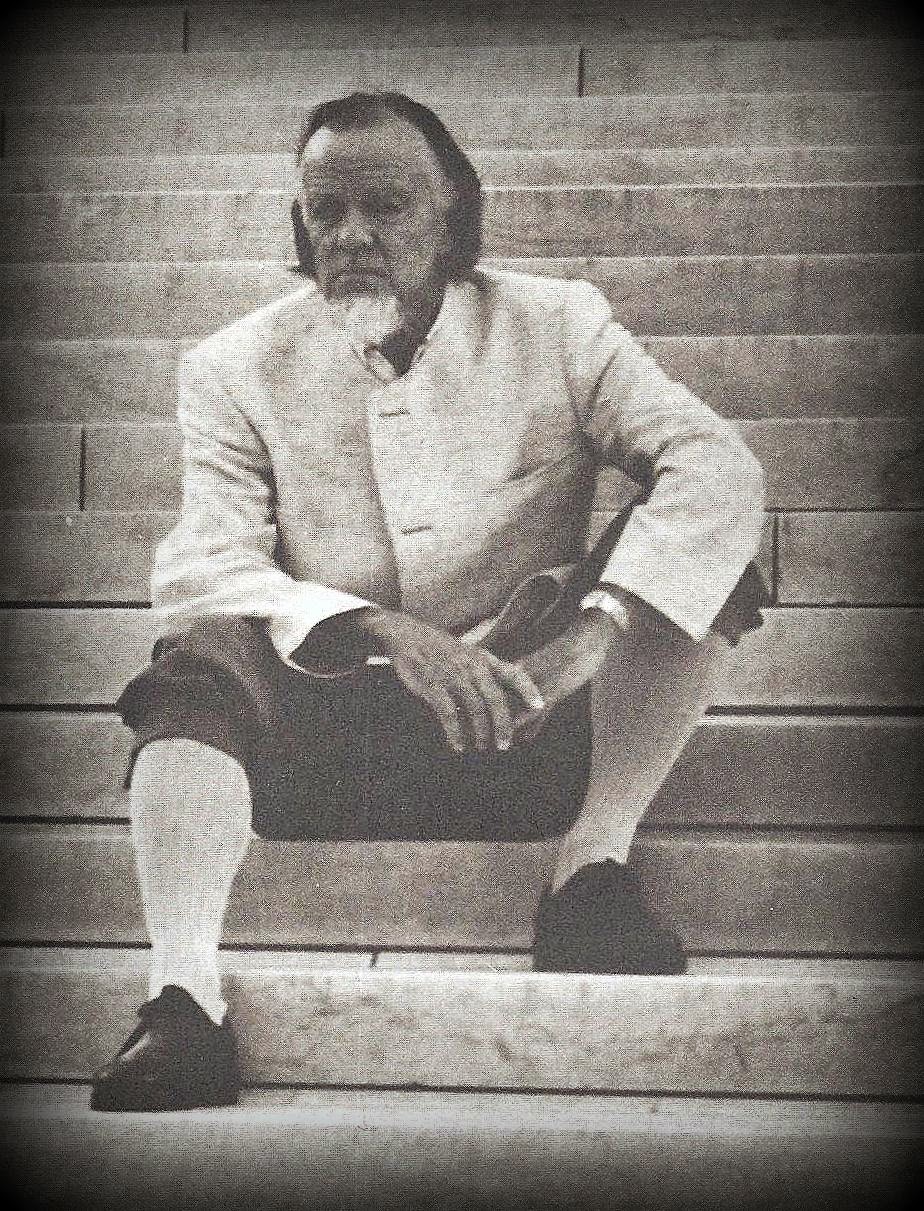


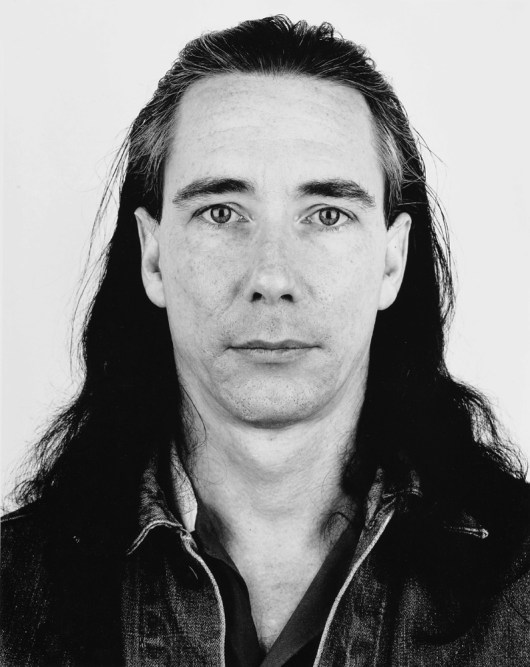
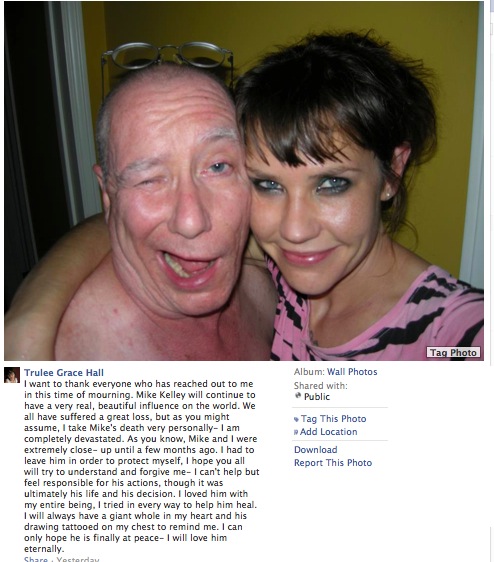


 -Christ is outside the life
 -Interests are directed by self, often
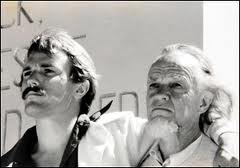


 The Daily Hatch