Most people don’t know how to define a “tax haven,” but we assume places with no income tax are on the list. And there’s a lot to admire when looking at jurisdictions such as Bermuda, Monaco, and the Cayman Islands.
But what if we want to identify the opposite of a tax haven. What is a “tax hell” and how can they be identified?
A new study for the 1841 Foundation undertakes that task and it lists 12 nations that deserve this unflattering label. Belarus is the worst of the worst, followed by Venezuela, Argentina, and Russia.
But this isn’t just a list of places with high tax burdens.
To be a tax hell, a nation has to have punitive taxation and a lousy government. Here’s how the report describes the methodology.
The Tax Hells Index is an in-depth look at both the qualitative and quantitative data that is released annually by both the IMF and The World Bank. By drawing out critical insights from this data, The 1841 Foundation was able to create a comprehensive index and critically examine 94 countries against a stringent framework.…we believe that a “Tax Hell” is not only a country with high taxes, but rather a country with a weak rule of law and where the rights to privacy and property are not enforced or protected as required. …Therefore, when considering the results, countries with high government quality and economic and legal stability may have high taxes (i.e., Denmark), but are very far from being considered Tax Hells. In fact, there are countries with both low and high taxes in the Top-12 tax hells; all of them, however, have low quality of government, high levels of corruption and discretion, poor economic management, and weak institutions.
By the way, the report identified 12 tax hells, but also lists 14 other nations that are “risky.”
These are countries that should be perceived as high risk.
I’ll close by noting that the report only considers nations in North America, Europe, and South America. If subsequent editions include Asia and Africa, I’m sure there will be more tax hells and more risky jurisdictions.
P.S. The five best-scoring nations are Ireland, Denmark, San Marino, Switzerland, and Luxembourg. Remember, these are not necessarily low-tax jurisdictions. Indeed, Denmark is a high-tax nation. But all of these jurisdictions at least provide high-quality governance.
P.P.S. If you want a defense of tax havens, click here, here, and here.
But now I’ll share some good news. No matter how bad California gets, the Golden State probably won’t have to worry about people and businesses fleeing to Illinois.
But the state’s productive people have a different point of view. More and more of them have been escaping.
And they are now being joined by the state’s most-famous company, as Matt Paprocki of the Illinois Policy Institute explains in a column for the Washington Post.
When Boeing announced last month that it was moving its headquarters from Chicago to Arlington, Va., it sent shudders through the Illinois business community and state capital.But last week, when the heavy-equipment manufacturer Caterpillar said it was moving its headquarters to Texas, it felt more like a bulldozer ramming into the news. …If you’re an Illinois business owner or resident, as I am, the economics of staying are tough and the enticements to move away are many. …According to the U.S. Census Bureau, last year the state had the third-largest loss of residents due to domestic migration in the nation (-122,460), trailing only California and New York.
It’s easy to understand why people and businesses are leaving.
In 2017, Illinois lawmakers raised the personal income tax rate to 4.95 percent, from 3.75 percent, and hiked the corporate rate to 7 percent, from 5.25 percent. When J.B. Pritzker took office as governor in 2019, he passed another 24 tax and fee hikes costing taxpayers over $5 billion. …With 278,475 regulatory restrictions and requirements — double the national average — Illinois has the third most heavily regulated environment in the country. …Illinois owes over $139 billion in state pension debt as of last year, and local governments owe about $75 billion, which is the primary driver for Illinois’ spiraling property taxes, second-highest in the nation.
Mr. Paprocki offers all sorts of suggestions for reform, including a spending cap.
But the chances of pro-growth reform are effectively zero. The governor is a hard-core leftist (as well as a hypocrite) and the state legislature is controlled by government employee unions.
As the chief financial officer of the nation’s second-largest state, even I have found it hard to get a handle on how much governments are spending, and how much debt they’re taking on. Every level of government is piling up incredible bills. And they’re coming due, whether we like it or not. Even in low-tax Texas, property taxes have risen three times faster than the inflation rate and four times faster than our population growth since 1992. Our local governments, meanwhile, more than doubled their debt load in the last decade, to more than $7,500 in debt for every man, woman and child in the state. In Houston alone, city-employee pension plans are facing an unfunded liability of $2.4 billion. But too many taxpayers aren’t given the information they need to make informed decisions when they vote debt issues. Recently I spent several months holding about 40 town-hall meetings with Texans across our state. Each time, I asked the attendees if they could tell me how much debt their local governments are carrying. Not a single person in a single town had this information.
In other words, taxpayers need to be eternally vigilant, regardless of where they live. Otherwise the corrupt rectangle of politicians, bureaucrats, lobbyists, and interest groups will figure out hidden ways of using the political process to obtain unearned wealth.
While most people pay attention to which political party enjoys success when there’s an election, I think it’s also important to look at ballot initiatives.
But, as we’ve seen in California and Oregon, not every referendum produces a sensible result.
Today, we’re going to look at the most important ballot initiative of 2022. But before looking at the details, here’s a map showing the states gaining and losing population when Americans move across borders.
You’ll notice that Massachusetts is one of the top states for outbound migration, which means people are “voting with their feet” against the Bay State.
But bad news can become worse news. And that will definitely be the case if voters in Massachusetts approve a referendum next month to junk the state’s flat tax and replace it with a class-warfare system that has a top rate of 9 percent.
Jeff Jacoby wrote last year about the idea in a column for the Boston Globe.
A century-old provision of the Massachusetts Constitution commands that if the commonwealth taxes income, it must do so at a “uniform rate.” Five times in the modern era — in 1962, 1968, 1972, 1976, and 1994 — tax-and-spend liberals have invited voters to discard that rule and make it legal to soak the rich at higher tax rates. Five times voters have said no.…There is considerable arrogance in the way advocates of the surtax blithely disregard the voters’ repeated refusal to overturn the constitutional ban. Their attitude seems to be that no matter how many times the people uphold the uniform-rate rule, there is no reason to take them seriously. …more than 150 Massachusetts businesses representing almost 16,000 workers sent lawmakers an open letter imploring them not to hobble the state’s economy with a stiff new tax, and expressing “alarm” at the proposed constitutional amendment. They…know that a surtax aimed at millionaires is bound to injure countless people who will never earn anywhere close to a million bucks.
The Wall Street Journal has editorialized against the proposal.
…progressives in Boston want to join New York and other nearby states in a high-tax arms race. …Bay State ballots in November will give voters the choice to place a 4% surtax on incomes above $1 million, bringing the top rate to 9% from 5%. The proposal would amend the state constitution to remove its flat-tax mandate. Passing the measure would rocket Massachusetts to seventh from 31st on the list of states with the highest marginal income-tax rates.…A $2.3 billion revenue surplus shows that the state is already taxing more than it needs. This year’s tax haul was so big it triggered a largely forgotten state law that caps revenue. Residents may soon receive checks that refund a portion of last year’s taxes. …Approving the tax would speed up a wealth exodus already under way. The Pioneer Institute last year noted that Massachusetts’ tax base has been eroding, and there’s no surprise about where the escapees are going. The top two destinations are Florida and New Hampshire, both of which lack an income tax. …The constitution’s flat rate mandate is a crucial limit on the demands of interest groups for ever-more spending. If tax rates rise and the revenue cap goes away, spending will soar to snatch the new revenue and soon the politicians will return to seek even higher rates, as they always do.
The economic consequences of class-warfare taxation are never positive.
And that will be true in Massachusetts. A study from the Beacon Hill Institute in Massachusetts estimates the economic damage that the surtax would cause.
…we find, using our in-house computer model (MA-STAMP) that the effects on the economy will be as follows: In its first year of implementation, the amendment will cause the state to lose 4,388 working families due to outmigration. This outmigration plus a reduction in labor hiring and labor-force participation will cause a loss of 9,329 jobs. …the state economy, real (inflation-adjusted) gross domestic product, will shrink by $431 million… Advocates of the measure claim that it will make possible a $2 billion annual in state spending. …Instead, we find that the revenue yield of the tax will be far less, the result of the expected shrinkage in economic activity. (See Table E-2.) In its first year of implementation, combined state and local revenues will rise by only about $1.2 billion.
Here’s a table showing some of the negative effects.
Alex Brill of the American Enterprise Institute also estimated that revenues would be lower than expected once the effects of the Laffer Curve are incorporated into the analysis.
Here are some excerpts from his article in the Hill.
Modifying the revenue forecast to incorporate evidence from the academic literature about likely behavioral changes yields a significantly lower estimated revenue pickup. I estimate that about 400 of the 22,000 taxpayers affected by the surtaxwould exit the state and many others would reduce work or shift and relabel their income to avoid the tax. By my estimate, the surtax would generate approximately $1.5 billion in 2023, since these behavioral responses would offset 32 percent of the revenue gain that would occur if taxpayers kept their behavior unchanged. Using a similar approach, Tufts University’s Center for State Policy Analysis recently estimated that the proposed surtax would generate only $1.3 billion in 2023.
Last but not least, the Tax Foundation crunched the numbers and also found the surtax would cause significant economic damage.
…while no one would mistake Massachusetts for a low-tax state, it has carved out a place as a competitive area to live and work within the Northeast corridor. …but consider the Commonwealth’s ranking on the Tax Foundation’s State Business Tax Climate Index…in 2022, the Bay State still ranked 34th overall on the Index—well below the median.…Massachusetts’ competitive tax advantage in New England is primarily due to its individual income and sales tax systems, which rank 11th and 12th on the Index, respectively. With regard to its neighbors, only New Hampshire has a better overall Indexranking than Massachusetts. …In 2007, Christina Romer and David Romer, professors of economics at the University of California Berkeley, conducted a study to determine the impact of legislated tax changes on the economy. …The study found that a tax increase equal to 1 percent of gross domestic product (GDP) resulted in an estimated 3 percent decline in GDP after three years. …If the Romer and Romer study were applied to the Massachusetts surtax it would result in a 0.942 percent decline in GDP after three years. In other words, the Commonwealth’s total economic output could contract by $5.98 billion by the end of 2025.
Here’s a table from the report, showing that zero-income tax New Hampshire and Florida already are big winners when people escape Massachusetts.
If the referendum is approved, we can easily predictthat future versions of this chart will show much bigger numbers.
Simply stated, some of the geese with the golden eggs will fly away (while the ones that stay will decide to produce fewer eggs – as well as figure out ways to protect the eggs that remain).
California is the Greece of the USA, but Texas is not perfect either!!!
As the chief financial officer of the nation’s second-largest state, even I have found it hard to get a handle on how much governments are spending, and how much debt they’re taking on. Every level of government is piling up incredible bills. And they’re coming due, whether we like it or not. Even in low-tax Texas, property taxes have risen three times faster than the inflation rate and four times faster than our population growth since 1992. Our local governments, meanwhile, more than doubled their debt load in the last decade, to more than $7,500 in debt for every man, woman and child in the state. In Houston alone, city-employee pension plans are facing an unfunded liability of $2.4 billion. But too many taxpayers aren’t given the information they need to make informed decisions when they vote debt issues. Recently I spent several months holding about 40 town-hall meetings with Texans across our state. Each time, I asked the attendees if they could tell me how much debt their local governments are carrying. Not a single person in a single town had this information.
In other words, taxpayers need to be eternally vigilant, regardless of where they live. Otherwise the corrupt rectangle of politicians, bureaucrats, lobbyists, and interest groups will figure out hidden ways of using the political process to obtain unearned wealth.
Perhaps the best evidence for the preceding sentence is the way that traffic cameras are used to generate revenue.
Indeed, local politicians use cameras as a way of grabbing more money even if the net result is more traffic accidents!.
Let’s start with a report in Reason earlier this year. Written by Julian Verdon, it documents how government greed is the main motive for speed cameras.
Pete Buttigieg’s new National Roadway Safety Strategy (NRSS) promotes speed cameras nationwide… But research shows that speed cameras are subject to error and actually end up serving as a means to generate government revenue. …In Chicago, where speed cameras are abundant,the camera program improperly gave out over $2.4 million in fines from 2013 to 2015. Using a random sample analysis, the Chicago Tribune estimated the number of bad tickets to be somewhere around 110,000. …In Washington, D.C., a 2014 report from the D.C. Office of Inspector General found that ticket writers made arbitrary decisions when a camera captured more than one vehicle, and they didn’t know which one was speeding. …Unsurprisingly, the misuse of speed cameras has also become a massive source of revenue for local government.
These are all good points, but they overlook the bigger issue, which is that the cameras usually are placed on streets where speed limits are set at absurdly low levels.
At the risk of stating the obvious, that’s a scam to grab money.
I’m more sympathetic to cameras that catch people running red lights since that behavior can endanger others.
But it seems governments are incapable of doing the right thing for the right reason. Such cameras are designed to maximize revenue for politicians by shortening yellow lights – even even that that approach causes more crashes.
It’s also worth noting that the companies that set up traffic cameras frequently bribe local politicians.
As one might expect, Chicago is the epicenter of sleaze, as reported by Scott Shackford for Reason.
Illinois State Sen. Emil Jones III (D-Chicago) was indicted in September on federal charges of bribery and lying to the FBI. He’s accused of accepting $5,000 and the promise of a job for an associate from a person connected to SafeSpeed, a red-light camera company. …At this point, we should not be surprised at accusations of corruption and bribery concerning the extremely active revenue-generating cameras in the Chicago area.…Mayor Lori Lightfoot even arranged to have the cameras hit cars traveling just six miles per hour over the speed limit to help boost the city’s revenue. …In 2016, a former Chicago official was sentenced to 10 years in federal prison for taking $2 million in bribes from a different red light camera company…four other local officials who have faced charges in the past for misconduct connected to SafeSpeed’s work in the Chicago suburbs. …Oakbrook Terrace’s former mayor, Tony Ragucci,…pleaded guilty in May to pocketing close to $90,000 in exchange for allowing SafeSpeed to operate red-light cameras in the town. …”We all know it’s about money. Revenue. Legal or illegal. That’s why these cameras are there,” Oak Brook Village Trustee Mike Manzo said.
We all know traffic cameras are about revenue rather than safety, but it’s good that Mr. Manzo confirms our suspicions.
That’s why you should watch this video to see why Jay Beeber is a hero.
The Wall Street Journalopined this morning about Citadel’s move.
The first step to recovery is supposed to be admitting you have a problem. But Illinois Gov. J.B. Pritzker still won’t, even after billionaire Ken Griffin on Thursday said he’s moving his Citadel hedge fund and securities trading firm to Miami from Chicago.…Meantime, Democrats in Springfield continue to threaten businesses and citizens with higher taxes… It’s no wonder so many companies and people are leaving, and mostly to low-tax states. …In 2020, $2.4 billion in net adjusted gross income moved to Florida from Illinois, about $298,000 per tax filer. …Mr. Griffin has spent tens of millions of his personal fortune trying to rescue Illinois from bad progressive governance. Maybe he figures it’s time to cut his losses.
Other (former) Illinois residents cut their losses last decade.
Scott Shackford of Reason shared grim data at the end of 2020 about the ongoing exodus from Illinois.
For the seventh year in a row, census figures show residents moving out of Illinois in significant numbers. …Perhaps demanding that your excessively taxed residents give the government even more money is not the best way to keep those residents in your state… Over the course of the last decade, Illinois lost more than a quarter-million people…not even California…has seen Illinois’ population loss. …Government leaders have responded not with better fiscal management (the state’s powerful unions blocked pension reforms), but with more taxes and fees, even as residents leave.
The bottom line is that Illinois is currently losing people and businesses.
Just as it lost people and businesses last decade.
And you can see from this map that taxpayers also were fleeing the state earlier this century.
I’m guessing the state’s hypocritical governorprobably thinks this is a good thing because the people who left probably didn’t vote for tax-and-spend politicians.
But now I’ll share some good news. No matter how bad California gets, the Golden State probably won’t have to worry about people and businesses fleeing to Illinois.
But the state’s productive people have a different point of view. More and more of them have been escaping.
And they are now being joined by the state’s most-famous company, as Matt Paprocki of the Illinois Policy Institute explains in a column for the Washington Post.
When Boeing announced last month that it was moving its headquarters from Chicago to Arlington, Va., it sent shudders through the Illinois business community and state capital.But last week, when the heavy-equipment manufacturer Caterpillar said it was moving its headquarters to Texas, it felt more like a bulldozer ramming into the news. …If you’re an Illinois business owner or resident, as I am, the economics of staying are tough and the enticements to move away are many. …According to the U.S. Census Bureau, last year the state had the third-largest loss of residents due to domestic migration in the nation (-122,460), trailing only California and New York.
It’s easy to understand why people and businesses are leaving.
In 2017, Illinois lawmakers raised the personal income tax rate to 4.95 percent, from 3.75 percent, and hiked the corporate rate to 7 percent, from 5.25 percent. When J.B. Pritzker took office as governor in 2019, he passed another 24 tax and fee hikes costing taxpayers over $5 billion. …With 278,475 regulatory restrictions and requirements — double the national average — Illinois has the third most heavily regulated environment in the country. …Illinois owes over $139 billion in state pension debt as of last year, and local governments owe about $75 billion, which is the primary driver for Illinois’ spiraling property taxes, second-highest in the nation.
Mr. Paprocki offers all sorts of suggestions for reform, including a spending cap.
But the chances of pro-growth reform are effectively zero. The governor is a hard-core leftist (as well as a hypocrite) and the state legislature is controlled by government employee unions.
As the chief financial officer of the nation’s second-largest state, even I have found it hard to get a handle on how much governments are spending, and how much debt they’re taking on. Every level of government is piling up incredible bills. And they’re coming due, whether we like it or not. Even in low-tax Texas, property taxes have risen three times faster than the inflation rate and four times faster than our population growth since 1992. Our local governments, meanwhile, more than doubled their debt load in the last decade, to more than $7,500 in debt for every man, woman and child in the state. In Houston alone, city-employee pension plans are facing an unfunded liability of $2.4 billion. But too many taxpayers aren’t given the information they need to make informed decisions when they vote debt issues. Recently I spent several months holding about 40 town-hall meetings with Texans across our state. Each time, I asked the attendees if they could tell me how much debt their local governments are carrying. Not a single person in a single town had this information.
In other words, taxpayers need to be eternally vigilant, regardless of where they live. Otherwise the corrupt rectangle of politicians, bureaucrats, lobbyists, and interest groups will figure out hidden ways of using the political process to obtain unearned wealth.
In this clip from a recent presentation, I compare the United States and France.
I’m motivated to write on this topic because of a recent tweet from Arnaud Bertrand.
I don’t know who he is, but he shares some very depressing data about the well-being of ordinary people in France.
The above data, according to Monsieur Bertrand, is before taxes on income.
Which makes me curious, of course, so I went to the OECD’s data on “Taxing Wages.”
Here is the data from Table 3.1, showing the tax burden on lower-income and middle-class taxpayers in France and the United States.
As you can see, the tax burden is much higher in France for every type of household. It doesn’t matter whether the household is single or married, the level of income, or the amount of children.
Indeed, the tax burden in France in every case is above the OECD average and the tax burden in the US is below average.
And don’t forget that average Americans also have much higher incomes than their French counterparts.
The bottom line is that Americans earn more and keep more. Something to keep in mind the next time one of our leftist friends agitates to make America more like Europe.
P.S. From the perspective of French taxpayers, the only good news is that nobody seems to be treated as poorly as the Spanish government treats Senor Alvarez.
Many people are stunned by the data I shared early last year showing that ordinary people in the United States tend to be much richer than their peers in advanced European nations.
Here’s some more evidence, courtesy of the Manhattan Institute’s Chris Pope.
As you can see, the poorest people in America are about equal to the poorest people in Germany, France, Canada, and the United Kingdom, but Americans are ahead of their peers when looking at the top 90 percent of the population.
For the top 70 percent, Americans are comfortably ahead.
But not everybody agrees.
Here’s a tweet from John Burn-Murdoch of the U.K.-based Financial Times. He has a very negative portrayal of the United States (and the United Kingdom).
The tweet from Burn-Murdoch includes a link to an article he wrote.
Here are some excerpts.
…one good way to evaluate which countries are better places to live than others is to ask: is life good for everyone there, or is it only good for rich people? …If you’re a proud Brit or American, you may want to look away now. …Norway is a good place to live, whether you are rich or poor. …The rich in the US are exceptionally rich — the top 10 per cent have the highest top-decile disposable incomes in the world, 50 per cent above their British counterparts. But the bottom decile struggle by with a standard of living that is worse than the poorest in 14 European countries including Slovenia. …transpose Norway’s inequality gradient on to the US, and the poorest decile of Americans would be a further 40 per cent better off while the top decile would remain richer than the top of almost every other country on the planet. …Until those gradients are made less steep, the UK and US will remain poor societies with pockets of rich people.
The United States is a poor society with some very rich people?!?
Is that possibly true?
As you might expect, that is utter hogwash. Here’s a chart, based on data from the Paris-based (and left-leaning) Organization for Economic Cooperation and Development.
It shows “actual individual consumption” in the OECD’s member nations, and people in the United States are far better off than people in any other nations.
Indeed, they have 50 percent more consumption than the average person in other OECD countries.
All you need to know is that Burn-Murdoch took some data about America’s poorest people and wants to mislead readers into thinking it also applies to the general population.
And he doesn’t even show his calculations. For what it’s worth, his numbers are not very consistent with some other data sources that are publicly accessible.
Professor Noah Smith also debunks the FT‘s report.
…when we look at how Americans in the middle of the distribution are doing, we see that America is not a “poor society” at all — in fact, it’s one of the richest on Earth. …the median American has a higher income than the median resident of almost any other country… Some people argue that because European countries buy health care for their citizens via the government — which is not counted in disposable income — that it’s not fair to use disposable income as the comparison measure here.But this isn’t right. The U.S. has a relatively low percentage of out-of-pocket health spending — our employers and our government pick up most of the tab. In fact, when we look at “adjusted disposable income”, which includes the value of government services like health care, we find out that the U.S. comes out even more ahead relative to other countries. …someone at around the 18th percentile of income in America in 2019 — a working-class person on the edge of being considered poor — lived in a household making $21,400 a year. That’s about the same as the median income of households in Japan, and about 84% of the median income of households in the UK. In other words, a working-class American on the edge of poverty makes as much as a middle-class person in some rich countries.
I’ll close by noting something else that was misleading in the FT report. Burn-Murdoch compares Norway to the U.S. and U.K., but that nation’s oil wealth makes it very unrepresentative.
Since the report concludes by endorsing more redistribution, it would be more honest and appropriate to compare American living standards to the performance of Europe’s other welfare states.
But Burn-Murdoch did not do that because his already flimsy case would look even weaker.
Also, note that he did not highlight Switzerland. After all, it is richer than Norway, even though it does not enjoy abundant natural resources.
P.S. Speaking of libertarians, the Burn-Murcoch story in the Financial Times begins with this passage.
Where would you rather live? A society where the rich are extraordinarily rich and the poor are very poor, or one where the rich are merely very well off but even those on the lowest incomes also enjoy a decent standard of living? For all but the most ardent free-market libertarians, the answer would be the latter.
At the risk of stating the obvious, libertarians want a society with the smallest-possible government. Limiting coercion (the non-aggression principle) is the main motive.
Libertarians will view the resulting distribution of income as just, but they also will point out that freer societies do a much better job of generating broadly shared prosperity than government-dominated societies.
The bottom line is that Burn-Murdoch is either extraordinarily ignorant about libertarianism or he suffers from Nancy MacLean levels of bad faith and dishonesty.
To begin Part III of this series (here’s Part I and Part II), let’s dig into the archives for this video I narrated back in 2007.
–
At the risk of patting myself on the back, all of the points hold up very well. Indeed, the past 15 years have produced more evidence that my main arguments were correct.
The good news is that all these arguments helped produce a tax bill that dropped America’s federal corporate tax rate by 14 percentage points, from 35 percent to 21 percent.
The bad news is that Biden and most Democrats in Congress want to raise the corporate rate.
In a column for CapX, Professor Tyler Goodspeed explains why higher corporate tax rates are a bad idea. He’s writing about what’s happening in the United Kingdom, but his arguments equally apply in the United States.
…the more you tax something, the less of it you get. …plans to raise Corporation Tax and end relief on new plant and machinery will result in less business investment – and steep costs for households. …Treasury’s current plans to raise the corporate income tax rate to 25% and end a temporary 130% ‘super-deduction’ for new investment in qualifying plant and machinery would lower UK investment by nearly 8%, and reduce the size of the UK economy by more than 2%, compared to making the current rules permanent. …because the economic costs of corporate taxation are ultimately borne both by shareholders and workers, raising the rate to 25% would permanently lower average household wages by £2,500. …the macroeconomic effects of raising the Corporation Tax rate to 25% would alone offset 40% of the static revenue gain over a 10-year period, and as much as 90% over the long run.
To bolster his argument for good policy on that side of the Atlantic Ocean, he then explains that America’s lower corporate tax rate has been a big success.
Critics of corporate tax reform should look to the recent experience of the United States… At the time, I predicted that these changes would raise business investment in new plant and equipment by 9%, and raise average household earnings by $4,000 in real, inflation-adjusted terms. …By the end of 2019, investment had risen to 9.4% above its pre-2017 level. Investment by corporate businesses specifically was up even more, rising to 14.2% above its pre-2017 trend in real, inflation-adjusted terms. Meanwhile, in 2018 and 2019 real median household income in the United States rose by $5,000 – a bigger increase in just two years than in the entire 20 preceding years combined. …What about corporate income tax revenues? …corporate tax revenue as a share of the US economy was substantially higher than projected, at 1.7% versus 1.4%.
If you want more evidence about what happened to corporate tax revenue in America after the Trump tax reform, click here.
So let’s hope neither the United States nor the United Kingdom make the mistake of undoing progress.
P.S. The specter of a higher corporate tax in the United Kingdom is especially bizarre. Voters chose Brexit in part to give the nation a chance to break free of the European Union’s dirigiste approach. But instead of adopting pro-growth policies (the Singapore-on-Thames approach), former Prime Minister Boris Johnson opted to increase the burden of taxes and spending. Hopefully the Conservative Party will return to Thatcherism with a new Prime Minister (and hopefully American Republicans will return to Reaganism!).
In an ideal world, there would be no corporate income tax (or any income tax).
But I’ll gladly accept any movement in the right direction, which is why the reduction in the corporate tax rate was the crown jewel of Trump’s 2017 tax plan.
Today, let’s look at some new academic evidence on the issue. A new study from the National Bureau of Economic Research, authored by Professors James Cloyne, Joseba Martinez, Haroon Mumtaz, and Paolo Surico, finds that lower corporate rates are especially beneficial for long-run prosperity.
We use…post-WWII U.S. data on output, taxes, productivity and R&D spending to estimate the dynamic effects of income tax changes…and focus on personal and corporate income tax changes separately. …In Figure 1, we present our first set of main results. The figure contains two columns. On the left, we show the IRFs to a reduction in the average corporate tax rate. On the right, we show the results for a reduction in the average personal tax rate. …The first row in Figure 1 reveals that, following a shock to corporate and personal income taxes,the average tax rates decline temporarily. …The second row in Figure 1 shows the impulse response functions for the percentage response of real GDP. … Looking at the first column it is clear that, despite the transitory nature of the corporate tax reduction, there are very persistent effects on real GDP, whose short-run increase of 0.5% persists throughout the ten year period shown in the figure. In other words, the corporate income tax cut has disappeared after 5 years, but the effect on the level of economic activity is still sizable and significant after 8 years. …A similar picture emerges for productivity, as shown in the third row of Figure 1. Both tax rate cuts boost productivity on impact, with the size of the initial response to a personal income tax cut being much larger than for a cut to corporate taxes. On the other hand, the effects of corporate tax cuts grow over time and remain significant even after 10 years.
Here’s the aforementioned Figure 1 from their research.
I’ll conclude by noting that permanent tax cuts are much better than temporary tax cuts.
But if taxes are being cut, regardless of duration, the goal should be to get the most bang for the buck. And there’s plenty of evidence (from the United States, Australia, Canada, Germany, and the United Kingdom) that lowering corporate tax rates is a smart place to start.
P.S. It’s unfortunate that Biden wants a higher corporate tax burden in the United States. It’s even more disturbing that he wants a global tax cartel so the entire world has to follow in his footsteps. But he apparently does not understand the topic.
Concerning the French overspending problem Dan Mitchell states, “There are obvious lessons from Europe for the United States. If politicians don’t reform entitlement programs, we’re doomed to have our own fiscal crisis at some point in the not-too-distant future.”
This is very true. President Obama has overspent so much that our national debt will double under him and it will ruin our future. WHO WILL WE SEND OUR BILL TO? GERMANY WILL NOT PAY IT.
Though, to be fair, France hasn’t gotten to the point where it’s being bailed out (it’s probably just a matter of time).
If you want some good analysis of the situation in Europe, Veronique de Rugy of the Mercatus Center hits the nail on the head in her column in today’s Washington Examiner.
France has yet to cut spending. In fact, to the extent that the French are frustrated with “budget cuts,” it’s only because the increase in future spending won’t be as large as they had planned. The same can be said about the United Kingdom. Spain, Italy and Greece have had no choice to cut some spending. However, in the case of these particular countries, the cuts were implemented alongside large tax increases. …This approach to austerity, also known in the United States as the “balanced approach,” has unfortunately proven a recipe for disaster. In a 2009 paper, Harvard University’s Alberto Alesina and Silvia Ardagna looked at 107 attempts to reduce the ratio of debt to gross domestic product over 30 years in countries in the Organisation for Economic Co-operation and Development. They found fiscal adjustments consisting of both tax increases and spending cuts generally failed to stabilize the debt and were also more likely to cause economic contractions. On the other hand, successful austerity packages resulted from making spending cuts without tax increases. They also found this form of austerity is more likely associated with economic expansion rather than with recession. …While the debate over austerity continues, the evidence seems to point to the conclusion that austerity can be successful, if it isn’t modeled after the “balanced approach.” It’s a lesson for the French and other European countries, as well as for American lawmakers who often seem tempted by the lure of closing budget gaps with higher taxes.
There are obvious lessons from Europe for the United States. If politicians don’t reform entitlement programs, we’re doomed to have our own fiscal crisis at some point in the not-too-distant future.
Max Brantley is wrong about Tom Cotton’s accusation concerning the rise of welfare spending under President Obama. Actually welfare spending has been increasing for the last 12 years and Obama did nothing during his first four years to slow down the rate of increase of welfare spending. Rachel Sheffield of the Heritage Foundation has noted: […]
I have put up lots of cartoons from Dan Mitchell’s blog before and they have got lots of hits before. Many of them have dealt with the economy, eternal unemployment benefits, socialism, Greece, welfare state or on gun control. I think Max Brantley of the Arkansas Times Blog was right to point out on 2-6-13 that Hillary […]
I thought it was great when the Republican Congress and Bill Clinton put in welfare reform but now that has been done away with and no one has to work anymore it seems. In fact, over 40% of the USA is now on the government dole. What is going to happen when that figure gets over […]
Again we have another shooting and the gun control bloggers are out again calling for more laws. I have written about this subject below and on May 23, 2012, I even got a letter back from President Obama on the subject. Now some very interesting statistics below and a cartoon follows. (Since this just hit the […]
watch?v=llQUrko0Gqw] The federal government spends about 10% on roads and public goods but with the other money in the budget a lot of harm is done including excessive regulations on business. That makes Obama’s comment the other day look very silly. A Funny Look at Obama’s You-Didn’t-Build-That Comment July 28, 2012 by Dan Mitchell I made […]
I have written a lot about this in the past and sometimes you just have to sit back and laugh. Laughing at Obama’s Bumbling Class Warfare Agenda July 13, 2012 by Dan Mitchell We know that President Obama’s class-warfare agenda is bad economic policy. We know high tax rates undermine competitiveness. And we know tax increases […]
Dan Mitchell Discussing Dishonest Budget Numbers with John Stossel Uploaded by danmitchellcato on Feb 11, 2012 No description available. ______________ Dan Mitchell of the Cato Institute has shown before how excessive spending at the federal level has increased in recent years. A Humorous Look at Obama’s Screwy Budget Math May 31, 2012 by Dan Mitchell I’ve […]
Sometimes it is so crazy that you just have to laugh a little. The European Mess, Captured by a Cartoon June 22, 2012 by Dan Mitchell The self-inflicted economic crisis in Europe has generated some good humor, as you can see from these cartoons by Michael Ramirez and Chuck Asay. But for pure laughter, I don’t […]
Another great cartoon on President Obama’s efforts to create jobs!!! A Simple Lesson about Job Creation for Barack Obama December 7, 2011 by Dan Mitchell Even though leftist economists such as Paul Krugman and Larry Summers have admitted that unemployment insurance benefits are a recipe for more joblessness, the White House is arguing that Congress should […]
Dan Mitchell hits the nail on the head and sometimes it gets so sad that you just have to laugh at it like Conan does. In order to correct this mess we got to get people off of government support and get them in the private market place!!!! Chuck Asay’s New Cartoon Nicely Captures Mentality […]
Cato Institute scholar Dan Mitchell is right about Greece and the fate of socialism: Two Pictures that Perfectly Capture the Rise and Fall of the Welfare State July 15, 2011 by Dan Mitchell In my speeches, especially when talking about the fiscal crisis in Europe (or the future fiscal crisis in America), I often warn that […]
John Stossel report “Myth: Gun Control Reduces Crime Sheriff Tommy Robinson tried what he called “Robinson roulette” from 1980 to 1984 in Central Arkansas where he would put some of his men in some stores in the back room with guns and the number of robberies in stores sank. I got this from Dan Mitchell’s […]
I have put up lots of cartons and posters from Dan Mitchell’s blog before and they have got lots of hits before. Many of them have dealt with the economy, eternal unemployment benefits, socialism, Greece, welfare state or on gun control. Amusing Gun Control Picture – Circa 1999 April 3, 2010 by Dan Mitchell Dug this gem out […]
We got to cut spending and stop raising the debt ceiling!!! When Governments Cut Spending Uploaded on Sep 28, 2011 Do governments ever cut spending? According to Dr. Stephen Davies, there are historical examples of government spending cuts in Canada, New Zealand, Sweden, and America. In these cases, despite popular belief, the government spending […]
I have put up lots of cartons and posters from Dan Mitchell’s blog before and they have got lots of hits before. Many of them have dealt with the economy, eternal unemployment benefits, socialism, Greece, welfare state or on gun control. On 2-6-13 the Arkansas Times Blogger “Sound Policy” suggested, “All churches that wish to allow concealed […]
Gun Free Zones???? Stalin and gun control On 1-31-13 ”Arkie” on the Arkansas Times Blog the following: “Remember that the biggest gun control advocate was Hitler and every other tyrant that every lived.” Except that under Hitler, Germany liberalized its gun control laws. __________ After reading the link from Wikipedia that Arkie provided then I responded: […]
On 1-31-13 I posted on the Arkansas Times Blog the following: I like the poster of the lady holding the rifle and next to her are these words: I am compensating for being smaller and weaker than more violent criminals. __________ Then I gave a link to this poster below: On 1-31-13 also I posted […]
Many people are stunned by the data I shared early last year showing that ordinary people in the United States tend to be much richer than their peers in advanced European nations.
Here’s some more evidence, courtesy of the Manhattan Institute’s Chris Pope.
As you can see, the poorest people in America are about equal to the poorest people in Germany, France, Canada, and the United Kingdom, but Americans are ahead of their peers when looking at the top 90 percent of the population.
For the top 70 percent, Americans are comfortably ahead.
But not everybody agrees.
Here’s a tweet from John Burn-Murdoch of the U.K.-based Financial Times. He has a very negative portrayal of the United States (and the United Kingdom).
The tweet from Burn-Murdoch includes a link to an article he wrote.
Here are some excerpts.
…one good way to evaluate which countries are better places to live than others is to ask: is life good for everyone there, or is it only good for rich people? …If you’re a proud Brit or American, you may want to look away now. …Norway is a good place to live, whether you are rich or poor. …The rich in the US are exceptionally rich — the top 10 per cent have the highest top-decile disposable incomes in the world, 50 per cent above their British counterparts. But the bottom decile struggle by with a standard of living that is worse than the poorest in 14 European countries including Slovenia. …transpose Norway’s inequality gradient on to the US, and the poorest decile of Americans would be a further 40 per cent better off while the top decile would remain richer than the top of almost every other country on the planet. …Until those gradients are made less steep, the UK and US will remain poor societies with pockets of rich people.
The United States is a poor society with some very rich people?!?
Is that possibly true?
As you might expect, that is utter hogwash. Here’s a chart, based on data from the Paris-based (and left-leaning) Organization for Economic Cooperation and Development.
It shows “actual individual consumption” in the OECD’s member nations, and people in the United States are far better off than people in any other nations.
Indeed, they have 50 percent more consumption than the average person in other OECD countries.
All you need to know is that Burn-Murdoch took some data about America’s poorest people and wants to mislead readers into thinking it also applies to the general population.
And he doesn’t even show his calculations. For what it’s worth, his numbers are not very consistent with some other data sources that are publicly accessible.
Professor Noah Smith also debunks the FT‘s report.
…when we look at how Americans in the middle of the distribution are doing, we see that America is not a “poor society” at all — in fact, it’s one of the richest on Earth. …the median American has a higher income than the median resident of almost any other country… Some people argue that because European countries buy health care for their citizens via the government — which is not counted in disposable income — that it’s not fair to use disposable income as the comparison measure here.But this isn’t right. The U.S. has a relatively low percentage of out-of-pocket health spending — our employers and our government pick up most of the tab. In fact, when we look at “adjusted disposable income”, which includes the value of government services like health care, we find out that the U.S. comes out even more ahead relative to other countries. …someone at around the 18th percentile of income in America in 2019 — a working-class person on the edge of being considered poor — lived in a household making $21,400 a year. That’s about the same as the median income of households in Japan, and about 84% of the median income of households in the UK. In other words, a working-class American on the edge of poverty makes as much as a middle-class person in some rich countries.
I’ll close by noting something else that was misleading in the FT report. Burn-Murdoch compares Norway to the U.S. and U.K., but that nation’s oil wealth makes it very unrepresentative.
Since the report concludes by endorsing more redistribution, it would be more honest and appropriate to compare American living standards to the performance of Europe’s other welfare states.
But Burn-Murdoch did not do that because his already flimsy case would look even weaker.
Also, note that he did not highlight Switzerland. After all, it is richer than Norway, even though it does not enjoy abundant natural resources.
P.S. Speaking of libertarians, the Burn-Murcoch story in the Financial Times begins with this passage.
Where would you rather live? A society where the rich are extraordinarily rich and the poor are very poor, or one where the rich are merely very well off but even those on the lowest incomes also enjoy a decent standard of living? For all but the most ardent free-market libertarians, the answer would be the latter.
At the risk of stating the obvious, libertarians want a society with the smallest-possible government. Limiting coercion (the non-aggression principle) is the main motive.
Libertarians will view the resulting distribution of income as just, but they also will point out that freer societies do a much better job of generating broadly shared prosperity than government-dominated societies.
The bottom line is that Burn-Murdoch is either extraordinarily ignorant about libertarianism or he suffers from Nancy MacLean levels of bad faith and dishonesty.
To begin Part III of this series (here’s Part I and Part II), let’s dig into the archives for this video I narrated back in 2007.
–
At the risk of patting myself on the back, all of the points hold up very well. Indeed, the past 15 years have produced more evidence that my main arguments were correct.
The good news is that all these arguments helped produce a tax bill that dropped America’s federal corporate tax rate by 14 percentage points, from 35 percent to 21 percent.
The bad news is that Biden and most Democrats in Congress want to raise the corporate rate.
In a column for CapX, Professor Tyler Goodspeed explains why higher corporate tax rates are a bad idea. He’s writing about what’s happening in the United Kingdom, but his arguments equally apply in the United States.
…the more you tax something, the less of it you get. …plans to raise Corporation Tax and end relief on new plant and machinery will result in less business investment – and steep costs for households. …Treasury’s current plans to raise the corporate income tax rate to 25% and end a temporary 130% ‘super-deduction’ for new investment in qualifying plant and machinery would lower UK investment by nearly 8%, and reduce the size of the UK economy by more than 2%, compared to making the current rules permanent. …because the economic costs of corporate taxation are ultimately borne both by shareholders and workers, raising the rate to 25% would permanently lower average household wages by £2,500. …the macroeconomic effects of raising the Corporation Tax rate to 25% would alone offset 40% of the static revenue gain over a 10-year period, and as much as 90% over the long run.
To bolster his argument for good policy on that side of the Atlantic Ocean, he then explains that America’s lower corporate tax rate has been a big success.
Critics of corporate tax reform should look to the recent experience of the United States… At the time, I predicted that these changes would raise business investment in new plant and equipment by 9%, and raise average household earnings by $4,000 in real, inflation-adjusted terms. …By the end of 2019, investment had risen to 9.4% above its pre-2017 level. Investment by corporate businesses specifically was up even more, rising to 14.2% above its pre-2017 trend in real, inflation-adjusted terms. Meanwhile, in 2018 and 2019 real median household income in the United States rose by $5,000 – a bigger increase in just two years than in the entire 20 preceding years combined. …What about corporate income tax revenues? …corporate tax revenue as a share of the US economy was substantially higher than projected, at 1.7% versus 1.4%.
If you want more evidence about what happened to corporate tax revenue in America after the Trump tax reform, click here.
So let’s hope neither the United States nor the United Kingdom make the mistake of undoing progress.
P.S. The specter of a higher corporate tax in the United Kingdom is especially bizarre. Voters chose Brexit in part to give the nation a chance to break free of the European Union’s dirigiste approach. But instead of adopting pro-growth policies (the Singapore-on-Thames approach), former Prime Minister Boris Johnson opted to increase the burden of taxes and spending. Hopefully the Conservative Party will return to Thatcherism with a new Prime Minister (and hopefully American Republicans will return to Reaganism!).
In an ideal world, there would be no corporate income tax (or any income tax).
But I’ll gladly accept any movement in the right direction, which is why the reduction in the corporate tax rate was the crown jewel of Trump’s 2017 tax plan.
Today, let’s look at some new academic evidence on the issue. A new study from the National Bureau of Economic Research, authored by Professors James Cloyne, Joseba Martinez, Haroon Mumtaz, and Paolo Surico, finds that lower corporate rates are especially beneficial for long-run prosperity.
We use…post-WWII U.S. data on output, taxes, productivity and R&D spending to estimate the dynamic effects of income tax changes…and focus on personal and corporate income tax changes separately. …In Figure 1, we present our first set of main results. The figure contains two columns. On the left, we show the IRFs to a reduction in the average corporate tax rate. On the right, we show the results for a reduction in the average personal tax rate. …The first row in Figure 1 reveals that, following a shock to corporate and personal income taxes,the average tax rates decline temporarily. …The second row in Figure 1 shows the impulse response functions for the percentage response of real GDP. … Looking at the first column it is clear that, despite the transitory nature of the corporate tax reduction, there are very persistent effects on real GDP, whose short-run increase of 0.5% persists throughout the ten year period shown in the figure. In other words, the corporate income tax cut has disappeared after 5 years, but the effect on the level of economic activity is still sizable and significant after 8 years. …A similar picture emerges for productivity, as shown in the third row of Figure 1. Both tax rate cuts boost productivity on impact, with the size of the initial response to a personal income tax cut being much larger than for a cut to corporate taxes. On the other hand, the effects of corporate tax cuts grow over time and remain significant even after 10 years.
Here’s the aforementioned Figure 1 from their research.
I’ll conclude by noting that permanent tax cuts are much better than temporary tax cuts.
But if taxes are being cut, regardless of duration, the goal should be to get the most bang for the buck. And there’s plenty of evidence (from the United States, Australia, Canada, Germany, and the United Kingdom) that lowering corporate tax rates is a smart place to start.
P.S. It’s unfortunate that Biden wants a higher corporate tax burden in the United States. It’s even more disturbing that he wants a global tax cartel so the entire world has to follow in his footsteps. But he apparently does not understand the topic.
Concerning the French overspending problem Dan Mitchell states, “There are obvious lessons from Europe for the United States. If politicians don’t reform entitlement programs, we’re doomed to have our own fiscal crisis at some point in the not-too-distant future.”
This is very true. President Obama has overspent so much that our national debt will double under him and it will ruin our future. WHO WILL WE SEND OUR BILL TO? GERMANY WILL NOT PAY IT.
Though, to be fair, France hasn’t gotten to the point where it’s being bailed out (it’s probably just a matter of time).
If you want some good analysis of the situation in Europe, Veronique de Rugy of the Mercatus Center hits the nail on the head in her column in today’s Washington Examiner.
France has yet to cut spending. In fact, to the extent that the French are frustrated with “budget cuts,” it’s only because the increase in future spending won’t be as large as they had planned. The same can be said about the United Kingdom. Spain, Italy and Greece have had no choice to cut some spending. However, in the case of these particular countries, the cuts were implemented alongside large tax increases. …This approach to austerity, also known in the United States as the “balanced approach,” has unfortunately proven a recipe for disaster. In a 2009 paper, Harvard University’s Alberto Alesina and Silvia Ardagna looked at 107 attempts to reduce the ratio of debt to gross domestic product over 30 years in countries in the Organisation for Economic Co-operation and Development. They found fiscal adjustments consisting of both tax increases and spending cuts generally failed to stabilize the debt and were also more likely to cause economic contractions. On the other hand, successful austerity packages resulted from making spending cuts without tax increases. They also found this form of austerity is more likely associated with economic expansion rather than with recession. …While the debate over austerity continues, the evidence seems to point to the conclusion that austerity can be successful, if it isn’t modeled after the “balanced approach.” It’s a lesson for the French and other European countries, as well as for American lawmakers who often seem tempted by the lure of closing budget gaps with higher taxes.
There are obvious lessons from Europe for the United States. If politicians don’t reform entitlement programs, we’re doomed to have our own fiscal crisis at some point in the not-too-distant future.
Max Brantley is wrong about Tom Cotton’s accusation concerning the rise of welfare spending under President Obama. Actually welfare spending has been increasing for the last 12 years and Obama did nothing during his first four years to slow down the rate of increase of welfare spending. Rachel Sheffield of the Heritage Foundation has noted: […]
I have put up lots of cartoons from Dan Mitchell’s blog before and they have got lots of hits before. Many of them have dealt with the economy, eternal unemployment benefits, socialism, Greece, welfare state or on gun control. I think Max Brantley of the Arkansas Times Blog was right to point out on 2-6-13 that Hillary […]
I thought it was great when the Republican Congress and Bill Clinton put in welfare reform but now that has been done away with and no one has to work anymore it seems. In fact, over 40% of the USA is now on the government dole. What is going to happen when that figure gets over […]
Again we have another shooting and the gun control bloggers are out again calling for more laws. I have written about this subject below and on May 23, 2012, I even got a letter back from President Obama on the subject. Now some very interesting statistics below and a cartoon follows. (Since this just hit the […]
watch?v=llQUrko0Gqw] The federal government spends about 10% on roads and public goods but with the other money in the budget a lot of harm is done including excessive regulations on business. That makes Obama’s comment the other day look very silly. A Funny Look at Obama’s You-Didn’t-Build-That Comment July 28, 2012 by Dan Mitchell I made […]
I have written a lot about this in the past and sometimes you just have to sit back and laugh. Laughing at Obama’s Bumbling Class Warfare Agenda July 13, 2012 by Dan Mitchell We know that President Obama’s class-warfare agenda is bad economic policy. We know high tax rates undermine competitiveness. And we know tax increases […]
Dan Mitchell Discussing Dishonest Budget Numbers with John Stossel Uploaded by danmitchellcato on Feb 11, 2012 No description available. ______________ Dan Mitchell of the Cato Institute has shown before how excessive spending at the federal level has increased in recent years. A Humorous Look at Obama’s Screwy Budget Math May 31, 2012 by Dan Mitchell I’ve […]
Sometimes it is so crazy that you just have to laugh a little. The European Mess, Captured by a Cartoon June 22, 2012 by Dan Mitchell The self-inflicted economic crisis in Europe has generated some good humor, as you can see from these cartoons by Michael Ramirez and Chuck Asay. But for pure laughter, I don’t […]
Another great cartoon on President Obama’s efforts to create jobs!!! A Simple Lesson about Job Creation for Barack Obama December 7, 2011 by Dan Mitchell Even though leftist economists such as Paul Krugman and Larry Summers have admitted that unemployment insurance benefits are a recipe for more joblessness, the White House is arguing that Congress should […]
Dan Mitchell hits the nail on the head and sometimes it gets so sad that you just have to laugh at it like Conan does. In order to correct this mess we got to get people off of government support and get them in the private market place!!!! Chuck Asay’s New Cartoon Nicely Captures Mentality […]
Cato Institute scholar Dan Mitchell is right about Greece and the fate of socialism: Two Pictures that Perfectly Capture the Rise and Fall of the Welfare State July 15, 2011 by Dan Mitchell In my speeches, especially when talking about the fiscal crisis in Europe (or the future fiscal crisis in America), I often warn that […]
John Stossel report “Myth: Gun Control Reduces Crime Sheriff Tommy Robinson tried what he called “Robinson roulette” from 1980 to 1984 in Central Arkansas where he would put some of his men in some stores in the back room with guns and the number of robberies in stores sank. I got this from Dan Mitchell’s […]
I have put up lots of cartons and posters from Dan Mitchell’s blog before and they have got lots of hits before. Many of them have dealt with the economy, eternal unemployment benefits, socialism, Greece, welfare state or on gun control. Amusing Gun Control Picture – Circa 1999 April 3, 2010 by Dan Mitchell Dug this gem out […]
We got to cut spending and stop raising the debt ceiling!!! When Governments Cut Spending Uploaded on Sep 28, 2011 Do governments ever cut spending? According to Dr. Stephen Davies, there are historical examples of government spending cuts in Canada, New Zealand, Sweden, and America. In these cases, despite popular belief, the government spending […]
I have put up lots of cartons and posters from Dan Mitchell’s blog before and they have got lots of hits before. Many of them have dealt with the economy, eternal unemployment benefits, socialism, Greece, welfare state or on gun control. On 2-6-13 the Arkansas Times Blogger “Sound Policy” suggested, “All churches that wish to allow concealed […]
Gun Free Zones???? Stalin and gun control On 1-31-13 ”Arkie” on the Arkansas Times Blog the following: “Remember that the biggest gun control advocate was Hitler and every other tyrant that every lived.” Except that under Hitler, Germany liberalized its gun control laws. __________ After reading the link from Wikipedia that Arkie provided then I responded: […]
On 1-31-13 I posted on the Arkansas Times Blog the following: I like the poster of the lady holding the rifle and next to her are these words: I am compensating for being smaller and weaker than more violent criminals. __________ Then I gave a link to this poster below: On 1-31-13 also I posted […]
The assessment has not been positive, which shouldn’t be very surprising since Biden is basically a slow-motion version of Bernie Sanders.
Today, we’re going to look at Biden’s record on jobs…and that’s not going to improve the assessment.
The problem is employment rather than unemployment.
In a column for the Wall Street Journal, Nicholas Eberstadt writes about the millions of Americans who have disappeared from the labor force.
Never has work been so readily available in modern America; never have so many been uninterested in taking it. …For every unemployed person in the U.S. today, there are nearly two open jobs, and the labor shortage affects every region of the country.…Why the bizarre imbalance between the demand for work and the supply of it? One critical piece of the puzzle was the policy response to the pandemic. …Washington pulled out all the monetary and fiscal stops….created disincentives for work as never before. …In 2020 and 2021, a windfall of more than $2.5 trillion in extra savings was bestowed by Washington on private households through borrowed public funds. …With pre-Covid rates of workforce participation, almost three million more men and women would be in our labor force today.
The signs that growing numbers of citizens are ambivalent about working shouldn’t be ignored. Success through work, no matter one’s station, is a key to self-esteem, independence and belonging. A can-do, pro-work ethos has served our nation well. America’s future will depend in no small part on how—and whether—her people choose to work.
Thanks to a stronger work ethic and spirit of self reliance, the United States historically has had an advantage over other nations.
Since I went to the archives for a video yesterday, let’s do the same thing today. Here’s my 2009 videoabout the close link between the size of government and the level of corruption.
I’m recycling this video because President Biden and his allies in Congress are poised to enact a revised version of the “Build Back Better” plan to expand the burden of government.
But today’s column will focus on process rather than policy.
To be more specific, I want to emphasize the video’s message about bigger government leading to more corruption.
And I’m going to cite an unexpected source – a left-leaning news outlet – to make my point.
In an article for the Washington Post, Yeganeh Torbati and Jeff Stein share various examples of how Biden’s misnamed Inflation Reduction Act is fattening bank accounts of lobbyists.
As Democrats hurry to finalize$739 billion climate, health-care and tax legislation…, business lobbyists and issue advocates are…using television and newspaper ads and personal outreach to try to sway Democrats to their side before the Senate votes. Much of the fiercest lobbying has focused on the bill’s health-care provisions. …The bill also provides hundreds of billions…to fight climate change… The Zero Emission Transportation Association…is asking senators to consider extending the deadlines by a year or more… Small businesses successfully stripped higher taxes on pass-through entities, while bigger firms succeeded in keeping the corporate rate at 21 percent.
The story focuses on the battle over the legislation, so allow me to add two points.
First, fighting over what is in the package is just the tip of the iceberg. Assuming the bill becomes law, there will then be countless opportunities for lobbyists to get rich by manipulating the regulations that will define how the law is implemented, as well as yearly opportunities for lobbyists to cash in by influencing how money is spent.
Second, not all lobbyists are bad. If a group of people hire lobbyists to get money or favors from the government, that is obviously immoral. But if a group of people hire lobbyists in hopes of protecting themselves (i.e., they don’t want to be taxed or burdened with more red tape), that is completely legitimate.
Whether lobbyists are on the right side or wrong side, the ideal scenario is to shrink government. For instance, a simple and fair flat tax would radically reduce the incentive for influence-peddling.
P.S. If you want some lobbyist-themed humor, click here and here.
March 31, 2021
President Biden c/o The White House
1600 Pennsylvania Avenue NW
Washington, DC 20500
Dear Mr. President,
Please explain to me if you ever do plan to balance the budget while you are President? I have written these things below about you and I really do think that you don’t want to cut spending in order to balance the budget. It seems you ever are daring the Congress to stop you from spending more.
“The credit of the United States ‘is not a bargaining chip,’ Obama said on 1-14-13. However, President Obama keeps getting our country’s credit rating downgraded as he raises the debt ceiling higher and higher!!!!
Washington Could Learn a Lot from a Drug Addict
Just spend more, don’t know how to cut!!! Really!!! That is not living in the real world is it?
Making more dependent on government is not the way to go!!
Why is our government in over 16 trillion dollars in debt? There are many reasons for this but the biggest reason is people say “Let’s spend someone else’s money to solve our problems.” Liberals like Max Brantley have talked this way for years. Brantley will say that conservatives are being harsh when they don’t want the government out encouraging people to be dependent on the government. The Obama adminstration has even promoted a plan for young people to follow like Julia the Moocher.
Imagine standing a baby carrot up next to the 25-story Stephens building in Little Rock. That gives you a picture of the impact on the national debt that federal spending in Arkansas on Medicaid expansion would have, while here at home expansion would give coverage to more than 200,000 of our neediest citizens, create jobs, and save money for the state.
Here’s the thing: while more than a billion dollars a year in federal spending would represent a big-time stimulus for Arkansas, it’s not even a drop in the bucket when it comes to the national debt.
Currently, the national debt is around $16.4 trillion. In fiscal year 2015, the federal government would spend somewhere in the neighborhood of $1.2 billion to fund Medicaid expansion in Arkansas if we say yes. That’s about 1/13,700th of the debt.
It’s hard to get a handle on numbers that big, so to put that in perspective, let’s get back to the baby carrot. Imagine that the height of the Stephens building (365 feet) is the $16 trillion national debt. That $1.2 billion would be the length of a ladybug. Of course, we’re not just talking about one year if we expand. Between now and 2021, the federal government projects to contribute around $10 billion. The federal debt is projected to be around $25 trillion by then, so we’re talking about 1/2,500th of the debt. Compared to the Stephens building? That’s a baby carrot.
______________
Here is how it will all end if everyone feels they should be allowed to have their “baby carrot.”
How sad it is that liberals just don’t get this reality.
While living in Europe in the 1760s, Franklin observed: “in different countries … the more public provisions were made for the poor, the less they provided for themselves, and of course became poorer. And, on the contrary, the less was done for them, the more they did for themselves, and became richer.”
Alexander Fraser Tytler, Lord Woodhouselee(15 October 1747 – 5 January 1813) was a Scottish lawyer, writer, and professor. Tytler was also a historian, and he noted, “A democracy cannot exist as a permanent form of government. It can only exist until the majority discovers it can vote itself largess out of the public treasury. After that, the majority always votes for the candidate promising the most benefits with the result the democracy collapses because of the loose fiscal policy ensuing, always to be followed by a dictatorship, then a monarchy.”
[Jefferson affirms that the main purpose of society is to enable human beings to keep the fruits of their labor.— TGW]
To take from one, because it is thought that his own industry and that of his fathers has acquired too much, in order to spare to others, who, or whose fathers have not exercised equal industry and skill, is to violate arbitrarily the first principle of association, “the guarantee to every one of a free exercise of his industry, and the fruits acquired by it.” If the overgrown wealth of an individual be deemed dangerous to the State, the best corrective is the law of equal inheritance to all in equal degree; and the better, as this enforces a law of nature, while extra taxation violates it.
[From Writings of Thomas Jefferson, ed. Albert E. Bergh (Washington: Thomas Jefferson Memorial Association, 1904), 14:466.]
_______
Jefferson pointed out that to take from the rich and give to the poor through government is just wrong. Franklin knew the poor would have a better path upward without government welfare coming their way. Milton Friedman’s negative income tax is the best method for doing that and by taking away all welfare programs and letting them go to the churches for charity.
_____________
_________
Thank you so much for your time. I know how valuable it is. I also appreciate the fine family that you have and your commitment as a father and a husband.
Sincerely,
Everette Hatcher III, 13900 Cottontail Lane, Alexander, AR 72002, ph 501-920-5733
We got to act fast and get off this path of socialism. Morning Bell: Welfare Spending Shattering All-Time Highs Robert Rector and Amy Payne October 18, 2012 at 9:03 am It’s been a pretty big year for welfare—and a new report shows welfare is bigger than ever. The Obama Administration turned a giant spotlight […]
We need to cut Food Stamp program and not extend it. However, it seems that people tell the taxpayers back home they are going to Washington and cut government spending but once they get up there they just fall in line with everyone else that keeps spending our money. I am glad that at least […]
Government Must Cut Spending Uploaded by HeritageFoundation on Dec 2, 2010 The government can cut roughly $343 billion from the federal budget and they can do so immediately. __________ Liberals argue that the poor need more welfare programs, but I have always argued that these programs enslave the poor to the government. Food Stamps Growth […]
Milton Friedman – The Negative Income Tax Published on May 11, 2012 by LibertyPen In this 1968 interview, Milton Friedman explained the negative income tax, a proposal that at minimum would save taxpayers the 72 percent of our current welfare budget spent on administration. http://www.LibertyPen.com Source: Firing Line with William F Buckley Jr. ________________ Milton […]
Dan Mitchell Commenting on Obama’s Failure to Propose a Fiscal Plan Published on Aug 16, 2012 by danmitchellcato No description available. ___________ After the Welfare State Posted by David Boaz Cato senior fellow Tom G. Palmer, who is lecturing about freedom in Slovenia and Tbilisi this week, asked me to post this announcement of his […]
Is President Obama gutting the welfare reform that Bill Clinton signed into law? Morning Bell: Obama Denies Gutting Welfare Reform Amy Payne August 8, 2012 at 9:15 am The Obama Administration came out swinging against its critics on welfare reform yesterday, with Press Secretary Jay Carney saying the charge that the Administration gutted the successful […]
Thomas Sowell – Welfare Welfare reform was working so good. Why did we have to abandon it? Look at this article from 2003. The Continuing Good News About Welfare Reform By Robert Rector and Patrick Fagan, Ph.D. February 6, 2003 Six years ago, President Bill Clinton signed legislation overhauling part of the nation’s welfare system. […]
Uploaded by ForaTv on May 29, 2009 Complete video at: http://fora.tv/2009/05/18/James_Bartholomew_The_Welfare_State_Were_In Author James Bartholomew argues that welfare benefits actually increase government handouts by ‘ruining’ ambition. He compares welfare to a humane mousetrap. —– Welfare reform was working so good. Why did we have to abandon it? Look at this article from 2003. In the controversial […]
Thomas Sowell If the welfare reform law was successful then why change it? Wasn’t Bill Clinton the president that signed into law? Obama Guts Welfare Reform Robert Rector and Kiki Bradley July 12, 2012 at 4:10 pm Today, the Obama Department of Health and Human Services (HHS) released an official policy directive rewriting the welfare […]
I have been writing President Obama letters and have not received a personal response yet. (He reads 10 letters a day personally and responds to each of them.) However, I did receive a form letter in the form of an email on July 10, 2012. I don’t know which letter of mine generated this response so I have […]
I made the same point as part of a recent speech to Hawaii’s Grassroot Institute.
My main point is that the goal of fiscal policy should be to control government spending, ideally by making sure it does not expand faster than the private sector.
The problem in Hawaii is that there’s a spending cap, but it’s set too high. Politicians are allowed to increase spending at the rate of growth of state income.
It’s far better to cap spending so that it increases no faster than population plus inflation.
From a political perspective, politicians can opt to comply by increasing the tax burden, particularly during an economic downturn.
I’ll add a fourth point. governments (such as Switzerland) with successful spending caps have a very good track record of budget surpluses. The same can’t be said for European nations that are supposed to comply with anti-deficit rules.
Not that Switzerland’s success should come as a surprise. If you fix the disease of excessive spending, that automatically should solve the symptom of red ink.
P.S. Here’s an explanation of Switzerland’s spending cap.
P.P.S. Here’s how a spending cap could solve the fiscal mess in Washington.
March 31, 2021
President Biden c/o The White House
1600 Pennsylvania Avenue NW
Washington, DC 20500
Dear Mr. President,
Please explain to me if you ever do plan to balance the budget while you are President? I have written these things below about you and I really do think that you don’t want to cut spending in order to balance the budget. It seems you ever are daring the Congress to stop you from spending more.
“The credit of the United States ‘is not a bargaining chip,’ Obama said on 1-14-13. However, President Obama keeps getting our country’s credit rating downgraded as he raises the debt ceiling higher and higher!!!!
Washington Could Learn a Lot from a Drug Addict
Just spend more, don’t know how to cut!!! Really!!! That is not living in the real world is it?
Making more dependent on government is not the way to go!!
Why is our government in over 16 trillion dollars in debt? There are many reasons for this but the biggest reason is people say “Let’s spend someone else’s money to solve our problems.” Liberals like Max Brantley have talked this way for years. Brantley will say that conservatives are being harsh when they don’t want the government out encouraging people to be dependent on the government. The Obama adminstration has even promoted a plan for young people to follow like Julia the Moocher.
Imagine standing a baby carrot up next to the 25-story Stephens building in Little Rock. That gives you a picture of the impact on the national debt that federal spending in Arkansas on Medicaid expansion would have, while here at home expansion would give coverage to more than 200,000 of our neediest citizens, create jobs, and save money for the state.
Here’s the thing: while more than a billion dollars a year in federal spending would represent a big-time stimulus for Arkansas, it’s not even a drop in the bucket when it comes to the national debt.
Currently, the national debt is around $16.4 trillion. In fiscal year 2015, the federal government would spend somewhere in the neighborhood of $1.2 billion to fund Medicaid expansion in Arkansas if we say yes. That’s about 1/13,700th of the debt.
It’s hard to get a handle on numbers that big, so to put that in perspective, let’s get back to the baby carrot. Imagine that the height of the Stephens building (365 feet) is the $16 trillion national debt. That $1.2 billion would be the length of a ladybug. Of course, we’re not just talking about one year if we expand. Between now and 2021, the federal government projects to contribute around $10 billion. The federal debt is projected to be around $25 trillion by then, so we’re talking about 1/2,500th of the debt. Compared to the Stephens building? That’s a baby carrot.
______________
Here is how it will all end if everyone feels they should be allowed to have their “baby carrot.”
How sad it is that liberals just don’t get this reality.
While living in Europe in the 1760s, Franklin observed: “in different countries … the more public provisions were made for the poor, the less they provided for themselves, and of course became poorer. And, on the contrary, the less was done for them, the more they did for themselves, and became richer.”
Alexander Fraser Tytler, Lord Woodhouselee(15 October 1747 – 5 January 1813) was a Scottish lawyer, writer, and professor. Tytler was also a historian, and he noted, “A democracy cannot exist as a permanent form of government. It can only exist until the majority discovers it can vote itself largess out of the public treasury. After that, the majority always votes for the candidate promising the most benefits with the result the democracy collapses because of the loose fiscal policy ensuing, always to be followed by a dictatorship, then a monarchy.”
[Jefferson affirms that the main purpose of society is to enable human beings to keep the fruits of their labor.— TGW]
To take from one, because it is thought that his own industry and that of his fathers has acquired too much, in order to spare to others, who, or whose fathers have not exercised equal industry and skill, is to violate arbitrarily the first principle of association, “the guarantee to every one of a free exercise of his industry, and the fruits acquired by it.” If the overgrown wealth of an individual be deemed dangerous to the State, the best corrective is the law of equal inheritance to all in equal degree; and the better, as this enforces a law of nature, while extra taxation violates it.
[From Writings of Thomas Jefferson, ed. Albert E. Bergh (Washington: Thomas Jefferson Memorial Association, 1904), 14:466.]
_______
Jefferson pointed out that to take from the rich and give to the poor through government is just wrong. Franklin knew the poor would have a better path upward without government welfare coming their way. Milton Friedman’s negative income tax is the best method for doing that and by taking away all welfare programs and letting them go to the churches for charity.
_____________
_________
Thank you so much for your time. I know how valuable it is. I also appreciate the fine family that you have and your commitment as a father and a husband.
Sincerely,
Everette Hatcher III, 13900 Cottontail Lane, Alexander, AR 72002, ph 501-920-5733
We got to act fast and get off this path of socialism. Morning Bell: Welfare Spending Shattering All-Time Highs Robert Rector and Amy Payne October 18, 2012 at 9:03 am It’s been a pretty big year for welfare—and a new report shows welfare is bigger than ever. The Obama Administration turned a giant spotlight […]
We need to cut Food Stamp program and not extend it. However, it seems that people tell the taxpayers back home they are going to Washington and cut government spending but once they get up there they just fall in line with everyone else that keeps spending our money. I am glad that at least […]
Government Must Cut Spending Uploaded by HeritageFoundation on Dec 2, 2010 The government can cut roughly $343 billion from the federal budget and they can do so immediately. __________ Liberals argue that the poor need more welfare programs, but I have always argued that these programs enslave the poor to the government. Food Stamps Growth […]
Milton Friedman – The Negative Income Tax Published on May 11, 2012 by LibertyPen In this 1968 interview, Milton Friedman explained the negative income tax, a proposal that at minimum would save taxpayers the 72 percent of our current welfare budget spent on administration. http://www.LibertyPen.com Source: Firing Line with William F Buckley Jr. ________________ Milton […]
Dan Mitchell Commenting on Obama’s Failure to Propose a Fiscal Plan Published on Aug 16, 2012 by danmitchellcato No description available. ___________ After the Welfare State Posted by David Boaz Cato senior fellow Tom G. Palmer, who is lecturing about freedom in Slovenia and Tbilisi this week, asked me to post this announcement of his […]
Is President Obama gutting the welfare reform that Bill Clinton signed into law? Morning Bell: Obama Denies Gutting Welfare Reform Amy Payne August 8, 2012 at 9:15 am The Obama Administration came out swinging against its critics on welfare reform yesterday, with Press Secretary Jay Carney saying the charge that the Administration gutted the successful […]
Thomas Sowell – Welfare Welfare reform was working so good. Why did we have to abandon it? Look at this article from 2003. The Continuing Good News About Welfare Reform By Robert Rector and Patrick Fagan, Ph.D. February 6, 2003 Six years ago, President Bill Clinton signed legislation overhauling part of the nation’s welfare system. […]
Uploaded by ForaTv on May 29, 2009 Complete video at: http://fora.tv/2009/05/18/James_Bartholomew_The_Welfare_State_Were_In Author James Bartholomew argues that welfare benefits actually increase government handouts by ‘ruining’ ambition. He compares welfare to a humane mousetrap. —– Welfare reform was working so good. Why did we have to abandon it? Look at this article from 2003. In the controversial […]
Thomas Sowell If the welfare reform law was successful then why change it? Wasn’t Bill Clinton the president that signed into law? Obama Guts Welfare Reform Robert Rector and Kiki Bradley July 12, 2012 at 4:10 pm Today, the Obama Department of Health and Human Services (HHS) released an official policy directive rewriting the welfare […]
I have been writing President Obama letters and have not received a personal response yet. (He reads 10 letters a day personally and responds to each of them.) However, I did receive a form letter in the form of an email on July 10, 2012. I don’t know which letter of mine generated this response so I have […]
President Joe Biden is considering canceling student debt, despite economists’ warnings that this would increase inflation and subsidize the highest earners. Pictured: Biden speaks at the White House before signing the Inflation Reduction Act on Aug. 16. (Photo: Drew Angerer/Getty Images)
The Biden White House is reportedly considering “forgiving” $10,000 worth of student debt for some borrowers, a move that is likely illegal and definitely will increase inflation and force poor people to subsidize rich people.
It’s clearly an election year scam, one perfectly timed to try to gin up votes for a president whose approval ratings make him toxic on the campaign trail. House Speaker Nancy Pelosi previously suggested Biden’s move would be illegal: “The president can’t do it. That’s not even a discussion,” she said last year.
It’s unlikely Pelosi will remember her warning and will probably endorse this violation of the Constitution stipulating power of the purse to Congress.
In January 2021, just before the Trump administration departed, the U.S. Department of Education issued a legal memo (which has since been ripped down by the Biden White House) stating the secretary of education “does not have the statutory authority to cancel, compromise, discharge, or forgive, on a blanket or mass basis, principal balances of student loans, and/or to materially modify the repayment amounts or terms thereof.”
Wasteful COVID-19-related government spending helped create record, devastating inflation this year and “forgiving” student loans will make inflation worse. Biden also ignores that the U.S. government fueled the initial student loan debt balloon.
For decades, college tuition vastly outpaced inflation, but universities kept raising tuition because they know government-backed student loans will follow.
The Federal Reserve Bank of New York reported in 2017 that one dollar of government student loan expansion correlates with a tuition raise of 60 cents per dollar. And what have we gotten for those pricey degrees?
Education scholar Preston Cooper at The Foundation for Research on Equal Opportunity reviewed degree earnings potential, or the “Return on Investment,” of more than 60,000 post-secondary degrees and certifications. Cooper estimates “28% of bachelor’s degrees have negative ROI, meaning the degree does not increase students’ earnings enough to justify the costs of college and the risk of dropping out.”
Nearly two-thirds of the benefit of canceling $50,000 in student debt per person would go to the top 40 percent of households and over three-tenths would go to the top quintile, according to a recent paper by Sylvain Catherine and Constantine Yannelis. Less than 5 percent would go to the bottom quintile. They estimate an average net lifetime benefit of $5,775 for someone in the top quintile and only $731 for someone in the bottom.
The only possible voice of reason Biden might be listening to is economist Larry Summers, who rightly says that student loan cancellation “raises demand and increases inflation.” Summers impotently warned his fellow Democrats that their rash spending was spiking inflation.
Sadly, they did listen when Summers claimed the so-called Inflation Reduction Act would decrease inflation, even though multiple nonpartisan analyses show it won’t. Regardless, in this instance, we can only pray Biden will give credence to Summers’ diagnosis.
Content created by The Daily Caller News Foundation is available without charge to any eligible news publisher that can provide a large audience. For licensing opportunities for this original content, email licensing@dailycallernewsfoundation.org.
The views and opinions expressed in this commentary are those of the author and do not reflect the official position of the Daily Caller News Foundation, or The Heritage Foundation, the parent organization of The Daily Signal.
Have an opinion about this article? To sound off, please email letters@DailySignal.com and we’ll consider publishing your edited remarks in our regular “We Hear You” feature. Remember to include the URL or headline of the article plus your name and town and/or state.
thanks
March 31, 2021
President Biden c/o The White House
1600 Pennsylvania Avenue NW
Washington, DC 20500
Dear Mr. President,
Please explain to me if you ever do plan to balance the budget while you are President? I have written these things below about you and I really do think that you don’t want to cut spending in order to balance the budget. It seems you ever are daring the Congress to stop you from spending more.
“The credit of the United States ‘is not a bargaining chip,’ Obama said on 1-14-13. However, President Obama keeps getting our country’s credit rating downgraded as he raises the debt ceiling higher and higher!!!!
Washington Could Learn a Lot from a Drug Addict
Just spend more, don’t know how to cut!!! Really!!! That is not living in the real world is it?
Making more dependent on government is not the way to go!!
Why is our government in over 16 trillion dollars in debt? There are many reasons for this but the biggest reason is people say “Let’s spend someone else’s money to solve our problems.” Liberals like Max Brantley have talked this way for years. Brantley will say that conservatives are being harsh when they don’t want the government out encouraging people to be dependent on the government. The Obama adminstration has even promoted a plan for young people to follow like Julia the Moocher.
Imagine standing a baby carrot up next to the 25-story Stephens building in Little Rock. That gives you a picture of the impact on the national debt that federal spending in Arkansas on Medicaid expansion would have, while here at home expansion would give coverage to more than 200,000 of our neediest citizens, create jobs, and save money for the state.
Here’s the thing: while more than a billion dollars a year in federal spending would represent a big-time stimulus for Arkansas, it’s not even a drop in the bucket when it comes to the national debt.
Currently, the national debt is around $16.4 trillion. In fiscal year 2015, the federal government would spend somewhere in the neighborhood of $1.2 billion to fund Medicaid expansion in Arkansas if we say yes. That’s about 1/13,700th of the debt.
It’s hard to get a handle on numbers that big, so to put that in perspective, let’s get back to the baby carrot. Imagine that the height of the Stephens building (365 feet) is the $16 trillion national debt. That $1.2 billion would be the length of a ladybug. Of course, we’re not just talking about one year if we expand. Between now and 2021, the federal government projects to contribute around $10 billion. The federal debt is projected to be around $25 trillion by then, so we’re talking about 1/2,500th of the debt. Compared to the Stephens building? That’s a baby carrot.
______________
Here is how it will all end if everyone feels they should be allowed to have their “baby carrot.”
How sad it is that liberals just don’t get this reality.
While living in Europe in the 1760s, Franklin observed: “in different countries … the more public provisions were made for the poor, the less they provided for themselves, and of course became poorer. And, on the contrary, the less was done for them, the more they did for themselves, and became richer.”
Alexander Fraser Tytler, Lord Woodhouselee(15 October 1747 – 5 January 1813) was a Scottish lawyer, writer, and professor. Tytler was also a historian, and he noted, “A democracy cannot exist as a permanent form of government. It can only exist until the majority discovers it can vote itself largess out of the public treasury. After that, the majority always votes for the candidate promising the most benefits with the result the democracy collapses because of the loose fiscal policy ensuing, always to be followed by a dictatorship, then a monarchy.”
[Jefferson affirms that the main purpose of society is to enable human beings to keep the fruits of their labor.— TGW]
To take from one, because it is thought that his own industry and that of his fathers has acquired too much, in order to spare to others, who, or whose fathers have not exercised equal industry and skill, is to violate arbitrarily the first principle of association, “the guarantee to every one of a free exercise of his industry, and the fruits acquired by it.” If the overgrown wealth of an individual be deemed dangerous to the State, the best corrective is the law of equal inheritance to all in equal degree; and the better, as this enforces a law of nature, while extra taxation violates it.
[From Writings of Thomas Jefferson, ed. Albert E. Bergh (Washington: Thomas Jefferson Memorial Association, 1904), 14:466.]
_______
Jefferson pointed out that to take from the rich and give to the poor through government is just wrong. Franklin knew the poor would have a better path upward without government welfare coming their way. Milton Friedman’s negative income tax is the best method for doing that and by taking away all welfare programs and letting them go to the churches for charity.
_____________
_________
Thank you so much for your time. I know how valuable it is. I also appreciate the fine family that you have and your commitment as a father and a husband.
Sincerely,
Everette Hatcher III, 13900 Cottontail Lane, Alexander, AR 72002, ph 501-920-5733
We got to act fast and get off this path of socialism. Morning Bell: Welfare Spending Shattering All-Time Highs Robert Rector and Amy Payne October 18, 2012 at 9:03 am It’s been a pretty big year for welfare—and a new report shows welfare is bigger than ever. The Obama Administration turned a giant spotlight […]
We need to cut Food Stamp program and not extend it. However, it seems that people tell the taxpayers back home they are going to Washington and cut government spending but once they get up there they just fall in line with everyone else that keeps spending our money. I am glad that at least […]
Government Must Cut Spending Uploaded by HeritageFoundation on Dec 2, 2010 The government can cut roughly $343 billion from the federal budget and they can do so immediately. __________ Liberals argue that the poor need more welfare programs, but I have always argued that these programs enslave the poor to the government. Food Stamps Growth […]
Milton Friedman – The Negative Income Tax Published on May 11, 2012 by LibertyPen In this 1968 interview, Milton Friedman explained the negative income tax, a proposal that at minimum would save taxpayers the 72 percent of our current welfare budget spent on administration. http://www.LibertyPen.com Source: Firing Line with William F Buckley Jr. ________________ Milton […]
Dan Mitchell Commenting on Obama’s Failure to Propose a Fiscal Plan Published on Aug 16, 2012 by danmitchellcato No description available. ___________ After the Welfare State Posted by David Boaz Cato senior fellow Tom G. Palmer, who is lecturing about freedom in Slovenia and Tbilisi this week, asked me to post this announcement of his […]
Is President Obama gutting the welfare reform that Bill Clinton signed into law? Morning Bell: Obama Denies Gutting Welfare Reform Amy Payne August 8, 2012 at 9:15 am The Obama Administration came out swinging against its critics on welfare reform yesterday, with Press Secretary Jay Carney saying the charge that the Administration gutted the successful […]
Thomas Sowell – Welfare Welfare reform was working so good. Why did we have to abandon it? Look at this article from 2003. The Continuing Good News About Welfare Reform By Robert Rector and Patrick Fagan, Ph.D. February 6, 2003 Six years ago, President Bill Clinton signed legislation overhauling part of the nation’s welfare system. […]
Uploaded by ForaTv on May 29, 2009 Complete video at: http://fora.tv/2009/05/18/James_Bartholomew_The_Welfare_State_Were_In Author James Bartholomew argues that welfare benefits actually increase government handouts by ‘ruining’ ambition. He compares welfare to a humane mousetrap. —– Welfare reform was working so good. Why did we have to abandon it? Look at this article from 2003. In the controversial […]
Thomas Sowell If the welfare reform law was successful then why change it? Wasn’t Bill Clinton the president that signed into law? Obama Guts Welfare Reform Robert Rector and Kiki Bradley July 12, 2012 at 4:10 pm Today, the Obama Department of Health and Human Services (HHS) released an official policy directive rewriting the welfare […]
I have been writing President Obama letters and have not received a personal response yet. (He reads 10 letters a day personally and responds to each of them.) However, I did receive a form letter in the form of an email on July 10, 2012. I don’t know which letter of mine generated this response so I have […]
Since I went to the archives for a video yesterday, let’s do the same thing today. Here’s my 2009 videoabout the close link between the size of government and the level of corruption.
I’m recycling this video because President Biden and his allies in Congress are poised to enact a revised version of the “Build Back Better” plan to expand the burden of government.
But today’s column will focus on process rather than policy.
To be more specific, I want to emphasize the video’s message about bigger government leading to more corruption.
And I’m going to cite an unexpected source – a left-leaning news outlet – to make my point.
In an article for the Washington Post, Yeganeh Torbati and Jeff Stein share various examples of how Biden’s misnamed Inflation Reduction Act is fattening bank accounts of lobbyists.
As Democrats hurry to finalize$739 billion climate, health-care and tax legislation…, business lobbyists and issue advocates are…using television and newspaper ads and personal outreach to try to sway Democrats to their side before the Senate votes. Much of the fiercest lobbying has focused on the bill’s health-care provisions. …The bill also provides hundreds of billions…to fight climate change… The Zero Emission Transportation Association…is asking senators to consider extending the deadlines by a year or more… Small businesses successfully stripped higher taxes on pass-through entities, while bigger firms succeeded in keeping the corporate rate at 21 percent.
The story focuses on the battle over the legislation, so allow me to add two points.
First, fighting over what is in the package is just the tip of the iceberg. Assuming the bill becomes law, there will then be countless opportunities for lobbyists to get rich by manipulating the regulations that will define how the law is implemented, as well as yearly opportunities for lobbyists to cash in by influencing how money is spent.
Second, not all lobbyists are bad. If a group of people hire lobbyists to get money or favors from the government, that is obviously immoral. But if a group of people hire lobbyists in hopes of protecting themselves (i.e., they don’t want to be taxed or burdened with more red tape), that is completely legitimate.
Whether lobbyists are on the right side or wrong side, the ideal scenario is to shrink government. For instance, a simple and fair flat tax would radically reduce the incentive for influence-peddling.
P.S. If you want some lobbyist-themed humor, click here and here.
March 31, 2021
President Biden c/o The White House
1600 Pennsylvania Avenue NW
Washington, DC 20500
Dear Mr. President,
Please explain to me if you ever do plan to balance the budget while you are President? I have written these things below about you and I really do think that you don’t want to cut spending in order to balance the budget. It seems you ever are daring the Congress to stop you from spending more.
“The credit of the United States ‘is not a bargaining chip,’ Obama said on 1-14-13. However, President Obama keeps getting our country’s credit rating downgraded as he raises the debt ceiling higher and higher!!!!
Washington Could Learn a Lot from a Drug Addict
Just spend more, don’t know how to cut!!! Really!!! That is not living in the real world is it?
Making more dependent on government is not the way to go!!
Why is our government in over 16 trillion dollars in debt? There are many reasons for this but the biggest reason is people say “Let’s spend someone else’s money to solve our problems.” Liberals like Max Brantley have talked this way for years. Brantley will say that conservatives are being harsh when they don’t want the government out encouraging people to be dependent on the government. The Obama adminstration has even promoted a plan for young people to follow like Julia the Moocher.
Imagine standing a baby carrot up next to the 25-story Stephens building in Little Rock. That gives you a picture of the impact on the national debt that federal spending in Arkansas on Medicaid expansion would have, while here at home expansion would give coverage to more than 200,000 of our neediest citizens, create jobs, and save money for the state.
Here’s the thing: while more than a billion dollars a year in federal spending would represent a big-time stimulus for Arkansas, it’s not even a drop in the bucket when it comes to the national debt.
Currently, the national debt is around $16.4 trillion. In fiscal year 2015, the federal government would spend somewhere in the neighborhood of $1.2 billion to fund Medicaid expansion in Arkansas if we say yes. That’s about 1/13,700th of the debt.
It’s hard to get a handle on numbers that big, so to put that in perspective, let’s get back to the baby carrot. Imagine that the height of the Stephens building (365 feet) is the $16 trillion national debt. That $1.2 billion would be the length of a ladybug. Of course, we’re not just talking about one year if we expand. Between now and 2021, the federal government projects to contribute around $10 billion. The federal debt is projected to be around $25 trillion by then, so we’re talking about 1/2,500th of the debt. Compared to the Stephens building? That’s a baby carrot.
______________
Here is how it will all end if everyone feels they should be allowed to have their “baby carrot.”
How sad it is that liberals just don’t get this reality.
While living in Europe in the 1760s, Franklin observed: “in different countries … the more public provisions were made for the poor, the less they provided for themselves, and of course became poorer. And, on the contrary, the less was done for them, the more they did for themselves, and became richer.”
Alexander Fraser Tytler, Lord Woodhouselee(15 October 1747 – 5 January 1813) was a Scottish lawyer, writer, and professor. Tytler was also a historian, and he noted, “A democracy cannot exist as a permanent form of government. It can only exist until the majority discovers it can vote itself largess out of the public treasury. After that, the majority always votes for the candidate promising the most benefits with the result the democracy collapses because of the loose fiscal policy ensuing, always to be followed by a dictatorship, then a monarchy.”
[Jefferson affirms that the main purpose of society is to enable human beings to keep the fruits of their labor.— TGW]
To take from one, because it is thought that his own industry and that of his fathers has acquired too much, in order to spare to others, who, or whose fathers have not exercised equal industry and skill, is to violate arbitrarily the first principle of association, “the guarantee to every one of a free exercise of his industry, and the fruits acquired by it.” If the overgrown wealth of an individual be deemed dangerous to the State, the best corrective is the law of equal inheritance to all in equal degree; and the better, as this enforces a law of nature, while extra taxation violates it.
[From Writings of Thomas Jefferson, ed. Albert E. Bergh (Washington: Thomas Jefferson Memorial Association, 1904), 14:466.]
_______
Jefferson pointed out that to take from the rich and give to the poor through government is just wrong. Franklin knew the poor would have a better path upward without government welfare coming their way. Milton Friedman’s negative income tax is the best method for doing that and by taking away all welfare programs and letting them go to the churches for charity.
_____________
_________
Thank you so much for your time. I know how valuable it is. I also appreciate the fine family that you have and your commitment as a father and a husband.
Sincerely,
Everette Hatcher III, 13900 Cottontail Lane, Alexander, AR 72002, ph 501-920-5733
We got to act fast and get off this path of socialism. Morning Bell: Welfare Spending Shattering All-Time Highs Robert Rector and Amy Payne October 18, 2012 at 9:03 am It’s been a pretty big year for welfare—and a new report shows welfare is bigger than ever. The Obama Administration turned a giant spotlight […]
We need to cut Food Stamp program and not extend it. However, it seems that people tell the taxpayers back home they are going to Washington and cut government spending but once they get up there they just fall in line with everyone else that keeps spending our money. I am glad that at least […]
Government Must Cut Spending Uploaded by HeritageFoundation on Dec 2, 2010 The government can cut roughly $343 billion from the federal budget and they can do so immediately. __________ Liberals argue that the poor need more welfare programs, but I have always argued that these programs enslave the poor to the government. Food Stamps Growth […]
Milton Friedman – The Negative Income Tax Published on May 11, 2012 by LibertyPen In this 1968 interview, Milton Friedman explained the negative income tax, a proposal that at minimum would save taxpayers the 72 percent of our current welfare budget spent on administration. http://www.LibertyPen.com Source: Firing Line with William F Buckley Jr. ________________ Milton […]
Dan Mitchell Commenting on Obama’s Failure to Propose a Fiscal Plan Published on Aug 16, 2012 by danmitchellcato No description available. ___________ After the Welfare State Posted by David Boaz Cato senior fellow Tom G. Palmer, who is lecturing about freedom in Slovenia and Tbilisi this week, asked me to post this announcement of his […]
Is President Obama gutting the welfare reform that Bill Clinton signed into law? Morning Bell: Obama Denies Gutting Welfare Reform Amy Payne August 8, 2012 at 9:15 am The Obama Administration came out swinging against its critics on welfare reform yesterday, with Press Secretary Jay Carney saying the charge that the Administration gutted the successful […]
Thomas Sowell – Welfare Welfare reform was working so good. Why did we have to abandon it? Look at this article from 2003. The Continuing Good News About Welfare Reform By Robert Rector and Patrick Fagan, Ph.D. February 6, 2003 Six years ago, President Bill Clinton signed legislation overhauling part of the nation’s welfare system. […]
Uploaded by ForaTv on May 29, 2009 Complete video at: http://fora.tv/2009/05/18/James_Bartholomew_The_Welfare_State_Were_In Author James Bartholomew argues that welfare benefits actually increase government handouts by ‘ruining’ ambition. He compares welfare to a humane mousetrap. —– Welfare reform was working so good. Why did we have to abandon it? Look at this article from 2003. In the controversial […]
Thomas Sowell If the welfare reform law was successful then why change it? Wasn’t Bill Clinton the president that signed into law? Obama Guts Welfare Reform Robert Rector and Kiki Bradley July 12, 2012 at 4:10 pm Today, the Obama Department of Health and Human Services (HHS) released an official policy directive rewriting the welfare […]
I have been writing President Obama letters and have not received a personal response yet. (He reads 10 letters a day personally and responds to each of them.) However, I did receive a form letter in the form of an email on July 10, 2012. I don’t know which letter of mine generated this response so I have […]
We’ll start with projections over the next three decades for taxes and spending, measured as a share of economic output (gross domestic product). As you can see, the tax burden is increasing, but the spending burden is increasing even faster.
By the way, some people think America’s main fiscal problem is the gap between the two lines. In other words, they worry about deficits and debt.
But the real problem is government spending. And that’s true whether the spending burden is financed by taxes, borrowing, or printing money.
So why is the burden of government spending projected to get larger?
As you can see from Figure 2-2, entitlement programs deserve the lion’s share of the blame. Social Security spending is expanding as a share of GDP, and health entitlements (Medicare, Medicaid, and Obamacare) are expanding even faster.
Now let’s confirm that the problem is not on the revenue side.
As you can see from Figure 2-7, taxation is expected to consume an ever-larger share of economic output in future decades. And that’s true even if the Trump tax cuts are made permanent.
Having shared three charts from CBO’s report, it’s now time for a chart that I created using CBO’s long-run data.
My chart shows that America’s main fiscal problem is that we are not abiding by fiscal policy’s Golden Rule. To be more specific, the burden of government is projected to grow faster than the economy.
President Biden c/o The White House
1600 Pennsylvania Avenue NW
Washington, DC 20500
Dear Mr. President,
Please explain to me if you ever do plan to balance the budget while you are President? I have written these things below about you and I really do think that you don’t want to cut spending in order to balance the budget. It seems you ever are daring the Congress to stop you from spending more.
“The credit of the United States ‘is not a bargaining chip,’ Obama said on 1-14-13. However, President Obama keeps getting our country’s credit rating downgraded as he raises the debt ceiling higher and higher!!!!
Washington Could Learn a Lot from a Drug Addict
Just spend more, don’t know how to cut!!! Really!!! That is not living in the real world is it?
Making more dependent on government is not the way to go!!
Why is our government in over 16 trillion dollars in debt? There are many reasons for this but the biggest reason is people say “Let’s spend someone else’s money to solve our problems.” Liberals like Max Brantley have talked this way for years. Brantley will say that conservatives are being harsh when they don’t want the government out encouraging people to be dependent on the government. The Obama adminstration has even promoted a plan for young people to follow like Julia the Moocher.
Imagine standing a baby carrot up next to the 25-story Stephens building in Little Rock. That gives you a picture of the impact on the national debt that federal spending in Arkansas on Medicaid expansion would have, while here at home expansion would give coverage to more than 200,000 of our neediest citizens, create jobs, and save money for the state.
Here’s the thing: while more than a billion dollars a year in federal spending would represent a big-time stimulus for Arkansas, it’s not even a drop in the bucket when it comes to the national debt.
Currently, the national debt is around $16.4 trillion. In fiscal year 2015, the federal government would spend somewhere in the neighborhood of $1.2 billion to fund Medicaid expansion in Arkansas if we say yes. That’s about 1/13,700th of the debt.
It’s hard to get a handle on numbers that big, so to put that in perspective, let’s get back to the baby carrot. Imagine that the height of the Stephens building (365 feet) is the $16 trillion national debt. That $1.2 billion would be the length of a ladybug. Of course, we’re not just talking about one year if we expand. Between now and 2021, the federal government projects to contribute around $10 billion. The federal debt is projected to be around $25 trillion by then, so we’re talking about 1/2,500th of the debt. Compared to the Stephens building? That’s a baby carrot.
______________
Here is how it will all end if everyone feels they should be allowed to have their “baby carrot.”
How sad it is that liberals just don’t get this reality.
While living in Europe in the 1760s, Franklin observed: “in different countries … the more public provisions were made for the poor, the less they provided for themselves, and of course became poorer. And, on the contrary, the less was done for them, the more they did for themselves, and became richer.”
Alexander Fraser Tytler, Lord Woodhouselee(15 October 1747 – 5 January 1813) was a Scottish lawyer, writer, and professor. Tytler was also a historian, and he noted, “A democracy cannot exist as a permanent form of government. It can only exist until the majority discovers it can vote itself largess out of the public treasury. After that, the majority always votes for the candidate promising the most benefits with the result the democracy collapses because of the loose fiscal policy ensuing, always to be followed by a dictatorship, then a monarchy.”
[Jefferson affirms that the main purpose of society is to enable human beings to keep the fruits of their labor.— TGW]
To take from one, because it is thought that his own industry and that of his fathers has acquired too much, in order to spare to others, who, or whose fathers have not exercised equal industry and skill, is to violate arbitrarily the first principle of association, “the guarantee to every one of a free exercise of his industry, and the fruits acquired by it.” If the overgrown wealth of an individual be deemed dangerous to the State, the best corrective is the law of equal inheritance to all in equal degree; and the better, as this enforces a law of nature, while extra taxation violates it.
[From Writings of Thomas Jefferson, ed. Albert E. Bergh (Washington: Thomas Jefferson Memorial Association, 1904), 14:466.]
_______
Jefferson pointed out that to take from the rich and give to the poor through government is just wrong. Franklin knew the poor would have a better path upward without government welfare coming their way. Milton Friedman’s negative income tax is the best method for doing that and by taking away all welfare programs and letting them go to the churches for charity.
_____________
_________
Thank you so much for your time. I know how valuable it is. I also appreciate the fine family that you have and your commitment as a father and a husband.
Sincerely,
Everette Hatcher III, 13900 Cottontail Lane, Alexander, AR 72002, ph 501-920-5733
We got to act fast and get off this path of socialism. Morning Bell: Welfare Spending Shattering All-Time Highs Robert Rector and Amy Payne October 18, 2012 at 9:03 am It’s been a pretty big year for welfare—and a new report shows welfare is bigger than ever. The Obama Administration turned a giant spotlight […]
We need to cut Food Stamp program and not extend it. However, it seems that people tell the taxpayers back home they are going to Washington and cut government spending but once they get up there they just fall in line with everyone else that keeps spending our money. I am glad that at least […]
Government Must Cut Spending Uploaded by HeritageFoundation on Dec 2, 2010 The government can cut roughly $343 billion from the federal budget and they can do so immediately. __________ Liberals argue that the poor need more welfare programs, but I have always argued that these programs enslave the poor to the government. Food Stamps Growth […]
Milton Friedman – The Negative Income Tax Published on May 11, 2012 by LibertyPen In this 1968 interview, Milton Friedman explained the negative income tax, a proposal that at minimum would save taxpayers the 72 percent of our current welfare budget spent on administration. http://www.LibertyPen.com Source: Firing Line with William F Buckley Jr. ________________ Milton […]
Dan Mitchell Commenting on Obama’s Failure to Propose a Fiscal Plan Published on Aug 16, 2012 by danmitchellcato No description available. ___________ After the Welfare State Posted by David Boaz Cato senior fellow Tom G. Palmer, who is lecturing about freedom in Slovenia and Tbilisi this week, asked me to post this announcement of his […]
Is President Obama gutting the welfare reform that Bill Clinton signed into law? Morning Bell: Obama Denies Gutting Welfare Reform Amy Payne August 8, 2012 at 9:15 am The Obama Administration came out swinging against its critics on welfare reform yesterday, with Press Secretary Jay Carney saying the charge that the Administration gutted the successful […]
Thomas Sowell – Welfare Welfare reform was working so good. Why did we have to abandon it? Look at this article from 2003. The Continuing Good News About Welfare Reform By Robert Rector and Patrick Fagan, Ph.D. February 6, 2003 Six years ago, President Bill Clinton signed legislation overhauling part of the nation’s welfare system. […]
Uploaded by ForaTv on May 29, 2009 Complete video at: http://fora.tv/2009/05/18/James_Bartholomew_The_Welfare_State_Were_In Author James Bartholomew argues that welfare benefits actually increase government handouts by ‘ruining’ ambition. He compares welfare to a humane mousetrap. —– Welfare reform was working so good. Why did we have to abandon it? Look at this article from 2003. In the controversial […]
Thomas Sowell If the welfare reform law was successful then why change it? Wasn’t Bill Clinton the president that signed into law? Obama Guts Welfare Reform Robert Rector and Kiki Bradley July 12, 2012 at 4:10 pm Today, the Obama Department of Health and Human Services (HHS) released an official policy directive rewriting the welfare […]
I have been writing President Obama letters and have not received a personal response yet. (He reads 10 letters a day personally and responds to each of them.) However, I did receive a form letter in the form of an email on July 10, 2012. I don’t know which letter of mine generated this response so I have […]


…we believe that a “Tax Hell” is not only a country with high taxes, but rather a country with a weak rule of law and where the rights to privacy and property are not enforced or protected as required. …Therefore, when considering the results, countries with high government quality and economic and legal stability may have high taxes (i.e., Denmark), but are very far from being considered Tax Hells. In fact, there are countries with both low and high taxes in the Top-12 tax hells; all of them, however, have low quality of government, high levels of corruption and discretion, poor economic management, and weak institutions.

 about people and businesses fleeing to Illinois.
But last week, when the heavy-equipment manufacturer Caterpillar said it was moving its headquarters to Texas, it felt more like a bulldozer ramming into the news. …If you’re an Illinois business owner or resident, as I am, the economics of staying are tough and the enticements to move away are many. …According to the U.S. Census Bureau, last year the state had the third-largest loss of residents due to domestic migration in the nation (-122,460), trailing only California and New York.
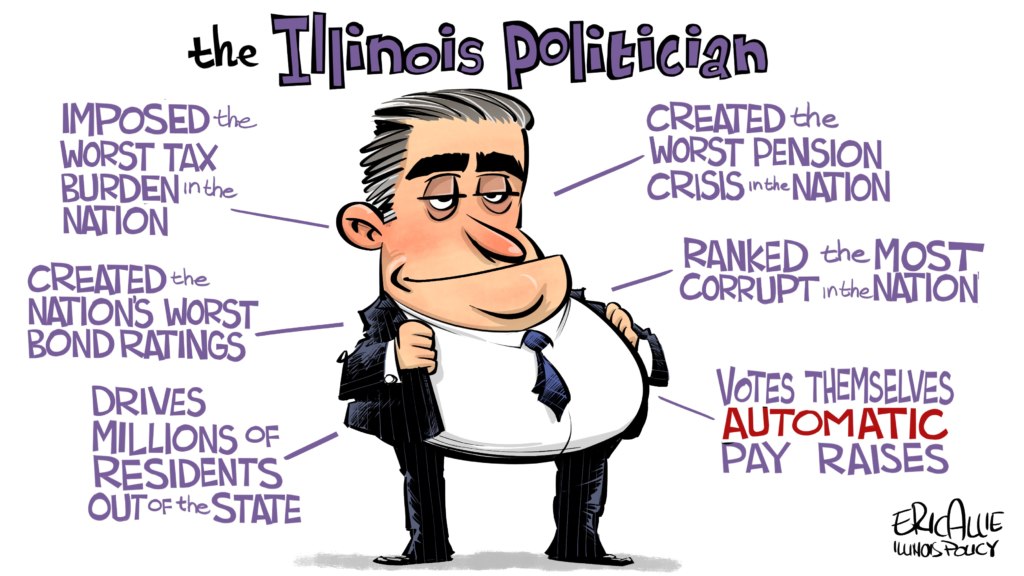 But the chances of pro-growth reform are effectively zero. The governor is a hard-core leftist (as well as a hypocrite) and the state legislature is controlled by government employee unions.
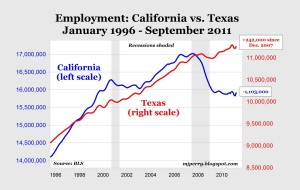 No wonder the Lone Star State is growing faster and creating more jobs.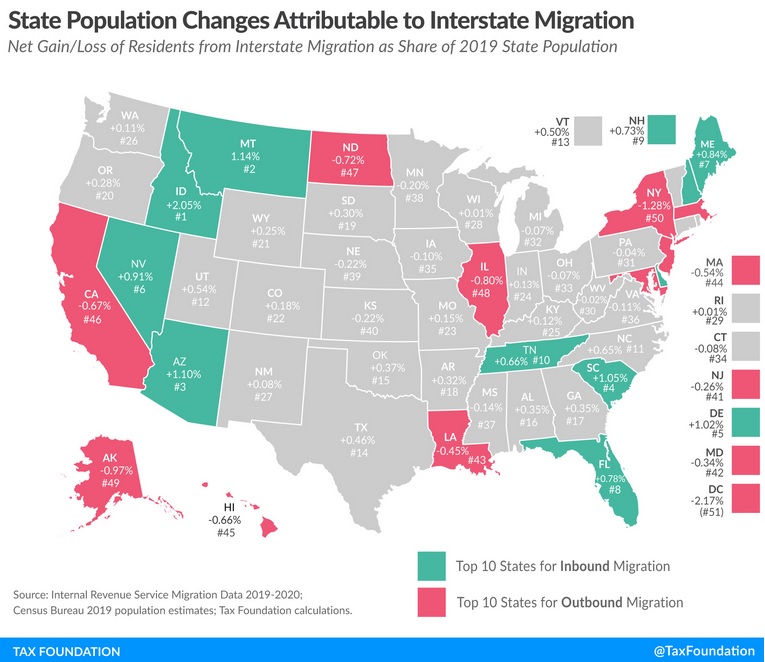

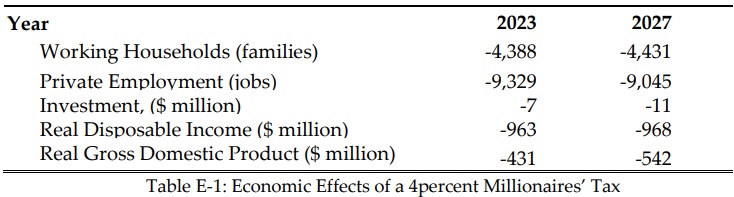

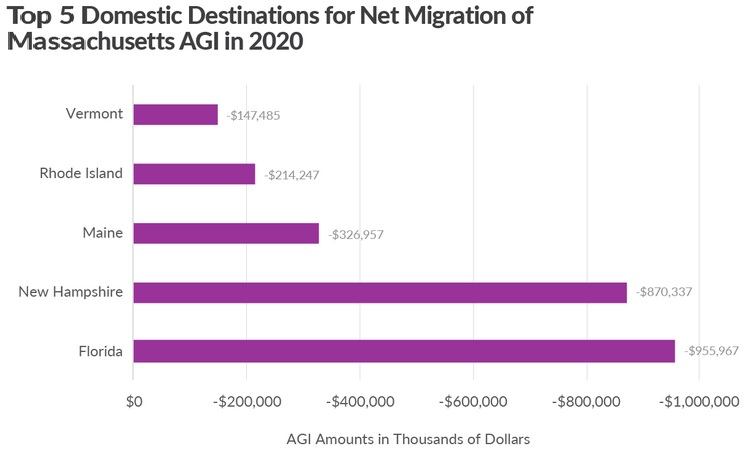
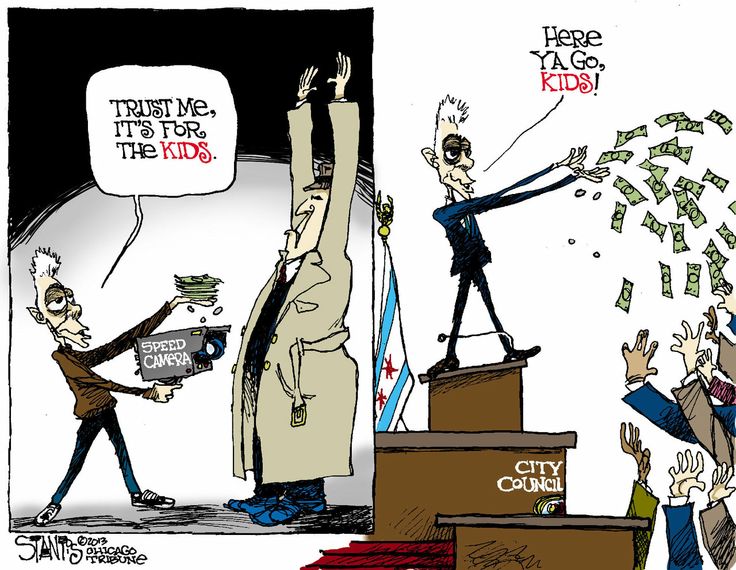





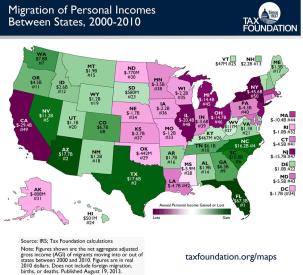
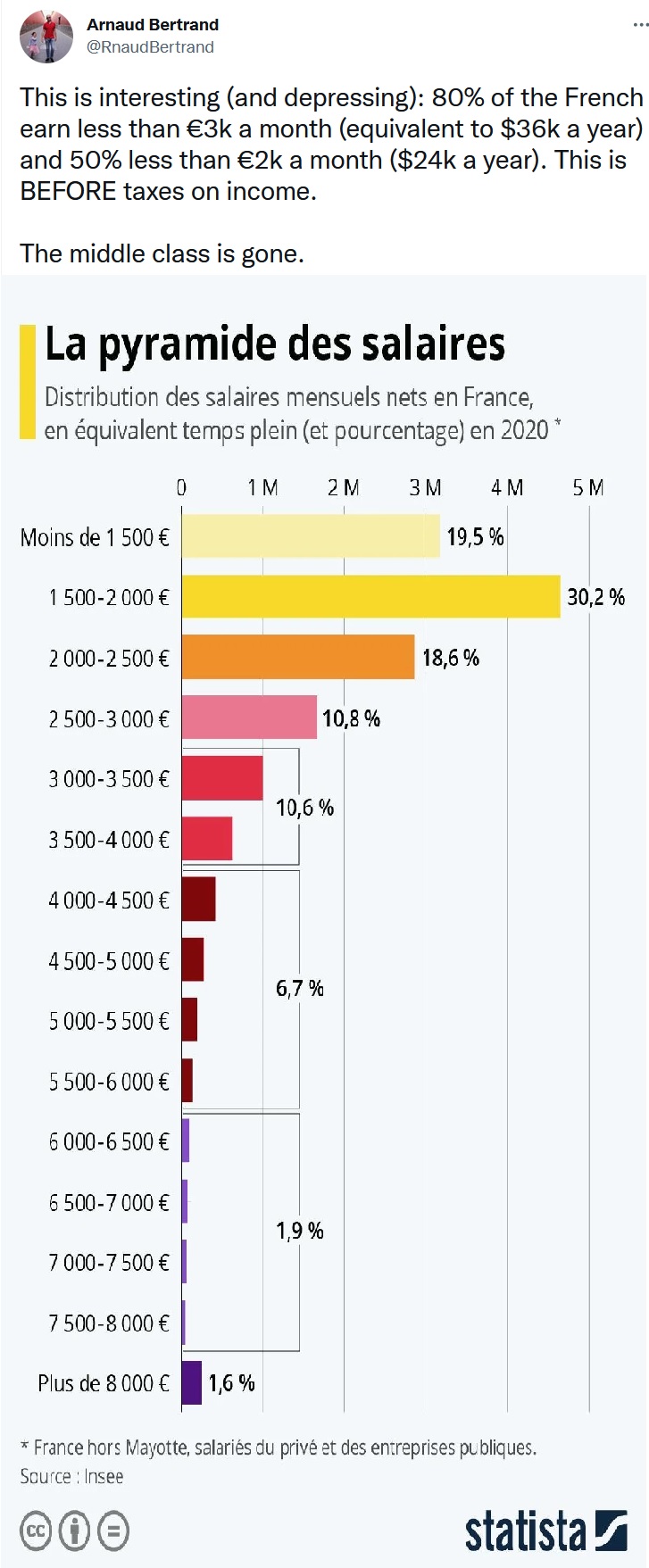
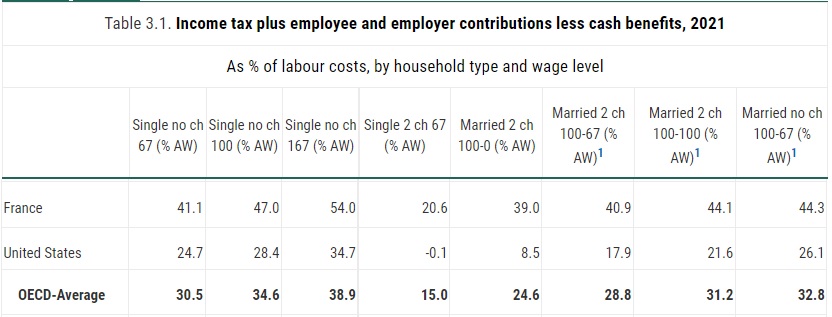
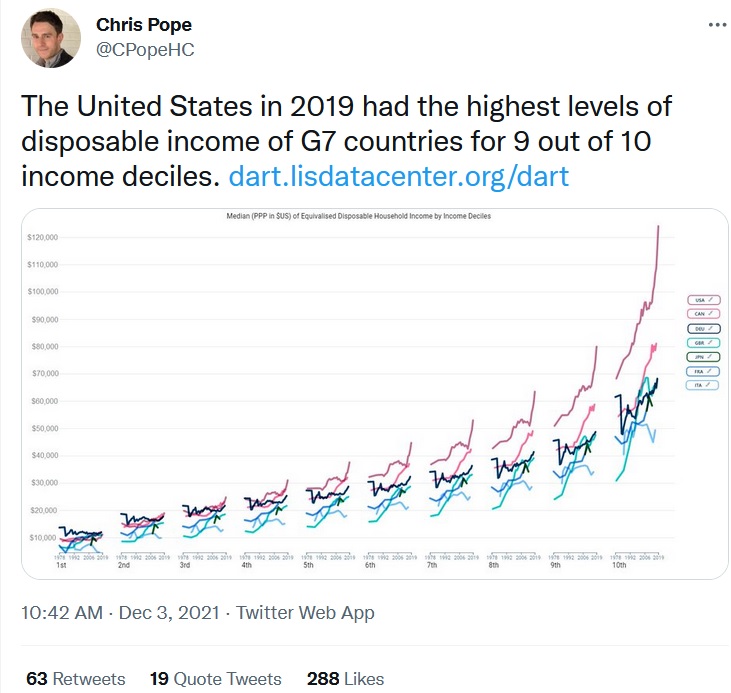
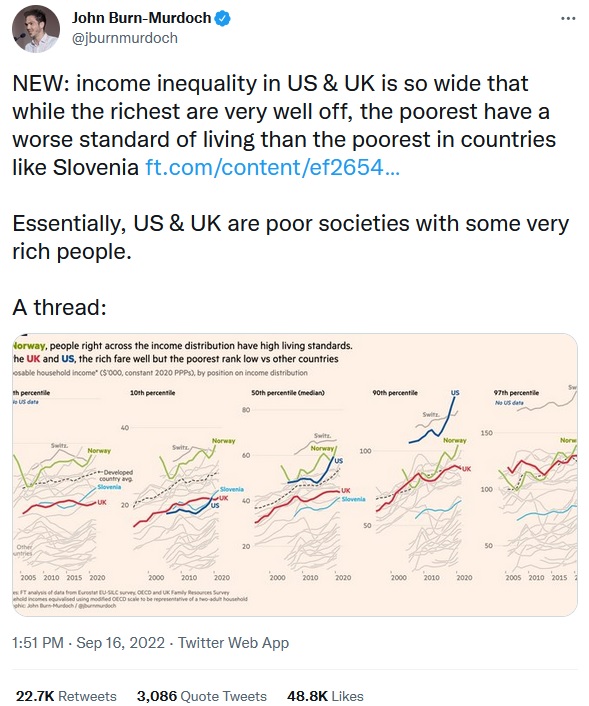

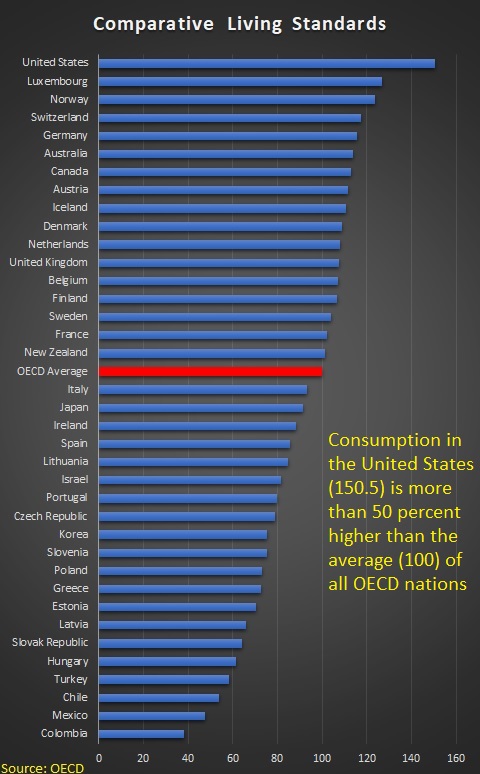



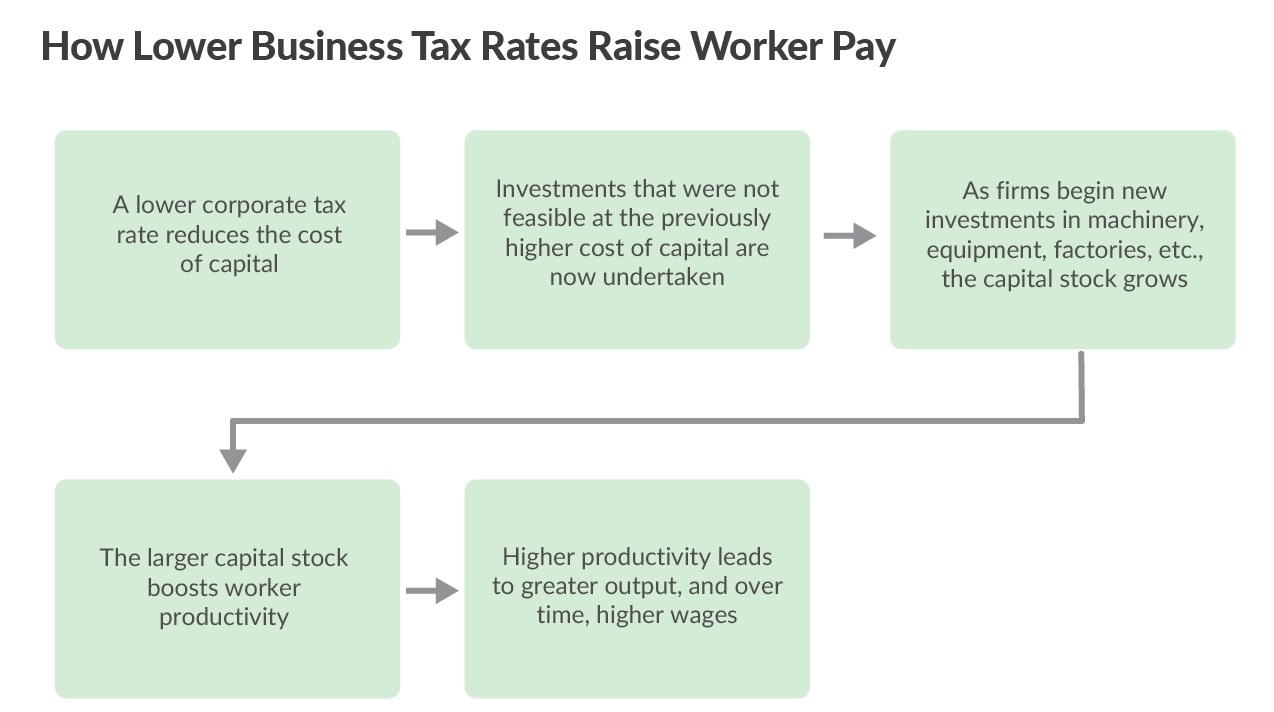

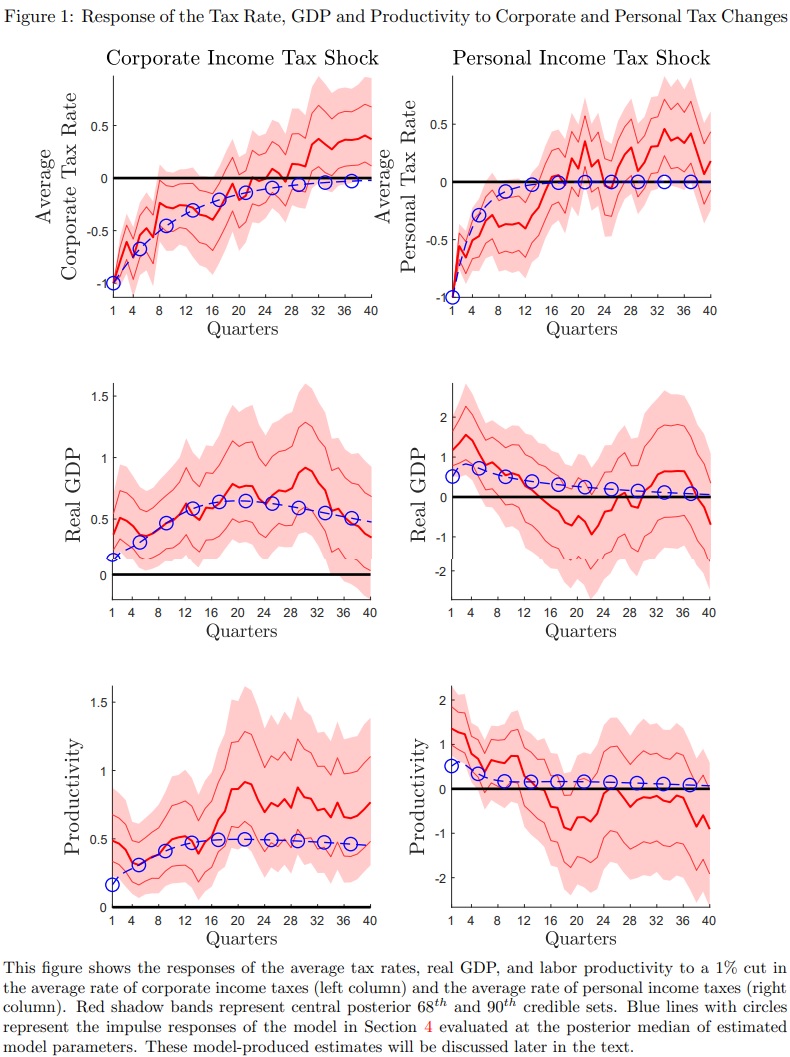


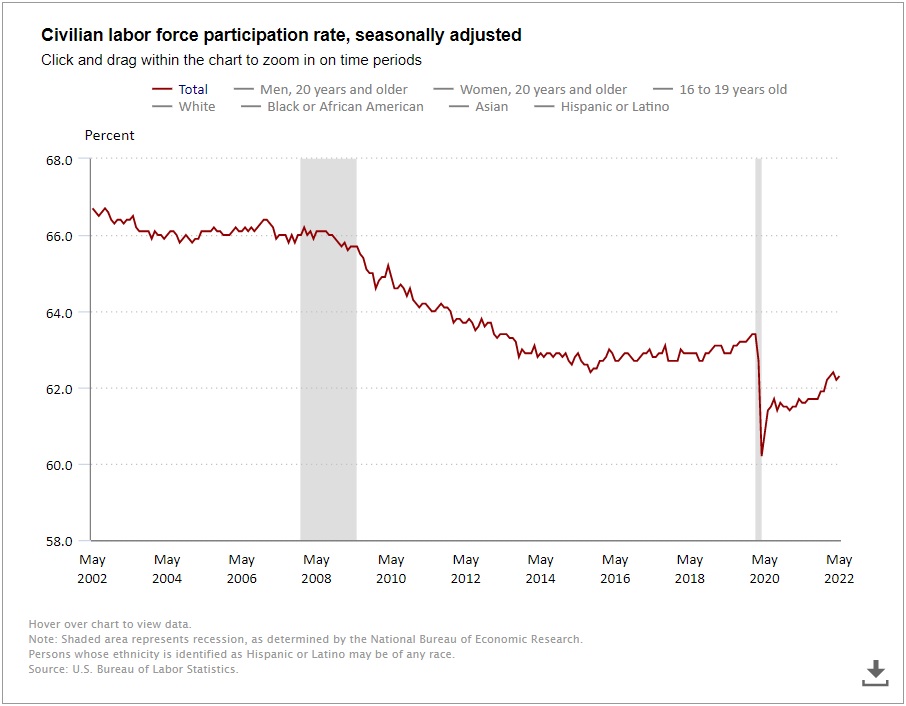




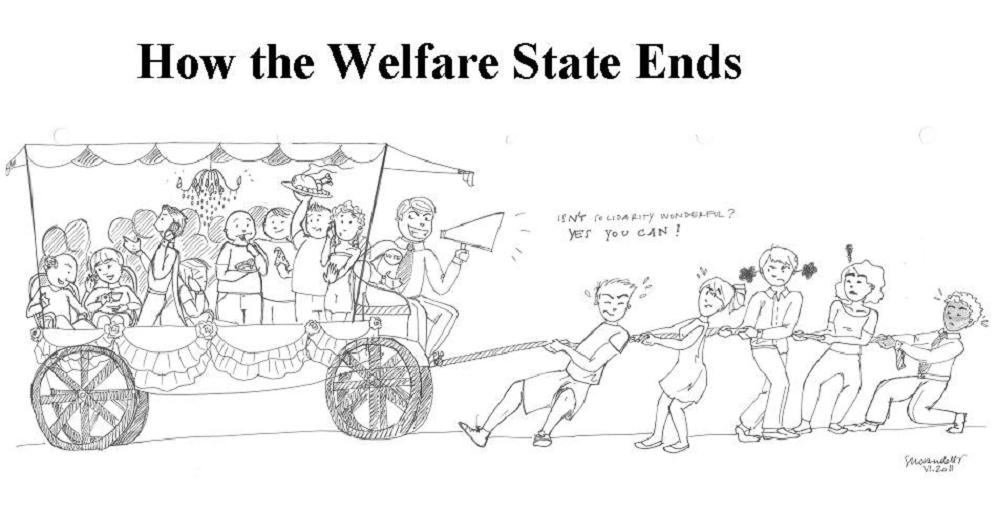





 It’s clearly an election year scam, one perfectly timed to try to gin up votes for a president whose approval ratings make him toxic on the campaign trail. House Speaker Nancy Pelosi previously suggested Biden’s move would be illegal: “The president can’t do it. That’s not even a discussion,”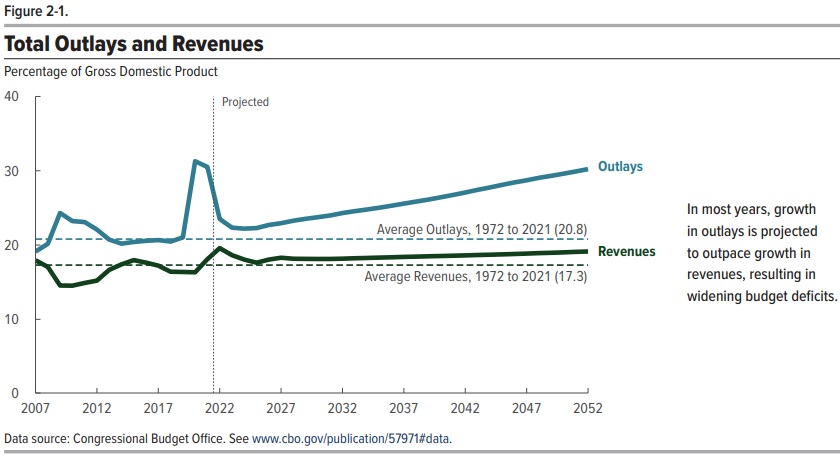
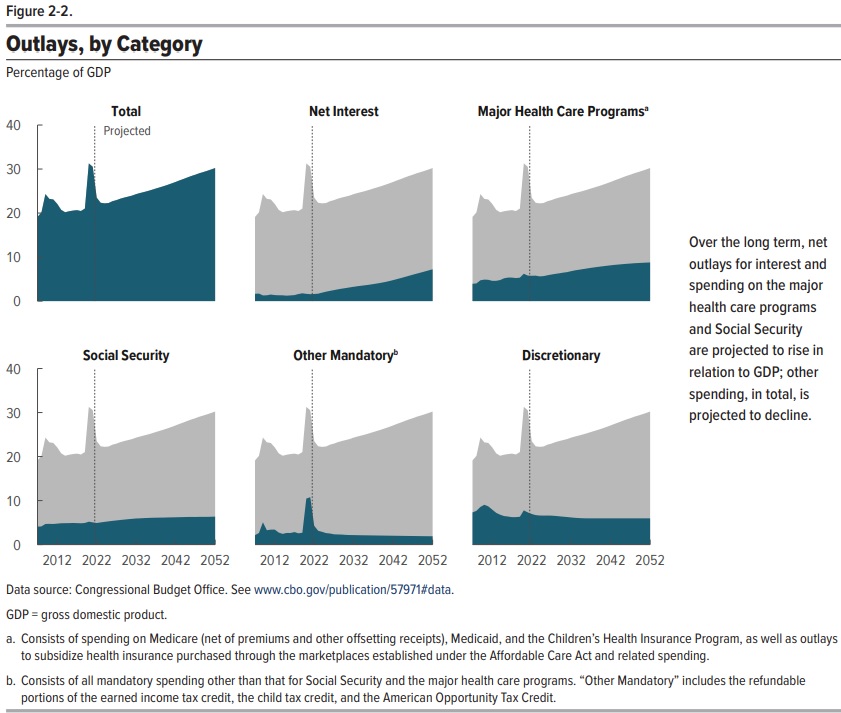
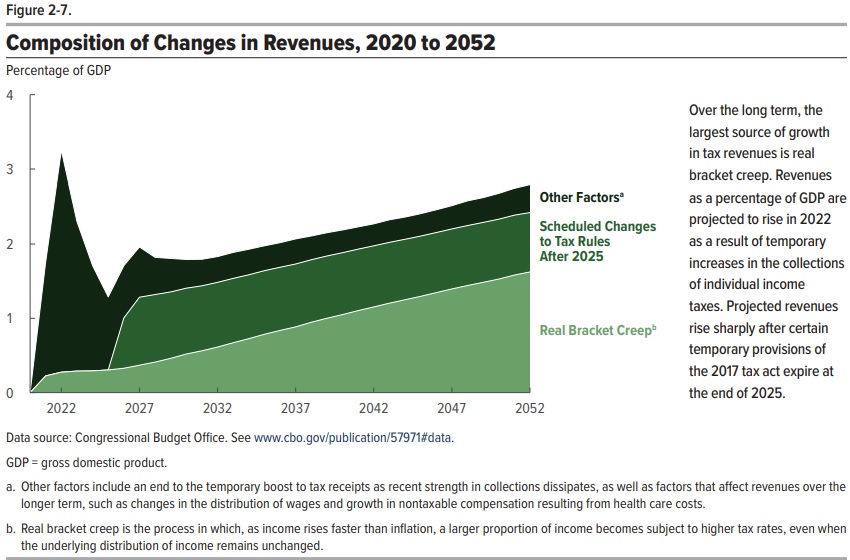
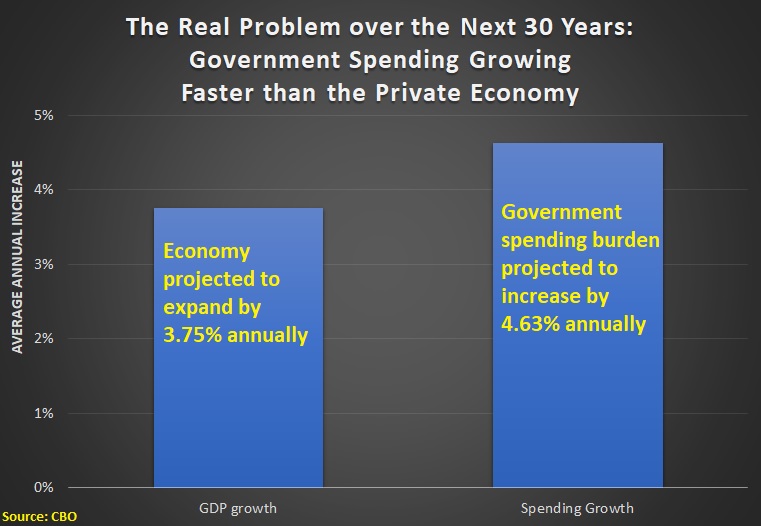


 The Daily Hatch