The singer-songwriter talks about "How He Loves," needing to have tragedy in worship music and authenticity.
By Kevin Selders
July 6, 2010
During the last several years, John Mark McMillan has learned to stop worrying about whether or not his lyrics are perfect, or if what he sings about is what people want to hear. After all, a lack of approval is a common side effect of honesty.
“I want to inspire people to say what they feel and not what they feel like they’re supposed to say,” he says of his songs. “Because if they feel like they’re supposed to do something, they don’t give themselves the opportunity to be genuine. They’ll just say the same words, which are great words, but after a while they stop meaning anything. We need new words to say the same thing because after a while the words lose their potency.”
McMillan is perhaps best known for his song “How He Loves,” which, despite being released independently five years ago, has found its way to the ears of some of the industry’s biggest names—and into churches across the country.
Originally appearing on his debut album, The Song Inside the Sounds of Breaking Down, “How He Loves” has been covered by David Crowder Band, Kim Walker and the Glorious Unseen in the studio, and Flyleaf, Hillsong and Todd Agnew in concert.
“I’m super happy for a whole new generation to take the song as their own and use it for their personal conversation with God,” McMillan says. “We’d actually stopped playing the song for a while, but it feels like it has a new energy now as new people discover it and that’s exciting to me.”
For McMillan, the song’s raw emotion is personal. It was written after a friend, Stephen Coffey, died in a car accident—the night after Coffey told God he would give his life if it would draw more youth to Christ.
“He was my best friend,” McMillan says. “I’d known him since we were children. We were baptized together. Really, what it came down to is I was angry with God. I didn’t quite know what to do with those feelings, but through that anger and resentment, I was able to see the heart of God in it all. God was able to take something terrible and show me something through it.”
Shortly after the tragedy, McMillan sat down to put his feelings into song and the lyrics quickly began flowing onto the paper.
He describes the writing process as a conversation with God: “I sat down to have a dialogue with God and, really, He ended up having a dialogue with me. It’s like He was speaking to me through the song.”
McMillan adds that the Church should incorporate more songs dealing with tragedy, loss and despair into its worship. He points to one of his favorites—Bruce Springsteen—as an example of someone who sings about hope to those who don’t have it.
“That’s what I love about Springsteen—he’s telling the average person’s story,” he says. “That’s what a worship leader should do.
“On this side of eternity, we’re going to have tragedy,” McMillan continues. “A lot of times in church we don’t want to talk about those kinds of things because it’s uncomfortable, but there are so many people in church who need to have that dialogue with God that I had. I think that’s why that song has become so powerful.”
Finding a language
In addition to reclaiming “How He Loves,” McMillan says resurrection was the theme that kept coming to the surface as he wrote The Medicine.
“It takes it from the resurrection of Jesus to the idea of living in the Resurrection, which we’re called to do on a daily basis,” he says. “Having a relationship with Jesus creates life in your daily life.”
And Medicine is regularly marked with refrains pointing to that sense of new life. “Death in His Grave” explores the conquering power of the Resurrection. “Reckoning Day” anticipates a time when we are no longer ruled by death. The album’s soaring lead single, “Skeleton Bones,” draws on Ezekiel 37’s vision of The Valley of Dry Bones, where God creates a vast army from the remains of the dead.
“I kind of see that as the Church,” says McMillan—and as someone who has been around church his whole life—he learned guitar from worship musicians at his father’s storefront church—he should know.
“The Bible talks about the Church being a body and humanity as kind of the dead bones,” he continues. “That’s basically the idea behind the song—that we come together and we become something more than ourselves. It’s a resurrection song.”
In the end, McMillan says, having the right words isn’t the point—it’s being able to be vulnerable and open yourself to God.
“I think people get so concerned with being correct that they end up editing themselves down, but that’s not the way King David did it,” he says. “That’s not the way they do it in the Bible. You bring God what you have and let Him deal with you. I really feel like God is not interested with how correct our words are. He doesn’t want us to get into weird situations, but I think He’d really prefer something that’s incorrect and genuine instead of something that’s correct but comes from a robot.”
When it comes to leading worship, McMillan says the goal must be to help people communicate on a personal level.
“The purpose of a worship leader or a songwriter is to give people language,” he says. “If you give people language, you give them permission. If you’re Bob Dylan in the ‘60s, you give people permission to think differently than their parents did. … If you’re a worship leader, you give people permission to talk to the Lord, have a dialogue and express their heart.”
McMillan also believes in seeking social justice as an act of worship. He contributed the joyous “I Dreamed There Was a Fountain” to a benefit album of the same name to support Zao, an organization providing safe drinking water and education to developing countries.
“Literally, they’re preventing wars by digging wells for people,” he says. “I thought, ‘Man, that’s the real kingdom of God.’ Doing stuff that in reality is saving people’s lives. It’s literally changing the whole world for some people. One well gives life to a thousand people.”
Filthy rags vs. nasty hearts
In a February 2010 entry on his blog, The Promenade, McMillan wrote: “It’s time to write dangerous music. It’s time to take risks. It’s time to wear your heart on your sleeve, and sing about the things that actually matter to you. It’s time to bury the shackles of religious expectation and stop trying to put new clothes on the dead.”
The sentiment is what ran through McMillan’s heart as he made The Medicine, and it’s his general philosophy as a worship songwriter.
“Jesus was not safe, at all,” McMillan says. “I’ve been in church my whole life and I’ve been a Christian a long time and I’ve always had a difficult time connecting with the expression of the Church. That’s really why I started writing music, I think, because I needed to be able to say those kinds of things.”
After all, he says, the Book of Isaiah reminds us that all of our righteousness is like filthy rags. What God wants is a person’s whole heart—“the whole nasty thing,” McMillan says.
“How silly would it be to say, ‘OK, Jesus died so we could sing Him songs,’” McMillan says. “I think He died for us because He wanted a relationship with people, and the music is a part of that relationship. If you get the music away from that, it’s just music.”
Cole Porter “Let’s Do it, Let’s Fall in Love” in the movie MIDNIGHT IN PARIS Midnight in Paris – Let’s Do It Let’s do it : Cole Porter.( Midnight in Paris ) Celebrate Wikipedia Loves Libraries at your institution in October/November. Let’s Do It, Let’s Fall in Love From Wikipedia, the free encyclopedia Jump to: […]
Cole Porter’s song “Anything goes” was also used in the Francis Schaeffer film WHATEVER HAPPENED TO THE HUMAN RACE? _______________ It’s De-Lovely – Anything Goes.mpg Anything Goes (song) From Wikipedia, the free encyclopedia Jump to: navigation, search This article is about the Cole Porter song. For other songs with the same title, see Anything Goes […]
Ethel Merman and Bing Crosby Sing “You’re the Top” which is great song written by Cole Porter ________________ Ethel Merman and Bing Crosby Sing “You’re the Top” You’re the Top From Wikipedia, the free encyclopedia Jump to: navigation, search “You’re The Top” is a Cole Porter song from the 1934 musical Anything Goes. It is […]
Jim Morrison’s sad drug death was followed by Pamela Courson’s sad story!!! pamela courson/ jim morrison interview Interview with Jim Morrison’s father and sister Uploaded on Aug 9, 2010 This interview is from “When You’re Strange” DVD bonus material. I do not own this video and own no rights to it! Pamela Courson Uploaded […]
The life of Lou Reed (includes videos from 1960’s and 1970’s) ____________ Rock & Roll – Velvet Underground The Velvet Underground – Venus in Furs – Live 1) Lou Reed – Sweet Jane – live in Paris, 1974 Velvet Underground-“Sunday Morning” from “Velvet Underground and Nico” LP Lou Reed From Wikipedia, the free encyclopedia Jump […]
Jim Morrison’s relationship with Nico Nico Icon documentary part 1. Nico Icon documentary part 2. ______________ Jim Morrison at Andy Warhol’s Party.wmv (with Nico) Uploaded on Apr 26, 2010 From the Oliver Stone movie. The Doors. _______________________ nico discusses jim morrison. Uploaded on Jan 2, 2008 nico discusses jim, and how he impacted her […]
Katy Perry and the material from the Prism Album!!!! Part 4 Katy Perry On Bonnie McKee, John Mayer & New Album, “Prism” in 92.3 NOW Interview Published on Aug 13, 2013 Katy Perry talks to 92.3 NOW’s Ty Bentli in NYC about her new music, working with Bonnie McKee and not dating Robert Pattinson. __________________________ […]
Katy Perry and the material from the Prism Album!!!! Part 3 Katy Perry – Roar (Official) Last Friday Katy Perry and Russell Brand’s divorce rumors came true when Brand reportedly filed for divorce in Los Angeles citing, “irreconcilable differences.” TMZ met up with Perry’s father, Keith Hudson, as he was out shopping and when they […]
Katy Perry and the material from the Prism Album!!!! Part 2 Katy Perry, Britney Spears, Neil Patrick Harris Interviewed at ‘The Smurfs 2′ World premiere From Wikipedia: Katy Perry From Wikipedia, the free encyclopedia Jump to: navigation, search “Katy Hudson” redirects here. For the album, see Katy Hudson (album). For the Australian fashion designer, see […]
Katy Perry and the material from the Prism Album!!!! Part 1 Katy Perry – Roar (Official) Katy Perry on Her Strict Evangelical Upbringing: ‘I Didn’t Have a Childhood’ By Alison Matheson, Christian Post Correspondent May 5, 2011|2:37 am Pop star Katy Perry isn’t shy when it comes to flaunting her body and strutting her […]
Christian HamakerCrosswalk.com Contributing Writer
201411 Nov
COMMENTS0
Release Date: November 5, 2014 (IMAX); November 7 wide Rating: PG-13 for some intense perilous action and brief strong language Genre: Drama Run Time: 169 min. Director: Christopher Nolan Cast: Matthew McConaughey, Anne Hathaway, Jessica Chastain, Casey Affleck, Wes Bentley, Michael Caine, Topher Grace, Ellen Burstyn, John Lithgow
Christopher Nolan has joined a short list of directors whose films are considered events. Ever since his breakout film Memento (2000), which played with basic narrative conventions by telling its story backward, Nolan’s work has grown both larger and more complex. He rebooted the Batman franchise with Batman Begins (2005) and took up more sinister themes with The Dark Knight (2008), which explored both human depravity and the dangers of the security state. Between his Batman projects, Nolan wrote and directed The Prestige(2006) and Inception (2010), and he wrote the script for last summer’s Zack Snyder-directed Superman reboot, Man of Steel.
Nolan doesn’t play directorial small-ball. He develops heady stories that are best absorbed on a large screen, where the visual presentation matches or exceeds his scripts’ ideas. But Nolan often gets carried away. His biggest weakness as a filmmaker is a tendency toward bloated storytelling—the antithesis of the streamlined narrative on which he made his name with Memento. He sometimes just doesn’t know when to quit.
Midnight in Paris – a delightfully entertaining film of wit, wonder and love Have you ever thought that you were born in the wrong time? Since I was a child, I found my love for MGM musicals set me apart from my friends. Are we really out of place, or is a sense of nostalgia […]
Five favorite Woody Allen classics Add a comment Sean Kernan , Davenport Classic Movies Examiner June 11, 2011 Woody Allen’s new film “Midnight in Paris” starring Owen Wilson, Rachel McAdams and Oscar winner Marion Cotillard opened Friday, June 10th at Rave Motion Pictures in Davenport, Iowa. “Midnight in Paris” stars Owen Wilson as a blocked […]
Hemingway talks about the fear of death in the latest Woody Allen film “Midnight in Paris.” This is one of Allen’s themes that visits often in his films. This is the Golden Age; “Midnight in Paris” is effortlessly lovely by Nick Christian, Editor-In-Chief Volume 16, Issue 34 June 14, 2010 The CNM Chronicle gives “Midnight […]
Emma Stone and Colin Firth promoting Woody Allen’s ‘Magic in the Moonlight’ on Good Morning America Review and Pictures and Video Clips of Woody Allen’s movie “MAGIC IN THE MOONLIGHT” Part 14 Colin Firth looks handsome and happy in dark blue suit at Magic In The Moonlight screening… despite lukewarm reviews from critics By ELEANOR […]
Magic In The Moonlight: Hamish Linklater Exclusive Interview Review and Pictures and Video Clips of Woody Allen’s movie “MAGIC IN THE MOONLIGHT” Part 13 Film Review: Magic in the Moonlight JULY 21, 2014 tags: Colin Firth, Emma Stone, Magic in the Moonlight, Review,Woody Allen (Re-posted from LimitéMagazine.com) by Daniel Quitério Exotic locations. Defined characters. Sharp wit. […]
_____________________________________ Magic In The Moonlight: Hamish Linklater Exclusive Interview Review and Pictures and Video Clips of Woody Allen’s movie “MAGIC IN THE MOONLIGHT” Part 12 ‘Magic in the Moonlight’ (2014) Movie Review Fun, witty and charming, but loses steam in its final third BY: BRAD BREVET MONDAY, JUL 21, 2014 AT 10:11 AM Emma Stone […]
Academy Conversations: Magic in the Moonlight Published on Jul 21, 2014 Magic in the Moonlight discussion with actors Colin Firth and Hamish Linklater on July 20, 2014 at the Samuel Goldwyn Theater. ______________________________________ Review and Pictures and Video Clips of Woody Allen’s movie “MAGIC IN THE MOONLIGHT” Part 11 Woody Allen’s Magic in the Moonlight: […]
Magic In The Moonlight: Jacki Weaver Exclusive Interview Review and Pictures and Video Clips of Woody Allen’s movie “MAGIC IN THE MOONLIGHT” Part 9 Colin Firth and Emma Stone make magic together in Woody Allen’s breezily entertaining 1920s romance. Scott Foundas Chief Film Critic@foundasonfilm Romance blooms under the sun and the stars in Woody Allen’s […]
Magic in the Moonlight Movie Review : Woody Allen – Beyond The Trailer Review and Pictures and Video Clips of Woody Allen’s movie “MAGIC IN THE MOONLIGHT” Part 8 __________________ Magic In The Moonlight Movie Review POSTED BY CHIARA SPAGNOLI GABARDI ON JULY – 20 – 2014 0 COMMENT Title: Magic In The Moonlight Director: […]
Dr. H. Fritz Schaefer confronts the assertion that one cannot believe in God and be a credible scientist. He explains that the theistic world view of Bacon, Kepler, Pascal, Boyle, Newton, Faraday and Maxwell was instrumental in the rise of modern science itself. Presented as part of the Let There be Light series. Series: Let There Be Light [5/2003] [Humanities] [Show ID: 7338]
This lecture is also known as Science and Christianity: Conflict or Coherence?
The Genesis of This Lecture
I first began teaching freshman chemistry at Berkeley in the spring of 1983. Typically we lectured in halls that held about 550. On the first day of class you could fit in 680, which we had that particular morning. It was a full auditorium. Those of you who have had freshman chemistry at a large university will know that many have mixed feelings about that course.
I had never addressed a group of 680 people before and was a bit concerned about it. But I had a fantastic demonstration prepared for them. At Berkeley in the physical science lecture hall, the stage is in three parts. It rotated around, so you could go to your part of the stage and work for several hours before your lecture, getting everything ready. My assistant, Lonny Martin who did all the chemistry demonstrations at Berkley, was in the process of setting up 10 moles of a large number of quantities—10 moles of benzene, iron, mercury, ethyl alcohol, water, etc. At just the right time, at the grand crescendo of this lecture, I was going to press the button and Lonny would come turning around and show them the ten moles of various items. The student would have great insight as they realized that all these had in common was about the same number of molecules of each one.
It was going to be wonderful. We got to that point in the lecture and I said, “Lonny, come around and show us the moles.” I pressed the button to rotate the stage but nothing happened. I didn’t realize that he was overriding my button press because he wasn’t ready with the moles. This was very embarrassing. I went out in front of the 680 students and was really at a complete loss of what to say, so I made some unprepared remarks. I said, “While we’re waiting for the moles, let me tell you what happened to me in church yesterday morning.”
I was desperate. There was great silence among those 680 students. They had come with all manner of anticipations about freshman chemistry, but stories about church were not among them!
I continued, “Let me tell you what my Sunday School teacher said yesterday.” That raised their interest even more. “I was hoping the group at church would give me some support, moral, spiritual, or whatever for dealing with this large class, but I received none. In fact, the Sunday School teacher asked the class, in honor of me:
What was the difference between a dead dog lying in the middle of the street and a dead chemistry professor lying in the middle of the street?
The class was excited about this and I hadn’t even gotten to the punch line. They roared with laughter. The very concept of a dead chemistry professor lying in the middle of the street was hilarious to them. I’m sure some of them began to think, “If this guy were to become a dead chemistry professor very close to the final exam, we probably wouldn’t have to take the final exam. They’d probably give us all passing grades and this would be wonderful.”
I told them my Sunday school teacher had said that the difference between the dead dog lying in the middle of the road and the dead chemistry professor lying in the middle of the road is that there are skid marks in front of the dead dog.
The class thought this was wonderful! Just as they settled down, I pressed the button and around came Lonny with the moles. It was a wonderful beginning to my career as a freshman chemistry lecturer.
About 50 students came down at the end of class. About half had the usual questions like “Which dot do I punch out of this registration card?” There is always some of that. But about half of these students all had something like the same question. Basically they wanted to know “What were you doing in church yesterday?” One in particular said, “The person I most have admired in my life was my high school chemistry teacher last year. He told me with great certainty that it was impossible to be a practicing chemist and have any religious view whatever. What do you think about that?”
We didn’t have a long discussion at that time, but the students asked me if I would speak further on this topic. That became the origin of this lecture.
I gave this talk in Berkeley and in the San Francisco area many times. When I moved to the University of Georgia several years ago, the interest increased. And some faculty members complained to the administration. It was an interesting chapter in my life. The Atlanta Journal and Constitution, the largest newspaper in the southeastern United States, came out with an editorial supporting my right to give this talk, saying, “Fanatics are demanding rigorous control over the dissemination of ideas.”
A Perspective on the Relation of Science and Christianity
Let’s put this question of the relationship between science and Christianity with as broadest, most reasonable perspective we can. The relation between science and other intellectual pursuits has not always been easy. Therefore, many feel there has been a terrible warfare between science and Christianity. But I feel this is not the whole story.
For example, the recent literature text by Susan Gallagher and Roger Lundeen says,
Because in recent history, literature has often found itself in opposition to science, to understand modern views about literature the dominance of science in our culture. For several centuries, scientists have set the standards of truth for Western culture. And their undeniable usefulness in helping us organize, analyze, and manipulate facts has given them an unprecedented importance in modern society.
Not everybody has liked that. For example, John Keats, the great romantic poet, did not like Isaac Newton’s view of reality. He said it threatened to destroy all the beauty in the universe. He feared that a world in which myths and poetic visions had vanished would become a barren and uninviting place. In his poem Lamia, he talks about this destructive power. In this poem, he calls “science” “philosophy”, so I will try to replace the word “philosophy” with “science” because that is what he means.
Do not all charms fly
At the mere touch of cold science?
There was an awful rainbow once in heaven
We knew her woof and texture.
She is given in the dull catalog of common things. Science will clip an angels wings,
Conquer all mysteries by rule and line,
Empty the haunted air and gnome’s mind,
Unweave a rainbow.
My point is there has been some sparring between science and virtually every other intellectual endeavor. So it should not be entirely surprising if there weren’t a bit of that between science and Christianity.
Has Science Disproved God?
Nevertheless, the position is commonly stated that “science has disproved God.” C. S. Lewis says, in his autobiography Surprised by Joy, that he believed that statement. He talks about the atheism of his early youth and credits it to science. He says,
You will understand that my atheism was inevitably based on what I believed to be the findings of the sciences and those findings, not being a scientist, I had to take on trust, in fact, on authority.
What he’s saying is that somebody told him that science had disproved God and he believe it, even though he didn’t know anything about science.
A more balanced view is this by one of my scientific heroes, Erwin Schrodinger. He was the founder of wave mechanics and the originator of what is the most important equation in science, Schrodinger’s equation. He says,
I’m very astonished that the scientific picture of the real world is very deficient. It gives a lot of factual information, puts all our experience in a magnificently consistent order, but it is ghastly silent about all and sundry that is really near to our heart, that really matters to us. It cannot tell us a word about red and blue, bitter and sweet, physical pain and physical delight, knows nothing of beautiful and ugly, good or bad, God and eternity. Science sometimes pretends to answer questions in these domains, but the answers are very often so silly that we are not inclined to take them seriously.
People do tell good stories. Scientists do tell some interesting stories about religion. This one is from Chemistry in Britain, which is kind of like the Time Magazine of they chemical profession in England. Talking about the release of a new book on science policy, they explore an interesting idea.
If God applied to the government for a research grant for the development of a heaven and earth, he would be turned down on the following grounds:
His project is too ambitious.
He has no previous track record.
His only publication is only a book and not a paper in a refereed journal.
He refuses to collaborate with his biggest competitor.
His proposal for a heaven and earth is all up in the air.
The Alternatives to Belief in the Sovereign God of the Universe
Lev Landau
I want to give examples of two atheists. The first is Lev Landau, the most brilliant Soviet physicist of this century. He was the author of many famous books with his coworker Lifchets. I actually used some of these books as a student at M.I.T. This is a story about Landau from his good friend and biographer Kolotnikov. This appeared in Physics Today. This is a story from the end of Landau’s life. Kolotnikov says
The last time I saw Landau was in 1968 after he had an operation. His health had greatly deteriorated. Lifchets and I were summoned to the hospital. We were informed that there was practically no chance he could be saved. When I entered his ward, Landau was lying on his side with his face turned to the wall. He heard my steps, turned his head, and said, “Kollat, please save me.” Those were the last words I heard from Landau. He died that night.
Subrahmanyan Chandrasekhar
Chandrasekhar was a famous astrophysicist. He won the Nobel prize in physics in 1983. He was a faculty member at the University of Chicago for many years. At the back of his biography is an interview. Chandrasekhar says,
In fact, I consider myself an atheist. But I have a feeling of disappointment because the hope for contentment and a peaceful outlook on life as the result of pursuing a goal has remained largely unfulfilled.
His biographer is astonished. He says:
What? I don’t understand. You mean, single–minded pursuit of science, understanding parts of nature and comprehending nature with such enormous success still leaves you with a feeling of discontentment?
Chandrasekhar continues in a serious way, saying:
I don’t really have a sense of fulfillment. All I have done seems to not be very much.
The biographer seeks to lighten up the discussion a little saying that everybody has the same sort of feelings. But Chandrasekhar will not let him do this, saying:
Well that may be, but the fact that other people experience it doesn’t change the fact that one is experiencing it. It doesn’t become less personal on that account.
And Chandrasekhar’s final statement:
What is true in my own personal case is that I simply don’t have that sense of harmony which I’d hoped for when I was young. I’ve persevered in science for over fifty years. The time I’ve devoted to other things is miniscule.
Is it Possible to be a Scientist and a Christian?
So the question I want to explore is the one that I was asked by that young man after my freshman chemistry class at Berkeley, “Is it possible to be a scientist and a Christian.” The student and his high school chemistry teacher obviously thought it was not possible.
C. P. Snow
Let me begin from pretty neutral ground by quoting two people with no particular theistic inclination. The first one is C. P. Snow. C. P. Snow used to be very famous as the author of a book called The Two Cultures. C. P. Snow was a physical chemist at Oxford University. He discovered about halfway through his career that he also was a gifted writer and he began writing novels. They are about university life in England. One in particular is called Masters, which I would recommend. C. P. Snow became quite wealthy doing this and then he was able to sit in an in–between position, between the world of the sciences and the world of literature.
He wrote this book, which in it’s time was very famous, about the two cultures—the sciences and the humanities. He said statistically slightly more scientists are in religious terms, unbelievers, compared with the rest of the intellectual world, although there are plenty that are religious and that seems to be increasingly so among the young. So is it possible to be a scientist and a Christian? C. P. Snow, who was certainly not a Christian, said yes.
Richard Feynman
Richard Feynman, Nobel prize in physics in 1965, was a very unusual person. He said some 9 years before receiving the Nobel prize, “Many scientists do believe in both science and God, the God of revelation, in a perfectly consistent way.” So is it possible to be a scientist and a Christian? Yes according to Richard Feynman.
A good summary statement in this regard is by Alan Lightman, who has written a very well–received book called Origins. He’s an M.I.T. professor who has published this book with Harvard University Press. He says,
References to God continued in the scientific literature until the middle to late 1800’s. It seems likely that the lack of religious references after this time seem more from a change in social and professional conventions among scientists rather than from any change in underlying thought. Indeed, contrary to popular myth, scientists appear to have the same range of attitudes about religious matters as does the general public.
Now one could regard that statement as strictly anecdotal. Americans love statistics. Here’s the result of a poll of the professional society Sigma Zi. Three thousand three hundred responded, so this is certainly beyond statistical uncertainty. The headline says, “Scientists are anchored in the U. S. mainstream.” It says that half participate in religious activities regularly. Looking at the poll is that 43% of Ph.D. scientists are in church on a typical Sunday. In the American public, 44% are in church on a typical Sunday. So it’s clear that whatever it is that causes people to have religious inclinations is unrelated to having an advanced degree in science.
Michael Polanyi
Let go a little deeper with a statement from Michael Polanyi, professor of chemistry and then philosophy at the University of Manchester. His son, John Polanyi, won the Nobel prize in 1986. I think that it’s probably true that when John Polanyi’s scientific accomplishments, which have been magnificent, have been mostly forgotten, his father’s work will continue.
Michael Polanyi was a great physical chemist at the University of Manchester. About halfway through his career, he switched over to philosophy. He was equally distinguished there. His books are not easy to ready. His most influential book is called Personal Knowledge. He was of Jewish physical descent. He was born in Hungary. About the same time he switched from chemistry to philosophy, he joined the Roman Catholic church. He said,
I shall reexamine the suppositions underlying our belief in science and propose to show that they are more extensive than is usually thought. They will appear to coextend with the entire spiritual foundations of man and to go to the very root of his social existence. Hence I will urge our belief in science should be regarded as a token of much wider convictions.
If you read the rest of the book, you will probably make the same conclusion that I make. I’ve concluded that Polanyi is pointing out that the observer is always there in the laboratory. He always makes conclusions. He is never neutral. Every scientist brings presuppositions to his or her work. A scientist, for example, never questions the basic soundness of the scientific method. This faith of the scientist arose historically from the Christian belief that God the father created a perfectly orderly universe.
Now I want to give you some evidence of that.
Science Developed in a Christian Environment
I’d like to begin with an outrageous statement that always causes reaction. This is a statement from a British scientist, Robert Clark. It will make you think. He says,
However we may interpret the fact scientific development has only occurred in a Christian culture. The ancients had brains as good as ours. In all civilizations, Babylonia, Egypt, Greece, India, Rome, Persia, China and so on, science developed to a certain point and then stopped. It is easy to argue speculatively that science might have been able to develop in the absence of Christianity, but in fact, it never did. And no wonder. For the non–Christian world felt there was something ethically wrong about science. In Greece, this conviction was enshrined in the legend of Prometheus, the fire–bearer and prototype scientist who stole fire from heaven thus incurring the wrath of the Gods.”
I’d prefer if he had said “sustained scientific development.” I think he’s gone a little too far here, but this will certainly give people something to think about.
Francis Bacon
Let’s explore the idea involved in the statements that Clark and Polanyi made, that is, that science grew up in a Christian environment. I was taught that Francis Bacon discovered thescientific method. The higher critics now claim he stole it from somebody else and just popularized it. We’ll leave that to the science historians to settle.
One of Francis Bacon’s statements is called the two–books statement. It’s very famous. He said:
Let no one think or maintain that a person can search too far or be too well studied in either the book of God’s word or the book of God’s works.
He’s talking about the Bible as the book of God’s words and nature as the book of God’s works. He is encouraging learning as much as possible about both. So right at the beginning of the scientific method, we have this statement.
Johannes Kepler
Johannes Kepler posited the idea of elliptical orbits for planets. He’s considered the discoverer of the laws of planetary motion. He was a devout Lutheran Christian. When he was asked the question “Why do you do science?”, he answered that he desired in his scientific research to obtain a sample test of the delight of the Divine Creator in his work and to partake of his joy. This has been said in many ways by other people, to think God’s thoughts after him, to know the mind of man. Kepler might be considered a Deist based on this first statement alone. But he later said:
I believe only and alone in the service of Jesus Christ. In him is all refuge and solace.
Blaise Pascal
Blaise Pascal was a magnificent scientist. He is the father of the mathematical theory of probability and combinatorial analysis. He provided the essential link between the mechanics of fluids and the mechanics of rigid bodies. He is the only physical scientist to make profound contributions to Christian thinking. Many of these thoughts are found in the little book, ThePensees, which I had to read as a sophomore at M.I.T. (They were trying to civilize us geeks at M.I.T., but a few years later decided that it wasn’t working, so we didn’t have to take any more humanities courses.)
Pascal’s theology is centered on the person of Jesus Christ as Savior and based on personal experience. He stated:
God makes people conscious of their inward wretchedness, which the Bible calls “sin” and his infinite mercy. Unites himself to their inmost soul, fills it with humility and joy, with confidence and love, renders them incapable of any other end than Himself. Jesus Christ is the end of all and the center to which all tends.
Pascal also said:
At the center of every human being is a God–shaped vacuum which can only be filled by Jesus Christ.
Robert Boyle
Robert Boyle was perhaps the first chemist. He developed the idea of atoms. Many of my freshman chemistry students know Boyle’s law. Every once in a while I’ll meet one of my former chemistry students. I ask them “What do you remember from the course?” Occasionally they will say: pv = nrt. Then I know I was successful. This is the ideal gas law of which Boyle’s law is a part.
Boyle was a busy man. He wrote many books. One is The Wisdom of God Manifested in the Works of Creation. He personally endowed an annual lectureship promoted to the defense of Christianity against indifferentism and atheism. He was a good friend of Richard Baxter, one of the great Puritan theologians. He was governor of the Corporation for the Spread of the Gospel of Jesus Christ in New England.
Isaac Newton
Although I disagree, a recent poll on who the most important person of history was gave that honor to Sir Isaac Newton. Newton was a mathematician, physicist, co–discoverer with Liebnitz of calculus, the founder of classical physics. He was the first of the three great theoretical physicists. He wrote about a lot of other things. He tried to do chemistry, but was a little bit before his time. He wrote more books on theology than on science. He wrote one about the return of Jesus Christ entitled Observations on the prophecy of Daniel and the Revelation of Saint John. He said:
This most beautiful system of the sun, planets and comets could only proceed from the counsel and dominion of an intelligent and powerful Being.
One might assume from this statement that Newton was a Deist (system of natural religion that affirms God’s existence but denies revelation). However, quotes like this shows this is not true:
There are more sure marks of authenticity in the Bible than in any profane history.
One concludes that Newton was a Biblical literalist. It was not enough that an article of faith could be deduced from Scripture, he said:
It must be expressed in the very form of sound words in which it was delivered by the apostles. For men are apt to run into partings about deductions. All the old heresies lie in deductions. The true faith was in the Biblical texts.
George Trevellian, a secular historian, summarized the contributions of these individuals as follows:
Boyle, Newton and the early members of the Royal Society were religious men who repudiated the skeptical doctrines of Thomas Hobbs. But they familiarized the minds of their countrymen with the idea of law in the universe and with scientific methods of inquiry to discover truth. It was believed that these methods would never lead to any conclusions inconsistent with Biblical history and miraculous religion. Newton lived and died in that faith.
Michael Faraday
My very favorite—and probably the greatest experimental scientist of all—is Michael Faraday. The two hundredth birthday of Michael Faraday’s birth was recently celebrated at the Royal Institution (multi–disciplinary research laboratory in London). There was an interesting article published by my friend Sir John Thomas, who said if Michael Faraday had been living in the era of the Nobel prize, he would have been worthy of at least eight Nobel prizes. Faraday discovered benzene and electromagnetic radiation, invented the generator and was the main architect of classical field theory.
Let me contrast the end of his life with the end of Lev Landau’s life. Faraday was close to death. A friend and well–wisher came by and said, “Sir Michael, what speculations have you now?” This friend was trying to introduce some levity into the situation. Faraday’s career had consisted of making speculations about science and then dash into the laboratory to either prove or disprove them. It was a reasonable thing to say.
Faraday took it very seriously. He replied:
Speculations, man, I have none. I have certainties. I thank God that I don’t rest my dying head upon speculations for “I know whom I have believed and am persuaded that he is able to keep that which I’ve committed unto him against that day.”
James Clerk Maxwell
The second of the three great theoretical physicist of all time would certainly have been James Clerk Maxwell. Someone has documented Maxwell’s career this way:
Maxwell possessed all the gifts necessary for revolutionary advances in theoretical physics—a profound grasp of physical reality, great mathematical ability, total absence of preconceived notions, a creative imagination of the highest order. He possessed also the gift to recognize the right task for this genius—the mathematical interpretation of Faraday’s concept of electromagnetic field. Maxwell’s successful completion of this task resulting in the mathematical [field] equations bearing his name, constituted one of the great achievements of the human intellect.
I disagree with one statement made above. If Maxwell indeed had a total absence of preconceived notions, he would have accomplished a total absence of science. So this is obviously written by somebody who is not a scientist (a squishyhead). However, this statement is basically good.
Maxwell said:
Think what God has determined to do to all those who submit themselves to his righteousness and are willing to receive his gift [of eternal life in Jesus Christ]. They are to be conformed to the image of his Son and when that is fulfilled and God sees they are conformed to the image of Christ, there can be no more condemnation.
Maxwell and Charles Darwin were contemporaries. Many wonder what he thought of Darwin’s theories. In fact, once he was to go to a meeting on the Italian Riviera in February to discuss new developments in science and the Bible. If you’ve ever spent time in Cambridge, England, you know it is very gloomy in the wintertime. If I had been a faculty there, I would have taken an opportunity to go to the Italian Riviera at this time of the year.
Maxwell turned down the invitation. He explained:
The rate of change of scientific hypotheses is naturally much more rapid than that of Biblical interpretation. So if an interpretation is founded on such a hypothesis it may help to keep the hypothesis above ground long after it ought to be buried and forgotten.
This is true. An example of this is the steady–state theory, which was popularized by Fred Hoyle and many others. It is one of the two competing theories of the origin of the universe. The steady–state hypothesis basically says that what you see is what was always there. It became less tenable in 1965 with the observation of the microwave background radiation by Arnold Pansias and Robert Wilson. There are not very many people left who believe in the steady–state hypothesis. It is interesting to go back to about 1960 and find commentaries on the book of Genesis and see how they explain how the steady–state hypothesis can be reconciled with the first chapter of Genesis. Any reasonable person can see that Genesis is talking about a beginning from nothing (ex nihilo), so it takes interesting explanations to reconcile a beginning with the steady–state hypothesis.
The steady–state hypothesis is going to be, within about 20 years, gone and forgotten. These commentaries will probably still be available in libraries and no one will be able to understand them.
Science is Inherently a Tentative Activity
[Shaefer shows audience a well–known cartoon].
In checking with several mathematicians, I came to realize that the equation in this cartoon means absolutely nothing at all, but the punch line is appropriate. [One character] says, “What is most depressing is the realization that everything we believe will be disproved in a few years.” I hope that is not true of my work in quantum chemistry. I don’t think it will be true, but there is some truth to this in that science is inherently a tentative activity. We come to understandings that are subjected to, at least, some further refinement.
Somebody who obviously not an admirer of the Christian of Faraday and Maxwell said:
The religious decisions of Faraday and Maxwell were inelegant, but effective evasions of social problems that distracted and destroyed the qualities of the works of many of their ablest contemporaries.
What he is saying is that because they were Christians, Maxwell and Faraday did not become alcoholics nor womanizers nor social climbers as their able colleagues appeared to do.
Organic Chemists
William Henry Perkin
I need to put a little organic chemistry in here so that my colleagues on the organic side will know that I paid a little attention to them also. William Henry Perkin represents perhaps the first great synthetic organic chemist. Discoverer of the first synthetic dye and the person for whom the Perkin transactions of the Royal Society of London is named, Perkin sold his highly profitable business and retired to private research and church missionary ventures at the age of 35 in the year 1873.
George Stokes
We can read about George Stokes in any issue of the Journal of Chemical Physics, which is the best journal in my field. In recent issues, Coherent Anti–Stokes Romin Spectroscopy (CARS) has been a subject of discussion. He is one of the great pioneers of spectroscopy, study of fluids and fluorescence. He held one of the most distinguished chairs in the academic world for more than fifty years, the Lucasian Professorship of Mathematics at Cambridge—a position held by Sir Isaac Newton and currently by Stephen Hawking. He was also president of the Royal Society of London.
Stokes wrote on other topics besides organic chemistry, including the topic of natural theology. Concerning the issue of miracles, Stokes said:
Admit the existence of a personal God and the possibility of miracles follows at once. If the laws of nature are carried out in accordance with his will, he who willed them may will their suspension….
William Thomson
William Thomson was later known as Lord Kelvin. Thomson was a fantastic scientist. He is recognized as the leading physical scientist and the greatest science teacher of his time. His early papers on electromagnetism and heat provide enduring proof of his scientific genius. He was a Christian with a strong faith in God and the Bible. He said:
Do not be afraid to be free thinkers. If you think strongly enough, you will be forced by science to the belief in God.
J. J. Thomson
In 1897, J. J. Thomson discovered the electron. He was the Cavendish professor of physics at Cambridge University.
The old Cavendish laboratory sits in the middle of Cambridge campus. So much was discovered there that it was turned into a museum. A total of fifteen Nobel Prizes resulted from work done there. Inscribed over its door is a Latin phrase “The fear of the Lord is the beginning of wisdom.” [A new] Cavendish laboratory was rebuilt out in the country. However, it also has this sentence from the book of Proverbs written over the door, but in English rather than Latin.
J. J. Thomson made this statement in Nature,
In the distance tower still higher [scientific] peaks which will yield to those who ascend them still wider prospects and deepen the feeling whose truth is emphasized by every advance in science, that great are the works of the Lord.
Theoretical Chemist
Charles Coulson
Charles Coulson is one of the three principal architects of the molecular orbital theory. He probably would have received the Nobel prize but he did not pass the first test. The first test to get the Nobel prize is to live to be 65 years old. The second test is to have done something very important when you were about 30 years old. Coulson did very significant work when he was in his thirties, but he died at 64, thus disqualifying himself from the Nobel prize.
Coulson, a professor of mathematics at Oxford University for many years was also a Methodist lay minister. He was a spokesman for Christians in academic science and the author of the term “God of the gaps” theology.
From the biographical memoir of the Royal Society after Charles Coulson’s death, we read a description of his conversion to faith in Jesus Christ in 1930 as a 20–year–old student at Cambridge University. Coulson testified:
There were some ten of us and together we sought for God and together we found Him. I learned for the first time in my life that God was my friend. God became real to me, utterly real. I knew Him and could talk with Him as I never imagined it before and these prayers were the most glorious moment of the day. Life had a purpose and that purpose coloured everything.
Coulson’s experience is fairly similar to my own at Berkeley. It would be nice if I could say there was a thunderclap from heaven and God spoke to me in audible terms and that is why I became a Christian. However, it did not happen that way, but I did have this same perception Coulson is talking about—this sense of purpose and more of a vividness to the colors of life.
The successor to Coulson as theoretical chemistry professor at Oxford, was Norman March, a good friend of mine. He as well is a Methodist lay minister.
Robert Griffiths, a member of our U.S. Academy of Sciences, Otto Stern professor of physics at Carnegie Mellon University received one of the most coveted awards of the American Physical Society in 1984 on his work in physical mechanics and thermodynamics. Physics Today said he is an evangelical Christian who is an amateur theologian and who helps teach a course on Christianity and science.
He recently said:
If we need an atheist for a debate, I’d go to the philosophy department—the physics department isn’t much use.
At Berkeley University, among 55 chemistry professors, we only had one who was willing to openly identify himself as an atheist, my good friend Bob, with whom I still have many discussions about spiritual things.
Richard Bube
For many years, Bube was the chairman of the department of materials science at Stanford and carried out foundational work on solid state physics concerning semiconductors. He said:
There are proportionately as many atheistic truck drivers as there are atheistic scientists.
John Suppe
Member of the U.S. Academy of Sciences and noted professor of geology at Princeton, expert in the are of tectonics, began a long search for God as a Christian faculty member. He began attending services in the Princeton Chapel, reading the Bible and other Christian books. He committed Himself to Christ and had his first real experience of Christian fellowship in Taiwan, where he is on a fellowship. He states:
Some non–scientist Christians, when they meet a Christian, will call on to debate evolution. That is definitely the wrong thing to do. If you know what problems scientists have in their lives—pride, selfish ambition, jealousy—that’s exactly the kind of thing Jesus Christ said that He came to resolve by His death on the cross. Science is full of people with very strong egos who get into conflict with each other. The gospel is the same for scientists as it is for anyone. Evolution is basically a red herring; if scientists are looking for meaning in their lives, it won’t be found in evolution. I have never met a non–Christian who brought up evolution with me.
Charles H. Townes
My candidate for the scientist of the century is Charlie Townes. (Of course, he is a friend of mine and there could be some bias here.) He did something fairly significant when he discovered the laser. He almost got a second Nobel Prize for the first observation of an interstellar molecule. He has written his autobiography, entitled Making Waves (a pun referring to the wavelike phenomenon of lasers).
An excerpt from his life’s story:
You may well ask, “Where does God come into this,” to me, that’s almost a pointless question. If you believe in God at all, there is no particular “where”—He is always there, everywhere….To me, God is personal yet omnipresent. A great source of strength, He has made an enormous difference to me.
At eighty [years old], Charlie Townes still has a very active research program at Berkeley.
Arthur Schawlow
Schawlow won a Nobel Prize in physics, 1981, serves as physics professor at Stanford and identifies himself as a Christian. He makes this unusual statement which I think could only be made by a scientist:
We are fortunate to have the Bible, and especially the New Testament, which tells so much about God in widely accessible, human terms.
Allan Sandage
The world’s greatest observational cosmologist, an astronomer at the Carnegie Institution, was called the Grand Old Man of cosmology by The New York Times when he won a $1 million prize from the Royal Swedish Academy of Sciences. He said:
The nature of God is not to be found within any part of the findings of science. For that, one must turn to the Scriptures.
In one book, Sandage was asked the classic question, “Can one be a scientist and a Christian?” and he replied, “Yes, I am.” Ethnically Jewish, Sandage became a Christian at the age of fifty—if that doesn’t prove that it’s never too late, I don’t know what does!
This is the man who is responsible for our best values for the age of the universe: something like 14 billion years. Yet, when this brilliant cosmologist is asked to explain how one can be a scientist and a Christian, he doesn’t turn to astronomy, but rather to biology:
The world is too complicated in all its parts and interconnections to be due to chance…I am convinced that the existence of life with all its order and each of its organisms is simply too well put together.
William Phillips
Now in physics, you can be a lot younger and get the [Nobel] Prize. Phillips is not even 50 years old and he’s got it already. His citation was for the development of methods to cool and trap atoms with laser light. At a press conference following the announcement of his winning the Nobel Prize, he said:
God has given us an incredibly fascinating world to live in and explore.
According to The New York Times, Phillips “formed and sings in the gospel choir at Fairhaven United Methodist Church, a multi–racial congregation of about 300 in Gaithersburg, Maryland. He also teaches Sunday School and leads Bible studies.” If you read further in that article, you find out that every Saturday afternoon, he drives with his wife into downtown Washington, D.C. to pick up a blind, 87–year–old African American lady to take her grocery shopping and then to dinner.
David Cole & Francis Collins
Since my area of expertise is right between chemistry and physics, I cannot speak as well for the field of biological sciences. However, my longtime colleague, Berkeley biochemist David Cole and cystic fibrosis pioneer, Francis Collins—director of the Human Genome Project, the largest scientific project ever undertaken—are both well–known as outspoken Christians.
Why Are There So Few Atheists Among Physicists?
Many scientists are considering the facts before them. They say things like:
The present arrangement of matter indicates a very special choice of initial conditions.
—Paul Davies
In fact, if one considers the possible constants and laws that could have emerged, the odds against a universe that produced life like ours are immense.
—Stephen Hawking
A common sense interpretation of the facts suggests that a superintellect has monkeyed with physics, as well as with chemistry and biology, and that there are no blind forces worth speaking about in nature.
—Fred Hoyle
As the Apostle Paul said in his epistle to the Romans:
Since the creation of the world, God’s invisible qualities—His eternal power and divine nature—have been clearly seen, being understood from what has been made.
Why the Perception of Ongoing Battle?
The last question I want to ask, then, is this, Why do so many people still think that there is an ongoing battle between science and Christianity? I don’t deny that there is an ongoing discussion. But I think the facts are that, what you think about God doesn’t depend on whether you have a Ph.D. in the sciences.
Why would some people like to think that this supposed battle rages on? At least in part, I honestly feel it is a misrepresentation. Let me give you just one example. Andrew Dickson White was the first president of Cornell University, the first university in the United States formed on strictly secular principles. (All others had been founded on a Christian basis.) He wrote a very famous book, The History of the Warfare of Science With Theology, in 1896. An excerpt:
[John] Calvin took the lead in his commentary on Genesis, by condemning all who asserted that the earth is not the center of the universe. He clinched the matter by the usual reference to the first verse of the 93rdPsalm and asked, “Who will venture to place the authority of Copernicus above that of the Holy Spirit?”
(This is not making John Calvin look very good!) What’s the real story behind this? Alistair McGrath, Brampton Lecturer at Oxford University and perhaps the greatest living scholar on Calvin, has recently written an authoritative biography of Calvin, in which he goes into question with great detail:
This assertion of Calvin is slavishly repeated by virtually every science writer on the theme of religion and science, such as Bertrand Russell in his History of Western Philosophy. Yet it may be stated categorically that Calvin wrote no such words in his Genesis commentary and expressed no such sentiments in any of his known writings. The assertion that he did is to be found characteristically unsubstantiated in the writings of the nineteenth century….
It would be fair to ask what Calvin really thought of Copernicus’ heliocentric theory of the solar system, and the answer is that we don’t know. He probably didn’t even know about him—Copernicus was not exactly a household name in France or Switzerland in 1520. But in his preface of his translation of the New Testament into French, Calvin wrote:
The whole point of Scripture is to bring us to a knowledge of Jesus Christ and, having come to know Him with all that this implies, we should come to a halt and not expect to learn more.
Conclusion
I hope that I have given you a flavor of the history of science. Those of you who have taken a freshman chemistry or physics course will surely find many of these people familiar. In fact, the reason I have prepared this talk is that these represent the very people I have taught in such courses.
There is a tremendous tradition of distinguished scientists who were and are Christians. I hope that my work is considered sufficiently outstanding to fall into the distinguished among that category. I also hope I have given you enough evidence that you will never again believe that it is impossible to be a scientist and a Christian.
Real Time with Bill Maher: Ben Affleck, Sam Harris and Bill Maher Debate Radical Islam (HBO)
Sam Harris rightly noted earlier this month on Bill Maher’s show that liberals are still getting “agitated over the abortion clinic bombings that happened in 1984” but they are not upset at what is happening in the Muslim world right now!!!! There is really no comparison at all between Christianity and Islam concerning the areas of freedom of religion, freedom of press and political freedom.
Last Friday night a rare dialogue/debate took place on American television. It was rare because it involved criticism of Islam, one of the many taboo subjects that are labeled “politically incorrect.” And it took place on the program “Real Time with Bill Maher,” a show not generally known for taking politically incorrect positions.
But on this night the host, Bill Maher, along with atheism-advocate Sam Harris, had a vigorous debate with Actor Ben Affleck, New York Times columnist Nicholas Kristof, and former Republican National Committee Chairman Michael Steele.
Bill Maher, a man of the left on virtually every issue, began by defending liberalism’s honor against liberal hypocrisy on the subject of Islam:
“Liberals need to stand up for liberal principles. … Liberal principles like freedom of speech, freedom to practice any religion you want without fear of violence, freedom to leave a religion, equality for women, equality for minorities including homosexuals — these are liberal principles that liberals applaud for [pointing to his audience], but then when you say in the Muslim world this is what’s lacking, then they get upset.”
Sam Harris then added:
“Liberals have really failed on the topic of theocracy. They’ll criticize … Christians; they’ll still get agitated over the abortion clinic bombing that happened in 1984, but when you talk about the treatment of women and homosexuals and free thinkers and public intellectuals in the Muslim world, I would argue that liberals have failed us. And the crucial point of confusion is that we have been sold this meme of ‘Islamophobia,’ where every criticism of the doctrine of Islam gets conflated with bigotry toward Muslims as people. That’s intellectually ridiculous.”
Ben Affleck and Nicholas Kristof — along with, sad to say, a former chairman of the Republican National Committee — would have none of that.
Affleck’s first response to the indictment of the liberal double standard was to ask Sam Harris: “Are you the person that understands the officially codified doctrine of Islam?”
To which Harris responded: “I’m actually well-educated on this topic.”
Affleck, presumably not desirous of comparing his knowledge of Islam with that of Harris, moved on: “You’re saying that Islamophobia is not a real thing?”
“It’s gross! It’s racist!” Affleck continued, in answer to his own question.
“It’s like saying, ‘I’m not your shifty Jew,'” comparing an antisemitic epithet to what Maher and Harris were saying.
To which Harris pointed out that there is no comparison between attacks on all members of a group and attacks on ideas: “We have to be able to criticize bad ideas. And Islam is the mother lode of bad ideas.”
That really set Affleck off.
“Jesus! It’s an ugly thing to say.”
This was classic leftist thinking. The question of whether an assertion is true is of little or no interest to the left. The question of concern to the left is whether something is politically incorrect.
Then the New York Times columnist, Kristof, offered his take:
“The picture you’re painting is to some extent true, but it is hugely incomplete. It is certain that plenty of fanatics and jihadis are Muslim, but [so are] the people who are standing up to them — Malala [the Pakistani 12-year-old shot and critically wounded by Islamists for attending school and advocating that other girls do so], Muhammad Ali Dadkhah in Iran, in prison for nine years for speaking up for Christians, [and] a friend that I had in Pakistan [who] was shot this year, Rashid Rahman, for defending people accused of apostasy.”
Kristof’s response is a frequent one. So it is worth responding to.
It is quite true that there are heroic Muslims who are fighting the Islamists throughout the Muslim world — and that some of them have been murdered for doing so. These people are moral giants. But their existence has nothing to do with the criticisms leveled by Maher and Harris, since they never said or implied that all Muslims are bad. There were heroic Germans who fought Hitler and the Nazis. Therefore what? If Kristof had been present when people criticized Germany’s values, would he have labeled them “Germanophobes?”
But it was later in the dialogue that Kristof expressed the most dishonest of the left’s arguments on this issue: “The great divide is not between Islam and the rest. It’s rather between the fundamentalists and the moderates in each faith.”
“In each faith,” Kristof?
Where, sir, are the Christian and Jewish jihadists? The only Jewish state in the world is one of the freest countries on earth, with protections for minority religions and women and homosexuals unknown anywhere in the Muslim world. And virtually every free country in the world is in the Christian world.
Presumably, these are just “ugly” facts.
This debate was valuable. Even more valuable would be if Maher and Harris came to realize that the death of Judeo-Christian values and their being supplanted by leftism is producing hundreds of millions of people who think like Ben Affleck and Nicholas Kristof.
Open letter to President Obama (Part 670) (Emailed to White House on 6-25-13.) President Obama c/o The White House 1600 Pennsylvania Avenue NW Washington, DC 20500 Dear Mr. President, I know that you receive 20,000 letters a day and that you actually read 10 of them every day. I really do respect you for trying to get […]
Great video on free speech and religion. The Obama administration should take up for free speech instead of pandering to Muslim extremists. May 28, 2013 9:10AM Does Freedom of Speech Conflict with Freedom of Religion? By Ilya Shapiro Share This is a provocative question, of course, or at least it is seemingly everywhere in the […]
Smoke rises from the central area of Oslo Friday, July 22, 2011 after an explosion. … Today there is a big debate caused by the tragic events in Norway where an extremist associated with a Christian group that opposed multiculturalism has killed over 90 people. In the article below Chuck Colson noted, “True Christians renounce […]
_______________ Secular Liberals are Religious by Eric Adams Episode VII – The Age of Non Reason ____________________ Dr. Francis Schaeffer – Episode 8 – The Age of Fragmentation NoMirrorHDDHrorriMoN Francis Schaeffer- How Should We Then Live? -8- The Age of Fragmentation Joseph Rozak·https://www.youtube.com/watch?v=LEmwy_dI2j0 _______________________ I love the works of Francis Schaeffer and […]
__________________________ Dr. Francis Schaeffer – Episode 8 – The Age of Fragmentation NoMirrorHDDHrorriMoN Today I am posting my second post in this series that includes over 50 modern artists that have made a splash. Last time it was Tracey Emin of England and today it is Peter Howson of Scotland. Howson has overcome alcoholism in […]
Open letter to President Obama (Part 461) (Emailed to White House on 5-3-13.) President Obama c/o The White House 1600 Pennsylvania Avenue NW Washington, DC 20500 Dear Mr. President, I know that you receive 20,000 letters a day and that you actually read 10 of them every day. I really do respect you for trying to get […]
Secular Liberals are Religious by Eric Adams Episode VII – The Age of Non Reason ____________________ Episode 8: The Age Of Fragmentation Published on Jul 24, 2012 Dr. Schaeffer’s sweeping epic on the rise and decline of Western thought and Culture _______________________ I love the works of Francis Schaeffer and I have been on the […]
Ecclesiastes 8-10 | Still Searching After All These Years Published on Oct 9, 2012 Calvary Chapel Spring Valley | Sunday Evening | October 7, 2012 | Pastor Derek Neider _______________________ Ecclesiastes 11-12 | Solomon Finds His Way Published on Oct 30, 2012 Calvary Chapel Spring Valley | Sunday Evening | October 28, 2012 | Pastor Derek Neider […]
The Francis and Edith Schaeffer Story Pt.1 – Today’s Christian Videos The Francis and Edith Schaeffer Story – Part 3 of 3 Francis Schaeffer: “Whatever Happened to the Human Race” (Episode 1) ABORTION OF THE HUMAN RACE Published on Oct 6, 2012 by AdamMetropolis ________________ Mrs. Schaeffer became a missionary in Switzerland. Associated Press / April 4, […]
Since the whole concept of a dying Messiah is so foreign to modern Judaism, although it was once a part of Judaism, there is a question that must be answered: “Why did the Messiah have to die?” In the course of answering this question, a second one arises: “What is the means of redemption?”
If there is one theme that seems prevalent throughout the entire Scriptures, it is the theme of redemption by blood.
I. ACCORDING TO THE OLD TESTAMENT
Redemption became necessary when sin entered the human sphere and separated man from God. When Adam and Eve committed that first act of disobedience, sin entered and separated them from God. From that point on, the means of bridging the separation of man from God was by means of blood. This bridging of the gap is called “redemption.” In the history of God’s dealing with His People, the means of redemption was always by blood.
The redemptive element of blood begins to come into the theme of Scripture at the same time that sin does, for until sin came no blood was necessary.
We read in Genesis 3:21, that just as soon as man is expelled from the Garden of Eden: Jehovah God made for Adam and for his wife coats of skins, and clothed them.
The skins were animal skins. The nakedness that the element of sin now revealed, needed to be covered. But the covering required the death of several animals, and so for the first time in history, blood was shed. This provides the root meaning of the Hebrew word for atonement, which is “a covering.”
The necessity of blood was a lesson soon learned by the sons of the first human couple. The time came for both Abel and Cain to bring their sacrifices before God (Gen. 4:3-16). Cain offered for sacrifice the fruit of his labors in the field. The offering was vegetable, and it was bloodless. Abel brought a blood-offering taken from his flock. When God passed judgment on the two types of offerings, that of Cain was rejected, and that of Abel was accepted. So a lesson was taught: One cannot approach God by whatever means one chooses. It is man who sinned and offended the holy God; it is God who must do the forgiving. Therefore, it is not for man to choose the means of forgiveness, but for God, and God has chosen the means to be blood. Cain had chosen to approach God in his own way, but he was rejected. Abel chose the way God demanded, and his sacrifice was accepted.
As biblical history develops in the Book of Genesis, we find that all the ones with whom God was pleased came to Him by means of blood. Noah immediately offered up blood sacrifices when he left the ark. He was followed by other great men in Jewish history: Abraham, Isaac, and Jacob, all of whom were careful to approach God by means of blood. When Moses received the Law at Mount Sinai, the redemptive element of blood ran throughout the entire Law with its 613 commandments.
A great summary statement for the entire Law is found in The Third Book of Moses, Leviticus 17:11: For the life of the flesh is in the blood; and I have given it to you upon the altar to make atonement for your souls: for it is the blood that makes atonement by reason of the life.
It can easily be said that all of the Law revolves around this one statement. There were commandments which God gave in the Law that were to be obeyed. Disobedience was sin. If disobedience did take place, the means of atonement for the sin was blood. The Book of Leviticus opens by giving great detail to the different types of blood-sacrifices. All of these different sacrifices had the same purpose: that the Jew might be rightly related to God.
All seven feasts of Israel: Passover, Unleavened Bread, Firstfruits, Pentecost, Trumpets, Day of Atonement, and Tabernacles required the shedding of blood. The Yom Kippur or Day of Atonement ceremony was greatly detailed in Leviticus 16, where careful instructions are given for the shedding of blood to atone for the sins of the Jewish nation. The Tabernacle and the Temple both were built to expedite and to make efficient the required shedding of blood for the atonement of the people’s sins. The Holy of Holies that contained the Shechinah Glory, the visible manifestation of the presence of God, could be entered only once a year by only one man, the high priest. In order for him to enter, he had to have the blood of the Yom Kippur sacrifice with him, and this blood had to be sprinkled on the Ark of the Covenant, which contained the tablets of the Law itself.
This is detailed in Leviticus 16:15-17:
Then shall he kill the goat of the sin-offering, that is for the people, and bring his blood within the veil, and do with his blood as he did with the blood of the bullock, and sprinkle it upon the mercy-seat, and before the mercy-seat: and he shall make atonement for the holy place, because of the uncleannesses of the children of Israel, and because of their transgressions, even all their sins: and so shall he do for the tent of meeting, that dwells with them in the midst of their uncleannesses. And there shall be no man in the tent of meeting when he goes in to make atonement in the holy place, until he come out, and have made atonement for himself, and for his household, and for all the assembly of Israel.
And so the principle stood throughout the remainder of Old Testament history. But it was a burden to the individual. These blood-sacrifices had to be repeated year in and year out and they had to be done in the Temple at Jerusalem. For the Jews living elsewhere in the country, miles from Jerusalem, it was a burden to come every year to offer their sacrifices to the Lord for the atonement of their sins. Only the faithful few, those whom the prophets referred to as the Remnant, loved God and His Law enough to do so in spite of the burden it created.
Others built their own altars on mountains and hills closer to home and offered their sacrifices there. But no atonement was granted at these rival altars, and the prophets of God railed against these practices and condemned this deviation from the Law of God. Many had failed to learn the lesson of Cain: that one cannot come to God for forgiveness in any way one may choose, but one must come in the way God Himself has chosen.
It was Isaiah the Prophet who first provided the hope that the day would come when the yearly burden would be lifted. In Isaiah 53, God declared that the Suffering Servant, the Messiah, would be the sacrifice for sin.
In Isaiah 53:10-11 we read:
Yet it pleased Jehovah to bruise him; he has put him to grief: when you shall make his soul an offering for sin, he shall see his seed, he shall prolong his days, and the pleasure of Jehovah shall prosper in his hand. He shall see of the travail of his soul, and shall be satisfied: by the knowledge of himself shall my righteous servant justify many; and he shall bear their iniquities.
The point of Isaiah 53 is basically this: the animal sacrifices under the Mosaic Law were intended to be of temporary duration, a temporary measure only. God’s intent was for there to be one final blood-sacrifice and that would be the sacrifice of the Messiah Himself.
That is why Isaiah 53 uses the same type of wording, figures and emphasis found in the Book of Leviticus. For example, in verse 10b we have the expression: you shall make his soul an offering for sin.
This is a sacrificial concept; these are words that come out of the Mosaic Law itself.
And in verse 11b we read: by the knowledge of himself shall my righteous servant justify many; and he shall bear their iniquities.
Not only are these words of sacrifice used generally in the Old Testament Law, but more specifically, we read of these very terms in Leviticus 16, which is the chapter that expounds and explains all the details regarding the Yom Kippur or Day of Atonement sacrifice.
This, then, was the reason why Messiah had to die: to provide the blood-sacrifice for sin once and for all. No longer would the Jews be burdened with the yearly sacrifices. All a person would need to do is accept the Messiah’s death on his behalf and his sins are forgiven. Messiah had to die in order to provide that atonement, for blood is the means of redemption.
Another key issue is found in these two verses from Isaiah 53. There is a statement here that is somewhat confusing. Verse 11b reads: by the knowledge of himself shall my righteous servant justify many.
A more literal translation from the Hebrew text would read like this: “the knowledge of him shall my righteous justify many.”
The word for knowledge is a Hebrew word that emphasizes experiential knowledge, not mere head knowledge. This is a knowledge of the heart or a knowledge of faith. Those who have a faith-knowledge of this Servant, by “the knowledge of him,” that He died for our sins, not by the knowledge of himself, He will, as a result, justify us. Justification means, “to be declared righteous.” We cannot be declared righteous unless our sins have been atoned for. Our sins can only be atoned for by the shedding of blood; the Messiah’s blood would be the final blood that would be sacrificed.
II. ACCORDING TO THE NEW TESTAMENT
The Book of Hebrews in the New Testament is the counterpart of the Book of Leviticus in the Old Testament. To understand Hebrews, one must first understand Leviticus. Just as Leviticus had a central verse in 17:11 around which the entire book and Law revolved, so the Book of Hebrews also makes the very same point in its central verse, Hebrews 9:22: And according to the law, I may almost say, all things are cleansed with blood, and apart from shedding of blood there is no remission.
In Leviticus 17:11, the principle was that the blood made atonement for the soul. In the New Testament, using different words but giving the same message, it says that apart from the shedding of blood there is no remission. All things are cleansed with blood.
The Book of Hebrews was written by a Hebrew believer to a group of Messianic assemblies in Israel. It picks up the theme of Leviticus and the prophecy of Isaiah to show the superiority of the sacrifice of the Messiah. A number of passages bring out these things. Notice carefully how the author definitely has two things in the back of his mind: first, the Book of Leviticus with animal sacrifices; and second, Isaiah 53 with the Messiah being the final sacrifice.
In Hebrews 2:16-18 we read as follows:
For verily not to angels does he give help, but he gives help to the seed of Abraham. Wherefore it behooved him in all things to be made like unto his brethren, that he might become a merciful and faithful high priest in things pertaining to God, to make propitiation for the sins of the people. For in that he himself has suffered being tempted, he is able to succor them that are tempted.
This passage makes the point that the Messiah came as a Jew and underwent all the problems that a Jew had to go through in order that he might become a merciful and sympathetic high priest. The reason the Messiah came as a Jew was so that He, too, would live under the Law and take upon Himself the burden of the Law. He could clearly sympathize with the Jewish state under the Law.
Another central passage is Hebrews 4:14-15:
Having then a great high priest, who has passed through the heavens, Jesus the Son of God, let us hold fast our confession. For we have not a high priest that cannot be touched with the feeling of our infirmities; but one that has been in all points tempted like as we are, yet without sin.
This passage develops further the very same point that Yeshua (Jesus) is the sympathetic high priest, for He understands what an individual has to undergo because He Himself underwent all these things.
Another passage is Hebrews 7:22-25:
by so much also has Jesus become the surety of a better covenant. And they indeed have been made priests many in number, because that by death they are hindered from continuing: but he, because he abides for ever, has his priesthood unchangeable. Wherefore also he is able to save to the uttermost them that draw near unto God through him, seeing he ever lives to make intercession for them.
The superiority of the Priesthood of the Messiah is pointed out by the fact of the mortality of all other priests. One high priest would serve, but sooner or later he would die and a new priest would need to be chosen to begin the cycle all over again. The life-and-death cycle proved to be a disadvantage to the old priesthood. The superiority of the Priesthood of the Messiah is shown in that it abides eternally. For Jesus was resurrected, and by virtue of that Resurrection, Jesus remains a high priest forever.
Another shortcoming of the Levitical system of priesthood is found in Hebrews 7:26-27:
For such a high priest became us, holy, guileless, undefiled, separated from sinners, and made higher than the heavens; who needs not daily, like those high priests, to offer up sacrifices, first for his own sins, and then for the sins of the people: for this he did once for all, when he offered up himself.
This passage indicates that the sacrifices had to be repeated day in and day out, year in and year out. The Messiah was to be the once for all sacrifice for sin. This is what happened when Jesus came and offered up His own blood as the atonement for sin.
Also, in the old order of priesthood, the high priest had to sacrifice and shed blood for his own sins first before he could sacrifice and shed blood to make atonement for the sins of the people. Since Yeshua was sinless, He did not need to first atone for His own sins, but with His own blood made atonement for all who would accept it. He made atonement for the whole world, of course, but the atonement is only applied to those who would believe.
The first disadvantage of the Levitical Priesthood was that the priests would eventually die. The second disadvantage of the old system was that sacrifices had to be repeated year in and year out. The third disadvantage was that the earthly priest had to atone for his own sins before he could atone for the sins of anyone else. In dealing with the priesthood we have through Jesus the Messiah, all three of these disadvantages rectified.
First, since Jesus by virtue of His Resurrection now lives forever, we never have an interrupted priesthood.
Secondly, since this was Messiah’s innocent blood, this was a one-time shedding. Never again will Yeshua have to shed His blood. So another clear advantage over the Mosaic Law is that the sacrifice of the Messiah does not need to be repeated, it was once and for all.
The third situation lies in the fact that, whereas in the Old Testament system, the earthly priest had to atone for his own sins. That was not the case with our Messiah since our Messiah is a sinless Messiah. There is no need to have Yeshua first offer up a sacrifice for His own sins and then offer up a sacrifice for the sins of the others. In other words, our High Priest is a sinless priest, whereas the Levitical Priesthood was a sinful priesthood.
The concept of the question of why the Messiah had to die in the Book of Hebrews is kept in strict conformity with that which was demanded by the Book of Leviticus and by the hope of Isaiah 53. That which the Old Testament hoped for was found in the New Testament in complete fulfillment by the death of the Messiah.
The superiority of the Messiah as over against all other sacrifices is pointed out in Hebrews 9:11-15:
But Christ having come a high priest of the good things to come, through the greater and more perfect tabernacle, not made with hands, that is to say, not of this creation, nor yet through the blood of goats and calves, but through his own blood, entered in once for all into the holy place, having obtained eternal redemption. For if the blood of goats and bulls, and the ashes of a heifer sprinkling them that have been defiled, sanctify unto the cleanness of the flesh: how much more shall the blood of Christ, who through the eternal Spirit offered himself without blemish unto God, cleanse your conscience from dead works to serve the living God? And for this cause he is the mediator of a new covenant, that a death having taken place for the redemption of the transgressions that were under the first covenant, they that have been called may receive the promise of the eternal inheritance.
Unlike the animal sacrifices, the sacrifice of Jesus was to bring eternal redemption rather than temporary atonement. This is the fourth distinction between the two systems.
Furthermore, even after the animal sacrifice, the Jew was still conscious of his sins. Faith in the sacrifice of Jesus, however, brings a complete cleansing of the conscience of sins. This is the fifth contrast.
Another passage is found in Hebrews 9:28: so Christ also, having been once offered to bear the sins of many, shall appear a second time, apart from sin, to them that wait for him, unto salvation.
Here the twofold aspect of the Messiah’s career is pointed out. Yeshua first came to be the sin-offering for the people, just as the Suffering Servant of Isaiah 53 needed to be. Also, just as the Suffering Servant was the One who bore the sins of many, Yeshua did so through His death. Then, the verse states that Yeshua will come a second time for a different purpose. The purpose of the First Coming was to die for sin. The purpose of the Second Coming will be to establish the Messianic Kingdom.
Once again, a contrast is drawn between the animal sacrifices and the blood-sacrifice of Jesus in Hebrews 10:1-4:
For the law having a shadow of the good things to come, not the very image of the things, can never with the same sacrifices year by year, which they offer continually, make perfect them that draw nigh. Else would they not have ceased to be offered? because the worshippers, having been once cleansed, would have had no more consciousness of sins. But in those sacrifices there is a remembrance made of sins year by year. For it is impossible that the blood of bulls and goats should take away sins.
The animal sacrifices had to be repeated year in and year out. While these sacrifices provided temporary atonement, they never provided permanent forgiveness of sins. Rather, the yearly sacrifices served to remind the Jewish person of his sins; he knew he would have to bring another sacrifice the next year as well. The consciousness of sins was still there. But the sacrifice of Jesus was once and for all and never needs to be repeated. Acceptance of the sacrifice of Jesus does not bring temporary atonement but permanent forgiveness. By accepting the substitutionary death of Yeshua for one’s sins, one is not continually reminded of those sins, but one receives a complete cleansing. That is why the sacrifice of Yeshua is so superior to the animal sacrifices of the old system.
The last passage is found in Hebrews 10:10-14:
By which will we have been sanctified through the offering of the body of Jesus Christ once for all. And every priest indeed stands day by day ministering and offering oftentimes the same sacrifices, the which can never take away sins: but he, when he had offered one sacrifice for sins for ever, sat down on the right hand of God; henceforth expecting till his enemies be made the footstool of his feet. For by one offering he has perfected for ever them that are sanctified.
This passage again points out how the high priest had to sacrifice day in and day out, and his work was never done. The high priest is viewed as “standing” to indicate this unfinished ministry. But Jesus, who offered Himself as a sacrifice once and for all, is viewed as “sitting at the right hand of God,” thus showing that His work is complete. Furthermore, the animal sacrifices provided a yearly atonement but never permanently took away sins. But those who accept the sacrifice of Jesus are perfected for ever; their sins are permanently removed.
As to the question, “Why did the Messiah have to die?” according to the New Testament, the reason is twofold: first, to fulfill all Old Testament prophecies and requirements, and secondly, to bring in a permanent atonement rather than a temporary one.
CONCLUSION
The conclusion of both the Old and New Testaments is that the means of redemption was by blood, and the permanent blood-sacrifice was to be the Messiah Himself. That is why the Messiah had to die according to the Old Testament. That is why Yeshua did die according to the New Testament. Who killed Yeshua was never the issue as far as the New Testament was concerned, for the Messiah had to die. It only became an issue years later because of anti-Semites seeking excuses to persecute the Jews. The only issue in the New Testament itself is whether or not one will accept the substitutionary sacrifice of Yeshua for oneself.
Who on earth has his biography written 700 years before his birth? The King of Kings. Isaiah looked centuries into the future, divinely inspired, and depicted the supernatural birth, simple life, substitutionary death, saving resurrection, and sovereign reign of Christ the King.
This message references: Isaiah 53:1
I own nothing, all the rights belong to Adrian Rogers (R.I.P.) & his website http://www.lwf.org.
Richard Dawkins & Ricky Gervais on Religion Trailer | The Story of the Jews | PBS ____________________________ Robert Lewis noted that many orthodox Jews believed through the centuries that God would honor the ancient prophecies that predicted that the Jews would be restored to the land of Israel, but then I notice the latest film […]
____________ __________________________________ ___________________________________ In light of recent developments in the news the future fulfillment of Revelation chapter 12 does not look so far-fetched. Obviously Israel is the mother that produced the Messiah (verse 1) and Satan is the dragon that dragged 1/3 of the angels out of heaven with him. Jesus is the child who […]
Zechariah 12:3 (KJV) notes, “And in that day will I make Jerusalem a burdensome stone for all people: all that burden themselves with it shall be cut in pieces, though all the people of the earth be gathered together against it.” It is amazing how up to date the Bible can be in many ways. […]
Irving Kristol pictured below: In 1980 I read the books HOW SHOULD WE THEN LIVE? by Francis Schaeffer and WHATEVER HAPPENED TO THE HUMAN RACE? by both Schaeffer and Dr. C. Everett Koop and I saw the film series by the same names. In those two books Daniel Bell was quoted. In HOW SHOULD WE […]
The Birth Of Israel (2008) – Part 1/8 I can’t say I agree with every word from Chuck Colson’s words below but it is a good article though. Covenant and Conflict Israel’s Place in the World Today By Chuck Colson|Published Date: February 18, 2003 When our BreakPoint Managing Editor Jim Tonkowich returned from this year’s […]
One News Now reports on Friday Obama’s comments a ‘gross error’ GOP lawmaker and Tea Party Caucus founder Michele Bachmann says President Obama has defined his Middle East policy: “blame Israel first.” Supporters of Israel are expressing outrage over President Barack Obama’s call yesterday that Israel give back territory it gained when attacked by Arabs […]
Michele Bachmann released this statement yesterday: Washington, May 19 – Congresswoman Michele Bachmann (MN-06) released the following response after President Obama’s speech today on his Middle East policy, which included a dramatic shift away from support of Israel: “Today President Barack Obama has again indicated that his policy towards Israel is to blame Israel first. […]
“Drink Your Energy Drink & Away We Go!” Michele Bachmann Federal Spending & Jobs Summit Michele Bachmann Wikipedia notes: She married Marcus Bachmann in 1978.[17] They have five children (Lucas, Harrison, Elisa, Caroline, and Sophia), and have also provided foster care for 23 other children.[18][19] Bachmann and her husband own a Christian counseling practice in […]
President Barack Obama addresses an audience during a campaign fundraising event, in Boston, May 18, 2011. (AP Photo/Steven Senne) Secretary of State Hillary Rodham Clinton greets President Obama before his speech at the State Department. Clinton introduced Obama, who joked that she has been accruing quite a few frequent-flier miles. Below is […]
Adrian Rogers: An Old Testament Portrait of Christ Published on Jan 27, 2014 I own nothing, all the rights belong to Adrian Rogers (R.I.P.) & his websitehttp://www.lwf.org. Story of Abraham is told. ______________________________________ Adrian Rogers: The Biography of the King Published on Dec 19, 2012 Series: What Child is This? Who on earth has […]
Shout Out | Jack Sternberg | A Fellow Physician Began Attending Church – and He was Jewish
Published on Jan 6, 2014
Welcome to our weekly podcast of Jewish stories of faith from doubters to doctors to the devoutly Orthodox. We release a new, incredible life journey each Monday. For more information go to jewsforjesus.org/shoutout!
This is the story of Dr. Jack Sternberg. “I was Content in My Orthodox Life in London”
My Jewish parents were not “religious” although my mother spoke to God spontaneously, even personally. She spoke as though he heard regardless of where she was or whether she prayed from the siddur (prayer book). My father did not appear to believe in God and had little patience for religious institutions. Nevertheless, when the High Holy Days came around, we donned new suits and ties, put on new shoes and walked the mile or so to the local Conservative synagogue. We didn’t go because we were religious; we went because we were Jews. Those September days in New York City were sunny and hot, and the new shoes pinched. I particularly remember the Yom Kippur services — by the time we arrived, my stomach was growling from the fast. I told myself that when I grew up, I would not suffer through these rituals.
My favorite tradition was our weekly family get-togethers. Every Sunday we gathered at a restaurant with the aunts, uncles and cousins from my mother’s family. We’d spend the afternoon together and enjoy a big meal — usually Chinese, though occasionally it was Italian. I remember the laughter and how we loved being together, everyone telling the same stories over and over.
Regarding my Jewish identity, a couple of things happened when I was nine. I saw The Ten Commandments, starring Charlton Heston. Suddenly, I was impressed with my heritage. Moses was one of our guys, and he had an amazing relationship with God. I thought I’d try going to the synagogue to see what it was all about. However, as with the High Holy Days, most of the service was in Hebrew, and I could not understand what was said and done. That spark of excitement about God quickly died.
About that time my parents attempted to enroll me in Hebrew school. To their dismay, they could not afford the bar mitzvah training. We had been members of a congregation for three years. Yet when my parents disclosed their financial situation, all they received was a suggestion to defer my lessons until such time as they could pay. Incensed, my parents never sent me back to that synagogue, nor did we ever attend holiday services there again.
Religious or not, when I was twelve I began anticipating my bar mitzvah. My father’s business was doing better, and my parents hired a tutor to help me memorize and learn to sing my Haf Torah portion. He arranged for me to be bar mitzvah at a Conservative synagogue that I had never been to before nor have I attended since. I did not know the rabbi. I could not translate Hebrew to English. But I knew how to pronounce the words well enough to sing in Hebrew for some forty minutes. Other than the cracking of my puberty-stricken voice, I sounded good. And because I sounded good, everyone congratulated me and told me how proud I’d made them.
I did not know how to respond to all the admiration that was heaped on me that day. I’d felt my performance was hollow. Didn’t anyone care that I did not know the meaning of the words or the importance of the book from which I’d read? I didn’t understand why people were proud of me. Yet I understood that I was Jewish, and I was proud of that.
As a teen, I began to question the existence of God. It wasn’t a pressing question; it’s just that I hadn’t seen much (in my young estimation) to indicate he was real. When I was sixteen, my uncle was quite ill, and I asked God to let him live. Soon after, my uncle died. It struck me that the only time I spoke to God was to ask for something. I was embarrassed by my selfishness, but I didn’t know how else to regard God. I didn’t know who God was or even if God was. I reasoned that it was hypocritical to continue petitioning him and silly to expect an answer. So at the age of sixteen, I stopped communicating with a God I didn’t know or trust.
I was seventeen when I left NYC to be a pre-med student at the State University of New York at Buffalo. I’d wanted to be a dentist from as early as I can remember and was accepted into dental school when I was a college junior. Yet when the door opened, I changed my mind.
Somewhere along the line, I decided what I really wanted was to save lives. To me, that meant being a doctor. I got work as a hospital orderly to make sure that I really wanted to enter the field — and I was hooked.
I lived in Buffalo for eight years. During college and medical school, I more or less floated in a sea of agnosticism. The more I saw, the less I believed in God. The question of suffering — specifically, why bad things happen to good people — distressed me. According to Reform Judaism, death (I was told) ended our existence. There was no heaven, no hell, no judgment. I began to wonder about the meaning of life in general, but I especially wondered why it was supposed to be such a blessing to be born Jewish. What could it mean if nothing awaited us beyond the pain and persecution we endured simply for being Jews?
“Religious” answers made no sense to me. Rabbis exhorted me to be proud of being Jewish but never gave concrete reasons or explanations of what that meant. I was told that we suffered persecution because the goyim (non-Jews) were jealous of us. They were jealous because we tended to strive more and achieve more, and (the rabbis hinted) we had higher standards. I found these answers unacceptable and flatly rejected the Jewish religion. Paradoxically, I was still proud to be a Jew and clung to my Jewish identity in a cultural sense.
After graduating from medical school, I went to Cleveland, Ohio for three years and completed my internship, residency and chief residency at Mt. Sinai Hospital. I also met and married Marilyn Meckler. Marilyn, also Jewish, was like me — we had similar values but were not religious.
Following my chief residency we moved to Houston, Texas, where I did my medical oncology fellowship at M. D. Anderson Cancer Center. The two years in Houston affected me radically. I had seen enough suffering to wonder about God before, but specializing in cancer was even more intense. The hospital where I worked had 300 beds — every one of them occupied by a cancer patient.
At one point I decided to empty myself of as much emotion as possible — both professionally and personally. I joked about emulating Spock, a fictional character from the old Star Trek television series. Like him, I exalted logic and deemed emotions a hindrance to clear thinking. I resented feelings as an impediment to my ability to cope. I thought if I could feel only when and what I chose to feel, I would attain a sense of calmness — and control.
Ridiculous as that might sound, you must understand what was happening. The same skills that enabled me to help save lives forced me to watch other lives slip away. The work that enabled me to provide so well for my family was a constant reminder of those patients and families for whom I could do nothing. I did not want to be at the mercy of those painful feelings. I longed to feel in control — even if it was just an illusion.
I saw an opportunity to switch gears, to go into private practice, and I seized it. Soon after I gave notice at the hospital, the new job fell through. Before I even had a moment to despair, I ran into a doctor from Little Rock, Arkansas. He informed me that Little Rock needed a cancer specialist. Would I consider the move? After a quick trip to check things out, Marilyn and I decided that we would make Little Rock our home.
We decided we would take advantage of the move to purchase the kind of home we’d dreamed of having. It was little more than a skeleton of two-by-fours when we first saw it, but it was on a beautiful lot with more than seventy-five trees. We quickly bought the house and made changes to suit our taste (150 in all). When the house was done, it truly was our dream home. We would soon have a swimming pool in the backyard and two new cars in the garage. Our marriage was good, and we had two beautiful children — a girl and a boy.
Marilyn and I had our concerns about how we would fare in a city that probably only had 1,200 Jews at most. The answer turned out to be, “very well.” We soon felt accepted and appreciated in our social circle. Our “success story” seemed complete. All the hard work had paid off, and we were as happy as any couple we knew. So why did we keep asking each other, “Is this all there is?” We could not explain why we were not completely happy, nor could we imagine what could possibly be missing. We only knew we would be forever restless without it, whatever “it” was.
We understood that material things alone would not satisfy us, so we involved ourselves in the social life of the medical community. We joined the Little Rock Medical Society and found friends who felt as we did: that despite every appearance of success, something was missing. For lack of a better word, we called it happiness. Our friends seemed to feel that they would “get happy” by having more fun. They invited us to join them drinking, disco dancing, and in pursuit of “kicks.”
Marilyn and I (always eager to do well at whatever we tried!) took dancing lessons and jumped right into the world of disco along with its associated night life. Several months later we tired of the distraction — for that’s all it was — and felt emptier than ever.
That’s when it occurred to us to “try something spiritual.” We decided to get back to our Jewish roots, reasoning that we might be missing a sense of identity, of belonging to our own people. Marilyn threw herself into volunteer work with the Jewish community, the preschool, the day school — wherever she was needed. She was very active in Hadassah (a Jewish women’s organization).
We joined the Reform temple, but the plethora of organizations and activities had us bouncing back and forth between the Reform and the Conservative synagogue. There was the men’s Sunday brunch, Hadassah, Ati Day Y’Isroel preschools, and many other activities.
These organizations were very cause oriented and seemed to do a lot of good, but frankly, I found they left me empty and unsatisfied. It bothered me that people I met considered themselves good Jews because of what they did. Somehow, I knew (and I don’t know how I knew) that a good Jew ought to be defined by a relationship with the God of Judaism rather than a position in the Jewish community. It was certainly admirable to do good deeds. But one could do good deeds, tzedacka, without even believing in God.
Most of the activities fell to my wife as I was busy building the practice. Nevertheless, I attended all the fund-raising events, and Marilyn prevailed upon me to attend services at least twice a year. These were no more meaningful to me as an adult than they had been in my childhood. Marilyn had to nudge me occasionally, as I tended to fall asleep. To my annoyance, the only thing our rabbi communicated to me outside of the pulpit was how much I owed for either the building fund or monthly dues. This irritated me to the point that I eventually wrote a letter to the rabbi stating, “We hereby drop our temple membership because it has not met our spiritual needs.”
In fairness to that rabbi, I did not really understand my own complaint. I did not know what my needs were, much less what he could or couldn’t do about them. Frankly, he could not have made Jewish traditions meaningful to me because I felt hypocritical practicing the religion. I didn’t know who or what God was — and could not even say with certainty that he existed. I don’t know what kind of spiritual benefit I expected to receive when I doubted the very source of all things spiritual. My doubt occasionally gave way to resentment; that is, I couldn’t say whether God existed, but if he did, I was angry with him.
I had seen too much pain, suffering and death. I felt elated over each life we helped save, but that elation quickly gave way to depression as I watched other patients suffer and die. I could do nothing to save them, and I had no comfort or hope to offer. I often worked twelve to fourteen hours a day, seven days a week. I was forever making life-changing decisions. Exhausted and drained, I was furious with God for allowing cancer to inflict so much pain, suffering and death.
I was about to take my subspecialty boards in medical oncology when I developed pain behind my right eye. I thought it was sinusitis and treated myself accordingly. Four days after the boards, I was walking down a hospital corridor when I realized the vision in my right eye was blurred. It turned out to be optic neuritis. I lost most of the vision in my right eye overnight. The pain persisted for months.
If the condition spread to my left eye, I would be blind. My medical career would be over, and life as I knew it would cease. I was afraid — afraid and angry. I cursed God, figuring if he existed, he deserved it. I informed him — or was it the air? — that I would never believe in him until I understood his ways. “Who are you? What are you like? Why are you doing this when so many people you have allowed to have cancer depend on me? You must not exist!”
I never imagined that God would answer my angry questions. But then, I didn’t realize that in my anger I had actually uttered a prayer: Who are you?
Life and health stabilized. I did not regain the vision in my right eye, but my left eye remained sound.
As I continued my practice, several patients tried to tell me about Jesus Christ. I simply explained that I was Jewish and that Jews do not believe in Jesus. Most reluctantly accepted that as the end of the conversation. If they didn’t, my immediate reaction was to take offense. I found that quite effective because most Christians seemed to think it was a sin to offend. However, in a few special cases, I felt I had to take out the hard artillery.
I once asked a well-meaning, persistent patient, “Let’s see if I understand Christianity. Do you Christians believe that Jesus is the Son of God, and he is the Jewish Messiah?” The person replied in the affirmative and I continued, “Then if he was the Son of God, or God himself, and if he was the Jewish Messiah, why didn’t he simply get off the cross and bring in the messianic Kingdom?” That person was unable to answer me. She was not accustomed to having to explain her faith — especially to someone whose tone was as hostile as mine.
The head nurse of the oncology unit in one of my major hospitals was also a Christian. I later learned that she had specifically taken that job because she felt that God wanted her to tell me, a Jew, about Jesus. I was surrounded!
I knew how to stop a conversation, and I intimidated more than one person into silence. No one knew it was just bluster. I didn’t know anything about Jesus except that I wasn’t supposed to believe in him. But although I could stop a conversation, I could not stop the love others had for Jesus. And that love seemed somehow to extend to me. I could see that their hearts were pure and that they wished only the best for me, no matter how I rejected their overtures. I couldn’t ignore that love. Nor could I ignore the difference in the way that my Jesus-believing patients handled life’s tragedies.
One woman with terminal breast cancer was in her early thirties — with a husband and a young child whom she would soon leave widowed and motherless. Yet she seemed more concerned about my spiritual welfare — in my knowing Jesus Christ — than the fact that she was dying. She saw my lostness, my separation from God as a greater tragedy than her own illness. She trusted this Jesus, then and for eternity. God had allowed illnesses to ravage her, yet she still loved, worshipped and followed him. She seemed confident about her future and genuinely concerned about mine. That overwhelmed me.
When she and others tried to tell me about Jesus, I told myself their beliefs were ridiculous. Yet, over time, I became envious of their faith. I shrugged off those feelings as irrelevant and told myself that Jesus is not for Jews and therefore he is not for me. Case closed.
I suppose a basic belief in God had survived my years of cynicism and grief. I was disappointed that the God my mother had prayed to during my childhood did not seem real to me, yet I truly wanted to believe in God. I never looked into any other religion because I knew that if there was a God, it was the God of Israel. I was open to knowing the truth about him but never supposed it was my responsibility to seek out that truth. I didn’t see how it was possible to understand God. I desperately needed answers but didn’t know the right questions to ask.
My wife was going through a similar process, but I was unaware of her struggle. Who ever talked about such things? Who even knew the words to frame a discussion of holy things? It was going to take something a little closer to home to jar us into action.
One Saturday evening, our eleven-year-old, Jennifer, mentioned that her friend Allison had begun attending church with her family. I knew Allison’s father. He was a physician — and he was Jewish.
I was outraged. From my perspective, the man had turned his back on Judaism. (By this time my family and I had quit the temple and all Jewish organizations — still, I considered myself a loyal Jew.) I immediately called to confront Dr. Barg. I had no difficulty finding words for this discussion. Didn’t he understand that as a Jew he was obligated to resist the Christians? Didn’t he see that we Jews had no business going to churches where we would be swallowed up, assimilated . . . no longer Jews? Didn’t he know that when you are in the minority, every family counts? Didn’t he feel any kind of responsibility to our people?
Dr. Barg kindly told me that he had found his Jewish identity and the God of Israel at this church. He said that for the first time, he was truly proud and excited to be Jewish. I was shocked but intrigued. I happened to know that when Dr. Barg married, his gentile wife went through religious training, went through the mikvah (ritual immersion necessary for conversion to Orthodox Judaism), became an Orthodox Jew and did her best to keep a kosher home. After all that, he had to go to church to understand what being Jewish was all about?
My curiosity outweighed my anger and I asked if we could attend church with him the following day. He gladly extended an invitation for me to meet him at Fellowship Bible Church. “You better be there,” I warned him. “Don’t you dare get there late, because I do not intend for us to be the only Jews in that church.” I remember that Sunday morning, October 19, 1980, vividly. I remember my discomfort as I walked into the worship service. It was a new church, and they were meeting in a school gymnasium, so it didn’t seem as “churchy” as I expected. Charles Barg was as good as his word, and we quickly found each other. Still, I imagined that we would somehow stand out from the crowd — that people would identify us as Jews and would know we did not belong there. As impressed as I’d been with Christians I’d met at work, I suppose deep down I suspected that church somehow made Christians dislike Jews. I was surprised that those who noticed us were delighted that we were visiting.
The service began with a baby dedication. I was startled to hear the words, “Hear O Israel, the Lord our God, the Lord is One.” What was the Sh’ma, the holiest of Jewish prayers, doing in a Christian church? When the minister began his sermon, I was even more startled. His text was Psalm 73, which posed the question of why evil seems to triumph over good — and if it does, why bother to keep God’s laws and his ways? The minister explained that a pious Jew, Asaph, was asking God why righteous people suffer while the wicked prosper.
My heart was pounding. How did he know that I wrestled with those very questions? My attention was riveted as the pastor spoke about the seeming paradox. He said that God sees everything from an eternal perspective while we see everything from an immediate, finite viewpoint. He said that those who believe God and put their faith in him will enjoy him for eternity and that knowledge enables them to trust him and to endure present hardships. Those who do not care for God may enjoy whatever they amass for themselves now but will spend eternity without God.
I walked into that church an agnostic/atheist/skeptic and left knowing that God is real, good and worthy to be loved and worshipped. I cannot explain how that happened in the course of one church service. It had to be supernatural.
It was as though a light had been switched on. I knew that God was exactly what Marilyn and I had been missing. Not religion, but God. Marilyn knew it, too. We did not want to be without him any longer, in this life or in the life to come. There was no turning back. I had to discover who God was and what I needed to do to have him in my life.
I finally knew the right questions and could only hope that the answers would not lead to Jesus. I wanted to know God and was determined to follow him no matter where he took me. It would just be so much easier if I didn’t have to become a Christian. I wanted desperately to discover that the God I now sought could somehow be found in mainstream Judaism.
After church we spent the next three hours with our Jewish Christian physician friend and his wife. They told us how the Jewish Bible and the “New Testament” fit together. They suggested that if Yeshua (Jesus) fulfilled the Hebrew prophecies concerning the Messiah, then Christians are worshipping the Jewish Messiah.
The Bargs also pointed out a concept we knew nothing about: sin. The only Judaism I knew had long since stopped teaching that sin separates people from God. After all, that’s what Christians believe. The Bargs showed us that throughout the Jewish Bible, God was quite intolerant when it came to sin, yet merciful to the sinners who acknowledged that they had offended God’s righteousness. They showed us from Scripture how God had provided explicit ways and means to cleanse our people from sin.
Separation from God caused a malignant sickness of the soul and the God-given means of atonement alone could reconcile us to God and make us whole. Judaism had survived the loss of the Temple by evolving into a basically humanistic religion. The emphasis on good deeds was noble, but not a solution to our separation from God. The Bargs believed that the Jewish Bible pointed beyond the sacrificial system to one who would personify God’s plan of atonement. They believed that Jesus was that one.
The logic and scriptural basis of Dr. Barg’s presentation astounded us. Marilyn and I continued to visit Fellowship Bible Church weekly for the next five weeks. We took an introductory course called “One to One” so that we could understand what Christianity was about.
It all seemed to make sense — so much sense that I spent three hours at an Orthodox synagogue one Saturday morning trying to counteract what I was learning. I hoped that with my newly acquired belief in God, my eyes would be opened and the service would shed light on my search. I would have been thrilled had that been the case. It was not.
Undaunted, I visited with rabbis, hoping that they could show me the fallacies of the case for Jesus. I went to two local rabbis, one Orthodox and one Reform. Marilyn and I met with each one for hours. Each effort we made to hear something to dissuade us seemed to strengthen the growing belief that Jesus truly was the answer.
I’m not sure if the rabbis we consulted had any particular belief about separation from God or how to be reconciled to him. They did not tell us what they believed. They felt duty bound to prevent us from believing in Jesus without interacting with those beliefs or offering others as superior. They mostly questioned our motives and talked a great deal about Jews who had been persecuted by Christians.
One rabbi opened up a New Testament and poked a finger at the pages, telling me that for every single word in that book there was a Jew who was killed in the name of Christ. I did not doubt the truth of that, but I asked what that had to do with the fact or fallacy of Jesus Christ. I was not looking to minimize the suffering of our people, but I didn’t feel that bringing up those sufferings was an appropriate answer to my questions. This so infuriated the wife of one rabbi that she actually started hitting me. Of course I was much bigger than she was, but I didn’t feel I could defend myself, and the rabbi had to pull her off. I was stunned by this reaction and amazed that no one addressed the issue of God’s plan for the Jewish Messiah and whether it was fulfilled in Jesus.
I knew that I was supposed to feel guilty, and I did feel guilty — but not for the reasons the rabbis had in mind. I felt guilty because I knew that I had sinned and I knew that God was holy. I felt guilty for disappointing my God. I was not going to allow anyone to make me feel guilty for seeking reconciliation. I didn’t want to be considered disloyal to my people — but if my questions and determination to find answers made me appear disloyal, then so be it.
When we heard that an ultra-Orthodox rabbi from Memphis, Tennessee was coming to dissuade Dr. Barg from belief in Jesus, Marilyn and I decided we ought to be there as well.
Dr. Barg had been a believer for two or three months when we first started to believe in Jesus, but it had taken a while for him to tell his father. His father’s reaction was to send a chauffeured limousine to pick up this rabbi in Memphis and drive him to Little Rock, two and a half hours away.
All four of us (husbands and wives) met with him from 8 at night till 2 in the morning. Most of his arguments centered around guilt and why we should feel ashamed for betraying our people, but we refused this approach. We kept bringing him back to the Bible and asked him not only to dispute Jesus from there but also to explain modern Judaism as it pertains to written Scripture. He became very frustrated because these were not the issues he had come to discuss. In response to some rather direct questions from me, he admitted that he found us all to be sane, intelligent people with good marriages, fine children, and success in business. He went on to add that we were different from other Jewish Christian converts he had met. The irony was that although Marilyn and I had argued the case for Christianity, neither of us had made up our minds yet about Jesus.
Meanwhile, we continued attending the five-week course where we spent many hours with a pastor going through the “Old” and “New” Testaments. We questioned him into the wee hours of the morning, and his answers were always based on what the Bible said.
The more we studied, the more we read and the more we spoke to Christians, the more we wanted the fellowship with God that they had. They told us that what we were seeking was only possible through Jesus Christ. They told us that God had taken the form of a man, Jesus, had lived a perfect life and was therefore able to offer his blood as an atonement for our sin. If we recognized the truth of that, we needed to ask Jesus to be the center of our lives. We needed to ask that he change us, by the power of his spirit, into the men and women he wanted us to be. It meant entrusting our lives to him — forever.
After much reading, prayer and internal turmoil, I finally came to believe in Jesus as my Jewish Messiah. I was unable to actually articulate my decision until a visit with a very sweet patient by the name of Mildred. Mildred was dying. As I was talking to her during her examination, she suddenly looked up at me and said, “Dr. Sternberg, there is something different about you over the last month. What is it?” Her simple observation brought me face to face with the fact that God had already begun to change me, and I found myself explaining to Mildred that I had become a believer in Jesus Christ as my Jewish Messiah, Lord, and Savior. She simply nodded and said, “I thought so.”
In December 1980, Marilyn and I finally (and separately) made our personal decisions to follow Jesus.
News travels fast in the Jewish community of a small city like Little Rock. I won’t minimize the pain of being rejected by the community and especially by my fellow Jewish physicians. Nevertheless, I remembered my own outrage on first hearing of Dr. Barg’s beliefs, and I understood how others felt. My anger was overcome by a profound desire to understand what he claimed to have discovered. I can only pray that the same might prove true for some of my colleagues.
Nevertheless, the Christian community has accepted us wholeheartedly, and has welcomed opportunities to learn more about the Jewish roots of their faith. Instead of losing my Jewishness in a sea of Christianity, I’ve met with respect and appreciation for my heritage and my identity as a Jew. Today, I feel more Jewish than ever.
Knowing Jesus has changed every area of our lives, not the least of which is my professional life. I am a full-time private practicing medical oncologist, board certified in both internal medicine and medical oncology. My average day begins at 5:15, which is when I wake up so that I can leave the house at 6:30 and start rounds at the hospital at 7. I arrive at my office at about 10 and see patients until 6 at night, diagnosing their problems and giving them different therapies, including chemotherapy.
When I tried to keep that kind of schedule before, I was continually exhausted — physically and emotionally — and felt I had less and less to give to my patients and my family. I had entered the field because I wanted to save lives and help people. The field had shown me my limitations. Knowing that life and death are not in my hands but in the hands of my God, who is entirely trustworthy, has changed everything. It has freed me to be more sensitive, loving and compassionate, which was not part of my basic personality. God is continuing to work on these areas of my life.
My relationship with the living God gives my life meaning and fulfillment. It brings contentment, despite the painful realities of life and death. Faith does not anesthetize me to the pain and suffering I encounter in my practice, but now I can pray for my patients — even as many prayed for me — that they will find peace and rest in Jesus.
I am grateful for opportunities to tell cancer patients the good news of Jesus Christ and his offer of eternal life. I can give patients who are willing to hear life-giving hope for eternity when there seems to be no hope for the present. Even my Christian patients have benefited, knowing that their physician believes as they do and can pray with them and for them.
Jesus filled the void that possessions, position and power never could and never would fill. Jesus was the answer, is the answer and always will be the answer to our deepest needs and desires. He is your answer, too. Please don’t reject the answer before you ask God the question that he is waiting to hear.
Dr. Sternberg is a diplomat of the American Board of Internal Medicine and is board certified in Medical Oncology. He practices in Little Rock, Arkansas.
–
There are over 200,000 Jewish believers in Messiah Yeshua in the USA alone,
with thousands more in Israel and other countries. We love and cherish our
beautiful Jewish culture and heritage, and part of that heritage is God’s
promise to us of a Messiah, a promise fulfilled in Yeshua.
Richard Dawkins & Ricky Gervais on Religion Trailer | The Story of the Jews | PBS ____________________________ Robert Lewis noted that many orthodox Jews believed through the centuries that God would honor the ancient prophecies that predicted that the Jews would be restored to the land of Israel, but then I notice the latest film […]
____________ __________________________________ ___________________________________ In light of recent developments in the news the future fulfillment of Revelation chapter 12 does not look so far-fetched. Obviously Israel is the mother that produced the Messiah (verse 1) and Satan is the dragon that dragged 1/3 of the angels out of heaven with him. Jesus is the child who […]
Zechariah 12:3 (KJV) notes, “And in that day will I make Jerusalem a burdensome stone for all people: all that burden themselves with it shall be cut in pieces, though all the people of the earth be gathered together against it.” It is amazing how up to date the Bible can be in many ways. […]
Irving Kristol pictured below: In 1980 I read the books HOW SHOULD WE THEN LIVE? by Francis Schaeffer and WHATEVER HAPPENED TO THE HUMAN RACE? by both Schaeffer and Dr. C. Everett Koop and I saw the film series by the same names. In those two books Daniel Bell was quoted. In HOW SHOULD WE […]
The Birth Of Israel (2008) – Part 1/8 I can’t say I agree with every word from Chuck Colson’s words below but it is a good article though. Covenant and Conflict Israel’s Place in the World Today By Chuck Colson|Published Date: February 18, 2003 When our BreakPoint Managing Editor Jim Tonkowich returned from this year’s […]
One News Now reports on Friday Obama’s comments a ‘gross error’ GOP lawmaker and Tea Party Caucus founder Michele Bachmann says President Obama has defined his Middle East policy: “blame Israel first.” Supporters of Israel are expressing outrage over President Barack Obama’s call yesterday that Israel give back territory it gained when attacked by Arabs […]
Michele Bachmann released this statement yesterday: Washington, May 19 – Congresswoman Michele Bachmann (MN-06) released the following response after President Obama’s speech today on his Middle East policy, which included a dramatic shift away from support of Israel: “Today President Barack Obama has again indicated that his policy towards Israel is to blame Israel first. […]
“Drink Your Energy Drink & Away We Go!” Michele Bachmann Federal Spending & Jobs Summit Michele Bachmann Wikipedia notes: She married Marcus Bachmann in 1978.[17] They have five children (Lucas, Harrison, Elisa, Caroline, and Sophia), and have also provided foster care for 23 other children.[18][19] Bachmann and her husband own a Christian counseling practice in […]
President Barack Obama addresses an audience during a campaign fundraising event, in Boston, May 18, 2011. (AP Photo/Steven Senne) Secretary of State Hillary Rodham Clinton greets President Obama before his speech at the State Department. Clinton introduced Obama, who joked that she has been accruing quite a few frequent-flier miles. Below is […]
Adrian Rogers: An Old Testament Portrait of Christ Published on Jan 27, 2014 I own nothing, all the rights belong to Adrian Rogers (R.I.P.) & his websitehttp://www.lwf.org. Story of Abraham is told. ______________________________________ Adrian Rogers: The Biography of the King Published on Dec 19, 2012 Series: What Child is This? Who on earth has […]
Shout Out | Jack Sternberg | A Fellow Physician Began Attending Church – and He was Jewish
Published on Jan 6, 2014
Welcome to our weekly podcast of Jewish stories of faith from doubters to doctors to the devoutly Orthodox. We release a new, incredible life journey each Monday. For more information go to jewsforjesus.org/shoutout!
This is the story of Dr. Jack Sternberg. “I was Content in My Orthodox Life in London”
At the age of 33 I was a Jewish physician living in Little Rock, Arkansas. I had finished my medical oncology training at M.D. Anderson Tumor Institute, Houston, Texas, and was already board certified. I had been in private practice in medical oncology for more than three years, and my practice was successful beyond my wildest dreams.
I was happily married to an incredible woman (who was also Jewish) and we had two terrific children, a girl and a boy. We lived in a large, beautiful new home with a swimming pool. My wife and I both drove new cars, and we had been accepted in our new social environment. Financially we were solid, and we had everything” one could want.
We were as happy as any couple we ever knew, and our lives were almost storybook perfect. Why, then, did we keep asking each other, “Is this all there is? Isn’t there something more that we’re missing? What in the world could it be?”
We tried to get more involved in the social life of the medical community and the Little Rock community, but that didn’t bring fulfillment. We tried disco dancing and advanced disco dancing along with its associated night life, but that was empty. We tried getting back to our Jewish roots and being active in the temple and Jewish organizations, but that, too, seemed empty. The Jewish traditions did little for me. In fact I felt hypocritical, since I was an agnostic/atheist and didn’t know who, what or if God was!
In my three years of practicing medical oncology I had seen much pain, suffering and death. I couldn’t explain why bad things happened to so many seemingly good people. It began to affect me and take its toll on my emotions. To compensate, I became as unemotional as I could, both professionally and personally.
About that time I developed optic neuritis in my right eye, and overnight I lost most of the vision in that eye. I feared that it would spread to my left eye and my career would be over; my life as I knew it would dramatically change. I became angry and cursed God, if there was a God.
“Who are you? What are you like?” I asked. “Why are you doing this to me when so many people to whom you gave cancer depend on me? You must not exist!”
That night I abandoned God. I told Him that I could never believe in Him until I could understand His ways and the reason for all these terrible occurrences. Little did I think that I would find answers. Little did I think that God was listening and would later answer my questions (prayer).
My life and health stabilized. During that time I met many patients who seemed to have answers for their difficult circumstances. They didn’t seem to have the anger toward God—as I had—that I would have expected. They trusted Jesus, now and for their eternity. They tried to tell me about Him, but I rarely listened. If He existed, He had allowed terrible illness to happen to them, yet they still worshiped, loved and followed Him. How ridiculous! Yet I envied my patients for their faith. Anyhow, what did it matter? Jesus was not for Jews, only Gentiles.
I was searching for truth, but I didn’t know or even realize it. I desperately needed answers. My wife was going through a similar process, but I was unaware of her struggle. Who ever talked about such things? Who even knew the words to ask the appropriate questions?
God, in His sovereignty, waited two years until we were both ready to hear His answers—willing to hear the truth and act upon it. One Saturday evening we heard from our 11-year-old daughter that a Jewish friend of ours (also a physician) and his family were attending a church. I was outraged at his turning his back on his Judaism, although by that time my family and I had quit the temple and all Jewish organizations. (Oh, the hypocrisy of spiritual blindness!)
I immediately called this friend to confront him. He kindly told me that he had found his Judaism and the God of Judaism at that church. He was now, for the first time, truly proud and excited to be Jewish. I was shocked but curiously intrigued. I asked if we could attend church with him the next day. Of course we could, and we did.
I so vividly remember that Sunday morning, October 19, 1980. I remember the anxiety I felt as I walked into the worship service. It was a new church and was meeting in the gymnasium of a local private school, so it didn’t seem so “churchy.” I expected that we would stand out somehow and be identified as Jews and outsiders, but people only noticed that we were newcomers and seemed genuinely thrilled that we were visiting. What a pleasant surprise!
The service began with a baby dedication, and we heard, “Hear, O Israel, the Lord your God, the Lord is one.” What was the shema, the holiest prayer of Judaism, doing in a Christian church? Soon the preaching began, and the sermon was totally from the Old Testament (Hebrew Scriptures). Psalm 73 was being explained. It was about a pious Jew, Asaph, asking God why good people suffer and evil people prosper. Why did evil seem to win out over good? What purpose was there in keeping God’s laws and ways?
I couldn’t believe the topic. How did they know that I had the same questions and no answers? I sat there and listened as God explained the seeming paradox. The answer was that God sees all from an eternal perspective, and we see everything from an immediate, present viewpoint. Those who believe and belong to God will have prosperity for eternity (but not necessarily during the present or the immediate future), while those who do not belong to God will spend forever with nothing. What they have now is all they will have for all eternity.
I can never adequately explain what happened to me that day because it was supernatural. I walked into that church an agnostic/atheist/skeptic, and I left knowing that God was real, good and worthy to be loved and worshiped. Now all I had to do was discover who He was.
Could it really be this Jesus? I hoped it wasn’t. I wanted so desperately to discover that the God I now sought could be found in normative, modern Judaism. I knew that I wanted to know this God and to follow Him, and I would, no matter what or where I found Him. It would just be so much easier if I didn’t have to become a Christian.
We left church and spent the next three hours with our Jewish Christian physician friend and his wife. They explained to us how ancient Judaism and Christianity fit together—how Jesus Christ (Y’shua HaMashiach, Jesus the Messiah) had fulfilled all the ancient prophecies from the Old Testament concerning the future Messiah of Israel—how Christianity today considers itself to be worshiping the Messiah of Judaism. My friend tried to explain the Trinity, that it was not three separate gods (which, of course, as a Jew I could never believe) but one God manifesting Himself in three different ways or forms.
These friends also made me aware of another problem I knew nothing about—sin. Modern Judaism had long ago stopped teaching about sin, sinfulness and separation from God due to sin. My friends clearly showed us that throughout the Old Testament, God was very much concerned with personal sin and the sins of the Jewish people. He had given very explicit rules and means for us to be cleansed of sin. The trouble was that we had long ago stopped following His prescription, and now we were sick. The cure was in following His Son Jesus, because He could cleanse us of our sin. He was our medicine, our antidote, our permanent cure.
We were astounded at how logical and factual his presentation was. It all made so much sense—so much that I visited with several rabbis, hoping that they could show me the fallacies of the Christian argument.
They tried valiantly and desperately to explain away Christian theology as it would apply to a Jew, but I found their reasoning and explanations flawed and shallow. For the most part, rather than addressing the issues and my questions, they tried to make me feel guilty about considering Christ.
The more my wife and I studied, the more we read and the more we spoke to Christians and went to church, the more we wanted to have this oneness with God. But they said we could only have it if we first had a personal relationship with Jesus Christ. To have that, we had to confess that we were sinners and repent (turn away from our sins). Nothing we could do (such as good works and deeds) could rid us of our sins before God. Only believing in Jesus and His death for us was capable of cleansing us of our sins. We had to believe that Jesus was the Messiah of Israel and God Himself (who had taken the form of a man). We had to ask Jesus, through the Holy Spirit of God, to come and live within us, to change us into the people He wanted us to be, and to be Lord of our lives forever.
Finally in December of 1980, my wife and I both made our separate personal decisions to follow Jesus as our Lord, Savior and Messiah. It was the best decision we ever made. Now we had truly found our Judaism and felt complete. Now we not only knew the God of our forefathers, but we also knew His Son and His Spirit.
That changed our lives, our marriage, our relationship with our children (who now also know the Lord) and my practice of medicine. Our perspective on everything is different now. Our lives have meaning, fulfillment and contentment. Jesus has filled the enormous void that we previously had—a void that money, possessions, position, status or power never could and never would fill.
Jesus was the answer to our questions. He is and always will be the answer to all of humanity’s needs, wants and desires. He is your answer, too. If you don’t know Him, I pray that as an intelligent, rational individual, you will not reject the answer before you even ask the questions!
Editor’s Note: Dr. Sternberg, a diplomate of the American Board of Internal Medicine and board certified in medical oncology, continues to practice in Little Rock, Arkansas.
Richard Dawkins & Ricky Gervais on Religion Trailer | The Story of the Jews | PBS ____________________________ Robert Lewis noted that many orthodox Jews believed through the centuries that God would honor the ancient prophecies that predicted that the Jews would be restored to the land of Israel, but then I notice the latest film […]
____________ __________________________________ ___________________________________ In light of recent developments in the news the future fulfillment of Revelation chapter 12 does not look so far-fetched. Obviously Israel is the mother that produced the Messiah (verse 1) and Satan is the dragon that dragged 1/3 of the angels out of heaven with him. Jesus is the child who […]
Zechariah 12:3 (KJV) notes, “And in that day will I make Jerusalem a burdensome stone for all people: all that burden themselves with it shall be cut in pieces, though all the people of the earth be gathered together against it.” It is amazing how up to date the Bible can be in many ways. […]
Irving Kristol pictured below: In 1980 I read the books HOW SHOULD WE THEN LIVE? by Francis Schaeffer and WHATEVER HAPPENED TO THE HUMAN RACE? by both Schaeffer and Dr. C. Everett Koop and I saw the film series by the same names. In those two books Daniel Bell was quoted. In HOW SHOULD WE […]
The Birth Of Israel (2008) – Part 1/8 I can’t say I agree with every word from Chuck Colson’s words below but it is a good article though. Covenant and Conflict Israel’s Place in the World Today By Chuck Colson|Published Date: February 18, 2003 When our BreakPoint Managing Editor Jim Tonkowich returned from this year’s […]
One News Now reports on Friday Obama’s comments a ‘gross error’ GOP lawmaker and Tea Party Caucus founder Michele Bachmann says President Obama has defined his Middle East policy: “blame Israel first.” Supporters of Israel are expressing outrage over President Barack Obama’s call yesterday that Israel give back territory it gained when attacked by Arabs […]
Michele Bachmann released this statement yesterday: Washington, May 19 – Congresswoman Michele Bachmann (MN-06) released the following response after President Obama’s speech today on his Middle East policy, which included a dramatic shift away from support of Israel: “Today President Barack Obama has again indicated that his policy towards Israel is to blame Israel first. […]
“Drink Your Energy Drink & Away We Go!” Michele Bachmann Federal Spending & Jobs Summit Michele Bachmann Wikipedia notes: She married Marcus Bachmann in 1978.[17] They have five children (Lucas, Harrison, Elisa, Caroline, and Sophia), and have also provided foster care for 23 other children.[18][19] Bachmann and her husband own a Christian counseling practice in […]
President Barack Obama addresses an audience during a campaign fundraising event, in Boston, May 18, 2011. (AP Photo/Steven Senne) Secretary of State Hillary Rodham Clinton greets President Obama before his speech at the State Department. Clinton introduced Obama, who joked that she has been accruing quite a few frequent-flier miles. Below is […]
Adrian Rogers: An Old Testament Portrait of Christ Published on Jan 27, 2014 I own nothing, all the rights belong to Adrian Rogers (R.I.P.) & his websitehttp://www.lwf.org. Story of Abraham is told. ______________________________________ Adrian Rogers: The Biography of the King Published on Dec 19, 2012 Series: What Child is This? Who on earth has […]
Jason White (born November 11, 1973) is an American musician best known as the current lead guitarist for the American punk rock band Green Day. He was a touring member of Green Day since 1999 until 2012 and played lead guitar in the majority of their live shows. During late 2012 he became an official member of the band, with Green Day becoming a four member band. He is also the guitarist and vocalist for the Californian punk band Pinhead Gunpowder, and co-founder of Adeline Records alongside Billie Joe Armstrong.
In the Summer of 1992, White filled in guitar duties at the last minute for Bay Area punk band Monsula, who were performing at Little Rock, AR club Vino’s. After the performance, Jason toured as guitarist for the band and eventually relocated to the Bay Area after the breakup of Chino Horde in summer 1993. White joined The Big Cats in 1996, after the temporary departure of bassist Josh Bentley, and took over guitar duties in 2000 after the death of guitarist Shannon Yarbrough. The group is a side project of many musicians, playing live very rarely. Their newest record, On Tomorrow, was released in 2007.
Because of Pinhead Gunpowder’s infamy for sporadic get-togethers, White and Gunpowder bassist Bill Schneider began looking to form another band that would be a group the two could focus on. After recruiting Schneider’s brother Greg Schneider to join and finally convincing Willie Samuels to play drums, The Influents were formed. White and Greg would become the focus of the band, splitting songwriting duties, as well as singing time. Bill Schneider left the band on good terms after the group’s first album Check Please to focus on his drum shop and was soon replaced by Johnnie Wentz. The new line-up soon recorded a follow up, Some of the Young, and went on tour. Due to personal and creative differences, as well as White’s growing dedication to Green Day, The Influents dissolved in 2003.[citation needed]
In 2006, Jason recorded a cover of The Replacements “Torture” for the Replacements Cover compilation, “We’ll Inherit the Earth“. He’s also featured in the May 2007 release,Towncraft,[1] a documentary covering twenty years of the punk music scene in Little Rock, AR, White’s home. That same year, White played with Green Day in the video for the cover of “Working Class Hero.”
As a friend of punk rock trio Green Day, he appeared in the “When I Come Around” video, where he is seen making out with a girl (his real-life girlfriend at the time). In 1994, White joined punk quartet Pinhead Gunpowder after the departure of singer/guitarist Mike Kirsch (with whom White had played the previous year in Sixteen Bullets). When Green Day/Pinhead Gunpowder frontman Billie Joe Armstrong founded Adeline Records in 1997, White helped him run it. He re-appeared with Armstrong for two Green Day shows in 1999, both of which raised money for the Bridge School Benefit. After making Warning, Green Day asked him to assist them on their tour as a second guitarist.[citation needed] In 2003, allegedly under the name Balducci, White joined the members of Green Day for their side-project The Network. The band released one album, called Money Money 2020.
With the release of American Idiot, White was required again to play with the band during the supporting tour of the album. In February 2005, Jason got married.[2] That year, he played with Green Day in their video, “Wake Me Up When September Ends” – the first time that any musician outside the trio appeared as a performer in a Green Day video. He also appears along the band in their 2005 live CD/DVD Bullet in a Bible. In April 2007, White and his wife joined Armstrong and his family in their Spring Break working withHabitat For Humanity and writing a diary for fan site GreenDay.net.
On July 13, 2010, Max Recordings released White’s debut 45 single – “Hungover” b/w “I’m A Mess”.[4] He appeared once again as Green Day’s sideman for their 2011 live album Awesome As Fuck. White is credited with contributing “Guitar” in the press release of Green Day’s ninth, tenth, and eleventh studio albums ¡Uno!, ¡Dos!, and ¡Tré! In addition, he appears in photographs with the band. It was announced that White would feature on the cover of the soundtrack for a documentary on the making of the trilogy called¡Cuatro!
Jason has a tattoo of a small flower on his right hand, about level with his wrist and got the tattoo after marrying his wife Janna (formerly Rollins).
__________ “How He Loves” – Live Performance Video Published on Jan 22, 2013 John Mark McMillan – How He Loves (Live performance video from Threshing Floor Studios in Lincolnton, NC) __________________________ (This performance above by Sean Michel of the Johnny Cash song “God’s gonna cut you down” on American Idol was mentioned briefly on my […]
In this post we are going to see that through the years humanist thought has encouraged artists like Michelangelo to think that the future was extremely bright versus the place today where many artist who hold the humanist and secular worldview are very pessimistic. In contrast to Michelangelo’s DAVID when humanist man thought he […]
My friend Sean Michel had an uncle named Pee Wee Spitelera and you will notice Pee Wee at the 4 minute mark take off on his clarinet in this video below on the Dinah Shore Show in 1960. Al Hirt on the Dinah Shore Chevy Show 1960 Blue Clarinet-Pee Wee Spitelera Uploaded on Aug […]
This is a tribute to Keith Green who died 32 years ago today!!! On July 28, 1983 I was sitting by the radio when CBS radio news came on and gave the shocking news that Keith Green had been killed by an airplane crash in Texas with two of his children. 7 months later I […]
Wikipedia noted: Johnny Cash recorded a version of “God’s Gonna Cut You Down” on American V: A Hundred Highways in 2003, with an arrangement quite different from most known gospel versions of the song. A music video, directed by Tony Kaye,[1] was made for this version in late 2006. It featured a number of celebrities, […]
Little Rock native David Hodges co-wrote Avril Lavigne song “Hush Hush” Avril Lavigne – Hush Hush (Official Video) Avril Lavigne, ‘Avril Lavigne’: Track-By-Track Review Articles Reviews By Jason Lipshutz, New York | November 04, 2013 4:33 PM EST “A first taste like honey, you were so yum/Can’t wait for a second, cause it’s so fun,” […]
Little Rock native David Hodges co-wrote Avril Lavigne song “Hello Kitty” Avril Lavigne – Hello Kitty (Lyric Video) Avril Lavigne, ‘Avril Lavigne’: Track-By-Track Review Articles Reviews By Jason Lipshutz, New York | November 04, 2013 4:33 PM EST “A first taste like honey, you were so yum/Can’t wait for a second, cause it’s so fun,” […]
Avril Lavigne – Let Me Go ft. Chad Kroeger Let Me Go (Avril Lavigne song) From Wikipedia, the free encyclopedia Jump to: navigation, search “Let Me Go” Single by Avril Lavigne featuring Chad Kroeger from the album Avril Lavigne Released 15 October 2013 Format Digital download Recorded 2013 Genre Pop rock, alternative rock, soft rock Length 4:29 […]
Little Rock native David Hodges co-wrote many of the songs on Avril Lavigne’s new album Preview “Avril Lavigne” iTunes 30 Second Snippets According to Wikipedia: Avril Lavigne (album) From Wikipedia, the free encyclopedia Jump to: navigation, search Avril Lavigne Studio album by Avril Lavigne Released 1 November 2013 Recorded 2011–2013 Length 46:07 Label Epic Producer Rickard B. […]
David Archuleta – Crush Crush (David Archuleta song) From Wikipedia, the free encyclopedia “Crush” Single by David Archuleta from the album David Archuleta Released August 12, 2008 (See release history) Format CD single, digital download Recorded 2008 Genre Pop Length 3:33 Label Jive Writer(s) Jess Cates, David Hodges, Emanuel Kiriakou Producer Emanuel Kiriakou David Archuleta singles chronology “Crush“ (2008) “A Little Too Not Over You“ […]
Uploaded on May 11, 2011 “What About Now” is the seventh single from American rock band Daughtry’s eponymous debut album. The song is a ballad, that was written by Ben Moody, David Hodges (both former members of Evanescence), and Josh Hartzler, who is married to Amy Lee (the lead singer of Evanescence) It is one of […]
Evanescence – Bring Me To Life From David Hodges website: David Hodges is a Grammy award-winning writer/producer/artist hailing from Little Rock, AR. As the former writer and keyboardist of the band Evanescence, he and his band mates took home Best New Artist as well as the Best Hard Rock Performance trophy for their hit “Bring Me […]
Carrie Underwood | There’s A Place For Us | Music Video Uploaded on Dec 27, 2010 Music Video of Carrie Underwood – There’s A Place For Us – The Chronicles Of Narnia – Voyage Of The Dawn Treader Soundtrack This video is created using various trailers from the film The Chronicles Of Narnia – Voyage Of The […]
Evanescence – My Immortal From David Hodges website: David Hodges is a Grammy award-winning writer/producer/artist hailing from Little Rock, AR. As the former writer and keyboardist of the band Evanescence, he and his band mates took home Best New Artist as well as the Best Hard Rock Performance trophy for their hit “Bring Me To Life” […]
http://download21th.blogspot.com/
you do something to me song from night and day.Night and Day is a 1946 Technicolor Warner Bros. biographical film of the life of American composer and songwriter Cole Porter. It was directed by Michael Curtiz and produced by Arthur Schwartz, with Jack L. Warner as executive producer. The screenplay was by Charles Hoffman, Leo Townsend and William Bowers.
The music score by Ray Heindorf and Max Steiner was nominated for an Academy Award. The film features several of the best-known Porter songs, including the title song, “Night and Day”, “Begin the Beguine” and “My Heart Belongs to Daddy”.
The film stars Cary Grant as Cole Porter and Alexis Smith as Linda Lee Porter, his wife of 35 years. Monty Woolley and Mary Martin appear as themselves, and the rest of the cast includes Jane Wyman, Eve Arden, Alan Hale, Dorothy Malone, Donald Woods, and Ginny Simms.
The film is a highly fictionalized and sanitized version of Cole Porter’s life, leaving out amongst other things references to his bisexuality. A later film biography of Porter, the 2004 De-Lovely with Kevin Kline, dealt more frankly with his sexuality
____________
_________
“Bulldog” Yale fight song from “Night and Day”
Published on Jul 31, 2012
The Yale Bands is celebrating the centennial of the Cole Porter (BA ’13) fight songs!
In anticipation of our upcoming Concert Band, Jazz Ensemble, and Marching Band seasons, here’s a clip from the 1946 film “Night and Day”, featuring Cole Porter (portrayed by Cary Grant) leading a Yale singing group in the premiere of “Bulldog” as the Yale fight song.
[Clip copyrighted by Warner Bros. Entertainment]
Cole Porter “Let’s Do it, Let’s Fall in Love” in the movie MIDNIGHT IN PARIS Midnight in Paris – Let’s Do It Let’s do it : Cole Porter.( Midnight in Paris ) Celebrate Wikipedia Loves Libraries at your institution in October/November. Let’s Do It, Let’s Fall in Love From Wikipedia, the free encyclopedia Jump to: […]
The song used in “Midnight in Paris” I am going through the famous characters that Woody Allen presents in his excellent movie “Midnight in Paris.” By the way, I know that some of you are wondering how many posts I will have before I am finished. Right now I have plans to look at Fitzgerald, Heminingway, Juan […]
_______ Cary Grant as Cole Porter Night And Day Uploaded on Apr 29, 2009 Cary Grant interpreta Cole Porter no filme Night and Day. night and day-you do something to me song Uploaded on Dec 4, 2009 http://download21th.blogspot.com/you do something to me song from night and day.Night and Day is a 1946 Technicolor […]
Chimp Chimp Chimp makes their debut tonite at Vinos in Little Rock in front of 150 enthusiastic fans!!!!
Chimp Chimp Chimp will be playing live at Vino’s on October 24th, 2014. Doors open at 9:00 and the show starts at 9:30. You’ve never experienced music the way you will with the Chimps. GET PUMPED AND INVITE EVERYONE YOU KNOW
Vino’s address: 923 W 7th St, Little Rock, AR 72201
Tonight is a big night for the new music group, ChimpChimpChimp! Come on out to Vino’s at 9:00, and join us as we watch their first performance! They are great ! It’s exciting to watch your kids do what they love!
__________ “How He Loves” – Live Performance Video Published on Jan 22, 2013 John Mark McMillan – How He Loves (Live performance video from Threshing Floor Studios in Lincolnton, NC) __________________________ (This performance above by Sean Michel of the Johnny Cash song “God’s gonna cut you down” on American Idol was mentioned briefly on my […]
In this post we are going to see that through the years humanist thought has encouraged artists like Michelangelo to think that the future was extremely bright versus the place today where many artist who hold the humanist and secular worldview are very pessimistic. In contrast to Michelangelo’s DAVID when humanist man thought he […]
My friend Sean Michel had an uncle named Pee Wee Spitelera and you will notice Pee Wee at the 4 minute mark take off on his clarinet in this video below on the Dinah Shore Show in 1960. Al Hirt on the Dinah Shore Chevy Show 1960 Blue Clarinet-Pee Wee Spitelera Uploaded on Aug […]
This is a tribute to Keith Green who died 32 years ago today!!! On July 28, 1983 I was sitting by the radio when CBS radio news came on and gave the shocking news that Keith Green had been killed by an airplane crash in Texas with two of his children. 7 months later I […]
Wikipedia noted: Johnny Cash recorded a version of “God’s Gonna Cut You Down” on American V: A Hundred Highways in 2003, with an arrangement quite different from most known gospel versions of the song. A music video, directed by Tony Kaye,[1] was made for this version in late 2006. It featured a number of celebrities, […]
Little Rock native David Hodges co-wrote Avril Lavigne song “Hush Hush” Avril Lavigne – Hush Hush (Official Video) Avril Lavigne, ‘Avril Lavigne’: Track-By-Track Review Articles Reviews By Jason Lipshutz, New York | November 04, 2013 4:33 PM EST “A first taste like honey, you were so yum/Can’t wait for a second, cause it’s so fun,” […]
Little Rock native David Hodges co-wrote Avril Lavigne song “Hello Kitty” Avril Lavigne – Hello Kitty (Lyric Video) Avril Lavigne, ‘Avril Lavigne’: Track-By-Track Review Articles Reviews By Jason Lipshutz, New York | November 04, 2013 4:33 PM EST “A first taste like honey, you were so yum/Can’t wait for a second, cause it’s so fun,” […]
Avril Lavigne – Let Me Go ft. Chad Kroeger Let Me Go (Avril Lavigne song) From Wikipedia, the free encyclopedia Jump to: navigation, search “Let Me Go” Single by Avril Lavigne featuring Chad Kroeger from the album Avril Lavigne Released 15 October 2013 Format Digital download Recorded 2013 Genre Pop rock, alternative rock, soft rock Length 4:29 […]
Little Rock native David Hodges co-wrote many of the songs on Avril Lavigne’s new album Preview “Avril Lavigne” iTunes 30 Second Snippets According to Wikipedia: Avril Lavigne (album) From Wikipedia, the free encyclopedia Jump to: navigation, search Avril Lavigne Studio album by Avril Lavigne Released 1 November 2013 Recorded 2011–2013 Length 46:07 Label Epic Producer Rickard B. […]
David Archuleta – Crush Crush (David Archuleta song) From Wikipedia, the free encyclopedia “Crush” Single by David Archuleta from the album David Archuleta Released August 12, 2008 (See release history) Format CD single, digital download Recorded 2008 Genre Pop Length 3:33 Label Jive Writer(s) Jess Cates, David Hodges, Emanuel Kiriakou Producer Emanuel Kiriakou David Archuleta singles chronology “Crush“ (2008) “A Little Too Not Over You“ […]
Uploaded on May 11, 2011 “What About Now” is the seventh single from American rock band Daughtry’s eponymous debut album. The song is a ballad, that was written by Ben Moody, David Hodges (both former members of Evanescence), and Josh Hartzler, who is married to Amy Lee (the lead singer of Evanescence) It is one of […]
Evanescence – Bring Me To Life From David Hodges website: David Hodges is a Grammy award-winning writer/producer/artist hailing from Little Rock, AR. As the former writer and keyboardist of the band Evanescence, he and his band mates took home Best New Artist as well as the Best Hard Rock Performance trophy for their hit “Bring Me […]
Carrie Underwood | There’s A Place For Us | Music Video Uploaded on Dec 27, 2010 Music Video of Carrie Underwood – There’s A Place For Us – The Chronicles Of Narnia – Voyage Of The Dawn Treader Soundtrack This video is created using various trailers from the film The Chronicles Of Narnia – Voyage Of The […]
Evanescence – My Immortal From David Hodges website: David Hodges is a Grammy award-winning writer/producer/artist hailing from Little Rock, AR. As the former writer and keyboardist of the band Evanescence, he and his band mates took home Best New Artist as well as the Best Hard Rock Performance trophy for their hit “Bring Me To Life” […]


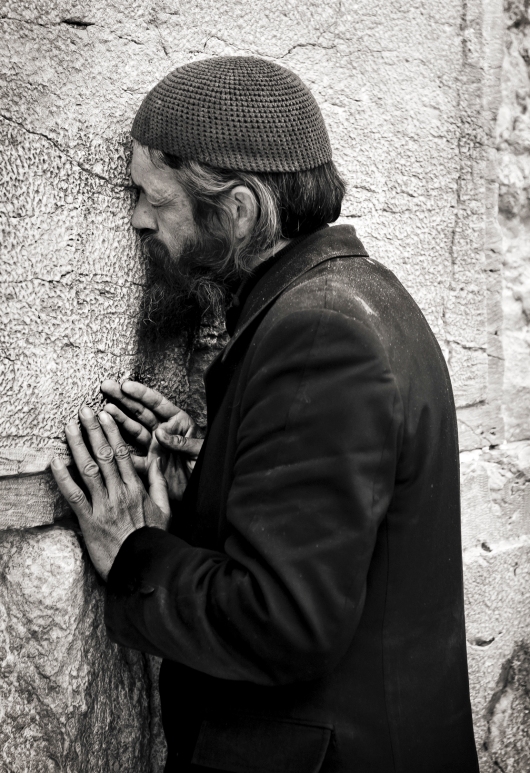





 The Daily Hatch