Mavis Staples was born July 10, 1939 in Chicago, Illinois. She began singing with her family, The Staples Singers, at local Chicago churches before signing with the gospel label Vee-Jay Records in 1953. The family put on a concert in Montgomery, Alabama which Martin Luther King, Jr. was attending.
“I was a skinny little knock-kneed girl with a big voice that comes from my mother’s side.”
– Mavis Staples
« prev1 / 5next »
Early Life
Singer and civil rights activist Mavis Staples was born on July 10, 1939, in Chicago, Illinois. Staples is the youngest of four children born to Oceala and Roebuck “Pops” Staples. Her mother died when Mavis was still very young, so she and her three older siblings (Cleotha, Pervis and Yvonne) were raised primarily by their father. In earlier days, Pops Staples worked at the infamous Dockery’s Farm cotton plantation in Drew, Mississippi.
After a day of hard labor in the fields—for 10 cents a day—Pops took solace in the Delta blues, learning guitar from the great blues pioneer Charley Patton. In 1936, three years before Mavis was born, Pops moved to Chicago and landed a job in a meatpacking factory. He played in a gospel quartet called the Trumpet Jubilees throughout the late 1930s and early 1940s, but eventually grew frustrated with his bandmates’ lack of commitment to their music.
Mavis Staples recalled that when she was 8 years old, her father finally gave up on the Trumpet Jubilees and turned to his children to become his new bandmates. “Pops finally came home one night, got the guitar out of the closet and called us in the living room, sat us on the floor in a circle and started giving us our parts,” Staples recalled.
Two years later, when Mavis was 10 years old, the family band made its debut singing at a local Chicago church. After they received an enormous ovation, Staples recalled her father saying, “Shucks, these people like us. We’re going home to learn some more songs!” Although she was the band’s youngest member, Mavis soon became its lead singer with a logic-defying voice that more properly belonged to a woman several decades older and many times larger.
She recalled her father telling her, “Mavis, listen, your voice is a God-given gift. You know, you don’t know music. You don’t even know what key you sing in.” Staples added, with a laugh, “And I still don’t know what key I sing in.”
The Staples Singers
In 1953, the Staple Singers signed with the small gospel label Vee-Jay Records and released their first song, “Sit Down, Servant.” Three years later, they scored their first major hit with “Uncloudy Day,” introducing Staples’ shockingly mature vocals to national audiences for the first time. “I was a skinny little knock-kneed girl with a big voice that comes from my mother’s side,” she remembered. “Deejays would announce, ‘This is little 15-year-old Mavis singing’ and people would say it’s gotta either be a man or a big lady. People were betting that I was not a little girl.”
The Staple Singers toured the country and developed an impressive grassroots following, but they limited their concerts to weekends until Staples graduated from high school in 1957. They recorded two more national hits in the late 1950s: “Will the Circle Be Unbroken” and “This May Be the Last Time,” a song later adapted by The Rolling Stones.
To me this song below sums up Keith Green’s life best. 2nd Chapter of Acts – Make My Life A Prayer to You Make my life a prayer to You I want to do what You want me to No empty words and no white lies No token prayers, no compromise I want to shine […]
Keith Green – Easter Song (live) Uploaded by monum on May 25, 2008 Keith Green performing “Easter Song” live from The Daisy Club — LA (1982) ____________________________ Keith Green was a great song writer and performer. Here is his story below: The Lord had taken Keith from concerts of 20 or less — to stadiums […]
Keith Green – Asleep In The Light Uploaded by keithyhuntington on Jul 23, 2006 keith green performing Asleep In The Light at Jesus West Coast 1982 __________________________ Keith Green was a great song writer and performer and the video clip above includes my favorite Keith Green song. Here is his story below: “I repent of […]
Keith Green – Your Love Broke Through Here is something I got off the internet and this website has lots of Keith’s great songs: Keith Green: His Music, Ministry, and Legacy My mom hung up the phone and broke into tears. She had just heard the news of Keith Green’s death. I was only ten […]
Coldplay Max Masters – Part 3 of 7 Here is message from Highfield church where Will Champion grew up going to church. do all religions lead to God? “It doesn’t matter what you believe as long as you’re sincere.” It’s said that all the religions in the world could be wrong, but only one can […]
Coldplay Max Masters – Part 1 of 7 Uploaded on May 6, 2009 The ASTRA Award winning music documentary – Max Masters Coldplay – was voted MOST OUTSTANDING MUSIC PROGRAM for 2009. Sarah Linton Productions and The Post Box produced the Max Masters documentary to coincide with the album release of ‘Viva la Vida’. __________ […]
The Killers – Human The Killers – Read My Mind The Killers – All These Things That I’ve Done The Killers – Spaceman I have really enjoyed the music of The Killers band. The Killers From Wikipedia, the free encyclopedia Jump to: navigation, search Not to be confused with The Kills. For other uses, see […]
Skillet – Awake and Alive Uploaded on Sep 27, 2010 I really have enjoyed reading about this band from Memphis. Skillet (band) From Wikipedia, the free encyclopedia Jump to: navigation, search Skillet Skillet performing at a promotional acoustic show in Denton, TX in 2006 Background information Origin Memphis, Tennessee, U.S. Genres Rock,[1] Christian rock/metal,[2][3] alternative […]
1978 Prolife Pamphlet from Keith Green’s ministry has saved the lives of many babies!!!!
Francis Schaeffer “BASIS FOR HUMAN DIGNITY” Whatever…HTTHR
Dr. Francis schaeffer – The flow of Materialism(from Part 4 of Whatever happened to human race?)
Dr. Francis Schaeffer – The Biblical flow of Truth & History (intro)
Francis Schaeffer – The Biblical Flow of History & Truth (1)
Dr. Francis Schaeffer – The Biblical Flow of Truth & History (part 2)
Francis Schaeffer woke up many Christians concerning the abortion horrors that were taking place and at the same time Keith and Melody Green released a pamphlet on abortion and millions of people read it and it saved many lives. Below is that pamphlet which I read in 1978. Just last year I went online and read this testimony below concerning this very pamphlet:
My brother gave me a tract when I was 17 on abortion I believe from last days ministries. After I read it I told myself I wouldnt ever get an abortion. A couple monthes later I found out I was pregnant. I told my boyfriend and the first thing he said was to get an abortion. I said no and I now have a wonderful son who is 32 years old. thank-you for your ministry!
In 1978 we first printed “Children – Things We Throw Away?” and since that time we have printed over nine million copies of it. It has been responsible for saving the lives of countless children (and we are ever so thankful to God for that!).We have been so encouraged by the response that we have decided to print the answers to some of the most frequently asked questions about abortion, along with some “random notes” on the subject. We hope this speaks to your heart as much as it spoke to ours.
Q: Does the Bible give a stand on a woman who’s pregnant and gets, say, German measles, and the baby she carries in her womb is most likely to be deformed or retarded? What can we do then?
A: The Scriptures don’t change just because a child might be born with a handicap. What about the deformities that aren’t detected before birth shall we just kill these children on the delivery table? If we can abort the defective unborn, why not just kill the defective newborn? The baby will be just as dead if killed six months before the delivery or six minutes after. What’s the difference? What if a ten-year-old gets a disease that leaves him deformed or blind… shall we kill him too? It is no less savage to abort a deformed child than to exterminate a retarded adult. Where do we draw the line? If we decide to eliminate those who are imperfect, we need to ask ourselves two important questions:
Just how perfect does one need to be before he is allowed to live?
Who will have the power to make these decisions?
Does anyone have the right to play God?
“Who has made man’s mouth? Or who makes him dumb or deaf, or seeing or blind? Is it not I, the Lord?” (Exodus4:11)
“I received a German measles shot two weeks before I got pregnant with my first child. I called three doctors, and none of them would accept me as a patient. They all wanted me to get an abortion. I went to a fourth doctor, and she also advised me to have an abortion, that my chance of having a healthy baby was 0%. When I told her no, she said, ‘Well then you will have a deformed baby, and you’d better tell your husband.’ I was in tears by this time. My husband said, ‘God loves all people the same. Then I asked God to have mercy on us, and heal my child. I told Jesus that if He didn’t, that would be okay, because I knew He would be in control. I would love my baby no matter what. “I’m very happy to say that my baby girl, Angela, is perfectly healthy! While the doctor was stitching me up, she said I still should have had an abortion! Even my father-in-law thinks we should have aborted her! The day we came home from the hospital, my husband said, ‘I’m ready to turn my whole life over to God.’ Twomiracles in one day!”
– Linda Serrano, Bakersfield, CA
Q:There isone thing I’m confused about, and that’s rape. I have never been raped, but if I had been and became pregnant, I would die at the thought of carrying a cruel, thoughtless stranger’s baby. If you did become pregnant by rape, what would God want you to do?
A: First of all, rape practically never results in pregnancy, due to the trauma involved. But if it should occur, what is needed is loving support and assistance for the mother – not added guilt for her already burdened heart. It’s a strange sort of justice that would kill an innocent child for the crime of its father. Two wrongs never make a right. One violent act does not condone another.
If this were to happen to you, I know God would help you to forgive the baby’s father, and give you a real love for the baby (whether you kept it or gave it up for adoption). After all, that baby would be half yours, no matter who the father was. Think about this: If you found out tomorrow that you were the product of a rape – would you wish that your mother had aborted you?
“WELL, DOC… I JUST DON’T FEEL LIKE HAVING IT” According to the Supreme Court, a baby’s viability (the ability to live outside the mother’s womb) is a consideration unless the mother’s life or health is threatened. The Court defined her “life or health” to mean her physical, psychological, or emotional health, her age, her marital status, or the infant’s prospects of distressful life and/or future.
Q: You have unfairly dramatized the issue of abortion by playing up the horrors. Let’s not become idol worshipers of a wad of cells that adhere to the wall of a uterus. Until those cells free themselves and become an independently functioning unit, they are hardly any different than any other tissue in the woman. Do we mourn over the loss of an appendix? A woman wanting an abortion has made a difficult decision. Let’s not become judgmental and deny her what she wants. Such a woman needs all the Christian love we can manifest.
A: How can you compare an unborn child to a mere appendix?? An appendix does not turn into a baby, it has no eternal soul… and it does not have the gift of life so generously bestowed by God. A baby is a different person with his or her own distinct set of chromosomes – different than any part of the mother. The child has its own blood supply that may even be a different type than the mother, and the child can be of the opposite sex. He or she is obviously a separate individual.
I am totally in favor of giving “all the Christian love we can manifest.” The question is, what is Christian love? One of the problems facing Christians today is that we are afraid of people thinking we are “judging them” that we are reluctant to get involved in their lives. Instead, we just stand by and let our brothers and sisters fall into a pit without opening our mouth to stop them. We can’t continue to hide behind Cain’s sarcastic question, “Am I my brother’s keeper?” (Gen.4:9) Of course we are! Jesus taught that anyone in distress is our neighbor and we must come to his aid. (Luke 10:30-37) Let’s do all we can to help the mother without exterminating her baby. Complacency and failure to watch over each other spiritually is definitely the path of least resistance… but please, let’s not call it love… least of all, Christian love!
“Deliver those who are being taken away to death,
And those who are staggering to slaughter, O hold them back.
If you say, ‘See, we did not know this,’
Does He not consider it who weighs the hearts?
And does He not know it who keeps your soul?
And will He not render to man according to his work?”
(Proverbs 24:11-12)
Q: Don’t unwanted children usually end up being battered and abused children later on in life?
A: This is a totally false notion. Dr. Edward Lenoski, Professor of Pediatrics at U.S.C., showed in a recent study of 674 battered children that 91% were planned pregnancies and 90% were legitimate. Also, statistics show conclusively that since the legalization of abortion, child abuse has risen very sharply, along with illegitimate births, welfare, and an overall national increase in immorality that is reaching epidemic proportions. Abortions in the U.S. alone have killed 30 million children since 1973. The plain fact is, abortion is the ultimate in child abuse.
Q: Isn’t legally preventing a woman from having an abortion an invasion of her privacy?
A: Our laws are very funny. They allow police to enter the privacy of people’s homes to stop them from battering and abusing their children. Then they use the same force of law to guarantee the “privacy and right” of parents to dismember or poison their babies before birth. In fact, I think almost all crime is done in private (i.e., murder, theft, rape, kidnapping, etc.). Does this mean that if we know it’s going on, we turn our heads and look the other way, so as not to invade anyone’s right to privacy? Of course not! Abortion is murder and it cannot be tolerated any easier when committed behind closed doors than if it were performed on a street comer!
Q: Awhile back, one of myfriends became pregnant. She asked me to drive her to the doctor’s office to get an abortion. Since I was the only person she trusted, I did all I could do to help. I now feel that I have become an accomplice to murder since I actively supported her in her decision. Am I as guilty as if I had an abortion myself?
A: I’m sure there are many mothers, fathers, brothers, sisters, and boyfriends who have either encouraged someone to get an abortion, or actually helped them to obtain one, as you did. You need to realize that since you assisted in that abortion, you are a partaker in that sin. By your actions you were saying, “Yes, I agree with what you are doing.” Since you now see the wickedness of this, you need to immediately go to the Lord, and with your whole heart ask Him to forgive you. He will be quick to do so as long as you are completely sincere. I also think it would be best for you to go back to your friend and ask her forgiveness for your help in leading her astray. Even though she may still think you did her a great favor, you might have a chance to share with her what God has shown you, and how she, too, needs to repent and get right with Him.
Human Experimentation.
Before it became publicly known, private abortion clinics in England sold live aborted babies for research. Dr. Lawn was quoted as saying, “We are only using something destined for the incinerator to benefit mankind…” Mr. Phillip Stanley, a spokesman for the clinic selling fetuses, said that they were “aged between 18 and 22 weeks” – that’s 41/2 to 51/2 months! Mr. Stanley continued, “A fetus has to be 28 weeks to be legally viable. Earlier than that it is so much garbage.”
No distinction is made in the Scriptures between babes in the womb and those already born. The word brephos, used to describe the baby in Elizabeth’s womb, is used interchangeably for both prenatal (Luke 1:41,44) and postnatal babies (Luke18:15-17). It means “an unborn child, embryo, fetus; a newborn child, an infant, brephos, a babe.”(Thayers Greek English Lexicon, p.105)
Q: Isn’t birth control just another form of abortion?
A. It depends on what you use. Some methods do cause abortions and should be avoided, such as the inter-uterine device (IUD) and most birth control pills.
When birth control pills were originally developed, they contained such high levels of estrogen that there was almost no chance of a woman releasing an egg for fertilization – starting a new life. However, most of today’s lower-estrogen-level pills are not as effective in preventing the release of an egg – so these pills also prevent pregnancies by affecting the lining of the womb in such a way that a fertilized egg has a difficult time attaching and growing. A new life trying to grow finds no place to take root. We encourage you and your spouse to draw your own conclusions what the Lord would have you do. True contraception will prevent new life from beginning, not abort that life once it has already begun.
Q: Since Adam was not alive until God breathed into him the breath of life, and since the baby does not breathe until he leaves the womb, isn’t ittrue that the unborn baby has no soul and therefore can be aborted without guilt?
A: There is no parallel here. Adam had no life until God breathed into him, but from the moment of conception the babe is alive and growing. James says that the body apart from the spirit is dead. (James 2:26) If the baby in the womb is not alive, there would be no one there to kill! A live baby not only has a soul – but an eternal spirit as well.
“Protection of the life of the mother as an excuse for an abortion is a smoke screen. In my 36 years of pediatric surgery, I have never known of one instance where the child had to be aborted to save the mother’s life. If toward the end of the pregnancy complications arise that threaten the mother’s health, the doctor will either induce labor or perform a Caesarean section. His intention is to save the life of both the mother andthe baby. The baby’s life is never willfully destroyed because the mother’s life is in danger.”- C. Everett Koop, MD, U.S. Surgeon General
Q: Isn’t the age of viability (the ability for the baby to live outside the mother’s womb) one of the deciding factors in whether or not someone should have an abortion? It seems to me that that would be a pretty fair way to decide.
A: According to the courts, viability is a consideration, but in actual practice it doesn’t really seem to matter. There have been many babies prematurely born as early as the fourth month of pregnancy, weighing only one or two pounds, who have survived and grown into normal children because they were given intensive medical care. On the other hand, abortions are being performed on perfectly healthy babies much older than that (even up to the ninth month in some cases!) – and if they do happen to be born alive, they are usually left unattended to suffer and die. In the face of this, the whole viability question just doesn’t seem to make much sense.
Dr. Magda Denes says, “Abortion based on viability is as logical as maintaining that drowning a non-swimmer in a bathtub is permitted because he would have drowned anyway if he would have fallen into the sea.” You also have to think about the many people on life-support systems, iron lungs, kidney dialysis machines, etc. Should we just pull the plug on anyone who cannot survive totally on his own?
Q: Is it fair to bring an “unwanted baby” into the world?
A: It’s too late to ask that question after a baby has been conceived. Whether you may personally think it’s fair or not doesn’t change the fact that the pre-born child has already been brought into this world and no one has the right to destroy his or her life. All people, born and unborn, have the same value in the eyes of God. God created each of us in His own image, and He knows each one of us by name – even when yet in the womb. “For Thou didst form my inward parts; Thou didst weave me in my mother’s womb…My frame was not hidden from Thee, when I was made in secret…Thine eyes have seen my unformed substance; and in Thy book they were all written, the days that were ordained for me, when as yet there was not one of them.” (Psalm 139:13-16)
Actually, the “unwanted baby” is a myth. There is no such thing. Due to shortages of newborn babies for adoption, there are thousands of couples who long night and day to hold and love the children so many mothers are throwing away. Those who say they are getting an abortion for the sake of their “unwanted child” are obviously not thinking of the child’s happiness and well-being… but of their own.
Need Help?
Nearly every major city has at least one helpline that provides positive assistance to anyone involved in a problem pregnancy. Phone “Information” and ask the operator for the nearest Crisis Pregnancy Center, Women Exploited By Abortion (WEBA), Bethany Christian Services, Save Our Babies (Southern U.S.),Crusade For Life (California), National Right to Life, or Birthright headquarters. They will be happy to assist you.
You can also contact us here at Last Days Ministries. You don’t have to go through your pregnancy alone and afraid. We know that God loves you and your baby equally, and so we will do our best to help both of you in whatever way we can. Call or write if you need help…or if you just want to talk to somebody who cares.
Q: If your parents and/or your pastor counsel you to get an abortion, what should you do?
A: I know of one girl who was really glad her parents were “making her get an abortion,” so that she didn’t have to take the responsibility for the decision herself. However, God knows our hearts, and only through self deception do we think we can hide behind others and pretend “it was all their idea.”
Even if you are a minor living in your parents’ home, there is nothing that can be done legally or spiritually to make you get an abortion against your will. Yes, we are to honor our parents and respect our spiritual authorities, but not if they are asking us to do something illegal, immoral, or unscriptural… that is where the line is drawn. Unfortunately, abortion is not illegal, but it is definitely immoral and unscriptural. We must honor God above all others – and we simply cannot break His commandments to please anyone, no matter who they are. This is not rebellion – but true submission to God’s authority in the face of possible persecution.
Unfortunately, many parents (even “Christian” ones) are uninformed or selfishly motivated, just as many pastors and counselors are giving tragic advice to those who are truly seeking a scriptural answer.
“It would be better for him if a millstone were hung around his neck and he were thrown into the sea, than that he should cause one of these little ones to stumble.” (Luke 17:2)
Two tiny infants, a boy and a girl, weighing approximately three pounds each, survived saline abortions at a Wilmington, Delaware hospital. The unwanted babies have both been signed over for adoption by their mothers, and have been referred to by the hospital staff there as Sal and Salina – a reference to the saline solution that failed to kill them.- “Voice For The Unborn” 8/79
Q: Isn’t it true that before 1973 when abortion was made legal, that 5,000 – 10,000 women a year died from “back alley” abortions?
A: Dr. Bernard said that this figure is totally false, and he should know, since he was one of the several pro-abortionists who circulated this figure before the 1973 Supreme Court hearings. He now says the figure was closer to 500, and in 1972 (the year before abortion was made legal) only 39 deaths were recorded. He explains he circulated these false figures in order to bring about legal abortion. However, after presiding over 75,000 deaths as the head of the world’s largest abortion clinic, Dr. Nathanson came to believe that those infants in the womb were little people, and that he was murdering them. He has written the best seller, Aborting America, and even while involved in abortions, he could not understand how Christian clergymen could promote them when Christianity insists on protection for the weak.
“Until birth, the fetus is invisible… if the abdominal wall of the pregnant woman were transparent, what kind of abortion laws might we have?” – Dr. Bernard Nathanson
Q: If we make abortions illegal, they will still go on. The poor will suffer, and the rich will get them anyway – so what’s the point? At least if they are legal everyone will get good clean medical care.
A: I agree. They will still go on – but not in such high numbers. As for the rich, they have always been better able to afford their vices. It would be just as wise to buy abortions for the poor as it would be to buy them heroin. Yes, abortions will go on. Rape also goes on in spite of our laws – should it no longer be a crime? Or should we spend tax money to buy the rapist a good clean hotel room to commit his crime in…after all, “He’s going to rape people anyway!”
“I’m a housewife and a registered nurse from Jacksonville. I worked the 11 p.m. to 7 a.m. shift, and when we weren’t busy, I’d go out to help with the newborns. One night I saw a bassinet outside the nursery. There was a baby in this bassinet – a crying, perfectly formed baby – but there was a difference in this child. She had been scalded. She was the child of a saline abortion. “This little girl looked as if she had been put in a pot of boiling water. No doctor, no nurse, no parent, to comfort this hurt, burned child. She was left alone to die in pain. They wouldn’t let her in the nursery – they didn’t even bother to cover her.
“I was ashamed of my profession that night! It’s hard to believe this can happen in our modern hospitals, but it does. It happens all the time. I thought a hospital was a place to heal the sick – not a place to kill.
“I asked a nurse at another hospital what they do with their babies that are aborted by saline. Unlike my hospital, where the baby was left alone struggling for breath, their hospital puts the infant in a bucket and puts the lid on. Suffocation! Death by suffocation!
“Another nurse said she had to stop helping with abortions. The little severed arms and legs from suction abortions were just too much for her to look at.
“Aren’t you happy our moms weren’t born in this generation? It could have been one of us in that lonely bassinet – or that ugly bucket.” –Kathleen Malloy, Jacksonville, FL
Some Closing Comments
Abortion is not an issue that you can remain “neutral” on. You are either for it or against it. What would you do if you were walking down the street, and looking up, you saw a woman about to throw her three-month-old baby out the window? Would you turn and walk away saying, “Well, I wouldn’t do that, but I won’t interfere. It’s her decision – that baby’s probably messing up her life anyway.”
Our laws give us absolute “rights and wrongs” (i.e., don’t speed, don’t shoplift, pay your taxes, etc.), and if our laws don’t, God certainly does. If you can’t tell someone “Don’t!” you might as well load them in a car and drive them to the abortion clinic yourself!
Many girls, through selfishness, have fallen into deep deception concerning God’s will. They say, “I have been praying about it, and I really feel God wants me to get an abortion,” or “I know it’s wrong, but my pastor said God will forgive me afterwards.” I have heard too many girls tell me they were counseled to get an abortion at their church. I am wondering just how these pastors and counselors are going to withstand the judgment of God for leading these sheep astray. (Luke 17:2)
The American Holocaust
The “final solution” to the Jewish problem of the Third Reich rested on the belief that it was not enough to simply be human to have the right to live. One had to have certain other qualities, and unfortunately, the Jews and Gypsies lacked them. Aren’t we doing the same things with our babies?
Each day in America over 4,400 babies are being put to death without benefit of due process – trial or defense. They are executed by techniques more cruel and inhumane than any horror movie has ever portrayed. This year, over two million will die in the U.S. alone, and it is estimated that up to 60 million abortions will be performed this year worldwide. In the face of this, Pharoah’s extermination of the Hebrew boys or the slaughter by Herod of the babes in Bethlehem pales in comparison.
Each day in America alone, over 4,400 babies are being put to death by abortion. That’s1 every 20 seconds (approx.) – 24 hours a day -365 days a year!
What You Can Do
We must take a stand… and not a silent one. I’m not saying we should all put on sandwich boards and picket our local abortion clinic… although it doesn’t sound like a bad idea. But we should take every opportunity to speak out and let our views be known. We should do everything we can to prevent someone from making a mistake they will always regret. We must offer all the help and support we can if we expect the unsure mother to carry her child to full term. Open your home to her, help pay her doctor bills… be her friend.
Too many times when an unwed mother does make the right choice, she is shunned and made to feel “dirty” by the Church. In an attempt to discourage promiscuity by penalizing the unwed mother, we have actually encouraged her to take the so-called “easy way out.” Rather than endure the social stigma and persecution by those who claim to love Jesus, she heads for the friendly abortion clinic. How do you think Jesus would treat these, who, although they had made a serious mistake, were now willing to bear the shame, whispering, and humiliation to do the right thing? Can we do any less than He would?
I pray you take this to heart and and prayer and see what the Lord might have you do. Please, try to imagine God’s grief. He sees it all, you know. I wonder if He didn’t think a mother’s womb was the safest, most loving place in the world for a little baby to be nurtured and protected. Let’s do all we can to keep it that way! – Melody
I have debated with Ark Times Bloggers many times in the past on many different subjects. Abortion is probably the most often debated subject and I have noticed that many pro-life individuals are now surfacing on the Arkansas Times Blog. Here are some examples. Arhogfan501 asserted: This is the beginning of the end for recreational abortion […]
I have debated with Ark Times Bloggers many times in the past on many different subjects. Abortion is probably the most often debated subject and I have noticed that many pro-life individuals are now surfacing on the Arkansas Times Blog. Here are some examples. Arhogfan501 asserted: This is the beginning of the end for recreational abortion […]
I have debated with Ark Times Bloggers many times in the past on many different subjects. Abortion is probably the most often debated subject and I have noticed that many pro-life individuals are now surfacing on the Arkansas Times Blog. Here are some examples. Arhogfan501 asserted: This is the beginning of the end for recreational […]
I have debated with Ark Times Bloggers many times in the past on many different subjects. Abortion is probably the most often debated subject and I have noticed that many pro-life individuals are now surfacing on the Arkansas Times Blog. Here are some examples. Arhogfan501 asserted: This is the beginning of the end for recreational abortion […]
In the film series “WHATEVER HAPPENED TO THE HUMAN RACE?” the arguments are presented against abortion (Episode 1), infanticide (Episode 2), euthenasia (Episode 3), and then there is a discussion of the Christian versus Humanist worldview concerning the issue of “the basis for human dignity” in Episode 4 and then in the last episode a close […]
I have debated with Ark Times Bloggers many times in the past on many different subjects. Abortion is probably the most often debated subject and I have noticed that many pro-life individuals are now surfacing on the Arkansas Times Blog. Here are some examples. Arhogfan501 asserted: This is the beginning of the end for recreational abortion […]
I have debated with Ark Times Bloggers many times in the past on many different subjects. Abortion is probably the most often debated subject and I have noticed that many pro-life individuals are now surfacing on the Arkansas Times Blog. Here are some examples. Arhogfan501 asserted: This is the beginning of the end for recreational abortion […]
Canadian artist Dorothea Rockburne grounds her practice in mathematical theories that she first encountered while studying with Max Dehn at the legendary Black Mountain College. This exhibition includes a selection of key works since the 1970s, featuring one of Rockburne’s most recent drawings, The Mathematical Edges of Maine, a response to her travel to the state in the summer of 2014.
Programming
April 21, 2015 | 4:30 p.m. | BCMA
Gallery Conversation: “Art, Mathematics, and the Legacy of Black Mountain College”
Dorothea Rockburne, Ph.D, artist, and Dave Peifer, chair and professor of Mathematics, University of North Carolina-Asheville, discuss the mathematical theories behind Rockburne’s artistic work. They further explain how her art reflects the interdisciplinary education provided by the legendary Black Mountain College. Presented in conjunction with the exhibition A Gift of Knowing: The Art of Dorothea Rockburne.
My first post in this serieswas on the composer John Cage and mysecond postwas on Susan Weil and Robert Rauschenberg who were good friend of Cage. The third post in this series was on Jorge Fick. Earlier we noted that Fick was a student at Black Mountain College and an artist that lived in New York and he lent a suit to the famous poet Dylan Thomas and Thomas died in that suit.
The fourth post in this seriesis on the artist Xanti Schawinsky and he had a great influence on John Cage who later taught at Black Mountain College. Schawinsky taught at Black Mountain College from 1936-1938 and Cage right after World War II. In the fifth post I discuss David Weinrib and his wife Karen Karnes who were good friends with John Cage and they all lived in the same community. In the 6th post I focus on Vera B. William and she attended Black Mountain College where she met her first husband Paul and they later co-founded the Gate Hill Cooperative Community and Vera served as a teacher for the community from 1953-70. John Cage and several others from Black Mountain College also lived in the Community with them during the 1950’s. In the 7th post I look at the life and work of M.C.Richards who also was part of the Gate Hill Cooperative Community and Black Mountain College.
In the 8th post I look at book the life of Anni Albers who is perhaps the best known textile artist of the 20th century and at Paul Klee who was one of her teachers at Bauhaus. In the 9th postthe experience of Bill Treichler in the years of 1947-1949 is examined at Black Mountain College. In 1988, Martha and Bill started The Crooked Lake Review, a local history journal and Bill passed away in 2008 at age 84.
In the 10th post I look at the art of Irwin Kremen who studied at Black Mountain College in 1946-47 and there Kremen spent his time focused on writing and the literature classes given by the poet M. C. Richards. In the 11th post I discuss the fact that JosefAlbers led the procession of dozens of Bauhaus faculty and students to Black Mountain.
In the 12th post I feature Wassily Kandinsky (1866-1944) who was featured in the film THE LONGEST RIDE and the film showed Kandinsky teaching at BLACK MOUNTAIN COLLEGE which was not true according to my research. Evidently he was invited but he had to decline because of his busy schedule but many of his associates at BRAUHAUS did teach there. In the 13th post I look at the writings of the communist Charles Perrow.
Willem de Kooning was such a major figure in the art world and because of that I have dedicated the 14th, 15th and 16th posts in this series on him. Paul McCartney got interested in art through his friendship with Willem because Linda’s father had him as a client. Willem was a part of New York School of Abstract expressionism or Action painting, others included Jackson Pollock, Elaine de Kooning, Lee Krasner, Franz Kline, Arshile Gorky, Mark Rothko, Hans Hofmann, Adolph Gottlieb, Anne Ryan, Robert Motherwell, Philip Guston, Clyfford Still, and Richard Pousette-Dart.
In the 23rd post is about the popular artist James Bishop who attended Black Mountain College towards the end of its existence. In the 24th post I look at the Poet-Writer Martha King. In the 25th post I talk about the life of the architect Claude Stoller and his time at Black Mountain College. In the 26th post I look at Ted Drieir. Jr., who was a student at Black Mountain College and the son of the founder. In the 27th post I look at the work of the artist Dorothea Rockburne.
This is Connie Bostic. It’s April 19th, 2002. We’re in the studios of Bonesteel Films on Carolina Lane in Asheville, North Carolina and we’re with Dorothea Rockburne. Dorothea could you tell us when you attended Black Mountain College?
I came in the fall of 1950 and I left the following June, and then I returned in the beginning of January of 1951. I was there for a long time, I think until 1955.
That was quite a long time.
Yes. You know, I was married and my daughter was born there. So, I took some time out for that.
Can you tell us a little bit about your early life and how you came to go to Black Mountain?
Yes. I was born in Montreal, Quebec, Canada, and pretty early on a teacher from the public school that I went to took me to Ecole de Beaux-Arts on Saturdays to study drawing and painting. And while I was there, I worked with some pretty wonderful teachers who taught me Renaissance techniques, and one in particular became quite a well known Canadian artist and showed in New York and later went to Paris. His name was Paul Borduas, and his parting words to me as he left for America were, “as soon as you can you have to leave Montreal.” In those days I spoke French and he didn’t speak much English. By that time I was around 14. I’d fooled around and skied in the winters, and I wasn’t determined about exactly what I was going to do with my life. But by the time I was 13 I had stopped skiing so that I could paint on the weekends. I went to the Montreal Museum School and actually that’s where, a little bit later, I met Marie Tavroges. Her last name is now Stilkind. I studied there with some very good teachers. I took a drawing class with a man named Moe Rhineglat and he kept saying to me, “leave.” And my parents meanwhile had me tracked to go in a completely different direction and I have an older sister who went in that direction and I thought, “if I do that, I’ll die.” There was another teacher whose last name was Weber, but not only did he say ‘leave” but he said “you should either go to the Slade School in England,” because I had this academic training, “or you should go to the Institute of Design at Black Mountain College.” And I was sort of precocious and rebellious and I had a boyfriend who was older than I, and he had been to Black Mountain. His name was Jeffrey Lindsay. And he said I should go to Black Mountain College. He had a little dinner for me, and at that dinner were some Indian dancers who were just coming through Montreal, because Montreal was a big place to come to and leave from in those days, and their names were Veena and Vashi. I questioned them very closely about Black Mountain because I was very young, and I was going to leave my family against their desires, so this was a big, rebellious step. Fortunately I had an older sister who completely agreed with what these teachers were saying and she helped me. I didn’t have a passport, so I used her passport. We did lots of plotting and planning and all kinds of things because I had to have a police clearance before leaving the country. My sister was very good at imitating my mother’s handwriting. So, I wrote to Black Mountain, and sent them my work, and was admitted on complete scholarship. Because of the scholarship, I was able to work and save money. I’d started saving for my escape very early and a couple friends helped me. So that’s how I got here.
That was a pretty amazing journey.
It was! Because there were no planes, it was a train journey. I changed trains in Washington because that’s where the color line began. I didn’t know about prejudice. So all of that was a big adventure. And I stayed overnight in New York— it was a huge journey for me.
How old were you when you arrived at Black Mountain?
I’m very unsure about that but I think I was 18, I could have been 17—no, I had just turned 18. I was confused because of my sister’s identity. (Laughing)
Crime doesn’t pay (both laughing)
She could have changed the name on the passport but she couldn’t change the date, because the date was stamped on her birth certificate. So it’s all mucky, but I think I was 18.
What teachers influenced you most at Black Mountain?
Well, there were many, many influential teachers. Certainly John Cage. I had always studied dance in Montreal. In my family you came out of the womb enrolled in dance classes, so I had taken ballet, which was then called toe-dancing (laughing). So it was just automatic to check into a Cunningham dance class at Black Mountain. I also took classes with Max Dehn, the mathematics teacher, which revolutionized my life. I was already bent in that direction because by the age of 13 I had a subscription to Scientific American, which was a very radical thing for a 13 year old to be doing.
Particularly a girl
Yes, particularly a girl. You know, my family could never understand what I was up to. And I was to a degree, for my age, musically sophisticated. Also Pete Jennerjahn was big. His light/sound/movement workshop was of great interest to me. And I took Flola Shepard’s linguistic course, and semiotics and I just flourished. I was like a dry sponge. I couldn’t believe it. And then I took Bill Levi’s Introduction to Philosophy and while I’d done some sporadic reading on my own, I certainly read Sartre and things like that, his course was beautiful and basic, and it just gave me a foundation to read anything. And right now in my life I’m reviewing the early Greek philosophers and trying to relate their concept of atomic physics to particle physics and quantum mechanics, I mean I’m trying to put all of that together. And you know because I was young when I did all this the first time I didn’t understand that Aristotle was not a scientist he was a poet, which is why his concept of astronomy was poetic. I’m just beginning to put that together but it was my education at Black Mountain that gave me the tools to do all this.
And I believe you studied. . .
And I was never just a painter. I always did and still do fish around. I study. I want to know everything at once. I want to be an interdisciplinary person.
You studied photography at Black Mountain.
I studied with Hazel Larsen and my fellow students were Cy Twombly and Bob Rauschenberg, and of course, Aaron Siskind and Harry Callahan were here for visits. I studied with them and also Steichen. And Steichen asked me to bring my work to the Museum of Modern Art when I came to New York, and he tried to help me with a photography gallery. And I’ve looked to see if my work is in the Modern collection and it’s never listed but he bought work for the Modern, so who knows what happened to it. I’ve always used photography as a way to draw. Because I had this academic drawing background, I never wanted to draw realistically. And I still use my camera to draw.
Of the teachers you had at Black Mountain, which ones do you think were most influential?
It was probably Max Dehn. But it’s hard to say because for me my entire experience there was just spectacular.
Can you tell us a little bit about Max Dehn’s classes and what they were like and what his theories were?
Yes. Mathematics was a peculiar experience for me. I went to a very dumb girl’s school where you were trained to be a good housewife, basically, and science was home economics. I know it sounds like the year ‘one’ but that’s what it was. I was very shy in those days, and he sat at lunch with me for several days and I must have spoken up about something, after which he said, “I would like you to take my mathematics class.” And I was appalled, because there were people there from Harvard and Yale who were there just to work with him. And I said “I have no background to take your class,” whereupon he said, in his heavy German accent, “Well good, you haven’t been poisoned. I will teach you.” And every morning for 4 years, we took a walk and he talked to me about mathematics in nature. And I’m sure he talked to me about the skies, about astronomy. I’m sure it played in the background as I said to you at Black Mountain yesterday. You know we would look at a tree and he would say, “you have to imagine the roots underneath the ground are the same as what you’re seeing above ground in equal proportion. And you can track the way it’s going to grow according to probability theory.” Then in class he would take me aside and teach me the equations for probability theory, which led me later to be able to do chaos theory. He was so precious with me. All my teachers were.
It’s interesting you’ve mentioned people who teach a lot of different subjects but being a painter you haven’t talked much about the painting teachers.
Well, Esteban Vicente was tremendously influential to me because again, we shared a European background and he knew what I knew. So, he understood where I was coming from and took me under his wing. He had a studio that was separate from where he lived. He invited me to come to New York on a spring break and stay in his studio. Jack Tworkov had more of an academic background and understood that I could draw and he was totally wonderful to me. I started out studying with Joe Fiore and we just locked horns and I did not continue studying with him, which is why you’re not hearing me talk about him. But I painted all the time at Black Mountain. I painted and I did not know what I was doing nor did I want to know what I was doing. Because many of the art students were doing ‘New York’ art, magazine art, which is fine. I mean it’s not a criticism. They were copying it and taking their place to later become their own person. But I did not like the Albers classes, I did not like the concept of giving color a job. It was like color was on the unemployment line and you have to make dark colors come forward and light colors go backward, and after having an academic training where you learn that in many of the Renaissance paintings for example, the dark blue of Mary’s robe will come forward. You know what I mean? It’s an old problem, and I just thought it was a big yawn and didn’t want to do those things. I wanted to make every mistake possible and I did. And I did have an exhibition here, at the end.
Did you! Tell us about that.
I don’t remember too much about it. Mostly as things would happen, they would just get thrown in boxes. So I have a young art historian working on putting these things together. I remember that outside the studies building there was a small exhibition hall. I don’t know if it is still there, it was a wooden building. I did have an exhibition so I must’ve not been too bad, but I don’t remember any of it. I remember when I came to New York I carried on working. I mean everybody around me was making successful work and it was abstract expressionism and they were having shows and reputations based on it and I determined that before I could do what was going to be my work, I had to establish what was my vocabulary. And I wanted to work in a scientific method from the general to the specific. I didn’t want to start out with art. I was young, you know. I figured I had my whole life to figure this out. So I didn’t really come to any mature work until about 1967.
Could you talk a little bit about the other students who were there when you were at Black Mountain?
Well, for a while Viola Farber was my roommate in that stone house. She was living with somebody else actually, so she wasn’t there very much but she was wonderful. She was a very all-around person. She didn’t start out as a dancer. We both went into Merce’s classes together, and she was an accomplished pianist and her family was used to performing as a quartet. So she was a very well-rounded musician. We didn’t start out studying with Merce. We started out studying with Katherine Litz, and she had a very unique way of moving which was sort of like a broken butterfly. She had this shimmering quality to the way she moved which was riveting. And then my next roommate was Mary Fiore who also wasn’t living there and who was a very good poet. Unfortunately she didn’t, as far as I know, continue at Black Mountain. She was a lovely, lovely woman and yet we were not close. When I lived in Montreal I had two friends. One was Marie Tavroges and the other was Inga Peterson and Ingie, as we called her, and Marie both followed me to Black Mountain. Ingie didn’t stay, but Marie stayed for a while. I didn’t have any real students that I was close to, because we seemed to not be on the same page ever. For one thing, I’ve always been an early morning person. I wake up at six o’clock and I have never needed a lot of sleep but I’d never stayed up til two or three in the morning. And mostly the students really had a night life. I did not. And I was never born to run with the pack anyway, I’m still not. So they were up and drinking. I mean I remember someone name Bert Morgan that I was close to, and Basil King to a degree. They had a still in the quiet house.
They had a still in the quiet house?
Mm-hmm
This sounds like an interesting story. (both laughing)
I don’t know too much more about it except that they were brewing stuff and selling it.
Well now Basil King never told me about that!
Well you must ask him about it sometime!
I certainly shall, I certainly shall. . . a still in the quiet house.
But again, we weren’t really close. I remember Bert Morgan was a lovely man and I remember that he could see the inequalities going on in my marriage, and I remember he was very kind to me. And I don’t know what ever happened to him. The last I heard, he was living outside of Baltimore somewhere. And Andy Oates was a friend of mine, but again I was never close to any of the other students. I felt close to Hazel, I felt close to my teachers, very close to Max, very close to Vicenteand Tworkov, and I remember working with Guston. When I asked Guston’s family they said he never came to Black Mountain, but he was here. He may have only been here for a long weekend or a week or something but I remember a drawing class that Guston was in.
Hmm. Well that’s something else that would be interesting to pursue.
Yes.
You were here when Cage did Theatre Piece Number One, is that right?
Yes, and I was in it.
And what was your participation in that piece?
You know, probably extremely minor. I don’t remember. The one thing I do remember is that Rauschenberg and Twombly rewrote Hamlet, and I was Ophelia, and they made this raft for Lake Eden and I was sort of laying strewn over the raft. I had long hair dragging into the dirty water (laughing). I also remember Wes Hussdoing Brecht, and I was Mother Courage. I think I was like 20 at the time. The theatre here was sparkling.
The Night of Theatre Piece Number One has been described by a number of different people and every description has been very different. Could you tell us specifically what you remember about that particular evening?
Well I remember there was a very high ladder, and M.C. Richards was sitting on the top of it reading. And since I have a mathematical interest, my memory of it is probably the way in which the time space took place. There was a lot of disjunction. You know, something would happen and it would be purposely interrupted, and something else would happen, and there would be a cacophony of sound which you couldn’t distinguish. Purposeful chaos. And something would arrive out of that, like somebody’s voice singing perhaps. It wasn’t a collage because nothing really overlapped. There is a mathematical thing called disjunction and it was much more like that.
Could you talk about who was doing what? Do you remember any specifics about what was happening and who was involved?
It was so long ago.
Besides M.C. on the ladder.
You know, I remember other kinds of performance things, but I can only relate it to Ciclo de Pronto, which I had seen in Montreal in about 1948, which was early to see that. It was right after the Second World War, when many immigrants came into Canada on a displaced person program, from camps and so on. Suddenly Montreal was alive with culture. And Ciclo de Pronto had a lot going on in it, a lot more than the refined versions that you see of it now. It was very radical, and it fit right into this French thing that I had seen, which was to overthrow the establishment. Of course it was theatre in the round, and so the point was to overthrow the proscenium stage and to have people who appeared to be the audience actually be actors and so on. I think that’s why it’s called the first happening–because it started a lot of other sorts of events. Of course, there was such a dialogue between New York and Black Mountain and there were a lot of things going on about the disjunction of time. Years later in New York, I don’t know if you know who Jack Smith was but on a very hot July evening I climbed up about 6 stories to view something of his called Clytemnestra’s Brassiere. And we were all to be there at eight o’clock and it was New York and it was a hundred and whatever degrees outside and the windows were open. We were all sitting there hot and sweating and nothing happened for hours, and eventually somebody said, “you know, if this doesn’t begin soon I’m going to leave,” and there were dead Christmas trees everywhere. Then somebody else said, “well, if you leave I’m going to punch you out,” and of course this was the performance, but you didn’t understand that it was performance. But I think that the first event at Black Mountain had a lot of impact on these further events and things that Andy Warhol did with movies like Empire State and Kiss, using this method of elongation and compacting of time. I remember what it was about more than specific things. And I think I did something about moving. But I can’t remember, to tell you the truth.
And you were also friends with some of the male students, is that right?
Yes I was friends with Cy Twombly and Bob Rauschenberg and we saw a lot of each other, particularly Bob and I. I was always a more quiet person, but we did a certain amount of hanging out together without question.
And who were they studying with at the time.
They weren’t studying with anybody. They were there on the GI Bill under the guise of being students because they got free room and board and a stipend. The day Steichen appeared we called him Commodore Steichen. When Steichen appeared Bob was definitely present.
The school never had any money. And having been there as someone who was teaching there can you talk a little bit about the fact that there was never any money at Black Mountain, teachers were very poorly paid and. . .
Well one of the things that I did at Black Mountain was the bookkeeping. I had this strange ability to look at a column of figures and know the sum of them after barely viewing it, which is some freaky talent. Black Mountain wasn’t that poor, but it all had to be watched very carefully. I don’t remember the books not balancing when I did the bookkeeping. Things were ok, but nobody had any money, so it wasn’t unusual in the society at that time. And when Jack Tworkov was invited, I don’t even think he got paid. He came with his wife and daughters and they had a summer in the country in a very stimulating atmosphere. I also studied with Franz Kline, and if he got paid anything I’d be very surprised. Because there wasn’t anything that was generating money. It was more like a farm economy. The farm, in great part, fed the community.
So you did participate in the work program in other ways than just doing the bookkeeping.
Yes, I worked on the farm. Susan and I went through the kitchen yesterday. I liked the cooks very much, Malrey and Cornelia were very overworked. Since I get up at the crack of dawn to this day, I would come early in the morning and help them with lunch, just to put out the canned peaches and things that we did in the morning. I helped them with setup and breakfast and so on. And we became friends.
Do you think the physical beauty of that campus had a lot to do with what happened there?
I’ve never thought about this before. But you know, there are certain sites in the world that have previously been populated by Indians. And I don’t know if there was Indian activity here a long time ago, but the Black Mountain site had that quality of a sacred site. And I didn’t know as much about sacred sites as I do now. Certain sites have special energy and it still has that energy as though it was once a sacred Indian site. Do you know if ever it was?
I don’t know if it was. I know there were Cherokee living in this area, but I don’t know specifically.
Oh yeah, I wouldn’t be surprised.
The political climate of the country was strange during that time, was there talk about that on the campus, was there political activity?
Well remember, I grew up in the Parliamentary system and also in a Class system, and there were no black people to speak of, so no color prejudice. And here I am, dumped into America, where Kefauver was running for president. And if I think he may have come to Asheville or even come to the campus. I had absolutely no idea who these people were. However, what did happen was FBI people showed up all the time and they looked like something out of a grade B movie. They always had trench coats on and you could spot them a mile away. And of course the students at Black Mountain put on an act for them. Like one of the favorite student tricks was to not have shoes on in the middle of the winter, and to crunch out a cigarette butt with their bare feet. So everybody did their best to please them, you know. (laughing) It confirmed their worst opinions and we did not answer any of their questions. I do remember that very much. But remember there was no television, and certainly I don’t remember even a radio. Everybody had their own phonograph and things like that, but communications were very different and the surrounding community was very redneck.
What about the relationship with the college to the local community?
They hated us.
In a word. . (laughing).
And it was very much the Bible belt, you know, and we were considered sinners. When we went into the little town of Black Mountain we were looked on as potential shoplifters. I remember for instance once going into a butcher shop and asking to buy brains, because I grew up French. And they said, “lady you don’t want that, that’s nigger food.”
That must’ve come as quite a shock.
I’ll have a pork chop please?
It’s not just that it was a prejudicial shock, which of course it was, but I’d never heard anybody say anything like that in my whole life. You know?
Definitely a different perspective.
Yeah.
Definitely a different perspective.
And at that time there was this thing they did in Black Mountain. There was something called poling niggers, did you ever hear about that?
No
On Saturday nights cars would drive by and they would have a pole, and they would knock anybody off the sidewalk who was black.
Good heavens!
That was an entertainment. Yeah, and I mean, when I hear myself say that now, I recognize it as prejudice. But then, it seemed barbaric!
Well it still seems pretty barbaric!
You know, like the Spanish and the Indians kind of stuff.
That’s appalling.
Yes. That’s appalling.
Is there anything that you look back on now and think. . . might have been a missed opportunity at Black Mountain, something you didn’t do that you think now you might have done? Or someone you didn’t get to know better that you think about now?
You know, I’m sure I would come up with something if I was to sleep on that question, but the way I’ve always felt was that Black Mountain saved my life. It was a monumental event, even though I crossed people because I wasn’t going to obey stupid rules. But having said that, somebody that I haven’t mentioned was Hilda Morley. I studied poetry with Creeley, which was a wonderful experience. I began to take Olsen’s course but I didn’t like it so I dropped it, but studying literature with Hilda Morley was a beautiful experience. And these things laid a foundation for the rest of my life. It was as though I could read but didn’t know the books before, and once I was opened to how to go about it, I never stopped.
So your Black Mountain Experience had a huge effect on the rest of your life.
Spectacular.
Thank you very much!
Footnotes:
Mary Emma Harris generously offered the following information in regards to this interview: “According to my notes Dorothea was there 1950-51, away for the summer of 1951,1951-1952 and 1953 SS. The dates are not that clear because at some point she was faculty wife. Also staff. I think that it was after the summer of 1953 that she moved into the village before moving to New York. She says that she studied with Dehn 4 years but he died in June 52 so it would have been 2 years maximum. Steichen was there only for an afternoon to examine Andy Oates. He did not teach. Hazel later took some photos to show him and I think he bought some. I think they may have gone into the study collection. She says she did not take the Albers classes. But she is referring to Jennerjahn’s classes. He was teaching the Albers curriculum. Says she worked with Guston. Guston was there briefly one afternoon long after she left. If he was there before, I am not aware of it.
THE LONGEST RIDE centres on the star-crossed love affair between Luke, a former champion bull rider looking to make a comeback, and Sophia, a college student who is about to embark upon her dream job in New York City’s art world. As conflicting paths and ideals test their relationship, Sophia and Luke make an unexpected and life altering connection with Ira, whose memories of his own decades-long romance with his beloved wife deeply inspire the young couple. Spanning generations and two intertwining love stories, THE LONGEST RIDE explores the challenges and infinite rewards of enduring love.
The film stars Britt Robertson (Tomorrowland) and Scott Eastwood (Fury) in the lead roles as Luke and Sophia. Robertson and Eastwood are joined by Jack Huston (American Hustle), Oona Chaplin (Game of Thrones) and Alan Alda (The Aviator). Directed by George Tillman Jr. (Men of Honour), produced by Marty Bowen (Fault in Our Stars), Wyck Godfrey (Twilight series), Theresa Park (Best of Me), Nicholas Sparks (Safe Haven). The screenplay is written by Craig Bolotin (Light It Up).
LONDON, UK – Twentieth Century Fox will release the film adaptation of the bestselling novel, THE LONGEST RIDE written by master storyteller Nicholas Sparks (Dear John, The Notebook) on Monday 25th May
The Longest Ride Official Trailer #1 (2015) – Britt Robertson Movie HD
Theodore Dreier Jr. (born June 21, 1929) was the son of Black Mountain College founder Theodore Dreier and Barbara Loines Dreier. When he was 2,5 years old, in 1933, Theodore moved with his parents and his younger brother Mark to Black Mountain College. He spent there most of his childhood, living in a little cottage called Overlook behind the college’s Dining Hall until 1941. He attended the first grade at Black Mountain College together with two other faculty children, being taught by a BMC student, who left after one year. In the years that followed, Theodore was visiting several schools, amongst them the Black Mountain public school, which he left after one year due to its aggressive hierarchy, the Asheville Country Dayschool, the Warren Wilson Junior College, and finally the Putney School, which he considered “a little bit parallel to Black Mountain College” because of its arts and music lessons and its work programm. After graduating successfully, he studied two years at Black Mountain College, Harvard and one year at the Nordwestdeutsche Musikakademie in Detmold, focussing on cello studies. Considering himself “technically not so good”, he decided to remain an amateur musician rather than a professional and started to work with the psychiatrist John Nathaniel Rosen, recommended by his parents, who was creating a treatment in a home setting for individual patients. Being fascinated by his work, he decided to become a psychiatrist, studying and graduating at the Temple University School of Medicine, Philadelphia. He settled in Boston, where he worked as a psychiatrist until his retirement. In the interview Theodore Dreier recalls a performance of the “Dance of Death” by Xanti Schawinsky, his classes with Merce Cunningham, John Cage and the prepared piano and other influencing faculty at Black Mountain College.
Ted Dreier, Jr., Interview with Erin Dickey + Alice Sebrell
___
My first post in this serieswas on the composer John Cage and mysecond postwas on Susan Weil and Robert Rauschenberg who were good friend of Cage. The third post in this series was on Jorge Fick. Earlier we noted that Fick was a student at Black Mountain College and an artist that lived in New York and he lent a suit to the famous poet Dylan Thomas and Thomas died in that suit.
The fourth post in this seriesis on the artist Xanti Schawinsky and he had a great influence on John Cage who later taught at Black Mountain College. Schawinsky taught at Black Mountain College from 1936-1938 and Cage right after World War II. In the fifth post I discuss David Weinrib and his wife Karen Karnes who were good friends with John Cage and they all lived in the same community. In the 6th post I focus on Vera B. William and she attended Black Mountain College where she met her first husband Paul and they later co-founded the Gate Hill Cooperative Community and Vera served as a teacher for the community from 1953-70. John Cage and several others from Black Mountain College also lived in the Community with them during the 1950’s. In the 7th post I look at the life and work of M.C.Richards who also was part of the Gate Hill Cooperative Community and Black Mountain College.
In the 8th post I look at book the life of Anni Albers who is perhaps the best known textile artist of the 20th century and at Paul Klee who was one of her teachers at Bauhaus. In the 9th postthe experience of Bill Treichler in the years of 1947-1949 is examined at Black Mountain College. In 1988, Martha and Bill started The Crooked Lake Review, a local history journal and Bill passed away in 2008 at age 84.
In the 10th post I look at the art of Irwin Kremen who studied at Black Mountain College in 1946-47 and there Kremen spent his time focused on writing and the literature classes given by the poet M. C. Richards. In the 11th post I discuss the fact that JosefAlbers led the procession of dozens of Bauhaus faculty and students to Black Mountain.
In the 12th post I feature Wassily Kandinsky (1866-1944) who was featured in the film THE LONGEST RIDE and the film showed Kandinsky teaching at BLACK MOUNTAIN COLLEGE which was not true according to my research. Evidently he was invited but he had to decline because of his busy schedule but many of his associates at BRAUHAUS did teach there. In the 13th post I look at the writings of the communist Charles Perrow.
Willem de Kooning was such a major figure in the art world and because of that I have dedicated the 14th, 15th and 16th posts in this series on him. Paul McCartney got interested in art through his friendship with Willem because Linda’s father had him as a client. Willem was a part of New York School of Abstract expressionism or Action painting, others included Jackson Pollock, Elaine de Kooning, Lee Krasner, Franz Kline, Arshile Gorky, Mark Rothko, Hans Hofmann, Adolph Gottlieb, Anne Ryan, Robert Motherwell, Philip Guston, Clyfford Still, and Richard Pousette-Dart.
In the 23rd post is about the popular artist James Bishop who attended Black Mountain College towards the end of its existence. In the 24th post I look at the Poet-Writer Martha King. In the 25th post I talk about the life of the architect Claude Stoller and his time at Black Mountain College. In the 26th post I look at Ted Drieir. Jr., who was a student at Black Mountain College and the son of the founder.
Black Mountain College, a school founded in 1933 in Black Mountain, North Carolina (near Asheville, North Carolina), was a new kind of college in the United States in which the study of art was seen to be central to aliberal arts education, and in which John Dewey‘s principles of education played a major role. Many of the school’s students and faculty were influential in the arts or other fields, or went on to become influential. Although notable even during its short life, the school closed in 1957 after only 24 years.[2]
The school’s Lake Eden campus, used from 1941 to 1957, is now part of Camp Rockmont, a summer camp for boys.
From 1933 to 1941, Black Mountain College was located at the YMCA Blue Ridge Assembly.
Its Lake Eden campus, used from 1941 to 1957, is now part of Camp Rockmont, a summer camp for boys.
Founded in 1933 by John Andrew Rice, Theodore Dreier, Frederick Georgia, and Ralph Lounsbury, all dismissed faculty members of Rollins College,[3] Black Mountain was experimental by nature and committed to aninterdisciplinary approach, attracting a faculty that included many of America’s leading visual artists, composers, poets, and designers, like Buckminster Fuller, who developed the geodesic dome.
Operating in a relatively isolated rural location with little budget, Black Mountain College inculcated an informal and collaborative spirit and over its lifetime attracted a venerable roster of instructors. Some of the innovations, relationships, and unexpected connections formed at Black Mountain would prove to have a lasting influence on the postwar American art scene, high culture, and eventually pop culture.[citation needed]Buckminster Fuller met student Kenneth Snelson at Black Mountain, and the result was their first geodesic dome (improvised out of Venetian blind slats in the school’s back yard); Merce Cunningham formed his dance company; and John Cage staged his first happening[4] (the term itself is traceable to Cage’s student Allan Kaprow, who applied it later to such events).
For the first eight years, the college rented the YMCA Blue Ridge Assembly buildings south of Black Mountain, North Carolina. In 1941, it moved across the valley to its own campus at Lake Eden where it remained until its closing in 1956. The property was later purchased and converted to an ecumenical Christian boys’ residential summer camp (Camp Rockmont), which later became a long-time location of the Black Mountain Festivaland the Lake Eden Arts Festival. A number of the original structures are still in use as lodgings or administrative facilities.
The college suspended classes by court order in 1957. This was due to debts not sustained by the decreased number of students. In 1962, the school’s books were finally closed, with all debts covered.[5]
The college ran summer institutes from 1944 until its closing in 1956. It was however influential to the founding of the Free University of New York.[9]
Jump up^Mary Seymour, “The Ghosts of Rollins (and Other Skeletons in the Closet)”, Rollins Magazine, fall 2011, http://www.rollins.edu/magazine/fall-2011/ghosts-of-rollins-2.html; John Andrew Rice, I Came Out of the Eighteenth Century (1942), reissued, with new introduction by Rice’s grandson, William Craig Rice, University of South Carolina Press, 2014, ISBN 1611174368
Duberman, Martin (c1972/1993). Black Mountain An Exploration in Community. W.W. Norton. ISBN0-393-30953-3.Check date values in: |date= (help)
Rumaker, Michael (c. 2003). Black Mountain Days. Black Mountain Press. ISBN0-9649020-8-7.
Bennis, Warren & Biederman, Patricia Ward (1997). “Experiment at Black Mountain”. Organizing Genius: The Secrets of Creative Collaboration. Addison Wesley. pp. 142–170. ISBN0-201-57051-3.
Fully Awake: Black Mountain College Documentary the only documentary solely on Black Mountain College. The story of BMC is woven through interviews with students, professors and modern scholars with archival footage and photographs.
Honoring the Mind’s Eye article on Hazel Larsen Archer, a photographer who documented her years at the college in the 1940s and early ’50s
Bauhaus in America a documentary about the influence of the Bauhaus on America, including a segment on Black Mountain College with Anni Albers, Ted and Bobbi Dreier, et alia. produced and directed by Judith Pearlman, Cliofilm.
‘I sometimes think to myself that I’m the last of my kind.”
And thus begins “The Longest Ride,” Nicholas Sparks’s latest novel. Sparks has written seventeen novels, eight of which have already made it to the silver screen.
What makes this Nicholas Sparks novel different from all other Nicholas Sparks novels? Well, the speaker continues:
“My name is Ira Levinson. I’m a southerner and a Jew, and equally proud to have been called both at one time or another.”
Levinson, 91, is trapped in his car, which has skidded down an embankment. He has no idea when or even if he will be rescued. In his delirium, he keeps up a conversation with Ruth, his wife of 55 years, who died nine years ago.
The Levinsons are Sparks’s first Jewish characters. “I wanted to do something to keep my stories fresh and original for the reader,” Sparks explained in a telephone interview from his home in New Bern, N.C. “I think they’re going to love these characters. They’re just great, great characters.
“It was something I hadn’t done before and I thought people would like it. Also, not a lot of people know there are Jewish people in the South. We all know there are a lot of Jewish people in New York and other big cities. Not a lot of people realize how prominent they are in the history of the South. New Bern is the home of the first synagogue in North Carolina.”
Though he has never written Jewish characters before, the Levinsons are typical Sparks creations in at least one important way. The protagonists in all his books — from “The Notebook” in 1996 to later titles such as “Message in a Bottle,” “A Walk to Remember” and “Nights in Rodanthe” — find a fairy tale love and happiness.
And so it was with the Levinsons, whose marriage was seemingly bashert. He was the son of a Greensboro, N.C. haberdasher. She was the descendant of refugees from post-Anschluss Vienna by way of Switzerland.
They met when she was 16, shortly after she arrived in the States. Ruth and her mom walked into the Levinsons’ store, and it was kismet. They went to the same synagogue and walked home together on the Sabbath. There was never any doubt that they’d be married and live happily ever after. Their love would ultimately impact the relationship of the novel’s two other principal characters, Sophia, a senior art major at Wake Forest University, and Luke, a rancher and professional bull rider.
Though romance is a constant in his work, Sparks, 47, does not consider himself a romance writer. “It’s an inaccurate term to describe my work,” he said. “Romance novelists have a specific structure and very strict rules they follow.
“My books don’t fall into what romance novels are. Family dramas, Southern literature, love stories, are a lot of terms that are more accurate.”
I told him that the term “romance” was not meant in a pejorative way. Certainly his books are full of romance. He agreed, sort of.
“Romantic elements are part of my books,” he said. “But I write novels that cover a lot of different emotions and my goal really as a writer is to accurately reflect all of those emotions — happiness, fear, loss and betrayal. I want to make all of these emotions come to life so that the reader feels he knows all of these characters.”
I asked if he was familiar with the word bashert, and explained that it’s often used to refer to one’s predestined soul mate. I wondered if he believed in that kind of love outside of novels.
“I think romance is alive and well,” Sparks responded. “I think that feeling is a universal human experience. When you meet the person you are meant to be with, there’s this overwhelming feeling that this was preordained.”
“I can tell you that from my own experience. I met my wife on spring break in Florida. I was down with my friends, and I saw her walking through a parking lot. If we had stopped for one more red light, we never would have met. Was that preordained?”
Sparks’s father was a college professor who taught business and public administration. Sparks was raised Catholic and attended the University of Notre Dame on a full track and field scholarship.
Yes, he had Jewish friends growing up. And yes, he attended several bar mitzvahs — “though strangely I’ve never been to a Jewish wedding,” he remarked.
Sparks said that Ira Levinson was based on someone extremely close to him, a Jewish man who became almost a surrogate grandfather. After Sparks’s grandparents divorced, his grandmother moved to San Diego, where she kept company with a Jewish gentleman.
“They went to Israel together, they had lunch together. We didn’t have a lot of money, so we’d vacation in San Diego and stay at Grandma’s house. I became very close to him. He was almost like a grandfather to me. He taught me how to snorkel. He taught me how to body surf, and was very much part and parcel of my life.”
“Ira was modeled on him, probably less in the religious aspect than the generational aspect. He was born in 1920, as was Ira.”
Sparks was already familiar with the Shoah. “I’ve always read a lot of history and World War II is one of my favorite periods of study. I certainly consider myself fairly well-read on the Holocaust.
“We started [the Epiphany] school here in my home town. The basis of it is love in the Christian tradition, and what we mean by that is you shall love God and your neighbor as yourself, which comes from Leviticus and the Gospel.
“Our sophomores read the ‘Diary of Anne Frank’ and ‘Night’ by Elie Wiesel. We fly them to Poland and they visit the Krakow Jewish quarter and Schindler’s factory and Auschwitz. It’s an independent school in the Judeo-Christian tradition.”
Interestingly, the school’s headmaster is Saul Benjamin, who is Jewish. In fact, Sparks works with numerous Jews, including his attorney and several of his agents. He used them to vet the authenticity of the Levinsons.
“My attorney told me, ‘My gosh, you wrote my parents.’ That was a wonderful feeling that I really got this right.”
Curt Schleier, a regular contributor to the Forward, teaches business writing to corporate executives.
The Longest Ride Official Trailer #1 (2015) – Britt Robertson Movie HD
Claude Stoller studied at Black Mountain College from 1939 to 1943. He attended Josef Albers basic courses in design, drawing and color, as well as architectural courses with Lawrence Kocher, Howard Dearstyne, and Lou Bernard Voight. Together with Charles Forberg, he constructed a small house designed by Lawrence Kocher for Heinrich, Johanna and Lisa Jalowetz. Drafted to the United States Army, he left Black Mountain College in 1942. In February 1946 he enrolled at Harvard Graduate School of Design, where he compensated his deficit of technical skills with his knowledge in physics and his practical construction experiences gained at Black Mountain College. After graduating in 1949 he worked as an architect, forming Marquis & Stoller Architects in 1956 in San Francisco and Stoller/Partners (later Stoller Knoerr Architects) in 1978 in Berkeley. From 1957 until 1991 he was teaching at the Department of Architecture at the University of California. Stoller is now living with his second wife and BMC alumni Rosemary Raymond Stoller in Berkeley and Maine. In the interview he talks about the work camp at Black Mountain College and recalls how Josef Albers altered his way of seeing.
Claude Stoller received his M.Arch degree from Harvard Graduate School of Design. Stoller continued his studies for a year at the University of Florence in Italy. In 1956, he formed a partnership, Marquis & Stoller Architects. In 1978 Stoller formed Stoller/Partners (later Stoller Knoerr Architects) in Berkeley. Projects included single homes, multiple dwellings, religious buildings, and institutional and commercial structures. Social issues such as housing and energy-efficient designs were a primary concern for Stoller as was historic preservation.
In 1968 he was elected to the College of Fellows of the American Institute of Architects, and in 1991 he was awarded the Berkeley Citation by the University of California. Stoller served on city and county planning commissions, on an advisory panel for the federal General Services Administration and on several other public and professional committees. He was licensed to practice in several states and certified by the National Council of Architectural Registration Boards.
In 1957 William Wurster invited Stoller to join the faculty in the Department of Architecture at the University of California. He was acting Chair in 1965-66 and Chair of Graduate Studies from the early 1980s until he retired Professor Emeritus in 1991.
To the extent possible within a conventional architectural curriculum, Stoller used real sites and exposed his students to the manufacturing process of materials through visits to factories. For one design class at Berkeley Stoller started the Wurster West Workshop, a studio in San Francisco where students could gain practical experience in planning, construction, and client relationships by working in poor neighborhoods. The major project for the workshop was the design in a redevelopment area of a square with both commercial space and housing.
In 1965 Stoller started a program in Continuing Education in Environmental Design in collaboration with the University of California Extension. Several courses were instituted for architecture, planning, landscape architecture and design professionals. In 1966-67, as the internship component of the program, Stoller founded the pioneering San Francisco Community Design Center, a response both to student concerns about inequities in housing and community concerns about redevelopment plans. The Center, located on Haight Street in San Francisco, was started with a Research and Development grant from the University. The Center became a prototype for other Community Design Centers which brought the skills of architectural interns to poor neighborhoods where buildings needed remodeling or new construction was possible and where interns worked with “real” clients. In addition to architects, the program drew on the expertise of other disciplines including psychology, economics, law, and engineering.
___
My first post in this serieswas on the composer John Cage and mysecond postwas on Susan Weil and Robert Rauschenberg who were good friend of Cage. The third post in this series was on Jorge Fick. Earlier we noted that Fick was a student at Black Mountain College and an artist that lived in New York and he lent a suit to the famous poet Dylan Thomas and Thomas died in that suit.
The fourth post in this seriesis on the artist Xanti Schawinsky and he had a great influence on John Cage who later taught at Black Mountain College. Schawinsky taught at Black Mountain College from 1936-1938 and Cage right after World War II. In the fifth post I discuss David Weinrib and his wife Karen Karnes who were good friends with John Cage and they all lived in the same community. In the 6th post I focus on Vera B. William and she attended Black Mountain College where she met her first husband Paul and they later co-founded the Gate Hill Cooperative Community and Vera served as a teacher for the community from 1953-70. John Cage and several others from Black Mountain College also lived in the Community with them during the 1950’s. In the 7th post I look at the life and work of M.C.Richards who also was part of the Gate Hill Cooperative Community and Black Mountain College.
In the 8th post I look at book the life of Anni Albers who is perhaps the best known textile artist of the 20th century and at Paul Klee who was one of her teachers at Bauhaus. In the 9th postthe experience of Bill Treichler in the years of 1947-1949 is examined at Black Mountain College. In 1988, Martha and Bill started The Crooked Lake Review, a local history journal and Bill passed away in 2008 at age 84.
In the 10th post I look at the art of Irwin Kremen who studied at Black Mountain College in 1946-47 and there Kremen spent his time focused on writing and the literature classes given by the poet M. C. Richards. In the 11th post I discuss the fact that JosefAlbers led the procession of dozens of Bauhaus faculty and students to Black Mountain.
In the 12th post I feature Wassily Kandinsky (1866-1944) who was featured in the film THE LONGEST RIDE and the film showed Kandinsky teaching at BLACK MOUNTAIN COLLEGE which was not true according to my research. Evidently he was invited but he had to decline because of his busy schedule but many of his associates at BRAUHAUS did teach there. In the 13th post I look at the writings of the communist Charles Perrow.
Willem de Kooning was such a major figure in the art world and because of that I have dedicated the 14th, 15thand16thposts in this series on him. Paul McCartney got interested in art through his friendship with Willem because Linda’s father had him as a client. Willem was a part of New York School of Abstract expressionism or Action painting, others included Jackson Pollock, Elaine de Kooning, Lee Krasner, Franz Kline, Arshile Gorky, Mark Rothko, Hans Hofmann, Adolph Gottlieb, Anne Ryan, Robert Motherwell, Philip Guston, Clyfford Still, and Richard Pousette-Dart.
In the 23rd post is about the popular artist James Bishop who attended Black Mountain College towards the end of its existence. In the 24th post I look at the Poet-Writer Martha King. In the 25th post I talk about the life of the architect Claude Stoller and his time at Black Mountain College.
This biography was funded by a grant from the Graham Foundation for a study of architecture at Black Mountain College.
Claude Stoller was born and reared in the Bronx, New York where he attended public schools. He enrolled at City College of New York for a semester while searching for a school with a strong visual arts curriculum. Although he had heard of Black Mountain College from his brother Ezra Stoller, an architectural photographer, it was at the 1938 Bauhaus exhibition at the Museum of Modern Art in New York that Black Mountain caught his attention. Although both Moholy-Nagy’s New Bauhaus and Black Mountain College were represented, of the two, Black Mountain appealed because of its sliding tuition scale. He applied to Black Mountain and Cooper Union in New York and was accepted at both. A dinner interview by the ever-charming Xanti Schawinsky, a former Bauhaus student who had taught at Black Mountain, at a restaurant overlooking the Hudson River was the deciding factor.
At Black Mountain Stoller took a general curriculum with a focus on art and architecture. He took Josef Albers’s basic courses in design, color and drawing. He also took architectural courses with Lawrence Kocher, Howard Dearstyne, and Lou Bernard Voight. The architectural program at the time included architectural drafting and courses in Introductory Architecture, Contemporary Architecture, Introductory Design and Structural Design. For the class in Small House Design, the students designed small low-cost houses based on a four foot module.
Stoller and another student, Charles Forberg, were put in charge of the construction of the Jalowetz House, a small house designed by Lawrence Kocher for the Jalowetz family: Heinrich Jalowetz, who taught music, his wife Johanna, and their daughter Lisa. This involved meetings with Charles Godfrey, a local contractor who was directing the construction of several buildings, to plan each day’s work and the responsibility of directing other students assigned to the project.
At Black Mountain Stoller also explored his interest in photography. Students had set up a darkroom in the basement of Lee Hall, and although there was no photography teacher, Albers critiqued the work of the student photographers.
Stoller left Black Mountain after the 1942 fall quarter when he was drafted into the United States Army. He had applied for the Enlisted Reserve in hopes of finishing college but was rejected because he was deaf in one ear. During World War II he first was in the 14th Coast Artillery on Puget Sound. He then attended army engineering school after which he was sent overseas with the 13th Armored Division in France and Germany.
In February 1946, Stoller entered Harvard Graduate School of Design where he was accepted with advanced standing despite the fact he had not graduated from Black Mountain. He recalled that at first he was envious of the more advanced drafting skills of those who had come through professional undergraduate programs. He soon realized, however, that his courses with Josef Albers, an excellent physics course with Peter Bergmann, and his practical construction experience at Black Mountain compensated by far for any deficiency in technical skills which he soon mastered.
After graduation in 1949 (M. Arch.), Stoller studied for a year at the University of Florence in Italy. He and his wife Nan Oldenburg Stoller (now Nan Black), a Black Mountain student and a graduate of Radcliffe, were joined by Lucian and Jane Slater Marquis, both Black Mountain students. On his return Stoller worked for architectural firms in the Boston area. In 1955 he moved his family to St. Louis, Missouri, where he taught at Washington University. While there, he was registered as an architect in both Missouri and Iowa.
After two years the Stollers moved to the San Francisco area. In 1956, he formed a partnership, Marquis & Stoller Architects, with another young architect, Robert B. Marquis, the brother of Lucian Marquis. The firm, with its office on Beach Street, focused on the general practice of architecture and planning including residential, housing, institutional, and governmental projects. Stoller’s use of natural materials in combination reflects both his studies with Albers and his admiration for the architect Marcel Breuer.
In 1978 Stoller formed Stoller/Partners (later Stoller Knoerr Architects) in Berkeley. Projects included single homes, multiple dwellings, religious buildings, and institutional and commercial structures. Social issues such as housing and energy-efficient designs were a primary concern for Stoller as was historic preservation.
Marquis & Stoller, Stoller/Partners and Stoller Knoerr have received many awards. In 1963-64 Stoller was visiting architect at the National Design Institute in Ahmedabad, India. In 1968 he was elected to the College of Fellows of the American Institute of Architects, and in 1991 he was awarded the Berkeley Citation by the University of California. Stoller served on city and county planning commissions, on an advisory panel for the federal General Services Administration and on several other public and professional committees. He was licensed to practice in several states and certified by the National Council of Architectural Registration Boards.
In 1957 William Wurster invited Stoller to join the faculty in the Department of Architecture at the University of California. He was acting chairman in 1965-66 and Chair of Graduate Studies from the early 1980s until he retired Professor Emeritus in 1991.
As a teacher Stoller always bore in mind Josef Albers’s emphasis on “seeing.” He considered the development of a sensitive visual perception to be essential to the education of the architect. A second influence of Stoller’s Black Mountain experience was the value of direct “hands on” experience. To the extent possible within a conventional architectural curriculum, Stoller used real sites and exposed his students to the manufacturing process of materials through visits to factories. In both St. Louis and Berkeley, Buckminster Fuller was invited to speak to Stoller’s students who built experimental structures.
For one design class at Berkeley Stoller started the Wurster West Workshop, a studio in San Francisco where students could gain practical experience in planning, construction, and client relationships by working in poor neighborhoods. The major project for the workshop was the design in a redevelopment area of a square with both commercial space and housing. The square was designed in cooperation with the San Francisco Redevelopment Agency. The plan used both old buildings to be moved from other locations along with new buildings designed by the students. Although the square was never constructed, the project generated an ongoing discussion of urban design and redevelopment issues. Wurster West Workshop was continued by graduate students who renamed it ARKIS.
In 1965 Stoller started a program called Continuing Education in Environmental Design in collaboration with the University of California Extension. Several courses were instituted for architecture, planning, landscape architecture and design professionals. In 1966-67, as the internship component of the program, Stoller founded the pioneering San Francisco Community Design Center, a response both to student concerns about inequities in housing and community concerns about redevelopment plans. The Center, located on Haight Street in San Francisco, was started with a Research and Development grant from the University. The Center became a prototype for other Community Design Centers which brought the skills of architectural interns to poor neighborhoods where buildings needed remodeling or new construction was possible and where interns worked with “real” clients. In addition to architects, the program drew on the expertise of other disciplines including psychology, economics, law, and engineering. The program provided the type of practical experience Stoller had valued at Black Mountain. This was an extension of his teaching in which he selected specific sites which students visited.
Stoller has retired from active practice except for consulting. His last partner, his son-in-law Mark Knoerr, continues practice in San Francisco.
Stoller lives with his second wife Rosemary Raymond Stoller, also a Black Mountain student, in Berkeley and Maine where he continues his lifelong interest in photography. They inhabit a Julia Morgan House which they restored as well as an old house and barn on the Maine seacoast which they have been remodeling for many years.
_____
The Longest Ride Official Trailer #1 (2015) – Britt Robertson Movie HD
I’m not trying to be insulting. It’s a simple fact. They snort. They ooze gunk from their noses. They have very little to offer in the way of conversation. Spend quality time with an angry bull and you’ll likely consider steak to be not just a tasty dinner, but a proper punishment.
Bulls are one-ton slabs of untamed nasty—as unlikeable as domesticated critters come. But Luke Collins loves ’em anyway.
No, check that: He loves riding ’em. He doesn’t just hang with these hideous hocks of hide; he climbs on their backs and holds on like grim death for eight-second stretches, hoping like crazy he doesn’t get hurled into the next state. No matter that one such bull—a spinning leviathan named Rango—knocked him clean into a coma. No matter that another such encounter could kill him. Luke just can’t stay away. He’s a through-and-through cowboy who takes life in eight-second spurts, even if each of those seconds carries with it the ultimate risk. Bull riding, it seems, is the only thing the guy loves.
Well, at least until Luke meets Sophia, a pretty and smart art major going to Wake Forest University. The two run into each other at a bull riding event, of course. She picks up his hat. He says keep it. And suddenly it looks like the handsome dude in the jeans and boots found someone besides Rango who can throw him for a loop.
But sometimes love is more like Luke’s favorite sport than we’d all like it to be—full of ups and downs and unexpected twists and jarring thumps. So when Sophia tells Luke she’s moving to New York City in a couple of months, it seems their ride together might be over before it begins.
As he drives her home from a romantic date, Luke spies something along the side of the road. An elderly man crashed his car through a guardrail, and it looks like the whole works is fixing to explode.
Luke hastily pulls the guy from the car, but the injured oldster seems more anxious about a box on the passenger seat than he is about his own condition. Sophia retrieves it—and finds that it’s stuffed with pictures of and letters to a woman named Ruth. As Sophia sits in the hospital, waiting to see if the old man will be OK, she sneaks a peak. And then, as the days pass and the man slowly recovers, she reads them to him—each word and phrase giving shape to a romance undiminished even after 70 years.
There’s pain in those letters, too. Lots and lots of pain. Seems you don’t need to get launched by a bull to get hurt.
POSITIVE ELEMENTS
The old man is Ira Levinson, a widower who still pines for the wife of his youth. In The Longest Ride’s flashback parallel narrative, we see the two of them when they first fell in love. Their relationship wasn’t always easy. Ruth, for instance, desperately wants a (large) family, so when an infection robs Ira’s ability to give her children, she tries hard to sacrifice that dream for a life with him. And when it seems their two-person family is no longer enough for Ruth, Ira sadly opens the door—showing a willingness to sacrifice his own happiness for hers.
“I love you so much I just want you to be happy,” he tells her, “even if that happiness no longer includes me.” Happily, after a short time apart, Ruth returns, and the two build a wonderful life together, even in the midst of disappointment.
“Love requires sacrifice,” Ira tells Sophia. “Always.”
It’s a lesson Sophia and Luke both, eventually, take to heart. Sophia sacrifices many of her own ambitions for her beau, and Luke, stubborn as he is, comes to realize that as thrilling as bull riding can be, it can’t hold a candle to having Sophia around.
Ruth tutors a young, neglected boy, and she and Ira would have adopted the kid if his current guardians would’ve let them. When the Levinsons say goodbye to the boy for the last time, Ruth tells him he can be anything he wants to be—to never sell himself short. (Decades later, Ira learns that the boy grew up to be a college professor, and that he believed he owed everything he became to Ruth.)
SPIRITUAL CONTENT
Ira and Ruth are Jewish, and we see them in the local synagogue. We hear a professor encourage his art students to incorporate their mistakes purposefully, and to not leave things “to fate or the Lord or chance, whatever you want to call it.”
SEXUAL CONTENT
Luke is an old-fashioned kind of guy, prone to proffering flowers and favoring actual dates over “hanging” and “hooking up” (even insisting on paying). But when Sophia takes a shower at his pad, that kind of upright sensitivity doesn’t stop him from joining her in the water. We see her tempt him, stripping while only halfway behind a door. Then the two spend a minute or two of screen time kissing and caressing and (it’s implied by way of expressions and positions) having sex. As they clutch and grope and entwine, the camera zooms in from different angles, showing lots of skin and focusing on all but the critical bits of their anatomies.) Two or three other steamy sex scenes are shown in rapid-fire order as they spend every second of their free time in bed, lounging around either naked or partly naked (always covered just enough for the film’s PG-13 rating to remain intact). We see part of Luke’s backside before he pulls his pants back on. We see them both undress and jump in a lake in their underwear.
Ira and Ruth take things slower back in the 1940s, but they, too, end up kissing passionately and then having sex in Ira’s father’s tailor shop, pushing aside fabric and thread to make room on the table. (We see Ruth wrap her legs around Ira.) They frolic in the ocean, with her top revealing cleavage and midriff.
Sophia’s sorority sisters wear revealing getups to the rodeo and in their house. One of them yanks down Sophia’s neckline in front of Luke to reveal more of her cleavage. Luke jokes with Sophia that her life in a sorority house must be all pillow fights in underwear. “We don’t wear underwear,” Sophia jokes back. The Wake Forest women ogle the cowboy as he walks by. One or two modern paintings contain suggestions of artistic nudity.
VIOLENT CONTENT
Bull riding is, indeed, a very dangerous sport. The tumbles can be spectacular, and riders can get seriously hurt or even die—elements the movie shows and stresses. Luke’s run-in with Rango is a violent affair, with the man getting spun into the air and then harried by the beast. When it’s over, Luke lies on the arena dirt, unconscious, blood streaming from his forehead. Another time, Luke’s thrown hard against an arena gate.
Without giving too much away, I’ll say that the threat and presence of death is very real to Ruth and Ira as well. A lingering, mournful scene shows that someone has died while sleeping. And among other tragedies, Ira is injured by a bullet while rescuing someone on a battlefield. (Blood stains their clothes.)
CRUDE OR PROFANE LANGUAGE
Four or five s-words. Also, one or two each of “b–ch,” “d–n” and “h—.” Jesus’ name is abused once; God’s is misused a half-dozen times (once with the aforementioned “d–n”).
DRUG AND ALCOHOL CONTENT
One of Sophia’s sorority sisters gets plastered at a bar, saying that the odds of her throwing up are somewhere around 90%. Sophia, Luke and others drink wine and beer at parties and in bars. Luke pops pills for the pain. We see a Jack Daniel’s advertisement on a chute gate.
OTHER NEGATIVE ELEMENTS
Bull riders gamble. Ira talks about how hospital food tastes like “warm spittle.”
CONCLUSION
Movies based on Nicholas Sparks books are like Thomas Kinkade paintings—pretty, sentimental and all so very similar. Just as Kinkade’s work always seems to be filled with flowering trees and thatch-covered roofs in sunset-dappled landscapes, so Sparks’ stories are filled with beautiful people perilously in love with someone in threat of imminent death. “Nicholas Sparks?” someone quipped when I told them what movie I was reviewing. “Well, you know someone’s gonna die.”
Amid that, The Longest Ride still serves as a love letter to love itself. And it’s not just infatuation or youthful passion that’s paramount here (although we get an eyeful of that). Ira, Ruth, Luke and Sophia show us the way to enduring, sacrificial love as well. Sparks’ movies speak to those who believe that love can and should last a lifetime, even if it’s not always easy. His vision for that, interestingly, isn’t so far removed from the Apostle Paul’s immortal musings on love—eternally trusting, hopeful, persevering.
It’s just that the way such flowering love is shown onscreen often runs counter to what the Bible teaches. While Luke bills himself as an old-fashioned cowboy, he still takes roll after roll in the hay with his pretty pardner. Even Ira and Ruth share intimate moments before marriage—in an age when such behavior was still scandalous.
In the 21st century, it’d be far more shocking—at least as far as Hollywood’s concerned—for two loopy lovebirds to not sleep together. Now, that’d be quite the twist for a secular romance in the 2010s, wouldn’t it? It’d be the Jackson Pollock of love affairs—a daring departure that might change the way we look at art and our world.
Cowboys vice president Stephen Jones spoke at the Little Rock Touchdown Club on Monday. Some highlights via @LRTouchdownClub and â@chase_shannon :
On possibly changing quarterbacks from Brandon Weeden to Matt Cassel: “Don’t be surprised if we think about a quarterback change with Cassel”
On the Cowboys: “I like our football team. Reinforcements are on the way”
On Greg Hardy: We have things in place with the Cowboys to make Greg Hardy a better person and player.
Stephen Jones said his father Jerry wanted him to go to Princeton, where Jason Garrett was the QB — Stephen wanted to be an Arkansas Razorback. Stephen got his wish and graduated from Arkansas in 1988 with a degree in chemical engineering.
On Razorbacks coach Bret Bielema, who is 2-4 this season: “No bigger fan of coach B than myself. Our scouts love what Bret Bielema is doing with his players! I am a huge supporter of his!
On what Jerry has told Stephen: Dad use to tell me “In life you have to be accountable, you have to work for what you want.”
________ I really enjoyed listening to Charlie Weis on Tuesday. Nortre Dame’s Weis was one of the best speakers we have had at the Little Rock Touchdown Club!!! Little Rock Touchdown Club – September 8, 2015 Weis adapts to life away from football Share on facebookShare on twitterMore Sharing Services2 By Jeremy Muck This article […]
___ Little Rock Touchdown Club – August 31, 2015 Felix Jones, Peyton Hillis talk to LR Touchdown Club Share on facebookShare on twitterMore Sharing Services0 By Brandon Riddle This article was published today at 1:38 p.m. Two former Arkansas running backs spoke to the Little Rock Touchdown Club on Monday, telling stories of their […]
_________ Streamed live on Aug 24, 2015 Bret Bielema speaks to the Touchdown Club ____________ Bielema speaks to sold-out crowd at LR Touchdown Club Share on facebookShare on twitterMore Sharing Services3 By Brandon Riddle This article was published today at 12:53 p.m. Arkansas coach Bret Bielema addressed a sold-out meeting of the Little Rock Touchdown […]
_______________________ Bret Bielema is first speaker in 2015 George Schroeder — USA Today is the last speaker of the year In an earlier post I praised David Bazzel for the job he did putting together another great lineup of speakers for the Little Rock Touchdown Club in 2015 and today I want to take a look […]
________________ David Bazzel pictured below: I have written about my past visits to the Little Rock Touchdown Club many times and I have been amazed at the quality of the speakers. One of my favorite was Phillip Fulmer, but Frank Broyles was probably my favorite, and Paul Finebaum, Mike Slive, Willie Roaf,Randy White, Howard Schnellenberger, John Robinson, […]
Andrews supports athletes Share on facebook Share on twitter More Sharing Services0 By Jeff Halpern This article was published November 25, 2014 at 2:37 a.m. PHOTO BY JEFF HALPERN Former Arkansas offensive lineman Shawn Andrews was the guest at the Little Rock Touchdown Club on Nov. 24, 2014. Comments aAFont Size It’s been 11 years […]
_______ Little Rock Touchdown Club – November 3, 2014 I really enjoyed the stories that Rocket told about Lou Holtz. I noticed another big crowd today at the lunch when I looked around at the audience. Lou told Rocket to make the play Share on facebookShare on twitterMore Sharing Services0 By Jeremy Muck This article […]
________ SEC Network Analyst Dari Nowkah said at the Little Rock Touchdown Club that those outside the SEC say the conference is overrated but that obviously is not true!!!! With SEC teams winning seven consecutive national championships in 2006-2012 and having at least one team in each of the past eight BCS Championship Games, Nowkah […]
___________ Little Rock Touchdown Club – October 6 2014 This is what the Arkansas Democrat-Gazette had to say about Lee Roy: After last season, Alabama lost a three-year starter at quarterback, AJ McCarron, who led the Crimson Tide to national championships after the 2011 and 2012 seasons, and was a fifth-round draft pick of the […]
It was a double whammy for Stephen Jones over the weekend.
Jones, a former football player at the University of Arkansas and current COO/executive vice president/director of player personnel for the Dallas Cowboys, saw both of his football teams lose in consecutive days. Arkansas lost 27-14 at Alabama on Saturday, while the Cowboys fell 30-6 on Sunday at home to the New England Patriots.
“It’s a tough deal to come in here to talk about football after two tough losses,” Jones told the crowd at the Little Rock Touchdown Club on Monday at the Embassy Suites in Little Rock.
While Jones touched on his childhood in Little Rock and attending Little Rock Catholic in the early 1980s, his main focus turned back to the Cowboys, the defending NFC East champions who have started 2-3 this season.
Dallas is without quarterback Tony Romo (collarbone) and wide receiver Dez Bryant (foot), and lost running back Lance Dunbar on Oct. 3 to a torn ACL and MCL. Since Romo got hurt on Sept. 20 at Philadelphia, the Cowboys are 0-3 with Brandon Weeden starting at quarterback. Weeden completed 26 of 39 passes for 188 yards and no touchdowns as Dallas only scored two field goals Sunday.
When asked if Matt Cassel, whom the Cowboys signed last month after he was released by the Minnesota Vikings, could start when the team returns from their bye Oct. 25 against the New York Giants on the road, Jones said it’s a possibility.
“We’re trying to figure out ways to move the football,” Jones said. “We brought Matt in here as an option. Obviously, we struggled yesterday moving the football.
“During a bye week, you have to look at all your options. We’ll do that.”
Dallas signed defensive end Greg Hardy earlier this year despite domestic violence allegations against him in 2014. Hardy was found guilty of assaulting an ex-girlfriend in May 2014 and was sentenced to 18 months of probation in July 2014, but those charges were dropped after the victim failed to appear in court to testify.
The NFL suspended Hardy, then with the Carolina Panthers, for the final 15 games of the 2014 season. A month after the Cowboys signed Hardy, the NFL suspended him 10 games, but it was eventually reduced to four games. The former Ole Miss star made his Cowboys debut Sunday, recording 2 sacks, 5 tackles and 1 forced fumble.
Jones said the Cowboys understand the criticism toward the signing of Hardy, but are attempting to work with him to become a better person.
“Do players get a chance sometimes because they’re better than the next guy? We all know how that works,” Jones said. “Hopefully, we as the Dallas Cowboys have some things in place that will make Greg be a better person. We can educate him. We have the infrastructure in place to continue to work with him.”
Jones said he enjoys working with his father, Cowboys owner Jerry Jones, and the rest of his family with the Cowboys and is focused on the present.
“The last thing I worry about is following in his footsteps,” Jones said. “What I do worry about is not being able to work with him. We have something special.”
Other highlights from Stephen Jones’ speech at the Touchdown Club:
• On the Razorbacks possibly not playing at War Memorial Stadium in Little Rock after the 2018 season: “It’s hard for me to get my hands around not having the Razorbacks at War Memorial. But I know the people at the university do a great job of doing what’s in the best interest for the University of Arkansas. I know at the end of the day, you have to support whatever end they come down on that.”
• On what Bill Parcells, who coached the Cowboys in 2003-2006, would tell Jerry Jones about the Cowboys’ 2-3 start: “I bet Jerry’s not planning a parade route for the Super Bowl right about now.”
• On his sister Charlotte Jones Anderson, who is an executive vice president and chief brand officer with the Cowboys and was a speaker at the Touchdown Club in 2014: “She’s prettier, smarter and a better speaker.”
________ I really enjoyed listening to Charlie Weis on Tuesday. Nortre Dame’s Weis was one of the best speakers we have had at the Little Rock Touchdown Club!!! Little Rock Touchdown Club – September 8, 2015 Weis adapts to life away from football Share on facebookShare on twitterMore Sharing Services2 By Jeremy Muck This article […]
___ Little Rock Touchdown Club – August 31, 2015 Felix Jones, Peyton Hillis talk to LR Touchdown Club Share on facebookShare on twitterMore Sharing Services0 By Brandon Riddle This article was published today at 1:38 p.m. Two former Arkansas running backs spoke to the Little Rock Touchdown Club on Monday, telling stories of their […]
_________ Streamed live on Aug 24, 2015 Bret Bielema speaks to the Touchdown Club ____________ Bielema speaks to sold-out crowd at LR Touchdown Club Share on facebookShare on twitterMore Sharing Services3 By Brandon Riddle This article was published today at 12:53 p.m. Arkansas coach Bret Bielema addressed a sold-out meeting of the Little Rock Touchdown […]
_______________________ Bret Bielema is first speaker in 2015 George Schroeder — USA Today is the last speaker of the year In an earlier post I praised David Bazzel for the job he did putting together another great lineup of speakers for the Little Rock Touchdown Club in 2015 and today I want to take a look […]
________________ David Bazzel pictured below: I have written about my past visits to the Little Rock Touchdown Club many times and I have been amazed at the quality of the speakers. One of my favorite was Phillip Fulmer, but Frank Broyles was probably my favorite, and Paul Finebaum, Mike Slive, Willie Roaf,Randy White, Howard Schnellenberger, John Robinson, […]
Andrews supports athletes Share on facebook Share on twitter More Sharing Services0 By Jeff Halpern This article was published November 25, 2014 at 2:37 a.m. PHOTO BY JEFF HALPERN Former Arkansas offensive lineman Shawn Andrews was the guest at the Little Rock Touchdown Club on Nov. 24, 2014. Comments aAFont Size It’s been 11 years […]
_______ Little Rock Touchdown Club – November 3, 2014 I really enjoyed the stories that Rocket told about Lou Holtz. I noticed another big crowd today at the lunch when I looked around at the audience. Lou told Rocket to make the play Share on facebookShare on twitterMore Sharing Services0 By Jeremy Muck This article […]
________ SEC Network Analyst Dari Nowkah said at the Little Rock Touchdown Club that those outside the SEC say the conference is overrated but that obviously is not true!!!! With SEC teams winning seven consecutive national championships in 2006-2012 and having at least one team in each of the past eight BCS Championship Games, Nowkah […]
___________ Little Rock Touchdown Club – October 6 2014 This is what the Arkansas Democrat-Gazette had to say about Lee Roy: After last season, Alabama lost a three-year starter at quarterback, AJ McCarron, who led the Crimson Tide to national championships after the 2011 and 2012 seasons, and was a fifth-round draft pick of the […]
My younger daughter adopted two children, each arranged before birth, each put into her arms within a few days of birth—the first, 4 years ago in Massachusetts, and the second, 2 years ago in Louisiana. Both adoptions are ‘semi open’—the new style. My daughter & her husband submitted the whole thing each time: a dear birth mother letter, the album picture story of their life, all to induce a pregnant woman intent on surrendering her child to choose them. They met the mothers and some family members and keep in touch through an agency in one case and a lawyer in the other—sending a letter or two with photographs a year. (The birthparents are told there’s a letter and can pick it up or not.) Both daughters keep as a middle name the name given to them by their birthmother. A token they will be told about… Thus Evelyn Monique and Agnes Grace. Their first names are family too: Evelyn is a favorite great aunt of my son-in-law; Agnes is my grandmother, who meant a great deal to me in childhood.
In truth this separation is another fiction. The families could find my daughter and her husband in a flash…via address, last name, employer, etc. At least for now. But they don’t. Everyone obeys the rules.
*
The cost of modern American semi-open domestic adoption is not all that high in money terms. There’s lots of false information circulating on this. Also stories, totally outdated most of them, about the insecurity of domestic adoptions. That a court may demand return of a child to the biological family, for example. As a life-long conspiracy theorist, unconscious conspiracy, that foulest of all, being paramount, I speculate reasons may have to do with deep distrust of many white Americans for people with African heritage—plus class issues, of course, plus fear of exposure, all of which are ameliorated when a baby comes from a culture far away. Not even the prospect of being present at the baby’s birth, of bringing that baby home within a very few days, is enough to overcome a widespread preference for adoptions from Asia or the Caucuses by those with the resources to effect them.
The actual cost of the “domestic semi-open” is invasion—and the presence of a birthparent in the adoptive family’s collective imagination. Like all adoptions, this parenthood doesn’t start under the covers, in the back of a dark van, in a hot private midnight no one else knows. Grief enough. As in foreign adoptions, institutional grey-blue florescent light bathes every move. Domestic adoptions go still deeper. Not only the “Dear birthmother” letter and the photo album depicting the ideal childhood promised to the baby, but also social worker home studies, employment and medical histories, financial reviews, Homeland Security clearance, pre-adoption counseling, and enough certified paperwork for a Fortune 500 merger, all provided for uncounted strangers to review, copy, file and, oh yes, lose and then demand replacement of. Topped off by a required live performance before the birth: the face to face meeting of prospective parents with pregnant birthmother along with agency rep and whomever else birthmother has requested to be present.
Remember, parents, this is not an interview. We social workers have done all that. This is a meeting, a chance for you all to know each other a little more. (Why?) This is not the time to press for facts. (Why not?) The sibling question for example, is not to be touched. (Why?) In part, I think, this performance is structured to protect birthmother’s self esteem. She is not to feel incompetent, stupid, crazy or sick—though she may be some, all, or none. But she is also not acknowledged to be desperate or even in trouble. This decision is to be seen by all involved as an act of altruism. For the visit, birthmother is pulling on a face of respectability so the adopters will think well of her. To protect herself from any hint of scorn she’ll make coffee and serve something sweet, tell lies about herself and her circumstances, tell her visitors she is sure she has made a wonderful choice. This is the first step in a process that will continue during her free counseling sessions in the weeks following the surrender. Her story will be processed, justified, dewormed and buried in clean wrappings. In my family there are now two such women. I think about them. So does my daughter. My son-in-law operates on a stricter sense of denial, so if he does too, the fact isn’t shared with me. But we all agree that someday there may be contact with one of these women and their birth child, if their daughter, my granddaughter wants it.
The aim of all this is to make a good story about of two bad ones…and surely this is more humane than any adoption process used in the past. I now have four grandchildren, and I could not imagine my life or my family without any one of them.
(Martha’s daughters Hetty and Mallory, and granddaughters Satrianna, Aggie and Evie)
(Martha and her husband artist-poet Basil King)
***
HOW HAS THE ADOPTION EXPERIENCE AFFECTED YOUR POETRY?
I haven’t written about this explicitly…but the adoption has certainly had an impact on my world view, on my emotions, on my “family” feelings, on what I’ve observed of the dance of nature and nurture (which sounds so academic, but believe me it’s not!). Essay to come perhaps? Impact is here and working. I never suspected the impact would be this profound, that’s for sure. Initially, adoption only seemed to offer relief of the pain of childlessness…after too many miscarriages.
I have wrestled all my writing life with the shifts between memory and inventions, family (and social) lies and conspiracies, ethical demands of loyalty and ethical demands of art, the impossibility of telling a “whole” story, of writing itself as a need to be seen and yet to hide. My family circumstances and the choices my daughter made have confirmed my instinct that these are worthy issues to contend with…and, perversely, conversely, delightfully, they have helped me decide to leave off memoir and consider poetry again. With a willful dissolution of boundaries at my disposal. With an eye to humor always lurking in the quagmire underneath the logical bridge. With a huge hello to Satrianna, Kirin, Evelyn, and Aggie!
***
PLEASE SHARE A SAMPLE POEM(S) ADDRESSING (IN PART) ADOPTION:
“Impact is here and (still) working.”
***
ABOUT THE POET:
Martha King was born in Virginia in 1937. She attended Black Mountain College in the summer of 1955 and married Basil King in 1958. She began writing in the late 1960s, after the birth of their two daughters, Mallory and Hetty.
Living in Brooklyn since 1968, King produced 31 issues of Giants Play Well in the Drizzlein the late 1980s (sent free to interested readers). She has worked as an editor in mainstream book publishing, for Poets & Writers, at Memorial Sloan-Kettering Cancer Center, and currently for the National Multiple Sclerosis Society.
Her collections of short stories include North & South (2007), Separate Parts (2002), andLittle Tales of Family and War (1999). Other stories have been anthologized in Fiction from the Rail and The Wreckage of Reason. A collection of her poetry, Imperfect Fit, was published in 2004. Currently, King is at work on a memoir, Outside Inside, chapters of which have appeared in Jacket #40, Bombay Gin, Blaze Vox and New York Stories.
The Longest Ride Official Trailer #1 (2015) – Britt Robertson Movie HD
___
My first post in this serieswas on the composer John Cage and mysecond postwas on Susan Weil and Robert Rauschenberg who were good friend of Cage. The third post in this series was on Jorge Fick. Earlier we noted that Fick was a student at Black Mountain College and an artist that lived in New York and he lent a suit to the famous poet Dylan Thomas and Thomas died in that suit.
The fourth post in this seriesis on the artist Xanti Schawinsky and he had a great influence on John Cage who later taught at Black Mountain College. Schawinsky taught at Black Mountain College from 1936-1938 and Cage right after World War II. In the fifth post I discuss David Weinrib and his wife Karen Karnes who were good friends with John Cage and they all lived in the same community. In the 6th post I focus on Vera B. William and she attended Black Mountain College where she met her first husband Paul and they later co-founded the Gate Hill Cooperative Community and Vera served as a teacher for the community from 1953-70. John Cage and several others from Black Mountain College also lived in the Community with them during the 1950’s. In the 7th post I look at the life and work of M.C.Richards who also was part of the Gate Hill Cooperative Community and Black Mountain College.
In the 8th post I look at book the life of Anni Albers who is perhaps the best known textile artist of the 20th century and at Paul Klee who was one of her teachers at Bauhaus. In the 9th postthe experience of Bill Treichler in the years of 1947-1949 is examined at Black Mountain College. In 1988, Martha and Bill started The Crooked Lake Review, a local history journal and Bill passed away in 2008 at age 84.
In the 10th post I look at the art of Irwin Kremen who studied at Black Mountain College in 1946-47 and there Kremen spent his time focused on writing and the literature classes given by the poet M. C. Richards. In the 11th post I discuss the fact that JosefAlbers led the procession of dozens of Bauhaus faculty and students to Black Mountain.
In the 12th post I feature Wassily Kandinsky (1866-1944) who was featured in the film THE LONGEST RIDE and the film showed Kandinsky teaching at BLACK MOUNTAIN COLLEGE which was not true according to my research. Evidently he was invited but he had to decline because of his busy schedule but many of his associates at BRAUHAUS did teach there. In the 13th post I look at the writings of the communist Charles Perrow.
Willem de Kooning was such a major figure in the art world and because of that I have dedicated the 14th, 15thand16thposts in this series on him. Paul McCartney got interested in art through his friendship with Willem because Linda’s father had him as a client. Willem was a part of New York School of Abstract expressionism or Action painting, others included Jackson Pollock, Elaine de Kooning, Lee Krasner, Franz Kline, Arshile Gorky, Mark Rothko, Hans Hofmann, Adolph Gottlieb, Anne Ryan, Robert Motherwell, Philip Guston, Clyfford Still, and Richard Pousette-Dart.
In the 23rd post is about the popular artist James Bishop who attended Black Mountain College towards the end of its existence. In the 24th post I look at the Poet-Writer Martha King.
If I had not been. If I had not been always in transition, moving from New York City winters to Virginia summers, always the new girl, the one no one knows, the one with the Southern accent, the one with the Yankee accent, the rich or the not-rich one, the one from the house with all those books, from East 86th Street on the Upper East Side, or the commuter suburbs of Chappaqua, Pleasantville, and Mt. Kisco, or the Hudson River town of Ossining where the men, mostly Italians or fled-from-the-farms old Anglos, didn’t take the train but worked at the penitentiary or in factories that lined the riverfront… .
Martha King, 1961
2
If I had not been the faculty brat, in and out of university classes and campus buildings all over Chapel Hill from the time I was fourteen. If I had not had such comfort with poverty, which gave me a feeling of calm and normalcy. All country farmhouses had splintery floors, smelled of kerosene heaters, needed paint and roof repairs. Some had outhouses, with unpainted silver-smooth glory holes. Some had tin lined kitchen sinks with a pump at the side.
3
If I had not been any of those things I would still have been just as desperate to leave home the summer I was eighteen. And I would have found a bohemia somewhere, a gang of people at odds, not like me but against other things, anywhere, anyone. All us runaway kids know this. I would have met other people somewhere else, but would they have been as permanent in my life as the Black Mountain people I was to meet? I was passing through my days, without deep attachment. I felt everything could be exchanged. Everything almost was.
4
I almost didn’t spend the three summer months when I was eighteen at Black Mountain College. My time there was bracketed by a legal rule called in loco parentis. It accidentally steered me there, and just as powerfully, but with deliberate intention on my father’s part, was invoked to keep me from returning after that summer.
5
I meant to spend the summer of 1955 in Cherokee, in the Maggie Valley of North Carolina, in the mountains way west from Black Mountain. I had been hired as a dancer for “Unto These Hills” — a drama about the Cherokee expulsion and the survival of a remnant band. This shameful story of U.S. colonialism had been tarted up as a public entertainment by a socialist playwright from the University of North Carolina at Chapel Hill; it was presented over the summer months in an outdoor theater near the reservation, to the great improvement of the local economy. Still is, it seems.
6
I don’t know about today, but in 1955 no Cherokees performed in it. The cast was made up of white drama students from Chapel Hill — by Playmakers, and I was one — and by New York actors who competed for a summer of full employment, with communal benefits. The company became “Indians” with the use of full body makeup for the first act, transformed themselves into white settlers for a middle act, and daubed the body paint on again for the tearful finale. My sister Charlotte had preceded me in this job two years earlier, and my parents, brother, and I had visited her there, so I knew just what to expect, down to the detergent wash-down twice a night to accomplish the racial change-overs. The Hills compound, on the grounds of a Cherokee boarding school, was provided with dining hall, dormitories, classrooms, and off-time theater work, squeezed out of the six-shows-a-week, dark on Sunday drill.
7
I had been hired. I had the job. I was in the drama department office to sign my contract when someone noticed my birth date. I’d been around the Playmakers for years, and people had forgotten I wasn’t a college student. Or so they said.
8
Sudden awkward silence.
9
There had been a recent “problem.” A father was suing the department for failing to protect his twenty-year-old daughter from a romance with an older actor. In loco parentis universities were to be, for white girls under the age of twenty-one in the 1950s South. The assistant director lied nervously. “Gee, Martha, we thought you were a lot older. We’re really sorry.” Which might have been true. Not his difficulty. Mine. It was March. My summer escape route was obliterated.
Black Mountain College dining hall with Lake Eden and Basil King, 1961
10
Was this before or after I bought a copy of the Black Mountain Review at the Bullshead Bookshop in the basement of the university library? It was the issue with a portfolio of Franz Kline’s black and white paintings, and a two-page essay by Robert Creeley in a language and tone I had never encountered in my life. What was this art? This pared down but intensely exploding abstraction? I knew abstract art as controlled and cerebral, hard edged and clean. And what was this crazily direct/indirect way to write about it? This terse pared down hip-talk? What was this magazine typeset and published in Palma de Mallorca? I looked it up to find out where it was. Balearic Islands. Spain. I still didn’t know where it was. Spain meant Franco to me. A curtain had closed over the whole country after the loss of the Spanish Civil War.
11
But Black Mountain College was not in Spain. It was right here: Black Mountain, North Carolina. I looked that up too and I knew it well, but not as a place where a Robert Creeley wrote or a Franz Kline did paintings like these.
12
The summer Charlotte was dancing at Cherokee, my parents had taken me and my brother for vacation in the western part of the state. We were to stop and see her (inspection?) but first we drove all the way to Fontana Dam, at the Tennessee border. It was the largest dam and lake in the TVA system, which was then an icon of New Deal progress. My father was excited about this visit, where multidisciplinary regional planning had created flood control, hydroelectric power, and a place of affordable public recreation. That was the description.
13
The reality was hideous. The lake water levels had to be manipulated to serve the needs of a giant electric plant — resulting in a wide scar of rank red mud ringing the steep sides of Fontana Lake. There were plank walkways and floating docks to accommodate swimming and fishing, but swimming was spooky to say the least: once in the water, the bottom was hundreds of feet below. We stayed in the prefab village that had been erected for project workers and then revamped, minimally, as vacation cottages. We had planned to stay a week but left after one day. We roamed after that, stopping in creepy “tourist homes,” and mildewed motels. There were no predictably clean motel chains in those days. The one in the town of Cherokee had a huge fake Plains Indian-style teepee out in front, and the road through the reservation was chockablock with stands selling Indian souvenirs made in Japan and Taiwan. All styles and habits remote from the real Cherokee, who were agriculturists, weavers, and readers.
14
After our visit with Charlotte we had headed east, by-passing Asheville, and gone up to the Blue Ridge Parkway, down at Spruce Pine, and over to a state campground called Carolina Hemlocks — all of us agog at the scary mountains, the mild mountains, the cool, crazy changes.
15
From the campground we drove through the Toe River valley on Route 80 right past Rhonda Westall’s farm at Celo, where later my parents would spend every summer, and our daughters in the 1970s had idyllic vacations. From Celo it’s less than fifteen miles right over the Blacks to Lake Eden and the Black Mountain campus on the eastern side.
16
Everything in that Appalachian hemlock forest territory was the familiar sad beautiful bad roads and rickety bridges over rivers full of water-rounded boulders, was smoky blue mountains, was over-farmed flatlands, dotted with small churches and cabins with porches and many kids, kids with sores on their heads and calloused feet. Nothing therein had ever suggested the world I was discovering in books and films: Soutine, Morandi, Georgia O’Keefe — Anais Nin, Bertolt Brecht, Raymond Radiguet. Nothing in theBlack Mountain Review recalled them either, except that it did, and it danced on my senses, and drove me batty to get at it, to figure it out.
17
So after the collapse of my Playmakers job I wrote to the school for a catalog. I asked about summer school, scholarships, and work/study programs.
18
Arrived: no real catalog. A mimeographed description of a summer program. Two brochures for summer institutes from several years earlier. A printed application form. I filled it out. A formal typed letter arrived for me from Constance Wilcock, Registrar. Much later, I found out this was Connie Olson, using her maiden name. (“When the fort is under attack, and there are only three people left, they run around a lot,” said Ralph Maud of the Charles Olson Society.)
19
The UNC library yielded a little more: Several catalogs from the 1940s. Socialist kids building the campus. It radiated a kind of Putney School, Quaker wholesomeness. It was all about weaving, pottery, theater. It was only 300 miles to the west. I could get there on a bus!
20
I was supposed to work in the summer, not ask my parents for money for a school. I had worked since age twelve, first at babysitting, then clerking or typing things, saving up the money I wanted for books, records, art supplies. That summer I had about $70 banked. The roundtrip bus ticket would eat $20 of it.
21
I asked my parents if they’d ever heard of Black Mountain College.“Ar-rumph,” Lambert said. “Eric Bentley went there.” Radical theater was his image.
22
“Black Mountain girls do post-graduate work at the abortionist,” said Isabella. Sexual liberties was her image. Her prissy house-mother air was another of her change-ups, for she was the one who had taken thirteen-year-old me to foreign movies, to la Ronde, Devil in the Flesh, Les Enfants du Paradise.
23
More correspondence with Black Mountain followed. Was there a work/study program or could I get a part-time job in the town? More no’s; too far, not feasible. Finally I got a postcard, a BMC letterhead postcard, with the by-now familiar black circle logo, on which was typed: “Come with what money you have in hand and what you are used to for cooking. — Charles Olson, Rector.”
24
Too bad I kept none of those papers. The postcard was the best. I folded it up in tight little squares and tossed it. What I was used to for cooking was my mother. I wrapped up an old hotplate, two saucepans, some picnic cutlery, some clothes and stuffed my duffle bag.
25
That exact summer: Students
George Fick
Tom Field
Gerry van der Weile
Richard Bogart
Grey Stone (really his name)
Terry Burns
Mona (X) later Burns
Lorraine Feuer
Harvey Harmon
Bill (X) — he came from an arts school in California
Michael Rumaker
Herb (X) — a theater student from Pennsylvania
Joe Dunn — with wife Caroline
John Chamberlain — with wife Elaine
26
Resident but of uncertain status
Dan Rice
Ed Dorn — with wife Helene
Robert Hellman
27
Faculty
Wess Huss — with wife Beatrice: theatre
Stefan Wolpe: music, composition
Hilda Morley Wolpe: French, classics
Tony Landreau — with wife Anita: weaving, Albers color
theory, dyeing
Joe Fiore — with wife Mary: painting, life drawing
Charles Olson — with wife Connie: history, mythology, culture studies, reading
Robert Creeley: writing — but I recall that he came late that summer and didn’t hold classes until the fall, by which time I was back in Chapel Hill.
28
Which totals 31 souls, without counting a small tribe of children: The Huss daughter was pale, red-haired, freckled, and whiney. Katie Olson at three had a fatally predictive cry as her ultimatum: “My big papa says!” “My big papa will get you!” The older Dorn children, Fred and Shawnee, were Helene’s children, I believe; and Ed and Helene’s child together was baby Paul — but I may have this wrong. All of the Dorn kids were blue-eyed and tow-headed. And except for cherub Paul, who was eighteen months old, all the kids were wily, independent, and in command of an impressive vocabulary of swear words. Especially Fred, age six. I had read the word “fuck” in books but had never heard it said. The children playing outside my window could string together rhythmic sentences, employing “fuck” in all kinds of combinations.
29
Made sporadic appearances that summer
Jonathan Williams
Fielding Dawson (just released from the Army)
Paul and Nancy Metcalf
30
Were talked about to the point of seeming present
John Wieners
Robert Duncan (He did come that fall)
Victor Kalos
Basil King.
31
Two infants were born that summer. John Landreau to Tony and Anita, Tom Fiore to Joe and Mary. Anita cracked up that summer postpartum, her schizophrenia finally too rampant to be explained away by Reichian theories or cooled out by sitting in her Orgone Box. John Chamberlain’s son Angus arrived somewhat later that year, perhaps early the next winter? I’m pretty sure that Elaine was pregnant by the end of August.
32
There were plenty of reasons for the anger in the sign posted above the school’s only and terminally busted washing machine: FUCKT. I washed my sheets and clothing by soaking them in a bathtub overnight and then stamping on them barefoot for twenty minutes or so. The rinsing and wringing took a bit of time and often the water was cold. All I had was me — no five-year-old, no infant, no household, and I was content to be a bit grubby. I thought of that the other day, watching Baghdad on TV. Only men and boys out on the street. No women. All of them wearing such clean clothes. Their white shirts were white; some lacked socks but no one was raggedy. Women at home carry Baghdad, with its fitful electricity, with the dust of destruction. They do it with washboards, kettles, and sad irons. They boil starch and tote jerry cans of kerosene.
33
Thirty-one souls present that summer. What an odd list I’ve set out for you to read, since the names might mean nothing to you. Except for the three, or the five, or the twelve that do — to some of you. Depends on why you’re reading this, doesn’t it?
34
I could tell you some thing, or many things, about every single name, including the people whose surnames won’t surface for me, and how or when or if they have come in and out of my life since that time.
Three Months, Part Two
35
Black Mountain College, 1955: a gut-busted ruin. About to recover? About to disperse? About to transform? The squalor didn’t shock me. I was used to southern intellectuals hunkered down in bottomed out chairs, living the country life with walls of dusty books and a pump in the kitchen. I liked the sweet quietude of a well-regulated outhouse where you tossed a small scoop of white lime and grey wood ash into the hole after use. Black Mountain College had flush toilets. But almost everything was battered.
36
“They’ve left,” said the buildings and grounds. And yet not.
37
“What do you mean?” “Do you mean it?” These two demands circled like twin lenses. Everyone was free to hold up everything said or done to them. Anything and anyone could be — was — fiercely scolded if the focus were sloppy or careless.
38
They hadn’t gone. They were here, talking fiercely. There was no shared unspoken agreement to spare the feelings of the less competent. They meant you to prepare yourself to mean something and then to challenge or defend it. They meant you to think of art or poetry or even politics as more important than the indexes of your personal importance. They believed the outside world was real and could be affected by things you did, things you thought. As for the obvious poverty, it didn’t automatically mean powerlessness. We were in a modern world where a moneyed class no longer had sole purchase on intellectual life. Independence could often mean poverty, especially for those who broke with the cannons of received opinion. Examples were everywhere: the hand-to-mouth struggles of Merce Cunningham and his troupe of dancers, the poverty of Willem deKooning, Philip Guston, and earlier still, of James Joyce or D.H. Lawrence. But poverty did not mean meaninglessness. It did not give a person a pass from obligations.
39
I walked through neck-high weeds to the library. Dissent.Origin. Black Sun. Carl Jung. Jane Harrison. Books from Black Mountain’s own print shop: The Double-Backed Beast, The Dutiful Son. Pages in beautifully made books, shining in the sunlight.
40
“They’ve left.”
41
True enough, the pot shop and the print shop were closed and padlocked, and the librarian was gone too, for at least a year. As booklovers everywhere believe books belong to the person who loves them, so books had clung to their dearly beloveds, and the shelves, in their solitude, developed large and still larger gaps. Greedy pickers. I knew who some of them were.
42
The library door was warped and leaking, but it was not padlocked. Except for Rockwell Kent, I had never seen or read these books or magazines. Child of a bookman, from a household of thousands of volumes. I had roamed the stacks of Chapel Hill’s university library, and discovered only far away radicals, French anarchists, Italian surrealists, Russian nihilists. What was this dissident American world that shadowed — that might be able to overwhelm — the liberal world my father Lambert claimed?
43
The library building was a one-story white clapboard structure. I’m not sure if it was one of the military surplus prefabs, which were also low, one-story, utilitarian clapboard. Black Mountain had four or five of them as classrooms, housing, or art studios. The campus in Chapel Hill had scores, along with corrugated tin Quonset huts and amazingly elegant buildings put up in wartime for the Navy’s officer candidate school. We were just ten years from World War II. In Chapel Hill, Victory Village was a warren of prefab shacks for the families of married students on the G.I. Bill. Black Mountain had eight young men, for whom the G.I. Bill paid the tuition.
44
The summer I was there, Dan Rice and George Fick lived and painted in one of the prefabs down on the lower campus but the rest of the lower campus was closed, to save funds, I was told. The lower campus had those ample buildings that figure in so many of the photographs, the Adirondack-style lodges with porches, beamed ceilings, fieldstone fireplaces. I peered through the glass doors. We were asked to please stay out.
45
My Black Mountain started further up the hill, just past the swampy upper edge of Lake Eden. There was a turnaround by the Studies Building, and a concrete pit, empty, for storing coal. There were large common rooms on the ground floor of Studies, three or four classrooms, and a few faculty apartments at the back end. The balance of the building was taken up by individual student studies, two floors-full of minimal cells, each with a door, a window, and a plank desk.
46
“People have fucked in every one of them,” Gerry van der Weill said admiringly.
47
I picked out one that had been completely upholstered in wholesale egg crate dividers. The bumpy grey grids had been painted rose red on one wall and left as is elsewhere. It was otherwise clean and I liked the look. Some studies were filled with left-behind possessions, rotting mattresses, worn out boots. Those in use were piled with books, reams of typing paper, overflowing ashtrays. There was nothing in mine to supplement the overhead light bulb, so I took a gooseneck lamp from the empty room next door.
48
On the hill above the Studies Building were the scattered cottages where we all lived. They were winterized summer vacation houses of the same vintage as the big buildings on the lower campus, punctuated, here and there with modern constructions. Student-built experiments in simplicity. Plywood, cinderblock, corrugated metal, transparent plastic, unfinished plasterboard. The builders were gone and the materials they used were not new anymore. The buildings were damp and musty. Minimalism doesn’t do dirty very well. A dirty John Sloan isn’t the same order of offense as a Mondrian that needs a good cleaning.
Basil King, 1961
49
Just before classes were to begin there was a community party in a faculty apartment in the Studies Building. The room crackled, packed with people. There was homebrew in a vat. It was Tony Landreau’s place, someone told me, and that was Tony doing the dirty shag. A skinny man with half-closed eyes and loose blond hair swaying in the middle of the room. His dance was a half squat, butt wiggle and grind, punctuated by wild kicking, and it took a lot of space. He had a collection of thirties and forties jazz on hard twelve-inch records, 78’s. As soon as one spun to the end, Tony spun it off the player and across the room like a Frisbee, where most of them crashed and splintered. The whites of his eyes were pink with liquor and exercise.
50
“You gotta hear this one,” he kept yelling, and couples danced. Charles Olson danced with Connie. He bent over from the waist and she tiptoed so their heads connected, cheek to cheek, while his back extended like a tabletop. I figured his legs were three feet from hers. There was surely nineteen or twenty inches difference in their height, and 120 pounds in weight. Enough for a third person. Did the three of them go to bed?
51
Joe Dunn, who had been sent to pick me up at the Black Mountain Trailways stop, told me I’d be awestruck at his size, but I’d had an interview with him the day I arrived in which he remained seated, way way down in a sprung easy chair. He apologized for not getting up, because of bursitis, he’d said. So he has a big head, he’s a tall man, I thought. But at that party I got it. The dance was truly impressive.
52
Tony was stopped by two or three people from toppling an empty baby bassinette, the old wooden kind, a literal basket on tall legs. Then I realized the dark-haired silent woman sitting by a wall was very pregnant and that Tony was to be a father soon.
53
Tom Field was sick, he said. He hadn’t felt well in a week. He looked shamed. He was shamed. He was having bad dreams. When he was dying of cancer, in East/West House in San Francisco, just a few years ago, he made us promise that we wouldn’t worry. “I’ll be fine,” he said to me and Baz, with that same shamed grin.
54
Tom showed Tony two blackened puncture holes on the top of his foot, surrounded by an ugly red swelling, and mumbled, “I have these weird marks.”
55
“Man! You’re snake bit,” Tony hollered. He’d grown up in affluent Washington, D.C. suburbs and knew his snakes. He figured the rattler must have struck something else just shortly before the bite or Tom would have been a great deal sicker.
56
“But didn’t you notice getting hit?”
57
We all wanted to know.
58
Tom half whiney, half winsome wasn’t sure. Maybe at night? said Tom, the village idiot, grinning. His teeth were tiny and ever so slightly pointed. His eyes bashful in a broad, bland white-bread Midwestern face. Ralph Thomas Field. He was of uncertain sex (was he deucey? was he acey?) and he was ungainly, unfocused. A big unattractive body, but with large reserves of unapparent stamina. He was a painter. Ah, but he painted with the violence of an angel and the shrewdness of a politician. There was nothing idiotic, unfocused, or embarrassed about his work. See Vincent Katz’s Black Mountain Arts catalog, where two beautiful Field abstractions are reproduced. He could have received a rattler’s full force and overridden it, ashamed of being in pain. In fact, maybe he did. Ralph Thomas Field, artist.
59
There were no black people at Black Mountain College that summer, but Miles Davis haunted everyone. I heard him for the first time my first week. Someone had set a record player in a window up the hill — and at night, when the road was so dark you’d blink your eyes to make sure they were still open that spare, long, achingly sad horn split the air. Sections followed one after another, continued and continued. Movement in the face of troubles I couldn’t have described; movement, from moment to moment. Miles was everywhere. I wonder now if that record player was Stefan Wolpe’s?
60
These notes feel like postcards. Like sentiment in the mail. Greetings from the Pits. See the Jackalope! Worse than my personal sentiment, I know these little pictures startle and sadden Black Mountainites from earlier times. They remember a campus that worked, new buildings being built, fields that were mowed, the pot shop humming all night, musicians rehearsing in upstairs rooms.
61
In 1984, when George Butterick was still assuming he had 12,000 poems to write, he was advising Carrol Terrell on the Charles Olson volume for the University of Maine’s “Person and Poet” series. George wanted a Black Mountain reminiscence of Olson from me, or from me and Baz for the volume. I couldn’t do it. I begged off that we had been teenagers, Baz and I. I told George I’d attended BMC just three months, three months in a bad summer when Charles was away much of time. This was true. He was off begging for money to keep the school alive, and failing to get it, and trying too to sort out his domestic crisis with Betty Kaiser, who was pregnant with his son, Charles Peter, and with Connie, who was the mother of his daughter Kate. Connie was losing; Charles was losing what had been; the school was losing under Charles’ watch; Kate was to lose her big poppa; and the seersucker suit Charles wore to his meetings with foundation executives and education patrons in New York or Washington had already lost most of its shape. The closest I ever came to a class with him were some long evenings when he held forth in a booth at Ma Peek’s, over pitchers of beer, and my head for beer was weak, so I heard only some of it.
62
Besides, I was the wrong sex.
63
Besides, my relation to Charles would have been deeply qualified even if he had been less gender haunted. For different reasons, so were Basil’s. So what would I possibly write about him? I complained to George without really explaining.
64
“Just allow yourself whatever narrative play necessary,” George wrote me.
65
And next, “Maybe you and Baz could do Olson in dialogue. Mike Rumaker sent three pages on how he called Olson a whale. It’s your narrative-you I want. Don’t be burdened by the portentousness of it all. You, the great editor of The Drizz.”
66
(He meant Giants Play Well in the Drizzle — a newsletter poetry zine I was publishing at that time.)
67
Then it was January 1985, and the book was to go to press in six weeks: “End on your own narrative,” George demanded in an ultimatum letter. “End on Olson and Black Mountain, physically described. Six sentences. Fade Out. There has to be one overwhelming capture of Olson. I am intent on having this… ”
68
How could George know how complex this was? Baz and I had known George only a year, for me two meetings, for Baz four. Yes, many letters. But from the beginning of our friendship to its wretched end at George’s early death didn’t span two years. How could we tell or he know?
69
We did try the double interview approach. What I produced was not at all what George had in mind, not at all what Terrell would dream of accepting. George sent it back to me, and crossed out my words at the end where I wrote, “bad medicine.”
70
“You can’t end like that!” he scribbled.
71
Slightly shortened, here it is, as written in 1985:
72
Black Mountain Teens
Basil had arrived at Black Mountain when he was sixteen. He was there off and on again and again until he was twenty-one. That was a whole year after my summer. He was there the fall when the school closed and someone took that terrible photograph of the last class.
73
Baz and I never met there but when I came up from Chapel Hill in October to visit the guy I’d gone around with that summer, the two of us passed Baz in the hallway of the Studies Building. Leather jacket, sexy scowl, cocky walk, one shoulder up.
74
“Who’s that!” I asked.
75
“Just another painter from Detroit. You don’t want to know him.”
76
All these things frame me, or what I would talk about if I were talking about me. To talk about Charles, we decided to interview each other:
77
M: Charles is my father’s age. I always connected them. My father loves Eliot and fears Pound, and Olson the opposite, but politically, I call them both jingoists. “For us — and through us -America is coming of age.” Hear that Virgil Thompson music? Olson running toWashington to work for F.D.R.? Sure, I’d never met anyone like him, but he was recognizable to me from the beginning. The continuum stretches from John Jacob Niles to Buckminster Fuller, from the folklore movement to the millenialists. Lambert Davis (my dad) and Charles Olson were peers. No wonder Charles was so itchy-scratchy when they met.
78
B: He was itchy-scratchy about every dad. He was about mine. He went to work to charm my father the minute he saw that my dad had some understanding of politics and literature.
79
M: Put you in a funny position, didn’t it. It did me, when my parents arrived at Black Mountain. They were driving cross-country for a university press convention in Seattle. Lambert was president of the association that year. So they stopped by to check up on me. Lambert was the world of academic publishing — and he was looking with real horror at how rundown the school was.
80
But I believed Charles’ vision of the world. There was a war going on, not just between the generations, which there was, but essentially between the intellectuals willing to be radical — “to the root,” as Charles would stress — and everyone else who it seemed to me more or less did what they were told. It still seems so to me. And at the time, it matched emotionally how I viewed the war I was in for my own existence.
81
I thought Charles was on my side. Then all of a sudden, there he was, standing on the road, trying to impress my father.
82
I didn’t get it. I thought Charles would ignore my parents, that he’d take one look and know that my dad didn’t count for what he thought he counted for. Instead, there was Charles, standing in the driveway in front of the Studies Building, talking a mile a minute, and making a fool of himself. He was trying to overpower my parents. Wrong move! Even though Lambert’s neck was getting redder by the minute, he could calmly stand on his mainstream authority. He was the editor from Harcourt Brace, with a dozen years of New York publishing behind him. And Olson cared about that. I felt betrayed.
83
B: Well, the bottom came right out for me. I was mad at my dad, for his Zionism and his sentimentalism, and at Charles, for giving my father such a welcome. Charles invited him to become the school’s fund-raiser. He asked him to leave Michigan and join the Black Mountain community. I could see the next move already — kicking the Fiore’s out of Minimum House and moving my father and mother in. Now, where the hell would I have to go? To top it off, everyone was so impressed. I was getting patted on the back enviously. Oh, you’ve got such a great dad.
84
My mother loved Charles. She whispered to me: “The man’s brilliant!”
85
M: But what did we learn, now that we’ve got that off our chests?
86
B: (still angry) Not to drive a car the way he did!
87
M: I thought it was funny. When he got in that little car, the springs were on the ground and you’d see this great pumpkin head through the window and you couldn’t help wondering how the hell was all the rest of him in there. How could he shift? His knees had to be up against his chest.
88
B: It wasn’t the shifting, it was the talking. God knows why he didn’t get killed.
89
But I can tell you about what I learned. I don’t know if it was in class or at his house, but Charles asked how does one go about putting something together? How do you look at the materials? How do you get to the thing? I said, subtraction. He said, “No, no, no: division!” This is one of the most important things he ever gave me. It hit me between the eyes.
90
M: You mean the whole is always there?
91
B: You can keep dividing and dividing. You can keep going. Yes, the whole is still there. Maybe I would have gotten to that myself eventually, but he put the boot in my head.
92
One of the worst things I ever did to Charles was in a class on Rimbaud. He had talked his heart out about Rimbaud for three hours. Then he asked, “Is there anything anybody here doesn’t understand?” We didn’t say anything. “Any questions?” And I — and everybody else — shook our heads, no. He looked crushed. I can still see his face.
93
M: You guys were tired.
94
B: No. He talked so much you felt you understood everything. But I — we all — knew we really didn’t. Sometime after that, I had a terrible argument with him. It went on for months. I said that when Rimbaud said, “Women nurse men home from hot countries” he was talking about his father. That nearly everything he talked about was about his father and not about himself. I said I’m seventeen too, and I know what he was doing. Olson said no.
95
M: I think you were right.
96
B: But I didn’t understand everything. It’s a funny connection because Charles himself continues to be an enigma. He started out with a memory, which I have never quite understood — he had a memory instead of himself. He had Melville’s memory. His father’s memory. Pound’s memory. Even civilization’s memory. I’m not speaking about knowledge. He internalized other people’s memories in such a way that when he spoke in poems, from “Kingfishers” on, or when he spoke in class, you got a sensation of a man going through the thing himself, in person. It was terribly exciting.
97
M: So why the puzzle?
98
B: [pause]
99
M: [continuing] Olson was writing the second part of the Maximus poems the summer I knew him. If he wasn’t writing much, that’s what he was intent on doing. I don’t think he ever questioned if there really is a New World. He was trying to see if the New World could be created. He wasn’t interested in going over European assumptions.
100
B: I’m not so sure. I suspect Charles was more involved than we like to think in going over all those old European spoons and bones.
101
M: That’s not what he said in the poems. But I guess Europe was closer to him than we think. I mean he was the child of immigrants. He grew up in a household that must have had a European feel — a foreign ambiance among the regular Yankees.
102
B: He denied it.
103
M: Did they speak English at home?
104
B: I don’t know.
105
M: Were both his parents Swedish?
106
B: I don’t know. I suppose it’s documented.
107
M: I take your word that it’s documented but it’s interesting that we don’t know. I mean he was a great storyteller, he talked all the time.
108
B: He did tell a lot of stories, and you don’t necessarily know if they’re true or not. Charles didn’t actually tell you much. He told me one story nobody else heard. I’ve told it to Dan (Rice) and (Robert) Duncan and Fielding (Dawson) and none of them had ever heard it from him.
109
Charles said he was living in New York in the same building where I later had my first room — that rooming house on Second Avenue at 6th Street. He was lying on the bed. He said he had been married while he was an actor, and the marriage didn’t last very long.* He told me he had been having an absolutely miserable time.
* George Butterick was adamant that there is no record Charles was ever married when he was an actor. I’m sure George (careful scholar that he was) is correct. Baz is sure Charles referred to a marriage. My thought is that Charles had an intense affair and described it as marriage in the interest of economical storytelling. As Baz said in that interview, it was rare for Charles to tell any story that showed him making a mess of things.
110
The day before, he had been in Union Square and he was the tallest person there. He had shouted out against the speaker and everyone listening had turned on him. “Why don’t you fuck off, you big bully!” He was just humiliated. Within the same period of time, maybe thirty-six hours or so, he’d also gone to a party and had a terrible fight with Hart Crane. He was lying on his bed, and going through it all in his head, when somebody knocked on the door. He said the door’s open and Marsden Hartley walked in and stood over him. Hartley had a stammer, you know. Hartley took off his hat, very formally, and looked down at Charles — he was another very large man –and he said, “You — you — you don’t know anything!” And then he left. Walked out the door. Charles said, “That’s why I hate New York.”
111
It was rare for Charles to tell a story that shows him so vulnerable. He liked to project himself as the boy scout, the general…
112
M: (sourly) He was a leader who didn’t always inform his troops about the true goals of the battle.
113
B: Yeah, was he trying to outdo F.D.R.? Who was he trying to influence?
114
M: Well.
115
B: Well. (Pause.) You get to know some people so well there’s no doubt about what they want. I don’t know what Charles Olson wanted. I hope I’m not being pedantic, but I think that’s one reason why his influence hasn’t been as strong as we all thought it would be.
116
M: I don’t agree. Charles had oceanic ambitions — to be an influence on the culture. I’d go further. He’d put it that that ambition was the only one worthy of a great poet.
117
But I think we’re talking about something else. We’re talking about how he took advantage of the students at Black Mountain. We were all cannon fodder. I think of his relationship to me, for example, just in terms of the way he exerted pressure on me to view society a certain way and, as I saw when my father visited, he presented an unfair picture of his own relationship to it.
118
B: Sometimes what you need is cannon fodder.
119
M: I don’t think he told the troops what they were really fighting for.
120
B: I think that’s unfair. We didn’t understand it.
121
M: Okay. We were kids.
122
B: One thing Charles did in the classroom that was truly remarkable: he didn’t stop things. Even when he disapproved of the tack someone was taking, he’d let things go, let them run through whatever kind of confusion, sometimes even mayhem that could ensue. Sometimes he wouldn’t answer a question until two classes later. He was never tyrannical in class.
123
M: There, in the most tyrannical of situations?
124
B: Basically, Charles was dealing with history, just as he said — more than with poetry, which he didn’t say.
125
M: I think that may be fair. He wanted to be a singer, but he wasn’t… umm… wasn’t…
126
B: It didn’t come easily for him, like part of his nature, the way it did for Wieners. He adored John Wieners. To tell you the truth, I envied it and I looked at it with joy, the way the two of them talked to each other. There was a love between them. For whatever reason, Charles didn’t compete with John. Not there, at school. I saw him encourage John. And John wasn’t competitive with Charles, even though he valued his independence and could be a very difficult man. They had a seriously enviable position with each other at that time.
127
But Charles was always mad at me. He became mad at me early and he stayed mad. I wasn’t doing what I was supposed to do. And that was real. I wasn’t. Unfortunately. But between John and Charles there was a quietness. When they talked together in class, I’d feel everything is possible. They spoke in a tone that had absolute well-being in it.
128
In the end, Charles gave me a nightmare definition: he gave me a place without giving me a name. To this day, people who went to Black Mountain don’t know what to think of me because of it.
129
M: (Pause.) Perhaps I was lucky after all, being the wrong gender.
130
B: But you didn’t really need him for anything. You weren’t at Black Mountain for ambition…
131
M: I was there to get away from my dad. And I was met by teasing. Such a terrible weapon. You’re diminished before you open your mouth! This is my abiding image of him: I was in my room one night, on the second story of one of the cottages. The hill behind was steep, and all of a sudden his head appeared right in the second-story window and he was going “Ho, Ho, Ho!”
132
I was sitting under a lamp, reading Maximus, the blue covered book that Jonathan published.
133
“Trying to figure it out? Ho, Ho, Ho!” he went.
134
What could I say? I was trying to figure it out. Wasn’t I supposed to? And then I thought maybe Iwasn’t supposed to. Maybe it was supposed to come all at once if you were a truly able person. I was absolutely flattened. I could hear him still laughing as he walked away.
135
So I’m suspicious. I think he made your life difficult because he resented your intuition.
136
B: Not wholly. He admired it and was interested in it, along with being jealous. He wanted intuition badly and he had to fight for it. I remember a huge class uproar about the meaning of wildness and I piped up with “Domesticity is the wildest thing.” He pounded on the table and just roared, “Where do you get these things, boy?”
137
M: You know what Charles did for me? He gave me a reading list, on a piece of paper. A terrific list. I started off with Moby Dick. That was a good thing. And he laughed at me. That was bad medicine, seriously bad medicine.
138
Ah, but I was bitter then. It reeks off the page. By contrast, Baz was so much clearer, and far more generous. Basil has dozens of Charles stories. I have only the ones I told in 1985.
139
Baz remembers Charles lifting the chair Baz was sitting on in the dining hall, and holding him up in the air, a terrifying act of strength. There was also a day when no one showed up for Saturday work detail and Charles stormed into Basil’s room bellowing at him for influencing everyone to shirk. But when he saw Basil’s swollen ankle, Charles picked him up, tenderly this time, called him Robin, put him in his car and drove him to a doctor in Asheville. Afterwards they went to a bar. Baz says it was the Grove Park Inn, the fanciest place in Asheville at that time, and they sat there drinking for the rest of the afternoon.
140
Most seriously, Charles saved Baz’s life. Baz had wrecked a farmer’s car and destroyed U.S. Government property, a fence I think, in a drunken drive back to the school from a drive-in movie theater somewhere past Oteen. The school had just received the news of Jackson Pollock’s death. The movie, Baz remembers, was Trapeze. The car was packed with students, all of them drunk. But the crash was the end. There was a poor man standing by the road with his busted car, and who would pay him to fix it, and state troopers swarming. Basil’s plan was to let himself go to jail. To plead no contest. He felt terrible about what he’d done.
141
Charles knew jail could quite literally ruin Basil’s life. He had to argue Baz out of it. It took all night. Then he took school money to hire a lawyer, and arranged for half the student body to be in the Asheville courtroom, in clean shirts. “Your honor, we have college student here, got in a little trouble last Saturday night,” the lawyer said. The fix was in. Charles had transformed a serious adolescent suicide attempt into a funny story.
142
With all of that, Baz is still aware of what he said in 1985, which Butterick didn’t cross out on my manuscript: Charles gave him a place, without giving him a name — and Charles’ influence in that subtle regard followed Baz for fifty years.
Three Months, Part 3
143
That happened some time before the three months when I was eighteen, but there was another automobile accident the summer I was there, not a funny story. And I’m stopped again.
144
This is not the Black Mountain of legend, when everyone present was a famous person, glamorous as the fake spread in Vogue magazine that superimposed Jasper Johns’ face over a photo of Lake Eden. (Johns never attended Black Mountain, and to my knowledge never set foot on the property.) I was there the summer before the very last summer. All golden ages have a lot of dross in them.
145
I studied theater with Wess Huss; we produced a bare-bones version of Lorca’s Blood Wedding and worked on scenes from Beckett’s Waiting for Godot. (This was 1955. I’m not sure where he got the script.) Wess’s idea of theater was a world away from the performance-appearance emphasis of the Carolina Playmakers. And different too from Actor’s Studio psychobabble, which I encountered later in New York, when I studied acting with Lee Strassberg disciples. Wess said theater was artifice, that the audience was an active co-operator, that performance began in the imagination and entered a dancing give and take with the situation at hand at that moment.
146
Wess would knot himself up watching rehearsals, his ankles crossed, his long Swiss legs crossed, his long arms so folded up that his body formed a five-pointed star; head, two knees, two elbows. And somehow he smoked, hunching over to get at the burning cigarette in his hand.
147
I studied weaving with Tony Landreau, who gave a solid introduction to Albers’ color theory. We also fooled around trying to dye wool with local plant materials and came up with some squalid grays and lavenders. Like Native Americans before me, I much preferred the bright chemical dyes from Germany; the Weaving Lab still had a large stock of supplies and some extremely fine looms as well.
148
I was supposed to have a weekly painting critique with Joe Fiore but I was too terrified to meet him one-on-one. When it was time for our session, I went on long walks, and hid in the bushes. It wasn’t him, personally. I was afraid my ideas were childish, or worse, that they were on a forbidden list which I recognized but didn’t understand. Oh, there was a forbidden list. Had I been more equipped, I might have explored and defended myself per the demands of the Black Mountain ethic. Instead, I was simply frightened. I knew I didn’t understand abstraction, although I responded viscerally to paintings by Kline, Rothko, Guston. The source, the thing in itself, eluded me. The things Joe said to students in the life-drawing class where I was the model, confused me even more. But there were many other ideas, new ideas that did not.
149
By that time in its history Black Mountain was only about ideas. Almost everything else had been abandoned, lost, broken, fallen in. Ideas crackled across the gaps. I had lived most of my life in an academic society but I’d never encountered people who were as passionate about the play of ideas. Not this way.
150
Here was a place calling itself a school that seemed always to have lived the primacy of ideas. Throughout all the various Black Mountains, and there were five or six or more of them, most students didn’t graduate and didn’t work for graduation credits. During their stay they were involved in their own development, not in someone else’s conception. School was not a supermarket. Education was your trip.
151
While there were certainly teachers who had definite ideas about what to present to their students, and in what order, and others who delighted in responding to the flow a class generated, there were never any set achievement requirements. Working for graduation was a personal choice, and the requirements were negotiated, case-by-case, by the student, the student’s advisors, and the head of the school. But people who didn’t really work at anything were asked to leave, in fact, they were almost literally driven out, by communal disgust.
152
I was at odds with the school’s ethic by skipping out of painting critique. Indeed, quite soon there was no new art to present. I wasn’t doing any. But I was working daily — in the weaving lab, in Wess’s theater class, and I was reading and writing look-back essays everyday, but only for myself. Black Mountain left me alone which I seemed to ask for, and so I was without any feedback exchange of teacher /student or lone student/ larger class. I have missed out on that my whole life — both deliberate choice and unhappy accident. At Black Mountain I was private, writing for myself; I was passive, soaking up as much as I could of what passed around me, and it was a rich stream.
153
For Olson, radicalism was not socialism, but rather a willingness to see history as contending forces of wholes — ideas that could be impacted by someone’s indigestion in the night, by what the price of turnips did to farmland values, by a person’s desire to claim a personal change from the implacable weight of what had come before. History had no beginning. Something had always come before — and clarity was not the goal in the study of it.
154
Surrealism was distained. Abstraction was king. I admired Djuna Barnes, Georgia O’Keefe; my inclination was always to the narrative, and I was overcome that I couldn’t support my weak convictions. It seemed once again proof that girls were not capable. We were to cook and clean up. We were to produce babies. Olson valued women’s otherness and boasted about it. As if Martha Davis of Chapel Hill was in touch with the Goddess! Olson laughed at me for trying to understand. Did he mean that understanding was men’s work? It was easy for me to take it that way.
155
And yet, Black Mountain style was also a gust of profound expressively female freedom for me. Babies didn’t mean exile in a suburban kitchen surrounded by proper equipment. Black Mountain women improvised their clothing, cooked exotic peasant food, tied nursing babies to their waists with Mexican scarves. We’ve had the hippie era since that time. We’ve had a relationship revolution. Nursing is no longer scandalously unsanitary. In fact it’s the mothers with bottles who have to apologize for themselves. Paying attention to one’s children is no longer proof that intellectual, aesthetic, or business-world pursuits have been abandoned. Daddies today, from truck driver to corporate chief, routinely tote their kids, wipe noses, change diapers in the men’s room. Not then. Not 1955! Not only did women do these things exclusively, but beyond Black Mountain College, middleclass women did them out of sight.
156
Surrealism was distained for its adherence to system. For its European-ness. At Black Mountain, system was suspect wherever it could be discerned, as a possible trap, a cut-off, a bulwark against the awesome realm of the imagination. Novels that proceeded on a logical trajectory to resolution or (worse) epiphany were more than boring, they were propagandist and wrong. Back in Chapel Hill, mid-century modernism was Cubism and Le Corbusier; it was the paintings of Matisse and Picasso; it was confessional poetry that minded norms of rhythm and line breaks and Euro song-sing. It was Randall Jarrell, Elizabeth Bishop, Robert Lowell. And the Great American Novel was still the holy grail. Had Dos Passos done it? Would Steinbeck?
157
Charles said it was over, done by Melville, and worth a re-read yearly. Creeley said this was a different time, not a novel time at all. “A quick graph” describes his language. Stripped of sentiment and beguilements of romance. Process was the issue, not achieving conclusions. While abstraction eluded me, this idea spoke then and speaks now; in writing this I try again to practice it.
158
At Black Mountain people acknowledged there was something new in history. The whole globe could now be made uninhabitable with atomic warfare. We students could all remember when we learned this. (August 1945; I was eight.) What was different from similar acknowledgements in Chapel Hill was Black Mountain’s collective understanding that human apocalyptic capability altered a great deal more than political concerns. It was now a visceral part of how any of us did anything.
159
It doesn’t matter whether Charles Olson was a good teacher to me or not; or that my Black Mountain experience confirmed personal me in a pattern of withdrawal. It doesn’t matter who drank too much or who screwed whom or how. Black Mountain is important because it grew a language — in collision — that is still available for use. A language that works at getting at things, making connections that might be generative, a risky language not focused on defending itself, ranking itself, not devoted excessively to maintaining prestige and position. Black Mountain grew a capacity for essential bravery in some of its members, perhaps in many of them. Bravery is in this language. There’s a common willingness to go where the conversation will go, to allow a suspension of control. There’s a trace of this bravery in so many old Black Mountain students, even today.
160
Black Mountain, three months of it, brought me into this, and laid a way of speaking and thinking before me. It said connection matters, it said ethos matters. It, they, them, the spirit of the place. Said. Said to ask this:
161
“What do you mean?”
162
“Do you mean it?”
Martha King
Martha King was born in Virginia in 1937. She attended Black Mountain College in the summer of 1955 and married Basil King in 1958. She began writing in the late 1960s, after the birth of their two daughters, Mallory and Hetty.
Living in Brooklyn since 1968, King produced 31 issues of Giants Play Well in the Drizzle (sent free to interested readers), worked as an editor in mainstream book publishing, then for Poets & Writers, Memorial Sloan-Kettering Cancer Center, and the National Multiple Sclerosis Society.
Her books include North & South (2007), a collection of short stories, Separate Parts (2002), and Little Tales of Family and War (1999). Other stories have been anthologized in Fiction from the Rail and The Wreckage of Reason. Currently, King edits a prize-winning magazine for the National MS Society and is at work on a memoir, Outside Inside, chapters of which have appeared in Bombay Gin and New York Stories.
Stephen Jones did a great job at the Little Rock Touchdown Club today and he told a lot of stories about his dad and Father Tribou of Catholic High of Little Rock.
Walking out of the Catholic High School locker rooms en route to practice, three freshmen football players turned a corner and came face to face with a white-haired man briskly descending the stairs in a well-cut navy suit. As they stopped to let the man pass, their eyes widened in recognition of Jerry Jones, owner of the Dallas Cowboys.
“How ya, doin,” Jones asked nonchalantly to the boys frozen speechless in their places.
It wasn’t the first audience Jones had surprised on his Oct. 10 visit to Little Rock. Earlier in the afternoon, before an audience of the senior class, faculty, staff, guests and a throng of local media, Jones announced a contribution in the amount of nearly $10 million was being made by the Gene and Jerry Jones Family Charities of Dallas, San Francisco 49ers co-chairmen and former co-owners Denise and John York and an anonymous Catholic High alumnus, in support of the school’s capital campaign.
“Nobody lives a life of all highs, but this is a high,” Jerry Jones said, his eyes welling with tears. “My family and I get to do something in the name of and for someone that we love.”
That someone is the late Msgr. George Tribou who served as Catholic High School rector and principal for 35 years. Jones’ sons, Jerry Jr. and Stephen, and his son-in-law, Shy Anderson, graduated from the school in the 1980s and each shared a story of their encounters with Msgr. Tribou in their brief remarks. All said his impact on their lives was indelible.
“He was right more times than most,” Jerry Jones Jr. said. “He stressed it was not about feeling good but being good.”
Stephen and Jerry Jones were visibly emotional and struggled to maintain their composure during their remarks. Stephen Jones remarked, “Next to my dad, Father Tribou was like, father 1A. We love him and we miss him.”
Jerry Jones, when asked if he could say one thing to his friend, who died in 2001 and for whom he served as pallbearer, said, “I hope we’re doing a little bit to make you proud.”
Members of the York family were unable to attend the event, but John York, class of 1967, said in a statement, “This capital campaign will help ensure that the same quality education and experience I received will be passed down to more generations to come. Just being a part of the Catholic High history and tradition is an honor.”
York, a CHS Alumnus of the Year, donated $500,000 for the math and science building at CHS in 1999.
The Jones and York contributions match an earlier commitment from the anonymous alumnus with the three packaged as a collective gift. It is the largest donation in the school’s history and effectively meets the campaign goal just 14 months after it was announced. However, the new gift includes a matching component that, if maximized, provides an opportunity for donors to exceed its $15 million target. Any new gifts made between April 2013 and April 2016 are eligible to be matched.
As Steve Straessle, CHS principal summarized, “This gift gets us near the goal line, but we are not finished yet. We still have work to do to meet and exceed our goal.”
Jerry Jones wasted no time pounding a bully pulpit for raising the additional funds. At the alumni dinner later that evening, Jones turned capital campaign evangelizer, urging the 1,000-plus in attendance to step up to the plate and help push the campaign past the original goal.
Calling himself “a soldier for Catholic High,” he said he wanted his to be “one of hundreds, even thousands,” of contributions to the campaign.
The capital campaign supports renovations to the school for technology, mechanical systems and classroom upgrades. It is the first major renovation since the current school was built in 1950. New windows, Roy Davis Athletic Field and track, and the updated cafeteria and gymnasium have all already been completed as part of the project.
Following a whirlwind day, Straessle expressed gratitude for all who had contributed thus far to help the school complete the renovations. He said the ability of the school to attract such participation demonstrates the enduring quality of Catholic High.
“You cannot sell a bad product,” he said. “If you believe in what you have and share that belief among your closest stakeholders to the wider community, there is no goal that is insurmountable. Everyone and anyone who walks onto the Catholic High campus, I think, knows instantly what we believe.”
________ I really enjoyed listening to Charlie Weis on Tuesday. Nortre Dame’s Weis was one of the best speakers we have had at the Little Rock Touchdown Club!!! Little Rock Touchdown Club – September 8, 2015 Weis adapts to life away from football Share on facebookShare on twitterMore Sharing Services2 By Jeremy Muck This article […]
___ Little Rock Touchdown Club – August 31, 2015 Felix Jones, Peyton Hillis talk to LR Touchdown Club Share on facebookShare on twitterMore Sharing Services0 By Brandon Riddle This article was published today at 1:38 p.m. Two former Arkansas running backs spoke to the Little Rock Touchdown Club on Monday, telling stories of their […]
_________ Streamed live on Aug 24, 2015 Bret Bielema speaks to the Touchdown Club ____________ Bielema speaks to sold-out crowd at LR Touchdown Club Share on facebookShare on twitterMore Sharing Services3 By Brandon Riddle This article was published today at 12:53 p.m. Arkansas coach Bret Bielema addressed a sold-out meeting of the Little Rock Touchdown […]
_______________________ Bret Bielema is first speaker in 2015 George Schroeder — USA Today is the last speaker of the year In an earlier post I praised David Bazzel for the job he did putting together another great lineup of speakers for the Little Rock Touchdown Club in 2015 and today I want to take a look […]
________________ David Bazzel pictured below: I have written about my past visits to the Little Rock Touchdown Club many times and I have been amazed at the quality of the speakers. One of my favorite was Phillip Fulmer, but Frank Broyles was probably my favorite, and Paul Finebaum, Mike Slive, Willie Roaf,Randy White, Howard Schnellenberger, John Robinson, […]
Andrews supports athletes Share on facebook Share on twitter More Sharing Services0 By Jeff Halpern This article was published November 25, 2014 at 2:37 a.m. PHOTO BY JEFF HALPERN Former Arkansas offensive lineman Shawn Andrews was the guest at the Little Rock Touchdown Club on Nov. 24, 2014. Comments aAFont Size It’s been 11 years […]
_______ Little Rock Touchdown Club – November 3, 2014 I really enjoyed the stories that Rocket told about Lou Holtz. I noticed another big crowd today at the lunch when I looked around at the audience. Lou told Rocket to make the play Share on facebookShare on twitterMore Sharing Services0 By Jeremy Muck This article […]
________ SEC Network Analyst Dari Nowkah said at the Little Rock Touchdown Club that those outside the SEC say the conference is overrated but that obviously is not true!!!! With SEC teams winning seven consecutive national championships in 2006-2012 and having at least one team in each of the past eight BCS Championship Games, Nowkah […]
___________ Little Rock Touchdown Club – October 6 2014 This is what the Arkansas Democrat-Gazette had to say about Lee Roy: After last season, Alabama lost a three-year starter at quarterback, AJ McCarron, who led the Crimson Tide to national championships after the 2011 and 2012 seasons, and was a fifth-round draft pick of the […]
Guided Tour of James Bishop with the artist, September 5, 2014
_____________
Nicholas Sparks Talks Adapting ‘The Longest Ride’ to the Screen
The Longest Ride Official Trailer #1 (2015) – Britt Robertson Movie HD
______
My first post in this serieswas on the composer John Cage and mysecond postwas on Susan Weil and Robert Rauschenberg who were good friend of Cage. The third post in this series was on Jorge Fick. Earlier we noted that Fick was a student at Black Mountain College and an artist that lived in New York and he lent a suit to the famous poet Dylan Thomas and Thomas died in that suit.
The fourth post in this seriesis on the artist Xanti Schawinsky and he had a great influence on John Cage who later taught at Black Mountain College. Schawinsky taught at Black Mountain College from 1936-1938 and Cage right after World War II. In the fifth post I discuss David Weinrib and his wife Karen Karnes who were good friends with John Cage and they all lived in the same community. In the 6th post I focus on Vera B. William and she attended Black Mountain College where she met her first husband Paul and they later co-founded the Gate Hill Cooperative Community and Vera served as a teacher for the community from 1953-70. John Cage and several others from Black Mountain College also lived in the Community with them during the 1950’s. In the 7th post I look at the life and work of M.C.Richards who also was part of the Gate Hill Cooperative Community and Black Mountain College.
In the 8th post I look at book the life of Anni Albers who is perhaps the best known textile artist of the 20th century and at Paul Klee who was one of her teachers at Bauhaus. In the 9th postthe experience of Bill Treichler in the years of 1947-1949 is examined at Black Mountain College. In 1988, Martha and Bill started The Crooked Lake Review, a local history journal and Bill passed away in 2008 at age 84.
In the 10th post I look at the art of Irwin Kremen who studied at Black Mountain College in 1946-47 and there Kremen spent his time focused on writing and the literature classes given by the poet M. C. Richards. In the 11th post I discuss the fact that JosefAlbers led the procession of dozens of Bauhaus faculty and students to Black Mountain.
In the 12th post I feature Wassily Kandinsky (1866-1944) who was featured in the film THE LONGEST RIDE and the film showed Kandinsky teaching at BLACK MOUNTAIN COLLEGE which was not true according to my research. Evidently he was invited but he had to decline because of his busy schedule but many of his associates at BRAUHAUS did teach there. In the 13th post I look at the writings of the communist Charles Perrow.
Willem de Kooning was such a major figure in the art world and because of that I have dedicated the 14th, 15thand16thposts in this series on him. Paul McCartney got interested in art through his friendship with Willem because Linda’s father had him as a client. Willem was a part of New York School of Abstract expressionism or Action painting, others included Jackson Pollock, Elaine de Kooning, Lee Krasner, Franz Kline, Arshile Gorky, Mark Rothko, Hans Hofmann, Adolph Gottlieb, Anne Ryan, Robert Motherwell, Philip Guston, Clyfford Still, and Richard Pousette-Dart.
David Zwirner is pleased to present an exhibition of paintings by American artist James Bishop, on view at the gallery’s 537 West 20th Street location. The exhibition will include works spanning the artist’s prolific career and will present several large paintings on canvas from the 1960s to the early 1980s, as well as small-scale paintings on paper, to which Bishop turned exclusively in 1986 and continues to produce today. Providing a rare opportunity to view the artist’s work, the show will be his first solo presentation in New York since 1987.
Throughout his career, Bishop has engaged European and American traditions of post-War abstraction while developing a subtle, poetic, and highly unique visual language of his own. Alternating between—and at times interweaving—painting and drawing, Bishop’s works explore the ambiguities and paradoxes of material opacity and transparency, flatness and spatiality, as well as linear tectonics and loosely composed forms. Privileging the nuanced and expressive qualities of color and scale, Bishop’s luminous works have been described by American poet and art critic John Ashbery as “half architecture, half air.”1
In the early 1960s, Bishop developed the vocabulary of color and form that would characterize his paintings on canvas for over twenty years: a reduced but rich palette, the employment of subtle architectonic abstractions, and a consistently large, square format that reinforces the viewer’s sense of scale and space. Included in the exhibition are Having, 1970; State, 1972; and Maintenant, 1981, which demonstrate Bishop’s ability to render form, dimensionality, and light through the sensitive and seemingly effortless layering of paint. By overlapping thin but radiant veils of monochrome color, Bishop creates discrete geometric frameworks that suggest doors, windows, cubes, or, as the artist describes, an uncertain scaffolding. In works such as Early, 1967, and Untitled (Bank), 1974, Bishop juxtaposes contrasting fields of white and color to produce simple but evocative abstract compositions.
Related to but distinct from his works on canvas, Bishop’s paintings on paper retain similarly monochrome palettes, while differing in their intimate scale and at times irregularly-shaped support. Devoting himself exclusively to this medium in 1986, Bishop was motivated by the idea that “writing with the hand rather than with the arm” might allow him “to make something… more personal, subjective, and possibly original.”2 In these delicately-rendered works, the traces of Bishop’s hand preserve their charge of personal and emotional resonance, achieving a grand inner scale and restrained monumentality.
Born in 1927 in Neosho, Missouri, Bishop studied painting at Washington University, St. Louis, Missouri, and Black Mountain College, North Carolina, and art history at Columbia University, New York, before traveling to Europe in 1957 and settling in Blévy, France. His work has been the subject of major museum exhibitions: in 1993-94, James Bishop, Paintings and Works on Paper traveled from the Kunstmuseum Winterthur, Switzerland, to the Galerie national de Jeu de Paume, Paris, and the Westfälisches Landesmuseum, Münster; and in 2007-08, James Bishop. Malerie auf Papier/Paintings on Paper traveled from the Staatliche Graphische Sammlung München, Munich, to the Josef Albers Museum Quadrat Bottrop, Germany, and The Art Institute of Chicago.
Bishop’s work can be found in important public and private collections throughout the United States and Europe, including The Art Institute of Chicago; Australian National Gallery, Canberra; Brooklyn Museum of Art, New York; Grey Art Gallery & Study Center, New York University Art Collection, New York; Musée de Grenoble; Musée d’Art Moderne de la Ville de Paris; The Museum of Modern Art, New York; Centre Georges Pompidou, Paris; Louisiana Museum of Modern Art, Humlebæk, Denmark; ARCO Foundation, Madrid; Staatliche Graphische Sammlung München, Munich; San Francisco Museum of Modern Art; Tel Aviv Museum; Kunstmuseum Winterthur; and Kunsthaus Zürich, among others. This is his first exhibition at David Zwirner.
1John Ashbery, “The American Painter James Bishop,” in Dieter Schwarz and Alfred Pacquement, eds., James Bishop: Paintings and Works on Paper (Düsseldorf: Richter Verlag, 1993), p. 109.
2“Artists should never be seen nor heard,” James Bishop in conversation with Dieter Schwarz, in ibid., p. 36
For all press inquiries and to RSVP to the September 6 guided tour and press preview, contact
Kim Donica +1 212 727 2070 kim@davidzwirner.com
I have been waiting to see a large selection of James Bishop’s paintings since the mid-1970s, ever since reading John Ashbery’s appraisal in a secondhand copy of Art News Annual 1966: “It is a shame that Bishop’s paintings, partly owing to his personal aloofness, seem destined for neglect in both New York and Paris, for he is one of the great original American painters of his generation.”
Who was this artist that Ashbery thought so highly of? My curiosity was further piqued when the only other substantial mention of him that I could find was by another poet and art critic, Carter Ratcliff. From various pieces Ashbery wrote, I learned that Bishop had gone to Black Mountain College in 1953, where he studied with Esteban Vicente, and that he liked the work of Robert Motherwell. In 1957 he went to Paris and didn’t return to New York until 1966, ostensibly missing a close-up view of the rise of Pop Art, Color Field painting and Minimalism, the whole caboodle of postwar American painting. Which is not to say that he didn’t know, care about or see American art, particularly by the Abstract Expressionists. Nor did his self-imposed exile in Paris prevent him from traveling to Italy and closely studying the work of artists as diverse as Cosimo Tura and Lorenzo Lotto. He also saw work by artists such as Frank Stella and Ellsworth Kelly in Paris.
At the same time, Ashbery, who lived in Paris during these years, seems to have been the only American critic of the period to champion Bishop. Was he right? Or was this one of those enthusiasms that poets are known to have that is better left forgotten? The fact that Ashbery wrote about Bishop again in 1979, when he was a critic for New York, suggests he didn’t harbor any reservations about his original assessment.
After seeing James Bishop, which is currently on view at David Zwirner (September 6–October 25, 2014), I would urge anyone who cares about what an artist can do with paint to go and immerse themselves in this beautiful, sensitive, astringent exhibition of eleven mostly square, human-scaled paintings in oil and four small works (all are less than six inches in height and width), done in oil and crayon on paper. The paintings were completed between 1962-63 and 1986, while the four works on paper are from 2012. Whether large or small, the works invite the viewer to look closely and to linger over them, to be absorbed by the full range of their subtle synthesis of structure, light and disintegration.
Born in Neosho, Missouri, in 1927, Bishop belongs to the generation that includes Joan Mitchell (1925–1992) and Helen Frankenthaler (1928–2011). While he has expressed his admiration for their work, and, like them, was influenced by Abstract Expressionism, he clearly went his own way. Even though I hadn’t seen any of Bishop’s work, Ashbery’s recounting of his refusal to align himself with any of the styles of the times, from Minimalism and Color Field painting to Pop Art and Painterly Realism, got my attention. If anything, he seems to have learned from the various strains of postwar abstract art without being caught up in their ideologies.
As Ashbery observed, “Bishop has always been a Minimalist, but a sensitive one: the stripping down is obviously a decision of the heart, not the head.” (New York, May 21, 1979.) A deeply responsive contrarian who never aligned himself with any established aesthetic agenda or critical doctrine, Bishop rejected the certainty of Frank Stella’s dictum, “What you see is what you see,” and its denial of contradiction and doubt, in favor of ambiguity, particularly regarding the relationship between surface and space, and between form and dispersion. Furthermore, in “Artists should never be seen nor heard,” a 1993 conversation with Dieter Schwartz, Bishop states: “I never could do a kind of sixties painting in the Greenbergian sense, and I was a failure at it…” How wonderful! Bishop seems never to have fretted over the fact he could not and did not fit in. For many obvious reasons, I find this immensely heartening.
A number of paintings in the Zwirner exhibition suggests that Bishop disagreed fundamentally with Clement Greenberg, who believed that painting resists three-dimensionality and illusionism. While Bishop has said that he learned from Frankenthaler, he has never been a purist who either privileged one technique over another or strived for pure opticality. In addition, he liked ochers and browns, which he characterized as “inexpensive earth colors,” because they were “impure,” and had “associations to earth, blood, wine, shit etc.”
While Bishop’s list of associations suggests that he is a symbolist and, in that regard, allied with Motherwell, I think this would constitute a misunderstanding. What Bishop’s work does so powerfully and originally is hold a wide gamut of visual contradictions and ambiguities in tight proximity: the paintings blossom out of the various irresolvable conflicts that he sets in motion. Moreover, unlike many of the artists working in the wake of Abstract Expressionism, he didn’t believe that feelings, however inchoate, are superfluous to painting. Rather, he believed painting was a language that the viewer had to learn how to read; he wasn’t interested in delivering something the viewers already knew.
In “State” (1972), a glowing monochromatic square with tonalities falling somewhere among earth red, rust and dried blood, Bishop divides the top half of the painting into vertical and horizontal bands, which frame eight squares. Placed in the upper half, and held in place by the physical edges of the painting’s top and flanking sides, the ghostly bands float above a subtly inflected surface that we look at, as well as into, unable to settle comfortably in either domain. Moving between illusionism and surface, the space seems to expand and contract. Both the bands and the surface keep changing. Moreover, in certain areas, the washes of paint become a field in which a few pulverized particles are visible. Paint becomes becomes both a dried puddle and a disembodied light. “State” embodies a world where defining terms such as surface and illusionism, form and formlessness become hazy. Everything, the painting quietly underscores, is fleeting, a mirage. It seems to me that Bishop connects this visual experience to his philosophical understanding of reality and change.
Within the square format of “Maintenant” (1981), which is French for “now,” or the eternal and changing present, a steeple-like structure rises up from the painting’s bottom edge, slowly distinguishing itself from the gray wall of paint. Is the structure solid, made of light, or both? What about the paint surrounding the structure? Is it solid, made of air, or both? It seems to be both a solid object and a mirage, an architectural detail and a ghost. It is this duality that I find compelling and challenging. Is reality both a fleeting mirage and something graspable? What about the body, with its blood and shit? Is this too a mirage? A briefly inhabited form that time will soon scatter?
James Bishopcontinues at David Zwirner (537 West 20th Street, Chelsea, Manhattan) through October 25.
James Bishop met with Alex Bacon and longtime friend Barbara Rose in New York for only the third interview he has given in his over 60-year career. An exhibition of work from the early 1960s through the present is on view at David Zwirner through October 25.
Photo by Thomas Cugini. Courtesy of Annemarie Verna Galerie.
Barbara Rose: The 1960s and ’70s was a moment when there was very serious, analytic painting in which people were doing very subtle work—often in close-valued colors, and acknowledging the material quality of the canvas, but in a different way than the people favored by Clement Greenberg. The sensibility in Paris was different. There were brilliant critics there like your friend Marcelin Pleynet and Hubert Damisch.
I lived through that period in Paris when James was involved with what was going on—with other people, artists, critics, galleries. At the time, there were new legitimate things happening in Paris—something I can’t say today—for example, Supports/Surfaces and the magazine Tel Quel, and Larry Rubin’s Galerie Lawrence that then became Galerie Ileana Sonnabend. I think there is a connection between your work and Supports/Surfaces, which is having a renaissance now. Is that true, James?
Alex Bacon: They certainly liked your work. For example, Louis Cane wrote several essays on it for Peinture cahiers théoriques.
James Bishop: I didn’t actually have anything to do with those Supports/Surfaces people. I think about three of them are interesting artists: Daniel Dezeuze, Claude Viallat, and certainly Pierre Buraglio, who has a wonderful color sense and makes strange little things. Claude has a big show in Montpellier now, and he’s still going on repeating this endless form.
My first show was at Lucien Durand which was kind of spaced like a railroad car. The paintings couldn’t be very big and they weren’t anyway. My second show was at the famed Galerie Lawrence. Very much against his brother, William Rubin, and Greenberg’s everything, Larry showed both Joan Mitchell and me.
Rose: It was courageous of Larry to show your work, since his brother Bill was a card-carrying Greenbergian at the time. And Greenberg, maybe he didn’t know you? Because he didn’t say anything bad, but I don’t think he said anything at all about your work.
Bishop: There was a Spanish collector who had a number of my paintings, and who also had paintings by Morris Louis, Kenneth Noland, and others. So he had some say. Greenberg was happy to have lunch with him, of course. And he tried to get Greenberg interested in my work. Greenberg said something so off that I’ve never forgotten it: “He’s much too influenced by Agnes Martin.” [Laughter.] It was just a way of putting it down, getting rid of it.
There was one dealer I worked with quite closely who, like Greenberg, was not very interested in sculpture. He was passionate about painting and color, and he thought the way into the future was Matisse’s cutouts.
Bacon: It seems that you also had a strong response to Matisse’s cutouts.
Bishop: I never got over the show of the blue nudes that I saw in Paris in the 1960s. It’s very clear to me that Matisse dominates his century.
Rose: I see a dialogue with Matisse, but then it pushes in another direction with these earth tones, which, of course, Matisse would never have used. And I think that’s your real dialogue: you’re talking to Matisse. Or are you talking to anybody else?
Bishop: I would never dare interrupt Matisse, but I was telling Alex earlier about the people that I knew like Ad Reinhardt and Robert Motherwell, and how they loved to talk. Pontificating is more like it. [Laughter.]
Rose: Oh, God. Especially Motherwell. I think the central aspect of your work, outside of the drawing, is the luminosity.
Bishop: Which is very possible with oil painting.
Bacon: We were talking before about your process, which seems to be more akin to something like glazing, perhaps, than to pouring.
Bishop: They have to be stretched, and they have to be flat on the floor, or I can’t work with my very liquid paint. It’s never poured, I prep a tin in which I mix up a couple of tubes of oil paint with a lot of turpentine, a lot or a little less depending on what I want to do. If I want it to look a little thicker or if I want it to look a little… There’s one painting here that’s quite hysterical, the brown one with the bars and squares, “State” (1972). I made about 18 paintings like that because there are a lot of different things you can do within those parameters.
Bacon: It seems clear now, having learned a bit more about how you make them, that you must be able to allow for more gradation as you move the paint around, after you apply it?
Bishop: Yes, “State” has the most movement.
Bacon: Is it the movement that creates the different values in those passages in “State”?
Bishop: It’s picking up a stretched canvas that has, say, a square or a bar of very wet paint, very liquid paint. But, the important thing is what they look like, it’s not the technique. That’s just a way of getting to something that I found interesting.
Rose: Did you find anything in New York before you left for Paris?
Bishop: Well, I had seen three or four things that I found very interesting just before I left New York in the late 1950s. And one was Joan Mitchell, one was Helen Frankenthaler, and the other was Cy Twombly. And Twombly was a real shock for me, and Kimber Smith. But I could never just throw things around like that.
Bacon: Can you tell us something about your student years?
Bishop: You know, as a student, we would wait every month for ARTnews to arrive. There was nothing else except the Magazine of Art with Robert Goldwater. I was a student from ’51 through ’54 at Washington University in St. Louis and we would also see things at the University of Illinois at Urbana-Champaign. Then I met somebody at Black Mountain who said, “Why don’t you come?” That college was falling apart so rapidly you could just go.
Rose: Who were the other people at Black Mountain while you were there?
Bishop: Well, let’s see. The only one I still see is Dorothea Rockburne. There were about six or seven painting students. I don’t know what happened to all the others. The one thing that was so good about this last year was that Stefan Wolpe was there, the composer. John Cage was there. David Tudor would play a concert on Saturday night. Pierre Boulez had sent John his piano sonata, which was only about a month old. I had no idea at the time what I had gotten into.
Rose: Did you ever have a figurative phase?
Bishop: I don’t know. I think so much is figurative. It’s hard to divide a line—except that little painting in there, “Untitled” (1962-3) who owns it also asked me, “Did you ever make figurative paintings?” And I said, “Well, I think there’s a table and chair in your painting.” [Laughter.]
Rose: Did you draw from the figure?
Bishop: Oh, that was the best thing about Washington University. We drew and drew and drew.
Rose: I think if you see it, you feel it, and that’s what’s lacking today.
Bishop: It’s essential.
Rose: Did you feel the situation in Paris, while you were there, was different from New York?
Bishop: There were a number of great intellectual figures still alive in those days in Paris. Georges Bataille and Samuel Beckett and Michel Foucault. But they weren’t interested in painting.
James Bishop. “State,” 1972. Oil on canvas, 72 × 72 1/8″. Copyright 2014 James Bishop. Courtesy of David Zwirner, New York/London.
Rose: They were interested in ideas.
Bishop: And the other thing that was probably important was that a number of travelling shows arrived two or three years after there had been a great resistance in Paris to American art. The first one was the show that everyone assumed was theC.I.A., about the superiority of American Abstract Expressionism. It was the first chance for people to see this work that they’d all been hearing about, or that they’d seen reproductions of, or occasionally one work would turn up in a group show somewhere. Then after that there was a Newman show, and there was a Reinhardt show, and there was a Rothko show, a Franz Kline show. I always had a postcard of Motherwell’s “Voyage” up on my wall, wherever I was. Because you know you could look at Motherwell, and you could look at Bradley Walker Tomlin, and go out and try to do something. But what could you do with Reinhardt, Newman, Rothko? Nothing. You could admire it but students couldn’t try to find something to do with it.
Rose: Bradley Walker Tomlin is someone who really needs to be brought into focus because he’s a great, great painter. But he died so young! He made a very bad career decision, he died [laughs]. Do you paint every day?
Bishop: No. But I do something. Mostly there are the paintings on paper. The works on paper have more “action” than the bigger paintings, ironically. But I’ve been making more little collages lately. There was a whole group in Chicago, but otherwise, they only get reproduced a little bit here and there. I had four in Basel this year. When I was living on Lispenard Street there was a print shop downstairs a couple of doors along, and they would throw out the most wonderful things in their dumpster. I found this whole stack of cards. At times I got to something interesting, where I tried out a color, or something like that, or made a scribble of some kind, and I’d paste it on here and it got to the point where there were about 20-some works. Over the years I probably took out about four that didn’t seem to be right. But the others are all still together.
Bacon: It seems that even though you experimented in a wide range of ways of working, both early on and maybe even now within the constraints of the medium of drawing, there was nonetheless this tightening of formal parameters, beginning in the mid-’60s when you were able to buy 194 centimeter-wide lengths of canvas. For a time, that enabled a certain kind of focus. When you decided to make works on 194-centimeter square canvases, you started producing paintings that mostly have window or ladder-like forms. So, whereas you had been experimenting a lot before, what exactly excited you about narrowing and focusing things in that time?
Bishop: Well, sometimes when someone says it looks like a house, or a window, I say, “It’s a horizontal, a vertical, and a diagonal.” And then if they say, “Oh, there’s a vertical crossing a horizontal,” then I say, “well, maybe it’s a little house!” [Laughs.] Everything comes from somewhere, but people don’t always realize it. You look at a painting years later and think, “that must have been… I must have seen…” Usually in my case, it’s having seen something. I can make a list of about a hundred influences.
Bacon: How do you see your paintings functioning? What is the role of having these structural armatures, like the horizontal and vertical bars?
Bishop: I say I either want them or need them. I can’t get by without them in a way. I think you ask yourself, “What can I do on a large square canvas, or on a small piece of paper that might be interesting?”—first of all for yourself, and in the end hopefully for somebody else, too.
Bacon: In the mid-to-late-’60s, when these large square paintings with pseudo-architectural forms were well underway, you were in New York a lot more, and you showed most often with Fischbach. In a way, this groups you with the other people who showed there, many of whom, like Robert Mangold and Jo Baer, were of a minimal or conceptualist bent. This placed you as part of a broader conversation about painting and reduced form. Did you feel that when you were in New York you were in an active conversation with those people and those ideas?
Bishop: The first show in New York was 1966 at Fischbach because John Ashbery, who I knew in Paris, had written about my work, and he had told Donald Droll, who then saw them. He came around and said, “In September, I’m going to be working at this gallery on 57th Street with a woman named Marilyn Fischbach. Would you like to be shown in the gallery?” That was the first show, which was in December ’66, so that’s how I got to New York. I don’t think I ever would have otherwise. I came out for that show and I found New York very interesting. Sylvia and Bob Mangold are still good friends. But mostly, there was a lot of music and Susi Bloch, an art historian friend who died young, and I went to performances maybe two or three times a week. A lot of small groups were playing new music by new people. New York was very interesting in the ’60s and the ’70s, but then it began to slow down.
Rose: Getting back to the part of Alex’s question about your relationship to Minimal and Conceptual art, I may be wrong, but I don’t think you start with a concept?
Bishop: With the large paintings I have an idea that I want to try to do this and that.
Rose: What was this “this and that” that you wanted to do?
Bishop: Well, it would be a certain color, or colors next to one another.
Bacon: It seems like essentially you’re experimenting with different ways of playing out a vocabulary? Like in “Untitled (Bank)” (1974) you play with the primed white as an active color.
Bishop: The reason that part of the painting only comes up that high, is because it’s not a bank like Credit Suisse, it’s bank like dirt, like a riverbank. There’s some red sort of leaking out of that part of the painting.
Bacon: We were talking earlier today about how, since the whites in your work are not painted, by you at least, since the canvas comes to you from the manufacturer already primed with that white ground, and then you didn’t paint the top, but you painted the bottom half, it functions almost literally like a bank, right? Because, even though you’re using very thin paint, it’s more built-up than the white ground. In the same way that you create those crossbeam forms in a painting like “Early” (1967) by making ridges as you push and move the paint around, it creates this kind of very subtle, but nonetheless material, difference. And it creates a spatial effect where the white, even though it’s not receding endlessly into space, it’s nonetheless quite literally just behind the painted passages.
Bishop: It’s awfully hard to get it to go behind, it’s so strong optically, but you know sometimes I want it to be fairly nicely done, so I would draw my very wet brush along this way but if you push it the other way, it will look torn, and I think that goes back to Esteban Vicente’s collages, and Motherwell’s, too. And I always liked that look. There’s also something about the kind of flatness, and shiny look of that canvas with only one coat of primer, that you can make things look a little bit like paper.
Bacon: I thought it was stunning the way you allow that primer to have that luminosity, but it’s kind of contained. You talk a lot about wanting the viewer to get up close to the work, and there’s obviously so much detail, and so much happening in that kind of intimate engagement.
Rose: Intimacy is a very good word. Barnett Newman for example talked about wanting the viewer to have an intimate experience with the work.
Bacon: Is that why you chose the human scale of the 194-centimeter square?
Bishop: Yes, and I really do think that they should be looked at up close.
Bacon: Looking at the work up close I felt like it was similar to how with certain people—they’re great on first encounter, but when you learn their quirks things go to a whole new level. Your paintings really open up in this kind of way when you spend time with them.
Bishop: [Laughs.] These rooms at David Zwirner, in addition to being really nice shapes and sizes, also change during the day. We were putting the paintings up in the morning, and when we came back in the afternoon I saw some things that I hadn’t seen before. I like that very much.
Bacon: When I saw the show, I couldn’t leave. Because somehow every time I thought I’d seen it all, gotten all the paintings had to offer—even in the best way—at just that instant they would slyly let slip something new. They have a very interesting personality. They’re very much reserved, and they’re certainly not shouting at you but, nonetheless, they like to keep on talking if you’re willing to listen carefully.
Rose: There you go, and there he is! I’ve always said, “If it’s authentic art, the artist and the work are the same.” The problem arises when an artist wills something because they want it to be liked or whatever, it doesn’t work. In the end you can only paint yourself. Did you have any kind of relationship with Reinhardt?
Bishop: Well I met him and he asked me to come and see him and I did. We sat and talked at that huge window in his studio that looks out toward Washington Square.
Rose: I used to visit Ad a lot myself. In his work, there is a sense of the emerging form, which is not in a field. His work doesn’t create foreground/background disjunctions either. I feel there’s some kind of a relationship with your work.
Bacon: What’s interesting is that we’re talking about looking from up close and I think Reinhardt is actually the only one of those artists whose work is not meant to be looked at from up close. Even though there’s a certain pleasure to investigating their velvety surfaces.
Rose: Right! You have to sit back and wait for the form to emerge.
Bacon: Exactly, that’s why he would install barriers and things like that, in part to protect them but also in part because to see them unfold, you had to be at a distance, they didn’t work if you had your nose in them. He created a certain intimacy in distance and I think the intimacy of your paintings, James, is of a very similar nature. I think the David Zwirner galleries work really well at fostering that sense of intimate contact with your paintings.
Bishop: They’re wonderful spaces!
Rose: I think there’s one other point, and it’s really important and that is about intimacy, and impact, and time. The thing Greenberg wanted was the “one shot painting” you got right away. Great, you get it right away and then what? Meditative paintings take time to experience. I see you as a meditative painter, Ad was a meditative painter for example. Now, however, people don’t want to spend the time it takes to experience the work. I think perhaps now European time is very different from American time.
Bishop: Yes.
Bacon: Do you feel the act of making is meditative? Would you agree with Barbara’s statement? That the act of making, the time, the working out of the work is meditative for you?
Bishop: Perhaps not meditation in the strict sense of the word, but something very close. But I don’t know if I would call it “meditative.”
Rose: They certainly don’t look labored. They don’t look too worked over.
Bishop: No, because you wouldn’t do that with most of the paintings. With the large ones, I knew pretty much what I wanted to do and then it either turned out or it didn’t, and some of it was more interesting. At any rate it might take about a day or two but with the works on paper, sometimes I come back months later, and put on a little something more, and that’s what I like about them.
Bacon: But on that general note, it seems interesting to me to read your recollection of this conversation with Annette Michelson, about your first show, where she said that you were not interested in materials. You answered, “I’m interested in them insofar as I try to eliminate them.” But then, seeing the paintings, I think Molly Warnock is the only one who has noticed that you often leave in things like the paintbrush’s bristles, if they fall off, even the marks made when the paint splashes are left as is. It’s like, even if you’re trying to kind of get rid of the materiality of certain things, you leave in the materiality of any “accidents.”
Bishop: Well that’s basically what life is. My life is just a series. Everyday you can fall down stairs, or whatever.
Rose: Don’t do that! [Laughs.]
Bacon: Barbara, maybe you see what I mean here in “Closed” (1974)? This painting works kind of like a Reinhardt, with close-valued tones that cause the forms to emerge slowly over time. And then this one, “Untitled (Bank)” you can look at in an instant, but it has this undercoat of paint that comes through with close looking. So they both have this temporal unfolding for me, in time and through color, but they’re very differently achieved.
Rose: “Closed” reminds me of things that Marc Devade was doing around the same time. It’s really very beautiful. It’s almost as if the white comes forward, which is really strange.
Bishop: People have said that about Marc and me, but I don’t see it. In terms of the white in the paintings, I purposefully chose the off-white wall color for this show because I’m quite hysterical about white walls. I don’t think you can see anything on a white wall. And so I told them to take a big tin of off-white and put in some raw umber. I think it stays behind the paintings very nicely, especially when they’ve got the white in them. It just stays there, and you don’t have to fight it. You wouldn’t look at paintings in a snowstorm! We’re here at noon, and I think I see more in this today. It seems to be a very good time. The forms in this painting, “State” are still closed, but it’s more open than it was. It lets me see the divisions.
Bacon: Do you prefer that the divisions be more visible?
Bishop: Well I don’t want to make a monochrome! I don’t want to make a square that’s all one thing. The most important thing is finding some way to divide up the surface that is interesting, and you’d be surprised how much you can get out of this kind of thing, putting it this way and that way. That’s why there are so many that are made like that, 18 altogether.
Bacon: What I was trying to get at is that it seems like when you got to the 194-centimeter square canvas, then you had this idea that you could explore very similar imagery in multiple works.
Bishop: The roll, you know, is 194 centimeters wide. And then I made the square. Even then, the early paintings are sometimes rectangles, either vertical, but more often horizontal. But I didn’t realize that the square was a good idea until I stretched it, and then I realized what it was.
Bacon: Because this is also how you were making them, with this proximity, this arm-length distance, right? This kind of interaction with the canvas as you’re laying down the paint, and then moving it to see what painterly effects you can achieve. So that must have been exciting, after having done such a variety of work, isolating certain things that could be worked through in these more subtle variations, right?
Bishop: The exciting part was when you were trying to do the parts in the middle of the canvas and not fall in. That was exciting! It’s usually two squares that come together, like in “State.” But “Closed” is different in that way, they overlap in the middle. I think it’s the only one that was that way.
Bacon: You only would paint two coats of paint, right? There’s only two coats of paint on the paintings. They’re not highly worked or anything.
Bishop: That’s enough. You just need the undercoat and the overcoat.
Rose: This was painted on the floor? That was the way Helen Frankenthaler and many of the color field painters—and, of course, Pollock—worked.
Bishop: Yes, I couldn’t do it otherwise.
Bacon: How do you feel about people saying that these square forms reference something like the structure behind them? Like the stretcher?
Bishop: The reading of them as referential to the paintings’ material structure is really off, and if they think it looks like a door or something, what does it matter?
Bacon: You prefer that to the structural reading?
Bishop: Well, the stretcher bars are only about that wide [gestures], if people look at the back, they would find that the band I painted is not as wide as the stretcher bar. The best thing that people could say is: “What does it look like? It looks like a painting.” Art is art is art.
Rose: So why did you stop making large paintings?
Bishop: Because I found it more interesting to work smaller on paper. I just lost interest in doing the sort of things that I did before. I can go on working at my speed on paper for as long as possible. Someone asked if I was working, and I said not very much, but I don’t worry about it, I just do what I feel like doing.
Bacon: So the works on paper haven’t ever inspired you to work something out in a painting? You never thought, “Oh, this is an idea that I could work out on canvas?” It’s enough to just work it out on paper?
Bishop: Yes, I do sometimes think that this work on paper might make a good painting. But the more I thought about it, the less I was convinced that it was necessary. That it should just be what it was—a work on paper.
Bacon: Here you leave in the fallen bristles from your brush. These little accidents give the painting a particular life and personality.
Bishop: I like the mistakes. There are a lot of mistakes in that very disheveled one, “Other Colors” (1965). It looks like something awful has happened and it’s coming up out of the sewer.
Bacon: It’s easy to walk quickly by these paintings and not get anything, they aren’t going to reach out and shout at you. You have to come to them, but if you do, there’s a lot to get out of them.
Rose: I agree, there’s a lot to see if you take the time to look. What happens now is that American culture has become so technological and if you don’t get it in 30 seconds, it’s over. And that’s a real problem.
Bishop: I hope it’s not very antisocial, but I don’t really feel that I should be trying to make things as easy as possible. I like to make it a little difficult.
CONTRIBUTORS
Alex BaconALEX BACON is a critic, curator, scholar based in New York. Most recently, with Harrison Tenzer, he curatedCorrespondences: Ad Reinhardt at 100.
Barbara RoseBARBARA ROSE is an art historian and curator who lives in New York and Madrid, Spain.


 1 photo
 Think you know about Biography?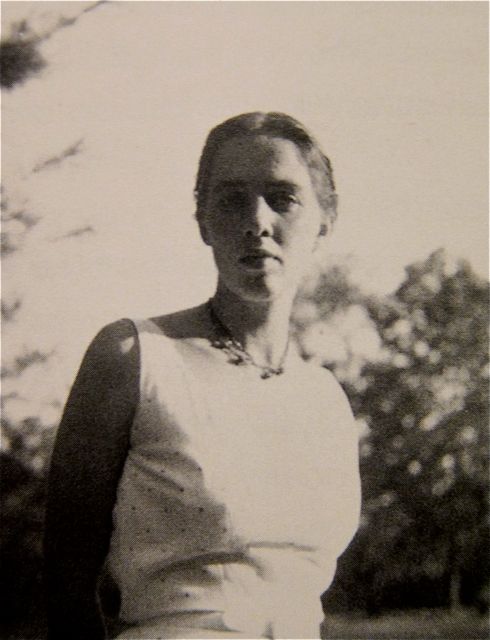
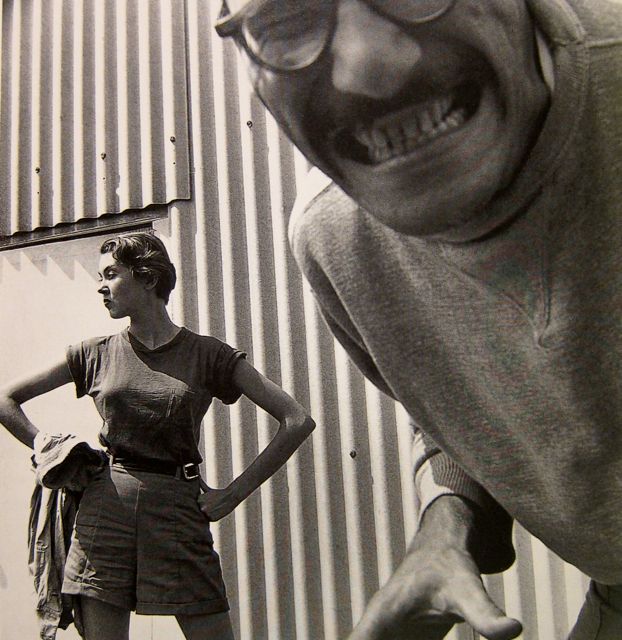

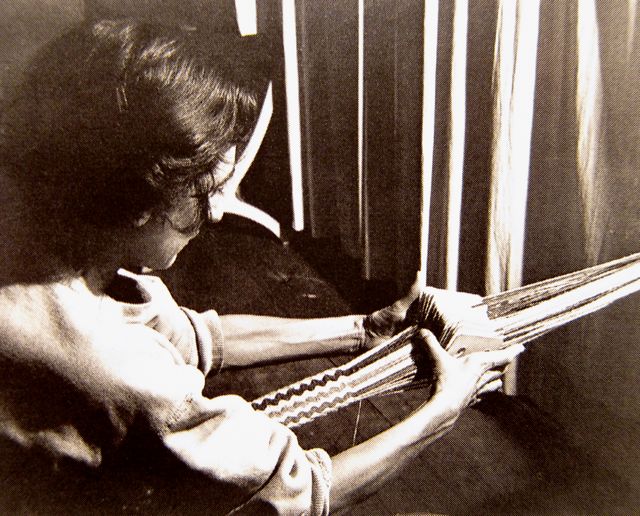
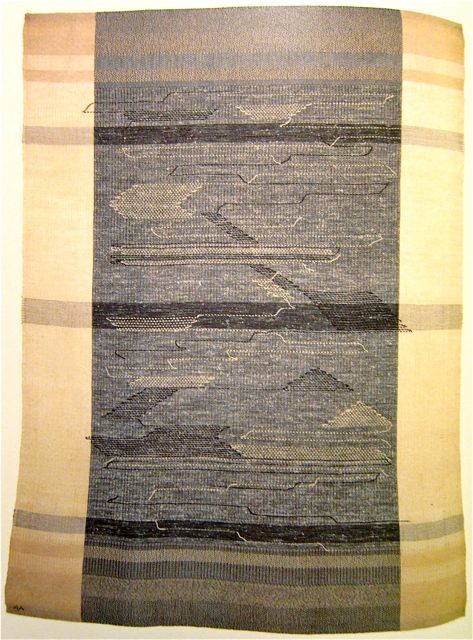
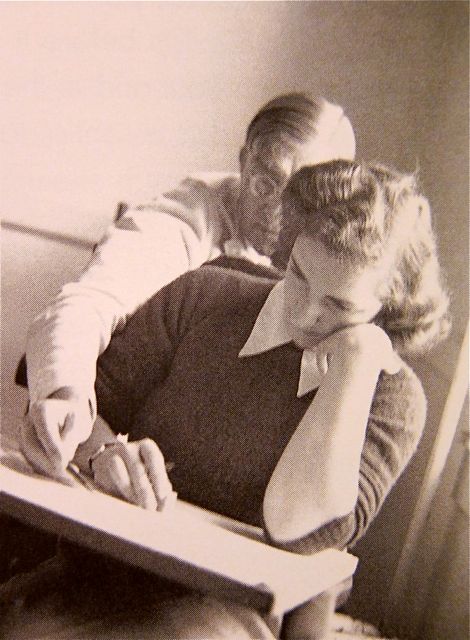
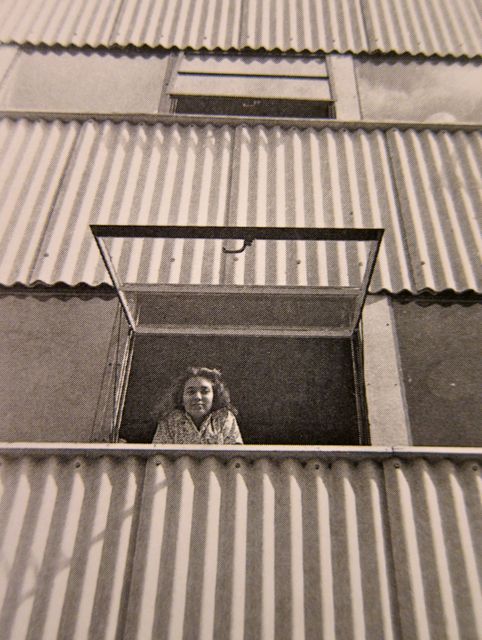
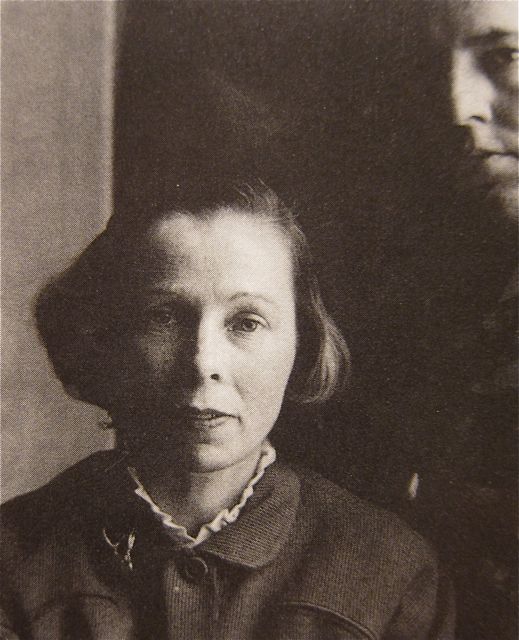
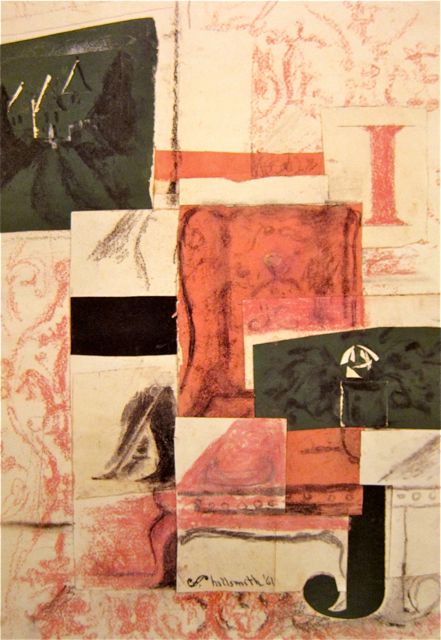
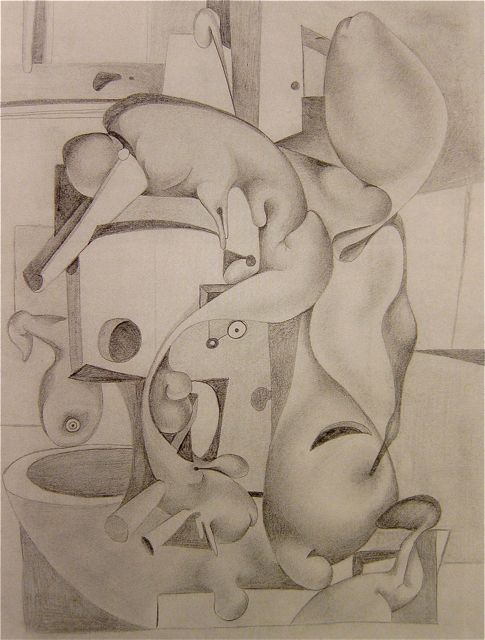
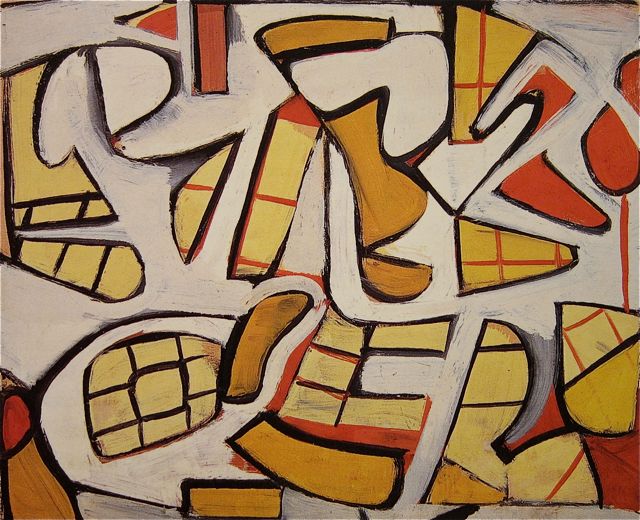
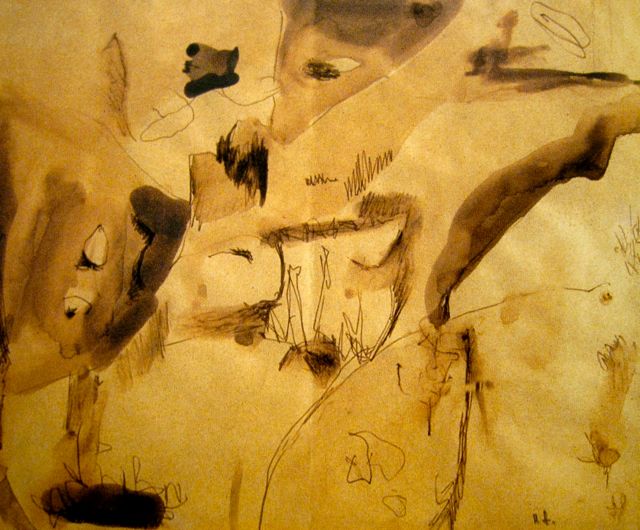
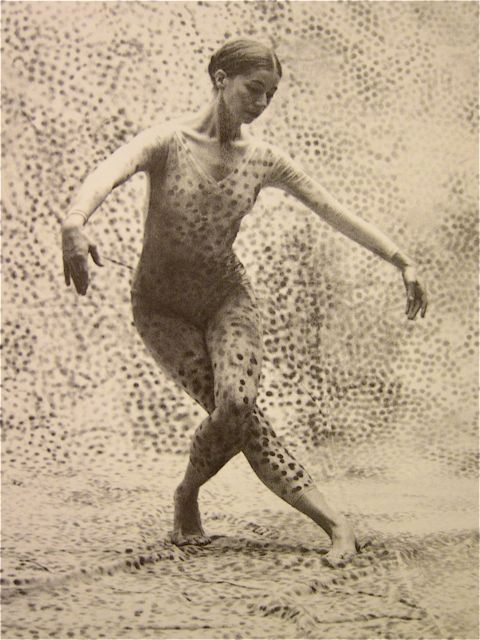
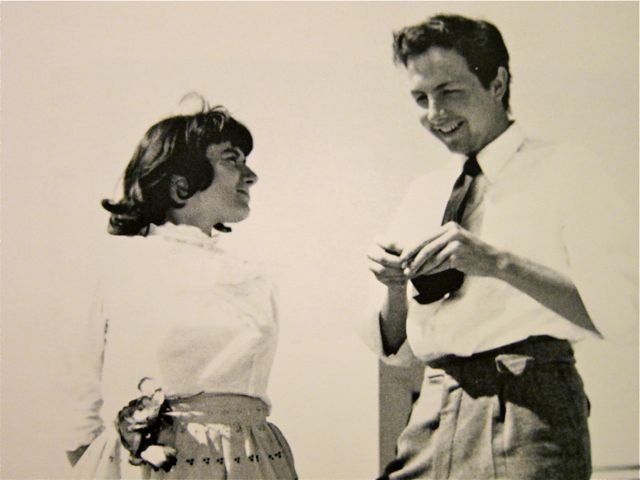
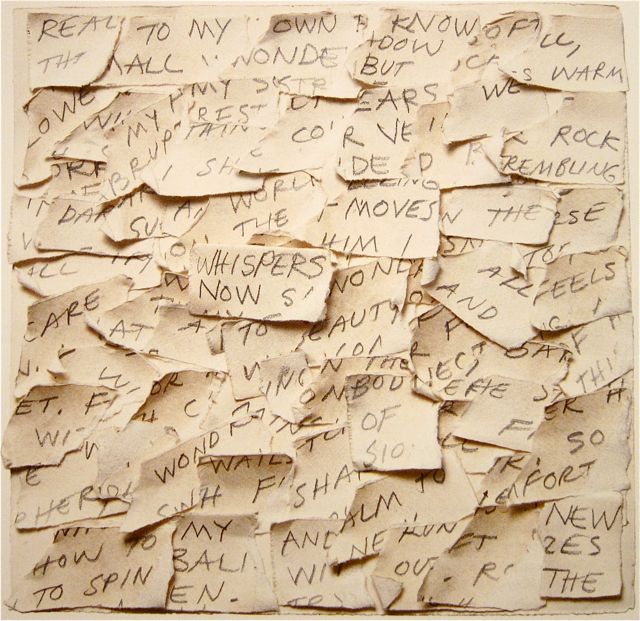
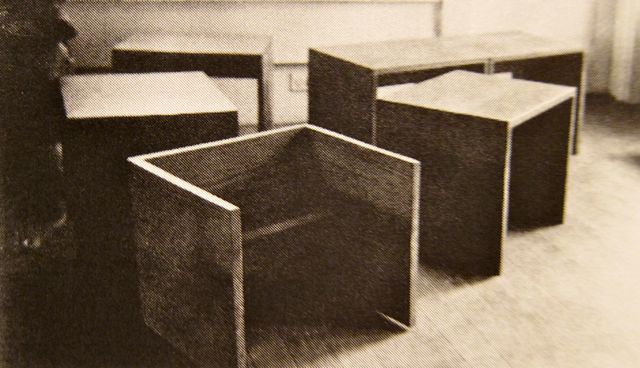




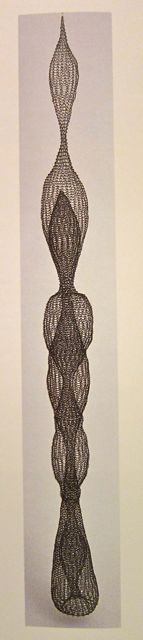


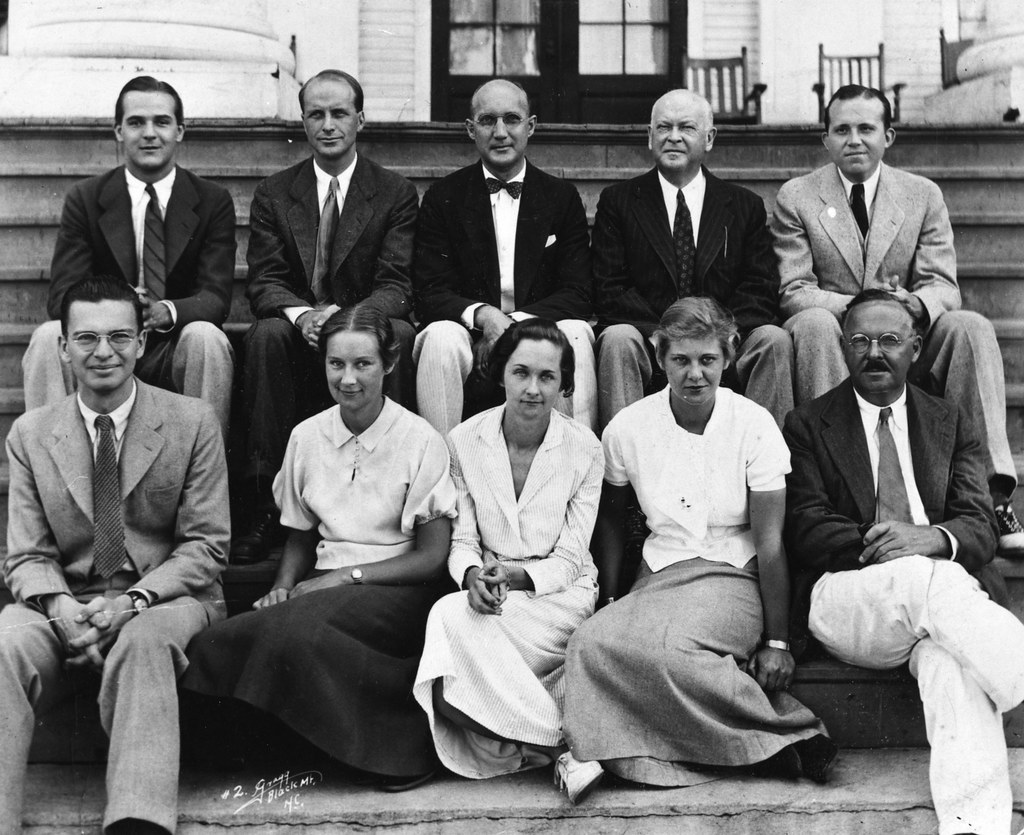


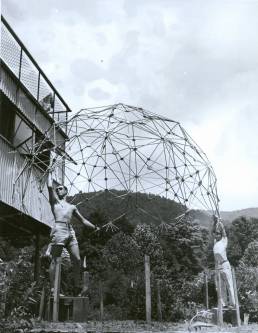






 The Daily Hatch