Category Archives: Current Events

REVIEW OF “Bibi: My Story – by Benjamin Netanyahu” Part 5 (Letter from Yoni to his brother Benjamin, Dec. 2, 1973) “We’re preparing for war, and it’s hard to know what to expect. What I’m positive of is that there will be a next round, and others after that. But I would rather opt for living here in continual battle than for becoming part of the wandering Jewish people. Any compromise will simply hasten the end. As I don’t intend to tell my grandchildren about the Jewish State in the twentieth century as a mere brief and transient episode in thousands of years of wandering, I intend to hold on here with all my might.”

——

——

tuti netanyahu

Screening of “Follow Me: The Yoni Netanyahu Story”

——

BIBI GIVES CHAPTER 16 the title “AGONY” which is about the news of  Yoni’s death.

Iddo told me he felt something wasn’t right. As the hours passed, my anxiety grew. I called Iddo again. Again, the same response. I tried to calm myself but could not. Finally, several hours later, the phone rang. “It’s Iddo,” I said to Miki, “to tell me Yoni is dead.” I picked up the phone. Iddo was on the line. “Bibi,” he said quietly, “Yoni has been killed.” The silence that followed was indescribable in its agony on both sides of the line. In that moment of utter shock, I could only think of my parents. “I’ll go to Abba and Imma,” I said to Iddo, my voice choking. “They shouldn’t hear this on the news.” Iddo agreed. For seven tortured hours, Zvika and Ruthie Livneh drove Miki and me from Boston to Ithaca, a Via Dolorosa of unspeakable pain. When we got to Ithaca, I walked alone on the path leading to my parents’ modest home near Cornell. As I got closer, I saw my father through the big front window. He was pacing back and forth, deep in thought, his hands clasped behind his back. Suddenly he turned and saw me. “Bibi.” He smiled in surprise, but when he saw my face, he instantly understood. He let out a terrible cry like a wounded animal. I heard my mother scream. If there was a moment in my life worse than hearing about Yoni’s death, it was telling my parents about it. I felt like a man on a rack whose limbs are torn from him one by one. How could I go on living? Somehow we found the strength to get to JFK and board a plane to Israel. On the long flight home, we wept silently in our seats as our hearts burst. I tried to gather strength from the courage of my parents, who bore their grief with incredible dignity. I felt I owed it to them and to Yoni not to break down. Supporting myself, I supported them. The funeral on Mount Herzl was packed with the leaders of Israel and many of Yoni’s fellow soldiers. Shimon Peres, the defense minister, gave an unforgettable eulogy:

————

tuti netanyahu

Self-Portrait Of A Hero: From The Letters Of Jonathan Netanyahu 1963-1976: Netanyahu, Jonathan: 9780446674614: Books – Amazon.ca

tuti netanyahu

Operation Entebbe | Sutori

Yonaton “Yoni” Netanyahu

(1946 – 1976)
Yonatan “Yoni” Netanyahu was a commander of the elite Israeli army commando unit Sayeret Matkal. He was famously killed in action during Operation Entebbe in Uganda.

Netanyahu was born on March 13, 1946, in New York City to parents Benzion and Cela who had moved to the States to work for the New Zionist Organization. Shortly after his birth, the family returned to the newly independent state of Israel, living at first in Talpiot, a southern neighborhood of Jerusalem. Yoni’s brothers Benjamin “Bibi” and Iddo were born while the family lived in Talpiot.

In 1955, the Netanyahu family moved to a permanent home in Katamon, a district of Jerusalem. In order to further Benzion’s historical research, the family went back to the United States in 1957, but soon returned to Jerusalem in 1959. In 1963, when Yoni was in 11th grade, the family resettled in Elkins Park, a suburb of Philadelphia, where Benzion Netanyahu taught at Dropsie College, a school of higher learning for Jewish studies.

Following his graduation from high school in June 1964, Netanyahu was drafted into the Israeli Defense Forces where he volunteered to serve in the Paratroopers Brigade, and later was chosen for and excelled in the Officer Training Course. Years later he took command of a paratroopers company. On June 5, 1967, during the Six Day War, his battalion fought in the battle of Um Katef in Sinai, then reinforced the Golan Heights. During the battle, Yonatan received a wound to his elbow while helping rescue a fellow soldier who lay wounded deep behind enemy lines.

In August 1967, Netanyahu married his longtime girlfriend Tuti. Shortly after their wedding, they flew to the U.S., where Netanyahu enrolled at Harvard University. He took classes in philosophy and mathematics, excelling in both and was on the Dean’s List at the end of his first year. However, feeling restless at being away from Israel, especially with Israel skirmishing against Egypt during the War of Attrition, Yoni transferred to Jerusalem’s Hebrew University in 1968. In early 1969, he left his studies and returned to the army.

In the early 1970s, Netanyahu joined the elite special forces unit Sayeret Matkal and in the summer of 1972 was appointed as the unit’s deputy commander. During that year, he commanded a raid, Operation Crate 3, in which senior Syrian officers were captured and exchanged in return for captive Israeli pilots. The following year he participated in Operation Spring of Youth in which the alleged terrorists and leadership of Black September were selectively killed by Sayeret MatkalShayetet-13and the Mossad.

During the Yom Kippur War in October 1973, Netanyahu commanded a Sayeret Matkal force in the Golan Heights that killed more than 40 Syrian Commando officers in a battle which thwarted the Syrian commandos’ raid into the Golan’s heartland. During the war he also rescued Lieutenant Colonel Yossi Ben Hanan from Tel Shams, while Ben Hanan was lying wounded behind Syrian lines.

Following the war, Netanyahu was awarded Medal of Distinguished Service (עיטור המופת), Israel’s third highest military decoration, for his wartime conduct. Netanyahu then volunteered to serve as armor commander, due to the heavy casualties inflicted on the Israeli Armored Corps during the war, with a disproportionate number of these in the officer ranks. Netanyahu excelled in Tank Officers course and was given command of the Barak Armored Brigade, which had been shattered during the war. Netanyahu turned his brigade into the leading military unit in the Golan Heights.

In June 1975, Netanyahu left the Armored Corps and returned to Sayeret Matkal as unit commander.

On July 4, 1976, Netanyahu led Operation Entebbe, a mission to free 105 Jewish hostages being held in Entebbe, Uganda by members of the Popular Front for the Liberation of Palestinewho had days earlier hijacked an Air France flight out of Athens headed for Tel Aviv. The mission was a huge success as the commandos breached the zone, rescued 102 of the hostages and killed all the terrorists and dozens of Ugandan soldiers.  Netanyahu, however, was killed during the raid – the only Israeli casualty. In honor of Netanyahu, the raid was posthumously renamed Mivtsa Yonatan (Operation Yonatan).

Netanyahu was buried in Jerusalem’s Military Cemetery at Mount Herzl on July 6, 1976, following a military funeral attended by enormous crowds and top-ranking officials. Shimon Peres, then-Defense Minister, said during the eulogy that “a bullet had torn the young heart of one of Israel’s finest sons, one of its most courageous warriors, one of its most promising commanders – the magnificent Yonatan Netanyahu.”

In 1972, he and Tuti were divorced. Netanyahu was living with his girlfriend of two years, Bruria, at the time of his death.

In 1980, many of Netanyahu’s personal letters were published. Many of his letters were written hurriedly under trying conditions in the field, but according to a review in the New York Times, they give a “convincing portrayal of a talented, sensitive man of our times who might have excelled at many things yet chose clear-sightedly to devote himself to the practice and mastery of the art of war, not because he liked to kill or wanted to, but because he knew that, as always in human history, good is no match for evil without the power to physically defend itself.”

Letter to his parents, March 6, 1969:

In another week I’ll be 23. On me, on us, the young men of Israel, rests the duty of keeping our country safe. This is a heavy responsibility, which matures us early… I do not regret what I have done and what I’m about to do. I’m convinced that what I am doing is right. I believe in myself, in my country and in my future.

Letter to his brother Benjamin, Dec. 2, 1973:

We’re preparing for war, and it’s hard to know what to expect. What I’m positive of is that there will be a next round, and others after that. But I would rather opt for living here in continual battle than for becoming part of the wandering Jewish people. Any compromise will simply hasten the end. As I don’t intend to tell my grandchildren about the Jewish State in the twentieth century as a mere brief and transient episode in thousands of years of wandering, I intend to hold on here with all my might.

In 2005, a poll conducted by Israeli newspaper Yediot Ahronoth placed Netanyahu as the 13th-greatest Israeli of all time.

———

tuti netanyahu

Jonathan Netanyahu | Soldier Yoni

———-

tuti netanyahu

Photostream : Yoni Netanyahu with His Mother And Brothers | Soldier Yoni

———-

tuti netanyahu

Yoni Netanyahu

——

tuti netanyahu

——

One of Israel’s Most Courageous Warriors

Stand for Israel  |  June 26, 2023

PM Benjamin Netanyahu speaks in front of photo of his brother, Yoni Netanyahu
(Photo: Moshe Milner/GPO)

Remembered as commander of an elite Israeli commando unit, Yoni Netanyahu grew up the big brother of Benjamin Netanyahu. Born in New York City on March 13, 1946, Yonatan soon moved to Israel with his family. He spent several years in the United States throughout his life, but his heart belonged in the Holy Land.
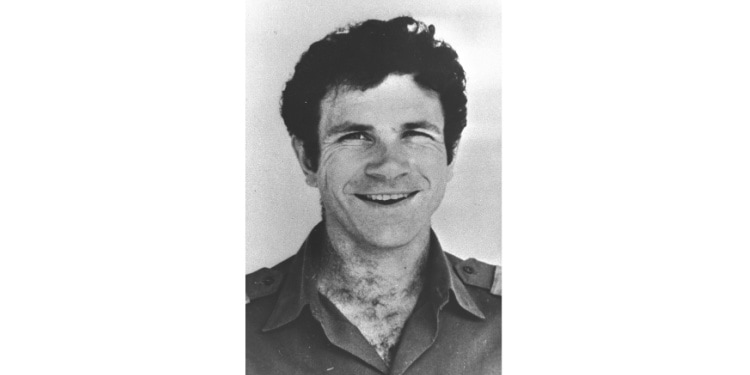
Yonatan

Commander and Commando

Following his high school graduation, Yoni joined the Israel Defense Forces (IDF). He quickly became a platoon commander in the paratroopers unit. During the Six Day War in June 1967, his battalion took part in a pivotal battle in the Sinai, and also reinforced the Golan Heights region. Completing his service, Yoni studied at Harvard and Hebrew University, but returned to the IDF in 1969.

He then joined Sayeret Matkal, the IDF’s elite special forces unit. In the early 1970s, the unit appointed Yoni its deputy commander in 1972. While deputy commander of Sayeret Matkal, Yoni led a raid which captured Syrian officers to be exchanged for captive Israeli pilots. He also played a large role in the Yom Kippur War, rescuing a lieutenant colonel who wounded behind Syrian lines.

Operation Entebbe

Yoni died in action on July 4, 1976, while commanding an assault unit in Operation Entebbe, a mission to rescue more than 100 Israelis and Jews held hostage in Uganda after a plane hijacking. Although the operation was successful, Yoni suffered a fatal gunshot wound, the only Israeli soldier killed during the raid. After a military funeral attended by enormous crowds and many top-ranking officials, Yoni joined other Israeli heroes in Jerusalem’s military cemetery at Mount Herzl.

Operation Entebbe became known as Mivtsa Yonatan (Operation Yonatan) in his honor, and The Jonathan Institute, established in 1979 and named after him, to this day sponsors international conferences on combating terrorism.

‘One of Israel’s Finest Sons’

Giving Yoni’s eulogy, Shimon Peres said, “A bullet had torn the young heart of one of Israel’s finest sons, one of its most courageous warriors, one of its most promising commanders — the magnificent Yonatan Netanyahu.”

And Yoni’s beloved brother Benjamin said, “He could do anything. I think he was at heart a great leader. He certainly could have headed the army. What he would have done after that, I don’t know. I think a man with his gifts and his depth would not have stayed on the sidelines. He would have found ways to contribute to the Jewish state and the Jewish future.”

———-

tuti netanyahu

Yonatan Netanyahu Tribute Page

tuti netanyahu

Netanyahu visits grave of Yoni, killed in Entebbe 43 years ago – Israel News – The Jerusalem Post

tuti netanyahu

Photostream

—-

tuti netanyahu

tuti netanyahu

Netanyahu visits grave of brother, Yoni, ahead of Memorial Day | The Times of Israel

———

The Astonishing Servant of Jehovah (Isaiah 53) John MacArthur

Published on Apr 16, 2012 by

http://www.gty.org/resources/sermons/90-435

Now for this morning, I finally want you to open your Bible to the fifty-third chapter of Isaiah, Isaiah chapter 53, and we are about to embark on a study of this immensely important portion of the Old Testament as we begin our series in the Old Testament, Finding Christ There.

The reality this morning is, folks, I give you sort of fair warning. The reality is you’re going to think you’re in an upper division class in the Master’s Seminary because it is essential to me to give you the ground work and the foundation and something of the structure of this section of Holy Scripture. You need to understand its character, its context so that you can be able to draw all the richness that is in this chapter. I have heard sermons on Isaiah 53 but you’re going to get more than that, you’re going to get a series that could last as long as a couple of months. And in order to make that all that it should be and for you to be able to see what is really in this incredible section of Scripture, I’m going to have to give you an introductory message this morning. And so you need to put on your scholastic cap and think carefully and thoughtfully about this, expect to be on overload a little bit. We’re going to test your gigabyte capacity this morning, how much you can handle. But we’re going to lay this one down on CD, if you will, or on MP3 file for the future, it will be the kind of thing you’ll probably want to go back to and listen and absorb in the future….

__________

Here is the transcript:

Now for this morning, I finally want you to open your Bible to the fifty-third chapter of Isaiah, Isaiah chapter 53, and we are about to embark on a study of this immensely important portion of the Old Testament as we begin our series in the Old Testament, Finding Christ There.

The reality this morning is, folks, I give you sort of fair warning. The reality is you’re going to think you’re in an upper division class in the Master’s Seminary because it is essential to me to give you the ground work and the foundation and something of the structure of this section of Holy Scripture. You need to understand its character, its context so that you can be able to draw all the richness that is in this chapter. I have heard sermons on Isaiah 53 but you’re going to get more than that, you’re going to get a series that could last as long as a couple of months. And in order to make that all that it should be and for you to be able to see what is really in this incredible section of Scripture, I’m going to have to give you an introductory message this morning. And so you need to put on your scholastic cap and think carefully and thoughtfully about this, expect to be on overload a little bit. We’re going to test your gigabyte capacity this morning, how much you can handle. But we’re going to lay this one down on CD, if you will, or on MP3 file for the future, it will be the kind of thing you’ll probably want to go back to and listen and absorb in the future.

As we come to Isaiah chapter 53, I have to say that the beginning of the passage is really in chapter 52, verse 13. So when I make reference in general to a study of Isaiah 53, I’m actually including 52 verse 13 through 53 verse 12, that entire section of 15 verses, starting in 52:13. It all belongs as one. I could only wish that when the scholars had labeled chapter 53, they had actually started it at verse 13 because verse 13 sets up what is detailed in the fifty-third chapter.

Now if you’ve been a Christian for any time at all, you’re very familiar with this section of Holy Scripture, and you should be. It has been called by some scholars in the past, “The Fifth Gospel…The Fifth Gospel,” to be added to Matthew, Mark, Luke and John. It was Augustine who said way back in the fifth century, “It is not a prophecy, it is a gospel.” It was Polycarp, the student and friend of the Apostle John who called this section of Scripture “The Golden Passional of the Old Testament. Martin Luther himself said, “Every Christian ought to be able to repeat it by heart.” So, that is going to be your assignment, to memorize Isaiah 52:13 through 53:12, and you will draw on it the rest of your life. It is very likely that you already know most of it if you have been a student of Scripture for any length of time.

A couple of German scholars writing in 1866 said, “It looks as if it had been written beneath the cross of Golgotha. They further said, “Many an Israelite has had it melt the crust of his heart.” The same German scholars went on to say this, “This chapter is the most central, the deepest and the loftiest thing that Old Testament prophecy out stripping itself has ever achieved,” end quote.

You’re going to find in this section of Holy Scripture the root of Christian thinking, even though it is Old Testament. You’re going to find here phraseology that has entered and remained in Christian speech and conversation. You’re going to find in this section of Scripture the text that has been used by more gospel preachers and writers through history than any other portion of the Old Testament. In fact, Isaiah 53 is the heart of Hebrew writings. It is the epoch messianic, prophetic Scripture that stands above all others in the Old Testament.

Now the luster of this prophetic gem is intensified by its setting. So get your Bible handy because you’re going to have to grasp this with me. I want to give you the sense of what we’re dealing with here, starting with a bit of a wider panorama.

Isaiah is divided into two sections, chapters 1 through 39 and chapter 40 through verse 66. Obviously a long and very detailed and magnificent Old Testament book. It was written about 680 B.C. or seven hundred years before Christ. The first half of the book, chapters 1 through 39, speak of coming judgment and captivity—thirty-nine chapters where God speaks through the prophet Isaiah, speaking of judgment, judgment on Israel to come immediately. And it did come, it came less than a hundred years after it was written in the beginning of the Babylonian Captivity when the whole Southern Kingdom of Judah, the only part that remained, the Northern Kingdom already had gone into captivity some years earlier, 720. The captivity of the Southern Kingdom is the target of the first 39 chapters. And beyond that, there are warnings about divine judgment on sinners of all ages and all time and even indications of a final, terminal, eschatological day of great judgment. But the chapters 1 through 39 are about judgment and captivity in terms of the Babylonian Captivity and the greater issue of judgment on sinners and even the greater issue of final judgment at the end of human history.

So that chapter 39 ends with a pronunciation of the judgment that’s going to come on Israel in the Babylonian Captivity, when they will be taken away by the powers of Babylon. Listen to verses 6 and 7, “The days are coming—verse 6 of chapter 39—when all that is in your house and all that your fathers have laid up on store to this day will be carried to Babylon, “Nothing will be left,” says the Lord, “and some of your sons who will issue from you whom you will beget will be taken away and they will become officials in the palace of the King of Babylon.” This is a specific prophecy about the Babylonian Captivity which began in 603 about 80 years after Isaiah wrote it. He prophesied that would happen, it did happen, there were three deportations, 603, 597 and 586 the final one and they didn’t return until 70 years after that final captivity. So the first section can be verified as divinely authored because history proved its fulfillment to the letter.

That brings you to the second section, 27 chapters remain, chapters 40 through 66. The theme of the second section is grace and salvation…grace and salvation. These 27 chapters, starting in chapter 40, are the most sublime and rich portion of Old Testament prophecy. It really is a single prophecy, one glorious vision, one majestic revelation of salvation through the coming Messiah. It is sublime, it is sweeping, it is comprehensive. It encompasses not only the deliverance of Israel from Babylon, not only the deliverance of sinners from sin, but the deliverance of the nations from the curse into the Kingdom of Messiah. So it has those same elements. The first part talks about judgment on Israel, it talks about judgment on sinners, and it talks about final judgment. The second half talks about deliverance for Israel, deliverance for sinners, and a final deliverance into the messianic Kingdom.

Most interestingly the second half, which is what we’re going to be looking at, 40 to 66, begins where the New Testament begins. I want you to look at chapter 40 for just a brief moment and the parallel is quite interesting. In chapter 40 we read, “Comfort, O comfort My people, says your God.” And that’s the turn in the book of Isaiah from the pronunciation of judgment in the first 39 to comfort in the back half because of grace and salvation. Speak kindly to Jerusalem. And then comes the prophecy in verse 3 of John the Baptist. “A voice is calling, clear the way for the Lord in the wilderness, make smooth in the desert a highway for our God.” And, of course, it was John the Baptist who came, who was the fulfillment of that prophecy, he was the forerunner of Messiah, he was the voice crying in the wilderness, “Prepare the way of the Lord, making the desert a highway for our God.” So, that’s where the New Testament begins, the New Testament begins with John the Baptist, and that’s where the back half of Isaiah begins. So this so-called gospel section of Isaiah begins where the actual New Testament gospel begins.

Now this section of Isaiah ends where the New Testament ends as well. And that is another remarkable feature in the 65th chapter of Isaiah, as you’re getting to the very end and verse 17 we read this, “For behold, I create new heavens and a new earth.” The new heavens and the new earth, chapter 65 verse 17. Then in the final chapter, chapter 66 verse 22, almost at the very end, “For just as the new heavens and the new earth which I make will endure before Me, declares the Lord,” and so forth. Guess where the New Testament ends? It ends in Revelation 21 and 22 with the new heavens and the new earth.

So this section of Isaiah begins where the New Testament begins, with the arrival of John the Baptist. It ends where the New Testament ends, with the new heaven and the new earth. And thus we see the magnificent way in which this incredible prophecy parallels the New Testament. And all of it is written 700 years before Messiah comes to begin to fulfill it.

Now, who is going to bring this grace and salvation? Who is going to be the one to provide this deliverance? The answer is the servant of the Lord…the servant of the Lord. That is how He’s designated. The Hebrew word is ebed and it means slave or servant. It’s used many hundreds of times in the Old Testament. It is the Hebrew word for slave as well as servant. The Slave of Jehovah, the Servant of Jehovah, He is the one who will bring salvation. He is the one who will bring comfort. He is the one who will bring the forgiveness of sins. He becomes then the theme of this final section of the book of Isaiah.

Now let’s go to chapter 53 for a moment, with just that kind of broad picture, and you will find in verse 13 of 52, “Behold My servant…Behold My servant,” My ebed, My slave. This is the same designation that has been indicated much earlier in this section of the book of Isaiah. This is the fourth of specific prophecies of the servant. Chapter 42 is one, chapter 49 is another, and chapter 50 verses 4 to 11 is the third. This is the fourth of what we would call Isaiah’s servant songs, or servant prophecies.

Now in this presentation of the servant before us, the prophet calls on us to look at this servant and be astonished. If I were to title this message, I would entitle it, “The Astonishing Servant of Jehovah.” I don’t know what they put in the Grace Today but I would entitle it, “The Astonishing Servant of Jehovah.” This is the most complete, most powerful, most important revelation of the Messiah in the entire Old Testament, right here in front of us.

Now a little more background on this. If you go back to Samuel, let’s say, you sort of begin to have the revelation of God coming through prophets. Moses was a prophet, in a sense, he did give divine prophecy, he did predict even the Messiah, a prophet who would come. He identified Him. But really the prophetic office as we know it begins with Samuel. Others, of course, spoke for God and that would be a prophetic ministry. But the prophetic office sort of begins with Samuel. That’s about a thousand B.C. so 300 years say before Isaiah. And the prophets were regularly told that there would be an age when God would rule and reign in Israel and from Israel over the world. Okay, that’s just basic. There would be an age when God would reign and rule from Israel over the world. This, of course, had connections to the promises to Abraham and to David, as you well know. God would reign and rule in Israel over the world, and here’s the key, through a righteous king, through a righteous king called in the Abrahamic Covenant the seed, and in the Davidic Covenant, the Son of David, a righteous King. This King would deliver Israel from its enemies, as we saw in Zacharias benedictus, this King would deliver Israel from its sins.

So it would be a temporal deliverance, and more importantly a spiritual deliverance. Since the promises of the Seed and the King and the righteous King who would come and bring salvation and bring deliverance for Israel and through Israel for the world, the hopes of the Jews had been high. They wanted that King. They looked for that King. And, of course, you can go all the way back into the era of Samuel and you will remember that they wanted a king so they chose a king by the name of Saul. They put their hopes in Saul and maybe they actually assumed that Saul would be that one king who would come and bring salvation and make Israel the gem of the world and reign from Israel over the whole world, and bring a Kingdom of Righteousness and Peace. Saul, however, was rejected, he was rejected by God for his gross intrusion into the priestly function, his overreaching and overstepping his bounds. He was a sinful man.

Not only was he rejected, but his line was cut off from ever reigning again in Israel. Hopes then shifted to David. But David had his own problems. And David was such a sinful man and such a bloody man, that God didn’t even allow David to be the one to build the temple. You remember David said to Nathan, the prophet, “I’m going to build the temple.” And Nathan said, “Go for it, do it.” And God came to Nathan at night and said, “Why did you tell him that? You didn’t ask Me, I don’t want him to build that. He’s a man of blood.” David had his issues and David was sinful and David wasn’t going to be that righteous King. But the promise came in 2 Samuel 7 that it would be a son of David and hopes must have set immediately on Solomon and it must have looked really good when Solomon came along because he enlarged the Kingdom vastly and he became the wealthiest person in the world by a large margin.

And not only that, because at the sort of beginning of his reign he asked for wisdom, God gave him abundant wisdom and so he was able to be successful in everything he did. But it turned out that Solomon was a total tragedy. Solomon had his heart turned away from God because he married so many wives and had so many concubines; he was engaging himself in physical relationships with hundreds of women. He was a very debauched man. He was not going to be the righteous king. By the time you come to the end of his Kingdom, the whole Kingdom splits in pieces and the Northern Kingdom goes away, and every king after that in the Northern Kingdom is wretched and corrupt and vile and wicked. There’s not one good one. And the Southern Kingdom struggles to survive with a long list of mostly corrupt kings and a few decent ones sprinkled in. People were beginning to lose hope in the human king, even out of the loins of David. In fact, the line of David was so bad that at one point, one of David’s descendants by the name of Manasseh became king. You probably remember King Manasseh. Let me give you the post-mortem on Manasseh and this is all you need to know. Second Chronicles 33:9, “Manasseh mislead Judah and the inhabitants of Jerusalem to do more evil than the nations whom the Lord destroyed before the sons of Israel.” A son of David led Israel to do more evil than the Canaanites had done whom Israel displaced and the Canaanites were a vile, idolatrous, pagan people. That’s how bad it got.

All the kings in the north are corrupt. Virtually the kings in the south are corrupt, with a few exceptions. They all fail to fulfill the possibilities of being a righteous king. They’re all failures at one degree or another. There were a few noble kings in the south, as you know. But no human king seemed to be capable to fulfill this anticipated promise. In fact, Isaiah’s life comes to an end during the reign of Manasseh. Isaiah’s life comes to an end during the reign of Manasseh when Manasseh has Isaiah sawn in half with a wooden saw. And that’s what tradition tells us and it’s consistent with Hebrews 11:36 and 37 which refers to Old Testament heroes being sawn in half. That was Isaiah. How bad was it? No human king was a hope. It is just before Isaiah is sawn in half, just at the time of Manasseh taking over, Isaiah actually prophesied during the reign of four kings. If I remember right, Ahaziah, Joram, Ahaz, Hezekiah…Ahaziah, Joram, Ahaz, Hezekiah. You remember in the year Uzziah died I saw the Lord…chapter 6. And those other three. And it was his prophesying during those years that is recorded in his prophecy. But it was when Manasseh came in, as best we can tell historically, that he was sawn in half in about 686 B.C., and probably wrote Isaiah just prior to that.

So he wrote this prophecy of hope and grace and salvation at a moment in the history of Judah which was as dark as any moment had ever been. They had Manasseh as a king and they were going into captivity. It couldn’t get any worse than that. Their temple would be destroyed, their capital would be destroyed, the Northern Kingdom was gone permanently never to return, and they were next. In a time when the line of David was the most corrupt and the most vile, and the most wicked, God steps in and gives to Isaiah a dramatic new revelation about the righteous King…a dramatic new revelation about the righteous King. If ever there was a time in their history they needed it, it was then, right? When all hope was gone. I mean, they were gone, they were leaving. It was over. And it was a bloody massacre when the Babylonians came. And here was the news, the shocking news, the astonishing news. He would not be only a reigning King; he would be a suffering Slave. He would not only be a reigning King, he would be a suffering Slave and His glory would not come until He had suffered. And further, He would not suffer for any evil that He had done because He would be a righteous king, but rather He would suffer for the evil that others had done. He would suffer vicariously.

This is a new revelation. The righteous King would suffer. The righteous King would die. But He would not die for His own sin, He would die for the sins of the people. He would die in paying the penalty for the sins of His people. He would be a substitute who died in His people’s place. And though that reality is pictured in the animal sacrifice system, right? It’s pictured there, it wasn’t until this prophecy that it was made clear.

Now let’s meet this suffering Servant. Let me read, starting in verse 13. “Behold, My Servant will prosper. He will be high and lifted up and greatly exalted. Just as many were astonished at You, so His appearance was marred more than any man and His form more than the sons of men. Thus He will sprinkle, or startle, many nations.

“Kings will shut their mouths on account of Him, for what had not been told them, they will see. And what they had not heard, they will understand. Who has believed our message? And to whom has the arm of the Lord been revealed? For He grew up before Him like a tender shoot, and like a root out of parched ground. He has no stately form or majesty that we should look upon Him, or appearance that we should be attracted to Him. He was despised and forsaken of men, a man of sorrows and acquainted with grief. And like one from whom men hide their face, He was despised and we did not esteem Him. Surely our grieves He Himself bore. And our sorrows He carried.

“Yet we ourselves esteemed Him stricken, smitten by God and afflicted. But He was pierced through for our transgression. He was crushed for our iniquities. The chastening for our well-being fell on Him and by His scourging we are healed. All of us like sheep have gone astray; each of us has turned to his own way. But the Lord has caused the iniquity of us all to fall on Him. He was oppressed and He was afflicted, yet He didn’t open His mouth.

“Like a lamb that is led to slaughter, and like a sheep that is silent before its shearers, so He did not open His mouth. By oppression and judgment He was taken away, and as for His generation, who consider that He was cut off out of the land of the living for the transgression of My people to whom the stroke was due. His grave was assigned with wicked men, yet He was with a rich man in His death because He had done no violence, nor was there any deceit in His mouth. But the Lord was pleased to crush Him, putting Him to grief. If He would render Himself as a guilt offering, He will see His offspring, He will prolong His days and the good pleasure of the Lord will prosper in His hand. As a result of the anguish of His soul, He will see it and be satisfied.

“By His knowledge, the righteous One, My Servant will justify many as He will bear their iniquities. Therefore I will allot Him a portion with the great and He will divide the booty with the strong because He poured out Himself to death and was numbered with the transgressors, yet He Himself bore the sins of many and interceded for the transgressors.”

Do you see Christ there? Proof that God is the author of Scripture and Jesus its fulfillment is found in that one chapter alone, in the minute essential details exactly fulfilled in the death, burial, resurrection, ascension, intercession, coronation and salvation provided through Jesus Christ. Jesus Himself, the Apostles of the New Testament, the writers of the New Testament in proclaiming the gospel point back to Isaiah 53 many, many times. Jesus referred to it, the Apostles referred to it, the New Testament writers referred to it again and again and again. There are references to Isaiah 53 in Matthew, Mark, Luke, John, Acts, Romans, 1 Corinthians, 2 Corinthians, Galatians, Ephesians, 1 Timothy, Titus, Hebrews, 1 Peter and 1 John. No Old Testament Scripture so often and so convincingly is applied to Jesus Christ by the New Testament as this one. The New Testament writers refer to virtually every verse in the fifty-third chapter. It contains the sum and substance of the gospel and to reject Christ is to reject the clear testimony of history, fulfilling every detail in this prophecy.

But, on a bigger scale than the history and the fulfillment as vital and important and wonderful as it is, is this question: what does that mean to me? That’s the big issue. You could be in awe of the history. You could be amazed that detailed prophecies concerning a person’s life and death and resurrection could be predicted 700 years before the person arrived, and you should be. You could be in awe of the fact that no man could know that and therefore Scripture is authored by the only one who knows the future and that’s God, who not only knows it but determines it. You should be in awe of the divine nature of Holy Scripture, you should be.

But that’s not where you want to stop, because there’s a bigger, grander question than that—what does it mean to you? What does it mean to me and everybody else?

So let me talk about that for a minute. The truth of this ancient prophecy and its fulfillment in Jesus Christ answers the most crucial, essential, critical question that can ever be asked by any human being. I’m going to pile up the adjectives on you. This passage answers the most significant question any person can ask, the primary question, the principle question, the most vital question, the most weighty question, the most serious question, the most monumental question, the most meaningful question, the paramount question and that has nothing to do with health, nothing to do with wealth, nothing to do with success, education, morality, well-being, philosophy, sociology, politics, the most important question that any human being will ever ask and have answered has nothing to do with the issues that occupy people’s minds.

I suppose if you could Google on your computer—what are the most asked questions?, you would go through thousands of them before you would ever, ever, if you ever did discover the appearance of this question. But it should be first. It is the most necessary question, it is the most essential question, it is the most determinative question, and it is, frankly, the most avoided question. It transcends all other questions infinitely—infinitely and yet it is almost non-existent on people’s priority list.

What is the question? Here is the question. How can a sinner be right with God so as to escape hell and enter heaven? That’s the most important question. How can a sinner be right with God so as to escape eternal hell and enter eternal heaven? That’s the question. How can a man be made right with God? How can a holy God declare a sinner righteous? That’s the question. This is the great moral dilemma that exists in the world. This is the great moral dilemma that exists in the world. Listen, it is precisely to answer that question that the Bible was written. Did you get that? It is precisely to answer that question that the Bible was written. It is precisely to answer that question that Isaiah 53 was written. That is THE question.

In the New Testament era there were millions of slaves and there was an awful lot of abuse of slaves. The numbers are sometimes astronomical, some say fifteen million slaves, some saysixty million slaves. People would assume, people who are socially sensitive, that the New Testament probably should have taken on the issue of human trafficking, human slavery, ’cause they had their sex slaves, as you well know if you know anything about ancient history. And they had all the abuses of slavery. But it fascinates me that the Apostle Paul who writes thirteen books of the twenty-seven in the New Testament, the Apostle Paul never wrote about the social injustices of slavery. What he did do was write a massive treatment on how a sinner can be right with God and escape eternal hell and enter eternal heaven, and it’s called the book of Romans. Isaiah 53 is the Romans of the Old Testament. Romans is the greatest New Testament revelation answering that question. Everything else in the New Testament also is part of the answer to that question, of course. But Romans pulls it all together and focuses specifically on answering the question and Isaiah 53 is the greatest Old Testament revelation on the same question.

Both Isaiah and Paul, by the way, give the same answer. They both give the same answer. A sinner—here it is—can be right with God and escape eternal hell and enter eternal heaven because the Servant of Jehovah became a substitute and suffered the judgment of God in the sinner’s place. That’s the message of Romans, and that’s the message of Isaiah. God spent His wrath toward sinners on the Servant substitute.

Now this is the heart of the section from 40 to 66, I’m going to show you how interesting just this little aspect of it is. There are 27 chapters, take my word for it, 40 to 66, that’s 27 chapters. They’re divided into three sections 9, 9 and 9 in terms of subject…terms of subject. The first section ends with this statement, “There is no peace to the wicked.” The second nine ends with this statement, “There is no peace to the wicked.” The third section ends, chapter 66 verse 24, with a similar judgment statement. Each of the three sections ends with a warning of judgment on the wicked. But all three sections promise salvation. They’re very evangelistic. They promise salvation and they end with a warning if you reject it. All three feature blessing and peace to the righteous and no peace and judgment to the wicked. All three determine that righteousness and wickedness is fixed forever. Destiny is not to be altered.

Section one talks about salvation from the Babylonian captivity. Section two talks about salvation from sin. And section three, the last nine, salvation from the cursed earth. So the first has to do with the deliverance of Israel from Babylon. The middle one, as I said a lot earlier, has to do with the deliverance of sinners from sin. And the third one, the deliverance of the earth from the curse, the glorious coming Kingdom of Messiah.

So the middle one is the one we’re in. The middle section that we’re in runs from 49 to 57. And this middle one is the issue of forgiveness of sins and it asks the question about salvation from sin, not temporal deliverance from Babylon, and not the eschatological Kingdom to come in the future, but deliverance from sin. Now that poses a very important question. Don’t miss this; this would be worth waiting for.

Why does God need to save His people from their sins? This is huge. This is huge. And this was the issue with the Jews. They were not convinced that they needed—listen—a Savior. They thought they just needed a righteous King. They thought that by virtue of their Abrahamic descent, by virtue of the Covenants and the promises and all of that, that they were in the place of blessing by virtue of their goodness and their religiosity by virtue of their efforts at religious activities, ceremonies, rituals, the attempts to obey the Law of God they had earned their favor with God so they had it by race and they had it by merit.

So this message about a Savior to deliver us from our sins so that we escape eternal hell and enter eternal heaven, this is a foreign language to them. It shouldn’t have been. Go back to the first chapter of Isaiah. Isaiah is trying to communicate the message to them, chapter 1 verse 4, “Alas, sinful nation, people weighed down with iniquity, offspring of evil doers, just like your parents, sons who act corruptly. They have abandoned the Lord, they’ve despised the Holy One of Israel. They’ve turned away from Him. Where will you be stricken again as you continue in your rebellion?” Then this, “The whole head is sick and the whole heart is faint, or weak,” like Jeremiah 17. “The heart of man is deceitful above all things and desperately wicked.”

From the soul of the foot to the head, there’s nothing sound in it, only bruises, welts, raw wounds, not pressed out or bandaged nor softened with oil. Your land is desolate. Your cites are burned with fire. Your fields, strangers are devouring them in your presence.” He talks about desolation. “Hear the Word of the Lord,” verse 10, “you rulers of Sodom. Give ear to the instruction of our God, you people of Gomorrah. What are your multiplied sacrifices to Me? Your phony religions, says the Lord. I’ve had enough of burnt offerings of rams and the fat of fed cattle. I take no pleasure in the blood of bulls, lambs, or goats. All your religion is hypocritical and useless. When you come to appear before Me, who requires of you this trampling of My courts? Bring your worthless offerings no longer. Incense is an abomination to Me. New moon and Sabbath, the calling of assemblies, which, by the way, God ordained. I cannot endure iniquity in the solemn assembly. I hate your new moon festivals, your appointed feasts. They become a burden to Me, I’m weary of bearing them. So when you spread out your hands in prayer, I’ll hide My eyes from you even though you multiply prayers. I will not listen, your hands are covered with blood. Wash yourselves, make yourselves clean. Remove the evil of your deeds from My sight. Cease to do evil. Learn to do good. Seek justice. Reprove the ruthless. Defend the orphan. Plead for the widow. Come now, let us reason together,” says the Lord, “though your sins are as scarlet, they will be as white as snow, though they are red like crimson, they will be like wool.”

They needed salvation. They desperately needed salvation. They were a wicked people. And as I said, right at this juncture of the reign of Manasseh, the worst of them leaving them to behave like Canaanites, they desperately needed salvation and redemption.

So when you come to the servant songs of Isaiah chapter 42, the promises that He’s going to bring salvation—chapter 42, I wish I could read it all to you, but “Thus says the Lord God,” verse 5, “who created the heavens and stretched them out, spread out the earth and its offspring, gives breath to the people on it and spirit to those who walk in it. I am the Lord, I’ve called You in righteousness. I’ll hold You by the hand. I’ll watch over You. I will appoint You as a covenant to the people, as a light to the nations.” He’s talking to the Servant. He’s talking to the Messiah. “I’m going to make You the covenant to the people. I’m going to make You the light to the nations. I’m going to have You open blind eyes, bring prisoners out of the dungeon. Sing to the Lord—verse 10—a new song. Sing His praise from the end of the earth. The Lord is going to bring salvation to His people.”

Chapter 43, verse 1, “Thus says the Lord, your Creator, O Jacob, He who formed you, O Israel, don’t fear for I have redeemed you. I’ve called you by My name. You’re mine. When you pass through the waters I’ll be with you and through the rivers they’ll not overflow you. When you walk through the fire, you’ll not be scorched. The flame won’t burn you. I am the Lord your God, the Holy One of Israel—what’s the next line? Your what? Your Savior. I’m your Savior…I’m your Savior.” Verse 11. “I, even I the Lord and there is no Savior besides Me. It is I who have declared and saved. Thus says the Lord—verse 14—your Redeemer, the Holy One of Israel.” I’m going to be your Savior. I’m going to be your Redeemer. And that’s why this section begins comfort, in chapter 40, comfort…comfort My people, speak kindly to Jerusalem, call out to her. Her warfare has ended, her iniquity has been removed. She’s already received double from the hand of the Lord for all of her evil. Salvation is coming.

Did they need salvation? Yes, the diagnosis that’s given in chapter 1 is reiterated in brief in chapter 6 when Isaiah has a vision of God. And he says, “I’m a man with unclean lips and I dwell amidst a people of unclean lips.” Isaiah understood the need for salvation, the need for cleansing.

So the centerpiece section of these three nines, the first has to do with salvation from Babylon; the last eschatological kingdom salvation; the middle one, salvation from sin for the people of God, Jew and Gentile, and it’s going to come through the Servant who will be the Savior sent from God.

So, the middle section—listen—chapter 49 to 57, the middle chapters are 52 and 53. And the middle verse of 53 is verse 5, “He was pierced through for our transgressions, He was crushed for our iniquities, the chastening for our well-being fell on Him and by His scourging we are healed.” Middle section, middle chapters, middle of the chapter, middle verse. Everything just focuses down on the substitutionary piercing of the Servant of Jehovah for us.

By what means will God save His people? By what means will He forgive their sins? By the substitutionary vicarious death of His Servant, His Slave, the Messiah, the righteous King. And that one will fulfill this prophecy. This text, dear friends, points to the Lord Jesus Christ, is so clear as to be unmistakable.

Now let me give you a little history. Ancient Jews interpreted this prophecy as messianic originally, okay? In all the ancient Jewish literature, this chapter 53, this whole area, whole section, mid-section of the final 27, it was all messianic. All of it was messianic, though they were not clear on how the Messiah would suffer. When they came to chapter 53, they wrote this, the rabbis wrote this, “That He will be compassionate, that He will sympathetically feel our pain,” and that’s as far as they would go. They understood that He would be a sympathetic Messiah, that He would be a righteous King, put it another way, who felt so sorry that such a noble people had suffered so greatly that He felt their pain. They saw no messianic substitutionary death in spite of the fact that every day of their history animals were dying, portraying substitutionary death. All they saw in their writing was sympathy…sympathy. This messianic view of this section, by the way, shows up in the Jewish liturgy for the Day of Atonement. This is a quote what they would say. “Horror has seized upon us. We have none to deliver us. He has born the yoke of our iniquities and our transgressions, is wounded because of our transgression. He bears our sin on His shoulder that He may find pardon for our iniquities. We are healed by His wound at the time the eternal will create Him as a new creation. O bring Him up from the circle of the earth. Raise Him up from sear to assemble in the second time on Mount Lebanon by the hand of Yenon.” Yenon is a Hebrew word for Messiah. So they literally at the Day of atonement event paraphrased Isaiah 53 and then back away from it and say it simply means He’ll be sympathetic toward us. The idea of Messiah Himself dying? Not possible, unacceptable. That’s why Jesus went to the Old Testament to speak of His necessary suffering and the apostles even preached that. They had no interest in that.

Listen, here’s the point. This is very important. They had no need of a Savior. They had no need of a sacrifice for sin. Nobody in a works system needs a Savior. They needed a sympathizer. They welcomed a sympathesizer. They wanted a King who was sympathetic to their plight and thus would come out of sympathy and compassion and give them what they actually deserved. That was the view of ancient Judaism. That was the view of New Testament Judaism. That was the view of Post-New Testament Judaism. That is the view of modern Judaism. Judaism would never define itself in the terms of Isaiah 1, sick from head to toe. They don’t need a Savior. You see, if you don’t understand the doctrine of depravity, and you don’t understand that you are unable to save yourself by anything you do, then you don’t need a Savior to save you. You achieve salvation. And any system that has any achievement that saves, has no place for a vicarious, substitutionary atonement.

After the Lord Jesus came, and the church was born, the church clearly interpreted Isaiah 53, all the New Testament writers, as I said, did, the church began to preach to the Jews that Jesus is the fulfillment of Isaiah 53. They didn’t want to hear that, so they persecuted the church, they killed the Christians, as you know. And even to this day, Judaism as an institution rejects Jesus Christ and rejects Jesus Christ as the fulfillment of Isaiah 53. When I read it to you earlier, it was a moving experience, wasn’t it?, just to hear it read because every Christian reader feels the power of this description of Jesus Christ. You feel the power of His sin-bearing work on your behalf on the cross. On the other hand, a Jew reading that sees something completely different. He sees—this is the common interpretation—Israel there. This is suffering Israel. Israel is the suffering servant who has suffered and suffered and suffered and will one day enter in to glory. The glory of Israel is coming but right now they’re going through suffering, unfair, maybe unjust. This is a flattering Jewish view of Isaiah 53, that they as a noble people are suffering unjustly, going through agonies. But some day they will emerge into the glory promised to them and they will become THE supreme nation and bless the whole world. They will earn their glory by their religion, by their self-righteousness, and listen, by their suffering, but Jesus isn’t in Isaiah 53.

Well, that’s why Isaiah 53 has been called The Torture Chamber of the Rabbis. Isaiah 53 has been called the guilty conscience of the rabbis because you can’t put Israel in here. Israel was not a humble…is not a humble sufferer; Israel is not a voluntary sufferer. Israel is not a righteous, sinless people suffering unjustly in one sense and yet vicariously for anyone else. There is no way in the world to make Israel the object of Isaiah 53. This has to be Jesus.

But at this point, I just want to mark out for you something that will be helpful. Israel then, Israel at the time of Jesus, and Israel now has no need for a substitutionary sacrifice. They have no need for a vicarious Savior. They have no need for a Mediator to die for them. All they need is a sympathizing King. They just want a ruler. They just need a King. No need for a Savior to bear their sins. No need for a Savior to take the wrath of God for them. They just need a King to rescue them from all the suffering and all the injustice, and the pain and give them the exaltation that they’re entitled to by virtue of their Abrahamic descent, Davidic promise, and their own goodness.

So, whenever you talk to a Jew, the question to ask them is, “Do you need a Savior? Do you need a Savior?” Christianity offers you a Savior. Do you need a substitute to die in your place? Do you need someone to bear the wrath of God against your sin? That’s the question and that goes back to the question of all questions: How can a sinner be right with God so as to escape eternal hell and enter eternal heaven? And the only answer is, “If that sinner has had his sins completely paid for and the only one that can do that is the chosen vicariously substituted sacrifice, Jesus Christ Himself. The fundamental, and it is a critical thing, the fundamental difference between Judaism and Christianity is this; Judaism is a religion that magnifies human effort and doesn’t need a Savior. Christianity is a religion that depreciates human effort and desperately needs a Savior. That’s the difference. Jews don’t need a substitute to bear the penalty for their sins. God will accept them based on Abraham and based on their goodness and their privileges and their promises. That’s the difference. Don’t for a minute think that there’s not a massive gulf fix between those two. Jews don’t need a Savior to save them from their sins personally; they just need a deliverer to rescue them from their enemies and their difficulties. Christians need a Savior to save them from their personal transgressions, iniquities and sins.

So, the question to ask any Jew is, “Do you personally need a Savior to take your place and die under the judgment of God for your sins? Do you need a Savior?” That’s the question. And that is the moral problem of all human existence.

My Servant, verse 11 of 53, “My Servant will justify the many, He’ll make them right with God—how?—He will bear—what?—their iniquities.” In the atonement, the Servant of Jehovah justifies many. He’s promised in the Old Testament to come from the nation of Israel, descend from Abraham, to come down through the family of David. The Old Testament says He’ll be born in Bethlehem, Isaiah said He’d be born of a virgin. But it’s not until He arrives that we know who He is. They couldn’t know who He is. But when He arrived, we know who He is because at His baptism from heaven, the voice of the Father, “This is My beloved Son in whom I am well-pleased.” What was God saying there? He was echoing Isaiah 42:1, “Behold My Servant whom I uphold, My chosen One in whom My soul delights. I have put My Spirit upon Him.” That’s what happened at the baptism, the Spirit descended like a dove.

The sufficient Servant by the very testimony of God and the arrival of the Holy Spirit, is none other than Jesus. He is the Lamb of God who takes away the sin of the world. So in closing, turn to Acts 8. I did pretty good, I thought I’d be an hour and a half, this morning. I’m going to close with Acts 8. There’s no way around this. The rest won’t be this long. You remember Philip and the eunuch in Acts 8? And Philip is led by the Spirit to go to the chariot of this man who is an official in the court and he comes to this man, he’s…he’s a Gentile proselyte to Judaism, he’s been to Jerusalem, he’s reading Isaiah…he’s reading Isaiah, the prophet. And he asks him in verse 30, “Do you know what you’re reading?” And he says, “How can I unless someone guides me.” So Philip got up into the chariot and the passage he was reading, “He was led as a sheep to slaughter as a lamb before its shearers is silent so He doesn’t open His mouth. In humiliation His judgment was taken away. Who will relate His generation for His life is removed from the earth?” Right out of Isaiah 53. “And the eunuch answered and Philip said, ‘Please tell me of whom does the prophet say this, of himself or of someone else?’” Who’s he talking about? I love this. “Philip opened his mouth and beginning from this Scripture he preached Jesus to him.”

Folks, that’s what we’re going to do. We’re going to preach Jesus from that same Scripture.

Father, we thank You for our time, this morning, a time to celebrate, time to rejoice, a time to worship, a time to contemplate the greatness of Your Word and Your Son and our Savior. Be with us to bless us, we pray today in His wonderful name we pray. Amen.


MUSIC MONDAY The Beatles A Hard Day’s Night

You may be interested in links to the other posts I have done on the Beatles and you can click on the link below: FRANCIS SCHAEFFER ANALYZES ART AND CULTURE PART 288, LINKS TO 3 YEARS OF BEATLES POSTS (March of 2015 to Feb of 2018) Featured artist is Mark Dion


The Beatles A Hard Day’s Night sottotitolato in italiano

—-

—-

Pardon me for asking, but who’s that little old man?
-What little old man? -That little old man.
-Oh, that one. That’s my grandfather. -Your grandfather?
-That’s not your grandfather. -It is, you know.
But I’ve seen your grandfather. He lives in your house.
That’s my other grandfather, but he’s my grandfather as well.
How do you reckon that one out?
Everyone’s entitled to two, aren’t they? And that’s my other one.
We know all that, but what’s he doing here?
-Mother thought the trip’d do him good. -How’s that?
He’s nursing a broken heart.
Poor old thing.
Are you nursing a broken heart?
He’s a nice old man, isn’t he?
He’s very clean.
-Hello, Grandfather. -Hello.
He can talk then, can he?
Of course. He’s a human being, isn’t he?
If he’s your grandfather, who knows?
-And we’re looking after him, are we? -I’ll look after meself.
Yeah, that’s what I’m afraid of.
He’s got you worried, then?
Him? He’s a villain, a real mixer.
And he’ll cost you a fortune in breach of promise cases.
-Get on. -No, straight up.
-Hello, Shake. -Hello, Shake.
You got on all right, then?
No.
We’re here. Norm will be along in a minute with the tickets.
Who’s the little old man?
It’s Paul’s grandfather.
-But I thought– -No, That’s his other one.
Oh, that’s all right, then.
Clean though, isn’t he?
Aye. He’s very clean.
Thank God, you all got here. I’ve had a marvelous idea.
Once, let’s all try to behave like ordinary respectable citizens.
Let’s not cause trouble or pull any strokes.
Or do anything I’d be sorry for inj that television theater.*
Are you listening to me, Lennon?
You’re a swine. Isn’t he, George?
Yeah, a swine.
Thanks.
Hey!
Who’s that little old man?
-Well, who is he? -He belongs to Paul.
I’m going down for a cup of coffee. Anyone coming?
We’ll follow you down.
-I want me coffee. -You can come with Shake and me.
And look after him. I don’t want to find you’ve lost him.
Don’t be cheeky. I’ll bind him to me with promises.
Very clean, isn’t he?
Come on, Granddad.
Make up your mind, will you?
Hello. Morning.
All right.
Do you mind if we have it open?
Yes, I do.
Four of us want it open, if it’s all the same to you.
It isn’t. I travel on this train regularly twice a week…
…so I suppose I have some rights.
So have we.
We’ll have that thing off as well.
Knowledge of the Railway Acts tell you I’m within my rights.
But we want to hear it.
We’re a community, majority vote, up the workers and all that stuff.
Then I suggest you take that damn thing into the corridor…
…or some other part of the train where you obviously belong.
Give us a kiss.
Look, we paid for our seats too, you know.
I travel on this train regularly, twice a week.
Knock it off, Paul. You can’t win with his sort.
After all, it’s his train. Isn’t it, mister?
And don’t take that tone with me, young man.
I fought the war for your sort.
I bet you’re sorry you won.
-I shall call the guard. -Ah, but what?
They don’t take kindly to insults, you know.
Let’s go have some coffee and leave the kennel to Lassie.
Hey, mister, can we have our ball back?
Look, mister!
Mister, can we have our ball back?
-You want to watch it! -Well, it’s not my fault.
-You stick to that story, son. -I can’t help it. I’m taller than you.
They always say that.
I’ve got me eye on you.
I’m sorry, Norm. I can’t help being taller than you.
Don’t rub it in. I’ve a good mind to thump you, Shake.
If you have a barney, can I hold your coat?
-He started it. -I did not, you did.
What happened?
The old fellow said could he have these pictures and Norm said no.
I said “Why not be big about it?”
And?
Your grandfather said that Shake was always being taller just to spite me.
I knew it. He started it.
-I should’ve known. -You what?
You two never argue and in two minutes flat he’s got you at it.
He’s a king mixer.
He hates group unity, so he gets everyone at it.
I suggest you just give him the photos and have done with it.
All right, you old devil. Here you are.
Hey, Pauly, would you ever sign one of them for us?
Come on, Shake.
Hey, look at the talent.
-Let’s give them a pull. -Should l?
Don’t rush. None of your five-bar gate jumps.
What’s that supposed to mean?
I don’t know. I thought it just sounded distinguished.
George Harrison, The Scouse of Distinction.
Excuse me, madam.
These young men I’m with wondered if two of us could come over and join you.
I’d ask you meself only I’m shy.
I’m sorry, miss. You mustn’t fraternize with me prisoners.
-Prisoners? -Convicts in transit.
-Typical old lags, the lot of them. -You what?
Get out, ladies! Get out, while you can!
SON OF MAD
He’s been gone a long time.
-Who? -Paul’s grandfather.
-I didn’t notice. Where did he go? -Down the, uh….
-Oh, down the, uh…. -Yeah. Down the, uh….
Give him a couple of minutes, then.
Hey, have you seen Paul’s grandfather?
Of course. He’s concealed about me person.
He must have slipped off somewhere.
-Have you lost him? -Don’t exaggerate.
-You’ve lost him! -Look, put it this way, Pauly….
He’s mislaid him.
Honest, you can’ t trust you with anything, Norm.
-If you’ve lost him, I’ll cripple you. -He can’t have gone far.
Come, lads, let’s look up the sharp end.
What’s the matter with you, then?
It’s his grandfather. He doesn’t like me ’cause I’m little.
You’ve got an inferiority complex.
That’s why I play the drums. It’s me active compensatory factor.
Going in, then?
No. She’ll only reject me in the end and I’ll be frustrated.
You may be lucky this time.
No, I know the psychological pattern. It plays havoc with me drum skins.
-You seen that old man we were with? -We’ve broken out!
The blessed freedom of it all.
Have you got a nail file? These handcuffs are killing me.
I was framed. I’m innocent.
Sorry for disturbing you girls.
I bet you can’t guess what I was in for.
Should we go in here?
No, it’s probably a honeymoon couple or a company director.
I don’t care. I’m going to broaden me outlook.
-Congratulate me, boys. I’m engaged. -Oh, no you’re not.
And to think me own grandson would’ve let them put me behind bars.
Don’t dramatize. You’re lucky to be here.
If they’d have had their own way you’d have been dropped off already.
You’ve got to admit you’ve upset a lot of people.
At least I can keep my eye on you while you’re stuck in here.
Shove up.
-Odds or evens? -Odds.
Don’t worry, son. We’ll get the best lawyer green stamps can buy.
It’s a laugh a line with Lennon.
-Anyway, it’s your fault. -Why me?
Why not you?
God, it’s depressing in here, isn’t it?
Funny. They usually reckon dogs more than people in England.
You’d expect something more palatial.
-Let’s do something, then. -Like what?
Okay.
There’s the girls.
I’ll deal.
The Liverpool Shuffle.
1 for you, 2 for me, 3 for him.
-He’s wearing his lucky rings. -All mine.
They won’t buy you happiness, my son.
Hey! Don’t move, any of you.
They’ve gone potty out there. The place is surging with girls.
Please, sir, can I have one?
No, you can’t.
When I tell you, get out through this door into that big car that’s waiting.
Come on, lads! Go ahead!
-I don’t snore. -You do. Repeatedly.
-Do I snore, John? -Yeah. You’re a window rattler, son.
It’s just your opinion. Do I snore, Paul?
With a trombone hooter like yours it would be unnatural if you didn’t.
No, Pauly. Don’t mock the afflicted.
Come off it. It’s only a joke.
It may be a joke, but it’s his nose.
He can’t help having a hideous, great hooter.
And the poor little head trembling under the weight of it.
John, Paul, George, come on.
Get at it.
The income tax caught up with us at last.
-None for me, then? -Sorry.
This will keep you busy.
It’s your nose, you know. Fans are funny that way.
They take a dislike to things. They’ll pick on a nose.
You pick on your own.
Here.
-Are those yours? -No. They’re for Ringo.
It must have cost you a fortune in stamps, Ringo.
He comes from a large family.
Well.
What’s The Circle Club?
“The Circle Club requests the company of Mr. Richard Starkey”…that’s you–
“…to their gaming rooms. Chemin de fer, baccarat and champagne buffet.”
-They want me. -It’s got round you’re a big spender.
You’re not going.
Quite right. Invites to gambling dens full of easy money and fast women…
…chicken sandwiches and cornets of caviar. Disgusting.
That’s mine.
Get your pens out.
Why?
It’s homework time for you load of college puddings.
I want this lot answered tonight.
I want to go out.
‘ll brook no denial.
You couldn’t get a pen in your foot, you swine.
Chatter on, son, chatter on.
A touch of the writer’s cramp will soon sort you out. Come on, Shake.
For now, then.
-Where you going, then? -He told us to stay, didn’t he?
-Come, lad. -What?
I just got to get me jacket.
-Couldn’t we get a taxi? -No, we couldn’t get a taxi.
Come in.
I’ll clear up, sir.
Suivez.
Alors, monsieur?
Soufflé.
I bet you’re a great swimmer.
My turn?
Bingo!
Pas “Bingo”, monsieur. “Banco.”
I’ll take the little darlings anyway.
Two and one are three, carry one is four.
Bingo!
The manager!
Come on!
Now, come on you lot, get on with it.
-We were gonna do them, but you know. -Aye. Well, now, now, now!
I’m starting.
Hey? Any of you lot put a man in the cupboard?
No.
Well, somebody did.
He’s right, you know.
There you go.
Hey?
What’s all this?
Oh, him. He’s been lurking.
He looks a right lurker, doesn’t he?
You’re undressed. Where are your clothes?
Well, the old gentlemen, he borrowed them to go gambling at the Circ’.
-He’s gone to my club, has he? -Yeah. It’s all your fault.
-What? -Getting invites to gambling clubs.
He’s probably in the middle of some orgy by now.
Orgy!
-Yeah, but what about me? -You’re too old.
Encore du champagne, monsieur?
Oh, yeah. And I’ll have some more champagne as well.
Lord John McCartney, millionaire, lrish peer, filthy rich, of course.
I don’t know. He looks quite clean to me.
Try to act with a bit of decorum. This is a posh place.
We know how to behave. We’ve had lessons.
I’m sorry, sir, members and invited guests only.
Aye, well, uh….
I’m with them. I’m Ringo’s sister.
-Have you got a little old man here? -Do you mean Lord McCartney?
He’s at it again. I’m his grandfather. I mean….
It must be the dolly floor show.
Put me down!
Who are these ruffians?
Before you go, gentlemen, there’s the little matter of the bill.
I’ll take care of that.
-A hundred and eighty pounds?! -I beg your pardon, guineas.
Your winnings, my Lord, one hundred and ninety pounds.
-What about me change? -Cloak room charge.
Ah, well, easy come, easy go.
Well?
Ah, the filthy Englander.
Keep boating, Tiny.
-Go on, George. -Don’t be ridiculous.
-But you said I could. -Me mind boggles at the very idea.
A grown man and you haven’t shaved with a safety razor.
It’s not my fault. I come from a long line of electricians.
-Well, you’re not practicing on me. -All right, then. But show us.
Come on, then.
Rule Britannia! Britannia, rule the–
Put your tongue away. It looks disgusting hanging there.
One slip of the razor and….
Henreich! Headphones!
Help!
Torpedoed again, eh?
The car’s waiting to take you to the studio. Where’s John?
In the bath.
All right, Lennon, let’s have you.
Come on, John, stop larking about.
John?
John? John?
What are you messing around with that boat for?
There’s a car waiting. Come on!
Ready, John? As soon as we draw up, open that door and straight in.
-Can’t be waiting much longer. -I knew they’d be late.
It’s your press conference.
Where have you been?
Give us a couple of shakes to get our breath.
Give us a shout when it’s over.
I have a suit just like him, you know.
This lot means it. They’re even taking hostages.
I don’t like the handkerchief. I have it in me trouser pocket.
You can’t blow your nose on it up there, can you, mister?
No, you can’t.
I’ve always liked that question.
I never notice his nose till about six months ago.
Me mother asked me before we left for America if we wanted any sandwiches.
And when I plugged her in she just blew up.
Tell me, how did you find America?
Turn left at Greenland.
-Has success changed your life? -Yes.
I’d like to keep Britain tidy.
Are you a mod or a rocker?
Um, no. I’m a mocker.
Have you any hobbies?
No, actually we’re just good friends.
Do you think these haircuts have come to stay?
Well, this one has, you know, it’s stuck on good and proper now.
Frightfully nice.
-What would you call that hairstyle? -Arthur.
No, actually we’re just good friends.
Yours are brown, aren’t they?
What do you call that collar?
Oh, a collar.
-Do you often see your father? -No, actually we’re just good friends.
How do you like your girlfriends to dress?
That was a drag. I’m starving.
-Didn’t even get a jam butty. Did you? -No.
Anything left?
We just finished, Pauly.
Hey, George, give us your John Henry on that picture.
-Look at that! -What’s there?
-It’s our set down there. -Should we go down and have a go?
-There’s trees and everything. -That’s a lot of fellows for one set.
-That’s not a tree. -It is.
It’s a bird.
Just passing through.
-Where are they? -On the stage. Down here.
Leave them drums alone.
Surely, I could have just a little touch.
You so much as breathe, I’m out on strike.
Aren’t you being rather arbitrary?
There you go. Hiding behind a smoke screen of bourgeois clichés.
I don’t go messing about with your earphones, do l?
Spoilsport.
Well.
He’s very fussy about his drums, you know. They loom large in his legend.
-What’s up? -He’s sulking again.
I’ll show him.
Pardon, Tiny. I’d like more drums there.
-I think it’s on the third bit. -It sounds like a cover.
On the third bit, more bang!
All right, let’s hear no more about it. You’re probably right.
Look.
If you think I’m unsuitable, let’s be open. I can’t stand backstage politics.
Aren’t you tending to black-and-white the situation somewhat?
Well, quite honestly, I wasn’t expecting a musical arranger…
…to question my ability picture- wise.
I could listen to him for hours.
What’s all this about a musical arranger?
Mr. McCartney, Sr.
Pauly, they’re trying to fob you off with this musical charlatan…
…but I gave him the test.
I’m quite happy to be replaced.
He’s a typical buck-passer.
-I won an award. -A likely story.
It’s on the wall in my office.
Hello, our lot. Everybody happy?
All right. If you don’t need them, I’ll lock them up in the dressing room.
Please do. I’ll not need them for half an hour. Thank you.
Get me a bottle of milk and some tranquilizers.
It’s a I see it all now. It’s a plot.
Tranquilizers.
Come on, I’ve got the key.
Come on, Ringo.
Come on.
Leslie Jackson?
I saw your father in the old Empire in 1 909.
If you’re as good as him, son, you’re all right.
Gear costume.
-Swap? -Cheeky.
Come on, lads. No messing about.
Lennon, put them girls down or I’ll tell your mother.
Stop messing about.
Stay in here until that rehearsal.
If I have to, I’ll put the key in the lock and turn it.
We’re out!
I suppose you realize this is private property.
Sorry we hurt your field, mister.
Not here. Hello, Dicky.
Probably gone to the canteen.
No, that’s too easy for Lennon.
He’s out there somewhere causing trouble, just to upset me.
You’re imagining it, letting it prey on your mind.
No, this is a battle of nerves between John and me.
John hasn’t got any.
-What? -Nerves.
No, that’s just the trouble.
I’ve toyed with the idea of a ball and chain…
…but he’d just rattle them at me.
Sometimes I think he enjoys seeing me suffer.
-Hello! -Hello.
-Don’t tell me you’re– -No, I’m not.
-You are. -I’m not.
I know you are.
I’m not, no.
-You look just like him. -Do l?
You’re the first one that’s said that, ever.
Yes, you do. Look.
No, my eyes are lighter. All right, Noddy.
-The nose. -Yes, your nose is, very.
-Is it? -I would have said so.
-You know him better. -He’s only a casual acquaintance.
-That’s what you say. -What have you heard?
-It’s all over the place. -Is it really?
But I wouldn’t have it. I stuck up for you.
-I knew I could rely on you. -Thanks.
You don’t look like him at all.
She looks more like him than I do.
There will be a full rehearsal in ten minutes.
Ten minutes from now, a full rehearsal.
There you are.
Sorry, I must have made a mistake.
No, you’re just late. Actually, I think he’ll be very pleased with you.
-Really? -You’re quite a feather in the cap.
I’ve got one.
I think so.
Yes, he can talk.
No, and I think you ought to see him.
All right.
Come on.
Sorry.
You don’t see many of these nowadays, do you?
Come on.
Simon, will this do?
Not bad, dolly, not really bad. Turn around, chicky baby.
He’s a definite poss. He’ll look good alongside Susan.
This will be quite painless. Don’t breathe on me, Adrian.
I’m terribly sorry, but there seems to be some sort of misunderstanding.
You can come off it with us.
Don’t do all the old adenoidal glottal stop and carry on for our benefit.
I’m afraid I don’t understand.
-My God, he’s a natural. -I told them not to send real ones.
They know by now, the phonies are much easier to handle.
Still, he’s a good type.
We’d like you to give us your opinion on some clothes for teenagers.
By all means, I’d be quite prepared for that eventuality.
Not your real opinion. You’ll learn it.
-Can he read? -Of course I can.
I mean lines. Can you handle lines?
I’ll have a bash.
Give him whatever it is they drink, a cokerama?
Ta.
At least he’s polite.
Show him the shirts. Adrian.
You’ll like these.
You’ll really dig them. They’re fab and all the other pimply hyperboles.
I wouldn’t be seen dead in them. They’re dead grotty.
-Grotty? -Yeah, grotesque.
Make a note of that word and give it to Susan.
It’s rather touching, really.
This kid is trying to give me his utterly valueless opinion…
…when I know that within a month…
…he’ll be suffering from a violent inferiority complex…
…and loss of status because he isn’t wearing one of these nasty things.
Of course they’re grotty, you wretched nit! That’s why they were designed.
-But that’s what you’ll want. -I won’t.
-You can be replaced, chicky baby. -I don’t care.
And that pose is out too, Sunny Jim.
The new thing is to care passionately and be right wing.
Anyway, if you don’t cooperate, you won’t meet Susan.
And who’s this Susan when she’s at home?
Only Susan Campey, our resident teenager.
You’ll have to love her. She’s your symbol.
You mean that posh bird who gets everything wrong?
I beg your pardon?
The lads frequently sit round the television and watch her for a giggle.
Once we wrote these letters saying how gear she was and all that rubbish.
She’s a trendsetter. It’s her profession.
She’s a drag. A well-known drag.
We turn the sound down on her and say rude things.
-Get him out of here. -Have I said something amiss?
He’s mocking the program’s image.
-Sorry about the shirts. -Get him out!
You don’t think he’s a new phenomenon, do you?
You mean an early clue to the new direction?
Where’s the calendar?
No. It’s all right. He’s just a troublemaker.
The change isn’t due for three weeks yet.
All the same, make a note not to extend Susan’s contract.
Let’s not take any unnecessary chances.
So I explained to my mommy he was a very clean man.
There’s no one here.
Where have they gone?
Surely, that’s wrong, isn’t it? Not you.
Get him out!
Someone’s coming! Quick, hide!
Stop being taller than me.
It’s not my fault.
Right on time.
-What are you doing here? -Hiding.
-You must be soft or something. -We weren’t hiding. We were resting.
I thought I told you lot to stay here.
When I say stay put, I mean stay put.
Don’t cane me, sir. I was led astray.
Shut up, John. They’re waiting for you in the studio.
Gear, I’m dying to do a bit of work.
God bless you, Ringo.
-Teacher’s pet. -Crawler.
-Betrayed the class, eh? -Lay off.
-Temper! -Well!
Get a move on, they’re waiting for you!
Sorry.
I now declare this bridge open.
Where are they?
Where are they?
Where are they?
They’re coming.
They’re coming. I promise you.
If they’re not on this floor in thirty seconds there’ll be trouble.
Understand me?
Trouble.
Standing about?
-Some people have it dead easy. -Once your over thirty, your past it.
It’s a young man’s medium. I just can’t stand the pace.
-As young as that, then? -I was.
There he goes. Look at him. Bet his wife doesn’t know about her.
If he’s got one. Look at his sweater.
You never know. She might have knitted it.
She knitted him.
Run through your number and try not to jiggle out of position.
Hello, three? Coming to you.
Three? Three? Coming to you. Three?
We are on three.
-What? -We’re on three.
Oh, yes.
Music.
Thank you. Very nice.
-Make-up? -Not really. They don’t need any.
-We’ll powder them off for the shine. -Yes.
Norm, take them down to Make-up and powder them off. The shine, you know.
Sure.
You blinked!
Your grandfather’s not talking to me. I think he’s got a sulk on.
It must be catching on. He’s given it to Ringo here.
-Stop picking on him. -I don’t need you to protect me.
Got a touch of the swine fever, haven’t you?
Come on, lads. Sit down.
This is impossible. We’ll never get them all done in time.
Then do us first. It doesn’t matter to them whether they’re made up or not.
By the way, what’s that?
My name’s Betty.
Do you want a punch up your frogged tunic?
John, behave yourself or I’ll murder you.
Shake, take that wig off. It suits you.
Ringo, what are you up to?
Page five.
You always fancied yourself as a guardsman, didn’t you?
“That this too too solid flesh would melt.”
You won’t interfere with the rugged concept of my personality, will you?
QUEEN
He’s reading “The Queen”. That’s an in-joke, you know.
It’s my considered opinion that you’re a bunch of sissies.
You’re just jealous.
Leave him alone, Lennon, or I’ll tell them all the truth about you.
-You wouldn’t. -I would, though.
Lookit, I thought I was supposed to be getting a change of scenery…
…and so far I’ve been in a train and a room…
…and a car and a room and a room and a room.
Maybe that’s all right for a bunch of powdered gewgaws like you.
But I’m feeling decidedly straight-jacketed.
What a clean old man.
Don’t press your luck.
He’s sex-obsessed. The older generation leading this country to galloping ruin.
What’s a pretty girl like you doing in a place like this?
They’re nearly ready for you, lads. Just finishing the band call.
I say, did you go to Harrod’s?
I was there in fifty-eight, you know.
-I can get you on the stage. -How?
Turn right at the corridor and go past the fireplace.
I don’t like yours.
Kids, I got an idea.
Why don’t we do the show right here?
Two, three, four.
Very good, that, George.
We’re trying.
-You’re trying. Let’s go. -That was great, lads.
You’ve got about an hour, but don’t leave the theater.
Where are you going, John?
She’s gonna show me her stamp collection.
So’s mine.
John, I’m talking to you.
This final run-through is important, understand? lmportant!
I want a cup of tea!
Shake?
I gotta adjust the decibels on the imbalance, Norm.
Clever. George?
Ringo, look after him, will you?
Aw, Norm!
Do I have to raise my voice?
All right. Come on, Granddad.
I’m a drummer, not a wet nurse. Why does it have to be me?
Look at him sitting there with his hooter scraping away at that book.
Well, what’s the matter with that?
Have you no natural resources of your own?
Have they even robbed you of that?
You can learn from books.
You can, can you?
Sheeps heads!
You could learn more by getting out there and living.
Out where?
Any old where!
But not our little Richard. Oh, no.
When you’re not thumping them pagan skins…
…you’re tormenting your eyes with that rubbish.
Books are good.
Parading’s better.
Parading?
Parading the streets…
…trailing your coat, bowling along, living!
-Well, I am living. -You? Living?
When was the last time you gave a girl a pink-edged daisy?
When did you last embarrass a sheila with your…
…cool appraising stare?
You’re a bit old for that sort of chat, aren’t you?
At least I’ve got a backlog of memories.
All you’ve got is that book!
Stop picking on me. You’re as bad as the rest of them.
So you are a man after all!
What’s that mean?
Do you think I haven’t noticed?
Do you think I wasn’t aware of the drift?
You poor, unfortunate scruff.
They’ve driven you into books with their cruel, unnatural treatment…
…exploiting your good nature.
I don’t know.
Sure, that lot’s never happier unless they’re jeering you.
Where’d they be without the steady support of your drum beat…
…that’s what I’d like to know.
Yeah, that’s right.
And what’s it all come to in the end?
Yeah, what’s in it for me?
A book.
Yeah, a blooming book!
When you could be out there betraying a rich American widow…
…or sipping palm wine in Tahiti before you’re too old like me.
Funny, being middle-aged and old…
…takes up most of your time, doesn’t it?
You’re only right.
Where are you going?
I’m going parading before it’s too late.
-Do you know what just happened to me? -No, I don’t.
Stop looking so scornful. It’s twisting your face.
Tell you about–
Here he is, the middle-aged boy wonder.
I thought you were looking after the old man.
We’ve only half an hour till the final run-through. He can’t walk out on us.
Can’t he? He’s done it, son.
-You know what happened? -We know.
-Your grandfather stirred him up. -He hasn’t.
Yeah, he filled his head with notions, seemingly.
The old mixer! Come on, we’ll have to put him right.
Can we have all dancers on stage for rehearsal, please?
Split up and look for him.
We’ve become a limited company.
I’ll look in here again.
WE BUY ANYTHING
-Hello, there. -Get out of it, Shorty.
You should have more sense than to go round chucking bricks about!
Southerner!
That’s my hoop! Stop playing with it!
That no hoop, it’s a lethal weapon. Have you got a license for it?
Don’t be so stroppy!
A boy your age bowling hoops at people.
-How old are you? -Eleven.
I bet you’re only ten and a half.
Ten and two-thirds.
There you are, then, and don’t be bowling people.
You can have it. I’m packing it in. It depresses me.
-You what? -It gets on me wick.
-Why aren’t you at school? -I’m a deserter.
Are you, now?
-I’ve blown school out. -Just you?
No. Ginger, Eddie Fallon and Ding Dong.
-Ding Dong bell, eh? -That’s right.
They were supposed to come with us, but they chickened.
They’re your mates?
-Not much cop without them, is it? -It’s all right.
What’re they like?
Ginger’s mad. He says things all the time.
-Eddie’s good at spitting and punching. -How about Ding Dong?
He fancies himself. It’s all right though, he’s one of the gang.
Why aren’t you at work?
I’m a deserter, too.
Charlie!
See you.
Come in, number seven, your time’s up!
I’m sorry, boys. I didn’t mean it, honest.
If he says that again, I’ll strike him.
They’re good lads. They’ll be back.
Yes, but we’ve only twenty minutes to the final run-through.
I meant no harm. I was trying to encourage Ringo to enjoy himself.
God knows what you’ve unleashed on the unsuspecting South.
It’ll be wine, women and song all the way when he gets the taste for it.
That was fresh this morning. Two and nine.
Right! On your way!
-You what? -You heard.
On your way, troublemaker.
Watch it!
-What? -Worry, will you?
That’s it, two minutes to the final run-through.
-They’re bound to miss it now. -I’ll murder that Lennon!
-We could survive a missed run-through. -As long as they head up for the show?
You’re right, I wouldn’t do to miss the show.
Shut up, cheerful.
You don’t think–
-Don’t worry. -They can’t do this to me!
It’s all your fault.
-Me? -Yes, it is.
If they don’t turn up, I wouldn’t be in your shoes–
For all the tea in China. Neither would l.
-You dirty traitor! -Well, of course.
Yes, of course.
-Did you want something? -I could eat the lot of you.
You’d look great with an apple in your gob.
Do you realize you could have missed the final run-through?
We’re sorry about that.
Norm? There’s only three of them.
We were looking for Ringo, but we realized he must have come back here.
Would you realize that we’re on the air…
…live, in front of an audience in 45 minutes and you’re one short?
Control yourself. He must be here somewhere.
We’ll look in the dressing room.
Yes, to the dressing rooms.
Where’s me grandfather?
-He can look after himself. -I suppose so.
Personally signed and hand-written by your own sweet boys!
The chance of a lifetime!
Be the envy of your less fortunate sisters!
Me photos! Where’s me hat?
Break it up! Move up!
Come on, move along.
Why don’t you go?
-Will you just move along? -They’ll take you apart if you stay.
I’ll have the law on you!
Let’s take you in.
Thank you.
Got you! You nasty little person, you.
You what?
I’m Ringo Starr! I’ve got a show to do. I’m on in a few minutes.
You’ve got to let me go. I’m Ringo!
That’s what they all say.
I don’t care who you are. You can save that for the stipendiary.
Here you are, Sarge.
-What is he? -I’ve got a little list here.
“Wandering abroad, malicious intent, acting in a suspicious manner…
…conduct liable to cause a breach of the peace.”
-You name it, he’s done it. -A little savage, is he?
-A proper little aborigine. -I demand to see my solicitor.
What’s his name?
If you’re going to get technical about it.
It’s going to be one of those nights, is it?
Sit Charlie Peace down over there.
You got me here, so do your worst!
But by God, I’ll take one of you with me.
I know your game!
You’ll get me into tiled room and then out come the rubber hoses!
There’s a fire, is there?
You ugly, great brute!
You have sadism stamped all over your bloated British kisser!
I’ll go on hunger strike!
I know your caper.
The kidney punch and the rabbit-clout…
…and the size twelve boot ankle-tap.
What’s he on about?
I’m a soldier of the Republic!
You’ll need a mahogany truncheon on this boy-o.
A nation once again
A nation once again
Get Lloyd George over there next to the mechanic in the cloth cap…
…and I’ll sort this lot out.
Come on, Dad. Sit down over here.
Ringo, me old scout, they grabbed your leg for the iron too.
I’m not exactly a voluntary patient.
Have they roughed you up yet? -What?
They’re a desperate crew of drippings and they’ve fists like matured hams…
…for pounding poor, defenseless lads like you.
One of us has got to escape. I’ll get the boys.
-Hold on, son, I’ll be back for you. -For me?
And if they get you on the floor, watch out for your brisket.
They seem all right to me.
That’s what they want you to think. All coppers are villains.
Would you two like a cup of tea?
You see? Sly villains.
No, thank you, Mister Sergeant, sir.
No, not for me. Please, don’t.
So you just brought the old chap out of the crowd for his own good?
He was getting a bit nasty, so we had to bring him in.
He can’t stop here.
This is the stuff he’s been hawking round?
-Yes, Sarge. Photographs. -Photographs.
Well, son, it’s now or never.
Johnny McCartney will give you a run for your threepence ha’penny!
You forgot your photographs.
Only half an hour and you’re on.
-Can I say something? -Yes, anything.
It seems highly unlikely we’ll be on.
I mean, the law of averages are against it.
If you could get the juggler on with a couple more clubs…
…that would fill in a bit of time.
You can’t go in here.
I’ll have the hides of you lot.
You ought to be ashamed of yourself. Go home.
-I must see Pauly. -Go home and see him on the telly.
-Can you fix him for me? -Yeah.
Sixpence.
-Each. -In advance.
Mercenaries.
It’s all right. Leave him alone.
What’s happening here?
Paul, where are you?
Granddad, where’s Ringo?
The police have the poor, unfortunate lad in the Bridewell.
-The police station! -He’ll be pulp by now.
-Go get him! -We’ll get him. We’ll fix it, Norm.
We’ve only got twenty minutes.
What is all this?
Hold on until we get our breath.
Are you all right now?
Yeah.
-Yeah? -See you.
Quick, follow them!
I’d have to laugh even when they kick the stool away.
Lads! You’re back, thank goodness. Where’s Ringo?
-There he is. We got him. -Great!
If you hadn’t come back it would have meant…
…the epilogue or the news in Welsh for life.
Aren’t you supposed to be in that box?
Where’s the old mixer?
Here, Pauly.
I’ve got a few words to say to you, two-faced John McCartney.
Leave him alone. He’s back, isn’t he? It’s not his fault he’s old.
What’s old got to do with it? He’s a troublemaker and a mixer.
You’re right, but he’s only asking for attention.
Your trouble is you should have gone west to America.
You would have been a senior citizen of Boston.
You took a wrong turn and you’re a lonely old man from Liverpool.
Well, I’m clean.
Are you?
-Norm? -What?
-I’ve been thinking, it’s not my fault. -What isn’t?
I’m not taller than you are. You’re smaller than I am.
Anyone at home?
Shake, where’s me boot?
-Will you get us some tea? -All right.
Lads, get changed. We’re going out in five minutes.
I’ve got the stuff. Come on, lads.
Aren’t we going–
The office thinks it’s best if we go to Wolverhampton straight away.
-Tonight? We’ll never make it. -You’ve got a midnight matinee.
There’s only one thing I’ve got to say to you, John Lennon.
-What? -You’re a swine.
Come on, you’re hanging up the parade!
Get rid of those things.

Who are the good guys: Hamas or Israel? Hamas has launched the biggest attack on Israel in years, killing at least 22 Israelis and wounding hundreds more with a barrage of rockets as gunfights are reported in Sderot and other cities in southern Israel.

Israeli PM Netanyahu declares ‘war’ after Hamas terrorists launch massive attack

Hamas has launched the biggest attack on Israel in years, killing at least 22 Israelis and wounding hundreds more with a barrage of rockets as gunfights are reported in Sderot and other cities in southern Israel.

The White House said Saturday that it “unequivocally condemns” the Hamas attacks in Israel.

“The United States unequivocally condemns the unprovoked attacks by Hamas terrorists against Israeli civilians,” National Security Council spokesperson Adrienne Watson said Saturday morning in a statement.

“There is never any justification for terrorism,” Watson continued. “We stand firmly with the Government and people of Israel and extend our condolences for the Israeli lives lost in these attacks. National Security Advisor Jake Sullivan has spoken to Israeli National Security Advisor Tzachi Hanegbi and we remain in close contact with our Israeli partners.”

The Islamist terror group Hamas carried out an unprecedented attack on Israel Saturday, firing thousands of rockets from the Gaza Strip and infiltrating Israeli territory with gunmen.

Several hours after the invasion began, Hamas militants were still fighting gunbattles inside several Israeli communities in a surprising show of strength that shook the country. Israel’s national rescue service said at least 22 people have been killed and hundreds wounded, making it the deadliest attack in Israel in years.

The Associated Press contributed to this update.

Zechariah 12:3 (KJV) notes, “And in that day will I make Jerusalem a burdensome stone for all people: all that burden themselves with it shall be cut in pieces, though all the people of the earth be gathered together against it.”
It is amazing how up to date the Bible can be in many ways.
Mike Huckabee opened up his 8-2-14 Fox news show up with these words:
“You bet it is tragic that many civilians in Gaza have died, but when Palestinians pack their population around their military hardware and weaponry and then they fail to heed the leaflets, radio transmissions, dud warning bombs, phone calls and text messages, the results will be tragic. One MSNBC reporter blamed Israel for an attack on a school that turned out to be a misguided Hamas rocket.  I wonder if the Jew-haters would feel better if Israel was terrible at protecting and there were thousands of dead Jewish children?,,,,Every single agreed to cease-fire agreement pushed for by President Obama has resulted in Hamas violating it by firing more rockets right into civilian targets in Israel.”
Furthermore, Bible believers are not surprised that Israel doesn’t get along with their cousins in the Middle East because Genesis 16:12 notes concerning Israel’s neighbors “…he will live in hostility towards all his brothers.” Also we were not surprised when the Jews returned to the Holy Land after War World II because Isaiah 11:12 asserts, “And He will … gather together the dispersed of Judah from the four corners of the earth.”
Amos 9:14-15 : “And I will bring back the exiles of My people Israel, and they shall build the waste cities and inhabit them; and they shall plant vineyards and drink the wine from them; they shall also make gardens and eat the fruit of them. And I will plant them upon their land, and they shall no more be torn up out of their land which I gave them, says the Lord your God.”
I visited Israel in 1976 and our tour guide was my pastor Adrian Rogers. During the trip he asserted  that the Jews had a divine right to be in the land, but they would never have peace until Christ came back.
Rogers also made 4 other points concerning the young nation of Israel.
First, the Old Testament predicted that the Jews would regather from all over the world and form a new reborn nation of Israel.  (Isaiah 11:11-12)
Second, it was also predicted that the nation of Israel would become a stumbling block to the whole world. (Zechariah 12:3)
Third, it was predicted that the Hebrew language would be used again as the Jews’ first language even though we know in 1948 that Hebrew at that time was a dead language! (Zeph 3:9; 2 Thess 2:3-4).
Fourth, it was predicted that the Jews would never again be removed from their land.(Amos 9:14-15)
I was fascinated to read a few years later these groundbreaking words by a famous columnist who happened to be a Jew. Irving Kristol in his article, “The Political Dilemma of American Jews,” COMMENTARY MAGAZINE, 7/1/84 , wrote:

The rise of the Moral Majority is another new feature of the American landscape that baffles Jews…One of the reasons—perhaps the main reason—they do not know what to do about it is the fact that the Moral Majority is strongly pro-Israel. Some Jews, enmeshed in the liberal time warp, refuse to take this mundane fact seriously. They are wrong. Just how wrong they are can be seen by asking the question: how significant would it be for American Jews if the Moral Majority were anti-Israel? The answer is easy and inescapable: it would be of major significance. Indeed, it would generally be regarded by Jews as a very alarming matter. So it is ironic, and puzzling, that American Jews appear to be not all that interested in, and certainly not enthusiastic about, the fact that the Moral Majority is unequivocally pro-Israel… In short, is it not time for an agonizing reappraisal?

I later corresponded with Mr. Kristol and his good friend Daniel Bell and shared with them some of these same Old Testament Prophecies concerning the Jews returning to the promised land once again.

Daniel Bell responded in a letter dated September 23, 1995:

Dear Mr. Hatcher, Thank you for your thoughtful letter. I don’t know whether or not the prophecies of the Ezekiel are being fulfilled. The very nature of such prophecy, or the parables of Jesus, are inherently ambiguous, and so always opaque. As to the survival of the Jewish people, I think of the remark of Samuel Johnson that there is nothing stronger than the knowledge that one may be hanged the next day to concentrate the mind–or the will. Sincerely, Daniel Bell

On September 21, 1995 his good friend Irving Kristol added this comment, “I am leery of taking Biblical prophecies too literally. They always seem to get fulfilled, some way or other, whatever happens. They are inspiring, of course, which enough for me.”

Jesus spoke to the skeptical Jews of his day with his words from John 7 :16-17, “My doctrine is not mine, but his that sent me. If any man will do his will, he shall know of the doctrine, whether it be of God, or whether I speak of myself.” In other words, if you are an honest doubter and are willing to search out the truth and live by the results then God will reveal to you that Christ is his son. However, if you are a dishonest doubter then you are just unwilling to serve God and that is the core problem. You can’t find God for the same reason a thief can’t find a policeman.

Just recently I got to visit with Irving Kristol’s son Bill in a political meeting in Hot Springs, Arkansas on July 18, 2014.  I gave him copies of letters I had received from both his father and their family friend Daniel Bell. He was amazed. He read the letters on the spot and thanked me for them. I told that Old Testament prophecies concerning Israel was the subject of the letters. Then I told him how much I respected his mother’s historical work and asked how she was doing.

Embedded image permalink

_____________________

The existence of the state of Israel today is powerful evidence that many Old Testament prophecies have already been fulfilled but there are many pieces of evidence from archaeology that indicates the Bible is historically accurate.  Here are some of the posts I have done in the past on the subject: 1. The Babylonian Chronicleof Nebuchadnezzars Siege of Jerusalem2. Hezekiah’s Siloam Tunnel Inscription. 3. Taylor Prism (Sennacherib Hexagonal Prism)4. Biblical Cities Attested Archaeologically. 5. The Discovery of the Hittites6.Shishak Smiting His Captives7. Moabite Stone8Black Obelisk of Shalmaneser III9A Verification of places in Gospel of John and Book of Acts., 9B Discovery of Ebla Tablets10. Cyrus Cylinder11. Puru “The lot of Yahali” 9th Century B.C.E.12. The Uzziah Tablet Inscription13. The Pilate Inscription14. Caiaphas Ossuary14 B Pontius Pilate Part 214c. Three greatest American Archaeologists moved to accept Bible’s accuracy through archaeology.

The Bible and Archaeology (1/5)

The Bible maintains several characteristics that prove it is from God. One of those is the fact that the Bible is accurate in every one of its details. The field of archaeology brings to light this amazing accuracy and Kyle Butt does a great job of showing that in this film series he did on “The Bible and Archaeology.”

_________________________-

The Bible and Archaeology (2/5)

Adrian Rogers – How you can be certain the Bible is the word of God

Great article by Adrian Rogers.

What evidence is there that the Bible is in fact God’s Word?

I want to give you five reasons to affirm the Bible is the Word of God.

First, I believe the Bible is the Word of God because of its scientific accuracy. The Truth of the Word of God tells us that God “hangeth the earth upon nothing” (Job 26:7). How did Job know that the earth hung in space before the age of modern astronomy and space travel? The Holy Spirit told him. The scientists of Isaiah’s day didn’t know the topography of the earth, but Isaiah said, “It is [God] that sitteth upon the circle of the earth” (Isaiah 40:22). The word for “circle” here means a globe or sphere. How did Isaiah know that God say upon the circle of the earth? By divine inspiration.

Secondly, the Bible is affirmed through historical accuracy. Do you remember the story about the handwriting on the wall that is found in the fifth chapter of Daniel? Belshazzar hosted a feast with a thousand of his lords and ladies. Suddenly, a gruesome hand appeared out of nowhere and began to write on a wall. The king was disturbed and asked for someone to interpret the writing. Daniel was found and gave the interpretation. After the interpretation, “Then commanded Belshazzar, and they clothed Daniel with scarlet, and put a chain of gold about his neck, and made a proclamation concerning him, that he should be the third ruler in the kingdom.” (Daniel 5:29). Basing their opinion on Babylonian records, the historians claim this never happened. According to the records, the last king of Babylon was not Belshazzar, but a man named Nabonidas. And so, they said, the Bible is in error. There wasn’t a record of a king named Belshazzar. Well, the spades of archeologists continued to do their work. In 1853, an inscription was found on a cornerstone of a temple built by Nabonidas, to the god Ur, which read: “May I, Nabonidas, king of Babylon, not sin against thee. And may reverence for thee dwell in the heart of Belshazzar, my first-born favorite son.” From other inscriptions, it was learned that Belshazzar and Nabonidas were co-regents. Nabonidas traveled while Belshazzar stayed home to run the kingdom. Now that we know that Belshazzar and Nabonidas were co-regents, it makes sense that Belshazzar would say that Daniel would be the third ruler. What a marvelous nugget of truth tucked away in the Word of God!

Third, from Genesis to Revelation, the Bible reads as one book. And there is incredible unity to the Bible. The Bible is one book, and yet it is made up of 66 books, was written by at least 40 different authors over a period of about 1600 years, in 13 different countries and on three different continents. It was written in at least three different languages by people in all professions. The Bible forms one beautiful temple of truth that does not contradict itself theologically, morally, ethically, doctrinally, scientifically, historically, or in any other way.

Fourth, did you know the Bible is the only book in the world that has accurate prophecy? When you read the prophecies of the Bible, you simply have to stand back in awe. There are over 300 precise prophecies that deal with the Lord Jesus Christ in the Old Testament that are fulfilled in the New Testament. To say that these are fulfilled by chance is an astronomical impossibility.

Finally, the Bible is not a book of the month, but the Book of the Ages. First Peter 1:25 says: “But the word of the Lord endureth for ever. And this is the Word which by the gospel is preached unto you.” No book has ever had as much opposition as the Bible. Men have laughed at it, scorned it, burned it, ridiculed it, and made laws against it. But the Word of God has survived. And it is applicable today as much as it was yesterday and will be tomorrow.

It’s so majestically deep that scholars could swim and never touch the bottom. Yet so wonderfully shallow that a little child could come and get a drink of water without fear of drowning. That is God’s precious, holy Word. The Word of God. Know it. Believe it. It is True.

Related posts:

Easter weekend 2013, List of posts on series: Is the Bible historically accurate? (Updated 1 through 14C)

“In Christ Alone” music video featuring scenes from “The Passion of the Christ”. It is sung by Lou Fellingham of Phatfish and the writer of the hymn is Stuart Townend. On this Easter weekend 2013 there is no other better time to take a look at the truth and accuracy of the Bible.    Is the […]

Evidence for the Bible

Here is some very convincing evidence that points to the view that the Bible is historically accurate. Archaeological and External Evidence for the Bible Archeology consistently confirms the Bible! Archaeology and the Old Testament Ebla tablets—discovered in 1970s in Northern Syria. Documents written on clay tablets from around 2300 B.C. demonstrate that personal and place […]

John MacArthur on Larry King Live Part 4 The Bible on War

Larry King – Dr. John MacArthur vs. “father” Manning Uploaded on Sep 26, 2011 GotoThisSite.org ___________ I have seen John MacArthur on Larry King Show many times and I thought you would like to see some of these episodes. I have posted several of John MacArthur’s sermons in the past and my favorite is his […]

Evidence can be found in Archaeology that supports the historical accuracy of the Bible and here are some links posted here at www.thedailyhatch.org

The Bible and Archaeology (1/5) The Bible maintains several characteristics that prove it is from God. One of those is the fact that the Bible is accurate in every one of its details. The field of archaeology brings to light this amazing accuracy. _________________________- Many people have questioned the accuracy of the Bible, but I […]

My correspondence with Daniel Bell and Irving Kristol about the rebirth of Israel!!!!

Irving Kristol pictured below: In 1980 I read the books HOW SHOULD WE THEN LIVE? by Francis Schaeffer and WHATEVER HAPPENED TO THE HUMAN RACE? by both Schaeffer and Dr. C. Everett Koop and I saw the film series by the same names. In those two books Daniel Bell was quoted. In HOW SHOULD WE […]

My personal visit with Bill Kristol on 7-18-14 in Hot Springs, Arkansas!!!!

______________ Bill Kristol Published on Jul 20, 2014 The Weekly Standard editor and publisher Bill Kristol discusses Clintons, Pryor-Cotton and 2016. _____________________________________________________________________ On Friday July 18, 2014 I had the opportunity to visit personally with Bill Kristol who is the founder of THE WEEKLY STANDARD MAGAZINE. I told him that I had the privilege to […]

Simon Schama’s lack of faith in Old Testament Prophecy (Plus Gervais and Dawkins on Religion)

Richard Dawkins & Ricky Gervais on Religion Trailer | The Story of the Jews | PBS ____________________________ Robert Lewis noted that many orthodox Jews believed through the centuries that God would honor the ancient prophecies that predicted that the Jews would be restored to the land of Israel, but then I notice the latest film […]

MUSIC MONDAY The Beatles call for the legalisation of marijuana Monday 24 July 1967

___________

You may be interested in links to the other posts I have done on the Beatles and you can click on the link below: FRANCIS SCHAEFFER ANALYZES ART AND CULTURE PART 288, LINKS TO 3 YEARS OF BEATLES POSTS (March of 2015 to Feb of 2018) Featured artist is Mark Dion

DAY TRIPPING: THE 10 DRUGGIEST BEATLES SONGS

1

‘Strawberry Fields Forever’

From 1967 Single

‘Strawberry Fields Forever’ has become synonymous with John Lennon. The portion of New York’s Central Park where fans celebrate his memory is named for the 1967 song — a giant psychedelic leap forward for a band that had been holding girls’ hands and loving them eight days a week just a few years prior. The song gets its drippy, droney melody from then-futuristic Mellotron keyboard, and it features absurdest lyrics that at one point place the narrator in a “tree” he figures “must be high or low.” There’s no “or” there, buddy. You’re just high.

Read More: Day Tripping: The 10 Druggiest Beatles Songs | https://diffuser.fm/druggiest-beatles-songs/?utm_source=tsmclip&utm_medium=referral

2

‘Tomorrow Never Knows’

From ‘Revolver’

“Turn off your mind, relax, and float downstream / It is not dying.” That’s how the Beatles’ ‘Tomorrow Never Knows,’ on 1966’s ‘Revolver,’ kicks off. It’s the “This is your captain speaking” moment, delivered by Capt. John of the Airship High. Yes, folks, you’re eight miles high, flying at an altitude unknown to your parents — your head is spinning right ’round like a record on your friend’s sofa, your eyes following the needle as it creates a strange, warm, crackling sound in the black groove on the circular disc that’s turning, turning, turning. This was a new sound to say the least, and all these years later, it still has the power to amaze.

https://youtu.be/pHNbHn3i9S4

Read More: Day Tripping: The 10 Druggiest Beatles Songs | https://diffuser.fm/druggiest-beatles-songs/?utm_source=tsmclip&utm_medium=referral

Capitol/Parlophone
3

‘Lucy in the Sky With Diamonds’

Lennon always claimed ‘Lucy in the Sky With Diamonds’ has nothing to do with LSD (or Lysergic Acid Diethylamide), and that it was his son that came up with the idea for the song’s title. But come on — this ‘Sgt. Pepper’s’ classic is obviously about psychedelic drug use. No sober person could have written something this bizarre. It’d be like asking Salvador Dalí to paint a watercolor of a house and a yard with a lemon-yellow sun. Not gonna happen.

Read More: Day Tripping: The 10 Druggiest Beatles Songs | https://diffuser.fm/druggiest-beatles-songs/?utm_source=tsmclip&utm_medium=referral

The Beatles call for the legalisation of marijuana

A full-page advertisement appeared in The Times newspaper on this day, signed by 64 of the most prominent members of British society, which called for the legalisation of marijuana. Among the signatories were The Beatles and Brian Epstein.

Advertisement calling for the legalisation of marijuana, The Times, 24 July 1967

The advertisement was instigated as a response to the nine-month prison sentence for possession received on 1 June 1967 by John Hopkins, founder of International Times, the UFO Club and the 24 Hour Technicolour Dream. The following day an emergency meeting was held at the Indica Bookshop, during which Steve Abrams of drug-research organisation SOMA suggested bringing the issue into public debate by running a full-page advertisement.

Abrams agreed to organise the signatures, but the question of financing the advertisement proved temporarily problematic. None of The Beatles were present at the Indica, but the bookshop’s co-owner Barry Miles telephoned Paul McCartney, who agreed to finance the advertisement.

On 3 June Miles and Abrams visited McCartney’s house in Cavendish Avenue. McCartney listened to the plans, told Abrams that all The Beatles and Epstein would put their names to it, and told them how to contact the rest of the group for their signatures.

On 23 July, the day before publication, the ad was mentioned in The Sunday Times’ Atticus column, written by Philip Oates. Behind the scenes, however, The Times’ advertising manager, R Grant Davidson, nervously insisted on checking that all the people had indeed agreed for their names to be associated with the article.

Davidson also insisted on advance payment. Steve Abrams contacted Peter Brown at Brian Epstein’s office, and shortly afterwards received a personal cheque for £1,800 made out to The Times. At the time the amount was twice the average annual wage.

Although McCartney had wanted to keep the funding a secret, in fear of negative publicity, it soon proved impossible. The day after the advertisement appeared, the information appeared in the Evening Standard’s Londoner’s Diary.

Within a week of its appearance, the advertisement led to questions being asked in the House of Commons, and began a public debate which eventually led to liberalisation in the laws against cannabis use in Britain.

ADVERTISEMENT
This advertisement is sponsored by SOMA*
The law against marijuana is immoral in principle and unworkable in practice.

“All laws which can be violated without doing anyone any injury are laughed at. Nay, so far are they from doing anything to control the desires and passions of man that, on the contrary, they direct and incite men’s thoughts toward these very objects; for we always strive toward what is forbidden and desire the things we are not allowed to have. And men of leisure are never deficient in the ingenuity needed to enable them to outwit laws framed to regulate things which cannot be entirely forbidden. …He who tries to determine everything by law will foment crime rather than lessen it.”- Spinoza

The herb Cannabis sativa, known as ‘Marihuana’ or ‘Hashish’, is prohibited under the Dangerous Drugs Act (1965). The maximum penalty for smoking cannabis is ten years’ imprisonment and a fine of £1,000. Yet informed medical opinion supports the view that cannabis is the least harmful of pleasure-giving drugs, and is, in particular, far less harmful than alcohol. Cannabis is non-addictive, and prosecutions for disorderly behaviour under its influence are unknown.

The use of cannabis is increasing, and the rate of increase is accelerating. Cannabis smoking is widespread in the universities, and the custom has been taken up by writers, teachers, doctors, businessmen, musicians, scientists, and priests. Such persons do not fit the stereotype of the unemployed criminal dope fiend. Smoking the herb also forms a traditional part of the social and religious life of hundreds of thousands of immigrants to Britain.

A leading article in The Lancet (9 November, 1963) has suggested that it is “worth considering … giving cannabis the same status as alcohol by legalising its import and consumption … Besides the undoubted attraction of reducing, for once, the number of crimes that a member of our society can commit, and of allowing the wider spread of something that can give pleasure, a greater revenue would certainly come to the State from taxation than from fines. …Additional gains might be the reduction of inter-racial tension, as well as that between generations.”

The main justification for the prohibition of cannabis has been the contention that its use leads to heroin addiction. This contention does not seem to be supported by any documented evidence, and has been specifically refuted by several authoritative studies. It is almost certainly correct to state that the risk to cannabis smokers of becoming heroin addicts is far less than the risk to drinkers of becoming alcoholics.

Cannabis is usually taken by normal persons for the purpose of enhancing sensory experience. Heroin is taken almost exclusively by weak and disturbed individuals for the purpose of withdrawing from reality. By prohibiting cannabis Parliament has created a black market where heroin could occasionally be offered to persons who would not otherwise have had access to it. Potential addicts, having found cannabis to be a poor escape route, have doubtless been tempted to try heroin; and it is probable that their experience of the harmlessness and non-addictive quality of cannabis has led them to underestimate the dangers of heroin. It is the prohibition of cannabis, and not cannabis itself, which may contribute to heroin addiction.

The present system of controls has strongly discouraged the use of cannabis preparations in medicine. It is arguable that claims which were formerly made for the effectiveness of cannabis in psychiatric treatment might now bear re-examination in the light of modern views on drug therapy; and a case could also be made out for further investigation of the antibiotic properties of cannabidiolic acid, one of the constituents of the herb. The possibility of alleviating suffering through the medical use of cannabis preparations should not be dismissed because of prejudice concerning the social effects of ‘drugs’.

The Government ought to welcome and encourage research into all aspects of cannabis smoking, but according to the law as it stands no one is permitted to smoke cannabis under any circumstances, and exceptions cannot be made for scientific and medical research. It is a scandal that doctors who are entitled to prescribe heroin, cocaine, amphetamines and barbiturates risk being sent to prison for personally investigating a drug which is known to be less damaging than alcohol or even tobacco.

A recent leader in The Times called attention to the great danger of the “deliberate sensationalism” which underlies the present campaign against ‘drugs’ and cautioned that: “Past cases have shown what can happen when press, police and public all join in a manhunt at a moment of national anxiety”. In recent months the persecution of cannabis smokers has been intensified. Much larger fines and an increasing proportion of unreasonable prison sentences suggest that, the crime at issue is not so much drug abuse as heresy.

The prohibition of cannabis has brought the law into disrepute and has demoralized police officers faced with the necessity of enforcing an unjust law. Uncounted thousands of frightened persons have been arbitrarily classified as criminals and threatened with arrest, victimisation and loss of livelihood. Many of them have been exposed to public contempt in the courts, insulted by uninformed magistrates and sent to suffer in prison. They have been hunted down with Alsatian dogs or stopped on the street at random and improperly searched. The National Council for Civil Liberties has called attention to instances where drugs have apparently been ‘planted’ on suspected cannabis smokers. Chief Constables have appealed to the public to inform on their neighbours and children. Yet despite these gross impositions and the threat to civil liberties which they pose the police freely admit that they have been unable to prevent the spread of cannabis smoking.

Abuse of opiates, amphetamines and barbiturates has become a serious national problem, but very little can be done about it so long as the prohibition of cannabis remains in force. The police do not have the resources or the manpower to deal with both cannabis and the dangerous drugs at the same time. Furthermore prohibition provides a potential breeding ground for many forms of drug abuse and gangsterism. Similar legislation in America in the ‘twenties brought the sale of both alcohol and heroin under the control of an immensely powerful criminal conspiracy which still thrives today. We in Britain must not lose sight of the parallel.


MEDICAL OPINION

“There are no lasting ill-effects from the acute use of marihuana and no fatalities have ever been recorded. … The causal relationship between these two events (marihuana smoking and heroin addiction) has never been substantiated. In spite of the once heated interchanges among members of the medical profession and between the medical profession and law enforcement officers there seems to be a growing agreement within the medical community, at least, that marihuana does not directly cause criminal behaviour, juvenile delinquency, sexual excitement, or addiction.”
Dr. J. H. Jaffe, in The Pharmacological Basis of Therapeutics, L. Goodman and A. Gillman, Eds., 3rd Ed. 1965

“Certain specific myths require objective confrontation since otherwise they recurrently confuse the issue, and incidentally divert the energy and attention of police and customs and immigration authorities in directions which have very little to do with the facts and much more to do with prejudiced beliefs. The relative innocence of marijuana by comparison with alcohol is one such fact, its social denial a comparable myth.”
Dr. David Stafford-Clark, Director of Psychological Medicine, Guy’s Hospital. The Times, 12 April 1967.

“Marijuana is not a drug of addiction and is, medically speaking, far less harmful than alcohol or tobacco … It is generally smoked in the company of others and its chief effect seems to be an enhanced appreciation of music and colour and together with a feeling of relaxation and peace. A mystical experience of being at one with the universe is common, which is why the drug has been highly valued in Eastern religions. Unlike alcohol, marijuana does not lead to aggressive behaviour, nor is it aphrodisiac. There is no hangover, nor, so far as it is known, any deleterious physical effect.”
Dr. Anthony Storr, Sunday Times, 5 February 1967

“The available evidence shows that marijuana is not a drug of addiction and has no harmful effects … (the problem of marijuana) has been created by an ill-informed society rather than the drug itself.”
Guy’s Hospital Gazette, 17, 1965

“I think we can now say that marijuana does not lead to degeneration, does not affect the brain cells, is not habit-forming, and does not lead to heroin addiction.”
Dr James H. Fox, Director of the Bureau of Drug abuse Control, U.S. Food and Drug administration. Quoted Champaign, Illinois News-Gazette, 25 August 1966

“Cannabis is taken for euphoria, reduction of fatigue, and relief from tension, … (it) is a valuable pleasure-giving drug, probably much safer than alcohol.”
Dr. Joel Fort, Consultant on Drug Addiction to the World Health Organisation, Lecturer in School of Criminology, University of California. From Blum, Richard Ed., Utopiates 1965

“(Smoking cannabis) only occasionally is followed by heroin use, probably in those who would have become heroin addicts as readily without the marijuana.”
Dr L. Bender, Comprehens. Psychiat. 1963, 4, 181-94


The signatories to this petition suggest to the Home Secretary that he implement a five point programme of cannabis reform:
1 THE GOVERNMENT SHOULD PERMIT AND ENCOURAGE RESEARCH INTO ALL ASPECTS OF CANNABIS USE, INCLUDING ITS MEDICAL APPLICATIONS.
2 ALLOWING THE SMOKING OF CANNABIS ON PRIVATE PREMISES SHOULD NO LONGER CONSTITUTE AN OFFENCE.
3 CANNABIS SHOULD BE TAKEN OFF THE DANGEROUS DRUGS LIST AND CONTROLLED, RATHER THAN PROHIBITED, BY A NEW AD HOC INSTRUMENT.
4 POSSESSION OF CANNABIS SHOULD EITHER BE LEGALLY PERMITTED OR AT MOST BE CONSIDERED A MISDEMEANOUR, PUNISHABLE BY A FINE OF NOT MORE THAN ukp10 FOR A FIRST OFFENCE AND NOT MORE THAN ukp25 FOR ANY SUBSEQUENT OFFENCE.
5 ALL PERSONS NOW IMPRISONED FOR POSSESSION OF CANNABIS OR FOR ALLOWING CANNABIS TO BE SMOKED ON PRIVATE PREMISES SHOULD HAVE THEIR SENTENCES COMMUTED.

  1. Jonathan Aitken
  2. Tariq Ali
  3. David Bailey
  4. Humphrey Berkeley
  5. Anthony Blond
  6. Derek Boshier
  7. Sidney Briskin
  8. Peter Brook
  9. Dr. David Cooper
  10. Dr. Francis Crick, F.R.S.
  11. David Dimbleby
  12. Tom Driberg, M.P.
  13. Dr. Ian Dunbar
  14. Brian Epstein
  15. Dr. Aaron Esterson
  16. Peter Fryer
  17. John Furnival
  18. Tony Garnett
  19. Clive Goodwin
  20. Graham Greene
  21. Richard Hamilton
  22. George Harrison, M.B.E.
  23. Michael Hastings
  24. Dr. J.M. Heaton
  25. David Hockney
  26. Jeremy Hornsby
  27. Dr. S. Hutt
  28. Francis Huxley
  29. Dr. Brian Inglis
  30. The Revd. Dr. Victor E.S. Kenna, O.B.E.
  31. George Kiloh
  32. Herbert Kretzmer
  33. Dr. R.D. Laing
  34. Dr. Calvin Mark Lee
  35. John Lennon, M.B.E.
  36. Dr. D.M. Lewis
  37. Paul McCartney, M.B.E.
  38. David McEwen
  39. Alasdair MacIntyre
  40. Dr. O.D. Macrae-Gibson
  41. Tom Mashler
  42. Michael Abul Malik
  43. George Melly
  44. Dr. Jonathan Miller
  45. Adrian Mitchell
  46. Dr. Ann Mully
  47. P.H. Nowell-Smith
  48. Dr. Christopher Pallis
  49. John Piper
  50. Patrick Procktor
  51. John Pudney
  52. Alastair Reid
  53. L. Jeffrey Selznick
  54. Nathan Silver
  55. Tony Smythe
  56. Michael Schofield
  57. Dr. David Stafford-Clark
  58. Richard Starkey, M.B.E.
  59. Dr. Anthony Storr
  60. Kenneth Tynan
  61. Dr. W. Grey Walter
  62. Brian Walden, M.P.
  63. Michael White
  64. Pat Williams

DISCLAIMER – Signatures should in no way be taken to imply affiliation to SOMA or support of its aims or objectives.

*SOMA is applying for recognition as a company limited by guarantee with Charitable Trusts. It is being formed to examine without prejudice the scientific, medical, legal, moral, social, and philosophical aspects of heightened mental awareness, with special reference to the effects of pleasure-giving drugs. SOMA will sponsor research and discussion on the mechanisms, potentialities and dangers of heightened mental awareness and will publish its findings. Contributions can now be accepted. Cheques and postal orders should be made payable to SOMA, and sent to Michael Henshaw, Accountant, 20, Fitzroy Square, W.1.

______

“El Paso” is a western ballad written and originally recorded by Marty Robbins, and first released on Gunfighter Ballads and Trail Songs in September 1959. It was released as a single the following month, and became a major hit on both the countryand pop music charts, becoming the first No. 1 hit of the 1960s on both

___

Bernie Taupin wrote in the first chapter of his autobiography:

Johnny Horton was the first artist who had cut through the pabulum churned out on the BBC. Songs like “North to Alaska,” “The Battle of New Orleans,” and “Sink the Bismarck” were narratives that stood out among the bland pop dreck that made up the majority of the typical playlists. The life changer, though, was Marty Robbins’s bittersweet cowboy ballad “El Paso.” This was the blue touch paper and led to his 1959 album Gunfighter Ballads and Trail Songs, which became the first album I ever owned. It remains to this day the single most influential record of my early years before The Band’s Music from Big Pink encouraged me to follow my instincts in 1968. When it came to the crunch, I knew I wanted to write stories.

El Paso” is a western ballad written and originally recorded by Marty Robbins, and first released on Gunfighter Ballads and Trail Songs in September 1959. It was released as a single the following month, and became a major hit on both the countryand pop music charts, becoming the first No. 1 hit of the 1960s on both. It won the Grammy Award for Best Country & Western Recording in 1961. It is widely considered a genre classic for its gripping narrative which ends in the death of its protagonist, its shift from past to present tense, haunting harmonies by vocalists Bobby Sykes and Jim Glaser(of the Glaser Brothers) and the eloquent and varied Spanish guitar accompaniment by Grady Martin that lends the recording a distinctive Tex-Mex feel. The name of the character Feleena[1] was based upon a schoolmate of Robbins in the fifth grade, Fidelina Martinez.[2]

“El Paso”

El Paso by Marty Robbins
Single by Marty Robbins
from the album Gunfighter Ballads and Trail Songs
B-side “Running Gun”
Released October 26, 1959
Recorded April 1959
Genre Country, Tex-Mex
Length 4:38
Label Columbia
Songwriter(s) Marty Robbins
Producer(s) Don Law
Marty Robbins singles chronology
“Cap and Gown”
(1959)
El Paso
(1959)
Big Iron
(1960)

Members of the Western Writers of America chose “El Paso” as one of the Top 100 Western songs of all time.[3]

In 1998, the 1959 recording of “El Paso” on Columbia Records by Marty Robbins was inducted into the Grammy Hall of Fame.[4]

StorylineEdit

The song is a first-person narrative told by a cowboy in El Paso, Texas, in the days of the Wild West. The singer recalls how he frequented “Rosa’s Cantina”, where he became smitten with a young Mexicandancer named Feleena. When the singer notices another cowboy sharing a drink with “wicked Feleena”, out of jealousy he challenges the newcomer to a gunfight. The singer kills the newcomer, then flees. In the act of escaping, the singer commits the additional hanging offense of horse theft. Departing the town, the singer hides out in the “badlands of New Mexico.”The song then fast-forwards to an undisclosed time later – the lyrics at this point change from past to present tense – when the singer describes the yearning for Feleena that drives him to return, without regard for his own life, to El Paso. He states that his “love is stronger than [his] fear of death.”[5]Upon arriving, the singer races for the cantina, but is chased and fatally wounded by a posse. Feleena rushes to his side, and he dies in her arms after “one little kiss”.

Chart performanceEdit

VersionsEdit

There have been three versions of Robbins’ original recording of “El Paso”: the original full-length version, the edited version, and the abbreviated version, which is an alternate take in stereo that can be found on the Gunfighter Ballads album. The original version, released on a 45 single record, is in mono and is around 4 minutes and 38 seconds in duration, far longer than most contemporary singles at the time, especially in the country genre. Robbins’ longtime record company, Columbia Records, was unsure whether radio stations would play such a long song, so it released two versions of the song on a promo 45:[5] the full-length version on one side, and an edited version on the other which was nearer to the three-minute mark. This version omitted a verse describing the cowboy’s remorse over the “foul evil deed [he] had done” before his flight from El Paso. The record-buying public, as well as most disc jockeys, overwhelmingly preferred the full-length version.

Cover versionsEdit

“El Paso” frequently was performed by the Grateful Dead in concert. The song entered the band’s repertoire in 1969, and remained there until the band parted ways after Garcia’s passing in 1995; in total, it was performed 389 times.[17] It was sung by rhythm guitarist Bob Weir, with Jerry Garciacontributing harmony vocals. On the album Ladies and Gentlemen… the Grateful Dead, Bob Weir introduces the song as the Dead’s “most requested number”. Later post-Garcia groups such as Furthur, The Other Ones, and Dead & Company also performed the song, though not as often.

Grady Martin released an instrumental version in 1965 on his Instrumentally Yours album.[18]

After Lolita and her Western Trio had a hit[citation needed] in the US with Seemann (Deine Heimat ist das Meer) she recorded a German version of El Paso which contributed to a long series of bi-national songs such as Wenn der Sommer Kommtand two songs which would top the U.S. country charts thirteen years later as performed by Marie Osmond Lieber Jonny, Komm doch Wieder and Das einsame Haus in Waikiki.

A parody version, “El Pizza” by H.B. Barnum, was a radio hit[citation needed] in 1960. It moved the action to Azusa, California, where Rosa’s Cantina became a pizza place where Feleena worked as a waitress.

Homer and Jethro also parodied the song in their “El Paso – Numero Dos”. When the singer asks for directions to Rosa’s Cantina, a cab driver tells him to “ask Marty Robbins, ’cause he’s the hombre who made up the song”. The singer encounters a woman named “Velveeta” and asks her where she had been all his life; “she answered, ‘Most of it I wasn’t born'”.

In the late 1980s a version for marching band (called “El Paso” (Miners Fight)) became the official fight song of the University of Texas at El Paso Miners.

SequelsEdit

Robbins wrote two songs that are explicit sequels to “El Paso”, one in 1966, one in 1976.

Feleena (From El Paso)Edit

In 1966, Robbins recorded “Feleena (From El Paso)”, telling the life story of Feleena, the “Mexican girl” from “El Paso”, in a third-person narrative. This track was over eight minutes long. Robbins wrote most of it in Phoenix, Arizona, but went to El Paso seeking inspiration for the conclusion.

Born in a desert shack in New Mexico during a thunderstorm, Feleena runs away from home at 17, living off her charms for a year in Santa Fe, New Mexico, before moving to the brighter lights of El Paso to become a paid dancer. After another year, the narrator of “El Paso” arrives, the first man she did not have contempt for. He spends six weeks romancing her and then, in a retelling of the key moment in the original song, beset by “insane jealousy”, he shoots another man with whom she was flirting.

Her lover’s return to El Paso comes only a day after his flight (the original song suggests a longer time frame before his return) and as she goes to run to him, the cowboy motions to her to stay out of the line of fire and is shot; immediately after his dying kiss, Feleena shoots herself with his gun. Their ghosts are heard to this day in the wind blowing around El Paso: “It’s only the young cowboy showing Feleena the town”.

El Paso CityEdit

In 1976 Robbins released another reworking, “El Paso City“, in which the present-day singer is a passenger on a flight over El Paso, which reminds him of a song he had heard “long ago”, proceeding to summarize the original “El Paso” story. “I don’t recall who sang the song,” he sings, but he feels a supernatural connection to the story: “Could it be that I could be the cowboy in this mystery…,” he asks, suggesting a past life. This song reached No. 1 on the country charts. The arrangement includes riffs and themes from the previous two El Paso songs. Robbins wrote it while flying over El Paso in, he reported, the same amount of time it takes to sing—four minutes and 14 seconds. It was only the second time that ever happened to him; the first time was when he composed the original “El Paso” as fast as he could write it down. Robbins intended to do one more sequel, “The Mystery of Old El Paso”, but he died in late 1982 before he could finish the final song.

———-

The Battle of New Orleans” is a song written by Jimmy Driftwood. The song describes the Battle of New Orleans from the perspective of an American soldier; the song tells the tale of the battle with a light tone and provides a rather comical version of what actually happened at the battle. It has been recorded by many artists, but the singer most often associated with this song is Johnny Horton. His version scored number 1 on the Billboard Hot 100 in 1959 (see 1959 in music). Billboard ranked it as the No. 1 song for 1959, it was very popular with teenagers in the late 1950s/early 1960s in an era mostly dominated by rock and roll music.

“The Battle of New Orleans”
Single by Johnny Horton
B-side “All for the Love of a Girl”
Released April 6, 1959
Recorded 1959
Genre
Length 2:33
Label Columbia
Songwriter(s) Jimmy Driftwood
Producer(s) Don Law
Johnny Horton singles chronology
When It’s Springtime in Alaska (It’s Forty Below)
(1959)
The Battle of New Orleans
(1959)
“Johnny Reb”
(1959)

Horton’s version began with the quoting of the first 12 notes of the song “Dixie,” by Daniel Emmett. It ends with the sound of an officer leading a count off in marching, as the song fades out.

In Billboard magazine’s rankings of the top songs in the first 50 years of the Billboard Hot 100 chart, “The Battle of New Orleans” was ranked as the 28th song overall[2] and the number-one country music song to appear on the chart.[3]

Members of the Western Writers of America chose it as one of the Top 100 Western songs of all time.[4]

HistoryEdit

The melody is based on a well-known American fiddle tune “The 8th of January,” which was the date of the Battle of New Orleans. Jimmy Driftwood, a school principal in Arkansas with a passion for history, set an account of the battle to this music in an attempt to get students interested in learning history.[5] It seemed to work, and Driftwood became well known in the region for his historical songs. He was “discovered” in the late 1950s by Don Warden, and eventually was given a recording contract by RCA, for whom he recorded 12 songs in 1958, including “The Battle of New Orleans.”[6]“The Battle of New Orleans” is often played during North American sporting events.

Chart performanceEdit

Other versionsEdit

Covers and remakesEdit

Johnny Horton’s 1959 version is the best-known recording of the song, which omits the mild expletives and many of the historical references of the original. Horton also recorded an alternative version for release in British Commonwealth countries, avoiding the unfavorable lyrics concerning the British: the word “British” was replaced with “Rebels,” along with a few other differences.

Many other artists have recorded this song. Notable versions include the following:

ParodiesEdit

“The Battle of Kookamonga”Edit

“The Battle of Kookamonga”
Single by Homer and Jethro
from the album Homer and Jethro at the Country Club
B-side “Waterloo”
Released 1959
Genre Country, Parody
Length 2:38
Label RCA Victor
Songwriter(s) Jimmy Driftwood, J. J. Reynolds

Country music parodists Homer and Jethro parodied “The Battle of New Orleans” with their song “The Battle of Kookamonga”. The single was released in 1959 and featured production work by Chet Atkins. In this version, the scene shifts from a battleground to a campground, with the combat being changed to the Boy Scouts chasing after the Girl Scouts.

Other parodiesEdit

_———-

Johnny Cash’s Daughter Rosanne Shares Throwback Photo of Late Singer with King Charles: ‘Too Good’

“I expect a lot of captions, but none I haven’t thought of already,” Rosanne Cash tweeted alongside the throwback image of dad Johnny Cash and King Charles

Johnny Cash King Charles
King Charles and Johnny Cash. PHOTO: ROSANNE CASH/TWITTER

Rosanne Cash is sharing a never-before-seen photo of dad Johnny Cash and King Charles III.

On Monday, Rosanne, 67, posted the decades-old image of Charles, now 73, and Johnny, who died in 2003 at age 71, sharing a moment asthey stood together, looking off-camera.

“I’ve been debating all day whether or not to post this photo, but it’s just too good to keep under wraps,” wrote Rosanne, who posted the photo amid Queen Elizabeth‘s funeral.

“I expect a lot of captions, but none I haven’t thought of already. But go right ahead,” she added.

Never miss a story — sign up for PEOPLE’s free daily newsletter to stay up-to-date on the best of what PEOPLE has to offer, from juicy celebrity news to compelling human-interest stories.

<a href="https://people.com/tag/queen-elizabeth/" data-inlink="true">Queen Elizabeth</a> II Funeral - King Charles
King Charles III. BBC AMERICA

RELATED GALLERY: Guess the Celebrity from the Throwback Photo

King Charles recently became monarch upon the death of his mother, Queen Elizabeth, who died at age 96 on Sept. 8 at Balmoral Castle in Scotland.

Billy Graham and Johnny Cash

Skip to content

← The pin-up and the preacher

Billy Graham, hippies, and the rock concert →

Billy Graham and Johnny Cash: An Unlikely Friendship

Posted on March 2, 2018 by Steve-O

Image: SLADE Paul / Getty Images

By Tony Carnes

Billy Graham and Johnny Cash were the best of friends, mutual confessors, and fishing buddies. Their wives, Ruth Bell and June Carter, were prayer partners. The two men could sit for hours in the same room without saying a word—Billy working on a book and Johnny on his songs. Once in a while, Johnny would interrupt and try out a song on Billy or ask a question about the Bible. At mealtimes, the families would gather to pray, sing, and eat. Usually the subject moved quickly to family and friends, problems and challenges. Johnny always had a list of friends he wanted Billy to call, while Billy would ask Johnny for advice and prayer for his loved ones.
***
Billy and Johnny had a superficial connection based on their roots in the hardscrabble rural South. They grew up around Baptist churches and barns. Barbecue, cornbread, and pork and beans would set their mouths watering.

On a deeper level, though, their backgrounds couldn’t have been more different. “Johnny came from the wild side, while Billy had never been through that phase. Billy walked the straight and narrow,” observes [Steve] Turner.

Even after his return to faith in 1967, Johnny’s life was pretty bumpy with what he called his “goof-ups.” And when he slipped back into amphetamine usage, he could get out of control. Johnny also felt let down by some of the ministries that he had latched on to for help. Turner says Johnny felt that “some failed him, some exploited him.”
***
So it was Billy’s faithfulness and integrity that Johnny gravi­tated toward. Billy was constant through the years, both in his personal relationship with Johnny and in his theology. Billy didn’t seem to go off on theological tangents at the drop of a dime. “Billy was a beacon to Cash who didn’t change,” says Turner. “Billy remained a stable character.”

When Johnny fell off the wagon, he likely didn’t confide that to Billy, though June may well have shared it with Ruth. The two wives constantly prayed with each other over their husbands and children. Johnny told Turner that in 1977 he was embarrassed that Billy would talk about the biography of the apostle Paul that Johnny was writing, because he was too stoned to even write. In the 1980s, there was a tabloid uproar over claims that Johnny was having an affair and too stoned to appear at two Graham crusades. Johnny denied the drug usage and said no one could separate him and June. However, Johnny checked into a drug rehabilitation program.

Whether Billy knew all the details of Johnny’s “goof-ups,” his response to Johnny was as a loving friend, loyal through thick and thin. “Daddy stayed his friend, that’s all,” Franklin says. Johnny’s faith didn’t change, but his closeness to God did. “Johnny never had problems with his faith, but he had problems with his life,” Franklin observes. Billy continued to invite Johnny to his crusades and, after Johnny got clean from drugs, encouraged him to finally finish his book on Paul, Man in White, in 1986.

When Johnny and Billy were together, it was like two broth­ers picking cotton together—one pretty steady and the other occasionally cutting up.

Read entire Christianity Today article HERE.Or below:

Billy Graham and Johnny Cash: An Unlikely Friendship

The evangelist originally sought out the singer for the sake of his son.

TONY CARNES|

Billy Graham and Johnny Cash: An Unlikely Friendship

Image: SLADE Paul / Getty Image

Billy Graham and Johnny Cash were the best of friends, mutual confessors, and fishing buddies. Their wives, Ruth Bell and June Carter, were prayer partners. The two men could sit for hours in the same room without saying a word—Billy working on a book and Johnny on his songs. Once in a while, Johnny would interrupt and try out a song on Billy or ask a question about the Bible. At mealtimes, the families would gather to pray, sing, and eat. Usually the subject moved quickly to family and friends, problems and challenges. Johnny always had a list of friends he wanted Billy to call, while Billy would ask Johnny for advice and prayer for his loved ones.

Billy and Johnny’s connection originated with Billy’s desire to connect with his son Franklin and the boy’s teenage peers. Franklin says that even as a little boy, “I loved Johnny Cash’s music.” He recalls that in 1969, Billy called the governor of Ten­nessee to ask for help in setting up an appointment with Johnny. Billy was observing his son slip into smoking, drinking, drugs, and girls. Franklin left one school after another, sometimes after being expelled. In his autobiography, Just as I Am, Billy explained that Franklin believed he was successfully hiding these things from his dad—“or so he thought,” Billy wrote.

Both father and son later agreed that Billy had approached Johnny with the goal of connecting with Franklin. “My favorite song was ‘Ring of Fire,’” says Franklin. “Father wanted to con­nect to me by connecting to Johnny Cash.” The elder Graham framed the matter in more global terms while visiting the sing­er’s home near Nashville.

Johnny told Country Music magazine that he was curious about why Billy had come to see him. Johnny had only recently gotten off drugs, started attending church, and married June. “We had a big meal and we sat around and talked a long time. I kept waiting for him to say what he came to see me about.” Billy said he just wanted to talk about music, a conversational topic Billy’s friends might have found surprising coming from the evangelist.

Then Billy obliquely mentioned his real concern: “He said the kids were not going to church, that they were losing interest in religion, and he said he thought that the music had a lot to do with it, because there was nothing in the church house that they heard that they liked,” Johnny recalled. Billy admitted that the music in church sounded old. His own crusades mainly used older hymns. “The latest thing the kids can hear in the church is ‘Bringing in the Sheaves’ and ‘How Great Thou Art,’” the evan­gelist told the singer.

By this time Billy seemed to have shrewdly read Johnny as a man who liked a challenge and maintained his own spiritual direction by having his friends gather around to move him in the right direction through rough spots. Johnny recalled how Billy pricked his interest: “He kind of challenged me to chal­lenge others, to try to use what talent we have to write something inspiring.” According to Steve Turner, a Christian journalist who began collaboration with Johnny on an autobiography just before the singer’s death in 2003, Johnny was taken by this pastor who was as charismatic as Johnny, yet was humble and quietly confident in God.

Johnny had found a friend, confidant, and inspiration—a down-home boy like himself, but one who plowed his rows straight. “Well, first thing that happened,” Johnny described, “the night after [Billy] left, I wrote ‘What Is Truth?’ Just him coming to the house inspired me to write that, if you want to call it inspira­tion.” Johnny then talked to June about producing a film in Israel about Jesus. The singer also appeared at a crusade in Knoxville, Tennessee, in 1970, the first of his 30 crusade appearances.

The evangelist was intrigued by Johnny’s honesty about his trou­bles and his faith, and how that honesty connected with the non-churchgoing crowd. Billy invited Johnny to his May 24, 1970, crusade in Knoxville, Tennessee, causing some concern among Billy’s staff. “There was an uproar in Dad’s organization,” Franklin recalls. “It was like he had invited Elvis Presley!”

Billy told people that Johnny was the type of person he wanted to reach. Franklin describes his dad’s thinking as a way to minister to Johnny while also reaching new people. “Daddy saw the type of people Johnny would bring. And Johnny and June themselves came knowing they would hear the gospel.” Graham’s music director, Cliff Barrows, said that he knew Johnny was adding a new dimension to the crusades: “All the guys that drove pickups and were in the ‘rough and ready’ crowd would come. We could always count on a larger percentage of uncon­verted folks to come who needed the Lord.”

At the Knoxville crusade, Billy and Johnny teamed up to meet the Jesus Revolution of the early 1970s. Billy preached on the Jesus who could revolutionize someone’s life, while Johnny testified to Jesus’ power to bring him off drugs, which he said “ain’t worth it.” Johnny was entering a new phase of spiritual depth. Before, Jesus was his lifesaver—now he started to see Jesus as someone who could mature him. He characterized this change as a move from careerism to ministry. “I’ve lived all my life for the devil up until now,” the singer told church audiences, “and from here on I’m going to live it for the Lord.” Although Johnny partnered with a number of ministries and was pastored by Jimmy Lee of Nash­ville, his personal relationship with Billy continued to grow.

In a bit of Nashville legend, Billy did a cameo role reciting a Bible verse in one of Johnny’s songs, “The Preacher Said, ‘Jesus Said.’” Johnny was inspired by Billy and his wife to film the life of Christ in Israel. The Gospel Road was bought by the Billy Gra­ham Evangelistic Association in 1972 and was used with great evangelistic success.

In 1972, Billy Graham and Bill Bright of Campus Crusade for Christ put on their evangelistic Jesus Revolution extravaganza, Explo ’72, in Dallas, Texas. With 150,000 in attendance, Billy addressed what he called “a religious Woodstock” with Johnny and Johnny’s friend Kris Kristofferson as key performers. Johnny sang “I’ve Seen Men Like Trees Walking,” “A Thing Called Love,” and “Supper Time.” Billy and Johnny also continued to grow closer, though Johnny was still sporadically living out a painful legacy of depravity and despair. The golden-haired evangelist and the man in black seemed such an unlikely pair of friends.

Constant Companion

Billy and Johnny had a superficial connection based on their roots in the hardscrabble rural South. They grew up around Baptist churches and barns. Barbecue, cornbread, and pork and beans would set their mouths watering.

On a deeper level, though, their backgrounds couldn’t have been more different. “Johnny came from the wild side, while Billy had never been through that phase. Billy walked the straight and narrow,” observes Turner.

Even after his return to faith in 1967, Johnny’s life was pretty bumpy with what he called his “goof-ups.” And when he slipped back into amphetamine usage, he could get out of control. Johnny also felt let down by some of the ministries that he had latched on to for help. Turner says Johnny felt that “some failed him, some exploited him.”

So it was Billy’s faithfulness and integrity that Johnny gravi­tated toward. Billy was constant through the years, both in his personal relationship with Johnny and in his theology. Billy didn’t seem to go off on theological tangents at the drop of a dime. “Billy was a beacon to Cash who didn’t change,” says Turner. “Billy remained a stable character.”

When Johnny fell off the wagon, he likely didn’t confide that to Billy, though June may well have shared it with Ruth. The two wives constantly prayed with each other over their husbands and children. Johnny told Turner that in 1977 he was embarrassed that Billy would talk about the biography of the apostle Paul that Johnny was writing, because he was too stoned to even write. In the 1980s, there was a tabloid uproar over claims that Johnny was having an affair and too stoned to appear at two Graham crusades. Johnny denied the drug usage and said no one could separate him and June. However, Johnny checked into a drug rehabilitation program.

Whether Billy knew all the details of Johnny’s “goof-ups,” his response to Johnny was as a loving friend, loyal through thick and thin. “Daddy stayed his friend, that’s all,” Franklin says. Johnny’s faith didn’t change, but his closeness to God did. “Johnny never had problems with his faith, but he had problems with his life,” Franklin observes. Billy continued to invite Johnny to his crusades and, after Johnny got clean from drugs, encouraged him to finally finish his book on Paul, Man in White, in 1986.

When Johnny and Billy were together, it was like two broth­ers picking cotton together—one pretty steady and the other occasionally cutting up. Franklin says it was this Southern sen­sibility that drew their relationship together once a foundation in Christ was set. “Johnny never lost his love of country, and neither had my father. The food they liked, the tastes they had,” says Franklin. Johnny liked to bring the Grahams to his fishing cabin at Port Richey on the Pithlachascotee River and to his old-style Jamaican house on Montego Bay. In the spring of 1976, after Johnny had reportedly brewed coffee so strong you could barely drink it, Billy and Johnny headed out to fish. They picked up shrimp, mullet, and squid for bait at Des Little’s Fish Camp and spent the day casting lines, Scriptures, and songs.

These trips were a little primitive for the women. Ruth was always a little relieved to get back to the hotel in Jamaica after time at Johnny’s ramshackle place with creepy crawlies and loose boards. But wherever they were, the Grahams and Cashes were like family.

In their later years, the couples talked to each other every week, sometimes every day. Billy was something of a hypochon­driac and would get on the phone to update Johnny on all the ail­ments that he had or might have. Johnny would meet ailment for ailment until they would laugh together and pray for each other. When Ruth fell deathly sick one time, June spent six hours pray­ing over her bedside. Johnny’s phone calls to Billy were often peppered with questions about the Bible, some so difficult that the evangelist just counseled Johnny to ask God when he got to heaven.

Billy wrote Johnny a note after their first Christmas together in 1974 that summarizes the many aspects of their rela­tionship: “When we left, Ruth and I had tears in our eyes. … We have come to love you all as few people we have ever known. The fun we had, the delicious food we ate, the stimulating conversa­tion, lying in the moonlight at night, the prayer meetings, the music we heard, etc. There has been running over and over in my mind ‘Matthew 24 is knocking at the door.’ I have a feeling this could be a big hit.” Their friendship in Christ certainly was.

Tony Carnes is a former senior writer for Christianity Todayand is now publisher and editor of A Journey through NYC religions.

March 16, 2019

. Justin Timberlake

Dear Justin,

Like you, I have always loved golf and like you I grew up in the Memphis area.

In 1977, two huge events made national news at the now titled “Danny Thomas Memphis Classic.” First, President Gerald Ford made a hole-in-one during Wednesday’s Celebrity Pro-Am. That event is now referred to as the “Shot Heard ‘Round the World.” Two days later, Al Geiberger shocked the golf world with his record low round of 59 on Friday of the tournament. The 13-under-par round still stands as a PGA TOUR record. (Chip Beck and David Duval have since tied the mark.)

I had the chance to hear the roar that came from the crowd that day that President Ford hit the hole in one (on hole #5 at Colonial Country Club in Cordova, TN). Just a few holes later I saw Danny Thomas walking around saying with slurred speech, :”This is the ball, this is the ball” while he held up a golf ball. I thought he was going to fall on me as he passed by.

Then just two days later I saw the last 5 holes of Al Geiberger’s 59. He was walking around with this silly grin on his face because almost every putt was going in.

You and I have something in common and it is the song GOD’S GONNA CUT YOU DOWN. You were in the video and my post about that video entitled, People in the Johnny Cash video “God’s Gonna Cut You Down” is the most popular post I have done in recent years. It ranked #1 for all of 2015 and I have over 1,000,000 hits on my http://www.thedailyhatch.org blog site. The ironic thing is that I never knew what a big deal Johnny Cash was until he had died. I grew up in Memphis with his nephew Paul Garrett and we even went to the same school and church. Paul’s mother was Johnny Cash’s sister Margaret Louise Garrett.

Stu Carnall, an early tour manager for Johnny Cash, recalled, “Johnny’s an individualist, and he’s a loner….We’d be on the road for weeks at a time, staying at motels and hotels along the way. While the other members of the troupe would sleep in, Johnny would disappear for a few hours. When he returned, if anyone asked where he’d been, he’d answer straight faced, ‘to church.'”

There were two sides to Johnny Cash and he expressed that best when he said, “There is a spiritual side to me that goes real deep, but I confess right up front that I’m the biggest sinner of them all.”

Have you ever taken the time to read the words of the song?

You can run on for a long time
Run on for a long time
Sooner or later God’ll cut you down
Go tell that long tongue liar
Go and tell that midnight rider
Tell the rambler,
The gambler,
The back biter
Tell ’em that God’s gonna cut ’em down
Well my goodness gracious let me tell you the news
My head’s been wet with the midnight dew
I’ve been down on bended knee talkin’ to the man from Galilee
He spoke to me in the voice so sweet
I thought I heard the shuffle of the angel’s feet
He called my name and my heart stood still
When he said, “John go do My will!”

 Well you may throw your rock and hide your hand

Workin’ in the dark against your fellow man
But as sure as God made black and white
What’s down in the dark will be brought to the light
You can run on for a long time
Run on for a long time
Sooner or later God’ll cut you down
___
Johnny Cash sang this song of Judgment because he knew the Bible says in  Romans 6:23, “For the wages of sin is death; but the GIFT OF GOD IS ETERNAL LIFE THROUGH JESUS CHRIST OUR LORD.” The first part of this verse is about the judgment sinners must face if not pardoned, but the second part is about Christ who paid our sin debt!!! Did you know that Romans 6:23 is part of what we call the Roman Road to Christ. Here is how it goes:
  • Because of our sin, we are separated from God.
    For all have sinned and fall short of the glory of God.  (Romans 3:23)
  • The Penalty for our sin is death.
    For the wages of sin is death, but the gift of God is eternal life in Jesus Christ our Lord. (Romans 6:23)
  • The penalty for our sin was paid by Jesus Christ!
    But God demonstrates His own love toward us, in that while we were yet sinners, Christ died for us. (Romans 5:8)
  • If we repent of our sin, then confess and trust Jesus Christ as our Lord and Savior, we will be saved from our sins!
    For whoever calls on the name of the Lord shall be saved.  (Romans 10:13)
    …if you confess with your mouth the Lord Jesus and believe in your heart that God has raised Him from the dead, you will be saved. For with the heart one believes unto righteousness, and with the mouth confession is made unto salvation. (Romans 10:9,10)

The answer to find meaning in life is found in putting your faith and trust in Jesus Christ. The Bible is true from cover to cover and can be trusted.

Thanks for your time.

Everette Hatcher, everettehatcher@gmail.com, http://www.thedailyhatch.org, cell ph 501-920-5733, Box 23416, LittleRock, AR 72221

PS:If one repents and puts trust in Christ alone for eternal life then he or she will be forgiven. Francis Schaeffer noted, “If Satan tempts you to worry over it, rebuff him by saying I AM FORGIVEN ON THE BASIS OF THE WORK OF CHRIST AS HE DIED ON THE CROSS!!!”

Johnny Cash – God’s Gonna Cut You Down

Johnny Cash’s version of the traditional God’s Gonna Cut You Down, from the album “American V: A Hundred Highways”, was released as a music video on November 9 2006, just over three years after Cash died. Producer Rick Rubin opens the music video, saying, “You know, Johnny always wore black. He wore black because he identified with the poor and the downtrodden…”. What follows is a collection of black and white clips of well known pop artists wearing black, each interacting with the song in their own way. Some use religious imagery. Howard sits in his limo reading from Ezekiel 34, a Biblical passage warning about impending judgment for false shepherd. Bono leaning on a graffiti-filled wall between angel’s wings and a halo, pointing to the words, “Sinners Make The Best Saints. J.C. R.I.P.” A number of artists wear or hold crosses.

Faces in Johnny Cash God's Gonna Cut You Down music video

Artists appear in this order: Rick Rubin, Iggy Pop, Kanye West, Chris Martin, Kris Kristofferson, Patti Smith, Terence Howard, Flea (Red Hot Chili Peppers), Q-Tip, Adam Levine (Maroon 5), Chris Rock, Justin Timberlake, Kate Moss, Sir Peter Blake (Sgt Peppers Artist), Sheryl Crow, Denis Hopper, Woody Harrelson, Amy Lee of Evanescence, Tommy Lee, Natalie Maines, Emily Robison, Martie Maguire (Dixie Chicks), Mick Jones, Sharon Stone, Bono, Shelby Lynne, Anthony Kiedis, Travis Barker, Lisa Marie Presley, Kid Rock, Jay Z, Keith Richards, Billy Gibbons, Corinne Bailey Rae, Johnny Depp, Graham Nash, Brian Wilson, Rick Rubin and Owen Wilson. The video finishes with Rick Rubin traveling to a seaside cliff with friend Owen Wilson to throw a bouquet of flowers up in the air.

  • American singer and civil rights activist Odetta recorded a traditional version of the song. Musician Sean Michel covered the song during his audition on Season 6 of American Idol. Matchbox Twenty also used the song before playing “How Far We’ve Come” on their “Exile in America” tour.

  • The New Jersey rock band The Gaslight Anthem have also covered the song.[citation needed] Canadian rock band Three Days Grace has used the song in the opening of their live shows, as well as the rock band Staind . Bobbie Gentry recorded a version as “Sermon” on her album The Delta Sweete. Guitarist Bill Leverty recorded a version for his third solo project Deep South, a tribute album of traditional songs. Tom Jones recorded an up-tempo version which appears on his 2010 album Praise & BlamePow woW recorded a version with the Golden Gate Quartet for their 1992 album Regagner les Plaines and performed a live version with the quartet in 2008. A cover of the song by Blues Saraceno was used for the Season 8 trailer of the TV series DexterPedro Costarecorded a neo-blues version for the Discovery channel TV show Weed Country (2013). Virginia based folk rock band Carbon Leaf covered the song many times during their live shows.
  • Chart positions[edit]

    Moby version: “Run On”[edit]

    Chart (1999) Peak
    position
    UK Singles Chart 33

    Johnny Cash version[edit]

    Chart (2006) Peak
    position
    UK Singles Chart 77

  • American Idol contestant ministers in Chile

  • SANTIAGO, Chile (BP)–Sean Michel smiled through his distinctive, foot-long beard as he slid the guitar strap over his shoulder and greeted the crowd at El Huevo nightclub with what little Spanish he knows. The former American Idol contestant and his band then erupted into the sounds of Mississippi Delta blues-rock.But unlike other musicians who played that night, the Sean Michel band sang about every person’s need for God and the salvation that comes only through faith in Jesus Christ.”We came down [to Chile] to open doors that other ministries couldn’t,” said Jay Newman, Michel’s manager. “To get in places that only a rock band could — to create a vision for new church-planting movements among the underground, disenfranchised subcultures of Chile.”The Sean Michel band recently traveled through central Chile playing more than 15 shows in bars, churches, schools and parks. The group consists of Southern Baptists Sean Michel, lead singer; Alvin Rapien, lead guitarist; Seth Atchley, bass guitarist; and Tyler Groves, drummer.”Although we’re a blues rock ‘n’ roll band, we’re an extension of the church,” Michel said. “We’re kind of like ‘musicianaries,’ if you will.”MISSIONS-MINDED MUSICIANSThe band formed after Michel and Newman met as students at Ouachita Baptist University in Arkadelphia, Ark. While there, the two began recording and selling Michel’s music as a way to raise money for mission trips to Africa and Asia.”We were just trying to raise money for a mission trip, but we’d also seen God speaking to people through the music,” Michel said. “So we were like, ‘Well, maybe we need to do something with this,’ and we became a music ministry. But it’s always been rooted in missions and … in the Great Commission.”Michel graduated from Ouachita in 2001, Newman in 2004. In 2007, Newman talked Michel into auditioning for American Idol. The exposure Michel received through the television show gained a wider audience for their ministry.”The whole American Idol thing was so weird,” Michel said. “We just kind of went on a whim. But the Lord used it in a big way.”During his tryout, Michel belted out a soulful rendition of Johnny Cash’s “God’s Gonna Cut You Down.” The video of the audition went viral on the Internet.Soon he was doing radio interviews in which he identified himself as a Christian and directed listeners to the band’s Gospel-laden MySpace page. On their next mission trip to Asia, Michel and Newman found that being recognizable gave them access to venues they couldn’t have entered before.The band is now an official extension of First Southern Baptist Church of Bryant, Ark., where the musicians have long been active members serving in the music and youth ministries. Every mission trip they have taken has involved working with International Mission Board (IMB) missionaries.”We’re Southern Baptist,” Michel said. “That’s who we roll with.”TOUR DE FAITH”With short-term mission trips, you can plan, but you just got to be willing for your plans to change,” said Michel. When the band arrived in Chile, they were surprised to find that their schedule wasn’t nearly as full as expected. Almost no public venues had booked shows, and many rock-wary churches had declined to host the band.”The biggest barrier we had was the pastors,” said Cliff Case, an IMB missionary in Santiago, Chile, and a 1984 graduate of Ouachita Baptist. “The older pastors on two or three different occasions gave excuses for not doing it. It was a real frustration in that sense.”Disappointed by the lack of interest, the band prayed for God’s help. They met Jose Campos — or Pépe, as the band came to know him. Campos works with music and youth for the Ministry of the Down and Out, an independent Christian ministry that seeks to reach the often-overlooked demographics of Santiago.Campos was able to use his connections to book shows for the band in venues they wouldn’t have known about otherwise.”Had we met Pépe (Campos) two or three weeks before the group came, there’s no telling how many shows we might have done,” said Case, who met Newman at Ouachita when Case and his wife, Cinthy, were missionaries-in-residence there.Campos booked the show at El Huevo, possibly Chile’s most popular club. Playing there has given the band musical credibility among Chilean rockers. And, one Chilean church reported that a youth accepted Christ after hearing Newman talk before a show. The band already is contemplating a return tour next year.

    OPENING NEW DOORS

    Sharing the Gospel through their songs is only the beginning for the Sean Michel band. Their vision is to be a catalyst to help churches — and missionaries — connect with the lost people of their communities.

    “God is not saving the world through rock bands,” Michel said. “He’s saving the world through the church. And it will always be through the local body.”

    The band wants to see churches take ministry beyond the church doors.

    “If you’re going to want to legitimately reach lost people, you’re going to have to get out,” Michel said. “Go out into the dark places. Those are the places we need to be to reach out.”

    The band’s ministry in Chile opened new doors for IMB missionaries to reach the young, musical subculture of Chilean society.

    “They laid the groundwork for more opportunities,” Case said. “Now we have a network of who to talk to and how to get organized. We can focus on how to use the work they’re doing so we can win people to the Lord and plant some churches.”


    Tristan Taylor is an International Mission Board writer living in the Americas.

  • Featured artist is Joseph Beuys

    At the 1:20:41 point until the end of the talk is about Joseph Beuys

    [ARTS 315] Contemporary Liturgies: Performance Art and Embodied Belief – Jon Anderson

    At the 6:45 mark in the below video Jon Anderson talks about Joseph Beuys.

    [ARTS 315] Bodies of Knowledge: Performance Art and Social Space – Jon Anderson

    Published on Apr 5, 2012

    Contemporary Art Trends [ARTS 315], Jon Anderson

    Bodies of Knowledge: Performance Art and Social Space

    November 11, 2011

    _______________

    The Wound and The Coyote: Joseph Beuys’ Spiritual Vision

    19/07/2010Posted in: Artists, Ethics, Theology

    If you come in a space with a big flame of fire you will get burnt, and you cannot say: ‘This is the symbol of a flame’, because you will die of the heat of this flame.  So is Christ not a symbol for something.  It is the substance in itself.  It means life.  It means power, the power of life… Without this substance of Christ the earth would already have died.[1]

    Joseph Beuys believed that Western society, and particularly Germany, had become spiritually bankrupt.  During WWII, Beuys flew in the German Luftwaffe and his plane was shot down.  As the legend goes, a tribe of tartars found him and managed to keep him alive by wrapping him in animal fat and felt until German soldiers eventually brought him to a hospital.  After WWII, Beuys watched his country and Europe fall into dark times.  He believed that Western society was wounded.

    The wound is a potent and pervasive theme in Beuys’ work.  His environment Show Your Wound (1974) spoke of death and the possibility of regeneration, and exhorted Germans to “show your wound.”  In his famous I Like America and America Likes Me (photo above, 1974), the wound motif reappears.  The performance begins at Beuys’ home in Germany where he is wrapped in felt, placed on a stretcher and driven by ambulance to the airport.  When he arrives in New York, he is met by another ambulance that takes him to a gallery.  Beuys then prepares a room for himself and a coyote to live together for several days.  He had only a shepherd’s staff and a blanket of felt for protection.  Over the course of their cohabitation, Beuys is able to tame the wild coyote, and at one point the coyote actually lays harmlessly upon his lap.  In this remarkable piece the wound is recognized and healed.  As one commentator puts it, this encounter becomes a “reconciliation between the New World and the Old World, fraternization between different races, animal and man, nature and culture.”[2]

    Beuys’ work could be described as prophetic.  The prophet is one who, as Walter Bruggemann says, embodies an “alternative consciousness” in such a way that he “serves to criticize in dismantling the dominant consciousness”[3] and “energize persons and communities by its promise of another time and situation toward which the community of faith may move.”[4] It is clear from nearly all of his works and from his numerous statements, that Beuys’ main concern was to nurture, nourish, and evoke an alternative consciousness.  Beuys thought that the key to transforming society is found in what he calls Social Sculpture: the shaping of society through the collective creativity of its members.  Beuys believed that human freedom begins with the recognition that everyone is an artist.

    For Beuys, there is no potential for social change in a materialist world and, thus, no possibility of experiencing the freedom that Christ offers.  This is why Beuys urgently appealed to humanity to restore their connection with a spiritual reality.  So, what are our wounds, and how might art be brought into service to heal them?


    [1] Joseph Beuys,  Interview with Louwrien Wijers, Joseph Beuys Talks to Louwrien Wijers, (Holland: Kantoor Voor Cultuur Extracten, 1980), 46.

    [2] Lucrezia De Domizio Durini, The Felt Hat: Joseph Beuys A Life Told, trans. by Howard Roger Mac Lean, (Milano: Edizioni Charta, 1997).

    [3] Walter Brueggemann, The Prophetic Imagination, (Minneapolis: Fortress Press, 2001) 3.

    [4] Ibid.

  • Related posts:
  • Johnny Cash (Part 4)

    I got to hear Johnny Cash sing in person back in 1978.  Here is a portion of an article about his Christian Testimony. The Man Came Around   “Being a Christian isn’t for sissies,” Cash said once. “It takes a real man to live for God—a lot more man than to live for the devil, […]

  • Johnny Cash a Christian?

    I got to see Johnny Cash perform in Memphis in 1978 and I actually knew his nephew very well. He was an outspoken Christian and evangelical. Here is an article that discusses this. Johnny Cash’s Complicated Faith Dave Urbanski <!– var fbShare = { google_analytics: ‘true’, } tweetmeme_source = ‘RELEVANTMag’; –> Unwrapping the enigma of […]

    Johnny Cash (Part 3)

    I got to hear Johnny Cash sing in person back in 1978.  Here is a portion of an article about his Christian Testimony. The Man Came Around   A Walking Contradiction Cash’s daughter, singer-songwriter Rosanne Cash, once pointed out that “my father was raised a Baptist, but he has the soul of a mystic. He’s […]

    Johnny Cash (Part 2)

    I got to hear Johnny Cash sing in person back in 1978 at a Billy Graham Crusade in Memphis. Here is a portion of an article about his Christian Testimony. The Man Came Around Cash also made major headlines when he shared his faith on The Johnny Cash Show, a popular variety program on ABC […]

    Johnny Cash (Part 1)

    I got to hear Johnny Cash sing in person back in 1978. Here is a portion of an article about his Christian Testimony. The Man Came Around Johnny Cash was not ashamed of his Christian faith—though it was sometimes a messy faith—and even got some encouragement from Billy Graham along the way. Dave Urbanski | […]

  • People in the Johnny Cash video “God’s Gonna Cut You Down”

    Wikipedia noted: Johnny Cash recorded a version of “God’s Gonna Cut You Down” on American V: A Hundred Highways in 2003, with an arrangement quite different from most known gospel versions of the song. A music video, directed by Tony Kaye,[1] was made for this version in late 2006. It featured a number of celebrities, […]

“Sink the Bismark” is a march song by American country music singer Johnny Horton and songwriter Tillman Franks, based on the pursuit and eventual sinking of the Germanbattleship Bismarck in May 1941, during World War II. Horton released this song through Columbia Records in 1960, when it reached #3 on the charts

___—

———-

Sink the Bismark

Sink the Bismark” (later “Sink the Bismarck“) is a march song by American country music singer Johnny Horton and songwriter Tillman Franks, based on the pursuit and eventual sinking of the Germanbattleship Bismarck in May 1941, during World War II. Horton released this song through Columbia Records in 1960, when it reached #3 on the charts. As originally released, the record label used the common misspelling “Bismark”; this error was corrected for later releases of the song. It was inspired by the 1960 British war movie Sink the Bismarck! and was in fact (with the producer John Brabourne‘s approval) commissioned from Johnny Horton by 20th Century Fox who were worried about the subject’s relative obscurity in the United States. For some reason the size comparisons of guns and shells are switched. While the song was used in U.S. theater trailers for the film, it was not used in the film itself.

“Sink the Bismark (Sink the Bismarck)”

The photo on the “45” Columbia record jacket is from the movie, but depicts the model of HMS Prince of Wales made for the movie. The models made for this movie are closely modeled after their real-life counterparts.
Single by Johnny Horton
B-side “The Same Old Tale the Crow Told Me”
Released 1960
Genre Country, Novelty
Length 3:12
Label Columbia
Songwriter(s) Johnny Horton and Tilman Franks
Producer(s) Don Law[1]
Johnny Horton singles chronology
“Sal’s Got a Sugar Lip”
(1959)
Sink the Bismark (Sink the Bismarck)
(1960)
“Johnny Freedom”
(1960)

Chart performanceEdit

Chart (1960) Peak
position
U.S. Billboard Hot C&W Sides[2] 6
U.S. Billboard Hot 100[3] 3
Canadian CHUM Chart [4] 1

Blues Brothers recordingEdit

The song was later recorded by The Blues Brothersfor a scene in the movie, The Blues Brothers, but was cut out.[5]

Cover versionsEdit

  • In the UK the song was a hit for Don Lang also in 1960, where it peaked at #43.[6]

Bernie Taupin wrote in the first chapter of his autobiography:

Johnny Horton was the first artist who had cut through the pabulum churned out on the BBC. Songs like “North to Alaska,” “The Battle of New Orleans,” and “Sink the Bismarck” were narratives that stood out among the bland pop dreck that made up the majority of the typical playlists. The life changer, though, was Marty Robbins’s bittersweet cowboy ballad “El Paso.” This was the blue touch paper and led to his 1959 album Gunfighter Ballads and Trail Songs, which became the first album I ever owned. It remains to this day the single most influential record of my early years before The Band’s Music from Big Pink encouraged me to follow my instincts in 1968. When it came to the crunch, I knew I wanted to write stories.

———-

The Battle of New Orleans” is a song written by Jimmy Driftwood. The song describes the Battle of New Orleans from the perspective of an American soldier; the song tells the tale of the battle with a light tone and provides a rather comical version of what actually happened at the battle. It has been recorded by many artists, but the singer most often associated with this song is Johnny Horton. His version scored number 1 on the Billboard Hot 100 in 1959 (see 1959 in music). Billboard ranked it as the No. 1 song for 1959, it was very popular with teenagers in the late 1950s/early 1960s in an era mostly dominated by rock and roll music.

“The Battle of New Orleans”
Single by Johnny Horton
B-side “All for the Love of a Girl”
Released April 6, 1959
Recorded 1959
Genre
Length 2:33
Label Columbia
Songwriter(s) Jimmy Driftwood
Producer(s) Don Law
Johnny Horton singles chronology
When It’s Springtime in Alaska (It’s Forty Below)
(1959)
The Battle of New Orleans
(1959)
“Johnny Reb”
(1959)

Horton’s version began with the quoting of the first 12 notes of the song “Dixie,” by Daniel Emmett. It ends with the sound of an officer leading a count off in marching, as the song fades out.

In Billboard magazine’s rankings of the top songs in the first 50 years of the Billboard Hot 100 chart, “The Battle of New Orleans” was ranked as the 28th song overall[2] and the number-one country music song to appear on the chart.[3]

Members of the Western Writers of America chose it as one of the Top 100 Western songs of all time.[4]

HistoryEdit

The melody is based on a well-known American fiddle tune “The 8th of January,” which was the date of the Battle of New Orleans. Jimmy Driftwood, a school principal in Arkansas with a passion for history, set an account of the battle to this music in an attempt to get students interested in learning history.[5] It seemed to work, and Driftwood became well known in the region for his historical songs. He was “discovered” in the late 1950s by Don Warden, and eventually was given a recording contract by RCA, for whom he recorded 12 songs in 1958, including “The Battle of New Orleans.”[6]“The Battle of New Orleans” is often played during North American sporting events.

Chart performanceEdit

Other versionsEdit

Covers and remakesEdit

Johnny Horton’s 1959 version is the best-known recording of the song, which omits the mild expletives and many of the historical references of the original. Horton also recorded an alternative version for release in British Commonwealth countries, avoiding the unfavorable lyrics concerning the British: the word “British” was replaced with “Rebels,” along with a few other differences.

Many other artists have recorded this song. Notable versions include the following:

ParodiesEdit

“The Battle of Kookamonga”Edit

“The Battle of Kookamonga”
Single by Homer and Jethro
from the album Homer and Jethro at the Country Club
B-side “Waterloo”
Released 1959
Genre Country, Parody
Length 2:38
Label RCA Victor
Songwriter(s) Jimmy Driftwood, J. J. Reynolds

Country music parodists Homer and Jethro parodied “The Battle of New Orleans” with their song “The Battle of Kookamonga”. The single was released in 1959 and featured production work by Chet Atkins. In this version, the scene shifts from a battleground to a campground, with the combat being changed to the Boy Scouts chasing after the Girl Scouts.

Other parodiesEdit

_———-

Johnny Cash’s Daughter Rosanne Shares Throwback Photo of Late Singer with King Charles: ‘Too Good’

“I expect a lot of captions, but none I haven’t thought of already,” Rosanne Cash tweeted alongside the throwback image of dad Johnny Cash and King Charles

Johnny Cash King Charles
King Charles and Johnny Cash. PHOTO: ROSANNE CASH/TWITTER

Rosanne Cash is sharing a never-before-seen photo of dad Johnny Cash and King Charles III.

On Monday, Rosanne, 67, posted the decades-old image of Charles, now 73, and Johnny, who died in 2003 at age 71, sharing a moment asthey stood together, looking off-camera.

“I’ve been debating all day whether or not to post this photo, but it’s just too good to keep under wraps,” wrote Rosanne, who posted the photo amid Queen Elizabeth‘s funeral.

“I expect a lot of captions, but none I haven’t thought of already. But go right ahead,” she added.

Never miss a story — sign up for PEOPLE’s free daily newsletter to stay up-to-date on the best of what PEOPLE has to offer, from juicy celebrity news to compelling human-interest stories.

<a href="https://people.com/tag/queen-elizabeth/" data-inlink="true">Queen Elizabeth</a> II Funeral - King Charles
King Charles III. BBC AMERICA

RELATED GALLERY: Guess the Celebrity from the Throwback Photo

King Charles recently became monarch upon the death of his mother, Queen Elizabeth, who died at age 96 on Sept. 8 at Balmoral Castle in Scotland.

Billy Graham and Johnny Cash

Skip to content

← The pin-up and the preacher

Billy Graham, hippies, and the rock concert →

Billy Graham and Johnny Cash: An Unlikely Friendship

Posted on March 2, 2018 by Steve-O

Image: SLADE Paul / Getty Images

By Tony Carnes

Billy Graham and Johnny Cash were the best of friends, mutual confessors, and fishing buddies. Their wives, Ruth Bell and June Carter, were prayer partners. The two men could sit for hours in the same room without saying a word—Billy working on a book and Johnny on his songs. Once in a while, Johnny would interrupt and try out a song on Billy or ask a question about the Bible. At mealtimes, the families would gather to pray, sing, and eat. Usually the subject moved quickly to family and friends, problems and challenges. Johnny always had a list of friends he wanted Billy to call, while Billy would ask Johnny for advice and prayer for his loved ones.
***
Billy and Johnny had a superficial connection based on their roots in the hardscrabble rural South. They grew up around Baptist churches and barns. Barbecue, cornbread, and pork and beans would set their mouths watering.

On a deeper level, though, their backgrounds couldn’t have been more different. “Johnny came from the wild side, while Billy had never been through that phase. Billy walked the straight and narrow,” observes [Steve] Turner.

Even after his return to faith in 1967, Johnny’s life was pretty bumpy with what he called his “goof-ups.” And when he slipped back into amphetamine usage, he could get out of control. Johnny also felt let down by some of the ministries that he had latched on to for help. Turner says Johnny felt that “some failed him, some exploited him.”
***
So it was Billy’s faithfulness and integrity that Johnny gravi­tated toward. Billy was constant through the years, both in his personal relationship with Johnny and in his theology. Billy didn’t seem to go off on theological tangents at the drop of a dime. “Billy was a beacon to Cash who didn’t change,” says Turner. “Billy remained a stable character.”

When Johnny fell off the wagon, he likely didn’t confide that to Billy, though June may well have shared it with Ruth. The two wives constantly prayed with each other over their husbands and children. Johnny told Turner that in 1977 he was embarrassed that Billy would talk about the biography of the apostle Paul that Johnny was writing, because he was too stoned to even write. In the 1980s, there was a tabloid uproar over claims that Johnny was having an affair and too stoned to appear at two Graham crusades. Johnny denied the drug usage and said no one could separate him and June. However, Johnny checked into a drug rehabilitation program.

Whether Billy knew all the details of Johnny’s “goof-ups,” his response to Johnny was as a loving friend, loyal through thick and thin. “Daddy stayed his friend, that’s all,” Franklin says. Johnny’s faith didn’t change, but his closeness to God did. “Johnny never had problems with his faith, but he had problems with his life,” Franklin observes. Billy continued to invite Johnny to his crusades and, after Johnny got clean from drugs, encouraged him to finally finish his book on Paul, Man in White, in 1986.

When Johnny and Billy were together, it was like two broth­ers picking cotton together—one pretty steady and the other occasionally cutting up.

Read entire Christianity Today article HERE.Or below:

Billy Graham and Johnny Cash: An Unlikely Friendship

The evangelist originally sought out the singer for the sake of his son.

TONY CARNES|

Billy Graham and Johnny Cash: An Unlikely Friendship

Image: SLADE Paul / Getty Image

Billy Graham and Johnny Cash were the best of friends, mutual confessors, and fishing buddies. Their wives, Ruth Bell and June Carter, were prayer partners. The two men could sit for hours in the same room without saying a word—Billy working on a book and Johnny on his songs. Once in a while, Johnny would interrupt and try out a song on Billy or ask a question about the Bible. At mealtimes, the families would gather to pray, sing, and eat. Usually the subject moved quickly to family and friends, problems and challenges. Johnny always had a list of friends he wanted Billy to call, while Billy would ask Johnny for advice and prayer for his loved ones.

Billy and Johnny’s connection originated with Billy’s desire to connect with his son Franklin and the boy’s teenage peers. Franklin says that even as a little boy, “I loved Johnny Cash’s music.” He recalls that in 1969, Billy called the governor of Ten­nessee to ask for help in setting up an appointment with Johnny. Billy was observing his son slip into smoking, drinking, drugs, and girls. Franklin left one school after another, sometimes after being expelled. In his autobiography, Just as I Am, Billy explained that Franklin believed he was successfully hiding these things from his dad—“or so he thought,” Billy wrote.

Both father and son later agreed that Billy had approached Johnny with the goal of connecting with Franklin. “My favorite song was ‘Ring of Fire,’” says Franklin. “Father wanted to con­nect to me by connecting to Johnny Cash.” The elder Graham framed the matter in more global terms while visiting the sing­er’s home near Nashville.

Johnny told Country Music magazine that he was curious about why Billy had come to see him. Johnny had only recently gotten off drugs, started attending church, and married June. “We had a big meal and we sat around and talked a long time. I kept waiting for him to say what he came to see me about.” Billy said he just wanted to talk about music, a conversational topic Billy’s friends might have found surprising coming from the evangelist.

Then Billy obliquely mentioned his real concern: “He said the kids were not going to church, that they were losing interest in religion, and he said he thought that the music had a lot to do with it, because there was nothing in the church house that they heard that they liked,” Johnny recalled. Billy admitted that the music in church sounded old. His own crusades mainly used older hymns. “The latest thing the kids can hear in the church is ‘Bringing in the Sheaves’ and ‘How Great Thou Art,’” the evan­gelist told the singer.

By this time Billy seemed to have shrewdly read Johnny as a man who liked a challenge and maintained his own spiritual direction by having his friends gather around to move him in the right direction through rough spots. Johnny recalled how Billy pricked his interest: “He kind of challenged me to chal­lenge others, to try to use what talent we have to write something inspiring.” According to Steve Turner, a Christian journalist who began collaboration with Johnny on an autobiography just before the singer’s death in 2003, Johnny was taken by this pastor who was as charismatic as Johnny, yet was humble and quietly confident in God.

Johnny had found a friend, confidant, and inspiration—a down-home boy like himself, but one who plowed his rows straight. “Well, first thing that happened,” Johnny described, “the night after [Billy] left, I wrote ‘What Is Truth?’ Just him coming to the house inspired me to write that, if you want to call it inspira­tion.” Johnny then talked to June about producing a film in Israel about Jesus. The singer also appeared at a crusade in Knoxville, Tennessee, in 1970, the first of his 30 crusade appearances.

The evangelist was intrigued by Johnny’s honesty about his trou­bles and his faith, and how that honesty connected with the non-churchgoing crowd. Billy invited Johnny to his May 24, 1970, crusade in Knoxville, Tennessee, causing some concern among Billy’s staff. “There was an uproar in Dad’s organization,” Franklin recalls. “It was like he had invited Elvis Presley!”

Billy told people that Johnny was the type of person he wanted to reach. Franklin describes his dad’s thinking as a way to minister to Johnny while also reaching new people. “Daddy saw the type of people Johnny would bring. And Johnny and June themselves came knowing they would hear the gospel.” Graham’s music director, Cliff Barrows, said that he knew Johnny was adding a new dimension to the crusades: “All the guys that drove pickups and were in the ‘rough and ready’ crowd would come. We could always count on a larger percentage of uncon­verted folks to come who needed the Lord.”

At the Knoxville crusade, Billy and Johnny teamed up to meet the Jesus Revolution of the early 1970s. Billy preached on the Jesus who could revolutionize someone’s life, while Johnny testified to Jesus’ power to bring him off drugs, which he said “ain’t worth it.” Johnny was entering a new phase of spiritual depth. Before, Jesus was his lifesaver—now he started to see Jesus as someone who could mature him. He characterized this change as a move from careerism to ministry. “I’ve lived all my life for the devil up until now,” the singer told church audiences, “and from here on I’m going to live it for the Lord.” Although Johnny partnered with a number of ministries and was pastored by Jimmy Lee of Nash­ville, his personal relationship with Billy continued to grow.

In a bit of Nashville legend, Billy did a cameo role reciting a Bible verse in one of Johnny’s songs, “The Preacher Said, ‘Jesus Said.’” Johnny was inspired by Billy and his wife to film the life of Christ in Israel. The Gospel Road was bought by the Billy Gra­ham Evangelistic Association in 1972 and was used with great evangelistic success.

In 1972, Billy Graham and Bill Bright of Campus Crusade for Christ put on their evangelistic Jesus Revolution extravaganza, Explo ’72, in Dallas, Texas. With 150,000 in attendance, Billy addressed what he called “a religious Woodstock” with Johnny and Johnny’s friend Kris Kristofferson as key performers. Johnny sang “I’ve Seen Men Like Trees Walking,” “A Thing Called Love,” and “Supper Time.” Billy and Johnny also continued to grow closer, though Johnny was still sporadically living out a painful legacy of depravity and despair. The golden-haired evangelist and the man in black seemed such an unlikely pair of friends.

Constant Companion

Billy and Johnny had a superficial connection based on their roots in the hardscrabble rural South. They grew up around Baptist churches and barns. Barbecue, cornbread, and pork and beans would set their mouths watering.

On a deeper level, though, their backgrounds couldn’t have been more different. “Johnny came from the wild side, while Billy had never been through that phase. Billy walked the straight and narrow,” observes Turner.

Even after his return to faith in 1967, Johnny’s life was pretty bumpy with what he called his “goof-ups.” And when he slipped back into amphetamine usage, he could get out of control. Johnny also felt let down by some of the ministries that he had latched on to for help. Turner says Johnny felt that “some failed him, some exploited him.”

So it was Billy’s faithfulness and integrity that Johnny gravi­tated toward. Billy was constant through the years, both in his personal relationship with Johnny and in his theology. Billy didn’t seem to go off on theological tangents at the drop of a dime. “Billy was a beacon to Cash who didn’t change,” says Turner. “Billy remained a stable character.”

When Johnny fell off the wagon, he likely didn’t confide that to Billy, though June may well have shared it with Ruth. The two wives constantly prayed with each other over their husbands and children. Johnny told Turner that in 1977 he was embarrassed that Billy would talk about the biography of the apostle Paul that Johnny was writing, because he was too stoned to even write. In the 1980s, there was a tabloid uproar over claims that Johnny was having an affair and too stoned to appear at two Graham crusades. Johnny denied the drug usage and said no one could separate him and June. However, Johnny checked into a drug rehabilitation program.

Whether Billy knew all the details of Johnny’s “goof-ups,” his response to Johnny was as a loving friend, loyal through thick and thin. “Daddy stayed his friend, that’s all,” Franklin says. Johnny’s faith didn’t change, but his closeness to God did. “Johnny never had problems with his faith, but he had problems with his life,” Franklin observes. Billy continued to invite Johnny to his crusades and, after Johnny got clean from drugs, encouraged him to finally finish his book on Paul, Man in White, in 1986.

When Johnny and Billy were together, it was like two broth­ers picking cotton together—one pretty steady and the other occasionally cutting up. Franklin says it was this Southern sen­sibility that drew their relationship together once a foundation in Christ was set. “Johnny never lost his love of country, and neither had my father. The food they liked, the tastes they had,” says Franklin. Johnny liked to bring the Grahams to his fishing cabin at Port Richey on the Pithlachascotee River and to his old-style Jamaican house on Montego Bay. In the spring of 1976, after Johnny had reportedly brewed coffee so strong you could barely drink it, Billy and Johnny headed out to fish. They picked up shrimp, mullet, and squid for bait at Des Little’s Fish Camp and spent the day casting lines, Scriptures, and songs.

These trips were a little primitive for the women. Ruth was always a little relieved to get back to the hotel in Jamaica after time at Johnny’s ramshackle place with creepy crawlies and loose boards. But wherever they were, the Grahams and Cashes were like family.

In their later years, the couples talked to each other every week, sometimes every day. Billy was something of a hypochon­driac and would get on the phone to update Johnny on all the ail­ments that he had or might have. Johnny would meet ailment for ailment until they would laugh together and pray for each other. When Ruth fell deathly sick one time, June spent six hours pray­ing over her bedside. Johnny’s phone calls to Billy were often peppered with questions about the Bible, some so difficult that the evangelist just counseled Johnny to ask God when he got to heaven.

Billy wrote Johnny a note after their first Christmas together in 1974 that summarizes the many aspects of their rela­tionship: “When we left, Ruth and I had tears in our eyes. … We have come to love you all as few people we have ever known. The fun we had, the delicious food we ate, the stimulating conversa­tion, lying in the moonlight at night, the prayer meetings, the music we heard, etc. There has been running over and over in my mind ‘Matthew 24 is knocking at the door.’ I have a feeling this could be a big hit.” Their friendship in Christ certainly was.

Tony Carnes is a former senior writer for Christianity Todayand is now publisher and editor of A Journey through NYC religions.

March 16, 2019

. Justin Timberlake

Dear Justin,

Like you, I have always loved golf and like you I grew up in the Memphis area.

In 1977, two huge events made national news at the now titled “Danny Thomas Memphis Classic.” First, President Gerald Ford made a hole-in-one during Wednesday’s Celebrity Pro-Am. That event is now referred to as the “Shot Heard ‘Round the World.” Two days later, Al Geiberger shocked the golf world with his record low round of 59 on Friday of the tournament. The 13-under-par round still stands as a PGA TOUR record. (Chip Beck and David Duval have since tied the mark.)

I had the chance to hear the roar that came from the crowd that day that President Ford hit the hole in one (on hole #5 at Colonial Country Club in Cordova, TN). Just a few holes later I saw Danny Thomas walking around saying with slurred speech, :”This is the ball, this is the ball” while he held up a golf ball. I thought he was going to fall on me as he passed by.

Then just two days later I saw the last 5 holes of Al Geiberger’s 59. He was walking around with this silly grin on his face because almost every putt was going in.

You and I have something in common and it is the song GOD’S GONNA CUT YOU DOWN. You were in the video and my post about that video entitled, People in the Johnny Cash video “God’s Gonna Cut You Down” is the most popular post I have done in recent years. It ranked #1 for all of 2015 and I have over 1,000,000 hits on my http://www.thedailyhatch.org blog site. The ironic thing is that I never knew what a big deal Johnny Cash was until he had died. I grew up in Memphis with his nephew Paul Garrett and we even went to the same school and church. Paul’s mother was Johnny Cash’s sister Margaret Louise Garrett.

Stu Carnall, an early tour manager for Johnny Cash, recalled, “Johnny’s an individualist, and he’s a loner….We’d be on the road for weeks at a time, staying at motels and hotels along the way. While the other members of the troupe would sleep in, Johnny would disappear for a few hours. When he returned, if anyone asked where he’d been, he’d answer straight faced, ‘to church.'”

There were two sides to Johnny Cash and he expressed that best when he said, “There is a spiritual side to me that goes real deep, but I confess right up front that I’m the biggest sinner of them all.”

Have you ever taken the time to read the words of the song?

You can run on for a long time
Run on for a long time
Sooner or later God’ll cut you down
Go tell that long tongue liar
Go and tell that midnight rider
Tell the rambler,
The gambler,
The back biter
Tell ’em that God’s gonna cut ’em down
Well my goodness gracious let me tell you the news
My head’s been wet with the midnight dew
I’ve been down on bended knee talkin’ to the man from Galilee
He spoke to me in the voice so sweet
I thought I heard the shuffle of the angel’s feet
He called my name and my heart stood still
When he said, “John go do My will!”

 Well you may throw your rock and hide your hand

Workin’ in the dark against your fellow man
But as sure as God made black and white
What’s down in the dark will be brought to the light
You can run on for a long time
Run on for a long time
Sooner or later God’ll cut you down
___
Johnny Cash sang this song of Judgment because he knew the Bible says in  Romans 6:23, “For the wages of sin is death; but the GIFT OF GOD IS ETERNAL LIFE THROUGH JESUS CHRIST OUR LORD.” The first part of this verse is about the judgment sinners must face if not pardoned, but the second part is about Christ who paid our sin debt!!! Did you know that Romans 6:23 is part of what we call the Roman Road to Christ. Here is how it goes:
  • Because of our sin, we are separated from God.
    For all have sinned and fall short of the glory of God.  (Romans 3:23)
  • The Penalty for our sin is death.
    For the wages of sin is death, but the gift of God is eternal life in Jesus Christ our Lord. (Romans 6:23)
  • The penalty for our sin was paid by Jesus Christ!
    But God demonstrates His own love toward us, in that while we were yet sinners, Christ died for us. (Romans 5:8)
  • If we repent of our sin, then confess and trust Jesus Christ as our Lord and Savior, we will be saved from our sins!
    For whoever calls on the name of the Lord shall be saved.  (Romans 10:13)
    …if you confess with your mouth the Lord Jesus and believe in your heart that God has raised Him from the dead, you will be saved. For with the heart one believes unto righteousness, and with the mouth confession is made unto salvation. (Romans 10:9,10)

The answer to find meaning in life is found in putting your faith and trust in Jesus Christ. The Bible is true from cover to cover and can be trusted.

Thanks for your time.

Everette Hatcher, everettehatcher@gmail.com, http://www.thedailyhatch.org, cell ph 501-920-5733, Box 23416, LittleRock, AR 72221

PS:If one repents and puts trust in Christ alone for eternal life then he or she will be forgiven. Francis Schaeffer noted, “If Satan tempts you to worry over it, rebuff him by saying I AM FORGIVEN ON THE BASIS OF THE WORK OF CHRIST AS HE DIED ON THE CROSS!!!”

Johnny Cash – God’s Gonna Cut You Down

Johnny Cash’s version of the traditional God’s Gonna Cut You Down, from the album “American V: A Hundred Highways”, was released as a music video on November 9 2006, just over three years after Cash died. Producer Rick Rubin opens the music video, saying, “You know, Johnny always wore black. He wore black because he identified with the poor and the downtrodden…”. What follows is a collection of black and white clips of well known pop artists wearing black, each interacting with the song in their own way. Some use religious imagery. Howard sits in his limo reading from Ezekiel 34, a Biblical passage warning about impending judgment for false shepherd. Bono leaning on a graffiti-filled wall between angel’s wings and a halo, pointing to the words, “Sinners Make The Best Saints. J.C. R.I.P.” A number of artists wear or hold crosses.

Faces in Johnny Cash God's Gonna Cut You Down music video

Artists appear in this order: Rick Rubin, Iggy Pop, Kanye West, Chris Martin, Kris Kristofferson, Patti Smith, Terence Howard, Flea (Red Hot Chili Peppers), Q-Tip, Adam Levine (Maroon 5), Chris Rock, Justin Timberlake, Kate Moss, Sir Peter Blake (Sgt Peppers Artist), Sheryl Crow, Denis Hopper, Woody Harrelson, Amy Lee of Evanescence, Tommy Lee, Natalie Maines, Emily Robison, Martie Maguire (Dixie Chicks), Mick Jones, Sharon Stone, Bono, Shelby Lynne, Anthony Kiedis, Travis Barker, Lisa Marie Presley, Kid Rock, Jay Z, Keith Richards, Billy Gibbons, Corinne Bailey Rae, Johnny Depp, Graham Nash, Brian Wilson, Rick Rubin and Owen Wilson. The video finishes with Rick Rubin traveling to a seaside cliff with friend Owen Wilson to throw a bouquet of flowers up in the air.

  • American singer and civil rights activist Odetta recorded a traditional version of the song. Musician Sean Michel covered the song during his audition on Season 6 of American Idol. Matchbox Twenty also used the song before playing “How Far We’ve Come” on their “Exile in America” tour.

  • The New Jersey rock band The Gaslight Anthem have also covered the song.[citation needed] Canadian rock band Three Days Grace has used the song in the opening of their live shows, as well as the rock band Staind . Bobbie Gentry recorded a version as “Sermon” on her album The Delta Sweete. Guitarist Bill Leverty recorded a version for his third solo project Deep South, a tribute album of traditional songs. Tom Jones recorded an up-tempo version which appears on his 2010 album Praise & BlamePow woW recorded a version with the Golden Gate Quartet for their 1992 album Regagner les Plaines and performed a live version with the quartet in 2008. A cover of the song by Blues Saraceno was used for the Season 8 trailer of the TV series DexterPedro Costarecorded a neo-blues version for the Discovery channel TV show Weed Country (2013). Virginia based folk rock band Carbon Leaf covered the song many times during their live shows.
  • Chart positions[edit]

    Moby version: “Run On”[edit]

    Chart (1999) Peak
    position
    UK Singles Chart 33

    Johnny Cash version[edit]

    Chart (2006) Peak
    position
    UK Singles Chart 77

  • American Idol contestant ministers in Chile

  • SANTIAGO, Chile (BP)–Sean Michel smiled through his distinctive, foot-long beard as he slid the guitar strap over his shoulder and greeted the crowd at El Huevo nightclub with what little Spanish he knows. The former American Idol contestant and his band then erupted into the sounds of Mississippi Delta blues-rock.But unlike other musicians who played that night, the Sean Michel band sang about every person’s need for God and the salvation that comes only through faith in Jesus Christ.”We came down [to Chile] to open doors that other ministries couldn’t,” said Jay Newman, Michel’s manager. “To get in places that only a rock band could — to create a vision for new church-planting movements among the underground, disenfranchised subcultures of Chile.”The Sean Michel band recently traveled through central Chile playing more than 15 shows in bars, churches, schools and parks. The group consists of Southern Baptists Sean Michel, lead singer; Alvin Rapien, lead guitarist; Seth Atchley, bass guitarist; and Tyler Groves, drummer.”Although we’re a blues rock ‘n’ roll band, we’re an extension of the church,” Michel said. “We’re kind of like ‘musicianaries,’ if you will.”MISSIONS-MINDED MUSICIANSThe band formed after Michel and Newman met as students at Ouachita Baptist University in Arkadelphia, Ark. While there, the two began recording and selling Michel’s music as a way to raise money for mission trips to Africa and Asia.”We were just trying to raise money for a mission trip, but we’d also seen God speaking to people through the music,” Michel said. “So we were like, ‘Well, maybe we need to do something with this,’ and we became a music ministry. But it’s always been rooted in missions and … in the Great Commission.”Michel graduated from Ouachita in 2001, Newman in 2004. In 2007, Newman talked Michel into auditioning for American Idol. The exposure Michel received through the television show gained a wider audience for their ministry.”The whole American Idol thing was so weird,” Michel said. “We just kind of went on a whim. But the Lord used it in a big way.”During his tryout, Michel belted out a soulful rendition of Johnny Cash’s “God’s Gonna Cut You Down.” The video of the audition went viral on the Internet.Soon he was doing radio interviews in which he identified himself as a Christian and directed listeners to the band’s Gospel-laden MySpace page. On their next mission trip to Asia, Michel and Newman found that being recognizable gave them access to venues they couldn’t have entered before.The band is now an official extension of First Southern Baptist Church of Bryant, Ark., where the musicians have long been active members serving in the music and youth ministries. Every mission trip they have taken has involved working with International Mission Board (IMB) missionaries.”We’re Southern Baptist,” Michel said. “That’s who we roll with.”TOUR DE FAITH”With short-term mission trips, you can plan, but you just got to be willing for your plans to change,” said Michel. When the band arrived in Chile, they were surprised to find that their schedule wasn’t nearly as full as expected. Almost no public venues had booked shows, and many rock-wary churches had declined to host the band.”The biggest barrier we had was the pastors,” said Cliff Case, an IMB missionary in Santiago, Chile, and a 1984 graduate of Ouachita Baptist. “The older pastors on two or three different occasions gave excuses for not doing it. It was a real frustration in that sense.”Disappointed by the lack of interest, the band prayed for God’s help. They met Jose Campos — or Pépe, as the band came to know him. Campos works with music and youth for the Ministry of the Down and Out, an independent Christian ministry that seeks to reach the often-overlooked demographics of Santiago.Campos was able to use his connections to book shows for the band in venues they wouldn’t have known about otherwise.”Had we met Pépe (Campos) two or three weeks before the group came, there’s no telling how many shows we might have done,” said Case, who met Newman at Ouachita when Case and his wife, Cinthy, were missionaries-in-residence there.Campos booked the show at El Huevo, possibly Chile’s most popular club. Playing there has given the band musical credibility among Chilean rockers. And, one Chilean church reported that a youth accepted Christ after hearing Newman talk before a show. The band already is contemplating a return tour next year.

    OPENING NEW DOORS

    Sharing the Gospel through their songs is only the beginning for the Sean Michel band. Their vision is to be a catalyst to help churches — and missionaries — connect with the lost people of their communities.

    “God is not saving the world through rock bands,” Michel said. “He’s saving the world through the church. And it will always be through the local body.”

    The band wants to see churches take ministry beyond the church doors.

    “If you’re going to want to legitimately reach lost people, you’re going to have to get out,” Michel said. “Go out into the dark places. Those are the places we need to be to reach out.”

    The band’s ministry in Chile opened new doors for IMB missionaries to reach the young, musical subculture of Chilean society.

    “They laid the groundwork for more opportunities,” Case said. “Now we have a network of who to talk to and how to get organized. We can focus on how to use the work they’re doing so we can win people to the Lord and plant some churches.”


    Tristan Taylor is an International Mission Board writer living in the Americas.

  • Featured artist is Joseph Beuys

    At the 1:20:41 point until the end of the talk is about Joseph Beuys

    [ARTS 315] Contemporary Liturgies: Performance Art and Embodied Belief – Jon Anderson

    At the 6:45 mark in the below video Jon Anderson talks about Joseph Beuys.

    [ARTS 315] Bodies of Knowledge: Performance Art and Social Space – Jon Anderson

    Published on Apr 5, 2012

    Contemporary Art Trends [ARTS 315], Jon Anderson

    Bodies of Knowledge: Performance Art and Social Space

    November 11, 2011

    _______________

    The Wound and The Coyote: Joseph Beuys’ Spiritual Vision

    19/07/2010Posted in: Artists, Ethics, Theology

    If you come in a space with a big flame of fire you will get burnt, and you cannot say: ‘This is the symbol of a flame’, because you will die of the heat of this flame.  So is Christ not a symbol for something.  It is the substance in itself.  It means life.  It means power, the power of life… Without this substance of Christ the earth would already have died.[1]

    Joseph Beuys believed that Western society, and particularly Germany, had become spiritually bankrupt.  During WWII, Beuys flew in the German Luftwaffe and his plane was shot down.  As the legend goes, a tribe of tartars found him and managed to keep him alive by wrapping him in animal fat and felt until German soldiers eventually brought him to a hospital.  After WWII, Beuys watched his country and Europe fall into dark times.  He believed that Western society was wounded.

    The wound is a potent and pervasive theme in Beuys’ work.  His environment Show Your Wound (1974) spoke of death and the possibility of regeneration, and exhorted Germans to “show your wound.”  In his famous I Like America and America Likes Me (photo above, 1974), the wound motif reappears.  The performance begins at Beuys’ home in Germany where he is wrapped in felt, placed on a stretcher and driven by ambulance to the airport.  When he arrives in New York, he is met by another ambulance that takes him to a gallery.  Beuys then prepares a room for himself and a coyote to live together for several days.  He had only a shepherd’s staff and a blanket of felt for protection.  Over the course of their cohabitation, Beuys is able to tame the wild coyote, and at one point the coyote actually lays harmlessly upon his lap.  In this remarkable piece the wound is recognized and healed.  As one commentator puts it, this encounter becomes a “reconciliation between the New World and the Old World, fraternization between different races, animal and man, nature and culture.”[2]

    Beuys’ work could be described as prophetic.  The prophet is one who, as Walter Bruggemann says, embodies an “alternative consciousness” in such a way that he “serves to criticize in dismantling the dominant consciousness”[3] and “energize persons and communities by its promise of another time and situation toward which the community of faith may move.”[4] It is clear from nearly all of his works and from his numerous statements, that Beuys’ main concern was to nurture, nourish, and evoke an alternative consciousness.  Beuys thought that the key to transforming society is found in what he calls Social Sculpture: the shaping of society through the collective creativity of its members.  Beuys believed that human freedom begins with the recognition that everyone is an artist.

    For Beuys, there is no potential for social change in a materialist world and, thus, no possibility of experiencing the freedom that Christ offers.  This is why Beuys urgently appealed to humanity to restore their connection with a spiritual reality.  So, what are our wounds, and how might art be brought into service to heal them?


    [1] Joseph Beuys,  Interview with Louwrien Wijers, Joseph Beuys Talks to Louwrien Wijers, (Holland: Kantoor Voor Cultuur Extracten, 1980), 46.

    [2] Lucrezia De Domizio Durini, The Felt Hat: Joseph Beuys A Life Told, trans. by Howard Roger Mac Lean, (Milano: Edizioni Charta, 1997).

    [3] Walter Brueggemann, The Prophetic Imagination, (Minneapolis: Fortress Press, 2001) 3.

    [4] Ibid.

  • Related posts:
  • Johnny Cash (Part 4)

    I got to hear Johnny Cash sing in person back in 1978.  Here is a portion of an article about his Christian Testimony. The Man Came Around   “Being a Christian isn’t for sissies,” Cash said once. “It takes a real man to live for God—a lot more man than to live for the devil, […]

  • Johnny Cash a Christian?

    I got to see Johnny Cash perform in Memphis in 1978 and I actually knew his nephew very well. He was an outspoken Christian and evangelical. Here is an article that discusses this. Johnny Cash’s Complicated Faith Dave Urbanski <!– var fbShare = { google_analytics: ‘true’, } tweetmeme_source = ‘RELEVANTMag’; –> Unwrapping the enigma of […]

    Johnny Cash (Part 3)

    I got to hear Johnny Cash sing in person back in 1978.  Here is a portion of an article about his Christian Testimony. The Man Came Around   A Walking Contradiction Cash’s daughter, singer-songwriter Rosanne Cash, once pointed out that “my father was raised a Baptist, but he has the soul of a mystic. He’s […]

    Johnny Cash (Part 2)

    I got to hear Johnny Cash sing in person back in 1978 at a Billy Graham Crusade in Memphis. Here is a portion of an article about his Christian Testimony. The Man Came Around Cash also made major headlines when he shared his faith on The Johnny Cash Show, a popular variety program on ABC […]

    Johnny Cash (Part 1)

    I got to hear Johnny Cash sing in person back in 1978. Here is a portion of an article about his Christian Testimony. The Man Came Around Johnny Cash was not ashamed of his Christian faith—though it was sometimes a messy faith—and even got some encouragement from Billy Graham along the way. Dave Urbanski | […]

  • People in the Johnny Cash video “God’s Gonna Cut You Down”

    Wikipedia noted: Johnny Cash recorded a version of “God’s Gonna Cut You Down” on American V: A Hundred Highways in 2003, with an arrangement quite different from most known gospel versions of the song. A music video, directed by Tony Kaye,[1] was made for this version in late 2006. It featured a number of celebrities, […]

“The Battle of New Orleans” is a song written by Jimmy Driftwood. The song describes the Battle of New Orleans from the perspective of an American soldier; the song tells the tale of the battle with a light tone and provides a rather comical version of what actually happened at the battle. It has been recorded by many artists, but the singer most often associated with this song is Johnny Horton. His version scored number 1 on the Billboard Hot 100 in 1959

___

Bernie Taupin wrote in the first chapter of his autobiography:

Johnny Horton was the first artist who had cut through the pabulum churned out on the BBC. Songs like “North to Alaska,” “The Battle of New Orleans,” and “Sink the Bismarck” were narratives that stood out among the bland pop dreck that made up the majority of the typical playlists. The life changer, though, was Marty Robbins’s bittersweet cowboy ballad “El Paso.” This was the blue touch paper and led to his 1959 album Gunfighter Ballads and Trail Songs, which became the first album I ever owned. It remains to this day the single most influential record of my early years before The Band’s Music from Big Pink encouraged me to follow my instincts in 1968. When it came to the crunch, I knew I wanted to write stories.

———-

The Battle of New Orleans” is a song written by Jimmy Driftwood. The song describes the Battle of New Orleans from the perspective of an American soldier; the song tells the tale of the battle with a light tone and provides a rather comical version of what actually happened at the battle. It has been recorded by many artists, but the singer most often associated with this song is Johnny Horton. His version scored number 1 on the Billboard Hot 100 in 1959 (see 1959 in music). Billboard ranked it as the No. 1 song for 1959, it was very popular with teenagers in the late 1950s/early 1960s in an era mostly dominated by rock and roll music.

“The Battle of New Orleans”
Single by Johnny Horton
B-side “All for the Love of a Girl”
Released April 6, 1959
Recorded 1959
Genre
Length 2:33
Label Columbia
Songwriter(s) Jimmy Driftwood
Producer(s) Don Law
Johnny Horton singles chronology
When It’s Springtime in Alaska (It’s Forty Below)
(1959)
The Battle of New Orleans
(1959)
“Johnny Reb”
(1959)

Horton’s version began with the quoting of the first 12 notes of the song “Dixie,” by Daniel Emmett. It ends with the sound of an officer leading a count off in marching, as the song fades out.

In Billboard magazine’s rankings of the top songs in the first 50 years of the Billboard Hot 100 chart, “The Battle of New Orleans” was ranked as the 28th song overall[2] and the number-one country music song to appear on the chart.[3]

Members of the Western Writers of America chose it as one of the Top 100 Western songs of all time.[4]

HistoryEdit

The melody is based on a well-known American fiddle tune “The 8th of January,” which was the date of the Battle of New Orleans. Jimmy Driftwood, a school principal in Arkansas with a passion for history, set an account of the battle to this music in an attempt to get students interested in learning history.[5] It seemed to work, and Driftwood became well known in the region for his historical songs. He was “discovered” in the late 1950s by Don Warden, and eventually was given a recording contract by RCA, for whom he recorded 12 songs in 1958, including “The Battle of New Orleans.”[6]“The Battle of New Orleans” is often played during North American sporting events.

Chart performanceEdit

Other versionsEdit

Covers and remakesEdit

Johnny Horton’s 1959 version is the best-known recording of the song, which omits the mild expletives and many of the historical references of the original. Horton also recorded an alternative version for release in British Commonwealth countries, avoiding the unfavorable lyrics concerning the British: the word “British” was replaced with “Rebels,” along with a few other differences.

Many other artists have recorded this song. Notable versions include the following:

ParodiesEdit

“The Battle of Kookamonga”Edit

“The Battle of Kookamonga”
Single by Homer and Jethro
from the album Homer and Jethro at the Country Club
B-side “Waterloo”
Released 1959
Genre Country, Parody
Length 2:38
Label RCA Victor
Songwriter(s) Jimmy Driftwood, J. J. Reynolds

Country music parodists Homer and Jethro parodied “The Battle of New Orleans” with their song “The Battle of Kookamonga”. The single was released in 1959 and featured production work by Chet Atkins. In this version, the scene shifts from a battleground to a campground, with the combat being changed to the Boy Scouts chasing after the Girl Scouts.

Other parodiesEdit

_———-

Johnny Cash’s Daughter Rosanne Shares Throwback Photo of Late Singer with King Charles: ‘Too Good’

“I expect a lot of captions, but none I haven’t thought of already,” Rosanne Cash tweeted alongside the throwback image of dad Johnny Cash and King Charles

Johnny Cash King Charles
King Charles and Johnny Cash. PHOTO: ROSANNE CASH/TWITTER

Rosanne Cash is sharing a never-before-seen photo of dad Johnny Cash and King Charles III.

On Monday, Rosanne, 67, posted the decades-old image of Charles, now 73, and Johnny, who died in 2003 at age 71, sharing a moment asthey stood together, looking off-camera.

“I’ve been debating all day whether or not to post this photo, but it’s just too good to keep under wraps,” wrote Rosanne, who posted the photo amid Queen Elizabeth‘s funeral.

“I expect a lot of captions, but none I haven’t thought of already. But go right ahead,” she added.

Never miss a story — sign up for PEOPLE’s free daily newsletter to stay up-to-date on the best of what PEOPLE has to offer, from juicy celebrity news to compelling human-interest stories.

<a href="https://people.com/tag/queen-elizabeth/" data-inlink="true">Queen Elizabeth</a> II Funeral - King Charles
King Charles III. BBC AMERICA

RELATED GALLERY: Guess the Celebrity from the Throwback Photo

King Charles recently became monarch upon the death of his mother, Queen Elizabeth, who died at age 96 on Sept. 8 at Balmoral Castle in Scotland.

Billy Graham and Johnny Cash

Skip to content

← The pin-up and the preacher

Billy Graham, hippies, and the rock concert →

Billy Graham and Johnny Cash: An Unlikely Friendship

Posted on March 2, 2018 by Steve-O

Image: SLADE Paul / Getty Images

By Tony Carnes

Billy Graham and Johnny Cash were the best of friends, mutual confessors, and fishing buddies. Their wives, Ruth Bell and June Carter, were prayer partners. The two men could sit for hours in the same room without saying a word—Billy working on a book and Johnny on his songs. Once in a while, Johnny would interrupt and try out a song on Billy or ask a question about the Bible. At mealtimes, the families would gather to pray, sing, and eat. Usually the subject moved quickly to family and friends, problems and challenges. Johnny always had a list of friends he wanted Billy to call, while Billy would ask Johnny for advice and prayer for his loved ones.
***
Billy and Johnny had a superficial connection based on their roots in the hardscrabble rural South. They grew up around Baptist churches and barns. Barbecue, cornbread, and pork and beans would set their mouths watering.

On a deeper level, though, their backgrounds couldn’t have been more different. “Johnny came from the wild side, while Billy had never been through that phase. Billy walked the straight and narrow,” observes [Steve] Turner.

Even after his return to faith in 1967, Johnny’s life was pretty bumpy with what he called his “goof-ups.” And when he slipped back into amphetamine usage, he could get out of control. Johnny also felt let down by some of the ministries that he had latched on to for help. Turner says Johnny felt that “some failed him, some exploited him.”
***
So it was Billy’s faithfulness and integrity that Johnny gravi­tated toward. Billy was constant through the years, both in his personal relationship with Johnny and in his theology. Billy didn’t seem to go off on theological tangents at the drop of a dime. “Billy was a beacon to Cash who didn’t change,” says Turner. “Billy remained a stable character.”

When Johnny fell off the wagon, he likely didn’t confide that to Billy, though June may well have shared it with Ruth. The two wives constantly prayed with each other over their husbands and children. Johnny told Turner that in 1977 he was embarrassed that Billy would talk about the biography of the apostle Paul that Johnny was writing, because he was too stoned to even write. In the 1980s, there was a tabloid uproar over claims that Johnny was having an affair and too stoned to appear at two Graham crusades. Johnny denied the drug usage and said no one could separate him and June. However, Johnny checked into a drug rehabilitation program.

Whether Billy knew all the details of Johnny’s “goof-ups,” his response to Johnny was as a loving friend, loyal through thick and thin. “Daddy stayed his friend, that’s all,” Franklin says. Johnny’s faith didn’t change, but his closeness to God did. “Johnny never had problems with his faith, but he had problems with his life,” Franklin observes. Billy continued to invite Johnny to his crusades and, after Johnny got clean from drugs, encouraged him to finally finish his book on Paul, Man in White, in 1986.

When Johnny and Billy were together, it was like two broth­ers picking cotton together—one pretty steady and the other occasionally cutting up.

Read entire Christianity Today article HERE.Or below:

Billy Graham and Johnny Cash: An Unlikely Friendship

The evangelist originally sought out the singer for the sake of his son.

TONY CARNES|

Billy Graham and Johnny Cash: An Unlikely Friendship

Image: SLADE Paul / Getty Image

Billy Graham and Johnny Cash were the best of friends, mutual confessors, and fishing buddies. Their wives, Ruth Bell and June Carter, were prayer partners. The two men could sit for hours in the same room without saying a word—Billy working on a book and Johnny on his songs. Once in a while, Johnny would interrupt and try out a song on Billy or ask a question about the Bible. At mealtimes, the families would gather to pray, sing, and eat. Usually the subject moved quickly to family and friends, problems and challenges. Johnny always had a list of friends he wanted Billy to call, while Billy would ask Johnny for advice and prayer for his loved ones.

Billy and Johnny’s connection originated with Billy’s desire to connect with his son Franklin and the boy’s teenage peers. Franklin says that even as a little boy, “I loved Johnny Cash’s music.” He recalls that in 1969, Billy called the governor of Ten­nessee to ask for help in setting up an appointment with Johnny. Billy was observing his son slip into smoking, drinking, drugs, and girls. Franklin left one school after another, sometimes after being expelled. In his autobiography, Just as I Am, Billy explained that Franklin believed he was successfully hiding these things from his dad—“or so he thought,” Billy wrote.

Both father and son later agreed that Billy had approached Johnny with the goal of connecting with Franklin. “My favorite song was ‘Ring of Fire,’” says Franklin. “Father wanted to con­nect to me by connecting to Johnny Cash.” The elder Graham framed the matter in more global terms while visiting the sing­er’s home near Nashville.

Johnny told Country Music magazine that he was curious about why Billy had come to see him. Johnny had only recently gotten off drugs, started attending church, and married June. “We had a big meal and we sat around and talked a long time. I kept waiting for him to say what he came to see me about.” Billy said he just wanted to talk about music, a conversational topic Billy’s friends might have found surprising coming from the evangelist.

Then Billy obliquely mentioned his real concern: “He said the kids were not going to church, that they were losing interest in religion, and he said he thought that the music had a lot to do with it, because there was nothing in the church house that they heard that they liked,” Johnny recalled. Billy admitted that the music in church sounded old. His own crusades mainly used older hymns. “The latest thing the kids can hear in the church is ‘Bringing in the Sheaves’ and ‘How Great Thou Art,’” the evan­gelist told the singer.

By this time Billy seemed to have shrewdly read Johnny as a man who liked a challenge and maintained his own spiritual direction by having his friends gather around to move him in the right direction through rough spots. Johnny recalled how Billy pricked his interest: “He kind of challenged me to chal­lenge others, to try to use what talent we have to write something inspiring.” According to Steve Turner, a Christian journalist who began collaboration with Johnny on an autobiography just before the singer’s death in 2003, Johnny was taken by this pastor who was as charismatic as Johnny, yet was humble and quietly confident in God.

Johnny had found a friend, confidant, and inspiration—a down-home boy like himself, but one who plowed his rows straight. “Well, first thing that happened,” Johnny described, “the night after [Billy] left, I wrote ‘What Is Truth?’ Just him coming to the house inspired me to write that, if you want to call it inspira­tion.” Johnny then talked to June about producing a film in Israel about Jesus. The singer also appeared at a crusade in Knoxville, Tennessee, in 1970, the first of his 30 crusade appearances.

The evangelist was intrigued by Johnny’s honesty about his trou­bles and his faith, and how that honesty connected with the non-churchgoing crowd. Billy invited Johnny to his May 24, 1970, crusade in Knoxville, Tennessee, causing some concern among Billy’s staff. “There was an uproar in Dad’s organization,” Franklin recalls. “It was like he had invited Elvis Presley!”

Billy told people that Johnny was the type of person he wanted to reach. Franklin describes his dad’s thinking as a way to minister to Johnny while also reaching new people. “Daddy saw the type of people Johnny would bring. And Johnny and June themselves came knowing they would hear the gospel.” Graham’s music director, Cliff Barrows, said that he knew Johnny was adding a new dimension to the crusades: “All the guys that drove pickups and were in the ‘rough and ready’ crowd would come. We could always count on a larger percentage of uncon­verted folks to come who needed the Lord.”

At the Knoxville crusade, Billy and Johnny teamed up to meet the Jesus Revolution of the early 1970s. Billy preached on the Jesus who could revolutionize someone’s life, while Johnny testified to Jesus’ power to bring him off drugs, which he said “ain’t worth it.” Johnny was entering a new phase of spiritual depth. Before, Jesus was his lifesaver—now he started to see Jesus as someone who could mature him. He characterized this change as a move from careerism to ministry. “I’ve lived all my life for the devil up until now,” the singer told church audiences, “and from here on I’m going to live it for the Lord.” Although Johnny partnered with a number of ministries and was pastored by Jimmy Lee of Nash­ville, his personal relationship with Billy continued to grow.

In a bit of Nashville legend, Billy did a cameo role reciting a Bible verse in one of Johnny’s songs, “The Preacher Said, ‘Jesus Said.’” Johnny was inspired by Billy and his wife to film the life of Christ in Israel. The Gospel Road was bought by the Billy Gra­ham Evangelistic Association in 1972 and was used with great evangelistic success.

In 1972, Billy Graham and Bill Bright of Campus Crusade for Christ put on their evangelistic Jesus Revolution extravaganza, Explo ’72, in Dallas, Texas. With 150,000 in attendance, Billy addressed what he called “a religious Woodstock” with Johnny and Johnny’s friend Kris Kristofferson as key performers. Johnny sang “I’ve Seen Men Like Trees Walking,” “A Thing Called Love,” and “Supper Time.” Billy and Johnny also continued to grow closer, though Johnny was still sporadically living out a painful legacy of depravity and despair. The golden-haired evangelist and the man in black seemed such an unlikely pair of friends.

Constant Companion

Billy and Johnny had a superficial connection based on their roots in the hardscrabble rural South. They grew up around Baptist churches and barns. Barbecue, cornbread, and pork and beans would set their mouths watering.

On a deeper level, though, their backgrounds couldn’t have been more different. “Johnny came from the wild side, while Billy had never been through that phase. Billy walked the straight and narrow,” observes Turner.

Even after his return to faith in 1967, Johnny’s life was pretty bumpy with what he called his “goof-ups.” And when he slipped back into amphetamine usage, he could get out of control. Johnny also felt let down by some of the ministries that he had latched on to for help. Turner says Johnny felt that “some failed him, some exploited him.”

So it was Billy’s faithfulness and integrity that Johnny gravi­tated toward. Billy was constant through the years, both in his personal relationship with Johnny and in his theology. Billy didn’t seem to go off on theological tangents at the drop of a dime. “Billy was a beacon to Cash who didn’t change,” says Turner. “Billy remained a stable character.”

When Johnny fell off the wagon, he likely didn’t confide that to Billy, though June may well have shared it with Ruth. The two wives constantly prayed with each other over their husbands and children. Johnny told Turner that in 1977 he was embarrassed that Billy would talk about the biography of the apostle Paul that Johnny was writing, because he was too stoned to even write. In the 1980s, there was a tabloid uproar over claims that Johnny was having an affair and too stoned to appear at two Graham crusades. Johnny denied the drug usage and said no one could separate him and June. However, Johnny checked into a drug rehabilitation program.

Whether Billy knew all the details of Johnny’s “goof-ups,” his response to Johnny was as a loving friend, loyal through thick and thin. “Daddy stayed his friend, that’s all,” Franklin says. Johnny’s faith didn’t change, but his closeness to God did. “Johnny never had problems with his faith, but he had problems with his life,” Franklin observes. Billy continued to invite Johnny to his crusades and, after Johnny got clean from drugs, encouraged him to finally finish his book on Paul, Man in White, in 1986.

When Johnny and Billy were together, it was like two broth­ers picking cotton together—one pretty steady and the other occasionally cutting up. Franklin says it was this Southern sen­sibility that drew their relationship together once a foundation in Christ was set. “Johnny never lost his love of country, and neither had my father. The food they liked, the tastes they had,” says Franklin. Johnny liked to bring the Grahams to his fishing cabin at Port Richey on the Pithlachascotee River and to his old-style Jamaican house on Montego Bay. In the spring of 1976, after Johnny had reportedly brewed coffee so strong you could barely drink it, Billy and Johnny headed out to fish. They picked up shrimp, mullet, and squid for bait at Des Little’s Fish Camp and spent the day casting lines, Scriptures, and songs.

These trips were a little primitive for the women. Ruth was always a little relieved to get back to the hotel in Jamaica after time at Johnny’s ramshackle place with creepy crawlies and loose boards. But wherever they were, the Grahams and Cashes were like family.

In their later years, the couples talked to each other every week, sometimes every day. Billy was something of a hypochon­driac and would get on the phone to update Johnny on all the ail­ments that he had or might have. Johnny would meet ailment for ailment until they would laugh together and pray for each other. When Ruth fell deathly sick one time, June spent six hours pray­ing over her bedside. Johnny’s phone calls to Billy were often peppered with questions about the Bible, some so difficult that the evangelist just counseled Johnny to ask God when he got to heaven.

Billy wrote Johnny a note after their first Christmas together in 1974 that summarizes the many aspects of their rela­tionship: “When we left, Ruth and I had tears in our eyes. … We have come to love you all as few people we have ever known. The fun we had, the delicious food we ate, the stimulating conversa­tion, lying in the moonlight at night, the prayer meetings, the music we heard, etc. There has been running over and over in my mind ‘Matthew 24 is knocking at the door.’ I have a feeling this could be a big hit.” Their friendship in Christ certainly was.

Tony Carnes is a former senior writer for Christianity Todayand is now publisher and editor of A Journey through NYC religions.

March 16, 2019

. Justin Timberlake

Dear Justin,

Like you, I have always loved golf and like you I grew up in the Memphis area.

In 1977, two huge events made national news at the now titled “Danny Thomas Memphis Classic.” First, President Gerald Ford made a hole-in-one during Wednesday’s Celebrity Pro-Am. That event is now referred to as the “Shot Heard ‘Round the World.” Two days later, Al Geiberger shocked the golf world with his record low round of 59 on Friday of the tournament. The 13-under-par round still stands as a PGA TOUR record. (Chip Beck and David Duval have since tied the mark.)

I had the chance to hear the roar that came from the crowd that day that President Ford hit the hole in one (on hole #5 at Colonial Country Club in Cordova, TN). Just a few holes later I saw Danny Thomas walking around saying with slurred speech, :”This is the ball, this is the ball” while he held up a golf ball. I thought he was going to fall on me as he passed by.

Then just two days later I saw the last 5 holes of Al Geiberger’s 59. He was walking around with this silly grin on his face because almost every putt was going in.

You and I have something in common and it is the song GOD’S GONNA CUT YOU DOWN. You were in the video and my post about that video entitled, People in the Johnny Cash video “God’s Gonna Cut You Down” is the most popular post I have done in recent years. It ranked #1 for all of 2015 and I have over 1,000,000 hits on my http://www.thedailyhatch.org blog site. The ironic thing is that I never knew what a big deal Johnny Cash was until he had died. I grew up in Memphis with his nephew Paul Garrett and we even went to the same school and church. Paul’s mother was Johnny Cash’s sister Margaret Louise Garrett.

Stu Carnall, an early tour manager for Johnny Cash, recalled, “Johnny’s an individualist, and he’s a loner….We’d be on the road for weeks at a time, staying at motels and hotels along the way. While the other members of the troupe would sleep in, Johnny would disappear for a few hours. When he returned, if anyone asked where he’d been, he’d answer straight faced, ‘to church.'”

There were two sides to Johnny Cash and he expressed that best when he said, “There is a spiritual side to me that goes real deep, but I confess right up front that I’m the biggest sinner of them all.”

Have you ever taken the time to read the words of the song?

You can run on for a long time
Run on for a long time
Sooner or later God’ll cut you down
Go tell that long tongue liar
Go and tell that midnight rider
Tell the rambler,
The gambler,
The back biter
Tell ’em that God’s gonna cut ’em down
Well my goodness gracious let me tell you the news
My head’s been wet with the midnight dew
I’ve been down on bended knee talkin’ to the man from Galilee
He spoke to me in the voice so sweet
I thought I heard the shuffle of the angel’s feet
He called my name and my heart stood still
When he said, “John go do My will!”

 Well you may throw your rock and hide your hand

Workin’ in the dark against your fellow man
But as sure as God made black and white
What’s down in the dark will be brought to the light
You can run on for a long time
Run on for a long time
Sooner or later God’ll cut you down
___
Johnny Cash sang this song of Judgment because he knew the Bible says in  Romans 6:23, “For the wages of sin is death; but the GIFT OF GOD IS ETERNAL LIFE THROUGH JESUS CHRIST OUR LORD.” The first part of this verse is about the judgment sinners must face if not pardoned, but the second part is about Christ who paid our sin debt!!! Did you know that Romans 6:23 is part of what we call the Roman Road to Christ. Here is how it goes:
  • Because of our sin, we are separated from God.
    For all have sinned and fall short of the glory of God.  (Romans 3:23)
  • The Penalty for our sin is death.
    For the wages of sin is death, but the gift of God is eternal life in Jesus Christ our Lord. (Romans 6:23)
  • The penalty for our sin was paid by Jesus Christ!
    But God demonstrates His own love toward us, in that while we were yet sinners, Christ died for us. (Romans 5:8)
  • If we repent of our sin, then confess and trust Jesus Christ as our Lord and Savior, we will be saved from our sins!
    For whoever calls on the name of the Lord shall be saved.  (Romans 10:13)
    …if you confess with your mouth the Lord Jesus and believe in your heart that God has raised Him from the dead, you will be saved. For with the heart one believes unto righteousness, and with the mouth confession is made unto salvation. (Romans 10:9,10)

The answer to find meaning in life is found in putting your faith and trust in Jesus Christ. The Bible is true from cover to cover and can be trusted.

Thanks for your time.

Everette Hatcher, everettehatcher@gmail.com, http://www.thedailyhatch.org, cell ph 501-920-5733, Box 23416, LittleRock, AR 72221

PS:If one repents and puts trust in Christ alone for eternal life then he or she will be forgiven. Francis Schaeffer noted, “If Satan tempts you to worry over it, rebuff him by saying I AM FORGIVEN ON THE BASIS OF THE WORK OF CHRIST AS HE DIED ON THE CROSS!!!”

Johnny Cash – God’s Gonna Cut You Down

Johnny Cash’s version of the traditional God’s Gonna Cut You Down, from the album “American V: A Hundred Highways”, was released as a music video on November 9 2006, just over three years after Cash died. Producer Rick Rubin opens the music video, saying, “You know, Johnny always wore black. He wore black because he identified with the poor and the downtrodden…”. What follows is a collection of black and white clips of well known pop artists wearing black, each interacting with the song in their own way. Some use religious imagery. Howard sits in his limo reading from Ezekiel 34, a Biblical passage warning about impending judgment for false shepherd. Bono leaning on a graffiti-filled wall between angel’s wings and a halo, pointing to the words, “Sinners Make The Best Saints. J.C. R.I.P.” A number of artists wear or hold crosses.

Faces in Johnny Cash God's Gonna Cut You Down music video

Artists appear in this order: Rick Rubin, Iggy Pop, Kanye West, Chris Martin, Kris Kristofferson, Patti Smith, Terence Howard, Flea (Red Hot Chili Peppers), Q-Tip, Adam Levine (Maroon 5), Chris Rock, Justin Timberlake, Kate Moss, Sir Peter Blake (Sgt Peppers Artist), Sheryl Crow, Denis Hopper, Woody Harrelson, Amy Lee of Evanescence, Tommy Lee, Natalie Maines, Emily Robison, Martie Maguire (Dixie Chicks), Mick Jones, Sharon Stone, Bono, Shelby Lynne, Anthony Kiedis, Travis Barker, Lisa Marie Presley, Kid Rock, Jay Z, Keith Richards, Billy Gibbons, Corinne Bailey Rae, Johnny Depp, Graham Nash, Brian Wilson, Rick Rubin and Owen Wilson. The video finishes with Rick Rubin traveling to a seaside cliff with friend Owen Wilson to throw a bouquet of flowers up in the air.

  • American singer and civil rights activist Odetta recorded a traditional version of the song. Musician Sean Michel covered the song during his audition on Season 6 of American Idol. Matchbox Twenty also used the song before playing “How Far We’ve Come” on their “Exile in America” tour.

  • The New Jersey rock band The Gaslight Anthem have also covered the song.[citation needed] Canadian rock band Three Days Grace has used the song in the opening of their live shows, as well as the rock band Staind . Bobbie Gentry recorded a version as “Sermon” on her album The Delta Sweete. Guitarist Bill Leverty recorded a version for his third solo project Deep South, a tribute album of traditional songs. Tom Jones recorded an up-tempo version which appears on his 2010 album Praise & BlamePow woW recorded a version with the Golden Gate Quartet for their 1992 album Regagner les Plaines and performed a live version with the quartet in 2008. A cover of the song by Blues Saraceno was used for the Season 8 trailer of the TV series DexterPedro Costarecorded a neo-blues version for the Discovery channel TV show Weed Country (2013). Virginia based folk rock band Carbon Leaf covered the song many times during their live shows.
  • Chart positions[edit]

    Moby version: “Run On”[edit]

    Chart (1999) Peak
    position
    UK Singles Chart 33

    Johnny Cash version[edit]

    Chart (2006) Peak
    position
    UK Singles Chart 77

  • American Idol contestant ministers in Chile

  • SANTIAGO, Chile (BP)–Sean Michel smiled through his distinctive, foot-long beard as he slid the guitar strap over his shoulder and greeted the crowd at El Huevo nightclub with what little Spanish he knows. The former American Idol contestant and his band then erupted into the sounds of Mississippi Delta blues-rock.But unlike other musicians who played that night, the Sean Michel band sang about every person’s need for God and the salvation that comes only through faith in Jesus Christ.”We came down [to Chile] to open doors that other ministries couldn’t,” said Jay Newman, Michel’s manager. “To get in places that only a rock band could — to create a vision for new church-planting movements among the underground, disenfranchised subcultures of Chile.”The Sean Michel band recently traveled through central Chile playing more than 15 shows in bars, churches, schools and parks. The group consists of Southern Baptists Sean Michel, lead singer; Alvin Rapien, lead guitarist; Seth Atchley, bass guitarist; and Tyler Groves, drummer.”Although we’re a blues rock ‘n’ roll band, we’re an extension of the church,” Michel said. “We’re kind of like ‘musicianaries,’ if you will.”MISSIONS-MINDED MUSICIANSThe band formed after Michel and Newman met as students at Ouachita Baptist University in Arkadelphia, Ark. While there, the two began recording and selling Michel’s music as a way to raise money for mission trips to Africa and Asia.”We were just trying to raise money for a mission trip, but we’d also seen God speaking to people through the music,” Michel said. “So we were like, ‘Well, maybe we need to do something with this,’ and we became a music ministry. But it’s always been rooted in missions and … in the Great Commission.”Michel graduated from Ouachita in 2001, Newman in 2004. In 2007, Newman talked Michel into auditioning for American Idol. The exposure Michel received through the television show gained a wider audience for their ministry.”The whole American Idol thing was so weird,” Michel said. “We just kind of went on a whim. But the Lord used it in a big way.”During his tryout, Michel belted out a soulful rendition of Johnny Cash’s “God’s Gonna Cut You Down.” The video of the audition went viral on the Internet.Soon he was doing radio interviews in which he identified himself as a Christian and directed listeners to the band’s Gospel-laden MySpace page. On their next mission trip to Asia, Michel and Newman found that being recognizable gave them access to venues they couldn’t have entered before.The band is now an official extension of First Southern Baptist Church of Bryant, Ark., where the musicians have long been active members serving in the music and youth ministries. Every mission trip they have taken has involved working with International Mission Board (IMB) missionaries.”We’re Southern Baptist,” Michel said. “That’s who we roll with.”TOUR DE FAITH”With short-term mission trips, you can plan, but you just got to be willing for your plans to change,” said Michel. When the band arrived in Chile, they were surprised to find that their schedule wasn’t nearly as full as expected. Almost no public venues had booked shows, and many rock-wary churches had declined to host the band.”The biggest barrier we had was the pastors,” said Cliff Case, an IMB missionary in Santiago, Chile, and a 1984 graduate of Ouachita Baptist. “The older pastors on two or three different occasions gave excuses for not doing it. It was a real frustration in that sense.”Disappointed by the lack of interest, the band prayed for God’s help. They met Jose Campos — or Pépe, as the band came to know him. Campos works with music and youth for the Ministry of the Down and Out, an independent Christian ministry that seeks to reach the often-overlooked demographics of Santiago.

    Campos was able to use his connections to book shows for the band in venues they wouldn’t have known about otherwise.

    “Had we met Pépe (Campos) two or three weeks before the group came, there’s no telling how many shows we might have done,” said Case, who met Newman at Ouachita when Case and his wife, Cinthy, were missionaries-in-residence there.

    Campos booked the show at El Huevo, possibly Chile’s most popular club. Playing there has given the band musical credibility among Chilean rockers. And, one Chilean church reported that a youth accepted Christ after hearing Newman talk before a show. The band already is contemplating a return tour next year.

    OPENING NEW DOORS

    Sharing the Gospel through their songs is only the beginning for the Sean Michel band. Their vision is to be a catalyst to help churches — and missionaries — connect with the lost people of their communities.

    “God is not saving the world through rock bands,” Michel said. “He’s saving the world through the church. And it will always be through the local body.”

    The band wants to see churches take ministry beyond the church doors.

    “If you’re going to want to legitimately reach lost people, you’re going to have to get out,” Michel said. “Go out into the dark places. Those are the places we need to be to reach out.”

    The band’s ministry in Chile opened new doors for IMB missionaries to reach the young, musical subculture of Chilean society.

    “They laid the groundwork for more opportunities,” Case said. “Now we have a network of who to talk to and how to get organized. We can focus on how to use the work they’re doing so we can win people to the Lord and plant some churches.”


    Tristan Taylor is an International Mission Board writer living in the Americas.

  • Featured artist is Joseph Beuys

    At the 1:20:41 point until the end of the talk is about Joseph Beuys

    [ARTS 315] Contemporary Liturgies: Performance Art and Embodied Belief – Jon Anderson

    At the 6:45 mark in the below video Jon Anderson talks about Joseph Beuys.

    [ARTS 315] Bodies of Knowledge: Performance Art and Social Space – Jon Anderson

    Published on Apr 5, 2012

    Contemporary Art Trends [ARTS 315], Jon Anderson

    Bodies of Knowledge: Performance Art and Social Space

    November 11, 2011

    _______________

    The Wound and The Coyote: Joseph Beuys’ Spiritual Vision

    19/07/2010Posted in: Artists, Ethics, Theology

    If you come in a space with a big flame of fire you will get burnt, and you cannot say: ‘This is the symbol of a flame’, because you will die of the heat of this flame.  So is Christ not a symbol for something.  It is the substance in itself.  It means life.  It means power, the power of life… Without this substance of Christ the earth would already have died.[1]

    Joseph Beuys believed that Western society, and particularly Germany, had become spiritually bankrupt.  During WWII, Beuys flew in the German Luftwaffe and his plane was shot down.  As the legend goes, a tribe of tartars found him and managed to keep him alive by wrapping him in animal fat and felt until German soldiers eventually brought him to a hospital.  After WWII, Beuys watched his country and Europe fall into dark times.  He believed that Western society was wounded.

    The wound is a potent and pervasive theme in Beuys’ work.  His environment Show Your Wound (1974) spoke of death and the possibility of regeneration, and exhorted Germans to “show your wound.”  In his famous I Like America and America Likes Me (photo above, 1974), the wound motif reappears.  The performance begins at Beuys’ home in Germany where he is wrapped in felt, placed on a stretcher and driven by ambulance to the airport.  When he arrives in New York, he is met by another ambulance that takes him to a gallery.  Beuys then prepares a room for himself and a coyote to live together for several days.  He had only a shepherd’s staff and a blanket of felt for protection.  Over the course of their cohabitation, Beuys is able to tame the wild coyote, and at one point the coyote actually lays harmlessly upon his lap.  In this remarkable piece the wound is recognized and healed.  As one commentator puts it, this encounter becomes a “reconciliation between the New World and the Old World, fraternization between different races, animal and man, nature and culture.”[2]

    Beuys’ work could be described as prophetic.  The prophet is one who, as Walter Bruggemann says, embodies an “alternative consciousness” in such a way that he “serves to criticize in dismantling the dominant consciousness”[3] and “energize persons and communities by its promise of another time and situation toward which the community of faith may move.”[4] It is clear from nearly all of his works and from his numerous statements, that Beuys’ main concern was to nurture, nourish, and evoke an alternative consciousness.  Beuys thought that the key to transforming society is found in what he calls Social Sculpture: the shaping of society through the collective creativity of its members.  Beuys believed that human freedom begins with the recognition that everyone is an artist.

    For Beuys, there is no potential for social change in a materialist world and, thus, no possibility of experiencing the freedom that Christ offers.  This is why Beuys urgently appealed to humanity to restore their connection with a spiritual reality.  So, what are our wounds, and how might art be brought into service to heal them?


    [1] Joseph Beuys,  Interview with Louwrien Wijers, Joseph Beuys Talks to Louwrien Wijers, (Holland: Kantoor Voor Cultuur Extracten, 1980), 46.

    [2] Lucrezia De Domizio Durini, The Felt Hat: Joseph Beuys A Life Told, trans. by Howard Roger Mac Lean, (Milano: Edizioni Charta, 1997).

    [3] Walter Brueggemann, The Prophetic Imagination, (Minneapolis: Fortress Press, 2001) 3.

    [4] Ibid.

  • Related posts:
  • Johnny Cash (Part 4)

    I got to hear Johnny Cash sing in person back in 1978.  Here is a portion of an article about his Christian Testimony. The Man Came Around   “Being a Christian isn’t for sissies,” Cash said once. “It takes a real man to live for God—a lot more man than to live for the devil, […]

  • Johnny Cash a Christian?

    I got to see Johnny Cash perform in Memphis in 1978 and I actually knew his nephew very well. He was an outspoken Christian and evangelical. Here is an article that discusses this. Johnny Cash’s Complicated Faith Dave Urbanski <!– var fbShare = { google_analytics: ‘true’, } tweetmeme_source = ‘RELEVANTMag’; –> Unwrapping the enigma of […]

    Johnny Cash (Part 3)

    I got to hear Johnny Cash sing in person back in 1978.  Here is a portion of an article about his Christian Testimony. The Man Came Around   A Walking Contradiction Cash’s daughter, singer-songwriter Rosanne Cash, once pointed out that “my father was raised a Baptist, but he has the soul of a mystic. He’s […]

    Johnny Cash (Part 2)

    I got to hear Johnny Cash sing in person back in 1978 at a Billy Graham Crusade in Memphis. Here is a portion of an article about his Christian Testimony. The Man Came Around Cash also made major headlines when he shared his faith on The Johnny Cash Show, a popular variety program on ABC […]

    Johnny Cash (Part 1)

    I got to hear Johnny Cash sing in person back in 1978. Here is a portion of an article about his Christian Testimony. The Man Came Around Johnny Cash was not ashamed of his Christian faith—though it was sometimes a messy faith—and even got some encouragement from Billy Graham along the way. Dave Urbanski | […]

  • People in the Johnny Cash video “God’s Gonna Cut You Down”

    Wikipedia noted: Johnny Cash recorded a version of “God’s Gonna Cut You Down” on American V: A Hundred Highways in 2003, with an arrangement quite different from most known gospel versions of the song. A music video, directed by Tony Kaye,[1] was made for this version in late 2006. It featured a number of celebrities, […]

According to Roy Orbison, when he was first asked by Brian Epstein to tour England with the Beatles, he responded, “What’s a Beatle?” Orbison was fresh off hits like “Only the Lonely,” “Crying,” and “In Dreams,” and his popularity was rising fast in the U.K., but he wasn’t yet used to Mersey Beat bands with such goofy names. It was his first U.K. tour, and, as Orbison later recalled, he didn’t know what to expect

_____

———

———

BEATLES OVERTAKE THEIR IDOLS

https://slate.com/culture/2013/05/the-beatles-tour-with-roy-orbison-even-the-beatles-struggled-to-follow-roy-orbison.html

Brow Beat is following the Beatles in “real time,” 50 years later, from their first chart-topper to their final rooftop concert. 50 years ago this month, the Beatles went on tour with one of their idols, Roy Orbison.

According to Roy Orbison, when he was first asked by Brian Epstein to tour England with the Beatles, he responded, “What’s a Beatle?” Orbison was fresh off hits like “Only the Lonely,” “Crying,” and “In Dreams,” and his popularity was rising fast in the U.K., but he wasn’t yet used to Mersey Beat bands with such goofy names. It was his first U.K. tour, and, as Orbison later recalled, he didn’t know what to expect. But the president of the Roy Orbison Fan Club wrote him a letter, explaining that touring with the Beatles would be terrific for him. They were No. 1 in England, Orbison’s fan explained, and would get him more exposure. There was, at first, no doubt about who the headliner would be.

The Beatles certainly knew who Orbison was. He was one of their greatest idols, and Lennon had modeled their first No. 1 on “Only the Lonely.” Later, when the Beatles were photographed with Orbison,Ringo, in particular, looked more than a little excited to be with him:

The Beatles backstage at the Roy Orbison tour with Gerry and the Pacemakers.
The Beatles backstage at the Roy Orbison tour with Gerry and the Pacemakers. This photo is excerpted from The Beatles in Liverpoolby Spencer Leigh, courtesy of the Mark Naboshek Collection.

Nonetheless, by the time Orbison arrived in the U.K., his one-time opener had surpassed him in popularity. In a concession to audience demand, Orbison graciously agreed to share co-billing, and to let the Beatles close out each night.

Not that Roy Orbison would let himself simply be upstaged. Though he was greeted each night with a roar of screaming Beatles fans, clamoring to see their favorite band, he countered, rather ingeniously, by telling his band to play the first song pianissimo (as Spencer Leigh tells it), so that the audience had to hush in order to hear him. Once the crowd had quieted down, Orbison had no trouble transporting them with a few ballads. “It was pretty hard to keep up with that man,” Lennon later remembered, “He really put on a show, well, they all did, but Orbison had that fantastic voice.” Harrison agreed:

He’d had so many hit songs and people could sit and listen to him all night. He didn’t have to do anything, he didn’t have to wiggle his legs, in fact he never even twitched, he was like marble. The only things that moved were his lips—even when he hit those high notes he never strained. He was quite a miracle, unique.

The band would set up behind Orbison as he finished, hidden behind a curtain, and Harrison remembers listening to him do encore after encore and thinking, “How are we going to following this?” Ringo put it more bluntly: “It was terrible, following Roy. He’d slay them and they’d scream for more.”

Of course, the Beatles were beginning to grow quite a repertoire themselves by this point. Their standard set consisted of “Please Please Me,” “Love Me Do,” “Some Other Guy,” “Do You Want to Know a Secret,” “From Me to You,” “I Saw Her Standing There,” and “Twist and Shout.” So they didn’t fare too poorly either. Beatlemania was starting to set in, and they were being pelted by jellybeans night after night, just because George had mentioned liking them in an interview.

He’d had so many hit songs and people could sit and listen to him all night. He didn’t have to do anything, he didn’t have to wiggle his legs, in fact he never even twitched, he was like marble. The only things that moved were his lips—even when he hit those high notes he never strained. He was quite a miracle, unique.

The band would set up behind Orbison as he finished, hidden behind a curtain, and Harrison remembers listening to him do encore after encore and thinking, “How are we going to following this?” Ringo put it more bluntly: “It was terrible, following Roy. He’d slay them and they’d scream for more.”

Of course, the Beatles were beginning to grow quite a repertoire themselves by this point. Their standard set consisted of “Please Please Me,” “Love Me Do,” “Some Other Guy,” “Do You Want to Know a Secret,” “From Me to You,” “I Saw Her Standing There,” and “Twist and Shout.” So they didn’t fare too poorly either. Beatlemania was starting to set in, and they were being pelted by jellybeans night after night, just because George had mentioned liking them in an interview.

The competition between the two groups spilled over to the tour bus. Paul later remembered how at the back of the bus Orbison would be writing songs like “Pretty Woman,” and it would just about make them jealous: “He would play us his song,” Paul said, “and we’d say, ‘Oh, it’s great, Roy. Have you just written that?’ But we’d be thinking, ‘We have to have something as good.’ ” As would later happen with groups like the Beach Boys and the Rolling Stones, their competitiveness with Orbison inspired them to produce some of their best work. For his part, McCartney was writing such songs as “All My Loving,” which he began composing on the tour bus and worked out on the piano at one of the venues.

The rivalry between the artists didn’t stop them from becoming friends—25 years later, Harrison would work with Orbison again, as part of the Traveling Wilburys. But within months, the Beatles wouldn’t need to share billing at all. When they went out on tour again in November, the tour was billed only as “the Beatles Show.”

Read more recent posts from Blogging the Beatles
The Beatles Get Their Own Show
Did John Lennon Have a Secret Affair With Brian Epstein?
The Songs the Beatles Gave Away
The Beatles Meet the Stones
John Lennon Has a Secret Wife and Son
The Beatles Rock a Boarding School
The Beatles Lead a Movement
The Beatles Become the Headliners

______

_—

The Beatles albums ranked

December 23, 2022

The Beatles discography ranked

It’s difficult to have the albums created by the most important band in the history of music ranked from worst to best. After all, it’s unlikely that you’ll find any band or musical artist unwilling to share their admiration for the Fab Four. Their fingerprints are over everything created in popular music.

The Liverpool quartet recorded albums at a significant pace between 1963 and 1970. Many of these are classics that redefined what pop-rock could be. Most of these are tremendously experimental, adventurous affairs.

Still, which one’s the best? Is there any one album worth avoiding?

I’ve looked at the evidence and listened to the whole discography once more, and I think that I have an answer or two.

For simplicity’s sake, I have only included official UK releases. That means that the early US-released records aren’t on here. Neither are compilations such as “Anthology,” “Rarities,” or “Hey Jude.” “Yellow Submarine” is included as it included mostly unreleased material and was crafted as a studio album.

With this in mind, here’s a quick initiation into the musical world created by John, Paul, George, and Ringo, The Beatles albums ranked.

13. “Yellow Submarine” (1969)

The Beatles had built an entire world since releasing their debut. It was populated by colorful characters and by exotic philosophies. Best of all, millions of folks in the real world knew everything about it.

“Yellow Submarine” is a soundtrack album by The Beatles. It was released in 1969 to accompany the animated film of the same name. The album features songs from the film, as well as a number of previously released tracks.

The colored submarine had, of course, already been added to the band’s cosmos. Smartly, it serves as the entry point for the story presented in this movie. It would become one of the most beloved animated films of all time.

It’s a good showcase for the band’s catchy melodies and clever lyrics. Standout tracks include the title track, “Yellow Submarine,” and the infectious “All You Need Is Love.”

This Beatles album also includes a number of instrumental tracks, which add to the playful and lighthearted mood of the album.

The album is a perfect introduction to The Beatles for those unfamiliar with their music and a must-have for any fan of the band. In fact, it acted as the debut Beatles record for many children familiar with the film.

Despite this, it should be noted that while the animated Beatles are characters in the film, their voices are dubbed by actors taking their best stab at a Scouse accent.

With all this being said, it’s not an album constructed with the same level of attention as some of the others in The Beatles’ discography.

Come Together – John Lennon (Live In New York City)

You may be interested in links to the other posts I have done on the Beatles and you can click on the link below: FRANCIS SCHAEFFER ANALYZES ART AND CULTURE PART 288, LINKS TO 3 YEARS OF BEATLES POSTS (March of 2015 to Feb of 2018) Featured artist is Mark Dion

DAY TRIPPING: THE 10 DRUGGIEST BEATLES SONGS

1

‘Strawberry Fields Forever’

From 1967 Single

‘Strawberry Fields Forever’ has become synonymous with John Lennon. The portion of New York’s Central Park where fans celebrate his memory is named for the 1967 song — a giant psychedelic leap forward for a band that had been holding girls’ hands and loving them eight days a week just a few years prior. The song gets its drippy, droney melody from then-futuristic Mellotron keyboard, and it features absurdest lyrics that at one point place the narrator in a “tree” he figures “must be high or low.” There’s no “or” there, buddy. You’re just high.https://youtu.be/HtUH9z_Oey8

Read More: Day Tripping: The 10 Druggiest Beatles Songs | https://diffuser.fm/druggiest-beatles-songs/?utm_source=tsmclip&utm_medium=referral

2

‘Tomorrow Never Knows’

From ‘Revolver’

“Turn off your mind, relax, and float downstream / It is not dying.” That’s how the Beatles’ ‘Tomorrow Never Knows,’ on 1966’s ‘Revolver,’ kicks off. It’s the “This is your captain speaking” moment, delivered by Capt. John of the Airship High. Yes, folks, you’re eight miles high, flying at an altitude unknown to your parents — your head is spinning right ’round like a record on your friend’s sofa, your eyes following the needle as it creates a strange, warm, crackling sound in the black groove on the circular disc that’s turning, turning, turning. This was a new sound to say the least, and all these years later, it still has the power to amaze.

https://youtu.be/pHNbHn3i9S4

Read More: Day Tripping: The 10 Druggiest Beatles Songs | https://diffuser.fm/druggiest-beatles-songs/?utm_source=tsmclip&utm_medium=referral

Capitol/Parlophone
3

‘Lucy in the Sky With Diamonds’

Lennon always claimed ‘Lucy in the Sky With Diamonds’ has nothing to do with LSD (or Lysergic Acid Diethylamide), and that it was his son that came up with the idea for the song’s title. But come on — this ‘Sgt. Pepper’s’ classic is obviously about psychedelic drug use. No sober person could have written something this bizarre. It’d be like asking Salvador Dalí to paint a watercolor of a house and a yard with a lemon-yellow sun. Not gonna happen.

Read More: Day Tripping: The 10 Druggiest Beatles Songs | https://diffuser.fm/druggiest-beatles-songs/?utm_source=tsmclip&utm_medium=referral

The Beatles call for the legalisation of marijuana

A full-page advertisement appeared in The Times newspaper on this day, signed by 64 of the most prominent members of British society, which called for the legalisation of marijuana. Among the signatories were The Beatles and Brian Epstein.

Advertisement calling for the legalisation of marijuana, The Times, 24 July 1967

The advertisement was instigated as a response to the nine-month prison sentence for possession received on 1 June 1967 by John Hopkins, founder of International Times, the UFO Club and the 24 Hour Technicolour Dream. The following day an emergency meeting was held at the Indica Bookshop, during which Steve Abrams of drug-research organisation SOMA suggested bringing the issue into public debate by running a full-page advertisement.

Abrams agreed to organise the signatures, but the question of financing the advertisement proved temporarily problematic. None of The Beatles were present at the Indica, but the bookshop’s co-owner Barry Miles telephoned Paul McCartney, who agreed to finance the advertisement.

On 3 June Miles and Abrams visited McCartney’s house in Cavendish Avenue. McCartney listened to the plans, told Abrams that all The Beatles and Epstein would put their names to it, and told them how to contact the rest of the group for their signatures.

On 23 July, the day before publication, the ad was mentioned in The Sunday Times’ Atticus column, written by Philip Oates. Behind the scenes, however, The Times’ advertising manager, R Grant Davidson, nervously insisted on checking that all the people had indeed agreed for their names to be associated with the article.

Davidson also insisted on advance payment. Steve Abrams contacted Peter Brown at Brian Epstein’s office, and shortly afterwards received a personal cheque for £1,800 made out to The Times. At the time the amount was twice the average annual wage.

Although McCartney had wanted to keep the funding a secret, in fear of negative publicity, it soon proved impossible. The day after the advertisement appeared, the information appeared in the Evening Standard’s Londoner’s Diary.

Within a week of its appearance, the advertisement led to questions being asked in the House of Commons, and began a public debate which eventually led to liberalisation in the laws against cannabis use in Britain.

ADVERTISEMENT
This advertisement is sponsored by SOMA*
The law against marijuana is immoral in principle and unworkable in practice.

“All laws which can be violated without doing anyone any injury are laughed at. Nay, so far are they from doing anything to control the desires and passions of man that, on the contrary, they direct and incite men’s thoughts toward these very objects; for we always strive toward what is forbidden and desire the things we are not allowed to have. And men of leisure are never deficient in the ingenuity needed to enable them to outwit laws framed to regulate things which cannot be entirely forbidden. …He who tries to determine everything by law will foment crime rather than lessen it.”- Spinoza

The herb Cannabis sativa, known as ‘Marihuana’ or ‘Hashish’, is prohibited under the Dangerous Drugs Act (1965). The maximum penalty for smoking cannabis is ten years’ imprisonment and a fine of £1,000. Yet informed medical opinion supports the view that cannabis is the least harmful of pleasure-giving drugs, and is, in particular, far less harmful than alcohol. Cannabis is non-addictive, and prosecutions for disorderly behaviour under its influence are unknown.

The use of cannabis is increasing, and the rate of increase is accelerating. Cannabis smoking is widespread in the universities, and the custom has been taken up by writers, teachers, doctors, businessmen, musicians, scientists, and priests. Such persons do not fit the stereotype of the unemployed criminal dope fiend. Smoking the herb also forms a traditional part of the social and religious life of hundreds of thousands of immigrants to Britain.

A leading article in The Lancet (9 November, 1963) has suggested that it is “worth considering … giving cannabis the same status as alcohol by legalising its import and consumption … Besides the undoubted attraction of reducing, for once, the number of crimes that a member of our society can commit, and of allowing the wider spread of something that can give pleasure, a greater revenue would certainly come to the State from taxation than from fines. …Additional gains might be the reduction of inter-racial tension, as well as that between generations.”

The main justification for the prohibition of cannabis has been the contention that its use leads to heroin addiction. This contention does not seem to be supported by any documented evidence, and has been specifically refuted by several authoritative studies. It is almost certainly correct to state that the risk to cannabis smokers of becoming heroin addicts is far less than the risk to drinkers of becoming alcoholics.

Cannabis is usually taken by normal persons for the purpose of enhancing sensory experience. Heroin is taken almost exclusively by weak and disturbed individuals for the purpose of withdrawing from reality. By prohibiting cannabis Parliament has created a black market where heroin could occasionally be offered to persons who would not otherwise have had access to it. Potential addicts, having found cannabis to be a poor escape route, have doubtless been tempted to try heroin; and it is probable that their experience of the harmlessness and non-addictive quality of cannabis has led them to underestimate the dangers of heroin. It is the prohibition of cannabis, and not cannabis itself, which may contribute to heroin addiction.

The present system of controls has strongly discouraged the use of cannabis preparations in medicine. It is arguable that claims which were formerly made for the effectiveness of cannabis in psychiatric treatment might now bear re-examination in the light of modern views on drug therapy; and a case could also be made out for further investigation of the antibiotic properties of cannabidiolic acid, one of the constituents of the herb. The possibility of alleviating suffering through the medical use of cannabis preparations should not be dismissed because of prejudice concerning the social effects of ‘drugs’.

The Government ought to welcome and encourage research into all aspects of cannabis smoking, but according to the law as it stands no one is permitted to smoke cannabis under any circumstances, and exceptions cannot be made for scientific and medical research. It is a scandal that doctors who are entitled to prescribe heroin, cocaine, amphetamines and barbiturates risk being sent to prison for personally investigating a drug which is known to be less damaging than alcohol or even tobacco.

A recent leader in The Times called attention to the great danger of the “deliberate sensationalism” which underlies the present campaign against ‘drugs’ and cautioned that: “Past cases have shown what can happen when press, police and public all join in a manhunt at a moment of national anxiety”. In recent months the persecution of cannabis smokers has been intensified. Much larger fines and an increasing proportion of unreasonable prison sentences suggest that, the crime at issue is not so much drug abuse as heresy.

The prohibition of cannabis has brought the law into disrepute and has demoralized police officers faced with the necessity of enforcing an unjust law. Uncounted thousands of frightened persons have been arbitrarily classified as criminals and threatened with arrest, victimisation and loss of livelihood. Many of them have been exposed to public contempt in the courts, insulted by uninformed magistrates and sent to suffer in prison. They have been hunted down with Alsatian dogs or stopped on the street at random and improperly searched. The National Council for Civil Liberties has called attention to instances where drugs have apparently been ‘planted’ on suspected cannabis smokers. Chief Constables have appealed to the public to inform on their neighbours and children. Yet despite these gross impositions and the threat to civil liberties which they pose the police freely admit that they have been unable to prevent the spread of cannabis smoking.

Abuse of opiates, amphetamines and barbiturates has become a serious national problem, but very little can be done about it so long as the prohibition of cannabis remains in force. The police do not have the resources or the manpower to deal with both cannabis and the dangerous drugs at the same time. Furthermore prohibition provides a potential breeding ground for many forms of drug abuse and gangsterism. Similar legislation in America in the ‘twenties brought the sale of both alcohol and heroin under the control of an immensely powerful criminal conspiracy which still thrives today. We in Britain must not lose sight of the parallel.


MEDICAL OPINION

“There are no lasting ill-effects from the acute use of marihuana and no fatalities have ever been recorded. … The causal relationship between these two events (marihuana smoking and heroin addiction) has never been substantiated. In spite of the once heated interchanges among members of the medical profession and between the medical profession and law enforcement officers there seems to be a growing agreement within the medical community, at least, that marihuana does not directly cause criminal behaviour, juvenile delinquency, sexual excitement, or addiction.”
Dr. J. H. Jaffe, in The Pharmacological Basis of Therapeutics, L. Goodman and A. Gillman, Eds., 3rd Ed. 1965

“Certain specific myths require objective confrontation since otherwise they recurrently confuse the issue, and incidentally divert the energy and attention of police and customs and immigration authorities in directions which have very little to do with the facts and much more to do with prejudiced beliefs. The relative innocence of marijuana by comparison with alcohol is one such fact, its social denial a comparable myth.”
Dr. David Stafford-Clark, Director of Psychological Medicine, Guy’s Hospital. The Times, 12 April 1967.

“Marijuana is not a drug of addiction and is, medically speaking, far less harmful than alcohol or tobacco … It is generally smoked in the company of others and its chief effect seems to be an enhanced appreciation of music and colour and together with a feeling of relaxation and peace. A mystical experience of being at one with the universe is common, which is why the drug has been highly valued in Eastern religions. Unlike alcohol, marijuana does not lead to aggressive behaviour, nor is it aphrodisiac. There is no hangover, nor, so far as it is known, any deleterious physical effect.”
Dr. Anthony Storr, Sunday Times, 5 February 1967

“The available evidence shows that marijuana is not a drug of addiction and has no harmful effects … (the problem of marijuana) has been created by an ill-informed society rather than the drug itself.”
Guy’s Hospital Gazette, 17, 1965

“I think we can now say that marijuana does not lead to degeneration, does not affect the brain cells, is not habit-forming, and does not lead to heroin addiction.”
Dr James H. Fox, Director of the Bureau of Drug abuse Control, U.S. Food and Drug administration. Quoted Champaign, Illinois News-Gazette, 25 August 1966

“Cannabis is taken for euphoria, reduction of fatigue, and relief from tension, … (it) is a valuable pleasure-giving drug, probably much safer than alcohol.”
Dr. Joel Fort, Consultant on Drug Addiction to the World Health Organisation, Lecturer in School of Criminology, University of California. From Blum, Richard Ed., Utopiates 1965

“(Smoking cannabis) only occasionally is followed by heroin use, probably in those who would have become heroin addicts as readily without the marijuana.”
Dr L. Bender, Comprehens. Psychiat. 1963, 4, 181-94


The signatories to this petition suggest to the Home Secretary that he implement a five point programme of cannabis reform:
1 THE GOVERNMENT SHOULD PERMIT AND ENCOURAGE RESEARCH INTO ALL ASPECTS OF CANNABIS USE, INCLUDING ITS MEDICAL APPLICATIONS.
2 ALLOWING THE SMOKING OF CANNABIS ON PRIVATE PREMISES SHOULD NO LONGER CONSTITUTE AN OFFENCE.
3 CANNABIS SHOULD BE TAKEN OFF THE DANGEROUS DRUGS LIST AND CONTROLLED, RATHER THAN PROHIBITED, BY A NEW AD HOC INSTRUMENT.
4 POSSESSION OF CANNABIS SHOULD EITHER BE LEGALLY PERMITTED OR AT MOST BE CONSIDERED A MISDEMEANOUR, PUNISHABLE BY A FINE OF NOT MORE THAN ukp10 FOR A FIRST OFFENCE AND NOT MORE THAN ukp25 FOR ANY SUBSEQUENT OFFENCE.
5 ALL PERSONS NOW IMPRISONED FOR POSSESSION OF CANNABIS OR FOR ALLOWING CANNABIS TO BE SMOKED ON PRIVATE PREMISES SHOULD HAVE THEIR SENTENCES COMMUTED.

  1. Jonathan Aitken
  2. Tariq Ali
  3. David Bailey
  4. Humphrey Berkeley
  5. Anthony Blond
  6. Derek Boshier
  7. Sidney Briskin
  8. Peter Brook
  9. Dr. David Cooper
  10. Dr. Francis Crick, F.R.S.
  11. David Dimbleby
  12. Tom Driberg, M.P.
  13. Dr. Ian Dunbar
  14. Brian Epstein
  15. Dr. Aaron Esterson
  16. Peter Fryer
  17. John Furnival
  18. Tony Garnett
  19. Clive Goodwin
  20. Graham Greene
  21. Richard Hamilton
  22. George Harrison, M.B.E.
  23. Michael Hastings
  24. Dr. J.M. Heaton
  25. David Hockney
  26. Jeremy Hornsby
  27. Dr. S. Hutt
  28. Francis Huxley
  29. Dr. Brian Inglis
  30. The Revd. Dr. Victor E.S. Kenna, O.B.E.
  31. George Kiloh
  32. Herbert Kretzmer
  33. Dr. R.D. Laing
  34. Dr. Calvin Mark Lee
  35. John Lennon, M.B.E.
  36. Dr. D.M. Lewis
  37. Paul McCartney, M.B.E.
  38. David McEwen
  39. Alasdair MacIntyre
  40. Dr. O.D. Macrae-Gibson
  41. Tom Mashler
  42. Michael Abul Malik
  43. George Melly
  44. Dr. Jonathan Miller
  45. Adrian Mitchell
  46. Dr. Ann Mully
  47. P.H. Nowell-Smith
  48. Dr. Christopher Pallis
  49. John Piper
  50. Patrick Procktor
  51. John Pudney
  52. Alastair Reid
  53. L. Jeffrey Selznick
  54. Nathan Silver
  55. Tony Smythe
  56. Michael Schofield
  57. Dr. David Stafford-Clark
  58. Richard Starkey, M.B.E.
  59. Dr. Anthony Storr
  60. Kenneth Tynan
  61. Dr. W. Grey Walter
  62. Brian Walden, M.P.
  63. Michael White
  64. Pat Williams

DISCLAIMER – Signatures should in no way be taken to imply affiliation to SOMA or support of its aims or objectives.

*SOMA is applying for recognition as a company limited by guarantee with Charitable Trusts. It is being formed to examine without prejudice the scientific, medical, legal, moral, social, and philosophical aspects of heightened mental awareness, with special reference to the effects of pleasure-giving drugs. SOMA will sponsor research and discussion on the mechanisms, potentialities and dangers of heightened mental awareness and will publish its findings. Contributions can now be accepted. Cheques and postal orders should be made payable to SOMA, and sent to Michael Henshaw, Accountant, 20, Fitzroy Square, W.1.

______

Place for Peyton: LRTDC record crowd gathers to hear Manning

Place for Peyton: LRTDC record crowd gathers to hear Manning

by Arkansas Democrat-Gazette, Tristan Jackson | Today at 7:10 p.m.

Peyton Manning arrives at the 56th Annual CMA Awards on Wednesday, Nov. 9, 2022, at the Bridgestone Arena in Nashville, Tenn. (Photo by Evan Agostini/Invision/AP)

In addition to the typical crowd of Arkansas Razorbacks fans dressed in red, Tennessee Volunteers, Denver Broncos and even a few Indianapolis Colts fans were among the crowd that converged Tuesday on the Statehouse Convention Center in Little Rock.

They all made their way downtown to see Peyton Manning, a five-time NFL MVP quarterback, speak at the Little Rock Touchdown Club, which had the largest crowd in its 19-year history.

After opening his interview with former Razorbacks linebacker and LRTDC founder David Bazzel with a mention of Manning duck hunting in Arkansas, he and Bazzel quickly addressed the elephant in the room: the star quarterback’s 4-0 record against the Razorbacks while with the Volunteers, including a 384-yard performance at Fayetteville in 1995.

“Our coach couldn’t figure it out, we kind of used it as motivation that Arkansas scheduled us for homecoming,” Manning said. “I remember they asked Coach [Danny] Ford … before the season, ‘Hey Coach, it looks like Tennessee and Florida will probably be the best teams in the conference this year.’

“Classic Danny Ford line, he said, ‘Well, shoot son, it don’t take no scientific rocket to figure that out.’ ”

In addition to facing him during their playing careers in college, Manning briefly interacted with former Razorbacks offensive lineman Brandon Burlsworth, the walk-on turned All-American who died in a car accident shortly after being taken in the 1999 NFL Draft by the Indianapolis Colts.

Manning said Colts General Manager Bill Polian anticipated Burlsworth would be a staple on their offensive line.

“[Polian] was one of those guys when he drafted you, he wanted to be there for 12 years,” Manning said. “He was not looking to get a couple years out of you and move on. He wanted to build a foundation. … Brandon was going to be a big part of our plans to build our offensive line.”

Manning recalled Burlsworth “tragically” dying prior to the Colts’ mini-camp and spoke to his character.

“What a great guy,” Manning said. “You could tell what a great spirit he had about him.

“You know, the glasses kind of fooled you a little bit. He was an intense competitor. He was going to be a great player for us. That was a tragic deal and my thoughts and prayers have been with his family for a long time.”

Manning said the bonds — including with former Broncos teammate Demaryius Thomas, who died in December of 2021 — and the camaraderie that are standard in football were what he has missed most.

While his playing days are done, Manning is not far away from the game and the production company he founded, aptly named “Omaha Productions” after his famous audible call, has allowed him to work within a team like his playing career while avoiding the toll it took on his body.

The company produces the Netflix series “Quarterback,” which followed the lives of NFL quarterbacks Patrick Mahomes, Kirk Cousins and Marcus Mariota last season and has been green-lit for a second season. Manning also spoke about “Manningcast,” where he and his brother, Eli, bring on guests and commentate on ESPN2’s “Monday Night Football.”

Manning spoke to the logistics of “Manningcast,” which was born out of the restrictions posed in response to covid-19. He and Eli come together remotely via Zoom — Eli joins the call from New Jersey, while Peyton sets up in his neighbor’s garage in Denver.

“I keep Eli employed,” Manning added as the crowd chuckled. “It’s hard to say something good came out of the pandemic, but with so many things being done remotely … including broadcasting, that’s kind of how the idea got born.

“Eli kind of thought that ESPN was joking. He said, ‘Wait a minute. Let me get this straight. You want to pay me to watch football with my brother from my house?’ ”

Family was a recurring theme throughout Tuesday’s interview, as Peyton and Eli’s nephew, Arch Manning, is currently a freshman at the University of Texas and could lead the third generation of Mannings to play quarterback in the NFL.

Manning said he didn’t try to influence Arch’s college decision, and jokingly added that his other uncle Eli was “too cheap” to bribe him to go to Ole Miss, where Eli and their father, Archie, starred.

He said Archie losing his father had a big impact on his parenting, and in turn shaped his own parenting philosophy. He also added his dad’s mission was never to raise quarterbacks, rather to raise normal kids.

“It was a fun way to grow up, Cooper and Eli and I. My parents always said, ‘You ever want to disappoint us as parents, just don’t get along with your brothers,’ ” Manning said. “Not saying we didn’t fight … like brothers do, but we always had each other’s backs.

“So I try to instill that in our kids. … We try to include them in as many things as possible, like our parents did. It was a special way to grow up.”

Manning lastly talked about his brother, Cooper — Arch’s dad and one half of a potent quarterback-wide receiver duo with Peyton at Isidore Newman School in New Orleans, where the eldest Manning played most of his NFL career.

Cooper enrolled at Ole Miss, but was diagnosed with spinal stenosis and forced to quit the game.

“It was tough. The way he handled that adversity, he had a really good attitude about it, great faith,” Manning said with a catch in his throat. “He wrote me a letter saying, ‘I will live my dream of playing football through you,’ so I always kind of remembered that and kept that with me.”

Manning’s No. 18, which he wore throughout his 17-year NFL career, was a tribute to Cooper, who wore the same number in high school.


Sports Files with Geoff Calkins – April 24, 2012

How Jimmy Sexton became college football’s ultimate power broker

SOMEWHERE HIGH ABOVE Mississippi, the super agent some call the most powerful man in college football is simultaneously clutching his knee with his left hand and an armrest with his right. His eyes are tightly closed.

Jimmy Sexton is riding in a King Air 200, which bounces like a yo-yo through heavy turbulence from a slow-moving thunderstorm. He opens his eyes and shouts at the two pilots in the cockpit.

“Hey, guys, is it going to be like this [the] whole way?” Sexton asks them.

“We hope not,” one of them says. “We’re trying to climb higher to get above it.”

“How long have we been in the air?” Sexton asks out loud to no one in particular.

It had been only 14 minutes.

“Great,” Sexton says. “This is going to be great for your story. The guy whocontrols everything is freaking out at 18,000 feet.”

Indeed, the short flight from Oxford, Mississippi, to Tuscaloosa, Alabama, in the late afternoon on Nov. 7 is one of the rare occasions in which Sexton, the agent behind the careers of many of college football’s most successful coaches, doesn’t seem completely in control.


BEFORE THIS COLLEGE football regular season ended, there were more than a dozen head-coaching openings, including Power 5 jobs at schools such as Miami, Missouri, South Carolina, USC and Virginia Tech. A handful of other jobs opened as soon as the regular season ended, including Georgia, Rutgers and Virginia, in what might be the most active firing-and-hiring season in recent college football history.

While there’s uneasiness at football offices from coast to coast, the one certainty is that the decision-makers at many of them will have Sexton on speed dial. He’s the go-between for many coaches and the athletic directors who want to hire them.

In many ways, Sexton drives the marketplace when it comes to college football coaches. With a roster so deep, there’s a good chance some of his clients are going to be fired and others are going to be hired — sometimes for the same job.

Sexton is the co-head of the football division of Creative Artists Agency, which represents more than 100 professional players and more than 50 FBS coaches. He personally reps more than a dozen FBS coaches, including Alabama’s Nick Saban, Auburn’s Gus Malzahn, Florida State’s Jimbo Fisher and UCLA’s Jim Mora.

That’s why he is considered one of the most powerful people in the sport, even if the 52-year-old single father of three sons doesn’t like the label very much.

“I don’t really understand it,” Sexton said. “I don’t try to be influential. I just try to build good relationships. In this business, it’s all about the relationships you have with your clients and the people who are hiring them.”

Earlier this year, Forbes estimated that Sexton has negotiated about $742.5 million in contracts for NFL players and college coaches, earning about $24.8 million in commissions (the industry average is about 3 to 4 percent). He recently negotiated huge deals for NFL clients including Philip Rivers, Ndamukong Suh and Julio Jones.

“He’s never pissed anybody off,” Saban said. “He’s always done great for me, and I really appreciate it. Not once has somebody been upset about the negotiations. You really don’t want to ruin relationships over those kinds of things.”

Sexton always seems to be on top of everything happening in the coaching world, even if he is rarely in one place for very long. His iPhone is constantly in his hand and his voice mailbox always seems to be full when he doesn’t answer. He has probably accumulated more than one million frequent-flyer miles since football season kicked off in early September.

“He doesn’t slow down,” Malzahn said. “The great thing about Jimmy is that he’s wide awake if you call him at 6 a.m. and he’s wide awake if you call him at 1 a.m. He’s always there.”

Last Saturday, Sexton had clients on opposite sidelines in three of the sport’s biggest rivalries: Alabama (Saban) vs. Auburn (Malzahn), Florida (Jim McElwain) vs. Florida State (Fisher) and UCLA (Mora) vs. USC (Clay Helton).

In those games, Sexton says it’s hard to cheer for one team.

“I think sometimes if you catch yourself rooting for a guy, you’re rooting for the guy who needs it most,” Sexton said. “It’s hard. It’s good for your business, but sometimes they’re beating each other.

“In a perfect world for business, you’d want them all to win enough to where they’d get new deals, but it doesn’t work out that way.”

Sexton works closely with CAA agents Trace Armstrong — who represents Ohio State’s Urban Meyer, Notre Dame’s Brian Kelly and Penn State’s James Franklin — and Walker Jones in managing the firm’s college coaches. They oversee a handful of other junior agents and about 30 employees in offices in Atlanta, Memphis and Nashville.

As the dominoes started to fall in recent days, Sexton was right in the middle of the action, landing the two premier jobs for two of his clients. Helton, who has a 6-2 record in two stints as USC’s interim coach, landed the Trojans’ job, and Alabama defensive coordinator Kirby Smart was tabbed by Georgia to replace Mark Richt, who was fired after 15 seasons. The two biggest openings in the country were filled by clients who had never before been permanent head coaches.

Auburn defensive coordinator Will Muschamp, another Sexton client who was fired as Florida’s head coach last year, is a candidate for the South Carolina job.

“People talk about how we’re going to make so much money because there are so many open jobs and we’re going to move our people around,” Sexton said. “I don’t look at it like that. I look at it like there are going to be a bunch of schools open, and we’re going to place our clients at the best places for them to succeed. That’s really what it’s all about.”

Some of Sexton’s clients are already trying to land the same jobs. For example, Indianapolis Colts associate head coach Rob Chudzinski is a candidate at Miami, along with former Rutgers and Tampa Bay Buccaneers coach Greg Schiano and former Hurricanes coach Butch Davis, both Sexton clients.

In many ways, Sexton’s role as adviser to so many coaches seems like a walking contradiction.

“If a job came open and another one of Jimmy’s guys was up for it, I don’t think he has the power to tell an athletics director, ‘Here’s your guy,'” said Ole Miss coach Hugh Freeze, who is represented by Sexton. “You have to think that he wouldn’t push one over the other and would push both equally.”


SOMETIMES, THE TOPSY-TURVY world of college football puts Sexton in uncomfortable situations. In some instances, he has been accused of having too much influence, as well as having the ability to pull too many strings behind the scenes.

Last year, for instance, Florida fired Muschamp, a Sexton client, and replaced him with McElwain, a Sexton client, then used Sexton’s expertise in negotiating McElwain’s $7 million buyout at Colorado State, a complicated process that included the scheduling of a future game between the schools as compensation. The Gators then paid Muschamp a $6.3 million buyout for the remaining four years on his contract and watched as Sexton landed Muschamp a deal as the defensive coordinator at Auburn for $1.6 million a year, making him the highest-paid assistant in the country.

“Obviously, Jimmy was Will’s agent and he’s Mac’s agent, but he didn’t push Jim McElwain on us,” Florida athletic director Jeremy Foley said. “It’s our job to find the coaches. It’s not Jimmy Sexton’s job. The University of Florida is hiring its coaches, and if they work out great or don’t work out, it’s on us. It’s on nobody else. It’s on me.

“In my dealings with Jimmy, the bottom line is I find him trustable. When he tells you something, it’s the truth. Obviously, he’s an agent and he does what he does. … He’s been a straight shooter and I respect him for that.”

But that wasn’t the extent of Sexton’s involvement.

Freeze was also one of the Gators’ top targets — until he signed a four-year contract extension that boosted his salary from $3 million to $4.5 million annually to stay with the Rebels.

Another example of Sexton’s clout: In 2013, with Mack Brown on the hot seat at Texas, Sexton took a 45-minute phone call with former Texas Regent Tom Hicks and current Regent Wallace Hall Jr. about Saban’s interest in replacing Brown. According to e-mails obtained by the Associated Press in November of that year, Sexton told the Texas officials that Saban would consider leaving Alabama for Texas and that coaching the Crimson Tide had put Saban under “special pressure.”

“I don’t hire the coach. I’ve never hired a coach. Contrary to what people might believe, I never hired a coach at Tennessee.”

Agent Jimmy Sexton, a Tennessee alum.

Saban, who said he was unaware of the meeting, dismissed the idea that he’d leave Alabama and joked that he was too old to start over at another school.

But even so, when Texas eventually fired Brown, Sexton was able to negotiate new contracts for Saban, Fisher, Malzahn and Mora at their current schools after they were linked as potential candidates to coach the Longhorns.

At one point, Tennessee (Sexton’s alma mater) hired three of his clients consecutively. Sexton represented former Volunteers coach Phillip Fulmer, who guided UT to a 1998 national championship and was fired after the 2008 season. Then-UT athletics director Mike Hamilton hired Kiffin to replace Fulmer. Hamilton then hired Derek Dooley when Kiffin bolted for USC after only one season with the Volunteers in 2009.

“I don’t hire the coach. I’ve never hired a coach,” Sexton said. “Contrary to what people might believe, I never hired a coach at Tennessee.

“I remember the Lane Kiffin deal like it was yesterday. They let Fulmer go and there was a two- or three-week gap in between. Mike Hamilton called me and said, ‘I need to go talk to somebody. I can’t go talk to anybody for two or three more weeks because everybody is still playing. Who can I go talk to?’ I told him to fly Lane Kiffin to Atlanta and talk to him there. They hired him and the rest is history.”

While Sexton has some influence in which coaches are hired, he doesn’t have much say in whether they’ll succeed. Some of his clients, such as Saban, have been wildly successful, while others such as Dooley and recently fired Rutgers coach Kyle Flood struggled.

“Bill Parcells used to say to me that they don’t sell insurance for this business,” Sexton said. “In other words, you can’t insure success. Sometimes it works and sometimes it doesn’t.”

Because many of Sexton’s clients compete against one another, he often toes a fine line in regards to what he divulges from his conversations with them. Some of the information his clients share with him might be considered state secrets.

For instance, Sexton was told earlier this season that quarterback Jake Coker wasn’t going to start against Ole Miss on Sept. 19, a decision Saban didn’t tell the media. When Sexton talked to Freeze later in the week, he couldn’t tell him that Crimson Tide backup Cooper Bateman was going to start.

“I’ve been with the guy since 1997 and never once have I felt like I couldn’t trust him with anything,” Saban said. “Anything I’ve ever told him or asked him, even though he represents a lot of guys, I still think I can trust the guy. He never tells me anything about the other guys, and I never ask him. I never put him in that situation. He’s never, ever told me something that I thought I shouldn’t know about somebody else. That’s why you can trust him.”

In the end, both Crimson Tide quarterbacks played in a 43-37 loss to the Rebels, which was Alabama’s only defeat of the regular season.

“I would never expect — and nor would he — ever cross that line,” Freeze said. “I’m totally confident that he would protect anything that I share with him, as he would with his other clients.”


ACTING LIKE SWITZERLAND in many of the sport’s fiercest rivalries isn’t exactly easy. On Nov. 6, the day before Sexton watched a pair of his coaches lead their teams in two of the biggest SEC games of the season, he flew home to Memphis after spending 10 consecutive days on the road.

When Sexton is away, a full-time nanny and assistant manage his house and help care for his two younger sons, Parker, 18, who is headed to the University of Texas on a golf scholarship, and Blake, 14. His oldest son, James III, 20, is a sophomore at Ole Miss.

Sexton is constantly juggling his sons’ activities, along with the needs of his clients. This week, for instance, Sexton was working on job openings while also attending three of his youngest son’s basketball games. When his sons were growing up, he often attended their Pop Warner football games in the morning, and then they jumped on a plane with him to attend a college football game.

“It’s amazing how he juggles everything and cares for his boys,” said Colorado’s Mike MacIntyre, one of Sexton’s clients. “That’s what makes me feel good about him. I trust him a ton, but I even trust him more when I see how he is with his boys.”

After returning from his extended business trip, Sexton planned to spend a rare night at home. He lives in the suburbs of Memphis on an expansive property he shares with the parents of former Alabama and current Chicago Bears offensive lineman Barrett Jones.

But while driving to a restaurant in Memphis, a friend of Sexton’s called from Oxford and urged him to come there for dinner. Sexton had planned to drive to Ole Miss the next morning to watch the Rebels play Arkansas before flying to watch the Crimson Tide play.

After a five-minute phone call, Sexton pulled a U-turn on Poplar Avenue in his Range Rover and headed back to his house. After packing an overnight bag and calling his nanny to make sure she’d be there to care for his chocolate lab, Shaq, he made the 70-mile drive to Oxford.

Soon, Sexton was having dinner with a few close friends at a trendy new restaurant on the square. He mingled with Sean and Leigh Ann Tuohy, the Ole Miss grads made famous in the movie “The Blind Side.” A few minutes later, Heisman Trophy winner Tim Tebow, one of Sexton’s most famous clients and a close friend, stopped by his table to say hello.

Early Saturday, Sexton attended parents’ weekend at his son’s Ole Miss fraternity, purchased a pullover jacket for his youngest son and even took a telephone call from a Power 5 athletic director looking for a new head coach.

He then spent a few hours in the Ole Miss football offices, where he watched Florida struggle to beat Vanderbilt 9-7 to win the SEC East, which, as part of McElwain’s contract, earned the coach a $37,500 bonus in his first season. Then Sexton watched the Rebels play the Hogs from Freeze’s suite at Vaught-Hemingway Stadium. Sexton kept one eye on the TV, watching Fisher’s Florida State team stay close with No. 1 Clemson before the Tigers eventually won the game, 23-13.

Former NFL and USC defensive coordinator Monte Kiffin, whose son, Chris, is the Rebels’ defensive line coach, also watched the game from Freeze’s suite. It was his first time watching the Rebels play in person. When Kiffin mentioned that he’d never watched Alabama play in person, either, Sexton offered him a seat on his plane and a chance to go watch Lane Kiffin, Monte’s oldest son, as well as a return flight after the game.

On the phone before the game, Sexton had jokingly asked Freeze to make sure his team was ahead by three touchdowns at halftime so he wouldn’t miss Alabama’s kickoff. Instead, the Rebels and Razorbacks were tied at 17 at the half when he left the stadium. Once the plane landed in Tuscaloosa more than an hour later, the Hogs and Rebels were deadlocked at 31 heading into the fourth quarter.

After the plane landed on the rain-slicked runway at Tuscaloosa Regional Airport, Sexton and his party climbed into a pickup truck. His son Blake and his friend, who also attended the SEC doubleheader, noticed a gun rack — complete with guns — on the truck’s ceiling.

“Don’t worry,” the driver told them. “They’re not loaded.”

Welcome to Tuscaloosa.

A few minutes later, Sexton was behind the wheel of a rental car, hoping to beat traffic to watch the end of the Ole Miss game. Sexton used several side streets to avoid the crowds on Paul W. Bryant Drive and pulled into a parking space adjacent to Bryant-Denny Stadium.

He was able to watch the end of the Ole Miss game in the North Field Suites. Arkansas tight end Hunter Henry caught a pass on fourth-and-25 and wildly lateraled over his head to tailback Alex Collins, who ran 31 yards for a first down. Meanwhile, Sexton’s assistant, Autumn Clark, was hiding under a table, unable to watch the dramatic ending. Clark played basketball for Freeze in high school and also worked for him at Ole Miss until Sexton hired her.

She might have been the only person in Bryant-Denny Stadium who wasn’t cheering when Arkansas upset Ole Miss 53-52 in overtime. The Razorbacks’ victory meant Alabama would win the SEC West if it won its final three conference games.

Sexton spent the next three hours watching the Crimson Tide dismantle then-No. 2 LSU 30-16 from a luxury suite. He spent much of the night talking to Baltimore Ravens general manager Ozzie Newsome, with whom he’s worked on NFL deals in the past. Sexton also showed plenty of interest in a game on one of the TVs: Auburn and Malzahn were upsetting Texas A&M and Sumlin 26-10 on the road. The Tigers were coming off back-to-back losses and desperately needed a victory.

“We need a couple of our guys to rebound,” Sexton said.

Just before midnight, Sexton made his way through the crowd to wait outside Alabama’s locker room, where he greeted Kiffin and Smart as they made their way off the field. Sexton would have to wait a while to see Saban, who spent more than an hour mingling with recruits and filming his weekly TV show.

Sexton sometimes avoids seeing coaches after games, especially if two of his clients were coaching against each other.

“I don’t love going to the games where I have both coaches,” Sexton said.


SEXTON WASN’T EVEN an agent when he helped negotiate his first deal. He was a 20-year-old equipment manager at Tennessee in 1983, when Volunteers defensive end Reggie White was considered one of the premier prospects in the draft. During a walk-through practice at the Citrus Bowl, two men in trench coats approached Sexton. One of them was Pepper Rodgers, coach of the Memphis Showboats of the up-and-coming United States Football League, and the other was Robert Fraley, an agent. They knew Sexton and White were close friends and shared a dorm suite at UT.

“It was like a scene out of a movie,” Sexton said.

“Do you know how much money Lawrence Taylor makes in the NFL?” Fraley asked Sexton.

“He’s a great player,” Sexton said. “How much does he make?”

“He makes $400,000,” Fraley said. “He’s the highest-paid defensive player in the NFL. We want you to go in there and tell Reggie White we’re going to offer him $1.5 million as soon as the game is over tomorrow night.”

Sexton ran into the locker room and found White.

“Big Dog, you’re about ready to get paid,” Sexton told him.

Later that night, Sexton and White discussed the deal in their hotel room. White told Sexton he’d been contacted by a few agents but didn’t know any of them. He asked Sexton to represent him.

The next day, Sexton called his father, a dentist in Memphis.

“Whatever you do, you better be careful,” his father told him.

After Tennessee defeated Maryland 30-23 in the Citrus Bowl, Rodgers and Fraley found Sexton on the sideline. They handed him a manila envelope that contained a USFL contract.

The next day, Sexton went home to Memphis for the Christmas holidays. Rodgers called him and asked him to invite White to the Liberty Bowl. White agreed to come to the game, but he wanted a date with actress Vanessa Williams, who was singing the national anthem. Their prospective romance ended after a short conversation in a skybox. The date never happened.

Rodgers and Fraley sent Sexton to the Hula Bowl, a college football all-star game in Hawaii, to keep a close eye on White. When Sexton arrived at his hotel, a man approached him in the lobby. The man told Sexton to leave White alone, which Sexton believed was a warning from the NFL.

Eventually, White decided to sign a five-year, $4 million contract with the Showboats, and Sexton had an attorney finalize the deal. White played two seasons in Memphis before the USFL collapsed in 1985, and then he signed a four-year, $1.85 million deal with the Philadelphia Eagles, who held his NFL rights.

“I started to think it was a viable business,” Sexton said.

“Most of these guys can do anything. Nick Saban could run General Motors. He just happens to be a football coach.”

Jimmy Sexton

After finishing his final year at Tennessee in 1984, Sexton planned to attend law school. But Don Kessinger, a former MLB shortstop, and Kyle Rote Jr., a former pro soccer player, offered Sexton a position at their fledgling sports agency. One of Sexton’s first clients was Scottie Pippen, a budding basketball star from Central Arkansas.

Sexton represented NBA players for about 10 years before transitioning to work full-time with NFL players and coaches. His first coaching client was then-Ole Miss coach Tommy Tuberville. He asked Sexton to examine his contract, and Sexton negotiated a clause into the deal that made it easier for Tuberville to leave if the school’s chancellor or athletics director left. In 1999, Tuberville left for Auburn — shortly after he said he’d leave Ole Miss in a “pine box” — and had to pay the Rebels only a $100,000 buyout.

One of the biggest breaks in Sexton’s career came amid tragedy in 1999. Fraley, who had approached Sexton at the Citrus Bowl more than 15 years earlier, died in the same plane accident that also killed PGA golfer Payne Stewart. Fraley represented New York Jets coach Bill Parcells, who soon hired Sexton as his agent. Parcells liked how Sexton negotiated contracts for a handful of players who signed with the Jets.

“Parcells had a huge impact on me, probably more than any other guy in the business,” Sexton said. “He was very much a mentor to me as far as convincing me that this was a huge business. He would tell me, ‘Jimmy, you don’t get it. The players’ business is great, but the coaching side is where nobody is and there’s a huge need for it.’ He really pushed me that way.”

Sexton then landed another big client when Saban hired him to negotiate his contract when he left Michigan State for LSU after the 1999 season. Current NCAA president Mark Emmert, then the LSU chancellor, was on the other end of the negotiating table.

“I remember when I asked Mark Emmert for $1.2 million for Nick Saban in 1999,” Sexton said. “It’s all I could do to hold a straight face. It really was. When he said yes, I was like, ‘Oh, my gosh!’

“That’s not even competitive anymore.”

At a Final Four press conference in 2009, the late Myles Brand, Emmert’s predecessor as NCAA president, questioned schools’ roles in skyrocketing salaries being offered to coaches.

“You have to ask some very hard questions, whether this is really in tune with the academic values, whether we’ve reached a point already that these high salaries and packages for coaches has really extended beyond what’s expected within the academic community,” Brand said.

But Sexton said the market is what has driven the rise in compensation.

“Most of these guys can do anything,” Sexton said. “Nick Saban could run General Motors. He just happens to be a football coach.”

This season, Saban is college football’s highest-paid coach, earning more than $7 million in base salary and outside income.

Sexton negotiated that deal, of course, just like he did when he helped the Crimson Tide land Saban in January 2007. Two years after guiding LSU to the 2003 BCS national championship, Saban left to coach the Miami Dolphins. His two mediocre seasons in the NFL ramped up speculation that Saban would return to college football.

After repeatedly being asked about the Crimson Tide’s opening, Saban famously told reporters, “I guess I have to say it: I’m not going to be the Alabama coach.”

But Sexton had been talking to then-Alabama athletics director Mal Moore behind the scenes. When the Dolphins’ season ended, Moore flew to South Florida. However, Saban refused to meet with him. After spending a couple of days in a hotel room a block from Saban’s house, Moore called Sexton out of desperation.

“Jimmy, we’ve been talking about this for a month,” Moore said. “He won’t even meet with me. We’ve got to make this happen.”

“Mal, just be patient with him,” Sexton said. “You’ve got to hang in there. Do notget on that plane and go back to Tuscaloosa.”

“Don’t worry,” Moore said. “I’m taking this plane to Cuba if Nick Saban isn’t on it.”

The next day, Saban met with Moore and agreed to take the Alabama job.

“Before I ever went to Miami, Jimmy told me, ‘You’ve got to make a decision, man. Is your legacy going to be as a college coach or do you want to take the next step and take a challenge?'” Saban said. “I think he saw after I was in Miami for two years that I was a little frustrated.”

Now in his ninth season at Alabama, Saban has won three national championships and has the Crimson Tide on the brink of reaching the College Football Playoff for the second straight year.

Sexton figures to have his hands in many of the high-profile decisions that are about to be made for schools hoping to land another coach who can be a difference-maker.


FANS WON’T SEE the man working the deals in the background, and Sexton wouldn’t have it any other way.

“The people that think he desires attention or wants it don’t know him at all,” Freeze said. “He’d rather be in a corner unnoticed than to be talked about in that light.”

Sexton is not out front in press conferences announcing the contracts he negotiated. Instead, he prefers for his clients to receive the attention. In fact, a Google images search returns few photographs of him.

“I try to stay back in the weeds,” Sexton said. “Where I see coaches and players have problems is when the agent tries to become part of the show. You’re an agent. You’re only trying to facilitate something for your client, and that’s your job. It’s not to say, ‘Hey, look, I’m Jimmy Sexton.’ I think my clients like the fact that I don’t try to find attention. I want to be the exact opposite of what the stereotype is of an agent.”

But, like on that plane headed for Tuscaloosa, Sexton can’t control everything. As his influence has been felt across the college landscape, his reputation precedes him.

After he wandered onto the field after Saban’s Crimson Tide defeated Georgia 32-28 in the 2012 SEC championship game, fans celebrated the man who brought them the title. Or at least brought them the coach who delivered it.

A chant began to echo across the Alabama student section.

“Jim-my Sex-ton! Jim-my Sex-ton!”

He couldn’t find an exit soon enough

Related posts:

I went to 12 of the Little Rock Touchdown Club Lunches this year and I enjoyed George Schroeder’s talk the most!!!

I went to 12 of the Little Rock Touchdown Club Lunches this year and I enjoyed George Schroeder’s talk the most!!! Coach Kevin Kelley (L) of the Pulaski Academy and USA Today writer Goerge Schroeder FWAA president George Schroeder presents the Grantland Rice Trophy to Florida coach Urban Meyer. (Photo: Alex Gort/Orange Bowl) Little Rock […]

Tony Bua told some funny stories at LITTLE ROCK TOUCHDOWN CLUB!!!!

______   Tony Bua told some funny stories at LITTLE ROCK TOUCHDOWN CLUB!!!! Little Rock Touchdown Club – November 16, 2015 Tony Bua is shown in this photo. Bua definitely enjoyed his ride with Razorbacks Share on facebookShare on twitterMore Sharing Services0 By Jeremy Muck This article was published November 17, 2015 at 3:28 a.m. […]

Mack Brown does great job at Little Rock Touchdown Club!!!

______ Brown: It takes a different kind of coach at Texas Share on facebookShare on twitterMore Sharing Services0 By Jeremy Muck This article was published today at 3:14 a.m. Being the head football coach at the University of Texas is no small task. Ask Mack Brown, who was in charge of the Longhorns’ football program […]

STEPHEN JONES OF DALLAS COWBOYS SPEAKS AT LITTLE ROCK TOUCHDOWN CLUB PART 3

_________ Cowboys VP: Don’t be surprised if we change quarterbacks <p>Cowboys vice president Stephen Jones</p> By SportsDayDFW.com Follow @SportsDayDFW websports@dallasnews.com Staff Published: 12 October 2015 05:33 PM Updated: 12 October 2015 10:46 PM Cowboys vice president Stephen Jones spoke at the Little Rock Touchdown Club on Monday. Some highlights via @LRTouchdownClub and â@chase_shannon : On […]

STEPHEN JONES OF DALLAS COWBOYS SPEAKS AT LITTLE ROCK TOUCHDOWN CLUB PART 2

___________ Jones: Cowboys studying options Share on facebookShare on twitterMore Sharing Services1 By Jeremy Muck This article was published today at 3:03 a.m. PHOTO BY MELISSA GERRITS Dallas Cowboys COO Stephen Jones reacts to comments by Rex Nelson before addressing the Little Rock Touchdown Club October 12, 2015 at Embassy Suites. Comments aAFont Size It […]

STEPHEN JONES OF DALLAS COWBOYS SPEAKS AT LITTLE ROCK TOUCHDOWN CLUB PART 1

___________ Stephen Jones did a great job at the Little Rock Touchdown Club today and he told a lot of stories about his dad and  Father Tribou of Catholic High of Little Rock. Little Rock Touchdown Club – October 12, 2015 Streamed live on Oct 12, 2015 Stephen Jones speaks to the Touchdown Club _______________ […]

Jay Barker speaks to Little Rock Touchdown Club on 10-5-15 PART 4

___________ Jay Barker mentioned his wife Sara Evans several times in his talk at Little Rock Touchdown Club so I have included some of her musical videos and more about their relationship below. Little Rock Touchdown Club – October 5, 2015 Streamed live on Oct 5, 2015 Jay Barker speaks to the Touchdown Club _____________________ […]

Jay Barker speaks to Little Rock Touchdown Club on 10-5-15 PART 3 Jay Barker said that coach Gene Stallings emphasized the THIRD WEEKEND IN OCTOBER series with the Vols

______________ Jay Barker said that coach Gene Stallings emphasized the THIRD WEEKEND IN OCTOBER series with the Vols when he was the coach at Bama and sure enough those 4 games that Barker started in came down to the wire.  Bama tying in 93 and winning the other 3. In 91 Bama won over #8 […]

Jay Barker speaks to Little Rock Touchdown Club on 10-5-15 PART 2

Jay Barker explained at the Little Rock Touchdown Club what the word CHAMPIONS  meant to him and it all started with being Christ-centered and that is the “C” in CHAMPIONS. Barker warned against being self-centered or morality-centered.   Little Rock Touchdown Club – October 5, 2015 Streamed live on Oct 5, 2015 Jay Barker speaks to […]

Jay Barker speaks to Little Rock Touchdown Club on 10-5-15 PART 1 Jay Barker said Sabin will motivate Bama players by saying, “Hogs went into Knoxville and knocked off Vols and now they believe they can come in here and knock us off too!!!!”

Jay Barker said Sabin will motivate Bama players by saying, “Hogs went into Knoxville and knocked off Vols and now they believe they can come in here and knock us off too!!!!” Little Rock trip not first for Barker By Jeremy Muck This article was published today at 3:11 a.m. Comments aAFont Size PHOTO BY […]

Bryant uses big second half to upend Benton in Salt Bowl

https://cdn.jwplayer.com/previews/WL0QZNDk

——

Bryant uses big second half to upend Benton in Salt Bowl

Benton star running back Braylen Russell was injured and didn’t play in the second half

https://cdn.jwplayer.com/previews/WL0QZNDk

LITTLE ROCK — Leading 7-6 at halftime, the No. 1-ranked Bryant Hornets broke things open with 21 unanswered points in a 35-6 victory over Benton at War Memorial Stadium in the Salt Bowl, the annual rivalry between the two Saline County schools.

Mytorian Singeton, who did not catch a pass in the first half, scored two touchdowns to help break the game open. He caught a 15-yard touchdown pass from Jordan Walker with 6:34 left in the third quarter. He caught a shovel pass from Walker and went six yards up the middle with 8:09 left.

The Hornets special teams contributed when Brandon Bennett picked up a blocked punt after a scramble and returned it two yards for a touchdown with 10:52 left in the game. With the backups in game, Jeremiah Motes threw a 27-yard touchdown pass to Caleb Tucker with 4:59 left to settle the final margin.

Benton’s Braylen Russell caught a 9-yard touchdown pass from Clint Hooten with 45 seconds left in the first half. Russell, who rushed for 79 yards on 21 carries, left the game shortly after with an ankle injury and never returned.

Russell, who scored the Panthers’ only touchdown and had 79 yards rushing on 21 carries and caught 2 passes for 28 yards, did not play in the second half.

“He had a high ankle sprain,” said Benton head coach Brad Harris. “We didn’t feel like he would be effective. We feel like we would go with Chris [Barnard], and then he took a shot on the knee and started cramping. Braylen will be all right. He asked to go in and he was going to be very limited and we didn’t want to do that to him. He has a bright future.”

Mistakes hurt Benton in the first half. Junior Garrett Honeycutt missed a 42-yard field goal with 10:21 left in the second quarter which came one play after Maddox Davis dropped a 25-yard touchdown pass while running a slant pattern.

“It was 7-6 at the end of the half,” Harri said. “We dropped a touchdown pass and missed a field goal, and felt we should have been up 17-7,” said Harris. “We missed opportunities. It is what it is. I was proud of the way we played the first half. We got to learn to finish.”

Mytorian Singleton, one of Bryant’s best receivers for the past two seasons, did not catch a pass in he first half. He came alive in the second half, catching 5 passes for 63 yards and 2 touchdowns, including a 15-yard touchdown pass from junior QB Jordan Walker at the 6:34 mark of the third quarter and scoring on a 6-yard shovel pass with 8:09 left in the game.

“That’s the expectation for Mytorian,” said Bryant head coach Quad Sanders, who is in his first year after replacing Buck James, who is now at Conway.” We need to find ways to get the ball to him. That’s one me. I need to find ways to get my guys the ball. I have to do a better job of making sure we stay on track.”

–Jeff Halpern

Photo of Bryant QB Jordan Walker by Tommy Land

Salt Bowl23__00033

Salt Bowl23__00061

Salt Bowl23__00630

The year was 2018 and the Bryant Hornets Football Team won their first State Championship!!! Tonight the Bryant Hornets Football team start their quest for a sixth straight state championship against the Benton Panthers in the Salt Bowl at War Memorial!!!! A few years ago over 38,000 fans gathered to watch the game and most years the game draws between 20,000 and 35,000 fans!!!

———

Proclamation lauds State champs at Quorum Court

BENTON — The Saline County Quorum Court hosted the Class 7A State champion Bryant Hornets football team on Monday night at issued a proclamation in their honor.

Justice of the Peace Everette Hatcher said, “This championship was anticipated and we are grateful for everyone associated with this Hornet team who made it happen.”

Hornets hold off Cabot on homecoming

The No. 1 Hornets (7-0, 5-0) found themselves in a dog fight Friday in front of a standing-room-only homecoming crowd as No. 2 Cabot (6-2, 4-1) strolled into Hornet Stadium looking for an upset.

Searching for their 49th straight win over an Arkansas team, the Hornets held down the fort for the 24-10 victory, scoring the second fewest points in a game this season.

“When we played good on first down, we were able to stop them,” said Head Coach Buck James. “It was a great game. My hat is off to Cabot. They have a great offense and were very good on defense. It was a good, hard-fought win.”

Bryant’s 10 points allowed is the highest of the year.

Beginning with the ball, Bryant’s first series was uneventful as the Hornets went three-and-out with a punt.

Cabot, though, would run more than 7 minutes off the clock on its first series, going 88 yards in 14 plays. The Panthers capped their impressive drive with a 1-yard TD on the quarterback keep from Abe Owen.

Cabot led 7-0 with 2:32 left in the quarter.

The score would stand after one, marking the first time Bryant was held off the scoreboard in the first 12 minutes of any game this season.

Bryant, though, would get things together on its second drive of the game, going 79 yards in 11 plays as running back James Martin ended the series with a 5-yard TD run.

Following swapped punts, Cabot would commit the first turnover of the game as Bryant star linemen TJ Lindsey hit Owen for the sack and fumble. Tyler Mosely would recover, setting the Hornets up nicely at the Cabot 36 with 6:42 to go in the half.

Bryant would not be able to get much, going as far as the Panthers 18 before sending Stephen Fuller on for the 35-yard field goal.

The good kick would make it 10-7 with 5:07 left in the half.

Neither team would add to the scoreboard as the game remained in the Hornets favor heading into the break.

Receiving the ball and searching for some momentum, the Panthers put together an impressive drive, but would stall at their own 44 before punting.

Bryant, too, would get something going after it looked like a quick three-and-out. However, a roughing the punter call would give Bryant new life. Nonetheless, it would all go for naught as quarterback Jordan Walker threw his only interception of the game moments later.

With both defenses playing well, the game would go into the final quarter still at 10-7 Hornets.

But Cabot would made things interesting in the fourth, tying the contest at 10-10 thanks to a 21-yard field goal off the boot of Kade Martin.

The drive was powered by a long 41-yard reception by Hayes Cox, taking the Panthers to the Bryant 17. After getting as close as the 2, Cabot would meet the Hornets impressive front three straight times before kicking the tying field goal.

With the ball at its own 20, Bryant would march 80 yards on nine plays as Walker kept it from 2 yards and the score. Bryant would lead 17-10 with 5:03 left in the game.

Receiver Mytorian Singleton made the biggest play of the drive, collecting a 27-yard pass for a first down on third-and-4.

Cabot had its chances still, but an interception from Owen to Bryant’s Bryson Adamoh all but ended the upset bid.

Bryant would add another score, this time a 26-yard pass from Walker to Cason Trickey, making it 24-10 Hornets.

Time would run out on Cabot as the Hornets moved closer to another 7A Central title with only two games remaining on the regular-season schedule.

Both teams combined to throw 51 times in the contest.

Walker finished 16 for 20 for 160 yards and a score.

Owen, who carried the Panthers most of the night, ended 16 for 30 for 183 yards and an interception.

On the ground, Martin paced Bryant with big runs on first and second down, finishing with 54 yards and a score on 14 carries. Chris Gannaway, too, ran well, going for 30 on six carries in the win.

“I thought James and Chris both played well. When we got loose, we were able to move the ball,” James said. “When we ran it well, we could throw it well and move the football.”

Martin would give his team and the crowd a scare in the fourth as he came up lame on a play before being helped to the sideline. James, though, said his running back was “running around after the game,” and seems to be fine.

Bryant had a big name in the house on homecoming. Arkansas Head Coach Sam Pittman walked the Bryant sidelines. Pittman was reportedly in town to watch Lindsey.

The senior defensive standout finished his night with 2.5 sacks, a number of quarterback hurries and tackles and a pass breakup on the final snap of the game. Lindsey leads Saline County in tackles for loss.

“He played well,” James said. “I was proud of him. We have been looking for that kind of game out of him and he answered in a big way.”

The Hornets will take to the road likely for the last time next week as they take on rival North Little Rock — the last in-state team to defeat the Hornets (2018).

“It is going to be a big challenge,” James said. “They play us hard. I think it is going to be a tough game. I think every game we play from here on out is going to be tough.”

Kickoff is set for 7 p.m.

North Little Rock took down Fort Smith Northside on Friday, winning 38-14.

Bryant also has Conway remaining on the schedule in Week 10. Conway sits at 7-1 overall and 4-1 in conference play after downing Central 49-0 on Friday. Both teams will battle under the lights of Hornet Stadium in Week 10.


2014 Salt Bowl

salt-bowl-benton-vs-bryant

My Hornets came up short on winning the Salt Bowl this year but they played hard and another crowd of 25,000 showed up to see the game!!!!

SALT BOWL Benton 14, Bryant 14

Benton, Bryant solve nothing

By Jeff Reed Special to the Democrat-Gazette

This article was published September 6, 2014 at 2:55 a.m.

bentons-drew-harris-2-tries-to-run-past-bryant-defensive-back-steven-murdock-during-the-panthers-14-14-tie-with-the-hornets-on-friday-at-war-memorial-stadium-in-little-rock

Benton’s Drew Harris (2) tries to run past Bryant defensive back Steven Murdock during the Panthers’ 14-14 tie with the Hornets on Friday at War Memorial Stadium in Little Rock.

No one carried the Salt Bowl Trophy home Friday night.

Saline County rivals Benton and Bryant battled to a 14-14 tie in a game that featured an emotional final few minutes in front of a crowd of 24,816 at War Memorial Stadium.

Benton, which had lost eight consecutive to its I-30 rivals, had the last gasp, but Casey Maertens’ pass to the goal line was intercepted by Steven Murdock, who returned it to the 30 as time ran out.

Benton’s final possession was set up when Stone Paul intercepted Gunnar Burks at the Panthers 40 with 1:37 left.

Benton’s offense got moving on a face-guarding penalty, then a 15-yard pass to Drew Harris to set up first-down at the Hornets 42 with 35 seconds left.

A completion to Sam Baker gained 5 yards, but the Panthers were out of timeouts ended up with a desperation heave to the end zone on the final play.

Benton tied the score 14-14 on Drew Harris’ 6-yard run and Grant Hinze’s extra point with 2:48 left in the half.

Benton did not allow Bryant inside the Benton 40 in the final 24 minutes.

The Panthers’ best second-half drive ended inside the Bryant 10 when Drew Tipton deflected a pass and teammate Kyle Lovelace intercepted with 6:46 left in the third quarter.

Benton went up 7-0 on its first drive, but Bryant scored on consecutive possessions to take the lead.

Kylon Boyle completed a 27-yard scoring drive on a 6-yard run with 8:38 left in the half. Ben Bruick’s interception and 43-yard return set up the drive. Alex Denker kicked the extra point for the 14-7 lead.

Benton drove 68 yards in 8 plays on its first possession, with Maertens hitting Casey Green with a 14-yard scoring pass with 8:46 left in the first quarter. Hinze hit the extra point.

Boyle’s 3-yard run with 33 seconds left in the first quarter tied the game. The score was set up by a 33-yard scramble by Brandan Warner to the 3. Denker kicked the extra point for a 7-7 score.

Sports on 09/06/2014

Print Headline: Benton, Bryant solve nothing

Related posts:

Outland Trophy winner Barrett Jones comes to Fayetteville for second time

Two years ago Barrett Jones and his Alabama Crimson Tide teammates came to Fayetteville and left town with a hard fought come from behind victory. This year things look a little easier on the front end at least. I wrote an article last year about Barrett and I just wrote one today and they both were […]

Barrett Jones of Alabama

FR111446 AP Alabama Coach Nick Saban speaks to the media at the Southeastern Conference NCAA college football media days in Hoover, Ala. on Thursday, July 19, 2012. (AP Photo/Butch Dill) ___________ Yesterday I talked about Alabama in the SEC football preview and I today I am profiling their best player. I really respect Barrett Jones […]

Barrett Jones and Tim Tebow are very similar

For   Barrett Jones is a Tim Tebow type of person and I am glad that people like Jones and Tebow are not ashamed of their Savior Jesus Christ. They don’t try to live two lives, one in church and one that is different in the lockerroom. Barrett Jones is the 2011 Outland Trophy winner […]

Barrett Jones wins Outland Trophy

Knoxnews.com reports: LAKE BUENA VISTA, Fla. (AP) — Alabama’s Barrett Jones has won the Outland Trophy as the nation’s most outstanding interior lineman. The announcement was made during the College Football Awards show at Disney World. Stanford’s David DeCastro and Penn State’s Devon Still were the other finalists. Jones is the third Alabama player to […]

Barrett Jones of Alabama Crimson Tide (Part 1 of series “Christians in Athletics”)

Today I am starting a new series called “Christians in Athletics.”  Barrett Jones grew up under the ministry of Adrian Rogers at Bellevue. Below is a clip from the Memorial Service for Dr. Rogers.   Barrett Jones of Alabama Crimson Tide has spent time the last two years ministering to earthquake victims in Haiti. Actually […]