Category Archives: Current Events

MUSIC MONDAY George Harrison Music

__

George Harrison’s best album is possibly ALL THINGS MUST PASS

_____________

George Harrison’s song MY SWEET LORD and what the word GOD actually means according to Francis Schaeffer

George Harrison – Blow Away

______________

The Beatles – For You Blue

The Beatles For You Blue Let It Be Sesions Rare Video

_________________

Great article at this link.

Living in the Material World

From Wikipedia, the free encyclopedia
For the documentary film by Martin Scorsese, see George Harrison: Living in the Material World.
Living in the Material World
LITMW album cover (clean).jpg
Studio album by George Harrison
Released 30 May 1973
Recorded October 1972–March 1973; February 1971
Studio Apple Studio, London; FPSHOT, Oxfordshire; Abbey Road Studios, London
Genre
Length 43:55
Label Apple
Producer George Harrison
with Phil Spector on “Try Some, Buy Some
George Harrison chronology
The Concert for Bangladesh
(1971)
Living in the Material World
(1973)
Dark Horse
(1974)
Singles from Living in the Material World
  1. Give Me Love (Give Me Peace on Earth)
    Released: 7 May 1973 (US); 25 May 1973 (UK)

Living in the Material World is the fourth studio album by English musician George Harrison, released in 1973 on Apple Records. As the follow-up to 1970’s critically acclaimed All Things Must Pass and his pioneering charity project, the Concert for Bangladesh, it was among the most highly anticipated releases of that year. The album was certified gold by the Recording Industry Association of America two days after release, on its way to becoming Harrison’s second number 1 album in the United States, and produced the international hit “Give Me Love (Give Me Peace on Earth)“. It also topped albums charts in Canada and Australia, and reached number 2 in Britain.

Living in the Material World is notable for the uncompromising lyrical content of its songs, reflecting Harrison’s struggle for spiritual enlightenment against his status as a superstar, as well as for what many commentators consider to be the finest guitar and vocal performances of his career. In contrast with All Things Must Pass, Harrison scaled down the production for Material World, using a core group of musicians comprising Nicky Hopkins, Gary Wright, Klaus Voormann and Jim Keltner. Ringo Starr, John Barham and Indian musician Zakir Hussain were among the album’s other contributors.

Upon release, Rolling Stone described it as a “pop classic”, a work that “stands alone as an article of faith, miraculous in its radiance”.[1] Most contemporary reviewers consider Living in the Material World to be a worthy successor to All Things Must Pass, even if it inevitably falls short of Harrison’s grand opus. Author Simon Leng refers to the album as a “forgotten blockbuster”, representing “the close of an age, the last offering of the Beatles‘ London era”.[2] EMI reissued the album in 2006, in remastered form with bonus tracks, and released a deluxe-edition CD/DVD set that included film clips of four songs.

Background[edit]

I wouldn’t really care if no one ever heard of me again.[3]

– Harrison to Record Mirror in April 1972, during his year away from the public eye after the Concert for Bangladesh

George Harrison‘s 1971–72 humanitarian aid project for the new nation of Bangladesh had left him an international hero,[4][5][6] but also exhausted and frustrated in his efforts to ensure that the money raised would find its way to those in need.[7][8] Rather than record a follow-up to his acclaimed 1970 triple album, All Things Must Pass, Harrison put his solo career on hold for over a year following the two Concert for Bangladesh shows,[9][10] held at Madison Square Garden, New York, in August 1971.[11] In an interview with Disc and Music Echo magazine in December that year, pianist Nicky Hopkins spoke of having just attended the New York sessions for John Lennon‘s “Happy Xmas (War Is Over)” single, where Harrison had played them “about two or three hours” worth of new songs, adding: “They were really incredible.”[12] Hopkins suggested that work on Harrison’s next solo album was to begin in January or February at his new home studio at Friar Park,[12] but any such plan was undone by Harrison’s commitment to the Bangladesh relief project.[13][nb 1] While he found time during the last few months of 1971 to produce singles for Ringo Starr and Apple Records protégés Lon & Derrek Van Eaton, and to help promote the Ravi Shankar documentary Raga,[18][19] Harrison’s next project in the role of music producer was not until August 1972, when Cilla Black recorded his composition “When Every Song Is Sung“.[20]

Throughout this period, Harrison’s devotion to Hindu spirituality – particularly to Krishna consciousness via his friendship with A.C. Bhaktivedanta Swami Prabhupada[21] – reached new heights.[22][23] As Harrison admitted, his adherence to his spiritual path was not necessarily consistent.[24][25] His wife, Pattie Boyd, and their friend Chris O’Dell would joke that it was hard to tell whether he was dipping into his ever-present Japa Yoga prayer bag or “the coke bag”.[26] This duality has been noted by Harrison biographers Simon Leng and Alan Clayson: on one hand, Harrison earned himself the nickname “His Lectureship” during his prolonged periods of fervid devotion;[27] on the other, he participated in bawdy London sessions for the likes of Bobby Keys‘ eponymous solo album and what Leng terms Harry Nilsson‘s “thoroughly nasty” “You’re Breakin’ My Heart“, both recorded in the first half of 1972.[19][28] Similarly, Harrison’s passion for high-performance cars saw him lose his driver’s licence for the second time in a year after crashing his Mercedes into a roundabout at 90 miles an hour, on 28 February, with Boyd in the passenger seat.[29][30][nb 2]

In August 1972, with the Concert for Bangladesh documentary film having finally been released worldwide, Harrison set off alone for a driving holiday in Europe,[15] during which he chanted the Hare Krishna mantra nonstop for a whole day, he later claimed.[32][33]Religious academic Joshua Greene, a Hare Krishna devotee, has described this trip as Harrison’s “preparation” for recording the Living in the Material World album.[33][nb 3]

Songs[edit]

A.C. Bhaktivedanta Swami Prabhupada, whose teachings influenced some of Harrison’s songs on the album

Rather than revisit compositions left over from the All Things Must Pass sessions, Harrison’s material for Living in the Material World was drawn from the 1971–72 period,[38] with the exception of “Try Some, Buy Some“, which he wrote in 1970 and recorded with former Ronette Ronnie Spector in February 1971.[39] The songs reflected his spiritual devotion[40] – in the case of “The Lord Loves the One (That Loves the Lord)“, “Living in the Material World“, “Give Me Love (Give Me Peace on Earth)” and “Try Some, Buy Some”[41][42] – as well as his feelings before and after the Bangladesh benefit concerts, with “Miss O’Dell” and “The Day the World Gets ‘Round“.[43]

All Things Must Pass might be better, but those songs [on Living in the Material World] are incredible … You can hear from the LP what his aim was; he definitely had a message he wanted to get across.[44]

Klaus Voormann, 2003

Both “The Lord Loves the One” and the album’s title track were directly inspired by Prabhupada’s teachings.[45][46] Greene writes of Harrison adapting a passage from the Bhagavad Gita into his lyrics for “Living in the Material World” and adds: “Some of the songs distilled spiritual concepts into phrases so elegant they resembled Vedic sutras: short codes that contain volumes of meaning.”[47] On “Give Me Love”, Harrison blended the Hindu bhajan style (or devotional song) with Western gospel music, repeating the formula of his 1970–71 international hit “My Sweet Lord“.[48] In his 1980 autobiography, I Me Mine, he describes the song as “a prayer and personal statement between me, the Lord, and whoever likes it”.[49]

Whereas Harrison’s Krishna devotionals on All Things Must Pass had been uplifting celebrations of faith,[50] his latest compositions betrayed a more austere quality,[44]partly as a result of the Bangladesh experience.[51] His musical arranger, John Barham, would later suggest that a spiritual “crisis” might have been the cause;[44] other observers have pointed to Harrison’s failing marriage to Boyd.[14][52][nb 4]Leng writes of his frame of mind at this time: “while George Harrison was bursting with musical confidence, Living in the Material World found him in roughly the same place that John Lennon was when he wrote ‘Help!‘ – shocked by the rush of overwhelming success and desperately wondering where it left him.”[54]

Other song themes addressed the Beatles‘ legacy,[55] either in direct references to the band’s history – in the case of “Living in the Material World” and “Sue Me, Sue You Blues[56][57] – or in Harrison’s stated desire to live in the present, free of his former identity, in the case of “The Light That Has Lighted the World“, “Who Can See It” and “Be Here Now“.[58] The lyrics to “Who Can See It” reflect Harrison’s disenchantment with his previous, junior status to former bandmates Lennon and Paul McCartney,[59] while “Sue Me, Sue You Blues” was his comment on McCartney’s 1971 High Court action to dissolve the band as a business entity.[60] In line with Prabhupada’s teachings, all such pursuits of fame, wealth or position meant nothing in Harrison’s 1972 world-view.[61] Author Gary Tillery writes of Material Worlds lyrical content: “The album expresses his impressions of the mundane and the spiritual worlds and the importance of ignoring the lures of the everyday world and remaining focused on the eternal verities.”[62] Even in seemingly conventional love songs such as “That Is All” and “Don’t Let Me Wait Too Long“,[63] Harrison appeared to be addressing his deity as much as any human partner.[64] Musically, the latter composition reflects the influence of Brill Building songwriters of the early 1960s,[65] while Harrison sings of a love delivered “like it came from above“.[55]

Harrison donated his copyright for nine of the eleven songs on Living in the Material World, together with the non-album B-side “Miss O’Dell”,[66] to his Material World Charitable Foundation.[67][nb 5] The latter initiative was set up in reaction to the tax issues that had hindered his relief effort for the Bangladeshi refugees,[68][70] and ensured a perpetual stream of income, through ongoing publishing royalties, for dispersal to the charities of his choice.[71]

Production[edit]

After the grand, Wall of Sound production of All Things Must Pass,[72] Harrison wanted a more understated sound this time around, to “liberate” the songs, as he later put it.[73][74] He had intended to co-produce with Phil Spector as before,[75] although the latter’s erratic behaviour and alcohol consumption[76] ensured that, once sessions were under way in October 1972, Harrison was the project’s sole producer.[77] Spector received a credit for “Try Some, Buy Some”, however,[78] since Harrison used the same 1971 recording, featuring musicians such as Leon Russell, Jim Gordon, Pete Ham and Barham,[79] that they had made for Ronnie Spector’s abandoned solo album.[80]

A release date was planned for January or February 1973, with the album title rumoured to be The Light That Has Lighted the World.[75] Within a month, the title was announced as The Magic Is Here Again,[81][82] with an erroneous report in Rolling Stone magazine claiming that Eric Clapton was co-producing and that the album was set for release on 20 December 1972.[77]

Recording[edit]

Phil was never there … I’d go along the roof at The Inn on the Park [hotel] in London and climb in his window yelling, “Come on! We’re supposed to be making a record.” … [Then] he used to have eighteen cherry brandies before he could get himself down to the studio.[83]

– Harrison discussing Phil Spector‘s early involvement on the album

In another contrast with his 1970 triple album, Harrison engaged a small core group of musicians to support him on Living in the Material World.[84][85] Gary Wright and Klaus Voormann returned, on keyboards and bass, respectively, and John Barham again provided orchestral arrangements.[77] They were joined by Jim Keltner, who had impressed at the 1971 Bangladesh concerts,[86]and Nicky Hopkins,[77] whose musical link to Harrison went back to the 1968 Jackie Lomax single “Sour Milk Sea“.[85] Ringo Starr also contributed to the album, when his burgeoning film career allowed,[87] and Jim Horn, another musician from the Concert for Bangladesh band, supplied horns and flutes.[77] The recording engineer was Phil McDonald, who had worked in the same role on All Things Must Pass.[88]

Apple Studio, where Harrison recorded part of Living in the Material World

All the rhythm and lead guitar parts were performed by Harrison alone[89] – the ex-Beatle stepping out from the “looming shadow” of Clapton for the first time, Leng has noted.[90] Most of the basic tracks were recorded with Harrison on acoustic guitar; only “Living in the Material World”, “Who Can See It” and “That Is All” featured electric rhythm parts, those for the latter two songs adopting the same Leslie-toned sound found on much of the Beatles’ Abbey Road (1969).[59][91] Ham and his Badfinger bandmate Tom Evans augmented the line-up on 4 and 11 October,[38] although their playing would not find its way onto the released album.[92]

The sessions took place partly at Apple Studio in London, but mostly at Harrison’s home studio, FPSHOT, according to Voormann.[77][93][nb 6] Apple Studio, together with its Savile Row, London W1 address, would receive a prominent credit on the Living in the Material World record sleeve, as a further sign of Harrison’s championing of the Beatles-owned recording facility.[93][97] At the weekends during these autumn months, Hopkins recorded his own solo album, The Tin Man Was a Dreamer (1973), at Apple,[85] with contributions from Harrison, Voormann and Horn.[98][99] Voormann has described the mood at the Friar Park sessions as “intimate, quiet, friendly” and in stark contrast to the sessions he, Harrison and Hopkins had attended at Lennon’s home in 1971, for the Imagine album.[95] Keltner recalls Harrison as having been focused and “at his peak physically” throughout the recording of Living in the Material World,[100] having given up smoking and taken to using Hindu prayer beads.[101]

The sessions continued until the end of November,[77] when Hopkins left for Jamaica to work on the Rolling Stonesnew album.[102] During this period, Harrison co-produced a new live album for Shankar and Ali Akbar Khan for a January release on Apple Records,[103] the highly regarded In Concert 1972.[104][nb 7]

Overdubbing and mixing[edit]

After hosting a visit by Bob Dylan and his wife Sara at Friar Park,[106] Harrison resumed work on the album in January 1973, at Apple.[107] “Sue Me, Sue You Blues”, which he had originally given to Jesse Ed Davis to record in 1971,[38] was taped at this point.[108] The lyrics’ courtroom theme had a new relevance in early 1973,[109] as he, Lennon and Starr looked to sever all legal ties with manager Allen Klein, who had been the prime cause for McCartney’s earlier litigation.[110][nb 8]

For the rest of January and through February, extensive overdubs were carried out on the album’s basic tracks[75] – comprising vocals, percussion, Harrison’s slide guitar parts and Horn’s contributions. “Living in the Material World” received significant attention during this last phase of the album production, with sitar, flute and Zakir Hussain‘s tabla being added to fill the song’s two “spiritual sky” sections.[77][nb 9] The resulting contrast between the main, Western rock portion and the Indian-style middle eights emphasised Harrison’s struggle between physical-world temptations and his spiritual goals.[115][116] The Indian instrumentation overdubbed on this track and “Be Here Now” also marked a rare return to the genre for Harrison,[117] recalling his work with the Beatles over 1966–68 and his first solo album, Wonderwall Music (1968).[118]

Barham’s orchestra and choir were the final items to be recorded, on “The Day the World Gets ‘Round”, “Who Can See It” and “That Is All”,[119] in early March.[77] With production on the album completed, Harrison flew to Los Angeles for Beatles-related business meetings[120] and to begin work on Shankar and Starr’s respective albums, Shankar Family & Friends (1974) and Ringo (1973).[54]

Album artwork[edit]

Lyric insert artwork for the album, taken from Bhagavad Gita As It Is

As he had done with All Things Must Pass and The Concert for Bangladesh, Harrison entrusted the album’s art design to Tom Wilkes,[121] and the latter’s new business partner, Craig Baun.[122][123] The gatefold and lyric insert sleeves for Living in the Material World were much commented-on at the time of release, Stephen Holden of Rolling Stone describing the record as “beautifully-packaged with symbolic hand-print covers and the dedication, ‘All Glories to Sri Krsna'”,[1] while author Nicholas Schaffner likewise admired the “color representations of the Hindu scriptures“,[81] in the form of a painting from a Prabhupada-published edition of the Bhagavad Gita.[73][124] Reproduced on the lyric insert sheet (on the back of which was a red Om symbol with yellow surround, on a black background),[125] this painting features Krishna with Arjuna, the legendary archer and warrior, in a chariot, being pulled by the enchanted seven-headed horse Uchchaihshravas.[121] With the album arriving at the height of the glam or glitter rock musical trend,[126] Clayson writes of this image: “a British teenager might have still dug the gear worn by Krishna in his chariot … Androgynous in beaded kaftan, jewelled fez and peacock feather, and strikingly pretty, the Supreme Personality of Godhead was not unlike some of the new breed of theatrical British chartbusters.”[127]

For the album’s striking front-cover image, Wilkes used a Kirlian photograph of Harrison’s hand holding a Hindu medallion.[128] The photo was taken at UCLA‘s parapsychology department, as was the shot used on the back cover, where Harrison instead holds three US coins: a couple of quarters and a silver dollar.[121]

The gatefold’s inner left panel, opposite the album’s production credits,[125] showed Harrison and his fellow musicians – Starr, Horn, Voormann, Hopkins, Keltner and Wright – at a long table, laden with food and wine.[121][129] A deliberate parody of da Vinci‘s The Last Supper,[130] the picture was taken in California at the mock-Tudor home of entertainment lawyer Abe Somers, by Hollywood glamour photographer Ken Marcus.[121][nb 10] As with the US coinage used on the back cover, various details in the photo represent what Harrison termed the “gross” aspects[131] of life in the material world.[121] Clayson has speculated about the symbolism and hidden messages within the photo: whether the nurse with a pram, set back from and to the left of the table, was a reference to Boyd’s inability to conceive a child; and the empty, distant wheelchair in memory of Harrison’s late mother.[129] Theologian Dale Allison observes the anti-Catholic sentiment within this inner-gatefold photo, following on from Harrison’s lyrics to his 1970 song “Awaiting on You All“.[130] Harrison is dressed as a priest, all in black, sporting an Old West six-shooter – “a slam at the perceived materialism and violence of the Roman church”, Allison writes.[130]

On the back cover, underneath the second hand-print design, text provides details of the fictitious Jim Keltner Fan Club,[132] information on which was available by sending a “stamped undressed elephant” – for: self-addressed envelope – to a Los Angeles postal address.[125] This detail was an affectionate thank-you to the popular drummer (Starr would repeat the gesture on his album later in the year), as well as a light-hearted dig – in its use of “wing” symbols, like those in Wings‘ logo[125] – at McCartney, who had recently launched a fan club for his new band.[121][132]

Release[edit]

Trade ad for the album’s lead single, May 1973

Due to the extended recording period, Living in the Material World was issued at the end of a busy Apple release schedule, with April and May 1973 having already been set aside for the Beatles compilations 1962–1966 and 1967–1970 and for Paul McCartney & Wings’ second album, Red Rose Speedway.[132][133] Schaffner recorded in his book The Beatles Forever: “For a while there … album charts were reminiscent of the golden age of Beatlemania.”[134] Preceding Harrison’s long-awaited release was the acoustic single “Give Me Love (Give Me Peace on Earth)”,[135] which became his second number 1 hit in the United States.[136] This was accompanied by a billboard and print advertising campaign,[137][138]including a three-panel poster combining the album’s front and back covers, and an Apple publicity photo showing Harrison, now free of the heavy beard familiar from the All Things Must Pass–Concert for Bangladesh era,[139] with his hand outstretched, mirroring Wilkes’ album cover image.[134][140]

Living in the Material World was issued on 30 May 1973 in America (with Apple catalogue number SMAS 3410) and on 22 June in Britain (as Apple PAS 10006).[141] It enjoyed immediate commercial success,[142] entering the Billboard 200 at number 11 and hitting number 1 in its second week, on 23 June, demoting Wings’ album in the process.[143] Material World spent five weeks atop the US charts, having been awarded a gold disc by the RIAA within two days of release, for advance orders.[144][145] In the UK, the album peaked at number 2, held from the top position by the soundtrack to Starr’s movie That’ll Be the Day.[146] Despite high sales initially, its follow-on success was limited by what Leng terms the “anomalous” decision to cancel the release of a second US single, “Don’t Let Me Wait Too Long”.[147]

With Living in the Material World, Harrison achieved the Billboard double for a second time when “Give Me Love” hit the top position during the album’s stay at number 1[73] – the only one of his former bandmates to have done it even once being McCartney, with the recent “My Love” and Red Rose Speedway.[145][148] Harrison carried out no supporting promotion for Material World; “pre-recorded tapes” were issued to BBC Radio 1 and played repeatedly on the show Radio One Club, but his only public appearance in Britain was to accompany Prabhupada on a religious procession through central London, on 8 July.[149] According to author Bill Harry, the album sold over 3 million copies worldwide.[150]

Critical reception[edit]

Contemporary reviews[edit]

Living in the Material World is a profoundly seductive record. Harrison’s rapt dedication infuses his musicality so completely that the album stands alone as an article of faith, miraculous in its radiance.[1]

Stephen Holden in Rolling Stone, June 1973

Leng describes Living the Material World as “one of the most keenly anticipated discs of the decade” and its unveiling “a major event”.[151] Among expectant music critics, Stephen Holden began his highly favourable[115][152] review in Rolling Stone with the words “At last it’s here”, before hailing the new Harrison album as a “pop classic” and a “profoundly seductive record”.[1] “Happily, the album is not just a commercial event,” he wrote, “it is the most concise, universally conceived work by a former Beatle since John Lennon/Plastic Ono Band.”[1] Billboard magazine noted the twin themes found throughout the album – “the Beatles and their mish-mash” versus a “spiritual undercoat” – and described Harrison’s vocals as “first-rate”.[153][154]

Two weeks ahead of the UK release date, Melody Maker published a full-page “exclusive preview” of Material World by its New York correspondent, Michael Watts.[155] The latter wrote that “the most strikingly immediate impression left by the album” concerned its lyrics, which, although “solemn and pious” at times, were “more interesting” thematically than those on All Things Must Pass, such that Material World was “as personal, in its own way, as anything that Lennon has done”.[156] While describing the pared-down production as “good artistic judgement in view of the nature of the lyrics”, Watts concluded: “Harrison has always struck me before as simply a writer of very classy pop songs; now he stands as something more than an entertainer. Now he’s being honest.”[156]

While Holden had opined that, of all the four Beatles, Harrison had inherited “the most precious” legacy – namely, “the spiritual aura that the group accumulated, beginning with the White Album[1] – other reviewers objected to the overt religiosity of Living in the Material World.[157][158] This was particularly so in Britain,[100][129] where by summer 1973, author Bob Woffinden later wrote, “the Beatle bubble had undoubtedly burst” and for each of the former bandmates, his individual “pedestal” was now “an exposed, rather than a comfortable, place to be”.[159]

It’s also breathtakingly unoriginal and – lyrically at least – turgid, repetitive and so damn holy I could scream.[160]

Tony Tyler, reviewing the album for NME

In the NME, Tony Tyler began his review by stating that he had long idolised Harrison as “the finest packaged object since frozen pizza”, but he had changed his opinion dramatically in recent years; after the “dire, ennui-making” All Things Must Pass, Tyler continued, “the unworthiness of my heretical thoughts smote home around the time of the Bangla Desh concerts.”[161] Tyler dismissed Material World with the description: “[It’s] pleasant, competent, vaguely dull and inoffensive. It’s also breathtakingly unoriginal and – lyrically at least – turgid, repetitive and so damn holy I could scream.”[161] The reviewer concluded: “I have no doubt whatever it’ll sell like hot tracts and that George’ll donate all the profits to starving Bengalis and make me feel like the cynical heel I undoubtedly am.”[160][161] In their 1975 book The Beatles: An Illustrated Record, Tyler and co-author Roy Carr bemoaned Harrison’s “didactically imposing [of] said Holy Memoirs upon innocent record-collectors” and declared the album’s spiritual theme “almost as offensive in its own way” as Lennon and Yoko Ono‘s political radicalism on Some Time in New York City (1972).[162]

They feel threatened when you talk about something that isn’t just “be-bop-a-lula”. And if you say the words “God” or “Lord”, it makes some people’s hair curl.[129]

– Harrison to Melody Maker in September 1971, pre-empting criticism of his lyrics on Material World[157]

According to New Zealand music critic Graham Reid, a contemporary Australian review remarked on the album’s religiosity: “oftentimes the music is a more truthful guide to the sense of the lyrics than the words themselves. Harrison is not a great wordsmith but he is a superb musician. Everything flows, everything interweaves. His melodies are so superb they take care of everything …”[57] Like Holden, Nicholas Schaffner approved of the singer’s gesture in donating his publishing royalties to the Material World Charitable Foundation and praised the album’s “exquisite musical underpinnings”.[81] Although the “transcendent dogma” was not always to his taste, Schaffner recognised that in Living in the Material World, Harrison had “devised a luxuriant rock devotional designed to transform his fans’ stereo equipment into a temple”.[163]

Aside from the album’s lyrical themes, its production and musicianship were widely praised, Schaffner noting: “Surely Phil Spector never had a more attentive pupil.”[67] Carr and Tyler lauded Harrison’s “superb and accomplished slide-guitar breaks”,[162] and the solos on “Give Me Love”, “The Lord Loves the One”, “The Light That Has Lighted the World” and “Living in the Material World” have each been identified as exemplary and among the finest of Harrison’s career.[89][90][164][165] In his book The Beatles Apart (1981), Woffinden wrote: “Those who carped at the lyrics, or at Harrison himself, missed a great deal of the music, much of which was exceptionally fine.”[78] Woffinden described the album as “a very good one”, Harrison’s “only mistake” being that he had waited so long before following up his successes over 1970–71.[166]

Retrospective assessment[edit]

Professional ratings
Review scores
Source Rating
AllMusic 4/5 stars[89]
Blender 4/5 stars[167]
Robert Christgau C[168]
Classic Rock 8/10[169]
Mojo 3/5 stars[170]
The Music Box 4/5 stars[171]
MusicHound 3.5/5[172]
Music Story 3.5/5 stars[173]
PopMatters 6/10 stars[174]
The Rolling Stone Album Guide 3.5/5 stars[175]

In the decades following its release, Living in the Material World gained a reputation as “a forgotten blockbuster” – a term used by Simon Leng[22] and echoed by commentators such as Robert Rodriguez[176] and AllMusic‘s Bruce Eder.[89] The latter describes Harrison’s 1973 album as “an underrated minor masterpiece” that “represent[s] his solo playing and songwriting at something of a peak”.[89] John Metzger of The Music Box refers to Material World as “the most underrated and overlooked album of [Harrison]’s career”, adding that it “coalesces around its songs … and the Zen-like beauty that emanates from Harrison’s hymns to a higher power inevitably becomes subtly affecting.”[171]

Writing in Rolling Stone in 2002, Greg Kot found the album “drearily monochromatic” compared to its predecessor,[177] and to PopMatters‘ Zeth Lundy, it suffers from “a more anonymous tract” next to the “cathedral-grade significance” of All Things Must Pass.[174] Reviewing Harrison’s solo career for Goldmine magazine in 2002, Dave Thompson considered the 1973 album to be the equal of All Things Must Pass, reasoning: “While history insists that Living in the Material World could not help but be eclipsed by its gargantuan forebear, with the two albums in the CD player and the ‘shuffle’ function mixing them up, it’s difficult to play favourites.”[178]

In his review of the 2006 remastered release, for Q magazine, Tom Doyle praised the album’s ballads, such as “The Light That Has Lighted the World” and “Be Here Now”, and suggested that “the distance of time helps to reveal its varied charms”.[179] Mojos Mat Snow wrote of “this long overdue reissue” being “worth it alone for four wonderful songs”, including “Don’t Let Me Wait Too Long” and “The Day the World Gets ‘Round”, and concluded: “The rest is Hari Georgeson at his most preachy, but it’s never less than musical and often light on its feet.”[170] In another 2006 review, for the Vintage Rock website, Shawn Perry wrote of Material World being “more restrained and immediate without the wall of sound whitewash of its predecessor, but its flow and elegance are unmistakable”. Perry admired Harrison’s slide guitar playing and rated the album an “underrated, classic record”.[180] Writing for Uncut in 2008, David Cavanagh described Material World as “a bit full-on, religion-wise” but “the album to play if you want musicianship at its best”.[181]

2014 appraisal and legacy[edit]

Reviewing the 2014 reissue, Blogcritics‘ Chaz Lipp writes that “this chart-topping classic is, in terms of production, arguably preferable to its predecessor”, adding: “The sinewy ‘Sue Me, Sue You Blues,’ galloping title track, and soaring ‘Don’t Let Me Wait Too Long’ rank right alongside Harrison’s best work.”[182] Alex Franquelli of PopMatters refers to it as “a worthy successor” to All Things Must Pass and an album that “raises the bar of social awareness that had only been touched on lightly in the previous release”. Franquelli concludes: “It is a work that enjoys a more elaborate dynamic development, where layers are kept together by Harrison’s clever work behind the mixing desk.”[183] In another 2014 review, for Classic Rock, Paul Trynka writes: “All these years on, it’s his most overtly spiritual album that sparkles today … The well-known songs, such as ‘Sue Me, Sue You Blues’ (dedicated to the rapacious Allen Klein), stand up well, but it’s the more restrained tracks – ‘Don’t Let Me Wait Too Long’, ‘Who Can See It’ – that entrance: gorgeous pop songs, all the more forceful for their restraint.” Trynka goes on to describe “Be Here Now” as the album’s “towering achievement” and “a masterpiece”.[184][185]

Among Beatles biographers, Alan Clayson approves of Material Worlds “self-production criterion closer to the style of George Martin“, after the “looser abundance” of All Things Must Pass.[186] Within the more restrained surroundings, Clayson adds, Harrison laid claim to the title “king of rock ‘n’ roll slide guitar”, in addition to giving perhaps his “most magnificent [vocal] performance on record” on “Who Can See It”.[164] Rodriguez also approves of a production aesthetic that allows instruments to “sparkle” and “breathing space” for his melodies, and rates Harrison’s guitar playing as “stellar” throughout.[187] Peter Lavezzoli describes the album as “a soulful collection of songs that feature some of Harrison’s finest singing, particularly the gorgeous Roy Orbison-esque ballad ‘Who Can See It'”.[158]

Leng has named Living in the Material World as his personal favourite of all of Harrison’s solo albums.[188] According to Leng, with its combination of a defiant “protest” song in “The Day the World Gets ‘Round”, the anti-stardom “The Lord Loves the One”, and “perfect pop confections” in “Give Me Love” and “Don’t Let Me Wait Too Long”, Living in the Material World was the last album to capture the same clear-sighted, utopian spirit that characterised the 1960s.[189] Eder likewise welcomes Material Worlds bold idealism, saying: “Even in the summer of 1973, after years of war and strife and disillusionment, some of us were still sort of looking – to borrow a phrase from a Lennon–McCartney song – or hoping to get from them something like ‘the word’ that would make us free. And George, God love him, had the temerity to actually oblige …”[89]

Reissues[edit]

2006[edit]

While solo works by Lennon, McCartney and Starr had all been remastered as part of repackaging campaigns during the 1990s and early 21st century, Harrison’s Living in the Material World was “neglected over the years”, author Bruce Spizer wrote in 2005, an “unfortunate” situation considering the quality of its songs.[77] On 25 September 2006, EMI reissued the album in the UK, on CD and in a deluxe CD/DVD package,[190] with Capitol Records‘ US release following the next day.[191] The remastered Material World featured two additional tracks,[192] neither of which had previously been available on an album:[193]Deep Blue” and “Miss O’Dell”, popular B-sides, respectively, to the 1971 non-album single “Bangla Desh” and “Give Me Love (Give Me Peace on Earth)”.[174] The CD/DVD edition contained a 40-page full colour booklet[190] that included extra photos from the inner-gatefold shoot (taken by Mal Evans and Barry Feinstein), liner notes by Kevin Howlett, and Harrison’s handwritten lyrics and comments on the songs, reproduced from I Me Mine.[194]

The DVD featured a concert performance of “Give Me Love”, recorded during Harrison’s 1991 Japanese tour with Eric Clapton,[191] and previously unreleased versions of “Miss O’Dell” and “Sue Me, Sue You Blues” set to a slideshow of archival film.[190] The final selection consisted of the album’s title track playing over 1973 footage[190] of the LP being audio-tested and packaged prior to shipment.[171] While Zeth Lundy found that the deluxe edition “bestows lavish attention upon a record that may not exactly deserve it”, with the DVD “an unnecessary bonus”,[174] Shawn Perry considered the supplementary disc to be possibly the “pièce de résistance” of the 2006 reissue, and concluded: “this package is a beautiful tribute to the late and great guitarist any Beatles and Harrison fan will cherish.”[180]

2014[edit]

Living in the Material World was remastered again for inclusion in the Harrison box set The Apple Years 1968–75, issued in September 2014.[195] Also available as a separate CD, the reissue reproduces Howlett’s 2006 essay and adds “Bangla Desh” as a third bonus track, after “Deep Blue” and “Miss O’Dell”.[196] In his preview of the 2014 reissues, for Rolling Stone, David Fricke pairs Material World with All Things Must Pass as representing “the heart of the [box] set”.[197] Disc eight of The Apple Years includes the four items featured on the 2006 deluxe edition DVD.[196]

Track listing[edit]

All songs written by George Harrison.

Original release[edit]

Side one

  1. Give Me Love (Give Me Peace on Earth)” – 3:36
  2. Sue Me, Sue You Blues” – 4:48
  3. The Light That Has Lighted the World” – 3:31
  4. Don’t Let Me Wait Too Long” – 2:57
  5. Who Can See It” – 3:52
  6. Living in the Material World” – 5:31

Side two

  1. The Lord Loves the One (That Loves the Lord)” – 4:34
  2. Be Here Now” – 4:09
  3. Try Some, Buy Some” – 4:08
  4. The Day the World Gets ‘Round” – 2:53
  5. That Is All” – 3:43

2006 remaster[edit]

Bonus tracks

  1. Deep Blue” – 3:47
  2. Miss O’Dell” – 2:33

Deluxe edition DVD

  1. “Give Me Love (Give Me Peace on Earth)” (recorded live at Tokyo Dome on 15 December 1991)
  2. “Miss O’Dell” (alternative version)
  3. “Sue Me, Sue You Blues” (acoustic demo version)
  4. “Living in the Material World”

2014 remaster[edit]

Bonus tracks

  1. “Deep Blue” – 3:47
  2. “Miss O’Dell” – 2:33
  3. Bangla Desh” – 3:57

Personnel[edit]

Charts[edit]

Weekly charts[edit]

Original release
Chart (1973–74) Position
Australian Go-Set Top 20 Albums[198] 1
Belgian Albums Chart[199] 1
Canadian RPM 100 Albums[200] 1
Dutch MegaChart Albums[201] 5
French SNEP Albums Chart[202] 10
Italian Albums Chart[203] 4
Japanese Oricon LPs Chart[204] 9
Norwegian VG-lista Albums[205] 4
Spanish Albums Chart[206] 1
Swedish Kvällstoppen Chart[199][207] 2
UK Albums Chart[208] 2
US Billboard Top LPs & Tape[209] 1
West German Media Control Albums[210] 20
Reissue
Chart (2006) Position
French SNEP Albums Chart[202] 14
Japanese Oricon Albums Chart[211] 33
US Billboard Top Pop Catalog[212] 36

Year-end charts[edit]

Chart (1973) Position
Australian Albums Chart[213] 24
Dutch Albums Chart[214] 39
French Albums Chart[215] 16
Italian Albums Chart[203] 34
US Billboard Year-End[216][217] 43

Certifications[edit]

Region Certification
United States (RIAA)[218] Gold

Notes[edit]

Related posts:

MUSIC MONDAY Rolling Stones New Album Part 8 Blue & Lonesome is the album any Rolling Stones fan would have wished for – review Neil McCormick, music critic

MUSIC MONDAY Rolling Stones New Album Part 8 Rolling Stones – Hoo Doo Blues Blue & Lonesome is the album any Rolling Stones fan would have wished for – review 9 Comments Evergreen: The Rolling Stones perform in Cuba earlier this year CREDIT: REX FEATURES Neil McCormick, music critic 22 NOVEMBER 2016 • 12:19PM The Rolling […]

MUSIC MONDAY Rolling Stones New Album Part 7 The Rolling Stones Alexis Petridis’s album of the week The Rolling Stones: Blue & Lonesome review – more alive than they’ve sounded for years

MUSIC MONDAY Rolling Stones New Album Part 7 Rolling Stones – Everybody Knows About My Good Thing The Rolling Stones Alexis Petridis’s album of the week The Rolling Stones: Blue & Lonesome review – more alive than they’ve sounded for years 4/5stars Mick Jagger’s voice and harmonica drive an album of blues covers that returns […]

MUSIC MONDAY Rolling Stones New Album Part 6 Music Review: ‘Blue & Lonesome’ by the Rolling Stones By Gregory Katz | AP November 29

MUSIC MONDAY Rolling Stones New Album Part 6 Rolling Stones – Just Like I Treat You   Music Review: ‘Blue & Lonesome’ by the Rolling Stones By Gregory Katz | AP November 29 The Rolling Stones, “Blue & Lonesome” (Interscope) It shouldn’t be a surprise, really, but still it’s a bit startling to hear just how well […]

MUSIC MONDAY Rolling Stones New Album Part 5 Review: The Rolling Stones make blues magic on ‘Blue & Lonesome’ Maeve McDermott , USATODAY6:07 p.m. EST November 30, 2016

MUSIC MONDAY Rolling Stones New Album Part 5 Rolling Stones – Everybody Knows About My Good Thing Review: The Rolling Stones make blues magic on ‘Blue & Lonesome’ Maeve McDermott , USATODAY6:07 p.m. EST November 30, 2016 (Photo: Frazer Harrison, Getty Images) Before the Rolling Stones were rock icons, before its members turned into sex […]

MUSIC MONDAY Rolling Stones New Album Part 4 Rolling Stones, ‘Blue & Lonesome’: Album Review By Michael Gallucci November 30, 2016 1:34 PM

MUSIC MONDAY Rolling Stones New Album Part 4 Rolling Stones – Little Rain       Rolling Stones, ‘Blue & Lonesome’: Album Review By Michael Gallucci November 30, 2016 1:34 PM Read More: Rolling Stones, ‘Blue & Lonesome’: Album Review | http://ultimateclassicrock.com/rolling-stones-blue-lonesome-review/?trackback=tsmclip The Rolling Stones were never really a thinking band. A shrewd one, for sure, […]

MUSIC MONDAY Rolling Stones New Album Part 3 Rolling Stones – ‘Blue & Lonesome’ Review Barry Nicolson 12:52 pm – Dec 2, 2016

MUSIC MONDAY Rolling Stones New Album Part 3 The Rolling Stones Mick Jagger chats about new album “Blue & Lonesome” on BBC Breakfast 02 Dec 2016 Rolling Stones – I Gotta Go     Rolling Stones – ‘Blue & Lonesome’ Review Barry Nicolson 12:52 pm – Dec 2, 2016 57shares The Stones sound their youngest […]

MUSIC MONDAY Rolling Stones New Album Part 2 Review The Rolling Stones’ new blues album is an amplified death wheeze. And it rules

MUSIC MONDAY Rolling Stones New Album Part 1 Review: The Rolling Stones Reinvigorate the Blues on ‘Blue and Lonesome’ Our take on rock legends’ first LP since 2005

MUSIC MONDAY Rolling Stones New Album Part 1 The Rolling Stones – Ride ‘Em On Down Published on Dec 1, 2016 Taken from Blue & Lonesome, the brand new album out now. Buy it at http://www.rollingstones.com/blueandl…. Directed by François Rousselet http://www.riffrafffilms.tv/video/dir… Produced by Natalie Arnett Riff Raff Films http://www.riffrafffilms.tv http://www.rollingstones.com/http://www.facebook.com/therollingstones http://twitter.com/RollingStoneshttp://www.rollingstones.com/newsletter Rolling Stones […]

MUSIC MONDAY Karen Carpenter’s tragic story

_____________ Carpenters Close To You Karen Carpenter’s tragic story Karen Carpenter’s velvet voice charmed millions in the 70s… but behind the wholesome image she was in turmoil. Desperate to look slim on stage – and above all desperate to please the domineering mother who preferred her brother – she became the first celebrity victim of […]

MUSIC MONDAY The Carpenters!!!

carpenters -We’ve Only Just Begun The Carpenters – Yesterday Once More (INCLUDES LYRICS) The Carpenters – There’s a kind of hush The Carpenters – Greatest Hits Related posts: MUSIC MONDAY Paul McCartney Mull Of Kintyre November 13, 2016 – 10:29 am Paul McCartney Mull Of Kintyre-Original Video-HQ Uploaded on Nov 25, 2011 Paul McCartney Mull Of […]

__

MUSIC MONDAY Paul McCartney’s song “Uncle Albert/Admiral Halsey”

________

Paul McCartney Uncle Albert Rare Studio Demo

Paul McCartney; Uncle AlbertAdmiral Halsey. (RAM 1971)

Uncle Albert/Admiral Halsey

From Wikipedia, the free encyclopedia
 
 
“Uncle Albert/Admiral Halsey”
Single by Paul and Linda McCartney
from the album Ram
B-side Too Many People
Released 2 August 1971 (US only)
Format 7″
Recorded 6 November 1970
Genre
Length 4:49
Label Apple
Writer(s) Paul and Linda McCartney
Producer(s) Paul and Linda McCartney
Paul and Linda McCartney singles chronology
Another Day
(1971)
Uncle Albert/Admiral Halsey
(1971)
The Back Seat of My Car
(1971)
Ram track listing
 

Uncle Albert/Admiral Halsey” is a song by Paul and Linda McCartney from the album Ram. Released in the United States as a single on 2 August 1971,[1] but premiering on WLS the previous week (as a “Hit Parade Bound” (HPB)),[2] it reached number one on the Billboard Hot 100 on 4 September 1971,[3][4] making it the first of a string of post-Beatles, McCartney-penned singles to top the US pop chart during the 1970s and 1980s. Billboard ranked it number 22 on its Top Pop Singles of 1971 year-end chart.[5]

Elements and interpretation[edit]

https://youtu.be/XI6C7L66zq8
“Uncle Albert/Admiral Halsey” is composed of several unfinished song fragments that McCartney stitched together similar to the medleys from the Beatles‘ album Abbey Road.[6] The song is noted for its sound effects, including the sounds of a thunderstorm, with rain, heard between the first and second stanza, the sound of a telephone ringing, and a message machine, heard after the second stanza, and a sound of chirping sea birds and wind by the seashore. Linda’s voice is heard in the harmonies as well as the bridge section of the “Admiral Halsey” portion of the song.

McCartney said “Uncle Albert” was based on his uncle. “He’s someone I recall fondly, and when the song was coming it was like a nostalgia thing.”[7] McCartney also said, “As for Admiral Halsey, he’s one of yours, an American admiral”, referring to Fleet Admiral William “Bull” Halsey (1882–1959).[7] McCartney has described the “Uncle Albert” section of the song as an apology from his generation to the older generation, and Admiral Halsey as an authoritarian figure who ought to be ignored.[8]

Despite the disparate elements that make up the song, author Andrew Grant Jackson discerns a coherent narrative to the lyrics, related to McCartney’s emotions in the aftermath of the Beatles’ breakup.[9] In this interpretation, the song begins with McCartney apologizing to his uncle for getting nothing done, and being easily distracted and perhaps depressed in the lethargic “Uncle Albert” section.[9] Then, after some sound effects reminiscent of “Yellow Submarine,” Admiral Halsey appears to him calling him to action, although McCartney remains more interested in “tea and butter pie.” McCartney stated that he put the butter in the pie so that it would not melt at all.[9] Jackson sees a possible sinister allusion in the use of Admiral Halsey as a character in the song, since Halsey was famous for fighting the Japanese in World War II and claiming that “after the war, the Japanese language will be spoken only in hell,” and McCartney’s ex-Beatle partner John Lennon had recently married a Japanese woman, Yoko Ono.[9] The “hands across the water” section which follows could be taken as evocative of the command “All hands on deck!”, rousing McCartney to action, perhaps to compete with Lennon.[9] The song then ends with the “gypsy” section, in which McCartney resolves to get back on the road and perform his music, now that he was on his own without his former bandmates who no longer wanted to tour.[9]

Reception[edit]

Paul McCartney won the Grammy Award for Best Arrangement Accompanying Vocalists in 1971 for the song.[10][11] The single was certified Gold by the Recording Industry Association of America for sales of over one million copies.[12]

According to Allmusic critic Stewart Mason, fans of Paul McCartney’s music are divided in their opinions of this song.[13] Although some fans praise it as “one of his most playful and inventive songs” others criticize it for being “exactly the kind of cute self-indulgence that they find so annoying about his post-Beatles career.”[13] Mason himself considers it “churlish” to be annoyed by the song, given that song isn’t intended to be completely serious, and praises the “Hands across the water” section as being “lovably giddy.”[13]

On the US charts, the song set a songwriting milestone as the all-time songwriting record (at the time) for the most consecutive calendar years to write a #1 song. This gave McCartney eight consecutive years (starting with “I Want to Hold Your Hand“), leaving behind Lennon with only seven years.

Later release[edit]

“Uncle Albert/Admiral Halsey” also appears on Wings Greatest from 1978, even though Ram was not a Wings album, and again on the US version of McCartney’s 1987 compilation, All the Best!, as well as the 2001 compilation Wingspan: Hits and History.

Personnel[edit]

Song uses[edit]

Charts[edit]

Peak positions[edit]

Chart (1971) Position
Australian Kent Music Report[14] 5
Canadian RPM Top 100 Singles[15] 1
Mexican Singles Chart[16] 3
U.S. Billboard Hot 100[4] 1
West German Media Control Singles Chart[17] 30

Year-end charts[edit]

Chart (1971) Position
Canadian RPM Singles Chart[18] 14
U.S. Billboard Top Pop Singles[16] 22

Certifications[edit]

Region Certification
United States (RIAA)[19] Gold

Notes[edit]

  1. Jump up^ McGee 2003, p. 195.
  2. Jump up^ “89WLS Hit Parade”. 1971-08-02. Retrieved 2013-12-21.
  3. Jump up^ Billboard.
  4. ^ Jump up to:a b “Allmusic: Paul McCartney: Charts & Awards”. allmusic.com. Retrieved 2 May 2013.
  5. Jump up^ “Top Pop 100 Singles” Billboard December 25, 1971: TA-36
  6. Jump up^ Blaney, J. (2007). Lennon and McCartney: together alone: a critical discography of their solo work. Jawbone Press. pp. 46, 50. ISBN 978-1-906002-02-2.
  7. ^ Jump up to:a b McGee 2003, p. 196.
  8. Jump up^ Benitez, V.P. (2010). The Words and Music of Paul McCartney: The Solo Years. Praeger. pp. 30–31. ISBN 978-0-313-34969-0.
  9. ^ Jump up to:a b c d e f Jackson, A.G. (2012). Still the Greatest: The Essential Songs of The Beatles’ Solo Careers. Scarecrow Press. ISBN 978-0810882225.
  10. Jump up^ “Past Winners Search”. National Academy of Recording Arts and Sciences. Retrieved 2 May 2014.
  11. Jump up^ “1971 Grammy Awards”.
  12. Jump up^ riaa.com
  13. ^ Jump up to:a b c Mason, S. “Uncle Albert/Admiral Halsey”. Allmusic. Retrieved 2013-12-25.
  14. Jump up^ Kent, David (1993). Australian Chart Book 1970–1992. St Ives, NSW: Australian Chart Book. ISBN 0-646-11917-6.
  15. Jump up^ “Top Singles – Volume 16, No. 5”. RPM. 18 September 1971. Retrieved 5 May 2013.
  16. ^ Jump up to:a b Nielsen Business Media, Inc (25 December 1971). Billboard – Talent in Action 1971. Retrieved 1 May 2014.
  17. Jump up^ “Single Search: Paul and Linda McCartney – “Uncle Albert/Admiral Halsey”” (in German). Media Control. Retrieved 20 February 2013.
  18. Jump up^ “RPM 100 Top Singles of 1971”. RPM. 8 January 1972. Retrieved 11 March 2014.
  19. Jump up^ “American single certifications – Paul Mc Cartney – Uncle Albert”. Recording Industry Association of America. If necessary, click Advanced, then click Format, then select Single, then click SEARCH

References[edit]

Preceded by
How Can You Mend a Broken Heart” by Bee Gees
Billboard Hot 100 number-one single
4 September 1971 (one week)
Succeeded by
Go Away Little Girl” by Donny Osmond
Preceded by
Sweet Hitch-Hiker” by Creedence Clearwater Revival
Canadian “RPM” Singles Chart number-one single
18 September 1971 – 2 October 1971 (three weeks)
Succeeded by
Maggie May” by Rod Stewart

Related posts:

MUSIC MONDAY I’m Waiting for the Man sung by Nico in 1982 (about waiting for drug fix)

I’m Waiting for the Man sung by Nico in 1982 (about waiting for drug fix) __________ Nico Icon documentary part 3 Nico Icon documentary part 4 NICO – I’m Waiting For The Man – (1982, Warehouse, Preston, UK) One of the top 10 songs from The Velvet Underground and Nico is the song “I’m Waiting […]

MUSIC MONDAY Nico’s sad story of drugs and her interaction with Jim Morrison

Nico’s sad story of drugs and her interaction with Jim Morrison Nico – These Days The Doors (1991) – Movie Trailer / Best Parts The Doors Movie – Back Door Man/When The Music’s Over/Arrest of Jim Morrison Uploaded on Jul 30, 2009 A clip from “The Doors” movie with “Back Door Man”, “When The Music’s […]

MUSIC MONDAY Christian Singer’s Controversial Journey Revealed in New Documentary: ‘I Placed Homosexuality on Jesus’ Shoulders’ Oct. 2, 2014 2:23pm Billy Hallowell

Dennis Jernigan – You Are My All In All Uploaded on Oct 18, 2009 Dennis Jernigan – You Are My All In All __________________________________________ Christian Singer’s Controversial Journey Revealed in New Documentary: ‘I Placed Homosexuality on Jesus’ Shoulders’ Oct. 2, 2014 2:23pm Billy Hallowell Singer-songwriter Dennis Jernigan has been making Christian music for decades, recording […]

MUSIC MONDAY Cole Porter’s songs “De-Lovely” and “Let’s misbehave”

Cole Porter’s songs “De-Lovely” and “Let’s misbehave”   ‘At Long Last Love’: Let’s Misbehave/De-Lovely Uploaded on Apr 1, 2009 Burt Reynolds and Cybil Shepherd give an extraordinarily charming performance of Cole Porter’s songs in Peter Bogdanovich’s absolutely wonderful tribute to the golden age of film musicals, ‘At Long Last Love’. _____________________ De-Lovely   From Wikipedia, […]

MUSIC MONDAY Cole Porter’s song’s “My Heart Belongs to Daddy”

________ _______ Cole Porter’s song’s “My Heart Belongs to Daddy” My Heart Belongs To Daddy Uploaded on Jun 20, 2010 Mary Martin became popular on Broadway and received attention in the national media singing “My Heart Belongs to Daddy”. “Mary stopped the show with “My Heart Belongs to Daddy”. With that one song in the […]

MUSIC MONDAY Cole Porter’s song “Love for Sale”

______________ Love For Sale (De-Lovely) Love for Sale (song) From Wikipedia, the free encyclopedia Jump to: navigation, search This article needs additional citations for verification. Please help improve this article by adding citations to reliable sources. Unsourced material may be challenged and removed. (September 2008) “Love for Sale“ Written by Cole Porter Published 1930 Form […]

MUSIC MONDAY Cole Porter’s song “Ev’ry Time We Say Goodbye”

Cole Porter’s song “Ev’ry Time We Say Goodbye” _________________ Natalie Cole – Ev’ry Time We Say Goodbye Ev’ry Time We Say Goodbye   From Wikipedia, the free encyclopedia   Jump to: navigation, search   This article needs additional citations for verification. Please help improve this article by adding citations to reliable sources. Unsourced material may be […]

MUSIC MONDAY Cole Porter’s song “So in Love”

Cole Porter’s song “So in Love” __________________ So in love – De-lovely So in Love From Wikipedia, the free encyclopedia Jump to: navigation, search For the song by Orchestral Manoeuvres in the Dark, see So in Love (OMD song). For the song by Jill Scott, see So in Love (Jill Scott song). Not to be […]

MUSIC MONDAY Cole Porter’s song “Night and Day”

____________________ Cole Porter’s song “Night and Day” Cole Porter´s Day and Night by Fred Astaire & Ginger Rogers Night and Day (song) From Wikipedia, the free encyclopedia Jump to: navigation, search This article includes a list of references, but its sources remain unclear because it has insufficient inline citations. Please help to improve this article […]

MUSIC MONDAY John Lennon and Bob Dylan Conversation mention Johnny Cash and his song “Big River”

Johnny Cash – Big River Uploaded on Jan 16, 2008 Grand Ole Opry, 1962 _______________________________ John Lennon and Bob Dylan Conversation mention Johnny Cash and his song “Big River” _______________________ Big River (Johnny Cash song) From Wikipedia, the free encyclopedia Jump to: navigation, search This article may require cleanup to meet Wikipedia’s quality standards. No […]

Pro-Life Pulitzer-Prize Winning Writer Paul Greenberg Passes Away

Pro-Life Pulitzer-Prize Winning Writer Paul Greenberg Passes Away

NATIONAL

DAVE ANDRUSKO   APR 7, 2021   |   6:21PM    WASHINGTON, DC

It was a very brief mention this morning, and I hope and trust that the Arkansas Democrat-Gazette will run a lengthy tribute to Mr. Greenberg, who died Tuesday. He was a hugely influential opinion-molder and ought to be recognized as such.

In 1969, Mr. Greenberg won a Pulitzer Prize for editorial writing for the (Pine Bluff) Commercial and was a Pulitzer finalist in 1978 and 1986.

In 1992 he moved to the Arkansas Democrat-Gazette to be the editorial page editor of the state’s largest and most influential newspaper. Mr. Greenberg was also the beneficiary of many, many other awards for journalistic excellence too numerous to list.

The Chicago Tribune once described Mr. Greenberg as “one of the most respected and honored commentators in America” and “An exceptional craftsman, he gives readers an aesthetic as well as political experience and has evoked comparisons to H.L. Mencken and William Allen White.”

All of that is true, and more.

I have written more than once about Mr. Greenberg, who spoke both at National Right to Life Conventions and the convention of Arkansas Right to Life, NRLC’s state affiliate. Typically I would be borrowing from one of many extraordinary insights on his part.

For example, “How to Think”, an extraordinary post.  I suspect I am only one of innumerable readers whose ability to reason about abortion and to cut through the pro-abortion fog was heightened by his deft ability to reason.

Another illustration. He once wrote a column which carried the headline, “The root of confusion.” The heart of this opinion piece was to illustrate the pretzel-like shape defenders of sex-selection abortions are forced into when they justify taking a child’s life for one reason and one reason only: she (and it is always a “she”) is the “wrong” sex.

Please follow LifeNews.com on Gabfor the latest pro-life news and info, free from social media censorship.

He used a fellow columnist who tried to have it both ways –be a good “liberal”  concerned for the weak and the powerless– but bow down to Planned Parenthood which always has and always will strongly opposes a ban on sex-selection abortions. The columnist eventually weaseled out, expressing no opinion of his own and asking what his readers thought.

Greenberg let him know what he thought of that:

“It’s the besetting sin of American opinion writing. I’ve lost count of the number of opinion pieces I see that have no opinion. Instead they weave all around some controversial question — like abortion, for example — without ever taking a clear stand.

“Our conflicted columnist’s big problem, his ethical dilemma, was symptomatic of those who don’t go back to first principles and think the abortion issue through. They don’t make the connection between the right to life and all the others subsidiary to it, like the right to equal treatment under the law.”

Greenberg’ works eloquently reinforced that foundational principle: if you “Deprive the most innocent of life”—if you abort them, regardless of reason—“they will never be able to exercise any of the others.”

With relentless precision, he drove home what ought to obvious, but is often overlooked–the quote we began this post with:

“The right to life must come first or all the others can never take root, much less flourish. As in the Declaration of Independence’s order of certain unalienable rights, among them ‘life, liberty and the pursuit of happiness.’ Note which one is mentioned first. And for good, logical reason.”

Ronald Reagan once said something I will never forget: “There are no easy answers but there are simple answers. We must have the courage to do what we know is morally right.”

Greenberg adds his own flourish to this insight in his final paragraph of that post:

“Those who think of abortion as an oh-so-complicated question pitting many equal, competing rights against one another don’t see — or maybe just don’t want to see — that a society that can abrogate the right to life can abrogate any right. For if we don’t have a right to life, we have no rights whatsoever.”

LifeNews.com Note: Dave Andrusko is the editor of National Right to Life News and an author and editor of several books on abortion topics. This post originally appeared in at National Right to Life News Today —- an online column on pro-life issues.

Paul Greenberg (journalist) | Wikipedia audio article

On January 20, 2013 I heard Paul Greenberg talk about the words of Thomas Jefferson that we are all “endowed with certain unalienable rights” and the most important one is the right to life. He mentioned this also in this speech below from 2011:

Paul Greenberg Dinner Speech 2011 E-mail
Fall 2011 Issue
Some of you I have read after for years, others I have depended on for years—without ever having met you before this night. Every time a copy of the Human Life Review arrives in its plain brown wrapper, like a division of fresh reinforcements arriving at the front, I am grateful again for Maria McFadden Maffucci and her selfless corps of volunteers; her editors like Anne Conlon, her helpers, her subscribers, Grazi, signora!THANK YOU, all of you, at the Review. Praise the Lord and keep passin’ the ammunition.And Charmaine Yoest—and her people at Americans United for Life—those folks know their material, and keep up with every latest development. No wonder AUL has been described as the most influential group on Capitol Hill. Their numbers may be few, but I know their impact is huge, and not just on Capitol Hill. They’ve demonstrated that, occasionally, even Washington will listen to the voice of reason. Thank you, Charmaine Yoest.

And what a pleasure to finally meet Jack Fowler, through whom I got the rare privilege of actually corresponding with the legendary—if more than a bit reclusive—Florence King about doing a collection of her book reviews, most of which were far superior to the books she was reviewing. She’s a lady who tends to keep her own counsel, which is understandable. Hers is so much better than most people’s.

Each of us followed his own path to meet here tonight. Some came to the cause early; they were present at the creation of the Human Life Review in 1975. Others, like me, the slow learners, arrived late.

When Roe v. Wade was first pronounced from on high, I welcomed it. As a young editorial writer in Pine Bluff, Ark., I believed the court’s assurances that its ruling was not blanket permission for abortion, but a carefully crafted, limited decision applicable only in rare cases. Even Mr. Justice Blackmun, who wrote the majority opinion, told us that Roe did not grant blanket license for the killing of the innocents. He seems to have managed to fool even himself. He certainly fooled me. I swallowed the line whole, and regurgitated it regularly in learned editorials. For years. Though it took more and more effort to rationalize it as the years passed. It can be a strain, sophistry. But editorial writers can acquire a certain affinity for it.

The right to life need not be fully respected from conception, I earnestly explained. It grows with each stage of fetal development until a full human being is formed. (As if any of us even now are still not developing as human beings.) I went into all this in an extended debate in the columns of the Pine Bluff (Ark.) Commercial with a fiery young Baptist minister in town named Mike Huckabee. I kept trying to tell the Reverend Huckabee that life is one thing, personhood quite another. He wouldn’t buy it. Though it’s an engaging argument. For a fatal while. As if those of us who would confer personhood on others couldn’t just as easily revoke it. Over the long course of history, whenever we have decided that some category of human beings is less than fully human, and so their rights need not be fully respected, even their right to life, terrible consequences have followed. That we in this time in this country have grown used to the consequences of Roe, that we now pass over them as part of the ordinary backdrop of our lives, does not make those consequences any less terrible. But only more chilling. Call it the banality of evil. It is the oldest of temptations: Eat of the fruit of this tree and you shall be as gods, having the knowledge of good and evil, deciding who shall live and who shall die. Yes, I’d been taught by Mary Warters in her biology and genetics classes at Centenary College in Shreveport that human life was one unbroken continuity from life to death, and the code to its development was present from its very first, microscopic origin. From its conception. But I wanted to believe human rights developed differently, especially the right to life. As if we had not all been endowed with certain unalienable rights. My reasons were compassionate. Who would not want to spare mothers the burden of carrying the deformed? Why not just allow physicians to eliminate the deformity? End of Problem.

I hadn’t yet come across Flannery O’Connor’s warning that tenderness leads to the gas chambers. Then . . . one day . . . I don’t know exactly when . . . Something Happened.

It always does. Eventually. It just takes longer for some of us to catch on. But I couldn’t help noticing after a while that the number of abortions in this country had begun to mount year after year—into the millions. Perfectly healthy babies were being aborted for socio-economic reasons. And among ethnic groups, the highest proportions of abortions were being performed on black women. (Last I checked, something like 37 percent of American abortions were being done on African-American women, though they make up less than 13 percent of the U.S. population.) Eugenics was showing its true face again. And it isn’t pretty. No matter how hard a later generation has tried to clean up Margaret Sanger’s image as the sainted founder of Planned Parenthood. The truth has a way of outing. In this case, in her own self-incriminating words. Abortion was also touted as a preventive for poverty. All you had to do was eliminate the poor. Even before they were born. They were, in the phrase of the advanced, Darwinian thinkers of the last century, surplus population. With a little verbal manipulation, any crime can be rationalized, even promoted. Verbicide precedes homicide. First dehumanize the other, then anything is permitted. The trick is to speak of fetuses, not unborn children. So long as the victims are a faceless abstraction, anything can be done to them. Vocabulary remains the decisive turning point. Like the Little Round Top, of every political engagement.

Just don’t look too closely at those sonograms. The way I studied the first pictures of my first grandson. Astounding. We are indeed strangely and wonderfully made.

By now the toll has reached some 50 million of those wondrous creations aborted in America since 1973. That’s not some abstract theory or philosophical argument. It’s a fact, and facts are stubborn things. Some even carry their own imperatives with them. And can be ignored only so long. So I changed my mind, and changed sides.

There is something about the miracle that is life, and the moral imperative to respect that dignity . . . that in the end will not be denied. Whether the issue is civil rights in the middle years of the 20th Century or abortion and euthanasia today, a still small voice keeps asking: Whose side are you on? That of life of or death? And commands: Uvacharta b’chayim. Choose Life. Not just at the beginning but at the end. For beware: You start off opposing abortion and pretty soon you’ll be expressing doubts about infanticide and euthanasia, too. One thing leads to another. One realization, one moment of connection, one little detail in a news story, and the light will come on. Be careful. That’s all it may take.

When Terri Schiavo—that was her name, remember?—when she was denied food and water by order of the court, it took her 13 long, slow, agonizing days to die. Of dehydration. Thirteen days. It would have been kinder to shoot her. But that would have been against the law, and we all know the law is just. Funny how, long after you’ve forgotten everything else about some big story at the time, one detail will stick in your mind. Have you ever sat by the bedside of a dying patient—a father or mother, perhaps, or anyone you loved—and given the patient a little chipped ice? And seen, or at least imagined, the relief and inaudible thank you in the drug-dimmed eyes? After all the futile treatments and the succession of helpless doctors, when grief has come long before death, you sit there with a little cracked ice for her parched mouth and throat, and think . . . Well, dammit, at least I can do this one little thing. At least I’m not totally useless. However much or however little the ice might help the patient, it certainly helps the caregiver. You realize why people go into nursing. Can there be any greater satisfaction than this?

But when the law decreed that one Terri Schiavo was to be given no food or water, it meant no food or water. In any form. That’s what the court, the sheriff’s deputies at the hospital, the whole clanking machinery of the law was there for—to see that the severe decree was carried out. That is what we have come to in this country. That’s what the new science of Bioethics at the dawn of the 21st Century had come down to in the end: No cracked ice for Terri Schiavo. The doctors and nurses who had cared for her for years were now forbidden to give her even a single chip.

Of all that whole long, confused cruel farrago of law and politics and what all else known as the Schiavo Affair, that’s the detail that has stayed with me. Long after I’ve forgotten even what she looked like. This is the point we have reached in our advanced era, or been reduced to. I suspect most Americans didn’t want to think about it all after a while, let alone talk about it. We wanted to Move On. It’s been said before: The evils that befall the world are not nearly so often the product of bad people as they are the result of good people who remain silent when they know they should speak out. Well, tonight we’re speaking out, and we’re not going away. All you people aren’t supposed to be here, you know. “There’s nothing to see here, Move along.” Didn’t you know this issue was settled years ago, decades ago? In a definitive decision of the Supreme Court of the United States. It is Settled Law. So we are told every time we express a doubt about this pervasive culture of death. Haven’t we heard of Roe v. Wade? Don’t we know we’re fighting for a lost cause? Abortion on demand is the law of the land, and always will be. So we’re told. Just as a different generation of Americans was told that Dred Scott v. Sandford was the law of the land. The slavery question had been settled once and for all. All the states were now going to be slave states. When it came to having any rights, Negro slaves were but chattel—property like any other. Case closed. To paraphrase my favorite line from a Ring Lardner short story: Shut up, they explained.

Those old-time abolitionists and Republicans and Free-Soil Democrats and Antislavery Whigs—whose portraits now adorn the walls of this hall here at the Union League club—were a motley crew, as variegated as we are tonight. They, too, were were fighting for a supposedly hopeless cause, that of freedom. But they understood something the sophisticates of their time didn’t: No good cause is forever lost. Because no cause is forever won. That’s the nature of politics. Of ideas. Of life.

Pro-lifers? We’re supposed to have vanished years ago, you and I.We’re all just antiques, holdovers from the past, cultural artifacts, living fossils. That’s what Arnold J. Toynbee, the great pseudo-historian of the past century, called us Jews. Just the remains of an earlier day, of an archaic way of thinking that once held life sacred. Why, we’re all just a collection of dry bones. Dry bones? These bones live. Reactionaries? You bet we are. We have so many horrors to react against.

Maybe once in a generation a great issue arises—a watershed issue. One that can no longer be put off, compromised, blurred . One that will no longer be denied. But returns again and again. With the obdurate force of a moral conviction. Slavery was such an issue. Civil rights was such an issue, and it led to a Second Reconstruction. If the distinguished jurists of the U.S. Supreme Court thought they could end this discussion, they couldn’t. We have only begun to fight; to speak, to witness, and we will be heard. Will we prevail some day? I have no idea. But allow me to share a secret: It doesn’t matter. Win or lose this case or that case, this election or that election, it doesn’t matter.

Whittaker Chambers, the long hard Cold War was just beginning, was convinced he was leaving the winning side for the losing side of history. As an old party man, he knew the iron Laws of History. Resistance was useless. The Party would win in the end. Big Brother would triumph. Forever and ever. It was inevitable. But it didn’t matter. He would witness.

In 1982, another witness, Walker Percy, M.D. and writer, wrote an imperishable little essay, “A View of Abortion, With Something to Offend Eveybody,” a title that is irresistible to any editorial writer worth his salt. Dr. Percy ended his essay with a few words addressed to the opposition: “To pro-abortionists: According to the opinion polls, it looks as if you may get your way. But you’re not going to have it both ways. You’re going to be told what you’re doing.’’ And that’s what matters. To bear witness.

We’ve become very good at preaching to the converted, we pro-lifers. So good at it we may have forgotten what Martin Luther King Jr. tried to teach us—that we have a hidden ally in the hearts of our opponents. And we must never cease appealing to it. They are not our enemies, but our allies in waiting. They have consciences. They’ll come around. I did.

In another publication, the Book of Daniel, it is recorded that the Hebrew children—Meshach, Shadrach and Abednego—were called before the high king of Babylon, the great and mighty Nebudchadnezzar, and told to bow down before the sacred idol he had made—or they would be flung into the fiery furnace. And “they made him an answer: If it be so, our god whom we served is able to deliver us from the burning fiery furnace, and he will deliver us out of thy hand, O King. “But if not, be it known unto thee, O King, that we will not serve thy gods, nor worship the golden image which thou has set up.”

Let us trust that the cause of life will yet prevail. BUT IF NOT . . . we will not bow down before their idol, nor sacrifice our children to it. We will witness, and not grow faint. We will be strong and grow stronger. For we will strengthen one another. As on this night.

L’chaim! To Life!

Related posts:

Should Michele Bachmann be punished for taking pro-life views from Schaeffer and Koop? (March for Life January 20, 2013)

  Dr. C. Everett Koop I was thinking about the March for Life that is coming up on Jan 20, 2013  and that is why I posted this today Secular leaps of faith 39 Comments Written by Janie B. Cheaney August 15, 2011, 2:17 PM I’m willing to cut Ryan Lizza some slack. His profile […]

Open letter to President Obama (Part 221 B) Dr. C. Everett Koop and Francis Schaeffer rightly called abortion “the watershed issue of our era”

 Dr. Koop was delayed in his confirmation by Ted Kennedy because of his film Whatever Happened to the Human Race? Francis Schaeffer February 21, 1982 (Part 1) Uploaded by DeBunker7 on Feb 21, 2008 READ THIS FIRST: In decline of all civilizations we first see a war against the freedom of ideas. Discussion is limited […]

Open letter to President Obama (Part 219)

Third-Party Payer is the Biggest Economic Problem With America’s Health Care System Published on Jul 10, 2012 by CFPEcon101 This mini-documentary from the Center for Freedom and Prosperity Foundation explains that “third-party payer” is the main problem with America’s health care system. This is why undoing Obamacare, while desirable, is just a small first step […]

The film “Whatever Happened to the Human Race?” and the pro-life movement!!! (March for Life in Little Rock Jan 20, 2013)

I was thinking about the March for Life that is coming up on Jan 20, 2013 in Little Rock and that is why I posted this today. This film really did fire up the pro-life movement worldwide. Whatever Happened to the Human Race? By Francis A. Schaeffer and C. Everett Koop, M.D. (Fleming H. Revell […]

Francis Schaeffer and C. Everette Koop on the Hippocratic oath (March for Life January 20, 2013)

Dr. C. Everett Koop was appointed to the Reagan administration but was held up in the Senate in his confirmation hearings by Ted Kennedy because of his work in pro-life causes. I was thinking about the March for Life that is coming up on Jan 20, 2013  and that is why I posted this today […]

Great pro-life article by Rev. James A. DeCamp of from Presbyterians USA Pro-Life (March for Life Jan 20, 2013)

A young Dr. C. Everett Koop pictured below.   Dr. C. Everett Koop and Dr. Francis Schaeffer both came together to write the book “Whatever Happened to the HumanRace?” and that book probably did more to fire up the pro-life movement than anything else. I was thinking about the March for Life that is coming […]

“Schaeffer Sundays” can be seen on the www.thedailyhatch.org

What Ever Happened to the Human Race?      I learned so much from Francis Schaeffer and as a result I have posted a lot of posts with his film clips and articles. Below are a few. Related posts: Francis Schaeffer: We can’t possess ultimate answers apart from the reference point of the infinite personal […]

Francis Schaeffer’s own words concerning civil disobedience

Francis Schaeffer: “Whatever Happened to the Human Race” (Episode 3) DEATH BY SOMEONE’S CHOICE Published on Oct 6, 2012 by AdamMetropolis The 45 minute video above is from the film series created from Francis Schaeffer’s book “Whatever Happened to the Human Race?” with Dr. C. Everett Koop. This book  really helped develop my political views concerning […]

President Obama should be protecting unborn children!!!! (Part 24)

  These posts are all dealing with issues that President Obama did not help on in his first term. I am hopeful that he will continue to respond to my letters that I have written him and that he will especially reconsider his view on the following import issue. President Obama should be protecting unborn children!!!! […]

Green Bay Official Warned Boss She Wouldn’t Break Law in Election

—-

The city clerk of Green Bay, Wisconsin, grew so frustrated with a Democratic operative’s access and influence in the election process that she took a leave of absence and later resigned. Pictured: An election worker shows ballots to representatives of President Donald Trump during the recount Nov. 20 for Dane County in Madison, Wisconsin. (Photo: Andy Manis/Getty Images)

MADISON, Wis.—Kris Teske was forced to put up with a lot of outside meddling in the weeks and months leading up to November’s presidential election.

But as an election official, the frustrated city clerk of Green Bay, Wisconsin, made it clear to her superior that she would not break the law, according to new emails obtained by Wisconsin Spotlight.

“There is one more thing I want to say: If I am ever asked to do anything against the law the answer will be NO!” Teske wrote in an Aug. 26 email to Diana Ellenbecker, Green Bay’s finance director and Teske’s immediate supervisor.

As a Wisconsin Spotlight investigation has uncovered, liberal third-party groups funded by Facebook CEO Mark Zuckerberg were heavily involved in the elections of Wisconsin’s five largest cities: Milwaukee, Madison, Green Bay, Kenosha, and Racine. Zuckerberg and his wife donated $350 million to the Center for Tech and Civic Life, a left-leaning voter rights and election group.

Want to keep up with the 24/7 news cycle? Want to know the most important stories of the day for conservatives? Need news you can trust? Subscribe to The Daily Signal’s email newsletter. Learn more >>

Green Bay received more than $1.6 million in funding from the Center for Tech and Civic Life, part of nearly $7 million in funding to the five cities. A longtime Democratic operative, Michael Spitzer-Rubenstein, the Wisconsin state lead for the National Vote at Home Institute, the Center for Tech and Civic Life’s partner organization, was embedded in Green Bay’s elections.

Teske grew so frustrated that she took a leave of absence less than two weeks before the Nov. 4 presidential election. She resigned Dec. 31.

In final official results in Wisconsin, Democrat nominee Joe Biden defeated Donald Trump by 49.6% of the vote to 48.9%, flipping a state with 10 electoral votes that Trump won in 2016.

In her Aug. 26 email, Teske raises concerns about the grant “mentors”— Spitzer-Rubenstein and crew—and “the group” working with Green Bay Mayor Eric Genrich’s office on the locations of ballot drop boxes.

Teske warned that the decisions would “be a disaster for November,” but she appears to have been overruled.

“… [A]s you can see above, things have already been decided by the ‘group,’” Teske told Ellenbecker in the email.

The city clerk said she had been cut out of core elections decisions, including working with Brown County’s Coalition of Voting Organizations, a local group that “assists voters with registration and information about upcoming elections.”

Instead, the Green Bay mayor’s chief of staff, Celestine Jeffreys, appeared to be calling the shots on the City Clerk’s Office’s partnership with the Coalition of Voting Organizations, among other facets of election administration.

“She has excluded me from that whole portion of the planning … it’s so embarrassing,” Teske wrote in the email chain.

Failing to include city clerks in such important election-related decisions violates the Wisconsin Constitution, election law experts say.

Teske again raised concerns about the “grant team” in the City Clerk’s Office. In an Oct. 20 email to her supervisor, Teske wrote that the mayor’s chief of staff was running the show by demanding that activist Spitzer-Rubenstein work in the clerk’s office. Jeffreys’ demand came as the mayor had ordered city buildings closed to the public in response to COVID-19.

Teske wrote:

Really … is Celestine [Jeffreys] running it now[?] … Please let me know. The Clerk’s Office said we didn’t want anyone from the grant team (or contracted through the grant team) to be in our office. If he [Spitzer-Rubenstein] wants to give us suggestions (observing) we are fine with that but he shouldn’t be working in the office. We need to social distance in the office I want the clerk’s staff to feel safe.

The city clerk also noted a lawsuit at the time challenging the Center for Tech and Civic Life’s grant funding to Green Bay and the four other Wisconsin cities.

“With the lawsuit I am not comfortable having him in the office. People are saying they are partisan group, we don’t think it looks good,” the clerk wrote.

Ellenbecker, Teske’s boss, attempts to placate Teske while throwing the mayor’s chief of staff a bone, writing:

I 100% agree that this person, can socially distance observe, but not in the clerk’s office. We can tactfully say until the lawsuit is done, we can’t risk any more press. He could possibly help direct traffic or sit at the end of the hall to observe. Maybe even help sort in-coming ballots with the temp help. Her statement—again—defies the city’s contention that Spitzer-Rubenstein wouldn’t have access to the ballots.

Spitzer-Rubenstein previously offered to “cure” or correct ballots, among other questionable election administration activities.

Teske told Ellenbecker that Jeffreys was “still controlling the show,” and Amaad Rivera-Wagner, the mayor’s community liaison, was making decisions that are within the domain of the clerk’s office.

“If I am to step aside there needs to be a press release because I will NOT take the blame for anything they do,” Teske wrote, two days before she took her leave of absence.

Originally published by Empower Wisconsin.

Have an opinion about this article? To sound off, please email letters@DailySignal.com and we will consider publishing your remarks in our regular “We Hear You” feature.

7 Ways the 2005 Carter-Baker Report Could Have Averted Problems With 2020 Election

Continue reading

MUSIC MONDAY George Harrison ~ Hare Krishna Maha~Mantra

__

George Harrison ~ Hare Krishna Maha~Mantra

Uploaded on Mar 1, 2009

This track produced by George Harrison and featuring the London Radha Krsna Temple reached the No12 position in the UK singles chart in 1969. The album now known as “Goddess of Fortune” Has become a timeless classic loved by many.
The words to the Mahamantra follow……..

HARE KRISHNA
HARE KRISHNA
KRISHNA KRISHNA
HARE HARE
HARE RAMA
HARE RAMA
RAMA RAMA
HARE HARE

Srila Prabhupada says,

Rama and Krishna are names of God, and Hare is the energy of God. So when we chant the maha-mantra, we address God together with His energy. This energy is of two kinds, the spiritual and the material. At present we are in the clutches of the material energy. Therefore we pray to Krishna that He may kindly deliver us from the service of the material energy and accept us into the service of the spiritual energy. That is our whole philosophy. Hare Krishna means, “O energy of God, O God [Krishna], please engage me in Your service.” It is our nature to render service. Somehow or other we have come to the service of material things, but when this service is transformed into the service of the spiritual energy, then our life is perfect.

The Radha Krsna Temple (album)

From Wikipedia, the free encyclopedia
This article is about the album. For the religious organisation, see Radha Krishna Temple.
The Radha Krsna Temple
RadhaKrsnaTemple cover.jpg
Studio album by Radha Krishna Temple (London)
Released 21 May 1971
Recorded July 1969, January–March 1970
Abbey Road Studios, London; Apple Studio, London; Trident Studios, London
Genre Indian devotional music
Length 42:44
Label Apple
Producer George Harrison
Singles from The Radha Krsna Temple
  1. “Hare Krishna Mantra”
    Released: 22 August 1969 (US); 29 August 1969 (UK)
  2. “Govinda”
    Released: 6 March 1970 (UK); 24 March 1970 (US)

The Radha Krsna Temple is a 1971 album of Hindu devotional songs recorded by the UK branch of the Hare Krishna movement – more formally, the International Society for Krishna Consciousness (ISKCON) – who received the artist credit of “Radha Krishna Temple (London)“. The album was produced by George Harrison and released on the BeatlesApple record label. It compiles two hit singles, “Hare Krishna Mantra” and “Govinda”, with other Sanskrit-worded mantras and prayers that the Temple devotees recorded with Harrison from July 1969 onwards.

The recordings reflected Harrison’s commitment to the Gaudiya Vaishnava teachings of the movement’s leader, A.C. Bhaktivedanta Swami Prabhupada, who had sent devotees from San Francisco to London in 1968. The success of the Temple’s first single, “Hare Krishna Mantra”, helped popularise the Hare Krishna movement in the West, and inspired Harrison’s more overtly religious songs on his 1970 triple album All Things Must Pass. Among the Temple members, former jazz musician and future ISKCON leader Mukunda Goswami provided the musical arrangements on the recordings.

After its initial release, the album was reissued on the Spiritual Sky label and by Prabhupada’s Bhaktivedanta Book Trust, often with the new title Goddess of Fortune. Apple officially reissued The Radha Krsna Temple on CD in 1993, and again in 2010, with the addition of two bonus tracks.

Background[edit]

In 1968, A.C. Bhaktivedanta Swami Prabhupada, founder and acharya (leader) of the International Society for Krishna Consciousness (ISKCON), sent six of his devotees to London to establish a new centre there, the Radha Krishna Temple, and so expand on the success of ISKCON’s temples in New York and San Francisco.[1] The group was led by Mukunda Das, formerly a pianist with jazz saxophonist Pharoah Sanders, and Shyamsundar Das.[2] With the acharya’s blessing, they decided to seek out George Harrison of the Beatles, whose interest in Hindu philosophy, meditation and Indian music had done much to promote these causes among Western youth.[3] In December 1968, Shyamsundar met Harrison at the Beatles’ Apple Corps headquarters in central London,[4] after which Harrison began visiting the devotees at their warehouse accommodation in Covent Garden.[5]

Harrison had first experienced kirtan, or communal chanting, while in the Indian city of Vrindavan with Ravi Shankar, in 1966.[6] Harrison was inspired by the devotees’ music-making, whereby mantras were sung accompanied by instrumentation such as harmonium and percussion.[7] He and John Lennon had similarly enjoyed Prabhupada’s album of chants, Krishna Consciousness.[8][9] In addition, Harrison had come to appreciate the positive properties of the Maha or Hare Krishna mantra,[10] after he had chanted it when his plane lost control during a flight back from San Francisco in August 1967.[11]

From his first visit to the devotees’ warehouse, Harrison regularly played harmonium during kirtan with Shyamsundar and others. On occasions, the ensemble included synthesizer accompaniment from Billy Preston,[12] whom Harrison was producing for the Beatles’ Apple record label.[13] According to author Joshua Greene, the decision to release recordings by the Radha Krishna Temple came about after one such session of kirtan, held at Harrison’s Surrey home, Kinfauns.[14] Harrison telephoned the devotees the following morning, saying, “You’re going to make a record”, and told them to come to Abbey Road Studios that same evening.[15]

“Hare Krishna Mantra” single[edit]

Via his disciples, Prabhupada had recommended that the Beatles record the Hare Krishna mantra, in order to spread the message of Krishna Consciousness to the group’s wide fan base.[16] Instead, Harrison chose to produce a version by the London-based ISKCON devotees and issue it as a single on Apple Records.[17] As a song, “Hare Krishna Mantra” consists of the sixteen-word Sanskrit Maha Mantra sung over both verse and chorus:[18]

Hare Krishna, Hare Krishna
Krishna Krishna, Hare Hare
Hare Rama, Hare Rama
Rama Rama, Hare Hare

Recording[edit]

The recording for “Hare Krishna Mantra” took place at EMI‘s Abbey Road Studios in July 1969,[19] shortly before a session for the Beatles’ Abbey Road album. Harrison worked through a musical arrangement for the piece on guitar, with Mukunda playing piano. For the recording, Harrison decided on joint lead vocalists over the verses, Yamuna and Shyamsundar,[20] with the other devotees joining in on the choruses.[21] The engineer on the recording was Ken Scott.[22]

Harrison played harmonium during the initial taping, which required three takes to perfect.[23] He then added Leslie-effected electric guitar at the start of the track,[24] and also overdubbed a bass guitar part.[23] Harrison later recalled that he “had someone beat time with a pair of kartals and Indian drums”,[nb 1] and that the other devotees were brought in afterwards to overdub the chorus singing and other contributions.[27]

In addition to various Temple members on mridangam and kartal, a recent American recruit played trumpet.[23] Malati (Shyamsundar’s wife) sounded the closing gong,[28] after the track had built to what author Simon Leng describes as a “dervishlike climax”.[24]Apple employees Mal Evans and Chris O’Dell attended this session also.[15] The latter, along with her mother, joined the backing chorus, at Shyamsundar’s invitation.[29] In her 2009 autobiography, O’Dell writes of the experience of feeling “physically and spiritually changed” after singing the mantra, adding: “Chanting the words over and over again was almost hypnotic … there was a point of freedom where there was no effort at all, no criticism or judgment, just the sound generated from deep inside, like a flame that warmed us from the inside out.”[30]

For the B-side, Harrison recorded the devotees singing “Prayer to the Spiritual Masters”.[31] According to Prabhupada biographer Satsvarupa dasa Goswami, the lyrics offer praise to “Śrīla Prabhupāda, Lord Caitanya and His associates, and the six Gosvāmīs[21] – Lord Caitanya being Chaitanya Mahaprabhu, the sixteenth-century avatar of the Hare Krishna movement.[16] The song again features group vocals, accompanied by harmonium, percussion and an Indian bowed string instrument known as the esraj,[32] which Shyamsundar regularly played during kirtan.[7] As for “Hare Krishna Mantra”, the arrangement on “Prayer to the Spiritual Masters” was credited to Mukunda Das (as Mukunda Das Adhikary).[33]

Release[edit]

Apple Records issued the single, which was credited to “Radha Krishna Temple (London)”, on 22 August 1969 in the United States (as Apple 1810) and on 29 August in the United Kingdom (as Apple 15).[34] On 28 August, Harrison joined the devotees at Apple’s press launch, held in the gardens of a large property in Sydenham, south London.[35][36] Straight after the launch, Harrison drove down to the Isle of Wight to rejoin Bob Dylan,[36] who was due to make his highly publicised return to live performance at the island’s music festival. On 31 August, just before Dylan took to the stage, “Hare Krishna Mantra” was played over the venue’s PA.[37] Mukunda later identified this exposure, together with the song’s airing during halftime at a Manchester United football game, as being indicative of how the ancient Maha Mantra “penetrated British society” via the Harrison-produced recording.[38]

A painting showing Krishna avatarChaitanya Mahaprabhu and his disciple Nityananda Prabhu engaged in public chanting in Bengal

In the UK, the single’s picture sleeve featured a photograph of the devotees taken by Ethan Russell.[39] Harrison biographer Alan Clayson writes of the public’s amusement at the appearance of the Temple devotees, dressed in orange robes and with shaved heads;[40] speaking in 2011, Mukunda recalled hearing “Hare Krishna Mantra” played on a London radio station, followed by the announcer’s description: “That was a song by a group of bald-headed Americans!”[41] Clayson continues: “but thanks to George the irrepressible ‘Hare Krishna Mantra’ had encroached on public consciousness to a degree that Prabhupada could never have imagined in 1966.”[42]

The single was an expected commercial success,[32] peaking at number 12 in the UK[43] and number 15 in West Germany.[44] According to Apple’s website, it did particularly well in Czechoslovakia also.[45][46] The single failed to chart in America, however.[32] Shyamsundar has suggested that “some politics were involved” regarding religious groups there, and the song received little airplay as a result.[47]

The Radha Krishna Temple appeared on BBC-TV‘s Top of the Pops to promote the song[48] and filmed a video clip.[49] The also made many concert and festival appearances in response to the song’s popularity.[42]Clayson writes of other benefits to ISKCON’s cause: “there were many new converts and an even bigger increase of sympathisers who no longer regarded a line of Hare Krishna chanters down [London’s] Oxford Street with sidelong scepticism …”[50] Author Peter Lavezzoli has described the success of “Hare Krishna Mantra” as “an astonishing feat”.[51] In the Gaudiya Vaishnava faith, the international acceptance of the mantra fulfilled a prediction by Lord Chaitanya,[16] who had written: “One day, the chanting of the holy names of God will be heard in every town and village of the world.”[52]

Album recording[edit]

Harrison provided the Radha Krishna Temple with financial assistance[51] and acted as a co-signee of their more permanent accommodation[53] – at Bury Place, close to the British Museum in Bloomsbury.[54] He then met Prabhupada in September 1969, at Lennon’s Tittenhurst Park estate, as the new premises was being renovated.[55][56] While also producing Apple acts such as Preston and Doris Troy,[57][58] Harrison was keen to record further with the Temple devotees and release a full album of their songs. In December, he suggested they come up with further material.[59] Scott was again credited as the engineer at these later Radha Krishna Temple sessions.[22] He has spoken of the challenges of recording the participants, many of whom would not remain stationary during a take, and described the project as “absolutely fascinating”.[60]

Harrison and Mukunda at ISKCON’s Bhaktivedanta Manor in 1996

The musicians on these recordings included Harrison on guitars and bass; Temple members such as Yamuna on lead vocals; and other devotees on backing vocals, mridanga, harmonium, tambura and kartal.[61] Harrison was much impressed with Yamuna’s voice and suggested she could become “a famous rock star”.[62] In a 1982 discussion with Mukunda, Harrison said: “I liked the way [Yamuna] sang with conviction, and she sang [‘Hare Krishna Mantra’] like she’d been singing it a lot before. It didn’t sound like the first [professionally recorded] tune she’d ever sung.”[63] Discussing Harrison’s role in the studio, Gurudas, Yamuna’s husband, has compared him with the Hare Krishna movement’s leader, saying: “George was like Prabhupada, he could be a ringmaster – he could just pull everything together.”[64]

The tracks “Sri Guruvastakam” and “Sri Isopanisad” also featured dobro, an instrument that Harrison came to use increasingly during the early 1970s.[65] Arrangements for all the songs on The Radha Krsna Temple were again credited to Mukunda.[66] A student in Paris at the time, and a keyboard player in his university band, Joshua Greene joined the Radha Krishna Temple over the 1969–70 holiday season,[67] taking the devotee name Yogesvara.[68]He recalls participating in sessions held at Abbey Road[61] and Apple Studio, during which he played harmonium on “Govinda Jai Jai“.[69] Whereas Harrison had limited the length of the earlier recordings to no more than four minutes, to attract maximum radio play,[70] album tracks such as “Bhaja Bhakata/Arati” and “Bhaja Hunre Mana” extended to over eight minutes.[71][nb 2]

“Govinda” single[edit]

Recording[edit]

Among the new pieces was “Govinda”, a musical adaptation of what is considered to be the world’s first poem,[75] consisting of Govindam prayers.[76] Gurudas described it to a reporter as a song that “comes from the Satya Yuga or Golden Era of the universe and was passed down through the ages by a chain of self-realized gurus“.[77] Author Bruce Spizer writes that Harrison “went all out” with his production of the track, creating an “exciting and hypnotic arrangement”.[32]

The recording session took place in January 1970,[78] at Trident Studios in central London.[27] Harrison had already created the backing track, which featured rock instrumentation such as acoustic guitar, organ, bass and drums, before the devotees’ arrival. Yamuna was the sole lead vocalist. Also among those attending the session were Preston and singers Donovan and Mary Hopkin, some of whom joined the devotees on the song’s choruses, according to Greene.[62] Over the introduction, Harrison overdubbed esraj, played by Shyamsundar, and lute-like oud, which was performed by Harivilas, a devotee who had recently arrived in London from Iran.[62]

Following this session, Harrison added a lead guitar part[75] and hired members of the London Philharmonic Orchestra to overdub string orchestration, harp and tubular bells onto the track.[62] The orchestral arrangement for “Govinda” was supplied by John Barham,[26] a regular Harrison collaborator,[79] and similarly dedicated to furthering Western appreciation of Indian classical music.[80]

Release[edit]

Backed with “Govinda Jai Jai”, “Govinda” was issued by Apple on 6 March 1970 in Britain (as Apple 25) and 24 March in the United States (as Apple 1821).[81][82] The single made the UK top 30, peaking at number 23.[43] Apple’s press officer, Derek Taylor, later recalled that his department placed print advertisements stating that “Govinda” was “the best record ever made”.[27] Prabhupada first heard the recording in Los Angeles; moved to tears, he asked for it to be played every morning while ISKCON devotees offered prayers in honour of the deities.[83] In their book documenting the first 40 years of the Hare Krishna movement, Graham Dwyer and Richard Cole write that with “Hare Krishna Mantra” and “Govinda” “[becoming] hits across Europe, in Japan, in Australia, and even in Africa … the chanting of Hare Krishna had become world famous”.[49] In his essay on ISKCON temple procedure, Kenneth Valpey writes of the significance of the lead singer being female – an “unthinkable” event in more traditional systems of Krishna worship, but consistent with Prabhupada’s openness to having women in the role of temple priests.[84]

Coinciding with the release of “Govinda”, Harrison accompanied Shyamsundar and other devotees to Paris,[85] to help establish the local ISKCON branch there.[86] Showing further support for the Hare Krishna movement,[49][87] Harrison financed the publication of Prabhupada’s Krsna Book in March 1970.[88] Soon afterwards, he accommodated families from the expanding London Radha Krishna Temple at his newly purchased estate in Oxfordshire, Friar Park,[89][90] before going on to record his triple album All Things Must Pass.[91] The latter also reflected his embracing of the Temple’s Gaudiya Vaishnava doctrine and Krishna Consciousness,[92] in songs such as “My Sweet Lord“,[93]Awaiting on You All[94] and “Beware of Darkness“.[95]

Album release[edit]

Yamuna told Prabhupda that Harrison was hoping to issue the devotees’ album “in time for Christmas [1970]”, with the title Bhaja Hunre Mana, Mana Hu Re.[96] In fact, Apple Records released The Radha Krsna Temple on 21 May 1971 in America (as Apple SKAO 3376) and 28 May in Britain (as Apple SAPCOR 18). In addition to four new songs, the album included tracks previously issued on the Radha Krishna Temple (London) singles – “Hare Krishna Mantra”, “Govinda” and “Govinda Jai Jai”.[66] The version of “Govinda” extended to 4:39 in duration, whereas the 1970 A-side had a running time of 3:18.[97]

Featuring a photo taken by John Kosh,[22] the album cover depicted the deities Radha and Krishna in the temple at Bury Place.[73] The LP‘s inner sleeve included a reproduction of a painting of Chaitanya Mahaprabhu, while a photo of Prabhupada appeared on the back cover.[22] Print advertisements accompanying the US release carried text reading: “Vibrations of these mantras reveal to the receptive hearer and chanter the realm of KRSNA consciousness, joyfully experienced as a peace of self and awareness of GOD and KRSNA. These eternal sounds of love release the hearer from all contemporary barriers of time and space.”[98][99]

Billboard magazine included The Radha Krsna Temple among its “4 Star” albums list on 29 May.[100] The previous week, the magazine had reported on “heavy” promotional activities being undertaken by the Dutch branch of the movement.[101] The album followed the worldwide success of Harrison’s “My Sweet Lord” single, which had further popularised the Maha Mantra,[102][103] and by association the Hare Krishna movement,[92][104] through that song’s incorporation of the mantra and other Sanskrit verses.[105][106] Despite this, The Radha Krsna Temple failed to chart in Britain or America, issued at a time when Apple’s promotion of its artists had deteriorated[107] following Allen Klein‘s cutbacks within the company throughout 1970.[108][109]

Reissue[edit]

Professional ratings
Review scores
Source Rating
AllMusic 3/5 stars[110]
Q 3/5 stars[111]

After an initial release on CD in 1993, with liner notes provided by Derek Taylor, The Radha Krsna Temple was remastered and reissued in October 2010, as part of the Apple Box Set.[112] Taylor’s essay carried the slogan “20th Anniversary of Bhaktivedanta Manor 1973–1993 – Here To Stay!”,[27] referring to the Hertfordshire property that Harrison had donated to the UK branch of the Hare Krishna movement in February 1973.[113][nb 3]

Before the Apple reissues, the album was re-released as Goddess of Fortune on the Spiritual Sky label in 1973,[118] and in other editions, including through Prabhupada’s Bhaktivedanta Book Trust in 1991.[119] The cover of Goddess of Fortune replaced Kosh’s 1971 artwork with a photo by Clive Arrowsmith and a design credited to Peter Hawkins.[120] Another title during the early 1990s was Chant and Be Happy,[121] a release that combined the original album with recordings of Harrison and Lennon discussing Krishna Consciousness.[122]

The 1993 Apple CD added the non-album B-side “Prayer to the Spiritual Masters” as a bonus track,[123] while the 2010 reissue also included the previously unreleased “Namaste Saraswati Devi”,[112] a song written in praise of Saraswati, the Hindu goddess of knowledge, music and the arts.[124] That year, the album version of “Govinda” appeared on Apple’s first-ever multi-artist compilation, Come and Get It: The Best of Apple Records.[125] This second Apple reissue was remastered by Paul Hicks and Alex Wharton, led by Abbey Road project coordinator Allan Rouse.[73]

Reviewing the 2010 remastered album, Joe Marchese of The Second Disc writes that The Radha Krsna Temple has “a spellbinding quality, and remains a fascinating artifact of a special place and time for Harrison and Apple Records”.[112] In a review for AllMusic, music critic Ken Hunt writes of the Temple devotees’ eponymous album: “this reissue reinstates their ecstatic music to disc. Its slightly Westernized but appealing arrangements betray Harrison’s handiwork … For a season it turned into the popular face of Hinduism.”[110]

Legacy[edit]

Alan Clayson notes the influence of the Radha Krishna Temple’s recordings, along with the East–West musical fusion of Harrison’s 1968 solo album Wonderwall Music, on Britpop bands such as Kula Shaker, whom he describes as “the most exotic of all the new Top-40 arrivals of the mid 1990s”. In addition to incorporating the Sanskrit term Achintya-bheda-abheda in their 1996 hit “Tattva“, Kula Shakar released a single in November that year, “Govinda“, named after the Temple’s second hit song (but in fact a cover of “Govinda Jai Jai”).[126] AllMusic editor Stephen Thomas Erlewine opines that Radha Krishna Temple (London)’s 1970 hit “pretty much provided the blueprint for Kula Shaker’s career”,[125] while David Cavanagh of Uncut wrote in 2010 that The Radha Krsna Temple “should appeal to fans of Tinariwen, not to mention lead singers of Kula Shaker”.[127]

In a review of the Come and Get It compilation, Douglas Wolk of Pitchfork Media includes the Temple as an example of the Beatles’ “willingness to go to bat for totally uncommercial ideas” on their short-lived record label;[128] music historian Colin Larkin similarly highlights the devotees’ album among an “eccentric catalog” that included the composer John Tavener and the Modern Jazz Quartet.[129] This adventurousness, Wolk continues, provides the “really fun” aspect of the 2010 compilation, just as it “made the Beatles’ own Apple releases particularly entertaining”.[128] According to David Fricke of Rolling Stone, Harrison viewed the Radha Krishna Temple’s presence on Top of the Pops as “one of the greatest thrills of his life”. In the same 1980s interview, Harrison added: “That was more fun really than trying to make a pop hit record. It was the feeling of utilizing your skills to do some spiritual service for Krishna.”[48] The track “Govinda” continues to be played every morning at ISKCON temples around the world, to greet the deities.[130]

Although Harrison’s former bandmate Paul McCartney had little time for the devotees originally, according to Taylor,[131] he mentioned the Radha Krsna Temple album in a 1973 interview with Rolling Stone, describing it as “great stuff” and an example of the worthwhile projects undertaken by Apple.[132] During Mukunda’s 1982 interview with Harrison, Mukunda commented that McCartney had grown more sympathetic to the movement in recent years.[133] Mukunda and Harrison also discussed Dylan’s adoption of chanting and his attendance at ISKCON centres across the United States.[134]

Along with Ken Scott, Mukunda provided reminisces of the Radha Krishna Temple recordings in Martin Scorsese‘s 2011 documentary George Harrison: Living in the Material World.[135] In an article about that film, for The Huffington Post, Religion News Service reporter Steve Rabey refers to the devotees’ album as an example of Harrison’s status as a “cafeteria Hindu”, while commenting that “[although] he failed to convert everyone to his beliefs, he nudged his bandmates – and his listener fans – a bit further to the East, encouraging audiences to open themselves to new (or very old) spiritual influences.”[136]

Track listing[edit]

All songs are traditional and arranged by Mukunda Das Adhikary. Track titles and times per Castleman and Podrazik for original release,[66] and CD booklet for 2010 reissue.[73]

Original release[edit]

Side one
  1. “Govinda” – 4:39
  2. “Sri Guruvastakam” – 3:07
  3. “Bhaja Bhakata/Arati” – 8:28
  4. “Hare Krsna Mantra” – 3:35
Side two
  1. “Sri Isopanisad” – 4:00
  2. “Bhaja Hunre Mana” – 8:43
  3. “Govinda Jaya Jaya” – 5:58

1993 reissue[edit]

Tracks 1–7 per original release.

Bonus track
  1. “Prayer to the Spiritual Masters” – 3:59

2010 remaster[edit]

Tracks 1–7 per original release, but with spelling in some titles altered.

  1. “Govinda” – 4:43
  2. “Sri Guruvastak” – 3:11
  3. “Bhaja Bhakata/Arotrika” – 8:25
  4. “Hare Krsna Mantra” – 3:34
  5. “Sri Isopanisad” – 4:04
  6. “Bhaja Hure Mana” – 8:52
  7. “Govinda Jai Jai” – 5:57
Bonus tracks
  1. “Prayer to the Spiritual Masters” – 3:58
  2. “Namaste Saraswati Devi” – 4:57

See also[edit]

Notes[edit]

  1. Jump up^ Alan White, a drummer who played on several Apple projects over 1969–71,[25] is credited on the recording.[26]
  2. Jump up^ The spelling of some song titles differs between the original album release and the 2010 reissue. In addition, while the debut single was titled “Hare Krishna Mantra” in 1969, it was rendered as “Hare Krsna Mantra” in both the 1971[72] and 2010 album track listings.[73] Similarly, “Govinda Jai Jai” was the wording used for that song on Radha Krishna Temple’s second single, yet it subsequently appeared as “Govinda Jaya Jaya” on the album,[74] only to revert to the original spelling in 2010.[73]
  3. Jump up^ Since 1981, Bhaktivedanta Manor had been facing the threat of closure as a public temple, due to frequent complaints to the local Hertsmere Borough Council regarding the level of traffic in the village of Aldenham during festival periods.[114][115] The issue was finally resolved in 1996 when the Department of the Environment granted permission for the devotees to build a road bypassing Aldenham.[116][117]

Related posts:

MUSIC MONDAY Rolling Stones New Album Part 8 Blue & Lonesome is the album any Rolling Stones fan would have wished for – review Neil McCormick, music critic

MUSIC MONDAY Rolling Stones New Album Part 8 Rolling Stones – Hoo Doo Blues Blue & Lonesome is the album any Rolling Stones fan would have wished for – review 9 Comments Evergreen: The Rolling Stones perform in Cuba earlier this year CREDIT: REX FEATURES Neil McCormick, music critic 22 NOVEMBER 2016 • 12:19PM The Rolling […]

MUSIC MONDAY Rolling Stones New Album Part 7 The Rolling Stones Alexis Petridis’s album of the week The Rolling Stones: Blue & Lonesome review – more alive than they’ve sounded for years

MUSIC MONDAY Rolling Stones New Album Part 7 Rolling Stones – Everybody Knows About My Good Thing The Rolling Stones Alexis Petridis’s album of the week The Rolling Stones: Blue & Lonesome review – more alive than they’ve sounded for years 4/5stars Mick Jagger’s voice and harmonica drive an album of blues covers that returns […]

MUSIC MONDAY Rolling Stones New Album Part 6 Music Review: ‘Blue & Lonesome’ by the Rolling Stones By Gregory Katz | AP November 29

MUSIC MONDAY Rolling Stones New Album Part 6 Rolling Stones – Just Like I Treat You   Music Review: ‘Blue & Lonesome’ by the Rolling Stones By Gregory Katz | AP November 29 The Rolling Stones, “Blue & Lonesome” (Interscope) It shouldn’t be a surprise, really, but still it’s a bit startling to hear just how well […]

MUSIC MONDAY Rolling Stones New Album Part 5 Review: The Rolling Stones make blues magic on ‘Blue & Lonesome’ Maeve McDermott , USATODAY6:07 p.m. EST November 30, 2016

MUSIC MONDAY Rolling Stones New Album Part 5 Rolling Stones – Everybody Knows About My Good Thing Review: The Rolling Stones make blues magic on ‘Blue & Lonesome’ Maeve McDermott , USATODAY6:07 p.m. EST November 30, 2016 (Photo: Frazer Harrison, Getty Images) Before the Rolling Stones were rock icons, before its members turned into sex […]

MUSIC MONDAY Rolling Stones New Album Part 4 Rolling Stones, ‘Blue & Lonesome’: Album Review By Michael Gallucci November 30, 2016 1:34 PM

MUSIC MONDAY Rolling Stones New Album Part 4 Rolling Stones – Little Rain       Rolling Stones, ‘Blue & Lonesome’: Album Review By Michael Gallucci November 30, 2016 1:34 PM Read More: Rolling Stones, ‘Blue & Lonesome’: Album Review | http://ultimateclassicrock.com/rolling-stones-blue-lonesome-review/?trackback=tsmclip The Rolling Stones were never really a thinking band. A shrewd one, for sure, […]

MUSIC MONDAY Rolling Stones New Album Part 3 Rolling Stones – ‘Blue & Lonesome’ Review Barry Nicolson 12:52 pm – Dec 2, 2016

MUSIC MONDAY Rolling Stones New Album Part 3 The Rolling Stones Mick Jagger chats about new album “Blue & Lonesome” on BBC Breakfast 02 Dec 2016 Rolling Stones – I Gotta Go     Rolling Stones – ‘Blue & Lonesome’ Review Barry Nicolson 12:52 pm – Dec 2, 2016 57shares The Stones sound their youngest […]

MUSIC MONDAY Rolling Stones New Album Part 2 Review The Rolling Stones’ new blues album is an amplified death wheeze. And it rules

MUSIC MONDAY Rolling Stones New Album Part 1 Review: The Rolling Stones Reinvigorate the Blues on ‘Blue and Lonesome’ Our take on rock legends’ first LP since 2005

MUSIC MONDAY Rolling Stones New Album Part 1 The Rolling Stones – Ride ‘Em On Down Published on Dec 1, 2016 Taken from Blue & Lonesome, the brand new album out now. Buy it at http://www.rollingstones.com/blueandl…. Directed by François Rousselet http://www.riffrafffilms.tv/video/dir… Produced by Natalie Arnett Riff Raff Films http://www.riffrafffilms.tv http://www.rollingstones.com/http://www.facebook.com/therollingstones http://twitter.com/RollingStoneshttp://www.rollingstones.com/newsletter Rolling Stones […]

MUSIC MONDAY Karen Carpenter’s tragic story

_____________ Carpenters Close To You Karen Carpenter’s tragic story Karen Carpenter’s velvet voice charmed millions in the 70s… but behind the wholesome image she was in turmoil. Desperate to look slim on stage – and above all desperate to please the domineering mother who preferred her brother – she became the first celebrity victim of […]

MUSIC MONDAY The Carpenters!!!

carpenters -We’ve Only Just Begun The Carpenters – Yesterday Once More (INCLUDES LYRICS) The Carpenters – There’s a kind of hush The Carpenters – Greatest Hits Related posts: MUSIC MONDAY Paul McCartney Mull Of Kintyre November 13, 2016 – 10:29 am Paul McCartney Mull Of Kintyre-Original Video-HQ Uploaded on Nov 25, 2011 Paul McCartney Mull Of […]

__

Georgia GOP Legislators to Coca-Cola: We Want You Out

—-

Georgia GOP Legislators to Coca-Cola: We Want You Out

Georgia GOP Legislators to Coca-Cola: We Want You OutCans of Coca Cola are displayed on July 25, 2018 in San Rafael, California. (Justin Sullivan/Getty)

By Jim Thomas
Sunday, 04 Apr 2021 5:24 PM


Certain Republican Georgia lawmakers want Coca Cola products removed from their offices after the corporation spoke out against the state’s new election law, reports the Hill.

In a letter to Kevin Perry, president of the Georgia Beverage Association, eight members of the Georgia House of Representatives —Victor Anderson, Clint Crowe, Matt Barton, Jason Ridley, Lauren McDonald III, Stan Gunter, Dewayne Hill and Marcus Wiedower —complained about Coca-Cola.

“Given Coke’s choice to cave to the pressure of an out of control cancel culture, we respectfully request all Coca-Cola Company products be removed from our office suite immediately,” they stated. “Should Coke choose to read the bill, share its true intentions and accept their role in the dissemination of mistruths, we would welcome a conversation to rebuild a working relationship.”

Coca-Cola said in a statement obtained by Newsweek that it had been working with the Metro Atlanta Chamber in “expressing our concerns and advocating for positive change in voting legislation. We, along with our business coalition partners, sought improvements that would enhance accessibility, maximize voter participation, maintain election integrity and serve all Georgians.”

The company stated it would continue to advocate for its position on voting issues in Georgia.

“We will continue to identify opportunities for engagement and strive for improvements aimed at promoting and protecting the right to vote in our home state and elsewhere,” the company said.

Coca-Cola CEO James Quincey publicly attacked Georgia Republican Gov. Brian Kemp for recently signing into law voting legislation Quincey declared as “unacceptable” and “a step backwards.”

The legislation expands early voting opportunities, weekend early voting and extends deadlines for absentee ballot requests. It also creates a state-wide voter ID absentee voting requirement and restricts ballot drop box usage.

Quincey said the new law moves Georgia backwards.

“Let me be crystal clear and unequivocal, this legislation is unacceptable, it is a step backward and it does not promote principles we have stood for in Georgia, around broad access to voting, around voter convenience, about ensuring election integrity, and this is frankly just a step backwards,” Quincey said.

One provision of the new law seems to be of particular interest to the Georgia Beverage Association: the prohibition on handing out either soft drinks or food voters waiting in a line at the polling station to vote, reports the Hill.

Here’s a look at the key myths vs. facts about Georgia’s election reforms, which Gov. Brian Kemp, a Republican, signed into law. Pictured: Demonstrators inside the Georgia State Capitol in Atlanta show their support March 8 for the legislation. (Photo: Megan Varner/Getty Images)

President Joe Biden and other Democrats, without offering evidence, equate Georgia’s new election law with the Jim Crow era, while many media outlets obligingly repeat Democratictalking points about it.

A headline over a March 25 news report in The New York Times, not an opinion piece, referred to the legislation as a “major law to limit voting.”

Among the most vocal opponents is Stacey Abrams, Georgia Democrats’ 2018 candidate for governor, who now heads a group called Fair Fight Action, which describes itself as a voting rights organization.

Want to keep up with the 24/7 news cycle? Want to know the most important stories of the day for conservatives? Need news you can trust? Subscribe to The Daily Signal’s email newsletter. Learn more >>

“From passage of the #SB202 voter suppression bill targeted at Black and brown voters to the arrest of a Black legislator who was advocating for the voting rights of her constituents, today was a reminder of Georgia’s dark past,” Abrams wrote last week in a tweet. “We must fight for the future of our democracy #gapol.”

>>> Read Georgia’s entire new election law here

The Washington Post stands almost alone in the ocean of mainstream media outlets, noting in a fact-check analysis that Biden earned “four Pinocchios” for making misleading comments about Georgia’s new election law both during his first press conference and in an official presidential statement.

Here’s a look at the key myths vs. facts about Georgia’s election legislation, which Gov. Brian Kemp, a Republican, signed into law last Thursday.

1. ‘Restrictions on Casting Absentee Ballots’

In his written statement, Biden said of the new law: “It adds rigid restrictions on casting absentee ballots that will effectively deny the right to vote to countless voters.”

The term “rigid restrictions” is a matter for debate, so a ruling of true or false is difficult here.

The law does require voter ID for individuals who are casting absentee ballots, which previously was not the case. A voter would need to provide a driver’s license number or another state identification number on the absentee ballot form.

The law also requires voters to request absentee ballots 11 days before the election. In its previous form, the law allowed voters to request ballots by the Friday before Election Day.

The deadline is still before Election Day. But the new law allows voters to return applications for absentee ballots online, through the Secretary of State’s Office.

The earliest that Georgia voters may request an application for an absentee ballot will be 77 days before Election Day, down from 180 days, according to Georgia Public Broadcasting.

Kemp said that 96% of Georgia voters already have suitable voter ID, and alternative identification would be provided at no charge to those who need it.

“In order to verify that the absentee ballot was voted by the elector who requested the ballot, the elector shall print the number of his or her Georgia driver’s license number or identification card,” the law states, referring to a voter as “elector” and adding: “The elector shall also print his or her date of birth in the space provided in the outer oath envelope.”

The law goes on to state:

If the elector does not have a Georgia driver’s license or state identification card issued pursuant to Article 5 of Chapter 5 of Title 40, the elector shall so affirm in the space provided on the outer oath envelope and print the last four digits of his or her Social Security number in the space provided on the outer oath envelope.

If the elector does not have a Georgia driver’s license, identification card issued pursuant to Article 5 of Chapter 5 of Title 40, or a Social Security number, the elector shall so affirm in the space provided on the outer oath envelope and place a copy of one of the forms of identification set forth in subsection (c) of Code Section 21-2-417 in the outer envelope.

For its part, Fair Fight Action, the group run by Abrams, asserts: “Over 200,000 Georgians lack the appropriate ID under SB 202.”

2. ‘Crime to Provide Water’

Georgia’s law prohibits campaign workers from distributing food or drink, or anything else of value, to waiting voters, and from setting up a table within 150 feet of the building or 25 feet of a voter.

The most prominent talking point to emerge from Biden and other Democrats has been regarding water bottles.

“It makes it a crime to provide water to voters while they wait in line—lines Republican officials themselves have created by reducing the number of polling sites across the state, disproportionately in Black neighborhoods,” Biden said of the new law in his formal statement.

This is false, because the law specifically allows official poll workers, as opposed to campaign workers, to provide water to voters.

Specifically, the law says:

No person shall solicit votes in any manner or by any means or method, nor shall any person distribute or display any campaign material, nor shall any person give, offer to give, or participate in the giving of any money or gifts, including, but not limited to, food and drink, to an elector, nor shall any person solicit signatures for any petition, nor shall any person, other than election officials discharging their duties, establish or set up any tables or booths on any day in which ballots are being cast: (1) Within 150 feet of the outer edge of any building within which a polling place is established; (2) Within any polling place; or (3) Within 25 feet of any voter standing in line to vote at any polling place.

The law goes on to state:

This Code section shall not be construed to prohibit a poll officer from distributing materials, as required by law, which are necessary for the purpose of instructing electors or from distributing materials prepared by the Secretary of State which are designed solely for the purpose of encouraging voter participation in the election being conducted or from making available self-service water from an unattended receptacle to an elector waiting in line to vote.

A practice known as the “line warming loophole,” in which campaign operatives provide giveaways to voters while they stand in line, is not a new controversy.

Last year, Georgia Secretary of State Brad Raffensperger warned against tolerating the practice.

“The right to vote is sacred and fundamental to our democracy, and I am committed to upholding that right for all Georgians,” Raffensperger said in a formal statement. “Political organizations looking to game the system should be forewarned that we will not tolerate efforts to electioneer near polling sites in violation of the law.”

As for Biden’s charge that Republicans are creating long lines to vote, the new law provides “additional voting equipment or poll workers to precincts containing more than 2,000 electors.”

Kemp said this change would lead to shorter lines.

3. ‘It Ends Voting Hours Early’ 

In his written statement Friday, Biden said: “Among the outrageous parts of this new state law, it ends voting hours early so working people can’t cast their vote after their shift is over.”

This assertion about voting hours is false.

The new Georgia law does nothing to change Election Day voting hours from 7 a.m to 7 p.m., although it expands weekend voting before Election Day.

The law adds early voting on two Saturdays and one Sunday that previously were not available to Georgians.

Georgia Public Broadcasting, the state affiliate of the left-leaning Public Broadcasting Service (which includes National Public Radio), did an explanatory piece that said: “One of the biggest changes in the bill would expand early voting access for most counties, adding an additional mandatory Saturday and formally codifying Sunday voting hours as optional.”

The law itself states:

Requiring two Saturday voting days and two optional Sunday voting days will dramatically increase the total voting hours for voters across the State of Georgia, and all electors in Georgia will have access to multiple opportunities to vote in person on the weekend for the first time.

The Georgia Public Broadcasting story also says: “Counties can have early voting open as long as 7 a.m. to 7 p.m., or 9 a.m. to 5 p.m. at minimum.”

Previously, some rural counties in Georgia didn’t provide for early voting for eight hours on a work day, the Post reported.

The legislation signed into law by Kemp does limit the time for runoff campaigns from nine weeks after Election Day to four weeks. But it says early voting in these runoff elections should begin “as soon as possible prior to a runoff from any other general primary.”

The law reads:

Voting shall be conducted during normal business hours beginning at 9:00 A.M. and ending at 5:00 P.M. on weekdays, other than observed state holidays, during such period and shall be conducted on the second Saturday and third Saturdays during the hours of 9:00 A.M. through 5:00 P.M. and, if the registrar or absentee ballot clerk so chooses, the second Sunday, the third Sunday, or both the second and third Sundays prior to a primary or election during the hours of 9:00 A.M. through 4:00 P.M. determined by the registrar or absentee ballot clerk, but no longer than 7:00 A.M. through 7:00 P.M.

4. ‘Render Drop Boxes Useless’

Abrams’ Fair Fight Action organization said the law, known as Senate Bill 202, would “render drop boxes ‘useless’ and otherwise harm voters across the state.”

The New York Times, in a March 30 story, referred to the legislation as a “GOP-backed bill that prohibits the use of drop boxes.”

The law actually codifies use of drop boxes. Election officials provided drop boxes for ballots in the presidential election in Georgia based on Kemp’s emergency order to address voting concerns during the COVID-19 pandemic.

But for SB 202, drop boxes would not have to be used in any future Georgia elections.

That said, fewer drop boxes will be available in future elections—presumably operating in the absence of a pandemic—than in the 2020 election.

Each county in Georgia must provide at least one drop box. But boxes will have to be located near early-voting sites and be accessible for dropping off absentee ballots when these polling locations are open.

The law states:

A board of registrars or absentee ballot clerk shall establish at least one drop box as a means for absentee by mail electors to deliver their ballots to the board of registrars or absentee ballot clerk.

A board of registrars or absentee ballot clerk may establish additional drop boxes, subject to the limitations of this Code section, but may only establish additional drop boxes totaling the lesser of either one drop box for every 100,000 active registered voters in the county or the number of advance voting locations in the county. Any additional drop boxes shall be evenly geographically distributed by population in the county.

5. ‘Jim Crow 2.0’?

One’s tolerance for hypercharged political rhetoric—and decision to accept something as literal or serious—may determine whether it’s justifiable to claim the new law imposes modern Jim Crow-style restrictions on voting rights.

Upon the Georgia Legislature’s passage of the bill, Abrams, the losing 2018 gubernatorial candidate, said in a public statement:

Republican state leaders willfully undermine democracy by giving themselves authority to overturn results they do not like. Now, more than ever, Americans must demand federal action to protect voting rights as we continue to fight against these blatantly unconstitutional efforts that are nothing less than Jim Crow 2.0.

During his press conference Thursday, Biden appeared to make false assertions about the Georgia legislation that were repeated in his official statement.

“Deciding in some states that you cannot bring water to people standing in line, waiting to vote; deciding that you’re going to end voting at 5 o’clock when working people are just getting off work; deciding that there will be no absentee ballots under the most rigid circumstances,” Biden said at one point to reporters.

The president added: “This makes Jim Crow look like Jim Eagle. I mean, this is gigantic what they’re trying to do, and it cannot be sustained.”

Biden later tweeted a similar assertion.

“It’s Jim Crow in the 21st Century—and it must end,” Biden said in the tweet.

Sen. Elizabeth Warren, D-Mass., tweeted of Kemp: “The Republican who is sitting in Stacey Abrams’ chair just signed a despicable voter suppression bill into law to take Georgia back to Jim Crow.”

Tweets from some reporters and media outlets expressed the same line.

Putting aside what is or isn’t acceptable political hyperbole, Jim Crow has a literal historical legacy.

Factually, the term Jim Crow laws refers to state and local laws in the segregated South that existed from after the Civil War until at least the mid-1960s.

With regard to voting, these laws included requiring poll tests for black voters before they could cast a ballot. These overtly racist laws also restricted employment and educational opportunities for black Americans.

Schools, parks, recreation facilities, and other public buildings routinely were segregatedthroughout the South, as were public restrooms and water fountains. The Jim Crow era included terrorist activity by the Ku Klux Klan, which committed violent and deadly acts against blacks such as lynchings, often with impunity.

“It’s an outrageous historical lie and insulting to those who actually suffered under Jim Crow election laws in the old South, to compare providing ID on absentee ballots with Jim Crow,” Hans von Spakovsky, manager of the Election Law Reform Initiative at The Heritage Foundation, told The Daily Signal.

6. ‘Legislative Takeover’

Abrams’ Fair Fight Action says Georgia’s new law would “allow legislative takeovers of local boards of elections, and much more.”

This is a dubious political characterization.

The Associated Press reported: “One of the biggest changes [in the law] gives the GOP-controlled legislature more control over election administration. That has raised alarms about potential greater partisan influence.”

The fact is that under the new law, the state Legislature does indeed have an increased role in the State Election Board under the new law.

Meanwhile, Georgia’s secretary of state will have a diminished role. This is the basis for the claim that partisan politics could play a role.

“The secretary of state will no longer chair the State Election Board, becoming instead a non-voting ex-officio member,” Georgia Public Broadcasting explained. “The new chair would be nonpartisan but appointed by a majority of the state House and Senate.”

“The chair would not be allowed to have been a candidate, participate in a political party organization or campaign or [have] made campaign contributions for two years prior to being appointed.”

Have an opinion about this article? To sound off, please email letters@DailySignal.com and we will consider publishing your remarks in our regular “We Hear You” feature.

7 Ways the 2005 Carter-Baker Report Could Have Averted Problems With 2020 Election

Continue reading

Netflix Series AFTER LIFE Characters Examined in Light of Book of Ecclesiastes Part 11 Tommy Finnegan as Tony’s nephew George

Tommy Finnegan Picture

Tommy Finnegan is an actor, known for After Life (2019), Hard Sun (2018) and Danny Boy (2021).

After walking past a school and waving to his nephew, George (Tommy Finnegan), another kid yells “Pedo” at him. Tony layers on the meanness in his quick reply (Hint: It’s not for sensitive ears).

After Life on Netflix

After Life on Netflix stars Ricky Gervais as a bereaved husband (Image: Netflix)

Episode # 2 of AFTERLIFE:

Below is a discussion between Tony and his ten year old nephew George concerning the passing of Tony’s wife Lisa.

George: Daddy says you are sad since  Aunt Lisa died.

Tony: Yep.

George: I am sad too. I dream about her sometime.

Tony: Me too.

George: Why didn’t the doctors make her better?

Tony: They tried.

George: Why didn’t Jesus save her?

Tony: Because Jesus is a &@$@$&! Don’t tell your Mum and Dad I said that.

George: I won’t.

On Twitter on May 23, 2013 Ricky Gervais wrote:

God doesn’t prevent terrible things because: A) He can’t B) He doesn’t want to C) He causes them D) He doesn’t exist PLEASE VOTE NOW.

——-

This objection to God’s existence has been stated many different ways through the years:

“tsunami just killed up you know i think that numbers higher  up two hundred thousand people flood twenty none of this is a sign that there’s a benevolent anything out there and this ninety percent is shipping nine nine percent of his earlier noted that’s uh… uh…” Neil deGrasse Tyson 

Peter Singer is a gentleman that I have had the opportunity to correspond with and he wrote in an article in FREE INQUIRY:

I argued that while I cannot
disprove the existence of every possible kind of deity, we can be sure that we do
not live in a world that was created by a god who is all-powerful, all-knowing,
and all good. Christians, of course, think we do live in such a world. Yet a
powerful reason for doubting this confronts us every day: the world contains a
vast amount of pain and suffering. If god is all-knowing, he knows how much
suffering there is. If he is all-powerful, he could have created a world without so
much suffering. If he is all-good, he surely would have created a world without
so much suffering.

3,000 years ago Solomon looked at the issue of the existence of pain and suffering in his Book of Ecclesiastes.

Ecclesiastes 4:1

 Then I looked again at all the acts of oppression which were being done under the sun. And behold I saw the tears of the oppressed and that they had no one to comfort them; and on the side of their oppressors was power, but they had no one to comfort them.

Francis Schaeffer: Between birth and death power rules. Solomon looked over his kingdom and also around the world and proclaimed that right does not rule but power rules.

Ecclesiastes 7:14-15

14 In the day of prosperity be happy, but in the day of adversity consider—God has made the one as well as the other so that man will not discover anything that will be after him.

15 I have seen everything during my lifetime of futility; there is a righteous man who perishes in his righteousness and there is a wicked man who prolongs his life in his wickedness.

Ecclesiastes 8:14

14 There is futility which is done on the earth, that is, there are righteous men to whom it happens according to the deeds of the wicked. On the other hand, there are evil men to whom it happens according to the deeds of the righteous. I say that this too is futility.

Francis Schaeffer: We could say it in 20th century language, “The books are not balanced in this life.”

Francis Schaeffer: There is only one reason that viewing life UNDER THE SUN from birth to death causes despair and that is because we live in an abnormal world [since the fall in Genesis 3 when sin entered the world because of rebellion]. It is a legitimate despair if viewed only in the context of UNDER THE SUN,but it is an abnormal despair if it is seen in its proper setting.

In September of 2016 I wrote the following letter to Ricky Gervais in the subject of suffering and pain in the world and it centered around the movie GREATER about the life of Brandon Burlsworth and for some reason thousands of people have visited the post I did on it.

__________

Image result for greater brandon burlsworth nick searcy the farmer Neal McDonough

Neal McDonough who starred in BAND OF BROTHERS takes center stage in the film GREATER as Brandon‘s older brother Marty Burlsworth

Image result for greater brandon burlsworth nick searcy the farmer Neal McDonough

________

Image result for greater movie cheesecake

“If that boy is sittin’ on that couch eatin’ chips and cheesecake again, I’m gonna explode!”

___________

a-commemorative-display-was-set-up-by-the-indianapolis-colts-at-the-funeral-of-brandon-burlsworth-in-harrison-on-saturday-may-1-1999

Flowers at Burlsworth’s funeral

Image result for greater brandon burlsworth nick searcy the farmer

Brandon’s brother Marty is hounded at the funeral service  by a SECULARIST FARMER WHO QUESTIONS IF BELIEF IN GOD IS WARRENTED.  And the Farmer (played by Nick Searcy), repeatedly delivers soliloquies about the utter foolishness of faith. In one scene, the farmer says, “Brandon did have faith. He believed if he worked hard and did everything he was supposed to do, God would make everything turn out for the best. Did everything turn out for the best, Marty?”

Elsewhere, the Farmer taunts, “There is no loving God, Marty. That’s ridiculous. There’s just a howling void. And a real man, an honest man, doesn’t get down on his knees to pray to it for his mercy. He stands up to it, and he looks it right in his face and he howls right back.”

Image result for brandon burlsworth indianapolis colts

__

Image result for greater brandon burlsworth nick searcy the farmer Neal McDonough

___

______

Image result for greater brandon burlsworth frank broyles

__________

Image result for greater movie brandon burlsworth He believed if he worked hard and did everything he was supposed to that God would make everything turn out for the best

Brandon below with his brother Marty and his two nephews

Image result for brandon burlsworth death

XXXXXXXXX

September 23, 2016

Rickey Gervais, United Kingdom

Dear Rickey,

I know that you are a skeptic similar to Richard Dawkins and you have quoted him in the past in fact. It just so happens that I have just got finishing reading back to back his books, The God DelusionAn Appetite for Wonder: The Making of a Scientist, and Brief Candle in the Dark: My Life in Science.

On Twitter on May 23, 2013 you wrote:

God doesn’t prevent terrible things because: A) He can’t B) He doesn’t want to C) He causes them D) He doesn’t exist PLEASE VOTE NOW

I just saw the movie GREATER about the life of Brandon Burlsworth and there was a secularist farmer played by Nick Searcy that reminded me of you and when the DVD is released on 12-20-16 I would like to send you a free one.

Yesterday while in my  attic  I ran across a cassette tape labeled“April  1999” and it has the recording of my 12 year  old son calling  into a local radio show where he got to talk to Brandon Burlsworth who had just been drafted by the Indianapolis  Colts to play  in the NFL. Just a few days later Burlsworth was on his way to his Harrison, Ark., home from Fayetteville, where he received an SEC West title ring along with the rest of the 1998 Razorbacks on April 28, 1999. Every Wednesday, he returned to take his mom, Barbara, to church. The drive was supposed to take about 90 minutes.

He never made it.

The 22-year-old Burlsworth, who had been drafted by the Colts 11 days earlier after earning first-team All-America honors as a fifth-year senior, was involved in a head-on crash with a tractor-trailer about 15 miles outside Harrison and was killed. He was in the prime of his life and football career, and then he was gone.

One movie reviewer noted: 

There’s a great deal of Christian content in this film. It can perhaps best be summarized by saying that Brandon’s unwavering faith deeply informs everything he does, while his brother’s faltering faith after Brandon’s death is something he grapples with mightily.

Brandon has deep trust in God. At every step along his journey, when naysayers rise up to tell him that he’s being unrealistic, Brandon keeps moving forward in faith. Marty is more pragmatic, asking his brother things like, “You think God would give you D I [Division 1] dreams and a D III (Division III) body?” To Marty, the answer to that rhetorical, spiritual question is self-evident. Brandon, however, soldiers on, refusing to give up. “Have faith, Marty,” he says elsewhere. “This is my road.”

For his part, Marty struggles to cling to his faith in the wake of his brother’s death. That internal battle is depicted in a dramatic way through ongoing dialogue with a doubter named the Farmer. Marty’s trying to summon the courage to go into Brandon’s memorial service at Harrison High School. And the Farmer (played by Nick Searcy), depicted very nearly as a Satan-like tempter, repeatedly delivers soliloquies about the utter foolishness of faith. In one scene, the man (who’s whittling a portrait of Marty into a block of wood, almost as if he’s creating a voodoo doll) says, “Brandon did have faith. He believed if he worked hard and did everything he was supposed to do, God would make everything turn out for the best. Did everything turn out for the best, Marty?”

Elsewhere, the Farmer taunts, “There is no loving God, Marty. That’s ridiculous. There’s just a howling void. And a real man, an honest man, doesn’t get down on his knees to pray to it for his mercy. He stands up to it, and he looks it right in his face and he howls right back.”

But Marty also talks with his godly mother about how to process the randomness of Brandon’s death. She tells him that it’s only random when looked at from an earthly perspective. “If you assume this is all there is, you’d have a point, Marty. But that’s not true. This life is a drop in the ocean. One tick of eternity’s clock, and we’ll all be together again, Marty. And every trouble we had here will recede away like a dream.”

__

It has been a pleasure to send you these letters in the past and I hope you take me up on this offer to see this inspirational true story about Brandon Burlsworth who was truly one of the greatest rags to richest stories in sports history. Also I would encourage you to google FRANCIS SCHAEFFER THE PROBLEM OF EVIL.

Sincerely,

Everette Hatcher, cell ph 501-920-5733, 13900 Cottontail Lane, Alexander, AR 72002 everettehatcher@gmail.com

________________
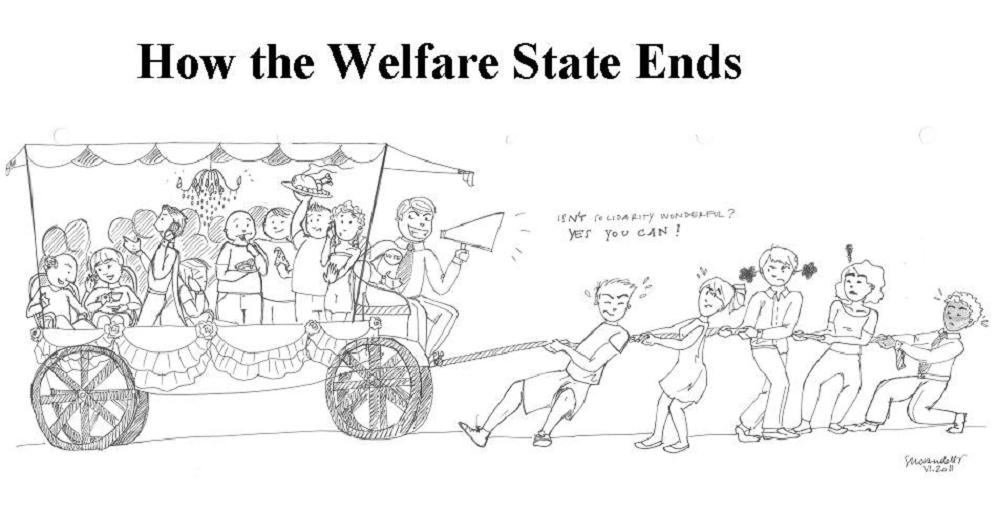
—-

Josh Wilson – Before The Morning (Official Music Video)

One of my favorite songs  is called “Before the Morning” and it is by  the Christian singer Josh Wilson. The lyrics start out: “Why do you have to feel the things that hurt you? If there’s a God who loves you where is He now?” Over the years I have corresponded with several atheists and many times they confront me on this  very issue such as this letter did from Dr. Brian Charlesworth, Dept of Ecology and Evolution, University of Chicago in letter dated May 10, 1994:

Thank you for your various communications. I am afraid that I formed the view many years ago that there is no foundation for any belief in a benevolent creator of the world. For me, there is too much suffering in the world to be compatible with the existence of such a being. 

Let me make three points concerning the problem of evil and suffering. First, the problem of evil and suffering hit this world in a big way because of Adam and what happened in Genesis Chapter 3. Second, if there is no God then there is no way to distinguish good from evil and there will be no ultimate punishment for Hitler and Josef Mengele. Third. Christ came and suffered and will destroy all evil from this world eventually forever.

Recently I went to see the movie GOD’S NOT DEAD in a local theater and that prompted me to read the book of the same name by Rice Broocks. In the movie the problem of evil and suffering is discussed just like it is in the book  and would love to interact further with anyone who would like to see the film is a big hit in theaters this year. On page 5 on the book you will find these words:
 
Atheists claim that the universe isn’t what you would expect
if a supernatural God existed. All this death and suffering, they say,
are plain evidence that a loving, intelligent God could not be behind
it all. The truth is that God has created a world where free moral
agents are able to have real choices to do good or evil. If God had
created a world without that fundamental choice and option to do
evil, then we wouldn’t be having this discussion. God made a world
where choices are real and humanity is affected by the choices of
other humans. Drunk drivers kill innocent people. Some murder
and steal from their fellow men. Though God gave clear com-
mandments to humanity, we have for the most part ignored these
directives. The mess that results is not God’s fault. It’s ours.
We are called to follow God and love Him with all our hearts
and minds. This means we have to think and investigate. Truth
is another word for reality. When something is true it’s true
everywhere. The multiplication tables are just as true in China
as they are in America. Gravity works in Africa the way it does
in Asia. The fact that there are moral truths that are true every-
where points to a transcendent morality that we did not invent
and from which we cannot escape (C.S.Lewis, MERE CHRISTIANITY,[1952:
New York: Harper Collins, 2001], p. 35).
 
As Creator, God has placed not only natural laws in the earth
but also spiritual laws. For instance, lying is wrong everywhere.
So is stealing. Cruelty to children is wrong regardless of what
culture you’re in or country you’re from. When these laws are
broken, people are broken. Not only does violating these spiritual
laws separate us from God, but it causes pain in our lives and
in the lives of those around us. The big question becomes, what
can be done about our condition? When we break these spiritual
laws, whom can we call for help? How can we be reconciled to
God as well as break free from this cycle of pain and dysfunction?

Francis Schaeffer in his fine book about modern man ESCAPE FROM REASON  states,

“the True Christian position is that, in space and time and history, there was an unprogrammed man who made a choice, and actually rebelled against God…without Christianity’s answer that God made a significant man in a significant history with evil being the result of Satan’s and then man’s historic space-time revolt, there is no answer but to accept Baudelaire’s answer [‘If there is a God, He is the devil’] with tears. Once the historic Christian answer is put away, all we can do is to leap upstairs and say that against all reason God is good.”(pg. 81)

Someone I knew in 1985 grew up in Germany and was part of the Hitler Youth Program, Was he wrong in his beliefs? 

On what basis does the atheist have to say “Hitler was wrong!!!”

Early in his career Hitler was popular and many of the German people bought into his anti-semetic views. Does the atheist have an intellectual basis to condemn Hitler’s actions?

____________________________________

My friend who grew up in Germany  believed until his dying day that Hitler was right. I had a basis for knowing that Hitler was wrong and here it is below.
 
It is my view that according the Bible all men are created by God and are valuable.  However, the atheist has no basis for coming to this same conclusion. Francis Schaeffer put it this way:
 
We cannot deal with people like human beings, we cannot deal with them on the high level of true humanity, unless we really know their origin—who they are. God tells man who he is. God tells us that He created man in His image. So man is some- thing wonderful.
 
In 1972 Schaeffer wrote the book “He is There and He is Not Silent.” Here is the statement that sums up that book:

One of philosophy’s biggest problems is that anything exists at all and has the form that it does. Another is that man exists as a personal being and makes true choices and has moral responsibility. The Bible gives sufficient answers to these problems. In fact, the only sufficient answer is that the infinite-personal triune God is there and He is not silent. He has spoken to man in the Bible.

In the movie CRIMES AND MISDEMEANORS the basic question Woody Allen is presenting to his own agnostic humanistic worldview is: If you really believe there is no God there to punish you in an afterlife, then why not murder if you can get away with it?   The secular humanist worldview that modern man has adopted does not work in the real world that God has created. God “has planted eternity in the human heart…” (Ecclesiastes 3:11). This is a direct result of our God-given conscience. The apostle Paul said it best in Romans 1:19, “For that which is known about God is evident to them and made plain in their inner consciousness, because God  has shown it to them” (Amplified Version).

It’s no wonder, then, that one of Allen’s fellow humanists would comment, “Certain moral truths — such as do not kill, do not steal, and do not lie — do have a special status of being not just ‘mere opinion’ but bulwarks of humanitarian action. I have no intention of saying, ‘I think Hitler was wrong.’ Hitler WAS wrong.” (Gloria Leitner, “A Perspective on Belief,” The Humanist, May/June 1997, pp.38-39). Here Leitner is reasoning from her God-given conscience and not from humanist philosophy. It wasn’t long before she received criticism.

Humanist Abigail Ann Martin responded, “Neither am I an advocate of Hitler; however, by whose criteria is he evil?” (The Humanist, September/October 1997, p. 2.). Humanists don’t really have an intellectual basis for saying that Hitler was wrong, but their God-given conscience tells them that they are wrong on this issue.

Here is fine film by Francis Schaeffer and Dr. C. Everett Koop that makes the case for human dignity.

Francis Schaeffer “BASIS FOR HUMAN DIGNITY” Whatever…HTTHR

Also here is the link for  another fine article on this same issue by Chuck Colson.

Crimes? What Crimes?

The Grand ‘Sez Who’

Let us take a close look at how you are going to come up with morality as an atheist. When you think about it there is no way around the final conclusion that it is just your opinion against mine concerning morality. There is no final answers. However, if God does exist and he has imparted final answers to us then everything changes.

Take a look at a portion of this paper by Greg Koukl. In this article he points out that atheists don’t even have a basis for saying that Hitler was wrong:

What doesn’t make sense is to look at the existence of evil and question the existence of God. The reason is that atheism turns out being a self-defeating philosophic solution to this problem of evil. Think of what evil is for a minute when we make this kind of objection. Evil is a value judgment that must be measured against a morally perfect standard in order to be meaningful. In other words, something is evil in that it departs from a perfect standard of good. C.S. Lewis made the point, “My argument against God was that the universe seemed so cruel and unjust. But how had I got this idea of just and unjust? A man does not call something crooked unless he has some idea of a straight line.”[ ] He also goes on to point out that a portrait is a good or a bad likeness depending on how it compares with the “perfect” original. So to talk about evil, which is a departure from good, actually presumes something that exists that is absolutely good. If there is no God there’s no perfect standard, no absolute right or wrong, and therefore no departure from that standard. So if there is no God, there can’t be any evil, only personal likes and dislikes–what I prefer morally and what I don’t prefer morally.

This is the big problem with moral relativism as a moral point of view when talking about the problem of evil. If morality is ultimately a matter of personal taste–that’s what most people hold nowadays–then it’s just your opinion what’s good or bad, but it might not be my opinion. Everybody has their own view of morality and if it’s just a matter of personal taste–like preferring steak over broccoli or Brussels sprouts–the objection against the existence of God based on evil actually vanishes because the objection depends on the fact that some things are intrinsically evil–that evil isn’t just a matter of my personal taste, my personal definition. But that evil has absolute existence and the problem for most people today is that there is no thing that is absolutely wrong. Premarital sex? If it’s right for you. Abortion? It’s an individual choice. Killing? It depends on the circumstances. Stealing? Not if it’s from a corporation.

The fact is that most people are drowning in a sea of moral relativism. If everything is allowed then nothing is disallowed. Then nothing is wrong. Then nothing is ultimately evil. What I’m saying is that if moral relativism is true, which it seems like most people seem to believe–even those that object against evil in the world, then the talk of objective evil as a philosophical problem is nonsense. To put it another way, if there is no God, then morals are all relative. And if moral relativism is true, then something like true moral evil can’t exist because evil becomes a relative thing.

An excellent illustration of this point comes from the movie The Quarrel . In this movie, a rabbi and a Jewish secularist meet again after the Second World War after they had been separated. They had gotten into a quarrel as young men, separated on bad terms, and then had their village and their family and everything destroyed through the Second World War, both thinking the other was dead. They meet serendipitously in Toronto, Canada in a park and renew their friendship and renew their old quarrel.divider

Rabbi Hersch says to the secularist Jew Chiam, “If a person does not have the Almighty to turn to, if there’s nothing in the universe that’s higher than human beings, then what’s morality? Well, it’s a matter of opinion. I like milk; you like meat. Hitler likes to kill people; I like to save them. Who’s to say which is better? Do you begin to see the horror of this? If there is no Master of the universe then who’s to say that Hitler did anything wrong? If there is no God then the people that murdered your wife and kids did nothing wrong.”

That is a very, very compelling point coming from the rabbi. In other words, to argue against the existence of God based on the existence of evil forces us into saying something like this: Evil exists, therefore there is no God. If there is no God then good and evil are relative and not absolute, so true evil doesn’t exist, contradicting the first point. Simply put, there cannot be a world in which it makes any sense to say that evil is real and at the same time say that God doesn’t exist. If there is no God then nothing is ultimately bad, deplorable, tragic or worthy of blame. The converse, by the way, is also true. This is the other hard part about this, it cuts both ways. Nothing is ultimately good, honorable, noble or worthy of praise. Everything is ultimately lost in a twilight zone of moral nothingness. To paraphrase the late Dr. Francis Schaeffer, the person who argues against the existence of God based on the existence of evil in the world has both feet firmly planted in mid-air.

_____________

Ricky Gervais in a You Tube clip from the show Piers Morgan Tonight on  1-20-2011 said that he embraced the golden rule because it made sense to him to be good to others so they would be good to you. However, how would that work if there is no ultimate lawmaker that also is our final judge? Rabbi Hersch’s argument to the secularist Jew Chiam seems to point out that without God in the picture it really does come to : “If a person does not have the Almighty to turn to, if there’s nothing in the universe that’s higher than human beings, then what’s morality? Well, it’s a matter of opinion. I like milk; you like meat. Hitler likes to kill people; I like to save them. Who’s to say which is better?”

Francis Schaeffer

Francis Schaeffer pictured above.

_______

The Bible and Archaeology (1/5)

The Bible and Archaeology (2/5)

God Is A Luxury I Can’t Afford – From Crimes And Misdemeanors

___________________

Related posts:

Richard Dawkins, Alister McGrath, D. James Kennedy. Francis Schaeffer and Ravi Zacharias discuss the problem of evil!!!

______ 115. Filosofia: Richard Dawkins Vs Alister McGrath Published on Dec 21, 2012 Neste vídeo: Richard Dawkins Vs Alister McGrath Curta nossa página no facebook: https://www.facebook.com/multiversosp… ____________________ At the 40 minute mark Richard Dawkins and Alister McGrath discuss Deena Burnett’s assertion that her husband Tom was an instrument carrying out God’s will in stopping the plane […]

Evil, Evangelism and Ecclesiastes by Melvin Tinker

I have written on the Book of Ecclesiastes and the subject of the meaning of our lives on several occasions on this blog. In this series on Ecclesiastes I hope to show how secular humanist man can not hope to find a lasting meaning to his life in a closed system without bringing God back […]

Taking on Ark Times Bloggers on the “Absurdity of Life without God!!” Part 14 ( You can’t identify evil without revealed truth from the infinite personal God)

The Fruits of Atheism (Part 4) Uploaded on Apr 10, 2009 Examining the Creation/Evolution Controversy in Light of Reason and Revelation Evolutionary Hoaxes (Part 1/4) Uploaded on Apr 10, 2009 Examining the Creation/Evolution Controversy in Light of Reason and Revelation ___________________ Evolutionary Hoaxes (Part 2/4) Uploaded on Apr 10, 2009 Examining the Creation/Evolution Controversy in Light of Reason […]

Hitler’s last few hours before entering hell (never before released photos)

Below are several never released before pictures of Hitler’s bunker. These are the sights that Hitler took in last before entering hell. How do I know he entered hell? Read below and you will see why I can say that with confidence. LIFE: Hitler’s Bunker On Monday, April 30, on the anniversary of the day […]

Former atheist Antony Flew pointed out that natural selection can’t explain the origin of first life and in every other case, information necessarily points to an intelligent source!

______________ Does God Exist? Thomas Warren vs. Antony Flew Published on Jan 2, 2014 Date: September 20-23, 1976 Location: North Texas State University Christian debater: Thomas B. Warren Atheist debater: Antony G.N. Flew For Thomas Warren: http://www.warrenapologeticscenter.org/ ______________________ Antony Flew and his conversion to theism Uploaded on Aug 12, 2011 Antony Flew, a well known spokesperson […]

DARWINISM RECONSIDERED article from 2005 quotes Antony Flew, Richard Dawkins, Jonathan Miller, and Phillip Johnson

______________ William Lane Craig versus Eddie Tabash Debate Uploaded on Feb 6, 2012 Secular Humanism versus Christianity, Lawyer versus Theologian. Evangelical Christian apologist William Lane Craig debates humanist atheist lawyer Eddie Tabash at Pepperdine University, February 8, 1999. Visithttp://www.Infidels.org and http://www.WilliamLaneCraig.com ________________ Antony Flew on God and Atheism Published on Feb 11, 2013 Lee Strobel […]

Antony Flew interviewed by Benjamin Wiker and the two reasons Flew left atheism!!!

_______________________ Discussion (1 of 3): Antony Flew, N.T. Wright, and Gary Habermas Uploaded on Sep 22, 2010 A discussion with Antony Flew, N.T. Wright, and Gary Habermas. This was held at Westminster Chapel March, 2008 Debate – William Lane Craig vs Christopher Hitchens – Does God Exist? Uploaded on Jan 27, 2011 April 4, 2009 – Craig […]

Kyle Butt notes that Antony Flew left Atheism but fell short of making a profession of faith during his lifetime

_________________ Antony Flew – World’s Most Famous Atheist Accepts Existence of God Uploaded on Nov 28, 2008 Has Science Discovered God? A half-century ago, in 1955, Professor Antony Flew set the agenda for modern atheism with his Theology and Falsification, a paper presented in a debate with C.S. Lewis. This work became the most widely […]

Gary Habermas explains the reasons for Antony Flew’s change of mind

_____________   Antony Flew on God and Atheism Published on Feb 11, 2013 Lee Strobel interviews philosopher and scholar Antony Flew on his conversion from atheism to deism. Much of it has to do with intelligent design. Flew was considered one of the most influential and important thinker for atheism during his time before his […]

The finest article on Antony Flew’s long path from Atheism to Theism!!

___________________    This is the finest article yet I have read that traces Antony Flew’s long path from atheism to theism. How Anthony Flew – Flew to God Among the world’s atheists there was hardly any with the intellectual stature of Anthony Flew.  He was a contemporary with C.S. Lewis and has been a thorn in […]

Antony Flew incorrectly wrote that George Wald later abandoned atheism!!!

  Making Sense of Faith and Science Uploaded on May 16, 2008 Dr. H. Fritz Schaefer confronts the assertion that one cannot believe in God and be a credible scientist. He explains that the theistic world view of Bacon, Kepler, Pascal, Boyle, Newton, Faraday and Maxwell was instrumental in the rise of modern science itself. Presented […]

Antony Flew opened himself up to the possibility of accepting Christian teachings although never making a public profession of faith

Discussion (2 of 3): Antony Flew, N.T. Wright, and Gary Habermas ______________ Atheist Lawrence Krauss loses debate to wiser Christian Published on Sep 13, 2013 http://www.reasonablefaith.org More of this here The Bible and Science (Part 02) The Kalam Cosmological Argument (Scientific Evidence) (Henry Schaefer, PhD) Published on Jun 11, 2012 Scientist Dr. Henry “Fritz” Schaefer gives a lecture […]

Part of the reason Antony Flew left atheism can be found in this Paul Davies’ quote “Science can proceed only if the scientist adopts an essentially theological worldview!”

  Conversation with John Barrow Published on Jun 16, 2012 Templeton Prize 2006, Gifford Lectures 1988 British Academy, 1 June 2012 _______ Many Christians are involved in science and John D. Barrow is one of the leaders of science today. Here is his bio: John D Barrow John D. Barrow was born in London in […]

Antony Flew, “I was particularly impressed with Gerry Schroeder’s point-by-point refutation of what I call the MONKEY THEOREM” or the “the possibility of life arising by chance using the analogy of a multitude of monkeys banging away on computer keyboards and eventually ending up writing a Shakespearean sonnet!”

____________   Discussion (1 of 3): Antony Flew, N.T. Wright, and Gary Habermas Uploaded on Sep 22, 2010 A discussion with Antony Flew, N.T. Wright, and Gary Habermas. This was held at Westminster Chapel March, 2008 ___________   __________ Antony Flew, “I was particularly impressed with Gerry Schroeder’s point-by-point refutation of what I call the MONKEY […]

“For years, a lot of us subscribed to the notion that Milton Friedman warned us about,” that government would harm the economy if it didn’t take a light-touch approach to business, said former Connecticut Democratic Sen. Chris Dodd, a longtime Biden friend, referring to the economist who helped define the small-government neoliberal philosophy.

President Biden in the White House on March 18.

President Biden in the White House on March 18.ANDREW HARNIK/ASSOCIATED PRESS

Behind Biden’s Big Plans: Belief That Government Can Drive Growth

Multitrillion-dollar spending program would reverse Reagan-era tacit understanding that public sector is less efficient than the private in allocating resources

WASHINGTON—President Biden envisions long-term federal spending claiming its biggest share of the American economy in decades. He wants to pay for that program in part by charging the highest-earning Americans the biggest tax rates they’ve faced in years.

The Biden economic team’s ambitions go beyond size to scope. The centerpiece of their program—a multitrillion-dollar proposal to be rolled out starting Wednesday, less than a month after a $1.9 trillion stimulus—seeks to give Washington a new commercial role in matters ranging from charging stations for electric vehicles to child care, and more responsibility for underwriting education, incomes and higher-paying jobs.

The administration has also laid the groundwork for regulations aimed at empowering labor unions, restricting big businesses from dominating their markets and prodding banks to lend more to minorities and less for fossil-fuel projects. All while federal debt is currently at a level not seen since World War II.

It all marks a major turning point for economic policy. The gamble underlying the agenda is a belief that government can be a primary driver for growth. It’s an attempt to recalibrate assumptions that have shaped economic policy of both parties since the 1980s: that the public sector is inherently less efficient than the private, and bureaucrats should generally defer to markets.

The administration’s sweeping plans reflect a calculation that “the risk of doing too little outweighs the risk of doing too much,” said White House National Economic Council Director Brian Deese. “We’re going to be unapologetic about that,” he said. “Government must be a powerful force for good in the lives of Americans.”

The pandemic and lockdown measures that followed have become a Rorschach test for the new economic debate. Former President Donald Trumpargued that the booming economy of 2019 and early 2020 was proof his tax-cutting, deregulating agenda was the best for spurring broadly shared prosperity, and he portrayed the coronavirus and lockdowns as a temporary disruption. The Biden team sees the pandemic as exposing myriad flaws and fragilities that liberals had long identified in the economy, masked by prosperity.

Mr. Biden himself casts his program as a throwback to Lyndon B. Johnson’s 1960s Great Society and Franklin D. Roosevelt’s 1930s New Deal. “This is the first time we’ve been able to, since the Johnson administration and maybe even before that, to begin to change the paradigm,” he said at a White House event in mid-March. Mr. Biden recently spoke with a group of prominent American historians, and his aides have studied FDR’s presidency as they plan his economic agenda.

Mr. Biden’s big plans raise big questions, and big risks. He faces an uphill battle to win over a narrowly divided Congress, with solid Republican opposition plus hesitancy among Democratic moderates who blanch at higher taxes and more spending following nearly $5 trillion in coronavirus relief outlays over the past year.

Conservative-tilting courts, increasingly skeptical of executive authority, might block some of his initiatives. Already, a coalition of Republican state attorneys general has sued to challenge some provisions of the stimulus program and some of his executive orders.

Some economists consider the latest spending plan an overkill response to the temporary, albeit severe, hit from the pandemic and lockdowns. They call recent stirrings in the bond market a warning that the vast increase in government spending and borrowing might prompt a return to the high-inflation/high-interest-rate stagnation of the late 1970s and early 1980s—conditions that fed the long-lasting backlash to expansive FDR-LBJ policies in the first place.

“They’re creating too much demand when it’s not needed. When demand runs away from supply, you get inflation,” said Kevin Hassett, a former Trump chief economic adviser now at Stanford University’s Hoover Institution. “The laws of economics can’t be repealed,” he said.

The Biden agenda rests on the notion those laws have evolved. “There appear to have been a broad-based set of structural changes that have had a very significant effect on how the economy works,” Treasury Secretary Janet Yellen said. “There are a lot of ways in which I think our understanding of the economy has shifted.”

<img class="i-amphtml-blurry-placeholder" src="data:;base64,

She cited persistently low interest rates and low inflation, defying many conventional forecasts, as reasons to feel more relaxed than before about federal borrowing and low unemployment rates. Ms. Yellen says there’s little sign inflation is in danger of escalating, and is confident that if it does, the Federal Reserve has the tools to contain it.

The administration’s policies are rooted in economic research focused on perceived free-market flaws, much of it conducted and funded by young, left-leaning economists and activists now scattered throughout the administration. Much of the Biden economic agenda is built around the conclusion that climate change in particular is a private-sector breakdown requiring extensive government intervention.

Before joining the Biden Council of Economic Advisers, Heather Boushey ran the Washington Center for Equitable Growth, a think tank devoted to persuading economists and policy makers to take action reducing income inequality. To her and many of her colleagues, the pandemic validates their studies on market failures.

“We’ve talked about inequality—it seems like an abstract concept, but in 2020, this notion of the K-shaped economy became so real,” Ms. Boushey said. She was referring to a recovery where the fortunes of upper-income families—able to keep their jobs, work from home and enjoy gains in their stock portfolios—rose like the letter’s upward-sloping part, while lower-income families were unable to keep jobs in hard-hit service industries such as restaurants.

Plans for selling the administration proposals lean heavily on fears of losing out to China’s model of state-driven capitalism, a concern that resonates across the political spectrum. “China is out-investing us by a long shot, because their plan is to own that future,” Mr. Biden said recently in previewing his program.

In a Wednesday speech in Pittsburgh, the president is preparing to unveil the first part of an economic proposal that would cost $3 trillion or more over 10 years and might be split into multiple pieces of legislation, with more coming in April. The first measure will focus on infrastructure, climate change, domestic manufacturing and research and development. Mr. Biden will find ways to pay for the full cost of the first measure, the White House has said. The second measure will center on child care, healthcare and education.

‘There are a lot of ways in which I think our understanding of the economy has shifted,’ said Treasury Secretary Janet Yellen.

‘There are a lot of ways in which I think our understanding of the economy has shifted,’ said Treasury Secretary Janet Yellen.

PHOTO: DREW ANGERER/GETTY IMAGES

The multipart package would include higher taxes on corporations, upper-income households and investors. It will call for huge investments in infrastructure and climate programs and provide for universal prekindergarten and tuition-free community college, people familiar with the plan said.

Most Republicans are expected to oppose it, and the president’s advisers are already discussing options for continuing to move some of his proposals without GOP support, including through the process known as budget reconciliation.

Mike Donilon, one of Mr. Biden’s closest advisers, acknowledged the challenges but argued the public supports action. “I don’t think the country is in much mood for relentless obstructionism,” he said.

Critics of big-government projects have long argued that bureaucrats are less skilled than market forces in allocating resources. “What they’re trying to do is re-establish government as a major positive force in the economy, and I believe government is a massive negative force” in it, said Stephen Moore, a former Trump economic adviser. “There really is a micromanagement of the economy from the left.”

Presidents of both parties, hesitant to micromanage, have long steered away from anything smacking of an industrial policy that attempts to bolster specific industries. Biden aides are more willing to target and support certain industries such as the health and high-tech sectors. “We are committed to using the levers of government to encourage more domestic production,” Mr. Deese said.

President Biden held notes on infrastructure while speaking during a news conference in the East Room of the White House on March 25.

President Biden held notes on infrastructure while speaking during a news conference in the East Room of the White House on March 25.

PHOTO: OLIVER CONTRERAS/PRESS POOL

The president’s budget and regulatory proposals could disrupt major industries, boosting renewable-energy companies over fossil-fuel firms and expanding markets for emerging technologies. Business groups and Republicans warn that new regulations could stifle growth.

Mr. Biden’s stimulus bill added to federal debt that had already hit peacetime records under Mr. Trump. Mr. Biden has said his full agenda will ultimately be aimed at curbing government borrowing, through tax increases and savings in medical spending.

That will be a challenge. Federal debt, which reached 100% of gross domestic product last fiscal year for the first time since 1946, is expected to rise to a record 107% of economic output by 2031, according to the Congressional Budget Office, fueling concerns that future generations will get stuck with the bill. Fed Chairman Jerome Powell said in March that the federal government can manage its debt at current levels, but policy makers should seek to slow its growth once the economy is stronger.

The long-dominant paradigm Mr. Biden and aides want to change is one widely branded neoliberalism, framed by Ronald Reagan, who declared in his 1981 inaugural address that “government is not the solution to our problem; government is the problem.” He ushered in an era of tax cuts, deregulation and federal programs increasingly designed to work through market forces. That was followed by two of the longest expansions in American history, in the 1980s and the 1990s.

Ronald Reagan speaking at his inauguration on Jan. 20, 1981.

Ronald Reagan speaking at his inauguration on Jan. 20, 1981.

PHOTO: AGENCE FRANCE-PRESSE/GETTY IMAGES

While Democrats controlled the White House for nearly half the time since then, their policies often were constrained by the core Reagan principles, in the view of many progressives. Bill Clinton tried to juggle liberal goals with a focus on balancing the budget, expanding free trade, and deregulating the financial sector. Barack Obama created a new government health program, but to the chagrin of the left, worked through private insurers. His 2009 program to fight the recession was constrained by fears of big deficits.

“For decades now, people have talked about economics as running against government, ignoring how much we need government to be able to build out opportunities,” said Massachusetts Democratic Sen. Elizabeth Warren, who, as an Obama adviser, often tangled with his aides over how aggressively to rein in Wall Street and support homeowners slammed by the 2008-2009 financial crisis.

A confluence of forces since the turn of the century has shaken support for the market-oriented economic model. A sharp increase in income and wealth inequality, combined with longtime wage stagnation that ended just before the pandemic hit, raised questions about how broadly prosperity gets shared absent government intervention. The swift loss of manufacturing jobs undermined support for free trade. China’s success and Wall Street’s collapse in the financial crisis further sowed doubts about free markets.

Those trends animated critics on the left, fueling the 2016 presidential campaigns of self-proclaimed Democratic Socialist Sen. Bernie Sanders of Vermont and the rise to prominence of his allies such as New York Rep. Alexandria Ocasio-Cortez.

Republicans, too, have faced internal challenges to the party’s free-market orientation. Mr. Trump won the presidency in part by attacking bipartisan support for globalization. In office, he launched a trade war with China, regularly criticized big business and intervened to force domestic investments and pressure companies to relocate manufacturing to the U.S. and cut prices of drugs.

“Some establishment Republicans are too willing to do nothing at all with government. They see an all-natural, organic market having its way,” said Missouri GOP Sen. Josh Hawley. Mr. Hawley, a Trump supporter and possible presidential contender, has called for tougher antitrust laws to break up big tech companies and co-sponsored a bill last year with Mr. Sanders to give households $1,200 direct payments.

The first-term senator voted against the latest stimulus bill and opposes many of Mr. Biden’s policies, but he also says that “old-style conservatives have been too quick to wave away policies to strengthen American workers and promote competition rather than monopolies.”

Trends such as wealth disparities and wage stagnation animated the presidential candidacy of Sen. Bernie Sanders of Vermont, seen here speaking at a rally in Manchester, N.H., in August 2015.

Trends such as wealth disparities and wage stagnation animated the presidential candidacy of Sen. Bernie Sanders of Vermont, seen here speaking at a rally in Manchester, N.H., in August 2015.

PHOTO: RICK FRIEDMAN/CORBIS/GETTY IMAGES

While many of those urging an economic rethink are relatively new voices in the debate, some pillars of the establishment have evolved, including former senior economic aides in the Clinton and George W. Bush administrations. Another Washington veteran whose positions have changed: Joe Biden.

Elected to the Senate in 1972 at age 29, Mr. Biden ousted a Republican incumbent in part by casting himself as more attuned to the needs of the middle class, a theme that became a through-line of his career. He has long espoused the importance of unions, small businesses and a strong working class.

Mr. Biden juggled those causes with a belief in the need to curb government spending and cut taxes. He voted for Mr. Reagan’s historic 1981 tax cuts and backed spending ceilings for most agencies through the 1980s and a balanced-budget constitutional amendment in the 1990s. He regularly floated the idea of limiting Social Security and Medicare.

“For years, a lot of us subscribed to the notion that Milton Friedman warned us about,” that government would harm the economy if it didn’t take a light-touch approach to business, said former Connecticut Democratic Sen. Chris Dodd, a longtime Biden friend, referring to the economist who helped define the small-government neoliberal philosophy.

As Mr. Obama’s vice president during the financial crisis, Mr. Biden walked a tightrope between pushing for spending, especially on infrastructure, and taking the lead in negotiating with Republicans to limit the extent of government expansion. Toward the end of his term, the persistently slow recovery prompted the vice president and his aides to launch a study of wage stagnation, income inequality and ways the government could steer business to do more for workers. That work planted the seeds for his current program.

Joe Biden was first elected to the Senate from Delaware in 1972 after a campaign in which he cast himself as attuned to the needs of the working class.

Joe Biden was first elected to the Senate from Delaware in 1972 after a campaign in which he cast himself as attuned to the needs of the working class.

PHOTO: HENRY GRIFFIN/ASSOCIATED PRESS

Mr. Biden started his 2019 presidential bid determined to lay out more of a big-government agenda than recent Democrats had espoused. But much of the primary field had moved even farther left. He emerged once again as the fiscal scold warning of excessive spending.

The arrival of the pandemic and the killing of George Floyd marked a turning point for Mr. Biden, according to his advisers, bringing into focus what his aides describe as his longstanding desire to “go big.”

Mr. Biden tapped his longtime friend and successor as Delaware senator, Ted Kaufman, to run the transition, and in helping assemble the economic team, Mr. Kaufman said his team focused on people steeped in new economic thinking and steered away from business executives.

“I looked at people who had internalized what Joe Biden’s policy was about, and Joe Biden’s policy was not about taking care of Wall Street or people making over $400,000 a year,” Mr. Kaufman said.

The middle ranks of the administration are filled with academics and activists who have spent the past few years honing a framework for progressive economic policy-making. In March 2019, many of them gathered at a Washington conference called “Bold v. Old.” A panel on toughening antitrust enforcement was led by Jennifer Harris, an official with the Hewlett Foundation—a philanthropy created by one of the founders of Hewlett-PackardCo. —overseeing a program funding researchers seeking to replace the neoliberal paradigm. She was joined by Lina Khan, a young law professor known for laying out the case for breaking upAmazon.com Inc., and Sabeel Rahman, president of Demos, a progressive think tank.

Ms. Harris has joined the Biden National Economic Council. Ms. Khan has been nominated to the Federal Trade Commission. Mr. Rahman works at the Office of Management and Budget.

Few of those new-generation policy makers supported Mr. Biden in the primaries. One of Mr. Deese’s deputies, Bharat Ramamurti, who was Ms. Warren’s chief campaign policy adviser, says the party is now largely unified on economic policy.

President Biden at his first press conference as president on March 25.

President Biden at his first press conference as president on March 25.

PHOTO: OLIVER CONTRERAS/PRESS POOL

A change in the Biden approach to economics is a re-evaluation of the costs of government action, which his team says have receded or always been exaggerated. And on the other side of the equation: an assertion that the cost of inaction is greater than previously estimated.

Progressive economists have generated rafts of research, often contested by conservatives, challenging the links between higher tax rates and lower economic activity. “The evidence suggests that the impact of marginal tax rates on labor supply is not as big as we may have once feared,” said Cecilia Rouse, chair of the Council of Economic Advisers.

SHARE YOUR THOUGHTS

Does the government try to do too much or not enough? Join the conversation below.

Liberal academics have produced studies examining the costs to the economy’s productive capacity from inequality and long-term unemployment, work invoked by the Biden team to justify spending big and fast to try to return to full employment as soon as next year. Some critics, including former Clinton and Obama economic adviser Lawrence Summers, have said that spending too aggressively to drive down unemployment could backfire, possibly prompting the Fed to raise interest rates and trigger a recession.

This more relaxed view of previous economic limits has freed the Biden team to plan on a grand scale. They designed a two-step strategy that began with the $1.9 trillion coronavirus relief package, which provided $1,400 direct payments to many Americans, extended a $300 weekly jobless-aid supplement, expanded the child tax credit to provide periodic payments and dropped requirements that recipients work.

That was a symbolically significant shift from the Clinton-era move to tie welfare to work and a nod to the burgeoning progressive demands for a no-strings-attached guaranteed government income floor, at least for families with children.

Biden aides are also preparing an aggressive plan of new regulations and enforcement that can be implemented without Congress.

“The president campaigned on concerns about big tech, about labor market competition, about making sure small businesses can compete with the bigger guys,” Mr. Ramamurti said. “The president has a clear agenda there.”

Write to Jacob M. Schlesinger at jacob.schlesinger@wsj.com

It appears that only a fraction of the spending proposed in a new $3 trillion to $4 trillion bill would go toward an already too-expansive definition of infrastructure. Pictured: Engineers discuss the progress of an infrastructure construction project. (Photo: Sornranison Prakittrakoon/ Moment/Getty Images)

The media were flooded Monday with news that the Biden administration is working on a colossal new $3 trillion to $4 trillion spending plan.

While full details are not available yet, the plan appears to be another left-wing grab bag of big-government proposals. Rather than stimulating the economy, it would stimulate bigger government while funneling unprecedented amounts of power and money through the hands of politicians in Washington.

All this comes on the heels of President Joe Biden signing into law on March 11 a badly flawed $1.9 trillion legislative package that was originally marketed as a COVID-19 response, but which was more focused on left-wing pet causes, such as bailouts for union pension plans and unnecessary handouts for state governments.

Just a day later, House Speaker Nancy Pelosi, D-Calif., released a statement calling for bipartisan work on legislation that would focus on infrastructure. While there were good reasons to question how beneficial or “bipartisan” such legislation would be, there was at least a chance of finding some across-the-aisle support.

Want to keep up with the 24/7 news cycle? Want to know the most important stories of the day for conservatives? Need news you can trust? Subscribe to The Daily Signal’s email newsletter. Learn more >>

But the potential for bipartisanship was quickly scuttled by news of the latest multitrillion-dollar plan.

It would be bad enough if the latest plan was just a big-spending infrastructure package. However, it appears that only a fraction of the new spending would go toward an already too-expansive definition of infrastructure.

Instead, most of the new spending and tax subsidies would go toward expanding the welfare state, including “free” tuition for community colleges, “free” child care, and other handouts that lack right-of-center support.

This would likely be the largest expansion of the federal government since the “Great Society” of the 1960s, even eclipsing Obamacare in scope.

Reports indicate that Democrats might attempt to split the plan into two bills—one focused on social spending that passes narrowly along party lines, the other focused on actual infrastructure aimed at winning bipartisan support.

However, it’s clear that the $3 trillion-plus total price tag is already souring prospects for bipartisan infrastructure legislation.

House Republicans boycotted the annual Ways and Means Committee “Member’s Day” hearing on Tuesday in the wake of news reports on the plan, since they indicated that Democrats have already made up their minds to pursue as much spending as possible through the legislative procedure known as reconciliation.

Coincidentally, two respected nonpartisan groups released reports this week that show why Biden and Pelosi should pause their aggressive agenda.

First, the Congressional Budget Office published a paper demonstrating what would happen if a sustained increase in federal spending were coupled with big tax increases to pay for the spending.

While the analysis points to different long-term effects from different types of taxes, any tax-and-spend approach would lead to reductions in economic growth and personal income that are larger than the size of the tax hikes.

For example, the analysis found that having 10% more federal government would mean a 12% to 19% reduction in personal consumption.

And that’s a conservative estimate. Most estimates show tax hikes shrink the economy by two to three times more than the revenues they raise.

That doesn’t mean Congress could escape the consequences of a continued spending spree by simply adding to the national debt. The CBO paper cautions that that would not only impose significant costs and divert resources away from the private sector, but it also would be unsustainable and increase the risk of a devastating financial crisis.

Along the same lines, the Government Accountability Office released a sobering reporton the nation’s poor financial health.

Now that Congress has passed a combined total of $6 trillion in legislation in the aftermath of the COVID-19 pandemic (more than $48,000 per household), it must quickly address the unsustainable growth of major benefit programs, such as Social Security, Medicare, and Medicaid.

Even before the pandemic struck, these programs were on a path to bankruptcy. Addressing these shortfalls in a way that is fair to both current retirees and future generations who will have to foot the bill is one of the greatest policy challenges facing the nation.

Unfortunately, Washington is exacerbating the problem by adding excessively to the national debt and potentially stunting economic growth with higher taxes.

While the Biden administration has repeatedly claimed that it will only seek to raise taxes on the wealthy, a government of the size that it’s seeking would require amounts of money that can only be generated through steep across-the-board tax increases on middle-class Americans.

Regardless of whether those taxes are levied tomorrow or in a few years, they would be an inevitable part of expanding the size and scope of the federal government.

Rather than continuing down the path of centralized power and socialism, lawmakers should recognize the costs associated with endless federal spending and chart a course toward financial responsibility and prosperity.

If they don’t, it will be the public’s duty to hold them accountable.

Have an opinion about this article? To sound off, please email letters@DailySignal.com and we will consider publishing your remarks in our regular “We Hear You” feature.

March 31, 2021

President Biden  c/o The White House
1600 Pennsylvania Avenue NW
Washington, DC 20500

Dear Mr. President,

Please explain to me if you ever do plan to balance the budget while you are President? I have written these things below about you and I really do think that you don’t want to cut spending in order to balance the budget. It seems you ever are daring the Congress to stop you from spending more.

President Barack Obama speaks about the debt limit in the East Room of the White House in Washington. | AP Photo

“The credit of the United States ‘is not a bargaining chip,’ Obama said on 1-14-13. However, President Obama keeps getting our country’s credit rating downgraded as he raises the debt ceiling higher and higher!!!!

Washington Could Learn a Lot from a Drug Addict

Just spend more, don’t know how to cut!!! Really!!! That is not living in the real world is it?

Making more dependent on government is not the way to go!!

Why is our government in over 16 trillion dollars in debt? There are many reasons for this but the biggest reason is people say “Let’s spend someone else’s money to solve our problems.” Liberals like Max Brantley have talked this way for years. Brantley will say that conservatives are being harsh when they don’t want the government out encouraging people to be dependent on the government. The Obama adminstration has even promoted a plan for young people to follow like Julia the Moocher.  

David Ramsey demonstrates in his Arkansas Times Blog post of 1-14-13 that very point:

Arkansas Politics / Health Care Arkansas’s share of Medicaid expansion and the national debt

Posted by on Mon, Jan 14, 2013 at 1:02 PM

Baby carrot Arkansas Medicaid expansion image

Imagine standing a baby carrot up next to the 25-story Stephens building in Little Rock. That gives you a picture of the impact on the national debt that federal spending in Arkansas on Medicaid expansion would have, while here at home expansion would give coverage to more than 200,000 of our neediest citizens, create jobs, and save money for the state.

Here’s the thing: while more than a billion dollars a year in federal spending would represent a big-time stimulus for Arkansas, it’s not even a drop in the bucket when it comes to the national debt.

Currently, the national debt is around $16.4 trillion. In fiscal year 2015, the federal government would spend somewhere in the neighborhood of $1.2 billion to fund Medicaid expansion in Arkansas if we say yes. That’s about 1/13,700th of the debt.

It’s hard to get a handle on numbers that big, so to put that in perspective, let’s get back to the baby carrot. Imagine that the height of the Stephens building (365 feet) is the $16 trillion national debt. That $1.2 billion would be the length of a ladybug. Of course, we’re not just talking about one year if we expand. Between now and 2021, the federal government projects to contribute around $10 billion. The federal debt is projected to be around $25 trillion by then, so we’re talking about 1/2,500th of the debt. Compared to the Stephens building? That’s a baby carrot.

______________

Here is how it will all end if everyone feels they should be allowed to have their “baby carrot.”

How sad it is that liberals just don’t get this reality.

Here is what the Founding Fathers had to say about welfare. David Weinberger noted:

While living in Europe in the 1760s, Franklin observed: “in different countries … the more public provisions were made for the poor, the less they provided for themselves, and of course became poorer. And, on the contrary, the less was done for them, the more they did for themselves, and became richer.”

Alexander Fraser Tytler, Lord Woodhouselee (15 October 1747 – 5 January 1813) was a Scottish lawyer, writer, and professor. Tytler was also a historian, and he noted, “A democracy cannot exist as a permanent form of government. It can only exist until the majority discovers it can vote itself largess out of the public treasury. After that, the majority always votes for the candidate promising the most benefits with the result the democracy collapses because of the loose fiscal policy ensuing, always to be followed by a dictatorship, then a monarchy.”

Thomas Jefferson to Joseph Milligan

April 6, 1816

[Jefferson affirms that the main purpose of society is to enable human beings to keep the fruits of their labor. — TGW]

To take from one, because it is thought that his own industry and that of his fathers has acquired too much, in order to spare to others, who, or whose fathers have not exercised equal industry and skill, is to violate arbitrarily the first principle of association, “the guarantee to every one of a free exercise of his industry, and the fruits acquired by it.” If the overgrown wealth of an individual be deemed dangerous to the State, the best corrective is the law of equal inheritance to all in equal degree; and the better, as this enforces a law of nature, while extra taxation violates it.

[From Writings of Thomas Jefferson, ed. Albert E. Bergh (Washington: Thomas Jefferson Memorial Association, 1904), 14:466.]

_______

Jefferson pointed out that to take from the rich and give to the poor through government is just wrong. Franklin knew the poor would have a better path upward without government welfare coming their way. Milton Friedman’s negative income tax is the best method for doing that and by taking away all welfare programs and letting them go to the churches for charity.

_____________

_________

Thank you so much for your time. I know how valuable it is. I also appreciate the fine family that you have and your commitment as a father and a husband.

Sincerely,

Everette Hatcher III, 13900 Cottontail Lane, Alexander, AR 72002, ph 501-920-5733

Williams with Sowell – Minimum Wage

Thomas Sowell

Thomas Sowell – Reducing Black Unemployment

By WALTER WILLIAMS

—-

Ronald Reagan with Milton Friedman
Milton Friedman The Power of the Market 2-5

Related posts:

Welfare Spending Shattering All-Time Highs

  We got to act fast and get off this path of socialism. Morning Bell: Welfare Spending Shattering All-Time Highs Robert Rector and Amy Payne October 18, 2012 at 9:03 am It’s been a pretty big year for welfare—and a new report shows welfare is bigger than ever. The Obama Administration turned a giant spotlight […]

We need more brave souls that will vote against Washington welfare programs

We need to cut Food Stamp program and not extend it. However, it seems that people tell the taxpayers back home they are going to Washington and cut government spending but once they get up there they just fall in line with  everyone else that keeps spending our money. I am glad that at least […]

Welfare programs are not the answer for the poor

Government Must Cut Spending Uploaded by HeritageFoundation on Dec 2, 2010 The government can cut roughly $343 billion from the federal budget and they can do so immediately. __________ Liberals argue that the poor need more welfare programs, but I have always argued that these programs enslave the poor to the government. Food Stamps Growth […]

Private charities are best solution and not government welfare

Milton Friedman – The Negative Income Tax Published on May 11, 2012 by LibertyPen In this 1968 interview, Milton Friedman explained the negative income tax, a proposal that at minimum would save taxpayers the 72 percent of our current welfare budget spent on administration. http://www.LibertyPen.com Source: Firing Line with William F Buckley Jr. ________________ Milton […]

The book “After the Welfare State”

Dan Mitchell Commenting on Obama’s Failure to Propose a Fiscal Plan Published on Aug 16, 2012 by danmitchellcato No description available. ___________ After the Welfare State Posted by David Boaz Cato senior fellow Tom G. Palmer, who is lecturing about freedom in Slovenia and Tbilisi this week, asked me to post this announcement of his […]

President Obama responds to Heritage Foundation critics on welfare reform waivers

Is President Obama gutting the welfare reform that Bill Clinton signed into law? Morning Bell: Obama Denies Gutting Welfare Reform Amy Payne August 8, 2012 at 9:15 am The Obama Administration came out swinging against its critics on welfare reform yesterday, with Press Secretary Jay Carney saying the charge that the Administration gutted the successful […]

Welfare reform part 3

Thomas Sowell – Welfare Welfare reform was working so good. Why did we have to abandon it? Look at this article from 2003. The Continuing Good News About Welfare Reform By Robert Rector and Patrick Fagan, Ph.D. February 6, 2003 Six years ago, President Bill Clinton signed legislation overhauling part of the nation’s welfare system. […]

Welfare reform part 2

Uploaded by ForaTv on May 29, 2009 Complete video at: http://fora.tv/2009/05/18/James_Bartholomew_The_Welfare_State_Were_In Author James Bartholomew argues that welfare benefits actually increase government handouts by ‘ruining’ ambition. He compares welfare to a humane mousetrap. —– Welfare reform was working so good. Why did we have to abandon it? Look at this article from 2003. In the controversial […]

Why did Obama stop the Welfare Reform that Clinton put in?

Thomas Sowell If the welfare reform law was successful then why change it? Wasn’t Bill Clinton the president that signed into law? Obama Guts Welfare Reform Robert Rector and Kiki Bradley July 12, 2012 at 4:10 pm Today, the Obama Department of Health and Human Services (HHS) released an official policy directive rewriting the welfare […]

“Feedback Friday” Letter to White House generated form letter response July 10,2012 on welfare, etc (part 14)

I have been writing President Obama letters and have not received a personal response yet.  (He reads 10 letters a day personally and responds to each of them.) However, I did receive a form letter in the form of an email on July 10, 2012. I don’t know which letter of mine generated this response so I have […]

Fact-Checking 6 of Opponents’ Claims About Georgia’s Election Law

—-

Here’s a look at the key myths vs. facts about Georgia’s election reforms, which Gov. Brian Kemp, a Republican, signed into law. Pictured: Demonstrators inside the Georgia State Capitol in Atlanta show their support March 8 for the legislation. (Photo: Megan Varner/Getty Images)

President Joe Biden and other Democrats, without offering evidence, equate Georgia’s new election law with the Jim Crow era, while many media outlets obligingly repeat Democratictalking points about it.

A headline over a March 25 news report in The New York Times, not an opinion piece, referred to the legislation as a “major law to limit voting.”

Among the most vocal opponents is Stacey Abrams, Georgia Democrats’ 2018 candidate for governor, who now heads a group called Fair Fight Action, which describes itself as a voting rights organization.

Want to keep up with the 24/7 news cycle? Want to know the most important stories of the day for conservatives? Need news you can trust? Subscribe to The Daily Signal’s email newsletter. Learn more >>

“From passage of the #SB202 voter suppression bill targeted at Black and brown voters to the arrest of a Black legislator who was advocating for the voting rights of her constituents, today was a reminder of Georgia’s dark past,” Abrams wrote last week in a tweet. “We must fight for the future of our democracy #gapol.”

>>> Read Georgia’s entire new election law here

The Washington Post stands almost alone in the ocean of mainstream media outlets, noting in a fact-check analysis that Biden earned “four Pinocchios” for making misleading comments about Georgia’s new election law both during his first press conference and in an official presidential statement.

Here’s a look at the key myths vs. facts about Georgia’s election legislation, which Gov. Brian Kemp, a Republican, signed into law last Thursday.

1. ‘Restrictions on Casting Absentee Ballots’

In his written statement, Biden said of the new law: “It adds rigid restrictions on casting absentee ballots that will effectively deny the right to vote to countless voters.”

The term “rigid restrictions” is a matter for debate, so a ruling of true or false is difficult here.

The law does require voter ID for individuals who are casting absentee ballots, which previously was not the case. A voter would need to provide a driver’s license number or another state identification number on the absentee ballot form.

The law also requires voters to request absentee ballots 11 days before the election. In its previous form, the law allowed voters to request ballots by the Friday before Election Day.

The deadline is still before Election Day. But the new law allows voters to return applications for absentee ballots online, through the Secretary of State’s Office.

The earliest that Georgia voters may request an application for an absentee ballot will be 77 days before Election Day, down from 180 days, according to Georgia Public Broadcasting.

Kemp said that 96% of Georgia voters already have suitable voter ID, and alternative identification would be provided at no charge to those who need it.

“In order to verify that the absentee ballot was voted by the elector who requested the ballot, the elector shall print the number of his or her Georgia driver’s license number or identification card,” the law states, referring to a voter as “elector” and adding: “The elector shall also print his or her date of birth in the space provided in the outer oath envelope.”

The law goes on to state:

If the elector does not have a Georgia driver’s license or state identification card issued pursuant to Article 5 of Chapter 5 of Title 40, the elector shall so affirm in the space provided on the outer oath envelope and print the last four digits of his or her Social Security number in the space provided on the outer oath envelope.

If the elector does not have a Georgia driver’s license, identification card issued pursuant to Article 5 of Chapter 5 of Title 40, or a Social Security number, the elector shall so affirm in the space provided on the outer oath envelope and place a copy of one of the forms of identification set forth in subsection (c) of Code Section 21-2-417 in the outer envelope.

For its part, Fair Fight Action, the group run by Abrams, asserts: “Over 200,000 Georgians lack the appropriate ID under SB 202.”

2. ‘Crime to Provide Water’

Georgia’s law prohibits campaign workers from distributing food or drink, or anything else of value, to waiting voters, and from setting up a table within 150 feet of the building or 25 feet of a voter.

The most prominent talking point to emerge from Biden and other Democrats has been regarding water bottles.

“It makes it a crime to provide water to voters while they wait in line—lines Republican officials themselves have created by reducing the number of polling sites across the state, disproportionately in Black neighborhoods,” Biden said of the new law in his formal statement.

This is false, because the law specifically allows official poll workers, as opposed to campaign workers, to provide water to voters.

Specifically, the law says:

No person shall solicit votes in any manner or by any means or method, nor shall any person distribute or display any campaign material, nor shall any person give, offer to give, or participate in the giving of any money or gifts, including, but not limited to, food and drink, to an elector, nor shall any person solicit signatures for any petition, nor shall any person, other than election officials discharging their duties, establish or set up any tables or booths on any day in which ballots are being cast: (1) Within 150 feet of the outer edge of any building within which a polling place is established; (2) Within any polling place; or (3) Within 25 feet of any voter standing in line to vote at any polling place.

The law goes on to state:

This Code section shall not be construed to prohibit a poll officer from distributing materials, as required by law, which are necessary for the purpose of instructing electors or from distributing materials prepared by the Secretary of State which are designed solely for the purpose of encouraging voter participation in the election being conducted or from making available self-service water from an unattended receptacle to an elector waiting in line to vote.

A practice known as the “line warming loophole,” in which campaign operatives provide giveaways to voters while they stand in line, is not a new controversy.

Last year, Georgia Secretary of State Brad Raffensperger warned against tolerating the practice.

“The right to vote is sacred and fundamental to our democracy, and I am committed to upholding that right for all Georgians,” Raffensperger said in a formal statement. “Political organizations looking to game the system should be forewarned that we will not tolerate efforts to electioneer near polling sites in violation of the law.”

As for Biden’s charge that Republicans are creating long lines to vote, the new law provides “additional voting equipment or poll workers to precincts containing more than 2,000 electors.”

Kemp said this change would lead to shorter lines.

3. ‘It Ends Voting Hours Early’ 

In his written statement Friday, Biden said: “Among the outrageous parts of this new state law, it ends voting hours early so working people can’t cast their vote after their shift is over.”

This assertion about voting hours is false.

The new Georgia law does nothing to change Election Day voting hours from 7 a.m to 7 p.m., although it expands weekend voting before Election Day.

The law adds early voting on two Saturdays and one Sunday that previously were not available to Georgians.

Georgia Public Broadcasting, the state affiliate of the left-leaning Public Broadcasting Service (which includes National Public Radio), did an explanatory piece that said: “One of the biggest changes in the bill would expand early voting access for most counties, adding an additional mandatory Saturday and formally codifying Sunday voting hours as optional.”

The law itself states:

Requiring two Saturday voting days and two optional Sunday voting days will dramatically increase the total voting hours for voters across the State of Georgia, and all electors in Georgia will have access to multiple opportunities to vote in person on the weekend for the first time.

The Georgia Public Broadcasting story also says: “Counties can have early voting open as long as 7 a.m. to 7 p.m., or 9 a.m. to 5 p.m. at minimum.”

Previously, some rural counties in Georgia didn’t provide for early voting for eight hours on a work day, the Post reported.

The legislation signed into law by Kemp does limit the time for runoff campaigns from nine weeks after Election Day to four weeks. But it says early voting in these runoff elections should begin “as soon as possible prior to a runoff from any other general primary.”

The law reads:

Voting shall be conducted during normal business hours beginning at 9:00 A.M. and ending at 5:00 P.M. on weekdays, other than observed state holidays, during such period and shall be conducted on the second Saturday and third Saturdays during the hours of 9:00 A.M. through 5:00 P.M. and, if the registrar or absentee ballot clerk so chooses, the second Sunday, the third Sunday, or both the second and third Sundays prior to a primary or election during the hours of 9:00 A.M. through 4:00 P.M. determined by the registrar or absentee ballot clerk, but no longer than 7:00 A.M. through 7:00 P.M.

4. ‘Render Drop Boxes Useless’

Abrams’ Fair Fight Action organization said the law, known as Senate Bill 202, would “render drop boxes ‘useless’ and otherwise harm voters across the state.”

The New York Times, in a March 30 story, referred to the legislation as a “GOP-backed bill that prohibits the use of drop boxes.”

The law actually codifies use of drop boxes. Election officials provided drop boxes for ballots in the presidential election in Georgia based on Kemp’s emergency order to address voting concerns during the COVID-19 pandemic.

But for SB 202, drop boxes would not have to be used in any future Georgia elections.

That said, fewer drop boxes will be available in future elections—presumably operating in the absence of a pandemic—than in the 2020 election.

Each county in Georgia must provide at least one drop box. But boxes will have to be located near early-voting sites and be accessible for dropping off absentee ballots when these polling locations are open.

The law states:

A board of registrars or absentee ballot clerk shall establish at least one drop box as a means for absentee by mail electors to deliver their ballots to the board of registrars or absentee ballot clerk.

A board of registrars or absentee ballot clerk may establish additional drop boxes, subject to the limitations of this Code section, but may only establish additional drop boxes totaling the lesser of either one drop box for every 100,000 active registered voters in the county or the number of advance voting locations in the county. Any additional drop boxes shall be evenly geographically distributed by population in the county.

5. ‘Jim Crow 2.0’?

One’s tolerance for hypercharged political rhetoric—and decision to accept something as literal or serious—may determine whether it’s justifiable to claim the new law imposes modern Jim Crow-style restrictions on voting rights.

Upon the Georgia Legislature’s passage of the bill, Abrams, the losing 2018 gubernatorial candidate, said in a public statement:

Republican state leaders willfully undermine democracy by giving themselves authority to overturn results they do not like. Now, more than ever, Americans must demand federal action to protect voting rights as we continue to fight against these blatantly unconstitutional efforts that are nothing less than Jim Crow 2.0.

During his press conference Thursday, Biden appeared to make false assertions about the Georgia legislation that were repeated in his official statement.

“Deciding in some states that you cannot bring water to people standing in line, waiting to vote; deciding that you’re going to end voting at 5 o’clock when working people are just getting off work; deciding that there will be no absentee ballots under the most rigid circumstances,” Biden said at one point to reporters.

The president added: “This makes Jim Crow look like Jim Eagle. I mean, this is gigantic what they’re trying to do, and it cannot be sustained.”

Biden later tweeted a similar assertion.

“It’s Jim Crow in the 21st Century—and it must end,” Biden said in the tweet.

Sen. Elizabeth Warren, D-Mass., tweeted of Kemp: “The Republican who is sitting in Stacey Abrams’ chair just signed a despicable voter suppression bill into law to take Georgia back to Jim Crow.”

Tweets from some reporters and media outlets expressed the same line.

Putting aside what is or isn’t acceptable political hyperbole, Jim Crow has a literal historical legacy.

Factually, the term Jim Crow laws refers to state and local laws in the segregated South that existed from after the Civil War until at least the mid-1960s.

With regard to voting, these laws included requiring poll tests for black voters before they could cast a ballot. These overtly racist laws also restricted employment and educational opportunities for black Americans.

Schools, parks, recreation facilities, and other public buildings routinely were segregatedthroughout the South, as were public restrooms and water fountains. The Jim Crow era included terrorist activity by the Ku Klux Klan, which committed violent and deadly acts against blacks such as lynchings, often with impunity.

“It’s an outrageous historical lie and insulting to those who actually suffered under Jim Crow election laws in the old South, to compare providing ID on absentee ballots with Jim Crow,” Hans von Spakovsky, manager of the Election Law Reform Initiative at The Heritage Foundation, told The Daily Signal.

6. ‘Legislative Takeover’

Abrams’ Fair Fight Action says Georgia’s new law would “allow legislative takeovers of local boards of elections, and much more.”

This is a dubious political characterization.

The Associated Press reported: “One of the biggest changes [in the law] gives the GOP-controlled legislature more control over election administration. That has raised alarms about potential greater partisan influence.”

The fact is that under the new law, the state Legislature does indeed have an increased role in the State Election Board under the new law.

Meanwhile, Georgia’s secretary of state will have a diminished role. This is the basis for the claim that partisan politics could play a role.

“The secretary of state will no longer chair the State Election Board, becoming instead a non-voting ex-officio member,” Georgia Public Broadcasting explained. “The new chair would be nonpartisan but appointed by a majority of the state House and Senate.”

“The chair would not be allowed to have been a candidate, participate in a political party organization or campaign or [have] made campaign contributions for two years prior to being appointed.”

Have an opinion about this article? To sound off, please email letters@DailySignal.com and we will consider publishing your remarks in our regular “We Hear You” feature.

7 Ways the 2005 Carter-Baker Report Could Have Averted Problems With 2020 Election

Continue reading

Georgia Gov. Brian Kemp Explains His State’s New Election Law: What’s in It, What Isn’t

—-

Georgia Gov. Brian Kemp, seen here Dec. 15 at a COVID-19 vaccination event in Savannah, signed into law an election security bill last week. (Photo: Sean Rayford/Getty Images)

The state of Georgia enacted election reform legislation, signed into law last week, that has drawn harsh criticism from the left. President Joe Biden and others have likened it to the Jim Crow era.

What does the election law accomplish, and how is Georgia Gov. Brian Kemp responding to the criticism?

“The bill makes it easy to vote and hard to cheat,” he said. “It replaces an arbitrary signature match on absentee ballots by mail with the voter ID, which is free in Georgia.”

Kemp joins “The Daily Signal Podcast” to discuss what’s in the new law, and contrary to what its critics claim, what’s not.

We also cover these stories:

  • Kemp says calls to boycott businesses in Georgia over the newly passed election law, which strengthens voting regulations, are “ridiculous.”
  • The United States has signed on with 13 other countries indicating concerns about a report from the World Health Organization regarding where the coronavirus came from.
  • The Biden administration announced Tuesday that it plans to take action to combat anti-Asian violence in America.

“The Daily Signal Podcast” is available on Ricochet, Apple PodcastsPippaGoogle Play, and Stitcher. All of our podcasts can be found at DailySignal.com/podcasts. If you like what you hear, please leave a review. You also can write to us at letters@dailysignal.com.

Fred Lucas: We are joined today by Georgia Gov. Brian Kemp to talk about the new Georgia voting law. It’s come under a lot of intense scrutiny at the national level.

And Governor, I wanted to ask you specifically about what President [Joe] Biden said last week—he and others have made this comparison to the Jim Crow era—and first get your response to that. I mean, did you anticipate that the bill would come under that kind of rhetorical criticism?

Gov. Brian Kemp: Well, Fred, thanks for having me on. I just appreciate all the work that [The Heritage Foundation] is doing on this right now and their support to really push what the truth is out there, that obviously the president doesn’t know what that is.

I don’t think he has any idea what’s in this bill and really, the people driving this narrative that are benefiting financially off of it don’t really care what’s in the bill. They had their narrative written over a month ago before we worked the final details out.

But it’s really pretty simple, the bill makes it easy to vote and hard to cheat. It replaces an arbitrary signature match on absentee ballots by mail with the voter ID, which is free in Georgia. It secures ballot drop boxes. It makes sure that the county election officials continuously tabulate all the votes until they’re all counted, don’t take any breaks overnight and things of that nature.

And then believe it or not, I think unbeknownst to the president, it expands early voting opportunities here in Georgia, especially on the weekends.

So it’s pretty comical the outrage that we’re seeing from the left, but it’s really just driving a narrative and it’s gotten so bad that even The Washington Post has given President Biden the four Pinocchios on their fact check on this.

Lucas: Do you think the particular demonizing of this legislation at the state level is to boost the Democrats’ chances of passing HR 1 at the federal level?

Kemp: I don’t think there’s any doubt about this. I think this is part of the playbook. If you look and see when the domain name Jim Crow 2.0 was reserved, it was long before they ever knew what was going to be in the final version of the bill. It was all part of the narrative to say, “Hey, Georgia did this.”

And if it had been another state, they’d be targeting them and making the same case for passing HR 1, which, as you know, Fred, is an unconstitutional power grab by the Democrats. And now Joe Biden’s labeling the filibuster Jim Crow as well.

But I’ll tell you, I think the other thing he’s doing is trying to distract from the problem he has on the border. His reversal of President [Donald] Trump’s policies down there, people are flooding across the border kids and women being trafficked. And I think they’re just trying to distract from that and drive their takeover bid in Washington, D.C., that’s unconstitutional.

Lucas: You mentioned that had this been any other state—[The] Washington Post article you mentioned brought up that Delaware probably has more strict early voting laws than Georgia at this point.

Kemp: I was just actually looking at a comparison of the two states that somebody did, [that] one of our legislators … sent out. It’s really interesting, especially when you look at the opportunities to vote early in our state versus Delaware. I mean, it’s a world of difference. The president should be worried about his own state, not the great state of Georgia.

Lucas: I wanted to ask, there’s been a lot said about the drop boxes and what’s different about drop boxes under this law than in the 2020 election. But the fact is this law codifies drop boxes. I mean, drop boxes would not be in future elections but for this law, is that correct?

Kemp: Absolutely, which is really what’s so ridiculous about their argument about the drop boxes being taken away or the use of drop boxes as being suppressed. They never have been in the law, at least in recent years. They were a tool to use with the pandemic, when we had problems with the post office across the country.

People worried about so many votes by mail. To alleviate that situation, the secretary of state and the State Election Board used the emergency powers that they had under the public health state of emergency that existed in Georgia to allow drop boxes.

Now, they were supposed to be secured with cameras and other things, which didn’t happen, that upset a lot of people. You had other counties that didn’t use drop boxes at all.

And basically the Legislature said, “We got to have an orderly process for drop boxes, we think it’s a good option, but they need to be in a secure environment where people can simply drop their ballot off, if they don’t trust the mail,” which I don’t have a problem with and that’s what we’ve done in this bill.

And now all 159 counties will have to be required to have at least one drop box that will be available during working hours inside a voting location, so it can be properly monitored, where people can go drop their ballot off.

To make the case that this was taken away is ridiculous. If we hadn’t included it in the bill, once the public health emergency goes away, the drop boxes would have gone away as well. Because, as you said, it was never in the law to start with.

Lucas: There has been a good deal of news coverage out there looking into money that came in that was funded by Mark Zuckerberg grants, just outside institutes in general that were putting money into local counties. Could you talk a little bit about how this bill addresses that outside money coming in for election administration?

Kemp: Yeah, that was something I think frustrated a lot of people because it was obviously targeted, I think, for a reason, or a lot of people felt it was. This will really just do away with that and treat all counties fairly.

The thing about elections is you want them to be secure, accessible, and fair. And they should be, in my opinion, consistent all across our state—from the opportunity for people to be able to vote, but also being able to secure the ballot—and for certain counties to have private resources that other counties don’t have is really not equitable in that process.

And that was something that the General Assembly weighed on in the legislation and that was what was in the final version that I signed

Lucas: After going through many iterations of attacking this bill, it seemed like the left has sort of settled on water bottles as the main rallying cry in this. Why do you think that is? Do you think that’s a lack of substance on the voter ID issues that they have to rely on this?

Kemp: Yeah. I guess that’s all they’ve got left, Fred, is water. Even the president mentioned that. The only water he should be concerned with is the water that’s leaking from that dam that’s broken on the southern border right now.

But people can still get water. Obviously, a voter can bring a bottle of water, bring a drink, they can bring food with them to the location.

The counties can provide a water station that voters need, but we’re not going to allow electioneering and allow campaign staff, third-party groups, candidates themselves to hand out water or snacks or goodies while people are within that 150-foot buffer of the precinct or 25 feet within the end of the line.

You can still set up outside that buffer and sign, wave, and cook hamburgers, and hand out pamphlets.

The Democratic Party can set up, the Republican Party can set up, but when you’re inside that buffer, voters don’t need to be intimidated. They need to be left alone where it’s an orderly process and they’re not being pulled one way or another, they can vote their conscience and do it in a secure way and move on. But that whole argument about taking water away is comical, quite honestly.

But I’ve also told people, Fred, why are people standing in line that long? They should be outraged that in these counties, mainly run by Democrats, where you have long lines, why is the process not more efficient? Why don’t they have more people working there? Why isn’t there more equipment there?

Well, this bill actually addresses that to speed up the voting process for people.

Of course, the left is not mentioning that, they’re only mentioning that their third-party groups and others now can’t go hand out goodies to try to sway people when they’re standing in line. And this is something that’s been in place for a long time and exists in almost every other state.

Lucas: To address this point, they could be hanging out there. Of course, immediately after the presidential election, former President Trump had criticized you. Just to be clear on this point, support for this bill, does that relate or in any way question the legitimacy of the Georgia outcome in 2020?

Kemp: Well, to me, this is just about addressing problems that we had in this year’s election. And this has been done many times in the past with other elections, when things come up, the General Assembly would address it.

There’s actually provisions in this bill that the Democrats and these people that are talking about boycotting Georgia businesses, which is ridiculous, and saying all these things, how bad this bill is, there’s democratic provisions that were added to this bill to help the mechanics of the process that we saw that didn’t work very well on Election Day.

I’ve said, and I said this when I was secretary of state, and I’ll say it today, there’s fraud in every election. How much of it, that is determined after the election, when the full investigations are being done.

That’s ongoing in the state of Georgia and you would have thought the secretary of state and his investigators about that—even though I’ve allowed the Georgia Bureau of Investigation to help them with that this year, just to make sure that we can get confidence back into our elections and that these things are being thoroughly vetted.

But a lot of the problem is how long it took the count to take place because of the arbitrary signature match. The voter ID, which is free in Georgia, will help address that, streamline the process.

The continuous counting, where people aren’t taking breaks and monitors are having to leave and then they start counting before they come back or whatever the allegation was, that’ll resolve that issue.

Making sure that people can watch that process, that are monitoring the elections, that weren’t allowed to do that or it was done so in a way that they were so far away that they couldn’t properly see what was going on.

I mean, the ability to watch the logic and accuracy testing before the election, a lot of those nuts and bolts things are addressed in this bill to really help with things that we did see that were definitely problems on Election Day [and] I think will help us run more efficient elections in the future.

There’s still going to be, in many ways, even not only accessible, but even more accessible with more opportunities for weekend voting in Georgia. But because of these things, it’s also going to be very secure, which is what people should want. And the majority of Georgians support the voter ID requirement and a lot of the other things that we have going on here in our state.

Lucas: And just real quick, circling back to the line about the water and so forth, that is something that’s not entirely new. I mean, I did see that [Georgia Secretary of State Brad] Raffensperger had actually tried to address that during the 2020 election process and the early voting, looking into how to avoid people handing out goodies and so forth on the voting lines.

Kemp: Yeah. That was in place every year that I was secretary of state. I mean, we would always have problems in Georgia.

The county sheriff is a constitutional officer. They’re in charge of making sure that courthouses are secure and securing voting locations. And we always had issues with, if the sheriff’s going to a precinct the same year they’re up for election to do their official duties, there’s that gray line there, but we’ve always had that issue.

And I’ve had this for myself, when I was secretary of state, I used to visit precincts all the time during the election to just go in and see how it was going, see how the lines were moving, see if the equipment was working correctly. But like the years I was on the ballot, I did not do that because I would have been in that boundary, even if I wasn’t campaigning. I just felt like that was improper.

And part of our process, and has been for over a decade, is you have to put those signs up, marking that line. So people know, if they want to put signs up outside a precinct, they got to be outside that boundary. If they want to sign and wave to people that are driving in or walking into the precinct, they have to be outside that boundary.

So this is nothing new. It is just addressing, I think, a specific problem or problems that people got complaints about in this last cycle.

Lucas: With the new ID requirement replacing signature verification, that seems on some level, it could be easier to verify. Also, with more resources addressing long lines, have the local election officials been supportive of this?

Kemp: I mean, you’d probably be better asking legislators about that because they’re the ones that were lobbying on the bill.

I will tell you this, I’ve talked to several folks that I’ve worked with over the years that are either election superintendents or elected probate judges that run elections in our counties. In some counties, the probate judge does it; in some counties, we have an election superintendent and a local elections board that does that.

And several of them, I asked them about the ID requirement or either a photocopy, putting the numbers down—last four of your social, your free voter ID card that will give you a state-issued ID card here in Georgia. Very easy to get that ID, 97% of the people are already voting with that here in our state, prior to this election, because most people voted in person, only a few voted absentee.

They feel like this will speed up the process. It will make it more efficient. And it takes out the arbitrary nature of a signature match and trying to say, “Well, yeah, this is close,” or, “It’s not close enough.” I mean, if the numbers match, the numbers match on your driver’s license; if they don’t, they don’t.

And I think it’s going to be a big help and it’s in no way going to alienate or disallow someone from the opportunity to vote because most people have these IDs. If they don’t, we’ll give them one for free. And even if you don’t have that, there’s provisions in the bill where you can still get an absentee ballot by submitting other documents that are listed out in the legislation.

Lucas: And on one point, you do have to return those absentee ballots earlier. Could these critics, I mean, is it reasonable for them to say that that is a restriction at least, that you have to return them earlier than previously?

Kemp: I guess you could make that case, but you also have the United States post office saying that you should do that 14 days before an election. I think this bill has 11 days, so we’re not as stringent as what the United States post office is saying.

So if they’re saying that while Joe Biden is president, then I think that pours cold water on that argument.

But I’m pretty sure this provision, too, is one of the ones that the Democrats supported. And I think it’s also one that the association of county elections officials of Georgia—which has all the county commissioners across our state—supported as well.

The reason this is being done is to make sure that people get their ballot back in time, so it doesn’t miss the deadline to be counted and come in after the election’s over and that vote gets thrown out.

So it will help with that. But also, codifying the drop boxes allows people, even if they’re worried about the mail, they can drop it in a drop box. And even, like the last few days of the election or on Election Day, that voter can still deliver that ballot to an election clerk to make sure that vote is counted. So I don’t think that argument really holds a whole lot of water.

Lucas: All right. Is there anything else you would like to add?

Kemp: Well, I just appreciate all the work that you guys are doing and really helping us get the truth out there. I’ve been telling a lot of people, “Look, don’t just believe me, go fact-check it for yourself. Look at a lot of the things.” Even The Washington Post now, that’s fact-checking this.

This is a good bill, it fixes a lot of issues that we had. It continues to make it easy to vote and hard to cheat in Georgia. And I just appreciate you having me on.

Lucas: OK. Well, thanks for joining us.

Kemp: Thank you.

7 Ways the 2005 Carter-Baker Report Could Have Averted Problems With 2020 Election

Continue reading