(CNN)B.J. Thomas, whose smooth voice made him a country and pop crossover success, died Saturday of complications from lung cancer, his publicist said. He was 78.
Thomas first came to prominence with a cover of the Hank Williams standard “I’m So Lonesome I Could Cry,” spending 13 weeks on the Billboard Hot 100 in 1966. Two years later, he broke into the Top 5 with “Hooked on a Feeling,” a song written by his childhood friend, Mark James.
A movie soundtrack propelled Thomas to superstardom in 1970. He was chosen to perform the Burt Bacharach and Hal David number “Raindrops Keep Fallin’ on My Head” for the film “Butch Cassidy and the Sundance Kid,” punctuating a memorable scene in which Paul Newman and Katharine Ross ride a bicycle together. It was Thomas’ first No. 1 hit.
<img class=”i-amphtml-blurry-placeholder” src=”data:;base64,Thomas performs in Los Angeles in January 2015.
Despite continued chart success, Thomas fell into a spiral of substance abuse, which he ended after becoming a born-again Christian in 1976. That life change also prompted a transition into gospel music, and he won a Dove Award for his album “Home Where I Belong.” All five of his Grammy wins were for religious-themed songs.
Thomas had multiple hits on the country charts in the 1980s and is also remembered for singing the theme from the sitcom “Growing Pains” (with Jennifer Warnes), which debuted in 1985.
“This is devastating news,” tweeted Joe Bonsall of the country and gospel group The Oak Ridge Boys. “I so loved and respected this man.”
Thomas announced in March that he had been diagnosed with stage 4 lung cancer. The Oklahoma native died at his home in Arlington, Texas, his publicist said in a statement.
He is survived by his wife of 53 years, Gloria, and three daughters.
CNN’s Jennifer Henderson contributed to this report.
Keith Green – Asleep In The Light (live) Uploaded on May 25, 2008 Keith Green performing “Asleep In The Light” live from Estes Park ’78 Russ Taff – Praise The Lord 1983 (Live) For Those Tears I Died – Children of the Day Uploaded on Apr 22, 2007 Children of the Day singing For […]
My favorite Christian music artist of all time is Keith Green. Sunday, May 5, 2013 You Are Celled To Go – Keith Green Keith Green – (talks about) Jesus Commands Us To Go! (live) Uploaded on May 26, 2008 Keith Green talks about “Jesus Commands Us To Go!” live at Jesus West Coast ’82 You can find […]
AMY GRANT tekstovi 800 x 533 | 127KB | tekstovi-pesama.com Michael W. Smith & Amy Grant – El Shaddai – (Live) Uploaded on Feb 15, 2011 MICHAEL W. SMITH with AMY GRANT – EL SHADDAI – (LIVE) — From the album “LIVE IN CONCERT – A 20 YEAR CELEBRATION 2004″ — The View Chatting with Amy Grant in […]
Don Francisco – He’s Alive Adam Where Are You w/ASl & Lyrics – Don Francisco Gotta Tell Somebody Don Francisco In South Africa – “Jehoshaphat” I Could Never Promise You w/ASL – Don Francisco Dolly Parton – He´s alive (Full song) I saw Don Francisco in concert in Memphis in the late 70′s with my good […]
RISE AGAIN – DALLAS HOLM Dallas Holm Harvest Interview 2008 Come unto Jesus My friend David Rogers invited to a concert at First Assembly of God church in Memphis in the late 1970′s and we got to hear Dallas Holm sing and David Wilkerson speak. Here is some info on Dallas Holm from his website: […]
I saw Petra in concert in North Little Rock in the 1980′s. Here is the link for the bio. Classic Petra – 2011 – DVD Documentary Uploaded on Sep 17, 2011 The videos published here are for pure enjoyment, these videos are very inferior quality to the quality of the original DVD, please let us bless […]
We passed up Renaissance Weekend again that year so that our family could spend the last New Year’s at Camp David. I still hadn’t heard from Arafat. On New Year’s Day, I invited him to the White House the next day. Before he came, he received Prince Bandar and the Egyptian ambassador at his hotel. One of Arafat’s younger aides told us that they had pushed him hard to say yes. When Arafat came to see me, he asked a lot of questions about my proposal. He wanted Israel to have the Wailing Wall, because of its religious significance, but asserted that the remaining fifty feet of the Western Wall should go to the Palestinians. I told him he was wrong, that Israel should have the entire wall to protect itself from someone using one entrance of the tunnel that ran beneath the wall from damaging the remains of the temples beneath the Haram. The Old City has four quarters: Jewish, Muslim, Christian, and Armenian. It was assumed that Palestine would get the Muslim and Christian quarters, with Israel getting the other two. Arafat argued that he should have a few blocks of the Armenian quarter because of the Christian churches there. I couldn’t believe he was talking to me about this.
Arafat was also trying to wiggle out of giving up the right of return. He knew he had to but was afraid of the criticism he would get. I reminded him that Israel had promised to take some of the refugees from Lebanon whose families had lived in what was now northern Israel for hundreds of years, but that no Israeli leader would ever let in so many Palestinians that the Jewish character of the state could be threatened in a few decades by the higher Palestinian birthrate. There were not going to be two majority-Arab states in the Holy Land; Arafat had acknowledged that by signing the 1993 peace agreement with its implicit two-state solution. Besides, the agreement had to be approved by Israeli citizens in a referendum. The right of return was a deal breaker. I wouldn’t think of asking the Israelis to vote for it. On the other hand, I thought the Israelis would vote for a final settlement within the parameters I had laid out. If there was an agreement, I even thought Barak might be able to come back and win the election, though he was running well behind Sharon in the polls, in an electorate frightened by the intifada and angered by Arafat’s refusal to make peace.
At times Arafat seemed confused, not wholly in command of the facts. I had felt for some time that he might not be at the top of his game any longer, after all the years of spending the night in different places to dodge assassins’ bullets, all the countless hours on airplanes, all the endless hours of tension-filled talks. Perhaps he simply couldn’t make the final jump from revolutionary to statesman. He had grown used to flying from place to place, giving mother- of-pearl gifts made by Palestinian craftsmen to world leaders and appearing on television with them. It would be different if the end of violence took Palestine out of the headlines and instead he had to worry about providing jobs, schools, and basic services. Most of the young people on Arafat’s team wanted him to take the deal. I believe Abu Ala and Abu Mazen also would have agreed but didn’t want to be at odds with Arafat.
When he left, I still had no idea what Arafat was going to do. His body language said no, but the deal was so good I couldn’t believe anyone would be foolish enough to let it go. Barak wanted me to come to the region, but I wanted Arafat to say yes to the Israelis on the big issues embodied in my parameters first. In December the parties had met at Bolling Air Force Base for talks that didn’t succeed because Arafat wouldn’t accept the parameters that were hard for him.
Finally, Arafat agreed to see Shimon Peres on the thirteenth after Peres had first met with Saeb Erekat. Nothing came of it. As a back-stop, the Israelis tried to produce a letter with as much agreement on the parameters as possible, on the assumption that Barak would lose the election and at least both sides would be bound to a course that could lead to an agreement. Arafat wouldn’t even do that, because he didn’t want to be seen conceding anything. The parties continued their talks in Taba, Egypt. They got close, but did not succeed. Arafat never said no; he just couldn’t bring himself to say yes. Pride goeth before the fall.
Right before I left office, Arafat, in one of our last conversations, thanked me for all my efforts and told me what a great man I was. “Mr. Chairman,” I replied, “I am not a great man. I am a failure, and you have made me one.” I warned Arafat that he was single-handedly electing Sharon and that he would reap the whirlwind.
In February 2001, Ariel Sharon would be elected prime minister in a landslide. The Israelis had decided that if Arafat wouldn’t take my offer he wouldn’t take anything, and that if they had no partner for peace, it was better to be led by the most aggressive, intransigent leader available. Sharon would take a hard line toward Arafat and would be supported in doing so by Ehud Barak and the United States. Nearly a year after I left office, Arafat said he was ready to negotiate on the basis of the parameters I had presented. Apparently, Arafat had thought the time to decide, five minutes to midnight, had finally come. His watch had been broken a long time.
Arafat’s rejection of my proposal after Barak accepted it was an error of historic proportions. However, many Palestinians and Israelis are still committed to peace. Someday peace will come, and when it does, the final agreement will look a lot like the proposals that came out of Camp David and the six long months that followed.
Raphael Warnock chooses to zero in on Israel, the very model of success through personal responsibility, as a problem. Pictured: Warnock gestures to a staffer Oct. 21 after casting his ballot at State Farm Arena in Atlanta. (Photo: Elijah Nouvelage/Getty Images)
What would our nation look like if every day, every American—of every background and ethnicity—were to wake up with the conviction that they are 100% responsible for the circumstances of their lives?
No blame, no victimhood, no excuses saying that what is happening to them is because of someone else.
It touches, I believe, the heart of Christianity.
At any given moment, you may not have control of what is outside of you. But you have control over what is inside of you. Change what is inside first, and then you will change what is outside.
Stand for your principles in 2021—even in the face of Congress, the media, and the radical Left ganging up on conservatives and our values. Learn more now >>
We have faith in a loving God who wants us to take responsibility, and when there is failure, there is forgiveness and another chance.
Too many in our country are paying a great price by listening to politicians on the left who are telling them the opposite.
Consider the Rev. Dr. Raphael Warnock, who is now running as a Democrat in one of the two U.S. Senate runoff elections in Georgia.
Warnock, who is black, is a poster child of the left, which embraces the view that the world is unfair, controlled by racists and exploiters.
And for some reason, Warnock, like so many of this point of view, chooses to zero in on Israel, the very model of success through personal responsibility, as a problem rather than a solution.
Just last year, after visiting Israel, he affixed his signature to a Group Pilgrimage Statement on Israel and Palestine.
That statement identifies Israel as an “oppressive” regime, accuses Israel of segregation, speaks of militarization “reminiscent of the military occupation of Namibia by apartheid South Africa” and of “excessive use of force” by Israel in Gaza.
These total distortions of the truth in service of a left-wing political agenda should be a wake-up call.
Regarding the reality of Israel, we can turn to the nonpartisan organization Freedom House in Washington, D.C., which annually rates 210 nations around the world as being “free,” “partly free,” or “not free.”
Israel is the only nation in the Middle East rated “free.”
But Warnock and his colleagues ignore oppression throughout the region and only choose to attack the one country that is free.
This freedom is enjoyed not only by the Jewish citizens of Israel but also by the nearly 2 million Arab citizens of the country. In my first visit to Israel, I couldn’t help but notice the amazing diversity, with Jews from all over the world—white, brown, and black.
Regarding the situation in the West Bank and Gaza, where Palestinian Arabs live, their absence of freedom and prosperity is their own choosing. They control their future, not Israel. Rather than aspiring to build better lives for their citizens, they choose regimes that set a priority to destroy Israel.
In 2005, for example, Israel unilaterally withdrew its presence from Gaza. The Palestinian regime there was free to start building a nation. Rather than doing this, it started lobbing missiles into Israel. The Palestinian Authority prime minister announced, “We are telling the entire world: today Gaza and tomorrow Jerusalem.”
Israeli settlers who were displaced when Israel withdrew moved inland, started irrigating the desert with desalinized water, and, within five years, were exporting $50 million worth of organic potatoes, carrots, and peppers a year.
I wrote about it then, quoting the late Art Linkletter, television personality and outspoken Christian, who observed: “Things turn out best for people that make the best of the way things turn out.”
I said then that Linkletter’s observation captured why Israel has grown and prospered and why Palestinians have languished.
The same is true in America.
At Christmastime, let’s choose freedom and personal responsibility.
COPYRIGHT
______________
Bill Kristol
Published on Jul 20, 2014
The Weekly Standard editor and publisher Bill Kristol discusses Clintons, Pryor-Cotton and 2016.
On Friday July 18, 2014 I had the opportunity to visit personally with Bill Kristol who is the founder of THE WEEKLY STANDARD MAGAZINE. I told him that I had the privilege to correspond with both his father, Irving Kristol, and his father’s good friend Daniel Bell back in 1995. I actually gave him a copy of both letters I received back from them and he read them both as we stood there. I told him that those copies were his to keep, and he thanked me for that.
I went on to explain how the correspondence started. I had come across several quotes from Daniel Bell when I was reading the books HOW SHOULD WE THEN LIVE? and WHATEVER HAPPENED TO THE HUMAN RACE? by Francis Schaeffer (and this second book was co-authored by Dr. C. Everett Koop). Dr. Koop’s name caught Mr. Kristol’s attention and he said he found that interesting. I pointed out those quotes by Bell led me to eventually begin a correspondence with both Bell and Kristol’s father Irving on the subject of what the Old Testament scriptures have to say about the Jews being returned from all over the world back to the land of Israel.
Finally, I asked how his mother was doing and he said that she was doing very well in fact. I told him how much I respected her work as a historian.
Let me make a few observations about Irving Kristol who I was very fascinated with because of some of his comments in the 1990′s. First, isn’t it worth noting that the Old Testament predicted that the Jews would regather from all over the world and form a new reborn nation of Israel.Second, it was also predicted that the nation of Israel would become a stumbling block to the whole world. Third, it was predicted that the Hebrew language would be used again as the Jews first language even though we know in 1948 that Hebrew at that time was a dead language!!!Fourth, it was predicted that the Jews would never again be removed from their land.
The Weekly Standard founder, publisher and editor Bill Kristol says Arkansas is “almost” a must-win for Republicans if they are to take back the U.S. Senate. Appearing on this week’s Talk Business & Politics TV program, Kristol said the Mark Pryor-Tom Cotton U.S. Senate battle is high on national political watch lists and that a Cotton victory is crucial to GOP ambitions. “If Republicans want to win the Senate in November, this one is almost a must-win,” said Kristol, who was in Arkansas as a keynote speaker at the Arkansas GOP’s Reagan-Rockefeller dinner. Kristol said he expects a close race this fall in the high-profile match-up and that there are two reasons why the contest is so tight. “Incumbents are hard to beat and, I gather from my friends in Arkansas, that a Pryor is hard to beat,” Kristol said. He added that outside Democratic group attacks have been effective in tainting Cotton, although he disagrees with their accuracy. Kristol offered his take on why Arkansas has not shifted into a Republican stronghold like other Southern states such as Mississippi, Alabama or Texas. One reason, he said, is the political power of Bill Clinton whom he described as a “very different kind of Democrat” as governor and as president. Clinton “tacked to the center” often unlike President Barack Obama. “Barack Obama is not the kind of Democrat that traditional Arkansas Democrats are interested in supporting,” Kristol said, citing Clinton’s bipartisan budget deals, welfare reforms, and foreign policy efforts. ARKANSAS IMPORTANCE Kristol also said that Arkansas has always carried much sway in U.S. politics owing to its larger-than-life, influential state politicians who’ve made big impacts on the national stage. “Arkansas has always been a state of outsized interest and importance nationally,” he said. Kristol grew up studying Sen. J. William Fulbright, and he’s long watched the careers of other politicians like Bill Clinton and Mike Huckabee. “For a small state, it has always produced nationally significant politicians. I think people in Washington kind of remember that,” said Kristol.
While 2014 will be a monumental election year, it’s hard not to think about 2016. Kristol said it’s too early to predict the GOP Presidential nominee, but he sees a reversal of fortunes in what he describes as a “wide-open” Republican field. “Republicans used to nominate the next in line, the second place finisher from four or eight years before. Democrats usually have interesting wide-open races,” he said. “It looks like this time, the Democrats are nominating the next in line — the person who ran second in 2008, Hillary Clinton. Republicans are having more of what looks like a classic Democratic primary — governors, senators, former candidates. A lot of them young, a lot of them untested nationally. As a Republican, I like that.”
Advertisement:
While he voted for Dole, McCain and Romney, he said those Presidential nominees weren’t the best match-ups versus Bill Clinton and Barack Obama. “The irony in 2016 is the Republicans will have the younger, fresher face and the Democrats will be nominating someone whose been around for awhile,” he said.
___________________ Dr. Francis schaeffer – The flow of Materialism(from Part 4 of Whatever happened to human race?) Norman Podhoretz – Reflections of a Jewish Neoconservative Jews and Christians should both support the State of Israel and also the pro-life view!!!! I understand that Francis and Edith Schaeffer were good friends with like minded Jews such as Norman […]
____________ __________________________________ ___________________________________ In light of recent developments in the news the future fulfillment of Revelation chapter 12 does not look so far-fetched. Obviously Israel is the mother that produced the Messiah (verse 1) and Satan is the dragon that dragged 1/3 of the angels out of heaven with him. Jesus is the child who […]
Zechariah 12:3 (KJV) notes, “And in that day will I make Jerusalem a burdensome stone for all people: all that burden themselves with it shall be cut in pieces, though all the people of the earth be gathered together against it.” It is amazing how up to date the Bible can be in many ways. […]
Irving Kristol pictured below: In 1980 I read the books HOW SHOULD WE THEN LIVE? by Francis Schaeffer and WHATEVER HAPPENED TO THE HUMAN RACE? by both Schaeffer and Dr. C. Everett Koop and I saw the film series by the same names. In those two books Daniel Bell was quoted. In HOW SHOULD WE […]
The Birth Of Israel (2008) – Part 1/8 I can’t say I agree with every word from Chuck Colson’s words below but it is a good article though. Covenant and Conflict Israel’s Place in the World Today By Chuck Colson|Published Date: February 18, 2003 When our BreakPoint Managing Editor Jim Tonkowich returned from this year’s […]
One News Now reports on Friday Obama’s comments a ‘gross error’ GOP lawmaker and Tea Party Caucus founder Michele Bachmann says President Obama has defined his Middle East policy: “blame Israel first.” Supporters of Israel are expressing outrage over President Barack Obama’s call yesterday that Israel give back territory it gained when attacked by Arabs […]
Michele Bachmann released this statement yesterday: Washington, May 19 – Congresswoman Michele Bachmann (MN-06) released the following response after President Obama’s speech today on his Middle East policy, which included a dramatic shift away from support of Israel: “Today President Barack Obama has again indicated that his policy towards Israel is to blame Israel first. […]
“Drink Your Energy Drink & Away We Go!” Michele Bachmann Federal Spending & Jobs Summit Michele Bachmann Wikipedia notes: She married Marcus Bachmann in 1978.[17] They have five children (Lucas, Harrison, Elisa, Caroline, and Sophia), and have also provided foster care for 23 other children.[18][19] Bachmann and her husband own a Christian counseling practice in […]
President Barack Obama addresses an audience during a campaign fundraising event, in Boston, May 18, 2011. (AP Photo/Steven Senne) Secretary of State Hillary Rodham Clinton greets President Obama before his speech at the State Department. Clinton introduced Obama, who joked that she has been accruing quite a few frequent-flier miles. Below is […]
BY ALAN M. DERSHOWITZ, OPINION CONTRIBUTOR — 05/17/21 12:15 PM EDT 2,036
THE VIEWS EXPRESSED BY CONTRIBUTORS ARE THEIR OWN AND NOT THE VIEW OF THE HILL
In a world in which massive violations of human rights have, tragically, become the norm, why has the hard left focused on one of the least compelling of those causes — namely, the Palestinians? Where is the concern for the Kurds, the Chechens, the Uyghurs, the Tibetans? There are no campus demonstrations on their behalf, no expressions of concern by “the Squad” in Congress, no United Nations resolutions, no recurring op-eds in The New York Times, and no claims that the nations that oppress these groups have no right to exist.
On the merits and demerits of their claims, the Palestinians have the weakest case. They have been offered statehood and independence on numerous occasions: in 1938, 1948, 1967, 2000-2001 and 2008. Israel ended its occupation of the Gaza Strip in 2005. Yet, even now, Palestinian leaders refuse to sit down and negotiate a reasonable two-state solution. As the late Israeli diplomat Abba Eban once aptly put it, the Palestinian leadership never misses an opportunity to miss an opportunity.
Nor are history and morality on their side. The Palestinian leadership allied itself with Nazism and Hitler in the 1940s, with Egyptian tyranny and antisemitism in the 1950s, and with international terrorism from the 1960s forward.
In 1947, the United Nations divided the land that the Romans called Palestine and the Jews called Yisrael into two areas. It provided a sliver of land along the Mediterranean and a non-arable desert called the Negev to the Jews, who were a majority in that area, and a much larger arable area to the Arabs. The Jews declared statehood on their land. Instead of declaring statehood on their land, the Palestinians and surrounding Arab nations declared war. The Arabs lost and the Jews captured more land. As a result of the war, there occurred an exchange of populations: Hundreds of thousands of Arabs left or were forced out of Israel, and hundreds of thousands of Jews left or were forced out of Arab countries and Arab Palestine.
Again, in 1967, the surrounding Arab nations threatened to destroy Israel, which preemptively attacked and occupied the West Bank and Gaza, which it immediately offered to return — with some territorial adjustments necessary for security — in exchange for peace and recognition. The U.N. Security Council issued Resolution 242, which called for a return of captured territories in exchange for peace. Israel accepted. The Arab nations and the Palestinians, however, issued their three infamous “no’s” — no peace, no recognition, no negotiation.
The Kurds have never been offered independence or statehood, despite treaties that promised it. Nor have the Tibetans, the Uyghurs or the Chechens. But the Palestinians have, on multiple occasions since 1938, when their leader told the Peale Commission that the Palestinians don’t want a state — they just want there not to be a Jewish state.
The Palestinian people have suffered more from the ill-advised decisions of their leaders than from the actions of Israel.
Back to the present: Hamas commits a double war crime every time it fires a lethal rocket at Israeli civilians from areas populated by its civilians, who they use as human shields. Israel responds proportionally in self-defense, as President Biden has emphasized. The Israel Defense Forces go to extraordinary lengths to try to minimize civilian casualties among Palestinians, despite Hamas’ policy of using civilian buildings — hospitals, schools, mosques, and high-rise buildings — to store, fire and plan their unlawful rockets and incendiary devices. Yet the hard left blames Israel alone, and many on the center-left create a moral equivalence between democratic Israel and terrorist Hamas.
Why? The answer is clear and can be summarized in one word: Jews.
The enemy of the Kurds, the Tibetans, the Uyghurs and the Chechens are not — unfortunately for them — the Jews. Hence, there is little concern for their plight. If the perceived enemy of the Palestinians were not the Jews, there would be little concern for their plight as well. This was proved by the relative silence that greeted the massacre of Palestinians by Jordan during “Black September” in 1970, or the killings of Palestinian Authority leaders in Gaza during the Hamas takeover in 2007. There has been relative silence, too, about the more than 4,000 Palestinians — mostly civilians— killed by Syria during that country’s current civil war. It is only when Jews or their nation are perceived to be oppressing Palestinians that the left seems to care about them.
While the United States provides financial support for Israel, we also provide massive support for Jordan and Egypt. Even if the United States were to end support for Israel, the demonization of Israel by the hard left would not end.
The left singles out the Palestinians not because of the merits of their case but, rather, because of the alleged demerits of Israel and the double standard universally applied to Jews. That is the sad reality.
Former CIA director John Brennan as much as admitted this double standard when he complained in a tweet about the alleged lack of empathy by Jews: “I always found it difficult to fathom how a nation of people deeply scared by a history replete with prejudice, religious persecution, & unspeakable violence perpetrated against them would not be the empathetic champions of those whose rights & freedoms are still abridged.”
As Seth Frantzman, a writer for the Jerusalem Post, aptly put it: “In his telling of it, he implied that Jews must have special empathy for others while non-Jews have no special need to be empathetic. Brennan has not … held other countries to a higher standard based on the ethnic and religious origins of their citizens … In short, because Jews endured genocide, they have to live according to a higher standard than those who perpetrated genocide.”
This “benevolent” double standard may sound kinder than the malevolent double standard imposed by members of “the Squad” and others, but it has the same effect: it demands that Israel do less to protect its citizens from rockets and terrorism than is demanded from other countries. The same standard must be demanded of Israel as is demanded of other countries defending their citizens. In particular, the same standard must be demanded of Palestinians and their leaders as is demanded of other groups seeking the moral support of good people.
As of now, the Palestinians have failed to meet that standard.
I support the legitimate rights of Palestinians to a peaceful state, not so much because their history and actions merit it more than others, but because it would be good for peace in the region and for Israel. But I refuse to prioritize it over other more, or equally, compelling claims just because Jews are on the other side.
Alan Dershowitz, professor emeritus for Harvard Law School, served on the legal team representing President Trump for the first Senate impeachment trial. He is author of the recent book, “Cancel Culture: The Latest Attack on Free Speech and Due Process,” and his podcast, “The Dershow,” is available on Spotify and YouTube. You will find him on Twitter @AlanDersh.
In 1980 I read the books HOW SHOULD WE THEN LIVE? by Francis Schaeffer and WHATEVER HAPPENED TO THE HUMAN RACE? by both Schaeffer and Dr. C. Everett Koop and I saw the film series by the same names. In those two books Daniel Bell was quoted. In HOW SHOULD WE THEN LIVE? In the chapter entitled, “Our Society,” these words are found:
Daniel Bell (1919-), professor of socialogy at Harvard University, sees an elite composed of select intellectuals. He writes in THE COMING OF POST-INDUSTRIAL SOCIETY (1973), in the chapter entitled “Who will Rule,” that “the university–or some other knowledge institute–will become the central institution of the next hundred years because of its role as the new source of innovation and knowledge.” He says that crucial decisions will come from government, but more and more the decisions of both business and government will be predicated on government-sponsored research, and “because of the intricately linked nature of their consequences, [the decisions] will have an increasingly technical character.” Society thus turns into a technocracy where “the determining influence belongs to technicians of the administration and of its business, its education, its government, even the daily pattern of the ordinary man’s life–becomes a matter of control by the technocratic elite. They are the only ones who know how to run the complicated machinery of society and they will then, in collusion with the government elite, have all the power necessary to manage it.
“Bell’s most astute warning concerns the ethical implications of this situation: ‘A post-industrial society cannot provide a transcendent ethic….The lack of a rooted moral belief system is the cultural contradiction of a society, the deepest challenge to its survival.’ He adds that in the future, men can be remade, their behavior conditioned, or their consciousness altered. The constraints of the past vanish. To the extent that Bell’s picture of this future is fulfilled, Galbraith’s form of the elite will be the actuality.” (Schaffer, p. 224-225)
In the 1990’s I took the opportunity to confront many of the scholars of the sort that Francis Schaeffer had mentioned in his books and Adrian Rogers was mentioning in his sermons and confront them with the evidence that showed that Old Testament prophecies were true and that the Bible could be trusted. Daniel Bell and his good friend Irving Kristol were two of the intellectuals that I had the opportunity to correspond with.
Dear Mr. Hatcher, Thank you for your thoughtful letter. I don’t know whether or not the prophecies of the Ezekiel are being fulfilled. The very nature of such prophecy, or the parables of Jesus, are inherently ambiguous, and so always opaque. As to the survival of the Jewish people, I think of the remark of Samuel Johnson that there is nothing stronger than the knowledge that one may be hanged the next day to concentrate the mind–or the will. Sincerely, Daniel Bell
On September 21, 1995 his good friend Irving Kristol added this comment, “I am leery of taking Biblical prophecies too literally. They always seem to get fulfilled, some way or other, whatever happens. They are inspiring, of course, which enough for me.”
Let me make a few observations about Irving Kristol who I was very fascinated with because of some of his comments in the 1990’s. First, isn’t it worth noting that the Old Testament predicted that the Jews would regather from all over the world and form a new reborn nation of Israel.Second, it was also predicted that the nation of Israel would become a stumbling block to the whole world. Third, it was predicted that the Hebrew language would be used again as the Jews first language even though we know in 1948 that Hebrew at that time was a dead language!!!Fourth, it was predicted that the Jews would never again be removed from their land.
Now let’s take a look at Irving Kristol’s comments on God.
Mr. KRISTOL: Oh, I’ve never had a problem with God, never. Even when I was a young Trotskyist, I never had a problem with God. I mean, the so-called existence of God was never a problem for me. I mean, I–however you define God–and that is a serious theological matter, what you mean when you use the word `God’ is a serious theological matter. But I had no doubt, ever since I read the opening of the Bible, that, yes, there is such a thing as original sin, and we all live with it. And if you want to understand the human condition, reading the f–opening of the Bible is as good a place as any, the best I think. And so that part of religion has simply never been a problem for me.
LAMB: The last several essays in your book, of the 41, is about Judaism or about being a Jew.
Mr. KRISTOL: Mm-hmm.
LAMB: Where are you? Are you a practicing Jew?
Mr. KRISTOL: Sort of. That is, I’m a member of a Jewish congregation, and I go to synagogue on the high holidays. I attend bar mitzvahs and bat mitzvahs. I do not observe Jewish law because I never did. I think if I had it to do over again, I would be more observant. But I don’t have it to do over again, and I’m not going to completely change my life now. That’s rather silly, I think. But being Jewish has never been a problem for me.
LAMB: What does that mean?
Mr. KRISTOL: Well, I–I–you know, I…
LAMB: What is being Jewish? I mean, what i–what’s the culture?
Mr. KRISTOL: Well, it’s not a question of culture. It’s a question of identity. I always knew I was Jewish. I never thought of not being Jewish. I was always very pleased to be Jewish. After all, not everyone is a member of the chosen people, and so I just went along. Even when I was not all that observant–I still am not all that observant–being Jewish just came naturally to me.
_____________________
Burt Reynolds knew the gospel when he was young and he when he became rich and successful he said that he would live his life for his selfish desires when he was young but when he was old he would repent and serve God. Adrian Rogers in a sermon noted that he doubted very seriously if Reynolds would ever get around to repenting when he was old. Irving Kristol’s statement above reminded me of Reynolds. Kristol noted, “I think if I had it to do over again, I would be more observant. But I don’t have it to do over again, and I’m not going to completely change my life now. That’s rather silly, I think.”
Here the words of Christ tells us how those who are not righteous after they did really do long for their friends and relatives to follow the Bible’s directives, but they will not even accept the evidence of someone coming back from the gave if they don’t accept what the prophets had to say.
19 “There was a rich man who was dressed in purple and fine linen and lived in luxury every day.20 At his gate was laid a beggar named Lazarus, covered with sores21 and longing to eat what fell from the rich man’s table. Even the dogs came and licked his sores.
22 “The time came when the beggar died and the angels carried him to Abraham’s side. The rich man also died and was buried.23 In Hades, where he was in torment, he looked up and saw Abraham far away, with Lazarus by his side.24 So he called to him, ‘Father Abraham, have pity on me and send Lazarus to dip the tip of his finger in water and cool my tongue, because I am in agony in this fire.’
25 “But Abraham replied, ‘Son, remember that in your lifetime you received your good things, while Lazarus received bad things, but now he is comforted here and you are in agony.26 And besides all this, between us and you a great chasm has been set in place, so that those who want to go from here to you cannot, nor can anyone cross over from there to us.’
27 “He answered, ‘Then I beg you, father, send Lazarus to my family,28 for I have five brothers. Let him warn them, so that they will not also come to this place of torment.’
29 “Abraham replied, ‘They have Moses and the Prophets; let them listen to them.’
30 “‘No, father Abraham,’ he said, ‘but if someone from the dead goes to them, they will repent.’
31 “He said to him, ‘If they do not listen to Moses and the Prophets, they will not be convinced even if someone rises from the dead.’”
Several years ago, I gave a lecture at the American Enterprise Institute (AEI) on the subject of religion and secularism. Afterward, the discussion continued at a relaxed and intimate dinner for selected guests—an occasion greatly enlivened by the presence of the late Irving Kristol, then an AEI senior fellow, and his wife Gertrude Himmelfarb, the distinguished historian. As usual, Irving had plenty to say. In particular, when the subject turned to the distinctive character of evangelical Christianity, he pronounced himself in a manner that I (and others in the room) remember vividly to this day. “Well, after all,” he remarked, with casual assurance, “religion is what you’re born with.”
But no, I insisted in response, that was precisely what evangelicals don’t believe. There are no grandchildren in the kingdom of heaven, they like to say, which is their way of asserting that religious truth is something each person must come to individually through a process of personal conversion, a process that does not require a church or a priest but is thought to be a direct and unmediated act of “coming to Jesus.” Hence there are no legacy admissions, for this faith cannot be inherited or otherwise passed along; it must be re-appropriated freshly by each generation. This is why evangelicals say, following Jesus’ words to Nicodemus, that one must be “born again.” The first birth is not the one that counts.
Irving was completely unmoved by my impromptu catechesis. “Religion is what you’re born with,” he repeated, unraveling an amused smile and seemingly all the more pleased with a formulation that had kicked up some dust in the room. Even his wife sitting next to him, who knows a very great deal about Anglo-American evangelicalism, clearly thought him off-base. “Irving, you don’t understand. . . ,” she started, but then gently shook her head in an exasperation no doubt earned through years of experience.
As for me, with my deep respect for Irving, I couldn’t help beginning to wonder whether he may have understood something important that I was missing.
This little episode came to mind as I read Robert W. Nicholson’s thoughtful open letter to American Jews about evangelical-Jewish relations. It came to mind partly because Kristol was one of the first prominent American Jewish intellectuals to proclaim that Jews ought to be less dismissive of their evangelical admirers, but indeed should learn to cherish evangelicals as loyal and reliable allies, preferable in most ways to secular liberals. This declaration brought down on him a level of wrath and ridicule and repudiation that was stunning in its vehemence. Irving fully expected that reaction, and never showed any sign of being upset by it. He realized that the religion that his Jewish detractors were born with—militantly secular liberalism, welded to a sense of ethnic identity—would impel them to deal harshly, even savagely, with his apostasy.
One thing that Nicholson perhaps underestimates, given his typically evangelical generosity to the ideal of the free and uncoerced conscience, is just how difficult, how very nearly unthinkable, it is for most American Jews to imagine taking seriously the beliefs of most evangelicals. It is hard to judge—and as a non-Jew, I perhaps have no business even trying—whether the greater force in producing this near-unanimity is cultural consensus or cultural fear. Both probably play a role, and the fears involved are powerful ones, manifested not only publicly but on the most intimate levels.
I think of a Jewish friend, a man of impressive intellect and great moral courage, who converted to Christianity after two decades of waiting . . . for his mother to die. If this sounds like the material for a great Jewish joke, it is also powerful testimony to Irving’s contention that religion is what you are born with. For if this man had really fully believed that his eternal salvation depended on his acceptance of Jesus as his savior, would he have waited all those years? Would he have waited ten minutes?
That may be putting it ungenerously. Loyalty to what you were born with carries a weight of moral obligation all its own, not only for Jews but perhaps for Jews especially. Strangely, it seems that this logic of loyalty persists even when the specifically religious elements in Jewish identity have been all but banished in favor of full-bore secular liberalism. That would certainly help explain the vehement reaction to Irving’s daring to say a good word about an evangelical-Jewish alliance.
All this goes to underscore the importance of Nicholson’s message. It is a message that today needs to be heard more than ever as Israel faces mortal peril in a world where it is increasingly alone and abandoned, with anti-Semitism, having acquired a new lease on life, on the rampage. Under the circumstances, American Jews need especially to overcome their hardwired prejudices and see the clear truth that 300 million evangelicals have been, and still are, arguably Israel’s most stalwart non-Jewish allies in the Western world.
Just as important, what needs to be understood is that this stalwart support is not imperishable and that it cannot be taken for granted in the future. Nicholson supports with his own research and interviews the important work of Gerald McDermott in identifying the rise of an anti-Israel movement within American evangelicalism, potentially a very serious and consequential departure.
Nicholson is right about this, and the movement he describes is real. At the same time, however, I would urge caution lest one exaggerate the extent or the durability of anti-Israel evangelicalism—or, for that matter, the size and influence of the American evangelical Left altogether.
Anti-Israel sentiment among evangelical elites is strongest in the academic world and in international missions and relief groups. But the actual influence of such groups on the larger world of American evangelical churches is debatable. One can count on the fingers of two hands, with fingers left over, the number of voluble and publicity-savvy figures on the evangelical Left like Sojourner’s Jim Wallis. (Frank Schaeffer, whom Nicholson quotes as urging “an end to the largely unchallenged influence of Christian Zionism,” is a convert to Eastern Orthodoxy.) And Bethlehem Bible College, while a seedbed for the kind of pro-Palestinian revisionism that is enjoying a run of popularity with the American evangelical Left, is not itself an American college.
So I would be wary and vigilant, but not unduly panicked. The fact is that evangelicalism thrives on a flat and somewhat amorphous ecclesiastical structure, without popes or bishops or prelates. This renders it hard to be captured by ideological missionaries—particularly ones who openly reject the authority of the Bible as so many on the evangelical Left do.
Moreover, figures like Wallis have badly tarnished their credibility by their near-total identification with Democratic-party politics. They made a reputation for themselves post-9/11 by opposing the Bush administration’s anti-terror policies, but their abject and total silence as the Obama administration has continued those same policies, expanding them into areas like the use of unmanned drones to assassinate putative terrorists, has left them utterly discredited in the eyes of many of their idealistic young followers. For years, the evangelical Right has been accused of choosing Caesar over God by aligning itself with the Republican party and conservative politics. Now the charge applies in spades to the evangelical Left.
In any event, much more important, and more worthy of concern, are the “mainline” Protestant denominations, including the Presbyterian Church USA, the Episcopal Church, and others. Their antagonism to Israel is blatant and of long standing; of even longer standing is their fealty to the standard desiderata of theological and political liberalism. Indeed, the growing liberalization of American evangelicalism can itself be seen as a convergence with the beliefs and views of these churches, bleaching out the particularisms inherent in the Jewish and Christian faiths and reducing them to a bland universalism. This is a movement that speaks to the status anxieties of the rising generation of young evangelicals, affluent, suburban-bred, and socially mobile, who are intent that, whatever else their church will be, it will not be the church of their fathers. That is generally what they mean in proclaiming their ideal of a “countercultural” faith.
I do not mean to sound dismissive of this generation. I often lecture in evangelical colleges, and I love the students I meet there. But I am struck by some of the very phenomena that Nicholson describes. They appear to be getting a very limited education, particularly in politics and economics. Instead, they are heavy on emotivism, a disposition that leaves them prepared to speculate endlessly about what they imagine “Jesus would do” but poorly equipped for engagement with challenging points of view.
How to overcome these limitations and what they might portend? I can think of few better ways than by bringing such students into a fuller awareness of the Jewish roots of their own faith. For how can one possibly grasp the Christian doctrine of vicarious atonement, or the meaning of the Eucharist, without understanding how those ideas are grounded in Jewish understandings of sin, guilt, and expiation? How to understand the source of human rights and inviolable dignity without recurring to the biblical belief that man is made in the image of God?
To be sure, the evangelical-Jewish alliance will always be at least partially a matter of strange bedfellows. That can’t be helped, and it shouldn’t be denied. The differences are profound. But at the same time, there is a deep commonality, going to the heart of both faiths and revealed by and through the course of two millennia of human history. It is, I think, most succinctly expressed in the idea that both traditions worship the God of Abraham, Isaac, and Jacob. That phrase carries the weight of a distinct cosmology, anthropology, and moral universe.
This, in other words—and in ways that Jews perhaps understand better than evangelicals—is the religion that both groups have indeed been “born with,” as Irving was right to suggest. That bedrock fact points to at least the possibility of an alliance destined, in the fullness of time, to be of far more than mere political convenience.
___________________
Wilfred M. McClay is the Blankenship Chair in the history of liberty at the University of Oklahoma and director of its Center for the History of Liberty.
______________ Does God Exist? Thomas Warren vs. Antony Flew Published on Jan 2, 2014 Date: September 20-23, 1976 Location: North Texas State University Christian debater: Thomas B. Warren Atheist debater: Antony G.N. Flew For Thomas Warren: http://www.warrenapologeticscenter.org/ ______________________ Antony Flew and his conversion to theism Uploaded on Aug 12, 2011 Antony Flew, a well known spokesperson […]
______________ William Lane Craig versus Eddie Tabash Debate Uploaded on Feb 6, 2012 Secular Humanism versus Christianity, Lawyer versus Theologian. Evangelical Christian apologist William Lane Craig debates humanist atheist lawyer Eddie Tabash at Pepperdine University, February 8, 1999. Visithttp://www.Infidels.org and http://www.WilliamLaneCraig.com ________________ Antony Flew on God and Atheism Published on Feb 11, 2013 Lee Strobel […]
_______________________ Discussion (1 of 3): Antony Flew, N.T. Wright, and Gary Habermas Uploaded on Sep 22, 2010 A discussion with Antony Flew, N.T. Wright, and Gary Habermas. This was held at Westminster Chapel March, 2008 Debate – William Lane Craig vs Christopher Hitchens – Does God Exist? Uploaded on Jan 27, 2011 April 4, 2009 – Craig […]
_________________ Antony Flew – World’s Most Famous Atheist Accepts Existence of God Uploaded on Nov 28, 2008 Has Science Discovered God? A half-century ago, in 1955, Professor Antony Flew set the agenda for modern atheism with his Theology and Falsification, a paper presented in a debate with C.S. Lewis. This work became the most widely […]
_____________ Antony Flew on God and Atheism Published on Feb 11, 2013 Lee Strobel interviews philosopher and scholar Antony Flew on his conversion from atheism to deism. Much of it has to do with intelligent design. Flew was considered one of the most influential and important thinker for atheism during his time before his […]
___________________ This is the finest article yet I have read that traces Antony Flew’s long path from atheism to theism. How Anthony Flew – Flew to God Among the world’s atheists there was hardly any with the intellectual stature of Anthony Flew. He was a contemporary with C.S. Lewis and has been a thorn in […]
Making Sense of Faith and Science Uploaded on May 16, 2008 Dr. H. Fritz Schaefer confronts the assertion that one cannot believe in God and be a credible scientist. He explains that the theistic world view of Bacon, Kepler, Pascal, Boyle, Newton, Faraday and Maxwell was instrumental in the rise of modern science itself. Presented […]
Discussion (2 of 3): Antony Flew, N.T. Wright, and Gary Habermas ______________ Atheist Lawrence Krauss loses debate to wiser Christian Published on Sep 13, 2013 http://www.reasonablefaith.org More of this here The Bible and Science (Part 02) The Kalam Cosmological Argument (Scientific Evidence) (Henry Schaefer, PhD) Published on Jun 11, 2012 Scientist Dr. Henry “Fritz” Schaefer gives a lecture […]
Conversation with John Barrow Published on Jun 16, 2012 Templeton Prize 2006, Gifford Lectures 1988 British Academy, 1 June 2012 _______ Many Christians are involved in science and John D. Barrow is one of the leaders of science today. Here is his bio: John D Barrow John D. Barrow was born in London in […]
____________ Discussion (1 of 3): Antony Flew, N.T. Wright, and Gary Habermas Uploaded on Sep 22, 2010 A discussion with Antony Flew, N.T. Wright, and Gary Habermas. This was held at Westminster Chapel March, 2008 ___________ __________ Antony Flew, “I was particularly impressed with Gerry Schroeder’s point-by-point refutation of what I call the MONKEY […]
I have spent alot of time talking about Woody Allen films on this blog and looking at his worldview. He has a hopeless, meaningless, nihilistic worldview that believes we are going to turn to dust and there is no afterlife. Even though he has this view he has taken the opportunity to look at the weaknesses of his own secular view. I salute him for doing that. That is why I have returned to his work over and over and presented my own Christian worldview as an alternative. Take a moment and read again a good article on Woody Allen below. There are some links below to some other posts about him.
Francis Schaeffer two months before he died made the following comments in Knoxville, TN in 1984 and he comments on Woody Allen:
I would emphasize and it grows on me always with intensified strength the older I live that there is only ONE REASON to be a Christian and that is because it is TRUTH. There is no other reason to be a Christian.
The reason to become a Christian is not because it gives you butterflies in your stomach on Sunday morning. The reason for being a Christian is because it is true.
We at L’Abri talk about it being TRUE TRUTH and we are talking about it not just being religiously true but true in all reality. In other words, if you don’t have the Bible and you don’t act upon it, it isn’t that you just don’t know how to escape hell and go to heaven, you do that too happily, but it also is true that without the Bible we won’t know who God is and we would know who people are.
That is what is wrong with our generation and that is why it accepted abortion and the infanticide and youth euthanasia came in quickly with such a flood because this generation doesn’t understand who people are.
I don’t know if you say the TIME editorial a short time ago called THINKING ANIMAL THOUGHTS. It did so much better than most of our evangelical magazines did on dealing with this because what they said was (it was from a non-christian point of view) if you take away the biblical view of who God is and man being made in his image then there is no basis for a distinction between human life and other forms of life. You only have distinctions and that is life and non-life, and he carried it out quite properly to its extension. What right does the human race to perform experimentation’s on animals if the human race is good and the human race is only the same qualification of life? This author really understood the game much better than most Christians seem to understand it.
What I’m saying is without the Bible it isn’t just that you don’t know how to go to heaven, but without the Bible you don’t know who people are and you don’t know what this world is. When you watch the birds fly across the sky if you really don’t have the Bible to tell you who created this world and what the world is even the birds flying across the sky is very different. We have many people that come to L’Abri that have thought this out to the very end properly and that is there is no meaning to life, no meaning to life, no meaning to human life. They are not wrong. They are right.
The younger generation who grab the needle and shoot it up because they can’t find any meaning to life, they are not wrong. They are right. if you take the Bible away it is not just that people are lost for eternity, but they are lost now. They have no meaning to life…. If I was talking to a gentleman I was sitting next to on an airplane about Christ I wouldn’t necessarily start off quoting Bible verses. I would go back rather to their dilemma if they hold the modern worldview of the final reality only being energy, etc., I would start with that. I would begin as I stress in the book THE GOD WHO IS THERE about their own [humanist] prophets who really show where their view goes. For instance, Jacques Monod, Nobel Prize winner from France, in his book NECESSITY AND CHANCE said there is no way to tell the OUGHT from the IS. In other words, you live in a TOTALLY SILENT universe.
The men like Monod and Sartre or whoever the man might know that is his [humanist] prophet and they point out quite properly and conclusively what life is like, not just that there is no meaningfulness in life but everyone according to modern man is just living out some kind of game plan. It may be knocking 1/10th of a second off a downhill ski run or making one more million dollars. But all you are doing is making a game plan within the mix of a meaningless situation. WOODY ALLEN exploits this very strongly in his films. He really lives it. I feel for that man, and he has expressed it so thoroughly in ANNIE HALL and MANHATTAN and so on.
In the final scene of Manhattan, Woody Allen’s character, Isaac, is lying on the sofa with a microphone and a tape-recorder, dictating to himself an idea for a short story. It’ll be about “people in Manhattan,” he says, “who are constantly creating these real unnecessary, neurotic problems for themselves” because they cannot bear to confront the “more unsolvable, terrible problems about the universe.” In an attempt to keep it optimistic, he begins by asking himself the question, “Why is life worth living?” He gives it some thought. “That’s a very good question,” he says, “There are certain things, I guess, that make it worthwhile.” And then the list begins: Groucho Marx, Willie Mays, the second movement of Mozart’s ‘Jupiter Symphony,’ Louis Armstrong’s recording of Potato Head Blues, “Swedish movies, naturally,” Flaubert’s Sentimental Education, Marlon Brando, Frank Sinatra, “those incredible apples and pears by Cézanne, the crabs at Sam Wo’s … Tracy’s face.”
This list acts as an important hinge in the film’s narrative, the point at which Isaac suddenly becomes aware of his feelings for Tracy and resolves to go after her. But within the list there is also something far greater being communicated, something which, I believe, can be described as the central subject of nearly every Woody Allen film, or, perhaps, as the thing that compels him to make films in the first place. Isaac is conveying here a belief in the sheer power of art, its ability to provide a sense of worth to an otherwise empty existence. Art, Woody Allen seems to be saying, is the only valuable response – or the only conceivable response – to the dreadful human predicament as he sees it.
~ ~ ~
“My relationship with death remains the same: I’m strongly against it.”
~ ~ ~
Recently, at the Cannes Film Festival, Woody Allen was asked about what motivates him. He simply laughed and said, “Fear is what drives me.” Work, for Allen, is a wonderful distraction from the “terrible truth” – the ostensible meaninglessness of life, the apparent futility of all human endeavour, the inevitability of sickness, the unescapable prognosis of death. Film-making, like the “unnecessay, neurotic problems” dreamt up by the characters in Isaac’s short story, diverts Allen’s attention away from this reality, from the fear that presents itself when he stops to think about the fact that eventually everybody dies, “the sun burns out, and the earth is gone, and … all the stars, all the planets, the entire universe, goes, disappears.” So this fear is the reason for his prolificity, the impulse behind all of his artistic achievements. Manhattan, Annie Hall, Hannah and Her Sisters, Sleeper came about, first of all, as distractions, projects that prevented him from having to “sit in a chair and think about what a terrible situation all human beings are in.”
I believe there’s a lot of truth in Woody Allen’s perspective. We distract ourselves constantly, we refuse to think about the meaning of our existence, we skirt around the inevitable. Certainly – and he acknowledges this – Allen is not the first person to have hit upon this truth. It’s been recognised by thinkers such as Kierkegaard, Nietzsche, Freud, Sartre, the Buddha and the writer of Ecclesiastes. And Allen knows, too, that one can’t live in a perpetual awareness of this fact. Such a life would be crippling torment. Indeed, it’s this very torment that Tolstoy found himself in after having realised that there was “nothing ahead other than deception of life and of happiness, and the reality of suffering and death: of complete annihilation.” After realising, in other words, the sheer absurdness of human existence, the meaninglessness of life without God. In his Confession he writes:
My life came to a standstill. I could breathe, eat, drink and sleep and I could not help breathing, eating, drinking and sleeping; but there was no life in me because I had no desires whose gratification I would have deemed it reasonable to fulfil. If I wanted something I knew in advance that whether or not I satisfied my desire nothing would come of it.
We can’t live like this, says Woody Allen. We must provide ourselves with necessary delusions in order to carry ourselves through life. He remarks that, in fact, it’s only those people whom he calls “self-deluded” that seem to find any kind of real satisfaction in living, any peace or enjoyment. These people can say, “Well, my priest, or my rabbi tells me everthing’s going to be all right,” and they find their answers in what he calls “magical solutions.” And this recourse to the “magical” he dismisses as nonsense.
It’s worth comparing Woody Allen’s pessimistic agnosticism with the utopian atheism of someone like Richard Dawkins. Evidently, the former worldview is entirely consistent with non-belief in God, but it’s not clear that the latter is. In fact, it appears unfounded, false. Dawkins removes God from the picture entirely, yet clings persistently to a belief in life’s meaning, grounding this meaning, it appears, in natural selection. There’s a contradiction here in Dawkins’ thought. On the one hand, he claims that science “can tell us why we are here, tell us the purpose of human existence,” yet, on the other, he insists on characterising natural selection itself as a blind mechanism, containing “no design, no purpose, no evil, no good, nothing but pointless indifference.”
Whilst I myself do believe in God and don’t share Woody Allen’s agnostic belief, I can respect his consistency, his willingness to acknowledge an existence without God for what it really is: “a grim, painful, nightmarish, meaningless experience.” His worldview follows naturally from what Heidegger termed the state of human “abandonment,” the absence of God in all human affairs. Dawkins’ worldview, however, doesn’t – it’s an embarrassing mishmash of strict empricist and naturalistic belief with what really amounts to a kind of foggy mysticism, a belief system according to which human beings can create for themselves an objective purpose. What he fails to realise is that this purpose is nothing more than a delusion, a mere appearance of purpose. It might get us up in the morning, but, once again, it’s no more real than the neurotic problems dreamt up by Isaac’s characters.
~ ~ ~
“It is impossible to experience one’s death objectively and still carry a tune.”
~ ~ ~
Let’s return to Woody Allen’s seemingly affirmative opinion of art. Given his lifelong insistence on the belief that human existence is “a big, meaningless thing,” how are we to make sense of Isaac’s list? Is it really possible to reconcile Woody Allen’s adament nihilism with his invocation of the power of art, its ability to stand firm in the face of such a “terrible truth”? The point to be made, I believe, is a very subtle one. In that same interview at Cannes, Allen talks about the role of the artist as he sees it: essentially, they must respond to the question that Isaac poses, “Why is life worth living?” Faced with the emptiness of life, they must try to “figure out – knowing that it’s true, knowing the worst – why it’s still worthwhile.” Allen isn’t, I believe, claiming that art can provide objective meaning to life. Such an assertion would conflict with his unswerving pessimism. Instead, he’s saying that the essence of art, what animates it, what inspires it to flourish, is a courageous struggle against this “terrible truth.” The artist, he says, must confront the futility of life, look at it in the face, embrace it in all of its hopelessness and despair, and provide humanity with an honest reply. The question we should ask in response, then, isn’t, ‘Can Woody Allen justify his belief in objective meaning as embodied in art?’ I don’t think he believes in objective meaning, a necessary purpose for human existence. Rather, the question should be, ‘Is it possible for the artist to look squarely at the human predicament and supply humanity with a worthwhile answer?’
And this, I want to say, still isn’t possible. As we’ve seen in the example of Tolstoy, one can’t live one’s life in full awareness of its apparent futility, of the imminence of death, of the falsity of one’s happiness, and yet carry on as normal. One would end up utterly debilitated. And if this is indeed how artists have been living for centuries, confronting the inevitable, facing the dismal truth, then art itself is an inexplicable phenomenon.
~ ~ ~
“On the plus side, death is one of the few things that can be done just as easily lying down.”
~ ~ ~
The answer isn’t to appeal to art as something that can provide human existence with objective meaning. Such a ‘faith in art’ would merely beg the question, ‘But why is art so special?’ How can art, if viewed as just another custom, an event within the world, give purpose and value to human life? How can that which is within the world give meaning to that which is also within the world? Meaning, I believe, can only come from without, from a personal God who transcends the world, yet is immanent within it, actively involved in human existence, instilling it with significance and worth. One of the purposes of art, I believe, is to reflect the being and glory of God, who is the groundof being itself. Far from art being an escape from a “terrible truth” or a desperate attempt to confront and suppress nihilism, it should be seen as an affirmative activity, an act of creative celebration to be enjoyed in the company of our good Creator God.
Featured Artist is Eddie Martinez
Here is a complete list of all the posts I did on the film “Midnight in Paris”
I read this on http://www.crosswalk.com which is one of my favorite websites. Life Lessons from Woody Allen Stephen McGarvey I confess I am a huge film buff. But I’ve never really been a Woody Allen fan, even though most film critics consider him to be one of the most gifted and influential filmmakers of our […]
“Music Monday”:Coldplay’s best songs of all time (Part 6) This is “Music Monday” and I always look at a band with some of their best music. I am currently looking at Coldplay’s best songs. Here are a few followed by another person’s preference: My son Hunter Hatcher’s 15th favorite song is “trouble.” Even though […]
Woody Allen, the film writer, director, and actor, has consistently populated his scripts with characters who exchange dialogue concerning meaning and purpose. In Hannah and Her Sisters a character named Mickey says, “Do you realize what a thread were all hanging by? Can you understand how meaningless everything is? Everything. I gotta get some answers.”{7} […]
“Music Monday”:Coldplay’s best songs of all time (Part 5) This is “Music Monday” and I always look at a band with some of their best music. I am currently looking at Coldplay’s best songs. Here are a few followed by another person’s preference: Hunter picked “Don’t Panic,” as his number 16 pick of Coldplay’s best […]
(If you want to check out other posts I have done about about Steve Jobs:Some say Steve Jobs was an atheist , Steve Jobs and Adoption , What is the eternal impact of Steve Jobs’ life? ,Steve Jobs versus President Obama: Who created more jobs? ,Steve Jobs’ view of death and what the Bible has to say about it ,8 things you might not know about Steve Jobs ,Steve […]
I am a big Woody Allen fan. Not all his films can be recommended but he does look at some great issues and he causes the viewer to ask the right questions. My favorite is “Crimes and Misdemeanors” but the recent film “Midnight in Paris” was excellent too. Looking at the (sometimes skewed) morality of […]
(The signs are up on the buses in Little Rock now and the leader of the movement to put them up said on the radio today that he does not anticipate any physical actions against the signs by Christians. He noted that the Christians that he knows would never stoop to that level.) Debate: Christianity […]
Dave Hogan/ Getty Images This is “Music Monday” and I always look at a band with some of their best music. I am currently looking at Coldplay’s best songs. Here are a few followed by another person’s preference: For the 17th best Coldplay song of all-time, Hunter picks “42.” He notes, “You thought you might […]
So you won’t be surprised that I agree with the message in this video
To elaborate, one of the big lessons of the Trump era is that he undermined his good policies – such as tax reform – by imposing higher taxes on global trade.
To state the obvious, it’s not a bad thing when foreigners decide they want to invest in the United States economy. Heck, it’s a good thing, a sign of economic strength.
Professor Douglas Irwin of Dartmouth made the same point, and many additional points, in a column for the Wall Street Journallate last year.
After four years, what have we learned? Many things, but especially that old economic truths still have value: Tariffs don’t reduce the trade deficit. …Economists have long pointed out that the trade deficit is driven by macroeconomic factors, particularly international capital flows. …The merchandise trade deficit was $864 billion in 2019, more than $100 billion higher than in 2016. …Tariffs are paid by consumers, destroy jobs and hurt the economy. Mr. Trump insisted that China would pay for the 15% to 25% duties that he imposed on $300 billion of its exports. In fact, the tariffs were passed on to American consumers, who paid more… Take steel. Higher prices might have saved some jobs in the steel industry, but..steel protection is a job-destroying policy. Economists at the Federal Reserve found that the steel and aluminum tariffs reduced overall employment in manufacturing by 75,000 workers.
But destroying jobs was just one negative effect of protectionism.
We also got more corruption, as the Wall Street Journalopined.
…it’s time to point out one unsightly effect of the Trump tariffs: expanding the D.C. swamp. …As Mr. Trump’s tariffs began to bite, Congress sent hundreds of letters to the USTR, supporting specific tariff exclusions. …Rep. Steny Hoyer signed a letter, “on behalf of the Congressional Fire Services Caucus,” asking for an exclusion on smoke alarms. North Carolina Senator Thom Tillis sought one for Honda’s lawn mower flywheels. For Sen. Sheldon Whitehouse, it was BedJet’s “ultra-thin adjustable bed ‘device.’” For Congressman Doug Collins, Home Depot’s light fixtures. For Sen. Patty Murray, empty coffee K-cup pods. Some of these exclusions were granted, and many weren’t. It’s difficult to know if lobbying by Congress made a difference… One substantial downside is more political interference in the economy. Pretty swampy.
We saw something very similar when President Obama was granting waivers for Obamacare. That was just one of the ways insiders got rich lobbying politicians for special treatment under government-run healthcare.
Let’s wrap this up.
Writing for the Wall Street Journal in March, Senator Pat Toomey and former Senator Phil Gramm conclude Trump’s protectionism was a failure.
In his first two years as president, Mr. Trump lifted regulatory burdens and pushed through a major tax cut, which triggered a broad-based rise in income and employment. He then turned to his protectionist agenda, which reduced economic growth and failed to deliver Michigan, Pennsylvania or Wisconsin in the 2020 election. Protectionism failed both as economic policy and political strategy. …As Mr. Trump found when he imposed tariffs on steel and aluminum, the resulting increase in jobs in those industries was small. …Jobs gained in the steel and aluminum industries after the tariffs were dwarfed by jobs lost in industries that use steel and aluminum in their manufacturing process, not to mention the jobs lost due to foreign trade retaliation. …Innovation, technological development and the capacity of a market economy to adapt to change provide our only sure path to job creation and prosperity. This is a lesson all politicians, but especially Republicans, need to learn from the economic and political failure of protectionism in the Trump era.
Amen.
Protectionism didn’t work. It didn’t create jobs, and it didn’t even buy votes.
The bottom line is that “Tariff Man” hurt himself and hurt the economy.
P.S. Sadly, Biden has not reversed many of Trump’s protectionist policies. But that’s not a surprise given his support for statism.
P.P.S. Though I hold out some hope that Biden will utilize the World Trade Organization as a tool to expand trade, thus reversing one of Trump’s mistakes.
My response is easy. I care about results rather than rhetoric. And while GOP politicians often pay lip service to the principles of limited government,they usually increase spending even faster than Democrats.
This is bad news because it means the burden of government expands when Republicans are in charge.
And, as Gary Abernathy points out in a column for the Washington Post, Republicans then don’t have the moral authority to complain when Democrats engage in spending binges.
President Biden is proposing another $3 trillion in spending… There are objections, but none that can be taken seriously. …Republicans had lost their standing as the party of fiscal responsibility when most of them succumbed to the political virus of covid fever and rubber-stamped around $4 trillion in “covid relief,”… With Trump out and Biden in, Republicans suddenly pretended that their 2020 spending spree happened in some alternate universe.But the GOP’s united opposition to Biden’s $1.9 trillion package won’t wash off the stench of the hypocrisy. …I noted a year ago that we had crossed the Rubicon, that our longtime flirtation with socialism had become a permanent relationship. Congratulations, Bernie Sanders. The GOP won’t become irrelevant because of its association with Trump, as some predict. It will diminish because it is bizarrely opposing now that which it helped make palatable just last year. Fiscal responsibility is dead, and Republicans helped bury it. Put the shovels away, there’s no digging it up now.
For what it’s worth, I hope genuine fiscal responsibility isn’t dead.
Maybe it’s been hibernating ever since Reagan left office (like Pepperidge Farm, I’m old enough to remember those wonderful years).
Subsequent Republican presidents liked to copy Reagan’s rhetoric, but they definitely didn’t copy his policies.
Spending restraint was hibernating during the presidency of George H.W. Bush.
Spending restraint also was hibernating during the presidency of George W. Bush.
And spending restraint was hibernating during the presidency of Donald Trump.
I’m not the only one to notice GOP hypocrisy.
Here are some excerpts from a 2019 column in the Washington Post by Fareed Zakaria.
In what Republicans used to call the core of their agenda — limited government — Trump has been profoundly unconservative. …Trump has now added more than $88 billion in taxes in the form of tariffs, according to the right-leaning Tax Foundation. (Despite what the president says, tariffs are taxes on foreign goods paid by U.S. consumers.) This has had the effect of reducing gross domestic product and denting the wages of Americans.…For decades, conservatives including Margaret Thatcher and Ronald Reagan preached to the world the virtues of free trade. But perhaps even more, they believed in the idea that governments should not pick winners and losers in the economy… Yet the Trump administration…behaved like a Central Planning Agency, granting exemptions on tariffs to favored companies and industries, while refusing them to others. …In true Soviet style, lobbyists, lawyers and corporate executives now line up to petition government officials for these treasured waivers, which are granted in an opaque process… On the core issue that used to define the GOP — economics — the party’s agenda today is state planning and crony capitalism.
Zakaria is right about Republicans going along with most of Trump’s bad policies (as illustrated by this cartoon strip).*
The bottom line is that Republicans would be much more effective arguing against Biden’s spending orgy had they also argued for spending restraint when Trump was in the White House.
If they make the wrong choice (anything other than Reaganism), Margaret Thatcher has already warned us about the consequences.
*To be fair, Republicans also went along with Trump’s good policies. It’s just unfortunate that spending restraint wasn’t one of them.
—-
March 31, 2021
President Biden c/o The White House
1600 Pennsylvania Avenue NW
Washington, DC 20500
Dear Mr. President,
Please explain to me if you ever do plan to balance the budget while you are President? I have written these things below about you and I really do think that you don’t want to cut spending in order to balance the budget. It seems you ever are daring the Congress to stop you from spending more.
“The credit of the United States ‘is not a bargaining chip,’ Obama said on 1-14-13. However, President Obama keeps getting our country’s credit rating downgraded as he raises the debt ceiling higher and higher!!!!
Washington Could Learn a Lot from a Drug Addict
Just spend more, don’t know how to cut!!! Really!!! That is not living in the real world is it?
Making more dependent on government is not the way to go!!
Why is our government in over 16 trillion dollars in debt? There are many reasons for this but the biggest reason is people say “Let’s spend someone else’s money to solve our problems.” Liberals like Max Brantley have talked this way for years. Brantley will say that conservatives are being harsh when they don’t want the government out encouraging people to be dependent on the government. The Obama adminstration has even promoted a plan for young people to follow like Julia the Moocher.
Imagine standing a baby carrot up next to the 25-story Stephens building in Little Rock. That gives you a picture of the impact on the national debt that federal spending in Arkansas on Medicaid expansion would have, while here at home expansion would give coverage to more than 200,000 of our neediest citizens, create jobs, and save money for the state.
Here’s the thing: while more than a billion dollars a year in federal spending would represent a big-time stimulus for Arkansas, it’s not even a drop in the bucket when it comes to the national debt.
Currently, the national debt is around $16.4 trillion. In fiscal year 2015, the federal government would spend somewhere in the neighborhood of $1.2 billion to fund Medicaid expansion in Arkansas if we say yes. That’s about 1/13,700th of the debt.
It’s hard to get a handle on numbers that big, so to put that in perspective, let’s get back to the baby carrot. Imagine that the height of the Stephens building (365 feet) is the $16 trillion national debt. That $1.2 billion would be the length of a ladybug. Of course, we’re not just talking about one year if we expand. Between now and 2021, the federal government projects to contribute around $10 billion. The federal debt is projected to be around $25 trillion by then, so we’re talking about 1/2,500th of the debt. Compared to the Stephens building? That’s a baby carrot.
______________
Here is how it will all end if everyone feels they should be allowed to have their “baby carrot.”
How sad it is that liberals just don’t get this reality.
While living in Europe in the 1760s, Franklin observed: “in different countries … the more public provisions were made for the poor, the less they provided for themselves, and of course became poorer. And, on the contrary, the less was done for them, the more they did for themselves, and became richer.”
Alexander Fraser Tytler, Lord Woodhouselee(15 October 1747 – 5 January 1813) was a Scottish lawyer, writer, and professor. Tytler was also a historian, and he noted, “A democracy cannot exist as a permanent form of government. It can only exist until the majority discovers it can vote itself largess out of the public treasury. After that, the majority always votes for the candidate promising the most benefits with the result the democracy collapses because of the loose fiscal policy ensuing, always to be followed by a dictatorship, then a monarchy.”
[Jefferson affirms that the main purpose of society is to enable human beings to keep the fruits of their labor.— TGW]
To take from one, because it is thought that his own industry and that of his fathers has acquired too much, in order to spare to others, who, or whose fathers have not exercised equal industry and skill, is to violate arbitrarily the first principle of association, “the guarantee to every one of a free exercise of his industry, and the fruits acquired by it.” If the overgrown wealth of an individual be deemed dangerous to the State, the best corrective is the law of equal inheritance to all in equal degree; and the better, as this enforces a law of nature, while extra taxation violates it.
[From Writings of Thomas Jefferson, ed. Albert E. Bergh (Washington: Thomas Jefferson Memorial Association, 1904), 14:466.]
_______
Jefferson pointed out that to take from the rich and give to the poor through government is just wrong. Franklin knew the poor would have a better path upward without government welfare coming their way. Milton Friedman’s negative income tax is the best method for doing that and by taking away all welfare programs and letting them go to the churches for charity.
_____________
_________
Thank you so much for your time. I know how valuable it is. I also appreciate the fine family that you have and your commitment as a father and a husband.
Sincerely,
Everette Hatcher III, 13900 Cottontail Lane, Alexander, AR 72002, ph 501-920-5733
We got to act fast and get off this path of socialism. Morning Bell: Welfare Spending Shattering All-Time Highs Robert Rector and Amy Payne October 18, 2012 at 9:03 am It’s been a pretty big year for welfare—and a new report shows welfare is bigger than ever. The Obama Administration turned a giant spotlight […]
We need to cut Food Stamp program and not extend it. However, it seems that people tell the taxpayers back home they are going to Washington and cut government spending but once they get up there they just fall in line with everyone else that keeps spending our money. I am glad that at least […]
Government Must Cut Spending Uploaded by HeritageFoundation on Dec 2, 2010 The government can cut roughly $343 billion from the federal budget and they can do so immediately. __________ Liberals argue that the poor need more welfare programs, but I have always argued that these programs enslave the poor to the government. Food Stamps Growth […]
Milton Friedman – The Negative Income Tax Published on May 11, 2012 by LibertyPen In this 1968 interview, Milton Friedman explained the negative income tax, a proposal that at minimum would save taxpayers the 72 percent of our current welfare budget spent on administration. http://www.LibertyPen.com Source: Firing Line with William F Buckley Jr. ________________ Milton […]
Dan Mitchell Commenting on Obama’s Failure to Propose a Fiscal Plan Published on Aug 16, 2012 by danmitchellcato No description available. ___________ After the Welfare State Posted by David Boaz Cato senior fellow Tom G. Palmer, who is lecturing about freedom in Slovenia and Tbilisi this week, asked me to post this announcement of his […]
Is President Obama gutting the welfare reform that Bill Clinton signed into law? Morning Bell: Obama Denies Gutting Welfare Reform Amy Payne August 8, 2012 at 9:15 am The Obama Administration came out swinging against its critics on welfare reform yesterday, with Press Secretary Jay Carney saying the charge that the Administration gutted the successful […]
Thomas Sowell – Welfare Welfare reform was working so good. Why did we have to abandon it? Look at this article from 2003. The Continuing Good News About Welfare Reform By Robert Rector and Patrick Fagan, Ph.D. February 6, 2003 Six years ago, President Bill Clinton signed legislation overhauling part of the nation’s welfare system. […]
Uploaded by ForaTv on May 29, 2009 Complete video at: http://fora.tv/2009/05/18/James_Bartholomew_The_Welfare_State_Were_In Author James Bartholomew argues that welfare benefits actually increase government handouts by ‘ruining’ ambition. He compares welfare to a humane mousetrap. —– Welfare reform was working so good. Why did we have to abandon it? Look at this article from 2003. In the controversial […]
Thomas Sowell If the welfare reform law was successful then why change it? Wasn’t Bill Clinton the president that signed into law? Obama Guts Welfare Reform Robert Rector and Kiki Bradley July 12, 2012 at 4:10 pm Today, the Obama Department of Health and Human Services (HHS) released an official policy directive rewriting the welfare […]
I have been writing President Obama letters and have not received a personal response yet. (He reads 10 letters a day personally and responds to each of them.) However, I did receive a form letter in the form of an email on July 10, 2012. I don’t know which letter of mine generated this response so I have […]
It appears that only a fraction of the spending proposed in a new $3 trillion to $4 trillion bill would go toward an already too-expansive definition of infrastructure. Pictured: Engineers discuss the progress of an infrastructure construction project. (Photo: Sornranison Prakittrakoon/ Moment/Getty Images)
The media were flooded Monday with news that the Biden administration is working on a colossal new $3 trillion to $4 trillion spending plan.
While full details are not available yet, the plan appears to be another left-wing grab bag of big-government proposals. Rather than stimulating the economy, it would stimulate bigger government while funneling unprecedented amounts of power and money through the hands of politicians in Washington.
All this comes on the heels of President Joe Biden signing into law on March 11 a badly flawed $1.9 trillion legislative package that was originally marketed as a COVID-19 response, but which was more focused on left-wing pet causes, such as bailouts for union pension plans and unnecessary handouts for state governments.
Just a day later, House Speaker Nancy Pelosi, D-Calif., released a statement calling for bipartisan work on legislation that would focus on infrastructure. While there were good reasons to question how beneficial or “bipartisan” such legislation would be, there was at least a chance of finding some across-the-aisle support.
Want to keep up with the 24/7 news cycle? Want to know the most important stories of the day for conservatives? Need news you can trust? Subscribe to The Daily Signal’s email newsletter. Learn more >>
But the potential for bipartisanship was quickly scuttled by news of the latest multitrillion-dollar plan.
It would be bad enough if the latest plan was just a big-spending infrastructure package. However, it appears that only a fraction of the new spending would go toward an already too-expansive definition of infrastructure.
Instead, most of the new spending and tax subsidies would go toward expanding the welfare state, including “free” tuition for community colleges, “free” child care, and other handouts that lack right-of-center support.
This would likely be the largest expansion of the federal government since the “Great Society” of the 1960s, even eclipsing Obamacare in scope.
Reports indicate that Democrats might attempt to split the plan into two bills—one focused on social spending that passes narrowly along party lines, the other focused on actual infrastructure aimed at winning bipartisan support.
However, it’s clear that the $3 trillion-plus total price tag is already souring prospects for bipartisan infrastructure legislation.
House Republicans boycotted the annual Ways and Means Committee “Member’s Day” hearing on Tuesday in the wake of news reports on the plan, since they indicated that Democrats have already made up their minds to pursue as much spending as possible through the legislative procedure known as reconciliation.
Coincidentally, two respected nonpartisan groups released reports this week that show why Biden and Pelosi should pause their aggressive agenda.
First, the Congressional Budget Office published a paper demonstrating what would happen if a sustained increase in federal spending were coupled with big tax increases to pay for the spending.
While the analysis points to different long-term effects from different types of taxes, any tax-and-spend approach would lead to reductions in economic growth and personal income that are larger than the size of the tax hikes.
For example, the analysis found that having 10% more federal government would mean a 12% to 19% reduction in personal consumption.
And that’s a conservative estimate. Most estimates show tax hikes shrink the economy by two to three times more than the revenues they raise.
That doesn’t mean Congress could escape the consequences of a continued spending spree by simply adding to the national debt. The CBO paper cautions that that would not only impose significant costs and divert resources away from the private sector, but it also would be unsustainable and increase the risk of a devastating financial crisis.
Along the same lines, the Government Accountability Office released a sobering reporton the nation’s poor financial health.
Now that Congress has passed a combined total of $6 trillion in legislation in the aftermath of the COVID-19 pandemic (more than $48,000 per household), it must quickly address the unsustainable growth of major benefit programs, such as Social Security, Medicare, and Medicaid.
Even before the pandemic struck, these programs were on a path to bankruptcy. Addressing these shortfalls in a way that is fair to both current retirees and future generations who will have to foot the bill is one of the greatest policy challenges facing the nation.
Unfortunately, Washington is exacerbating the problem by adding excessively to the national debt and potentially stunting economic growth with higher taxes.
While the Biden administration has repeatedly claimed that it will only seek to raise taxes on the wealthy, a government of the size that it’s seeking would require amounts of money that can only be generated through steep across-the-board tax increases on middle-class Americans.
Regardless of whether those taxes are levied tomorrow or in a few years, they would be an inevitable part of expanding the size and scope of the federal government.
Rather than continuing down the path of centralized power and socialism, lawmakers should recognize the costs associated with endless federal spending and chart a course toward financial responsibility and prosperity.
If they don’t, it will be the public’s duty to hold them accountable.
Have an opinion about this article? To sound off, please email letters@DailySignal.com and we will consider publishing your remarks in our regular “We Hear You” feature.
—
March 31, 2021
President Biden c/o The White House
1600 Pennsylvania Avenue NW
Washington, DC 20500
Dear Mr. President,
Please explain to me if you ever do plan to balance the budget while you are President? I have written these things below about you and I really do think that you don’t want to cut spending in order to balance the budget. It seems you ever are daring the Congress to stop you from spending more.
“The credit of the United States ‘is not a bargaining chip,’ Obama said on 1-14-13. However, President Obama keeps getting our country’s credit rating downgraded as he raises the debt ceiling higher and higher!!!!
Washington Could Learn a Lot from a Drug Addict
Just spend more, don’t know how to cut!!! Really!!! That is not living in the real world is it?
Making more dependent on government is not the way to go!!
Why is our government in over 16 trillion dollars in debt? There are many reasons for this but the biggest reason is people say “Let’s spend someone else’s money to solve our problems.” Liberals like Max Brantley have talked this way for years. Brantley will say that conservatives are being harsh when they don’t want the government out encouraging people to be dependent on the government. The Obama adminstration has even promoted a plan for young people to follow like Julia the Moocher.
Imagine standing a baby carrot up next to the 25-story Stephens building in Little Rock. That gives you a picture of the impact on the national debt that federal spending in Arkansas on Medicaid expansion would have, while here at home expansion would give coverage to more than 200,000 of our neediest citizens, create jobs, and save money for the state.
Here’s the thing: while more than a billion dollars a year in federal spending would represent a big-time stimulus for Arkansas, it’s not even a drop in the bucket when it comes to the national debt.
Currently, the national debt is around $16.4 trillion. In fiscal year 2015, the federal government would spend somewhere in the neighborhood of $1.2 billion to fund Medicaid expansion in Arkansas if we say yes. That’s about 1/13,700th of the debt.
It’s hard to get a handle on numbers that big, so to put that in perspective, let’s get back to the baby carrot. Imagine that the height of the Stephens building (365 feet) is the $16 trillion national debt. That $1.2 billion would be the length of a ladybug. Of course, we’re not just talking about one year if we expand. Between now and 2021, the federal government projects to contribute around $10 billion. The federal debt is projected to be around $25 trillion by then, so we’re talking about 1/2,500th of the debt. Compared to the Stephens building? That’s a baby carrot.
______________
Here is how it will all end if everyone feels they should be allowed to have their “baby carrot.”
How sad it is that liberals just don’t get this reality.
While living in Europe in the 1760s, Franklin observed: “in different countries … the more public provisions were made for the poor, the less they provided for themselves, and of course became poorer. And, on the contrary, the less was done for them, the more they did for themselves, and became richer.”
Alexander Fraser Tytler, Lord Woodhouselee(15 October 1747 – 5 January 1813) was a Scottish lawyer, writer, and professor. Tytler was also a historian, and he noted, “A democracy cannot exist as a permanent form of government. It can only exist until the majority discovers it can vote itself largess out of the public treasury. After that, the majority always votes for the candidate promising the most benefits with the result the democracy collapses because of the loose fiscal policy ensuing, always to be followed by a dictatorship, then a monarchy.”
[Jefferson affirms that the main purpose of society is to enable human beings to keep the fruits of their labor.— TGW]
To take from one, because it is thought that his own industry and that of his fathers has acquired too much, in order to spare to others, who, or whose fathers have not exercised equal industry and skill, is to violate arbitrarily the first principle of association, “the guarantee to every one of a free exercise of his industry, and the fruits acquired by it.” If the overgrown wealth of an individual be deemed dangerous to the State, the best corrective is the law of equal inheritance to all in equal degree; and the better, as this enforces a law of nature, while extra taxation violates it.
[From Writings of Thomas Jefferson, ed. Albert E. Bergh (Washington: Thomas Jefferson Memorial Association, 1904), 14:466.]
_______
Jefferson pointed out that to take from the rich and give to the poor through government is just wrong. Franklin knew the poor would have a better path upward without government welfare coming their way. Milton Friedman’s negative income tax is the best method for doing that and by taking away all welfare programs and letting them go to the churches for charity.
_____________
_________
Thank you so much for your time. I know how valuable it is. I also appreciate the fine family that you have and your commitment as a father and a husband.
Sincerely,
Everette Hatcher III, 13900 Cottontail Lane, Alexander, AR 72002, ph 501-920-5733
We got to act fast and get off this path of socialism. Morning Bell: Welfare Spending Shattering All-Time Highs Robert Rector and Amy Payne October 18, 2012 at 9:03 am It’s been a pretty big year for welfare—and a new report shows welfare is bigger than ever. The Obama Administration turned a giant spotlight […]
We need to cut Food Stamp program and not extend it. However, it seems that people tell the taxpayers back home they are going to Washington and cut government spending but once they get up there they just fall in line with everyone else that keeps spending our money. I am glad that at least […]
Government Must Cut Spending Uploaded by HeritageFoundation on Dec 2, 2010 The government can cut roughly $343 billion from the federal budget and they can do so immediately. __________ Liberals argue that the poor need more welfare programs, but I have always argued that these programs enslave the poor to the government. Food Stamps Growth […]
Milton Friedman – The Negative Income Tax Published on May 11, 2012 by LibertyPen In this 1968 interview, Milton Friedman explained the negative income tax, a proposal that at minimum would save taxpayers the 72 percent of our current welfare budget spent on administration. http://www.LibertyPen.com Source: Firing Line with William F Buckley Jr. ________________ Milton […]
Dan Mitchell Commenting on Obama’s Failure to Propose a Fiscal Plan Published on Aug 16, 2012 by danmitchellcato No description available. ___________ After the Welfare State Posted by David Boaz Cato senior fellow Tom G. Palmer, who is lecturing about freedom in Slovenia and Tbilisi this week, asked me to post this announcement of his […]
Is President Obama gutting the welfare reform that Bill Clinton signed into law? Morning Bell: Obama Denies Gutting Welfare Reform Amy Payne August 8, 2012 at 9:15 am The Obama Administration came out swinging against its critics on welfare reform yesterday, with Press Secretary Jay Carney saying the charge that the Administration gutted the successful […]
Thomas Sowell – Welfare Welfare reform was working so good. Why did we have to abandon it? Look at this article from 2003. The Continuing Good News About Welfare Reform By Robert Rector and Patrick Fagan, Ph.D. February 6, 2003 Six years ago, President Bill Clinton signed legislation overhauling part of the nation’s welfare system. […]
Uploaded by ForaTv on May 29, 2009 Complete video at: http://fora.tv/2009/05/18/James_Bartholomew_The_Welfare_State_Were_In Author James Bartholomew argues that welfare benefits actually increase government handouts by ‘ruining’ ambition. He compares welfare to a humane mousetrap. —– Welfare reform was working so good. Why did we have to abandon it? Look at this article from 2003. In the controversial […]
Thomas Sowell If the welfare reform law was successful then why change it? Wasn’t Bill Clinton the president that signed into law? Obama Guts Welfare Reform Robert Rector and Kiki Bradley July 12, 2012 at 4:10 pm Today, the Obama Department of Health and Human Services (HHS) released an official policy directive rewriting the welfare […]
I have been writing President Obama letters and have not received a personal response yet. (He reads 10 letters a day personally and responds to each of them.) However, I did receive a form letter in the form of an email on July 10, 2012. I don’t know which letter of mine generated this response so I have […]
The California high‐speed rail project was originally projected to cost $25 billion and is now projected to cost $100 billion. It was originally expected to be complete by 2020; now they are saying some time in the 2030s. Since they don’t have the money to complete it, it may never get done, and the part that will be finished serves the least‐populated part of the route.
Hawaii has its own rail debacle that sounds like California’s system on a smaller scale. Honolulu decided to build a rail transit line that was originally projected to cost less than $3 billion. The latest estimates are that it will cost $12 billion including finance charges. The line was supposed to open in 2020; now they are saying 2031. But that date may be irrelevant because the transit agency building the project is $3 billion short of what is needed to finish it, and the part that will be finished serves the least‐populated part of the route.
These two examples are a little extreme, but rail transit projects on average cost about 50 percent more than their original projections and very few end up costing less than 20 percent more than projected. While it is too soon to tell for California or Honolulu rail, ridership projections also average 70 percent more than actual ridership. A planning process that systematically overestimates benefits and underestimates costs is effectively biased towards capital intensive, high‐cost projects.
This makes it particularly frightening that the Biden infrastructure plan calls for spending $85 billion more on transit. Transit carries only 1 percent of passenger travel in the United States and zero percent of freight, yet under Biden’s plan it would get nearly as much money as highways, which carry more than 85 percent of passenger travel and nearly 40 percent of the nation’s freight.
Biden’s proposal specifically calls for bringing “rail service to communities and neighborhoods across the country.” But rail transit was rendered obsolete by buses nearly a century ago, which is why between 1920 and 1975 around a thousand cities replaced rail lines with buses. Only when the federal government agreed to pay part of the cost of building new rail lines did many transit agencies get interested in new rail transit construction. Since then, the number of cities with rail transit has quintupled.
This is just one way in which the Biden infrastructure plan will waste money. Another is a “fix‐it first” provision associated with Biden’s proposed highway spending. Although highways nominally get a little more money than transit ($115 billion vs. $85 billion), the “fix it first” rule means that states will not be able to build new roads until all existing roads are considered to be in good condition. No such rule will be applied to transit.
In fact, America’s state highways and bridges are already in pretty good condition. The number of bridges rated to be in “poor” condition has declined from 124,000 in 1992to 45,000 in 2020. The average roughness of pavement has also declined, meaning fewer potholes. These improvements were made without a giant infrastructure bill.
Transit infrastructure, meanwhile, is in terrible shape and deteriorating faster than agencies are maintaining it. The latest estimate is that transit needs $174 billion to get into a state of good repair. (It would cost a lot less to convert most rail transit to buses, which could be done in most cities whose initials are not NYC without harming transit systems.) If a fix‐it first rule should be applied to anything, it would be transit.
An even more fundamental flaw with the Biden plan is that it completely ignores recent events, namely the pandemic. Even after everyone is vaccinated, it is expected that more people will work at home, fewer jobs will be located in downtowns, and more households will move to lower density areas. All of these changes hurt transit ridership, which is not likely to recover to more than about 75 percent of its pre‐pandemic levels. This is a bad time to increasing spending on transit infrastructure.
The federal government should stop giving cities incentives to build expensive rail transit lines they don’t need. If Congress really wants to help infrastructure, it should just give money to the states based on a formula that takes population, land area, and miles of passenger travel and freight shipping (or user fees) into account and let the states decide how to spend the money.
[Coldplay:]
I know it’s over before she says
I know it falls at the water face
I know it’s over, an ocean awaits
For a storm
The sun and snow
Rivers and rain
Crystal ball could foresee a change
And I know it’s over, parting our ways
And it’s done
[Coldplay:]
But didn’t we have fun?
Don’t say it was all a waste
Didn’t we have fun?
From the top of the world
Top of the waves
You said forever, forever always
We could have been lost
We would have been saved
Now we’re stopping the world, stopping it’s spin
Oh come on don’t give up
You see me give in
Don’t say it’s over
Don’t say we’re done
Oh, didn’t we have fun?
Oh, didn’t we have fun?
[Coldplay & Tove Lo:]
I know it’s over before she says
Now someone else has taken your place
I know it’s over Icarus says to the sun
And so it sinks in, lightning strikes
You’re too forced to force his glide
The fact that it’s over, the fact that it’s done
[Coldplay & Tove Lo:]
Didn’t we have fun?
Don’t say it was all a waste
Didn’t we have fun?
From the top of the world
Top of the waves
You said forever, forever always
We could have been lost
We would have been saved
Now we’re stopping the world, stopped it in its tracks
Nothing’s too broken to find our way back
So before it’s over, before you run
Ah, didn’t we have fun?
[Coldplay & Tove Lo:]
Just you and me, you and me
We were always meant to, always meant to
You and me, you and me
We were always meant to, always meant to
You and me, you and me
We were always meant to, always meant to
Hey-ey-ey-ey
Oh, didn’t we have fun?
Oh, didn’t we have fun?
[Coldplay:]
But didn’t?
Maybe we could again
Coldplay – Amazing Day (new song) (lyric) testo + traduzione (lyrics)
_________ Coldplay – Midnight At the bottom of this post are links to other articles about the spiritual implications of some Coldplay songs. Midnight (Coldplay song) From Wikipedia, the free encyclopedia “Midnight” Song by Coldplay Recorded 2013 at The Bakery and The Beehive (London, England) Genre Ambient, experimental rock,electronic[1] Label Parlophone, Atlantic Writer Guy Berryman, Jonny Buckland, Will Champion, Jon Hopkins, Chris Martin Producer […]
These are some of the most popular posts in the last 30 days about the spiritual quest of Chris Martin of Coldplay that can be found on http://www.thedailyhatch.org: Chris Martin of Coldplay unknowingly lives out his childhood Christian beliefs (Part 3 of notes from June 23, 2012 Dallas Coldplay Concert, Martin left Christianity because of […]
_________________________ (If you want to check out other posts I have done about about Steve Jobs:Some say Steve Jobs was an atheist , Steve Jobs and Adoption , What is the eternal impact of Steve Jobs’ life? ,Steve Jobs versus President Obama: Who created more jobs? ,Steve Jobs’ view of death and what the Bible has to say about it ,8 things you might not know about […]
Coldplay Live 2003 Backstage Chris Martin revealed in his interview with Howard Stern that he was rasied an evangelical Christian but he has left the church. I believe that many words that he puts in his songs today are generated from the deep seated Christian beliefs from his childhood that find their way out in […]
I wrote this article a couple of years ago. Are Gwyneth Paltrow and Chris Martin looking for Spiritual Answers? Just like King Solomon’s predicament in the Book of Ecclesiastes, both of these individuals are very wealthy, famous, and successful, but they still are seeking satisfying answers to life’s greatest questions even though it seems […]
Coldplay seeks to corner the market on earnest and expressive rock music that currently appeals to wide audiences Here is an article I wrote a couple of years ago about Chris Martin’s view of hell. He says he does not believe in it but for some reason he writes a song that teaches that it […]
Views:2 By waymedia Coldplay Coldplay – Life In Technicolor ii Back in 2008 I wrote a paper on the spiritual themes of Coldplay’s album Viva La Vida and I predicted this spiritual search would continue in the future. Below is the second part of the paper, “Coldplay’s latest musical lyrics indicate a Spiritual Search for the […]
Johnny Cash’s version of the traditional God’s Gonna Cut You Down, from the album “American V: A Hundred Highways”, was released as a music video on November 9 2006, just over three years after Cash died. Producer Rick Rubin opens the music video, saying, “You know, Johnny always wore black. He wore black because he identified with the poor and the downtrodden…”. What follows is a collection of black and white clips of well known pop artists wearing black, each interacting with the song in their own way. Some use religious imagery. Howard sits in his limo reading from Ezekiel 34, a Biblical passage warning about impending judgment for false shepherd. Bono leaning on a graffiti-filled wall between angel’s wings and a halo, pointing to the words, “Sinners Make The Best Saints. J.C. R.I.P.” A number of artists wear or hold crosses.
Artists appear in this order: Rick Rubin, Iggy Pop, Kanye West, Chris Martin, Kris Kristofferson, Patti Smith, Terence Howard, Flea (Red Hot Chili Peppers), Q-Tip, Adam Levine (Maroon 5), Chris Rock, Justin Timberlake, Kate Moss, Sir Peter Blake (Sgt Peppers Artist), Sheryl Crow, Denis Hopper, Woody Harrelson, Amy Lee of Evanescence, Tommy Lee, Natalie Maines, Emily Robison, Martie Maguire (Dixie Chicks), Mick Jones, Sharon Stone, Bono, Shelby Lynne, Anthony Kiedis, Travis Barker, Lisa Marie Presley, Kid Rock, Jay Z, Keith Richards, Billy Gibbons, Corinne Bailey Rae, Johnny Depp, Graham Nash, Brian Wilson, Rick Rubin and Owen Wilson. The video finishes with Rick Rubin traveling to a seaside cliff with friend Owen Wilson to throw a bouquet of flowers up in the air.
March 16, 2019
Adam Levine
Beverly Hills, CA 90210-5213
USA
Dear Adam,
I understand that you are Jewish. If Johnny Cash was here today, I bet he would share something like this below from the scriptures. Johnny was a student of the whole Bible. He wrote the book THE MAN IN WHITE about the apostle Paul and it took him 10 years to write and in that book you can tell that he spent much time in research asking Jewish leaders what life was like for the Jews in the 1st century in Palestine while being occupied by the Romans.
I know that you will spending lots of time in the scriptures and I wanted to share with you some key scriptures that talk about the Messiah.
What if you could predict that a major world event would take place five minutes from now? What if you could accurately describe what would happen? Would knowing the future give you unusual power? Would anyone believe you? Possibly some would, but how many would not?
Many people do not believe the Bible, yet it miraculously foretells hundreds of events, sometimes in minute detail, and usually hundreds – sometimes thousands – of years ahead. Some prophecies concern cities and countries, such as Tyre, Jericho, Samaria, Jerusalem, Palestine, Moab, and Babylon. Others relate to specific individuals. Many have already been fulfilled, but some are still in the future.
Jesus Christ is the subject of more than 300 Old Testament prophecies. His birth nearly 2,000 years ago, and events of His life had been foretold by many prophets during a period of 1,500 years. History confirms that even the smallest detail happened just as predicted. It confirms beyond a doubt that Jesus is the true Messiah, the Son of God and Savior of the world.
The following chart lists some of the amazing predictions concerning Jesus Christ, together with the record of their fulfillment:
His Birth Old Testament Prophecy: Isaiah 7:14
Fullfillment in Jesus: Matthew 1:18,22,23
His Birthplace Old Testament Prophecy: Micah 5:2
Fullfillment in Jesus: Luke 2:4,6,7
His Childhood in Egypt Old Testament Prophecy: Hosea 11:1
Fullfillment in Jesus: Matthew 2:14-15
The Purpose for His Death Old Testament Prophecy: Isaiah 53:4-6
Fullfillment in Jesus: 1 Corinthians 15:21; 1 Peter 2:24
His Betrayal Old Testament Prophecy: Zechariah 11:12-13; 13:6
Fullfillment in Jesus: Matthew 26:14-16; 27:3-10
His Crucifixion Old Testament Prophecy: Psalm 22
Fullfillment in Jesus: Matthew 27
His Resurrection Old Testament Prophecy: Psalm 16:9-10
Fullfillment in Jesus: Acts 2:31
The printed version of this study contains 29 pages of preparatory notes not included in the online version of this study. Click here to order the printed study guide, The Uniqueness of Jesus.
Isaiah 53-54
English Standard Version (ESV)
53 (A)Who has believed what he has heard from us?[a]
And to whom has (B)the arm of the Lord been revealed? 2 For he grew up before him like a young plant, (C)and like a root out of dry ground; (D)he had no form or majesty that we should look at him,
and no beauty that we should desire him. 3 (E)He was despised and rejected[b] by men;
a man of sorrows,[c] and acquainted with[d] grief;[e]
and as one from whom men hide their faces[f]
he was despised, and (F)we esteemed him not.
4 (G)Surely he has borne our griefs
and carried our sorrows;
yet we esteemed him stricken, (H)smitten by God, and afflicted. 5 (I)But he was pierced for our transgressions;
he was crushed for our iniquities;
upon him was the chastisement that brought us peace, (J)and with his wounds we are healed. 6 (K)All we like sheep have gone astray;
we have turned—every one—to his own way; (L)and the Lord has laid on him
the iniquity of us all.
7 He was oppressed, and he was afflicted, (M)yet he opened not his mouth; (N)like a (O)lamb that is led to the slaughter,
and like a sheep that before its shearers is silent,
so he opened not his mouth. 8 By oppression and judgment he was taken away;
and as for his generation, (P)who considered
that he was cut off out of the land of the living,
stricken for the transgression of my people? 9 And they made his grave with the wicked (Q)and with a rich man in his death,
although (R)he had done no violence,
and there was no deceit in his mouth.
10 Yet (S)it was the will of the Lord to crush him;
he has put him to grief;[g] (T)when his soul makes[h] an offering for guilt,
he shall see his offspring; he shall prolong his days; (U)the will of the Lord shall prosper in his hand. 11 Out of the anguish of his soul he shall see[i] and be satisfied;
by his knowledge shall (V)the righteous one, my servant, (W)make many to be accounted righteous, (X)and he shall bear their iniquities. 12 (Y)Therefore I will divide him a portion with the many,[j] (Z)and he shall divide the spoil with the strong,[k]
because he poured out his soul to death
and was numbered with the transgressors; (AA)yet he bore the sin of many,
and makes intercession for the transgressors.
The Eternal Covenant of Peace
54 (AB)“Sing, O barren one, who did not bear;
break forth into singing and cry aloud,
you who have not been in labor!
For the children of (AC)the desolate one (AD)will be more
than the children of her who is married,” says the Lord. 2 (AE)“Enlarge the place of your tent,
and let the curtains of your habitations be stretched out;
do not hold back; lengthen your cords
and strengthen your stakes. 3 (AF)For you will spread abroad to the right and to the left,
and your offspring will possess the nations
and will people the desolate cities.
4 “Fear not, (AG)for you will not be ashamed;
be not confounded, for you will not be disgraced;
for you will forget the shame of your youth,
and the reproach of your widowhood you will remember no more. 5 (AH)For your Maker is your husband,
the Lord of hosts is his name; (AI)and the Holy One of Israel is your Redeemer, (AJ)the God of the whole earth he is called. 6 (AK)For the Lord has called you
like a wife deserted and grieved in spirit,
like a wife of youth when she is cast off,
says your God. 7 (AL)For a brief moment I deserted you,
but with great compassion I will gather you. 8 (AM)In overflowing anger for a moment
I hid my face from you, (AN)but with everlasting love I will have compassion on you,”
says the Lord, your Redeemer.
9 “This is like (AO)the days of Noah[l] to me:
as I swore that the waters of Noah
should no more go over the earth,
so I have sworn that I will not be angry with you,
and will not rebuke you. 10 For the mountains may depart
and the hills be removed,
but my steadfast love shall not depart from you,
and (AP)my covenant of peace shall not be removed,”
says the Lord, who has compassion on you.
11 (AQ)“O afflicted one, storm-tossed and not comforted,
behold, (AR)I will set your stones in antimony, (AS)and lay your foundations with sapphires.[m] 12 I will make your pinnacles of agate,[n]
your gates of carbuncles,[o]
and all your wall of precious stones
You and I have something in common and it is the song GOD’S GONNA CUT YOU DOWN. You were in the video and my post about that video entitled, People in the Johnny Cash video “God’s Gonna Cut You Down” is the most popular post I have done in recent years. It ranked #1 for all of 2015 and I have over 1,000,000 hits on my http://www.thedailyhatch.org blog site. The ironic thing is that I never knew what a big deal Johnny Cash was until he had died. I grew up in Memphis with his nephew Paul Garrett and we even went to the same school and church. Paul’s mother was Johnny Cash’s sister Margaret Louise Garrett.
Stu Carnall, an early tour manager for Johnny Cash, recalled, “Johnny’s an individualist, and he’s a loner….We’d be on the road for weeks at a time, staying at motels and hotels along the way. While the other members of the troupe would sleep in, Johnny would disappear for a few hours. When he returned, if anyone asked where he’d been, he’d answer straight faced, ‘to church.'”
There were two sides to Johnny Cash and he expressed that best when he said, “There is a spiritual side to me that goes real deep, but I confess right up front that I’m the biggest sinner of them all.”
Have you ever taken the time to read the words of the song?
You can run on for a long time
Run on for a long time
Run on for a long time
Sooner or later God’ll cut you down
Sooner or later God’ll cut you down
Go tell that long tongue liar
Go and tell that midnight rider
Tell the rambler,
The gambler,
The back biter
Tell ’em that God’s gonna cut ’em down
Tell ’em that God’s gonna cut ’em down
Well my goodness gracious let me tell you the news
My head’s been wet with the midnight dew
I’ve been down on bended knee talkin’ to the man from Galilee
He spoke to me in the voice so sweet
I thought I heard the shuffle of the angel’s feet
He called my name and my heart stood still
When he said, “John go do My will!”
Well you may throw your rock and hide your hand
Workin’ in the dark against your fellow man
But as sure as God made black and white
What’s down in the dark will be brought to the light
You can run on for a long time
Run on for a long time
Sooner or later God’ll cut you down
___
Johnny Cash sang this song of Judgment because he knew the Bible says in Romans 6:23, “For the wages of sin is death; but the GIFT OF GOD IS ETERNAL LIFE THROUGH JESUS CHRIST OUR LORD.” The first part of this verse is about the judgment sinners must face if not pardoned, but the second part is about Christ who paid our sin debt!!! Did you know that Romans 6:23 is part of what we call the Roman Road to Christ. Here is how it goes:
Because of our sin, we are separated from God. For all have sinned and fall short of the glory of God. (Romans 3:23)
The Penalty for our sin is death. For the wages of sin is death, but the gift of God is eternal life in Jesus Christ our Lord.(Romans 6:23)
The penalty for our sin was paid by Jesus Christ! But God demonstrates His own love toward us, in that while we were yet sinners, Christ died for us. (Romans 5:8)
If we repent of our sin, then confess and trust Jesus Christ as our Lord and Savior, we will be saved from our sins! For whoever calls on the name of the Lord shall be saved. (Romans 10:13)
…if you confess with your mouth the Lord Jesus and believe in your heart that God has raised Him from the dead, you will be saved. For with the heart one believes unto righteousness, and with the mouth confession is made unto salvation. (Romans 10:9,10)
PS: I have enclosed a booklet entitled THIS WAS YOUR LIFE! If one repents and puts trust in Christ alone for eternal life then he or she will be forgiven. Francis Schaeffer noted, “If Satan tempts you to worry over it, rebuff him by saying I AM FORGIVEN ON THE BASIS OF THE WORK OF CHRIST AS HE DIED ON THE CROSS!!!”
American singer and civil rights activist Odetta recorded a traditional version of the song. Musician Sean Michel covered the song during his audition on Season 6 of American Idol.Matchbox Twenty also used the song before playing “How Far We’ve Come” on their “Exile in America” tour.
The New Jersey rock band The Gaslight Anthem have also covered the song.[citation needed] Canadian rock band Three Days Grace has used the song in the opening of their live shows, as well as the rock band Staind . Bobbie Gentry recorded a version as “Sermon” on her album The Delta Sweete. Guitarist Bill Leverty recorded a version for his third solo project Deep South, a tribute album of traditional songs. Tom Jones recorded an up-tempo version which appears on his 2010 album Praise & Blame. Pow woW recorded a version with the Golden Gate Quartet for their 1992 album Regagner les Plaines and performed a live version with the quartet in 2008. A cover of the song by Blues Saraceno was used for the Season 8 trailer of the TV series Dexter. Pedro Costarecorded a neo-blues version for the Discovery channel TV show Weed Country (2013). Virginia based folk rock band Carbon Leaf covered the song many times during their live shows.
SANTIAGO, Chile (BP)–Sean Michel smiled through his distinctive, foot-long beard as he slid the guitar strap over his shoulder and greeted the crowd at El Huevo nightclub with what little Spanish he knows. The former American Idol contestant and his band then erupted into the sounds of Mississippi Delta blues-rock.But unlike other musicians who played that night, the Sean Michel band sang about every person’s need for God and the salvation that comes only through faith in Jesus Christ.”We came down [to Chile] to open doors that other ministries couldn’t,” said Jay Newman, Michel’s manager. “To get in places that only a rock band could — to create a vision for new church-planting movements among the underground, disenfranchised subcultures of Chile.”The Sean Michel band recently traveled through central Chile playing more than 15 shows in bars, churches, schools and parks. The group consists of Southern Baptists Sean Michel, lead singer; Alvin Rapien, lead guitarist; Seth Atchley, bass guitarist; and Tyler Groves, drummer.”Although we’re a blues rock ‘n’ roll band, we’re an extension of the church,” Michel said. “We’re kind of like ‘musicianaries,’ if you will.”MISSIONS-MINDED MUSICIANSThe band formed after Michel and Newman met as students at Ouachita Baptist University in Arkadelphia, Ark. While there, the two began recording and selling Michel’s music as a way to raise money for mission trips to Africa and Asia.”We were just trying to raise money for a mission trip, but we’d also seen God speaking to people through the music,” Michel said. “So we were like, ‘Well, maybe we need to do something with this,’ and we became a music ministry. But it’s always been rooted in missions and … in the Great Commission.”Michel graduated from Ouachita in 2001, Newman in 2004. In 2007, Newman talked Michel into auditioning for American Idol. The exposure Michel received through the television show gained a wider audience for their ministry.”The whole American Idol thing was so weird,” Michel said. “We just kind of went on a whim. But the Lord used it in a big way.”During his tryout, Michel belted out a soulful rendition of Johnny Cash’s “God’s Gonna Cut You Down.” The video of the audition went viral on the Internet.Soon he was doing radio interviews in which he identified himself as a Christian and directed listeners to the band’s Gospel-laden MySpace page. On their next mission trip to Asia, Michel and Newman found that being recognizable gave them access to venues they couldn’t have entered before.The band is now an official extension of First Southern Baptist Church of Bryant, Ark., where the musicians have long been active members serving in the music and youth ministries. Every mission trip they have taken has involved working with International Mission Board (IMB) missionaries.”We’re Southern Baptist,” Michel said. “That’s who we roll with.”
TOUR DE FAITH
“With short-term mission trips, you can plan, but you just got to be willing for your plans to change,” said Michel. When the band arrived in Chile, they were surprised to find that their schedule wasn’t nearly as full as expected. Almost no public venues had booked shows, and many rock-wary churches had declined to host the band.
“The biggest barrier we had was the pastors,” said Cliff Case, an IMB missionary in Santiago, Chile, and a 1984 graduate of Ouachita Baptist. “The older pastors on two or three different occasions gave excuses for not doing it. It was a real frustration in that sense.”
Disappointed by the lack of interest, the band prayed for God’s help. They met Jose Campos — or Pépe, as the band came to know him. Campos works with music and youth for the Ministry of the Down and Out, an independent Christian ministry that seeks to reach the often-overlooked demographics of Santiago.
Campos was able to use his connections to book shows for the band in venues they wouldn’t have known about otherwise.
“Had we met Pépe (Campos) two or three weeks before the group came, there’s no telling how many shows we might have done,” said Case, who met Newman at Ouachita when Case and his wife, Cinthy, were missionaries-in-residence there.
Campos booked the show at El Huevo, possibly Chile’s most popular club. Playing there has given the band musical credibility among Chilean rockers. And, one Chilean church reported that a youth accepted Christ after hearing Newman talk before a show. The band already is contemplating a return tour next year.
OPENING NEW DOORS
Sharing the Gospel through their songs is only the beginning for the Sean Michel band. Their vision is to be a catalyst to help churches — and missionaries — connect with the lost people of their communities.
“God is not saving the world through rock bands,” Michel said. “He’s saving the world through the church. And it will always be through the local body.”
The band wants to see churches take ministry beyond the church doors.
“If you’re going to want to legitimately reach lost people, you’re going to have to get out,” Michel said. “Go out into the dark places. Those are the places we need to be to reach out.”
The band’s ministry in Chile opened new doors for IMB missionaries to reach the young, musical subculture of Chilean society.
“They laid the groundwork for more opportunities,” Case said. “Now we have a network of who to talk to and how to get organized. We can focus on how to use the work they’re doing so we can win people to the Lord and plant some churches.”
Tristan Taylor is an International Mission Board writer living in the Americas.
Damien Hirst – The First Look presented by Channel 4
Published on Apr 3, 2012
Featuring Noel Fielding
_______________
At the 5:00 point in the video above the 1991 artwork “THE PHYSICAL IMPOSSIBILITY OF DEATH IN THE MIND OF SOMEONE LIVING” is featured.
Last week I took the opportunity of the record sale at auction of Edvard Munch’s masterpiece, The Scream (1895) to reflect on Munch and his work from a theological perspective. But the auctions themselves, which achieved record prices for several artists, raise their own set of theological questions that are more productive and interesting than most media commentary, which cites the disconnect between the art world and the so-called real world, or questions whether a work of art is worth $120 million. Given the attention that the auctions have received the last few weeks inThe New York Timesand the fact that British artist Damien Hirst’s retrospective at the Tate Gallery in London opened last month, I thought it worthwhile to republish a slightly edited version of a blog post entitled, “The Stuffed Shark and the Insecurity of Culture,” originally published at Comment: Public Theology for the Common Good on February 15, 2012.
Damien Hirst, The Physical Impossibility of Death in the Mind of Someone Living, 1991
The Art Market
The media coverage surrounding British artist Damien Hirst’s presentation of over three hundred “dot” paintings at Larry Gagosian’s eleven galleries around the world (most of them painted by his assistants), reminded me of my defense of his most infamous work, The Physical Impossibility of Death in the Mind of Someone Living (1991) in the Summer 2010 issue of Comment. Commissioned by the British advertising executive and art collector Charles Saatchi, the fourteen-foot stuffed tiger shark suspended in a tank filled with formaldehyde was sold in 2005 to the American hedge fund executive Stephen Cohen for $12 million and recently donated to the Metropolitan Museum of Art. This work embodies the mysterious opacity of the contemporary art world, which frustrates even the most culturally engaged Christians.
I wrote that Christians need a more robust understanding of the rich and complex habitus of the contemporary art world, consisting of the labyrinthine network of institutional and sociological fields that can make a stuffed shark a highly successful and valuable work of art. I argued that the cultural mandate—what Andy Crouch calls “the relentless, restless human effort to take the world as it’s given to us and make something else”—includes the messy and sometimes unsightly and smelly sausage-making that characterizes the means and mechanisms by which art makes its way from the studio to galleries, private collections, and museums. I went further to suggest that with its holy days, liturgies, relics, and other practices that maintain belief, the art world operates like a religion. And that should command our interest, whether or not we like the stuffed shark or find problematic aspects of the institutional framework that made it possible.
But there is a much darker side to the contemporary art world, which economist Don Thompson explores in The $12 Million Stuffed Shark: The Curious Economics of Contemporary Art (Palgrave/ Macmillan, 2008). The book analyzes the mystifying economic structure that characterizes contemporary art at the highest echelons. For Thompson, this art world is defined by insecurity. “Never underestimate,” states an auction house director, “how insecure buyers are about contemporary art, and how much they always need reassurance.” Insecurity is the fuel that powers the network of auction houses, galleries, museums, and interpretation, which serve as validating mechanisms, reinforcing decisions to acquire, represent, exhibit, or review an artist’s work. Thompson’s book suggests that this rarely has to do with the quality of the work of art itself, but the leverage of secondary indicators. “The value of art often has more to do with artist, dealer, or auction-house branding, and with collector ego, than it does with art.” But the collector’s ego is fragile. “Most of all,” Thompson writes, “they want reassurance that, when they hang the art their friends will not ridicule their purchase.” Whether it is $12 million for a stuffed shark or $200,000 for a canvas with oil paints smeared on it, collectors need to be confident that their purchase brings power, prestige, and cultural capital.
Artists who work at this elite level know this and develop their own strategies to provide such reassurance. “The job of the artist,” Francis Bacon once said, “is always to deepen the mystery.” The strange personas and outrageous gestures of Andy Warhol, Joseph Beuys, Damien Hirst, Jeff Koons, and Maurizio Cattelan are intentionally crafted efforts to enchant collectors, easing their insecurity. In an age when collectors and dealers regularly consult a website called Artfacts (www.artfacts.net), which ranks artists like stocks, rising and falling on a daily basis, such strategies are absolutely necessary to preserve any creative autonomy and human integrity.
The insecurity that haunts collectors and dealers can crush artists, forcing them into a high-stakes game of behavioral poker, in which their very livelihoods and identities are determined by a small group of wealthy but unpredictable collectors pursuing entertainment and validation. To dismiss this as antithetical to the integrity of art over-idealizes it and distorts the social and institutional fabric from which the work emerges. Moreover, this situation is the same for a painter of landscapes as it is for Damien Hirst. It was also the same for artists like Munch, whose decision to return to Norway was a strategic effort to diversify the market for his work before the outbreak of World War I.
Edvard Munch in his studio, 1938
Culture and Law & Gospel
For the Lutheran and Reformed traditions, the cultural mandate is the foundation upon which vocation is built, encouraging culture-making and faithful presence in contemporary culture. After the Fall, however, we must exercise this God-given responsibility and desire to cultivate the earth east of Eden, in Cain’s city of Enoch. Culture thus bears the mark of Cain, the curse of toil and hardship. It is what is produced by our desperate wanderings, geographically and spiritually, and our greatest cultural monuments are often wrought through violence and death. Leo Tolstoy’s wife, Sofia, who sacrificed her life to serve her husband, wondered how many people would have to be consumed to enable the fire of genius to burn. It is impossible to read The Death of Ivan Ilych or Anna Karenina and not consider the pain and misery that the production of these undeniably humanizing works caused to the author’s friends and family, not to mention to Tolstoy himself.
This is tragic because great works of culture, whether paintings, poems, or cathedrals, are embodiments of a God-given urge for eternity, monuments to their maker’s existence, to their physical and emotional presence as image-bearers of God, and their ultimate identity in Christ. They can be a beautiful defiance of their mortality and a powerful intuition of grace, which is God’s final Word. Crouch writes in Culture Making, “All our culture making must be bound up in this prayer—that what we make of the world will last after the world itself has been rolled up like a scroll.” This is as true of the non-Christian as it is for the Christian. This is also why art often functions like a religion–it is an aesthetic means of justification. But as a religion, it is based on law. And it can crush, even while it inexplicably produces work that sings the melody of grace.
The “curious economics of contemporary art” that Thompson explores is the result of the internalization of insecurity and unsatisfied desire—that is, law. Modern and contemporary art becomes what Reformed pastor and author Tullian Tchividjian has called “self-salvation projects,” characterized by the efforts “to do more/try harder.” Like the builders of the Tower of Babel, art becomes a means by which we ”make a name for ourselves” (Gen.11: 4).
Although Tchividjian’s primary target is the confusion of law and gospel that distorts the two words by which God makes himself known to us, it offers significant secondary implications for modern and postmodern cultural analysis. Horton observes, “Although the goal of the law, according to Paul, is to silence the world before God, modernity is one long filibuster in which the sovereign self refuses to yield even to the Speaker of the House.” What are we to make of works of art produced by such a filibustering sovereign self, crushed by the law, kicking the goads, and for whom art is the only salvation, the only hope for eternal life? From this vantage point, there is much more at stake than simply the merits of the stuffed shark as a work of art and talking about “worldview.” In fact, most Christian worldview thinking operates as a legal scheme that cuts one off from experiencing the presence of grace in contemporary art and culture.
Grace and Art
But the mark of Cain is not only a curse but also a blessing. “Because of God’s common grace,” Horton observes, “no culture is entirely devoid of any sense of truth, justice, and beauty.” As Paul writes in Colossians, it is in Christ that “all things” hold together, even poems and paintings made by filibustering sovereign selves. Viewed through the lens of Christ, who says from the cross, “It is finished,” we can receive these works, like The Scream and the stuffed shark, wrought from fear and violence, as gospel and as grace, receive them as part of the liberating power that frees us to create and experience, to make and be shaped by culture, and be a faithful presence in a world in which Christ is working to make all things new, and in whom we have all we need.
Referring to the implications of justification through the finished work of Christ, Lutheran theologian Gerhard Forde asked, “What are you going to do now that you don’t have to do anything?” This is a freedom that can come only from beyond the hills (Psalm 121), a freedom no artist can manufacture, only receive, and to which the artist can only respond.
I got to hear Johnny Cash sing in person back in 1978. Here is a portion of an article about his Christian Testimony. The Man Came Around “Being a Christian isn’t for sissies,” Cash said once. “It takes a real man to live for God—a lot more man than to live for the devil, […]
I got to see Johnny Cash perform in Memphis in 1978 and I actually knew his nephew very well. He was an outspoken Christian and evangelical. Here is an article that discusses this. Johnny Cash’s Complicated Faith Dave Urbanski <!– var fbShare = { google_analytics: ‘true’, } tweetmeme_source = ‘RELEVANTMag’; –> Unwrapping the enigma of […]
I got to hear Johnny Cash sing in person back in 1978. Here is a portion of an article about his Christian Testimony. The Man Came Around A Walking Contradiction Cash’s daughter, singer-songwriter Rosanne Cash, once pointed out that “my father was raised a Baptist, but he has the soul of a mystic. He’s […]
I got to hear Johnny Cash sing in person back in 1978 at a Billy Graham Crusade in Memphis. Here is a portion of an article about his Christian Testimony. The Man Came Around Cash also made major headlines when he shared his faith on The Johnny Cash Show, a popular variety program on ABC […]
I got to hear Johnny Cash sing in person back in 1978. Here is a portion of an article about his Christian Testimony. The Man Came Around Johnny Cash was not ashamed of his Christian faith—though it was sometimes a messy faith—and even got some encouragement from Billy Graham along the way. Dave Urbanski | […]
Wikipedia noted: Johnny Cash recorded a version of “God’s Gonna Cut You Down” on American V: A Hundred Highways in 2003, with an arrangement quite different from most known gospel versions of the song. A music video, directed by Tony Kaye,[1] was made for this version in late 2006. It featured a number of celebrities, […]
I also explained why a Swiss-style spending cap could have saved Greece and Italy from fiscal crisis. Here’s that part of the discussion.
For those not familiar with spending caps, this six-minute videotells you everything you need to know.
Simply stated, this policy requires politicians to abide by fiscal policy’s Golden Rule, meaning that – on average – government spending grows slower than the private economy.
And that’s a very effective recipe for a lower burden of spending and falling levels of red ink.
One of the points I made in the video is that spending caps would prevented the fiscal mess in Greece and Italy.
To show what I mean, I went to the International Monetary Funds World Economic Outlookdatabase and downloaded the historical budget data for those two nations. I then created charts showing actual spending starting in 1988 compared to how much spending would have grown if there was a requirement that the budget could only increase by 2 percent each year.
Here are the shocking numbers for Greece.
The obvious takeaway is that there never would have been a fiscal crisis if Greece had a spending cap.
That also would be true even if the spending cap allowed 3-percent budget increases starting in 1998.
And it would be true if the 2-percent spending cap didn’t start until 2000.
There are all sorts of ways of adjusting the numbers. The bottom line is that any reasonable level of spending restraint could have prevented the horrible misery Greece has suffered.
Here are the numbers for Italy.
As you can see, the government budget has not increased nearly as fast in Italy as it did in Greece, but the burden of spending nonetheless has become more onerous – particularly when compared to what would have happened if there was a 2-percent spending cap.
I’ve written many times (here, here, here, and here) about Italy’s looming fiscal crisis. As I said in the interview, I don’t know when the house of cards will collapse, but it won’t be pretty.
And tax reform, while very desirable, is not going to avert that crisis. At least not unless it is combined with very serious spending restraint.
P.P.S. It’s also worth noting that the United States would be in a much stronger position today if we had enacted a spending capa couple of decades ago.
—
March 31, 2021
President Biden c/o The White House
1600 Pennsylvania Avenue NW
Washington, DC 20500
Dear Mr. President,
Please explain to me if you ever do plan to balance the budget while you are President? I have written these things below about you and I really do think that you don’t want to cut spending in order to balance the budget. It seems you ever are daring the Congress to stop you from spending more.
“The credit of the United States ‘is not a bargaining chip,’ Obama said on 1-14-13. However, President Obama keeps getting our country’s credit rating downgraded as he raises the debt ceiling higher and higher!!!!
Washington Could Learn a Lot from a Drug Addict
Just spend more, don’t know how to cut!!! Really!!! That is not living in the real world is it?
Making more dependent on government is not the way to go!!
Why is our government in over 16 trillion dollars in debt? There are many reasons for this but the biggest reason is people say “Let’s spend someone else’s money to solve our problems.” Liberals like Max Brantley have talked this way for years. Brantley will say that conservatives are being harsh when they don’t want the government out encouraging people to be dependent on the government. The Obama adminstration has even promoted a plan for young people to follow like Julia the Moocher.
Imagine standing a baby carrot up next to the 25-story Stephens building in Little Rock. That gives you a picture of the impact on the national debt that federal spending in Arkansas on Medicaid expansion would have, while here at home expansion would give coverage to more than 200,000 of our neediest citizens, create jobs, and save money for the state.
Here’s the thing: while more than a billion dollars a year in federal spending would represent a big-time stimulus for Arkansas, it’s not even a drop in the bucket when it comes to the national debt.
Currently, the national debt is around $16.4 trillion. In fiscal year 2015, the federal government would spend somewhere in the neighborhood of $1.2 billion to fund Medicaid expansion in Arkansas if we say yes. That’s about 1/13,700th of the debt.
It’s hard to get a handle on numbers that big, so to put that in perspective, let’s get back to the baby carrot. Imagine that the height of the Stephens building (365 feet) is the $16 trillion national debt. That $1.2 billion would be the length of a ladybug. Of course, we’re not just talking about one year if we expand. Between now and 2021, the federal government projects to contribute around $10 billion. The federal debt is projected to be around $25 trillion by then, so we’re talking about 1/2,500th of the debt. Compared to the Stephens building? That’s a baby carrot.
______________
Here is how it will all end if everyone feels they should be allowed to have their “baby carrot.”
How sad it is that liberals just don’t get this reality.
While living in Europe in the 1760s, Franklin observed: “in different countries … the more public provisions were made for the poor, the less they provided for themselves, and of course became poorer. And, on the contrary, the less was done for them, the more they did for themselves, and became richer.”
Alexander Fraser Tytler, Lord Woodhouselee(15 October 1747 – 5 January 1813) was a Scottish lawyer, writer, and professor. Tytler was also a historian, and he noted, “A democracy cannot exist as a permanent form of government. It can only exist until the majority discovers it can vote itself largess out of the public treasury. After that, the majority always votes for the candidate promising the most benefits with the result the democracy collapses because of the loose fiscal policy ensuing, always to be followed by a dictatorship, then a monarchy.”
[Jefferson affirms that the main purpose of society is to enable human beings to keep the fruits of their labor.— TGW]
To take from one, because it is thought that his own industry and that of his fathers has acquired too much, in order to spare to others, who, or whose fathers have not exercised equal industry and skill, is to violate arbitrarily the first principle of association, “the guarantee to every one of a free exercise of his industry, and the fruits acquired by it.” If the overgrown wealth of an individual be deemed dangerous to the State, the best corrective is the law of equal inheritance to all in equal degree; and the better, as this enforces a law of nature, while extra taxation violates it.
[From Writings of Thomas Jefferson, ed. Albert E. Bergh (Washington: Thomas Jefferson Memorial Association, 1904), 14:466.]
_______
Jefferson pointed out that to take from the rich and give to the poor through government is just wrong. Franklin knew the poor would have a better path upward without government welfare coming their way. Milton Friedman’s negative income tax is the best method for doing that and by taking away all welfare programs and letting them go to the churches for charity.
_____________
_________
Thank you so much for your time. I know how valuable it is. I also appreciate the fine family that you have and your commitment as a father and a husband.
Sincerely,
Everette Hatcher III, 13900 Cottontail Lane, Alexander, AR 72002, ph 501-920-5733
We got to act fast and get off this path of socialism. Morning Bell: Welfare Spending Shattering All-Time Highs Robert Rector and Amy Payne October 18, 2012 at 9:03 am It’s been a pretty big year for welfare—and a new report shows welfare is bigger than ever. The Obama Administration turned a giant spotlight […]
We need to cut Food Stamp program and not extend it. However, it seems that people tell the taxpayers back home they are going to Washington and cut government spending but once they get up there they just fall in line with everyone else that keeps spending our money. I am glad that at least […]
Government Must Cut Spending Uploaded by HeritageFoundation on Dec 2, 2010 The government can cut roughly $343 billion from the federal budget and they can do so immediately. __________ Liberals argue that the poor need more welfare programs, but I have always argued that these programs enslave the poor to the government. Food Stamps Growth […]
Milton Friedman – The Negative Income Tax Published on May 11, 2012 by LibertyPen In this 1968 interview, Milton Friedman explained the negative income tax, a proposal that at minimum would save taxpayers the 72 percent of our current welfare budget spent on administration. http://www.LibertyPen.com Source: Firing Line with William F Buckley Jr. ________________ Milton […]
Dan Mitchell Commenting on Obama’s Failure to Propose a Fiscal Plan Published on Aug 16, 2012 by danmitchellcato No description available. ___________ After the Welfare State Posted by David Boaz Cato senior fellow Tom G. Palmer, who is lecturing about freedom in Slovenia and Tbilisi this week, asked me to post this announcement of his […]
Is President Obama gutting the welfare reform that Bill Clinton signed into law? Morning Bell: Obama Denies Gutting Welfare Reform Amy Payne August 8, 2012 at 9:15 am The Obama Administration came out swinging against its critics on welfare reform yesterday, with Press Secretary Jay Carney saying the charge that the Administration gutted the successful […]
Thomas Sowell – Welfare Welfare reform was working so good. Why did we have to abandon it? Look at this article from 2003. The Continuing Good News About Welfare Reform By Robert Rector and Patrick Fagan, Ph.D. February 6, 2003 Six years ago, President Bill Clinton signed legislation overhauling part of the nation’s welfare system. […]
Uploaded by ForaTv on May 29, 2009 Complete video at: http://fora.tv/2009/05/18/James_Bartholomew_The_Welfare_State_Were_In Author James Bartholomew argues that welfare benefits actually increase government handouts by ‘ruining’ ambition. He compares welfare to a humane mousetrap. —– Welfare reform was working so good. Why did we have to abandon it? Look at this article from 2003. In the controversial […]
Thomas Sowell If the welfare reform law was successful then why change it? Wasn’t Bill Clinton the president that signed into law? Obama Guts Welfare Reform Robert Rector and Kiki Bradley July 12, 2012 at 4:10 pm Today, the Obama Department of Health and Human Services (HHS) released an official policy directive rewriting the welfare […]
I have been writing President Obama letters and have not received a personal response yet. (He reads 10 letters a day personally and responds to each of them.) However, I did receive a form letter in the form of an email on July 10, 2012. I don’t know which letter of mine generated this response so I have […]
In an Oct. 30, 2012, file photo, former Vice President Walter Mondale, a former Minnesota senator, gestures while speaking at a Students for Obama rally at the University of Minnesota McNamara Alumni Center in Minneapolis. (AP Photo/Jim Mone, File
I enjoyed my visit with Walter Mondale’s brotherRobert Lester Mondale and his wife Rosemary on April 14, 1996 at his cabin in Fredricktown, Missouri , and my visit was very enjoyable and informative. Mr. Mondale had the distinction of being the only person to sign all three of the Humanist Manifestos in 1933, 1973 and 2003.
Ricky Gervais act outs atheist bewilderment and frustration in the face of nice Christian nonsense
Carl Sagan – Parents
Carl Sagan said that he missed his parents terribly and he wished he could believe in the afterlife but he was not convinced because of the lack of proof. I had the opportunity to correspond back and forth with Carl Sagan. I presented him evidence that the Bible was true and there was an afterlife, but he would not accept the evidence.
Today I want to take another approach to the issue of the afterlife and that is the pure and simple fact that without an enforcement factor people can do what they want in this life and get away with it. This is a big glaring weakness in the Humanist Manifestos that have been published so far. All three of them do not recognize the existence of God who is our final judge. (I am not claiming that this is evidence that points to an afterlife, but this post will demonstrate that atheists many times have not thought through the full ramifications of their philosophy of life.)
I had the unique opportunity to discuss this very issue with Robert Lester Mondale and his wife Rosemary on April 14, 1996 at his cabin in Fredricktown, Missouri , and my visit was very enjoyable and informative. Mr. Mondale had the distinction of being the only person to sign all three of the Humanist Manifestos in 1933, 1973 and 2003. I asked him which signers of Humanist Manifesto Number One did he know well and he said that Raymond B. Bragg, and Edwin H. Wilsonand him were known as “the three young radicals of the group.” Harold P. Marley used to have a cabin near his and they used to take long walks together, but Marley’s wife got a job in Hot Springs, Arkansas and they moved down there.
Roy Wood Sellars was a popular professor of philosophy that he knew. I asked if he knew John Dewey and he said he did not, but Dewey did contact him one time to ask him some questions about an article he had written, but Mondale could not recall anything else about that.
Mondale told me some stories about his neighbors and we got to talking about some of his church members when he was an Unitarian pastor. Once during the 1930’s he was told by one of his wealthier Jewish members that he shouldn’t continue to be critical of the Nazis. This member had just come back from Germany and according to him Hitler had done a great job of getting the economy moving and things were good.
Of course, just a few years later after World War II was over Mondale discovered on a second hand basis what exactly had happened over there when he visited with a Lutheran pastor friend who had just returned from Germany. This Lutheran preacher was one of the first to be allowed in after the liberation of the concentration camps in 1945, and he told Mondale what level of devastation and destruction of innocent lives went on inside these camps. As Mondale listened to his friend he could feel his own face turning pale.
I asked, “If those Nazis escaped to Brazil or Argentina and lived out their lives in peace would they face judgment after they died?”
Mondale responded, “I don’t think there is anything after death.”
I told Mr. Mondale that there is sense in me that says justice will be given eventually and God will judge those Nazis even if they evade punishment here on earth. I did point out that in Ecclesiastes 4:1 Solomon did note that without God in the picture the scales may not be balanced in this life and power could reign, but at the same time the Bible teaches that all must face the ultimate Judge.
Then I asked him if he got to watch the O.J. Simpson trial and he said that he did and he thought that the prosecution had plenty of evidence too. Again I asked Mr. Mondale the same question concerning O.J. and he responded, “I don’t think there is a God that will intervene and I don’t believe in the afterlife.”
Dan Guinn posted on his blog at http://www.francisschaefferstudies.org concerning the Nazis and evolution: As Schaeffer points out, “…these ideas helped produce an even more far-reaching yet logical conclusion: the Nazi movement in Germany. Heinrich Himmler (1900-1945), leader of the Gestapo, stated that the law of nature must take its course in the survival of the fittest. The result was the gas chambers. Hitler stated numerous times that Christianity and its notion of charity should be “replaced by the ethic of strength over weakness.” Surely many factors were involved in the rise of National Socialism in Germany. For example, the Christian consensus had largely been lost by the undermining from a rationalistic philosophy and a romantic pantheism on the secular side, and a liberal theology (which was an adoption of rationalism in theological terminology) in the universities and many of the churches. Thus biblical Christianity was no longer giving the consensus for German society. After World War I came political and economic chaos and a flood of moral permissiveness in Germany. Thus, many factors created the situation. But in that setting the theory of the survival of the fittest sanctioned what occurred. ”
Francis Schaeffer notes that this idea ties into today when we are actually talking about making infanticide legal in some academic settings. Look at what these three humanist scholars have written:
Peter Singer, who recently was seated in an endowed chair at Princeton’s Center for Human Values, said, “Killing a disabled infant is not morally equivalent to killing a person. Very often it is not wrong at all.”
In May 1973, James D. Watson, the Nobel Prize laureate who discovered the double helix of DNA, granted an interview to Prism magazine, then a publication of the American Medical Association. Time later reported the interview to the general public, quoting Watson as having said, “If a child were not declared alive until three days after birth, then all parents could be allowed the choice only a few are given under the present system. The doctor could allow the child to die if the parents so choose and save a lot of misery and suffering. I believe this view is the only rational, compassionate attitude to have.”
In January 1978, Francis Crick, also a Nobel laureate, was quoted in the Pacific News Service as saying “… no newborn infant should be declared human until it has passed certain tests regarding its genetic endowment and that if it fails these tests it forfeits the right to live.”
Woody Allen’s 1989 movie, CRIMES AND MISDEMEANORS, was on this very subject of the Nazis that Lester Mondale and I discussed on that day in 1996 at Mondale’s cabin in Missouri. In this film, Allen attacks his own atheistic view of morality. Martin Landau plays a Jewish eye doctor named Judah Rosenthal raised by a religious father who always told him, “The eyes of God are always upon you.” However, Judah later concludes that God doesn’t exist. He has his mistress (played in the film by Anjelica Huston) murdered because she continually threatened to blow the whistle on his past questionable, probably illegal, business activities. She also attempted to break up Judah’s respectable marriage by going public with their two-year affair. Judah struggles with his conscience throughout the remainder of the movie and continues to be haunted by his father’s words: “The eyes of God are always upon you.” This is a very scary phrase to a young boy, Judah observes. He often wondered how penetrating God’s eyes are.
Later in the film, Judah reflects on the conversation his religious father had with Judah ‘s unbelieving Aunt May at the dinner table many years ago:
“Come on Sol, open your eyes. Six million Jews burned to death by the Nazis, and they got away with it because might makes right,” says aunt May
Sol replies, “May, how did they get away with it?”
Judah asks, “If a man kills, then what?”
Sol responds to his son, “Then in one way or another he will be punished.”
Aunt May comments, “I say if he can do it and get away with it and he chooses not to be bothered by the ethics, then he is home free.”
Judah ‘s final conclusion was that might did make right. He observed that one day, because of this conclusion, he woke up and the cloud of guilt was gone. He was, as his aunt said, “home free.”
Woody Allen has exposed a weakness in his own humanistic view that God is not necessary as a basis for good ethics. There must be an enforcement factor in order to convince Judah not to resort to murder. Otherwise, it is fully to Judah ‘s advantage to remove this troublesome woman from his life. CAN A MATERIALIST OR A HUMANIST THAT DOES NOT BELIEVE IN AN AFTERLIFE GIVE JUDAH ONE REASON WHY HE SHOULDN’T HAVE HIS MISTRESS KILLED?
The Bible tells us, “{God} has also set eternity in the hearts of men…” (Ecclesiastes 3:11 NIV). The secularist calls this an illusion, but the Bible tells us that the idea that we will survive the grave was planted in everyone’s heart by God Himself. Romans 1:19-21 tells us that God has instilled a conscience in everyone that points each of them to Him and tells them what is right and wrong (also Romans 2:14 -15).
It’s no wonder, then, that one of Allen’s fellow humanists would comment, “Certain moral truths — such as do not kill, do not steal, and do not lie — do have a special status of being not just ‘mere opinion’ but bulwarks of humanitarian action. I have no intention of saying, ‘I think Hitler was wrong.’ Hitler WAS wrong.” (Gloria Leitner, “A Perspective on Belief,” THE HUMANIST, May/June 1997, pp. 38-39)
Here Leitner is reasoning from her God-given conscience and not from humanist philosophy. It wasn’t long before she received criticism. Humanist Abigail Ann Martin responded, “Neither am I an advocate of Hitler; however, by whose criteria is he evil?” (THE HUMANIST, September/October 1997, p. 2)
On the April 13, 2014 episode of THE GOOD WIFE called “The Materialist,” Alicia in a custody case asks the father Professor Mercer some questions about his own academic publications. She reads from his book that he is a “materialist and he believes that “free-will is just an illusion,” and we are all just products of the physical world and that includes our thoughts and emotions and there is no basis for calling anything right or wrong. Sounds like to me the good professor would agree wholeheartedly with the humanist Abigail Ann Martin’s assertion concerning Hitler’s morality too! Jean-Paul Sartre noted, “No finite point has meaning without an infinite reference point.”
Christians agree with Judah ‘s father that “The eyes of God are always upon us.” Proverbs 5:21 asserts, “For the ways of man are before the eyes of the Lord, and He ponders all his paths.” Revelation 20:12 states, “…And the dead were judged (sentenced) by what they had done (their whole way of feeling and acting, their aims and endeavors) in accordance with what was recorded in the books” (Amplified Version). The Bible is revealed truth from God. It is the basis for our morality. Judah inherited the Jewish ethical values of the Ten Commandments from his father, but, through years of life as a skeptic, his standards had been lowered. Finally, we discover that Judah ‘s secular version of morality does not resemble his father’s biblically-based morality.
Woody Allen’s CRIMES AND MISDEMEANORS forces unbelievers to grapple with the logical conclusions of a purely secular morality, and the secularist has no basis for asserting that Judah is wrong.
Larry King actually mentioned on his show, LARRY KING LIVE, that Chuck Colson had discussed the movie CRIMES AND MISDEMEANORS with him. Colson asked King if life was just a Darwinian struggle where the ruthless come out on top. Colson continued, “When we do wrong, is that our only choice? Either live tormented by guilt, or else kill our conscience and live like beasts?” (BREAKPOINT COMMENTARY, “Finding Common Ground,” September 14, 1993)
Josef Mengele tortured and murdered many Jews and then lived the rest of his long life out in South America in peace. Will he ever face judgment for his actions?
The ironic thing is that at the end of our visit I that pointed out to Mr. Mondale that Paul Kurtz had said in light of the horrible events in World War II that Kurtz witnessed himself in the death camps (Kurtz entered a death camp as an U.S. Soldier to liberate it) that it was obvious that Humanist Manifesto I was way too optimistic and it was necessary to come up with another one. I thought that might encourage Mr. Mondale to comment further on our earlier conversion concerning evil deeds, but he just said, “That doesn’t surprise me that Kurtz would say something like that.”
The second Humanist Manifesto was written in 1973 by Paul Kurtz and Edwin H. Wilson, and was intended to update the previous one. It begins with a statement that the excesses of Nazism and world war had made the first seem “far too optimistic”, and indicated a more hardheaded and realistic approach in its seventeen-point statement, which was much longer and more elaborate than the previous version. Nevertheless, much of the unbridled optimism of the first remained, with hopes stated that war would become obsolete and poverty would be eliminated.
R. Lester Mondale of Fredricktown, Missouri died on August 19, 2003, he was ninety-nine years old. Mondale was the last living signer of Humanist Manifesto I (he was the youngest to sign in 1933). He was also the only person to sign all three manifestos.
An AHA member perhaps since the organization’s founding, he received the AHA’s Humanist Pioneer award in 1973 and the Humanist Founder award in 2001. Mondale became a Unitarian minister after being raised a Methodist.
He was very active with the American Humanist Association, the American Ethical Union and served as president of the Fellowship of Religious Humanists in the 60’s and 70’s. Humanists Vice President Sarah Oelberg says that Mondale’s death marks “truly the end of an era” and AHA Director of Planned Giving Bette Chambers calls him “a great man, a great Humanist.”
Lester is survived by his wife, Rosemary, and four daughters: Karen Mondale of St. Louis, Missouri; Julia Jensen of St. Cloud, Minnesota; Tarrie Swenstad of Odin, Minnesota; and Ellen Mondale of Bethesda, Maryland. Also surviving him are his three brothers: Walter Mondale, former vice president of the United States, Pete Mondale, and Morton Mondale. Lester Mondale was also a proud grandparent of seven and a great-grandparent.
The Mondale siblings: Lester, Walter, Mort, Pete, and Clifford and Eleanor Archer (adopted sister); credit: University of Minnesota Law Library Archives
______________ Does God Exist? Thomas Warren vs. Antony Flew Published on Jan 2, 2014 Date: September 20-23, 1976 Location: North Texas State University Christian debater: Thomas B. Warren Atheist debater: Antony G.N. Flew For Thomas Warren: http://www.warrenapologeticscenter.org/ ______________________ Antony Flew and his conversion to theism Uploaded on Aug 12, 2011 Antony Flew, a well known spokesperson […]
______________ William Lane Craig versus Eddie Tabash Debate Uploaded on Feb 6, 2012 Secular Humanism versus Christianity, Lawyer versus Theologian. Evangelical Christian apologist William Lane Craig debates humanist atheist lawyer Eddie Tabash at Pepperdine University, February 8, 1999. Visithttp://www.Infidels.org and http://www.WilliamLaneCraig.com ________________ Antony Flew on God and Atheism Published on Feb 11, 2013 Lee Strobel […]
_______________________ Discussion (1 of 3): Antony Flew, N.T. Wright, and Gary Habermas Uploaded on Sep 22, 2010 A discussion with Antony Flew, N.T. Wright, and Gary Habermas. This was held at Westminster Chapel March, 2008 Debate – William Lane Craig vs Christopher Hitchens – Does God Exist? Uploaded on Jan 27, 2011 April 4, 2009 – Craig […]
_________________ Antony Flew – World’s Most Famous Atheist Accepts Existence of God Uploaded on Nov 28, 2008 Has Science Discovered God? A half-century ago, in 1955, Professor Antony Flew set the agenda for modern atheism with his Theology and Falsification, a paper presented in a debate with C.S. Lewis. This work became the most widely […]
_____________ Antony Flew on God and Atheism Published on Feb 11, 2013 Lee Strobel interviews philosopher and scholar Antony Flew on his conversion from atheism to deism. Much of it has to do with intelligent design. Flew was considered one of the most influential and important thinker for atheism during his time before his […]
___________________ This is the finest article yet I have read that traces Antony Flew’s long path from atheism to theism. How Anthony Flew – Flew to God Among the world’s atheists there was hardly any with the intellectual stature of Anthony Flew. He was a contemporary with C.S. Lewis and has been a thorn in […]
Making Sense of Faith and Science Uploaded on May 16, 2008 Dr. H. Fritz Schaefer confronts the assertion that one cannot believe in God and be a credible scientist. He explains that the theistic world view of Bacon, Kepler, Pascal, Boyle, Newton, Faraday and Maxwell was instrumental in the rise of modern science itself. Presented […]
Discussion (2 of 3): Antony Flew, N.T. Wright, and Gary Habermas ______________ Atheist Lawrence Krauss loses debate to wiser Christian Published on Sep 13, 2013 http://www.reasonablefaith.org More of this here The Bible and Science (Part 02) The Kalam Cosmological Argument (Scientific Evidence) (Henry Schaefer, PhD) Published on Jun 11, 2012 Scientist Dr. Henry “Fritz” Schaefer gives a lecture […]
Conversation with John Barrow Published on Jun 16, 2012 Templeton Prize 2006, Gifford Lectures 1988 British Academy, 1 June 2012 _______ Many Christians are involved in science and John D. Barrow is one of the leaders of science today. Here is his bio: John D Barrow John D. Barrow was born in London in […]
____________ Discussion (1 of 3): Antony Flew, N.T. Wright, and Gary Habermas Uploaded on Sep 22, 2010 A discussion with Antony Flew, N.T. Wright, and Gary Habermas. This was held at Westminster Chapel March, 2008 ___________ __________ Antony Flew, “I was particularly impressed with Gerry Schroeder’s point-by-point refutation of what I call the MONKEY […]


 Thomas performs in Los Angeles in January 2015.
















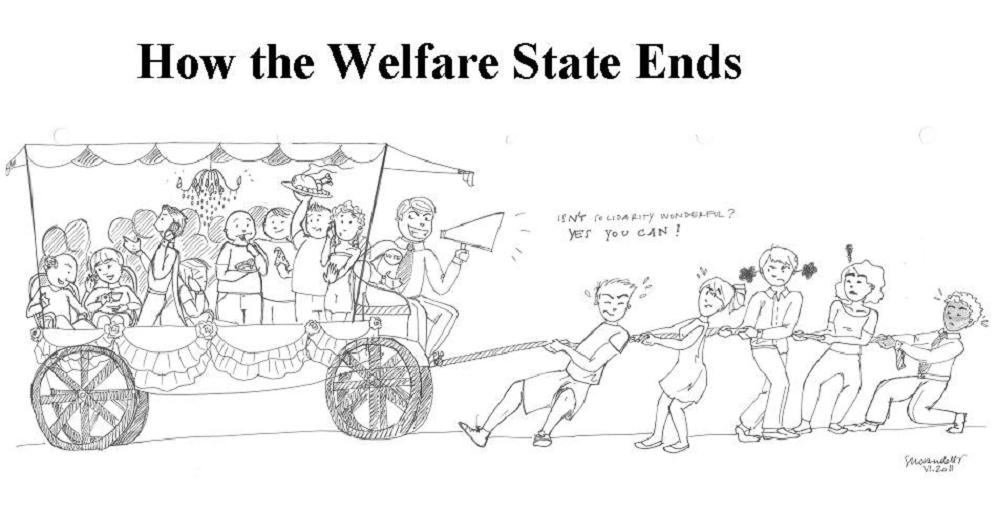










 The Daily Hatch
