
—
E.O. Wilson ‘The Meaning of Human Existence’
E. O. Wilson | The Meaning of Human Existence
I don’t know if he ever listened to the casette tapes I sent him.
My second cassette tape that I sent to Antony Flew and EO Wilson and George Wald was Adrian Rogers’ sermon on evolution and here at this link you can watch that very sermon on You Tube. Carl Sagan also took time to correspond with me about a year before he died.
(Francis Schaeffer’s books and films were introduced to me in the 1970’s by my high school teacher Mark Brink of EVANGELICAL CHRISTIAN SCHOOL and pictured below is Francis Schaeffer.

Adrian Rogers pictured below

I have posted on Adrian Rogers’ messages on Evolution beforebut here is a complete message on it.
Evolution: Fact of Fiction? By Adrian Rogers
1. Four Bridges that the Evolutionist Cannot Cross
Now, I said I rejected evolution. The first reason is for logical reasons. There are four bridges that the evolutionist cannot cross; and, I want to mention these, and this is all under the heading of logical reasons.
b. The Fixity of the Species
The second bridge the evolutionist cannot cross is the steadfastness, the fixity, of the species—that is, “the basic categories of life.”
Now, what does the Bible say about the species? Well, Genesis 1, verses 11–12: “And God said, Let the earth bring forth grass, the herb yielding seed, and the fruit tree yielding fruit”—now, listen to this phrase—“after his kind, whose seed is in itself, upon the earth: and it was so. And the earth brought forth grass, and herb yielding seed after his kind, and the tree yielding fruit, whose seed was in itself, after his kind: and God saw that it was good” (Genesis 1:11–12). You continue this passage. Ten times God uses this phrase, “after his kind”—“after his kind,” “after his kind”—because like produces like.
Now, the evolutionist must believe that reproduction does not always come kind after kind. There has to be a mutation—or a transmutation, rather—between species—that you can become a protozoa; and then you can become an un-segmented worm; and then you may become a fish; and then you may become a reptile, and move from one species to another. Now, all of us know there is such a thing as mutation. If you have roses, you can get various varieties of roses. If you have dogs—canines—you can have everything from a poodle to a Great Dane, but they’re still canines; they’re still dogs. The scientists have bombarded fruit flies with gamma rays or some kind of rays to cause mutations, and they get all kinds of strange fruit flies. But, they never get June bugs; they’re still fruit flies.You see, there are variations and adaptations that God has built, but you never have one species turning to another species. You never have a cat turn into a dog that turns to a cow that turns to a horse. You just don’t have that.
Now, men have tried to do that. I heard, one time, about a marine biologist who tried to take one of these beautiful shell creatures called an abalone and cross it with a crocodile. What he got was a crock of baloney. And, anytime anybody tries this, that’s exactly what they come up with.
Now, you say, “Pastor Rogers, why are you so certain about the fixity of the species, the steadfastness of the species?” Number one: because the Bible teaches it, and that’s enough for me. But, let’s move beyond that. We’re not talking about theological reasons now; we’re talking about logical reasons. Friend, if this is true, you would expect to find transitional forms in the fossils. There are billions of fossils; there are trillions of fossils— multiplied fossils. In not one instance—are you listening?—in not one instance do we find a transitional form. None—there are none.
Now, there are some people who will attempt to show you a proof of these, but I can tell you that eminent scientists have proven that these are not true. You would think that if man has evolved for millions and billions of years, and that life has evolved from one-celled life, some amoeba, to what we have today, that, in the fossils in the earth, we would find these transitional forms. But, they’re not there. The people talking about finding the missing link… Friend, the whole chain is missing—the whole chain is missing. Now, you ask them to prove it—that that is not true; and, they cannot come up with evidence. Well, you say, “But Pastor, they seem to have the proof. What about these ape-men? What about these people who lived in caves—these cave dwellers?” We have cave dwellers today. People have lived in caves through the years. “But, what about these things that we see in the museum? What about these creatures in this Time-Life advertisement?” Those are the products of imagination, and artistry, and plaster of Paris.

Adrian Rogers pastor of Bellevue Baptist in Memphis visiting with Ronald Reagan in White House pictured above.
Below Bellevue Baptist pictured in 1975:

Some years ago—in 1925, I believe it was—in Tennessee—Dayton, Tennessee— we had something called The Monkey Trial. Clarence Darrow and William Jennings Bryan were in a court case. A teacher had taught evolution in school, and there were people who sued that evolution should not be taught in school. Now it is reversed— you’re sued if you don’t teach evolution in school. But, there was a great debate, and Clarence Darrow, who was a very brilliant lawyer, was presenting evidence for evolution. Part of the evidence that Clarence Darrowpresented was Nebraska Man, and he had all of these pictures.

Now, what had happened is there was a man named Harold Cook. And, Harold Cook had found a piece of evidence, and out of that piece of evidence the artist had created this half-man, half-ape—this Nebraska Man. Well, what was it that Clarence Darrow used as evidence that Harold Cook had discovered? It was a tooth. I didn’t say, “teeth”; I said, “tooth.” He had a tooth; and, with that tooth, he had devised a race—male and female.
I was interested in reading, in my research for this message, where a creationist went to the University of Nebraska, where they have the campus museum. And, since he’s named Nebraska Man, they have the replica of Nebraska Man there, in the museum. So, this creationist went in there and said, “I want to see Nebraska Man.” So, they took him in there, and in a case were the skull and the skeleton of Nebraska Man. And, the creationist said, “Are these the actual bones of Nebraska Man?” “Oh,” he said, “no, they’re not the actual bones.” “Well,” the man said, “where could I see the actual bones?” “Oh,” he said, “well, we don’t have the bones. These are plaster of Paris casts of Nebraska Man.” “Well, you must have had the bones to make the cast.” The man in charge seemed embarrassed. “We don’t have any bones. All we have is a tooth.” That’s Nebraska Man. And, what they had done was to take a tooth, take some imagination, take an artist, take plaster of Paris, take some paste and some hair, and glue it on him—make a male, make a female, make a civilization called Nebraska Man out of one—one—tooth.
When I was in school, I studied about the Java ape-man. If you go back as far as I do, you studied about the Java ape-man. Where’d he come from? Well, in 1891, Sir Eugene Dubois found, in Java, the top of a skull, the fragment of a left thighbone, and three molar teeth. He announced the missing link had been found—750,000 years old. These bones that he found—these sparse bones—were not found together, and they were found scattered, over the space of one year. Twenty-four eminent scientists got together to investigate these bones; they were from Europe. There was no agreement. Ten said that they were the bones of an ape; seven said that they were the bones of a man; seven said that it was the missing link. Later, Dubois himself had to confess that it was the remains of an ape. But, in the museum, he is called Pithecanthropus Erectus— “the ape-man who stands up.” But, he’s just an ape.
What about the Piltdown man? I, in college, was introduced to the Piltdown man. Where’d we get his name? Well, Charles Dawson, in Piltdown, England, found in a gravel pit a piece of a jaw, two molar teeth, and a piece of a skull. For 50 years, this was known as “the Piltdown man,” but it was later shown to be a hoax. And, The Reader’s Digest, in 1958, said this—and I quote: “The great Piltdown hoax was an ape only 50 years old. Its teeth had been filed down and artificially colored.” Well, we laugh at that, and we say anybody could have a joke pulled on him. Yes, but friend, the scientists took this and put it in the museum for 50 years. Do you see how anxious man is to make a monkey of himself? I mean, it was a hoax.
__________________________________________________________________________


The painting, entitled “A Discussion on the Piltdown Skull,”is based on a meeting at the Royal College of Surgeons on the afternoon of August 11, 1913, during which the participants presented their views on the anatomy of Piltdown man. One or more of these men may have been involved in committing the fraud, while others were the unwitting victims. The anthropologist Arthur Keith (wearing the white laboratory coat) is seated at the table examining the Piltdown skull. Seated to Keith’s left are the osteologist William Pycraft and the zoologist Ray Lankester. The dentist Arthur Underwood stands in front, to Keith’s right. Standing in the back (from Keith’s far left) are the geologist Arthur Smith Woodward, the amateur paleontologist Charles Dawson, the anatomist Grafton Elliot Smith, and Frank Barlow, an assistant to Woodward. Other notables in the Piltdown affair, such as Pierre Teilhard de Chardin, Lewis Abbot and Martin Hinton, were not present at the discussion. On the back wall, a portrait of Charles Darwin presides over the meeting. (Photograph courtesy of the Geological Society of London.)
______________________________________________
And, Dr. Austin H. Clark, noted biologist of the Smithsonian Institute, said this—listen to this, this is Smithsonian: “There is no evidence which would show man developing step-by-step from lower forms of life. There is nothing to show that man was in any way connected with monkeys. He appeared suddenly and in substantially the same form as he is today. There are no such things as missing links. So far as concerns the major groups of animals, the creationists appear to have the best argument. There is not the slightest evidence that any one of the major groups arose from any other.” Folks, again—not that I’m embarrassed at being a Baptist preacher—but that’s not a Baptist preacher speaking; that’s a biologist at the Smithsonian.
There’s a man today who’s going about speaking on college campuses. His name is Dr. Philip E. Johnson. He’s a Harvard gradate and also a graduate of the University of Chicago. He’s an attorney—and no mean attorney. He has served as a law clerk for the Chief Justice of the United State Supreme Court. I want you… And, by the way, Mr. Johnson, whose books are in our library and in our bookstore, I believe, is a true believer and does not believe in evolution. He’s brilliant. And, he tells the following story of a lecture given by Colin Patterson at the American Museum of Natural History in 1981. Let me tell you who Patterson is. Patterson is a senior paleontologist—that means, just simply, “someone who studies ancient events, and creatures, and so forth”—he is a senior paleontologist at the British Natural History Museum. And, I’ve been to that museum. As you walk in, the first thing you see is the head of Darwin there—the bust of Darwin. He is—Colin Patterson is—the senior paleontologist at the British Natural History Museum, and he is the author of that museum’s general text on evolution. So, this guy’s no “6” or “7.” When it comes to science, he’s a “9” or “10.”
(Phillip Johnson)
(Colin Patterson)
Now, Philip Johnson, who is this lawyer from Harvard, quotes Colin Patterson, and he says this happened: He says—Patterson is lecturing now, and Philip Johnson is talking about it; and, here’s what Philip Johnson says: “First, Patterson asked his audience of experts a question which reflected his own doubts about much of what has been thought to be secured knowledge about evolution.” Now, here’s this man; he’s asking his colleagues this question: “Can you tell me anything you know about evolution—any one thing—that is true?” A good question: “Can you tell me…”—now listen; it’s kind of funny—“Can you tell me anything—any one thing—you know is true?” Now, here are these learned men sitting out there. And, let me tell you what happened: He said, “I tried that question on the geology staff at the Field Museum of Natural History, and the only answer I got was silence. I tried it on the members of the Evolutionary Morphology Seminar in the University of Chicago”—morphology means, “to change from one form to another”—I tried it on the members of the Evolutionary Morphology Seminar in the University of Chicago, a very prestigious body of evolutionists, and all I got there was silence for a long time. Eventually, one person said, ‘I do know one thing: It ought not to be taught in high school.’”
Now, get the setting: Here is a man, a brilliant scientist from the British Museum, who has written a book on the thing. And, he gets these high muckety-mucks out there—these intellectual top waters—and he said, “
Can you tell me one thing that you know to be true—that you know to be true?” Silence. Only thing one of them said: “I know that it ought not to be taught in high school.”
You see, folks, there are some bridges that they cannot cross. One bridge is the origin of life. George Wald said, “That’s impossible, but I believe it—spontaneous generation—because I don’t want to believe in God.” The other is the fixity of the species. We don’t have any evolutionary fossilized remains, missing links.
E.O. Wilson: Science, Not Philosophy, Will Explain the Meaning of Existence
The Social Conquest of Earth | Edward O. Wilson
Edward O. Wilson The Meaning of Human Existence Audiobook

Harvard University Professor E.O. Wilson in his office at Harvard University in Cambridge, MA. USACredit: Rick Friedman/Corbis via Getty.
| Francis A. Schaeffer |
|---|
| Founder of the L’Abri community |

—

Francis Schaeffer mentioned Edward O. Wilson in his book WHATEVER HAPPENED TO THE HUMAN RACE? co-authored by C.Everett Koop on pages 289-291 (ft note 6 0n page 504). That was when I was first introduced to Dr. Wilson’s work. Wikipedia notes, Edward Osborne Wilson (June 10, 1929 – December 26, 2021) was an American biologist, naturalist, and writer. His specialty was myrmecology, the study of ants, on which he was called the world’s leading expert,[3][4] and he was nicknamed Ant Man.[5][6][7][8]
I was honored to correspond with Dr. Wilson from 1994 to 2021!!
emailed me back Subject “Pages from TIME book” 6-13-18
Dear Mr. Hatcher:
Thank you very much for your kind note and the pages from the TIME book, which I hadn’t seen.
Best,
Edward O. Wilson
EOW:kmh
Professor Edward O. Wilson | Harvard University | Museum of Comparative Zoology | 26 Oxford Street | CambridgeMA 02138-2902
XXXX
Letter Mailed 5-29-18
May 29, 2018
Dr. Edward O. Wilson, Museum of Comparative Zoology Faculty Emeritus
Pellegrino University Professor, Emeritus c/o Museum of Comparative Zoology
Harvard University
26 Oxford Street
Cambridge, MA 02138
Dear Dr. Wilson,
I had the opportunity recently to pass on your quote “Behave honorably. Prepare to be alone at times, and to endure failure. Persist! The world needs all you can give,” to a group of senior managers. Today, I wanted to send you a copy of this article about you that appeared in Time Magazine. I also wanted to send you this article on Stephen Hawking. An article on Joseph Lister also appeared in the same issue and I wanted to point out that the Bible has more advanced medical understanding in it than 19th century scientists did!! Finally, I wanted to ask you this question, “Has the Multiverse Replaced God?”
I have enjoyed reading several of your books and I am going to continue to read them and send you letters about them. Keep up the stimulating work.
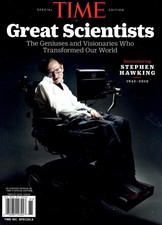
This week I bought this magazine at a Wal-Mart store “Time Magazine Great Scientists the Geniuses, Eccentrics and Visionaries Who Transformed Our World,” and I thought you may be interested in obtaining a copy since it will be out in stores just until the end of July.
The issue features a cover picture of Stephen Hawking (1942-2018) and it looks at the scientists that have shaped our world by impacting the fields of physics, mathematics, paleontology, astronomy, chemistry, earth sciences, archaeology, social sciences, genetics, and medicine.
Some of the scientists included would be described today as ardent creationists who believe in a personal Creator and that list would include Isaac Newton, James Clerk Maxwell, Galileo Galilei, Johannes Kepler, Robert Boyle, Francis Collins, Louis Pasteur, William Herschel, Gregor Mendel, Georges Cuvier, and Louis Agassiz.
I hope you get a copy, but if you don’t have a chance to then please enjoy this small portion I have sent to you.
Respectfully,
Mr. Everette Hatcher III
P.O.Box 23416, Little Rock, AR 72221, United States, everettehatcher@gmail.com, cell phone 501-920-5733
__________________
_
_
James D. Watson and Craig Venter below

_

James D. Watson and Francis Crick picture in Time Magazine
_
HOW STEPHEN HAWKING HELPED REDEFINE THE RULES OF REALITY
By BRIAN GREENE March 15, 2018, Greene is a professor of physics and mathematics at Columbia University, a cofounder of the World Science Festival and the author most recently of The Hidden Reality: Parallel Universes and the Deep Laws of the Cosmos.
During the fall of my sophomore year at Harvard, a group of my fellow physics majors were excitedly discussing a rumor they’d just heard: Stephen Hawking was coming to give the prestigious Loeb Lectures. I played along with their excitement, but truth be told, I didn’t know who Stephen Hawking was. This was the early 1980s, well before A Brief History of Time, so to all but the most physics-savvy of people, Hawking had yet to become Hawking. The rumor was true, and a few weeks later the physics-savvy crowd turned out in force, packing the largest hall to hear Hawking discuss relativity and the origin of the universe.
Although his movements had been reduced to flicking a finger or squinting an eye, Hawking could still speak — a soft, monotone murmur that was barely audible. One of Hawking’s graduate students, trained to decipher his speech, sat inches from the wheelchair, attentively listening and relaying Hawking’s remarks to an audience that hung on every word. The reduced pace allowed me to follow a lecture that otherwise would have left me baffled, making the experience all the more remarkable. I was riding to the edge of space and time on a mind soaring free of a body that had been mandated to sit as still as stone.
As the world would come to know, Hawking suffered from amyotrophic lateral sclerosis, a disease that ravages the neurons controlling voluntary muscle movement, but leaves cognitive functioning intact. By shifting from the tactile tools of a typical theoretical physicist — pen, paper, chalkboards, computers — to diagrams and imagery he could manipulate solely with the mind’s eye, Hawking was able to continue his research and, in time, see further than anyone previously had. Among much else, that vision would illuminate the darkness of black holes.
Hawking didn’t discover black holes. But he sparked a revolution, still ongoing, in our understanding of them. In the early decades of the 20th century, we learned from Einstein’s theory of gravity, known as the general theory of relativity, that if you cram enough matter into a small enough region, the gravitational pull will be so strong that nothing can escape its forceful grip. Included in that “nothing” is light, and so the gravity-infused mass will go dark — it will fade to black. In the early 1970s, Hawking updated this conclusion by including quantum mechanics, the hard-won mathematical description of the behavior of particles like electrons and photons, developed in the first half of the 20th century. What Hawking found was so surprising that at first even he didn’t believe it. Through quantum processes, particles can leak through the surface of a black hole, creating an outward streaming swarm causing a black hole to glow — or even explode. Black holes, in other words, are not fully black. They radiate. Although such “Hawking radiation” has yet to be observed (for typical black holes, the effect is minuscule) there is now universal consensus that Hawking’s analysis is correct.
The result transcends black holes. It reveals strange properties of space, time and gravity in a quantum universe that have thrilled, fascinated and frustrated physicists for more than 40 years. One stunning outgrowth of Hawking’s insight, at the forefront of current thinking, is that the three-dimensional reality we inhabit may be akin to a hologram — we may be a three-dimensional projection of comings and goings that take place on a thin two-dimensional surface that surrounds us. Called the holographic principle, it’s one of the strangest ideas of modern physics, and one that emerged from physicists carefully thinking about Hawking’s radiation and its implications for the information carried by anything that falls over a black hole’s edge. Many now believe that the holographic insight is essential to realizing Einstein’s dream of a unified theory of all of nature’s forces.
Some years back, Hawking was the honored guest at the World Science Festival’s annual gala in New York. As we accompanied Stephen through the throngs of invited guests and swarms of press and photographers — all pushing in, straining to catch a glimpse — it became beyond intense. For brief moments, it felt atavistic. Yet, Stephen seemed to take it all in stride. I remembering wondering: Is he off in another world, undertaking some mental calculation that lets him rise above the tumult? Is he parking his mind near the edge of a black hole, reducing the time he’ll experience before it’s safe to come back to Earth? I will never know. But as I think about it now, I like to imagine he was mulling over a remark he’d made some years earlier, in which he reflected on our bestial past and captured in the simplest and starkest terms what it means to be human: “We are just an advanced breed of monkeys on a minor planet of a very average star. But we can understand the Universe. That makes us something very special.” And how special for us to have been on this minor planet while this major mind rewrote the rules of reality.
—-
Has the Multiverse Replaced God?
William Lane Craig
Several years ago I spoke with Robin Collins, a Christian philosopher who specializes in cosmology, just after his return from a conference on science and theology sponsored by the John Templeton Foundation. “Bill,” he said to me, “When these scientists talk about the multiverse, that’s actually their way of talking about theology! It’s their way of doing metaphysics without using the G– word!”
Indeed, I suspect for many in our contemporary culture the multiverse serves as a sort of God surrogate. The multiverse serves the role of a creator and designer of the universe. It explains why the universe came into being and why the universe is fine-tuned for the existence of intelligent, interactive life. It is thus a sort of substitute deity……..
In 1994…Arvind Borde and Alexander Vilenkin showed that any spacetime eternally inflating toward the future cannot be “geodesically complete” in the past, that is to say, there must have existed at some point in the indefinite past an initial singularity. Hence, the multiverse scenario cannot be past eternal. They write,
A model in which the inflationary phase has no end . . . naturally leads to this question: Can this model also be extended to the infinite past, avoiding in this way the problem of the initial singularity?
. . . this is in fact not possible in future-eternal inflationary spacetimes as long as they obey some reasonable physical conditions: such models must necessarily possess initial singularities.
. . . the fact that inflationary spacetimes are past incomplete forces one to address the question of what, if anything, came before. [11]
In response, Linde concurred with the conclusion of Borde and Vilenkin: there must have been a Big Bang singularity at some point in the past. [12]
……Roger Penrose calculates that the odds of our universe’s low entropy condition obtaining by chance alone are on the order of 1:1010(123), an inconceivable number. [25] The probability that our solar system should suddenly form by the random collision of particles is 1:1010(60). (Penrose calls it “utter chicken feed” by comparison.)
Conclusion
In conclusion the multiverse hypothesis does nothing to eliminate the need for a creator and designer of the universe. Whether or not a multiverse exists, one needs a transcendent, personal creator and designer of the cosmos.
- [11]A. Borde and A. Vilenkin, “Eternal Inflation and the Initial Singularity,” Physical Review Letters 72 (1994): 3305, 3307.
- [12]Andrei Linde, Dmitri Linde, and Arthur Mezhlumian, “From the Big Bang Theory to the Theory of a Stationary Universe,”Physical Review D 49 (1994): 1783-1826. Linde has since tried to suggest a way to escape the conclusion of a beginning (“Inflation and String Cosmology,” arXiv:hep-th/0503195v1 (24 Mar 2005), p. 13. But he does not succeed in extending past spacetime paths to infinity, which is a necessary condition of the universe’s having no beginning.
- [15]Audrey Mithani and Alexander Vilenkin, “Did the universe have a beginning?” ArXiv 1204.4658v1 [hep-th] 20 April 2012. Cf. his statement “There are no models at this time that provide a satisfactory model for a universe without a beginning” (A. Vilenkin, “Did the Universe Have a Beginning?” lecture at Cambridge University, 2012). Specifically, Vilenkin closed the door on three models attempting to avert the implication of his theorem: eternal inflation, a cyclic universe, and an “emergent” universe which exists for eternity as a static seed before expanding.
- [16]Lisa Grossman, “Why physicists can’t avoid a creation event,” New Scientist 11 January 2012.
- [22]See Leonard Susskind, The Cosmic Landscape: String Theory and the Illusion of Intelligent Design (New York: Little, Brown, & Co., 2006). Susskind apparently believes that the discovery of the cosmic landscape undercuts the argument for design, when in fact precisely the opposite is true. Susskind doesn’t seem to appreciate that the 10500 worlds in the cosmic landscape are not real but merely possible universes consistent with M-Theory. To find purchase for the anthropic principle mentioned by Hawking as the third alternative, one needs a plurality of real universes, which string theory alone does not provide.
- [25]Roger Penrose, The Road to Reality (New York: Alfred A. Knopf, 2005), pp. 762-5. Penrose concludes that anthropic explanations are so “impotent” that it is actually “misconceived” to appeal to them to explain the special features of the universe
On page 103 there is praise for Joseph Lister, but why is Ignaz Semmelweis ignored?
In the article, “In 1850, Ignaz Semmelweis saved lives with three words: wash your hands,” , May 15, 2015 3:29 PM EDT Dr. Frank Market noted:
Semmelweis’s professional timing could not have been worse. He made his landmark discovery between 1846 and 1861, long before the medical profession was ready to accept it.
Although Louis Pasteur began exploring the role of bacteria and fermentation in spoiling wine during the late 1850s, much of his most important work initiating the germ theory of disease occurred between 1860 and 1865. A few years later, in 1867, the Scottish surgeon Joseph Lister, who apparently had never heard of Semmelweis, elaborated the theory and practice of antiseptic surgery, which included washing the hands with carbolic acid to prevent infection. And in 1876, the German physician Robert Koch successfully linked a germ, Bacillus anthracis, to a specific infectious disease, anthrax.
Below is a short summery by Vic Vadney of the book NONE OF THESE DISEASES BY S.I. McMillen:
IS THE BIBLE A BOOK OF MEDICINE?
Numbers 19:18
A clean person shall take hyssop and dip it in water, sprinkle it on the tent, on all the vessels, on the persons who where there, or on the one who touched a bone, the slain, the dead, or a grave.
“The Bible is not a book of science.” We hear and read that statement a lot these days but there is a deceptive lie hidden with this claim.
In 1844 in Austria, it was a fearful thing when a woman went into the great Vienna Hospital to have her baby. One mother out of every five died of child-bed fever. Dr. Ignaz Semmelweis, set out to find out why. In those days no one knew about bacteria and while the existence of “germs” was suspected it was merely a theory and many did not believe in the existence of “germs.” Semmelweis noticed that after examining the dead patients the young doctors would then examine the living and never considered washing their hands between examinations. With great opposition Dr. Semmelweis insisted they wash their hands and the death rate dropped almost to zero. Sadly, Dr. Semmelweis was dismissed and the old practice continued with the awful death rate.
However, Dr. Semmelweis’s discovery was not new knowledge. Thousands of years earlier God had given Moses this knowledge and the Israelites knew they were unclean after touching the dead. By Mosaic Law they had to wash and use hyssop branches. Today, we know that hyssop contains a powerful antibacterial and antifungal agent.
So when the Bible touches upon an area of science it is still completely accurate. After all, the Author of the Bible is also the Author of everything that science studies!
Notes:
Thompson, Bert. 1990. Dr. Semmelweis and the Bible. Reasoning from Revelation, June. p. 3.Thanks
MEDICINE
I do not want anyone to think that the Bible is like a recent medical textbook. The purpose of the Bible is far from that. However, I invite you, the reader, to explore some passages in the Bible that hopefully will surprise and fascinate you about the possibility of there being Scientific Foreknowledge in the Bible.
THE ABSENCE OF CONTEMPORARY HARMFUL TREATMENTS
My own opinion is that there certainly appears to be statements in the Old Testament that clearly exceed the knowledge of that time. As a physician, I am amazed at the advanced health regulations given in the Mosaic Law, especially since Moses and the Israelites had just come out of Egypt. Now the time of the Exodus was about 1446 BC, and this was also the time when the Bible says God gave Moses the Ten Commandments and over 600 other laws. Contemporary practices from the great knowledge and wisdom of the Egyptians was clearly known by Moses (Act 7:22), which very likely included the famous medical treatments such as are found in the Papyrus Ebers, which is dated about 1552 BC. Dr. S. I. McMillen quotes a summary of some of the hundreds of remedies for diseases based on Massengill’s (1943) assessment:
These drugs include “lizards’ blood, swines’ teeth, putrid meat, stinking fat, moisture from pigs’ ears, milk goose grease, asses’ hoofs, animal fats from various sources, excreta from animals, including human beings, donkeys, antelopes, dogs, cats, and even flies.”1
It is clear that these treatments would not have been effective in eradicating illness, and in fact, the sewage treatments would have caused tetanus (including neonatal), wound infections, sepsis and death. Yet, this was the greatest medical wisdom in the world at that time. However, we find none of these things being commanded in the health regulations in the Law of Moses. Now this would have been a major departure, not only for Moses, but also for the Israelites. There must have been a substantial trust in God by Moses and the Israelites for them to have abandoned these harmful, though highly touted Egyptian medical practices as found in the Papyrus Ebers.
HYGIENE ISSUES
Instead we find in the Mosaic Law solid principles of public health that still apply today. For example, major policies include the following:
Isolating infected people (Lev 13:45-46).
Washing after handling a dead body (Num 19:11-19).
Burying excrement away from the camp (Deut 23:12-13).2
McMillen points out that the first policy was the only thing that stopped the Leprosy and the Black Death during the Dark Ages.3 The second policy was the only thing that stopped the obstetrical deaths in Vienna in the 1840’s.4 The third policy was absolutely needed to stop the epidemics of typhoid, cholera and dysentery.5
Even today these simple public health principles, if properly used, would stop the spread of killer infections in hospitals. Wash your hands under running water! How simple does it get! Yet, it is a constant battle to get physicians and nurses to wash their hands before treating the next patient. The same thing applies to everyone who has an infectious illness such as influenza or diarrhea. Wash your hands! At this time there is a considerable concern about the spread of H1N1 (swine influenza). Again, the recommendation is to “wash your hands!”
What is the point? Moses was 3500 years ahead of his time. Moses could not have known, based on his own education as a prince in Egypt, the simple and effective public heath principles that are revealed in the Mosaic Law. The only way he could have learned these principles 3500 years ahead of their time was by receiving revelation from the all-knowing God.
FOOD RESTRICTIONS
The medical marvels in the Law of Moses are not confined to hygiene issues. Food rules are impressive. For example, swine are notorious for carrying trichinosis because of what they eat (i.e., raw garbage and infected rodents), and this disease can easily be passed to humans eating inadequately cooked pork. Pork must be raised in a controlled environment and their meat cooked well-done in order to be safe for consumption. Of course, Moses didn’t know that, but God did and told the Israelites not to eat pork.
Another very interesting finding is that God commanded the Israelites through Moses not to eat fat (Lev 3:16-17). It was only just a few years ago that the cholesterol hypothesis was proven: High fat diets are not good for humans as these predispose people to higher rates of cholesterol plaques with all their complications such as heart attacks and strokes. How could Moses have known on his own 3500 years ago that fat should be excluded from the diet of his people? He didn’t learn that from his Egyptian education! Where did it come from? It came from God.
.CONCLUSION
Therefore, there seems to be compelling evidence that the Bible contains sound medical principles that clearly predate their more recent discovery by thousands of years. Dear friends, this is real Scientific Foreknowledge. It reveals the finger of God, the breath of God. He was there, and revealed these things to the ancients.
As an aside for my profession, I think it unfortunate for our patients that we as physicians and nurses and health care workers have been so slow to see the very basic principles of hygiene that were established so long ago. If we had, we wouldn’t be fighting a plague of infections like MRSA, multiply resistant enterococci, and multiply resistant flesh-eating bacteria, and multiply resistant EVERYTHING caused by poor hand washing and inadequate containment procedures. My colleagues, we have been slow to learn, slow to believe, and slow to respond. Our patients deserve better, and we all know it.
It was clear even to the ancients.
ENDNOTES:
McMillen, SI. None of These Diseases. Fleming H Revell Co, Old Tappan, NJ, ©1963, p 9.
http://en.wikipedia.org/wiki/Science_and_the_Bible
McMillen, ibid., p 11.
McMillen, ibid., p 13-15.
McMillen, ibid., p 13.
XXXX FEATURED ARTIST IS GORKY
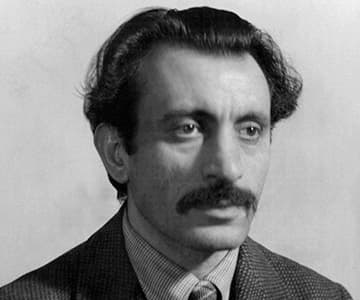
ARSHILLE GORKY (1905-1948)
Armenian-born American painter, Gorky was a surrealist painter and also one of the leaders of abstract expressionism. He was called “the Ingres of the unconscious”.
My Homage to the Late Harvard Biologist EO Wilson (THE SAAD TRUTH_1351)
How Should We Then Live | Season 1 | Episode 6 | The Scientific Age
How Did Writer & Biologist EO Wilson Die | The Life and Sad Ending Edwar…
Edward O Wilson has passed away 💔|| his last moment before death so touc…
Remembering the life of renowned biologist and Alabama native E.O. Wilson
—
How Should We Then Live (1977) | Full Movie | Francis Schaeffer | Edith …
–
A Tribute to E. O. Wilson: A Life in Nature
–
How Should We Then Live | Season 1 | Episode 9 | The Age of Personal Pea…
—
Whatever Happened To The Human Race? (2010) | Full Movie | Michael Hordern
Related posts:
Taking on Ark Times Bloggers on various issues Part F “Carl Sagan’s views on how God should try and contact us” includes film “The Basis for Human Dignity”
I have gone back and forth and back and forth with many liberals on the Arkansas Times Blog on many issues such as abortion, human rights, welfare, poverty, gun control and issues dealing with popular culture. Here is another exchange I had with them a while back. My username at the Ark Times Blog is Saline […]
By Everette Hatcher III|Posted in Francis Schaeffer, Prolife|Edit|Comments (0)
Carl Sagan v. Nancy Pearcey
On March 17, 2013 at our worship service at Fellowship Bible Church, Ben Parkinson who is one of our teaching pastors spoke on Genesis 1. He spoke about an issue that I was very interested in. Ben started the sermon by reading the following scripture: Genesis 1-2:3 English Standard Version (ESV) The Creation of the […]
By Everette Hatcher III|Posted in Adrian Rogers, Atheists Confronted, Current Events|TaggedBen Parkinson, Carl Sagan|Edit|Comments (0)
Review of Carl Sagan book (Part 4 of series on Evolution)
Review of Carl Sagan book (Part 4 of series on Evolution) The Long War against God-Henry Morris, part 5 of 6 Uploaded by FLIPWORLDUPSIDEDOWN3 on Aug 30, 2010 http://www.icr.org/ http://store.icr.org/prodinfo.asp?number=BLOWA2http://store.icr.org/prodinfo.asp?number=BLOWASGhttp://www.fliptheworldupsidedown.com/blog _______________________ I got this from a blogger in April of 2008 concerning candidate Obama’s view on evolution: Q: York County was recently in the news […]
By Everette Hatcher III|Posted in Atheists Confronted, Current Events, President Obama|Edit|Comments (0)
Review of Carl Sagan book (Part 3 of series on Evolution)
Review of Carl Sagan book (Part 3 of series on Evolution) The Long War against God-Henry Morris, part 4 of 6 Uploaded by FLIPWORLDUPSIDEDOWN3 on Aug 30, 2010 http://www.icr.org/ http://store.icr.org/prodinfo.asp?number=BLOWA2http://store.icr.org/prodinfo.asp?number=BLOWASGhttp://www.fliptheworldupsidedown.com/blog______________________________________ I got this from a blogger in April of 2008 concerning candidate Obama’s view on evolution: Q: York County was recently in the news […]
By Everette Hatcher III|Posted in Atheists Confronted, Current Events, President Obama|Edit|Comments (0)
Carl Sagan versus RC Sproul
At the end of this post is a message by RC Sproul in which he discusses Sagan. Over the years I have confronted many atheists. Here is one story below: I really believe Hebrews 4:12 when it asserts: For the word of God is living and active and sharper than any two-edged sword, and piercing as far as the […]
By Everette Hatcher III|Posted in Adrian Rogers, Atheists Confronted, Current Events, Francis Schaeffer|Tagged Bill Elliff, Carl Sagan, Jodie Foster, RC Sproul|Edit|Comments (0)
Review of Carl Sagan book (Part 4 of series on Evolution)jh68
Review of Carl Sagan book (Part 4 of series on Evolution) The Long War against God-Henry Morris, part 5 of 6 Uploaded by FLIPWORLDUPSIDEDOWN3 on Aug 30, 2010 http://www.icr.org/ http://store.icr.org/prodinfo.asp?number=BLOWA2http://store.icr.org/prodinfo.asp?number=BLOWASGhttp://www.fliptheworldupsidedown.com/blog _______________________ This is a review I did a few years ago. THE DEMON-HAUNTED WORLD: Science as a Candle in the Dark by Carl […]
By Everette Hatcher III|Posted in Atheists Confronted, Current Events|Edit|Comments (0)
Review of Carl Sagan book (Part 3 of series on Evolution)
Review of Carl Sagan book (Part 3 of series on Evolution) The Long War against God-Henry Morris, part 4 of 6 Uploaded by FLIPWORLDUPSIDEDOWN3 on Aug 30, 2010 http://www.icr.org/ http://store.icr.org/prodinfo.asp?number=BLOWA2http://store.icr.org/prodinfo.asp?number=BLOWASGhttp://www.fliptheworldupsidedown.com/blog______________________________________ I was really enjoyed this review of Carl Sagan’s book “Pale Blue Dot.” Carl Sagan’s Pale Blue Dot by Larry Vardiman, Ph.D. […]
By Everette Hatcher III|Posted in Atheists Confronted, Current Events|Edit|Comments (0)
Atheists confronted: How I confronted Carl Sagan the year before he died jh47
In today’s news you will read about Kirk Cameron taking on the atheist Stephen Hawking over some recent assertions he made concerning the existence of heaven. Back in December of 1995 I had the opportunity to correspond with Carl Sagan about a year before his untimely death. Sarah Anne Hughes in her article,”Kirk Cameron criticizes […]
By Everette Hatcher III|Posted in Atheists Confronted|Edit|Comments (2)


 The Daily Hatch

