Monthly Archives: December 2015

The Roots of Hitler’s Evil by Richard Weikart Professor of History California State Univ., Stanislaus

______

Francis Schaeffer “BASIS FOR HUMAN DIGNITY” Whatever…HTTHR

https://youtu.be/VfqBN9iW0_Q

The Roots of Hitler’s Evil
by

Richard Weikart

Professor of History

California State Univ., Stanislaus

[This essay first appeared in Books and Culture: A Christian Review (Mar./Apr. 2001): 18-21]

What shaped the life of the man who today is the symbol of evil and brutality, but who in the 1930s was cheered by millions of Germans, most of whom claimed to be Christians? What lay at the roots of Hitler’s character and world view? This question has intrigued millions, and oceans of ink have been spilled to provide explanations, but still there are no simple answers.

My own research into the impact of Darwinian ethics on German thought in the pre-Nazi era and its ultimate influence on Hitler’s ideology led me in the summer of 1999 to the resort Herrsching on beautiful Ammersee, just a 44-minute train trip from Munich, Hitler’s early headquarters, where he began his drive to power in early 1919 when he joined the fledgling German Workers’ Party, soon renamed the National Socialist German Workers’ Party and nicknamed the Nazi Party. (About the same distance from Munich in a different direction is Dachau, site of the Nazi’s first concentration camp, which I likewise visited). Herrsching was the home of the physician Alfred Ploetz, the founding father of the race hygiene or eugenics movement in Germany, whose goal was to improve human heredity by rationally controlling reproduction. When I visited Herrsching, Ploetz’s 87-year old son, Wilfried Ploetz, was still living in the medieval manor house bought by his father, who conducted scientific experiments on heredity there. Ploetz was no Hitler, of course. He experimented on rabbits, not on humans.

On a gray day in June I arrived in Herrsching to examine the correspondence and papers of Alfred Ploetz. After Herr Ploetz graciously picked me up at the train station, I cautiously asked harmless questions about his father. Uncertain about how he viewed his father and the movement he led, especially because of Nazi connections, I proceeded gingerly. However, Herr Ploetz unabashedly introduced the topic of Nazism, relating to me several stories about the Nazi period involving his father or him. While admitting that his father made some mistakes, he clearly tried to distance his father and other leading eugenicists–many of whom he knew personally from their frequent visits with his father–from the Nazis and Nazi racism.

Probably neither Ploetz nor most other German eugenicists would have perpetrated the evil deeds we associate with Hitler, especially the Holocaust. Ploetz even opposed the Nazis before they came to power, according to his son, and based on what I know from other sources, this is credible. However, ideas have consequences, and Ploetz’s ideas, blended with those of other eugenicists and racists into a coherent Nazi program, had disastrous consequences once they were implemented by a strong-willed leader with both the political power and a cadre of like-minded assistants to carry them out.

The Nazi eugenics program began in earnest in January 1934 when a law requiring sterilization for persons with congenital illnesses went into effect. Since this promised to fulfill the goals for which Ploetz had struggled and sacrificed, it wooed Ploetz away from his disapproval of Nazism. However, compulsory sterilization was only the first step for the Nazis. Later they would implement more radical eugenics measures in their “euthanasia” program, murdering about 70,000 mentally and physically handicapped people in 1939-41. And “euthanasia” was once again only a preliminary step toward the ultimate program of racist eugenics–the Holocaust. This was the slippery slope with a vengeance.

Because of his evil deeds, it’s not surprising that in the 1940s some viewed Hitler as the Antichrist. Daniel’s prophecy seemed fulfilled: “A king shall arise, having fierce features, who understands sinister schemes. His power shall be mighty, but not by his own power; he shall destroy fearfully, and shall prosper and thrive; he shall destroy the mighty and also the holy people [the Jews]. Through his cunning he shall cause deceit to prosper under his rule; and he shall exalt himself in his heart. He shall destroy many in their prosperity.” (Daniel 8:23-24). Of course, Hitler wasn’t THE Antichrist, but the evil he perpetrated was born out of an anti-Christian world view.

Those wanting to know how Hitler became so evil should place at the top of their reading list Brigitte Hamann’s Hitler’s Vienna and Ian Kershaw’s magisterial two-volume biography, Hitler. These two excellent new works on Hitler poignantly provide insight into the background, ideas, and context that made Hitler possible. Both provide a detailed portrait of Hitler’s political, social, and intellectual milieu.

Since she focuses primarily on Hitler’s formative years as an 18 to 24 year old in Vienna (1908-1913), Hamann’s work examines how and to what extent the Viennese environment shaped Hitler’s world view and political program. She deftly weaves together Hitler’s biography with a history of Vienna during his stay there, but always with an eye on the city as Hitler experienced it. The Vienna she portrays is quite different from the modernist Fin-de-Siecle Viennadescribed in Carl Schorske’s path-breaking cultural history. Hamann is fully aware of the importance of modernism in Viennese culture, but she rightly argues from the outset that this was not Hitler’s milieu. Hitler wasn’t moved–except maybe to disgust–at the work of Freud or modernist artists. But he did eagerly follow the political developments in the Viennese press, and Hamann’s work provides considerable insight into the way Hitler perceived the political process and parties in Vienna.

One gains, for instance, considerable insight into Hitler’s contempt for the parliamentary system from Hamann’s engaging description of the Austrian parliament, which Hitler visited repeatedly during his first year or two in Vienna. The Austrian parliament was often paralyzed by ethnic rivalries, which regularly produced filibusters (in a variety of languages from the multi-ethnic empire, but with no translators), as well as raucous and outrageous use of noisemakers to kill debate on contentious bills. All too often ethnic hostilities spilled over into fisticuffs on the floor of parliament.

Hamann and Kershaw both argue that Hitler had a consistent–albeit pernicious–world view. At the center of that world view was the notion that history consists of a Darwinian struggle for existence between races, and the Aryan (i.e., Germanic) race has been and still is of supreme importance as the highest race, the only race capable of creating advanced culture. For Hitler human progress depended on two factors: 1) strengthening the Aryan race through eugenics measures; and 2) winning the struggle against the non-Aryan races (necessitating a strong military). Hamann astutely observes that for Hitler, “the individual has no value other than being part of a people and a race and to help secure their survival in the battle against other peoples and races.” (p. 235)

Hamann provides numerous examples to show how pervasive Aryan racism and eugenics were in the Viennese press. Because it was so widespread it’s impossible to point to any one racial thinker, such as Adolf Lanz von Liebenfels, asThe Man Who Gave Hitler His Ideas, as Wilfried Daim has argued. Hamann’s approach is commonsensical, admitting that Hitler likely read Lanz’s periodical, Ostara, but asserting that Hitler’s Aryan racism bears even more the stamp of Guido von List, the mystical writer who first introduced the swastika into Aryan racist circles. The leader of the intensely nationalistic Pan-German movement in Austria, Georg von Schönerer, also strongly influenced Hitler, who adopted the Heil greeting from him. Schönerer not only embraced racial anti-Semitism, but also promoted eugenics.

Hitler usually adopted his ideas from journalists and popularizers, some of them rather crass or even hare-brained. However, I question Hamann’s assertion that the theories Hitler preferred were “not in agreement with academic science but were the products of the idiosyncratic thought processes of private scholars who were full of contempt for established scientists.” (233) This is only partly true. List, Lanz, and Schönerer, to be sure, were outsiders to academe. However, bizarre as it may seem, many of Hitler’s racial ideas weren’t at all foreign to academic scientific discourse, even if they weren’t accepted universally. Biology, anthropology, and medicine in German-speaking lands were saturated with eugenics and racism, sometimes even anti-Semitic Aryan racism very similar to Hitler’s.

Hitler’s world view was diametrically opposed to Christianity, for which Hitler had nothing but contempt. Hitler never attended church in Vienna, and some sources note that his greatest enemy–besides Marxists–was the Jesuits. One anonymous eyewitness reported that “Hitler said [c. 1912] the biggest evil for the German people was accepting Christian humility.” (p. 250) Even though in Mein Kampf Hitler criticized Schönerer’s anti-Catholic Los-von-Rom (Free from Rome) movement, during his time in Vienna Hitler was sympathetic to it. Hitler recognized that Schönerer’s position had been a public relations fiasco, and thus a political blunder, so later he always shied away from publicly criticizing the Christian churches, despite his personal antipathy toward them.

Neither Hamann nor Kershaw pay any attention to occult influence on Hitler, and with good cause. Despite the mystical inclinations of some of the Viennese anti-Semites who influenced him (List and Liebenfels) and the neo-pagan tendencies of some of his entourage (Himmler, for instance), Hitler had little or no interest in mystical and supernatural teachings or experiences. Privately he was contemptuous of Himmler’s attempts to revive ancient German pagan rites. Alan Bullock, in one of the best scholarly Hitler biographies to precede Kershaw’s, is probably close to the truth in labeling Hitler a materialist who spurned belief in anything supernatural, despite his occasional vague rhetoric about Providence.

Hamann helps clear up a number of myths about Hitler’s early development, but the only really significant revelation concerns Hitler’s anti-Semitism during his time in Vienna. Hitler claimed in Mein Kampf that he became devoted to anti-Semitism while in Vienna, and although historians are incredulous about Hitler’s “reminiscences,” most have accepted this, since it seems so plausible. Vienna was a cesspool of anti-Semitism in the early twentieth century. The incredibly popular mayor of Vienna, Karl Lueger, used anti-Semitic propaganda to further his political career, the Pan-German press (which Hitler read) was spewing forth anti-Semitism, and Vienna had a much larger and more visible Jewish population than any major German city. Interestingly, however, only one source from his Vienna days reports that Hitler was anti-Semitic at all and several vociferously deny it.

Hamann takes the side of the deniers, especially in light of the amicable relationship Hitler had with several Jews during his stay in Vienna. She admits that Hitler studied anti-Semitism in Vienna, but she argues that anti-Semitism did not become an integral part of his world view until later (by 1919 at latest, when we have his first recorded anti-Semitic utterance). Whether Hitler converted to anti-Semitism during or after his Vienna years, there can be little doubt that Viennese anti-Semitism was a crucial factor influencing him in that direction.

Reconstructing Hitler’s years in Vienna is a daunting task, as the sources are few and some are questionable or worse. Hamann shows considerable skill in analyzing the main eyewitness sources we have, for she doesn’t take any of them at face value, but assiduously tests them against each other and against a wealth of knowledge she has gleaned from other sources. She points out mistakes even in the ones she considers basically reliable (like Hitler’s roommate August Kubizek), while dismissing some as totally worthless (such as Josef Greiner). Her analysis of the sources is itself a major contribution to historiography on Hitler, and her work will be indispensable to future biographers and historians.

I only hope that if a new edition comes out it will be edited better than this one. There are numerous troublesome errors, some in translation (usually minor, like Double Alliance instead of Dual Alliance), some in footnote numbering (esp. ch. 7), and more substantively the repeated confusion of Joseph II and Franz Joseph II on pp. 112-13.

Kershaw’s biography is likewise a major contribution to historiography, and it will probably become the standard biography of Hitler for many years to come. Kershaw’s many years of research on Hitler and the Nazi era bear rich fruit in this masterful portrayal of Germany’s Führer. For Kershaw, unlike Hamann, Hitler’s environment is not merely a source for his political and social views during his formative years. Rather Kershaw is convinced that political and social structures remained important influences on Hitler’s actions throughout his entire life. It’s rather ironic that someone who forthrightly argues against the force of personality in history would so painstakingly analyze one man. Kershaw admits his discomfort with the genre of biography, but that hasn’t deterred him from producing a first-rate biographical study.

Kershaw continually reminds us that Hitler was being acted upon just as much or more than he was acting. Hitler’s ascent to power wasn’t through a triumph of the will, but was rather a product of political and economic forces over which Hitler had little control. Even after coming to power, most concrete programs were undertaken without his initiative and often without his knowledge by underlings trying to “work towards the Führer”–which Kershaw sees as the key to understanding Nazi rule. However, if Germans during Nazi rule were “working towards the Führer,” then Hitler’s views were ultimately decisive, whether or not he made all the specific decisions.
It seems to me there is sometimes tension between Kershaw’s description of Hitler and his interpretation of that description. Kershaw is aware of that tension, asserting in his preface that Hitler “is one of the few individuals of whom it can be said with absolute certainty: without him, the course of history would have been different.” (xx) Later in the preface, however, Kershaw balances this by claiming, “To explain his power, therefore, we must look in the first instance to others, not to Hitler himself.” (xxvi) Kershaw’s juggling act between these two poles may confuse some readers, but I found it stimulating and believe it makes his account more true to historical reality.
When Kershaw explains particular important events in Hitler’s life, he emphasizes Hitler’s lack of control over events. For example, the failed Beer Hall Putsch of 1923 was driven not so much by Hitler as by developments in the Bavarian government, in Hitler’s co-conspirators on the nationalist Right, and pressure from his own stormtroopers (SA). As so often in Hitler’s life, he resisted making decisions until he had to, but once his hand was forced, he acted ruthlessly. Kershaw sees this pattern repeated again and again in Hitler’s life–pressed by outward circumstances, crises, and his own party, he would finally act after long hesitation. All too often, he would act on misinformation provided him by his Nazi colleagues. One blatant example was his ruthless executions without trial of SA leader Ernst Röhm and others in late June and early July 1934, when Hitler was convinced they were conspiring against him. No such conspiracy was underway, but Röhm’s rivals in the Nazi Party–principally Goebbels and Himmler–manufactured evidence to get rid of the troublesome SA leader.

So what produced Hitler and gave him the impetus to become dictator of Germany? Kershaw sees World War I and its aftermath as being decisive in shaping both Hitler and the German people so they would be receptive to Hitler. He agrees with Hamann that, despite the influence of Vienna, Hitler’s world view was still forming after leaving Vienna. In addition to lacking evidence of his anti-Semitism in Vienna, Kershaw points out that his army comrades also had no idea he was anti-Semitic. A few aspects of his world view, such as the importance of living space in the east, were added in the early 1920s.

Kershaw believes defeat and revolutionary turbulence in Germany (especially Munich) between November 1918 and May 1919 were decisive in preparing the ground for Hitler. To offset leftist influence in German politics and society, the German army set up propaganda units to indoctrinate the troops. Hitler became a star performer in one of these units and thus found his niche as a political speaker. His army propaganda unit sent Hitler to attend a beer-hall meeting of the tiny German Workers’ Party, which he transformed into a party devoted to him. Without the war and subsequent defeat, Hitler would likely have remained a loner, an unemployed wannabe artist wandering aimlessly through Munich’s crowded streets.

Without the disastrous defeat of World War I the German people would not have listened to the ravings of Hitler, either. But his intense nationalism, anti-Bolshevism, and anti-Semitism found fertile soil in a nation feeling oppressed by the Versailles Treaty and reparations. His pledge to make Germany great again resonated especially with the nationalist Right. Not everyone on the Right liked Hitler; some even despised him. But in the final analysis, it was the nationalist Right who brought Hitler to power in two ways. First of all, Hitler drew away most of the nationalist voters from other parties during the Great Depression in 1930-32. But Hitler’s popularity with the masses, which never won him more than about a third of the votes, was insufficient to catapult him to power. Right-wing nationalist politicians, such as Franz von Papen, who had already partly subverted the Weimar constitution, wanted to use Hitler’s clout in parliament to replace the Weimar constitution with a right-wing authoritarian regime. They thought they could manipulate Hitler and keep control for themselves, but Hitler outmaneuvered them and dominated the new regime.

Kershaw ends the first volume of his biography with Hitler riding the crest of popularity from his remilitarization campaign. In a dramatic move to shore up his sagging popularity in Germany he flouted the Versailles Treaty in March 1936 by remilitarizing the Rhineland region. With each success Hitler’s self-confidence was growing, and Kershaw believes that by this point Hitler considered himself infallible. Those warning him against his risky foreign policy ventures had proven themselves timid, and his foreign opponents were spineless.

Very few in 1936 had an inkling of the misery that would come to Germany and indeed the entire world through Hitler, which Kershaw thoroughly describes in the second volume, when he covers World War II and the Holocaust. Why did so few heed the warnings of Hitler’s opponents? Even General Ludendorff, who had earlier joined forces with Hitler for the Beer Hall Putsch in 1923, vainly warned President Hindenburg in 1933: “I solemnly prophesy that this accursed man will cast our Reich into the abyss and bring our nation to inconceivable misery. Future generations will damn you in your grave for what you have done.” (I, 427) Except for some leftists and Jews, however, most Germans ignored the warning signs. Their willingness to tolerate Hitler’s initial program of political oppression, because it was directed primarily against leftists, made them defenseless once the oppression widened to include Jews, Gypsies, the handicapped, and even Christian clergy.

If Hitler had died in 1938, Kershaw claims, he would probably have gone down in history as a great German leader. No moral opprobrium would be attached to his name. Germans might have regarded him as another Bismarck. The full malevolent potential of Hitler’s regime would only manifest itself with the outbreak of World War II, especially in 1941 when he launched his war of annihilation against what he considered the twin evils of the world–Bolshevism and the Jews.

Germans made Hitler possible, but they were not privy to his ultimate plans. Both at home and abroad many misread his intentions, supposing that he was merely trying to throw off the shackles of the Versailles Treaty and return Germany to its pre-World War I status. They did not take into account the fanatical devotion of Hitler to his world view, which “saw racial struggle and the survival of the fittest as the key determinants in human history.” (II, xxvii) Again and again during the war, Hitler justified his aggression–especially against the Soviet Union–with Social Darwinist arguments, claiming that the war was a struggle for existence that would decide the fate of the Aryan race. They must either triumph or perish.

Since he considered Jews the archenemy of Aryans, often describing them as disease-causing bacillus, they were the special targets of his wrath. His irrational fixation on Jews and their alleged conspiracy to dominate the world conjured up in his mind the most bizarre associations. Not only were Jewish communists masterminding the Bolshevik takeover of Europe, but Jewish capitalists were the driving force behind Churchill and Roosevelt. His fear of a fifth column of Jews in Germany and German-occupied territories, together with his desire to open up more living space (Lebensraum) for Germans in Eastern Europe, helped accelerate plans to exterminate the Jews.

Kershaw argues, however, that although Hitler’s ultimate goal was extermination of the Jews, he did not have concrete plans for it even after the invasion of the Soviet Union in June 1941. Indeed, Hitler never really planned it at all. The death camps came about more spontaneously, driven by events and by lower-level Nazi leaders. But Kershaw by no means exonerates Hitler; he clearly argues that without Hitler there would have been no genocide. His underlings were “working towards the Führer,” knowing that he approved of their genocidal policies. Kershaw probably minimizes Hitler’s role in the planning and direction of the Holocaust too much, and I’m even less convinced by his downplaying of Himmler’s role in its planning.

So, to return to our original question, what accounts for the intensity of evil in Hitler and his Nazi regime? Is it a manifestation of human depravity lurking inside us all, or perhaps an outburst of the human lust for power that we all share? I don’t deny that these factors played an important role, and in fact, I wonder if we are often too quick to distance ourselves from Hitler, Stalin, and other ogres of their ilk, as though WE would never–even with unlimited power at our disposal–oppress or harm a fellow human being. Many “ordinary Germans” (and even many foreigners) assisted Hitler, after all, in carrying out his atrocities. He didn’t act alone, as Kershaw continually reminds us.
But there are, of course, other factors to consider in explaining Hitler’s evil. First of all, Hitler embraced a world view that denied any personal God or transcendent moral standards. Rather the cosmos and human history were products of an impersonal Fate, Providence or Destiny, which were synonymous with natural laws. The emptiness of the cosmos was reflected in his personal life, for Kershaw points out that Hitler had no real friendships or close relationships with anyone, not even his mistress Eva Braun. He refused to marry (until the day before he committed suicide) because of his devotion to the German people, but for him the German people was always an abstraction. Even during the war, he never visited hospitals or injured troops or bombed cities. He lacked all empathy with real people, and he even criticized those who allowed sympathy to influence their political decisions.

Secondly, since Hitler believed that nothing exists beyond nature, he tried to find his purpose in life in obeying the iron laws of nature. Darwinian biology was especially significant in this regard, as he tried to apply its lessons to politics and society. Darwinism–especially forms of it often disparagingly called Social Darwinism today–taught him that life is a constant struggle for existence leading to biological progress. Hitler embraced eugenics and racial extermination of allegedly inferior races as means to improve the human species and foster progress.

Finally, while spurning traditional moral standards, Hitler exalted evolution itself to the status of a moral absolute–everything that advances evolution is morally good and everything that hinders it is immoral. Since he viewed the Aryan race as the most advanced race on the earth, indeed the only race capable of creating civilization and a higher culture, this came to mean that whatever promotes the expansion of the Aryan race was good and whatever hindered their expansion was evil. Hitler sincerely believed that his policies and decisions were good and beneficial. His pursuit of a “noble ideal” to benefit abstract humanity in a universe without God, without morality, and without human rights, produced intense suffering, horror, and destruction for real people.

As the war that he launched–allegedly to benefit his people–turned into defeat, Hitler never came to grips with reality. He persisted almost to the end to believe that somehow the war could be won, that through his strength of will he could turn back the combined strength of the Soviet Union, the United States, and the British Empire arrayed against him. Any general telling him otherwise or advocating retreat he sacked. To the bitter end he refused to admit any fault, fuming that Germany’s defeat had been brought on by the treachery, betrayal, and incompetence of his army staff. It’s almost incomprehensible, but true, that throughout his career and even in his final testament Hitler expected to go down in the pages of history as a great hero. Such is the delusion of wickedness.

For further discussion of this topic, see my book, From Darwin to Hitler: Evolutionary Ethics, Eugenics, and Racism in Germany (2004).
This webpage last revised by Richard Weikart on 4 September 2004.

Related posts:

RESPONDING TO HARRY KROTO’S BRILLIANT RENOWNED ACADEMICS!! Part 57 Neil deGrasse Tyson is fretting because we are on “a one-way expanding universe as we wind down to oblivion!”

  On November 21, 2014 I received a letter from Nobel Laureate Harry Kroto and it said: …Please click on this URL http://vimeo.com/26991975 and you will hear what far smarter people than I have to say on this matter. I agree with them. Harry Kroto ____________________ Below you have picture of 1996 Chemistry Nobel Prize Winner […]

RESPONDING TO HARRY KROTO’S BRILLIANT RENOWNED ACADEMICS!! Part 56 Psychologist Bruce Hood on mind body dualism

  On November 21, 2014 I received a letter from Nobel Laureate Harry Kroto and it said: …Please click on this URL http://vimeo.com/26991975 and you will hear what far smarter people than I have to say on this matter. I agree with them. Harry Kroto _________________ Below you have picture of Dr. Harry Kroto: ____________ Dawkins […]

RESPONDING TO HARRY KROTO’S BRILLIANT RENOWNED ACADEMICS!! Part 55 Baroness Susan Greenfield “. Everything is rooted finally in our brain, if anything exists in a physical sense beyond that then I myself can not buy into that new kind of physics!”

On November 21, 2014 I received a letter from Nobel Laureate Harry Kroto and it said: …Please click on this URL http://vimeo.com/26991975 and you will hear what far smarter people than I have to say on this matter. I agree with them. Harry Kroto _________________ Fig 9. The Sussex team from left: (back) Ala’a Abdul Sada […]

RESPONDING TO HARRY KROTO’S BRILLIANT RENOWNED ACADEMICS!! Part 53 One politician who knows science responds to Lisa Randall of Harvard!

  On November 21, 2014 I received a letter from Nobel Laureate Harry Kroto and it said: …Please click on this URL http://vimeo.com/26991975 and you will hear what far smarter people than I have to say on this matter. I agree with them. Harry Kroto ____________________ Below you have picture of 1996 Chemistry Nobel Prize Winner […]

RESPONDING TO HARRY KROTO’S BRILLIANT RENOWNED ACADEMICS!! Part 49 Bart Ehrman “Why should one think that God performed the miracle of inspiring the words in the first place if He didn’t perform the miracle of preserving the words?”

On November 21, 2014 I received a letter from Nobel Laureate Harry Kroto and it said: …Please click on this URL http://vimeo.com/26991975 and you will hear what far smarter people than I have to say on this matter. I agree with them. Harry Kroto ____________________ Below you have picture of 1996 Chemistry Nobel Prize Winner Dr. […]

RESPONDING TO HARRY KROTO’S BRILLIANT RENOWNED ACADEMICS!! Part 48 Nobel Prize Winner and Global Warming Denier Ivar Giaever “I think religion is to blame for a lot of the ills in this world!”

  On November 21, 2014 I received a letter from Nobel Laureate Harry Kroto and it said: …Please click on this URL http://vimeo.com/26991975 and you will hear what far smarter people than I have to say on this matter. I agree with them. Harry Kroto _________________ Below you have picture of 1996 Chemistry Nobel Prize Winner […]

FRANCIS SCHAEFFER ANALYZES ART AND CULTURE PART 78 THE BEATLES (Breaking down the song TOMORROW NEVER KNOWS) Featured musical artist is Stuart Gerber

The Beatles were “inspired by the musique concrète of German composer and early electronic music pioneer Karlheinz Stockhausen…”  as SCOTT THILL has asserted. Francis Schaeffer noted that ideas of  “Non-resolution” and “Fragmentation” came down German and French streams with the influence of Beethoven’s last Quartets and then the influence of Debussy and later Schoenberg’s non-resolution which is in total contrast […]
RESPONDING TO HARRY KROTO’S BRILLIANT RENOWNED ACADEMICS!! Part 42 Peter Singer, Professor of Bioethics at Princeton University, THE PROBLEM OF EVIL

  _______ On November 21, 2014 I received a letter from Nobel Laureate Harry Kroto and it said: …Please click on this URL http://vimeo.com/26991975 and you will hear what far smarter people than I have to say on this matter. I agree with them. Harry Kroto _________________ Below you have picture of 1996 Chemistry Nobel Prize […]

RESPONDING TO HARRY KROTO’S BRILLIANT RENOWNED ACADEMICS!! Bart Ehrman “Why should one think that God performed the miracle of inspiring the words in the first place if He didn’t perform the miracle of preserving the words?”

On November 21, 2014 I received a letter from Nobel Laureate Harry Kroto and it said: …Please click on this URL http://vimeo.com/26991975 and you will hear what far smarter people than I have to say on this matter. I agree with them. Harry Kroto ____________________ Below you have picture of 1996 Chemistry Nobel Prize Winner Dr. […]

RESPONDING TO HARRY KROTO’S BRILLIANT RENOWNED ACADEMICS!! Peter Singer, Professor of Bioethics at Princeton University, THE PROBLEM OF EVIL

On November 21, 2014 I received a letter from Nobel Laureate Harry Kroto and it said: …Please click on this URL http://vimeo.com/26991975 and you will hear what far smarter people than I have to say on this matter. I agree with them. Harry Kroto _________________ Below you have picture of 1996 Chemistry Nobel Prize Winner Dr. […]

Animal Liberation: Do the Beasts Really Benefit? Richard Milne

__

Francis Schaeffer “BASIS FOR HUMAN DIGNITY” Whatever…HTTHR

Dr. Francis Schaeffer: Whatever Happened to the Human Race Episode 1 ABORTION

https://www.youtube.com/watch?v=UQAyIwi5l6E

Animal Liberation: Do the Beasts Really Benefit?

Richard Milne


Are You a Speciesist?

“When it comes to feelings, a rat is a pig is a dog is a boy.”(1) That is the moral bottom line for Ingrid Newkirk, founder and director of People for the Ethical Treatment of Animals (or PETA). I intend to discuss in these pages the contentious issue of animal rights; yet for Ms. Newkirk the issue is settled: a boy has no more (and no less) rights than a rat.

Almost every week there is a story in the media about a research project stopped by an animal rights group, a protest against women wearing furs, a laboratory bombed by a militant animal rights activist, or a media figure protesting the conditions of animals on factory farms. What are all these protests about, and how should a Bible-believing Christian approach these issues? That is our subject in this pamphlet.

In 1975 Australian Peter Singer wrote a book whose title was to become the banner of a new movement: Animal Liberation. This book laid the foundation for most of the discussion since 1975, but it also set the tone of that discussion as specifically anti-Christian. Singer is quite clear about his distaste for Christianity: “It can no longer be maintained by anyone but a religious fanatic that man is the special darling of the universe, or that animals were created to provide us with food, or that we have divine authority over them, and divine permission to kill them.”(2)

By using the echoes of specific passages from the Bible and claiming that only a “religious fanatic” could still believe them, Singer is making clear not only that his view is not based on anything resembling a biblical world view, but that, in fact, the Bible is the root of much of the problem.

It was Peter Singer’s book that also made popular the rather ponderous term “speciesism.” He writes of this as, “a prejudice or attitude of bias in favor of the interests of members of one’s own species and against those of members of other species.”(3) Singer says speciesism is just as bad as sexism or racism.

So what does “speciesism” really mean? If you think it’s acceptable to test a medicine on laboratory animals before giving that medicine to a sick child or a cancer patient fighting for life, then you, too, are a speciesist. If you believe it is all right to eat meat or fish or shrimp, you are clearly a speciesist, just as guilty as someone who thinks that slavery is an acceptable way to treat another human being, according to Singer and others in the animal rights movement.

Why should Christians even bother to think about issues like animal rights when people are not even treated as well as animals in places like Bosnia or Iraq or many inner cities? Christians need to be actively involved in speaking out and acting clearly on this issue because the very definitions of humanity, of human dignity, and human responsibility are being rapidly reconstructed and any hint of man as created in the image of God or of a God who creates and gives value is seen as “speciesist” and dangerous.

Are We the Creation’s Keeper?

The wolf will live with the lamb, the leopard will lie down with the goat, the calf and the lion and the yearling together; and a little child will lead them…. They will neither harm nor destroy on all my holy mountain, for the earth will be full of the knowledge of the LORD as the waters cover the sea. That’s how God describes His coming kingdom in Isaiah 11.

Clearly God is concerned for all the animals He has created, and they will share a future, a non-violent future, with us. But what of today? How does God intend us to treat animals now?

The animal liberation movement opposes favoring humans over other animals. “Speciesism,” they say, is treating humans as if they were more valuable than other animals. What does the Bible say?

God, in Genesis, tells us we have a responsibility as stewards to care for His creation. We are God’s representatives on earth, but we are not Lords of the earth. In Proverbs Solomon says that “a righteous man cares for the needs of his animal” (Prov. 12:10). It is a mark of righteousness that we give animals the care they need. But at the same time we must understand that both we and the rest of creation have value because a sovereign God created us and gave us value because He cares about us. Our value comes from God and not ourselves.

Our concern for animals does not mean we should give up the Bible’s insistence that we are unique in all of God’s creation because we bear His image, or that we should immediately eliminate all use of animals for any purpose and live resolutely vegetarian lives. What place, then, should animals have? In Matthew 12:11-12 Jesus berates the Pharisees’ willingness to help an animal on the Sabbath but not a human.

If any of you has a sheep and it falls into a pit on the Sabbath, will you not take hold of it and lift it out? How much more valuable is a man than a sheep! Therefore it is lawful to do good on the Sabbath.

Jesus’ point is clear: we should have compassion on animals in trouble, but have even more compassion for human beings, because they are “much more valuable” than sheep! But Christians sometimes show little compassion for either.

As Christians we have often not lived up to our responsibilities to animals as creations of God. Frequently we have acted as if all animals are here only for our use, to do with whatever we wanted. We have taken God’s statement in Genesis 1:28, “Be fruitful and multiply, and fill the earth, and subdue it; and rule over the fish of the sea and over the birds of the sky, and over every living thing that moves on the earth,” as giving us the right of despots, not the responsibilities of stewards. As Christians we have not set an example for the world of valuing the rest of creation because it belongs to God, and we have often abused the creation with no sense of damaging a creation that is not our own.

Next, we will look at what happens when people who deny God try to find an adequate basis on which to build value for themselves or animals, and how far into dangerous territory this can lead them.

From Animal Rights to Abortion: A Small Step from Man to Animal

“Six million Jews died in concentration camps, but six billion broiler chickens will die this year in slaughterhouses.”(4) This is how Ms. Newkirk of People for the Ethical Treatment of Animals sums up her outrage at the killing of animals. What happens when well- meaning people try to give animals value without God? Ms. Newkirk may think she has improved our view of chickens by comparing them to Jews who were killed in concentration camps. But actually she only trivializes one of the most brutish examples of evil in our century. In her view numbers are everything; if more chickens than people were killed, then poultry farming is worse than Nazi Germany.

What is the foundation of Ms. Newkirk’s sense of value? She speaks of Peter Singer’s book, Animal Liberation, as “the Bible of the animal-rights movement.” Singer develops a purely utilitarian view of the greatest good for the greatest number of beings that can experience pain. For Singer there can be no God over creation. He almost sarcastically says: “The Bible tells us that God made man in His own image. We may regard this as man making God in his own image.”(5) So Singer turns to evolution to consider how we are related to other creatures.

Singer believes the evolutionary history of humans and other animals, particularly mammals, makes our central nervous system and theirs very similar. His conclusion? That many animals must feel pain like we do. Since we have no basis, in his view, to see humans as any different from other animals, if it is bad to do something to another pain-feeling human being, then it is wrong to do it to any other pain-feeling animal. The logic is simple, but it leads to just the kinds of confusion that cannot separate Jews dying in gas ovens from chickens dying in processing plants.

Where does a view like this ultimately lead? Singer willingly points the way in its application to new-born children. Writing for physicians in the journal Pediatrics, he shows how his ethic applies to humans,

Once the religious mumbo jumbo surrounding the term “human” has been stripped away…we will not regard as sacrosanct the life of each and every member of our species, no matter how limited its capacity for intelligent or even conscious life may be.(6)

With chilling clarity, Singer says that once we come to his position of valuing a life only if it meets certain requirements, it is much easier to take the life, not only of the unborn, but of those who have a “low quality of life.” He argues for the right to take the lives of new-born children who do not have certain capacities for “intelligent or even conscious life.” Singer concludes:

If we can put aside the obsolete and erroneous notion of the sanctity of all human life,…it will be possible to approach these difficult decisions of life and death with the ethical sensitivity that each case demands, rather than with a blindness to individual differences.7

In other words, if a baby does not measure up to Singer’s standards, it is not kept alive. The values of animal rights, applied to people, lead coldly to abortion and euthanasia.

While there are many areas where Christians might disagree with the animal rights movement, one might well ask, Have we Christians lived up to the responsibilities God gave us towards animals?

Are Farm Animals Just Machines?

After the Flood, God tells Noah: “Everything that lives and moves will be food for you. Just as I gave you the green plants, I now give you everything.” God also makes a covenant, not only with Noah, but “with every living creature that was with you–the birds, the livestock and all the wild animals, all those that came out of the ark with you–every living creature on earth” (Gen. 9:3, 10).

So, while there is no question that God has given us permission to eat meat, we must also remember that we are moving towards a kingdom in which, as we saw in Isaiah 11, all of creation will live at peace with one another. So what should we be doing now, as we await perfection?

We have already looked at problems with the animal rights position. On the other hand, there are some uses of animals that should cause Christians significant concern.

One of the great changes in Western economies has been the change from the small family farm to the huge “agribusiness.” With this change has come not only increased production and lower food prices, but the treatment of animals as machines and land as a commodity. One area where animal rights activists have done commendable work is in showing the appalling conditions under which most farm animals now live.

Chickens live in battery cages that, on average, allow them only 36 to 48 square inches. This means that two chickens live in less space than a page of paper. Generally four or five chickens share a cage, so that they must almost physically live on top of each other. Does this sound like what Solomon means when he said that “a righteous man cares for the needs of his animal”?

As one other example, pigs too are treated as machines to produce food. The United States Department of Agriculture tells farmers: “If the sow is considered a pig manufacturing unit, then improved management…will result in more pigs weaned per sow per year.” This is surely not man acting as a good steward of created beings that belong to God. The decline of any belief in God has been accompanied by a decline in any attempt to treat animals on farms as anything other than “manufacturing units” to be treated in whatever way will cause them to produce the most.

If we truly believe what the Psalmist says, that “The earth is the LORD’s and all it contains” (Ps. 24:1), then we must not accept how those who do not believe this have acted. While we are directly given permission in Scripture to eat meat, it might well make a great difference in how animals are treated if Christians choose not to buy from those meat producers who do not tend to their animals as if they really did belong to God.

In the same way that if we believe in the sanctity of human life we must stand against abortion, so too, if we believe that “the earth is the LORD’s” then we must consider whether we can support those who do not treat animals as animals but only as “manufacturing units.”

I want to conclude this discussion with some suggestions about how we can both uphold the uniqueness of humans and stand against the mistreatment of God’s creation.

Recovering the Creation as Compassionate Stewards

I have pointed out the disturbing consequences of abandoning the biblical view that humans are created in the image of God. As theologian and social critic Richard John Neuhaus perceptively puts it: “The campaign against `speciesism’ is a campaign against the singularity of human dignity and, therefore, of human responsibility…. The hope for a more humane world, including the more humane treatment of animals, is premised upon what [animal rights activists] deny.”(8)

If we are merely animals, we have no reason to be less species- ist than other animals. Dogs show no concern for the welfare of cats. If we are moral in a way that other animals cannot be, then we are both different from other animals and responsible to God for that difference. Because we have a spiritual aspect that no other animal shares, what the Bible calls the “image of God,” we also have a responsibility to care for what God has entrusted to us. How should we live out that responsibility?

First, we must live in obedience to Jesus Christ. It was Jesus who reminded us that God clothes even the grass as an example of His care for all His creation. We need to demonstrate in our actions and in how we teach our children that we, too, consider all of God’s creation as something that shows His glory.

Secondly, we must consider what our own role is as God’s stewards. Just as not all are called to give their lives in vocational missionary service, so, too, not all are called to be full-time activists for better treatment of God’s creation. But we are all called to be missionaries, and we are all called to be stewards and not spoilers of the natural world.

Medical research and experiments on animals provide an excellent place for Christians to be proactive. Animals must be humanely treated, but at the same time we have much to learn about the treatment of cancer, diseases of the nervous system, and the management of serious injuries from animal experiments. If a cure for AIDS or any one of a number of genetic diseases is to be found, it should first be tested on animals. However, just as on farms, we have a duty as stewards to see that animals are treated with the respect due them as part of God’s creation. Like Jesus, who regarded helping the sheep out of the well as more important than keeping the Sabbath, so too we must speak out strongly for the humane treatment of animals whenever they are used by humans.

We have been given the right and the responsibility to rule over the earth by its Owner, God. Once Christians led in this area, starting the whole movement for the humane treatment of animals. Now we have little to say to our culture about real stewardship. We must read our Bibles carefully and prayerfully consider how God would have us help recover His creation. Animals may not have rights, but we as Christians clearly have responsibilities to them.

As Christians we must stand for man as created in the image of God and His creation as a reflection of His glory. Let us say with the Psalmist: “How many are your works, O LORD! In wisdom you made them all; the earth is full of your creatures” (Ps. 104:24).

© 1994 Probe Ministries

Notes

1. Ingrid Newkirk cited in Charles Oliver, “Liberation Zoology,” Reason (June 1990), p. 22.
2. Peter Singer, Animal Liberation (New York: Avon Books, 1975), p. 215.
3. Peter Singer, Animal Liberation, new revised ed. (New York: Avon Books, 1990) p. 6.
4. “Liberation Zoology,” p. 26.
5. Animal Liberation, new rev. ed., p. 187.
6. Peter Singer, “Sanctity of Life or Quality of Life,” Pediatrics (July 1983), pp. 128-29. (Cited in Francis Schaeffer, The Great Evangelical Disaster.)
7. Ibid.
8. Richard John Neuhaus, “Animal Lib,” Christianity Today, 18 June 1990, p. 20.

Published on Jan 10, 2015

Whatever Happened to the Human Race?
Abortion
Dr. Francis Schaeffer

Dr. Francis schaeffer – The flow of Materialism(from Part 4 of Whatever happened to human race?)

Dr. Francis Schaeffer – The Biblical flow of Truth & History (intro)

Related posts:

SANCTITY OF LIFE SATURDAY Francis Schaeffer predicted July 21, 2015 would come when the video “Second Planned Parenthood Senior Executive Haggles Over Baby Parts Prices, Changes Abortion Methods” would be released!!!!

Francis Schaeffer predicted July 21, 2015 would come when the video “Second Planned Parenthood Senior Executive Haggles Over Baby Parts Prices, Changes Abortion Methods” would be released!!!! Al Mohler wrote the article ,”FIRST-PERSON: They indeed were prophetic,” Jan 29, 2004, and in this great article he noted:   . “We stand today on the edge of a […]

“Schaeffer Sunday” Liberals at Ark Times can not stand up to Scott Klusendorf’s pro-life arguments (Part 4) Liberal blogger says “…you don’t get to force your beliefs on me (concerning abortion)…”

I just wanted to note that I have spoken on the phone several times and corresponded with Dr. Paul D. Simmons who is very much pro-choice. (He is quoted in the article below.) He actually helped me write an article to submit to Americans United for the Separation of Church and State back in the […]

RESPONDING TO HARRY KROTO’S BRILLIANT RENOWNED ACADEMICS!! Peter Singer, Professor of Bioethics at Princeton University, THE PROBLEM OF EVIL

On November 21, 2014 I received a letter from Nobel Laureate Harry Kroto and it said: …Please click on this URL http://vimeo.com/26991975 and you will hear what far smarter people than I have to say on this matter. I agree with them. Harry Kroto _________________ Below you have picture of 1996 Chemistry Nobel Prize Winner Dr. […]

Very good article on Francis Schaeffer. Tom Wolfe and Peter Singer!! by Dr. Steven Garber from on November 19, 2013

_______________________ Very good article on Francis Schaeffer. Tom Wolfe. Peter Singer!! Presuppositional Life and Learning Posted on November 19, 2013 by Dr. Steven Garber   Francis Schaeffer. Tom Wolfe. Peter Singer. I spent the morning with the Capitol Fellows thinking about these three men, and their ideas. The first one I studied and studied with many […]

MUSIC MONDAY The Staple Singers Part 1

The Staple Singers Part 1     click to enlarge Mavis Staples   From Wikipedia, the free encyclopedia   Jump to: navigation, search   Mavis Staples Staples performing in Brooklyn, New York in 2007 Background information Birth name Mavis Staples Born July 10, 1939 (age 74) Origin Chicago, Illinois, U.S. Genres Rhythm and blues, soul, gospel […]

FRANCIS SCHAEFFER ANALYZES ART AND CULTURE Part 50 THE BEATLES (Part B, The Psychedelic Music of the Beatles) (Feature on artist Peter Blake )

Francis Schaeffer noted, “In this flow there was also the period of psychedelic rock, an attempt to find this experience without drugs, by the use of a certain type of music. This was the period of the Beatles’ Revolver (1966) and Strawberry Fields Forever (1967)…The psychedelic began with their records REVOLVER, STRAWBERRY FIELDS FOREVER, AND […]

The Staple Singers Part 1 (Mavis Staples in Concert in Little Rock on Oct 11th

The Staple Singers Part 1 Mavis Staples to give concert at Christ Church in Little Rock Posted by Lindsey Millar on Fri, Sep 6, 2013 at 2:48 PM click to enlarge Whoa. One of the greatest soul divas OF ALL TIME is coming to Little Rock next month. Christ Church Little Rock is hosting Mavis […]

FRANCIS SCHAEFFER ANALYZES ART AND CULTURE PART THE BEATLES Part 87 George Bernard Shaw Part B “Why was Shaw on the cover of SGT. PEPPER’S?” Featured Photographer is Henry Grossman

In my last post I demonstrated that George Bernard Shaw was a vocal communist and that probably had a lot to do with his inclusion on the cover of SGT PEPPER’S but today I will look more into more this great playwright’s views. Did you know that Shaw wrote the play that MY FAIR LADY […]

SANCTITY OF LIFE SATURDAY Transcript and Video of Francis Schaeffer speech in 1983 on the word “Evangelical”

Transcript and Video of Francis Schaeffer speech in 1983 on the word “Evangelical” _____________ SOUNDWORD LABRI CONFERENCE VIDEO – Names and Issues – Francis A. Schaeffer Published on Apr 20, 2014 This video is from the 1983 L’Abri Conference in Atlanta. The full lecture with Q&A time has been included. The lecture was also previously […]

“Schaeffer Sunday” Debating Kermit Gosnell Trial, Abortion and infanticide with Ark Times Bloggers Part 2

Surgeon General of the United States In office January 21, 1982 – October 1, 1989 President Ronald Reagan George H. W. Bush Francis Schaeffer Founder of the L’Abri community Born Francis August Schaeffer January 30, 1912 Died May 15, 1984 (aged 72) I truly believe that many of the problems we have today in the USA are […]

THE SERMON ON EVOLUTION BY ADRIAN ROGERS THAT I SENT TO OVER 250 ATHEIST SCIENTISTS FROM 1992 TO 2015!

My good friend Rev. Sherwood Haisty Jr. and I used to discuss which men were the ones who really influenced our lives  and Adrian Rogers had influenced us both more than anybody else. During the 1990′s I actually made it a practice to write famous atheists and scientists that were mentioned by Adrian Rogers and […]

SCHAEFFER SUNDAY Review of HOW SHOULD WE THEN LIVE?   by Kevin Rhyne THE ROMAN AGE


____

Francis Schaeffer pictured below:

How Should We Then Live? (1)

I meet with the young adult group on Friday nights for more targeted discussions. One of the things that Tammy and I have come to realize is that a lot of young adults do not see the value of gleaning wisdom from helpful folks who have come in generations before them. C.S. Lewis calls this “chronological snobbery.”

So, we have begun a series with our group called “Books You Should Have in Your Library.” We started with Francis Schaeffer’s “How Should We Then Live?” The plan is kick it off here and then work backwards. Although, I plan to get to some stuff from James White, who is certainly not backwards, except for the kilt, and Dan Phillips, who does have somewhat of an obsession with the band Chicago.  But, alas, even Schaeffer had his knickers.

To encourage others to read some of these great works, I plan on posting some of the notes and quotes from our discussions under the category, oddly enough, Books You Should Have in Your Library. I trust that these will be helpful as an incentive to read the book, of course. If you would like to add some additional things that strike you in each chapter, please feel free to post them in the comment section.

Here are some of the things we discussed that were in Chapter 1.

Francis Schaeffer and Presuppositions

The book begins with this statement:

Francis Schaeffer Picture
Francis Schaeffer | This Bread Always

There is a flow to history and culture. This flow is rooted and has its wellspring in the thoughts of people. People are unique in the inner life of the mind—what they are in their thought-world determines how they act. This is true of their value systems and it is true of their creativity. It is true of their corporate actions, such as political decisions, and it is true of their personal lives. The results of their thought-world flow through their fingers or from their tongues into the external world. This is true of Michelangelo’s chisel, and it is true of a dictator’s sword.

These basic starting points of understanding reality are called, “presuppositions.”

People have presuppositions, and they will live more consistently on the basis of these presuppositions than even they themselves may realize…Their presuppositions also provide the basis for their values and therefore the basis for their decisions.

Schaeffer defines presuppositions as “the basic way an individual looks at life, his basic world-view, the grid through which he sees the world.”

When it comes down to it, there are really only three ways that the thinkers of the past have posited that we can know reality. What we perceive through our senses; what we can reason from the inside out; and, what we can know because we have been told by someone outside of us who is trustworthy.

Paul said it this way:

But, as it is written, “What no eye has seen, nor ear heard, nor the heart of man imagined, what God has prepared for those who love him”— these things God has revealed to us through the Spirit. For the Spirit searches everything, even the depths of God. (1 Corinthians 2:9–10, ESV)

Everyone has a worldview, an ultimate grid through which they understand reality. “What no eye has seen, nor ear heard,” may be called in our day “empiricism” – reality is perceived by what is observed. We pile up pieces of data, “particulars” as Aristotle called them, and draw conclusions to make a unified whole. But, it fails. We cannot observe everything because we are limited creatures. That last piece of data might change the whole conclusion.

“Nor the heart of man imagined” may be called “rationalism,” or deriving a unified whole starting from the inside and reasoning out. “I think, therefore I am.” DeCartes posited. But, doesn’t everyone start from a different spot internally? Isn’t everyone flawed in their beginning?

There needs to be a Perfect Perceiver of reality, and their needs to be a Perfect starting point for reason. Paul points to the only viable source of knowing when he says, “these things God has revealed to us through the Spirit. For the Spirit searches everything, even the depths of God.”

All worldviews are designed to answer three basic questions:

    1) What is real? The Theory of Reality (metaphysics)
    2) How do I know? The Theory of Knowledge (epistemology)
    3) How should I live? The Theory of Ethics (morality)

Schaeffer begins to demonstrate his thesis that “the inner thought-world determines the outward action” by looking at ancient Rome.

The Presuppositions of Rome

What caused Rome to fall? It wasn’t the barbarian attacks. It was that it rotted from the inside out.

In many ways Rome was great, but it had no real answers to the basic problems that all humanity faces.

The gods of Rome were glorified human beings. Petty, selfish, and without ultimate authority.

These gods depended on the society which had made them, and when this society collapsed the gods tumbled with it.

Is that not the way with any authority structure that depends upon humanity? Is that not true of the state as well? Fickle, changing, and ultimately unsupported. With Rome, each faction vied for its own special interest. Nothing was accomplished in the Roman Senate because Senators were only concerned with enlarging their power and perks of office. Chaos ruled the streets of Rome and Romans traded their freedoms as citizens for the security of subjugation. Ultimately, they worshipped Caesar and the genius of Rome. However, this ultimate authority was also finite and fickle as Caesar ultimately began to be ruled by the polls of his day.

Schaeffer contrasts the weakness of Rome and its worldview with the strength of Christianity and its worldview. Christianity survived intense persecution and the pressures of a cruel state power because Christian thought was not dependent upon the subjective wants of the culture. Christian thought is dependent upon objective truth, that of the revelation of God in Scripture.

The parallels to Rome and our current day are striking, there is no doubt. The solution is also striking. The Western church longs to be a power base in the secular political scene, to be accepted in the ever-godless culture. To do so, the Church must abandon her dependence upon objective truth and subject herself to the whims of the public. That has never ended well.

_______________________________________________

프란시스 쉐퍼 – 그러면 우리는 어떻게 살 것인가 introduction (Episode 1)

How Should We then Live Episode 7 small (Age of Nonreason)

https://www.youtube.com/watch?v=ygzh713TQn8

#02 How Should We Then Live? (Promo Clip) Dr. Francis Schaeffer

The clip above is from episode 9 THE AGE OF PERSONAL PEACE AND AFFLUENCE

10 Worldview and Truth

In above clip Schaeffer quotes Paul’s speech in Greece from Romans 1 (from Episode FINAL CHOICES)

Two Minute Warning: How Then Should We Live?: Francis Schaeffer at 100

A Christian Manifesto Francis Schaeffer

Francis Schaeffer “BASIS FOR HUMAN DIGNITY” Whatever…HTTHR

___________

Related posts:

FRANCIS SCHAEFFER ANALYZES ART AND CULTURE Part 58 THE BEATLES (Part J, Why was Carl Gustav Jung on the cover of Stg. Pepper’s?) (Feature on artist Richard Merkin)

______________ The Beatles documentary || A Long and Winding Road || Episode 5 (This video discusses Stg. Pepper’s creation   I have dedicated several posts to this series on the Beatles and I don’t know when this series will end because Francis Schaeffer spent a lot of time listening to the Beatles and talking and writing […]

FRANCIS SCHAEFFER ANALYZES ART AND CULTURE Part 57 THE BEATLES (Part I, Schaeffer loved the Beatles’ music and most of all SERGEANT PEPPER’S LONELY HEARTS CLUB BAND ) (Feature on artist Heinz Edelmann )

_______________________ When I’m Sixty-Four- The Beatles The Beatles first radio interview (10/27/1962) Published on Mar 3, 2013 The Beatles (John Lennon, Paul McCartney, George Harrison and Ringo Starr) with Monty Lister at their first radio interview, 27 October 1962. Before their fourth and final live appearance at the Hulme Hall in Birkenhead, The Beatles recorded […]

FRANCIS SCHAEFFER ANALYZES ART AND CULTURE Part 56 THE BEATLES (Part H, Stg. Pepper’s and Relativism) (Feature on artist Alberto Vargas )

Great Album   I have dedicated several posts to this series on the Beatles and I don’t know when this series will end because Francis Schaeffer spent a lot of time listening to the Beatles and talking and writing about them and their impact on the culture of the 1960’s. In this series we have […]

Review: How Should We Then Live? by Francis Schaeffer Apr 16th, 2013

________________ _____________________________ Francis Schaeffer pictured below: ______________ I was impacted by this film series by Francis Schaeffer back in the 1970’s and I wanted to share it with you. Schaeffer makes three key points concerning the Reformation: “1. Erasmian Christian humanism rejected by Farel. 2. Bible gives needed answers not only as to how to be right […]

Truth Tuesday:How Should We Then Live? outline

How Should We Then Live? outline Episode VII – The Age of Non Reason ____________________ Episode 8: The Age Of Fragmentation Published on Jul 24, 2012 Dr. Schaeffer’s sweeping epic on the rise and decline of Western thought and Culture _______________________ I love the works of Francis Schaeffer and I have been on the internet […]

FRANCIS SCHAEFFER ANALYZES ART AND CULTURE Part 11 Thomas Aquinas and his Effect on Art and HOW SHOULD WE THEN LIVE? Episode 2: THE MIDDLES AGES (Feature on artist Tony Oursler )

___________________________________ 프란시스 쉐퍼 – 그러면 우리는 어떻게 살 것인가 introduction (Episode 1) How Should We then Live Episode 7 small (Age of Nonreason) #02 How Should We Then Live? (Promo Clip) Dr. Francis Schaeffer The clip above is from episode 9 THE AGE OF PERSONAL PEACE AND AFFLUENCE 10 Worldview and Truth In above clip […]

Open letter to President Obama (Part 491) (Review of Francis Schaeffer’s book and film series “How should we then live?” by Douglas Groothuis, Ph.D.)

Open letter to President Obama (Part 491) (Emailed to White House on 5-3-13.) President Obama c/o The White House 1600 Pennsylvania Avenue NW Washington, DC 20500 Dear Mr. President, I know that you receive 20,000 letters a day and that you actually read 10 of them every day. I really do respect you for trying to get […]

FRANCIS SCHAEFFER ANALYZES ART AND CULTURE Part 1 HOW SHOULD WE THEN LIVE? “The Roman Age” (Feature on artist Tracey Emin)

__________________ Francis Schaeffer pictured below: _______________- I want to make two points today. First, Greg Koukl has rightly noted that the nudity of a ten year old girl in the art of Robert Mapplethorpe is not defensible, and it demonstrates where our culture is  morally. It the same place morally where  Rome was 2000 years […]

Truth Tuesday:Review of Francis Schaeffer’s book and film series “How should we then live?” by Douglas Groothuis, Ph.D.

Review of Francis Schaeffer’s book and film series “How should we then live?” by Douglas Groothuis, Ph.D. Episode VII – The Age of Non Reason ____________________ Episode 8: The Age Of Fragmentation Published on Jul 24, 2012 Dr. Schaeffer’s sweeping epic on the rise and decline of Western thought and Culture _______________________ I love the […]

“Schaeffer Sunday” The following essay explores the role that Francis Schaeffer played in the rise of the pro-life movement. It examines the place of How Should We Then Live?, Whatever Happened to the Human Race?, and A Christian Manifesto in that process.

Francis Schaeffer Whatever Happened to the Human Race (Episode 1) ABORTION   This essay below is worth the read. Schaeffer, Francis – “Francis Schaeffer and the Pro-Life Movement” [How Should We Then Live?, Whatever Happened to the Human Race?, A Christian Manifesto] Editor note: <p> </p> [The following essay explores the role that Francis Schaeffer played […]

How Should We Then Live? outline

How Should We Then Live? outline Episode VII – The Age of Non Reason ____________________ Episode 8: The Age Of Fragmentation Published on Jul 24, 2012 Dr. Schaeffer’s sweeping epic on the rise and decline of Western thought and Culture _______________________ I love the works of Francis Schaeffer and I have been on the internet […]

Review of Francis Schaeffer’s book and film series “How should we then live?” by Douglas Groothuis, Ph.D.

Review of Francis Schaeffer’s book and film series “How should we then live?” by Douglas Groothuis, Ph.D. How Should We then Live Episode 7 small (Age of Nonreason) #02 How Should We Then Live? (Promo Clip) Dr. Francis Schaeffer The clip above is from episode 9 THE AGE OF PERSONAL PEACE AND AFFLUENCE 10 Worldview […]

Francis Schaeffer’s “How should we then live?” Video and outline of episode 4 “The Reformation” (Schaeffer Sundays)

How Should We Then Live 4-1 I was impacted by this film series by Francis Schaeffer back in the 1970’s and I wanted to share it with you. Schaeffer makes three key points concerning the Reformation: “1. Erasmian Christian humanism rejected by Farel. 2. Bible gives needed answers not only as to how to be right with […]

__________

FRIEDMAN FRIDAY The Null Space Blog Milton Friedman on Health Care

Milton Friedman on Medical Care (Full Lecture)

Published on Feb 2, 2014

I have written about Obamacare over and over again on this blog. Dan Mitchell has shared many funny cartoons about Obamacare too. Milton Friedman has spoken out about government healthcare many times in the past and his film series FREE TO CHOOSE is on You Tube and I encourage you to watch it. It is clear that the federal government debt is growing so much that it is endangering us because if things keep going like they are now we will not have any money left for the national defense because we are so far in debt as a nation.

We have been spending so much on our welfare state through food stamps and other programs that I am worrying that many of our citizens are becoming more dependent on government and in many cases they are losing their incentive to work hard because of the welfare trap the government has put in place. Other nations in Europe have gone down this road and we see what mess this has gotten them in. People really are losing their faith in big government and they want more liberty back. It seems to me we have to get back to the founding  principles that made our country great.  We also need to realize that a big government will encourage waste and corruption. Also raising taxes on the job creators is a very bad idea too. The Laffer Curve clearly demonstrates that when the tax rates are raised many individuals will move their investments to places where they will not get taxed as much.

In 1980 I read the book FREE TO CHOOSE by Milton Friedman and it really enlightened me a tremendous amount.  I suggest checking out these episodes and transcripts of Milton Friedman’s film series FREE TO CHOOSE: “The Failure of Socialism” and “The Anatomy of a Crisis” and “What is wrong with our schools?”  and “Created Equal”  and  From Cradle to Grave, and – Power of the Market.

 The Null Space Blog

Milton Friedman on Health Care

The other day I came across a superb article by economist and Nobel laureate Milton Friedman on how to cure health care (H/TSwiss Economist who originally linked to the article, and who posted a comment about it on Enjoyment and Contemplation). The article is somewhat long but definitely worth reading, especially in light of the recent Supreme Court ruling on the Patient Neglect and Unaffordable Care Act (known as the Patient Protection and Affordable Care Act in Newspeak, or as “Obamacare”). The government naturally ignored all of Friedman’s advice in the Patient Neglect and Unaffordable Care Act, and Friedman hints at why the government’s health care reform will fail (despite the fact that Friedman died even before “Obamacare” was written).

First, Friedman explains why health insurance — unlike many other forms of insurance — is bought through one’s employer:

We have become so accustomed to employer-provided medical care that we regard it as part of the natural order. Yet it is thoroughly illogical. Why single out medical care? Food is more essential to life than medical care. Why not exempt the cost of food from taxes if provided by the employer? Why not return to the much-reviled company store when workers were in effect paid in kind rather than in cash?

The revival of the company store for medicine has less to do with logic than pure chance. It is a wonderful example of how one bad government policy leads to another. During World War II, the government financed much wartime spending by printing money while, at the same time, imposing wage and price controls. The resulting repressed inflation produced shortages of many goods and services, including labor. Firms competing to acquire labor at government-controlled wages started to offer medical care as a fringe benefit. That benefit proved particularly attractive to workers and spread rapidly.

Initially, employers did not report the value of the fringe benefit to the Internal Revenue Service as part of their workers’ wages. It took some time before the IRS realized what was going on. When it did, it issued regulations requiring employers to include the value of medical care as part of reported employees’ wages. By this time, workers had become accustomed to the tax exemption of that particular fringe benefit and made a big fuss. Congress responded by legislating that medical care provided by employers should be tax-exempt.

I had always wondered why health insurance was bought through one’s employer. It is indeed “thoroughly illogical”. Next, Friedman explains that the meaning of insurance has undergone a drastic change in the context of health insurance:

Employer financing of medical care has caused the term insurance to acquire a rather different meaning in medicine than in most other contexts. We generally rely on insurance to protect us against events that are highly unlikely to occur but that involve large losses if they do occur—major catastrophes, not minor, regularly recurring expenses. We insure our houses against loss from fire, not against the cost of having to cut the lawn. We insure our cars against liability to others or major damage, not against having to pay for gasoline. Yet in medicine, it has become common to rely on insurance to pay for regular medical examinations and often for prescriptions.

This is exactly what I was explaining in my argument against health insurance mandates. The problem with using insurance to cover regular medical expenses like examinations is that a third party (the insurance company or government) needlessly interferes with normal economic transactions between caregiver and patient, and the patient has no incentive to pay attention to costs since the insurance company is paying for the care (i.e. the costs are hidden from the patient). As Friedman puts it:

Third-party payment has required the bureaucratization of medical care and, in the process, has changed the character of the relation between physicians (or other caregivers) and patients. A medical transaction is not simply between a caregiver and a patient; it has to be approved as “covered” by a bureaucrat and the appropriate payment authorized. The patient—the recipient of the medical care—has little or no incentive to be concerned about the cost since it’s somebody else’s money. The caregiver has become, in effect, an employee of the insurance company or, in the case of Medicare and Medicaid, of the government. The patient is no longer the one, and the only one, the caregiver has to serve. An inescapable result is that the interest of the patient is often in direct conflict with the interest of the caregiver’s ultimate employer. That has been manifest in public dissatisfaction with the increasingly impersonal character of medical care.

This system results in high costs for health care due to the fact that

nobody spends somebody else’s money as wisely or as frugally as he spends his own.

This principle is the ultimate basis for conservative arguments against such heavy government involvement as created and perpetuated in the most recent health care reform — government cannot and does not spend money as wisely or frugally on health care as patients themselves, who are also most familiar with their health care needs.

Friedman gives a solution to reducing the high cost of health care:

A cure requires reversing course, reprivatizing medical care by eliminating most third-party payment, and restoring the role of insurance to providing protection against major medical catastrophes.

The ideal way to do that would be to reverse past actions: repeal the tax exemption of employer-provided medical care; terminate Medicare and Medicaid; deregulate most insurance; and restrict the role of the government, preferably state and local rather than federal, to financing care for the hard cases. However, the vested interests that have grown up around the existing system, and the tyranny of the status quo, clearly make that solution not feasible politically.

Note that Friedman’s solution does call for some government involvement, particularly for the “hard cases” (individuals with pre-existing conditions, the poor, etc.). The conservative approach to health care does not mean the poor and unhealthy must be neglected or that government has no role in health care — despite what many leftists think and would have you believe — but it does limit the government to its proper role.

A politically feasible approach to Friedman’s solution (that actually exists to some degree already) is a medical savings account:

A medical savings account enables individuals to deposit tax-free funds in an account usable only for medical expense, provided they have a high-deductible insurance policy that limits the maximum out-of-pocket expense…it eliminates third-party payment except for major medical expenses and is thus a movement very much in the right direction. By extending tax exemption to all medical expenses whether paid by the employer or not, it eliminates the present bias in favor of employer-provided medical care.

This solution not only restores the true meaning of health insurance as insurance against major, unexpected, and catastrophic health expenses, but it weakens the current model of employer-based health insurance. With employers paying less for high deductible health insurance plans than for low deductible plans, employees can receive more of their compensation in the form of wages rather than health insurance. Cash is more flexible than insurance, so employees can choose to either spend their extra wages on health care (their out-of-pocket expenses would be higher) or on whatever else they want to spend it on (for example, if they are healthy and don’t need much health care).

Given the clear benefits of medical savings accounts, can you guess what the Patient Neglect and Unaffordable Care Act does? Although the law does allow such accounts, it restricts what they can be used to purchase (non-prescription medications cannot be paid for with funds from such accounts) and limits the amount of tax-free contributions that can be made to the accounts.

For completeness, Friedman does briefly mention the leftist approach to health care and its benefits and drawbacks:

In terms of holding down cost, one-payer directly administered government systems, such as exist in Canada and Great Britain, have a real advantage over our mixed system. As the direct purchaser of all or nearly all medical services, they are in a monopoly position in hiring physicians and can hold down their remuneration, so that physicians earn much less in those countries than in the United States. In addition, they can ration care more directly—at the cost of long waiting lists and much dissatisfaction.

The reason why this government approach to health care leads to rationing and long wait times is, of course, explained by basic economics:

Legislation cannot repeal the nonlegislated law of demand and supply: the lower the price, the greater the quantity demanded; at a zero price, the quantity demanded becomes infinite. Some method of rationing must be substituted for price, which invariably means administrative rationing.

With artificially low prices due to insurance mandates (like the “free contraceptives” mandate) demand rises and the low or zero price product is over-utilized. Furthermore, although the government can use its monopoly position to hold down physicians’ compensation, doing so reduces supply in a system of rising demand so that even more rationing is required. There are obvious reasons why monopolies should be avoided, so the leftist desire for a government monopoly (which, unlike a private monopoly, also has the authority of law and armed force to coerce) is “thoroughly illogical”.

Developing a good system of health care is certainly a difficult problem that requires much serious thought and debate, especially when dealing with the “hard cases” like the poor and individuals with pre-existing medical conditions. Both the left and the right have solutions to this problem, although as Milton Friedman has shown the left’s solution has serious logical and practical conflicts with the laws of economics. The conservative approach outlined by Friedman, on the other hand, takes into account the laws of economics and gives patients the power to choose how best to spend their money — on health care as well as other expenses — rather than impose an “individual mandate” tax.

_____________________

Related posts:

Dan Mitchell on Obamacare Supreme Court Decision: “I’m disgusted that the Supreme Court once again has decided to put politics above the Constitution!” (Includes lots of videos and cartoons)

__________ Enzi statement on the Supreme Court’s King Vs. Burwell decision 5 Takeaways From Today’s Supreme Court Ruling on Obamacare Wicker Comments on King v Burwell Supreme Court Decision Senator Lankford Discusses the King v. Burwell Supreme Court Decision Congressman Steve King Response to SCOTUS King v. Burwell Ruling Obamacare and the Odious Anti-Constitutionalism of […]

Open letter to President Obama (Part 718) Cartoonists Go to War against Obamacare

Open letter to President Obama (Part 718) (Emailed to White House on 6-25-13.) President Obama c/o The White House 1600 Pennsylvania Avenue NW Washington, DC 20500 Dear Mr. President, I know that you receive 20,000 letters a day and that you actually read 10 of them every day. I really do respect you for trying to get […]

The Region – Banking and Policy Issues Magazine – Interview with Milton Friedman June 1992

______ Milton Friedman’s Free to Choose (1980), episode 3 – Anatomy of a Crisis. part 1 The Region – Banking and Policy Issues Magazine – Interview with Milton Friedman June 1992 In his new book, Money Mischief, economist Milton Friedman compares inflation to alcoholism; blames the rise of Chinese communism, in large part, on an […]

NEW RIVER MEDIA INTERVIEW WITH: MILTON FRIEDMAN Professor Emeritus of Economics, University of Chicago Senior Fellow, Hoover Institution

______ Milton Friedman – A Conversation On Minimum Wage Milton Friedman Interview Milton Friedman is Professor Emeritus of Economics at the University of Chicago and Senior Fellow at the Hoover Institution.Dr. Friedman received the 1976 Nobel Memorial Prize for Economic Science. Member of the research staff of the National Bureau of Economic Research from 1937 […]

Walter E. Williams: “Milton Friedman was an economist’s economist” Wednesday, Dec. 6 2006 1

________ Milton Friedman on Donahue – 1979 Uploaded on Aug 26, 2009 Dr. Milton Friedman, Nobel Laureate, promoting “Free to Choose” on the show Donahue. Walter E. Williams: Milton Friedman was an economist’s economist Print Font [+] [-] Leave a comment » By Walter E. Williams Published: Wednesday, Dec. 6 2006 12:00 a.m. MST Walter […]

FRIEDMAN FRIDAY 40 Years Later: Milton Friedman’s Legacy in Chile “Chilean Miracle” Struck a Blow against Communism When Needed Most José Niño April 22, 2015

_______ José Niño José Niño is a graduate student based in Santiago, Chile. A citizen of the world, he has lived in Venezuela, Colombia, and the United States. He is currently an international research analyst with the Acton Circle of Chile. Follow@JoseAlNino. 40 Years Later: Milton Friedman’s Legacy in Chile “Chilean Miracle” Struck a Blow […]

FRIEDMAN FRIDAY Milton Friedman came up with the NEGATIVE INCOME TAX

____ Milton Friedman – The Negative Income Tax The Conservative Case for a Guaranteed Basic Income NOAH GORDON AUG 6, 2014 Creating a wage floor is an effective way to fight poverty—and it would reduce government spending and intrusion. Swiss backers of a minimum income spread out coins in Bern. Denis Balibouse/Reuters Last week, my […]

FRIEDMAN FRIDAY Which Fed Bill Would Milton Friedman Have Liked? Posted on March 10, 2015by John Taylor

________________ Which Fed Bill Would Milton Friedman Have Liked? Posted on March 10, 2015by John Taylor Writing last week on the Cato at Liberty blog, Steve Hanke argued that Milton Friedman would have supported the “Audit the Fed” bill recently introduced in the Senate.  Steve’s reasoning is based on Friedman’s 1962 essay “Should there be an […]

5 myths that conceal reality by Milton Friedman

A great speech below: Here are the myths:Robber Baron Myth, The Cause of Great Depression Myth, The Demand for Government Service Myth, The Free Lunch Smith, and The Robin Hood Myth. 1) the Robber Baron Myth, 2) the Great Depression Myth, 3) the Demand for Government Service Myth, 4) the Free Lunch Myth, and 5) […]

FRIEDMAN FRIDAY SEPTEMBER 4, 2006 An Interview with Milton Friedman

_______________ FEATURED ARTICLE | SEPTEMBER 4, 2006 An Interview with Milton Friedman Milton Friedman* I recently sat down with Milton Friedman, a few days before his 94th birthday, to discuss the impact of two of his most important contributions to economics and liberty: A Monetary History of the United States, 1870-1960 [co-written] with Anna Schwartz, […]

FRIEDMAN FRIDAY The Social Responsibility of Business is to Increase its Profits by Milton Friedman The New York Times Magazine, September 13, 1970.

Milton Friedman on Self-Interest and the Profit Motive 1of2 Milton Friedman on Self-Interest and the Profit Motive 2of2 The Social Responsibility of Business is to Increase its Profits by Milton FriedmanThe New York Times Magazine, September 13, 1970. Copyright @ 1970 by The New York Times Company. When I hear businessmen speak eloquently about the […]

FRIEDMAN FRIDAY Levin on Milton Friedman: ‘One Thing to Have Free Immigration to Jobs, Another for Welfare’ By Michael Morris | January 16, 2015

____________ Levin on Milton Friedman: ‘One Thing to Have Free Immigration to Jobs, Another for Welfare’ By Michael Morris | January 16, 2015 | 5:12 PM EST During his show on January 15, 2015, Nationally syndicated radio host Mark Levin recalled the famed economist Milton Friedman and explored an important reason why open immigration, despite […]

Euthanasia: Hospital Humanism by Chan Perry

Chan Perry rightly noted:

What are the consequences of accepting euthanasia? According to a Dutch study investigating the effects in Holland, where euthanasia is tolerated while not strictly legal, it was found that in a single year there were more than 2,700 reported euthanasia deaths. Over 50% of these were involuntary, i.e. the patient was not given a choice.2 

Francis Schaeffer “BASIS FOR HUMAN DIGNITY” Whatever…HTTHR

Euthanasia is one of the most critical issues ever to face Western society. This can be seen as a logical consequence of the acceptance of evolution as truth and, therefore, the rejection of God’s authority in the Bible. With belief in evolution, the absolutes of God’s Word are lost and hence right and wrong become a matter of individual opinion. After all, if we have all evolved, we are the only ones who can decide what is right and no one else can tell us what to do. However, the Bible is not silent on the issue of euthanasia and we find in His Word the foundation for defending the value of human life.

Perhaps the most common misunderstanding in the debate about euthanasia concerns what euthanasia actually is. Euthanasia is not the turning off of machines in intensive care units which may be artificially prolonging the dying process. Euthanasia is the direct act of killing a patient, e.g. by lethal injection. Thus, to avoid confusion, it is better described as patient-killing. If a respirator is finally turned off on which a patient depends, the direct intent may not be to kill that patient, because if they were to live, then no more would need to be done. However with euthanasia, if the first dose of toxic ‘medication’ was not sufficient to ‘terminate’ the patient, then higher and higher doses would be given until the patient was dead.

Evolution has played a major role in paving the way for the acceptance of euthanasia. Evolution reduces humans to the level of animals, making it just as acceptable to put down a human as put down a dog. Many evolutionists advocate euthanasia as a wonderful means to rid us of unwanted burdens. Such opinions lead to the belief that killing a severely handicapped child is ultimately no different to killing a pig.1 Since there is no God, there is no intrinsic value to human beings and therefore nothing wrong with killing a child who has Down’s syndrome (a tragedy that already happens with abortion). Sadly, such opinions have wide acceptance by ethics committees deciding the fate of thousands of defenceless newborn children in our hospitals.

What are the consequences of accepting euthanasia? According to a Dutch study investigating the effects in Holland, where euthanasia is tolerated while not strictly legal, it was found that in a single year there were more than 2,700 reported euthanasia deaths. Over 50% of these were involuntary, i.e. the patient was not given a choice.2 In one case, an elderly lady required admission to hospital for her illness, but feared that she would be euthanased if she was admitted. Her physician assured her that he would take personal responsibility to see that this would not happen. However, having returned after a day absent from the hospital the physician found that the bed was occupied by another patient. Upon inquiry to the doctor in charge he found that the patient was killed because they needed the bed!3 If involuntary euthanasia is occurring in a country where euthanasia is not even legal, one can easily foresee the horrible results of legalising euthanasia.

Every day in our hospitals, decisions are made concerning patients’ lives. Should this patient be treated for his renal failure? Should that patient be resuscitated if she suffered a heart attack? Should this patient receive any treatment at all, or should even food and water be withdrawn from this patient because he has dementia? More and more doctors are deciding whether or not to treat patients on the basis of whether they believe the patient’s life is worth living, not on the basis of their intrinsic value as human beings.

What does the Bible have to say about euthanasia? In 2 Samuel 1:1–16 we read the account where an Amalekite claimed to have committed euthanasia on Saul.4 Instead of praising the act of killing Saul as merciful and kind, David calls for the man to be executed because of his not being afraid to destroy the Lord’s anointed. In fact, God has ‘anointed’ all life as sacred: Genesis 9:6 says, ‘Whoso sheddeth man’s blood, by man shall his blood be shed: for in the image of God made he man.’ Thus only God, not any man, has the right to take away life, except where God has delegated that authority.5 If God has given life, man has no right to take it away, not even his own. Euthanasia therefore violates God’s holy law and will bring God’s judgment upon any society permitting it.

When people are sick, especially when they are terminally ill, they may at times want to die. But in almost all circumstances such feelings are a reflection of an underlying depression or a response to isolation or loneliness or pain, all of which have solutions other than killing the patient. It is only in very rare circumstances that pain cannot be adequately relieved.

Thus, requests for euthanasia are very often a cry for help and should not be taken at face value. Often the initial shock of the diagnosis and the fear of the disease process may be overwhelming. To offer lethal injection as a solution to these problems robs these people of the chance to deal with their new life situation and brings a terrible burden of guilt to their families.

According to my cancer-specialist colleagues, suicide is extremely rare in cancer patients. Dutch cancer specialist Zybigniew Zylicz says that of the 100 or so dying cancer patients who asked him for euthanasia (out of some 400), 98% changed their mind after adequate counselling and skilled pain relief.6 Euthanasia is certainly an easier and cheaper alternative to providing proper palliative care. Our governments and health systems should be concentrating on addressing the underlying issues leading to the desire to die, rather than legislate to permit the killing of the sick.

In Nazi Germany, once evolution was accepted as ‘state truth’, social Darwinism in the form of euthanasia was implemented—first on the terminally ill, then on the disabled and the elderly—those who were ‘burdens to society’—and finally on six million Jews and minority groups such as gypsies. In the same way, once euthanasia is legalised, our belief in evolution and false confidence in the opinions of men will likely carry it through society until death is not just a ‘right’, but a regimen. The vulnerable elderly, whose families have something to gain from their relative’s death, would have no protection against this evil because they are unable to fend for themselves. The right to die can easily become a duty to die, as already many are unwanted burdens under the current system.

The drastic erosion of the Christian basis for society is the logical consequence of the church’s failure to make a stand against evolution. Deny Genesis, and there is no reason for believing that man was made in God’s image. We, who should be ‘salt and light’ in our culture, will be held even more responsible if we remain silent about the dangers of euthanasia whenever evolutionists are agitating for its legalization.

Chan Perry, M.B., B.S., is completing specialist training in the areas of anesthetics and intensive care medicine through the Royal Melbourne Hospital in Melbourne, Victoria.

Web links

Help keep these daily articles coming. Support AiG.

Footnotes

  1. Peter Singer, an internationally renowned ethics philosopher, wrote, ‘Whatever the future holds, it is likely to prove impossible to restore in full the sanctity of life view. The philosophical foundations of this view have been knocked asunder. We can no longer base our ethics on the idea that human beings are a special form of creation, made in the image of God, singled out from all other animals, and alone possessing an immortal soul. Homo sapiens endows its life with some unique, almost infinite value?’ Pediatrics, ‘Sanctity of life or quality of life?’, 72(1):128–9, July, 1983. Back
  2. Van der Maas et al.Lancet 338:669, 1991. Back
  3. Address by Mr Charles Frances, Queen’s Counsel Barrister, for ‘Trust Palliative Care Not Euthanasia’ Moonee Valley Race Course Conference Room, November 21, 1996. Back
  4. Actually a lie—Saul killed himself (1 Samuel 31:4). Back
  5. Thus the right to execute murderers, kill in self-defence, etc. Back
  6. Time Australia, March 17, 1997, p. 93. Back


_______

Dr. Francis Schaeffer: Whatever Happened to the Human Race Episode 1 ABORTION

https://www.youtube.com/watch?v=UQAyIwi5l6E

Published on Jan 10, 2015

Whatever Happened to the Human Race?
Abortion
Dr. Francis Schaeffer

Dr. Francis schaeffer – The flow of Materialism(from Part 4 of Whatever happened to human race?)

Dr. Francis Schaeffer – The Biblical flow of Truth & History (intro)

Related posts:

SANCTITY OF LIFE SATURDAY Francis Schaeffer predicted July 21, 2015 would come when the video “Second Planned Parenthood Senior Executive Haggles Over Baby Parts Prices, Changes Abortion Methods” would be released!!!!

Francis Schaeffer predicted July 21, 2015 would come when the video “Second Planned Parenthood Senior Executive Haggles Over Baby Parts Prices, Changes Abortion Methods” would be released!!!! Al Mohler wrote the article ,”FIRST-PERSON: They indeed were prophetic,” Jan 29, 2004, and in this great article he noted:   . “We stand today on the edge of a […]

“Schaeffer Sunday” Liberals at Ark Times can not stand up to Scott Klusendorf’s pro-life arguments (Part 4) Liberal blogger says “…you don’t get to force your beliefs on me (concerning abortion)…”

I just wanted to note that I have spoken on the phone several times and corresponded with Dr. Paul D. Simmons who is very much pro-choice. (He is quoted in the article below.) He actually helped me write an article to submit to Americans United for the Separation of Church and State back in the […]

RESPONDING TO HARRY KROTO’S BRILLIANT RENOWNED ACADEMICS!! Peter Singer, Professor of Bioethics at Princeton University, THE PROBLEM OF EVIL

On November 21, 2014 I received a letter from Nobel Laureate Harry Kroto and it said: …Please click on this URL http://vimeo.com/26991975 and you will hear what far smarter people than I have to say on this matter. I agree with them. Harry Kroto _________________ Below you have picture of 1996 Chemistry Nobel Prize Winner Dr. […]

Very good article on Francis Schaeffer. Tom Wolfe and Peter Singer!! by Dr. Steven Garber from on November 19, 2013

_______________________ Very good article on Francis Schaeffer. Tom Wolfe. Peter Singer!! Presuppositional Life and Learning Posted on November 19, 2013 by Dr. Steven Garber   Francis Schaeffer. Tom Wolfe. Peter Singer. I spent the morning with the Capitol Fellows thinking about these three men, and their ideas. The first one I studied and studied with many […]

MUSIC MONDAY The Staple Singers Part 1

The Staple Singers Part 1     click to enlarge Mavis Staples   From Wikipedia, the free encyclopedia   Jump to: navigation, search   Mavis Staples Staples performing in Brooklyn, New York in 2007 Background information Birth name Mavis Staples Born July 10, 1939 (age 74) Origin Chicago, Illinois, U.S. Genres Rhythm and blues, soul, gospel […]

FRANCIS SCHAEFFER ANALYZES ART AND CULTURE Part 50 THE BEATLES (Part B, The Psychedelic Music of the Beatles) (Feature on artist Peter Blake )

Francis Schaeffer noted, “In this flow there was also the period of psychedelic rock, an attempt to find this experience without drugs, by the use of a certain type of music. This was the period of the Beatles’ Revolver (1966) and Strawberry Fields Forever (1967)…The psychedelic began with their records REVOLVER, STRAWBERRY FIELDS FOREVER, AND […]

The Staple Singers Part 1 (Mavis Staples in Concert in Little Rock on Oct 11th

The Staple Singers Part 1 Mavis Staples to give concert at Christ Church in Little Rock Posted by Lindsey Millar on Fri, Sep 6, 2013 at 2:48 PM click to enlarge Whoa. One of the greatest soul divas OF ALL TIME is coming to Little Rock next month. Christ Church Little Rock is hosting Mavis […]

FRANCIS SCHAEFFER ANALYZES ART AND CULTURE PART THE BEATLES Part 87 George Bernard Shaw Part B “Why was Shaw on the cover of SGT. PEPPER’S?” Featured Photographer is Henry Grossman

In my last post I demonstrated that George Bernard Shaw was a vocal communist and that probably had a lot to do with his inclusion on the cover of SGT PEPPER’S but today I will look more into more this great playwright’s views. Did you know that Shaw wrote the play that MY FAIR LADY […]

SANCTITY OF LIFE SATURDAY Transcript and Video of Francis Schaeffer speech in 1983 on the word “Evangelical”

Transcript and Video of Francis Schaeffer speech in 1983 on the word “Evangelical” _____________ SOUNDWORD LABRI CONFERENCE VIDEO – Names and Issues – Francis A. Schaeffer Published on Apr 20, 2014 This video is from the 1983 L’Abri Conference in Atlanta. The full lecture with Q&A time has been included. The lecture was also previously […]

“Schaeffer Sunday” Debating Kermit Gosnell Trial, Abortion and infanticide with Ark Times Bloggers Part 2

Surgeon General of the United States In office January 21, 1982 – October 1, 1989 President Ronald Reagan George H. W. Bush Francis Schaeffer Founder of the L’Abri community Born Francis August Schaeffer January 30, 1912 Died May 15, 1984 (aged 72) I truly believe that many of the problems we have today in the USA are […]

THE SERMON ON EVOLUTION BY ADRIAN ROGERS THAT I SENT TO OVER 250 ATHEIST SCIENTISTS FROM 1992 TO 2015!

My good friend Rev. Sherwood Haisty Jr. and I used to discuss which men were the ones who really influenced our lives  and Adrian Rogers had influenced us both more than anybody else. During the 1990′s I actually made it a practice to write famous atheists and scientists that were mentioned by Adrian Rogers and […]

FRANCIS SCHAEFFER ANALYZES ART AND CULTURE PART 91 (WHY WAS H.G.WELLS ON THE COVER OF SGT. PEPPERS? Part B) Featured Artist is Claes Oldenburg

Last time we looked at the hedonistic lifestyle of H.G.Wells who appeared on the cover of SGT PEPPERS but today we will look at some of his philosophic views that shaped the atmosphere of the 1960’s.   Wells had been born 100 years before the release of SGT PEPPERS but many of his ideas influenced people in the 1960’s. One of those ideas is there is no God and we were not created in God’s image for a special purpose but we are a product of evolution. Furthermore, the universe is silent about morals and we probably will end up with an extreme survival of the fittest society similar to his movie TIME MACHINE. We have to ask ourselves if Wells is right, WHAT IS THE BASIS FOR HUMAN DIGNITY AFTER ALL?

The Beatles’ Magical Orchestra: “I Am the Walrus”

The Beatles – Tomorrow never knows (subtitulada)

https://www.youtube.com/watch?v=kgYsrfaFxm0

The Beatles in a press conference after their Return from the USA

Uploaded on Nov 29, 2010

The Beatles in a press conference after their Return from the USA.

Paul McCartney & John Lennon 1968 Full Interview

Uploaded on Sep 26, 2009

I uploaded this a while ago on my old profile but it got deleted here it is enjoy
Paul McCartney & John Lennon 1968 Full Interview

The Beatles Rooftop concert

https://www.youtube.com/watch?v=f7cMARkgWPQ

Published on Apr 12, 2015

BEATLES Live at Hollywood Bowl 1964

The Beatles – Let It Be (Video Oficial)

Francis Schaeffer “BASIS FOR HUMAN DIGNITY” Whatever…HTTHR

https://www.youtube.com/watch?v=F6FZgLZ5_CU

Francis Schaeffer and Dr. C. Everett Koop both authored the book and film series WHATEVER HAPPENED TO THE HUMAN RACE? In Episode 4 of film series is the episode THE BASIS OF HUMAN DIGNITY and you will find these words:

People act in general upon their worldview and their worldview rests upon what to them is the ultimate truth. Whether or not they are aware of it the way a person looks at the world influences the way he sees things, the way he thinks and his day by day behavior. This is what I call a worldview.
What has produced the inhumanities  that we have been exploring in the previous episodes is the fact that western society has adopted a worldview that says that reality including people is made up of matter, bits and pieces, things, nothing more. This is philosophic materialism because in this view only matter exists. Sometimes it is called naturalism because in this system no supernatural exists. This view is often labeled humanism because it puts humanity alone the center of things not the creator God. Whatever it is called it is the underling view of our society today, In this view the universe did not get here because it was created by a supernatural God. In this view the universe has existed forever in some form. It’s present form just happened, the result of chance events.
The materialist, naturalist or humanistic worldview almost always has a very condescending attitude in regard to Christianity. Humanists argue that Christianity is unscientific and it cannot be proved, it belongs simply to the realms of faith.
A good example of this attitude is a statement by Professor Leach of Cambridge University:
Our idea of God is a product of history. What I now believe about the supernatural is derived from what I was taught by my parents, and what they taught me was derived from what they were taught, and so on. But such beliefs are justified by faith alone, never by reason, and the true believer is expected to go on reaffirming his faith in the same verbal formula even if the passage of history and the growth of scientific knowledge should have turned the words into plain nonsense.
The humanist acts as though the advances of science and technology have made the idea of a God and creation ridiculous. This superior idea of the humanist is very strange when one remembers that one of the outstanding marks of the second half of the twentieth century is a profound pessimism. The thinkers in our society have admitted for several years that they have no final answers. This attitude of the humanist is also strange when one considers that the humanist consensus have given no clear basis for humanity

The Time Machine (1/8) Movie CLIP – The First Attempt (2002) HD

The Time Machine (2/8) Movie CLIP – Going Forward (2002) HD

(At 18:46 mark)
 
Another tension relieving device is putting faith in the theory of evolution.  People are given an impression of progress. Up from the primeval slime and the ameba, up through the evolutionary chain with life developing by chance from the simple to the complex right up to the pinnacle, man. Evolutionary theory teaches that by chance this amazing complexity called man has been generated out of the slime, of course they say there is progress. In this way people are led into imagining that really the whole thing does have some purpose. This theory of evolution places men and women highest on the scale, but in the materialist framework the whole thing is meaningless and this concept of higher means nothing. This concept is an illusion. Only some form of absurd mystical jump will allow us to accept that personality comes from impersonality. If man has been kicked up out of the impersonal by chance then those things that make him personal, hope of purpose and significance, love, notions of morality and rationality, beauty and verbal communication are ultimately unfulfillable and are thus meaningless. This is how ridiculous the illusion of meaning or purpose derived from chance evolution is.

“The Time Machine (2002)” Theatrical Trailer

Uploaded on Jan 18, 2012

Original theatrical trailer for the 2002 film “The Time Machine.” Starring Guy Pearce, Samantha Mumba, Mark Addy, Phyllida Law, Sienna Guillory, Alan Young with Orlando Jones and Jeremy Irons. Based on the novel by H.G. Wells. Directed by Simon Wells.

The Time Machine (3/8) Movie CLIP – Time Travel, Practical Application (2002) HD

The Time Machine (4/8) Movie CLIP – The Morlocks (2002) HD

The Absurdity of Life without God

William Lane Craig

No Ultimate Purpose Without Immortality and God

If death stands with open arms at the end of life’s trail, then what is the goal of life? Is it all for nothing? Is there no reason for life? And what of the universe? Is it utterly pointless? If its destiny is a cold grave in the recesses of outer space the answer must be, yes—it is pointless. There is no goal no purpose for the universe. The litter of a dead universe will just go on expanding and expanding—forever.

And what of man? Is there no purpose at all for the human race? Or will it simply peter out someday lost in the oblivion of an indifferent universe? The English writer H. G. Wells foresaw such a prospect. In his novel The Time Machine Wells’s time traveler journeys far into the future to discover the destiny of man. All he finds is a dead earth, save for a few lichens and moss, orbiting a gigantic red sun. The only sounds are the rush of the wind and the gentle ripple of the sea. “Beyond these lifeless sounds,” writes Wells, “the world was silent. Silent? It would be hard to convey the stillness of it. All the sounds of man, the bleating of sheep, the cries of birds, the hum of insects, the stir that makes the background of our lives—all that was over.3 And so Wells’s time traveler returned. But to what?—to merely an earlier point on the purposeless rush toward oblivion. When as a non-Christian I first read Wells’s book, I thought, “No, no! It can’t end that way!” But if there is no God, it will end that way, like it or not. This is reality in a universe without God: there is no hope; there is no purpose.

What is true of mankind as a whole is true of each of us individually: we are here to no purpose. If there is no God, then our life is not qualitatively different from that of a dog. As the ancient writer of Ecclesiastes put it: “The fate of the sons of men and the fate of beasts is the same. As one dies so dies the other; indeed, they all have the same breath and there is no advantage for man over beast, for all is vanity. All go to the same place. All come from the dust and all return to the dust” (Eccles 3:19-20). In this book, which reads more like a piece of modern existentialist literature than a book of the Bible, the writer shows the futility of pleasure, wealth, education, political fame, and honor in a life doomed to end in death. His verdict? “Vanity of vanities! All is vanity” (1:2). If life ends at the grave, then we have no ultimate purpose for living.

But more than that: even if it did not end in death, without God life would still be without purpose. For man and the universe would then be simple accidents of chance, thrust into existence for no reason. Without God the universe is the result of a cosmic accident, a chance explosion. There is no reason for which it exists. As for man, he is a freak of nature— a blind product of matter plus time plus chance. Man is just a lump of slime that evolved rationality. As one philosopher has put it: “Human life is mounted upon a subhuman pedestal and must shift for itself alone in the heart of a silent and mindless universe.”4

What is true of the universe and of the human race is also true of us as individuals. If God does not exist, then you are just a miscarriage of nature, thrust into a purposeless universe to live a purposeless life.

So if God does not exist, that means that man and the universe exist to no purpose—since the end of everything is death—and that they came to be for no purpose, since they are only blind products of chance. In short, life is utterly without reason.

Do you understand the gravity of the alternatives before us? For if God exists, then there is hope for man. But if God does not exist, then all we are left with is despair. Do you understand why the question of God’s existence is so vital to man? As one writer has aptly put it, “If God is dead, then man is dead, too.”

About the only solution the atheist can offer is that we face the absurdity of life and live bravely. Bertrand Russell, for example, wrote that we must build our lives upon “the firm foundation of unyielding despair.”6 Only by recognizing that the world really is a terrible place can we successfully come to terms with life. Camus said that we should honestly recognize life’s absurdity and then live in love for one another.

The fundamental problem with this solution, however, is that it is impossible to live consistently and happily within such a world view. If one lives consistently, he will not be happy; if one lives happily, it is only because he is not consistent. FRANCIS SCHAEFFER has explained this point well. Modern man, says Schaeffer, resides in a two-story universe. In the lower story is the finite world without God; here life is absurd, as we have seen. In the upper story are meaning, value, and purpose. Now modern man lives in the lower story because he believes there is no God. But he cannot live happily in such an absurd world; therefore, he continually makes leaps of faith into the upper story to affirm meaning, value, and purpose, even though he has no right to, since he does not believe in God.

The Success of Biblical Christianity

But if atheism fails in this regard, what about biblical Christianity? According to the Christian world view, God does exist, and man’s life does not end at the grave. In the resurrection body man may enjoy eternal life and fellowship with God. Biblical Christianity therefore provides the two conditions necessary for a meaningful, valuable, and purposeful life for man: God and immortality. Because of this, we can live consistently and happily. Thus, biblical Christianity succeeds precisely where atheism breaks down.

Conclusion

Now I want to make it clear that I have not yet shown biblical Christianity to be true. But what I have done is clearly spell out the alternatives. If God does not exist, then life is futile. If the God of the Bible does exist, then life is meaningful. Only the second of these two alternatives enables us to live happily and consistently. Therefore, it seems to me that even if the evidence for these two options were absolutely equal, a rational person ought to choose biblical Christianity. It seems to me positively irrational to prefer death, futility, and destruction to life, meaningfulness, and happiness. As Pascal said, we have nothing to lose and infinity to gain.

Notes

1 Kai Nielsen, “Why Should I Be Moral?” American Philosophical Quarterly 21 (1984): 90.

2 Richard Taylor, Ethics, Faith, and Reason (Englewood Cliffs, NJ: Prentice Hall, 1985), 90, 84.

3 H.G. Wells, The Time Machine (New York: Berkeley, 1957), chap. 11.

4 W.E. Hocking, Types of Philosophy (New York: Scribner’s, 1959), 27.

5 Friedrich Nietzsche, “The Gay Science,” in The Portable Nietzsche, ed. and trans. W. Kaufmann (New York: Viking, 1954), 95.

6 Bertrand Russell, “A Free Man’s Worship,” in Why I Am Not a Christian, ed. P. Edwards (New York: Simon & Schuster, 1957), 107.

7 Bertrand Russell, Letter to the Observer, 6 October, 1957.

8 Jean Paul Sartre, “Portrait of the Antisemite,” in Existentialism from Dostoyevsky to Satre, rev. ed., ed. Walter Kaufmann (New York: New Meridian Library, 1975), p. 330.

9 Richard Wurmbrand, Tortured for Christ (London: Hodder & Stoughton, 1967), 34.

10 Ernst Bloch, Das Prinzip Hoffnung, 2d ed., 2 vols. (Frankfurt am Main: Suhrkamp Verlag, 1959), 2:360-1.

11 Loyal D. Rue, “The Saving Grace of Noble Lies,” address to the American Academy for the Advancement of Science, February, 1991.

The Time Machine (5/8) Movie CLIP – All the Years of Remembering (2002) HD

The Time Machine (6/8) Movie CLIP – The Morlocks’ Diet (2002) HD


The Time Machine (7/8) Movie CLIP – 800,000 Years of Evolution (2002) HD

The Time Machine (8/8) Movie CLIP – What If? (2002) HD

Here is portion of Adrian Rogers’ message on Darwinism:

Now, here’s the third and final reason: I reject evolution not only for logical reasons, and not only for moral reasons, but I reject evolution for theological reasons. Now, this may not apply to others, but friend, it applies to me, because the Bible doesn’t teach it, and I believe the Bible. And, you cannot have it both ways. There are some people who say, “Well, I believe the Bible, and I believe in evolution.” Well, you can try that if you want, but you have pudding between your ears. You can’t have it both ways.

H. G. Wells, the brilliant historian who wrote The Outlines of History, said this—and I quote: “If all animals and man evolved, then there were no first parents, and no Paradise, and no Fall. If there had been no Fall, then the entire historic fabric of Christianity, the story of the first sin, and the reason for the atonement, collapses like a house of cards.” H. G. Wells says—and, by the way, I don’t believe that he did believe in creation—but he said, “If there’s no creation, then you’ve ripped away the foundation of Christianity.”

Now, the Bible teaches that man was created by God and that he fell into sin. The evolutionist believes that he started in some primordial soup and has been coming up and up. And, these two ideas are diametrically opposed. What we call sin the evolutionist would just call a stumble up. And so, the evolutionist believes that all a man needs—he’s just going up and up, and better and better—he needs a boost from beneath. The Bible teaches he’s a sinner and needs a birth from above. And, these are both at heads, in collision.

Now, remember that evolution is not a science. It may look like a science; it may talk like a science, but it is a philosophy; it is science fiction. It is anti-God; it is really the devil’s religion. And, the sad thing is that our public schools have become the devil’s Sunday School classes.
What is evolution? Evolution is man’s way of hiding from God, because, if there’s no creation, there is no Creator. And, if you remove God from the equation, then sinful man has his biggest problem removed—and that is responsibility to a holy God. And, once you remove God from the equation, then man can think what he wants to think, do what he wants to do, be what he wants to be, and no holds barred, and he has no fear of future judgment.

Aldous Huxley admitted this in his book—and I’m almost finished, but listen to this; it’s very revealing—Aldous Huxley said in his book Ends and Means—I quote: “I had motives for not wanting the world to have a meaning. For myself, and no doubt for most of my contemporaries, the philosophy of meaninglessness was essentially an instrument of liberation. The liberation we desired was simultaneously liberation from a certain system of morality. We objected to the morality because it interfered with our sexual freedom; we objected to the political and economic system because it was unjust. The supporters of these systems claim that, in some way, they embodied meaning—a Christian meaning, they insisted—of the world. There was one admirably simple method of confuting these people and at the same time justifying ourselves in our political and erotic revolt: We could deny that the world had any meaning whatsoever.” Aldous Huxley: “We didn’t want anybody to tell us that our sexual ways and perversions were sin, so what we did—we just simply told God, ‘God, get out of the way.’”

But, as surely as I stand in this place, there is a God. He created us. And, God will bring every work in judgment, whether it be good or whether it be evil.

The Time Machine (2002) – Moon Breaking Scene

Eugenics Rides a Time Machine

H.G. Wells’ outline of genocide

Eugenics — the discredited “science” that justified customizing people to service the goals of the state by making them bigger, better, whiter, you name it — is back. In fact, it’s playing at a multiplex near you in the form of the latest version of H.G. Wells’ The Time Machine.

Wells’ novel, first published in 1895, tells the story of a future Earth where humanity has evolved into two separate “races.” Descendants of the working class have become subterranean, ape-like, night creatures who live by eating the decadent descendants of the old upper class. This evolutionary nightmare reflected Victorian ideas about race and hierarchy, and about the undesirable direction that evolution might take if the better sort of people didn’t intervene. These concerns are in fact a notable and recurring aspect of Victorian literature. Charles Kingsley’s 1862-63 children’s novel,The Water-Babies, for example, features a race that is free to “DoAsYouLike”; it devolves into apes. Kingsley’s tale merges Thomas Carlyle’s Gospel of Obedience with a version of evolutionary biology of the day.

Eugenics as a science has dared not speak its name since the Holocaust, and contemporary readers and viewers may not recognize a eugenics tract when they see one. But the purpose ofThe Time Machine was clear in its time, which was also the heyday of eugenics. Here, for example, is Irving Fisher, the great economist, giving his 1912 presidential address to the Eugenics Research Association: “The Nordic race will… vanish or lose its dominance if, in fact, the whole human race does not sink so low as to become the prey, as H. G. Wells images, of some less degenerate animal!”

Wells plays a particularly interesting role in the eugenics movement. In 1904 he discussed a survey paper by Francis Galton, co-founder of eugenics. Galton had concerned himself mainly with “positive eugenics,” proposing for instance that the marriage of college professors, supposedly the best of the race, be subsidized. But this was feeble stuff for Wells, who urged the adoption of a negativebreeding policy. “I believe,” he wrote, “that now and always the conscious selection of the best for reproduction will be impossible; that to propose it is to display a fundamental misunderstanding of what individuality implies. The way of nature has always been to slay the hindmost, and there is still no other way, unless we can prevent those who would become the hindmost being born. It is in the sterilization of failure, and not in the selection of successes for breeding, that the possibility of an improvement of the human stock lies.”

Wells’ crude notions of racial hierarchy were overt. Here is what he had to say about the black/white intermarriage: “The mating of two quite healthy persons may result in disease. I am told it does so in the case of interbreeding of healthy white men and healthy black women about the Tanganyka region; the half-breed children are ugly, sickly, and rarely live.” It is a signature of the deepest racism of this period that blacks and whites were considered to be a species apart so that their marriage was no more productive than that of a horse and donkey.

Wells was nothing if not energetic. Late in his life, his discussion with Joseph Stalin (scroll down) about the good society was published with comments by G. B. Shaw, J. M. Keynes and others. Unlike Stalin, who trusted that the Party would bring progress, Wells believed in the Scientific Elite. “Now,” he told Stalin in 1934, “there is a superabundance of technical intellectuals, and their mentality has changed very sharply. The skilled man, who would formerly never listen to revolutionary talk, is now greatly interested in it. Recently I was dining with the Royal Society, our great English scientific society. The President’s speech was a speech for social planning and scientific control. To-day, the man at the head of the Royal Society holds revolutionary views, and insists on the scientific reorganisation of human society.”

The new movie version of The Time Machine may be an improvement on Wells. The novel’s main character, simply called the Time Traveler, goes from Victorian London to a distant future. He was a member of the technological elite who pursued knowledge for its own sake. In the new movie, the character is much better realized, with a name and a history. In the novel, the generating mechanism for the bifurcation of the human race is unrestrained industrialization; in the new film, it is an eco-disaster generated when greedy capitalists blow up the moon. Most interesting of all, the separate evolution into predators and prey in the new version is the result of the decision of a de facto eugenics committee.

In fact, the movie does something that seems rather truer to the eugenics message than the book. In the book, the Traveler eventually decides to return to the present. Since the two new “races” of the future are both subhuman, what is to keep him? And, since the apish night people are sufficiently slow to be terrified of fire, his return is accomplished with relatively few deaths. In the movie, the Traveler wishes to stay and he employs his superior technology to exterminate the night people. Because the night people are parasites, their extermination is justified.

As economist Deirdre McCloskey has conjectured, the experience of “negative eugenics” in the Holocaust (exterminating those who do not serve the state’s goals) has proven to be no firewall against an evil idea. Here, for example, is an extraordinary defense of the idea, one that appeared in London’s Telegraph on March 10. “Eugenics,” wrote A.N. Wilson, “was simply the notion that the useful and intelligent classes should be allowed, indeed encouraged, to breed, and the murderous morons, who are never going to contribute anything except misery to themselves and others should be discouraged.”

Victorian critics of markets had a wide range of parasites — the Jewish vampire, Irish and Jamaican cannibals, and the cant-spouting evangelical economist among them. The Telegraph is concerned with “hooligans.” The Nazis were concerned with Jews. The contemporary critics of globalism who defend the acts of 9/11 carry on this tradition with a vocabulary of their own. If it is justifiable to exterminate parasites, is it a far step to justify the extermination of someone labeled “parasite”?

The Time Machine (2002) in 10 minutes

__________

Written in 1896, The Island of Dr. Moreau is one of the earliest scientific romances. An instant sensation, it was meant as a commentary on Darwin’s theory of evolution, which H. G. Wells stoutly believed. The story centres on the depraved Dr. Moreau, who conducts unspeakable animal experiments on a remote tropical island, with hideous, humanlike results. Edward Prendick, an Englishman whose misfortunes bring him to the island, is witness to the Beast Folk’s strange civilization and their eventual terrifying regression. While gene-splicing and bioengineering are common practices today, readers are still astounded at Wells’s haunting vision and the ethical questions he raised a century before our time.

The Time Machine (2002) – Time Travel Scene (EWQL)


H.G. Wells: Darwin’s Disciple and Eugenicist Extraordinaire

by Dr. Jerry Bergman on December 1, 2004

Abstract

After being exposed to Darwinism in school, H.G. Wells converted from devout Christian to devout Darwinist and spent the rest of his life proselytizing for Darwin and eugenics.

Summary

After being exposed to Darwinism in school, H.G. Wells converted from devout Christian to devout Darwinist and spent the rest of his life proselytizing for Darwin and eugenics. Wells advocated a level of eugenics that was even more extreme than Hitler’s. The weak should be killed by the strong, having ‘no pity and less benevolence’. The diseased, deformed and insane, together with ‘those swarms of blacks, and brown, and dirty-white, and yellow people … will have to go’ in order to create a scientific utopia. He envisioned a time when all crime would be punished by death because ‘People who cannot live happily and freely in the world without spoiling the lives of others are better out of it.’ He was hailed as an ‘apostle of optimism’ but died an ‘infinitely frustrated’ and broken man, concluding that ‘mankind was ultimately doomed and that its prospect is not salvation, but extinction. Despite all the hopes in science, the end must be “darkness still”.’ Wells’ life abundantly illustrates the bankruptcy of consistently applied Darwinism.

Herbert George (H.G.) Wells was one of the most well-known and important late 19th- and early 20th-century science fiction and science writers in the English-speaking world. Some historians claim that he changed the mind of Europe and the world, and for this reason, Wells was called the ‘great sage’ of his time.1 Although from a poor family, Wells (born in Bromley, Kent, England, on 21 September 1866) studied at the Normal School of Science in South Kensington under Darwin’s chief disciple, Thomas Henry Huxley. Wells completed his Bachelor of Science with first class honours in zoology and second class honours in geology. His doctoral thesis from London University was titled: ‘The Quality of Illusion in the Continuity of the Individual Life in the Higher Metazoa with Particular Reference to the Species Homo sapiens’. After teaching in private schools for four years, in 1891 Wells began teaching college-level courses. He also married his cousin Isabel the same year.

Wells soon became a writer and, in his long career, authored over 100 books, including such classic best-selling science fiction (a genre he largely invented) as The Time Machine (1895), The Invisible Man (1897), The War of the Worlds (1898) and The First Man on the Moon (1901). He also published much general fiction, and later branched out into other areas, including history and science. His best-selling (and still in print) Outline of History (1920), and the four-volume The Science of Life (1931), in which he and his eldest son, George Phillip Wells, collaborated with Sir Julian Huxley, sold very well. The Outline of History alone has sold over two million copies.2 Both The Outline and Science of Life went into great detail to defend the Darwinist worldview.3

For many years, Wells wrote as many as two books a year (a considerable literary output), plus articles in such journals as The Fortnightly Review. While he started out writing science fiction, he soon moved on to write books that would help solve what Wells concluded were society’s ‘deepening social perplexities’.4 One of his specializations was predicting the future—which not only expressed itself in his science fiction, but also in such books as Anticipations(1902—reprinted in 1999), Mankind in the Making (1903), A Modern Utopia (1905) and A Mind at the End of Its Tether(1945), the last a work in which he expressed the bleakest pessimism ever presented in any of his books about humankind’s future.

From devout Christian to Darwinian atheist

Wells’ writings also detail his conversion from theism to Darwinism. He said that when he was young he fully believed the proposition that ‘somebody [i.e. God] must have made it all’, but later began to conclude that ‘there was a flaw in this assumption’.5 Wells was both impressed and influenced by Darwin’s ideas, but he at first tried to reconcile them with his faith in the ‘simple but powerful concept, implanted by his mother’s teachings when he was small, that “somebody must have made it all”’.6 As a youngster, Wells stated he had a ‘crude conception of evolution’ but when he got to college he became fully persuaded of its ‘truth’.7 As a result, he eventually rejected God, Christianity and religion. Among the books that he read was Henry Drummond’s Natural Law in the Spiritual World. Drummond was a theistic evolutionist who wrote several best-selling books defending Darwinism and trying to harmonize Darwinism and Christianity.

One important reason the devout believer became an atheist was that he had a difficult time accepting both theism and Christianity because, as he stated, when he believed in evolution, he could no longer accept Genesis.8 He deduced that if evolution were true, the basis of Christianity, including the Fall and the sacrificial death of Christ to redeem fallen humans, were impossible. His acceptance of the ‘new science’ of Darwinism ‘had dealt telling blows at revealed religion but offered no spiritually rewarding alternative to it’.9 Later, when he came across a weekly atheist magazine pretentiously called The Free Thinker, his ‘worst suspicions’ about Christianity were confirmed, and he became a committed atheist. He came to enjoy its agnostic mockeries of religion and theism.10 After Wells totally rejected theism, he embraced socialism and, later, even Soviet-style communism, both of which he also eventually became disillusioned with, and eventually rejected.

While his mentor, T.H. Huxley, is called Darwin’s Bulldog for his lifetime of tenacity actively fighting for Darwinism, Wells might be called one of Darwin’s chief apostles.11 Huxley, Wells and other ‘eminent men of science’ had an ‘almost fanatical faith’ that science alone was the answer to ‘all human misery’.12 Toward this end, Wells also was active writing and defending his new religion of Darwinism for his entire life—a ‘mission, as capable of arousing enthusiasm as any religious revival’.13 Even his fiction books actively defended Darwinism. Kemp concluded that Wells’ The Time Machine was a ‘blend of Marx and Darwin’.14

An example of Wells’ involvement is his exchange with British Catholic Hilaire Belloc, who wrote a 119-page response to Wells’ Outline of History titled Companion to Mr. Wells’s Outline of History,15 refuting its anti-Christian and pro-Darwinism bias. The book prodded Wells into writing a reply, published later in the same year under the title Mr. Belloc Objects.16 Gardner concluded that Wells’ response to Belloc was written in ‘a mood of amused anger’.17Mackenzie and Mackenzie called Wells’ book ‘vituperous’, and stated that Wells was ‘enraged’ with Belloc.18 Belloc subsequently produced a rebuttal to Wells’ Mr. Belloc Objects, titled Mr. Belloc Still Objects.19 In this work Belloc defends his position on Darwinism and religion stated in his first book, Companion to Mr. Wells’s Outline of History.

“War of the Worlds” 1938 Radio Broadcast

Uploaded on Oct 28, 2011

On Halloween eve in 1938, the power of radio was on full display when a dramatization of the science-fiction novel “The War of the Worlds” scared the daylights out of many of CBS radio’s nighttime listeners.

Prophets Of Science Fiction : H G Wells Part 1

https://www.youtube.com/watch?v=BENaIigddFY

H.G. Wells | Sep. 20, 1926

Prophets Of Science Fiction : H G Wells Part 2

https://www.youtube.com/watch?v=ClQrBl44zSo

______________

1890 H.G.Wells pictured below:

Prophets Of Science Fiction : H G Wells 3

https://www.youtube.com/watch?v=g_OvoAkJ3lE


Tie H.G.Wells and Aldous Huxley together

Sir Julian Sorell Huxley FRS (22 June 1887 – 14 February 1975) was an English evolutionary biologist, humanist and internationalist.

Orson Wells Meets HG Wells

Uploaded on Jun 24, 2008

This a great rare audio clip of HG Wells being interviewed with Orson Wells.

Alphabet/Good Humor

IMG 1804 Alphabet/Good Humor claes oldenburg

Featured artist is Claes Oldenburg


Claes Oldenburg

Claes Oldenburg

Claes Oldenburg

From Wikipedia, the free encyclopedia
Claes Oldenburg
Museum Ludwig - Pressekonferenz - Claes Oldenburg-3979.jpg

Claes Oldenburg 2012
Born January 28, 1929 (age 86)
Stockholm, Sweden
Nationality American
Education Latin School of Chicago,
Art Institute of Chicago,
Yale University
Known for Sculpture, Public Art
Movement Pop Art
Awards Rolf Schock Prizes in Visual Arts(1995)

Claes Oldenburg (born January 28, 1929) is an American sculptor, best known for his public art installations typically featuring very large replicas of everyday objects. Another theme in his work is soft sculpture versions of everyday objects. Many of his works were made in collaboration with his wife, Coosje van Bruggen. Van Bruggen died in 2009 after 32 years of marriage. Oldenburg lives and works in New York.

Early life and education[edit]

Claes Oldenburg was born on January 28, 1929 in Stockholm, the son of Gösta Oldenburg[1] and his wife Sigrid Elisabeth née Lindforss.[2] His father was then a Swedish diplomat stationed in New York and in 1936 was appointed Consul General of Sweden to Chicago where Oldenburg grew up, attending the Latin School of Chicago. He studied literature and art history at Yale University[3] from 1946 to 1950, then returned to Chicago where he took classes at The School of the Art Institute of Chicago. While further developing his craft, he worked as a reporter at the City News Bureau of Chicago. He also opened his own studio and, in 1953, became a naturalized citizen of the United States. In 1956, he moved to New York, working part-time in the library of the Cooper Union Museum for the Arts of Decoration.[4]

Work[edit]

Oldenburg’s first recorded sales of artworks were at the 57th Street Art Fair in Chicago, where he sold 5 items for a total price of $25.[5] He moved back to New York City in 1956. There he met a number of artists, including Jim Dine, Red Grooms, and Allan Kaprow, whose Happenings incorporated theatrical aspects and provided an alternative to the abstract expressionism that had come to dominate much of the art scene. Oldenburg began toying with the idea of soft sculpture in 1957, when he completed a free-hanging piece made from a woman’s stocking stuffed with newspaper. (The piece was untitled when he made it but is now referred to as Sausage.)[6]

In 1959, Oldenburg started to make figures, signs and objects out of papier-mâché, sacking and other rough materials, followed in 1961 by objects in plaster and enamel based on items of food and cheap clothing.[4]Oldenburg’s first show that included three-dimensional works, in May 1959, was at the Judson Gallery, at Judson Memorial Church on Washington Square.[7] During this time, artist Robert Beauchamp described Oldenburg as “brilliant,” due to the reaction that the pop artist brought to a “dull” abstract expressionist period.[8]

In the 1960s Oldenburg became associated with the Pop Art movement and created many so-called happenings, which were performance art related productions of that time. The name he gave to his own productions was “Ray Gun Theater”. The cast of colleagues who appeared in his performances of included artists Lucas Samaras, Tom Wesselman, Carolee Schneemann, Oyvind Fahlstrom and Richard Artschwager, dealer Annina Nosei, critic Barbara Rose, and screenwriter Rudy Wurlitzer.[6] His first wife (1960–1970) Patty Mucha, who sewed many of his early soft sculptures, was a constant performer in his happenings. This brash, often humorous, approach to art was at great odds with the prevailing sensibility that, by its nature, art dealt with “profound” expressions or ideas. But Oldenburg’s spirited art found first a niche then a great popularity that endures to this day. In December 1961, he rented a store on Manhattan’s Lower East Side to house “The Store,” a month-long installation he had first presented at the Martha Jackson Gallery in New York, stocked with sculptures roughly in the form of consumer goods.[6]

Oldenburg moved to Los Angeles in 1963 “because it was the most opposite thing to New York I could think of”.[6] That same year, he conceived AUT OBO DYS, performed in the parking lot of the American Institute of Aeronautics and Astronautics in December 1963. In 1965 he turned his attention to drawings and projects for imaginary outdoor monuments. Initially these monuments took the form of small collages such as a crayon image of a fat, fuzzy teddy bear looming over the grassy fields of New York’s Central Park (1965)[9] and Lipsticks in Piccadilly Circus, London (1966).[10] In 1967, New York city cultural adviser Sam Green realized Oldenburg’s first outdoor public monument; Placid Civic Monument took the form of a Conceptual performance/action behind the Metropolitan Museum of Art, New York, with a crew of gravediggers digging a 6-by-3-foot rectangular hole in the ground.[3]In 1969, Oldenberg contributed a drawing to the Moon Museum.

Many of Oldenburg’s large-scale sculptures of mundane objects elicited ridicule before being accepted. For example, the 1969 Lipstick (Ascending) on Caterpillar Tracks, was removed from its original place in Beinecke Plaza atYale University, and “circulated on a loan basis to other campuses”.[11] With its “bright color, contemporary form and material and its ignoble subject, it attacked the sterility and pretentiousness of the classicistic building behind it.” The artist “pointed out it opposed levity to solemnity, color to colorlessness, metal to stone, simple to asophisticated tradition. In theme, it is both phallic, life-engendering, and a bomb, the harbinger of death. Male in form, it is female in subject…”[11] One of a number of sculptures that have interactive capabilities, it now resides in the Morse College courtyard.

From the early 1970s Oldenburg concentrated almost exclusively on public commissions.[10] His first public work, “Three-Way Plug” came on commission from Oberlin College with a grant from the National Endowment for the Arts.[12] His collaboration with Dutch/American writer and art historian Coosje van Bruggen dates from 1976. Their first collaboration came when Oldenburg was commissioned to rework Trowel I, a 1971 sculpture of an oversize garden tool, for the grounds of the Kröller-Müller Museum in Otterlo, the Netherlands.[13] Oldenburg has officially signed all the work he has done since 1981 with both his own name and van Bruggen’s.[6] In 1988, the two created the iconic Spoonbridge and Cherry sculpture for the Walker Art Center in Minneapolis, Minnesota that remains a staple of the Minneapolis Sculpture Garden as well as a classic image of the city. Typewriter Eraser, Scale X (1999) is in the National Gallery of Art Sculpture Garden. Another well known construction is the Free Stamp in downtown Cleveland, Ohio. This Free Stamp has an energetic cult following.[citation needed]

In addition to freestanding projects, they occasionally contributed to architectural projects, among them two Los Angeles projects in collaboration with architect Frank O. Gehry: Toppling Ladder With Spilling Paint, which was installed at Loyola Law School in 1986, and Binoculars, Chiat/Day Building, completed in Venice in 1991;.[6] The couple’s collaboration with Gehry also involved a return to performance for Oldenburg when the trio presented Il Corso del Coltello, in Venice, Italy, in 1985; other characters were portrayed by Germano Celant and Pontus Hultén.[14] “Coltello” is the source of “Knife Ship,” a large-scale sculpture that served as the central prop; it was later seen in Los Angeles in 1988 when Oldenburg, Van Bruggen and Gehry presented Coltello Recalled: Reflections on a Performance at the Japanese American Cultural & Community Center and the exhibition Props, Costumes and Designs for the Performance “Il Corso del Coltello” at Margo Leavin Gallery.[6]

In 2001, Oldenburg and van Bruggen created ‘Dropped Cone’, a huge inverted ice cream cone, on top of a shopping center in Cologne, Germany.[15] Installed at the Pennsylvania Academy of the Fine Arts in 2011, Paint Torchis a towering 53-foot-high pop sculpture of a paintbrush, capped with bristles that are illuminated at night. The sculpture is installed at a daring 60-degree angle, as if in the act of painting.[16]

Exhibitions[edit]

Claes Oldenburg in Stedelijk Museum Amsterdam (1970)

Oldenburg’s first one-man show in 1959, at the Judson Gallery in New York, included figurative drawings and papier-mâché sculptures.[10] He was honored with a solo exhibition of his work at the Moderna Museet (organized by Pontus Hultén), in 1966; the Museum of Modern Art, New York, in 1969; and with a retrospective organized by Germano Celant at the Solomon R. Guggenheim Museum,[17] New York, in 1995 (travelling to the National Gallery of Art, Washington, D.C.; Museum of Contemporary Art, Los Angeles; Kunst- und Ausstellungshalle der Bundesrepublik Deutschland, Bonn; and Hayward Gallery, London). In 2002 the Whitney Museum of American Art in New York held a retrospective of the drawings of Oldenburg and Van Bruggen; the same year, the Metropolitan Museum of Art in New York exhibited a selection of their sculptures on the roof of the museum.[3]

Oldenburg is represented by The Pace Gallery in New York and Margo Leavin Gallery in Los Angeles.

The city of Milan, Italy, commissioned the work known as Needle, Thread and Knot (Italian: Ago, filo e nodo) which is installed in the Piazzale Cadorna.

Recognition[edit]

In 1989, Oldenburg won the Wolf Prize in Arts. In 2000, he was awarded the National Medal of Arts.[18] Oldenburg has also received honorary degrees from Oberlin College, Ohio, in 1970;Art Institute of Chicago, Illinois, in 1979; Bard College, New York, in 1995; and Royal College of Art, London, in 1996, as well as the following awards: Brandeis University Sculpture Award, 1971; Skowhegan Medal for Sculpture, 1972; Art Institute of Chicago, First Prize Sculpture Award, 72nd American Exhibition, 1976; Medal, American Institute of Architects, 1977; Wilhelm-Lehmbruck Prize for Sculpture, Duisburg, Germany, 1981; Brandeis University Creative Arts Award for Lifetime Artistic Achievement, The Jack I. and Lillian Poses Medal for Sculpture, 1993; Rolf Schock Foundation Prize, Stockholm, Sweden, 1995. He is a member of the American Academy and Institute of Arts and Letters since 1975 and the American Academy of Arts and Sciences since 1978.[19]

Oldenburg and Coosje van Bruggen have together received honorary degrees from California College of the Arts, San Francisco, California, in 1996; University of Teesside, Middlesbrough, England, in 1999; Nova Scotia College of Art and Design, Halifax, Nova Scotia, in 2005; the College for Creative Studies in Detroit, Michigan, in 2005, and the Pennsylvania Academy of Fine Arts, 2011. Awards of their collaboration include the Distinction in Sculpture, SculptureCenter, New York (1994); Nathaniel S. Saltonstall Award, Institute of Contemporary Art, Boston (1996); Partners in Education Award, Solomon R. Guggenheim Museum, New York (2002); and Medal Award, School of the Museum of Fine Arts, Boston (2004).[19]

In her 16-minute, 16mm film Manhattan Mouse Museum (2011), artist Tacita Dean captured Oldenburg in his studio as he gently handles and dusts the small objects that line his bookshelves. The film is less about the artist’s iconography than the embedded intellectual process that allows him to transform everyday objects into remarkable sculptural forms.[20]

Personal life[edit]

Patty Mucha was Oldenburg’s first wife, from 1960 to 1970. She was a constant performer in Oldenburg’s happenings and performed with The Druds.

Between 1969 and 1977, Oldenburg was in a relationship with the feminist artist and sculptor, Hannah Wilke, who died in 1993.[21] They shared several studios and traveled together, and Wilke often photographed him.

Oldenburg and his second wife, Coosje van Bruggen, met in 1970 when Oldenburg’s first major retrospective traveled to the Stedelijk Museum in Amsterdam, where van Bruggen was a curator.[22] They were married in 1977.[23]

In 1992 Oldenburg and van Bruggen acquired Château de la Borde, a small Loire Valley chateau, whose music room gave them the idea of making a domestically sized collection.[22] Van Bruggen and Oldenburg renovated the house, decorating it with modernist pieces by Le Corbusier, Charles and Ray Eames, Alvar Aalto, Frank Gehry, Eileen Gray.[24] Van Bruggen died on January 10, 2009, from the effects of breast cancer.[13]

Oldenburg’s brother, art historian Richard E. Oldenburg, was director of the Museum of Modern Art, New York, between 1972 and 1993,[6] and later chairman of Sotheby’s America.[25]

Art market[edit]

Oldenburg’s sculpture Typewriter Eraser (1976), the third piece from an edition of three, was sold for $2.2 million at Christie’s New York in 2009.[26]

Gallery[edit]

Claes Oldenburg 2

Claes Oldenburg

Related posts:

FRANCIS SCHAEFFER ANALYZES ART AND CULTURE PART 85 (Breaking down the song “When I’m Sixty-Four” Part B) Featured Photographer and Journalist is Bill Harry

One would think that the young people of the 1960’s thought little of death but is that true? The most successful song on the  SGT PEPPER’S album was about the sudden death of a close friend and the album cover was pictured in front of a burial scene.   Francis Schaeffer’s favorite album was SGT. […]

FRANCIS SCHAEFFER ANALYZES ART AND CULTURE PART 84 (Breaking down the song “When I’m Sixty-Four”Part A) Featured Photographer is Annie Leibovitz

_________ I think it is revolutionary for a 18 year old Paul McCartney to write a song about an old person nearing death. This demonstrates that the Beatles did really think about the process of life and its challenges from birth to day in a  complete way and the possible answer. Solomon does that too […]

FRANCIS SCHAEFFER ANALYZES ART AND CULTURE Part 83 THE BEATLES (Why was Karlheinz Stockhausen on the cover of Sgt. Pepper’s? ) (Feature on artist Nam June Paik )

_____________ Karlheinz Stockhausen was friends with both Lennon and McCartney and he influenced some of their music. Today we will take a close look at his music and his views and at some of the songs of the Beatles that he influenced.   Dr. Francis Schaeffer: How Should We Then Live? Episode 9 (Promo Clip) […]

FRANCIS SCHAEFFER ANALYZES ART AND CULTURE Part 82 THE BEATLES, Breaking down the song DEAR PRUDENCE (Photographer featured is Bill Eppridge)

Mia and Prudence Farrow both joined the Beatles in their trip to India to check out Eastern Religions. Francis Schaeffer noted, ” The younger people and the older ones tried drug taking but then turned to the eastern religions. Both drugs and the eastern religions seek truth inside one’s own head, a negation of reason. […]

FRANCIS SCHAEFFER ANALYZES ART AND CULTURE Part 81 THE BEATLES Why was Dylan Thomas put on the cover of SGT PEPPERS? (Featured artist is sculptor David Wynne)

    Dylan Thomas was included on SGT PEPPER’S cover because of words like this, “Too proud to cry, too frail to check the tears, And caught between two nights, blindness and death.” Francis Schaeffer noted: This is sensitivity crying out in darkness. But it is not mere emotion; the problem is not on this […]

FRANCIS SCHAEFFER ANALYZES ART AND CULTURE Part 80 THE BEATLES (breaking down the song “Lucy in the Sky with Diamonds” ) (Featured artist is Saul Steinberg)

John Lennon was writing about a drug trip when he wrote the song LUCY IN THE SKY WITH DIAMONDS and Paul later confirmed that many years later. Francis Schaeffer correctly noted that the Beatles’ album Sgt. Pepper’s brought the message of drugs and Eastern Religion to the masses like no other means of communication could. Today […]

FRANCIS SCHAEFFER ANALYZES ART AND CULTURE Part 79 THE BEATLES (Why was William Burroughs on Sgt. Pepper’s cover? ) (Feature on artist Brion Gysin)

______________ Why was William S. Burroughs put on the cover of Sgt. Pepper’s Lonely Hearts Club Band? Burroughs was challenging the norms of the 1960’s but at the same time he was like the Beatles in that he was also searching for values and he never found the solution. (In the last post in this […]

FRANCIS SCHAEFFER ANALYZES ART AND CULTURE PART 78 THE BEATLES (Breaking down the song TOMORROW NEVER KNOWS) Featured musical artist is Stuart Gerber

The Beatles were “inspired by the musique concrète of German composer and early electronic music pioneer Karlheinz Stockhausen…”  as SCOTT THILL has asserted. Francis Schaeffer noted that ideas of  “Non-resolution” and “Fragmentation” came down German and French streams with the influence of Beethoven’s last Quartets and then the influence of Debussy and later Schoenberg’s non-resolution which is in total contrast […]

FRANCIS SCHAEFFER ANALYZES ART AND CULTURE Part 77 THE BEATLES (Who got the Beatles talking about Vietnam War? ) (Feature on artist Nicholas Monro )

It was the famous atheist Bertrand Russell who pointed out to Paul McCartney early on that the Beatles needed to bring more attention to the Vietnam war protests and Paul promptly went back to the group and reported Russell’s advice. We will take a closer look at some of Russell’s views and break them down […]

FRANCIS SCHAEFFER ANALYZES ART AND CULTURE Part 76 THE BEATLES (breaking down the song STRAWBERRY FIELDS FOREVER) (Artist featured is Jamie Wyeth)

Francis Schaeffer correctly noted: In this flow there was also the period of psychedelic rock, an attempt to find this experience without drugs, by the use of a certain type of music. This was the period of the Beatles’ Revolver (1966) and Strawberry Fields Forever (1967). In the same period and in the same direction […]

_______________

_____________

Does Darwinism Devalue Human Life? by Richard Weikart Professor of History California State Univ., Stanislaus

______

Francis Schaeffer “BASIS FOR HUMAN DIGNITY” Whatever…HTTHR

https://youtu.be/VfqBN9iW0_Q

Does Darwinism Devalue Human Life?
by
Richard Weikart

Professor of History

California State Univ., Stanislaus

For more information on this topic, see my book From Darwin to Hitler: Evolutionary Ethics, Eugenics and Racism in Germany (Palgrave Macmillan, 2004).
[Note: This article first appeared in The Human Life Review 30, 2 (Spring 2004): 29-37.]
A number of years ago two intelligent students surprised me in a class discussion by defending the proposition that Hitler was neither good nor evil. Though I kept my composure, I was horrified. One of the worst mass murderers in history wasn’t evil? How could they believe this? How could they justify such a view?

They did it by appealing to Darwinism. Their pronouncement on Hitler occurred while we were discussing James Rachels’ book, Created from Animals: The Moral Implications of Darwinism (Oxford University Press, 1990). Darwinism, these students informed us, undermined all morality. This was not the first time I had heard such a view. In fact, at that time I was in the beginning phases of a research project on the history of evolutionary ethics, and I had already reviewed the work of some scientists and social scientists who believed that Darwinism undermined human rights and equality.

Before reading Rachels’ book, however, I hadn’t thought much about whether or not Darwinism devalued human life itself. Rachels, a philosopher at the University of Alabama, Birmingham, best known for his contributions to the euthanasia debate, argues that Darwinism undermines the Judeo-Christian belief in the sanctity of human life. The title of his book comes from an observation Darwin makes in his 1838 notebooks, “Man in his arrogance thinks himself a great work, worthy of the interposition of a deity. More humble and, I believe, true to consider him created from animals.” Rachels assumes the truth of Darwinism and uses it as a springboard to justify euthanasia, infanticide (for disabled babies), abortion, and animal rights. Stimulated by his book, I continued my research on evolutionary ethics, but now with two new questions in mind: Does Darwinism undermine the Judeo-Christian understanding of the sanctity of human life? Does it weaken traditional proscriptions against killing the sick and the weak?

As I read more about the development of evolutionary ethics, I discovered that many scientists, social thinkers, and especially physicians in late nineteenth and early twentieth-century Germany did indeed use Darwinian arguments to devalue human life. In the second edition of his popular book, The Natural History of Creation (1870), Ernst Haeckel, the leading Darwinist in Germany, became the first German scholar to seriously propose that disabled infants be killed at birth. Darwinists were in the forefront of the eugenics movement, which often taught that disabled people and non-Europeans were inferior to healthy Europeans. They argued that Darwinism implied human inequality, since biological variation has to occur to drive the process of evolution. Haeckel even suggested that Darwinism was an “aristocratic” process, favoring an aristocracy of talent (not the traditional landed aristocracy, for which Haeckel had no sympathy). Since Darwinism provided a naturalistic explanation for the origin of ethics, many of its adherents dismissed human rights as a chimera.
Darwin expressed incredulity when critics assailed him for undermining morality. In his Autobiography, however, Darwin rejected the idea of objective moral standards, stating that one “can have for his rule of life, as far as I can see, only to follow those impulses and instincts which are the strongest or which seem to him the best ones.” (1) Friedrich Hellwald, an influential ethnologist, promoted a Darwinian view of social evolution in his major work, The History of Culture (1875). Hellwald was quite radical in exalting the Darwinian process of the struggle for existence above all moral considerations. “The right of the stronger,” he insisted, “is a natural law.” (2) He clarified this idea further:

In nature only One Right rules, which is no right, the right of the stronger, or violence. But violence is also in fact the highest source of right, in that without it no legislation is thinkable. I will in the course of my portrayal easily prove that even in human history the right of the stronger has fundamentally retained its validity at all times. (3)

This Darwinian undermining of human rights would be fateful for the Judeo-Christian vision of the sanctity of human life.

Besides stressing human inequality, Haeckel and many of his fellow Darwinists devalued human life by criticizing Judeo-Christian conceptions of humanity as “anthropocentric.” Rather than being created in the image of God, they argued, humans were descended from simian ancestors. They blurred the distinctions between humans and animals, alleging that characteristics that had been traditionally considered uniquely human–rationality, morality, religion, etc.–were also present in animals to some degree. In Darwin’s own words, the difference between humans and animals is quantitative, not qualitative.

Darwin’s explanation that all human characteristics that previously had been associated with the human soul were not qualitatively distinct from animals also undermined the traditional Judeo-Christian conception of body-soul dualism, which endued humans with greater moral and spiritual significance than other organisms. (4) Many Darwinists understood the implications of this, including Haeckel, who founded the Monist League in 1906 specifically to combat all dualistic religions and philosophies, especially Christianity (but also Kantianism). One prominent member of the Monist League, August Forel, a world famous psychiatrist at the University of Zurich, described his initial encounter with Darwinism as a kind of conversion experience. He explained that Darwinism had convinced him that body-soul dualism was no longer tenable and that humans have no free will. Based on his view that heredity accounts for almost all character traits (and most mental illness), Forel became one of the most influential figures in the German eugenics movement, preaching the need to eliminate “inferior” races and handicapped infants, and recruiting Alfred Ploetz, who founded the world’s first eugenics organization and journal.

Another element of Darwinism that contributed to the devaluing of human life was its stress on the struggle for existence. Based on the Malthusian population principle, Darwin pointed out that offspring are produced at much higher levels than can survive. Therefore multitudes necessarily perish in the struggle for existence. While Malthus saw this tendency toward overpopulation as the cause of misery and poverty, Darwin explained that it was really beneficial. In the conclusion of The Origin of Species, Darwin wrote, “Thus, from the war of nature, from famine and death, the most exalted object which we are capable of conceiving, namely, the production of the higher animals, directly follows.” (5) For Darwin death–even mass death–was not only inevitable, necessary. As Adrian Desmond explained in his biography of T. H. Huxley (the foremost Darwinian biologist in late nineteenth-century Britain, who earned the nickname, “Darwin’s bulldog”), “only from death on a genocidal scale could the few progress.” (6) Hellwald expressed the same idea in The History of Culture, claiming that evolutionary progress would occur as the “fitter” humans “stride across the corpses of the vanquished; that is natural law.” (7)

Indeed, many leading Darwinists in the late nineteenth and early twentieth centuries claimed that in order to foster evolutionary progress, the less valuable elements of humanity, generally defined as the disabled and those of non-European races, had to be eliminated. They feared that Judeo-Christian and humanitarian ethics, together with the advances of modern civilization–especially medicine and hygiene–would produce biological degeneration, since the weak and sick would be allowed to reproduce. Though many focused on methods to restrict reproduction, a surprising number of leading Darwinists–and not only Haeckel and Forel–actually promoted killing the “unfit” as a means to bring biological progress. Racial extermination and infanticide were integral components of their Darwinian program for biological rejuvenation.

In retrospect, the connection between these Darwinian ideas and Hitler’s ideology are obvious. Interestingly, however, when I began my research on evolutionary ethics, Hitler was not even on my radar screen. I was wary of connecting Darwin and Hitler because of Daniel Gasman’s failed attempt to draw a direct line from Haeckel to Hitler in The Scientific Origins of National Socialism, a book with which most historians rightly find fault. However, the title of my book–From Darwin to Hitler: Evolutionary Ethics, Eugenics, and Racism in Germany (Palgrave Macmillan, 2004)–indicates that I made the connection nonetheless, though in quite a different manner from Gasman. Indeed, the more I studied books and articles on evolutionary ethics by German scientists, physicians, and social thinkers, the more I discovered that I could not avoid the parallels between German Darwinist discourse and Hitler’s ideology. This should not come as a complete surprise, however, since just about all of Hitler’s biographers have noted the strong social Darwinist elements in his ideology, as Ian Kershaw does recently in his magisterial two-volume biography.

Hitler was strongly influenced by the Darwinian ideology of the eugenics movement, and his writings and speeches clearly reflect it. In Mein Kampf Hitler asserted that his philosophy

by no means believes in the equality of races, but recognizes along with their differences their higher or lower value, and through this knowledge feels obliged, according to the ETERNAL WILL THAT RULES THIS UNIVERSE, to promote the victory of the better, the stronger, and to demand the submission of the worse and weaker. It embraces thereby in principle the aristocratic law of nature and believes in the validity of this law down to the last individual being. It recognizes not only the different value of races, but also the different value of individuals. . . . But by no means can it approve of the right of an ethical idea existing, if this idea is a danger for the racial life of the bearer of a higher ethic. (8)

Thus Hitler justified his racial views by appealing to Darwinian science. Because Hitler’s racial views were so obviously flawed, some scholars call Hitler’s views pseudo-scientific or a “vulgar” form of Darwinism. However, this is to judge Hitler by later standards of scientific thought. Many leading scientists and physicians embraced eugenics and scientific racism in Hitler’s day, and indeed Fritz Lenz, the first professor of eugenics at a German university, crowed in 1933 that he had formulated the essentials of Nazi ideology even before Hitler began his political career.

Hitler’s genocidal program was not the only adverse consequence of Darwinism’s devaluing of human life, and Germany was not the only country impacted. Much work on the history of the eugenics movement in the United States, Britain, and elsewhere suggests that scientific and medical elites in many parts of the world imbibed the Darwinian devaluing of human life. Though it did not lead to genocide in these countries, it did lead to other injustices, such as the compulsory sterilization of thousands of people classified as “less fit,” based on their hereditary condition (sometimes based on very tenuous evidence, leading to many cases of misdiagnosis). Social Darwinist and eugenics ideology also played an important role in the budding movement to legalize abortion in the early twentieth century.

Further, recent confirmation of my findings about the Darwinian devaluing of human life have come from Ian Dowbiggin’s and Nick Kemp’s important new studies on the history of the euthanasia movements in the United States and Britain, respectively. Both emphasize the role of Darwinism in paving the way ideologically for euthanasia. According to Dowbiggin, “The most pivotal turning point in the early history of the euthanasia movement was the coming of Darwinism to America.” (9) This held true in Britain, as well, for Kemp informs us: “While we should be wary of depicting Darwin as the man responsible for ushering in a secular age we should be similarly cautious of underestimating the importance of evolutionary thought in relation to the questioning of the sanctity of human life.” (10) The worldview of most early euthanasia advocates was saturated with Darwinian ideology, and they forthrightly used Darwinian ideas to combat the Judeo-Christian concept of the sanctity of human life.

Thus, historical evidence from the late nineteenth and early twentieth centuries overwhelmingly supports the thesis that Darwinism devalued human life. Whatever one thinks philosophically about this issue–and, of course, some Darwinists are embarrassed by the link and try to deny it–historically Darwinism has contributed to a devaluing of human life, thereby providing impetus for euthanasia, infanticide, and abortion.

The question now emerges: Is this all just of historical interest? Haven’t we learned a lesson from Nazism not to use social Darwinism to devalue humans? Haven’t we abandoned biological racism and rabid anti-Semitism, integral components of Nazi ideology?

Yes, indeed, we have learned much from the Nazi past, and I don’t think it is fair to compare our present situation with Nazi Germany, as though they are completely the same. We don’t live in a murderous dictatorship, and racism is on the defensive, at least in academic circles. For this we can be thankful. Still, in some respects, I wonder if we have learned enough, especially when I see big-name Darwinists, evolutionary psychologists, and bioethicists using Darwinism today to undermine the sanctity of human life. Whether Darwinism does actually devalue human life or not, there are certainly many people who think it does, and they are not intellectual featherweights.

First of all, the position that Rachels stakes out on issues of life and death are strikingly similar to that of the Australian bioethicist, Peter Singer, whose appointment a few years ago to a chair in bioethics at Princeton University stirred up vigorous controversy. Singer is renowned–or notorious, depending on one’s point of view–for promoting the legitimacy of infanticide for handicapped babies and voluntary euthanasia, as well as for defending animal rights. Darwinism plays a key role in Singer’s philosophy, underpinning his views on life and death. Singer claims that Darwin “undermined the foundations of the entire Western way of thinking on the place of our species in the universe.” It stripped humanity of the special status that Judeo-Christian thought had conferred upon it. Singer complains that even though Darwin “gave what ought to have been its final blow” to the “human-centred view of the universe,” the view that humans are special and sacred has not yet vanished. Singer is now laboring to give the sanctity-of-life ethic its deathblow. (11)

Singer and Rachels are not the only prominent philosophers arguing that Darwinism undermines the sanctity of human life. In Darwin’s Dangerous Idea the materialist philosopher Daniel Dennett argues that Darwinism functions like a “universal acid,” destroying traditional forms of religion and morality. In confronting the issue of biomedical ethics, Dennett asks, “At what ‘point’ does a human life begin or end? The Darwinian perspective lets us see with unmistakable clarity why there is no hope at all of discovering a telltale mark, a saltation in life’s processes, that ‘counts.'” Because of this, Dennett argues, there are “gradations of value in the ending of human lives,” implying that some human lives have more value than others. After using his Darwinian acid to dissolve the sanctity-of-life ethic, Dennett wonders, “Which is worse, taking ‘heroic’ measures to keep alive a severely deformed infant, or taking the equally ‘heroic’ (if unsung) step of seeing to it that such an infant dies as quickly and painlessly as possible?” Darwin’s Dangerous Idea is apparently especially toxic to disabled infants. (12)

The evolutionary psychologist Steven Pinker, a professor of psychology at Harvard University, also draws connections between Darwinism and infanticide. After some high-profile cases of infanticide occurred in 1997, Pinker wrote an article purporting to explain its evolutionary origins. Since Pinker believes “that nurturing an offspring that carries our genes is the whole point of our existence,” of course he tries to explain infanticide as a behavior that somehow confers reproductive advantage. He argues that a “new mother will first coolly assess the infant and her current situation and only in the next few days begin to see it as a unique and wonderful individual.” (This is outrageously speculative; no new mother I have ever met has “coolly assessed” her infant, and it seems to me that those who commit infanticide are not “coolly assessing” the survival prospects for their infant, either–more likely they are desperate). According to Pinker, the mother’s love for her infant will grow in relation to the “increasing biological value of a child (the chance that it will live to produce grandchildren).” Pinker specifically denies that infants have a “right to life,” so, even though he doesn’t completely condone infanticide, he thinks we should not be too harsh on mothers killing their children. (13) Pinker’s view of infanticide is by no means unusual among evolutionary psychologists. In a leading textbook on evolutionary psychology, Evolution and Human Behavior: Darwinian Perspectives on Human Nature (2000), John Cartwright provides basically the same Darwinian explanation for infanticide as Pinker’s.

What do Darwinian biologists have to say about all this? Some think Singer and company are on the right track. In 2001 Richard Dawkins, probably the most famous Darwinian biologist in the world today, made an impassioned plea for using genetic engineering to create an Australopithecine (whose fossil remains are allegedly an ancestor to the human species). Producing such a “missing link” would, according to Dawkins, provide “positive ethical benefits,” since it would demolish the “double standard” of those guilty of “speciesism.” Dawkins specifically claims that producing such an organism would demonstrate the poverty of the pro-life position, because it would show that humans are not different from animals. In the midst of this acerbic attack on the sanctity of human life, Dawkins expresses the hope that he will be euthanized if he is ever “past it,” whatever that means (some people already think that Dawkins is “past it,” but fortunately for Dawkins, I suspect that most of them still uphold the sanctity-of-life ethic that Dawkins rejects). (14)

Edward O. Wilson, the Pulitzer-Prize-winning pioneer of sociobiology and Harvard professor whose entire view of human nature revolves around Darwinism, also exemplifies this devaluing of human life, though he is more subtle about it. In his book Consilience (1998) he argues that his empiricist world view “has destroyed the giddying theory that we are special beings placed by a deity in the center of the universe in order to serve as the summit of Creation for the glory of the gods.” In one passage in his autobiography he compares humans to ants, informing us that we humans are too numerous on the globe, while ants are in a proper population balance. “If we were to vanish today,” Wilson explains, “the land environment would return to the fertile balance that existed before the human population explosion.” But if ants were to disappear, thousands of species would perish as a result. The implication seems to be: ants are more valuable than humans, and biodiversity takes precedence over human life.

Many biologists, of course, disagree with Singer and Dawkins. From the late nineteenth century to today they have assured us that Darwinism has no implications for morality. They allege that those trying to apply Darwinism to morality are committing the “naturalistic fallacy” by deriving “ought” from “is.” Darwin’s friend and defender, Thomas Henry Huxley, vigorously opposed the attempts of his contemporaries to seek ethical guidance in natural evolutionary processes. More recently, Steven Jay Gould often butted heads with evolutionary psychologists, arguing that morality was a separate realm from biology. In his view Darwinism has nothing to say about how humans should act.

Gould, However, did not really divorce science and morality as much as he claimed. While vociferously arguing that Darwinian science on the one hand and religion and morality on the other are “non-overlapping magisteria,” separated as far as the east is from the west, he persisted in drawing conclusions from his Darwinian science that are suspiciously laden with religious and moral implications. In Wonderful Life: The Burgess Shale and the Nature of History (1989), the whole point of his book is to use the Burgess Shale–a fossil-laden outcropping of rock in Canada teeming with many extinct, ancient forms of life–as an example of the contingency of history, to demonstrate that there is no real purpose to human existence. “Wind back the tape of life to the early days of the Burgess Shale; let it play again from an identical starting point, and the chance becomes vanishingly small that anything like human intelligence would grace the replay.” His view of the contingency of human creation in the evolutionary process clearly affects the way he views the nature and status of humanity, for he informs us that “biology shifted our status from a simulacrum of God to a naked, upright ape.” The closing words of this book are remarkable for someone who claims to keep science and religion in non-overlapping compartments:

And so, if you wish to ask the question of the ages-why do humans exist?-a major part of the answer, touching those aspects of the issue that science can treat at all, must be: because Pikaia [a Burgess shale chordate] survived the Burgess decimation. This response does not cite a single law of nature; it embodies no statement about predictable evolutionary pathways, no calculation of probabilities based on general rules of anatomy or ecology. The survival of Pikaia was a contingency of ‘just history.’ I do not think that any ‘higher’ answer can be given, and I cannot imagine that any resolution could be more fascinating. We are the offspring of history, and must establish our own paths in this most diverse and interesting of conceivable universes-one indifferent to our suffering, and therefore offering us maximal freedom to thrive, or to fail, in our own chosen way. (15)

Does Gould really think this conclusion has no religious or moral implications? Does he really believe that his claim that biology demotes humans from the image of God to a naked ape is a purely scientific statement that has no bearing on moral issues, such as abortion and euthanasia?

In light of all this, does Darwinism really devalue human life? I think I have shown conclusively that historically Darwinism has indeed devalued human life, leading to ideologies that promote the destruction of human lives deemed inferior to others. Those on the forefront in promoting abortion, infanticide, euthanasia, and racial extermination often overtly based their views on Darwinism. Also, as I have shown in this essay, those favoring a Darwinian dismantling of the sanctity-of-life ethic have a good deal of intellectual firepower, and the idea is becoming rather widespread in academic circles today. There are, of course, various religious and philosophical moves that one can make to evade these conclusions, and some Darwinists have in the past and will continue in the future vigorously to oppose such developments (for this we can be thankful), construing them as faulty extrapolations by overzealous Darwinian materialists. However, it seems to me that there is an inherent logic in the move by Darwinists to undermine the sanctity-of-life ethic, which makes it so alluring that I doubt it will ever disappear as long as Darwinism is ascendant. In any case, it is certainly safe to say that in modern society Darwinism has contributed mightily to the erosion of the sanctity-of-life ethic. Darwinism really is a matter of life and death.

ENDNOTES

1. Charles Darwin, Autobiography (NY: Norton, 1969), 94.
2. Friedrich Hellwald, Culturgeschichte in ihrer natürlichen Entwicklung bis zur Gegenwart (Augsburg, 1875), quote at 27, see also 278, 569.
3. Ibid, 44-45.
4. On the connection between dualism and bioethics, see J. P. Moreland and Scott Rae, Body and Soul: Human Nature and the Crisis in Ethics (Downers Grove, IL, 2000).
5. Darwin, The Origin of Species, (London: Penguin, 1968), 459.
6. Adrian Desmond, Huxley: From Devil’s Disciple to Evolution’s High Priest (Reading, MA, 1997), 271.
7. Hellwald, Culturgeschichte in ihrer natürlichen Entwicklung, 58, 27; “Der Kampf ums Dasein im Menschen- und Völkerleben,” Das Ausland 45 (1872): 105.
8. Adolf Hitler, Mein Kampf, 2 vols. in 1 (Munich, 1943), 420-1. Emphasis is mine.
9. Ian Dowbiggin, A Merciful End: The Euthanasia Movement in Modern America (Oxford, 2003), 8.
10. N. D. A. Kemp, ‘Merciful Release’: The History of the British Euthanasia Movement (Manchester, 2002), 19. For more information on Dowbiggin’s and Kemp’s works, see my review essay, “Killing Them Kindly: Lessons from the Euthanasia Movement,” in Books and Culture: A Christian Review (Jan./Feb. 2004), 30-31.
11. Peter Singer, Writings on an Ethical Life (New York, 2000), 77-78, 220-21.
12. Daniel Dennett, Darwin’s Dangerous Idea: Evolution and the Meanings of Life (NY, 1995), ch. 18.
13. Steven Pinker, “Why They Kill Their Newborns,” The New York Times Sunday Magazine (November 2, 1997).
14. Richard Dawkins, “The Word Made Flesh,” The Guardian (December 27, 2001).
15. Stephen Jay Gould, Wonderful Life: The Burgess Shale and the Nature of History (NY, 1989), quotes at 14, 323; for his views on the compartmentalization of science and religion, see “Nonoverlapping Magisteria,” Natural History106 (March 1997): 16-22.

Webpage last modified by Richard Weikart on 16 August 2004.

Related posts:

RESPONDING TO HARRY KROTO’S BRILLIANT RENOWNED ACADEMICS!! Part 57 Neil deGrasse Tyson is fretting because we are on “a one-way expanding universe as we wind down to oblivion!”

  On November 21, 2014 I received a letter from Nobel Laureate Harry Kroto and it said: …Please click on this URL http://vimeo.com/26991975 and you will hear what far smarter people than I have to say on this matter. I agree with them. Harry Kroto ____________________ Below you have picture of 1996 Chemistry Nobel Prize Winner […]

RESPONDING TO HARRY KROTO’S BRILLIANT RENOWNED ACADEMICS!! Part 56 Psychologist Bruce Hood on mind body dualism

  On November 21, 2014 I received a letter from Nobel Laureate Harry Kroto and it said: …Please click on this URL http://vimeo.com/26991975 and you will hear what far smarter people than I have to say on this matter. I agree with them. Harry Kroto _________________ Below you have picture of Dr. Harry Kroto: ____________ Dawkins […]

RESPONDING TO HARRY KROTO’S BRILLIANT RENOWNED ACADEMICS!! Part 55 Baroness Susan Greenfield “. Everything is rooted finally in our brain, if anything exists in a physical sense beyond that then I myself can not buy into that new kind of physics!”

On November 21, 2014 I received a letter from Nobel Laureate Harry Kroto and it said: …Please click on this URL http://vimeo.com/26991975 and you will hear what far smarter people than I have to say on this matter. I agree with them. Harry Kroto _________________ Fig 9. The Sussex team from left: (back) Ala’a Abdul Sada […]

RESPONDING TO HARRY KROTO’S BRILLIANT RENOWNED ACADEMICS!! Part 53 One politician who knows science responds to Lisa Randall of Harvard!

  On November 21, 2014 I received a letter from Nobel Laureate Harry Kroto and it said: …Please click on this URL http://vimeo.com/26991975 and you will hear what far smarter people than I have to say on this matter. I agree with them. Harry Kroto ____________________ Below you have picture of 1996 Chemistry Nobel Prize Winner […]

RESPONDING TO HARRY KROTO’S BRILLIANT RENOWNED ACADEMICS!! Part 49 Bart Ehrman “Why should one think that God performed the miracle of inspiring the words in the first place if He didn’t perform the miracle of preserving the words?”

On November 21, 2014 I received a letter from Nobel Laureate Harry Kroto and it said: …Please click on this URL http://vimeo.com/26991975 and you will hear what far smarter people than I have to say on this matter. I agree with them. Harry Kroto ____________________ Below you have picture of 1996 Chemistry Nobel Prize Winner Dr. […]

RESPONDING TO HARRY KROTO’S BRILLIANT RENOWNED ACADEMICS!! Part 48 Nobel Prize Winner and Global Warming Denier Ivar Giaever “I think religion is to blame for a lot of the ills in this world!”

  On November 21, 2014 I received a letter from Nobel Laureate Harry Kroto and it said: …Please click on this URL http://vimeo.com/26991975 and you will hear what far smarter people than I have to say on this matter. I agree with them. Harry Kroto _________________ Below you have picture of 1996 Chemistry Nobel Prize Winner […]

FRANCIS SCHAEFFER ANALYZES ART AND CULTURE PART 78 THE BEATLES (Breaking down the song TOMORROW NEVER KNOWS) Featured musical artist is Stuart Gerber

The Beatles were “inspired by the musique concrète of German composer and early electronic music pioneer Karlheinz Stockhausen…”  as SCOTT THILL has asserted. Francis Schaeffer noted that ideas of  “Non-resolution” and “Fragmentation” came down German and French streams with the influence of Beethoven’s last Quartets and then the influence of Debussy and later Schoenberg’s non-resolution which is in total contrast […]
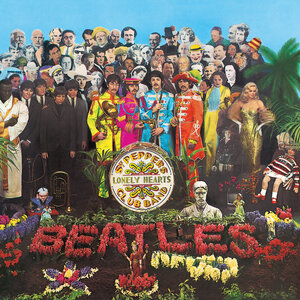
RESPONDING TO HARRY KROTO’S BRILLIANT RENOWNED ACADEMICS!! Part 42 Peter Singer, Professor of Bioethics at Princeton University, THE PROBLEM OF EVIL

  _______ On November 21, 2014 I received a letter from Nobel Laureate Harry Kroto and it said: …Please click on this URL http://vimeo.com/26991975 and you will hear what far smarter people than I have to say on this matter. I agree with them. Harry Kroto _________________ Below you have picture of 1996 Chemistry Nobel Prize […]

RESPONDING TO HARRY KROTO’S BRILLIANT RENOWNED ACADEMICS!! Bart Ehrman “Why should one think that God performed the miracle of inspiring the words in the first place if He didn’t perform the miracle of preserving the words?”

On November 21, 2014 I received a letter from Nobel Laureate Harry Kroto and it said: …Please click on this URL http://vimeo.com/26991975 and you will hear what far smarter people than I have to say on this matter. I agree with them. Harry Kroto ____________________ Below you have picture of 1996 Chemistry Nobel Prize Winner Dr. […]

RESPONDING TO HARRY KROTO’S BRILLIANT RENOWNED ACADEMICS!! Peter Singer, Professor of Bioethics at Princeton University, THE PROBLEM OF EVIL

On November 21, 2014 I received a letter from Nobel Laureate Harry Kroto and it said: …Please click on this URL http://vimeo.com/26991975 and you will hear what far smarter people than I have to say on this matter. I agree with them. Harry Kroto _________________ Below you have picture of 1996 Chemistry Nobel Prize Winner Dr. […]

Why Peter Singer makes the New Atheists nervous DINESH D’SOUZA

__

Francis Schaeffer Whatever…HTTHR

Why Peter Singer makes the New Atheists nervous

DINESH D’SOUZA

I write this fresh from debating bioethicist Peter Singer on “Can we be moral without God?” at Singer’s home campus, Princeton University.

Singer is a mild-mannered fellow who speaks calmly and lucidly. Yet you wouldn’t have to read his work too long to find his extreme positions. He cheerfully advocates infanticide and euthanasia and, in almost the same breath, favors animal rights. Even most liberals would have qualms about third-trimester abortions; Singer does not hesitate to advocate what may be termed fourth-trimester abortions, i.e., the killing of infants after they are born.

Singer writes, “My colleague Helga Kuhse and I suggest that a period of 28 days after birth might be allowed before an infant is accepted as having the same right to life as others.” Singer argues that even pigs, chickens, and fish have more signs of consciousness and rationality — and, consequently, a greater claim to rights — than do fetuses, newborn infants, and people with mental disabilities. “Rats are indisputably more aware of their surroundings, and more able to respond in purposeful and complex ways to things they like or dislike, than a fetus at 10- or even 32-weeks gestation. … The calf, the pig, and the much-derided chicken come out well ahead of the fetus at any stage of pregnancy.”

Some people consider Singer a provocateur who says outrageous things just to get attention. But Singer is deadly serious about his views and — as emerged in our debate — has a consistent rational basis for his controversial positions.

To understand Singer, it’s helpful to contrast him with “New Atheists” like Christopher Hitchens, Daniel Dennett, and Richard Dawkins. The New Atheists say we can get rid of God but preserve morality. They insist that no one needs God in order to be good; atheists can act no less virtuously than Christians. (And indeed, some atheists do put Christians to shame.) Even while repudiating the Christian God, Dawkins has publicly called himself a “cultural Christian.”

But this position creates a problem outlined more than a century ago by the atheist philosopher Nietzsche. The death of God, Nietzsche argued, means that all the Christian values that have shaped the West rest on a mythical foundation. One may, out of habit, continue to live according to these values for a while. Over time, however, the values will decay, and if they are not replaced by new values, man will truly have to face the prospect of nihilism, what Nietzsche termed “the abyss.”

Nietzsche’s argument is illustrated in considering two of the central principles of Western civilization: “All men are created equal” and “Human life is precious.” Nietzsche attributes both ideas to Christianity. It is because we are created equal and in the image of God that our lives have moral worth and that we share the rights to life, liberty, and the pursuit of happiness. Nietzsche’s warning was that none of these values make sense without the background moral framework against which they were formulated. A post-Christian West, he argued, must go back to the ethical drawing board and reconsider its most cherished values, which include its traditional belief in the equal dignity of every human life.

What they haven’t considered, however, is whether Singer, virtually alone among their numbers, is uncompromisingly working out the implications of living in a truly secular society, one completely purged of Christian and transcendental foundations.

Singer resolutely takes up a Nietzschean call for a “transvaluation of values,” with a full awareness of the radical implications. He argues that we are not creations of God but rather mere Darwinian primates. We exist on an unbroken continuum with animals. Christianity, he says, arbitrarily separated man and animal, placing human life on a pedestal and consigning the animals to the status of tools for human well-being. Now, Singer says, we must remove Homo sapiens from this privileged position and restore the natural order. This translates into more rights for animals and less special treatment for human beings. There is a grim consistency in Singer’s call to extend rights to the apes while removing traditional protections for unwanted children, people with mental disabilities, and the noncontributing elderly.

Some of Singer’s critics have called him a Nazi and compared his proposals to Hitler’s schemes for eliminating those perceived as unwanted and unfit. A careful reading of his work, however, shows that Singer is no Hitler. He doesn’t want state-sponsored killings. Rather, he wants the decision to kill to be made by private individuals like you and me. Instead of government-conducted genocide, Singer favors free-market homicide.

Why haven’t the atheists embraced Peter Singer? I suspect it is because they fear that his unpalatable views will discredit the cause of atheism. What they haven’t considered, however, is whether Singer, virtually alone among their numbers, is uncompromisingly working out the implications of living in a truly secular society, one completely purged of Christian and transcendental foundations. In Singer, we may be witnessing someone both horrifying and yet somehow refreshing: an intellectually honest atheist.

Dr. Francis Schaeffer: Whatever Happened to the Human Race Episode 1 ABORTION

https://youtu.be/tRc0Szq_uWI
Published on Jan 10, 2015

Whatever Happened to the Human Race?
Abortion
Dr. Francis Schaeffer

Related posts:

SANCTITY OF LIFE SATURDAY Francis Schaeffer predicted July 21, 2015 would come when the video “Second Planned Parenthood Senior Executive Haggles Over Baby Parts Prices, Changes Abortion Methods” would be released!!!!

Francis Schaeffer predicted July 21, 2015 would come when the video “Second Planned Parenthood Senior Executive Haggles Over Baby Parts Prices, Changes Abortion Methods” would be released!!!! Al Mohler wrote the article ,”FIRST-PERSON: They indeed were prophetic,” Jan 29, 2004, and in this great article he noted:   . “We stand today on the edge of a […]

“Schaeffer Sunday” Liberals at Ark Times can not stand up to Scott Klusendorf’s pro-life arguments (Part 4) Liberal blogger says “…you don’t get to force your beliefs on me (concerning abortion)…”

I just wanted to note that I have spoken on the phone several times and corresponded with Dr. Paul D. Simmons who is very much pro-choice. (He is quoted in the article below.) He actually helped me write an article to submit to Americans United for the Separation of Church and State back in the […]

RESPONDING TO HARRY KROTO’S BRILLIANT RENOWNED ACADEMICS!! Peter Singer, Professor of Bioethics at Princeton University, THE PROBLEM OF EVIL

On November 21, 2014 I received a letter from Nobel Laureate Harry Kroto and it said: …Please click on this URL http://vimeo.com/26991975 and you will hear what far smarter people than I have to say on this matter. I agree with them. Harry Kroto _________________ Below you have picture of 1996 Chemistry Nobel Prize Winner Dr. […]

Very good article on Francis Schaeffer. Tom Wolfe and Peter Singer!! by Dr. Steven Garber from on November 19, 2013

_______________________ Very good article on Francis Schaeffer. Tom Wolfe. Peter Singer!! Presuppositional Life and Learning Posted on November 19, 2013 by Dr. Steven Garber   Francis Schaeffer. Tom Wolfe. Peter Singer. I spent the morning with the Capitol Fellows thinking about these three men, and their ideas. The first one I studied and studied with many […]

MUSIC MONDAY The Staple Singers Part 1

The Staple Singers Part 1     click to enlarge Mavis Staples   From Wikipedia, the free encyclopedia   Jump to: navigation, search   Mavis Staples Staples performing in Brooklyn, New York in 2007 Background information Birth name Mavis Staples Born July 10, 1939 (age 74) Origin Chicago, Illinois, U.S. Genres Rhythm and blues, soul, gospel […]

FRANCIS SCHAEFFER ANALYZES ART AND CULTURE Part 50 THE BEATLES (Part B, The Psychedelic Music of the Beatles) (Feature on artist Peter Blake )

Francis Schaeffer noted, “In this flow there was also the period of psychedelic rock, an attempt to find this experience without drugs, by the use of a certain type of music. This was the period of the Beatles’ Revolver (1966) and Strawberry Fields Forever (1967)…The psychedelic began with their records REVOLVER, STRAWBERRY FIELDS FOREVER, AND […]

The Staple Singers Part 1 (Mavis Staples in Concert in Little Rock on Oct 11th

The Staple Singers Part 1 Mavis Staples to give concert at Christ Church in Little Rock Posted by Lindsey Millar on Fri, Sep 6, 2013 at 2:48 PM click to enlarge Whoa. One of the greatest soul divas OF ALL TIME is coming to Little Rock next month. Christ Church Little Rock is hosting Mavis […]

FRANCIS SCHAEFFER ANALYZES ART AND CULTURE PART THE BEATLES Part 87 George Bernard Shaw Part B “Why was Shaw on the cover of SGT. PEPPER’S?” Featured Photographer is Henry Grossman

In my last post I demonstrated that George Bernard Shaw was a vocal communist and that probably had a lot to do with his inclusion on the cover of SGT PEPPER’S but today I will look more into more this great playwright’s views. Did you know that Shaw wrote the play that MY FAIR LADY […]

SANCTITY OF LIFE SATURDAY Transcript and Video of Francis Schaeffer speech in 1983 on the word “Evangelical”

Transcript and Video of Francis Schaeffer speech in 1983 on the word “Evangelical” _____________ SOUNDWORD LABRI CONFERENCE VIDEO – Names and Issues – Francis A. Schaeffer Published on Apr 20, 2014 This video is from the 1983 L’Abri Conference in Atlanta. The full lecture with Q&A time has been included. The lecture was also previously […]

“Schaeffer Sunday” Debating Kermit Gosnell Trial, Abortion and infanticide with Ark Times Bloggers Part 2

Surgeon General of the United States In office January 21, 1982 – October 1, 1989 President Ronald Reagan George H. W. Bush Francis Schaeffer Founder of the L’Abri community Born Francis August Schaeffer January 30, 1912 Died May 15, 1984 (aged 72) I truly believe that many of the problems we have today in the USA are […]

THE SERMON ON EVOLUTION BY ADRIAN ROGERS THAT I SENT TO OVER 250 ATHEIST SCIENTISTS FROM 1992 TO 2015!

My good friend Rev. Sherwood Haisty Jr. and I used to discuss which men were the ones who really influenced our lives  and Adrian Rogers had influenced us both more than anybody else. During the 1990′s I actually made it a practice to write famous atheists and scientists that were mentioned by Adrian Rogers and […]

James Watson is Not a Racist; He’s a Darwinist! Michael Craven Michael Craven Michael Craven’s weblog 2007 Oct 29

__

James Watson is Not a Racist; He’s a Darwinist!

In a recent interview with London’s The Sunday Times, noted scientist, James Watson set off an international firestorm when he was quoted as saying that he is “inherently gloomy about the prospects of Africa” because “all our social policies are based on the fact that their intelligence is the same as ours…” Watson then added that he would like for everyone to be equal, but “people who have to deal with black employees find this is not true.”

Watson is not being bigoted in the sense that he is expressing a personal prejudice against black people. In fact, he is being quite “reasonable” given his evolutionary beliefs about the nature of man and reality. According to Watson, “There is no firm reason to anticipate that the intellectual capacities of peoples geographically separated in their evolution should prove to have evolved identically. Our wanting to reserve equal powers of reason as some universal heritage of humanity will not be enough to make it so.” (James D. Watson, Avoid Boring People: Lessons from a Life in Science, Knopf, 2007)

James Watson is not some marginal quack operating on the fringes of the scientific community. In 1953, he and Francis Crick discovered the structure of DNA—one of the single most important discoveries of the 20th century for which they shared the 1962 Nobel Prize. The fact is Watson is one of the most important scientists of our age and what he inadvertently revealed is Darwinism’s dark secret: evolutionary ethics.

The fact is, if nature is the ultimate and final reality and there is no God then Watson is absolutely correct in his condemnation of what he believes are lesser evolved peoples. What few evolutionists are willing to admit is that if time and chance are the truth of human existence and reality, then everything that we have come to believe about morality and ethics is completely wrong. Darwinism places all human phenomena, including ethics and morality, under the sway of the laws of nature.

Early advocates of evolution clearly understood the profound moral implications of Darwin’s theory. Robby Kossmann, a German zoologist who later became a medical professor wrote in an 1880 essay:

The Darwinian worldview must look upon the present sentimental conception of the value of the life of a human individual as an overestimate completely hindering the progress of humanity. The human state … must reach an even higher level of perfection, if the possibility exists in it, through the destruction of the less well-endowed individual, for the more excellently endowed to win space for the expansion of its progeny. … The state only has an interest in preserving the more excellent life at the expense of the less excellent.

As repugnant as these statements may be, they were nonetheless the consensus among those who understood and embraced Darwin’s new idea. By the early 20th century, these ideas were wildly popular throughout Europe and America.

In fact, the prestigious biological research lab at Cold Spring Harbor, Long Island where Watson served as the past director and current chancellor is described as one that has “deep connections to Darwinian racism of years gone by.” A report states that, “Early in the twentieth century it was the headquarters for one of the most virulent American eugenics groups, the Eugenics Record Office, which promoted forced sterilization and opposed immigration to America by ethnic groups considered lower on the evolutionary scale than Anglo-Saxon whites.”

Francis Galton, cousin to Charles Darwin and founder of the eugenics movement wrote:

This is precisely the object of eugenics. Its first object is to check the birth rate of the Unfit, instead of allowing them to come into being … The second object is the improvement of the race by furthering the productivity of the Fit…
Following discovery of Nazi Germany’s monstrous eugenics program carried out at places like Auschwitz and Treblinka, the public’s support for social Darwinism and the eugenics movement dropped dramatically. However, it did not disappear; it merely retreated back into the world of academia and elsewhere where it still remains a dominant view among the so-called intellectual elite. The most obvious expression of this today is found in such programs as the United Nation’s population control efforts that are focused almost exclusively on the underdeveloped African nations.

However, in light of evolutionary theories these views cannot be dismissed as moral aberrations. These views are perfectly consistent with Darwinism in which the highest moral good becomes, by necessity, evolutionary progress. Therefore anyone thought not to represent the height of human evolution is deemed inferior or unequal. We find racism loathsome because it violates the Judeo-Christian conception of human dignity. Racism is a meaningful moral concept only when it is placed within the Christian worldview. However, if human beings are merely products of time and chance then the Judeo-Christian conception of human dignity is not only “unnatural,” it actually runs counter to evolutionary principles.    

According to the theories, there are significant evolutionary differences between the races, and essentially the race that was closer to apes (Blacks, according to Darwin) was less intelligent and inherently inferior to whites. Darwin stated, “At some future period, not very distant as measured by centuries, the civilized races of man will almost certainly exterminate and replace throughout the world the savage races.” Of course this ignores decades of research suggesting that race is not a meaningful concept and that there is no biological basis for race. This underscores the biblical position of only one race, the human race.

The aforementioned is often referred to as “scientific racism”—a term intended to convey the idea that such interpretations of Darwinism are obsolete—however, from an evolutionary perspective, it is no more racist than regarding an ape as being superior to slug. Since evolutionists regard all human distinctions, intellectual or otherwise, as purely biological, these are simply two species on different rungs of the evolutionary ladder. If you believe in evolution, you simply cannot think otherwise and remain logically consistent with the evolutionary explanation of reality.

However, if you accept the truth of our origins as revealed in Scripture then you have a moral and ethical system in which all human life is equally valuable regardless of our differences. You simply cannot deny the Creator and keep the Creator’s morality. You cannot eliminate God and hope to maintain intrinsic human rights to life and equality. As one Darwinian ethicist put it, “An ethic consistent with Darwin’s theory knows no natural or innate rights…”

© 2007 by S. Michael Craven

Comment on this article here

Subscribe to Michael’s weekly commentary here

Subscribe to Michael’s podcast here


S. Michael Craven is the President of the Center for Christ & Culture. The Center for Christ & Culture is dedicated to renewal and discipleship within the Church and works to equip Christians with an intelligent and thoroughly Christian approach to matters of culture in order to recapture and demonstrate the relevance of Christianity to all of life. For more information on the Center for Christ & Culture, additional resources and other works by S. Michael Craven visit:www.battlefortruth.org

Michael lives in the Dallas area with his wife Carol and their three children.

Francis Schaeffer “BASIS FOR HUMAN DIGNITY” Whatever…HTTHR

https://www.youtube.com/watch?v=F6FZgLZ5_CU


Related posts:

RESPONDING TO HARRY KROTO’S BRILLIANT RENOWNED ACADEMICS!! Part 57 Neil deGrasse Tyson is fretting because we are on “a one-way expanding universe as we wind down to oblivion!”

  On November 21, 2014 I received a letter from Nobel Laureate Harry Kroto and it said: …Please click on this URL http://vimeo.com/26991975 and you will hear what far smarter people than I have to say on this matter. I agree with them. Harry Kroto ____________________ Below you have picture of 1996 Chemistry Nobel Prize Winner […]

RESPONDING TO HARRY KROTO’S BRILLIANT RENOWNED ACADEMICS!! Part 56 Psychologist Bruce Hood on mind body dualism

  On November 21, 2014 I received a letter from Nobel Laureate Harry Kroto and it said: …Please click on this URL http://vimeo.com/26991975 and you will hear what far smarter people than I have to say on this matter. I agree with them. Harry Kroto _________________ Below you have picture of Dr. Harry Kroto: ____________ Dawkins […]

RESPONDING TO HARRY KROTO’S BRILLIANT RENOWNED ACADEMICS!! Part 55 Baroness Susan Greenfield “. Everything is rooted finally in our brain, if anything exists in a physical sense beyond that then I myself can not buy into that new kind of physics!”

On November 21, 2014 I received a letter from Nobel Laureate Harry Kroto and it said: …Please click on this URL http://vimeo.com/26991975 and you will hear what far smarter people than I have to say on this matter. I agree with them. Harry Kroto _________________ Fig 9. The Sussex team from left: (back) Ala’a Abdul Sada […]

RESPONDING TO HARRY KROTO’S BRILLIANT RENOWNED ACADEMICS!! Part 53 One politician who knows science responds to Lisa Randall of Harvard!

  On November 21, 2014 I received a letter from Nobel Laureate Harry Kroto and it said: …Please click on this URL http://vimeo.com/26991975 and you will hear what far smarter people than I have to say on this matter. I agree with them. Harry Kroto ____________________ Below you have picture of 1996 Chemistry Nobel Prize Winner […]

RESPONDING TO HARRY KROTO’S BRILLIANT RENOWNED ACADEMICS!! Part 49 Bart Ehrman “Why should one think that God performed the miracle of inspiring the words in the first place if He didn’t perform the miracle of preserving the words?”

On November 21, 2014 I received a letter from Nobel Laureate Harry Kroto and it said: …Please click on this URL http://vimeo.com/26991975 and you will hear what far smarter people than I have to say on this matter. I agree with them. Harry Kroto ____________________ Below you have picture of 1996 Chemistry Nobel Prize Winner Dr. […]

RESPONDING TO HARRY KROTO’S BRILLIANT RENOWNED ACADEMICS!! Part 48 Nobel Prize Winner and Global Warming Denier Ivar Giaever “I think religion is to blame for a lot of the ills in this world!”

  On November 21, 2014 I received a letter from Nobel Laureate Harry Kroto and it said: …Please click on this URL http://vimeo.com/26991975 and you will hear what far smarter people than I have to say on this matter. I agree with them. Harry Kroto _________________ Below you have picture of 1996 Chemistry Nobel Prize Winner […]

FRANCIS SCHAEFFER ANALYZES ART AND CULTURE PART 78 THE BEATLES (Breaking down the song TOMORROW NEVER KNOWS) Featured musical artist is Stuart Gerber

The Beatles were “inspired by the musique concrète of German composer and early electronic music pioneer Karlheinz Stockhausen…”  as SCOTT THILL has asserted. Francis Schaeffer noted that ideas of  “Non-resolution” and “Fragmentation” came down German and French streams with the influence of Beethoven’s last Quartets and then the influence of Debussy and later Schoenberg’s non-resolution which is in total contrast […]

RESPONDING TO HARRY KROTO’S BRILLIANT RENOWNED ACADEMICS!! Part 42 Peter Singer, Professor of Bioethics at Princeton University, THE PROBLEM OF EVIL

  _______ On November 21, 2014 I received a letter from Nobel Laureate Harry Kroto and it said: …Please click on this URL http://vimeo.com/26991975 and you will hear what far smarter people than I have to say on this matter. I agree with them. Harry Kroto _________________ Below you have picture of 1996 Chemistry Nobel Prize […]

RESPONDING TO HARRY KROTO’S BRILLIANT RENOWNED ACADEMICS!! Bart Ehrman “Why should one think that God performed the miracle of inspiring the words in the first place if He didn’t perform the miracle of preserving the words?”

On November 21, 2014 I received a letter from Nobel Laureate Harry Kroto and it said: …Please click on this URL http://vimeo.com/26991975 and you will hear what far smarter people than I have to say on this matter. I agree with them. Harry Kroto ____________________ Below you have picture of 1996 Chemistry Nobel Prize Winner Dr. […]

RESPONDING TO HARRY KROTO’S BRILLIANT RENOWNED ACADEMICS!! Peter Singer, Professor of Bioethics at Princeton University, THE PROBLEM OF EVIL

On November 21, 2014 I received a letter from Nobel Laureate Harry Kroto and it said: …Please click on this URL http://vimeo.com/26991975 and you will hear what far smarter people than I have to say on this matter. I agree with them. Harry Kroto _________________ Below you have picture of 1996 Chemistry Nobel Prize Winner Dr. […]

“Woody Wednesday” ECCLESIASTES AND WOODY ALLEN’S FILMS: SOLOMON “WOULD GOT ALONG WELL WITH WOODY!” (Part 7 MIDNIGHT IN PARIS Part F, SURREALISTS AND THE IDEA OF ABSURDITY AND CHANCE AND THE EXISTENCE OF LOVE)

Woody Allen believes that we live in a cold, violent and meaningless universe and it seems that his main character (Gil Pender, played by Owen Wilson) in the movie MIDNIGHT IN PARIS shares that view. Pender’s meeting with the Surrealists is by far the best scene in the movie because they are ones who can understand his predicament concerning the absurdity of life UNDER THE SUN (as Solomon used to phrase it.) If we are here as a result of chance then what lasting purpose can be found? The Surrealists truly grasped the problem and it seems that Gil does too realize the full weight of the predicament. HOWEVER, DOES THE UNIVERSE MATCH UP WITH THIS IDEA OF TIME AND CHANCE OR IS IT COMPATIBLE WITH A DESIGNER? (John Cage and Jackson Pollock attempted to live their lives according to time and change and how did that turn out? How the existence of love explained by time and chance?)

Woody Allen’s main character GIL PENDER in the movie MIDNIGHT IN PARIS firmly believes that we live in a cold, violent, and meaningless universe brought to us by Darwinism chance plus time. 

Let’s see what King Solomon had to say about that. Solomon said in Ecclesiastes 9:11-13 “I have seen something else UNDER THE SUN:  The race is not to the swift or the battle to the strong, nor does food come to the wise or wealth to the brilliant  or favor to the learned; but time and chance happen to them all.  Moreover, no one knows when their hour will come: As fish are caught in a cruel net, or birds are taken in a snare, so people are trapped by evil times  that fall unexpectedly upon them.”

WHY IS SOLOMON CAUGHT IN DESPAIR IN THE BOOK OF ECCLESIASTES?  Christian scholar Ravi Zacharias has noted, “The key to understanding the Book of Ecclesiastes is the term ‘UNDER THE SUN.’ What that literally means is you lock God out of a closed system, and you are left with only this world of time plus chance plus matter.” THIS IS EXACT POINT SCHAEFFER SAYS SECULAR ARTISTS ARE PAINTING FROM TODAY BECAUSE THEY BELIEVED ARE A RESULT OF MINDLESS CHANCE.

By the way, the final chapter of Ecclesiastes finishes with Solomon emphasizing that serving God is the only proper response of man. Solomon LOOKS ABOVE THE SUN AND BRINGS GOD BACK INTO THE PICTURE in the final chapter of the book in Ecclesiastes 12:13-14, “ Now all has been heard; here is the conclusion of the matter: Fear God and keep his commandments, for this is the whole duty of man.  For God will bring every deed into judgment, including every hidden thing, whether it is good or evil.”

(Francis Schaeffer pictured below)

Francis Schaeffer in Art and the Bible noted, “Many modern artists, it seems to me, have forgotten the value that art has in itself. Much modern art is far too intellectual to be great art. Many modern artists seem not to see the DISTINCTION BETWEEN MAN AND NON-MAN, and it is a part of the lostness of modern man that they no longer see value in the work of art as a work of art.” 

Many modern artists are left in this point of desperation that Schaeffer points out and it reminds me of the despair that Solomon speaks of in Ecclesiastes as you looks at life UNDER THE SUN.  Another group of artists reached this point of desperation and it is those involved in the Dada movement and then the later Surrealist movement.

Francis Schaeffer noted:

Dada was started in Zurich and came along in modern art. Dada means nothing. The word “Dada” means rocking horse, but it was chosen by chance. The whole concept of Dada is everything means nothing. [In this materialistic mindset Chance and Time have determined the past, and they will determine the future according to Solomon in life UNDER THE SUN]…  Dada carried to its logical conclusion the notion of all having come about by chance; the result was the final absurdity of everything, including humanity.

(Surrealists: Man Ray, Jean Arp, Yves Tanguy, André Breton; Tristan Tzara, Salvador Dalí, Paul Eluard, Max Ernst and Rene Clevel, 1930.)

Jean Arp below.

Below is a portion from the Francis Schaeffer book HOW SHOULD WE THEN LIVE?:

Hans (Jean) Arp (1887-1966), an Alsatian sculptor, wrote a poem which appeared in the final issue of the magazine De Stijl (The Style) which was published by the De Stijl group of artists led by Piet Mondrian and Theo van Doesburg. Mondrian (1872-1944) was the best-known artist of this school. He was not of the Dada school which accepted and portrayed absurdity. Rather, Mondrian was hoping to paint the absolute. Hand Arp, however, was a Dadaist artist connected with De Stijl. His power “Für Theo Van Doesburg,” translated from German reads:

the head downward
the legs upward
he tumbles into the bottomless
from whence he came

he has no more honour in his body
he bites no more bite of any short meal
he answers no greeting
and is not proud when being adored

the head downward
the legs upward
he tumbles into the bottomless
from whence he came

like a dish covered with hair
like a four-legged sucking chair
like a deaf echotrunk
half full half empty

the head downward
the legs upward
he tumbles into the bottomless
from whence he came

Jean Arp (Hans Arp)
Jean Arp is associated with the DADA movement. His collages were of torn pieces of paper dropped and affixed where they would land. His use of chance is intended to create free of human intervention. “Dada,” wrote Arp, “wished to destroy the hoaxes of reason and to discover an unreasoned order.”


Collage with Squares Arranged According to the Laws of Chance


Random Collage


Torn Paper and Gouache

Dada carried to its logical conclusion the notion of all having come about by chance; the result was the final absurdity of everything, including humanity.

Pictured below: Salvador Dalí (lower center) and Marcel Duchamp (upper left) attending a bullfight.

_____

Nude Descending a Staircase (1912) by Marcel Duchamp

Francis Schaeffer continues: 

The man who perhaps most clearly and consciously showed this understanding of the resulting absurdity fo all things was Marcel Duchamp (1887-1969). He carried the concept of fragmentation further in Nude Descending a Staircase (1912), one version of which is now in the Philadelphia Museum of Art–a painting in which the human disappeared completely. The chance and fragmented concept of what is led to the devaluation and absurdity of all things. All one was left with was a fragmented view of a life which is absurd in all its parts. Duchamp realized that the absurdity of all things includes the absurdity of art itself. His “ready-mades” were any object near at hand, which he simply signed. It could be a bicycle wheel or a urinal. Thus art itself was declared absurd.

_____

(Jackson Pollock pictured below dripping his paint)

Francis Schaeffer in his book HOW SHOULD WE THEN LIVE? noted on pages 200-203:

Jackson Pollock (1912-1956) is perhaps the clearest example in the United States of painting deliberately in order to make the statements that all is chance. He placed canvases horizontally on the floor and dripped paint on them from suspended cans swinging over them. Thus, his paintings were a product of chance. But wait a minute! Is there not an order in the lines of paint on his canvases? Yes, because it was not really chance shaping his canvases! The universe is not a random universe; it has order. Therefore, as the dripping paint from the swinging cans moved over the canvases, the lines of paint were following the order of the universe itself. The universe is not what these painters said it is.

(John Cage pictured above)

(Woody Allen, Peter O’Toole and Capucine)

________

(Marcel Duchamp plays white, John Cage plays black, on a chessboard modified to generate tones depending on where the chess pieces are. Toronto, 1968. Teeny Duchamp at far left, camerman in the background.  This was a performance.)


John Cage provides perhaps the clearest example of what is involved in the shift of music. Cage believed the universe is a universe of chance. He tried carrying this out with great consistency. For example, at times he flipped coins to decide what the music should be. At other times he erected a machine that led an orchestra by chance motions so that the orchestra would not know what was coming next. Thus there was no order. Or again, he placed two conductors leading the same orchestra, separated from each other by a partition, so that what resulted was utter confusion. There is a close tie-in again to painting; in 1947 Cage made a composition he called MUSIC FOR MARCEL DUCHAMP. But the sound produced by his music was composed only of silence (interrupted only by random environmental sounds), but as soon as he used his chance methods sheer noise was the outcome.

But Cage also showed that one cannot live on such a base, that the chance concept of the universe does not fit the universe as it is. Cage is an expert in mycology, the science of mushrooms. And he himself said, “I became aware that if I approached mushrooms in the spirit of my chance operation, I would die shortly.” Mushroom picking must be carefully discriminative. His theory of the universe does not fit the universe that exists.

All of this music by chance, which results in noise, makes a strange contrast to the airplanes sitting in our airports or slicing through our skies. An airplane is carefully formed; it is orderly (and many would also think it beautiful). This is in sharp contrast to the intellectualized art which states that the universe is chance. Why is the airplane carefully formed and orderly, and what Cage produced utter noise? Simply because an airplane must fit the orderly flow lines of the universe if it is to fly!

!Midnight in the Paris-best scene of the movie Salvador Dali, Man Ray and Woody Allen

https://www.youtube.com/watch?v=_q1V_xjHhLM

published on Dec 18, 2012

Woody Allen talking with Salvador Dali and Man Ray and Luis Bunuel. 

This is the transcript of

DALI: We met, earlier tonight…At the party! Dali.

GIL: I remember!-

DALI: A bottle of red wine!

GIL: It can’t be… Yeah….So?

DALI: Another glass for this man, please. I love the language!The French! The waiters? No.You like the shape of the rhinoceros?

GIL: The rhinoceros? Uh…Haven’t really thought about it.I paint the rhinoceros.

DALI: I paint you. Your sad eyes.Your big lips, melting over the hot sand,with one tear.Yes! And in your tear, another face.The Christ’s face!Yes, in the rhinoceros.

GIL: Yeah. I mean, I probably do look sad. I’m in…a very perplexing situation.

DALI: Diablo…Luis! Oye, Luis!(Damn. Luis! Hey, Luis!)My friends.This… is Luis Bunuel…and…Mr. Man Ray.-

GIL: Man Ray? My Gosh!- How ’bout that?

DALI: This is Pen-der. Pen-der. Pender!- Yes. And I am Dalí!- Dalí. Yes.You have to remember. Pender is in a perplexing situation.

GIL: It sounds so crazy to say.You guys are going to think I’m drunk, but I have to tell someone. I’m…from a…a different time. Another era.The future. OK? I come…from the 2000th millennium to here.I get in a car, and I slide through time.

MAN RAY: Exactly correct.You inhabit two worlds.- So far, I see nothing strange.- Why?

GIL: Yeah, you’re surrealists!But I’m a normal guy. See, in one life,I‘m engaged to marry a woman I love.At least, I think I love her.Christ! I better love her! I’m marrying her!

DALI: The rhinoceros makes love by mounting the female.But…is there a difference in the beauty between two rhinoceroses?

MAN RAY: There is another woman?Adriana. Yes, and I’m…very drawn to her.I find her extremely alluring.The problem is that other men,great artists – geniuses- also find her alluring,and she finds them. So, there’s that…

MAN RAY: A man in love with a woman from a different era.I see a photograph.

LUIS BUNUEL: I see a film.I see an insurmountable problem.I see……a rhinoceros.

Let me make a few points here. We see that Gil Pender’s perplexing problem is that he is in love and this goes against his views that we are not put here for a purpose, but by mindless chance. God created us so we can’t deny that we are created for a purpose and when a person falls truly in love with another person then they have a hard time maintaining  this is only just a product of evolution and has no lasting significance.

Solomon wisely noted in Ecclesiastes 3:11 “God has planted eternity in the heart of men…” (Living Bible). No wonder Bertrand Russell wrote in his autobiography, “It is odd, isn’t it? I feel passionately for this world and many things and people in it, and yet…what is it all? There must be something more important, one feels, though I don’t believe there is. I am haunted. Some ghosts, for some extra mundane regions, seem always trying to tell me something that I am to repeat to the world, but I cannot understand that message.”

Bertrand Russell playing chess with his son (1940).

The Bible teaches that we all know that God exists and has made us in his image and if we deny that then we are suppressing the knowledge of our conscience in unrighteousness.  Romans 1:18-19 (Amplified Bible) ” For God’s wrath and indignation are revealed from heaven against all ungodliness and unrighteousness of men, who in their wickedness REPRESS and HINDER the truth and make it inoperative. For that which is KNOWN about God is EVIDENT to them and MADE PLAIN IN THEIR INNER CONSCIOUSNESS, because God  has SHOWN IT TO THEM,”(emphasis mine).

I wanted to share a portion of a review of MIDNIGHT IN PARIS that caught my attention by   , “The Charms of a Pessimistic Workaholic,”  February 11, 2012:

Being in Woody’s shoes is not the most cheerful place to be: he sees the universe as a cold place, with no ultimate meaning; transient, unsatisfying; with nothing to hold onto other than temporary distractions from these cold truths. Allen’s favorite distraction is getting absorbed in work (which explains the volume of his creative output). Another distraction we fall into are relationships with other people.

Woody is keenly aware why the life feels unsatisfactory, and he is good at unmasking the fallacies of the usual ‘coping strategies’ (such as hoping to achieve satisfaction by leaving something behind which would outlast oneself, or even his self-prescribed absorption in work). Because of this, our life and Allen’s films are full of illusions that we build like walls between ourselves and the reality….At the end, the protagonist gets the point: “That’s what the present is. It’s a little unsatisfying because life is unsatisfying.” The problem is not in the when or where we live, but it is inherent in the experience of living. Allen’s films are moving because there is the realization of the distraction being just that, a distraction, but embracing it never-the-less because it is the best thing we have.

I am grateful for having Allen’s movies as beautiful distractions. It is hard for me to distinguish whether Allen’s worldview happens to coincide with mine, or whether my views were shaped so much by watching and admiring his films since my early teenage years. Where we differ is that I also hope that when we face the cold universe – as we do from time to time whether we want to or not – we can wait a while before blocking it out again, and perhaps discern something that has a real value amidst the fleeting time. But Paris might still be the preferred place for this.

I know that there are many people like  out there who do not accept the existence of the supernatural and if there are correct then I would agree with them that all we have left is the “cold universe.” But let me respond further with the words of Francis Schaeffer from his book HE IS THERE AND HE IS NOT SILENT (the chapter is entitled, “Is Propositional Revelation Nonsense?”

Of course, if the infinite uncreated Personal communicated to the finite created personal, he would not exhaust himself in his communication; but two things are clear here:
 
1. Even communication between once created person and another is not exhaustive, but that does not mean that for that reason it is not true. 
 
2. If the uncreated Personal really cared for the created personal, it could not be thought unexpected for him to tell the created personal things of a propositional nature; otherwise as a finite being the created personal would have numerous things he could not know if he just began with himself as a limited, finite reference point. In such a case, there is no intrinsic reason why the uncreated Personal could communicate some vaguely true things, but could not communicate propositional truth concerning the world surrounding the created personal – for fun, let’s call that science. Or why he could not communicate propositional truth to the created personal concerning the sequence that followed the uncreated Personal making everything he made – let’s call that history. There is no reason we could think of why he could not tell these two types of propositional things truly. They would not be exhaustive; but could we think of any reason why they would not be true? The above is, of course, what the Bible claims for itself in regard to propositional revelation.
(Francis Schaeffer pictured below)
DOES THE BIBLE ERR IN THE AREA OF SCIENCE AND HISTORY? The Bible is true from cover to cover and can be trusted. Charles Darwin himself longed for evidence to come forward from the area of  Biblical Archaeology  but so much has  advanced  since Darwin wrote these words in the 19th century! Here are some of the posts I have done in the past on the subject and if you like you could just google these subjects: 1. The Babylonian Chronicleof Nebuchadnezzars Siege of Jerusalem, 2. Hezekiah’s Siloam Tunnel Inscription.13. The Pilate Inscription14. Caiaphas Ossuary14 B Pontius Pilate Part 214c. Three greatest American Archaeologists moved to accept Bible’s accuracy through archaeology.
The only alternative to believing that we were made for a purpose by God is to embrace the chance universe that Woody Allen has demonstrated so well in his films. Below is such a scene from the movie PLAY IT AGAIN SAM.
The Best Art References in Woody Allen Films Image via Complex / APJAC Productions

Film: Play It Again, Sam (1972)

In 1972’s Play It Again, Sam, Allen plays a film critic trying to get over his wife’s leaving him by dating again. In one scene, Allen tries to pick up a depressive woman in front of the early Jackson Pollock work. This painting, because of its elusive title, has been the subject of much debate as to what it portrays. This makes for a nifty gag when Allen strolls up and asks the suicidal belle, “What does it say to you?”

______________

Woody Allen in Play It Again Sam

Uploaded on May 20, 2009

Scene from ‘Play it Again Sam’ (1972)

____________

Allan: That’s quite a lovely Jackson Pollock, isn’t it?

Museum Girl: Yes, it is.

Allan: What does it say to you?

Museum Girl: It restates the negativeness of the universe. The hideous lonely emptiness of existence. Nothingness. The predicament of Man forced to live in a barren, Godless eternity like a tiny flame flickering in an immense void with nothing but waste, horror and degradation, forming a useless bleak straitjacket in a black absurd cosmos.

Allan: What are you doing Saturday night?

Museum Girl: Committing suicide.

Allan: What about Friday night?

(Below: Jackson Pollock, Guardians of the Secret, 1943)

 ____

Francis Schaeffer pictured below:


Related posts:

_____________

__________