Greek membership in the euro has been a disaster, and Greek prime minister Alexis Tsipras has to figure out Greece’s next step.Milos Bicanski/Getty Images
Milton Friedman might be best known today for his free-market political views. But some of his most important contributions to economics were in monetary policy. He explained the high inflation rates of the 1970s, and he was also an early and influential advocate of the system of floating exchange rates that we have today.
Europe’s common market exemplifies a situation that is unfavorable to a common currency. It is composed of separate nations, whose residents speak different languages, have different customs, and have far greater loyalty and attachment to their own country than to the common market or to the idea of “Europe.” Despite being a free trade area, goods move less freely than in the United States, and so does capital.
The European Commission based in Brussels, indeed, spends a small fraction of the total spent by governments in the member countries. They, not the European Union’s bureaucracies, are the important political entities. Moreover, regulation of industrial and employment practices is more extensive than in the United States, and differs far more from country to country than from American state to American state. As a result, wages and prices in Europe are more rigid, and labor less mobile. In those circumstances, flexible exchange rates provide an extremely useful adjustment mechanism.
What Friedman means here is that if Greece still had the drachma, it could deal with its financial difficulties by devaluing the currency. A cheaper drachma would make Greek goods more attractive to foreigners, boosting exports and creating jobs. And a bit of inflation in Greece would help ease the country’s debt burden — not an ideal outcome, but better than the yearslong depression the country has suffered since the 2008 financial crisis.
It’s much harder for an unemployed man in Greece to move to get a job in Germany than it is for somebody who loses his job in Pennsylvania to find work in Texas. So Greece’s unemployment rate has stayed disastrously high, even as other eurozone nations have enjoyed a robust recovery.
Friedman concluded that the euro experiment would backfire:
The drive for the Euro has been motivated by politics not economics. The aim has been to link Germany and France so closely as to make a future European war impossible, and to set the stage for a federal United States of Europe. I believe that adoption of the Euro would have the opposite effect. It would exacerbate political tensions by converting divergent shocks that could have been readily accommodated by exchange rate changes into divisive political issues. Political unity can pave the way for monetary unity. Monetary unity imposed under unfavorable conditions will prove a barrier to the achievement of political unity.
___________
Milton Friedman’s Free to Choose (1980), episode 3 – Anatomy of a Crisis. part 1
Milton Friedman The Power of the Market 5-5 How can we have personal freedom without economic freedom? That is why I don’t understand why socialists who value individual freedoms want to take away our economic freedoms. I wanted to share this info below with you from Milton Friedman who has influenced me greatly over the […]
Milton Friedman The Power of the Market 4-5 How can we have personal freedom without economic freedom? That is why I don’t understand why socialists who value individual freedoms want to take away our economic freedoms. I wanted to share this info below with you from Milton Friedman who has influenced me greatly over the […]
SIMON RODILLA was put on the cover of Sgt. Pepper’s because of the word LABOR!!! He dedicated his own life to his work and built something that impressed beyond his death and it impressed Jann Haworth and that is why she chose to put him on the cover. Read more about SIMON RODILLA and the issue of the Beatles and their work in this post below.
___
Beatles Reunion – Larry King Live (part 1)
Pt 2
Beatles Reunion – Larry King Live (part 3)
Uploaded on Jun 27, 2007
Larry King interview with Paul McCartney, Ringo Starr, Yoko Ono, Olivia Harrison and Guy Laliberté on the occasion of the 1st anniversary of Cirque du Soleil Love show.
Edith and Francis Schaffer pictured below:
How Should We then Live Episode 7
The Beatles were looking for lasting satisfaction in their lives and their journey took them down many of the same paths that other young people of the 1960’s were taking. No wonder in the video THE AGE OF NON-REASON Schaeffer noted, ” Sergeant Pepper’s Lonely Hearts Club Band…for a time it became the rallying cry for young people throughout the world. It expressed the essence of their lives, thoughts and their feelings.”
Today we will look at the path of throwing your life into your work or labor, and also we will look at the life of SIMON RODILLA (Justin Maurer’s article, “Sam Rodia’s Watts Towers,”) who is featured on the cover of Sergeant Pepper’s Lonely Hearts Club Band Album. Later in this post we will look at how hard the Beatles labored and how they were able to produce 12 albums (actually 13 in the USA) in only 8 years (#ASKNAT – CONCERNING WHY THE BEATLES RELEASED SO MANY ALBUMS). But first let’s take a look back in history at the most successful king in Israel’s history and see what he had to say the satisfaction or lack of satisfaction that his labor brought him.
Francis Schaeffer noted:
Leonardo da Vinci and Solomon both were universal men searching for the meaning in life. Solomon was searching for a meaning in the midst of the details of life.His struggle was to find the meaning of life. Not just plans in life.Anybody can find plans in life. A child can fill up his time with plans of building tomorrow’s sand castle when today’s has been washed away. There is a difference between finding plans in life and purpose in life. Humanism since the Renaissance and onward has never found it and it has never found it. Modern man has not found it and it has always got worse and darker in a very real way.
We have here the declaration of Solomon’s universality:
1 Kings 4:30-34
English Standard Version (ESV)
30 so that Solomon’s wisdom surpassed the wisdom of all the people of the east and all the wisdom of Egypt.31 For he was wiser than all other men, wiser than Ethan the Ezrahite, and Heman, Calcol, and Darda, the sons of Mahol, and his fame was in all the surrounding nations.32 He also spoke 3,000 proverbs, and his songs were 1,005.33 He spoke of trees, from the cedar that is in Lebanon to the hyssop that grows out of the wall. He spoke also of beasts, and of birds, and of reptiles, and of fish.34 And people of all nations came to hear the wisdom of Solomon, and from all the kings of the earth, who had heard of his wisdom.
_________________________
Here is the universal man and his genius. Solomon is the universal man with a empire at his disposal. Solomon had it all.
Ecclesiastes 1:3
English Standard Version (ESV)
3 What does man gain by all the toil at which he toils under the sun?
Schaeffer noted that Solomon took a look at the meaning of life on the basis of human life standing alone between birth and death “under the sun.” This phrase UNDER THE SUN appears over and over in Ecclesiastes. The Christian Scholar Ravi Zacharias noted, “The key to understanding the Book of Ecclesiastes is the term UNDER THE SUN — What that literally means is you lock God out of a closed system and you are left with only this world of Time plus Chance plus matter.”
Two years later, a photo of Rodia was included on the iconic album cover of the Beatles, Sgt. Pepper’s Lonely Hearts Club Band released in ’67 (Rodia is on the top row, far right, to the immediate left of Bob Dylan).
Jann Haworth chose Simon “Sam” Rodilla to be on the cover of Sgt. Pepper’s because he spent 30 years of his time laboring to build something big that had never been done before. Sam himself said, “I had it in my my to do something big and I did” (quote from the film “LA Watts Towers: “The Towers” 1957.) Rodilla also asserted, “You got to do something they never got ’em in the world.”
In the film “LA Watts Towers: “The Towers” the narrator notes, “For thirty years every day, every moment outside of his work for a living, in the light and in the darkness, Simon Rodilla labored to express the dream….As he was planning his towers his mind often turned to the past. He had a deep respect for men like Galileo, Michelangelo, Marco Polo, Columbus, builders and explorers, men of statue. He hoped in some way that his work was related to their tradition, yet he sought nothing for himself, he was content to think of great men and to build in the direction of the sky…He had an urgent need for expression.”
This series on the Beatles has included many posts on the individuals chosen to be on the cover of Sgt. Pepper’s. One interesting fact is how many of those men and ladies died in the grips of alcoholism. Justin Maurer reports in blog that may have also happened to Simon. “It was also rumored that he drank heavily after leaving his wife, and he felt the need of a monumental project to avoid a plunge into heavy drinking.” (This was back in 1927 and at this point Rodilla’s life was heading NOWHERE!!!)
Just like King Solomon, Simon Rodilla was searching for meaning in life and he found that liquor was an empty pursuit and that is when he turned to his new project. Sadly Solomon also found the pursuit of great works in his labor just as empty. In Ecclesiastes 2:11 he asserted, “THEN I CONSIDERED ALL THAT MY HANDS HAD DONE AND THE TOLL I HAD EXPENDED IN DOING IT, AND BEHOLD, ALL WAS VANITY AND A STRIVING AFTER WIND, and there was nothing to be gained under the sun.”
Simon said, “You got to do something they never got ’em in the world.” But Solomon noted in Ecclesiastes 1:9, “What has been is what will be, and what has been done is what will be done, and there is nothing new under the sun.”
The Beatles were also caught in this predicament because they were looking for lasting meaning in their lives and they were doing it in the same 6 areas that King Solomon did in what I call the 6 big L words. He looked into learning (1:16-18), laughter, ladies,luxuries, and liquor (2:1-3, 8, 10, 11), and labor (2:4-6, 18-20).
John Lennon also was personally going through about half the list of L words in 1968 when he wrote the song “I’m so Tired.” He was staying with the Maharishi and was not allowed liquor, and luxuries and his mistress Yoko Ono was not invited to travel with him to India.
_
Hulton Archive/Getty Images
The Beatles were extremely hard workers and their output during the eight years they were together was large by today’s standards but not necessarily by those days standards. Below is a portion of an article that looks into the question of why the Beatles produced so many albums in a 8 year period.
It’s time for another week’s #askNat and I have an interesting question this week that comes from Michael Mincey of Texas. He says:
Nat,
While I’m grateful for The Beatles releasing so many albums, I’ve always wondered why they (and other bands) recorded so frequently. Was it in their contracts with record companies, the artistic flow of the group, or some other factors?
I often question whether or not the Beatles were burned out from recording together. Maybe they could have taken vacations away from each other?
I’m sorry for my ignorance, but I grew up at a time when bands would release one album per year, or even several years apart. What has changed?
While The Beatles output of twelve albums in eight years is commendable, the number of albums per year is not so out of the ordinary. They worked hard and were very productive people that had a passion for their art. But they took vacations away from each other as well, not very long ones in the early days but one that was approximately three months towards the end of 1966. Excluding live albums and compilations and considering a similar period, both The Rolling Stones and The Kinks put out 9 albums between 1964 and 1971. Keeping in mind that they did this without ceasing to tour as The Beatles did after 1966, it seems fairly comparable.
It does seem like The Beatles put out a lot more than just the session work for twelve albums and this is for a number of reasons besides their continued presence in the news and events such as The Grammys. These include:
Since The Beatles remain in such high demand, there have been lots of compilations of their music on the market over the years. One category for these are hits collections such as The Beatles 1962-1966 (1973), The Beatles 1967-1970 (1973), Rock ‘N’ Roll Music(1976), Love Songs(1977), Twenty Greatest Hits (1982), Reel Music(1982) and One (2000). Another category for compilations would include collections of out-takes and extras such as the Anthologies. A third category for these would be for live shows such as The Beatles At The Hollywood Bowl album (1977) or the release of the Ed Sullivan Shows that starred the Beatles on DVD/BluRay.
While The Beatles had 12 “sixties” EMI albums in the UK, the US had plenty more since the practice in America was for shorter albums and also including tracks from singles as album tracks. This resulted in roughly 3 albums in the U.S. for every two in the UK. Since many of the US tracks have different mixes and edits, it expands the catalog even more for completists. A 13-disc box set called The U.S. Albums was recently released that contained only the Beatles albums that had track listings unique to the US.
Again because The Beatles have been in such high demand over the years, several special releases that contain alternate mixes of already released music have been issued, to include Rarities, theYellow Submarine Songtrack, the Love soundtrack and Let It Be…Naked.
My whole point in bringing this up is to show that while The Beatles worked hard and put out a lot of material in a short time, it seems like even more than it is because we are getting so much that came from the sessions and was initially never even intended to be shared with the public. Yet now, because of the public demand, historical interest and their status as arguably the most groundbreaking musicians of their time and genre, we are getting much more diggings from deeper in the vault. Add to this the hits collections and periodic remastered sets and you see how much of a commodity The Beatles legacy has become.
Here is a portion of a blog post by Phillippe Viguier concerning what Solomon said about our labor.
Sigmund Freud, the “father” of modern psychology, once wrote concerning the meaning of life: “When we begin to ask questions on the meaning of life and on death, we become sick, for none of this exists in an objective way.”
To his credit, Freud was very true to his worldview. If you believe in evolution and humans being the random result of natural causes, you shouldn’t ask yourself if life has a meaning, because there wouldn’t be such a thing as a meaning for life. In fact, the reality that you would even consider asking yourself the question would just be the evidence that you are mentally sick, unbalanced and in internal conflict.
Because without God, a meaning for the life is just an absurd thought.
Can there be any meaning in this life apart from God?
No, there cannot be….
Is there anything to gain from our toil under the sun? Think about it a second…ask yourself…is there anything lasting and meaningful to gain from all your daily toil under the sun? For working a job? For studying in school? For keeping a house together? For changing diapers?
Well, I’m glad you asked, because I just happen to have come across a book written by the the wisest man who ever lived on earth and who and saturated his mind with a quest to understand this question.
This question, Solomon would ask it six times, once in every first six chapters of the book of Ecclesiastes, where I invite you to turn in your Bibles. And we will look at the first chapter, from verses 1-11.
Ecc 1:1 The words of the Preacher, the son of David, king in Jerusalem. [2] Vanity of vanities, says the Preacher, vanity of vanities! All is vanity. [3] What does man gain by all the toil at which he toils under the sun? [4] A generation goes, and a generation comes, but the earth remains forever. [5] The sun rises, and the sun goes down, and hastens to the place where it rises. [6] The wind blows to the south and goes around to the north; around and around goes the wind, and on its circuits the wind returns. [7] All streams run to the sea, but the sea is not full; to the place where the streams flow, there they flow again. [8] All things are full of weariness; a man cannot utter it; the eye is not satisfied with seeing, nor the ear filled with hearing. [9] What has been is what will be, and what has been done is what will be done, and there is nothing new under the sun. [10] Is there a thing of which it is said, “See, this is new”? It has been already in the ages before us. [11] There is no remembrance of former things, nor will there be any remembrance of later things yet to be among those who come after.
“Vanity of vanities” said the preacher…we’ve heard this phrase many times. But why do you think Solomon said it…to make you feel bad about your day? To help you betterunderstand despair? To make you spend money on a psychologist? To make you empathize with him because he was a loser?
We’re talking about the wisest man who ever lived here…
No, the reason why he states this so bluntly is to provoke you to think about the matter. Because the only way you will ever do anything with his message is if it creates convictions in your heart about what you really believe. Because everyone needs to know what they live for, and how this should flesh out on a daily basis. When I first began to study the book of Ecclesiastes as a teenager, it changed my life. And even to this day, I can say without a doubt that the book of Ecclesiastes has been the book giving me the most hope concerning the meaning of my life on earth…But the main question remains: Is there any gain in our toil? And the answer is: yes, there is gain, there is infinite gain. And today we are going to look at 4 realities concerning our toil that should make us toil even harder. 4 realities concerning our toil that should make us toil even harder.
[Now bear with me. Solomon uses the power of opposites and of contrasts. So don’t get depressed in the beginning. The good stuff will come at the end when we wrap it all up.]
I. Earthly Toil Defines our Lives (vv.1-3)
The first aspect of our toil that we see here is that earthly toil defines our lives.
Ecc 1:1 The words of the Preacher, the son of David, king in Jerusalem. [2] Vanity of vanities, says the Preacher, vanity of vanities! All is vanity. [3] What does man gain by all the toil at which he toils under the sun?
The reason why Solomon asks this question about the meaning of our toil is because it is the reality of our lives. All that we do is toil. There is nothing on earth that is done that doesn’t require effort. As a result, the sum of our lives is really the sum of our efforts.
And without God it is all vanity.
The term “vanity” is actually a pretty good term to define our lives. It comes from a Hebrew term that comes from a root meaning “vapor” or “breath.” And just like breath, most of what you do will pass without being seen. Like a breath, your life will pass without leaving anything of itself behind. It will pass and be gone forever from under the sun. Like a breath, your life is one among billions and is insignificant in comparison to the scope of this world. A breath is meaningless. It cannot be grasped, cannot be seen, cannot be measured, it doesn’t last, it comes from nowhere and goes nowhere, and it is not worthy to be remembered. And yet, that’s all that we got.
“Vanity of vanities, says the Preacher, vanity of vanities! All is vanity.”
Without God, there is absolutely nothing that we can contribute to this world. In and of ourselves, we are absolute nothingness. That is our identity, and the reality of everything that we do. We are but empty vessels.
And so Solomon asks, rhetorically,
“What does man gain by all the toil at which he toils under the sun?”
I mean, doesn’t just asking the question make you tired? “What does man gain by all thetoil at which he toils under the sun?” Doesn’t that just want to make you exhale “pfffiu!” Isn’t it tiring just to think about all the things that you need to get done?
But Solomon gets the guts to ask: If we are nothing, and everything that is done is nothing, then why do we keep on doing it?
II. Earthly Toil is Powerless (vv.4-7)
So first earthly toil is what defines us, secondly, earthly toil is powerless.
Ecc 1:4 A generation goes, and a generation comes, but the earth remains forever. [5] The sun rises, and the sun goes down, and hastens to the place where it rises. [6] The wind blows to the south and goes around to the north; around and around goes the wind, and on its circuits the wind returns. [7] All streams run to the sea, but the sea is not full; to the place where the streams flow, there they flow again.
Here we see four different images from nature that show to us how powerless we are as humans to change anything in the world in which we live.
There is the earth that remains forever, there is the sun that remains forever, there is the wind that reminds forever and there are is the sea that reminds forever.
Simply put, we live in a world in which we cannot change the rules of the game. We are creatures of limited power in a world of excessive power. And even though we crave for power, no matter how much little power we can attain in our limited state, we will never be able to change anything with the forces that set this world in motion. The laws of nature cannot be altered, slowed down, broken or changed. And if our existence was to find meaning in us making a difference in this world, we would be doomed to total despair.
The earth, the sun, the wind, the sea…all trump us.
III. Earthly Toil is Wearisome (v.8)
So first, we saw that earthly toil is what defines us. Secondly, that earthly toil is powerless. Thirdly, we see that earthly toil is wearisome.
Ecc 1:8 All things are full of weariness; a man cannot utter it; the eye is not satisfied with seeing, nor the ear filled with hearing.
Earthly toil is wearisome. It is tiresome. It makes you sweat, it makes you hungry, and itempties you of your strength.
Life is a constant investment of self. There is nothing that you do that does not require a part of you: whether it is your time, your energy, or your resources. Man is constantly losing his most precious possession which he calls life, to never get any of it back.
All things are full of weariness, so much that we cannot describe it. Because everything requires effort, to describe effort makes effort, and so the weariness will always outbalance its explanation. Labor is a competitor that can never be out-bidded. It will always trump you in everything you do. No human being able to talk will ever be able to describe all the efforts that they had to do to live on earth.
But is even more deplorable about this is that even though everything takes effort, there is no reward for it. The eye is not satisfied with seeing, nor the ear filled with hearing. It is as if the human’s soul is bound to a formula in which all satisfaction is measured by the amount of toil multiplied by zero. How can you win when you multiply by zero? You can only lose.
Can wealth bring happiness?
Do you guys realize how wealthy Solomon was?
The weight of gold that he made every year just from the profit in Israel was 666 talents of gold (1 Kings 10:14), which is the equivalent of 25 tons of gold every year. You are talking about a massive cube of over 6 feet on each side, which in our day, since one ounce of gold is worth between $1700-1800 and there are over 35,000 ounces in a ton, would be about $1.5 billion. $1.5 billion every year…and he was king for 40 years. That’s 60 billion dollars too spend.
But he writes concerning money:
Ecc 5:10 He who loves money will not be satisfied with money, nor he who loves wealth with his income; this also is vanity.
Can pleasure bring happiness?
Ecc 2:10 And whatever my eyes desired I did not keep from them. I kept my heart from no pleasure, for my heart found pleasure in all my toil, and this was my reward for all my toil. [11] Then I considered all that my hands had done and the toil I had expended in doing it, and behold, all was vanity and a striving after wind, and there was nothing to be gained under the sun.
Ecc 6:7 All the toil of man is for his mouth, yet his appetite is not satisfied.
You can desire pleasure, you will never get enough…
And it is sad, but a lot of people start life thinking that they are the new Christopher Columbus on board of his brand new vessel, ready to explore seas of pleasure, only to eventually become stranded with no land in the horizon, no direction, and no hope.
And the list continues…Solomon tried to find satisfaction through human wisdom, through human success, through romance, through power, through fame, through the search of human perfection…all failed. And it didn’t matter how many excesses he had…it was always multipled by zero.
I mean we know it…one episode does not satisfy. That’s why we watch the next one, and the next one, only to finish a series and to start another, always on our hunger. Same with video games. One level is passed, then the next, then the next one, then what? The eyes are never satisfied. All that the world gives us is salt water. It is made of the same stuff that satisfy, but it just never gets there. It only makes it worse.
But again, that’s just how man is made. We are made to toil, we are made to be limited in power, and we are also made to have holes in our heart that longs for something bigger than ourselves, for something infinite and eternal.
IV. Earthly toil is Meaningless (vv.9-11)
First earthly toil is what defines us, secondly it is powerless, thirdly wearisome, and fourthly it is meaningless. Earthly toil is meaningless.
Ecc 1:9 What has been is what will be, and what has been done is what will be done, and there is nothing new under the sun. [10] Is there a thing of which it is said, “See, this is new”? It has been already in the ages before us. [11] There is no remembrance of former things, nor will there be any remembrance of later things yet to be among those who come after.
Do things really change? There is nothing new under the sun. Mankind is and will always be made of the same mold. And we might like our Steve Jobs and our Einsteins and our pop stars, but eventually it all passes like a breath, and all is forgotten.
Now, when Solomon says there is nothing new, we must understand the context. It’s not that man cannot makes inventions, but about the incapacity to change who we are and what makes us happy. The 20th century is a great testimony of that, as it showed that technology does not improve man’s morals or well-being…while some might have enjoyed lives a little more comfortable, tens of millions have perished in world wars and weapons created by our “new” technologies for mass destruction.
There is no such a thing as a new source of pleasure, there is no such a thing as a new message of wisdom, there is no such a thing as a deeper and better definition for the meaning of life.
Think about the life of Solomon.
In Ecclesiastes 7:15 he writes, “In my vain life I have seen everything.” Now don’t you think that someone who has seen everything could give you a deeper sense of what this world is all about?
Well, listen to his last words…
Ecc 12:13 The end of the matter; all has been heard. Fear God and keep his commandments, for this is the whole duty of man. [14] For God will bring every deed into judgment, with every secret thing, whether good or evil.
Now listens to the last words of his father, king David,
1Ki 2:2 “I am about to go the way of all the earth. Be strong, and show yourself a man, [3] and keep the charge of the LORD your God, walking in his ways and keeping his statutes, his commandments, his rules, and his testimonies, as it is written in the Law of Moses, that you may prosper in all that you do and wherever you turn,
Is it really different? Here they are with the same message: if you want to be a man, fear God and obey Him, because He is the only who can truly bless you.
Now, don’t you think it would be humbling for Solomon to write this as his conclusion? The man was the wisest man who ever lived before Christ. Not only that, but he experienced all the excesses and the depths and heights of human life…and yet he couldn’t even improve or add anything to what had been passed down to him.
So here we are in our quest of defining the meaning of life: man is a creature that is made to toil, that is incapable of changing his nature, that is condemned to suffer weariness and pain, and who longs for something bigger than himself of which he will taste out of his own toil.
Conclusion
So, well…thank you for listening, now you can go home and cry, lament, quit your job, and curse the day of your birth…
Well, God would not have placed the book of Ecclesiastes in the Bible if that’s all it did.
But before we get to the “good” stuff, don’t move away mentally from the feelings that this provoke in you. I mean, when we read and study this stuff, it should create unrest in our souls, because we all know that this world must be full of meaning, that there must be a sense for all of our toil.
While Solomon asks 6 times, “why do we toil?” Seven times he answers, like in Ecclesiastes 2:24:
Ecc_2:24 There is nothing better for a person than that he should eat and drink and find enjoyment in his toil. This also, I saw, is from the hand of God, [12] I perceived that there is nothing better for them than to be joyful and to do good as long as they live; [13] also that everyone should eat and drink and take pleasure in all his toil—this is God’s gift to man.
Solomon’s conclusion is clear: work your tail off. Give yourself to others…Work hard with your family. Work hard at your job. Work hard at church. Be human as humans should be, tired, weak, needy, but always filled with joy because when you have faith God is with you everywhere you go, to bring eternity in action through the mundane of life.
Without God, all the pleasures of life are multiplied by zero. With Him, they are multiplied by infinity. If this isn’t meaningful, I don’t what is.
“I was going to do something big, and I did…You have to be good good or bad bad to be remembered.”
– Sabato “Sam” Rodia, 1952
On a sunny Sunday afternoon I convinced my girlfriend to head down to South Central L.A. with me to check out Watts Towers. Growing up in a gang-rife Los Angeles of the 1980s and early 90s where Crips and Bloods reigned supreme, children were taught to be afraid of South L.A. South Central was especially dangerous and anywhere south of the 10 Freeway was to be avoided at all costs. In the films and television of the 80s and 90s, “Don’t go south of the 10 (Freeway),” was a common repeated phrase.
Fortunately we disregarded the advice of my childhood and decided to pay a visit to Sabato “Sam” Rodia’s Watt’s Towers, a one-man 30 year creation spanning from 1921 to 1954. Visiting the towers really touched me. I wanted to get a feel for the human heart behind this intense labor of love.
Coincidentally the Watts Jazz Festival was in full swing on the Sunday afternoon when we made the trip down to South Central Los Angeles. Watts has a history of defiance, notably the Watts Riots of 1965, the L.A. Riots of 1992, and in a historically defiant work of outsider art, Watts Towers. The Towers have stood the test of time, a veritable fist in the sky against naysayers, vandals and multiple city demolition attempts.
On the Watts Jazz Festival’s stage a charismatic M.C. declared into the mike, “Don’t let the city officials fool you. We put this together ourselves without their help. We raised the money. We put this together for the people of Watts without help or assistance from the City of Los Angeles.” The attitude of the M.C. seemed directly reflective of Rodia and his Towers. Rodia worked alone and completed his masterpiece without the help or money of outsiders. It was his personal gift to South Central Los Angeles and the world.
Although the Towers and the surrounding park are on the map, as far as city officials are concerned, the people of South Central L.A. are a low priority, off the radar of city government. South LA residents’ marginalization in the past led to drug addiction, gang violence, riots and turmoil. The mostly middle-aged black attendees of the Watts Jazz Festival have survived living in a place that at times resembled a war zone. They continue to have a sense of quiet yet defiant pride. The Watts festival attendees seem to prove that holding your head high and holding your culture close is one of the only ways to overcome decades of adversity. What better way to show this sentiment then throwing a free Jazz Festival in the park, run by the people for the people. This idea seemed to go back to the Wattstax Festival of 1972 where admission was $1. They kept the admission cost low so that everyone who suffered the Watts riots 7 years earlier could afford to partake in the festivities.
Simon “Sam” Rodia was an Italian immigrant who began his new life in Pennsylvania in 1895. When his brother died in a coal mining accident, he moved west, living in Seattle and Oakland, where he and his wife had 3 children. A tiny man, at 4’11”, he worked with his hands as a tiler, logger and construction worker as well as finding work in railroad camps and rock quarries. Many of the skills he learned in his varied manual labor occupations would later facilitate the creation of his masterpiece.
When he divorced his wife around 1909, he left his family in Oakland, moving south to Long Beach. After a few years of living and working (including relationships with 2 women), he heard about a reasonably priced small plot of land for sale in Watts. At the time, Watts was not a desirable location to live because of its proximity to both rail road tracks and the light rail tracks for the Red Car, a street car which connected downtown Los Angeles with Long Beach. The street car and the railroad produced quite a bit of noise which made the nearby lot a difficult sell.
Rodia’s romantic relations with a woman named Benita dissolved and in 1921 he decided to buy the triangular plot located at 1761-1765 107th Street in South Los Angeles. He built a small house for himself on one side of the lot and feverishly began construction on his vision of 3 towers on the other. In the 20s he lived with a woman named Carmen. After she left him in 1927, he would remain alone for the rest of his life, dedicated to creating something great.
Rodia’s heroes were highly regarded Italians like Galileo, Marco Polo, Christopher Columbus and Michelangelo. He admired the Leaning Tower of Pisa and other noteworthy Italian architecture. He was determined to create something that matched the accomplishments of his idols. It was also rumored that he drank heavily after leaving his wife, and he felt the need of a monumental project to avoid a plunge into heavy drinking. Rodia came up with an idea to create a giant sculpture resembling one of Marco Polo’s ships.
He built his Towers using a mixture of concrete, steel and wire mesh. He would bend steel using the nearby railroad tracks to anchor a makeshift vise. His basic masonry tools and his bare hands were his instruments to build. He decorated his towers and the walls surrounding the Towers with his neighbors’ discarded trash: glass bottles, broken kitchen platters, ceramic pottery and seashells from the beach 20 miles away. He constructed a stone oven where he baked bread as well as melted ceramic and glass items for decoration and construction of the Towers. His sense of humor is seen in his offbeat touches including a cement cowboy booted foot and teapot spouts jutting out of walls.
Rodia would also pay neighborhood kids in cookies or pennies for pieces of broken pottery and kitchenware. He was known to the children as the “3 Musketeers Man,” because at the time, a full-sized 3 Musketeers chocolate bar cost a nickel. If the kids brought him enough ceramic pieces, he would sometimes reward them with a nickel.
Rodia worked full time in a ceramics factory, the Malibu Tile Company in Santa Monica, and would collect ideal pieces to decorate his massive sculpture. He was fired from Malibu Tile when they discovered he was stealing such a large amount of supplies. He quickly lined up other work in the area in tiling, as a security guard and as a telephone line repairman. He diligently attended work full time and remained obsessed with his project during every free moment day or night for 30 years.
To make his commute to work quicker, he placed a circular police siren on top of his car. After successfully navigating South L.A.’s streets in an imposter squad car, someone reported him. The police came to investigate and he told the officers that he had never owned a car. The rumor was that he buried his car to avoid prosecution. It remained a rumor until it was confirmed in the 1990s, when the shell of a car was found buried behind one of his walls.
Despite his popularity with certain neighborhood children, he was often mocked by locals, dismissing his project as crazy or an eyesore.
Shrugging off the frequent ridicule, Rodia remained focused.
“Some of the people they say what is he doing? Some of the people were thinkin’ I was crazy, and some other people they say he’s gonna do something.”
– Sam Rodia
He would frequently walk the entirety of the railroad tracks from Watts to the rail road depot in Wilmington (about 15 miles one way), to collect broken bottles and other useful items on the side of the tracks. He used bottles of popular beverages such as 7-Up for green glass and Milk of Magnesia for blue glass.
His name was misspelled in a 1937 LA Times article calling him “Simon Rodilla.” History would correct his last name (Rodia), but unfortunately his incorrect first name (Simon) remained. He went by the nickname “Sam,” although his Italian given name was Sabato.
As Rodia’s project reached new monumental heights (his tallest Tower 99 1/2 feet tall) he ordained himself a minister and began orchestrating weddings, baptisms and other religious ceremonies in front of his towers. His ceremony had an unmarried couple entering the compound from one divided door frame and leaving simultaneously through one door. The ceremonies he performed were not recognized by the church or the State of California, but he drummed up a steady flow of marriages and baptisms nonetheless. On Sundays he would give sermons from a podium to any who would listen. Rodia built two fountains that spurted water. As the overflow of liquid seeped into his designs imprinted on the ground, it gave them an otherworldly feel.
According to our tour guide at Watts Towers, Rodia worked with his hands so frequently that his fingerprints were completely rubbed off. He bathed once a month in rubbing alcohol to get all of the building material off of his skin. He used a window washer’s belt and harness to climb the towers, and in his old age fell off one of the Towers in the 50s, breaking one of his hips. He remained committed and finished his project which he compared to “Marco Polo’s ship.”
On the side of the main tower is inscribed “Nuestro Pueblo” – “Our Town” in Spanish. He was fluent in Spanish and his Mexican neighbors thought that he was of Latino origin. He attended Italo-American society meetings in downtown Los Angeles so he managed to retain his Italian identity. It is curious that he named his creation “Nuestro Pueblo,” in Spanish instead of Italian. The Italian would have been “Nostra Città.” Simon Rodia was illiterate, dropping out of school at the age of 12 when he began working, so perhaps he became more accustomed to Spanish after his 50 years in the states or maybe he knew that more locals were familiar with Spanish. Perhaps it was a nod to the region’s Latino history or the El Pueblo de Los Angeles Monument on Olvera Street, the most historic street in downtown Los Angeles.
When completed, within the walls of Rodia’s Towers are 17 structures including 3 towers, a baptismal font, fountains and the four walls that surround the Towers. A city ordinance forbade a building taller than 100 feet so his tallest tower is 99 1/2 feet tall. The inner and outer walls as well as the ground are covered in Rodia’s personalized imprints – using a garden hose faucet to depict flowers, the metal backings of chairs and headboards to create intricate imprints and also hand-placed sea shells, glass bottles and tiles. Heart designs also feature prominently. When asked about the significance of the hearts, he replied, “You know.”
During WWII, in step with Japanese internment and widespread anxiety and paranoia, it was rumored that his creation was a clandestine radio tower used to communicate with the enemy.
After 31 years of labor, in 1948 his Towers were complete, ornately decorated and solid. Allegedly he frequently bickered with his neighbors, and some of the locals would even vandalize his project.
(At the 2:35 mark R. Buckminster Fuller comments on “Sam” and at the 7:21 mark Sam asserts, “You got to do something they never got ’em in the world.”)
official trailer of the film “I Build the Tower” the Watts Towers by Simon Rodia.
Uploaded on Feb 12, 2011
This is the trailer or the movie “I Build the Tower” it can be ordered from http://www.ibuildthetower.com/. For information about the Watts Towers, opening hours and other information – visit the official Watts Towers Website: http://www.wattstowers.us/. There you can also find information on the history of the towers and their creator, Simon Rodia. On the site you can also view many collected videos about the Watts Towers.
_———————-
Finishing his masterpiece well into his 70s, he decided to relocate to Martinez, California (near his former home of Oakland) to be closer to his family. In 1954, he gave the plot of land to a neighbor, Luis Sauceda, and left his beloved Towers forever. One year later Sauceda sold the land to Joseph Montoya who wanted to convert the property into a taco stand that prominently featured the Towers, but this project never came to fruition.
In 1959 the Towers were condemned and slated for demolition, deemed “hazardous” by the City of Los Angeles. A few art advocates spearheaded by William and Carol Cartwright and Nicolas King, managed to raise $3000 to purchase the Towers. They orchestrated engineers to conduct a safety test. A crane was attached by rope to the main tower. It was decided that if the tower fell, then the Towers were unsafe. If the tower was left to withstand the intense force of the crane, then it would stay. Rodia’s Towers past the strength test with flying colors as the wheels from the crane were lifted off of the ground and the rope eventually broken with no damage to the tower besides a slight lean. His tower was jokingly dubbed, “The leaning tower of Watts.”
Sam Rodia happily conducted a few interviews with journalists and filmmakers about his Towers as they began to attract international attention in the 50s.
“I was going to do something big, and I did…You have to be good good or bad bad to be remembered.”
– Sabato “Sam” Rodia, 1952
Rodia attended a conference about the towers at UC Berkeley in 1961 and appeared satisfied about finally receiving some recognition although he never visited his Towers again after leaving Watts in 1954. Sabato “Sam” Rodia died July 16, 1965 about one month before the Watts Riots violently erupted.
Two years later, a photo of Rodia was included on the iconic album cover of the Beatles, Sgt. Pepper’s Lonely Hearts Club Band released in ’67 (Rodia is on the top row, far right, to the immediate left of Bob Dylan). Jann Haworth, the co-designer of the album cover was a native Angeleno, she included Simon Rodia as one of her personal contributions to the inspirational or historic figures included in the artwork.
Since the towers were proven safe, in 1975 the City of Los Angeles and the State of California took over the maintenance and conservation of the towers and they became a public heritage site. The immediate surrounding area became a park and arts center.
“Through the sheer force of the creative intelligence they manifest, the towers uplift the Watts community. They serve as an urban oasis…”
– American National Biography, A.N.B.
I thought about Simon Rodia and how his tenacity, character and personality reminded me of the way Italian-American writer John Fante, also an L.A. writer, described his own father, Nicola “Nick” Fante in his books. His father was a brick layer, often out of work during long winter months in Colorado. He drank plenty of “Dago Red” wine and was very proud at his intermittent accomplishments, constructing many prominent buildings in the Denver area. Many of Nicola Fante’s schools and churches still stand today in Northern California and Colorado.
In Dan Fante’s memoir about his family “Fante,” he recounts a tale of his Grandpa Nick in a bar fight with two Irishmen after they humiliated him. He smashed a bottle over one of the Irishmen’s head and bit the ear off another. He couldn’t handle being slighted or humiliated.
In John Fante’s book, “Full of Life,” he writes about his ferociously stubborn Italian father, who moves in with his son’s family in Los Angeles to help renovate their house when it became infested with termites.
“I felt his hot tears and the loneliness of man and the sweetness of all men and the aching haunting beauty of the living”
– John Fante, Full of Life
The ornery tenacity of Italian-American laborers like Nicola Fante and Sam Rodia has disappeared from today’s milk toast American society. Sam Rodia’s Watts Towers still stand, now respected but only after years of being considered the work of a crazy recluse. Rodia put up with the humiliation of being considered a laughingstock but remained ferociously dedicated to his art. After he was forsaken from his family, Rodia had a singular focus, building something he would be remembered for. In the still struggling South Los Angeles neighborhood of Watts, his Towers remain a testament. They reveal the resilience of the human condition. They show that a neighborhood can survive racism, poverty, police brutality and riots. They show that a simple man can create, even a man with a broken heart.
__________
Justin Maurer is a writer and musician from Los Angeles.
My absolute favorite albums are Rubber Soul and Revolver. On both records you can hear references to other music — R&B, Dylan, psychedelia — but it’s not done in a way that is obvious or dates the records. When you picked up Revolver, you knew it was something different. Heck, they are wearing sunglasses indoors in the picture on the back of the cover and not even looking at the camera . . . and the music was so strange and yet so vivid. If I had to pick a favorite song from those albums, it would be “And Your Bird Can Sing” . . . no, “Girl” . . . no, “For No One” . . . and so on, and so on. . . .
Their breakup album, Let It Be, contains songs both gorgeous and jagged. I suppose ambition and human frailty creeps into every group, but they delivered some incredible performances. I remember going to Leicester Square and seeing the film of Let It Be in 1970. I left with a melancholy feeling.
The Beatles – Across the Universe (Full video)
Uploaded on Sep 4, 2010
With rare films at 2:05
February 1968 alternate take of the song, appeared on Anthology 2 in 1996
84
‘Across the Universe’
Central Press/Getty Images
Main Writer: Lennon Recorded: February 4 and 8, 1968 Released: December 12, 1969 Not released as a single
The words to “Across the Universe” were “purely inspirational and were given to me,” said Lennon. “I don’t own it; it came through like that.” The song is a paean to cosmic awareness, with serene ruminations like “Pools of sorrow, waves of joy are drifting through my open mind” and a refrain that names Guru Dev, the guru under whom the Maharishi himself studied. “It’s one of the best lyrics I’ve written,” Lennon told Rolling Stone. “In fact, it could be the best. It’s good poetry, or whatever you call it, without chewin’ it.”
Lennon was dissatisfied with the Beatles’ recorded version, originally cut for the White Album. (David Bowie would later cover the song, with Lennon on guitar.) Engineer Geoff Emerick recalled taping the lead vocal “over and over again because John was unhappy with the job he was doing. . . . It hadn’t come out the way he’d heard it in his head.” For Let It Be, producer Phil Spector slowed down the original recording and added a choir and orchestra. Said Lennon, “Spector took the tape and did a damn good job with it.”
Title: I’m So Tired – Demo recorded May 1968 at ‘Kinfauns’,George Harrison’s estate in Esher.Using George’s Ampex four-track machine,The Beatles recorded demos of virtually all of the songs that they would record for “The Beatles” (aka the ‘White Album’).
83
‘I’m So Tired’
Hulton Archive/Getty Images
Main Writer: Lennon Recorded: October 8, 1968 Released: November 25, 1968 Not released as a single
Lennon wrote “I’m So Tired” during the Beatles’ stay with the Maharishi. With no booze, drugs or tobacco allowed at the ashram, Lennon was meditating all day and tormented by insomnia at night, obsessing over Yoko Ono, whom he had wanted to invite along despite the presence of his wife, Cynthia. One of dozens of songs the Beatles wrote in India, “I’m So Tired” detailed Lennon’s fragile state of mind. It was also an open letter to Ono, whose postcards to Lennon in India were a lifeline. “I got so excited about her letters,” he said. “I started thinking of her as a woman, and not just an intellectual woman.”
Lennon called the White Album track one of his favorite Beatles recordings. McCartney liked it too — at one of the Let It Be sessions in 1969, the Beatles recorded an informal, jokey version with McCartney singing lead. “‘So Tired’ is very much John’s comment to the world,” McCartney later said. “‘And curse Sir Walter Raleigh, he was such a stupid get.’ That’s a classic line, and it’s so John that there’s no doubt that he wrote it.”
b. 1933, Greenville, North Carolina
Lives and works in Los Angeles, California
Legendary Godfather Romare Bearden
I was always astonished when studying the assembled collages of the Legendary Godfather Romare Bearden. He expressed and lived with well-forged confidence and a rather personal language of line, form, craftsmanship and color, obviously nurtured and extended over many, many seasons. Steeped in both rural and deeply rooted urban traditions, this sensitive master certainly kept nothing from us. His African-American sagas were freely shared. Bearden at times could be a most serious humorist, with a backlog of skillfully rendered drawings, quick sketch notes of merit—loads of original archival material that most focused collectors would give up land for. Romare created, in the genre of the Harlem Renaissance, tales of folksy customs that stick.
There are any number of reasons why the art of Godfather Bearden bestows upon us such a brilliant kaleidoscope of notions and metaphor. The most compelling reason is that he agitated his own sense of poetic narrative and philosophy. By confronting all of us with such pedigree challenges, Bearden shared the most sacred of moments, and facet after facet of magnificent storytellings. Art worlds will forever celebrate the inventive nature of this fine talent—Legendary Godfather Romare Bearden.
John Outterbridge, The Rag Factory (detail), 2011, mixed media, dimensions variable. Installation view.
For “Pacific Standard Time,” the multisite initiative that runs from October 2011 to April 2012 and celebrates art made in Southern California between 1945 and 1980, the artist John Outterbridge has created a site-specific installation at LAXART made almost entirely out of rags collected from the streets of Los Angeles and from a downtown factory. Widely known as a teacher, mentor, and community organizer, and as the director of the Watts Towers Arts Center from 1975 to 1992, Outterbridge has made work for the past forty years that is widely associated with the California Assemblage movement. The show is on view from September 10 to October 22.
I SEE A RAG AS AN OBJECT OF MANY VIBRATIONS. You wear clothes, and after you’re tired of them, they’re just rags. But you can’t escape the importance of the rag, no matter where you go or what you do. We use them to wrap around our bodies, but we also hide in them. Because of the colors, because of their previous lives and their histories, rags are pretty much a statement about our social position in the world and the importance of the cast-off. I like using metal a great deal too, or really any material that has a voice. Rag is not as cold as metal, and you can fold it up and put it in your pocket, you can put it in a bundle, you can hang it from the ceiling, you can decorate with it, it becomes a pillow you can lay your head down on. And that’s why I chose not to use anything for this show but piles of rags.
I was born in 1933, a long time ago. When I was a kid growing up in North Carolina, I had a mother and a father who had a lot of faith in cast-offs, the beauty and the aesthetics of what is not of use anymore, and that has always excited me because I saw old fences, degraded buildings, and scrub rags not as foreign objects but as being of a piece in the language of life, each with a lot of kinship between them. When you grow up the way I did, the way most African Americans did, separation was the law, and there were certain things––many things––that you just couldn’t do. We don’t talk about race in the way that we should, because it’s not popular anymore. We think that everything has been done before––even though nothing has been done before.
You bring that in your studio with you, that anger, whatever knowledge you gain from it. You don’t just do art; art becomes your life. The creative expression, whatever you’re doing—the fact that you have to go on the sidewalk and protest, and sometimes you have to break a glass window—it becomes part of your creative gesture, and it becomes part of your art. There is a little time to separate the act of doing art and act of going into life. And sometimes you’re not capable or able to speak of it, simply because you choke up, when you have to get into the past.
I feel good about the use of rag as an expressive element, but I don’t see it as different from other aspects of my life, or the way I think about a general population, a world population. Rags have always been in and around the environments I’ve been a part of. With me, art has the audacity to be anything it needs to be at a given time. Anything. Because the creative process is the beginning of all things, no matter what we’re doing or where we are going. You just can’t get away from rag; even when you throw it away it comes back to you. It’s like water, nourishing to your character, to the character of the cast-off, and to the way we practice living.
Pipes of Peace is the fourth studio album by English singer-songwriter Paul McCartney, released in 1983. As the follow-up to the popular Tug of War, the album came close to matching the commercial success of its predecessor in Britain but peaked only at number 15 on America’s Billboard 200 albums chart. While Pipes of Peace was the source of international hit singles such as “Say Say Say” (recorded with Michael Jackson) and the title track, the critical response to the album was less favourable than that afforded to Tug of War.
Upon its release, many were quick to notice that Pipes of Peace mirrored its predecessor in many ways. It was produced by George Martin, it featured two collaborations with the same artist (this time with Michael Jackson; the Tug of War collaborations being with Stevie Wonder), and continued McCartney’s alliance in the studio with Ringo Starr, former 10cc guitarist Eric Stewart and his last session work with Wings guitarist Denny Laine. The reason for all of this is that many of the songs released on Pipes of Peace were recorded during the 1981 sessions for Tug of War, with “Pipes of Peace“, “The Other Me”, “So Bad”, “Tug of Peace” and “Through Our Love” being recorded afterwards, in September–October 1982. By November, McCartney would start shooting his self-written motion picture Give My Regards to Broad Street, co-starring wife Linda, Ringo Starr and Tracey Ullman, which would take up most of his time throughout 1983. Due to the filming commitments (and to allow a reasonable lapse of time between his new album and Tug of War), Pipes of Peace was delayed until October for release.
With momentum building for his film project – and the accompanying soundtrack album – McCartney would spend much of his energies finishing and preparing Give My Regards to Broad Street for its release in the autumn of 1984.
In 1983 Pipes of Peace made its debut on CD on Columbia Records. In 1993, the album was remastered and reissued on CD as part of “The Paul McCartney Collection” series, with the previously unreleased “Twice in a Lifetime” (the title song for a 1985 film); his 1984 hit from the Rupert Bear project, “We All Stand Together”; and “Simple as That”, released in 1986 on the charity album The Anti-Heroin Project – It’s A Live-In World – all as bonus tracks. “Ode to a Koala Bear” (the B-side to “Say Say Say”) was overlooked for inclusion. The album is due to be reissued in remastered form during 2015, as part of the on-going ‘Paul McCartney Archive Collection’ series of releases.
Critical reaction was less than that which had greeted Tug of War, many feeling that Pipes of Peace was a weaker execution of its predecessor’s formula. In addition, author Howard Sounes writes, the album’s commercial reception was “slightly disappointing, considering the quality of the work”. Sounes views Pipes of Peace and its predecessor as “abounding with well-crafted tunes” that almost match the standard of McCartney’s work with the Beatles; yet, he adds, the two albums “must be marked down for a surfeit of love ballads with lamentable lyrics”.[10]
Reviewing the album for the NME, Penny Reel described Pipes of Peace as “A dull, tired and empty collection of quasi-funk and gooey rock arrangements … with McCartney cooing platitudinous sentiments on a set of lyrics seemingly made up on the spur of the moment.” Reel opined that the “one decent moment” was the title track, which he found to be “a Beatlish soiree surely destined as a Christmas single”, before concluding: “Even here, however, a note of insincerity in the vocal finally defeats the lyric’s objective.”[6]
The album featured the duet between McCartney and Jackson, “Say Say Say“, which reached number 2 in the UK and number 1 in the US, where it remained for six weeks through to early in 1984.
Following “Say Say Say”, the album’s title track became a UK number 1, while in the US, “So Bad” was a top 30 hit. Pipes of Peace peaked at number 4 in the UK and number 15 in the US.
Jump up^Larkin, Colin (2006). The Encyclopedia of Popular Music(4th edn). New York, NY: Oxford University Press. p. 1257.ISBN0-19-531373-9.
Jump up^Strong, Martin C. (2006). The Essential Rock Discography. Edinburgh, UK: Canongate. p. 696.ISBN978-184195-827-9.
Jump up^Graff, Gary; Durchholz, Daniel (eds) (1999). MusicHound Rock: The Essential Album Guide. Farmington Hills, MI: Visible Ink Press. p. 730. ISBN 1-57859-061-2.
^ Jump up to:abReel, Penny (5 November 1983). “Paul McCartney:Pipes Of Peace (Parlophone)”. NME. Available at Rock’s Backpages (subscription required).
Jump up^Nicol, Jimmy (October 1993). “Re-releases: Paul McCartney The Paul McCartney Collection“. Q. p. 119.
Jump up^Randall, Mac; Brackett, Nathan; Hoard, Christian (eds) (2004). The New Rolling Stone Album Guide (4th edn). New York, NY: Simon & Schuster. p. 526. ISBN 0-7432-0169-8.
Jump up^Sounes, Howard (2010). Fab: An Intimate Life of Paul McCartney. London: HarperCollins. p. 390. ISBN978-0-00-723705-0.
I’m Waiting for the Man sung by Nico in 1982 (about waiting for drug fix) __________ Nico Icon documentary part 3 Nico Icon documentary part 4 NICO – I’m Waiting For The Man – (1982, Warehouse, Preston, UK) One of the top 10 songs from The Velvet Underground and Nico is the song “I’m Waiting […]
Nico’s sad story of drugs and her interaction with Jim Morrison Nico – These Days The Doors (1991) – Movie Trailer / Best Parts The Doors Movie – Back Door Man/When The Music’s Over/Arrest of Jim Morrison Uploaded on Jul 30, 2009 A clip from “The Doors” movie with “Back Door Man”, “When The Music’s […]
Dennis Jernigan – You Are My All In All Uploaded on Oct 18, 2009 Dennis Jernigan – You Are My All In All __________________________________________ Christian Singer’s Controversial Journey Revealed in New Documentary: ‘I Placed Homosexuality on Jesus’ Shoulders’ Oct. 2, 2014 2:23pm Billy Hallowell Singer-songwriter Dennis Jernigan has been making Christian music for decades, recording […]
Cole Porter’s songs “De-Lovely” and “Let’s misbehave” ‘At Long Last Love’: Let’s Misbehave/De-Lovely Uploaded on Apr 1, 2009 Burt Reynolds and Cybil Shepherd give an extraordinarily charming performance of Cole Porter’s songs in Peter Bogdanovich’s absolutely wonderful tribute to the golden age of film musicals, ‘At Long Last Love’. _____________________ De-Lovely From Wikipedia, […]
________ _______ Cole Porter’s song’s “My Heart Belongs to Daddy” My Heart Belongs To Daddy Uploaded on Jun 20, 2010 Mary Martin became popular on Broadway and received attention in the national media singing “My Heart Belongs to Daddy”. “Mary stopped the show with “My Heart Belongs to Daddy”. With that one song in the […]
______________ Love For Sale (De-Lovely) Love for Sale (song) From Wikipedia, the free encyclopedia Jump to: navigation, search This article needs additional citations for verification. Please help improve this article by adding citations to reliable sources. Unsourced material may be challenged and removed. (September 2008) “Love for Sale“ Written by Cole Porter Published 1930 Form […]
Cole Porter’s song “Ev’ry Time We Say Goodbye” _________________ Natalie Cole – Ev’ry Time We Say Goodbye Ev’ry Time We Say Goodbye From Wikipedia, the free encyclopedia Jump to: navigation, search This article needs additional citations for verification. Please help improve this article by adding citations to reliable sources. Unsourced material may be […]
Cole Porter’s song “So in Love” __________________ So in love – De-lovely So in Love From Wikipedia, the free encyclopedia Jump to: navigation, search For the song by Orchestral Manoeuvres in the Dark, see So in Love (OMD song). For the song by Jill Scott, see So in Love (Jill Scott song). Not to be […]
____________________ Cole Porter’s song “Night and Day” Cole Porter´s Day and Night by Fred Astaire & Ginger Rogers Night and Day (song) From Wikipedia, the free encyclopedia Jump to: navigation, search This article includes a list of references, but its sources remain unclear because it has insufficient inline citations. Please help to improve this article […]
Johnny Cash – Big River Uploaded on Jan 16, 2008 Grand Ole Opry, 1962 _______________________________ John Lennon and Bob Dylan Conversation mention Johnny Cash and his song “Big River” _______________________ Big River (Johnny Cash song) From Wikipedia, the free encyclopedia Jump to: navigation, search This article may require cleanup to meet Wikipedia’s quality standards. No […]
Woody Allen in Familiar Territory with An Irrational Man
If you’re a Woody Allen fan you’ll recognize his dialogue immediately. Pretentious, lofty academics, vibrant worshipful female students coming on to their professors, the constant dialogue between morality and immorality – it is everything we’ve come to know about what occupies Allen’s inner world. The only difference this time around is that he mercifully cast a younger man, Joaquin Phoenix, in the part he would ordinarily either inhabit himself or give over to a much older actor.
Allen’s early short stories and plays echo through An Irrational Man. He would take a simple setup and inject a fifth business element that would send the characters on a funny, absurdist adventure replete with quirky characters. He doesn’t want to go much deeper or darker with his latest film though he clearly expresses lingering shock and grief over the war in Iraq, impotence, and man’s futility operating a constant hum in the background leading to insurmountable depression. His cure for this is to take action, even if it means committing a capital crime. Man taking action will drive him out of his feelings of futility, which helps to explain why terrorism exists. But an Irrational Man only hints at these themes. Allen seems more concerned with the romantic liaisons of his main character who chooses flavors of women like ice cream.
Phoenix is gifted with a repeating jazz score which mostly works in contrast to his downtrodden, morose personality. Naturally, Emma Stone’s character is drawn to the complicated man she longs to fix. Her boyfriend is a good guy and all but he’s not brilliant, he’s not worldly, he’s not dark, he’s not troubled.
Phoenix’s philosophy teacher has mostly had it with the great minds who talked a lot about the human condition but did nothing about it. When Phoenix and Stone happen to hear a story about a terrible judge, Phoenix sets out to commit the perfect murder. While not screwball like Manhattan Murder Mystery, and not quite a murder thriller like Crimes and Misdemeanors or Match Point, An Irrational Man is nonetheless in the same ballpark — murder mixed with affairs mixed with justice mixed with that ongoing debate Allen keeps having with himself as to whether it’s really a crime being committed if no one ever catches you.
The delight of this film and most every other she stars in, is Emma Stone. Parker Posey plays the older wife of a teacher who likewise throws herself at Phoenix and one wonders why she was cast in this part, which is all but a waste of her comic gifts. Why not just have Emma Stone in the film and leave it at that. Stone is handed the whole film, essentially, and she works well as a Woody Allen muse. She doesn’t have the explosive sexuality of Scarlett Johansson but exists somewhere in between Louise Lasser and Diane Keaton. That hits the sweet spot for what Allen is trying to do with her bright young student character.
Since we’ve gone over the morality of murder in two of his previous films, there doesn’t seem to be a point in rehashing it except that the funny and brilliant thing about this rumination on the issue is that Allen seems to have observed here that one crime can lead to another and another and another as one busily tries to cover it up.
By now, so much of what Woody Allen is doing with his films is putting all of the same pieces back in a can, shaking it up, and dumping them all back out in a slightly different order. In his later years with this film and Midnight in Paris, he is enjoying whimsy a bit more. Does that mean he’s a changed man? Has he found that happiness can indeed be achieved? There will always be that need to try to find out more about Woody by reading what he chooses to write about, a pursuit he rejects of course.
For his part, Phoenix doesn’t do a bad job doing a Woody Allen lead. He’s somewhat out of his comfort zone in a part seemingly better suited for someone like Michael Caine but it’s always a pleasure to see this actor attempt new things. That said, the sexual tension between Stone and Phoenix is non-existent. She’s a tough one to match when paired up with a male lead who is older than 30 since they come off inevitably like parent and child rather than lovers. Stone’s character shifts the dynamic by being the pursuer but there isn’t a lot of chemistry to spare between the two of them.
All in all, there is nothing to hate about An Irrational Man, nothing to passionately love, but it should hit the Woody demographic just fine and that demographic is shifting away from the film nerds and over to the senior citizens who turn out in droves to see this kind of delightful arthouse fare.
___________ Fifty Years Ago, Woody Allen PlottedMidnight in Paris in This Stand-up Routine By Kyle Buchanan Follow @kylebuchanan 341Shares Share254Tweet70Share8EmailPrint When Woody Allen won the Best Original Screenplay Oscar this year for writing Midnight in Paris, he set a record at age 76 as the oldest person to ever triumph in that category. Turns out, […]
_____ _______ Woody Allen Stand Up Comic 1964 1968 09 The Science Fiction Film Woody Allen’s stand-up comedy albums reissued in new box set BY JOSH TERRY ON DECEMBER 16, 2014, 12:10PM 1 COMMENT FACEBOOK TWITTER TUMBLR STUMBLEUPON REDDIT Before Woody Allen became the prolific director responsible for such classics as Manhattan and Annie Hall, he was a […]
Woody Allen Stand Up Comic 1964 1968 15 Brooklyn Separating The Art From the Artist With Woody Allen: The Stand-Up Years By Samantha Allen January 20, 2015 | 11:30am Share Tweet Share In the liner notes for Woody Allen: The Stand-Up Years 1964-1968, longtime director and producer Robert B. Weide (Curb Your Enthusiasm) waxes nostalgic […]
_ The first picture from Woody Allen’s new movie confirms that Joaquin Phoenix and Emma Stone are its stars. But what do we know about the bigger picture? Not saying much … Emma Stone and Joaquin Phoenix in Woody Allen’s Irrational Man. Photograph: PR Andrew Pulver @Andrew_Pulver Monday 13 April 2015 08.27 EDTLast modified on Monday […]
I love it when I find someone else who has a love for Woody Allen movies like I do. Evidently Paul Semel is person like that. Below is Paul Semel’s fine review: Woody Allen Stand Up Comic 1964 1968 01 The Vodka Ad JANUARY 12, 2015 Woody Allen The Stand-Up Years 1964-1968 Review Given that he’s […]
Woody Allen Stand Up Comic 1964 1968 05 Mechanical Objects Standing Up and Floating Out Our favorite things this week include Woody Allen’s “The Stand-Up Years,” “Inherent Vice” by Thomas Pynchon not Paul Thomas Anderson, and “Saga” by Brian K. Vaughan. MILK & HONEY Email this page Posted January 14, 2015 Allen’s Stand-Up Roots: On […]
____ Woody Allen’s past movies and the subject of the Meaning of Life examined!!! Out of the Past: Woody Allen, Nostalgia, the Meaning of Life, and Radio Days Kyle Turner Jul 25, 2014 Film, Twilight Time 1 Comment “I firmly believe, and I don’t say this as a criticism, that life is meaningless.” – Woody […]
Woody Allen Should Have Quoted Pascal: “Magic in the Moonlight” January 7, 2015 by Roger E. Olson 9 Comments Woody Allen Should Have Quoted Pascal: “Magic in the Moonlight” I am no Roger Ebert and don’t watch that many movies, but in my opinion, for what it’s worth, Woody Allen’s 2014 film “Magic in […]
______________ If anyone has read my blog for any length of time they know that I am the biggest Woody Allen fan of all time. No one except maybe Bergman has attacked the big questions in life as well as Woody Allen. Furthermore, Francis Schaeffer is my favorite Christian Philosopher and he spent a lot […]
___________ Woody Allen to make first TV series for Amazon Prime ‘I’m not sure where to begin,’ says 79-year-old Oscar-winner about his small screen debut, as streaming TV service seeks to gain march on rivals with exclusive content Comment: in signing Woody Allen, Amazon Prime has delivered a nuclear blast to the competition Woody […]
Although there is a notable fade from “Tug of War” and into this song on the album, the single version of the song omits this, instead starting with a clean opening. The single also fades sooner, omitting part of the ending trumpet solo.
I’m Waiting for the Man sung by Nico in 1982 (about waiting for drug fix) __________ Nico Icon documentary part 3 Nico Icon documentary part 4 NICO – I’m Waiting For The Man – (1982, Warehouse, Preston, UK) One of the top 10 songs from The Velvet Underground and Nico is the song “I’m Waiting […]
Nico’s sad story of drugs and her interaction with Jim Morrison Nico – These Days The Doors (1991) – Movie Trailer / Best Parts The Doors Movie – Back Door Man/When The Music’s Over/Arrest of Jim Morrison Uploaded on Jul 30, 2009 A clip from “The Doors” movie with “Back Door Man”, “When The Music’s […]
Dennis Jernigan – You Are My All In All Uploaded on Oct 18, 2009 Dennis Jernigan – You Are My All In All __________________________________________ Christian Singer’s Controversial Journey Revealed in New Documentary: ‘I Placed Homosexuality on Jesus’ Shoulders’ Oct. 2, 2014 2:23pm Billy Hallowell Singer-songwriter Dennis Jernigan has been making Christian music for decades, recording […]
Cole Porter’s songs “De-Lovely” and “Let’s misbehave” ‘At Long Last Love’: Let’s Misbehave/De-Lovely Uploaded on Apr 1, 2009 Burt Reynolds and Cybil Shepherd give an extraordinarily charming performance of Cole Porter’s songs in Peter Bogdanovich’s absolutely wonderful tribute to the golden age of film musicals, ‘At Long Last Love’. _____________________ De-Lovely From Wikipedia, […]
________ _______ Cole Porter’s song’s “My Heart Belongs to Daddy” My Heart Belongs To Daddy Uploaded on Jun 20, 2010 Mary Martin became popular on Broadway and received attention in the national media singing “My Heart Belongs to Daddy”. “Mary stopped the show with “My Heart Belongs to Daddy”. With that one song in the […]
______________ Love For Sale (De-Lovely) Love for Sale (song) From Wikipedia, the free encyclopedia Jump to: navigation, search This article needs additional citations for verification. Please help improve this article by adding citations to reliable sources. Unsourced material may be challenged and removed. (September 2008) “Love for Sale“ Written by Cole Porter Published 1930 Form […]
Cole Porter’s song “Ev’ry Time We Say Goodbye” _________________ Natalie Cole – Ev’ry Time We Say Goodbye Ev’ry Time We Say Goodbye From Wikipedia, the free encyclopedia Jump to: navigation, search This article needs additional citations for verification. Please help improve this article by adding citations to reliable sources. Unsourced material may be […]
Cole Porter’s song “So in Love” __________________ So in love – De-lovely So in Love From Wikipedia, the free encyclopedia Jump to: navigation, search For the song by Orchestral Manoeuvres in the Dark, see So in Love (OMD song). For the song by Jill Scott, see So in Love (Jill Scott song). Not to be […]
____________________ Cole Porter’s song “Night and Day” Cole Porter´s Day and Night by Fred Astaire & Ginger Rogers Night and Day (song) From Wikipedia, the free encyclopedia Jump to: navigation, search This article includes a list of references, but its sources remain unclear because it has insufficient inline citations. Please help to improve this article […]
Johnny Cash – Big River Uploaded on Jan 16, 2008 Grand Ole Opry, 1962 _______________________________ John Lennon and Bob Dylan Conversation mention Johnny Cash and his song “Big River” _______________________ Big River (Johnny Cash song) From Wikipedia, the free encyclopedia Jump to: navigation, search This article may require cleanup to meet Wikipedia’s quality standards. No […]
Betting on the cosmos – with David Gross and Robert Laughlin
Published on Oct 10, 2012
Working out what happened in the moments after the Big Bang is difficult. Scientists can come up with theories, but in the end they are useful only if they can be tested. Nobel prizewinner Robert Laughlin is passionate about experiments. He challenges the students in this film, and laureate David Gross, to come up with ways to test our big ideas about the Universe. The two laureates make a bet. Watch the film to find out more and to decide who wins.
The Strong Force: A Chat with Nobel Laureate David Gross
Uploaded on Jun 11, 2009
David Gross, the 2004 Nobel Laureate in Physics and the director of the Kavli Institute for Theoretical Physics at UC Santa Barbara, talks with veteran journalist Jerry Roberts about why scientists love KITP. [7/2009] [Science] [Show ID: 16805]
In 1973, Gross, working with his first graduate student, Frank Wilczek, at Princeton University, discovered asymptotic freedom, which holds that the closer quarks are to each other, the less the strong interaction (or color charge) is between them; when quarks are in extreme proximity, the nuclear force between them is so weak that they behave almost as free particles. Asymptotic freedom, independently discovered by Politzer, was important for the development of quantum chromodynamics.
There have been areas of conflict between religion and science, by and large religion has been on the retreat in those areas of overlap as scientists discovered more about the real world that did conflict with earlier myths and beliefs and there remains areas of deep conflict in biology and cosmology. I don’t think there is much room for compromise there as a scientist and I think the truth that science reveals are truths according to the scientific criteria and if they conflict with some myth then too bad.
_____
Dr. Gross is suggesting that science has been in conflict with religion and that religion is on the retreat. Let me quote from my former pastor Adrian Rogers:
Skeptics seem to think that the Bible is full of scientific errors. However, before an individual can make that assertion, they had better make sure they know both science and Scripture. You see, I have heard unbelievers state that the Bible is not a book of science, but a book of religion, which is basically true. It is not written to teach us about science, but to teach us about God. But the God of salvation and the God of creation are the same. Science doesn’t take God by surprise. A close look at Scripture reveals that it is scientifically accurate.
Every now and then science may disagree with the Bible, but usually science just needs time to catch up. For example, in 1861 a French scientific academy printed a brochure offering 51 incontrovertible facts that proved the Bible in error. Today there is not a single reputable scientist who would support those supposed “facts,” because modern science has disproved them all!
The ancients believed the earth was held up by Atlas, or resting on pillars, or even seated on the backs of elephants. But today we know the earth is suspended in space, a fact the Word of God records in Job 26:7: “He . . . hangeth the earth upon nothing.” God revealed the facts of cosmology long before man had any idea of the truth.
For centuries man believed the earth was flat, but now we know the earth is a globe. The prophet Isaiah, writing 750 years before the birth of Christ, revealed that “God sitteth upon the circle of the earth” (Isaiah 40:22). The word translated here as “circle” was more commonly translated “sphere.” In other words, Isaiah explained that the earth was a globe centuries before science discovered it.
When Ptolemy charted the heavens, he counted 1026 stars in the sky. But with the invention of the telescope man discovered millions and millions of stars, something that Jeremiah 33:22 revealed nearly three thousand years ago: “The host of heaven cannot be numbered.” How did these men of God know the truth of science long before the rest of the world discovered it? They were moved by the Holy Spirit to write the truth. God’s Word is not filled with errors. It is filled with facts, even scientific facts.
When the black plague was killing one quarter of Europe’s population in the fourteenth century, it was the church, not science, that helped overcome the dread disease. The leaders in the church noticed the instructions given by the Lord to Moses in Leviticus 13:46: “All the days wherein the plague shall be in him he shall be defiled; he is unclean: he shall dwell alone; without the camp shall his habitation be.” These early believers did not know microbiology or understand what germs were, but they could understand a clear teaching to quarantine someone who was sick. So they followed the Biblical dictum, quarantined those sick with the plague, and stopped it from spreading. The Bible had its science correct even before man discovered the truth! Don’t accept the charge that the Bible is filled with scientific errors. Modern science seems determined to explain God away, and refuses to acknowledge any evidence of the supernatural. But the science of Scripture is one reason to accept the Bible as God’s word.
_______________
My first response is to recount my correspondence with the famous evolutionist Ernst Mayr (1904-2005) of Harvard. In his letter to me he basically said that there are many chemists and molecular biologists who find the story of gradual evolution of life totally convincing and that he is sticking with them. This is very similar to the approach by Dr. Gross and it is an appeal to authority in that they are suggesting that we just accept the brilliant scientists’ point of view because they are brilliant scientists and they are smarter than the rest of us.THERE IS A SIMPLE ANSWER THAT I COULD GIVE to both Dr. Mayr and Dr. Gross which is a quote from Adrian Rogers:
Did you know that all atheists are not atheists because of intellectual problems? They’re atheists because of moral problems. You say, “But I know some brilliant people who are atheists.” Well, that may be so, but I know some brilliant people who are not. You say, “I know some foolish people who believe in God.” Well, I know everyone who doesn’t believe in God is foolish.
In other words there are brilliant and stupid people on both sides of the fence and it is not an intellectual issue but a moral one. Let’s take a look at the history of science that was handled down to us from Western Europe and take a closer examination of those great men’s religious views and if their religious views were corrosive to their scientific pursuits? This is the accusation of many modern day evolutionists.
Ernst Mayr (pictured below with the beard)
Bill Gates, John Grisham, James Michener, E. O. Wilson, Ernst Mayr, George Lucas…
Published on May 19, 2012
Bill Gates, John Grisham, James Michener, E. O. Wilson, Ernst Mayr, George Lucas, James Cameron, Larry King, Ian Wilmut, Jane Goodall, Stephen Jay Gould, Tim D. White, Leon Lederman, Timothy Berners-Lee and Bill Gates. Complete and more interview go to websites “www.achievement.org”.
Mais entrevistas e completas no site “www.achievement.org”.
In 1994 and 1995 I had the opportunity to correspond with the famous evolutionist Dr. Ernst Mayr of Harvard. He stated in his letter of 10-3-94, “Owing to your ideological commitments, it is only natural that you cannot accept the cogency of the scientific evidence. However, to a person such as myself without such commitments, the story of the gradual evolution of life as reconstructed by chemists and molecular biologists is totally convincing.”
I responded by pointing out three points. First, Scientific Naturalism is atheistic by definition. Second, many great scientists of the past were Christians, and that did not disqualify their observations and discoveries. Third, the fact that evolution is true does not rule out God’s existence (Harvard’s own Owen Gingerich and many others such as Francis Collins hold to a Creator and evolution).
Let me just spend some time on my second point. Francis Schaeffer in his book “HOW SHOULD WE THEN LIVE?” stated that according to Alfred North Whitehead and J. Robert Oppenheimer, both renowned philosophers and scientists of our era (but not Christians themselves), modern science was born out of the Christian world view. Whitehead said that Christianity is the “mother of science” because of the insistence on the rationality of God. In the article, “Christianity and Technological Advance – The Astonishing Connection,” by T. V. Varughese, Ph.D, he observed:
Without question, “technology” has now become the new magic word in place of the word “science.” Since technology represents the practical applications of science, it is clearly consumer-oriented. Herein is bright economic promise to all who can provide technology.
In terms of technology, our present world can be divided into at least three groups: countries that are strong providers of technology, both original and improved; countries that are mass producers because of cheaper labor; and countries that are mostly consumers. Without a doubt, being in the position of “originating” superior technology should be a goal for any major country. The difficult question, however, is “how.”
An obvious place to start suggests itself. Why not begin with the countries that have established themselves as strong originators of technology and see if there is a common thread between them? The western nations, after the Renaissance and the Reformation of the 16th century, offer a ready example. Any book on the history of inventions, such as the Guinness Book of Answers, will reveal that the vast majority of scientific inventions have originated in Europe (including Britain) and the USA since the dawn of the 17th century. What led to the fast technological advances in the European countries and North America around that time?
The answer is that something happened which set the stage for science and technology to emerge with full force. Strange as it may seem, that event was the return to Biblical Christianity in these countries.
The Epistemological Foundation of Technology
According to Alfred North Whitehead and J. Robert Oppenheimer, both renowned philosophers and scientists of our era (but not Christians themselves), modern science was born out of the Christian world view. Whitehead said that Christianity is the “mother of science” because of the insistence on the rationality of God.[1] Entomologist Stanley Beck,though not a Christian himself, acknowledged the corner-stone premises of science which the Judeo-Christian world view offers: “The first of the unprovable premises on which science has been based is the belief that the world is real and the human mind is capable of knowing its real nature. The second and best-known postulate underlying the structure of scientific knowledge is that of cause and effect. The third basic scientific premise is that nature is unified.”[2] In other words, the epistemological foundation of technology has been the Judeo-Christian world view presented in the Bible…
Perhaps the most obvious affirmation that Biblical Christianity and science are friends and not foes comes from the fact that most of the early scientists after the Renaissance were also strong believers in the Bible as the authoritative source of knowledge concerning the origin of the universe and man’s place in it.[4] The book of Genesis, the opening book of the Bible, presents the distinctly Judeo-Christian world view of a personal Creator God behind the origin and sustenance of the universe (Genesis 1:1; Colossians 1:17; etc.).
Among the early scientists of note who held the Biblical creationist world view are Blaise Pascal (1623-1662), Sir Isaac Newton (1642-1727), and Samuel Morse (1791-1872) – what motivated them was a confidence in the “rationality” behind the universe and the “goodness” of the material world. The creation account in Genesis presents an intelligent, purposeful Creator, who, after completing the creation work, declared it to be very good (Genesis 1:31). That assures us that the physical universe operates under reliable laws which may be discovered by the intelligent mind and used in practical applications. The confidence in the divinely pronounced goodness of the material world removed any reluctance concerning the development of material things for the betterment of life in this world. The spiritual world and the material world can work together in harmony.
References –
Francis A. Schaeffer: How Should We Then Live (Revell, 1976), p. 132.
Henry M. Morris, Biblical Basis for Modern Science (Baker, 1991), p. 30.
Schaeffer, p. 131.
Henry M. Morris, Men of Science, Men of God (Master Books, CA, 1988), 107 pp.
Many of these great scientists of the past were before Darwin, but not all of them. However, all of them were acquainted with secular philosophies and some were in fact opponents of Darwinism (Agassiz, Pasteur, Lord Kelvin, Maxwell, Dawson, Virchow, Fabre, Fleming, etc). Many of them believed in the inspiration and authority of the Bible, as well as in the deity and saving work of Jesus Christ. They believed that God had supernaturally created all things, each with its own complex structure for its own unique purpose. They believed that, as scientists, they were “thinking God’s thoughts after Him,” learning to understand and control the laws and processes of nature for God’s glory and man’s good. They believed and practiced science in exactly the same way that modern creationist scientists do.
And somehow this attitude did not hinder them in their commitment to the “scientific method.” In fact one of them, Sir Francis Bacon, is credited with formulating and establishing the scientific method! They seem also to have been able to maintain a proper “scientific attitude,” for it was these men (Newton, Pasteur, Linnaeus, Faraday, Pascal, Lord Kelvin, Maxwell, Kepler, etc.) whose researches and analyses led to the very laws and concepts of science which brought about our modern scientific age….
To illustrate the caliber and significance of these great scientists of the past, Tables I and II have been prepared. These tabulations are not complete lists, of course, but at least are representative and they do point up the absurdity of modern assertions that no true scientist can be a creationist and Bible-believing Christian.
Table I lists the creationist “fathers” of many significant branches of modern science. Table II lists the creationist scientists responsible for various vital inventions, discoveries, and other contributions to mankind. These identifications are to some degree oversimplified, of course, for even in the early days of science every new development involved a number of other scientists, before and after. Nevertheless, in each instance, a strong case can be made for attributing the chief responsibility to the creationist scientist indicated. At the very least, his contribution was critically important and thus supports our contention that belief in creation and the Bible helps, rather than hinders, scientific discovery.
_______________
My relatives live 3 miles from Spring Hill, Tennessee. When the new General Motors plant opened there I got to go see it. What if I had said, “The assembly line created a beautiful Saturn automobile!” Hopefully, some would have corected me by responding, “The assembly line did not create the automobile. It was first designed by the General Motors engineers in Detroit.” ASSUMING EVOLUTION IS TRUE, IT WOULD STILL ONLY BE THE MECHANISM. DOES EVOLUTION ACCOUNT FOR THE DESIGNER?
NOTABLE INVENTIONS, DISCOVERIES
OR DEVELOPMENTS BY CREATIONIST SCIENTISTS
CONTRIBUTION
SCIENTIST
ABSOLUTE TEMPERATURE SCALE
LORD KELVIN (1824-1907)
ACTUARIAL TABLES
CHARLES BABBAGE (1792-1871)
BAROMETER
BLAISE PASCAL (1623-1662)
BIOGENESIS LAW
LOUIS PASTEUR (1822-1895)
CALCULATING MACHINE
CHARLES BABBAGE (1792-1871)
CHLOROFORM
JAMES SIMPSON (1811-1870)
CLASSIFICATION SYSTEM
CAROLUS LINNAEUS (1707-1778)
DOUBLE STARS
WILLIAM HERSCHEL (1738-1822)
ELECTRIC GENERATOR
MICHAEL FARADAY (1791-1867)
ELECTRIC MOTOR
JOSEPH HENRY (1797-1878)
EPHEMERIS TABLES
JOHANN KEPLER (1571-1630)
FERMENTATION CONTROL
LOUIS PASTEUR (1822-1895)
GALVANOMETER
JOSEPH HENRY (1797-1878)
GLOBAL STAR CATALOG
JOHN HERSCHEL (1792-1871)
INERT GASES
WILLIAM RAMSAY (1852-1916)
KALEIDOSCOPE
DAVID BREWSTER (1781-1868)
LAW OF GRAVITY
ISAAC NEWTON (1642-1727)
MINE SAFETY LAMP
HUMPHREY DAVY (1778-1829)
PASTEURIZATION
LOUIS PASTEUR (1822-1895)
REFLECTING TELESCOPE
ISAAC NEWTON (1642-1727)
SCIENTIFIC METHOD
FRANCIS BACON (1561-1626)
SELF-INDUCTION
JOSEPH HENRY (1797-1878)
TELEGRAPH
SAMUEL F.B. MORSE (1791-1872)
THERMIONIC VALVE
AMBROSE FLEMING (1849-1945)
TRANS-ATLANTIC CABLE
LORD KELVIN (1824-1907)
VACCINATION & IMMUNIZATION
LOUIS PASTEUR (1822-1895)
_______________
2000 Interview with Ernst Mayr, Harvard University
Uploaded on Jul 13, 2008
Interviews conducted in March 2000 at the annual meeting of the American Institute of Biological Sciences on the topic of Challenges for the New Millennium. Museum of Natural History, Smithsonian Institution, Washington DC. See http://www.aibs.org/media-library/ for additional AIBS conference recordings.
With the passing in recent years of the three most revered scientific spokesmen for evolution—Isaac Asimov, Carl Sagan, and now Stephen Jay Gould—Professor Ernst Mayr is left as the unquestioned dean of the modern evolutionary establishment.
Gould, Asimov, and Sagan were all three extremely prolific and brilliant writers. All three were atheistic professors at prestigious eastern universities (Gould at Harvard, Asimov at Boston University, Sagan at Cornell), and all three were effusive and vigorous anti-creationists. They were formidable opponents (but eminently quotable), and we miss them. All three died at relatively young ages.
But that leaves Ernst Mayr, long-time professor of biology at Harvard. Dr. Mayr was born in 1904 and is (at this writing) still very much alive, and nearing the century mark. Dr. Gould recently called him “the greatest living evolutionary biologist and a writer of extraordinary insight and clarity” (in a jacket blurb on Mayr’s latest book).
Mayr’s New Book
And that book is the subject of this article. Its title is intriguing—What Evolution Is (Basic Books, 2001, 318 pages),—for if anyone could speak authoritatively on such a subject, it should be Professor Mayr. In his adulatory foreword, Jared Diamond, another leading modern evolutionist, concludes: “There is no better book on evolution. There will never be another book like it” (p. xii).
That evaluation should give any reader very high expectations. Unfortunately, however, Dr. Mayr first shows his disdain for creationism, not even considering its arguments. He simply says:
It is now actually misleading to refer to evolution as a theory, considering the massive evidence that has been discovered over the last 140 years documenting its existence. Evolution is no longer a theory, it is simply a fact (p. 275).
He dismissed the evidence for creation as unworthy of further discussion. “The claims of the creationists” he says, “have been refuted so frequently and so thoroughly that there is no need to cover this subject once more” (p. 269).
Ignoring Creation Evidence
He himself, however, has apparently not bothered to read any creationist or secular anti-evolutionist scientific books or articles. Or at least that is what one would infer from the fact that none of them or their arguments and evidence are even mentioned in his book.
No mention is made by Mayr, for example, of creationist expositions of the amazing created designs in living systems, nor of the effects of God’s curse on the creation, or of the significance of the great flood in understanding the geologic record. He does not even acknowledge the significance of naturalistic catastrophism or of such scientific concepts as complexity or probability. Current ideas about “intelligent design” are never mentioned. The origins of all things are due to time, chance, and natural selection, no matter how complex and interdependent they may be, according to Professor Mayr, who had been (along with Julian Huxley, George Simpson, and a few others) primarily responsible for the so-called modern evolutionary synthesis (or neo-Darwinism) back in the 1930s and 1940s.
Neither does Mayr seem aware that there are now thousands of credentialed and knowledgeable scientists (including a great many biologists) who reject evolution, giving not even a nod to the Creation Research Society, or to ICR, or any other creationist organization. He does occasionally refer to God or to Christianity, but only in passing, and always in a context that indicates that he does not believe in either one. He, like his three younger colleagues, is an atheist, and this naturally constrains him to ignore any possible theological implications of the origins issues.
The Alleged Evidence for Evolution
Mayr’s new book is beautifully written and does contain much good material, but it will not convert many to evolutionism, even though he does devote a chapter to what he thinks are the evidences for evolution. These evidences are essentially the same as those used 140 years ago by Darwin in the Origin (fossils, comparative morphology, embryological similarities and recapitulation, vestigial structures, and geographical distribution). Mayr adds nothing new to these arguments, ignoring the fact that creationists (and even a number of evolutionists) have long since refuted all of them. He does devote a brief section to the more recent “evidence” from molecular biology. But that also has been vigorously disputed by a number of specialists in this field, especially the supposed evolutionary relationships implied by the molecules. Even Mayr admits that “molecular clocks are not nearly as constant as often believed” (p. 37), but he does not mention any of the numerous contradictory relationships implied by these biochemical studies (e.g., the well-known genomic similarities of humans and bananas).
As do most evolutionists, Mayr spends much time in discussing micro-evolution, whereas modern creationists only reject macroevolution. He devotes five chapters to microevolution and only one to macroevolution. This particular chapter is quite long, discussing many speculative theories about how macroevolutionary changes might be produced, but there is one vital deficiency. He gives no example of any macroevolutionary change known to have happened. In other words, macroevolution seems never to have occurred within the several thousand years of recorded history. Thus, real evolution (as distinct from variation, recombination, hybridization, and other such “horizontal” changes) does not happen at present. Where, we would ask Professor Mayr, are there any living forms in the process of evolutionary change? He gives no examples, of course, because there are none.
As far as pre-human history is concerned, Dr. Mayr does insist that the fossil record documents past evolution. He cites the usual claims—horses, Archaeopteryx, mammal-like reptiles, walking whales, etc.—which are very equivocal, at best, and have all been shown by creationists to be invalid as transitional forms. Instead of a handful of highly doubtful examples, there ought to be thousands of obvious transitional forms in the fossils if evolution had really been occurring. Yet Mayr admits,
Wherever we look at the living biota, . . . discontinuities are overwhelmingly frequent. . . . The discontinuities are even more striking in the fossil record. New species usually appear in the fossil record suddenly, not connected with their ancestors by a series of intermediates (p. 189).
Professor Mayr still says that the fossils are “the most convincing evidence for the occurrence of evolution” (p. 13). Yet he also says that “the fossil record remains woefully inadequate” (p. 69). Thus, as creationists have often pointed out, there is no real evidence of either present or past evolution.
We have repeatedly noted also that the scientific reason why this is so is because real evolution to any higher level of complexity is impossible by the law of entropy, which states the proven fact that every system of any kind “tends” to go toward lower complexity, unless constrained otherwise by some pre-designed external program and mechanism.
Yet Ernst Mayr seems either to ignore or misunderstand this key argument of the creationists. Here is what he says:
Actually there is no conflict, because the law of entropy is valid only for closed systems, whereas the evolution of a species of organisms takes place in an open system in which organisms can reduce entropy at the expense of the environment and the sun supplies a continuing input of energy (p. 8).
And that’s all he says about one of the key arguments against evolution. This ubiquitous dodge of the evolutionists has been discredited again and again by creationists, and one would think that this “greatest living evolutionary biologist” in this “best book on evolution” would at least take notice of our arguments! At least half of America’s population, according to many polls, are creationists, apparently agreeing more with us than with Mayr.
An open system and external energy are, indeed, necessary conditions for a system to grow in complexity, but most definitely are not sufficient conditions. The question is just how does the sun’s energy produce complexity in an open system? The fact is that the application of external heat energy to an open system (such as from the sun to the earth) will increase the entropy (that is, decrease the organized complexity) in any open system, if that’s all there is. This is a basic principle of thermodynamics, and neither Mayr nor any other evolutionist has answered this problem. Evolution seems to be impossible by the known laws of science.
Professor Mayr does not deal with the theological or Biblical evidences, of course. For those who believe in God and the Bible, on the other hand, creation—not evolution—is, to appropriate Mayr’s words, “simply a fact.” Evolution is merely a belief held by many who “willingly are ignorant” (II Peter 3:5) of the strong evidences and arguments for creation, and who don’t even bother to consider them. In the words of the apostle Paul: “Where is the disputer of this world? hath not God made foolish the wisdom of this world?” (I Corinthians 1:20).
When one hears the name “Jericho” one naturally thinks of Israelites marching, trumpets sounding and walls falling. It is a wonderful story of faith and victory that we enjoy reading and telling in Sunday School class, but did it really happen? The skeptic would say no, it is merely a folk tale to explain the ruins at Jericho. The reason for this negative outlook is the excavation carried out at the site in the 1950s under the direction of British archaeologist Kathleen Kenyon. She concluded,
It is a sad fact that of the town walls of the Late Bronze Age, within which period the attack by the Israelites must fall by any dating, not a trace remains.…The excavation of Jericho, therefore, has thrown no light on the walls of Jericho of which the destruction is so vividly described in the Book of Joshua (Kenyon 1957: 261–62).
Thomas A. Holland, who was editor and co-author of Kenyon’s excavation reports, summarized the apparent results as follows:
Kenyon concluded, with reference to the military conquest theory and the L[ate] B[ronze Age] walls, that there was no archaeological data to support the thesis that the town had been surrounded by a wall at the end of LB I (ca. 1400 BCE…) (Holland 1997: 223).
H.J. Franken, a member of the Jericho excavation staff, stated,
Miss Kenyon’s work has presented scholars with the hard fact that if Joshua was active with the incoming Israelites either c. 1400 or c. 1200 B.C. he would not have been able to capture a great walled city of Jericho, because there was no city of Jericho in these periods…the huge ruins of the Hyksos city gave rise to the folktale attached to the hero Joshua (1965: 190, 200).
According to Kenyon’s dating, there was no city for the Israelites to conquer at the end of the 15th century BC, the Biblical date for the event. The Jericho of Joshua’s time could not be found-it was lost! Through our research, however, we have found the lost city of Jericho, the Jericho attacked by the Israelites.
Aerial view of Jericho, looking south. The trenches and squares visible today are from Kathleen Kenyon’s excavations in the 1950s and the more recent Italian-Palestinian excavation which began in 1997.
Fortifications of Jericho
Before the Israelites entered the promised land Moses told them, “You are now about to cross the Jordan to go in and dispossess nations greater and stronger than you, with large cities that have walls up to the sky” (Dt 9:1). The meticulous work of Kenyon showed that Jericho was indeed heavily fortified and that it had been burned by fire. Unfortunately, she misdated her finds, resulting in what seemed to be a discrepancy between the discoveries of archaeology and the Bible. She concluded that the Bronze Age city of Jericho was destroyed about 1550 BC by the Egyptians. An in-depth analysis of the evidence, however, reveals that the destruction took place at the end of the 15th century BC (end of the Late Bronze I period), exactly when the Bible says the Conquest occurred (Wood 1990).
Pottery found at Jericho by John Garstang. This distinctive pottery, decorated with red and black geometric patterns, was in use only in the 15th century BC, the time of the Israelite Conquest according to Biblical chronology.
The mound, or “tell,” of Jericho was surrounded by a great earthen rampart, or embankment, with a stone retaining wall at its base. The retaining wall was some 12–15 ft high. On top of that was a mudbrick wall 6 ft thick and about 20–26 ft high (Sellin and Watzinger 1973: 58). At the crest of the embankment was a similar mudbrick wall whose base was roughly 46 ft above the ground level outside the retaining wall. This is what loomed high above the Israelites as they marched around the city each day for seven days. Humanly speaking, it was impossible for the Israelites to penetrate the impregnable bastion of Jericho.
Plan of the ruins of Jericho. A-area excavated by John Garstang where he found evidence for the destruction of Jericho by the Israelites which he dated to ca. 1400 BC. B-Two 8×8 m squares excavated by Kathleen Kenyon where she found similar evidence for destruction, but misdated it to 1550 BC and attributed it to the Egyptians.
Within the upper wall was an area of approximately 6 acres, while the total area of the upper city and fortification system together was half again as large, or about 9 acres. Based on the archaeologist’s rule of thumb of 100 persons per acre, the population of the upper city would have been about 600. From excavations carried out by a German team in the first decade of this century, we know that people were also living on the embankment between the upper and lower city walls. In addition, those Canaanites living in surrounding villages would have fled to Jericho for safety. Thus, we can assume that there were several thousand people inside the walls when the Israelites came against the city.
Schematic cross-section of the fortification system at Jericho.
The Fallen Walls
The citizens of Jericho were well prepared for a siege. A copious spring which provided water for ancient, as well as modern, Jericho lay inside the city walls. At the time of the attack, the harvest had just been taken in (Jos 3:15), so the citizens had an abundant supply of food. This has been borne out by many large jars full of grain found in the Canaanite homes by John Garstang in his excavation in the 1930s and also by Kenyon. With a plentiful food supply and ample water, the inhabitants of Jericho could have held out for several years.
After the seventh trip around the city on the seventh day, Scripture tells us that the wall “fell flat” (Jos 6:20). A more accurate rendering of the Hebrew word here would be “fell beneath itself.” Is there evidence for such an event at Jericho? It turns out that there is ample evidence that the mudbrick city wall collapsed and was deposited at the base of the stone retaining wall at the time the city met its end.
Section drawing of Kenyon’s west trench, showing the fallen mud bricks from the collapsed city wall (red area to the left of retaining wall KD).
Kenyon’s work was the most detailed. On the west side of the tell, at the base of the retaining, or revetment, wall, she found,
fallen red bricks piling nearly to the top of the revetment. These probably came from the wall on the summit of the bank [and/or]…the brickwork above the revetment (Kenyon 1981: 110).
In other words, she found a heap of bricks from the fallen city walls! The renewed Italian-Palestinian excavations found exactly the same thing at the southern end of the mound in 1997.
Excavations at the outer (lower) fortification wall by the three major expeditions to Jericho. At the north end (numbers 1–5), a portion of the mud brick wall (red) atop the stone retaining wall survived, demonstrating that the city wall did not fall in this area. Nothing remains of the mud brick city wall at other points investigated, showing that it had collapsed everywhere else (numbers 6–13). Remnants of the collapsed city wall (red) were actually found still in place in three places at Jericho: number 11 (German excavation), number 12 (Kenyon’s excavation), and the 1997 Italian-Palestinian excavation extending Kenyon’s south trench at number 8.
According to the Bible, Rahab’s house was incorporated into the fortification system (Jos 2:15). If the walls fell, how was her house spared? As you recall, the spies had instructed Rahab to bring her family into her house and they would be rescued. When the Israelites stormed the city, Rahab and her family were saved as promised (Jos 6:17, 22–23). At the north end of the tell of Jericho, archaeologists made some astounding discoveries that seem to relate to Rahab.
The German excavation of 1907-1909 found that on the north a short stretch of the lower city wall did not fall as everywhere else. A portion of that mudbrick wall was still standing to a height of 8 ft (Sellin and Watzinger 1973: 58). What is more, there were houses built against the wall! It is quite possible that this is where Rahab’s house was located. Since the city wall formed the back wall of the houses, the spies could have readily escaped. From this location on the north side of the city, it was only a short distance to the hills of the Judean wilderness where the spies hid for three days (Jos 2:16, 22). Real estate values must have been low here, since the houses were positioned on the embankment between the upper and lower city walls. Not the best place to live in time of war! This area was no doubt the overflow from the upper city and the poor part of town, perhaps even a slum district.
After the city walls fell, how could the Israelites surmount the 12–15 foot high retaining wall at the base of the tell? Excavations have shown that the bricks from the collapsed walls fell in such a way as to form a ramp against the retaining wall. The Israelites could merely climb up over the pile of rubble, up the embankment, and enter the city. The Bible is very precise in its description of how the Israelites entered the city: “The people went up into the city, every man straight before him” (Jos 6:20, KJV). The Israelites had to go up, and that is what archaeology has revealed. They had to go from ground level at the base of the tell to the top of the rampart in order to enter the city.
Dr. Wood points to collapsed mud bricks from the city wall that fell to the base of the retaining wall at Jericho. His left foot rests on part of the fallen wall. (Italian-Palestinian excavation, 1997, location 8.)
Destruction by Fire
The Israelites “burned the whole city and everything in it” (Jos 6: 24). Once again, the discoveries of archaeology have verified the truth of this record. A portion of the city destroyed by the Israelites was excavated on the east side of the tell. Wherever the archaeologists reached this level they found a layer of burned ash and debris about 3 ft thick. Kenyon described the massive devastation:
The destruction was complete. Walls and floors were blackened or reddened by fire, and every room was filled with fallen bricks, timbers, and household utensils; in most rooms the fallen debris was heavily burnt, but the collapse of the walls of the eastern rooms seems to have taken place before they were affected by the fire (Kenyon 1981: 370).
Excavations of John Garstang at Jericho showing the remains of the city destroyed by the Israelites in about 1400 BC.
Exterior of the retaining wall in Kenyon’s west trench.
Section drawing of Kenyon’s excavation showing house walls from the city destroyed by the Israelites and the thick burn layer (lower red layer).
Both Garstang and Kenyon found many storage jars full of grain that had been caught in the fiery destruction. This is a unique find in the annals of archaeology. Grain was valuable, not only as a source of food, but also as a commodity which could be bartered. Under normal circumstances, valuables such as grain would have been plundered by the conquerors. Why was the grain left to be burned at Jericho? The Bible provides the answer. Joshua commanded the Israelites:
The city and all that is in it are to be devoted to the Lord. Only Rahab the prostitute and all who are with her in her house shall be spared, because she hid the spies we sent. But keep away from the devoted things, so that you will not bring about your own destruction by taking any of them. Otherwise you will make the camp of Israel liable to destruction and bring trouble on it. All the silver and gold and the articles of bronze and iron are sacred to the Lord and must go into His treasury (Jos 6:17–19).
Jars full of grain found by John Garstang at Jericho. They were charred in the fire that the Israelites set to destroy the Canaanite city.
The grain left at Jericho and found by archaeologists in modern times gives graphic testimony to the obedience of the Israelites nearly three and a half millennia ago. Only Achan disobeyed, leading to the debacle at Ai described in Joshua 7.
Such a large quantity of grain left untouched gives silent testimony to the truth of yet another aspect of the Biblical account. A heavily fortified city with an abundant supply of food and water would normally take many months, even years, to subdue. The Bible says that Jericho fell after only seven days. The jars found in the ruins of Jericho were full, showing that the siege was short since the people inside the walls consumed very little of the grain.
Lessons of Jericho
Jericho was once thought to be a “Bible problem” because of the seeming disagreement between archaeology and the Bible. When the archaeology is correctly interpreted, however, the opposite is the case. The archaeological evidence supports the historical accuracy of the Biblical account in every detail. Every aspect of the story that could possibly be verified by the findings of archaeology is, in fact, verified.
There are a number of theories as to how the walls of Jericho came down. Both Garstang and Kenyon found evidence of earthquake activity at the time the city met its end. If God did use an earthquake to accomplish His purposes that day, it was still a miracle since it happened at precisely the right moment, and was manifested in such a way as to protect Rahab’s house. No matter what agency God used, it was ultimately the faith of the Israelites that brought the walls down: “By faith the walls of Jericho fell, after the people had marched around them for seven days” (Heb 11:30).
The example of Jericho is a wonderful spiritual lesson for God’s people yet today. There are times when we find ourselves facing enormous “walls” that are impossible to break down by human strength. If we put our faith in God and follow His commandments, even when they seem foolish to us, He will perform “great and awesome deeds” (Dt 4:34) and give us the victory.
See Dr. Wood discuss the evidence in this cutting edge video, Jericho Unearthed.
The Bible and Archaeology (1/5)
___________________
Francis Schaeffer “BASIS FOR HUMAN DIGNITY” Whatever…HTTHR
Open letter to President Obama (Part 519) (Emailed to White House on 5-3-13.) President Obama c/o The White House 1600 Pennsylvania Avenue NW Washington, DC 20500 Dear Mr. President, I know that you receive 20,000 letters a day and that you actually read 10 of them every day. I really do respect you for trying to get […]
The Scientific Age Published on Jul 24, 2012 Dr. Schaeffer’s sweeping epic on the rise and decline of Western thought and Culture Francis Schaeffer rightly noted, “These two world views stand as totals in complete antithesis in content and also in their natural results….It is not just that they happen to bring forth different results, […]
The Way of Discovery: A Personal Journey of Faith Henry F. Schaefer III The Scientific Age Uploaded by NoMirrorHDDHrorriMoN on Oct 3, 2011 _______________ Episode VII – The Age of Non Reason ____________________ Episode 8: The Age Of Fragmentation Published on Jul 24, 2012 Dr. Schaeffer’s sweeping epic on the rise and decline of Western thought and […]
The Long War against God-Henry Morris, part 6 of 6 _______________ I have debated with Ark Times Bloggers many times in the past on many different subjects. Here are some of the subjects: communism, morality, origin of evil, and the Tea Party. I have always loved to post about evolution and I have had a chance […]
The Long War against God-Henry Morris, part 5 of 6 _______________ I have debated with Ark Times Bloggers many times in the past on many different subjects. Here are some of the subjects: communism, morality, origin of evil, and the Tea Party. I have always loved to post about evolution and I have had a chance […]
The Long War against God-Henry Morris, part 4 of 6 _______________ I have debated with Ark Times Bloggers many times in the past on many different subjects. Here are some of the subjects: communism, morality, origin of evil, and the Tea Party. I have always loved to post about evolution and I have had a chance […]
The Long War against God-Henry Morris, part 1 of 6 Uploaded by FLIPWORLDUPSIDEDOWN3 on Aug 30, 2010 _________ I have debated with Ark Times Bloggers many times in the past on many different subjects. Here are some of the subjects: communism, morality, origin of evil, and the Tea Party. I have always loved to post about evolution […]
Inductees: John “Bonzo” Bonham (drums; born May 31, 1948, died September 25, 1980), John Paul Jones (bass, keyboards; born January 3, 1946), Jimmy Page (guitar; born January 9, 1944), Robert Plant (vocals; born August 20, 1948)
Combining the visceral power and intensity of hard rock with the finesse and delicacy of British folk music, Led Zeppelin redefined rock in the Seventies and for all time. They were as influential in that decade as the Beatles were in the prior one. Their impact extends to classic and alternative rockers alike. Then and now, Led Zeppelin looms larger than life on the rock landscape as a band for the ages with an almost mystical power to evoke primal passions. The combination of Jimmy Page’s powerful, layered guitar work, Robert Plant’s keening, upper-timbre vocals, John Paul Jones’ melodic bass playing and keyboard work, and John Bonham’s thunderous drumming made for a band whose alchemy proved enchanting and irresistible. “The motto of the group is definitely, ‘Ever onward,’” Page said in 1977, perfectly summing up Led Zeppelin’s forward-thinking philosophy.
The group formed in 1968 from the ashes of the Yardbirds, for which guitarist Jimmy Page had served as lead guitarist after Eric Clapton and Jeff Beck. Page’s stint in the Yardbirds (1966-1968) followed a period of years as one of Britain’s most in-demand session guitarists. As a generally anonymous hired gun, Page performed on mid-Sixties British Invasion records by the likes of Donovan (“Hurdy Gurdy Man”), Them (“Gloria”), the Who (“I Can’t Explain”) and hundreds of others. Page assembled a “New Yardbirds” in order to fulfill contractual obligations that, once served, allowed him to move on to his blues-based dream band, Led Zeppelin.
Bassist John Paul Jones also boasted a lofty session musician’s pedigree. His resume included work for the Rolling Stones, Donovan, Jeff Beck and Dusty Springfield. Singer Robert Plant and drummer John “Bonzo” Bonham came from Birmingham, England, where they’d previously played in the Band of Joy. Page described Led Zeppelin in a press release for their first album with these words: “I can’t put a tag to our music. Every one of us has been influenced by the blues, but it’s one’s interpretation of it and how you utilize it. I wish someone would invent an expression, but the closest I can get is contemporary blues.” Integrating Delta blues and U.K. folk influences with a modern rock approach, Led Zeppelin’s symbiosis gave rise to hard rock, which flourished in the Seventies under their expert tutelage. Such classics as “Whole Lotta Love” were built around Page’s heavyweight guitar riffs, Plant’s raw, half-screamed vocals, and the rhythm section’s deep, walloping assaults – all hallmarks of a new approach to rock that combined heaviness and delicacy.
In Jimmy Page’s words, the band aimed for “a kind of construction in light and shade.” The members of Led Zeppelin were musical sponges, often traveling the world –literally traipsing about foreign lands and figuratively exploring the cultural landscape via their record collections – in search of fresh input to trigger their muse. “The very thing Zeppelin was about was that there were absolutely no limits,” explained bassist Jones. “We all had ideas, and we’d use everything we came across, whether it was folk, country music, blues, Indian, Arabic.”
The group’s use of familiar blues-rock forms spiced with exotic flavors found favor among the rock audience that emerged in the Seventies. Led Zeppelin aimed itself at the album market, eschewing the AM-radio singles orientation of the previous decade. Their self-titled first album found them elongating blues forms with extended solos and psychedelic effects, most notably on the agonized “Dazed and Confused,” and launching pithy hard-rock rave-ups like “Good Times Bad Times” and “Communication Breakdown.” Led Zeppelin II found them further tightening up and modernizing their blues-rock approach on such tracks as “Whole Lotta Love,” “Heartbreaker” and “Ramble On.” Led Zeppelin III took a more acoustic, folk-oriented approach on such numbers as Leadbelly’s “Gallows Pole” and their own “Tangerine,” yet they also rocked furiously on “Immigrant Song” and offered a lengthy electric blues, “Since I’ve Been Loving You.”
The group’s untitled fourth album (a.k.a., Led Zeppelin IV, “The Runes Album” and ZOSO), which appeared in 1971, remains an enduring rock milestone and their defining work. The album was a fully realized hybrid of the folk and hard-rock directions they’d been pursuing, particularly on “When the Levee Breaks” and “The Battle of Evermore.” “Black Dog” was a piledriving hard-rock number cut from the same cloth as “Whole Lotta Love.” Most significant of the album’s eight tracks was the fable-like “Stairway to Heaven,” an eight-minute epic that, while never released as a single, remains radio’s all-time most-requested rock song. Houses of the Holy, Led Zeppelin’s fifth album, was another larger-than-life offering, from its startling artwork to the adventuresome music within. Even more taut, dynamic and groove-oriented, it included such Zeppelin staples as “Dancing Days,” “The Song Remains the Same” and “D’yer Mak’er.” They followed this with the Physical Graffiti, a double-album assertion of group strength that included the “Trampled Underfoot,” “Sick Again,” “Ten Years Gone” and the lengthy, Eastern-flavored “Kashmir.”
Led Zeppelin’s sold-out concert tours became rituals of high-energy rock and roll theater. The Song Remains the Same, a film documentary and double-album soundtrack from 1976, attests to the group’s powerful and somewhat saturnalian appeal at the height of their popularity. The darker side of Led Zeppelin – their reputation as one of the most hedonistic and indulgent of all rock bands– is an undeniable facet of the band’s history.
In the mid-to-late Seventies, a series of tragedies befell and ultimately broke up Led Zeppelin. A 1975 car crash on a Greek island nearly cost Plant his leg and sidelined him (and the band) for two years. In 1977, Plant’s six-year-old son Karac died of a viral infection. The group inevitably lost momentum, as three years passed between the release of the underrated Presence (1976) and In Through the Out Door, their final studio album (1979). On September 25, 1980, while in the midst of rehearsals for an upcoming American tour, Led Zeppelin suffered another debilitating blow. Drummer John Bonham was found dead due to asphyxiation following excessive alcohol consumption. Feeling that he was irreplaceable, Led Zeppelin disbanded.
Robert Plant launched a solo career, Jimmy Page formed The Firm with former Bad Company singer Paul Rodgers, and John Paul Jones returned to producing, arranging and scoring music. There were brief reunions at Live Aid and for Atlantic Records’ 40th anniversary celebration. Something of the old power was rekindled in 1994-1995, when Page and Plant reunited to record an album (No Quarter) and tour with a large and diverse ensemble of musicians.
On December 10, 2007, the surviving members of Led Zeppelin reunited for a tribute concert in memory of the late founder of Atlantic Records, Ahmet Ertegun. With Jason Bonham, the son of John Bonham, on drums, the group performed at the O2 Arena in London. They played 16 songs, opening with “Good Times, Bad Times” and closing their set with “Kashmir.” The show was filmed and was finally released to theaters in October 2012. A commercial DVD and CD were released in November 2012. Even though the band members talked about possibly playing more shows, the London concert was the band’s final appearance.
Meanwhile, the Led Zeppelin legend endures and grows long after their demise, much like that of the Doors and Elvis Presley. The lingering appeal of Led Zeppelin is perhaps best summed up by guitarist Page: “Passion is the word….It was a very passionate band, and that’s really what comes through.” At the dawn of the new millennium, Led Zeppelin placed second only to the Beatles in terms of record sales, having sold 84 million units. Led Zeppelin IV is the fourth best-selling album in history, having sold more than 22 million copies, and four other albums by the band – Physical Graffiti, Led Zeppelin II, Houses of the Holy and Led Zeppelin – also rank among the all-time top 100 best-sellers. Fittingly, Led Zeppelin is tied with the Beatles (five apiece) for the most albums on that esteemed list – a mark of both bands’ impact. In their ceaseless determination to move music forward, Led Zeppelin carved out an indelible place in rock history.
I’m Waiting for the Man sung by Nico in 1982 (about waiting for drug fix) __________ Nico Icon documentary part 3 Nico Icon documentary part 4 NICO – I’m Waiting For The Man – (1982, Warehouse, Preston, UK) One of the top 10 songs from The Velvet Underground and Nico is the song “I’m Waiting […]
Nico’s sad story of drugs and her interaction with Jim Morrison Nico – These Days The Doors (1991) – Movie Trailer / Best Parts The Doors Movie – Back Door Man/When The Music’s Over/Arrest of Jim Morrison Uploaded on Jul 30, 2009 A clip from “The Doors” movie with “Back Door Man”, “When The Music’s […]
Dennis Jernigan – You Are My All In All Uploaded on Oct 18, 2009 Dennis Jernigan – You Are My All In All __________________________________________ Christian Singer’s Controversial Journey Revealed in New Documentary: ‘I Placed Homosexuality on Jesus’ Shoulders’ Oct. 2, 2014 2:23pm Billy Hallowell Singer-songwriter Dennis Jernigan has been making Christian music for decades, recording […]
Cole Porter’s songs “De-Lovely” and “Let’s misbehave” ‘At Long Last Love’: Let’s Misbehave/De-Lovely Uploaded on Apr 1, 2009 Burt Reynolds and Cybil Shepherd give an extraordinarily charming performance of Cole Porter’s songs in Peter Bogdanovich’s absolutely wonderful tribute to the golden age of film musicals, ‘At Long Last Love’. _____________________ De-Lovely From Wikipedia, […]
________ _______ Cole Porter’s song’s “My Heart Belongs to Daddy” My Heart Belongs To Daddy Uploaded on Jun 20, 2010 Mary Martin became popular on Broadway and received attention in the national media singing “My Heart Belongs to Daddy”. “Mary stopped the show with “My Heart Belongs to Daddy”. With that one song in the […]
______________ Love For Sale (De-Lovely) Love for Sale (song) From Wikipedia, the free encyclopedia Jump to: navigation, search This article needs additional citations for verification. Please help improve this article by adding citations to reliable sources. Unsourced material may be challenged and removed. (September 2008) “Love for Sale“ Written by Cole Porter Published 1930 Form […]
Cole Porter’s song “Ev’ry Time We Say Goodbye” _________________ Natalie Cole – Ev’ry Time We Say Goodbye Ev’ry Time We Say Goodbye From Wikipedia, the free encyclopedia Jump to: navigation, search This article needs additional citations for verification. Please help improve this article by adding citations to reliable sources. Unsourced material may be […]
Cole Porter’s song “So in Love” __________________ So in love – De-lovely So in Love From Wikipedia, the free encyclopedia Jump to: navigation, search For the song by Orchestral Manoeuvres in the Dark, see So in Love (OMD song). For the song by Jill Scott, see So in Love (Jill Scott song). Not to be […]
____________________ Cole Porter’s song “Night and Day” Cole Porter´s Day and Night by Fred Astaire & Ginger Rogers Night and Day (song) From Wikipedia, the free encyclopedia Jump to: navigation, search This article includes a list of references, but its sources remain unclear because it has insufficient inline citations. Please help to improve this article […]
Johnny Cash – Big River Uploaded on Jan 16, 2008 Grand Ole Opry, 1962 _______________________________ John Lennon and Bob Dylan Conversation mention Johnny Cash and his song “Big River” _______________________ Big River (Johnny Cash song) From Wikipedia, the free encyclopedia Jump to: navigation, search This article may require cleanup to meet Wikipedia’s quality standards. No […]
The Bethinking National Apologetics Day Conference: “Countering the New Atheism” took place during the UK Reasonable Faith Tour in October 2011. Christian academics William Lane Craig, John Lennox, Peter J Williams and Gary Habermas lead 600 people in training on how to defend and proclaim the credibility of Christianity against the growing tide of secularism and New Atheist popular thought in western society.
In this session, William Lane Craig delivers his critique of Richard Dawkins’ objections to arguments for the existence of God, followed by questions and answers from the audience. In this clip, Dr Craig addresses a question about objective moral values and distinguishes them from absolute moral values.
Dr. Francis Schaeffer – The Biblical Flow of Truth & History (part 2)
I have discussed many subjects with my liberal friends over at the Ark Times Blog in the past and I have taken them on now on the subject of the absurdity of life without God in the picture. Most of my responses included quotes fromWilliam Lane Craig’sbookTHE ABSURDITY OF LIFE WITHOUT GOD. Here is the result of one ofthose encounters from June of 2013:
I wrote:
Citzen1 wrote, “I am not troubled that I will not be known by distant generations. Being appreciated by current ones is enough for me.”
Citzen1, if there is no lasting meaning to our lives then isn’t life utterly without reason?
Zatharus wrote, “…knowledge of an afterlife is even less knowable than a before life.”
Zatharus, then if this life doesn’t count then Hitler is never going to be punished for what he did in this life!!!! We can know if there is an afterlife. The Bible is a testable document. There are fulfilled prophecies in it from the Old Testament that have been fulfilled in history.
The secular view is totally bankrupt when it comes to this issue of finding a lasting meaning to our lives.
William Lane Craig wrote:
If death stands with open arms at the end of life’s trail, then what is the goal of life? To what end has life been lived? Is it all for nothing? Is there no reason for life? And what of the universe? Is it utterly pointless? If its destiny is a cold grave in the recesses of outer space, the answer must be yes—it is pointless. There is no goal, no purpose, for the universe. The litter of a dead universe will just go on expanding and expanding—forever.
And what of man? Is there no purpose at all for the human race? Or will it simply peter out someday, lost in the oblivion of an indifferent universe? The English writer H. G. Wells foresaw such a prospect. In his novel The Time Machine Wells’s time traveler journeys far into the future to discover the destiny of man. All he finds is a dead earth, save for a few lichens and moss, orbiting a gigantic red sun. The only sounds are the rush of the wind and the gentle ripple of the sea. “Beyond these lifeless sounds,” writes Wells, “the world was silent. Silent? It would be hard to convey the stillness of it. All the sounds of man, the bleating of sheep, the cries of birds, the hum of insects, the stir that makes the background of our lives—all that was over.”11 And so Wells’s time traveler returned. But to what?—to merely an earlier point on the purposeless rush toward oblivion. When as a non-Christian I first read Wells’s book, I thought, “No, no! It can’t end that way!” But if there is no God, it will end that way, like it or not. This is reality in a universe without God: there is no hope; there is no purpose. It reminds me of T.S. Eliot’s haunting lines:
This is the way the world ends
This is the way the world ends
This is the way the world ends
Not with a bang but a whimper.12
What is true of mankind as a whole is true of each of us individually: we are here to no purpose. If there is no God, then our life is not fundamentally different from that of a dog. I know that’s harsh, but it’s true. As the ancient writer of Ecclesiastes put it: “The fate of the sons of men and the fate of beasts is the same. As one dies so dies the other; indeed, they all have the same breath and there is no advantage for man over beast, for all is vanity. All go to the same place. All come from the dust and all return to the dust” (Eccles. 3:19–20 AT). In this book, which reads more like a piece of modern existentialist literature than a book of the Bible, the writer shows the futility of pleasure, wealth, education, political fame, and honor in a life doomed to end in death. His verdict? “Vanity of vanities! All is vanity” (1:2 ESV). If life ends at the grave, then we have no ultimate purpose for living.
But more than that: even if it did not end in death, without God life would still be without purpose. For man and the universe would then be simple accidents of chance, thrust into existence for no reason. Without God the universe is the result of a cosmic accident, a chance explosion. There is no reason for which it exists. As for man, he is a freak of nature—a blind product of matter plus time plus chance. Man is just a lump of slime that evolved rationality. There is no more purpose in life for the human race than for a species of insect; for both are the result of the blind interaction of chance and necessity. As one philosopher has put it: “Human life is mounted upon a subhuman pedestal and must shift for itself alone in the heart of a silent and mindless universe.”13
What is true of the universe and of the human race is also true of us as individuals. Insofar as we are individual human beings, we are the result of certain combinations of heredity and environment. We are victims of a kind of genetic and environmental roulette. Biologists like Richard Dawkins regard man as an electro-chemical machine controlled by its mindless genes. If God does not exist, then you are just a miscarriage of nature, thrust into a purposeless universe to live a purposeless life.
So if God does not exist, that means that man and the universe exist to no purpose—since the end of everything is death—and that they came to be for no purpose, since they are only blind products of chance. In short, life is utterly without reason.
E P I S O D E 1 0 Dr. Francis Schaeffer – Episode X – Final Choices 27 min FINAL CHOICES I. Authoritarianism the Only Humanistic Social Option One man or an elite giving authoritative arbitrary absolutes. A. Society is sole absolute in absence of other absolutes. B. But society has to be […]
E P I S O D E 9 Dr. Francis Schaeffer – Episode IX – The Age of Personal Peace and Affluence 27 min T h e Age of Personal Peace and Afflunce I. By the Early 1960s People Were Bombarded From Every Side by Modern Man’s Humanistic Thought II. Modern Form of Humanistic Thought Leads […]
E P I S O D E 8 Dr. Francis Schaeffer – Episode VIII – The Age of Fragmentation 27 min I saw this film series in 1979 and it had a major impact on me. T h e Age of FRAGMENTATION I. Art As a Vehicle Of Modern Thought A. Impressionism (Monet, Renoir, Pissarro, Sisley, […]
E P I S O D E 7 Dr. Francis Schaeffer – Episode VII – The Age of Non Reason I am thrilled to get this film series with you. I saw it first in 1979 and it had such a big impact on me. Today’s episode is where we see modern humanist man act […]
E P I S O D E 6 How Should We Then Live 6#1 Uploaded by NoMirrorHDDHrorriMoN on Oct 3, 2011 How Should We Then Live? Episode 6 of 12 ________ I am sharing with you a film series that I saw in 1979. In this film Francis Schaeffer asserted that was a shift in […]
E P I S O D E 5 How Should We Then Live? Episode 5: The Revolutionary Age I was impacted by this film series by Francis Schaeffer back in the 1970′s and I wanted to share it with you. Francis Schaeffer noted, “Reformation Did Not Bring Perfection. But gradually on basis of biblical teaching there […]
Dr. Francis Schaeffer – Episode IV – The Reformation 27 min I was impacted by this film series by Francis Schaeffer back in the 1970′s and I wanted to share it with you. Schaeffer makes three key points concerning the Reformation: “1. Erasmian Christian humanism rejected by Farel. 2. Bible gives needed answers not only as to […]
Francis Schaeffer’s “How should we then live?” Video and outline of episode 3 “The Renaissance” Francis Schaeffer: “How Should We Then Live?” (Episode 3) THE RENAISSANCE I was impacted by this film series by Francis Schaeffer back in the 1970′s and I wanted to share it with you. Schaeffer really shows why we have so […]
Francis Schaeffer: “How Should We Then Live?” (Episode 2) THE MIDDLE AGES I was impacted by this film series by Francis Schaeffer back in the 1970′s and I wanted to share it with you. Schaeffer points out that during this time period unfortunately we have the “Church’s deviation from early church’s teaching in regard […]
Francis Schaeffer: “How Should We Then Live?” (Episode 1) THE ROMAN AGE Today I am starting a series that really had a big impact on my life back in the 1970′s when I first saw it. There are ten parts and today is the first. Francis Schaeffer takes a look at Rome and why […]
Francis Schaeffer: “Whatever Happened to the Human Race” (Episode 5) TRUTH AND HISTORY Published on Oct 7, 2012 by AdamMetropolis This crucial series is narrated by the late Dr. Francis Schaeffer and former Surgeon General Dr. C. Everett Koop. Today, choices are being made that undermine human rights at their most basic level. Practices once […]
The opening song at the beginning of this episode is very insightful. Francis Schaeffer: “Whatever Happened to the Human Race” (Episode 4) THE BASIS FOR HUMAN DIGNITY Published on Oct 7, 2012 by AdamMetropolis This crucial series is narrated by the late Dr. Francis Schaeffer and former Surgeon General Dr. C. Everett Koop. Today, choices […]
Francis Schaeffer: “Whatever Happened to the Human Race” (Episode 3) DEATH BY SOMEONE’S CHOICE Published on Oct 6, 2012 by AdamMetropolis This crucial series is narrated by the late Dr. Francis Schaeffer and former Surgeon General Dr. C. Everett Koop. Today, choices are being made that undermine human rights at their most basic level. Practices […]
Francis Schaeffer: “Whatever Happened to the Human Race?” (Episode 2) SLAUGHTER OF THE INNOCENTS Published on Oct 6, 2012 by AdamMetropolis This crucial series is narrated by the late Dr. Francis Schaeffer and former Surgeon General Dr. C. Everett Koop. Today, choices are being made that undermine human rights at their most basic level. Practices […]
It is not possible to know where the pro-life evangelicals are coming from unless you look at the work of the person who inspired them the most. That person was Francis Schaeffer. I do care about economic issues but the pro-life issue is the most important to me. Several years ago Adrian Rogers (past president of […]
Ecclesiastes 2-3 Published on Sep 19, 2012 Calvary Chapel Spring Valley | Sunday Evening | September 16, 2012 | Derek Neider _____________________________ I have written on the Book of Ecclesiastes and the subject of the meaning of our lives on several occasions on this blog. In this series on Ecclesiastes I hope to show how secular […]
Ecclesiastes 1 Published on Sep 4, 2012 Calvary Chapel Spring Valley | Sunday Evening | September 2, 2012 | Pastor Derek Neider _____________________ I have written on the Book of Ecclesiastes and the subject of the meaning of our lives on several occasions on this blog. In this series on Ecclesiastes I hope to show how […]
Ecclesiastes 8-10 | Still Searching After All These Years Published on Oct 9, 2012 Calvary Chapel Spring Valley | Sunday Evening | October 7, 2012 | Pastor Derek Neider _______________________ Ecclesiastes 11-12 | Solomon Finds His Way Published on Oct 30, 2012 Calvary Chapel Spring Valley | Sunday Evening | October 28, 2012 | Pastor Derek Neider […]
Ecclesiastes 6-8 | Solomon Turns Over a New Leaf Published on Oct 2, 2012 Calvary Chapel Spring Valley | Sunday Evening | September 30, 2012 | Pastor Derek Neider _____________________ I have written on the Book of Ecclesiastes and the subject of the meaning of our lives on several occasions on this blog. In this series […]
Ecclesiastes 4-6 | Solomon’s Dissatisfaction Published on Sep 24, 2012 Calvary Chapel Spring Valley | Sunday Evening | September 23, 2012 | Pastor Derek Neider ___________________ I have written on the Book of Ecclesiastes and the subject of the meaning of our lives on several occasions on this blog. In this series on Ecclesiastes I hope […]
Overview of the Book of Ecclesiastes Overview of the Book of EcclesiastesAuthor: Solomon or an unknown sage in the royal courtPurpose: To demonstrate that life viewed merely from a realistic human perspective must result in pessimism, and to offer hope through humble obedience and faithfulness to God until the final judgment.Date: 930-586 B.C. Ecclesiastes 2-3 Published on Sep 19, […]
Ecclesiastes 1 Published on Sep 4, 2012 Calvary Chapel Spring Valley | Sunday Evening | September 2, 2012 | Pastor Derek Neider _____________________ I have written on the Book of Ecclesiastes and the subject of the meaning of our lives on several occasions on this blog. In this series on Ecclesiastes I hope to show how […]
Ecclesiastes 8-10 | Still Searching After All These Years Published on Oct 9, 2012 Calvary Chapel Spring Valley | Sunday Evening | October 7, 2012 | Pastor Derek Neider _______________________ Ecclesiastes 11-12 | Solomon Finds His Way Published on Oct 30, 2012 Calvary Chapel Spring Valley | Sunday Evening | October 28, 2012 | Pastor Derek Neider […]
They have often been referred to in the Japanese press as the “American Beatles“.[1] In October 2007, the Illinois Senate passed a resolution designating April 1 as Cheap Trick Day in the state.[2]The band was also ranked No. 25 in VH1‘s list of the 100 Greatest Artists of Hard Rock.[3]
In 1961, Nielsen began playing locally in Rockford, Illinois using an ever-increasing collection of rare and valuable guitars. He formed several local bands with names like The Boyz and The Grim Reapers. Brad Carlson, later known as Bun E. Carlos, played in a rival Rockford band, the Pagans. Finally, Nielsen formed Fuse in 1967 with Tom Peterson, later known as Tom Petersson, who had played in yet another local band called The Bo Weevils.[4]
Fuse released a self-titled album for Epic Records in 1970, which was generally ignored. Frustrated by their lack of success, Fuse recruited the two remaining members of Nazz in 1970 and ended up playing around the Midwest for 6–7 months under two monikers, Fuse or Nazz, depending on where they were gigging. With Bun E. Carlos joining on drums, Fuse moved to Philadelphia in 1971. They began calling themselves “Sick Man of Europe” in 1972–1973.[4] After a European tour in 1973, Nielsen and Petersson returned to Rockford and reunited with Carlos.[5][6]
Randy “Xeno” Hogan was the original lead singer for Cheap Trick. He left the band shortly after its formation and was replaced by Robin Zander.[4] The name was inspired by the band’s attendance of a Slade concert, where Petersson commented that the band used “every cheap trick in the book” as part of their act.[7] The band recorded (with Hogan), an official demo, “Hot Tomato”, around mid 1974, parts of which would form “I’ll Be with You Tonight“, which was first called “Tonight, Tonight” (and a slightly different structure), and “Takin’ Me Back“.
With Robin Zander now on vocals, the band recorded their first official demo in 1975 and played in warehouses, bowling alleys, and various other venues around the midwestern United States. The band was signed to Epic Records in early 1976[8] by A&R man Tom Werman, at the insistence of producer Jack Douglas who had seen the band perform in Wisconsin. The songs they had written and performed would be released later on; such as “I Want You To Want Me” which was first performed on April 17, 1975, in Milwaukee. The later-hit song was played that summer, and frequently throughout the spring and summer of 1976 throughout the aforementioned Midwest locations.
The band released their first album, Cheap Trick, in early 1977, produced by Jack Douglas. While favored by critics, the album was not successful in terms of sales.[4] The album’s lone single “Oh Candy” failed to chart. However, the band began to develop a fan base in Japan and “ELO Kiddies” was a hit single in Europe. Their second album In Color was released later that year and was produced by Tom Werman, who brought out their lighter and more pop-oriented side, producing an album much more polished than their first. However, the band bemoaned In Color’s production and would re-record it many years later. Moreover the album was largely unsuccessful. The singles “Southern Girls”, “I Want You To Want Me”, and “So Good To See You”, failed to chart. However, “I Want You To Want Me” and “Clock Strikes Ten” were hit singles in Japan, with the latter going to No. 1 on the charts. In Color ultimately was ranked No. 443 on Rolling Stone magazine’s list of the 500 greatest albums of all time.
The band’s third album, Heaven Tonight, released in May 1978 and again produced by Tom Werman, combined elements of the first two albums. Regarded by many fans and critics as their best album, the lead-off track “Surrender” was Cheap Trick’s first single to chart in the United States, peaking at No. 62. It has gone on to become one of the band’s signature songs. Heaven Tonight is also noteworthy as the first album recorded with a 12-string electric bass.[9] Perhaps most importantly, this album made the band megastars in Japan.
None of Cheap Trick’s first three albums made it into the Top 40 in the United States.[4] In Japan, however, all three albums became gold records. When Cheap Trick went to Japan to tour the country for the first time in April 1978, they were received with a frenzy reminiscent of Beatlemania.[10] During this tour, Cheap Trick recorded two concerts attended by their loyal Japanese fans at the Nippon Budokan. Ten tracks taken from both shows were compiled and released as a live album titled Cheap Trick at Budokan, which was intended to be exclusive to Japan.[11] Demand for the import album became so great that Epic Records finally released the album in the United States in February 1979.
Cheap Trick at Budokan launched the band into international stardom, and the album went triple platinum in the United States.[10][12] The smash track was the live version of “I Want You to Want Me”, which had originally been released on In Color. It reached No. 7 on the Billboard Hot 100, and became Cheap Trick’s biggest-selling single. The second single, “Ain’t That A Shame“, peaked at No. 35. “Need Your Love” had already been recorded for the forthcoming Dream Police album that had already been finished, but after the unprecedented success of At Budokan, Epic postponed the album’s release. Dream Police was released later in 1979 and was their third album in a row produced by Tom Werman. The title track of the album was a hit single, as was “Voices“. Dream Police also found the band taking its style in a more experimental direction by incorporating strings and dabbling in heavy metal on tracks like “Gonna Raise Hell”.
A four track EP entitled Found All The Parts was released in mid 1980 and consisted of previously unreleased material. One side of the record contained live recordings and the other side had studio recordings. The live tracks were a faux live cover of The Beatles‘ “Day Tripper“, and “Can’t Hold On”, a bluesy track performed at Budokan concerts in 1978. The studio tracks were “Such A Good Girl” and “Take Me I’m Yours”, which the record claims were recorded in 1976 and 1977, respectively. However, while they were older songs, they were recorded with Jack Douglas in early 1980. A total of nine tracks were recorded with Douglas, and remain obscure as they have only been issued on compilations, promotional samplers, and contest giveaways. For years, there was a false rumor that this was an album that had been rejected by Epic Records.
By 1980, when All Shook Up was released, Cheap Trick was headlining arenas. All Shook Up, produced by former Beatles producer George Martin, reached No. 24 on the charts and was certified gold, but the album’s high-class background did not save it from descriptions like “Led Zeppelin gone psycho”.[13] Many fans of the band’s earlier albums saw All Shook Up as too weird and experimental. One song from the sessions, “Everything Works if You Let It“, appeared on the soundtrack of Roadie. This, and “Stop This Game” both missed the top 40, peaking at #44 & #48, respectively. A later reissue of All Shook Up included “Everything Works” as a bonus track.
Nielsen and Carlos participated in sessions for John Lennon and Yoko Ono‘s album Double Fantasy, recording a bass-heavy and experimental version of Lennon’s “I’m Losing You“, but were never used on the subsequent release, with Lennon favoring a ‘lighter’ sound. (The Cheap Trick version can only be found on the John Lennon Anthology and on various bootlegs.) Nielsen and Carlos were also involved in recording a heavier and slower version of Yoko Ono’s “I’m Moving On”, but that has never seen any official release (only on bootlegs).
On August 26, 1980, before the release of All Shook Up, Petersson left the group to record a solo album with his wife Dagmar. The five-song mini-LP titled Tom Peterson and Another Language was released in 1984. Pete Comita replaced Petersson for the All Shook Up tour, and the band recorded five songs with Comita to contribute to two movie soundtracks. “I’m the Man”, “Born to Raise Hell”, and “Ohm Sweet Ohm”, which were produced by Jack Douglas, went to the film Rock & Rule. An accompanying soundtrack album for the film was never released and the songs weren’t released until 1996 (on the Sex, America, Cheap Trick box set). “Reach Out” and “I Must Be Dreamin'” went to the film Heavy Metal and were produced by Roy Thomas Baker. “Reach Out” was written by Comita and Bob James. Comita left the band after completing the 1980–81 World Tour that promoted the All Shook Up album as well as the demo sessions for the band’s forthcoming album. He would later claim that he co-wrote songs that appeared on the band’s next two albums and was not credited. Jon Brant became Petersson’s steady replacement. In July 1981, CBS Inc. sued Cheap Trick and their manager Ken Adamany for $10 million, alleging they were attempting to coerce CBS into re-negotiating their contract and had refused to record any new material for the label since October 1980. The lawsuit was settled in early 1982 and work commenced on the next album—One on One, produced by Roy Thomas Baker. The band changed direction again, this time opting for an album full of brash, shout-along hard rock songs. The album spawned two minor hits with the power ballad “If You Want My Love” and the innuendo-laced rocker “She’s Tight“. The music videos for both songs received heavy rotation on MTV.
The following year, Cheap Trick released Next Position Please with Todd Rundgren as producer. Rundgren downplayed the band’s brash side and returned them to a more clean, pop-oriented sound similar to that of In Color. The album never found much of an audience and Cheap Trick’s commercial fortunes were in decline. The first single was a cover of The Motors‘ “Dancing the Night Away“. Epic Records, desperate for a hit from the band, forced the group to record the track, which had been a hit single in Europe. Rundgren refused to produce the song, and it was instead produced by One On One engineer Ian Taylor. It failed to chart, as did the second single and fan favorite “I Can’t Take It“. The Ian-Taylor-produced “Spring Break”, which was a contribution to the soundtrack of the 1983 comedy film of the same name, was also issued as a single, which also failed to chart. In 1984, the band recorded the title track “Up the Creek” to the Tim Matheson comedyUp The Creek, which Nielsen later called “one of the worst” songs he’d ever written.[14] The track reached No. 36 on Billboard’s Top Tracks but was off the chart after two weeks.
In 1985 they were reunited with Jack Douglas, who had produced their debut album, to record Standing on the Edge. The band originally intended to return to their rough-sounding roots on the album, but Douglas backed out of the mixing process due to the legal issues he was having with Yoko Ono at the time.[citation needed] It was instead mixed by Tony Platt, who added more elements of typical 1980s production. This album was called their “best collection of bubblegum bazooka rock in years”.[15] The album also featured Mark Radice on keyboards, and he was also enlisted to assist in the songwriting process. The album’s first single, “Tonight It’s You“, reached No. 8 on the Billboard’s Top Rock Tracks chart and the video received heavy rotation on MTV. The following singles “Little Sister” and “How About You” were released as promotional singles only. During this time, Steve Walsh, between gigs as keyboardist/lead singer of the bands Streets and Kansas, toured with the band as a keyboard player and background vocalist.
Cheap Trick also participated in a USO project organized by Kansas drummer Phil Ehart, touring as part of the First Airborne Rock n Roll Division, the band joined other rock bands at land and water military installations to entertain those serving in the United States Armed Forces.
In 1986, the band recorded “Mighty Wings“, the end-title cut for the film Top Gun, released June 1986. They then released The Doctor in the fall, produced by Tony Platt. Some of the songs contained elements of funk, and the band utilized female back-up vocalists for the first time. However, synthesizers and computer-programmed sound effects drowned out most of the prominent instruments, most noticeably the guitar. The album’s lone single, “It’s Only Love” failed to chart, but many blame the album’s poor success on the record label’s lack of promotion. The music video for “It’s Only Love” made history as the first music video to prominently use American Sign Language.[16]The Doctor turned out to be the final album with Jon Brant as bassist. Brant parted on good terms with the band, and has performed with the band a number of times since as a special guest or filling in for Petersson.
Petersson rejoined the group in 1987 and helped record 1988’s Lap of Luxury, produced by Richie Zito. Due to the band’s commercial decline, Epic Records forced the band to collaborate with professional songwriters. “The Flame“, a typical ’80s “factory ballad”, was issued as the first single and became the band’s first-ever No. 1 single. The second single, a cover of Elvis Presley‘s “Don’t Be Cruel” also reached the top 5. Three other singles from the album were “Ghost Town“, “Never Had a Lot to Lose“, and “Let Go“. Each one charted successfully, and Lap of Luxury went platinum and became recognized as the band’s comeback album.
Busted was released in 1990 and was also produced by Richie Zito, as the band attempted to capitalize on the success of Lap of Luxury. This time, however, the band was allowed more creative control and professional songwriters were only used on a handful of songs. The first single “Can’t Stop Falling Into Love” reached No. 12 on the charts but failed to reach as high as the label expected. The second single, the Diane Warren penned “Wherever Would I Be“, suffered a worse fate reaching only No. 50. The following singles, “If You Need Me” and “Back N’ Blue” were not successful, although the later single reached No. 32 on the US Mainstream Rock charts.
In 1991, Cheap Trick’s Greatest Hits was released. It included twelve (twenty-eight on Japan pressing) of the band’s most successful or popular singles and one new track, a cover of The Beatles‘ song “Magical Mystery Tour“, which was an outtake from the Lap Of Luxury sessions.
In 1993, Budokan II was released. It featured the tracks that had been omitted from the original live album, plus three more tracks from their follow-up tour in 1979. The release was not authorized by the band, and it is now out of print. That same year, Robin Zander released his eponymous debut solo record on Interscope, produced by Jimmy Iovine. Guitarist Mike Campbell, best known for his work with Tom Petty and the Heartbreakers, collaborated with Zander on most of the album’s tracks. The album was largely unsuccessful but the single “I’ve Always Got You” reached No. 13 on the US Mainstream Rock chart and No. 64 in Canada.
The group left Epic after the disappointing sales of Busted to sign with Warner Bros. Records. In 1994 the band released Woke Up With A Monster, which was produced by producer Ted Templeman, best known for his work with Van Halen. The album’s title track was issued as the first single and reached No. 16 on the US Mainstream Rock charts. The album’s sales were poor, and it peaked at only No. 123. By the time the album came out, there had been a variety of significant changes in the band, both music-wise and appearance-wise. The style of music is more on the “hard rock” side, their “heaviest” album since One On One. Ted Templeman’s heavy-handed production was also the subject of much criticism. Rick Nielsen grew a goatee, and Robin Zander’s voice grew noticeably deeper. The band also contributed a cover of John Lennon’s song “Cold Turkey” on the Working Class Hero: A Tribute to John Lennon album.
The band quickly parted ways with Warner Bros. and decided it was time to go back to basics. They concentrated on the strength of their live shows, which were near-legendary, and they decided to release new recordings to independent labels instead of major companies. Over the next few years, Cheap Trick toured with several bands they had influenced, such as Stone Temple Pilots and Pearl Jam. At the end of 1995, the band independently released Gift, a two track Christmas CD that benefited Chicago-area charities. They spent the next year recording demos with Tom Werman and Steve Albini. They then released the 7 inch vinyl single Baby Talk/Brontosaurus on Seattle-based indie label Sub Pop Records, which was produced by Albini. Now back on speaking terms with their former label, the band released Sex, America, Cheap Trick, a four disc box set that included dozens of rare and unreleased studio and live recordings along with some of the band’s singles and favorites, on Epic Records. The collection, however, was criticized for lacking several of the band’s most well-known and much-loved songs.
In 1997, Cheap Trick signed with indie label Red Ant Records and released Cheap Trick, produced by Ian Taylor, who the band had previously worked with in 1982 and 1983. The band attempted to re-introduce themselves to a new generation, as the album was self-titled and the artwork was similar to their first album which had been released twenty years before. Tom Werman would later claim that he had produced a track on the album and was not credited.[17] The album was critically acclaimed and hailed as a return to form. Eleven weeks after the release, Red Ant’s parent company Alliance Entertainment Corporation declared Chapter 11 bankruptcy. The single “Say Goodbye” only reached No. 119 on the charts, and the band again found themselves without a record label. Two other singles were released from the album, “Baby No More” and “Carnival Game“.
Cheap Trick began to rebuild in 1998 by trying to restore normal relations with Sony/Epic and the music retail community. They established their own record company, Cheap Trick Unlimited. They toured behind the release of At Budokan: The Complete Concert, and the remastered reissues of their first three albums. One of the multi-night stands from this tour resulted in Music for Hangovers, a vibrant live effort that featured members of The Smashing Pumpkins on two tracks.
Cheap Trick Unlimited sold the CD exclusively on Amazon.com for 8 weeks prior to releasing it in stores. To support the record they toured with Guided By Voices, and also played a concert with Pearl Jam. That same year, the band spent time in the studio recording with Steve Albini, who had produced the Baby Talk/Brontosaurus single. The band began re-recording their second album, In Color, as well as a handful of other miscellaneous tracks. The recordings were not finished and have yet to be officially released, but they were leaked onto the Internet.[18] The band also revealed in an interview that a rarities album was in the works and initially planned for release in early 2000. However, it was never released.[19]
In 1999, the band recorded a reworked cover of Big Star‘s “In the Street” for use as the theme song for the television show That ’70s Show. It was released on the show’s soundtrack, That ’70s Album (Rockin’). The group also re-recorded “Surrender”, which was available exclusively at Getsigned.com.
In early 2000, Cheap Trick entered into a license with the now-defunct Musicmaker.com to directly download and create custom CDs for over 50 songs. After spending a good part of 2001 writing songs and about six weeks of pre-production, Cheap Trick went into Bearsville Studios in Woodstock, New York in March 2002, where the band put together their first studio album in six years, Special One in May 2003. At the same time, the band brought their record label to Big3 Entertainment. While the lead-off single “Scent of a Woman” was typical Cheap Trick fare, most of the album’s tracks were acoustic-based. Two following singles “My Obsession” and “Too Much” were released. The album was met with mixed reviews, with one of the larger subjects of criticism being that the last two tracks on the album were basically the same song. The band also contributed the 1999 re-recorded version of “Surrender” to the comedy film Daddy Day Care and made a cameo in the film. They toured with Cake on the Unlimited Sunshine Tour that same year. In Japan, the band’s entire catalog released between 1980 and 1990 was re-issued in remastered form.
In 2006, Cheap Trick released Rockford on Cheap Trick Unlimited/Big3 Records. The first single from the album was “Perfect Stranger” (produced by Linda Perry and co-written by Cheap Trick and Perry). The following singles “Come On, Come On, Come On” and “If It Takes a Lifetime” were released shortly after. The band promoted the album through appearances on the Sirius and XM satellite radio networks and a North American tour. That same year, “Surrender” was featured as a playable track in the hit video game Guitar Hero II, and the albums Dream Police and All Shook Up were re-issued in remastered form with bonus tracks. One On One and Next Position Please (The Authorized Version) were released as digital downloads. The band also appeared in a McDonald’s advertising campaign called “This Is Your Wake-Up Call” featuring the band.[20]
In 2007, officials of Rockford, Illinois honored Cheap Trick by reproducing the Rockford album cover art on that year’s “city sticker” (vehicle registration). On June 19, 2007, the Illinois Senate passed Senate Resolution 255, which designated April 1 of every year as Cheap Trick Day in the State of Illinois.[21] In August of that year, Cheap Trick honored the 40th anniversary of Sgt. Pepper’s Lonely Hearts Club Band by playing the album in its entirety with the Hollywood Bowl Orchestra, conducted by Edwin Outwater, along with guest vocalists including Joan Osborne and Aimee Mann.[22]Geoff Emerick, who engineered all the sound effects on Sgt. Pepper, engineered the same sounds for the two live concerts. The Chicago chapter of the National Academy of Recording Arts & Sciences honored Cheap Trick at the 2007 Recording Academy Honors event in Chicago on October 11, 2007. Nielsen and Carlos were on hand to receive the award, which was presented to them by Steve Albini.
In 2008, Cheap Trick were selected to be featured in the John Varvatos Spring/Summer 2008 clothing ad campaign. The black and white commercial put the group on a boardwalk with bicycles, the filming backdrop was a beach for a very modern look for the band. “California Man“, a song written by Roy Wood and covered by the band on Heaven Tonight was used in the advertising promotion. On April 24, Cheap Trick played live at the Budokan for the 30th anniversary of the 1978 album Live at Budokan.[23] On July 5, at their concert in Milwaukee, Rick Nielsen announced to the crowd that the show was being recorded for a future CD and/or DVD release. On November 11, the band released At Budokan: 30th Anniversary Collectors Edition, a box set that featured 3 CDs of the band’s two concerts at Budokan recorded on April 28 and 30, 1978. A bonus DVD contained concert footage that originally aired on Japanese television, plus bonus features including footage from their return to Budokan for the original album’s 30th anniversary.
Also in 2008, the song “Dream Police” was featured as a playable track in the hit video game Guitar Hero: Aerosmith. Rock Band 2 also featured the unreleased 1998 re-recorded version of “Hello There” as a playable track and it was also used for the game’s opening sequence.
In an October 2008 interview, Rick Nielsen revealed that several Cheap Trick releases were in store for the future, including a new album produced by Julian Raymond and Howard Willing, and the re-recorded version of In Color.[24]
In 2009, the band released The Latest. It was also available in both vinyl and 8-track tape versions on the band’s website.[25] The group also performed the theme song for the film Transformers: Revenge of the Fallen. The group released Sgt. Pepper Live, their interpretation of the classic Sgt. Pepper’s Lonely Hearts Club Band on August 25, 2009. This was released as both a compact disc and a DVD. 2009 also saw Bun E. Carlos launch a separate project including members ofSmashing Pumpkins, Fountains of Wayne, and Hanson: Tinted Windows, a power pop quartet whose debut album quickly earned critical praise and repeat airplay on leading syndicated FM radio programs. The band headlined a homecoming show at the Allstate Arena in Rosemont, IL on Thursday, December 10, 2009 as the main act at the 104.3 WJMK-FM holiday show, Jack’s Cheap Christmas.
In 2010, Cheap Trick’s “Dream Police”, re-recorded as “Green Police”, appeared as the music bed in an Audi commercial that first aired during the Super Bowl. The Audi commercial depicts a man enjoying his Audi TDI, which is apparently painlessly compliant with environmental regulations.
On March 19, 2010 it was announced that Bun E. Carlos was not currently the touring drummer for the band but remains a band member. [26] He was replaced by Nielsen’s son Daxx.[27]
On April 6, 2010 Sony Music began to reissue Cheap Trick’s albums that have been out of print via reissue specialist labels Friday Music and Wounded Bird Records. One On One and Next Position Please were released first and have been combined to fit on to one CD. Standing On The Edge and The Doctor were released separately and Busted was combined with the Found All The Parts EP.
In November 2010, the band played a set of shows in the UK, each with an individual setlist and their album The Latest was given away as a free disc with the UK magazine, Classic Rock. On July 17, 2011 at The Bluesfest in Ottawa, 20 minutes into Cheap Trick’s set, a thunderstorm blew through the festival area. The band and crew were on the stage when without warning the 40-ton roof fell. It fell away from the audience and landed on the band’s truck which was parked alongside the back of the stage, breaking the fall and allowing everyone about 30 seconds to escape.[28]
In 2012, Cheap Trick opened for Aerosmith on the Global Warming Tour. The tour began in Minneapolis, Minnesota on June 16 and ended in Nashville, Tennessee on December 13, 2012.
In 2013, Carlos filed a lawsuit against his former bandmates, claiming that even though they claim that he is still a band member, he is not being allowed to participate in band-related activities, including recording a new album. The remaining three members of Cheap Trick filed a countersuit, seeking an official affirmation of their removal of Carlos. Their lawsuit was thrown out by a Delaware judge in late 2013.[29]
In 2014, Cheap Trick went on tour as special guests with rock group Boston behind Boston’s new album, Life, Love & Hope.
As of 2015, the band is touring with Peter Frampton in the United States.
On February 26, 2015, Robin Zander announced that the lawsuit was over. “We’ve settled our differences,” Zander continued. “Bun E.’s a member of the band, but he’s not touring and he’s not recording. … We’ve had our differences, but we’re all settled up now and hopefully we can forget about that era. These decisions that Cheap Trick makes, Bun E. is part of.”
Rick Nielsen is an avid collector who has over 400 guitars in his possession. He has collaborated with Hamer on trademark ‘themed’ guitars, some based on Cheap Trick albums such as Rockford and The Doctor, and even songs such as “Gonna Raise Hell”. Hamer has also made unique five-necked guitars and electric mandocellos for Nielsen.
Rick Nielsen and Joel Danzig of Hamer created the idea for a twelve-string bass. Tom Peterson previously had used an Alembic[31][32] and Hagstrom 8-string basses, and asked Jol Dantzig of Hamer Guitars to make a 12-string bass. The company initially made him a 10-string bass. Following the successful trial use of that bass, the prototype 12-string bass, The Hamer ‘Quad’, was produced. Petersson later used 12-string basses made by Kids (a Japanese guitar maker),Chandler, and signature models from Waterstone. His primary choice of 4-string bass is a Gibson Thunderbird, though he also owns a very impressive array of 4, 5 and 8 stringed basses from other guitar makers. He is also an endorsee ofHofner basses.
Cheap Trick is highly respected by its peers and an influence on its descendants. The band was one of Joey Ramone’s all-time favorites and has received acknowledgment from such peers as Gene Simmons (Rick Nielsen appeared on Simmons’ 1978 solo album), Joe Perry[citation needed], and Angus Young[citation needed]. In 1979, Robin Zander was informally approached to join British glam rockersSweet after the departure of singer Brian Connolly. In the 1980s, Cheap Trick garnered support from the hard rock community when bands like Mötley Crüe, Ratt and Guns N’ Roses cited their influence. An interesting shift happened during the early to mid-90s that helped fortify the band’s credibility – the band was now being seen as influential within the blossoming alternative rock scene. Kurt Cobain mentioned the band as an influence, while Smashing Pumpkins showed their admiration by having Cheap Trick open shows for them. Even earlier, industrial post-punk bandBig Black released a version of Cheap Trick’s “He’s A Whore” as a single in 1986.
According to Poison guitarist C.C. Deville the main riff to “Talk Dirty to Me”, is taken from Cheap Trick’s “She’s Tight”, while his solo for the song is taken from “California Man”.
In the movie This is Spinal Tap, the fictional, down on its luck band Spinal Tap finds renewed success in a sold-out tour of Japan, an homage to Cheap Trick’s rise to international success after its tour of that country.[citation needed]
The lyric “Got my Kiss records out” in the Cheap Trick song “Surrender”, is rewritten as a tribute to Cheap Trick in The Squids song “Weeeee!! A KISS Concert!!” (2008) as “Got my Cheap Trick records out”.
I’m Waiting for the Man sung by Nico in 1982 (about waiting for drug fix) __________ Nico Icon documentary part 3 Nico Icon documentary part 4 NICO – I’m Waiting For The Man – (1982, Warehouse, Preston, UK) One of the top 10 songs from The Velvet Underground and Nico is the song “I’m Waiting […]
Nico’s sad story of drugs and her interaction with Jim Morrison Nico – These Days The Doors (1991) – Movie Trailer / Best Parts The Doors Movie – Back Door Man/When The Music’s Over/Arrest of Jim Morrison Uploaded on Jul 30, 2009 A clip from “The Doors” movie with “Back Door Man”, “When The Music’s […]
Dennis Jernigan – You Are My All In All Uploaded on Oct 18, 2009 Dennis Jernigan – You Are My All In All __________________________________________ Christian Singer’s Controversial Journey Revealed in New Documentary: ‘I Placed Homosexuality on Jesus’ Shoulders’ Oct. 2, 2014 2:23pm Billy Hallowell Singer-songwriter Dennis Jernigan has been making Christian music for decades, recording […]
Cole Porter’s songs “De-Lovely” and “Let’s misbehave” ‘At Long Last Love’: Let’s Misbehave/De-Lovely Uploaded on Apr 1, 2009 Burt Reynolds and Cybil Shepherd give an extraordinarily charming performance of Cole Porter’s songs in Peter Bogdanovich’s absolutely wonderful tribute to the golden age of film musicals, ‘At Long Last Love’. _____________________ De-Lovely From Wikipedia, […]
________ _______ Cole Porter’s song’s “My Heart Belongs to Daddy” My Heart Belongs To Daddy Uploaded on Jun 20, 2010 Mary Martin became popular on Broadway and received attention in the national media singing “My Heart Belongs to Daddy”. “Mary stopped the show with “My Heart Belongs to Daddy”. With that one song in the […]
______________ Love For Sale (De-Lovely) Love for Sale (song) From Wikipedia, the free encyclopedia Jump to: navigation, search This article needs additional citations for verification. Please help improve this article by adding citations to reliable sources. Unsourced material may be challenged and removed. (September 2008) “Love for Sale“ Written by Cole Porter Published 1930 Form […]
Cole Porter’s song “Ev’ry Time We Say Goodbye” _________________ Natalie Cole – Ev’ry Time We Say Goodbye Ev’ry Time We Say Goodbye From Wikipedia, the free encyclopedia Jump to: navigation, search This article needs additional citations for verification. Please help improve this article by adding citations to reliable sources. Unsourced material may be […]
Cole Porter’s song “So in Love” __________________ So in love – De-lovely So in Love From Wikipedia, the free encyclopedia Jump to: navigation, search For the song by Orchestral Manoeuvres in the Dark, see So in Love (OMD song). For the song by Jill Scott, see So in Love (Jill Scott song). Not to be […]
____________________ Cole Porter’s song “Night and Day” Cole Porter´s Day and Night by Fred Astaire & Ginger Rogers Night and Day (song) From Wikipedia, the free encyclopedia Jump to: navigation, search This article includes a list of references, but its sources remain unclear because it has insufficient inline citations. Please help to improve this article […]
Johnny Cash – Big River Uploaded on Jan 16, 2008 Grand Ole Opry, 1962 _______________________________ John Lennon and Bob Dylan Conversation mention Johnny Cash and his song “Big River” _______________________ Big River (Johnny Cash song) From Wikipedia, the free encyclopedia Jump to: navigation, search This article may require cleanup to meet Wikipedia’s quality standards. No […]
Woody Allen has always been nihilistic and this comment below continues that position:
“The only thing you can do in life is distract yourself so you have moments that are not reality,” he said. “I go to a movie and watch Fred Astaire dance so I’m not thinking about death and the decaying of my body. And then you come out and the problems hit you in the face.”
He continued, “What distracts me is I try to get [actors] to do a scene right…I’ll solve [an acting problem]. If I don’t solve it it will be a bad movie but i won’t die. Filmmaking is to distract me. It’s like how they give the inmates basket weaving.”
Irrational Man Official Trailer #1 (2015) – Emma Stone, Joaquin Phoenix Movie HD
Woody Allen, Emma Stone and the cast of Irrational Man in Cannes
Irrational Man Movie CLIP – I’m Blocked (2015) – Joaquin Phoenix, Emma Stone Movie HD
Irrational Man Movie CLIP – You’re Paranoid (2015) – Joaquin Phoenix, Emma Stone Movie HD
The skies were blue over Cannes on Friday, beautiful people strolled the streets and the best films in the world were all around. Woody Allen, however, was in a pretty dark mood.
“We’re all going to end up in a very bad position one day. The same position but a bad one,” he said, speaking to reporters in a room toward the back of the Cannes Film Festival’s Palais complex.
“The only thing you can do as an artist is come up with a way to explain to people why life has some meaning. And you can’t do that without conning them. Because in the end it has no meaning. Everything you create will vanish and the earth will vanish and the sun is vanishing …. it will all be gone one day no matter how much we cherish it.”
Allen was giving a press conference after the first screening of his new movie “Irrational Man,” which played to journalists Friday ahead of it world premiere Friday night.
It was said by his reps to be Allen’s only Croisette appearance, so perhaps the comments — made in response to a straightforward question about his approach — was the best chance to work out the existentialism. Or maybe it was the movie itself that had him so glum. A comedy of the most jet-black sort, “Irrational Man” centers on a philosophy professor named Abe Lucas (Joaquin Phoenix) who spends his days swimming in a sea of enervated despair. Or would swim, if he could find any joy in this world.
Early on, Abe meets, and is showered with the affections of, an attractive student (Emma Stone). But it’s still not enough to shake him from his doldrums. It actually takes committing a serious crime to do that. Said crime is a rational premeditated act — so rational that Lucas is able to find both justification and meaning in it.
The enterprise has shades of “Match Point” and “Manhattan Murder Mystery,” with a (slightly) lighter tone than the former and less sleuthing than the latter. The film’s main thrust, though, might be as an assault on the search for meaning, and how the quest itself can lead to some unfortunate consequences.
“[Religious people] think if they live a good life they’ll live on in heaven,” Allen said at the press conference. In his mind, he said, that’s a fallacy that equates to a secular person like Phoenix’s character “thinking he’ll commit this act and make his life better.”
cComments
What Allen the idiot philosophe doesn’t grasp, because he hasn’t evolved, learning anything different since he was very young, is the great relief he might get from ancient Hindu wisdom, that as everything comes to an end, everything is re-born in other forms and, yes, even new…
For those of us raised on movies like his genre parodies (“Bananas,” “Sleeper”) or the intellectual romantic comedies for which he’s most famous, this turn to the lugubrious can seem unexpected, and perhaps a function of age. But Allen deflected the idea he’s become more morose in his filmmaking preoccupations lately. “I was ponderously serious at a young age,” he said. “I just had to be a comic filmmaker because that’s where my gifts were and no one would give me any money to make a serious movie.”
Attempts to shake things up creatively have also been for naught. You’d think a commitment to make an Amazon show, as Allen recently made, might snap him from his mood. But it turns out that’s only caused more stress.
“It was a catastrophic mistake,” he said, not seeming to be joking. “I don’t know what I’m doing. I’m floundering. I expect this to be a cosmic embarrassment.” Though Allen pretty much averages a movie each year even at 79, the idea of doing six half-hours, with quick endings and restarts, has proved foreign territory for him.
Less foreign is a spring-summer breakout — he’s had his share of late. And though “Irrational Man,” which arrives in theaters in July, doesn’t have the travels-through-history appeal of “Midnight in Paris” or the eye-opening central performance of “Blue Jasmine,” it does offer popular actors in some compelling situations, under a just-thick-enough layer of froth.
That doesn’t mean its director is likely to turn sunny anytime soon.
“The only thing you can do in life is distract yourself so you have moments that are not reality,” he said. “I go to a movie and watch Fred Astaire dance so I’m not thinking about death and the decaying of my body. And then you come out and the problems hit you in the face.”
He continued, “What distracts me is I try to get [actors] to do a scene right…I’ll solve [an acting problem]. If I don’t solve it it will be a bad movie but i won’t die. Filmmaking is to distract me. It’s like how they give the inmates basket weaving.”
Cannes Update: The Lobster, Irrational Man
‘Irrational Man’ Review
Irrational Man: Is It Any Good? (Cannes 2015)
Cannes 2015 – IRRATIONAL MAN by Woody ALLEN (Press conference)
___________ Fifty Years Ago, Woody Allen PlottedMidnight in Paris in This Stand-up Routine By Kyle Buchanan Follow @kylebuchanan 341Shares Share254Tweet70Share8EmailPrint When Woody Allen won the Best Original Screenplay Oscar this year for writing Midnight in Paris, he set a record at age 76 as the oldest person to ever triumph in that category. Turns out, […]
_____ _______ Woody Allen Stand Up Comic 1964 1968 09 The Science Fiction Film Woody Allen’s stand-up comedy albums reissued in new box set BY JOSH TERRY ON DECEMBER 16, 2014, 12:10PM 1 COMMENT FACEBOOK TWITTER TUMBLR STUMBLEUPON REDDIT Before Woody Allen became the prolific director responsible for such classics as Manhattan and Annie Hall, he was a […]
Woody Allen Stand Up Comic 1964 1968 15 Brooklyn Separating The Art From the Artist With Woody Allen: The Stand-Up Years By Samantha Allen January 20, 2015 | 11:30am Share Tweet Share In the liner notes for Woody Allen: The Stand-Up Years 1964-1968, longtime director and producer Robert B. Weide (Curb Your Enthusiasm) waxes nostalgic […]
_ The first picture from Woody Allen’s new movie confirms that Joaquin Phoenix and Emma Stone are its stars. But what do we know about the bigger picture? Not saying much … Emma Stone and Joaquin Phoenix in Woody Allen’s Irrational Man. Photograph: PR Andrew Pulver @Andrew_Pulver Monday 13 April 2015 08.27 EDTLast modified on Monday […]
I love it when I find someone else who has a love for Woody Allen movies like I do. Evidently Paul Semel is person like that. Below is Paul Semel’s fine review: Woody Allen Stand Up Comic 1964 1968 01 The Vodka Ad JANUARY 12, 2015 Woody Allen The Stand-Up Years 1964-1968 Review Given that he’s […]
Woody Allen Stand Up Comic 1964 1968 05 Mechanical Objects Standing Up and Floating Out Our favorite things this week include Woody Allen’s “The Stand-Up Years,” “Inherent Vice” by Thomas Pynchon not Paul Thomas Anderson, and “Saga” by Brian K. Vaughan. MILK & HONEY Email this page Posted January 14, 2015 Allen’s Stand-Up Roots: On […]
____ Woody Allen’s past movies and the subject of the Meaning of Life examined!!! Out of the Past: Woody Allen, Nostalgia, the Meaning of Life, and Radio Days Kyle Turner Jul 25, 2014 Film, Twilight Time 1 Comment “I firmly believe, and I don’t say this as a criticism, that life is meaningless.” – Woody […]
Woody Allen Should Have Quoted Pascal: “Magic in the Moonlight” January 7, 2015 by Roger E. Olson 9 Comments Woody Allen Should Have Quoted Pascal: “Magic in the Moonlight” I am no Roger Ebert and don’t watch that many movies, but in my opinion, for what it’s worth, Woody Allen’s 2014 film “Magic in […]
______________ If anyone has read my blog for any length of time they know that I am the biggest Woody Allen fan of all time. No one except maybe Bergman has attacked the big questions in life as well as Woody Allen. Furthermore, Francis Schaeffer is my favorite Christian Philosopher and he spent a lot […]
___________ Woody Allen to make first TV series for Amazon Prime ‘I’m not sure where to begin,’ says 79-year-old Oscar-winner about his small screen debut, as streaming TV service seeks to gain march on rivals with exclusive content Comment: in signing Woody Allen, Amazon Prime has delivered a nuclear blast to the competition Woody […]

/cdn0.vox-cdn.com/uploads/chorus_image/image/46632322/GettyImages-478746806.0.jpg)


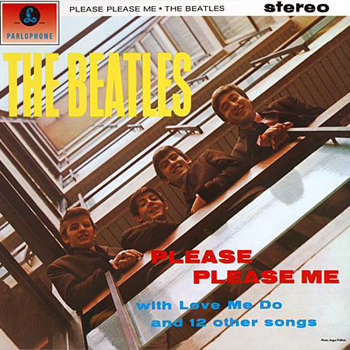

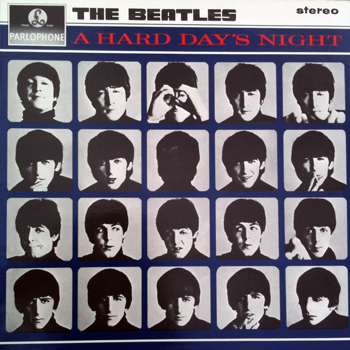
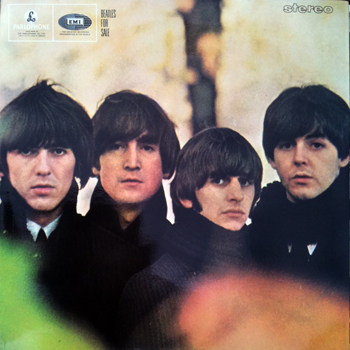

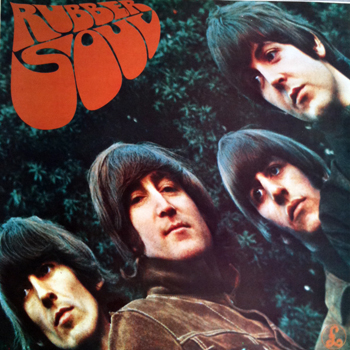
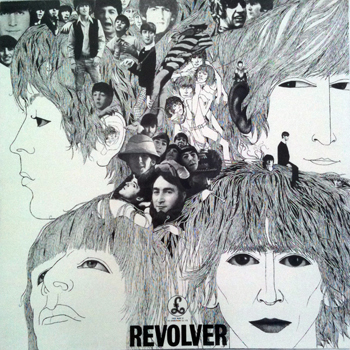
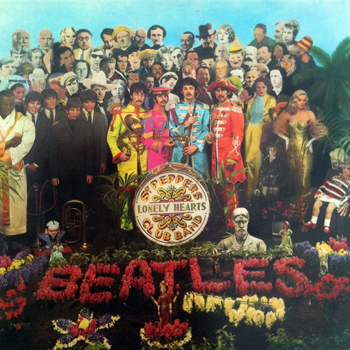



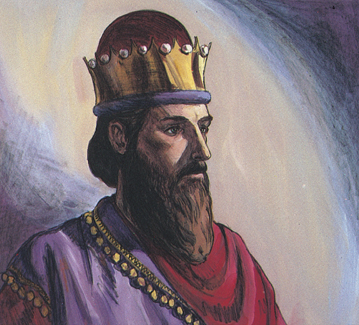





 The Daily Hatch