Monthly Archives: March 2015

MUSIC MONDAY All Tomorrow’s Parties” and “Sunday Morning” are two of the best songs by the Velvet Underground and Nico!!!

All Tomorrow’s Parties” and “Sunday Morning” are two of the best songs by the Velvet Underground and Nico!!!

Nico Icon (Documentary) part6.

_________________

The Velvet Underground-Sunday Morning

https://www.youtube.com/watch?v=3qK82JvRY5s

_______________

Velvet Underground-All Tomorrow’s Parties

Sunday Morning (The Velvet Underground song)

From Wikipedia, the free encyclopedia
Jump to: navigation, search
“Sunday Morning”
Single by The Velvet Underground
from the album The Velvet Underground & Nico
B-side Femme Fatale
Released December 1966 (single)
March 1967 (album)
Recorded November 1966 Mayfair Studios, New York City
Genre Pop,[1] psychedelic rock,[2] art rock[3]
Length 2:56
Label Verve
Writer(s) Lou Reed, John Cale
Producer Tom Wilson
The Velvet Underground singles chronology
All Tomorrow’s Parties / I’ll Be Your Mirror
(1966)
Sunday Morning / Femme Fatale
(1966)
White Light/White Heat / Here She Comes Now
(1968)
The Velvet Underground & Nico track listing
  1. Sunday Morning
  2. I’m Waiting for the Man
  3. Femme Fatale
  4. Venus in Furs
  5. Run Run Run
  6. All Tomorrow’s Parties
  7. Heroin
  8. There She Goes Again
  9. I’ll Be Your Mirror
  10. The Black Angel’s Death Song
  11. European Son

Sunday Morning” is a song by The Velvet Underground. It is the opening track on their 1967 debut album The Velvet Underground & Nico. It was also released as a single in 1966 with “Femme Fatale“.

Recording

In late 1966, “Sunday Morning” was the final song to be recorded for The Velvet Underground & Nico. It was requested by Tom Wilson, who thought the album needed another song with lead vocals by Nico with the potential to be a successful single. The final master tape of side one of the album shows “Sunday Morning” only penciled in before “I’m Waiting for the Man“.

Wilson brought the band into a New York City recording studio in November. The song was written with Nico’s voice in mind by Lou Reed and John Cale on a Sunday morning. The band previously performed it live with Nico singing lead, but when it came time to record it, Lou Reed sang the lead vocal. Nico would instead sing backing vocals on the song.

Aiming to create a hit for the album, “Sunday Morning” features noticeably more lush and professional production than the rest of the songs on the album. The song’s prominent use of celesta was the idea of John Cale, who noticed the instrument in the studio and decided to use it for the song.

Personnel

Cover versions

“Sunday Morning” has been covered by various bands, including Rusty, Villagers, Bettie Serveert, Beck, Chris Coco & Nick Cave, Nina Hagen, James, Oh-OK, Elizabeth Cook, NY Loose, The Feelies, Orchestral Manoeuvres in the Dark, The Queers, Strawberry Switchblade, and Matthew Sweet & Susanna Hoffs.[4] The song has also been covered by Belle & Sebastian during live shows. A live version recorded by Oh-OK is compiled on The Complete Recordings.

A cover of the song by the Doug Anthony All Stars was used in a season 1 episode of DAAS Kapital, but did not appear on the DVD set of the sci-fi sitcom due to “contractual reasons… and because we never paid to use it in the first place,” according to Paul McDermott. In its place is the newly recorded original song “Saturday’s The Day For Leaving”.[5] During the song, the DVD displays text to this effect, before mentioning the original version “is still on YouTube“.[6]

The chord progression is used in Kramer‘s “Don’t Come Around“, which includes the lyric, “I love this song,” presumably referring to the Velvet Underground song rather than the Kramer song.

Notes

  1. Jump up ^ The Velvet Underground & Nico: Review. allmusic.com. Retrieved 04 July 2012.
  2. Jump up ^ DeRogatis, Jim (2003). Turn on Your Mind: Four Decades of Great Psychedelic Rock. Hal Leonard Corporation. p. 79. ISBN 1617802158. Retrieved August 1, 2013. “…psychedelic rock masterpiece…”
  3. Jump up ^ DeRogatis, Jim (February 14, 2003). “Gettin’ Your Groove On”. Chicago Sun-Times. p. 26. Retrieved August 1, 2013. “…this enduring art-rock masterpiece…”
  4. Jump up ^ Full Albums: The Velvet Underground & Nico. covermesongs.com. Retrieved 14 September 2012
  5. Jump up ^ All Star secrets revealed – Doug Anthonys share anecdotes, Chortle.co.uk, 13 April 2013.
  6. Jump up ^ DAAS Kapital DVD, S1E3 “Gluttony” (DVD). ABC. 2013.

_________________

Velvet Underground-All Tomorrow’s Parties

Uploaded on Jun 28, 2010

Video was created using a video from Rai Tre. The video is them jamming live most likely at The Factory in New York. Not sure of year. Song is from The Velvet Underground And Nico. (Album) TheDrakeHotel also uses this video.

Copyright Rai Tre (For Video)
Copyright Verve Records (For Song)

_____________

All Tomorrow’s Parties

From Wikipedia, the free encyclopedia
Jump to: navigation, search
“All Tomorrow’s Parties”
Single by The Velvet Underground
from the album The Velvet Underground & Nico
B-side I’ll Be Your Mirror
Released July 1966 (single)
March 1967 (album)
Recorded April 1966 at Scepter Studios in New York City
Genre Experimental rock, art rock, psychedelic rock[1]
Length 2:49 (single version)
6:00 (album version)
Label Verve (VK10427)
Writer(s) Lou Reed
Producer Andy Warhol
The Velvet Underground singles chronology
All Tomorrow’s Parties” / I’ll Be Your Mirror
(1966)
Sunday Morning” / “Femme Fatale
(1966)
The Velvet Underground & Nico track listing
  1. Sunday Morning
  2. I’m Waiting for the Man
  3. Femme Fatale
  4. Venus In Furs
  5. Run Run Run
  6. All Tomorrow’s Parties
  7. Heroin
  8. There She Goes Again
  9. I’ll Be Your Mirror
  10. The Black Angel’s Death Song
  11. European Son

All Tomorrow’s Parties” is a song by The Velvet Underground, written by Lou Reed and released on the group’s 1967 debut album, The Velvet Underground & Nico.

Inspiration for the song came from Reed’s observation of the Warhol clique; according to Reed, the song is “a very apt description of certain people at the Factory at the time. … I watched Andy. I watched Andy watching everybody. I would hear people say the most astonishing things, the craziest things, the funniest things, the saddest things.”[2] The song was Andy Warhol’s favorite by The Velvet Underground.[3]

The song has notably lent its name to a music festival, a William Gibson novel, and a Yu Lik-wai film. The song also appears prominently in the horror film The Lords of Salem.

Recording

The song was recorded at Scepter Studios, New York, during April 1966. It features a piano motif played by Cale (initially written as an exercise) based largely on tone clusters. It was one of the first pop songs to make use of prepared piano[4] (a chain of paper clips were intertwined with the piano strings to change their sounds). The song also features the ostrich guitar tuning by Reed, by which all of the guitar strings were tuned to D.[3]

Nico provides lead vocals. The song was originally recorded with only one track of her vocals; they were later double-tracked for the final album version. Most versions of the album use this version of the song, though the initial 1987 CD release uses the original mix without the double-tracking.

Personnel

Alternate versions

Ludlow Street Loft, July 1965

The earliest known recorded version of “All Tomorrow’s Parties” was recorded on reel to reel tape by Lou Reed, John Cale and Sterling Morrison in a New York apartment loft on Ludlow Street. With Reed on acoustic guitar, the song features a strong folk music sound—particularly in Cale and Morrison’s harmony vocals—which critic David Fricke[5] suggests demonstrates Reed’s fondness for Bob Dylan. This version, released on the Peel Slowly and See box set, is composed of multiple takes, which add up to a time of 18:26.

Single version, July 1966

An edited version of the song was released in July 1966 as a single with “I’ll Be Your Mirror” as a B-side. The song cuts out about half of the studio version at just under three minutes. It did not chart.

This version later became available in 2002 on the “Deluxe Edition” of The Velvet Underground & Nico.

Cover versions

Both Nico and Lou Reed have recorded solo versions of the song. Other artists who have covered it include Jun Togawa, Apoptygma Berzerk,[6] the Ass Ponys, Buffalo Tom, Japan,[7] Bauhaus, Jeff Buckley, Icehouse,[8] Los Tres,[9] The Method Actors, Nick Cave and the Bad Seeds,[10] the Oysterband, Tom Robinson, Kikka Sirén, Simple Minds,[11] Siouxsie and the Banshees,[12] Rasputina, Kendra Smith, Bryan Ferry,[13] June Tabor, Johnette Napolitano, Iron and Wine, Deerhoof, Hole, The Music Tapes, Ordo Rosarius Equilibrio and Black Tape for a Blue Girl. Les Rita Mitsouko covered the song for the Velvet Underground tribute album Les Enfants du Velvet in 1985.

Sample

Menu
0:00
The sixth track from The Velvet Underground & Nico, featuring Nico’s double-tracked lead vocals. This sample contains the beginning of the third verse.

Problems playing this file? See media help.

References

  1. Jump up ^ J. DeRogatis, Turn On Your Mind: Four Decades of Great Psychedelic Rock (Milwaukie, Michigan: Hal Leonard, 2003), ISBN 0-634-05548-8, p. 80.
  2. Jump up ^ Fricke, David (1995). Peel Slowly and See liner notes, p.22
  3. ^ Jump up to: a b Harvard, Joe (2007) [2004]. The Velvet Underground & Nico. 33⅓. New York, NY: Continuum International Publishing Group. pp. 107 / 109–110. ISBN 0-8264-1550-4.
  4. Jump up ^ Mitchell, Tim Sedition and Alchemy : A Biography of John Cale, 2003, ISBN 0-7206-1132-6
  5. Jump up ^ David Fricke, liner notes for the Peel Slowly and See box set (Polydor, 1995)
  6. Jump up ^ “Apoptygma Berzerk’s All Tomorrow’s Parties cover of The Velvet Underground and Nico’s All Tomorrow’s Parties”. WhoSampled.com. Retrieved 18 July 2013.
  7. Jump up ^ “Japan’s All Tomorrow’s Parties cover of The Velvet Underground and Nico’s All Tomorrow’s Parties”. WhoSampled.com. Retrieved 18 July 2013.
  8. Jump up ^ Kelvin Hayes. “The Berlin Tapes review on Allmusic”. Allmusic. Rovi Corporation. Retrieved 18 July 2013.
  9. Jump up ^ “Los Tres’s All Tomorrow’s Parties cover of The Velvet Underground and Nico’s All Tomorrow’s Parties”. WhoSampled.com. Retrieved 18 July 2013.
  10. Jump up ^ “Full Albums: The Velvet Underground & Nico » Cover Me”. Covermesongs.com. Retrieved 2012-01-13.
  11. Jump up ^ MacKenzie Wilson. “Neon Lights review on Allmusic”. Allmusic. Rovi Corporation. Retrieved 18 July 2013.
  12. Jump up ^ “O Baby, Pt. 1 review on Allmusic”. Allmusic. Rovi Corporation. Retrieved 18 July 2013.
  13. Jump up ^ Ned Raggett. “Taxi review on Allmusic”. Allmusic. Rovi Corporation. Retrieved 18 July 2013.

______________

______________

Related posts:

Jim Morrison’s sad drug death was followed by Pamela Courson’s sad story!!!

Jim Morrison’s sad drug death was followed by Pamela Courson’s sad story!!! pamela courson/ jim morrison interview   Interview with Jim Morrison’s father and sister Uploaded on Aug 9, 2010 This interview is from “When You’re Strange” DVD bonus material. I do not own this video and own no rights to it! Pamela Courson Uploaded […]

I’m Waiting for the Man sung by Nico in 1982 (about waiting for drug fix)

__________ NICO – I’m Waiting For The Man – (1982, Warehouse, Preston, UK)   One of the top 10 songs from The Velvet Underground and Nico is the song “I’m Waiting for the Man I’m Waiting for the Man From Wikipedia, the free encyclopedia Jump to: navigation, search “I’m Waiting for the Man” Song by […]

The life of Lou Reed (includes videos from 1960′s and 1970′s)

The life of Lou Reed (includes videos from 1960′s and 1970′s) ____________ Rock & Roll – Velvet Underground The Velvet Underground – Venus in Furs – Live 1) Lou Reed – Sweet Jane – live in Paris, 1974 Velvet Underground-”Sunday Morning” from “Velvet Underground and Nico” LP Lou Reed From Wikipedia, the free encyclopedia Jump […]

Jim Morrison’s relationship with Nico

Jim Morrison’s relationship with Nico   Nico Icon documentary part 1. Nico Icon documentary part 2. ______________ Jim Morrison at Andy Warhol’s Party.wmv (with Nico) Uploaded on Apr 26, 2010 From the Oliver Stone movie. The Doors. _______________________ nico discusses jim morrison. Uploaded on Jan 2, 2008 nico discusses jim, and how he impacted her […]

Pictures and Videos of Edie Sedgwick and the story of her losing battle against drugs and alcohol Part 2

Pictures and Videos of Edie Sedgwick and the story of her losing battle against drugs and alcohol Part 2 Drugs and alcohol have taken the life of many people and I have posted many times about their unfortunate deaths. Whitney Houston, Amy Winehouse, Gary Thain, Janis Joplin, Jimi Hendrix, Brian Jones, Kurt Cobain, and Jim […]

Pictures and Videos of Edie Sedgwick and the story of her losing battle against drugs and alcohol Part 1

Pictures and Videos of Edie Sedgwick and the story of her losing battle against drugs and alcohol Part 1 Factory Girl – The Real Edie Uploaded on Aug 30, 2011 Friends and family of Edie Sedgwick discuss what the factory girl was really like, and the battles and relationships she went through _____________ Edie Sedgwick Excerpt […]

Crystal Bridges Museum of American Art opens on 11-11-11

  Around 4 years ago I was in Philadelphia and the local radio station had a talk show that was blasting Alice Walton for coming into town and buying  the 1876 Thomas Eakins’ masterpiece “The Gross Clinic” which was hanging at the  Jefferson Medical College. However, the people of Philadelphia were given 45 days to […]

By Everette Hatcher III | Posted in Arkansas Times, Current Events | Tagged , , , , , , | Edit | Comments (0)

____________

“Schaeffer Sunday” There is a difference between believing the Bible is true and the Bible contains truth

There is a difference between believing the Bible is true and the Bible contains truth

Dr. Francis schaeffer – The flow of Materialism(from Part 4 of Whatever happened to human race?)

Dr. Francis Schaeffer – The Biblical flow of Truth & History (intro)

Francis Schaeffer – The Biblical Flow of History & Truth (1)

Dr. Francis Schaeffer – The Biblical Flow of Truth & History (part 2)

__________

Francis Schaeffer Whatever Happened to the Human Race (Episode 1) ABORTION

I love the works of Francis Schaeffer and I have been on the internet reading several blogs that talk about Schaeffer’s work and the work below was really helpful. Schaeffer’s film series “How should we then live?  Wikipedia notes, “According to Schaeffer, How Should We Then Live traces Western history from Ancient Rome until the time of writing (1976) along three lines: the philosophic, scientific, and religious.[3] He also makes extensive references to art and architecture as a means of showing how these movements reflected changing patterns of thought through time. Schaeffer’s central premise is: when we base society on the Bible, on the infinite-personal God who is there and has spoken,[4] this provides an absolute by which we can conduct our lives and by which we can judge society.  Here are some posts I have done on this series: Francis Schaeffer’s “How should we then live?” Video and outline of episode 10 “Final Choices” episode 9 “The Age of Personal Peace and Affluence”episode 8 “The Age of Fragmentation”episode 7 “The Age of Non-Reason” episode 6 “The Scientific Age”  episode 5 “The Revolutionary Age” episode 4 “The Reformation” episode 3 “The Renaissance”episode 2 “The Middle Ages,”, and  episode 1 “The Roman Age,” .

In the film series “WHATEVER HAPPENED TO THE HUMAN RACE?” the arguments are presented  against abortion (Episode 1),  infanticide (Episode 2),   euthanasia (Episode 3), and then there is a discussion of the Christian versus Humanist worldview concerning the issue of “the basis for human dignity” in Episode 4 and then in the last episode a close look at the truth claims of the Bible.

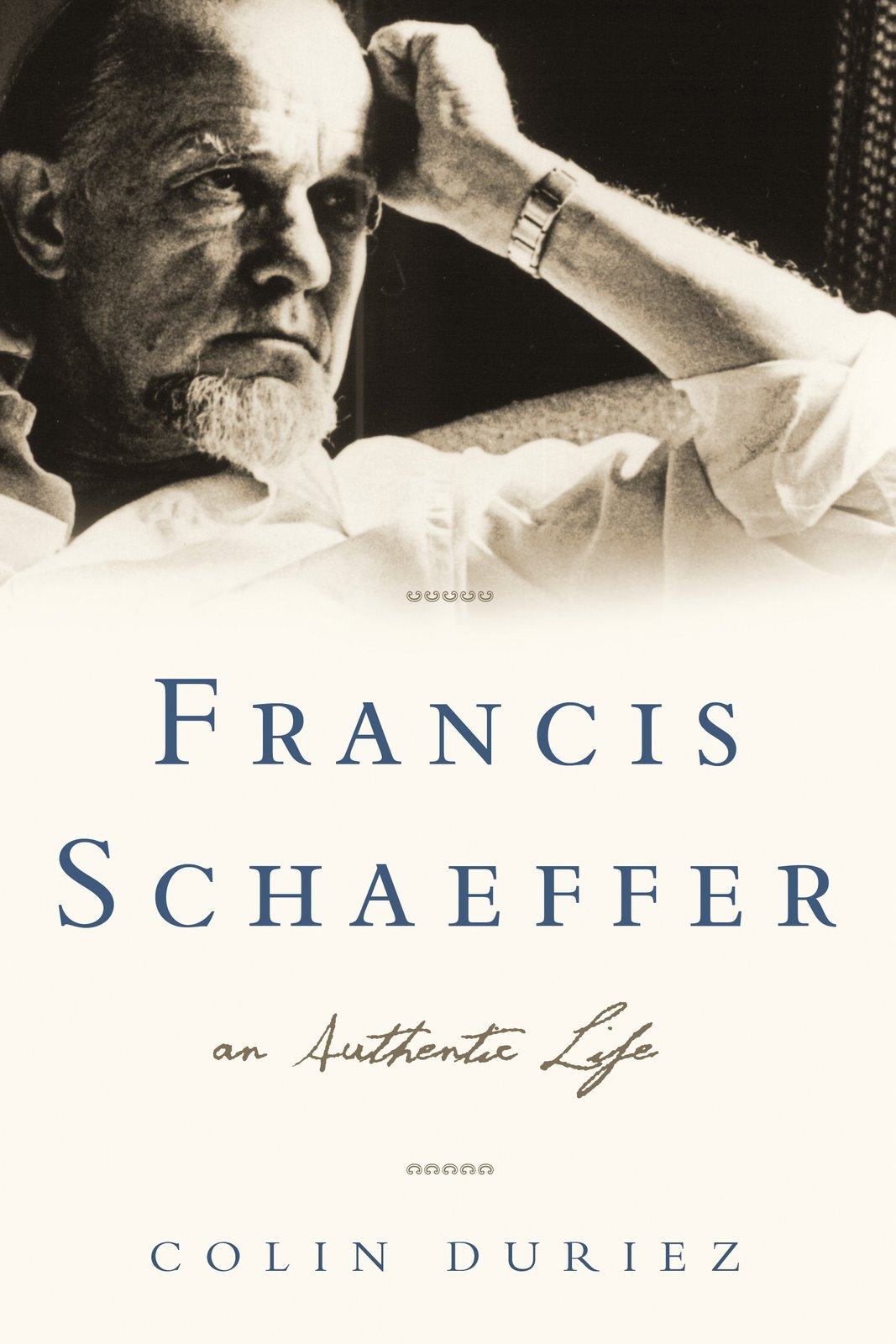
Francis Schaeffer

__________________________

I truly believe that many of the problems we have today in the USA are due to the advancement of humanism in the last few decades in our society. Ronald Reagan appointed the evangelical Dr. C. Everett Koop to the position of Surgeon General in his administration. He partnered with Dr. Francis Schaeffer in making the video below. It is very valuable information for Christians to have.  Actually I have included a video below that includes comments from him on this subject.

Francis Schaeffer

Published on Oct 6, 2012 by 

Francis Schaeffer: “Whatever Happened to the Human Race” (Episode 4) THE BASIS FOR HUMAN DIGNITY

There is a difference between believing the Bible is true and the Bible contains truth.

Ideas Have Consequences

by Henry Morris III, D.Min. *

“Argument weak at this point. Thump podium and holler louder!”

This cliché is quoted derisively from time to time to demonstrate that all arguments have presuppositional beginnings that are logically and empirically “weak.” Every idea, all religions (belief systems)–even scientific theories–have foundational concepts that are unprovable by physical means and intellectual acumen.

This is so commonly understood and widely accepted that we rarely think about this ubiquitous condition. Everybody believes in something. Even the atheist believes that there is no God; there is certainly no way to “prove” such a concept. All men and women have faith that their particular presuppositions provide an adequate basis for their actions and lifestyles.

That broad set of presuppositions is also known as a worldview.

Dallas Willard relates a concept in his book Divine Conspiracy that he occasionally uses in his classes:

In our culture one is considered educated if one “knows the right answers.” That is, if one knows which answers are the correct ones. I sometimes joke with my students at the university where I teach by asking them if they believe what they wrote on their tests. They always laugh. They know belief is not required. Belief only controls life.1

Belief controls life. Now that piece of wisdom is important!

Jesus said it this way:

A good man out of the good treasure of his heart bringeth forth that which is good; and an evil man out of the evil treasure of his heart bringeth forth that which is evil: for of the abundance of the heart his mouth speaketh. (Luke 6:45)

Belief controls life. Ideas have consequences.

  • What you believe determines what you think.
  • What you think dictates what you do.
  • And what you do dominates your life.

In 1981, Francis Schaeffer wrote A Christian Manifesto as a response to a “new” Humanist Manifesto. As he opened his critique of the humanist’s thinking, Dr. Schaeffer noted the fundamental “change in the overall way people think and view the world and life as a whole. This shift has been away from a world view that was at least vaguely Christian in people’s memory (even if they were not individually Christian) toward something completely different–toward a world view based upon the idea that the final reality is impersonal matter or energy shaped into its present form by impersonal chance.”2

This wholesale shift in thinking has so permeated the evangelical church that most Christians struggle with the concept of an almighty, omniscient Creator to whom they must answer one day. The pervasive symptom of this change in thinking is the shift away from trusting the revealed Word of God as an absolute source of truth from the God who cannot lie (Titus 1:2).

Many evangelical churches believe that the Bible may “contain” truth, but that one can no longer be certain of its authority, accuracy, or applicability. Science has supposedly rendered the early chapters of Genesis either useless as history or downright deceptive. Scholars have uncovered so-called “new” secrets about the Lord Jesus and about the Bible. Famous preachers, politicians, and celebrities loudly proclaim allegiance to Jesus, only to be exposed in some scandal that would embarrass the heathen.

We have come far–but certainly not in the right direction! What, then, is the possibility or the potential for righteous correction?

Wherewithal shall a young man cleanse his way? by taking heed thereto according to thy word. With my whole heart have I sought thee: O let me not wander from thy commandments. Thy word have I hid in mine heart, that I might not sin against thee. (Psalm 119:9-11)

May the heart of the great Creator, whose word spoke the heavens into existence, draw us this day into a certainty about His inspired word of truth.

References

  1. Willard, D. 1998. The Divine Conspiracy: Rediscovering Our Hidden Life in God. San Francisco: HarperSanFrancisco, 317.
  2. Schaeffer, F. A. 1981. A Christian Manifesto. Westchester, IL: Crossway Books, 17-18.

* Dr. Morris is Chief Executive Officer of the Institute for Creation Research.

Cite this article: Morris III, H. 2009. Ideas Have Consequences. Acts & Facts. 38 (6): 22.

Related posts:

Francis Schaeffer’s “How should we then live?” Video and outline of episode 10 “Final Choices” (Schaeffer Sundays)

E P I S O D E 1 0   Dr. Francis Schaeffer – Episode X – Final Choices 27 min FINAL CHOICES I. Authoritarianism the Only Humanistic Social Option One man or an elite giving authoritative arbitrary absolutes. A. Society is sole absolute in absence of other absolutes. B. But society has to be […]

Francis Schaeffer’s “How should we then live?” Video and outline of episode 9 “The Age of Personal Peace and Affluence” (Schaeffer Sundays)

E P I S O D E 9 Dr. Francis Schaeffer – Episode IX – The Age of Personal Peace and Affluence 27 min T h e Age of Personal Peace and Afflunce I. By the Early 1960s People Were Bombarded From Every Side by Modern Man’s Humanistic Thought II. Modern Form of Humanistic Thought Leads […]

Francis Schaeffer’s “How should we then live?” Video and outline of episode 8 “The Age of Fragmentation” (Schaeffer Sundays)

E P I S O D E 8 Dr. Francis Schaeffer – Episode VIII – The Age of Fragmentation 27 min I saw this film series in 1979 and it had a major impact on me. T h e Age of FRAGMENTATION I. Art As a Vehicle Of Modern Thought A. Impressionism (Monet, Renoir, Pissarro, Sisley, […]

Francis Schaeffer’s “How should we then live?” Video and outline of episode 7 “The Age of Non-Reason” (Schaeffer Sundays)

E P I S O D E 7 Dr. Francis Schaeffer – Episode VII – The Age of Non Reason I am thrilled to get this film series with you. I saw it first in 1979 and it had such a big impact on me. Today’s episode is where we see modern humanist man act […]

Francis Schaeffer’s “How should we then live?” Video and outline of episode 6 “The Scientific Age” (Schaeffer Sundays)

E P I S O D E 6 How Should We Then Live 6#1 Uploaded by NoMirrorHDDHrorriMoN on Oct 3, 2011 How Should We Then Live? Episode 6 of 12 ________ I am sharing with you a film series that I saw in 1979. In this film Francis Schaeffer asserted that was a shift in […]

Francis Schaeffer’s “How should we then live?” Video and outline of episode 5 “The Revolutionary Age” (Schaeffer Sundays)

E P I S O D E 5 How Should We Then Live? Episode 5: The Revolutionary Age I was impacted by this film series by Francis Schaeffer back in the 1970′s and I wanted to share it with you. Francis Schaeffer noted, “Reformation Did Not Bring Perfection. But gradually on basis of biblical teaching there […]

Francis Schaeffer’s “How should we then live?” Video and outline of episode 4 “The Reformation” (Schaeffer Sundays)

Dr. Francis Schaeffer – Episode IV – The Reformation 27 min I was impacted by this film series by Francis Schaeffer back in the 1970′s and I wanted to share it with you. Schaeffer makes three key points concerning the Reformation: “1. Erasmian Christian humanism rejected by Farel. 2. Bible gives needed answers not only as to […]

“Schaeffer Sundays” Francis Schaeffer’s “How should we then live?” Video and outline of episode 3 “The Renaissance”

Francis Schaeffer’s “How should we then live?” Video and outline of episode 3 “The Renaissance” Francis Schaeffer: “How Should We Then Live?” (Episode 3) THE RENAISSANCE I was impacted by this film series by Francis Schaeffer back in the 1970′s and I wanted to share it with you. Schaeffer really shows why we have so […]

Francis Schaeffer’s “How should we then live?” Video and outline of episode 2 “The Middle Ages” (Schaeffer Sundays)

  Francis Schaeffer: “How Should We Then Live?” (Episode 2) THE MIDDLE AGES I was impacted by this film series by Francis Schaeffer back in the 1970′s and I wanted to share it with you. Schaeffer points out that during this time period unfortunately we have the “Church’s deviation from early church’s teaching in regard […]

Francis Schaeffer’s “How should we then live?” Video and outline of episode 1 “The Roman Age” (Schaeffer Sundays)

Francis Schaeffer: “How Should We Then Live?” (Episode 1) THE ROMAN AGE   Today I am starting a series that really had a big impact on my life back in the 1970′s when I first saw it. There are ten parts and today is the first. Francis Schaeffer takes a look at Rome and why […]

Francis Schaeffer: “Whatever Happened to the Human Race” (Episode 5) TRUTH AND HISTORY

Francis Schaeffer: “Whatever Happened to the Human Race” (Episode 5) TRUTH AND HISTORY Published on Oct 7, 2012 by AdamMetropolis This crucial series is narrated by the late Dr. Francis Schaeffer and former Surgeon General Dr. C. Everett Koop. Today, choices are being made that undermine human rights at their most basic level. Practices once […]

Francis Schaeffer: “Whatever Happened to the Human Race” (Episode 4) THE BASIS FOR HUMAN DIGNITY

The opening song at the beginning of this episode is very insightful. Francis Schaeffer: “Whatever Happened to the Human Race” (Episode 4) THE BASIS FOR HUMAN DIGNITY Published on Oct 7, 2012 by AdamMetropolis This crucial series is narrated by the late Dr. Francis Schaeffer and former Surgeon General Dr. C. Everett Koop. Today, choices […]

Francis Schaeffer: “Whatever Happened to the Human Race” (Episode 3) DEATH BY SOMEONE’S CHOICE

Francis Schaeffer: “Whatever Happened to the Human Race” (Episode 3) DEATH BY SOMEONE’S CHOICE Published on Oct 6, 2012 by AdamMetropolis This crucial series is narrated by the late Dr. Francis Schaeffer and former Surgeon General Dr. C. Everett Koop. Today, choices are being made that undermine human rights at their most basic level. Practices […]

Francis Schaeffer: “Whatever Happened to the Human Race?” (Episode 2) SLAUGHTER OF THE INNOCENTS

Francis Schaeffer: “Whatever Happened to the Human Race?” (Episode 2) SLAUGHTER OF THE INNOCENTS Published on Oct 6, 2012 by AdamMetropolis This crucial series is narrated by the late Dr. Francis Schaeffer and former Surgeon General Dr. C. Everett Koop. Today, choices are being made that undermine human rights at their most basic level. Practices […]

Francis Schaeffer: “Whatever Happened to the Human Race” (Episode 1) ABORTION OF THE HUMAN RACE

It is not possible to know where the pro-life evangelicals are coming from unless you look at the work of the person who inspired them the most. That person was Francis Schaeffer.  I do care about economic issues but the pro-life issue is the most important to me. Several years ago Adrian Rogers (past president of […]

The following essay explores the role that Francis Schaeffer played in the rise of the pro-life movement. It examines the place of How Should We Then Live?, Whatever Happened to the Human Race?, and A Christian Manifesto in that process.

This essay below is worth the read. Schaeffer, Francis – “Francis Schaeffer and the Pro-Life Movement” [How Should We Then Live?, Whatever Happened to the Human Race?, A Christian Manifesto] Editor note: <p> </p> [The following essay explores the role that Francis Schaeffer played in the rise of the pro-life movement.  It examines the place of […]

By Everette Hatcher III | Posted in Francis Schaeffer | Edit | Comments (0)

“Sanctity of Life Saturday” Debating Kermit Gosnell Trial, Abortion and infanticide with Ark Times Bloggers Part 12 Matthew Franck: “Kermit Gosnell has been the equivalent of the American slave-dealer—someone who has done work rendered absolutely necessary by the twisted laws of his regime, but who has nevertheless been ignored or regarded with unease, and even repulsion, by his fellow citizens”

C. Everett Koop, 1980s.jpg
Surgeon General of the United States
In office
January 21, 1982 – October 1, 1989
President Ronald Reagan
George H. W. Bush
Francis Schaeffer
Francis Schaeffer.jpg

Founder of the L’Abri community
Born Francis August Schaeffer
January 30, 1912

Died May 15, 1984 (aged 72)

I truly believe that many of the problems we have today in the USA are due to the advancement of humanism in the last few decades in our society. Ronald Reagan appointed the evangelical Dr. C. Everett Koop to the position of Surgeon General in his administration. He partnered with Dr. Francis Schaeffer in making the video below. It is very valuable information for Christians to have.  Actually I have included a video below that includes comments from him on this subject.

Dr. Francis schaeffer – The flow of Materialism(from Part 4 of Whatever happened to human race?)

Dr. Francis Schaeffer – The Biblical flow of Truth & History (intro)

Francis Schaeffer – The Biblical Flow of History & Truth (1)

Dr. Francis Schaeffer – The Biblical Flow of Truth & History (part 2)

__________

Francis Schaeffer Whatever Happened to the Human Race (Episode 1) ABORTION

I have gone back and forth and back and forth with many liberals on the Arkansas Times Blog on many issues such as abortionhuman rightswelfarepovertygun control  and issues dealing with popular culture . This time around I have discussed morality with the Ark Times Bloggers and particularly the trial of the abortionist Dr. Kermit Gosnell and through that we discuss infanticide, abortion and even partial birth abortion. Here are some of my favorite past posts on the subject of Gosnell: ,Abby Johnson comments on Dr. Gosnell’s guilty verdict, Does President Obama care about Kermit Gosnell verdict?Dr. Gosnell Trial mostly ignored by mediaKermit Gosnell is guilty of same crimes of abortion clinics are says Jennifer MasonDenny Burk: Is Dr. Gosnell the usual case or not?, Pro-life Groups thrilled with Kermit Gosnell guilty verdict,  Reactions to Dr. Gosnell guilty verdict from pro-life leaders,  Kermit Gosnell and Planned Parenthood supporting infanticide?, Owen Strachan on Dr. Gosnell Trial, Al Mohler on Kermit Gosnell’s abortion practice, Finally we get justice for Dr. Kermit Gosnell .

In July of 2013 I went back and forth with several bloggers from the Ark Times Blog concerning Dr. Kermit Gosnell’s abortion practice and his trial which had finished up in the middle of May:

Zatharus wrote:

When the proponents of state servitude imply a connection to slavery or the holocaust, they fail to comprehend depth of their misconception.

_______________________

Matthew J. Franck is Director of the William E. and Carol G. Simon Center on Religion and the Constitution at the Witherspoon Institute and he did assert “Kermit Gosnell has been the equivalent of the American slave-dealer—someone who has done work rendered absolutely necessary by the twisted laws of his regime, but who has nevertheless been ignored or regarded with unease, and even repulsion, by his fellow citizens.”

Franck went on to comment:

Barack Obama, on April 26, was the first sitting president of the United States to give a public address to a convention of the slave-dealers of our age. That morning he gave a twelve-minute speech to the annual conference of Planned Parenthood, an organization responsible for more abortions than any other provider in the country.

Evidently he is not afraid to come into contact with our own “class of native tyrants,” who carry on the despicable business of destroying hundreds of thousands of human lives each year, and have the audacity to say they are serving “women’s health.” But then this is, after all, the same politician who voted against an Illinois law to protect the lives of newborns who survived failed abortions.

There is a limit even to Obama’s audacity, though. The president mentioned the “right to choose” four times in his brief speech, but somehow this transitive verb never took an object. Choose what? He never uttered the word “abortion,” though it was plain that the entire speech was about the centrality of abortion to the president’s notion of women’s “health.” Is there any other constitutional right, real or invented, that does not go by its true name when its defenders speak of it?

And far be it from the president to utter the name of Kermit Gosnell, the abortionist now convicted of three counts of first-degree murder for “snipping” the necks of babies who survived their abortions, as well as manslaughter in the case of a pregnant woman who did not survive his ministrations.

Gosnell, whose clinic was shut down by the Philadelphia authorities who charged him with murder, is the ne plus ultra of the abortion trade. Not because of the filth, the squalor, the jars of amputated keepsake baby feet, the employment of unlicensed incompetents, the promiscuous use of narcotics on unwitting patients, or the poisonous racism of a physician who preyed upon women and babies of his own race—although all of these are no surprise at all in America’s most unregulated branch of medicine.

No, Gosnell is the “slave-dealer” par excellence because, even if he had run the cleanest, brightest, most professional clinic in the country, he was simply following out the remorseless logic of the abortion regime installed forty years ago by the Supreme Court.

Women came to him for the very latest of late-term abortions, and he made sure their children were dead. WHETHER HE ACCOMPLISHED THEIR DEATHS IN UTERO OR EX UTERO- BEFORE OR AFTER THEIR BIRTHS- DIDN’T REALLY MATTER TO GOSNELL. AND, AS WE HAVE HEARD FROM PLANNED PARENTHOOD OFFICIALS, FROM THEN-ILLINOIS STATE SENATOR BARACK OBAMA, and from “pro-choice” politicians like Senator Barbara Boxer, it doesn’t matter to them, either.

Their insouciance about infanticide, moreover, is given intellectual respectability when a leading academic publication like the Journal of Medical Ethics publishes a symposium on infanticide in which the majority of the contributing scholars cannot bring themselves to condemn it.

And there is something inexorably logical about this attitude. How can it really matter where an innocent human being’s life is deliberately snuffed out? If it’s a legally protected “baby” after birth at 24 weeks’ gestation, but only an unprotected “fetus” before birth at 25 weeks’ gestation, how does that make any sense? Yet this is the kind of gyration the law produces, just as it was shot through with contradictions and inanities under the regime that sanctioned slavery.

It mattered a great deal whether Gosnell’s tiny victims were born dead or alive to his defense counsel, attorney Jack McMahon, for it meant the difference between capital crimes and the facilitation of women’s “constitutional rights.”

http://www.thepublicdiscourse.com/2013/05/…

A Twin Lives Through an Abortion – CBN.com

Uploaded on Jan 7, 2011

My name is Claire Culwell, and I am an abortion survivor…

__________

“Everyone needs to hear Claire’s story! Often times at pro-life events or banquets we can forget who is at stake in abortion. Claire’s passion reminds the audience that every life lost due to abortion cannot be taken back but every life saved from abortion is a profound witness of God’s hope and love for every human life. Having seen her speak multiple times, I know that Claire’s story captures an audience at a pregnancy center event like no other story because she is living proof of what we stand for, life!” –Shawn Carney, Co-founder 40 Days for Life, Host of Being Human on EWTN

Claire’s Story:

I found out I was affected by abortion about 3 years ago. This changed my life. I had walked into the Coalition For Life wondering what their organization provided and 5 months later I met my birth mother who told me my life is a miracle.

My birth mother was 13 years old at the time she became pregnant with me. Her mother took her straight to an abortion clinic where she had a surgical abortion. After thinking she had “fixed the problem,” a few weeks later she realized her belly was still growing. Her mother took her back to the abortion clinic where she learned that she had been pregnant with twins…One was aborted; One survived.

My life is a miracle and I would be selfish to keep this GIFT of life to myself. I want to tell everyone what a gift I and even they have been given!! I want to encourage them to seek alternatives to abortion because I would never want any woman/man to go through the grief and the pain that my birth mother went through simply because she didn’t know she had any other option. I also want to be a vessel to offer God’s forgiveness to the men and women who have previously had abortions. I know healing is possible and I have been given the gift of surviving an abortion so that I can tell these men and women that they are forgiven…coming from an aborted child, I hope they know the power of forgiveness and healing through meeting me. My involvement in Coalition For Life transformed me, taught me how to stand up for life on the front lines, and how to share my story in a meaningful way. I have the staff at Coalition For Life to thank for encouraging me to get involved and to share my story not only on the sidewalk but in public (my biggest fear) because God is glorified when I publically proclaim that “I am here not because of anything I did, but ONLY because of God’s mercy and love for me.”

My life is a testimony that there are wonderful alternatives to abortion (such as adoption in my case) and an accident/unwanted child still deserves life…even a child with disabilities. I was born 2 1/2 months early, weighed 3 lbs 2 oz, had dislocated hips and club feet. I had to wear casts on my feet, a harness and eventually a body cast. The abortion still affects me today. All that to say, LIFE IS STILL WORTH IT.If my life can touch just one person who has had an abortion or considering an abortion or adoption, then I am fulfilling my purpose in the pro-life movement.

I will not be silent because each mother and child are in the same place my biological mother, my twin and I were in 22 years ago and I am here to say THERE IS HOPE and there are options!

Traveling and sharing my story was not something that I had planned for myself, but God proved to have better plans for me than I had for myself. Sharing my story is as much of a gift to MYSELF as it is to others.

GBCSUMC on Gosnell: What’s abortion got to do with it? #UMC

Many in the world today are taking a long look at the abortion industry because of the May 14, 2013 guilty verdict and life term penalty handed down by a jury (which included 9 out of 12 pro-choice jurors)  to Dr. Kermit Gosnell. During this time of reflection I wanted to put forth some of the […]

Kermit Gosnell and the irony of the coat hanger back alley argument

Many in the world today are taking a long look at the abortion industry because of the May 14, 2013 guilty verdict and life term penalty handed down by a jury (which included 9 out of 12 pro-choice jurors)  to Dr. Kermit Gosnell. During this time of reflection I wanted to put forth some of the […]

History’s Jury Is Out: Has Gosnell Rocked Our Conscience?

Many in the world today are taking a long look at the abortion industry because of the May 14, 2013 guilty verdict and life term penalty handed down by a jury (which included 9 out of 12 pro-choice jurors)  to Dr. Kermit Gosnell. During this time of reflection I wanted to put forth some of the […]

Evangelical Blogger Lists Eight Reasons the Media Are Ignoring the Gosnell Murder Trial

Many in the world today are taking a long look at the abortion industry because of the May 14, 2013 guilty verdict and life term penalty handed down by a jury (which included 9 out of 12 pro-choice jurors)  to Dr. Kermit Gosnell. During this time of reflection I wanted to put forth some of the […]

Cornerstone Executive Ashley Pratte on Gosnell Trial Verdict

Many in the world today are taking a long look at the abortion industry because of the May 14, 2013 guilty verdict and life term penalty handed down by a jury (which included 9 out of 12 pro-choice jurors)  to Dr. Kermit Gosnell. During this time of reflection I wanted to put forth some of the […]

Dr. Gosnell Trial ignored for a while by mainstream media

Many in the world today are taking a long look at the abortion industry because of the May 14, 2013 guilty verdict and life term penalty handed down by a jury (which included 9 out of 12 pro-choice jurors)  to Dr. Kermit Gosnell. During this time of reflection I wanted to put forth some of the […]

ANALYSIS: Will the Kermit Gosnell verdict change the abortion debate?

Many in the world today are taking a long look at the abortion industry because of the May 14, 2013 guilty verdict and life term penalty handed down by a jury (which included 9 out of 12 pro-choice jurors)  to Dr. Kermit Gosnell. During this time of reflection I wanted to put forth some of the […]

What’s So Bad About Kermit Gosnell?

Many in the world today are taking a long look at the abortion industry because of the May 14, 2013 guilty verdict and life term penalty handed down by a jury (which included 9 out of 12 pro-choice jurors)  to Dr. Kermit Gosnell. During this time of reflection I wanted to put forth some of the […]

Kermit Gosnell and the Gospel

Many in the world today are taking a long look at the abortion industry because of the May 14, 2013 guilty verdict and life term penalty handed down by a jury (which included 9 out of 12 pro-choice jurors)  to Dr. Kermit Gosnell. During this time of reflection I wanted to put forth some of the […]

VIDEO: Kermit Gosnell killings like ‘weeding your garden’

Many in the world today are taking a long look at the abortion industry because of the May 14, 2013 guilty verdict and life term penalty handed down by a jury (which included 9 out of 12 pro-choice jurors)  to Dr. Kermit Gosnell. During this time of reflection I wanted to put forth some of the […]

Gosnell: The Silence is Deafening

Many in the world today are taking a long look at the abortion industry because of the May 14, 2013 guilty verdict and life term penalty handed down by a jury (which included 9 out of 12 pro-choice jurors)  to Dr. Kermit Gosnell. During this time of reflection I wanted to put forth some of the […]

Five Thoughts on the Gosnell Conviction

Many in the world today are taking a long look at the abortion industry because of the May 14, 2013 guilty verdict and life term penalty handed down by a jury (which included 9 out of 12 pro-choice jurors)  to Dr. Kermit Gosnell. During this time of reflection I wanted to put forth some of the […]

Implications of the Kermit Gosnell Verdict

Many in the world today are taking a long look at the abortion industry because of the May 14, 2013 guilty verdict and life term penalty handed down by a jury (which included 9 out of 12 pro-choice jurors)  to Dr. Kermit Gosnell. During this time of reflection I wanted to put forth some of the […]

Godly comments on Dr. Kermit Gosnell

Many in the world today are taking a long look at the abortion industry because of the May 14, 2013 guilty verdict and life term penalty handed down by a jury (which included 9 out of 12 pro-choice jurors)  to Dr. Kermit Gosnell. During this time of reflection I wanted to put forth some of the […]

Dr. Gosnell Trial has prompted closer look at Albuquerque abortion clinic

Many in the world today are taking a long look at the abortion industry because of the May 14, 2013 guilty verdict and life term penalty handed down by a jury (which included 9 out of 12 pro-choice jurors)  to Dr. Kermit Gosnell. During this time of reflection I wanted to put forth some of the […]

Why won’t President Obama comment on Dr. Gosnell Trial?

Many in the world today are taking a long look at the abortion industry because of the May 14, 2013 guilty verdict and life term penalty handed down by a jury (which included 9 out of 12 pro-choice jurors)  to Dr. Kermit Gosnell. During this time of reflection I wanted to put forth some of the […]

Dr. Alveda King reacts to guilty verdict of Kermit Gosnell

Francis Schaeffer: “Whatever Happened to the Human Race” (Episode 1) ABORTION OF THE HUMAN RACE Published on Oct 6, 2012 by AdamMetropolis ________________ What a great article below: Dr. Alveda King: Guilty Gosnell Verdict May Spark More Justice for Women and Babies Contact: Eugene Vigil, King for America, 470-244-3302 PHILADELPHIA, May 13, 2013 /Christian Newswire/ […]

Kristen Hatten: Dr. Gosnell guilty verdict, but what about the rest?

Many in the world today are taking a long look at the abortion industry because of the May 14, 2013 guilty verdict and life term penalty handed down by a jury (which included 9 out of 12 pro-choice jurors)  to Dr. Kermit Gosnell. During this time of reflection I wanted to put forth some of the […]

Lila Rose of Live Action comments on Kermit Gosnell guilty verdict

Francis Schaeffer: “Whatever Happened to the Human Race” (Episode 1) ABORTION OF THE HUMAN RACE Published on Oct 6, 2012 by AdamMetropolis ________________ May 14, 2013 Murdered Thousands, Convicted for Three: The Kermit Gosnell Verdict By Drew Belsky Read more: http://www.americanthinker.com/2013/05/murdered_thousands_convicted_for_three_the_kermit_gosnell_verdict.html#ixzz2TMstLk1c Follow us: @AmericanThinker on Twitter | AmericanThinker on FacebookPhiladelphia abortionist Kermit Gosnell was convicted […]

Gerard M. Nadal: Dr. Gosnell Guilty, but now what?

Many in the world today are taking a long look at the abortion industry because of the May 14, 2013 guilty verdict and life term penalty handed down by a jury (which included 9 out of 12 pro-choice jurors)  to Dr. Kermit Gosnell. During this time of reflection I wanted to put forth some of the […]

Reince Priebus on Kermit Gosnell guilty verdict

Francis Schaeffer: “Whatever Happened to the Human Race” (Episode 1) ABORTION OF THE HUMAN RACE Published on Oct 6, 2012 by AdamMetropolis ________________ A Verdict Doesn’t End the Gosnell Story By: Chairman Reince Priebus (Diary)  |  May 13th, 2013 at 03:27 PM  |  28 RESIZE: AAA The horrors that unfolded in the clinic of Dr. […]

Kirsten Powers of USA Today on Dr. Gosnell Trial

Many in the world today are taking a long look at the abortion industry because of the May 14, 2013 guilty verdict and life term penalty handed down by a jury (which included 9 out of 12 pro-choice jurors)  to Dr. Kermit Gosnell. During this time of reflection I wanted to put forth some of the […]

Top 10 Revelations of Kermit Gosnell Trial

Francis Schaeffer: “Whatever Happened to the Human Race” (Episode 1) ABORTION OF THE HUMAN RACE Published on Oct 6, 2012 by AdamMetropolis ________________ All-American Horror Story: Top 10 Kermit Gosnell Trial Revelations by Kristan Hawkins | Washington, DC | LifeNews.com | 4/12/13 3:38 PM Since so many in the media have failed/refused to report on […]

Denny Burk: We have to learn from Dr. Gosnell’s Crimes

Many in the world today are taking a long look at the abortion industry because of the May 14, 2013 guilty verdict and life term penalty handed down by a jury (which included 9 out of 12 pro-choice jurors)  to Dr. Kermit Gosnell. During this time of reflection I wanted to put forth some of the […]

Tony Perkins on Kermit Gosnell Trial

Francis Schaeffer: “Whatever Happened to the Human Race” (Episode 1) ABORTION OF THE HUMAN RACE Published on Oct 6, 2012 by AdamMetropolis _____________ Tony Perkins: Gosnell Trial – FOX News Published on May 13, 2013 Tony Perkins: Gosnell Trial – FOX News ________________ Hey Obama, Kermit Gosnell Is What a Real War on Women Looks Like […]

Ross Douthat of NY Times on Dr. Gosnell

Many in the world today are taking a long look at the abortion industry because of the May 14, 2013 guilty verdict and life term penalty handed down by a jury (which included 9 out of 12 pro-choice jurors)  to Dr. Kermit Gosnell. During this time of reflection I wanted to put forth some of the […]

Family Research Council happy with Kermit Gosnell Guilty Verdict

Francis Schaeffer: “Whatever Happened to the Human Race” (Episode 1) ABORTION OF THE HUMAN RACE Published on Oct 6, 2012 by AdamMetropolis ___ _____________ Tony Perkins: Gosnell Trial – FOX News Published on May 13, 2013 Tony Perkins: Gosnell Trial – FOX News ________________ Family Research Council Praises Jury for Bringing Justice to Victims of Abortionist […]

Peter Jones on Infanticide and Dr. Gosnell

Many in the world today are taking a long look at the abortion industry because of the May 14, 2013 guilty verdict and life term penalty handed down by a jury (which included 9 out of 12 pro-choice jurors)  to Dr. Kermit Gosnell. During this time of reflection I wanted to put forth some of the […]

Is Dr. Gosnell a “one-of-a-kind anomaly”?

Many in the world today are taking a long look at the abortion industry because of the May 14, 2013 guilty verdict and life term penalty handed down by a jury (which included 9 out of 12 pro-choice jurors)  to Dr. Kermit Gosnell. During this time of reflection I wanted to put forth some of the […]

Kermit Gosnell and the Logic of “Pro-Choice”

Francis Schaeffer: “Whatever Happened to the Human Race” (Episode 1) ABORTION OF THE HUMAN RACE Published on Oct 6, 2012 by AdamMetropolis ________________ _____________ Tony Perkins: Gosnell Trial – FOX News Published on May 13, 2013 Tony Perkins: Gosnell Trial – FOX News ________________ Kermit Gosnell and the Logic of “Pro-Choice” by  Matthew J. Franck within […]

______________________

Do New York late term abortionists need more attention like Dr. Gosnell did?

Many in the world today are taking a long look at the abortion industry because of the May 14, 2013 guilty verdict and life term penalty handed down by a jury (which included 9 out of 12 pro-choice jurors)  to Dr. Kermit Gosnell. During this time of reflection I wanted to put forth some of the […]

Dr. Gosnell Trial has prompted Texas authorities to take closer look a Houston abortionist

Many in the world today are taking a long look at the abortion industry because of the May 14, 2013 guilty verdict and life term penalty handed down by a jury (which included 9 out of 12 pro-choice jurors)  to Dr. Kermit Gosnell. During this time of reflection I wanted to put forth some of the […]

Father Frank Pavone reacts to Kermit Gosnell guilty verdict

Francis Schaeffer: “Whatever Happened to the Human Race” (Episode 1) ABORTION OF THE HUMAN RACE Published on Oct 6, 2012 by AdamMetropolis ________________ Fr. Pavone: Right to choose must yield to right to life STATEN ISLAND, NY — Father Frank Pavone, National Director of Priests for Life, had the following comment on the verdict in […]

NAF reacts to Dr. Gosnell guilty verdict

Many in the world today are taking a long look at the abortion industry because of the May 14, 2013 guilty verdict and life term penalty handed down by a jury (which included 9 out of 12 pro-choice jurors)  to Dr. Kermit Gosnell. During this time of reflection I wanted to put forth some of the […]

Hope for Kermit Gosnell’s repentance?

Francis Schaeffer: “Whatever Happened to the Human Race” (Episode 1) ABORTION OF THE HUMAN RACE Published on Oct 6, 2012 by AdamMetropolis ________________ The truth of abortion … the hope for Gosnell’s repentance A conviction in the murder trial of Philadelphia abortionist Kermit Gosnell has boosted the efforts of pro-lifers to demonstrate what abortion really […]

The Selfishness of Chris Evert Part 5 (Includes videos and Pictures)

The Selfishness of Chris Evert Part 2 (Includes videos and Pictures) _________________________________ _____________________ _______________________ __________________________ Tennis – Wimbledon 1974 [ Official Film ] – 05/05 Published on May 1, 2012 John Newcombe, Ken Rosewall, Bjor Borg, Jimmy Connors, Cris Evert… ___________________ Jimmy Connors Reflects Published on May 13, 2013 Jimmy Connors visits “SportsCenter” to discuss his memoir, […]

By Everette Hatcher III | Posted in Current Events, Francis Schaeffer, Prolife | Tagged , | Edit | Comments (0)

Top Ten Biblical Discoveries in Archaeology – #6 Pontius Pilate Inscription JULY 28, 2010 by Tim Kimberley

_____________

Top Ten Biblical Discoveries in Archaeology – #6 Pontius Pilate Inscription

This post is a continuation of our Top Ten Biblical Discoveries in Archaeology series. To see the complete series please click here.

Pilate’s Role

Who is Jesus? You and I are sitting down in the Credo House, enjoying a delicious Luther Latte. We’re talking about the important questions of life and I lean forward asking you that simple question, “Who is Jesus?” What do you think about him? Is He everything the Bible communicates? Did He actually live, die for the sins of humanity, and rise from the dead? Do you consider Him your Lord? Is He the ultimate King of the Jews? Is He the King of Kings? These are important questions for all of mankind to consider.

One man, according to the Bible, was uniquely called upon to wrestle with the identity of Jesus. His name: Pontius Pilate. Pilate was the Prefect (governor) of the Roman province of Judea from 26-36 AD. The Jewish high priests at the time were unable to legally sentence a man to death. Most of the leading Jews wanted Jesus killed. In order for Jesus to be killed the death sentence had to be carried out under Roman law. The Jewish leaders needed Pontius Pilate to condemn Jesus to death. Early one morning a mob drives Jesus to Pilate. Pilate becomes responsible for deciding the fate of Jesus.

John 18 describes the scene:

So Pilate entered his headquarters again and called Jesus and said to him, “Are you the King of the Jews?” Jesus answered, “Do you say this of your own accord, or did others say it to you about me?” Pilate answered, “Am I a Jew? Your own nation and the chief priests have delivered you over to me. What have you done?” Jesus answered, “My kingdom is not of this world. If my kingdom were of this world, my servants would have been fighting, that I might not be delivered over to the Jews. But my kingdom is not from the world.” Then Pilate said to him, “So you are a king?” Jesus answered, “You say that I am a king. For this purpose I was born and for this purpose I have come into the world – to bear witness to the truth. Everyone who is of the truth listens to my voice.” Pilate said to him, “What is truth?” (John 18:33-38)

Wow, what an amazing dialogue. Jesus forces Pilate to wrestle with his identity. Where does the conversation go from here? Pilate tells the crowd he believes Jesus to be innocent. The crowd finds a loop-hole in the system asking for a criminal, Barabbas, to be released from prison and for Jesus to be found guilty. Pilate appeases the crowd by sending Jesus away to be flogged. After experiencing the horror of flogging, the Bible tells us Jesus is sent back to Pilate. Pilate and Jesus have another conversation described in John 19:

He entered his headquarters again and said to Jesus, “Where are you from?” But Jesus gave him no answer. So Pilate said to him, “You will not speak to me? Do you not know that I have authority to release you and authority to crucify you?” Jesus answered him, “You would have no authority over me at all unless it had been given you from above. Therefore he who delivered me over to you has the greater sin.” (John 19:9-11)

Jesus speaks with determined clarity. Pilate continues to move in the direction of releasing Jesus. Those seeking the death of Jesus cry out to Pilate, “If you release this man, you are not Caesar’s friend. Everyone who makes himself a king opposes Caesar. (John 19:12)” Pilate eventually gives in and agrees to have Jesus crucified. Interestingly, the Bible explains, Pilate places on sign of the cross of Jesus which read, “Jesus of Nazareth, the King of the Jews.”

Pilate Outside the Bible

What we know about Pontius Pilate comes primarily from the Bible. Three men named Tacitus, Josephus and Philo all lived around the time of Jesus and mention Pilate in their writings.

Tacitus writes:

To dispel the rumor, Nero substituted as culprits, and treated with the most extreme punishments, some people, popularly known as Christians, whose disgraceful activities were notorious. The originator of that name, Christus, had been executed when Tiberius was emperor, by order of the procurator Pontius Pilatus. But the deadly cult, though checked for a time, was now breaking out again not only in Judea, the birthplace of this evil, but even throughout Rome, where all the nasty and disgusting ideas from all over the world pour in and find a ready following.

Josephus writes:

About this time there lived Jesus, a wise man, for he was a performer of wonderful deeds, a teacher of such men as are happy to accept the truth. He won over many of the Jews and many of the Gentiles. When Pilate, at the suggestion of the leading men among us, had condemned him to the cross, those who had loved him at the first did not forsake him; and the tribe of Christians, so named from him, are not extinct to this day.

Philo, more than the other men, speaks to the character of Pilate. He explains Pilate as, “a man of inflexible, stubborn and cruel disposition.” Philo explains several situations where Pilate provokes and is cruel to the Jewish people. The Bible and these three men speak plainly about Pilate, the world of Pontius Pilate, and the man from Nazareth whom He sentenced to be crucified. Pontius Pilate is seen by Tacitus, Philo and Josephus as the real governor of Judea and the real man who sentenced Jesus to be crucified.

Discovery

In 1961 the archaeological world was taken back to the first century Roman province of Judea. A group of archaeologists, led by Dr. Antonio Frova were excavating an ancient Roman theater near Caesarea Maritima. Caesarea was a leading city in the first century located on the Mediterranean Sea. A limestone block was found there with a surprising inscription. The inscription, on three lines, reads:
…]S TIBERIVM
…PON]TIVS PILATVS
…PRAEF]ECTVS IVDA[EA]

The inscription is believed to be part of a larger inscription dedicating a temple in Caesarea to the emperor Tiberius. The inscription clearly states, “Pontius Pilate, Prefect of Judea.” The inscription is significant on several levels.

Significance

It makes sense for Pilate to be dedicating a temple in Caesarea Maritima. The prefect usually lived in Caesarea and only went to Jerusalem for special purposes. An inscription of Pilate found in Caesarea fits with the first century world described in the Bible.

The dating of the inscription, in connection with its mention of Tiberius (42 BC-37AD) places the governor Pontius Pilate at the same place and time as the Bible’s information about Jesus.

As with the Caiaphas Ossuary mentioned in a previous post, the vast significance of the Pilate Inscription is attached to the significance of the crucifixion of Jesus. The inscription does not prove the conversations between Pilate and Jesus. The inscription does not prove Pilate condemned Jesus to be crucified. The inscription does not prove the forgiveness of mankind’s sin through the death of Christ. The inscription does, however, support the historical reliability of the cross, as with the Caiaphas Ossuary, by supporting the existence of one of its central characters.

What do you think? Do you find the Pilate Inscription to be a significant discovery in archaeology? Join the conversation by commenting on the post. In the next post we look again at crucifixion from a completely different perspective.


_______

_________

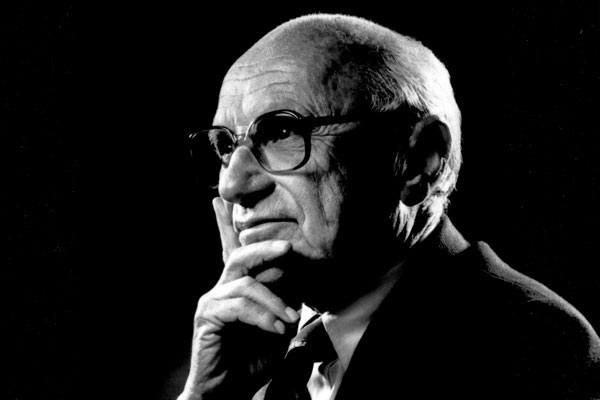
FRIEDMAN FRIDAY We got to give Milton Friedman’s voucher system a chance!!!

We got to give Milton Friedman’s voucher system a chance!!!

Happy Birthday, Milton Friedman: Champion of Educational Freedom

July 31, 2013 at 11:30 am

Newscom

Newscom

On the late, great, Nobel Prize–winning economist Milton Friedman’s 101st birthday, it is fitting to remember his legacy of school choice and continue the fight for educational opportunity he left for us.

“A stable and democratic society is impossible without widespread acceptance of some common set of values and without a minimum degree of literacy and knowledge on the part of most citizens. Education contributes to both,” Friedman once remarked.

Friedman knew that education is essential for a free society to flourish, but he understood that government-administered schooling is not the way to achieve quality educational options for all children.

Friedman was the father of the educational choice movement, which he first conceived through the idea of school vouchers. The Friedman philosophy of education promotes educational opportunity where parents are free to choose an education that best meets the needs of their children, with money following the children to any schools of their choice: public, private, charter, virtual, or home school.

Choice releases children from government-run schools assigned to them based on their parents’ zip codes. Options such as vouchers empower parents to choose better alternatives for their children’s education. Choice improves the amount of educational options available to families and promotes competition, applying economic pressure that can lead to better performance in the public system as well.

Friedman knew that educational choice is a win-win solution for everyone.

Friedman’s legacy of educational choice continues to expand. Several states now have a plethora of educational options: school vouchers, tax credits, charter schools, online learning, and education savings accounts (ESAs).

ESAs have especially refined Friedman’s original concept of a school voucher. A family with an ESA can use 90 percent of the per-child amount of state funds that would have gone to the child’s assigned public schools to instead be deposited directly into an ESA in the child’s name. The money in the savings account follows the child and can be used by parents to finance a variety of education-related services and providers. They can, for example, use their ESA funds to pay for private school tuition, online learning, special education services, and educational therapies—all while saving taxpayer money. It is an educational option that would have made Friedman proud.

Although educational freedom continues to grow, there are still millions of children around America stuck in low-performing schools.

Friedman understood that vouchers are only a means to educational freedom:

The purpose of vouchers is to enable parents to have free choice, and the purpose of having free choice is to provide competition and allow the educational industry to get out of the 17th century and get into the 21st century and have more innovation and more evolvement.

In 2013, America faces a fork in the road: One direction is toward educational freedom; the other is toward increased centralization through one-size-fits-all efforts such as the Common Core national standards.

In honor of Friedman’s birthday, we must rededicate ourselves to the unfinished task remaining before us, the true end of his philosophy of educational choice: educational freedom in America.

Related posts:

Milton Friedman’s views on vouchers have not been tried?

On the Arkansas Times Blog the person using the username “Jake da Snake” noted, “Friedman also railed long and hard for school vouchers to be adopted, to little avail…” (June 11, 2011). Milton Friedman firmly believed, “competition is a way in which both public and private schools can be required to satisfy their customers.” Here […]

“Friedman Friday” Free or equal? 30 years after Milton Friedman’s Free to Choose (Part 4)

Johan Norberg – Free or Equal – Free to Choose 30 years later 4/5 Published on Jun 10, 2012 by BasicEconomics In 1980 economist and Nobel laureate Milton Friedman inspired market reform in the West and revolutions in the East with his celebrated television series “Free To Choose.” Thirty years later, in this one-hour documentary, […]

“Friedman Friday”Free or equal? 30 years after Milton Friedman’s Free to Choose (Part 3)

Johan Norberg – Free or Equal – Free to Choose 30 years later 3/5 Published on Jun 10, 2012 by BasicEconomics In 1980 economist and Nobel laureate Milton Friedman inspired market reform in the West and revolutions in the East with his celebrated television series “Free To Choose.” Thirty years later, in this one-hour documentary, […]

“Friedman Friday” Free or equal? 30 years after Milton Friedman’s Free to Choose (Part 2)

Johan Norberg – Free or Equal – Free to Choose 30 years later 2/5 Published on Jun 10, 2012 by BasicEconomics In 1980 economist and Nobel laureate Milton Friedman inspired market reform in the West and revolutions in the East with his celebrated television series “Free To Choose.” Thirty years later, in this one-hour documentary, […]

Milton Friedman’s advice to the Defense Dept

_____________________________________ Milton Friedman On Charlie Rose (Part One) The late Milton Friedman discusses economics and otherwise with Charlie Rose. _________________________________________ Milton Friedman: Life and ideas – Part 01 Milton Friedman: Life and ideas A brief biography of Milton Friedman _____________________________________ Stossel – “Free to Choose” (Milton Friedman) 1/6 6-10-10. pt.1 of 6. Stossel discusses Milton […]

“Friedman Friday”Free or equal? 30 years after Milton Friedman’s Free to Choose (Part 1)

Free or Equal?: Johan Norberg Updates Milton & Rose Friedman’s Free to Choose I got this below from Reason Magazine: Swedish economist Johan Norberg is the host of the new documentary Free or Equal, which retraces and updates the 1980 classic Free to Choose, featuring Milton and Rose Friedman. Like the Friedmans, Norberg travels the globe […]

Milton Friedman: “Nothing is so permanent as a temporary government program”

______________________________________ Milton Friedman On Charlie Rose (Part One) The late Milton Friedman discusses economics and otherwise with Charlie Rose. _________________________________________ Milton Friedman: Life and ideas – Part 01 Milton Friedman: Life and ideas A brief biography of Milton Friedman _____________________________________ Stossel – “Free to Choose” (Milton Friedman) 1/6 6-10-10. pt.1 of 6. Stossel discusses Milton […]

Milton Friedman’s Chicago Boys started the Chilean Miracle and it is still helping ordinary people today!!!

Milton Friedman and Chile – The Power of Choice Uploaded on May 13, 2011 In this excerpt from Free To Choose Network’s “The Power of Choice (2006)”, we set the record straight on Milton Friedman’s dealings with Chile — including training the Chicago Boys and his meeting with Augusto Pinochet. Was the tremendous prosperity unleashed […]

Milton Friedman and Chile an update

Milton Friedman was a great economist and a fine speaker. ___________________ I have written before about Milton Friedman’s influence on the economy of Chile. Now I saw this fine article below from http://www.heritage.org  and below that article I have included an article from the Wall Street Journal that talks about Milton Friedman’s influence on Chile. I […]

“Friedman Friday” Milton Friedman’s biography (Part 2)(Interview by Charlie Rose of Milton Friedman part 3)

Biography Part 2 In 1977, when I reached the age of 65, I retired from teaching at the University of Chicago. At the invitation of Glenn Campbell, Director of the Hoover Institution at Stanford University, I shifted my scholarly work to Hoover where I remain a Senior Research Fellow. We moved to San Francisco, purchasing […]

By Everette Hatcher III | Posted in Milton Friedman | Edit | Comments (0)

Top Ten Biblical Discoveries in Archaeology – #3 Jericho SEPTEMBER 20, 2010 by Tim Kimberley

______________

Top Ten Biblical Discoveries in Archaeology – #3 Jericho

This post is a continuation of our Top Ten Biblical Discoveries in Archaeology series. To see the complete series please click here.

The Biblical Account

1400 BC was an unusual time in history. Moses, about 40 years earlier, led a sea of people through the Red Sea. He was intent to lead them from Egypt straight to the Promised Land. The people, however, arrived a bit later than they were planning. The people leaving Egypt did not obey God as they should have (think golden calf) so forty years were spent traveling through a vast desert wasteland. During these 40 years God miraculously provided manna, meat, water and the Ten Commandments for the people to survive.

By 1400 BC the disobedient generation who fled Egypt had all died. The next generation was ready, with God paving the way, to conquer a land which had been promised to them more than 500 years beforehand. Moses takes them within sight of the Promised Land. He is told to climb Mount Nebo where he will die.

Joshua takes over command of the people. His first act is leading them all through a river; a challenging task for even a 21st century military commander. His strategy: just let the people in the front carrying the ark of God start walking into the water and it will naturally part allowing all the people to walk through on dry ground. The strategy works. His next challenge is conquering the heavily fortified ancient city of Jericho. His strategy is given to him by God in Joshua 6:3-5:

You shall march around the city, all the men of war going around the city once. Thus you shall do for six days. Seven priests shall bear seven trumpets of rams’ horns before the ark. On the seventh day you shall march around the city seven times, and the priests shall blow the trumpets. And when they make a long blast with the ram’s horn, when you hear the sound of the trumpet, then all the people shall shout with a great shout, and the wall of the city will fall down flat, and the people shall go up, everyone straight before him.

The men of Jericho laugh as they watch what can best be described as unconventional warfare tactics. The strategy, however, actually works! The plan is executed down to the smallest detail. After the final shout the walls of Jericho fall down. The city is burned. Jericho is conquered in one week. Truth appears to be stranger than fiction. The conquest of Canaan has just been inaugurated through a river stopping and a fortified city being defeated through the combination of marching, music and shouting. At least this is the history described in the Bible.

Can an intellectual person really embrace the biblical account of Jericho? The biblical account makes for a fanciful bedtime story, but can the Bible really be accurately communicating an historical event?


A Remarkable Dig

The archaeological world first turned their gaze toward Jericho beginning in the late 1800’s. The first documented excavation occurred in 1867 and 1868 by the famous British engineer Charles Warren. Warren was most interested in finding out whether the large earthen mound, known as Tell es-Sultan, is natural or man-made? Warren dug six vertical shafts to see what was inside the mound.

To everyone’s amazement he found, “As a general result on the completion of these excavations it may be said for a certainty that these mounds are artificial throughout, and that they probably are the remains of ancient castles. ” Amazing, it was now verified the contents of Tell es-Sultan are man-made. What lies underneath? Will anything ever be found that could shed light on the biblical story of Joshua?

The next major excavation on Tell es-Sultan was done by a team from Austria and Germany from 1907-1909 and then again in 1911. Their major contribution to our understanding of Jericho was discovering a revetment wall which they followed around most of the city. A revetment wall is a retaining wall which prevents erosion. Further walls were typically built on top of a revetment wall. Tell es-Sultan was already taking shape as the ancient walled city of Jericho.

John Garstang, a British archaeologist, was then the first person starting in 1930 to lead an excavation using more modern archaeological methods. He dug at Tell es-Sultan from 1930 to 1936. The two most notable discoveries by Garstang’s team was a collapsed city wall toward the top of the mound (built on top of a wall which was built on top of the revetment wall…yes, possibly 3 different vertical walls), and evidence of a thoroughly violent destruction of the city. Garstang dated, based on pottery found at the same depth, the city was destroyed around 1400 BC. In his own words he writes:

In a word, in all material details and in date the fall of Jericho took place as described in the Biblical narrative. Our demonstration is limited, however, to material observations: the walls fell, shaken apparently by earthquake, and the city was destroyed by fire, about 1400 B.C. These are the basic facts resulting from our investigations. The link with Joshua and the Israelites is only circumstantial but it seems to be solid and without a flaw.

Garstang’s conclusions brought a lot of controversy from some of his colleagues who questioned his speedy reporting and dating methods. Garstang asked an up-and-coming British archaeologist named Kathleen Kenyon to study his findings. Kenyon studied all previous findings from Jericho and then led her own excavations from 1952-1958. Her study of Jericho made her famous.

Garstang and Kenyon both discovered a lot of pottery and artifacts from Jericho. Kenyon identified 20 different architectural phases, with evidence that some of these phases lasted for long periods of time, Over the course of the 20 phases there were three major and 12 minor destructions. A fortification tower was rebuilt four times and repaired once, followed by habitation units that were rebuilt seven times. Amazing, Kenyon analyzed more than 20 different time periods of Jericho. There was one layer of history which most closely was in line with the time of the biblical account.

Kenyon describes the calamity she observed through the archaeological findings of the time period most closely related to the Bible:

The destruction was complete. Walls and floors were blackened or reddened by fire, and every room was filled with fallen bricks, timbers, and household utensils; in most rooms the fallen debris was heavily burnt, but the collapse of the walls of the eastern rooms seems to have taken place before they were affected by the fire.

One of Kenyon’s great discoveries from Jericho was the grain supply. Her team found many jars more than 3,000 years old which were all full of burned grain! Why is this so significant? The military strategy of the day was siege. An army would surround a city, cut off all food and water supply, and wait for the people to starve. A besieged city contains no food at the time of destruction. Additionally, if a city were to surrender before their food supply ran out they would intentionally destroy their remaining food supply knowing it would only feed their enemies.

Many of the jars were still sealed shut, so the city was full of food while it was being destroyed. The jars full of burned grain tell us two things: 1) the city had a full supply of food when it was burned; 2) the defeat of Jericho likely occurred at the beginning of harvest since the city was so well stocked at the time of attack.

Significance

All of these previous findings correlate with the biblical narrative:

  • The city was strongly fortified (Joshua 2:5,7,15, 6:5,20).
  • The attack occurred just after harvest time in the spring (Joshua 2:6, 3:15, 5:10).
  • The inhabitants had no opportunity to flee with their food (Joshua 6:1).
  • The siege was short (Joshua 6:15).
  • The walls were leveled, possibly by an earthquake (Joshua 6:20).
  • The city was not plundered (Joshua 6:17-18).
  • The city was burned (Joshua 6:20)

Kenyon’s Analysis

Kenyon’s full multi-volume report of her excavation (you can buy it online for $1,500 – donations of her report to our ministry will not be rejected) was not published until after her death. Kenyon’s final analysis stated the city was destroyed in 1550 BC instead of 1400 BC. She ultimately disagreed with Garstang’s analysis. In her view, the Israelites come to a totally destroyed city in 1400 BC, not a well-fortified city. The biblical story could not have happened as described. Her dating of 1550 BC mainly came from the lack of an expensive type of pottery from Cyprus popular in 1400 BC. Because of Kenyon’s final analysis many scholars have written off the biblical account of Jericho as a mere fairy tale.

Recent Research

Recent scholars have revisited the archaeological reports. Kathleen Kenyon did a fantastic job documenting the excavation making thorough examination of her discoveries possible. Dr. Bryant G. Wood makes a strong case for the destruction of Jericho to be restored to Garstang’s date of 1400 BC. You can read Dr. Wood’s findings here: http://www.biblearchaeology.org/post/2008/05/Did-the-Israelites-Conquer-Jericho-A-New-Look-at-the-Archaeological-Evidence.aspxAmong other points, Dr. Wood observes Kenyon excavated in a poor residential part of Jericho. Kenyon should not have expected expensive pottery from Cyprus in a poor part of town. The common pottery she discovered does support a time of 1400 BC. I encourage you to read all of Dr. Wood’s analysis supporting a date of 1400 BC.

Archaeology can be Messy

Jericho is a perfect example of the potential messiness when you step into the world of archaeology. Some scholars interpret the archaeological evidence as a death-blow to the biblical account. Other equally capable scholars interpret the archaeological evidence to be in full support of every little detail mentioned in the book of Joshua. Ultimately it is up to you to study both sides and come to your own conclusion.

Please join the discussion by posting your thoughts in the comments section below.


_______


____________

FRANCIS SCHAEFFER ANALYZES ART AND CULTURE Part 50 THE BEATLES (Part B, The Psychedelic Music of the Beatles) (Feature on artist Peter Blake )

Francis Schaeffer noted, “In this flow there was also the period of psychedelic rock, an attempt to find this experience without drugs, by the use of a certain type of music. This was the period of the Beatles’ Revolver (1966) and Strawberry Fields Forever (1967)…The psychedelic began with their records REVOLVER, STRAWBERRY FIELDS FOREVER, AND PENNY LANE. This was developed with great expertness in their record SERGEANT PEPPER’S LONELY HEARTS CLUB BAND in which psychedelic music, with open statements concerning drug-taking, was knowingly presented as a religious answer.”

Beatles 1966 Last interview

https://www.youtube.com/watch?v=8-ydua3F1Ik

I have dedicated several posts to this series on the Beatles and I don’t know when this series will end because Francis Schaeffer spent a lot of time listening to the Beatles and talking and writing about them and their impact on the culture of the 1960’s. In this series we have looked at several areas in life where the Beatles looked for meaning and hope but also we have examined some of the lives of those  writers, artists, poets, painters, scientists, athletes, models, actors,  religious leaders, musicians, comedians, and philosophers  that were put on the cover of Sergeant Pepper’s Lonely Hearts Club Band album. We have discovered that many of these individuals on the cover have even taken a Kierkegaardian leap into the area of nonreason in order to find meaning for their lives and that is the reason I have included the 27 minute  episode THE AGE OF NONREASON by Francis Schaeffer. In that video Schaeffer noted,  ” Sergeant Pepper’s Lonely Hearts Club Band…for a time it became the rallying cry for young people throughout the world.”

How Should We then Live Episode 7 small (Age of Nonreason)

Artist Peter Blake below:

Artist Peter Blake Reopens The Holburne Museum
In This Photo: Peter Blake

(Monitor) Pop Goes The Easel – Ken Russell 1962

Uploaded on Dec 1, 2011

(Monitor) Pop Goes The Easel – Ken Russell 1962

_________________

Artist Peter Blake poses for a photograph besides a copy of The Beatles Sgt Pepper LP album cover that he designed in 1967 as he reopens the Holburne Museum on May 12, 2011 in Bath, England. The new museum’s first exhibition – which opens to the public on Saturday – is Peter Blake: A Museum for Myself and will for the first time show extraordinary objects from Peter Blake’s own collection together with a number of important works by the artist himself. The new Holburne Museum includes the restoration of its Grade I listed building and the construction of a striking new extension by Eric Parry Architects. The Museum houses a collection of fine and decorative arts built around the remarkable art collection of Sir William Holburne, first assembled in 19th century Bath, including works by Gainsborough, Zoffany and Turner.

Great Album

The Beatles are featured in this episode below by Francis Schaeffer:

How Should We then Live Episode 7 small (Age of Nonreason)

https://www.youtube.com/watch?v=ygzh713TQn8

I love the music of the Beatles, but I realize that they did not have a Christian Worldview and they did very often pointed their audiences to the empty answers the world usually gives. I would hope that both Ringo and Paul would turn to Christ like both Kerry Livgren and Dave Hope of the rock group KANSAS did. The answer to find meaning in life is found in putting your faith and trust in Jesus Christ. The Bible is true from cover to cover and can be trusted. Today we take a look at the psychedelic music of the Beatles. In the book THE GOD WHO IS THERE, Francis Schaeffer noted:

In this flow there was also the period of psychedelic rock, an attempt to find this experience without drugs, by the use of a certain type of music. This was the period of the Beatles’ Revolver (1966) and Strawberry Fields Forever (1967). In the same period and in the same direction was Blonde on Blond (1966) by Bob Dylan….No great illustration could be found of the way these concepts were carried to the masses than “pop” music and especially the work of the BEATLES. The Beatles moved through several stages, including the concept of the drug and psychedelic approach. The psychedelic began with their records REVOLVER, STRAWBERRY FIELDS FOREVER, AND PENNY LANE. This was developed with great expertness in their record SERGEANT PEPPER’S LONELY HEARTS CLUB BAND in which psychedelic music, with open statements concerning drug-taking, was knowingly presented as a religious answer. The religious form was the same vague pantheism which predominates much of the new mystical thought today. One indeed does not have to understand in a clear way the modern monolithic thought in order to be infiltrated by it. SERGEANT PEPPER’S LONELY HEARTS CLUB BAND was an ideal example of the manipulating power of the new forms of “total art.” This concept of total art increases the infiltrating power of the message involved.

Paul McCartney- Penny Lane (Live)

https://www.youtube.com/watch?v=PfNjwfbyOLM

Here is an excerpt of a fine article about Schaeffer’s take on the Beatles’ album:

Soli Deo Gloria

Wednesday, January 8, 2014

Music and The General Culture’s Shift Away From Absolute Truth

By

Pastor Stephen Feinstein

Two days ago, I wrote about artists plunging below the line of despair soon after the philosophers. By way of reminder, the line of despair, according Francis Schaeffer, is when people abandon the idea of absolutes and instead see reality as being relative to each individual. Relativity makes sense in a godless, accidental universe. Since many philosophers and artists bought into the philosophy of atheism, they gave up absolute truth with it. The end result is everyone can make up their own truth since ultimately everyone is wrong anyway.

Well, after the artists went below the line of despair, music went next, and then the general culture was soon to follow. Thus, today I will talk about the plunge of music and general culture below the line. As I have said before, the things that Schaffer points out are even more relevant for our day than his.

Just as Hegel was the doorway for philosophy and Impressionism was the doorway for art, Debussy (1862-1918) was the doorway for music to drop below the line of despair. He abandoned traditional musical Musique Concrete. Sound was seriously and deliberately distorted. They would take real sounds, but break them up, rearrange the parts, and throw them back together in any chaotic way they chose. Their message was loud and clear. Everything is relative, all things are in change, and nothing (not even sound) is absolute. This seems to be the uniform message of postmodern man. They see us as arising by chance and chaos, and eventually all will return to that state. So in the meantime, they say we must reject all meaning since there is no purpose or plan that unifies all of the particulars in the universe. For those who are interested, Schaffer gives some very interesting examples on page 36 of The God Who is There, of real samples from these types of composers, scales, eschewed tone in unnatural ways, and utilized chromaticism to alter music’s basic diatonic organization. In other words, our ears naturally make sense out of patterned scales and predictable tones, but he decided to jumble these around allowing for nonsensical sounds. This opened the door for music composers to deliberately go below the line of despair, as seen by the first large movement to do so. That movement was, well, it did not stop with music. This progression below the line moved onto a fourth step—general culture. Schaeffer covers the different elements of general culture in this chapter to make his point. He begins with literature and claims that Henry Miller (1891-1980) started to move the general culture below the line. His writings were certainly pornographic, but his purpose was more philosophical than perverse. His goal was to smash everything, including sex. He rejected that there is any meaning, so his goal was to smash all traditional thoughts of meaning, and he even sought to show that sex is meaningless. Without meaning or standards, he can write about whatever he wants, no matter how perverse…

Next Schaeffer moves onto drama and focuses in on John Osborne (1929-1980). As brilliant as a playwright as this man was, he too was part of this movement towards absurdity. In his famous play Martin Luther, he deliberately distorts history to promote his view of truth. Luther was a man that was absolutely committed to truth and he was convinced that he was right in his doctrinal stances against the Roman Catholic Church. Well, in Osborne’s play, the story ends with one of Luther’s old Catholic mentors asking, “Martin, do you know you are right?” And contrary to all history, Osborne has Luther answer, “Let’s hope so.” The curtain rolls, and the audience is left with the mood that nothing is certain. What a moving way to end a play! If someone missed the point in a philosophy textbook, they certainly would have gotten it from the emotional pit in their stomach after watching the play. This is how drama works. It has the unique power, like music, to bypass the intellect and go straight for the emotions.

Poetry also fell below the line. Dylan Thomas (1914-1953) wrote a poem called Elegy, which is a depressing verbal expression of total meaningless. They are the words of a tortured soul. He put to poetic form the musings of the philosophers, and in so doing he capture the emotional torment caused by such a worldview. Once again, his poetic form could speak to more people than the philosophers could ever hope to.

Modern Cinema is no different. Good movies are not labeled as good because they are morally right, but instead because they are technically good with good camera shots, artistic flavor, and a philosophical message. It is much the same today. Often the movies that win the awards are the movies that the general public did not care for. The general public often likes to see a good guy overcome a bad guy amidst a two hour roller coaster of action and suspense. But in the opinion of the cultural elites, this is nothing more than bad writing and bad filming meant to appease the masses with romantic illusions of escape. The elites want none of that!  Instead, the films that are dubbed as “good” are almost always created by people who agree with the postmodern view of man. Their films have plots that ultimately blur morality, certainty, and truth. They are at their core existentialist.

If you were to explain the drift of modern thought to the average person, they probably would not understand what you are talking about, but as Schaeffer points out, it does not mean they are not influenced by the things they see and hear in movies and on TV, and what they sing along to in pop music. In fact, it is from these areas that the masses have probably been most influenced. It is in these areas that the average “Joe” fell below the line of despair, whether he realized it or not.

For example, the psychedelic music of the Beatles were a deliberate attempt to destroy antithesis, promote relativism, undermined the truths of Christianity, and promote New Age Spirituality and drug use. The musicians that followed them simply brought more of the wickedness. Since the message was set to catchy tunes and directed toward drug-battered minds, an entire generation bought into the counterculture movement of the 1960s, and we are still living in the ramifications of it today. Music has only become more relative and meaningless. It has only promoted more drug use, violence, and sexual promiscuity…

This all stems from the fact that fallen man rejects absolute truth because they reject the God of the Bible. In the past, they clung to idolatry so that they could appeal to some authority other than God in order to account for their absolute standards. But when the chief thinkers rejected any purpose or meaning to things, and instead insisted upon an atheistic existence, absolute standards were rejected. The philosophers wrote and articulated it, the artists painted it on canvas, the musicians promoted it with their new styles, and the general culture (literature, poetry, drama, cinema, TV, and pop music) unwittingly accepted it. Now this is the default mode of thinking for the people of Western Civilization. People reject absolutes even if they don’t know why. Most people would not call themselves atheists, but their entire view of truth and reality stems from an atheist worldview. It is amazing how the absurd ideas of a few philosophers were able to change the way of thought for the entire modern world.

So Christian, what is your view on truth? In a world where antithesis is rejected, we need to push the antithesis again and again until the culture understands they cannot escape it. There are ways to do this, and perhaps they will be shared in later posts. We know that it is impossible to live without absolutes. We know the universe does have meaning. Therefore we are not hypocritical or inconsistent when we live as such. But the culture is hypocritical and inconsistent when it rejects God’s absolutes and yet forms its own, while with the same breath claiming such absolutes do not really exist. We need to confront them with God’s absolute truth, which is the only absolute truth that exists.

_______

John Lennon, Eric Clapton, Keith Richards, Mitch Mitchell, Jimi Hendrix

https://www.youtube.com/watch?v=Iuy-10Ejck4

Uploaded on Jul 1, 2010

John Lennon (Beatles), Eric Clapton (Cream), Keith Richards (Rolling Stones), Mitch Mitchell (Jimi Hendrix Experience) – Yer Blues

The Beatles:

______________________

The Beatles Strawberry Fields Forever

Sgt. Pepper’s Lonely Hearts Club Band – The Beatles

https://www.youtube.com/watch?v=7gwg_d3XZ5A

Published on Apr 25, 2013

Sgt. Pepper’s Lonely Hearts Club Band / With A Little Help From My Friends
“Sgt. Pepper’s Lonely Hearts Club Band” 1967

The Beatles- A Day in the Life

Lucy in the Sky with Diamonds- The Beatles

How Should We then Live Episode 7 small (Age of Nonreason)

https://www.youtube.com/watch?v=ygzh713TQn8

Francis Schaeffer pictured below:

____________

______________

The Beatles-Revolver (Full Album) 1966

The Beatles Yellow Submarine

Revolver (Beatles album)

From Wikipedia, the free encyclopedia
“Revolver (album)” redirects here. For other albums of the same name, see Revolver (disambiguation).
Revolver
Studio album by The Beatles
Released 5 August 1966
Recorded 6 April – 21 June 1966
Studio EMI Studios, London
Genre Psychedelic rock
Length 35:13
Label Parlophone
Producer George Martin
The Beatles chronology
Rubber Soul
(1965)
Revolver
(1966)
A Collection of Beatles Oldies
(1966)
The Beatles North American chronology
Yesterday and Today
(1966)
Revolver
(1966)
Sgt. Pepper’s Lonely Hearts Club Band
(1967)
Singles from Revolver
  1. Yellow Submarine“/”Eleanor Rigby
    Released: 5 August 1966

Revolver is the seventh studio album by the English rock band the Beatles. It was released on 5 August 1966 in the United Kingdom and three days later in the United States. The album was produced byGeorge Martin and features many tracks with an electric guitar-rock sound that contrasts with their previous LP, the folk rock-inspired Rubber Soul (1965).

In the UK, Revolver ’​s 14 tracks were released to radio stations throughout July 1966, with the music signifying what author Ian MacDonald later described as “a radical new phase in the group’s recording career”.[1] The album spent 34 weeks on the UK Albums Chart, reaching the number one spot on 13 August.[2] It also topped the Billboard Top LPs listings in America, staying there for six weeks.

Revolver was ranked first in the book All-Time Top 1000 Albums and third in Rolling Stone magazine’s list of the 500 greatest albums of all time.[3] A remastered CD of the album was released on 9 September 2009. This was Revolver’s first remastering since its 1987 digital compact disc release. In 2013, after the British Phonographic Industry changed their sales award rules, the album was declared as having goneplatinum.[4]

Background[edit]

In December 1965 the Beatles‘ album Rubber Soul was released to wide critical acclaim.[5] According to author Robert Rodriguez, it was seen as a “major breakthrough beyond the Merseybeat sound of their previous five LPs”.[5] Early the following year, the band carried out overdubs on live recordings taken from their summer 1965 US tour,[6] for inclusion in the concert film The Beatles at Shea Stadium.[7] Aside from this activity, the four band members had no professional commitments for three full months – the longest period of leisure they had experienced since 1962.[8]

The group’s manager, Brian Epstein, had planned for the Beatles to begin work in April 1966 on what would be their third feature film, but when the band members failed to agree on a suitable script, the plans were scrapped in favour of recording a newLP.[9] While Epstein rushed to book touring dates for the summer months, in an effort to fill what had become an empty schedule, the extended layoff allowed the Beatles further time to prepare for their follow-up to Rubber Soul.[10] On 1 May they performed before a crowd of 10,000 during the NME ’​s annual Poll-Winners Concert at Empire Pool, in Wembley – their last concert before a paying audience in the United Kingdom.[11] Already one month into recording sessions for Revolver, the Beatles played a lacklustre set that conveyed their increasing lack of interest in live performance.[5] According to Rodriguez, there was an almost continuous series of rumours circulating in 1966 that they had decided to break up.[12]

John Lennon had been the Beatles’ dominant creative force through 1965, when Paul McCartney began to exert his influence in the group beyond sharing the songwriting, musical accompaniment and assisting with arrangement.[13] By 1966 McCartney had attained an approximately equal position with Lennon, who had to that point contributed the lead vocal for the majority of their singles, album openers, and closers.[14] The recording of Revolver marks the midpoint between the period of the Beatles’ career that was dominated by Lennon – who was by this time growing increasingly disinterested in his life as a Beatle – and the period dominated by McCartney, who would provide the group’s artistic direction for every post-Revolver project.[15] In addition,George Harrison‘s newfound interest in the music and culture of India had inspired him as a composer;[16] with the release of Revolver, author Nicholas Schaffner later wrote, “there were now three prolific songwriting Beatles”.[17]

Music and lyrics[edit]

In Rodriguez’s view, whereas Sgt. Pepper is a “period piece” that is “inextricably tied to its time”, Revolver is “crackling with potent immediacy”.[19] He credits the album with influencing the development of a diversity of music genres, including electronica,punk rock, and world music. In his opinion the album’s “eclecticism … is seen by many as its most appealing quality”.[19] Kenneth Womack identifies “I’m Only Sleeping“ ’​s preoccupation with dreams, and the references to death found in the lyric to “Tomorrow Never Knows” as examples of the Beatles’ exploration of “phenomenologies of consciousness” on Revolver.[20] The songs represent two important elements of the human life cycle that are “philosophical opposites”.[20]

In Womack’s opinion, Harrison’s overdubbed opening count-in of “Taxman” is deliberately off rhythm and out of tempo.[22] Riley credits the contrived atmosphere with establishing the “new studio aesthetic of Revolver“.[23] He describes Harrison’s vocals, which were treated with heavy compression and ADT, as “angry” and “poisoned with acridity”.[24] McCartney’s active bassline features glissandi that are reminiscent of Motown ’​s James Jamerson. He also performed the song’s Indian-styled lead guitar solo, which spans two octaves and uses the Dorian mode.[25] The track was intended as a protest against the high marginal tax rates paid by top earners like the Beatles, which were sometimes as much as 95 percent of their income; hence: “Should five percent appear too small, be thankful I don’t take it all.”[26] Lennon helped Harrison finish the song’s lyrics, contributing the line: “My advice for those who die: declare the pennies on your eyes.”[26] The lyric mentions “Mr Wilson” and “Mr Heath”, referring toHarold Wilson and Edward Heath, who were, respectively, the British Labour Prime Minister and Conservative Leader of the Opposition at the time.[27] Rodriguez credits “Taxman” as the first Beatles song written about “topical concerns”.[28] The author Shaugn O’Donnell describes it as a “frame or doorway, a boundary between reality and the mystical world” of the album.[22]

Womack describes “Eleanor Rigby” as a “narrative about the perils of loneliness”, including the track among the Beatles’ “most fully realized songs”.[29] The story involves the title character, who is an aging spinster, and a lonely priest named Father McKenzie who writes “sermon[s] that no one will hear”.[30] He presides over Rigby’s funeral and acknowledges that despite his efforts, “no one was saved”.[31]The lyric was the product of a group effort, with Harrison, Starr, and Lennon contributing to McCartney’s song.[32][nb 1] Martin arranged the track’s string octet, drawing inspiration from Bernard Herrmann‘s 1960 film score for Alfred Hitchcock‘s Psycho.[34]Everett describes the recording’s timbre as “dry” and “gritty”, which he finds “particularly effective when the cellos double the melody as the priest wipes dirt from his hands”.[35] McCartney added a vocal countermelody to the song’s last refrain that was treated with ADT and channelled through a Leslie speaker.[36] The musicologist Ian MacDonald notes that, because most pop songs avoid the topic of death, “Eleanor Rigby” ’​s embrace of the taboo subject “came as quite a shock” to listeners in 1966.[37] In Riley’s opinion, “the corruption of ‘Taxman’ and the utter finality of Eleanor’s fate makes the world of Revolver more ominous than any other pair of opening songs could.”[38][nb 2]

In the opinion of Beatles biographer Jonathan Gould, the backward guitar solo on “I’m Only Sleeping” seems to “suspend the laws of time and motion to simulate the half-coherence of the state between wakefulness and sleep”.[41] According to MacDonald, Lennon wanted his vocal to sound like a “papery old man’s voice”, so it was treated with ADT and subjected to varispeeding until a desirable sound was achieved, leaving the vocal at E minor, one semitone lower than the original.[40] Everett notes that the song’s unstructured melody never commits to the tonic, instead favouring the dominant.[42] He praises the recording’s “unusual timbres”, describing the song as a “particularly expressive text painting”.[42] Womack credits the combination of Lennon’s airy vocals, McCartney’s “pensive bassline”, and Harrison’s “otherworldly backward guitar solo” with “establish[ing] an appropriately ethereal mood” that urges the listener to embrace the “dreamworld of sleep”.[20] Riley identifies the song as Revolver ’​s first allusion toescapism.[38]

Love You To” marks Harrison’s first foray into Hindustani classical music. The song’s melody is based on the five highest notes of C minor in Dorian mode.[43] With minimal input from the other Beatles,[44]Harrison recorded the track with musicians from the north London-based Asian Music Circle, who provided instrumentation such as tabla, swarmandal and tambura.[45] While the identity of the sitarist on the track has been the subject of debate among commentators,[46] Peter Lavezzoli, author of The Dawn of Indian Music in the West, is among those who credit the part to Harrison. Lavezzoli describes Harrison’s playing as “the most accomplished performance on sitar by any rock musician” and recognises the song as “the first conscious attempt in pop to emulate a non-Western form of music in structure and instrumentation”.[47] Everett identifies the track’s change of metre as its most salient feature, a characteristic that was without precedent in the Beatles’ catalogue thus far, but would influence Lennon “within weeks” before going on to feature prominently on the band’s subsequent album, Sgt. Pepper.[48] Written during a period when Harrison was heavily influenced by his experimentation with the hallucinogenic drug LSD,[49][50] the lyrics to “Love You To” address the singer’s desire for “immediate sexual gratification”, Womack writes, and serve as a “rallying call to accept our inner hedonism and release our worldly inhibitions”.[51]

Here, There and Everywhere” was inspired by the Beach Boys‘ song “God Only Knows“.[51][nb 3] McCartney’s double-tracked vocal was treated with varispeeding, resulting in a higher pitch at playback than the original.[53] Womack notes the introductory vocals, which shift from 9/8 to 7/8 to 4/4 within the span of twelve words.[51] According to Everett, “nowhere else does a Beatles introduction so well prepare a listener for the most striking and expressive tonal events that lie ahead.”[54] Womack characterises the song as a romantic ballad “about living in the here and now” and “fully experiencing the conscious moment”.[51] He notes that, with the preceding track, “Love You To”, the album expresses “corresponding examinations of the human experience of physical and romantic love”.[51] Riley describes “Here, There and Everywhere” as “the most perfect song” that McCartney has ever written.[55] In his opinion, the track “domesticates” the “eroticisms” of “Love You To”, drawing comparison with the concise writing of Rodgers and Hart.[56] McCartney wrote the song in early June 1966, toward the end of the Revolver sessions, and as the Beatles were under pressure to complete the album before their scheduled flight to Germany on 23 June for a European tour.[57][nb 4]

Womack describes “Yellow Submarine” as “a simple tune about the joys of carefree living”.[59] McCartney wrote the song, which he characterises as a “kid’s story”, as a vehicle for Starr’s limited vocal range.[59] With the help of Martin and Emerick, as well asthe Rolling StonesBrian Jones, Mick Jagger and the roadies Neil Aspinall and Mal Evans, the Beatles attempted to create a nautical atmosphere by mixing the sounds of various instruments, including gongs, whistles, and bells with an assortment of Studio Two’s sound effect units.[59] Lennon recorded the track’s superimposed voices in Abbey Road’s echo chamber, recalling what Womack describes as “a forgotten vestige of a Liverpudlian, seafaring past”.[60] In Riley’s opinion, the juxtaposition of McCartney’s graceful tenor vocals in “Here, There and Everywhere” with Starr’s “throaty” baritone croon in “Yellow Submarine” provides an element of comic relief that only the Beatles could successfully achieve.[61] He describes the song as “exactly suited” to Starr’s “humble charm”, noting the track’s clever mix of comedy in the style of The Goon Show with satire inspired by Spike Jones.[62] According to Riley, “‘Yellow Submarine’ doesn’t subvert Revolver ’​s darker moods; it provides joyous distraction from them.”[62][nb 5]

The light atmosphere of “Yellow Submarine” is broken by what Riley describes as “the outwardly harnessed, but inwardly raging guitar” that introduces “She Said She Said“.[62] He praises the song’s expression of the “primal urge” for innocence, which imbues the lyric with “complexity”, as the speaker suffers through feelings of “inadequacy”, “helplessness” and “profound fear”.[62] In his opinion, the track’s “intensity is palpable” and “the music is a direct connection to [Lennon’s] psyche”.[62][nb 6] “She Said She Said” marks the second time that a Beatles arrangement used a shifting metre, as the foundation of 4/4 briefly switches to 3/4 with the lyrics: “when I was a boy, everything was right”, before settling back into 4/4.[65] Harrison later recalled that he helped Lennon finish the composition, which involved joining together three separate fragments of song.[66] The track was recorded during a single nine-hour session on 21 June, one day before the album’s completion deadline.[67] MacDonald characterises “She Said She Said” as “the antithesis of McCartney’s impeccable neatness” and “one of the most irregular things that Lennon ever wrote”.[68] Owing to an argument in the studio, McCartney did not contribute to the recording, leaving Harrison to perform the bassline in addition to the lead guitar and harmony vocals.[69] The lyric was inspired in part by a conversation that Lennon and Harrison had with actor Peter Fonda in Los Angeles in August 1965, while all three were under the influence of LSD.[49] During the conversation, Fonda commented: “I know what it’s like to be dead”, because as a child he had technically died during an operation.[58] Lennon, fearing that the sombre tone of the story might lead to a bad trip, asked Fonda to leave the party.[68] Riley notes that by ending the first side of Revolver with “She Said She Said”, the Beatles return to the ominous mood established by the album’s first two songs.[70]

Side two[edit]

Good Day Sunshine” was written mainly by McCartney. In a review of the song, for AllMusic, Richie Unterberger describes it as “an appropriate soundtrack” for “one of the first fine days of spring, just after you’ve fallen in love or started a vacation”. The verses reflect aspects of vaudeville, while McCartney has also acknowledged the influence of the Lovin’ Spoonful on the composition.[71]

The song “And Your Bird Can Sing” was written primarily by Lennon, with McCartney claiming to have helped on the lyric, estimating the song as “80–20” to Lennon.[72] Harrison and McCartney played the dual lead-guitar parts on the recording.[73]

For No One” is a melancholy song featuring McCartney playing piano and clavichord, accompanied by Starr on hi-hat and various percussion. The horn solo was played by Alan Civil, who recalled having to “busk” his part, with little guidance from McCartney or Martin at the overdubbing session.[73] While recognising McCartney’s “customary logic” in the song’s musical structure, MacDonald comments on the sense of detachment conveyed in the lyrics to this “curiously phlegmatic account of the end of an affair”. MacDonald suggests that McCartney was possibly attempting to employ in musical terms the same “dry cinematic eye” that director John Schlesinger had adopted in the 1965 film Darling.[74]

Doctor Robert” was written by Lennon and McCartney.[75] McCartney stated: “The song was a joke about this fellow who cured everyone of everything with all these pills and tranquilizers. Doctor Robert,” he added, “just kept New York high.[76] There’s some fellow in New York, and in the States we’d hear people say: ‘You can get everything off him; any pills you want.’ That’s what Dr. Robert is all about, just a pill doctor who sees you all right.”[77]

Harrison said he wrote “I Want to Tell You” about “the avalanche of thoughts” that he found hard to express in words.[78] The song opens with a descending guitar riff as the recording fades in, similar to the start of the Beatles’ 1964 track “Eight Days a Week“. Rolling Stone critic Mikal Gilmore has described Harrison’s incorporation of dissonance in the melody as being “revolutionary in popular music” in 1966, “and perhaps more originally creative than the avant-garde mannerisms that Lennon and McCartney borrowed from the music of Karlheinz Stockhausen, Luciano Berio, Edgar Varese and Igor Stravinsky in this same period”.[79] According to musicologist Dominic Pedler, the E7♭9 chord used in the song is “one of the most legendary in the entire Beatles catalogue”.[80]

McCartney’s “Got to Get You into My Life” was influenced by the Motown Sound[81] and used brass instrumentation extensively. Although cast in the form of a love song, McCartney described the song as an “ode to pot”.[82] It was released as a single in the US in 1976, ten years after Revolver, to promote the compilation album Rock ‘n’ Roll Music on which it appeared. (The vocal in the fade out at the end of the song is different on the mono version than on the stereo version. The last text line “What are you doing to my life?” is easier to hear on the mono version).

Rodriguez describes “Tomorrow Never Knows” as “the greatest leap into the future” that the Beatles “had yet taken”.[9] The group’s innovation in the recording studio reached its apex with the Lennon composition, which was an early example in the emerging counterculture genre of psychedelic music,[83] and included such groundbreaking techniques as reverse guitar, processed vocals, and looped tape effects. Musically, it is drone-like, with a strongly syncopated, repetitive drum-beat played over a single chord. The lyrics were inspired by Timothy Leary‘s book, The Psychedelic Experience: A Manual Based on The Tibetan Book of the Dead. The title was inspired by a Ringo Starr malapropism.[84] The song’s harmonic structure is derived from Indian music and is based upon a high volume C drone played by Harrison on a tamboura.[85] Much of the backing track consists of a series of prepared tape loops, stemming from Lennon’s and McCartney’s interest in and experiments with magnetic tape andmusique concrète techniques at that time. According to the Beatles’ session chronicler Mark Lewisohn,[86] Lennon and McCartney prepared a series of loops at home, and these then were added to the pre-recorded backing track. This was reportedly done live in a single take, with multiple tape recorders running simultaneously, some of the longer loops extending out of the control room and down the corridor. Lennon’s processed lead vocal was another innovation. Always in search of ways to enhance or alter the sound of his voice, he gave a directive to EMI engineer Geoff Emerick that he wanted to sound like he was the Dalai Lama singing from the top of a high mountain.[87] Emerick solved the problem by routing a signal from the recording console into the studio’s Leslie speaker, giving Lennon’s vocal its ethereal, filtered quality (Emerick was later reprimanded by the studio’s management for doing this).

Legacy[edit]

Revolver invented musical expressions and initiated trends and motifs that would chart the path not only of the Beatles and a cultural epoch, but of the subsequent history of rock and roll as well.[110]

—Russell Reising

According to Rodriguez, whereas Sgt. Pepper has been routinely identified as the Beatles’ greatest album – indeed, as arguably the finest rock album – Revolver has consistently contested and often surpassed it in lists of the group’s best work.[111] He characterises Revolver as “the Beatles’ artistic high-water mark”, and notes that unlike Sgt. Pepper, it was the product of a collaborative effort, with “the group as a whole being fully vested in creating Beatle music”.[18] In Riley’s view, Sgt. Pepper is the Beatles’ most notorious record for the wrong reasons – a flawed masterpiece that can only echo the strength of Revolver.”[112] In the opinion of the musicologist Russell Reising: “However one defines and wherever one ranksRevolver, no one can deny that Revolver ’​s impact was, by any standard of measurement, massive and transformative.”[110]

Rodriguez praises Martin and Emerick’s contribution to the album, suggesting that their talents were as essential to its success as the Beatles’.[113] He describes Revolver as the album that marks the group’s waning interest in live performance “in favor of creating soundscapes without limitation”.[114] In his opinion, whereas most contemporary music acts shy away from attempting a concept album in the vein of Sgt. Pepper, Revolver ’​s “eclectic collection of diverse songs” continues to influence modern popular music.[114] According to the music critic Jim DeRogatis, Revolver represents a relic “of the first era of psychedelic rock and shining testaments to what can be accomplished in the recording studio when folks are fuelled on the potent drug of rampant imagination.”[115] In the opinion of the musicologist Russell Reising, “Revolver remains a haunting, soothing, confusing, grandly complex and ambitious statement about the possibilities of popular music.”[116]

In 1997 Revolver was named the third greatest album of all time in a Music of the Millennium poll conducted in the United Kingdom by HMV Group, Channel 4, The Guardian and Classic FM. In 2000 Q magazine placed it at number 1 in its list of the 50 Greatest British Albums Ever.[117] In 2001, the TV network VH1 named it the greatest album of all time, a position it also achieved in the Virgin All Time Top 1,000 Albums.[118] In 2003, Rolling Stone magazine ranked Revolver third on its list of the “500 Greatest Albums of All Time”.[119] In 2006 the album was chosen by Time magazine as one of the 100 best albums of all time.[120] In 2006, Guitar World readers chose it as the tenth best guitar album of all time.[121] In 2010, Revolver was named the best pop album of all time by the official newspaper of the Holy See, L’Osservatore Romano.[122] In 2013, Entertainment Weekly named Revolver the greatest album of all time.[123]

Track listing[edit]

All songs written and composed by Lennon–McCartney, except “Taxman”, “Love You To” and “I Want to Tell You”, which were composed by George Harrison[124].

Side one
No. Title Lead vocals Length
1. Taxman Harrison 2:39
2. Eleanor Rigby McCartney 2:08
3. I’m Only Sleeping Lennon 3:02
4. Love You To Harrison 3:01
5. Here, There and Everywhere McCartney 2:26
6. Yellow Submarine Starr 2:40
7. She Said She Said Lennon 2:37
Side two
No. Title Lead vocals Length
8. Good Day Sunshine McCartney 2:10
9. And Your Bird Can Sing Lennon 2:02
10. For No One McCartney 2:01
11. Doctor Robert Lennon 2:15
12. I Want to Tell You Harrison 2:30
13. Got to Get You into My Life McCartney 2:31
14. Tomorrow Never Knows Lennon 2:57

Personnel[edit]

According to Mark Lewisohn:[86]

The Beatles
Additional musicians and production staff

________

The Beatles – Eleanor Rigby Lyrics

September 19, 2011

By Elvis Costello

My absolute favorite albums are Rubber Soul and Revolver. On both records you can hear references to other music — R&B, Dylan, psychedelia — but it’s not done in a way that is obvious or dates the records. When you picked up Revolver, you knew it was something different. Heck, they are wearing sunglasses indoors in the picture on the back of the cover and not even looking at the camera . . . and the music was so strange and yet so vivid. If I had to pick a favorite song from those albums, it would be “And Your Bird Can Sing” . . . no, “Girl” . . . no, “For No One” . . . and so on, and so on. . . .

Their breakup album, Let It Be, contains songs both gorgeous and jagged. I suppose ambition and human frailty creeps into every group, but they delivered some incredible performances. I remember going to Leicester Square and seeing the film of Let It Be in 1970. I left with a melancholy feeling.

The Beatles – Penny Lane

Uploaded on Mar 31, 2008

Band:The Beatles
Song:Penny Lane
Lyrics:
“Penny Lane there is a barber showing photographs
of every head he’s had the pleasure to know
And all the people that come and go stop to say hello
On the corner is a banker with a motor car
the little children laugh at him behind his back
And the banker never wears a “mac” in the pouring rain
Very strange

Penny Lane is in my ears and in my eyes
Wet beneath the blue suburban skies
I sit and meanwhile back in

Penny Lane there is a fireman with an hourglass
And in his pocket is a portrait of the Queen
He likes to keep his fire engine clean
It’s clean machine

Penny Lane is in my ears and in my eyes
Full of fish and finger pies
in summer meanwhile back

Behind the shelter in the middle of the roundabout
A pretty nurse is selling poppies from a tray
And though she feels as if she’s in a play
She is anyway
Penny Lane, the barber shaves another customer
We see the banker sitting waiting for a trim
And then the fireman rushes in from the pouring rain
very strange

Penny Lane is in my ears and in my eyes
Wet beneath the blue suburban skies
I sit and meanwhile back
Penny Lane is in my ears and in my eyes
There beneath the blue suburban skies
Penny Lane”

Penny Lane made famous by The Beatles
Brought to you my smilely Productions!
(see homepage for more vids!)

32

‘Penny Lane’

the beatles 100 greatest songs
Keystone-France/Gamma-Keystone via Getty Images

Main Writer: McCartney
Recorded: December 29 and 30, 1966; January 4-6, 9, 10, 12 and 17, 1967
Released: February 13, 1967
10 weeks; no. 1

“Penny Lane” was Paul McCartney’s ode to the Liverpool he knew as a child, but the song also had a hidden inspiration: His white-hot competitive streak. “The song was generated by a kind of ‘I can do just as well as you can, John,’ because we’d just recorded ‘Strawberry Fields,'” said George Martin. “It was such a knockout, I think Paul went back to perfect his idea. And they were both significant. They were both about their childhood.” The songs would be released together — opposite sides of the first single from the Sgt. Peppers Lonely Hearts Club Band sessions.

Many of the lyrics come straight from McCartney’s adolescence. Penny Lane is a Liverpool neighborhood where Lennon lived as a child and also the name of a bus depot McCartney would pass through on the way to Lennon’s house. A barbershop in the area, Bioletti’s, displayed pictures of different haircuts it offered — hence the lines “There is a barber showing photographs/Of every head he’s had the pleasure to know.” As McCartney put it, “The song is part fact, part nostalgia for a place which is a great place — blue suburban skies as we remember it.”

“Penny Lane” was striking not just for McCartney’s gorgeous melody but also for its complex arrangements. The Beatles “were avidly hungry for new sounds,” Martin said. With McCartney playing three piano parts, bass, harmonium and tambourine; his bandmates playing more piano, guitar, drums and a hand bell; and several horn sections, “Penny Lane” built a detailed wall of sound that achieved the force of a rock song without sounding anything like one.

The recording’s crowning touch was inspired by a televised performance of J.S. Bach’s “Brandenburg Concerto No. 2” that McCartney saw after the basic track for “Penny Lane” had been recorded. He arranged for the trumpet player he’d heard on the broadcast, David Mason, to come in and add a piccolo trumpet solo (as well as a brief coda, which appeared only on early promotional copies).

Besides giving the Beatles a chart-topping hit, “Penny Lane” gave Lennon’s old neighborhood a boost as well: The Penny Lane area became a significant tourist attraction, and Beatles fans quickly went about pilfering its street signs.

Appears On: Magical Mystery Tour

Related
The 500 Greatest Songs of All Time: “Penny Lane”
The 100 Greatest Singers of All Time: Paul McCartney
Listen to Paul McCartney Share Secrets of McCartney I and II

31

‘You’ve Got to Hide Your Love Away’

the beatles 100 greatest songs
Keystone-France/Gamma-Keystone via Getty Images

Main Writer: Lennon
Recorded: February 18, 1965
Released: August 13, 1965
Not released as a single

“That’s me in my Dylan period,” Lennon remarked about “You’ve Got to Hide Your Love Away.” “I am like a chameleon, influenced by whatever is going on. If Elvis can do it, I can do it. If the Everly Brothers can do it, me and Paul can. Same with Dylan.”

Just as the Beatles had inspired Bob Dylan to incorporate a tougher rock & roll sound into his music, Dylan’s example had pushed the Beatles — and Lennon in particular — to explore a more personal approach to writing songs. McCartney said that Dylan’s poetic lyrics “hit a chord in John. It was as if John felt, ‘That should have been me.’ And to that end, John did a Dylan impression” on “You’ve Got to Hide Your Love Away.” (The song’s opening lines are remarkably similar to Dylan’s 1964 track “I Don’t Believe You [She Acts Like We Have Never Met],” which begins, “I can’t understand/She let go of my hand/And left me here facing the wall.”)

Serendipity also helped in writing “Hide Your Love Away.” Lennon had originally written, “If she’s gone, I can’t go on/Feeling two foot tall,” but when he accidentally sang “two foot small” while showing the song to McCartney, they both realized that was better.

“Hide Your Love Away” was recorded in one day for the Help! soundtrack, and its performance in the film, with the Beatles relaxing in their house built for four, is one of the movie’s highlights. It was the first Beatles recording to feature all acoustic instruments, and it also marked one of the few times that Lennon, always painfully self-conscious about his singing, did not double-track his lead vocal, as he often did since discovering this studio trick.

The band brought in an outside musician for only the second time: For a six-pound fee (roughly $17 at the time) and no credit, Johnnie Scott recorded tenor and alto flute parts for the song. The Beatles gave Scott some general direction and let him sketch out the arrangement on his own. Scott did recall that the boys were in a fine mood at the time. “Ringo was full of marital joys,” he said. “He’d just got back from his honeymoon.”

Though the Beatles didn’t release it as a single (“It’s not commercial,” Lennon said), the English folk group the Silkie, who were signed to Brian Epstein’s management company, scored a Top 10 hit with it in the United States, and the Beach Boys covered it on 1965’s Beach Boys’ Party!album.

Appears On: Help!

Peter Blake’s artwork below:

Peter Blake (artist)

From Wikipedia, the free encyclopedia
For other people of the same name, see Peter Blake (disambiguation).
Sir Peter Blake
Blake, The First Real Target.jpg

The First Real Target, 1961, Tate Gallery
Born Peter Thomas Blake
25 June 1932 (age 82)
Dartford, Kent, England, UK
Nationality English
Education Royal College of Art
Known for Painting, Printmaking
Notable work(s) Self-Portrait With Badges, 1961
Movement Pop art

Sir Peter Thomas Blake, CBE, RDI, RA (born 25 June 1932) is an English pop artist, best known for co-creating the sleeve design for the Beatles‘ album Sgt. Pepper’s Lonely Hearts Club Band.

Early and personal life[edit]

Born in Dartford, Kent, he was educated at the Gravesend Technical College school of Art, and the Royal College of Art.

Blake lives in Chiswick, London.

Career[edit]

On the Balcony, 1955–1957, Tate Gallery

During the late 1950s, Blake became one of the best known British pop artists. His paintings from this time included imagery from advertisements, music hall entertainment, and wrestlers, often including collagedelements. Blake was included in group exhibitions at the Institute of Contemporary Arts and had his first solo exhibition in 1960. In the ‘Young Contemporaries’ exhibition of 1961 in which he exhibited alongsideDavid Hockney and R.B. Kitaj, he was first identified with the emerging British Pop Art movement. Blake won the (1961) John Moores junior award for Self Portrait with Badges. He came to wider public attention when, along with Pauline Boty, Derek Boshier and Peter Phillips, he featured in Ken Russell‘s Monitor film on pop art, Pop Goes the Easel, broadcast on BBC television in 1962. From 1963 Blake was represented by Robert Fraser placing him at the centre of swinging London and brought him into contact with leading figures of popular culture.

Work[edit]

On the Balcony (1955–57) is a significant early work which remains an iconic piece of British Pop Art, showing Blake’s interest in combining images from pop culture with fine art. The work, which appears to be a collage but is wholly painted, shows, among other things, a boy on the left of the composition holding Édouard Manet‘s The Balcony, badges and magazines. It was inspired by a painting by Honoré Sharrer depicting workers holding famous paintings, Workers and Paintings.

Blake has referred to the work of other artists many times. Another example, The First Real Target (1961) a standard archery target with the title written across the top is a play on paintings of targets by Kenneth Noland and Jasper Johns.

Blake painted several album sleeves. He designed the sleeve for Sgt. Pepper’s Lonely Hearts Club Band with his wife Jann Haworth, the American-born artist whom he married in 1963 and divorced in 1979. The Sgt. Pepper’s sleeve has become an iconic work of pop art, much imitated and Blake’s best-known work. Producing the collage necessitated the construction of a set with cut-out photographs and objects, such as flowers, centred on a drum (sold in auction in 2008) with the title of the album. Blake has subsequently complained about the one-off fee he received for the design (£200[1]), with no subsequent royalties. Blake made sleeves for the Band Aid single, “Do They Know It’s Christmas?” (1984), Paul Weller‘s Stanley Road (1995) and the Ian Dury tribute album Brand New Boots and Panties (2001; Blake was Dury’s tutor at the Royal College of Art in the mid-60s). He designed the sleeves for Pentangle‘s Sweet Child and The Who‘s Face Dances (1981), which features portraits of the band by a number of artists.

In 1969, Blake left London to live near Bath. His work changed direction to feature scenes based on English Folklore and characters from Shakespeare. In the early 1970s, he made a set of watercolour paintings to illustrate Lewis Carroll‘s Through the Looking-Glass using a young artist, Celia Wanless, as the model for Alice and in 1975 he was a founder of the Brotherhood of Ruralists. Blake moved back to London in 1979 and his work returned to earlier popular culture references.

In January 1992, Blake appeared on BBC2’s acclaimed “Arena” Masters of the Canvas documentary and painted the portrait of the wrestler Kendo Nagasaki.

In June 2006, as The Who returned to play Leeds University 36 years after recording their seminal Live at Leeds album in 1970, Blake unveiled a Live at Leeds 2 artwork to commemorate the event. The artist and The Who’s Pete Townshend signed an edition which will join the gallery’s collection.

More recently, Blake has created artist’s editions for the opening of the Pallant House Gallery which houses collections of his most famous paintings. The works are homages to his earlier work on the Stanley Road album cover and Babe Rainbow prints. He designed a series of deck chairs.

In 2006, Blake designed the cover for Oasis greatest hits album Stop the Clocks. According to Blake, he chose all of the objects in the picture at random, but the sleeves of Sgt. Pepper’s and Definitely Maybe were in the back of his mind. He claims, “It’s using the mystery of Definitely Maybe and running away with it.” Familiar cultural icons which can be seen on the cover include Dorothy from Wizard of Oz, Charles Manson (replacing the original image of Marilyn Monroe, which could not be used for legal reasons) and the seven dwarfs from Snow White and the Seven Dwarfs.

Blake revealed that the final cover wasn’t the original which featured an image of the shop ‘Granny Takes A Trip’ on the Kings Road in Chelsea, London.

Blake created an updated version of Sgt. Pepper—with famous figures from Liverpool history—for the campaign for Liverpool to become European Capital of Culture in 2008, and is created a series of prints to celebrate Liverpool’s status.[2]

In 2008, Blake painted a pig for the public art event King Bladud’s Pigs In Bath in the city of Bath.

A fan of Chelsea Football Club, Blake designed a collage to promote the team’s home kit in 2010. He also designed a shopping bag for the Lucky Brand Jeans company for the holiday season. As part of ‘The Big Egg Hunt’ February 2012 Sir Peter Blake designed an egg on behalf of Dorchester Collection. Blake created the carpet which runs through the Supreme Court of the United Kingdom‘s Middlesex Guildhall building.[3]

As he approached his 80th birthday, he undertook a project to recreate the Sgt. Pepper’s Lonely Hearts Club Band cover with images of friends and “great people” this time using desktop editing software rather than plywood cut-out images as used in the set created for the original album cover.[4]

To mark his 80th birthday, an exhibition was held at Pallant House Gallery in Chichester to celebrate the artist’s long associations with music called [Peter Blake and Pop Music] (23 June to 7 October 2012).[5]

In 2014, he exhibited his illustrations inspired by Under Milk Wood at National Museum Cardiff.[6]

Honors[edit]

Blake became a Royal Academician in 1981, and a CBE in 1983: in 2002 he was knighted as a Knight Bachelor for his services to art.[7] Retrospectives of Blake’s work were held at the Tate in 1983 and Tate Liverpool in 2008.[8] In February 2005, the Sir Peter Blake Music Art Gallery, located in the School of Music, University of Leeds, was opened by the artist. The permanent exhibition features 20 examples of Blake’s album sleeve art, including the only public showing of a signed print of his Sgt. Pepper’sartwork. In March 2011, Blake was awarded an honorary DMus from the University of Leeds, and marked by the public unveiling of his artwork for the Boogie For Stu album. On 18 July 2011, Blake was awarded an Honorary degree for Doctor of Art fromNottingham Trent University. In 2014 he was made an Honorary Academician at the Royal West of England Academy, Bristol.

Bibliography[edit]

________________

Related posts:

Francis Schaeffer’s “How should we then live?” Video and outline of episode 10 “Final Choices” (Schaeffer Sundays)

E P I S O D E 1 0   Dr. Francis Schaeffer – Episode X – Final Choices 27 min FINAL CHOICES I. Authoritarianism the Only Humanistic Social Option One man or an elite giving authoritative arbitrary absolutes. A. Society is sole absolute in absence of other absolutes. B. But society has to be […]

Francis Schaeffer’s “How should we then live?” Video and outline of episode 9 “The Age of Personal Peace and Affluence” (Schaeffer Sundays)

E P I S O D E 9 Dr. Francis Schaeffer – Episode IX – The Age of Personal Peace and Affluence 27 min T h e Age of Personal Peace and Afflunce I. By the Early 1960s People Were Bombarded From Every Side by Modern Man’s Humanistic Thought II. Modern Form of Humanistic Thought Leads […]

Francis Schaeffer’s “How should we then live?” Video and outline of episode 8 “The Age of Fragmentation” (Schaeffer Sundays)

E P I S O D E 8 Dr. Francis Schaeffer – Episode VIII – The Age of Fragmentation 27 min I saw this film series in 1979 and it had a major impact on me. T h e Age of FRAGMENTATION I. Art As a Vehicle Of Modern Thought A. Impressionism (Monet, Renoir, Pissarro, Sisley, […]

Francis Schaeffer’s “How should we then live?” Video and outline of episode 7 “The Age of Non-Reason” (Schaeffer Sundays)

E P I S O D E 7 Dr. Francis Schaeffer – Episode VII – The Age of Non Reason I am thrilled to get this film series with you. I saw it first in 1979 and it had such a big impact on me. Today’s episode is where we see modern humanist man act […]

Francis Schaeffer’s “How should we then live?” Video and outline of episode 6 “The Scientific Age” (Schaeffer Sundays)

E P I S O D E 6 How Should We Then Live 6#1 Uploaded by NoMirrorHDDHrorriMoN on Oct 3, 2011 How Should We Then Live? Episode 6 of 12 ________ I am sharing with you a film series that I saw in 1979. In this film Francis Schaeffer asserted that was a shift in […]

Francis Schaeffer’s “How should we then live?” Video and outline of episode 5 “The Revolutionary Age” (Schaeffer Sundays)

E P I S O D E 5 How Should We Then Live? Episode 5: The Revolutionary Age I was impacted by this film series by Francis Schaeffer back in the 1970′s and I wanted to share it with you. Francis Schaeffer noted, “Reformation Did Not Bring Perfection. But gradually on basis of biblical teaching there […]

Francis Schaeffer’s “How should we then live?” Video and outline of episode 4 “The Reformation” (Schaeffer Sundays)

Dr. Francis Schaeffer – Episode IV – The Reformation 27 min I was impacted by this film series by Francis Schaeffer back in the 1970′s and I wanted to share it with you. Schaeffer makes three key points concerning the Reformation: “1. Erasmian Christian humanism rejected by Farel. 2. Bible gives needed answers not only as to […]

“Schaeffer Sundays” Francis Schaeffer’s “How should we then live?” Video and outline of episode 3 “The Renaissance”

Francis Schaeffer’s “How should we then live?” Video and outline of episode 3 “The Renaissance” Francis Schaeffer: “How Should We Then Live?” (Episode 3) THE RENAISSANCE I was impacted by this film series by Francis Schaeffer back in the 1970′s and I wanted to share it with you. Schaeffer really shows why we have so […]

Francis Schaeffer’s “How should we then live?” Video and outline of episode 2 “The Middle Ages” (Schaeffer Sundays)

  Francis Schaeffer: “How Should We Then Live?” (Episode 2) THE MIDDLE AGES I was impacted by this film series by Francis Schaeffer back in the 1970′s and I wanted to share it with you. Schaeffer points out that during this time period unfortunately we have the “Church’s deviation from early church’s teaching in regard […]

Francis Schaeffer’s “How should we then live?” Video and outline of episode 1 “The Roman Age” (Schaeffer Sundays)

Francis Schaeffer: “How Should We Then Live?” (Episode 1) THE ROMAN AGE   Today I am starting a series that really had a big impact on my life back in the 1970′s when I first saw it. There are ten parts and today is the first. Francis Schaeffer takes a look at Rome and why […]

By Everette Hatcher III | Posted in Francis Schaeffer | Edit | Comments (0)

____________

Top Ten Biblical Discoveries in Archaeology – #2 House of David Inscription SEPTEMBER 29, 2010 by Tim Kimberley

___________

Top Ten Biblical Discoveries in Archaeology – #2 House of David Inscription

This post is a continuation of our Top Ten Biblical Discoveries in Archaeology series. To see the complete series please click here.

The Great Kings of Israel

Without question the two greatest kings of Israel were David and Solomon. The Bible is full of rich stories recounting these two remarkable lives.

David burst onto the scene as a small boy who could play a musical instrument beautifully enough to calm the nerves of his king. The larger than life prophet Samuel secretly anoints David as the new king to replace the unfaithful King Saul. As a young man David shows fierce courage. He steps up, while all the men of the nation cower, and cuts the head off the giant Goliath. David then goes on to eventually become the greatest King of Israel. He is a poet, a warrior, a musician, a leader, a lover and so much more. David had substantial flaws but through it all God deemed him a man after His own heart. His influence is still felt today with the modern nation of Israel using the “Star of David” as their national emblem.

Solomon, additionally, is cloaked in his own greatness. Rarely can a son follow in the footsteps of a famous father. Solomon reaches iconic status through God offering him a unique opportunity, one wish. What is Solomon’s wish? Solomon famously asks not for riches but for wisdom. God, surprised by Solomon’s wish, makes him the wisest man who has ever lived. As an added bonus God goes ahead and makes him rich as well. Solomon’s wealth, influence and wisdom are without rival. These men are famous and contribute a considerable portion of Scripture (traditionally Psalms, Proverbs, Ecclesiastes, Song of Solomon).

The Great Silence

We have two great kings; we also have a great silence. Outside of the Bible there has been absolutely no evidence David or Solomon ever existed. David and Solomon are portrayed in the Bible as international players. Solomon is married to an Egyptian princess, the Queen of Sheba comes to visit and learn from Solomon, David conquers kingdoms, yet nothing has been discovered from any country with any hint to their existence.

You can imagine the doubts this has developed in the scholarly world. Many scholars postulate the nation of Israel was nothing more than the equivalent of a backwoods hick town at the supposed time of David and Solomon. The Bible, it is thought, grossly exaggerates the influence of these kings (who may or may not have lived) in order to create some sort of false national pride to a much later generation. Are these fabricated stories? The archaeological record appears to support this view due to the shocking lack of any mention of their names.

For years millions of people trusted the biblical account of David and Solomon without any archaeological support, then came 1994.

1994

In 1994 archaeologists were digging in northern Israel at the ancient city of Dan. The area surrounding Dan is one of the most beautiful parts of Israel. The excavation had come across some interesting elements but nothing which would rock the archaeological world until a member of the team made an unlikely discovery.

The city gate was being excavated. Most of the gate was constructed with typical building materials of the time, but three of the stones holding the gate together held a history much more interesting than their neighboring stones. These three stone fragments were found covered with ancient writing. The largest stone fragment measured 32x22cm. Of the original writing 13 lines of text are partially preserved. The writing was found to be ancient Aramaic, dating to the mid-800’s BC.

What did the writing say? Interestingly, the stone slab is a form of ancient propaganda. An Aramaean king, most likely Hazael of Damascus, conquered the Israelite city of Dan sometime in the 840s BC. After he defeated the city he evidently erected this inscription in a public place to let everyone know he was now in control of the city. We know from the Bible Jehoram, king of Israel, and Ahaziah, king of Judah, were both defeated by Hazael (2 Kings 8:7-15, 28; 9:24-29; 2 Chronicles 22:5).

In the inscription the Aramaean king claims to have killed the kings of both Israel (Joram) and Judah (Ahaziah) in the course of his southern conquests. Interestingly, this parallels an account of the murders of Joram and Ahaziah in 2 Kings 9, but in the Hebrew Bible’s account it is Jehu who kills the two kings in a bloody coup and seizes the throne of Israel for himself! So we have a strange historical challenge in which each names a different murderer.

Discovery

This inscription is fascinating on many levels, but what makes it the #2 biblical discovery in archaeology is the way one of the kings is described. The Aramaean king refers to the kingdom of Judah by its dynastic name, a name frequently used in the Hebrew Bible as well: the House of David. This not only indicates that the family of David still sat on the throne of Jerusalem, but this inscription represents the oldest textual reference to the historical King David ever discovered!

Significance

The House of David inscription is significant on many levels. First, contrary to all of the ink spilled touting the silence of David and Solomon from the extra-biblical record there is now proof of a historical king of Israel named David. Second, an Aramaean king would not brag about killing a king who was the relative of a guy who led a backwoods hick town. In order for Hazael to brag about killing a king descending from the House of David, David must have been a well-known and influential king even 150 years after his death. Third, after Hazael was eventually defeated it looks like the inhabitants of Dan tore down the inscription, broke it up into pieces and reused the stone fragments to construct their new outer gate showing their disdain for the inscription and love for their historically rich country.

The Tel Dan inscription is amazing. It is made more amazing by the decades of ridicule which surrounded the silence of David and Solomon from the historical record. That silence was broken in such a recent and surprising way through this small 13-line Aramaic inscription. What do you think?

Please join the discussion by posting your thoughts in the comments section below.


_______


_____________

WOODY WEDNESDAY Woody Allen to make first TV series for Amazon Prime

___________

‘I’m not sure where to begin,’ says 79-year-old Oscar-winner about his small screen debut, as streaming TV service seeks to gain march on rivals with exclusive content

Comment: in signing Woody Allen, Amazon Prime has delivered a nuclear blast to the competition

Woody Allen is to write and direct his first television series for Amazon’s video-on-demand service.

The 79-year-old film-maker has been signed up to make a full season of the as-yet-untitled series for Amazon Prime. It is the Oscar-winner’s debut TV project after more than 40 films in a career spanning more than half a century.

Allen joked: “I don’t know how I got into this. I have no ideas and I’m not sure where to begin.”

Amazon’s streaming TV service, Amazon Prime, won plaudits for its transgender comedy drama Transparent, starring Jeffrey Tambor, which was a double Golden Globe winner earlier this week.

Now it has turned to the veteran writer and director of Annie Hall, Hannah and Her Sisters and, more recently, Blue Jasmine, as it looks to up the ante in its battle with online rivals such as House of Cards maker Netflix.

Roy Price, vice president of Amazon Studios, said: “From Annie Hall to Blue Jasmine, Woody has been at the creative forefront of American cinema and we couldn’t be more excited to premiere his first TV series exclusively on Prime Instant Video next year.”

Allen added: “My guess is that Roy Price will regret this.”

Little is known about the project beyond that it will be written and directed by Allen, and will be in 30-minute episodes.

It will be available to subscribers to the Amazon TV service in the US, UK and Germany and is expected to be available in 2016. It remains to be seen if Allen will also be in it.

Allen is not a complete stranger to television, having written early in his career for Ed Sullivan and the Tonight Show.

Allen is the latest film-maker to swap the big screen for the small. Others include Steven Soderbergh and David Fincher, who directed the first two episodes of Kevin Spacey’s House of Cards for Netflix and is now making Utopia for US cable channel HBO, which has launched its own on-demand service.

David Lynch, who swapped film for TV in the early 1990s with Twin Peaks, will resurrect the groundbreaking drama for another US channel, Showtime, next year.

Allen, whose latest film, Magic in the Moonlight, failed to repeat the plaudits for Blue Jasmine, has made a virtue out of trying to make a film every year. His latest as-yet-untitled film is set in Rhode Island and will star Joaquin Phoenix and Emma Stone.

Allen’s film career stumbled in the early 2000s, with a string of flops including Curse of the Jade Scorpion and Cassandra’s Dream.

It has become something of a tradition in more recent years for critics to greet each new film as a “return to form”, though 2013’s Blue Jasmine appeared to be the real thing, earning Allen an Oscar nomination for best original screenplay and an Oscar win for its star, Cate Blanchett.

Last year Allen was publicly challenged by his adopted daughter Dylan Farrow that he had sexually molested her, claims first levelled by his former partner Mia Farrow in the early 1990s. Allen rejected the accusation, saying a previous police investigation had cleared him.

Talking to the Observer last year after the release of his latest film, Magic in the Moonlight starring Colin Firth, Allen said: “It’s hard to find a story with a good beginning, middle and end that’ll be entertaining to an audience. Eventually the supply will run out. I’ll just keel over in my room with a stroke or something.”

Related posts:

WOODY WEDNESDAY Woody Allen‘s latest film finally has a release date and a studio. Irrational Man will be distributed by Sony Pictures Classics,

_______ Woody Allen’s New Film Is Called ‘Irrational Man’ Posted on Friday, January 30th, 2015 by Angie Han 85 SHARES TwitterFacebook Woody Allen‘s latest film finally has a release date and a studio. Irrational Man will be distributed by Sony Pictures Classics, as were Allen’s last six films.Emma Stone, Joaquin Phoenix, Parker Posey, and Jamie […]

Details about Woody Allen’s new movie IRRATIONAL MAN

__________________ Top 5000 Irrational Man (2015) 24 July 2015 (USA) Not yet released (voting begins after release) On a small town college campus, a philosophy professor in existential crisis gives his life new purpose when he enters into a relationship with his student. Director: Woody Allen Writer: Woody Allen Stars: Emma Stone, Joaquin Phoenix, Jamie […]

WOODY WEDNESDAY Discussing Woody Allen’s new movie IRRATIONAL MAN

___________ Sony Acquires Woody Allen’s IRRATIONAL MAN – AMCi Published on Feb 5, 2015 Sony Pictures Classics has acquired the North American rights to Woody Allen’s next film “Irrational Man”. This marks the eight collaboration between Allen and the studio. Few details are known about the film to date but it is said that it […]

FRANCIS SCHAEFFER ANALYZES ART AND CULTURE Part 47 Woody Allen and Professor Levy and the death of “Optimistic Humanism” from the movie CRIMES AND MISDEMEANORS Plus Charles Darwin’s comments too!!! (Feature on artist Rodney Graham)

Crimes and Misdemeanors: A Discussion: Part 1 ___________________________________ Today I will answer the simple question: IS IT POSSIBLE TO BE AN OPTIMISTIC SECULAR HUMANIST THAT DOES NOT BELIEVE IN GOD OR AN AFTERLIFE? This question has been around for a long time and you can go back to the 19th century and read this same […]

FRANCIS SCHAEFFER ANALYZES ART AND CULTURE Part 45 Woody Allen “Reason is Dead” (Feature on artists Allora & Calzadilla )

Love and Death [Woody Allen] – What if there is no God? [PL] ___________   _______________ How Should We then Live Episode 7 small (Age of Nonreason) #02 How Should We Then Live? (Promo Clip) Dr. Francis Schaeffer 10 Worldview and Truth Two Minute Warning: How Then Should We Live?: Francis Schaeffer at 100 Francis […]

WOODY WEDNESDAY Woody Allen: “the whole thing is tragic” July 20, 2012

______________________ Woody Allen: “the whole thing is tragic” July 20, 2012 Mr. Allen, do you truly believe that happiness in life is impossible? This is my perspective and has always been my perspective on life. I have a very grim, pessimistic view of it. I always have since I was a little boy; it hasn’t […]

WOODY WEDNESDAY Francis Schaeffer’s term the “Mannishness of Man” and how it relates to Woody Allen and Charles Darwin!!!

___________ Dr. Francis Schaeffer – The Naturalistic, Materialistic, World View Francis Schaeffer and  Gospel of Christ in the pages of the Bible   Francis Schaeffer’s term the “Mannishness of Man” and how it relates to Woody Allen and Charles Darwin!!! Schaeffer noted that everyone has these two things constantly pulling at them. First, it is […]

WOODY WEDNESDAY Woody Allen’s past movies and the subject of the Meaning of Life examined by Kyle Turner

____ Woody Allen’s past movies and the subject of the Meaning of Life examined!!! Out of the Past: Woody Allen, Nostalgia, the Meaning of Life, and Radio Days Kyle Turner Jul 25, 2014 Film, Twilight Time 1 Comment “I firmly believe, and I don’t say this as a criticism, that life is meaningless.” – Woody […]

WOODY WEDNESDAY Woody Allen said that “80% of success is showing up,” By that standard, President Obama is a failure when it comes to fighting jihadists!!!!

__________ I wrote on this yesterday and will continue to write on it for a while. Below is a very fine article by Mike Huckabee on the subject. American people have to take up the slack for absentee president. (Photo: Philippe Wojazer, AFP/Getty Images) 3237CONNECT 21TWEETLINKEDIN 35COMMENTEMAILMORE Woody Allen said that “80% of success is […]

WOODY WEDNESDAY 40 songs from Past Woody Films plus song I suggested for Woody Allen’s new film from Pee Wee Spitelera (Clarinetist at Al Hirts’ Club, New Orleans)

40 songs from Past Woody Films plus song I suggested for Woody Allen’s new film from Pee Wee Spitelera (Clarinetist at Al Hirts’ Club, New Orleans) ___________ Woody Allen – Songs from Woody Allen’s Films Published on Oct 7, 2013 Woody Allen – Songs from Woody Allen’s Films Upload the album here :http://bit.ly/17BenPD iTunes […]

Top Ten Biblical Discoveries in Archaeology – #1 Dead Sea Scrolls OCTOBER 22, 2010 by Tim Kimberley

_____________

Top Ten Biblical Discoveries in Archaeology – #1 Dead Sea Scrolls

This post wraps up our Top Ten Biblical Discoveries in Archaeology series. To see the complete series please click here.

Old Testament Scribes

How accurate is the Old Testament we hold in our hands? It’s popular today to attack the accuracy of the Bible on the grounds of its lack of effective transmission. Popular authors claim the Bible we have today has simply been copied too many times, with too many textual errors, to be believed as the very words of God handed down to us over the millennia.

Free Video – Session 1 from the Church History Boot Camp

Every single copy of the Old Testament was hand copied up until the printing press came along in the 15th century AD. Imagine that, some of the books of the Old Testament were copied over and over for more than 3,000 years (traditional view of dating). Can a document copied so many times by hand truly be accurate today?

Tradition tells us the Hebrew people were meticulous copyists of Scripture. Scribes were so aware of their task they would go to great lengths to make sure their hand-written copy of Scripture was free from error. Hebrew scribes were bound to the following rules:

  1. They could only use clean animal skins, both to write on, and even to bind manuscripts.
  2. Each column of writing could have no less than forty-eight, and no more than sixty lines.
  3. The ink must be black, and of a special recipe.
  4. They must verbalize each word aloud while they were writing.
  5. They must wipe the pen and wash their entire bodies every time before writing God’s name.
  6. There must be a review within thirty days, and if as many as three pages required corrections, the entire manuscript had to be redone.
  7. The letters, words, and paragraphs had to be counted, and the document became invalid if two letters touched each other. The middle paragraph, word and letter must correspond to those of the original document.
  8. The documents could be stored only in sacred places (synagogues, etc.).

Silver Amulet Scroll and Nash Papyrus

With all the careful scribal work a shockingly few number of Old Testament ancient manuscripts exist until today. The silver amulet scroll is by far the oldest. The scroll was mentioned as #4 in this top ten series. The amulet scroll dates way back to 600 BC. This is fantastic but it is only a couple verses of the entire Bible. So we can get a feel for the accuracy of those couple verses but not be able to get a good representative sample for the entirety of Scripture.

The Nash Papyrus dates to around 200 BC. It’s also a wonderful discovery but similar to the amulet scroll it only contains a hand-full of verses. Gratefully those verses are the Ten Commandments, but nonetheless our only 2 manuscripts of the Old Testament from the BC era are a very small representation of the entire Old Testament canon.

Codex Aleppo

Codex Aleppo is the oldest entire Old Testament possessed by humanity. The manuscript dates to around 900AD. The priceless manuscript is indeed magnificent. When analyzing the more than 2.7 million writing details that make up the Old Testament, the manuscript appears to be very precise in its creation. Although we have such a beautiful manuscript, the elephant in the room is that this manuscript dates from 900AD. Many New Testament manuscripts are older than our oldest Old Testament manuscript. Most of the Old Testament was written over 1500 years before Codex Aleppo.


1946-47

The greatest biblically relevant archaeological discovery, made in the winter of 1946-47, would shake up the biblical and archaeological world. John C. Trever has done a good job reconstructing the story of the scrolls from several interviews with the Bedouin people.

Muhammed edh-Dhib, a 15 year old Bedouin living in Bethlehem, was with his cousin in the region of the Dead Sea. Jum’a Muhammad, the cousin of edh-Dhib, noticed some possible cave openings while out shepherding some goats. Edh-Dhib made it into a cave and discovered something that had been untouched for more than 2,200 years. He reached into a pot and retrieved some scrolls and showed them to Jum’a.

The impact of these scrolls were not readily apparent. The scrolls were taken back to the Bedouin camp to show the rest of the family. The Bedouin kept the scrolls hanging on a tent pole while they figured out what to do with them, periodically taking them out to show people.

The scrolls were first taken to a dealer named Ibrahim ‘ljha in Bethlehem. In one of those famous dumb moments of history ‘ljha returned them saying they were worthless. Undaunted, thankfully, the Bedouin went to a nearby market, where a Syrian Christian offered to buy them. A sheikh joined their conversation and suggested they take the scrolls to a part-time antiques dealer. The Bedouin left one scroll with the dealer and then sold three scrolls to another for the ridiculous sum of $29!

George Isha’ya, a member of the Syrian Orthodox Church, heard about the scrolls and contacted St. Mark’s Monastery in the hope of getting an appraisal, news of the find then reached Metropolitan bishop Athanasius Yeshue Samuel, better known as Mar Samuel.

After examining the scrolls and suspecting their astronomical worth, he expressed interest in purchasing them. Four scrolls found their way into his hands. More scrolls continued to arrive on the scene. By the end of 1948, nearly two years after their first discovery, scholars had yet to locate the source of the manuscripts.

What was all the fuss about? After careful analysis and scientific analysis at the University of California, Davis it was determined that a new era of Old Testament biblical manuscripts had arrived. We were witnessing what appeared to be the discovery of an entire library of Old Testament and ancient Jewish writings. How old were these books? Remember our oldest complete Old Testament had been 900AD. An entire scroll of Isaiah was found and dated to around 200BC! Can you believe that, in one discovery 1100 years of biblical hand-written copies were spanned.

Magnitude of the Discovery

Archaeologists were able to track down the origin of the first scrolls and together with the Bedouins ended up finding a total of 972 manuscripts from 11 different caves. All 11 caves are in the southeastern Dead Sea area of Israel. The area receives almost no rainfall making it a perfect climate for ancient manuscripts to last thousands of years without decomposing.

The scrolls contain verses from every Old Testament book except for one. Only about 1/3rd of the scrolls are biblical writings. 2/3rds of the manuscripts are not biblical but pertain to Jewish life at the time. Think of it as stumbling across the 1,000 volume library of a Christian with many books of the Bible but then all sorts of books about 21st century Christian life and thought. This is the equivalent of the Dead Sea Scroll discovery. Many of the non-biblical books discovered were not known to even exist!

The scrolls, for some insane reason, were put up for sale in the Wall Street Journal on June 1, 1954. They were purchased for $250,000 and brought to Jerusalem where they eventually became housed in a museum called the Shrine of the Book where they reside today when not circulating in museums around the world. The scrolls today are considered priceless. Just to purchase a replica facsimile copy of 3 of the scrolls currently will run you $60,000 (a donation of replica scrolls to Parchment & Pen will not be turned down).

Significance of the Discovery

The scrolls are still, after decades, a discovery still being digested. The 972 manuscripts have shed great light on the accuracy and complexity of the Old Testament. The Isaiah Scroll, in comparison to Codex Aleppo and other manuscripts, show that the message of the Old Testament has not been changed over millennia. More articles and books have been written about the Dead Sea Scrolls than any other archaeological discovery with biblical significance. The scrolls are shedding a great deal of light on the Jewish religious world of roughly 200BC-90AD. The scrolls are generally showing the modern-day Old Testament to be an extremely accurate representation of the original writers.

Work in Progress

Google has announced a new deal with the Israeli Antiquities Authority to photograph all of the scrolls in order to make high-resolution photos available to anyone online for free. The scrolls continue to amaze and delight us; where we once had only a couple fragments of the ancient Old Testament we now enjoy an abundant library.

Please join the discussion by posting your thoughts in the comments section below.


___________


_______


_____________