Monthly Archives: December 2014

Defending Jessa Duggar comparison of 55 million preborn babies’ right to life taken in USA to Holocaust PART 3

____

Defending Jessa Duggar comparison of 55 million preborn babies’ right to life taken in USA to Holocaust PART 3

Jessa Duggar: Abortion is the Holocaust of Our Time

Anti Abortion Pro-Life Training Video by Scott Klusendorf Part 4 of 4

____________________________

Francis Schaeffer Whatever Happened to the Human Race (Episode 1) ABORTION

_____________________________________

Francis Schaeffer “BASIS FOR HUMAN DIGNITY” Whatever…HTTHR

Below is the critical article written by Emily Trainham about what Jessa Duggar said and then below is an article that posted earlier that basically did the same thing.

9/26/2014 2:30 PM PDT, by
0926_fish_jessa
To most logical people, some of the more extreme viewpoints the Duggar family holds don’t really make a whole lot of sense, but it’s kind of rare that the family comes out and says something that’s so deeply, incredibly offensive as this. “As what?” you might be wondering, “what could a Duggar say that is so very bad?” And the answer, friends, is this: Holocaust comparisons.Jessa Duggar hopped on Instagram yesterday, and here’s what she shared:I walked through the Holocaust Museum again today… very sobering. Millions of innocents denied the most basic and fundamental of all rights–their right to life. One human destroying the life of another deemed “less than human.” Racism, stemming from the evolutionary idea that man came from something less than human; that some people groups are “more evolved” and others “less evolved.” A denying that our Creator–GOD–made us human from the beginning, all of ONE BLOOD and ONE RACE, descendants of Adam. The belief that some human beings are “not fit to live.” So they’re murdered. Slaughtered. Kids with Down syndrome or other disabilities. The sickly. The elderly. The sanctity of human life varies not in sickness or health, poverty or wealth, elderly or pre-born, little or lots of melanin [making you darker or lighter skinned], or any other factor. “If thou faint in the day of adversity, thy strength is small. If thou forbear to deliver them that are drawn unto death, and those that are ready to be slain; If thou sayest, Behold, we knew it not; doth not He that pondereth the heart consider it? and He that keepeth thy soul, doth not He know it? and shall not He render to every man according to his works?” (Proverbs 24:10-12) May we never sit idly by and allow such an atrocity to happen again. Not this generation. We must be a voice for those who cannot speak up for themselves. Because EVERY LIFE IS PRECIOUS. #ProLife

So yeah, she’s comparing abortion to the Holocaust. Before we really get into this, let’s go ahead and make a quick list of things that are safe to compare to the Holocaust: NOTHING. Nothing at all in this world today is comparable to the Holocaust. There are some immensely terrible things happening in the world, and, unfortunately, genocide is still real, but until millions upon millions of people are murdered and an entire race is nearly exterminated, it’s not up for comparison. It’s just not.

And that’s not even touching on another major issue with Jessa’s post, which is simply that not everyone holds Jessa’s beliefs, and her beliefs aren’t necessarily better than anyone else’s. If someone has a different religion than hers, or if someone has a different idea of when life starts, that doesn’t make that person anything like a Nazi dragging a person to a gas chamber. Like, during the Holocaust, millions of people were torn from their homes, forced into camps, and they were murdered, and during an abortion, a woman makes a legal medical choice regarding her own body. How are those even remotely similar?

We get that the museum upset you, Jessa, and we get that you have very strong beliefs, but next time, try not to be so painfully ignorant about expressing them, all right?

________

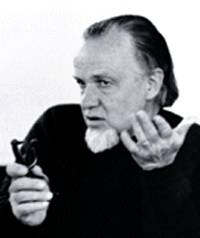
File:Francis Schaeffer.jpg

Francis Schaeffer.

Past Failures and Future Resolves 
in the Battle for Human Life

By Wesley Strackbein

America’s holocaust continues.

Today more than 3,000 children will be murdered in the womb through surgical abortion. These dead children will be heaped on the more than 54 million others who have preceded them since the darkest day in American legal history which occurred when the Roe v. Wade decision was rendered by the U.S. Supreme Court. Forty years ago today, our nation’s highest court legally sanctioned the killing of the unborn.

As we consider this bloody slaughter, it behooves us to ask three key questions: How did Roe v. Wade come about? What has been the Church’s response over the last forty years? And, where do we go from here?

The Legal Backdrop for Roe: 
The Abandonment of Original Intent

In examining America’s legal history, it is clear that Roe v. Wade did not arise out of a vacuum. The decision flowed from a legal trend that had been in motion for more a hundred years in which the meaning of the U.S. Constitution was being increasingly redefined based on the view that it was an “evolving document.” Rather than defending its original intent as envisioned by the drafters of the Constitution, the black robed judges who presided over our nation’s courts were interpreting it to suit their own personal notions of what they deemed best for society.

This trend is pointedly illustrated in a seminal case that the Supreme Court handed down in 1965, eight years before Roe was decided — Griswold v. Connecticut.

Doug Phillips, a constitutional attorney and the founder of Vision Forum Ministries, notes the significance of this earlier landmark decision: “You cannot understand Roe unless you understand Griswold, and you cannot understand Griswold unless you understand the changing nature of judicial interpretation.”

In Griswold v. Connecticut, the Supreme Court struck down a law which forbade contraception use on the basis of “the right to privacy,” a doctrine found nowhere in the Constitution, yet one the justices derived from the “penumbras” and “emanations” of the document.

Phillips explains the Court’s strategy in invoking these terms in Griswold:

[The court] is speaking of little glowing halos around the broad-sweeping principles that are somehow emitted from the Constitution. In point of fact, they are telling us there is nothing in the Constitution that grants ‘the right to privacy,’ but it sure seems like it should be there. . . . What happened in Griswold laid the groundwork for Roe and the murder of unborn children.

The Hammer Falls: 
“Unborn Children are Not Persons”

The case of Roe v. Wade involved a suit made on behalf of Norma McCorvey (under the alias of “Jane Roe ”) who was unable to secure an abortion in Texas based on the state’s law at the time. While she had already given birth to her child by the time the case was heard, the Supreme Court ruled in favor of McCorvey on appeal in a 7-2 decision, invoking the “right of privacy” rationale that had been invented in Griswold.

While the Court was less than confident in defending the “right of privacy” doctrine from the Constitution itself, it nonetheless expanded it to include the right of a mother to murder her unborn child. In writing the majority opinion for the court, Justice Harry Blackmun stated:

[The] right of privacy, whether it be founded in the Fourteenth Amendment’s concept of personal liberty and restrictions upon state action, as we feel it is, or . . . in the Ninth Amendment’s reservation of rights to the people, is broad enough to encompass a woman’s decision whether or not to terminate her pregnancy.

Even as the justices in the majority invoked the Fourteenth Amendment as a purported “source” for the so-called “right to privacy,” the Supreme Court did an in-run around the Amendment’s Equal Protection Clause — which stipulates that “no state shall . . . deny to any person within its jurisdiction the equal protection of the laws” — by denying the personhood of children in the womb.

Blackmun wrote: “the word ‘person,’ as used in the Fourteenth Amendment, does not include the unborn.”

Justice Byron White and William Rehnquist — the two judges who opposed the decision — took the majority’s reasoning to task in their dissent:

I find nothing in the language or history of the Constitution to support the Court’s judgment. The Court simply fashions and announces a new constitutional right for pregnant women and, with scarcely any reason or authority for its action, invests that right with sufficient substance to override most existing state abortion statutes.

The Cultural Landscape: 
A Weak and Abdicated Church

Though the legal trends that lead to Roe v. Wade are important to examine, even more important is where the Church was during this time.

Dan Becker, President of Georgia Right to Life and Field Director of Personhood USA, puts the matter bluntly: “How did [Roe] come about? It came about because of the absence of the Church.”

Doug Phillips agrees:

The Church completely abdicated from speaking to the legal, ethical, and biblical principles that apply to culture and to law. When Roe was ultimately declared by the Court, many Evangelical Christians had nothing to say to it, because they didn’t have a biblical worldview. For more than a century, the Church had increasingly resorted to a form of religious pietism which had no practical application to life and important cultural issues. The result was lamentable — the withdraw of the Church from every area of society meant the demise of our culture and our law system.

Dr. George Grant, a pro-life advocate who has written prolifically in defense of the unborn, offers a similar view.

As the Church, Grant states, “we were not preaching the Word of God, we were not training and equipping disciples, we were not reinforcing and strengthening the family and the other spheres.”

This led, argues Grant, to “a Church that had so marginalized itself intellectually and culturally that it was constitutionally incapable of speaking to the problems [of the day] articulately. That set up Roe v. Wade.”

Delving deeper, Phillips points to the blights of social Darwinism, utilitarianism, and radical feminism as key cultural forces that paved the way for Roe.

While the Church, for example, has historically embraced the sanctity of life from conception to death and welcomed children as a blessing, American Evangelicals in the twentieth century forsook these roots for a selfish course rooted in humanistic, evolutionary theory. Phillips observes:

The Church embraced the basic tenets of Margaret Sanger’s vision for the eugenic age which said that some people life is not worth living; that men can lawfully manipulate their reproduction; and that some babies shouldn’t be brought into this world.

One result attending this shift was that, by the middle decades of the twentieth century, mainline evangelical churches had embraced contraceptive use as a legitimate practice. In 1960, the Church accepted use of the Pill, which is known to act as an abortifacient. This occurred despite the fact that, prior to the last century, the orthodox Church has universally condemned contraceptive use as a selfish perversion of God’s design for human intimacy between husband and wife.

To paraphrase Hosea’s indictment: We sowed the wind — and when Roe was handed down on January 22, 1973 — we reaped the worldwind.

The Church Awakes: 
Whatever Happened to the Human Race?

Though the pall of death loomed over America’s unborn with the Roedecision, the Evangelical Church was not quick to wake from its slumber. While Roman Catholics were faster on point in the battle over the sanctity of human life, Protestants throughout the ’70s largely stayed on the sidelines.

Many longstanding leaders in the pro-life movement who are still active today credit Francis Schaeffer as a key prod who prompted Protestants to enter the fight. Dr. George Grant notes the significance of Schaeffer’s 1979 book and accompanying video, Whatever Happened to the Human Race?, which confronted the issues of abortion, euthanasia, and infanticide; as well as Schaeffer’s best-selling book, A Christian Manifesto, released in 1981, as works that spurred many Evangelicals to engage the arena in defense of life.

Dan Becker of Georgia Right to Life offers these comments:

“Francis Schaeffer was the one who brought most of the evangelical church to the pro-life movement itself back in the early ’80s. It was totally absent from the culture completely, prior to anything having to do with the sanctity of life. It wasn’t on the radar of [most] churches” until Schaeffer brought it to their attention.

Jim Zes, a Reformed Baptist who has been fighting for the sanctity of life for many years in the St. Louis area, remembers a billboard Schaeffer took out in a major Florida city that said, in essence, “Abortions clinics are open with permission by the Church of Jesus Christ.”

Schaeffer’s salvo on the Church’s lethargy is a theme that has motivated Zes to remain engaged in this battle for the long haul.

The Roaring ’80s: 
Progress and Compromise

As the ’80s progressed, pro-life Evangelicals gained more traction, notoriety, and influence. 1988 was a particularly noteworthy year for the movement on several fronts. On the fifteenth anniversary of Roe, Dr. George Grant published Grand Illusions, an earth-shattering expose of the legacy of Planned Parenthood that became a best-seller which has since been reissued in numerous languages and editions.

Also that year, Operation Rescue, under Randall Terry’s leadership, staged a series of controversial abortion clinic blockades in Atlanta, Georgia, surrounding the Democratic National Convention which resulting in more than 1,200 arrests.

Yet while the pro-life movement gained remarkable ascendancy and public awareness at this time, it was during this same general period that the movement on the whole took a turn for the worse, in terms of its core commitments.

The derailment occurred in conjunction with proposed changes to the Hyde Amendment, which since 1976 had banned federal Medicaid funding for abortion. In 1981, pro-lifers strenuously fought for rape, incest, and health of the mother exceptions of the mother to be dropped from the Hyde Amendment and won. Throughout the ’80s, the advocacy of such exceptions was deemed unacceptable by the major pro-life organizations, both Catholic and Protestant.

However, as the ’80s were coming to a close, the debate over the Hyde Amendment was reopened on Capitol Hill, and the exceptions of rape and incest came to the fore of the discussion.

“This led to a debate within the [pro-life] movement about whether or not it would damage the underlying presupposition that all life is sacred and should be protected as an inalienable right,” notes Dan Becker.

In a radical departure, the U.S. Conference of Catholic Bishops, the National Right to Life Committee, and other leading pro-life organizations signed off on the changes and created a “new normal” of what it means to be pro-life — that a politician or other operative in the political arena can support the murder of one category of children and still be deemed “pro-life.”

Looking back on this titanic sea-change, Becker notes the fall-out that resulted: “By abandoning the basic Christian premise of imago Dei, we invited a pragmatism based on natural law. We compromised and capitulated to the point in the pro-life movement where it became ineffectual—both politically and as a preservative agent as salt.”

Becker explains the folly of the rape and incest exception according to God’s law, a principle long recognized in English common law:

Deuteronomy 24:16 says that a child shall not be put to death for the crimes of its father. That means that if a rapist commits an act of violence against a woman, and she conceives, we [must] protect that child, and we [must] advocate that that child should not pay the penalty for its father’s sin.

In assenting to the Hyde Amendment exceptions, a Pandora’s box of compromise was opened. From it came a broader unbiblical strategy that included support of parental notification laws, 24-hour waiting periods, and various other legislation that conceded the premise of the debate.

Pro-lifers were now supporting bills which said in so many words, “You can kill your child, so long as your parents approve; you can kill your child, so long as you wait 24 hours before the knife falls.”

Incrementalism: The Good and the Bad

Many critical of such compromises don’t suggest that incrementalism in the fight for of life is wrong in all cases, but that incrementalism should only be pursued when the core principles of the sanctity of all human life are maintained, not undermined.

Doug Phillips remarks: “If we can pass pro-life laws that don’t ratify the foundation of abortion’s ‘lawfulness,’ or reinforce the wickedness of abortion as a practice, this is something worth pursuing.”

Dan Becker notes that creating tension over competing legal precedents has warrant when done on the right terms: “You can identify a class of human life that you can protect, as long as you don’t name a physical class that you won’t protect, and therefore become complicit.”

In considering positive examples of incrementalism, Dr. Grant commends William Wilberforce for consideration: “When you look at the incrementalism strategies of someone like a Wilberforce . . . the incrementalism reforms were never couched in such a way as to concede the original premise.”

Grant also highlights the wrong approach to incrementalism that officials in Amsterdam took in response to prostitution, “They said we are not going to be able to ban prostitution, so we’ll isolate it and stigmatize it. So what happens then is that it becomes a tourist attraction. You can’t concede the premise of an opponent’s argument.”

Phillips warns of the danger of so-called “victories” that concede the foundation:

The idea that we are accomplishing a victory by ratifying the execution of children on the condition that the mother or father of the baby have sort of warning of the emotional or psychological effect that may occur if they murder their child, or that a cancerous effect may result — that it’s okay to kill as long as we “notify” — is simply horrific. It’s an ethical nightmare which reinforces the very thing we are fighting against.

Score-Card Gamesmanship: 
Pro-Death is the New Pro-Life

A prominent feature of the compromised political strategy employed by Evangelical pro-life groups is how they have score-carded candidates on the issues.

The National Right to Life Committee has been particularly notorious in this regard. The NRLC, for example, endorsed Republican presidential candidates Sen. John McCain and Gov. Mitt Romney as “pro-life” when their past track records as well as contemporary statements provided no defensible basis for such recognition. Both McCain and Romney have consistently supported the murder of children conceived by rape and incest, and have vocally advocated weakening the Republican Party Platform on abortion, among other troubling actions on their part that have threatened the sanctity of life.

But it’s not just presidential races where National Right to Life has gone askew. Last year, the NRLC got well-deserved blowback from the Boston Globe when they spent $45,000 sending out mailers in support of Sen. Scott Brown, who openly supports legalized abortion.

Globe columnist Yvonne Abraham leveled the boom on NRLC: “Even though Brown has been loudly proclaiming that he favors abortion rights, the antiabortion group gave him a 100 percent rating in his first year as a senator, and an 80 percent rating in his second. And it continues to shower him with paper roses.”[1]

The flier that the NRLC mailed in support of Sen. Brown showed a picture of a fetus, a little baby, and an older woman. The flier’s headline was hardly subtle: “It’s time to take America back. . . for LIFE!”[2]

When confronted on this hypocrisy, David O’Steen, executive director of the National Right to Life, admitted that the NRLC sometime supports candidates who favor legalized abortion.

“He is pro-choice,” O’Steen stated. But “if you look at the two candidates, Elizabeth Warren’s position is very extreme. She can only be characterized as pro-abortion.”[3]

Dr. George Grant comments on this trend which he has observed for more than two decades.

The reality is that Al Gore was never pro-life. When he was a [U.S.] rep and then a Senator [from Tennessee], he was never the pro-life, southern Conservative he was made out to be,” who then “converted” to become pro-choice when he was tagged to run as Bill Clinton’s running mate in 1992.

“It was the silly scorecards that took such a shallow representations of [Gore’s] voting record and declared him to be pro-life,” remarks Grant. “But he was always . . . rooted in Bismarkian, Nietzschean, real politick.”

The way a policy group scores candidates reveals their priorities, Grant maintains.

“Most scorecards emerge from institutions that have agendas, and the scorecards usually say more about the agenda of the organization than the candidates themselves,” he notes. “The onus is on pastors to inform their congregations that this is the case.”

This said, Grant does see some value in scorecards, but encourages them to be used only as a first to step getting an education about a particular candidate or candidates, as they have inherent limitations.“There are always hazards to any kind of shorthand, any kind of abbreviated declaration.”

Doug Phillips argues that policy groups should stop misleading others about candidates’ positions when life is at stake and simply tell the truth. “What we need to be saying is not, ‘This candidate is pro-life with exceptions; but this candidate is pro-death with exceptions. This person believes that it’s okay to kill some babies, but not all of them.’”

Appealing to the fundamentals, Phillips offers this as the benchmark in endorsing candidates for public office:

We should never support a candidate who supports the murder of any children through abortion. And until our candidates know that, they are going to keep saying and doing only as much as they have to in order to appease us.

Back on Track: 
Saving the 100, Not Just the 99

Despite negative trends among various leading pro-life groups, the leadership of a number of state organizations has openly repented of past compromise and purposed to return to biblical foundations and definitions in the battle for human life.

Among them is Georgia Right to Life who, in the year 2000, jettisoned the “rape and incest exception” as an acceptable “pro-life” position and has self-consciously sought to return the national debate back to the foundational argument of “personhood” that was a main focus of the pro-life movement prior to the Hyde Amendment compromise.

Tennessee and Alabama’s pro-life groups have followed suit in rejecting “rape and incest exception” in their candidate endorsement policy.

Dan Becker, who is the current president of Georgia Right to Life, notes the blessing that has occurred since GRL made this change twelve years ago.

“Georgia is the only state in the nation where all nine statewide offices that are elected by the voters statewide are pro-life without exception,” he observes. “We have gone from the 50th most protected state in the nation to the 9th.”

Becker adds this salvo: “No longer do we say, ‘We’re going to save the 99 and pray for the 1.’ We’re going to save all 100.”

While GRL’s position is not without major detractors in the movement, Becker is positive about the opportunities that their stand for principle has opened up for them.

“We are impacting the movement in ways that are exciting, new, and effective,” he remarks. “I’ve [now] been tasked to implement the Georgia model in other states. The [fight for personhood] is the new paradigm of pro-life activity for the 21st Century.”

Personhood Is the Battle: 
The Challenges that Lie Ahead

Becker’s insistence that “personhood” return to the center of the debate is based squarely on principle — yet it also anticipates the future horrors on the horizon that will come if this standard is not thoroughly defended and upheld. And the battleground, Becker maintains, is far broader than simply abortion.

“Because we’ve only been anti-abortion — instead of thoroughly defending the doctrine of imago Dei [in all that it entails] — we are only operating on one cylinder, while the culture is running on twelve cylinders,” Becker notes.

He then explains the implications:

We have ceded a lot of battleground in the emerging technologies and on the issue of personhood for the elderly. Because of the burgeoning [aging Baby Boomers], we will see the fight for personhood become increasing important for the elderly, as their personhood is denied through rationed healthcare decisions that define who is protected under the law and who is not.

Great challenges already exist in the field of genetics, as arguments for trans-humanism are being advanced by medical practitioners and ethicists who deny that man is created in God’s image with certain inherent limitations that he, as a creature, is not free to manipulate.

“’When are we human?’ is being debated — what is a human being? — the definition is up for grabs right now,” remarks Becker. “What if we’re okay with trans-genic animal/human hybrids, and we start tinkering with that in our law to allow for it?”

He also comments on the popularity of Spiderman, the Hulk, Ironman, etc. and states that the genetic-manipulation and “enhancements” of these Comic Book icons so popular on the big screen reflect part of a real, raging debate in academia that is hardly fiction.

As complicated and thorny as all of this is, Becker argues that the answer at its core is really quite simple.

“It’s the doctrine of imago Dei,” he says. “As a culture and as a political system . . . [we must call on all] to recognize what God has already granted — an inalienable right to life based on the doctrinal teaching we have understood that has shaped Western history two or three times over the last two thousand years.”

A Blueprint for Victory: 
Humble Repentance for Our Sins

The last forty years have been one of horror and bloodshed for the unborn.

The question now is: Where do we go from here?

Dr. George Grant asserts that the Evangelical Church must begin by getting its priorities straight.

Commenting on the recent Newtown massacre, he laments, “More Christians are concerned that their Second Amendment gun rights are being taken away than seeing the inconsistencies in this rhetoric, given the murder today of 3,300 children, and tomorrow of 3,300 children, and the next day of 3,300 children.”

Jim Zes emphasizes the need for the Church to not only focus on missions of mercy, such as crisis pregnancies centers and adoption — both of which play an important role in Christian outreach — but for the Church to reclaim its prophetic voice and, once again, call good, “good” and evil “evil” and to confront the culture courageously.

Zes says we must affirm God’s law as the standard as part of a clear Gospel message of repentance and hope.

Dr. Grant agrees with this assessment, but says our voice of confrontation to the culture should only sound once we as the Church confess our own sins and repent. “The need in our day is to not so much practice Jeremiads, but Nehemiads.”

He then explains the quandary. “There’s much to lament; there’s much to critique in our culture,” he confesses. “[Y]et the Church is in no position to give our culture Jeremiads because we are so compromised. We can’t give Jeremiads of substance because we are guilty of virtually anything we might lament.”

Our first step, Grant asserts, is for Christians “to come to the ruin and cry out to Almighty God in all humility, as Nehemiah does in Nehemiah 1, and get busy with the hard work of cleaning up the rubble.”

Grant’s main point is this: We can’t take our axe to the culture’s idols until we’ve cleaned up our own house.

Doug Phillips offers these sobering words in closing the discussion: “How can we possibly expect to win the battle for life when we are killing our own children in the womb through abortifacient contraception-when we’re refusing to take an uncompromising stand for all of life?”

Hosea’s pointed words are timely for today’s wayward Church:

Come, and let us return unto the LORD: for he hath torn, and he will heal us; he hath smitten, and he will bind us up. . . . Then shall we know, if we follow on to know the LORD: his going forth is prepared as the morning; and he shall come unto us as the rain, as the latter and former rain unto the earth.” (Hosea 6:1-3)

As we battle for the sanctity of all human life, we as the Church must forsake our wickedness, fall on our face in humility, and repent.

Only then should we expect God’s favor on our land.

[1] Yvonne Abraham, “Senator Brown trying to have it both ways,” Boston Globe, October 28, 2012.
[2] Noah Bierman, “Antiabortion group sends out mailers for Scott Brown, who favors legalized abortion,” Boston Globe, October 25, 2012.
[3] Ibid.

__________

_____________

Related posts:

“Sanctity of Life Saturday” Liberals at Ark Times can not stand up to Scott Klusendorf’s pro-life arguments (Part 4) Liberal blogger says “…you don’t get to force your beliefs on me (concerning abortion)…”

I just wanted to note that I have spoken on the phone several times and corresponded with Dr. Paul D. Simmons who is very much pro-choice. (He is quoted in the article below.) He actually helped me write an article to submit to Americans United for the Separation of Church and State back in the […]

Pro-life Pamphlet “ABORTION: AVENUES FOR ACTION ” was influenced by Koop and Schaeffer

Pro-life Pamphlet  “ABORTION: AVENUES FOR ACTION ” was influenced by Koop and Schaeffer Francis Schaeffer Whatever Happened to the Human Race (Episode 1) ABORTION Francis Schaeffer “BASIS FOR HUMAN DIGNITY” Whatever…HTTHR I read lots of Francis Schaeffer and Dr. C. Everett Koop’s books and watched their films in the late 1970’s and early 1980’s as did […]

Pro-life Pamphlet “The Crime Of Being Alive Abortion, Euthanasia, & Infanticide” was influenced by Koop and Schaeffer

Pro-life Pamphlet “The Crime of Being Alive: Abortion, Euthanasia, & Infanticide” was influenced by Koop and Schaeffer   Francis Schaeffer Whatever Happened to the Human Race (Episode 1) ABORTION Francis Schaeffer “BASIS FOR HUMAN DIGNITY” Whatever…HTTHR I read lots of Francis Schaeffer and Dr. C. Everett Koop’s books and watched their films in the late […]

“Schaeffer Sunday” Abortion debating with Ark Times Bloggers Part 7 “Deitrick Bonhoeffer took up for those who had been declared non-persons by the state”(includes video “Slaughter of the Innocents” and editorial cartoon)

I have debated with Ark Times Bloggers many times in the past on many different subjects. Abortion is probably the most often debated subject and I have noticed that many pro-life individuals are now surfacing on the Arkansas Times Blog.  Here are some examples. Arhogfan501 asserted: This is the beginning of the end for recreational abortion […]

“Sanctity of Life Saturday” Abortion debating with Ark Times Bloggers Part 7 “Deitrick Bonhoeffer took up for those who had been declared non-persons by the state”(includes video “Slaughter of the Innocents” and editorial cartoon)

  I have debated with Ark Times Bloggers many times in the past on many different subjects. Abortion is probably the most often debated subject and I have noticed that many pro-life individuals are now surfacing on the Arkansas Times Blog.  Here are some examples. Arhogfan501 asserted: This is the beginning of the end for recreational […]

“Schaeffer Sunday”: “Is abortion really murder?” (includes film DEATH BY SOMEONE’S CHOICE)

Is abortion murder? Here is an article from England that quotes Francis Schaeffer on that subject. Is abortion really murder? compiled by Jim Dowson (B.Th MA) and Dr Ted Williams (FFPHM) The latest abortion figures in the UK are truly shocking.  Over 170,000 abortion per year, despite the fact that the birth rate is so […]

Open letter to President Obama (Part 543) Pro-Life Groups Elated After Abortion Doc Gosnell Convicted of Murder

Open letter to President Obama (Part 543) (Emailed to White House on 5-17-13.) President Obama c/o The White House 1600 Pennsylvania Avenue NW Washington, DC 20500 Dear Mr. President, I know that you receive 20,000 letters a day and that you actually read 10 of them every day. I really do respect you for trying to get […]

Debating Kermit Gosnell Trial, Abortion and infanticide with Ark Times Bloggers Part 12 Matthew Franck: “Kermit Gosnell has been the equivalent of the American slave-dealer—someone who has done work rendered absolutely necessary by the twisted laws of his regime, but who has nevertheless been ignored or regarded with unease, and even repulsion, by his fellow citizens”

Surgeon General of the United States In office January 21, 1982 – October 1, 1989 President Ronald Reagan George H. W. Bush Francis Schaeffer Founder of the L’Abri community Born Francis August Schaeffer January 30, 1912 Died May 15, 1984 (aged 72) I truly believe that many of the problems we have today in the USA are […]

Debating Kermit Gosnell Trial, Abortion and infanticide with Ark Times Bloggers Part 8

Surgeon General of the United States In office January 21, 1982 – October 1, 1989 President Ronald Reagan George H. W. Bush Francis Schaeffer Founder of the L’Abri community Born Francis August Schaeffer January 30, 1912 Died May 15, 1984 (aged 72) I truly believe that many of the problems we have today in the USA are […]

Abortion debating with Ark Times Bloggers Part 7 “Deitrick Bonhoeffer took up for those who had been declared non-persons by the state”(includes video “Slaughter of the Innocents” and editorial cartoon)

I have debated with Ark Times Bloggers many times in the past on many different subjects. Abortion is probably the most often debated subject and I have noticed that many pro-life individuals are now surfacing on the Arkansas Times Blog.  Here are some examples. Arhogfan501 asserted: This is the beginning of the end for recreational abortion […]

________________

A Review of Stephen and Jane Hawking story THE THEORY OF EVERYTHING PART 4

_________________________________

A Review of Stephen and Jane Hawking story THE THEORY OF EVERYTHING PART 4

The Theory of Everything Official Trailer #1 (2014) – Eddie Redmayne, Felicity Jones Movie HD

The Theory of Everything Movie CLIP – Keep Winding (2014) – Eddie Redmayne Movie HD

The Theory of Everything Movie CLIP – You Don’t Know What’s Coming (2014) – Felicity Jones Movie HD

The Theory of Everything Movie CLIP – My Name is Stephen Hawking (2014) – Eddie Redmayne Movie HD

The Theory of Everything Movie CLIP – Blink to Choose (2014) – Felicity Jones Movie HD

The Theory of Everything Official Trailer #2 (2014) HD


I saw this movie the other day and I enjoyed it very much. I have posted many things in the past that refer to Stephen Hawking and his works. My favorite review had this quote below in it.

Much can be said about the brilliance of Stephen Hawking’s mind and how he has survived so many years with MND. Spiritually speaking, could it be that God is giving Stephen time? Time to come to know Him and that, beyond all Stephen’s theories, God is profoundly the Great I Am.

I wish Stephen Hawking to take time to read the work of Dr. Henry F. Schaefer. He speaks of Jane and Stephen in his work.

Below is a video clip with a review of THE THEORY OF EVERYTHING.

The Theory of Everything (Starring Eddie Redmayne) Movie Review

Published on Nov 6, 2014

The Theory of Everything starring Eddie Redmayne, Felicity Jones, and David Thewlis is reviewed by Alonso Duralde (TheWrap and Linoleum Knife podcast), Christy Lemire (www.ChristyLemire.com), and William Bibbiani (Crave Online).

See what other critics are saying: http://www.rottentomatoes.com/m/the_t…

Starring Eddie Redmayne (“Les Misérables”) and Felicity Jones (“The Amazing Spider-Man 2”), this is the extraordinary story of one of the world’s greatest living minds, the renowned astrophysicist Stephen Hawking, who falls deeply in love with fellow Cambridge student Jane Wilde. Once a healthy, active young man, Hawking received an earth-shattering diagnosis at 21 years of age. With Jane fighting tirelessly by his side, Stephen embarks on his most ambitious scientific work, studying the very thing he now has precious little of – time. Together, they defy impossible odds, breaking new ground in medicine and science, and achieving more than they could ever have dreamed. The film is based on the memoir Travelling to Infinity: My Life with Stephen, by Jane Hawking, and is directed by Academy Award winner James Marsh (“Man on Wire”). (c) Focus

http://twitter.com/ChristyLemire
http://twitter.com/AlonsoDuralde
http://twitter.com/WilliamBibbiani

Support What The Flick?! for FREE by doing your Amazon shopping through this link (bookmark it!) http://www.amazon.com/?tag=whatthefli…

  • Category

  • License

    • Standard YouTube License
    • _____________________

_____________
Stephen Hawking book reveals ‘anguish’ of his two marriages
Steven Hawking
First wife moved her lover into his flat, prompting him to start ‘tempestuous’ relationship with nurse
LAST UPDATED AT 12:21 ON Mon 9 Sep 2013

STEPHEN HAWKING has described the anguish triggered by the collapse of his first marriage and the “bitter acrimony” of his second.

The Cambridge cosmologist The Independent calls “the most famous scientist in the world”, has opened up about his marital life for the first time in My Brief History, an autobiography to be published on Thursday. It details the “personal trauma” of his life with his first wife, Jane Wilde, and his “passionate and tempestuous” relationship with his nurse and second spouse, Elaine Mason.

Hawking, 71, met Wilde when they were both students at Oxford University. He says she lifted him out of a deep depression when he was first diagnosed with motor neurone disease, providing hope of a future life and family.

But Wilde also succumbed to depression after the birth of their third child in 1979, finding it “difficult to cope with the demands of a young family and a husband confined to a wheelchair,” The Independent reports. Seeking someone who would marry her and look after her children after Hawking died, she met a musician called Jonathan Jones and “installed” him in a room in the apartment she shared with Hawking.

“I would have objected, but I too was expecting an early death and felt I needed someone to support the children when I was gone,” writes Hawking in My Brief History.

The situation gradually deteriorated. “In the end I could stand the situation no longer, and in 1990 I moved out to a flat with one of my nurses, Elaine Mason,” writes Hawking.

He describes his relationship with Mason – whom he married in 1995 and divorced 12 years later – as “passionate and tempestuous”. In 2004, the Daily Mail reported that police had questioned Hawking about claims that his second wife was abusing him. One of his nurses alleged that Elaine Hawking called her husband a cripple, bathed him in water that was too hot and allowed him to wet himself.

At the time, Hawking described the allegations as “completely false”, a position he reiterates in My Brief History. He admits that he and Elaine had their “ups and downs”, but says her medical training “saved my life” on more than one occasion.

In his book, Hawking reveals how he bought the last three speech synthesisers made by the Californian company Speech Plus when it went bust. He snapped up the devices as back-ups because “I identify with the voice and it has become my trademark”. ·

Read more: http://www.theweek.co.uk/uk-news/55031/stephen-hawking-book-reveals-anguish-his-two-marriages#ixzz3LR3DiSXy


xxxxxxxxxxxxxxxxxxxxxx

The Theory of Everything Featurette – Eddie Redmayne’s Transformation (2014) – Movie HD

Eddie Redmayne gets critique from Stephen Hawking

Published on Nov 2, 2014

Rising British star Eddie Redmayne, who plays Stephen Hawking in the movie ‘The Theory of Everything’, recalls the nerve-racking meeting with Hawking himself and talks about the transformation he went through portraying the iconic physicist.

‘The Theory Of Everything’ Cast On Meeting Steven Hawking | TODAY

The Theory of Everything Movie Review – Beyond The Trailer

Published on Oct 18, 2014

The Theory of Everything movie review! Beyond The Trailer host Grace Randolph shares her review aka reaction today for this 2014 movie!
http://bit.ly/subscribeBTT

The Theory of Everything Movie Review. Beyond The Trailer host Grace Randolph gives you her own review aka reaction to The Theory of Everything starring Eddie Redmayne as Stephen Hawking and Felicity Jones as his wife Jane! Will this movie be a big contender for nominations at the 2015 Oscars?! Would you be wise to factor it into your predictions?! Should you see the full movie? Enjoy The Theory of Everything in 2014, and make Beyond The Trailer your first stop for movie news, trailer and review on YouTube today!

Interact with host & creator Grace Randolph!
Facebook: http://bit.ly/GraceOnFacebook
Twitter: http://bit.ly/GraceOnTwitter
Google+: http://bit.ly/HQ6kVs

_________________________________________

The Theory of Everything Movie Review – Just Seen It

Published on Oct 27, 2014

Stephen Hawking is studying to be a physicist when he falls in love with a student named Jane. But when he is diagnosed with a debilitating illness, his life is forever altered. But the power of love unlocks one of the most brilliant minds of the twentieth century.

Starring Felicity Jones, Eddie Redmayne, and Charlie Cox.
Directed by James Marsh.
Written by Anthony McCarten and Jane Hawking.
Produced by Tim Bevan, Lisa Bruce, Eric Fellner, and Anthony McCarten.
Genre: Biography, Drama.

Aaron, Salim, and Leah discuss the new biopic that tells the story of the brilliant Stephen Hawking and his wife, Jane.

Starring Aaron Fink, Salim Lemelle, and Leah Aldridge.
Directed by Erik Howell.
Edited by Stephen Krystek.
Produced by David Freedman, Cooper Griggs, Kevin Taft, Amy Taylor, Pedro Lemos, and Aaron Fink.
Sound Design by Aaron Fink and Andrew Grossman.

_______________________

The Theory of Everything Movie Review (Schmoes Know)

Published on Nov 6, 2014

HELP US GET TO 1,000 LIKES- PLEASE RATE-COMMENT- SUBSCRIBE ON ITUNES: https://itunes.apple.com/us/podcast/s
SUBSCRIBE to SK NETWORK CHANNEL: http://www.youtube.com/schmoesknowpod
Watch the show LIVE on Thursdays: 6PM-8PM PST: http://www.schmoesknow.com
Twitter: http://www.twitter.com/schmoesknow
FB: http://www.facebook.com/schmoesknow
Watch Kristian & Mark on AMC Movie Talk: https://www.youtube.com/user/amctheatres
Schmoes on Twitter: http://www.twitter.com/schmoesknow

Kristian and special guest Alicia Malone discuss “The Theory of Everything”, the new Stephen Hawking biopic getting serious Oscar buzz for star Eddie Redmayne…how did the kids feel about the flick? Find out now and comment with your take!

___________

Related posts:

CSICOP experts commented 15 years ago on a lie-detector’s ability to detect one’s repressed belief in God!!!!

In the book, THE DEMON-HAUNTED WORLD: Science as a Candle in the Dark by Carl Sagan.  Sagan writes: The Committee for the Scientific Investigation of Claims of the Paranormal is an organization of scientists, academics, magicians, and others dedicated to skeptical scrutiny of emerging or full-blown pseudo-sciences. It was founded by the University of Buffalo philosopher Paul […]

THE DEMON-HAUNTED WORLD: Science as a Candle in the Dark by Carl Sagan. New York: Random House, 1995. 457 pages, extensive references, index. Hardcover; $25.95. PSCF 48 (December 1996): 263.

_____________ THE DEMON-HAUNTED WORLD: Science as a Candle in the Dark by Carl Sagan. New York: Random House, 1995. 457 pages, extensive references, index. Hardcover; $25.95. PSCF 48 (December 1996): 263. Sagan is the David Duncan Professor of Astronomy and Space Sciences at Cornell University. He is author of many best sellers, including Cosmos, which […]

The Secular Attack on Christianity By: Dr. Paul Kurtz, Dr. Norman Geisler; ©1986

___________________ I really enjoyed this program when I saw it in 1986. The Secular Attack on Christianity/Program 6 < The Secular Attack on Christianity By: Dr. Paul Kurtz, Dr. Norman Geisler; ©1986 How could anybody challenge me to perform something self-sacrificing, ever, if I believe that I am the product of chance, plus time, plus the impersonal, […]

Roy Abraham Varghese: New Atheists’ fall for fallacy of LOGICAL POSITIVISM (Richard Dawkins Interview Ricky Gervais About Atheism!)

Richard Dawkins Interview Ricky Gervais About Atheism! _________ Antony Flew – World’s Most Famous Atheist Accepts Existence of God Uploaded on Nov 28, 2008 Has Science Discovered God? A half-century ago, in 1955, Professor Antony Flew set the agenda for modern atheism with his Theology and Falsification, a paper presented in a debate with C.S. […]

Did Antony Flew include George Wald quote after listening to cassette tape I sent him in late 1990s?

____________ Does God Exist? Thomas Warren vs. Antony Flew Published on Jan 2, 2014 Date: September 20-23, 1976 Location: North Texas State University Christian debater: Thomas B. Warren Atheist debater: Antony G.N. Flew For Thomas Warren: http://www.warrenapologeticscenter.org/ ______________________ Antony Flew and his conversion to theism Uploaded on Aug 12, 2011 Antony Flew, a well known spokesperson […]

Carl Sagan’s search for the of meaning of life

________________

The argument from design led former atheist Antony Flew to assert: “I must say again that the journey to my discovery of the Divine has thus far been a pilgrimage of reason, and it has led me to accept the existence of a self-existent, immutable, immaterial, omnipotent, and omniscient Being!”

  ____________ Jesus’ Resurrection: Atheist, Antony Flew, and Theist, Gary Habermas, Dialogue Published on Apr 7, 2012 http://www.veritas.org/talks &#8211; Did Jesus die, was he buried, and what happened afterward? Join legendary atheist Antony Flew and Christian historian and apologist Gary Habermas in a discussion about the facts surrounding the death and resurrection of Jesus Christ. Join […]

Bill Muehlenberg’s review of “There Is a God” By Antony Flew

_________________   Antony Flew on God and Atheism Published on Feb 11, 2013 Lee Strobel interviews philosopher and scholar Antony Flew on his conversion from atheism to deism. Much of it has to do with intelligent design. Flew was considered one of the most influential and important thinker for atheism during his time before his […]

Ecclesiastes: Philosophical Atheist, Before you Commit Suicide Read Ecclesiastes (Quotes Sharon Rocha, Erik Wielenberg, the Declaration of Independence, Stephen Hawking, and Alan Sandage)

Ecclesiastes 1 Published on Sep 4, 2012 Calvary Chapel Spring Valley | Sunday Evening | September 2, 2012 | Pastor Derek Neider _____________________ I have written on the Book of Ecclesiastes and the subject of the meaning of our lives on several occasions on this blog. In this series on Ecclesiastes I hope to show how […]

Stephen C. Meyer:Does morality presuppose God’s existence?

Morality Presupposes Theism (1 of 4) Uploaded by philosophyreligion on Oct 15, 2010 Dr. Stephen C. Meyer argues that in order to make sense of morality you must presuppose the existence of God. Table of Contents:http://www.youtube.com/view_play_list?p=B324A88301858151____________________________   Below is more on the bio of Stephen C. Meyer: Dr. Stephen C. Meyer Stephen C. […]

RC Sproul and Stephen C. Meyer discuss evolution

RC Sproul Interviews Stephen Meyer, Part 1 of 5 Uploaded by LigonierMinistries on Mar 2, 2010 RC Sproul sits down with Stephen Meyer, author of the book, “Signature in the Cell”, and they discuss philosophy, evolution, education, Intelligent Design, and more.   Below is more on the bio of Stephen C. Meyer: Dr. Stephen C. […]

Wintery Knight’s reflections on Carroll v. Craig Debate

__________ “God and Cosmology” William Lane Craig and Sean Carroll – 2014 Greer Heard Forum Published on Mar 3, 2014 For more resources visit:http://www.reasonablefaith.org On Friday, February 21st, 2014, philosopher and theologian, Dr William Lane Craig, was invited by the Greer Heard Forum to debate Dr Sean Carroll, an atheist theoretical physicist. The topic […]

Some Reflections on the Sean Carroll Debate

__________ “God and Cosmology” William Lane Craig and Sean Carroll – 2014 Greer Heard Forum Published on Mar 3, 2014 For more resources visit:http://www.reasonablefaith.org On Friday, February 21st, 2014, philosopher and theologian, Dr William Lane Craig, was invited by the Greer Heard Forum to debate Dr Sean Carroll, an atheist theoretical physicist. The topic […]

Comparison of INTERSTELLAR to the movie CONTACT

_________ Jodie Foster’s mystical flight Contact Don’t read this review if you want to be surprised by the ending of the movie. My next sentence is discussing the end. Over and over in the movie  Cooper (played by Matthew McConaghey) says “someone out there is helping us,” but instead of pointing to God who created […]

“God and Cosmology: The Existence of God in Light of Contemporary Cosmology” William Lane Craig vs. Sean Carroll (Videos and Transcript)

__________ “God and Cosmology” William Lane Craig and Sean Carroll – 2014 Greer Heard Forum Published on Mar 3, 2014 For more resources visit:http://www.reasonablefaith.org On Friday, February 21st, 2014, philosopher and theologian, Dr William Lane Craig, was invited by the Greer Heard Forum to debate Dr Sean Carroll, an atheist theoretical physicist. The topic […]

“God and Cosmology: The Existence of God in Light of Contemporary Cosmology” William Lane Craig vs. Sean Carroll (Opening Speeches with Transcript and Video)

__________ “God and Cosmology” William Lane Craig and Sean Carroll – 2014 Greer Heard Forum Published on Mar 3, 2014 For more resources visit:http://www.reasonablefaith.org On Friday, February 21st, 2014, philosopher and theologian, Dr William Lane Craig, was invited by the Greer Heard Forum to debate Dr Sean Carroll, an atheist theoretical physicist. The topic […]

Links to articles on Antony Flew’s conversion from Atheism to Theism from March and April 2014 on www.thedailyhatch.org !!!!

___ _________ Jesus’ Resurrection: Atheist, Antony Flew, and Theist, Gary Habermas, Dialogue Published on Apr 7, 2012 http://www.veritas.org/talks – Did Jesus die, was he buried, and what happened afterward? Join legendary atheist Antony Flew and Christian historian and apologist Gary Habermas in a discussion about the facts surrounding the death and resurrection of Jesus Christ. […]

Scientists and Their Gods Henry F. Schaefer III (Quotes Erwin Schrodinger, Subrahmanyan Chandrasekhar,C. P. Snow,Richard Feynman,Alan Lightman,Michael Polanyi,Robert Clark,Francis Bacon,Johannes Kepler,Blaise Pascal,Robert Boyle,Isaac Newton,Michael Faraday, and James Clerk Maxwell)

____________________ Making Sense of Faith and Science Uploaded on May 16, 2008 Dr. H. Fritz Schaefer confronts the assertion that one cannot believe in God and be a credible scientist. He explains that the theistic world view of Bacon, Kepler, Pascal, Boyle, Newton, Faraday and Maxwell was instrumental in the rise of modern science itself. […]

______________

FRIEDMAN FRIDAY “How to Stay Free” in Milton Friedman’s FREE TO CHOOSE Part 4 of 7 “The temptation is to try to cut down government at someone else’s expense while retaining our own special privileges, That was a stalemate”

In 1980 I read the book FREE TO CHOOSE by Milton Friedman and it really enlightened me a tremendous amount.  I suggest checking out these episodes and transcripts of Milton Friedman’s film series FREE TO CHOOSE: “The Failure of Socialism” and “The Anatomy of a Crisis” and “What is wrong with our schools?”  and “Created Equal”  and  From Cradle to Grave, and – Power of the Market.

In this episode “How to Stay Free” Friedman makes the statement “What we need is widespread public recognition that the central government should be limited to its basic functions: defending the nation against foreign enemies, preserving order at home, and mediating our disputes. We must come to recognize that voluntary cooperation through the market and in other ways is a far better way to solve our problems than turning them over to the government.”

In this episode Milton Friedman makes the point:
It will be no easy task to cut government down to size. Today in country after country the strongest special interest has become the entrenched bureaucracy. Whether at the national or at the local level. In addition, each of us gets special benefits from one or another governmental program. The temptation is to try to cut down government at someone else’s expense while retaining our own special privileges. That was a stalemate.”
Ep. 10 – How to Stay Free [4/7]. Milton Friedman’s Free to Choose (1980)
Friedman: Criminal tax evasion in Britain, laws and regulations defied in the U.S. It’s nothing to celebrate. The hopeful thing is that throughout the free world the public is coming to recognize the dangers of big government and is taking steps to control it. But it will be no easy task to cut government down to size. Today in country after country the strongest special interest has become the entrenched bureaucracy. Whether at the national or at the local level. In addition, each of us gets special benefits from one or another governmental program. The temptation is to try to cut down government at someone else’s expense while retaining our own special privileges. That was a stalemate. The right approach is to tackle head on the explosive growth in government spending. Lets give the government a budget the way each of us has a budget. A movement in this direction is already underway in the U.S. with the many proposals for Constitutional Amendments limiting government spending. Several states have already adopted such an amendment. There is strong pressure for a similar amendment at the federal level. Those amendments would force government to operate within a strict budget. Each special interest would have to compete with other special interests for a larger share of a fixed pie instead of all of them being able to join forces at the expense of the taxpayer.
This is an important step, but it is only a first step. No piece of paper by itself can solve our problems for us.
What we need is widespread public recognition that the central government should be limited to its basic functions. Defending the nation against foreign enemies. Preserving order at home. Mediating our dispute. We must come to recognize that voluntary cooperation through the market and in other ways is a far better way to solve our problem than turning them over to the government.

This is where much of the future strength of the United States lies. In places like Utuma, Iowa where ordinary hardworking American people live. People of all economic levels live in Utuma, but there are no extremes of either wealth or poverty. All are part of a community. Each part of which depends on the others for a stable and happy life worth living. This is a kind of community that formed the character of democratic America.
We began this series by stressing two ideas, the idea of human freedom as embodied in Thomas Jefferson’s Declaration of Independence, the idea of economic freedom as embodied in Adam Smith’s Wealth of Nations. Those two ideas working together, came to their greatest fruition here in the heartland of America. But the basic character of the society that they created has been changing as a result of the rise of another set of ideas.
We have forgotten the basic truth that the founders of this country knew so well. That the greatest threat to human freedom is a concentration of power whether in the hands of government or anyone else. Throughout the Western world, more and more of us are coming to recognize the dangers of an over-governed society. But it will take more than a recognition of danger. Freedom is not the natural state of mankind. It is a rare and wonderful achievement. It will take an understanding of what freedom is, of where the dangers to freedom come from. It will take the courage to act on that understanding if we are not only to preserve the freedoms that we have, but to realize the full potential of a truly free society.
Lawrence E. Spivak: Milton, all through your discussions, you hammer away at two things, the theories of Adam Smith on the free market and of Thomas Jefferson on central power. One thing that troubled me a little bit about your discussions is that it seemed to me that you are little bit the way psychoanalysts used to talk about Freud. That you believe they had given us the word and that even thought 200 years have gone by, it was still in the world, that circumstances had not changed the meaning anyway. Are you that fixed about their ideas?
Friedman: There’s a great difference between principles and the application of principles. The application of a principle has to take account of circumstances. But the principles that explain how it is that an automobile operates, are no different from the principles that explain how a horse and buggy operated or how a bow and arrow operated. The principles that Adam Smith enunciated, the philosophy that Thomas Jefferson enunciated, are every bit as valid today as they were then. But the circumstances are different and therefore the applications in many cases are very different. In addition, there has been a great deal of work and study and scholarly activity that has gone on since then. We know a great deal more about the way in which an economy works than Adam Smith knew. He was wrong in many individual details of his theory but his overall vision, his conception of how it was that without any central body planning it, millions of people could coordinate their activities in a way that was mutually beneficial to all of them. That central concept is every bit as valid today as it was then, and indeed, we have more reason to be confident in it now than he had because we’ve had 200 years more experience to observe how it works.
Lawrence E. Spivak: Let’s go back to Jefferson. You say cut the functions of central government to the basic functions advocated by Jefferson which was what? Defense against foreign enemies, preserve order at home, and mediate our disputes. Now, can we do that in the complicated, the complex world we live in today, without getting into very serious trouble.
Friedman: Suppose we look at the activities of government in the complex world of today. And ask to what extent has the growth of government arisen because of those complexities? And the answer is, very little indeed. What is the area of government that has grown most rapidly? The taking of money from some people and the giving of it to others. The transfer area. HEW, a budget 1_1/2 times as large as a whole defense budget. That’s the area where government has grown. Now, in that area, the way in which technology has entered has not been by making certain functions of government necessary, but by making it possible for government to do things they couldn’t have done before. Without the modern computers, without modern methods of communication and transportation, it would be utterly impossible to administer the kind of big government we have now. So I would say that the relation between technology and government has been that technology has made possible big government in many areas, but it’s not required it.

Related posts:

“The Power of the Market” episode of Free to Choose in 1990 by Milton Friedman (Part 1)

Milton Friedman The Power of the Market 1-5 How can we have personal freedom without economic freedom? That is why I don’t understand why socialists who value individual freedoms want to take away our economic freedoms.  I wanted to share this info below with you from Milton Friedman who has influenced me greatly over the […]

“Friedman Friday,” EPISODE “The Failure of Socialism” of Free to Choose in 1990 by Milton Friedman (Part 1)

Milton Friedman: Free To Choose – The Failure Of Socialism With Ronald Reagan (Full) Published on Mar 19, 2012 by NoNationalityNeeded Milton Friedman’s writings affected me greatly when I first discovered them and I wanted to share with you. We must not head down the path of socialism like Greece has done. Abstract: Ronald Reagan […]

________________

“Friedman Friday” (“Free to Choose” episode 3 – Anatomy of a Crisis. part 3 of 7)

Worse still, America’s depression was to become worldwide because of what lies behind these doors. This is the vault of the Federal Reserve Bank of New York. Inside is the largest horde of gold in the world. Because the world was on a gold standard in 1929, these vaults, where the U.S. gold was stored, […]

“Friedman Friday” (Part 16) (“Free to Choose” episode 3 – Anatomy of a Crisis. part 2 of 7)

  George Eccles: Well, then we called all our employees together. And we told them to be at the bank at their place at 8:00 a.m. and just act as if nothing was happening, just have a smile on their face, if they could, and me too. And we have four savings windows and we […]

“Friedman Friday” (“Free to Choose” episode 3 – Anatomy of a Crisis. part 1of 7)

Milton Friedman’s Free to Choose (1980), episode 3 – Anatomy of a Crisis. part 1 FREE TO CHOOSE: Anatomy of Crisis Friedman Delancy Street in New York’s lower east side, hardly one of the city’s best known sites, yet what happened in this street nearly 50 years ago continues to effect all of us today. […]

By Everette Hatcher III | Also posted in Current Events | Edit | Comments (0)

____________________________

_____________


________________________________________________

_____________________________________________

Friedman Friday” Free to Choose by Milton Friedman: Episode “What is wrong with our schools?” (Part 3 of transcript and video)

Friedman Friday” Free to Choose by Milton Friedman: Episode “What is wrong with our schools?” (Part 3 of transcript and video) Here is the video clip and transcript of the film series FREE TO CHOOSE episode “What is wrong with our schools?” Part 3 of 6.   Volume 6 – What’s Wrong with our Schools Transcript: If it […]

Friedman Friday” Free to Choose by Milton Friedman: Episode “What is wrong with our schools?” (Part 2 of transcript and video)

Here is the video clip and transcript of the film series FREE TO CHOOSE episode “What is wrong with our schools?” Part 2 of 6.   Volume 6 – What’s Wrong with our Schools Transcript: Groups of concerned parents and teachers decided to do something about it. They used private funds to take over empty stores and they […]

By Everette Hatcher III | Also posted in Vouchers | Edit | Comments (1)

Friedman Friday” Free to Choose by Milton Friedman: Episode “What is wrong with our schools?” (Part 1 of transcript and video)

Here is the video clip and transcript of the film series FREE TO CHOOSE episode “What is wrong with our schools?” Part 1 of 6.   Volume 6 – What’s Wrong with our Schools Transcript: Friedman: These youngsters are beginning another day at one of America’s public schools, Hyde Park High School in Boston. What happens when […]

By Everette Hatcher III | Also posted in Vouchers | Tagged , , , , | Edit | Comments (0)

Friedman Friday” Free to Choose by Milton Friedman: Episode “Created Equal” (Part 3 of transcript and video)

Friedman Friday” Free to Choose by Milton Friedman: Episode “Created Equal” (Part 3 of transcript and video) Liberals like President Obama want to shoot for an equality of outcome. That system does not work. In fact, our free society allows for the closest gap between the wealthy and the poor. Unlike other countries where free enterprise and other […]

Free to Choose by Milton Friedman: Episode “Created Equal” (Part 2 of transcript and video)

Free to Choose by Milton Friedman: Episode “Created Equal” (Part 2 of transcript and video) Liberals like President Obama want to shoot for an equality of outcome. That system does not work. In fact, our free society allows for the closest gap between the wealthy and the poor. Unlike other countries where free enterprise and other freedoms are […]

Free to Choose by Milton Friedman: Episode “Created Equal” (Part 1 of transcript and video)

 Milton Friedman and Ronald Reagan Liberals like President Obama (and John Brummett) want to shoot for an equality of outcome. That system does not work. In fact, our free society allows for the closest gap between the wealthy and the poor. Unlike other countries where free enterprise and other freedoms are not present.  This is a seven part series. […]

Milton Friedman Friday: (“Free to Choose” episode 4 – From Cradle to Grave, Part 3 of 7)

 I am currently going through his film series “Free to Choose” which is one the most powerful film series I have ever seen. PART 3 OF 7 Worse still, America’s depression was to become worldwide because of what lies behind these doors. This is the vault of the Federal Reserve Bank of New York. Inside […]

By Everette Hatcher III | Edit | Comments (0)

Milton Friedman Friday:(“Free to Choose” episode 4 – From Cradle to Grave, Part 2 of 7)

 I am currently going through his film series “Free to Choose” which is one the most powerful film series I have ever seen. For the past 7 years Maureen Ramsey has had to buy food and clothes for her family out of a government handout. For the whole of that time, her husband, Steve, hasn’t […]

Friedman Friday:(“Free to Choose” episode 4 – From Cradle to Grave, Part 1 of 7)

Friedman Friday:(“Free to Choose” episode 4 – From Cradle to Grave, Part 1 of 7) Volume 4 – From Cradle to Grave Abstract: Since the Depression years of the 1930s, there has been almost continuous expansion of governmental efforts to provide for people’s welfare. First, there was a tremendous expansion of public works. The Social Security Act […]

By Everette Hatcher III | Edit | Comments (0)

“Friedman Friday” (“Free to Choose” episode 1 – Power of the Market. part 3 of 7)

  _________________________   Pt3  Nowadays there’s a considerable amount of traffic at this border. People cross a little more freely than they use to. Many people from Hong Kong trade in China and the market has helped bring the two countries closer together, but the barriers between them are still very real. On this side […]

“Friedman Friday” (“Free to Choose” episode 1 – Power of the Market. part 2 of 7)

  Aside from its harbor, the only other important resource of Hong Kong is people __ over 4_ million of them. Like America a century ago, Hong Kong in the past few decades has been a haven for people who sought the freedom to make the most of their own abilities. Many of them are […]

“Friedman Friday” (“Free to Choose” episode 1 – Power of the Market. part 1of 7)

“FREE TO CHOOSE” 1: The Power of the Market (Milton Friedman) Free to Choose ^ | 1980 | Milton Friedman Posted on Monday, July 17, 2006 4:20:46 PM by Choose Ye This Day FREE TO CHOOSE: The Power of the Market Friedman: Once all of this was a swamp, covered with forest. The Canarce Indians […]

By Everette Hatcher III | Posted in Current Events, Milton Friedman | Edit | Comments (0)

“Friedman Friday,” EPISODE “The Failure of Socialism” of Free to Choose in 1990 by Milton Friedman (Part 1)

Milton Friedman: Free To Choose – The Failure Of Socialism With Ronald Reagan (Full) Published on Mar 19, 2012 by NoNationalityNeeded Milton Friedman’s writings affected me greatly when I first discovered them and I wanted to share with you. We must not head down the path of socialism like Greece has done. Abstract: Ronald Reagan […]

By Everette Hatcher III | Posted in Milton FriedmanPresident Obama | Edit | Comments (1)

Defending Jessa Duggar comparison of 55 million preborn babies in USA to Holocaust PART 2

_______________

Defending Jessa Duggar comparison of 55 million preborn babies in USA to Holocaust PART 2

Jessa Duggar: Abortion is the Holocaust of Our Time

Anti Abortion Pro-Life Training Video by Scott Klusendorf Part 4 of 4

____________________________

Francis Schaeffer Whatever Happened to the Human Race (Episode 1) ABORTION

_____________________________________

Francis Schaeffer “BASIS FOR HUMAN DIGNITY” Whatever…HTTHR

Below is the critical article written by Emily Trainham about what Jessa Duggar said and then below is an article that posted earlier that basically did the same thing.

9/26/2014 2:30 PM PDT, by
0926_fish_jessa
To most logical people, some of the more extreme viewpoints the Duggar family holds don’t really make a whole lot of sense, but it’s kind of rare that the family comes out and says something that’s so deeply, incredibly offensive as this. “As what?” you might be wondering, “what could a Duggar say that is so very bad?” And the answer, friends, is this: Holocaust comparisons.Jessa Duggar hopped on Instagram yesterday, and here’s what she shared:I walked through the Holocaust Museum again today… very sobering. Millions of innocents denied the most basic and fundamental of all rights–their right to life. One human destroying the life of another deemed “less than human.” Racism, stemming from the evolutionary idea that man came from something less than human; that some people groups are “more evolved” and others “less evolved.” A denying that our Creator–GOD–made us human from the beginning, all of ONE BLOOD and ONE RACE, descendants of Adam. The belief that some human beings are “not fit to live.” So they’re murdered. Slaughtered. Kids with Down syndrome or other disabilities. The sickly. The elderly. The sanctity of human life varies not in sickness or health, poverty or wealth, elderly or pre-born, little or lots of melanin [making you darker or lighter skinned], or any other factor. “If thou faint in the day of adversity, thy strength is small. If thou forbear to deliver them that are drawn unto death, and those that are ready to be slain; If thou sayest, Behold, we knew it not; doth not He that pondereth the heart consider it? and He that keepeth thy soul, doth not He know it? and shall not He render to every man according to his works?” (Proverbs 24:10-12) May we never sit idly by and allow such an atrocity to happen again. Not this generation. We must be a voice for those who cannot speak up for themselves. Because EVERY LIFE IS PRECIOUS. #ProLife

So yeah, she’s comparing abortion to the Holocaust. Before we really get into this, let’s go ahead and make a quick list of things that are safe to compare to the Holocaust: NOTHING. Nothing at all in this world today is comparable to the Holocaust. There are some immensely terrible things happening in the world, and, unfortunately, genocide is still real, but until millions upon millions of people are murdered and an entire race is nearly exterminated, it’s not up for comparison. It’s just not.

And that’s not even touching on another major issue with Jessa’s post, which is simply that not everyone holds Jessa’s beliefs, and her beliefs aren’t necessarily better than anyone else’s. If someone has a different religion than hers, or if someone has a different idea of when life starts, that doesn’t make that person anything like a Nazi dragging a person to a gas chamber. Like, during the Holocaust, millions of people were torn from their homes, forced into camps, and they were murdered, and during an abortion, a woman makes a legal medical choice regarding her own body. How are those even remotely similar?

We get that the museum upset you, Jessa, and we get that you have very strong beliefs, but next time, try not to be so painfully ignorant about expressing them, all right?

The Abortion Holocaust

Article ID: DA375

By: Hank Hanegraaff

The following is an excerpt from article DA375 by Hank Hanegraaff. The full article can be found by following the link below the excerpt.


For hundreds of years the Lord had warned the Israelites through His prophets. Now it was too late! Darkness had descended upon the Promised Land. The people of Israel had become the slaves of the mighty Assyrians. Although the tribe of Judah to the south had miraculously survived the initial onslaught, they somehow blithely managed to ignore the lesson of history.

2 Kings tells us that Ahaz, king of Judah, “walked in the ways of the kings of Israel and even sacrificed his son in the fire, following the detestable ways of the nations the Lord had driven out before the Israelites” (16:3).

The nation of Israel had indeed become a mirror reflection of the pagan culture by which they found themselves surrounded. True prophets continued to warn God’s people that their wickedness would inexorably lead to destruction, but their words fell on deaf ears. The rulers of the land had become so corrupt that they even hired false prophets to tell them what their itching ears wanted to hear.

Finally, the inevitable occurred. The ax of God’s judgment fell. Babylon leveled Jerusalem, and the people of Judah were driven from their land of promise.

Today America, like ancient Israel, is turning a deaf ear to the lesson of history. We have repeatedly violated God’s commands, as if we could do so with impunity. We have failed to heed the warnings of His prophets and have embraced the new paganism of our times. Indeed, our ways have become detestable to the Lord; we have forgotten His command: “When you enter the land the Lord your God is giving you, do not learn to imitate the detestable ways of the nations there. Let no one be found among you who sacrifices his son or daughter in the fire, who practices divination or sorcery, interprets omens, engages in witchcraft, or casts spells, or who is a medium or spiritist or who consults the dead. Anyone who does these things is detestable to the Lord, and because of these detestable practices the Lord your God will drive out those nations before you. You must be blameless before the Lord your God” (Deut. 18:9-12; emphasis added).

Christian philosopher Francis Schaeffer warned us that abortion would be the watershed issue of our era. He said, “Of all the subjects relating to the erosion of the sanctity of human life, abortion is the keystone. It is the first and crucial issue that has been overwhelming in changing attitudes toward the value of life in general.”1

Schaeffer’s warning has tragically fallen on deaf ears. For more than two decades we have sacrificed our children on the altars of hedonism. And even now, the ax of God’s judgment has been laid to the root.

Two thousand years ago Christ warned us that “the days are coming when they will say, ‘Blessed are the barren, and the wombs that never bore, and the breasts that never nursed!’” (Luke 23:29). The present day abortion holocaust has driven those words home in dramatic fashion. Consider the statements of some of the spiritual and secular leaders of our age:

• Beverly Harrison (professor of Christian ethics at Union Theological Seminary) —“Infanticide is not a great wrong. I do not want to be construed as condemning women who, under certain circumstances, quietly put their infants to death” (emphasis in original).2

• Esther Langston (professor of social work at the University of Nevada, Las Vegas): “What we are saying is that abortion becomes one of the choices and the person has the right to choose whatever it is that is…best for them in the situation in which they find themselves, be it abortion, to keep the baby, to adopt it, to sell it, to leave it in a dumpster, to put it on your porch, whatever; it’s the person’s right to choose.”3

• Mary S. Calderone, M.D. (head of SIECUS — Sex Information and Education Council of the United States): “We have yet to beat our drums for birth control in the way we beat them for polio vaccine, we are still unable to put babies in the class of dangerous epidemics, even though this is the exact truth.”4

• Margaret Sanger (the late founder of Planned Parenthood): “The most merciful thing a large family can do for one of its infant members is to kill it.”5

• Nobel Prize laureate James Watson (co-discoverer of DNA) — “Because of the limitations of present detection methods, most birth defects are not discovered until birth. . . . However if a child was not declared alive until 3 days after birth . . . the doctor could allow the child to die if the parents so choose and save a lot of misery and suffering.”6

Perhaps most frightening of all, President Clinton signed into law the National Institute of Health Revitalization Act. As a direct result it is now legal not only to kill but also to carve up murdered babies and use them for fetal tissue research.7

While pondering this horrifying reality, remember that the present-day holocaust is government-funded. It means that you and I are footing the bill!8

Make no mistake: “Choice” advocates like Clinton, Congress, and the Courts are not the friends of children. America’s unthinking submission to their twisted arguments is moving us progressively toward social genocide of a magnitude eclipsing that of Hitler, Stalin, Somalia, and the Serb-Croate conflict.

The movement’s own label — “pro-choice” — is a twisted deception, covering up a nationally sanctioned holocaust in which the “right” to choose to kill a child reigns supreme over:

• the baby’s human rights;

• the rights of the parents of a pregnant minor;

• the rights of the preborn’s father;

• the mother’s right to accurate information about fetal development and the negative consequences of abortion;

• the rights of society to protect all its members — no matter what their social status, economic situation, or physical limitations.

_____________

Related posts:

“Sanctity of Life Saturday” Liberals at Ark Times can not stand up to Scott Klusendorf’s pro-life arguments (Part 4) Liberal blogger says “…you don’t get to force your beliefs on me (concerning abortion)…”

I just wanted to note that I have spoken on the phone several times and corresponded with Dr. Paul D. Simmons who is very much pro-choice. (He is quoted in the article below.) He actually helped me write an article to submit to Americans United for the Separation of Church and State back in the […]

Pro-life Pamphlet “ABORTION: AVENUES FOR ACTION ” was influenced by Koop and Schaeffer

Pro-life Pamphlet  “ABORTION: AVENUES FOR ACTION ” was influenced by Koop and Schaeffer Francis Schaeffer Whatever Happened to the Human Race (Episode 1) ABORTION Francis Schaeffer “BASIS FOR HUMAN DIGNITY” Whatever…HTTHR I read lots of Francis Schaeffer and Dr. C. Everett Koop’s books and watched their films in the late 1970’s and early 1980’s as did […]

Pro-life Pamphlet “The Crime Of Being Alive Abortion, Euthanasia, & Infanticide” was influenced by Koop and Schaeffer

Pro-life Pamphlet “The Crime of Being Alive: Abortion, Euthanasia, & Infanticide” was influenced by Koop and Schaeffer   Francis Schaeffer Whatever Happened to the Human Race (Episode 1) ABORTION Francis Schaeffer “BASIS FOR HUMAN DIGNITY” Whatever…HTTHR I read lots of Francis Schaeffer and Dr. C. Everett Koop’s books and watched their films in the late […]

“Schaeffer Sunday” Abortion debating with Ark Times Bloggers Part 7 “Deitrick Bonhoeffer took up for those who had been declared non-persons by the state”(includes video “Slaughter of the Innocents” and editorial cartoon)

I have debated with Ark Times Bloggers many times in the past on many different subjects. Abortion is probably the most often debated subject and I have noticed that many pro-life individuals are now surfacing on the Arkansas Times Blog.  Here are some examples. Arhogfan501 asserted: This is the beginning of the end for recreational abortion […]

“Sanctity of Life Saturday” Abortion debating with Ark Times Bloggers Part 7 “Deitrick Bonhoeffer took up for those who had been declared non-persons by the state”(includes video “Slaughter of the Innocents” and editorial cartoon)

  I have debated with Ark Times Bloggers many times in the past on many different subjects. Abortion is probably the most often debated subject and I have noticed that many pro-life individuals are now surfacing on the Arkansas Times Blog.  Here are some examples. Arhogfan501 asserted: This is the beginning of the end for recreational […]

“Schaeffer Sunday”: “Is abortion really murder?” (includes film DEATH BY SOMEONE’S CHOICE)

Is abortion murder? Here is an article from England that quotes Francis Schaeffer on that subject. Is abortion really murder? compiled by Jim Dowson (B.Th MA) and Dr Ted Williams (FFPHM) The latest abortion figures in the UK are truly shocking.  Over 170,000 abortion per year, despite the fact that the birth rate is so […]

Open letter to President Obama (Part 543) Pro-Life Groups Elated After Abortion Doc Gosnell Convicted of Murder

Open letter to President Obama (Part 543) (Emailed to White House on 5-17-13.) President Obama c/o The White House 1600 Pennsylvania Avenue NW Washington, DC 20500 Dear Mr. President, I know that you receive 20,000 letters a day and that you actually read 10 of them every day. I really do respect you for trying to get […]

Debating Kermit Gosnell Trial, Abortion and infanticide with Ark Times Bloggers Part 12 Matthew Franck: “Kermit Gosnell has been the equivalent of the American slave-dealer—someone who has done work rendered absolutely necessary by the twisted laws of his regime, but who has nevertheless been ignored or regarded with unease, and even repulsion, by his fellow citizens”

Surgeon General of the United States In office January 21, 1982 – October 1, 1989 President Ronald Reagan George H. W. Bush Francis Schaeffer Founder of the L’Abri community Born Francis August Schaeffer January 30, 1912 Died May 15, 1984 (aged 72) I truly believe that many of the problems we have today in the USA are […]

Debating Kermit Gosnell Trial, Abortion and infanticide with Ark Times Bloggers Part 8

Surgeon General of the United States In office January 21, 1982 – October 1, 1989 President Ronald Reagan George H. W. Bush Francis Schaeffer Founder of the L’Abri community Born Francis August Schaeffer January 30, 1912 Died May 15, 1984 (aged 72) I truly believe that many of the problems we have today in the USA are […]

Abortion debating with Ark Times Bloggers Part 7 “Deitrick Bonhoeffer took up for those who had been declared non-persons by the state”(includes video “Slaughter of the Innocents” and editorial cartoon)

I have debated with Ark Times Bloggers many times in the past on many different subjects. Abortion is probably the most often debated subject and I have noticed that many pro-life individuals are now surfacing on the Arkansas Times Blog.  Here are some examples. Arhogfan501 asserted: This is the beginning of the end for recreational abortion […]

________________

A Review of Stephen and Jane Hawking story THE THEORY OF EVERYTHING PART 3

_________________________________

A Review of Stephen and Jane Hawking story THE THEORY OF EVERYTHING PART 3

The Theory of Everything Official Trailer #1 (2014) – Eddie Redmayne, Felicity Jones Movie HD

The Theory of Everything Movie CLIP – Keep Winding (2014) – Eddie Redmayne Movie HD

The Theory of Everything Movie CLIP – You Don’t Know What’s Coming (2014) – Felicity Jones Movie HD

The Theory of Everything Movie CLIP – My Name is Stephen Hawking (2014) – Eddie Redmayne Movie HD

The Theory of Everything Movie CLIP – Blink to Choose (2014) – Felicity Jones Movie HD

The Theory of Everything Official Trailer #2 (2014) HD

I saw this movie the other day and I enjoyed it very much. I have posted many things in the past that refer to Stephen Hawking and his works. My favorite review had this quote below in it.

Much can be said about the brilliance of Stephen Hawking’s mind and how he has survived so many years with MND. Spiritually speaking, could it be that God is giving Stephen time? Time to come to know Him and that, beyond all Stephen’s theories, God is profoundly the Great I Am.

I wish Stephen Hawking to take time to read the work of Dr. Henry F. Schaefer. He speaks of Jane and Stephen in his work.

Below is a video clip with a review of THE THEORY OF EVERYTHING.

____________________________________

The Theory of Everything Movie Review (Schmoes Know)

Published on Nov 6, 2014

HELP US GET TO 1,000 LIKES- PLEASE RATE-COMMENT- SUBSCRIBE ON ITUNES: https://itunes.apple.com/us/podcast/s
SUBSCRIBE to SK NETWORK CHANNEL: http://www.youtube.com/schmoesknowpod
Watch the show LIVE on Thursdays: 6PM-8PM PST: http://www.schmoesknow.com
Twitter: http://www.twitter.com/schmoesknow
FB: http://www.facebook.com/schmoesknow
Watch Kristian & Mark on AMC Movie Talk: https://www.youtube.com/user/amctheatres
Schmoes on Twitter: http://www.twitter.com/schmoesknow

Kristian and special guest Alicia Malone discuss “The Theory of Everything”, the new Stephen Hawking biopic getting serious Oscar buzz for star Eddie Redmayne…how did the kids feel about the flick? Find out now and comment with your take!

____________________________

How Accurate Is The Theory of Everything?

The Theory of Everything, the Stephen Hawking biopic out this week, stars Eddie Redmayne as Hawking and Felicity Jones as his first wife, Jane. The New York Times’ Dennis Overbye has criticized the film for eliding and oversimplifying Hawking’s scientific advancements, and indeed the film is more interested in Stephen and Jane’s personal life than in Hawking’s career. My colleague Dana Stevens writes, “More than a portrait of Hawking the scientist, this is a frank dissection of his long and complicated first marriage.”

L.V. Anderson L.V. Anderson

L.V. Anderson is a Slate assistant editor. She edits Slate‘s food and drink sections and writes Brow Beat’s recipe column, You’re Doing It Wrong.

But how accurate is the movie when it comes to that marriage—and the couple’s relationships with friends and family? I read Jane Hawking’s memoir Travelling to Infinity, from which the film is adapted, and Stephen Hawking’s memoir My Brief History. What follows is a breakdown of fact and fiction in The Theory of Everything. On balance, the film is fairly faithful to Travelling to Infinity, but it makes Hawking out to be more sympathetic than he comes across in the book. The movie also changes the details of several events in the Hawkings’ lives for dramatic effect.

Stephen Hawking
At the beginning of The Theory of Everything, Stephen is a charming, if somewhat awkward, PhD student at Cambridge who excels at physics despite not putting much effort into his work. Hawking was indeed something of a brilliant slacker: Jane writes that he “had never been to a lecture” as an Oxford undergraduate; Hawking says, “I once calculated that I did about a thousand hours’ work in the three years I was there, an average of an hour a day.” As for his personality, Jane says in her memoir that she found Hawking “attentive and charming,” with a “way of hiccoughing with laughter, almost suffocating himself, at the jokes he told, many of them against himself.” But, she adds, “Stephen could be highly critical of people other than his closest relatives…He considered my friends to be easy victims and had no compunction in monopolizing the conversation at parties with his controversial opinions.” The Stephen played by Eddie Redmayne is far gentler and more sensitive than this description suggests.

In life, as in the film, Hawking is a staunch atheist, a socialist, and an avid fan of classical music, particularly Wagner.*

Brian
In The Theory of Everything, Stephen has a roommate, classmate, and close friend named Brian. In real life, Hawking had no such classmate; Brian is a composite character. But his attitudes seem drawn from Jane’s descriptions of “Stephen’s fellow lodgers and research students” at Cambridge: “They talked to him in his own intellectual terms, sometimes caustically sarcastic, sometimes crushingly critical, always humorous. In personal terms, however, they treated him with a gentle consideration which was almost loving.”

In one scene, Brian carries Stephen up some steps on campus and inquires after his sex life; Stephen impishly replies that he is still fully potent. In real life, Hawking did sometimes get physical help from his research assistant, but Jane claims that he did not ever speak openly about sex, “which for him was as taboo a subject as his illness.” The exchange between Brian and Stephen in the movie seems intended to make audiences understand that Stephen and Jane had sex, but may diverge from Hawking’s real-life personality.

Jane Wilde
Like Hawking, Wilde spent her childhood in Saint Albans, a small town north of London. In the movie, it’s implied that Jane goes to college at Cambridge, but in real life Wilde went to Westfield College in London, where she later got her PhD. She did, however, as the movie indicates, study Medieval poets from the Iberian peninsula, and Jane Hawking spends a few passages of her memoir explaining her academic work and her favorite poems. In the movie, as in real life, she is a faithful Christian.*

In the movie, Jane has a fear of flying that is never explained. In the memoir Jane says she developed this phobia after a disastrous trip to Seattle when her firstborn son, Robert, was still an infant. She recalls overcoming this phobia years later with the help of a clinic specialized in flying phobias. She overcame her phobia before Hawking went on his fateful trip to Geneva; in the movie, though, the phobia prevents her from accompanying Stephen to Switzerland.

The Meet-Cute
In the movie, Stephen and Jane meet at a party, presumably at Cambridge, and Stephen later finds Jane at her church and invites her to dinner at his parents’ home. In reality, Wilde met Hawking at a New Year’s party hosted by a friend who had gone out with Hawking previously. At the time, Wilde was still finishing secondary school, and Hawking had just graduated with highest honors from Oxford and was embarking on his PhD. Jane writes, “we exchanged names and addresses, but I did not expect to see him again.” Hawking invited her to his 21st birthday party, after which they didn’t see each other for a few weeks. They only began dating after a chance meeting on a train some weeks later.

The Diagnosis
In the movie, Stephen is diagnosed with motor neurone disease (ALS) after he has met and wooed Jane, and Stephen’s friends break the news to her in a pub. In real life, Hawking was diagnosed after the pair had first met but before they started dating. In the film, the event that precipitates Stephen’s diagnosis is a nasty fall on a sidewalk on campus; in real life, his mother made him see a doctor after he fell while ice skating and “couldn’t get up.” He was given a life expectancy of two years. Wilde heard the news through the grapevine; she writes, “I was stunned. I had only just met Stephen and for all his eccentricity I liked him.”

The Courtship
In real life, Hawking and Wilde began dating after Hawking had been diagnosed with ALS, and their dates usually consisted of going to the theater and opera in London. The movie doesn’t depict these dates, but it does take a couple of anecdotes from Jane’s memoir: Hawking took her to the May Ball, an annual dance and festival at Cambridge, and in a room with “weird blueish lights,” he “explained that the lights were picking up the fluorescent elements contained in washing powder, which was why the men’s shirts were so visible.” This conversation is adapted faithfully. Jane also recalls in her memoir that she persuaded Stephen to dance after he had said “I don’t dance.” This, too, is in the movie.

The movie portrays Stephen’s diagnosis as a turning point in the young couple’s relationship, manipulating the timeline for dramatic effect. In a memorable scene, Jane comes to find Stephen after his diagnosis and tells him that if he doesn’t play a game of croquet with her, she “won’t come back here again, ever.” This didn’t happen, and in fact Jane appears to have generally been submissive to Hawking, making such an ultimatum seem unlikely. But the ensuing croquet scene does draw from life: Jane writes in her memoir of a time when Hawking was “so absorbed in himself that when he offered to teach me to play croquet on the Trinity Hall lawn, for example, he seemed to forget I was there.” Stephen “scarcely bothered to veil his hostility and frustration, as if he were deliberately trying to deter me from further association with him,” a dynamic that comes through in that scene in The Theory of Everything.

Stephen’s Parents
In The Theory of Everything, Stephen’s father, Frank, warns her away from marrying him, and she responds by affirming their love for each other. This conversation is fairly true to life: Jane writes that Frank “was only able to warn me that Stephen’s life would be short, as would his ability to fulfill a marital relationship,” and she recalls telling Hawking’s mother that “I loved Stephen so much that nothing could deter me from wanting to marry him.”

In real life, there was a great deal of tension between Jane and her in-laws; to her, they “seemed intent on undermining our relationship and our happiness” and seemed indifferent to the difficulties involved in taking care of Hawking. In the movie, this dynamic comes out when Jane and Stephen arrive at Stephen’s parents’ new house to find that there’s a steep hill to climb without easy access for Stephen’s wheelchair. This really happened; according to Jane, at her in-law’s cottage, “the hillside was little short of vertical.”

The movie also portrays a dramatic confrontation between Stephen’s mother, Isobel, and Jane, after the birth of the Hawkings’ third child, Tim. This, too, comes directly from Jane’s memoir: “‘Jane,’ she said, adopting a stentorian tone, ‘I have a right to know whose child Timothy is. Is he Stephen’s or is he Jonathan’s?’” In the film, as in real life, Jane replies that there’s no way Timothy could have any father other than Stephen. In the book, Hawking’s mother replies, “we have never really liked you, Jane, you do not fit into our family.” In the movie, Jonathan overhears the exchange between Jane and Isobel, and then confesses his feelings for Jane, but in real life they had already acknowledged their attraction for each other.

Hawking’s father really did make his own wine, and Jane really did like it, while Hawking “would wrinkle his nose in disgust.”

Stephen’s Disability
Redmayne’s performance captures the progressive symptoms of Stephen’s ALS: slurred speech, curled fingers, and the eventual inability to walk, dress himself, eat, bathe, or go to the bathroom without help.

Jane writes, “one of the most perplexing stumbling blocks for some time had been Stephen’s absolute rejection of any outside help with his care.” In The Theory of Everything, Stephen relents after Jane meets Jonathan, who offers to assist the family in any way he can. In real life, Hawking’s obstinacy went on for several years, and he refused to accept help even when Robert, his oldest son, had to begin helping Jane take care of Hawking’s bodily needs when Robert was 9. Compared to the book, The Theory of Everything underemphasizes Stephen’s stubbornness on this issue, perhaps because to hammer home this tendency the way Jane does in Travelling to Infinity would make Stephen look like a narcissistic jerk.

Jonathan
In The Theory of Everything, Jane meets Jonathan Hellyer Jones, her church choir director, after her mother suggests joining the church choir. In real life, it was Stephen’s former physiotherapist who convinced Jane to join the choir for a Christmas carol service, and Jane met Jonathan not at an audition but at that carol-singing expedition. “I talked as I had not in years and had the uncanny sensation that I had met a familiar friend of long acquaintance,” she writes. In the film, as in life, Jonathan was a widower whose wife had died recently of leukemia.

Jones’ relationship with the Hawkings developed as he taught the children piano and helped take care of Hawking’s physical needs, and what we see in the film reflects real life (although the scene where Jonathan tries to feed Stephen at the dinner table is invented). Jones and Jane really did fall in love, and they went on camping trips and other vacations together while Jane was still married to Hawking. But the movie’s suggestion that the two began a sexual relationship right as Stephen slipped into a coma is not in Jane’s memoir. (Jane says she remained faithful to Stephen and doesn’t specify when she and Jones, whom she later married,  began sleeping together.) In the film, Jonathan promises to “step back” from the family after Stephen’s medical emergency, but in real life the coma didn’t affect Jonathan’s dynamic with the Hawkings; he remained close to and supportive of the family throughout that crisis.

The Tracheotomy
In The Theory of Everything, Stephen begins choking and coughing up blood during a concert in Geneva, enters a coma, and quickly receives a risky tracheotomy to save his life. In real life, this turn of events was less dramatic and more protracted: Stephen was en route to Bayreuth to see The Ring Cycle with friends; during a stop in Geneva, his friends were so concerned about his cough that they called a doctor, who diagnosed pneumonia and sent him to the hospital, where he was drugged to the point of unconsciousness and put on a ventilator. A Swiss doctor did suggest taking Hawking off the ventilator and letting him die, as in the movie, and Jane did respond, “Stephen must live.” But Hawking was brought round from the induced unconsciousness and lived on a ventilator for a few months afterwards before getting the tracheotomy. It was not, as the movie suggests, entirely in Jane’s hands to decide whether Hawking should get the tracheotomy.

After the tracheotomy, Hawking learned to communicate with a rapid-eye scanner, which at first only typed out his communications, but which was later upgraded with a voice synthesizer. In the movie, Jane expresses surprise that the synthesized voice has an American accent; in her memoir, she describes it as “unnervingly like a dalek,” the cyborg race from Dr. Who.

Elaine
In the movie, Stephen meets Elaine Mason, who appears to be some sort of specialist, after the tracheotomy. Jane has had trouble communicating with Stephen via an alphabet frame, so she calls in Elaine to help, and Elaine has a miraculously easy time communicating with Stephen—which leads to a close, and ultimately intimate, relationship between the two.

In real life, Mason was one of several nurses hired by Jane to help Hawking after his tracheotomy, and she did not have any particular background or facility in communicating via alphabet frame. (Jane writes that she was herself quite good at communicating via alphabet frame, “developing a shorthand code so that Stephen only had to focus on one letter for his meaning to become apparent.”) In Jane’s view, Mason manipulated Hawking and undermined Jane’s role in the family. The other nurses told her, she says, that Elaine “was exerting undue influence over Stephen, deliberately provoking and exploiting every disagreement between us.” Perhaps it’s not surprising that Jane had less-than-fond feelings toward the woman who became her husband’s second wife; nonetheless, rumors that Mason abused Hawking made it into the press, and Hawking admits in his memoir that he and Mason “had our ups and downs.”

The Separation
The Theory of Everything depicts Jane and Stephen’s separation as peaceful and mutual. This is not at all how Jane describes it in her memoir. Mason and her husband accompanied the Hawkings and Jonathan on a vacation to France, where an argument erupted—after years of mounting tension. “Flames of vituperation, hatred, desire for revenge leapt at me from all sides, scorching me to the quick with accusations,” Jane writes. Afterwards, Hawking announced that he was going to live with Mason; during this period Jane says, Hawking “sought to control me, as if I was simply a piece of property.” She reports feeling worthless and unmoored after the separation, although eventually she and Hawking revived a friendship for the sake of their children.

Hawking relays the tale of his separation from Jane in two sentences in his memoir: “I became more and more unhappy about the increasingly close relationship between Jane and Jonathan. In the end I could stand the situation no longer, and in 1990 I moved out to a flat with one of my nurses, Elaine Mason.”

Stephen and Jane’s Children
The Hawkings had three children, as depicted in the movie: Robert was born in 1967, Lucy in 1970, and Timothy in 1979. In her memoir, Jane writes that Tim “was larger than either Robert or Lucy at birth” and describes “panting for breath under the weight of the hefty infant.” This fact is captured on film: In The Theory of Everything, Timothy is played by an exceptionally large baby.

Update, Nov. 10, 2014: This post has been updated to clarify that both Stephen and Jane Hawking are still alive. (Return to the updated sentence.)

The Theory of Everything Featurette – Eddie Redmayne’s Transformation (2014) – Movie HD

Eddie Redmayne gets critique from Stephen Hawking

Published on Nov 2, 2014

Rising British star Eddie Redmayne, who plays Stephen Hawking in the movie ‘The Theory of Everything’, recalls the nerve-racking meeting with Hawking himself and talks about the transformation he went through portraying the iconic physicist.

‘The Theory Of Everything’ Cast On Meeting Steven Hawking | TODAY

The Theory of Everything Movie Review – Beyond The Trailer

Published on Oct 18, 2014

The Theory of Everything movie review! Beyond The Trailer host Grace Randolph shares her review aka reaction today for this 2014 movie!
http://bit.ly/subscribeBTT

The Theory of Everything Movie Review. Beyond The Trailer host Grace Randolph gives you her own review aka reaction to The Theory of Everything starring Eddie Redmayne as Stephen Hawking and Felicity Jones as his wife Jane! Will this movie be a big contender for nominations at the 2015 Oscars?! Would you be wise to factor it into your predictions?! Should you see the full movie? Enjoy The Theory of Everything in 2014, and make Beyond The Trailer your first stop for movie news, trailer and review on YouTube today!

Interact with host & creator Grace Randolph!
Facebook: http://bit.ly/GraceOnFacebook
Twitter: http://bit.ly/GraceOnTwitter
Google+: http://bit.ly/HQ6kVs

_________________________________________

The Theory of Everything Movie Review – Just Seen It

Published on Oct 27, 2014

Stephen Hawking is studying to be a physicist when he falls in love with a student named Jane. But when he is diagnosed with a debilitating illness, his life is forever altered. But the power of love unlocks one of the most brilliant minds of the twentieth century.

Starring Felicity Jones, Eddie Redmayne, and Charlie Cox.
Directed by James Marsh.
Written by Anthony McCarten and Jane Hawking.
Produced by Tim Bevan, Lisa Bruce, Eric Fellner, and Anthony McCarten.
Genre: Biography, Drama.

Aaron, Salim, and Leah discuss the new biopic that tells the story of the brilliant Stephen Hawking and his wife, Jane.

Starring Aaron Fink, Salim Lemelle, and Leah Aldridge.
Directed by Erik Howell.
Edited by Stephen Krystek.
Produced by David Freedman, Cooper Griggs, Kevin Taft, Amy Taylor, Pedro Lemos, and Aaron Fink.
Sound Design by Aaron Fink and Andrew Grossman.

The Theory of Everything (Starring Eddie Redmayne) Movie Review

Published on Nov 6, 2014

The Theory of Everything starring Eddie Redmayne, Felicity Jones, and David Thewlis is reviewed by Alonso Duralde (TheWrap and Linoleum Knife podcast), Christy Lemire (www.ChristyLemire.com), and William Bibbiani (Crave Online).

See what other critics are saying: http://www.rottentomatoes.com/m/the_t…

Starring Eddie Redmayne (“Les Misérables”) and Felicity Jones (“The Amazing Spider-Man 2”), this is the extraordinary story of one of the world’s greatest living minds, the renowned astrophysicist Stephen Hawking, who falls deeply in love with fellow Cambridge student Jane Wilde. Once a healthy, active young man, Hawking received an earth-shattering diagnosis at 21 years of age. With Jane fighting tirelessly by his side, Stephen embarks on his most ambitious scientific work, studying the very thing he now has precious little of – time. Together, they defy impossible odds, breaking new ground in medicine and science, and achieving more than they could ever have dreamed. The film is based on the memoir Travelling to Infinity: My Life with Stephen, by Jane Hawking, and is directed by Academy Award winner James Marsh (“Man on Wire”). (c) Focus

http://twitter.com/ChristyLemire
http://twitter.com/AlonsoDuralde
http://twitter.com/WilliamBibbiani

Support What The Flick?! for FREE by doing your Amazon shopping through this link (bookmark it!) http://www.amazon.com/?tag=whatthefli…

  • Category

  • License

    • Standard YouTube License
    • _____________________


___________

Related posts:

CSICOP experts commented 15 years ago on a lie-detector’s ability to detect one’s repressed belief in God!!!!

In the book, THE DEMON-HAUNTED WORLD: Science as a Candle in the Dark by Carl Sagan.  Sagan writes: The Committee for the Scientific Investigation of Claims of the Paranormal is an organization of scientists, academics, magicians, and others dedicated to skeptical scrutiny of emerging or full-blown pseudo-sciences. It was founded by the University of Buffalo philosopher Paul […]

THE DEMON-HAUNTED WORLD: Science as a Candle in the Dark by Carl Sagan. New York: Random House, 1995. 457 pages, extensive references, index. Hardcover; $25.95. PSCF 48 (December 1996): 263.

_____________ THE DEMON-HAUNTED WORLD: Science as a Candle in the Dark by Carl Sagan. New York: Random House, 1995. 457 pages, extensive references, index. Hardcover; $25.95. PSCF 48 (December 1996): 263. Sagan is the David Duncan Professor of Astronomy and Space Sciences at Cornell University. He is author of many best sellers, including Cosmos, which […]

The Secular Attack on Christianity By: Dr. Paul Kurtz, Dr. Norman Geisler; ©1986

___________________ I really enjoyed this program when I saw it in 1986. The Secular Attack on Christianity/Program 6 < The Secular Attack on Christianity By: Dr. Paul Kurtz, Dr. Norman Geisler; ©1986 How could anybody challenge me to perform something self-sacrificing, ever, if I believe that I am the product of chance, plus time, plus the impersonal, […]

Roy Abraham Varghese: New Atheists’ fall for fallacy of LOGICAL POSITIVISM (Richard Dawkins Interview Ricky Gervais About Atheism!)

Richard Dawkins Interview Ricky Gervais About Atheism! _________ Antony Flew – World’s Most Famous Atheist Accepts Existence of God Uploaded on Nov 28, 2008 Has Science Discovered God? A half-century ago, in 1955, Professor Antony Flew set the agenda for modern atheism with his Theology and Falsification, a paper presented in a debate with C.S. […]

Did Antony Flew include George Wald quote after listening to cassette tape I sent him in late 1990s?

____________ Does God Exist? Thomas Warren vs. Antony Flew Published on Jan 2, 2014 Date: September 20-23, 1976 Location: North Texas State University Christian debater: Thomas B. Warren Atheist debater: Antony G.N. Flew For Thomas Warren: http://www.warrenapologeticscenter.org/ ______________________ Antony Flew and his conversion to theism Uploaded on Aug 12, 2011 Antony Flew, a well known spokesperson […]

Carl Sagan’s search for the of meaning of life

________________

The argument from design led former atheist Antony Flew to assert: “I must say again that the journey to my discovery of the Divine has thus far been a pilgrimage of reason, and it has led me to accept the existence of a self-existent, immutable, immaterial, omnipotent, and omniscient Being!”

  ____________ Jesus’ Resurrection: Atheist, Antony Flew, and Theist, Gary Habermas, Dialogue Published on Apr 7, 2012 http://www.veritas.org/talks &#8211; Did Jesus die, was he buried, and what happened afterward? Join legendary atheist Antony Flew and Christian historian and apologist Gary Habermas in a discussion about the facts surrounding the death and resurrection of Jesus Christ. Join […]

Bill Muehlenberg’s review of “There Is a God” By Antony Flew

_________________   Antony Flew on God and Atheism Published on Feb 11, 2013 Lee Strobel interviews philosopher and scholar Antony Flew on his conversion from atheism to deism. Much of it has to do with intelligent design. Flew was considered one of the most influential and important thinker for atheism during his time before his […]

Ecclesiastes: Philosophical Atheist, Before you Commit Suicide Read Ecclesiastes (Quotes Sharon Rocha, Erik Wielenberg, the Declaration of Independence, Stephen Hawking, and Alan Sandage)

Ecclesiastes 1 Published on Sep 4, 2012 Calvary Chapel Spring Valley | Sunday Evening | September 2, 2012 | Pastor Derek Neider _____________________ I have written on the Book of Ecclesiastes and the subject of the meaning of our lives on several occasions on this blog. In this series on Ecclesiastes I hope to show how […]

Stephen C. Meyer:Does morality presuppose God’s existence?

Morality Presupposes Theism (1 of 4) Uploaded by philosophyreligion on Oct 15, 2010 Dr. Stephen C. Meyer argues that in order to make sense of morality you must presuppose the existence of God. Table of Contents:http://www.youtube.com/view_play_list?p=B324A88301858151____________________________   Below is more on the bio of Stephen C. Meyer: Dr. Stephen C. Meyer Stephen C. […]

RC Sproul and Stephen C. Meyer discuss evolution

RC Sproul Interviews Stephen Meyer, Part 1 of 5 Uploaded by LigonierMinistries on Mar 2, 2010 RC Sproul sits down with Stephen Meyer, author of the book, “Signature in the Cell”, and they discuss philosophy, evolution, education, Intelligent Design, and more.   Below is more on the bio of Stephen C. Meyer: Dr. Stephen C. […]

Wintery Knight’s reflections on Carroll v. Craig Debate

__________ “God and Cosmology” William Lane Craig and Sean Carroll – 2014 Greer Heard Forum Published on Mar 3, 2014 For more resources visit:http://www.reasonablefaith.org On Friday, February 21st, 2014, philosopher and theologian, Dr William Lane Craig, was invited by the Greer Heard Forum to debate Dr Sean Carroll, an atheist theoretical physicist. The topic […]

Some Reflections on the Sean Carroll Debate

__________ “God and Cosmology” William Lane Craig and Sean Carroll – 2014 Greer Heard Forum Published on Mar 3, 2014 For more resources visit:http://www.reasonablefaith.org On Friday, February 21st, 2014, philosopher and theologian, Dr William Lane Craig, was invited by the Greer Heard Forum to debate Dr Sean Carroll, an atheist theoretical physicist. The topic […]

Comparison of INTERSTELLAR to the movie CONTACT

_________ Jodie Foster’s mystical flight Contact Don’t read this review if you want to be surprised by the ending of the movie. My next sentence is discussing the end. Over and over in the movie  Cooper (played by Matthew McConaghey) says “someone out there is helping us,” but instead of pointing to God who created […]

“God and Cosmology: The Existence of God in Light of Contemporary Cosmology” William Lane Craig vs. Sean Carroll (Videos and Transcript)

__________ “God and Cosmology” William Lane Craig and Sean Carroll – 2014 Greer Heard Forum Published on Mar 3, 2014 For more resources visit:http://www.reasonablefaith.org On Friday, February 21st, 2014, philosopher and theologian, Dr William Lane Craig, was invited by the Greer Heard Forum to debate Dr Sean Carroll, an atheist theoretical physicist. The topic […]

“God and Cosmology: The Existence of God in Light of Contemporary Cosmology” William Lane Craig vs. Sean Carroll (Opening Speeches with Transcript and Video)

__________ “God and Cosmology” William Lane Craig and Sean Carroll – 2014 Greer Heard Forum Published on Mar 3, 2014 For more resources visit:http://www.reasonablefaith.org On Friday, February 21st, 2014, philosopher and theologian, Dr William Lane Craig, was invited by the Greer Heard Forum to debate Dr Sean Carroll, an atheist theoretical physicist. The topic […]

Links to articles on Antony Flew’s conversion from Atheism to Theism from March and April 2014 on www.thedailyhatch.org !!!!

___ _________ Jesus’ Resurrection: Atheist, Antony Flew, and Theist, Gary Habermas, Dialogue Published on Apr 7, 2012 http://www.veritas.org/talks – Did Jesus die, was he buried, and what happened afterward? Join legendary atheist Antony Flew and Christian historian and apologist Gary Habermas in a discussion about the facts surrounding the death and resurrection of Jesus Christ. […]

Scientists and Their Gods Henry F. Schaefer III (Quotes Erwin Schrodinger, Subrahmanyan Chandrasekhar,C. P. Snow,Richard Feynman,Alan Lightman,Michael Polanyi,Robert Clark,Francis Bacon,Johannes Kepler,Blaise Pascal,Robert Boyle,Isaac Newton,Michael Faraday, and James Clerk Maxwell)

____________________ Making Sense of Faith and Science Uploaded on May 16, 2008 Dr. H. Fritz Schaefer confronts the assertion that one cannot believe in God and be a credible scientist. He explains that the theistic world view of Bacon, Kepler, Pascal, Boyle, Newton, Faraday and Maxwell was instrumental in the rise of modern science itself. […]

______________


________________

FRANCIS SCHAEFFER ANALYZES ART AND CULTURE Part 37 Mahatma Gandhi and “Relieving the Tension in the East” (Feature on artist Luc Tuymans)

_________________________________

Francis Schaeffer pictured below:


How Should We then Live Episode 7 small (Age of Nonreason)

#02 How Should We Then Live? (Promo Clip) Dr. Francis Schaeffer

10 Worldview and Truth

Two Minute Warning: How Then Should We Live?: Francis Schaeffer at 100

Francis Schaeffer Whatever Happened to the Human Race (Episode 1) ABORTION

Francis Schaeffer “BASIS FOR HUMAN DIGNITY” Whatever…HTTHR

____________________________

Francis Schaeffer has written extensively on art and culture spanning the last 2000years and here are some posts I have done on this subject before : Francis Schaeffer’s “How should we then live?” Video and outline of episode 10 “Final Choices” episode 9 “The Age of Personal Peace and Affluence”episode 8 “The Age of Fragmentation”episode 7 “The Age of Non-Reason” episode 6 “The Scientific Age” , episode 5 “The Revolutionary Age” episode 4 “The Reformation” episode 3 “The Renaissance”episode 2 “The Middle Ages,”, and  episode 1 “The Roman Age,” . My favorite episodes are number 7 and 8 since they deal with modern art and culture primarily.(Joe Carter rightly noted,Schaefferwho always claimed to be an evangelist and not aphilosopher—was often criticized for the way his work oversimplifiedintellectual history and philosophy.” To those critics I say take a chill pillbecause Schaeffer was introducing millions into the fields of art andculture!!!! !!! More people need to read his works and blog about thembecause they show how people’s worldviews affect their lives!

J.I.PACKER WROTE OF SCHAEFFER, “His communicative style was not that of acautious academic who labors for exhaustive coverage and dispassionate objectivity. It was rather that of an impassioned thinker who paints his vision of eternal truth in bold strokes and stark contrasts.Yet it is a fact that MANY YOUNG THINKERS AND ARTISTS…HAVE FOUND SCHAEFFER’S ANALYSES A LIFELINE TO SANITY WITHOUT WHICH THEY COULD NOT HAVE GONE ON LIVING.”

Francis Schaeffer’s works  are the basis for a large portion of my blog posts andthey have stood the test of time. In fact, many people would say that many of the things he wrote in the 1960’s  were right on  in the sense he saw where ourwestern society was heading and he knew that abortion, infanticide and youthenthansia were  moral boundaries we would be crossing  in the coming decadesbecause of humanism and these are the discussions we are having now!)

There is evidence that points to the fact that the Bible is historically true asSchaeffer pointed out in episode 5 of WHATEVER HAPPENED TO THE HUMAN RACE? There is a basis then for faith in Christ alone for our eternal hope. This linkshows how to do that.

Francis Schaeffer in Art and the Bible noted, “Many modern artists, it seems to me, have forgotten the value that art has in itself. Much modern art is far too intellectual to be great art. Many modern artists seem not to see the distinction between man and non-man, and it is a part of the lostness of modern man that they no longer see value in the work of art as a work of art.” 

Many modern artists are left in this point of desperation that Schaeffer points out and it reminds me of the despair that Solomon speaks of in Ecclesiastes.  Christian scholar Ravi Zacharias has noted, “The key to understanding the Book of Ecclesiastes is the term ‘under the sun.’ What that literally means is you lock God out of a closed system, and you are left with only this world of time plus chanceplus matter.” THIS IS EXACT POINT SCHAEFFER SAYS SECULAR ARTISTSARE PAINTING FROM TODAY BECAUSE THEY BELIEVED ARE A RESULTOF MINDLESS CHANCE.

___________

Relieving the Tension in the East

Within Eastern thinking, attempts to relieve the tension have been made by introducing “personal gods.” To the uninitiated these gods seem to be real persons; they are said to appear to human beings and even have sexual intercourse with them. But they are not really personal. Behind them their source is the “impersonal everything” of which they are simply emanations. We find a multitude of gods and goddesses with their attendant mythologies, like the Ramayana, which then give the simple person a “feeling” of personality in the universe. People need this, because it is hard to live as if there is nothing out there in or beyond the universe to which they can relate personally. The initiated, however, understand. They know that ultimate reality is impersonal. So they submit themselves to the various techniques of the Eastern religions to eliminate their “personness.” Their goal is to achieve a state of consciousness not bounded by the body and the senses or even by such ideals as “love” or “good.”
Probably the most sophisticated Eastern attempt to deal with the tension we are considering is the Bhagavad-Gita. This is a religious writing probably produced around 200 B.C. in India. It has been the inspiration for multitudes of Hindus through the centuries and most notably for Indian spiritual and political leader Mahatma Gandhi. In it the individual is urged to participate in acts of charity. At the same time, however, the individual is urged to enter into these acts in “a spirit of detachment.” Why? Because the proper attitude is to understand that none of these experiences really matter. It is the state of consciousness that rises above personality which is important, for personality is, after all, an abnormality within the impersonal universe.
Alternatively, the East proposes a system of “endless cycles” to try to give some explanation for things which exist about us. This has sometimes been likened to the ocean. The ocean casts up waves for a time, but the waves are still a part of the ocean, and then the waves pull back into the ocean and disappear. Interestingly enough, the Western materialist also tries to explain the form of the universe by a theory of endless cycles. He says that impersonal material or energy always exists, but that this goes through endless cycles, taking different forms – the latest of which began with the “big bang” which spawned the present expanding universe. Previously, billions and billions of years ago, this eternal material or energy had a different form and had contracted into the heavy mass from which came the present cycle of our universe. Both the Eastern thought and the Western put forth this unproven idea of endless cycles because their answers finally answer nothing.
We have emphasized the problems involved in these two alternatives because they are real. It is helpful to see that the only serious intellectual alternatives to the Christian position have such endless difficulties that they actually are nonanswers. We do it, too, because we find people in the West who imagine that Christianity has nothing to say on these big issues and who discard the Bible without ever considering it. This superior attitude, as we said earlier, is quite unfounded. The real situation is very different. The humanists of the Enlightenment acted as if they would conquer all before them, but two centuries have changed that.
One would have imagined at this point that Western man would have been glad for a solution to the various dilemmas facing him and would have welcomed answers to the big questions. But people are not as eager to find the truth as is sometimes made out. The history of Western thought during the past century confirms this. 

A Christian Manifesto Francis Schaeffer

Published on Dec 18, 2012

A video important to today. The man was very wise in the ways of God. And of government. Hope you enjoy a good solis teaching from the past. The truth never gets old.

The Roots of the Emergent Church by Francis Schaeffer

Mahatma Gandhi and Christianity

Young Gandhi


Mahatma Gandhi and Christianity

Published 14 August 2008  |   Dibin Samuel
If not Mohandas Karamchand Gandhi, the Indian Independence struggle would have taken longer with more blood shed, division and war. When senior leaders of the Hindu political groups urged Gandhi to respond ‘violence with violence’ and ‘sword with sword’, he opposed insisting and exhorting the path of non–violence and peace, which was Gandhi’s biggest sword to combat the trained and fully equipped forces.For sure this great man is one of the most respected leaders of modern history, for not only his life, but also his ideals and his message to the people.Although Hindu, Gandhi had a very close connection with Christianity and admired Jesus very much, often quoting from his favorite ‘Sermon on the Mount’ chapter in Mathew 5–7.When the missionary E. Stanley Jones met with Gandhi he asked him, “Mr. Gandhi, though you quote the words of Christ often, why is that you appear to so adamantly reject becoming his follower?”Gandhi replied, “Oh, I don’t reject Christ. I love Christ. It’s just that so many of you Christians are so unlike Christ.”“If Christians would really live according to the teachings of Christ, as found in the Bible, all of India would be Christian today,” he added.Gandhi’s closeness with Christianity began when he was a young man practicing law in South Africa. Apart from being attached with the Christian faith, he intently studied the Bible and the teachings of Jesus, and was also seriously exploring becoming a Christian, which led him to his discovery of a small church gathering in his locality.

These strongly entrenched Biblical teachings have always acted a panacea to many of India’s problems during its freedom struggle.

After deciding to attend the church service in South Africa, he came across a racial barrier, the church barred his way at the door. “Where do you think you’re going, kaffir?” an English man asked Gandhi in a belligerent tone.

Gandhi replied, “I’d like to attend worship here.”

The church elder snarled at him, “There’s no room for kaffirs in this church. Get out of here or I’ll have my assistants throw you down the steps.”

This infamous incident forced Gandhi to never again consider being a Christian, but rather adopt what he found in Christianity and its founder Jesus Christ.

In a speech to Women Missionaries in 28 July 1925, he said, “…although I am myself not a Christian, as an humble student of the Bible, who approaches it with faith and reverence, I wish respectfully to place before you the essence of the Sermon on the Mount…There are thousands of men and women today who, though they may not have heard about the Bible or Jesus have more faith and are more god fearing than Christians who know the Bible and who talk of its Ten Commandments…”

To a Christian missionary Gandhi once said, “To live the gospel is the most effective way most effective in the beginning, in the middle and in the end. …Not just preach but live the life according to the light…. If, therefore, you go on serving people and ask them also to serve, they would understand. But you quote instead John 3:16 and ask them to believe it and that has no appeal to me, and I am sure people will not understand it…the Gospel will be more powerful when practiced and preached.”

“A rose does not need to preach. It simply spreads its fragrance. The fragrance is its own sermon…the fragrance of religious and spiritual life is much finer and subtler than that of the rose.”

In many ways Gandhi was right, the intense proselytization by Christian missionaries in India through force and allurement forced him to make many scathing statements against Christian missionaries, which several times inspired them to retrospect and change the way of approach in ‘Evangelism’.

“If Jesus came to earth again. He would disown many things that are being done in the name of Christianity,” Gandhi said during his meeting with an English missioner.

Here I am remembered of Sadhu Sundar Singh who is said to have done more to “indeginize” the churches of India than any figures in the twentieth century.

“You have offered us Christianity in a Western cup… Give it to us in an Eastern bowl and we will drink of it,” is a famous statement by Singh, who converted from Sikh to Christianity after his personal experience with Jesus, who appeared in his room on one morning in the year 1905, when he was just fifteen years old.

Stanley Jones once asked Gandhi: “How can we make Christianity naturalized in India, not a foreign thing, identified with a foreign government and a foreign people, but a part of the national life of India and contributing its power to India’s uplift?”

Gandhi responded with great clarity, “First, I would suggest that all Christians, missionaries begin to live more like Jesus Christ. Second, practice it without adulterating it or toning it down. Third, emphasize love and make it your working force, for love is central in Christianity. Fourth, study the non–Christian religions more sympathetically to find the good that is within them, in order to have a more sympathetic approach to the people.”

Mahatma Gandhi truly was the pioneer of Satyagraha—resistance to tyranny through mass civil disobedience, firmly founded upon ahimsa or total non–violence—which led India to independence and inspired movements for civil rights and freedom across the world.

He is officially honored in India as the Father of the Nation; his birthday, 2 October, is commemorated in the country as Gandhi Jayanti, a national holiday, and worldwide as the International Day of Non–Violence.

How Should We then Live Episode 7 small (Age of Nonreason)

Mahatma Gandhi, the Missing Laureate

by Øyvind Tønnesson
Nobelprize.org Peace Editor, 1998-2000

Mohandas Gandhi (1869-1948) has become the strongest symbol of non-violence in the 20th century. It is widely held – in retrospect – that the Indian national leader should have been the very man to be selected for the Nobel Peace Prize. He was nominated several times, but was never awarded the prize. Why?

These questions have been asked frequently: Was the horizon of the Norwegian Nobel Committee too narrow? Were the committee members unable to appreciate the struggle for freedom among non-European peoples?” Or were the Norwegian committee members perhaps afraid to make a prize award which might be detrimental to the relationship between their own country and Great Britain?

Gandhi on stamp
When still alive, Mohandas Gandhi had many admirers, both in India and abroad. But his martyrdom in 1948 made him an even greater symbol of peace. Twenty-one years later, he was commemorated on this double-sized United Kingdom postage stamp.
Photo: Copyright © Scanpix


Gandhi was nominated in 1937, 1938, 1939, 1947 and, finally, a few days before he was murdered in January 1948. The omission has been publicly regretted by later members of the Nobel Committee; when the Dalai Lama was awarded the Peace Prize in 1989, the chairman of the committee said that this was “in part a tribute to the memory of Mahatma Gandhi”. However, the committee has never commented on the speculations as to why Gandhi was not awarded the prize, and until recently the sources which might shed some light on the matter were unavailable.

Mahatma Gandhi – Who Was He?

Mohandas Karamchand – known as Mahatma or “Great-Souled” – Gandhi was born in Porbandar, the capital of a small principality in what is today the state of Gujarat in Western India, where his father was prime minister. His mother was a profoundly religious Hindu. She and the rest of the Gandhi family belonged to a branch of Hinduism in which non-violence and tolerance between religious groups were considered very important. His family background has later been seen as a very important explanation of why Mohandas Gandhi was able to achieve the position he held in Indian society. In the second half of the 1880s, Mohandas went to London where he studied law. After having finished his studies, he first went back to India to work as a barrister, and then, in 1893, to Natal in South Africa, where he was employed by an Indian trading company.

In South Africa Gandhi worked to improve living conditions for the Indian minority. This work, which was especially directed against increasingly racist legislation, made him develop a strong Indian and religious commitment, and a will to self-sacrifice. With a great deal of success he introduced a method of non-violence in the Indian struggle for basic human rights. The method, satyagraha – “truth force” – was highly idealistic; without rejecting the rule of law as a principle, the Indians should break those laws which were unreasonable or suppressive. Each individual would have to accept punishment for having violated the law. However, he should, calmly, yet with determination, reject the legitimacy of the law in question. This would, hopefully, make the adversaries – first the South African authorities, later the British in India – recognise the unlawfulness of their legislation.

When Gandhi came back to India in 1915, news of his achievements in South Africa had already spread to his home country. In only a few years, during the First World War, he became a leading figure in the Indian National Congress. Through the interwar period he initiated a series of non-violent campaigns against the British authorities. At the same time he made strong efforts to unite the Indian Hindus, Muslims and Christians, and struggled for the emancipation of the ‘untouchables’ in Hindu society. While many of his fellow Indian nationalists preferred the use of non-violent methods against the British primarily for tactical reasons, Gandhi’s non-violence was a matter of principle. His firmness on that point made people respect him regardless of their attitude towards Indian nationalism or religion. Even the British judges who sentenced him to imprisonment recognised Gandhi as an exceptional personality.

First Nomination for the Nobel Peace Prize

Among those who strongly admired Gandhi were the members of a network of pro-Gandhi “Friends of India” associations which had been established in Europe and the USA in the early 1930s. The Friends of India represented different lines of thought. The religious among them admired Gandhi for his piety. Others, anti-militarists and political radicals, were sympathetic to his philosophy of non-violence and supported him as an opponent of imperialism.

In 1937 a member of the Norwegian Storting (Parliament), Ole Colbjørnsen (Labour Party), nominated Gandhi for that year’s Nobel Peace Prize, and he was duly selected as one of thirteen candidates on the Norwegian Nobel Committee’s short list. Colbjørnsen did not himself write the motivation for Gandhi’s nomination; it was written by leading women of the Norwegian branch of “Friends of India”, and its wording was of course as positive as could be expected.

Gandhi
An ordinary politician or a Christ? In this photo Gandhi listens to Muslims during the height of the warfare which followed the partition of India in 1947.
Photo: Copyright © Scanpix


The committee’s adviser, professor Jacob Worm-Müller, who wrote a report on Gandhi, was much more critical. On the one hand, he fully understood the general admiration for Gandhi as a person: “He is, undoubtedly, a good, noble and ascetic person – a prominent man who is deservedly honoured and loved by the masses of India.” On the other hand, when considering Gandhi as a political leader, the Norwegian professor’s description was less favourable. There are, he wrote, “sharp turns in his policies, which can hardly be satisfactorily explained by his followers. (…) He is a freedom fighter and a dictator, an idealist and a nationalist. He is frequently a Christ, but then, suddenly, an ordinary politician.”

Gandhi had many critics in the international peace movement. The Nobel Committee adviser referred to these critics in maintaining that he was not consistently pacifist, that he should have known that some of his non-violent campaigns towards the British would degenerate into violence and terror. This was something that had happened during the first Non-Cooperation Campaign in 1920-1921, e.g. when a crowd in Chauri Chaura, the United Provinces, attacked a police station, killed many of the policemen and then set fire to the police station.

A frequent criticism from non-Indians was also that Gandhi was too much of an Indian nationalist. In his report, Professor Worm-Müller expressed his own doubts as to whether Gandhi’s ideals were meant to be universal or primarily Indian: “One might say that it is significant that his well-known struggle in South Africa was on behalf of the Indians only, and not of the blacks whose living conditions were even worse.”

The name of the 1937 Nobel Peace Prize Laureate was to be Lord Cecil of Chelwood. We do not know whether the Norwegian Nobel Committee seriously considered awarding the Peace Prize to Gandhi that year, but it seems rather unlikely. Ole Colbjørnsen renominated him both in 1938 and in 1939, but ten years were to pass before Gandhi made the committee’s short list again.

1947: Victory and Defeat

In 1947 the nominations of Gandhi came by telegram from India, via the Norwegian Foreign Office. The nominators were B.G. Kher, Prime Minister of Bombay, Govindh Bhallabh Panth, Premier of United Provinces, and Mavalankar, the President of the Indian Legislative Assembly. Their arguments in support of his candidacy were written in telegram style, like the one from Govind Bhallabh Panth: “Recommend for this year Nobel Prize Mahatma Gandhi architect of the Indian nation the greatest living exponent of the moral order and the most effective champion of world peace today.” There were to be six names on the Nobel Committee’s short list, Mohandas Gandhi was one of them.

The Nobel Committee’s adviser, the historian Jens Arup Seip, wrote a new report which is primarily an account of Gandhi’s role in Indian political history after 1937. “The following ten years,” Seip wrote, “from 1937 up to 1947, led to the event which for Gandhi and his movement was at the same time the greatest victory and the worst defeat – India’s independence and India’s partition.” The report describes how Gandhi acted in the three different, but mutually related conflicts which the Indian National Congress had to handle in the last decade before independence: the struggle between the Indians and the British; the question of India’s participation in the Second World War; and, finally, the conflict between Hindu and Muslim communities. In all these matters, Gandhi had consistently followed his own principles of non-violence.

The Seip report was not critical towards Gandhi in the same way as the report written by Worm-Müller ten years earlier. It was rather favourable, yet not explicitly supportive. Seip also wrote briefly on the ongoing separation of India and the new Muslim state, Pakistan, and concluded – rather prematurely it would seem today: “It is generally considered, as expressed for example in The Times of 15 August 1947, that if ‘the gigantic surgical operation’ constituted by the partition of India, has not led to bloodshed of much larger dimensions, Gandhi’s teachings, the efforts of his followers and his own presence, should get a substantial part of the credit.”

crowd
The partition of India in 1947 led to a process which we today probably would describe as “ethnic cleansing”. Hundreds of thousands of people were massacred and millions had to move; Muslims from India to Pakistan, Hindus in the opposite direction. Photo shows part of the crowds of refugees which poured into the city of New Delhi.
Photo: Copyright © Scanpix


Having read the report, the members of the Norwegian Nobel Committee must have felt rather updated on the last phase of the Indian struggle for independence. However, the Nobel Peace Prize had never been awarded for that sort of struggle. The committee members also had to consider the following issues: Should Gandhi be selected for being a symbol of non-violence, and what political effects could be expected if the Peace Prize was awarded to the most prominent Indian leader – relations between India and Pakistan were far from developing peacefully during the autumn of 1947?

From the diary of committee chairman Gunnar Jahn, we now know that when the members were to make their decision on October 30, 1947, two acting committee members, the Christian conservative Herman Smitt Ingebretsen and the Christian liberal Christian Oftedal spoke in favour of Gandhi. One year earlier, they had strongly favoured John Mott, the YMCA leader. It seems that they generally preferred candidates who could serve as moral and religious symbols in a world threatened by social and ideological conflicts. However, in 1947 they were not able to convince the three other members. The Labour politician Martin Tranmæl was very reluctant to award the Prize to Gandhi in the midst of the Indian-Pakistani conflict, and former Foreign Minister Birger Braadland agreed with Tranmæl. Gandhi was, they thought, too strongly committed to one of the belligerents. In addition both Tranmæl and Jahn had learnt that, one month earlier, at a prayer-meeting, Gandhi had made a statement which indicated that he had given up his consistent rejection of war. Based on a telegram from Reuters, The Times, on September 27, 1947, under the headline “Mr. Gandhi on ‘war’ with Pakistan” reported:

“Mr. Gandhi told his prayer meeting to-night that, though he had always opposed all warfare, if there was no other way of securing justice from Pakistan and if Pakistan persistently refused to see its proved error and continued to minimise it, the Indian Union Government would have to go to war against it. No one wanted war, but he could never advise anyone to put up with injustice. If all Hindus were annihilated for a just cause he would not mind. If there was war, the Hindus in Pakistan could not be fifth columnists. If their loyalty lay not with Pakistan they should leave it. Similarly Muslims whose loyalty was with Pakistan should not stay in the Indian Union.”

Nehru
Gandhi saw “no place for him in a new order where they wanted an army, a navy, an air force and what not”. In the picture, Gandhi’s spiritual heir, Prime Minister Pandit Nehru, Defense Minister Sardar Baldev Singh, and the Commanders-in-Chief of the three Services, are inspecting a Guard of Honour at the Red Fort, Delhi, in August, 1948. Fifty years later, both India and Pakistan had developed and tested their own nuclear weapons.
Photo: Copyright © Scanpix


Gandhi had immediately stated that the report was correct, but incomplete. At the meeting he had added that he himself had not changed his mind and that “he had no place in a new order where they wanted an army, a navy, an air force and what not”.

Both Jahn and Tranmæl knew that the first report had not been complete, but they had become very doubtful. Jahn in his diary quoted himself as saying: “While it is true that he (Gandhi) is the greatest personality among the nominees – plenty of good things could be said about him – we should remember that he is not only an apostle for peace; he is first and foremost a patriot. (…) Moreover, we have to bear in mind that Gandhi is not naive. He is an excellent jurist and a lawyer.” It seems that the Committee Chairman suspected Gandhi’s statement one month earlier to be a deliberate step to deter Pakistani aggression. Three of five members thus being against awarding the 1947 Prize to Gandhi, the Committee unanimously decided to award it to the Quakers.

1948: A Posthumous Award Considered

Mahatma Gandhi was assassinated on 30 January 1948, two days before the closing date for that year’s Nobel Peace Prize nominations. The Committee received six letters of nomination naming Gandhi; among the nominators were the Quakers and Emily Greene Balch, former Laureates. For the third time Gandhi came on the Committee’s short list – this time the list only included three names – and Committee adviser Seip wrote a report on Gandhi’s activities during the last five months of his life. He concluded that Gandhi, through his course of life, had put his profound mark on an ethical and political attitude which would prevail as a norm for a large number of people both inside and outside India: “In this respect Gandhi can only be compared to the founders of religions.”

Nobody had ever been awarded the Nobel Peace Prize posthumously. But according to the statutes of the Nobel Foundation in force at that time, the Nobel Prizes could, under certain circumstances, be awarded posthumously. Thus it was possible to give Gandhi the prize. However, Gandhi did not belong to an organisation, he left no property behind and no will; who should receive the Prize money? The Director of the Norwegian Nobel Institute, August Schou, asked another of the Committee’s advisers, lawyer Ole Torleif Røed, to consider the practical consequences if the Committee were to award the Prize posthumously. Røed suggested a number of possible solutions for general application. Subsequently, he asked the Swedish prize-awarding institutions for their opinion. The answers were negative; posthumous awards, they thought, should not take place unless the laureate died after the Committee’s decision had been made.

On November 18, 1948, the Norwegian Nobel Committee decided to make no award that year on the grounds that “there was no suitable living candidate”. Chairman Gunnar Jahn wrote in his diary: “To me it seems beyond doubt that a posthumous award would be contrary to the intentions of the testator.” According to the chairman, three of his colleagues agreed in the end, only Mr. Oftedal was in favour of a posthumous award to Gandhi.

Later, there have been speculations that the committee members could have had another deceased peace worker than Gandhi in mind when they declared that there was “no suitable living candidate”, namely the Swedish UN envoy to Palestine, Count Bernadotte, who was murdered in September 1948. Today, this can be ruled out; Bernadotte had not been nominated in 1948. Thus it seems reasonable to assume that Gandhi would have been invited to Oslo to receive the Nobel Peace Prize had he been alive one more year.

______________________________

Featured artist is Luc Tuymans

[ARTS 315] The (Spiritual) Crisis of Abstract Expressionism: Mark Rothko – Jon Anderson

Published on Apr 5, 2012

Contemporary Art Trends [ARTS 315], Jon Anderson

The (Spiritual) Crisis of Abstract Expressionism: Mark Rothko

September 2, 2011

__________________________

[ARTS 315] Clement Greenberg and Post-Painterly Abstraction – Jon Anderson

Published on Apr 5, 2012

Contemporary Art Trends [ARTS 315], Jon Anderson

Clement Greenberg and Post-Painterly Abstraction

September 2, 2011

Meet the artist – Luc Tuymans: ‘The first three hours of painting are like hell’

Published on Oct 30, 2012

Meet the artist – Luc Tuymans: ‘The first three hours of painting are like hell’

In the third of our series of video interviews with artists, Adrian Searle talks to Belgian painter Luc Tuymans about machismo, kitsch in his new exhibition Allo! and how winning a drawing competition aged six put him on the path to being an artist

• Allo! runs until 17 November at David Zwirner, London, and The Summer is Over runs from 1 November to 19 December at David Zwirner, New York

________________

Luc Tuymans

From Wikipedia, the free encyclopedia
Jump to: navigation, search
Luc Tuymans
Luc Tuymans 01.jpg

Luc Tuymans, opening of his exhibition “Against the Day” at WIELS Contemporary Art Center, Brussels, April 2009.
Born 1958
Mortsel, Belgium
Nationality Belgian
Field Contemporary art

Luc Tuymans (born 1958) is a Belgian artist who lives and works in Antwerp. Tuymans is considered one of the most influential painters working today. His signature figurative paintings transform mediated film, television, and print sources into examinations of history and memory.

Life

Tuymans was born in Mortsel near Antwerp, Belgium. He began his studies in the fine arts at the Sint-Lukasinstituut in Brussels in 1976. At the age of 19 Tuymans encountered a series of El Greco paintings in Budapest while working as a guard for a European railway company.[1] Subsequently he studied fine arts at the Ecole Nationale Supérieure des Arts Visuels de la Cambre in Brussels, Belgium (1979–1980) and at the Koninklijke Academie voor Schone Kunsten in Antwerp, Belgium (1980–1982). He abandoned painting in 1982, studying art history at the Vrije Universiteit, Brussels (1982–6), and spent three years experimenting with video and film until 1985.[2] He holds an honorary doctorate from the University of Antwerp in Antwerp, Belgium and was honored by the Belgian government when they bestowed upon him the title of Commander, Order of Leopold in 2007. He is married to Venezuelan artist Carla Arocha.

Work

Tuymans emerged in at a time when there were not many new contemporary painters making, or using imagistic paintings; others include John Currin or Elizabeth Peyton.[3] Tuymans’ subjects range from major historical events, such as the Holocaust or the politics of the Belgian Congo, to the inconsequential and banal – wallpaper patterns, Christmas decorations, everyday objects.[4] Tuymans first made his mark in the 1980s, when he began to explore Europe’s memories of World War II with harsh, elegant paintings like Gas Chamber (1986), which depicts the Dachau concentration camp.[5] The artist later aroused interest in 2000 with his series of political paintings titled Mwana Kitoko (“beautiful boy”), which take themes out of the state visit of King Baudouin of Belgium in the Congo in the 1950s. The works were exhibited in 2000 at the David Zwirner Gallery and the following year in the Belgian Pavilion at the Venice Biennale. The most noted painting was of the king himself in his white military uniform.

Tuyman’s sparsely-colored, figurative are typically painted with fleet brush strokes of wet paint on wet paint on a modest scale and derive their subjects from pre-existing imagery which includes photographs and video stills, and often appear slightly out-of-focus.[6] The blurriness is actually sharp because, unlike with Gerhard Richter, it is not wiped away but just painted.[7] His paintings embrace a number of formal and conceptual oppositions, echoed in Tuymans’s own explanation that “sickness should appear in the way the painting is made,” yet in “caressing the painting” there is also pleasure in its making. These statements are characteristic of Tuymans’s self-conscious and tenaciously semantic shaping of the philosophical content in his work.[8] Tuymans often works in series, a method whereby one image can generate another and where images can be formulated and then reformulated. He continuously analyses and distils his images, making many drawings, photocopies and watercolours before making the high-intensity oil paintings.[9] Two early series are the cycle Die Zeit (Time) (1988) about the holocaust; Heimat (German for ‘homeland’) (1996), paintings in which Tuymans sketches a wry picture of the revived self-awareness of the Flemish nationalist;[10] and the series Passion (1999) about the essence of religious belief.[11] Between 2007 and 2009 Tuymans worked on a triptych, which began with Les Revenants and Restoration (2007) about the power of the Jesuit Order; continued with Forever. The Management of Magic, relating to the world phenomenon Walt Disney; and ended with Against the Day (2009), a series on TV reality shows.[12]

At documenta 11 in 2002, where the selection of work that year focused on works of art with political or social commentary, many expected Tuymans to make new works in response to the New York attacks on 11 September 2001. Instead he presented a simple still-life executed on a massive scale, deliberately ignoring all reference to world events,[13] leading to negative critiques.[14]

Exhibitions

Tuymans represented Belgium at the Venice Biennale in 2001. He has been the focus of several retrospectives at various international institutions, including the Műcsarnok Kunsthalle in Budapest, Hungary; Haus der Kunst in Munich, Germany; the Zachęta National Gallery of Art in Warsaw, Poland; the Tate Modern, London, England (2004); Museu Serralves, Porto, Portugal; Musee d’Art Moderne et Contemporain (MAMCO), Geneva, Switzerland (both 2006); and, most recently (2011) the BOZAR Centre for Fine Arts in Brussels, Belgium. The artist’s first comprehensive U.S. retrospective opened in September 2009 at the Wexner Center for the Arts in Columbus, Ohio, and travelled to the San Francisco Museum of Modern Art, the Dallas Museum of Art and the Museum of Contemporary Art, Chicago.

Against the Day, an exhibition of works inspired by one of Tuymans’ favorite authors, Thomas Pynchon, originated at Wiels Centre d’Art Contemporain, Brussels, and subsequently travelled to Baibakov Art Projects, Moscow, and Moderna Museet Malmö, Sweden.

In 1992, Tuymans was invited to show at the documenta for the first time. His numerous, recent group exhibitions have since included Compass in Hand: Selections from The Judith Rothschild Foundation Contemporary Drawings Collection, The Museum of Modern Art, New York; Mapping the Studio: Artists from the François Pinault Collection, Palazzo Grassi, Venice, Italy (2009); Collecting Collections: Highlights from the Permanent Collection of the Museum of Contemporary Art, Los Angeles, Museum of Contemporary Art, Los Angeles, California; Doing it My Way: Perspectives in Belgian Art, Museum Küppersmühle für Moderne Kunst, Duisburg, Germany (2008); What is Painting? Contemporary Art From the Collection, The Museum of Modern Art, New York, New York; Fast Forward: Collections for the Dallas Museum of Art, Dallas Museum of Art, Dallas, Texas; The Painting of Modern Life, Hayward Gallery, London, England and Castello di Rivoli, Turin, Italy (2007); Essential Painting, National Museum of Art, Osaka, Japan; Infinite Painting: Contemporary Painting and Global Realism, Villa Manin Centro d’Arte Contemporanea, Codroipo, Italy (2006).

Luc Tuymans is represented by David Zwirner, New York, and Zeno X Gallery, Antwerp.

Curator

Tuymans also curates exhibitions, and is organizing the second in a series of cross-cultural exhibitions that brings together Belgian and Chinese art. His exhibition, The State of Things: Brussels/Beijing, will travel from the Centre for Fine Arts, Brussels, Belgium to Beijing. In 2010-2011 he will was the guest curator for the inaugural Bruges Central art festival in Bruges, Belgium. Tuymans has also engaged in pedagogical work, he was a guest tutor at the Dutch institute Rijksakademie van beeldende kunsten, where he mentored and significantly influenced emerging painters such as the Polish Paulina Olowska and Serbian-born Ivan Grubanov.

Collections

Work by the artist is held in the public collections of various museums, including the Solomon R. Guggenheim Museum, New York, New York; Art Institute of Chicago, Chicago, Illinois; The Museum of Modern Art, New York, New York; San Francisco Museum of Modern Art, San Francisco, California; Los Angeles County Museum of Art, Los Angeles, California; Museum van Hedendaagse Kunst, Antwerp, Belgium; Stedelijk Museum voor Actuele Kunst, Ghent, Belgium; Bonnefanten Museum, Maastricht; Centre Pompidou, Paris; Kunstmuseum Wolfsburg, Wolfsburg; Museum für Moderne Kunst, Frankfurt; Pinakothek der Moderne, Munich; and the Tate Gallery, London.

Art market

In 2005, Sculpture (2000), part of Tuymans’ Mwana Kitoko: Beautiful White Man series, was sold at Christie’s New York, for $1,472,000.[15]

___________

Luc Tuymans’ Queen Beatrix painting opens Stedelijk

The Netherlands’ leading contemporary art museum commissioned the Belgian artist to paint the Dutch Queen

HM 2012 by Luc Tuymans

His famous painting of Condoleeza Rice hardly flattered the American secretary of state, and so you’ve got to admire Queen Beatrix’s good grace in modeling for the Belgian Painter Luc Tuymans.

She posed for Tuymans in The Orange Hall of her Huis ten Bosch Palace in The Hague earlier this year, in order for the portrait to be shown at the re-opening of Amsterdam’s Stedelijk Museum, which took place this weekend.

Tuymans told Dutch news provider NRC that he chose a naturalistic pose, rather than a formal portrait stance, adding that the piece “clearly has a photographic composition. ”

In an interview for the British Independent newspaper, he discussed his own Dutch heritage. Tuymans was born in Antwerp in 1958, to a Dutch mother and a Flemish Belgian father.

“When I was five there was a family gathering,” he tells the paper, “and there was a photo album out of which a photo slipped out, and it was Luc – the guy I am named after, an uncle who died in the war – and he is giving the Hitler salute. The Dutch side, the other side, was in the resistance.”

He also offered his views on the other Northern European masters. Preferring Jan Van Eyck to Rubens, Tuymans says the latter was “probably the most important and best painter in the western hemisphere”. Not that he was especially pleased by such mastery. “If you are brought up with that, what are you going to do with it? It is so f****ng perfect you are traumatised from the start.”

The Queen Beatrix portrait is on permanent display at the Stedelijk. Can’t get to Amsterdam? Then take a look at our two Tuymans books; one reproduces over 100 new works by the renowned Belgian painter, while the other is the only monograph spanning his entire career.

SHARE THIS PAGE

_______

Related posts:

Francis Schaeffer’s “How should we then live?” Video and outline of episode 10 “Final Choices” (Schaeffer Sundays)

E P I S O D E 1 0   Dr. Francis Schaeffer – Episode X – Final Choices 27 min FINAL CHOICES I. Authoritarianism the Only Humanistic Social Option One man or an elite giving authoritative arbitrary absolutes. A. Society is sole absolute in absence of other absolutes. B. But society has to be […]

Francis Schaeffer’s “How should we then live?” Video and outline of episode 9 “The Age of Personal Peace and Affluence” (Schaeffer Sundays)

E P I S O D E 9 Dr. Francis Schaeffer – Episode IX – The Age of Personal Peace and Affluence 27 min T h e Age of Personal Peace and Afflunce I. By the Early 1960s People Were Bombarded From Every Side by Modern Man’s Humanistic Thought II. Modern Form of Humanistic Thought Leads […]

Francis Schaeffer’s “How should we then live?” Video and outline of episode 8 “The Age of Fragmentation” (Schaeffer Sundays)

E P I S O D E 8 Dr. Francis Schaeffer – Episode VIII – The Age of Fragmentation 27 min I saw this film series in 1979 and it had a major impact on me. T h e Age of FRAGMENTATION I. Art As a Vehicle Of Modern Thought A. Impressionism (Monet, Renoir, Pissarro, Sisley, […]

Francis Schaeffer’s “How should we then live?” Video and outline of episode 7 “The Age of Non-Reason” (Schaeffer Sundays)

E P I S O D E 7 Dr. Francis Schaeffer – Episode VII – The Age of Non Reason I am thrilled to get this film series with you. I saw it first in 1979 and it had such a big impact on me. Today’s episode is where we see modern humanist man act […]

Francis Schaeffer’s “How should we then live?” Video and outline of episode 6 “The Scientific Age” (Schaeffer Sundays)

E P I S O D E 6 How Should We Then Live 6#1 Uploaded by NoMirrorHDDHrorriMoN on Oct 3, 2011 How Should We Then Live? Episode 6 of 12 ________ I am sharing with you a film series that I saw in 1979. In this film Francis Schaeffer asserted that was a shift in […]

Francis Schaeffer’s “How should we then live?” Video and outline of episode 5 “The Revolutionary Age” (Schaeffer Sundays)

E P I S O D E 5 How Should We Then Live? Episode 5: The Revolutionary Age I was impacted by this film series by Francis Schaeffer back in the 1970′s and I wanted to share it with you. Francis Schaeffer noted, “Reformation Did Not Bring Perfection. But gradually on basis of biblical teaching there […]

Francis Schaeffer’s “How should we then live?” Video and outline of episode 4 “The Reformation” (Schaeffer Sundays)

Dr. Francis Schaeffer – Episode IV – The Reformation 27 min I was impacted by this film series by Francis Schaeffer back in the 1970′s and I wanted to share it with you. Schaeffer makes three key points concerning the Reformation: “1. Erasmian Christian humanism rejected by Farel. 2. Bible gives needed answers not only as to […]

“Schaeffer Sundays” Francis Schaeffer’s “How should we then live?” Video and outline of episode 3 “The Renaissance”

Francis Schaeffer’s “How should we then live?” Video and outline of episode 3 “The Renaissance” Francis Schaeffer: “How Should We Then Live?” (Episode 3) THE RENAISSANCE I was impacted by this film series by Francis Schaeffer back in the 1970′s and I wanted to share it with you. Schaeffer really shows why we have so […]

Francis Schaeffer’s “How should we then live?” Video and outline of episode 2 “The Middle Ages” (Schaeffer Sundays)

  Francis Schaeffer: “How Should We Then Live?” (Episode 2) THE MIDDLE AGES I was impacted by this film series by Francis Schaeffer back in the 1970′s and I wanted to share it with you. Schaeffer points out that during this time period unfortunately we have the “Church’s deviation from early church’s teaching in regard […]

Francis Schaeffer’s “How should we then live?” Video and outline of episode 1 “The Roman Age” (Schaeffer Sundays)

Francis Schaeffer: “How Should We Then Live?” (Episode 1) THE ROMAN AGE   Today I am starting a series that really had a big impact on my life back in the 1970′s when I first saw it. There are ten parts and today is the first. Francis Schaeffer takes a look at Rome and why […]

By Everette Hatcher III | Posted in Francis Schaeffer | Edit | Comments (0)

Defending Jessa Duggar comparison of 55 million preborn babies’ right to life taken in USA to Holocaust PART 1 B

____

Defending Jessa Duggar comparison of 55 million preborn babies’ right to life taken in USA to Holocaust PART 1 B

Jessa Duggar: Abortion is the Holocaust of Our Time

Anti Abortion Pro-Life Training Video by Scott Klusendorf Part 4 of 4

____________________________

Francis Schaeffer Whatever Happened to the Human Race (Episode 1) ABORTION

_____________________________________

Francis Schaeffer “BASIS FOR HUMAN DIGNITY” Whatever…HTTHR

Below is the critical article written by Emily Trainham about what Jessa Duggar said and then below is an article that posted earlier that basically did the same thing.

9/26/2014 2:30 PM PDT, by
0926_fish_jessa
To most logical people, some of the more extreme viewpoints the Duggar family holds don’t really make a whole lot of sense, but it’s kind of rare that the family comes out and says something that’s so deeply, incredibly offensive as this. “As what?” you might be wondering, “what could a Duggar say that is so very bad?” And the answer, friends, is this: Holocaust comparisons.Jessa Duggar hopped on Instagram yesterday, and here’s what she shared:I walked through the Holocaust Museum again today… very sobering. Millions of innocents denied the most basic and fundamental of all rights–their right to life. One human destroying the life of another deemed “less than human.” Racism, stemming from the evolutionary idea that man came from something less than human; that some people groups are “more evolved” and others “less evolved.” A denying that our Creator–GOD–made us human from the beginning, all of ONE BLOOD and ONE RACE, descendants of Adam. The belief that some human beings are “not fit to live.” So they’re murdered. Slaughtered. Kids with Down syndrome or other disabilities. The sickly. The elderly. The sanctity of human life varies not in sickness or health, poverty or wealth, elderly or pre-born, little or lots of melanin [making you darker or lighter skinned], or any other factor. “If thou faint in the day of adversity, thy strength is small. If thou forbear to deliver them that are drawn unto death, and those that are ready to be slain; If thou sayest, Behold, we knew it not; doth not He that pondereth the heart consider it? and He that keepeth thy soul, doth not He know it? and shall not He render to every man according to his works?” (Proverbs 24:10-12) May we never sit idly by and allow such an atrocity to happen again. Not this generation. We must be a voice for those who cannot speak up for themselves. Because EVERY LIFE IS PRECIOUS. #ProLifeSo yeah, she’s comparing abortion to the Holocaust. Before we really get into this, let’s go ahead and make a quick list of things that are safe to compare to the Holocaust: NOTHING. Nothing at all in this world today is comparable to the Holocaust. There are some immensely terrible things happening in the world, and, unfortunately, genocide is still real, but until millions upon millions of people are murdered and an entire race is nearly exterminated, it’s not up for comparison. It’s just not.

And that’s not even touching on another major issue with Jessa’s post, which is simply that not everyone holds Jessa’s beliefs, and her beliefs aren’t necessarily better than anyone else’s. If someone has a different religion than hers, or if someone has a different idea of when life starts, that doesn’t make that person anything like a Nazi dragging a person to a gas chamber. Like, during the Holocaust, millions of people were torn from their homes, forced into camps, and they were murdered, and during an abortion, a woman makes a legal medical choice regarding her own body. How are those even remotely similar?

We get that the museum upset you, Jessa, and we get that you have very strong beliefs, but next time, try not to be so painfully ignorant about expressing them, all right?

______________
NOW LET’S TAKE A CLOSER LOOK AT WHAT JILL SAID:
I walked through the Holocaust Museum again today… very sobering. Millions of innocents denied the most basic and fundamental of all rights–their right to life. One human destroying the life of another deemed “less than human.” Racism, stemming from the evolutionary idea that man came from something less than human; that some people groups are “more evolved” and others “less evolved.” A denying that our Creator–GOD–made us human from the beginning, all of ONE BLOOD and ONE RACE, descendants of Adam. The belief that some human beings are “not fit to live.” So they’re murdered. Slaughtered. 
NOW LET’S LOOK AT A PORTION OF AN EARLIER POST I PUT UP:
Dan Guinn posted on his blog at http://www.francisschaefferstudies.org concerning the Nazis and evolution: As Schaeffer points out, “…these ideas helped produce an even more far-reaching yet logical conclusion: the Nazi movement in Germany. Heinrich Himmler (1900-1945), leader of the Gestapo, stated that the law of nature must take its course in the survival of the fittest. The result was the gas chambers. Hitler stated numerous times that Christianity and its notion of charity should be “replaced by the ethic of strength over weakness.” Surely many factors were involved in the rise of National Socialism in Germany. For example, the Christian consensus had largely been lost by the undermining from a rationalistic philosophy and a romantic pantheism on the secular side, and a liberal theology (which was an adoption of rationalism in theological terminology) in the universities and many of the churches. Thus biblical Christianity was no longer giving the consensus for German society. After World War I came political and economic chaos and a flood of moral permissiveness in Germany. Thus, many factors created the situation. But in that setting the theory of the survival of the fittest sanctioned what occurred. ” 
BELOW IS THE COMPLETE POST THAT I PUT UP SEVERAL MONTHS AGO:
____________________________

Carl Sagan – Parents

Carl Sagan said that he missed his parents terribly and he wished he could believe in the afterlife but he was not convinced because of the lack of proof. I had the opportunity to correspond back and forth with Carl Sagan.  I presented him evidence that the Bible was true and there was an afterlife,  but he would not accept the evidence.

Today I want to take another approach to the issue of the afterlife and that is the pure and simple fact that without an enforcement factor people can do what they want in this life and get away with it. This is a big glaring weakness in the Humanist Manifestos that have been published so far. All three of them do not recognize the existence of God who is our final judge. (I am not claiming that this is evidence that points to an afterlife, but this post will demonstrate that atheists many times have not thought through the full ramifications of their philosophy of life.)

I had the unique opportunity to discuss this very issue with Robert Lester Mondale and his wife Rosemary  on April 14, 1996 at his cabin in Fredricktown, Missouri , and my visit was very enjoyable and informative. Mr. Mondale had the distinction of being the only person to sign all three of the Humanist Manifestos in 1933, 1973 and 2003. I asked him which signers of Humanist Manifesto Number One did he know well and he said that Raymond B. Bragg, and Edwin H. Wilson  and him were known as “the three young radicals of the group.”  Harold P. Marley used to have a cabin near his and they used to take long walks together, but Marley’s wife got a job in Hot Springs, Arkansas and they moved down there.

Roy Wood Sellars was a popular professor of philosophy that he knew. I asked if he knew John Dewey and he said he did not, but Dewey did contact him one time to ask him some questions about an article he had written, but Mondale could not recall anything else about that. 

Mondale told me some stories about his neighbors and we got to talking about some of his church members when he was an Unitarian pastor. Once during the 1930’s he was told by one of his wealthier Jewish members that he shouldn’t continue to be critical of the Nazis. This member had just come back from Germany and according to him Hitler had done a great job of getting the economy moving and things were good.

Of course, just a few years later after World War II was over Mondale discovered on a second hand basis what exactly had happened over there when he visited with a Lutheran pastor friend who had just returned from Germany. This Lutheran preacher was one of the first to be allowed in after the liberation of the concentration camps in 1945, and he told Mondale what level of devastation and destruction of  innocent lives went on inside these camps. As Mondale listened to his friend he could feel his own face turning pale.

I asked, “If those Nazis escaped to Brazil or Argentina and lived out their lives in peace would they face judgment after they died?”

Mondale responded, “I don’t think there is anything after death.”

I told Mr. Mondale that there is sense in me that says  justice will be given eventually and God will judge those Nazis even if they evade punishment here on earth. I did point out that in Ecclesiastes 4:1 Solomon did note that without God in the picture  the scales may not be balanced in this life and power could reign, but at the same time the Bible teaches that all  must face the ultimate Judge.

Then I asked him if he got to watch the O.J. Simpson trial and he said that he did and he thought that the prosecution had plenty of evidence too. Again I asked Mr. Mondale the same question concerning O.J. and he responded, “I don’t think there is a God that will intervene and I don’t believe in the afterlife.”

Dan Guinn posted on his blog at http://www.francisschaefferstudies.org concerning the Nazis and evolution: As Schaeffer points out, “…these ideas helped produce an even more far-reaching yet logical conclusion: the Nazi movement in Germany. Heinrich Himmler (1900-1945), leader of the Gestapo, stated that the law of nature must take its course in the survival of the fittest. The result was the gas chambers. Hitler stated numerous times that Christianity and its notion of charity should be “replaced by the ethic of strength over weakness.” Surely many factors were involved in the rise of National Socialism in Germany. For example, the Christian consensus had largely been lost by the undermining from a rationalistic philosophy and a romantic pantheism on the secular side, and a liberal theology (which was an adoption of rationalism in theological terminology) in the universities and many of the churches. Thus biblical Christianity was no longer giving the consensus for German society. After World War I came political and economic chaos and a flood of moral permissiveness in Germany. Thus, many factors created the situation. But in that setting the theory of the survival of the fittest sanctioned what occurred. ” 

Francis Schaeffer notes that this idea ties into today when we are actually talking about making infanticide legal in some academic settings. Look at what these three humanist scholars have written:


  • Peter Singer, who recently was seated in an endowed chair at Princeton’s Center for Human Values, said, “Killing a disabled infant is not morally equivalent to killing a person. Very often it is not wrong at all.”
  • In May 1973, James D. Watson, the Nobel Prize laureate who discovered the double helix of DNA, granted an interview to Prism magazine, then a publication of the American Medical Association. Time later reported the interview to the general public, quoting Watson as having said, “If a child were not declared alive until three days after birth, then all parents could be allowed the choice only a few are given under the present system. The doctor could allow the child to die if the parents so choose and save a lot of misery and suffering. I believe this view is the only rational, compassionate attitude to have.”
  • In January 1978, Francis Crick, also a Nobel laureate, was quoted in the Pacific News Service as saying “… no newborn infant should be declared human until it has passed certain tests regarding its genetic endowment and that if it fails these tests it forfeits the right to live.”

Woody Allen’s 1989 movie, CRIMES AND MISDEMEANORS , was on this very subject of the Nazis that Lester Mondale and I discussed on that day in 1996 at Mondale’s cabin in Missouri.  In this film, Allen attacks his own atheistic view of morality. Martin Landau plays a Jewish eye doctor named Judah Rosenthal raised by a religious father who always told him, “The eyes of God are always upon you.” However, Judah later concludes that God doesn’t exist. He has his mistress (played in the film by Anjelica Huston) murdered because she continually threatened to blow the whistle on his past questionable, probably illegal, business activities. She also attempted to break up Judah’s respectable marriage by going public with their two-year affair. Judah struggles with his conscience throughout the remainder of the movie and continues to be haunted by his father’s words: “The eyes of God are always upon you.” This is a very scary phrase to a young boy, Judah observes. He often wondered how penetrating God’s eyes are.

Later in the film, Judah reflects on the conversation his religious father had with Judah ‘s unbelieving Aunt May at the dinner table many years ago:

“Come on Sol, open your eyes. Six million Jews burned to death by the Nazis, and they got away with it because might makes right,” says aunt May

Sol replies, “May, how did they get away with it?”

Judah asks, “If a man kills, then what?”

Sol responds to his son, “Then in one way or another he will be punished.”

Aunt May comments, “I say if he can do it and get away with it and he chooses not to be bothered by the ethics, then he is home free.”

Judah ‘s final conclusion was that might did make right. He observed that one day, because of this conclusion, he woke up and the cloud of guilt was gone. He was, as his aunt said, “home free.”

Woody Allen has exposed a weakness in his own humanistic view that God is not necessary as a basis for good ethics. There must be an enforcement factor in order to convince Judah not to resort to murder. Otherwise, it is fully to Judah ‘s advantage to remove this troublesome woman from his life. CAN A MATERIALIST OR A HUMANIST THAT DOES NOT BELIEVE IN AN AFTERLIFE GIVE JUDAH ONE REASON WHY HE SHOULDN’T HAVE HIS MISTRESS KILLED?

The Bible tells us, “{God} has also set eternity in the hearts of men…” (Ecclesiastes 3:11 NIV). The secularist calls this an illusion, but the Bible tells us that the idea that we will survive the grave was planted in everyone’s heart by God Himself. Romans 1:19-21 tells us that God has instilled a conscience in everyone that points each of them to Him and tells them what is right and wrong (also Romans 2:14 -15).

It’s no wonder, then, that one of Allen’s fellow humanists would comment, “Certain moral truths — such as do not kill, do not steal, and do not lie — do have a special status of being not just ‘mere opinion’ but bulwarks of humanitarian action. I have no intention of saying, ‘I think Hitler was wrong.’ Hitler WAS wrong.” (Gloria Leitner, “A Perspective on Belief,” THE HUMANIST, May/June 1997, pp. 38-39)

Here Leitner is reasoning from her God-given conscience and not from humanist philosophy. It wasn’t long before she received criticism. Humanist Abigail Ann Martin responded, “Neither am I an advocate of Hitler; however, by whose criteria is he evil?” (THE HUMANIST, September/October 1997, p. 2)

On the April 13, 2014 episode of THE GOOD WIFE called “The Materialist,” Alicia in a custody case asks the father Professor Mercer some questions about his own academic publications. She reads from his book that he is a “materialist and he believes that “free-will is just an illusion,” and we are all just products of the physical world and that includes our thoughts and emotions and there is no basis for calling anything right or wrong. Sounds like to me the good professor would agree wholeheartedly with the humanist Abigail Ann Martin’s assertion concerning Hitler’s morality too! Jean-Paul Sartre noted, “No finite point has meaning without an infinite reference point.”

Christians agree with Judah ‘s father that “The eyes of God are always upon us.” Proverbs 5:21 asserts, “For the ways of man are before the eyes of the Lord, and He ponders all his paths.” Revelation 20:12 states, “…And the dead were judged (sentenced) by what they had done (their whole way of feeling and acting, their aims and endeavors) in accordance with what was recorded in the books” (Amplified Version). The Bible is revealed truth from God. It is the basis for our morality. Judah inherited the Jewish ethical values of the Ten Commandments from his father, but, through years of life as a skeptic, his standards had been lowered. Finally, we discover that Judah ‘s secular version of morality does not resemble his father’s biblically-based morality.

Woody Allen’s CRIMES AND MISDEMEANORS forces unbelievers to grapple with the logical conclusions of a purely secular morality, and  the secularist has no basis for asserting that Judah is wrong.

Larry King actually mentioned on his show, LARRY KING LIVE, that Chuck Colson had discussed the movie CRIMES AND MISDEMEANORS with him. Colson asked King if life was just a Darwinian struggle where the ruthless come out on top. Colson continued, “When we do wrong, is that our only choice? Either live tormented by guilt, or else kill our conscience and live like beasts?” (BREAKPOINT COMMENTARY, “Finding Common Ground,” September 14, 1993)

Josef Mengele tortured and murdered many Jews and then lived the rest of his long life out in South America in peace. Will he ever face judgment for his actions?

The ironic thing is that at the end of our visit I that pointed out to Mr. Mondale that Paul Kurtz had said  in light of the horrible events in World War II that Kurtz witnessed himself in the death camps (Kurtz entered a death camp as an U.S. Soldier to liberate it) that it was obvious that Humanist Manifesto I was way too optimistic and it was necessary to come up with another one.  I thought that might encourage  Mr. Mondale to comment further on our earlier conversion concerning evil deeds, but he just said, “That doesn’t surprise me that Kurtz would say something like that.”

I noticed in Wikipedia:

The second Humanist Manifesto was written in 1973 by Paul Kurtz and Edwin H. Wilson, and was intended to update the previous one. It begins with a statement that the excesses of Nazism and world war had made the first seem “far too optimistic”, and indicated a more hardheaded and realistic approach in its seventeen-point statement, which was much longer and more elaborate than the previous version. Nevertheless, much of the unbridled optimism of the first remained, with hopes stated that war would become obsolete and poverty would be eliminated.

_________________

This is Lester Mondale’s obituary from the American Humanist Association:

R. Lester Mondale of Fredricktown, Missouri died on August 19, 2003, he was ninety-nine years old. Mondale was the last living signer of Humanist Manifesto I (he was the youngest to sign in 1933). He was also the only person to sign all three manifestos.

An AHA member perhaps since the organization’s founding, he received the AHA’s Humanist Pioneer award in 1973 and the Humanist Founder award in 2001. Mondale became a Unitarian minister after being raised a Methodist.

He was very active with the American Humanist Association, the American Ethical Union and served as president of the Fellowship of Religious Humanists in the 60’s and 70’s. Humanists Vice President Sarah Oelberg says that Mondale’s death marks “truly the end of an era” and AHA Director of Planned Giving Bette Chambers calls him “a great man, a great Humanist.”

Lester is survived by his wife, Rosemary, and four daughters: Karen Mondale of St. Louis, Missouri; Julia Jensen of St. Cloud, Minnesota; Tarrie Swenstad of Odin, Minnesota; and Ellen Mondale of Bethesda, Maryland. Also surviving him are his three brothers: Walter Mondale, former vice president of the United States, Pete Mondale, and Morton Mondale. Lester Mondale was also a proud grandparent of seven and a great-grandparent.


The Mondale siblings: Lester, Walter, Mort, Pete, and Clifford and Eleanor Archer (adopted sister); credit: University of Minnesota Law Library Archives

______________

Crimes and Misdemeanors: A Discussion: Part 1

Uploaded by  on Sep 23, 2007

Part 1 of 3: ‘What Does Judah Believe?’
A discussion of Woody Allen’s 1989 movie, perhaps his finest.
By Anton Scamvougeras.

http://camdiscussion.blogspot.com/
antons@mail.ubc.ca

________________________

Crimes and Misdemeanors: A Discussion: Part 2

Crimes and Misdemeanors: A Discussion: Part 3

Is the Bible historically accurate? Here are some of the posts I have done in the past on the subject: 1. The Babylonian Chronicleof Nebuchadnezzars Siege of Jerusalem2. Hezekiah’s Siloam Tunnel Inscription. 3. Taylor Prism (Sennacherib Hexagonal Prism)4. Biblical Cities Attested Archaeologically. 5. The Discovery of the Hittites6.Shishak Smiting His Captives7. Moabite Stone8Black Obelisk of Shalmaneser III9A Verification of places in Gospel of John and Book of Acts., 9B Discovery of Ebla Tablets10. Cyrus Cylinder11. Puru “The lot of Yahali” 9th Century B.C.E.12. The Uzziah Tablet Inscription13. The Pilate Inscription14. Caiaphas Ossuary14 B Pontius Pilate Part 214c. Three greatest American Archaeologists moved to accept Bible’s accuracy through archaeology.

Abortion was made legal by the Roe v. Wade decision and the  humanity of preborn babies was not recognized. Similarly the  Dred Scott Decision did not recognize the humanity of a whole race of people and this great cartoon below demonstrates that point!!!!:

_____________

_____________

Related posts:

“Sanctity of Life Saturday” Liberals at Ark Times can not stand up to Scott Klusendorf’s pro-life arguments (Part 4) Liberal blogger says “…you don’t get to force your beliefs on me (concerning abortion)…”

I just wanted to note that I have spoken on the phone several times and corresponded with Dr. Paul D. Simmons who is very much pro-choice. (He is quoted in the article below.) He actually helped me write an article to submit to Americans United for the Separation of Church and State back in the […]

Pro-life Pamphlet “ABORTION: AVENUES FOR ACTION ” was influenced by Koop and Schaeffer

Pro-life Pamphlet  “ABORTION: AVENUES FOR ACTION ” was influenced by Koop and Schaeffer Francis Schaeffer Whatever Happened to the Human Race (Episode 1) ABORTION Francis Schaeffer “BASIS FOR HUMAN DIGNITY” Whatever…HTTHR I read lots of Francis Schaeffer and Dr. C. Everett Koop’s books and watched their films in the late 1970’s and early 1980’s as did […]

Pro-life Pamphlet “The Crime Of Being Alive Abortion, Euthanasia, & Infanticide” was influenced by Koop and Schaeffer

Pro-life Pamphlet “The Crime of Being Alive: Abortion, Euthanasia, & Infanticide” was influenced by Koop and Schaeffer   Francis Schaeffer Whatever Happened to the Human Race (Episode 1) ABORTION Francis Schaeffer “BASIS FOR HUMAN DIGNITY” Whatever…HTTHR I read lots of Francis Schaeffer and Dr. C. Everett Koop’s books and watched their films in the late […]

“Schaeffer Sunday” Abortion debating with Ark Times Bloggers Part 7 “Deitrick Bonhoeffer took up for those who had been declared non-persons by the state”(includes video “Slaughter of the Innocents” and editorial cartoon)

I have debated with Ark Times Bloggers many times in the past on many different subjects. Abortion is probably the most often debated subject and I have noticed that many pro-life individuals are now surfacing on the Arkansas Times Blog.  Here are some examples. Arhogfan501 asserted: This is the beginning of the end for recreational abortion […]

“Sanctity of Life Saturday” Abortion debating with Ark Times Bloggers Part 7 “Deitrick Bonhoeffer took up for those who had been declared non-persons by the state”(includes video “Slaughter of the Innocents” and editorial cartoon)

  I have debated with Ark Times Bloggers many times in the past on many different subjects. Abortion is probably the most often debated subject and I have noticed that many pro-life individuals are now surfacing on the Arkansas Times Blog.  Here are some examples. Arhogfan501 asserted: This is the beginning of the end for recreational […]

“Schaeffer Sunday”: “Is abortion really murder?” (includes film DEATH BY SOMEONE’S CHOICE)

Is abortion murder? Here is an article from England that quotes Francis Schaeffer on that subject. Is abortion really murder? compiled by Jim Dowson (B.Th MA) and Dr Ted Williams (FFPHM) The latest abortion figures in the UK are truly shocking.  Over 170,000 abortion per year, despite the fact that the birth rate is so […]

Open letter to President Obama (Part 543) Pro-Life Groups Elated After Abortion Doc Gosnell Convicted of Murder

Open letter to President Obama (Part 543) (Emailed to White House on 5-17-13.) President Obama c/o The White House 1600 Pennsylvania Avenue NW Washington, DC 20500 Dear Mr. President, I know that you receive 20,000 letters a day and that you actually read 10 of them every day. I really do respect you for trying to get […]

Debating Kermit Gosnell Trial, Abortion and infanticide with Ark Times Bloggers Part 12 Matthew Franck: “Kermit Gosnell has been the equivalent of the American slave-dealer—someone who has done work rendered absolutely necessary by the twisted laws of his regime, but who has nevertheless been ignored or regarded with unease, and even repulsion, by his fellow citizens”

Surgeon General of the United States In office January 21, 1982 – October 1, 1989 President Ronald Reagan George H. W. Bush Francis Schaeffer Founder of the L’Abri community Born Francis August Schaeffer January 30, 1912 Died May 15, 1984 (aged 72) I truly believe that many of the problems we have today in the USA are […]

Debating Kermit Gosnell Trial, Abortion and infanticide with Ark Times Bloggers Part 8

Surgeon General of the United States In office January 21, 1982 – October 1, 1989 President Ronald Reagan George H. W. Bush Francis Schaeffer Founder of the L’Abri community Born Francis August Schaeffer January 30, 1912 Died May 15, 1984 (aged 72) I truly believe that many of the problems we have today in the USA are […]

Abortion debating with Ark Times Bloggers Part 7 “Deitrick Bonhoeffer took up for those who had been declared non-persons by the state”(includes video “Slaughter of the Innocents” and editorial cartoon)

I have debated with Ark Times Bloggers many times in the past on many different subjects. Abortion is probably the most often debated subject and I have noticed that many pro-life individuals are now surfacing on the Arkansas Times Blog.  Here are some examples. Arhogfan501 asserted: This is the beginning of the end for recreational abortion […]

________________

Defending Jessa Duggar comparison of 55 million preborn babies’ right to life taken in USA to Holocaust PART 1

_______________

Defending Jessa Duggar comparison of 55 million preborn babies’ right to life taken in USA to Holocaust PART 1

Jessa Duggar: Abortion is the Holocaust of Our Time

Anti Abortion Pro-Life Training Video by Scott Klusendorf Part 4 of 4

____________________________

Francis Schaeffer Whatever Happened to the Human Race (Episode 1) ABORTION

_____________________________________

Francis Schaeffer “BASIS FOR HUMAN DIGNITY” Whatever…HTTHR

Below is the critical article written by Emily Trainham about what Jessa Duggar said and then below is an article that posted earlier that basically did the same thing.

9/26/2014 2:30 PM PDT, by
0926_fish_jessa
To most logical people, some of the more extreme viewpoints the Duggar family holds don’t really make a whole lot of sense, but it’s kind of rare that the family comes out and says something that’s so deeply, incredibly offensive as this. “As what?” you might be wondering, “what could a Duggar say that is so very bad?” And the answer, friends, is this: Holocaust comparisons.Jessa Duggar hopped on Instagram yesterday, and here’s what she shared:I walked through the Holocaust Museum again today… very sobering. Millions of innocents denied the most basic and fundamental of all rights–their right to life. One human destroying the life of another deemed “less than human.” Racism, stemming from the evolutionary idea that man came from something less than human; that some people groups are “more evolved” and others “less evolved.” A denying that our Creator–GOD–made us human from the beginning, all of ONE BLOOD and ONE RACE, descendants of Adam. The belief that some human beings are “not fit to live.” So they’re murdered. Slaughtered. Kids with Down syndrome or other disabilities. The sickly. The elderly. The sanctity of human life varies not in sickness or health, poverty or wealth, elderly or pre-born, little or lots of melanin [making you darker or lighter skinned], or any other factor. “If thou faint in the day of adversity, thy strength is small. If thou forbear to deliver them that are drawn unto death, and those that are ready to be slain; If thou sayest, Behold, we knew it not; doth not He that pondereth the heart consider it? and He that keepeth thy soul, doth not He know it? and shall not He render to every man according to his works?” (Proverbs 24:10-12) May we never sit idly by and allow such an atrocity to happen again. Not this generation. We must be a voice for those who cannot speak up for themselves. Because EVERY LIFE IS PRECIOUS. #ProLife

So yeah, she’s comparing abortion to the Holocaust. Before we really get into this, let’s go ahead and make a quick list of things that are safe to compare to the Holocaust: NOTHING. Nothing at all in this world today is comparable to the Holocaust. There are some immensely terrible things happening in the world, and, unfortunately, genocide is still real, but until millions upon millions of people are murdered and an entire race is nearly exterminated, it’s not up for comparison. It’s just not.

And that’s not even touching on another major issue with Jessa’s post, which is simply that not everyone holds Jessa’s beliefs, and her beliefs aren’t necessarily better than anyone else’s. If someone has a different religion than hers, or if someone has a different idea of when life starts, that doesn’t make that person anything like a Nazi dragging a person to a gas chamber. Like, during the Holocaust, millions of people were torn from their homes, forced into camps, and they were murdered, and during an abortion, a woman makes a legal medical choice regarding her own body. How are those even remotely similar?

We get that the museum upset you, Jessa, and we get that you have very strong beliefs, but next time, try not to be so painfully ignorant about expressing them, all right?

_____________

Abortion: Avenues For Action

Melody Green and Sharon Bennett

Avenues for ActionHopefully this list of things you can do will be a real help as you seek the Lord about how you can stand with Him against abortion. If you haven’t already read “Abortion: Attitudes For Action”, please read it. It’s not only important to find out what to do, but also the attitude of heart in which to do it.

“Sometimes the intensity of God’s truth revealed through the Newsletter is difficult for us to hear, and such is the case with your past and present stand on abortion. Up until this point, all we’ve done is sit back and complain. This just doesn’t cut it any more. We know the Lord would have us do something, but we’ve never had the guts. We just can’t sit idly by. Babies are dying NOW!!

“Please send whatever information you have on anti-abortion strategy. We want to be involved as those who love the Lord Jesus and, like Him, are grieved by the effects of sin on the innocent gifts of His love.”

-Michael Henry, Reynoldsburg, OH

Pray

Your first impulse might be to skip over this one and get to the reallypractical things you can do, but you’ll be making a big mistake. Any good done in the name of the Lord must be done in the strength and the absolute direction of the Spirit of God. God honors the prayers of the saints today as He has from the very beginning. Only eternity will tell what humble and earnest prayer has done to rock kingdoms. Make it a point to intercede for the innocent babies and the young women considering abortion. Pray for all in authority – and that men and women of God will be elected at all levels of leadership. Also, pray that any godless officials in public leadership will either have a change of heart or that God will remove them from their positions.

Offer Practical Assistance

“If a brother or sister is without clothing and in need of daily food, and one of you says to them, ‘Go in peace, be warmed and be filled,’ and yet you do not give them what is necessary for their body, what use is that?” (James 2:15-16. NASB)

Just telling a girl not to abort her baby isn’t enough. You need to give her an alternative. Check with your local problem pregnancy center and see what you can do to help. There are always basic things needed such as housing for the girls, finances, maternity and baby clothes, electrical, carpentry, or maintenance work, etc. Volunteer some time to their Hot-Line or do some office work. Donate your services. You may be able to offer valuable assistance through your business or profession – you’d be surprised how many different needs there are!

“I’ve always been concerned about the issue of abortion, but I never got involved. Then I got a copy of your tract. Nothing, but nothing could have prepared me for the picture inside. I cried, l got angry, and I resolved then and there to get involved and help in whatever way I could.

“My husband is supporting me and we’re preparing to take one or two unwed mothers into our home. Thank you! If it wasn’t for you, I may never have gotten involved.”

-Katrine DeFever, Santa Rosa, CA

Inform Other Christians

If your church or fellowship isn’t already involved, approach your pastor about some sort of awareness program. You can use literature, video tapes, slides, or invite speakers in. You’d be amazed how many church kids wind up in abortion clinics, and sometimes it’s their pastor or parents who actually send them there. See if you can give a presentation to your church or Sunday School class. Ask God for the opportunity and He will open the doors.

Every church or fellowship should have homes and people available to help unwed mothers.

Inform the General Public

Ask the Lord for some creative ways to open people’s eyes to the realities of abortion, and the alternatives available. Buy billboard space, run newspaper ads, write articles or “letters to the editor,” give speeches, write songs, inform your school.

“Just a note to thank you for your abortion tracts! When my Health Education professor announced a debate on abortion, a friend gave me the tracts to use. And use them I did! I was the only one able to give names, numbers, dates and stick to them!” -Lisa Silver, Winchester, VA

Distribute Literature

“We were able to distribute approximately 18,000 tracts on abortion in two days, through picket lines at abortion clinics and at road-blocks at major intersections of our city. Our greatest blessing was seeing 20-30 girls change their minds about getting an abortion, some even received the Lord!! -Teresa Everett, Pensacola, FL

You can distribute tracts at clinics, hospitals, doctors’ offices, schools, and libraries. You can even leave them in public restrooms! The idea is to get the word out.

You can blitz your city! You can organize your friends or fellowship to place one or both of our tracts on abortion into every home in your area. We helped distribute the tract “Children – Things We Throw Away?” to almost every home in Tyler, Texas, population 70,000. It was done in one full day with about 250 volunteers. The city was divided into sections and each section leader had group leaders under him. The section leaders provided transportation and patrolled their areas while the tracts were being distributed. The group leaders had a map of the city with their area clearly designated. The streets in each section were divided among those in his group and they went out in two’s. It’s not legal to put tracts in mail boxes, but it’s okay to slip them under a door, affix them to a doorknob, or slide them between the door and a screen door. Since the main purpose is getting information into each home, this doesn’t involve sharing personally with individuals (except as the Lord leads), since this can be quite time consuming. The response to this action has been tremendous and we really feel it is a worthwhile endeavor. Other groups have done this in their cities as well.

Write Letters

Let your representatives in Congress know how you feel. This is something anyone can do and it’s very important. For every letter received inWashington, DC, they figure thousands of people feel the same way. If there’s one thing that most politicians really stand up and notice, it’s votes.

Sidewalk Assistance

“Thank you so much for sending the tracts `Children – Things We Throw Away?’ We’ve been doing street counseling in front of an abortion clinic downtown. In six weeks, 16 girls have changed their minds. We only go on Saturday as that’s the heaviest day at the clinic, but hopefully we’ll be able to free up some more people to go more often.” -Debbie Strahan, Chicago, IL

Sidewalk counseling is talking with the girls as they are going in and out of the abortion clinics. This can be very effective, and we’ve heard many great reports about women changing their minds.

When you’re speaking with a girl, it’s important that you gain her trust. It’s best not to carry signs or wear buttons, etc., since this may scare her away. Don’t walk up and tell her you are “pro-life,” because that could mean to her that you’re only interested in her baby, and not her problem. The only way you’re going to save the child is through the mother. She probably feels frightened, confused, and backed into a corner, and the reason she’s come to the clinic in the first place is because of her problem. She needs to know you care about her, and are there to help her. (And you need to be sure you do love and care about her!) Many women aren’t really sure abortion is the right thing, but most of them don’t know the other options available.

So how do you start? Arm yourself with the love of Jesus and the holiness of the Holy Spirit, and walk up to the girl and start talking with her in a loving, non-condemning way. Ask her if she’s going to the clinic, if she’s just getting a pregnancy test, or is scheduled for an abortion. Remember that most clinics never inform girls about the baby’s development, and she probably thinks her baby is just “a wad of tissue.” You can show her some photos of what her baby looks like in the womb, and let her know the child inside her is just that – a child. Be friendly, and be yourself. Don’t fall into the trap of using a bunch of pat phrases or nice “Christian clichés.” Let her know you understand she’s in a tight spot, but having an abortion will only make things worse.

See if you can get her to put off going to the clinic… maybe ask her to go have a soda or something, so you can discuss her problems. What you need is love, concern, some knowledge of the facts, some good material with you and a “stick in there” attitude. Speak gently, ask questions, and show an interest in her as a whole person. If there’s a local problem pregnancy center in your area, suggestthat she call there, or take her there yourself.

If a girl does go into the clinic, that doesn’t mean it’s all over. Often she’ll go in and read the material, and think over what you’ve said. So when she comes out, ask her what happened, and if she made a decision. Be sure you get her phone number, and contact her the very next day.

See if there’s any sort of help she needs. Offer her specific assistance, because she might not know what to ask for, or might be too embarrassed to ask. You should have a loving home available where a girl, who may have other problems, could stay. Open your home or find someone else to open theirs.

Even if she does have the abortion, she needs to know you still care for her. Some sidewalk counselors will tell the girl that she’ll probably need counseling after her abortion, and ask if they could please be the ones to counsel her. Now more than ever she needs a friend, and she’s in desperate need of the Lord Jesus in her life. Welcome her to your local fellowship, and offer her a ride.

Talk To Your Doctor

See what kind of stand your physician takes on abortion – if he’s in favor of it, ask the Lord to give you the right words to minister truth. Women, ask your gynecologist if he does abortions or refers patients to abortion clinics. Many women quit patronizing those doctors who support abortion if, after talking to them, they’re unwilling to change their views. If you do change doctors, be sure to tell him exactly why you’re doing so. However, don’t forget your attitude of love in this.

If your doctor is against abortion, encourage him to get involved – doctors can have a powerful influence on other physicians and the community in general. He may also be willing to donate some of his services to a pregnant girl, or help out at a pro-life center.

Reach Out To the Abortion Doctors

People are not our enemies. God loves the doctors who perform abortions just as much as He loves the tiny babies they kill. The Scriptures command us that if a man is caught in any trespass, we are to restore him in a spirit of gentleness. (Gal. 6:1) Pray about how you can minister to these men and women. They are hurting, too. Of the thousands of letters we’ve received and hundreds of articles we’ve read, we’ve only heard of one abortion doctor ever getting saved. Now, maybe there have been others, but we haven’t heard of any. Perhaps you can meet with them, take them out to lunch, show them that you care.

Ask God for creative ways to reach out. Pray that the Holy Spirit will continue to work on their hearts and consciences. Remember – murder is not “the unpardonable sin.” Although the doctors, nurses, and clinic staff do bear an incredible weight of responsibility, their involvement with abortions isn’t what will send them to hell – it’s whether or not they yield their hearts to the love of Jesus. Let God use you to show them that love.

Picketing

Picketing is an area where the attitude of the heart is of utmost importance. It can be done in an effective way, or it can be something that is destructive to the cause of Christ. If you feel led in this area, seek the Lord as to exactly what He’d have you do. Remember, we do not fight against flesh and blood, and we cannot overcome the enemy in a spirit of bitterness, arrogance, or self-righteousness

Picketing serves two important purposes 1) It brings the whole issue of abortion to the attention of the public 2) It’s a definite deterrent to abortion doctors – economically, because it cuts down their business, and personally, because most doctors don’t want their other patients to know they perform abortions. We have heard of clinics that were shut down and doctors who stopped doing abortions because of picketing.

Count the cost before you begin. If you start out with brash statements of what you are going to accomplish, but within a week all your volunteers have given up, you may find that you have actually weakened the cause you were working for. (Luke 14:28-30)

You also need to be ready for the opposition you will most likely encounter. Picketing is bad for the abortion clinic’s business, and the owner will probably do all he can to have you stopped. However, as long as you picket legally, and avoid slander or libel, your rights to picket are protected by the First Amendment.

We suggest that you try to make a personal appointment to talk with the doctor before you begin to take action against his clinic. Share your heart with him or her in a loving, humble way. Let him know that you don’t hate him, and aren’t “out to get him.” Explain why you feel abortion is wrong, and why you are willing to take whatever action is necessary to see it stopped.
Basic Picketing Guidelines
  1. Don’t picket alone.
  2. Be sure you understand the laws of your city regarding trespassing and private vs. public property. Never trespass on clinic property, or picket in front of other people’s property. Stay on the sidewalk, and don’t step on the curb.
  3. Don’t block the driveway. Never attempt to physically stop someone from entering a clinic. Never block pedestrians on the sidewalk.
  4. Don’t lay picket signs on clinic property or nearby property. Don’t litter.
  5. Don’t engage in conversation with any heckler or counter-picketer. Under no circumstances touch or threaten to touch any heckler or counter-picketer.
  6. If the police should come by, please be courteous and follow their instructions to the letter.
  7. Be sure to carry some good literature to pass out.
  8. Be thoughtful about what you write on your signs. Think back to before you knew the Lord. How would you have felt if someone walked up and down in front of your house with a sign saying, “Susan is a fornicator” or “John is an adulterer”? It would have let your neighbors know what you were doing, but it probably only would have made you angry – we doubt it would have changed your heart. So before you put your signs together, seek God about what they should say.

If you should run into any legal problems, you can contact The Rutherford Institute, Box 510, Manassis, VA 22110, (703)396-0100. This is a group of attorneys committed to give free legal defense to picketers and others involved in abortion action.

Get Into the Schools

“I’m an eighth grade student, and in science class we read a pamphlet called `Children-Things We Throw Away?’ As we read about the five commonly used techniques I started to cry and didn’t stop until we left for another class. One boy laughed at me, and kept laughing all through the period. Every time I see a picture of an aborted baby I cry. To just think that the babies have no defense to fight against it.
“Tell me, what I can do to help because I can’t stand it any more. There should be a law against abortion and make the abortion clinics illegal. All my friends are behind me and we’ll do what we can.” -Rosemarie Trausch, Parma, OH

One of our staff members recently had an opportunity to talk about abortion in a local high school health class. To her amazement, there was almost no understanding among the students as to what an abortion really involved, what an unborn child was like, or how many abortions are performed each year. These young people are the potential abortion customers of tomorrow – and many of them are current customers today! Much of our efforts need to be directed towards educating them about the realities of abortion.

In order to be able to speak or bring a presentation to a class or a whole assembly, try to have a Christian teacher or student bring you onto campus. One ministry we know of has different students approach their health teachers and ask if they can bring someone in to talk about abortion. Many times you can get directly into class that way, avoiding a bunch of red tape. You will have a much better chance of getting into the schools through students or teachers than if you just come on your own from the outside.

Take along some good literature to pass out to the students and teachers, so that they have something to take home with them. Ask the kids questions, and get them involved in the discussion. Let them know the alternatives to abortion. Be sure to leave your name and address, or the name of your local problem pregnancy center.

Start A Problem Pregnancy Center – You Don’t Need To Be A Doctor!!

If you don’t know of a local problem pregnancy center, we encourage you to consider starting one! Believe it or not, it isn’t a difficult thing to organize. There are many young women who find themselves in a situation where they don’t know if they’re pregnant or not. Right now the majority of free pregnancy tests are offered at abortion clinics. This is because once the girls are in there, it’s not hard to convince them to pay for an abortion. The abortion clinics make it sound as if it’s just an easy thing – no more difficult than having a tooth pulled. But we know that many of these young women are scarred for life, both physically and emotionally, after having an abortion.

A Christian-based problem pregnancy center can offer free early pregnancy tests, and then have wonderful opportunities to talk with the girls. Tests can be purchased for about 60 cents or less each, and a center can be started in a couple of rooms in an office building or in a home where there is a private entrance. Advertising is done in local papers, phone books, etc., but without stating the “pro-life” thrust of the center. The girl who is coming for her free test can be reached with an alternative to abortion if she finds the test is positive.

“Living Alternatives” is one ministry that approaches this whole area from an entirely Christian perspective. They are working in several cities around the country, and their strategy includes problem pregnancy centers, homes for unwed mothers, and education programs for both the Christian and secular community. The strength of their work is that they seek to minister to each individual as a whole person, and their primary focus is on winning them with the loving kindness of Jesus. If you are interested in beginning a problem pregnancy center or an unwed mothers’ home, we highly recommend that you contact them. They are in the process of compiling an extensive manual on the “how to’s” of crisis centers. They also run training schools specifically for anyone wanting to get involved in this area. (On some occasions, they’ve even flown out to a city to help a group get started.) For more information you can write directly to them: Living Alternatives, Box 4600, Tyler, TX 75712, (903) 581-2891.

Tools To Help You Reach Out

Books

The Least of These by CurtYoung, Moody Press, Chicago

Justice For The Unborn by Judge Randall Hekman, Servant Books, Box 8617, Ann Arbor, MI 48107

Whatever Happened to the Human Race? by C. Everett Koop, MD, and Francis A. Schaeffer, Fleming H. Revell Co.

Abortion and the Conscience of the Nation by Ronald Reagan, Thomas Nelson Publishers

Abortion – Questions & Answers by Dr. & Mrs. J. C. Willke, Hayes Publishing Co., Inc., 6304 Hamilton Ave., Cincinnati, OH 45224

Abortion: The American Holocaust by Kent Kelly, Calvary Press, 400 S. Bennett St., Southern Pines, NC 28387

A Child Is Born by Lennart Nilsson, Dell Publishing Co.

When You Were Formed In Secret/Abortion In America (Booklet with photos, very helpful in counseling, first copy is free, quantities at 60¢ & lower; also in Spanish) Intercessors for America, Box 1289, Elyria, OH 44036

Who Broke The Baby by Jean Staker Gorton, Bethany Press, 6820 Auto Club, Minneapolis, MN 55438

Film and Video

Silent Scream by Dr. Bernard Nathanson, American Portrait Films, 1695 W. Crescent Ave., Suite 500, Anaheim, CA 92801

National Organizations to End Abortion
National Right to Life Committee
419 7th St. NW, Suite 500
Washington, DC 20004
(202) 626-8800
Birthright
http://www.birthright.org
Helpline: 1.800.550.4900

Voting – A Christian Responsibility

by Melody Green

“All that is necessary for the triumph of evil is for good men to do nothing.” -Edmond Burke

I’ve been a Christian for several years now, yet I still come across attitudes or ways of thinking that need a renewing touch from God. Voting was one of those areas. My thoughts on voting have always been apathetic at best, and becoming a Christian didn’t make them any better. In the not-so-distant past I’ve thought things like, “Well, I’ll just trust the Lord to put His people into office. What difference will only one vote make anyway?” I see now that thoughts like this are not only apathetic… they are dangerous.

Jesus told us we are to be the salt (preservative) of the earth. Have we become content to just sit in our comfortable little “shakers” instead of flowing freely to influence society around us? We need to be involved. Not only for the sake of the Lord, but for the sake of our nation as well. “The good influence of godly citizens causes a city to prosper.” (Proverbs 11:11)

Voting is a privilege that is taken very lightly by many people in this nation. If you think that the decisions in this country are being made by the majority of the people, you’re wrong. The decisions are made by the majority of the people who TAKE THE TIME TO VOTE!
I believe God wants all of us to take part in the continual shaping of this country. As citizens, our failure to vote cancels out our voice, and therefore, our choice. To give up our freedom to have a godly influence is a grave mistake. One day we may wake up to find that many freedoms we’ve taken for granted are gone… and that is not an irrational or unfounded statement.

The issues facing our nation today are the most crucial in history since slavery: abortion, homosexual rights, family and parental rights, pornography, and Christian educational freedom, to name a few. Watch the news, read the newspapers and magazines, and above all, pray. Find out all you can about the issues and how everyone involved feels about them. Ask God for wisdom. “Find some capable, godly, honest men who hate bribes, and… let these men be responsible to serve the people with justice at all times.” (Exodus 18:21-22)

Register And Vote!!

If you aren’t registered, do so. Encourage your Christian friends to register and challenge them to fulfill their voting responsibility. It’s possible in many areas to obtain mail-in voter registration cards. You can pass these out at church, school, or work. Then get out there and VOTE! Many people register with good intentions, but never make it to the polls. This nation was first declared to be “One nation under God.” Let’s do all that we can to see that it is. “For the wicked shall not rule the godly, lest the godly be forced to do wrong.(Psalm 125:3)

Except where otherwise noted, all Scriptures are quoted from the Living Bible, 1971 Tyndale House Publishers. Scripture quotations marked NASB are from the New American Standard Bible, The Lockman Foundation, 1977.

The Presidential Biblical Scorecard is a non-partisan magazine that documents the major presidential and vice-presidential candidates’ stands on biblical, family, and moral issues, as well as the stands of congressman, governors, and their challengers. Write: Scorecard, 214 Massachusetts Avenue N. E., suite 120, Washington, DC 20002, (202) 543-4220. $2.95 each, (postage and handling included). Available at all times, updated and published every two years.

Melody Green and Sharon Bennett, 3/20/2012

Related posts:

“Sanctity of Life Saturday” Liberals at Ark Times can not stand up to Scott Klusendorf’s pro-life arguments (Part 4) Liberal blogger says “…you don’t get to force your beliefs on me (concerning abortion)…”

I just wanted to note that I have spoken on the phone several times and corresponded with Dr. Paul D. Simmons who is very much pro-choice. (He is quoted in the article below.) He actually helped me write an article to submit to Americans United for the Separation of Church and State back in the […]

Pro-life Pamphlet “ABORTION: AVENUES FOR ACTION ” was influenced by Koop and Schaeffer

Pro-life Pamphlet  “ABORTION: AVENUES FOR ACTION ” was influenced by Koop and Schaeffer Francis Schaeffer Whatever Happened to the Human Race (Episode 1) ABORTION Francis Schaeffer “BASIS FOR HUMAN DIGNITY” Whatever…HTTHR I read lots of Francis Schaeffer and Dr. C. Everett Koop’s books and watched their films in the late 1970’s and early 1980’s as did […]

Pro-life Pamphlet “The Crime Of Being Alive Abortion, Euthanasia, & Infanticide” was influenced by Koop and Schaeffer

Pro-life Pamphlet “The Crime of Being Alive: Abortion, Euthanasia, & Infanticide” was influenced by Koop and Schaeffer   Francis Schaeffer Whatever Happened to the Human Race (Episode 1) ABORTION Francis Schaeffer “BASIS FOR HUMAN DIGNITY” Whatever…HTTHR I read lots of Francis Schaeffer and Dr. C. Everett Koop’s books and watched their films in the late […]

“Schaeffer Sunday” Abortion debating with Ark Times Bloggers Part 7 “Deitrick Bonhoeffer took up for those who had been declared non-persons by the state”(includes video “Slaughter of the Innocents” and editorial cartoon)

I have debated with Ark Times Bloggers many times in the past on many different subjects. Abortion is probably the most often debated subject and I have noticed that many pro-life individuals are now surfacing on the Arkansas Times Blog.  Here are some examples. Arhogfan501 asserted: This is the beginning of the end for recreational abortion […]

“Sanctity of Life Saturday” Abortion debating with Ark Times Bloggers Part 7 “Deitrick Bonhoeffer took up for those who had been declared non-persons by the state”(includes video “Slaughter of the Innocents” and editorial cartoon)

  I have debated with Ark Times Bloggers many times in the past on many different subjects. Abortion is probably the most often debated subject and I have noticed that many pro-life individuals are now surfacing on the Arkansas Times Blog.  Here are some examples. Arhogfan501 asserted: This is the beginning of the end for recreational […]

“Schaeffer Sunday”: “Is abortion really murder?” (includes film DEATH BY SOMEONE’S CHOICE)

Is abortion murder? Here is an article from England that quotes Francis Schaeffer on that subject. Is abortion really murder? compiled by Jim Dowson (B.Th MA) and Dr Ted Williams (FFPHM) The latest abortion figures in the UK are truly shocking.  Over 170,000 abortion per year, despite the fact that the birth rate is so […]

Open letter to President Obama (Part 543) Pro-Life Groups Elated After Abortion Doc Gosnell Convicted of Murder

Open letter to President Obama (Part 543) (Emailed to White House on 5-17-13.) President Obama c/o The White House 1600 Pennsylvania Avenue NW Washington, DC 20500 Dear Mr. President, I know that you receive 20,000 letters a day and that you actually read 10 of them every day. I really do respect you for trying to get […]

Debating Kermit Gosnell Trial, Abortion and infanticide with Ark Times Bloggers Part 12 Matthew Franck: “Kermit Gosnell has been the equivalent of the American slave-dealer—someone who has done work rendered absolutely necessary by the twisted laws of his regime, but who has nevertheless been ignored or regarded with unease, and even repulsion, by his fellow citizens”

Surgeon General of the United States In office January 21, 1982 – October 1, 1989 President Ronald Reagan George H. W. Bush Francis Schaeffer Founder of the L’Abri community Born Francis August Schaeffer January 30, 1912 Died May 15, 1984 (aged 72) I truly believe that many of the problems we have today in the USA are […]

Debating Kermit Gosnell Trial, Abortion and infanticide with Ark Times Bloggers Part 8

Surgeon General of the United States In office January 21, 1982 – October 1, 1989 President Ronald Reagan George H. W. Bush Francis Schaeffer Founder of the L’Abri community Born Francis August Schaeffer January 30, 1912 Died May 15, 1984 (aged 72) I truly believe that many of the problems we have today in the USA are […]

Abortion debating with Ark Times Bloggers Part 7 “Deitrick Bonhoeffer took up for those who had been declared non-persons by the state”(includes video “Slaughter of the Innocents” and editorial cartoon)

I have debated with Ark Times Bloggers many times in the past on many different subjects. Abortion is probably the most often debated subject and I have noticed that many pro-life individuals are now surfacing on the Arkansas Times Blog.  Here are some examples. Arhogfan501 asserted: This is the beginning of the end for recreational abortion […]

________________

The majority of DUI drug arrests involve marijuana and 25 to 40 percent were marijuana alone!!!

________________

The majority of DUI drug arrests involve marijuana and 25 to 40 percent were marijuana alone!!!

Busting the Myth That Marijuana Doesn’t Kill in 1 minute

Photo: Kesneme/Creative Commons

There is more bad news out of Colorado regarding the negative impact of marijuana legalization.

As I reported a few weeks ago, some professors published a peer-reviewed article on the negative social costs to outright legalization. I noted that although overall traffic fatalities in Colorado have gone down since 2007, they went up by 100 percent for operators testing positive for marijuana—from 39 in 2007 to 78 in 2012. (Colorado legalized marijuana for medical usage in 2009, before legalizing marijuana for other uses in 2012.) Furthermore, in 2007, those pot-positive drivers represented only 7 percent of total fatalities in Colorado, but in 2012 they represented 16 percent of total Colorado fatalities.

Now, there is even more proof from Colorado that legalizing pot, as I haveargued before, is terrible public policy.

This new report paints an even bleaker picture of what is happening in Colorado since it legalized the possession, sale, and consumption of marijuana.

According to the new report by the Rocky Mountain High Intensity Drug Trafficking Area entitled “The Legalization of Marijuana in Colorado: The Impact,” the impact of legalized marijuana in Colorado has resulted in:

1. The majority of DUI drug arrests involve marijuana and 25 to 40 percent were marijuana alone.

2. In 2012, 10.47 percent of Colorado youth ages 12 to 17 were considered current marijuana users compared to 7.55 percent nationally. Colorado ranked fourth in the nation, and was 39 percent higher than the national average.

3. Drug-related student suspensions/expulsions increased 32 percent from school years 2008-09 through 2012-13, the vast majority were for marijuana violations.

4. In 2012, 26.81 percent of college age students were considered current marijuana users compared to 18.89 percent nationally, which ranks Colorado third in the nation and 42 percent above the national average.

5. In 2013, 48.4 percent of Denver adult arrestees tested positive for marijuana, which is a 16 percent increase from 2008.

6. From 2011 through 2013 there was a 57 percent increase in marijuana-related emergency room visits.

7. Hospitalizations related to marijuana has increased 82 percent since 2008.

The report includes other data about the negative effect of legalizing marijuana in Colorado, including marijuana-related exposure to children, treatment, the flood of marijuana in and out of Colorado, the dangers of pot extraction labs and other disturbing factual trends.

Don’t expect this data to impact the push to legalize pot in Colorado, or elsewhere for that matter. Big pot is big business, and the push to legalize is really all about profit, despite inconvenient facts.

Drug policy should be based on hard science and reliable data. And the data coming out of Colorado points to one and only one conclusion: the legalization of marijuana in the state is terrible public policy.

Related posts:

Pictures and Videos of Edie Sedgwick and the story of her losing battle against drugs and alcohol Part 2

Pictures and Videos of Edie Sedgwick and the story of her losing battle against drugs and alcohol Part 2 Drugs and alcohol have taken the life of many people and I have posted many times about their unfortunate deaths. Whitney Houston, Amy Winehouse, Gary Thain, Janis Joplin, Jimi Hendrix, Brian Jones, Kurt Cobain, and Jim […]

Pictures and Videos of Edie Sedgwick and the story of her losing battle against drugs and alcohol Part 1

Pictures and Videos of Edie Sedgwick and the story of her losing battle against drugs and alcohol Part 1 Factory Girl – The Real Edie Uploaded on Aug 30, 2011 Friends and family of Edie Sedgwick discuss what the factory girl was really like, and the battles and relationships she went through _____________ Edie Sedgwick Excerpt […]

Two of the most popular posts by Adrian Rogers on alcohol on www.thedailyhatch.org

I have posted on the subject of alcohol and the sermons by Adrian Rogers before but the last 30 days two of my most popular posts have been Family friend killed by drunk driver!, and Adrian Rogers and John MacArthur on wisdom from Proverbs on alcohol . Below are some of the links to past posts concerning […]

David Meece shares about his alcoholic abusive father

David Meece shares about his alcoholic abusive father Uploaded on Aug 19, 2010 Recording Artist David Meece shares his testimony about his abusive father and how he walked down the road of forgiveness “We were the reason” David Meece Uploaded on Sep 16, 2009 The gospel to music is what this famous song is written and recorded […]

John McArthur and Adrian Rogers on Proverbs and Alcohol (Eddie Sutton and Ryan Dunn used as examples)

Same old story it seems. Kentucky pulls out another close victory over the Vols. This is not the only story I am talking about today.   Kentucky’s Alex Poythress (22) shoots between Tennessee’s Josh Richardson, left, and Yemi Makanjuola during the first half of an NCAA college basketball game at Rupp Arena in Lexington, Ky., […]

Adrian Rogers and John MacArthur on wisdom from Proverbs on alcohol

(My pastor growing up was Adrian Rogers and he died 7 years ago today. He would have been 82 if he was still living. ) I love the Book of Proverbs and every day I read one chapter of Proverbs. Since there are 31 chapters, I start the 1st of ever month and read chapter […]

Whitney Houston dead at 48, long history of drugs and alcohol

Sad news about Whitney Houston’s death tonight. I have included some earlier posts about drugs and alcohol and rock stars. LOS ANGELES (AP) — Whitney Houston, who ruled as pop music’s queen until her majestic voice and regal image were ravaged by drug use, erratic behavior and a tumultuous marriage to singer Bobby Brown, has […]

A Review of Stephen and Jane Hawking story THE THEORY OF EVERYTHING PART 2

______________

A Review of Stephen and Jane Hawking story THE THEORY OF EVERYTHING PART 2

I saw this movie the other day and I enjoyed it very much. I have posted many things in the past that refer to Stephen Hawking and his works. My favorite review had this quote below in it.

Much can be said about the brilliance of Stephen Hawking’s mind and how he has survived so many years with MND. Spiritually speaking, could it be that God is giving Stephen time? Time to come to know Him and that, beyond all Stephen’s theories, God is profoundly the Great I Am.

I wish Stephen Hawking to take time to read the work of Dr. Henry F. Schaefer. He speaks of Jane and Stephen in his work.

Below is a video clip with a review of THE THEORY OF EVERYTHING.

The Theory of Everything Movie Review – Beyond The Trailer

Published on Oct 18, 2014

The Theory of Everything movie review! Beyond The Trailer host Grace Randolph shares her review aka reaction today for this 2014 movie!
http://bit.ly/subscribeBTT

The Theory of Everything Movie Review. Beyond The Trailer host Grace Randolph gives you her own review aka reaction to The Theory of Everything starring Eddie Redmayne as Stephen Hawking and Felicity Jones as his wife Jane! Will this movie be a big contender for nominations at the 2015 Oscars?! Would you be wise to factor it into your predictions?! Should you see the full movie? Enjoy The Theory of Everything in 2014, and make Beyond The Trailer your first stop for movie news, trailer and review on YouTube today!

Interact with host & creator Grace Randolph!
Facebook: http://bit.ly/GraceOnFacebook
Twitter: http://bit.ly/GraceOnTwitter
Google+: http://bit.ly/HQ6kVs

The Theory of Everything Official Trailer #1 (2014) – Eddie Redmayne, Felicity Jones Movie HD

The Theory of Everything Movie CLIP – Keep Winding (2014) – Eddie Redmayne Movie HD

The Theory of Everything Movie CLIP – You Don’t Know What’s Coming (2014) – Felicity Jones Movie HD

The Theory of Everything Movie CLIP – My Name is Stephen Hawking (2014) – Eddie Redmayne Movie HD

The Theory of Everything Movie CLIP – Blink to Choose (2014) – Felicity Jones Movie HD

The Theory of Everything Official Trailer #2 (2014) HD


NSFW
11.06.14
The Other Side of Stephen Hawking: Strippers, Aliens, and Disturbing Abuse Claims

In The Theory of Everything, the “master of the universe” is depicted as a gentle man and loving—albeit conflicted—husband. The reality is a bit cloudier.

Stephen Hawking is not only a bona fide genius, but also one of the most resilient men on the planet. Diagnosed with ALS at 21 and given just two years to live, he’s survived for 51 years with the debilitating disease and achieved numerous breakthroughs in the field of theoretical physics pertaining to black holes and the origins of the universe. Since ALS has left him almost entirely paralyzed, to speak, he has an infrared sensor mounted on his eyeglasses that picks up twitches from a muscle in his cheek and transmits them to a screen with scrolling letters, stopping at each desired letter. He averages about a word a minute.

In James Marsh’s biopic The Theory of Everything, in theaters Nov. 7, Eddie Redmayne delivers an awe-inspiring performance as Hawking, from his days courting Jane Wilde (Felicity Jones), an English student whom he met (and later married) whilst at Cambridge just prior to his diagnosis, through to his physical decline, subsequent marital struggles, and staggering scientific achievements. It is, by and large, a hagiography painting an overwhelmingly positive picture of a truly complex figure, and is based on Jane Hawking’s revised memoir, Travelling to Infinity: My Life with Stephen, which was released in 2007.

Eight years prior, Jane Hawking had released a decidedly less harmonious memoir, Music to Move the Stars. It was 610 pages to Infinity’s abridged 450, and recounts in grim detail her miserable marriage to the “Master of the Universe,” and her determination to stay married to him even as his disease—and ego—began to consume him in equal measure. She details how he, for many years, wanted no one but her to wash, clothe, and feed him. How he was so reluctant to use a wheelchair that she’d be balancing him on one arm and a toddler with the other. How her role became more “maternal rather than marital,” and branding Hawking an “all-powerful emperor” and “masterly puppeteer.” Later, she wrote, “It was becoming very difficult—unnatural, even—to feel desire for someone with the body of a Holocaust victim and the undeniable needs of an infant.”

“He’s a man who lives within his brain and still manages to feel the overwhelming power of sex.”

In a fun aside, during this period, Hawking would enjoy running over the toes of people he didn’t like with his wheelchair. So in 1976, when Hawking was invited to attend Prince Charles’s induction into the Royal Society, he gave him the business. “The prince was intrigued by Hawking’s wheelchair, and Hawking, twirling it around to demonstrate its capabilities, carelessly ran over Prince Charles’s toes,” according to the biography Stephen Hawking: An Unfettered Mind. “One of Hawking’s regrets in life was not having an opportunity to run over Margaret Thatcher’s toes.”

But in society and scientific circles, Jane felt like a second-class citizen, often forced into the wives’ corner while the male “geniuses” talked shop, rendering her “little more than a drudge, effectively reduced to that role which in Cambridge academic circles epitomized a woman’s place.” She began to suffer from huge bouts of depression and was reduced to “a brittle, empty shell, alone and vulnerable, restrained only by the thought of my children from throwing myself into the river, drowning in a slough of despond, I prayed for help with the desperate insistency of a potential suicide.” She was effectively trapped in the marriage. “I couldn’t go off and leave Stephen,” she wrote in Music to Move the Stars. “Coals of fire would have been heaped on my head if I had.” In the mid-1980s, Jane met an organist, Jonathan Hellyer Jones, and—with Hawking’s permission—began an affair, but continued to love Hawking and stayed married.

In the late 1980s, Hawking began to grow close to his redheaded, controlling nurse, Elaine Mason. By Feb. 1990, he left the family home to be with Mason, officially divorced Jane in the spring of 1995, and married Mason that September. The following year, Jane married Jones.

Despite Jane’s assertion to Vanity Fair that “in 25 years of living with me, he had not one unexplained bruise,” shortly after his marriage to Mason, the professor began suffering a series of mysterious injuries. A fractured wrist. A broken arm. A split lip. A broken femur. Three slash marks on his face. The media, Hawking’s two children, and Jane all blamed Mason. Several nurses even came forward with testimony of Mason’s rages, including one incident where Hawking typed, “I CANNOT BE LEFT ALONE WITH HER. PLEASE DON’T GO. GET SOMEONE TO COVER THE SHIFT.” Hawking’s former assistant, Sue Masey, claims that Mason’s behavior drove her to quit. “I left Stephen because I couldn’t stand it,” she told Vanity Fair. “Elaine is a monster.” The injuries, she says, only happened when Hawking and Mason were alone.

Things came to a head in Aug. 2003, when one of Hawking’s nurses called his daughter, Lucy, to report that he’d been badly burned after being left out in the scorching sun in his garden all day. Police opened an investigation, interviewing 10 of the scientist’s current and former nurses, but due to a lack of concrete evidence, couldn’t press charges without Hawking’s testimony. “I firmly and wholeheartedly reject the allegations,” Hawking said from a Cambridge Hospital. “My wife and I love each other very much, and it is only because of her that I am alive today.” According to the London Times, Mason was at one point asked to leave that very hospital during a visit because she was “throwing things around the room.”

Up until 2004, when she granted a rare interview to The Guardian, Jane and her two children with Hawking weren’t on speaking terms with the genius.

“I used to see him. I never set foot in his house, of course—that is very much forbidden territory,” she said. “But I used to go and see him in his office, and we used to have a good time, talking about the children and then about William, our grandchild. But I don’t even know now whether he is in hospital or back at home. The children don’t know either. So that,” she says sadly, “is where we are.”
141105-stern-hawking-embedCourtesy stringfellows.co.uk

Then, in 2006, Hawking and Elaine divorced, and neither of them spoke about the marriage. After that, Hawking became closer with Jane and their two children, and then the abridged memoir was released.

Hawking also harbors some controversial views, including supporting an academic boycott of Israel—a position he reaffirmed last May after dropping out of the President’s Conference in Jerusalem. He also believes in aliens, which he divulged on the Discovery Channel special Into the Universe with Stephen Hawking. “If aliens visit us, the outcome would be much as when Columbus landed in America, which didn’t turn out well for the Native Americans,” he said on the program. “Such advanced aliens would perhaps become nomads, looking to conquer and colonize whatever planets they can reach. To my mathematical brain, the numbers alone make thinking about aliens perfectly rational. The real challenge is to work out what aliens might actually be like.” Hawking also believes that we may create a virus that destroys us, and that creating space colonies will be our only hope.

“In the long term, I am more worried about biology,” he told The Telegraph. “Nuclear weapons need large facilities, but genetic engineering can be done in a small lab. You can’t regulate every lab in the world. The danger is that either by accident or design, we create a virus that destroys us. I don’t think the human race will survive the next thousand years, unless we spread into space. There are too many accidents that can befall life on a single planet. But I’m an optimist. We will reach out to the stars.”

On a lighter note, Hawking is also said to be a big fan of strip clubs. “He’s a man who lives within his brain and still manages to feel the overwhelming power of sex,” his pal Peter Stringfellow, who runs Stringfellows strip clubs, told The Independent. “Isn’t he the answer to people who attack the sexual side of our human-ness? They’re all charging at windmills, you know. It’s there.”

Hawking became a regular at Stringfellows strip club in London, and the proprietor recalls a hilarious run-in with the professor one night.

“I went and introduced myself and said, ‘Mr. Hawking, it’s an honor to meet you. If you could spare a minute or two, I’d love to chat with you about the universe,’” Stringfellow recalled.

“Then I paused for a bit and joked, ‘Or would you rather look at the girls?’

“There was silence for a moment, and then he answered, ‘The Girls.’”

Hawking has also reportedly been spotted numerous times getting lap dances at the California strip club Devore, and was even said to have frequented Freedom Acres, a swinger’s club in California.

“I have seen Stephen Hawking at the club more than a handful of times,” a member said, according to the Huffington Post. “He arrives with an entourage of nurses and assistants. Last time I saw him, he was in the back ‘play area’ lying on a bed fully clothed with two naked women gyrating all over him.”

Tim Holt, University of Cambridge press officer, later confirmed that Hawking had frequented the swinger’s club, but claimed that he wasn’t a regular. “This report is greatly exaggerated. He visited once a few years ago with friends while on a visit to California,” Holt told the Cambridge News.

They don’t call him the “Master of the Universe” for nothing.


xxxxxxxxxxxxxxxxxxxxxx

The Theory of Everything Featurette – Eddie Redmayne’s Transformation (2014) – Movie HD

Eddie Redmayne gets critique from Stephen Hawking

Published on Nov 2, 2014

Rising British star Eddie Redmayne, who plays Stephen Hawking in the movie ‘The Theory of Everything’, recalls the nerve-racking meeting with Hawking himself and talks about the transformation he went through portraying the iconic physicist.

‘The Theory Of Everything’ Cast On Meeting Steven Hawking | TODAY

_________________________________________

The Theory of Everything Movie Review – Just Seen It

Published on Oct 27, 2014

Stephen Hawking is studying to be a physicist when he falls in love with a student named Jane. But when he is diagnosed with a debilitating illness, his life is forever altered. But the power of love unlocks one of the most brilliant minds of the twentieth century.

Starring Felicity Jones, Eddie Redmayne, and Charlie Cox.
Directed by James Marsh.
Written by Anthony McCarten and Jane Hawking.
Produced by Tim Bevan, Lisa Bruce, Eric Fellner, and Anthony McCarten.
Genre: Biography, Drama.

Aaron, Salim, and Leah discuss the new biopic that tells the story of the brilliant Stephen Hawking and his wife, Jane.

Starring Aaron Fink, Salim Lemelle, and Leah Aldridge.
Directed by Erik Howell.
Edited by Stephen Krystek.
Produced by David Freedman, Cooper Griggs, Kevin Taft, Amy Taylor, Pedro Lemos, and Aaron Fink.
Sound Design by Aaron Fink and Andrew Grossman.

The Theory of Everything (Starring Eddie Redmayne) Movie Review

Published on Nov 6, 2014

The Theory of Everything starring Eddie Redmayne, Felicity Jones, and David Thewlis is reviewed by Alonso Duralde (TheWrap and Linoleum Knife podcast), Christy Lemire (www.ChristyLemire.com), and William Bibbiani (Crave Online).

See what other critics are saying: http://www.rottentomatoes.com/m/the_t…

Starring Eddie Redmayne (“Les Misérables”) and Felicity Jones (“The Amazing Spider-Man 2”), this is the extraordinary story of one of the world’s greatest living minds, the renowned astrophysicist Stephen Hawking, who falls deeply in love with fellow Cambridge student Jane Wilde. Once a healthy, active young man, Hawking received an earth-shattering diagnosis at 21 years of age. With Jane fighting tirelessly by his side, Stephen embarks on his most ambitious scientific work, studying the very thing he now has precious little of – time. Together, they defy impossible odds, breaking new ground in medicine and science, and achieving more than they could ever have dreamed. The film is based on the memoir Travelling to Infinity: My Life with Stephen, by Jane Hawking, and is directed by Academy Award winner James Marsh (“Man on Wire”). (c) Focus

http://twitter.com/ChristyLemire
http://twitter.com/AlonsoDuralde
http://twitter.com/WilliamBibbiani

Support What The Flick?! for FREE by doing your Amazon shopping through this link (bookmark it!) http://www.amazon.com/?tag=whatthefli…

  • Category

  • License

    • Standard YouTube License
    • _____________________

____________________________________

The Theory of Everything Movie Review (Schmoes Know)

Published on Nov 6, 2014

HELP US GET TO 1,000 LIKES- PLEASE RATE-COMMENT- SUBSCRIBE ON ITUNES: https://itunes.apple.com/us/podcast/s
SUBSCRIBE to SK NETWORK CHANNEL: http://www.youtube.com/schmoesknowpod
Watch the show LIVE on Thursdays: 6PM-8PM PST: http://www.schmoesknow.com
Twitter: http://www.twitter.com/schmoesknow
FB: http://www.facebook.com/schmoesknow
Watch Kristian & Mark on AMC Movie Talk: https://www.youtube.com/user/amctheatres
Schmoes on Twitter: http://www.twitter.com/schmoesknow

Kristian and special guest Alicia Malone discuss “The Theory of Everything”, the new Stephen Hawking biopic getting serious Oscar buzz for star Eddie Redmayne…how did the kids feel about the flick? Find out now and comment with your take!

___________

DP/30 @TIFF ’14: The Theory Of Everything, Redmayne & Jones

Published on Sep 22, 2014

Everyone knows Stephen Hawking and the iconic image of him in his wheelchair, but who was the man before the chair and who was the woman who made the man? That is the story of The Theory of Everything, starring Eddie Redmayne and Felicity Jones. In this (slightly truncated) DP/30 interview, the duo talks to David Poland about, well, not quite everything.

Shot in Toronto, September 2014

Subscribe to DP/30 for more interviews: http://bit.ly/17Xg4Y1

Related posts:

CSICOP experts commented 15 years ago on a lie-detector’s ability to detect one’s repressed belief in God!!!!

In the book, THE DEMON-HAUNTED WORLD: Science as a Candle in the Dark by Carl Sagan.  Sagan writes: The Committee for the Scientific Investigation of Claims of the Paranormal is an organization of scientists, academics, magicians, and others dedicated to skeptical scrutiny of emerging or full-blown pseudo-sciences. It was founded by the University of Buffalo philosopher Paul […]

THE DEMON-HAUNTED WORLD: Science as a Candle in the Dark by Carl Sagan. New York: Random House, 1995. 457 pages, extensive references, index. Hardcover; $25.95. PSCF 48 (December 1996): 263.

_____________ THE DEMON-HAUNTED WORLD: Science as a Candle in the Dark by Carl Sagan. New York: Random House, 1995. 457 pages, extensive references, index. Hardcover; $25.95. PSCF 48 (December 1996): 263. Sagan is the David Duncan Professor of Astronomy and Space Sciences at Cornell University. He is author of many best sellers, including Cosmos, which […]

The Secular Attack on Christianity By: Dr. Paul Kurtz, Dr. Norman Geisler; ©1986

___________________ I really enjoyed this program when I saw it in 1986. The Secular Attack on Christianity/Program 6 < The Secular Attack on Christianity By: Dr. Paul Kurtz, Dr. Norman Geisler; ©1986 How could anybody challenge me to perform something self-sacrificing, ever, if I believe that I am the product of chance, plus time, plus the impersonal, […]

Roy Abraham Varghese: New Atheists’ fall for fallacy of LOGICAL POSITIVISM (Richard Dawkins Interview Ricky Gervais About Atheism!)

Richard Dawkins Interview Ricky Gervais About Atheism! _________ Antony Flew – World’s Most Famous Atheist Accepts Existence of God Uploaded on Nov 28, 2008 Has Science Discovered God? A half-century ago, in 1955, Professor Antony Flew set the agenda for modern atheism with his Theology and Falsification, a paper presented in a debate with C.S. […]

Did Antony Flew include George Wald quote after listening to cassette tape I sent him in late 1990s?

____________ Does God Exist? Thomas Warren vs. Antony Flew Published on Jan 2, 2014 Date: September 20-23, 1976 Location: North Texas State University Christian debater: Thomas B. Warren Atheist debater: Antony G.N. Flew For Thomas Warren: http://www.warrenapologeticscenter.org/ ______________________ Antony Flew and his conversion to theism Uploaded on Aug 12, 2011 Antony Flew, a well known spokesperson […]

Carl Sagan’s search for the of meaning of life

________________

The argument from design led former atheist Antony Flew to assert: “I must say again that the journey to my discovery of the Divine has thus far been a pilgrimage of reason, and it has led me to accept the existence of a self-existent, immutable, immaterial, omnipotent, and omniscient Being!”

  ____________ Jesus’ Resurrection: Atheist, Antony Flew, and Theist, Gary Habermas, Dialogue Published on Apr 7, 2012 http://www.veritas.org/talks &#8211; Did Jesus die, was he buried, and what happened afterward? Join legendary atheist Antony Flew and Christian historian and apologist Gary Habermas in a discussion about the facts surrounding the death and resurrection of Jesus Christ. Join […]

Bill Muehlenberg’s review of “There Is a God” By Antony Flew

_________________   Antony Flew on God and Atheism Published on Feb 11, 2013 Lee Strobel interviews philosopher and scholar Antony Flew on his conversion from atheism to deism. Much of it has to do with intelligent design. Flew was considered one of the most influential and important thinker for atheism during his time before his […]

Ecclesiastes: Philosophical Atheist, Before you Commit Suicide Read Ecclesiastes (Quotes Sharon Rocha, Erik Wielenberg, the Declaration of Independence, Stephen Hawking, and Alan Sandage)

Ecclesiastes 1 Published on Sep 4, 2012 Calvary Chapel Spring Valley | Sunday Evening | September 2, 2012 | Pastor Derek Neider _____________________ I have written on the Book of Ecclesiastes and the subject of the meaning of our lives on several occasions on this blog. In this series on Ecclesiastes I hope to show how […]

Stephen C. Meyer:Does morality presuppose God’s existence?

Morality Presupposes Theism (1 of 4) Uploaded by philosophyreligion on Oct 15, 2010 Dr. Stephen C. Meyer argues that in order to make sense of morality you must presuppose the existence of God. Table of Contents:http://www.youtube.com/view_play_list?p=B324A88301858151____________________________   Below is more on the bio of Stephen C. Meyer: Dr. Stephen C. Meyer Stephen C. […]

RC Sproul and Stephen C. Meyer discuss evolution

RC Sproul Interviews Stephen Meyer, Part 1 of 5 Uploaded by LigonierMinistries on Mar 2, 2010 RC Sproul sits down with Stephen Meyer, author of the book, “Signature in the Cell”, and they discuss philosophy, evolution, education, Intelligent Design, and more.   Below is more on the bio of Stephen C. Meyer: Dr. Stephen C. […]

Wintery Knight’s reflections on Carroll v. Craig Debate

__________ “God and Cosmology” William Lane Craig and Sean Carroll – 2014 Greer Heard Forum Published on Mar 3, 2014 For more resources visit:http://www.reasonablefaith.org On Friday, February 21st, 2014, philosopher and theologian, Dr William Lane Craig, was invited by the Greer Heard Forum to debate Dr Sean Carroll, an atheist theoretical physicist. The topic […]

Some Reflections on the Sean Carroll Debate

__________ “God and Cosmology” William Lane Craig and Sean Carroll – 2014 Greer Heard Forum Published on Mar 3, 2014 For more resources visit:http://www.reasonablefaith.org On Friday, February 21st, 2014, philosopher and theologian, Dr William Lane Craig, was invited by the Greer Heard Forum to debate Dr Sean Carroll, an atheist theoretical physicist. The topic […]

Comparison of INTERSTELLAR to the movie CONTACT

_________ Jodie Foster’s mystical flight Contact Don’t read this review if you want to be surprised by the ending of the movie. My next sentence is discussing the end. Over and over in the movie  Cooper (played by Matthew McConaghey) says “someone out there is helping us,” but instead of pointing to God who created […]

“God and Cosmology: The Existence of God in Light of Contemporary Cosmology” William Lane Craig vs. Sean Carroll (Videos and Transcript)

__________ “God and Cosmology” William Lane Craig and Sean Carroll – 2014 Greer Heard Forum Published on Mar 3, 2014 For more resources visit:http://www.reasonablefaith.org On Friday, February 21st, 2014, philosopher and theologian, Dr William Lane Craig, was invited by the Greer Heard Forum to debate Dr Sean Carroll, an atheist theoretical physicist. The topic […]

“God and Cosmology: The Existence of God in Light of Contemporary Cosmology” William Lane Craig vs. Sean Carroll (Opening Speeches with Transcript and Video)

__________ “God and Cosmology” William Lane Craig and Sean Carroll – 2014 Greer Heard Forum Published on Mar 3, 2014 For more resources visit:http://www.reasonablefaith.org On Friday, February 21st, 2014, philosopher and theologian, Dr William Lane Craig, was invited by the Greer Heard Forum to debate Dr Sean Carroll, an atheist theoretical physicist. The topic […]

Links to articles on Antony Flew’s conversion from Atheism to Theism from March and April 2014 on www.thedailyhatch.org !!!!

___ _________ Jesus’ Resurrection: Atheist, Antony Flew, and Theist, Gary Habermas, Dialogue Published on Apr 7, 2012 http://www.veritas.org/talks – Did Jesus die, was he buried, and what happened afterward? Join legendary atheist Antony Flew and Christian historian and apologist Gary Habermas in a discussion about the facts surrounding the death and resurrection of Jesus Christ. […]

Scientists and Their Gods Henry F. Schaefer III (Quotes Erwin Schrodinger, Subrahmanyan Chandrasekhar,C. P. Snow,Richard Feynman,Alan Lightman,Michael Polanyi,Robert Clark,Francis Bacon,Johannes Kepler,Blaise Pascal,Robert Boyle,Isaac Newton,Michael Faraday, and James Clerk Maxwell)

____________________ Making Sense of Faith and Science Uploaded on May 16, 2008 Dr. H. Fritz Schaefer confronts the assertion that one cannot believe in God and be a credible scientist. He explains that the theistic world view of Bacon, Kepler, Pascal, Boyle, Newton, Faraday and Maxwell was instrumental in the rise of modern science itself. […]

______________