I explained to the audience that the public sector consumed about 57 percent of the French economy and I asked them whether they got more services and better government than the people of Germany (where government consumed 44 pct of GDP), Canada (41 pct), or Switzerland (34 pct).
Unsurprisingly, not a single hand went up.
But maybe we should ask the same question in America. Are we getting the government we want?
That’s the message of this clever video.
Overtaxed? You Need To Pay More!
I have a couple of editorial comments.
1. The video made a very good point about health insurance not being real insurance in a world of government intervention.
3. The system is based on coercion. If you don’t pay taxes, you go to jail. If you resist, they shoot you. Only in Washington is that type of system known as “voluntary compliance.”
But enough of my commentary. Let’s think for a few minutes of what would happen if we could use our tax returns to allocate our tax dollars. How many people would voluntarily finance the waste at places such as the Department of Housing and Urban Development or Department of Agriculture?
That’s why I’m not surprised to see that Americans think, according to a new Reason-Rupe poll, that 50 cents out of every tax dollar is wasted.
My leftist friends, when confronted with this type of polling data, are generally dismissive. They say ordinary people are misinformed and stupid because fraud rates for government programs (as shown in the P.S. of this post) tend to be far lower than 50 percent.
But their definition of “waste” is far too narrow. I don’t care if every single dollar of food stamps goes to people who are “eligible” or if the rules are followed for every mass transit subsidy. Those are not legitimate and proper functions of Washington.
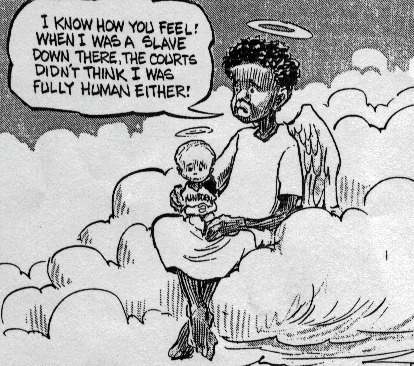
When government is taking money from some people and using those funds to buy votes from other people, every penny is being wasted.
++++++++++++++++++++++++___________________________________________________________________________________ Budget Deal Disappointment: Dr. Coburn on Morning Joe 12/11/2013 Rep. Rokita Rises in Support of Bipartisan Budget Deal I am so sad about the Republicans caving in and letting President Obama and the Democrats get rid of the Sequester spending cap limits!!!! I have contacted my Representatives and Senators and told them what I […]
Open letter to President Obama (Part 489) (Emailed to White House on 5-4-13.) President Obama c/o The White House 1600 Pennsylvania Avenue NW Washington, DC 20500 Dear Mr. President, I know that you receive 20,000 letters a day and that you actually read 10 of them every day. I really do respect you for trying to get […]
Senator Pryor pictured below: Why do I keep writing and email Senator Pryor suggestions on how to cut our budget? I gave him hundreds of ideas about how to cut spending and as far as I can tell he has taken none of my suggestions. You can find some of my suggestions here, here, here, […]
Senator Pryor pictured below: Why do I keep writing and email Senator Pryor suggestions on how to cut our budget? I gave him hundreds of ideas about how to cut spending and as far as I can tell he has taken none of my suggestions. You can find some of my suggestions here, here, here, […]
Senator Pryor pictured below: Why do I keep writing and email Senator Pryor suggestions on how to cut our budget? I gave him hundreds of ideas about how to cut spending and as far as I can tell he has taken none of my suggestions. You can find some of my suggestions here, here, here, […]
The Bible contains 66 books authored by over 40 different people writing on hundreds of subjects, including who God is and how he interacts with his creation. Could all these different authors, who wrote hundreds of years apart, be consistent and in harmony regarding its message? Critics claim that is impossible and assert there are thousands of errors and contradictions in the Bible. Is this true?
When conservative Christian theologians say the Bible is without error (inerrant) they mean that, when all the facts are known, the Scriptures as they were penned by the authors in the original writings and as properly interpreted will be shown to be true and not false in all they affirm. This is of course the case if God is actually the author of Scripture. It stands to reason that if he inspired certain men to reveal his words, he would be sure not to contradict himself, so that his Word would be error-free.
Apparent Problems
So can anyone find errors and contradictions in the Bible? There may be apparent contradictions, but we contend there are no actual errors or contradictions in the original writings, called autographs. But those autographs no longer exist. What we have are copies of what was originally penned. In fact, we have thousands of copies.
Because there were no printing presses at the time Scripture was being written (nor were there any for more than another thousand years), men had to handwrite copies to preserve the documents from one generation to another. And while those who made the copies (scribes) did their best to copy accurately, some errors were made. But just because there were copying mistakes does not mean the Bible is full of contradictions and errors. Because when you examine the “errors” it is clear how they were made and that they do not alter the intended meaning of the text.
For example, some manuscripts of the New Testament spell the name John with one “n”; other times it is spelled with two. This technically constitutes an error or contradiction. And whenever a particular “error” like this occurs, say in 3000 manuscripts, it counts as 3000 “errors.” But of course that type of “error” in no way changes the meaning of God’s Word.
Other errors can be found in both the Old and New Testaments, such as these:
In 2 Chronicles 9:25 some manuscripts read that Solomon had 4000 horse stalls for the 14,000 chariots he owned. But in 1 Kings 4:26 other manuscripts say “40,000 horse stalls.” Clearly Solomon didn’t need 40,000 stalls to accommodate 14,000 chariots. This was obviously the result of an overworked and perhaps sleepy scribe copying down 40 instead of 4. This is an understandable human error.
In 2 Chronicles 22:2, most manuscripts say that King Ahaziah was 22 years old. But in 2 Kings 8:26 some manuscripts report that he was 42. Of course he couldn’t have been 42 or he would have been older than his father. Again, this was a copying error.
In Matthew 28:2-3 it is reported that there was an angel at Jesus’ tomb. But Luke 24:4 refers to two angels being there. Is this a contradiction? It’s no more a contradiction than if I (Sean) report to you that I went to Disneyland last year. And then someone else tells you that my wife, Stephanie, and our two children went with me too. The first statement may have left you with the impression I went to the theme park alone, while the other report explains others were with me. But this is not a contradiction.
Some have made an issue of Jesus saying he would be killed and would rise from the dead in three days (Mark 8:31). Technically, Jesus wasn’t in the grave for three 24-hour days. Did he err in what he said? No, because in the Jewish culture any part of a day was considered a whole day. There was no contradiction here.
The Accuracy of the Bible’s Transmission
Because we are dealing only with copies of the original manuscripts and not the originals themselves, we are bound to have some copying errors. And it stands to reason that those copies that are closer to the originals are more likely to have fewer copying errors. Because if one error is made in copying down a manuscript, future manuscript copies are going to reproduce that error. So the earlier manuscripts tend to be more accurate because they are closer to the original. And we didn’t know just how amazingly accurate the Old Testament copies were until the discovery of the Dead Sea Scrolls in 1947.
Before 1947, the oldest complete Hebrew manuscript dated to AD 900. But with the discovery of 223 manuscripts in caves on the west side of the Dead Sea, we came into possession of Old Testament manuscripts dated by paleographers to around 125 BC. These scrolls were a thousand years older than any previously known manuscripts.
But here’s the exciting part: Once the Dead Sea Scrolls were compared with later manuscript copies, the then-current Hebrew Bible proved to be identical, word for word, in more than 95 percent of the text. The other 5 percent consisted mainly of spelling variations. For example, of the 166 words in Isaiah 53, only 17 letters were in question. Of those, 10 letters were a matter of spelling, and 4 were stylistic changes; the remaining 3 letters comprised the word light, which was added in verse 11.
In other words, the greatest manuscript discovery of all time revealed that a thousand years of copying the Old Testament had produced only very minor variations, none of which altered the clear meaning of the text or brought the manuscript’s fundamental integrity into question.
If there are apparent errors or contradictions in copied manuscripts of the Scriptures, three principles or ground rules should be used to investigate:[1]
1. Approach the Scriptures in the same way as other ancient literature, giving the benefit of the doubt to the document itself rather than the critic.
2. Exercise an open mind.
3. Submit to external, objective controls.
This chapter originally appeared in 77 FAQs About God and the Bible by Sean McDowell and Josh McDowell (2012). Used by permission from Harvest House Publishers.
[1] Details of these principles are found in chapter 18 of The New Evidence That Demands a Verdict by Josh McDowell.
The Bible and Archaeology (1/5)
The Bible maintains several characteristics that prove it is from God. One of those is the fact that the Bible is accurate in every one of its details. The field of archaeology brings to light this amazing accuracy and Kyle Butt does a great job of showing that in this film series he did on “The Bible and Archaeology.”
_________________________-
Is the Bible historically accurate? Here are some of the posts I have done in the past on the subject:
This clay tablet is a Babylonian chronicle recording events from 605-594BC. It was first translated in 1956 and is now in the British Museum. The cuneiform text on this clay tablet tells, among other things, 3 main events: 1. The Battle of Carchemish (famous battle for world supremacy where Nebuchadnezzar of Babylon defeated Pharoah Necho of Egypt, 605 BC.), 2. The accession to the throne of Nebuchadnezzar II, the Chaldean, and 3. The capture of Jerusalem on the 16th of March, 598 BC.
King Hezekiah of Judah ruled from 721 to 686 BC. Fearing a siege by the Assyrian king, Sennacherib, Hezekiah preserved Jerusalem’s water supply by cutting a tunnel through 1,750 feet of solid rock from the Gihon Spring to the Pool of Siloam inside the city walls (2 Kings 20; 2 Chron. 32). At the Siloam end of the tunnel, an inscription, presently in the archaeological museum at Istanbul, Turkey, celebrates this remarkable accomplishment.
It contains the victories of Sennacherib himself, the Assyrian king who had besieged Jerusalem in 701 BC during the reign of king Hezekiah, it never mentions any defeats. On the prism Sennacherib boasts that he shut up “Hezekiah the Judahite” within Jerusalem his own royal city “like a caged bird.” This prism is among the three accounts discovered so far which have been left by the Assyrian king Sennacherib of his campaign against Israel and Judah.
In addition to Jericho, places such as Haran, Hazor, Dan, Megiddo, Shechem, Samaria, Shiloh, Gezer, Gibeah, Beth Shemesh, Beth Shean, Beersheba, Lachish, and many other urban sites have been excavated, quite apart from such larger and obvious locations as Jerusalem or Babylon. Such geographical markers are extremely significant in demonstrating that fact, not fantasy, is intended in the Old Testament historical narratives;
Most doubting scholars back then said that the Hittites were just a “mythical people that are only mentioned in the Bible.” Some skeptics pointed to the fact that the Bible pictures the Hittites as a very big nation that was worthy of being coalition partners with Egypt (II Kings 7:6), and these bible critics would assert that surely we would have found records of this great nation of Hittites. The ironic thing is that when the Hittite nation was discovered, a vast amount of Hittite documents were found. Among those documents was the treaty between Ramesses II and the Hittite King.
The Bible mentions that Shishak marched his troops into the land of Judah and plundered a host of cities including Jerusalem, this has been confirmed by archaeologists. Shishak’s own record of his campaign is inscribed on the south wall of the Great Temple of Amon at Karnak in Egypt. In his campaign he presents 156 cities of Judea to his god Amon.
The Moabite Stone also known as the Mesha Stele is an interesting story. The Bible says in 2 Kings 3:5 that Mesha the king of Moab stopped paying tribute to Israel and rebelled and fought against Israel and later he recorded this event. This record from Mesha has been discovered.
The tribute of Jehu, son of Omri, silver, gold, bowls of gold, chalices of gold, cups of gold, vases of gold, lead, a sceptre for the king, and spear-shafts, I have received.”
Sir William Ramsay, famed archaeologist, began a study of Asia Minor with little regard for the book of Acts. He later wrote:
I found myself brought into contact with the Book of Acts as an authority for the topography, antiquities and society of Asia Minor. It was gradually borne upon me that in various details the narrative showed marvelous truth.
9B Discovery of Ebla Tablets. When I think of discoveries like the Ebla Tablets that verify names like Adam, Eve, Ishmael, David and Saul were in common usage when the Bible said they were, it makes me think of what amazing confirmation that is of the historical accuracy of the Bible.
This cube is inscribed with the name and titles of Yahali and a prayer: “In his year assigned to him by lot (puru) may the harvest of the land of Assyria prosper and thrive, in front of the gods Assur and Adad may his lot (puru) fall.” It provides a prototype (the only one ever recovered) for the lots (purim) cast by Haman to fix a date for the destruction of the Jews of the Persian Empire, ostensibly in the fifth century B.C.E. (Esther 3:7; cf. 9:26).
The Bible mentions Uzziah or Azariah as the king of the southern kingdom of Judah in 2 Kings 15. The Uzziah Tablet Inscription is a stone tablet (35 cm high x 34 cm wide x 6 cm deep) with letters inscribed in ancient Hebrew text with an Aramaic style of writing, which dates to around 30-70 AD. The text reveals the burial site of Uzziah of Judah, who died in 747 BC.
The Pilate Inscription is the only known occurrence of the name Pontius Pilate in any ancient inscription. Visitors to the Caesarea theater today see a replica, the original is in the Israel Museum in Jerusalem. There have been a few bronze coins found that were struck form 29-32 AD by Pontius Pilate
This beautifully decorated ossuary found in the ruins of Jerusalem, contained the bones of Caiaphas, the first century AD. high priest during the time of Jesus.
In June 1961 Italian archaeologists led by Dr. Frova were excavating an ancient Roman amphitheatre near Caesarea-on-the-Sea (Maritima) and uncovered this interesting limestone block. On the face is a monumental inscription which is part of a larger dedication to Tiberius Caesar which clearly says that it was from “Pontius Pilate, Prefect of Judea.”
Despite their liberal training, it was archaeological research that bolstered their confidence in the biblical text:Albright said of himself, “I must admit that I tried to be rational and empirical in my approach [but] we all have presuppositions of a philosophical order.” The same statement could be applied as easily to Gleuck and Wright, for all three were deeply imbued with the theological perceptions which infused their work.
The Bible and Archaeology (1/5) The Bible maintains several characteristics that prove it is from God. One of those is the fact that the Bible is accurate in every one of its details. The field of archaeology brings to light this amazing accuracy and Kyle Butt does a great job of showing that in this […]
I have posted many of the sermons by John MacArthur. He is a great bible teacher and this sermon below is another great message. His series on the Book of Proverbs was outstanding too. I also have posted several of the visits MacArthur made to Larry King’s Show. One of two most popular posts I […]
I have posted many of the sermons by John MacArthur. He is a great bible teacher and this sermon below is another great message. His series on the Book of Proverbs was outstanding too. I also have posted several of the visits MacArthur made to Larry King’s Show. One of two most popular posts I […]
Adrian Rogers – How you can be certain the Bible is the word of God Great article by Adrian Rogers. What evidence is there that the Bible is in fact God’s Word? I want to give you five reasons to affirm the Bible is the Word of God. First, I believe the Bible is the […]
“In Christ Alone” music video featuring scenes from “The Passion of the Christ”. It is sung by Lou Fellingham of Phatfish and the writer of the hymn is Stuart Townend. On this Easter weekend 2013 there is no other better time to take a look at the truth and accuracy of the Bible. Is the […]
The Bible and Archaeology (1/5) The Bible maintains several characteristics that prove it is from God. One of those is the fact that the Bible is accurate in every one of its details. The field of archaeology brings to light this amazing accuracy. _________________________- Many people have questioned the accuracy of the Bible, but I […]
Larry King – Dr. John MacArthur vs. “father” Manning Uploaded on Sep 26, 2011 GotoThisSite.org ___________ I have seen John MacArthur on Larry King Show many times and I thought you would like to see some of these episodes. I have posted several of John MacArthur’s sermons in the past and my favorite is his […]
Antony Flew, a well known spokesperson for atheism for several decades, changed his mind and turned from atheism to Deism. Professor Flew, who was Professor of Philosophy at the University of Reading, has given clear reasons why he made that transition. These reasons have been presented briefly in this compilation.
_________________________________
The Bible and Science (Part 01)
Discussion (1 of 3): Antony Flew, N.T. Wright, and Gary Habermas
Uploaded on Sep 22, 2010
A discussion with Antony Flew, N.T. Wright, and Gary Habermas. This was held at Westminster Chapel March, 2008
______________________
Moral Implications of Atheism – Kyle Butt
Quotes William Provine, Dan Barker, Charles Darwin,Peter Singer, James Rachels, Eric R. Pianka, Richard Dawkins, and Sam Harris
______________
Is There a God? William Lane Craig vs Victor J. Stenger (University of Hawaii, 2003)
Uploaded on Jul 31, 2011
http://reasonablefaith.org – University of Hawaii, 2003 – Is There a God? William Lane Craig vs Victor J. Stenger. A debate before a packed house at the University of Hawaii with Professor of Physics Victor Stenger in which Craig and Stenger square off on such issues as the Big Bang and the beginning of time, the odds of the fine-tuning of the constants and quantities requisite for life, evil and moral values, religious experience, and many more. This is William Lane Craig’s first debate with atheist Victor Stenger.
Former atheist Antony Flew pointed out that natural selection can’t explain the origin of first life. Ultimately, a vast amount of information is behind life, and in every other case, information necessarily points to an intelligent source.
Skeptics often cite ‘testimonies’ of former professing Christians who ‘de-converted’ (apostatized) to atheism to show that Christianity is inherently unreasonable; sure, f course, they often ignore or dismiss the conversion stories of former atheists. Antony Flew’s rejection of atheism is a nightmare for skeptics, because the most influential atheistic philosopher of the twentieth century is rather harder to dismiss out-of-hand. Flew documents this intellectual process in There is a God.
From Christianity to atheism
Flew begins the story of his rejection of atheism by explaining how he became an atheist in the first place. The son of a Methodist minister, Flew went to school as ‘a committed and conscientious, if unenthusiastic, Christian’ (p. 10), but during his studies began to question his faith. The problem of evil caused Flew to question the possibility of an omnipotent God. By the time he was 15, he considered himself an atheist (p. 15), although Flew admits that he ‘reached the conclusion about the nonexistence of God much too quickly, much too easily, and for what later seemed to me the wrong reasons’ (pp. 10–11).
Influential atheist works
Photo from
<www. researchintelligentdesign.org>
The 20th century’s most influential atheist thinker, Antony Flew, announced in 2004 that he accepted the existence of a God.
Flew’s rejection of atheism would not be such a problem for atheists if he hadn’t been the foremost atheist thinker of the 20th century. In Oxford, Flew was part of the Socratic club, a forum for debate between atheists and Christians, of which C.S. Lewis was the president for over a decade. There he presented ‘Theology and Falsification’, a paper which argued that many theological statements have so many qualifications attached that they are essentially empty (pp. 43–44). However, he says, ‘I was not saying that statements of religious belief were meaningless. I simply challenged religious believers to explain how their statements are to be understood, especially in the light of conflicting data’ (p. 45). This 1950 paper sparked many responses, some decades after the paper was presented (p. 47).
In 1961, Flew published his next atheist work; God and Philosophy was Flew’s attempt to examine the basis for Christian theism. In a systematic argument for atheism, he contended that the ‘the design, cosmological, and moral arguments for God’s existence are invalid’ (p. 49). He argued that the concept of God must be sufficiently defined before God’s existence can be debated. He now considers this book to be ‘a historical relic’ (p. 52), and later in his current book advocates the design and cosmological arguments as valid evidence of God’s existence.
In 1971, Flew published The Presumption of Atheism. In his final work dealing with atheism, he argued that as the inherently more rational position, atheism should be presumed at the outset of any debate regarding God’s existence, and the burden of proof should be on the theist (p. 53). He notes that the ‘headiest challenge’ to this argument came from Christian logician Alvin Plantinga, who argued that the belief in God is ‘properly basic’ for believers (p. 55). He clarifies that ‘the presumption of atheism is, at best, a methodological starting point, not an ontological conclusion’, and that the presumption of atheism could be accepted by theists who have adequate grounds for believing in God (p. 56).
Indeed, atheism itself has a number of propositions that have to be accepted by faith, e.g. that something (the universe) came from nothing, non-living matter evolved into living cells by stochastic chemistry, complex specified information arose without intelligence, morality arose by natural selection, etc.
From atheism to theism
What I think the DNA material has done is that it has shown, by the almost unbelievable complexity of the arrangements which are needed to produce (life), that intelligence must have been involved in getting these extraordinarily diverse elements to work together.—Antony Flew
Flew concentrated on other philosophical areas for the next several decades, only revisiting atheistic topics to debate people based on his previous works. He took part in cordial debates with theists, which included one in 1985 with philosopher and theologian Dr Gary Habermas on the most important reported deed of all, the proposition that Jesus Christ conquered death itself.1 This debate was held in Dallas in front of a crowd of three thousand people. It was judged by two panels of experts from leading American universities: one panel comprised five philosophers who were asked to judge the content of the debate, and the other comprised five professional debate judges who were asked to judge the quality of the arguments.
Four of the five on the philosophers panel voted that Habermas had won, i.e. the case he made for the Resurrection was stronger than Flew’s attempts to refute it, and one scored it a draw. The panel of professional debate judges voted three to two to Habermas.
At the most recent debate in 2004, at New York University, he declared that he ‘now accepted the existence of a God’ (p. 74). In that debate, he said that he believed that the origin of life points to a creative Intelligence,
‘almost entirely because of the DNA investigations. What I think the DNA material has done is that it has shown, by the almost unbelievable complexity of the arrangements which are needed to produce (life), that intelligence must have been involved in getting these extraordinarily diverse elements to work together. It’s the enormous complexity of the number of elements and the enormous subtlety of the ways they work together. The meeting of these two parts at the right time by chance is simply minute. It is all a matter of the enormous complexity by which the results were achieved, which looked to me like the work of intelligence’ (p. 75).
The complexity of the genetic code led Flew to believe that the origin of life required a ‘creative intelligence’.
Flew was particularly impressed with a physicist’s refutation of the idea that monkeys at typewriters would eventually produce a Shakespearean sonnet. The likelihood of getting one Shakespearean sonnet by chance is one in 10690; to put this number in perspective, there are only 1080 particles in the universe. Flew concludes:
‘If the theorem won’t work for a single sonnet, then of course it’s simply absurd to suggest that the more elaborate feat of the origin of life could have been achieved by chance’ (p. 78).
Flew was also critical of Dawkins’s ‘selfish gene’ idea, pointing out that ‘natural selection does not positively produce anything. It only eliminates, or tends to eliminate, whatever is not competitive’ (p. 78). He called Dawkins’s The Selfish Gene ‘a major exercise in popular mystification’, and argued that Dawkins made the critical mistake of overlooking the fact that most observable traits in organisms are the result of the coding of many genes (p. 79).
Fingerprints of a designer
Flew’s belief in God hinges on three aspects of nature: ‘The first is the fact that nature obeys laws. The second is the dimension of life … The third is the very existence of nature’ (p. 89).
The Laws of nature
Every scientist must assume that nature acts in certain predictable, measurable ways; this is what makes scientific discovery possible. Paul Davies argued that ‘science can proceed only if the scientist adopts an essentially theological worldview’ (p. 107). However, there is really no reason why nature should follow laws; the existence of such laws requires an explanation. Three questions must be answered: ‘Where do the laws of physics come from? Why is it that we have these laws instead of some other set? How is that we have a set of laws that drives featureless gases to life, consciousness, and intelligence?’ (p. 108). Flew argues along with many other classical and modern scientists that theism is the only serious answer.
When Flew was an atheist, he argued that the universe and its laws were themselves ultimate (p. 134). Every belief has some fundamental assumption; for theists, the existence of God is the fundamental assumption. Flew, however, took the universe and its most fundamental features as that assumption. The discovery that the universe was not infinite threw a wrench into this assumption; if the universe had begun to exist at some point in time, it was reasonable to assume something caused its beginning. Because it is more likely that God exists uncaused, rather than the universe, it is logical to argue for the existence of God from the existence of the universe (pp. 144–145).
The fine-tuning of the universe
Not only does our universe follow finely tuned physical laws, but laws which seem to be finely tuned to enable life to exist. The most common atheist answer is to assert that our universe is one of many others—the ‘multiverse’ speculation. It is interesting that atheists who refuse to believe in an unseen God, based supposedly on the lack of evidence for His existence, explain away the appearance of design by embracing the existence of an unknown number of other universes for which there is no evidence—or even any effect of their evidence. In any case, Flew argues that even if there were multiple universes, it would not solve the atheists’ dilemma; ‘multiverse or not, we still have to come to terms with the origin of the laws of nature. And the only viable explanation here is the divine Mind’ (p. 121).
The origin of life
Can the origins of a system of coded chemistry be explained in a way that makes no appeal whatever to the kinds of facts that we otherwise invoke to explain codes and languages, systems of communication, the impress of ordinary words on the world of matter?—Antony Flew
The existence of physical laws which allow life to survive is necessary, but not sufficient by itself, for the existence of life. The question of the origin of life became much more complex with the discovery of DNA, a molecule comprising ‘letters’ that code for the instructions to build the machinery of life. A real vicious circle is that the instructions to build decoding machinery are themselves encoded on the DNA. That life is governed by a complex code leads to the question:
‘Can the origins of a system of coded chemistry be explained in a way that makes no appeal whatever to the kinds of facts that we otherwise invoke to explain codes and languages, systems of communication, the impress of ordinary words on the world of matter?’ (p. 127).
He pointed out that natural selection can’t explain the origin of first life. Ultimately, a vast amount of information is behind life, and in every other case, information necessarily points to an intelligent source, so it is only reasonable that there be a Source behind this information as well.
Flew’s God
As an atheist, Flew struggled with the idea of an invisible, omnipresent Person, and how such a person could be identified (p. 148). However, Flew was making embodiment part of his definition of a person, which isn’t justified. Philosopher Thomas Tracy defined persons simply as agents that are capable of acting intentionally (pp. 149–150). Although human persons are embodied, embodiment is not a necessary component for personhood. Flew admits that ‘At the very least, the studies of Tracy and Leftow show that the idea of an omnipotent Spirit is not intrinsically incoherent if we see such a Spirit as outside space and time that uniquely executes its intentions in the spatio-temporal continuum’ (pp. 153–154).
Flew identifies his god as the god of Aristotle, with the attributes of ‘immutability, immateriality, omnipotence, omniscience, oneness or indivisibility, perfect goodness and necessary existence’ (p. 92). He is adamant that his conversion to theism does not represent a paradigm shift, because his paradigm remains simply to follow the argument where it leads (p. 89).
Is Flew’s god the God of Scripture?
Some of the attributes of the god that Flew acknowledges are also attributes of God, but Flew does not acknowledge the Trinity or Christ as the second Person of the Trinity, both of which are essential Christian doctrines. So although Flew’s deistic beliefs echo Christian belief in some areas, the god he accepts is not the same as the God of the Bible, although he professes to remain open to the evidence.
Flew never claims to be Christian; he is a self-identified deist who does not believe in an afterlife (p. 2). Nonetheless, he is charitable in his comments about the Christians he came in contact with, writing that his father, a Methodist minister, shared his ‘eagerness of mind’ even though their intellectual pursuits led them in different directions (p. 12). Flew concludes that he is ‘entirely open to learning more about the divine Reality, especially in the light of what we know about the history of nature’ and that ‘the question of whether the Divine has revealed itself in human history remains a valid topic of discussion. You cannot limit the possibilities of omnipotence except to produce the logically impossible’ (p. 157).
A critique of ‘The New Atheism’
The first of two appendices in There is a God is a critique of the ‘New Atheism’ by co-author Roy Varghese. Varghese argues that there are some phenomena that are only explainable in terms of the existence of God (p. 161). His view is that atheism is a result of a deliberate refusal to look at the evidence, which is readily available in our immediate experience (p. 163).
First, Varghese argues that something had to always exist, either God or the universe (p. 165). He maintains that the theist argument is superior because the atheist says that the eternal existence of the universe is inherently unexplainable, but theists argue that the eternal existence of God is not inexplicable, just incomprehensible for humans (p. 165). The atheist view also fails to explain why something exists rather than nothing, and why the something that exists obeys the laws of nature (p. 171).
Atheists have to deal with consciousness. Although certain areas of the brain are associated withconsciousness, they do notproduce consciousness—a certain area of a person’s brain may show activity when thinking about a certain idea, but a neurologist cannot tell from that person’s MRI what he is thinking about.
Second, Varghese contends that most of the ‘new atheists’ do not even address the origin of life. Only Dawkins attempts an explanation; he claims that ‘a chemical model need only predict that life will arise on one planet in a billion billion to give us a good and entirely satisfying explanation for the presence of life here’ (p. 173). Varghese criticizes this as ‘manifestly inadequate or worse’ (p. 172) and as ‘an audacious exercise in superstition’ (p. 173), and indeed not even such an inadequate model exists.
Third, atheists have to deal with consciousness. Although certain areas of the brain are associated withconsciousness, they do not produce consciousness—a certain area of a person’s brain may show activity when thinking about a certain idea, but a neurologist cannot tell from that person’s MRI what he is thinking about. ‘Consciousness is correlated with certain regions of the brain, but when the same systems of neurons are present in the brain stem there is no “production” of consciousness’ (p. 174). Fourth, ‘beyond consciousness, there is the phenomenon of thought, of understanding, seeing meaning’ (p. 176). ‘At the foundation of all of our thinking, communicating, and use of language is a miraculous power. It is the power of noting differences and similarities and of generalizing and universalizing—what the philosophers call concepts universals, and the like. It is natural to humans, unique, and simply mystifying’ (pp. 176–177). The brain plays a part in this process, but there is clearly a non-physical part to it, as well. Varghese argues that ‘they are the acts of a person who is inescapably both embodied and “ensouled”’ (p. 178). Fifth, the atheists have to deal with the emergence of the self, which he calls ‘the most obvious and unassailable and the most lethal for all forms of physicalism’ (p. 181).
Did God become incarnate?
I think that the Christian religion is the one religion that most clearly deserves to be honoured and respected whether or not its claim to be a divine revelation is true. There is nothing like the combination of a charismatic figure like Jesus and a first-class intellectual like St. Paul. … If you’re wanting Omnipotence to set up a religion, this is the one to beat.—Antony Flew
The second appendix contains a dialogue between Flew and New Testament scholar N.T. Wright on the subject of ‘The self-revelation of God in human history’. Flew begins with some very charitable remarks about Christianity, saying that ‘I think that the Christian religion is the one religion that most clearly deserves to be honoured and respected whether or not its claim to be a divine revelation is true. There is nothing like the combination of a charismatic figure like Jesus and a first-class intellectual like St. Paul. … If you’re wanting Omnipotence to set up a religion, this is the one to beat’ (pp. 185–186). However, he questions the reliability of the New Testament on the subject of the Resurrection, because the New Testament was written decades after the events they purport to describe, and the earliest of these, the Pauline letters, have little physical detail. Nevertheless, he acknowledges that ‘the claim concerning the resurrection is more impressive than by any by the religious competition’ (187).
Wright begins his rebuttal by showing that the evidence for Jesus’ historical existence makes Him one of ancient history’s most well-attested figures. He goes on to show that Jesus is depicted in the Gospels as acting in ways that are in accord with Jewish belief about God in the Second Temple period (188–92). He demonstrates that Christian beliefs about the resurrection differed radically from what pagans believed, and differed substantially from Second Temple Jewish belief about resurrection. Christian belief about the Resurrection is unanimous from the earliest traditions through the first four or five generations; Wright argues that for this to be the case, there had to be a historical Resurrection that would serve as the basis for this new belief. Wright contends that though the Gospels were written later than the Pauline letters, the accounts of the Resurrection seem to stem from an oral tradition going back much earlier. Flew is impressed with Wright’s argument, and re-states that ‘you cannot limit the possibilities of omnipotence except to produce the logically impossible. Everything else is open to omnipotence’ (213).
This of course underlies the importance of the Resurrection debate with Habermas cited earlier. Flew still has no good answers to the strong case for the Resurrection.
Controversy regarding authorship
In the wake of its release, some skeptics claimed that the ideas expressed in There is a God did not really reflect Flew’s position and that he was being used by evangelicals.2 First, Flew’s position is only close to the evangelical position in that deism is closer to evangelical Christianity than atheism; if evangelicals were trying to use Flew, they certainly did not do a very good job, as his book ends with him still questioning the reliability of the New Testament, the existence of an afterlife, and other core Christian concepts. The skeptics suggested that Varghese was the true author of the book, and that Flew was becoming mentally unstable in his advanced age. Flew does suffer from nominal aphasia, a condition which makes it hard to remember names, but denied all the allegations of ghost-writing and affirmed that the book was in line with his theistic views entirely.3
Indeed, these accusations also make little sense given the interview that Flew gave to none other than his former debate opponent, Gary Habermas.4
Conclusion
Many atheists say that religion is inherently unreasonable, and that if someone comes to faith in any deity, it is only because of a religious experience that is best unverifiable and at worst a form of delusion. However, Flew’s deistic argument is useful in that he, using arguments completely on the natural level, makes a powerful argument for God’s existence.
‘I must stress that my discovery of the Divine has proceeded on a purely natural level, without any reference to supernatural phenomena. It has been an exercise in what has traditionally been called natural theology. It has had no connection with any of the revealed religions. Nor do I claim to have had any personal experience of God or any experience that may be called supernatural or miraculous. In short, my discovery of the Divine has been a pilgrimage of reason and not of faith’ (p. 93).
Readers looking for an apologetic for Christianity will be disappointed, but the book is a good read. The book is powerful evidence that one can come to a belief in theism purely from the evidence. It is also a lesson that design alone is not enough for saving faith; that needs special revelation, which is likewise backed up by credible historical evidence as Habermas and Wright showed.
Update: Antony Flew died on 8 April 2010, at the age of 87, according to the obituary in the Telegraph (UK, 13 April 2010).
Habermas, G.R. and Flew, A.G.N., Did Jesus Rise from the Dead? The Resurrection Debate, Miethe, T.L. (Ed.), Harper & Row, San Francisco, CA, 1987. Return to text.
For instance, Oppenheimer, M., ‘The Turning of an Atheist’, New York Times, 4 November 2007, <www.nytimes.com/2007/11/04/magazine/04Flew-t.html>.Return to text.
See Varghese’s response at <blog.christianitytoday.com/ctliveblog/archives/2007/11/doubting_antony.html>. Return to text.
____ Does God Exist? Thomas Warren vs. Antony Flew Published on Jan 2, 2014 Date: September 20-23, 1976 Location: North Texas State University Christian debater: Thomas B. Warren Atheist debater: Antony G.N. Flew For Thomas Warren: http://www.warrenapologeticscenter.org/ ______________________ Antony Flew and his conversion to theism Uploaded on Aug 12, 2011 Antony Flew, a well known […]
__________ Discussion (1 of 3): Antony Flew, N.T. Wright, and Gary Habermas Uploaded on Sep 22, 2010 A discussion with Antony Flew, N.T. Wright, and Gary Habermas. This was held at Westminster Chapel March, 2008 Debate – William Lane Craig vs Christopher Hitchens – Does God Exist? Uploaded on Jan 27, 2011 April 4, 2009 – Craig […]
________ William Lane Craig versus Eddie Tabash Debate Uploaded on Feb 6, 2012 Secular Humanism versus Christianity, Lawyer versus Theologian. Evangelical Christian apologist William Lane Craig debates humanist atheist lawyer Eddie Tabash at Pepperdine University, February 8, 1999. Visit http://www.Infidels.org andhttp://www.WilliamLaneCraig.com ________________ Antony Flew on God and Atheism Published on Feb 11, 2013 Lee […]
___________ Does God Exist? Thomas Warren vs. Antony Flew Published on Jan 2, 2014 Date: September 20-23, 1976 Location: North Texas State University Christian debater: Thomas B. Warren Atheist debater: Antony G.N. Flew For Thomas Warren: http://www.warrenapologeticscenter.org/ ______________________ Antony Flew and his conversion to theism Uploaded on Aug 12, 2011 Antony Flew, a well known […]
_____________ Antony Flew on God and Atheism Published on Feb 11, 2013 Lee Strobel interviews philosopher and scholar Antony Flew on his conversion from atheism to deism. Much of it has to do with intelligent design. Flew was considered one of the most influential and important thinker for atheism during his time before his death […]
___________ Does God Exist?: William Lane Craig vs Antony Flew Uploaded on Dec 16, 2010 http://drcraigvideos.blogspot.com – William Lane Craig and Antony Flew met in 1998 on the 50th anniversary of the famous Copleston/Russell debate to discuss the question of God’s existence in a public debate. Unlike Richard Dawkins, Flew was one of the most respected […]
___________ ________ Jesus’ Resurrection: Atheist, Antony Flew, and Theist, Gary Habermas, Dialogue Published on Apr 7, 2012 http://www.veritas.org/talks –Did Jesus die, was he buried, and what happened afterward? Join legendary atheist Antony Flew and Christian historian and apologist Gary Habermas in a discussion about the facts surrounding the death and resurrection of Jesus Christ. Join […]
___________ ________ Antony Flew – World’s Most Famous Atheist Accepts Existence of God Uploaded on Nov 28, 2008 Has Science Discovered God? A half-century ago, in 1955, Professor Antony Flew set the agenda for modern atheism with his Theology and Falsification, a paper presented in a debate with C.S. Lewis. This work became the most […]
________ Antony Flew on God and Atheism Published on Feb 11, 2013 Lee Strobel interviews philosopher and scholar Antony Flew on his conversion from atheism to deism. Much of it has to do with intelligent design. Flew was considered one of the most influential and important thinker for atheism during his time before his death […]
Discussion (2 of 3): Antony Flew, N.T. Wright, and Gary Habermas ______________ Atheist Lawrence Krauss loses debate to wiser Christian Published on Sep 13, 2013 http://www.reasonablefaith.org More of this here The Bible and Science (Part 02) The Kalam Cosmological Argument (Scientific Evidence) (Henry Schaefer, PhD) Published on Jun 11, 2012 Scientist Dr. Henry “Fritz” Schaefer gives a lecture […]
Obama’s commencement speech at Ohio State on Sunday would have perplexed the Founders.
Civic education in America took a hit on Sunday when President Obama, giving the commencement address at The Ohio State University, chose citizenship as his theme. The country’s Founders trusted citizens with “awesome authority,” he told the assembled graduates. Really?
Actually, the Founders distrusted us, at least in our collective capacity. That’s why they wrote a Constitution that set clear limits on what we, as citizens, could do through government.
Mr. Obama seems never to appreciate that essential point about the American political order. As with his countless speeches that lead ultimately to an expression of the president’s belief in the unbounded power of government to do good, he began in Columbus with an insight that we can all pretty much embrace, at least in the abstract. Citizenship, Mr. Obama said, is “the idea at the heart of our founding—that as Americans, we are blessed with God-given and inalienable rights, but with those rights come responsibilities—to ourselves, to one another, and to future generations.”
Getty ImagesPresident Obama giving the commencement address to the graduating class of The Ohio State University on Sunday in Columbus, Ohio.
Well enough. But then he took that insight to lengths the Founders would never have imagined. Reading “citizenship” as standing for the many ways we can selflessly “serve our country,” the president said that “sometimes, we see it as a virtue from another time—one that’s slipping from a society that celebrates individual ambition.” And “we sometimes forget the larger bonds we share, as one American family.”
Not for nothing did he invoke the family, that elemental social unit in which we truly are responsible to one another and to future generations—by law, by custom, and, ideally, in our hearts. But only metaphorically is America a family, its members bound by tendrils of intimacy and affection. Realistically, the country is a community of individuals and private institutions, including the family, with their own interests, bound not by mutual love but by the political principles that are set forth in the Constitution, a document that secures and celebrates the freedom to pursue those interests, varied as they might be.
Alas, that is not Mr. Obama’s vision. “The Founders left us the keys to a system of self-government,” he went on, “the tool to do big and important things together that we could not possibly do alone.” And what “big and important things” cannot be done except through government? On the president’s list are railroads, the electrical grid, highways, education, health care, charity and more. One imagines a historical vision reaching as far back as the New Deal. Americans “chose to do these things together,” he added, “because we know this country cannot accomplish great things if we pursue nothing greater than our own individual ambition.”
Notice that twice now Mr. Obama has invoked “individual ambition,” and not as a virtue. For other targets, he next counseled the graduates against the “voices that incessantly warn of government as nothing more than some separate, sinister entity that’s the root of all our problems, even as they do their best to gum up the works.”
The irony here should not go unnoticed: The opponents that the president disparages are the same folks who tried to save the country from one of the biggest pieces of gum now in the works: Mr. Obama’s own health-care insurance program, which today is filling many of its backers with dread as it moves toward full implementation in a matter of months.
None of that darkens Mr. Obama’s sunny view of collective effort. What does upset him, still, is the run-up to the 2008 financial crisis: “Too many on Wall Street,” he said, “forgot that their obligations don’t end with their shareholders.” No mention of the Federal Reserve, or Fannie Mae, FNMA +7.07%Freddie Mac, FMCC +8.80% the Community Reinvestment Act, or the many other “big and important things” government undertook before the crisis hit, things that explain the disaster far better than any Wall Street greed. None of that fits in Mr. Obama’s morality play. For that matter, neither do the Constitution’s checks and balances. When the president laments that “democracy isn’t working as well as we know it can,” he is not talking about those big, misbegotten public projects but about the Washington gridlock that has frustrated his grander plans.
From George Washington to Calvin Coolidge, presidents sought mostly to administer the laws that enabled citizens to live their own lives, ambitiously or not. It would have been thought impertinent for a president to tell a graduating class that what the country needs is the political will “to harness the ingenuity of your generation, and encourage and inspire the hard work of dedicated citizens . . . to repair the middle class; to give more families a fair shake; to reject a country in which only a lucky few prosper.”
A more inspiring message might have urged graduates not to reject their own country, where for two centuries far more than a lucky few have prospered under limited constitutional government—and even more would today if that form of government were restored.
Mr. Pilon is vice president for legal affairs at the Cato Institute and director of Cato’s Center for Constitutional Studies.
_____________
Thank you so much for your time. I know how valuable it is. I also appreciate the fine family that you have and your commitment as a father and a husband.
Sincerely,
Everette Hatcher III, 13900 Cottontail Lane, Alexander, AR 72002, ph 501-920-5733, lowcostsqueegees@yahoo.com
Dr. C. Everett Koop with Bill Graham. Francis Schaeffer: “Whatever Happened to the Human Race” (Episode 4) THE BASIS FOR HUMAN DIGNITY Published on Oct 7, 2012 by AdamMetropolis The 45 minute video above is from the film series created from Francis Schaeffer’s book “Whatever Happened to the Human Race?” with Dr. C. Everett Koop. This […]
America’s Founding Fathers Deist or Christian? – David Barton 4/6 There have been many articles written by evangelicals like me who fear that our founding fathers would not recognize our country today because secular humanism has rid our nation of spiritual roots. I am deeply troubled by the secular agenda of those who are at […]
America’s Founding Fathers Deist or Christian? – DavidBarton 3/6 There have been many articles written by evangelicals like me who fear that our founding fathers would not recognize our country today because secular humanism has rid our nation of spiritual roots. I am deeply troubled by the secular agenda of those who are at war […]
America’s Founding Fathers Deist or Christian? – David Barton 2/6 David Barton: In their words, did the Founding Fathers put their faith in Christ? (Part 2) jh35 There have been many articles written by evangelicals like me who fear that our founding fathers would not recognize our country today because secular humanism has rid our […]
America’s Founding Fathers Deist or Christian? – David Barton 1/6 There have been many articles written by evangelicals like me who fear that our founding fathers would not recognize our country today because secular humanism has rid our nation of spiritual roots. I am deeply troubled by the secular agenda of those who are at […]
1 Of 5 / The Bible’s Influence In America / American Heritage Series / David Barton _________________ Our founding fathers had some wise things to say about government. They realized that angels don’t govern us. Because Angels Don’t Govern Us by Michael D. Tanner Michael Tanner is a senior fellow at the Cato Institute and […]
3 Of 5 / The Bible’s Influence In America / American Heritage Series / David Barton There were 55 gentlemen who put together the constitution and their church affliation is of public record. Greg Koukl notes: Members of the Constitutional Convention, the most influential group of men shaping the political foundations of our nation, were […]
There have been many articles written by evangelicals like me who fear that our founding fathers would not recognize our country today because secular humanism has rid our nation of spiritual roots. I am deeply troubled by the secular agenda of those who are at war with religion in our public life. Lillian Kwon quoted somebody […]
There have been many articles written by evangelicals like me who fear that our founding fathers would not recognize our country today because secular humanism has rid our nation of spiritual roots. I am deeply troubled by the secular agenda of those who are at war with religion in our public life. Lillian Kwon quoted somebody […]
There have been many articles written by evangelicals like me who fear that our founding fathers would not recognize our country today because secular humanism has rid our nation of spiritual roots. I am deeply troubled by the secular agenda of those who are at war with religion in our public life. Lillian Kwon quoted somebody […]
David Hodges is a Grammy award-winning writer/producer/artist hailing from Little Rock, AR.
As the former writer and keyboardist of the band Evanescence, he and his band mates took home Best New Artist as well as the Best Hard Rock Performance trophy for their hit “Bring Me To Life” in 2004. Evanescence’s debut album Fallen has sold over 15 million copies worldwide.
David went on to write and produce Kelly Clarkson’s biggest worldwide single to date, “Because Of You”, which appeared on Clarkson’s 11 million-selling album Breakaway and garnered him the 2007 BMI Song Of The Year honor. The song was covered by Reba McEntire as the first single off her Duets album, and quickly rose up the country charts in 2007 becoming McEntire’s 30th Top 2 country single.
Hodges also penned the single, “What About Now”, which appears on American Idol Chris Daughtry’s debut album Daughtry. The 4x platinum Daughtry to date is credited as the fastest selling debut rock album in Soundscan history. “What About Now” also happens to be the first single on Westlife’s album “Who We Are.” David also won a BMI Pop award for this song.
David wrote the first single “Crush” for American Idol’s David Archuleta, which had the highest chart debut of any single since January 2007. David has since written songs for & released by Carrie Underwood, Train, Christina Perri, Celine Dion, David Cook, Lauren Alaina, The Cab, & many others.
In less than 10 years, David Hodges has been nominated for 6 Grammys & 1 Golden Globe, has won 5 BMI pop awards & 1 BMI country award, has had at least one album in the Billboard 200 for the last 8 consecutive years, and has written on albums that have sold over 50 million copies worldwide.
“Because of You” is a song by American recording artist Kelly Clarkson for her second studio album Breakaway (2004). It was written by Clarkson along with its producers David Hodges and Ben Moody. It was released on August 16, 2005 by RCA Records, as the fourth single (third in Europe) from Breakaway. Clarkson originally wrote “Because of You” when she was 16 years old to cope with the emotional distress caused by her parents’ divorce. She wanted the song to be included on her debut studio album, Thankful (2003), but her record label thought that it was not suitable to be included in the album. She then polished the song with Hodges and Moody before successfully convincing her label to include it in Breakaway.
Lyrically, “Because of You” explores the pain of a deteriorating relationship. Critics noted that the lyrics are Clarkson’s ode to her father. The song begins with a piano-led melody and as it launches into the chorus, the sound of a roaring guitar becomes apparent. Critically, “Because of You” garnered positive reviews by music critics, who praised its expressive lyrics, creative arrangement and Clarkson’s vocal prowess. It became Clarkson’s most successful single around the world; in the United States, it peaked at number seven on the Billboard Hot 100 and sold over 1.5 million digital downloads. It was certified platinum by the Recording Industry Association of America (RIAA). Internationally, “Because of You” topped the charts in the Netherlands, Denmark and Switzerland as well as reaching the top ten in Australia, Austria, Canada, Germany, Belgium, Hungary, Ireland, and the United Kingdom.
The song’s accompanying music video was directed by Vadim Perelman. Clarkson wrote the treatment for the video herself in order to reflect the pain that the she felt due to her parents’ divorce. The video’s plot centers on Clarkson engaging in a heated argument with her husband in front of her child before realizing that she was repeating her parents’ mistake. It won in the category for Best Female Video at the 2006 MTV Video Music Awards. “Because of You” was performed live at numerous venues, including the My December Tour (2007) as well as the All I Ever Wanted Tour (2009). It was covered by several artists including Ronan Parke, who is a runner-up in the fifth series of Britain’s Got Talent. In 2007, the song was recorded by Reba McEntire as a duet with Clarkson, which was released as a lead single for McEntire’s album Reba: Duets.
“My biggest song worldwide is Because of You, and … you may as well grab a knife. That song really is the most depressing one I’ve ever written. I tried to get it on Thankful, and was laughed at and told I wasn’t a good writer. So then I tried to get it on Breakaway – and the label saw the results, people responding to it, and allowed it to become a single. Then took credit for its success, of course.”
—Clarkson on trying to get the track into her album, Thankful. [1]
“Because of You” was written by Clarkson, David Hodges and Ben Moody while the production was handled by Hodges and Moody.[2] They also wrote and produced another track entitled “Addicted” that appeared in Clarkson’s album Breakaway (2004).[3] Clarkson originally wrote “Because of You” when she was 16 years old as a means of coping with the emotional distress caused by the divorce of her parents.[4][5] She wrote the lyrics of the song in less than 25 minutes.[3]
In an interview with The Guardian, Clarkson said that she wanted to include the song in her first album, Thankful (2003), but she was laughed at.[1] Then, she took the initiative to polish the song by sending a tape to Moody and worked with Hodges as her songwriting partner. Clarkson explained, “Hearing the Evanescence album, you can obviously tell that David and Ben have a real passion for music and that big kind of background. And I have a big voice and I like the music to match it, so it was a real dream team.”[3]
According to Moody, he was very impressed with Clarkson and the song itself, saying “She had these ideas already in place for songs; all I really had to do was build music around them and develop them. It was quite easy.”[2] Clarkson also admitted that “Because of You” is the most depressing song she has ever written.[1] Despite the revelation, she told Entertainment Weekly in August 2011 that she wanted to be remembered for the song because she had to work hard to get it on Breakaway (2004) when everyone was against it. She added, “I think I’m most proud of that song – just getting it on an album because no one liked it until it hit no. 1 worldwide and everybody was on board.”[6]
“Because of You” is a piano ballad[7] with a length of three minutes and thirty-nine seconds.[8] It is set in common time and has a moderate tempo of 69 beats per minute. It is composed in the key of F minor, and then modulated to the key of G minor, with Clarkson’s vocal range spanning over two octaves from Ab3 to Eb5.[9] Bill Lamb of About.com described the song as “a big pop ballad that expresses raw emotion.”[10] Tony Heywood of MusicOMH noted that the song’s piano arrangement is reminiscent of Tori Amos.[11] Lyrically, “Because of You” is a fiery ode to Clarkson’s father,[12] which is a dark exploration of emotional pain from a damaging relationship.[13] The song begins with Clarkson singing “oohs” over a somber piano which creates a “wintry tone.”[14] As the song launches into the chorus, the roaring guitar is evident,[15] and the lyrics, “Because of you I never stray too far from the sidewalk / Because of you I learned to play on the safe side so I don’t get hurt,” were deemed as “touching” by Dave Donelly of Sputnikmusic.[12]
Critical reception
“Because of You” received universal critical acclaim. Film Laureate of Blogcritics considered “Because of You” and “Where Is Your Heart” as his two favorite songs from Breakaway, writing “[Clarkson] commands these two songs like a seasoned pro and directs herself in her songs the way Steven Spielberg said Barbra Streisand directs herself in her songs as if she’s directing an actor in a movie.”[16] Dave Donnelly of Sputnikmusic compared the song to Evanescence‘s “My Immortal” (2003). He added that Clarkson managed to take the piano-driven song in a different direction with a “stormy, hard blues vocal… avoiding the typical raised-key final chorus cliché along the way”.[12] On the other hand, Bill Lamb of About.com lambasted the lyrics of the song and considered it as a 16-year-old work rather than an accomplished pop songwriter.[10] Christa L. Titus of Billboard lauded the song for its absence of schmaltz factor, “only a potent, pained, grown-up anthem of gross betrayal and loss.” She concluded her review, writing “it is time for Clarkson to return to No. 1 on the Billboard Hot 100; she has certainly become the most consistent hope for top 40 staple status.”[17] Critics also lauded Clarkson’s vocal prowess in the song. Pam Avoledo of Blogcritics thought that vocally, the song is Clarkson’s “shining” moment.[18] Tony Heywood of MusicOMH noted that in the song, Clarkson’s voice is “full of vulnerability, ache and wounded pride.”[11] In May 15, 2007, the song was listed as one of the recipients of BMI Pop Awards.[19] At the 24th ASCAP Pop Music Awards, the song was honoured with the Most Performed Songs award.[20] On July 2008, BBC News reported that according to Performing Right Society, “Because of You” was the second most played song in the United Kingdom over the last five years, following Daniel Powter‘s “Bad Day (2005).”[21] On March 5, 2013 Billboard ranked the song #7 in its list of Top 100 American Idol Hits of All Time.[22]
Chart performance
“Because of You” entered the Billboard Hot 100 at number 99 on the week ending September 3, 2005.[23] On November 19, 2005, the song peaked at number seven and became her sixth single to reach the top-ten.[24][25] It also topped the Pop Songs chart on the week ending October 29, 2005.[26] It became the seventh best selling single of the 2000s decade on the Pop Songs chart complied by Billboard.[27] On January 31, 2008, “Because of You” was certified platinum by the Recording Industry Association of America (RIAA).[28] As of October 2012, the song has sold 1,729,000 digital copies in the United States, according to Nielsen SoundScan.[29] In Canada, “Because of You” debuted at number 60 on the Canadian Hot 100 on the week ending July 14, 2007.[30] Two weeks later, the song jumped to a new peak at number 36 and stayed in the position for two weeks.[31] It was certified gold by Music Canada on December 4, 2007 for shipments over 40,000 units.[32] The single also appeared and peaked on the UK Singles Chart at number seven on the week ending December 4, 2005.[33]
In Australia, the song debuted and peaked at number four on the issue dated December 5, 2005.[34] It was certified gold by the Australian Recording Industry Association (ARIA) for shipments over 35,000 units.[35] The song became the 58th best-selling single in Australia in 2006.[36] In New Zealand, “Because of You” debuted on New Zealand Singles Chart at number 37 on the week ending December 5, 2005,[37] and peaked at number 19 two weeks later.[38] On the week ending March 20, 2006, “Because of You” debuted at number eight on the German Singles Chart.[39] Three weeks later, it peaked at number four and stayed in the position for three consecutive weeks.[39] The song was certified gold by The Federal Association of Music Industry for shipments over 150,000 copies.[40] In Europe, “Because of You” received a commercial success. The song topped the charts in the Netherlands[41] and Switzerland[42] and reached the top five in Austria,[43] Belgium (Flanders),[44] Ireland[45] and Norway.[46]
Music video
Development
The accompanying music video for “Because of You” was directed by Vadim Perelman and was produced by Rhonda Vernet.[47] Clarkson wrote the treatment for the video herself in order to reflect the pain that the she felt due to her parents’ divorce.[48] Nevertheless, Clarkson also allowed Perelman to take control of the production of the video.[49] According to Perelman, he wanted to create a disconnection to show “that this kind of dysfunctional family can exist anywhere.”[50] In an interview with MTV News, Clarkson confessed that the video is sad, rationalizing, “It’s a sad song, so the video obviously has to follow that. But it ends really happy and everything and the family, my family, ends up breaking the cycle of my parents.”[49] Since the music video deals specifically with her parents’ divorce, Clarkson had to seek for her parent’s permission. She explained,
“It’s very close to home [for me]. I OK’d it with my family and everything because they think it’s important, because we’re obviously very different now than we were when we were younger. And it’s important for people to see that raw kind of emotion that happens in life. It sucks sometimes, so it’s important to see that I think. And that’s what we’re portraying in the video.”[49]
In the video, the younger version of Clarkson is played by Kennedy Nöel, the daughter of her musical director, Jason Halbert.[51] The music video of “Because of You” premiered on October 3, 2005, on Total Request Live.[50]
Synopsis
Clarkson and her younger self (Kennedy Nöel) in the music video of “Because of You.”
The video starts at the Clarkson’s household. There, she and her husband are engaged in a heated argument and he threatens to smash down a picture of the family at one point. Time freezes still and her husband becomes immobile; Clarkson, however, is immune to this. Looking around her house, she sees her younger self. Hand in hand, the younger and older versions of Clarkson relive her troubled childhood as various painful memories are seen, such as the younger Clarkson making a picture for her father, who tosses it into the sink, and Clarkson’s mother making an unappreciated dinner for her father as she puts the father’s dinner into the bin. These events drive her mother to the point of taking pills and crying in front of the younger Clarkson. The breaking point is finally seen when Clarkson’s parents have a physical fight and throw objects at each other. Soon after, Clarkson’s father packs his bags and leaves. The older Clarkson runs back in time to the present and instead of fighting with her husband, they make up. They then see that their daughter in the video had seen them fight, and they embrace her and each other. Throughout the music video, Clarkson is shown singing on the front porch, her mother’s bed and a room full of mirrors, reflecting an image of her younger self.[49]
Clarkson performed “Because of You” at the 48th Grammy Awards which took place on February 8, 2006, at the Staples Center in Los Angeles, California. Donning a red dress and singing from beside a grand piano, her performance in that event garnered positive reviews from critics. Elysa Gardner of USA Today lauded Clarkson’s performance and ranked it as one of the three best performances, writing, “The pre-performance clip of a girlish-looking Clarkson emphasized how little Kelly has matured. The girl most likely to escape the American Idol stigma was in fine, creamy voice, and kept the Mariah-esque riffing to a minimum.”[62] Robert Lloyd of Los Angeles Times considered Clarkson’s performance as one of the highlights in the event and described her performance as a “thin-skinned rendition […] in which her whole being seemed involved.”[63]Yahoo! Music praised Clarkson’s rendition of the song, calling it “perfectly fine” despite the saying that it was “a little reminiscent of those many mediocre, superficial ballads trotted out on ‘Idol.'”[64] On August 21, 2007, Clarkson performed “Because of You” and “Never Again” (2007) on the fifth season of Canadian Idol.[65]
“Because of You” was performed at the My December Tour (2007). Clarkson’s performance of the song was accompanied only by Wurlitzer organ that earned her a prolonged ovation when she sent her voice soaring into the rafters.[66] While touring at Beacon Theatre, New York City, Clarkson performed the song using only one keyboard, which was deemed by Donna Freydkin of USA Today as the most memorable moment of the event.[67] She also performed the song using only a keyboard as an instrument during her tour at Massey Hall, Toronto.[68] “Because of You” was also performed at the All I Ever Wanted Tour (2009). Clarkson’s performance of the song during the tour in the Hammerstein Ballroom, New York City, was given a positive review by Jim Cantiello of MTV. He explained that Clarkson’s powerful rendition “literally stopped the show […] for almost 30 seconds because the audience erupted in such wild applause.”[69] Caryn Ganz of Rolling Stone noted that Clarkson sang the song to pay homage to Reba McEntire who was in the audience.[70]
On June 4, 2011, Britain’s Got Talent contestant, Ronan Parke covered “Because of You” in the finale of the fifth series of the show. His performance garnered standing ovation from the audience as well as the four judges.[121] Parke also recorded the song and included it in his debut album, Ronan Parke. In an interview with Digital Spy, Parke stated that it was really challenging to record “Because of You.” He added, “I asked the producer if we could leave out some of the big notes. We left them until the end and I was actually a bit scared by the noise that came out of me – I didn’t know I could sound that loud!”[122]Lisa Tucker covered the song on the fifth season of American Idol. However, her performance was met with negative reviews from the judges and she was consequently eliminated from the show.[123][124] “Because of You” was also covered by Kim Bo Kyung, who was a contestant in South Korean singing competition show, Superstar K2. Her performance received positive response from the judges and was considered as one of the highlights in the show even though she failed to advance into the Top 11.[125] Following her elimination, she recorded the studio version of “Because of You” which was released as a digital download by Sony Music Entertainment due to an overwhelming demand.[126] She also received a personal video message from Clarkson who gave her words of advice and support.[127] The song also was covered by Orange Caramel, a South Korean girl group, on Christmas Day for MBC‘s special programme, “ICON”.[128]
In 2007, Clarkson re-recorded “Because of You” as a duet with American country singer Reba McEntire. The song was released as a single on May 15, 2007, as the lead single for McEntire’s album, Reba: Duets. The duet garnered mixed reviews from critics who felt that even though McEntire’s singing was pleasant, she brought nothing new to the song. At the 50th Grammy Awards, McEntire and Clarkson received a nomination in the category of Best Vocal Country Collaboration for the song. In the United States, “Because of You” became McEntire’s seventh song to peak at number two at Hot Country Songs. It also became Clarkson’s first song to appear on the chart. The music video was directed by Roman White which depicts McEntire and Clarkson as two retro Hollywood lounge singers. The plot centers on Clarkson’s relationship with her abusive partner which is witnessed by McEntire. The song was performed live by the two singers in various venues, notably at the 42nd Annual Academy of Country Music Awards and during their 2 Worlds 2 Voices Tour.
According to McEntire, Clarkson was the first singer to pair up with her for the album Reba: Duets (2007).[129] She also claimed that “Because of You” was not the original song to be included in the album; it was another song that she recorded with Clarkson entitled “A Lot Like You.”[130] McEntire explained that it was Narvel, her husband, who convinced her to go back in the studio and record “Because of You” after he heard both McEntire and Clarkson rehearsing the song.[129] She expressed, “Narvel saw it. That wasn’t one of the songs we had talked about recording – matter of fact, Kelly and I had already recorded a song, ‘A Lot Like You,’ for the duet project, and he said, ‘You’ve got to do this one together,’ so we did.”[130] Musically, the song is different from the original version. Thom Jhurek of Allmusic described the duet version as “a big, overblown power ballad” which incorporates “guitars compressed to the breaking point, sweeping strings, and enormous crashing cymbals.”[131] The use of violin was also incorporated into the duet, giving it a melodramatic quality that was deemed “unnecessary” by Nancy Dunham of Blogcritics.[132] The song was officially sent to radio stations on May 15, 2007, as the lead single from the album.[133] It was added to country radio playlists on May 28, 2007.[134]
Critical reception
The song received mixed reviews from critics. Lana Cooper of PopMatters loved the duet and deemed it as “the most unique track on the album.”[135] She also felt that McEntire and Clarkson complemented each other in the song, writing “The double-feature cover of Clarkson’s hit showcases two women with exceptional and distinctive voices playing to one another’s strengths.”[135] The same opinion was echoed by Nancy Dunham of Blogcritics who believed that “the two use just the right amount of vocal passion to make the ardent lyrics come alive, but stay out of the cheese zone.”[132] Scott Sexton of About.com lauded the duet version of the song, writing “As of now anything Reba touches turns to gold, but with this hit alone she has a great shot at platinum.”[136] Kevin John Coyne of Country Universe praised McEntire’s beautiful singing although he said that she did not bring “anything new” to the song.[137] He also added that the song “had the potential to be reworked into an interesting mother/daughter confrontation” but he was disappointed because McEntire did not change the viewpoints of the song.[137] He graded the production of the song as “C-“, writing “The end result is the song doesn’t make any sense, and is just confusing to listen to.”[138] Thom Jurek of Allmusic criticized the instrumentation of the song, saying “This could have been a Meat Loaf reject from Bat out of Hell II.”[131] Gayle Thompson of The Boot ranked “Because of You” at number ten in his list of “Top 20 Reba McEntire songs.”[139] He also included both McEntire and Clarkson at number six for their duet of “Because of You” in his list of “Cross Country: Top 10 Country-Pop Duets.”[140] Gary Trust of Billboard listed the pair as one of the 10 all-female hit collaborations that have scaled Billboard charts in recent years.[141] On March 5, 2013 Billboard ranked the song #71 in its list of Top 100 American Idol Hits of All Time.[142]
At the 42nd Annual Academy of Country Music Awards, McEntire and Clarkson received a nomination in the category of Musical Event of the Year for “Because of You,” but lost to Tracy Lawrence with Kenny Chesney and Tim McGraw for their collaboration in “Find Out Who Your Friends Are” (2006).[143] At the 50th Grammy Awards, McEntire and Clarkson received a nomination in the category of Best Vocal Country Collaboration for the song, but lost to Willie Nelson and Ray Price.[144] The pair also received a nomination for the Vocal Event of the Year at the 2008 Academy of Country Music, but lost to Tracy Lawrence with Kenny Chesney and Tim McGraw for their collaboration in “Find Out Who Your Friends Are.”[145] At the 2008 ASCAP Country Music Awards, the song was honoured with the Most Performed Songs award.[146]
Chart performance
McEntire and Clarkson singing “Because of You” as part of the encore in 2 Worlds 2 Voices Tour.
In the United States, “Because of You” debuted at number 42 on the Hot Country Songs on the week ending June 2, 2007.[147][148][149] On the week ending September 8, 2007, the song jumped to its new peak at number two and was held off the top spot by Rodney Atkins‘ “These Are My People” (2007).[150] It became McEntire’s seventh song to peak at number two, and her first in over ten years.[151] Had the song jumped to number one, it would have been McEntire’s 23rd number one song on the chart as well as the first remake of a pop song to top Hot Country Songs since Mark Chesnutt‘s cover of Aerosmith‘s “I Don’t Want to Miss a Thing” spent two weeks at number one in 1999.[152] “Because of You” also made an appearance on the Billboard Hot 100 at number 52,[153] and peaked at number 50.[154] In Canada, the song peaked at number 36 on the week ending July 21, 2007.[155]
Music video
The music video, directed by Roman White, debuted on June 21, 2007.[156][157] It depicts McEntire and Clarkson as 1930’s Hollywood lounge singers. In the video, McEntire encounters Clarkson attempting to conceal a bruise inflicted by the latter’s abusive partner. When Clarkson’s boyfriend is fighting with her, McEntire leaves the dressing room. While performing on stage, Clarkson witnesses her boyfriend flirting with another woman. After the performance, she smashes a vase out of anger in the dressing room. Her boyfriend enters the room to take her out for the rest of the evening. Though apprehensive, Clarkson leaves on his arm before looking back uncertainly at McEntire, who uncomfortably fiddles with a hairbrush as she watches them leave. The music video hit number one on CMT’s Top 20 Countdown on September 13, 2007.[158] At the 2008 Country Music Television Awards, the music video received nominations for three awards. It received a nomination for the Video of the Year, but lost to Taylor Swift‘s “Our Song” (2007) and for the Collaborative Video of the Year, but lost to Bon Jovi featuring LeAnn Rimes, “Till We Ain’t Strangers Anymore” (2007). Roman White, who directed the music video, received a nomination for the Video Director of the Year, but lost to Michael Salomon.[159]
Live performances
McEntire and Clarkson first performed “Because of You” together at the 42nd Annual Academy of Country Music Awards in May 2007.[160] A month later, the pair performed the song in an episode of CMT Crossroads at Ryman Auditorium which debuted on Country Music Television on June 24, 2007.[161] On September 19, 2007, they appeared on The Oprah Winfrey Show where they sang the song together.[162] “Because of You” was also performed as the encore of the 2 Worlds 2 Voices Tour (2008), a co-headlining concert tour by McEntire and Clarkson.[163]
Christina Perri ‘Safe Haven’ Interview- New Album Coming! Published on Feb 6, 2013 http://bit.ly/ClevverMusic – Subscribe to ClevverMusic! We caught up with “Jar of Hearts” singer Christina Perri at the Safe Haven movie premiere where her song “Arms” is featured on the soundtrack. We chatted with her on the red carpet about the song, and […]
David Hodges is a graduate of Arkansas Baptist High School in Little Rock and he co-wrote the song “A Thousand Years,”with Christina Perri. It was featured in the movie “Breaking Dawn Part 2.” David is one of the three founding members of Evanescence and he has written for Kelly Clarkson, Celine Dion, Reba McEntire, Carrie Underwood, […]
The “American Idol” contestant-turned-actress is getting positive reviews for her role in “Smash.” The singer plays an actress who is competing for the part of Marilyn Monroe in a Broadway show. The Hollywood Reporter calls it “‘Glee’ for grownups” and Entertainment Weekly calls McPhee “mediocre” but “very likable.” Great song: Uploaded by KatharineMcPheeVEVO on Nov […]
Little Rock native and Arkansas Baptist High School graduate David Hodges co-wrote a song for the blockbuster movie “Breaking Dawn” that comes out this Friday. Interview: Breaking Dawn’s Christina Perri Twi’s Hard, Dreams Big By Leah Collins, Dose.ca Nov 1, 2011 More Images » OMG. Christina Perri went from a […]
On June 28, 2013 Underwood was back on top with a song that Little Rock native David Hodges who graduated at Arkansas Baptist High School help write. Carrie Underwood “Sees” No. 1 Again onTop 20 By Sarah Wyland | Leave a Comment Carrie Underwood photo courtesy of Sony Music Nashville. Carrie Underwood current single title is prophetic. She makes […]
compiled by Jim Dowson (B.Th MA) and Dr Ted Williams (FFPHM)
The latest abortion figures in the UK are truly shocking. Over 170,000 abortion per year, despite the fact that the birth rate is so low that the population is now no longer replacing itself by natural means. In the face of these shocking figures, one would anticipate that there would be deep concern among the Christian community. But we do not see that! Year on year the abortion holocaust continues with hardly a murmur from the Christian community. Why is this so? Why does abortion hardly register on the agenda to the Church?
We believe that there are a number of reasons for this sad state of affairs. Many Christians do not grasp the real horror of abortion. Many see abortion as a difficult, complicated humanitarian issue that requires Christian counselling. Some even support a pro-choice agenda, helping people to make an informed choice whether or not to continue with an unwanted pregnancy. Others feel that dealing with moral issues, like abortion, interferes with the true mission of the Church, which is to preach the gospel of salvation. Still others feel that abortion is too controversial for the Church to become involved. And so there is no agreement among Christians about how to respond to abortion, and many are content to leave the issue to a few prolife organisations.
The purpose of this article is to explain why we are so passionately opposed to abortion. We hope to encourage our Christian brothers and sisters to become involved in what we believe to be the greatest moral challenge of our time.
The value of human life
We believe that human life, create in the image of, God is of overwhelming value. The life of every human, in God’s eyes, is precious. The purpose of the divine command not to murder is for the protection of innocent human life. According to Francis Schaeffer, ‘Of all the subjects relating to the erosion of the sanctity of human life, abortion is the keystone. It is the first and crucial issue that has been overwhelming in changing attitudes toward the value on life in general.’[i]
The personhood of the unborn
We believe that the unborn child is just that, an unborn child. Numerous Scriptures point to the personhood of the unborn child. King David, for example, acknowledges God’s creative purposes in the womb. ‘For you formed my inward parts; you covered me in my mothers womb… Your eyes saw my substance, being yet unformed’ (Psalm 139:13, 16). The prophet Isaiah wrote: ‘The Lord called me from the womb, from the body of my mother he named my name (Isaiah 49:1). The word of the Lord came to Jeremiah: ‘Before I formed you in the womb I knew you; before you were born I sanctified you; I ordained you a prophet to the nations’ (Jeremiah 1:5). In the New Testament, the Greek word brephos is used to describe the babe John who leaps in his mother’s womb when she meets Mary the mother of Jesus. The word brephos, as used in Scripture, describes the unborn, the new-born and the infant. (1 Peter 2:2, Acts 7:19, Luke 18:15). Indeed, the Scriptures make no differentiation between the unborn child and the new-born child, and neither should we.
In Abortion and the Christian, Dr John Davis concludes, ‘Given the fundamental principle of the sanctity of human life in the image of God, and the indisputable scientific fact of the biological continuity between prenatal and postnatal life, there is a clear scriptural warrant for affirming the sacredness of all human life at every stage of biological development.’[ii]
On the basis of Scripture we believe that the unborn child is just that—an unborn child created in the image of God. We believe that it is wrong to refer to the unborn child as a foetus, as the pro-abortion lobby does. The intent of doing so is to dehumanise the unborn, to create the impression that the unborn child is less than human, less than a child. We therefore insist in using the term unborn child, and would encourage all Christians to do so. We must not allow the abortion issue to be distorted by the manipulation of language.
Abortion is murder
The purpose of the sixth commandment, ‘You shall not murder’ (Exodus 20:13), is to protect human life. We believe, from the Scriptures, that abortion is murder. According to the Bible, murder is the intentional killing of innocent human life. The murder scenarios described in Numbers 35 all illustrate an intention to kill. For example, ‘If a man strikes someone with an iron object (curette) so that he dies, he is a murderer; the murderer shall be put to death… If anyone with malice aforethought shoves another or throws something at him intentionally so that he dies, or if in hostility he hits him with his fist so that he dies… he is a murderer.’ (Numbers 35:16, 20, 21). To purposely destroy a human being, with malice aforethought, is murder. To purposely destroy an unborn child in its mother’s womb, with malice aforethought, is intentionally killing, and that, according to Scriptures is murder. We therefore refer to abortion as murder of the unborn.
The shocking reality is that around 170,000 babies are being murdered in the UK each year!
The shedding of innocent blood
Child sacrifice was common practice among the Canaanites. Children were sacrificed to the god Molech, a practice that was an abomination in the eyes of God. The Scriptures warn us that God hates hands that shed innocent blood. (Proverbs 6:17). And God warns his people that innocent blood must not be shed in their land. ‘You must purge from Israel the guilt of shedding innocent blood, so that it may go well with you’ (Deuteronomy 19:13). Yet the unthinkable occurred. When Israel became involved in idol worship, ‘They sacrificed their sons and their daughters to the demons; they poured out innocent blood, the blood of their sons and daughters, whom they sacrificed to the idols of Canaan, and the land was polluted with blood’ (Psalm 106:37, 38). On the high places of Baal children were sacrificed, and the valley of Hinnom became the Valley of Slaughter. The killing of the innocents was the sign of a decadent society given over to evil, a society that had rejected the law of God. Such a society was a stench in he nostrils of God.
Today, modern Britain has become the Valley of Slaughter as around 5,000 babies are murdered each day. The UK flows with the blood of unborn children.
The Council of the Lord
The prophet Jeremiah records the rebellion of Israel against the law of God. The land was full of adulterers, yet the religious leaders (priests) were living a lie and strengthening the hands of evildoers, so that no one turned from his evil. They spoke visions from their own minds, saying ‘No harm will come to you.’ Today, in the UK, many are expressing the same attitude to abortion: ‘Be reasonable, be loving, be understanding, things are not so bad.’ But if they had stood in the council of the Lord, then they would have proclaimed God’s words to his people, ‘and they would have turned them from their evil way, and from the evil of their deeds’ (Jeremiah 23). We believe that one of the reasons for the feeble response of the Christian Church to the abortion holocaust is that many Christian leaders are not standing in the Council of the Lord. Many are speaking their own words, using their own reasonable arguments, expressing their own prejudices, instead of speaking the word of the Lord.
The deception of abortion
One of the reasons why abortion has become acceptable in our society is because the pro-abortion lobby has been remarkably successful is disguising the true nature of abortion. They have skillfully used language to sanitise the issue. The unborn child has become the ‘product of conception’ or ‘a foetus’. Unborn children are categories as ‘unviable’ or ‘viable’. Abortion has become ‘a termination’ of pregnancy. By skillfully manipulating language, the abortion lobby has convinced society that there is little harm in ‘terminating’ a ‘foetus’, or removing the unwanted ‘products of conception’. Because abortion is done is secret, behind the walls of an abortion clinic, there is no understanding in society of the real nature of abortion. We believe that it is wrong to allow this state of affairs to continue. We believe that the blood of the unborn are crying out for the truth to be told. Our ministry, therefore, is to witness to the reality of abortion. We always refer to the unborn child as an unborn child; we always refer to abortion as killing, and we remind society that abortion, in God’s eyes, is murder of the innocent unborn.
Another device of the abortion lobby is to present abortion as pro-choice. That is, a woman is persuaded that she has the right to choose whether or not to terminate an unwanted pregnancy. What could be more reasonable, for no one has the right to force a woman to continue with a pregnancy she does not want? The pro-choice dogma is so seductive that even an organisation like CARE has been seduced. CARE’s pamphlet, Making a Decision, helps a woman make an ‘informed’ choice whether or not to have an abortion. The pamphlet explains to a pregnant woman that ‘when you’re ready, you and your husband or partner will need to consider the options available: parenting, adoption or abortion… Although the decision ahead of you may be one of the most difficult you’ll ever have to make, it must be your decision and no-one else’s. This leaflet is designed to help you through the decision making process… Make sure you have read all the factual information about each option before you make a final decision. Having looked at all the facts and explored thoroughly how you feel about each option, you may be ready to make your decision. It’s important that you feel able to live with the decision you have made.’[iii] Note the elements of ‘pro-choice’ dogma. First, the issue of abortion is demoralised. Abortion is not presented as murder but as a choice. In this way, abortion and parenting are presented as moral equivalents. Pro-choice propaganda encourages a woman to believe that her informed decision is a morally neutral action—she is not warned of the moral consequences, she is not told that God hates hands that shed innocent blood. Second, as abortion and parenting are moral equivalents, a woman is invited to make an informed decision on the basis of factual information and how she feels. Third, she is persuaded to do what she believes to be right in her own eyes. A woman is told that it is her own decision; she decides for herself what is right. What is so sad is that this amoral advice is being offered in the name of the Christian faith.
But no one has the right to kill another human being. We believe that the most effective way of countering the pro-choice argument is to show the reality of abortion. When people see the consequences of pro-choice, when they see an unborn baby torn in pieces, when they see the blood shed, it is difficult to maintain that an unborn baby is not a baby, and that abortion is not killing. The success of the pro-abortion position is dependent on the public’s ignorance about the truth of abortion. Those who see the pictures know in their conscience that abortion is wrong. Abortion pictures are effective because they show abortion for what it truly is—the killing of the unborn. The cunning arguments of the abortionist lose their power to deceive in the face of reality. This is why the abortion lobby is so vehemently against abortion pictures. This is why UKLL uses abortion pictures in public demonstrations.
We believe that it is wrong to allow the abortion holocaust to continue unseen. We believe that it is a grave mistake to allow abortion the sanitisation of abortion to continue. Our policy, therefore, is to bear witness to the horror of abortion, despite the fact that to do so makes many people uncomfortable, despite the fact that the heart rending pictures raise strong emotions.
God hates evil
The God of the Bible hates and abhors the evil of shedding innocent blood. The eyes of God are too pure to look on evil; God cannot tolerate wrong. (Habakkuk 1:13) In God’s eyes abortion is a detestable abomination. Six times in Deuteronomy he commands his people to purge the evil from among them. God’s holiness is actively opposed to evil, and all that cheapens, distorts and destroys his creatures. In view of God’s holiness, the Christian has a responsibility – more, the Christian has an obligation – to expose the fruitless deeds of darkness and to oppose their wicked actions. There can be no compromise with the detestable actions of the abortionists. We cannot stand back and remain silent while our land is being polluted with the blood of innocent unborn children.
The true Christian response
We believe that abortion is the greatest moral evil of our time. According to Francis Schaeffer, in his seminal book on abortion, Whatever Happened to the Human Race? ‘If, in this last part of the twentieth century, the Christian community does not take a prolonged and vocal stand for the dignity of the individual each person’s right to life – for the right of each individual to be treated as created in the image of God – we feel that as Christians we have failed the greatest moral test to be put before us in this century.
‘Future generations will look back, and many will either scoff or believe in Christ on the basis of whether we Christians of today took a sacrificial stand in our various walks of life on these overwhelmingly important issues. If we do not take a stand here and now, we certainly cannot lay any claim to being the salt of the earth in our generation. We are neither preserving moral values and the dignity of the individual nor showing compassion for our fellow human beings.’[iv]
How are Christians in the UK responding to the greatest moral test of the 21st century? What does the gospel mean if Christians can stand aside while 5,000 of the weakest and most vulnerable humans are being slaughter by a State funded abortion campaign? We passionately believe that it is our responsibility before God to actively stand against abortion. We urge those who believe with us that abortion is wrong to join in our vocal stand against the evil of abortion. As David said when he faced the power of Goliath, ‘The battle is the Lord’s’ (1 Samuel 17:47).
Jim Dowson is an Evangelical Christian and member of the UK LifeLeague. He holds a bachelor of Theology and a Masters Degree in Christian Ethics.
Dr Ted Williams is a consultant in public health. He has written widely on moral issues, including marriage, cohabitation, divorce and sex education.
Endnotes
[i] Francis Schaeffer and Everett Koop, Whatever Happened to the Human Race, Marshall Morgan & Scott, 1980, p19
[ii] John Davis, Abortion and the Christian; what every believer should know, Presbyterian and Reformed Publishing Co, 1984, p61
[iii]Making a decision, CARE confidential leaflet, CARE
[iv] Francis Schaeffer and Everett Koop, Whatever Happened to the Human Race, Marshall Morgan & Scott, 1980, p156
I truly believe that many of the problems we have today in the USA are due to the advancement of humanism in the last few decades in our society. Ronald Reagan appointed the evangelical Dr. C. Everett Koop to the position of Surgeon General in his administration. He partnered with Dr. Francis Schaeffer in making the video below. It is very valuable information for Christians to have. Actually I have included a video below that includes comments from him on this subject.
Francis Schaeffer Whatever Happened to the Human Race (Episode 1) ABORTION
Francis Schaeffer: What Ever Happened to the Human Race? (Full-Length Documentary)
Part 1 on abortion runs from 00:00 to 39:50, Part 2 on Infanticide runs from 39:50 to 1:21:30, Part 3 on Youth Euthanasia runs from 1:21:30 to 1:45:40, Part 4 on the basis of human dignity runs from 1:45:40 to 2:24:45 and Part 5 on the basis of truth runs from 2:24:45 to 3:00:04
Francis Schaeffer: “Whatever Happened to the Human Race” (Episode 1) ABORTION OF THE HUMAN RACE Published on Oct 6, 2012 by AdamMetropolis The 45 minute video above is from the film series created from Francis Schaeffer’s book “Whatever Happened to the Human Race?” with Dr. C. Everett Koop. This book really helped develop my political views […]
E P I S O D E 1 0 Dr. Francis Schaeffer – Episode X – Final Choices 27 min FINAL CHOICES I. Authoritarianism the Only Humanistic Social Option One man or an elite giving authoritative arbitrary absolutes. A. Society is sole absolute in absence of other absolutes. B. But society has to be […]
E P I S O D E 9 Dr. Francis Schaeffer – Episode IX – The Age of Personal Peace and Affluence 27 min T h e Age of Personal Peace and Afflunce I. By the Early 1960s People Were Bombarded From Every Side by Modern Man’s Humanistic Thought II. Modern Form of Humanistic Thought Leads […]
E P I S O D E 8 Dr. Francis Schaeffer – Episode VIII – The Age of Fragmentation 27 min I saw this film series in 1979 and it had a major impact on me. T h e Age of FRAGMENTATION I. Art As a Vehicle Of Modern Thought A. Impressionism (Monet, Renoir, Pissarro, Sisley, […]
E P I S O D E 7 Dr. Francis Schaeffer – Episode VII – The Age of Non Reason I am thrilled to get this film series with you. I saw it first in 1979 and it had such a big impact on me. Today’s episode is where we see modern humanist man act […]
E P I S O D E 6 How Should We Then Live 6#1 Uploaded by NoMirrorHDDHrorriMoN on Oct 3, 2011 How Should We Then Live? Episode 6 of 12 ________ I am sharing with you a film series that I saw in 1979. In this film Francis Schaeffer asserted that was a shift in […]
E P I S O D E 5 How Should We Then Live? Episode 5: The Revolutionary Age I was impacted by this film series by Francis Schaeffer back in the 1970′s and I wanted to share it with you. Francis Schaeffer noted, “Reformation Did Not Bring Perfection. But gradually on basis of biblical teaching there […]
Dr. Francis Schaeffer – Episode IV – The Reformation 27 min I was impacted by this film series by Francis Schaeffer back in the 1970′s and I wanted to share it with you. Schaeffer makes three key points concerning the Reformation: “1. Erasmian Christian humanism rejected by Farel. 2. Bible gives needed answers not only as to […]
Francis Schaeffer’s “How should we then live?” Video and outline of episode 3 “The Renaissance” Francis Schaeffer: “How Should We Then Live?” (Episode 3) THE RENAISSANCE I was impacted by this film series by Francis Schaeffer back in the 1970′s and I wanted to share it with you. Schaeffer really shows why we have so […]
Francis Schaeffer: “How Should We Then Live?” (Episode 2) THE MIDDLE AGES I was impacted by this film series by Francis Schaeffer back in the 1970′s and I wanted to share it with you. Schaeffer points out that during this time period unfortunately we have the “Church’s deviation from early church’s teaching in regard […]
Francis Schaeffer: “How Should We Then Live?” (Episode 1) THE ROMAN AGE Today I am starting a series that really had a big impact on my life back in the 1970′s when I first saw it. There are ten parts and today is the first. Francis Schaeffer takes a look at Rome and why […]
Francis Schaeffer: “Whatever Happened to the Human Race” (Episode 5) TRUTH AND HISTORY Published on Oct 7, 2012 by AdamMetropolis This crucial series is narrated by the late Dr. Francis Schaeffer and former Surgeon General Dr. C. Everett Koop. Today, choices are being made that undermine human rights at their most basic level. Practices once […]
The opening song at the beginning of this episode is very insightful. Francis Schaeffer: “Whatever Happened to the Human Race” (Episode 4) THE BASIS FOR HUMAN DIGNITY Published on Oct 7, 2012 by AdamMetropolis This crucial series is narrated by the late Dr. Francis Schaeffer and former Surgeon General Dr. C. Everett Koop. Today, choices […]
Francis Schaeffer: “Whatever Happened to the Human Race” (Episode 3) DEATH BY SOMEONE’S CHOICE Published on Oct 6, 2012 by AdamMetropolis This crucial series is narrated by the late Dr. Francis Schaeffer and former Surgeon General Dr. C. Everett Koop. Today, choices are being made that undermine human rights at their most basic level. Practices […]
Francis Schaeffer: “Whatever Happened to the Human Race?” (Episode 2) SLAUGHTER OF THE INNOCENTS Published on Oct 6, 2012 by AdamMetropolis This crucial series is narrated by the late Dr. Francis Schaeffer and former Surgeon General Dr. C. Everett Koop. Today, choices are being made that undermine human rights at their most basic level. Practices […]
It is not possible to know where the pro-life evangelicals are coming from unless you look at the work of the person who inspired them the most. That person was Francis Schaeffer. I do care about economic issues but the pro-life issue is the most important to me. Several years ago Adrian Rogers (past president of […]
This essay below is worth the read. Schaeffer, Francis – “Francis Schaeffer and the Pro-Life Movement” [How Should We Then Live?, Whatever Happened to the Human Race?, A Christian Manifesto] Editor note: <p> </p> [The following essay explores the role that Francis Schaeffer played in the rise of the pro-life movement. It examines the place of […]
Great article on Schaeffer. Who was Dr. Francis A. Schaeffer? By Francis Schaeffer The unique contribution of Dr. Francis Schaeffer on a whole generation was the ability to communicate the truth of historic Biblical Christianity in a way that combined intellectual integrity with practical, loving care. This grew out of his extensive understanding of the Bible […]
I have debated with Ark Times Bloggers many times in the past on many different subjects. Abortion is probably the most often debated subject and I have noticed that many pro-life individuals are now surfacing on the Arkansas Times Blog. Here are some examples. Arhogfan501 asserted: This is the beginning of the end for recreational abortion in Arkansas. Songbird777 noted: Babies have a right to live and not be chopped up for someone else’s convenience. The person using the username “baker” commented: Planned Parenthood (PPA) does not nor cannot provide mammograms, indeed no affiliate has the necessary license. PPA is an abortion provider and at some 900 plus killings a day rather prolific.
Here is another debate I got into recently on the Arkansas Times Blog and I go by the username “Saline Republican”:
“This is just the beginning. Our rights, our freedoms are being violated. Choices made for women by the stroke of a pen that should be made by each woman, her family, her Doctor and her God are not Democracy….”
How about the rights of the unborn women? Ruth Gluhareff Pianalto are you against gendercide? Gendercide is where the parents are told the sex of the child and if they don’t want that sex then they abort. (The vast majority of these abortions are done because parents want a boy!!!!!)
Rablib said, “Parents of born children are not required by law to give parts of their bodies, to the point of death, to keep their born children alive. Why should the parent of an unborn fetus be required to do so? That’s slavery of the worst kind.”
I responded:Who suggested that an expectant mother is expected to die because of her child? I am sure there is someone out there extreme enough to say that but why don’t you name that person before you make wild accusations!!!Since you brought up the issue of slavery then let me just say that just like the 1800’s in the USA and the 1930’s in Germany people tried to classify other humans as “nonhuman” and then they treated them like animals!! Now the Supreme Court has classified the unborn child as nonhuman.John Russell in his article “The Devaluing of Life in America,” states the following:Former Surgeon General C. Everett Koop and Christian apologist Francis A. Schaeffer issue a stern warning concerning the devaluing of life in America. They quote Psychiatrist Leo Alexander, who served with the office of Chief of Counsel for War Crimes in Nuremberg:
It started with the acceptance of the attitude basic in the euthanasia movement, that there is such a thing as life not worthy to be lived…. …. The first direct order for euthanasia was issued by Hitler on Sept. 1, 1939…. All state institutions were required to report on patients who had been ill for five years or more or who were unable to work, by filling out questionnaires giving name, race, marital status, nationality, next of kin, whether regularly visited and by whom, who bore the financial responsibility and so forth. The decision regarding which patients should be killed was made entirely on the basis of this brief information by expert consultants, most of whom were professors of psychiatry in the key universities. These consultants never saw the patients themselves.
The Nazis set up an organization specifically for the killing of children, which they called, “Realm’s Committee for Scientific Approach to Severe Illness Due to Heredity and Constitution.” Children were transported to the killing centers by “The Charitable Transport Company for the Sick.” “The Charitable Foundation for Institutional Care” collected the cost of killing the children from the relatives, who did not know that they were paying to kill their own kinfolk. The cause of death was falsified on the death certificates. [Francis A. Schaeffer and C. Everett Koop, M.D., Whatever Happened to the Human Race? (Old Tappan, NJ: Fleming H. Revell Company, 1979), pp. 103-107].
IT HASN’T BEEN TOO FAR BACK IN THE HISTORY OF THE UNITED STATES, THAT BLACK PEOPLE WERE SOLD LIKE CATTLE IN OUR SLAVE MARKETS. FOR ECONOMIC REASONS, WHITE SOCIETY HAD CLASSIFIED THEM AS “NONHUMAN.” THE U S SUPREME COURT UPHELD THIS LIE IN ITS FAMOUS DRED SCOTT DECISION.
______________
I truly believe that many of the problems we have today in the USA are due to the advancement of humanism in the last few decades in our society. Ronald Reagan appointed the evangelical Dr. C. Everett Koop to the position of Surgeon General in his administration. He partnered with Dr. Francis Schaeffer in making the video below. It is very valuable information for Christians to have. Actually I have included a video below that includes comments from him on this subject.
Francis Schaeffer Whatever Happened to the Human Race (Episode 1) ABORTION
Francis Schaeffer: What Ever Happened to the Human Race? (Full-Length Documentary)
Part 1 on abortion runs from 00:00 to 39:50, Part 2 on Infanticide runs from 39:50 to 1:21:30, Part 3 on Youth Euthanasia runs from 1:21:30 to 1:45:40, Part 4 on the basis of human dignity runs from 1:45:40 to 2:24:45 and Part 5 on the basis of truth runs from 2:24:45 to 3:00:04
Yesterday we celebrated Ronald Reagan’s 102nd birthday. A little-known fact about President Reagan is that he is the only sitting president to have ever published a book—a book promoting the culture of life.
The 10th anniversary of the Supreme Court decision in Roe v. Wade is a good time for us to pause and reflect. Our nationwide policy of abortion-on-demand through all nine months of pregnancy was neither voted for by our people nor enacted by our legislators—not a single state had such unrestricted abortion before the Supreme Court decreed it to be national policy in 1973. But the consequences of this judicial decision are now obvious: since 1973, more than 15 million unborn children have had their lives snuffed out by legalized abortions. That is over ten times the number of Americans lost in all our nation’s wars.
As we mourned the 40th anniversary of Roe last month, the number of American lives that have been ended at the hand of an abortionist has sadly grown to 55 million.
Reagan saw Roe for what it was, a travesty of law:
Make no mistake, abortion-on-demand is not a right granted by the Constitution. No serious scholar, including one disposed to agree with the Court’s result, has argued that the framers of the Constitution intended to create such a right. Shortly after the Roe v. Wade decision, Professor John Hart Ely, now Dean of Stanford Law School, wrote that the opinion “is not constitutional law and gives almost no sense of an obligation to try to be.” Nowhere do the plain words of the Constitution even hint at a “right” so sweeping as to permit abortion up to the time the child is ready to be born. Yet that is what the Court ruled.
Reagan encouraged pro-lifers not to lose hope:
Despite the formidable obstacles before us, we must not lose heart. This is not the first time our country has been divided by a Supreme Court decision that denied the value of certain human lives. The Dred Scott decision of 1857 was not overturned in a day, or a year, or even a decade. At first, only a minority of Americans recognized and deplored the moral crisis brought about by denying the full humanity of our black brothers and sisters; but that minority persisted in their vision and finally prevailed. They did it by appealing to the hearts and minds of their countrymen, to the truth of human dignity under God. From their example, we know that respect for the sacred value of human life is too deeply engrained in the hearts of our people to remain forever suppressed. But the great majority of the American people have not yet made their voices heard, and we cannot expect them to—any more than the public voice arose against slavery—until the issue is clearly framed and presented.
So what is the issue, clearly framed and presented? Reagan explained:
I have often said that when we talk about abortion, we are talking about two lives—the life of the mother and the life of the unborn child. Why else do we call a pregnant woman a mother? I have also said that anyone who doesn’t feel sure whether we are talking about a second human life should clearly give life the benefit of the doubt. If you don’t know whether a body is alive or dead, you would never bury it. I think this consideration itself should be enough for all of us to insist on protecting the unborn.
…
The real question today is not when human life begins, but, What is the value of human life? The abortionist who reassembles the arms and legs of a tiny baby to make sure all its parts have been torn from its mother’s body can hardly doubt whether it is a human being. The real question for him and for all of us is whether that tiny human life has a God-given right to be protected by the law—the same right we have.
As we honor President Reagan’s legacy, let us continue to work to build a culture of life.
Francis Schaeffer: “Whatever Happened to the Human Race” (Episode 1) ABORTION OF THE HUMAN RACE Published on Oct 6, 2012 by AdamMetropolis The 45 minute video above is from the film series created from Francis Schaeffer’s book “Whatever Happened to the Human Race?” with Dr. C. Everett Koop. This book really helped develop my political views […]
E P I S O D E 1 0 Dr. Francis Schaeffer – Episode X – Final Choices 27 min FINAL CHOICES I. Authoritarianism the Only Humanistic Social Option One man or an elite giving authoritative arbitrary absolutes. A. Society is sole absolute in absence of other absolutes. B. But society has to be […]
E P I S O D E 9 Dr. Francis Schaeffer – Episode IX – The Age of Personal Peace and Affluence 27 min T h e Age of Personal Peace and Afflunce I. By the Early 1960s People Were Bombarded From Every Side by Modern Man’s Humanistic Thought II. Modern Form of Humanistic Thought Leads […]
E P I S O D E 8 Dr. Francis Schaeffer – Episode VIII – The Age of Fragmentation 27 min I saw this film series in 1979 and it had a major impact on me. T h e Age of FRAGMENTATION I. Art As a Vehicle Of Modern Thought A. Impressionism (Monet, Renoir, Pissarro, Sisley, […]
E P I S O D E 7 Dr. Francis Schaeffer – Episode VII – The Age of Non Reason I am thrilled to get this film series with you. I saw it first in 1979 and it had such a big impact on me. Today’s episode is where we see modern humanist man act […]
E P I S O D E 6 How Should We Then Live 6#1 Uploaded by NoMirrorHDDHrorriMoN on Oct 3, 2011 How Should We Then Live? Episode 6 of 12 ________ I am sharing with you a film series that I saw in 1979. In this film Francis Schaeffer asserted that was a shift in […]
E P I S O D E 5 How Should We Then Live? Episode 5: The Revolutionary Age I was impacted by this film series by Francis Schaeffer back in the 1970′s and I wanted to share it with you. Francis Schaeffer noted, “Reformation Did Not Bring Perfection. But gradually on basis of biblical teaching there […]
Dr. Francis Schaeffer – Episode IV – The Reformation 27 min I was impacted by this film series by Francis Schaeffer back in the 1970′s and I wanted to share it with you. Schaeffer makes three key points concerning the Reformation: “1. Erasmian Christian humanism rejected by Farel. 2. Bible gives needed answers not only as to […]
Francis Schaeffer’s “How should we then live?” Video and outline of episode 3 “The Renaissance” Francis Schaeffer: “How Should We Then Live?” (Episode 3) THE RENAISSANCE I was impacted by this film series by Francis Schaeffer back in the 1970′s and I wanted to share it with you. Schaeffer really shows why we have so […]
Francis Schaeffer: “How Should We Then Live?” (Episode 2) THE MIDDLE AGES I was impacted by this film series by Francis Schaeffer back in the 1970′s and I wanted to share it with you. Schaeffer points out that during this time period unfortunately we have the “Church’s deviation from early church’s teaching in regard […]
Francis Schaeffer: “How Should We Then Live?” (Episode 1) THE ROMAN AGE Today I am starting a series that really had a big impact on my life back in the 1970′s when I first saw it. There are ten parts and today is the first. Francis Schaeffer takes a look at Rome and why […]
Francis Schaeffer: “Whatever Happened to the Human Race” (Episode 5) TRUTH AND HISTORY Published on Oct 7, 2012 by AdamMetropolis This crucial series is narrated by the late Dr. Francis Schaeffer and former Surgeon General Dr. C. Everett Koop. Today, choices are being made that undermine human rights at their most basic level. Practices once […]
The opening song at the beginning of this episode is very insightful. Francis Schaeffer: “Whatever Happened to the Human Race” (Episode 4) THE BASIS FOR HUMAN DIGNITY Published on Oct 7, 2012 by AdamMetropolis This crucial series is narrated by the late Dr. Francis Schaeffer and former Surgeon General Dr. C. Everett Koop. Today, choices […]
Francis Schaeffer: “Whatever Happened to the Human Race” (Episode 3) DEATH BY SOMEONE’S CHOICE Published on Oct 6, 2012 by AdamMetropolis This crucial series is narrated by the late Dr. Francis Schaeffer and former Surgeon General Dr. C. Everett Koop. Today, choices are being made that undermine human rights at their most basic level. Practices […]
Francis Schaeffer: “Whatever Happened to the Human Race?” (Episode 2) SLAUGHTER OF THE INNOCENTS Published on Oct 6, 2012 by AdamMetropolis This crucial series is narrated by the late Dr. Francis Schaeffer and former Surgeon General Dr. C. Everett Koop. Today, choices are being made that undermine human rights at their most basic level. Practices […]
It is not possible to know where the pro-life evangelicals are coming from unless you look at the work of the person who inspired them the most. That person was Francis Schaeffer. I do care about economic issues but the pro-life issue is the most important to me. Several years ago Adrian Rogers (past president of […]
This essay below is worth the read. Schaeffer, Francis – “Francis Schaeffer and the Pro-Life Movement” [How Should We Then Live?, Whatever Happened to the Human Race?, A Christian Manifesto] Editor note: <p> </p> [The following essay explores the role that Francis Schaeffer played in the rise of the pro-life movement. It examines the place of […]
Great article on Schaeffer. Who was Dr. Francis A. Schaeffer? By Francis Schaeffer The unique contribution of Dr. Francis Schaeffer on a whole generation was the ability to communicate the truth of historic Biblical Christianity in a way that combined intellectual integrity with practical, loving care. This grew out of his extensive understanding of the Bible […]
Andy Warhol and members of The Factory: Gerard Malanga, poet; Viva, actress; Paul Morrissey, director; Taylor Mead, actor; Brigid Polk, actress; Joe Dallesandro, actor; Andy Warhol, artist, New York, October 9, 1969 (picture below)
_____________________
Francis Schaeffer “BASIS FOR HUMAN DIGNITY” Whatever…HTTHR
Dr. Francis schaeffer – The flow of Materialism(from Part 4 of Whatever happened to human race?)
Francis Schaeffer pictured below:
___
프란시스 쉐퍼 – 그러면 우리는 어떻게 살 것인가 introduction (Episode 1)
How Should We then Live Episode 7 small (Age of Nonreason)
#02 How Should We Then Live? (Promo Clip) Dr. Francis Schaeffer
The clip above is from episode 9 THE AGE OF PERSONAL PEACE AND AFFLUENCE
10 Worldview and Truth
In above clip Schaeffer quotes Paul’s speech in Greece from Romans 1 (from Episode FINAL CHOICES)
Two Minute Warning: How Then Should We Live?: Francis Schaeffer at 100
J.I.PACKER WROTE OF SCHAEFFER, “His communicative style was not that of a cautious academic who labors for exhaustive coverage and dispassionate objectivity. It was rather that of an impassioned thinker who paints his vision of eternal truth in bold strokes and stark contrasts.Yet it is a fact that MANY YOUNG THINKERS AND ARTISTS…HAVE FOUND SCHAEFFER’S ANALYSES A LIFELINE TO SANITY WITHOUT WHICH THEY COULD NOT HAVE GONE ON LIVING.”
Francis Schaeffer in Art and the Bible noted, “Many modern artists, it seems to me, have forgotten the value that art has in itself. Much modern art is far too intellectual to be great art. Many modern artists seem not to see the distinction between man and non-man, and it is a part of the lostness of modern man that they no longer see value in the work of art as a work of art.”
Many modern artists are left in this point of desperation that Schaeffer points out and it reminds me of the despair that Solomon speaks of in Ecclesiastes. Christian scholar Ravi Zacharias has noted, “The key to understanding the Book of Ecclesiastes is the term ‘under the sun.’ What that literally means is you lock God out of a closed system, and you are left with only this world of time plus chance plus matter.” THIS IS EXACT POINT SCHAEFFER SAYS SECULAR ARTISTS ARE PAINTING FROM TODAY BECAUSE THEY BELIEVED ARE A RESULT OF MINDLESS CHANCE.
_______________
Here is what Francis Schaeffer wrote about Andy Warhol’s art and interviews:
The Observer June 12, 1966 does a big spread on Warhol.
Andy is a mass communicator. Someone has described pop art as Dada plus Madison Avenue or commercialism and I think that is a good definition. Dada was started in Zurich and came along in modern art. Dada means nothing. The word “Dada” means rocking horse, but it was chosen by chance. The whole concept Dada is everything means nothing. Pop Art has been said to be the Dada concept put forth in modern commercialization.
Everything in his work is being leveled down to an universal monotony which he can always sell for $8000.00.
Andy Warhol says, “It stops you thinking about things. I wish I were a machine. I don’t want to be heard. I don’t want human emotions. I have never been touched by a painting. I don’t want to think. The world would be easier to live in if we all were machines. It is nothing in the end anyway.”
_______________________________
Notice Andy Warhol’s words very closely concerning the time he takes to make his movies:
“It stops you thinking about things. I wish I were a machine. I don’t want to be heard. I don’t want human emotions. I have never been touched by a painting. I don’t want to think. The world would be easier to live in if we all were machines. It is nothing in the end anyway.”
Francis Schaeffer said that modern man may say that we all are the results of chance plus time and there is no life beyond the grave but then people can’t live that way because of the “mannishness of man.” We all have significance and the ability to love and be loved and we have the ability of rational thought that distinguishes us from machines and animals and that indicates that we were man in the image of God.
The decisive result of falling below the line of despair is a pitting of rationality against faith. Schaeffer sees this as an enormous problem and details four consequences in his book, Escape From Reason.
First, when rationality contends against faith, one is not able to establish a system of morality. It is simply impossible to have an “upstairs morality” that is unrelated to matters of everyday living.
Second, when rationality and faith are dichotomized, there is no adequate basis for law. “The whole Reformation system of law was built on the fact that God had revealed something real down into the common things of life” (Escape From Reason, 261). But when rationality and faith are pitted against one another, all hope for law is obliterated.
The third consequence is that this scheme throws away the answer to the problem of evil. Christianity’s answer rests in the historic, space-time, real and complete Fall of man who rebelled and made a choice against God. “Once the historic Christian answer is put away, all we can do is to leap upstairs and say that against all reason God is good” (Escape From Reason, 262).
Finally, when one accepts this unbiblical dichotomy he loses the opportunity to evangelize people at their real point of despair. Schaeffer makes it clear that modern man longs for answers. “He did not accept the line of despair and the dichotomy because he wanted to. He accepted it because, on the basis of the natural development of his rationalistic presuppositions, he had to. He may talk bravely at times, but in the end it is despair” (Escape From Reason, 262). It is at this point that Schaeffer believes the Christian apologist has a golden opportunity to make an impact. “Christianity has the opportunity, therefore, to say clearly that its answer has the very thing modern man has despaired of – the unity of thought. It provides a unified answer for the whole of life. True, man has to renounce his rationalism; but then, on the basis of what can be discussed, he has the possibility of recovering his rationality” (Escape From Reason, 262).
Schaeffer challenges us, “Let us Christians remember, then, that if we fall into the trap against which I have been warning, what we have done, among other things, is to put ourselves in the position where in reality we are only saying with evangelical words what the unbeliever is saying with his words. In order to confront modern man effectively, we must not have this dichotomy. You must have the Scriptures speaking truth both about God Himself and about the area where the Bible touches history and the cosmos” (Escape From Reason, 263).
The Tension of Being a Man
Before proceeding to Dr. Schaeffer’s basic approach to apologetics one must understand the concept he calls “mannishness” or the tension of being a man. The idea is essentially that no man can live at ease in the area of despair. His significance, ability to love and be loved, and his capacity for rationality distinguish him from machines and animals and give evidence to this fact: Man is made in the image of God. Modern man has been forced to accept the false dichotomy between nature and grace and consequently takes a leap of faith to the upper story and embraces some form of mysticism, which gives an illusion of unity to the whole. But as Schaeffer points out, “The very ‘mannishness’ of man refuses to live in the logic of the position to which his humanism and rationalism have brought him. To say that I am only a machine is one thing; to live consistently as if this were true is quite another” (The God Who Is There, 68). Schaeffer continues, “Every truly modern man is forced to accept some sort of leap in theory or practice, because the pressure of his own humanity demands it. He can say what he will concerning what he himself is; but no matter what he says he is, he is still a man” (The God Who Is There, 69).
Thus, the foundation for Francis Schaeffer’s basic approach to apologetics is simply to recognize that man is an image-bearer. Man even in his sin has personality, significance, and worth. Therefore, the apologist should approach him in those terms. The apologist must not only recognize that man is made in the image of God; he must also love him in word and deed. Finally, the apologist must speak to the man as a unit; he must reach the whole man (for faith truly does involve the whole man) and refuse to buy into the popularized Platonic idea that man’s soul is more important than the body.
Dr. Francis Schaeffer – The Biblical flow of Truth & History (intro)
“Just ordinary people like my paintings It took intelligent people years to appreciate the abstract expressionist school and I suppose it’s hard for intellectuals to think of me as art. I’ve never been touched by a painting. I don’t want to think The world outside would be easier to live in if we were all machines. It’s nothing in the end anyway, It doesn’t matter what anyone does. My work won’t last anyway. I was using cheap paint.”
John Heilpern’s visit to Andy Warhol’s Factory yielded a fascinating portrait of the artist and his circle of devotees. But it didn’t leave Heilpern entirely convinced. He concluded: “After a while, you begin to wonder who are the ones to worry about – Warhol or us. And perhaps that’s the point. But for all those who’ve labelled his work as ‘the art of immediacy, of brilliance, of mirth and joy’, and, in particular, for all those cultural pimps of fashionable chit-chat who’ve spent thousands of dollars on his ‘paintings’, Warhol left me with these words: ‘My work won’t last anyway. I was using cheap paint.'”
I used to dismiss Andy Warhol as “shallow”–that is, until I dug a little deeper and discovered the underlying coherence of his work. Warhol’s two most famous pieces, the Marilyns and the Campbell’s Soup Cans, highlight the persistent theme of his body of work: the dehumanizing effects of media. He didn’t target pundits; his critique was that mechanistic production and proliferation of an image erodes its meaning and value. In other words, if you see something enough times it doesn’t matter or mean anything to you anymore.
The Marilyns are the first and most famous of Warhol’s Celebrity series. They are silk screened prints on canvases, the same image but different colors each time. Warhol chose silk screening because it was mechanistic rather than personal. These screens could create hundreds of nearly identical prints if maintained well, but he was more interested in the machine-like process than the mass of products it could produce. He allowed the silkscreens degrade with use, meaning that each successive image was slightly more garbled than the one before, culminating in blocks of color that can barely be recognized as a face. The result? A mechanism that, when repeated, resulted in eventual loss of meaning. That’s the basic process, but that doesn’t explain the subject matter.
Why celebrities? Same idea: images of celebrities are so pervasive that they destroy our notion of the celebrity as a person; the human is replaced by a photo increasingly detached from the reality of their humanness, reflecting instead a projected persona. Why Marylin? Because she was destroyed by the machine. Warhol developed the process before he chose the subject; when asked why he used Marylin, he answered that he “got the idea to make screens of her beautiful face” from the news of her recent suicide. The images he created only recapped what had happened in her life: meaning was destroyed by mechanistic production. Other celebrities in the series include Elvis Presley, Jackie Onassis, Michael Jackson, and Mao Tse-Tung, among others.
The Campbell’s Soup Cans are another approach to the same issue. He painted a vast series of cans, each a little different from any other, sometimes obviously and sometimes subtly. As he made them he paid close attention to their differences, and if you were to examine each can individually, you would see the subtleties. But you see dozens of cans at once, and however intricate each one might be, all you see is a bunch of identical cans. Warhol repeated this process with other prolific objects, like dollar bills and Coca-Cola bottles. Asked why he painted such repetitiously mundane material, he answered “I just paint things I always thought were beautiful . . . things you use every day and never think about.” (quoted in Victor Bockirs’ book The Life and Death of Andy Warhol) One image, or one object can be interesting, unique, and beautiful. Hundreds can only be a stack of something, whether it’s a stack of cans or a stack of pretty pictures.
Was Warhol’s critique limited to the culture’s treatment of pictures? I doubt it. ’Image’ can be understood in many ways; broadly defined, celebrities, archetypes, heroes and leaders are all images. The fact that he applied the mechanistic process to pictures is interesting, but I think the real impact lies in his selection of subjects. Mao Tse-Tung, Marylin Monroe, soup cans, coke bottles, car wrecks. What do these things have in common? That we know, and don’t really care. That we have seen them too often to actually perceive them anymore; that proliferation has annihilated meaning.
Warhol aimed to draw attention to the mechanism by imitating and parodying it. He called his studio ‘The Factory’. He set up assembly lines. He insisted that “The reason I’m painting this way is that I want to be a machine.” The very absurdity of embracing dehumanization was his social critique. The tragedy is that no one noticed.
Think about it. Where have you seen Warhol’s art? Have you seen the originals? Probably not. Most likely you’ve seen posters, T-shirts, tote bags, coffee mugs, calendars, neckties, purses, you name it, mechanically emblazoned with the images Andy created. This time, there is no human pretending to be a machine- it’s actually pure machinery. This time, the images do not critique mechanization- they have been subsumed by it.
James rosenquist is an American artist who combines both pop art and fine art. He creates his work using techniques such as silkscreen printing and collage.His collages are composed in a way that the individual objects make sense together and tell a story. His print ‘president elect’ uses the image of Kennedy’s face from his campaign poster, which is another example of appropriation. Rosenquist said he was interested in people who advertise themselves.
___________
JAMES ROSENQUIST: A YOUNGARTS MASTERCLASS on HBO Trailer
Published on May 15, 2013
Premiering MAY 22ND, 2013 on HBO – World reknowned painter James Rosenquist mentors three young artists as they collaborate on a piece together, and discuss pursuing life as an artist.
___________
Marilyn by James Rosenquist below:
___________
Clarice Smith Distinguished Lectures in American Art: James Rosenquist
James Rosenquist is world renowned for his large-scale paintings that combine images from advertising and mass media with vibrant color and abstraction. Rosenquist studied art at the University of Minnesota, and at the Art Students League in New York City. In the 1950s, he painted billboards to make money. In the 1960s, Rosenquist was included in several group exhibitions which established pop art as a movement. Rosenquist achieved international acclaim with his monumental painting F-111 (1964–65), often considered one of his most important works, which was first shown in 1965 at the Leo Castelli Gallery. His work has been exhibited widely in the United States, Canada, and Europe since 1968. The most recent touring exhibition of his work, James Rosenquist: A Retrospective, was organized by the Solomon R. Guggenheim Museum in 2003.
James Rosenquist was born in Grand Forks, North Dakota. When he was a high school student he won a scholarship to study at the Minneapolis School of Art. He was further educated at the University of Minnesota and the Art Students League in New York. He also attended drawing classes organized by Jack Youngerman and Robert Indiana; at the same time, he was designing store windows and painting billboards to earn a living.
This commercial experience led decisively to his particular pop style. His most famous painting, F-Ill, is eighty-six feet long and shares many of the characteristics of a billboard. The preference for anonymity in his subjects carried through to the print media. Rosenquist has made a number of screen prints and etchings, but most of his graphics are lithographs.
His prints have frequently been exhibited in galleries and museums and at biennials internationally. They can be found in many permanent collections including those of the Museum of Modern Art, New York, the Musee d’Art Moderne, Paris, and the Art Gallery of Ontario, Toronto.
THE EARLY YEARS
1933 Born November 29 in Grand Forks, North Dakota. Parents Louis and Ruth Rosenquist, of Swedish and Norwegian descent. Family settles in Minneapolis, Minnesota in 1942.
1948 Wins junior high school scholarship to study art at the Minneapolis School of Art at the Minneapolis Art Institute.
1952-54 Attends the University of Minnesota, and studies with Cameron Booth. Visits the Art Institute of Chicago to study old master and 19th-century paintings. Paints storage bins, grain elevators, gasoline tanks, and signs during the summer. Works for General Outdoor Advertising, Minneapolis, and paints commercial billboards.
1955 Receives scholarship to the Art Students League, New York, and studies with Morris Kantor, George Grosz, and Edwin Dickinson.
1957-59 Becomes a member of the Sign, Pictorial and Display Union, Local 230. Employed by A.H. Villepigue, Inc., General Outdoor Advertising, Brooklyn, New York, and Artkraft Strauss Sign Corporation. Paints billboards in the Times Square area and other locations in New York.
1960s
1960 Quits working for Artkraft Strauss Sign Corporation. Rents a loft at 3-5 Coenties Slip; neighbors include the painters Jack Youngerman, Ellsworth Kelly, Agnes Martin, Robert Indiana, Lenore Tawney, Robert Rauschenberg, Jasper Johns, Barnett Newman, and the poet Oscar Williamson.
1961 Paints Zone (1960-61), his first studio painting to employ commercial painting techniques and fragmented advertising imagery.
1962 Has first solo exhibition at the Green Gallery, New York, which he joined in 1961. Early collectors include Robert C. Scull, Count Giuseppe Panza di Biumo, Richard Brown Baker, and Burton and Emily Tremaine.
1963 Paints mural commissioned by Philip Johnson for the 1964 New York World’s Fair, New York State Pavilion. Exhibits in New York in Americans 1963 at the Museum of Modern Art and in Six Painters and the Object at the Solomon R. Guggenheim Museum.
1964 Joins the Leo Castelli Gallery, New York. Exhibits with the Galerie Ileana Sonnabend, Paris, France, and the Galleria Gian Enzo Sperone, Turin, Italy. Begins working on lithographs at Universal Limited Art Editions, West Islip, Long Island.
1965 Exhibits F-111 (1964-65), a site-specific wrap-around painting, in his first solo show at the Leo Castelli Gallery, New York (April-May) and then at the Jewish Museum, New York (June-September). Robert C. Scull purchases F-111, and it tours eight major European museums through 1967.
1966 Begins a series of walk-through, ceiling-suspended paintings on clear polyester film (Mylar).
1967 Moves to Long Island, New York. Exhibits a room of polyester film paintings including Forest Ranger (1967) at the Palazzo Grassi, Venice, Italy. F-111 is exhibited at the 9th São Paulo Bienal, Brazil.
1968 Has first retrospective exhibition, at the National Gallery of Canada, Ottawa. F-111 is exhibited at the Metropolitan Museum of Art, New York. Forest Ranger group of paintings is exhibited at the Galerie Ileana Sonnabend, Paris.
1969 Exhibits his second site-specific wrap-around painting Horse Blinders (1968-69) at the Leo Castelli Gallery, New York. F-111 is exhibited at the Hayward Gallery, London, England.
1970s
1970 Exhibits an installation of painted and reflective panels with dry ice fog, Horizon Home Sweet Home (1970), and the paintings Area Code (1970) and Flamingo Capsule (1970) at the Leo Castelli Gallery.
1971 Works on the Cold Light Suite of prints at the University of South Florida’s Graphicstudio in Tampa, Florida.
1972 Has retrospective exhibitions at the Wallraf-Richartz-Museums, Cologne, Germany; the Whitney Museum of American Art, New York; and the Museum of Contemporary Art, Chicago, Illinois.
1973 Rents studio in Ybor City, Florida.
1974 Lobbies in Washington, D. C., with Marion Javits and Robert Rauschenberg for legislation protecting artists’ rights.
1976 Builds a house and studio with the architect Gilbert Flores in Aripeka, Florida. Receives a commission from the State of Florida for two murals for the new state capitol building in Tallahassee.
1977 Purchases building on Chambers Street, New York. Paints a number of 15-foot works in Florida for exhibition at the Leo Castelli Gallery, 420 West Broadway, New York.
1978 Receives appointment to six-year term as member of the National Council on the Arts, Washington, D.C. F-111 is exhibited at the 38th Venice Biennale, Italy.
1980s
1980 Paints Star Thief (1980), the first of five 17′ x 46′ paintings.
F-111 is presented here as it was first exhibited at the Castelli Gallery in 1965, now also alongside a group of collages the artist made in preparation for this monumental composition. Rosenquist was well acquainted with painting on this immense scale: before becoming an artist he had earned a living as a billboard painter in New York City. Interested in the phenomenon of peripheral vision, Rosenquist wanted the painting to create an immersive environment that would heighten the viewer’s awareness of his or her own position in space. He cited artistic precedents for this ambition in works such as Claude Monet’s Water Lilies and the large horizontal paintings by Abstract Expressionist artists Jackson Pollock and Barnett Newman.
The installation is made possible by BNP Paribas.
Position the cursor on the images to view captions, click on images to enlarge them. Posizionare il cursore sulle immagini per leggere le didascalie; cliccare sulle immagini per ingrandirle.
Chapter 7, “Culture as nature”, involves Hughes addressing the impact of mass media on art: “The sense of natural order, always in some ways correcting the pretensions of Self , gave mode and measure to pre-modern art. If this sense has now become dimmed, it is partly because for most people Nature has been replaced by the culture of congestion… Overload has changed our art. Especially in the last thirty years, capitalism plus electronics have given us a new habitat, our forest of media. The problem for art, then, was how to survive here, how to adapt to this habitat – for otherwise, it was feared, art would go under” (p324). Pre-war American artists coming to grips with American urban reality included Joseph Stella, Charles Demuth and Stuart Davis. Hughes describes how radical post-war American artists addressed the capitalist consumer and media saturation culture, his examples including Robert Rauschenberg, Jasper Johns, Richard Hamilton, Andy Warhol (of Campbell’s Soup and Marilyn Monroe Pop image repetition notoriety), Roy Lichtenstein (of Pop art comic books transmogrified notoriety), James Rosenquist (“The F-111”), Claes Oldenburg (“Two Cheeseburgers with Everything”) and culminating with photo-realism as with Robert Cottingham (“Roxy”, 1972) . Hughes concludes testily: “Art is a small thing, though an expensive one, compared to the media. It is a vibration in a museum; it deals with nuances that have no “objective” importance. It is not even a very good religion… But once it gives up its claims to seriousness, it is shot, and its essential role as an arena for free thought and unregimented feeling is lost. The pop sensibility did much to take those claims away, dissolving them in the doctrine that the medium was the message” (p364).
The Shock of the New – Ep 7 – Culture as Nature
_______
Party at Andy Warhol’s studio, The Factory, in New York City, 1964.
Stars of pop, from right: Andy Warhol, James Rosenquist, fashion model Jean Shrimpton, Roy Lichtenstein, Tom Wesselmann, Claes Oldenburg. Photo: Ken Heyman
ARIPEKA — In only a few hours, a home, two studios, years of memories and artwork of untold value were reduced to smoldering rubble. But a day later, the conversation kept drifting toward a November art show in New York City.
“Everyone who thinks we should keep going,” longtime assistant Beverly Coe asked Sunday, “raise their hands.”
The six staff members eagerly lifted their hands. But renowned artist James Rosenquist kept one hand around a glass of pale lager and the other on his paint-spattered white jeans.
“We had a lot done already,” Rosenquist said, settling deeply into a black leather couch. “I’m trying to decide whether to get going or not.”
One of the world’s most famous painters, the 75-year-old Rosenquist faces an uncertain future after a brush fire swept through his home, office and studio Saturday. A second home also was lost, officials said. No one was injured.
“It’s all gone,” Rosenquist said. “I’m just wiped out.”
The blaze touched off in the remote area about 3 a.m., but members of the Hernando Beach Volunteer Fire Department said they had the fire contained and called off a crew responding from the state Division of Forestry.
About 12 hours later, the blaze flared up again and quickly ripped through the thick brush between Indian Bay Road and Osowaw Boulevard. Crews were trying to protect the structures but had to pull out once they learned about the volatile materials stored in Rosenquist’s studio.
After firefighters retreated, a propane tank in the artist’s studio exploded.
Much of the fire had been contained by Sunday afternoon.
Firefighters said the 62-acre blaze was suspicious and they were investigating the cause. Unusually dry weather conditions, the isolation of the area and the proximity of Rosenquist’s property to the forest probably contributed to the extensive damage.
“In 20 years, this is the first house I’ve lost,” said Dave Fogler, a supervisor with the Department of Forestry. “But there was a solid wall of fire out here. There was nothing anyone could do.”
That was of little consolation to Rosenquist and residents of the tiny, arty gulf-front community that straddles the Hernando-Pasco county line.
Hours after the fire, dozens gathered at local grocery store and bait shop Norfleet Fish Camp to gab about the blaze and share their sorrows over a bucket of fried chicken and several bottles of wine.
“I feel really bad for Jim,” said Mark Griffiths, a neighbor and friend. “He lost 30 years of his life in there. It all just went, “Kaboom!’ ”
With roads closed by officials, friend Carl Norfleet took Rosenquist out into the Gulf of Mexico by boat so they could see what was happening. Rosenquist had been traveling around the state and returned to Aripeka just in time to see his home burn down.
“He wasn’t emotional,” Norfleet said. “But we were all antsy. The (propane) tanks were just booming with each explosion.”
Rosenquist settled in Aripeka in 1976, building a stilt house and small studio shortly after his first wife and son recuperated from a car accident in Tampa. He is known as “Jim” to most of the locals, just a Midwestern guy who enjoys an alcoholic beverage and putters around town in jeans and a T-shirt.
Known for billboard painting, fine art and interpretations of the pop art movement, Rosenquist’s best-known local work might be the giant Band-Aid sculpture that he donated to All Children’s Hospital in St. Petersburg.
He has also collaborated with Graphicstudio, the prestigious atelier at the University of South Florida.
“He’s an Aripeka gem,” Norfleet said. “He can’t leave.”
As of now, Rosenquist has no plans to go. He said he will remain in Aripeka and would like to rebuild his home and studios.
By Sunday afternoon, Rosenquist had already moved into a guest home built on towering stilts across the street from the simmering ruins of his old house. He was surrounded by his wife, Mimi Thompson, and a bubbly group of assistants, all of them pondering what was lost.
After losing some of his work in the devastating no-name storm of 1993, Rosenquist figured he had suffered through his share of disasters.
“I lost quite a bit then,” he said. “But that was a once in a lifetime storm.”
This time, Rosenquist isn’t quite sure where or how the recovery will start. In particular, he lamented the loss of a mural commissioned by the government of France that measured 133 feet high by 24 feet wide.
But his assistants were already talking about arrangements for the November show in New York, going over plans for turning the guest home into a work space and encouraging him to get started as soon as possible.
Rosenquist was not prepared to commit to anything. If only for a day, the future could wait.
“I just need to break this spell,” he said, taking a swig of Beck’s. “But we’ll get at it again.”
Joel Anderson can be reached at joelanderson@sptimes.com or (352) 754-6120.
After losing home, studios in wildfire, painter Rosenquist faces uncertain future 04/26/09 [Last modified: Sunday, April 26, 2009 11:19pm]
E P I S O D E 1 0 Dr. Francis Schaeffer – Episode X – Final Choices 27 min FINAL CHOICES I. Authoritarianism the Only Humanistic Social Option One man or an elite giving authoritative arbitrary absolutes. A. Society is sole absolute in absence of other absolutes. B. But society has to be […]
E P I S O D E 9 Dr. Francis Schaeffer – Episode IX – The Age of Personal Peace and Affluence 27 min T h e Age of Personal Peace and Afflunce I. By the Early 1960s People Were Bombarded From Every Side by Modern Man’s Humanistic Thought II. Modern Form of Humanistic Thought Leads […]
E P I S O D E 8 Dr. Francis Schaeffer – Episode VIII – The Age of Fragmentation 27 min I saw this film series in 1979 and it had a major impact on me. T h e Age of FRAGMENTATION I. Art As a Vehicle Of Modern Thought A. Impressionism (Monet, Renoir, Pissarro, Sisley, […]
E P I S O D E 7 Dr. Francis Schaeffer – Episode VII – The Age of Non Reason I am thrilled to get this film series with you. I saw it first in 1979 and it had such a big impact on me. Today’s episode is where we see modern humanist man act […]
E P I S O D E 6 How Should We Then Live 6#1 Uploaded by NoMirrorHDDHrorriMoN on Oct 3, 2011 How Should We Then Live? Episode 6 of 12 ________ I am sharing with you a film series that I saw in 1979. In this film Francis Schaeffer asserted that was a shift in […]
E P I S O D E 5 How Should We Then Live? Episode 5: The Revolutionary Age I was impacted by this film series by Francis Schaeffer back in the 1970′s and I wanted to share it with you. Francis Schaeffer noted, “Reformation Did Not Bring Perfection. But gradually on basis of biblical teaching there […]
Dr. Francis Schaeffer – Episode IV – The Reformation 27 min I was impacted by this film series by Francis Schaeffer back in the 1970′s and I wanted to share it with you. Schaeffer makes three key points concerning the Reformation: “1. Erasmian Christian humanism rejected by Farel. 2. Bible gives needed answers not only as to […]
Francis Schaeffer’s “How should we then live?” Video and outline of episode 3 “The Renaissance” Francis Schaeffer: “How Should We Then Live?” (Episode 3) THE RENAISSANCE I was impacted by this film series by Francis Schaeffer back in the 1970′s and I wanted to share it with you. Schaeffer really shows why we have so […]
Francis Schaeffer: “How Should We Then Live?” (Episode 2) THE MIDDLE AGES I was impacted by this film series by Francis Schaeffer back in the 1970′s and I wanted to share it with you. Schaeffer points out that during this time period unfortunately we have the “Church’s deviation from early church’s teaching in regard […]
Francis Schaeffer: “How Should We Then Live?” (Episode 1) THE ROMAN AGE Today I am starting a series that really had a big impact on my life back in the 1970′s when I first saw it. There are ten parts and today is the first. Francis Schaeffer takes a look at Rome and why […]
By: Eric Metaxas|Published: April 3, 2014 12:30 AM
Speaking of facts, in the LATEST ISSUE of BIBLICAL ARCHAEOLOGY REVIEW, Lawrence Mykytiuk of Purduedaily_commentary_04_03_14 asks and answers the question “HOW MANY PEOPLE IN THE HEBREW BIBLE HAVE BEEN CONFIRMED ARCHAEOLOGICALLY?’
The conservative answer is AT LEAST FIFTY.
The most famous of these is KING DAVID who, until relatively recently was believed by many scholars to either be a “shadowy, perhaps mythical ancestor” or a “literary creation of later biblical authors and editors.”
All of this changed, however, in 1993 when archaeologists found a stele dating from the ninth century B.C., commissioned by the king of Damascus with the inscription “House of David.” The issue of David’s historicity was laid to rest.
In addition to David, archeologists have been able to independently corroborate the existence of kings such as Hezekiah. The water tunnel he used during the Assyrian siege, described in both 2 Kings and 2 Chronicles, has been discovered in Jerusalem.
Confirmation isn’t limited to those described as doing what was right in the sight of the Lord. Eight of the northern kingdom’s kings—including the notorious Ahab and Jeroboam II, whose reign was denounced by Hosea and Amos—have been verified archaeologically.
Nor is independent corroboration limited to the kings of Judah and Israel. The existence of numerous pagan kings mentioned in the Bible has been verified by archeologists. Some of them, such as Nebuchadnezzar of Babylon and Cyrus the Great of Persia, are prominent figures in world history.
Others are not. Second Kings and Isaiah both mention Adrammelech, the son and murderer of Sennacherib, the king of Assyria. The Bible tells us he then fled and never took over as king. Cuneiform inscriptions confirm the biblical tale.
Even the Iron Age equivalents of middle-level bureaucrats mentioned in Scripture have been independently verified.
Make no bones about it: The Bible is easily the most verified book of antiquity—and not just its historical figures, but the copies of the manuscripts themselves. It’s not even close. For instance, the oldest surviving copies of works we have by Herodotus, Plato and even Homer only date back to the early middle ages—some 800 and 1,300 hundred years after they were written.
In contrast, as Frederick Kenyon of the British Museum put it, “the interval … between the dates of the original composition [of the New Testament] and the earliest extant evidence [is] so small as to be in fact negligible.”
The Bible and Archaeology (1/5)
The Bible maintains several characteristics that prove it is from God. One of those is the fact that the Bible is accurate in every one of its details. The field of archaeology brings to light this amazing accuracy and Kyle Butt does a great job of showing that in this film series he did on “The Bible and Archaeology.”
_________________________-
Is the Bible historically accurate? Here are some of the posts I have done in the past on the subject:
This clay tablet is a Babylonian chronicle recording events from 605-594BC. It was first translated in 1956 and is now in the British Museum. The cuneiform text on this clay tablet tells, among other things, 3 main events: 1. The Battle of Carchemish (famous battle for world supremacy where Nebuchadnezzar of Babylon defeated Pharoah Necho of Egypt, 605 BC.), 2. The accession to the throne of Nebuchadnezzar II, the Chaldean, and 3. The capture of Jerusalem on the 16th of March, 598 BC.
King Hezekiah of Judah ruled from 721 to 686 BC. Fearing a siege by the Assyrian king, Sennacherib, Hezekiah preserved Jerusalem’s water supply by cutting a tunnel through 1,750 feet of solid rock from the Gihon Spring to the Pool of Siloam inside the city walls (2 Kings 20; 2 Chron. 32). At the Siloam end of the tunnel, an inscription, presently in the archaeological museum at Istanbul, Turkey, celebrates this remarkable accomplishment.
It contains the victories of Sennacherib himself, the Assyrian king who had besieged Jerusalem in 701 BC during the reign of king Hezekiah, it never mentions any defeats. On the prism Sennacherib boasts that he shut up “Hezekiah the Judahite” within Jerusalem his own royal city “like a caged bird.” This prism is among the three accounts discovered so far which have been left by the Assyrian king Sennacherib of his campaign against Israel and Judah.
In addition to Jericho, places such as Haran, Hazor, Dan, Megiddo, Shechem, Samaria, Shiloh, Gezer, Gibeah, Beth Shemesh, Beth Shean, Beersheba, Lachish, and many other urban sites have been excavated, quite apart from such larger and obvious locations as Jerusalem or Babylon. Such geographical markers are extremely significant in demonstrating that fact, not fantasy, is intended in the Old Testament historical narratives;
Most doubting scholars back then said that the Hittites were just a “mythical people that are only mentioned in the Bible.” Some skeptics pointed to the fact that the Bible pictures the Hittites as a very big nation that was worthy of being coalition partners with Egypt (II Kings 7:6), and these bible critics would assert that surely we would have found records of this great nation of Hittites. The ironic thing is that when the Hittite nation was discovered, a vast amount of Hittite documents were found. Among those documents was the treaty between Ramesses II and the Hittite King.
The Bible mentions that Shishak marched his troops into the land of Judah and plundered a host of cities including Jerusalem, this has been confirmed by archaeologists. Shishak’s own record of his campaign is inscribed on the south wall of the Great Temple of Amon at Karnak in Egypt. In his campaign he presents 156 cities of Judea to his god Amon.
The Moabite Stone also known as the Mesha Stele is an interesting story. The Bible says in 2 Kings 3:5 that Mesha the king of Moab stopped paying tribute to Israel and rebelled and fought against Israel and later he recorded this event. This record from Mesha has been discovered.
The tribute of Jehu, son of Omri, silver, gold, bowls of gold, chalices of gold, cups of gold, vases of gold, lead, a sceptre for the king, and spear-shafts, I have received.”
Sir William Ramsay, famed archaeologist, began a study of Asia Minor with little regard for the book of Acts. He later wrote:
I found myself brought into contact with the Book of Acts as an authority for the topography, antiquities and society of Asia Minor. It was gradually borne upon me that in various details the narrative showed marvelous truth.
9B Discovery of Ebla Tablets. When I think of discoveries like the Ebla Tablets that verify names like Adam, Eve, Ishmael, David and Saul were in common usage when the Bible said they were, it makes me think of what amazing confirmation that is of the historical accuracy of the Bible.
This cube is inscribed with the name and titles of Yahali and a prayer: “In his year assigned to him by lot (puru) may the harvest of the land of Assyria prosper and thrive, in front of the gods Assur and Adad may his lot (puru) fall.” It provides a prototype (the only one ever recovered) for the lots (purim) cast by Haman to fix a date for the destruction of the Jews of the Persian Empire, ostensibly in the fifth century B.C.E. (Esther 3:7; cf. 9:26).
The Bible mentions Uzziah or Azariah as the king of the southern kingdom of Judah in 2 Kings 15. The Uzziah Tablet Inscription is a stone tablet (35 cm high x 34 cm wide x 6 cm deep) with letters inscribed in ancient Hebrew text with an Aramaic style of writing, which dates to around 30-70 AD. The text reveals the burial site of Uzziah of Judah, who died in 747 BC.
The Pilate Inscription is the only known occurrence of the name Pontius Pilate in any ancient inscription. Visitors to the Caesarea theater today see a replica, the original is in the Israel Museum in Jerusalem. There have been a few bronze coins found that were struck form 29-32 AD by Pontius Pilate
This beautifully decorated ossuary found in the ruins of Jerusalem, contained the bones of Caiaphas, the first century AD. high priest during the time of Jesus.
In June 1961 Italian archaeologists led by Dr. Frova were excavating an ancient Roman amphitheatre near Caesarea-on-the-Sea (Maritima) and uncovered this interesting limestone block. On the face is a monumental inscription which is part of a larger dedication to Tiberius Caesar which clearly says that it was from “Pontius Pilate, Prefect of Judea.”
Despite their liberal training, it was archaeological research that bolstered their confidence in the biblical text:Albright said of himself, “I must admit that I tried to be rational and empirical in my approach [but] we all have presuppositions of a philosophical order.” The same statement could be applied as easily to Gleuck and Wright, for all three were deeply imbued with the theological perceptions which infused their work.
The Bible and Archaeology (1/5) The Bible maintains several characteristics that prove it is from God. One of those is the fact that the Bible is accurate in every one of its details. The field of archaeology brings to light this amazing accuracy and Kyle Butt does a great job of showing that in this […]
I have posted many of the sermons by John MacArthur. He is a great bible teacher and this sermon below is another great message. His series on the Book of Proverbs was outstanding too. I also have posted several of the visits MacArthur made to Larry King’s Show. One of two most popular posts I […]
I have posted many of the sermons by John MacArthur. He is a great bible teacher and this sermon below is another great message. His series on the Book of Proverbs was outstanding too. I also have posted several of the visits MacArthur made to Larry King’s Show. One of two most popular posts I […]
Adrian Rogers – How you can be certain the Bible is the word of God Great article by Adrian Rogers. What evidence is there that the Bible is in fact God’s Word? I want to give you five reasons to affirm the Bible is the Word of God. First, I believe the Bible is the […]
“In Christ Alone” music video featuring scenes from “The Passion of the Christ”. It is sung by Lou Fellingham of Phatfish and the writer of the hymn is Stuart Townend. On this Easter weekend 2013 there is no other better time to take a look at the truth and accuracy of the Bible. Is the […]
The Bible and Archaeology (1/5) The Bible maintains several characteristics that prove it is from God. One of those is the fact that the Bible is accurate in every one of its details. The field of archaeology brings to light this amazing accuracy. _________________________- Many people have questioned the accuracy of the Bible, but I […]
Larry King – Dr. John MacArthur vs. “father” Manning Uploaded on Sep 26, 2011 GotoThisSite.org ___________ I have seen John MacArthur on Larry King Show many times and I thought you would like to see some of these episodes. I have posted several of John MacArthur’s sermons in the past and my favorite is his […]
The Book of Mormon vs The Bible, Part 7 of an indepth study of Latter Day Saints Archeology The Book of Mormon verses The Bible, Part 7 of an indepth study With the great vast amounts of evidence we find in the Bible through archeology, why is there no evidence for anything written in the […]
Many times as Christians we look at the world and we notice that many of the righteous are suffering and many of the wicked are prospering. It may cause a believer to question that there is a just God. It really gets us back to the basics. What is true success? Is God enough for […]
The Book of Mormon vs The Bible, Part 6 of an indepth study of Latter Day Saints Archeology The Book of Mormon verses The Bible, Part 6 of an indepth study With the great vast amounts of evidence we find in the Bible through archeology, why is there no evidence for anything writte in the Book […]
The Book of Mormon vs The Bible, Part 5 of an indepth study of Latter Day Saints Archeology The Book of Mormon verses The Bible, Part 5 of an indepth study With the great vast amounts of evidence we find in the Bible through archeology, why is there no evidence for anything writte in the […]
“In Christ Alone” music video featuring scenes from “The Passion of the Christ”. It is sung by Lou Fellingham of Phatfish and the writer of the hymn is Stuart Townend. On this Easter Morning April 24, 2011 there is no other better time to take a look at the truth and accuracy of the Bible. […]
Critics – Part 1 By Dr In my ongoing debate with other bloggers on the Arkansas Times Blog, I had an interesting response from Dobert: You can’t have it both ways. If the Gospel writers were allowed to adapt their message to a particular audience then it can’t be claimed that God literally took their […]
The Institute for Creation Research equips believers with evidences of the Bible’s accuracy and authority through scientific research, educational programs, and media presentations, all conducted within a thoroughly biblical framework. info@icr.orghttp://www.icr.org Last night I had the opportunity to go back and forth with a couple of bloggers on the Arkansas Times Blog and this […]
This is a quick summary of the Bible’s reliability by a famous and well-respected former atheist. Please check out his website (http://www.leestrobel.com) for hundreds of FREE high quality videos investigating the critical aspects of our faith. Todd Tyszkahttp://www.toddtyszka.com On April 19, 2011 on the Arkansas Blog an entry of mine got this response from […]
Many Kings and important people in the Bible are also verified by secular documents. From time to time you will read articles in the Arkansas press by such writers as John Brummett, Max Brantley and Gene Lyons that poke fun at those that actually believe the Bible is historically accurate when in fact the Bible […]
Dr Price, who directs excavations at the Qumran plateau in Israel, the site of the community that produced the dead sea scrolls some 2,000 years ago, expertly guides you through the latest archaeological finds that have changed the way we understand the world of the bible. (Part 6 of 6 in the film series The Stones […]
My sons Wilson and Hunter went to California and visited Yosemite National Park with our friend Sherwood Haisty Jr. (Sherwood on left) March 21-27. Here you can see all the snow they had to deal with. Dr Price, who directs excavations at the Qumran plateau in Israel, the site of the community that produced the […]
Dr Price, who directs excavations at the Qumran plateau in Israel, the site of the community that produced the dead sea scrolls some 2,000 years ago, expertly guides you through the latest archaeological finds that have changed the way we understand the world of the bible. (Part 4 of 6 in the film series The Stones […]
President Obama c/o The White House 1600 Pennsylvania Avenue NW Washington, DC 20500
Dear Mr. President,
I know that you receive 20,000 letters a day and that you actually read 10 of them every day. I really do respect you for trying to get a pulse on what is going on out here. I know that you don’t agree with my pro-life views but I wanted to challenge you as a fellow Christian to re-examine your pro-choice view.
___________________
Francis Schaeffer Whatever Happened to the Human Race (Episode 1) ABORTION
Francis Schaeffer: What Ever Happened to the Human Race? (Full-Length Documentary)
Part 1 on abortion runs from 00:00 to 39:50, Part 2 on Infanticide runs from 39:50 to 1:21:30, Part 3 on Youth Euthanasia runs from 1:21:30 to 1:45:40, Part 4 on the basis of human dignity runs from 1:45:40 to 2:24:45 and Part 5 on the basis of truth runs from 2:24:45 to 3:00:04
PHILADELPHIA, May 13, 2013 /Christian Newswire/ — “The guilty charge of Dr. Kermit Gosnell, dethroned ruler of ‘Gosnell’s House of Horrors’ may spark justice for more women and babies across America,” said Dr. Alveda King, Director of African American Outreach for Gospel of Life Ministries. “Justice is served with this verdict, but injustice will continue unless we end abortion in this country. Gosnell was not the only abortionist who killed mothers and their born babies, he was just the one who got caught. Now we have to turn out attention to charging, trying and convicting others like him.”
Gosnell was convicted of three counts of murder of three babies aborted in his 3801 Lancaster abortion clinic in Philadelphia. He is also convicted of death by involuntary manslaughter of Karnamaya Mongar, who died from drug complications during her abortion procedure in Gosnell’s den.
Tomorrow, King will join host Star Parker of CURE along with Day Gardner of the National Black Prolife Union, Catherine Davis and other African American leaders of the National Black Prolife Coalition in Washington, D. C. for a press conference and briefing. The leaders are asking the question: “Abortion and the impact on Black America…is there a Gosnell in your community?” Like King, the Black Leaders say that Gosnell isn’t an exception, that there are abortion horrors happening in 2013 in abortion facilities all across America. They blame lack of regulations and strong arm lobbying efforts of Planned Parenthood and other abortion advocates for allowing Gosnell and “others like him” to operate and commit horrors that are now being exposed.
King also believes that “once the Cleveland abductions by the Castro brothers are investigated, America will begin to clearly understand that women are often victims of coerced abortion and should be protected from predators. These rescued girls are not the only ones in America who have been forcibly subjected to abortion. Abortion by coercion should be thoroughly investigated and outlawed. For instance, in the Gosnell situation, there is a case of a teenage girl who claims to have been forcibly taken to Gosnell’s clinic and held down by force during a traumatic abortion,” King said, referring to the reports that the abducted girls in Cleveland were hit in the stomach until they aborted babies conceived during their brutal captivity.
“Cases like the Gosnell case and now pending Castro case all go to prove that there is a dehumanization of women and children not just across the globe but here at home that has been swept under the rug for far too long,” King told a group today at a conference on human trafficking held in Atlanta. “Let’s just pray that this Gosnell conviction will spark more justice for women and babies in America as time goes on.”
As a side note, King added: “Charles Ramsey, the ‘hero’ for saving the kidnapped girls in Cleveland is an African American. Finally a black man is noted for doing a good deed. The media just needs to highlight more of these types of human interest reports, not just for African Americans, but for everyone.”
______________________
Thank you so much for your time. I know how valuable it is. I also appreciate the fine family that you have and your commitment as a father and a husband. I also respect you for putting your faith in Christ for your eternal life. I am pleading to you on the basis of the Bible to please review your religious views concerning abortion. It was the Bible that caused the abolition movement of the 1800’s and it also was the basis for Martin Luther King’s movement for civil rights and it also is the basis for recognizing the unborn children.
Sincerely,
Everette Hatcher III, 13900 Cottontail Lane, Alexander, AR 72002, ph 501-920-5733, lowcostsqueegees@yahoo.com
E P I S O D E 1 0 Dr. Francis Schaeffer – Episode X – Final Choices 27 min FINAL CHOICES I. Authoritarianism the Only Humanistic Social Option One man or an elite giving authoritative arbitrary absolutes. A. Society is sole absolute in absence of other absolutes. B. But society has to be […]
E P I S O D E 9 Dr. Francis Schaeffer – Episode IX – The Age of Personal Peace and Affluence 27 min T h e Age of Personal Peace and Afflunce I. By the Early 1960s People Were Bombarded From Every Side by Modern Man’s Humanistic Thought II. Modern Form of Humanistic Thought Leads […]
E P I S O D E 8 Dr. Francis Schaeffer – Episode VIII – The Age of Fragmentation 27 min I saw this film series in 1979 and it had a major impact on me. T h e Age of FRAGMENTATION I. Art As a Vehicle Of Modern Thought A. Impressionism (Monet, Renoir, Pissarro, Sisley, […]
E P I S O D E 7 Dr. Francis Schaeffer – Episode VII – The Age of Non Reason I am thrilled to get this film series with you. I saw it first in 1979 and it had such a big impact on me. Today’s episode is where we see modern humanist man act […]
E P I S O D E 6 How Should We Then Live 6#1 Uploaded by NoMirrorHDDHrorriMoN on Oct 3, 2011 How Should We Then Live? Episode 6 of 12 ________ I am sharing with you a film series that I saw in 1979. In this film Francis Schaeffer asserted that was a shift in […]
E P I S O D E 5 How Should We Then Live? Episode 5: The Revolutionary Age I was impacted by this film series by Francis Schaeffer back in the 1970′s and I wanted to share it with you. Francis Schaeffer noted, “Reformation Did Not Bring Perfection. But gradually on basis of biblical teaching there […]
Dr. Francis Schaeffer – Episode IV – The Reformation 27 min I was impacted by this film series by Francis Schaeffer back in the 1970′s and I wanted to share it with you. Schaeffer makes three key points concerning the Reformation: “1. Erasmian Christian humanism rejected by Farel. 2. Bible gives needed answers not only as to […]
Francis Schaeffer’s “How should we then live?” Video and outline of episode 3 “The Renaissance” Francis Schaeffer: “How Should We Then Live?” (Episode 3) THE RENAISSANCE I was impacted by this film series by Francis Schaeffer back in the 1970′s and I wanted to share it with you. Schaeffer really shows why we have so […]
Francis Schaeffer: “How Should We Then Live?” (Episode 2) THE MIDDLE AGES I was impacted by this film series by Francis Schaeffer back in the 1970′s and I wanted to share it with you. Schaeffer points out that during this time period unfortunately we have the “Church’s deviation from early church’s teaching in regard […]
Francis Schaeffer: “How Should We Then Live?” (Episode 1) THE ROMAN AGE Today I am starting a series that really had a big impact on my life back in the 1970′s when I first saw it. There are ten parts and today is the first. Francis Schaeffer takes a look at Rome and why […]

 but that point is irrelevant since we have Justices on the Supreme Court who don’t care that the federal government is supposed to be limited to those functions listed in Article I, Section 8, of the Constitution.
 But even the legitimate parts of government are riddled with waste. I believe in national defense, for instance, but that doesn’t mean I want to pay for stupid statues, subsidize green fuel, or prop up Europe’s welfare states by keeping outmoded military alliances.


 The 20th century’s most influential atheist thinker, Antony Flew, announced in 2004 that he accepted the existence of a God.
 The complexity of the genetic code led Flew to believe that the origin of life required a ‘creative intelligence’.















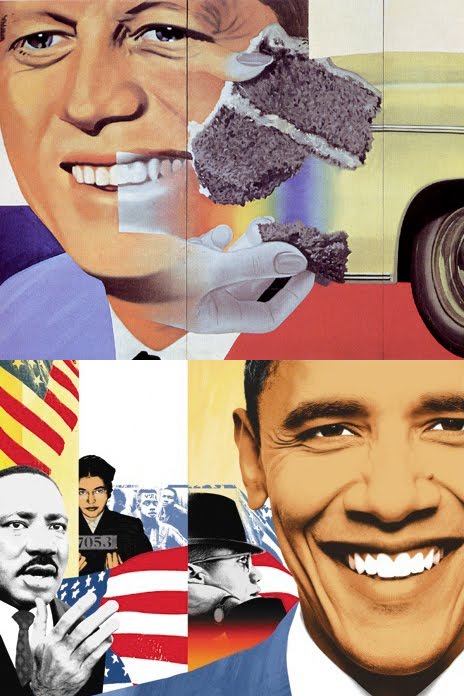





 The Daily Hatch