Monthly Archives: May 2013

Francis Schaeffer: A Mind and Heart for God by Bruce Little

Francis Schaeffer: A Mind and Heart for God by Bruce Little

Episode 8: The Age Of Fragmentation

Published on Jul 24, 2012

Dr. Schaeffer’s sweeping epic on the rise and decline of Western thought and Culture

_______________________

I love the works of Francis Schaeffer and I have been on the internet reading several blogs that talk about Schaeffer’s work and the work below by Bruce Little  was really helpful. Schaeffer’s film series “How should we then live?  Wikipedia notes, “According to Schaeffer, How Should We Then Live traces Western history from Ancient Rome until the time of writing (1976) along three lines: the philosophic, scientific, and religious.[3] He also makes extensive references to art and architecture as a means of showing how these movements reflected changing patterns of thought through time. Schaeffer’s central premise is: when we base society on the Bible, on the infinite-personal God who is there and has spoken,[4] this provides an absolute by which we can conduct our lives and by which we can judge society.  Here are some posts I have done on this series: Francis Schaeffer’s “How should we then live?” Video and outline of episode 10 “Final Choices” episode 9 “The Age of Personal Peace and Affluence”episode 8 “The Age of Fragmentation”episode 7 “The Age of Non-Reason” episode 6 “The Scientific Age”  episode 5 “The Revolutionary Age” episode 4 “The Reformation” episode 3 “The Renaissance”episode 2 “The Middle Ages,”, and  episode 1 “The Roman Age,” .

In the film series “WHATEVER HAPPENED TO THE HUMAN RACE?” the arguments are presented  against abortion (Episode 1),  infanticide (Episode 2),   euthanasia (Episode 3), and then there is a discussion of the Christian versus Humanist worldview concerning the issue of “the basis for human dignity” in Episode 4 and then in the last episode a close look at the truth claims of the Bible.

Francis Schaeffer

4/16/12 at 10:29 AM 2 Comments

Francis Schaeffer: A Mind and Heart for God

On January 30, 2012, had Francis A. Schaeffer still been living he would have celebrated his 100th birthday. In recognition of this fact a number of Christian organizations have been paying tribute Schaeffer as one of the great evangelical Christian thinkers of the 20th Century. One of those is the Center for Faith and Culture at Southeastern Baptist Theological Seminary, of which I am director.

There is a growing consensus among older evangelicals that Schaeffer must not be forgotten. So, efforts such as this are important as today many under the age of 40 have little awareness of Schaeffer’s impact on the evangelical world. It has been most encouraging to see the 100th anniversary of his life used as an opportunity to reacquaint the evangelical world with the life and ministry of Francis Schaeffer. Happily, there are a good number of evangelical notables who remember and understand the importance of Schaeffer’s legacy, not only as something to be remembered, but to be followed.
Schaeffer was a Christian theologian, philosopher and Presbyterian pastor (maybe a pastor first and foremost) who spent most of his adult life in Switzerland with his wife Edith and their four children. His insightful mind disturbed the evangelical conscience with his penetrating analysis of culture. In the 1960s he taught evangelicals to take seriously the questions brought to the surface by the anti-authority cultural revolution.

One of his major contributions was that he taught Christians the importance of worldview thinking both in living the Christian life and evangelizing the lost. I believe a strong case can be made that Schaeffer’s thinking, passion, and ministry are still able to inform present-day evangelicals on engaging culture and defending the Faith.

In 1948 Schaeffer moved to Switzerland to begin a children’s ministry (Children for Christ) in worn-torn Europe under the Independent Board of Presbyterian Foreign Missions. In time, however, his ministry developed beyond a children’s ministry to university students. Eventually, the Schaeffer’s purchased a chalet in Huemoz where eventually the ministry known as L’Abri (Fr. Shelter) was birthed 1955 (the story of the L’Abri ministry can be found in Edith Schaeffer’s wonderful book, The Tapestry). Truly it was a shelter for many who were thrown into intellectual and spiritual chaos by the anti-establishment forces of the 1960s encouraged by existentialism. In 1960, Time magazine took note of Schaeffer’s ministry in the Swiss mountains and referred to it as a unique ministry to the European intellectual.

Over the years, hundreds (probably thousands) of people came (some for days others for months) to L’Abri where many found Christ as Savior. This was especially true in the 60s and 70s and those of us who lived through those times remember the political and social upheaval as students on both sides of the Atlantic went into a rebellious mode full throttle. Many in evangelicalism merely condemned the senseless destruction (of course, in one sense it needed to be condemned) and ignored the legitimate questions being asked by the students.

Schaeffer, on the other hand, listened carefully to their questions and helped them to see how historic Christianity answered those questions consistently within the reality all lived. While it was a time of entrenchment for many in evangelicalism, Schaeffer engaged the young people and the intellectuals (many were existentialists) on their own terms. He showed them that their explanation of the world was inconsistent with and insufficient for the world in which they lived. Then he would show how Christianity answered those questions.

A hallmark of Schaeffer’s apologetic was that it was driven by a deep and abiding love for humanity. He truly empathized with those who were struggling with life in a world that was terribly out of joint. I am told that Schaeffer would spend hours with one person asking questions until the individual had sufficient information to think further on the matter.

To understand Schaeffer’s approach to evangelism and his apologetic thought one must give attention to the three works that reveal the foundation of his understanding of man, reality, and the Bible. These three books serve as the foundation for all his other books, forming a trilogy: The God Who Is ThereEscape from Reason, and He Is There and He Is Not Silent. According to Schaeffer all his other books fit into these as “spokes of the wheel into the hub”. In 1982, the works of Francis Schaeffer were edited by Schaeffer and published in a five-volume set in which the books in the trilogy are in the order in which they were written. This order reveals the development of his thinking apologetically and is essential to understanding Schaeffer and his apologetic method.

In these three books, one learns how Schaeffer’s view of man shaped his apologetic approach (which for him was part and parcel of his evangelism). Historic Christianity, according to Schaeffer, was creation centered and central to creation was that God created man in his image. The first apologetic implication of creation was that man had intrinsic worth which meant he was to be treated with respect and love. This truth shaped Schaeffer’s life and ministry as he was motivated and directed by love and compassion for man as a person. Apologetics, he urged, must be “shaped on the basis of love for the person as a person.”

While Schaeffer did not minimize the historic fall recorded in Genesis, he argued that the fall “did not lead to machineness, but to fallen-manness.” There was a greatness to man even though he could also be very cruel. He spoke of man being noble, not because of his achievements, but because of who he was as a creation of God—man was not a zero, to use Schaeffer’s words. Only Christianity, Schaeffer said, could explain both the greatness and the cruelty of man. This truth moved Schaeffer to take all men seriously and to answer the honest questions of fallen man. Furthermore, he argued that the Christian must take care to understand the person by looking carefully at cultural artifacts (especially the arts) to understand the underlying worldviews and presuppositions revealed in them.

The second apologetic implication of creation for Schaeffer was the intelligibility of creation. The categories of the mind of man correspond to the structure of the world as God had created both. The result, Schaeffer argued, was that common ground existed between the Christian and the non-Christian. This is not something man put upon the universe; it is simply the way it is. Man lives in a morally structured, rational universe and no matter how he might try to live against the way the universe is, Schaeffer was sure it would push back at him and create tension for his non-Christian presuppositions. Of course this was not a game for Schaeffer and he urged the Christian always to give the answer as understood in light of historic Christianity and to do so in a loving and compassionate tone.

He was convinced that when speaking to the non-Christian the first truth to present was that of the truth of the real world and the reality of man himself. For Schaeffer, the real point of contact with the modern (and post modern mind) was reality. Regardless what presuppositions a man claims as grounds for his worldview, Schaeffer showed how they can be tested for truthfulness when pressed against the reality in which every person must live.

In 1978 Schaeffer learned that he had lymphoma cancer succumbing to it in May 1984. However, almost until his death he maintained an active speaking schedule. During his life time he carried on a voluminous correspondence with many of the great evangelical minds of the day. Most of this correspondence is in the Francis A. Schaeffer Collection (of which I am director) given by the Francis Schaeffer Foundation which is now under the custodianship of the library at Southeastern Baptist Theological Seminary.

He wrote 27 books (and many pamphlets), and produced two films with his son Frank. Of the two films, the most well-known is How Should We then Live? which is a companion to the book by the same title. The second film, Whatever Happened to the Human Race with Everett Koop, Schaeffer shows the social and philosophical consequences of abortion. He wrote on responsible stewardship of creation long before others were talking about it. Schaeffer not only could think with the best minds of his day, he lived out his Christianity in very practical ways and urged all in the church to do the same.

The concluding thought is that Schaeffer remains an important apologetic resource for Christians in the 21st century. It goes without saying that the evangelical world owes much to the life and ministry of Francis Schaeffer. Every now and then, God gives His Church a unique voice for His people—Schaeffer was such a voice. It is without fear of contradiction to say that Schaeffer was one of the evangelical giants of the latter half of the 20th century. We will do well to listen, for to do otherwise will deny that which was intended for our profit.

Related posts:

Francis Schaeffer’s wife Edith passes away on Easter weekend 2013 Part 7 (includes pro-life editorial cartoon)

The Francis and Edith Schaeffer Story Pt.1 – Today’s Christian Videos The Francis and Edith Schaeffer Story – Part 3 of 3 Francis Schaeffer: “Whatever Happened to the Human Race” (Episode 1) ABORTION OF THE HUMAN RACE Published on Oct 6, 2012 by AdamMetropolis ________________ Picture of Francis Schaeffer and his wife Edith from the […]

The Mark of the Christian by Francis Schaeffer Part 1

  THE MARK OF A CHRISTIAN – CLASS 1 – Introduction Published on Mar 7, 2012 This is the introductory class on “The Mark Of A Christian” by Francis Schaeffer. The class was originally taught at Redeemer Presbyterian Church in Overland Park, KS by Dan Guinn from FrancisSchaefferStudies.org as part of the adult Sunday School hour […]

Francis Schaeffer’s wife Edith passes away on Easter weekend 2013 Part 6 (includes pro-life editorial cartoon and tribute from son-in-law Ranald Macaulay)

The Francis and Edith Schaeffer Story Pt.1 – Today’s Christian Videos The Francis and Edith Schaeffer Story – Part 3 of 3 Francis Schaeffer: “Whatever Happened to the Human Race” (Episode 1) ABORTION OF THE HUMAN RACE Published on Oct 6, 2012 by AdamMetropolis ________________ Picture of Francis Schaeffer and his wife Edith from the […]

Francis Schaeffer’s wife Edith passes away on Easter weekend 2013 Part 5 (includes pro-life editorial cartoon)

The Francis and Edith Schaeffer Story Pt.1 – Today’s Christian Videos The Francis and Edith Schaeffer Story – Part 3 of 3 Francis Schaeffer: “Whatever Happened to the Human Race” (Episode 1) ABORTION OF THE HUMAN RACE Published on Oct 6, 2012 by AdamMetropolis ________________ Picture of Francis Schaeffer and his wife Edith from the […]

Francis Schaeffer’s wife Edith passes away on Easter weekend 2013 Part 4 (includes pro-life editorial cartoon)

The Francis and Edith Schaeffer Story Pt.1 – Today’s Christian Videos The Francis and Edith Schaeffer Story – Part 3 of 3 Francis Schaeffer: “Whatever Happened to the Human Race” (Episode 1) ABORTION OF THE HUMAN RACE Published on Oct 6, 2012 by AdamMetropolis ________________ Picture of Francis Schaeffer and his wife Edith from the […]

Francis Schaeffer’s wife Edith passes away on Easter weekend 2013 Part 3 (includes pro-life editorial cartoon)

The Francis and Edith Schaeffer Story Pt.1 – Today’s Christian Videos The Francis and Edith Schaeffer Story – Part 3 of 3 Francis Schaeffer: “Whatever Happened to the Human Race” (Episode 1) ABORTION OF THE HUMAN RACE Published on Oct 6, 2012 by AdamMetropolis ________________ Picture of Francis Schaeffer and his wife Edith from the […]

“Schaeffer Sundays” Francis Schaeffer’s own words concerning humanist dominated public schools in USA even though country was founded on a Christian base

Francis Schaeffer: “Whatever Happened to the Human Race?” (Episode 2) SLAUGHTER OF THE INNOCENTS Published on Oct 6, 2012 by AdamMetropolis The 45 minute video above is from the film series created from Francis Schaeffer’s book “Whatever Happened to the Human Race?” with Dr. C. Everett Koop. This book  really helped develop my political views concerning […]

“Schaeffer Sundays” Francis Schaeffer’s own words concerning where the Bible-believing Christians been the last few decades

Francis Schaeffer: “Whatever Happened to the Human Race” (Episode 1) ABORTION OF THE HUMAN RACE Published on Oct 6, 2012 by AdamMetropolis The 45 minute video above is from the film series created from Francis Schaeffer’s book “Whatever Happened to the Human Race?” with Dr. C. Everett Koop. This book  really helped develop my political views […]

Taking on Ark Times Bloggers on various issues Part E “Moral absolutes and abortion” Francis Schaeffer Quotes part 5(includes the film SLAUGHTER OF THE INNOCENTS) (editorial cartoon)

I have gone back and forth and back and forth with many liberals on the Arkansas Times Blog on many issues such as abortion, human rights, welfare, poverty, gun control  and issues dealing with popular culture. Here is another exchange I had with them a while back. My username at the Ark Times Blog is Saline […]

“Schaeffer Sundays” Francis Schaeffer’s own words concerning religious liberals and humanists

Francis Schaeffer: “Whatever Happened to the Human Race” (Episode 5) TRUTH AND HISTORY Published on Oct 7, 2012 by AdamMetropolis The 45 minute video above is from the film series created from Francis Schaeffer’s book “Whatever Happened to the Human Race?” with Dr. C. Everett Koop. This book  really helped develop my political views concerning abortion, […]

John MacArthur on Proverbs (Part 4) “Bad company corrupts…” In chapter 2 verse 11 the father has to teach his son how to be delivered from the way of evil, from the man who speaks perverse things. You don’t want to be around those kinds of people. From those who leave the paths of uprightness to walk in the ways of darkness, you want to make sure your children aren’t around those kinds of people who delight in doing evil and rejoice in the perversity of evil, whose paths are crooked and who are devious in their ways. Don’t let your sons around those kinds of people!

Over and over in Proverbs you hear the words “fear the Lord.” In fact, some of he references are Proverbs 1:7, 29; 2:5; 8:13; 9:10;14:26,27; 15:16 and many more. Below is a sermon by John MacArthur from the Book of Luke on 3 reasons we should fear the Lord. (I have posted John MacArthur’s amazing sermon on the fulfillment of Old Testament scripture before on my blog.)

PART 4

Today the subject is very simple: BE WISE IN SELECTING YOUR COMPANIONS.

We have been members of Fellowship Bible Church in Little Rock since 1997 and during that time Dennis Rainey had taught a six grade Sunday School Class that has had a big impact on lots of kids at Fellowship. I actually had the opportunity to be a teacher in the 6th grade when Wilson took this same course and it was a very powerful illustration that demonstrated how bad company corrupts good morals that many students still remember. We taught the course the way that Dennis had written it.  Here are the exact words of Dennis Rainey:

Outside the guidance we continue to have at home, nothing will influence our children as much as the choice of their friends. The Bible speaks pointedly about the power of the people we spend time. Paul wrote: “Do not be deceived: Bad company corrupts good morals'” (1 Corinthians 15:33).

The opposite is also true: Good company guards against the development of bad habits. Many parents are so afraid of peer pressure they seldom use “good” peer pressure to their advantage.

For years I taught a sixth-grade Sunday school class, and one of the highlights was the “bad apples” demonstration. Surprisingly, most youth today have not heard the old saying, “One bad apple can spoil the whole barrel.”

On a Sunday morning early in the nine-month class, I would bring some apples. I called them my “buddies.” I usually had one beautiful, shiny red apple and a couple others that looked nice but had at least one bruise.

“These two apples with the bruises represent a couple of buddies you should not spend time with in junior high,” I would say. “They have a dark side to them, a compromised area of their lives. This good apple represents you, a good Christian teenager. The good apple sees no problem with the bruised apples. He says to himself, these are my buddies. They wouldn’t do anything to hurt me. They’re not that bad.”

Then I’d put the apples together in a plastic bag and say, “These three apples are going to become close buddies for a few months. I’ll put them in a closet, and we’ll check on them in a few months at the end of the class and see what happens to the good apple.”

In the last class of the year, I would read 1 Corinthians 15:33 and then invite a member of the class to come up and pull the plastic bag out of a paper sack.

It never failed—the two bad buddies had really made an impact on the good apple. The identity of all three apples had been lost; the bag now contained discolored, mushy apple soup. This lesson demonstrated how bad company can corrupt and even consume the best young Christian.

____________

John MacArthur

I remember hearing Dr. Adrian Rogers say that if he had to do it over again he would read from Proverbs every day to his kids. They turned out to be great kids and they were raised right. Nevertheless, if he had to do it over again he thought a more emphasis on Proverbs is the way to go. That is why I am spending so much time in Proverbs with my kids today.

John MacArthur does a great job on Proverbs and here is a portion of his sermon on Proverbs.

There’s a fourth principle and this must be taught as well…and very very important. A father must teach his son…select your companions…select your companions. You get on the offensive. A father has the responsibility to teach his children how to choose their friends. What did the Apostle Paul say? Bad company corrupts…what?…good morals. Bad company corrupts good morals. Your children, believe me, cannot rise above their acquaintances. Rarely does a child have the capability to elevate himself beyond the constituent group in which he functions. You have to select and help him learn to select companions and not let them select him.

Go back to chapter 1 for a moment, I’ll give you an illustration of it. Verse 10, a father would say to his son, “My son, if sinners entice you, do not consent.” In other words, don’t get sucked in to the gang. If they say, and they appeal on the basis of excitement and adventure and a thrill, if they say, “Come with us, let us lie in wait for blood, let us ambush the innocence without cause, let us swallow them alive like Sheol, even whole as those who go down to the pit.” Let’s kill somebody and we’ll find all kinds of precious wealth and fill our houses with gold, throw in your lot with us and we’ll all have one purse. Here’s the gang appealing to the kid. And the gang comes along and sucks up one other person for their own wicked purposes.

It’s amazing, isn’t it, this kind of action, for one fleeting moment of pleasure wicked men are willing to take a life or inflict life‑long trauma on someone pointless, senseless, gang‑violence, like those members of that gang that shot Stacy Limb last week with a 357 Magnum because they wanted to take the wheels off her car. It’s an unthinkable thing that people will do for a thrill. And they want to suck the innocent and the naive and the unwitting in to that. Think about that little boy a week ago in the news who wouldn’t take dope with his friends in New York City, so they set him on fire. The enticements can be pretty strong. Fathers, we have a tremendous task. You may not live in an inner city ghetto like New York, or East Los Angeles, but I’ll tell you what, there is tremendous peer pressure coming upon your sons to conform to a standard of conduct that is the standard of conduct of the people around them. You must teach them to select their companions and not be selected and then intimidated into that kind of alliance.

The whole appeal here is to the father to fulfill his responsibility. In chapter 2 verse 11 the father has to teach his son how to be delivered from the way of evil, from the man who speaks perverse things. You don’t want to be around those kinds of people. From those who leave the paths of uprightness to walk in the ways of darkness, you want to make sure your children aren’t around those kinds of people who delight in doing evil and rejoice in the perversity of evil, whose paths are crooked and who are devious in their ways. Don’t let your sons around those kinds of people. You instruct them how to choose their companions, those who lift them up.

Proverbs 18:24 is kind of an interesting verse just jumping outside of our ten chapter fence a little bit. Proverbs 18:24 at first reading looks a little hard to understand in English, “A man of many friends comes to ruin, but there is a friend who sticks closer than a brother.” It’s kind of an interesting verse in the Hebrew. It says a man of many rea comes to ruin, but there is a aheb who sticks closer than a brother. It’s two different words for friend. A man who just wants a lot of acquaintances, who wants to be everybody’s buddy is going to be in trouble. Better you should have a deep friend, an aheb, a loving friend who is loyal and honest and uplifting and holds you accountable, who lifts you up. Better a few of the right kind of friendships than a lot of the wrong kind. Fathers, you have the responsibility to God for the process of your children learning how to choose their companions. This is a father’s duty…son, fear your God, guard your mind, obey your parents, select your companions.

___________

WHAT DOES THIS VERSE MEAN? (I CORINTHIANS 15:33)

33 Do not be so deceived and misled! Evil companionships (communion, associations) corrupt and deprave good manners and morals and character.

Francis Schaeffer’s wife Edith passes away on Easter weekend 2013 Part 16 (includes pro-life editorial cartoon)

The Francis and Edith Schaeffer Story Pt.1 – Today’s Christian Videos

The Francis and Edith Schaeffer Story – Part 3 of 3

Francis Schaeffer: “Whatever Happened to the Human Race” (Episode 1) ABORTION OF THE HUMAN RACE

Published on Oct 6, 2012 by

________________

Picture of Francis Schaeffer and his wife Edith from the 1930′s above. I was sad to read about Edith passing away on Easter weekend in 2013. I wanted to pass along this fine article below.

Wife of Late Pastor, Author, Abortion Opponent Francis Schaeffer Passes Into Eternity

March 30, 2013 | Filed under: Featured,Life & Society,World | By:

Edith Schaeffer, wife of the late Francis Schaeffer, a reknown pastor, author, abortion opponent and founder of the L’Abri conference center in Switzerland passed away today. She was 98.

Schaeffer was born into missionary life in China. She met her husband Francis in the 1930′s at a Christian event in Germantown, Pennsylvania. Later, the two founded the Christian conference center L’Abri in Switzerland, where Edith often tended to meals for the guests. It is stated that she tended a sizable vegetable garden in an effort to have sufficient food for those visiting.

Her husband Francis was a prolific writer and often denounced the secular humanism that he saw permeating society.

“Why has our society changed?” he once asked. “The answer is clear — the consensus of our society no longer rests upon a Christian basis, but upon a humanistic one. Humanism is man putting himself at the center of all things, rather than the creator God.”

Francis also released two films,  How Should We Then Live?: The Rise and Decline of Western Thought and Culture and Whatever Happened to the Human Race?, the first of which chronicled the history of the Church from the early Church to current times. The second film addressed the issues of abortion and euthanasia, which Schaeffer strongly opposed.

Francis Schaeffer died in 1984 of lymphoma, and was said to be influential in the lives of many Christian leaders during his time.

The Schaeffer’s son, Frank, wrote a tribute to his mother this morning, which was published in The Huffington Post. Frank, who departed from his parent’s beliefs a number of years ago, had remained in touch with his mother.

“My mother Edith Schaeffer died today. … She has just gone to be with the Lord, as she would put it,” he wrote. “She died at home which was her wish.”

He included in his list of warm memories of his mother “[being] in the garden at dawn weeding and watering her wonderful flowers and vegetables,” “taking impractical detours to look at something lovely” and “praying out loud over meals long — so long — at the table, as she forgot that for the rest of us prayer was mostly a ritual, though for her it was an endless conversation with the eternal.”

Frank also stated that his mother expressed a “horror at the ‘harshness’ … of so many evangelical religious people and the way they treated ‘the lost’ and [would declare], ‘No wonder no one wants to be a Christian if that’s how we treat people!’”

Edith Schaeffer, in addition to caring for her husband and children, and helping run L’Abri, was also a prolific author. Her books included The Hidden Art of Homemaking: Creative Ideas for Enriching Everyday Life, What is a Family and 10 Things Parents Must Teach Their Children.

L’Abri continues to this day, and has expanded to several countries, including in the United States, with facilities in both Massachusetts and Minnesota.

President Obama’s own words put in a pro-life poster:

(Francis did a great job in his film series “How Should we then live?” in looking at how humanism has affected art and culture in the Western World in the last 2000 years. My favorite episodes include his study of the Renaissance, the Revolutionary age, the age of Nonreason, and the age of Fragmentation.)

Related posts:

Francis Schaeffer’s “How should we then live?” Video and outline of episode 10 “Final Choices” (Schaeffer Sundays)

E P I S O D E 1 0   Dr. Francis Schaeffer – Episode X – Final Choices 27 min FINAL CHOICES I. Authoritarianism the Only Humanistic Social Option One man or an elite giving authoritative arbitrary absolutes. A. Society is sole absolute in absence of other absolutes. B. But society has to be […]

Francis Schaeffer’s “How should we then live?” Video and outline of episode 9 “The Age of Personal Peace and Affluence” (Schaeffer Sundays)

E P I S O D E 9 Dr. Francis Schaeffer – Episode IX – The Age of Personal Peace and Affluence 27 min T h e Age of Personal Peace and Afflunce I. By the Early 1960s People Were Bombarded From Every Side by Modern Man’s Humanistic Thought II. Modern Form of Humanistic Thought Leads […]

Francis Schaeffer’s “How should we then live?” Video and outline of episode 8 “The Age of Fragmentation” (Schaeffer Sundays)

E P I S O D E 8 Dr. Francis Schaeffer – Episode VIII – The Age of Fragmentation 27 min I saw this film series in 1979 and it had a major impact on me. T h e Age of FRAGMENTATION I. Art As a Vehicle Of Modern Thought A. Impressionism (Monet, Renoir, Pissarro, Sisley, […]

Francis Schaeffer’s “How should we then live?” Video and outline of episode 7 “The Age of Non-Reason” (Schaeffer Sundays)

E P I S O D E 7 Dr. Francis Schaeffer – Episode VII – The Age of Non Reason I am thrilled to get this film series with you. I saw it first in 1979 and it had such a big impact on me. Today’s episode is where we see modern humanist man act […]

Francis Schaeffer’s “How should we then live?” Video and outline of episode 6 “The Scientific Age” (Schaeffer Sundays)

E P I S O D E 6 How Should We Then Live 6#1 Uploaded by NoMirrorHDDHrorriMoN on Oct 3, 2011 How Should We Then Live? Episode 6 of 12 ________ I am sharing with you a film series that I saw in 1979. In this film Francis Schaeffer asserted that was a shift in […]

Francis Schaeffer’s “How should we then live?” Video and outline of episode 5 “The Revolutionary Age” (Schaeffer Sundays)

E P I S O D E 5 How Should We Then Live? Episode 5: The Revolutionary Age I was impacted by this film series by Francis Schaeffer back in the 1970′s and I wanted to share it with you. Francis Schaeffer noted, “Reformation Did Not Bring Perfection. But gradually on basis of biblical teaching there […]

Francis Schaeffer’s “How should we then live?” Video and outline of episode 4 “The Reformation” (Schaeffer Sundays)

Dr. Francis Schaeffer – Episode IV – The Reformation 27 min I was impacted by this film series by Francis Schaeffer back in the 1970′s and I wanted to share it with you. Schaeffer makes three key points concerning the Reformation: “1. Erasmian Christian humanism rejected by Farel. 2. Bible gives needed answers not only as to […]

“Schaeffer Sundays” Francis Schaeffer’s “How should we then live?” Video and outline of episode 3 “The Renaissance”

Francis Schaeffer’s “How should we then live?” Video and outline of episode 3 “The Renaissance” Francis Schaeffer: “How Should We Then Live?” (Episode 3) THE RENAISSANCE I was impacted by this film series by Francis Schaeffer back in the 1970′s and I wanted to share it with you. Schaeffer really shows why we have so […]

Francis Schaeffer’s “How should we then live?” Video and outline of episode 2 “The Middle Ages” (Schaeffer Sundays)

  Francis Schaeffer: “How Should We Then Live?” (Episode 2) THE MIDDLE AGES I was impacted by this film series by Francis Schaeffer back in the 1970′s and I wanted to share it with you. Schaeffer points out that during this time period unfortunately we have the “Church’s deviation from early church’s teaching in regard […]

Francis Schaeffer’s “How should we then live?” Video and outline of episode 1 “The Roman Age” (Schaeffer Sundays)

Francis Schaeffer: “How Should We Then Live?” (Episode 1) THE ROMAN AGE   Today I am starting a series that really had a big impact on my life back in the 1970′s when I first saw it. There are ten parts and today is the first. Francis Schaeffer takes a look at Rome and why […]

The Mark of the Christian by Francis Schaeffer Part 3

The Mark of the Christian by Francis Schaeffer Part 3

THE MARK OF A CHRISTIAN – CLASS 3 – For True Christian Only/The Stand

Published on Mar 20, 2012

The class was originally taught at Redeemer Presbyterian Church in Overland Park, KS by Dan Guinn from FrancisSchaefferStudies.org as part of the adult Sunday School hour on Mar. 18th, 2012.

This class covers (section headings by Schaeffer)
Section 4 – “For True Christian Only”
Section 5 – “The Standard of Quality”

  • _________________________
I have several spiritual heroes in my life and Francis Schaeffer was one of those. In the film series “WHATEVER HAPPENED TO THE HUMAN RACE?” the arguments are presented  against abortion (Episode 1),  infanticide (Episode 2),   euthenasia (Episode 3), and then there is a discussion of the Christian versus Humanist worldview concerning the issue of “the basis for human dignity” in Episode 4 and then in the last episode a close look at the truth claims of the Bible.
Christians should present the truth in love and that is what Francis Schaeffer’s book “The Mark of the Christian” is about. I have a portion of that book below:
Christians have not always presented a pretty picture to the world.

We cannot expect the world to believe that the Father sent the Son, that Jesus’ claims are true, and that Christianity is true, unless the world sees some reality of the oneness of true Christians.

Now that is frightening.
Should we not feel some emotion at this point?

True oneness

In John 13 and 17, Jesus talks about

a real seeable oneness,
a practicing oneness,
a practical oneness

across all [denominational/organizational] lines,
among all true Christians.

The christian really has a double task.

He has to practice both
God’s holiness and God’s love.

The christian is to exhibit that God exists as the infinite-personal God; and then he is to exhibit simultaneously God’s character of holiness and love.

Not His holiness without His love:
this is only
harshness.

Not His love without His holiness:
that is only
compromise.

Anything that an individual Christian or Christian group does that fails to show the simultaneous balance of the holiness of God and the love of God presents to a watching world not a demonstration of the God who exists but a caricature of the God who exists.

According to the Scripture and the teaching of Christ, the love that is shown is to be exceedingly strong. It is not just something you mention in words once in a while.

Visible love

What, then, does this love mean?
How can it be made visible?

First, it means a very simple thing:

It means that when I have made a mistake
and when I have failed to love my Christian brother,
I go to him and say, “I’m sorry.”
That is first.

It may seem a letdown-that the first thing we speak of should be so simple! But if you think it is easy, you have never tried to practice it.

In our own groups, in our own close Christian communities, even in our families, when we have shown lack of love toward another, we as Christians do not just automatically go and say we are sorry. On even the very simplest level it is never very easy.

If I am not willing to say, “I’m sorry,” when I have wronged somebody else – especially when I have not loved that person – I have not even started to think about the meaning of a Christian oneness that the world can see.

The world has a right to question whether I am a Christian.

And more than that, let me say it again,

if I am not willing to do this very simple thing,
the world has a right to question
whether Jesus was sent from God
and whether Christianity is true.

Dealing with division

How well have we consciously practiced this? How often, in the power of the Holy Spirit, have we gone to Christians in our own group and said, “I’m sorry”? How much time have we spent reestablishing contact with those in other groups, saying to them, “I’m sorry for what I’ve done, what I’ve said, or what I’ve written”? How frequently has one group gone to another group with whom it differed and has said, “We’re sorry”? It is so important that it is, for all practical purposes, a part of the preaching of the gospel itself. The observable practice of truth and the observable practice of love go hand in hand with the proclamation of the good news of Jesus Christ.

I have observed one thing among true Christians in their differences in many countries: What divides and severs true Christian groups and Christians-what leaves a bitterness that can last for 20, 30, or 40 years (or for 50 or 60 years in a son’s or daughter’s memory)-is not the issue of doctrine or belief that caused the differences in the first place. Invariably, it is a lack of love–and the bitter things that are said by true Christians in the midst of differences. These stick in the mind like glue. And after time passes and the differences between the Christians or the groups appear less than they did, there are still those bitter, bitter things we said in the midst of what we thought was a good and sufficient objective discussion. It is these things – these unloving attitudes and words–that cause the stench that the world can smell in the church of Jesus Christ among those who are really true Christians.

If, when we feel we must disagree as true Christians, we could simply guard our tongues and speak in love, in five or ten years the bitterness could be gone. Instead of that, we leave scars – a curse for generations. Not just a curse in the church, but a curse in the world. Newspaper headlines bear it in our Christian press, and it boils over into the secular press at times–Christians saying such bitter things about other Christians. The world looks, shrugs its shoulders, and turns away. It has not seen even the beginning of a living church in the midst of a dying culture. It has not seen the beginning of what Jesus indicates is the final apologetic–observable oneness among true Christians who are truly brothers and sisters in Christ. Our sharp tongues, the lack of love between us–not the necessary statements of differences that may exist between true Christians–these are what properly trouble the world. How different this is from the straightforward and direct command of Jesus Christ–to show an observable oneness that may be seen by a watching world!

Forgiveness

But there is more to observable prayer than saying we are sorry. There must also be open forgiveness. And though it’s hard to say, “I’m sorry,” it’s even harder to forgive. The Bible, however, makes plain that the world must observe a forgiving spirit in the midst of God’s people.

In the Lord’s Prayer, Jesus himself teaches us to pray,

Forgive our trespasses,
as we forgive those who trespass against us.

Now this prayer, we must say quickly, is not for salvation. It has nothing to do with being born again, for we are born again on the basis of the finished work of Christ plus nothing. But it does have to do with a Christian’s existential, moment-by-moment forgiveness for our sins on the basis of Christ’s work in order to be in open fellowship with God. What the Lord has taught us to pray in the Lord’s Prayer should make a Christian very sober every day of his or her life: We are asking the Lord to open to us the experiential realities of fellowship with himself as we forgive others.

Some Christians say that the Lord’s Prayer is not for this present era, but most of us would say it is. And yet, at the same time, we hardly think once in a year about our lack of a forgiving heart in relationship to God’s forgiving us. Many Christians rarely or never seem to connect their own lack of reality of fellowship with God with their lack of forgiveness to others, even though they may say the Lord’s Prayer in a formal way over and over in their weekly Sunday worship services.

We must all continually acknowledge that we do not practice the forgiving heart as we should. And yet the prayer is Forgive us our debts, our trespasses, as we forgive our debtors. We are to have a forgiving spirit even before the other person expresses regret for wrong. The Lord’s Prayer does not suggest that when the other person is sorry, then we are to show a oneness by having a forgiving spirit. Rather, we are called upon to have a forgiving spirit without the other person having made the first step. We may still say that this individual is wrong, but in the midst of saying that person is wrong, we must be forgiving.

We are to have this forgiving spirit not only toward Christians but toward all people. But surely, if it is toward all people, it is important toward Christians.

Such a forgiving spirit registers an attitude of love toward others. But, even though one can call this an attitude, true forgiveness is observable. Believe me, you can look on a person’s face and know where that one is as far as forgiveness is concerned. And the world is called on to look upon us and see whether we have love across the groups, love across party lines. Do they observe that we say, “I’m sorry,” and do they observe a forgiving heart? Let me repeat: Our love will not be perfect, but it must be substantial enough for the world to be able to observe or it does not fit into the structure of the verses in John 13 and 17. And if the world does not observe this among true Christians, the world has a right to make the two awful judgments that these verses indicate: That we are not Christians, and that Christ was not sent by the Father.

The Mark of the Christian by Francis Schaeffer © 1970 by L’Abri Fellowship. Used by permission of Norfolk Press, London. All rights reserved. No portion of this online edition of the book may be reproduced in any form or by any means, except for brief quotations for the purpose of review, comment, or scholarship, without written permission from the copyright holder.
Francis A. Schaeffer Institute of Church Leadership Development http://www.truespirituality.org/

I truly believe that many of the problems we have today in the USA are due to the advancement of humanism in the last few decades in our society. Ronald Reagan appointed the evangelical Dr. C. Everett Koop to the position of Surgeon General in his administration. He partnered with Dr. Francis Schaeffer in making the video below. It is very valuable information for Christians to have.  Actually I have included a video below that includes comments from him on this subject.

Many liberals actually truly do argue for abortion rights over human rights. Prochoice advocate Elizabeth Williams came out and said that on 1-23-13 in her article on Salon. We hear reasons for abortion such as poverty,and  child abuse,  but why not consider adoption? Instead, the political left will stop at nothing to push the pro-abortion agenda. Why not stop and take an honest look at when life begins for the unborn child and when she begins to feel pain?

Francis Schaeffer

Francis Schaeffer: “Whatever Happened to the Human Race” (Episode 1) ABORTION OF THE HUMAN RACE

Published on Oct 6, 2012 by

Related posts:

Francis Schaeffer’s prayer for us in USA

 Francis Schaeffer: “Whatever Happened to the Human Race” (Episode 1) ABORTION OF THE HUMAN RACE Published on Oct 6, 2012 by AdamMetropolis The 45 minute video above is from the film series created from Francis Schaeffer’s book “Whatever Happened to the Human Race?” with Dr. C. Everett Koop. This book  really helped develop my political views […]

Francis Schaeffer’s “How should we then live?” Video and outline of episode 10 “Final Choices” (Schaeffer Sundays)

E P I S O D E 1 0   Dr. Francis Schaeffer – Episode X – Final Choices 27 min FINAL CHOICES I. Authoritarianism the Only Humanistic Social Option One man or an elite giving authoritative arbitrary absolutes. A. Society is sole absolute in absence of other absolutes. B. But society has to be […]

Francis Schaeffer’s “How should we then live?” Video and outline of episode 9 “The Age of Personal Peace and Affluence” (Schaeffer Sundays)

E P I S O D E 9 Dr. Francis Schaeffer – Episode IX – The Age of Personal Peace and Affluence 27 min T h e Age of Personal Peace and Afflunce I. By the Early 1960s People Were Bombarded From Every Side by Modern Man’s Humanistic Thought II. Modern Form of Humanistic Thought Leads […]

Francis Schaeffer’s “How should we then live?” Video and outline of episode 8 “The Age of Fragmentation” (Schaeffer Sundays)

E P I S O D E 8 Dr. Francis Schaeffer – Episode VIII – The Age of Fragmentation 27 min I saw this film series in 1979 and it had a major impact on me. T h e Age of FRAGMENTATION I. Art As a Vehicle Of Modern Thought A. Impressionism (Monet, Renoir, Pissarro, Sisley, […]

Francis Schaeffer’s “How should we then live?” Video and outline of episode 7 “The Age of Non-Reason” (Schaeffer Sundays)

E P I S O D E 7 Dr. Francis Schaeffer – Episode VII – The Age of Non Reason I am thrilled to get this film series with you. I saw it first in 1979 and it had such a big impact on me. Today’s episode is where we see modern humanist man act […]

Francis Schaeffer’s “How should we then live?” Video and outline of episode 6 “The Scientific Age” (Schaeffer Sundays)

E P I S O D E 6 How Should We Then Live 6#1 Uploaded by NoMirrorHDDHrorriMoN on Oct 3, 2011 How Should We Then Live? Episode 6 of 12 ________ I am sharing with you a film series that I saw in 1979. In this film Francis Schaeffer asserted that was a shift in […]

Francis Schaeffer’s “How should we then live?” Video and outline of episode 5 “The Revolutionary Age” (Schaeffer Sundays)

E P I S O D E 5 How Should We Then Live? Episode 5: The Revolutionary Age I was impacted by this film series by Francis Schaeffer back in the 1970′s and I wanted to share it with you. Francis Schaeffer noted, “Reformation Did Not Bring Perfection. But gradually on basis of biblical teaching there […]

Francis Schaeffer’s “How should we then live?” Video and outline of episode 4 “The Reformation” (Schaeffer Sundays)

Dr. Francis Schaeffer – Episode IV – The Reformation 27 min I was impacted by this film series by Francis Schaeffer back in the 1970′s and I wanted to share it with you. Schaeffer makes three key points concerning the Reformation: “1. Erasmian Christian humanism rejected by Farel. 2. Bible gives needed answers not only as to […]

“Schaeffer Sundays” Francis Schaeffer’s “How should we then live?” Video and outline of episode 3 “The Renaissance”

Francis Schaeffer’s “How should we then live?” Video and outline of episode 3 “The Renaissance” Francis Schaeffer: “How Should We Then Live?” (Episode 3) THE RENAISSANCE I was impacted by this film series by Francis Schaeffer back in the 1970′s and I wanted to share it with you. Schaeffer really shows why we have so […]

Francis Schaeffer’s “How should we then live?” Video and outline of episode 2 “The Middle Ages” (Schaeffer Sundays)

  Francis Schaeffer: “How Should We Then Live?” (Episode 2) THE MIDDLE AGES I was impacted by this film series by Francis Schaeffer back in the 1970′s and I wanted to share it with you. Schaeffer points out that during this time period unfortunately we have the “Church’s deviation from early church’s teaching in regard […]

Francis Schaeffer’s “How should we then live?” Video and outline of episode 1 “The Roman Age” (Schaeffer Sundays)

Francis Schaeffer: “How Should We Then Live?” (Episode 1) THE ROMAN AGE   Today I am starting a series that really had a big impact on my life back in the 1970′s when I first saw it. There are ten parts and today is the first. Francis Schaeffer takes a look at Rome and why […]

Francis Schaeffer: “Whatever Happened to the Human Race” (Episode 5) TRUTH AND HISTORY

Francis Schaeffer: “Whatever Happened to the Human Race” (Episode 5) TRUTH AND HISTORY Published on Oct 7, 2012 by AdamMetropolis This crucial series is narrated by the late Dr. Francis Schaeffer and former Surgeon General Dr. C. Everett Koop. Today, choices are being made that undermine human rights at their most basic level. Practices once […]

Francis Schaeffer: “Whatever Happened to the Human Race” (Episode 4) THE BASIS FOR HUMAN DIGNITY

The opening song at the beginning of this episode is very insightful. Francis Schaeffer: “Whatever Happened to the Human Race” (Episode 4) THE BASIS FOR HUMAN DIGNITY Published on Oct 7, 2012 by AdamMetropolis This crucial series is narrated by the late Dr. Francis Schaeffer and former Surgeon General Dr. C. Everett Koop. Today, choices […]

Francis Schaeffer: “Whatever Happened to the Human Race” (Episode 3) DEATH BY SOMEONE’S CHOICE

Francis Schaeffer: “Whatever Happened to the Human Race” (Episode 3) DEATH BY SOMEONE’S CHOICE Published on Oct 6, 2012 by AdamMetropolis This crucial series is narrated by the late Dr. Francis Schaeffer and former Surgeon General Dr. C. Everett Koop. Today, choices are being made that undermine human rights at their most basic level. Practices […]

Francis Schaeffer: “Whatever Happened to the Human Race?” (Episode 2) SLAUGHTER OF THE INNOCENTS

Francis Schaeffer: “Whatever Happened to the Human Race?” (Episode 2) SLAUGHTER OF THE INNOCENTS Published on Oct 6, 2012 by AdamMetropolis This crucial series is narrated by the late Dr. Francis Schaeffer and former Surgeon General Dr. C. Everett Koop. Today, choices are being made that undermine human rights at their most basic level. Practices […]

Francis Schaeffer: “Whatever Happened to the Human Race” (Episode 1) ABORTION OF THE HUMAN RACE

It is not possible to know where the pro-life evangelicals are coming from unless you look at the work of the person who inspired them the most. That person was Francis Schaeffer.  I do care about economic issues but the pro-life issue is the most important to me. Several years ago Adrian Rogers (past president of […]

The following essay explores the role that Francis Schaeffer played in the rise of the pro-life movement. It examines the place of How Should We Then Live?, Whatever Happened to the Human Race?, and A Christian Manifesto in that process.

This essay below is worth the read. Schaeffer, Francis – “Francis Schaeffer and the Pro-Life Movement” [How Should We Then Live?, Whatever Happened to the Human Race?, A Christian Manifesto] Editor note: <p> </p> [The following essay explores the role that Francis Schaeffer played in the rise of the pro-life movement.  It examines the place of […]

Who was Francis Schaeffer? by Udo Middelmann

Great article on Schaeffer. Who was Dr. Francis A. Schaeffer? By Francis Schaeffer The unique contribution of Dr. Francis Schaeffer on a whole generation was the ability to communicate the truth of historic Biblical Christianity in a way that combined intellectual integrity with practical, loving care. This grew out of his extensive understanding of the Bible […]

By Everette Hatcher III | Posted in Francis Schaeffer | Edit | Comments (0)

President Obama and the Founding Fathers

President Obama Speaks at The Ohio State University Commencement Ceremony

Published on May 5, 2013

President Obama delivers the commencement address at The Ohio State University. May 5, 2013.

You can learn a lot about what President Obama thinks the founding fathers were all about from his recent speech at Ohio State.

  • May 7, 2013, 7:52 p.m. ET

Roger Pilon: Graduates, Your Ambition Is the Problem

Obama’s commencement speech at Ohio State on Sunday would have perplexed the Founders.

Civic education in America took a hit on Sunday when President Obama, giving the commencement address at The Ohio State University, chose citizenship as his theme. The country’s Founders trusted citizens with “awesome authority,” he told the assembled graduates. Really?

Actually, the Founders distrusted us, at least in our collective capacity. That’s why they wrote a Constitution that set clear limits on what we, as citizens, could do through government.

Mr. Obama seems never to appreciate that essential point about the American political order. As with his countless speeches that lead ultimately to an expression of the president’s belief in the unbounded power of government to do good, he began in Columbus with an insight that we can all pretty much embrace, at least in the abstract. Citizenship, Mr. Obama said, is “the idea at the heart of our founding—that as Americans, we are blessed with God-given and inalienable rights, but with those rights come responsibilities—to ourselves, to one another, and to future generations.”

Getty ImagesPresident Obama giving the commencement address to the graduating class of The Ohio State University on Sunday in Columbus, Ohio.

Well enough. But then he took that insight to lengths the Founders would never have imagined. Reading “citizenship” as standing for the many ways we can selflessly “serve our country,” the president said that “sometimes, we see it as a virtue from another time—one that’s slipping from a society that celebrates individual ambition.” And “we sometimes forget the larger bonds we share, as one American family.”

Not for nothing did he invoke the family, that elemental social unit in which we truly are responsible to one another and to future generations—by law, by custom, and, ideally, in our hearts. But only metaphorically is America a family, its members bound by tendrils of intimacy and affection. Realistically, the country is a community of individuals and private institutions, including the family, with their own interests, bound not by mutual love but by the political principles that are set forth in the Constitution, a document that secures and celebrates the freedom to pursue those interests, varied as they might be.

Alas, that is not Mr. Obama’s vision. “The Founders left us the keys to a system of self-government,” he went on, “the tool to do big and important things together that we could not possibly do alone.” And what “big and important things” cannot be done except through government? On the president’s list are railroads, the electrical grid, highways, education, health care, charity and more. One imagines a historical vision reaching as far back as the New Deal. Americans “chose to do these things together,” he added, “because we know this country cannot accomplish great things if we pursue nothing greater than our own individual ambition.”

Notice that twice now Mr. Obama has invoked “individual ambition,” and not as a virtue. For other targets, he next counseled the graduates against the “voices that incessantly warn of government as nothing more than some separate, sinister entity that’s the root of all our problems, even as they do their best to gum up the works.”

The irony here should not go unnoticed: The opponents that the president disparages are the same folks who tried to save the country from one of the biggest pieces of gum now in the works: Mr. Obama’s own health-care insurance program, which today is filling many of its backers with dread as it moves toward full implementation in a matter of months.

None of that darkens Mr. Obama’s sunny view of collective effort. What does upset him, still, is the run-up to the 2008 financial crisis: “Too many on Wall Street,” he said, “forgot that their obligations don’t end with their shareholders.” No mention of the Federal Reserve, or Fannie Mae, FNMA +7.07% Freddie Mac, FMCC +8.80% the Community Reinvestment Act, or the many other “big and important things” government undertook before the crisis hit, things that explain the disaster far better than any Wall Street greed. None of that fits in Mr. Obama’s morality play. For that matter, neither do the Constitution’s checks and balances. When the president laments that “democracy isn’t working as well as we know it can,” he is not talking about those big, misbegotten public projects but about the Washington gridlock that has frustrated his grander plans.

From George Washington to Calvin Coolidge, presidents sought mostly to administer the laws that enabled citizens to live their own lives, ambitiously or not. It would have been thought impertinent for a president to tell a graduating class that what the country needs is the political will “to harness the ingenuity of your generation, and encourage and inspire the hard work of dedicated citizens . . . to repair the middle class; to give more families a fair shake; to reject a country in which only a lucky few prosper.”

A more inspiring message might have urged graduates not to reject their own country, where for two centuries far more than a lucky few have prospered under limited constitutional government—and even more would today if that form of government were restored.

Mr. Pilon is vice president for legal affairs at the Cato Institute and director of Cato’s Center for Constitutional Studies.


Related posts:

Francis Schaeffer’s own words concerning the founding fathers and their belief in inalienable rights

Dr. C. Everett Koop with Bill Graham. Francis Schaeffer: “Whatever Happened to the Human Race” (Episode 4) THE BASIS FOR HUMAN DIGNITY Published on Oct 7, 2012 by AdamMetropolis The 45 minute video above is from the film series created from Francis Schaeffer’s book “Whatever Happened to the Human Race?” with Dr. C. Everett Koop. This […]

David Barton: In their words, did the Founding Fathers put their faith in Christ? (Part 4)

America’s Founding Fathers Deist or Christian? – David Barton 4/6 There have been many articles written by evangelicals like me who fear that our founding fathers would not recognize our country today because secular humanism has rid our nation of spiritual roots. I am deeply troubled by the secular agenda of those who are at […]

David Barton: In their words, did the Founding Fathers put their faith in Christ? (Part 3)

America’s Founding Fathers Deist or Christian? – DavidBarton 3/6 There have been many articles written by evangelicals like me who fear that our founding fathers would not recognize our country today because secular humanism has rid our nation of spiritual roots. I am deeply troubled by the secular agenda of those who are at war […]

David Barton: In their words, did the Founding Fathers put their faith in Christ? (Part 2) jh35

America’s Founding Fathers Deist or Christian? – David Barton 2/6 David Barton: In their words, did the Founding Fathers put their faith in Christ? (Part 2) jh35 There have been many articles written by evangelicals like me who fear that our founding fathers would not recognize our country today because secular humanism has rid our […]

David Barton: In their words, did the Founding Fathers put their faith in Christ? (Part 1)

America’s Founding Fathers Deist or Christian? – David Barton 1/6 There have been many articles written by evangelicals like me who fear that our founding fathers would not recognize our country today because secular humanism has rid our nation of spiritual roots. I am deeply troubled by the secular agenda of those who are at […]

Our founding fathers knew a lot about the dangers of our sin nature

1 Of 5 / The Bible’s Influence In America / American Heritage Series / David Barton _________________ Our founding fathers had some wise things to say about government. They realized that angels don’t govern us. Because Angels Don’t Govern Us by Michael D. Tanner Michael Tanner is a senior fellow at the Cato Institute and […]

Were the founding fathers christian?

3 Of 5 / The Bible’s Influence In America / American Heritage Series / David Barton There were 55 gentlemen who put together the constitution and their church affliation is of public record. Greg Koukl notes: Members of the Constitutional Convention, the most influential group of men shaping the political foundations of our nation, were […]

The Founding Fathers views concerning Jesus, Christianity and the Bible (Part 5, John Hancock)

There have been many articles written by evangelicals like me who fear that our founding fathers would not recognize our country today because secular humanism has rid our nation of spiritual roots. I am deeply troubled by the secular agenda of those who are at war with religion in our public life. Lillian Kwon quoted somebody […]

The Founding Fathers views concerning Jesus, Christianity and the Bible (Part 4, Elbridge Gerry)

There have been many articles written by evangelicals like me who fear that our founding fathers would not recognize our country today because secular humanism has rid our nation of spiritual roots. I am deeply troubled by the secular agenda of those who are at war with religion in our public life. Lillian Kwon quoted somebody […]

The Founding Fathers views concerning Jesus, Christianity and the Bible (Part 3, Samuel Adams)

There have been many articles written by evangelicals like me who fear that our founding fathers would not recognize our country today because secular humanism has rid our nation of spiritual roots. I am deeply troubled by the secular agenda of those who are at war with religion in our public life. Lillian Kwon quoted somebody […]

Don Francisco

Don Francisco – He’s Alive

Adam Where Are You w/ASl & Lyrics – Don Francisco

Gotta Tell Somebody

Don Francisco In South Africa – “Jehoshaphat”

I Could Never Promise You w/ASL – Don Francisco

Dolly Parton – He´s alive (Full song)

I saw Don Francisco in concert in Memphis in the late 70’s with my good friend David Rogers who invited me. Here is more from Wikipedia about Don Francisco.

Don Francisco (born February 28, 1946) is an independent American singer, songwriter, and musician, specializing in the field of contemporary Christian music. He has won two Dove awards, 1980 song of the year (for “He’s Alive”), and 1980 Songwriter of the year.[1]

Contents

 [hide

[edit] Background

Don Francisco was born in Louisville, Kentucky, the son of a Christian seminary professor Clyde T. Francisco. Francisco’s early career centered on the folk-rock music common during the mid-1960s, but after an experience Francisco believed was supernatural, he rededicated his life to God and changed his personal, musical direction. Francisco is married and lives in Colorado with his wife, Wendy, also a recording artist as well as a graphic artist.

In 1977 Don Francisco recorded “I Don’t Care Where You’ve Been Sleeping” for the album Forgiven. According to the Francisco’s website: “We get more letters about the healing impact of this song than any other except ‘He’s Alive.'”[citation needed] It is one of the most uncompromising songs he has ever written and it is considered by many[who?] to be one of his best songs.

Benson re-released the original album Forgiven along with Got to Tell Somebody, and put them both on one CD in 1988. They left that song off in order to fit both albums on one 70-minute CD. However, they did release the Forgiven album in the early 90s with that song on it, along with all others, on their “Right Price” line of CDs.

Eventually after 1994, Don Francisco opted to operate independently, which, while affording him more control, seems to have had no ill effect on his musical output or quality. On the contrary, albums released after have gradually gained the use of further session work and demonstrate an even greater range of styles.

In 2003 Francisco released The Promises, which consists almost entirely of selected and paraphrased readings from the Bible. The disk is a collaboration between Don and Wendy Francisco.

[edit] Musical style

Francisco’s style is fairly distinctive, focusing on acoustic instruments barren of modern production techniques and concentrates on the narratives of the songs, using ballad styles or speaking through the music that interprets Scriptural events or Biblical lessons, specifically with respect to the teachings of Jesus Christ and his messages of “unconditional love” (“I Don’t Care Where You’ve Been Sleeping”), salvation (“Give Your Heart a Home”), and even a lesson against religious self-righteousness and pharisaic condemnation (“Beautiful To Me”). As is the case with many singer-songwriters advocating a specific religious belief or philosophical viewpoint through music, Francisco uses his adaptations and interpretations as the means to convey what he feels are the most important teachings of the JudeoChristian scriptures.

Some of Don Francisco’s songs deal with what his site calls Churchianity where the habit of church life replaces actual Christianity.

[edit] Views on copyright

Don Francisco retains full copyright on all his work but provides chord charts and lyrics for most of his songs. In addition to this, many of his albums have been recorded without lyrics so that an enthusiastic fan might sing them for themselves.

In addition to this rather liberal approach to the base material, his site actively encourages its visitors to create CDs for friends that might appreciate—the site actually states “…might be blessed…”—a custom Don Francisco and Friends CD, with the limits against sale and so forth and the simple requirement that the website URL be written on each CD.

Towards the end of 2006 the members area was opened to the public with the same access that had previously been reserved for members now available to anyone. While fans are now asked to donate should they wish, it is now entirely optional and separate from access to the base material.

[edit] Barred from the UK

Don Francisco was briefly barred from entering the United Kingdom.[2]

[edit] Discography

  • 1976 Brother of the Son
  • 1977 Forgiven
  • 1979 Got to Tell Somebody
  • 1981 The Traveler
  • 1982 The Live Concert
  • 1984 Holiness
  • 1985 One Heart at a Time
  • 1987 The Power
  • 1988 High Praise
  • 1989 Live in the UK
  • 1991 Vision of the Valley
  • 1992 Come Away
  • 1994 Genesis and Job
  • 1999 Grace on Grace
  • 2001 Only Love is Spoken Here
  • 2003 The Promises (Spoken Word)
  • 2005 That I May Know You
  • 2007 The Sower
  • 2009 Let It Ride
  • 2012 Carols on Guitar
Compilations
  • 1985 The Poet
  • 1991 Early Works
  • 1996 Word Pictures
  • 1999 Balladeer Tales
  • 1996 He’s Alive, Collection Vol. I
  • 1998 Beautiful To Me, Collection Vol. II
  • 2004 The Package, Collection Vol. III

Obama is condemned by his own words from 2008 by encouraging housing loans to unworthy credit borrowers

Obama is condemned by his own words from 2008 by encouraging housing loans to unworthy credit borrowers.

May 3, 2013 at 10:00 am

Polaris/Newscom

Polaris/Newscom

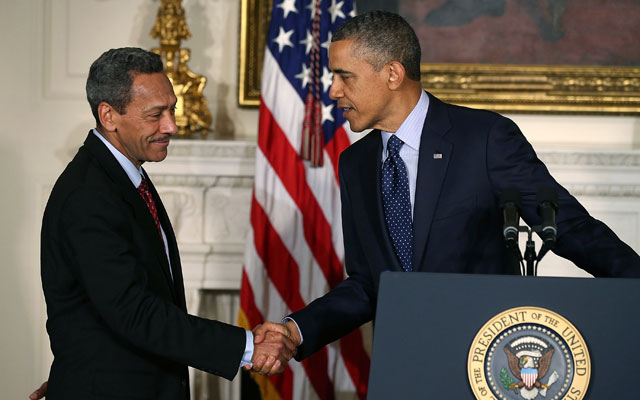
President Obama nominated Representative Mel Watt (D–NC) as new chief regulator to the Federal Housing Finance Agency (FHFA), replacing the current acting director Edward DeMarco. Watt has strong support from liberals in both the House and the Senate as a longtime member of the House Financial Services Committee and advocate of federal affordable housing and homeownership subsidies.

Liberals have mounted pressure on acting director DeMarco to resign because of his “cold indifference” to “work[ing] with families struggling to save their homes,” as Senator Elizabeth Warren (D–MA) recently stated. She was referencing DeMarco’s continued stance on regulation requirements toward principal write down on mortgages and rules prohibiting foreclosed homes from being resold to their original owners.

DeMarco has rightly defended his position against these policy programs as protecting taxpayers and reducing any moral hazard these policies would create.

But Watt takes a different view, and has been a leading proponent of increased intervention in housing. Notably, Watt has a 20-year record of supporting big government housing policies (ranging from home foreclosure assistance programs to down payment requirements on federally insured home mortgages). Since the housing collapse in 2007 and 2008, he has consistently remained a supporter of using Fannie Mae and Freddie Mac to extend federal interference in the housing markets.

In 2008, Watt voted in support of, among other items, permitting the federal government’s intervention in state purchases of foreclosed homes. Moreover, he voted in support of housing legislation that increased the conforming limits for Fannie Mae and Freddie Mac (up to $801,905 for a 4-family residence in 2008 and adjusted annually), thus increasing the portion of the market that the two government-sponsored enterprises could cover, directly contributing to their expansive market share and exposing taxpayers and financial markets to even further risk.

Since 2009, Watt has consistently voted against legislative efforts that would reduce or end continued federal mortgage bailouts, most of which would have reduced the exposure of Fannie Mae, Freddie Mac, and the Federal Housing Administration in the U.S. mortgage market. These bailout-type policies did little to heal the housing market or help homeowners.

Watt also played a pivotal role in shaping the 2010 Dodd–Frank regulation act, particularly components that create a new, unaccountable agency to regulate consumer loans and mortgage lending practices. Regulations in Dodd–Frank hurt consumers with:

  • Higher fees to financial services,
  • Increased costs to homeowners with regulations that make mortgages and home loans costlier, and
  • Rules that will reduce liquidity and private capital available for investment in U.S. financial markets.

Watt’s long-standing support of these federal programs to low-income and moderate-income homeowners is laudable in and of itself. It is also a completely misplaced policy to use large private institutions like Fannie and Freddie to achieve broad political ends related to the low-income and moderate-income homeownership goals he has long supported. These affordable housing goals underscored the deterioration of lending standards, leading to the recent sub-prime mortgage crisis and ultimately undermined the financial viability of Fannie Mae and Freddie Mac and the broader mortgage system.

In short, Watt has consistently voted in favor of a large and growing government presence in the housing market, including support for the kinds of activities that precipitated and prolonged the housing crisis.

Here is the transcript:

HARWOOD: A lot of people look at the housing mess and say, what happened. When you think about it, is it principally a problem of speculators, or do you think that government may have played a role by elevating the goal of homeownership too broadly beyond the capacity of large numbers of people to handle it?

Sen. OBAMA: Well, I think that there were a combination of forces. Obviously, we’ve had very low interest rates for a long time, and rising, as a consequence, rising housing prices for a long time, which made people feel that housing prices can only go up and only–and never go down. And then that made everybody, consumers, lenders, all feel a little bit too complacent. We had a fundamental failure, though, in government regulation, and I think that was a real problem. We had a government that was not paying attention to loans that were being made on assets that were shaky. You know, you had mortgage lenders engaging in practices that were not sound but because they could immediately sell off those loans and bundle them, and you know, nobody was minding the store. The government should have, at a certain point, stepped in and said, `We’ve got to tighten up these lending standards or we’re going to be building a house of cards.’ And that sort of transparency and accountability in the marketplace, that’s not anti-market, that’s pro-market. One of the things that’s always worked for us, it’s been one of our competitive advantages, is people can trust that if they invest in our markets, that they know what they’re getting. And in the housing market in this situation, that–our government didn’t do its job.

I have put up lots of cartoons from Dan Mitchell’s blog before and they have got lots of hits before. Many of them have dealt with the economy, eternal unemployment benefits, socialism,  Greece,  welfare state or on gun control.

This cartoon is not new, but it succinctly captures what happened with that part of the TARP bailout. The only thing missing is some way of showing the government officials and political insiders who received undeserved wealth while the Fannie-Freddie scam was operating.

_________

Related posts:

Cartoons from Dan Mitchell’s blog that demonstrate what Obama is doing to our economy Part 2

Max Brantley is wrong about Tom Cotton’s accusation concerning the rise of welfare spending under President Obama. Actually welfare spending has been increasing for the last 12 years and Obama did nothing during his first four years to slow down the rate of increase of welfare spending. Rachel Sheffield of the Heritage Foundation has noted: […]

Cartoons from Dan Mitchell’s blog that demonstrate what Obama is doing to our economy Part 1

  I have put up lots of cartoons from Dan Mitchell’s blog before and they have got lots of hits before. Many of them have dealt with the economy, eternal unemployment benefits, socialism,  Greece,  welfare state or on gun control. I think Max Brantley of the Arkansas Times Blog was right to point out on 2-6-13 that Hillary […]

Great cartoon from Dan Mitchell’s blog on government moochers

I thought it was great when the Republican Congress and Bill Clinton put in welfare reform but now that has been done away with and no one has to work anymore it seems. In fact, over 40% of the USA is now on the government dole. What is going to happen when that figure gets over […]

Gun Control cartoon hits the internet

Again we have another shooting and the gun control bloggers are out again calling for more laws. I have written about this subject below  and on May 23, 2012, I even got a letter back from President Obama on the subject. Now some very interesting statistics below and a cartoon follows. (Since this just hit the […]

“You-Didn’t-Build-That” comment pictured in cartoons!!!

watch?v=llQUrko0Gqw] The federal government spends about 10% on roads and public goods but with the other money in the budget a lot of harm is done including excessive regulations on business. That makes Obama’s comment the other day look very silly. A Funny Look at Obama’s You-Didn’t-Build-That Comment July 28, 2012 by Dan Mitchell I made […]

Cartoons about Obama’s class warfare

I have written a lot about this in the past and sometimes you just have to sit back and laugh. Laughing at Obama’s Bumbling Class Warfare Agenda July 13, 2012 by Dan Mitchell We know that President Obama’s class-warfare agenda is bad economic policy. We know high tax rates undermine competitiveness. And we know tax increases […]

Cartoons on Obama’s budget math

Dan Mitchell Discussing Dishonest Budget Numbers with John Stossel Uploaded by danmitchellcato on Feb 11, 2012 No description available. ______________ Dan Mitchell of the Cato Institute has shown before how excessive spending at the federal level has increased in recent years. A Humorous Look at Obama’s Screwy Budget Math May 31, 2012 by Dan Mitchell I’ve […]

Funny cartoon from Dan Mitchell’s blog on Greece

Sometimes it is so crazy that you just have to laugh a little. The European Mess, Captured by a Cartoon June 22, 2012 by Dan Mitchell The self-inflicted economic crisis in Europe has generated some good humor, as you can see from these cartoons by Michael Ramirez and Chuck Asay. But for pure laughter, I don’t […]

Obama on creating jobs!!!!(Funny Cartoon)

Another great cartoon on President Obama’s efforts to create jobs!!! A Simple Lesson about Job Creation for Barack Obama December 7, 2011 by Dan Mitchell Even though leftist economists such as Paul Krugman and Larry Summers have admitted that unemployment insurance benefits are a recipe for more joblessness, the White House is arguing that Congress should […]

Get people off of government support and get them in the private market place!!!!(great cartoon too)

Dan Mitchell hits the nail on the head and sometimes it gets so sad that you just have to laugh at it like Conan does. In order to correct this mess we got to get people off of government support and get them in the private market place!!!! Chuck Asay’s New Cartoon Nicely Captures Mentality […]

2 cartoons illustrate the fate of socialism from the Cato Institute

Cato Institute scholar Dan Mitchell is right about Greece and the fate of socialism: Two Pictures that Perfectly Capture the Rise and Fall of the Welfare State July 15, 2011 by Dan Mitchell In my speeches, especially when talking about the fiscal crisis in Europe (or the future fiscal crisis in America), I often warn that […]

Cartoon demonstrates that guns deter criminals

John Stossel report “Myth: Gun Control Reduces Crime Sheriff Tommy Robinson tried what he called “Robinson roulette” from 1980 to 1984 in Central Arkansas where he would put some of his men in some stores in the back room with guns and the number of robberies in stores sank. I got this from Dan Mitchell’s […]

Gun control posters from Dan Mitchell’s blog Part 2

I have put up lots of cartons and posters from Dan Mitchell’s blog before and they have got lots of hits before. Many of them have dealt with the economy, eternal unemployment benefits, socialism,  Greece,  welfare state or on gun control. Amusing Gun Control Picture – Circa 1999 April 3, 2010 by Dan Mitchell Dug this gem out […]

We got to cut spending and stop raising the debt ceiling!!!

  We got to cut spending and stop raising the debt ceiling!!! When Governments Cut Spending Uploaded on Sep 28, 2011 Do governments ever cut spending? According to Dr. Stephen Davies, there are historical examples of government spending cuts in Canada, New Zealand, Sweden, and America. In these cases, despite popular belief, the government spending […]

Gun control posters from Dan Mitchell’s blog Part 1

I have put up lots of cartons and posters from Dan Mitchell’s blog before and they have got lots of hits before. Many of them have dealt with the economy, eternal unemployment benefits, socialism,  Greece,  welfare state or on gun control. On 2-6-13 the Arkansas Times Blogger “Sound Policy” suggested,  “All churches that wish to allow concealed […]

Taking on Ark Times bloggers on the issue of “gun control” (Part 3) “Did Hitler advocate gun control?”

Gun Free Zones???? Stalin and gun control On 1-31-13 ”Arkie” on the Arkansas Times Blog the following: “Remember that the biggest gun control advocate was Hitler and every other tyrant that every lived.” Except that under Hitler, Germany liberalized its gun control laws. __________ After reading the link  from Wikipedia that Arkie provided then I responded: […]

Taking on Ark Times bloggers on the issue of “gun control” (Part 2) “Did Hitler advocate gun control?”

On 1-31-13 I posted on the Arkansas Times Blog the following: I like the poster of the lady holding the rifle and next to her are these words: I am compensating for being smaller and weaker than more violent criminals. __________ Then I gave a link to this poster below: On 1-31-13 also I posted […]

A suggestion to cut some wasteful spending out of the government Part 8 (includes editorial cartoon)

Does Government Have a Revenue or Spending Problem?

People say the government has a debt problem. Debt is caused by deficits, which is the difference between what the government collects in tax revenue and the amount of government spending. Every time the government runs a deficit, the government debt increases. So what’s to blame: too much spending, or too little tax revenue? Economics professor Antony Davies examines the data and concludes that the root cause of the debt is too much government spending.

____________

We got to cut wasteful spending out of the government and here is another fine suggestion from the Heritage Foundation.

Todd Thurman

March 12, 2013 at 5:40 pm

Newscom

The massive spending bill, or continuing resolution, released by the Senate this week continues spending on programs which are inappropriate or wasteful and fails to adopt good policies in many areas. Here’s a rundown of some of the worst offenders in the Senate bill:

Housing and Urban Development Public Operating Fund: $562 million. The bill restores money from an FY 2012 cut to previous levels for a total 2013 funding request of $3.962 billion. The fund pays local public housing authorities annual subsidies for such things as maintenance, management, insurance and energy costs. These should be the responsibility of local jurisdictions.

—David C. John, Senior Research Fellow

Economists often do a crummy job of teaching people about the impact of fiscal policy on the labor force, largely because we put people to sleep with boring discussions about “labor supply” decisions (my blog post from last year perhaps being an example of this tendency).

From now on, I will try to remember to use this cartoon. It’s a parody of Obama’s policies, but the last slide (or is it a panel?) is a great teaching tool about what happens when politicians turn the safety net into a hammock.

_________

Bipartisan cliff cartoon

Spending problem for sure.

Francis Schaeffer’s wife Edith passes away on Easter weekend 2013 Part 15 (includes pro-life editorial cartoon and article by from Udo Middelmann)

The Francis and Edith Schaeffer Story Pt.1 – Today’s Christian Videos

The Francis and Edith Schaeffer Story – Part 3 of 3

Francis Schaeffer: “Whatever Happened to the Human Race” (Episode 1) ABORTION OF THE HUMAN RACE

Published on Oct 6, 2012 by

________________

Picture of Francis Schaeffer and his wife Edith from the 1930′s above. I was sad to read about Edith passing away on Easter weekend in 2013. I wanted to pass along this fine article below.

Sunday, March 31, 2013

Edith Schaeffer, RIP

(from Udo Middelmann)
Edith Rachel Merritt Seville Schaeffer died on March 30, 2013 in her home in Gryon, Switzerland, where she had moved 13 years ago to be surrounded by memories, her music, her son’s paintings and the detailed care organized daily by her daughter Deborah Middelmann. She was born on November 3, 1914 as the third daughter of Dr. George Hugh and Jessie Maude Seville in Wenchau, China, where her parents ran a school for girls and taught the Bible in Mandarin.
Edith Schaeffer marked her life with the expression of rich ideas, often rebellious against the staid and superficial life she saw among Christians. The oldest sister became a communist in New York of the 30ies, the second eloped.  Edith Seville married Francis August Schaeffer in 1935 and in no way was she the typical pastor’s or missionary wife. She turned her active mind to work with her husband, teaching first seminary wives to think and to question, to create and make of life something of integrity, as her husband so wanted her to do.
To put her husband through 3 years of seminary she tailored men’s suits, made ball room gowns and wedding dresses for private clients. From whole cow skins she made belts sold in New York stores. With very little money she prepared tasteful and varied meals. She painted a fresco on the ceiling of the vestibule in the little church her husband pastored in Grove City, while he attached a steeple to it with the elders’ help. They lectured together and encouraged many to use their minds to understand what they believed and how to respond to the intellectual and cultural ideas around them. Together they travelled and taught in churches and university halls from Finland to Portugal, helping people understand Christianity as the truth of the universe, not a personal faith, and pointing out the cultural and philosophical pitfalls in everyone’s way.
She lived her life as a work of art, an exhibition of true significance and a portrait of a generous, stunning and creative personality. She always sought ways to draw on life’s opportunities to show that human beings are made for the enrichment of everyone’s life, for the encouragement of people. This was a central part of the work she and her husband engaged in from the very start of their life together. She was in all things generous. When books provided royalties she used all of it to give her four children and their families annual reunions for the cousins to know each other.
When she left the work of L’Abri after her husband’s death she started the Francis A Schaeffer Foundation with Udo and Deborah Middelmann to safeguard his papers and the ideas that underline their life, to make them available for a wider audience. She found people interesting anywhere, engaged in conversation and so met the most amazing individuals. She talked, for instance, with the author Andre Aciman, standing in line for tickets to Carnegie Hall in NY and found out that he had had our village doctor, Dr. Gandur, as his pediatrician in Alexandria, Egypt. He was so grateful to be in touch through her with his old doctor.
She enjoyed people in the streets, in airplanes and over the phone, wherever she found them or when they could reach her. She stayed up nights to help someone out of their distress or need. With much imagination she served her meals with stunning decorations made from twigs and moss, field flowers and stones. Duncan from Kenya once remarked: “This is the first place where I see the beauty of the truth of the Bible consistently carried over into all areas of life.”
After the death of her husband in 1984 Edith Schaeffer added a whole new chapter to her life. She continued to write books, lectured widely and returned twice to her place of birth in China. She investigated the making the Baby Grand Piano she had received as a gift at the Steinway factory in New York and presented “Forever Music” in a concert at Alice Tully Hall in New York with the Guarneri Quartet. Through Franz Mohr, the chief piano voicer at Steinway she came to know musicians like Rostropovich, the pianists Horowitz and Rudoph Serkin, the Cellists YoYo Ma and Ya Ya Ling, and also the guitarist Christopher Parkening. She organized concerts and elaborate receptions for musicians and friends in her home in Rochester, MN. When she met B. B. King at the International Jazz Festival in Montreux he gave her his pass to the evening’s concert. Once on vacations on the island of Elba, Sonny Rollins noticed her beauty and rhythm in the audience as she danced during his concert, came off the stage and danced with her.
Today she “slipped into the nearer presence of Jesus”, her Lord, from whom she awaits the promised resurrection to continue her life on earth and to dance once again with a body restored to wholeness.
If you wish to honor Edith Schaeffer’s life you can support her intense commitment to the work of the Francis Schaeffer Foundation, Jermintin 3, CH -1882 Gryon, Switzerland

I was saved at 25 out of a life of debauchery, perversion, and rebellion. As a revolutionary and active organizing communist, I was Damascus roaded.
The Bible became my only truth, and the Schaeffers taught me how to live it with my gifts and calling.
One quote, in particular, from Edith changed my life forever. To wit, “We may live in a pluralistic society, but we do not live in a pluralistic universe.”

Easter 2013 will forever be remembered with her passing.

_____________

Planned Parenthood is the leading abortion provider in the USA and this editorial cartoon touches on this:

(Francis did a great job in his film series “How Should we then live?” in looking at how humanism has affected art and culture in the Western World in the last 2000 years. My favorite episodes include his study of the Renaissance, the Revolutionary age, the age of Nonreason, and the age of Fragmentation.)

Related posts:

Francis Schaeffer’s “How should we then live?” Video and outline of episode 10 “Final Choices” (Schaeffer Sundays)

E P I S O D E 1 0   Dr. Francis Schaeffer – Episode X – Final Choices 27 min FINAL CHOICES I. Authoritarianism the Only Humanistic Social Option One man or an elite giving authoritative arbitrary absolutes. A. Society is sole absolute in absence of other absolutes. B. But society has to be […]

Francis Schaeffer’s “How should we then live?” Video and outline of episode 9 “The Age of Personal Peace and Affluence” (Schaeffer Sundays)

E P I S O D E 9 Dr. Francis Schaeffer – Episode IX – The Age of Personal Peace and Affluence 27 min T h e Age of Personal Peace and Afflunce I. By the Early 1960s People Were Bombarded From Every Side by Modern Man’s Humanistic Thought II. Modern Form of Humanistic Thought Leads […]

Francis Schaeffer’s “How should we then live?” Video and outline of episode 8 “The Age of Fragmentation” (Schaeffer Sundays)

E P I S O D E 8 Dr. Francis Schaeffer – Episode VIII – The Age of Fragmentation 27 min I saw this film series in 1979 and it had a major impact on me. T h e Age of FRAGMENTATION I. Art As a Vehicle Of Modern Thought A. Impressionism (Monet, Renoir, Pissarro, Sisley, […]

Francis Schaeffer’s “How should we then live?” Video and outline of episode 7 “The Age of Non-Reason” (Schaeffer Sundays)

E P I S O D E 7 Dr. Francis Schaeffer – Episode VII – The Age of Non Reason I am thrilled to get this film series with you. I saw it first in 1979 and it had such a big impact on me. Today’s episode is where we see modern humanist man act […]

Francis Schaeffer’s “How should we then live?” Video and outline of episode 6 “The Scientific Age” (Schaeffer Sundays)

E P I S O D E 6 How Should We Then Live 6#1 Uploaded by NoMirrorHDDHrorriMoN on Oct 3, 2011 How Should We Then Live? Episode 6 of 12 ________ I am sharing with you a film series that I saw in 1979. In this film Francis Schaeffer asserted that was a shift in […]

Francis Schaeffer’s “How should we then live?” Video and outline of episode 5 “The Revolutionary Age” (Schaeffer Sundays)

E P I S O D E 5 How Should We Then Live? Episode 5: The Revolutionary Age I was impacted by this film series by Francis Schaeffer back in the 1970′s and I wanted to share it with you. Francis Schaeffer noted, “Reformation Did Not Bring Perfection. But gradually on basis of biblical teaching there […]

Francis Schaeffer’s “How should we then live?” Video and outline of episode 4 “The Reformation” (Schaeffer Sundays)

Dr. Francis Schaeffer – Episode IV – The Reformation 27 min I was impacted by this film series by Francis Schaeffer back in the 1970′s and I wanted to share it with you. Schaeffer makes three key points concerning the Reformation: “1. Erasmian Christian humanism rejected by Farel. 2. Bible gives needed answers not only as to […]

“Schaeffer Sundays” Francis Schaeffer’s “How should we then live?” Video and outline of episode 3 “The Renaissance”

Francis Schaeffer’s “How should we then live?” Video and outline of episode 3 “The Renaissance” Francis Schaeffer: “How Should We Then Live?” (Episode 3) THE RENAISSANCE I was impacted by this film series by Francis Schaeffer back in the 1970′s and I wanted to share it with you. Schaeffer really shows why we have so […]

Francis Schaeffer’s “How should we then live?” Video and outline of episode 2 “The Middle Ages” (Schaeffer Sundays)

  Francis Schaeffer: “How Should We Then Live?” (Episode 2) THE MIDDLE AGES I was impacted by this film series by Francis Schaeffer back in the 1970′s and I wanted to share it with you. Schaeffer points out that during this time period unfortunately we have the “Church’s deviation from early church’s teaching in regard […]

Francis Schaeffer’s “How should we then live?” Video and outline of episode 1 “The Roman Age” (Schaeffer Sundays)

Francis Schaeffer: “How Should We Then Live?” (Episode 1) THE ROMAN AGE   Today I am starting a series that really had a big impact on my life back in the 1970′s when I first saw it. There are ten parts and today is the first. Francis Schaeffer takes a look at Rome and why […]

“Woody Wednesday” First Look Image: Louis C.K. in Woody Allen’s Blue Jasmine

I have spent alot of time talking about Woody Allen films on this blog and looking at his worldview. He has a hopelessmeaningless, nihilistic worldview that believes we are going to turn to dust and there is no afterlife. Even though he has this view he has taken the opportunity to look at the weaknesses of his own secular view. I salute him for doing that. That is why I have returned to his work over and over and presented my own Christian worldview as an alternative.

My interest in Woody Allen is so great that I have a “Woody Wednesday” on my blog www.thedailyhatch.org every week. Also I have done over 30 posts on the historical characters mentioned in his film “Midnight in Paris.” (Salvador DaliErnest Hemingway,T.S.Elliot,  Cole Porter,Paul Gauguin,  Luis Bunuel, and Pablo Picasso were just a few of the characters.)

First Look Image: Louis C.K. in Woody Allen’s Blue Jasmine

April 22, 2013 By

Best known for his work on the small screen and for his stand-up comedy, the Emmy-winning Louis C.K. will be returning to the big screen this year in Woody Allen’s Blue Jasmine.

Allen’s latest film film is C.K.’s first feature since 2009’s The Invention of Lying, and we’re looking forward to his return, particularly alongside such a great cast.

We’ve seen a handful of images from the film so far. And now Sony have debuted the first look at C.K. in Blue Jasmine, seen below opposite Sally Hawkins.

The official synopsis remains under wraps for now, but this is what we know so far:

“It is the story of the final stages of an acute crisis and a life of a fashionable New York housewife.”

Cate Blanchett takes the leading role for Allen this time around, with Alec Baldwin, Sally Hawkins, Bobby Cannavale, Peter Sarsgaard, Louis C.K., Andrew Dice Clay, and Michael Stuhlberg completing the cast nicely.

Allen is once more directing from his own script. And past collaborators Letty Aronson and Stephen Tenenbaum (Midnight in Paris, Vicky Cristina Barcelona) are returning to produce alongside Edward Walson (City Island).

C.K. will also be seen this year in David O. Russell’s recently-titled American Hustle, in which he stars alongside Christian Bale, Amy Adams, Bradley Cooper, Jennifer Lawrence, Jeremy Renner, Robert De Niro, and Michael Peña.

Blue Jasmine will begin its limited release in the US on July 26th, opening that weekend in New York and Los Angeles. Sony Classics will then continue to open it wider across the country in successive weeks, as is their typical release strategy. No word yet on when we can expect it here in the UK, but hopefully it will be crossing the Atlantic later this year.

Sally-Hawkins-and-Louis-C.K.-in-Blue-Jasmine

R

Related posts:

I love the movie “Midnight in Paris” by Woody Allen and I have done over 30 posts on the historical characters mentioned in the film. Take a look below:

All my posts on Woody Allen’s movie “Midnight in Paris” (Part 40)July 19, 2011 – 8:51 am

“Midnight in Paris” one of Woody Allen’s biggest movie hits in recent yearsJuly 18, 2011 – 6:00 am

Woody Allen’s movie “Midnight in Paris” explores “golden age fallacy” (Part 39) July 17, 2011 – 5:59 am
(Part 38,Alcoholism and great writers and artists) July 16, 2011 – 5:47 am

Woody Allen’s search for God in the movie “Midnight in Paris”(Part 37) July 15, 2011 – 5:44 am

(Part 36, Alice B. Toklas, Woody Allen on the meaning of life) July 14, 2011 – 5:16 am

  (Part 35, Recap of historical figures, Notre Dame Cathedral and Cult of Reason)July 13, 2011 – 5:42 am

(Part 34, Simone de Beauvoir) July 12, 2011 – 6:03 am
(Part 33,Cezanne) July 11, 2011 – 6:15 am

(Part 32, Jean-Paul Sartre)July 10, 2011 – 5:53 am

(Part 31, Jean Cocteau) July 9, 2011 – 6:15 am
(Part 30, Albert Camus) July 8, 2011 – 5:48 am

 (Part 29, Pablo Picasso) July 7, 2011 – 4:33 am

(Part 28,Van Gogh) July 6, 2011 – 4:03 am

(Part 27, Man Ray) July 5, 2011 – 4:49 am

(Part 26,James Joyce) July 4, 2011 – 5:55 am

(Part 25, T.S.Elliot) July 3, 2011 – 4:46 am

(Part 24, Djuna Barnes) July 2, 2011 – 7:28 am

(Part 23,Adriana, fictional mistress of Picasso) July 1, 2011 – 12:28 am

(Part 22, Silvia Beach and the Shakespeare and Company Bookstore) June 30, 2011 – 12:58 am

(Part 21,Versailles and the French Revolution) June 29, 2011 – 5:34 am

(Part 20, King Louis XVI of France) June 28, 2011 – 5:44 am

(Part 19,Marie Antoinette) June 27, 2011 – 12:16 am

(Part 18, Claude Monet) June 26, 2011 – 5:41 am

(Part 17, J. M. W. Turner) June 25, 2011 – 5:44 am

(Part 16, Josephine Baker) June 24, 2011 – 5:18 am

(Part 15, Luis Bunuel) June 23, 2011 – 5:37 am

(Part 12, Gabrielle “Coco” Chanel) June 20, 2011 – 5:58 am

(Part 11, Rodin)  June 19, 2011 – 9:50 am

(Part 10 Salvador Dali) June 18, 2011 – 2:57 pm

(Part 9, Georges Braque) June 18, 2011 – 2:55 pm

(Part 8, Henri Toulouse Lautrec) June 18, 2011 – 2:45 pm

(Part 7 Paul Gauguin) June 18, 2011 – 11:20 am

(Part 6 Gertrude Stein) June 16, 2011 – 11:01 am

(Part 5 Juan Belmonte) June 16, 2011 – 10:59 am

(Part 4 Ernest Heminingway) June 16, 2011 – 9:08 am

(Part 3 Scott and Zelda Fitzgerald) June 16, 2011 – 3:46 am

(Part 2 Cole Porter) June 15, 2011 – 7:40 am

(Part 1 William Faulkner) June 13, 2011 – 3:19 pm

I love Woody Allen’s latest movie “Midnight in Paris”June 12, 2011 – 11:52 pm

“Woody Wednesday” A 2010 review of Woody Allen’s Annie Hall

I have spent alot of time talking about Woody Allen films on this blog and looking at his worldview. He has a hopeless, meaningless, nihilistic worldview that believes we are going to turn to dust and there is no afterlife. Even though he has this view he has taken the opportunity to look at the weaknesses of […]

“Woody Wednesday” In 2009 interview Woody Allen talks about the lack of meaning of life and the allure of younger women

I have spent alot of time talking about Woody Allen films on this blog and looking at his worldview. He has a hopeless, meaningless, nihilistic worldview that believes we are going to turn to dust and there is no afterlife. Even though he has this view he has taken the opportunity to look at the weaknesses of […]

Woody Allen video interview in France talk about making movies in Paris vs NY and other subjects like God, etc

Woody Allen video interview in France Related posts: “Woody Wednesdays” Woody Allen on God and Death June 6, 2012 – 6:00 am Good website on Woody Allen How can I believe in God when just last week I got my tongue caught in the roller of an electric typewriter? If Jesus Christ came back today and […]

“Woody Wednesday” Woody Allen on the Emptiness of Life by Toby Simmons

I have spent alot of time talking about Woody Allen films on this blog and looking at his worldview. He has a hopeless, meaningless, nihilistic worldview that believes we are going to turn to dust and there is no afterlife. Even though he has this view he has taken the opportunity to look at the weaknesses of […]

Woody Allen interviews Billy Graham (Woody Wednesday)

A surprisingly civil discussion between evangelical Billy Graham and agnostic comedian Woody Allen. Skip to 2:00 in the video to hear Graham discuss premarital sex, to 4:30 to hear him respond to Allen’s question about the worst sin and to 7:55 for the comparison between accepting Christ and taking LSD. ___________________ The Christian Post > […]

“Woody Allen Wednesdays” can be seen on the www.thedailyhatch.org

Crimes and Misdemeanors: A Discussion: Part 1 If you like Woody Allen films as much as I do then join me every Wednesday for another look the man and his movies. Below are some of the posts from the past: “Woody Wednesday” How Allen’s film “Crimes and Misdemeanors makes the point that hell is necessary […]

“Woody Wednesday” Great Documentary on Woody Allen

I really enjoyed this documentary on Woody Allen from PBS. Woody Allen: A Documentary, Part 1 Published on Mar 26, 2012 by NewVideoDigital Beginning with Allen’s childhood and his first professional gigs as a teen – furnishing jokes for comics and publicists – WOODY ALLEN: A DOCUMENTARY chronicles the trajectory and longevity of Allen’s career: […]

“Woody Wednesday” Discussion of Woody Allen’s 1989 movie “Crimes and Misdemeanors” (Part 6)

Crimes and Misdemeanors: A Discussion: Part 3 Uploaded by camdiscussion on Sep 23, 2007 Part 3 of 3: ‘Is Woody Allen A Romantic Or A Realist?’ A discussion of Woody Allen’s 1989 movie, Crimes and Misdemeanors, perhaps his finest. By Anton Scamvougeras. http://camdiscussion.blogspot.com/ antons@mail.ubc.ca ______________ One of my favorite Woody Allen movies and I reviewed […]

“Woody Wednesday” Discussion of Woody Allen’s 1989 movie “Crimes and Misdemeanors” (Part 5)

Crimes and Misdemeanors: A Discussion: Part 2 Uploaded by camdiscussion on Sep 23, 2007 Part 2 of 3: ‘What Does The Movie Tell Us About Ourselves?’ A discussion of Woody Allen’s 1989 movie, perhaps his finest. By Anton Scamvougeras. http://camdiscussion.blogspot.com/ antons@mail.ubc.ca _________________- One of my favorite Woody Allen movies and I reviewed it earlier but […]

In 2009 interview Woody Allen talks about the lack of meaning of life and the allure of younger women

I have spent alot of time talking about Woody Allen films on this blog and looking at his worldview. He has a hopeless, meaningless, nihilistic worldview that believes we are going to turn to dust and there is no afterlife. Even though he has this view he has taken the opportunity to look at the weaknesses of […]

“Woody Allen Wednesdays” can be seen on the www.thedailyhatch.org

Crimes and Misdemeanors: A Discussion: Part 1 If you like Woody Allen films as much as I do then join me every Wednesday for another look the man and his movies. Below are some of the posts from the past: “Woody Wednesday” How Allen’s film “Crimes and Misdemeanors makes the point that hell is necessary […]

Woody Allen on the Emptiness of Life by Toby Simmons

I have spent alot of time talking about Woody Allen films on this blog and looking at his worldview. He has a hopeless, meaningless, nihilistic worldview that believes we are going to turn to dust and there is no afterlife. Even though he has this view he has taken the opportunity to look at the weaknesses of […]

“Woody Wednesday” Discussion of Woody Allen’s 1989 movie “Crimes and Misdemeanors” (Part 4)

Crimes and Misdemeanors: A Discussion: Part 1 Uploaded by camdiscussion on Sep 23, 2007 Part 1 of 3: ‘What Does Judah Believe?’ A discussion of Woody Allen’s 1989 movie, perhaps his finest. By Anton Scamvougeras. http://camdiscussion.blogspot.com/ antons@mail.ubc.ca _____________ One of my favorite films is this gem by Woody Allen “Crimes and Misdemeanors”: Film Review By […]

“Woody Wednesday” Discussion of Woody Allen’s 1989 movie “Crimes and Misdemeanors” (Part 3)

Crimes and Misdemeanors: A Discussion: Part 3 Uploaded by camdiscussion on Sep 23, 2007 Part 3 of 3: ‘Is Woody Allen A Romantic Or A Realist?’ A discussion of Woody Allen’s 1989 movie, Crimes and Misdemeanors, perhaps his finest. By Anton Scamvougeras. http://camdiscussion.blogspot.com/ antons@mail.ubc.ca ______________ One of my favorite Woody Allen movies and I reviewed […]

“Woody Wednesday” Discussion of Woody Allen’s 1989 movie “Crimes and Misdemeanors” (Part 2)

Crimes and Misdemeanors: A Discussion: Part 2 Uploaded by camdiscussion on Sep 23, 2007 Part 2 of 3: ‘What Does The Movie Tell Us About Ourselves?’ A discussion of Woody Allen’s 1989 movie, perhaps his finest. By Anton Scamvougeras. http://camdiscussion.blogspot.com/ antons@mail.ubc.ca _________________- One of my favorite Woody Allen movies and I reviewed it earlier but […]

“Woody Wednesday” Discussion of Woody Allen’s 1989 movie “Crimes and Misdemeanors” (Part 1)

Crimes and Misdemeanors: A Discussion: Part 1 Uploaded by camdiscussion on Sep 23, 2007 Part 1 of 3: ‘What Does Judah Believe?’ A discussion of Woody Allen’s 1989 movie, perhaps his finest. By Anton Scamvougeras. http://camdiscussion.blogspot.com/ antons@mail.ubc.ca _____________ Today I am starting a discusssion of the movie “Crimes and Misdemeanors” by Woody Allen. This 1989 […]