Monthly Archives: April 2013

Republicans in Arkansas messing up by endorsing Obamacare


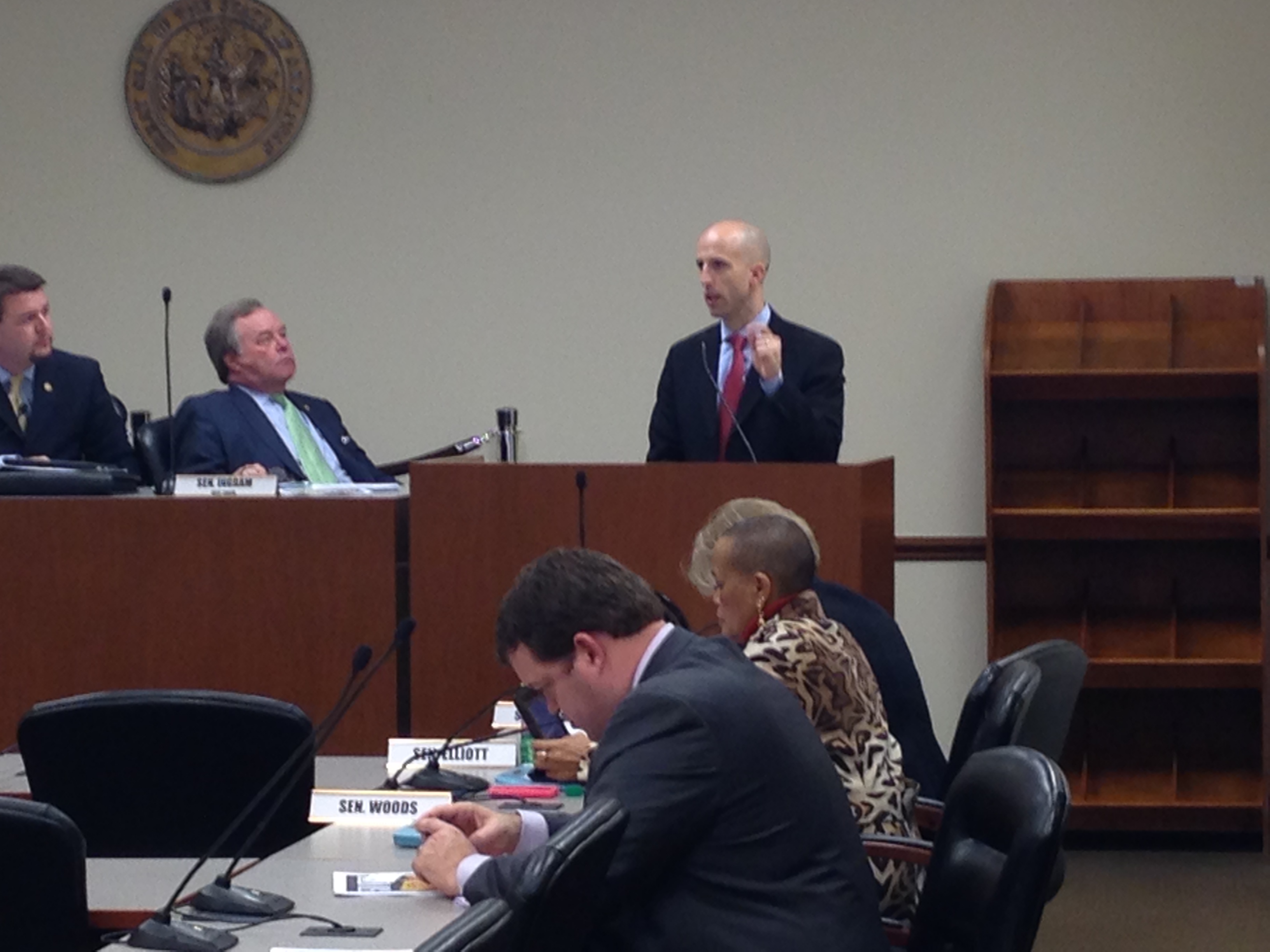
Credit Nathan Vandiver / KUAR
Michael Cannon of the Cato Institute told lawmakers March 19, 2013 that abandoning plans to partner with the federal government on a health insurance exchange would both benefit the state and reduce the power of the Affordable Care Act.
__________________
I am very pleased with the Republican lawmakers in Arkansas for their efforts in this session to protect our second amendment rights and the rights of unborn children. They have also made it clear that they want to lower our taxes in what is a high tax state because individuals making over $34,000 a year are paying at least part of their state income taxes at the highest income tax rate which is 7%. They rightly have pointed out that two of our neighbors (Tennessee and Texas) don’t have a state income tax.

Now for the bad news. Today I read in the Arkansas Times Blog the article,   Arkansas Republican leaders endorse “private option”, that was written by David Ramsey. I am very upset with my Republican friends in Arkansas who are endorsing Obamacare with this medicaid expansion in Arkansas with this “private option.”

After hearing Michael Cannon of the Cato Institute speak to Arkansas Republican lawmakers Nick Horton of the Arkansas Project wrote:

Today I went down to the luxurious Capitol cafeteria to hear the Cato Institute’s Michael Cannon speak on the current state of Obamacare implementation in Arkansas. What I learned is that we are dangerously close to becoming part of the Obamacare monstrosity — but there is hope that the beast can be stopped, and that should be every Arkansan’s goal.

The answer to stopping Obamacare sounds pretty simple, albeit politically tricky: 1. Don’t expand Medicaid & 2. Don’t create health care exchanges (See our previous reporting on exchanges). First, let’s take a look at Medicaid expansion, beginning with a few statistics from Cannon:

  • 1 out of 3 doctors do not accept Medicaid
  • 4 out of 5 dentists do not accept Medicaid
  • 8 out of 10 people who will be put into Medicaid expansion already have private insurance
  • $1 out of every $3 in Medicaid dollars does nothing to make patients happier or healthier

No doubt many of you have heard of “The Beebe Plan” for expanding Medicaid that is being championed by even some conservative legislators as a “free-market option.” (Here’s a recent example of the representation Republicans are making.) Cannon rejected this categorization, calling it “cronyism.” In our conversation after the meeting, he told me it’s not a free-market approach until there’s no government money being spent.

_____________

I am going to contact every Arkansas lawmaker that I know and try to get this effort stopped. Dan Greenberg of the Arkansas Advance Institute blog and several other conservatives oppose this effort by my Republican friends. Hopefully they will wake up and see that they are trusting President Obama’s word and that reminds me of the time he told pro-life Democrats that Obamacare would not pay for abortions. Things change pretty fast with this administration and I would not trust them.

Michael Cannon actually wrote an article that was posted yesterday on the Cato Institute blog that talked about Arkansas’ “private option plan” and how it stinks.” I have posted 6 different videos that cover all the Michael Cannon had to say when he came to Arkansas a couple of weeks ago. It was very interesting.
I want to challenge any Republican lawmaker in Arkansas to take 6 minutes and watch a video by Dan Mitchell of the Cato Institute about Obamacare and how government intrusion into healthcare has been bad in the past and will be bad in the future.
 
_______________

A Red-Ink Train Wreck: The Real Fiscal Cost of Government-Run Healthcare

Uploaded on Nov 9, 2009

This CF&P Foundation video explains why healthcare proposals in Washington will result in bloated government and higher deficits. This mini-documentary exposes the pervasive inaccuracy of congressional forecasts and succinctly lists 12 reasons why Obamacare will be a budget buster. For more information: http://www.freedomandprosperity.org

___________________

Related posts:

Great article by Michael Cannon on Arkansas Medicaid expansion plan

CATO Institute Michael Cannon on the OReilly Factor Published on Mar 19, 2013 The CATO Institute’s Michael Cannon spoke at the Arkansas Conservative Caucus on Tuesday March 19th. Several conservatives were present. Cannon talked about how to defeat Obamacare in Arkansas & how the states can stop Obamacare on a national level. __________________ CATO Institute […]

Michael Cannon of Cato Institute speaks to Arkansas Senators (Part 3 includes editorial cartoon)

Jacque Martin asks CATO Institute Michael Cannon about Obamacare Published on Mar 19, 2013 The CATO Institute’s Michael Cannon spoke at the Arkansas Conservative Caucus on Tuesday March 19th. Several conservatives were present. Cannon talked about how to defeat Obamacare in Arkansas & how the states can stop Obamacare on a national level. Jacque Martin […]

After visit to Arkansas Cato’s Michael Cannon puts out new article

  After a visit to Arkansas on March 19, 2013 the Cato Institute’s Michael Cannon published another article claiming that “To date, 34 states, accounting for roughly two-thirds of the U.S. population, have refused to create Exchanges. Under the statute, this shields employers in those states from a $2,000 per worker tax that will apply […]

Michael Cannon of Cato Institute speaks to Arkansas Senators (Part 2 includes editorial cartoon)

Representative Doug House asks CATO Institute Michael Cannon about Obamacare Published on Mar 19, 2013 The CATO Institute’s Michael Cannon spoke at the Arkansas Conservative Caucus on Tuesday March 19th. Several conservatives were present. Cannon talked about how to defeat Obamacare in Arkansas & how the states can stop Obamacare on a national level. Representative […]

Michael Cannon on Obamacare (editorial cartoons on Judge Roberts and Obamacare)

Representative Bollinger asks CATO Institute Michael Cannon about Obamacare Published on Mar 19, 2013 The CATO Institute’s Michael Cannon spoke at the Arkansas Conservative Caucus on Tuesday March 19th. Several conservatives were present. Cannon talked about how to defeat Obamacare in Arkansas & how the states can stop Obamacare on a national level. Representative Bollinger […]

Michael Cannon of Cato Institute speaks to Arkansas Senators (Part 1, includes editorial cartoon)

An ObamaCare Debate Challenge (Michael F. Cannon) CATO Institute Michael Cannon at the Arkansas Conservative Caucus Published on Mar 19, 2013 The CATO Institute’s Michael Cannon spoke at the Arkansas Conservative Caucus on Tuesday March 19th. Several conservatives were present. Cannon talked about how to defeat Obamacare in Arkansas & how the states can stop […]

Max Brantley of the Ark Times takes on Michael Cannon of the Cato Institute today concerning Obamacare

Max Brantley of the Ark Times takes on Michael Cannon of the Cato Institute today concerning Obamacare. I have posted many links to Cannon’s articles in the past on my blog and on the Arkansas Times liberal blog. The finest article written in my estimation was written on Nov 20, 2012 and here is a […]

Is Michael Cannon of the Cato Institute right about states blocking Obamacare, factchecker says he is wrong.

Cato’s Michael F. Cannon Discusses ObamaCare’s Individual Mandate Is Michael Cannon of the Cato Institute right about states blocking Obamacare, factchecker says he is wrong. I Have Been False* Posted by Michael F. Cannon *According to PolitiFact. In an unconscious parody of everything that’s wrong with the “fact-checker” movement in journalism, PolitiFact Georgia (a project of […]

An ObamaCare Debate Challenge by Michael F. Cannon (editorial cartoon)

Obamacare is a poorly written and because of that the majority of states may never have to put into practice.   February 28, 2013 2:13PM ObamaCare Debate Challenge: Lawrence Wasden Edition By Michael F. Cannon Share Tweet Like Google+1 Congress empowered states to block major provisions of ObamaCare, including its subsidies and employer mandate. All […]


Open letter to President Obama (Part 285)


President Obama c/o The White House
1600 Pennsylvania Avenue NW
Washington, DC 20500

Dear Mr. President,

I know that you receive 20,000 letters a day and that you actually read 10 of them every day. I really do respect you for trying to get a pulse on what is going on out here.

It my view  that liberals like you are hostile to these ideas that have made us prosperous. Take a look at these comments below from John Stossel: 

Exclusive Interview: John Stossel Says Government Can’t Solve Our Problems

Rob Bluey and Brandon Stewart

April 12, 2012 at 11:51 am

John Stossel on Government, Free Enterprise, and Media

Published on Apr 12, 2012 by

http://blog.heritage.org/2012/04/12/exclusive-interview-john-stossel-says-gov… | John Stossel’s skepticism of government and his storytelling approach about free-market economics have made him a rock star in conservative and libertarian circles.

He spoke at The Heritage Foundation on Wednesday about his new book, “No, They Can’t: Why Government Fails—But Individuals Succeed.” It is Stossel’s latest attempt to debunk the myths that government can solve America’s problems. He tackles everything from crony capitalism and federal regulations to teachers’ unions and gun control.

______________________

John Stossel’s skepticism of government and his storytelling approach about free-market economics have made him a rock star in conservative and libertarian circles.

He spoke at The Heritage Foundation on Wednesday about his new book, “No, They Can’t: Why Government Fails—But Individuals Succeed.” It is Stossel’s latest attempt to debunk the myths that government can solve America’s problems. He tackles everything from crony capitalism and federal regulations to teachers’ unions and gun control.

“Our instinct is to believe in the central planners,” Stossel said in the interview. “It was nuts in the Obama election. It was like he was a magic politician who was going to do these things.”

Yet despite government’s failures, the left never retreats. President Obama’s class-warfare rhetoric, Stossel conceded, is a current example of how liberals shape the narrative.

“I live in the shallow media world,” Stossel said, “and on a subject like that, shallow wins.”

In the interview, Stossel didn’t mince words when asked why he left ABC News in 2009: “Because it sucked there.”

He currently hosts “Stossel,” a one-hour weekly Fox Business Network show and other specials on Fox News. The book reveals his rift with ABC and why Stossel approached Fox for a job.

Here’s what he told us:

They were hostile to these ideas that have made us prosperous and I consider so important. I mean, they tolerated me for years. I got good ratings, so they put the stuff on. They sort of held their nose and put it on. But by the end, they were saying, ‘Ah, you’re predictable Stossel. You use libertarian economics all the time. I don’t want to watch that.’ … I was not offered a job by Fox. I went over and begged, ‘Please, hire me, I cannot stand it anymore.’

The interview runs about five minutes. Hosted by Rob Bluey and produced by Brandon Stewart. For more videos from Heritage, subscribe to our YouTube channel.

____________
 

Thank you so much for your time. I know how valuable it is. I also appreciate the fine family that you have and your commitment as a father and a husband.

Sincerely,

Everette Hatcher III, 13900 Cottontail Lane, Alexander, AR 72002, ph 501-920-5733, lowcostsqueegees@yahoo.com

Taking on Ark Times Bloggers on various issues Part B “Gendercide” (Francis Schaeffer Quotes Part 2 includes the film ABORTION OF THE HUMAN RACE) (editorial cartoon)

I have gone back and forth and back and forth with many liberals on the Arkansas Times Blog on many issues such as abortion, human rights, welfare, poverty, gun control  and issues dealing with popular culture. Here is another exchange I had with them a while back. My username at the Ark Times Blog is Saline Republican.

On 2-19-13 the liberal blogger “DeathbyInches asserted on the Ark Times Blog,

Used to when I’d see David Sanders on my TV it would usually cause my bowels to move right after that.

And would a young girl be looking for an oil change if she was sitting in an abortion clinic? I’ll have to ask the many women I know if when they were younger and went to LR or Fayetteville for an abortion…did they find the doctor on his knees begging them to go for it because his babies needed new shoes.

When, unless the mother isn’t able or the fetus has a major defect…..what other times does a doctor look at a woman and “advise” she better ditch that fetus before the sun goes down….little Missy! I smell a cooked up story….sniff sniff….yep…cooked up, sure smells like it.

On 2-19-13 I responded on the Ark Times Blog,

DBI,you are wrong about young pregnant girls not being encouraged to have abortions for small things. Gendercide is actually happening a lot today. DO YOU FAVOR GENDERCIDE ? Here is a video of this happening in Texas. https://thedailyhatch.org/2012/06/11/why-wo…

Over 100 millions girls are missing today. These girls were victims of gendercide. The war on baby girls begins in the womb. Here is an article below about the case in Texas.

AUSTIN, May 29 — Today, Live Action released a new undercover video showing a Planned Parenthood abortion clinic in Austin, TX encouraging a woman to obtain a late-term abortion because she was purportedly carrying a girl and wanted to have a boy. The video is first in a new series titled “Gendercide: Sex-Selection in America,” exposing the practice of sex-selective abortion in the United States and how Planned Parenthood and the rest of the abortion industry facilitate the selective elimination of baby girls in the womb.

“I see that you’re saying that you want to terminate if it’s a girl, so are you just wanting to continue the pregnancy in the meantime?” a counselor named “Rebecca” offers the woman, who is purportedly still in her first trimester and cannot be certain about the gender. “The abortion covers you up until 23 weeks,” explains Rebecca, “and usually at 5 months is usually (sic) when they detect, you know, whether or not it’s a boy or a girl.” Doctors agree that the later in term a doctor performs an abortion, the greater the risk of complications.

The Planned Parenthood staffer suggests that the woman get on Medicaid in order to pay for an ultrasound to determine the gender of her baby, even though she plans to use the knowledge for an elective abortion. She also tells the woman to “just continue and try again” for the desired gender after aborting a girl, and adds, “Good luck, and I hope that you do get your boy.”

“The search-and-destroy targeting of baby girls through prenatal testing and abortion is a pandemic that is spreading across the globe,” notes Lila Rose, founder and president of Live Action. “Research proves that sex-selective abortion has now come to America. The abortion industry, led by Planned Parenthood, is a willing participant.”

Six studies in the past four years indicate that there are thousands of “missing girls” in the U.S., many from sex-selective abortion. The U.K., India, Australia, and other countries ban sex-selective abortion, but the U.S., save for three states, does not. On Wednesday, Congress will debate the Prenatal Non-Discrimination Act (PRENDA), which would ban sex-selective abortions nationally.

“Planned Parenthood and their ruthless abortion-first mentality is the real ‘war on women’,” says Rose. “Sex-selective abortion is gender discrimination with lethal consequences for little girls.”

The complete, unedited video and transcript can be viewed at http://www.ProtectOurGirls.com, a hub of research and information on sex-selective abortions.

Live Action is a youth led movement dedicated to building a culture of life and ending the human rights abuse of abortion. They use new media to educate the public about the humanity of the unborn and investigative journalism to expose threats against the vulnerable and defenseless.

For further information, please contact Dan Wilson or Jameson Cunningham with Shirley & Banister Public Affairs at (703) 739-5920 or (800) 536-5920 and email at media@liveaction.org

More information at LiveAction.org.

On 2-19-13 the liberal blogger “DeathbyInches responded on the Ark Times Blog,

Thanks ever so much Saline, but a quick Google tells me it ain’t wise to put any stock in this dailyhatch.org stuff.

______________

In the film series “WHATEVER HAPPENED TO THE HUMAN RACE?” the arguments are presented  against abortion (Episode 1),  infanticide (Episode 2),   euthenasia (Episode 3), and then there is a discussion of the Christian versus Humanist worldview concerning the issue of “the basis for human dignity” in Episode 4 and then in the last episode a close look at the truth claims of the Bible

Francis Schaeffer and his wife Edith pictured below.

Francis Schaeffer: “Whatever Happened to the Human Race” (Episode 1) ABORTION OF THE HUMAN RACE

Published on Oct 6, 2012 by

Francis Schaeffer saw the issues that our society would be facing in the future because of humanism and he was right on just about everything. Take a look at some of his quotes below: (By the way one of my favorite quotes is the first one listed below.)

“We must realize that the Reformation world view leads in the direction of government freedom. But the humanist world view with inevitable certainty leads in the direction of statism. This is so because humanists, having no god, must put something at the center, and it is inevitably society, government, or the state.”
Francis A. Schaeffer
 
“The Christian in the one whose imagination should fly beyond the stars.”
Francis A. Schaeffer, Art & the Bible
“Biblical orthodoxy without compassion is surely the ugliest thing in the world.”
Francis A. Schaeffer
“The Bible is clear here: I am to love my neighbor as myself, in the manner needed, in a practical way, in the midst of the fallen world, at my particular point of history. This is why I am not a pacifist. Pacifism in this poor world in which we live — this lost world — means that we desert the people who need our greatest help.”
Francis A. Schaeffer
“To fail to exhibit that we take truth seriously at those points where there is a cost in our doing so, is to push the next generation in the relative, dialectical millstream that surrounds us. ”
Francis A. Schaeffer
“A Christian should use these arts to the glory of God, not just as tracts, mind you, but as things of beauty to the praise of God. An art work can be a doxology in itself.”
Francis A. Schaeffer, Art & the Bible
“The tree in the field is to be treated with respect. It is not to be romanticized as the old lady romanticizes her cat (that is, she reads human reactions into it). . . . But while we should not romanticize the tree, we must realize that God made it and it deserves respect because he made it as a tree. Christians who do not believe in the complete evolutionary scale have reason to respect nature as the total evolutionist never can, because we believe that God made these things specifically in their own areas. So if we are going to argue against evolutionists intellectually, we should show the results of our beliefs in our attitudes. The Christian is a man who has a reason for dealing with each created thing on a high level of respect.”
Francis A. Schaeffer, Pollution & the Death of Man
“The basic problem of the Christians in this country in the last eighty years or so, in regard to society and in regard to government, is that they have seen things in bits and pieces instead of totals.”
Francis A. Schaeffer, A Christian Manifesto
“A compassionate open home is part of Christian responsibility, and should be practiced up to the level of capacity.”
Francis A. Schaeffer
“The ancients were afraid that if they went to the end of the earth they would fall off and be consumed by dragons. But once we understand that Christianity is true to what is there, true to the ultimate environment – the infinite, personal God who is really there – then our minds are freed. We can pursue any question and can be sure that we will not fall off the end of the earth.”
Francis A. Schaeffer, Art & the Bible
“How should an artist begin to do his work as an artist? I would insist that he begin his work as an artist by setting out to make a work of art.”
Francis A. Schaeffer, Art & the Bible
“In face of this modern nihilism, Christians are often lacking in courage. We tend to give the impression that we will hold on to the outward forms whatever happens, even if God really is not there. But the opposite ought to be true of us, so that people can see that we demand the truth of what is there and that we are not dealing merely with platitudes. In other words, it should be understood that we take this question of truth and personality so seriously that if God were not there we would be among the first of those who had the courage to step out of the queue.”
Francis A. Schaeffer
“‎People have presuppositions… By ‘presuppositions’ we mean the basic way that an individual looks at life- his worldview. The grid through which he sees the world. Presuppositions rest upon that which a person considers to be the truth of what exists. A person’s presuppositions provide the basis for their values- and therefore the basis for their decisions.”
Francis A. Schaeffer
“Most people catch their presuppositions from their family and surrounding society, the way that a child catches the measles. But people with understanding realize that their presuppositions should be *chosen* after a careful consideration of which worldview is true.”
Francis A. Schaeffer, How Should We Then Live? The Rise and Decline of Western Thought and Culture
Related posts:

Francis Schaeffer’s prayer for us in USA

 Francis Schaeffer: “Whatever Happened to the Human Race” (Episode 1) ABORTION OF THE HUMAN RACE Published on Oct 6, 2012 by AdamMetropolis The 45 minute video above is from the film series created from Francis Schaeffer’s book “Whatever Happened to the Human Race?” with Dr. C. Everett Koop. This book  really helped develop my political views […]


Francis Schaeffer’s “How should we then live?” Video and outline of episode 10 “Final Choices” (Schaeffer Sundays)

E P I S O D E 1 0   Dr. Francis Schaeffer – Episode X – Final Choices 27 min FINAL CHOICES I. Authoritarianism the Only Humanistic Social Option One man or an elite giving authoritative arbitrary absolutes. A. Society is sole absolute in absence of other absolutes. B. But society has to be […]

Francis Schaeffer’s “How should we then live?” Video and outline of episode 9 “The Age of Personal Peace and Affluence” (Schaeffer Sundays)

E P I S O D E 9 Dr. Francis Schaeffer – Episode IX – The Age of Personal Peace and Affluence 27 min T h e Age of Personal Peace and Afflunce I. By the Early 1960s People Were Bombarded From Every Side by Modern Man’s Humanistic Thought II. Modern Form of Humanistic Thought Leads […]

Francis Schaeffer’s “How should we then live?” Video and outline of episode 8 “The Age of Fragmentation” (Schaeffer Sundays)

E P I S O D E 8 Dr. Francis Schaeffer – Episode VIII – The Age of Fragmentation 27 min I saw this film series in 1979 and it had a major impact on me. T h e Age of FRAGMENTATION I. Art As a Vehicle Of Modern Thought A. Impressionism (Monet, Renoir, Pissarro, Sisley, […]

Francis Schaeffer’s “How should we then live?” Video and outline of episode 7 “The Age of Non-Reason” (Schaeffer Sundays)

E P I S O D E 7 Dr. Francis Schaeffer – Episode VII – The Age of Non Reason I am thrilled to get this film series with you. I saw it first in 1979 and it had such a big impact on me. Today’s episode is where we see modern humanist man act […]

Francis Schaeffer’s “How should we then live?” Video and outline of episode 6 “The Scientific Age” (Schaeffer Sundays)

E P I S O D E 6 How Should We Then Live 6#1 Uploaded by NoMirrorHDDHrorriMoN on Oct 3, 2011 How Should We Then Live? Episode 6 of 12 ________ I am sharing with you a film series that I saw in 1979. In this film Francis Schaeffer asserted that was a shift in […]

Francis Schaeffer’s “How should we then live?” Video and outline of episode 5 “The Revolutionary Age” (Schaeffer Sundays)

E P I S O D E 5 How Should We Then Live? Episode 5: The Revolutionary Age I was impacted by this film series by Francis Schaeffer back in the 1970′s and I wanted to share it with you. Francis Schaeffer noted, “Reformation Did Not Bring Perfection. But gradually on basis of biblical teaching there […]

Francis Schaeffer’s “How should we then live?” Video and outline of episode 4 “The Reformation” (Schaeffer Sundays)

Dr. Francis Schaeffer – Episode IV – The Reformation 27 min I was impacted by this film series by Francis Schaeffer back in the 1970′s and I wanted to share it with you. Schaeffer makes three key points concerning the Reformation: “1. Erasmian Christian humanism rejected by Farel. 2. Bible gives needed answers not only as to […]

“Schaeffer Sundays” Francis Schaeffer’s “How should we then live?” Video and outline of episode 3 “The Renaissance”

Francis Schaeffer’s “How should we then live?” Video and outline of episode 3 “The Renaissance” Francis Schaeffer: “How Should We Then Live?” (Episode 3) THE RENAISSANCE I was impacted by this film series by Francis Schaeffer back in the 1970′s and I wanted to share it with you. Schaeffer really shows why we have so […]

Francis Schaeffer’s “How should we then live?” Video and outline of episode 2 “The Middle Ages” (Schaeffer Sundays)

  Francis Schaeffer: “How Should We Then Live?” (Episode 2) THE MIDDLE AGES I was impacted by this film series by Francis Schaeffer back in the 1970′s and I wanted to share it with you. Schaeffer points out that during this time period unfortunately we have the “Church’s deviation from early church’s teaching in regard […]

Francis Schaeffer’s “How should we then live?” Video and outline of episode 1 “The Roman Age” (Schaeffer Sundays)

Francis Schaeffer: “How Should We Then Live?” (Episode 1) THE ROMAN AGE   Today I am starting a series that really had a big impact on my life back in the 1970′s when I first saw it. There are ten parts and today is the first. Francis Schaeffer takes a look at Rome and why […]

Francis Schaeffer: “Whatever Happened to the Human Race” (Episode 5) TRUTH AND HISTORY

Francis Schaeffer: “Whatever Happened to the Human Race” (Episode 5) TRUTH AND HISTORY Published on Oct 7, 2012 by AdamMetropolis This crucial series is narrated by the late Dr. Francis Schaeffer and former Surgeon General Dr. C. Everett Koop. Today, choices are being made that undermine human rights at their most basic level. Practices once […]

Francis Schaeffer: “Whatever Happened to the Human Race” (Episode 4) THE BASIS FOR HUMAN DIGNITY

The opening song at the beginning of this episode is very insightful. Francis Schaeffer: “Whatever Happened to the Human Race” (Episode 4) THE BASIS FOR HUMAN DIGNITY Published on Oct 7, 2012 by AdamMetropolis This crucial series is narrated by the late Dr. Francis Schaeffer and former Surgeon General Dr. C. Everett Koop. Today, choices […]

Francis Schaeffer: “Whatever Happened to the Human Race” (Episode 3) DEATH BY SOMEONE’S CHOICE

Francis Schaeffer: “Whatever Happened to the Human Race” (Episode 3) DEATH BY SOMEONE’S CHOICE Published on Oct 6, 2012 by AdamMetropolis This crucial series is narrated by the late Dr. Francis Schaeffer and former Surgeon General Dr. C. Everett Koop. Today, choices are being made that undermine human rights at their most basic level. Practices […]

Francis Schaeffer: “Whatever Happened to the Human Race?” (Episode 2) SLAUGHTER OF THE INNOCENTS

Francis Schaeffer: “Whatever Happened to the Human Race?” (Episode 2) SLAUGHTER OF THE INNOCENTS Published on Oct 6, 2012 by AdamMetropolis This crucial series is narrated by the late Dr. Francis Schaeffer and former Surgeon General Dr. C. Everett Koop. Today, choices are being made that undermine human rights at their most basic level. Practices […]


Francis Schaeffer: “Whatever Happened to the Human Race” (Episode 1) ABORTION OF THE HUMAN RACE

It is not possible to know where the pro-life evangelicals are coming from unless you look at the work of the person who inspired them the most. That person was Francis Schaeffer.  I do care about economic issues but the pro-life issue is the most important to me. Several years ago Adrian Rogers (past president of […]

The following essay explores the role that Francis Schaeffer played in the rise of the pro-life movement. It examines the place of How Should We Then Live?, Whatever Happened to the Human Race?, and A Christian Manifesto in that process.

This essay below is worth the read. Schaeffer, Francis – “Francis Schaeffer and the Pro-Life Movement” [How Should We Then Live?, Whatever Happened to the Human Race?, A Christian Manifesto] Editor note: <p> </p> [The following essay explores the role that Francis Schaeffer played in the rise of the pro-life movement.  It examines the place of […]

Who was Francis Schaeffer? by Udo Middelmann

Great article on Schaeffer. Who was Dr. Francis A. Schaeffer? By Francis Schaeffer The unique contribution of Dr. Francis Schaeffer on a whole generation was the ability to communicate the truth of historic Biblical Christianity in a way that combined intellectual integrity with practical, loving care. This grew out of his extensive understanding of the Bible […]


Remembering Dr. C. Everett Koop with pictures and quotes Part 26 (includes editorial cartoon)

MemFormer Surgeon General C.Everett Koop © A Genuine G-Shot.wmv

Pictured with Ronald Reagan above.

On 2-25-13 we lost a great man when we lost Dr. C. Everett Koop. I have written over and over the last few years quoting Dr. C. Everett Koop and his good friend Francis Schaeffer. They both came together for the first time in 1973 when Dr. Koop operated on Schaeffer’s daughter and as a result they became close friends. That led to their involvement together in the book and film series “WHATEVER HAPPENED TO THE HUMAN RACE?” in 1979.

Here is fine article from Donald Shoemaker’s blog:


“The Legacy of Dr. C. Everett Koop”

Dr. C. Everett Koop, surgeon general under President Reagan, passed away on February 25. In 1989 I wrote an opinion piece on Dr. Koop’s influence as a Christian public figure.

Dr. Koop: A Christian Who Makes a Difference
By Donald P. Shoemaker
Long Beach Press-Telegram
January 21, 1989

Later this year the term of Surgeon General C. Everett Koop will end. Since Sunday is the 16th anniversary of the tragic and infamous U.S. Supreme Court Roe v. Wade abortion decision, it is appropriate to recall the service Dr. Koop has rendered as a Christian servant to society.

Prior to becoming surgeon general, Dr. Koop had already established himself as a national figure. He was well known for his skills in corrective surgery for birth defects. He was also well known for his strong viewpoints against abortion, infanticide and euthanasia. These were expressed in his book The Right to Live, The Right to Die. Dr. Koop believed that the ethical climate of permissive abortion would lead to a climate diminishing the value of the medically dependent newborn and elderly.

By the late 1970s, Dr. Koop was working increasingly with the “Right to Life” movement. He accepted my invitation for him to serve on the Board of Reference for the Christian right-to-life ministry “Crusade for Life.” In 1979 I had the privilege of dining with him and his wife when he delivered a keynote address to the National Right to life Convention.

Also in 1979 Dr. Koop co-authored, with the late Christian apologist Dr. Francis A. Schaeffer, the pro-life Christian book Whatever Happened to the Human Race? Drs. Koop and Schaeffer produced a film series on the book’s themes and lectured nationwide.

When President Reagan nominated Dr. Koop to be surgeon general, the doctor’s anti-abortion views led to a stormy confirmation struggle with the Senate which dragged on for months. Once confirmed, Dr. Koop worked for regulations to provide lifesaving treatment for severely handicapped infants and launched a strong anti-smoking campaign.

Then came the AIDS crisis and Dr. Koop sailed into the center of controversy once again. He called for early sex education and for condom use as a means (though less desirous than abstinence or monogamous relationships) to stem the spread of the AIDS virus. Suddenly, Dr. Koop found himself appreciated by former enemies and deplored by former supporters among the “religious right.”

His critics saw his actions, typified in his AIDS report mailed nationwide, as moral compromise or even capitulation. In my opinion, the critics failed to grapple adequately with the problem of communicating values into a world that often rejects the better solutions. An “all or nothing” attitude toward ethical engagement will probably result in “nothing” and will have little social impact.

Dr. Koop saw himself as the nation’s chief health officer, not as a “chaplain,” and said, “My message is a perfectly moral one. But everybody isn’t moral and everybody isn’t Christian. I cannot let those people go down the drain because they do not agree with me.”

As this term of service enters its final year, he has started a new crusade against domestic violence.

I look back over his years of service in and out of government and see Dr. Koop as an outstanding model of Christian commitment to public life. He reflects on his public service this way: “My thrust has been…that you really can’t separate your practice from your faith. And I’m serving the Lord for these eight years as the surgeon general. I do it with personal honesty and integrity to the best of my ability. And my personal honesty and integrity are based upon my Christian beliefs.”

The world needs thousand more like Dr. Koop.

___________________

In the film series “WHATEVER HAPPENED TO THE HUMAN RACE?” the arguments are presented  against abortion (Episode 1),  infanticide (Episode 2),   euthenasia (Episode 3), and then there is a discussion of the Christian versus Humanist worldview concerning the issue of “the basis for human dignity” in Episode 4 and then in the last episode a close look at the truth claims of the Bible

In this 1979 film series they dealt with the big social issues and predicted what social problems we have in the future because of humanism. For instance, they knew that the Jack Kevorkians of the world would be coming down the pike. They predicted that there was a slippery slope from abortion to infanticide to youth euthanasia brought on by the materialistic worldview.

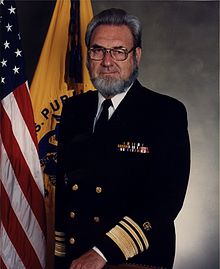
Dr. C. Everett Koop is pictured above.

Francis Schaeffer: “Whatever Happened to the Human Race” (Episode 1) ABORTION OF THE HUMAN RACE

Published on Oct 6, 2012 by

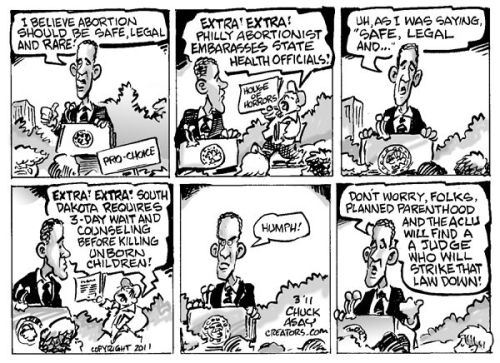
President Obama is doing everything he can to help expand abortion rights as this editorial cartoon shows:

C. Everett Koop

Related posts:

Remembering Dr. C. Everett Koop with pictures and quotes Part 12 (with editorial cartoon)

Dr. C. Everett Koop on Baby Doe, euthanasia, abortion Uploaded on Nov 3, 2008 Dr. Koop answers questions on Baby Doe, euthanasia and abortion during interview at Wheaton College, Wheaton, IL http://www.christianethics.org Dr. Koop   On 2-25-13 we lost a great man when we lost Dr. C. Everett Koop. I have written over and over […]

Remembering Dr. C. Everett Koop with pictures and quotes Part 11 (including editorial cartoon on abortion)

Dr. Koop Memorial Tribute Former Surgeon General C.Everett Koop © A Genuine G-Shot.wmv On 2-25-13 we lost a great man when we lost Dr. C. Everett Koop. I have written over and over the last few years quoting Dr. C. Everett Koop and his good friend Francis Schaeffer. They both came together for the first […]

Remembering Dr. C. Everett Koop with pictures and quotes Part 10 (includes editorial cartoon about abortion)

Newsmaker Interview with Surgeon General C. Everett Koop Published on Feb 25, 2013 The PBS NewsHour interviewed former Surgeon General, Dr. C. Everett Koop, on the anniversary of the first surgeon general’s report on smoking. Jim Lehrer interviewed Koop for a newsmaker conversation for the The MacNeil/Lehrer NewsHour from the surgeon general’s office in Washington […]

Remembering Dr. C. Everett Koop with pictures and quotes Part 9 (Picture of Joycelyn Elders with Koop)

Dr. C. Everett Koop on Baby Doe, euthanasia, abortion Uploaded on Nov 3, 2008 Dr. Koop answers questions on Baby Doe, euthanasia and abortion during interview at Wheaton College, Wheaton, IL http://www.christianethics.org Dr. Koop   Joycelyn Elders was the first black Surgeon General of the USA and I have a picture of her with Dr. C. […]

Remembering Dr. C. Everett Koop with pictures and quotes Part 8 (editorial picture about Surgeon General)

Memorial Tribute Former Surgeon General C.Everett Koop © A Genuine G-Shot.wmv Dr. Koop. C. Everett Koop Before Dr. C. Everett Koop arrived in 1981 as Surgeon General could anybody ever name who the Surgeon General was? Koop also caused lots of editorial cartoons to be drawn about him because of his positions he took on […]

Remembering Dr. C. Everett Koop with pictures and quotes Part 7 (Public Health poster)

Newsmaker Interview with Surgeon General C. Everett Koop Published on Feb 25, 2013 The PBS NewsHour interviewed former Surgeon General, Dr. C. Everett Koop, on the anniversary of the first surgeon general’s report on smoking. Jim Lehrer interviewed Koop for a newsmaker conversation for the The MacNeil/Lehrer NewsHour from the surgeon general’s office in Washington […]

Remembering Dr. C. Everett Koop with pictures and quotes Part 6 (includes funniest cartoon ever during Koop’s tenure)

Dr. C. Everett Koop on Baby Doe, euthanasia, abortion Uploaded on Nov 3, 2008 Dr. Koop answers questions on Baby Doe, euthanasia and abortion during interview at Wheaton College, Wheaton, IL http://www.christianethics.org Dr. Koop. C. Everett Koop On June 8, 1988 Ralph Dunagin of the LA Times came out with the funniest editorial cartoon I […]

Remembering Dr. C. Everett Koop with pictures and quotes Part 5 (Public Health poster developed under Koop)

Memorial Tribute Former Surgeon General C.Everett Koop © A Genuine G-Shot.wmv Dr. C. Everett Koop was active on getting the word out about how people could catch AIDS. Public Health officials during the second half of the 1980s became concerned about the spread of AIDS particularly among minorities, a disproportionate number of whom were intravenous […]

Remembering Dr. C. Everett Koop with pictures and quotes Part 4 (funny editorial cartoon too)

Dr. Koop Gary Brookings of the Richmond Times Dispatch did a very funny editorial cartoon about the time in 1988 when Dr. C. Everett Koop sent the unapproved mail  piece out to millions of homes about AIDS. There were many such cartoons at the time since everyone knew Dr. Koop got the mail piece out […]

Remembering Dr. C. Everett Koop with pictures and quotes Part 3 ( three more editorial cartoons too)

Dr. Koop with Hillary Clinton In 1980 I really was influenced at my highschool by a teacher of mine named Mark Brink. He introduced me to the film series “Whatever happened to the human race?” by Francis Schaeffer and Dr. C. Everett Koop. In this  film series that came out in 1979 they dealt with […]

Remembering Dr. C. Everett Koop with pictures and quotes Part 2 (Doonesbury cartoon by Gary Trudeau included)

Dr. Koop On 2-25-13 we lost a great man when we lost Dr. C. Everett Koop. I have written over and over the last few years quoting Dr. C. Everett Koop and his good friend Francis Schaeffer. They both came together for the first time in 1973 when Dr. Koop operated on Schaeffer’s daughter and […]

Remembering Dr. C. Everett Koop with pictures and quotes Part 1

Dr. C. Everett Koop is pictured above. Francis Schaeffer: “Whatever Happened to the Human Race” (Episode 1) ABORTION OF THE HUMAN RACE Published on Oct 6, 2012 by AdamMetropolis Dr. Koop On 2-25-13 we lost a great man when we lost Dr. C. Everett Koop. I have written over and over the last few years […]


Open letter to President Obama (Part 232 B) Dr. C. Everett Koop and Reagan pictured together

Dr. C. Everett Koop with Ronald Reagan. Dr. Koop was delayed in his confirmation by Ted Kennedy because of his film Whatever Happened to the Human Race? President Obama c/o The White House 1600 Pennsylvania Avenue NW Washington, DC 20500 Dear Mr. President, I know that you receive 20,000 letters a day and that you […]

“Sanctity of Life Saturday” Francis Schaeffer and Dr. C. Everett Koop asked Reagan to issue pro-life proclamation in 1983 (includes video ABORTION OF THE HUMAN RACE)

In the film series “WHATEVER HAPPENED TO THE HUMAN RACE?” the arguments are presented  against abortion (Episode 1),  infanticide (Episode 2),   euthenasia (Episode 3), and then there is a discussion of the Christian versus Humanist worldview concerning the issue of “the basis for human dignity” in Episode 4 and then in the last episode a close […]

Dr. C. Everett Koop on abortion’s 1973 Roe v. Wade impact on child abuse

Dr. C. Everett Koop with Ronald Reagan. Dr. Koop was delayed in his confirmation by Ted Kennedy because of his film Whatever Happened to the Human Race? Watch the film below starting at the 19 minute mark and that will lead into a powerful question from Dr. C. Everett Koop. This 1979 film is WHATEVER […]

Open letter to President Obama (Part 221 B) Dr. C. Everett Koop and Francis Schaeffer rightly called abortion “the watershed issue of our era”

 Dr. Koop was delayed in his confirmation by Ted Kennedy because of his film Whatever Happened to the Human Race? Francis Schaeffer February 21, 1982 (Part 1) Uploaded by DeBunker7 on Feb 21, 2008 READ THIS FIRST: In decline of all civilizations we first see a war against the freedom of ideas. Discussion is limited […]

Francis Schaeffer and C. Everette Koop on the Hippocratic oath (March for Life January 20, 2013)

Dr. C. Everett Koop was appointed to the Reagan administration but was held up in the Senate in his confirmation hearings by Ted Kennedy because of his work in pro-life causes. I was thinking about the March for Life that is coming up on Jan 20, 2013  and that is why I posted this today […]

Ronald Wilson Reagan pictured with Dr. C. Everett Koop

High resolution version (11,426,583 Bytes) Description: The photograph is signed by President Ronald Reagan with the inscription “To Chick Koop, With Best Wishes.” Chick, from chicken coop, was the nickname Koop gained will attending Dartmouth College in the mid-1930s. Koop maintained a cordial relationship with President Reagan, despite his disappointment over Reagan’s refusal to address […]

Francis Schaeffer and C. Everett Koop were prophetic (jh29)

Francis Schaeffer and C. Everett Koop were prophetic (jh29) What Ever Happened to the Human Race? I recently heard this Breakpoint Commentary by Chuck Colson and it just reminded me of how prophetic Francis Schaeffer and C. Everett Koop were in the late 1970′s with their book and film series “Whatever happened to the human […]

Should Michele Bachmann be punished for taking pro-life views from Schaeffer and Koop? (March for Life January 20, 2013)

  Dr. C. Everett Koop I was thinking about the March for Life that is coming up on Jan 20, 2013  and that is why I posted this today Secular leaps of faith 39 Comments Written by Janie B. Cheaney August 15, 2011, 2:17 PM I’m willing to cut Ryan Lizza some slack. His profile […]

“Schaeffer Sundays” Francis Schaeffer’s own words concerning humanism and its bad results

Francis Schaeffer: “Whatever Happened to the Human Race?” (Episode 2) SLAUGHTER OF THE INNOCENTS Published on Oct 6, 2012 by AdamMetropolis The 45 minute video above is from the film series created from Francis Schaeffer’s book “Whatever Happened to the Human Race?” with Dr. C. Everett Koop. This book  really helped develop my political views concerning […]

“Sanctity of Life Saturday”:Derek Melleby’s review of the book “Francis Schaeffer: An Authentic Life” (includes film THE BASIS FOR HUMAN DIGNITY)

  I truly believe that many of the problems we have today in the USA are due to the advancement of humanism in the last few decades in our society. Ronald Reagan appointed the evangelical Dr. C. Everett Koop to the position of Surgeon General in his administration. He partnered with Dr. Francis Schaeffer in making […]

Taking on Ark Times bloggers about abortion on the 40th anniversary date of Roe v. Wade (Part 5) “Slavery issue compared to rights of unborn child”

The best pro-life film I have ever seen below by Francis Schaeffer and Dr. C. Everett Koop “Whatever happened to the human race?” Over the years I have taken on the Ark Times liberal bloggers over and over and over concerning the issue of abortion. I asked over and over again for one liberal blogger […]

Taking on Ark Times bloggers about abortion on the 40th anniversary date of Roe v. Wade (Part 4) “How do pro-lifers react to the movie THE CIDER HOUSE RULES?”

Francis Schaeffer pictured above._________ The best pro-life film I have ever seen below by Francis Schaeffer and Dr. C. Everett Koop “Whatever happened to the human race?” Over the years I have taken on the Ark Times liberal bloggers over and over and over concerning the issue of abortion. I asked over and over again […]

Taking on Ark Times bloggers about abortion on the 40th anniversary date of Roe v. Wade (Part 3) “What should be the punishment for abortion doctors?”

The best pro-life film I have ever seen below by Francis Schaeffer and Dr. C. Everett Koop “Whatever happened to the human race?” On 1-24-13 I took on the child abuse argument put forth by Ark Times Blogger “Deathbyinches,” and the day before I pointed out that because the unborn baby has all the genetic code […]

Taking on Ark Times bloggers about abortion on the 40th anniversary date of Roe v. Wade (Part 2) “The pro-abortion child abuse argument destroyed here”

PHOTO BY STATON BREIDENTHAL from Pro-life march in Little Rock on 1-20-13. Tim Tebow on pro-life super bowl commercial. Over the years I have taken on the Ark Times liberal bloggers over and over and over concerning the issue of abortion. Here is another encounter below. On January 22, 2013 (on the 40th anniversary of the […]

Taking on Ark Times bloggers about abortion on the 40th anniversary date of Roe v. Wade (Part 6) For many pro-abortionists ” …the problem is not determining when actual human life begins, but when the value of that life begins to out weigh other considerations”

The best pro-life film I have ever seen below by Francis Schaeffer and Dr. C. Everett Koop “Whatever happened to the human race?” Francis Schaeffer pictured above._________ The 45 minute video above is from the film series created from Francis Schaeffer’s book “Whatever Happened to the Human Race?” with Dr. C. Everett Koop. This book  really […]

Taking on Ark Times bloggers about abortion on the 40th anniversary date of Roe v. Wade (Part 7) “Poverty not good reason for abortion, why not give up for adoption?”

Dr Richard Land discusses abortion and slavery – 10/14/2004 – part 3 The best pro-life film I have ever seen below by Francis Schaeffer and Dr. C. Everett Koop “Whatever happened to the human race?” Over the years I have taken on the Ark Times liberal bloggers over and over and over concerning the issue […]

Taking on Ark Times bloggers about abortion on the 40th anniversary date of Roe v. Wade (Part 1)

Dr Richard Land discusses abortion and slavery – 10/14/2004 – part 3 The best pro-life film I have ever seen below by Francis Schaeffer and Dr. C. Everett Koop “Whatever happened to the human race?” Over the years I have taken on the Ark Times liberal bloggers over and over and over concerning the issue […]

Paul Greenberg became pro-life because we are all “endowed with certain unalienable rights”

On January 20, 2013 I heard Paul Greenberg talk about the words of Thomas Jefferson that we are all “endowed with certain unalienable rights” and the most important one is the right to life. He mentioned this also in this speech below from 2011: Paul Greenberg Dinner Speech 2011 Fall 2011 Issue Some of you […]

How Pulitzer Prize-winning Paul Greenberg, one of the most respected and honored commentators in America, changed his mind about abortion and endorses now the pro-life view

It is not possible to know where the pro-life evangelicals are coming from unless you look at the work of the person who inspired them the most. That person was Francis Schaeffer.  I do care about economic issues but the pro-life issue is the most important to me. Several years ago Adrian Rogers (past president of […]


Book of Daniel written in 6th century B.C.? (Part 1)

The Bible and Archaeology (1/5)

I have been amazed at the prophecies in the Bible that have been fulfilled in history, and also many of the historical details in the Bible have been confirmed by archaeology too. ( I have put a list below of several posts I have made in the past about this.) One of the most amazing is the prediction that the Jews would be brought back and settle in Jerusalem again. Another prophecy in Psalms 22 describes messiah dying on a cross  almost 1000 years before the Romans came up with this type of punishment.  One of the top 10 posts on this concerns the city of Tyre.  John MacArthur went through every detail of the prophecy concerning Tyre and how history shows the Bible prophecy was correct.
 

________

Here is a review of  a 1998 paper I wrote on the dating of the Book of Daniel. 

In 1998, Everette Hatcher presented a sterling defense of the book of Daniel using the best scholarship had to offer. We will attend to specific issues regarding Daniel in our article on Daniel, such as is needed. Here are a few accessory issues.

One of them stated that “(t)he discoveries of fragments of Daniel among the Dead Sea Scrolls shows [sic] that it was written earlier than 164 B. C.,” but that was all that he said on the subject. He gave no evidence at all to support this assertion. Furthermore, saying that these discoveries show that Daniel was written earlier than 164 B. C. is too imprecise to warrant comment, for if it were written in 165 B. C., that would be earlier than 164 B. C. Referring also to the copy of Daniel found in the Dead Sea Scrolls, another of Hatcher’s professors said in awkward syntax that “even the liberals say that this must have had several hundred years before the second century” and that “(i)n that case, it would put it back at least to the fourth or fifth century, if not the sixth.” The professor said nothing to explain why the discovery of a copy of Daniel at Qumran would have to mean that it was written “several hundred years before the second century.”

On part A, what “evidence” is wanted? Is this implying this person is lying about fragments of Daniel? Does the objector want a complete list of fragments and the dating methods? And if we get these, will that be sufficient, or will we then be told that more evidence is needed to satisfy?

The proper response to such an argument is not to demand more evidence, but to provide one’s own evidence in response. The objector is doing no more than buying time here because he does not have the competence or the familiarity with the scholarly literature that is needed to address the issue. How hard is it to get material on the DSS and confirm or refute this simple claim? It isn’t hard at all. In our own study we noted that liberal critics have had to shift into the gear of claiming the some of Daniel is early, and some of it is late — a supposition with no textual support, merely made to shore up their theory. The text and data as it stands offers no supporting evidence.

Further, the claim that it may therefore have been written in 165 B.C. is easily to refute: Simply put, the presence of Daniel at Qumran testifies to its composition much earlier because the Qumranites, by the evidence of their documents, were a strict society that would not readily recognize the validity of any book claiming prophetic authority. Someone showing up at the door of Qumran with a newly-minted Daniel scroll, claiming it was a genuine document, isn’t going to get a reaction from the Qumranites like this: “Wow, a prophetic document we’ve never seen before and no one else has ever heard of! Thanks, we’ll add it to the library!” More likely any person trying to foist such a document would be spat upon by the clannish Qumranites.

The ancients had every care and concern that we did. If it was not their own internal material, documents needed a pedigree to be accepted. The ancients respected antiquity. There is every indication that Daniel was recognized by the Qumranites as Scripture. Daniel is called a “prophet” (4Q174) and comments on his text are made with standard introductory formula for Scripture; there are seven copies of his book at Qumran, in other words, it was not an accident or a passing fancy for it to be there. In order to confound this argument, the critic needs to study Qumranite society, literature, and culture, and in the context of the larger socio-religious culture of Judaism, and provide a reason why Daniel managed to slip through these strictures.

…[Daniel] went directly from the reign of Nebuchadnezzar to the reign of Belshazzar without mentioning any of the four kings who reigned between them. This within itself would indicate an ignorance of 6th-century Babylonian history, because it at least implies that the writer thought that Belshazzar’s reign followed Nebuchadnezzar’s.

Question: Why is this a problem? Daniel served Nebuchadnezzar for decades and highlights less than half a dozen episodes with him that took no more than a few weeks at most; why is it such an issue that he says nothing of the four kings with far shorter reigns than Nebuchadnezzar’s (one of them a child)?

Re the old Joshua stopping the sun not being recorded elsewhere argument, it is answered here. It is related to the idea that Ezekiel should have mentioned Daniel, and he did, but the connection with the pagan hero fails; see our article for response.

A further appeal is made to the idea that the refusal of Daniel and friends to eat from the king’s table corresponds to a Maccabbean-era issue in which Jews were threatened with their lives if they did not follow a decree to eat unclean foods. There is no indication that Daniel and friends would have been killed for their dietary choices; their overseer feared for himself, if they ended up looking bad, but the parallel drawn is superficial and non-existent. Moreover, such problems as this, and problems of idolatry as in Daniel 3, would have indeed been historically encountered by conscientious Jews in Exile. A Maccabbean parallel is superfluous.

Another erroneous Maccabbean parallel: Belshazzar defiled the temple vessels by using them at a party; Antiochus defiled them by taking them. Taking temple parephenalia, however, was the normal mode of operation in the ancient world for all invaders and attackers. The Romans did it to the Temple as well. This is again not a unique parallel but a universal in context.

Next the objector tries to refute a late date by noting that Daniel contains “good history” about Alexander the Great and beyond. But it’s not that simple — it also contains “accurate history” (i.e., prophecy) beyond the 160s BC. See here. See here on alleged inaccuracy about Antiochus.

Objection is also made about Daniel’s name not being in Babylonian records, but we hardly could claim to possess complete and full records from this period or from any ancient civilization. This is again no more than argument from silence. Remember again that this is what used to be said about Belshazzar — and also note in our article that the names of Daniel’s three friends have been found.


In the year 2000 there was more from Hatcher. Hatcher presented the critical scholarship of one who acknowledged that the Daniel 1:1 timing issue had a potential and plausible resolution in the variable calendar systems of the Babylonians and Jews — just as Archer argues. This came not from a fundamentalist press in Grand Rapids, but from a critic who admitted that there was no surety of error being found in Dan. 1:1.

The critic could offer no actual response to this, but could only seize upon the acknowledgement that the critic preferred to suppose error (never mind that in doing so, he did not act consistently with his admission that there was a plausible solution) and object that this was no more than “a how-it-could-have-been solution” — never mind that it works within established knowledge and it fully acceptable historical detective work that would be used by any writer concerning the works of a secular historian. Within such work, such solutions are sufficient justification and constitute reasonable evidence, and can only be responded to with evidence that the solution could not possibly apply (i.e., showing that the calendar system wasn’t that different, or that the years in Daniel were still too far apart for the calendar difference to be of use).

Beattie’s possible solution to the chronological discrepancy in Daniel 1:1, which solution he himself didn’t accept, is dubious on the surface. It postulated that Daniel, a captive in Babylon who rose to prominence in the Babylonian government, used the Judean calendric system, but Jeremiah, a prophet who remained in Judea and did not go to Babylon with the captives, used the Babylonian calendric system. How likely was that?

The answer is that it isn’t unlikely at all, though Archer does prefer to suppose that Daniel used the Babylon method. Daniel’s final form was written for Jews who would leave their Exile; Jeremiah’s work was written to people currently in Exile in Babylon. Either writer could have used either system for acceptable reasons, and a critic living in a modern era with standard calendars and no threat of conquest has no cause to argue about such things. That the critic finds such hypotheses “unimpressive” is an interesting insight into his personal view, but does nothing to affect the reasonableness and plausibility of the scenario. Demands for “real evidence” could never be met in any historical study context.

Further matters we mostly address within the text of our article on Daniel. There is no controversy at all over whether Pul was a title or a name; it is known as a shortened name for Tiglath-Pileser III.

Hatcher said that the writer of Daniel “must have known that Cyrus was the conquerer of Babylon,” because this was mentioned by Isaiah and recorded by Herodotus, Xenophon, and Berossos. What was Hatcher’s proof that the author of Daniel had any familiarity with Herodotus, Xenophon, and Berossos? He cited none. He just listed Colless as his source of this claim, but if Colless knows of any reasons why we should think that the author of Daniel was familiar with the writings of these historians, Hatcher should have stated what they are.

What proof is needed that the author of Daniel was familiar with these works? None is needed — that the author of Daniel could read and write is evidence enough. In an age when 10% or less of the population could read or write, such capability indicated a trip through the ancient educational system. That meant that they would become familiar with, and use, the works of men like Herodotus, Xenophon, and Berossos, since these were the common texts used for study.

Of course the critic may speculatively suggest that Daniel’s 2nd century author was absent that day from class, but once again, he would do so in admission that the historical background data as it stands provides no support for his view. (The critic also errs in that he thinks that Hatcher is arguing that Daniel in the 6th century would have read these later authors.)

It is also a counsel of despair to claim that “the Jewish scriptures didn’t exist in bound volumes” (they did not have to exist in that condition; scrolls are just as usable) and that the author of Daniel may not have known the writings of Jeremiah or Ezra, etc. As a literate Jew, he was bound to know these things by definition.

-JPH

________

Related posts:

Robert Dick Wilson’s talk “Is the Higher Criticism Scholarly?” (part 3 of transcript) (Wilson looks at the Book of Daniel)

The Bible and Archaeology (4/5) For many more archaeological evidences in support of the Bible, see Archaeology and the Bible . (There are some great posts on this too at the bottom of this post.)   Robert Dick Wilson at the Grove City Bible Conference in 1909. IS THE HIGHER CRITICISM SCHOLARLY?Clearly attested facts showing that […]

Hanukkah celebrates Maccabean Revolt: Was the Book of Daniel written then or when the Bible claims?

Bible Prophecy vs. History (Daniel 11:1-19) _____________________________ Wikipedia notes: Hanukkah (Hebrew: חֲנֻכָּה‎, Tiberian: Ḥănukkāh, usually spelled חנוכה pronounced [χanuˈka] in Modern Hebrew, also romanized as Chanukah, Chanukkah, or Chanuka), also known as the Festival of Lights, is an eight-day Jewish holiday commemorating the rededication of the Holy Temple (the Second Temple) in Jerusalem at the time […]

Was Daniel an Eyewitness of 6th-Century B.C. Events? (part 2) (Plus Six Pieces of Archaeological Evidence that Support the 6th Century View and video of John MacArthur on Daniel 4)

The Bible and Archaeology (3/5) For many more archaeological evidences in support of the Bible, see Archaeology and the Bible . (There are some great posts on this too at the bottom of this post.) I believe the evidence points to Daniel writing the Book of Daniel in the 6th century B.C. Below is a sermon […]

Was Daniel an Eyewitness of 6th-Century B.C.Events? (part 1)

The Bible and Archaeology (2/5) There is evidence pointing to the accuracy of the Bible. Here is some below. For many more archaeological evidences in support of the Bible, see Archaeology and the Bible . (There are some great posts on this too at the bottom of this post.) Was Daniel an Eyewitness of 6th-Century B. […]

The Critics’ Admissions Concerning Daniel

The Bible and Archaeology (1/5) I have been amazed at the prophecies in the Bible that have been fulfilled in history. John MacArthur went through every detail of the prophecy concerning Tyre and how history shows the Bible prophecy was correct.   I love the Book of Daniel and I am starting a series today […]

Is the Bible historically accurate? Here are some of the posts I have done in the past on the subject:


1. 
The Babylonian Chronicle
of Nebuchadnezzars Siege of Jerusalem

This clay tablet is a Babylonian chronicle recording events from 605-594BC. It was first translated in 1956 and is now in the British Museum. The cuneiform text on this clay tablet tells, among other things, 3 main events: 1. The Battle of Carchemish (famous battle for world supremacy where Nebuchadnezzar of Babylon defeated Pharoah Necho of Egypt, 605 BC.), 2. The accession to the throne of Nebuchadnezzar II, the Chaldean, and 3. The capture of Jerusalem on the 16th of March, 598 BC.

2. Hezekiah’s Siloam Tunnel Inscription.

King Hezekiah of Judah ruled from 721 to 686 BC. Fearing a siege by the Assyrian king, Sennacherib, Hezekiah preserved Jerusalem’s water supply by cutting a tunnel through 1,750 feet of solid rock from the Gihon Spring to the Pool of Siloam inside the city walls (2 Kings 20; 2 Chron. 32). At the Siloam end of the tunnel, an inscription, presently in the archaeological museum at Istanbul, Turkey, celebrates this remarkable accomplishment.

3. Taylor Prism (Sennacherib Hexagonal Prism)

It contains the victories of Sennacherib himself, the Assyrian king who had besieged Jerusalem in 701 BC during the reign of king Hezekiah, it never mentions any defeats. On the prism Sennacherib boasts that he shut up “Hezekiah the Judahite” within Jerusalem his own royal city “like a caged bird.” This prism is among the three accounts discovered so far which have been left by the Assyrian king Sennacherib of his campaign against Israel and Judah.

4. Biblical Cities Attested Archaeologically.

In addition to Jericho, places such as Haran, Hazor, Dan, Megiddo, Shechem, Samaria, Shiloh, Gezer, Gibeah, Beth Shemesh, Beth Shean, Beersheba, Lachish, and many other urban sites have been excavated, quite apart from such larger and obvious locations as Jerusalem or Babylon. Such geographical markers are extremely significant in demonstrating that fact, not fantasy, is intended in the Old Testament historical narratives;

5. The Discovery of the Hittites

Most doubting scholars back then said that the Hittites were just a “mythical people that are only mentioned in the Bible.” Some skeptics pointed to the fact that the Bible pictures the Hittites as a very big nation that was worthy of being coalition partners with Egypt (II Kings 7:6), and these bible critics would assert that surely we would have found records of this great nation of Hittites.  The ironic thing is that when the Hittite nation was discovered, a vast amount of Hittite documents were found. Among those documents was the treaty between Ramesses II and the Hittite King.

6.Shishak Smiting His Captives

The Bible mentions that Shishak marched his troops into the land of Judah and plundered a host of cities including Jerusalem,  this has been confirmed by archaeologists. Shishak’s own record of his campaign is inscribed on the south wall of the Great Temple of Amon at Karnak in Egypt. In his campaign he presents 156 cities of Judea to his god Amon. 

7. Moabite Stone

The Moabite Stone also known as the Mesha Stele is an interesting story. The Bible says in 2 Kings 3:5 that Mesha the king of Moab stopped paying tribute to Israel and rebelled and fought against Israel and later he recorded this event. This record from Mesha has been discovered.

8Black Obelisk of Shalmaneser III

The tribute of Jehu, son of Omri, silver, gold, bowls of gold, chalices of gold, cups of gold, vases of gold, lead, a sceptre for the king, and spear-shafts, I have received.”

View from the dome of the Capitol!9A Verification of places in Gospel of John and Book of Acts.

Sir William Ramsay, famed archaeologist, began a study of Asia Minor with little regard for the book of Acts. He later wrote:

I found myself brought into contact with the Book of Acts as an authority for the topography, antiquities and society of Asia Minor. It was gradually borne upon me that in various details the narrative showed marvelous truth.

9B Discovery of Ebla TabletsWhen I think of discoveries like the Ebla Tablets that verify  names like Adam, Eve, Ishmael, David and Saul were in common usage when the Bible said they were, it makes me think of what amazing confirmation that is of the historical accuracy of the Bible.

10. Cyrus Cylinder

There is a well preserved cylinder seal in the Yale University Library from Cyrus which contains his commands to resettle the captive nations.

11. Puru “The lot of Yahali” 9th Century B.C.E.

This cube is inscribed with the name and titles of Yahali and a prayer: “In his year assigned to him by lot (puru) may the harvest of the land of Assyria prosper and thrive, in front of the gods Assur and Adad may his lot (puru) fall.”  It provides a prototype (the only one ever recovered) for the lots (purim) cast by Haman to fix a date for the destruction of the Jews of the Persian Empire, ostensibly in the fifth century B.C.E. (Esther 3:7; cf. 9:26).

12. The Uzziah Tablet Inscription

The Bible mentions Uzziah or Azariah as the king of the southern kingdom of Judah in 2 Kings 15. The Uzziah Tablet Inscription is a stone tablet (35 cm high x 34 cm wide x 6 cm deep) with letters inscribed in ancient Hebrew text with an Aramaic style of writing, which dates to around 30-70 AD. The text reveals the burial site of Uzziah of Judah, who died in 747 BC.

13. The Pilate Inscription

The Pilate Inscription is the only known occurrence of the name Pontius Pilate in any ancient inscription. Visitors to the Caesarea theater today see a replica, the original is in the Israel Museum in Jerusalem. There have been a few bronze coins found that were struck form 29-32 AD by Pontius Pilate

14. Caiaphas Ossuary

This beautifully decorated ossuary found in the ruins of Jerusalem, contained the bones of Caiaphas, the first century AD. high priest during the time of Jesus.

14 B Pontius Pilate Part 2      

In June 1961 Italian archaeologists led by Dr. Frova were excavating an ancient Roman amphitheatre near Caesarea-on-the-Sea (Maritima) and uncovered this interesting limestone block. On the face is a monumental inscription which is part of a larger dedication to Tiberius Caesar which clearly says that it was from “Pontius Pilate, Prefect of Judea.”

14c. Three greatest American Archaeologists moved to accept Bible’s accuracy through archaeology.

Despite their liberal training, it was archaeological research that bolstered their confidence in the biblical text:Albright said of himself, “I must admit that I tried to be rational and empirical in my approach [but] we all have presuppositions of a philosophical order.” The same statement could be applied as easily to Gleuck and Wright, for all three were deeply imbued with the theological perceptions which infused their work.

 

Excerpts from Pro Life Answers to Pro Choice Arguments

Watch the film below starting at the 19 minute mark and that will lead into a powerful question from Dr. C. Everett Koop. This film is WHATEVER HAPPENED TO THE HUMAN RACE? by Francis Schaeffer and Dr. C. Everett Koop.


Excerpts from Pro Life Answers to Pro Choice Arguments
by Raldy Alcorn, Multnomah Books, 1992

Pro Choice Argument Pro Life Answer
Science is uncertain when life begins, therefore it must be a religious question. ENCYCLOPEDIA BRITANNICA -“A new individual is created when the elements of a potent sperm merge with those of a fertile ovum, or egg.”
The unborn is an embryo or fetus – not a baby. Abortion is terminating a pregnancy and is not actually killing a child. Pro-choice people insist that the unborn is an “embryo.” By definition, embryo means any living creature at an early stage of development. Further, they say it’s not a baby; it’s a “fetus.” Fetus is a Latin word meaning “young one” or “little child.”
Abortion providers are respected medical professionals working in the woman’s best interest. A former abortion clinic counselor says, “I was totally uninformed of available alternatives to abortion. I never recommended adoption or keeping the baby. I received no training in factual matters–my job was just to keep women happy and make sure they went through with an abortion.”
Abortion is a safe medical procedure, safer than full term pregnancy and childbirth. Researchers state, “Morbidity and mortality rates of legal abortion are several times higher than that for carrying a pregnancy to term. The immediate complication rate is no less than 10%, while long range complication rates show no less than 17%.”
Abortion is an easy and painless procedure. The various abortion procedures are often both difficult and painful for women. One abortion procedure, the D & C, involves the scraping of the uterus, which typically involves some bleeding and other side effects that some women find quite painful.
Unwanted children usually end up being battered and abused children later on in life. A recent study showed 91% of the battered children surveyed were planned pregnancies and 90% were legitimate, according to Dr. Edward Lenoski, Professor of Pediatrics at U.S.C.
Child abuse has decreased since legalized abortion. Since abortion’s legalization in 1973, child abuse has increased fifteen hundred percent according to U.S. Department of Health & Human Services.
Legally preventing a woman from having an abortion is an invasion of her privacy. Our laws allow police to enter the privacy of people’s homes to stop them from battering and abusing their children. Now the same force of law guarantees the “privacy and rights” of parents to dismember or poison their babies before birth.
Abortion relieves women of stress and responsibility and thereby enhances their psychological well-being. Post-abortion therapy and support groups with members numbering over 30,000 testify to the reality of abortion’s potentially harmful psychological effects. Women’s World, September 1991, reports a study of women who have had abortions in which 45% said they had thoughts of suicide following their abortion.
What about a woman who’s life is threatened by pregnancy or childbirth? While he was United States Surgeon General, Dr. C. Everett Koop stated publicly that in his thirty-eight years as a pediatric surgeon, he was never aware of a single situation in which a pre-born child’s life had to be taken in order to save the life of the mother.
Related posts:

Francis Schaeffer’s prayer for us in USA

 Francis Schaeffer: “Whatever Happened to the Human Race” (Episode 1) ABORTION OF THE HUMAN RACE Published on Oct 6, 2012 by AdamMetropolis The 45 minute video above is from the film series created from Francis Schaeffer’s book “Whatever Happened to the Human Race?” with Dr. C. Everett Koop. This book  really helped develop my political views […]


Francis Schaeffer’s “How should we then live?” Video and outline of episode 10 “Final Choices” (Schaeffer Sundays)

E P I S O D E 1 0   Dr. Francis Schaeffer – Episode X – Final Choices 27 min FINAL CHOICES I. Authoritarianism the Only Humanistic Social Option One man or an elite giving authoritative arbitrary absolutes. A. Society is sole absolute in absence of other absolutes. B. But society has to be […]

Francis Schaeffer’s “How should we then live?” Video and outline of episode 9 “The Age of Personal Peace and Affluence” (Schaeffer Sundays)

E P I S O D E 9 Dr. Francis Schaeffer – Episode IX – The Age of Personal Peace and Affluence 27 min T h e Age of Personal Peace and Afflunce I. By the Early 1960s People Were Bombarded From Every Side by Modern Man’s Humanistic Thought II. Modern Form of Humanistic Thought Leads […]

Francis Schaeffer’s “How should we then live?” Video and outline of episode 8 “The Age of Fragmentation” (Schaeffer Sundays)

E P I S O D E 8 Dr. Francis Schaeffer – Episode VIII – The Age of Fragmentation 27 min I saw this film series in 1979 and it had a major impact on me. T h e Age of FRAGMENTATION I. Art As a Vehicle Of Modern Thought A. Impressionism (Monet, Renoir, Pissarro, Sisley, […]

Francis Schaeffer’s “How should we then live?” Video and outline of episode 7 “The Age of Non-Reason” (Schaeffer Sundays)

E P I S O D E 7 Dr. Francis Schaeffer – Episode VII – The Age of Non Reason I am thrilled to get this film series with you. I saw it first in 1979 and it had such a big impact on me. Today’s episode is where we see modern humanist man act […]

Francis Schaeffer’s “How should we then live?” Video and outline of episode 6 “The Scientific Age” (Schaeffer Sundays)

E P I S O D E 6 How Should We Then Live 6#1 Uploaded by NoMirrorHDDHrorriMoN on Oct 3, 2011 How Should We Then Live? Episode 6 of 12 ________ I am sharing with you a film series that I saw in 1979. In this film Francis Schaeffer asserted that was a shift in […]

Francis Schaeffer’s “How should we then live?” Video and outline of episode 5 “The Revolutionary Age” (Schaeffer Sundays)

E P I S O D E 5 How Should We Then Live? Episode 5: The Revolutionary Age I was impacted by this film series by Francis Schaeffer back in the 1970′s and I wanted to share it with you. Francis Schaeffer noted, “Reformation Did Not Bring Perfection. But gradually on basis of biblical teaching there […]

Francis Schaeffer’s “How should we then live?” Video and outline of episode 4 “The Reformation” (Schaeffer Sundays)

Dr. Francis Schaeffer – Episode IV – The Reformation 27 min I was impacted by this film series by Francis Schaeffer back in the 1970′s and I wanted to share it with you. Schaeffer makes three key points concerning the Reformation: “1. Erasmian Christian humanism rejected by Farel. 2. Bible gives needed answers not only as to […]

“Schaeffer Sundays” Francis Schaeffer’s “How should we then live?” Video and outline of episode 3 “The Renaissance”

Francis Schaeffer’s “How should we then live?” Video and outline of episode 3 “The Renaissance” Francis Schaeffer: “How Should We Then Live?” (Episode 3) THE RENAISSANCE I was impacted by this film series by Francis Schaeffer back in the 1970′s and I wanted to share it with you. Schaeffer really shows why we have so […]

Francis Schaeffer’s “How should we then live?” Video and outline of episode 2 “The Middle Ages” (Schaeffer Sundays)

  Francis Schaeffer: “How Should We Then Live?” (Episode 2) THE MIDDLE AGES I was impacted by this film series by Francis Schaeffer back in the 1970′s and I wanted to share it with you. Schaeffer points out that during this time period unfortunately we have the “Church’s deviation from early church’s teaching in regard […]

Francis Schaeffer’s “How should we then live?” Video and outline of episode 1 “The Roman Age” (Schaeffer Sundays)

Francis Schaeffer: “How Should We Then Live?” (Episode 1) THE ROMAN AGE   Today I am starting a series that really had a big impact on my life back in the 1970′s when I first saw it. There are ten parts and today is the first. Francis Schaeffer takes a look at Rome and why […]

Francis Schaeffer: “Whatever Happened to the Human Race” (Episode 5) TRUTH AND HISTORY

Francis Schaeffer: “Whatever Happened to the Human Race” (Episode 5) TRUTH AND HISTORY Published on Oct 7, 2012 by AdamMetropolis This crucial series is narrated by the late Dr. Francis Schaeffer and former Surgeon General Dr. C. Everett Koop. Today, choices are being made that undermine human rights at their most basic level. Practices once […]

Francis Schaeffer: “Whatever Happened to the Human Race” (Episode 4) THE BASIS FOR HUMAN DIGNITY

The opening song at the beginning of this episode is very insightful. Francis Schaeffer: “Whatever Happened to the Human Race” (Episode 4) THE BASIS FOR HUMAN DIGNITY Published on Oct 7, 2012 by AdamMetropolis This crucial series is narrated by the late Dr. Francis Schaeffer and former Surgeon General Dr. C. Everett Koop. Today, choices […]

Francis Schaeffer: “Whatever Happened to the Human Race” (Episode 3) DEATH BY SOMEONE’S CHOICE

Francis Schaeffer: “Whatever Happened to the Human Race” (Episode 3) DEATH BY SOMEONE’S CHOICE Published on Oct 6, 2012 by AdamMetropolis This crucial series is narrated by the late Dr. Francis Schaeffer and former Surgeon General Dr. C. Everett Koop. Today, choices are being made that undermine human rights at their most basic level. Practices […]

Francis Schaeffer: “Whatever Happened to the Human Race?” (Episode 2) SLAUGHTER OF THE INNOCENTS

Francis Schaeffer: “Whatever Happened to the Human Race?” (Episode 2) SLAUGHTER OF THE INNOCENTS Published on Oct 6, 2012 by AdamMetropolis This crucial series is narrated by the late Dr. Francis Schaeffer and former Surgeon General Dr. C. Everett Koop. Today, choices are being made that undermine human rights at their most basic level. Practices […]


Francis Schaeffer: “Whatever Happened to the Human Race” (Episode 1) ABORTION OF THE HUMAN RACE

It is not possible to know where the pro-life evangelicals are coming from unless you look at the work of the person who inspired them the most. That person was Francis Schaeffer.  I do care about economic issues but the pro-life issue is the most important to me. Several years ago Adrian Rogers (past president of […]

The following essay explores the role that Francis Schaeffer played in the rise of the pro-life movement. It examines the place of How Should We Then Live?, Whatever Happened to the Human Race?, and A Christian Manifesto in that process.

This essay below is worth the read. Schaeffer, Francis – “Francis Schaeffer and the Pro-Life Movement” [How Should We Then Live?, Whatever Happened to the Human Race?, A Christian Manifesto] Editor note: <p> </p> [The following essay explores the role that Francis Schaeffer played in the rise of the pro-life movement.  It examines the place of […]

Who was Francis Schaeffer? by Udo Middelmann

Great article on Schaeffer. Who was Dr. Francis A. Schaeffer? By Francis Schaeffer The unique contribution of Dr. Francis Schaeffer on a whole generation was the ability to communicate the truth of historic Biblical Christianity in a way that combined intellectual integrity with practical, loving care. This grew out of his extensive understanding of the Bible […]

Milton Friedman discusses Voucher System

The Machine: The Truth Behind Teachers Unions

Published on Sep 4, 2012 by

America’s public education system is failing. We’re spending more money on education but not getting better results for our children.

That’s because the machine that runs the K-12 education system isn’t designed to produce better schools. It’s designed to produce more money for unions and more donations for politicians.

For decades, teachers’ unions have been among our nation’s largest political donors. As Reason Foundation’s Lisa Snell has noted, the National Education Association (NEA) alone spent $40 million on the 2010 election cycle (source: http://reason.org/news/printer/big-education-and-big-labor-electio). As the country’s largest teachers union, the NEA is only one cog in the infernal machine that robs parents of their tax dollars and students of their futures.

Students, teachers, parents, and hardworking Americans are all victims of this political machine–a system that takes money out of taxpayers’ wallets and gives it to union bosses, who put it in the pockets of politicians.

Our kids deserve better.

“The Machine” is 4:17 minutes.

Written and narrated by Evan Coyne Maloney. Produced by the Moving Picture Institute in partnership with Reason TV.

Visit http://www.MovingPictureInstitute.org to learn more.

________________

Milton Friedman: Education (Part One)

If you want to change this nation in a big way then you will at the fact that in the last 40 years we have increased our educational spending every year and our test scores have dropped. The problem is not money but education competition. We don’t need to spend over $29,000 per kid in the Washington D.C. district when we could give vouchers out (under $9000 per kid) and have better results. Take a look at this article from Milton Friedman.

Milton Friedman on Vouchers

CNBC interview, March 24, 2003.

Michelle: you are the grandfather of school vouchers do you feel victorious?

Mr. Friedman: Far from victorious, but very optimistic and hopeful. We are at the beginning of the task because as of the moment vouchers are available to only a very small amount of children. Our goal is to have a system in which every family in the U.S. will be able to choose for itself the school to which its children go we are far from that ultimate result. If we had that a system of free choice we would also have a system of competition, innovation which would change the character of education. You know our educational system is one of the most backwards things in our society in the may we teach people they did 200 years ago there is a person in the front of the room there are children sitting down at the bottom and they are being talked to can you name any other industry in the U.S. which is as technologically backward I can name one and only one..the legislature for the same reason. Both are monopolies the elementary and secondary school system is the single most Socialist industry in the U.S. leaving aside the military, but aside from the military its a major socialist industry, it is centralized and the control comes from the center and the difficulty of having a monopoly in which people cannot choose has been exacerbated by the fact that it has been largely taken over by teachers unions, the national education association and the american federation of teachers and the unions. Understandably I do not blame them but they are interested in the welfare of their members not the welfare of the children and the result is they have introduced a degree of rigidity which makes it impossible to reform the public school system from within. Reform has to come through competition from the outside and the only way you can get competition is by making it possible for parents to have the ability to choose.

Michelle: Give to me a model, an example of how it would work

Mr. Friedman: Very simple, take the extreme the government says we are willing to finance schooling for every child. The government compels children. If you look at the role of government in education there are 3 different levels there is a level of compulsory the government says every child must go to school until such and such and age. That is the equivalent of saying if you are going to drive a car you must have a license. The second stage is funding not only do we require you to have an education but the government is willing to pay for that schooling. That would be equivalent to saying the government is willing to pay for your car that you drive. The third level is running the educational industry that would be the equivalent of the government manufacturing the automobile or to put it in a different image consider food stamps today. Food stamps are funds provided by the government but if that were to be runned like the schools they would say everybody has to use these food stamps at a government grocery and each person with food stamps is assigned to a particular government grocers so the only way you can get your food stamps is by going to that grocer do you think those groceries would be very good? We know what the situation is in schooling people say why now and not 50-75 years ago? Well, when I went to high school t hat was a long time ago in the 1920s there were a 150,000 school districts in the U.S and the population was half what it is now. Today, there are fewer than 15,000 school districts. So it used to be that you really did have competition cause you had small school districts and parents had a good deal of control over those school districts, but increasingly we have shifted to very large school districts, to centralized control, to a system in which the governmental officials in which the educational professionals control it and like every socialist industry it produces a product that is very expensive and of very low quality. Of course it is not uniform there are some very good schools do not misunderstand me, but there are also some very bad ones.

Michelle: I interviewed some folks who are against school vouchers and they say that if you really want to help out a school what you should do is provide high quality early childhood education, small classes, small schools, summer school available to children who want it. Put money to those items which they claim would work.

Mr. Friedman: They don’t, we have been doing that. The amount of money spent per child adjusted for inflation has something like doubled or tripled over the last 20 years. Twenty years ago we had this report A Nation at Risk that pointed out all of the difficulties I just referred to and which pointed out this was a first generation that was going to be less schooled then its parents. We are now in the next generation and will be even less well schooled. We have had every possible effort you could have from reform from within. It is not just in schools it is in any area reform has to come from outside it has to come from competition. Let me illustrate that from within the school system. the united states from all accounts ranks #1 in higher education people from all over the world regard the United States colleges and universities the best and most varied. On the other hand in every other international comparison we rank near the bottom in elementary and secondary education why the difference?…one word..choice. The elementary and secondary education the school picks the child it picks its customer. In higher education the customer picks its school, you have choice that makes all the difference in the world. It means competition forces product. Look over the rest of the economy is there any area in the u.s. in which progress has not required progress from the outside. Look at the telephone industry when it was broken down into the little bells and opened up the competition it started a period of rapid innovation and development the key word is competition and the question is how can you get competition. only by having the customer choosing.

Michelle: There is concern that money is going to religious schools. That the majority of the students in voucher programs that exist use them to attend schools with religious affiliation?

Mr. Friedman: Why? Because the vouchers are so small in some cases. It is true that of the private schools in the u.s the great bulk of them are religious. that is for one simple reason here is someone selling something for nothing somebody down the street is giving away chocolate and you want to get into the business of selling chocolate that is kind of tough isn’t it here at schools children can attend them they are not free they are paying for it in the form of taxes but there is no specific charge for going to that school somebody else is going to offer it. The churches, the religious organizations have had a real advantage in that they were the only ones around who were in a position to subsidize the education and keep the fees down low. If you open it wide the most recent case was Ohio, cleveland case. The voucher that they had had a max value of $2,500 now it is not easy to provide a decent education at $2,500 and make money at it make it pay at the same time the state of Ohio was spending something like over $7,000 per child on schooling if that voucher had been $7,000 instead of $2,500 I have no doubt that there would have been a whole raft of new private, non-profit both profit and non-profit schools. That is what has happened in Milwaukee. Milwaukee has a voucher system and today the fraction of the voucher users in Milwaukee going to religious schools is less than the fraction going to religious schools was before this system started because there have been new schools developed and some of them have been religious but many of them are not. In any event, the Supreme Court has settled that issue they have said that if it is the choice of the parent if there are alternatives available there are government schools, charter schools, private non-denominational schools, private denominational schools so long as the choice is in the hands of the parent that is not a violation of the 1st amendment.

Michelle: You have a friend and an ally in the White House when it comes to vouchers

Mr. Friedman: I should say. Mr. Bush has always been in favor. He is in favor of free choice. Remember vouchers are a means not an end the purpose of vouchers is to enable parents to have free choice and the purpose of having free choice is to provide competition and allow the educational industry to get out of the 17th century and get into the 21st century and have more innovation and more evolvement. There is no reason why you cannot have the same kind of change in the provision of education as you have had in industries like the computer industry, the television industry and other things.

Michelle: Is it refreshing to have a President that, Bill Clinton was firmly against vouchers.

Mr. Friedman: No, it is a case of circumstances when he was Governor of Arkansas he was not against vouchers. He was in favor, but when he became President he came out against vouchers. I should say he did not oppose vouchers as Governor and he did as President and that was for political reasons. People don’t recognize how powerful politically the teachers unions are. Something like a quarter of all the delegates at the democratic national convention are from the teachers union. They are probably the most powerful pressure group in the U.S… very large funds, very large number of people and very active politically.

Michelle: We talk in the office about how President Bush has some very Friedmanesq ideas.

Mr. Friedman: They are not freidmanesq they are just good ideas. I hope that is true anyway. I think very highly of President Bush and I think in these areas don’t misunderstand me that is not a blanket statement there are some things he has done that I disagree with, but taken as a whole he has been moving in the right direction of trying to move toward a smaller more limited government trying to provide more freedom and more initiative in all areas. His philosophy on Medicare is the same as his philosophy in schools.

Michelle: Is that refreshing?

Mr. Friedman: It is an interesting thing, if you look at the facts the one area the area in which the low income people of this country, the blacks and the minority are most disadvantaged is with respect with the kinds of schools they can send their children to. The people who live in Harlem or the slums or the corresponding areas in LA or San Francisco they can go to the same stores, shop in the same stores everybody else can, they can buy the same automobiles, they can go to supermarket but they have very limited choice of schools everybody agrees that the schools in those areas are the worst they are poor. Yet, here you have a Democrat who allege their interest is to help the poor and the low income people here you have to take a different point every poll has shown that the strongest supporters of vouchers are the low income blacks and yet hardly a single black leader has been willing to come out for vouchers there were some exceptions Paul Williams in Milwaukee who was responsible for that…and a few others

Michelle: Why do you think that is?

Mr. Friedman: For obvious reasons, political. It has been to the self interest to the leaders the school system as long as its governmental its a source of power and jobs to hand around and funds to dispose of. If it is privatized that disappears and the other aspect of it is the power of the teachers unions. Right now those of us that are in the upper income classes have freedom of choice for our children in various ways we can decide where to live and we can choose places to live that have good schools or we can afford to pay twice for schooling once by taxes and once by paying tuition at a private school. It seems to me utterly unfair that those opportunities should not be open to everybody at all levels of income. If you had a system the kind I would like to see the government would say we require every child to get a certain number of years of schooling and in order to make that possible we are going to provide for every parent a voucher equal to a certain number of dollars which they can use only for schooling can’t use it for anything else. They can add to it, but they cannot subtract from it. Those will be those can be used in government schools let the government run the school but force them to be in competition so that all government schools charge tuition, but can be paid for by that voucher but that same voucher can also be used in private schools of all kinds and then you would have an open the teachers union complained and they insist they are doing a good job. if they are doing a good job then why are they so afraid of some competition?

Copyright: MSNBC, Inc. 2003

Milton Friedman On Education (Part Six)

Uploaded by on Sep 2, 2007

Milton Friedman on education.
freetochoose.com

Related posts:

Milton Friedman’s passion was to make a difference in the lives of young people

No one did more to advance the cause of school vouchers than Milton and Rose Friedman. Friedman made it clear in his film series “Free to Choose” how sad he was that young people who live in the inner cities did not have good education opportunities available to them. Remembering Milton Friedman’s School Choice Legacy […]

Listing of transcripts and videos of Free to Choose by Milton Friedman: Episode “What is wrong with our schools?” on www.theDailyHatch.org

Everywhere school vouchers have been tried they have been met with great success. Why do you think President Obama got rid of them in Washington D.C.? It was a political disaster for him because the school unions had always opposed them and their success made Obama’s allies look bad. In 1980 when I first sat […]

Milton Friedman remembered at 100 years from his birth (Part 4)

I ran across this very interesting article about Milton Friedman from 2002: Friedman: Market offers poor better learningBy Tamara Henry, USA TODAY By Doug Mills, AP President Bush honors influential economist Milton Friedman for his 90th birthday earlier this month. About an economist Name:Milton FriedmanAge: 90Background: Winner of the 1976 Nobel Prize for economic science; […]

Open letter to President Obama (Part 117.3)

A Taxing Distinction for ObamaCare Published on Jun 28, 2012 by catoinstitutevideo http://www.cato.org/publications/commentary/it-now-falls-congress http://www.cato.org/publications/commentary/taxing-decision http://www.cato-at-liberty.org/supreme-court-unlawfully-rewrites-obamacare-to… http://www.cato-at-liberty.org/congress-its-not-a-tax-scotus-yes-it-is/ The Cato Institute’s Roger Pilon, Ilya Shapiro, Michael F. Cannon, Michael D. Tanner and Trevor Burrus evaluate today’s ruling on ObamaCare at the Supreme Court. Video produced by Caleb O. Brown and Austin Bragg. ____________ President Obama c/o The […]

Dan Mitchell’s article on Chili and video clip on Milton Friedman’s influence

Milton Friedman and Chile – The Power of Choice Uploaded by FreeToChooseNetwork on May 13, 2011 In this excerpt from Free To Choose Network’s “The Power of Choice (2006)”, we set the record straight on Milton Friedman’s dealings with Chile — including training the Chicago Boys and his meeting with Augusto Pinochet. Was the tremendous […]

Lack of Confidence in Public Schools at an All-Time High

The True Cost of Public Education Uploaded by catoinstitutevideo on Mar 5, 2010 What is the true cost of public education? According to a new study by the Cato Institute, some of the nation’s largest public school districts are underreporting the true cost of government-run education programs. http://www.cato.org/pub_display.php?pub_id=11432 Cato Education Analyst Adam B. Schaeffer explains […]

Obama’s solution to our healthcare problems: MORE FEDERAL OVERSIGHT!!!

A Taxing Distinction for ObamaCare Published on Jun 28, 2012 by catoinstitutevideo http://www.cato.org/publications/commentary/it-now-falls-congress http://www.cato.org/publications/commentary/taxing-decision http://www.cato-at-liberty.org/supreme-court-unlawfully-rewrites-obamacare-to… http://www.cato-at-liberty.org/congress-its-not-a-tax-scotus-yes-it-is/ The Cato Institute’s Roger Pilon, Ilya Shapiro, Michael F. Cannon, Michael D. Tanner and Trevor Burrus evaluate today’s ruling on ObamaCare at the Supreme Court. Video produced by Caleb O. Brown and Austin Bragg. ____________ When I think about […]

Milton Friedman on school voucher system

Max Brantley of the Arkansas Times Blog reports today that Mitt Romney is for school vouchers. I am glad to hear that. Over and over we hear that the reason private schools are better is because they don’t have to keep the troubling making kids. It reminds me of this short film that I saw many […]

Brummett wants Charter schools to show public schools how to do it”Friedman Friday”

John Brummett (10-26-11, Arkansas Democrat-Gazette online edition) does not want charter schools to put public schools out of business but he wants them to show public schools how to do it. (Paywall) I seek in these matters a kind of Clintonian third-way finesse: I support charter schools only to the extent that they should be […]

Francis Schaeffer’s wife Edith passes away on Easter weekend 2013 Part 1 (includes pro-life editorial cartoon)

The Francis and Edith Schaeffer Story Pt.1 – Today’s Christian Videos

The Francis and Edith Schaeffer Story – Part 3 of 3

Francis Schaeffer: “Whatever Happened to the Human Race” (Episode 1) ABORTION OF THE HUMAN RACE

Published on Oct 6, 2012 by

________________

Picture of Francis Schaeffer and his wife Edith from the 1930′s above. I was sad to read about Edith passing away on Easter weekend in 2013. I wanted to pass along this fine article below.

A Tribute to the Life of Edith Schaeffer, 1914-2013

Thousands were led to belief in the importance of prayer by her weekly prayer times with students

Written by Marvin Padgett | Monday, April 1, 2013

As a personal note, no one, aside from my parents, more deeply affected the way I see God, his universe, his people and all people than did the Schaeffers. Their deep and sincere belief that Jesus Christ was Lord of all—all, all—carried me along throughout all my life. It was a deep and gracious thing that the Lord did to all me and mine to know these two great saints personally.
Edith Schaeffer passed into the presence of her Lord and Savior, whom she had served well and tirelessly for many years, on March 30th. Born Edith Rachel Merritt Seville on November 3, 1914, the fourth child of George and Jessie Seville, while her parents were serving in China with the China Inland Mission, her life began and ended as a missionary. She attended Beaver College in Glenside PA. After meeting in a church youth group, the Schaeffers married in 1935. Mrs. Schaeffer has four children, Priscilla, Susan, Deborah, and Frank; fifteen grandchildren, thirty-four great-grandchildren, and two great-great grandchildren.

She was possessed of a love of and zest for life. As a child she saw her father accommodate himself to the local Chinese culture rather than expecting it to accommodate itself to Western ways. This marked her life as the Schaeffers later defended and demonstrated their belief in the dignity of the lives of all human beings. Both firmly believed that all human beings were created in the image of God and were more like God than any other creature or thing in the entire universe.

Mealtimes were not cafeteria style, but served on finely set tables with folded napkins. There is a direct line from this treatment of people to the later controversies over human lives being taken in the horror of abortion. All death was seen as a horror, but hardly ever more so than in abortion.

She gave her life in service to God and all those created in his image. Schedules were never as important as the needs of the people in front of her. Planes missed, dignitaries kept waiting, and artificial imperatives all quailed before the dignity of the person with her at the moment.

Thousands were led to belief in the importance of prayer by her weekly prayer times with students. Prayer, public or private, convenient or inconvenient, came first. She truly believed that she was communicating with her Lord and God. Dr. and Mrs. Schaeffer were “constant in prayer” beyond anyone the writer has known.

Mealtimes were long and full of discussion. While the students were served elegantly, they were expected after the meals to clean up the mess that was made in the work of those who had prepared these feasts. We live after the Fall and before the coming of the Lord. In this time, work has to be done. She saw all godly work was as dignified and necessary. People were always to be treated well.

The ministry of L’Abri, cofounded by the Schaeffers, was the result of conflicts with a mission agency. This led the Schaeffers to begin L’Abri, a residential Christian community, that began in 1955 in a remote Swiss village and became one of the most important Christian works of our time. Beginning without a commitment to an American style growth mentality, the Schaeffers employed prayer for their needs in order to demonstrate to a watching world that the God they served was able to supply all their needs.

Honest answers to honest questions became a by-word at L’Abri. Men and women, young and old, flocked to an obscure Swiss village to find answers to their questions. A hard fought determination to the very concept of Truth and that the Bible was “breathed out by God,” led the Schaeffers to be dogged in their beliefs, and to demonstrate by word and deed that the God of the Bible “is there and is not silent.” All this work was permeated by loving patience for the difficult ones in their midst that they might be won.

Edith Schaeffer wrote nineteen books, many bestsellers, including L’Abri, and her Evangelical Christian Publishers Association Gold Medallion winners, Affliction (This was used by the writer as an important tool in graduate school.) and The Tapestry: the Life and Times of Francis and Edith Schaeffer.

As a personal note, no one, aside from my parents, more deeply affected the way I see God, his universe, his people and all people than did the Schaeffers. Their deep and sincere belief that Jesus Christ was Lord of all—all, all—carried me along throughout all my life. It was a deep and gracious thing that the Lord did to all me and mine to know
these two great saints personally. SDG!

Marvin Padgett is a Teaching Elder in the Presbyterian Church in America. He is currently the Acting Executive Director of Great Commission Publications.

_____________

L’Abri was a community where Francis and Edith Schaeffer got to meet vistors like Michele Bachmann and Timothy Leary and talk to them about the issues of the day. Here is a portion from the PBS website dedicated to the program FRONTLINE:

In his lengthy profile of Republican presidential candidate Michele Bachmann in this week’s New Yorker, Ryan Lizza examines how her religious beliefs have shaped her political philosophy. A key figure is Francis Schaeffer, whom Bachmann described as “a tremendous philosopher” and “very inspirational.”

Who is this influential man, not widely known outside of the conservative evangelical community?

FRONTLINE profiled Schaeffer in episode six of God in America, our co-production with American Experience. The above clip explores his role as a catalyst who inspired evangelicals’ re-entry into American politics in 1970s, including that:

  • He was “an embodiment of the counterculture”: With his long hair, goatee, knickers and knee socks, Schaeffer cut a striking figure. L’Abri (“the shelter”), the spiritual community he founded in the Swiss Alps, attracted “lots of long-haired hippies, coming through with backpacks,” his son Frank, who remembers Timothy Leary coming to L’Abri on a pilgrimage, told us.


  • His documentary films inspired thousands of evangelicals — including Bachmann — to enter the political arena: His first series, How Should We Then Live (watch here) targeted what Schaeffer saw as the culture’s great evil — secular humanism. “Humanism is man putting himself at the center of all things, rather than the creator God,” Schaeffer explains in the film. He goes on to argue that surrendering to humanism would lead to the moral decay of society.


  • He persuaded Jerry Falwell that evangelicals needed to take up the cause of abortion: Falwell and other evangelicals initially viewed Roe v. Wade as “a Catholic issue.” Even Schaeffer himself initially didn’t see abortion as a political cause. He was persuaded to the cause by his son Frank (who, after impregnating his girlfriend at age 17, became a passionate abortion foe) and his good friend Dr. C. Everett Koop. Schaeffer’s second film series Whatever Happened to the Human Race (watch here) is a powerful indictment of abortion, euthanasia and indifference to life: “If in these last decades of the 20th century, the Christian community does not make a determined stand on the issue of each individual to have a right to live and a right to be treated as made in the image of God, rather than a machine, I believe we have failed in the greatest moral challenge of this century. The choice is yours to make.”

__________________________

(Francis did a great job in his film series “How Should we then live?” in looking at how humanism has affected art and culture in the Western World in the last 2000 years. My favorite episodes include his study of the Renaissance, the Revolutionary age, the age of Nonreason, and the age of Fragmentation.)

Planned Parenthood is the largest abortion provider in the USA and this editorial cartoon touches on this issue.

Related posts:

Francis Schaeffer’s “How should we then live?” Video and outline of episode 10 “Final Choices” (Schaeffer Sundays)

E P I S O D E 1 0   Dr. Francis Schaeffer – Episode X – Final Choices 27 min FINAL CHOICES I. Authoritarianism the Only Humanistic Social Option One man or an elite giving authoritative arbitrary absolutes. A. Society is sole absolute in absence of other absolutes. B. But society has to be […]

Francis Schaeffer’s “How should we then live?” Video and outline of episode 9 “The Age of Personal Peace and Affluence” (Schaeffer Sundays)

E P I S O D E 9 Dr. Francis Schaeffer – Episode IX – The Age of Personal Peace and Affluence 27 min T h e Age of Personal Peace and Afflunce I. By the Early 1960s People Were Bombarded From Every Side by Modern Man’s Humanistic Thought II. Modern Form of Humanistic Thought Leads […]

Francis Schaeffer’s “How should we then live?” Video and outline of episode 8 “The Age of Fragmentation” (Schaeffer Sundays)

E P I S O D E 8 Dr. Francis Schaeffer – Episode VIII – The Age of Fragmentation 27 min I saw this film series in 1979 and it had a major impact on me. T h e Age of FRAGMENTATION I. Art As a Vehicle Of Modern Thought A. Impressionism (Monet, Renoir, Pissarro, Sisley, […]

Francis Schaeffer’s “How should we then live?” Video and outline of episode 7 “The Age of Non-Reason” (Schaeffer Sundays)

E P I S O D E 7 Dr. Francis Schaeffer – Episode VII – The Age of Non Reason I am thrilled to get this film series with you. I saw it first in 1979 and it had such a big impact on me. Today’s episode is where we see modern humanist man act […]

Francis Schaeffer’s “How should we then live?” Video and outline of episode 6 “The Scientific Age” (Schaeffer Sundays)

E P I S O D E 6 How Should We Then Live 6#1 Uploaded by NoMirrorHDDHrorriMoN on Oct 3, 2011 How Should We Then Live? Episode 6 of 12 ________ I am sharing with you a film series that I saw in 1979. In this film Francis Schaeffer asserted that was a shift in […]

Francis Schaeffer’s “How should we then live?” Video and outline of episode 5 “The Revolutionary Age” (Schaeffer Sundays)

E P I S O D E 5 How Should We Then Live? Episode 5: The Revolutionary Age I was impacted by this film series by Francis Schaeffer back in the 1970′s and I wanted to share it with you. Francis Schaeffer noted, “Reformation Did Not Bring Perfection. But gradually on basis of biblical teaching there […]

Francis Schaeffer’s “How should we then live?” Video and outline of episode 4 “The Reformation” (Schaeffer Sundays)

Dr. Francis Schaeffer – Episode IV – The Reformation 27 min I was impacted by this film series by Francis Schaeffer back in the 1970′s and I wanted to share it with you. Schaeffer makes three key points concerning the Reformation: “1. Erasmian Christian humanism rejected by Farel. 2. Bible gives needed answers not only as to […]

“Schaeffer Sundays” Francis Schaeffer’s “How should we then live?” Video and outline of episode 3 “The Renaissance”

Francis Schaeffer’s “How should we then live?” Video and outline of episode 3 “The Renaissance” Francis Schaeffer: “How Should We Then Live?” (Episode 3) THE RENAISSANCE I was impacted by this film series by Francis Schaeffer back in the 1970′s and I wanted to share it with you. Schaeffer really shows why we have so […]

Francis Schaeffer’s “How should we then live?” Video and outline of episode 2 “The Middle Ages” (Schaeffer Sundays)

  Francis Schaeffer: “How Should We Then Live?” (Episode 2) THE MIDDLE AGES I was impacted by this film series by Francis Schaeffer back in the 1970′s and I wanted to share it with you. Schaeffer points out that during this time period unfortunately we have the “Church’s deviation from early church’s teaching in regard […]

Francis Schaeffer’s “How should we then live?” Video and outline of episode 1 “The Roman Age” (Schaeffer Sundays)

Francis Schaeffer: “How Should We Then Live?” (Episode 1) THE ROMAN AGE   Today I am starting a series that really had a big impact on my life back in the 1970′s when I first saw it. There are ten parts and today is the first. Francis Schaeffer takes a look at Rome and why […]

Great article by Michael Cannon on Arkansas Medicaid expansion plan

CATO Institute Michael Cannon on the OReilly Factor

Published on Mar 19, 2013

The CATO Institute’s Michael Cannon spoke at the Arkansas Conservative Caucus on Tuesday March 19th. Several conservatives were present. Cannon talked about how to defeat Obamacare in Arkansas & how the states can stop Obamacare on a national level.

__________________

CATO Institute Michael Cannon at the Arkansas Conservative Caucus 2

Published on Mar 19, 2013

The CATO Institute’s Michael Cannon spoke at the Arkansas Conservative Caucus on Tuesday March 19th. Several conservatives were present. Cannon talked about how to defeat Obamacare in Arkansas & how the states can stop Obamacare on a national level.

Great article by Michael Cannon on Arkansas Medicaid expansion plan, and sure enough the Republicans in Arkansas are guilty of going along it seems at this point.

April 1, 2013 11:24AM

Roy: “The Arkansas-Obamacare Medicaid Deal: Far Less Than It First Appeared”

At Forbes.com’s Apothecary blog, the Manhattan Institute’s Avik Roy is cool to the idea of states implementing ObamaCare’s Medicaid expansion by putting those new enrollees in ObamaCare’s health insurance “exchanges”: 

When Arkansas Gov. Mike Beebe (D.) first announced that he had reached a deal with the Obama administration to use the Affordable Care Act’s private insurance exchanges to expand coverage to poor Arkansans, it seemed like an important, and potentially transformative, development. The myriad ways in which the traditional Medicaid program harms the poor have been well-documented, and it looked like Beebe had come up with an attractive—albeit expensive—way to provide the poor with higher-quality private insurance. A Good Friday memo from the U.S. Department of Health and Human Services, however, splashes cold water on that aspiration. It’s now clear that the Beebe-HHS deal applies a kind of private-sector window dressing on the dysfunctional Medicaid program, and it’s not obvious that the Arkansas legislature should go along.

The first reason states should not pursue the Beebe plan is that, like a straight Medicaid expansion, it would inhibit the pursuit of low-cost health care for the poor. 

The second reason is that it would cost even more than putting those new enrollees in the traditional Medicaid program. Economist Jagadeesh Gokhale, who advises the Social Security program on how to make these sorts of projections, estimates a straight Medicaid expansion would cost Florida, Illinois, and Texas about $20 billion in the first 10 years. And that’s in the wildly unrealistic event that the feds honor their committment to cover 90 percent of the cost. President Obama has already proposed abandoning that committment. Congressional Budget Office projections suggest the “Beebe plan” would increase the cost of the expansion by 50 percent. That too should be enough reason to reject the Beebe plan. Neither the state nor the federal government have the money to expand Medicaid at all. Volunteering to make the expansion even more expensive is lunacy. 

The Beebe administration is trying to make its plan seem no more expensive than a straight Medicaid expansion. How? By simply assuming state officials would voluntarily make a straight Medicaid expansion so expensive that the Beebe plan wouldn’t cost a penny extra. The illogic goes like this. If Arkansas were to expand traditional Medicaid, the state would likely need to increase Medicaid payments to doctors and hospitals in order to secure adequate access to care for new enrollees. That would make a straight Medicaid expansion so expensive that the Beebe plan would be no more costly, and might even cost less. 

It’s true, states that implement ObamaCare’s Medicaid expansion would have to increase provider payments to give new eligibles decent access to care. The problem is that Medicaid never does that. Medicaid is notorious for paying providers so little that it access to care is lousy. Medicaid does so year after year, even if people sometimes die as a result. The Beebe administration simply assumed that state officials would magically change such behavior, increase provider payments, and thereby volunteer to make an already-expensive Medicaid expansion even more unaffordable. In that fantasy world, the Beebe plan would be no more expensive. As an indication of how implausible that assumption is, no one had been talking about combining a straight Medicaid expansion with higher provider payments until the Beebe administration needed to make the governor’s plan seem slightly less unaffordable. 

Roy has soured on Beebe-style plans since reading some of the terms and conditions the Obama administration issued on Friday. Yet he still imagines there might be free-market-friendly ways to implement a massive expansion of the entitlement state. Thus he counsels states only to expand Medicaid in exchange for real reforms. We’ve heard that song and dance before. Republicans said the State Children’s Health Insurance Program and Medicare Part D – two Republican initiatives – would lead to Medicaid and Medicare reform. Instead, government got bigger and reform went nowhere. Lucy is going to pull the football here, too. If it is Medicaid reform you seek, the only free-market Medicaid reforms are Medicaid cuts. Roy’s criticisms of the Beebe plan are welcome, though it’s odd to find him to the left of officials in the 15 or more states that are flatly rejecting the expansion.

Related posts:

Michael Cannon of Cato Institute speaks to Arkansas Senators (Part 3 includes editorial cartoon)

Jacque Martin asks CATO Institute Michael Cannon about Obamacare Published on Mar 19, 2013 The CATO Institute’s Michael Cannon spoke at the Arkansas Conservative Caucus on Tuesday March 19th. Several conservatives were present. Cannon talked about how to defeat Obamacare in Arkansas & how the states can stop Obamacare on a national level. Jacque Martin […]

After visit to Arkansas Cato’s Michael Cannon puts out new article

  After a visit to Arkansas on March 19, 2013 the Cato Institute’s Michael Cannon published another article claiming that “To date, 34 states, accounting for roughly two-thirds of the U.S. population, have refused to create Exchanges. Under the statute, this shields employers in those states from a $2,000 per worker tax that will apply […]

Michael Cannon of Cato Institute speaks to Arkansas Senators (Part 2 includes editorial cartoon)

Representative Doug House asks CATO Institute Michael Cannon about Obamacare Published on Mar 19, 2013 The CATO Institute’s Michael Cannon spoke at the Arkansas Conservative Caucus on Tuesday March 19th. Several conservatives were present. Cannon talked about how to defeat Obamacare in Arkansas & how the states can stop Obamacare on a national level. Representative […]

Michael Cannon on Obamacare (editorial cartoons on Judge Roberts and Obamacare)

Representative Bollinger asks CATO Institute Michael Cannon about Obamacare Published on Mar 19, 2013 The CATO Institute’s Michael Cannon spoke at the Arkansas Conservative Caucus on Tuesday March 19th. Several conservatives were present. Cannon talked about how to defeat Obamacare in Arkansas & how the states can stop Obamacare on a national level. Representative Bollinger […]

Michael Cannon of Cato Institute speaks to Arkansas Senators (Part 1, includes editorial cartoon)

An ObamaCare Debate Challenge (Michael F. Cannon) CATO Institute Michael Cannon at the Arkansas Conservative Caucus Published on Mar 19, 2013 The CATO Institute’s Michael Cannon spoke at the Arkansas Conservative Caucus on Tuesday March 19th. Several conservatives were present. Cannon talked about how to defeat Obamacare in Arkansas & how the states can stop […]

Max Brantley of the Ark Times takes on Michael Cannon of the Cato Institute today concerning Obamacare

Max Brantley of the Ark Times takes on Michael Cannon of the Cato Institute today concerning Obamacare. I have posted many links to Cannon’s articles in the past on my blog and on the Arkansas Times liberal blog. The finest article written in my estimation was written on Nov 20, 2012 and here is a […]

Is Michael Cannon of the Cato Institute right about states blocking Obamacare, factchecker says he is wrong.

Cato’s Michael F. Cannon Discusses ObamaCare’s Individual Mandate Is Michael Cannon of the Cato Institute right about states blocking Obamacare, factchecker says he is wrong. I Have Been False* Posted by Michael F. Cannon *According to PolitiFact. In an unconscious parody of everything that’s wrong with the “fact-checker” movement in journalism, PolitiFact Georgia (a project of […]

An ObamaCare Debate Challenge by Michael F. Cannon (editorial cartoon)

Obamacare is a poorly written and because of that the majority of states may never have to put into practice.   February 28, 2013 2:13PM ObamaCare Debate Challenge: Lawrence Wasden Edition By Michael F. Cannon Share Tweet Like Google+1 Congress empowered states to block major provisions of ObamaCare, including its subsidies and employer mandate. All […]


Robert Lewis, creator of “Men’s Fraternity” nominated for President’s Citizen Medal

Men’s Fraternity – Introduction

Uploaded on Mar 14, 2011

A great introduction to Men’s Fraternity with clips of Robert Lewis, the creator of Men’s Fraternity.

The Quest for Authentic Manhood

Uploaded on Mar 14, 2011

Clips with Robert Lewis from Men’s Fraternity “The Quest for Authentic Manhood”

_________

The Men of Semper Fidelis: “The Quest for Authentic Manhood” Course (Part 3)

Published on Apr 28, 2012

“Be a Man”, How many men really know what that means? How, if asked, would one define what a man really is? How should a man act? How does a boy grow into a man? How does he understand what an authentic man is? How can I raise my son into the biblical standard of a man? What are the standards that my son can measure himself against to know if he is going down the right path? The Godly path? When the world says he is one thing or peers are leading him to be something other, “The Men of Semper Fidelis and it’s new training program prepares men to be a real man so they can train their sons and other boys to have a visual picture that he can look and back remember and say “No, this is who I really am.”

The Quest for Authentic Manhood was developed by Dr. Robert Lewis, it’s a teaching series that enables men to understand masculinity from a biblical perspective. It is our belief that the difficulties that many men experience in life comes out of a lack of bondedness with other men and a lack of connection to God. Throughout this series, men are presented with the message that they can experience a changed life through relationships with themselves, their families, other men and God.. The Quest for Authentic Manhood is developed to be used in seven 90-minute sessions. There are seven sessions to the program:

Session One- “The Manhood Maze”
Session Two- “The Call to Authentic Manhood”
Session Three- “Manhood Maps”
Session Four- “Wounds Men Must Resolve”
Session Five- “Five Remedies for the Father Wound”
Session Six- “The Importance of Having a Mentor”
Session Seven- “Increasing Your Manhood Vision

____________________

I have written hundreds of letters and emails to President Obama and I must say that I have been impressed that he has had the White House staff answer so many of my letters. The White House answered concerning Social Security (two times), Green Technologies, welfare, small businesses, Obama care (twice),  federal overspending, expanding unemployment benefits to 99 weeks,  gun control, national debt, abortion, jump starting the economy, and various other  issues.   However, his policies have not changed, and by the way the White House after answering over 50 of my letters before November of 2012 has not answered one since.

Since the White House has emailed me several times I have received some interesting emails about things President Obama’s White House has been up to and on  Friday March 22, 2013 I received an email  from the White House asking if anybody in my community deserved the “Citizens Medal.” (There is an easy form to fill out to nominate a candidate and there is a link below in the White House email.)

I responded with a 700 word response recommending Robert Lewis who used to be my pastor at Fellowship Bible at the same time that he created international ministry “Men’s Fraternity.”

This program has encouraged men to reject passivity and accept responsibility in their family relationships. Moreover, it has been used throughout this nation by our prison ministries to reach men and help them repair their “father wounds.”

The White House Friday, March 22, 2013

Who deserves the Citizens Medal?

Each year President Obama honors a handful of extraordinary Americans with the Citizens Medal, one of our nation’s highest civilian honors. The Citizens Medal recognizes Americans for exemplary deeds of service outside of their regular jobs — people who feed the needy, who take care of our veterans, or who support our children.

Is there someone in your life who deserves to be recognized by President Obama?

There are 9 days left before we close nominations on the 2013 Citizens Medal. Complete this easy nomination process before the public submission period closes:

Will you nominate a hero in your community?

Submit a nomination

Last year, people like you nominated over six thousand Americans from across the country and staff at the White House reviewed every single submission. Here are just a few examples:

  • Mary Jo Copeland has offered a safety net for Minneapolis families since 1985 — offering food, clothing, shelter, and medical assistance to the needy.
  • Adam Burke, an Iraq combat veteran, runs “Veterans Farm,” a 19-acre, handicap-accessible farm that helps returning veterans.
  • Janice Jackson founded a Baltimore nonprofit to serve women with varying degrees of disabilities.

Citizenship is fundamental to who we are as Americans. That’s why, at the last award ceremony, President Obama stressed the role it plays:

“We’re home to 315 million people who come from every background, who worship every faith, who hold every single point of view,” he said. “But what binds us together, what unites us is a single sacred word: citizen.”

There are thousands of people across the country making a difference, but we need your help to find them. Nominate a hero in your community today:

http://www.whitehouse.gov/citizensmedal/submit-a-nomination

Stay Connected

I read on the White House website the following:

Submit a Nomination for 2013

Deadline: March 31, 2013

To nominate someone for the 2013 Citizens Medal, please review the criteria for this year’s medal and fully answer questions to the right. Additional awardees may be selected outside of the public nomination process.

In order for an individual to be considered for the Medal:

  • Nominees must be citizens of the United States, as required by the 1969 Executive Order.
  • The nominee’s service must have been performed outside of their regular job.
  • All questions on this form must be fully answered.
  • Nominations must be received by Sunday, March 31, 2013 at 11:59 p.m. ET.

Learn more about the 2011 Citizen’s Medal winners.

Criteria for Nomination

The 2013 Citizens Medal will recognize “citizens of the United States of America who have performed exemplary deeds of service for their country or their fellow citizens.” Executive Order 11494 (Nov. 13, 1969). It is generally recognized as the second highest civilian award of our Government.

The 2013 Citizens Medal will recognize U.S. citizens who have performed exemplary deeds of service outside of their regular jobs, including individuals:

Who have a demonstrated commitment to service in their own community or in communities farther from home. Someone who has engaged in activities that have had an impact in their local community, on a community or communities elsewhere in the United States or on fellow citizens living or stationed around the world.

Who have helped their country or their fellow citizens through one or more extraordinary acts. Individuals who have demonstrated notable skill and grace, selflessly placed themselves in harm’s way, taken unusual risks or steps to protect others, made extraordinary efforts to further a national goal, or otherwise conducted themselves admirably when faced with unusually challenging circumstances.  

Whose service relates to a long-term or persistent problem. Individuals who have made efforts to combat stubbornly persistent problems that impact entire communities, for example those who have taken innovative steps to address hunger, homelessness, the dropout crisis, lack of access to health care, and other issues that plague too many Americans.

Whose service has had a sustained impact on others’ lives and provided inspiration for others to serve. The ideal nominee for a Citizens Medal is a person whose work has had a meaningful and lasting impact on the lives of others.

______________________

This was my recommendation on March 26, 2013 and I emailed it to the White House:

Robert Lewis retired several years ago as our pastor here at Fellowship Bible Church in Little Rock, but when he was our pastor he used biblical principles to overcome the wounds he had in his heart from his troubled home broken by alcohol abuse and he started a worldwide program for men called “Men’s Fraternity.” Here is a portion of an interview from him in 2002:

Robert Lewis is calling men and fathers to a higher standard. “The men” are the Men’s Fraternity, the 1,100 who gather at the church Wednesday mornings at six to hear Lewis teach on what it means to be a man. Some are members of his church, Fellowship Bible Church in Little Rock, Arkansas; many are not. Many are not yet Christians.

“We had a car dealer in town bring all his salesmen,” Lewis says. “He opened the paper and saw our ad: Learn how to be a man. He said, ‘We’re all going to go.’ And you know what, they did. They stuck with me the whole year and finished, too.”

The men haven’t crowned Lewis king, but they hold him and his teachings in high regard.

With fractured families and alternative family forms increasing, and the traditional family in the minority, Lewis’s approach is changing his church and his community. He’s helping harried working parents to cut back their kids’ overprogrammed schedules and to take charge of their moral and spiritual development. He’s taking well-to-do suburban men into the inner city where there are few fathers and giving kids a hope and a future. And with his wife, Sherard, he’s raised four children. Their youngest son is in high school.

What is noble masculinity?

I love that term. Guys stick out their chest when I say the word noble. We still live in a time of dumbed-down masculinity. Nobody knows what it means to be a man, or if it’s okay to be a man. I think guys want to step up and be men, in the way that knights were men.

(Fellowship Bible is an evangelical church.)

_____________

SECOND QUESTION: WHAT IMPACT HAS MEN’S FRATERNITY HAD?

From a 2002 interview with Robert Lewis:

If men aren’t reclaimed, you can say good-bye to the family…Our men know what a man is; they know what up is. It has energized our church to be a force in the community… Then we saw men investing in fatherless boys and girls within the church.

Men and their families started going into the community. Eastgate, which was one of the most violent neighborhoods in Little Rock, is one example…We started reading readiness programs and sports programs. Church members started working down there, and today we’re operating a gymnasium and teaching all kinds of life skills. We take the kids to summer camp. And we’re offering college scholarships for those who finish high school. Now a bunch of men involved with Men’s Fraternity have started Sportsman’s Quest. They mentor young boys from single-parent homes and take them on duck-hunting weekends with the guys. And those are just a few of the ministries our men are leading….One single mother spoke to our church recently. Her son was about to go into high school. She said, “I want to recognize the male mentors who carried me through the last eight years with my son. He looks up to all these guys.”

Another woman walked up to me the other day and said, “I hated men till I came to this church. And I still struggle some. But,” she said, “I’ve been in a small group, and I’ve watched how respectfully the men treat their wives. I’m beginning to believe there could be a man like that.”

______________

I guess I will just have to wait and see if the White House chooses Robert or not.

____________________

Mens Fraternity Workshop Session 1

Published on Sep 19, 2012

No description available

Here is a short bio from the Men’s Fraternity website:

Dr. Robert Lewis

Robert Lewis was a Teaching Pastor and Directional Leader for Fellowship Bible Church in Little Rock, Arkansas for over 20 years. He also serves on the Board of Directors for the Leadership Network, and is on the Board of Fellowship Associates, a church consulting and leadership training organization.

Graduating from the University of Arkansas in 1971 with a degree in Management, Robert went on to obtain both an M.A. in New Testament Greek and M.Div. degree from Western Seminary in Portland, Oregon in 1977, and the Doctor of Ministry degree from Talbot Theological Seminary in LaMirada, California in 1985.

Robert is passionate about helping men discover the biblical principles of authentic manhood. He founded and developed Men’s Fraternity in 1990, and today this significant area of ministry is reaching men worldwide in churches, on college campuses, in corporate boardrooms, and in prison cellblocks via his three one-year video curriculum published by LifeWay: Quest for Authentic Manhood; Winning at Work and Home; and The Great Adventure. In response to great demand, Robert developed the feminine counterpart to Men’s Fraternity, The New Eve. Robert was awarded Pastor of the Year in 2001 by the National Coalition of Men’s Ministry headed by Patrick Morley.

He has authored a number of publications including Raising a Modern-Day Knight (Focus on the Family), the Raising a Modern-Day Knight Video Training Series with Dennis Rainey (Sonlight Productions), Rocking the Roles: Building a Win-Win Marriage (NavPress), Real Family Values (Multnomah Press) and The Church of Irresistible Influence (Zondervan). Robert’s most recent book is Culture Shift: Transforming Your Church From the Inside Out published by Jossey-Bass. He is also a contributing author to Building Strong Families edited by Dennis Rainey and Faith Factor in Fatherhood edited by Don Eberly.

Robert has been featured on radio programs such as FamilyLife Today and Focus on the Family, and in a number of magazines including Leadership, Real Man, and Stand Firm.

Married since 1971, Robert and Sherard Lewis reside in Little Rock and have four children.

Related posts:

“Satisfaction Guaranteed” sermon by Brandon Barnard of Fellowship Bible Church (3-11-12)

I Still Haven’t Found What I’m Looking For / U2 The Rolling Stones Satisfaction (rare) If you want to see the path that Kerry Livgren and Dave Hope of the rock group Kansas took to find true satisfaction then listen to their song “Dust in the Wind” and then read their testimony at this link […]

“Is God Enough?” Fellowship Bible sermon outline by Mark Henry July 8, 2012

Many times as Christians we look at the world and we notice that many of the righteous are suffering and many of the wicked are prospering. It may cause a believer to question that there is a just God. It really gets us back to the basics. What is true success? Is God enough for […]

What is God doing with Tim Tebow? Fellowship Bible pastor of Little Rock ponders…

Everyone is wondering if this amazing fourth quarter comeback streak will end for the Denver Broncos and their quarterback Tim Tebow. At the December 11, 2011 early service at Fellowship Bible Church, pastor Mark Henry (who himself was an all conference Arkansas Razorback football player) noted: How many of you have been watching the drama […]

Carl Sagan v. Nancy Pearcey

On March 17, 2013 at our worship service at Fellowship Bible Church, Ben Parkinson who is one of our teaching pastors spoke on Genesis 1. He spoke about an issue that I was very interested in. Ben started the sermon by reading the following scripture: Genesis 1-2:3 English Standard Version (ESV) The Creation of the […]

“Tip Tuesday” Advice to Gene Simmons (Part 19) Fellowship Bible Church Service July 24th

On the show Gene Simmons Family Jewels, Shannon Tweed, 54 yrs old, is the mother of Gene’s two kids and she has been with Gene for 28 yrs but now she is looking for more committment from Gene. She wants him to stop cheating on her. In the July 19th episode  Nick said to his […]

“Tip Tuesday” Advice for Gene Simmons (Part 11) Fellowship Bible Church July 24th

Gene Simmons and his son Nick (Refer to end of post for more on Nick and Gene) 28 July 2011 Gene Simmons has proposed to long-term girlfriend Shannon Tweed. The Kiss bassist – who claims to have slept with over 2,000 women and has for a long time vowed never to marry – popped the question […]

“Tip Tuesday,” Advice to Gene Simmons Part 9, Fellowship Bible Church July 24th

Gene Simmons and Shannon Tweed John McArthur The Truth About Divorce, #2 (Mark 10:1-12) On the show Gene Simmons has been arguing the point that he admits that he is selfish, but he still feels he has the right to be selfish. In the conclusion of the final episode of the year on July 24th […]

Advice to Gene Simmons Part 4, Fellowship Bible Church sermon on purity jh14a

Gene Simmons Proposes To Shannon Tweed Kiss singer/bassist Gene Simmons proposed to his longtime girlfriend Shannon Tweed in Belize recently, TMZ reports. The couple has been together 28 years and share two children, 22-year-old son Nicholas and 18-year-old daughter Sophie. Simmons popped the question on the A&E reality show ‘Gene Simmons Family Jewels,’ which has followed the life of the Simmons brood since […]