Here is the video clip and transcript of the film series FREE TO CHOOSE episode “What is wrong with our schools?” Part 2 of 6.
Volume 6 – What’s Wrong with our Schools
Transcript:
Groups of concerned parents and teachers decided to do something about it. They used private funds to take over empty stores and they set up what became known as store front schools. One of the first and most successful was Harlem Prep. It was designed to cater to students for whom conventional education had failed. Many of the teachers didn’t have the right pieces of paper to qualify for employment in public schools. That didn’t stop them from doing a good job here. A lot of the students had been misfits and dropouts. Here they found the sort of teaching they wanted. After all, they had made a deliberate choice to come to Harlem Prep. It was a very successful school. Many students went on to college and some to leading colleges.
But after some years, the school ran short of cash. The board of education offered Ed Carpenter, the head of the school and one of its founders, tax money, provided he would conform to their regulations. After a long battle to preserve independence, he finally gave in. The school was taken over by bureaucrats.
Ed Carpenter, Former Principal, Harlem Preparatory School: I felt that a school like Harlem Prep would certainly die and not prosper under the rigid bureaucracy of a board of education. We had to see what was going to happen. I didn’t believe it was going to be good. I am right. What has happened since we have come to the board of education is not all good __ it is not all bad __ but it is more bad than good.
Friedman: The school may not look different yet, but 30 of the former teachers have gone. Ed Carpenter has resigned. The school is being moved to a traditional school building. No one, except maybe the bureaucrats, is very optimistic about its future.
Unfortunately, the strangling of successful experiments by bureaucrats is not unusual. The same thing happened in California, at a place called Alum Rock. For three years parents at this school could choose to send their children to any of several specially created mini-schools, each with a different curriculum. The experiment was designed to restore a choice to those who were most closely involved, the parents and the teachers.
Don Ayers, Former Principal, Millard McCollam Elementary School: Probably the most significant thing that happened was that the teachers, for the first time, had some power and they were able to build the curriculum to fit the needs of the children as they saw it. The state and local school board did not dictate the kind of curriculum that was used in the McCollam School. The parents became more involved in this school. They attended more meetings. They also had a power to pull their child out of that particular mini-school if they chose another mini-school
Friedman: Giving parents greater choice had a dramatic effect on educational quality. In terms of test scores, this school went from 13th to 2nd place among the schools in its district, but the experiment is now over. When school resumed after the summer vacation, this was just another public school, back in the hands of the bureaucrats.
Giving parents a choice is a good idea, yet it always meets with opposition from the educational establishment. This is Ashford, a town in the south of England. For four years, there have been efforts here to introduce an experiment in greater parental choice. Parents would be given vouchers covering the cost of schooling. They could use the voucher to send their child to any school of their choice. I have long believed that children, teachers, all of us, would benefit from a voucher system. But the head master here, who happens also to be secretary of the local teacher’s union, has very different views about introducing vouchers.
Mr. Dennis Gee, Headmaster, Newtown Primary School: We see this as a barrier between us and the parent. This sticky little piece of paper in their hand, coming in and under due writ you will do this or else. We make our judgment because we believe it is in the best interest of every Willy and every little Johnny that we have got, and not because someone is going to say, if you don’t do it, we will do that. It is this sort of philosophy of the marketplace that we object to.
Friedman: In other words, Mr. Gee objects to giving the customer, in this case the parent, anything to say about the kind of schooling his child gets. Instead, the bureaucrats should decide.
Mr. Gee: We are answerable to parents and to our government bodies, through the inspectorate of the county council and through her Majesty’s inspectorate to the secretary of state. These are professionals who are able to make professional judgments.
Friedman: But things look very different from the point of view of parents. Jason Walton’s parents had to fight the bureaucracy, the professionals, for a year before they could get him into the school that they thought was best suited to his needs.
Maurice Walton, Parent: As the present system stands, I think virtually parents have got no freedom of choice whatsoever. They are told what is good for them by the teachers and are told that the teachers are doing a great job, and I just got no sign at all. If the voucher system were introduced, I think it would bring teachers and parents together, I think closer. A parent that is worried about his child would remove their child from the school that wasn’t giving a good service and take it to one that was. And if a school is going to crumble because it’s got nothing but vandalism, it is generally slack on discipline, and the children aren’t learning well, then it is a good thing from my point of view.
Friedman: Even good schools like this would benefit from a voucher system. From having to shape up or see parents take children elsewhere, but that is not how it looks to the head master.
Gee: I am not sure that parents know what is best educationally for their children. They know what is best for them to eat, they know the best environment they can provide at home, but we’ve been trained to ascertain the problems of children, to detect their weaknesses, and put light in things that need putting light, and we want to do this freely, with the cooperation of parents, and not under any undue strains.
Walton: I can understand the teacher saying yes, it is a gun at my head, but they have got the same gun at the parents’ head at the moment. The parent goes up to the teacher and says, well I am not satisfied with what you are doing, and the teacher can say, well tough, you can’t take him away, you can’t remove him, you can’t do what you like so go away and stop bothering me. That can be the attitude of some teachers today __ it often is. But now that the positions are being reversed and the roles are changed, I can only say tough on the teachers __ let them pull their socks up and give us a better deal and let us participate more.
Friedman: In America there is one part of education where the market has had extensive scope, that is higher education. These students attend Dartmouth College, a private school founded in 1769. The college is supported entirely by private donations, income from endowment, and student fees. It has a high reputation and a fine record. Ninety-five percent of the students who enroll here complete their undergraduate course and get a degree.
The students here pay high fees, fees which cover most of the cost of the schooling which they get. Most of them get the money from their parents, but some are on scholarships provided either by Dartmouth or by outside sources. Still others take out loans to pay the costs of schooling, loans which they will have to pay back years later. Still others work either during the school year or during the summer to pay the costs. Many students work in the college’s own hotel. This girl is helping to pay her own way which is pretty good evidence that she is serious about getting an education.
Parents of perspective students come here on shopping expeditions to check out the product before they buy.
What you have here is a private market in education and the college is selling schooling. The students are buying schooling. And as in most such markets, both sides have a strong incentive to serve one another.
For the college, it has a strong incentive to provide the kind of schooling that its students want.
Liberals like President Obama want to shoot for an equality of outcome. That system does not work. In fact, our free society allows for the closest gap between the wealthy and the poor. Unlike other countries where free enterprise and other freedoms are not present. This is a seven part series.
Created Equal [7/7]. Milton Friedman’s Free to Choose (1980)
___________________
PIVEN: __ because of the free enterprise system.
FRIEDMAN: Excuse me. You’ve got to compare __
MCKENZIE: Milton.
FRIEDMAN: __ you’ve got to compare something with something. Will you tell me the alternative which has improved the lot of the ordinary people? What is the system which in your mind has been successful? Most people through most history have lived in tyranny and misery. It’s only a very tiny minority, at any time, that have been able to escape from it. That’s the real beauty. That’s the real achievement. Now will you tell me what the alternative system is which has achieved __
PIVEN: You say that’s an achievement, though, of the free enterprise system and I say that __
FRIEDMAN: Excuse me.
PIVEN: __ elsewhere in the world__
SOWELL: What is the alternative?
FRIEDMAN: What’s the alternative? What’s the alternative? What’s your alternative?
PIVEN: The free enterprise system is of itself not an alternative because as you agree it does not exist. We are arguing really to defend those interventions which have been made by government on the behalf of people in an effort to reduce inequality in an effort to reduce oppression.
FRIEDMAN: And tell me which of those __
PIVEN: We are arguing to defend __
FRIEDMAN: __ which of those are you defending in which of these countries where those interventions have benefited the masses. In most of the countries where you have departed from the free enterprise system. You have had a small class benefited at the expense of the masses. If you take the African countries, which have become one-party dictatorships, are you going to tell me they have benefited the masses?
SOWELL: I’m astounded by the examples of the third world that are brought into here. Those parts of the noncapitalist world in which the capitalist system has penetrated are typically higher income places than those parts where they haven’t. Are you talking any kind of testable hypothesis or it’s just axiomatic that it’s so. Because the studies that I’ve seen indicate that those countries where capitalists have never gone near them are poorer than they’ve ever been. They were poor before the capitalists got there; they were poor while the capitalists were there and they are poor after capitalists have left.
PIVEN: Your measures of wealth are not measures __
SOWELL: I haven’t __
PIVEN: __ of the wealth of a people. They are measures, rather, of gross national product __
SOWELL: Give me your measures then.
PIVEN: __ which reflect, as in the case of Chile which you don’t want to discuss, which reflect the great advances that have been made by the middle classes and the upper classes in Chile as of this date, at the expense of the sharp decline in the income of working people. The catholic church __
FRIEDMAN: Those are not the facts.
JAY: But I still think Milton has not told us the answer to the question, “what is he saying?” And it’s very important we should know what he’s saying. It seems to that he should accept the fact that nobody is arguing for absolute equality and disregarding all other social and human objectives. He should accept that it is perfectly reasonable, widely endorsed and perfectly logical for people to say, amongst other social, political objectives reducing inequality is a perfectly sensible one and that in those cases where you can show that you can get a big gain in equality for only a very small loss in freedom or only a very small loss in efficiency. That is a sensible and legitimate thing to do and if it involves government actions by, for example, income tax or negative income tax that is a perfectly proper and sensible thing to do. And if he’s denying that then I still say he has given us no moral or ethical arguments to explain why he is denying that then I still say he has given us no moral or ethical arguments to explain why he is denying that perfectly proper concern with equality along with freedom, efficiency and other human objectives.
FRIEDMAN: The answer to that is that you can only serve one God. And that stating that there is __
JAY: You have lots of objectives in you life.
FRIEDMAN: __ excuse me. Stating that there are many, many of these objectives is evading the fundamental issue. In addition__
JAY: Common sense.
FRIEDMAN: __ as an empirical matter, the attempts to achieve equality along you line to lessen inequality have generally backfired. They have generally reduced freedom without in fact __
JAY: In Germany?
FRIEDMAN: Yes.
JAY: In Japan?
FRIEDMAN: Yes.
JAY: In France?
FRIEDMAN: Take the Japanese case which is a marvelous case, not now, but 1867 after the major restoration.
JAY: No right now, right now. Hell with 1867.
FRIEDMAN: Well, the reason for taking it then is because you had a far greater measure of free enterprise then than you have had more recently.
JAY: That’s my point.
FRIEDMAN: In almost all cases the way to promote equality is the same as the way to promote __ as an outcome __ is the same as the way to promote freedom. If you promote freedom, if you remove arbitrary obstacles, you open the way for people to use their resources. You will end up, in my opinion, and I think the empirical evidence is overwhelmingly on this side, you will end up with both more freedom, more prosperity and more equality.
JAY: You’re a closet egalitarian. You’re a closet egalitarian, really, then. You __
FRIEDMAN: I am not.
JAY: __ you support the objective the.
FRIEDMAN: I would like __ there’s an enormous difference between liking to see a result and being in favor of a particular method of achieving that result.
JAY: You’re willing to__
FRIEDMAN: Because if I were wrong, if freedom led to wider inequality, I would prefer that to a world in which I got artificial equality at the expense of freedom. My objective, my god, if you want, is freedom. The freedom of human beings and the individuals to pursue their own values. That will also generally be the result __
MCKENZIE: Well, there we leave this discussion at the University of Chicago. I hope you’ll join us for another edition of Free to Choose.
The movie Black Hawk Down was based on an actual event that took place in Mogadishu, Somalia. This documentary explains the event.
_______________________________
On October 3, 2003 my son played quarterback at the Arkansas Baptist High School Football game that night. However, I can not remember how he performed that night, but I vividly remember the singing of the national anthem. That is because his fellow student Jordan Briley sang the national anthem on the 10th anniversary of the day her father Donavan “Bull” Briley gave his life for his country.
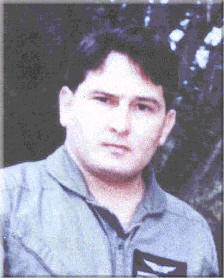
CW3 Donavan “Bull” Briley grew up in North Little Rock, Arkansas.He received the Distinguished Flying Cross for gallantry in action during combat operations in Mogadishu, Somalia on October 3, 1993 in operation Gothic Serpent. His actions as the pilot of an assault into a highly contested urban objective were heroic. After a brilliant assault of the objective, he held his position and fought to support the ground forces during their actions. His “Black Hawk” aircraft was subsequently downed by enemy fire and, through his exceptional skill, the passengers’ lives were saved. The movie Black Hawk Down (2001) directed by Ridley Scott shows his heroic actions.
Below I have the story of Joe Speaks who fought in Europe and was captured twice by the Germans. Photo by Associated Press American GI’s clamber into a landing craft as they prepare to hit the beaches along France’s Normandy coast in June 1944. The World War II operation was part of the massive Allied […]
Saving Private Ryan – Omaha Beach Part 1 – HD Saving Private Ryan – Omaha Beach Scene Part 2 – Super High Quality Saving Private Ryan – Omaha Beach Scene Part 3 – Super High Quality Saving Private Ryan opens with a 30-minute cinematic tour de force that is without a doubt one of the […]
Leon McDaniel’s picture Okinawa – At the Emperor’s Doorstep” episode from “WWII: GI Diary”….. This old 1978 TV docu-drama was narrated by Lloyd Bridges and told the stories of real soldiers/sailors/pilots and their first-hand experiences in battle. Archival footage and good background music really made the stories come alive…..about 25 episodes were made. Video converted […]
President Reagan and Senator Barry Goldwater present the fourth star to General Jimmy Doolittle during a White House ceremony in the Indian Treaty room, OEOB. 6/20/85. I love the movie “Pearl Harbor” with Ben Affleck and it tells the story of Jimmy Doolittle. He was born in 1896 and died in 1993. He is pictured […]
Lacewell, who went on to coach at Arkansas State, was in the audience Monday. Majors took the opportunity to needle him a bit.
“Larry Lacewell, Jimmy Johnson and Jackie Sherrill were on my first staff up there. Man, they had all the answers,” he said with a touch of sarcasm.
Majors went to Pitt in 1973, taking over a team that had won one game the previous season and eventually winning a national title. After a 16-year stay at Tennessee, he went back to coach the Panthers, trying to resurrect the program for a second time. But he went 11-32 in his second stint and retired at the end of the 1996 season.
Courtesy: Athletics Communications http://www.cyclones.com/
Johnny Majors – Hall of Fame Class of 1999
Johnny Majors, who was an All-American for Tennessee while finishing second to Paul Hornung in the balloting for the 1956 Heisman Trophy, was hired by Iowa State athletic director Clay Stapleton as ISU’s head coach in 1967.
Majors started 16 sophomores in his first season as head coach in 1968, winning three games to start his rebuilding efforts. Majors’ 1968 staff included football legends Jimmy Johnson and Jackie Sherrill.
The 1971 ISU football squad earned the first bowl berth in school history with an 8-4 mark. All of the Cyclones’ defeats came to ranked opponents, including No. 5 Colorado, No. 2 Oklahoma, and No. 1 Nebraska. ISU played Louisiana State in the Sun Bowl in El Paso, Texas, losing 33-15 to the No. 11 Tigers.
The following season, Majors’ squad returned to a bowl game. After being ranked throughout much of the season, Iowa State was invited to play in the Liberty Bowl. Georgia Tech defeated the Cyclones, 31-30. Following the Liberty Bowl, Majors announced he accepted the head coaching job at Pittsburgh, where he captured the 1976 national championship.
Rex Nelson, one of the weekly presenters of the Little Rock Touchdown Club program each week, rattled off a series of state college football scores that sounded more suitable for a basketball result. Around the country the past few years, it’s nothing to see 50 or more points put up by offenses in a game — sometimes by both teams. This isn’t your dad’s or grandad’s colllege football anymore, at least not on the defensive side.
Larry Lacewell, one of the preeminent defensive minds as a coordinator at Oklahoma during the Sooners’ 1970s heyday and at Tennessee during back-to-back Southeastern Conference title runs in the early 1990s, has noticed the difference from the way defenses are playing now to how it was when he was roaming the sidelines.
“It’s a combination of things,” Lacewell said. “I think maybe the passing game has evolved so well because these high school kids get this seven-on-seven, as I understand it, these camps in the summertime and throwing the football. Also, I don’t think any of these kids want to be cornerbacks anymore. I don’t. I think these 6-foot-2, -3 guys, they all want to be receivers. I’ve never seen so many tall good receivers and I think that has something to do with it.
“And I think that AAU basketball has taken over in your large cities so much that these kids that are in the sixth grade, seventh grade, that are 6-2, 6-3 that go on up to 6-4 and 6-5, they don’t play football. They play basketball. So I think you lose a group of people there.
“Having said all that, maybe they just don’t have great defensive coaches like I was.”
That’s Lacewell, ever the sardonic, ego-driven guy who draws a lot of laughs when he speaks. He can blend enough seriousness to keep you spellbound, then lay it on thick reminding you (almost) tongue in cheek that he was pretty good at what he did.
The former Fordyce Chigger junior high runt who reached the pinnacle of football as a player personnel director with the Dallas Cowboys during their 1990s Super Bowl runs entertained a large Embassy Suites ballroom crowd Monday at the Little Rock Touchdown Club. It was his first trip back in more than four years to speak with the club.
“I talked about Arkansas playing Arkansas State for 30 minutes the last time and y’all wouldn’t have me back,” he half-joked.
Remembering what an old Fordyce acquaintance said years ago, he said he wouldn’t go there again, at least not in depth. “Don’t step in a cow patty on a hot day.”
Lacewell’s appearance brought out some other fabled Arkansas-connected coaches of the past, including Forrest City’s Bill Shimek, who was an assistant coach and a top recruiter at both Okahoma and Oklahoma State. Bill Atkinson, a top Fordyce athlete of the past, was on hand. Lacewell went back and forth as to who really was the better star from Fordyce. “Bill was the high school valedictorian. I passed my classes.”
Lacewell went through his career, which is a pretty amazing one considering his roots. No one in his family had gone to college, his father had died when Lacewell was very young. Yet, at only about 5-foot-6, Lacewell became a pretty good Redbug and earned a spot at then Arkansas A&M in Monticello playing for Jimmy “Red” Parker. It set him off on a coaching career that took him to the top of both college and pro football.
Along the way, he worked for Bear Bryant, Chuck Fairbanks, Barry Switzer, Johnny Majors and Jerry Jones. He worked side-by-side with the likes of Switzer, Jimmy Johnson and Jackie Sherrill. He was a success as a head coach leading Arkansas State to its best run of success, during the 1980s, when the program was a Division I-AA team.
It’s been as though Lacewell was a college football version of Forrest Gump, only a heckuva lot keener. He was everywhere a championship program was being formed.
He made sure to show off his replica Super Bowl trophies, three of them, as well as his cluster of championship rings accumulated over the years. Many of those were obtained back-to-back, which like good defense these days is almost unheard of.
Arkansas’ defense hasn’t awakened for nearly a half in its last three games, all wins that the Hogs managed to pull out with second-half offense. Lacewell saw the Arkansas-Ole Miss game on Saturday in person in Oxford. He says he’s a big fan of Bobby Petrino and the Razorbacks, but he’s like the rest of us in trying to figure out why the Hogs’ defense starts so slowly.
“Well, it’s kinda strange performances,” Lacewell said in assessing the UA defense. “I don’t know what it is, but fortunately they play well in the second half of every game. I don’t know enough about what happens in that situation, but maybe they thought the game was at 1 o’clock. They play awfully well in the second half.”
Meanwhile, the soon-to-turn-75 Lacewell lives at Jonesboro and watches as the ASU program soars this year under first-year head coach Hugh Freeze. ASU is 5-2 and 3-0 in the Sun Belt Conference after a nationally televised 34-16 win over Florida International.
“It’s the best team that’s been up there in a long, long time,” he told a gathering of media after the luncheon. “They’ve got an awful good quarterback [Ryan Aplin]. When you’ve got a quarterback — anywhere and particularly at that level — you’re going to play pretty good. And I think [Dave] Wommack, he’s an experienced old defensive coordinator and he knows how to call ’em. And it’s obvious to me [Hugh] Freeze knows what he’s doing. He’s the offensive guru. They get in situations … they had a tight, tight ball game the other night and they turned that thing around in the second half. I think that’s coaching. I think there’s a whole lot of good coaching going up on there.”
Freeze has captured Lacewell’s attention along with the rest of Jonesboro and the ASU fan base.
“Whatever IT is, he’s got IT,” Lacewell said. “Somebody said he’s the best BS’er since me. He’s a movie star, he can talk. But he can flat coach. I like the way he handles his players, I like the way he’s handling the public. I think it’s a great, great hire for Arkansas State.”
Championships, Lacewell argues, will still come down to the “same ol’ things” in this age of prolific, explosive passing offenses — and that’s good defense, the kind his Oklahoma Sooners played in winning the 1974-75 titles.
“I do know Alabama and LSU are sitting on top and they are two great defensive teams,” Lacewell said. “The great thing about defense is, if you’re great on defense you don’t hardly have a bad day. You can catch a windy day throwing the ball, a wet ball, but the great defensive teams, they’re going to survive those things.”
Award-winning columnist Jim Harris wasn’t around when Hugo Bezdek named the Razorbacks, it only seems that way. His acumen for UA football history is renowned and he has covered the Hogs and the state sports scene since 1976. He knows his way around music and food, too. Email: jharris@abpg.com, and follow Jim on Twitter @jimharris360
The words “bipartisan” and “commission” usually send a chill down my spine. I felt such a chill when I learned that the Bipartisan Policy Center (BPC) had formed a Housing Commission to “address the long-term challenges facing a struggling housing sector.” My initial reaction was confirmed when I read that it would be chaired by former government officials and politicians of the establishment type:
Christopher “Kit” Bond – former U.S. senator (R-MO)
Henry Cisneros – Housing and Urban Development (HUD) secretary under President Bill Clinton
Mel Martinez – former U.S. senator (R-FL) and HUD secretary under President George W. Bush
George Mitchell – former Senate majority leader (D-ME) and BPC co-founder
The most disturbing name is Henry Cisneros. Policies implemented by Cisneros’s HUD helped lead to the housing bubble and bust (see this section on Cisneros from a Cato essay on HUD Scandals). What’s next, Dick Cheney on a hunting safety commission?
Christopher “Kit” Bond, former appropriator and proud porker, hangs himself with his statement on the BPC’s website:
Since serving as Missouri’s Governor, and then as a United States Senator, I have worked to be an advocate for improving public housing and advancing community development. Some of my proudest achievements are helping shape housing policy and programs in homelessness, rural housing, public housing, HOPE VI, and affordable housing. None of these successes would have been possible without strong partners on the other side of the aisle.
In fact, my fellow Commission Co-Chair, and former HUD Secretary, Henry Cisneros and I, were referred to in a 1996 Wall Street Journal article as the ‘Odd Couple’ of federal housing policy – a moniker I still wear as a badge of honor. Though it was a different time in our nation’s history, Henry and I were then – as we are now – committed to coming together to address long-ignored problems with immense implications.
The federal government’s abysmal record on housing (see these Cato essays here for more) is a poster child for government failure. But not only does Bond consider his support for these programs to be among his “proudest” achievements, he actually states that collaborating with Cisneros back in the 1990s is a “badge of honor.”
I’m not sure what Mel Martinez has going for him on housing policy other than that his relatively short tenure as HUD secretary under Bush wasn’t marred by scandal like his successor’s, Alphonso Jackson. At least Martinez acknowledges that the Bush administration continued the Clinton administration’s misplaced emphasis on expanding homeownership.
As for George Mitchell, his claim to federal housing policy fame is that he authored the creation of the Low-Income Housing Tax Credit. Here’s what a Cato essay on public housing has to say about the LIHTC:
Another response to the failure of traditional public housing has been the creation of the Low Income Housing Tax Credit in 1986, which currently subsidizes construction or rehabilitation of roughly 70,000 units of low-income housing each year. This is another failed attempt to manipulate markets, and it has a variety of negative effects. For one thing, the structure of the tax credit program encourages the location of projects in particularly low-income areas, thus exacerbating the concentration of poverty in cities, just as traditional public housing did. Also, the method of allocating tax credits to the states results in many subsidies going to areas of the country where few housing affordability problems exist.
Further, the projects built under the LIHTC program have income caps for tenants, which create the same disincentive effects for personal advancement that traditional welfare programs do. Finally, the program essentially functions as a subsidy program for developers. Economists Edward Glaeser and Joseph Gyourko argue that developers effectively pocket the $4 billion or so in annual federal tax credits, while the rents in buildings constructed under the program are generally no lower than they would have been in the absence of the program.
In a nutshell: an establishment commission is planning to “reform the nation’s housing policy by crafting a package of realistic and actionable policy recommendations” for the Beltway establishment’s consideration. Hold onto your wallets, taxpayers.
This year, several events led up to the annual Battle of the Ravine, including a pep rally and Henderson Halloween in downtown Arkadelphia, a “bash” at the Barkman House, and the traditional tailgating. And, of course, the Reddies won the “Battle” with a 35-26 win over OBU!
______________________________
Rex Nelson talks about last year’s battle of the ravine.
I wrote last week about the 84th Battle of the Ravine in Arkadelphia. The game itself wasn’t as close as some past games had been as Henderson defeated Ouachita by a final score of 35-26.
But the weather was perfect, and both teams had talent as a crowd of almost 10,000 people looked on.
Something struck me as I spent the day at Henderson’s Carpenter-Haygood Stadium: From an economic and community development standpoint, Arkadelphia is finally getting its act together. A look at the election maps from Tuesday, unfortunately, shows that Clark County remains stuck in a one-party mentality that has stunted fresh thinking there for far too long. But that too will change at some point.
As noted in last week’s post, the football series between Ouachita and Henderson was halted from 1951 until 1963 due to excessive vandalism. Prior to that 1951 suspension, however, an energetic chapter of Arkadelphia Jaycees worked during the late 1940s to transform the Battle of the Ravine into a weeklong series of activities that people across the state and region would want to attend. Arkadelphia was perhaps the most progressive city in the southern half of the state back then.
As part of the economic and community development work I did during my 13 years in government, I constantly preached that communities must identify what makes them different and then build on those assets. Arkadelphia, for example, is different from other towns in the southern half of Arkansas because it’s the home of two four-year universities. That’s what sets it apart from Malvern, Camden, Magnolia, Monticello and all the rest.
And it already has this unique annual event — the one college football game in the country in which the visiting team actually walks to a road game since U.S. Highway 67 is all that separates the two stadiums.
After ending the spring Festival of Two Rivers a few years back, business and civic leaders in Arkadelphia struggled to come up with something new. As is so often the case in communities, the answer was right in front of them. The Battle of the Ravine is unique. They should build events around it, just as the Jaycees had done back in the 1940s, and then promote the festival statewide. I preached on that subject in appearances before the Arkadelphia Football Club and Leadership Clark County.
Fortunately, there’s a new generation of leaders now stepping forward in a city that has been stagnant from a population growth standpoint for decades. Those young leaders seized on the idea. Led by people such as Blake Bell of Edward Jones, they created a festival known as the Rally on the Ravine and came up with complementary events such as a golf tournament, a community pep rally and a road race.
Spurred by Bell and other graduates of Leadership Clark County, the group behind the Rally on the Ravine obtained sponsorship money from a variety of sources. Southern Bancorp was the title sponsor. The next two largest sponsors were the Ross Foundation and the Arnold Batson Turner & Turner law firm.
In the next tier of sponsors were Leadership Clark County, the Dawson Educational Cooperative, the Arkadelphia School District, the city of Arkadelphia, Summit Bank, Edward Jones, Vision Source, Treadway Electric, state Rep. Johnnie Roebuck, Print Mania, Minks Inc. Design and the two universities.
It was an unqualified success and no doubt will grow in future years. These young leaders should shoot for the stars. Occasionally, ESPN will take its “College GameDay” program to a small college. For years, Henderson sports information director Troy Mitchell has been working to get ESPN interested in the Battle of the Ravine. The cable network has yet to bite, missing an opportunity to show viewers across the country what small college football is really all about. Attracting ESPN to Arkadelphia could be one of the goals of the leadership group.
In a state that’s painted Razorback red this time each year, the football rivalry between Henderson and Ouachita has never received the attention it deserves. In fact, it sometimes get more attention outside the state than inside Arkansas.
A recent feature article in Touchdown Illustrated, a publication distributed during football games at colleges and universities across the country, began this way: “There is a small town in southern Arkansas where two rivers meet, with a highly traveled scenic highway and two institutions of higher learning within a stone’s throw of one another. This town is Arkadelphia, Ark., and one day each year it plays host to the most unique sports event in intercollegiate athletics.”
You read that correctly. A national publication called the Battle of the Ravine “the most unique sports event” in all of college sports.
Having started in 1895, it’s one of the oldest rivalries in the country. Harvard has been playing Yale since 1875 in what’s known simply as The Game. Amherst has been playing Williams since 1884 in what’s known as the Biggest Little Game in America. Army has been playing Navy since 1890. Alabama has been playing Auburn in the Iron Bowl since 1893.
But the Battle of the Ravine is older than rivalries such as Clemson vs. South Carolina, Ohio State vs. Michigan and Oklahoma vs. Texas. And you can’t get more evenly matched. Following Henderson’s victory last Satuday, the series is even at 39-39-6.
Ouachita athletic director David Sharp put it this way in the Touchdown Illustrated story: “There is not a more unique setting for a game. This is the only place where you can literally take a driver and a 3-wood and hit from one school’s stadium to the other.”
The story also reported on the pranks that are so much a part of this crosstown rivalry: “Along with the game are the shenanigans that lead up to that day. There are always pranks and practical jokes in which students from both schools participate. The pranks intensify during game week. Those involved in these pranks include members of both institutions’ current faculty, vice presidents and government officials. Even former Arkansas Gov. Mike Huckabee was involved in lighting Henderson’s homecoming bonfire a day earlier than scheduled.
“Other pranks include HSU sorority and fraternity members painting marshmallows in the school’s red and gray and having a crop-duster drop them on OBU’s side of the street; diesel fuel used to burn OBU into the grass on Henderson’s main campus; and Henderson students painting the Tiger statue. Ouachita students would sabotage the Henderson fountain, which is a focal point of the Henderson campus. … Students have been known to put purple dye or fizzies in the fountain.
“During game week, numerous monuments and memorials on both campuses are heavily covered in plastic to prevent them from being painted, as well as each school’s football stadium lights remain on throughout the evening. … The game won’t draw 100,000 fans, but rather 10,000, and each and every one will come away knowing they have been part of one of the most storied events in all of college football.”
To borrow the cliche, you simply can’t buy national attention that good.
Enrollment is up at both Henderson and Ouachita this summer. There seems to be a renewed spirit in the town. The Battle of the Ravine is simply one piece in a very large community development puzzle, but the crop of young leaders must build on the successes of last week as they work to help an Arkansas city finally achieve its potential.
Dear Senator Pryor, why not pass the Balanced Budget Amendment? (Part 15 Thirsty Thursday, Open letter to Senator Pryor)
Dear Senator Pryor,
Why not pass the Balanced Budget Amendment? As you know that federal deficit is at all time high (1.6 trillion deficit with revenues of 2.2 trillion and spending at 3.8 trillion).
On my blog www.HaltingArkansasLiberalswithTruth.com I took you at your word and sent you over 100 emails with specific spending cut ideas. However, I did not see any of them in the recent debt deal that Congress adopted. Now I am trying another approach. Every week from now on I will send you an email explaining different reasons why we need the Balanced Budget Amendment. It will appear on my blog on “Thirsty Thursday” because the government is always thirsty for more money to spend.
WASHINGTON, D.C. – Representative Dan Burton (R-IN-05) issued the following statement after the House of Representatives’ approved the deficit reduction deal negotiated with President Obama and Senate Democrats:
“Our nation has never defaulted in its history and we must take action to continue to meet our financial obligations. However, in good conscience I could not support the deficit reduction package worked out this past weekend. I have said repeatedly that Washington does not have a revenue problem, it has a spending problem and this bill does nothing to change the spending culture ingrained in Washington.
“First, A Balanced Budget Amendment is the ONLY way to finally force Washington to live within its means. However, unlike the Cut, Cap and Balance Act or the Boehner proposal passed by the House of Representatives, the deficit reduction deal does not require a Balanced Budget Amendment be sent to the States for ratification before the President is granted a debt ceiling increase; it merely requires a vote on a Balanced Budget Amendment. Passing a Balanced Budget Amendment requires a 2/3rds vote in the House and Senate and a majority of Democrats have already expressed opposition to a Balanced Budget Amendment, so obtaining the necessary votes without significant leverage – such as the threat of default – is highly unlikely;
“Second, the deficit reduction deal does not prevent future tax increases or reduce the size of government. In fact, the deficit reduction deal assumes that all the Bush tax cuts expire in December 2012. In other words the additional revenue is already built into the bill which would make it difficult if not impossible to meet the deficit reduction targets AND extend the Bush tax cuts beyond 2012. In addition, the suggestion that it is impossible for the Joint Committee to raise additional tax revenue simply is not accurate, it’s false;
“Third, the automatic spending cuts placed in the deal to force Congress to maintain fiscal discipline are unrealistic and unworkable. Half of the proposed automatic cuts would come from defense programs which will undermine our ability to project power, strengthen our adversaries, and weaken our alliances. Additional automatic cuts will come from Medicare providers; already underpaid by Medicare. Historically Congress has rolled back any proposed cuts to Medicare providers and there is no reason to believe Congress won’t do so again. It is also unrealistic to believe Congress will allow substantial cuts to defense spending while our troops are engaged in three wars (Iraq, Afghanistan, and Libya);
“Finally, the deficit reduction deal may be unconstitutional. The deficit reduction deal allows the President to unilaterally raise the debt ceiling subject to a resolution of disapproval by the Congress (which the President can veto). The debt limit is a statutory requirement and must therefore be changed by law. ONLY Congress has the power to make law not the President; and Congress cannot, and most importantly should not, surrender this power to the president.
“The American people want a solution to this crisis, not a deal that allows Washington to kick the can down the road once again. Regrettably, the deficit reduction deal is not that solution.”
I got to see Tennessee play at Alabama on tv and the score was 6-0 at the half. The funny thing is that Arkansas also had success in the first half against Alabama. However, the depth started to show in the 2nd half and Bama went on to win both games easily.
John Adams: Arkansas’ offense more fun to watch than defend
By John Adams
Monday, November 7, 2011
Tennessee has played No. 1 LSU and No. 3 Alabama. It has played three other teams currently ranked in the top 25.
But it hasn’t played an offense more capable of exposing its defensive shortcomings than Arkansas.
Even in a 4-5 start, UT’s defense has surpassed preseason expectations. Only three of its nine opponents have exceeded their scoring average at UT’s expense; in the last two games, it has given up just 14 points.
You will have a better idea of its defensive progress Saturday evening in Fayetteville.
Arkansas leads the SEC in points, yardage and first downs. It has the conference’s No. 1 passer in Tyler Wilson and two of its four most productive receivers in Jarius Wright and Joe Adams.
“Statistically speaking, they’re the best throwing team in the league,” UT coach Derek Dooley said at Monday’s media luncheon. “They have a quarterback who has a real playmaking mentality, a little bit like Tyler (Bray) has, and they have a lot of speed.
“It’s not just that they run fast. They play fast.
“And they play with a lot of swagger. Every time a team inches close to them, they answer the bell.”
Their success stems from more than speed. It’s also a testament to the strategical skills of coach Bobby Petrino, who has assembled the SEC’s most productive offense despite losing All-SEC running back Knile Davis to a season-ending injury in preseason.
“Every game, he comes up with a play that’s like an automatic touchdown,” Arkansas wide receiver Jarius Wright said this summer at the SEC Football Media Days. “That gives us a world of confidence.”
As Dooley said, you can see it in their play. The Razorbacks play as though they expect to score — a lot.
They have done that consistently since the end of Petrino’s first season when his team had all sorts of offensive limitations, especially at quarterback. It didn’t score more than
28 points in any of its first nine games and managed just 31 in one three-game stretch.
By the end of a losing season, when the Hogs upset LSU 31-30, you could see the transformation.
The Razorbacks have scored 30 or more points in 27 of their last 36 games despite playing in the best defensive conference in the country.
One of UT’s biggest challenges will be pressuring Wilson. Arkansas’ inability to slow Alabama’s pass rush figured prominently in its only defeat. But at no point in the season has the Vols’ pass rush been confused with Alabama’s.
Another challenge will be avoiding big plays against a versatile passing attack that spreads the ball around to wide receivers, tight ends and running backs. Sure tackling will be crucial against receivers capable of turning a short pass into a big gain.
Nor can UT ignore the running game, which struggled earlier without Davis but has progressed recently behind Dennis Johnson. He had 86 yards on 15 carries against South Carolina last week after gaining 160 on Ole Miss two weeks earlier.
“Bobby has always done a good job of running the ball,” Dooley. “They’re the other pro-style team in our league, so we enjoying watching them.”
President Obama and other politicians are advocating higher taxes, with a particular emphasis on class-warfare taxes targeting the so-called rich. This Center for Freedom and Prosperity Foundation video explains why fiscal policy based on hate and envy is fundamentally misguided. For more information please visit our web page: www.freedomandprosperity.org.
So just who are those top 1 percent of Americans that we’re all supposed to hate?
If you listen to President Obama, the protesters at Occupy Wall Street, and much of the media, it’s obvious. They’re either “trust-fund babies” who inherited their money, or greedy bankers and hedge-fund managers. Certainly, they haven’t worked especially hard for their money. While the recession has thrown millions of Americans out of work, they’ve been getting even richer. Worse, they don’t even pay their fair share in taxes: Millionaires and billionaires are paying a lower tax rate than their secretaries.
In reality, each of these stereotypes is wrong.
By and large, the wealthy have worked hard for their money.
Roughly 80 percent of millionaires in America are the first generation of their family to be rich. They didn’t inherit their wealth; they earned it. How? According to a recent survey of the top 1 percent of American earners, slightly less than 14 percent were involved in banking or finance.
Roughly a third were entrepreneurs or managers of nonfinancial businesses. Nearly 16 percent were doctors or other medical professionals.
Lawyers made up slightly more than 8 percent, and engineers, scientists and computer professionals another 6.6 percent.
Sports and entertainment figures — the folks flying in on their private jets to express solidarity with Occupy Wall Street — composed almost 2 percent.
By and large, the wealthy have worked hard for their money. NYU sociologist Dalton Conley says that “higher-income folks work more hours than lower-wage earners do.”
Because so much of their income is tied up in investments, the recession has hit the rich especially hard. Much attention has been paid recently to a Congressional Budget Office study that showed incomes for the top 1 percent rose far faster from 1980 until 2007 than for the rest of us. But the nonpartisan Tax Foundation has found that since 2007, there has been a 39 percent decline in the number of American millionaires.
Among the “super-rich,” the decline has been even sharper: The number of Americans earning more than $10 million a year has fallen by 55 percent. In fact, while in 2008 the top 1 percent earned 20 percent of all income here, that figure has declined to just 16 percent. Inequality in America is declining.
As for not paying their fair share, the top 1 percent pay 36.7 percent of all federal income taxes. Because, as noted above, they earn just 16 percent of all income, that certainly seems likemore than a fair share.
Maybe Warren Buffett is paying a lower tax rate than his secretary, as he claims. But the comparison is misleading because Buffett’s income comes mostly from capital gains, which were already taxed at their origin through the corporate-income tax.
Moreover, the Buffetts of the world are clearly an exception. Overall, the rich pay an effective tax rate (after all deductions and exemptions) of roughly 24 percent. For all taxpayers as a group, the average effective tax rate is about 11 percent.
Beyond taxes, the rich also pay in terms of private charity. Households with more than $1 million in income donated more than $150 billion to charity last year, roughly half of all US charitable donations. Greedy? It hardly seems so.
And let us not forget the fact that the rich provide the investment capital that funds ventures, creates jobs and spurs innovation. The money that the rich save and invest is the money that companies use to start or expand businesses, buy machinery and other physical capital and hire workers.
It has become fashionable to ridicule the idea of the rich as “job creators,” but if the rich don’t create jobs, who will? How many workers have been hired recently by the poor?
No doubt dishonest or unscrupulous businessmen have gotten rich by taking advantage of others. And few of us are likely to lose much sleep over the plight of the rich.
But shouldn’t public policy be based on something more than class warfare, envy and stereotypes?
THE TENNESSEE CONNECTION: Johnny Majors, who led Pittsburgh to the 1976 national championship and directed his alma mater, Tennessee, to SEC championships in 1985, 1989 and 1990, returned to the Little Rock Touchdown Club on Monday.
Majors was enjoying the plight of his successor, Phil Fulmer, in 2008 when he last visited and Fulmer was headed out the door in Knoxville. Majors made it no secret that Fulmer had back-stabbed the former Volunteer great as a player and coach to get the head coaching job during the 1992 season.
When Arkansas and Tennessee meet Saturday, it will mark the first meeting since 2007. Both schools started as permanent opponents in 1992, following the SEC’s first expansion with the addition of the Razorbacks and South Carolina. Following the 2002 season, the SEC moved away from two cross-division rivals and the annual Arkansas-Tennessee game went away until UT reappeared on the Arkansas schedule in 2006.
Former Arkansas Athletic Director Frank Broyles was all for Tennessee as the Hogs’ regular SEC East rival, not only because of the state’s proximity to eastern Arkansas, but because the two football programs shared a deep bond.
Below is a picture of Lane Kiffin with Johnny Majors.
To me, Johnny Majors is and always will be a Tennesseeman.
He was born in Tennessee, played at Tennessee and was a pretty darn good coach at Tennessee.
It’s unfortunate that Majors feels the way he does about the university. But almost a decade after he left Tennessee with hard feelings, he still harbors an obvious hurt and anger towards some folks in Knoxville.
Majors feels a lack of loyalty by some members of his staff and non-support from Athletic Director Doug Dickey and then-President Joe Johnson led to his departure at the university in 1992. It was the year that he had heart surgery, and Phillip Fulmer took over the team while he was laid up. Majors eventually came back to coach later in the season, but it would be his last in Knoxville.
Majors was a visitor in Greeneville on Saturday. He came to speak at the Boys & Girls Club’s Champions Dinner that night, but he spent much of the day touring the city with Kathy Knight, who was chairman of the dinner. In addition to her many other civic duties, Kathy is the Accent Editor at The Greeneville Sun.
I met Majors in the lobby of the General Morgan Inn Saturday afternoon, and he chatted freely with me for about an hour, almost making him late for the reception scheduled at Link Hills prior to the dinner. I covered the Vols while Majors was coach. Although I didn’t necessarily agree with all his calls and decisions as coach, I did like him because he was Big Orange through and through.
We talked about lots of things. I didn’t press him about his leaving Tennessee because I knew that was still a sore spot with him. He did volunteer some comments, though, that left no doubt that he still harbors some ill feelings.
Majors was raised in the small town of Lynchburg, and his dad, Shirley Majors, was a football coach, first at the high school level and then for over 20 years at the University of the South.
A history buff, Majors seldom travels anywhere now without asking to see all the sights of that particular area. He was impressed with Greeneville. He didn’t know much about our town before, except that one of his teammates in 1953 was a big guy named Charlie Rader from Greeneville, a man he described as “extremely intelligent and an excellent football player.”
Majors retired from coaching in 1996 and since that time has served as a special assistant to the chancellor of the University of Pittsburgh. He said much of his duties involve fund-raising and speeches. He also plays golf “every chance I get.”
His first year out of football left him “sort of lost,” Majors said.
“My dad began coaching football in 1943, and from 1943 until 1996 I had been around football,” he said. “That’s 53 years. Naturally I missed it. I missed being around the players and the coaches and every thing.”
Majors said he still watches a lot of football on television, but he doesn’t miss coaching as much as he used to.
He said he always thought recruiting was a challenge, “and I even enjoyed that up to
a point.” He was obviously a good recruiter, as his record shows. He turned a downtrodden Iowa State program into a winner in his first head coaching job, then was summoned to revive a Pittsburgh program that was struggling. All he did there was win a national championship with Tony Dorsett.
“You never know how good the player will become when you recruit him, but everybody thought Dorsett would be great, and he was,” Majors said.
He said Reggie White, the defensive lineman who he recruited from Chattanooga to play at UT and who went on to become a great player with the Philadelphia Eagles and Green Bay Packers, was cut out of the same cloth.
When Tennessee began looking for a coach to replace Bill Battle in 1977, Majors seemed almost a natural. A former All-American tailback, he was greeted with open arms by the faithful back home. Tennessee was struggling at the time just as Iowa State and Pitt had been in his ventures there, but he quickly got things going in the right direction at UT and won Southeastern Conference titles in 1985, 1989 and 1990.
But he left Tennessee in anger, and has been back on campus only one time since. He did come to the reunion of the Sugar Bowl champs of 1990 last season. The team and coaches were introduced at halftime of a football game and were met with a rousing roar of approval.
“I did that for the players,” he said. “But the people in Knoxville were very nice to me.”
“I left UT with a winning program,” he said, with a touch of bitterness in his voice. “I never had the luxury of taking over as a coach and having it laid out on a silver platter.”
Majors recalled a lot of ball games, both as a player and a coach. He likes to talk about quick kicks, something that’s almost a lost art in college football nowadays.
He recalled a quick kick against Georgia Tech that he booted for 69 yards. As a coach, two of his fondest memories involved quick kicks.
“One came in 1983 against Alabama in Birmingham,” he recalled. “We had it third down and 24 from our 25, and we got out of trouble with a quick kick and went on to win the game. Another was during a wind storm in Nashville against Vanderbilt. We had it second down with the wind at our back and we sneaked the punter in before the quarter changed and we’d lose the wind advantage. Colquitt kicked it and it rolled 81 yards to the 2 yard line.”
The four wins over Alabama rank high on the list of Majors’ accomplishments at Tennessee, including the last year that Bear Bryant was in charge of the Crimson Tide.
The win over highly-favored Miami in the 1990 Sugar Bowl was also a highlight that he fondly recalls, as well as the 1991 Notre Dame game in South Bend when the Vols staged the biggest comeback in school history, trailing 31-7 before coming back to win.
He still keeps track of many of his former players. Two weeks ago, there was a reunion of the 1976 national champion Pittsburgh team and he said several of those players spent time at his home with him and wife Marylynne. There has also been a recent reunion at Iowa State for the 30th anniversary of the Sun Bowl team that Majors coached in 1971.
He also keeps track of many of his former assistant coaches. Walt Harris, an offensive coordinator for six years under Majors at Tennessee, is the head coach at Pitt “He’s done a fine job over the years,” Major said. “He was also one of the most loyal coaches I had at Tennessee.”Loyalty was a word that he used often, both in the interview with me and later in the evening during his speech at the banquet, attended by some 200 people. He still feels that he was betrayed by some of his own assistant coaches while he was in Knoxville.
I think he was surprised at the number of people who asked him for his autograph while at the Saturday night dinner. Whether you liked him as a coach or not, he is obviously a coaching legend, and to have him in our midst for a day and evening was nice. He did an excellent job as speaker, and the Boys & Girls Club was the big winner, taking in some $25,000 in the fund-raiser. I hope someday Johnny Majors will bury some of the bitterness that he holds toward theUniversity ofTennessee. There are two sides to every story, and I’m sure the university people have a different story to tell than does Johnny. But the hurt he felt when he left the university squeezed most of the orange blood out of his veins. I hope there’s still some orange blood there. Because to me, and apparently a lot of other people that I’ve talked to over the years, Johnny Majors will always be aTennessee man.



 The Daily Hatch