Francis Schaeffer in his book HE IS THERE AND HE IS NOT SILENT (Chapter 4) asserts:
Because men have lost the objective basis for certainty of knowledge in the areas in which they are working, more and more we are going to find them manipulating science according to their own sociological or political desires rather than standing upon concrete objectivity. We are going to find increasingly what I would call sociological science, where men manipulate the scientific facts. Carl Sagan (1934-1996), professor of astronomy and space science at Cornell University, demonstrates that the concept of a manipulated science is not far-fetched. He mixes science and science fiction constantly. He is a true follower of Edgar Rice Burroughs (1875-1950). The media gives him much TV prime time and much space in the press and magazine coverage, and the United State Government spent millions of dollars in the special equipment which was included in the equipment of the Mars probe–at his instigation, to give support to his obsessive certainty that life would be found on Mars, or that even large-sized life would be found there. With Carl Sagan the line concerning objective science is blurred, and the media spreads his mixture of science and science fiction out to the public as exciting fact.
Schaeffer with his wife Edith in Switzerland.
This mixing of science and science fiction had a purpose behind it. James Hubner enlightens us. James Hubner in his book LIGHT UP THE DARKNESS (pages 18-19) wrote:
Carl Sagan said this about extraterrestrial creatures, “When we know who they are, we will know who we are.” That is a remarkable statement, a remarkable religious statement. Why is it significant to know our identity? Why do humans desire to know who they are? …By asking these questions, Sagan exposed his own image-bearing soul while being completely unaware of it.
German Street United Baptist Church
Saint John, New Brunswick
Canada E2L 3W2
From PSCF 45 (March 1993): 18-25
The writings and television appearances of Carl Sagan have done much to popularize the scientific enterprise and to fire the popular imagination. A careful examination, however, shows that Sagan is highly critical of religious frames of reference, especially the Christian one. This article sets forth Sagan’s major criticisms and maintains that he is operating from a clear world view, which itself verges on being a religion. A critique of the major points of that world view and a response to the criticisms which Sagan levels towards Christianity are also provided.
Carl Sagan’s widespread popularity, which began with the television series Cosmos and the book by the same title, should of itself provide sufficient justification for a serious consideration of the personable Cornell professor’s views, which have captured the imaginations of millions. But if additional reasons for such a consideration are needed, one can cite such factors as the continuing popularity of Dr. Sagan’s writings and his very considerable influence in shaping the views of many in the English-speaking Western world, not only through the medium of the printed word, but also by means of his frequent television appearances, in productions ranging from newsprograms to late-night American talk shows. In addition, one would hope that the benefit of historical perspective should attend any consideration of Sagan’s views today, seeing that Cosmos (both text and television series) and the acclaim and controversy they created are almost a decade old.
It is widely conceded that Sagan’s magnum opus, Cosmos, is critical toward religious frames of reference, especially the Christian one, and this perception is easily confirmed by a cursory reading of the Cosmos text.
In this paper a wide-ranging review and critique of Sagan’s writings will be undertaken. I intend to elucidate Sagan’s major criticisms of religion in general and Christianity in particular; to determine the major components of the Weltanschauung which stands behind Sagan’s criticisms; and to provide a brief running commentary on, or critique of, each of the components of that world view.
This paper will limit itself to four volumes published by Dr. Sagan: Cosmos,1 undoubtedly Sagan’s best known work; his popular novel Contact;2 his Pulitzer Prize-winning work The Dragons of Eden: Speculations on the Evolution of Human Intelligence3Broca’s Brain: Reflections on The Romance of Science.4 In addition, we will consider two particularly enlightening interviews with Sagan. The first interview was published in U.S. News & World Report5 in December 1980, the second in the U.S. Catholic6 a few months later.
Let us begin with a systematic examination of Sagan’s major criticisms of religious frames of reference. These criticisms seem to divide into four parts.
“Religion is Anti-Intellectual”
The first of these criticisms is that Dr. Sagan believes that religion (at least in its institutional Christian form) is anti-intellectual. It does not make use of the cerebral matter, believing things instead on the basis of tradition, authority and the like. Sagan writes: “The suppression of uncomfortable ideas may be common in religion…but it is not the path to knowledge; it has no place in the endeavor of science.”7
This viewpoint becomes, if anything, much more pronounced in Sagan’s novel Contact. The protagonist, Ellie, clearly mouths Sagan’s own notions about religion. She says:
Around Santa Fe, the faintest glimmerings of dawn might be seen above the Sangre de Cristo Mountains. (Why should a religion, she asked herself, name its places after the blood and body, heart and pancreas of its most revered figure? And why not the brain among other prominent but uncommemorated organs?)8
Later, Ellie says:
Anything you don’t understand, Mr. Rankin, you attribute to God. God for you is where you sweep away all the mysteries of the world, all the challenges to your intelligence. You simply turn your mind off and say God did it.9
In his comments in the U.S. News & World Report interview, Sagan posited that in – the traditional approach of religion…many assertions are never challenged.”10
Richard A. Baer, Jr., adequately summarizes Sagan’s position in this way. “Science gives us reliable knowledge, [Sagan] suggests, whereas religion is connected with…narrowness of mind, and bigotry.”11
In response to Professor Sagan, one must admit that some Christians have sometimes adopted anti-intellectualist, obscurantist stances. This attitude is still dominant within some forms of Protestant fundamentalism.
But Sagan overplays his hand. Historically, there have been many instances of Christians who were not by any stretch of the imagination anti-intellectualist! Was it not the Christian church which preserved and protected the remains of the ancient world’s best writings, established and nurtured some of the greatest universities in Europe and North America, and had among its adherents a number of the giants in the development of modern science?
Additionally, Sagan fails to take any notice whatsoever of the fact that the New Testament records give scant support to obscurantism. The apostle Paul held public debates about his new faith.12Jesus demanded the active employment of the mind!13 Surely it would have been reasonable for Sagan to note that obscurantism is a deviation from the intentions of primitive Christianity and its founder.
“Religion Opposes Scientific Advancement”
Sagan’s second major point of conflict with religion is the accusation that religion, especially in its institutional Christian expression, has tended to oppose the advance of scientific knowledge even to the point of persecuting scientists. Cosmos is replete with numerous examples and comments intended to prove this. With reference to Copernicus, Sagan writes:
Nicolaus Copernicus’ proposition that the sun, not the earth, was at the center of the universe upset many people including the Catholic Church, which put his work on the index, and Martin Luther, who called Copernicus “an upstart astrologer…this fool14
Of Giordano Bruno, Sagan notes:
Giordano Bruno, a sixteenth century Roman Catholic scholar who held that there are an infinity of worlds and that many are inhabited, was burned at the stake in 1600 for his views.15
Sagan again simplifies history to the point of distortion and omits key points.
And, with an almost malicious glee, Sagan comments on Kepler:
He (Kepler) lived in a time when the human spirit was fettered and the mind chained; when the ecclesiastical pronouncements of a millennium or two earlier on scientific matters were considered more reliable than contemporary findings made with techniques unavailable to the ancients.16
Once again, Sagan is partly correct, but only partially. There is no question that Christians and the institutional church have sometimes acted in irrational ways toward scientists and their studies. Sagan’s examples are certainly not the only ones which could be brought forward as instances of opposition to scientific progress, persecution of scientists, or legal pressures to insure conformity. Some great scientists only avoided becoming additional examples for Sagan’s list by hiding their views from public scrutiny. Isaac Newton, for instance, had to conceal his rejection of Trinitarian teaching to keep his university post.
As Bernard Ramm notes,
Some theologians are unsympathetic with, or suspicious of, science, and fail to understand it and while being censorious of the scientist who makes amateurish remarks about theology, they themselves fail to learn a little science before they speak of the scientific issues. They view science as the work of scheming atheists, iconoclasts, or plotting infidels.17
In his discussion of this subject Sagan again simplifies history to the point of distortion and omits key points. As Dr. Clark Pinnock of McMaster University remarks:
Without wishing to deny that institutional religion has often times opposed new ideas in science in the fear that they might upset theological convictions, I think it only fair to state somewhere in the course of a long book that modern science was born on Christian soil and in connection with a Christian understanding of the world. 18
William J. O’Malley notes: “…he (Sagan) makes the scientific community sound universally and immediately tolerant…19 Furthermore, O’Malley notes that Sagan fails to mention that some prominent scientists like Gregor Mendel and Copernicus were clerics!20 Sagan’s treatment of the matter gives the historically inadequate impression that there has been a virtually unanimous opposition by Christians to scientists and their researches, the former being the clear villains, the latter the clear heros in the piece.
“Religion is Provincial”
Sagan’s third criticism is summarized by his comment:
Fanatical…religious…chauvinisms are a little difficult to maintain when we see our planet as a fragile blue crescent fading to become an inconspicuous point of light against the bastion and citadel of the stars.21
In Contact, a similar strain of thought is found.
It is hard to imagine…extraterrestrials taking seriously a plea for preferential parley from representatives of one or another ideological faction.22
What does the size of the universe and earth’s physical smallness in that universe have to do with the importance, significance, truth or falseness of views held by humans? Would a universe half or a quarter the size it is make the views held by humans more or less significant? If a view held by any given group is shown to be correct, then the size of the universe has nothing to do with the matter.
“Religion Has Suspect Origins”
Sagan’s fourth criticism may be termed his “theory of the origin of religion.” The theory bears remarkable likeness to the views expressed by Freud in his The Future of An Illusion.
In Cosmos Sagan writes:
The idea that every organism was meticulously constructed by a Great Designer provided a significance and order to nature, and an importance to human beings that we crave still. A Designer is a natural, appealing…explanation of the biological world. [Italics added.]23
In Contact, this line of thought continues, as illustrated by this conversation between Ellie and the clergyman, Palmer:
Don’t you ever feel…lost in your universe….?
You’re not worried about being lost, Palmer. You’re worried about not being central, not the reason the universe was created…
Your religion assumes that people are children and need a bogeyman so they’ll behave. You want people to believe in God so they’ll obey the law.24
Religion originates, in Sagan’s view, from a combination of wish fulfillment and attempted societal control.
“Your religion assumes that people are children
and need a bogeyman so they’ll behave. You want people to believe
in God so they’ll obey the law.”
There is no doubt that for some persons the notion of a god is wish fulfillment. One does sometimes hear Christians comment that God must exist, for if he did not, how could sense be made of life? And by such a comment is intended as nothing more or less than a wish. It is not hard to see how such a wish could be in some cases transformed into a virtual proof of God’s existence. And there can also be little doubt that there are historical examples of institutional religion being used as an oppressive means of societal control. For examples, consider 17th century Anglicanism, the Roman Catholic Church in Quebec from 1760 until the “Quiet Revolution” of the 1960s, the early Puritan churches of Massachusetts, or the Roman Catholic Church in Spain under Franco.
But such examples do not of themselves actually demonstrate the origin of the idea of God. As Richard Baer notes:
Throughout Cosmos Sagan presents his speculations about the origin of religion and belief in the gods (or God) as facts, with no discussion of alternative possibilities. He simply assumes that the gods (or God) is a human creation, a primitive attempt to explain natural phenomena that science later helped us to understand correctly.25
Sagan’s notions about the origin of the idea of God are not encompassed by detailed historical analysis and reference to ancient texts to demonstrate the point. One is simply presented with Sagan’s view, apparently to be taken on faith. This is a most unusual proceeding for one who says:
You must be skeptical; you must ask for verification. If someone claims a thing happens in a certain way, you do the experiment to check it out, to see if, in fact, it works as claimed. You examine the internal coherence of the idea. You test its logical structure. You see how well it agrees with other things which are reliably known, and only then do you start accepting new ideas. This is standard practice in science. I wish it were more widely applied.26>
Furthermore, although in Contact religion is said to – sell human beings short,”27 intellectually and in terms of their abilities, one must consider whether in fact Sagan himself gives insufficient credit to humans. His theory of the origin of religion assumes that human beings want consoling notions about God even if such notions are untrue, and seems to further posit that humans can in large degree find even notions which are known or suspected to be untrue to be consoling!
Sagan’s Religion
If one were to end the consideration of Sagan’s views at this point, the impression would be that, while more than a little irritated by conventional expressions of religious belief (notably Christian), Dr. Sagan is, however, only taking random “potshots.” Actually, while the four major criticisms outlined above do indeed have the character of isolated volleys, Sagan is operating with a discernable world view which in fact has features remarkably similar to a religion. It is important, then, to set forth the major components of this “religion.”
In considering the existence of a virtual religion (or at the very least the existence of a clear world view), it seems appropriate to be guided by the use of the traditional theological terminology and categories, chiefly because they seem to apply so well!
Sagan’s Ultimate Concern
Every world view has some concept of what Paul Tillich called “ultimate concern.” Sagan rejects the usual religious “ultimate concern” (God), saying:
To be certain of the existence of God and to be certain of the nonexistence of God seem to me to be the confident extremes in a subject so riddled with doubt and uncertainty as to inspire very little confidence indeed.28
Sagan’s belief is that the evidence for the existence of God, particularly the Christian God, is insufficient, as evidenced from Contact:
…if God wanted to send us a message, and ancient writings were the only way he could think of doing it, he could have done a better job. And he hardly had to confine himself to writings. Why isn’t there a monster crucifix orbiting the Earth? Why isn’t the surface of the Moon covered with the Ten Commandments? Why should God be so clear in the Bible and so obscure in the world?29
In Cosmos, Sagan goes even further and turns the universe into his “ultimate concern.”
In many cultures it is customary to answer that God created the universe out of nothing. But this is mere temporizing. If we wish courageously to pursue the question, we must of course ask next where God comes from. And if we decided this to be unanswerable, why not save a step and decide that the origin of the universe is an unanswerable question? Or, if we say that God has always existed, why not save a step and conclude that the universe has always existed.30
And, in a statement which echoes the prologue to John’s gospel, Dr. Sagan claims, “The Cosmos is all that is, or ever was, or ever will be.”31
Richard A. Baer, Jr., summarizes like this: “Sagan presents much more than science…He also shares his religious testimony, his witness to a strange and beautiful cosmos that for him is the ultimate reality.”32
In a statement which echoes the prologue to John’s gospel,
Dr. Sagan claims, “The Cosmos is all that is, or ever was,
or ever will be.”
A Christian response to Dr. Sagan, of course, must reject his “ultimate concern” as not being identifiable with God. But additionally, one can wonder about Sagan’s apparent failure to deal with certain historical issues. While Sagan paints his reasons for rejecting a traditional “ultimate concern” (i.e. God) on an immense canvas- the whole universe- he apparently does not deal with the more mundane history of humankind, which might furnish the evidence he says is lacking. Indeed, Dr. Sagan is convinced that the universe is a closed system, so to speak, that in point of fact “…we live in [a]…universe, where things change…according to patterns, rules, or as we call them, laws of nature”33 This being the case, it is not surprising to be informed that:
The gods don’t drop in on us to fix things up when we’ve botched it. You look at human history and it’s clear we’ve been on our own.34
Sagan fails to address the fact that the Christian assertion is precisely that God did intervene dramatically, clearly, and bodily, in human history, and that its primary contention is that we have not – been on our own.”35
Sagan’s Anthropology
Sagan’s world view is also replete with an anthropology which defines the human in these terms:
I am a collection of water, calcium and organic molecules called Carl Sagan. You are a collection of almost identical molecules with a different collective label. But is that all? Is there nothing in here but molecules? Some people find this idea…demeaning to human dignity. For myself, I find it elevating that our universe permits the evolution of molecular machines as intricate and subtle as we are.36
Sagan provides this definition of “human” in an utterly materialist and reductionist fashion, and puts it forward for acceptance without any serious consideration of other definitions, and without suggesting any reasons for accepting the posited definition.
But there is considerably more to Sagan’s anthropology than this definition of a human. The question of what constitutes the essence of a human being has a long history of discussion among theologians, philosophers, ethicists, and, more recently, with the advances in medical technology, among politicians and even average citizens.
Sagan in one deft stroke defines from his perspective what constitutes our humanity. He writes: “The cortex regulates our conscious lives. It is the distinction of our species, the seat of our humanity.”37 In The Dragons of Eden, Sagan says something quite similar: “This essential human quality, I believe, can only be our intelligence. If so, the particular sanctity of human life can be identified with the development and functioning of the neo-cortex.” 38 In The Dragons of Eden, Sagan takes this view, found in brief form also in Cosmos, to its logical extreme. Regarding the abortion issue, he writes:
The key practical question is to determine when a fetus becomes human. This in turn rests on what we mean by human…The reason we prohibit the killing of human beings must be because of some quality human beings possess, a quality we especially prize, that few or no other organisms on earth enjoy…This essential human quality, I believe, can only be our intelligence. If so, the particular sanctity of human life can be identified with the development and functioning of the neo-cortex…We might set the transition to humanity at the time when neo-cortical activity begins . . .39
The reader is faced with a view which is reductionist in the extreme:
humanity is reduced to a biological/chemical level.
At first glance, Sagan’s opinion is exceedingly attractive. It apparently would put a swift and decisive end to agonizing over when life exists- and when it does not.
Several points, however, should be made. To begin with, the reader is once again faced with a view which is reductionist in the extreme. Humanity is reduced to a biological/chemical level. In addition, Sagan does not offer further support for his position. Finally, it should be made clear at this point that a theology developed with a traditional respect for the Scriptures must reject Sagan’s view outright.
It is true that traditional Roman Catholic theology has often posited that the essence of the human being (i.e., that which makes a being human) is the reasoning capacity. It is also true that such a view is not unknown in Protestant circles. It is to be noted, however, that Roman Catholic thought seems to be moving away from such a position,40 and that a strong case can be made that the true essence of humanity is not a matter of intellect.
The whole thrust of the biblical witness seems instead to be that the Imago Dei consists to a large degree in the human potential to have a unique relationship with the Creator, a relationship which is personal, constituted by an offering by God of love, and human acceptance and reciprocation of that love, and a relationship in which the human finds true humanity and ultimate freedom in complete dependence upon God. This view is very well articulated by Emil Brunner, who wrote:
True humanity does not spring from the full development of human potentialities, but it arises through the reception, the perception, and the acceptance of the love of God, and it develops and is preserved by “abiding” in communion with the God who reveals himself in Love.41
While it is true that the image was marred at the Fall, it cannot be said to have been lost, or else Scripture would be in error in continuing to refer to humans as human. Thus, the biblical thrust is that the image of God consists of the potential to have a unique relationship with God and the realization of that relationship. But though humanity lost the relationship, and in a sense “full” or “true” humanity at the Fall, the potential for the relationship, and the claim to still be human, remains. This potential must be said to exist in all the offspring resulting from human mating, no matter how limited intellectually, physically, or otherwise such offspring may be.
Sagan’s Ethic and Soteriology
As world views normally contain some notions about right and wrong behavior, variously termed “ethics,” “morality,” and so forth, it is not surprising to find such an element in Sagan’s world view. Sagan’s ethic centers on one “commandment” which appears several times in Cosmos. Sagan writes, “Our obligation to survive is owed not just to ourselves but also to the Cosmos, ancient and vast, from which we spring.” [Emphasis added.]42 As Norman L. Geisler summarizes:
So the Cosmos has created man in its own image, endowed him with life, and sustains his very existence. For all of this man has a moral obligation to perpetuate life in the Cosmos.43
This ethical imperative to survive is so closely tied to Sagan’s soteriology that the two should be placed together for purposes of commentary.
Throughout Cosmos, but particularly in its last chapter, Sagan argues that the great threat facing humankind is its own self-destruction, most likely through nuclear warfare, and that it is from such a threat that mankind needs “salvation.”44
And how is such “salvation” to be accomplished? Dr. Sagan describes the human dilemma and his rather unique solution:
There are some who look on our global problems here on earth- at our vast national antagonisms, our nuclear arsenals, our growing populations, the disparity between the poor and the affluent, shortages of food and resources, and our inadvertent alterations of the natural environment- and conclude that we live in a system that has suddenly become unstable, a system that is destined soon to collapse. There are others who believe that our problems are soluble, that humanity is still in its childhood, that one day soon we will grow up. The receipt of a single message from space would show that it is possible to live through a technological adolescence; the transmitting civilization, after all, has survived. Such knowledge, it seems to me, might be worth a great price….45
But, in case there is no response from space, Sagan notes:
And what if we make a long-term dedicated search for extraterrestrial intelligence and fail? Even then we surely will not have wasted our time…For if intelligent life is scarce or absent elsewhere, we will have learned something significant about the rarity and value of our culture and our biological patrimony . . .46
Given Sagan’s “ultimate concern” and anthropology, his soteriology and ethic do make some sense. But what if humans are more than Sagan defines them as, and what if his “ultimate concern” is incorrect? Neither assumption was adequately defended by Sagan, leaving the ethic and soteriology presented by him resting on shaky ground.
Sagan’s Worship
The last major element in Sagan’s world view can be termed the component of worship, the experience of the numinous. Sagan speaks of this when he says:
It is very hard to look at the beauty, intricacy, and subtlety of nature without feeling awe. I don’t think even the word reverence is too strong.47
But experiences of the numinous are limited indeed.
She asked Eda if he had ever had a transforming religious experience. “Yes,” he said.
“When?” Sometimes you had to encourage him to talk.
“When I first picked up Euclid. Also when I first understood Newtonian gravitation. And Maxwell’s equations, and general relativity. And during my work on superunification. I have been fortunate enough to have had many religious experiences.”
“No,” she returned. “You know what I mean. Apart from science.”
If we must worship a power greater than ourselves, does it not make sense to revere the Sun and stars? Hidden within every astronomical investigation, sometimes so deeply buried that the researcher himself is unaware of its presence, lies a kernel of awe.49
A comment by Dr. Clark Pinnock provides a pointed rejoinder:
…[W]hy would anyone celebrate nature if in fact it is the product of blind chance and part of a pointless process? Sagan appears to think that people ought to imitate his own loyalty to evolution and reverence for life. But why should they do such an irrational thing? Surely a more sensible response to the cosmos as Sagan presents it would be to adopt a nihilistic outlook and try to derive as much pleasure from life as possible before it is snuffed out.50
An Appropriate Response to Sagan: A Mission of the Church
Sagan’s works are replete with criticisms of Christians and institutional Christianity. These criticisms are not entirely invalid, but they frequently paint only a partial and therefore distorted picture, and rarely, if ever, distinguish between the intentions of Christianity’s founder and the way things have sometimes been worked out in a manner not in accord with those intentions. This is akin to arguing that the scientific method is invalidated, because some scientists have used its premises to develop terrifying weapons of mass destruction! But in addition, Sagan is operating with, and promoting the acceptance of, a discernable world view, which is in large part opposed to the Christian world view. In fact, as Baer says:
Throughout Cosmos Sagan goes far beyond the traditional descriptive and interpretive role of science. His presentation involves a host of metaphysical and value statements that are not a part of science as ordinarily understood and practiced…He transforms a very fruitful method for understanding the world into an all embracing metaphysic or world view.51
Much of Sagan’s writing propagates his particular world view and attacks other views as much as it popularizes science. Because of this fact, the church needs to make a clear and adequate answer to Sagan. This reply should consist of a careful analysis and a response which meets Sagan’s position on the grounds of scientific history, and provides clear, adequately supported philosophic positions. Since Sagan’s views are so well known, and since they are not ill-representative of a philosophy which pervades much of contemporary Western society, a response to Sagan constitutes an important part of the mission of the church.
1 Carl Sagan, Cosmos, (New York: Ballantine Books, 1985).
2 Carl Sagan, Contact, (New York: Simon and Schuster, 1985).
3 Carl Sagan, The Dragons of Eden: Speculations on the Evolution of Human Intelligence, (New York: Random House, 1977).
4 Carl Sagan, Broca’s Brain: Reflections On The Romance Of Science, (New York: Random House, 1979).
5 Carl Sagan, “A Conversation with Carl Sagan – Science and Religion ‘Similar Objective, Different Methods,'” interview by Alvin P. Sanopp, U.S. News & World Report (December 1, 1980), 62, 63.
6 Carl Sagan, “God and Carl Sagan: Is The Cosmos Big Enough for Both of Them? Edward Wakin interviews Carl Sagan,” interview by Edward Wakin, U.S. Catholic, No. 5 (May 1981), 19-24.
7Cosmos, 74.
8Contact, 61.
9Ibid., 172
10U.S. News & World Report, 62.
11 Richard A. Baer, Jr., “Cosmos, Cosmologies and the Public Schools,” This World, No. 5 (Spring/Summer 1983), 7.
12 For examples, see Acts 17: 16-34, 19: 8-10.
13 For examples, see Matthew 22:37 and parallel passages Mark 12:30 and Luke 10:27.
14Cosmos, 39-41.
15Ibid., 70.
16Ibid., 41.
17 Bernard Ramm, The Christian View of Science and Scripture, rpt., (Grand Rapids: William B. Eerdmans Publishing Company, 1978), 36.
18 Clark Pinnock, “Sagan’s Humanist Metaphysic: Fantasy, Not Fact,” Christianity Today, (November 6, 1981), 98.
19 William J. O’Malley, “Carl Sagan’s Gospel of Scientism,” America, (February 7, 1981), 96.
20 Ibid.
21 Cosmos, 264.
22Contact, 265.
23Cosmos, 18.
24Contact, 254.
25 Baer,” Cosmos, “Cosmologies and the Public Schools,” 8.
26U.S. Catholic, 24.
27Contact, 254.
28U.S. Catholic, 20.
29Contact, 170.
30Cosmos, 212.
31Ibid., 1.
32 Baer, “Cosmos, “Cosmologies and the Public Schools,” 6.
33Cosmos, 32. Sagan here seems to be using the model of the Newtonian universe, which is somewhat too rigid, and should be modified according to the theories of Einstein. Nevertheless, since Sagan apparently is dealing with this model, this is the model to which we will respond. For a more popular exposition of the notion of randomness in the universe, particularly on the micro level, consult A.R. Peacocke’s Creation and The World of Science.
34Contact, 287.
35Ibid.
36Cosmos, 105.
37Cosmos, 229.
38The Dragons of Eden, 197.
39The Dragons of Eden, 196, 197.
40 The reader is referred to the document Gaudim et Spes (Pastoral Constitution on the Church In The Modern World) promulgated on December 7, 1965, by the Second Vatican Council, especially Chapter I, sections 12 – 17.
41 Emil Brunner, The Christian Doctrine of Creation and Redemption, Vol. II of Dogmatics, trans, Olive Wyon (Philadelphia: Westminster Press, n.d.), 59.
42Cosmos, 286.
43 Norman L. Geisler, Cosmos: Carl Sagan’s Religion for the Scientific Mind (Dallas: Quest Publication, 1983), 31.
44Cosmos, especially the last chapter, “Who Speaks for Earth?”
45Broca’s Brain: Reflections On The Romance Of Science, 275.
46 Ibid., 277.
47 U.S. Catholic, 19.
48Contact, 315.
49Cosmos, 199.
50 Pinnock, 99.
51 Baer, Cosmos, Cosmologies, and the Public Schools,” 6.
I have written a lot in the past about Carl Sagan on my blog and over and over again these posts have been some of my most popular because I believe Carl Sagan did a great job of articulating the naturalistic view that the world is a result of nothing more than impersonal matter, time and chance. Christians like me have to challenge those who hold this view and that is why I took it upon myself to read many of Sagan’s books and to watch his film series Cosmos.
On December 5, 1995, I got a letter back from Carl Sagan and I was very impressed that he took time to answer several of my questions and to respond to some of the points that I had made in my previous letters. I had been reading lots of his books and watching him on TV since 1980 and my writing today is a result of that correspondence. It is my conclusion that Carl Sagan died an unfulfilled man on December 20, 1996 with many of the big questions he had going unanswered.
Much of Carl Sagan’s aspirations and thoughts were revealed to a mass audience of movie goers just a few months after his death. The movie “CONTACT” with Jodie Foster and Matthew McConaughey is a fictional story written by Sagan about the SEARCH FOR EXTRATERRESTRIAL INTELLIGENCE (SETI). Sagan visited the set while it was filming and it was released on July 11, 1997 after his unfortunate death.
The movie CONTACT got me thinking about Sagan’s life long hope to find a higher life form out in the universe and I was reminded of Dr. Donald E. Tarter of NASA who wrote me in a letter a year or so earlier and stated, “I am not a theist. I simply and honestly do not know the answer to the great questions…This brings me to why I am interested in the SEARCH FOR EXTRATERRESTRIAL INTELLIGENCE (SETI)…Let me assure you, one of the first questions I would want to ask another intelligence if one were discovered is, DO YOU BELIEVE IN OR HAVE EVIDENCE OF A SUPREME INTELLIGENCE?”
Rice Broocks in his book GOD’S NOT DEAD noted:
Astronomer Carl Sagan was a prolific writer and trustee of the SETI Institute (Search for Extraterrestrial Intelligence) founded in 1984 to scan the universe for any signs of life beyond earth. Sagan’s best-selling work COSMOS also became an award-winning television series explaining the wonders of the universe and exporting the belief not in an intelligent Creator but in potential intelligent aliens. He believed somehow that by knowing who they are, we would discover who we as humans really are. “The very thought of there being other beings different from all of us can have a very useful cohering role for the human species” (quoted from you tube clip “Carl Sagan appears on CBC to discuss the importance of SETI [Carl Sagan Archives]” at the 7 minute mark, Oct 1988 ). Sagan reasoning? If aliens could have contacted us, knowing how impossible it is for us to reach them, they would have the answers we seek to our ultimate questions. This thought process shows the desperate need we have as humans for answers to the great questions of our existence. Does life have any ultimate meaning and purpose? Do we as humans have any more value than the other animals? Is there a purpose to the universe, or more specifically, to our individual lives?
____________
Carl Sagan had to live in the world that God made with the conscience that God gave him. This created a tension. As you know the movie CONTACT was written by Carl Sagan and it was about Dr. Arroway’s SEARCH FOR EXTRATERRESTRIAL INTELLIGENCE (SETI) program and her desire to make contact with aliens and ask them questions. It is my view that Sagan should have examined more closely the accuracy of the Bible and it’s fulfilled prophecies from the Old Testament in particular before chasing after aliens from other planets for answers. Sagan himself had written,”Plainly, there’s something within me that’s ready to believe in life after death…If some good evidence for life after death was announced, I’d be eager to examine it; but it would have to be real scientific data, not mere antedote”(pp 203-204, The DemonHaunted World, 1995).
Sagan said he had taken a look at Old Testament prophecy and it did not impress him because it was too vague. He had taken a look at Christ’s life in the gospels, but said it was unrealistic for God to send a man to communicate for God. Instead, Sagan suggested that God could have written a mathematical formula in the Bible or put a cross in the sky. However, what happens at the conclusion of the movie CONTACT? This is Sagan’s last message to the world in the form of the movie that appeared shortly after his death. Dr Arroway (Jodie Foster) who is a young atheistic scientist who meets with an alien and this alien takes the form of Dr. Arroway’s father. The alien tells her that they thought this would make it easier for her. In fact, he meets her on a beach that resembles a beach that she grew up near so she would also be comfortable with the surroundings. Carl Sagan when writing this script chose to put the alien in human form so Dr. Arroway could relate to the alien.Christ chose to take our form and come into our world too and still many make up excuses for not believing.
Lastly, Carl Sagan could not rid himself of the “mannishness of man.” Those who have read Francis Schaeffer’s many books know exactly what I am talking about. We are made in God’s image and we are living in God’s world. Therefore, we can not totally suppress the objective truths of our unique humanity. In my letter of Jan 10, 1996 to Dr. Sagan, I really camped out on this point a long time because I had read Sagan’s book SHADOWS OF FORGOTTON ANCESTORS and in it Sagan attempts to totally debunk the idea that we are any way special. However, what does Dr. Sagan have Dr. Arroway say at the end of the movie CONTACT when she is testifying before Congress about the alien that communicated with her? See if you can pick out the one illogical word in her statement: “I was given a vision how tiny, insignificant, rare and precious we all are. We belong to something that is greater than ourselves and none of us are alone.”
“Contact” Theatrical Trailer (1997)
Contact (movie) Jodie Foster Speech
Contact – Talking With Hadden – Finding The Key
—
—
Dr Sagan deep down knows that we are special so he could not avoid putting the word “precious” in there. Francis Schaeffer said unbelievers are put in a place of tension when they have to live in the world that God has made because deep down they know they are special because God has put that knowledge in their hearts.We are not the result of survival of the fittest and headed back to the dirt forevermore. This is what Schaeffer calls “taking the roof off” of the unbeliever’s worldview and showing the inconsistency that exists.
In several of my letters to Sagan I quoted this passage below:
Romans 1:17-22 (Amplified Bible)
17For in the Gospel a righteousness which God ascribes is revealed, both springing from faith and leading to faith [disclosed through the way of faith that arouses to more faith]. As it is written, The man who through faith is just and upright shall live and shall live by faith.(A)
18For God’s [holy] wrath and indignation are revealed from heaven against all ungodliness and unrighteousness of men, who in their wickedness repress and hinder the truth and make it inoperative.
19For that which is known about God is evident to them and made plain in their inner consciousness, because God [Himself] has shown it to them.
20For ever since the creation of the world His invisible nature and attributes, that is, His eternal power and divinity, have been made intelligible and clearly discernible in and through the things that have been made (His handiworks). So [men] are without excuse [altogether without any defense or justification],(B)
21Because when they knew and recognized Him as God, they did not honor and glorify Him as God or give Him thanks. But instead they became futile and [a]godless in their thinking [with vain imaginings, foolish reasoning, and stupid speculations] and their senseless minds were darkened.
22Claiming to be wise, they became fools [professing to be smart, they made simpletons of themselves].
__________________________________________
Can a man or a woman find lasting meaning without God? Three thousand years ago, Solomon took a look at life “under the sun” in his book of Ecclesiastes. Christian scholar Ravi Zacharias has noted, “The key to understanding the Book of Ecclesiastes is the term ‘under the sun.’ What that literally means is you lock God out of a closed system, and you are left with only this world of time plus chance plus matter.”
Let me show you some inescapable conclusions if you choose to live without God in the picture. Solomon came to these same conclusions when he looked at life “under the sun.”
Death is the great equalizer (Eccl 3:20, “All go to the same place; all come from dust, and to dust all return.”)
Chance and time have determined the past, and they will determine the future. (Ecclesiastes 9:11-13 “I have seen something else under the sun: The race is not to the swift
or the battle to the strong, nor does food come to the wise or wealth to the brilliant or favor to the learned; but time and chance happen to them all. Moreover, no one knows when their hour will come: As fish are caught in a cruel net, or birds are taken in a snare, so people are trapped by evil times that fall unexpectedly upon them.”)
Power reigns in this life, and the scales are not balanced(Eccl 4:1; “Again I looked and saw all the oppression that was taking place under the sun: I saw the tears of the oppressed—
and they have no comforter; power was on the side of their oppressors— and they have no comforter.” 7:15 “In this meaningless life of mine I have seen both of these: the righteous perishing in their righteousness, and the wicked living long in their wickedness. ).
Nothing in life gives true satisfaction without God including knowledge (1:16-18), ladies and liquor (2:1-3, 8, 10, 11), and great building projects (2:4-6, 18-20).
There is no ultimate lasting meaning in life. (1:2)
By the way, the final chapter of Ecclesiastes finishes with Solomon emphasizing that serving God is the only proper response of man. Solomon looks above the sun and brings God back into the picture in the final chapter of the book in Ecclesiastes 12:13-14:
13 Now all has been heard;
here is the conclusion of the matter:
Fear God and keep his commandments,
for this is the whole duty of man.
14 For God will bring every deed into judgment,
including every hidden thing,
whether it is good or evil
In 1978 I heard the song “Dust in the Wind” by Kansas when it rose to #6 on the charts. That song told me that Kerry Livgren the writer of that song and a member of Kansas had come to the same conclusion that Solomon had and that “all was meaningless.” I remember mentioning to my friends at church that we may soon see some members of Kansas become Christians because their search for the meaning of life had obviously come up empty even though they had risen from being an unknown band to the top of the music business and had all the wealth and fame that came with that.
Livgren wrote:
“All we do, crumbles to the ground though we refuse to see, Dust in the Wind, All we are is dust in the wind, Don’t hang on, Nothing lasts forever but the Earth and Sky, It slips away, And all your money won’t another minute buy.”
Both Kerry Livgren and Dave Hope of Kansas became Christians eventually. Kerry Livgren first tried Eastern Religions and Dave Hope had to come out of a heavy drug addiction. I was shocked and elated to see their personal testimony on The 700 Club in 1981 and that same interview can be seen on youtube today. Livgren lives in Topeka, Kansas today where he teaches “Diggers,” a Sunday school class at Topeka Bible Church. Hope is the head of Worship, Evangelism and Outreach at Immanuel Anglican Church in Destin, Florida.
You can hear Kerry Livgren’s story from this youtube link:
Half way between modernism and symbolism appears the figure of Gustav Klimt, who was also devoted to the industrial arts. His nearly abstract landscapes also make him a forerunner of geometric abstraction.
I have gone back and forth and back and forth with many liberals on the Arkansas Times Blog on many issues such as abortion, human rights, welfare, poverty, gun control and issues dealing with popular culture. Here is another exchange I had with them a while back. My username at the Ark Times Blog is Saline […]
On March 17, 2013 at our worship service at Fellowship Bible Church, Ben Parkinson who is one of our teaching pastors spoke on Genesis 1. He spoke about an issue that I was very interested in. Ben started the sermon by reading the following scripture: Genesis 1-2:3 English Standard Version (ESV) The Creation of the […]
At the end of this post is a message by RC Sproul in which he discusses Sagan. Over the years I have confronted many atheists. Here is one story below: I really believe Hebrews 4:12 when it asserts: For the word of God is living and active and sharper than any two-edged sword, and piercing as far as the […]
In today’s news you will read about Kirk Cameron taking on the atheist Stephen Hawking over some recent assertions he made concerning the existence of heaven. Back in December of 1995 I had the opportunity to correspond with Carl Sagan about a year before his untimely death. Sarah Anne Hughes in her article,”Kirk Cameron criticizes […]
In this post we are going to see that through the years humanist thought has encouraged artists like Michelangelo to think that the future was extremely bright versus the place today where many artist who hold the humanist and secular worldview are very pessimistic. In contrast to Michelangelo’s DAVID when humanist man thought he […]
_________ Antony Flew on God and Atheism Published on Feb 11, 2013 Lee Strobel interviews philosopher and scholar Antony Flew on his conversion from atheism to deism. Much of it has to do with intelligent design. Flew was considered one of the most influential and important thinker for atheism during his time before his death […]
Francis Schaeffer in his book HE IS THERE AND HE IS NOT SILENT (Chapter 4) asserts:
Because men have lost the objective basis for certainty of knowledge in the areas in which they are working, more and more we are going to find them manipulating science according to their own sociological or political desires rather than standing upon concrete objectivity. We are going to find increasingly what I would call sociological science, where men manipulate the scientific facts. Carl Sagan (1934-1996), professor of astronomy and space science at Cornell University, demonstrates that the concept of a manipulated science is not far-fetched. He mixes science and science fiction constantly. He is a true follower of Edgar Rice Burroughs (1875-1950). The media gives him much TV prime time and much space in the press and magazine coverage, and the United State Government spent millions of dollars in the special equipment which was included in the equipment of the Mars probe–at his instigation, to give support to his obsessive certainty that life would be found on Mars, or that even large-sized life would be found there. With Carl Sagan the line concerning objective science is blurred, and the media spreads his mixture of science and science fiction out to the public as exciting fact.
Dr Carl Edward Sagan (1934–96) was a US astrophysicist and astronomer, renowned for his popular science broadcasts and writings. From the 1950s he was an adviser to NASA and vigorously promoted the search for extraterrestrial intelligence (SETI). Born in New York to a Russian Jewish family, he rejected religion from an early age and throughout his life. He died of pneumonia brought on by myelodysplasia1 at age 62.
He is probably best known worldwide for three things:
His epigram “The cosmos is all there is or ever was or ever will be”, which encapsulated his atheistic worldview.
His 13-part TV series Cosmos, said to have been seen by over 500 million people in more than 60 countries.2
His science-fiction novel Contact,3 published in 1985 and then made into a movie with the help of his third wife, Ann Druyan, and released in 1997. It is a story about Ellie Arroway, an atheist scientist (played by Jodie Foster in the film) searching for signs of extraterrestrial life via radio signals from space. Biographer Keah Davidson calls the novel “Sagan’s most intense effort to defend SETI”, and Ellie “a thinly disguised version of Carl Sagan”.4
In the Special Features at the end of the DVD of the film, Ann Druyan says, “Carl’s and my dream was to write something that would be a fictional representation of what contact would actually be like. But it would also have the tension inherent between religion and science.” However, Sagan goes far beyond a mere “debate between faith and reason” and uses the story (in both book and film) to express his intense personal antagonism to the Bible, God, and Christianity. In fact, these could be termed ‘the villain’ in Sagan’s story!
September 2010 will mark 25 years since Carl Sagan published his science-fiction novel, Contact.
In this article we shall concentrate on these aspects of Contact and supply some biblical and scientific answers in a form that readers can click on and access immediately. Finally we shall ask whether Sagan was honest in his portrayal of his characters and the issues.
Pi and other ‘problems’ in the Bible
In chapter 1 of the book, we are introduced to pi (π), the ratio of the circumference of a circle to its diameter. Ellie’s seventh-grade teacher says, “ … πwas about 22/7, about 3.1416 … it was a decimal that went on and on for ever and ever without repeating the pattern of numbers” (p. 18). Ellie asks, “How could anyone know that the decimals went on for ever and ever?” This gives Sagan his first swipe at the Bible; he comments: “According to the Bible, the ancient Hebrews had apparently thought that π was exactly equal to three” (p. 18). (For our answer see Does the Bible say pi equals 3.0?)
In chapter 2, nine-year-old Ellie attends a Bible class at a church, identified as “one of the respectable Protestant denominations, untainted by disorderly evangelism” (p. 27). The Bible is gratuitously described by her father as being “half barbarian history, half fairy tales”. Young Ellie’s problems with the Bible include “that there were two mutually contradictory stories of Creation in the first two chapters of Genesis” (see Genesis contradictions?), light and days before the sun (see Light, life and the glory of God and How could the days of Genesis 1 be literal if the Sun wasn’t created until the fourth day?), who Cain’s wife could have been (see Chapter 8: Who was Cain’s wife?), and the fact that the Bible-class leader did not discuss the inappropriate actions of Lot,5Abraham,6 and Jacob7 and Esau (p. 27).
Then in the New Testament, the two different genealogies of Jesus in Matthew and Luke are described as “a transparent attempt to fit the Isaianic prophesy after the event—cooking the data, it was called in chemistry lab” (p. 28). (See Reliability of the birth narratives.) In one Bible study, Ellie asks how the maidservants of the daughter of Pharaoh knew that the baby Moses was a Hebrew child, but the teacher was too embarrassed to say the word “circumcision” in response (pp. 27–28).8
All these appear in the book but only the question about “Who was Mrs Cain?” is rehashed in the film. The rest is replaced by Ellie asking her father, Ted, if there are people living on other planets, to which he replies, “If it’s just us, it seems like an awful waste of space.”
In the film there is a graphic sequence where Ted has a heart attack and Ellie rushes upstairs to get her father’s medicine, but it’s too late! A minister of religion then tells Ellie that she just has to accept Ted’s death as God’s will. She replies, “We should’ve kept the medicine in the downstairs bathroom, then I could have gotten to it sooner.”
Comment: This is not only a put-down of a minister of religion, but is also Sagan’s way of suggesting that God’s will is all about the nasty things in life, but it can be circumvented by as simple a matter as keeping one’s medicine handy!
The Message
Image Wikipedia.orgThe Very Large Array (VLA) of radio telescopes in New Mexico.
Ellie, as an adult, becomes the Director of Project Argus, a search for extraterrestrial intelligence using the multi-linked radio telescopes in New Mexico. In due course she and her team detect a “Message” in the form of a sequence of prime numbers coming from outer space in the vicinity of the star Vega, 26 light years away.9 Manipulation of this Message produces a screen clip of the first ever TV broadcast on Earth, which was the opening of the 1936 Olympic Games by Adolf Hitler. This is accepted as being the Vegans’ method of saying “Hello, we heard you” (p. 99), i.e. by their recording the broadcast (which took 26 years to reach them), amplifying it, and playing it back (which has taken a further 26 years to reach Earth).
Further analysis of the Message produces an instruction manual and the plans for a “Machine” for Earth-dwellers to travel into space. All of this occasions considerable dialogue in the story as to whether the Message is from God or Satan. Sagan also compares the mutually contradictory beliefs of Christianity and other religions about the origin of the universe, as an excuse for skepticism (p. 165). (See Christian Apologetics Questions and Answers)
Throughout the story, Sagan has Ellie interacting with a Christian character, Palmer Joss, called (somewhat ambiguously or perhaps inclusively) both “Father” and “Reverend” in the film. On the day Ellie and Joss meet, she expresses her hope of there being intelligent life on at least one of “the 400 billion stars” in our galaxy. Joss replies “If there wasn’t, it’d be an awful waste of space.” That evening they have a one-night stand, and while they are in bed Joss tells Ellie how he met God!10
Surprisingly, in a later conversation with Joss, Ellie, the atheistic skeptic, says, “I am a Christian in the sense that I find Jesus Christ to be an admirable historical figure … but I think Jesus was only a man. … I don’t think he was God or the son of God or the grandnephew of God” (pp. 171–72). (See Is Jesus Christ the Creator God?). Was Sagan trying to “muddy the waters” with this comment?—because Ellie then claims to be an agnostic: “When I say I am an agnostic I mean that the evidence isn’t in. There isn’t compelling evidence that God exists—at least your kind of god—and there isn’t compelling evidence that he doesn’t” (p. 173). (See Does God exist? Chapter 1: Does God exist?and Atheism, agnosticism and humanism: godless religions—Questions and Answers.)
The Machine
The Machine is built and a team of five is selected to go on the first trip to look for alien life (in the movie it’s just one person—Ellie). In the book the Selection Committee asks Ellie her opinion of “the world population crisis”. She replies, “Overpopulation is why I’m in favour of homosexuality and a celibate clergy. A celibate clergy is an especially good idea, because it tends to suppress any hereditary propensity towards fanaticism” (p. 245). This may be just a snide remark by Sagan, or a hit at biblical morality (See Homosexuality: What are the biblical and scientific issues?)
In the film the Committee asks Ellie, “If you should meet these Vegans and you had only one question to ask of them, what would it be?” She replies, “How did you do it—how did you evolve? … That more than any other question is the one personally I would like to have answered.”
In the book Palmer Joss tells Ellie about his near-death experience (pp. 138–39) as evidence that he had “seen God face to face”. Ellie easily demolishes this argument:
“You saw a radiance with a human form that you took to be God. But there was nothing in the experience that told you the radiance made the universe or laid down moral law. The experience is an experience. You were deeply moved by it, no question. But there are other possibilities … like birth. Birth is rising through a long, dark tunnel into a brilliant light. … Maybe, if you almost die, the odometer gets set back to zero for a moment” (p. 252).
Ellie then brings up the matter of judgment. She says to Joss:
“Your religion assumes that people are children and need a boogeyman so they’ll behave. You want people to believe in God so they will obey the law. That’s the only means that occurs to you: a strict secular police force, and the threat of punishment by an all-seeing God for whatever the police overlook. You sell human beings short” (p. 253).
In another of their many discussions about God, Ellie says to Joss, “Either an all-powerful mysterious God created the universe or we created God so we wouldn’t have to feel so small and alone.” See Is Belief in God a case of Christian wish fulfillment?.)
In the film, the site of the Machine is ‘the best show in town’ and a crowd of locals take part in a noisy poke-fun carnival with much singing and dancing, car-revving, etc., and people made up to look like Jesus, Elvis or astronauts. A sign says, “Jesus is an alien”. An open-air preacher with shoulder-length blond hair glares at Ellie and shouts, “Are these scientists the kind of people that you want talking to your God for you?” as she drives by, and a choir dressed in blue robes sings “Hail to Vega” to the tune of the Hallelujah Chorus from Handel’s Messiah.
When the Machine is about to be launched, it is destroyed—by a malfunction in the book, but by the long-haired blond preacher with a bomb in the film. That night the local news channel plays a video which the preacher has left as a suicide note in which he says, “What we do we do for the goodness of all mankind. This won’t be understood, not now, but the apocalypse to come will vindicate our faith.”
A second Machine is built and those selected go aboard. This one leaves Earth and travels through “a series of wormholes” in space and lands on an idyllic beach with palm trees beside a beautiful calm sea, with an atmosphere similar to Earth’s (no space suits are needed), at a place “somewhere in the Milky Way galaxy”.
Heaven
Here Ellie meets her deceased father, Ted, “It was as if her father had these many years ago died and gone to Heaven, and finally—by this unorthodox route—she had managed to rejoin him” (p. 357). The locality is again referred to as Heaven on p. 362. Ted, along with other extraterrestrials (this is a hint that he is an alien in the guise of her father), is engaged in diverting material from a black hole with mass of five million suns to Cygnus A, 600 million light years away, and thus “making Cygnus A” … “to prevent space from getting more and more empty as the aeons pass” (p. 364–65).
Sagan here adds: “If Cygnus A was 600 million light years away, then astronomers on Earth … were seeing it as it had been 600 million years ago” (p. 365). (For our response to this evolutionary assumption, see How can we see distant stars in a young universe?)
Ellie asks her father, “I want to know about your myths, your religions. What fills you with awe?” He replies that in pi, in the ten-to-the-twentieth-power place, the randomly varying digits disappear, and for an unbelievably long time there’s nothing but ones and zeros, which constitute a message in eleven dimensions from someone in the universe. Asked about its meaning, by Ellie, Ted replies, “We’re still working on it” (pp. 368, 373).
Comment: Sagan has used an intelligent but non-personal mathematical agency to replace the concept of a personal God who (according to the Bible) is not only Creator but also Judge of all mankind. (For a perspective on the heavenly dimensions, see The Gospel in time and space.) Also, “Heaven” is a Christian concept, as in The Lord’s Prayer “Our Father who art in Heaven … ” (Matthew 6:9), so why would an atheist like Sagan invoke Heaven? Is he perhaps aiming to trivialize it to extinction?11 And if his worldview actually allows for such a place as Heaven to exist, is tertiary mathematics what exercises the inhabitants? (See Did God create man to be an eternal companion for His son Jesus Christ?.)
Ellie now returns to Earth. But wait! What happened to that one most important question that Ellie told the Selection Committee she personally wanted to have answered more than any other by any Vegan she met—about how they evolved? Why didn’t Sagan have his character, Ellie, ask it when she had the opportunity? Presumably because then he would have had to have his Ted character answer it. With no evidence as to how life got started on Earth, Sagan obviously had no explanation as to how it could ever get started in space! See Did life come from outer space? and Origin of Life Questions and Answers.)
Back on Earth
Back on Earth, Ellie (along with the four other astronauts in the book) finds that the 24-hour space round-trip had lasted only 20 minutes of Earth time (p. 375). During this time, as far as those involved on Earth had experienced, the Machine had merely malfunctioned without leaving the ground. Ellie now finds that 18 hours of video footage she had taken of the Vegan localities, including the beach, had been erased by the time-changing magnetic fields of the wormholes. There is thus no proof of her story, other than her own word that it happened, and she is accused of making it all up.
In the book at Ellie’s debriefing session, her interrogator says,
“ … you get visited by your dearly departed father, who tells you that he and his friends have been building the universe … Our Father Who art in Heaven? This is straight religion. Not only do you claim that your father came back from the dead, you actually expect us to believe that he made the universe” (p. 379–80).
The reference to “Our Father who art in Heaven” suggests that Sagan intended this to be a blasphemous parody of the account in Genesis of God’s creation of the universe. A further hint is the interrogator’s reference to Ellie’s claims as “the biggest cock-and-bull story of all time” (p. 380). (See Could recent creation be true, but not Christianity? .)
This conversation and any mention of Heaven were omitted from the film. Instead there is a Senate Enquiry where Ellie’s story is said to be either a self-reinforcing delusion, or a hoax. A speaker invokes Occam’s Razor to show that a hoax is a better explanation than Ellie’s faith in her experience.12 (See Occam’s Razor and creation/evolution.)
Asked by the Senate to withdraw her testimony and concede that this journey to the centre of the galaxy never took place, Ellie gives an impassioned speech:
“I can’t.13 I had an experience. I can’t prove it or explain it, but everything that I know as a human being, everything that I am, tells me that it was real. I did something wonderful, something that changed me forever, a vision of the universe that tells us undeniably how tiny and insignificant and how real and precious we all are, a vision that tells us we belong to something that is greater than ourselves, that none of us are alone. I wish I could get everyone, if even for a moment, to feel that awe and humility and the hope. That continues to be my wish.”
Comment: At first glance it seems surprising that Sagan would put such a ‘mirror image’ of Christian testimony into the mouth of his atheist scientist—until we remember how powerful a contribution Christian testimony is to the preaching of the Gospel. Sagan was a pragmatist and knew that testimony to an experience trumps conjecture about a theory 24/7. He therefore used this powerful spiritual-warfare technique to substantiate, not the blessings of life in Christ, but the omnipotence and omnipresence of alien life. In doing this, he contradicted his own creed that “Science asks us to take nothing on faith, to be wary of our penchant for self-deception, to reject anecdotal evidence.”14
In chapter 23, Ellie says to Palmer Joss, “If God wanted us to know that he existed, why didn’t he send us an unambiguous message?” (p. 418). Well He did! It’s called the Bible. So what is the “unambiguous message of the Bible? There are many parts to it, like “God is love” (1 John 4:16); and “God is light” (1 John 1:5); and “You shall be holy for I am holy” (1 Peter 1:16); and “Believe in the Lord Jesus Christ and you shall be saved” (Acts 16:31). We now see why Sagan set out to undermine credibility in the Bible, through young Ellie’s Bible ‘problems’ in chapter 2.
The End—in the book and the film
Image stock.xchng
The book ends with the revelation of the ultimate Message deep within pi. In base 11 arithmetic, the numbers could be written out entirely as zeros and ones, which when reassembled into a square raster,15 form “a perfect circle, its form traced out by unities in a field of noughts” (p. 429). This is followed by Sagan’s dénouement of his story:
“The universe was made on purpose, the circle said. In whatever galaxy you happen to find yourself, you take the circumference of a circle, divide it by its diameter, measure closely enough, and uncover a miracle—another circle, drawn kilometers downstream of the decimal point. … In the fabric of space and in the nature of matter, as in a great work of art, there is, written small, the artist’s signature. … there is an intelligence that antedates the universe.
The circle had closed.
She found what she had been searching for” (p. 429).
Comment: Sagan’s alter ego, Ellie, was too easily satisfied. So she had found a circle within the digits of pi (which after all only exists because of the properties of a circle). Is this what life and the universe are all about? Did tertiary mathematics (whether hypothetical or factual) also satisfy Carl Sagan, whose lifelong maxim was “The cosmos is all there is or ever was or ever will be”? He could, instead, have had a personal relationship with the Lord Jesus Christ, the Creator of the universe, Judge of all mankind, and Saviour of all who put their faith and trust in Him.
Not surprisingly, none of the above is included in the film. Perhaps the task of manipulating the digits of pi in base 11 to the 20th power so that they formed a rasterized circle was too demanding for the film makers, without their “cooking the data” as it’s called in chemistry lab. Instead, in the film, in case you missed it, or had forgotten it, or had not realized its vital significance, Sagan repeats for the third time (previously uttered by Ted and then by Joss) his only ‘evidence’ (in 429 book pages and 2½ hours of film) for the existence of extraterrestrial life. He has Ellie say to a group of children as the very last words of the film,
“The universe is a pretty big place, bigger than anyone has ever dreamed of. So if it’s just us, it seems like an awful waste of space.”
A science-fiction story by definition involves the voluntary suspension of some aspect of reality (such as instantaneous space travel, time travel back to the past, superhuman ability, etc.) by the reader/viewer for the sake of being entertained—without this there would be no story. So we are not concerned with the fairy-tale aspects of this yarn, but rather with how Sagan presented his characters and their roles.
Ellie, the atheist evolutionist, is presented as a model of scientific zeal, intelligent and single-minded, dedicated to looking for extraterrestrial intelligence, and even willing to give her life to achieve her goal of finding out why we are here.
On the other hand, Sagan’s Christian characters are caricatures:
In the film a minister of religion (unnamed) spouts heartless and inept counsel about God’s will to the orphaned Ellie.
In the book a preacher called Billy Jo Rankin is said to have operated a scam selling “the actual amniotic fluid that surrounded and protected our Lord”, a form of “deviant Christian fundamentalism” (p. 140).
In the film Rev. Palmer Joss’s Christian principles do not preclude him from adultery with Ellie, before telling her how real God is to him. Also (later) he lies to Ellie about why he doesn’t want her to go off into space.
The people objecting to the launch of the Machine are predominantly religious nuts, portrayed with extreme ridicule and deliberate offence to Christian viewers.
In the film it is a religious preacher who blows up the first Machine, thereby murdering a number of people in the vicinity.
All this leads Sagan’s biographer to write, “In these and other ways, the film’s representatives of faith are ‘trashed for their dishonesty, hypocrisy, bad faith and fanaticism.’ Hence the film offers no hint of religion’s ‘source of truth or of its power’.”16
As to honesty of presentation: in the film Rev. Palmer Joss, although the principal Christian, does not fairly represent the Bible in any discussions, and obviously does not believe what the Bible says. He denies a short age to the Earth (p. 175) and so presents no evidence for Genesis creation. (See Age of the earth for 101 evidences for a young age of the earth and the universe,)
One argument Joss was not allowed to present by Sagan is that design in the universe points to a good Designer. In the book, Sagan preempts this by putting into the mouth of a financier, S.R. Hadden, a long diatribe in which he objects to the giving of the Ten Commandments, circumcision, blasphemy, adultery, etc., and ends up, “No, there’s one thing the Bible makes clear: The biblical God is a sloppy manufacturer. He’s not good at design; he’s not good at execution. He’d be out of business if there was any competition” (p. 287). Of course, how God requires people to behave has nothing to do with how well He designed the universe or the biological cell. (For truth about design see Refuting Evolution Chapter 9: Is the design explanation legitimate? and A brief history of design.)
Another argument that creationists were using in the 1980s when Sagan wrote (and are still using today) is the effect of the Second Law of Thermodynamics, namely that all systems of matter/energy tend to run down,17 to proceed from order to disorder, and from information to non-information. This universal scientific law indicates that the organized complexity of life could neverarise by itself. (See The evolution train’s a-comin’ (Sorry, a-goin’—in the wrong direction) and Thermodynamics and Order Questions and Answers.)
Sagan avoids giving this or any further evidence for Creation by dismissing creation science in a single sentence, “In debates on the teaching of ‘scientific creationism’ in the schools … he [Palmer Joss] attempted in his way to steer a middle course, to reconcile caricatures of science and religion” (p. 141–42).
Conclusion
After the Senate Enquiry, Sagan’s Rev. Palmer Joss character tells a now-cheering crowd he believes Ellie. But if this is so, he believes a story that is contrary to the first chapter of Genesis concerning Creation, contrary to the last chapter of Revelation concerning Heaven, and contrary to everything in the Bible in between.
Interwoven through the plot is the theme: What happens after death? and what evidence should we use in arriving at the right answer to this question? There is one person who does have the evidence for what lies beyond the grave. He’s been there and returned—the Lord Jesus Christ. He said,
“I am the resurrection and the life. Whoever believes in me, though he die, yet shall he live, and everyone who lives and believes in me shall never die” (Gospel of John 11:25–26).
He invites people to put their faith and trust in Himself:
“For God so loved the world, that he gave his only Son, that whoever believes in him should not perish but have eternal life. For God did not send his Son into the world to condemn the world, but in order that the world might be saved through him. Whoever believes in him is not condemned, but whoever does not believe is condemned already, because he has not believed in the name of the only Son of God” (Gospel of John 3:16–18).
Page numbers in this article are from the Orbit paperback, Time Warner Books, London, 1997. Return to text.
Davidson, K. Carl Sagan: A Life, John Wiley & Sons, New York, 1999, p. 349. Return to text.
The Bible does indeed spell out the results of these actions. For example, Lot’s life illustrates many spiritual truths: (1) the degenerating influence of a selfish choice (Genesis 13:11ff.); (2) Lot needs to be rescued from the kings who attacked Sodom (Genesis 14:8–16); (3) the effect of the wicked environment on his family (Genesis 19); (4) the loss of his testimony within his own family (Genesis 19:8); (5) the offspring of Lot’s two daughters became the Moabites and the Ammonites, both of which nations became enemies of Israel (Genesis 19: 36–38). Return to text.
The action of God’s prophet, Abraham, in twice pretending that Sarah his wife was his sister, is stated but not commended. He was rebuked the first time by Pharaoh (Genesis 12:10–20), and the second time by King Abimelech (Genesis 20), and the knowledge of this may well have swayed his son Isaac (although born later) to follow his father’s example and do the same thing (Genesis 26:1–11). Isaac too was rebuked. Return to text.
Jacob’s action in deceiving his father, Isaac, in order to take the birthright away from Esau returned on his own head when his father-in-law, Laban, deceived him concerning his bride, Rachel, and also when his own sons deceived him by pretending that Joseph was dead (Genesis 29:15–30 & 27:2–36). Return to text.
According to Sagan’s biographer, this latter episode was a retelling of a similar event that Carl himself experienced when he attended a Bible class as a boy (ref. 4, p. 11). Return to text.
This means that it would take light (or a radio signal) travelling at 300,000 km per second 26 years to reach Earth from Vega, or Vega from Earth. One light year is almost 10 trillion km. Return to text.
This appears to be his near-death experience, given in much greater detail in the book (pp. 138–39), see later in this article. Return to text.
Our knowledge of Heaven is from the One who Himself came from Heaven to live on Earth, to die for the sins of mankind, and then to rise from the dead—the Lord Jesus Christ. In His teaching, His many parables, and in the Book of Revelation, we learn that Heaven is not only the dwelling place of God, but it is also the future home of those who love and serve Him in this life—they continue to do this in Heaven. They will see His face and they will reign with Him for ever and ever (Revelation 22:4–5). However, those who in this life reject God’s offer of forgiveness for sin have no place in Heaven—for them the future involves Judgment (Revelation 20:11–15). Return to text.
Occam’s Razor is the principle that “Other things being equal, the simplest explanation tends to be the right one.” Return to text.
Was Sagan here reprising part of Martin Luther’s response to his interrogators at the Diet of Worms?! Return to text.
Sagan, C., Billions and Billions: Thoughts on Life and Death at the Brink of the Millennium, Hodder Headline, London, 1997, p. 141. Return to text.
A TV raster is “a complete set of scanning lines appearing at the receiver as a rectangular patch of light on which the image is reproduced” (Chambers Dictionary). Return to text.
Ref. 4, p. 423. Note that Davidson is quoting from Daniel Silver’s article “God and Carl Sagan in Hollywood”, first published in the Jewish journal Commentary. Return to text.
Even open systems, in the absence of specific programmed mechanisms to the contrary—such as those involved in the growth of a tree from a seed, for example. Return to text.
This mixing of science and science fiction had a purpose behind it. James Hubner enlightens us. James Hubner in his book LIGHT UP THE DARKNESS (pages 18-19) wrote:
Carl Sagan said this about extraterrestrial creatures, “When we know who they are, we will know who we are.” That is a remarkable statement, a remarkable religious statement. Why is it significant to know our identity? Why do humans desire to know who they are? …By asking these questions, Sagan exposed his own image-bearing soul while being completely unaware of it.
I have written a lot in the past about Carl Sagan on my blog and over and over again these posts have been some of my most popular because I believe Carl Sagan did a great job of articulating the naturalistic view that the world is a result of nothing more than impersonal matter, time and chance. Christians like me have to challenge those who hold this view and that is why I took it upon myself to read many of Sagan’s books and to watch his film series Cosmos.
On December 5, 1995, I got a letter back from Carl Sagan and I was very impressed that he took time to answer several of my questions and to respond to some of the points that I had made in my previous letters. I had been reading lots of his books and watching him on TV since 1980 and my writing today is a result of that correspondence. It is my conclusion that Carl Sagan died an unfulfilled man on December 20, 1996 with many of the big questions he had going unanswered.
Much of Carl Sagan’s aspirations and thoughts were revealed to a mass audience of movie goers just a few months after his death. The movie “CONTACT” with Jodie Foster and Matthew McConaughey is a fictional story written by Sagan about the SEARCH FOR EXTRATERRESTRIAL INTELLIGENCE (SETI). Sagan visited the set while it was filming and it was released on July 11, 1997 after his unfortunate death.
The movie CONTACT got me thinking about Sagan’s life long hope to find a higher life form out in the universe and I was reminded of Dr. Donald E. Tarter of NASA who wrote me in a letter a year or so earlier and stated, “I am not a theist. I simply and honestly do not know the answer to the great questions…This brings me to why I am interested in the SEARCH FOR EXTRATERRESTRIAL INTELLIGENCE (SETI)…Let me assure you, one of the first questions I would want to ask another intelligence if one were discovered is, DO YOU BELIEVE IN OR HAVE EVIDENCE OF A SUPREME INTELLIGENCE?”
Rice Broocks in his book GOD’S NOT DEAD noted:
Astronomer Carl Sagan was a prolific writer and trustee of the SETI Institute (Search for Extraterrestrial Intelligence) founded in 1984 to scan the universe for any signs of life beyond earth. Sagan’s best-selling work COSMOS also became an award-winning television series explaining the wonders of the universe and exporting the belief not in an intelligent Creator but in potential intelligent aliens. He believed somehow that by knowing who they are, we would discover who we as humans really are. “The very thought of there being other beings different from all of us can have a very useful cohering role for the human species” (quoted from you tube clip “Carl Sagan appears on CBC to discuss the importance of SETI [Carl Sagan Archives]” at the 7 minute mark, Oct 1988 ). Sagan reasoning? If aliens could have contacted us, knowing how impossible it is for us to reach them, they would have the answers we seek to our ultimate questions. This thought process shows the desperate need we have as humans for answers to the great questions of our existence. Does life have any ultimate meaning and purpose? Do we as humans have any more value than the other animals? Is there a purpose to the universe, or more specifically, to our individual lives?
____________
Carl Sagan had to live in the world that God made with the conscience that God gave him. This created a tension. As you know the movie CONTACT was written by Carl Sagan and it was about Dr. Arroway’s SEARCH FOR EXTRATERRESTRIAL INTELLIGENCE (SETI) program and her desire to make contact with aliens and ask them questions. It is my view that Sagan should have examined more closely the accuracy of the Bible and it’s fulfilled prophecies from the Old Testament in particular before chasing after aliens from other planets for answers. Sagan himself had written,”Plainly, there’s something within me that’s ready to believe in life after death…If some good evidence for life after death was announced, I’d be eager to examine it; but it would have to be real scientific data, not mere antedote”(pp 203-204, The DemonHaunted World, 1995).
Sagan said he had taken a look at Old Testament prophecy and it did not impress him because it was too vague. He had taken a look at Christ’s life in the gospels, but said it was unrealistic for God to send a man to communicate for God. Instead, Sagan suggested that God could have written a mathematical formula in the Bible or put a cross in the sky. However, what happens at the conclusion of the movie CONTACT? This is Sagan’s last message to the world in the form of the movie that appeared shortly after his death. Dr Arroway (Jodie Foster) who is a young atheistic scientist who meets with an alien and this alien takes the form of Dr. Arroway’s father. The alien tells her that they thought this would make it easier for her. In fact, he meets her on a beach that resembles a beach that she grew up near so she would also be comfortable with the surroundings. Carl Sagan when writing this script chose to put the alien in human form so Dr. Arroway could relate to the alien.Christ chose to take our form and come into our world too and still many make up excuses for not believing.
Lastly, Carl Sagan could not rid himself of the “mannishness of man.” Those who have read Francis Schaeffer’s many books know exactly what I am talking about. We are made in God’s image and we are living in God’s world. Therefore, we can not totally suppress the objective truths of our unique humanity. In my letter of Jan 10, 1996 to Dr. Sagan, I really camped out on this point a long time because I had read Sagan’s book SHADOWS OF FORGOTTON ANCESTORS and in it Sagan attempts to totally debunk the idea that we are any way special. However, what does Dr. Sagan have Dr. Arroway say at the end of the movie CONTACT when she is testifying before Congress about the alien that communicated with her? See if you can pick out the one illogical word in her statement: “I was given a vision how tiny, insignificant, rare and precious we all are. We belong to something that is greater than ourselves and none of us are alone.”
“Contact” Theatrical Trailer (1997)
Contact (movie) Jodie Foster Speech
Contact – Talking With Hadden – Finding The Key
—
—
Dr Sagan deep down knows that we are special so he could not avoid putting the word “precious” in there. Francis Schaeffer said unbelievers are put in a place of tension when they have to live in the world that God has made because deep down they know they are special because God has put that knowledge in their hearts.We are not the result of survival of the fittest and headed back to the dirt forevermore. This is what Schaeffer calls “taking the roof off” of the unbeliever’s worldview and showing the inconsistency that exists.
In several of my letters to Sagan I quoted this passage below:
Romans 1:17-22 (Amplified Bible)
17For in the Gospel a righteousness which God ascribes is revealed, both springing from faith and leading to faith [disclosed through the way of faith that arouses to more faith]. As it is written, The man who through faith is just and upright shall live and shall live by faith.(A)
18For God’s [holy] wrath and indignation are revealed from heaven against all ungodliness and unrighteousness of men, who in their wickedness repress and hinder the truth and make it inoperative.
19For that which is known about God is evident to them and made plain in their inner consciousness, because God [Himself] has shown it to them.
20For ever since the creation of the world His invisible nature and attributes, that is, His eternal power and divinity, have been made intelligible and clearly discernible in and through the things that have been made (His handiworks). So [men] are without excuse [altogether without any defense or justification],(B)
21Because when they knew and recognized Him as God, they did not honor and glorify Him as God or give Him thanks. But instead they became futile and [a]godless in their thinking [with vain imaginings, foolish reasoning, and stupid speculations] and their senseless minds were darkened.
22Claiming to be wise, they became fools [professing to be smart, they made simpletons of themselves].
__________________________________________
Can a man or a woman find lasting meaning without God? Three thousand years ago, Solomon took a look at life “under the sun” in his book of Ecclesiastes. Christian scholar Ravi Zacharias has noted, “The key to understanding the Book of Ecclesiastes is the term ‘under the sun.’ What that literally means is you lock God out of a closed system, and you are left with only this world of time plus chance plus matter.”
Let me show you some inescapable conclusions if you choose to live without God in the picture. Solomon came to these same conclusions when he looked at life “under the sun.”
Death is the great equalizer (Eccl 3:20, “All go to the same place; all come from dust, and to dust all return.”)
Chance and time have determined the past, and they will determine the future. (Ecclesiastes 9:11-13 “I have seen something else under the sun: The race is not to the swift
or the battle to the strong, nor does food come to the wise or wealth to the brilliant or favor to the learned; but time and chance happen to them all. Moreover, no one knows when their hour will come: As fish are caught in a cruel net, or birds are taken in a snare, so people are trapped by evil times that fall unexpectedly upon them.”)
Power reigns in this life, and the scales are not balanced(Eccl 4:1; “Again I looked and saw all the oppression that was taking place under the sun: I saw the tears of the oppressed—
and they have no comforter; power was on the side of their oppressors— and they have no comforter.” 7:15 “In this meaningless life of mine I have seen both of these: the righteous perishing in their righteousness, and the wicked living long in their wickedness. ).
Nothing in life gives true satisfaction without God including knowledge (1:16-18), ladies and liquor (2:1-3, 8, 10, 11), and great building projects (2:4-6, 18-20).
There is no ultimate lasting meaning in life. (1:2)
By the way, the final chapter of Ecclesiastes finishes with Solomon emphasizing that serving God is the only proper response of man. Solomon looks above the sun and brings God back into the picture in the final chapter of the book in Ecclesiastes 12:13-14:
13 Now all has been heard;
here is the conclusion of the matter:
Fear God and keep his commandments,
for this is the whole duty of man.
14 For God will bring every deed into judgment,
including every hidden thing,
whether it is good or evil
In 1978 I heard the song “Dust in the Wind” by Kansas when it rose to #6 on the charts. That song told me that Kerry Livgren the writer of that song and a member of Kansas had come to the same conclusion that Solomon had and that “all was meaningless.” I remember mentioning to my friends at church that we may soon see some members of Kansas become Christians because their search for the meaning of life had obviously come up empty even though they had risen from being an unknown band to the top of the music business and had all the wealth and fame that came with that.
Livgren wrote:
“All we do, crumbles to the ground though we refuse to see, Dust in the Wind, All we are is dust in the wind, Don’t hang on, Nothing lasts forever but the Earth and Sky, It slips away, And all your money won’t another minute buy.”
Both Kerry Livgren and Dave Hope of Kansas became Christians eventually. Kerry Livgren first tried Eastern Religions and Dave Hope had to come out of a heavy drug addiction. I was shocked and elated to see their personal testimony on The 700 Club in 1981 and that same interview can be seen on youtube today. Livgren lives in Topeka, Kansas today where he teaches “Diggers,” a Sunday school class at Topeka Bible Church. Hope is the head of Worship, Evangelism and Outreach at Immanuel Anglican Church in Destin, Florida.
You can hear Kerry Livgren’s story from this youtube link:
The greatest among the great French Baroque painters, Poussin had a vital influence on French painting for many centuries. His use of color is unique among all the painters of his era.
I have gone back and forth and back and forth with many liberals on the Arkansas Times Blog on many issues such as abortion, human rights, welfare, poverty, gun control and issues dealing with popular culture. Here is another exchange I had with them a while back. My username at the Ark Times Blog is Saline […]
On March 17, 2013 at our worship service at Fellowship Bible Church, Ben Parkinson who is one of our teaching pastors spoke on Genesis 1. He spoke about an issue that I was very interested in. Ben started the sermon by reading the following scripture: Genesis 1-2:3 English Standard Version (ESV) The Creation of the […]
At the end of this post is a message by RC Sproul in which he discusses Sagan. Over the years I have confronted many atheists. Here is one story below: I really believe Hebrews 4:12 when it asserts: For the word of God is living and active and sharper than any two-edged sword, and piercing as far as the […]
In today’s news you will read about Kirk Cameron taking on the atheist Stephen Hawking over some recent assertions he made concerning the existence of heaven. Back in December of 1995 I had the opportunity to correspond with Carl Sagan about a year before his untimely death. Sarah Anne Hughes in her article,”Kirk Cameron criticizes […]
In this post we are going to see that through the years humanist thought has encouraged artists like Michelangelo to think that the future was extremely bright versus the place today where many artist who hold the humanist and secular worldview are very pessimistic. In contrast to Michelangelo’s DAVID when humanist man thought he […]
_________ Antony Flew on God and Atheism Published on Feb 11, 2013 Lee Strobel interviews philosopher and scholar Antony Flew on his conversion from atheism to deism. Much of it has to do with intelligent design. Flew was considered one of the most influential and important thinker for atheism during his time before his death […]
Francis Schaeffer in his book HE IS THERE AND HE IS NOT SILENT (Chapter 4) asserts:
Because men have lost the objective basis for certainty of knowledge in the areas in which they are working, more and more we are going to find them manipulating science according to their own sociological or political desires rather than standing upon concrete objectivity. We are going to find increasingly what I would call sociological science, where men manipulate the scientific facts. Carl Sagan (1934-1996), professor of astronomy and space science at Cornell University, demonstrates that the concept of a manipulated science is not far-fetched. He mixes science and science fiction constantly. He is a true follower of Edgar Rice Burroughs (1875-1950). The media gives him much TV prime time and much space in the press and magazine coverage, and the United State Government spent millions of dollars in the special equipment which was included in the equipment of the Mars probe–at his instigation, to give support to his obsessive certainty that life would be found on Mars, or that even large-sized life would be found there. With Carl Sagan the line concerning objective science is blurred, and the media spreads his mixture of science and science fiction out to the public as exciting fact.
Schaeffer with his wife Edith in Switzerland.
This mixing of science and science fiction had a purpose behind it. James Hubner enlightens us. James Hubner in his book LIGHT UP THE DARKNESS (pages 18-19) wrote:
Carl Sagan said this about extraterrestrial creatures, “When we know who they are, we will know who we are.” That is a remarkable statement, a remarkable religious statement. Why is it significant to know our identity? Why do humans desire to know who they are? …By asking these questions, Sagan exposed his own image-bearing soul while being completely unaware of it.
Contact is a fictional book written by a well known atheist (and strong supporter of the existence of aliens) named Carl Sagan. His main goal in writing the novel was to ridicule Christianity. It was Carl’s best shot at proving atheism was the only true belief. Within the book, Sagan discusses the relationship between science and faith. He establishes that science has all the answers without God. Hollywood discovered the story line and developed a movie out of it. The main character, Ellie Arroway, represents science. Carl Sagan wrote himself in to be her part. The antagonist, Palmer Joss, represents Sagan’s view of faith. The two characters, as well as what they represent, are constantly being compared and contrasted throughout the film. Science and faith are intertwined in each other more than Carl Sagan ever imagined.
For a writer who is so blatantly anti-Christian, Sagan is awfully familiar with the idea of General revelation. General revelation is the knowledge of God that can be seen through nature taken and interpreted from the passages in Romans 1: 19-20, which says, “[S]ince what may be known about God is plain to them, because God has made it plain to them. For since the creation of the world God’s invisible qualities-his eternal power and divine nature-have been clearly seen, being understood from what has been made, so that people are without excuse.”
Throughout Contact, characters are mesmerized by the heavens. Ellie gives a compelling testimony about the aliens she sees and how spectacular all that creation is. Even Palmer talks about his general revelation experience when he looked at the stars and, “I knew I wasn’t alone…it was God.”
When any of the characters look at the stars, they can’t believe how magnificent they all are. God has made plain to these scientists his existence through the heavens and they use it as proof against him. If anything, science should make faith stronger. A Christian would see the heavens and all of creation and refer to them as general revelation as described in Romans 1.
Psalm 8 says, “You have set your glory in the heavens…when I consider your heavens, the work of your fingers, the moon and the stars which you have set in place, what is mankind that you are mindful of them, human beings that you care for them?…” All of these things are done by Ellie. She fantasized about alien civilizations and completely misses the big picture.
Romans 1:22-25 says, “Although they claimed to be wise, they became fools and they exchanged the glory of the immortal God for images…They exchanged the truth about God for a lie and worshiped and served created things rather than the Creator…” This is the big picture Ellie is missing. She fails to realize that she is worshiping science.
Science is not fact, instead, it is the study of the universe. It is studied by humans and is, in turn, faulty. Science is something human created, not God created. She has general revelation, but she worships the creation and not the creator. Psalm 19:1 says, ” The heavens declare the glory of God; the skies proclaim the work of his hands…” According to Ellie, the heavens declare there must be aliens. Looking for aliens is not looking nearly far enough.
Ellie had been to Sunday School before, dabbling in religion as a child. She was “asked not to return” and thus turned her back on any idea of religion. Romans 1:21-23 says, “For although they knew God, they neither glorified him as God nor gave thanks to him, but their thinking became futile and their foolish hearts were darkened and exchanged the glory of the immortal God for images made to look like a mortal human being…” Ellie became foolish by thinking that aliens were all that there was. The aliens themselves were futile in their thinking that the emptiness is only bearable with others. Even the alien she saw was in the image of her father, a mortal human. She has faith in that alien when she returns because they sent to proof with her to show everyone that she really did visit them. Everything Ellie does concerning her faith in aliens mimics the kind of faith she should have in God, basically worshiping the belief in the existence of aliens. This being when the existence of God is right before her. Sagan portrays general revelation almost perfectly, and the movie still is supposed to ridicule, not support, Christianity.
Science and Faith are related on a rocky ledge. It would be very easy to slide to one side and disregard the other. Science is the study of creation. It cannot be worshiped because without the creator it would be nothing. Faith is the same way. It’s the idea of having a creator to believe in. Without the creator, of course, faith would be nothing either.
Palmer is the only one who understands the big picture. He says, “Nothing [about science is wrong], so long as your motivation is the search for Truth.” This search for Truth is the very foundation on which his faith was built. He had a general revelation while looking at the sky, as Romans 1 describes. Ellie, or Sagan, however, does not understand that Science without Faith is meaningless. They must go together to understand what is possible about God.
Sagan unknowingly shows his ignorance by contradicting himself. His goal was to ridicule faith, but his character of faith seems to be more rational than the others. He portrays faith as inconclusive, whereas, his character of Ellie is the one changing sides. Ellie is the one who is supposed to be all science but her dialogue becomes faith-like, similar to Palmer’s. Ellie, science, and Palmer, faith, are constantly meeting and separating and meeting again. If science was completely unrelated to faith, the two shouldn’t meet at all. They find common ground at the end of the movie, but they shouldn’t with Sagan’s philosophy. Sagan contradicts himself again with his beloved aliens, as well. They don’t know who was there before them, who created the ‘transit system’ or who created the creator of the machine was. This sounds remarkably God-like, but Sagan doesn’t believe in God.
Science without faith would not fill a person with awe as Ellie says it would. “I wish that everyone, if even for one moment, could feel that awe and humility and hope…” Science does not make a person humble. It does quite the opposite. Science with faith, on the other hand, would make someone hopeful in the power of God, humble because only God is that magnificent and full of awe because only God can do such great things. Aliens don’t make people feel insignificant; God does.
Ellie is constantly searching for meaning within science. In Palmer’s book, he says, “Ironically, the thing that people are the most hungry for…meaning…is the one thing that science hasn’t been able to give them.” Science cannot offer meaning, only God can do that. Ellie thinks that, “[S]cience simply revealed that he [God] never existed in the first place?” Palmer changes the subject because Sagan didn’t want faith to have any answers. Really, though, Ellie just missed the whole idea of science. Ellie is willing to give her life to the discovery of aliens, all for the sake of finding meaning. Meaning cannot be supplied through science, but with the help of science through faith, truth and meaning can be found.
Things don’t work out for Ellie when faith isn’t in her life. She loses her funding, and finds direction, but never resorts back to faith. It is faith that tries to work its way back into her life. Palmer doesn’t want to lose Ellie, and without realizing it, Sagan contradicted himself again because
science and faith belong together, and he had the characters play that out.
The characters never seem satisfied with simply science. When Ellie is talking to the alien, Sagan’s ideas show through. The alien refers to the human race as ‘lost’. Sagan thinks that the existence in aliens will love the problem. Aliens won’t solve the problem. Science alone won’t solve the problem. The characters that represent science are in a search that wont be fulfilled. Palmer isn’t searching for meaning because he found his in faith. Ellie finds her faith in science and, more importantly, aliens. Without her faith, her testimony would be nothing. There was the acknowledgement that faith must be present to find fulfillment and meaning.
It is easy to confuse the lines between science and faith. Faith is a belief in something bigger, something that cannot be proved with evidence, but has already been made evident to humanity. Science, according to Sagan, is the idea that all that exists is what can be seen and proved. The distinction between the two must be made. They fill in each others gaps. They are incomplete without each other. It is easy separate them because it is easy to not understand how related and interwoven they are. The process of understanding is key.
I have written a lot in the past about Carl Sagan on my blog and over and over again these posts have been some of my most popular because I believe Carl Sagan did a great job of articulating the naturalistic view that the world is a result of nothing more than impersonal matter, time and chance. Christians like me have to challenge those who hold this view and that is why I took it upon myself to read many of Sagan’s books and to watch his film series Cosmos.
On December 5, 1995, I got a letter back from Carl Sagan and I was very impressed that he took time to answer several of my questions and to respond to some of the points that I had made in my previous letters. I had been reading lots of his books and watching him on TV since 1980 and my writing today is a result of that correspondence. It is my conclusion that Carl Sagan died an unfulfilled man on December 20, 1996 with many of the big questions he had going unanswered.
Much of Carl Sagan’s aspirations and thoughts were revealed to a mass audience of movie goers just a few months after his death. The movie “CONTACT” with Jodie Foster and Matthew McConaughey is a fictional story written by Sagan about the SEARCH FOR EXTRATERRESTRIAL INTELLIGENCE (SETI). Sagan visited the set while it was filming and it was released on July 11, 1997 after his unfortunate death.
The movie CONTACT got me thinking about Sagan’s life long hope to find a higher life form out in the universe and I was reminded of Dr. Donald E. Tarter of NASA who wrote me in a letter a year or so earlier and stated, “I am not a theist. I simply and honestly do not know the answer to the great questions…This brings me to why I am interested in the SEARCH FOR EXTRATERRESTRIAL INTELLIGENCE (SETI)…Let me assure you, one of the first questions I would want to ask another intelligence if one were discovered is, DO YOU BELIEVE IN OR HAVE EVIDENCE OF A SUPREME INTELLIGENCE?”
Rice Broocks in his book GOD’S NOT DEAD noted:
Astronomer Carl Sagan was a prolific writer and trustee of the SETI Institute (Search for Extraterrestrial Intelligence) founded in 1984 to scan the universe for any signs of life beyond earth. Sagan’s best-selling work COSMOS also became an award-winning television series explaining the wonders of the universe and exporting the belief not in an intelligent Creator but in potential intelligent aliens. He believed somehow that by knowing who they are, we would discover who we as humans really are. “The very thought of there being other beings different from all of us can have a very useful cohering role for the human species” (quoted from you tube clip “Carl Sagan appears on CBC to discuss the importance of SETI [Carl Sagan Archives]” at the 7 minute mark, Oct 1988 ). Sagan reasoning? If aliens could have contacted us, knowing how impossible it is for us to reach them, they would have the answers we seek to our ultimate questions. This thought process shows the desperate need we have as humans for answers to the great questions of our existence. Does life have any ultimate meaning and purpose? Do we as humans have any more value than the other animals? Is there a purpose to the universe, or more specifically, to our individual lives?
____________
Carl Sagan had to live in the world that God made with the conscience that God gave him. This created a tension. As you know the movie CONTACT was written by Carl Sagan and it was about Dr. Arroway’s SEARCH FOR EXTRATERRESTRIAL INTELLIGENCE (SETI) program and her desire to make contact with aliens and ask them questions. It is my view that Sagan should have examined more closely the accuracy of the Bible and it’s fulfilled prophecies from the Old Testament in particular before chasing after aliens from other planets for answers. Sagan himself had written,”Plainly, there’s something within me that’s ready to believe in life after death…If some good evidence for life after death was announced, I’d be eager to examine it; but it would have to be real scientific data, not mere antedote”(pp 203-204, The DemonHaunted World, 1995).
Sagan said he had taken a look at Old Testament prophecy and it did not impress him because it was too vague. He had taken a look at Christ’s life in the gospels, but said it was unrealistic for God to send a man to communicate for God. Instead, Sagan suggested that God could have written a mathematical formula in the Bible or put a cross in the sky. However, what happens at the conclusion of the movie CONTACT? This is Sagan’s last message to the world in the form of the movie that appeared shortly after his death. Dr Arroway (Jodie Foster) who is a young atheistic scientist who meets with an alien and this alien takes the form of Dr. Arroway’s father. The alien tells her that they thought this would make it easier for her. In fact, he meets her on a beach that resembles a beach that she grew up near so she would also be comfortable with the surroundings. Carl Sagan when writing this script chose to put the alien in human form so Dr. Arroway could relate to the alien.Christ chose to take our form and come into our world too and still many make up excuses for not believing.
Lastly, Carl Sagan could not rid himself of the “mannishness of man.” Those who have read Francis Schaeffer’s many books know exactly what I am talking about. We are made in God’s image and we are living in God’s world. Therefore, we can not totally suppress the objective truths of our unique humanity. In my letter of Jan 10, 1996 to Dr. Sagan, I really camped out on this point a long time because I had read Sagan’s book SHADOWS OF FORGOTTON ANCESTORS and in it Sagan attempts to totally debunk the idea that we are any way special. However, what does Dr. Sagan have Dr. Arroway say at the end of the movie CONTACT when she is testifying before Congress about the alien that communicated with her? See if you can pick out the one illogical word in her statement: “I was given a vision how tiny, insignificant, rare and precious we all are. We belong to something that is greater than ourselves and none of us are alone.”
“Contact” Theatrical Trailer (1997)
Contact (movie) Jodie Foster Speech
Contact – Talking With Hadden – Finding The Key
—
—
Dr Sagan deep down knows that we are special so he could not avoid putting the word “precious” in there. Francis Schaeffer said unbelievers are put in a place of tension when they have to live in the world that God has made because deep down they know they are special because God has put that knowledge in their hearts.We are not the result of survival of the fittest and headed back to the dirt forevermore. This is what Schaeffer calls “taking the roof off” of the unbeliever’s worldview and showing the inconsistency that exists.
In several of my letters to Sagan I quoted this passage below:
Romans 1:17-22 (Amplified Bible)
17For in the Gospel a righteousness which God ascribes is revealed, both springing from faith and leading to faith [disclosed through the way of faith that arouses to more faith]. As it is written, The man who through faith is just and upright shall live and shall live by faith.(A)
18For God’s [holy] wrath and indignation are revealed from heaven against all ungodliness and unrighteousness of men, who in their wickedness repress and hinder the truth and make it inoperative.
19For that which is known about God is evident to them and made plain in their inner consciousness, because God [Himself] has shown it to them.
20For ever since the creation of the world His invisible nature and attributes, that is, His eternal power and divinity, have been made intelligible and clearly discernible in and through the things that have been made (His handiworks). So [men] are without excuse [altogether without any defense or justification],(B)
21Because when they knew and recognized Him as God, they did not honor and glorify Him as God or give Him thanks. But instead they became futile and [a]godless in their thinking [with vain imaginings, foolish reasoning, and stupid speculations] and their senseless minds were darkened.
22Claiming to be wise, they became fools [professing to be smart, they made simpletons of themselves].
__________________________________________
Can a man or a woman find lasting meaning without God? Three thousand years ago, Solomon took a look at life “under the sun” in his book of Ecclesiastes. Christian scholar Ravi Zacharias has noted, “The key to understanding the Book of Ecclesiastes is the term ‘under the sun.’ What that literally means is you lock God out of a closed system, and you are left with only this world of time plus chance plus matter.”
Let me show you some inescapable conclusions if you choose to live without God in the picture. Solomon came to these same conclusions when he looked at life “under the sun.”
Death is the great equalizer (Eccl 3:20, “All go to the same place; all come from dust, and to dust all return.”)
Chance and time have determined the past, and they will determine the future. (Ecclesiastes 9:11-13 “I have seen something else under the sun: The race is not to the swift
or the battle to the strong, nor does food come to the wise or wealth to the brilliant or favor to the learned; but time and chance happen to them all. Moreover, no one knows when their hour will come: As fish are caught in a cruel net, or birds are taken in a snare, so people are trapped by evil times that fall unexpectedly upon them.”)
Power reigns in this life, and the scales are not balanced(Eccl 4:1; “Again I looked and saw all the oppression that was taking place under the sun: I saw the tears of the oppressed—
and they have no comforter; power was on the side of their oppressors— and they have no comforter.” 7:15 “In this meaningless life of mine I have seen both of these: the righteous perishing in their righteousness, and the wicked living long in their wickedness. ).
Nothing in life gives true satisfaction without God including knowledge (1:16-18), ladies and liquor (2:1-3, 8, 10, 11), and great building projects (2:4-6, 18-20).
There is no ultimate lasting meaning in life. (1:2)
By the way, the final chapter of Ecclesiastes finishes with Solomon emphasizing that serving God is the only proper response of man. Solomon looks above the sun and brings God back into the picture in the final chapter of the book in Ecclesiastes 12:13-14:
13 Now all has been heard;
here is the conclusion of the matter:
Fear God and keep his commandments,
for this is the whole duty of man.
14 For God will bring every deed into judgment,
including every hidden thing,
whether it is good or evil
In 1978 I heard the song “Dust in the Wind” by Kansas when it rose to #6 on the charts. That song told me that Kerry Livgren the writer of that song and a member of Kansas had come to the same conclusion that Solomon had and that “all was meaningless.” I remember mentioning to my friends at church that we may soon see some members of Kansas become Christians because their search for the meaning of life had obviously come up empty even though they had risen from being an unknown band to the top of the music business and had all the wealth and fame that came with that.
Livgren wrote:
“All we do, crumbles to the ground though we refuse to see, Dust in the Wind, All we are is dust in the wind, Don’t hang on, Nothing lasts forever but the Earth and Sky, It slips away, And all your money won’t another minute buy.”
Both Kerry Livgren and Dave Hope of Kansas became Christians eventually. Kerry Livgren first tried Eastern Religions and Dave Hope had to come out of a heavy drug addiction. I was shocked and elated to see their personal testimony on The 700 Club in 1981 and that same interview can be seen on youtube today. Livgren lives in Topeka, Kansas today where he teaches “Diggers,” a Sunday school class at Topeka Bible Church. Hope is the head of Worship, Evangelism and Outreach at Immanuel Anglican Church in Destin, Florida.
You can hear Kerry Livgren’s story from this youtube link:
Like most geniuses, Miro is an unclassificable artist. His interest in the world of the unconscious, those ideas and emotions hidden in the depths of the mind, link him with Surrealism, but with a personal style, sometimes closer to Fauvism and Expressionism. His most important works are those from the series of “Constellations“, created in the early 40s.
I have gone back and forth and back and forth with many liberals on the Arkansas Times Blog on many issues such as abortion, human rights, welfare, poverty, gun control and issues dealing with popular culture. Here is another exchange I had with them a while back. My username at the Ark Times Blog is Saline […]
On March 17, 2013 at our worship service at Fellowship Bible Church, Ben Parkinson who is one of our teaching pastors spoke on Genesis 1. He spoke about an issue that I was very interested in. Ben started the sermon by reading the following scripture: Genesis 1-2:3 English Standard Version (ESV) The Creation of the […]
At the end of this post is a message by RC Sproul in which he discusses Sagan. Over the years I have confronted many atheists. Here is one story below: I really believe Hebrews 4:12 when it asserts: For the word of God is living and active and sharper than any two-edged sword, and piercing as far as the […]
In today’s news you will read about Kirk Cameron taking on the atheist Stephen Hawking over some recent assertions he made concerning the existence of heaven. Back in December of 1995 I had the opportunity to correspond with Carl Sagan about a year before his untimely death. Sarah Anne Hughes in her article,”Kirk Cameron criticizes […]
In this post we are going to see that through the years humanist thought has encouraged artists like Michelangelo to think that the future was extremely bright versus the place today where many artist who hold the humanist and secular worldview are very pessimistic. In contrast to Michelangelo’s DAVID when humanist man thought he […]
_________ Antony Flew on God and Atheism Published on Feb 11, 2013 Lee Strobel interviews philosopher and scholar Antony Flew on his conversion from atheism to deism. Much of it has to do with intelligent design. Flew was considered one of the most influential and important thinker for atheism during his time before his death […]

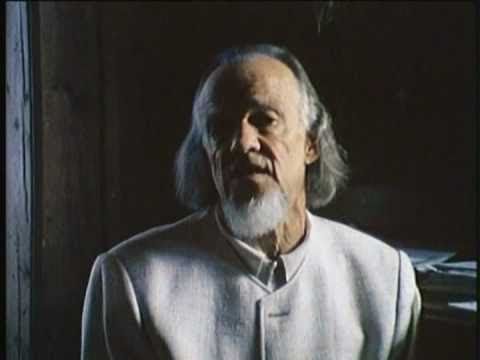

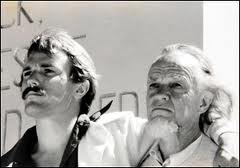



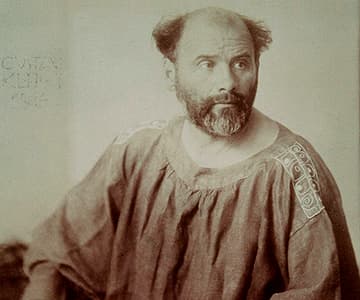
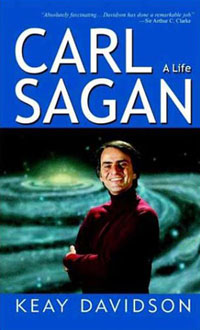
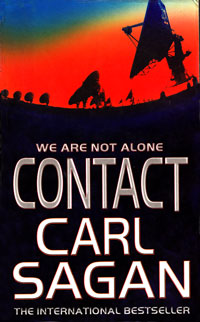
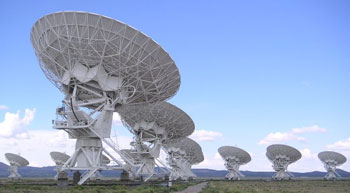





 The Daily Hatch
