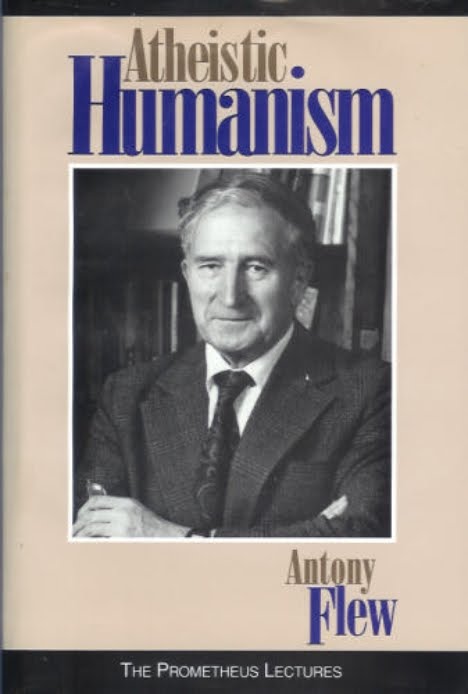
Tag Archives: Antony Flew

The finest article on Antony Flew’s long path from Atheism to Theism!!


___________________


 This is the finest article yet I have read that traces Antony Flew’s long path from atheism to theism.

Among the world’s atheists there was hardly any with the intellectual stature of Anthony Flew.  He was a contemporary with C.S. Lewis and has been a thorn in the side of theists for more than fifty years.  Quite frankly Anthony Flew’s intellectual stature far transcends the squawking and loud atheists of today like Christopher Hitchens, Daniel Dennett, Richard Dawkins, Lewis Wolpert, Victor Stenger or Sam Harris.  These men couldn’t stand in the same room with Flew in true rigorous discussion.  I will have more on these loud mouths later, but I want to explore the recent book by Anthony Flew entitled There is A God (the A written over a scratched over NO).

First I wish to celebrate the intellect of Anthony Flew because it is to be admired for what path He put himself on that lead to God.   In his youth he adhered to the Socratic philosophy of “following the evidence wherever it leads.”  This is a powerful idea that most atheists would say that they adhere to, but actually fall far short on.  Many just follow the evidence to a pre-decided point and no further.

Anthony Flew was probably one of the most original thinkers in modern times in theological thinking or perhaps a-theological thinking.  In “Theology and Falsification”, God and Philosophy and The Presumption of Atheism he raised the question of how religious statements can make meaningful claims.  He claimed that no discussion of the concept of God can begin until the coherence of the concept of an omnipresent, omniscient and omnipotent spirit had been established.  In The Presumption of Atheism he argued that the burden of proof rests with theism and the atheism is the default position.  It was this reorientation of the frames of reference that eventually changed the whole nature of discussion.  This changed discussion eventually also lead to a revitalized theism as well.

His Youth

Son of a Methodist minister he traveled to Germany, as a child, prior to WWII.  He remembers the banners and signs outside villages proclaiming “Jews not wanted here”.  He saw the march of thousands of brown shirts in Bavaria and saw squads of Waffen-SS in the black uniforms with the skull and crossbones.  This was the face of evil and powerfully spoke to him that such evil seemed to preclude an all loving and all powerful God.

Always an avid reader and with no predilection to anything religious the young Flew read science and philosophy and gradually drew away from his religious upbringing.  He tried to hide it from His parents, but after service in the War in 1946 the word got out to his parents that he had become an atheist.   A brilliant young man, Flew, attended Oxford University in 1942 and graduated with his undergraduate degree in the summer of 1947.  He passed with top honors and arranged to pursue post graduate work in philosophy and metaphysical philosophy.  During his time at Oxford Flew joined the Socratic Club at Oxford which was headed by C.S. Lewis.  He and Lewis locked horns more than once in this club and the Socratic principle of going where the evidence leads became even more important and had a surprising impact in Flew’s a theological thought that even set the stage for his future theism.

What Makes an Atheist?

I wish to inject a truth here about the cause of atheism in our culture and especially in our church culture.  Flew is a bit unusual in his atheism direction, but we can see how the church still failed him in this though he never points out that truth.  He steps all around that truth saying that the church and religion held no interest for him and that very statement holds a profound truth.  In the preface of the book is a statement from Katharine Tait, Bertrand Russell’s daughter, from her book My Father, Bertrand Russell.  She indicated that her father would not even talk to her about religion or Christianity, which Katharine had accepted.  She said: “I could not even talk to him about religion.” Page XX.  She states later: “I would have liked to convince my father that I had found what he had been looking for, the ineffable something he had longed for all his life.  I would have liked to persuade him that the search for God does not have to be in vain.  But it was hopeless.  He had known too many blind Christians, bleak moralists who sucked the joy from life and persecuted their opponents; he would never have been able to see the truth they were hiding.” Page XXI

This is a stunning truth that I have seen in my personal debates with atheists and that I have seen in writings of some atheists.  It is that Christians in a mistaken legalistic, judgmental attitude have more to do with engendering and creating atheism than perhaps the secular humanism and the other faith killing philosophies.  Many atheists are atheists because of some encounter with a Christian somewhere that hammered the life out of them and hid the glory of a Lord who loved them.  We need to look at ourselves and become the person Jesus wants the world to really see.

Anthony Flew’s Early Impact

Flew’s first target in his incisive logic was not theology, but rather an atheistic philosophy called logical positivism.  Logical positivism was introduced by a European group called the Vienna Circle and was popularized by A. J. Ayer in his 1936 book Language, Truth and Logic.  Logical Positivists believed any statement that was truly meaningful were statements that could be only verified through the sense experience or were true simply by their form and the meaning of the words used.  This meant that a statement was only meaningful if it could be verified as true or false by empirical observations or science.   This resulted in only statements that were true or verified were statements used in science, logic or mathematics.

Anthony Flow considered his paper Theology and Falsification to be the final argument that sealed the fate of logical positivism.   In 1990 Flew stated:

“As an undergraduate I had become increasingly frustrated and exasperated by philosophical debates which always seemed to revert to, and never to move forward from, the logical positivism most brilliantly expounded in . . . Language, Truth and Logic. . . The intentions in both these papers (the versions of “Theology and Falsification” first presented in the Socratic Club and then published in University) was the same.  Instead of an arrogant announcement that everything which any believer might choose to say it to be ruled out of consideration a priori as allegedly constituting a violation of the supposedly sacrosanct verification principle – here curiously maintained as a secular revelation – I preferred to offer a more restrained challenge.  Let the believers speak for themselves, individually and severally.”  Page XIV

I will have to say that Flew’s thinking that logical positivism was utterly defeated is a little premature as the “New Atheism” has brought forth the logical positivism redux in all its illogical and arrogant glory.  Even A. J. Ayers has long abandoned logical positivism as anything worth a philosophical breath.  But is appears the new atheists have revived this errant philosophy to use in their tomes of unreason and illogic.

50 Years an Atheist

I would have to say that Anthony Flew, while a thorn in the side of Theology, with his impeccable and incisive logic and honorable ways was actually a worthy opponent as well.  His life was spent in many and varied places and his academic career spanned the continents.  The list of academic organizations at which Flew was a professor is simply astounding.  First was the University of Aberdeen in Scotland, he then became professor of philosophy at the University College of North Staffordshire.  Later he joined the philosophy department of the University of Keele and then moved to the University of Calgary in Alberta Canada.  He joined the University of Reading until the end of 1982, took an early retirement and taught at York University of Toronto.  Half way through that assignment he resigned and joined Bowling Green State University to be a part of the Social Philosophy and Policy Center for the next three years.  Three years later he retired and lives today in Reading.  It was a very long and distinguished career.

Following the Evidence

As I mentioned before the Socratic principle of following the evidence where it leads was a guiding principle of Anthony Flew and to his credit this principle lead him into many changes.  In 1966 Flew published God and Philosophy where he attempted to present a case for Christian theism where he challenged the theists to come up with a better idea.  Since that time many theists have done just that and in “following the evidence” Flew also changed his views.  He later stated: “What do I think about today about the arguments laid out in God and Philosophy?  In a 2004 letter toPhilosophy Now, I observed that I now consider God and Philosophy to be a historic relic (but of course, one cannot follow the evidence where it leads without giving others the chance to show you new perspectives you had not fully considered).” Page 52

Flew first looked at the concept of free will and determinism as propounded by Hume as the free will defense had often been put forth with the atheist “problem of evil” argument.  He tried to maintain a position that even though man could have a will that appeared free, he believed that the free choices were physically caused.  He called this system a compatibilism and later rejected this view by examining the idea of Hume’s causes.  Hume failed to properly understand the freedom of an independent person to make a choice that was not physically dependent on anything else.  Flew defined three notions of identity, one is being an agent, two is having a choice and three is being able to do something other than what we actually do.  This necessitated a distinction between the ideas of movings and motions that can explain the equally fundamental concept of action.  He states: “The nerve of the distinction between the movings involved in an action and the motions that constitute necessitated behavior is that the latter behavior is physically necessitated, whereas the sense, the direction, and the character of actions as such are that, as a matter of logic, they necessarily cannot be physically necessitated (and as a matter of brute face, they are not).  It therefore becomes impossible to maintain the doctrine of universal physically necessitating determinism, the doctrine that says all movement in the universe – including every human bodily movement, the movings as well as motions – area determined by physically necessitating physical causes.” Page 64 – 65   Flew viewed this philosophical change as just as radical as any change he made on the question of God.

Flew was one of the heavy hitters in the atheist world and in 2004 he made the change from atheism to theism, that rocked that world profoundly.  It was not a sudden change, but as presented above, a piece by piece revamping of Flew’s philosophy as he followed the evidence.

Flew had been in many debates with theists over the years and some proved to be profound in his later change.  Terry Miethe of the Oxford presented a “formidable version of the cosmological argument” in a debate with Flew.

Some limited, changing being(s) exist

The present existence of every limited, changing being is caused by another.

There cannot be an infinite regress of caused of being,

Because an infinite regress of finite beings would

Not cause the existence of anything.

Therefore, there is a first Cause of the present existence of these beings.

The first cause must be infinite, necessary eternal and one

The first uncaused Cause is identical with the God of the Judeo – Christian tradition.  Page 70 – 71

This argument by Miethe was based not on the principle of sufficient reason as most cosmological arguments of this type were, but upon the principle of existential causality.  Flew rejected this argument but it later came to him again in the idea of design in the universe and nature.

In 2004 Flew came to the last of his long line of public debates in a symposium at New York University.  In this debate about science and theology Flew, to the surprise of all announced that he had now accepted the existence of God.  This announcement has caused no small stir among those in the atheist world and those in the theist camp as well.  Many, harsh and strong statements have risen especially from those aforementioned loud mouthed, new atheists.  I will not go into these comments now, but suffice it to say they show no tolerance they so famously shout for their own ideas.

Finding the Divine

Anthony Flew in the above debate made the following statement when asked if the “recent work on the origin of life pointed to the activity of a creative Intelligence . . .

“Yes, I now think it does . . . almost entirely because of DNA investigations.  What I think the DNA material has done is that it has shown, by the almost unbelievable complexity of the arrangements which are needed to produce (life), that intelligence must have been involved in getting these extraordinarily diverse elements to work together.  It’s the enormous complexity of the number of elements and the enormous subtlety of the ways they work together.  The meeting of these two parts at the right time by chance is simply minute.  It is all a matter of the enormous complexity by which the results were achieved, which looked to me like the work of intelligence.”  Page 74 – 75

Flew has seen the very same things I and many others have observed to convince him of the divine in all creation and life.  Flew has had many writing debates with Richard Dawkins whom he has had some admiration in his earlier days, but drew, and continues to draw distinctions in Dawkin’s selfish-gene school of thought.  He says:

“In my book Darwinian Evolution, I pointed out that natural selection dies not positively produce anything.  It only eliminates, or tends to eliminate, whatever is not competitive.  A variation does not need to bestow any actual competitive advantage in order to avoid elimination; it is sufficient that is does not burden its owner with any competitive disadvantage.  To choose a rather silly illustration, suppose I have useless wings tucked away under my suit coat, wings that are too weak to lift my frame off the ground.  Useless as they are, these wings to not enable me to escape predators or gather food.  But as long as they don’t make me more vulnerable to predators, I will probably survive to reproduce and pass on my wings to my descendants. Darwin’s mistake in drawing too positive an inference with his suggestion that natural selection produces something was perhaps due to his employment of the expressions ‘natural selection’ or ‘survival of the fittest’ rather than his own ultimately preferred alternative, ‘natural preservation.’” Page 78 – 79

He goes on and continues to skewer Dawkins by saying: “Richard Dawkin’s The Selfish Gene was a major exercise in popular mystification.” Page 79   He also states that: “Dawkins on the other hand, labored to discount or depreciate the upshot of fifty or more years’ work in genetics – the discovery that the observable traits of organisms are for the most part conditioned by the interactions of many genes, while most genes have manifold effects on many such traits.  For Dawkins, the main means for producing human behavior is to attribute to genes characteristics that can significantly be attributed only to persons. Then after insisting that we are all the choiceless creatures of our genes, he infers that we cannot help but share the unlovely personal characteristics of those all-controlling monads.”  Page 79 – 80

Dawkin’s premise is that we are merely robots created by our genes to house them and spread them and we are totally subject to the physical laws of genetics.  Flew makes a final deadly thrust at Dawkins when he says: “If any of this were true, it would be no use to go on, as Dawkins does, to preach: ‘Let us try to teach generosity and altruism, because we are born selfish.’ No eloquence can move programmed robots.  But in fact none if it is true – or even faintly sensible.  Genes, as we have seen, do not and cannot necessitate our conduct. Nor are they capable of the calculation and understanding required to plot a course of either ruthless selfishness or sacrificial compassion.”  Page 80

Anthony Flew also takes aim at dogmatic atheism and it’s misapplication of science when the atheists let preconceived theories shape the way they see the evidence rather than letting the evidence shape their theories. About this he says: “And in this, it seems to me, lies the peculiar danger, the endemic evil, of dogmatic atheism.  Take such utterances as ‘We should not ask for an explanation of how it is that the world exists; it is here and that is all’ or ‘Since we cannot accept a transcendent source of life, we choose to believe the impossible: that life arose spontaneously by chance from matter’, or ‘The laws of physics are ‘lawless laws’ that arise from the void – end of discussion.’  They look at first sight like rational arguments that have special authority because they have a no-nonsense air about them.  Of course, this is no more sign that they are either rational or arguments.” Page 86 – 87

He also takes umbrage at the continuing effort of dogmatic atheism and militant evolutionists as couching every argument as their “science” confronting our “philosophy, religion and non-science.      He states: “You might ask how I, a philosopher, could speak to issues treated by scientists. The best way to answer this is with another question.  Are we engaging in science or philosophy here?  When you study the interaction of two physical bodies, for instance, two subatomic particles, you are engaged in science.  When you ask how it is that those subatomic particles – oranything physical – could exist and why, you are engaged in philosophy.  When you draw philosophical conclusions from scientific data, then you are thinking as a philosopher.” Page 89

Flew says that the three domains of scientific inquiry that he as a philosopher feels are especially important are; how did the laws of nature come to be, how did life originate from non-life, and how did the universe (all that is physical) come into being and why.  It is in this domain that Flew is so devastating to the pretend philosophers of evolution and atheism.

He goes on to point out that the God Aristotle believe in as presented in David Conway’s book The Recovery of Wisdom: From Here to Antiquity in Quest of Sophia.  Conway says and Flew agrees: “In sum, to the Being whom he considered to be the explanation of the world and its broad form, Aristotle ascribed the following attributes: immutability, immateriality,   omnipotence, omniscience, oneness or indivisibility, perfect goodness and necessary existence.  There is an impressive correspondence between this set of attributes and those traditionally ascribed to God within the Judaeo-Christian tradition.  It is one that fully justifies us in viewing Aristotle as having had the same Divine Being in mind as the cause of the world that is the object of worship of these two religions.”

Anthony Flew had correctly perceived that the universe and life itself had to have a vast intelligent designer behind it as it was impossible to have been self caused or uncaused.  He looks further into the laws of the universe and the concept of the first cause of all we see.  He quotes the physicist Paul Davies: “in his Templeton address, Paul Davies makes the point that ‘science can proceed only if the scientist adopts an essentially theological worldview.’  Nobody asks where the laws of physics come from, but ‘even the most atheistic scientist accepts as an act of faith the existence of a lawlike order in nature that is at least in part incomprehensible to us.” Page 107

Davies in again quoted: “Science is based on the assumption that the universe is thoroughly rational and logical at all levels.’ Writes Paul Davies, arguably the most influential contemporary expositor of modern science. ‘Atheists claim that the laws (of nature) exist reasonlessly and that the universe is absurd.  As a scientist, I find this hard to accept.  There must be an unchanging rational ground in which the logical, orderly nature of the universe is rooted.” Page 111

Flew examines the finely tuned universe or the idea of a man centered universe called the anthropic universe.  It appears that the constants in the universe from the cosmic to the quantum are all finely tuned to cause life to occur.  It appears that the universe was waiting for us.  Flew says: “In his book Infinite Minds, John Leslie, a leading anthropic theorist, argues that the fine tuning is best explained by divine design.  He says that he is impressed not by particular arguments for instances of fine tuning, but by the fact that these arguments exist in such profusion. ‘If, then, there were aspects of nature’s workings that appeared every fortunate and also entirely fundamental,’ he writes, ‘then there might well be seen as evidence specially favoring belief in God.” Page 115

Many physicists have explored the idea of ultra high density physics of multi-verses in hyper dimensions that are truly speculative and very hard to prove. In fact another universe outside of our universe would by our technology and any technology we can envision impossible to examine  Very few physicists actually hold to this multi-verse idea with the exception of those who do not want to believe in a intelligent creator.  Physicist Davies weighs in again: “It is trivially true that, in an infinite universe, anything that can happen will happen.’ But this is not an explanation at all.  If we are trying to understand why the universe if bio-friendly, we are not helped by being told that all possible universes exist. ‘Like a blunderbuss, it explains everything and nothing.”  Page 118   Physicist Richard Swineburne rejects the multi-verse and says: “It is crazy to postulate a trillion (causally unconnected) universes to explain the features of one universe, when postulating one entity (God) will do the job.”  Page 119   Flew likens the argument to a child coming to his teacher and saying “The dog ate my homework.”  When the teacher indicates unbelief the child changes his story to” “A whole pack of dogs ate my homework.”  It is an answer waiting for a question as it will not answer any current questions.

Anthony Flew, as mentioned before also saw the idea of biological life and the complex coding necessary for that life to be an insurmountable problem with atheism and evolution.  He perceived through is incisive logic that the age of the universe and the current theories of abiogenesis left too little time for life to happen in the random way that it had to occur.  He states: “A far more important consideration is the philosophical challenge facing origin-of-life studies.  Most studies on the origin of life are carried out by scientists who rarely attend to the philosophical dimension of their findings.  Philosophers, on the other hand, have said little on the nature and origin of life.  The philosophical question that has not been answered in origin-of- life studies is this: How can a universe of mindless matter produce beings with intrinsic ends, self-replication capabilities, and ‘coded chemistry’?  Here we are not dealing with biology, but an entirely different category of problem.”  Page 124   Flew understood the deep issues.  It is not what the current abiogenesis study is and how maybe a few amino acids can be formed in a test tube, but why does life depend on the hyper complex code even at all and what does it point out in the big picture of causality. Most evolutionists are utterly lost in the details of this missing link or that whale vestigial foot or whatever they can club the creationist over the head with.  They never raise their head like Flew did, and look at the big picture this code points too. One of the issues Flew raises is that life is teleological in nature, it posses intrinsic ends, goals and purposes.  We are self aware, we think, we plan, we love, we are alive in a profound teleological way.  The very origin of this life presents profound problems for the scientist who doesn’t understand the philosophy inherent in his work.  Flew says: “The origin of self-reproduction is a second key problem.  Distinguished philosopher John Haldane notes that origin-of-life theories ‘do not provide sufficient explanation, since they presuppose the existence at an early stage of self-reproduction, and it has not been shown that this can arise by natural means from a material base.”  Page 125   It is the profound problem of the biological scientist who wants to adhere to the evolutionist philosophy.  If you cannot start out life by abiogenesis then the rest tends to fall down and become irrelevant.  George Wald a Nobel Prize winning physiologist once said: “we choose to believe the impossible: that life arose spontaneously by chance.”  But years later he changed his belief to a preexisting mind.  He said: “How is it that, with so many other apparent options, we are in a universe that possesses just that peculiar nexus of properties that breeds life?  It has occurred to me lately – I must confess with some shock at first to my scientific sensibilities – that both questions might be brought into some degree of congruence.  This is with the assumption that mind, rather than emerging as a late outgrowth in the evolution of life, has existed always as the matrix, the source and condition of physical reality – that the stuff of which physical reality is constructed is mind-stuff.  It is mind that has composed a physical universe that breeds life, and so eventually evolves creature that know and create: science, art and technology making creatures.”  Page 131 – 132.

Flew in his paper The Presumption of Atheism argued that we had to take the universe and its most fundamental laws as ultimate.  But you see this is the materialist trap, if all is material and there can be nothing that is not material then God a priori doesn’t exist.  It blocks out the possibility of something that can transcend that universe.  The idea of the infinite and unending universe was the cosmology of Flew’s early years and that view allowed plenty of time and energy for the atheistic views.  But is has been fairly well documented that the universe had a beginning and this had a profound impact on Antony Flew.  It reminded him of the first sentence in the Bible: “In the beginning God created the heavens and the earth.”  He stated that while the universe was assumed to be eternal and unending then it was the ultimate by brute fact.  But a beginning postulated another something the caused the beginning.  This presented a problem.  Cosmologist were also disturbed by this problem and presented many ideas that would allow them to retain their nontheist status quo.  We have previously looked at those attempts.  But suffice it to know that if one universe requires an explanation for a beginning then multiverses will also require multiple explanations as well.  One of the troubles is that science has a severe problem with the cause of the universe.  Swineburne arguing about the Humean idea of a beginningless series of nonnecessary existent beings, being the sufficient cause for the universe as a whole said: “The whole infinite series will have no explanation at all, for there will be no causes of members of the series lying outside the series.  In that case, the existence of the universe over infinite time will be an inexplicable brute fact. There will be an explanation (in terms of laws) of why, once existent, it continues to exist.  But what will be inexplicable is it existence at all throughout infinite time.  The existence of a complex physical universe over finite or infinite time is something ‘too big’ for science to explain.”  Page 141  So we see that the, now known, finite universe is not the brute fact and ultimate thing and it is also too big for science to explain and certainly they cannot explain away that nothing never creates something.

Anthony Flew in his publications argued that the concept of God was not coherent because it presupposed the idea of an incorporeal omnipresent being.  Again this is the materialist trap and Flew finally found his way out.  Theologians were busy with their answers.  They stated that a body is necessary for being to exist; the condition for a being to be an agent is to be simply capable of intentional action.  God is spoken as being a personal being; this is to talk of Him as an agent to intentional action.

God also dwelling outside of space and time was entirely consistent with the theory of special relativity.  Brian Leftow in his book Time and Eternity showed that God could be transcendent of the universe and went on to explore what He would be like.  It is these studies that showed Flew that an incorporeal spirit could exist and have an impact in our world.  He says: “At the very least, the studies and Tracy and Leftow show that idea of an omnipresent Spirit is not intrinsically incoherent if we see such a Spirit as an agent outside space and time that uniquely executed His intentions in the spatio-temporal continuum. The question of whether such a Spirit exists, as we have seen, lies at the heart of the arguments for God’s existence.”  Page 154

Flew made the transition from atheist to theist.  It was a path of simply following the evidence to where it leads.  He says: “Science qua science cannot furnish an argument for God’s existence.  But the three items of evidence we have considered in this volume – the laws nature, life with its teleological organization, and the existence of the universe – can only be explained in the light of an Intelligence that explains both its own existence and that of the world.  Such a discovery of the Divine does not come through experiments and equations, but through the understanding of the structures they unveil and map.”  Page 155   Flew was willing to learn more and connect with others in their thoughts and was open to new ideas.   He now believes in an infinitely intelligent mind that created the universe.  He knows many who have claimed to have contacted that mind and remains hopeful that that mind may contact him.  His final statement is: “I have not (contacted the mind) yet.  But who knows what could happen next?  Someday I might hear a Voice that says, ‘Can you hear me now?”

I have no doubt that Anthony Flew with his humility will soon hear that wonderful voice of the Lord who loves him.

Evan Wiggs

____________

__________


Robert Jastrow on God and the Big Bang


Published on Jun 26, 2012


Henry “Fritz” Schaefer comments on a popular quote made by scientist Robert Jastrow. Jastrow (who Carl Sagan was too scared to debate) is an agnostic but believes that the Big Bang leaves room for the existence of God.


____________


Discussion (3 of 3): Antony Flew, N.T. Wright, and Gary Habermas


_____________


William Lane Craig vs Peter Atkins: “Does God Exist?”, University of Manchester, October 2011


Published on Apr 10, 2012


This debate on “Does God Exist?” took place in front of a capacity audience at the University of Manchester (including an overspill room). It was recorded on Wednesday 26th October 2011 as part of the UK Reasonable Faith Tour with William Lane Craig.

William Lane Craig is Research Professor of Philosophy at Talbot School of Theology, La Mirada, California and a leading philosopher of religion. Peter Atkins is former Professor of Chemistry at the University of Oxford and a Fellow of Lincoln College.

The debate was chaired by Christopher Whitehead, Head of Chemistry School at the University. Post-debate discussion was moderated by Peter S Williams, Philosopher in Residence at the Damaris Trust, UK.

_____________

Making Sense of Faith and Science

Uploaded on May 16, 2008

Dr. H. Fritz Schaefer confronts the assertion that one cannot believe in God and be a credible scientist. He explains that the theistic world view of Bacon, Kepler, Pascal, Boyle, Newton, Faraday and Maxwell was instrumental in the rise of modern science itself. Presented as part of the Let There be Light series. Series: Let There Be Light [5/2003] [Humanities] [Show ID: 7338]

________________


_____________

Related posts:

Antony Flew rightly noted that Richard Dawkins’ “monkey theorem was a load of rubbish”

________   Antony Flew rightly noted that Richard Dawkins’  ”monkey theorem was a load of rubbish.” Sunday, 9 September 2012 Why Richard Dawkins’ typing monkey theorem is a load of nonsense The infinite monkey theorem states that a monkey hitting keys at random on a typewriter keyboard for an infinite amount of time will almost surely type a […]

Article from 2005 indicated Antony Flew abandoned atheism because of Law of Biogenesis!!!!

___________ Article from 2005 indicated Antony Flew abandoned atheism because of Law of Biogenesis!!!! Weighing the Evidence An Atheist Abandons Atheism By Chuck Colson|Published Date: January 10, 2005 Antony Flew, the 81-year-old British philosophy professor who taught at Oxford and other leading universities, became an atheist at age 15. Throughout his long career he argued […]

The Christian influence on society is real and that is one of the reasons Antony Flew left Atheism!!!

The Christian influence on society is real and that is one of the reasons Antony Flew left Atheism!!! Beggar to Beggar Saved by Increments By Chuck Colson|Published Date: January 11, 2005 A leading intellectual elaborates on why he abandoned atheism. But, surprisingly, he says his reasons were not entirely intellectual. British philosophy professor Dr. Antony […]

Antony Flew, George Wald and David Noebel on the Origin of Life

In the below comment section David Noebel stated the following: Since writing my article on the origin of life I have read two books that basically make the same point and I will quote briefly from them, but encourage anyone interested in the subject to read both books from cover to cover: (1) John C. […]

The Fine Tuning Argument for the Existence of God from Antony Flew!

___________ The Fine Tuning Argument for the Existence of God from Antony Flew! Imagine entering a hotel room on your next vacation. The CD player on the bedside table is softly playing a track from your favorite recording. The framed print over the bed is identical to the image that hangs over the fireplace at […]

By Everette Hatcher III | Posted in Current Events | Tagged  | Edit | Comments (0)

Mark Oppenheimer of Time Magazine claims Antony Flew was convinced by PSEUDOSCIENCE that God exists!!!

_____________ Mark Oppenheimer of Time Magazine claims Antony Flew was convinced by PSEUDOSCIENCE that God exists!!! Below you will read:  ”There Is a God” is perhaps the handiest primer ever written on the science (many would say pseudoscience) of religious belief. Regis Nicoll does a good job of refuting the claim that Flew was manipulated by […]

A review of “There is a God” by Antony Flew March 31, 2012

________ During the 1990′s I actually made it a practice to write famous atheists and scientists that were mentioned by Adrian Rogers and Francis Schaeffer and challenge them with the evidence for the Bible’s historicity and the claims of the gospel. Usually I would send them a cassette tape of Adrian Rogers’ messages “6 reasons I […]

Review of Antony Flew Book: THERE IS A GOD Article by R.C. Sproul May 2008

During the 1990′s I actually made it a practice to write famous atheists and scientists that were mentioned by Adrian Rogers and Francis Schaeffer and challenge them with the evidence for the Bible’s historicity and the claims of the gospel. Usually I would send them a cassette tape of Adrian Rogers’ messages “6 reasons I know […]

The Death of a (Former) Atheist — Antony Flew, 1923-2010 Antony Flew’s rejection of atheism is an encouragement, but his rejection of Christianity is a warning. Rejecting atheism is simply not enough, by Al Mohler

________________________________ Discussion (1 of 3): Antony Flew, N.T. Wright, and Gary Habermas Uploaded on Sep 22, 2010 A discussion with Antony Flew, N.T. Wright, and Gary Habermas. This was held at Westminster Chapel March, 2008 ______________________ During the 1990′s I actually made it a practice to write famous atheists and scientists that were mentioned by Adrian […]

By Everette Hatcher III | Posted in Francis Schaeffer | Tagged  | Edit | Comments (0)

Antony Flew’s journey from Atheism to Theism

During the 1990′s I actually made it a practice to write famous atheists and scientists that were mentioned by Adrian Rogers and Francis Schaeffer and challenge them with the evidence for the Bible’s historicity and the claims of the gospel. Usually I would send them a cassette tape of Adrian Rogers’ messages “6 reasons I […]

Antony Flew incorrectly wrote that George Wald later abandoned atheism!!!


Making Sense of Faith and Science

Uploaded on May 16, 2008

Dr. H. Fritz Schaefer confronts the assertion that one cannot believe in God and be a credible scientist. He explains that the theistic world view of Bacon, Kepler, Pascal, Boyle, Newton, Faraday and Maxwell was instrumental in the rise of modern science itself. Presented as part of the Let There be Light series. Series: Let There Be Light [5/2003] [Humanities] [Show ID: 7338]

___________________

Antony Flew – World’s Most Famous Atheist Accepts Existence of God

Uploaded on Nov 28, 2008

Has Science Discovered God?

A half-century ago, in 1955, Professor Antony Flew set the agenda for modern atheism with his Theology and Falsification, a paper presented in a debate with C.S. Lewis. This work became the most widely reprinted philosophical publication of the last 50 years. Over the decades, he published more than 30 books attacking belief in God and debated a wide range of religious believers.

Then, in a 2004 Summit at New York University, Professor Flew announced that the discoveries of modern science have led him to the conclusion that the universe is indeed the creation of infinite Intelligence.

For More Info Visit:
http://ScienceFindsGod.com

__________________

Intelligent Design: Is It Viable? William Lane Craig vs. Francisco J. Ayala

http://www.youtube.com/watch?v=sleT0VCEOes

Published on Nov 10, 2013

Date: November 5, 2009
Location: Indiana University

Christian/Intelligent Design proponent debater: William Lane Craig
Christian/Darwinist debater: Francisco J. Ayala

For William Lane Craig: http://www.reasonablefaith.org/
For Francisco Ayala: http://www.faculty.uci.edu/profile.cf…
To purchase this debate: http://apps.biola.edu/apologetics-sto…

__________________

Ninth


_____________

Antony Flew wrote in his book, THERE IS A GOD: How the World’s Most Notorious Atheist Changed His Mind, p. 124 and 131, “The latest work I have seen shows that the present physicists’ view of the age of the universe gives too little time for these theories of abiogenesis [life from nonlife] to get the job done…How can a universe of mindless matter produce beings with intrinsic ends, self-replication capabilities, and ‘coded chemistry’?…So how do we account for the origin of life? The Nobel Prize-winning physiologist George Wald once famously argued that ‘we choose to believe the impossible: that life arose spontaneously by chance.’ In later years, he concluded that a preexisting mind, which he posits as the matrix of physical reality, composed a physical universe that breeds life: ‘the stuff of which physical reality is constructed is mind-stuff. It is mind that has composed a physical universe that breeds life…’ The only satisfactory explanation for the origin of such ‘end-directed, self-replicating’ life as we see on earth is an infinitely intelligent Mind.” 

During the 1990′s I actually made it a practice to write famous atheists and scientists that were mentioned by Adrian Rogers and Francis Schaeffer and challenge them with the evidence for the Bible’s historicity and the claims of the gospel. Usually I would send them a cassette tape of Adrian Rogers’ messages “6 reasons I know the Bible is True,” “The Final Judgement,” “Who is Jesus?” and the message by Bill Elliff, “How to get a pure heart.”  I would also send them printed material from the works of Francis Schaeffer and a personal apologetic letter from me addressing some of the issues in their work. My second cassette tape that I sent to both Antony Flew and George Wald was Adrian Rogers’ sermon on evolution.  

_____________________________________

Photo of Pastor Adrian Rogers Memorial Tribute

Below is the video of Rogers’ sermon on Evolution.

Check out this short article by Adrian Rogers:

I think that Antony Flew may have pondered this quote from George Wald which was in Adrian Rogers’ sermon.

Dr. George Wald of Harvard:

“When it comes to the origin of life, we have only two possibilities as to how life arose. One is spontaneous generation arising to evolution; the other is a supernatural creative act of God. There is no third possibility…Spontaneous generation was scientifically disproved one hundred years ago by Louis Pasteur, Spellanzani, Reddy and others. That leads us scientifically to only one possible conclusion — that life arose as a supernatural creative act of God…I will not accept that philosophically because I do not want to believe in God. Therefore, I choose to believe in that which I know is scientifically impossible, spontaneous generation arising to evolution.” – Scientific American, August, 1954.

Adrian Rogers said the lack of an  answer for the  origin of life was a big reason Rogers rejected evolution.  Rogers noted, “Evolution offers no answers to the origin of life. It simply pushes the question farther back in time, back to some primordial event in space or an act of spontaneous generation in which life simply sprang from nothing.”

I actually had the chance to correspond with George Wald twice before his death. He wrote me two letters and in the first one he suggested that he was just using hyperbole when he made the assertion that is quoted by Dr. Rogers. He also suggested the religion of Buddhism although he said he was not a Buddhist himself, but he thought that would be closest to the truth which he thought was atheism. This does seem to contradict what Flew says of Wald’s views in the 1990’s. Flew contended concerning Wald:

In later years, he concluded that a preexisting mind, which he posits as the matrix of physical reality, composed a physical universe that breeds life: ‘the stuff of which physical reality is constructed is mind-stuff. It is mind that has composed a physical universe that breeds life…’ 

In my letters to both Wald and Flew in the 1990’s I demonstrated that  there is evidence that points to the fact that the Bible is historically true as Schaeffer pointed out in episode 5 of WHATEVER HAPPENED TO THE HUMAN RACEThere is a basis then for faith in Christ alone for our eternal hope. This link shows how to do that.

Fortunately some modern philosophers and scientists are starting to wake up and realize that materialistic chance evolution was not responsible for the origin of the universe but it was started by a Divine Mind. In fact, Antony Flew who was probably the most famous atheist of the 20th century took time to read several letters I sent him the 1990’s which included much material from Francis Schaeffer and he listened to several cassette tapes I sent him from Adrian Rogers and then in 2004 he reversed his view that this world came about through evolution and he left his atheism behind and  because a theist.  I still have several of the letters that Dr. Flew wrote back to me and I will be posting them later on my blog at some point. One of the letters I got back in 1994 said specifically that he enjoyed listening to whole cassette tape.

An Atheist No More 3 by Larry Jones

Here is my third offering this week in remembrance of my grandfather. Antony Flew, the famous former atheist, addresses the problem of the purpose and origin of life.
“Let us first look at the nature of life from a philosophical standpoint. Living matter possesses an inherent goal or end-centered organization that is nowhere present in the matter that preceded it.”
“The first challenge is to produce a materialistic explanation for “the very first emergence of living matter from non-living matter. In being alive, living matter possesses a teleological organization that is wholly absent from everything that preceded it.” The second challenge is to produce an equally materialist explanation for “the emergence, from the very earliest life-forms which were incapable of reproducing themselves, of life-forms with a capacity for reproducing themselves. Without the existence of such a capacity, it would not have been possible for different species to emerge through random mutation and natural selection. Accordingly, such mechanism cannot be invoked in any explanation of how life-forms with this capacity first ‘evolved’ from those that lacked it.” Conway concludes that these biological phenomena “provide us with reason for doubting that it is possible to account for existent life-forms in purely materialistic terms and without recourse to design.”
“Paul Davies observes that most theories of biogenesis have concentrated on the chemistry of life, but “life is more than just complex chemical reactions. The cell is also an information storing, processing and replicating system. We need to explain the origin of this information, and the way in which the information processing machinery came to exist.” He emphasizes the fact that a gene is nothing but a set of coded instructions with a precise recipe for manufacturing proteins. Most important, these genetic instructions are not the kind of information you find in thermodynamics and statistical mechanics; rather, they constitute semantic information. In other words, they have a specific meaning. These instructions can be effective only in a molecular environment capable of interpreting the meaning in the genetic code. The origin question rises to the top at this point. ‘The problem of how meaningful or semantic information can emerge spontaneously from a collection of mindless molecules subject to blind and purposeless forces presents a deep conceptual challenge.’”
“The Nobel Prize–winning physiologist George Wald once famously argued that ‘we choose to believe the impossible: that life arose”spontaneously by chance.’ In later years, he concluded that a preexisting mind, which he posits as the matrix of physical reality, composed a physical universe that breeds life:.. This, too, is my conclusion. The only satisfactory explanation for the origin of such “end-directed, self-replicating” life as we see on earth is an infinitely intelligent Mind.”, [Antony Flew with Roy Abraham Varghese, There is a God]
This book can be purchased at many book stores including Amazon.com, or as an e version at various sources including e-books. I own both. A hardback copy to keep, and an e copy for quoting.
Romans 1:20 For the invisible things of him from the creation of the world are clearly seen, being understood by the things that are made, even his eternal power and Godhead; so that they are without excuse:

Related posts:

Antony Flew rightly noted that Richard Dawkins’ “monkey theorem was a load of rubbish”

________   Antony Flew rightly noted that Richard Dawkins’  ”monkey theorem was a load of rubbish.” Sunday, 9 September 2012 Why Richard Dawkins’ typing monkey theorem is a load of nonsense The infinite monkey theorem states that a monkey hitting keys at random on a typewriter keyboard for an infinite amount of time will almost surely type a […]

Article from 2005 indicated Antony Flew abandoned atheism because of Law of Biogenesis!!!!

___________ Article from 2005 indicated Antony Flew abandoned atheism because of Law of Biogenesis!!!! Weighing the Evidence An Atheist Abandons Atheism By Chuck Colson|Published Date: January 10, 2005 Antony Flew, the 81-year-old British philosophy professor who taught at Oxford and other leading universities, became an atheist at age 15. Throughout his long career he argued […]

The Christian influence on society is real and that is one of the reasons Antony Flew left Atheism!!!

The Christian influence on society is real and that is one of the reasons Antony Flew left Atheism!!! Beggar to Beggar Saved by Increments By Chuck Colson|Published Date: January 11, 2005 A leading intellectual elaborates on why he abandoned atheism. But, surprisingly, he says his reasons were not entirely intellectual. British philosophy professor Dr. Antony […]

Antony Flew, George Wald and David Noebel on the Origin of Life

In the below comment section David Noebel stated the following: Since writing my article on the origin of life I have read two books that basically make the same point and I will quote briefly from them, but encourage anyone interested in the subject to read both books from cover to cover: (1) John C. […]

The Fine Tuning Argument for the Existence of God from Antony Flew!

___________ The Fine Tuning Argument for the Existence of God from Antony Flew! Imagine entering a hotel room on your next vacation. The CD player on the bedside table is softly playing a track from your favorite recording. The framed print over the bed is identical to the image that hangs over the fireplace at […]

By Everette Hatcher III | Posted in Current Events | Tagged  | Edit | Comments (0)

Mark Oppenheimer of Time Magazine claims Antony Flew was convinced by PSEUDOSCIENCE that God exists!!!

_____________ Mark Oppenheimer of Time Magazine claims Antony Flew was convinced by PSEUDOSCIENCE that God exists!!! Below you will read:  ”There Is a God” is perhaps the handiest primer ever written on the science (many would say pseudoscience) of religious belief. Regis Nicoll does a good job of refuting the claim that Flew was manipulated by […]

A review of “There is a God” by Antony Flew March 31, 2012

________ During the 1990′s I actually made it a practice to write famous atheists and scientists that were mentioned by Adrian Rogers and Francis Schaeffer and challenge them with the evidence for the Bible’s historicity and the claims of the gospel. Usually I would send them a cassette tape of Adrian Rogers’ messages “6 reasons I […]
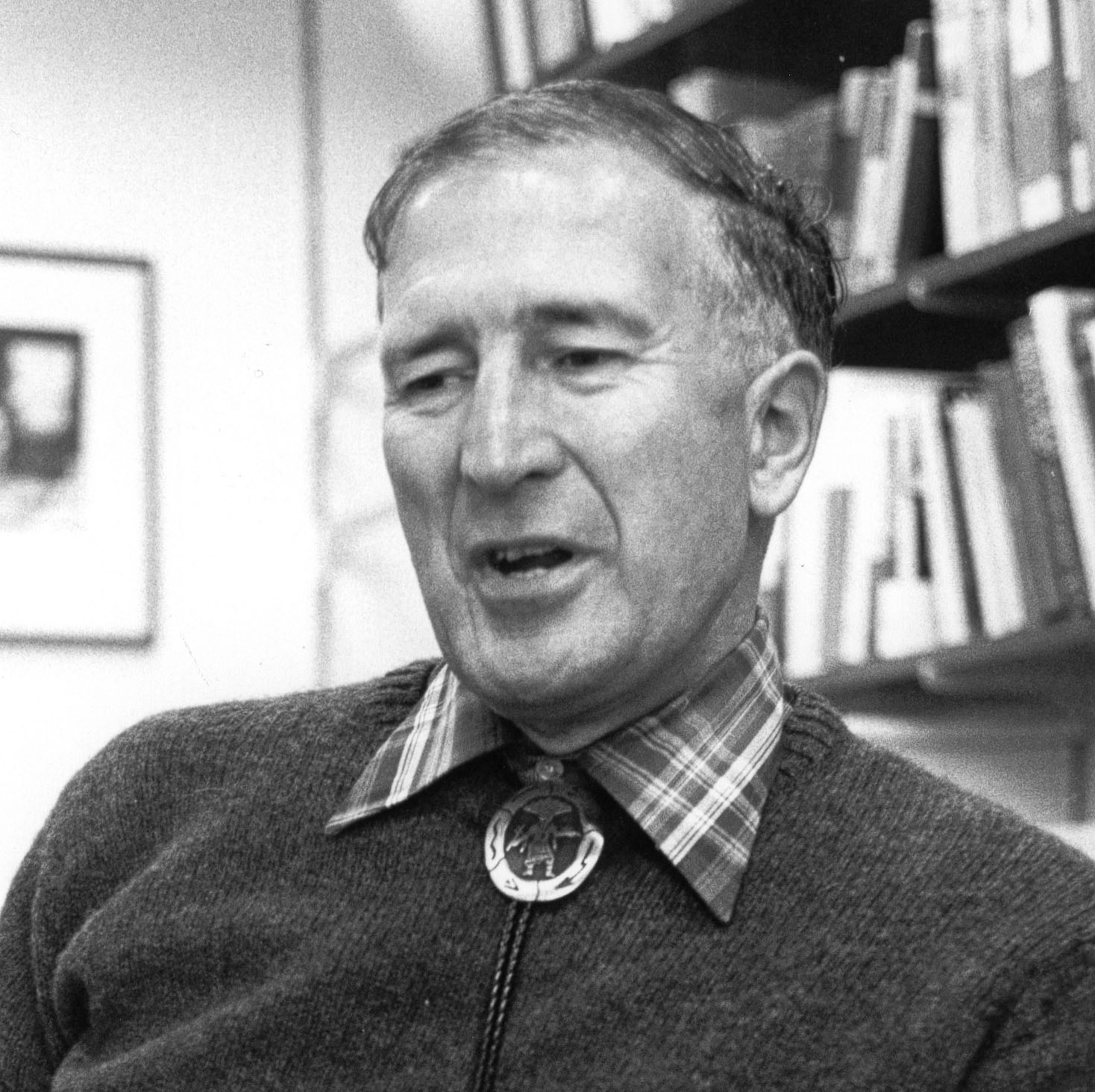
Review of Antony Flew Book: THERE IS A GOD Article by R.C. Sproul May 2008

During the 1990′s I actually made it a practice to write famous atheists and scientists that were mentioned by Adrian Rogers and Francis Schaeffer and challenge them with the evidence for the Bible’s historicity and the claims of the gospel. Usually I would send them a cassette tape of Adrian Rogers’ messages “6 reasons I know […]

The Death of a (Former) Atheist — Antony Flew, 1923-2010 Antony Flew’s rejection of atheism is an encouragement, but his rejection of Christianity is a warning. Rejecting atheism is simply not enough, by Al Mohler

________________________________ Discussion (1 of 3): Antony Flew, N.T. Wright, and Gary Habermas Uploaded on Sep 22, 2010 A discussion with Antony Flew, N.T. Wright, and Gary Habermas. This was held at Westminster Chapel March, 2008 ______________________ During the 1990′s I actually made it a practice to write famous atheists and scientists that were mentioned by Adrian […]

By Everette Hatcher III | Posted in Francis Schaeffer | Tagged  | Edit | Comments (0)

Antony Flew’s journey from Atheism to Theism

During the 1990′s I actually made it a practice to write famous atheists and scientists that were mentioned by Adrian Rogers and Francis Schaeffer and challenge them with the evidence for the Bible’s historicity and the claims of the gospel. Usually I would send them a cassette tape of Adrian Rogers’ messages “6 reasons I […]
Antony Flew opened himself up to the possibility of accepting Christian teachings although never making a public profession of faith

Discussion (2 of 3): Antony Flew, N.T. Wright, and Gary Habermas

______________

Atheist Lawrence Krauss loses debate to wiser Christian

http://www.youtube.com/watch?v=6x_zmTpiZEU

Published on Sep 13, 2013

http://www.reasonablefaith.org More of this here

The Bible and Science (Part 02)

The Kalam Cosmological Argument (Scientific Evidence) (Henry Schaefer, PhD)

Published on Jun 11, 2012

Scientist Dr. Henry “Fritz” Schaefer gives a lecture on the cosmological argument and shows how contemporary science backs it up.

______________

__________________

_________
Antony Flew opened himself up to the possibility of accepting Christian teachings. Flew never did make a public profession of faith, but he was considering the Christian faith. He also pointed out that Einstein was not an atheist. Finally Flew promised to “follow the evidence wherever it leads.”

SATURDAY, AUGUST 21, 2010

There Is A God – How the World’s Most Notorious Atheist Changed His Mind, Antony Flew

There Is A God – How the World’s Most Notorious Atheist Changed His Mind, Antony Flew with Roy Abraham Varghese

There are a few things I would like to point out or suggest prior to discussing this book. First, one should read (also available on DVD) The Warren-Flew Debate and Thomas B. Warren’s book Have Atheists Proven There is no God? prior to reading this book. Garland Elkins, close friend and coworker with brother Warren reported:

Brother Warren told me that during his debate with Mr. Flew he walked over to his table and saw that Mr. Flew had a copy of brother Warren’s book entitled, Have Atheists Proved There Is No God? Brother Warren said that the book was very worn around the edges indicating that Mr. Flew had used it much in his studying. Mr. Flew’s change is a devastating blow to atheism. He is to be congratulated and commended for his change. He now needs to learn the identity of the God of the Bible, and obey Him and become a Christian. — Garland Elkins, “A Renowned Atheist Renounces Atheism,” Yokefellow, Vol. 32, No. 1, January 2005, p. 2.

Second, one will not agree with everything written in Flew’s book, but it is very valuable as will be observed. Third, be aware that while Flew did change his mind about the existence of God, he remained unchanged about his rejection of an afterlife—also called a “mortalist”. Tragic as that is, this provides an important point—he did not make a “deathbed confession or conversion” as some of his atheist associates attempted to excuse or deflect his change with. Tragically, he ran out of time to either recognize or accept the truth on matters pertaining to the afterlife. Sadly, he remained a “mortalist” until April 8, 2010 when he passed away.

Interestingly, when Warren debated Flew, Flew had accepted a debate proposition that was unique among atheists—he affirmed (rather than just denied) that “I Know That God Does Not Exist.” This is far different than other debates with atheists who attempt to shift the burden of proof to the theist. Flew mentions the 1976 debate with Warren although briefly. Flew states Warren “wielded an impressive array of charts and slides.” Interestingly, according to Warren’s assistant Roy Deaver, Warren presented 75 charts during the debate, but he had prepared over 400 detailed charts for the debate. (David Lipe who helped create many of the charts has the total number at 500.)

There are several important matters Flew brings to light in this book that are worth reflecting on.

First, how many times has an atheist challenged theists to produce observable, empirical data or proof via the scientific method for the existence of God? Flew discusses this tactic which was called “logical positivism”. Flew points out that while he was an atheist, he had written a devastating refutation, “Theology and Falsification,” to the man credited with logical positivism, Alfred Ayer. In fact, Ayer himself renounced his work, Language, Truth and Logic, and stated: “Logical positivism died a long time ago. I don’t think much of Language, Truth and Logic is true. I think it is full of mistakes…I think it is full of mistakes which I spent the last fifty years correcting or trying to correct.” (Pages xiv-xv). Also, Albert Einstein’s statement on the demand for empirical data or positivism is intriguing:

I am not a positivist. Positivism states that what cannot be observed does not exist. This conception is scientifically indefensible, for it is impossible to make valid affirmations of what people ‘can’ or ‘cannot’ observe. One would have to say ‘only what we observe exists,’ which is obviously false.” Flew also counters the modern militant atheists of today who attempt to change the subject by pointing out the abuses of adherents of Christianity by stating “But the excesses and atrocities of organized religion have no bearing whatsoever on the existence of God, just as the threat of nuclear proliferation has no bearing on the question of whether E = mc2. (Page xxiv)

Second, Flew points out that some atheists attempt to claim that Einstein was an atheist. Flew records this important and powerful statement by Einstein to the contrary—

I’m not an atheist, and I don’t think I can call myself a pantheist. We are in the position of a little child entering a huge library filled with books in many languages. The child knows someone must have written those books. It does not know how. It does not understand the language in which they are written. The child dimly suspects a mysterious order in the arrangement of the books but doesn’t know what it is. That, it seems to me, is the attitude of even the most intelligent human being toward God. We see the universe marvelously arranged and obeying certain laws but only dimly understand these laws. Our limited minds grasp the mysterious force that moves constellations. (Page 99)

Also in the appendix is a critique of some of popular atheists of today by Roy Abraham Varghese who assisted Flew with the writing of this book.

Third, Flew was able to open his mind to omnipotence from the evidence gleamed in the field of science. He states:

Science qua science cannot furnish an argument for God’s existence. But the three items of evidence we have considered in this volume—the laws of nature, life with its teleological organization, and the existence of the universe—can only be explained in light of an Intelligence that explains both its own existence and that of the world. Such a discovery of the Divine does not come through experiments and equations, but through an understanding of the structures they unveil or map. (Page 155)

Or as others have so argued—where there is design, there must be a designer that is at least equal to or greater than the design. This admission by Flew is interesting since in his debate with Warren he attempted to skirt arguments from biology pressed by Warren since he was not a biologist.

Sadly, Flew ran out of time to completely “follow the evidence wherever it leads”, but he did provide a hint to where the evidence was leading him at the writing of his book. He places in the appendix of his book a defense by Anglican N. T. Wright of the revelation of God in the person of Jesus Christ. Flew states of Christianity—

As I have said more than once, no other religion enjoys anything like the combination of a charismatic figure like Jesus and a first-class intellectual like St. Paul. If you’re wanting omnipotence to set up a religion, it seems to me that this is the one to beat! (Page 157)

Hopefully this work will save some atheists or agnostic from wasting time to get their “thinking straight” (a title of another book on logic by Antony Flew—which, perhaps ironically, Thomas B. Warren recommended.) Flew stated he tried to do what Socrates advised–“follow the evidence to wherever it leads”. This work provides an excellent piece of evidence for parents to share with their children. The lesson is obvious—if Flew, a son of a Methodist minister, can go so far away from Christianity as to affirm in public discourse that there is no God, make an academic career as a philosophical atheist, but be turned to theism based on evidence, then the case for God is far stronger than many may have considered. Perhaps it will save some from the thought expressed in the hymn—“’Almost persuaded’ now to believe…’Almost’—but lost!’”

Posted by drkenneyat Saturday, August 21, 2010

Related posts:

Antony Flew rightly noted that Richard Dawkins’ “monkey theorem was a load of rubbish”

________   Antony Flew rightly noted that Richard Dawkins’  ”monkey theorem was a load of rubbish.” Sunday, 9 September 2012 Why Richard Dawkins’ typing monkey theorem is a load of nonsense The infinite monkey theorem states that a monkey hitting keys at random on a typewriter keyboard for an infinite amount of time will almost surely type a […]

Article from 2005 indicated Antony Flew abandoned atheism because of Law of Biogenesis!!!!

___________ Article from 2005 indicated Antony Flew abandoned atheism because of Law of Biogenesis!!!! Weighing the Evidence An Atheist Abandons Atheism By Chuck Colson|Published Date: January 10, 2005 Antony Flew, the 81-year-old British philosophy professor who taught at Oxford and other leading universities, became an atheist at age 15. Throughout his long career he argued […]

The Christian influence on society is real and that is one of the reasons Antony Flew left Atheism!!!

The Christian influence on society is real and that is one of the reasons Antony Flew left Atheism!!! Beggar to Beggar Saved by Increments By Chuck Colson|Published Date: January 11, 2005 A leading intellectual elaborates on why he abandoned atheism. But, surprisingly, he says his reasons were not entirely intellectual. British philosophy professor Dr. Antony […]

Antony Flew, George Wald and David Noebel on the Origin of Life

In the below comment section David Noebel stated the following: Since writing my article on the origin of life I have read two books that basically make the same point and I will quote briefly from them, but encourage anyone interested in the subject to read both books from cover to cover: (1) John C. […]

The Fine Tuning Argument for the Existence of God from Antony Flew!

___________ The Fine Tuning Argument for the Existence of God from Antony Flew! Imagine entering a hotel room on your next vacation. The CD player on the bedside table is softly playing a track from your favorite recording. The framed print over the bed is identical to the image that hangs over the fireplace at […]

By Everette Hatcher III | Posted in Current Events | Tagged  | Edit | Comments (0)

Mark Oppenheimer of Time Magazine claims Antony Flew was convinced by PSEUDOSCIENCE that God exists!!!

_____________ Mark Oppenheimer of Time Magazine claims Antony Flew was convinced by PSEUDOSCIENCE that God exists!!! Below you will read:  ”There Is a God” is perhaps the handiest primer ever written on the science (many would say pseudoscience) of religious belief. Regis Nicoll does a good job of refuting the claim that Flew was manipulated by […]

A review of “There is a God” by Antony Flew March 31, 2012

________ During the 1990′s I actually made it a practice to write famous atheists and scientists that were mentioned by Adrian Rogers and Francis Schaeffer and challenge them with the evidence for the Bible’s historicity and the claims of the gospel. Usually I would send them a cassette tape of Adrian Rogers’ messages “6 reasons I […]
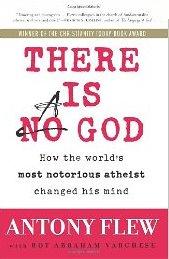
Review of Antony Flew Book: THERE IS A GOD Article by R.C. Sproul May 2008

During the 1990′s I actually made it a practice to write famous atheists and scientists that were mentioned by Adrian Rogers and Francis Schaeffer and challenge them with the evidence for the Bible’s historicity and the claims of the gospel. Usually I would send them a cassette tape of Adrian Rogers’ messages “6 reasons I know […]

The Death of a (Former) Atheist — Antony Flew, 1923-2010 Antony Flew’s rejection of atheism is an encouragement, but his rejection of Christianity is a warning. Rejecting atheism is simply not enough, by Al Mohler

________________________________ Discussion (1 of 3): Antony Flew, N.T. Wright, and Gary Habermas Uploaded on Sep 22, 2010 A discussion with Antony Flew, N.T. Wright, and Gary Habermas. This was held at Westminster Chapel March, 2008 ______________________ During the 1990′s I actually made it a practice to write famous atheists and scientists that were mentioned by Adrian […]

By Everette Hatcher III | Posted in Francis Schaeffer | Tagged  | Edit | Comments (0)

Antony Flew’s journey from Atheism to Theism

During the 1990′s I actually made it a practice to write famous atheists and scientists that were mentioned by Adrian Rogers and Francis Schaeffer and challenge them with the evidence for the Bible’s historicity and the claims of the gospel. Usually I would send them a cassette tape of Adrian Rogers’ messages “6 reasons I […]

Part of the reason Antony Flew left atheism can be found in this Paul Davies’ quote “Science can proceed only if the scientist adopts an essentially theological worldview!”


Conversation with John Barrow

Published on Jun 16, 2012

Templeton Prize 2006, Gifford Lectures 1988
British Academy, 1 June 2012

_______

Many Christians are involved in science and John D. Barrow is one of the leaders of science today.

Here is his bio:

John D Barrow

John D. Barrow was born in London in 1952 and attended Ealing Grammar School. He graduated in Mathematics from Durham University in 1974, received his doctorate in Astrophysics from Oxford University in 1977 (supervised by Dennis Sciama), and held positions at the Universities of Oxford and California at Berkeley before taking up a position at the Astronomy Centre, University of Sussex in 1981. He was professor of astronomy and Director of the Astronomy Centre at the University of Sussex until 1999. He is the author of 325 scientific articles in cosmology and astrophysics, and is a recipient of the Locker Prize for Astronomy and the 1999 Kelvin Medal of the Royal Glasgow Philosophical Society. He was awarded an honorary Doctor of Science degree by the University of Hertfordshire in 1999. He recently held a Senior 5-year Research Fellowship from the Particle Physicsand Astronomy Research Council of the UK.

In July 1999 he took up a new appointment as Research Professor of Mathematical Sciences at Cambridge and Director of the Millennium Mathematics Project, a new initiative to improve the understanding and appreciation of mathematics and its applications amongst young people and the general public.

He is the author of 15 books, translated into 28 languages, which explore many of the wider historical, philosophical and cultural ramifications of developments in astronomy, physics and mathematics: these include, The Left Hand of Creation (with Joseph Silk), The Anthropic Cosmological Principle (with Frank Tipler), L’Homme et le Cosmos (with Frank Tipler), The World Within the World, Theories of Everything, Pi in the Sky: counting, thinking and being, Pérche il mondo è matematico?, The Origin of the Universe, The Artful Universe, Impossibility: the limits of science and the science of limitsBetween Inner Space and Outer Space and The Book of Nothing. His most recent book, The Constants of Nature:from alpha to omega has just been published by Random House. He has written a play, Infinities, which was performed (in Italian) at the Teatro la Scala, Milan, in the Spring of 2002 under the direction of Luca Ronconi and in Spanish at the Valencia Festival.

He is a frequent lecturer to audiences of all sorts in many countries. He has given many notable public lectures in many countries, including the 1989 Gifford Lectures, the George Darwin and Whitrow Lectures of the Royal Astronomical Society, the Amnesty International Lecture on Science in Oxford, The Flamsteed Lecture, The Tyndall Lecture, The RSA Christmas Lecture for Children, and theSpinoza Lecture at the University of Amsterdam. John Barrow also has the curious distinction of having delivered lectures on cosmology at the Venice Film Festival, 10 Downing Street, Windsor Castle and the Vatican Palace.

__________________

Below is an excerpt from Antony Flew’s book THERE IS A GOD: How the world’s most notorious atheist changed his mind, (pages 107-109) where he quotes both Paul Davies and John D. Barrrow when essentially making the same point:

WHOSE LAWS?
In his Templeton address, Paul Davies makes the point
that “science can proceed only if the scientist adopts an
essentially theological worldview.” Nobody asks where the
laws of physics come from, but “even the most atheistic
scientist accepts as an act of faith the existence of a lawlike
order in nature that is at least in part comprehensible to
us.” Davies rejects two common misconceptions. He says
the idea that a theory of everything would show that this is
the only logically consistent world is “demonstrably wrong,”
because there is no evidence at all that the universe is logi-
cally necessary, and in fact it is possible to imagine alterna-
tive universes that are logically consistent. Second, he says
it is “arrant nonsense” to suppose that the laws of physics
are our laws and not nature’s. Physicists will not believe
that Newton’s inverse law of gravitation is a cultural cre-
ation. He holds that the laws of physics “really exist,” and
scientists’ job is to uncover and not invent them.
Davies draws attention to the fact that the laws of nature
underlying phenomena are not found through direct obser-
vation, but extracted through experiment and mathematical
theory. The laws are written in a cosmic code that scientists
must crack in order to reveal the message that is “nature’s
message, God’s message, take your choice, but not our mes-
sage.”
The burning question, he says, is threefold:
Where do the laws of physics come from?
Why is it that we have these laws instead of some
other set?
How is that we have a set of laws that drives feature-
less gases to life, consciousness and intelligence?
These laws “seem almost contrived—fine-tuned, some
commentators have claimed—so that life and conscious-
ness may emerge.” He concludes that this “contrived
nature of physical existence is just too fantastic for me to
take on board as simply ‘given.’ It points to a deeper under-
lying meaning to existence.” Such words as purpose
and design, he says, only capture imperfectly what the universe
is about. “But, that it is about something, I have absolutely
no doubt.”25
John Barrow, in his Templeton address, observes that
the unending complexity and exquisite structure of the
universe are governed by a few simple laws that are sym-
metrical and intelligible. In fact, “there are mathematical
equations, little squiggles on pieces of paper, that tell us
how whole universes behave.” Like Davies, he dismisses
the idea that the order of the universe is imposed by our
minds. Moreover, “natural selection requires no under-
standing of quarks and black holes for our survival and
multiplication.”
Barrow observes that in the history of science new
theories extend and subsume old ones. Although Newton’s
theory of mechanics and gravity has been superseded by
Einstein’s and will be succeeded by some other theory in
the future, a thousand years from now engineers will still
rely on Newton’s theories. Likewise, he says, religious con-
ceptions of the universe also use approximations and anal-
ogies to help in grasping ultimate things. “They are not the
whole truth, but this does not stop them being a part of the
truth.”26


_____________

The Kalam Cosmological Argument (Scientific Evidence) (Henry Schaefer, PhD)

Published on Jun 11, 2012

Scientist Dr. Henry “Fritz” Schaefer gives a lecture on the cosmological argument and shows how contemporary science backs it up.

_____________

_____________________________________

John D. Barrow

From Wikipedia, the free encyclopedia
This article is about the English theoretical physicist John David Barrow. For other uses, see John Barrow (disambiguation).
John D. Barrow
Born 29 November 1952 (age 61)
LondonEnglandUK
Fields Physicist and mathematician
Institutions University of Cambridge
Gresham College
University of California, Berkeley
University of Sussex
Alma mater University of Durham
University of Oxford
Doctoral advisor Dennis William Sciama
Doctoral students Peter Coles
David Wands
Notable awards Templeton prize (2006)

John David Barrow FRS (born 29 November 1952) is an English cosmologist, theoretical physicist, and mathematician. He is currently Research Professor of Mathematical Sciences at the University of Cambridge. Barrow is also a writer of popular science and an amateur playwright.

Life[edit]

Barrow attended Barham Primary School in Wembley until 1964 and Ealing Grammar School for Boys from 1964–71 and obtained his first degree in mathematics and physics from Van Mildert College at the University of Durham in 1974.[1] In 1977, he completed his doctorate in astrophysics at Magdalen College, Oxford, under Dennis William Sciama. He was a Junior Research Lecturer at Christ Church, Oxford, from 1977–81. He did two postdoctoral years in astronomy at theUniversity of California, Berkeley, as a Commonwealth Lindemann Fellow (1977–8) and Miller Fellow (1980–1).

In 1981 he joined the University of Sussex and rose to the rank of Professor and Director of the Astronomy Centre. In 1999, he became Professor in the Department of Applied Mathematics and Theoretical Physics and a fellow in Clare Hall at Cambridge University. He is Director of theMillennium Mathematics Project. From 2003–2007 he was Gresham Professor of Astronomy at Gresham College, London, and he has been appointed as Gresham Professor of Geometry from 2008–2011; only one person has previously held two different Gresham chairs.[2] In 2008, the Royal Society awarded him the Faraday Prize.

In addition to having published more than 480 journal articles, Barrow has coauthored (with Frank J. TiplerThe Anthropic Cosmological Principle, a work on the history of the ideas, specifically intelligent design and teleology, as well as a treatise on astrophysics. He has also published 17 books for general readers, beginning with his 1983 The Left Hand of Creation. His books summarise the state of the affairs of physical questions, often in the form of compendia of a large number of facts assembled from the works of great physicists, such as Paul Dirac and Arthur Eddington.

Barrow’s approach to philosophical issues posed by physical cosmology makes his books accessible to general readers. For example, Barrow introduced a memorable paradox, which he called “the Groucho Marx Effect” (see Russell-like paradoxes). Here, he quotes Groucho Marx: “I wouldn’t want to belong to any club that would accept me as a member”. Applying this to problems in cosmology, Barrow states: “A universe simple enough to be understood is too simple to produce a mind capable of understanding it.”[3] That is, the better we understand the problem, the more likely it is to be oversimplified. Conversely, the closer we get to a description of reality, the more complex and incomprehensible the description becomes. There would be few if any fields of study in which this paradox does not apply.

Barrow has lectured at 10 Downing StreetWindsor Castle, the Vatican, and to the general public. In 2002, his play Infinities premiered in Milan, played in Valencia, and won the Premi Ubu 2002 Italian Theatre Prize.

He was awarded the 2006 Templeton Prize for “Progress Toward Research or Discoveries about Spiritual Realities” for his “writings about the relationship between life and the universe, and the nature of human understanding [which] have created new perspectives on questions of ultimate concern to science and religion”.[4] He is a member of a United Reformed Church, which he describes as teaching “a traditional deistic picture of the universe”.[5]

Books[edit]

In English:

  1. Cosmic Imagery: Key Images in the History of Science. ISBN 978-0224075237
  2. New Theories of Everything. ISBN 978-0192807212
  3. Between Inner Space and Outer Space: Essays on the Science, Art, and Philosophy of the Origin of the Universe
  4. Impossibility: Limits of Science and the Science of Limits. ISBN 0-09-977211-6
  5. Material Content of the Universe
  6. Pi in the Sky: Counting, Thinking, and Being. ISBN 9780198539568
  7. Science and Ultimate Reality: Quantum Theory, Cosmology and Complexity
  8. Barrow, John D.Tipler, Frank J. (1988). The Anthropic Cosmological PrincipleOxford University PressISBN 978-0-19-282147-8LCCN 87028148.
  9. The Artful Universe: The Cosmic Source of Human Creativity
  10. The Book of Nothing: Vacuums, Voids, and the Latest Ideas about the Origins of the Universe
  11. The Infinite Book: A Short Guide to the Boundless, Timeless and Endless
  12. The Left Hand of Creation: The Origin and Evolution of the Expanding Universe
  13. The Origin of the Universe: To the Edge of Space and Time
  14. The Universe That Discovered Itself
  15. The World Within the World
  16. Theories of Everything: The Quest for Ultimate Explanation
  17. The Constants of Nature: The Numbers that Encode the Deepest Secrets of the Universe
  18. 100 Essential Things You Didn’t Know You Didn’t Know
  19. Mathletics: A Scientist Explains 100 Amazing Things About The World of Sports

In other languages:

  1. L’Homme et le Cosmos (in French)
  2. Perché il Mondo è Matematico? (in Italian)

See also[edit]

References[edit]

  1. Jump up^ “Durham graduate wins $1M prize”. University of Durham Department of Physics. 20 March 2006. Retrieved 2007-11-24.
  2. Jump up^ Gresham College: New Gresham Chair of Geometry.
  3. Jump up^ Barrow, John D (1990). The World Within the World. Oxford: Oxford University Press. pp. 342–343. ISBN 0-19-286108-5.
  4. Jump up^ Lehr, Donald (2006-03-15). “John Barrow wins 2006 Templeton Prize”templetonprize.orgJohn Templeton Foundation. Retrieved 2013-08-08.
  5. Jump up^ Overbye, Dennis (16 March 2006). “Math Professor Wins a Coveted Religion Award”New York Times. Retrieved 2007-11-24.

External links[edit]

Publications available on the Internet
[hide]

Authority control

_______________

Related posts:

Antony Flew, “I was particularly impressed with Gerry Schroeder’s point-by-point refutation of what I call the MONKEY THEOREM” or the “the possibility of life arising by chance using the analogy of a multitude of monkeys banging away on computer keyboards and eventually ending up writing a Shakespearean sonnet!”

____________   Discussion (1 of 3): Antony Flew, N.T. Wright, and Gary Habermas Uploaded on Sep 22, 2010 A discussion with Antony Flew, N.T. Wright, and Gary Habermas. This was held at Westminster Chapel March, 2008 ___________   __________ Antony Flew, “I was particularly impressed with Gerry Schroeder’s point-by-point refutation of what I call the MONKEY […]

Antony Flew answers the criticisms of Richard Dawkins in 2008!!!

Intelligent Design: Is It Viable? William Lane Craig vs. Francisco J. Ayala Published on Nov 10, 2013 Date: November 5, 2009 Location: Indiana University Christian/Intelligent Design proponent debater: William Lane Craig Christian/Darwinist debater: Francisco J. Ayala For William Lane Craig: http://www.reasonablefaith.org/ For Francisco Ayala: http://www.faculty.uci.edu/profile.cf… To purchase this debate: http://apps.biola.edu/apologetics-sto… _______________________________ Antony Flew answers the criticisms of Richard Dawkins […]

Roy Abraham Varghese: Antony Flew’s paper THEOLOGY AND FALSIFICATION became most widely reprinted philosophical publication of last century!

_____________ Antony Flew on God and Atheism Published on Feb 11, 2013 Lee Strobel interviews philosopher and scholar Antony Flew on his conversion from atheism to deism. Much of it has to do with intelligent design. Flew was considered one of the most influential and important thinker for atheism during his time before his death […]

ANTONY FLEW’S SIGNIFICANCE IN THE HISTORY OF ATHEISM by Roy Abraham Varghese

________________ ________ Antony Flew – World’s Most Famous Atheist Accepts Existence of God Uploaded on Nov 28, 2008 Has Science Discovered God? A half-century ago, in 1955, Professor Antony Flew set the agenda for modern atheism with his Theology and Falsification, a paper presented in a debate with C.S. Lewis. This work became the most […]

Antony Flew did not make a public profession of faith in Christ but will his conversion from atheism to theism have an impact?

____________ Jesus’ Resurrection: Atheist, Antony Flew, and Theist, Gary Habermas, Dialogue Published on Apr 7, 2012 http://www.veritas.org/talks – Did Jesus die, was he buried, and what happened afterward? Join legendary atheist Antony Flew and Christian historian and apologist Gary Habermas in a discussion about the facts surrounding the death and resurrection of Jesus Christ. Join the […]

Concerning the book THERE IS A GOD Antony Flew stated, “This is my book and it represents my thinking!

_______ ________ Does God Exist?: William Lane Craig vs Antony Flew Uploaded on Dec 16, 2010 http://drcraigvideos.blogspot.com – William Lane Craig and Antony Flew met in 1998 on the 50th anniversary of the famous Copleston/Russell debate to discuss the question of God’s existence in a public debate. Unlike Richard Dawkins, Flew was one of the most […]

Bill Muehlenberg’s review of “There Is a God” By Antony Flew

_________________   Antony Flew on God and Atheism Published on Feb 11, 2013 Lee Strobel interviews philosopher and scholar Antony Flew on his conversion from atheism to deism. Much of it has to do with intelligent design. Flew was considered one of the most influential and important thinker for atheism during his time before his […]

Former Atheist Antony Flew noted that Evolutionists failed to show “Where did a living, self-reproducing organism come from in the first place?”

____   Does God Exist? Thomas Warren vs. Antony Flew Published on Jan 2, 2014 Date: September 20-23, 1976 Location: North Texas State University Christian debater: Thomas B. Warren Atheist debater: Antony G.N. Flew For Thomas Warren: http://www.warrenapologeticscenter.org/ ______________________ Antony Flew and his conversion to theism Uploaded on Aug 12, 2011 Antony Flew, a well known […]

Educated Scholars like Antony Flew can believe in God!!!

__________ Discussion (1 of 3): Antony Flew, N.T. Wright, and Gary Habermas Uploaded on Sep 22, 2010 A discussion with Antony Flew, N.T. Wright, and Gary Habermas. This was held at Westminster Chapel March, 2008 Debate – William Lane Craig vs Christopher Hitchens – Does God Exist? Uploaded on Jan 27, 2011 April 4, 2009 – Craig […]

Antony Flew rightly noted that Richard Dawkins’ “monkey theorem was a load of rubbish”

________   William Lane Craig versus Eddie Tabash Debate Uploaded on Feb 6, 2012 Secular Humanism versus Christianity, Lawyer versus Theologian. Evangelical Christian apologist William Lane Craig debates humanist atheist lawyer Eddie Tabash at Pepperdine University, February 8, 1999. Visit http://www.Infidels.org andhttp://www.WilliamLaneCraig.com ________________ Antony Flew on God and Atheism Published on Feb 11, 2013 Lee […]

_________

Antony Flew, “I was particularly impressed with Gerry Schroeder’s point-by-point refutation of what I call the MONKEY THEOREM” or the “the possibility of life arising by chance using the analogy of a multitude of monkeys banging away on computer keyboards and eventually ending up writing a Shakespearean sonnet!”

____________


Discussion (1 of 3): Antony Flew, N.T. Wright, and Gary Habermas

Uploaded on Sep 22, 2010

A discussion with Antony Flew, N.T. Wright, and Gary Habermas. This was held at Westminster Chapel March, 2008

___________


__________

Antony Flew, “I was particularly impressed with Gerry Schroeder’s point-by-point refutation of what I call the MONKEY THEOREM” or the “the possibility of life arising by chance using the analogy of a multitude of monkeys banging away on computer keyboards and eventually ending up writing a Shakespearean sonnet!”

Review of Antony Flew Book:

________

antony flew yesterday

Antony Flew when he was having famous debates with creationists

Antony Flew Today

Antony Flew is the most famous atheist of the 20th century. Long before Richard Dawkins, Antony Flew was the face of reasoned atheism. He was the man that turned the argument around, saying that creationists needed to prove there is a God.
Anthony Flew became an atheist because he didn’t think the evidence supported the idea of God. His ruling principle was always to follow the argument no matter where it lead. In 2004 he became a deist because of the overwhelming evidence for intelligent design coming out of microbiology.

The following excerpt is from his recent book  [There is a God, pages 75-78]

I was particularly impressed with Gerry Schroeder’s point-by-point refutation of what I call the “monkey theorem.” This idea, which has been presented in a number of forms and variations, defends the possibility of life arising by chance using the analogy of a multitude of monkeys banging away on computer keyboards and eventually ending up writing a Shakespearean sonnet.

Schroeder first referred to an experiment conducted by the British National Council of Arts. A computer was placed in a cage with six monkeys. After one month of hammering away at it (as well is using it as a bathroom!), the monkeys produced fifty typed pages — but not a single word. Schroeder noted that this was the case even though the shortest word in the English language is one letter (a or I). A is a word only if there is a space on either side of it. If we take it that the keyboard has thirty characters (the twenty-six letters and other symbols), then the likelihood of getting a one-letter word is 30 times 30 times 30, which is 27,000. The likelihood of getting a one-letter word is one chance out of 27,000.

Schroeder then applied the probabilities to the sonnet analogy. “What’s the chance of getting a Shakespearean sonnet?” he asked. He continued:
All the sonnets are the same length. They are by definition fourteen lines long. I picked the one I knew the opening for, “Shall I compare thee to a summer’s day?” I counted the number of letters; there are 488 letters in that sonnet. What’s the likelihood of hammering away and getting 488 letters in the exact sequence as in “Shall I Compare Thee to a Summer’s Day?”? What you end up with is 26 multiplied by itself 488 times — or 26 to the 488th power. Or, in other words, in base 10, 10 to the 690th.
[Now] the number of particles in the universe — not grains of sand, I’m talking about protons, electrons, and neutrons — is 10 to the 80th. Ten to the 80th is 1 with 80 zeros after it. Ten to the 690th is one with 690 zeros after it. There are not enough particles in the universe to write down the trials; you’d be off by a factor of 10 to the 600th.

If you took the entire universe and converted it to computer chips — forget the monkeys — each one weighing a millionth of a gram and had each computer chip able to spin out 488 trials at, say, a million times a second; if you turn the entire universe into these microcomputer chips and these chips were spinning a million times a second [producing] random letters, the number of trials you would get since the beginning of time would be 10 to the 90th trials. It would be off again by a factor of 10 to the 600th. You will never get a sonnet by chance. The universe would have to be 10 to the 600th times larger. Yet the world thinks the monkeys can do it every time.

After hearing Schroeder’s presentation, I told him that he had very satisfactorily and decisively established that the “monkey theorem” was a load of rubbish, and that it was particularly good to do it with just a sonnet; the theorem is sometimes proposed using the works of Shakespeare or single play, such as Hamlet. If the theorem won’t work for a single sonnet, then of course it’s simply absurd to suggest that the more elaborate feat of the origin of life could have been achieved by chance.

Is Goodness Without God is Good Enough? William Lane Craig vs. Paul Kurtz

http://www.youtube.com/watch?v=8F6y_6fIjAY

Published on Jul 29, 2013

Date: October 24, 2001
Location: Franklin & Marshall College

Christian debater: William Lane Craig
Atheist/secular humanist debater: Paul Kurtz

For William Lane Craig: http://www.reasonablefaith.org/
For Paul Kurtz: http://paulkurtz.net/
To purchase this debate: http://apps.biola.edu/apologetics-sto…
To purchase a published version of this debate:http://apps.biola.edu/apologetics-sto…

__________________________

The Bible and Science (Part 01)

____________

Making Sense of Faith and Science

Uploaded on May 16, 2008

Dr. H. Fritz Schaefer confronts the assertion that one cannot believe in God and be a credible scientist. He explains that the theistic world view of Bacon, Kepler, Pascal, Boyle, Newton, Faraday and Maxwell was instrumental in the rise of modern science itself. Presented as part of the Let There be Light series. Series: Let There Be Light [5/2003] [Humanities] [Show ID: 7338]

________________

Related posts:

Antony Flew, “I was particularly impressed with Gerry Schroeder’s point-by-point refutation of what I call the MONKEY THEOREM” or the “the possibility of life arising by chance using the analogy of a multitude of monkeys banging away on computer keyboards and eventually ending up writing a Shakespearean sonnet!”

____________   Discussion (1 of 3): Antony Flew, N.T. Wright, and Gary Habermas Uploaded on Sep 22, 2010 A discussion with Antony Flew, N.T. Wright, and Gary Habermas. This was held at Westminster Chapel March, 2008 ___________   __________ Antony Flew, “I was particularly impressed with Gerry Schroeder’s point-by-point refutation of what I call the MONKEY […]

Antony Flew answers the criticisms of Richard Dawkins in 2008!!!

Intelligent Design: Is It Viable? William Lane Craig vs. Francisco J. Ayala Published on Nov 10, 2013 Date: November 5, 2009 Location: Indiana University Christian/Intelligent Design proponent debater: William Lane Craig Christian/Darwinist debater: Francisco J. Ayala For William Lane Craig: http://www.reasonablefaith.org/ For Francisco Ayala: http://www.faculty.uci.edu/profile.cf… To purchase this debate: http://apps.biola.edu/apologetics-sto… _______________________________ Antony Flew answers the criticisms of Richard Dawkins […]

Roy Abraham Varghese: Antony Flew’s paper THEOLOGY AND FALSIFICATION became most widely reprinted philosophical publication of last century!

_____________ Antony Flew on God and Atheism Published on Feb 11, 2013 Lee Strobel interviews philosopher and scholar Antony Flew on his conversion from atheism to deism. Much of it has to do with intelligent design. Flew was considered one of the most influential and important thinker for atheism during his time before his death […]

ANTONY FLEW’S SIGNIFICANCE IN THE HISTORY OF ATHEISM by Roy Abraham Varghese

________________ ________ Antony Flew – World’s Most Famous Atheist Accepts Existence of God Uploaded on Nov 28, 2008 Has Science Discovered God? A half-century ago, in 1955, Professor Antony Flew set the agenda for modern atheism with his Theology and Falsification, a paper presented in a debate with C.S. Lewis. This work became the most […]

Antony Flew did not make a public profession of faith in Christ but will his conversion from atheism to theism have an impact?

____________ Jesus’ Resurrection: Atheist, Antony Flew, and Theist, Gary Habermas, Dialogue Published on Apr 7, 2012 http://www.veritas.org/talks – Did Jesus die, was he buried, and what happened afterward? Join legendary atheist Antony Flew and Christian historian and apologist Gary Habermas in a discussion about the facts surrounding the death and resurrection of Jesus Christ. Join the […]

Concerning the book THERE IS A GOD Antony Flew stated, “This is my book and it represents my thinking!

_______ ________ Does God Exist?: William Lane Craig vs Antony Flew Uploaded on Dec 16, 2010 http://drcraigvideos.blogspot.com – William Lane Craig and Antony Flew met in 1998 on the 50th anniversary of the famous Copleston/Russell debate to discuss the question of God’s existence in a public debate. Unlike Richard Dawkins, Flew was one of the most […]

Bill Muehlenberg’s review of “There Is a God” By Antony Flew

_________________   Antony Flew on God and Atheism Published on Feb 11, 2013 Lee Strobel interviews philosopher and scholar Antony Flew on his conversion from atheism to deism. Much of it has to do with intelligent design. Flew was considered one of the most influential and important thinker for atheism during his time before his […]

Former Atheist Antony Flew noted that Evolutionists failed to show “Where did a living, self-reproducing organism come from in the first place?”

____   Does God Exist? Thomas Warren vs. Antony Flew Published on Jan 2, 2014 Date: September 20-23, 1976 Location: North Texas State University Christian debater: Thomas B. Warren Atheist debater: Antony G.N. Flew For Thomas Warren: http://www.warrenapologeticscenter.org/ ______________________ Antony Flew and his conversion to theism Uploaded on Aug 12, 2011 Antony Flew, a well known […]

Educated Scholars like Antony Flew can believe in God!!!

__________ Discussion (1 of 3): Antony Flew, N.T. Wright, and Gary Habermas Uploaded on Sep 22, 2010 A discussion with Antony Flew, N.T. Wright, and Gary Habermas. This was held at Westminster Chapel March, 2008 Debate – William Lane Craig vs Christopher Hitchens – Does God Exist? Uploaded on Jan 27, 2011 April 4, 2009 – Craig […]

Antony Flew rightly noted that Richard Dawkins’ “monkey theorem was a load of rubbish”

________   Antony Flew rightly noted that Richard Dawkins’  ”monkey theorem was a load of rubbish.” Sunday, 9 September 2012 Why Richard Dawkins’ typing monkey theorem is a load of nonsense The infinite monkey theorem states that a monkey hitting keys at random on a typewriter keyboard for an infinite amount of time will almost surely type a […]

Article from 2005 indicated Antony Flew abandoned atheism because of Law of Biogenesis!!!!

___________ Article from 2005 indicated Antony Flew abandoned atheism because of Law of Biogenesis!!!! Weighing the Evidence An Atheist Abandons Atheism By Chuck Colson|Published Date: January 10, 2005 Antony Flew, the 81-year-old British philosophy professor who taught at Oxford and other leading universities, became an atheist at age 15. Throughout his long career he argued […]

The Christian influence on society is real and that is one of the reasons Antony Flew left Atheism!!!

The Christian influence on society is real and that is one of the reasons Antony Flew left Atheism!!! Beggar to Beggar Saved by Increments By Chuck Colson|Published Date: January 11, 2005 A leading intellectual elaborates on why he abandoned atheism. But, surprisingly, he says his reasons were not entirely intellectual. British philosophy professor Dr. Antony […]

Antony Flew, George Wald and David Noebel on the Origin of Life

In the below comment section David Noebel stated the following: Since writing my article on the origin of life I have read two books that basically make the same point and I will quote briefly from them, but encourage anyone interested in the subject to read both books from cover to cover: (1) John C. […]

The Fine Tuning Argument for the Existence of God from Antony Flew!

___________ The Fine Tuning Argument for the Existence of God from Antony Flew! Imagine entering a hotel room on your next vacation. The CD player on the bedside table is softly playing a track from your favorite recording. The framed print over the bed is identical to the image that hangs over the fireplace at […]

By Everette Hatcher III | Posted in Current Events | Tagged  | Edit | Comments (0)

Mark Oppenheimer of Time Magazine claims Antony Flew was convinced by PSEUDOSCIENCE that God exists!!!

_____________ Mark Oppenheimer of Time Magazine claims Antony Flew was convinced by PSEUDOSCIENCE that God exists!!! Below you will read:  ”There Is a God” is perhaps the handiest primer ever written on the science (many would say pseudoscience) of religious belief. Regis Nicoll does a good job of refuting the claim that Flew was manipulated by […]

A review of “There is a God” by Antony Flew March 31, 2012

________ During the 1990′s I actually made it a practice to write famous atheists and scientists that were mentioned by Adrian Rogers and Francis Schaeffer and challenge them with the evidence for the Bible’s historicity and the claims of the gospel. Usually I would send them a cassette tape of Adrian Rogers’ messages “6 reasons I […]

Review of Antony Flew Book: THERE IS A GOD Article by R.C. Sproul May 2008

During the 1990′s I actually made it a practice to write famous atheists and scientists that were mentioned by Adrian Rogers and Francis Schaeffer and challenge them with the evidence for the Bible’s historicity and the claims of the gospel. Usually I would send them a cassette tape of Adrian Rogers’ messages “6 reasons I know […]

The Death of a (Former) Atheist — Antony Flew, 1923-2010 Antony Flew’s rejection of atheism is an encouragement, but his rejection of Christianity is a warning. Rejecting atheism is simply not enough, by Al Mohler

________________________________ Discussion (1 of 3): Antony Flew, N.T. Wright, and Gary Habermas Uploaded on Sep 22, 2010 A discussion with Antony Flew, N.T. Wright, and Gary Habermas. This was held at Westminster Chapel March, 2008 ______________________ During the 1990′s I actually made it a practice to write famous atheists and scientists that were mentioned by Adrian […]

By Everette Hatcher III | Posted in Francis Schaeffer | Tagged  | Edit | Comments (0)

Antony Flew’s journey from Atheism to Theism

During the 1990′s I actually made it a practice to write famous atheists and scientists that were mentioned by Adrian Rogers and Francis Schaeffer and challenge them with the evidence for the Bible’s historicity and the claims of the gospel. Usually I would send them a cassette tape of Adrian Rogers’ messages “6 reasons I […]

Although not converting, Charles Darwin like Antony Flew struggled until his dying accepting that the universe came about by chance!!!


______________

The Kalam Cosmological Argument (Scientific Evidence) (Henry Schaefer, PhD)

Published on Jun 11, 2012

Scientist Dr. Henry “Fritz” Schaefer gives a lecture on the cosmological argument and shows how contemporary science backs it up.

_________________________________

Charles Darwin wrote THE ORIGIN OF THE SPECIES  and it was published in  November of 1859, and at that time Darwin was still a theist. However, later in life he became an agnostic. Francis Schaeffer pointed out that Darwin’s letters later in his life gave the reasons for him leaving Christianity behind. One of those reasons was that it conflicted with his theory, but yet late in his life he still struggled with his view that the universe came about by chance. I have included a quote from Antony Flew where he quotes Darwin’s THE ORIGIN OF THE SPECIES and I think he has a good point that Darwin at that time did think a Divine Mind was behind the creation. Nevertheless, Darwin did lose his faith and leave Christianity, but evidently he agonized over this even up until a few months before he died in 1882. This same issues weighed heavy on Flew’s mind too in the last decade of his life and he embraced theism.

From Antony Flew’s book THERE IS A GOD: How the world’s most notorious atheist changed his mind,  (pages 103-107):

QUANTUM LEAPS TOWARD GOD
Einstein, the discoverer of relativity, was not the only great
scientist who saw a connection between the laws of nature
and the Mind of God. The progenitors of quantum physics,
the other great scientific discovery of modern times, Max
Planck, Werner Heisenberg, Erwin Schrödinger, and Paul
Dirac, have all made similar statements, 17 and I reproduce
a few of these below.
Werner Heisenberg, famous for Heisenberg’s uncer-
tainty principle and matrix mechanics, said, “In the course
of my life I have repeatedly been compelled to ponder on
the relationship of these two regions of thought [science
and religion], for I have never been able to doubt the real-
ity of that to which they point.”18 On another occasion he
said:
Wolfgang [Pauli] asked me quite unexpectedly: “Do
you believe in a personal God?”. . . “May I rephrase
your question?” I asked. “I myself should prefer the
following formulation: Can you, or anyone else,
reach the central order of things or events, whose
existence seems beyond doubt, as directly as you
can reach the soul of another human being. I am
using the term ‘soul’ quite deliberately so as not
to be misunderstood. If you put your question like
that, I would say yes. . . .If the magnetic force that
has guided this particular compass—and what else
was its source but the central order?—should ever
become extinguished, terrible things may happen to
mankind, far more terrible even than concentration
camps and atom bombs.”19
Another quantum pioneer, Erwin Schrödinger, who
developed wave mechanics, stated:
The scientific picture of the world around me is
very deficient. It gives me a lot of factual informa-
tion, puts all our experience in a magnificently con-
sistent order, but is ghastly silent about all that is
really near to our heart, that really matters to us. It
cannot tell a word about the sensation of red and
blue, bitter and sweet, feelings of delight and sor-
row. It knows nothing of beauty and ugly, good or
bad, God and eternity. Science sometimes pretends
to answer questions in these domains, but the an-
swers are very often so silly that we are not inclined
to take them seriously.
Science is reticent too when it is a question of
the great Unity of which we somehow form a part,
to which we belong. The most popular name for it
in our time is God, with a capital “G.” Science is,
very usually, branded as being atheistic. After what
we have said this is not astonishing. If its world
picture does not even contain beauty, delight, sor-
row, if personality is cut out of it by agreement, how
should it contain the most sublime idea that pres-
ents itself to the human mind.20
Max Planck, who first introduced the quantum hypoth-
esis, unambiguously held that science complements reli-
gion, contending, “There can never be any real opposition
between religion and science; for the one is the comple-
ment of the other.”21 He also said, “Religion and natural
science are fighting a joint battle in an incessant, never
relaxing crusade against skepticism and against dogma-
tism, against unbelief and superstition . . . [and therefore]
‘On to God!’”22
Paul A. M. Dirac, who complemented Heisenberg and
Schrödinger with a third formulation of quantum theory,
observed that “God is a mathematician of a very high order
and He used advanced mathematics in constructing the
universe.”23
Generations before any of these scientists, Charles
Darwin had already expressed a similar view:
[Reason tells me of the] extreme difficulty or rather
impossibility of conceiving this immense and won-
derful universe, including man with his capability
of looking far backwards and far into futurity, as
the result of blind chance or necessity. When thus
reflecting I feel compelled to look to a First Cause
having an intelligent mind in some degree analo-
gous to that of man; and I deserve to be called a
Theist.24
This train of thought has been kept alive in the present
time in the writings of many of today’s leading expositors of
science. These range from scientists like Paul Davies, John
Barrow, John Polkinghorne, Freeman Dyson, Francis Col-
lins, Owen Gingerich, and Roger Penrose to philosophers
of science like Richard Swinburne and John Leslie.
Davies and Barrow, in particular, have further developed
the insights of Einstein, Heisenberg, and other scientists
into theories about the relationship between the rational-
ity of nature and the Mind of God. Both have received the
Templeton Prize for their contributions to this exploration.
Their works correct many common misconceptions while
shedding light on the issues discussed here.
______________________

At the present day the most usual argument for the existence of an intelligent God is drawn from the deep inward conviction and feelings which are experienced by most persons...Formerly I was led by feelings such as those just referred to (although I do not think that the religious sentiment was ever very strongly developed in me), to the firm conviction of the existence of God, and of the immortality of the soul. In my Journal I wrote that whilst standing in the midst of the grandeur of a Brazilian forest, “it is not possible to give an adequate idea of the higher feelings of wonder, admiration, and devotion, which fill and elevate the mind.I well remember my conviction that there is more in man than the mere breath of his body. But now the grandest scenes would not cause any such convictions and feelings to rise in my mind. It may be truly said that I am like a man who has become colour-blind

 Darwin’s own words

I have said that in one respect my mind has changed during the last twenty or thirty years. Up to the age of thirty, or beyond it, poetry of many kinds, such as the works of Milton, Gray, Byron, Wordsworth, Coleridge, and Shelley, gave me great pleasure, and even as a schoolboy I took intense delight in Shakespeare, especially in the historical plays. I have also said that formerly pictures gave me considerable, and music very great delight. But now for many years I cannot endure to read a line of poetry: I have tried lately to read Shakespeare, and found it so intolerably dull that it nauseated me. I have also almost lost my taste for pictures or music. Music generally sets me thinking too energetically on what I have been at work on, instead of giving me pleasure. I retain some taste for fine scenery, but it does not cause me the exquisite delight which it formerly did. On the other hand, novels which are works of the imagination, though not of a very high order, have been for years a wonderful relief and pleasure to me, and I often bless all novelists. A surprising number have been read aloud to me, and I like all if moderately good, and if they do not end unhappily—against which a law ought to be passed. A novel, according to my taste, does not come into the first class unless it contains some person whom one can thoroughly love, and if a pretty woman all the better.

This curious and lamentable loss of the higher æsthetic tastes is all the odder, as books on history, biographies, and travels (independently of any scientific facts which they may contain), and essays on all sorts of subjects interest me as much as ever they did. My mind seems to have become a kind of machine for grinding general laws out of large collections of facts, but why this should have caused the atrophy of that part of the brain alone, on which the higher tastes depend, I cannot conceive. A man with a mind more highly organised or better constituted than mine, would not, I suppose, have thus suffered; and if I had to live my life again, I would have made a rule to read some poetry and listen to some music at least once every week; for perhaps the parts of my brain now atrophied would thus have been kept active through use. The loss of these tastes is a loss of happiness, and may possibly be injurious to the intellect, and more probably to the moral character, by enfeebling the emotional part of our nature.

______________

Francis Schaeffer commented:

This is the old man Darwin writing at the end of his life. What is saying here is the further he has gone on with his studies the more he has seen himself reduced to a machine as far as aesthetic things are concerned. We go through this we find that his struggles and my sincere conviction is that he never came to the logical conclusion of his own position, but he nevertheless in the death of the higher qualities as he calls them, art, music, poetry, and so on, what he had happen to him was his own theory was producing this in his own self just as his theories a hundred years later have produced this in our culture. I don’t think you can hold the evolutionary theory as he held it without becoming a machine. What has happened to Darwin personally is merely a forerunner to what occurred to the whole culture as it has fallen in this world of pure material, chance and later determinism. Here he is in a situation where his mannishness has suffered in the midst of his own position.

______________

Charles Darwin (1809–1882), who proposed the theory of evolution by means of natural selection.


______________

Religious views of Charles Darwin

From Wikipedia, the free encyclopedia

In a letter to a correspondent at the University of Utrecht in 1873, Darwin expressed agnosticism:

I may say that the impossibility of conceiving that this grand and wondrous universe, with our conscious selves, arose through chance, seems to me the chief argument for the existence of God; but whether this is an argument of real value, I have never been able to decide. I am aware that if we admit a first cause, the mind still craves to know whence it came from and how it arose. Nor can I overlook the difficulty from the immense amount of suffering through the world. I am, also, induced to defer to a certain extent to the judgment of many able men who have fully believed in God; but here again I see how poor an argument this is. The safest conclusion seems to me to be that the whole subject is beyond the scope of man’s intellect; but man can do his duty.[71]

___

Francis Schaeffer observed:

This of course is a valid argument. The only answer to the problem of evil is the biblical answer of the fall. Darwin has a problem because he never had a high view of revelation, so he doesn’t have the answer any more than the liberal theologian has the answer. If you don’t have a space-time fall then you don’t have an answer to suffering. If you have a very, very significant man at the beginning, Darwin did not have that, but if you had a very significant, wonderful man at the beginning and can change history then the fall is the possible answer that can be given. To continue reading Darwin’s own words, “I am, also, induced to defer to a certain extent to the judgment of many able men who have fully believed in God; but here again I see how poor an argument this is. The safest conclusion seems to me to be that the whole subject is beyond the scope of man’s intellect; but man can do his duty.”

What he (Darwin) is saying is that at this point I have no answer, but the interesting thing is he puts a semicolon after that and then says, “but man can do his duty.” Darwin understands what he has said undercuts all duty and all morals. So he adds as a faith sentence, “but man can do his duty.” It doesn’t fit really, but he adds because he sees that he must say this because otherwise what happens to man?

You can switch on further down the road and Darwin would be appalled to see where his own position has been taken, to Freud and Deterministic psychology. Modern Man has a dilemma because the word “duty” doesn’t have a meaning anymore.

(Determinism: The doctrine that human action is not free, but results from such causes as psychological and chemical makeup which render free-will an illusion.)


_________________________________________

Darwin, C. R. to Graham, William

3 July 1881

In this letter Darwin goes against his agnosticism and again says that he can’t believe we are here as a result of chance::

Nevertheless you have expressed my inward conviction, though far more vividly and clearly than I could have done, that the Universe is not the result of chance. But then with me the horrid doubt always arises whether the convictions of man’s mind, which has been developed from the mind of the lower animals, are of any value or at all trustworthy. Would any one trust in the convictions of a monkey’s mind, if there are any convictions in such a mind?

___________

Francis Schaeffer comments:

Can you feel this man? He is in real agony. You can feel the whole of modern man in this tension with Darwin. My mind can’t accept that ultimate of chance, that the universe is a result of chance. He has said 3 or 4 times now that he can’t accept that it all happened by chance and then he will write someone else and say something different.


________________

John Polkinghorne – God and Science 1of3

Uploaded on Jul 7, 2008

John Polkinghorne is a former Professor of Mathematical Physics at Cambridge University, Dean of Trinity Hall and President of Queens College Cambridge. Here he discusses his views on the harmony between science and faith. This is another great example of the false dichotomy which young earth creationists continually regurgitate where an acceptance of evolution equates to atheism. Polkinghorne is also the author of many books on the subject of God and science such as “Science and Creation” and “Quarks, Chaos and Christianity.” Richard Dawkins said of Polkinghorne that he is one of a number of “good scientists who are sincerely religious”

______________________

John Polkinghorne

From Wikipedia, the free encyclopedia
John Polkinghorne
Johnpolkinghorne.jpg

In 2007
Born 16 October 1930 (age 83)
Weston-super-MareEngland, UK
Nationality United Kingdom
Education MA mathematics (1952), PhD physics (1955)
Alma mater University of Cambridge
Occupation Physicistpriest, writer
Known for Particle physics; relationship between science and religion
Religion Anglican
Spouse(s) Ruth (née Martin) Polkinghorne
Children Peter (born 1957)
Isabel
(born 1959)
Michael (1963)
Parents George and Dorothy (nèe Charlton) Polkinghorne
Relatives Peter Polkinghorne (brother, died 1942)
Ann Polkinghorne (sister, died 1930)
Awards Templeton PrizeKBEFRS

The Rev Dr John Charlton PolkinghorneKBEFRS (born 16 October 1930) is an English theoretical physicisttheologian, writer, and Anglican priest. A prominent and leading voice explaining the relationship between science and religion, he was professor of Mathematical physics at the University of Cambridge from 1968 to 1979, when he resigned his chair to study for the priesthood, becoming an ordained Anglican priest in 1982. He served as the president of Queens’ College, Cambridge from 1988 until 1996.

Polkinghorne is the author of five books on physics, and 26 on the relationship between science and religion; his publications include The Quantum World (1989), Quantum Physics and Theology: An Unexpected Kinship (2005), Exploring Reality: The Intertwining of Science and Religion (2007), and Questions of Truth (2009).[1] The Polkinghorne Reader (edited by Thomas Jay Oord) provides key excerpts from Polkinghorne’s most influential books. He was knighted in 1997 and in 2002 received the £1 million Templeton Prize, awarded for exceptional contributions to affirming life’s spiritual dimension.[2]

Early life and education[edit]

Polkinghorne was born in Weston-super-Mare to Dorothy Charlton, the daughter of a groom and George Polkinghorne, who worked for the post office. John was the couple’s third child. There was a brother, Peter, and a sister, Ann, who died when she was six, one month before John’s birth. Peter died in 1942 while flying for the Royal Air Force during the Second World War.[3]

He was educated at the local primary school in Street, Somerset, then was taught by a friend of the family at home, and later at a Quaker school. When he was 11 he went to Elmhurst Grammar School in Street, and when his father was promoted to head postmaster in Ely in 1945, Polkinghorne was transferred to The Perse School, Cambridge.[3] Following National Service in the Royal Army Educational Corps from 1948 to 1949, he read Mathematics at Trinity College, Cambridge, graduating in 1952, then earned his PhD in physics in 1955, supervised by Abdus Salam in the group led by Paul Dirac.[4]

Career[edit]

Physics[edit]

He joined the Christian Union of UCCF while at Cambridge and met his future wife, Ruth Martin, another member of the Union and also a mathematics student. They married on 26 March 1955, and at the end of that year sailed from Liverpool to New York. Polkinghorne accepted a postdoctoral Harkness Fellowship with the California Institute of Technology, where he worked with Murray Gell-Mann. Toward the end of the fellowship he was offered a position as lecturer at the University of Edinburgh, which he took up in 1956.[3]

After two years in Scotland, he returned to teach at Cambridge in 1958. He was promoted to reader in 1965, and in 1968 was offered a professorship in mathematical physics, a position he held until 1979,[3] his students including Brian Josephson and Martin Rees.[5] For 25 years, he worked on theories about elementary particles, played a role in the discovery of the quark,[2] and researched the analytic and high-energy properties of Feynman integrals and the foundations of S-Matrix theory.[6] While employed by Cambridge, he also spent time at PrincetonBerkeleyStanford, and at CERN in Geneva. He was elected a Fellow of the Royal Society in 1974.[3]

Priesthood and Queens’ College[edit]

Polkinghorne decided to train for the priesthood in 1977.[7] He said in an interview that he felt he had done his bit for science after 25 years, and that his best mathematical work was probably behind him; Christianity had always been central to his life, so ordination offered an attractive second career.[3] He resigned his chair in 1979 to study at Westcott House, Cambridge, an Anglican theological college, becoming an ordained priest on 6 June 1982 (Trinity Sunday). The ceremony was held at Trinity College, Cambridge and presided over by Bishop John A. T. Robinson. He worked for five years as a curate in south Bristol, then as vicar in Blean, Kent, before returning to Cambridge in 1986 as dean of chapel at Trinity Hall.[2][8] He became the president of Queens’ College that year, a position he held until his retirement in 1996.[8] He served as canon theologian ofLiverpool Cathedral from 1994 to 2005.[9]

Awards[edit]

In 1997 he was made a Knight Commander of the Order of the British Empire (KBE), although as an ordained priest in the Church of England, he is not styled as “Sir John Polkinghorne”.[10] He is an Honorary Fellow of St Chad’s College, Durham and awarded an honorary doctorate by theUniversity of Durham in 1998; and in 2002 was awarded the Templeton Prize for his contributions to research at the interface between science and religion.[11]He spoke on “The Universe as Creation” at the Trotter Prize ceremony in 2003.

He has been a member of the BMA Medical Ethics Committee, the General Synod of the Church of England, the Doctrine Commission, and the Human Genetics Commission. He served as chairman of the governors of The Perse School from 1972 to 1981. He is a fellow of Queens’ College, Cambridge and was for 10 years a canon theologian of Liverpool Cathedral. He is a founding member of the Society of Ordained Scientists and also of the International Society for Science and Religion, of which he was the first president.[12] He was selected to give the prestigious Gifford Lectures in 1993–1994, which he later published as The Faith of a Physicist.

In 2006 he was awarded an honorary doctorate by the Hong Kong Baptist University as part of their 50-year celebrations. This included giving a public lecture on “The Dialogue between Science and Religion and Its Significance for the Academy” and an “East-West Dialogue” with Yang Chen-ning, a nobel laureate in physics.[13] He is a member of staff of the Psychology and Religion Research Group at Cambridge University.[14]

Ideas[edit]

Polkinghorne said in an interview that he believes his move from science to religion has given him binocular vision, though he understands that it has aroused the kind of suspicion “that might follow the claim to be a vegetarian butcher.”[8] He describes his position as critical realism and believes that science and religion address aspects of the same reality. It is a consistent theme of his work that when he “turned his collar around” he did not stop seeking truth.[15] He believes the philosopher of science who has most helpfully struck the balance between the “critical” and “realism” aspects of this is Michael Polanyi.[16] He argues that there are five points of comparison between the ways in which science and theology pursue truth: moments of enforced radical revision, a period of unresolved confusion, new synthesis and understanding, continued wrestling with unresolved problems, deeper implications.[17]

Because scientific experiments try to eliminate extraneous influences, he believes they are atypical of what goes on in nature. He suggests that the mechanistic explanations of the world that have continued from Laplace to Richard Dawkins should be replaced by an understanding that most of nature is cloud-like rather than clock-like. He regards the mind, soul and body as different aspects of the same underlying reality—”dual aspect monism”—writing that “there is only one stuff in the world (not two—the material and the mental) but it can occur in two contrasting states (material and mental phases, a physicist might say) which explain our perception of the difference between mind and matter.”[18] He believes that standard physical causation cannot adequately describe the manifold ways in which things and people interact, and uses the phrase “active information” to describe how, when several outcomes are possible, there may be higher levels of causation that choose which one occurs.[19]

Sometimes Christianity seems to him to be just too good to be true, but when this sort of doubt arises he says to himself, “All right then, deny it,” and writes that he knows this is something he could never do.[20]

On the existence of God[edit]

Polkinghorne considers that “the question of the existence of God is the single most important question we face about the nature of reality”[21] and quotes with approval Anthony Kenny: “After all, if there is no God, then God is incalculably the greatest single creation of the human imagination.” He addresses the questions of “Does the concept of God make sense? If so, do we have reason for believing in such a thing?” He is “cautious about our powers to assess coherence,” pointing out that in 1900 a “competent … undergraduate could have demonstrated the ‘incoherence'” of quantum ideas. He suggests that “the nearest analogy in the physical world [to God] would be … the Quantum Vacuum.”[19]

He suggests that God is the ultimate answer to Leibniz‘s great question “why is there something rather than nothing?” The atheist’s “plain assertion of the world’s existence” is a “grossly impoverished view of reality … [arguing that] theism explains more than a reductionist atheism can ever address.” He is very doubtful of St Anselm‘s Ontological Argument. Referring to Gödel’s incompleteness theory, he said: “If we cannot prove the consistency of arithmetic it seems a bit much to hope that God’s existence is easier to deal with,” concluding that God is “ontologically necessary, but not logically necessary.” He “does not assert that God’s existence can be demonstrated in a logically coercive way (any more than God’s non-existence can) but that theism makes more sense of the world, and of human experience, than does atheism.”[22] He cites in particular:

  • The intelligibility of the universe: One would anticipate that evolutionary selection would produce hominid minds apt for coping with everyday experience, but that these minds should also be able to understand the subatomic world and general relativity goes far beyond anything of relevance to survival fitness. The mystery deepens when one recognises the proven fruitfulness of mathematical beauty as a guide to successful theory choice.[23]
  • The anthropic fine tuning of the universe: He quotes with approval Freeman Dyson, who said “the more I examine the universe and the details of its architecture, the more evidence I find that the universe in some sense must have known we were coming”[24] and suggests there is a wide consensus amongst physicists that either there are a very large number of other universes in the Multiverse or that “there is just one universe which is the way it is in its anthropic fruitfulness because it is the expression of the purposive design of a Creator, who has endowed it with the finely tuned potentialty for life.”[25]
  • A wider humane reality: He considers that theism offers a more persuasive account of ethical and aesthetic perceptions. He argues that it is difficult to accommodate the idea that “we have real moral knowledge” and that statements such as ‘torturing children is wrong’ are more than “simply social conventions of the societies within which they are uttered” within an atheistic or naturalistic world view. He also believes such a world view finds it hard to explain how “Something of lasting significance is glimpsed in the beauty of the natural world and the beauty of the fruits of human creativity.”[26]

On free will[edit]

Polkinghorne regards the problem of evil as the most serious intellectual objection to the existence of God. He believes that “The well-known free will defence in relation to moral evil asserts that a world with a possibility of sinful people is better than one with perfectly programmed machines. The tale of human evil is such that one cannot make that assertion without a quiver, but I believe that it is true nevertheless. I have added to it the free-process defence, that a world allowed to make itself is better than a puppet theatre with a Cosmic Tyrant. I think that these two defences are opposite sides of the same coin, that our nature is inextricably linked with that of the physical world which has given us birth.”[27]

On creationism[edit]

Polkinghorne accepts evolution. Following the resignation of Michael Reiss, the director of education at the Royal Society—who had controversially argued that school pupils who believed in creationism should be used by science teachers to start discussions, rather than be rejected per se[28]—Polkinghorne argued in The Times that there is a distinction between believing in the mind and purpose of a divine creator, and what he calls creationism “in that curious North American sense,” with a literal interpretation of Genesis 1 and the belief that evolution is wrong, a position he rejects.[29]

Critical reception[edit]

Nancy Frankenberry, Professor of Religion at Dartmouth College, has described Polkinghorne as the finest British theologian/scientist of our time, citing his work on the possible relationship between chaos theory and natural theology.[30] Owen Gingerich, an astronomer and former Harvard professor, has called him a leading voice on the relationship between science and religion.[31]

The British writer Simon Blackburn has criticized Polkinghorne for using primitive thinking and rhetorical devices instead of engaging in philosophy. When Polkinghorne argues that the minute adjustments of cosmological constants for life points towards an explanation beyond the scientific realm, Blackburn argues that this relies on a natural preference for explanation in terms of agency. Blackburn writes that he finished Polkinghorne’s books in “despair at humanity’s capacity for self-deception.”[32] Against this, Freeman J. Dyson called Polkinghorne’s arguments on theology and natural science “polished and logically coherent.”[33] The novelist Simon Ings, writing in the New Scientist, said Polkinghorne’s argument for the proposition that God is real is cogent and his evidence elegant.[34]

Richard Dawkins, formerly Professor for Public Understanding of Science at Oxford, writes that the same three names of British scientists who are also sincerely religious crop up with the “likable familiarity of senior partners in a firm of Dickensian lawyers”: Arthur PeacockeRussell Stannard, and John Polkinghorne, all of whom have either won the Templeton Prize or are on its board of trustees. Dawkins writes that he is not so much bewildered by their belief in a cosmic lawgiver, but by their beliefs in the minutiae of Christianity, such as the resurrection and forgiveness of sins, and that such scientists, in Britain and in the U.S., are the subject of bemused bafflement among their peers.[35] Polkinghorne responded that “debating with Dawkins is hopeless, because there’s no give and take. He doesn’t give you an inch. He just says no when you say yes”[8]and writes in Questions of Truth that he hopes Dawkins will be a bit less baffled once he reads it.[36]

A.C. Grayling criticized the Royal Society for allowing its premises to be used in connection with the launch of Questions of Truth, describing it as a scandal, and suggesting that Polkinghorne had exploited his fellowship there to publicize a “weak, casuistical and tendentious pamphlet.” After implying that the book’s publisher, Westminster John Knox, was a self-publisher, Grayling went on to write that Polkinghorne and others were eager to see the credibility accorded to scientific research extended to religious perspectives through association.[37]

In contrast to Grayling, science historian Edward B. Davis praises Questions of Truth, saying the book provides “the kind of technical information…that scientifically trained readers will appreciate—yet they can be read profitably by anyone interested in science and Christianity.” Davis concludes, “It hasn’t been easy to steer a middle course between fundamentalism and modernism, particularly on issues involving science. Polkinghorne has done that very successfully for a generation, and for this he ought to be both appreciated and emulated.”[38]

Bibliography[edit]

Polkinghorne has written 34 books, translated into 18 languages; 26 concern science and religion, often for a popular audience.

Science and religion
Science
Chapters

See also[edit]

Notes[edit]

  1. Jump up^ Eric Metaxas (13 October 2011). Socrates in the City: Conversations on “Life, God, and Other Small Topics”. Penguin Books.
  2. Jump up to:a b c Participants, John Templeton Foundation, 2005, accessed 17 June 2010.
  3. Jump up to:a b c d e f O’Connor, J.J. and Robertson, E.F. John Charlton Polkinghorne profile at gap-system.org; retrieved 23 March 2010.
  4. Jump up^ From Physicist to Priest, pp. 9–11; 23–29; 34.
  5. Jump up^ From Physicist to Priest, pp. 40–50.
  6. Jump up^ Henry Margenau & Roy Abraham Varghese (eds.), Cosmos, Bios, Theos. Peru, IL: Open Court, 1992, p. 86.
  7. Jump up^ From Physicist to Priest, p. 9.
  8. Jump up to:a b c d Reisz, Matthew. On the side of the angelsTimes Higher Education, 19 February 2009.
  9. Jump up^ Third Way, December 2005, p. 34.
  10. Jump up^ Official Website This is a strange quirk of British Forms of address
  11. Jump up^ For basic biodata see Who’s Who 2006.
  12. Jump up^ ISSR Presidents
  13. Jump up^ “Diary of Events” (PDF). Hong Kong Baptist University. November 2006. Retrieved 2 April 2007.
  14. Jump up^ Staff list, Psychology and Religion Research Group, accessed 25 March 2010.
  15. Jump up^ See, for example, John Polkinhorne. Exploring Reality: the Intertwining of Science and Religion. p. ix.
  16. Jump up^ John Polkinghorne (2007). Quantum Physics and Theology: An Unexpected KinshipSociety for Promoting Christian Knowledge. p. 6. ISBN 978-0-281-05767-2.
  17. Jump up^ Quantum Physics & Theology, pp. 15–22.
  18. Jump up^ Science and Christian Belief. p. 21.
  19. Jump up to:a b Sharpe, Kevin (July 2003). “Nudging John Polkinghorne”. Quodlibet Journal 5 (2–3).
  20. Jump up^ From Physicist to Priest, p. 107.
  21. Jump up^ This and (unless noted otherwise) all subsequent quotations are from Chapter 3 ofScience & Christian Belief, also known as The Faith of a Physicist.
  22. Jump up^ Science and Theology, pp. 71–83.
  23. Jump up^ Science and Theology, p. 72.
  24. Jump up^ Science & Christian Belief, p. 76.
  25. Jump up^ Science and Theology, p. 75.
  26. Jump up^ Science and Theology, pp. 81–82.
  27. Jump up^ Polkinghorne, John (2003). Belief in God in an Age of Science. New Haven, CT: Yale Nota Bene. p. 14. ISBN 978-0-300-09949-2.
  28. Jump up^ ‘Creationism’ biologist quits job, BBC News, 16 September 2008.
  29. Jump up^ Polkinghorne, John. “Shining a light where science and theology meet”The Times, 19 September 2008.
  30. Jump up^ Nancy K. Frankenberry (ed.), The Faith of Scientists in Their Own Words (Princeton: Princeton University Press, 2008) p. 340
  31. Jump up^ Owen Gingrich, “review of Science and the Trinity“, Science and Theology Newsquoted by the Yale University Press
  32. Jump up^ Blackburn, Simon. An Unbeautiful Mind, a review of John Polkinghorne’s The God of Hope and the End of the WorldThe New Republic, 1 August 2002.
  33. Jump up^ Freeman Dyson, “Is God in the Lab?”The New York Review of Books, 28 May 1998
  34. Jump up^ Simon Ings, “God Only Knows”New Scientist, 4 July 1998
  35. Jump up^ Dawkins, Richard. The God Delusion, Houghton Mifflin Co, 2006, p. 99.
  36. Jump up^ Polkinghorne, John (2009). Questions of Truth. Louisville, Ky.: Westminster John Knox Press. p. 29. ISBN 978-0-664-23351-8.
  37. Jump up^ Grayling, A. C. “Book Review: Questions of Truth: God, Science and Belief by John Polkinghorne and Nicholas Beale”New Humanist, Volume 124, Issue 2, March/April 2009.
  38. Jump up^ Davis, Edward B. “The Motivated Belief of John Polkinghorne”First Things, 17 July 2009
  39. Jump up^ Questions of Truth website

Further reading[edit]

External links[edit]

Academic offices
Preceded by
Ronald Oxburgh
President of Queens’ College, Cambridge
1988–1996
Succeeded by
John Eatwell
[hide]

Authority control

_____________

Related posts:

Part of the reason Antony Flew left atheism can be found in this Paul Davies’ quote “Science can proceed only if the scientist adopts an essentially theological worldview!”

  Conversation with John Barrow Published on Jun 16, 2012 Templeton Prize 2006, Gifford Lectures 1988 British Academy, 1 June 2012 _______ Many Christians are involved in science and John D. Barrow is one of the leaders of science today. Here is his bio: John D Barrow John D. Barrow was born in London in […]

Antony Flew, “I was particularly impressed with Gerry Schroeder’s point-by-point refutation of what I call the MONKEY THEOREM” or the “the possibility of life arising by chance using the analogy of a multitude of monkeys banging away on computer keyboards and eventually ending up writing a Shakespearean sonnet!”

____________   Discussion (1 of 3): Antony Flew, N.T. Wright, and Gary Habermas Uploaded on Sep 22, 2010 A discussion with Antony Flew, N.T. Wright, and Gary Habermas. This was held at Westminster Chapel March, 2008 ___________   __________ Antony Flew, “I was particularly impressed with Gerry Schroeder’s point-by-point refutation of what I call the MONKEY […]

Although not converting, Charles Darwin like Antony Flew struggling until his dying accepting that the universe came about by chance!!!

________________ The Kalam Cosmological Argument (Scientific Evidence) (Henry Schaefer, PhD) Published on Jun 11, 2012 Scientist Dr. Henry “Fritz” Schaefer gives a lecture on the cosmological argument and shows how contemporary science backs it up. _________________________________ Charles Darwin wrote THE ORIGIN OF THE SPECIES  and it was published in  November of 1859, and at that time Darwin […]

Antony Flew answers the criticisms of Richard Dawkins in 2008!!!

Intelligent Design: Is It Viable? William Lane Craig vs. Francisco J. Ayala Published on Nov 10, 2013 Date: November 5, 2009 Location: Indiana University Christian/Intelligent Design proponent debater: William Lane Craig Christian/Darwinist debater: Francisco J. Ayala For William Lane Craig: http://www.reasonablefaith.org/ For Francisco Ayala: http://www.faculty.uci.edu/profile.cf… To purchase this debate: http://apps.biola.edu/apologetics-sto… _______________________________ Antony Flew answers the criticisms of Richard Dawkins […]

Roy Abraham Varghese: Antony Flew’s paper THEOLOGY AND FALSIFICATION became most widely reprinted philosophical publication of last century!

_____________ Antony Flew on God and Atheism Published on Feb 11, 2013 Lee Strobel interviews philosopher and scholar Antony Flew on his conversion from atheism to deism. Much of it has to do with intelligent design. Flew was considered one of the most influential and important thinker for atheism during his time before his death […]

ANTONY FLEW’S SIGNIFICANCE IN THE HISTORY OF ATHEISM by Roy Abraham Varghese

________________ ________ Antony Flew – World’s Most Famous Atheist Accepts Existence of God Uploaded on Nov 28, 2008 Has Science Discovered God? A half-century ago, in 1955, Professor Antony Flew set the agenda for modern atheism with his Theology and Falsification, a paper presented in a debate with C.S. Lewis. This work became the most […]

Antony Flew did not make a public profession of faith in Christ but will his conversion from atheism to theism have an impact?

____________ Jesus’ Resurrection: Atheist, Antony Flew, and Theist, Gary Habermas, Dialogue Published on Apr 7, 2012 http://www.veritas.org/talks – Did Jesus die, was he buried, and what happened afterward? Join legendary atheist Antony Flew and Christian historian and apologist Gary Habermas in a discussion about the facts surrounding the death and resurrection of Jesus Christ. Join the […]

Concerning the book THERE IS A GOD Antony Flew stated, “This is my book and it represents my thinking!

_______ ________ Does God Exist?: William Lane Craig vs Antony Flew Uploaded on Dec 16, 2010 http://drcraigvideos.blogspot.com – William Lane Craig and Antony Flew met in 1998 on the 50th anniversary of the famous Copleston/Russell debate to discuss the question of God’s existence in a public debate. Unlike Richard Dawkins, Flew was one of the most […]

Bill Muehlenberg’s review of “There Is a God” By Antony Flew

_________________   Antony Flew on God and Atheism Published on Feb 11, 2013 Lee Strobel interviews philosopher and scholar Antony Flew on his conversion from atheism to deism. Much of it has to do with intelligent design. Flew was considered one of the most influential and important thinker for atheism during his time before his […]

Former Atheist Antony Flew noted that Evolutionists failed to show “Where did a living, self-reproducing organism come from in the first place?”

____   Does God Exist? Thomas Warren vs. Antony Flew Published on Jan 2, 2014 Date: September 20-23, 1976 Location: North Texas State University Christian debater: Thomas B. Warren Atheist debater: Antony G.N. Flew For Thomas Warren: http://www.warrenapologeticscenter.org/ ______________________ Antony Flew and his conversion to theism Uploaded on Aug 12, 2011 Antony Flew, a well known […]

_____________

Antony Flew answers the criticisms of Richard Dawkins in 2008!!!

Intelligent Design: Is It Viable? William Lane Craig vs. Francisco J. Ayala

http://www.youtube.com/watch?v=sleT0VCEOes

Published on Nov 10, 2013

Date: November 5, 2009
Location: Indiana University

Christian/Intelligent Design proponent debater: William Lane Craig
Christian/Darwinist debater: Francisco J. Ayala

For William Lane Craig: http://www.reasonablefaith.org/
For Francisco Ayala: http://www.faculty.uci.edu/profile.cf…
To purchase this debate: http://apps.biola.edu/apologetics-sto…

_______________________________

Antony Flew answers the criticisms of Richard Dawkins in 2008!!!

There is a god

Professor Antony Flew reviews The God Delusion

Antony Flew

On 1st November 2007, Professor Antony Flew’s book There is a God: How the World’s Most Notorious Atheist Changed his Mind was published by HarperOne. Professor Flew, who died in April 2010, has been called ‘the world’s most influential philosophical atheist’, as well as ‘one of the most renowned atheists of the 20th Century’ (see Peter S. Williams’ bethinking.org article “A change of mind for Antony Flew”). In There is a God, Professor Flew recounts how he came to believe in a Creator God as a result of the scientific evidence and philosophical argument.

Not surprisingly, his book caused quite a stir – as can be seen from the miscellaneous customer reviews on Amazon.co.uk. Some of those comments (and those elsewhere) implied that Flew was used by his co-author, Roy Varghese, and did not in fact know what was in the book. This is a serious charge to which Professor Flew responded and which he reiterated in a letter (dated 4th June 2008) to a friend of UCCF who has shown it to us. Professor Flew wrote:

I have rebutted these criticisms in the following statement: “My name is on the book and it represents exactly my opinions. I would not have a book issued in my name that I do not 100 per cent agree with. I needed someone to do the actual writing because I’m 84 and that was Roy Varghese’s role. The idea that someone manipulated me because I’m old is exactly wrong. I may be old but it is hard to manipulate me. That is my book and it represents my thinking.”

Professor Flew has written a forthright review of Richard Dawkins’ book The God Delusion. His article, reproduced below, shows Professor Flew’s key reasons for his belief in a Divine Intelligence. He also makes it clear in There is a God (page 213) that it is possible for an omnipotent being to choose to reveal himself to human beings, or to act in the world in other ways. Professor Flew’s article is offered here as testimony to the developing thinking of someone who is prepared to consider the evidence and follow its implications wherever it leads.

Professor Antony Flew wrote:

The God Delusion by the atheist writer Richard Dawkins, is remarkable in the first place for having achieved some sort of record by selling over a million copies. But what is much more remarkable than that economic achievement is that the contents – or rather lack of contents – of this book show Dawkins himself to have become what he and his fellow secularists typically believe to be an impossibility: namely, a secularist bigot. (Helpfully, my copy of The Oxford Dictionary defines a bigot as ‘an obstinate or intolerant adherent of a point of view’).

The fault of Dawkins as an academic (which he still was during the period in which he composed this book although he has since announced his intention to retire) was his scandalous and apparently deliberate refusal to present the doctrine which he appears to think he has refuted in its strongest form. Thus we find in his index five references to Einstein. They are to the mask of Einstein and Einstein on morality; on a personal God; on the purpose of life (the human situation and on how man is here for the sake of other men and above all for those on whose well-being our own happiness depends); and finally on Einstein’s religious views. But (I find it hard to write with restraint about this obscurantist refusal on the part of Dawkins) he makes no mention of Einstein’s most relevant report: namely, that the integrated complexity of the world of physics has led him to believe that there must be a Divine Intelligence behind it. (I myself think it obvious that if this argument is applicable to the world of physics then it must be hugely more powerful if it is applied to the immeasurably more complicated world of biology.)

Of course many physicists with the highest of reputations do not agree with Einstein in this matter. But an academic attacking some ideological position which s/he believes to be mistaken must of course attack that position in its strongest form. This Dawkins does not do in the case of Einstein and his failure is the crucial index of his insincerity of academic purpose and therefore warrants me in charging him with having become, what he has probably believed to be an impossibility, a secularist bigot.

On page 82 of The God Delusion is a remarkable note. It reads ‘We might be seeing something similar today in the over-publicised tergiversation of the philosopher Antony Flew, who announced in his old age that he had been converted to belief in some sort of deity (triggering a frenzy of eager repetition all around the Internet).’

What is important about this passage is not what Dawkins is saying about Flew but what he is showing here about Dawkins. For if he had had any interest in the truth of the matter of which he was making so much he would surely have brought himself to write me a letter of enquiry. (When I received a torrent of enquiries after an account of my conversion to Deism had been published in the quarterly of the Royal Institute of Philosophy I managed – I believe – eventually to reply to every letter.)

This whole business makes all too clear that Dawkins is not interested in the truth as such but is primarily concerned to discredit an ideological opponent by any available means. That would itself constitute sufficient reason for suspecting that the whole enterprise of The God Delusion was not, as it at least pretended to be, an attempt to discover and spread knowledge of the existence or non-existence of God but rather an attempt – an extremely successful one – to spread the author’s own convictions in this area.

A less important point which needs to be made in this piece is that although the index of The God Delusion notes six references to Deism it provides no definition of the word ‘deism’. This enables Dawkins in his references to Deism to suggest that Deists are a miscellany of believers in this and that. The truth, which Dawkins ought to have learned before this book went to the printers, is that Deists believe in the existence of a God but not the God of any revelation. In fact the first notable public appearance of the notion of Deism was in the American Revolution. The young man who drafted the Declaration of Independence and who later became President Jefferson was a Deist, as were several of the other founding fathers of that abidingly important institution, the United States.

In that monster footnote to what I am inclined to describe as a monster book – The God Delusion – Dawkins reproaches me for what he calls my ignominious decision to accept, in 2006, the Phillip E. Johnson Award for Liberty and Truth. The awarding Institution is Biola, The Bible Institute of Los Angeles. Dawkins does not say outright that his objection to my decision is that Biola is a specifically Christian institution. He obviously assumes (but refrains from actually saying) that this is incompatible with producing first class academic work in every department – not a thesis which would be acceptable in either my own university or Oxford or in Harvard.

In my time at Oxford, in the years immediately succeeding the second world war, Gilbert Ryle (then Waynflete Professor of Metaphysical Philosophy in the University of Oxford) published a hugely influential book The Concept of Mind. This book revealed by implication, but only by implication, that minds are not entities of a sort which could coherently be said to survive the death of those whose minds they were.

Ryle felt responsible for the smooth pursuit of philosophical teaching and the publication of the findings of philosophical research in the university and knew that, at that time, there would have been uproar if he had published his own conclusion that the very idea of a second life after death was self-contradictory and incoherent. He was content for me to do this at a later time and in another place. I told him that if I were ever invited to give one of the Gifford Lecture series my subject would beThe Logic of Mortality. When I was, I did and these Lectures were first published by Blackwell (Oxford) in 1987. They are still in print from Prometheus Books (Amherst, NY).

Finally, as to the suggestion that I have been used by Biola University. If the way I was welcomed by the students and the members of faculty whom I met on my short stay in Biola amounted to being used then I can only express my regret that at the age of 85 I cannot reasonably hope for another visit to this institution.

Note on Lord Gifford (Adam)
The Oxford Dictionary of National Biography describes Lord Gifford as ‘judge and benefactor’. He endowed lectureships at four Scottish universities ‘for promoting, advancing and diffusing natural theology, in the widest sense of that term, in other words the knowledge of God’ and ‘of the foundation of ethics.’ The first lectures were delivered in 1888.

© 2008 Antony Flew

bethinking.org

_____________

Making Sense of Faith and Science

Uploaded on May 16, 2008

Dr. H. Fritz Schaefer confronts the assertion that one cannot believe in God and be a credible scientist. He explains that the theistic world view of Bacon, Kepler, Pascal, Boyle, Newton, Faraday and Maxwell was instrumental in the rise of modern science itself. Presented as part of the Let There be Light series. Series: Let There Be Light [5/2003] [Humanities] [Show ID: 7338]

___________________

Antony Flew – World’s Most Famous Atheist Accepts Existence of God

Uploaded on Nov 28, 2008

Has Science Discovered God?

A half-century ago, in 1955, Professor Antony Flew set the agenda for modern atheism with his Theology and Falsification, a paper presented in a debate with C.S. Lewis. This work became the most widely reprinted philosophical publication of the last 50 years. Over the decades, he published more than 30 books attacking belief in God and debated a wide range of religious believers.

Then, in a 2004 Summit at New York University, Professor Flew announced that the discoveries of modern science have led him to the conclusion that the universe is indeed the creation of infinite Intelligence.

For More Info Visit:
http://ScienceFindsGod.com

__________________

Antony Flew rightly noted that Richard Dawkins’ “monkey theorem was a load of rubbish”

________   Antony Flew rightly noted that Richard Dawkins’  ”monkey theorem was a load of rubbish.” Sunday, 9 September 2012 Why Richard Dawkins’ typing monkey theorem is a load of nonsense The infinite monkey theorem states that a monkey hitting keys at random on a typewriter keyboard for an infinite amount of time will almost surely type a […]

Article from 2005 indicated Antony Flew abandoned atheism because of Law of Biogenesis!!!!

___________ Article from 2005 indicated Antony Flew abandoned atheism because of Law of Biogenesis!!!! Weighing the Evidence An Atheist Abandons Atheism By Chuck Colson|Published Date: January 10, 2005 Antony Flew, the 81-year-old British philosophy professor who taught at Oxford and other leading universities, became an atheist at age 15. Throughout his long career he argued […]

The Christian influence on society is real and that is one of the reasons Antony Flew left Atheism!!!

The Christian influence on society is real and that is one of the reasons Antony Flew left Atheism!!! Beggar to Beggar Saved by Increments By Chuck Colson|Published Date: January 11, 2005 A leading intellectual elaborates on why he abandoned atheism. But, surprisingly, he says his reasons were not entirely intellectual. British philosophy professor Dr. Antony […]

Antony Flew, George Wald and David Noebel on the Origin of Life

In the below comment section David Noebel stated the following: Since writing my article on the origin of life I have read two books that basically make the same point and I will quote briefly from them, but encourage anyone interested in the subject to read both books from cover to cover: (1) John C. […]

The Fine Tuning Argument for the Existence of God from Antony Flew!

___________ The Fine Tuning Argument for the Existence of God from Antony Flew! Imagine entering a hotel room on your next vacation. The CD player on the bedside table is softly playing a track from your favorite recording. The framed print over the bed is identical to the image that hangs over the fireplace at […]

By Everette Hatcher III | Posted in Current Events | Tagged  | Edit | Comments (0)

Mark Oppenheimer of Time Magazine claims Antony Flew was convinced by PSEUDOSCIENCE that God exists!!!

_____________ Mark Oppenheimer of Time Magazine claims Antony Flew was convinced by PSEUDOSCIENCE that God exists!!! Below you will read:  ”There Is a God” is perhaps the handiest primer ever written on the science (many would say pseudoscience) of religious belief. Regis Nicoll does a good job of refuting the claim that Flew was manipulated by […]

A review of “There is a God” by Antony Flew March 31, 2012

________ During the 1990′s I actually made it a practice to write famous atheists and scientists that were mentioned by Adrian Rogers and Francis Schaeffer and challenge them with the evidence for the Bible’s historicity and the claims of the gospel. Usually I would send them a cassette tape of Adrian Rogers’ messages “6 reasons I […]

Review of Antony Flew Book: THERE IS A GOD Article by R.C. Sproul May 2008

During the 1990′s I actually made it a practice to write famous atheists and scientists that were mentioned by Adrian Rogers and Francis Schaeffer and challenge them with the evidence for the Bible’s historicity and the claims of the gospel. Usually I would send them a cassette tape of Adrian Rogers’ messages “6 reasons I know […]

The Death of a (Former) Atheist — Antony Flew, 1923-2010 Antony Flew’s rejection of atheism is an encouragement, but his rejection of Christianity is a warning. Rejecting atheism is simply not enough, by Al Mohler

________________________________ Discussion (1 of 3): Antony Flew, N.T. Wright, and Gary Habermas Uploaded on Sep 22, 2010 A discussion with Antony Flew, N.T. Wright, and Gary Habermas. This was held at Westminster Chapel March, 2008 ______________________ During the 1990′s I actually made it a practice to write famous atheists and scientists that were mentioned by Adrian […]

By Everette Hatcher III | Posted in Francis Schaeffer | Tagged  | Edit | Comments (0)

Antony Flew’s journey from Atheism to Theism

During the 1990′s I actually made it a practice to write famous atheists and scientists that were mentioned by Adrian Rogers and Francis Schaeffer and challenge them with the evidence for the Bible’s historicity and the claims of the gospel. Usually I would send them a cassette tape of Adrian Rogers’ messages “6 reasons I […]

_______________

Roy Abraham Varghese: Antony Flew’s paper THEOLOGY AND FALSIFICATION became most widely reprinted philosophical publication of last century!

_____________

Antony Flew on God and Atheism

Published on Feb 11, 2013

Lee Strobel interviews philosopher and scholar Antony Flew on his conversion from atheism to deism. Much of it has to do with intelligent design. Flew was considered one of the most influential and important thinker for atheism during his time before his death (he’s a much better thinker than Richard Dawkins too – even when he was an atheist). His conversion to God-belief has caused an uproar among atheists. They have done all they can to lessen the impact of his famous conversion by shamelessly suggesting he’s too old, senile and mentally deranged to understand logic and science anymore.

News on Antony Flew’s conversion:
http://www.youtube.com/watch?v=X1e4FU…

Interview and discussion with Antony Flew:
https://www.youtube.com/watch?v=53REH…

________________

 Did Jesus Rise from the Dead Gary Habermas vs Anthony Flew

Published on May 30, 2013

Gary Habermas vs Anthony Flew – Did Jesus rise from the dead?

____________

Antony Flew – World’s Most Famous Atheist Accepts Existence of God

Uploaded on Nov 28, 2008

Has Science Discovered God?

A half-century ago, in 1955, Professor Antony Flew set the agenda for modern atheism with his Theology and Falsification, a paper presented in a debate with C.S. Lewis. This work became the most widely reprinted philosophical publication of the last 50 years. Over the decades, he published more than 30 books attacking belief in God and debated a wide range of religious believers.

Then, in a 2004 Summit at New York University, Professor Flew announced that the discoveries of modern science have led him to the conclusion that the universe is indeed the creation of infinite Intelligence.

For More Info Visit:
http://ScienceFindsGod.com

__________________

Discussion (2 of 3): Antony Flew, N.T. Wright, and Gary Habermas

____________

The Kalam Cosmological Argument (Scientific Evidence) (Henry Schaefer, PhD)

Published on Jun 11, 2012

Scientist Dr. Henry “Fritz” Schaefer gives a lecture on the cosmological argument and shows how contemporary science backs it up.

___________________________________________

Ricky Gervais – Losing Religion and Becoming An Atheist

http://www.youtube.com/watch?v=cAfuKfmE1Tc

Uploaded on Jul 2, 2009

Ricky Gervais – Losing Religion and Becoming An Atheist

_____________________

Debate – Does God Exist? William Lane Craig vs Herb Silverman

Uploaded on Aug 21, 2011

University of North Carolina Wilmington (March 23, 2010) – Does God Exist? William Lane Craig debates atheist Herb Silverman on the existence of God.

Links:

http://reasonablefaith.org
http://drcraigvideos.blogspot.com

We welcome your comments in the Reasonable Faith forums:
http://www.reasonablefaith.org/forums/

Follow Reasonable Faith On Twitter: http://twitter.com/rfupdates

Add Reasonable Faith On Facebook:http://www.facebook.com/reasonablefai…

The Bible and Science (Part 02)

___________________

From the Antony Flew’s last book.

Roy Abraham Varghese wrote in Preface:

Famous Atheist Now Believes in God: One of World’s
Leading Atheists Now Believes in God, More or
Less, Based on Scientific Evidence.” This was the head-
line of a December 9,2004, Associated Press story that
went on to say: “A British philosophy professor who has
been a leading champion of atheism for more than a
half century has changed his mind. He now believes in
God more or less based on scientific evidence, and says
so on a video released Thursday.” Almost immediately,
the announcement became a media event touching off
reports and commentaries around the globe on radio and
TV, in newspapers and on Internet sites. The story gained
such momentum that AP put out two subsequent releases
relating to the original announcement. The subject of the
story and of much subsequent speculation was Profes-
sor Antony Flew, author of over thirty professional philo-
sophical works that helped set the agenda for atheism for
half a century. In fact, his “Theology and Falsification,” a
paper first presented at a 1950 meeting of the Oxford Uni-
versity Socratic Club chaired by C. S. Lewis, became the 
most widely reprinted philosophical publication of the last
century. Now, for the first time, he gives an account of the
arguments and evidence that led him to change his mind.
This book, in a sense, represents the rest of the story.
I played a small part in the AP story because I had
helped organize the symposium and resulting video in
which Tony Flew announced what he later humorously
referred to as his “conversion.” In fact, from 1985, I had
helped organize several conferences at which he had made
the case for atheism. So this work is personally the culmi-
nation of a journey begun two decades ago.
Curiously, the response to the AP story from Flew’s fel-
low atheists verged on hysteria. One atheist Web site tasked
a correspondent with giving monthly updates on Flew’s
falling away from the true faith. Inane insults and juvenile
caricatures were common in the freethinking blogosphere.
The same people who complained about the Inquisition
and witches being burned at the stake were now enjoying
a little heresy hunting of their own. The advocates of toler-
ance were not themselves very tolerant. And, apparently,
religious zealots don’t have a monopoly on dogmatism,
incivility, fanaticism, and paranoia.
But raging mobs cannot rewrite history. And Flew’s
position in the history of atheism transcends anything that
today’s atheists have on offer.


Review: There Is A God

aflew.jpgThere Is a God: How the World’s Most Notorious Atheist Changed His Mind.  By Antony Flew.  HarperOne: New York, 2007.  222pp.
Reviewed by R.C. Sproul.A Tale of Two ParablesWith the publication of his book, There Is a God: How the World’s Most Notorious Atheist Changed His Mind, the British philosopher Antony Flew dropped a bomb on the playground of Western atheists.  In this book, Antony Flew traces his lifelong pilgrimage from hardcore atheism to what he calls rational theism.  His change of mind in his latter years has been greeted by jeers, hoots, and hollers from the atheistic community, claiming that the once brilliant philosopher has suddenly grown senile in order to acquiesce to claims of the reality of God.  Anyone, of course, who reads this book from Antony Flew will quickly recognize that the claim of incipient senility is mere sour grapes by his present opponents who were his former comrades.  Rather, his book exhibits a mind that remains brilliantly lucid and acute in its analytical thought.I’ve titled this review, “A Tale of Two Parables.”  The reason is that in the first instance, apart from the parables of Jesus found in the New Testament, I doubt if there is any parable more famous in the annals of philosophy than the famous parable devised by Anthony Flew in the middle of the twentieth century, which is referred to simply as, “Flew’s Parable.”  The parable tells the story of two explorers who are hacking their way through a dense jungle when suddenly they came upon a clearing marked by a magnificent garden.  The garden displays rows of perfect symmetry and a cultivation that indicates the presence of no weeds.  The first explorer exclaimed his conviction that this garden obviously indicates a presence of a gardener.  The two men set about their quest to discover the gardener.  When no gardener appeared to tend the garden, one of the explorers argued that the appearance of this orderly garden was simply a freak of nature, and there was actually no gardener present.  The other persisted in his assumption that there must be a gardener, and claimed that the gardener perhaps was invisible.  So they set a trap by stringing wires around the garden, and attaching bells to them, so that if the invisible gardener appeared to tend his plot, he would make his presence known by making the bells ring.  When the bells did not ring, the explorer who argued for the presence of the gardener insisted that the gardener must not only be invisible but immaterial.  In the debate that ensued, the first explorer finally in exasperation said, “What is the difference between an invisible and immaterial gardener and no gardener at all?”
Flew’s point in this original parable was that God had died the death of a thousand qualifications.  We must remember that this original parable appeared in the midst of the strength of linguistic analysis as a dominant school of philosophical thought in the middle of the 20th century.  In that context, analyses were made of religious and theological language, and the conclusion was drawn by many that theological language about God has no empirical verifiable referent to justify the language.  So the strongest skeptics reduced all religious language simply to what they called emotive language, which language spoke more of the believers in God than it did of the nature of God Himself.  This all provoked what was called in the middle of the century, the “God Talk controversy” or the “God Talk crisis,” which in the theological realm culminated in the death of God movement.  The lingering problem with the old parable that Flew presented was the garden.  Though no gardener could be found, the presence of the garden itself remained a nagging issue begging for explanation.At the prime of his atheism, Flew argued that the burden of proof for the existence of God fell upon those who would assert it in a positive form, rather than upon those who would deny it.  At that point, he argued that the default position, absence of any compelling evidence, would be atheism.  At this point, Flew was merely applying basic principles of logic and proof by indicating that verification is always easier than falsification.  If we recall the analysts of that day, the standard illustration of this was the statement: “There is gold in Alaska.”  To verify the assumption that gold exists in Alaska, all one must do is to find a piece of it somewhere in that state.  One bit of gold discovered in Alaska would empirically verify the assertion: “There is gold in Alaska.”On the contrary, if someone asserted that there is no gold in Alaska, to falsify that claim, one would have to dig up every square inch of the state without finding any gold.  And even then if no gold were found, someone might posit the explanation that people were clumsy in their explorations and overlooked the presence of what was really there.  This is the type of argument that people make when they say that there are little green men who live on the other side of the moon, who can never be discovered by telescopes or scientific inquiry because these green men have a built in allergy and antipathy to all things scientific.  Such a truth claim of little green men of this nature can never be falsified.  People will take comfort in the fact, saying, “Well, my theory has never been disproved.”  But Flew rightly points out that questions like this and the existence of God put the burden of proof on those who argue for it, rather than on those who argue against it.Flew began his commitment to atheism at the young age of 15, when he was convinced, as was England’s other famous twentieth century atheist Bertrand Russell, by John Stuart Mill’s arguments against theism based on the problem of the existence of evil.  Both men became atheists in their teens and both by being convinced by the arguments of John Stuart Mill.  The irony of the atheism of Flew was that his father was a minister of great commitment and conviction of biblical truth.  The son rejected the father’s convictions in toto.  One principle of philosophy, however, made a lasting impact on Antony Flew.  It was the axiom uttered by Plato’s hero Socrates in the Republic, in which Socrates argues that one must follow the arguments wherever they lead.  Or as Flew articulated it, he felt a lifelong commitment to follow the evidence, wherever that evidence took him.In this book he argues that the evidence that he has examined over the years has brought him to a radically different conclusion about the existence of God from where he stood decades ago.  He has now composed a new parable to explain the change in his thinking.  He tells the story of a cell phone that washes ashore on a remote island inhabited by primitive people, who were otherwise out of touch with modern civilizations.  The natives there play with the numbers on the phone, and when they hear different voices coming out of the little box, the assumption they make is that the box itself is making all the noises.  The tribe has some clever scientists who are able to replicate this box that had washed ashore, and they hear the same voices.  They come to the conclusion that the obvious is true, namely that the voices are merely properties of the device.

Then the great sage of the tribe suggests that the voices that are similar to the tribe’s own but coming in a different language were not found simply in the little box, but that they were coming from afar off, from real people, not from parts of this little box, and argued that this consideration should be explored as a real possibility.  However, the tribal “scientists” refused to consider it at all.  They remained close-minded — as many modern thinkers have been totally close-minded to any possibility to the existence of God and are forced to argue that life on this planet has arisen spontaneously by chance, and that even the so-called laws of nature with which science works are lawless in themselves.  The examination of the nature and the properties of things, or the “what” questions have not been able to answer the “why” questions, and particularly the “how” questions of any one thing’s existence or how life has come to pass.

In his pilgrimage, Flew encountered three questions that would not go away and for which he found no satisfying answer from the realm of materialism or naturalism.  These three questions are first of all:  How did the laws of nature come to be?  Second, how did life originate from non-life?  And third, how did the universe come into being?  He explores the question of who wrote the laws of nature.  There are those who argue that the laws of nature are merely convenient forms that human investigators impose on nature, that nature’s facts are brute facts and mute facts, and have no inherent design.  Design is something that is merely projected upon nature from the thinking of the scientist.  In this case, Flew argues that the atheists accept the laws of nature simply by faith, and pursues the point that these laws are not something that are the result of cultural creation, but rather the discovery of something that exists within nature itself.  Newton did not invent the law of gravity or impose a principle of gravity on the natural world; rather, he discovered it as an external reality.

Now, the very presence of laws in nature indicates that nature has intelligible order.  The overarching presupposition of all scientific inquiry is that the inquiry can yield intelligible information.  If indeed the universe and everything in it is utter chaos, without order, then it would be equally unintelligible.  The fact that science can proceed in an intelligible manner screams to Anthony Flew that there must be order in it.  It is a short step or an easy argument to move from the presence of order to the presence of design.  In a sense, the presence of order is virtually tautological to the question of design.

The second question that captivated the inquiry of Flew was the question: How did life originate from non-life?  And he sees no acceptable naturalistic or materialistic explanation for the emergence of life.  Life in all of its complexity requires design and intelligence.  He argues at the same time that everything that is alive is teleological, that life functions and moves in a purposeful rather than chaotic direction.  The third argument is perhaps the one most captivating to him, and that was the question: How did the universe come into existence?  The emergence of Big Bang cosmology was the explosion that rattled Flew’s philosophical world.  It argues that if there was such a thing as a big bang 16 to 18 billion years ago from which the universe emerged, this would clearly indicate that the universe had a beginning.
The absolute, non-negotiable principle, with which Flew rightly works, is the principle that nothing has the ability to produce itself, that the whole notion of self-creation is a manifest absurdity.  For something to create itself, it would have to be before it was.  And so he espouses the age old axiom, ex nihilo nihil fit, out of nothing, nothing comes.  He even quotes from the musical, The Sound of Music, in which the song is sung, “Nothing comes from nothing, and nothing ever could….”  Because of the Big Bang cosmology, once again the cosmological argument is reconsidered.

Flew also takes time to critique Hume’s skepticism with respect to causal principles.  He argues that every effect must have a cause and a sufficient reason for its being.  The universe has neither a cause for itself nor such a sufficient reason built in.  Though effects require causes, self-existent eternal beings do not.  The fact that something exists now and that the universe as we know it has a beginning, rules out the possibility of finding a sufficient cause in contingent effects.  The only reasonable explanation for the origin of the existence of the universe is found in the power of a self-existent, eternal being.

Attempts to argue for multiple universes or fluctuations within vacuums only exacerbate the problem.  The argument from the infinite series of finite causes simply compounds the problem of self-creation infinitely.  Fluctuations within vacuums are at best question begging and at worst fanciful flights of imagination.  As a result of his reexamination of the evidence, Antony Flew has come to the conclusion that the universe was created by a self-existent, immutable, immaterial, omnipotent, and omniscient being.  He states that he is not yet come full circle to affirming doctrines found in biblical revelation.  He has thus far restricted his findings to natural theology.  He indicates that he is open to more consideration of biblical revelation.  For this reason, he includes in his book an appendix written by Bishop N.T. Wright, in which Wright argues for the historical reality of the incarnation and of the resurrection of Christ.  Before the added appendices, Flew ends the body of the work itself with this statement: “Someday I may hear a Voice, that says, ‘Can you hear me now?'”

Dr. R.C. Sproul is an Alliance Council Member and the president of Ligonier Ministries.  Dr. Sproul is featured daily on the Renewing Your Mind radio broadcasts and the author of many books including his most recent work, “The Truth of the Cross”.

____________

Related posts:

ANTONY FLEW’S SIGNIFICANCE IN THE HISTORY OF ATHEISM by Roy Abraham Varghese

________________ ________ Antony Flew – World’s Most Famous Atheist Accepts Existence of God Uploaded on Nov 28, 2008 Has Science Discovered God? A half-century ago, in 1955, Professor Antony Flew set the agenda for modern atheism with his Theology and Falsification, a paper presented in a debate with C.S. Lewis. This work became the most […]

Antony Flew did not make a public profession of faith in Christ but will his conversion from atheism to theism have an impact?

____________ Jesus’ Resurrection: Atheist, Antony Flew, and Theist, Gary Habermas, Dialogue Published on Apr 7, 2012 http://www.veritas.org/talks – Did Jesus die, was he buried, and what happened afterward? Join legendary atheist Antony Flew and Christian historian and apologist Gary Habermas in a discussion about the facts surrounding the death and resurrection of Jesus Christ. Join the […]

Concerning the book THERE IS A GOD Antony Flew stated, “This is my book and it represents my thinking!

_______ ________ Does God Exist?: William Lane Craig vs Antony Flew Uploaded on Dec 16, 2010 http://drcraigvideos.blogspot.com – William Lane Craig and Antony Flew met in 1998 on the 50th anniversary of the famous Copleston/Russell debate to discuss the question of God’s existence in a public debate. Unlike Richard Dawkins, Flew was one of the most […]

Bill Muehlenberg’s review of “There Is a God” By Antony Flew

_________________   Antony Flew on God and Atheism Published on Feb 11, 2013 Lee Strobel interviews philosopher and scholar Antony Flew on his conversion from atheism to deism. Much of it has to do with intelligent design. Flew was considered one of the most influential and important thinker for atheism during his time before his […]

Former Atheist Antony Flew noted that Evolutionists failed to show “Where did a living, self-reproducing organism come from in the first place?”

____   Does God Exist? Thomas Warren vs. Antony Flew Published on Jan 2, 2014 Date: September 20-23, 1976 Location: North Texas State University Christian debater: Thomas B. Warren Atheist debater: Antony G.N. Flew For Thomas Warren: http://www.warrenapologeticscenter.org/ ______________________ Antony Flew and his conversion to theism Uploaded on Aug 12, 2011 Antony Flew, a well known […]

Educated Scholars like Antony Flew can believe in God!!!

__________ Discussion (1 of 3): Antony Flew, N.T. Wright, and Gary Habermas Uploaded on Sep 22, 2010 A discussion with Antony Flew, N.T. Wright, and Gary Habermas. This was held at Westminster Chapel March, 2008 Debate – William Lane Craig vs Christopher Hitchens – Does God Exist? Uploaded on Jan 27, 2011 April 4, 2009 – Craig […]

Antony Flew rightly noted that Richard Dawkins’ “monkey theorem was a load of rubbish”

________   William Lane Craig versus Eddie Tabash Debate Uploaded on Feb 6, 2012 Secular Humanism versus Christianity, Lawyer versus Theologian. Evangelical Christian apologist William Lane Craig debates humanist atheist lawyer Eddie Tabash at Pepperdine University, February 8, 1999. Visit http://www.Infidels.org andhttp://www.WilliamLaneCraig.com ________________ Antony Flew on God and Atheism Published on Feb 11, 2013 Lee […]

Article from 2005 indicated Antony Flew abandoned atheism because of Law of Biogenesis!!!!

___________   Does God Exist? Thomas Warren vs. Antony Flew Published on Jan 2, 2014 Date: September 20-23, 1976 Location: North Texas State University Christian debater: Thomas B. Warren Atheist debater: Antony G.N. Flew For Thomas Warren: http://www.warrenapologeticscenter.org/ ______________________ Antony Flew and his conversion to theism Uploaded on Aug 12, 2011 Antony Flew, a well known […]

The Christian influence on society is real and that is one of the reasons Antony Flew left Atheism!!!

_____________ Antony Flew on God and Atheism Published on Feb 11, 2013 Lee Strobel interviews philosopher and scholar Antony Flew on his conversion from atheism to deism. Much of it has to do with intelligent design. Flew was considered one of the most influential and important thinker for atheism during his time before his death […]

Antony Flew, George Wald and David Noebel on the Origin of Life

___________ Does God Exist?: William Lane Craig vs Antony Flew Uploaded on Dec 16, 2010 http://drcraigvideos.blogspot.com – William Lane Craig and Antony Flew met in 1998 on the 50th anniversary of the famous Copleston/Russell debate to discuss the question of God’s existence in a public debate. Unlike Richard Dawkins, Flew was one of the most respected […]

Remember the famous Warren v. Flew debate of 1976?


__________________

Does God Exist? Thomas Warren vs. Antony Flew

http://www.youtube.com/watch?v=xqpvL_E5H3k

Published on Jan 2, 2014

Date: September 20-23, 1976
Location: North Texas State University

Christian debater: Thomas B. Warren
Atheist debater: Antony G.N. Flew

For Thomas Warren: http://www.warrenapologeticscenter.org/

_____________________

_

Antony Flew – World’s Most Famous Atheist Accepts Existence of God

Uploaded on Nov 28, 2008

Has Science Discovered God?

A half-century ago, in 1955, Professor Antony Flew set the agenda for modern atheism with his Theology and Falsification, a paper presented in a debate with C.S. Lewis. This work became the most widely reprinted philosophical publication of the last 50 years. Over the decades, he published more than 30 books attacking belief in God and debated a wide range of religious believers.

Then, in a 2004 Summit at New York University, Professor Flew announced that the discoveries of modern science have led him to the conclusion that the universe is indeed the creation of infinite Intelligence.

For More Info Visit:
http://ScienceFindsGod.com

__________________

________________

Richard Dawkins vs William Lane Craig – Full Debate –

Antony Flew on God and Atheism

Published on Feb 11, 2013

Lee Strobel interviews philosopher and scholar Antony Flew on his conversion from atheism to deism. Much of it has to do with intelligent design. Flew was considered one of the most influential and important thinker for atheism during his time before his death (he’s a much better thinker than Richard Dawkins too – even when he was an atheist). His conversion to God-belief has caused an uproar among atheists. They have done all they can to lessen the impact of his famous conversion by shamelessly suggesting he’s too old, senile and mentally deranged to understand logic and science anymore.

News on Antony Flew’s conversion:
http://www.youtube.com/watch?v=X1e4FU…

Interview and discussion with Antony Flew:
https://www.youtube.com/watch?v=53REH…

________________

_____________

Remember the famous Warren v. Flew debate of 1976?

Atheist Finally “Sobers Up”

by Dave Miller, Ph.D.

Nearly 30 years ago, a debate of significant proportions took place. It was September 20-23, 1976. The place was the campus of North Texas State University in Denton, Texas. The disputants were two longtime professors of philosophy—Thomas B. Warren (whose Ph.D. in philosophy was from Vanderbilt) and Antony G.N. Flew (who was teaching in the University of Reading near London, England). The propositions they debated juxtaposed succinctly the real issue between thorough-going (positive) atheism and thorough-going (biblical) theism. Dr. Flew affirmed, “I know that God does not exist,” and Dr. Warren affirmed, “I know that God does exist.”

Dr. Warren once explained why he selected Antony Flew as his opponent in the debate. His rationale was simple: if those who are on the cutting edge of philosophical thought and who are considered to be the leaders in their chosen area of expertise—the “best of the best” if you will—are unable to defend their position when confronted by a fair and accurate defense of the truth, their error will be exposed. Those who were influenced by these leading men would be forced (like the “domino effect”) to recognize the sterility of the viewpoint they had embraced. Antony Flew had been a leading champion of atheism for decades. His writings dominated philosophical journals, and he was a prolific author [his books included Hume’s Philosophy of Belief (1961), God and Philosophy (1966), Evolutionary Ethics (1967), An Introduction to Western Philosophy (1971), and even a book on logic—Thinking Straight (1975)]. Having taught at Oxford, Aberdeen, Keele, and Reading universities in Britain, Flew also served as a visiting professor in many American universities, and conducted numerous debates in the process of defending his atheism.

For the first two nights of the Warren-Flew debate, Flew assumed the affirmative position in an attempt to prove that God does not exist. However, Warren’s kind-but-relentless assault in the negative position seemed to leave Flew battered, bewildered, and disoriented—so much so that when Dr. Warren assumed the affirmative position on the third night of the debate, he spent a few minutes attempting to ascertain the reason for Dr. Flew’s failure, while in the affirmative, to present a sound argument for his atheistic contention in a precise logical way:

It has been suggested that his failure is due to the fact that he is in a foreign country, but such could have little or nothing to do with this proposition. That he is out of his own country has nothing to do with how he handles intellectual material. Neither is his failure due to his not being accustomed to this style of debating. I have heard him in discussion before, and he seemed not to be bothered at all by the kind of format that was involved. Perhaps he did not know the responsibility of an affirmative speaker? But that cannot be so because, in his writings, he constantly chides a man who does not recognize his responsibility as an affirmant. Perhaps because he does not know the arguments? I deny that emphatically. In reading the works of Dr. Flew, I am convinced that he knows the arguments that are involved as well as anybody in the world. Perhaps because he does not understand or accept the law of rationality? The truth of the matter is: he has written very strongly and frequently in defense of it! But he has not acted in harmony with it in this discussion. Ordinarily, when he is writing in the affirmative, and he writes almost constantly of matters that are concerned with God or very closely related to God—at least subjects that are peripheral to the subject of God. In fact, it is the case that he is almost God-intoxicatedHe constantly emphasizes in his books that the onus of proof is on the affirmative writer or speaker! But I am afraid that he has not recognized that truth in this discussion (1977, pp. 131-132, emp. in orig.).

In the very next speech—the first negative—Dr. Flew responded to Dr. Warren’s comments in the following words: “Dr. Warren may be assured that I am sobering up from God intoxication. I shall be writing considerably less, if anything, in this area in the future” (p. 143, emp. added). Now, 28 years later, Dr. Flew appears, indeed, to finally have sobered up. At the age of 81, he has announced to the world that, based upon the scientific evidence, he now believes in some type of God (“Famous Atheist…,” 2004). However, do not jump to any premature conclusions. One interviewer spoke with Dr. Flew about his recent adjustments in his thinking, and concluded:

The fact of the matter is: Flew hasn’t really decided what to believe. He affirms that he is not a Christian—he is still quite certain that the Gods of Christianity or Islam do not exist, that there is no revealed religion, and definitely no afterlife of any kind. But he is increasingly persuaded that some sort of Deity brought about this universe, though it does not intervene in human affairs, nor does it provide any postmortem salvation. He says he has in mind something like the God of Aristotle, a distant, impersonal “prime mover.” It might not even be conscious, but a mere force. In formal terms, he regards the existence of this minimal God as a hypothesis that, at present, is perhaps the best explanation for why a universe exists that can produce complex life. But he is still unsure. In fact, he asked that I not directly quote him yet, until he finally composes his new introduction to a final edition of his book God and Philosophy, due out next year. He hasn’t completed it yet, precisely because he is still examining the evidence and thinking things over. Anything he says now, could change tomorrow (Carrier, 2004).

Here is what Flew has stated about whether he believes in God in the biblical sense:

I do not think I will ever make that assertion, precisely because any assertion which I am prepared to make about God would not be about a God in that sense … I think we need here a fundamental distinction between the God of Aristotle or Spinoza and the Gods of the Christian and the Islamic Revelations…. My one and only piece of relevant evidence [for an Aristotelian God] is the apparent impossibility of providing a naturalistic theory of the origin from DNA of the first reproducing species… [In fact] the only reason which I have for beginning to think of believing in a First Cause god is the impossibility of providing a naturalistic account of the origin of the first reproducing organisms (as quoted in Carrier, italics in orig., emp. added).

It’s a step. But Dr. Flew has a long way to go to arrive at the truth concerning God’s existence. Observe that even when an atheist is forced to recognize that the evidence demands that a purposive, intelligent Being lies behind the Creation, he still endeavors to relegate this intelligence to an impersonal force that does not “provide a postmortem salvation.” Why? Because the same Being also would provide a “postmortem condemnation” in which humans will rightly and justly receive punishment for their sinful behavior on Earth. Can’t have that, can we?! It would mean adjusting one’s daily life choices and relegating one’s stubborn pride beneath the will of God.

Flew also stated: “My whole life has been guided by the principle of Plato’s Socrates: Follow the evidence, wherever it leads” (“Famous Atheist…,” emp. added). If that were true, he would have already been led to the truth that the God of the Bible exists (just read the Warren-Flew debate!). Indeed, all the available evidence leads to that singular conclusion. The very evidence that Flew now believes indicates the existence of some sort of God, is the same evidence that he once insisted supported atheism! It took him 66 years to arrive at this most recent conclusion (Flew has been a self-avowed atheist since he was 15). But given the current human lifespan, he does not have another 66 years to follow the evidence to where it leads.

REFERENCES

Carrier, Richard (2004), “Antony Flew Considers God—Sort Of,” [On-line], URL: http://www.secweb.org/asset.asp?AssetID=369.

“Famous Atheist Now Believes in God” (2004), The Associated Press, December 9, [On-line], URL: http://abcnews.go.com/US/wireStory?id=315976.

Flew, Antony G.N. and Thomas B. Warren (1977), Warren-Flew Debate (Jonesboro, AR: National Christian Press).

________________

Related posts:

Antony Flew rightly noted that Richard Dawkins’ “monkey theorem was a load of rubbish”

________   Antony Flew rightly noted that Richard Dawkins’  ”monkey theorem was a load of rubbish.” Sunday, 9 September 2012 Why Richard Dawkins’ typing monkey theorem is a load of nonsense The infinite monkey theorem states that a monkey hitting keys at random on a typewriter keyboard for an infinite amount of time will almost surely type a […]

Article from 2005 indicated Antony Flew abandoned atheism because of Law of Biogenesis!!!!

___________ Article from 2005 indicated Antony Flew abandoned atheism because of Law of Biogenesis!!!! Weighing the Evidence An Atheist Abandons Atheism By Chuck Colson|Published Date: January 10, 2005 Antony Flew, the 81-year-old British philosophy professor who taught at Oxford and other leading universities, became an atheist at age 15. Throughout his long career he argued […]

The Christian influence on society is real and that is one of the reasons Antony Flew left Atheism!!!

The Christian influence on society is real and that is one of the reasons Antony Flew left Atheism!!! Beggar to Beggar Saved by Increments By Chuck Colson|Published Date: January 11, 2005 A leading intellectual elaborates on why he abandoned atheism. But, surprisingly, he says his reasons were not entirely intellectual. British philosophy professor Dr. Antony […]

Antony Flew, George Wald and David Noebel on the Origin of Life

In the below comment section David Noebel stated the following: Since writing my article on the origin of life I have read two books that basically make the same point and I will quote briefly from them, but encourage anyone interested in the subject to read both books from cover to cover: (1) John C. […]

The Fine Tuning Argument for the Existence of God from Antony Flew!

___________ The Fine Tuning Argument for the Existence of God from Antony Flew! Imagine entering a hotel room on your next vacation. The CD player on the bedside table is softly playing a track from your favorite recording. The framed print over the bed is identical to the image that hangs over the fireplace at […]

By Everette Hatcher III | Posted in Current Events | Tagged  | Edit | Comments (0)

Mark Oppenheimer of Time Magazine claims Antony Flew was convinced by PSEUDOSCIENCE that God exists!!!

_____________ Mark Oppenheimer of Time Magazine claims Antony Flew was convinced by PSEUDOSCIENCE that God exists!!! Below you will read:  ”There Is a God” is perhaps the handiest primer ever written on the science (many would say pseudoscience) of religious belief. Regis Nicoll does a good job of refuting the claim that Flew was manipulated by […]

A review of “There is a God” by Antony Flew March 31, 2012

________ During the 1990′s I actually made it a practice to write famous atheists and scientists that were mentioned by Adrian Rogers and Francis Schaeffer and challenge them with the evidence for the Bible’s historicity and the claims of the gospel. Usually I would send them a cassette tape of Adrian Rogers’ messages “6 reasons I […]

Review of Antony Flew Book: THERE IS A GOD Article by R.C. Sproul May 2008

During the 1990′s I actually made it a practice to write famous atheists and scientists that were mentioned by Adrian Rogers and Francis Schaeffer and challenge them with the evidence for the Bible’s historicity and the claims of the gospel. Usually I would send them a cassette tape of Adrian Rogers’ messages “6 reasons I know […]

The Death of a (Former) Atheist — Antony Flew, 1923-2010 Antony Flew’s rejection of atheism is an encouragement, but his rejection of Christianity is a warning. Rejecting atheism is simply not enough, by Al Mohler

________________________________ Discussion (1 of 3): Antony Flew, N.T. Wright, and Gary Habermas Uploaded on Sep 22, 2010 A discussion with Antony Flew, N.T. Wright, and Gary Habermas. This was held at Westminster Chapel March, 2008 ______________________ During the 1990′s I actually made it a practice to write famous atheists and scientists that were mentioned by Adrian […]

By Everette Hatcher III | Posted in Francis Schaeffer | Tagged  | Edit | Comments (0)

Antony Flew’s journey from Atheism to Theism

During the 1990′s I actually made it a practice to write famous atheists and scientists that were mentioned by Adrian Rogers and Francis Schaeffer and challenge them with the evidence for the Bible’s historicity and the claims of the gospel. Usually I would send them a cassette tape of Adrian Rogers’ messages “6 reasons I […]

Will Science render supernatural answers unnecessary?

Will Science render supernatural answers unnecessary?

ARGUMENT #2: The “gaps” in scientific knowledge have been closing due to scientific discovery. Eventually, supernatural explanations will be rendered unnecessary.

RESPONSE: In one sense, this statement is true. Modern science has been learning more and more about our world over the last several hundred years. However, in another sense, this statement is false. In some areas, the “gaps” in our scientific knowledge have not been closing but openingover the last fifty years.

Here, we need to distinguish between scientific experimentation and scientific explanation. While scientific experimentation has grown in all areas of science, scientific explanations have shrunk in certain areas. For instance, the origin of the universe, the fine-tuning of the universe, and the origin of first life are just as inexplicable now, as they were when they were first studied. Just consider the origin of first life. In his book The Fifth Miracle, agnostic Paul Davies writes,

When I set out to write this book, I was convinced that science was close to wrapping up the mystery of life’s origin… Having spent a year or two researching the field, I am now of the opinion that there remains a huge gulf in our understanding… This gulf in understanding is not merely ignorance about certain technical details; it is a major conceptual lacuna.[1]

In his book The Way of the Cell, agnostic Franklin Harold writes,

Of all the unsolved mysteries remaining in science, the most consequential may be the origin of life… The origin of life is also a stubborn problem, with no solution in sight.[2]

Naturalistic scientists are just as far from explaining the origin of first life, as they have ever been. In fact, the more we learn about these “gaps,” the less we are able to explain them –apart from an intelligent cause. Moreover, if science is truly explaining away the supernatural, then why have devout atheists like Antony Flew come to faith in God due to these recent scientific discoveries? In his book There is a God, Flew writes,

The only satisfactory explanation for the origin of such ‘end-directed, self-replicating’ life as we see on earth is an infinitely intelligent Mind.[3]

I must say again that the journey to my discovery of the Divine has thus far been a pilgrimage of reason. I have followed the argumentwhere it has led me. And it has led me to accept the existence of a self-existent, immutable, immaterial, omnipotent, and omniscient Being.[4]

Flew claimed that his other atheistic colleagues –like Bertrand Russell and J.L. Mackie –would have been “impressed” with this “evidence,”[5]if it had been discovered earlier.

Next Page

[1] Davies, P. C. W. The Fifth Miracle: the Search for the Origin and Meaning of Life. New York, NY: Simon & Schuster, 1999. 17-18.

[2] Harold, Franklin M. The Way of the Cell: Molecules, Organisms, and the Order of Life. Oxford: Oxford UP, 2001. 235-236.

[3] Flew, Antony, and Roy Abraham. Varghese. There Is a God: How the World’s Most Notorious Atheist Changed His Mind. New York: HarperOne, 2007. 93.

[4] Flew, Antony, and Roy Abraham Varghese. There Is a God: How the World’s Most Notorious Atheist Changed His Mind. New York: HarperOne, 2007. 155.

[5] Antony Flew & Gary Habermas My Pilgrimage from Atheism to Theism 2004.

Discussion (1 of 3): Antony Flew, N.T. Wright, and Gary Habermas

Uploaded on Sep 22, 2010

A discussion with Antony Flew, N.T. Wright, and Gary Habermas. This was held at Westminster Chapel March, 2008

Debate – William Lane Craig vs Christopher Hitchens – Does God Exist?

http://www.youtube.com/watch?v=4KBx4vvlbZ8

Uploaded on Jan 27, 2011

April 4, 2009 – Craig vs. Hitchens Debate from Biola University.

________________

The Bible and Science (Part 02)


Related posts:

The Christian influence on society is real and that is one of the reasons Antony Flew left Atheism!!!

The Christian influence on society is real and that is one of the reasons Antony Flew left Atheism!!! Beggar to Beggar Saved by Increments By Chuck Colson|Published Date: January 11, 2005 A leading intellectual elaborates on why he abandoned atheism. But, surprisingly, he says his reasons were not entirely intellectual. British philosophy professor Dr. Antony […]

Antony Flew, George Wald and David Noebel on the Origin of Life

In the below comment section David Noebel stated the following: Since writing my article on the origin of life I have read two books that basically make the same point and I will quote briefly from them, but encourage anyone interested in the subject to read both books from cover to cover: (1) John C. […]

The Fine Tuning Argument for the Existence of God from Antony Flew!

___________ The Fine Tuning Argument for the Existence of God from Antony Flew! Imagine entering a hotel room on your next vacation. The CD player on the bedside table is softly playing a track from your favorite recording. The framed print over the bed is identical to the image that hangs over the fireplace at […]

Mark Oppenheimer of Time Magazine claims Antony Flew was convinced by PSEUDOSCIENCE that God exists!!!

_____________ Mark Oppenheimer of Time Magazine claims Antony Flew was convinced by PSEUDOSCIENCE that God exists!!! Below you will read:  ”There Is a God” is perhaps the handiest primer ever written on the science (many would say pseudoscience) of religious belief. Regis Nicoll does a good job of refuting the claim that Flew was manipulated by […]

A review of “There is a God” by Antony Flew March 31, 2012

________ During the 1990′s I actually made it a practice to write famous atheists and scientists that were mentioned by Adrian Rogers and Francis Schaeffer and challenge them with the evidence for the Bible’s historicity and the claims of the gospel. Usually I would send them a cassette tape of Adrian Rogers’ messages “6 reasons I […]

Review of Antony Flew Book: THERE IS A GOD Article by R.C. Sproul May 2008

During the 1990′s I actually made it a practice to write famous atheists and scientists that were mentioned by Adrian Rogers and Francis Schaeffer and challenge them with the evidence for the Bible’s historicity and the claims of the gospel. Usually I would send them a cassette tape of Adrian Rogers’ messages “6 reasons I know […]

The Death of a (Former) Atheist — Antony Flew, 1923-2010 Antony Flew’s rejection of atheism is an encouragement, but his rejection of Christianity is a warning. Rejecting atheism is simply not enough, by Al Mohler

________________________________ Discussion (1 of 3): Antony Flew, N.T. Wright, and Gary Habermas Uploaded on Sep 22, 2010 A discussion with Antony Flew, N.T. Wright, and Gary Habermas. This was held at Westminster Chapel March, 2008 ______________________ During the 1990′s I actually made it a practice to write famous atheists and scientists that were mentioned by Adrian […]

Antony Flew’s journey from Atheism to Theism

During the 1990′s I actually made it a practice to write famous atheists and scientists that were mentioned by Adrian Rogers and Francis Schaeffer and challenge them with the evidence for the Bible’s historicity and the claims of the gospel. Usually I would send them a cassette tape of Adrian Rogers’ messages “6 reasons I […]

FRANCIS SCHAEFFER ANALYZES ART AND CULTURE Part 12 H.J.Blackham and Materialistic Humanism: The World-View of Our Era (Feature on artist Arturo Herrera)

  Today I am going to look at H.J. Blackham and the artist featured today is  Arturo Herrera. Herrera’s art interests me because it is based on the idea that accidental chance can bring about something beautiful and that is the same place that materialistic modern men like Blackham have turned to when they have concluded […]

“Woody Wednesday” Discussing Woody Allen’s movie “Crimes and Misdemeanors” and various other subjects with Ark Times Bloggers (Part 6) Judah ” I believe in God, Miriam. I know it… because without God the world is a cesspool”

_____________________________ Crimes and Misdemeanors: A Discussion: Part 3 Uploaded by camdiscussion on Sep 23, 2007 Part 3 of 3: ‘Is Woody Allen A Romantic Or A Realist?’ A discussion of Woody Allen’s 1989 movie, Crimes and Misdemeanors, perhaps his finest. By Anton Scamvougeras. http://camdiscussion.blogspot.com/ antons@mail.ubc.ca ______________ I have gone back and forth and back and forth with many liberals on the Arkansas Times […]