Ricky Gervais – Losing Religion and Becoming An Atheist
Uploaded on Jul 2, 2009
Ricky Gervais – Losing Religion and Becoming An Atheist
_____________________
Chuck Colson wrote back in 2005 concerning Antony Flew:
When he reads the first chapter of Genesis, Flew says he’s impressed that a book written thousands of years ago harmonizes with twenty-first-century science. “That this biblical account might be scientifically accurate,” says Flew, “raises the possibility that it is revelation.”
Antony Flew, the 81-year-old British philosophy professor who taught at Oxford and other leading universities, became an atheist at age 15. Throughout his long career he argued—including in debates with an atheist-turned-Christian named C. S. Lewis—that there was a “presumption of atheism,” that is, the existence of a creator could not be proved.But he’s now been forced to face the evidence. It comes from the Intelligent Design movement, led by Dr. Phillip Johnson and particularly the work of Michael Behe, the Lehigh biochemist who has proven the “irreducible complexity” of the human cell structure.
Though eighty-one years old, Flew has not let his thinking fossilize, but has faithfully followed his own dictum to “go where the evidence leads.”Christian philosophy professor Gary Habermas of Liberty University conducted an interview with Flew that will be published in the winter issue of Philosophia Christi, the journal of the Evangelical Philosophical Society and Biola University. Flew told Habermas that a pivotal point in his thinking was when he realized two major flaws in the various theories of how nature might have created itself. First, he recognized that evolutionary theory has no reasonable explanation for “the first emergence of living from non-living matter”—that is, the origin of life. Second, even if a living cell or primitive animal had somehow assembled itself from non-living chemicals, he reasoned it would have no ability to reproduce.Flew told Habermas, “This is the creature, the evolution of which a truly comprehensive theory of evolution must give some account. Darwin himself was well aware that he had not produced such an account. It now seems to me that the findings of more than fifty years of DNA research have provided materials for a new and enormously powerful argument to design.”Flew has, thus, become a Deist—that is, he acknowledges God as creator but not as a personal deity. In his opinion, “There is no room either for any supernatural revelation of that God or any transactions between that God and individual human beings.” In fact, he told a group last May that he considers both the Christian God and the Islamic God to be “omnipotent Oriental despots—cosmic Saddam Husseins.”But a crack is beginning to develop in his opinion that God hasn’t spoken through Scripture. When he reads the first chapter of Genesis, Flew says he’s impressed that a book written thousands of years ago harmonizes with twenty-first-century science. “That this biblical account might be scientifically accurate,” says Flew, “raises the possibility that it is revelation.” A book containing factual statements that no human knew about at the time of writing seems to argue that the authors must have had coaching from the Creator.The evidence is there for all who will look, as his one-time adversary C. S. Lewis discovered, and as more and more thinking intellectuals are discovering today. So it is that Antony Flew, perhaps the most famous philosopher of atheism, is just a step or two away from the kingdom.
___________________________
Antony Flew on God and Atheism
Published on Feb 11, 2013
Lee Strobel interviews philosopher and scholar Antony Flew on his conversion from atheism to deism. Much of it has to do with intelligent design. Flew was considered one of the most influential and important thinker for atheism during his time before his death (he’s a much better thinker than Richard Dawkins too – even when he was an atheist). His conversion to God-belief has caused an uproar among atheists. They have done all they can to lessen the impact of his famous conversion by shamelessly suggesting he’s too old, senile and mentally deranged to understand logic and science anymore.
Did Jesus Rise from the Dead Gary Habermas vs Anthony Flew
Published on May 30, 2013
Gary Habermas vs Anthony Flew – Did Jesus rise from the dead?
____________
Antony Flew – World’s Most Famous Atheist Accepts Existence of God
Uploaded on Nov 28, 2008
Has Science Discovered God?
A half-century ago, in 1955, Professor Antony Flew set the agenda for modern atheism with his Theology and Falsification, a paper presented in a debate with C.S. Lewis. This work became the most widely reprinted philosophical publication of the last 50 years. Over the decades, he published more than 30 books attacking belief in God and debated a wide range of religious believers.
Then, in a 2004 Summit at New York University, Professor Flew announced that the discoveries of modern science have led him to the conclusion that the universe is indeed the creation of infinite Intelligence.
________________ ________ Antony Flew – World’s Most Famous Atheist Accepts Existence of God Uploaded on Nov 28, 2008 Has Science Discovered God? A half-century ago, in 1955, Professor Antony Flew set the agenda for modern atheism with his Theology and Falsification, a paper presented in a debate with C.S. Lewis. This work became the most […]
____________ Jesus’ Resurrection: Atheist, Antony Flew, and Theist, Gary Habermas, Dialogue Published on Apr 7, 2012 http://www.veritas.org/talks – Did Jesus die, was he buried, and what happened afterward? Join legendary atheist Antony Flew and Christian historian and apologist Gary Habermas in a discussion about the facts surrounding the death and resurrection of Jesus Christ. Join the […]
_______ ________ Does God Exist?: William Lane Craig vs Antony Flew Uploaded on Dec 16, 2010 http://drcraigvideos.blogspot.com – William Lane Craig and Antony Flew met in 1998 on the 50th anniversary of the famous Copleston/Russell debate to discuss the question of God’s existence in a public debate. Unlike Richard Dawkins, Flew was one of the most […]
_________________ Antony Flew on God and Atheism Published on Feb 11, 2013 Lee Strobel interviews philosopher and scholar Antony Flew on his conversion from atheism to deism. Much of it has to do with intelligent design. Flew was considered one of the most influential and important thinker for atheism during his time before his […]
____ Does God Exist? Thomas Warren vs. Antony Flew Published on Jan 2, 2014 Date: September 20-23, 1976 Location: North Texas State University Christian debater: Thomas B. Warren Atheist debater: Antony G.N. Flew For Thomas Warren: http://www.warrenapologeticscenter.org/ ______________________ Antony Flew and his conversion to theism Uploaded on Aug 12, 2011 Antony Flew, a well known […]
__________ Discussion (1 of 3): Antony Flew, N.T. Wright, and Gary Habermas Uploaded on Sep 22, 2010 A discussion with Antony Flew, N.T. Wright, and Gary Habermas. This was held at Westminster Chapel March, 2008 Debate – William Lane Craig vs Christopher Hitchens – Does God Exist? Uploaded on Jan 27, 2011 April 4, 2009 – Craig […]
________ William Lane Craig versus Eddie Tabash Debate Uploaded on Feb 6, 2012 Secular Humanism versus Christianity, Lawyer versus Theologian. Evangelical Christian apologist William Lane Craig debates humanist atheist lawyer Eddie Tabash at Pepperdine University, February 8, 1999. Visit http://www.Infidels.org andhttp://www.WilliamLaneCraig.com ________________ Antony Flew on God and Atheism Published on Feb 11, 2013 Lee […]
___________ Does God Exist? Thomas Warren vs. Antony Flew Published on Jan 2, 2014 Date: September 20-23, 1976 Location: North Texas State University Christian debater: Thomas B. Warren Atheist debater: Antony G.N. Flew For Thomas Warren: http://www.warrenapologeticscenter.org/ ______________________ Antony Flew and his conversion to theism Uploaded on Aug 12, 2011 Antony Flew, a well known […]
_____________ Antony Flew on God and Atheism Published on Feb 11, 2013 Lee Strobel interviews philosopher and scholar Antony Flew on his conversion from atheism to deism. Much of it has to do with intelligent design. Flew was considered one of the most influential and important thinker for atheism during his time before his death […]
___________ Does God Exist?: William Lane Craig vs Antony Flew Uploaded on Dec 16, 2010 http://drcraigvideos.blogspot.com – William Lane Craig and Antony Flew met in 1998 on the 50th anniversary of the famous Copleston/Russell debate to discuss the question of God’s existence in a public debate. Unlike Richard Dawkins, Flew was one of the most respected […]
___________ ________ Jesus’ Resurrection: Atheist, Antony Flew, and Theist, Gary Habermas, Dialogue Published on Apr 7, 2012 http://www.veritas.org/talks –Did Jesus die, was he buried, and what happened afterward? Join legendary atheist Antony Flew and Christian historian and apologist Gary Habermas in a discussion about the facts surrounding the death and resurrection of Jesus Christ. Join […]
___________ ________ Antony Flew – World’s Most Famous Atheist Accepts Existence of God Uploaded on Nov 28, 2008 Has Science Discovered God? A half-century ago, in 1955, Professor Antony Flew set the agenda for modern atheism with his Theology and Falsification, a paper presented in a debate with C.S. Lewis. This work became the most […]
________ Antony Flew on God and Atheism Published on Feb 11, 2013 Lee Strobel interviews philosopher and scholar Antony Flew on his conversion from atheism to deism. Much of it has to do with intelligent design. Flew was considered one of the most influential and important thinker for atheism during his time before his death […]
Discussion (2 of 3): Antony Flew, N.T. Wright, and Gary Habermas ______________ Atheist Lawrence Krauss loses debate to wiser Christian Published on Sep 13, 2013 http://www.reasonablefaith.org More of this here The Bible and Science (Part 02) The Kalam Cosmological Argument (Scientific Evidence) (Henry Schaefer, PhD) Published on Jun 11, 2012 Scientist Dr. Henry “Fritz” Schaefer gives a lecture […]
Discussion (1 of 3): Antony Flew, N.T. Wright, and Gary Habermas Uploaded on Sep 22, 2010 A discussion with Antony Flew, N.T. Wright, and Gary Habermas. This was held at Westminster Chapel March, 2008 ______________________ Making Sense of Faith and Science Uploaded on May 16, 2008 Dr. H. Fritz Schaefer confronts the assertion that one cannot believe […]
__________ Robert Jastrow on God and the Big Bang Published on Jun 26, 2012 Henry “Fritz” Schaefer comments on a popular quote made by scientist Robert Jastrow. Jastrow (who Carl Sagan was too scared to debate) is an agnostic but believes that the Big Bang leaves room for the existence of God. ____________ William Lane Craig […]
Is Richard Dawkins a secular bigot? Maybe the best person to address this was the famous atheist Antony Flew who left his atheism in 2004. Flew Slams Dawkins… Labels: Books, Religion & Society By Regis Nicoll|Published Date: August 25, 2008 …as a “secular bigot.” After the world’s most influential atheist stunned the atheist community with his book There Is a […]
Today I am going to look at H.J. Blackham and the artist featured today is Arturo Herrera. Herrera’s art interests me because it is based on the idea that accidental chance can bring about something beautiful and that is the same place that materialistic modern men like Blackham have turned to when they have concluded […]
Antony Flew, a well known spokesperson for atheism for several decades, changed his mind and turned from atheism to Deism. Professor Flew, who was Professor of Philosophy at the University of Reading, has given clear reasons why he made that transition. These reasons have been presented briefly in this compilation.
_________________________________
The Bible and Science (Part 01)
Discussion (1 of 3): Antony Flew, N.T. Wright, and Gary Habermas
Uploaded on Sep 22, 2010
A discussion with Antony Flew, N.T. Wright, and Gary Habermas. This was held at Westminster Chapel March, 2008
______________________
Moral Implications of Atheism – Kyle Butt
Quotes William Provine, Dan Barker, Charles Darwin,Peter Singer, James Rachels, Eric R. Pianka, Richard Dawkins, and Sam Harris
______________
Ricky Gervais act outs atheist bewilderment and frustration in the face of nice Christian nonsense
Uploaded on Jan 20, 2010
Scene from Extras series one, “Kate Winslet”, in a conversation all atheists will recognise only too well.
____________________
Is There a God? William Lane Craig vs Victor J. Stenger (University of Hawaii, 2003)
_______________
_________
During the 1990′s I actually made it a practice to write famous atheists and scientists that were mentioned by Adrian Rogers and Francis Schaeffer and challenge them with the evidence for the Bible’s historicity and the claims of the gospel. Usually I would send them a cassette tape of Adrian Rogers’ messages “6 reasons I know the Bible is True,” “The Final Judgement,” “Who is Jesus?” and the message by Bill Elliff, “How to get a pure heart.” I would also send them printed material from the works of Francis Schaeffer and a personal apologetic letter from me addressing some of the issues in their work. My second cassette tape that I sent to both Antony Flew and George Wald was Adrian Rogers’ sermon on evolution. This cassette included the George Wald quoted mentioned in Flew’s last book. Did Antony Flew include George Wald quote after listening to cassette tape I sent him in late 1990s?
_____________________________________
Below is the video of Rogers’ sermon on Evolution.
I think that Antony Flew may have pondered this quote from George Wald which was in Adrian Rogers’ sermon.
Dr. George Wald of Harvard:
“When it comes to the origin of life, we have only two possibilities as to how life arose. One is spontaneous generation arising to evolution; the other is a supernatural creative act of God. There is no third possibility…Spontaneous generation was scientifically disproved one hundred years ago by Louis Pasteur, Spellanzani, Reddy and others. That leads us scientifically to only one possible conclusion — that life arose as a supernatural creative act of God…I will not accept that philosophically because I do not want to believe in God. Therefore, I choose to believe in that which I know is scientifically impossible, spontaneous generationarising to evolution.” – Scientific American, August, 1954.
Adrian Rogers said the lack of an answer for the origin of life was a big reason Rogers rejected evolution. Rogers noted, “Evolution offers no answers to the origin of life. It simply pushes the question farther back in time, back to some primordial event in space or an act of spontaneous generation in which life simply sprang from nothing.”
I actually had the chance to correspond with George Wald twice before his death. He wrote me two letters and in the first one he suggested that he was just using hyperbole when he made the assertion that is quoted by Dr. Rogers. He also suggested the religion of Buddhism although he said he was not a Buddhist himself, but he thought that would be closest to the truth which he thought was atheism. This does seem to contradict what Flew says of Wald’s views in the 1990’s. Flew contended concerning Wald:
In later years, he concluded that a preexisting mind, which he posits as the matrix of physical reality, composed a physical universe that breeds life: ‘the stuff of which physical reality is constructed is mind-stuff. It is mind that has composed a physical universe that breeds life…’
This fine article below was written two years before Antony Flew’s death in 2010. In Flew’s book THERE IS A GOD he quotes George Wald as saying, “We choose to believe the impossible: that life arose spontaneously by chance.”
A short summary of the book, THERE IS A GOD (how the world’s most notorious atheist changed his mind) in which Antony Flew explains why he changed his mind.
BOOK REVIEW: There is a God (How the world’s most notorious atheist changed his mind)
“Following the evidence wherever it may lead”42
Antony Flew became an atheist at the age of 15. He has been a champion of atheism for over six decades, has held positions at Oxford and the University of Keele and has published thirty-five works.
To the surprise of many, in 2007 Flew published his book entitled: “There is a God (How the world’s most notorious atheist changed his mind)”.
Flew writes, “I have embraced since the beginning of my philosophical life – (the principle) of following the argument no matter where it leads.”75 Following the argument has led Antony Flew to conclude “I now believe there is a God!”1 (Words in bracket added.)
Richard Dawkins’ comical effort to explain the origin of life – ‘it’s game over!’
In an interview with Dr. Benjamin Wikera, Flew commented on Richard Dawkins’ comical effort to argue in ‘The God Delusion’ that the origin of life can be attributed to a lucky chance. “If that’s the best argument you have, then the game is over. No, I did not hear a Voice. It was the evidence itself that led me to this conclusion.”a
“We choose to believe the impossible: that life arose spontaneously by chance”131
(Flew also cited the Nobel Prize-winning physiologist George Wald who made the above comment.)
Flew was persuaded by the argument that showed the absolute impossibility of producing a Shakespearean sonnet (let alone a living thing) using time and chance.b Flew writes “ … it’s simply absurd to suggest that the more elaborate feat of the origin of life could have been achieved by chance”. 78
DNA – “looked to me like the work of intelligence”75
When Flew looked at the extraordinary complexity and subtlety of the workings of DNA, he concluded “it looked to me like the work of intelligence. … What I think the DNA material has done is that it has shown, by the almost unbelievable complexity of the arrangements which are needed to produce (life), that intelligence must have been involved in getting these extraordinary diverse elements to work together”. 75
When Flew mentions the DNA material, he is referring to the massive increase in our knowledge of DNA over the last 50 years.
Brilliant modern day scientists – not all hardened atheists!
There is sometimes a false perception that the only position for any modern, logical thinking scientist is one of disbelief in the existence of God. The author of this article once had this false idea. The below scientists may not have believed in the God of the Bible but they did believe there was a God.
To the question “Who wrote the laws of nature?” Flew answers, “This is certainly the question that scientists from Newton to Einstein to Heisenberg have asked – and answered. Their answer was the Mind of God.”96
Albert Einstein – humble in the face of a vastly superior spirit
“Every one who is seriously engaged in the pursuit of science becomes convinced that the laws of nature manifest the existence of a spirit vastly superior to that of men, and one in the face of which we with our modest powers must feel humble.”102
Stephen Hawking – the Mind of God
“… We shall all … be able to take part in the discussion of the question of why it is that we and the universe exist. If we find the answer to that, it would be the ultimate triumph of human reason – for then we should know the mind of God.”97
Werner Heisenberg – science and religion pointing to the same reality
“In the course of my life I have repeatedly been compelled to ponder on the relationship of these two regions of thought [science and religion], for I have never been able to doubt the reality of that to which they point.”103
Paul Dirac – ‘God is a mathematician of a very high order’
“God is a mathematician of a very high order and He used advanced mathematics in constructing the universe.”105
Erwin Schrodinger – science is deficient … it knows nothing of good, God or beauty
“The scientific picture of the world around me is very deficient … It knows nothing of beauty and ugly, good or bad, God and eternity. Science sometimes pretends to answer questions in these domains, but the answers are very often so silly that we are not inclined to take them seriously. Science is reticent too when it is a question of the great Unity of which we somehow form a part, to which we belong. The most popular name for it in our time is God, with a capital “G”.104
Max Plank – science and religion fighting the incessant battle against skepticism
“There can never be any real opposition between religion and science; for one is the compliment of the other.”105
“Religion and natural science are fighting a joint battle in an incessant, never relaxing crusade against skepticism … against unbelief and superstition … [and therefore] ‘On to God!’”105
Scientists know about the reality of invisible things
These brilliant modern-day scientists (Einstein, Hawking, Heisenberg, Dirac, Schrodinger and Plank) were all well accustomed with demonstrating that invisible things were a reality.
Because of the consistency of the universe, these great scientists saw “a direct connection between their scientific work and their affirmation of a “superior mind,” the Mind of God.”c To these scientists, God who is invisible, was a reality. They may not have all believed in a personal God with whom they could communicate but they did believe there was a God who was real.
What Antony Flew believes
“I now believe that the universe was bought into existence by an infinite Intelligence. I believe that this universe’s intricate laws manifest what scientists have called the Mind of God. I believe that life and reproduction originate in a divine Source.”88
“The design that is apparent in nature suggests the existence of a cosmic Designer” … “I have since come to see … a persuasive case for the existence of God.”95
“The only satisfactory explanation for the origin of such ‘end-directed, self-replicating’ life as we see on earth is an infinitely intelligent Mind.”132
‘The endemic evil of dogmatic atheism’
“And in this, it seems to me, lies the peculiar danger, the endemic evil, of dogmatic atheism. Take such utterances as ‘We should not ask for an explanation of how it is that the world exists; it is here and that’s all’ or “Since we cannot accept a transcendent source of life, we choose to believe the impossible: that life arose spontaneously by chance from matter” or “The laws of physics are ‘lawless laws’ that arise from the void – end of the discussion.”
“They look at first sight like rational arguments that have a special authority because they have a no-nonsense air about them. Of course, this is no more a sign that they are either rational or arguments.”86
Christianity is the one to beat!
Although Antony Flew does not claim to be a Christian, he is very sympathetic towards Christianity.
He writes, “As I have said more than once, no other religion enjoys anything like the combination of a charismatic figure like Jesus and a first-class intellectual like St. Paul. If you’re wanting omnipotence to set up a religion, it seems to me that this is the one to beat!”157
We urge you to get to know the true living God
If you have concluded in your mind that God exists, we urge you come to know the only true living God. The only way the Bible says you can do this is through Jesus Christ. Jesus Christ is the ONLY way to God.
a In a desperate attempt to override the very powerful argument that life could never arise by chance, Richard Dawkins conjectures that “If the odds of life originating spontaneously on a planet were a billion to one against …” (The God Delusion, Richard Dawkins, Bantam Press, London, page 138.)
A billion to one is only 1 in 10 raised to the power of 9. BUT the probability of even one single protein molecule consisting of 200 amino acids arising spontaneously by chance is 1 in 10 raised to the power of 260. This is calculated by raising 20 (the number of different types amino acids available) to the power of 200 (the number of amino acids in the protein chain).
Even if the whole universe was packed with amino acids combining frantically for billions of years, it would not produce even one such protein molecule let alone produce a living cell!
b The chance of producing a Shakespearean sonnet by chance is 26 (number of letters in the alphabet) raised to the power of 488 (number of letters in a sonnet) which equals 10 to the power of 690. If the whole universe was packed with typewriters frantically typing out letters for billions of years, not even one such Shakespearean sonnet would be produced.
c From the preface (page XXIII) of “There is a God”. Preface is written by Roy Abraham Varghese.
All numbers noted are page numbers from the book: “There is a God: How the world’s most notorious atheist changed his mind” written by Antony Flew (with Roy Abraham Varghese), Harper One Publications, New York, 2007. All quotes in italics are directly from Antony Flew’s book.
________________ ________ Antony Flew – World’s Most Famous Atheist Accepts Existence of God Uploaded on Nov 28, 2008 Has Science Discovered God? A half-century ago, in 1955, Professor Antony Flew set the agenda for modern atheism with his Theology and Falsification, a paper presented in a debate with C.S. Lewis. This work became the most […]
____________ Jesus’ Resurrection: Atheist, Antony Flew, and Theist, Gary Habermas, Dialogue Published on Apr 7, 2012 http://www.veritas.org/talks – Did Jesus die, was he buried, and what happened afterward? Join legendary atheist Antony Flew and Christian historian and apologist Gary Habermas in a discussion about the facts surrounding the death and resurrection of Jesus Christ. Join the […]
_______ ________ Does God Exist?: William Lane Craig vs Antony Flew Uploaded on Dec 16, 2010 http://drcraigvideos.blogspot.com – William Lane Craig and Antony Flew met in 1998 on the 50th anniversary of the famous Copleston/Russell debate to discuss the question of God’s existence in a public debate. Unlike Richard Dawkins, Flew was one of the most […]
_________________ Antony Flew on God and Atheism Published on Feb 11, 2013 Lee Strobel interviews philosopher and scholar Antony Flew on his conversion from atheism to deism. Much of it has to do with intelligent design. Flew was considered one of the most influential and important thinker for atheism during his time before his […]
____ Does God Exist? Thomas Warren vs. Antony Flew Published on Jan 2, 2014 Date: September 20-23, 1976 Location: North Texas State University Christian debater: Thomas B. Warren Atheist debater: Antony G.N. Flew For Thomas Warren: http://www.warrenapologeticscenter.org/ ______________________ Antony Flew and his conversion to theism Uploaded on Aug 12, 2011 Antony Flew, a well known […]
__________ Discussion (1 of 3): Antony Flew, N.T. Wright, and Gary Habermas Uploaded on Sep 22, 2010 A discussion with Antony Flew, N.T. Wright, and Gary Habermas. This was held at Westminster Chapel March, 2008 Debate – William Lane Craig vs Christopher Hitchens – Does God Exist? Uploaded on Jan 27, 2011 April 4, 2009 – Craig […]
________ William Lane Craig versus Eddie Tabash Debate Uploaded on Feb 6, 2012 Secular Humanism versus Christianity, Lawyer versus Theologian. Evangelical Christian apologist William Lane Craig debates humanist atheist lawyer Eddie Tabash at Pepperdine University, February 8, 1999. Visit http://www.Infidels.org andhttp://www.WilliamLaneCraig.com ________________ Antony Flew on God and Atheism Published on Feb 11, 2013 Lee […]
___________ Does God Exist? Thomas Warren vs. Antony Flew Published on Jan 2, 2014 Date: September 20-23, 1976 Location: North Texas State University Christian debater: Thomas B. Warren Atheist debater: Antony G.N. Flew For Thomas Warren: http://www.warrenapologeticscenter.org/ ______________________ Antony Flew and his conversion to theism Uploaded on Aug 12, 2011 Antony Flew, a well known […]
_____________ Antony Flew on God and Atheism Published on Feb 11, 2013 Lee Strobel interviews philosopher and scholar Antony Flew on his conversion from atheism to deism. Much of it has to do with intelligent design. Flew was considered one of the most influential and important thinker for atheism during his time before his death […]
___________ Does God Exist?: William Lane Craig vs Antony Flew Uploaded on Dec 16, 2010 http://drcraigvideos.blogspot.com – William Lane Craig and Antony Flew met in 1998 on the 50th anniversary of the famous Copleston/Russell debate to discuss the question of God’s existence in a public debate. Unlike Richard Dawkins, Flew was one of the most respected […]
___________ ________ Jesus’ Resurrection: Atheist, Antony Flew, and Theist, Gary Habermas, Dialogue Published on Apr 7, 2012 http://www.veritas.org/talks –Did Jesus die, was he buried, and what happened afterward? Join legendary atheist Antony Flew and Christian historian and apologist Gary Habermas in a discussion about the facts surrounding the death and resurrection of Jesus Christ. Join […]
___________ ________ Antony Flew – World’s Most Famous Atheist Accepts Existence of God Uploaded on Nov 28, 2008 Has Science Discovered God? A half-century ago, in 1955, Professor Antony Flew set the agenda for modern atheism with his Theology and Falsification, a paper presented in a debate with C.S. Lewis. This work became the most […]
________ Antony Flew on God and Atheism Published on Feb 11, 2013 Lee Strobel interviews philosopher and scholar Antony Flew on his conversion from atheism to deism. Much of it has to do with intelligent design. Flew was considered one of the most influential and important thinker for atheism during his time before his death […]
Discussion (2 of 3): Antony Flew, N.T. Wright, and Gary Habermas ______________ Atheist Lawrence Krauss loses debate to wiser Christian Published on Sep 13, 2013 http://www.reasonablefaith.org More of this here The Bible and Science (Part 02) The Kalam Cosmological Argument (Scientific Evidence) (Henry Schaefer, PhD) Published on Jun 11, 2012 Scientist Dr. Henry “Fritz” Schaefer gives a lecture […]
Discussion (1 of 3): Antony Flew, N.T. Wright, and Gary Habermas Uploaded on Sep 22, 2010 A discussion with Antony Flew, N.T. Wright, and Gary Habermas. This was held at Westminster Chapel March, 2008 ______________________ Making Sense of Faith and Science Uploaded on May 16, 2008 Dr. H. Fritz Schaefer confronts the assertion that one cannot believe […]
__________ Robert Jastrow on God and the Big Bang Published on Jun 26, 2012 Henry “Fritz” Schaefer comments on a popular quote made by scientist Robert Jastrow. Jastrow (who Carl Sagan was too scared to debate) is an agnostic but believes that the Big Bang leaves room for the existence of God. ____________ William Lane Craig […]
Is Richard Dawkins a secular bigot? Maybe the best person to address this was the famous atheist Antony Flew who left his atheism in 2004. Flew Slams Dawkins… Labels: Books, Religion & Society By Regis Nicoll|Published Date: August 25, 2008 …as a “secular bigot.” After the world’s most influential atheist stunned the atheist community with his book There Is a […]
Today I am going to look at H.J. Blackham and the artist featured today is Arturo Herrera. Herrera’s art interests me because it is based on the idea that accidental chance can bring about something beautiful and that is the same place that materialistic modern men like Blackham have turned to when they have concluded […]
Dr. H. Fritz Schaefer confronts the assertion that one cannot believe in God and be a credible scientist. He explains that the theistic world view of Bacon, Kepler, Pascal, Boyle, Newton, Faraday and Maxwell was instrumental in the rise of modern science itself. Presented as part of the Let There be Light series. Series: Let There Be Light [5/2003] [Humanities] [Show ID: 7338]
In this context, “almost surely” is a mathematical term with a precise meaning, and the “monkey” is not an actual monkey, but a metaphor for an abstract device that produces an endless random sequence of letters and symbols. One of the earliest instances of the use of the “monkey metaphor” is that of French mathematician Émile Borel in 1913,[1] but the earliest instance may be even earlier. The relevance of the theorem is questionable—the probability of a universe full of monkeys typing a complete work such as Shakespeare’s Hamlet is so tiny that the chance of it occurring during a period of time hundreds of thousands of orders of magnitude longer than the age of the universe is extremely low (but technically not zero).
Variants of the theorem include multiple and even infinitely many typists, and the target text varies between an entire library and a single sentence. The history of these statements can be traced back to Aristotle‘s On Generation and Corruption and Cicero‘s De natura deorum (On the Nature of the Gods), through Blaise Pascal and Jonathan Swift, and finally to modern statements with their iconic simians and typewriters. In the early 20th century, Émile Borel and Arthur Eddington used the theorem to illustrate the timescales implicit in the foundations of statistical mechanics.
A chimpanzee (rather than a monkey) sitting at a typewriter. Given enough time, a hypothetical monkey (or in this case ape) typing at random would, as part of its output, almost surely produce all of Shakespeare’s plays.
Anthony Flew is a world renowned philosopher who has aggressively advocated atheism for more than 50 years. Recently he changed his mind. He says he is now convinced on the basis of reason alone that atheism is no longer a viable option. He has just published a new book entitled “There is a God; How the world’s most notorious atheist changed his mind” (He notes that the title was not his idea). In this book Flew says,
“I was particularly impressed with Gerry Schroeder’s point-by-point refutation of what I call the ‘monkey theorem.” This idea, which has been presented in a number of forms and variations, defends the possibility of life arising by chance using
the analogy of a multitude of monkeys banging away on computer keyboards and
eventually ending up writing a Shakespearean sonnet.”
Schroeder first referred to an experiment conducted by the British National Council of Arts. A computer was placed in a cage with six monkeys. After one month of hammering away at it (as well as using it as a bathroom!), the monkeys produced fifty pages—but not a single word. Schroeder noted that this was the case even though the shortest word in the English language is one letter (a or I). A is a word
only if there is a space on either side of it. If we take it that the keyboard
has thirty characters (the twenty-six letters and other symbols), then the
likelihood of getting a one-letter word is 30 times 30 times 30, which is
27,000. The likelihood of getting a one-letter word is one chance out of
27,000. (76-77)
Schroeder then calculates the probability of producing a Shakespearean sonnet. All sonnets are 14 lines long. The one he chose happened to have 488 letters in it. The chance that these monkeys would produce a sonnet like this by chance turns out to be a 1 followed by 690 zeros. If you wonder how big that is, Schroeder points out that the number of estimated particles (protons, electrons, neutrons) in the entire universe is only 1 followed by 80 zeros!.
Needless to say, the very simplest living cell is incalculably more complicated than a Shakespearean sonnet! Most of us simply don’t have enough faith to believe the universe originated without some kind of intelligent designer.
I am a library director, Bible professor, and pastor with masters’ degrees in library science and theological studies, and a doctor of philosophy in religion and society. This blog contains some of my articles, essays and posts.
____ Does God Exist? Thomas Warren vs. Antony Flew Published on Jan 2, 2014 Date: September 20-23, 1976 Location: North Texas State University Christian debater: Thomas B. Warren Atheist debater: Antony G.N. Flew For Thomas Warren: http://www.warrenapologeticscenter.org/ ______________________ Antony Flew and his conversion to theism Uploaded on Aug 12, 2011 Antony Flew, a well known […]
__________ Discussion (1 of 3): Antony Flew, N.T. Wright, and Gary Habermas Uploaded on Sep 22, 2010 A discussion with Antony Flew, N.T. Wright, and Gary Habermas. This was held at Westminster Chapel March, 2008 Debate – William Lane Craig vs Christopher Hitchens – Does God Exist? Uploaded on Jan 27, 2011 April 4, 2009 – Craig […]
________ William Lane Craig versus Eddie Tabash Debate Uploaded on Feb 6, 2012 Secular Humanism versus Christianity, Lawyer versus Theologian. Evangelical Christian apologist William Lane Craig debates humanist atheist lawyer Eddie Tabash at Pepperdine University, February 8, 1999. Visit http://www.Infidels.org andhttp://www.WilliamLaneCraig.com ________________ Antony Flew on God and Atheism Published on Feb 11, 2013 Lee […]
___________ Does God Exist? Thomas Warren vs. Antony Flew Published on Jan 2, 2014 Date: September 20-23, 1976 Location: North Texas State University Christian debater: Thomas B. Warren Atheist debater: Antony G.N. Flew For Thomas Warren: http://www.warrenapologeticscenter.org/ ______________________ Antony Flew and his conversion to theism Uploaded on Aug 12, 2011 Antony Flew, a well known […]
_____________ Antony Flew on God and Atheism Published on Feb 11, 2013 Lee Strobel interviews philosopher and scholar Antony Flew on his conversion from atheism to deism. Much of it has to do with intelligent design. Flew was considered one of the most influential and important thinker for atheism during his time before his death […]
___________ Does God Exist?: William Lane Craig vs Antony Flew Uploaded on Dec 16, 2010 http://drcraigvideos.blogspot.com – William Lane Craig and Antony Flew met in 1998 on the 50th anniversary of the famous Copleston/Russell debate to discuss the question of God’s existence in a public debate. Unlike Richard Dawkins, Flew was one of the most respected […]
___________ ________ Jesus’ Resurrection: Atheist, Antony Flew, and Theist, Gary Habermas, Dialogue Published on Apr 7, 2012 http://www.veritas.org/talks –Did Jesus die, was he buried, and what happened afterward? Join legendary atheist Antony Flew and Christian historian and apologist Gary Habermas in a discussion about the facts surrounding the death and resurrection of Jesus Christ. Join […]
___________ ________ Antony Flew – World’s Most Famous Atheist Accepts Existence of God Uploaded on Nov 28, 2008 Has Science Discovered God? A half-century ago, in 1955, Professor Antony Flew set the agenda for modern atheism with his Theology and Falsification, a paper presented in a debate with C.S. Lewis. This work became the most […]
________ Antony Flew on God and Atheism Published on Feb 11, 2013 Lee Strobel interviews philosopher and scholar Antony Flew on his conversion from atheism to deism. Much of it has to do with intelligent design. Flew was considered one of the most influential and important thinker for atheism during his time before his death […]
Discussion (2 of 3): Antony Flew, N.T. Wright, and Gary Habermas ______________ Atheist Lawrence Krauss loses debate to wiser Christian Published on Sep 13, 2013 http://www.reasonablefaith.org More of this here The Bible and Science (Part 02) The Kalam Cosmological Argument (Scientific Evidence) (Henry Schaefer, PhD) Published on Jun 11, 2012 Scientist Dr. Henry “Fritz” Schaefer gives a lecture […]
Antony Flew – World’s Most Famous Atheist Accepts Existence of God
Uploaded on Nov 28, 2008
Has Science Discovered God?
A half-century ago, in 1955, Professor Antony Flew set the agenda for modern atheism with his Theology and Falsification, a paper presented in a debate with C.S. Lewis. This work became the most widely reprinted philosophical publication of the last 50 years. Over the decades, he published more than 30 books attacking belief in God and debated a wide range of religious believers.
Then, in a 2004 Summit at New York University, Professor Flew announced that the discoveries of modern science have led him to the conclusion that the universe is indeed the creation of infinite Intelligence.
Richard Dawkins vs William Lane Craig – Full Debate –
Antony Flew on God and Atheism
Published on Feb 11, 2013
Lee Strobel interviews philosopher and scholar Antony Flew on his conversion from atheism to deism. Much of it has to do with intelligent design. Flew was considered one of the most influential and important thinker for atheism during his time before his death (he’s a much better thinker than Richard Dawkins too – even when he was an atheist). His conversion to God-belief has caused an uproar among atheists. They have done all they can to lessen the impact of his famous conversion by shamelessly suggesting he’s too old, senile and mentally deranged to understand logic and science anymore.
“We must follow the argument wherever it leads”, a principle that Plato attributed to Socrates, was the norm to which Flew followed (Flew 2007: 46). With increasing evidences of the teleological argument, Flew had to change his position.
“I must say again that the journey to my discovery of the Divine”, explained Flew, “has thus far been a pilgrimage of reason.”(Flew 2007: 155). He further expounded,
Science qua science cannot furnish an argument for God’s existence. But the three items of evidence we have considered in this volume the laws of nature, life with its teleological organization, and the existence of the universe can only be explained in the light of an Intelligence that explains both its own existence and that of the world. Such a discovery of the Divine does not come through experiments and equations, but through an understanding of the structures they unveil and map.
Flew pointed out that even though “[s]ome have said that the laws of nature are simply accidental results of the way the universe cooled after the big bang”, Martin Rees showed that there are “laws governing the ensemble of universes”. He explained,
Again, even the evolution of the laws of nature and changes to the constants follow certain laws. “We’re still left with the question of how these ‘deeper’ laws originated. No matter how far you push back the properties of the universe as somehow ‘emergent,’ their very emergence has to follow certain prior laws.”[ Rees 2000: 87]
“So multiverse or not,” argued Flew, “we still have to come to terms with the origin of the laws of nature. And the only viable explanation here is the divine Mind.”(ibid 120-121)
Richard Dawkins was and is not pleased with Flew’s U-turned position. In The God Delusion, Dawkins asserted that “[o]ne can’t help wondering whether Flew realizes that he is being used”(Dawkins 2006: 82). In a recent Playboy interview, Dawkin explained,
What’s rather wicked is when religious apologists exploit that, as they did in the case of Flew, who in his old age was persuaded to put his name to a book saying that he’d been converted to a form of deism. Not only did he not write the book, he didn’t even read it.
According to Dawkins, Flew changed from atheism to deism because “he went gaga”. It is sad that Dawkins keep giving false account of Flew conversion knowing that Flew had already responded to the same Dawkinian’s charges in June 4th 2008 letter. Flew wrote,
I have rebutted these criticisms in the following statement: “My name is on the book and it represents exactly my opinions. I would not have a book issued in my name that I do not 100 per cent agree with. I needed someone to do the actual writing because I’m 84 and that was Roy Varghese’s role. The idea that someone manipulated me because I’m old is exactly wrong. I may be old but it is hard to manipulate me. That is my book and it represents my thinking.”
Flew also answered Dawkins’ The God Delusion’s notes’ assertion of his position in a great length. He admitted that Dawkins’ The God Delusion was “remarkable in the first place for having achieved some sort of record by selling over a million copies”. He further wrote,
But what is much more remarkable than that economic achievement is that the contents or rather lack of contents of this book show Dawkins himself to have become what he and his fellow secularists typically believe to be an impossibility: namely, a secularist bigot.
Turning to page 82 of The God Delusion’s footnote, Flew answered Dawkins “remarkable note” of his decision to convert from atheism to deism. Flew explained that Dawkins caricature of his decision does not say much about Flew but about Dawkins himself. Flew wrote,
For if he had had any interest in the truth of the matter of which he was making so much he would surely have brought himself to write me a letter of enquiry. (When I received a torrent of enquiries after an account of my conversion to Deism had been published in the quarterly of the Royal Institute of Philosophy I managed, I believe, eventually to reply to every letter.)
For Flew, this indicated that Dawkins was “not interested in the truth as such but is primarily concerned to discredit an ideological opponent by any available means”. Flew suspected that Dawkins’ did not set to “discover and spread knowledge of the existence or non-existence of God” in The God Delusion, but to spread his own convictions.
Bibliography
Dawkins, Richard (2006) The God Delusion. Bantam Press
Flew, Antony (2007) There is a God: How the World’s Most Notorious Atheist Changed His Mind. HarperOne
____ Does God Exist? Thomas Warren vs. Antony Flew Published on Jan 2, 2014 Date: September 20-23, 1976 Location: North Texas State University Christian debater: Thomas B. Warren Atheist debater: Antony G.N. Flew For Thomas Warren: http://www.warrenapologeticscenter.org/ ______________________ Antony Flew and his conversion to theism Uploaded on Aug 12, 2011 Antony Flew, a well known […]
__________ Discussion (1 of 3): Antony Flew, N.T. Wright, and Gary Habermas Uploaded on Sep 22, 2010 A discussion with Antony Flew, N.T. Wright, and Gary Habermas. This was held at Westminster Chapel March, 2008 Debate – William Lane Craig vs Christopher Hitchens – Does God Exist? Uploaded on Jan 27, 2011 April 4, 2009 – Craig […]
________ William Lane Craig versus Eddie Tabash Debate Uploaded on Feb 6, 2012 Secular Humanism versus Christianity, Lawyer versus Theologian. Evangelical Christian apologist William Lane Craig debates humanist atheist lawyer Eddie Tabash at Pepperdine University, February 8, 1999. Visit http://www.Infidels.org andhttp://www.WilliamLaneCraig.com ________________ Antony Flew on God and Atheism Published on Feb 11, 2013 Lee […]
___________ Does God Exist? Thomas Warren vs. Antony Flew Published on Jan 2, 2014 Date: September 20-23, 1976 Location: North Texas State University Christian debater: Thomas B. Warren Atheist debater: Antony G.N. Flew For Thomas Warren: http://www.warrenapologeticscenter.org/ ______________________ Antony Flew and his conversion to theism Uploaded on Aug 12, 2011 Antony Flew, a well known […]
_____________ Antony Flew on God and Atheism Published on Feb 11, 2013 Lee Strobel interviews philosopher and scholar Antony Flew on his conversion from atheism to deism. Much of it has to do with intelligent design. Flew was considered one of the most influential and important thinker for atheism during his time before his death […]
___________ Does God Exist?: William Lane Craig vs Antony Flew Uploaded on Dec 16, 2010 http://drcraigvideos.blogspot.com – William Lane Craig and Antony Flew met in 1998 on the 50th anniversary of the famous Copleston/Russell debate to discuss the question of God’s existence in a public debate. Unlike Richard Dawkins, Flew was one of the most respected […]
___________ ________ Jesus’ Resurrection: Atheist, Antony Flew, and Theist, Gary Habermas, Dialogue Published on Apr 7, 2012 http://www.veritas.org/talks –Did Jesus die, was he buried, and what happened afterward? Join legendary atheist Antony Flew and Christian historian and apologist Gary Habermas in a discussion about the facts surrounding the death and resurrection of Jesus Christ. Join […]
___________ ________ Antony Flew – World’s Most Famous Atheist Accepts Existence of God Uploaded on Nov 28, 2008 Has Science Discovered God? A half-century ago, in 1955, Professor Antony Flew set the agenda for modern atheism with his Theology and Falsification, a paper presented in a debate with C.S. Lewis. This work became the most […]
________ Antony Flew on God and Atheism Published on Feb 11, 2013 Lee Strobel interviews philosopher and scholar Antony Flew on his conversion from atheism to deism. Much of it has to do with intelligent design. Flew was considered one of the most influential and important thinker for atheism during his time before his death […]
Discussion (2 of 3): Antony Flew, N.T. Wright, and Gary Habermas ______________ Atheist Lawrence Krauss loses debate to wiser Christian Published on Sep 13, 2013 http://www.reasonablefaith.org More of this here The Bible and Science (Part 02) The Kalam Cosmological Argument (Scientific Evidence) (Henry Schaefer, PhD) Published on Jun 11, 2012 Scientist Dr. Henry “Fritz” Schaefer gives a lecture […]
Does God Exist?: William Lane Craig vs Antony Flew
Uploaded on Dec 16, 2010
http://drcraigvideos.blogspot.com – William Lane Craig and Antony Flew met in 1998 on the 50th anniversary of the famous Copleston/Russell debate to discuss the question of God’s existence in a public debate. Unlike Richard Dawkins, Flew was one of the most respected atheist thinkers of the 20th and early 21st century (his scholarly works on David Hume are still studied today, and his “presumption of atheism” argument is still used by atheists). He became a deist* shortly before he died in April, 2010 (although he was an atheist when he debated Craig). The debate was transcribed into a book: http://www.amazon.com/Does-God-Exist-…
Discussion (3 of 3): Antony Flew, N.T. Wright, and Gary Habermas
The Kalam Cosmological Argument (Scientific Evidence) (Henry Schaefer, PhD)
Published on Jun 11, 2012
Scientist Dr. Henry “Fritz” Schaefer gives a lecture on the cosmological argument and shows how contemporary science backs it up.
___________________________
_____________
During the 1990′s I actually made it a practice to write famous atheists and scientists that were mentioned by Adrian Rogers and Francis Schaeffer and challenge them with the evidence for the Bible’s historicity and the claims of the gospel. Usually I would send them a cassette tape of Adrian Rogers’ messages “6 reasons I know the Bible is True,” “The Final Judgement,” “Who is Jesus?” and the message by Bill Elliff, “How to get a pure heart.” I would also send them printed material from the works of Francis Schaeffer and a personal apologetic letter from me addressing some of the issues in their work. My second cassette tape that I sent to both Antony Flew and George Wald was Adrian Rogers’ sermon on evolution.
_____________________________________
Below is the video of Rogers’ sermon on Evolution.
I think that Antony Flew may have pondered this quote from George Wald which was in Adrian Rogers’ sermon.
Dr. George Wald of Harvard:
“When it comes to the origin of life, we have only two possibilities as to how life arose. One is spontaneous generation arising to evolution; the other is a supernatural creative act of God. There is no third possibility…Spontaneous generation was scientifically disproved one hundred years ago by Louis Pasteur, Spellanzani, Reddy and others. That leads us scientifically to only one possible conclusion — that life arose as a supernatural creative act of God…I will not accept that philosophically because I do not want to believe in God. Therefore, I choose to believe in that which I know is scientifically impossible, spontaneous generationarising to evolution.” – Scientific American, August, 1954.
Adrian Rogers said the lack of an answer for the origin of life was a big reason Rogers rejected evolution. Rogers noted, “Evolution offers no answers to the origin of life. It simply pushes the question farther back in time, back to some primordial event in space or an act of spontaneous generation in which life simply sprang from nothing.”
I actually had the chance to correspond with George Wald twice before his death. He wrote me two letters and in the first one he suggested that he was just using hyperbole when he made the assertion that is quoted by Dr. Rogers. He also suggested the religion of Buddhism although he said he was not a Buddhist himself, but he thought that would be closest to the truth which he thought was atheism. This does seem to contradict what Flew says of Wald’s views in the 1990’s. Flew contended concerning Wald:
In later years, he concluded that a preexisting mind, which he posits as the matrix of physical reality, composed a physical universe that breeds life: ‘the stuff of which physical reality is constructed is mind-stuff. It is mind that has composed a physical universe that breeds life…’
According to Antony Flew in 2007 there are 3 factors from science that point to God. 1. Nature obeys laws. 2. Intelligently organized purpose-beings. 3. The existence of nature!! Notice the George Wald quote find in Antony Flew’s book: “Since we cannot accept a transcendent source of life, we choose to believe the impossible: that life arose spontaneously by chance from matter.’
A friend of mine and I have been reading Antony Flew’s new book THERE IS A GOD. Flew had been the English-speaking world’s most prominent atheist until Richard Dawkins assumed that role. A few years ago, Flew announced his conversion to theism (though not full-blown Christianity). This caused a stir at the time, but true to their materialist bias, the academy and media quickly fluffed it off (“poor Antony — he’s just getting old and a bit soft in the head”). As the following excerpts (that my friend collected) attest, Flew knew exactly what he was doing in rejecting his lifelong commitment to atheism. Also, a refreshing feature of the book is Flew’s evident grace, good will, and sensitivity — the contrast with the boorishness of neo-atheists like Dawkins-Hitchens-Harris is stark.
>From p. 79 ff:
“For Dawkins, the main means for producing human behavior is to
attribute to genes characteristics that can significantly be
attributed only to humans. Then, after insisting that we are all the
choiceless creatures of our genes, he infers that we cannot help but
share the unlovely personal characteristics of those all-controlling
monads.
“Genes, of course, can be neither selfish nor unselfish any more than
they or any other nonconscious entities can engage in competition or
make selections. (Natural selection is, notoriously, not selection;
and it is a somewhat less familiar logical fact that, below the human
level, the struggle for existence is not “competetive” in the true
sense of the word.) But this did not stop Dawkins from proclaiming
that his book ‘is not science fiction; it is science …. We are
survival machines — robot vehicles blindly programmed to preserve the
selfish molecules known as genes.’ Although he later issued occasional
disavowals, Dawkins gave no warning in his book against taking him
literally. He added, sensationally, that ‘the argument of this book
is that we, and all other animals, are machines created by our genes’
“If any of this were true, it would be no use to go on, as Dawkins
does, to preach: ‘Let us try to teach generosity and altruism, because
we are born selfish.’ No eloquence can move programmed robots. But in
fact none of it is true — or even faintly sensible. Genes, as we have
seen, do not and cannot necessitate our conduct. Nor are they capable
of the calculation and understanding required to plot a course of
either ruthless selfishness or sacrificial compassion.”
>From p. 85 ff:
“Let us begin with a parable. Imagine that a satellie phone is washed
ashore on a remote island inhabited by a tribe that has never had
contact with modern civilization. The natives play with the numbers on
the dial pad and hear different voices upon hitting certain sequences.
They assume first that it’s the device that makes these noises. Some
of the cleverer natives, the scientists of the tribe, assemble an
exact replica and hit the numbers again. They hear the voices again.
The conclusion seems obvious to them. This particular combination of
crystals and metals and chemicals produces what seems like human
voices, and this means that the voices are simply properties of this
device.
“But the tribal sage summons the scientists for a discussion. He has
thought long and hard on the matter and has reached the following
conclusion: the voices coming through the instrument must be coming
from people like themselves, people who are living and conscious
although speaking in another language. Instead of assuming that the
voices are simply properties of the handset, they should investigate
the possibility that through some mysterious communication network
they are ‘in touch’ with other humans. Perhaps further study along
these lines could lead to a greater understanding of the world beyond
their island. But the scientists simply laugh at the sage and say,
‘Look, when we damage the instrument, the voices stop coming. So
they’re obviously nothing more than sounds produced by a unique
combinatino of lithium and printed circuit boards and light-emitting
diodes.
“In this parable we see how easy it is to let preconceived theories
shape the way we view evidence instead of letting the evidence shape
our theories…. And in this, it seems to me, lies the peculiar
danger, the endemic evil, of dogmatic atheism. Take such utterances as
‘We should not ask for an explanation of how it is that the world
exists; it is here and that’s all’ or “Since we cannot accept a transcendent source of life, we choose to believe the impossible: that life arose spontaneously by chance from matter’ or ‘The laws of
physics are “lawless laws” that arise from the void — end of
discussion.’ They look at first sight like rational arguments that
have a special authority because they have a no-nonsense air about
them. Of course, this is no more sign that they are either rational or
arguments….
“… I therefore put to my former fellow-atheists the simple central
question: ‘What would have to occur or to have occurred to constitute
for you a reason to at least consider the existence of a superior
Mind?
Moving on now from the parable, it’s time for me to lay my cards on
the table, to set out my own views and the reasons that support them.
I now believe that the universe was brought into existence by an
infinite Intelligence. I believe that this universe’s intricate laws
manifest what scientists have called the Mind of God. I believe that
life and reproduction originate in a divine Source.
Why do I believe this, given that I expounded and defended atheism for more than half a century? The short answer is this: this is the world picture, as I see it, that has emerged from modern science. Science spotlights three dimensions that point to God. The first is the fact that nature obeys laws. The second is the dimension of life, of intelligently organized and purpose-driven beings, which arose from matter. The third is the very existence of nature. But it is not this alone that has guided me. I have also been helped by a renewed study of the classical philosophical arguments.”
______________
In the above book, Flew writes (pp. 88-89):
LAYING THE CARDS ON THE TABLE… I now believe that the universe was brought into existence by an infinite Intelligence…
Why do I believe this, given that I expounded and defended atheism for more than half a century? The short answer is this: this is the world picture as I see it, that has emerged from modern science. Science spotlights three dimensions of nature that point to God. The first is the fact that nature obeys laws. The second is the dimension of life, of intelligently organized and purpose-driven beings, which arose from matter. The third, is the very existence of nature…
And also on (p. 89):
My departure from atheism was not occasioned by any new phenomenon or argument. Over the last two decades my whole framework of thought has been in a stage of migration. This was a consequence of my continuing assessment of the evidence of nature …
And also on (p. 91)
Three domains of scientific enquiry have been especially important for me, and I will consider them as we proceed in the light of today’s evidence. The first is the question that puzzled and continues to puzzle most reflective scientists: How did the laws of nature come to be? The second is evident to all. How did life as a phenomenon originate from nonlife? And the third is the problem that the philosophers handed over to the cosmologists: How did the universe, by which we mean all that is physical, come into existence?
____ Does God Exist? Thomas Warren vs. Antony Flew Published on Jan 2, 2014 Date: September 20-23, 1976 Location: North Texas State University Christian debater: Thomas B. Warren Atheist debater: Antony G.N. Flew For Thomas Warren: http://www.warrenapologeticscenter.org/ ______________________ Antony Flew and his conversion to theism Uploaded on Aug 12, 2011 Antony Flew, a well known […]
__________ Discussion (1 of 3): Antony Flew, N.T. Wright, and Gary Habermas Uploaded on Sep 22, 2010 A discussion with Antony Flew, N.T. Wright, and Gary Habermas. This was held at Westminster Chapel March, 2008 Debate – William Lane Craig vs Christopher Hitchens – Does God Exist? Uploaded on Jan 27, 2011 April 4, 2009 – Craig […]
________ William Lane Craig versus Eddie Tabash Debate Uploaded on Feb 6, 2012 Secular Humanism versus Christianity, Lawyer versus Theologian. Evangelical Christian apologist William Lane Craig debates humanist atheist lawyer Eddie Tabash at Pepperdine University, February 8, 1999. Visit http://www.Infidels.org andhttp://www.WilliamLaneCraig.com ________________ Antony Flew on God and Atheism Published on Feb 11, 2013 Lee […]
___________ Does God Exist? Thomas Warren vs. Antony Flew Published on Jan 2, 2014 Date: September 20-23, 1976 Location: North Texas State University Christian debater: Thomas B. Warren Atheist debater: Antony G.N. Flew For Thomas Warren: http://www.warrenapologeticscenter.org/ ______________________ Antony Flew and his conversion to theism Uploaded on Aug 12, 2011 Antony Flew, a well known […]
_____________ Antony Flew on God and Atheism Published on Feb 11, 2013 Lee Strobel interviews philosopher and scholar Antony Flew on his conversion from atheism to deism. Much of it has to do with intelligent design. Flew was considered one of the most influential and important thinker for atheism during his time before his death […]
___________ Does God Exist?: William Lane Craig vs Antony Flew Uploaded on Dec 16, 2010 http://drcraigvideos.blogspot.com – William Lane Craig and Antony Flew met in 1998 on the 50th anniversary of the famous Copleston/Russell debate to discuss the question of God’s existence in a public debate. Unlike Richard Dawkins, Flew was one of the most respected […]
___________ ________ Jesus’ Resurrection: Atheist, Antony Flew, and Theist, Gary Habermas, Dialogue Published on Apr 7, 2012 http://www.veritas.org/talks –Did Jesus die, was he buried, and what happened afterward? Join legendary atheist Antony Flew and Christian historian and apologist Gary Habermas in a discussion about the facts surrounding the death and resurrection of Jesus Christ. Join […]
___________ ________ Antony Flew – World’s Most Famous Atheist Accepts Existence of God Uploaded on Nov 28, 2008 Has Science Discovered God? A half-century ago, in 1955, Professor Antony Flew set the agenda for modern atheism with his Theology and Falsification, a paper presented in a debate with C.S. Lewis. This work became the most […]
________ Antony Flew on God and Atheism Published on Feb 11, 2013 Lee Strobel interviews philosopher and scholar Antony Flew on his conversion from atheism to deism. Much of it has to do with intelligent design. Flew was considered one of the most influential and important thinker for atheism during his time before his death […]
Discussion (2 of 3): Antony Flew, N.T. Wright, and Gary Habermas ______________ Atheist Lawrence Krauss loses debate to wiser Christian Published on Sep 13, 2013 http://www.reasonablefaith.org More of this here The Bible and Science (Part 02) The Kalam Cosmological Argument (Scientific Evidence) (Henry Schaefer, PhD) Published on Jun 11, 2012 Scientist Dr. Henry “Fritz” Schaefer gives a lecture […]
Lee Strobel interviews philosopher and scholar Antony Flew on his conversion from atheism to deism. Much of it has to do with intelligent design. Flew was considered one of the most influential and important thinker for atheism during his time before his death (he’s a much better thinker than Richard Dawkins too – even when he was an atheist). His conversion to God-belief has caused an uproar among atheists. They have done all they can to lessen the impact of his famous conversion by shamelessly suggesting he’s too old, senile and mentally deranged to understand logic and science anymore.
Did Jesus Rise from the Dead Gary Habermas vs Anthony Flew
Published on May 30, 2013
Gary Habermas vs Anthony Flew – Did Jesus rise from the dead?
____________
Antony Flew – World’s Most Famous Atheist Accepts Existence of God
Uploaded on Nov 28, 2008
Has Science Discovered God?
A half-century ago, in 1955, Professor Antony Flew set the agenda for modern atheism with his Theology and Falsification, a paper presented in a debate with C.S. Lewis. This work became the most widely reprinted philosophical publication of the last 50 years. Over the decades, he published more than 30 books attacking belief in God and debated a wide range of religious believers.
Then, in a 2004 Summit at New York University, Professor Flew announced that the discoveries of modern science have led him to the conclusion that the universe is indeed the creation of infinite Intelligence.
During the 1990′s I actually made it a practice to write famous atheists and scientists that were mentioned by Adrian Rogers and Francis Schaeffer and challenge them with the evidence for the Bible’s historicity and the claims of the gospel. Usually I would send them a cassette tape of Adrian Rogers’ messages “6 reasons I know the Bible is True,” “The Final Judgement,” “Who is Jesus?” and the message by Bill Elliff, “How to get a pure heart.” I would also send them printed material from the works of Francis Schaeffer and a personal apologetic letter from me addressing some of the issues in their work.
The famous atheist Antony Flew actually took the time to listen to several of these messages and he wrote me back in the mid 1990′s several times.
Antony Flew, one of the world’s leading philosophers, has changed his mind about God. And he has agnostics worried.
Some are mystified and others are angry. Typical of many responses is this one skeptical blogger: “Sounds to me like an old man, confronted by the end of life, making one final desperate attempt at salvation.” Richard Carrier of The Secular Web even accuses him of “willfully sloppy scholarship.”
His pedigree in philosophy explains the recent media frenzy and controversy. Raised in a Christian home and son of a famous Methodist minister, Flew became an atheist at age 15. A student of Gilbert Ryle’s at Oxford, Flew won the prestigious John Locke Prize in Mental Philosophy. He has written 26 books, many of them classics like God and Philosophy and How to Think Straight. A 1949 lecture given to C. S. Lewis’s Oxford Socratic Club became one of the most widely published essays in philosophy. The Times Literary Supplement said Flew fomented a change in both the theological and philosophical worlds.
Flew taught at Oxford, Aberdeen, Keele, Reading, and has lectured in North America, Australia, Africa, South America, and Asia. The Times of London referred to him as “one of the most renowned atheists of the past half-century, whose papers and lectures have formed the bedrock of unbelief for many adherents.”
Last summer he hinted at his abandonment of naturalism in a letter to Philosophy Now. Rumors began circulating on the internet about Flew’s inclinations towards belief in God, and then Richard Ostling broke the story in early December for the Associated Press. According to Craig Hazen, associate professor of comparative religions and apologetics at Biola, the school received more than 35,000 hits on their site that contains Flew’s interview for Philosophia Christi, the journal of the Evangelical Philosophical Society. At his home in Reading, west of London, Flew told me: “I have been simply amazed by the attention given to my change of mind.”
So what exactly is the reason for and nature of his “change of mind”?
Jeffersonian Deist
Flew has had to assure former students that he does not now believe in revealed religion. “Even one of my daughters asked if this meant we were going to say grace at meals,” he said. “The answer is no.”
Flew is also quick to point out that he is not a Christian. “I have become a deist like Thomas Jefferson.” He cites his affinity with Einstein who believed in “an Intelligence that produced the integrative complexity of creation.” To make things perfectly clear, he told me: “I understand why Christians are excited, but if they think I am going to become a convert to Christ in the near future, they are very much mistaken.”
“Are you Paul on the road to Damascus?” I asked him.
“Certainly not.”
Comedian Jay Leno suggested a motive for the change on The Tonight Show: “Of course he believes in God now. He’s 81 years old.” It’s something many agnostics have said more seriously. However, Flew is not worried about impending death or post-mortem salvation. “I don’t want a future life. I have never wanted a future life,” he told me. He assured the reporter for The Times: “I want to be dead when I’m dead and that’s an end to it.” He even ended an interview with the Humanist Network News by stating: “Goodbye. We shall never meet again.”
Flew’s U-turn on God lies in a far more significant reality. It is about evidence. “Since the beginning of my philosophical life I have followed the policy of Plato’s Socrates: We must follow the argument wherever it leads.” I asked him if it was tough to change his mind. “No. It was not hard. I’ve always engaged in inquiry. If I am shown to have been wrong, well, okay, so I was wrong.”
______________________
Discussion (2 of 3): Antony Flew, N.T. Wright, and Gary Habermas
______________
The Impact of Evangelical Scholars
Actually, Flew has been rethinking the arguments for a Designer for several years. When I saw him in London in the spring of 2003, he told me he was still an atheist but was impressed by Intelligent Design theorists. By early 2004 he had made the move to deism. Surprisingly, he gives first place to Aristotle in having the most significant impact on him. “I was not a specialist on Aristotle, so I was reading parts of his philosophy for the first time.” He was aided in this by The Rediscovery of Wisdom, a work on Aristotle by David Conway, one of Flew’s former students.
Flew also cites the influence of Gerald Schroeder, an Israeli physicist, and Roy Abraham Varghese, author of The Wonder of the World and an Eastern Rite Catholic. Flew appeared with both scientists at a New York symposium last May where he acknowledged his changed conviction about the necessity for a Creator. In the broader picture, both Varghese and Schroeder, author of The Hidden Face of God, argue from the fine-tuning of the universe that it is impossible to explain the origin of life without God. This forms the substance of what led Flew to move away from Darwinian naturalism.
I studied with Flew in 1985 in Toronto, and he told me then about the positive impression he had of emerging evangelical scholarship. That year Varghese had arranged a Dallas conference on God, and included atheists, like Flew, and theists. That same year Flew had his first debate with historian Gary Habermas of Liberty University on the resurrection of Jesus, recorded in Did Jesus Rise from the Dead? They have debated twice since on the same topic.
Flew has also debated Terry Miethe, who holds doctorates in both philosophy and religion, on the existence of God, and he has been involved in philosophical exchanges with J. P. Moreland, another well-known Christian philosopher. In 1998 he had a major debate in Madison, Wisconsin, with William Lane Craig, research professor at Talbot, in honor of the 50th anniversary of the famous BBC debate between Bertrand Russell and F. C. Copleston, the brilliant Catholic philosopher.
In Reading, I asked Flew more explicitly about the impact of these and other scholars. “Who amazes you the most of the defenders of Christian theism?”
He replied, “I would have to put Alvin Plantinga pretty high,” and he also complimented Miethe, Moreland, and Craig for their philosophical skills. He regards Richard Swinburne, the Oxford philosophy of religion professor, as the leading figure in the United Kingdom. “There is really no competition to him.” He said that Habermas has made “the most impressive case for Christian theism on the basis of New Testament writings.”
These Christian philosophers have uniform respect for Flew as a person and as a thinker. Craig spoke of him as “an enduring figure in positivistic philosophy” and was “rather surprised by his giving up his atheistic views.” He, Miethe, and Habermas have found Flew to be a perfect gentleman both in public debate and private conversations. Swinburne says Flew has always been a tough thinker, though less dogmatic as the years went by. Plantinga, the founder of the Society of Christian Philosophers, said that Flew’s change is “a tribute to his open-mindedness as well as an indication of the strength of current broadly scientific arguments against atheism.”
What Holds Him Back from Christianity?
Flew’s preference for deism and continued dislike of alleged revelation emerge from two deep impulses in his philosophy. First, Flew has an almost unshakable view against the supernatural, a view that he learned chiefly from David Hume, the 18th-century Scottish philosopher. Flew, a leading authority on Hume, wrote the classic essay on miracles in The Encyclopedia of Philosophy.
What is rather surprising in Flew’s dogmatism is that he believes Hume did not and could not prove that miracles are, strictly speaking, impossible. “If this is the case, why not be open to God’s possible intervention?” I asked. He replied by saying that the laws of nature are so well established that testimonies about miracles are easy for him to ignore. He is not impressed by people who hear regularly from God. He did concede, reluctantly and after considerable discussion, that God could, in principle, puncture his bias against the supernatural.
Of more significance, Flew detests any notion that a loving God would send any of his creatures to eternal flames. He cannot fathom how intelligent Christians can believe this doctrine. He even said in his debate with Terry Miethe that he has entertained the thought that the Creator should punish, though not endlessly, only those who defend the notion of eternal torment. On this matter, Flew is willing to entertain fresh approaches to divine justice. In fact, he had just obtained Lewis’s book The Great Divorce in order to assess Lewis’s unique interpretation on the topic of judgment.
When I asked Flew about his broader case for deism, he asked rhetorically: “Why should God be concerned about what his creatures think about him anymore than he should be directly concerned with their conduct?” I reminded him of biblical verses that also ask rhetorically: “He who planted the ear, does he not hear? He who formed the eye, does he not see?” (Ps. 94:9) It seems incredible to argue that any human cares more about the world than God does. “Is the Creator really morally clueless?” I asked. Flew responded to what he called this “interesting argument” with openness. Moreland, who teaches at Biola, says he hopes that Flew “will become even more curious about whether or not God has ever made himself clearly known to humanity.”
Unlike many other modern philosophers, Flew has a high regard for the person of Jesus. Early in the interview, he stated rather abruptly: “There’s absolutely no good reason for believing in Islam, whereas in Christianity you have the charismatic figure of Jesus, the defining example of what is meant by charismatic.” By charismatic, he means dynamic and impressive. He dismissed views that Jesus never existed as “ridiculous.”
Later I asked, “Are you basically impressed with Jesus?”
“Oh yes. He is a defining instance of a charismatic figure, perplexing in many ways, of course.” Beyond this, Flew remains agnostic about orthodox views of Jesus, though he has made some very positive remarks about the case for the Resurrection. In the journal Philosophia Christi he states: “The evidence for the Resurrection is better than for claimed miracles in any other religion.” No, he still does not believe that Jesus rose from the dead. However, he told me, the case for an empty tomb is “considerably better than I thought previously.”
Plantinga, the dean of Christian philosophers, told me that the radical change in Christian scholarship over Flew’s career has been remarkable. When Flew originally attacked theism more than 50 years ago, there were few Christians working in philosophy. Now there are a large and growing number of scholars committed to intellectual defense of the gospel. It is, of course, no small matter that one of the world’s leading philosophers has moved somewhat closer to the side of the angels.
James A. Beverley is professor of Christian apologetics at Tyndale Seminary in Toronto.
For more about James A. Bererley’s interview with Flew, see his website.
More articles on or by Flew regarding his belief and unbelief is available on The Secular Web.
The Council for Secular Humanism has a dissection of Flew’s position.
Flew told the Associated Press that DNA evidence “has shown, by the almost unbelievable complexity of the arrangements which are needed to produce (life), that intelligence must have been involved” in creation.
Albania’s journey from atheism to model of religious growth | Albania, which in 1967 became the world’s first official atheistic state, is now fast becoming a model of religious growth and an example to the rest of Europe, according to a senior Orthodox official. (Nov. 29, 1999)
____ Does God Exist? Thomas Warren vs. Antony Flew Published on Jan 2, 2014 Date: September 20-23, 1976 Location: North Texas State University Christian debater: Thomas B. Warren Atheist debater: Antony G.N. Flew For Thomas Warren: http://www.warrenapologeticscenter.org/ ______________________ Antony Flew and his conversion to theism Uploaded on Aug 12, 2011 Antony Flew, a well known […]
__________ Discussion (1 of 3): Antony Flew, N.T. Wright, and Gary Habermas Uploaded on Sep 22, 2010 A discussion with Antony Flew, N.T. Wright, and Gary Habermas. This was held at Westminster Chapel March, 2008 Debate – William Lane Craig vs Christopher Hitchens – Does God Exist? Uploaded on Jan 27, 2011 April 4, 2009 – Craig […]
________ William Lane Craig versus Eddie Tabash Debate Uploaded on Feb 6, 2012 Secular Humanism versus Christianity, Lawyer versus Theologian. Evangelical Christian apologist William Lane Craig debates humanist atheist lawyer Eddie Tabash at Pepperdine University, February 8, 1999. Visit http://www.Infidels.org andhttp://www.WilliamLaneCraig.com ________________ Antony Flew on God and Atheism Published on Feb 11, 2013 Lee […]
___________ Does God Exist? Thomas Warren vs. Antony Flew Published on Jan 2, 2014 Date: September 20-23, 1976 Location: North Texas State University Christian debater: Thomas B. Warren Atheist debater: Antony G.N. Flew For Thomas Warren: http://www.warrenapologeticscenter.org/ ______________________ Antony Flew and his conversion to theism Uploaded on Aug 12, 2011 Antony Flew, a well known […]
_____________ Antony Flew on God and Atheism Published on Feb 11, 2013 Lee Strobel interviews philosopher and scholar Antony Flew on his conversion from atheism to deism. Much of it has to do with intelligent design. Flew was considered one of the most influential and important thinker for atheism during his time before his death […]
___________ Does God Exist?: William Lane Craig vs Antony Flew Uploaded on Dec 16, 2010 http://drcraigvideos.blogspot.com – William Lane Craig and Antony Flew met in 1998 on the 50th anniversary of the famous Copleston/Russell debate to discuss the question of God’s existence in a public debate. Unlike Richard Dawkins, Flew was one of the most respected […]
___________ ________ Jesus’ Resurrection: Atheist, Antony Flew, and Theist, Gary Habermas, Dialogue Published on Apr 7, 2012 http://www.veritas.org/talks –Did Jesus die, was he buried, and what happened afterward? Join legendary atheist Antony Flew and Christian historian and apologist Gary Habermas in a discussion about the facts surrounding the death and resurrection of Jesus Christ. Join […]
___________ ________ Antony Flew – World’s Most Famous Atheist Accepts Existence of God Uploaded on Nov 28, 2008 Has Science Discovered God? A half-century ago, in 1955, Professor Antony Flew set the agenda for modern atheism with his Theology and Falsification, a paper presented in a debate with C.S. Lewis. This work became the most […]
________ Antony Flew on God and Atheism Published on Feb 11, 2013 Lee Strobel interviews philosopher and scholar Antony Flew on his conversion from atheism to deism. Much of it has to do with intelligent design. Flew was considered one of the most influential and important thinker for atheism during his time before his death […]
Discussion (2 of 3): Antony Flew, N.T. Wright, and Gary Habermas ______________ Atheist Lawrence Krauss loses debate to wiser Christian Published on Sep 13, 2013 http://www.reasonablefaith.org More of this here The Bible and Science (Part 02) The Kalam Cosmological Argument (Scientific Evidence) (Henry Schaefer, PhD) Published on Jun 11, 2012 Scientist Dr. Henry “Fritz” Schaefer gives a lecture […]
Antony Flew, a well known spokesperson for atheism for several decades, changed his mind and turned from atheism to Deism. Professor Flew, who was Professor of Philosophy at the University of Reading, has given clear reasons why he made that transition. These reasons have been presented briefly in this compilation.
_________________________________
The Bible and Science (Part 01)
Discussion (1 of 3): Antony Flew, N.T. Wright, and Gary Habermas
Uploaded on Sep 22, 2010
A discussion with Antony Flew, N.T. Wright, and Gary Habermas. This was held at Westminster Chapel March, 2008
______________________
Moral Implications of Atheism – Kyle Butt
Quotes William Provine, Dan Barker, Charles Darwin,Peter Singer, James Rachels, Eric R. Pianka, Richard Dawkins, and Sam Harris
______________
Is There a God? William Lane Craig vs Victor J. Stenger (University of Hawaii, 2003)
Uploaded on Jul 31, 2011
http://reasonablefaith.org – University of Hawaii, 2003 – Is There a God? William Lane Craig vs Victor J. Stenger. A debate before a packed house at the University of Hawaii with Professor of Physics Victor Stenger in which Craig and Stenger square off on such issues as the Big Bang and the beginning of time, the odds of the fine-tuning of the constants and quantities requisite for life, evil and moral values, religious experience, and many more. This is William Lane Craig’s first debate with atheist Victor Stenger.
Former atheist Antony Flew pointed out that natural selection can’t explain the origin of first life. Ultimately, a vast amount of information is behind life, and in every other case, information necessarily points to an intelligent source.
Skeptics often cite ‘testimonies’ of former professing Christians who ‘de-converted’ (apostatized) to atheism to show that Christianity is inherently unreasonable; sure, f course, they often ignore or dismiss the conversion stories of former atheists. Antony Flew’s rejection of atheism is a nightmare for skeptics, because the most influential atheistic philosopher of the twentieth century is rather harder to dismiss out-of-hand. Flew documents this intellectual process in There is a God.
From Christianity to atheism
Flew begins the story of his rejection of atheism by explaining how he became an atheist in the first place. The son of a Methodist minister, Flew went to school as ‘a committed and conscientious, if unenthusiastic, Christian’ (p. 10), but during his studies began to question his faith. The problem of evil caused Flew to question the possibility of an omnipotent God. By the time he was 15, he considered himself an atheist (p. 15), although Flew admits that he ‘reached the conclusion about the nonexistence of God much too quickly, much too easily, and for what later seemed to me the wrong reasons’ (pp. 10–11).
Influential atheist works
Photo from
<www. researchintelligentdesign.org>
The 20th century’s most influential atheist thinker, Antony Flew, announced in 2004 that he accepted the existence of a God.
Flew’s rejection of atheism would not be such a problem for atheists if he hadn’t been the foremost atheist thinker of the 20th century. In Oxford, Flew was part of the Socratic club, a forum for debate between atheists and Christians, of which C.S. Lewis was the president for over a decade. There he presented ‘Theology and Falsification’, a paper which argued that many theological statements have so many qualifications attached that they are essentially empty (pp. 43–44). However, he says, ‘I was not saying that statements of religious belief were meaningless. I simply challenged religious believers to explain how their statements are to be understood, especially in the light of conflicting data’ (p. 45). This 1950 paper sparked many responses, some decades after the paper was presented (p. 47).
In 1961, Flew published his next atheist work; God and Philosophy was Flew’s attempt to examine the basis for Christian theism. In a systematic argument for atheism, he contended that the ‘the design, cosmological, and moral arguments for God’s existence are invalid’ (p. 49). He argued that the concept of God must be sufficiently defined before God’s existence can be debated. He now considers this book to be ‘a historical relic’ (p. 52), and later in his current book advocates the design and cosmological arguments as valid evidence of God’s existence.
In 1971, Flew published The Presumption of Atheism. In his final work dealing with atheism, he argued that as the inherently more rational position, atheism should be presumed at the outset of any debate regarding God’s existence, and the burden of proof should be on the theist (p. 53). He notes that the ‘headiest challenge’ to this argument came from Christian logician Alvin Plantinga, who argued that the belief in God is ‘properly basic’ for believers (p. 55). He clarifies that ‘the presumption of atheism is, at best, a methodological starting point, not an ontological conclusion’, and that the presumption of atheism could be accepted by theists who have adequate grounds for believing in God (p. 56).
Indeed, atheism itself has a number of propositions that have to be accepted by faith, e.g. that something (the universe) came from nothing, non-living matter evolved into living cells by stochastic chemistry, complex specified information arose without intelligence, morality arose by natural selection, etc.
From atheism to theism
What I think the DNA material has done is that it has shown, by the almost unbelievable complexity of the arrangements which are needed to produce (life), that intelligence must have been involved in getting these extraordinarily diverse elements to work together.—Antony Flew
Flew concentrated on other philosophical areas for the next several decades, only revisiting atheistic topics to debate people based on his previous works. He took part in cordial debates with theists, which included one in 1985 with philosopher and theologian Dr Gary Habermas on the most important reported deed of all, the proposition that Jesus Christ conquered death itself.1 This debate was held in Dallas in front of a crowd of three thousand people. It was judged by two panels of experts from leading American universities: one panel comprised five philosophers who were asked to judge the content of the debate, and the other comprised five professional debate judges who were asked to judge the quality of the arguments.
Four of the five on the philosophers panel voted that Habermas had won, i.e. the case he made for the Resurrection was stronger than Flew’s attempts to refute it, and one scored it a draw. The panel of professional debate judges voted three to two to Habermas.
At the most recent debate in 2004, at New York University, he declared that he ‘now accepted the existence of a God’ (p. 74). In that debate, he said that he believed that the origin of life points to a creative Intelligence,
‘almost entirely because of the DNA investigations. What I think the DNA material has done is that it has shown, by the almost unbelievable complexity of the arrangements which are needed to produce (life), that intelligence must have been involved in getting these extraordinarily diverse elements to work together. It’s the enormous complexity of the number of elements and the enormous subtlety of the ways they work together. The meeting of these two parts at the right time by chance is simply minute. It is all a matter of the enormous complexity by which the results were achieved, which looked to me like the work of intelligence’ (p. 75).
The complexity of the genetic code led Flew to believe that the origin of life required a ‘creative intelligence’.
Flew was particularly impressed with a physicist’s refutation of the idea that monkeys at typewriters would eventually produce a Shakespearean sonnet. The likelihood of getting one Shakespearean sonnet by chance is one in 10690; to put this number in perspective, there are only 1080 particles in the universe. Flew concludes:
‘If the theorem won’t work for a single sonnet, then of course it’s simply absurd to suggest that the more elaborate feat of the origin of life could have been achieved by chance’ (p. 78).
Flew was also critical of Dawkins’s ‘selfish gene’ idea, pointing out that ‘natural selection does not positively produce anything. It only eliminates, or tends to eliminate, whatever is not competitive’ (p. 78). He called Dawkins’s The Selfish Gene ‘a major exercise in popular mystification’, and argued that Dawkins made the critical mistake of overlooking the fact that most observable traits in organisms are the result of the coding of many genes (p. 79).
Fingerprints of a designer
Flew’s belief in God hinges on three aspects of nature: ‘The first is the fact that nature obeys laws. The second is the dimension of life … The third is the very existence of nature’ (p. 89).
The Laws of nature
Every scientist must assume that nature acts in certain predictable, measurable ways; this is what makes scientific discovery possible. Paul Davies argued that ‘science can proceed only if the scientist adopts an essentially theological worldview’ (p. 107). However, there is really no reason why nature should follow laws; the existence of such laws requires an explanation. Three questions must be answered: ‘Where do the laws of physics come from? Why is it that we have these laws instead of some other set? How is that we have a set of laws that drives featureless gases to life, consciousness, and intelligence?’ (p. 108). Flew argues along with many other classical and modern scientists that theism is the only serious answer.
When Flew was an atheist, he argued that the universe and its laws were themselves ultimate (p. 134). Every belief has some fundamental assumption; for theists, the existence of God is the fundamental assumption. Flew, however, took the universe and its most fundamental features as that assumption. The discovery that the universe was not infinite threw a wrench into this assumption; if the universe had begun to exist at some point in time, it was reasonable to assume something caused its beginning. Because it is more likely that God exists uncaused, rather than the universe, it is logical to argue for the existence of God from the existence of the universe (pp. 144–145).
The fine-tuning of the universe
Not only does our universe follow finely tuned physical laws, but laws which seem to be finely tuned to enable life to exist. The most common atheist answer is to assert that our universe is one of many others—the ‘multiverse’ speculation. It is interesting that atheists who refuse to believe in an unseen God, based supposedly on the lack of evidence for His existence, explain away the appearance of design by embracing the existence of an unknown number of other universes for which there is no evidence—or even any effect of their evidence. In any case, Flew argues that even if there were multiple universes, it would not solve the atheists’ dilemma; ‘multiverse or not, we still have to come to terms with the origin of the laws of nature. And the only viable explanation here is the divine Mind’ (p. 121).
The origin of life
Can the origins of a system of coded chemistry be explained in a way that makes no appeal whatever to the kinds of facts that we otherwise invoke to explain codes and languages, systems of communication, the impress of ordinary words on the world of matter?—Antony Flew
The existence of physical laws which allow life to survive is necessary, but not sufficient by itself, for the existence of life. The question of the origin of life became much more complex with the discovery of DNA, a molecule comprising ‘letters’ that code for the instructions to build the machinery of life. A real vicious circle is that the instructions to build decoding machinery are themselves encoded on the DNA. That life is governed by a complex code leads to the question:
‘Can the origins of a system of coded chemistry be explained in a way that makes no appeal whatever to the kinds of facts that we otherwise invoke to explain codes and languages, systems of communication, the impress of ordinary words on the world of matter?’ (p. 127).
He pointed out that natural selection can’t explain the origin of first life. Ultimately, a vast amount of information is behind life, and in every other case, information necessarily points to an intelligent source, so it is only reasonable that there be a Source behind this information as well.
Flew’s God
As an atheist, Flew struggled with the idea of an invisible, omnipresent Person, and how such a person could be identified (p. 148). However, Flew was making embodiment part of his definition of a person, which isn’t justified. Philosopher Thomas Tracy defined persons simply as agents that are capable of acting intentionally (pp. 149–150). Although human persons are embodied, embodiment is not a necessary component for personhood. Flew admits that ‘At the very least, the studies of Tracy and Leftow show that the idea of an omnipotent Spirit is not intrinsically incoherent if we see such a Spirit as outside space and time that uniquely executes its intentions in the spatio-temporal continuum’ (pp. 153–154).
Flew identifies his god as the god of Aristotle, with the attributes of ‘immutability, immateriality, omnipotence, omniscience, oneness or indivisibility, perfect goodness and necessary existence’ (p. 92). He is adamant that his conversion to theism does not represent a paradigm shift, because his paradigm remains simply to follow the argument where it leads (p. 89).
Is Flew’s god the God of Scripture?
Some of the attributes of the god that Flew acknowledges are also attributes of God, but Flew does not acknowledge the Trinity or Christ as the second Person of the Trinity, both of which are essential Christian doctrines. So although Flew’s deistic beliefs echo Christian belief in some areas, the god he accepts is not the same as the God of the Bible, although he professes to remain open to the evidence.
Flew never claims to be Christian; he is a self-identified deist who does not believe in an afterlife (p. 2). Nonetheless, he is charitable in his comments about the Christians he came in contact with, writing that his father, a Methodist minister, shared his ‘eagerness of mind’ even though their intellectual pursuits led them in different directions (p. 12). Flew concludes that he is ‘entirely open to learning more about the divine Reality, especially in the light of what we know about the history of nature’ and that ‘the question of whether the Divine has revealed itself in human history remains a valid topic of discussion. You cannot limit the possibilities of omnipotence except to produce the logically impossible’ (p. 157).
A critique of ‘The New Atheism’
The first of two appendices in There is a God is a critique of the ‘New Atheism’ by co-author Roy Varghese. Varghese argues that there are some phenomena that are only explainable in terms of the existence of God (p. 161). His view is that atheism is a result of a deliberate refusal to look at the evidence, which is readily available in our immediate experience (p. 163).
First, Varghese argues that something had to always exist, either God or the universe (p. 165). He maintains that the theist argument is superior because the atheist says that the eternal existence of the universe is inherently unexplainable, but theists argue that the eternal existence of God is not inexplicable, just incomprehensible for humans (p. 165). The atheist view also fails to explain why something exists rather than nothing, and why the something that exists obeys the laws of nature (p. 171).
Atheists have to deal with consciousness. Although certain areas of the brain are associated withconsciousness, they do notproduce consciousness—a certain area of a person’s brain may show activity when thinking about a certain idea, but a neurologist cannot tell from that person’s MRI what he is thinking about.
Second, Varghese contends that most of the ‘new atheists’ do not even address the origin of life. Only Dawkins attempts an explanation; he claims that ‘a chemical model need only predict that life will arise on one planet in a billion billion to give us a good and entirely satisfying explanation for the presence of life here’ (p. 173). Varghese criticizes this as ‘manifestly inadequate or worse’ (p. 172) and as ‘an audacious exercise in superstition’ (p. 173), and indeed not even such an inadequate model exists.
Third, atheists have to deal with consciousness. Although certain areas of the brain are associated withconsciousness, they do not produce consciousness—a certain area of a person’s brain may show activity when thinking about a certain idea, but a neurologist cannot tell from that person’s MRI what he is thinking about. ‘Consciousness is correlated with certain regions of the brain, but when the same systems of neurons are present in the brain stem there is no “production” of consciousness’ (p. 174). Fourth, ‘beyond consciousness, there is the phenomenon of thought, of understanding, seeing meaning’ (p. 176). ‘At the foundation of all of our thinking, communicating, and use of language is a miraculous power. It is the power of noting differences and similarities and of generalizing and universalizing—what the philosophers call concepts universals, and the like. It is natural to humans, unique, and simply mystifying’ (pp. 176–177). The brain plays a part in this process, but there is clearly a non-physical part to it, as well. Varghese argues that ‘they are the acts of a person who is inescapably both embodied and “ensouled”’ (p. 178). Fifth, the atheists have to deal with the emergence of the self, which he calls ‘the most obvious and unassailable and the most lethal for all forms of physicalism’ (p. 181).
Did God become incarnate?
I think that the Christian religion is the one religion that most clearly deserves to be honoured and respected whether or not its claim to be a divine revelation is true. There is nothing like the combination of a charismatic figure like Jesus and a first-class intellectual like St. Paul. … If you’re wanting Omnipotence to set up a religion, this is the one to beat.—Antony Flew
The second appendix contains a dialogue between Flew and New Testament scholar N.T. Wright on the subject of ‘The self-revelation of God in human history’. Flew begins with some very charitable remarks about Christianity, saying that ‘I think that the Christian religion is the one religion that most clearly deserves to be honoured and respected whether or not its claim to be a divine revelation is true. There is nothing like the combination of a charismatic figure like Jesus and a first-class intellectual like St. Paul. … If you’re wanting Omnipotence to set up a religion, this is the one to beat’ (pp. 185–186). However, he questions the reliability of the New Testament on the subject of the Resurrection, because the New Testament was written decades after the events they purport to describe, and the earliest of these, the Pauline letters, have little physical detail. Nevertheless, he acknowledges that ‘the claim concerning the resurrection is more impressive than by any by the religious competition’ (187).
Wright begins his rebuttal by showing that the evidence for Jesus’ historical existence makes Him one of ancient history’s most well-attested figures. He goes on to show that Jesus is depicted in the Gospels as acting in ways that are in accord with Jewish belief about God in the Second Temple period (188–92). He demonstrates that Christian beliefs about the resurrection differed radically from what pagans believed, and differed substantially from Second Temple Jewish belief about resurrection. Christian belief about the Resurrection is unanimous from the earliest traditions through the first four or five generations; Wright argues that for this to be the case, there had to be a historical Resurrection that would serve as the basis for this new belief. Wright contends that though the Gospels were written later than the Pauline letters, the accounts of the Resurrection seem to stem from an oral tradition going back much earlier. Flew is impressed with Wright’s argument, and re-states that ‘you cannot limit the possibilities of omnipotence except to produce the logically impossible. Everything else is open to omnipotence’ (213).
This of course underlies the importance of the Resurrection debate with Habermas cited earlier. Flew still has no good answers to the strong case for the Resurrection.
Controversy regarding authorship
In the wake of its release, some skeptics claimed that the ideas expressed in There is a God did not really reflect Flew’s position and that he was being used by evangelicals.2 First, Flew’s position is only close to the evangelical position in that deism is closer to evangelical Christianity than atheism; if evangelicals were trying to use Flew, they certainly did not do a very good job, as his book ends with him still questioning the reliability of the New Testament, the existence of an afterlife, and other core Christian concepts. The skeptics suggested that Varghese was the true author of the book, and that Flew was becoming mentally unstable in his advanced age. Flew does suffer from nominal aphasia, a condition which makes it hard to remember names, but denied all the allegations of ghost-writing and affirmed that the book was in line with his theistic views entirely.3
Indeed, these accusations also make little sense given the interview that Flew gave to none other than his former debate opponent, Gary Habermas.4
Conclusion
Many atheists say that religion is inherently unreasonable, and that if someone comes to faith in any deity, it is only because of a religious experience that is best unverifiable and at worst a form of delusion. However, Flew’s deistic argument is useful in that he, using arguments completely on the natural level, makes a powerful argument for God’s existence.
‘I must stress that my discovery of the Divine has proceeded on a purely natural level, without any reference to supernatural phenomena. It has been an exercise in what has traditionally been called natural theology. It has had no connection with any of the revealed religions. Nor do I claim to have had any personal experience of God or any experience that may be called supernatural or miraculous. In short, my discovery of the Divine has been a pilgrimage of reason and not of faith’ (p. 93).
Readers looking for an apologetic for Christianity will be disappointed, but the book is a good read. The book is powerful evidence that one can come to a belief in theism purely from the evidence. It is also a lesson that design alone is not enough for saving faith; that needs special revelation, which is likewise backed up by credible historical evidence as Habermas and Wright showed.
Update: Antony Flew died on 8 April 2010, at the age of 87, according to the obituary in the Telegraph (UK, 13 April 2010).
Habermas, G.R. and Flew, A.G.N., Did Jesus Rise from the Dead? The Resurrection Debate, Miethe, T.L. (Ed.), Harper & Row, San Francisco, CA, 1987. Return to text.
For instance, Oppenheimer, M., ‘The Turning of an Atheist’, New York Times, 4 November 2007, <www.nytimes.com/2007/11/04/magazine/04Flew-t.html>.Return to text.
See Varghese’s response at <blog.christianitytoday.com/ctliveblog/archives/2007/11/doubting_antony.html>. Return to text.
____ Does God Exist? Thomas Warren vs. Antony Flew Published on Jan 2, 2014 Date: September 20-23, 1976 Location: North Texas State University Christian debater: Thomas B. Warren Atheist debater: Antony G.N. Flew For Thomas Warren: http://www.warrenapologeticscenter.org/ ______________________ Antony Flew and his conversion to theism Uploaded on Aug 12, 2011 Antony Flew, a well known […]
__________ Discussion (1 of 3): Antony Flew, N.T. Wright, and Gary Habermas Uploaded on Sep 22, 2010 A discussion with Antony Flew, N.T. Wright, and Gary Habermas. This was held at Westminster Chapel March, 2008 Debate – William Lane Craig vs Christopher Hitchens – Does God Exist? Uploaded on Jan 27, 2011 April 4, 2009 – Craig […]
________ William Lane Craig versus Eddie Tabash Debate Uploaded on Feb 6, 2012 Secular Humanism versus Christianity, Lawyer versus Theologian. Evangelical Christian apologist William Lane Craig debates humanist atheist lawyer Eddie Tabash at Pepperdine University, February 8, 1999. Visit http://www.Infidels.org andhttp://www.WilliamLaneCraig.com ________________ Antony Flew on God and Atheism Published on Feb 11, 2013 Lee […]
___________ Does God Exist? Thomas Warren vs. Antony Flew Published on Jan 2, 2014 Date: September 20-23, 1976 Location: North Texas State University Christian debater: Thomas B. Warren Atheist debater: Antony G.N. Flew For Thomas Warren: http://www.warrenapologeticscenter.org/ ______________________ Antony Flew and his conversion to theism Uploaded on Aug 12, 2011 Antony Flew, a well known […]
_____________ Antony Flew on God and Atheism Published on Feb 11, 2013 Lee Strobel interviews philosopher and scholar Antony Flew on his conversion from atheism to deism. Much of it has to do with intelligent design. Flew was considered one of the most influential and important thinker for atheism during his time before his death […]
___________ Does God Exist?: William Lane Craig vs Antony Flew Uploaded on Dec 16, 2010 http://drcraigvideos.blogspot.com – William Lane Craig and Antony Flew met in 1998 on the 50th anniversary of the famous Copleston/Russell debate to discuss the question of God’s existence in a public debate. Unlike Richard Dawkins, Flew was one of the most respected […]
___________ ________ Jesus’ Resurrection: Atheist, Antony Flew, and Theist, Gary Habermas, Dialogue Published on Apr 7, 2012 http://www.veritas.org/talks –Did Jesus die, was he buried, and what happened afterward? Join legendary atheist Antony Flew and Christian historian and apologist Gary Habermas in a discussion about the facts surrounding the death and resurrection of Jesus Christ. Join […]
___________ ________ Antony Flew – World’s Most Famous Atheist Accepts Existence of God Uploaded on Nov 28, 2008 Has Science Discovered God? A half-century ago, in 1955, Professor Antony Flew set the agenda for modern atheism with his Theology and Falsification, a paper presented in a debate with C.S. Lewis. This work became the most […]
________ Antony Flew on God and Atheism Published on Feb 11, 2013 Lee Strobel interviews philosopher and scholar Antony Flew on his conversion from atheism to deism. Much of it has to do with intelligent design. Flew was considered one of the most influential and important thinker for atheism during his time before his death […]
Discussion (2 of 3): Antony Flew, N.T. Wright, and Gary Habermas ______________ Atheist Lawrence Krauss loses debate to wiser Christian Published on Sep 13, 2013 http://www.reasonablefaith.org More of this here The Bible and Science (Part 02) The Kalam Cosmological Argument (Scientific Evidence) (Henry Schaefer, PhD) Published on Jun 11, 2012 Scientist Dr. Henry “Fritz” Schaefer gives a lecture […]
Discussion (1 of 3): Antony Flew, N.T. Wright, and Gary Habermas
Uploaded on Sep 22, 2010
A discussion with Antony Flew, N.T. Wright, and Gary Habermas. This was held at Westminster Chapel March, 2008
Debate – William Lane Craig vs Christopher Hitchens – Does God Exist?
Uploaded on Jan 27, 2011
April 4, 2009 – Craig vs. Hitchens Debate from Biola University.
________________
The Bible and Science (Part 02)
Antony Flew left atheism because of the scientists he respected saw an Intelligence behind the complex universe and the bankruptcy of the secular view of the origin of life.
EDITOR’S NOTE: For the last half of the twentieth century, Antony Flew (1923-2010) was the world’s most famous atheist. Long before Richard Dawkins, Christopher Hitchens, and Sam Harris began taking swipes at religion, Flew was the preeminent spokesman for unbelief.
However in 2004, he shocked the world by announcing he had come to believe in God. While never embracing Christianity—Flew only believed in the deistic, Aristotelian conception of God—he became one of the most high-profile and surprising atheist converts. In 2007, he recounted his conversion in a book titled There is a God: How the World’s Most Notorious Atheist Changed His Mind. Some critics suggested Flew’s mental capacity had declined and therefore we should question the credibility of his conversion. Others hailed Flew’s book as a legitimate and landmark publication.
A couple months before the book’s release, Flew sat down with Strange Notions contributor Dr. Benjamin Wiker for an interview about his book, his conversion, and the reasons that led him to God. Read below and enjoy!
Dr. Benjamin Wiker: You say in There is a God, that “it may well be that no one is as surprised as I am that my exploration of the Divine has after all these years turned from denial…to discovery.” Everyone else was certainly very surprised as well, perhaps all the more so since on our end, it seemed so sudden. But in There is a God, we find that it was actually a very gradual process—a “two decade migration,” as you call it. God was the conclusion of a rather long argument, then. But wasn’t there a point in the “argument” where you found yourself suddenly surprised by the realization that “There is a God” after all? So that, in some sense, you really did “hear a Voice that says” in the evidence itself “‘Can you hear me now?'”
Antony Flew: There were two factors in particular that were decisive. One was my growing empathy with the insight of Einstein and other noted scientists that there had to be an Intelligence behind the integrated complexity of the physical Universe. The second was my own insight that the integrated complexity of life itself—which is far more complex than the physical Universe—can only be explained in terms of an Intelligent Source. I believe that the origin of life and reproduction simply cannot be explained from a biological standpoint despite numerous efforts to do so. With every passing year, the more that was discovered about the richness and inherent intelligence of life, the less it seemed likely that a chemical soup could magically generate the genetic code. The difference between life and non-life, it became apparent to me, was ontological and not chemical. The best confirmation of this radical gulf is Richard Dawkins’ comical effort to argue in The God Delusion that the origin of life can be attributed to a “lucky chance.” If that’s the best argument you have, then the game is over. No, I did not hear a Voice. It was the evidence itself that led me to this conclusion.
Wiker: You are famous for arguing for a presumption of atheism, i.e., as far as arguments for and against the existence of God, the burden of proof lies with the theist. Given that you believe that you only followed the evidence where it led, and it led to theism, it would seem that things have now gone the other way, so that the burden of proof lies with the atheist. He must prove that God doesn’t exist. What are your thoughts on that?
Flew: I note in my book that some philosophers indeed have argued in the past that the burden of proof is on the atheist. I think the origins of the laws of nature and of life and the Universe point clearly to an intelligent Source. The burden of proof is on those who argue to the contrary.
Wiker: As for evidence, you cite a lot of the most recent science, yet you remark that your discovery of the Divine did not come through “experiments and equations,” but rather, “through an understanding of the structures they unveil and map.” Could you explain? Does that mean that the evidence that led you to God is not really, at heart, scientific?
Flew: It was empirical evidence, the evidence uncovered by the sciences. But it was a philosophical inference drawn from the evidence. Scientists as scientists cannot make these kinds of philosophical inferences. They have to speak as philosophers when they study the philosophical implications of empirical evidence.
Wiker: You are obviously aware of the spate of recent books by such atheists as Richard Dawkins and Christopher Hitchens. They think that those who believe in God are behind the times. But you seem to be politely asserting that they are ones who are behind the times, insofar as the latest scientific evidence tends strongly toward—or perhaps even demonstrates—a theistic conclusion. Is that a fair assessment of your position?
Flew: Yes, indeed. I would add that Dawkins is selective to the point of dishonesty when he cites the views of scientists on the philosophical implications of the scientific data.
Two noted philosophers, one an agnostic (Anthony Kenny) and the other an atheist (Thomas Nagel), recently pointed out that Dawkins has failed to address three major issues that ground the rational case for God. As it happens, these are the very same issues that had driven me to accept the existence of a God: the laws of nature, life with its teleological organization, and the existence of the Universe.
Wiker: You point out that the existence of God and the existence of evil are actually two different issues, which would therefore require two distinct investigations. But in the popular literature—even in much of the philosophical literature—the two issues are regularly conflated. Especially among atheists, the presumption is that the non-existence of God simply follows upon the existence of evil. What is the danger of such conflation? How as a theist do you now respond?
Flew: I should clarify that I am a deist. I do not accept any claim of divine revelation though I would be happy to study any such claim (and continue to do so in the case of Christianity). For the deist, the existence of evil does not pose a problem because the deist God does not intervene in the affairs of the world. The religious theist, of course, can turn to the free-will defense (in fact I am the one who first coined the phrase free-will defense). Another relatively recent change in my philosophical views is my affirmation of the freedom of the will.
Wiker: According to There is a God, you are not what might be called a “thin theist,” that is, the evidence led you not merely to accept that there is a “cause” of nature, but “to accept the existence of a self-existent, immutable, immaterial, omnipotent, and omniscient Being.” How far away are you, then, from accepting this Being as a person rather than a set of characteristics, however accurate they may be? (I’m thinking of C. S. Lewis’ remark that a big turning point for him, in accepting Christianity, was in realizing that God was not a “place”—a set of characteristics, like a landscape—but a person.)
Flew: I accept the God of Aristotle who shares all the attributes you cite. Like Lewis I believe that God is a person but not the sort of person with whom you can have a talk. It is the ultimate being, the Creator of the Universe.
Wiker: Do you plan to write a follow-up book to There is a God?
Flew: As I said in opening the book, this is my last will and testament.
Originally published at To the Source. Used with author’s permission.
(Image credit: Skeptic.com)
Dr. Benjamin Wiker is, first of all, a husband and a father of seven children. He graduated from Furman University with a B.A. in Political Philosophy. He has an M.A. in Religion and a Ph.D. in Theological Ethics, both from Vanderbilt University. Dr. Wiker taught full time for thirteen years, first at Marquette University, then St. Mary’s University (MN), Thomas Aquinas College (CA), and finally Franciscan University (OH). During these many years, he offered a wide variety of courses in philosophy, theology, history, the history and philosophy of science, the history of ethics, the Great Books, Latin, and even mathematics. He is now a full-time writer and speaker, with eleven books published including 10 Books That Screwed Up the World: And 5 Others That Didn’t Help(Regnery, 2008); The Darwin Myth: The Life and Lies of Charles Darwin (Regnery, 2009); and Answering the New Atheism: Dismantling Dawkins’ Case Against God (Emmaus Road, 2008). Some of Benjamin’s books are also integrated into the Logos software. Follow Dr. Wiker atBenjaminWiker.com.
____ Does God Exist? Thomas Warren vs. Antony Flew Published on Jan 2, 2014 Date: September 20-23, 1976 Location: North Texas State University Christian debater: Thomas B. Warren Atheist debater: Antony G.N. Flew For Thomas Warren: http://www.warrenapologeticscenter.org/ ______________________ Antony Flew and his conversion to theism Uploaded on Aug 12, 2011 Antony Flew, a well known […]
__________ Discussion (1 of 3): Antony Flew, N.T. Wright, and Gary Habermas Uploaded on Sep 22, 2010 A discussion with Antony Flew, N.T. Wright, and Gary Habermas. This was held at Westminster Chapel March, 2008 Debate – William Lane Craig vs Christopher Hitchens – Does God Exist? Uploaded on Jan 27, 2011 April 4, 2009 – Craig […]
________ William Lane Craig versus Eddie Tabash Debate Uploaded on Feb 6, 2012 Secular Humanism versus Christianity, Lawyer versus Theologian. Evangelical Christian apologist William Lane Craig debates humanist atheist lawyer Eddie Tabash at Pepperdine University, February 8, 1999. Visit http://www.Infidels.org andhttp://www.WilliamLaneCraig.com ________________ Antony Flew on God and Atheism Published on Feb 11, 2013 Lee […]
___________ Does God Exist? Thomas Warren vs. Antony Flew Published on Jan 2, 2014 Date: September 20-23, 1976 Location: North Texas State University Christian debater: Thomas B. Warren Atheist debater: Antony G.N. Flew For Thomas Warren: http://www.warrenapologeticscenter.org/ ______________________ Antony Flew and his conversion to theism Uploaded on Aug 12, 2011 Antony Flew, a well known […]
_____________ Antony Flew on God and Atheism Published on Feb 11, 2013 Lee Strobel interviews philosopher and scholar Antony Flew on his conversion from atheism to deism. Much of it has to do with intelligent design. Flew was considered one of the most influential and important thinker for atheism during his time before his death […]
___________ Does God Exist?: William Lane Craig vs Antony Flew Uploaded on Dec 16, 2010 http://drcraigvideos.blogspot.com – William Lane Craig and Antony Flew met in 1998 on the 50th anniversary of the famous Copleston/Russell debate to discuss the question of God’s existence in a public debate. Unlike Richard Dawkins, Flew was one of the most respected […]
___________ ________ Jesus’ Resurrection: Atheist, Antony Flew, and Theist, Gary Habermas, Dialogue Published on Apr 7, 2012 http://www.veritas.org/talks –Did Jesus die, was he buried, and what happened afterward? Join legendary atheist Antony Flew and Christian historian and apologist Gary Habermas in a discussion about the facts surrounding the death and resurrection of Jesus Christ. Join […]
___________ ________ Antony Flew – World’s Most Famous Atheist Accepts Existence of God Uploaded on Nov 28, 2008 Has Science Discovered God? A half-century ago, in 1955, Professor Antony Flew set the agenda for modern atheism with his Theology and Falsification, a paper presented in a debate with C.S. Lewis. This work became the most […]
________ Antony Flew on God and Atheism Published on Feb 11, 2013 Lee Strobel interviews philosopher and scholar Antony Flew on his conversion from atheism to deism. Much of it has to do with intelligent design. Flew was considered one of the most influential and important thinker for atheism during his time before his death […]
Discussion (2 of 3): Antony Flew, N.T. Wright, and Gary Habermas ______________ Atheist Lawrence Krauss loses debate to wiser Christian Published on Sep 13, 2013 http://www.reasonablefaith.org More of this here The Bible and Science (Part 02) The Kalam Cosmological Argument (Scientific Evidence) (Henry Schaefer, PhD) Published on Jun 11, 2012 Scientist Dr. Henry “Fritz” Schaefer gives a lecture […]
Antony Flew – World’s Most Famous Atheist Accepts Existence of God
Uploaded on Nov 28, 2008
Has Science Discovered God?
A half-century ago, in 1955, Professor Antony Flew set the agenda for modern atheism with his Theology and Falsification, a paper presented in a debate with C.S. Lewis. This work became the most widely reprinted philosophical publication of the last 50 years. Over the decades, he published more than 30 books attacking belief in God and debated a wide range of religious believers.
Then, in a 2004 Summit at New York University, Professor Flew announced that the discoveries of modern science have led him to the conclusion that the universe is indeed the creation of infinite Intelligence.
Is God a Delusion? – William Lane Craig vs Lewis Wolpert
Published on Apr 30, 2012
Professor Craig debated Professor Wolpert at Central Hall, Westminster, Feb. 28, 2007, with John Humphrys in the chair. Professor Wolpert is Professor of Biology as Applied to Medicine at University College, London and is well known for his atheistic beliefs.
Dr. H. Fritz Schaefer confronts the assertion that one cannot believe in God and be a credible scientist. He explains that the theistic world view of Bacon, Kepler, Pascal, Boyle, Newton, Faraday and Maxwell was instrumental in the rise of modern science itself. Presented as part of the Let There be Light series. Series: Let There Be Light [5/2003] [Humanities] [Show ID: 7338]
________________
_______________
___________
Kyle Butt notes that Antony Flew leaves Atheism but fell short of making a profession of faith during his lifetime.
For many years, Antony Flew reigned as arguably the most able defender of atheism in the world. In fact, the subheading of one of Flew’s last books described him as “the world’s most notorious atheist” (Flew and Varghese, 2007). Flew’s monumental paper “Theology and Falsification,” which he “first presented at a 1950 meeting of the Oxford University Socratic Club chaired by C.S. Lewis, became the most widely reprinted philosophical publication of the last century” (2007, pp. vii-viii, emp. added). He authored more than 30 books, including his now-famous The Presumption of Atheism (“Antony Flew…,” 2010).
In spite of his atheistic teaching and writings, Flew rocked the atheistic community in 2004 when he announced that he had changed his mind (see Miller, 2004). He concluded that enough evidence had accrued to prove that some type of intelligent designer must be behind the origin of the Universe. In his book, There Is a God, co-written with Roy Varghese, Flew wrote:
The leaders of science over the last hundred years, along with some of today’s most influential scientists, have built a philosophically compelling vision of a rational universe that sprang from a divine Mind. As it happens, this is the particular view of the world that I now find to be the soundest philosophical explanation of the multitude of phenomena encountered by scientists and laypeople alike (2007, p. 91).
Of course, the atheistic community did not appreciate his “conversion.” Some prominent atheists accused him of being senile and attempted to downplay his book, claiming that he did not write much of it, but simply put his name on the material Roy Varghese wrote. Flew responded by explaining that he was not senile, and that the evidence for a divine Mind was inescapable.
Flew’s courageous decision to defy the atheistic community and admit that the evidence demands a divine Creator is commendable. His bravery brought to light the fact that the “advocates of tolerance were not themselves very tolerant. And, apparently, religious zealots don’t have a monopoly on dogmatism, incivility, fanaticism, and paranoia” (2007, p. viii). Flew experienced the ugly reality that creationists endure on a regular basis: those who believe in a Creator are persecuted for standing for the truth.
In spite of Flew’s bravery, his position failed to follow all the evidence to its logical conclusion. Flew, unfortunately, held a deistic belief in a divine Creator “who takes no interest in human affairs” (“Anthony Flew…,” 2010). He did not follow his quest for truth to the end of the path that would have led to the acceptance of Christianity (see Butt and Lyons, 2006).
On April 8, 2010, Antony Flew died at the age of 87 after fighting a long illness (“Antony Flew…,” 2010). He will be remembered for the writing he did in favor of atheism, and his courageous stand late in his life against that false philosophy. His life should remind us all that standing for the truth, in the face of fierce opposition, is the admirable course to take. His life should also encourage us not to stop at a mere belief in a Creator, but to invest our lives completely in the pursuit of identifying that Creator’s will for our lives (see Lyons and Butt, n.d.).
Butt, Kyle and Eric Lyons (2006), Behold! The Lamb of God: Exploring the Historicity, Deity, and Personality of Christ (Montgomery, AL: Apologetics Press).
Flew, Antony and Roy Varghese (2007), There Is a God: How the World’s Most Notorious Atheist Changed His Mind (New York: Harper Collins).
________ Antony Flew rightly noted that Richard Dawkins’ ”monkey theorem was a load of rubbish.” Sunday, 9 September 2012 Why Richard Dawkins’ typing monkey theorem is a load of nonsense The infinite monkey theorem states that a monkey hitting keys at random on a typewriter keyboard for an infinite amount of time will almost surely type a […]
___________ Article from 2005 indicated Antony Flew abandoned atheism because of Law of Biogenesis!!!! Weighing the Evidence An Atheist Abandons Atheism By Chuck Colson|Published Date: January 10, 2005 Antony Flew, the 81-year-old British philosophy professor who taught at Oxford and other leading universities, became an atheist at age 15. Throughout his long career he argued […]
The Christian influence on society is real and that is one of the reasons Antony Flew left Atheism!!! Beggar to Beggar Saved by Increments By Chuck Colson|Published Date: January 11, 2005 A leading intellectual elaborates on why he abandoned atheism. But, surprisingly, he says his reasons were not entirely intellectual. British philosophy professor Dr. Antony […]
In the below comment section David Noebel stated the following: Since writing my article on the origin of life I have read two books that basically make the same point and I will quote briefly from them, but encourage anyone interested in the subject to read both books from cover to cover: (1) John C. […]
___________ The Fine Tuning Argument for the Existence of God from Antony Flew! Imagine entering a hotel room on your next vacation. The CD player on the bedside table is softly playing a track from your favorite recording. The framed print over the bed is identical to the image that hangs over the fireplace at […]
_____________ Mark Oppenheimer of Time Magazine claims Antony Flew was convinced by PSEUDOSCIENCE that God exists!!! Below you will read: ”There Is a God” is perhaps the handiest primer ever written on the science (many would say pseudoscience) of religious belief. Regis Nicoll does a good job of refuting the claim that Flew was manipulated by […]
________ During the 1990′s I actually made it a practice to write famous atheists and scientists that were mentioned by Adrian Rogers and Francis Schaeffer and challenge them with the evidence for the Bible’s historicity and the claims of the gospel. Usually I would send them a cassette tape of Adrian Rogers’ messages “6 reasons I […]
During the 1990′s I actually made it a practice to write famous atheists and scientists that were mentioned by Adrian Rogers and Francis Schaeffer and challenge them with the evidence for the Bible’s historicity and the claims of the gospel. Usually I would send them a cassette tape of Adrian Rogers’ messages “6 reasons I know […]
________________________________ Discussion (1 of 3): Antony Flew, N.T. Wright, and Gary Habermas Uploaded on Sep 22, 2010 A discussion with Antony Flew, N.T. Wright, and Gary Habermas. This was held at Westminster Chapel March, 2008 ______________________ During the 1990′s I actually made it a practice to write famous atheists and scientists that were mentioned by Adrian […]
During the 1990′s I actually made it a practice to write famous atheists and scientists that were mentioned by Adrian Rogers and Francis Schaeffer and challenge them with the evidence for the Bible’s historicity and the claims of the gospel. Usually I would send them a cassette tape of Adrian Rogers’ messages “6 reasons I […]
Lee Strobel interviews philosopher and scholar Antony Flew on his conversion from atheism to deism. Much of it has to do with intelligent design. Flew was considered one of the most influential and important thinker for atheism during his time before his death (he’s a much better thinker than Richard Dawkins too – even when he was an atheist). His conversion to God-belief has caused an uproar among atheists. They have done all they can to lessen the impact of his famous conversion by shamelessly suggesting he’s too old, senile and mentally deranged to understand logic and science anymore.
The Kalam Cosmological Argument (Scientific Evidence) (Henry Schaefer, PhD)
Published on Jun 11, 2012
Scientist Dr. Henry “Fritz” Schaefer gives a lecture on the cosmological argument and shows how contemporary science backs it up.
______________
___________
Discussion (1 of 3): Antony Flew, N.T. Wright, and Gary Habermas
Uploaded on Sep 22, 2010
A discussion with Antony Flew, N.T. Wright, and Gary Habermas. This was held at Westminster Chapel March, 2008
______________________
During the 1990′s I actually made it a practice to write famous atheists and scientists that were mentioned by Adrian Rogers and Francis Schaeffer and challenge them with the evidence for the Bible’s historicity and the claims of the gospel. Usually I would send them a cassette tape of Adrian Rogers’ messages “6 reasons I know the Bible is True,” “The Final Judgement,” “Who is Jesus?” and the message by Bill Elliff, “How to get a pure heart.” I would also send them printed material from the works of Francis Schaeffer and a personal apologetic letter from me addressing some of the issues in their work.
The famous atheist Antony Flew was actually took the time to listen to several of these messages and he wrote me back in the mid 1990′s several times.
Gary Habermas does a great job below of quoting Flew’s own words and documenting the reasons Flew left atheism.
Gary Habermas
Department of Philosophy and Theology
Liberty University
Lynchburg, Virginia
There Is a God: How the World’s Most Notorious Atheist Changed His Mind. By Antony Flew and Roy Abraham Varghese. New York: HarperCollins, 2007. 256 pages. $24.95.
When preeminent philosophical atheist Antony Flew announced in 2004 that he had come to believe in God’s existence and was probably best considered a deist, the reaction from both believers and skeptics was “off the chart.” Few religious stories had this sort of appeal and impact, across the spectrum, both popular as well as theoretical. No recent change of mind has received this much attention. Flew responded by protesting that his story really did not deserve this much interest. But as he explained repeatedly, he simply had to go where the evidence led.
Some Background
It was this last sentence, repeated often in interviews, that really interested me. Having known Tony well over more than twenty years, I had heard him repeat many things like it, as well as other comments that might be termed “open minded.” He had insisted that he was open to God’s existence, to special revelation, to miracles, to an afterlife, or to David Hume being in error on this or that particular point. To be truthful, I tended to set aside his comments, thinking that while they were made honestly, perhaps Tony still was not as open as he had thought.
Then very early in 2003 Tony indicated to me that he was considering theism, backing off a few weeks later and saying that he remained an atheist with “big questions.” One year later, in January 2004, Tony told me that he had indeed become a theist, just as quickly adding, however, that he was “not the revelatory kind” of believer. That was when I heard him say for the first time that he was just following where the evidence led. Then I remembered all the earlier occasions when he had insisted that he was not objecting to God or the supernatural realm on a priori grounds. I was amazed. Tony was indeed willing to consider the evidence!
There was an immediate outcry from many in the skeptical community. Perhaps Tony Flew was simply too old, or had not kept up on the relevant literature. The presumption seemed to be that, if he had been doing so, then he would not have experienced such a change of mind. One joke quipped that, at his advanced age, maybe he was just hedging his bets in favor of an afterlife!
One persistent rumor was that Tony Flew really did not believe in God after all. Or perhaps he had already recanted his mistake. Paul Kurtz’s foreword to the republication of Flew’s classic volume God and Philosophy identified me as “an evangelical Christian philosopher at Jerry Falwell’s Liberty University,” noting my interview with Flew and my “interpretation” that Tony now believed in God.[1] Kurtz seemed to think that perhaps the question still remained as to whether Flew believed in God. After explaining that Flew’s “final introduction” to the reissued volume had undergone the process of four drafts, Kurtz concluded that readers should “decide whether or not he has abandoned his earlier views.”[2]
In his introduction to this same text, Flew both raised at least a half-dozen new issues since his book had first appeared in 1966, as well as mentioning questions about each of these subjects. Included were discussions on contemporary cosmology, fine-tuning arguments, some thoughts regarding Darwin’s work, reflections on Aristotle’s view of God, as well as Richard Swinburne’s many volumes on God and Christian theism. Hints of theism were interspersed alongside some tough questions.[3]
Of course, book text must be completed well before the actual date of publication. But several news articles had appeared earlier, telling the story of what Flew referred to as his “conversion.”[4] Early in 2005, my lengthier interview with Flew was published in Philosophia Christi.[5] Another excellent interview was conducted by Jim Beverly, in which Flew also evaluated the influence of several major Christian philosophers.[6]
In many of these venues, Flew explained in his own words that he was chiefly persuaded to abandon atheism because of Aristotle’s writings about God and due to a number of arguments that are often associated with Intelligent Design. But his brand of theism – or better yet, deism[7] – was not a variety that admitted special revelation, including either miracles or an afterlife. While he acknowledged most of the traditional attributes for God, he stopped short of affirming any divine involvement with humans.
Along the way, Flew made several very positive comments about Christianity, and about Jesus, in particular. Jesus was a first rate moral philosopher, as well as a preeminent charismatic personality, while Paul had a brilliant philosophical mind. While rejecting miracles, Flew held that the resurrection is the best-attested miracle-claim in history.[8]
It is against this background that we turn to the latest chapter in the ongoing account of Antony Flew’s pilgrimage from ardent atheism to deism. Further clarifying his religious views, especially for those who might have thought that the initial report was too hasty, or suspected incorrect reporting, or later backtracking on Flew’s part, the former atheistic philosopher has now elucidated his position. In a new book that is due to be released before the end of the year, Flew chronicles the entire story of his professional career, from atheism to deism, including more specific reasons for his change. Along the way, several new aspects have been added.
Discussion (2 of 3): Antony Flew, N.T. Wright, and Gary Habermas
______________
Antony Flew’s Influence
Signifying his change of view, the cover of Flew’s new book cleverly reads, “There Is No God,” but the word “No” is scribbled out and the word “A” is handwritten above it. Flew terms this work his “last will and testament,” noting that the subtitle “was not my own invention” (1).[9] The contents are nothing short of a treasure trove of details from Flew’s life, including his family, education, publications, and interactions with many now world-famous philosophers, not to mention the long-awaited reasons for his becoming a deist.
The volume begins with a preface written by Roy Varghese,[10] followed by an introduction by Flew. Part 1, “My Denial of the Divine,” contains three chapters on Flew’s previous atheism.
The book opens with a reverberating bang. Varghese’s eighteen-page preface sets the tone for much of the remainder of the text. He begins with the breaking news in late 2004 of Antony Flew’s newly-announced belief in God. Varghese then notes that
the response to the AP story from Flew’s fellow atheists verged on hysteria. . . . Inane insults and juvenile caricatures were common in the freethinking blogosphere. The same people who complained about the Inquisition and witches being burned at the stake were now enjoying a little heresy hunting of their own. The advocates of tolerance were not themselves very tolerant. And, apparently, religious zealots don’t have a monopoly on dogmatism, incivility, fanaticism, and paranoia. (vii – viii)
Varghese ends by stating that, “Flew’s position in the history of atheism transcends anything that today’s atheists have on offer” (viii).
This last comment serves as an entree to two of the more interesting arguments in the book. Considering Flew’s impact in the history of modern atheism, Varghese argues initially that, “within the last hundred years, no mainstream philosopher has developed the kind of systematic, comprehensive, original, and influential exposition of atheism that is to be found in Antony Flew’s fifty years of antitheological writings” (ix). He then considers the contributions to atheism produced by well-known philosophers such as A. J. Ayer, Bertrand Russell, Jean-Paul Sartre, Albert Camus, and Martin Heidegger. Varghese finds that none of these scholars “took the step of developing book-length arguments to support their personal beliefs” (x).
More recent writers are also mentioned, among them Richard Rorty, Jacques Derrida, J. L. Mackie, Paul Kurtz, and Michael Martin. While they might be said to have contributed more material on behalf of atheism, “their works did not change the agenda and framework of discussion the way Flew’s innovative publications did” (x).
But Flew’s writings like “Theology and Falsification” (“the most widely reprinted philosophical publication of the last century” [vi – vii]), God and Philosophy, The Presumption of Atheism, and other publications set the philosophical tone of atheism for a generation of scholars. Along with Flew’s many other books and essays, one could hardly get through a contemporary philosophy class, especially in philosophy of religion, without being at least introduced to his theses.
Varghese also raises a second crucial topic in the history of twentieth-century philosophy – Flew’s relation to logical positivism. Many works treat Flew’s ideas, especially those in “Theology and Falsification,” as a more subtle, analytic outgrowth of positivism. Sometimes it is thought that Flew attempted to refurbish a less dogmatic application of the discredited verification principle, popularized by Ayer’s Language, Truth, and Logic.[11]
However, Flew did not interpret his essay in this manner. In 1990, he explained his thinking that logical positivism made an “arrogant announcement” that sought to rule out theology and ethics in an a priori manner. The resulting discussion had often become stagnated. Flew wanted to provide an opportunity for the free discussion of religious issues: “Let the believers speak for themselves, individually and severally” (xiii – xiv).
In an article in 2000, Flew explained that his purpose in first reading the paper at a meeting of C. S. Lewis’ Socratic Club, was that “I wanted to set these discussions off onto new and hopefully more fruitful lines.”[12] In another interview that I did with Tony in Oxford in 2005, Flew attested that he saw his essay as slamming the door on positivism at the Socratic Club. He attests that the purpose of his essay “was intended to simply refute the positivistic stance against religious utterances. It succeeded in that, but then its influence spread outside of Oxford.”[13]
These two topics – Flew’s influence on the philosophical atheism of the second half of the twentieth century and his purpose in first presenting his essay “Theology and Falsification” – are key chapters in the life of this major British philosopher. Varghese does well to remind us of Flew’s influence. As he concludes, it is in this context that “Flew’s recent rejection of atheism was clearly a historic event” (xi).
Flew then begins the remainder of the book with an introduction. Referring to his “conversion” from atheism to deism, he begins by affirming clearly that, “I now believe there is a God!” (1). As for those detractors who blamed this on Flew’s “advanced age” and spoke of a sort of “deathbed conversion,” Flew reiterates what he has said all along: he still rejects the afterlife and is not placing any “Pascalian bets” (2).
In a couple stunning comments, Flew then reminds his readers that he had changed his mind on other major issues throughout his career. He states, “I was once a Marxist.” Then, more than twenty years ago, “I retracted my earlier view that all human choices are determined entirely by physical causes” (3).
Discussion (3 of 3): Antony Flew, N.T. Wright, and Gary Habermas
The Making of an Atheist
Part 1 (“My Denial of the Divine”) consists of three chapters, intriguingly titled, “The Creation of an Atheist,” “Where the Evidence Leads,” and “Atheism Calmly Considered.” This material is simply a delightful read, consisting of many autobiographical details regarding Flew’s career and research, along with many enjoyable as well as amusing anecdotes.
In chapter 1, Flew reviews his childhood and early life. This includes detailed references to his father: an Oxford University graduate, with two years of study at Marburg University in Germany, who had become a Methodist minister very much interested in evangelism, as well as a professor of New Testament at a theological college in Cambridge. It was from his father that Tony learned, at an early age, the value of good research and of checking relevant sources before conclusions are drawn.
Flew even stated in some of his atheist publications that he was never satisfied with the way that he had become an atheist – here described as a process that was accomplished “much too quickly, much too easily, and for what later seemed to me the wrong reasons.” Incredibly, he now reflects on his early theism that changed to atheism: “for nearly seventy years thereafter I never found grounds sufficient to warrant any fundamental reversal” (12 – 13). Nonetheless, it was an aspect of the problem of evil that affected Tony’s conversion to atheism. During family travels to Germany, he witnessed first hand some of the horrors of Nazi society and learned to detest “the twin evils of anti-Semitism and totalitarianism” (13 – 14).
Chapter 1 also includes accounts of Flew’s basically private education at a boarding school along with his years at Oxford University, interspersed with military service during World War II, as well as his “locking horns with C. S. Lewis” at Socratic Club meetings. He was present at the famous debate between Lewis and Elizabeth Anscombe in February, 1948 (22 – 4). Flew also met his wife Annis at Oxford. For all those (including myself) who have wondered through the years about Tony’s incredible notions of ethical responsibility, he states that while he had left his father’s faith, he retained his early ethics, reflected in his treatment of Annis before their marriage (25 – 6).
In Chapter 2 (“Where the Evidence Leads”), Flew reflects on his early tenure as “a hotly-energetic left-wing socialist” (33), and narrates his early philosophical interests: parapsychology, Darwinian social ethics and the notion of evolutionary progress, problems with idealism, and analytic philosophy. More details on the Socratic Club introduce some of the philosophical reactions to Flew’s “Theology and Falsification,” along with his writing of his epic God and Philosophy, his “systematic argument for atheism” (49). Flew discusses reactions from Richard Swinburne, J. L. Mackie, and Frederick Copleston. His conclusion today, as Tony has told me on several occasions, is that God and Philosophy is “a historical relic,” due to changes in his thinking which arose from other’s response to his writing. These changes are set forth in this volume (52).
Flew also discusses in chapter 2 his well-known volumes The Presumption of Atheism and Hume’s Philosophy of Belief. Philosophical reactions are recounted from Anthony Kenny, Kai Nielson, Ralph McInerny, and especially Alvin Plantinga, whose thoughts Flew calls, “By far, the headiest challenge to the argument” of the former volume (55). The chapter concludes with Flew’s changes of mind regarding some of Hume’s ideas, plus his holding and then abandoning compatibilism (56 – 64).
Ending his section on his atheism, Flew’s third chapter is “Atheism Calmly Considered.” Here he notes a number of his debates and dialogues over the years, both public and written, with Thomas Warren, William Lane Craig, Terry Miethe, Richard Swinburne, Richard Dawkins, and myself. Two conferences are also mentioned. The first (“The Shootout at the O.K. Corral”) occurred in Dallas, Texas, in 1985 and featured four prominent atheistic philosophers, playfully called “gunslingers” (Flew, Paul Kurtz, Wallace Matson, and Kai Nielson) dueling with four equally prominent theistic philosophers (Alvin Plantinga, Ralph McInerny, George Mavrodes, and William Alston). The second conference at New York University in 2004 notably included Scottish philosopher John Haldane and Israeli physicist Gerald Schroeder. Here Flew stunned the participants by announcing that he had come to believe in God (74).
There Is a God
The second half of the book consists of the long-awaited reasons for Flew’s conversion to deism, titled “My Discovery of the Divine.” It includes seven chapters on Flew’s religious pilgrimage, along with the nature of the universe and life. Two appendices complete the volume.
“A Pilgrimage of Reason” (chapter 4), is the initial contribution to this section. In this essay, Flew chiefly makes the crucial point that his approach to God’s existence has been philosophical, not scientific. As he notes, “My critics responded by triumphantly announcing that I had not read a particular paper in a scientific journal or followed a brand-new development relating to abiogenesis.” But in so doing, “they missed the whole point.” Flew’s conversion was due to philosophical arguments, not scientific ones: “To think at this level is to think as a philosopher. And, at the risk of sounding immodest, I must say that this is properly the job of philosophers, not of the scientists as scientists” (90).
Thus, if scientists want to get into the fray, they “will have to stand on their own two philosophical feet” (90). Similarly, “a scientist who speaks as a philosopher will have to furnish a philosophical case. As Albert Einstein himself said, “?The man of science is a poor philosopher'” (91). Flew ends the chapter by pointing out that it is Aristotle who most exemplifies his search: “I was persuaded above all by the philosopher David Conway’s argument for God’s existence” drawn from “the God of Aristotle” (92).
The fifth chapter, “Who Wrote the Laws of Nature?” discusses the views of many major scientists, including Einstein and Hawking, along with philosophers like Swinburne and Plantinga, to argue that there is a connection between the laws of nature and the “Mind of God” (103). Flew thinks that this is still a philosophical discussion. As Paul Davies asserted in his Templeton address, “science can proceed only if the scientist adopts an essentially theological worldview,” because, “even the most atheistic scientist accepts as an act of faith the existence of a lawlike order in nature that is at least in part comprehensible to us” (107). The existence of these laws must be explained. Flew concludes that many contemporary thinkers “propound a vision of reality that emerges from the conceptual heart of modern science and imposes itself on the rational mind. It is a vision that I personally find compelling and irrefutable” (112).
Chapter 6 (“Did the Universe Know We Were Coming?”) discusses fine-tuning arguments and the multiverse option as another angle on the laws of nature. Among the opponents of the multiverse option, Flew lists Davies, Swinburne, and himself, in part because it simply extends the questions of life and nature’s laws (119). Regardless, Flew concludes, “So multiverse or not, we still have to come to terms with the origins of the laws of nature. And the only viable explanation here is the divine Mind” (121).
Chapter 7 (“How Did Life Go Live?”) continues what Flew insists is a philosophical rather than a scientific discussion of items that are relevant to God’s existence. He discusses at least three chief issues: how there can be fully materialistic explanations for the emergence of life, the problem of reproduction at the very beginning, and DNA. Although science has not concluded these matters either, they are answering questions that are different from the philosophical issues that Flew is addressing (129). Flew concludes by agreeing with George Wald that, “The only satisfactory explanation for the origin of such ?end-directed, self replicating’ life as we see on earth is an infinitely intelligent Mind” (132).
In the title of chapter 8, Flew asks, “Did Something Come from Nothing?” In spite of our twenty years of friendship, I was still not prepared to see Tony developing and defending a cosmological argument for God’s existence! In an essay published back in 1994, Flew had raised questions about David Hume’s philosophy and its inability to explain causation or the laws of nature (139). Then, works by philosophers David Conway and Richard Swinburne convinced him that Hume could be answered on the cosmological argument, as well. Buoyed by these refutations of Hume, Flew was now free to explore the relation between a cosmological argument for God’s existence and recent discussions regarding the beginning of the universe. Flew concludes that, “Richard Swinburne’s cosmological argument provides a very promising explanation, probably the finally right one” (145).
In chapter 9, “Finding Space for God,” Flew begins with his long-time objection to God, that a concept of “an incorporeal omnipresent Spirit” is incoherent – something analogous to talking about a “person without a body” (148). But through the 1980s and 1990s, theistic philosophers in the analytic tradition enjoyed a renaissance. Two of these, David Tracy and Brian Leftow (who succeeded Swinburne at Oxford), answered Flew’s questions. Flew now concedes that the concept of an omnipresent Spirit outside space and time is not intrinsically incoherent (153 – 4).
In “Open to Omnipotence” (chapter 10), Flew summarizes that his case for God’s existence centers on three philosophical items – the origin of the laws of nature, the organization of life, and the origin of life. What about the problem of evil? Flew states that this a separate question, but he had two chief options – an Aristotelian God who does not interfere in the world or the free-will defense. He prefers the former, especially since he thinks the latter relies on special revelation (156).
Closing the main portion of the book with some further shocking comments, Flew states, “I am entirely open to learning more about the divine Reality,” including “whether the Divine has revealed itself in human history” (156 – 7). The reason: Everything but the logically impossible is “open to omnipotence” (157).
Further, “As I have said more than once, no other religion enjoys anything like the combination of a charismatic figure like Jesus and a first-class intellectual like St. Paul. If you’re wanting omnipotence to set up a religion, it seems to me that this is the one to beat!” (157; see also 185 – 6). He ends the chapter a few sentences later: “Some claim to have made contact with this Mind. I have not – yet. But who knows what could happen next? Some day I might hear a Voice that says, ?Can you hear me now?'” (158).
Two appendices close the book. The first is an evaluation of the “New Atheism” of writers like Richard Dawkins, Daniel Dennett, and Sam Harris. The author of the first appendix, Roy Varghese, argues that “five phenomena are evident in our immediate experience that can only be explained in terms of the existence of God” (161). These five are rationality, life, consciousness, conceptual thought, and the human self, each of which is discussed. Varghese concludes that by arguing from “everyday experience” we are able to “become immediately aware that the world of living, conscious, thinking beings has to originate in a living Source, a Mind” (183).
The second appendix is an essay on the self-revelation of God, written by New Testament theologian N. T. Wright, with brief responses by Flew. Wright argues very succinctly that Jesus existed, was God incarnate, and rose from the dead (187 – 213). Flew precedes this treatment by commenting that though he does not believe the miracle of the resurrection, it “is more impressive than any by the religious competition” (186 – 7). Flew’s final reflection on Wright’s material is that it is an impressive argument – “absolutely wonderful, absolutely radical, and very powerful.” In the end, Flew remains open to divine revelation, since omnipotence could act in such a manner (213).
Comments
As I have indicated, Flew’s new book was a delightful read. This especially applies to the many autobiographical details. The intersection of his life with some of the best-known philosophers in the previous half century was nothing short of exhilarating.
It will be no surprise to anyone who has followed my published debates or dialogues with Tony that the clarification found in this volume was more than welcome. For one thing, many of his comments here were also made in our published dialogue in Philosophia Christi. Most of all, this book should clear up the rumors as to the nature of Tony’s “conversion.” He indeed believes in God, and while from the beginning rejecting special revelation along with any religious affiliation, his view of God’s nature is otherwise quite robust. Indeed, his deism includes most of the classical theological attributes. Further, Flew is also clear several times that he is open to special revelation. As Tony told me just recently, he “won’t shut the door” to the possibility of such revelation or even to hearing a word from the Deity.[14]
Of course, I predict that various skeptics will still have profound problems with the book’s content. They will not be satisfied with its proclamations. I can only imagine the nature of the complaints. If I am right about this, it may even confirm further Varghese’s charge of the vociferous nature of this community’s response to the original announcement (viii). If Varghese is also correct that Flew had produced the most vigorous defense of philosophical atheism in the last century, a guess is that some skeptics are still stung by the loss of their most prominent philosophical supporter.
I would like to have seen further clarification on a few issues in the book. For instance, it would have been very helpful if Tony had explained the precise sense in which he thought that “Theology and Falsification” was an attempt to curtail the growth of positivism. That has remained unclear to me. I, too, was taught that the article was a defense of an analytic position that only softened the force of the positivistic challenge.
Another potential question surrounds Tony’s excellent distinction between giving philosophical as opposed to scientific reasons for his belief in God. However, a discussion or chart that maps out the differences between the two methodological stances would have been very helpful. Philosophers are used to these distinctions. But I am sure that others will think that Tony is still providing two sorts of arguments for God: Aristotle plus scientific arguments like Intelligent Design scenarios.
As Tony has said several times in recent years, he remains open to the possibility of special revelation, miracles like Jesus’s resurrection, and the afterlife. In this volume he also continues to be very complimentary towards these options. I cannot pursue further this topic here. While mentioning evil and suffering, I did wonder about Tony’s juxtaposition of choosing either Aristotle’s deism or the free-will defense, which he thinks “depends on the prior acceptance of a framework of divine revelation” (156). It seems to me that the free-will defense neither asks nor requires any such revelatory commitment. So I think that it could be pursued by a deist, too. If so, that is one more potential defeater to the evil and suffering issue. I will leave it here for now.
___________
The Bible and Archaeology (1/5)
The Bible maintains several characteristics that prove it is from God. One of those is the fact that the Bible is accurate in every one of its details. The field of archaeology brings to light this amazing accuracy.
_________________________-
Many people have questioned the accuracy of the Bible, but I have posted many videos and articles with evidence pointing out that the Bible has many pieces of evidence from archaeology supporting the view that the Bible is historically accurate. Take a look at the video above and below.
“In Christ Alone” music video featuring scenes from “The Passion of the Christ”. It is sung by Lou Fellingham of Phatfish and the writer of the hymn is Stuart Townend. On this Easter Morning April 24, 2011 there is no other better time to take a look at the truth and accuracy of the Bible. […]
Prophecy–The Biblical Prophesy About Tyre.mp4 Uploaded by TruthIsLife7 on Dec 5, 2010 A short summary of the prophecy about Tyre and it’s precise fulfillment. Go to this link and watch the whole series for the amazing fulfillment from secular sources. http://www.youtube.com/watch?v=qvt4mDZUefo ________________ John MacArthur on the amazing fulfilled prophecy on Tyre and how it was fulfilled […]
I have posted many of the sermons by John MacArthur. He is a great bible teacher and this sermon below is another great message. His series on the Book of Proverbs was outstanding too. I also have posted several of the visits MacArthur made to Larry King’s Show. One of two most popular posts I […]
I have posted many of the sermons by John MacArthur. He is a great bible teacher and this sermon below is another great message. His series on the Book of Proverbs was outstanding too. I also have posted several of the visits MacArthur made to Larry King’s Show. One of two most popular posts I […]
_____________________________ Crimes and Misdemeanors: A Discussion: Part 3 Uploaded by camdiscussion on Sep 23, 2007 Part 3 of 3: ‘Is Woody Allen A Romantic Or A Realist?’ A discussion of Woody Allen’s 1989 movie, Crimes and Misdemeanors, perhaps his finest. By Anton Scamvougeras.http://camdiscussion.blogspot.com/antons@mail.ubc.ca ______________ I have gone back and forth and back and forth with many liberals on the Arkansas Times […]
Crimes and Misdemeanors: A Discussion: Part 2 Uploaded by camdiscussion on Sep 23, 2007 Part 2 of 3: ‘What Does The Movie Tell Us About Ourselves?’ A discussion of Woody Allen’s 1989 movie, perhaps his finest. By Anton Scamvougeras. http://camdiscussion.blogspot.com/antons@mail.ubc.ca______________ I have gone back and forth and back and forth with many liberals on the Arkansas Times Blog on many issues such […]
(Emailed to White House on 1-29-13.) President Obama c/o The White House 1600 Pennsylvania Avenue NW Washington, DC 20500 Dear Mr. President, I know that you receive 20,000 letters a day and that you actually read 10 of them every day. I really do respect you for trying to get a pulse on what […]
(Emailed to White House on 1-29-13.) President Obama c/o The White House 1600 Pennsylvania Avenue NW Washington, DC 20500 Dear Mr. President, I know that you receive 20,000 letters a day and that you actually read 10 of them every day. I really do respect you for trying to get a pulse on what […]
(Emailed to White House on 1-29-13.) President Obama c/o The White House 1600 Pennsylvania Avenue NW Washington, DC 20500 Dear Mr. President, I know that you receive 20,000 letters a day and that you actually read 10 of them every day. I really do respect you for trying to get a pulse on what is […]
(Emailed to White House on 1-29-13.) President Obama c/o The White House 1600 Pennsylvania Avenue NW Washington, DC 20500 Dear Mr. President, I know that you receive 20,000 letters a day and that you actually read 10 of them every day. I really do respect you for trying to get a pulse on what is […]
(Emailed to White House on 1-29-13.) President Obama c/o The White House 1600 Pennsylvania Avenue NW Washington, DC 20500 Dear Mr. President, I know that you receive 20,000 letters a day and that you actually read 10 of them every day. I really do respect you for trying to get a pulse on what is […]

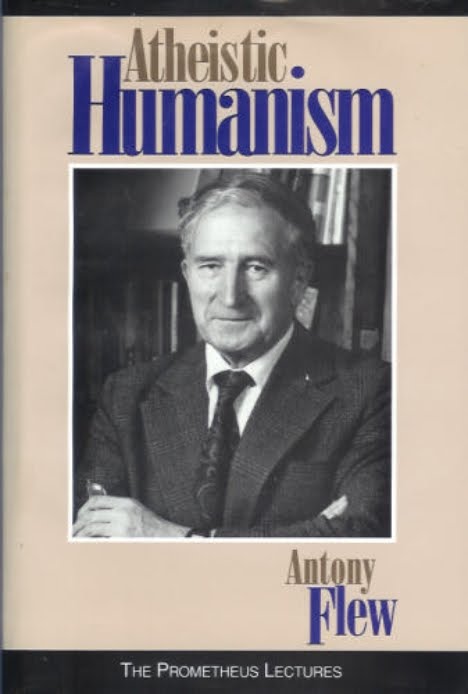




 LAYING THE CARDS ON THE TABLE… I now believe that the universe was brought into existence by an infinite Intelligence…
 The 20th century’s most influential atheist thinker, Antony Flew, announced in 2004 that he accepted the existence of a God.
 The complexity of the genetic code led Flew to believe that the origin of life required a ‘creative intelligence’.


 The Daily Hatch