There have been many articles written by evangelicals like me who fear that our founding fathers would not recognize our country today because secular humanism has rid our nation of spiritual roots. I am deeply troubled by the secular agenda of those who are at war with religion in our public life.
“Most of the founding fathers of this nation … built the worldview of this nation on the authority of the Word of God,” Ken Ham said. “Because of that, there have been reminders in this culture concerning God’s Word, the God of creation.”
At the time I started this series I was in Boston, MA which was the home of John Adams. I have toured his home and found it very interesting. SO MANY FOUNDING FATHERS ARE FROM MASSACHUSETTS!!!
John Hancock is another one of those great Massachusetts guys who had a major impact.
John Hancock
SIGNER OF THE DECLARATION OF INDEPENDENCE; PRESIDENT OF CONGRESS; REVOLUTIONARY GENERAL; GOVERNOR OF MASSACHUSETTS
Sensible of the importance of Christian piety and virtue to the order and happiness of a state, I cannot but earnestly commend to you every measure for their support and encouragement.38
He called on the entire state to pray “that universal happiness may be established in the world [and] that all may bow to the scepter of our Lord Jesus Christ, and the whole earth be filled with His glory.”39
He also called on the State of Massachusetts to pray . . .
that all nations may bow to the scepter of our Lord and Savior Jesus Christ and that the whole earth may be filled with his glory.40
that the spiritual kingdom of our Lord and Savior Jesus Christ may be continually increasing until the whole earth shall be filled with His glory.41
to confess their sins and to implore forgiveness of God through the merits of the Savior of the World.42
to cause the benign religion of our Lord and Savior Jesus Christ to be known, understood, and practiced among all the inhabitants of the earth.43
to confess their sins before God and implore His forgiveness through the merits and mediation of Jesus Christ, our Lord and Savior.44
that He would finally overrule all events to the advancement of the Redeemer’s kingdom and the establishment of universal peace and good will among men.45
that the kingdom of our Lord and Savior Jesus Christ may be established in peace and righteousness among all the nations of the earth.46
that with true contrition of heart we may confess our sins, resolve to forsake them, and implore the Divine forgiveness, through the merits and mediation of Jesus Christ, our Savior. . . . And finally to overrule all the commotions in the world to the spreading the true religion of our Lord Jesus Christ in its purity and power among all the people of the earth.47
Thank you so much for your time. I know how valuable it is. I also appreciate the fine family that you have and your commitment as a father and a husband.
Sincerely,
Everette Hatcher III, 13900 Cottontail Lane, Alexander, AR 72002, ph 501-920-5733, lowcostsqueegees@yahoo.com
I was born July 31, 1912, in Brooklyn, N.Y., the fourth and last child and first son of Sarah Ethel (Landau) and Jeno Saul Friedman. My parents were born in Carpatho-Ruthenia (then a province of Austria-Hungary; later, part of inter-war Czechoslovakia, and, currently, of the Soviet Union). They emigrated to the U.S. in their teens, meeting in New York. When I was a year old, my parents moved to Rahway, N.J., a small town about 20 miles from New York City. There, my mother ran a small retail “dry goods” store, while my father engaged in a succession of mostly unsuccessful “jobbing” ventures. The family income was small and highly uncertain; financial crisis was a constant companion. Yet there was always enough to eat, and the family atmosphere was warm and supportive.
Along with my sisters, I attended public elementary and secondary schools, graduating from Rahway High School in 1928, just before my 16th birthday. My father died during my senior year in high school, leaving my mother plus two older sisters to support the family. Nonetheless, it was taken for granted that I would attend college, though, also, that I would have to finance myself.
I was awarded a competitive scholarship to Rutgers University (then a relatively small and predominantly private university receiving limited financial assistance from the State of New Jersey, mostly in the form of such scholarship awards). I was graduated from Rutgers in 1932, financing the rest of my college expenses by the usual mixture of waiting on tables, clerking in a retail store, occasional entrepreneurial ventures, and summer earnings. Initially, I specialized in mathematics, intending to become an actuary, and went so far as to take actuarial examinations, passing several but also failing several. Shortly, however, I became interested in economics, and eventually ended with the equivalent of a major in both fields.
In economics, I had the good fortune to be exposed to two remarkable men: Arthur F. Burns, then teaching at Rutgers while completing his doctoral dissertation for Columbia; and Homer Jones, teaching between spells of graduate work at the University of Chicago. Arthur Burns shaped my understanding of economic research, introduced me to the highest scientific standards, and became a guiding influence on my subsequent career. Homer Jones introduced me to rigorous economic theory, made economics exciting and relevant, and encouraged me to go on to graduate work. On his recommendation, the Chicago Economics Department offered me a tuition scholarship. As it happened, I was also offered a scholarship by Brown University in Applied Mathematics, but, by that time, I had definitely transferred my primary allegiance to economics. Arthur Burns and Homer Jones remain today among my closest and most valued friends.
Though 1932-33, my first year at Chicago, was, financially, my most difficult year; intellectually, it opened new worlds. Jacob Viner, Frank Knight, Henry Schultz, Lloyd Mints, Henry Simons and, equally important, a brilliant group of graduate students from all over the world exposed me to a cosmopolitan and vibrant intellectual atmosphere of a kind that I had never dreamed existed. I have never recovered.
Personally, the most important event of that year was meeting a shy, withdrawn, lovely, and extremely bright fellow economics student, Rose Director. We were married six years later, when our depression fears of where our livelihood would come from had been dissipated, and, in the words of the fairy tale, have lived happily ever after. Rose has been an active partner in all my professional work since that time.
Thanks to Henry Schultz’s friendship with Harold Hotelling, I was offered an attractive fellowship at Columbia for the next year. The year at Columbia widened my horizons still further. Harold Hotelling did for mathematical statistics what Jacob Viner had done for economic theory: revealed it to be an integrated logical whole, not a set of cook-book recipes. He also introduced me to rigorous mathematical economics. Wesley C. Mitchell, John M. Clark and others exposed me to an institutional and empirical approach and a view of economic theory that differed sharply from the Chicago view. Here, too, an exceptional group of fellow students were the most effective teachers.
After the year at Columbia, I returned to Chicago, spending a year as research assistant to Henry Schultz who was then completing his classic, The Theory and Measurement of Demand. Equally important, I formed a lifelong friendship with two fellow students, George J. Stigler and W. Allen Wallis.
Allen went first to New Deal Washington. Largely through his efforts, I followed in the summer of 1935, working at the National Resources Committee on the design of a large consumer budget study then under way. This was one of the two principal components of my later Theory of the Consumption Function.
The other came from my next job – at the National Bureau of Economic Research, where I went in the fall of 1937 to assist Simon Kuznets in his studies of professional income. The end result was our jointly published Incomes from Independent Professional Practice, which also served as my doctoral dissertation at Columbia. That book was finished by 1940, but its publication was delayed until after the war because of controversy among some Bureau directors about our conclusion that the medical profession’s monopoly powers had raised substantially the incomes of physicians relative to that of dentists. More important, scientifically, that book introduced the concepts of permanent and transitory income.
The catalyst in combining my earlier consumption work with the income analysis in professional incomes into the permanent income hypothesis was a series of fireside conversations at our summer cottage in New Hampshire with my wife and two of our friends, Dorothy S. Brady and Margaret Reid, all of whom were at the time working on consumption.
I spent 1941 to 1943 at the U.S. Treasury Department, working on wartime tax policy, and 1943-45 at Columbia University in a group headed by Harold Hotelling and W. Allen Wallis, working as a mathematical statistician on problems of weapon design, military tactics, and metallurgical experiments. My capacity as a mathematical statistician undoubtedly reached its zenith on V. E. Day, 1945.
In 1945, I joined George Stigler at the University of Minnesota, from which he had been on leave. After one year there, I accepted an offer from the University of Chicago to teach economic theory, a position opened up by Jacob Viner’s departure for Princeton. Chicago has been my intellectual home ever since. At about the same time, Arthur Burns, then director of research at the National Bureau, persuaded me to rejoin the Bureau’s staff and take responsibility for their study of the role of money in the business cycle.
The combination of Chicago and the Bureau has been highly productive. At Chicago, I established a “Workshop in Money and Banking”. which has enabled our monetary studies to be a cumulative body of work to which many have contributed, rather than a one-man project. I have been fortunate in its participants, who include, I am proud to say, a large fraction of all the leading contributors to the revival in monetary studies that has been such a striking development in our science in the past two decades. At the Bureau, I was supported by Anna J. Schwartz, who brought an economic historian’s skill, and an incredible capacity for painstaking attention to detail, to supplement my theoretical propensities. Our work on monetary history and statistics has been enriched and supplemented by both the empirical studies and the theoretical developments that have grown out of the Chicago Workshop.
In the fall of 1950, I spent a quarter in Paris as a consultant to the U.S. governmental agency administering the Marshall Plan. My major assignment was to study the Schuman Plan, the precursor of the common market. This was the origin of my interest in floating exchange rates, since I concluded that a common market would inevitably founder without floating exchange rates. My essay, The Case for Flexible Exchange Rates, was one product.
During the academic year 1953-54, I was a Fulbright Visiting Professor at Gonville & Caius College, Cambridge University. Because my liberal policy views were “extreme” by any Cambridge standards, I was acceptable to, and able greatly to profit from, both groups into which Cambridge economics was tragically and very deeply divided: D.H. Robertson and the “anti-Keynesians”; Joan Robinson, Richard Kahn and the Keynesian majority.
Beginning in the early 1960s, I was increasingly drawn into the public arena, serving in 1964 as an economic adviser to Senator Goldwater in his unsuccessful quest for the presidency, and, in 1968, as one of a committee of economic advisers during Richard Nixon’s successful quest. In 1966, I began to write a triweekly column on current affairs for Newsweek magazine, alternating with Paul Samuelson and Henry Wallich. However, these public activities have remained a minor avocation – I have consistently refused offers of full-time positions in Washington. My primary interest continues to be my scientific work.
In 1977, I retire from active teaching at the University of Chicago, though retaining a link with the Department and its research activities. Thereafter, I shall continue to spend spring and summer months at our second home in Vermont, where I have ready access to the library at Dartmouth College – and autumn and winter months as a Senior Research Fellow at the Hoover lnstitution of Stanford University.
From Nobel Lectures, Economics 1969-1980, Editor Assar Lindbeck, World Scientific Publishing Co., Singapore, 1992
This autobiography/biography was written at the time of the award and first published in the book series Les Prix Nobel. It was later edited and republished in Nobel Lectures. To cite this document, always state the source as shown above.
I get upset by a lot of what happens in the corridors of power, but two things really irk me.
First, I hate it when the rich and powerful use the coercive power of government to screw ordinary people. That’s one of the reasons I hated the TARP bailout.
Second, I hate the utter hypocrisy of the political elite exempting themselves from the bad policies that get imposed on everyone else. That’s why, for instance, it galls me that the pro-tax bureaucrats at the OECD get tax-free salaries.
Well, now we have a new example of political hypocrisy. Behind closed doors, the crooks in Washington are seeking to exempt themselves from Obamacare.
Congressional leaders in both parties are engaged in high-level, confidential talks about exempting lawmakers and Capitol Hill aides from the insurance exchanges they are mandated to join as part of President Barack Obama’s health care overhaul, sources in both parties said. The talks — which involve Senate Majority Leader Harry Reid (D-Nev.), House Speaker John Boehner (R-Ohio), the Obama administration and other top lawmakers — are extraordinarily sensitive, with both sides acutely aware of the potential for political fallout from giving carve-outs from the hugely controversial law to 535 lawmakers and thousands of their aides. Discussions have stretched out for months, sources said. …if Capitol Hill leaders move forward with the plan, they risk being dubbed hypocrites by their political rivals and the American public. By removing themselves from a key Obamacare component, lawmakers and aides would be held to a different standard than the people who put them in office. …There is concern in some quarters that the provision requiring lawmakers and staffers to join the exchanges, if it isn’t revised, could lead to a “brain drain” on Capitol Hill, as several sources close to the talks put it.
Well, to be thoughtful and analytical, my reaction is boo hoo and cry me a friggin’ river.
Obamacare is a fiscal disaster and a healthcare disaster. Our best bet to get the law repealed is to make sure the politicians and their underlings are subject to all of the law’s bad provisions. Period.
Jacque Martin asks CATO Institute Michael Cannon about Obamacare Published on Mar 19, 2013 The CATO Institute’s Michael Cannon spoke at the Arkansas Conservative Caucus on Tuesday March 19th. Several conservatives were present. Cannon talked about how to defeat Obamacare in Arkansas & how the states can stop Obamacare on a national level. Jacque Martin […]
Some very good points by Dan Mitchell of the Cato Institute on Obamacare: Why We Should Be Optimistic about Repealing Obamacare and Fixing the Healthcare System April 10, 2013 by Dan Mitchell I’m going to make an assertion that seems utterly absurd. The enactment of Obamacare may have been good news. Before sending a team of medical […]
Nic Horton Medicaid Expansion will “Cost Almost Double than Doing Nothing” part I It is amazing to me that Repubican lawmakers are considering taking President Obama’s advice on anything in light of this article below. March 25, 2013 4:26PM Here’s Your Free Health Care. Would You Care to Vote? By Michael F. Cannon Share Tweet […]
A Red-Ink Train Wreck: The Real Fiscal Cost of Government-Run Healthcare Uploaded on Nov 9, 2009 This CF&P Foundation video explains why healthcare proposals in Washington will result in bloated government and higher deficits. This mini-documentary exposes the pervasive inaccuracy of congressional forecasts and succinctly lists 12 reasons why Obamacare will be a budget buster. […]
Enlarge image Credit Nathan Vandiver / KUAR Michael Cannon of the Cato Institute told lawmakers March 19, 2013 that abandoning plans to partner with the federal government on a health insurance exchange would both benefit the state and reduce the power of the Affordable Care Act. __________________ I am very pleased with the Republican lawmakers in […]
Third-Party Payer is the Biggest Economic Problem With America’s Health Care System Published on Jul 10, 2012 This mini-documentary from the Center for Freedom and Prosperity Foundation explains that “third-party payer” is the main problem with America’s health care system. This is why undoing Obamacare, while desirable, is just a small first step if we […]
I have put up lots of cartoons from Dan Mitchell’s blog before and they have got lots of hits before. Many of them have dealt with the economy, eternal unemployment benefits, socialism, Greece, welfare state or on gun control. The funniest cartoon is the one with “Nurse Sebelius” stuffing the huge capsule down the kid’s throat!!! Obamacare […]
Here is a great article I read on November9, 2012 in the National Review: November 9, 2012 4:00 A.M. Obamacare Is Still Vulnerable Now is not the time to go wobbly. By Michael F. Cannon President Obama has won reelection, and his administration has asked state officials to decide by Friday, November 16, whether their state […]
Representative Bollinger asks CATO Institute Michael Cannon about Obamacare Published on Mar 19, 2013 The CATO Institute’s Michael Cannon spoke at the Arkansas Conservative Caucus on Tuesday March 19th. Several conservatives were present. Cannon talked about how to defeat Obamacare in Arkansas & how the states can stop Obamacare on a national level. Representative Bollinger […]
Obamacare is a poorly written and because of that the majority of states may never have to put into practice. February 28, 2013 2:13PM ObamaCare Debate Challenge: Lawrence Wasden Edition By Michael F. Cannon Share Tweet Like Google+1 Congress empowered states to block major provisions of ObamaCare, including its subsidies and employer mandate. All […]
The “austerity” crowd at places such as the International Monetary Fund, by contrast,argues that deficits are bad for growthand this leads them to support higher taxes.
Then you have institutions such as the Congressional Budget Office thatwant the worst of all worlds, supporting Keynesian spending in the short run while advocating higher taxes in the long run.
But since I don’t like higher spending or higher taxes, you can see why I want to pull my hair out.
With this in mind, I’m pleased that economists at the European Central Bank have released some new research on “Fiscal Composition and Long-Term Growth” which doesn’t reflexively assume that red ink is the key variable. Instead, they dispassionately look at how several fiscal policy variables impact economic performance.
Here is the general conclusion.
In this study we use a large panel of developed and developing countries for the period 1970-2008. …Specifically, we examine the following issues: the influence of which budgetary components have a stronger influence in affecting (positively or negatively) per capita GDP growth rates… Our evidence suggests that for the full sample…government expenditures appear with significant negative signs.
This makes sense. Whether financed by taxes or borrowing,excessive government expenditureshurt an economy by diverting resources from productive uses.
But not all government spending is created equal. Here are some of the specific findings.
In a nutshell, our results comprise notably: i) for the full sample revenues have no significant impact on growth whereas government expenditures have significant negative effects; ii) the same is true for the OECD sub-sample with the addition that total government revenues have a negative impact on growth; iii) taxes on income are less welcome for growth; iv) public wages, interest payments, subsidies and government consumption have a negative effect on output growth; v) expenditures on social security and welfare are less growth enhancing.
It’s noteworthy that government spending is negatively correlated with economic performance for both developing and advanced nations.
It’s also interesting that taxes on income are bad for growth everywhere, and overall revenue is bad for growth in advanced nations (both of these findings, incidentally, suggest that Obama’sclass-warfare tax agendais quite misguided).
The authors of the study also find that some forms of government spending are particularly harmful for growth. That also makes a lot of sense since I’ve explained inmy video on the Rahn Curvethat core public goods can be good for growth while other types of government spending undermine prosperity.
So what does all this mean? Simply stated, the fiscal problem in virtually all nationsis not red ink. It’s big government. Large deficits aren’t desirable, to be sure, but they’re best understood as side effects of too much spending.
Does Government Have a Revenue or Spending Problem? People say the government has a debt problem. Debt is caused by deficits, which is the difference between what the government collects in tax revenue and the amount of government spending. Every time the government runs a deficit, the government debt increases. So what’s to blame: too […]
What Are the Dangers of Too Much Debt? Published on Mar 20, 2012 Interest payments on U.S. government debt are three times spending in the Iraq and Afghanistan wars already, and that is with the lowest interest rate we have seen since the 1960s. A rise in interest rates would increase interest payments dramatically. What […]
Senator Pryor pictured below: Why do I keep writing and email Senator Pryor suggestions on how to cut our budget? I gave him hundreds of ideas about how to cut spending and as far as I can tell he has taken none of my suggestions. You can find some of my suggestions here, here, here, […]
We need to slash defense spending and make other wealthy allies pay for their own defense!!!! The Republicans need to wake up on this issue. APRIL 15, 2013 1:13PM Your Tax Dollars at Work: Subsidizing the Security of Wealthy Allies By CHRISTOPHER A. PREBLE SHARE It’s Tax Day, and for millions of Americans that means ponying […]
We got to get a hold on entitlement spending!!! Entitlement Spending Is America’s Biggest Fiscal Challenge, but Discretionary Spending Is Still Far too High April 13, 2013 by Dan Mitchell If America descends into Greek-style fiscal chaos, there’s no doubt that entitlement programs will be the main factor. Social Security, Medicare, Medicaid, and Disability are all […]
Senator Pryor pictured below: Why do I keep writing and email Senator Pryor suggestions on how to cut our budget? I gave him hundreds of ideas about how to cut spending and as far as I can tell he has taken none of my suggestions. You can find some of my suggestions here, here, here, […]
President Obama will not cut spending ever it appears. Early Details Show Obama Will Propose a Bait-and-Switch Budget Plan Containing Higher Taxes and More Spending April 5, 2013 by Dan Mitchell Are we about to see a new kinder-and-gentler Obama? Has the tax-and-spend President of the past four years been replaced by a fiscal moderate? That’s […]
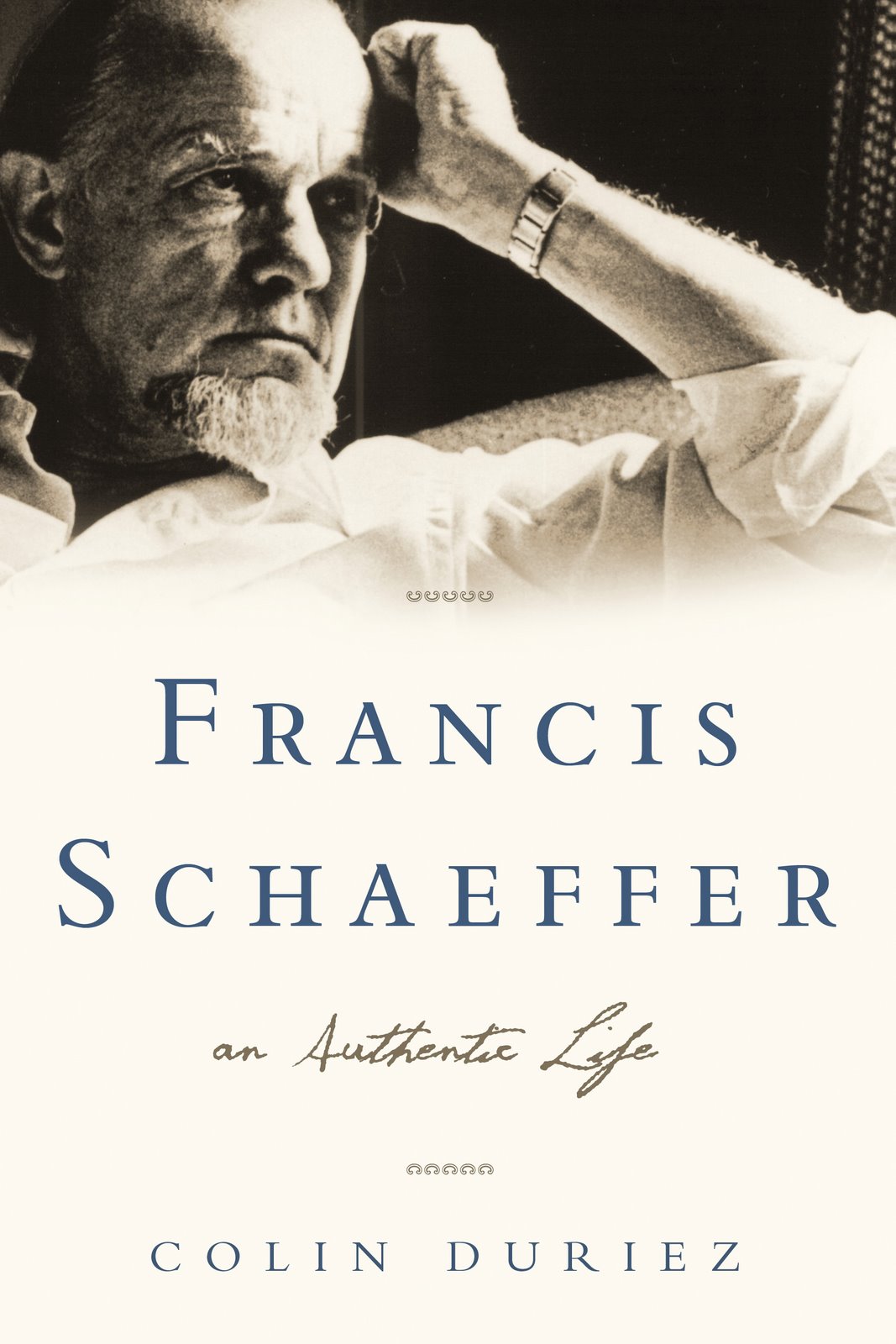
This is the introductory class on “The Mark Of A Christian” by Francis Schaeffer. The class was originally taught at Redeemer Presbyterian Church in Overland Park, KS by Dan Guinn from FrancisSchaefferStudies.org as part of the adult Sunday School hour on Mar. 4th 2012.
This first class covers the following:
History of Origin of “The Mark of A Christian”
Matters of perspective, spiritual discernment, and sanctification.
Section 1 – Introduction
___________________________
The Mark of the Christian by Francis Schaeffer Part 1
Christians should present the truth in love and that is what Francis Schaeffer’s book “The Mark of the Christian” is about. I have a portion of that book below:
Christians have not always presented a pretty picture to the world.
Too often they have failed to show the beauty of love, the beauty of Christ,
the Holiness of God, and the world has turned away. Is there no way to make the world look again this time at true Christianity’s Christians continue to stand with arms folded presenting to men and women, a tarnished image of God- a shattered body of Christ
How should we show the world that we are Christians?
Through the centuries, people have displayed many different symbols intended to show that they are Christians.
they have worn marks in the lapels of their coats, hung chains about their necks,
and even had special haircuts.
But there is a much better sign – a universal mark that is to last through all the ages of the church till Jesus comes back.
What is this mark?
At the close of his ministry, Jesus made clear what was to be the distinguishing mark of the Christian until His return:
A new commandment I give you: Love one another.
As I have loved you, so you must love one another.
By this all men will know that you are my disciples,
if you love one another.
(John 13:33-35)
Notice that what He says here is not a statement or a fact. It is a command which includes a condition:
By this all men will know that you are my disciples, if you love one another.
An if is involved.If you obey, you will wear the badge that Christ gave. But since this is a command, it can be violated The point: while it is possible to be a Christian without showing the mark; if we expect non-Christians to know that we are Christians, we must show the mark. Speaking to the church some years later, the same John who wrote the account above says:
This is the message you heard from the beginning:
We should love one another.
(1 John 3:11)
John in effect says:
Don’t forget this… don’t forget this! This command was given to us by Christ while He was still on earth. This is to be your mark.
Loving our neighbor
The command at this point is to love our fellow Christians. But there is another side of Jesus’ teaching:
We are to love our fellow human beings, as human beings.
We are to love all people, in fact, as neighbours.
All people bear the image of God. They have inherent value, not simply because they are the objects of Christ’s saving work, but because they are God’s creation, in God’s image.
All people are our neighbours, and we are to love them as ourselves. We are to do this on the basis of creation, even if they are not redeemed, for all people have value because they are made in the image of God. Therefore, they are to be loved even at great cost.
This is, of course, the whole point of Jesus’ story of the good Samaritan.
On one occasion an expert in the law stood up to test Jesus.
Teacher, he asked, what must I do to inherit eternal life?
What is written in the Law?
he replied. How do you read it?
He answered: Love the Lord your God with all your heart and with all your soul and with all your strength and with all your mind; and, Love your neighbor as yourself.
You have answered correctly, Jesus replied.
Do this and you will live.
But he wanted to justify himself, so he asked Jesus, And who is my neighbor?
In reply Jesus said:
A man was going down from Jerusalem to Jericho, when he fell into the hands of robbers.
They stripped him of his clothes, beat him and went away, leaving him half dead.
A priest happened to be going down the same road, and when he saw the man, he passed by on the other side. So too, a Levite, when he came to the place and saw him, passed by on the other side. But a Samaritan, as he traveled, came where the man was; and when he saw him, he took pity on him. He went to him and bandaged his wounds, pouring on oil and wine.
Then he put the man on his own donkey, took him to an inn and took care of him. The next day he took out two silver coins and gave them to the innkeeper. Look after him, he said, and when I return, I will reimburse you for any extra expense you may have.
Which of these three do you think was a neighbor to the man who fell into the hands of robbers?
The expert in the law replied, The one who had mercy on him.
Jesus told him, Go and do likewise. (the gospel according to luke; chapter 10, verses 25-37)
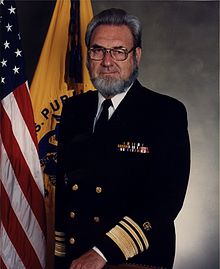
I truly believe that many of the problems we have today in the USA are due to the advancement of humanism in the last few decades in our society. Ronald Reagan appointed the evangelical Dr. C. Everett Koop to the position of Surgeon General in his administration. He partnered with Dr. Francis Schaeffer in making the video below. It is very valuable information for Christians to have. Actually I have included a video below that includes comments from him on this subject.
Francis Schaeffer: “Whatever Happened to the Human Race” (Episode 1) ABORTION OF THE HUMAN RACE Published on Oct 6, 2012 by AdamMetropolis The 45 minute video above is from the film series created from Francis Schaeffer’s book “Whatever Happened to the Human Race?” with Dr. C. Everett Koop. This book really helped develop my political views […]
E P I S O D E 1 0 Dr. Francis Schaeffer – Episode X – Final Choices 27 min FINAL CHOICES I. Authoritarianism the Only Humanistic Social Option One man or an elite giving authoritative arbitrary absolutes. A. Society is sole absolute in absence of other absolutes. B. But society has to be […]
E P I S O D E 9 Dr. Francis Schaeffer – Episode IX – The Age of Personal Peace and Affluence 27 min T h e Age of Personal Peace and Afflunce I. By the Early 1960s People Were Bombarded From Every Side by Modern Man’s Humanistic Thought II. Modern Form of Humanistic Thought Leads […]
E P I S O D E 8 Dr. Francis Schaeffer – Episode VIII – The Age of Fragmentation 27 min I saw this film series in 1979 and it had a major impact on me. T h e Age of FRAGMENTATION I. Art As a Vehicle Of Modern Thought A. Impressionism (Monet, Renoir, Pissarro, Sisley, […]
E P I S O D E 7 Dr. Francis Schaeffer – Episode VII – The Age of Non Reason I am thrilled to get this film series with you. I saw it first in 1979 and it had such a big impact on me. Today’s episode is where we see modern humanist man act […]
E P I S O D E 6 How Should We Then Live 6#1 Uploaded by NoMirrorHDDHrorriMoN on Oct 3, 2011 How Should We Then Live? Episode 6 of 12 ________ I am sharing with you a film series that I saw in 1979. In this film Francis Schaeffer asserted that was a shift in […]
E P I S O D E 5 How Should We Then Live? Episode 5: The Revolutionary Age I was impacted by this film series by Francis Schaeffer back in the 1970′s and I wanted to share it with you. Francis Schaeffer noted, “Reformation Did Not Bring Perfection. But gradually on basis of biblical teaching there […]
Dr. Francis Schaeffer – Episode IV – The Reformation 27 min I was impacted by this film series by Francis Schaeffer back in the 1970′s and I wanted to share it with you. Schaeffer makes three key points concerning the Reformation: “1. Erasmian Christian humanism rejected by Farel. 2. Bible gives needed answers not only as to […]
Francis Schaeffer’s “How should we then live?” Video and outline of episode 3 “The Renaissance” Francis Schaeffer: “How Should We Then Live?” (Episode 3) THE RENAISSANCE I was impacted by this film series by Francis Schaeffer back in the 1970′s and I wanted to share it with you. Schaeffer really shows why we have so […]
Francis Schaeffer: “How Should We Then Live?” (Episode 2) THE MIDDLE AGES I was impacted by this film series by Francis Schaeffer back in the 1970′s and I wanted to share it with you. Schaeffer points out that during this time period unfortunately we have the “Church’s deviation from early church’s teaching in regard […]
Francis Schaeffer: “How Should We Then Live?” (Episode 1) THE ROMAN AGE Today I am starting a series that really had a big impact on my life back in the 1970′s when I first saw it. There are ten parts and today is the first. Francis Schaeffer takes a look at Rome and why […]
Francis Schaeffer: “Whatever Happened to the Human Race” (Episode 5) TRUTH AND HISTORY Published on Oct 7, 2012 by AdamMetropolis This crucial series is narrated by the late Dr. Francis Schaeffer and former Surgeon General Dr. C. Everett Koop. Today, choices are being made that undermine human rights at their most basic level. Practices once […]
The opening song at the beginning of this episode is very insightful. Francis Schaeffer: “Whatever Happened to the Human Race” (Episode 4) THE BASIS FOR HUMAN DIGNITY Published on Oct 7, 2012 by AdamMetropolis This crucial series is narrated by the late Dr. Francis Schaeffer and former Surgeon General Dr. C. Everett Koop. Today, choices […]
Francis Schaeffer: “Whatever Happened to the Human Race” (Episode 3) DEATH BY SOMEONE’S CHOICE Published on Oct 6, 2012 by AdamMetropolis This crucial series is narrated by the late Dr. Francis Schaeffer and former Surgeon General Dr. C. Everett Koop. Today, choices are being made that undermine human rights at their most basic level. Practices […]
Francis Schaeffer: “Whatever Happened to the Human Race?” (Episode 2) SLAUGHTER OF THE INNOCENTS Published on Oct 6, 2012 by AdamMetropolis This crucial series is narrated by the late Dr. Francis Schaeffer and former Surgeon General Dr. C. Everett Koop. Today, choices are being made that undermine human rights at their most basic level. Practices […]
It is not possible to know where the pro-life evangelicals are coming from unless you look at the work of the person who inspired them the most. That person was Francis Schaeffer. I do care about economic issues but the pro-life issue is the most important to me. Several years ago Adrian Rogers (past president of […]
This essay below is worth the read. Schaeffer, Francis – “Francis Schaeffer and the Pro-Life Movement” [How Should We Then Live?, Whatever Happened to the Human Race?, A Christian Manifesto] Editor note: <p> </p> [The following essay explores the role that Francis Schaeffer played in the rise of the pro-life movement. It examines the place of […]
Great article on Schaeffer. Who was Dr. Francis A. Schaeffer? By Francis Schaeffer The unique contribution of Dr. Francis Schaeffer on a whole generation was the ability to communicate the truth of historic Biblical Christianity in a way that combined intellectual integrity with practical, loving care. This grew out of his extensive understanding of the Bible […]
Why not pass the Balanced Budget amendment? As you know that federal deficit is at all time high (1.6 trillion deficit with revenues of 2.2 trillion and spending at 3.8 trillion).
On my blog www.HaltingArkansasLiberalswithTruth.com I took you at your word and sent you over 100 emails with specific spending cut ideas. However, I did not see any of them in the recent debt deal that Congress adopted. Now I am trying another approach. Every week from now on I will send you an email explaining different reasons why we need the Balanced Budget Amendment. It will appear on my blog on “Thirsty Thursday” because the government is always thirsty for more money to spend.
The new Chairman of the House Judiciary Committee introduced the bills on Thursday, with the start of the 113th Congress. Rep. Goodlatte (R-6th) had introduced the bills in the prior three Congresses, but they have not been adopted.
“When I introduced these bills two years ago, the national debt had topped an unprecedented $14 trillion,” wrote Rep. Goodlatte in a news release. “Today, the national debt has soared well past a staggering $16 trillion. This rapid increase in debt and four consecutive trillion dollar plus budget deficits are clear signs that Washington has a serious spending problem.”
Goodlatte’s bill would:
Require Congress to not spend more money than the country takes in
Require the President to submit a balanced budget to Congress
Require a 3/5th majority vote to increase the federal debt limit
The bill provides exceptions in times of national emergencies.
Goodlatte noted that 49 of the 50 U.S. states, including Virginia, have a balanced budget requirement.
5th District Congressman Robert Hurt (R-Chatham) signed on as a co-sponsor of Rep. Goodlatte’s bill.
“For far too long, members of both parties have chosen the politically expedient course over what is in the best interest of our nation – casting aside meaningful proposals for deficit reduction and carrying our nation further along on a careless spending binge. As a result, we have witnessed the devastating consequences for the people of Virginia’s 5th District and those all across our country as unemployment levels have remained unacceptably high and the debt continues to grow. At a time when we are borrowing 45 cents on the dollar and rapidly adding to a more than $16 trillion debt, there is no greater duty to those we represent than to get serious about fixing this spending-driven debt crisis,” Rep. Hurt wrote in a news release.
___________
The Balanced Budget Amendment is the only thing I can think of that would force Washington to cut spending. We have only a handful of balanced budgets in the last 60 years, so obviously what we are doing is not working. We are passing along this debt to the next generation.
Thank you for this opportunity to share my ideas with you.
Picture of Francis Schaeffer and his wife Edith from the 1930′s above. I was sad to read about Edith passing away on Easter weekend in 2013. I wanted to pass along this fine article below.
Our Heavenly Father has taken dear Edith Schaeffer to himself. She passed away quietly in her sleep last night in Gryon, Switzerland where she has been living with her family. We cannot express how deep is our gratitude for her life and we thank the Lord that she is enjoying the Hope that she has so longed for.
Her son-in-law Ranald Macaulay writes as follows:
Dear Friends,
John Sandri called about an hour ago to say that Edith died peacefully in her sleep during the night. It is just three weeks since I was in Gryon with her. In the intervening days John has reported several times that she was much quieter. Doubtless this was mainly the result of her physical decline. But John had had the same sort of experience I had while with her – and which I mentioned in an earlier message – that Edith would become fully aware at times of what one was saying. Recently, for example, he read her her own account of Frank’s birth in Champery. Her eyes were open and alert and there could be no doubt about her reliving that incident vividly.
So I am deeply grateful that she died quietly in her sleep and at rest in herself.
What a lovely person Edith is – and how thankful we are that she has gone at last to her eternal rest. One wonders, too, with her life-long and quite proper excitement about the ‘great tapestry of God’ could she have chosen a more fitting day than Easter Saturday to round off her own amazing contribution to that sublime fabric!
Warm greetings –
Ranald
There will be a funeral in Gryon and then there will be a private burial here in Rochester, where she will be laid to rest alongside Dr. Schaeffer. Sometime later there will be a public memorial here in Rochester. We will keep you all informed.
“I am the Resurrection and the Life. He who believes in me will Live, even though he dies” John 11:25
Yours in Christ,
Jock & Alison McGregor
Rochester L’Abri
(Francis did a great job in his film series “How Should we then live?” in looking at how humanism has affected art and culture in the Western World in the last 2000 years. My favorite episodes include his study of the Renaissance, the Revolutionary age, the age of Nonreason, and the age of Fragmentation.)
E P I S O D E 1 0 Dr. Francis Schaeffer – Episode X – Final Choices 27 min FINAL CHOICES I. Authoritarianism the Only Humanistic Social Option One man or an elite giving authoritative arbitrary absolutes. A. Society is sole absolute in absence of other absolutes. B. But society has to be […]
E P I S O D E 9 Dr. Francis Schaeffer – Episode IX – The Age of Personal Peace and Affluence 27 min T h e Age of Personal Peace and Afflunce I. By the Early 1960s People Were Bombarded From Every Side by Modern Man’s Humanistic Thought II. Modern Form of Humanistic Thought Leads […]
E P I S O D E 8 Dr. Francis Schaeffer – Episode VIII – The Age of Fragmentation 27 min I saw this film series in 1979 and it had a major impact on me. T h e Age of FRAGMENTATION I. Art As a Vehicle Of Modern Thought A. Impressionism (Monet, Renoir, Pissarro, Sisley, […]
E P I S O D E 7 Dr. Francis Schaeffer – Episode VII – The Age of Non Reason I am thrilled to get this film series with you. I saw it first in 1979 and it had such a big impact on me. Today’s episode is where we see modern humanist man act […]
E P I S O D E 6 How Should We Then Live 6#1 Uploaded by NoMirrorHDDHrorriMoN on Oct 3, 2011 How Should We Then Live? Episode 6 of 12 ________ I am sharing with you a film series that I saw in 1979. In this film Francis Schaeffer asserted that was a shift in […]
E P I S O D E 5 How Should We Then Live? Episode 5: The Revolutionary Age I was impacted by this film series by Francis Schaeffer back in the 1970′s and I wanted to share it with you. Francis Schaeffer noted, “Reformation Did Not Bring Perfection. But gradually on basis of biblical teaching there […]
Dr. Francis Schaeffer – Episode IV – The Reformation 27 min I was impacted by this film series by Francis Schaeffer back in the 1970′s and I wanted to share it with you. Schaeffer makes three key points concerning the Reformation: “1. Erasmian Christian humanism rejected by Farel. 2. Bible gives needed answers not only as to […]
Francis Schaeffer’s “How should we then live?” Video and outline of episode 3 “The Renaissance” Francis Schaeffer: “How Should We Then Live?” (Episode 3) THE RENAISSANCE I was impacted by this film series by Francis Schaeffer back in the 1970′s and I wanted to share it with you. Schaeffer really shows why we have so […]
Francis Schaeffer: “How Should We Then Live?” (Episode 2) THE MIDDLE AGES I was impacted by this film series by Francis Schaeffer back in the 1970′s and I wanted to share it with you. Schaeffer points out that during this time period unfortunately we have the “Church’s deviation from early church’s teaching in regard […]
Francis Schaeffer: “How Should We Then Live?” (Episode 1) THE ROMAN AGE Today I am starting a series that really had a big impact on my life back in the 1970′s when I first saw it. There are ten parts and today is the first. Francis Schaeffer takes a look at Rome and why […]
I have gone back and forth and back and forth with many liberals on the Arkansas Times Blog on many issues such as abortion, human rights, welfare, poverty, gun control and issues dealing with popular culture. Here is another exchange I had with them a while back. My username at the Ark Times Blog is Saline Republican.
Anything the government can do to limit abortion is a good thing. In 1980 I really was influenced at my highschool by a teacher of mine named Mark Brink. He introduced me to the film series “Whatever happened to the human race?” by Francis Schaeffer and Dr. C. Everett Koop.
In this film series that came out in 1979 they dealt with the big social issues like abortion and predicted what social problems we have in the future because of humanism. For instance, they knew that the Jack Kevorkians of the world would be coming down the pike. They predicted that there was a slippery slope from abortion to infanticide to youth euthanasia brought on by the materialistic worldview.
Later in the summer of 1980 I saw the film series “Free to Choose” by Milton Friedman and I read his book “Free to Choose” over and over during the years that followed. That same year I worked in Ronald Reagan’s campaign as a volunteer.
Sadly all of those political and religious heroes of mine have now passed away. Francis Schaeffer at age 72 in 1984, Ronald Reagan at age 93 in 2004, Milton Friedman at age 94 in 2006 and now Dr. C. Everett Koop at age 96 on Feb 25, 2013.
I still stay in touch with my former teacher Mark Brink and enjoy corresponding with him. He introduced me to the film series “Whatever happened to the human race?” that truly was an amazing look at the social issues that we would be facing in the coming years in the USA.
I found three more editorial cartoons of Dr. C. Everett Koop from the 1980’s. He also did some work with the Clinton Administration in the 1990’s on several issues. I had forgotten about that.
Saline: I’m going to go out on a limb and say that nothing you’ve ever written here has changed anyone’s mind about anything. Yet you keep showing up, posting links to a blog that no one here has any desire to read (because, let’s be honest, it’s terrible on a number of levels).
Why? Why do you show up daily, displaying your poor grasp of everything from law to economics for all the Arkansas Blog world to see and ridicule? What do you get out of it?
Then the person going by the username NB Lives In Pangburn Trailer Home wrote, “No one listens to him in the real world, that is why. He got kicked out of his morning McDonald’s Geezer Coffee Klatch.”
Can we please stop the piling on of SalineRepublican?
He has just as much right to post here as anyone else. I pretty much disagree with 100% of what he posts, I am an unabashed flaming liberal, and I think he’s waaaay off the mark — but those are his beliefs — he is more than entitled to be wrong.
Unlike other trolls, I haven’t seen his attack other posters the way we have unmercifully peppered him with these personal attacks.
Stop — disagree with his ideas or ignore him (best idea), but I’m worn out with the ad hominem attacks.
Although this blog is a safe refuge in a sea of conservative nuttery, I think we do ourselves a disservice to only limit posters to those that only agree with us. My faith, my values and my beliefs are strong enough to withstand posters who may disagree with them. And they are strong enough to withstand posters who may disagree with them without attacking the mental prowess of those posters or acting like some cultural elitist.
So what if SR comes over here and shares his thoughts. True, probably won’t change any minds, but he may every once in awhile help us to understand why he thinks the way he thinks — and that’s not such a bad thing, especially if we are ever going to find common ground or a mutually acceptable solution.
Furthermore, Conwegian noted, “If those with a more progressive or more liberal bent only want to get news and opinion that they already agree with then they’re no better than Faux News watchers.”
I noticed back in the 1990’s when I was confronting over 30 religious right leaders about their use of unconfirmed quotes of the founding fathers that many of them accused me of listening to lies from leftists and humanists who lie all the time because they have an agenda hostile to the conservative view. I admitted to many of these leaders that my good friend Dr. John George was an humanist but he also was a scholar who cared about the truth. Many of these same religious right leaders changed their tune when they found out that the religious right’s favorite writer David Barton was also urging people to only use primary documents of the founders.
1. We should welcome posts from various points of view and engage in thoughtful debate with respect for one another.
2. Accusing people of lying because they come with another agenda is not helpful.
3. We need to attack the argument and not the person either.
4. Being friends with those who disagree with you is okay.
I truly believe that many of the problems we have today in the USA are due to the advancement of humanism in the last few decades in our society. Ronald Reagan appointed the evangelical Dr. C. Everett Koop to the position of Surgeon General in his administration. He partnered with Dr. Francis Schaeffer in making the video below. It is very valuable information for Christians to have. Actually I have included a video below that includes comments from him on this subject.
Francis Schaeffer pictured above. I loved to read and to listen to both Chuck Colson Francis Schaeffer. They both were giants in the pro-life movement.
With laser-like precision, Schaeffer hit on the fundamental issue of our day.
Chuck Colson and Timothy George
[ posted 2/15/2012 9:38AM ]
Historic Christianity, biblical Christianity, believes that Christianity is not just doctrinal truth, but flaming truth—true to what is there, true to the great final environment, the infinite-personal God.” Thus said the great prophet of the 20th century, Francis Schaeffer, whose 100th birthday we celebrate this year.
Central casting in Hollywood could not have produced a better character for the prophet’s role: his trademark knickers, often straggling hair, goatee, and intense scowl. His voice may have been shrill at times, but his words were piercing. Those words spoke of what he called “true truth,” and warned the church against succumbing to relativism, which—even back in the 1970s—had conquered academia and infiltrated broader society.
Schaeffer, with laser-like precision, hit upon the most fundamental issue of our day: The denial of “true truth” was not some passing academic fad. In both its post-Kantian and postmodernist garb, this denial detaches language from reality and leads to the kind of moral and spiritual relativism that is the current coin of contemporary discourse, especially in Europe and North America.
Schaeffer’s message impacted both of us at formative stages of our Christian growth. We were stirred by his challenge for the church to be more than a safe haven for the saved, just a comforter of souls. We were moved by his call to bring Christian truth to bear in every aspect of human life, including literature, politics, and the arts.
Young people by the thousands, many of them refugees from the 1960s counterculture, responded to Schaeffer’s call. They made the pilgrimage to his unique community at L’Abri, a word that means “shelter” in French. There they hiked the Alps, listened to Bach concerts, and talked late into the night. They discovered Christianity to be worth considering and capable of being defended. Schaeffer introduced apologetics to a younger evangelical generation and warned against divorcing personal faith from public witness. But L’Abri was far more than a study center. Francis and Edith Schaeffer demonstrated the power of persuasive hospitality lived out in community.
At the heart of Schaeffer’s concern was an uncompromising commitment to the sanctity of human life.More than any other evangelical leader of his time, Schaeffer placed the prolife concern on the agenda of the evangelical movement. As our friend Richard John Neuhaus often noted, Schaeffer’s witness on the issues of life helped form the context for evangelical and Catholic collaboration.
Many of us have tried to pick up pieces of Schaeffer’s legacy. But no one has brought charity and clarity together the way he did.
There is another crucial dimension of Schaeffer’s legacy pertinent to this anniversary year. Late in life Schaeffer published a small book, The Mark of the Christian, in which he called for a “final apologetic.” Drawing on Jesus’ words in John 13:34-35, Schaeffer reminded us that Jesus gave the world the right to decide the genuineness of our faith by our observable love for one another. “This means showing love to our brother in the midst of our differences—great or small—loving our brothers when it costs us something, loving them even under times of tremendous emotional tension, loving them in a way the world can see …. Only with this mark may the world know that Christians are indeed Christians and Jesus was sent by the Father.”
Schaeffer’s challenge remains pertinent today. The mark of Jesus in us is crucial, and it is compelling. None of our activities—evangelism, social ministry, mission, and worldview work—will receive God’s full blessing if they are not guided by the “final apologetic” of demonstrating observable love for one another.
Many of us have tried to pick up pieces of Schaeffer’s legacy. But no one has brought charity and clarity together the way he did. No one has spoken with the compassion, precision, and, yes, fierceness that Schaeffer brought to the task.
Some say today that the church should take a sabbatical from speaking to the culture at large. That would be a grave mistake. The alternative to winsomely engaging the culture isn’t blissful withdrawal: it is further subjugation to what Pope Benedict XVI has called the “dictatorship of relativism.” Schaeffer taught us that the undermining of truth leads to the loss of human rights, including liberty and life itself.
The title of this column is an apt description of Schaeffer’s legacy: contra mundum, against the world. Schaeffer swam against the stream and his words were prophetic, sharp, sometimes cutting. But Schaeffer was against the world in order to be for the world, the world God made and for which Christ died. We can hardly celebrate his legacy in any other way but to hear and to heed.
Dr Richard Land discusses abortion and slavery – 10/14/2004 – part 3 The best pro-life film I have ever seen below by Francis Schaeffer and Dr. C. Everett Koop “Whatever happened to the human race?” Over the years I have taken on the Ark Times liberal bloggers over and over and over concerning the issue […]
The best pro-life film I have ever seen below by Francis Schaeffer and Dr. C. Everett Koop “Whatever happened to the human race?” Francis Schaeffer pictured above._________ The 45 minute video above is from the film series created from Francis Schaeffer’s book “Whatever Happened to the Human Race?” with Dr. C. Everett Koop. This book really […]
The best pro-life film I have ever seen below by Francis Schaeffer and Dr. C. Everett Koop “Whatever happened to the human race?” Over the years I have taken on the Ark Times liberal bloggers over and over and over concerning the issue of abortion. I asked over and over again for one liberal blogger […]
Francis Schaeffer pictured above._________ The best pro-life film I have ever seen below by Francis Schaeffer and Dr. C. Everett Koop “Whatever happened to the human race?” Over the years I have taken on the Ark Times liberal bloggers over and over and over concerning the issue of abortion. I asked over and over again […]
The best pro-life film I have ever seen below by Francis Schaeffer and Dr. C. Everett Koop “Whatever happened to the human race?” On 1-24-13 I took on the child abuse argument put forth by Ark Times Blogger “Deathbyinches,” and the day before I pointed out that because the unborn baby has all the genetic code […]
PHOTO BY STATON BREIDENTHAL from Pro-life march in Little Rock on 1-20-13. Tim Tebow on pro-life super bowl commercial. Over the years I have taken on the Ark Times liberal bloggers over and over and over concerning the issue of abortion. Here is another encounter below. On January 22, 2013 (on the 40th anniversary of the […]
Dr Richard Land discusses abortion and slavery – 10/14/2004 – part 3 The best pro-life film I have ever seen below by Francis Schaeffer and Dr. C. Everett Koop “Whatever happened to the human race?” Over the years I have taken on the Ark Times liberal bloggers over and over and over concerning the issue […]
How much does the United States spend on the military relative to our allies? A lot.
A new Cato video, produced by Cato multimedia gurus Caleb Brown and Austin Bragg, puts this comparison in perspective. The data jumps out of the Cato infographic from last week, and shows how we are subsidizing the security of our wealthy allies who can and should defend themselves. Instead, we provide for their security while they free-ride and spend their money on everything else (including bloated welfare states). Your tax dollars at work.
Check out the video below.
Subsidizing the Security of Wealthy Allies
This much is clear: our security commitments, many of them holdovers from the Cold War, induce other countries to spend less than they could on their own defense. And they compel Americans to spend more than we should.
Video produced by Caleb O. Brown and Austin Bragg.
I have said for years that the USA should not pay for the defense Germany and Japan. Yes, there were many reasons that was true in the past, but now they are two of our biggest friends and trading partners and they are on our side. Why should we limit their military now? I read […]
We got lots of problems at home with our country’s finances. Then why are we paying for Germany and Japan’s defense? Romney’s Other 47% Problem by Harvey Sapolsky and Benjamin H. Friedman Harvey Sapolsky is professor emeritus of public policy and organization at MIT. His co-author, Benjamin Friedman, is a research fellow at the Cato […]
I used to think that we must double the defense budget when we were in the cold war, but I did wonder why we were not letting Germany and Japan (who are two of our biggest trade partners) build up their defenses. I was given the old tired answer that we could not trust them […]
We need to slash defense spending and make other wealthy allies pay for their own defense!!!! The Republicans need to wake up on this issue. APRIL 15, 2013 1:13PM Your Tax Dollars at Work: Subsidizing the Security of Wealthy Allies By CHRISTOPHER A. PREBLE SHARE It’s Tax Day, and for millions of Americans that means ponying […]

 I was born July 31, 1912, in Brooklyn, N.Y., the fourth and last child and first son of Sarah Ethel (Landau) and Jeno Saul Friedman. My parents were born in Carpatho-Ruthenia (then a province of Austria-Hungary; later, part of inter-war Czechoslovakia, and, currently, of the Soviet Union). They emigrated to the U.S. in their teens, meeting in New York. When I was a year old, my parents moved to Rahway, N.J., a small town about 20 miles from New York City. There, my mother ran a small retail “dry goods” store, while my father engaged in a succession of mostly unsuccessful “jobbing” ventures. The family income was small and highly uncertain; financial crisis was a constant companion. Yet there was always enough to eat, and the family atmosphere was warm and supportive.


 Well, now we have a new example of political hypocrisy. Behind closed doors, the crooks in Washington are seeking to exempt themselves from Obamacare.