His Life
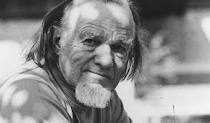
Looking at the impassioned yet tongue tied young man in the early 1930’s at a Presbyterian youth group, it would be hard to tell that he was going to be one of the most influential Evangelicals of the 20th century. He was Francis Schaeffer. At the youth group meeting Shaeffer had risen to his feet to dispute the claims of a minister who was giving a talk entitled, “Why I Know Jesus is Not the Son of God, and How I Know the Bible is Not the Word of God” (Burson and Walls 37). Although not able to come up with many sound arguments, he felt the urge to confront falsehood. This burning desire would drive him to investigate and find answers to the problems that plagued humanity and Christianity, especially issues relating to the moral decay of western civilization.Francis August Schaeffer was born in 1912 into a blue collar, hard-working family in Germantown Pennsylvania. His parents were not intellectuals by any means, His father worked with his hands and had hopes of Francis becoming an engineer (Burson and Walls 35). His family was not very religious, but did attend a Presbyterian Church that had slipped off into liberalism. Francis was later to discover that liberal theology was one of the greatest maladies of the western world. Francis started reading the Bible around the age of 17 and believed it, he soon realized that he was alone at his church in his conviction, but the Lord quickly lead him to the Ashmead Place church, which held to the authority of God’s word (Burson and Walls 36).Sensing the call of God on his life, Francis enrolled in college in order to get on a trajectory to seminary, which was against his parents wishes. After getting his bachelors he enrolled in Westminister Theological Seminary, where he learned from J. Greshom Machen and Cornelious Van Til. Both of these men had a profound effect on Schaeffer’s understanding of the world. After graduating he became a minister and lived in Missouri for 10 years, then moved his family to Switzerland in 1948 (Burson and Walls 39).
This move came about after the American Council of Church’s had asked him to tour Europe in 1947 to asses the need of the church’s in war torn areas. Schaeffer had developed a taste for art and used this trip to visit many of the famous cathedrals and museums. What startled him the most was the amazing beauty of human accomplishment put in contrast with the devastation of human depravity (Burson and Walls 40).
The Schaeffer’s started a ministry in Switzerland called L’Abri, a Christian commune which was like a christian youth hostel and college. He began giving lectures that gave orthodox Christian answers to the problems students were facing. In 1968 he published two books which are still widely influential today, Escape from Reason and The God Who Is There (Morris 12). Over the course of the next 16 years, until his death in 1984, he wrote 21 books in total and many other booklets and articles (Schaeffer, The Great 12).
His Thought
Dr. Schaeffer divided his work into three categories, “My earlier books dealt especially with the intellectual questions of philosophy and matters in the area of culture. Then there were the books dealing with the Christian life and the church. More recently my books have dealt especially with the area of civil needs and the need of law and government” (The Great 11). In a summary of Schaeffers work, Thomas Morris divided his apologetic’s up into metaphysics, morality and epistemology (23). This paper is a look at Francis Schaeffer’s views on morality, which will take into perspective books in each of the categories Schaeffer mentioned.
Schaeffer’s book How Should We Then Live; A Study of the Rise and Fall of Western Civilization, explains his view of the origin of the western world and its moral decline. He took the classical view that Western thought originated with the Greek philosophers Socrates, Plato and Aristotle, their ideas influencing Roman culture which in turn spread them over Europe by military conquest. What made his view unique was that he saw the transition in thought to modernism starting with Aquinas, rather than Descartes (Schaeffer, Escape 11).
Thomas Aquinas introduced the concept of nature and grace, which Schaeffer saw as the beginning of a long series of divisions between the metaphysical and the actual (Escape 9). Whatever is metaphysical is placed above in what he called the “upper story” and whatever could be known by the senses was placed below. These divisions moved from nature versus grace to universals versus particulars by the neo-platonists of the late 15th century (Schaeffer, Escape 17). Kant brought this division to freedom versus nature (Schaeffer, Escape 33), then Hegel and Kierkegaard brought the division to faith versus rationality (Schaeffer, Escape 42).
Schaeffer saw all these divisions as an attempt to make humanity autonomous. As seen from these divisions, without God, man becomes an irrational nonentity. With the autonomous world view man died “as far as rationality and logic are concerned” (Schaeffer, Escape 53). He realized that man cannot live like this, he has to have meaning; “man made in the image of God cannot live as though he is nothing and thus he places in the upper story all sorts of desperate things” (Schaeffer, Escape 53).
This autonomous view of humanity led to the death of values (Schaeffer, How Should 205). The western world had once been led by a Christian consensus which came out of a long history dating back to the Roman Empire. This consensus had waned at times, but had experienced a re-birth in the reformation and the great awakening, but with the enlightenment and the industrial revolution this consensus began to die. Enlightenment rationalism took control of the arts, music, higher education and eventually theology. The Higher critics of the 18th and 19th century were just the theological out workings of the enlightenment, they excluded God and built their own world view (Schaeffer, The Great 35).
Schaeffer saw human thought working in progressively downward steps, starting with philosophy then art and music, then out to general culture and lastly landing on theology (Escape 43). Once the line of dispair reached theology it was not long before the mainline denominations began to crumble. Splits over Biblical authority and foundational doctrines left the 20th century church in ruins. Schaeffer saw this as the precursor to the moral breakdown of the 1960’s (The Great 35).
After the denominational collapse people were left without any moral foundation. “As the more Christian-dominated consensus weakened, the majority of people adopted two impoverished values: personal peace and affluence” (Schaeffer, How Should 205). The next generation quickly realized that there was no meaning to what their parents believed about life “because the only hope of meaning had been placed in the area of non-reason, drugs were brought into the picture” (Schaeffer, How Should 206).
Drug abuse had been around for a long time, but the existential philosophers promoted it as an ideology; Timothy Leary even went so far as to say that drugs were the sacraments of a new religion (Schaeffer, How Should 206). The other ideology that arose was the “New-Left”, encompassing all types of political ideas that are often classed as “liberal” (Schaeffer, How Should 208). These new left political ideas ranged from feminism to abortion, free speech to nudity. Schaeffer saw all this as a rebellion against the values of their parents generation. “The young people wanted more to life than personal peace and affluence. They were right in their analysis of the problem, but they were mistaken in their solutions” (How Should 208).
Schaeffer showed that the humanistic view of man fails. “It fails to explain man. It fails to explain the universe and its form. It fails to stand up in the area of epistemology” (Schaeffer, He Is There 64).
“Christianity offers an entirely different set of presuppositions. The other presuppositions simply do not meet the need” (Schaeffer, He Is There 65). A presupposition, as defined by Shaeffer is “a belief or theory which is assumed before the next step in the logical development. Such a prior postulate often consciously or unconsciously affects the way a person subsequently responds” (Morris 18). The presuppositions that Schaeffer was advocating have been summed up into two major assumptions by Morris. First, people have to accept belief in the personal God of the Bible. Second, they need to accept orthodox faith as providing the only answer to their inner and outer experience (Morris 19-21).
These presuppositions are needed as a foundation for the only view of ourselves and the world that matches our experience and gives meaning to humanity. This gives Christianity the authority to stand against those that would either distort the facts of history in order to return to a golden age of Christian dominance, or accommodate to the spirit of the age, distorting the facts of history and orthodox Christian doctrine (Schaeffer, The Great 118).
Works Cited
Burson, Scott R., and Jerry L. Walls. C.S. Lewis & Francis Schaeffer: Lessons for a New Century from the Most Influential Apologists of Our Time. Downers Grove, IL: InterVarsity, 1998. Print.
Morris, Thomas V. Francis Schaeffer’s Apologetics: a Critique. Chicago: Moody, 1976. Print.
Schaeffer, Francis A. Escape from Reason. London: Inter-Varsity Fellowship, 1968. Print.
—. He Is There and He Is Not Silent. Wheaton, IL: Tyndale House, 1972. Print.
—. How Should We Then Live?: the Rise and Decline of Western Thought and Culture. Old Tappan, NJ: F. H. Revell, 1976. Print.
—. The Great Evangelical Disaster. Westchester, IL: Crossway, 1984. Print.
Schaeffer, Francis A., and C. Everett Koop. Whatever Happened to the Human Race? Old
Tappan, NJ: F.H. Revell, 1979. Print.
The New King James Bible: New Testament. Nashville: T. Nelson, 1979. Print



 comparative religions at New York University.