BY RODRIGO PEREZ
JULY 18, 2014 9:02 AM 12 COMMENTS
“Cloquet hated reality but realized it was still the only place to get a good steak,” Woody Allen once wrote in the 1977 short story “The Condemned” (hat tip to The New York Times), and it’s as good as any an example of the raison d’etre and outlook on life of the glib, witty and yet philosophical filmmaker; bleak and yet slightly hopeful. Allen’s preoccupation with death and his own mortality is well-documented in his films and prose, and part of that obsession may have been escaping the harshness of reality. But behind all the existential dread that has troubled characters across his films, lays the question: is that all there is, this misery of life? Or could there be something more? These questions define the color of his latest picture, “Magic In The Moonlight,” an occasionally delightful, if familiar and sometimes strained comedy, taking place in the 1930s along the shimmering coastline of the Côte d’Azur.
However, before the comic intrigue in the French Riviera, ‘Moonlight’ begins in Berlin. The famous Chinese magician, Wei Ling Soo, is dazzling his audience once again with unrivaled prestidigitation. But this illusionist is actually the arrogant, cynical Englishman and brilliant performer Stanley Crawford (Colin Firth), a pragmatist and atheist of sour disposition. The sudden visit from an old friend and sleight-of-hand colleague Howard Burkan (Simon McBurney) presents an enticing challenge that the already spiritualist-averse Stanley cannot resist: a psychic medium in the South Of France has duped Howard’s wealthy relatives, potentially controlling their fortune, and the friend hopes the performer can unmask this woman’s evidently convincing legerdemain.
This alluring proposal is far too tantalizing for Stanley—already renowned for debunking counterfeits—and soon he arrives under guise and pseudonym to unmask the clairvoyant Sophie Baker (Emma Stone), who is accompanied by her protective mother (Marcia Gay Harden). But the skeptical and discourteous Stanley quickly meets his match in Sophie, and her faculties are so astounding, they begin to melt the cynical veneer and deeply-held beliefs that the performer has espoused for an entire lifetime. Perhaps even unveiling a latent longing to know more about what happens when we shuffle beyond this mortal coil.
Co-starring Jacki Weaver, Hamish Linklater and Erica Leerhsen as part of the affluent Catledge family that Sophie has deceived, and Eileen Atkins as Stanley’s charming and beloved Aunt Vanessa, Allen’s cast is top-notch, and these aforementioned characters in particular all but perfectly convincing. But Allen’s leads steal the show without question. Handcuffing Firth away from his preternatural charms seems counter-intuitive as a casting move, but the actor as a bitter and disagreeable pessimist is a great against-type choice that totally works. Firth draws the character in such a distinct way he strays away from the fussy and neurotic Woody Allen archetype he’s clearly modeled on. And Emma Stone, as usual, is endlessly charming as the endearing spiritualist with a bright outlook on life despite her uneducated worldview and limited means.
As Allen is wont to do, most of his characters in “Magic In The Moonlight” represent his own personal belief system and the dichotomies of such. Firth is the surly, yet sensible nonbeliever militantly fixed to his ideals, while Stone is carefree, spirited and optimistic. These archetypes help breathe life into the characters as we’re introduced to them and sets the stage for the conflicts of these diametrically opposed schools of thought.
But where ‘Moonlight’ begins to falter is in its desire to restate these opposing perspectives on life over and over again, particularly in the case of Firth. What begins as amusingly sarcastic and mocking observations that roll off his tongue rather mellifluously begin to curdle into acidic repetitious monologues that are far too on the nose.
But the combative tête-à-tête between Firth and Stone is largely watchable and their chemistry is natural and effortless. Firth in particular drives his incorrigibly cranky character right to the edge of unsympathetic and yet gracefully sidesteps the audience from ever loathing him outright. And as their mutual attraction begins to grow, we too become smitten with their infectiously endearing dynamic.
Shot by the great Darius Khondji, the film looks like visual South Of France pornography. While the tangerine-flecked rays of “To Rome with Love” were beautiful in their own right, almost nothing quite dazzles the way Khondji captures the light flickering off the bucolic setting and the aquamarine waves of the Côte d’Azur. Each carefully composed shot is a marvel to behold.
“Quality will vary” could be the maxim for latter-day Woody Allen films; you sometimes just don’t know what you’re going to get. But if one were to measure his recent run, “Magic In The Moonlight” might come in third after “Blue Jasmine” and “Midnight In Paris” and before “To Rome With Love.” That may not sound promising, but this period in retrospect is fertile and satisfying compared other quality periods that only lasted a picture or two. And so “Magic In The Moonlight” is good in many regards, and mostly enjoyable for most of its 97-minute running time. But it’s also admittedly uneven in spots, familiar and ultimately a bit slight. The film’s overlong, dragging conclusion certainly doesn’t help. And its ending is far too safe, even for those that might have enjoyed the comforting pleasures of the equally warm “Midnight In Paris.” Certainly the thematic texture the movie explores throughout is let down by something a little bit more banal.
Ultimately, “Magic In The Moonlight” is a movie about beliefs held, challenged, broken and possibly even transformed. Allen circles back to his concerns about love and death, interspersed with notions of logic, faith and even the metaphysical. And it flirts with the mesmeric beauty of the unexplained, of paradoxes and lofty philosophical ideas, only to let them fade away like an enchanting sunset at dusk. While “Magic In The Moonlight” trades in the opportunity to say something profound or even meaningful about most of these concepts for unsatisfyingly prosaic and frustrating impressions of romance, there are still gleams of gratification to be found. And perhaps because the movie negotiates sobering reality with a hopeful world beyond, maybe the picture’s most fitting trick is how it only delivers a little measure of magic. [B]
MAGIC IN THE MOONLIGHT – Official Trailer (2014) [HD] Emma Stone, Colin Firth
Published on May 21, 2014
Release Date: July 25, 2014 (limited)
Studio: Sony Pictures Classics
Director: Woody Allen
Screenwriter: Woody Allen
Starring: Emma Stone, Colin Firth, Marcia Gay Harden, Hamish Linklater, Simon McBurney, Eileen Atkins, Jacki Weaver, Erica Leerhsen, Catherine McCormack, Paul Ritter, Jeremy Shamos
Genre: Comedy, Drama
MPAA Rating: PG-13 (for a brief suggestive comment, and smoking throughout)
Plot Summary:
“Magic in the Moonlight” is a romantic comedy about an Englishman brought in to help unmask a possible swindle. Personal and professional complications ensue. The film is set in the south of France in the 1920s against a backdrop of wealthy mansions, the Cфte d’Azur, jazz joints and fashionable spots for the wealthy of the Jazz Age.
I have spent alot of time talking about Woody Allen films on this blog and looking at his worldview. He has a hopeless, meaningless, nihilistic worldview that believes we are going to turn to dust and there is no afterlife. Even though he has this view he has taken the opportunity to look at the weaknesses of […]
_____________________________ Crimes and Misdemeanors: A Discussion: Part 3 Uploaded by camdiscussion on Sep 23, 2007 Part 3 of 3: ‘Is Woody Allen A Romantic Or A Realist?’ A discussion of Woody Allen’s 1989 movie, Crimes and Misdemeanors, perhaps his finest. By Anton Scamvougeras.http://camdiscussion.blogspot.com/antons@mail.ubc.ca ______________ I have gone back and forth and back and forth with many liberals on the Arkansas Times […]
Crimes and Misdemeanors: A Discussion: Part 2 Uploaded by camdiscussion on Sep 23, 2007 Part 2 of 3: ‘What Does The Movie Tell Us About Ourselves?’ A discussion of Woody Allen’s 1989 movie, perhaps his finest. By Anton Scamvougeras. http://camdiscussion.blogspot.com/antons@mail.ubc.ca______________ I have gone back and forth and back and forth with many liberals on the Arkansas Times Blog on many issues such […]
Crimes and Misdemeanors: A Discussion: Part 1 Uploaded by camdiscussion on Sep 23, 2007 Part 1 of 3: ‘What Does Judah Believe?’ A discussion of Woody Allen’s 1989 movie, perhaps his finest. By Anton Scamvougeras.http://camdiscussion.blogspot.com/antons@mail.ubc.ca I have gone back and forth and back and forth with many liberals on the Arkansas Times Blog on many issues such as abortion, human rights, welfare, poverty, gun control and issues […]
____________________________ Crimes and Misdemeanors: A Discussion: Part 3 Uploaded by camdiscussion on Sep 23, 2007 Part 3 of 3: ‘Is Woody Allen A Romantic Or A Realist?’ A discussion of Woody Allen’s 1989 movie, Crimes and Misdemeanors, perhaps his finest. By Anton Scamvougeras.http://camdiscussion.blogspot.com/antons@mail.ubc.ca ______________ I have gone back and forth and back and forth with many liberals on the Arkansas Times […]
________________________ Crimes and Misdemeanors: A Discussion: Part 2 Uploaded by camdiscussion on Sep 23, 2007 Part 2 of 3: ‘What Does The Movie Tell Us About Ourselves?’ A discussion of Woody Allen’s 1989 movie, perhaps his finest. By Anton Scamvougeras. http://camdiscussion.blogspot.com/antons@mail.ubc.ca _________________- _____________________________ Discussing Woody Allen’s movie “Crimes and Misdemeanors” and various other subjects […]
Crimes and Misdemeanors: A Discussion: Part 1 Uploaded by camdiscussion on Sep 23, 2007 Part 1 of 3: ‘What Does Judah Believe?’ A discussion of Woody Allen’s 1989 movie, perhaps his finest. By Anton Scamvougeras.http://camdiscussion.blogspot.com/antons@mail.ubc.ca________________________ I have gone back and forth and back and forth with many liberals on the Arkansas Times Blog on many issues such as abortion, human rights, welfare, poverty, gun control and […]
Woody Allen Show 3 Woody Allen Show 4 Woody Allen Interview- “Take The Money And Run” (Merv Griffin Show 1969) Woody Allen interviews Billy Graham pt.1 – Featured Video – Woody Allen entrevista a Billy Graham 2
_________________________ (If you want to check out other posts I have done about about Steve Jobs:Some say Steve Jobs was an atheist , Steve Jobs and Adoption , What is the eternal impact of Steve Jobs’ life? ,Steve Jobs versus President Obama: Who created more jobs? ,Steve Jobs’ view of death and what the Bible has to say about it ,8 things you might not know about […]
I have written about Woody Allen and the meaning of life several times before. King Solomon took a long look at this issue in the Book of Ecclesiastes and so did Kerry Livgren in his song “Dust in the Wind” for the rock band Kansas in 1978. He later put his faith in Christ. Love […]
I have written about Woody Allen and the meaning of life several times before. King Solomon took a long look at this issue in the Book of Ecclesiastes and so did Kerry Livgren in his song “Dust in the Wind” for the rock band Kansas in 1978. He later put his faith in Christ. […]
__________ Review of Woody Allen’s latest movie MAGIC IN THE MOONLIGHT (Part 1) Emma Stone stars in the new Woody Allen movie ‘Magic in the Moonlight’ – here’s the trailer Emma Stone and Colin Firth star in ‘Magic in the Moonlight,’ which is directed by Woody Allen. Emma Stone recently starred in ‘The Amazing Spider-Man […]
I have written about Woody Allen and the meaning of life several times before. King Solomon took a long look at this issue in the Book of Ecclesiastes and so did Kerry Livgren in his song “Dust in the Wind” for the rock band Kansas in 1978. He later put his faith in Christ. […]
A Documentary on Woody Allen and the meaning of life I have written about Woody Allen and the meaning of life several times before. King Solomon took a long look at this issue in the Book of Ecclesiastes and so did Kerry Livgren in his song “Dust in the Wind” for the rock band Kansas […]
I have spent alot of time talking about Woody Allen films on this blog and looking at his worldview. He has a hopeless, meaningless, nihilistic worldview that believes we are going to turn to dust and there is no afterlife. Even though he has this view he has taken the opportunity to look at the weaknesses of his own secular view. […]
Published: 11:12 EST, 2 August 2014 | Updated: 12:09 EST, 3 August 2014
At first glance it appears there’s a new couple in town as Emma Stone and Joaquin Phoenix share a lingering kiss.
But Emma’s boyfriend Andrew Garfield has nothing to worry about – the pair were making out for a movie role.
The actors were shooting romantic scenes for the as yet untitled new Woody Allen film on Thursday in Connecticut.
+12
Kiss: But Emma Stone and Joaquin Phoenix are just playing make believe
The Spiderman actress and her 39-year-old co-star spent the day in a leafy park in West Greenwich.
The pair relaxed between takes sitting on a lawn by a picturesque lake together chatting. At one point Emma, 25, rested in Joaquin’s arms as they waited for camera’s to role.
Both were dressed casually with Emma in pretty white gypsy top and beige shorts and the Puerto Ricon born star in brown pants, blue T-shirt underneath a plaid shirt.
+12
Convincing: Emma rests in her co-stars arms as they shoot scenes in Connecticut
+12
+12
Passion: But their show of affection is just for the cameras
+12
Park Life: The cast and crew descended on this leafy park for filming
This is Emma’s second role in a Woody Allen movie. Last year she shot scenes in France for the recently released Magic in Moonlight.
Woody – who was on set on Thursday – told the New York Observer last week that the starlet taught him how to text on his new iPhone.
‘I’m so untechnical. I don’t have a word processor. I still have my typewriter, the Olympia portable,’ the 78-year-old added.
+12
Chemistry: The on screen couple share a laugh during a break between takes
+12
And action: Woody Allen was on the set to watch his actors perform on Thursday
+12
Rehearsal: The pair goofed around as they waited for filming to begin
+12
Favourite: Emma appeared in Woody’s Magic in Moonlight filmed in France last year
And he spoke about his latest project.
‘Right now I’m shooting a picture with Emma and Joaquin Phoenix. I see them every day, we shoot and reshoot, it’s agonizing work, we edit and do the music and the mix, you don’t know …I don’t know if people are going to say, ‘Are you kidding? This is the worst thing I’ve ever seen.’’
It is Joaquin’s first role with the director and he has clearly impressed already.
‘He’s full of emotion and agony. If he says, ‘Pass the salt,’ it’s like the scene where Oedipus puts his eyes out.’
+12
+12
Costume change: Emma covered up her pretty gypsy top with what looked like a black sheet
+12
Lean on me: Most of the filming took place with Emma resting against a tree
______________ Published on Jun 2, 2014 Joaquin Phoenix and Emma Stone are set to star in the movie. _____________________ Plot Revealed for Woody Allen’s Latest Film Starring Joaquin Phoenix and Emma Stone No distributor has picked up the untitled project yet BY MIKE SHUTTNOV 5 2014 AT 2:00 PM I really love how Woody Allen […]
_________________________ Review and Pictures and Video Clips of Woody Allen’s movie “MAGIC IN THE MOONLIGHT” Part 15 Magic in the Moonlight Theatrical Review [Sony Pictures Classics; 2014] Director: Woody Allen Runtime: 97 minutes Written by Nick Newman, July 18, 2014 at 10:00 am Share7 Tweet24 0 Reddit0 Tumblr0 Email0 Magic in the Moonlight’s pending release […]
The Atheism Tapes – Steven Weinberg [2/6] Published on Sep 25, 2012 Jonathan Miller in conversation with American physicist and Nobel laureate Steven Weinberg ___________________________ I have posted many times in the past about Steven Weinberg on my blog and I have always found his works very engaging. It is true that he is a […]
Emma Stone and Colin Firth promoting Woody Allen’s ‘Magic in the Moonlight’ on Good Morning America Review and Pictures and Video Clips of Woody Allen’s movie “MAGIC IN THE MOONLIGHT” Part 14 Colin Firth looks handsome and happy in dark blue suit at Magic In The Moonlight screening… despite lukewarm reviews from critics By ELEANOR […]
Magic In The Moonlight: Hamish Linklater Exclusive Interview Review and Pictures and Video Clips of Woody Allen’s movie “MAGIC IN THE MOONLIGHT” Part 13 Film Review: Magic in the Moonlight JULY 21, 2014 tags: Colin Firth, Emma Stone, Magic in the Moonlight, Review,Woody Allen (Re-posted from LimitéMagazine.com) by Daniel Quitério Exotic locations. Defined characters. Sharp wit. […]
_____________________________________ Magic In The Moonlight: Hamish Linklater Exclusive Interview Review and Pictures and Video Clips of Woody Allen’s movie “MAGIC IN THE MOONLIGHT” Part 12 ‘Magic in the Moonlight’ (2014) Movie Review Fun, witty and charming, but loses steam in its final third BY: BRAD BREVET MONDAY, JUL 21, 2014 AT 10:11 AM Emma Stone […]
Academy Conversations: Magic in the Moonlight Published on Jul 21, 2014 Magic in the Moonlight discussion with actors Colin Firth and Hamish Linklater on July 20, 2014 at the Samuel Goldwyn Theater. ______________________________________ Review and Pictures and Video Clips of Woody Allen’s movie “MAGIC IN THE MOONLIGHT” Part 11 Woody Allen’s Magic in the Moonlight: […]
_________________ woody allen on life _____________________ Episode VII – The Age of Non Reason NoMirrorHDDHrorriMoN· Woody Allen about meaning and truth of life on Earth Francis Schaeffer pictured below: Francis Schaeffer has written extensively on art and culture spanning the last 2000 years and here are some posts I have […]
Magic In The Moonlight: Jacki Weaver Exclusive Interview Review and Pictures and Video Clips of Woody Allen’s movie “MAGIC IN THE MOONLIGHT” Part 9 Colin Firth and Emma Stone make magic together in Woody Allen’s breezily entertaining 1920s romance. Scott Foundas Chief Film Critic@foundasonfilm Romance blooms under the sun and the stars in Woody Allen’s […]
This series of posts entitled “FRANCIS SCHAEFFER ANALYZES ART AND CULTURE” touches things that affect our culture today. The first post took a look at the foundations of our modern society today that were set by the Roman Democracy 2000 years ago and then it related it to the art we see today. The […]
NEWPORT, R.I., July 31 (UPI) —Emma Stone and Joaquin Phoenix were spotted together on set earlier this week.
The 25-year-old actress and 39-year-old actor visited a park in Newport, R.I. to film scenes for Woody Allen‘s new, untitled movie. Stone sported a backpack and held what appeared to be a textbook and folder, suggesting her character may be a student. Phoenix may portray a professor, and was seen with a briefcase in mid-July when the film began production.
Little is known about the plot and characters, but executive producer Ron Chezid has said the movie is “a murder mystery, set on a college campus.” Parker Posey and Jamie Blackley are also attached to star.
Stone recently finished Allen’s Magic in the Moonlight, which opened in limited release July 25. The actress stars as the potentially fraudulent psychic Sophie, with Colin Firth as love interest and magician Stanley. She will next appear in Birdman on October 17.
The Atheism Tapes – Steven Weinberg [2/6] Published on Sep 25, 2012 Jonathan Miller in conversation with American physicist and Nobel laureate Steven Weinberg ___________________________ I have posted many times in the past about Steven Weinberg on my blog and I have always found his works very engaging. It is true that he is a […]
I have written about Woody Allen and the meaning of life several times before. King Solomon took a long look at this issue in the Book of Ecclesiastes and so did Kerry Livgren in his song “Dust in the Wind” for the rock band Kansas in 1978. He later put his faith in Christ. ___________________ […]
I have written about Woody Allen and the meaning of life several times before. King Solomon took a long look at this issue in the Book of Ecclesiastes and so did Kerry Livgren in his song “Dust in the Wind” for the rock band Kansas in 1978. He later put his faith in Christ. Love […]
I have written about Woody Allen and the meaning of life several times before. King Solomon took a long look at this issue in the Book of Ecclesiastes and so did Kerry Livgren in his song “Dust in the Wind” for the rock band Kansas in 1978. He later put his faith in Christ. […]
I have written about Woody Allen and the meaning of life several times before. King Solomon took a long look at this issue in the Book of Ecclesiastes and so did Kerry Livgren in his song “Dust in the Wind” for the rock band Kansas in 1978. He later put his faith in Christ. […]
A Documentary on Woody Allen and the meaning of life I have written about Woody Allen and the meaning of life several times before. King Solomon took a long look at this issue in the Book of Ecclesiastes and so did Kerry Livgren in his song “Dust in the Wind” for the rock band Kansas […]
Woody Allen’s funniest scene in “Play it again Sam” deals with the meaning of life I have written about Woody Allen and the meaning of life several times before. King Solomon took a long look at this issue in the Book of Ecclesiastes and so did Kerry Livgren in his song “Dust in the Wind” […]
Woody Allen on the meaning of life and why should we even go on I have written about Woody Allen and the meaning of life several times before. King Solomon took a long look at this issue in the Book of Ecclesiastes and so did Kerry Livgren in his song “Dust in the Wind” for […]
A Documentary on Woody Allen and the meaning of life I have written about Woody Allen and the meaning of life several times before. King Solomon took a long look at this issue in the Book of Ecclesiastes and so did Kerry Livgren in his song “Dust in the Wind” for the rock band Kansas […]
Woody Allen on the issue of the meaning of life and death I have written about Woody Allen and the meaning of life several times before. King Solomon took a long look at this issue in the Book of Ecclesiastes and so did Kerry Livgren in his song “Dust in the Wind” for the rock […]
I really love how Woody Allen tries to keep as much as he can secret about the films he makes. I love going into his films not knowing what to expect, even if a lot of the time the film is not spectacular. Well, theAmerican Film Marketis happening at the moment, which is basically a place where people try to sell their films. Allen’s latest, starring Joaquin Phoenix and hisMagic in the Moonlight star Emma Stone, is one film being shopped around.
Due to it being out in the public, we have gotten some information on what the film is about, and for all the people out there who hate Allen for his personal life, this will not turn you around on him. The film centers on an angsty philosophy professor who has an affair with one of his students. You see why this will not do him any favors with the people who hate him?
I, on the other hand, do not really care about a filmmaker’s personal life. I think it is wise to separate art from artist. Allen has made some of my favorite films of all time, and nothing will be able to take that away from me. He still has shown in recent years he still has a lot of good stories to tell, and I look forward to every single one of them. I totally understand if you are someone unwilling to look past the rumors, but if you can, you could be experiencing some really great films.
The film has still not officially been picked up for distribution, thoughSony Pictures Classics is probably the likely candidate. They have handled Allen’s last six films, from Whatever Works to present, and willreportedly release his next four.
The Atheism Tapes – Steven Weinberg [2/6] Published on Sep 25, 2012 Jonathan Miller in conversation with American physicist and Nobel laureate Steven Weinberg ___________________________ I have posted many times in the past about Steven Weinberg on my blog and I have always found his works very engaging. It is true that he is a […]
I have written about Woody Allen and the meaning of life several times before. King Solomon took a long look at this issue in the Book of Ecclesiastes and so did Kerry Livgren in his song “Dust in the Wind” for the rock band Kansas in 1978. He later put his faith in Christ. ___________________ […]
I have written about Woody Allen and the meaning of life several times before. King Solomon took a long look at this issue in the Book of Ecclesiastes and so did Kerry Livgren in his song “Dust in the Wind” for the rock band Kansas in 1978. He later put his faith in Christ. Love […]
I have written about Woody Allen and the meaning of life several times before. King Solomon took a long look at this issue in the Book of Ecclesiastes and so did Kerry Livgren in his song “Dust in the Wind” for the rock band Kansas in 1978. He later put his faith in Christ. […]
I have written about Woody Allen and the meaning of life several times before. King Solomon took a long look at this issue in the Book of Ecclesiastes and so did Kerry Livgren in his song “Dust in the Wind” for the rock band Kansas in 1978. He later put his faith in Christ. […]
A Documentary on Woody Allen and the meaning of life I have written about Woody Allen and the meaning of life several times before. King Solomon took a long look at this issue in the Book of Ecclesiastes and so did Kerry Livgren in his song “Dust in the Wind” for the rock band Kansas […]
Woody Allen’s funniest scene in “Play it again Sam” deals with the meaning of life I have written about Woody Allen and the meaning of life several times before. King Solomon took a long look at this issue in the Book of Ecclesiastes and so did Kerry Livgren in his song “Dust in the Wind” […]
Woody Allen on the meaning of life and why should we even go on I have written about Woody Allen and the meaning of life several times before. King Solomon took a long look at this issue in the Book of Ecclesiastes and so did Kerry Livgren in his song “Dust in the Wind” for […]
A Documentary on Woody Allen and the meaning of life I have written about Woody Allen and the meaning of life several times before. King Solomon took a long look at this issue in the Book of Ecclesiastes and so did Kerry Livgren in his song “Dust in the Wind” for the rock band Kansas […]
Woody Allen on the issue of the meaning of life and death I have written about Woody Allen and the meaning of life several times before. King Solomon took a long look at this issue in the Book of Ecclesiastes and so did Kerry Livgren in his song “Dust in the Wind” for the rock […]
Magic in the Moonlight’s pending release has granted marketing types an opportunity to noteWoody Allen’s supposed penchant for magic. For this to be the hobby of someone we don’t know is one thing; for it to supposedly be a passion of someone whose decades-spanning career has essentially been built upon exposing his neuroses and desires is far more intriguing. Notwithstanding some obvious exceptions — The Purple Rose of Cairo, Scoop, Midnight in Paris, and one of his greatest works, the 1989 featurette Oedipus Wrecks — Allen’s oeuvre is a bit cleaner than this might suggest, more often leaning toward the rational way of assessing life’s various aberrations. (Or, at least, how his damaged characters might dare to define “rational.”) If we’re then to consider both the consistency of his worldview and the way that worldview has, time and time again, been channeled through the helmer’s now-perfunctory onscreen surrogate, there aren’t numerous ways his scripting of the romance between a stand-in skeptic and a supposed medium might turn.
For a little while, however, it seems as if Magic in the Moonlight is willing to bend the rules — as if a rug is slowly, clearly being pulled from under our feet, his (ahem) magic resting in how blatantly a fine act’s been communicated. In frequently, insistently proposing that one half of its leads can reach to a world beyond, there’s a careful subversion of the Allen mindset running through much of this picture, where our knowledge of the long-standing relationship between scribe and protagonist gives his plot’s central mystery an unusually strong sense of gravity. When the picture’s central figure, Stanley (Colin Firth), speaks of a distaste for the fantastical, one might not necessarily hear Allen speaking; heard, rather, are so many of the affable cynics who’ve been put onscreen over the decades, Stanley’s language and tone carrying that tradition of smart-aleck talk infused with a frustration over how much of an idiot so many other people are.
At the outset, he, a “militantly scientific” illusionist, makes clear his thoughts on the craft: it does not exist in any form whatsoever, and though he might take great pride in the careful orchestration of fakery, it is really, truly no more than fakery when looked at from any proper angle. But when entangled in the plot to unmask a young woman, Sophie (Emma Stone), who claims a deep connection with the afterlife — and who can recall very specific, very personal details of Stephen’s own background — there are questions to be had. So far, so good: when these elements quietly cohere before little outside basic blocks have been laid down, the combination of a premise and its creator’s well-publicized rejection of the fantastical practically hum at the edge of the frame.
Would that it were enough to sustain so much as 97 minutes, during which time it becomes difficult to tell how much investment Allen actually has in material that can be boiled down to “the only real magic is love.” Excepting so much as the chance it’s provided him to spend a bit of time by the scenic French seaside, that is. Meager on purpose? This is hardly proper justification. It’s nice to think that, like a good trick, Magic in the Moonlight mines pleasures from a carefully delineated sleight of hand, but that would be to imply its pleasures are larger than the easy and ephemeral. This well-scouted, well-dressed, well-coiffed aesthetic principal is very nice to look at, sure, but it was with only mild affection when the words “scenery porn” came to mind during many (many, many, many) of Magic’s exterior sequences. Some will (understandably) take these widescreen vistas as an opportunity to bask in the same setting as its characters, sweeping us up right along with them; what I found was mostly distracting from a standard-issue romance between two luminous stars who, together, unfortunately gave the impression of having met 20 minutes before cameras rolled.
If Allen only wants to treat us a bit, fine. What frustrates is when there’s always something at least a smidge more interesting — with regard to nearly everything: setting, historical context, dynamics between characters (if not stars), and the questions of mystical influence which are meant to penetrate the first hour or so — either before us or bubbling under the surface, waiting to come forth with just a bit of extra push on his part. But because he seems incapable of constructing a film of absolutely no worth, the moments when they really do come forth can speak for his endeavor a bit more. From these, a light, albeit wistful thing reveals itself: the occasional séance sequence, equally effective in atmosphere and comedic effect; the recurring (and, make no mistake, poked-fun-at) ukelele playing of Sophie’s clueless fiancé (Hamish Linklater); every line and gesture from Simon McBurney; or Darius Khondji-provided cinematography which, though clearly a bit more restrained than something such as The Immigrant, adds a physical depth and weight to Allen’s compositions.
A shame that the individual efforts of many are undercut by one leader’s inability to support his choice of period. Even when the work of production designer Anne Seibel stands in the same league as tasks performed on Midnight in Paris — though not quite as extravagant, still detail-oriented in a way that stands out while avoiding unnecessary pronouncements — the “scenery porn” criticism comes back to mind. What does this have to do with the narrative? Though I’ve entertained an idea that “the magic of the era” is something he’s getting at, it doesn’t cohere with his plot: this might be too picky, but excepting the possibility that someone would’ve conducted an Internet search in order to figure out the truth behind another player’s identity, its roaring-20s setting is at best a nice touch, at worst with the stench of ostentatious dress-up. (The casting of English-speaking actors — many of whom either are or, in the case of Jacki Weaver, playing American — certainly doesn’t alleviate concerns that we’re coasting on the exoticism of a foreign landscape.) And, again: if Allen only wants to treat us a bit, fine, yet the most memorable characteristic of an otherwise innocuous work is still one I struggle to justify past, “Well, this all looks nice.”
It’s to his credit that something requiring very little of its period setting, narrative-wise, might recall the past in ways which extend beyond dressings on a couch. The notion that any artist who’s been so strongly embedded into the popular culture might go unrecognized in certain essential respects is a curious one, but to look at Allen’s recent pictures (particularly last year’s Blue Jasmine) has nevertheless served as a reminder of his patient, observant visual style. Like any great cinematic conversationalist, he’s yet to lose awareness of how large an effect some small gesture of the camera or rhythms in a scene’s cutting might bear — why holding on Stone’s expressive face as Firth speaks can further communicate dynamics of their characters’ relationship, or, so long as the writing is able to sustain the action, what cumulative effect an extended two-shot might provide. When all immediately pertinent information regarding our protagonist is slipped into his introductory shot, it’s not a matter of the shot’s complexity; it’s mostly the willingness to be just the slightest bit methodical while keeping humor in mind.
With little fat on the actual narrative, Magic in the Moonlight‘s efficient clip evokes the better pictures of that era, Allen even having the courtesy to wrap up as soon as the impression it’s running a bit long has started to settle in. Since so little of this movie holds together, though, there’s still a contradicting effect at play: when the final scene is almost stumbled into, and when a concluding fadeout hits just as the last ribbon is being tied, I wound up leaving the theater as if nothing had happened — no sounds, no images, no feelings. How nice it would be if this was like watching something vanish before your very eyes; how unfortunate that it’s more akin to watching a small cloud of smoke suddenly appear, briefly stand, then quickly dissipate right before I’m put back onto Madison Avenue, ready to get on with the rest of my day.
As we continue with an era of Woody Allen’s career where all guesses pertaining to quality are a fool’s errand, that’s sometimes the most one can ask for. But that shouldn’t be so. Am I practically doing this out of some sense of obligation? Or is it all compelled by those small hopes a stronger-than-average preceding title has instilled? Less than 96 hours after exiting a screening room, the most I have left to say is this: at least next year’s outing holds promise.
Magic in the Moonlight will enter limited release on July 25, courtesy of Sony Pictures Classics.
___________________
MAGIC IN THE MOONLIGHT – Official Trailer (2014) [HD] Emma Stone, Colin Firth
Published on May 21, 2014
Release Date: July 25, 2014 (limited)
Studio: Sony Pictures Classics
Director: Woody Allen
Screenwriter: Woody Allen
Starring: Emma Stone, Colin Firth, Marcia Gay Harden, Hamish Linklater, Simon McBurney, Eileen Atkins, Jacki Weaver, Erica Leerhsen, Catherine McCormack, Paul Ritter, Jeremy Shamos
Genre: Comedy, Drama
MPAA Rating: PG-13 (for a brief suggestive comment, and smoking throughout)
Plot Summary:
“Magic in the Moonlight” is a romantic comedy about an Englishman brought in to help unmask a possible swindle. Personal and professional complications ensue. The film is set in the south of France in the 1920s against a backdrop of wealthy mansions, the Cфte d’Azur, jazz joints and fashionable spots for the wealthy of the Jazz Age.
I have spent alot of time talking about Woody Allen films on this blog and looking at his worldview. He has a hopeless, meaningless, nihilistic worldview that believes we are going to turn to dust and there is no afterlife. Even though he has this view he has taken the opportunity to look at the weaknesses of […]
_____________________________ Crimes and Misdemeanors: A Discussion: Part 3 Uploaded by camdiscussion on Sep 23, 2007 Part 3 of 3: ‘Is Woody Allen A Romantic Or A Realist?’ A discussion of Woody Allen’s 1989 movie, Crimes and Misdemeanors, perhaps his finest. By Anton Scamvougeras.http://camdiscussion.blogspot.com/antons@mail.ubc.ca ______________ I have gone back and forth and back and forth with many liberals on the Arkansas Times […]
Crimes and Misdemeanors: A Discussion: Part 2 Uploaded by camdiscussion on Sep 23, 2007 Part 2 of 3: ‘What Does The Movie Tell Us About Ourselves?’ A discussion of Woody Allen’s 1989 movie, perhaps his finest. By Anton Scamvougeras. http://camdiscussion.blogspot.com/antons@mail.ubc.ca______________ I have gone back and forth and back and forth with many liberals on the Arkansas Times Blog on many issues such […]
Crimes and Misdemeanors: A Discussion: Part 1 Uploaded by camdiscussion on Sep 23, 2007 Part 1 of 3: ‘What Does Judah Believe?’ A discussion of Woody Allen’s 1989 movie, perhaps his finest. By Anton Scamvougeras.http://camdiscussion.blogspot.com/antons@mail.ubc.ca I have gone back and forth and back and forth with many liberals on the Arkansas Times Blog on many issues such as abortion, human rights, welfare, poverty, gun control and issues […]
____________________________ Crimes and Misdemeanors: A Discussion: Part 3 Uploaded by camdiscussion on Sep 23, 2007 Part 3 of 3: ‘Is Woody Allen A Romantic Or A Realist?’ A discussion of Woody Allen’s 1989 movie, Crimes and Misdemeanors, perhaps his finest. By Anton Scamvougeras.http://camdiscussion.blogspot.com/antons@mail.ubc.ca ______________ I have gone back and forth and back and forth with many liberals on the Arkansas Times […]
________________________ Crimes and Misdemeanors: A Discussion: Part 2 Uploaded by camdiscussion on Sep 23, 2007 Part 2 of 3: ‘What Does The Movie Tell Us About Ourselves?’ A discussion of Woody Allen’s 1989 movie, perhaps his finest. By Anton Scamvougeras. http://camdiscussion.blogspot.com/antons@mail.ubc.ca _________________- _____________________________ Discussing Woody Allen’s movie “Crimes and Misdemeanors” and various other subjects […]
Crimes and Misdemeanors: A Discussion: Part 1 Uploaded by camdiscussion on Sep 23, 2007 Part 1 of 3: ‘What Does Judah Believe?’ A discussion of Woody Allen’s 1989 movie, perhaps his finest. By Anton Scamvougeras.http://camdiscussion.blogspot.com/antons@mail.ubc.ca________________________ I have gone back and forth and back and forth with many liberals on the Arkansas Times Blog on many issues such as abortion, human rights, welfare, poverty, gun control and […]
Woody Allen Show 3 Woody Allen Show 4 Woody Allen Interview- “Take The Money And Run” (Merv Griffin Show 1969) Woody Allen interviews Billy Graham pt.1 – Featured Video – Woody Allen entrevista a Billy Graham 2
_________________________ (If you want to check out other posts I have done about about Steve Jobs:Some say Steve Jobs was an atheist , Steve Jobs and Adoption , What is the eternal impact of Steve Jobs’ life? ,Steve Jobs versus President Obama: Who created more jobs? ,Steve Jobs’ view of death and what the Bible has to say about it ,8 things you might not know about […]
I have written about Woody Allen and the meaning of life several times before. King Solomon took a long look at this issue in the Book of Ecclesiastes and so did Kerry Livgren in his song “Dust in the Wind” for the rock band Kansas in 1978. He later put his faith in Christ. Love […]
I have written about Woody Allen and the meaning of life several times before. King Solomon took a long look at this issue in the Book of Ecclesiastes and so did Kerry Livgren in his song “Dust in the Wind” for the rock band Kansas in 1978. He later put his faith in Christ. […]
__________ Review of Woody Allen’s latest movie MAGIC IN THE MOONLIGHT (Part 1) Emma Stone stars in the new Woody Allen movie ‘Magic in the Moonlight’ – here’s the trailer Emma Stone and Colin Firth star in ‘Magic in the Moonlight,’ which is directed by Woody Allen. Emma Stone recently starred in ‘The Amazing Spider-Man […]
I have written about Woody Allen and the meaning of life several times before. King Solomon took a long look at this issue in the Book of Ecclesiastes and so did Kerry Livgren in his song “Dust in the Wind” for the rock band Kansas in 1978. He later put his faith in Christ. […]
A Documentary on Woody Allen and the meaning of life I have written about Woody Allen and the meaning of life several times before. King Solomon took a long look at this issue in the Book of Ecclesiastes and so did Kerry Livgren in his song “Dust in the Wind” for the rock band Kansas […]
I have spent alot of time talking about Woody Allen films on this blog and looking at his worldview. He has a hopeless, meaningless, nihilistic worldview that believes we are going to turn to dust and there is no afterlife. Even though he has this view he has taken the opportunity to look at the weaknesses of his own secular view. […]
Many times in the past these secular humanists have suggested books for me to read and I have made it my practice to take them up on that and read the books they suggest and then I send my reviews back to them to consider.
One trend I have noticed among modern scholars and that have become more and more pessimistic. (No where is this demonstrated better than in the beginning of the episode THE AGE OF NONREASON shown below. Also Francis Schaeffer in his book WHATEVER HAPPENED TO THE HUMAN RACE? points out that Steven Weinberg has discussed the issue of the meaningless and pointlessness of life.
How Should We then Live Episode 7 small (Age of Nonreason)
#02 How Should We Then Live? (Promo Clip) Dr. Francis Schaeffer
10 Worldview and Truth
Two Minute Warning: How Then Should We Live?: Francis Schaeffer at 100
Francis Schaeffer “BASIS FOR HUMAN DIGNITY” Whatever…HTTHR
Many modern artists are left in this point of desperation that Schaeffer points out and it reminds me of the despair that Solomon speaks of in Ecclesiastes. Christian scholar Ravi Zacharias has noted, “The key to understanding the Book of Ecclesiastes is the term ‘under the sun.’ What that literally means is you lock God out of a closed system, and you are left with only this world of time plus chance plus matter.” THIS IS EXACT POINT SCHAEFFER SAYS SECULAR ARTISTS ARE PAINTING FROM TODAY BECAUSE THEY BELIEVED ARE A RESULT OF MINDLESS CHANCE.
An overwhelming number of modern thinkers agree that seeing the universe and man from a humanist base leads to meaninglessness, both for the universe and for man – not just mankind in general but for each of us as individuals. Professor Steven Weinberg of Harvard University and the Smithsonian Astrophysical Observatory has written a book entitled The First Three Minutes: A Modern View of the Origin of the Universe (1976). Here he explains, as clearly as probably anyone has ever done, the modern materialistic view of the universe and its origin.
But when his explanation is finished and he is looking down at the earth from an airplane, as Weinberg writes, “It is very hard to realize that this all is just a tiny part of an overwhelmingly hostile universe … [which] has evolved from an unspeakably unfamiliar early condition, and faces a future extinction of endless cold or intolerable heat. The more the universe seems comprehensible, the more it also seems pointless.”86
When Weinberg says that the universe seems more “comprehensible,” he is, of course, referring to our greater understanding of the physical universe through the advance of science. But it is an understanding, notice, within, a materialistic framework, which considers the universe solely in terms of physics and chemistry – simply machinery. Here lies the irony. It is comprehension of a sort, but it is like giving a blind person sight, only to remove anything seeable. As we heard Woody Allen saying earlier, such a view of reality is “absolutely stupefying in its terror, and it renders anyone’s accomplishments meaningless.”
So, to the person who wants to be left alone without explanations for the big questions, we must say very gently, “Look at what you are left alone with.” This is not merely rhetoric. As the decades of this century have slipped by, more and more have said the same thing as Steven Weinberg and Woody Allen. It has become an obvious thing to say. The tremendous optimism of the nineteenth century, which stemmed from the Enlightenment of the eighteenth century, has gradually ebbed away.
If everything “faces a future extinction of endless cold or intolerable heat,” all things are meaningless. This is the first problem, the first form of pollution. The second is just as bad.
____________________________________________
Rice Broocks in his book GOD’S NOT DEAD quoted the American philosopher and theologian William Lane Craig:
My claim is that if there is no God then meaning, value, and purpose are ultimately human illusions. They’re just in our heads. If atheism is true, then life is really objectively meaningless, valueless, and purposeless, despite our subjective beliefs to the contrary,” (William Lane Craig, ON GUARD: Defending Your Faith with Reason and Precision [Colorodo Springs: David C. Cook, 2010], 30).
Dr. Francis schaeffer – The flow of Materialism(from Part 4 of Whatever happened to human race?)
Back in September of 2014 I had a chance to correspond with Nobel Prize Harold Kroto and he used this quote from his friend Steven Weinberg,“With or without religion, you would have good people doing good things and evil people doing evil things. But for good people to do evil things, that takes religion.” I DO AGREE WITH A PORTION OF THAT ASSERTION BUT IT SEEMS THAT MUSLIMS KILL A LOT MORE PEOPLE TODAY THAN CHRISTIANS. (SAM HARRIS EVEN POINTED THAT OUT RECENTLY ON BILL MAHER’S SHOW.)Then he gave me a link that gave more quotes from Steven Weinberg and here are some of those quotes and my initial reaction to some of them (From Nobel Lectures, Physics 1971-1980, Editor Stig Lundqvist, World Scientific Publishing Co., Singapore, 1992):
“I have a friend — or had a friend, now dead — Abdus Salam, a very devout Muslim, who was trying to bring science into the universities in the Gulf states and he told me that he had a terrible time because, although they were very receptive to technology, they felt that science would be a corrosive to religious belief, and they were worried about it… and damn it, I think they were right. It is corrosive of religious belief, and it’s a good thing too.”
― Steven Weinberg
“If there is no point in the universe that we discover by the methods of science, there is a point that we can give the universe by the way we live, by loving each other, by discovering things about nature, by creating works of art. And that—in a way, although we are not the stars in a cosmic drama, if the only drama we’re starring in is one that we are making up as we go along, it is not entirely ignoble that faced with this unloving, impersonal universe we make a little island of warmth and love and science and art for ourselves. That’s not an entirely despicable role for us to play.”Steven Weinberg (I was privileged to have the opportunity to correspond with Carl Sagan during the last year of his life and in that correspondence I answered back his letter with the assertion that mankind was put on this earth by God with a special purpose. We are precious, but even though Jodie Foster makes that claim in the movie CONTACT which Sagan wrote, the secular worldview does not in anywhere support that conclusion.)
One of the great achievements of science has been, if not to make it impossible for intelligent people to be religious, then at least to make it possible for them not to be religious. We should not retreat from this accomplishment.Steven Weinberg (Although Charles Darwin did lead science that direction, Dr. H. Fritz Schaefer confronted the assertion that a scientist cannot believe in God in an excellent article. )
“The effort to understand the universe is one of the very few things that lifts human life a little above the level of farce, and gives it some of the grace of tragedy. ”
― Steven Weinberg
“It does not matter whether you win or lose, what matters is whether I win or lose!”
― Steven Weinberg
The Nobel Prize in Physics 1979
Sheldon Glashow, Abdus Salam, Steven Weinberg
I was born in 1933 in New York City to Frederick and Eva Weinberg. My early inclination toward science received encouragement from my father, and by the time I was 15 or 16 my interests had focused on theoretical physics.
I received my undergraduate degree from Cornell in 1954, and then went for a year of graduate study to the Institute for Theoretical Physics in Copenhagen (now the Niels Bohr Institute). There, with the help of David Frisch and Gunnar Källén. I began to do research in physics. I then returned to the U.S. to complete my graduate studies at Princeton. My Ph.D thesis, with Sam Treiman as adviser, was on the application of renormalization theory to the effects of strong interactions in weak interaction processes.
After receiving my Ph.D. in 1957, I worked at Columbia and then from 1959 to 1966 at Berkeley. My research during this period was on a wide variety of topics – high energy behavior of Feynman graphs, second-class weak interaction currents, broken symmetries, scattering theory, muon physics, etc. – topics chosen in many cases because I was trying to teach myself some area of physics. My active interest in astrophysics dates from 1961-62; I wrote some papers on the cosmic population of neutrinos and then began to write a book, Gravitation and Cosmology, which was eventually completed in 1971. Late in 1965 I began my work on current algebra and the application to the strong interactions of the idea of spontaneous symmetry breaking.
From 1966 to 1969, on leave from Berkeley, I was Loeb Lecturer at Harvard and then visiting professor at M.I.T. In 1969 I accepted a professorship in the Physics Department at M.I.T., then chaired by Viki Weisskopf. It was while I was a visitor to M.I.T. in 1967 that my work on broken symmetries, current algebra, and renormalization theory turned in the direction of the unification of weak and electromagnetic interactions. In 1973, when Julian Schwinger left Harvard, I was offered and accepted his chair there as Higgins Professor of Physics, together with an appointment as Senior Scientist at the Smithsonian Astrophysical Observatory.
My work during the 1970’s has been mainly concerned with the implications of the unified theory of weak and electromagnetic interactions, with the development of the related theory of strong interactions known as quantum chromodynamics, and with steps toward the unification of all interactions.
In 1982 I moved to the physics and astronomy departments of the University of Texas at Austin, as Josey Regental Professor of Science. I met my wife Louise when we were undergraduates at Cornell, and we were married in 1954. She is now a professor of law. Our daughter Elizabeth was born in Berkeley in 1963.
J.I.PACKER WROTE OF SCHAEFFER, “His communicative style was not that of acautious academic who labors for exhaustive coverage and dispassionate objectivity. It was rather that of an impassioned thinker who paints his vision of eternal truth in bold strokes and stark contrasts.Yet it is a fact that MANY YOUNG THINKERS AND ARTISTS…HAVE FOUND SCHAEFFER’S ANALYSES A LIFELINE TO SANITY WITHOUT WHICH THEY COULD NOT HAVE GONE ON LIVING.”
Francis Schaeffer in Art and the Bible noted, “Many modern artists, it seems to me, have forgotten the value that art has in itself. Much modern art is far too intellectual to be great art. Many modern artists seem not to see the distinction between man and non-man, and it is a part of the lostness of modern man that they no longer see value in the work of art as a work of art.”
Steven Weinberg here in this video below does come down more critical on the violence brought on by Muslim radicals versus the political correct view that Islam is an religion of peace while Christianity has all the problems. At the end of this video he says “I don’t like God.”
Steven Weinberg on Atheism
Uploaded on Jul 31, 2011
According to atheist physicist Steven Weinburg, most scientists don’t think much about religion — they don’t think it’s worth thinking about. But Steven Weinburg does think about it and in a 2003 interview with BBC’s Jonathan Miller he gave his view on a number of things. Why are people religious, is the U.S. too religious, do Americans equate religion with patriotism, is truth important in religion, does our moral sense come from religion, is religion a good thing and does religion conflict with science? This video is edited from the original 29 minutes and does not have the annoying text over.
About the only solution the atheist can offer is that we face the absurdity of life and live bravely. The British philosopher Bertrand Russell, for example, believed that we have no choice but to build our lives upon “the firm foundation of unyielding despair.” Only by recognizing that the world really is a terrible place can we successfully come to terms with life. Camus said that we should honestly recognize life’s absurdity and then live in love for one another.
The fundamental problem with this solution, however, is that it’s impossible to live consistently and happily within the framework of such a worldview. If you live consistently, you will not be happy; if you live happily, it is only because you are not consistent.
Francis Schaeffer has explained this point well. Modern man, says Schaeffer, resides in a two-story universe. In the lower story is the finite world without God; here life is absurd, as we have seen. In the upper story are meaning, value, and purpose. Now modern man lives in the lower story because he believes there is no God. But he cannot live happily in such an absurd world; therefore, he continually makes leaps of faith into the upper story to affirm meaning, value, and purpose, even though he has no right to, since he does not believe in God.
Let’s look again, then, at each of the three areas in which we saw that life was absurd without God, to see how difficult it is to live consistently and happily with an atheistic worldview.
First, the area of meaning. We saw that without God, life has no meaning. Yet philosophers continue to live as though life does have meaning. For example, Sartre argued that one may create meaning for his life by freely choosing to follow a certain course of action. Sartre himself chose Marxism.
Now this is totally inconsistent. It is inconsistent to say life is objectively absurd and then to say you may create meaning for your life. If life is really absurd, then you’re trapped in the lower story. To try to create meaning in life represents a leap to the upper story. But Sartre has no basis for this leap. Sartre’s program is actually an exercise in self-delusion. For the universe doesn’t really acquire a meaning just because I happen to give it one. This is easy to see: Suppose I give the universe one meaning, and you give it another. Who’s right? The answer, of course, is neither one. For the universe without God remains objectively meaningless, no matter how we happen to regard it. Sartre is really saying, “Let’s pretend the universe has meaning.” And this is just fooling yourself.
The point is this: If God does not exist, then life is objectively meaningless; but man cannot live consistently and happily knowing that life is meaningless; so in order to be happy he pretends life has meaning. But this is, of course, entirely inconsistent—for without God, man and the universe are without any real significance.
Turn now to the problem of value. Here is where the most blatant inconsistencies occur. First of all, atheistic humanists are totally inconsistent in affirming the traditional values of love and brotherhood. Camus has been rightly criticized for inconsistently holding both to the absurdity of life and the ethics of human love and brotherhood. The view that there are no values is logically incompatible with affirming the values of love and brotherhood. Bertrand Russell, too, was inconsistent. For though he was an atheist, he was an outspoken social critic, denouncing war and restrictions on sexual freedom. Russell admitted that he could not live as though ethical values were simply a matter of personal taste, and that he therefore found his own views “incredible.” “I do not know the solution,” he confessed.6
The point is that if there is no God, then objective right and wrong do not exist. As Dostoyevsky said, “All things are permitted.” But man cannot live this way. So he makes a leap of faith and affirms values anyway. And when he does so, he reveals the inadequacy of a world without God.
The horror of a world devoid of value was brought home to me with new intensity several years ago as I watched a BBC television documentary called The Gathering. It concerned the reunion of survivors of the Holocaust in Jerusalem, where they rediscovered lost friendships and shared their experiences. One former prisoner, a nurse, told of how she was made the gynecologist at Auschwitz. She observed that pregnant women were grouped together by the soldiers under the direction of Dr. Josef Mengele and housed in the same barracks. Some time passed, and she noted that she no longer saw any of these women. She made inquiries. “Where are the pregnant women who were housed in that barracks?” “Haven’t you heard?” came the reply. “Dr. Mengele used them for vivisection.”
Another woman told of how Mengele had bound up her breasts so that she could not suckle her infant. The doctor wanted to learn how long an infant could survive without nourishment. Desperately this poor woman tried to keep her baby alive by giving it pieces of bread soaked in coffee, but to no avail. Each day the baby lost weight, a fact that was eagerly monitored by Dr. Mengele. A nurse then came secretly to this woman and told her, “I have arranged a way for you to get out of here, but you cannot take your baby with you. I have brought a morphine injection that you can give to your child to end its life.” When the woman protested, the nurse was insistent: “Look, your baby is going to die anyway. At least save yourself.” And so this mother felt compelled to take the life of her own baby. Dr. Mengele was furious when he learned of it because he had lost his experimental specimen, and he searched among the dead to find the baby’s discarded corpse so that he could have one last weighing.
My heart was torn by these stories. One rabbi who survived the camp summed it up well when he said that at Auschwitz it was as though there existed a world in which all the Ten Commandments were reversed. Mankind had never seen such a hell.
And yet, if God does not exist, then in a sense, our world is Auschwitz: There is no right and wrong; all things are permitted.
But no atheist, no agnostic, can live consistently with such a view. Nietzsche himself, who proclaimed the necessity of living beyond good and evil, broke with his mentor Richard Wagner precisely over the issue of the composer’s anti-Semitism and strident German nationalism. Similarly, Sartre, writing in the aftermath of the Second World War, condemned anti-Semitism, declaring that a doctrine that leads to mass extermination is not merely an opinion or matter of personal taste of equal value with its opposite. In his important essay “Existentialism Is a Humanism,” Sartre struggles vainly to elude the contradiction between his denial of divinely pre-established values and his urgent desire to affirm the value of human persons. Like Russell, he could not live with the implications of his own denial of ethical absolutes.
Neither can the so-called New Atheists like Richard Dawkins. For although he says that there is no evil, no good, nothing but pitiless indifference, he is an unabashed moralist. He vigorously condemns such actions as the harassment and abuse of homosexuals, religious indoctrination of children, the Incan practice of human sacrifice, and prizing cultural diversity over the interests of Amish children. He even goes so far as to offer his own amended Ten Commandments for guiding moral behavior, all the while marvelously oblivious to the contradiction with his ethical subjectivism.
Indeed, one will probably never find an atheist who lives consistently with his system. For a universe without moral accountability and devoid of value is unimaginably terrible.
Finally, let’s look at the problem of purpose in life. The only way most people who deny purpose in life live happily is either by making up some purpose—which amounts to self-delusion, as we saw with Sartre—or by not carrying their view to its logical conclusions. The temptation to invest one’s own petty plans and projects with objective significance and thereby to find some purpose to one’s life is almost irresistible.
For example, the outspoken atheist and Nobel Prize–winning physicist Steven Weinberg, at the close of his much-acclaimed book The First Three Minutes, writes,
It is almost irresistible for humans to believe that we have some special relation to the universe, that human life is not just a more-or-less farcical outcome of a chain of accidents reaching back to the first three minutes, but that somehow we were built in from the beginning.… It is very hard to realize that this all is just a tiny part of an overwhelmingly hostile universe. It is even harder to realize that this present universe has evolved from an unspeakably unfamiliar early condition, and faces a future extinction of endless cold or intolerable heat. The more the universe seems comprehensible, the more it also seems pointless.
But if there is no solace in the fruits of our research, there is at least some consolation in the research itself. Men and women are not content to comfort themselves with tales of gods and giants, or to confine their thoughts to the daily affairs of life; they also build telescopes and satellites and accelerators, and sit at their desks for endless hours working out the meaning of the data they gather. The effort to understand the universe is one of the very few things that lifts human life a little above the level of farce, and gives it some of the grace of tragedy.
There’s something strange about Weinberg’s moving description of the human predicament: Tragedy is not a neutral term. It expresses an evaluation of a situation. Weinberg evidently sees a life devoted to scientific pursuits as truly meaningful, and therefore it’s tragic that such a noble pursuit should be extinguished. But why, given atheism, should the pursuit of science be any different from slouching about doing nothing? Since there is no objective purpose to human life, none of our pursuits has any objective significance, however important and dear they may seem to us subjectively. They’re no more significant than shuffling deck chairs on the Titanic.
As I was driving to my office one day I heard a dramatic radio advertisement for a book. It began something like this: “Would you like to find meaning in life?” As I listened to the remainder of the ad I realized that the book’s author was focusing on New Age concepts of purpose and meaning. But the striking thing about what was said was that the advertisers obviously believed that they could get the attention of the radio audience by asking about meaning in life. Some may think it is advertising suicide to open an ad with such a question. Or perhaps the author and her publicists are on to something that “strikes a chord” with many people in our culture.
Questions of meaning and purpose are a part of the mental landscape as we enter a new millenium. Some contend this has not always been the case, but that such questions are an unprecedented legacy of the upheavals of the nineteenth and twentieth centuries.{3} Others assert that such questions are a result of man’s rejection of God.{4}
Even though most of us don’t make such issues a part of our normal conversations, the questions tend to lurk around us. They can be heard in songs, movies, books, magazines, and many other media that permeate our lives. For example, Jackson Browne, an exceptionally reflective songwriter of the ’60s and ’70s, wrote these haunting lyrics in a song entitled For a Dancer:
Into a dancer you have grown
From a seed somebody else has thrown
Go ahead and throw
Some seeds of your own
And somewhere between the time you arrive
And the time you go
May lie a reason you were alive….{5}
Russell Banks, the author of Affliction and The Sweet Hereafter, both of which became Oscar-nominated films, has this to say about his work: “I’m not a morbid man. In my writing, I’m just trying to describe the world as straightforwardly as I can. I think most lives are desperate and painful, despite surface appearances. If you consider anyone’s life for long, you find it’s without meaning.”{6}
Woody Allen, the film writer, director, and actor, has consistently populated his scripts with characters who exchange dialogue concerning meaning and purpose. In Hannah and Her Sisters a character named Mickey says, “Do you realize what a thread we’re all hanging by? Can you understand how meaningless everything is? Everything. I gotta get some answers.”{7}
Even television ads have focused on meaning, although in a flippant manner. A few years ago you could watch Michael Jordan running across hills and valleys in order to find a guru. When Jordan finds him he asks, “What is the meaning of life?” The guru answers with a maxim that leads to the product that is the real focus of Jordan’s quest.
Even though such illustrations can be ridiculous, maybe they serve to lead us beyond the surface of our subject. We often get nervous when we are encouraged to delve into subject matter that might stretch us. When we get involved in conversations that go beyond the more mundane things of everyday life we may tend to get tense and defensive. Actually, this can be a good thing. The Christian shouldn’t fear such conversations. Indeed, I’m confident that if we go beyond the surface, we can find peace and hope.
Beyond the Surface
Listen to the sober words of a famous writer of the twentieth century:
There is but one truly serious philosophical problem, and that is suicide. Judging whether life is worth living amounts to answering the fundamental question of philosophy…. I see many people die because they judge that life is not worth living. I see others paradoxically getting killed for the ideas or illusions that give them a reason for living (what is called a reason for living is an excellent reason for dying). I therefore conclude that the meaning of life is the most urgent of questions.{8}
These phrases indicate that Albert Camus, author of The Plague, The Stranger, and The Myth of Sisyphus, was not afraid to go beyond the surface. Camus was bold in exposing the thoughts many were having during his lifetime. In fact, his world view made it obligatory. He was struggling with questions of meaning in light of what some called the “death of God.” That is, if there is no God, can we find meaning? Many have concluded that the answer is a resounding “No!” If true, this means that one who believes there is no God is not living consistently with that belief.
William Lane Craig, one of the great Christian thinkers of our time, states that:
Man cannot live consistently and happily as though life were ultimately without meaning, value or purpose. If we try to live consistently within the atheistic world view, we shall find ourselves profoundly unhappy. If instead we manage to live happily, it is only by giving the lie to our world view.{9}
Francis Schaeffer agrees with Craig’s analysis, but makes even bolder assertions. He also maintains that the Christian can close the hopeless gap that is created in a person’s godless world view. Listen to what he wrote:
It is impossible for any non-Christian individual or group to be consistent to their system in logic or in practice. Thus, when you face twentieth-century man, whether he is brilliant or an ordinary man of the street, a man of the university or the docks, you are facing a man in tension; and it is this tension which works on your behalf as you speak to him.{10}
What happens when we go “beyond the surface” in order to find meaning? Can a Christian world view stand up to the challenge? I believe it can, but we must stop and think of whether we are willing to accept the challenge. David Henderson, a pastor and writer, gives us reason to pause and consider our response. He writes:
Our lives, like our Daytimers, are busy, busy, busy, full of things to do and places to go and people to see. Many of us, convinced that the opposite of an empty life is a full schedule, remain content to press on and ignore the deeper questions. Perhaps it is out of fear that we stuff our lives to the walls—fear that, were we to stop and ask the big questions, we would discover there are no satisfying answers after all.{11}
Let’s jettison any fear and continue our investigation. There are satisfying answers. It is not necessary to “stuff our lives to the walls” in order to escape questions of meaning and purpose. God has spoken to us. Let us begin to pursue His answers.
Eternity in Our Hearts
The book of Ecclesiastes contains numerous phrases that have entered our discourse. One of those phrases states that God “has made everything appropriate in its time. He has also set eternity in their heart. . .” (3:11). What a fascinating statement! Actually, the first part of the verse can be just as accurately translated “beautiful in its time.” Thus “a harmony of purpose and a beneficial supremacy of control pervade all issues of life to such an extent that they rightly challenge our admiration.”{12} The second part of the verse indicates that “man has a deep-seated ‘sense of eternity’, of purposes and destinies.”{13}But man can’t fathom the vastness of eternal things, even when he believes in the God of eternity. As a result, all people live with what some call a “God-shaped hole.” Stephen Evans believes this hole can be understood through “the desire for eternal life, the desire for eternal meaning, and the desire for eternal love:”{14}
The desire for eternal life is the most evident manifestation of the need for God. Deep in our hearts we feel death should not be, was not meant to be.
The second dimension of our craving for eternity is the desire for eternal meaning. We want lives that are eternally meaningful.
We crave eternity, and earthly loves resemble eternity enough to kindle our deepest love. Yet earthly loves are not eternal. Our sense that love is the clue to what it’s all about is right on target, but earthly love itself merely points us in the right direction.
What we want is an eternal love, a love that loves us unconditionally, accepts us as we are, while helping us to become all we can become.
In short, we want God, the God of Christian faith.{15}
We must trust God for what we cannot see and understand. Or, to put it another way, we continue to live knowing there is meaning, but we struggle to know exactly what it is at all times. We are striving for what the Bible refers to as our future glorification (Rom. 8:30). “There is something self-defeating about human desire, in that what is desired, when achieved, seems to leave the desire unsatisfied.”{16} For example, we attempt to find meaning while searching for what is beautiful. C.S. Lewis referred to this in a sermon entitled The Weight of Glory:
The books or the music in which we thought the beauty was located will betray us if we trust to them; it was not in them, it only came through them, and what came through them was longing. These things–the beauty, the memory of our own past–are good images of what we really desire; but if they are mistaken for the thing itself they turn into dumb idols, breaking the hearts of their worshippers. For they are not the thing itself; they are only the scent of a flower we have not found, the echo of a tune we have not heard, news from a country we have not visited.{17}
Lewis’ remarkable prose reminds us that meaning must be given to us. “Meaning is never intrinsic; it is always derivative. If my life itself is to have meaning (or a meaning), it thus must derive its meaning from some sort of purposive, intentional activity. It must be endowed with meaning.”{18} Thus we return to God, the giver of meaning.
Meaning: God’s Gift
Think of all the wonderful gifts that God has given you. No doubt you can come up with a lengthy record of God’s goodness. Does your list include meaning or purpose in life? Most people wouldn’t think of meaning as part of God’s goodness to us. But perhaps we should. This is because “only a being like God–a creator of all who could eventually, in the words of the New Testament, ‘work all things together for good’–only this sort of being could guarantee a completeness and permanency of meaning for human lives.”{19}So how did God accomplish this? The answer rests in His amazing love for us through His Son, Jesus Christ.
Consider the profound words of Carl F.H. Henry: “the eternal and self-revealed Logos, incarnate in Jesus Christ, is the foundation of all meaning.”{20} Bruce Lockerbie puts it like this: “The divine nature manifesting itself in the physical form of Jesus of Nazareth is, in fact, the integrating principle to which all life adheres, the focal point from which all being takes its meaning, the source of all coherence in the universe. Around him and him alone all else may be said to radiate. He is the Cosmic Center.”{21}
Picture a bicycle. When you ride one you are putting your weight on a multitude of spokes that radiate from a hub. All the spokes meet at the center and rotate around it. The bicycle moves based upon the center. Thus it is with Christ. He is the center around whom we move and find meaning. Our focus is on Him.
When the apostle Paul reflected on meaning and purpose in his life in Phillipians 3, he came to this conclusion (emphases added):
7…whatever things were gain to me, those things I have counted as loss for the sake of Christ.
8 More than that, I count all things to be loss in view of the surpassing value of knowing Christ Jesus my Lord, for whom I have suffered the loss of all things, and count them but rubbish in order that I may gain Christ,
9 and may be found in Him, not having a righteousness of my own derived from the Law, but that which is through faith in Christ, the righteousness which comes from God on the basis of faith,
10 that I may know Him, and the power of His resurrection and the fellowship of His sufferings, being conformed to His death;
11 in order that I may attain to the resurrection from the dead.
Did you notice how Christ was central to what Paul had to say about both his past and present? And did you notice that he used phrases such as “knowing Christ,” or “that I may gain Christ?” Such statements appear to be crucial to Paul’s sense of meaning and purpose. Paul wants “to know” Christ intimately, which means he wants to know by experience. “Paul wants to come to know the Lord Jesus in that fulness of experimental knowledge which is only wrought by being like Him.”{22}
Martin Karplus is a chemist, Professor emeritus at Harvard University, and Nobel laureate who has spent the past fifty years consumed by a passion for documenting humanity in thousands of photographs. Sourced from Europe, Asia, and the Americas, his photographs capture societies at pivotal moments in their cultural and economic development in rich Kodachrome color.
In 1953, the Austrian-born, American Karplus received his uncle’s Leica camera as a gift from his parents and headed to Oxford University on a fellowship. In the following years he would spend months exploring the globe, documenting what he describes a “vision of a world, much of which no longer exists”.
Images from the Netherlands, Denmark, Greece, Italy, France, Yugoslavia, and Germany present the closure of a bygone lifestyle as societies modernized and rebuilt in the wake of World War 2 and the dawning of the Cold War. Further travels throughout the 1950s took him to the Americas, where he photographed the exuberance of suburban Californian prosperity alongside Native and Latin Americans living a way of life uninterrupted for centuries, yet largely unheard of today. A more recent series from 2008-09 presents a look at China and India as each nation’s unfurling economy brings rapid modernization, as well as to Japan, where it has firmly taken root.
Exhibition Coordinator Natascha Boojar Exhibition Assistants Lisa-Joanna Csanyi, Sophie Gogl
With generous support from The Office of Science and Technology Austria (OSTA)
Supporting Institutions of the Austrian Cultural Forum New York Air Berlin, Esterházy Winery, Stiegl
Special thanks to Franklin Castanien, Taylor Hawkins, Stefan Hoza, Geraldine Lau
Jewish Trio Win Nobel Prize for Chemistry: Michael Levitt, Martin Karplus and Arieh Warshel awarded
Published on Oct 11, 2013
A three man team of professors has won the Nobel Prize in Chemistry. And all three are Jewish, with two hailing from Israel. Michael Levitt, a British-US citizen of Stanford University; US-Austrian Martin Karplus of Strasbourg University and Harvard; and US-Israeli Arieh Warshel of the University of Southern California will share this year’s prize of around USD 1.25 million. Warshel said the work for which he and his colleagues received the prize is for developing a method that allowed them to understand how proteins work. The trio devised computer simulations to understand chemical processes. In so doing, they revolutionized research in areas ranging from pharmaceuticals to solar energy.
Arieh Warshel, Michael Levitt, and Martin Karplus win prize for the development of multiscale models for complex chemical systems; all three scientists are Jewish, while Warshel and Levitt hold Israeli citizenship.
Three Jewish scientists – two of them Israelis who had emigrated to the U.S. – won the Nobel Prize in Chemistry on Wednesday.
Arieh Warshel, Michael Levitt and Martin Karplus were awarded the top international prize for the development of multiscale models for complex chemical systems.
The Royal Swedish Academy of Sciences on Wednesday said, upon awarding the prize of 8 million crowns ($1.25 million), that their research in the 1970s has helped scientists develop programs that unveil chemical processes such as the purification of exhaust fumes or the photosynthesis in green leaves.
“The work of Karplus, Levitt and Warshel is ground-breaking in that they managed to make Newton’s classical physics work side-by-side with the fundamentally different quantum physics,” the academy said. “Previously, chemists had to choose to use either/or.”
All three winners are American citizens, but also hold dual citizenships. Warshel and Levitt are Israeli citizens, and both studied and worked at the Weizmann Institute in Israel, where Levitt also served as head of the Chemical Physics Department. Warshel was also educated at the Technion. Austrian-born Karplus had fled the Nazis to the U.S. as a child.The Nobel prize was awarded to them on the basis of their research at American universities.
Warshel is a U.S. and Israeli citizen affiliated with the University of Southern California in Los Angeles, Levitt is a U.S., Israeli and British citizen and a professor at the Stanford University School of Medicine, and Karplus is affiliated with the University of Strasbourg, France, and Harvard University.
Pretoria-born Levitt immigrated to Israel at the age of 35 in 1983. He married an Israeli, and worked a few years at the Weizmann Institute until he left for Stanford.
“I can’t say I moved there because the conditions in Israel were not satisfactory,” Levitt told Israel Army Radio. “In all honesty, to this day I can’t quite say why I left the country, my connection to it being very strong. […] My wife is Israeli, I have two sons living in Israel.”
When visiting Israel, Levitt resides in a Rehovot flat, but recently has been considering a move to Tel Aviv, which he called “an amazing city.”
“I am being asked all the time what I plan to do with the winnings, but it isn’t enough to buy a flat in Tel Aviv with.” ‘I didn’t leave by choice’
Warshel completed his Bachelor’s degree in Chemistry at the Technion – Israel Institute of Technology in 1966.
The person who supervised Warshel in his final project, ‘his first scientific father,’ you could say, was Prof. Ruben Pauncz, who was the first in Israel who dealt with quantum chemistry and calculations of the molecular and atomic systems. Through him, Warshel entered the field of theoretical chemistry.
“I was very happy to hear of Arieh Warshel’s winning [the Nobel Prize]”, Pauncz, now 93 years old, told Haaretz. “There were very many students over the years and I remember him somewhat hazily. I remember at some point speaking with Prof. Shneior Lifson of the Weizmann Institute, who supervised his doctorate work, and I remember he was impressed by his intellectual abilities.”
From the Technion, Warshel continued on to the Weizmann Institute of Science, where, in 1970 he completed his Ph. D. degree after three years of work. He spent four years there as a researcher in the Molecular Biology Department, from 1972 to 1976, and then in the late 1970s left for the United States, after not being able to receive tenure at the Institute, according to Speiser.
“The primary reason I left [the Weitzmann Institute] was the difficulties I had in progressing [there],” said Warshel, interviewed Wednesday on Channel 2. “I didn’t leave by choice, so I am not a good example for the‘brain drain’ issue,” he added.
As to his relationship with Israel, Warshel said “I still define myself as an Israeli, but it isn’t a clear definition. I have two passports. I speak Hebrew, and sometimes pass to English.” But, he concluded his answer, “I act like an Israeli.”
“I was sleeping when I got the news,” he said. “My wife got a call, and after verifying a Swedish accent was on the other end I was very pleased.”
Warshel’s wife Tamar told Israel Radio on Wednesday that her husband “didn’t know how to sell himself well enough to Israeli academia,” when asked about his leaving Israel.
Benny Shalev, Warshel’s brother, spoke to him after the announcement. “He was very excited – like someone who won the Nobel Prize. He may not have been completely surprised since he has been a candidate to receive the prize for a few years already, but it is still a very nice surprise,” Shalev told Haaretz.
Warshel visits Israel once a year and was last here three months ago, said his brother. “He came to lecture at Tel Aviv University and Weizmann Institute.” As to the reasons Warshel left Weizmann, Shalev said: “There are a lot of smart people in Israel and at the same time there was not a job – so he left.”
Warshel won the prize for his development of computer programs that describe the processes of complex chemical and biological systems using quantum mechanical and classical models, explained Prof. Alon Hoffman, the dean of the Schulich Faculty of Chemistry at the Technion.
“Today, in biological systems we are trying to understand how proteins work and how drugs work, for example, on proteins. With the aid of these [computer] programs we can predict the nature of the interaction between the protein and the drug, the responses of the active ingredients, etc. To predict the processes using computerized methods has great importance and it allows the development of new materials and drugs,” said Hoffman.
“In short, what we developed is a method which requires computers to look, to take the structure of the protein and then to eventually understand how exactly it does what it does,” Warshel said. When scientists wanted to simulate complex chemical processes on computers, they used to have to choose between software that was based on quantum physics, which applies on the scale of an atom, or classical Newtonian physics, which operates at larger scales. The academy said the three laureates developed computer models that “opened a gate between these two worlds.”
While quantum mechanics is more accurate, it is impossible to use on large molecules because the equations are too complex to solve. By using quantum mechanics only for key parts of molecules and classical physics for the rest, the blended approach delivers the accuracy of the quantum approach with manageable computations.
“They certainly deserve the prize. They are trailblazers and to a great extent they founded this field,” said Prof. Hanoch Senderowitz of the chemistry department at Bar-Ilan University, who also works in the area of computerized models of chemical and biological systems.
“The specific field which they specialize in is molecular dynamics and in their first simulation they ran on biological systems. To receive a Nobel Prize in Chemistry in a theoretical field is exceptional,” said Senderowitz.
“The great majority of Nobel Prize winners are experimentalists. I think that this is mostly because people have finally understood the importance of this field and the things it can bring. For people in this field, international recognition is important, because we are talking about a computing tool that always went hand in hand with the experimental work. When you develop a computer model you always validate it against experimental results, since only after you validate it a great number of times can you achieve results,” explained Senderowitz.
Chemistry was the third of this year’s Nobel prizes, medicine and physics were already awarded. The prizes for achievements in science, literature and peace were first awarded in 1901 in accordance with the will of businessman and dynamite inventor Alfred Nobel.
Israel’s history of Nobel Prizes
Israel has an impressive showing when it comes to Nobel winners, with 11 laureates in its 65-year history. Most recently, Israeli scientist Daniel Shechtman won the Nobel Prize in Chemistry in 2011, just two years afterAda Yonath won the same award in 2009. Other Israelis to have won the prestigious prize in Chemistry were Aaron Ciechanover and Avram Hershko in 2004. Three Israeli politicians have also won the Nobel Prize for peace – Menachem Begin in 1978, and Shimon Peres and Yitzhak Rabin in 1994.
The other Israeli Nobel laureates are Robert Aumann and Daniel Kahneman, who won the prize in economic sciences in 2005 and 2002 respectively, and Shmuel Yosef Agnon, who won the prize in literature in 1966.
E P I S O D E 1 0 Dr. Francis Schaeffer – Episode X – Final Choices 27 min FINAL CHOICES I. Authoritarianism the Only Humanistic Social Option One man or an elite giving authoritative arbitrary absolutes. A. Society is sole absolute in absence of other absolutes. B. But society has to be […]
E P I S O D E 9 Dr. Francis Schaeffer – Episode IX – The Age of Personal Peace and Affluence 27 min T h e Age of Personal Peace and Afflunce I. By the Early 1960s People Were Bombarded From Every Side by Modern Man’s Humanistic Thought II. Modern Form of Humanistic Thought Leads […]
E P I S O D E 8 Dr. Francis Schaeffer – Episode VIII – The Age of Fragmentation 27 min I saw this film series in 1979 and it had a major impact on me. T h e Age of FRAGMENTATION I. Art As a Vehicle Of Modern Thought A. Impressionism (Monet, Renoir, Pissarro, Sisley, […]
E P I S O D E 7 Dr. Francis Schaeffer – Episode VII – The Age of Non Reason I am thrilled to get this film series with you. I saw it first in 1979 and it had such a big impact on me. Today’s episode is where we see modern humanist man act […]
E P I S O D E 6 How Should We Then Live 6#1 Uploaded by NoMirrorHDDHrorriMoN on Oct 3, 2011 How Should We Then Live? Episode 6 of 12 ________ I am sharing with you a film series that I saw in 1979. In this film Francis Schaeffer asserted that was a shift in […]
E P I S O D E 5 How Should We Then Live? Episode 5: The Revolutionary Age I was impacted by this film series by Francis Schaeffer back in the 1970′s and I wanted to share it with you. Francis Schaeffer noted, “Reformation Did Not Bring Perfection. But gradually on basis of biblical teaching there […]
Dr. Francis Schaeffer – Episode IV – The Reformation 27 min I was impacted by this film series by Francis Schaeffer back in the 1970′s and I wanted to share it with you. Schaeffer makes three key points concerning the Reformation: “1. Erasmian Christian humanism rejected by Farel. 2. Bible gives needed answers not only as to […]
Francis Schaeffer’s “How should we then live?” Video and outline of episode 3 “The Renaissance” Francis Schaeffer: “How Should We Then Live?” (Episode 3) THE RENAISSANCE I was impacted by this film series by Francis Schaeffer back in the 1970′s and I wanted to share it with you. Schaeffer really shows why we have so […]
Francis Schaeffer: “How Should We Then Live?” (Episode 2) THE MIDDLE AGES I was impacted by this film series by Francis Schaeffer back in the 1970′s and I wanted to share it with you. Schaeffer points out that during this time period unfortunately we have the “Church’s deviation from early church’s teaching in regard […]
Francis Schaeffer: “How Should We Then Live?” (Episode 1) THE ROMAN AGE Today I am starting a series that really had a big impact on my life back in the 1970′s when I first saw it. There are ten parts and today is the first. Francis Schaeffer takes a look at Rome and why […]
PUBLISHED: 01:23 EST, 22 July 2014 | UPDATED: 12:30 EST, 22 July 2014
His new movie Magic In The Moonlight has already received rather lukewarm reviews from the critics, but Colin Firth didn’t look too perturbed as he stepped out at a screening for the film in Los Angeles on Monday hosted by Sabra where Purity Vodka Cocktails were served.
The 53-year-old British actor looked dapper in a navy blue suit, tie and white shirt at the Pickford Centre for Motion Picture Study.
The actor was without his glamorous leading lady Emma Stone at the event, but mingled with co-stars Jacki Weaver and Hamish Linklater
Scroll down for video
+8
So dapper: Colin Firth looked handsome in a dark blue suit and wide tie as he stepped out on the red carpet at a special Los Angeles screening of Magic In The Moonlight on Monday night
The comedy film, both written and directed by Allen, is set on The French Riviera in the 1920s and co-stars Firth as Stanley – a British stage magician recruited to unmask Sophie (Stone) a possible fraudulent spiritualist who is possibly conning a rich dowager (Weaver).
Events conspire to prompt Stanley to question his scepticism and the audience begin to wonder if there is anything in Sophie’s spiritualist claims.
The film is director Woody Allen’s first writer/directorial effort since last year’s acclaimed Blue Jasmine, which won Cate Blanchett a Best Actress Oscar.
+8
+8
Suited and booted: Colin stars alongside Emma Stone in the comedy film but the actress was absent at Monday’s event
Suited and booted: Jacki Weaver and husband actor Sean Taylor sported a shiny black jacket and trousers with open toed high heels
‘A lot of that lay under the surface for me. I didn’t catch it all on first read,’ Firth recently told the Wall Street Journal about the film. ‘It basically has the aspect of something that’s incredibly light, a diversion.
‘And I think we all found in the twists and turns that there was an awful lot more. Before we knew it, people on the set were discussing their own beliefs, questions about what faith means to people.’
+8
Stars of the show: Firth joined Tom Bernard, co-president of Sony Pictures and actors Colin Simon McBurney, Jacki Weaver and Hamisih Linklater at the screening
+8
+8
Promotional duties: Erica Leerhsen and Hamish Linklater both appear in the film
However, the movie has so far received mixed reviews from critics, with the Hollywood Reporter calling Firth’s performance ‘uncomfortable’ and insisting that ‘a minute [the movie] is over, you don’t care.’
Variety is more effusive, saying: ‘While the result may not quite equal Midnight in Paris’s box office bonanza, expect Magic to handily corner the upscale adult demo for the remainder of summer, continuing the Woodman’s late-career hot streak.’
‘His screenplay feels oddly toothless, as if the filmmaker hopes to relish in the humour of his scenario but failed to come up with enough punchlines to carry it out,’ Indiewire declares.
‘While it’s breezy and funny and perfectly pleasant, you probably won’t remember this particular gift by the time the next birthday rolls around,’ adds Entertainment Weekly.
+8
Stars on show: Colin Firth plays a magician and Emma Stone a psychic in the new Woody Allen movie Magic In The Moonlight
MAGIC IN THE MOONLIGHT – Official Trailer (2014) [HD] Emma Stone, Colin Firth
Published on May 21, 2014
Release Date: July 25, 2014 (limited)
Studio: Sony Pictures Classics
Director: Woody Allen
Screenwriter: Woody Allen
Starring: Emma Stone, Colin Firth, Marcia Gay Harden, Hamish Linklater, Simon McBurney, Eileen Atkins, Jacki Weaver, Erica Leerhsen, Catherine McCormack, Paul Ritter, Jeremy Shamos
Genre: Comedy, Drama
MPAA Rating: PG-13 (for a brief suggestive comment, and smoking throughout)
Plot Summary:
“Magic in the Moonlight” is a romantic comedy about an Englishman brought in to help unmask a possible swindle. Personal and professional complications ensue. The film is set in the south of France in the 1920s against a backdrop of wealthy mansions, the Cфte d’Azur, jazz joints and fashionable spots for the wealthy of the Jazz Age.
I have spent alot of time talking about Woody Allen films on this blog and looking at his worldview. He has a hopeless, meaningless, nihilistic worldview that believes we are going to turn to dust and there is no afterlife. Even though he has this view he has taken the opportunity to look at the weaknesses of […]
_____________________________ Crimes and Misdemeanors: A Discussion: Part 3 Uploaded by camdiscussion on Sep 23, 2007 Part 3 of 3: ‘Is Woody Allen A Romantic Or A Realist?’ A discussion of Woody Allen’s 1989 movie, Crimes and Misdemeanors, perhaps his finest. By Anton Scamvougeras.http://camdiscussion.blogspot.com/antons@mail.ubc.ca ______________ I have gone back and forth and back and forth with many liberals on the Arkansas Times […]
Crimes and Misdemeanors: A Discussion: Part 2 Uploaded by camdiscussion on Sep 23, 2007 Part 2 of 3: ‘What Does The Movie Tell Us About Ourselves?’ A discussion of Woody Allen’s 1989 movie, perhaps his finest. By Anton Scamvougeras. http://camdiscussion.blogspot.com/antons@mail.ubc.ca______________ I have gone back and forth and back and forth with many liberals on the Arkansas Times Blog on many issues such […]
Crimes and Misdemeanors: A Discussion: Part 1 Uploaded by camdiscussion on Sep 23, 2007 Part 1 of 3: ‘What Does Judah Believe?’ A discussion of Woody Allen’s 1989 movie, perhaps his finest. By Anton Scamvougeras.http://camdiscussion.blogspot.com/antons@mail.ubc.ca I have gone back and forth and back and forth with many liberals on the Arkansas Times Blog on many issues such as abortion, human rights, welfare, poverty, gun control and issues […]
____________________________ Crimes and Misdemeanors: A Discussion: Part 3 Uploaded by camdiscussion on Sep 23, 2007 Part 3 of 3: ‘Is Woody Allen A Romantic Or A Realist?’ A discussion of Woody Allen’s 1989 movie, Crimes and Misdemeanors, perhaps his finest. By Anton Scamvougeras.http://camdiscussion.blogspot.com/antons@mail.ubc.ca ______________ I have gone back and forth and back and forth with many liberals on the Arkansas Times […]
________________________ Crimes and Misdemeanors: A Discussion: Part 2 Uploaded by camdiscussion on Sep 23, 2007 Part 2 of 3: ‘What Does The Movie Tell Us About Ourselves?’ A discussion of Woody Allen’s 1989 movie, perhaps his finest. By Anton Scamvougeras. http://camdiscussion.blogspot.com/antons@mail.ubc.ca _________________- _____________________________ Discussing Woody Allen’s movie “Crimes and Misdemeanors” and various other subjects […]
Crimes and Misdemeanors: A Discussion: Part 1 Uploaded by camdiscussion on Sep 23, 2007 Part 1 of 3: ‘What Does Judah Believe?’ A discussion of Woody Allen’s 1989 movie, perhaps his finest. By Anton Scamvougeras.http://camdiscussion.blogspot.com/antons@mail.ubc.ca________________________ I have gone back and forth and back and forth with many liberals on the Arkansas Times Blog on many issues such as abortion, human rights, welfare, poverty, gun control and […]
Woody Allen Show 3 Woody Allen Show 4 Woody Allen Interview- “Take The Money And Run” (Merv Griffin Show 1969) Woody Allen interviews Billy Graham pt.1 – Featured Video – Woody Allen entrevista a Billy Graham 2
_________________________ (If you want to check out other posts I have done about about Steve Jobs:Some say Steve Jobs was an atheist , Steve Jobs and Adoption , What is the eternal impact of Steve Jobs’ life? ,Steve Jobs versus President Obama: Who created more jobs? ,Steve Jobs’ view of death and what the Bible has to say about it ,8 things you might not know about […]
I have written about Woody Allen and the meaning of life several times before. King Solomon took a long look at this issue in the Book of Ecclesiastes and so did Kerry Livgren in his song “Dust in the Wind” for the rock band Kansas in 1978. He later put his faith in Christ. Love […]
I have written about Woody Allen and the meaning of life several times before. King Solomon took a long look at this issue in the Book of Ecclesiastes and so did Kerry Livgren in his song “Dust in the Wind” for the rock band Kansas in 1978. He later put his faith in Christ. […]
__________ Review of Woody Allen’s latest movie MAGIC IN THE MOONLIGHT (Part 1) Emma Stone stars in the new Woody Allen movie ‘Magic in the Moonlight’ – here’s the trailer Emma Stone and Colin Firth star in ‘Magic in the Moonlight,’ which is directed by Woody Allen. Emma Stone recently starred in ‘The Amazing Spider-Man […]
I have written about Woody Allen and the meaning of life several times before. King Solomon took a long look at this issue in the Book of Ecclesiastes and so did Kerry Livgren in his song “Dust in the Wind” for the rock band Kansas in 1978. He later put his faith in Christ. […]
A Documentary on Woody Allen and the meaning of life I have written about Woody Allen and the meaning of life several times before. King Solomon took a long look at this issue in the Book of Ecclesiastes and so did Kerry Livgren in his song “Dust in the Wind” for the rock band Kansas […]
I have spent alot of time talking about Woody Allen films on this blog and looking at his worldview. He has a hopeless, meaningless, nihilistic worldview that believes we are going to turn to dust and there is no afterlife. Even though he has this view he has taken the opportunity to look at the weaknesses of his own secular view. […]
Exotic locations. Defined characters. Sharp wit. It’s what you come to expect from the venerable, and oh so prolific Woody Allen. And it’s what you’ll come to find in his latest offering, Magic in the Moonlight. In short, if you hate Woody Allen, you’ll hate this film. But on the other hand, if you love this cinematic mastermind, you’ll be as enamored and enchanted by Magic as this reviewer was.
In recent years, Allen has transported his audiences to San Francisco, Rome, Paris, New York, Barcelona, and London—each city boasting its best qualities on screen. This time, the 1920s French Riviera takes its place in Allen’s filmography, with no shortage of Mediterranean landscapes and opulent homes to ooh and aah at.
As the film opens, we’re introduced to the mesmerizing Wei Ling Soo, performing his unique brand of magic before an inspired German audience. He is the first mystical persona we encounter in the film, but not all is as it seems, as this mysterious man of the Orient is, in fact, a Brit named Stanley Crawford (Colin Firth). He takes pride in his ability to conceive and execute elaborate tricks, but perhaps more so in his aptitude for uncovering the mystery behind others’ illusions. So it makes sense that Crawford’s close confidante Howard Burkan (Simon McBurney, Tinker Tailor Soldier Spy, 2011) would come to him with a challenge: debunk the young woman who’s convinced the wealthy Catledge family that she’s a spiritual medium. Believing it won’t take long to discredit the convincing Sophie (Emma Stone), Crawford travels to the South of France, where the Catledges keep their villa at which Sophie and her mother (Marcia Gay Harden) are invited guests. Following a series of surprising revelations, the magician comes to question whether the clairvoyant is the real deal.
Magic in the Moonlight is not the only film in theatres that pits the tangible against the unexplained. Mike Cahill’s deeply introspective (and fantastic) I Origins forces audiences to question the existence of God and the unexplainable, despite the hard data to prove it. There are clear parallels between both films, though Magic explores its hypothesis with a lesser sense of importance, as well as the intellectual humor that is so characteristic of Allen’s films. The latter quality is explored in the various scenes between the equally competent Firth and Stone, whose chemistry is undeniable, though neither actor offers his or her best performance in this picture. Firth is superb at channeling a Henry Higgins-esque gruffness that dares audiences to love him, despite his rough edges. Stone does a convincing job of convincing audiences in her character’s mystic abilities. With audiences uncertain of her validity, Crawford certainly has a difficult job on his hands. The cast is rounded out with exceptional performances by Eileen Atkins, Hamish Linklater, and Jacki Weaver.
The cars. The costumes. The jazz. For 97 minutes, Allen transports us to delicious 1920s France for a summer vacation from our current place and time. As if that weren’t enough, this trip is made especially memorable by the exotic location, the defined characters, and the sharp wit. And a hint of magic.Limité Rating: 4/5
Director: Woody Allen
Screenwriter: Woody Allen
Cast: Colin Firth, Emma Stone, Hamish Linklater, Jacki Weaver, Marcia Gay Harden, Eileen Atkins, Simon McBurney.
Distributor: Sony Pictures Classics
TRT: 97 min.
Release: July 25
_________________________________
MAGIC IN THE MOONLIGHT – Official Trailer (2014) [HD] Emma Stone, Colin Firth
Published on May 21, 2014
Release Date: July 25, 2014 (limited)
Studio: Sony Pictures Classics
Director: Woody Allen
Screenwriter: Woody Allen
Starring: Emma Stone, Colin Firth, Marcia Gay Harden, Hamish Linklater, Simon McBurney, Eileen Atkins, Jacki Weaver, Erica Leerhsen, Catherine McCormack, Paul Ritter, Jeremy Shamos
Genre: Comedy, Drama
MPAA Rating: PG-13 (for a brief suggestive comment, and smoking throughout)
Plot Summary:
“Magic in the Moonlight” is a romantic comedy about an Englishman brought in to help unmask a possible swindle. Personal and professional complications ensue. The film is set in the south of France in the 1920s against a backdrop of wealthy mansions, the Cфte d’Azur, jazz joints and fashionable spots for the wealthy of the Jazz Age.
I have spent alot of time talking about Woody Allen films on this blog and looking at his worldview. He has a hopeless, meaningless, nihilistic worldview that believes we are going to turn to dust and there is no afterlife. Even though he has this view he has taken the opportunity to look at the weaknesses of […]
_____________________________ Crimes and Misdemeanors: A Discussion: Part 3 Uploaded by camdiscussion on Sep 23, 2007 Part 3 of 3: ‘Is Woody Allen A Romantic Or A Realist?’ A discussion of Woody Allen’s 1989 movie, Crimes and Misdemeanors, perhaps his finest. By Anton Scamvougeras.http://camdiscussion.blogspot.com/antons@mail.ubc.ca ______________ I have gone back and forth and back and forth with many liberals on the Arkansas Times […]
Crimes and Misdemeanors: A Discussion: Part 2 Uploaded by camdiscussion on Sep 23, 2007 Part 2 of 3: ‘What Does The Movie Tell Us About Ourselves?’ A discussion of Woody Allen’s 1989 movie, perhaps his finest. By Anton Scamvougeras. http://camdiscussion.blogspot.com/antons@mail.ubc.ca______________ I have gone back and forth and back and forth with many liberals on the Arkansas Times Blog on many issues such […]
Crimes and Misdemeanors: A Discussion: Part 1 Uploaded by camdiscussion on Sep 23, 2007 Part 1 of 3: ‘What Does Judah Believe?’ A discussion of Woody Allen’s 1989 movie, perhaps his finest. By Anton Scamvougeras.http://camdiscussion.blogspot.com/antons@mail.ubc.ca I have gone back and forth and back and forth with many liberals on the Arkansas Times Blog on many issues such as abortion, human rights, welfare, poverty, gun control and issues […]
____________________________ Crimes and Misdemeanors: A Discussion: Part 3 Uploaded by camdiscussion on Sep 23, 2007 Part 3 of 3: ‘Is Woody Allen A Romantic Or A Realist?’ A discussion of Woody Allen’s 1989 movie, Crimes and Misdemeanors, perhaps his finest. By Anton Scamvougeras.http://camdiscussion.blogspot.com/antons@mail.ubc.ca ______________ I have gone back and forth and back and forth with many liberals on the Arkansas Times […]
________________________ Crimes and Misdemeanors: A Discussion: Part 2 Uploaded by camdiscussion on Sep 23, 2007 Part 2 of 3: ‘What Does The Movie Tell Us About Ourselves?’ A discussion of Woody Allen’s 1989 movie, perhaps his finest. By Anton Scamvougeras. http://camdiscussion.blogspot.com/antons@mail.ubc.ca _________________- _____________________________ Discussing Woody Allen’s movie “Crimes and Misdemeanors” and various other subjects […]
Crimes and Misdemeanors: A Discussion: Part 1 Uploaded by camdiscussion on Sep 23, 2007 Part 1 of 3: ‘What Does Judah Believe?’ A discussion of Woody Allen’s 1989 movie, perhaps his finest. By Anton Scamvougeras.http://camdiscussion.blogspot.com/antons@mail.ubc.ca________________________ I have gone back and forth and back and forth with many liberals on the Arkansas Times Blog on many issues such as abortion, human rights, welfare, poverty, gun control and […]
Woody Allen Show 3 Woody Allen Show 4 Woody Allen Interview- “Take The Money And Run” (Merv Griffin Show 1969) Woody Allen interviews Billy Graham pt.1 – Featured Video – Woody Allen entrevista a Billy Graham 2
_________________________ (If you want to check out other posts I have done about about Steve Jobs:Some say Steve Jobs was an atheist , Steve Jobs and Adoption , What is the eternal impact of Steve Jobs’ life? ,Steve Jobs versus President Obama: Who created more jobs? ,Steve Jobs’ view of death and what the Bible has to say about it ,8 things you might not know about […]
I have written about Woody Allen and the meaning of life several times before. King Solomon took a long look at this issue in the Book of Ecclesiastes and so did Kerry Livgren in his song “Dust in the Wind” for the rock band Kansas in 1978. He later put his faith in Christ. Love […]
I have written about Woody Allen and the meaning of life several times before. King Solomon took a long look at this issue in the Book of Ecclesiastes and so did Kerry Livgren in his song “Dust in the Wind” for the rock band Kansas in 1978. He later put his faith in Christ. […]
__________ Review of Woody Allen’s latest movie MAGIC IN THE MOONLIGHT (Part 1) Emma Stone stars in the new Woody Allen movie ‘Magic in the Moonlight’ – here’s the trailer Emma Stone and Colin Firth star in ‘Magic in the Moonlight,’ which is directed by Woody Allen. Emma Stone recently starred in ‘The Amazing Spider-Man […]
I have written about Woody Allen and the meaning of life several times before. King Solomon took a long look at this issue in the Book of Ecclesiastes and so did Kerry Livgren in his song “Dust in the Wind” for the rock band Kansas in 1978. He later put his faith in Christ. […]
A Documentary on Woody Allen and the meaning of life I have written about Woody Allen and the meaning of life several times before. King Solomon took a long look at this issue in the Book of Ecclesiastes and so did Kerry Livgren in his song “Dust in the Wind” for the rock band Kansas […]
I have spent alot of time talking about Woody Allen films on this blog and looking at his worldview. He has a hopeless, meaningless, nihilistic worldview that believes we are going to turn to dust and there is no afterlife. Even though he has this view he has taken the opportunity to look at the weaknesses of his own secular view. […]
Emma Stone gets vibrations in Magic in the Moonlight
Photo: Sony Pictures Classics
In my opinion a new Woody Allen movie every year is a bit of a treat. Yes, they can disappoint such as Whatever Works, You Will Meet a Tall Dark Stranger and To Rome with Love, but they can also be true knock outs such as Vicki Cristina Barcelona andMidnight in Paris, along with the stunning performance from Cate Blanchett in last year’s Blue Jasmine, and that’s only looking at the last six Allen films. He’s directed nearly 50 over his illustrious career and I’d say his latest, Magic in the Moonlight, falls somewhere in the middle.
‘MAGIC IN THE MOONLIGHT’
REVIEW
GRADE:B-
“Magic in the Moonlight” is a Sony Pictures Classics release, directed byWoody Allen and is ratedPG-13 for a brief suggestive comment, and smoking throughout. The running time is 1 hour 37 minutes.
For more information on this film including pictures, trailers and a detailed synopsisclick here.
Set in France in the 1920s, the film is complete with all the acerbic wit, pessimism for life and otherwise charm the better Allen films often exude. Magic in the Moonlight‘s first two-thirds are delightful as we’re first introduced to Colin Firth in the role of Stanley Crawford, a pompous and arrogant English magician whose stage name is Wei Ling Soo. Yes, he puts on something of a full “Fu Manchu” disguise for his performances, complete with a bald cap, fake mustache and red robe.
Accompanying his ego, Stanley has quite the negative attitude, accepting the world only for what he sees, holding no belief in God, mysticism or the supernatural whatsoever. Putting his beliefs to the test, Stanley’s life-long friend Howard Burkan (Simon McBurney) has a new challenge for him, the debunking of a spiritualist claiming to be able to see the future, into your past as well as the power to contact the dead. Angered at the mere idea his friend could not see through the swindle and that someone might get away with scamming unwitting believers, Stanley accepts the challenge and the two set off for the south of France.
Enter Sophie Baker (Emma Stone), an American born in Kalamazoo, Michigan and the supposed medium Stanley has come to expose, and her mother (Marcia Gay Harden). Immediately Sophie is able to see glimmers of who Stanley may be as he’s unwilling to show his hand for a second, and not in the least willing to accept she is anything other than a fraud… at least not at first.
Stanley, as it turns out, for all his negativity is ready to accept something beyond the real world, even if he didn’t know it. This is to say, he’s eventually convinced of Sophie’s powers, becoming her biggest fan and with this comes one of the film’s two big questions: “Would life be better if I walked around clueless and stupid?“. The other is to ask, “How long can you swindle a swindler and do we ever really want to believe there isn’t something more out there?”
It’s in these questions the film gains and loses its steam all at once. Anyone that’s seen a Woody Allen film knows the guy is obsessed with the meaning of life as well as what I would say a fear of death and a frustration for life’s little annoyances. As with so many of his leading men, Firth is essentially playing the role of Woody Allen and, like Owen Wilson inMidnight in Paris, brings his own twist to the character, though I’m sure many will say that “twist” is to channel John Cleese, but who’s going to complain about that? It’s absolutely wonderful and Firth is as good here as he has been in anything.
Stone fits perfectly into Allen’s world, comically getting spiritual “vibrations” in her attempt to not only convince Stanley, but the audience as well that her power is real. But this is a Woody Allen film, can we really believe he’d accept the idea a spiritual medium exists? I don’t know, did you believe a magic car was taking Owen Wilson back to the Golden Age inMidnight in Paris?
You’re sure to get caught up in the film’s first two thirds, along with not only the performances of Stone and Firth, but those of Jacki Weaver as a widow convinced of Sophie’s powers as well as her son, Brice (Hamish Linklater), whose fallen for Sophie hook, line and sinker to the point he serenades her with a mandolin throughout the film. But it’s the final third where many are likely to look on with raised eyebrows as Allen turns the film into something of a sappy, Nicholas Sparks-esque romance not at all fitting of the film’s tone and theme throughout, especially considering there are so many more intriguing directions he could have taken the story.
Walking out of the theaters all I could think of is to wonder just how quickly Allen writes his films and if he ever deviates from what he’s written once he begins production. The final third of this film feels like a mood change as if Allen may have written the film when he was in a bit of a pessimistic state of mind, but by the time he began filming optimism had seeped in and took over, allowing for a whole new ending, betraying the film’s actual tone and tenor. Who knows? For what it’s worth, Magic in the Moonlight remains a fun film, a middle-of-the-road Allen feature you’re sure to get a few laughs at if not left walking away wishing it had ended a little better.
GRADE: B-
_______________________________
MAGIC IN THE MOONLIGHT – Official Trailer (2014) [HD] Emma Stone, Colin Firth
Published on May 21, 2014
Release Date: July 25, 2014 (limited)
Studio: Sony Pictures Classics
Director: Woody Allen
Screenwriter: Woody Allen
Starring: Emma Stone, Colin Firth, Marcia Gay Harden, Hamish Linklater, Simon McBurney, Eileen Atkins, Jacki Weaver, Erica Leerhsen, Catherine McCormack, Paul Ritter, Jeremy Shamos
Genre: Comedy, Drama
MPAA Rating: PG-13 (for a brief suggestive comment, and smoking throughout)
Plot Summary:
“Magic in the Moonlight” is a romantic comedy about an Englishman brought in to help unmask a possible swindle. Personal and professional complications ensue. The film is set in the south of France in the 1920s against a backdrop of wealthy mansions, the Cфte d’Azur, jazz joints and fashionable spots for the wealthy of the Jazz Age.
I have spent alot of time talking about Woody Allen films on this blog and looking at his worldview. He has a hopeless, meaningless, nihilistic worldview that believes we are going to turn to dust and there is no afterlife. Even though he has this view he has taken the opportunity to look at the weaknesses of […]
_____________________________ Crimes and Misdemeanors: A Discussion: Part 3 Uploaded by camdiscussion on Sep 23, 2007 Part 3 of 3: ‘Is Woody Allen A Romantic Or A Realist?’ A discussion of Woody Allen’s 1989 movie, Crimes and Misdemeanors, perhaps his finest. By Anton Scamvougeras.http://camdiscussion.blogspot.com/antons@mail.ubc.ca ______________ I have gone back and forth and back and forth with many liberals on the Arkansas Times […]
Crimes and Misdemeanors: A Discussion: Part 2 Uploaded by camdiscussion on Sep 23, 2007 Part 2 of 3: ‘What Does The Movie Tell Us About Ourselves?’ A discussion of Woody Allen’s 1989 movie, perhaps his finest. By Anton Scamvougeras. http://camdiscussion.blogspot.com/antons@mail.ubc.ca______________ I have gone back and forth and back and forth with many liberals on the Arkansas Times Blog on many issues such […]
Crimes and Misdemeanors: A Discussion: Part 1 Uploaded by camdiscussion on Sep 23, 2007 Part 1 of 3: ‘What Does Judah Believe?’ A discussion of Woody Allen’s 1989 movie, perhaps his finest. By Anton Scamvougeras.http://camdiscussion.blogspot.com/antons@mail.ubc.ca I have gone back and forth and back and forth with many liberals on the Arkansas Times Blog on many issues such as abortion, human rights, welfare, poverty, gun control and issues […]
____________________________ Crimes and Misdemeanors: A Discussion: Part 3 Uploaded by camdiscussion on Sep 23, 2007 Part 3 of 3: ‘Is Woody Allen A Romantic Or A Realist?’ A discussion of Woody Allen’s 1989 movie, Crimes and Misdemeanors, perhaps his finest. By Anton Scamvougeras.http://camdiscussion.blogspot.com/antons@mail.ubc.ca ______________ I have gone back and forth and back and forth with many liberals on the Arkansas Times […]
________________________ Crimes and Misdemeanors: A Discussion: Part 2 Uploaded by camdiscussion on Sep 23, 2007 Part 2 of 3: ‘What Does The Movie Tell Us About Ourselves?’ A discussion of Woody Allen’s 1989 movie, perhaps his finest. By Anton Scamvougeras. http://camdiscussion.blogspot.com/antons@mail.ubc.ca _________________- _____________________________ Discussing Woody Allen’s movie “Crimes and Misdemeanors” and various other subjects […]
Crimes and Misdemeanors: A Discussion: Part 1 Uploaded by camdiscussion on Sep 23, 2007 Part 1 of 3: ‘What Does Judah Believe?’ A discussion of Woody Allen’s 1989 movie, perhaps his finest. By Anton Scamvougeras.http://camdiscussion.blogspot.com/antons@mail.ubc.ca________________________ I have gone back and forth and back and forth with many liberals on the Arkansas Times Blog on many issues such as abortion, human rights, welfare, poverty, gun control and […]
Woody Allen Show 3 Woody Allen Show 4 Woody Allen Interview- “Take The Money And Run” (Merv Griffin Show 1969) Woody Allen interviews Billy Graham pt.1 – Featured Video – Woody Allen entrevista a Billy Graham 2
_________________________ (If you want to check out other posts I have done about about Steve Jobs:Some say Steve Jobs was an atheist , Steve Jobs and Adoption , What is the eternal impact of Steve Jobs’ life? ,Steve Jobs versus President Obama: Who created more jobs? ,Steve Jobs’ view of death and what the Bible has to say about it ,8 things you might not know about […]
I have written about Woody Allen and the meaning of life several times before. King Solomon took a long look at this issue in the Book of Ecclesiastes and so did Kerry Livgren in his song “Dust in the Wind” for the rock band Kansas in 1978. He later put his faith in Christ. Love […]
I have written about Woody Allen and the meaning of life several times before. King Solomon took a long look at this issue in the Book of Ecclesiastes and so did Kerry Livgren in his song “Dust in the Wind” for the rock band Kansas in 1978. He later put his faith in Christ. […]
__________ Review of Woody Allen’s latest movie MAGIC IN THE MOONLIGHT (Part 1) Emma Stone stars in the new Woody Allen movie ‘Magic in the Moonlight’ – here’s the trailer Emma Stone and Colin Firth star in ‘Magic in the Moonlight,’ which is directed by Woody Allen. Emma Stone recently starred in ‘The Amazing Spider-Man […]
I have written about Woody Allen and the meaning of life several times before. King Solomon took a long look at this issue in the Book of Ecclesiastes and so did Kerry Livgren in his song “Dust in the Wind” for the rock band Kansas in 1978. He later put his faith in Christ. […]
A Documentary on Woody Allen and the meaning of life I have written about Woody Allen and the meaning of life several times before. King Solomon took a long look at this issue in the Book of Ecclesiastes and so did Kerry Livgren in his song “Dust in the Wind” for the rock band Kansas […]
I have spent alot of time talking about Woody Allen films on this blog and looking at his worldview. He has a hopeless, meaningless, nihilistic worldview that believes we are going to turn to dust and there is no afterlife. Even though he has this view he has taken the opportunity to look at the weaknesses of his own secular view. […]
It’s a 20s Riviera romance with conjurors and psychics, Colin Firth and Emma Stone – and the word is, US critics predict a hit, albeit a whimsical one for the older audience
Woody Allen, centre, directs Emma Stone and Colin Firth in his new romantic comedy Magic in the Moonlight. Photograph: Sony Pictures/Everett/Rex
The world premiere of a Woody Allen film is always a bit of an event, and on the back of his revived box office fortunes (with Midnight in Paris) and critical reputation (for the Oscar-winning Blue Jasmine), his new one, Magic in the Moonlight, has been anticipated with some fervour. It was nowhere to be seen at the last Cannes film festival – where, with the film’s Riviera setting, it was thought a certainty to screen – but instead received its debut screening in New York on 17 July.
With an eclectic cast including Colin Firth, Emma Stone, Jacki Weaver, Marcia Gay Harden and Simon McBurney, Magic in the Moonlight has been shrouded in the habitual Allen secrecy since its title was revealedlast October 2013. The film’s US distributors Sony Pictures Classics filled in lots of the blanks on10 July, when they released a long-form synopsis, explaining that Firth plays a stage magician who is on a mission to debunk professional clairvoyant Stone. Now, however, the first reviews are in.
They are led by the two US trade papers Variety and the Hollywood Reporter; while neither are acclaiming Magic in the Moonlight as a Blue Jasmine level late-masterpiece, Variety is considerably kinder, with its chief film critic Scott Foundas describing the film as “a high-spirited bauble that goes down easy thanks to fleet comic pacing, a surfeit of ravishing Cote d’Azur vistas and the genuinely reactive chemistry of stars Colin Firth and Emma Stone”. It also suggests that the 1928-set film will “handily corner the upscale adult demo for the remainder of summer, continuing the Woodman’s late-career hot streak”. (In non-Variety-speak, that means they predict that it will have a strong appeal to the maturer end of the film audience.) Foundas also praises Magic’s photography, calling its “elegantly choreographed traveling master shots bathed in natural light” a key part of “one of his most beautifully made films.”
The Reporter, on the other hand, calls it “a fugacious bit of whimsy that can only be judged minor Woody Allen”. Critic Todd McCarthy said it “feels like a pale attempt to recapture a portion of the public that made Midnight in Paris by far Allen’s biggest hit ever.” He goes on to suggest that “Magic in the Moonlight does have a not-disagreeable expensive-vacation vibe to it. But the one-dimensional characters are mostly ones you’d want to avoid rather than spend a holiday with.” McCarthy also has little time for Firth’s performance, calling it “uncomfortable”, but is a little more complimentary to Stone, describing her as “lively” and “spontaneous”.
In contrast, critic Howard Feinstein, writing for the British trade magazine Screen International, declares that Firth “shines” in his role, and that “the acting is perhaps the strongest suit in the entire enterprise”. In his view, the film’s technical polish is a drawback: “The movie comes across as a tourist brochure, a collection of beautiful, inert postcards … the vintage cars gleam, as if they have just been washed and shined; the perfect period costumes seem just too freshly pressed.” But Feinstein reserves great praise for a key scene in which Stone and Firth shelter from a rainstorm together: it possesses an “aching beauty” and is “pure magic”.
Calling Magic in the Moonlight a “featherweight comedy”, the magazineLittle White Lies has a more angled take, suggesting it’s “a bit like having lunch with your ageing parents: strained, overly familiar, sometimes amusing but seldom genuinely funny”. Critic David Ehrlich’s view is that it’s “the kind of story that Allen could write in his sleep”, that the director “guides the story on auto-pilot, effortlessly pushing another fanciful premise to its logical conclusion” and that it moves forward “with the mechanical transparency of a car that’s lost its hood” – but that this familiarity actually works in the film’s favour: Allen is “effortlessly regurgitating his most familiar modes and tropes with such élan that the movie’s mediocrity ends up being its greatest charm”.
Magic in the Moonlight is released on 25 July in the US, on 28 August in Australia, and 19 September in the UK.
__________________________________________
MAGIC IN THE MOONLIGHT – Official Trailer (2014) [HD] Emma Stone, Colin Firth
Published on May 21, 2014
Release Date: July 25, 2014 (limited)
Studio: Sony Pictures Classics
Director: Woody Allen
Screenwriter: Woody Allen
Starring: Emma Stone, Colin Firth, Marcia Gay Harden, Hamish Linklater, Simon McBurney, Eileen Atkins, Jacki Weaver, Erica Leerhsen, Catherine McCormack, Paul Ritter, Jeremy Shamos
Genre: Comedy, Drama
MPAA Rating: PG-13 (for a brief suggestive comment, and smoking throughout)
Plot Summary:
“Magic in the Moonlight” is a romantic comedy about an Englishman brought in to help unmask a possible swindle. Personal and professional complications ensue. The film is set in the south of France in the 1920s against a backdrop of wealthy mansions, the Cфte d’Azur, jazz joints and fashionable spots for the wealthy of the Jazz Age.
I have spent alot of time talking about Woody Allen films on this blog and looking at his worldview. He has a hopeless, meaningless, nihilistic worldview that believes we are going to turn to dust and there is no afterlife. Even though he has this view he has taken the opportunity to look at the weaknesses of […]
_____________________________ Crimes and Misdemeanors: A Discussion: Part 3 Uploaded by camdiscussion on Sep 23, 2007 Part 3 of 3: ‘Is Woody Allen A Romantic Or A Realist?’ A discussion of Woody Allen’s 1989 movie, Crimes and Misdemeanors, perhaps his finest. By Anton Scamvougeras.http://camdiscussion.blogspot.com/antons@mail.ubc.ca ______________ I have gone back and forth and back and forth with many liberals on the Arkansas Times […]
Crimes and Misdemeanors: A Discussion: Part 2 Uploaded by camdiscussion on Sep 23, 2007 Part 2 of 3: ‘What Does The Movie Tell Us About Ourselves?’ A discussion of Woody Allen’s 1989 movie, perhaps his finest. By Anton Scamvougeras. http://camdiscussion.blogspot.com/antons@mail.ubc.ca______________ I have gone back and forth and back and forth with many liberals on the Arkansas Times Blog on many issues such […]
Crimes and Misdemeanors: A Discussion: Part 1 Uploaded by camdiscussion on Sep 23, 2007 Part 1 of 3: ‘What Does Judah Believe?’ A discussion of Woody Allen’s 1989 movie, perhaps his finest. By Anton Scamvougeras.http://camdiscussion.blogspot.com/antons@mail.ubc.ca I have gone back and forth and back and forth with many liberals on the Arkansas Times Blog on many issues such as abortion, human rights, welfare, poverty, gun control and issues […]
____________________________ Crimes and Misdemeanors: A Discussion: Part 3 Uploaded by camdiscussion on Sep 23, 2007 Part 3 of 3: ‘Is Woody Allen A Romantic Or A Realist?’ A discussion of Woody Allen’s 1989 movie, Crimes and Misdemeanors, perhaps his finest. By Anton Scamvougeras.http://camdiscussion.blogspot.com/antons@mail.ubc.ca ______________ I have gone back and forth and back and forth with many liberals on the Arkansas Times […]
________________________ Crimes and Misdemeanors: A Discussion: Part 2 Uploaded by camdiscussion on Sep 23, 2007 Part 2 of 3: ‘What Does The Movie Tell Us About Ourselves?’ A discussion of Woody Allen’s 1989 movie, perhaps his finest. By Anton Scamvougeras. http://camdiscussion.blogspot.com/antons@mail.ubc.ca _________________- _____________________________ Discussing Woody Allen’s movie “Crimes and Misdemeanors” and various other subjects […]
Crimes and Misdemeanors: A Discussion: Part 1 Uploaded by camdiscussion on Sep 23, 2007 Part 1 of 3: ‘What Does Judah Believe?’ A discussion of Woody Allen’s 1989 movie, perhaps his finest. By Anton Scamvougeras.http://camdiscussion.blogspot.com/antons@mail.ubc.ca________________________ I have gone back and forth and back and forth with many liberals on the Arkansas Times Blog on many issues such as abortion, human rights, welfare, poverty, gun control and […]
Woody Allen Show 3 Woody Allen Show 4 Woody Allen Interview- “Take The Money And Run” (Merv Griffin Show 1969) Woody Allen interviews Billy Graham pt.1 – Featured Video – Woody Allen entrevista a Billy Graham 2
_________________________ (If you want to check out other posts I have done about about Steve Jobs:Some say Steve Jobs was an atheist , Steve Jobs and Adoption , What is the eternal impact of Steve Jobs’ life? ,Steve Jobs versus President Obama: Who created more jobs? ,Steve Jobs’ view of death and what the Bible has to say about it ,8 things you might not know about […]
I have written about Woody Allen and the meaning of life several times before. King Solomon took a long look at this issue in the Book of Ecclesiastes and so did Kerry Livgren in his song “Dust in the Wind” for the rock band Kansas in 1978. He later put his faith in Christ. Love […]
I have written about Woody Allen and the meaning of life several times before. King Solomon took a long look at this issue in the Book of Ecclesiastes and so did Kerry Livgren in his song “Dust in the Wind” for the rock band Kansas in 1978. He later put his faith in Christ. […]
__________ Review of Woody Allen’s latest movie MAGIC IN THE MOONLIGHT (Part 1) Emma Stone stars in the new Woody Allen movie ‘Magic in the Moonlight’ – here’s the trailer Emma Stone and Colin Firth star in ‘Magic in the Moonlight,’ which is directed by Woody Allen. Emma Stone recently starred in ‘The Amazing Spider-Man […]
I have written about Woody Allen and the meaning of life several times before. King Solomon took a long look at this issue in the Book of Ecclesiastes and so did Kerry Livgren in his song “Dust in the Wind” for the rock band Kansas in 1978. He later put his faith in Christ. […]
A Documentary on Woody Allen and the meaning of life I have written about Woody Allen and the meaning of life several times before. King Solomon took a long look at this issue in the Book of Ecclesiastes and so did Kerry Livgren in his song “Dust in the Wind” for the rock band Kansas […]
I have spent alot of time talking about Woody Allen films on this blog and looking at his worldview. He has a hopeless, meaningless, nihilistic worldview that believes we are going to turn to dust and there is no afterlife. Even though he has this view he has taken the opportunity to look at the weaknesses of his own secular view. […]





 I really love how Woody Allen tries to keep as much as he can secret about the films he makes. I love going into his films not knowing what to expect, even if a lot of the time the film is not spectacular. Well, theAmerican Film Marketis happening at the moment, which is basically a place where people try to sell their films. Allen’s latest, starring Joaquin Phoenix and hisMagic in the Moonlight star Emma Stone, is one film being shopped around.
 Written by

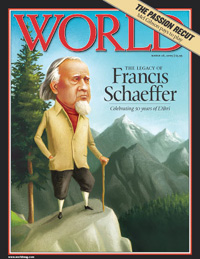
 I was born in 1933 in New York City to Frederick and Eva Weinberg. My early inclination toward science received encouragement from my father, and by the time I was 15 or 16 my interests had focused on theoretical physics.


 BY:
BY: 
 “Magic in the Moonlight” is a Sony Pictures Classics release, directed by


 The Daily Hatch