Woody Allen‘s latest film finally has a release date and a studio. Irrational Man will be distributed by Sony Pictures Classics, as were Allen’s last six films.Emma Stone, Joaquin Phoenix, Parker Posey, and Jamie Blackley star. More of the Woody AllenIrrational Man news is after the jump.
Allen said some nice things about Sony Pictures Classic in a statement. “Sony Classics and I have a good working relationship,” he said. “I like the way they handle my movies, very special, very classy and I always hope my films live up to their expectations.”
Sony had similarly pleasant things to say about Allen. “Woody Allen’s new movie Irrational Man, his latest annual gift to moviegoers everywhere, is as fresh and winning as ever.”
Plot details on Irrational Man are being kept under wraps, though there are some theories floating around. My favorite is this one:
On a small town college campus, a philosophy professor in existential crisis gives his life new purpose when he enters into a relationship with his student.
Sony Pictures Classics hasn’t confirmed that logline. But it’s hard to think of a more Woody Allen-esque story than a romance between an neurotic intellectual and a much younger woman. We’ll have to wait and see if there’s more to it than that.
Presumably Phoenix is the professor and Stone is the student. Which, by Allen standards, isn’t such a stark divide. She’s 26 in real life and he’s 40. In contrast, Stone’s last Woody Allen love interest, Magic in the Moonlight‘s Colin Firth, was 54.
Sony Pictures Classics hasn’t announced a release date. If they follow their usual pattern with his films, though, we can probably expect an Irrational Man trailer this spring, followed by a release this summer.
In typical form, Allen is already plugging away at his next project — his first-ever TV series, which is set up at Amazon.
__
Sony Acquires Woody Allen’s IRRATIONAL MAN – AMCi
Published on Feb 5, 2015
Sony Pictures Classics has acquired the North American rights to Woody Allen’s next film “Irrational Man”. This marks the eight collaboration between Allen and the studio. Few details are known about the film to date but it is said that it may focus around a University Professor and his student, whose entanglement may turn deadly. The film stars Joaquin Phoenix, Emma Stone and Parker Posey.
Woody Allen about meaning and truth of life on Earth Transcript: You start to think, when you’re younger, how important everything is and how things have to go right—your job, your career, your life, your choices, and all of that. Then, after a while, you start to realise that – I’m talking the big picture […]
Woody Allen Interview on NPR About the movie “Whatever works!!!” _________________________ Two Jews On Blue Jasmine Published on Jul 24, 2013 ‘Blue Jasmine’ Movie Review By Joan Alperin Schwartz There are many reasons to see ‘Blue Jasmine’ written and directed by Woody Allen, but the main one is…the stunning, complex, Oscar worthy performance by, Miss Cate […]
______________________ Woody Allen: “the whole thing is tragic” July 20, 2012 Mr. Allen, do you truly believe that happiness in life is impossible? This is my perspective and has always been my perspective on life. I have a very grim, pessimistic view of it. I always have since I was a little boy; it hasn’t […]
___________ Dr. Francis Schaeffer – The Naturalistic, Materialistic, World View Francis Schaeffer and Gospel of Christ in the pages of the Bible Francis Schaeffer’s term the “Mannishness of Man” and how it relates to Woody Allen and Charles Darwin!!! Schaeffer noted that everyone has these two things constantly pulling at them. First, it is […]
____ Woody Allen’s past movies and the subject of the Meaning of Life examined!!! Out of the Past: Woody Allen, Nostalgia, the Meaning of Life, and Radio Days Kyle Turner Jul 25, 2014 Film, Twilight Time 1 Comment “I firmly believe, and I don’t say this as a criticism, that life is meaningless.” – Woody […]
__________ I wrote on this yesterday and will continue to write on it for a while. Below is a very fine article by Mike Huckabee on the subject. American people have to take up the slack for absentee president. (Photo: Philippe Wojazer, AFP/Getty Images) 3237CONNECT 21TWEETLINKEDIN 35COMMENTEMAILMORE Woody Allen said that “80% of success is […]
40 songs from Past Woody Films plus song I suggested for Woody Allen’s new film from Pee Wee Spitelera (Clarinetist at Al Hirts’ Club, New Orleans) ___________ Woody Allen – Songs from Woody Allen’s Films Published on Oct 7, 2013 Woody Allen – Songs from Woody Allen’s Films Upload the album here :http://bit.ly/17BenPD iTunes […]
____________ Everything You Always Wanted To Know About Woody Allen’s 2015 Film September 26, 2014 · by William Miller · in Actors, Everything You Always Wanted To Know, Films In keeping with his decades old habit of a film a year, there will be a 2015 Film written and directed by Woody Allen. With production […]
_______ Woody Allen’s recent films have done very well!!! Below Allen discusses them. 12 Questions for Woody Allen Woody Allen: American Master The reluctant auteur opens up By Roger Friedman | 07/30/14 11:13am Would it kill you to know that Woody Allen is just like us? He’s got two teenage girls who listen to pop […]
______________________ God and Carpeting: The Theology of Woody Allen Details Written by David M. of the group “Jews for Jesus” Woody Allen about meaning and truth of life on Earth Dick & Woody get semi-metaphysical Woody Allen interview 1971 PART 2/4 Woody Allen interview 1971 PART 1/4 God and Carpeting: The Theology of Woody Allen […]
On a small town college campus, a philosophy professor in existential crisis gives his life new purpose when he enters into a relationship with his student.
A celebrated military contractor returns to the site of his greatest career triumphs and re-connects with a long-ago love while unexpectedly falling for the hard-charging Air Force watchdog assigned to him.
On a small town college campus, a philosophy professor in existential crisis gives his life new purpose when he enters into a relationship with his student.
Sony Pictures Classics has acquired the North American rights to Woody Allen’s next film “Irrational Man”. This marks the eight collaboration between Allen and the studio. Few details are known about the film to date but it is said that it may focus around a University Professor and his student, whose entanglement may turn deadly. The film stars Joaquin Phoenix, Emma Stone and Parker Posey.
Woody Allen about meaning and truth of life on Earth Transcript: You start to think, when you’re younger, how important everything is and how things have to go right—your job, your career, your life, your choices, and all of that. Then, after a while, you start to realise that – I’m talking the big picture […]
Woody Allen Interview on NPR About the movie “Whatever works!!!” _________________________ Two Jews On Blue Jasmine Published on Jul 24, 2013 ‘Blue Jasmine’ Movie Review By Joan Alperin Schwartz There are many reasons to see ‘Blue Jasmine’ written and directed by Woody Allen, but the main one is…the stunning, complex, Oscar worthy performance by, Miss Cate […]
______________________ Woody Allen: “the whole thing is tragic” July 20, 2012 Mr. Allen, do you truly believe that happiness in life is impossible? This is my perspective and has always been my perspective on life. I have a very grim, pessimistic view of it. I always have since I was a little boy; it hasn’t […]
___________ Dr. Francis Schaeffer – The Naturalistic, Materialistic, World View Francis Schaeffer and Gospel of Christ in the pages of the Bible Francis Schaeffer’s term the “Mannishness of Man” and how it relates to Woody Allen and Charles Darwin!!! Schaeffer noted that everyone has these two things constantly pulling at them. First, it is […]
____ Woody Allen’s past movies and the subject of the Meaning of Life examined!!! Out of the Past: Woody Allen, Nostalgia, the Meaning of Life, and Radio Days Kyle Turner Jul 25, 2014 Film, Twilight Time 1 Comment “I firmly believe, and I don’t say this as a criticism, that life is meaningless.” – Woody […]
__________ I wrote on this yesterday and will continue to write on it for a while. Below is a very fine article by Mike Huckabee on the subject. American people have to take up the slack for absentee president. (Photo: Philippe Wojazer, AFP/Getty Images) 3237CONNECT 21TWEETLINKEDIN 35COMMENTEMAILMORE Woody Allen said that “80% of success is […]
40 songs from Past Woody Films plus song I suggested for Woody Allen’s new film from Pee Wee Spitelera (Clarinetist at Al Hirts’ Club, New Orleans) ___________ Woody Allen – Songs from Woody Allen’s Films Published on Oct 7, 2013 Woody Allen – Songs from Woody Allen’s Films Upload the album here :http://bit.ly/17BenPD iTunes […]
____________ Everything You Always Wanted To Know About Woody Allen’s 2015 Film September 26, 2014 · by William Miller · in Actors, Everything You Always Wanted To Know, Films In keeping with his decades old habit of a film a year, there will be a 2015 Film written and directed by Woody Allen. With production […]
_______ Woody Allen’s recent films have done very well!!! Below Allen discusses them. 12 Questions for Woody Allen Woody Allen: American Master The reluctant auteur opens up By Roger Friedman | 07/30/14 11:13am Would it kill you to know that Woody Allen is just like us? He’s got two teenage girls who listen to pop […]
______________________ God and Carpeting: The Theology of Woody Allen Details Written by David M. of the group “Jews for Jesus” Woody Allen about meaning and truth of life on Earth Dick & Woody get semi-metaphysical Woody Allen interview 1971 PART 2/4 Woody Allen interview 1971 PART 1/4 God and Carpeting: The Theology of Woody Allen […]
Sony Pictures Classics has acquired the North American rights to Woody Allen’s next film “Irrational Man”. This marks the eight collaboration between Allen and the studio. Few details are known about the film to date but it is said that it may focus around a University Professor and his student, whose entanglement may turn deadly. The film stars Joaquin Phoenix, Emma Stone and Parker Posey.
On a small town college campus, a philosophy professor (Joaquin Phoenix) in existential crisis gives his life new purpose when he enters into a relationship with his student (Emma Stone).
On May 2, 2014, it was announced that Woody Allen would write and direct his upcoming film, in which Joaquin Phoenix had joined the cast.[3] Later on May 6, Emma Stone joined the cast, marking her second film collaboration with Allen as she previously co-starred in Allen’s romantic comedy Magic in the Moonlight in 2014.[4] On July 24, Parker Posey and Jamie Blackley also joined the cast, which Allen would produce along Letty Aronson and Stephen Tenenbaum.[2] On January 29, 2015, Sony Pictures Classics acquired the distribution rights to the film and revealed the title to be Irrational Man.[5]
The principal photography of the film began on July 7, 2014 in Newport, Rhode Island and it lasted through the end of August.[6] The crews were spotted filming outside at The Fastnet Pub in Newport.[7][8] Posey was also spotted on the set.[9]
Woody Allen about meaning and truth of life on Earth Transcript: You start to think, when you’re younger, how important everything is and how things have to go right—your job, your career, your life, your choices, and all of that. Then, after a while, you start to realise that – I’m talking the big picture […]
Woody Allen Interview on NPR About the movie “Whatever works!!!” _________________________ Two Jews On Blue Jasmine Published on Jul 24, 2013 ‘Blue Jasmine’ Movie Review By Joan Alperin Schwartz There are many reasons to see ‘Blue Jasmine’ written and directed by Woody Allen, but the main one is…the stunning, complex, Oscar worthy performance by, Miss Cate […]
______________________ Woody Allen: “the whole thing is tragic” July 20, 2012 Mr. Allen, do you truly believe that happiness in life is impossible? This is my perspective and has always been my perspective on life. I have a very grim, pessimistic view of it. I always have since I was a little boy; it hasn’t […]
___________ Dr. Francis Schaeffer – The Naturalistic, Materialistic, World View Francis Schaeffer and Gospel of Christ in the pages of the Bible Francis Schaeffer’s term the “Mannishness of Man” and how it relates to Woody Allen and Charles Darwin!!! Schaeffer noted that everyone has these two things constantly pulling at them. First, it is […]
____ Woody Allen’s past movies and the subject of the Meaning of Life examined!!! Out of the Past: Woody Allen, Nostalgia, the Meaning of Life, and Radio Days Kyle Turner Jul 25, 2014 Film, Twilight Time 1 Comment “I firmly believe, and I don’t say this as a criticism, that life is meaningless.” – Woody […]
__________ I wrote on this yesterday and will continue to write on it for a while. Below is a very fine article by Mike Huckabee on the subject. American people have to take up the slack for absentee president. (Photo: Philippe Wojazer, AFP/Getty Images) 3237CONNECT 21TWEETLINKEDIN 35COMMENTEMAILMORE Woody Allen said that “80% of success is […]
40 songs from Past Woody Films plus song I suggested for Woody Allen’s new film from Pee Wee Spitelera (Clarinetist at Al Hirts’ Club, New Orleans) ___________ Woody Allen – Songs from Woody Allen’s Films Published on Oct 7, 2013 Woody Allen – Songs from Woody Allen’s Films Upload the album here :http://bit.ly/17BenPD iTunes […]
____________ Everything You Always Wanted To Know About Woody Allen’s 2015 Film September 26, 2014 · by William Miller · in Actors, Everything You Always Wanted To Know, Films In keeping with his decades old habit of a film a year, there will be a 2015 Film written and directed by Woody Allen. With production […]
_______ Woody Allen’s recent films have done very well!!! Below Allen discusses them. 12 Questions for Woody Allen Woody Allen: American Master The reluctant auteur opens up By Roger Friedman | 07/30/14 11:13am Would it kill you to know that Woody Allen is just like us? He’s got two teenage girls who listen to pop […]
______________________ God and Carpeting: The Theology of Woody Allen Details Written by David M. of the group “Jews for Jesus” Woody Allen about meaning and truth of life on Earth Dick & Woody get semi-metaphysical Woody Allen interview 1971 PART 2/4 Woody Allen interview 1971 PART 1/4 God and Carpeting: The Theology of Woody Allen […]
Today I will answer the simple question: IS IT POSSIBLE TO BE AN OPTIMISTIC SECULAR HUMANIST THAT DOES NOT BELIEVE IN GOD OR AN AFTERLIFE? This question has been around for a long time and you can go back to the 19th century and read this same view in the writings of Charles Darwin who tried to put a positive spin on his evolutionary views. Darwin wrote, “Believing as I do that man in the distant future will be a far more perfect creature than he now is…”
Francis Schaeffer observed:
Now you have now the birth of Julian Huxley’s evolutionary optimistic humanism already stated by Darwin. Darwin now has a theory that man is going to be better. If you had lived at 1860 or 1890 and you said to Darwin, “By 1970 will man be better?” He certainly would have the hope that man would be better as Julian Huxley does today. Of course, I wonder what he would say if he lived in our day and saw what has been made of his own views in the direction of (the mass murder) Richard Speck (and deterministic thinking of today’s philosophers). I wonder what he would say. So you have the factor, already the dilemma in Darwin that I pointed out in Julian Huxley and that is evolutionary optimistic humanism rests always on tomorrow. You never have an argument from the present or the past for evolutionary optimistic humanism.
You can have evolutionary nihilism on the basis of the present and the past. Every time you have someone bringing in evolutionary optimistic humanism it is always based on what is going to be produced tomorrow. When is it coming? The years pass and is it coming? Arthur Koestler doesn’t think it is coming. He sees lots of problems here and puts forth for another solution.
____________________
Darwin wrote, “…it is an intolerable thought that he and all other sentient beings are doomed to complete annihilation after such long-continued slow progress. To those who fully admit the immortality of the human soul, the destruction of our world will not appear so dreadful…”
Francis Schaeffer commented:
Here you feel Marcel Proust and the dust of death is on everything today because the dust of death is on everything tomorrow. Here you have the dilemma of Nevil Shute’s ON THE BEACH. If it is true that all we have left is biological continuity and biological complexity, which is all we have left in Darwinism here, or in many of the modern philosophies, then you can’t stand Shute’s ON THE BEACH. Maybe tomorrow at noon human life may be wiped out. Darwin already feels the tension, because if human life is going to be wiped out tomorrow, what is it worth today? Darwin can’t stand the thought of death of all men. Charlie Chaplin when he heard there was no life on Mars said, “I’m lonely.”
You think of the Swedish Opera (ANIARA) that is pictured inside a spaceship. There was a group of men and women going into outer space and they had come to another planet and the singing inside the spaceship was normal opera music. Suddenly there was a big explosion and the world had blown up and these were the last people left, the only conscious people left, and the last scene is the spaceship is off course and it will never land, but will just sail out into outer space. They say when it was shown in Stockholm the first time, the tough Swedes with all their modern mannishness, came out (after the opera was over) with hardly a word said, just complete silence.
Darwin already with his own position says he CAN’T STAND IT!! You can say, “Why can’t you stand it?” We would say to Darwin, “You were not made for this kind of thing. Man was made in the image of God. Your CAN’T- STAND- IT- NESS is screaming at you that your position is wrong. Why can’t you listen to yourself?”
You find all he is left here is biological continuity, and thus his feeling as well as his reason now is against his own theory, yet he holds it against the conclusions of his reason. Reason doesn’t make it hard to be a Christian. Darwin shows us the other way. He is holding his position against his reason.
______________________
Now let’s fast forward to 1989 and the movie CRIMES AND MISDEMEANORS and the same question is addressed. IS IT POSSIBLE TO BE AN OPTIMISTIC SECULAR HUMANIST THAT DOES NOT BELIEVE IN GOD OR AN AFTERLIFE?
Woody Allen’s Professor Levy represents the best of secular philosophy, but this philosophy is still is lacking in the end and Levy jumps out the window to end his life!!! Let’s look at some of his thought processes.
Two worldviews are presented by Woody Allen in this film CRIMES AND MISDEMEANORS and the first one is my view and that is the view that God exists and created the world with a moral structure for a purpose and the other one is there is no reason why things happen and there will be is no God there and the Hitlers of the world will never be punished.
Below is a portion of a short review of CRIMES AND MISDEMEANORS. Notice below especially the contrast between the worldview of the secularist Judah Rosenthal and the Rabbi Ben:
CHARACTERS: Judah Rosenthal (ophthalmologist, adulterer), Jack Rosenthal (Judah’s mobster brother), Miriam Rosenthal (Judah’s wife), Dolores (Anjelica Huston, Judah’s mistress), Lester (Alan Alda, TV personality), Cliff Stern (Woody Allen, unsuccessful film director), Ben (Sam Waterston, Rabbi), Halley Reed (Mia Farrow, TV producer)
OTHER FILMS BY DIRECTOR WOODY ALLEN: Sleeper (1973), Annie Hall (1977), Hannah and her Sisters (1986), Bullets over Broadway (1994), Deconstructing Harry (1997), Sweet and Lowdown (1999)
SYNOPSIS: Woody Allen’s “Crimes and Misdemeanors” intertwines two stories. The first involves Judah, a wealthy ophthalmologist and family man, who has had a several-year affair with Dolores. Dolores threatens to go public regarding the affair and Judah’s shady financial dealings unless Judah leaves his wife. Judah calls on his mobster brother to kill Dolores, which he does. The second storyline involves Cliff, a nerdy and unsuccessful documentary filmmaker, who is in an unhappy marriage. While working on a documentary about a TV personality named Lester, Cliff falls in love with Halley, a network producer. Halley rebuffs Cliff because he is married. When Cliff finally gets divorced, Halley has become engaged to Lester. Throughout both storylines discussions arise about God’s role in establishing ethical values, and whether the world would be valueless if God didn’t exist. Judah and Cliff meet up at the end of the film, and Judah presents an anonymous version of the murder – as though it might be a plot for a movie. It becomes clear that Judah got away with the murder, and suffered no long-term guilt. The film was nominated for several Academy Awards, including best screenplay and best director…
According to the DVD commentary, Allen views his film as “revisiting the themes he examined 15 years earlier in the farce Love and Death, [and] ideas such as God, faith, and justice. ‘Existential subjects to me,’ says the filmmaker, ‘are still the only subjects worth dealing with.’”
Speaking to Judah, Rabbi Ben states the two key moral positions of the movie: “It’s a fundamental difference in the way we view the world. You see it as harsh and empty of values and pitiless. And I couldn’t go on living if I didn’t feel it with all my heart a moral structure, with real meaning, and forgiveness, and a higher power, otherwise there’s no basis to live.” [RABBI BEN HAS THE SAME WORLDVIEW THAT I DO]
Rabbi Ben tells Judah that “without the law it’s all darkness.” Judah retorts, “What good is the law if it prevents me from receiving justice? Is what she’s doing to me just? Is this what I deserve?” Judah’s situations is caused directly or indirectly by choices he’s made, even though he may not have understood at the time he made them their full implications for the future…
In Cliff’s documentary footage on Louis Levy, Levy states “Now the unique thing that happened to the early Israelites was that they conceived a God that cares. He cares, but at the same time he also demands that you behave morally. But here comes the paradox. What’s one of the first things that that God asks: that God asks Abraham to sacrifice his only son, his beloved son to him. In other words, in spite of millennia of efforts we have not succeeded to create a really and entirely loving image of God. This was beyond our capacity to imagine.”
In the documentary footage, Levy comments on the nature of love. “You will notice that what we are aiming at when we fall in love is a very strange paradox. The paradox consists of the fact that when we fall in love we are seeking to re-find all or some of the people to whom we were attached as children. On the other hand we ask of our beloved to correct all of the wrongs that these early parents or siblings inflicted on us. So that love contains in it a contradiction, the attempt to return to the past and the attempt to undo the past.”
Visiting his childhood house, Judah imagines his family celebrating the Passover dinner. He asks what happens if a man kills. The image of his father answers, “then one way or another he’ll be punished.” “If he’s caught, Saul,” interjects an uncle. The father continues, “If he’s not caught that which originates from a black deed will blossom in a foul manner.” His aunt “And I say if he can do it and get away with it, and he chooses not to be bothered by the ethics, then he’s home free. Remember, history is written by the winners. And if the Nazis had won, future generations would understand the story of World War II quite differently.”
Continuing the imaginary Passover dialog, the uncle asks Judah’s father, “And if all your faith is wrong, Saul, I mean just what if?” The father answers, “Then I’ll still have a better life than all those that doubt.”
After Levy committed suicide, Cliff reviewed a clip from the documentary footage in which Levy states: “But we must always remember that when we are born we need a great deal of love to persuade us to stay in life. Once we get that love, it usually lasts us. But the universe is a pretty cold place. It’s we who invest it with our feelings. And under certain conditions, we feel that the thing isn’t worth it anymore.”
Hearing the news of Levy’s death, Halley says, “No matter how elaborate a philosophical system you work out, in the end it’s got to be incomplete.”
Near the end of the film Judah explains his murder story as though it might be a plot to a movie. Cliff responds, “I would have him turn himself in. Then your movie assumes tragic proportions, because in the absence of a God he is forced to assume that responsibility himself. Then you have tragedy.”At the close of the movie, Levy has the final word in a voice over narration: “It is only we, with our capacity to love, that give meaning to an indifferent universe. And yet, most human beings seem to have the ability to keep trying and find joy from simple things – from their family, their work, and from the hope that future generations might understand more.”
________________
IS THERE SUCH A THING AS OPTIMISTIC HUMANISM? Halley sums it best up with these words from her secular point of view,“No matter how elaborate a philosophical system you work out, in the end it’s got to be incomplete.” She doesn’t have a satisfactory answer because she does not believe in God or an afterlife. Francis Schaeffer points out in the beginning of the episode “Age of Non-reason.”
How Should We then Live Episode 7 small (Age of Nonreason)
J.I.PACKER WROTE OF SCHAEFFER, “His communicative style was not that of acautious academic who labors for exhaustive coverage and dispassionate objectivity. It was rather that of an impassioned thinker who paints his vision of eternal truth in bold strokes and stark contrasts.Yet it is a fact that MANY YOUNG THINKERS AND ARTISTS…HAVE FOUND SCHAEFFER’S ANALYSES A LIFELINE TO SANITY WITHOUT WHICH THEY COULD NOT HAVE GONE ON LIVING.”
Francis Schaeffer in Art and the Bible noted, “Many modern artists, it seems to me, have forgotten the value that art has in itself. Much modern art is far too intellectual to be great art. Many modern artists seem not to see the distinction between man and non-man, and it is a part of the lostness of modern man that they no longer see value in the work of art as a work of art.”
Many modern artists are left in this point of desperation that Schaeffer points out and it reminds me of the despair that Solomon speaks of in Ecclesiastes. Christian scholar Ravi Zacharias has noted, “The key to understanding the Book of Ecclesiastes is the term ‘under the sun.’ What that literally means is you lock God out of a closed system, and you are left with only this world of time plus chanceplus matter.” THIS IS EXACT POINT SCHAEFFER SAYS SECULAR ARTISTSARE PAINTING FROM TODAY BECAUSE THEY BELIEVED ARE A RESULTOF MINDLESS CHANCE.
Part 3 of 3: ‘Is Woody Allen A Romantic Or A Realist?’
A discussion of Woody Allen’s 1989 movie, Crimes and Misdemeanors, perhaps his finest.
By Anton Scamvougeras.
Woody Allen about meaning and truth of life on Earth
_______________
Is a optimistic humanism possible?
Here below is the song DUST IN THE WIND performed by the rock group KANSAS and was written by Kerry Ligren in 1978. I challenge anyone to read these words of that song given below and refute the idea that accepting naturalistic evolution with the exclusion of God must lead to the nihilistic message of the song!
DUST IN THE WIND:
I close my eyes only for a moment, and the moment’s gone
All my dreams pass before my eyes, a curiosity
Dust in the wind, all they are is dust in the wind
Same old song, just a drop of water in an endless sea
All we do crumbles to the ground, though we refuse to see
Dust in the wind, all we are is dust in the wind
Now, don’t hang on, nothing lasts forever but the earth and sky
It slips away, and all your money won’t another minute buy
Music video by Kansas performing Dust In The Wind. (c) 2004 Sony Music Entertainment Inc.
_________________________________
Humans have always wondered about the meaning of life…life has no higher purpose than to perpetuate the survival of DNA…life has no design, no purpose, no evil and no good, nothing but blind pitiless indifference. —Richard Dawkins
The vast majority of people believe there is a design or force in the universe; that it works outside the ordinary mechanics of cause and effect; that it is somehow responsible for both the visible and the moral order of the world. Modern biology has undermined this assumption…But beginning with Darwin, biology has undermined that tradition. Darwin in effect asserted that all living organisms had been created by a combination of chance and necessity–natural selection…First,God has no role in the physical world…Second,except for the laws of probability and cause and effect, there is no organizing principle in the world, and no purpose.(William B. Provine, “The End of Ethics?” in HARD CHOICES ( a magazine companion to the television series HARD CHOICES, Seattle: KCTS-TV, channel 9, University of Washington, 1980, pp. 2-3).
_______________________________
Take a look at this quote:
That Man is the product of causes which had no prevision of the end they were achieving; that his origin, his growth, his hopes and fears, his loves and his beliefs, are but the outcome of accidental collocations of atoms; …that all the labors of the ages, all the devotion, all the inspiration, all the noonday brightness of human genius, are destined to extinction in the vast death of the solar system, and that the whole temple of Man’s achievement must inevitably be buried beneath the debris of a universe in ruins—all these things, if not quite beyond dispute, are yet so nearly certain, that no philosophy which rejects them can hope to stand. Bertrand Russell
The British humanist H. J. Blackham (1903-2009) put it very plainly: “On humanist assumptions, life leads to nothing, and every pretense that it does not is a deceit. If there is a bridge over a gorge which spans only half the distance and ends in mid-air, and if the bridge is crowded with human beings pressing on, one after the other they fall into the abyss. The bridge leads nowhere, and those who are pressing forward to cross it are going nowhere….It does not matter where they think they are going, what preparations for the journey they may have made, how much they may be enjoying it all. The objection merely points out objectively that such a situation is a model of futility“( H. J. Blackham, et al., Objections to Humanism (Riverside, Connecticut: Greenwood Press, 1967).
I think you may be quoting Blackham out of context because I’ve heard Blackham speak, and read much of what he said, but Blackham has argued continuously that life is full of meaning; that there are points. The fact that one doesn’t believe in God does not deaden the appetite or the lust for living. On the contrary; great artists and scientists and poets and writers have affirmed the opposite.
I read the book FORBIDDEN FRUIT by Paul Kurtz and I had the opportunity to correspond with him but I still reject his view that optimistic humanism can withstand the view of nihilism if one accepts there is no God. Christian philosopherR.C. Sproul put it best:
Nihilism has two traditional enemies–Theism and Naive Humanism. The theist contradicts the nihilist because the existence of God guarantees that ultimate meaning and significance of personal life and history. Naive Humanism is considered naive by the nihilist because it rhapsodizes–with no rational foundation–the dignity and significance of human life. The humanist declares that man is a cosmic accident whose origin was fortuitous and entrenched in meaningless insignificance. Yet in between the humanist mindlessly crusades for, defends, and celebrates the chimera of human dignity…Herein is the dilemma: Nihilism declares that nothing really matters ultimately…In my judgment, no philosophical treatise has ever surpassed or equaled the penetrating analysis of the ultimate question of meaning versus vanity that is found in the Book of Ecclesiastes.
________________
Francis Schaeffer noted that Solomon took a look in Ecclesiastes at the meaning of life on the basis of human life standing alone between birth and death “under the sun.” This phrase UNDER THE SUN appears over and over in Ecclesiastes. The Christian Scholar Ravi Zacharias noted, “The key to understanding the Book of Ecclesiastes is the term UNDER THE SUN — What that literally means is you lock God out of a closed system and you are left with only this world of Time plus Chance plus matter.”
Kerry Livgren is the writer of the song “Dust in the Wind” and he said concerning that song in 1981 and then in 2006:
1981: “When I wrote “Dust in the Wind” I was writing about a yearning emptiness that I felt which millions of people identified with because the song was very popular.” 2006:“Dust In the Wind” was certainly the most well-known song, and the message was out of Ecclesiastes. I never ceased to be amazed at how the message resonates with people, from the time it came out through now. The message is true and we have to deal with it, plus the melody is memorable and very powerful. It disturbs me that there’s only part of the [Christian] story told in that song. It’s about someone yearning for some solution, but if you look at the entire body of my work, there’s a solution to the dilemma.”
Ecclesiastes reasons that chance and time have determined the past and will determine the future (9:11-13), and power reigns in this life and the scales are not balanced(4:1). Is that how you see the world? Solomon’s experiment was a search for meaning to life “under the sun.” Then in last few words in Ecclesiastes he looks above the sun and brings God back into the picture: “The conclusion, when all has been heard, is: Fear God and keep His commandments, because this applies to every person. For God will bring every act to judgment.”
You can hear DAVE HOPE and Kerry Livgren’s stories from this youtube link:
[ARTS 315] The Fully Present Object: Minimalism – Jon Anderson
Published on Apr 5, 2012
Clement Greenberg mentioned and then minimalism
September 16, 2011
_____________
[ARTS 315] The Fully Present Object: Minimalism – Jon Anderson
Published on Jul 9, 2012
Contemporary Art Trends [ARTS 315], Jon Anderson
The Fully Present Object: Minimalism
September 16, 2011
[ARTS 315] Contemporary Liturgies: Performance Art and Embodied Belief – Jon Anderson
Published on Apr 5, 2012
Contemporary Art Trends [ARTS 315], Jon Anderson
Contemporary Liturgies: Performance Art and Embodied Belief
November 4, 2011
_____________________
Rodney Graham ‘In Conversation’ with Adrian Searle and Greg Hilty
Uploaded on Jul 6, 2010
Rodney Graham talks to Art Critic Adrian Searle and Greg Hilty, Lisson’s Curatorial Director, about works in his recent solo show at Lisson Gallery, ‘Painter, Poet, Lighthouse Keeper’.
‘Painter, Poet, Lighthouse Keeper’ presents a series of new works, created by Rodney Graham specifically for Lisson Gallery. One of the most original and influential artists of his generation, Graham draws from sources as diverse as structural film, Mallarmé’s poetry, British zombie movies, and 19th century French military painting to create a kaleidoscopic exhibition combining works in photography, film and painting.
Rodney Graham (born January 16, 1949) is an artist and musician born in Abbotsford, British Columbia. He is most often associated with the Vancouver School. He is married to the artist Shannon Oksanen and lives in Vancouver.
Coming out of Vancouver’s 1970s photoconceptual tradition, Rodney Graham’s work is often informed by historical literary, musical, philosophical and popular references. He is most often associated with other West-coast Canadian artists, including Vikky Alexander, Jeff Wall, Stan Douglas, Roy Arden and Ken Lum. He was taught by fellow Vancouver school artist Ian Wallace[citation needed]‘while at Simon Fraser University, Burnaby, British Columbia, from 1979 to 1980. Around this time, he played in the band UJ3RK5 with fellow artist Jeff Wall. His wide-ranging and often unclassifiable work has frequently engaged with technologies of the past: literary, psychological and musical texts, optical devices, and film as historical medium.
Among his earliest works is Camera Obscura (1979; destroyed 1981) a site-specific work that consisted of a shed-sized optical device on his family’s farm field near Abbotsford, British Columbia. Entering the shed, the observer was confronted with an inverted image of a solitary tree.[1] Both prior to this (with Rome Ruins [1978])[2] and throughout the 1980s and 90s, Graham employed the technique of the camera obscura in his work.
Beginning in the early 1980s, Graham took found texts as the basis for his bookworks—at once conceptual and material—inserting bookmarks with additional pages, inserting textual loops or incorporating books into optical devices in works such as Dr. No* (1991), Lenz (1983) and Reading Machine for Lenz (1993), respectively; many of these were carried out with the esteemed Belgian publisher Yves Gevaert and/or the gallerist Christine Burgin. His extensive body of works related to Sigmund Freud (beginning in 1983) in a sense develops out of this text-based practice, though later found books would be integrated unmodified into Donald Judd-like “specific objects,” as with The Basic Writings of Sigmund Freud (1987).
In 1994, Graham began a series of films and videos in which he himself appears as the principal character: Halcion Sleep (1994), Vexation Island (1997) (shown at Canadian pavilion of the 1997 Venice Biennale), How I Became a Ramblin’ Man (1999), and The Phonokinetoscope (2002), for instance. It is in this last work that evidence of Graham’s engagement both with the origins of cinema and its eventual demise surface, a work where Graham takes up a prototype by Thomas Edison and puts forward an argument for the relation between sound and image in film. Later, in Rheinmetall/Victoria 8 (2003), two increasingly obsolete technologies, the typewriter and film projector, face off against one another—with the latter projecting a film of the former.[3]
In 2003, Graham turned to drawing and painting for the first time. Adopting a persona in a host of related photographic, installation and painted works, The Gifted Amateur, November 10th, 1962,[4] 2007, indicates both continuing performative and art historical directions in his work.
In 2009, Graham exhibited a series of film installations with Harun Farocki, called “HF/RG,” at the Jeu de Paume, Paris. “HF | RG”. Jeu de paume (in French). Retrieved 2009-04-06.
Graham lives and works in Vancouver, and is currently represented by 303 Gallery, New York; Christine Burgin Gallery, New York; Donald Young Gallery, Chicago; Lisson Gallery, London; Hauser & Wirth, Zurich, London and New York; and Johnen Galerie, Berlin.
A postage stamp depicting Graham’s photograph, Basement Camera Shop circa 1937 was issued on March 22, 2013 by Canada Post as part of their Canadian Photography series. The image is a recreation of a snapshot discovered by the artist at an antique store. Graham places himself in the photograph as the owner standing at the counter, waiting for a customer.[5][6][7]
Jump up ^Wall, “Into the Forest: Two Sketches for Studies of Rodney Graham’s Work,” 21.
Jump up ^Graham, “Artist’s Notes,” in Rodney Graham: Works from 1976 to 1994. Toronto; Brussels; Chicago: Art Gallery of York University; Yves Gevaert; The Renaissance Society at the University of Chicago, 1994. 83.
Born in Abbotsford on January 16, 1949. Lives and works in Vancouver.Rodney Graham’s works humourously consider notions of doubling and historical modes of self-representation. Graham is part of a generation of Vancouver artists—including Ken Lum, Roy Arden, Stan Douglas, Ian Wallace and Jeff Wall, some of whom he played with in the punk band U-J3RK5—who established the city’s reputation for photoconceptualism. Graham’s breakthrough works, completed after studying at the University of British Columbia and Simon Fraser University, were a series of images of inverted trees made with a camera obscura. Later, in the 1990s, Graham became known for appearing in short, looped films in which he parodied and problematized modern or proto-modern notions of selfhood and masculinity. In 1997’s Vexation Island, shown at that year’s Venice Biennale in the Canada Pavilion, Graham is a Crusoe-esque shipwrecked pirate; in 2001/2002’s The Phonokinetoscope, the artist rides a bike through Berlin’s Tiergarten park on LSD. A touring retrospective, “A Little Thought,” opened at the Art Gallery of Ontario in 2004. Graham’s work is in the collection of the Centre Georges Pompidou and the Metropolitan Museum of Art.Image of Rodney Graham’s Artist Model Posing for “The Old Bugler, Among the Fallen, Battle of Beaune-Roland, 1870″ in the Studio of an Unknown Military Painter, Paris, 1885 (2009) courtesy Vancouver Art Gallery.
E P I S O D E 1 0 Dr. Francis Schaeffer – Episode X – Final Choices 27 min FINAL CHOICES I. Authoritarianism the Only Humanistic Social Option One man or an elite giving authoritative arbitrary absolutes. A. Society is sole absolute in absence of other absolutes. B. But society has to be […]
E P I S O D E 9 Dr. Francis Schaeffer – Episode IX – The Age of Personal Peace and Affluence 27 min T h e Age of Personal Peace and Afflunce I. By the Early 1960s People Were Bombarded From Every Side by Modern Man’s Humanistic Thought II. Modern Form of Humanistic Thought Leads […]
E P I S O D E 8 Dr. Francis Schaeffer – Episode VIII – The Age of Fragmentation 27 min I saw this film series in 1979 and it had a major impact on me. T h e Age of FRAGMENTATION I. Art As a Vehicle Of Modern Thought A. Impressionism (Monet, Renoir, Pissarro, Sisley, […]
E P I S O D E 7 Dr. Francis Schaeffer – Episode VII – The Age of Non Reason I am thrilled to get this film series with you. I saw it first in 1979 and it had such a big impact on me. Today’s episode is where we see modern humanist man act […]
E P I S O D E 6 How Should We Then Live 6#1 Uploaded by NoMirrorHDDHrorriMoN on Oct 3, 2011 How Should We Then Live? Episode 6 of 12 ________ I am sharing with you a film series that I saw in 1979. In this film Francis Schaeffer asserted that was a shift in […]
E P I S O D E 5 How Should We Then Live? Episode 5: The Revolutionary Age I was impacted by this film series by Francis Schaeffer back in the 1970′s and I wanted to share it with you. Francis Schaeffer noted, “Reformation Did Not Bring Perfection. But gradually on basis of biblical teaching there […]
Dr. Francis Schaeffer – Episode IV – The Reformation 27 min I was impacted by this film series by Francis Schaeffer back in the 1970′s and I wanted to share it with you. Schaeffer makes three key points concerning the Reformation: “1. Erasmian Christian humanism rejected by Farel. 2. Bible gives needed answers not only as to […]
Francis Schaeffer’s “How should we then live?” Video and outline of episode 3 “The Renaissance” Francis Schaeffer: “How Should We Then Live?” (Episode 3) THE RENAISSANCE I was impacted by this film series by Francis Schaeffer back in the 1970′s and I wanted to share it with you. Schaeffer really shows why we have so […]
Francis Schaeffer: “How Should We Then Live?” (Episode 2) THE MIDDLE AGES I was impacted by this film series by Francis Schaeffer back in the 1970′s and I wanted to share it with you. Schaeffer points out that during this time period unfortunately we have the “Church’s deviation from early church’s teaching in regard […]
Francis Schaeffer: “How Should We Then Live?” (Episode 1) THE ROMAN AGE Today I am starting a series that really had a big impact on my life back in the 1970′s when I first saw it. There are ten parts and today is the first. Francis Schaeffer takes a look at Rome and why […]
You start to think, when you’re younger, how important everything is and how things have to go right—your job, your career, your life, your choices, and all of that. Then, after a while, you start to realise that – I’m talking the big picture here – eventually you die, and eventually the sun burns out and the earth is gone, and eventually all the stars and all the planets in the entire universe go, disappear, and nothing is left at all. Nothing – Shakespeare and Beethoven and Michelangelo gone. And you think to yourself that there’s a lot of noise and sound and fury – and where’s it going? It’s not going any place… Now, you can’t actually live your life like that, because if you do you just sit there and – why do anything? Why get up in the morning and do anything? So I think it’s the job of the artist to try and figure out why, given this terrible fact, you want to go on living.
Woody Allen, the film writer, director, and actor, has consistently populated his scripts with characters who exchange dialogue concerning meaning and purpose. In Hannah and Her Sisters a character named Mickey says, “Do you realize what a thread were all hanging by? Can you understand how meaningless everything is? Everything. I gotta get some answers.”{7} […]
Review of Woody Allen’s latest movie “Blue Jasmine” Part 6 I have spent alot of time talking about Woody Allen films on this blog and looking at his worldview. He has a hopeless, meaningless, nihilistic worldview that believes we are going to turn to dust and there is no afterlife. Even though he has this view he […]
Review of Woody Allen’s latest movie “Blue Jasmine” Part 5 I have spent alot of time talking about Woody Allen films on this blog and looking at his worldview. He has a hopeless, meaningless, nihilistic worldview that believes we are going to turn to dust and there is no afterlife. Even though he has this view he […]
Ecclesiastes 4-6 | Solomon’s Dissatisfaction Published on Sep 24, 2012 Calvary Chapel Spring Valley | Sunday Evening | September 23, 2012 | Pastor Derek Neider ___________________ Debating with Ark Times Bloggers on “The Meaning of Life” Part 4 “Without God in the picture is there any relief for those who have been oppressed?” I have enjoyed […]
Ecclesiastes 6-8 | Solomon Turns Over a New Leaf Published on Oct 2, 2012 Calvary Chapel Spring Valley | Sunday Evening | September 30, 2012 | Pastor Derek Neider _____________________ Debating with Ark Times Bloggers on “The Meaning of Life” Part 3 “Is Chris Martin of Coldplay trying to find a lasting meaning to his life?” […]
Review of Woody Allen’s latest movie “Blue Jasmine” Part 4 I have spent alot of time talking about Woody Allen films on this blog and looking at his worldview. He has a hopeless, meaningless, nihilistic worldview that believes we are going to turn to dust and there is no afterlife. Even though he has this view he […]
Blue Jasmine — Movie Review Published on Jul 25, 2013 Blue Jasmine directed by Woody Allen and starring Cate Blanchett , Alex Baldwin, and Louis C.K. is reviewed by Ben Mankiewicz (host of Turner Classic Movies), Grae Drake (Senior Editor of Rotten Tomatoes), Alonso Duralde (TheWrap.com and Linoleum Knife podcast) and Christy Lemire (Movie critic). ___________________ […]
Review of Woody Allen’s latest movie “Blue Jasmine” Part 3 I have spent alot of time talking about Woody Allen films on this blog and looking at his worldview. He has a hopeless, meaningless, nihilistic worldview that believes we are going to turn to dust and there is no afterlife. Even though he has this view he […]
I have spent alot of time talking about Woody Allen films on this blog and looking at his worldview. He has a hopeless, meaningless, nihilistic worldview that believes we are going to turn to dust and there is no afterlife. Even though he has this view he has taken the opportunity to look at the weaknesses of […]
I have spent alot of time talking about Woody Allen films on this blog and looking at his worldview. He has a hopeless, meaningless, nihilistic worldview that believes we are going to turn to dust and there is no afterlife. Even though he has this view he has taken the opportunity to look at the weaknesses of his own secular view. I […]
Debating with Ark Times Bloggers on “The Meaning of Life” Part 2 “Can a person find a satisfying purpose to his/her life by pursuing money?” Ecclesiastes 8-10 | Still Searching After All These Years Published on Oct 9, 2012 Calvary Chapel Spring Valley | Sunday Evening | October 7, 2012 | Pastor Derek Neider _______________________ Ecclesiastes […]
Review of Woody Allen’s latest movie “Blue Jasmine” Part 1 I have spent alot of time talking about Woody Allen films on this blog and looking at his worldview. He has a hopeless, meaningless, nihilistic worldview that believes we are going to turn to dust and there is no afterlife. Even though he has this view he […]
Debating with Ark Times Bloggers on “The Meaning of Life” Part 1 “Can someone find a lasting meaning to their life apart from God?” Ecclesiastes 1 Published on Sep 4, 2012 Calvary Chapel Spring Valley | Sunday Evening | September 2, 2012 | Pastor Derek Neider _____________________ I have enjoyed going back and forth with the […]
I have spent alot of time talking about Woody Allen films on this blog and looking at his worldview. He has a hopeless, meaningless, nihilistic worldview that believes we are going to turn to dust and there is no afterlife. Even though he has this view he has taken the opportunity to look at the weaknesses of his own secular view. I […]
Ecclesiastes 6-8 | Solomon Turns Over a New Leaf Published on Oct 2, 2012 Calvary Chapel Spring Valley | Sunday Evening | September 30, 2012 | Pastor Derek Neider _____________________ I have written on the Book of Ecclesiastes and the subject of the meaning of our lives on several occasions on this blog. In this series on Ecclesiastes I […]
_____________________________ Crimes and Misdemeanors: A Discussion: Part 3 Uploaded by camdiscussion on Sep 23, 2007 Part 3 of 3: ‘Is Woody Allen A Romantic Or A Realist?’ A discussion of Woody Allen’s 1989 movie, Crimes and Misdemeanors, perhaps his finest. By Anton Scamvougeras. http://camdiscussion.blogspot.com/antons@mail.ubc.ca ______________ I have gone back and forth and back and forth with many liberals on the Arkansas Times […]
Dick & Woody discuss particle physics I have spent alot of time talking about Woody Allen films on this blog and looking at his worldview. He has a hopeless, meaningless, nihilistic worldview that believes we are going to turn to dust and there is no afterlife. Even though he has this view he has taken the opportunity […]
Crimes and Misdemeanors: A Discussion: Part 2 Uploaded by camdiscussion on Sep 23, 2007 Part 2 of 3: ‘What Does The Movie Tell Us About Ourselves?’ A discussion of Woody Allen’s 1989 movie, perhaps his finest. By Anton Scamvougeras. http://camdiscussion.blogspot.com/antons@mail.ubc.ca______________ I have gone back and forth and back and forth with many liberals on the Arkansas Times Blog on many issues such […]
‘Blue Jasmine’ Movie Review
By Joan Alperin Schwartz
There are many reasons to see ‘Blue Jasmine’ written and directed by Woody Allen, but the main one is…the stunning, complex, Oscar worthy performance by, Miss Cate Blanchett.
She portrays Jasmine, a one time wealthy New York socialite who has lost her money, her home, her husband, (Alec Baldwin) her son and perhaps…her sanity.
We first meet Jasmine, sitting on an airplane, talking non-stop to her seat mate, an elderly woman, who from the expression on her face, wishes she would just shut up.
From Jasmine’s monologue, we find out that she’s on her way to live with her sister, Ginger (Sally Hawkins) a grocery clerk, in San Francisco.
After the plane lands, Jasmine continues following and talking to her seatmate and it becomes obvious that, this is a woman, on the edge.
At her sister’s place, Jasmine’s fragile mental state becomes even clearer…Actually it’s hard to miss. Jasmine gulps down vodka followed by a xanax chaser every time she’s upset, which is quite often.
First, she can’t stand her sister’s boyfriend, Chili (Bobby Cannavale) who’s always around….Thinks he’s as big a loser as Ginger’s ex-husband, Augie (Andrew Dice Clay)
If that’s not bad enough, Jasmine wants to study interior design online, but has no idea how to use a computer. So now, our stressed out socialite has to go back to school, which means finding some menial job in order to pay for it.
In other words, Jasmine has to learn to survive in the ‘real world’ for the first time in her life. No wonder she’s altering her consciousness.
Yes, Jasmine is a very flawed, troubled character, but you want her to succeed. You can’t help but feel compassion for this woman.
This has a lot to do with Allen’s wonderful use of flashbacks, where we get to see Jasmine’s former life and come to understand why she’s on the verge of a complete mental breakdown.
Watching Cate/ Jasmine, I immediately thought about another iconic, damaged woman…Blanche Dubois from Tennesse Williams ‘Streetcar Named Desire’. It wouldn’t surprise me to learn that Woody was inspired by Blanche when he created this character.
On a side note, Blanchett portrayed Blanche on the London stage a few years ago.
In any case, like Blanche, Jasmine is a woman you’ll remember for a long time to come….I’m still thinking about her.
I absolutely loved this film which also stars Louis C. K. Peter Sarsgaard and Michael Stuhlbarg as a lecherous dentist who hires Jasmine.
I gave ‘Blue Jasmine’ which opens in theatres Friday July 26, 2013, my highest bagel score…five out of five…and John, believe it or not, was right behind with his bagel rating. Yes, this is a film, he actually liked…alot.
Check out our video for more of our thoughts and banter.
Please SUBSCRIBE to our youtube channel and LIKE us on our Two Jews On Film facebook page.
Let us know what you think. Thanks everyone
_____________________________
Blue Jasmine – Official Trailer (HD) Cate Blanchett, Alec Baldwin
Let me show you some inescapable conclusions that Francis Schaeffer said you will face if you choose to live without God in the picture. Solomon came to these same conclusions when he looked at life “under the sun.”
Death is the great equalizer (Eccl 3:20, “All go to the same place; all come from dust, and to dust all return.”)
Chance and time have determined the past, and they will determine the future. (Ecclesiastes 9:11-13)
Power reigns in this life, and the scales are not balanced(Eccl 4:1)
Nothing in life gives true satisfaction without God including knowledge (1:16-18), ladies and liquor (2:1-3, 8, 10, 11), and great building projects (2:4-6, 18-20).
____________
Just like Hugh Hefner you will fail in getting satisfaction in life without God in the picture and like Solomon you will become depressed and many very learned people have discussed this issue such as Will Durant, Madalyn Murray O’Hair, Stephen Jay Gould,Richard Dawkins, Jean-Paul Sartre,Bertrand Russell, Leo Tolstoy, Loren Eiseley,Aldous Huxley, G.K. Chesterton, Ravi Zacharias, and C.S. Lewis.
The hallmark of the Enlightenment had been “Reason Is King.” The leading thinkers had consciously rejected the need for revelation. As Paul Hazard in European Thought in the Eighteenth Century says, they put Christianity on trial.91
Gradually, however, the problems of this enthronement of human reason emerged. The reason of man was not big enough to handle the big questions, and what man was left with relative knowledge and relative morality. The noose around the humanist’s neck tightened with every passing decade and generation.
What would he do?
Ironically, even though the basis of the humanists’ whole endeavor had been the central importance of man’s reason, when faced with the problems of relative knowledge and relative morality they repudiated reason. Rather than admit defeat in front of God’s revelation, the humanists extended the revolution further – and in a direction which would have been quite unthinkable to their eighteenth-century predecessors. Modern irrationalism was born.
We could go back as far as Immanuel Kant (1724-1804) in philosophy and to Friedrich Schleiermacher (1768-1834) in theology. Modern existentialism is also related to Søren Kierkegaard (1813-1855). However, our intention here is neither to go into the history of irrationalism, nor to examine the proponents of existentialism in our own century, but rather to concentrate on its main thesis. It is this that confronts us on all sides today, and it is impossible to understand modern man without understanding this concept.
Because we shall be using several terms a great deal now, we would ask the reader to attend carefully. When we speak of irrationalism or existentialism or the existential methodology, we are pointing to a quite simple idea. It may have been expressed in a variety of complicated ways by philosophers, but it is not a difficult concept.
Imagine that you are at the movies watching a suspense film. As the story unfolds, the tension increases until finally the hero is trapped in some impossible situation and everyone is groaning inwardly, wondering how he is going to get out of the mess. The suspense is heightened by the knowledge (of the audience, not the hero) that help is on the way in the form of the good guys. The only question is: will the good guys arrive in time?
Now imagine for a moment that the audience is slipped the information that there are no good guys, that the situation of the hero is not just desperate, but completely hopeless. Obviously, the first thing that would happen is that the suspense would be gone. You and the entire audience would simply be waiting for the axe to fall.
If the hero faced the end with courage, this would be morally edifying, but the situation itself would be tragic. If, however, the hero acted as if help were around the corner and kept buoying himself up with this thought (“Someone is on the way!” – “Help is at hand!”), all you could feel for him would be pity. It would be a means to keep hope alive within a hopeless situation. The hero’s hope would change nothing on the outside; it would be unable to manufacture, out of nothing, good guys coming to the rescue. All it would achieve would the hero’s own mental state of hopefulness rather than hopelessness.
The hopefulness itself would rest on a lie or an illusion and thus, viewed objectively, would be finally absurd. And if the hero really knew what the situation was, but consciously used the falsehood to buoy up his feelings and go whistling along, we would either say, “Poor guy!” or “He’s a fool.” It is this kind of conscious deceit that someone like Woody Allen has looked full in the face and will have none of.
Now this is what the existential methodology is about. If the universe we are living in is what the materialistic humanists say it is, then with our reason (when we stop to think about it) we could find absolutely no way to have meaning or morality or hope or beauty. This would plunge us into despair. We would have to take seriously the challenge of Albert Camus (1913-1960) in the first sentence of The Myth of Sisyphus: “There is but one truly serious philosophical problem, and that is suicide.”92 Why stay alive in an absurd universe? Ah! But that is not where we stop. We say to ourselves – “There is hope!” (even though there is no help). “We shall overcome!” (even though nothing is more certain than that we shall be destroyed, both individually at death and cosmically with the end of all conscious life). This is what confronts us on all sides today: the modern irrational-ism.
How Should We then Live Episode 7 small (Age of Nonreason)
[ARTS 315] Course Introduction: Introducing the Avant-Garde – Jon Anderson
Published on Apr 5, 2012
Contemporary Art Trends [ARTS 315], Jon Anderson
Course Introduction: Introducing the Avant-Garde
August 26, 2011
____________________________
2nd in series
[ARTS 315] Postmodern Strategies: The Canvas as an Arena: Jackson Pollock – Jon Anderson
Published on Apr 5, 2012
Contemporary Art Trends [ARTS 315], Jon Anderson
The Canvas as an Arena: Jackson Pollock
August 26, 2011
Tom Wolfe on Modern Art in Sept of 2011
Uploaded on Oct 11, 2011
Washington and Lee University alumnus Tom Wolfe presented a lecture on Modern Art during the 60th reunion of his class, the Class of 1951, held on the campus in September 2011
Allora & Calzadilla magnify areas of political tension in the public realm through a wide-ranging body of work. They identify and stress the hairline fractures in societal systems – nationhood, environmentalism, states of war and resistance – through performance, sculpture, sound, video and photography. Meticulous researchers both, an understanding of material is central to their practice and they home in on its symbolic dimension, tracing the many marks of history, culture and politics. In the alternative monument Chalks (1998–2006), pieces of this most fragile and soluble of materials were scaled up to man-size and placed in public squares in Lima, New York and Paris, inviting passersby to take part in a collective drawing that would quickly disappear underfoot. Elsewhere the human body itself bears the marks of history: in the series of videos about the Caribbean island of Vieques, controlled by the US government since the 1940s and where locals were displaced for an environmentally disastrous military exclusion zone. In Half Mast\Full Mast (2010), a split channel video is unified by a flagpole aligned between two images that show sites of victory or loss; one gymnast at a time enters either top or bottom screen and physically raises his body to a 90-degree angle, a human flag at either full or half-mast. This image, like many of the duo’s works, balloons with irony or absurdity to what the artists call a ‘monstrous dimension’.
Allora & Calzadilla live and work in San Juan, Puerto Rico. Born in Philadelphia, Pennsylvania, in 1974, Jennifer Allora received a BA from the University of Richmond in Virginia (1996) and an MS from the Massachusetts Institute of Technology (2003). Guillermo Calzadilla was born in 1971 in Havana, Cuba and received a BFA from Escuela de Artes Plásticas, San Juan, Puerto Rico (1996) and an MFA from Bard College (2001). Collaborating since 1995, Allora & Calzadilla represented the USA in the 54th Venice Biennale (2011). Solo exhibitions include Indianapolis Museum of Art (2012), Haus der Kunst, Munich (2008), Stedelijk Museum, Amsterdam (2008), Kunsthalle Zurich (2007) and Walker Art Center, Minneapolis (2004). Among numerous group exhibitions, they participated in documenta 13, Kassel, Germany (2012); the 29th São Paulo Biennial (2010) and Performance 9 at the Museum of Modern Art, New York (2011).
Jennifer Allora (born 20 March 1974) and Guillermo Calzadilla (born 10 January 1971) are a collaborative duo of visual artists who live and work in San Juan, Puerto Rico. They represented the USA in the 2011 Venice Biennale.
Guillermo Calzadilla was born in Havana, Cuba; he received a BFA from Escuela de Artes Plásticas, San Juan, Puerto Rico (1996) and an MFA from Bard College in 2001.[1]
The artists met while studying abroad in Florence, Italy. They have worked together since 1995.
In 2007, Allora and Calzadilla exhibited at the Renaissance Society. The show included compositions from ten other Chicago-area musicians.[2]
In 2008 Allora & Calzadilla were featured in the PBS series Art:21.[3]
Allora & Calzadilla participated in the 5th and 7th Gwangju Biennale (2004 and 2008).
Allora & Calzadilla have also been shortlisted for London’s 2011 Fourth Plinth commission. Fourth Plinth
Allora & Calzadilla have collaboratively produced an expansive interdisciplinary body of work including sculpture, photography, performance, sound and video. Their artistic practice engages with history and contemporary geo-political realities, destabilizing and re-ordering them in ways that can be alternately humorous, poetic, and revelatory. Their work has been featured in solo exhibitions internationally, including Haus der Kunst, Münich (2008),[4] Serpentine Gallery and Whitechapel Art Gallery, London (2007),[5] Les Rencontres d’Arles festival, France (2008), Stedelijk Museum in Amsterdam (2008),[6] Kunsthalle Zurich (2007),[7] National Museum of Art, Oslo (2009) [8] and the Renaissance Society, Chicago (2007).[9]
2011 Venice Biennale
On September 8, 2010, the United States Bureau of Educational and Cultural Affairs (ECA) announced the selection of Allora & Calzadilla as the American representative to the 2011 Venice Biennale,[10] marking the first time for artists living in Puerto Rico represent the U.S. The Indianapolis Museum of Art will present their work, which will consist of 6 new commissions. In The Brooklyn Rail, writer David St.-Lascaux describes the pavilion installation Gloria: “First, there’s the tank, lying upside down in the gravel. Then there’s the architrave: STATI UNITI D’AMERICA, in Trajan column capitals. And then there’s the 7’6” copy of the U.S. Capitol’s crowning Statue of Freedom, in blackened bronze, lying inside the ‘Solaris 442 sun bed.'”[11]
Other Awards & Grants
2007 Rencontres d’Arles Discovery Award laureate, France.
Yates McKee, “Allora & Calzadilla. The monstrous dimension of art,” Flash Art, Milan, no. 240, January–February 2005.
J.J. Charlesworth, “Allora & Calzadilla: Power Plays,” Art Review, London, Issue 15, October 2007.
Tom McDonough, “Use What Sinks: Allora & Calzadilla,” Art in America, New York City, no. 1, January 2008.
Yates McKee, “Wake, Vestige, Survival: Sustainability and the Politics of the Trace in Allora and Calzadilla’s Land Mark”, October #133, MIT Press, summer 2010.
E P I S O D E 1 0 Dr. Francis Schaeffer – Episode X – Final Choices 27 min FINAL CHOICES I. Authoritarianism the Only Humanistic Social Option One man or an elite giving authoritative arbitrary absolutes. A. Society is sole absolute in absence of other absolutes. B. But society has to be […]
E P I S O D E 9 Dr. Francis Schaeffer – Episode IX – The Age of Personal Peace and Affluence 27 min T h e Age of Personal Peace and Afflunce I. By the Early 1960s People Were Bombarded From Every Side by Modern Man’s Humanistic Thought II. Modern Form of Humanistic Thought Leads […]
E P I S O D E 8 Dr. Francis Schaeffer – Episode VIII – The Age of Fragmentation 27 min I saw this film series in 1979 and it had a major impact on me. T h e Age of FRAGMENTATION I. Art As a Vehicle Of Modern Thought A. Impressionism (Monet, Renoir, Pissarro, Sisley, […]
E P I S O D E 7 Dr. Francis Schaeffer – Episode VII – The Age of Non Reason I am thrilled to get this film series with you. I saw it first in 1979 and it had such a big impact on me. Today’s episode is where we see modern humanist man act […]
E P I S O D E 6 How Should We Then Live 6#1 Uploaded by NoMirrorHDDHrorriMoN on Oct 3, 2011 How Should We Then Live? Episode 6 of 12 ________ I am sharing with you a film series that I saw in 1979. In this film Francis Schaeffer asserted that was a shift in […]
E P I S O D E 5 How Should We Then Live? Episode 5: The Revolutionary Age I was impacted by this film series by Francis Schaeffer back in the 1970′s and I wanted to share it with you. Francis Schaeffer noted, “Reformation Did Not Bring Perfection. But gradually on basis of biblical teaching there […]
Dr. Francis Schaeffer – Episode IV – The Reformation 27 min I was impacted by this film series by Francis Schaeffer back in the 1970′s and I wanted to share it with you. Schaeffer makes three key points concerning the Reformation: “1. Erasmian Christian humanism rejected by Farel. 2. Bible gives needed answers not only as to […]
Francis Schaeffer’s “How should we then live?” Video and outline of episode 3 “The Renaissance” Francis Schaeffer: “How Should We Then Live?” (Episode 3) THE RENAISSANCE I was impacted by this film series by Francis Schaeffer back in the 1970′s and I wanted to share it with you. Schaeffer really shows why we have so […]
Francis Schaeffer: “How Should We Then Live?” (Episode 2) THE MIDDLE AGES I was impacted by this film series by Francis Schaeffer back in the 1970′s and I wanted to share it with you. Schaeffer points out that during this time period unfortunately we have the “Church’s deviation from early church’s teaching in regard […]
Francis Schaeffer: “How Should We Then Live?” (Episode 1) THE ROMAN AGE Today I am starting a series that really had a big impact on my life back in the 1970′s when I first saw it. There are ten parts and today is the first. Francis Schaeffer takes a look at Rome and why […]
July 20, 2012
Mr. Allen, do you truly believe that happiness in life is impossible?
This is my perspective and has always been my perspective on life. I have a very grim, pessimistic view of it. I always have since I was a little boy; it hasn’t gotten worse with age or anything. I do feel that’s it’s a grim, painful, nightmarish, meaningless experience and that the only way that you can be happy is if you tell yourself some lies and deceive yourself.
I think it’s safe to say that most people would disagree.
But I am not the first person to say this or even the most articulate person. It was said by Nietzsche, it was said by Freud, it was said by Eugene O’Neill. One must have one’s delusions to live. If you look at life too honestly and clearly, life becomes unbearable because it’s a pretty grim enterprise, you will admit.
I have a hard time imagining Woody Allen having such a hard life…
I have been very lucky and I have made my talent a very productive life for me, but everything else I am not good at. I am not good getting through life, even the simplest things. These things that are a child’s play for most people are a trauma for me.
Can you give me an example?
Checking in at an airport or at hotel, handling my relationships with other people, going for a walk, exchanging things in a store… I’ve been working on the same Olympus Typewriter since I was sixteen – and it still looks like new. All of my films were written on that typewriter, but until recently I couldn’t even change the color ribbon myself. There were times when I would invite people over to dinner just so they would change the ribbon. It’s a tragedy.
Do you distrust the good things in life?
Life is full of moments that are good – winning a lottery, seeing a beautiful woman, a great dinner – but the whole thing is tragic. It’s an oasis that is very pleasant. Take a film like Bergman’s The Seventh Seal. This is a film of great tragedy, but there is a moment when he is sitting with the children and drinking milk and eating wild strawberries. But then that wonderful moment passes and you come back to what existence really is.
Are you equally pessimistic about love?
You are much more dependent on luck than you think. People say if you want to have a good relationship, you have to work at it. But you never hear it about anything you really like, about sailing or going to soccer games. You never say: I have to work at it. You just love it. You can’t work at a relationship; you can’t control it. You have to be lucky and go through your life. If you are not lucky you have to be prepared for some degree of suffering. That’s why most relationships are very difficult and have some degree of pain. People stay together because of inertia, they don’t have the energy. Because they are frightened of being lonely, or they have children.
Can a man love two women at the same time?
More than two. (Laughs) I think you can. That’s why romance is a very difficult and painful thing, a very hard, very complicated thing. You can be with your wife, very happily married, and then you meet some woman and you love her. But you love your wife, too. And you also love that one. Or if she’s met some man and she loves the man and she loves you. And then you meet somebody else and now there are three of you. (Laughs) Why only one person?
Things might get a bit tricky if one were to follow your advice…
It’s important to control yourself because life gets too complicated if you don’t, but the impulse is often there for people. Some say society should be more open. That doesn’t work either. I think it’s a lose-lose situation. If you pursue the other woman, it’s a losing situation and it’s not good for your relationship or your marriage. If your marriage is open and you’re allowed to, that’s no good either. There’s no way, really in the end, to be happy unless you get very lucky.
Do you ever cry?
I cry in the cinema all the time. It’s probably one of the only places I ever cry, because I have trouble crying. In Hannah and Her Sisters there was a scene where I was supposed to cry, and they tried everything, but it was impossible. They blew the stuff in my eyes and I couldn’t cry, but in the cinema I weep. It’s like magic. I see the end of Bicycle Thieves or City Lights. It’s the only place – never in the theater and almost never in life.
You used to star in almost all of your films, but in recent years you’ve been in less and less of them. Why?
Only because there is no good part. For years I played the romantic lead and then I couldn’t play it anymore because I got too old. It’s just no fun not playing the guy who gets the girl. You can imagine how frustrating it is when I do these movies with Scarlett Johansson and Naomi Watts and the other guys get them and I am the director. I am that old guy over there that is the director. I don’t like that. I like to be the one that sits opposite them in the restaurant, looks in their eyes and lies to them. So if I can’t do that it’s not much fun to play in the movies.
What’s your take on getting older?
I find it a lousy deal. There is no advantage getting older. You don’t get smarter, you don’t get wiser, you don’t get more mellow, you don’t get more kindly, nothing good happens. Your back hurts more, you get more indigestion, your eyesight isn’t as good, you need a hearing aid. It’s a bad business getting old and I would advise you not to do it if you can avoid it. It doesn’t have a romantic quality.
Will you ever stop making films?
I simply enjoy working. Where else could I develop ambition? As an artist, you are always striving toward an ultimate achievement but never seem to reach it. You shoot a film, and the result could have always been better. You try again, and fail once more. In some ways I find it enjoyable. You never lose sight of your goal. I don’t do my job to make money or to break box office records, I simply try things out. What would happen if I were to achieve perfection at some point? What would I do then?
In 1972’s Play It Again, Sam, Allen plays a film critic trying to get over his wife’s leaving him by dating again. In one scene, Allen tries to pick up a depressive woman in front of the early Jackson Pollock work. This painting, because of its elusive title, has been the subject of much debate as to what it portrays. This makes for a nifty gag when Allen strolls up and asks the suicidal belle, “What does it say to you?”
______________
Woody Allen in Play It Again Sam
Uploaded on May 20, 2009
Scene from ‘Play it Again Sam’ (1972)
____________
Allan: That’s quite a lovely Jackson Pollock, isn’t it?
Museum Girl: It restates the negativeness of the universe. The hideous lonely emptiness of existence. Nothingness. The predicament of Man forced to live in a barren, Godless eternity like a tiny flame flickering in an immense void with nothing but waste, horror and degradation, forming a useless bleak straitjacket in a black absurd cosmos.
____ Woody Allen’s past movies and the subject of the Meaning of Life examined!!! Out of the Past: Woody Allen, Nostalgia, the Meaning of Life, and Radio Days Kyle Turner Jul 25, 2014 Film, Twilight Time 1 Comment “I firmly believe, and I don’t say this as a criticism, that life is meaningless.” – Woody […]
__________ I wrote on this yesterday and will continue to write on it for a while. Below is a very fine article by Mike Huckabee on the subject. American people have to take up the slack for absentee president. (Photo: Philippe Wojazer, AFP/Getty Images) 3237CONNECT 21TWEETLINKEDIN 35COMMENTEMAILMORE Woody Allen said that “80% of success is […]
40 songs from Past Woody Films plus song I suggested for Woody Allen’s new film from Pee Wee Spitelera (Clarinetist at Al Hirts’ Club, New Orleans) ___________ Woody Allen – Songs from Woody Allen’s Films Published on Oct 7, 2013 Woody Allen – Songs from Woody Allen’s Films Upload the album here :http://bit.ly/17BenPD iTunes […]
______________________ God and Carpeting: The Theology of Woody Allen Details Written by David M. of the group “Jews for Jesus” Woody Allen about meaning and truth of life on Earth Dick & Woody get semi-metaphysical Woody Allen interview 1971 PART 2/4 Woody Allen interview 1971 PART 1/4 God and Carpeting: The Theology of Woody […]
_______ Woody Allen’s recent films have done very well!!! Below Allen discusses them. 12 Questions for Woody Allen Woody Allen: American Master The reluctant auteur opens up By Roger Friedman | 07/30/14 11:13am Would it kill you to know that Woody Allen is just like us? He’s got two teenage girls who listen to pop […]
____________ Everything You Always Wanted To Know About Woody Allen’s 2015 Film September 26, 2014 · by William Miller · in Actors, Everything You Always Wanted To Know, Films In keeping with his decades old habit of a film a year, there will be a 2015 Film written and directed by Woody Allen. With production […]
____________ Everything You Always Wanted To Know About Woody Allen’s 2015 Film September 26, 2014 · by William Miller · in Actors, Everything You Always Wanted To Know, Films In keeping with his decades old habit of a film a year, there will be a 2015 Film written and directed by Woody Allen. With production […]
_______ Woody Allen’s recent films have done very well!!! Below Allen discusses them. 12 Questions for Woody Allen Woody Allen: American Master The reluctant auteur opens up By Roger Friedman | 07/30/14 11:13am Would it kill you to know that Woody Allen is just like us? He’s got two teenage girls who listen to pop […]
____________________________________________________________________________________________________ Francis Schaeffer below pictured on cover of World Magazine: __________________ Francis Schaeffer has written extensively on art and culture spanning the last 2000years and here are some posts I have done on this subject before : Francis Schaeffer’s “How should we then live?” Video and outline of episode 10 “Final Choices” , episode 9 “The Age […]
______________________ God and Carpeting: The Theology of Woody Allen Details Written by David M. of the group “Jews for Jesus” Woody Allen about meaning and truth of life on Earth Dick & Woody get semi-metaphysical Woody Allen interview 1971 PART 2/4 Woody Allen interview 1971 PART 1/4 God and Carpeting: The Theology of Woody Allen […]
Dr. Francis Schaeffer – The Naturalistic, Materialistic, World View
Francis Schaeffer and Gospel of Christ in the pages of the Bible
Francis Schaeffer’s term the “Mannishness of Man” and how it relates to Woody Allen and Charles Darwin!!! Schaeffer noted that everyone has these two things constantly pulling at them. First, it is the universe and its form and second, it is the mannishness of man. If one does not realize that God created them in the image of God where they can know right and wrong and worship their Creator then they will be longing throughout their life and even though they may say that we are a product of chance, like Allen did in his recent film MAGIC IN THE MOONLIGHT, he still is left with an empty feeling. Furthermore, Paul in Romans 1 brings out these same two factors. In this post I am not going to spend much time on the demonstration that Woody Allen has dealt with the issues for the simple reason that I have done that over and over again in my previous posts. However, I will look at what Schaeffer says about Allen but mostly what he says about Charles Darwin and I will be providing extensive quotes from Darwin’s own autobiography Darwin, Francis ed. 1892. Charles Darwin: his life told in an autobiographical chapter, and in a selected series of his published letters [abridged edition]. London: John Murray.
The Search for an Adequate World-View: A Question of Method
Before we consider various possibilities, we must settle the question of method. What is it we are expecting our “answer” to answer?
There are a number of things we could consider, but at this point we want to concentrate on just two. The first is what we will call “the universe and its form,” and the second is “the mannishness of man.” The first draws attention to the fact that the universe around us is like an amazing jigsaw puzzle. We see many details, and we want to know how they fit together. That is what science is all about. Scientists look at the details and try to find out how they all cohere. So the first question that has to be answered is: how did the universe get this way? How did it get this form, this pattern, this jigsawlike quality it now has?
Second, “the mannishness of man” draws attention to the fact that human beings are different from all other things in the world. Think, for example, of creativity. People in all cultures of all ages have created many kinds of things, from “High Art” to flower arrangements, from silver ornaments to high-technology supersonic aircraft. This is in contrast to the animals about us. People also fear death, and they have the aspiration to truly choose. Incidentally, even those who in their writings say we only think we choose quickly fall into words and phrases that only make sense if they are wrong and we do truly choose. Human beings are also unique in that they verbalize. That is, people put concrete and abstract concepts into words which communicate these concepts to other people. People also have an inner life of the mind; they remember the past and make projections into the future. One could name other factors, but these are enough to differentiate people from other things in the world.
What world-view adequately explains the remarkable phenomenon of the distinctiveness of human beings? There is one world-view which can explain the explain the existence of the universe, its form, and the uniqueness of people – the world-view given to us in the Bible. There is a remarkable parallel between the way scientists go about checking to see if what they think about reality does in fact correspond to it and the way the biblical world-view can be checked to see if it is true.
Many people, however, react strongly against this sort of claim. They see the problem – Where has everything come from and why is it the way it is? – but they do not want to consider a solution which involves God. God, they say, belongs to “religion,” and religious answers, they say, do not deal with facts. Only science deals with facts. Thus, they say, Christian answers are not real answers; they are “faith answers.”
This is a strange reaction, because modern people pride themselves on being open to new ideas, on being willing to consider opinions which contradict what has been believed for a long time. They think this is what “being scientific” necessitates. Suddenly, however, when one crosses into the area of the “big” and most basic questions (like those we are considering now) with an answer involving God, the shutters are pulled down, the open mind closes and a very different attitude, a dogmatic rationalism, takes over.80
This is curious -first, because few seem to notice that the humanist explanations of the big and most basic questions is just as much a “faith answer” as any could be. With the humanist world-view everything begins with only matter; whatever has developed has developed only within matter, a reordering of matter by chance. Even though materialistic scientists have no scientific understanding of why things exist, nor any certain scientific understanding of how life began, and even though this world-view leaves them with vast problems – the problems Woody Allen has described of “alienation, loneliness [and] emptiness verging on madness” – many modern people still reject at once any solution which uses the word God, in favor of the materialistic humanist “answer” which answers nothing. This is simply prejudice at work.
We need to understand, however, that this prejudice is both recent and arbitrary. Professor Ernest Becker, who taught at the University of California at Berkeley and San Francisco State College, said that for the last half-million years people have always believed in two worlds – one that was visible and one that was invisible. The visible world was where they lived their everyday lives; the invisible world was more powerful, for the meaning and existence of the visible world was dependent on it. Suddenly in the last century and a half, as the ideas of the Enlightenment have spread to the whole of Western culture, we have been told quite arbitrarily that there is no invisible world. This has become dogma for many secular people today.
Christians try to answer prejudices like these by pointing out that the biblical system does not have to be accepted blindly, any more than the scientific hypotheses have to be accepted blindly. What a scientist does is to examine certain phenomena in the world. He then casts about for an explanation that will make sense of these phenomena. That is the hypothesis. But the hypothesis has to be checked. So a careful checking operation is set up, designed to see if there is, in fact, a correspondence between what has been observed and what has been hypothesized. If it does correspond, a scientist accepts the explanation as correct; if it does not, he rejects it as false and looks for an alternative explanation. Depending on how substantially the statement has been “verified,” it becomes accepted as a “law” within science, such as the law of gravity or the second law of thermodynamics.
What we should notice is the method. It is rather like trying to find the right key to fit a particular lock. We try the first key and then the next and the next until finally, if we are fortunate, one of them fits. The same principle applies, so Christians maintain, when we consider the big questions. Here are the phenomena. What key unlocks their meaning? What explanation is correct?
We may consider the materialistic humanist alternative, the Eastern religious alternative, and so on. But each of these leaves at least a part of these most basic questions unanswered. So we turn to examine the Christian alternative.
Obviously, Christians do not look on the Bible as simply an alternative. As Christians we consider it to be objectively true, because we have found that it does give the answers both in knowledge and in life. For the purposes of discussion, however, we invite non-Christians to consider it as an alternative – not to be accepted blindly, but for good and sufficient reasons.
But note this – the physical scientist does something very easy, compared to those who tackle the really important and central questions for mankind. He examines a tiny portion of the real world – a leaf, a cell, an atom, a particle – and, because these things are not personal and obey very precise laws, he is able to arrive at explanations with relative ease. C. F. A. Pantin, who was professor of zoology at Cambridge University, once said: “Very clever men are answering the relatively easy questions of the natural examination paper.” This is not to disparage physical science. It works consistently with its own principles of investigation, looking further and further into the material of the world around us. But it only looks at part of the world. As Professor W. H. Thorpe of Cambridge University says, it is “a deliberate restriction to certain areas of our total experience – a technique for understanding certain parts of that experience and achieving mastery over nature.”
We are not then moving from definite things to indefinite things, when we look at those aspects of our experience which are more central than the study of an individual physical thing such as a leaf, a cell, an atom, or a particle. Rather, we are turning from a small part of reality to a larger part of reality. Picture a scientist for a moment: he is looking at a particular detail and carrying out his scientific investigation according to the recognized procedures. We have already discussed the method he uses to find the answers. Now we need to draw back and consider the whole phenomenon we are looking at, that is, the scientist carrying out his experiment. When the scientist is seated at his desk, he is able to find answers to his questions only because he has made two colossal assumptions about his situation, in fact about the entire world. He is assuming first of all that the things he is looking at do fit together somehow, even if some areas – such as particle physics – cannot at this time be fitted into a simple explanation. If the scientist did not assume that the things he is studying somehow fit together, he would not be trying to find an answer. Second, he is assuming that he as a person is able to find answers.
In other words, the big questions constitute the very framework within which the scientist is operating. To quote Thorpe again, “I recently heard one of the most distinguished theoretical scientists state that his own scientific drive was based on two fundamental attitudes: a conviction of his own responsibility and an awe at the beauty and harmony of nature.” So we have to resist any suggestion that to be involved in answering the big questions is somehow to be getting further and further away from “the real world.”
The opposite is the case. It is as we come to these big questions that we approach the real world that every one of us is living in twenty-four hours a day – the world of real persons who can think and so work out problems such as how to get to the other side of town, persons who can love, persons who can make moral decisions. These are, in other words, the phenomena which cry out for an adequate explanation. These are the things we know best about ourselves and the world around us. What world-view can encompass them?
C. S. Lewis pointed out that there are only two alternatives to the Christian answer – the humanist philosophy of the West and the pantheist philosophy of the East. We would agree. We agree, too, with his observation that Eastern philosophy is an “opposite” to the Christian system, but we shall look at that later. For the present our attention is directed toward the materialistic world-view of the West.
From time to time we read in the press or hear on the radio that an oil tanker has run aground on rocks and that the crude oil is being driven by the wind and currents onto an otherwise beautiful coast. We can picture the problem of humanism in that way. There is a rock on which all humanist philosophy must run aground. It is the problem of relative knowledge and relative morality or, to put it another way, the problem of finiteness or limitation. Even if mankind now had perfect moral integrity regarding the world, people would still be finite. People are limited. This fact, coupled with the rejection of the possibility of having answers from God, leads humanists into the problem of relative knowledge. There has been no alternative to this relativity for the past 200 years, and there can be no alternative within the humanist world-view. That is what we want to show now.
A nice parallel can be made between Woody Allen’s struggle with the issue of the mannishness of man and that of Charles Darwin. Below is something that Charles Darwin wrote looking back on his life:
“It is impossible to answer your question briefly; and I am not sure that I could do so, even if I wrote at some length. But I may say that the impossibility of conceiving that this grand and wondrous universe, with our conscious selves, arose through chance, seems to me the chief argument for the existence of God; but whether this is an argument of real value, I have never been able to decide.
Francis Schaeffer observed:
So he sees here exactly the same that I would labor and what Paul gives in Romans chapter one, and that is first this tremendous universe [and it’s form] and the second thing, the mannishness of man and the concept of this arising from chance is very difficult for him to come to accept and he is forced to leap into this, his own kind of Kierkegaardian leap, but he is forced to leap into this because of his presuppositions but when in reality the real world troubles him. He sees there is no third alternative. If you do not have the existence of God then you only have chance. In my own lectures I am constantly pointing out there are only two possibilities, a personal God or this concept of the impersonal plus time plus chance. You will notice that he divides it into the same two points that Paul does in Romans into and that Carl Gustav Jung (1875-1961) will in the problem of existence, the external universe, and man and his consciousness. Paul points out there are these two things that man is confronted with. Two things is the real world, the universe and its form and I usually quote Jean Paul Sartre here, and Sartre says the basic philosophic problem is that something is there rather than nothing is there and I then I add at the point the very thing that Darwin feels and that is it isn’t a bare universe that is out there, it is an universe in a specific form. I always bring in Einstein and the uniformity of the form of the universe and that it is constructed as a well formulated word puzzle or you have Carl Gustav Jung who says two things cut across a man’s will that he can not truly be automous, the external world and what Carl Gustav Jung would call his “collected unconsciousness.” It is the thing that curns up out of man, the mannishness of man. Darwin understood way back here this is a real problem. So he says “the impossibility of conceiving that this grand and wondrouse universe,” part one, the real world, the external universe, and part two “with our conscious selves arose through chance” and then he goes on and says this is not “an argument of real value.” This only thing he has to put in its place is his faith in his own theory.
______________
Here below is the Romans passage that Schaeffer is referring to and verse 19 refers to what Schaeffer calls “the mannishness of man” and verse 20 refers to Schaeffer’s other point which is “the universe and it’s form.”
Romans 1:18-22Amplified Bible (AMP)
18 For God’s [holy] wrath and indignation are revealed from heaven against all ungodliness and unrighteousness of men, who in their wickedness repress and hinder the truth and make it inoperative.
19 For that which is known about God is evident to them and made plain in their inner consciousness, because God [Himself] has shown it to them.
20 For ever since the creation of the world His invisible nature and attributes, that is, His eternal power and divinity, have been made intelligible and clearly discernible in and through the things that have been made (His handiworks). So [men] are without excuse [altogether without any defense or justification],
21 Because when they knew and recognized Him as God, they did not honor andglorify Him as God or give Him thanks. But instead they became futile andgodless in their thinking [with vain imaginings, foolish reasoning, and stupid speculations] and their senseless minds were darkened.
22 Claiming to be wise, they became fools [professing to be smart, they made simpletons of themselves].
Francis Schaeffer commented:
Now Darwin is going to set forth two arguments for God in this and again you will find when he comes to the end of this that he is in tremendous tension. Darwin wrote,
“At the present day the most usual argument for the existence of an intelligent God is drawn from the deep inward conviction and feelings which are experienced by most persons. Formerly I was led by feelings such as those just referred to (although I do not think that the religious sentiment was ever strongly developed in me), to the firm conviction of the existence of God and of the immortality of the soul. In my Journal I wrote that whilst standing in the midst of the grandeur of a Brazilian forest, ‘it is not possible to give an adequate idea of the higher feelings of wonder, admiration, and devotion which fill and elevate the mind.’ I well remember my conviction that there is more in man than the mere breath of his body; but now the grandest scenes would not cause any such convictions and feelings to rise in my mind. It may be truly said that I am like a man who has become colour-blind,
Francis Schaeffer observed:
Now Darwin says when I look back and when I look at nature I came to the conclusion that man can not be just a fly! But now Darwin has moved from being a younger man to an older man and he has allowed his presuppositions to enter in to block his logic. These things at the end of his life he had no intellectual answer for. To block them out in favor of his theory. Remember the letter of his that said he had lost all aesthetic senses when he had got older and he had become a clod himself. Now interesting he says just the same thing, but not in relation to the arts, namely music, pictures, etc, but to nature itself. Darwin said, “But now the grandest scenes would not cause any such convictions and feelings to rise in my mind. It may be truly said that I am like a man who has become colour-blind…” So now you see that his presuppositions have not only robbed him of the beauty of man’s creation in art, but now the universe. He can’t look at it now and see the beauty. The reason he can’t see the beauty is very simple: THE BEAUTY DRIVES HIM TO DISTRACTION. THIS IS WHERE MODERN MAN IS AND IT IS HELL. The art is hell because it reminds him of man and how great man is, and where does it fit in his system? It doesn’t. When he looks at nature and it’s beauty he is driven to the same distraction and so consequently you find what has built up inside him is a real death, not only the beauty of the artistic but the beauty of nature.
Darwin wrote:
…and the universal belief by men of the existence of redness makes my present loss of perception of not the least value as evidence. This argument would be a valid one if all men of all races had the same inward conviction of the existence of one God; but we know that this is very far from being the case. Therefore I cannot see that such inward convictions and feelings are of any weight as evidence of what really exists. The state of mind which grand scenes formerly excited in me, and which was intimately connected with a belief in God, did not essentially differ from that which is often called the sense of sublimity; and however difficult it may be to explain the genesis of this sense, it can hardly be advanced as an argument for the existence of God, any more than the powerful though vague and similar feelings excited by music.
Francis Schaeffer noted:
You notice that Darwin had already said he had lost his sense of music [appreciation]. However, he brings forth what I think is a false argument. I usually use it in the area of morality. I mention that anthropologists point out that different people have different moral [systems] and this is perfectly true, but what the materialist anthropologist can never point out is why man has a sense of moral motion and that is the problem here. Therefore, it is perfectly true that men have different concepts of God and different concepts of moral motion, but Darwin himself is not satisfied in his own position and WHERE DO THEY [MORAL MOTIONS] COME FROM AT ALL? So you are wrestling with the same dilemma here in this reference as you do in the area of all things human. For these men it is not the distinction that raises the problem, but it is the overwhelming factor of the existence of the humanness of man, the mannishness of man. The simple fact is he saw that you are shut up to either God or chance, and he said basically “I don’t see how it could be chance” and at the same time he looks at a mountain or listens to a piece of music it is a testimony that really chance isn’t sufficient enough. So gradually with the sensitivity of his own inborn self conscience he kills it. He deliberately kills the beauty so it doesn’t argue with his theory. Maybe I am being false to Darwin here. Who can say about Darwin’s subconscious thoughts? It seems to me though this is exactly the case. What you find is a man who can’t stand the argument of the external beauty and the mannishness of man so he just gives it up in this particular place.
In 1972’s Play It Again, Sam, Allen plays a film critic trying to get over his wife’s leaving him by dating again. In one scene, Allen tries to pick up a depressive woman in front of the early Jackson Pollock work. This painting, because of its elusive title, has been the subject of much debate as to what it portrays. This makes for a nifty gag when Allen strolls up and asks the suicidal belle, “What does it say to you?”
______________
Woody Allen in Play It Again Sam
Uploaded on May 20, 2009
Scene from ‘Play it Again Sam’ (1972)
____________
Allan: That’s quite a lovely Jackson Pollock, isn’t it?
Museum Girl: It restates the negativeness of the universe. The hideous lonely emptiness of existence. Nothingness. The predicament of Man forced to live in a barren, Godless eternity like a tiny flame flickering in an immense void with nothing but waste, horror and degradation, forming a useless bleak straitjacket in a black absurd cosmos.
____ Woody Allen’s past movies and the subject of the Meaning of Life examined!!! Out of the Past: Woody Allen, Nostalgia, the Meaning of Life, and Radio Days Kyle Turner Jul 25, 2014 Film, Twilight Time 1 Comment “I firmly believe, and I don’t say this as a criticism, that life is meaningless.” – Woody […]
__________ I wrote on this yesterday and will continue to write on it for a while. Below is a very fine article by Mike Huckabee on the subject. American people have to take up the slack for absentee president. (Photo: Philippe Wojazer, AFP/Getty Images) 3237CONNECT 21TWEETLINKEDIN 35COMMENTEMAILMORE Woody Allen said that “80% of success is […]
40 songs from Past Woody Films plus song I suggested for Woody Allen’s new film from Pee Wee Spitelera (Clarinetist at Al Hirts’ Club, New Orleans) ___________ Woody Allen – Songs from Woody Allen’s Films Published on Oct 7, 2013 Woody Allen – Songs from Woody Allen’s Films Upload the album here :http://bit.ly/17BenPD iTunes […]
______________________ God and Carpeting: The Theology of Woody Allen Details Written by David M. of the group “Jews for Jesus” Woody Allen about meaning and truth of life on Earth Dick & Woody get semi-metaphysical Woody Allen interview 1971 PART 2/4 Woody Allen interview 1971 PART 1/4 God and Carpeting: The Theology of Woody […]
_______ Woody Allen’s recent films have done very well!!! Below Allen discusses them. 12 Questions for Woody Allen Woody Allen: American Master The reluctant auteur opens up By Roger Friedman | 07/30/14 11:13am Would it kill you to know that Woody Allen is just like us? He’s got two teenage girls who listen to pop […]
____________ Everything You Always Wanted To Know About Woody Allen’s 2015 Film September 26, 2014 · by William Miller · in Actors, Everything You Always Wanted To Know, Films In keeping with his decades old habit of a film a year, there will be a 2015 Film written and directed by Woody Allen. With production […]
____________ Everything You Always Wanted To Know About Woody Allen’s 2015 Film September 26, 2014 · by William Miller · in Actors, Everything You Always Wanted To Know, Films In keeping with his decades old habit of a film a year, there will be a 2015 Film written and directed by Woody Allen. With production […]
_______ Woody Allen’s recent films have done very well!!! Below Allen discusses them. 12 Questions for Woody Allen Woody Allen: American Master The reluctant auteur opens up By Roger Friedman | 07/30/14 11:13am Would it kill you to know that Woody Allen is just like us? He’s got two teenage girls who listen to pop […]
____________________________________________________________________________________________________ Francis Schaeffer below pictured on cover of World Magazine: __________________ Francis Schaeffer has written extensively on art and culture spanning the last 2000years and here are some posts I have done on this subject before : Francis Schaeffer’s “How should we then live?” Video and outline of episode 10 “Final Choices” , episode 9 “The Age […]
______________________ God and Carpeting: The Theology of Woody Allen Details Written by David M. of the group “Jews for Jesus” Woody Allen about meaning and truth of life on Earth Dick & Woody get semi-metaphysical Woody Allen interview 1971 PART 2/4 Woody Allen interview 1971 PART 1/4 God and Carpeting: The Theology of Woody Allen […]
I don’t believe that for a second. Saying Woody Allen likes to be perceived as nihilistic is as obvious a statement as saying he’s a nebbish. So much of his work as a writer and director is fueled by the futility of life; from something as wistful as The Purple Rose of Cairo to something more sinister like Crimes and Misdemeanors.
But I don’t believe it. Because in nearly every film Allen has ever made, there’s something to be cherished absolutely and almost without question. As an auteur, Allen is as fixated upon the power of nostalgia as he he is with nihilism– and these ideals clash. For me, though, this romantic Woody Allen seems to win out, whether or not Allen intends to be ironic about it. The film that seems to best capture his preoccupation with the past is undoubtedly Radio Days, a film that, perhaps on a first viewing, seems light and insignificant, but in actuality may reveal the most about the director’s outlook on life.
Radio Days might be one of his most autobiographical films, but perhaps not in the most traditional sense in that “it’s about his life”. It’s not the same as Annie Hall or Manhattan or even Stardust Memories, but Radio Days is able to articulate the feelings involved about revisiting the past perhaps better than any other Woody Allen film. It’s set in a very specific time associated with specific and general and overwhelming emotions. Its panoramic view of a family hunkers the viewer down in the midst of a bygone era, unapologetically nostalgic for it, and while it makes brief introductions to all of its characters, it’s never so forceful or overt as even as a film without those brief “meet and greets”.
Although it borrows the “dysfunctional family dramedy” set up, its vignette-like structure avoids the often problematic tropes that films of that ilk often encounter: we get to know the characters and familiarize ourselves with them without it being saccharine. We would never want to be a part of that family, but, like watching home movies and having Allen narrate them, we are engaged nevertheless with these strangers from another time.
Woody Allen essentially utilizes a clever conceit to zoom out to a larger idea: an old radio. The analog nature, especially watching the film in a retrospective sense, makes it inherently a link to the past and a symbol of memory. It is not merely an object, but a lifestyle, Allen engaging us with stories not only concerning his standing (tiny Seth Green) listening to radio shows, but also of stories regarding the people behind the shows. An amusing subplot involves Mia Farrow as a ditsy aspiring radio star, Sally White, and follows her around as she tries to make it big.
Every single detail of the film is an act of romanticization: Orson Welles’ infamous production of War of the Worldsderails a date between his Aunt Bea (Dianne Wiest) and a suitor; old Pepsi-Cola signs shimmer behind a young girl as she sings about a tweeting bird; Mia Farrow sings a jingle about a laxative; the clock in a radio studio glows in neon pink; and grand parties feature Rodgers and Hart and Cole Porter. These are things Allen clearly adores, but such ephemera is not some sort of one and done thing for the director. These kinds of details, and larger ideas about the nature of nostalgia (referred to as “Golden Age Thinking” by Michael Sheen’s “pseudo-intellectual” inMidnight in Paris) are a primary element to his work.
Nearly all of Allen’s films are concerned in some manner with the past, either directly in context with the film itself or in an extra textual manner: even his most recent film Blue Jasmine was concerned with Jasmine’s (Cate Blanchett) memory of the past, while it was simultaneously an update of Tennessee Williams’ A Streetcar Named Desire. (His newest film, Magic in the Moonlight, takes place in the 1920s.) He seemed to have stopped watching contemporary films years ago, as everything he makes is somehow related to grasping onto the ephemeral memories of time gone by. Radio Days itself is a riff off of Federico Fellini’s warmly nostalgic film Amarcord.
From Russian novels (Love and Death) to “[romanticizing New York] all out of proportion” (Manhattan) to romanticizing relationships, to remembering the power of the movies, to his own childhood, Woody Allen may be intrinsically intertwined with the nostalgia. Even the music in his films is always, shall we say, “vintage” (with the possible exception of the use of the punk band 39 Steps in Hannah and Her Sisters). Joe (Woody Allen/Seth Green) tells the audience, “To this day, there are certain songs and when I hear them I get instant memory flashes.” In a way, aren’t all of his films, then, memory flashes? Pieces of personal history?
And the reason I don’t believe Allen thinks life is meaningless is precisely because of those recurring ideas in his filmography. He might deny it, but if he didn’t find meaning in those memories, why would he bother occupying so much time examining them? That’s part of the beauty of his work. He is able to find small, intimate moments in life– in relationships, and families–that mean something.
He says of these moments, “Now [they’re] all gone. Except for the memories.”
Radio Days is available as a limited edition (3,000 copies) blu-ray from boutique label Twilight Time, and only available from online retailers Screen Archives Entertainment and TCM Shop.
The Atheism Tapes – Steven Weinberg [2/6] Published on Sep 25, 2012 Jonathan Miller in conversation with American physicist and Nobel laureate Steven Weinberg ___________________________ I have posted many times in the past about Steven Weinberg on my blog and I have always found his works very engaging. It is true that he is a […]
I have written about Woody Allen and the meaning of life several times before. King Solomon took a long look at this issue in the Book of Ecclesiastes and so did Kerry Livgren in his song “Dust in the Wind” for the rock band Kansas in 1978. He later put his faith in Christ. ___________________ […]
I have written about Woody Allen and the meaning of life several times before. King Solomon took a long look at this issue in the Book of Ecclesiastes and so did Kerry Livgren in his song “Dust in the Wind” for the rock band Kansas in 1978. He later put his faith in Christ. Love […]
I have written about Woody Allen and the meaning of life several times before. King Solomon took a long look at this issue in the Book of Ecclesiastes and so did Kerry Livgren in his song “Dust in the Wind” for the rock band Kansas in 1978. He later put his faith in Christ. […]
I have written about Woody Allen and the meaning of life several times before. King Solomon took a long look at this issue in the Book of Ecclesiastes and so did Kerry Livgren in his song “Dust in the Wind” for the rock band Kansas in 1978. He later put his faith in Christ. […]
A Documentary on Woody Allen and the meaning of life I have written about Woody Allen and the meaning of life several times before. King Solomon took a long look at this issue in the Book of Ecclesiastes and so did Kerry Livgren in his song “Dust in the Wind” for the rock band Kansas […]
Woody Allen’s funniest scene in “Play it again Sam” deals with the meaning of life I have written about Woody Allen and the meaning of life several times before. King Solomon took a long look at this issue in the Book of Ecclesiastes and so did Kerry Livgren in his song “Dust in the Wind” […]
Woody Allen on the meaning of life and why should we even go on I have written about Woody Allen and the meaning of life several times before. King Solomon took a long look at this issue in the Book of Ecclesiastes and so did Kerry Livgren in his song “Dust in the Wind” for […]
A Documentary on Woody Allen and the meaning of life I have written about Woody Allen and the meaning of life several times before. King Solomon took a long look at this issue in the Book of Ecclesiastes and so did Kerry Livgren in his song “Dust in the Wind” for the rock band Kansas […]
Woody Allen on the issue of the meaning of life and death I have written about Woody Allen and the meaning of life several times before. King Solomon took a long look at this issue in the Book of Ecclesiastes and so did Kerry Livgren in his song “Dust in the Wind” for the rock […]


 Born in Abbotsford on January 16, 1949. Lives and works in Vancouver.Rodney Graham’s works humourously consider notions of doubling and historical modes of self-representation. Graham is part of a generation of Vancouver artists—including Ken Lum, Roy Arden, Stan Douglas, Ian Wallace and Jeff Wall, some of whom he played with in the punk band U-J3RK5—who established the city’s reputation for photoconceptualism. Graham’s breakthrough works, completed after studying at the University of British Columbia and Simon Fraser University, were a series of images of inverted trees made with a camera obscura. Later, in the 1990s, Graham became known for appearing in short, looped films in which he parodied and problematized modern or proto-modern notions of selfhood and masculinity. In 1997’s Vexation Island, shown at that year’s Venice Biennale in the Canada Pavilion, Graham is a Crusoe-esque shipwrecked pirate; in 2001/2002’s The Phonokinetoscope, the artist rides a bike through Berlin’s Tiergarten park on LSD. A touring retrospective, “A Little Thought,” opened at the Art Gallery of Ontario in 2004. Graham’s work is in the collection of the Centre Georges Pompidou and the Metropolitan Museum of Art.Image of Rodney Graham’s Artist Model Posing for “The Old Bugler, Among the Fallen, Battle of Beaune-Roland, 1870″ in the Studio of an Unknown Military Painter, Paris, 1885 (2009) courtesy Vancouver Art Gallery.
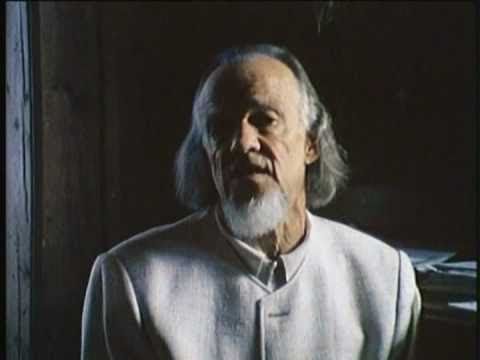



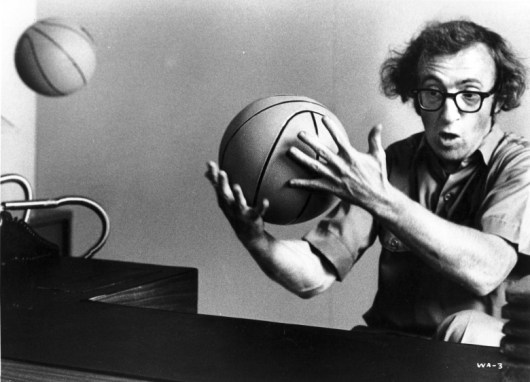


 The Daily Hatch

