Annie Hall or Bananas? Blue Jasmine or Sleeper? Our critics Robbie Collin and Tim Robey rank all 47 Woody Allen movies
31. Small Time Crooks (2000)
One of Allen’s goofier and more good-natured entertainments in the post-peak era, this even got distribution from DreamWorks, and was a substantial summer hit. The second half is a deflating series of slightly snobbish nouveau-riche gags, but Allen and principal co-star Tracey Ullmann manage to sock these over with some zing: there are truly funny parts for Hugh Grant, too, as an oleaginous art dealer, and Elaine May as Ullman’s cousin, a chatterbox halfwit. It’s reminder of the now-lost era when Allen could populate a so-so script with the right cast to jolly it along, and that would do.
30. Alice (1990)
Mia Farrow’s wealthy Manhattan housewife rediscovers the wonderland that’s missing from her life and also, implicitly, the title of this lumpy magic-realist comedy. Seeking help for a bad back, Alice meets a Chinese doctor whose herbal infusions allow her to turn invisible (and thereby spy on her cheating husband), summon up an old boyfriend, soar above the Manhattan rooftops and generally defy the strictures of middle age. The role fits Farrow like a silk slip, but its kooky premise doesn’t quite shake up the by-now familiar narrative concerns.
29. Irrational Man (2015)
A middling entry in Allen’s unofficial Perfect Murder tetralogy (see also: nos 38, 32 and 2), with Joaquin Phoenix’s existentially impaired philosophy don plotting a broad-daylight poisoning as a means of reclaiming his übermenschian potency. The premise is tightly rigged, though its intellectual reference points (Nietzsche and Dostoyevsky again?) feel, at this point in Allen’s career, worn very thin indeed. But an odd, un-Allen-ish lead performance from Phoenix and sunny supporting work from Emma Stone tickle it to life. (Read the full review)
28. September (1987)
Nine years after Interiors, this was Allen’s first return to straight, sombre dramatic territory, though the model was more Chekhov than Bergman this time. Springing from the suicide attempt of Mia Farrow’s Lane, it’s a country-house whinge-athon about the miasma of personal unhappiness. It’s also oppressively ochre and overfurnished, relying on a stage-vet cast (especially Dianne Wiest and Elaine Stritch) to kick some life into it. Allen even shot it twice, replacing Sam Shepard, Charles Durning and Maureen Stapleton with Sam Waterston, Denholm Elliott and Stritch. He’s said he wouldn’t mind having a third go.
27. Sweet and Lowdown (1999)
Credit: Alamy
Lilting and serene, with some good performances and even better jokes, this reminiscence about a (fictional) virtuoso guitarist of the 1930s is perhaps the only one of Allen’s films about an artist in which Allen himself could have never played the lead. That duty falls to Sean Penn, whose odious but talented jazzman is one of the director’s more memorable scumbags. The real star turn, however, is Samantha Morton, who gives a performance of supreme silent-movie control and comic timing as Penn’s mute lover.
26. Everyone Says I Love You (1996)
Allen cast a fond eye back to the Hollywood musicals of his childhood for this all-singing, star-stuffed confection, which follows a clan of wealthy Manhattanites chasing after love in New York, Venice and Paris. Edward Norton, Drew Barrymore, Julia Roberts and Goldie Hawn are among the game cast singing their hearts out. Despite those names it was a commercial flop, and its airiness can sometimes play as insubstantial. But when the film works, it really works: not least when Hawn defies gravity on the banks of the Seine in its magical finale.
I have posted so many reviews on Woody Allen’s latest movie CAFE SOCIETY and I even posted an open letter I wrote to Woody Allen about the film. A serious theme of the afterlife is brought up in this film too. Some reviewers liked the film and the lavish surroundings in it and some did […]
I have posted so many reviews on Woody Allen’s latest movie CAFE SOCIETY and I even posted an open letter I wrote to Woody Allen about the film. A serious theme of the afterlife is brought up in this film too. Some reviewers liked the film and the lavish surroundings in it and some did […]
I have posted so many reviews on Woody Allen’s latest movie CAFE SOCIETY and I even posted an open letter I wrote to Woody Allen about the film. A serious theme of the afterlife is brought up in this film too. Some reviewers liked the film and the lavish surroundings in it and some did […]
Café Society Official International Trailer #1 (2016) – Jesse Eisenberg, Kristen Stewart Movie HD LETTER DATED 8-28-16 The last time I wrote you about the film IRRATIONAL MAN and today I want to give my thoughts on the film CAFE SOCIETY. I was able to catch it in Chicago in July and again I caught […]
Café Society – Official Movie Review Café Society Official International Trailer #1 (2016) – Jesse Eisenberg, Kristen Stewart Movie HD Cafe Society Woody Allen returns with a 1930s-set tale of Hollywood glamour and New York nightlife Jesse Eisenberg and Kristen Stewart in ‘Café Society.’ Credit: Sabrina Lantos In a summer of VFX crowdpleasers, it’s a […]
Café Society – Official Movie Review Café Society Official International Trailer #1 (2016) – Jesse Eisenberg, Kristen Stewart Movie HD The Reel Thing The Reel Thing: Woody Allen Formula Fails With ‘Cafe Society’ By RAY COX 23 hrs ago Woody Allen has been making films for more than 50 years but “Cafe Society” is […]
Café Society – Official Movie Review Cafe Society Woody Allen’s latest is an unfocused, wistful glance at both old glamour and the afterlife. Alissa Wilkinson/ July 14, 2016 Cafe Society Amazon Studios 1 of 2 Jesse Eisenberg and Kristen Stewart in ‘Cafe Society’ Woody Allen has come under concentrated fire in the time since his […]
Café Society – Official Movie Review Café Society Official International Trailer #1 (2016) – Jesse Eisenberg, Kristen Stewart Movie HD __ ___ ______________ __ Kat Edmonson lives the NYC dream ___ __ __ OPEN LETTER TO WOODY ALLEN DATED 8-28-16 seen below: The last time I wrote you about the film IRRATIONAL MAN and […]
_ Cafe Society review: In Jesse Eisenberg, Woody Allen has found his acting surrogate Christiopher Hooton 11 hours ago But in this movie about making movies, it’s too tangible that a movie is being made I always get excited to watch a new Woody Allen film, not in spite of his prolificness but because of […]
_ Café Society Official International Trailer #1 (2016) – Jesse Eisenberg, Kristen Stewart Movie HD Review: ‘Café Society’ is minor, enjoyable Woody Allen Bill Goodykoontz, Gannett4:24 p.m. EDT July 28, 2016 (Photo: Amazon Studios) “Café Society” is probably what you’d call a placeholder Woody Allen movie, a small offering between more cerebral offerings, if he’s […]
H. J. Blackham, (31 March 1903 – 23 January 2009), was a leading and widely respected British humanist for most of his life.
As a young man he worked in farming and as a teacher. He found his niche as a leader in the Ethical Union, which he steadfastly moved away from the trappings of religion. The Ethical Union maintained that ethics was independent of theology, and this ethical dimension was central to Blackham’s life.
In the 1960s he played a leading role in the transition from the Ethical Union to the British Humanist Association and became its first Executive Director. He worked with leading figures such as Barbara Wootton, A. J. Ayer and J. Bronowski. Particular interests were education and counselling. Blackham cared deeply about the importance of moral education, writing on ‘Education for Personal Autonomy’ and ‘Education and Drug Dependence’. He was involved in founding the Moral Education League while with the Ethical Union. He worked with politicians, not entirely successfully, to bring moral education into schools, and was a founder of the Journal of Moral Education.
H. J. Blackham was a key organiser of the World Union of Freethinkers’ conference in London in 1938. When he tried to refound it after the war he decided a new organisation was needed and together with the Dutch philosopher Jaap van Prag started the International Humanist and Ethical Union, of which Julian Huxley was the first President. Blackham worked closely with Julian Huxley in many ways including helping him to revise Religion without Revelation.
Throughout his career he lectured , taught and wrote. His first book was a collection of essays called Living as a Humanist(1950), published by the Rationalist Press Association. His long term belief was that humanism was a way of living as well as a way of thinking. He wrote an epilogue to a revised version of J. B. Bury’s A History of Freedom of Thought.
His philosophical interests were seen in Six Existentialists(1951), which became a standard university text, and The Human Tradition (1953). His humanist beliefs were founded on the whole humanist tradition from the Greeks and the Epicureans, from Democritus and Protagoras, to Bentham and Mill, including the philosophers.
One of his most widely read and definitive works was a Pelican Special, Humanism (1968) which succeeded his analyticalReligion in a Modern Society (1966). He continued writing, lecturing and officiating at humanist funerals into his nineties.
The Fable as Literature and the mammoth and original historical survey The Future of our Past: from Ancient Greece to Global Village were fruits of his old age.
Blackham enjoyed many years’ retirement in the Wye valley, reading, writing and growing vegetables. He lived the exemplary humanist life: that of thought and action welded together.
_
Blackham lived to the age of 105 and died in 2009. During the 1990′s I actually made it a practice to write famous atheists and scientists that were mentioned by Adrian Rogers and Francis Schaeffer and challenge them with the evidence for the Bible’s historicity and the claims of the gospel. Usually I would send them a cassette tape of Adrian Rogers’ messages “6 reasons I know the Bible is True,” “The Final Judgement,” “Who is Jesus?” and the message by Bill Elliff, “How to get a pure heart.” I would also send them printed material from the works of Francis Schaeffer and a personal apologetic letter from me addressing some of the issues in their work. After reading Francis Schaeffer’s book WHATEVER HAPPENED TO THE HUMAN RACE? I was interested in corresponding with H.J. Blackham because of a very powerful and revealing quote of his in Schaeffer’s book. I wrote him in 1994 and sent him the cassette tape mentioned early but never got a response back. Below is the Blackham quote as given by Schaeffer:
The humanist H. J. Blackham had this same message that “On humanist assumptions, life leads to nothing, and every pretense that it does not is a deceit. If there is a bridge over a gorge which spans only half the distance and ends in mid-air, and if the bridge is crowded with human beings pressing on, one after the other they fall into the abyss. The bridge leads nowhere, and those who are pressing forward to cross it are going nowhere….It does not matter where they think they are going, what preparations for the journey they may have made, how much they may be enjoying it all. The objection merely points out objectively that such a situation is a model of futility“( H. J. Blackham, et al., Objections to Humanism (Riverside, Connecticut: Greenwood Press, 1967).
H.J.Blackham pictured above
Actually this one quote alone from Blackham made me want to share the message that Christ does provide a lasting meaning to our lives, and that is why I started writing several leading atheists in the 1990’s. In my letters I demonstrated thatthere is evidence that points to the fact that the Bible is historically true as Schaeffer pointed out in episode 5 of WHATEVER HAPPENED TO THE HUMAN RACE? There is a basis then for faith in Christ alone for our eternal hope. This link shows how to do that.
Origins of the Universe (Kalam Cosmological Argument) (Paul Kurtz vs Norman Geisler)
Published on Jun 6, 2012
Norm Geisler argues via Kalam Cosmological Argument for the origins of the universe with the Second Law of Thermodynamics. No matter how much evidence Geisler gave, Paul Kurtz refused to fully acknowledge the implications of it, while NEVER giving evidence for his own interpretation of the universe’s beginning.
Paul Kurtz teamed up with H.J.Blackham and put together the Humanist Manifesto II which they both signed in 1973. I wrote back in 2012 when Paul Kurtz passed away that he was a fine gentleman that I had a chance to correspond with and I read several of his books (Forbidden Fruit was his best effort). One thing I vividly remember from the writings of Paul Kurtz was his love of life and his love for others. However, how can a materialist like Kurtz stay optimistic about his future when he did not believe in God or an afterlife? At the time when I was reading his writings that question kept popping up in my mind.
It is truly ironic to me that a truly outstanding person such as the British Humanist H.J. Blackham who lived such a long and interesting life would make the statement that “…On humanist assumptions, life leads to nothing…” In fact, when Norman Geisler quoted this from Blackham in his famous debate with Paul Kurtz on the John Ankerberg Show, Kurtz said he knew Blackham and he was surprised that he would say such a thing, but that had been my contention that a secularist humanist worldview would logically lead to nihilism such as the nihilism that King Solomon discussed in Ecclesiastes (more on that later). How did humanist man get to that pessimistic conclusion? Francis Schaeffer has shed some light on that in his book WHATEVER HAPPENED TO THE HUMAN RACE?
_______________
Francis Schaeffer “BASIS FOR HUMAN DIGNITY” Whatever…HTTHR
_____________
Following is the first few pages of the chapter “The Basis for Human Dignity” which is found in the book WHATEVER HAPPENED TO THE HUMAN RACE? by Francis Schaeffer.
Introduction
So far in this book we have been considering an evil as great as any practiced in human history. Our society has put to death its own offspring, millions upon millions of them. Our society has justified taking their lives, even claiming it a virtue to do so. It has been said that this is a new step in our progress toward a liberated humanity.
Such a situation has not come out of a vacuum. Each of us has an overall way of looking at the world, which influences what we do day by day. This is what we call a “world-view.” And all of us have a world-view, whether we realize it or not. We act in accordance with our world-view, and our world-view rests on what to us is the ultimate truth.
What has produced the inhumanity we have been considering in the previous chapters is that society in the West has adopted a world-view which says that all reality is made up only of matter. This view is sometimes referred to as philosophic materialism, because it holds that only matter exists; sometimes it is called naturalism, because it says that no supernatural exists. Humanism which begins from man alone and makes man the measure of all things usually is materialistic in its philosophy. Whatever the label, this is the underlying world-view of our society today. In this view the universe did not get here because it was created by a “supernatural” God. Rather, the universe has existed forever in some form, and its present form just happened as a result of chance events way back in time.
Society in the West has largely rested on the base that God exists and that the Bible is true. In all sorts of ways this view affected the society. The materialistic or naturalistic or humanistic world-view almost always takes a superior attitude toward Christianity. Those who hold such a view have argued that Christianity is unscientific, that it cannot be proved, that it belongs simply to the realm of “faith.” Christianity, they say, rests only on faith, while humanism rests on facts.
Professor Edmund R. Leach of Cambridge Universityexpressed this view clearly:
Our idea of God is a product of history. What I now believe about the supernatural is derived from what I was taught by my parents, and what they taught me was derived from what they were taught, and so on. But such beliefs are justified by faith alone, never by reason, and the true believer is expected to go on reaffirming his faith in the same verbal formula even if the passage of history and the growth of scientific knowledge should have turned the words into plain nonsense.78
So some humanists act as if they have a great advantage over Christians. They act as if the advance of science and technology and a better understanding of history (through such concepts as the evolutionary theory) have all made the idea of God and Creation quite ridiculous.
This superior attitude, however, is strange because one of the most striking developments in the last half-century is the growth of a profound pessimism among both the well-educated and less-educated people. The thinkers in our society have been admitting for a long time that they have no final answers at all.
Take Woody Allen, for example. Most people know his as a comedian, but he has thought through where mankind stands after the “religious answers” have been abandoned. In an article in Esquire (May 1977), he says that man is left with:
… alienation, loneliness [and] emptiness verging on madness…. The fundamental thing behind all motivation and all activity is the constant struggle against annihilation and against death. It’s absolutely stupefying in its terror, and it renders anyone’s accomplishments meaningless. As Camus wrote, it’s not only that he (the individual) dies, or that man (as a whole) dies, but that you struggle to do a work of art that will last and then you realize that the universe itself is not going to exist after a period of time. Until those issues are resolved within each person – religiously or psychologically or existentially – the social and political issues will never be resolved, except in a slapdash way.
Allen sums up his view in his film Annie Hall with these words: “Life is divided into the horrible and the miserable.”
Many would like to dismiss this sort of statement as coming from one who is merely a pessimist by temperament, one who sees life without the benefit of a sense of humor. Woody Allen does not allow us that luxury. He speaks as a human being who has simply looked life in the face and has the courage to say what he sees. If there is no personal God, nothing beyond what our eyes can see and our hands can touch, then Woody Allen is right: life is both meaningless and terrifying. As the famous artist Paul Gauguin wrote on his last painting shortly before he tried to commit suicide: “Whence come we? What are we? Whither do we go?” The answers are nowhere, nothing, and nowhere. The humanist H. J. Blackham has expressed this with a dramatic illustration:
On humanist assumptions, life leads to nothing, and every pretense that it does not is a deceit. If there is a bridge over a gorge which spans only half the distance and ends in mid-air, and if the bridge is crowded with human beings pressing on, one after the other they fall into the abyss. The bridge leads nowhere, and those who are pressing forward to cross it are going nowhere….It does not matter where they think they are going, what preparations for the journey they may have made, how much they may be enjoying it all. The objection merely points out objectively that such a situation is a model of futility.79
One does not have to be highly educated to understand this. It follows directly from the starting point of the humanists’ position, namely, that everything is just matter. That is, that which has existed forever and ever is only some form of matter or energy, and everything in our world now is this and only this in a more or less complex form.
______________
Notes
78. “When Scientists Play the Role of God,” London Times, November 16, 1978.
79. H. J. Blackham, et al., Objections to Humanism (Riverside, Connecticut: Greenwood Press, 1967).
_______________
Francis Crick was in agreement with H.J.Blackham’s materialistic views and he concluded, “The Astonishing Hypothesis is that you—your joys and your sorrows, your memories and your ambitions, your sense of personal identity and free will, are in fact no more than the behavior of a vast assembly of nerve cells and their associated molecules” What if all this is true? What if the cosmos and the chemicals and the particles really are all that there is, and all that we are?
“If man has been kicked up out of that which is only impersonal by chance , then those things that make him man-hope of purpose and significance, love, motions of morality and rationality, beauty and verbal communication-are ultimately unfulfillable and thus meaningless.” —Francis Schaeffer in The God Who Is There
“Eventually materialist philosophy undermines the reliability of the mind itself-and hence even the basis for science. The true foundation of rationality is not found in particles and impersonal laws, but in the mind of the Creator who formed us in His image.” —Phillip E. Johnson, Defeating Darwinism by Opening Minds “Can man live without God? Of course he can, in a physical sense.
Can he live without God in a reasonable way? The answer to that is No!” Then there is the problem the longing for satisfaction that every person feels. This is the same question that Solomon asked 3000 years ago in the Book of Ecclesiastes. He knew there was something more.
The Christian Philosopher Francis Schaeffer noted that Solomon took a look at the meaning of life on the basis of human life standing alone between birth and death “under the sun.” This phrase UNDER THE SUN appears over and over in Ecclesiastes. The Christian Scholar Ravi Zacharias noted, “The key to understanding the Book of Ecclesiastes is the term UNDER THE SUN — What that literally means is you lock God out of a closed system and you are left with only this world of Time plus Chance plus matter.”
These two verses below take the 3 elements mentioned in a materialistic worldview (time, chance and matter) and so that is all the unbeliever can find “under the sun” without God in the picture. You will notice that these are the three elements that evolutionists point to also.
Ecclesiastes 9:11-12 is following: I have seen somthing else under the sun: The race is not to the swift or the battle to the strong, nor does food come to the wise or wealth to the brillant or favor to the learned; but time and chance happen to them all. Moreover, no one knows when their hour will come: As fish are caught in a cruel net, or birds are taken in a snare, so people are trapped by evil times that fall unexpectedly upon them. __________
Let me show you some inescapable conclusions that Francis Schaeffer said you will face if you choose to live without God in the picture. Solomon came to these same conclusions when he looked at life “under the sun” in the Book of Ecclesiastes.
Death is the great equalizer (Eccl 3:20, “All go to the same place; all come from dust, and to dust all return.”)
Chance and time have determined the past, and they will determine the future. (Ecclesiastes 9:11-13)
Power reigns in this life, and the scales are not balanced(Eccl 4:1)
Nothing in life gives true satisfaction without God including learning (1:16-18), laughter, ladies, luxuries, and liquor (2:1-3, 8, 10, 11), and labor (2:4-6, 18-20).
Solomon had all the resources in the world and he found himself searching for meaning in life and trying to come up with answers concerning the afterlife. However, it seems every door he tries to open is locked. Today people try to find satisfaction in education, alcohol, pleasure, and their work and that is exactly what Solomon tried to do too. None of those were able to “fill the God-sized vacuum in his heart” (quote from famous mathematician and philosopher Blaise Pascal). You have to wait to the last chapter in Ecclesiates to find what Solomon’s final conclusion is.
In 1978 I heard the song “Dust in the Wind” by Kansas when it rose to #6 on the charts. That song told me that Kerry Livgren the writer of that song and a member of Kansas had come to the same conclusion that Solomon had. I remember mentioning to my friends at church that we may soon see some members of Kansas become Christians because their search for the meaning of life had obviously come up empty even though they had risen from being an unknown band to the top of the music business and had all the wealth and fame that came with that. Furthermore, Solomon realized death comes to everyone and there must be something more.
Livgren wrote:
“All we do, crumbles to the ground though we refuse to see, Dust in the Wind, All we are is dust in the wind, Don’t hang on, Nothing lasts forever but the Earth and Sky, It slips away, And all your money won’t another minute buy.”
Music video by Kansas performing Dust In The Wind. (c) 2004 Sony Music Entertainment Inc.
_____________________________________
Both Kerry Livgren and Dave Hope of Kansas became Christians eventually. Kerry Livgren first tried Eastern Religions and Dave Hope had to come out of a heavy drug addiction. I was shocked and elated to see their personal testimony on The 700 Club in 1981 and that same interview can be seen on youtube today. Livgren lives in Topeka, Kansas today where he teaches “Diggers,” a Sunday school class at Topeka Bible Church. Hope is the head of Worship, Evangelism and Outreach at Immanuel Anglican Church in Destin, Florida.
Solomon’s experiment was a search for meaning to life “under the sun.” Then in last few words in the Book of Ecclesiastes he looks above the sun and brings God back into the picture: “The conclusion, when all has been heard, is: Fear God and keep His commandments, because this applies to every person. For God will bring every act to judgment, everything which is hidden, whether it is good or evil.”
You can hear Kerry Livgren’s story from this youtube link:
(part 1 ten minutes)
(part 2 ten minutes)
___________
Take a minute and compare Kerry Livgren’s words to that of H.J. Blackham.
Livgren wrote:
“All we do, crumbles to the ground though we refuse to see, Dust in the Wind, All we are is dust in the wind, Don’t hang on, Nothing lasts forever but the Earth and Sky, It slips away, And all your money won’t another minute buy.”
The humanist H. J. Blackham had this same message that
“On humanist assumptions, life leads to nothing, and every pretense that it does not is a deceit. If there is a bridge over a gorge which spans only half the distance and ends in mid-air, and if the bridge is crowded with human beings pressing on, one after the other they fall into the abyss. The bridge leads nowhere, and those who are pressing forward to cross it are going nowhere….It does not matter where they think they are going, what preparations for the journey they may have made, how much they may be enjoying it all. The objection merely points out objectively that such a situation is a model of futility“( H. J. Blackham, et al., Objections to Humanism (Riverside, Connecticut: Greenwood Press, 1967).
Harold John Blackham (31 March 1903 – 23 January 2009) was a leading British humanist philosopher, writer and educationalist. He has been described as the “progenitor of modern humanism in Britain”.[1]
Joining the Ethical Union, Blackham drew the organisation further away from religious forms and played an important part in its formation into the British Humanist Association, becoming the BHA’s first Executive Director in 1963. He was also a founding member of the International Humanist and Ethical Union (IHEU), IHEU secretary (1952–1966), and received the IHEU’s International Humanist Award in 1974, and the Special Award for Service to World Humanism in 1978. In addition he was one of the signatories to the Humanist Manifesto.[3]
His book, Six Existentialist Thinkers, became a popular university textbook.
Bury, JB, with an historical epilogue by HJ Blackham. A History of Freedom of Thought (2001). University Press of the Pacific. ISBN 0-89875-166-7
The Future of our Past: from Ancient Greece to Global Village (1996). Prometheus Books. ISBN 1-57392-042-8
The Fable as Literature (1985). London: Continuum International Publishing Group – Athlone. ISBN 0-485-11278-7
Education for Personal Autonomy: Inquiry into the School’s Resources for Furthering the Personal Development of Pupils (editor) (1977). London: Bedford Sq. Press. ISBN 0-7199-0937-6
Humanists and Quakers: an exchange of letters (with Harold Loukes) (1969). Friends Home Service. ISBN 0-85245-011-7
Humanism (1968). London: Penguin. (published by Harvester in hardback, 1976. ISBN 0-85527-209-0)
Religion in a Modern Society (1966). London: Constable
“I’m interested in making something romantic out of a very, very mechanistic geometry. Geometry and color represent to me an idealized, classical place that’s very clear and very pure.“ Richard Anuszkiewicz
Early Life – 1930-48
Richard Anuszkiewicz in his studio 1965
Richard Anuszkiewicz was born in Erie, Pennsylvania, USA in 1930. Both his parents were originally Polish but had met in the USA. Anuszkiewicz was interested in art from an early age and this was something that was encouraged by his father.
After attending a series of parish run schools, Richard transferred to Eire Technical High School aged 14 (1944). It was there that his fascination with art and drawing was allowed to develop, as he was able to draw each day for several hours. His exceptional talent was evident even during this time – winning a major artistic award as a senior in 1947.
In 1948, Anuszkiewicz gained a place at the Cleveland Institute of Art where he began to become interested in abstraction and the underlying design process behind creating a work of art.
Formal Study – 1948-55
Richard Anuszkiewicz – Self Portrait – 1954
Anuszkiewicz graduated from the Cleveland Institute of Art in 1953 with a Batchelors in Fine Art. By this time he was already receiving formal recognition of his immense artistic talent. During his final year at Cleveland, the National Academy of Design awarded him a Pulitzer Travelling Scholarship. The award gave would have allowed Richard the funding to travel to and study art in a European city, but he instead chose to stay in the USA.
At the time, Josef Albers was the head of the Design Department at Yale University. Anuszkiewicz was fascinated by the work Albers had done with colour, and felt that this element was something that would further enhance his work. He talked his decision over with his tutor at Cleveland and was accepted at Yale, where he studied under Albers, from 1954-55, graduating with a Masters in Fine Art. Interestingly his room-mate at Yale was another highly influential Op Artist, Julian Stanczak.
The Influence of Josef Albers – 1954-55
Josef Albers – Homage to the Square series – 1962
Albers didn’t use a formulaic set of rules in his teaching, instead encouraging his students to look objectively at their work and to work out what was and wasn’t happening. Anuszkiewicz learned from Albers about form and colour, the Bauhaus Movement, the color theory of Paul Klee, the Impressionists and Post-Impressionists masters like Cezanne and as he began to appreciate these movements and artists more and more, their influences began to become apparent in his work.
Anuszkiewicz, under the influence of Albers and his teaching, began to abandon the realism of his previous work. “Self-Portrait” (shown above) painted whilst at Yale in 1954 is a good example – painted in vibrant colours, Anuszkiewicz has reduced himself to a flat abstract figure.
At Yale, Anuszkiewicz became fascinated with the current thinking on the Psychology of Perception, reading extensively and keeping up to date on the thinking of the time.
From Yale back to Ohio – 1956
Richard Anuszkiewicz – Concentric-ii – 1958-
After graduating from Yale, with a view to supplementing his income from art with teaching income, Anuszkiewicz returned to Ohio for a year, where he studied for a Batchelors in Science in Education at Kent State University (1955-56). (He later held visiting teaching positions at Dartmouth College, the University of Wisconsin-Madison, Cornell University, and Kent State University).
Whilst at Kent, he was offered his first solo show by the Butler Institute of American Art in Youngstown. During this time at Kent, he has later said that he began to paint ‘seriously’ and began to develop the style for which he is known, making extensive use of contrasting colours and form.
After he graduated from Kent State University, Anuszkiewicz worked painting houses with friends for the summer. In September, he quit, rented a flat in Cleveland and started painting for real.
New York – 1957-
A section of the cover to Anuszkiewicz’s solo show at the Contemporaries Gallery 1960
In the Spring of 1957, Anuszkiewicz made the move to New York, taking with him much of the material he had created over the preceding six months. After a short time off travelling in Europe, Anuszkiewicz began the process of taking his work around the New York galleries.
There was some interest in his work, but at the time, the strong colours and hard-edged style were seen as a little bit ‘difficult’ for most. The breakthrough came from The Contemporaries Gallery in the autumn of 1959. The gallery director of the time, Karl Lunde, had seen some of Richard’s work and sought him out. He was offered a solo show at the gallery in early 1960.
That Anuszkiewicz was going to be an important artist became clear in the final week of the show. Towards the end, a representative of the Museum of Modern Art walked in and purchased one of his paintings. Key private collectors rapidly followed suit.
The Momentum Builds – early 1960s
Richard Anuszkiewicz – Plus Reversed -1960
“Fluorescent Complement” – the work purchased by MoMA – was exhibited there later that year alongside a work of the ‘father of Op Art’, Victor Vasarely. A second show at The Contemporaries Gallery followed in 1961. Museums and Galleries were really beginning to show a lot of interest in Richard Anuszkiewicz’s work. The important and influential 1962 “Geometric Abstraction in America” exhibition from the Whitney Museum of American Art featured works by Anuszkiewicz.
He was again exhibited at MoMA’s 1963 exhibition ‘Americans’ where he displayed 5 paintings and received much of the attention from the critics of the time. As a result of the exhibition, Time Magazine ran a feature on him which featured a full page reproduction of ‘Plus Reversed‘ (1960 – shown right) and the brilliant ‘Knowledge and Disappearance’ (1961). In 1964, Life magazine ran a feature on him in which they called him the ‘new wizard of Op’.
The Responsive Eye – 1965
The Responsive Eye – detail from catalog cover, 1965
The defining exhibiton in the history of Op Art, and one of the major contemporary art events of the decade, was MoMA’s ‘Responsive Eye’ exhibtion from 1965. The exhibition had been conceived (although not titled) and announced several years earlier in 1962, with a view to documenting the development from Impressionism to the exciting new trend of a “primarily visual emphasis”. The historical development was abandonded along the way, as “so rapid was the subsequent proliferation of painting and construction employing perceptual effects that the demands of the present left no time nor gallery space for a retrospective view” (curator William Seitz)
The major Op Artists of the time showed their works there, including Bridget Riley and Victor Vasarely. The exhibiton, featured Anuszkiewicz as one of the outstanding and notable American Op artists of the time. Op Art had arrived and so too had Richard Anuszkiewicz. The public loved the exhibition and Op Art inspired designs began to show up in popular culture – Op Art advertising and Op Art fashion and design abounded.
The Sidney Janls Gallery – 1965-1975
Richard Anuszkiewicz Sol I – 1965
Richard Anuszkiewicz had already been taken under the wing of wealthy clothing manufacturer and art collector Sidney Janis prior to the Responsive Eye in early 1965. Janis was a highly influential gallery owner, known for the quality of the artists he represented, including Josef Albers, Kline, Pollock and Rothko.
Janis quickly put Richard into the gallery’s exhibition line-up, giving him a solo show in late 1965. It was there that Anuszkiewicz showed his Sol I and Sol II paintings – the first two of an ongoing series that he still continues today. The show was an enormous success and the paintings almost sold out.
Soon after Janis exhibited his work in the influential and important ‘Pop and Op’ exhibition alongside notable artists of the time such as Josef Albers, Ellsworth Kelly, Roy Lichtenstein and Andy Warhol.
Continuing Success – late 1960s – 1975
Untitled (The Peace Portfolio) – Richard Anuszkiewicz – 1972
During the late 1960s and 1970s, Anuszkiewicz’s meteroric rise continued.
In 1965 he exhibited at Corcoran Biennial in Washington, DC and was included in American Art Today at the New York World’s Fair. In 1966, the Cleveland Museum of Art organised a major retrospective of his work. He was then featured in American Painting Now at the United States Pavilion at Expo 1967 in Montreal. His relationship with the Sidney Janis Gallery continued; Anuszkiewicz had further solo shows at the gallery in 1967, 1969, and 1973. Both the public and the critics loved his work: John Canaday called the 1969 Janis exhibition “dazzling” in the New York Times.
In the late 1960s, Anuszkiewicz started to create sculpture, often taking the form of painted wooden cubes, sometimes on a mirrored base. In the early 1970s, Anuszkiewicz developed his primarily ‘square’ based painting style to one primarily based on rectangular forms.
The mid-1970s and 1980s
Deep Magenta Square – Richard Anuszkiewicz – 1978
Anuszkiewicz continued to be widely exhibited throughout the 1970s and 1980s although his last inclusion in an exhbition at the Janis gallery came in 1975; Janis had moved on to representing the photo-realists.
Over the same period, he developed his use of colour in his ‘Spectrals’ series, making extensive use of ‘simultaneous contrast’ – where two colors, side by side, interact with one another to change our perception of them accordingly. He also concentrated on his ‘Centered Square’ series of works, a good example of which is shown right.
In 1981, in the same year that Riley found inspiration there, Anuszkiewicz visited Egypt and was inspired by the vibrant colour he was confronted with. This inspiration led to his famous “Temple” series of works.
Late Work
Richard Anuszkiewicz – Translumina Trinity II, 1986
Around the mid-1980s Anuszkiewicz started to produce works in his Translumina series, which saw him starting to work with wood constructions in low relief, often limiting the colours he used to a mere two, primarily black and one other colour.
His work continued to evolve as each year went by. 1990 saw him creating work that had been laser cut from sheets of aluminium or steel painted typically with a single primary colour, or from welded bronze tubing and stainless steel.
In 2000, he created a series dedicated to Mondrian – ‘For Mondrian’ – made from painted steel.
2011 saw him revert to more traditional media – acrylic on canvas – to complete a series of works based on the Twin Towers.
Richard Anuszkiewicz is alive and well and painting today. His work is still widely exhibited and can be found in galleries and museums around the world.
He was one of the founders and foremost exponents of Op Art, a movement during the late 1960s and early 1970s.[3]Victor Vasarely in France and Bridget Riley in England were his primary international counterparts. In 1964, Life magazine called him “one of the new wizards of Op”.[4] More recently, while reflecting on a New York City gallery show of Anuszkiewicz’s from 2000, the New York Times art critic Holland Cotter described Anuszkiewicz’s paintings by stating, “The drama — and that feels like the right word — is in the subtle chemistry of complementary colors, which makes the geometry glow as if light were leaking out from behind it.” [3] Anuszkiewicz has exhibited at the Venice Biennale, Florence Biennale and Documenta, and his works are in permanent collections internationally. He was elected into the National Academy of Design in 1992 as an Associate member, and became a full member in 1994.
Style
Considered a major force in the Op Art movement, Anuszkiewicz is concerned with the optical changes that occur when different high-intensity colors are applied to the same geometric configurations. Most of his work comprises visual investigations of formal structural and color effects, many of them nested square forms similar to the work of his mentor Josef Albers. In his series, “Homage to the Square,” Albers experimented with juxtapositions of color, and Anuszkiewicz developed these concepts further. Anuszkiewicz has continued to produce works in the Op Art style over the last few decades.
Anuszkiewicz summarizes his approach to painting as follows: “My work is of an experimental nature and has centered on an investigation into the effects of complementary colors of full intensity when juxtaposed and the optical changes that occur as a result, and a study of the dynamic effect of the whole under changing conditions of light, and the effect of light on color.” (from a statement by the artist for the exhibition “Americans 1963” at the Museum of the Modern Art)
Selected Museums Holding Works
Deep Magenta Square, 1978: An example of Anuszkiewicz’s use of colors, squares and lines
1994: New York State Art Teachers’ Association Award
1995: Emil and Dines Carlson Award
1996: New Jersey Pride Award
1997: Richard Florsheim Fund Grant
2000: Lee Krasner Award
2005: Lorenzo dei Medici Career Award, awarded at the Florence Biennale
Exhibitions
Anuskiewicz has exhibited in many public collections around the world, including notable New York galleries as Sidney Janis, The Contemporaries,[1] and Andrew Crispo Gallery.
Anuszkiewicz, Richard and Karl Lunde. “Anuszkiewicz.” New York: H.N. Abrams (1977). ISBN 0-8109-0363-6
Alviani, Getulio, Margaret A. Miller and Giancarlo Pauletto. “Richard Anuszkiewicz: Opere 1961-1987.” Pordenone: Centro Culturale Casa A. Zanussi (1988).
Buchsteiner, Thomas and Indgrid Mossinger. “Anuszkiewicz Op Art.” Ostfildern: Hatje Cantz Publishers (1997). ISBN 978-3-7757-0671-1
Kolva, Jeanne, Maxine Lurie (ed.) and Marc Mappen (ed.). Anuszkiewicz, Richard. “Encyclopedia of New Jersey.” New Brunswick: Rutgers University (2004). 9780813533254
Madden, David and Nicholas Spike. “Richard Anuszkiewicz: Paintings & Sculptures 1945-2001: Catalogue Raisonné.” Florence: Centro Di Edizioni (2010). ISBN 978-88-7038-483-3
Price, Marshall N. “The Abstract Impulse: fifty years of abstraction at the National Academy, 1956-2006.” Manchester: Hudson Hills Press (2007). ISBN 978-1-887149-17-4
Ratliff, Floyd, Neil K. Rector and Sanford Wurmfeld. “Color Function Painting: The Art of Josef Albers, Julian Stanczak and Richard Anuszkiewicz.” Winston-Salem: Wake Forest University Fine Arts Gallery (1996). ISBN 0-9720956-0-8
___________ The Fine Tuning Argument for the Existence of God from Antony Flew! Imagine entering a hotel room on your next vacation. The CD player on the bedside table is softly playing a track from your favorite recording. The framed print over the bed is identical to the image that hangs over the fireplace at […]
_____________ Mark Oppenheimer of Time Magazine claims Antony Flew was convinced by PSEUDOSCIENCE that God exists!!! Below you will read: ”There Is a God” is perhaps the handiest primer ever written on the science (many would say pseudoscience) of religious belief. Regis Nicoll does a good job of refuting the claim that Flew was manipulated by […]
________ During the 1990′s I actually made it a practice to write famous atheists and scientists that were mentioned by Adrian Rogers and Francis Schaeffer and challenge them with the evidence for the Bible’s historicity and the claims of the gospel. Usually I would send them a cassette tape of Adrian Rogers’ messages “6 reasons I […]
During the 1990′s I actually made it a practice to write famous atheists and scientists that were mentioned by Adrian Rogers and Francis Schaeffer and challenge them with the evidence for the Bible’s historicity and the claims of the gospel. Usually I would send them a cassette tape of Adrian Rogers’ messages “6 reasons I know […]
________________________________ Discussion (1 of 3): Antony Flew, N.T. Wright, and Gary Habermas Uploaded on Sep 22, 2010 A discussion with Antony Flew, N.T. Wright, and Gary Habermas. This was held at Westminster Chapel March, 2008 ______________________ During the 1990′s I actually made it a practice to write famous atheists and scientists that were mentioned by Adrian […]
During the 1990′s I actually made it a practice to write famous atheists and scientists that were mentioned by Adrian Rogers and Francis Schaeffer and challenge them with the evidence for the Bible’s historicity and the claims of the gospel. Usually I would send them a cassette tape of Adrian Rogers’ messages “6 reasons I […]
E P I S O D E 1 0 Dr. Francis Schaeffer – Episode X – Final Choices 27 min FINAL CHOICES I. Authoritarianism the Only Humanistic Social Option One man or an elite giving authoritative arbitrary absolutes. A. Society is sole absolute in absence of other absolutes. B. But society has to be […]
E P I S O D E 9 Dr. Francis Schaeffer – Episode IX – The Age of Personal Peace and Affluence 27 min T h e Age of Personal Peace and Afflunce I. By the Early 1960s People Were Bombarded From Every Side by Modern Man’s Humanistic Thought II. Modern Form of Humanistic Thought Leads […]
E P I S O D E 8 Dr. Francis Schaeffer – Episode VIII – The Age of Fragmentation 27 min I saw this film series in 1979 and it had a major impact on me. T h e Age of FRAGMENTATION I. Art As a Vehicle Of Modern Thought A. Impressionism (Monet, Renoir, Pissarro, Sisley, […]
E P I S O D E 7 Dr. Francis Schaeffer – Episode VII – The Age of Non Reason I am thrilled to get this film series with you. I saw it first in 1979 and it had such a big impact on me. Today’s episode is where we see modern humanist man act […]
E P I S O D E 6 How Should We Then Live 6#1 Uploaded by NoMirrorHDDHrorriMoN on Oct 3, 2011 How Should We Then Live? Episode 6 of 12 ________ I am sharing with you a film series that I saw in 1979. In this film Francis Schaeffer asserted that was a shift in […]
E P I S O D E 5 How Should We Then Live? Episode 5: The Revolutionary Age I was impacted by this film series by Francis Schaeffer back in the 1970′s and I wanted to share it with you. Francis Schaeffer noted, “Reformation Did Not Bring Perfection. But gradually on basis of biblical teaching there […]
Dr. Francis Schaeffer – Episode IV – The Reformation 27 min I was impacted by this film series by Francis Schaeffer back in the 1970′s and I wanted to share it with you. Schaeffer makes three key points concerning the Reformation: “1. Erasmian Christian humanism rejected by Farel. 2. Bible gives needed answers not only as to […]
Francis Schaeffer’s “How should we then live?” Video and outline of episode 3 “The Renaissance” Francis Schaeffer: “How Should We Then Live?” (Episode 3) THE RENAISSANCE I was impacted by this film series by Francis Schaeffer back in the 1970′s and I wanted to share it with you. Schaeffer really shows why we have so […]
Francis Schaeffer: “How Should We Then Live?” (Episode 2) THE MIDDLE AGES I was impacted by this film series by Francis Schaeffer back in the 1970′s and I wanted to share it with you. Schaeffer points out that during this time period unfortunately we have the “Church’s deviation from early church’s teaching in regard […]
Francis Schaeffer: “How Should We Then Live?” (Episode 1) THE ROMAN AGE Today I am starting a series that really had a big impact on my life back in the 1970′s when I first saw it. There are ten parts and today is the first. Francis Schaeffer takes a look at Rome and why […]
Annie Hall or Bananas? Blue Jasmine or Sleeper? Our critics Robbie Collin and Tim Robey rank all 47 Woody Allen movies
36. What’s Up, Tiger Lily? (1966)
On paper, it’s a hoot: a Japanese spy movie called International Secret Police: Key of Keys (1965), which Allen overdubbed in English to feel something like an Austin Powers spoof. Weird moments connect: “That’s Shepard Wong’s gambling ship!” remarks one female character. “Oh, I hate him so very much. He’s one of the seven worst people in the world.” But there’s something smirky, superior and naggingly problematic about the movie, like a giggling class joker making fun of the Asian kids. Allen himself disowned it as “stupid and juvenile” after producers wrested it away and inserted concert performances by The Lovin’ Spoonful.
35. Melinda and Melinda (2004)
Borrowing the Broadway Danny Rose structuring device of a dinner-table anecdote, Woody tells a tale of two hypothetical Melindas, both played by Radha Mitchell, whose gate-crashing of a Manhattan dinner party take different turns: one comic, one tragic. Comic Melinda has much better hair, but her exploits aren’t notably funnier than that of Tragic Melinda, who just turns up the neuroticism to 11 and seems convinced she’s doomed. Will Ferrell and Chlöe Sevigny at least look alive, and it feels like the definition of middling Allen, almost irritatingly watchable until it just stops.
34. Celebrity (1998)
Or: the one with Kenneth Branagh doing his party-trick Woody impression, Leonardo DiCaprio as a bratty A-list star bedding multiple models, and coarse routines with fellatio practised on bananas. It’s the last time Allen collaborated with Ingmar Bergman’s great cinematographer Sven Nyqvist, whose black-and-white vision of this strained media circus is doubtless designed to remind us of La Dolce Vita. But the film’s a bitter pill with negligible insights, and sends Branagh slavering after far too many gorgeous young starlets (Charlize Theron, Famke Janssen, Winona Ryder) for us to be quite comfortable.
33. Match Point (2005)
Credit: Kobal
Match Point actually did Allen some favours: it set him up with a new muse in Scarlett Johansson, made decent money, and the script got him his first Oscar nomination since the late 1990s, to the abject horror of most British critics. Kinder US reviews saw this London-set murder tale as a return to the scabrous morality play of Crimes and Misdemeanors, but it was one afflicted with a telling and insurmountable tone-deafness: fatal for what was purporting to be a satirical dissection of the English class system. Extra debits for those silly ghosts at the end.
32. Mighty Aphrodite (1995)
Allen does Pygmalion, complete with a Borscht Belt Greek chorus, although the jumbled, snobbish and emotionally curdled results fall noticeably short of mythic. A well-to-do New Yorker (Allen) decides to trace the birth mother of his adorable adopted son, and is horrified – plus more than a little turned on – to discover she’s a hooker and porn starlet. Mira Sorvino gives an Oscar-winning, eardrum-tightening turn in a thankless role: the film patronises Sorvino’s character relentlessly, and when it works, it’s because the actress heroically refuses to roll over and take it.
I have posted so many reviews on Woody Allen’s latest movie CAFE SOCIETY and I even posted an open letter I wrote to Woody Allen about the film. A serious theme of the afterlife is brought up in this film too. Some reviewers liked the film and the lavish surroundings in it and some did […]
I have posted so many reviews on Woody Allen’s latest movie CAFE SOCIETY and I even posted an open letter I wrote to Woody Allen about the film. A serious theme of the afterlife is brought up in this film too. Some reviewers liked the film and the lavish surroundings in it and some did […]
I have posted so many reviews on Woody Allen’s latest movie CAFE SOCIETY and I even posted an open letter I wrote to Woody Allen about the film. A serious theme of the afterlife is brought up in this film too. Some reviewers liked the film and the lavish surroundings in it and some did […]
Café Society Official International Trailer #1 (2016) – Jesse Eisenberg, Kristen Stewart Movie HD LETTER DATED 8-28-16 The last time I wrote you about the film IRRATIONAL MAN and today I want to give my thoughts on the film CAFE SOCIETY. I was able to catch it in Chicago in July and again I caught […]
Café Society – Official Movie Review Café Society Official International Trailer #1 (2016) – Jesse Eisenberg, Kristen Stewart Movie HD Cafe Society Woody Allen returns with a 1930s-set tale of Hollywood glamour and New York nightlife Jesse Eisenberg and Kristen Stewart in ‘Café Society.’ Credit: Sabrina Lantos In a summer of VFX crowdpleasers, it’s a […]
Café Society – Official Movie Review Café Society Official International Trailer #1 (2016) – Jesse Eisenberg, Kristen Stewart Movie HD The Reel Thing The Reel Thing: Woody Allen Formula Fails With ‘Cafe Society’ By RAY COX 23 hrs ago Woody Allen has been making films for more than 50 years but “Cafe Society” is […]
Café Society – Official Movie Review Cafe Society Woody Allen’s latest is an unfocused, wistful glance at both old glamour and the afterlife. Alissa Wilkinson/ July 14, 2016 Cafe Society Amazon Studios 1 of 2 Jesse Eisenberg and Kristen Stewart in ‘Cafe Society’ Woody Allen has come under concentrated fire in the time since his […]
Café Society – Official Movie Review Café Society Official International Trailer #1 (2016) – Jesse Eisenberg, Kristen Stewart Movie HD __ ___ ______________ __ Kat Edmonson lives the NYC dream ___ __ __ OPEN LETTER TO WOODY ALLEN DATED 8-28-16 seen below: The last time I wrote you about the film IRRATIONAL MAN and […]
_ Cafe Society review: In Jesse Eisenberg, Woody Allen has found his acting surrogate Christiopher Hooton 11 hours ago But in this movie about making movies, it’s too tangible that a movie is being made I always get excited to watch a new Woody Allen film, not in spite of his prolificness but because of […]
_ Café Society Official International Trailer #1 (2016) – Jesse Eisenberg, Kristen Stewart Movie HD Review: ‘Café Society’ is minor, enjoyable Woody Allen Bill Goodykoontz, Gannett4:24 p.m. EDT July 28, 2016 (Photo: Amazon Studios) “Café Society” is probably what you’d call a placeholder Woody Allen movie, a small offering between more cerebral offerings, if he’s […]
Annie Hall or Bananas? Blue Jasmine or Sleeper? Our critics Robbie Collin and Tim Robey rank all 47 Woody Allen movies
47. Hollywood Ending (2002)
The curtain-raiser for Cannes in 2002 was the definition of a duff opener, pleasing nobody: Allen cast himself as a once-fêted director who suffers an attack of hysterical blindness. Strenuous farce ensues, with a feature-length quantity of dead time on screen, and only Téa Leoni threatening to be an asset. The punchline explains its Cannes berth: when the $60m movie Allen’s character directs while blind is a resounding flop, his one consolation is that the French love it. But not even the French loved Hollywood Ending.
46. The Curse of the Jade Scorpion (2001)
Allen has often shown an interest in stage magic and hypnotism (see also: Scoop, Magic in the Moonlight), but this enthusiasm reached its unfortunate nadir in this dodo of a light comedy, his most expensive film (it cost $33m) and by his own reckoning among the worst. His own performance as a wisecracking insurance investigator hypnotised into jewel theft was one problem, but Helen Hunt doesn’t fare much better as the ruthless efficiency expert he wants off his back. All the film achieves is managing to look lavishly nostalgic for a more sexist era.
Imagine Manhattan if it’d been left to fester behind a radiator for a year. That’s more or less the measure of this comprehensively rancid May-September comic romance, although a fairer reflection of the age gap in question might be February-Hogmanay. Larry David’s sour particle physicist and Evan Rachel Wood’s blithering nymphette are Allen’s most flatly hideous screen couple, and the script clangs away deafeningly with misanthropy, misogyny and psychological false notes.
44. Don’t Drink the Water (1994)
In 1994, Allen adapted his first professionally produced play – a quick-fire Cold War farce in which a family of American tourists are mistaken for spies – for the television network ABC. A previous film version had been made in 1969, and apparently niggled away at Allen for years, though his own take in no sense redeems it: it looks shatteringly cheap and ugly, while the cast (which includes Michael J. Fox and Julie Kavner) have nothing to work with but reheated, three-decades-old schtick.
43. To Rome With Love (2012)
Credit: Rex
The worst of Allen’s late-period European films by some distance feels like a quartet of plots were randomly snatched from the director’s famous ideas drawer and liberally soused with Dolmio. They are, in reverse order of wretchedness: a shaggy dog story about singing in the shower, a middle-aged architect reflecting on a youthful romance, a grandad-ish kvetch about pointless celebrity, and a D.O.A. re-do of an early Fellini romp. The cast ranges from Jesse Eisenberg (fine under the circumstances) to Alec Baldwin (wail-out-loud terrible), with a monumentally insulting temptress role for Penélope Cruz.
42. Shadows and Fog (1991)
The great Italian cinematographer Carlo di Palma made 12 films with Allen, qualifying him as the director’s favourite director of photography, and was his chief accomplice in this stylistically bold homage to German Expressionism, which more or less does exactly what its title says. Plotwise, we’re stuck doing ill-thought-through Kafka pastiche, and despite the banner cast – Madonna, Kathy Bates, Lily Tomlin and Jodie Foster play prostitutes, with Mia Farrow and John Malkovich as a pair of circus performers – everything about it feels rattling and empty. It was a big flop.
41. Scoop (2006)
Scoop Trailer (2006)
The second of Woody Allen’s London films achieved the weird distinction of getting no theatrical release in its place of origin, despite the returning presence of Scarlett Johansson, and Hugh Jackman in the lead. The reasons are simple: it’s flagrantly disposable, continues Allen’s embarrassing love affair with a London that doesn’t exist, and cooks up no intrigue worth bothering with, for all the ins and outs of its Thin Man-esque plot. The one redeeming feature, surprisingly, is Allen himself, in the supporting role of an amusingly befuddled stage magician called The Great Splendini.
40. Anything Else (2003)
Allen has yet to submit a film entitled “Will This Do?”, but Anything Else comes closest, both in its title and for recycling old tropes about thwarted creativity and being stuck with a pesky, permanently difficult long-term girlfriend (Christina Ricci) who wants to move her mother in. Jason Biggs’s character is meant to be an aspiring comedy writer, but Allen’s script gives him not one funny line. All of these go to his ageing intellectual mentor, a veritable fount of park-bench philosophical witticisms, played by guess who. Go on, have a guess.
39. Cassandra’s Dream (2007)
Allen’s European films have a definite touristic quality: watching them, you can almost sense the director location-scouting from an open-top bus. But in his third picture set in London, he goes off-piste, and things come seriously unstuck. Almost nothing in this Faustian thriller of two East End brothers (Colin Farrell and Ewan McGregor) embroiled in a murder plot rings true: not the characters’ inner lives and aspirations, and certainly not their dialogue, which barely sounds human, let alone British. Compensation comes in the shape of a spirited supporting turn from Sally Hawkins and Philip Glass’s gathering storm of a score.
38. Magic in the Moonlight (2014)
A period frolic on the Riviera promises to be easy on the eye, and this fluffy time-killer is indeed bathed in seductive, slanting light. But Allen misjudges both the appeal of his main character, an arrogant English stage conjuror called Stanley Crawford, and the ability of Colin Firth to make him bearable, still less engaging. There’s a modicum of blithe-spirit fun to be had with Emma Stone, as an air-cupping young medium whose act Firth is furiously determined to debunk. Even setting aside their 28-year age gap, though, the romance here is a non-starter.
37. You Will Meet a Tall Dark Stranger (2010)
Woody’s fourth and, thus far, final London film is a lightly cynical ensemble juggling act, taking in gold-digging, psychic love advice and ambulance-chasing literary plagiarism. Josh Brolin is well cast as a desperate novelist, but Gemma Jones has the best of it as the jilted wife of Anthony Hopkins, whose new girlfriend is a tacky ex-hooker (Lucy Punch). Allen, alas, seems above all of his characters here, and inflicts petty twists of fate on them which feel forced and malicious rather than wise or illuminating.
I have posted so many reviews on Woody Allen’s latest movie CAFE SOCIETY and I even posted an open letter I wrote to Woody Allen about the film. A serious theme of the afterlife is brought up in this film too. Some reviewers liked the film and the lavish surroundings in it and some did […]
I have posted so many reviews on Woody Allen’s latest movie CAFE SOCIETY and I even posted an open letter I wrote to Woody Allen about the film. A serious theme of the afterlife is brought up in this film too. Some reviewers liked the film and the lavish surroundings in it and some did […]
I have posted so many reviews on Woody Allen’s latest movie CAFE SOCIETY and I even posted an open letter I wrote to Woody Allen about the film. A serious theme of the afterlife is brought up in this film too. Some reviewers liked the film and the lavish surroundings in it and some did […]
Café Society Official International Trailer #1 (2016) – Jesse Eisenberg, Kristen Stewart Movie HD LETTER DATED 8-28-16 The last time I wrote you about the film IRRATIONAL MAN and today I want to give my thoughts on the film CAFE SOCIETY. I was able to catch it in Chicago in July and again I caught […]
Café Society – Official Movie Review Café Society Official International Trailer #1 (2016) – Jesse Eisenberg, Kristen Stewart Movie HD Cafe Society Woody Allen returns with a 1930s-set tale of Hollywood glamour and New York nightlife Jesse Eisenberg and Kristen Stewart in ‘Café Society.’ Credit: Sabrina Lantos In a summer of VFX crowdpleasers, it’s a […]
Café Society – Official Movie Review Café Society Official International Trailer #1 (2016) – Jesse Eisenberg, Kristen Stewart Movie HD The Reel Thing The Reel Thing: Woody Allen Formula Fails With ‘Cafe Society’ By RAY COX 23 hrs ago Woody Allen has been making films for more than 50 years but “Cafe Society” is […]
Café Society – Official Movie Review Cafe Society Woody Allen’s latest is an unfocused, wistful glance at both old glamour and the afterlife. Alissa Wilkinson/ July 14, 2016 Cafe Society Amazon Studios 1 of 2 Jesse Eisenberg and Kristen Stewart in ‘Cafe Society’ Woody Allen has come under concentrated fire in the time since his […]
Café Society – Official Movie Review Café Society Official International Trailer #1 (2016) – Jesse Eisenberg, Kristen Stewart Movie HD __ ___ ______________ __ Kat Edmonson lives the NYC dream ___ __ __ OPEN LETTER TO WOODY ALLEN DATED 8-28-16 seen below: The last time I wrote you about the film IRRATIONAL MAN and […]
_ Cafe Society review: In Jesse Eisenberg, Woody Allen has found his acting surrogate Christiopher Hooton 11 hours ago But in this movie about making movies, it’s too tangible that a movie is being made I always get excited to watch a new Woody Allen film, not in spite of his prolificness but because of […]
_ Café Society Official International Trailer #1 (2016) – Jesse Eisenberg, Kristen Stewart Movie HD Review: ‘Café Society’ is minor, enjoyable Woody Allen Bill Goodykoontz, Gannett4:24 p.m. EDT July 28, 2016 (Photo: Amazon Studios) “Café Society” is probably what you’d call a placeholder Woody Allen movie, a small offering between more cerebral offerings, if he’s […]
Woody Allen got this idea from one of favorite Ingmar Bergman’s movies THE SEVENTH SEAL.
Woody Allen once said:
I’ve made perfectly decent films, but not 8½ (1963), not The Seventh Seal (1957) (“The Seventh Seal”), The 400 Blows (1959) (“The 400 Blows”) or L’avventura (1960) – ones that to me really proclaim cinema as art, on the highest level. If I was the teacher, I’d give myself a B.
In the late ’60s, Woody Allen left the world of stand-up comedy behind for the movies. Since then, he’s become one of American cinema’s most celebrated filmmakers. Sure, he’s had his stinkers and his private life hasn’t been without controversy. But he’s also crafted some of Hollywood’s most thought-provoking comedies. Philosophical, self-deprecating and always more than a tad pessimistic, Allen adds another title to his oeuvre this Friday with Midnight in Paris. Whether it will be remembered as one of his greatest or another flop is too early to say, but its release gives us a chance to look back at some of his most indispensable works.
Love and Death (1975)
Allen’s Love and Death owes a lot to Tolstoy’s War and Peace and the films of Swedish director Ingmar Bergman. Death himself even makes an appearance, recalling the existential dread of Bergman’s The Seventh Seal. But despite the movie’s many highbrow allusions, Allen is more concerned with simply having a good time. Gags and one-liners abound, making it, if not a comic masterpiece, a pretty good way to spend an hour and a half.
I will never forget the chess match with death in Ingmar Bergman’s movie The Seventh Seal. I watched it many years ago, and then again just a year ago. It’s bleak, nihilistic atmosphere proved a foil for my theistic worldview. I remember thinking, if there is no God, then life looks like a Bergman movie, and religious people are “heroic” quixotic individuals sparring with windmills. (Watch the chess match here.)
One report today writes: “When the news broke that Ingmar Bergman had died on the lonely and windswept island of Faro, off the coast of Sweden, it seemed like an appropriately tragic spot. Bergman spent a lifetime creating lonely and windswept movies: a cinema of inner life in which man was tormented by his relationship with women and with God.”
In his autobiography Bergman wrote, re. God: “I have struggled all my life with a tormented and joyless relationship with God. Faith and lack of faith, punishment, grace and rejection, all were real to me, all were imperative. My prayers stank of anguish, entreaty, trust, loathing and despair. God spoke, God said nothing. Do not turn from Thy face. The lost hours of that operation provided me with a calming message. You were born without purpose, you live without meaning, living is its own meaning. When you die, you are extinguished. From being you will be transformed to non-being. A god does not necessarily dwell among our capricious atoms. This insight has brought with it a certain security that has resolutely eliminated anguish and tumult, though on the other hand I have never denied my second (or first) life, that of the spirit.”
Bergman was married five times and had many sexual liaisons with the leading actresses in his films. He is considered to be one of the greatest, if not even the greatest, film-maker of all time. When I read of his death today I experienced a sense of loss, like the loss of an old friend. I found, in his films, an authentic representation of his experience of the non-response of God to his searching and prayers. I don’t personally affirm his conclusions, but I do find his work valuable, especially when I hear “atheists” joyfully declare God’s non-existence.
Woody Allen on Ingmar Bergman (2/2)
The Seventh Seal (1/3) (Det sjunde inseglet) – Breaking Down Bergman – Episode #17
Ingmar Bergman’s most recognized (and likely most parodied) film is broken down into three parts for this discussion. In part one, hosts David Friend and Sonia Strimban look at the origins of the film, setting the scene for the debates that follow in the two subsequent videos, which are linked.
All related clips and images are copyrighted and property of their respective owners.
Friend and Strimban are watching the career of the Swedish director from his first film to his last, in order, and discussing their observations. Visit the main channel for more details.
________________
The Seventh Seal (2/3) (Det sjunde inseglet) – Breaking Down Bergman – Episode #17 Part 2
Kristen Stewart and Jesse Eisenberg in Woody Allen’s “Café Society.”CreditSabrina Lantos/Gravier Productions
“Café Society,” Woody Allen’s new movie, comes wrapped in a double layer of nostalgia. Set in the 1930s, partly in Los Angeles, its script compulsively mentions Hollywood stars of the era. Joan Blondell! Robert Taylor! Barbara Stanwyck! Cagney and Crawford! Astaire and Rogers! Their names ring out like answers to trivia questions nobody had thought to ask.
At a recent New York critics’ screening, one fellow a few rows behind me chuckled at every name. I don’t think because the allusions were especially funny — the sentence “Adolphe Menjou is threatening to walk off the set” is not exactly a gut-buster, even in context — but because they signified a cultural awareness that the laugher in the dark wanted the rest of us to know he shared. And also perhaps because the dropped names stood in for jokes that the modern audience is too ignorant to get and that Mr. Allen has grown too lazy to make. He can gaze back fondly at the fast-receding golden age of Depression-era popular culture, and the rest of us can wistfully recall a time when he was able to spin those memories into better films than this one.
There’s no point in growing misty-eyed. “Café Society” is not “Radio Days”or “Bullets Over Broadway.” We can live with that. I’m happy to report that it’s not “The Curse of the Jade Scorpion” or “Magic in the Moonlight,”either. Which is to say that it’s neither another example of bad, late Woody Allen nor much in the way of a return to form. It is, overall, an amusing little picture, with some inspired moments and some sour notes, a handful of interesting performances and the hint, now and then, of an idea.
By AMAZON STUDIOS1:53Trailer: ‘Café Society’
Video
Trailer: ‘Café Society’
By AMAZON STUDIOS on Publish DateJuly 13, 2016. Photo by Amazon Studios. Watch in Times Video »
Like most of Mr. Allen’s recent work, this movie takes place within the hermetically enclosed universe of its maker’s long-established preoccupations. Rather than find fresh themes or problems, he likes to rearrange the old ones into a newish pattern, emphasizing some elements and letting others drift into the background. Here the dominant conceit is Mr. Allen’s well-documented ambivalence about California and the industry that has often seemed ambivalent about him. He loves movies, but Hollywood, with its shallowness and gossip, has always repelled him.
But with the help of his gifted collaborators, the production designer Santo Loquasto and the cinematographer Vittorio Storaro, he bathes “the film colony” in golden light and swathes its denizens in lovely period clothes. He sends an ambitious Bronx boy, Bobby Dorfman (Jesse Eisenberg), out West to seek his fortune. At first cold-shouldered by his Uncle Phil (Steve Carell), a powerful agent, Bobby is eventually taken under Phil’s wing and plunged into a swirl of parties and power lunches. He’s suitably intoxicated by his new surroundings.
Photo
Corey Stoll in “Café Society.”CreditSabrina Lantos/Gravier Productions
“I’ve never mixed Champagne with bagels and lox,” he says.
“Welcome to Hollywood,” someone replies.
That’s not a bad line, and there are some other pretty good ones sprinkled throughout the sprawling script. Bobby’s bickering parents, played by Jeannie Berlin and Ken Stott, supply a few Yiddish-inflected laughs, as well as the requisite touch of metaphysical fatalism. (“I accept death, but under protest,” Dad says. “Protest to who?” Mom responds. Also not a bad line.) The ensemble is larger and the story looser than in Mr. Allen’s last few movies, making room for Corey Stoll’s relaxed turn as Bobby’s charismatic gangster brother and Parker Posey and Paul Schneider’s intriguing double act as a cynical and apparently happily married pair of bicoastal sophisticates.
Photo
Blake Lively in “Café Society.”CreditSabrina Lantos/Gravier Productions
The axis on which everything turns is an old-fashioned love triangle that includes, of course, the passion of an older man for a younger woman. It turns out that Bobby and Phil are both in love with a transplanted Nebraskan called Vonnie (short for Veronica), who is Phil’s secretary.Kristen Stewart’s performance in the role, which blends gravity and lightness, glamour and its opposite, is certainly the best part of “Café Society,” but it also exposes just how thin and tired the rest of the movie is.
Mr. Allen’s literal voice, which supplies narration, sounds unusually sluggish and weary. The same is true of his voice as a writer and director. For every snappy scene or exchange there are three or four that feel baggy and half-written. We are treated to one survey of the clientele at the swanky Manhattan nightclub that is Bobby’s post-Hollywood professional perch and then, a while later, to another. We wander into jazz clubs and dining rooms and seem unsure of why we’ve come. Blake Lively, wandering into the movie’s second half as a second Veronica, seems to feel the same way. The movie seems much longer than its 96 minutes.
Photo
Steve Carell in “Café Society.”CreditSabrina Lantos/Gravier Productions
Every once in a while we hear or see something that makes us cringe a little: a harsh, unfunny encounter between Bobby and a prostitute shortly after his arrival in Los Angeles; an anecdote about Errol Flynn’s sexual interest in underage girls. It’s hard to say if Mr. Allen is testing the audience’s tolerance or trolling our sensitivities, or for that matter if he’s just blithely carrying on as he always has, oblivious to changing mores or the vicissitudes of his own reputation.
257COMMENTS
It doesn’t really matter because “Café Society” ultimately poses no interesting questions about its maker or its characters. The movie most closely resembles the kind of Hollywood product for which its deepest nostalgia is reserved. It’s a pop-culture throwaway, a charming bit of trivia, the punch line to a half-forgotten joke.
“CAFÉ SOCIETY” AND “LIFE, ANIMATED” REVIEWS Woody Allen’s newest film, and a documentary about how a boy with autism connected with Disney movies. By Anthony Lane Jesse Eisenberg and Kristen Stewart in Woody Allen’s new movie.ILLUSTRATION BY BEN KIRCHNER The new Woody Allen film, “Café Society,” is set in the nineteen-thirties—you know, that far-off land […]
‘Cafe Society’ review: Kristen Stewart, Jesse Eisenberg enliven otherwise dull nostalgia by Michael PhillipsContact Reporter Chicago Tribune July 7, 2016 There’s not much to “Cafe Society,” but for a while now Woody Allen has been getting by with not much happening at the keyboard. Thanks to the warm, glowing light lavished on the film by cinematographer Vittorio […]
CAFE SOCIETY – Red Carpet – EV – Cannes 2016 ‘Café Society’: Designing 1930s Hollywood for Woody Allen The new film, with Jesse Eisenberg and Kristen Stewart, is full of lavish set designs By DON STEINBERG Updated July 6, 2016 7:11 p.m. ET 3 COMMENTS Re-creating opulent 1930s Hollywood and post-Prohibition New York for Woody […]
Woody Allen on Retiring and Childhood Memories / Cannes 2016 Café Society Published on Jun 4, 2016 Short clip from an interview with Woody Allen in occasion of the world premiere of his film “Café Society” at the Cannes film festival 2016. ‘Cafe Society’: Cannes Review 5:09 AM PDT 5/11/2016 by Todd McCarthy Woody Allen’s […]
New cast interview Café Society in Cannes Published on May 24, 2016 Subscribe on my Channel :* Cannes Film Review: ‘Café Society’ Owen Gleiberman Chief Film Critic @OwenGleiberman Editions: Subscribe Today! Film TV Digital Contenders Video Dirt Jobs More Sign In Home Film Reviews Cannes Film Review: ‘Café Society’ Owen Gleiberman Chief Film Critic @OwenGleiberman […]
Both Solomon in Ecclesiastes and Picasso in his painting had an obsession with the issue of their impending death!!! Picasso in the movie MIDNIGHT IN PARIS Pablo Picasso: Self-portrait Facing Death (1972) Does anyone not know the name Picasso? Based on sales of his works at auctions, he holds the title of top ranked […]
Picasso was a genius as a painter but he deliberately painted his secular worldview of fragmentation on his canvas but he could not live with the loss of humanness and he reverted back at crucial points and painted those he loved with all his genius and with all their humanness!!! Gertrude Stein (Kathy Bates) and […]
Just like Solomon in Ecclesiastes Picasso’s women mostly considered suicide or accepted nihilism and Woody Allen alludes to this in MIDNIGHT IN PARIS when Adriana tells her own story: GIL PENDER: No, you do! How long have you been dating Picasso?My God, did I just say that?Pardon?I don’t mean to…I didn’t meanto pry…. Were you born in […]
_ Just like Solomon Picasso slept with many women. Solomon actually slept with over 1000 women ( Eccl 2:8, I Kings 11:3), and both men ended their lives bitter against all women. Pablo Picasso: Midnight in Paris Woody Allen made it known that his pessimistic view on life started at a young age when he […]
_ Summing up Hemingway is not as hard as I thought it was going to be. Hemingway was nihilistic in that he understood the problem of modern man UNDER THE SUN without God in the picture just like Solomon did in the Book of Ecclesiastes. MICHAEL NICHOLSON in the article below does a great job of […]
I have posted so many reviews on Woody Allen’s latest movie CAFE SOCIETY and I even posted an open letter I wrote to Woody Allen about the film. A serious theme of the afterlife is brought up in this film too. Some reviewers liked the film and the lavish surroundings in it and some did not. Below is another review. The review of CAFE SOCIETY by A.O. Scott has best line in film: “I accept death, but under protest,” Dad says. “Protest to who?” Mom responds!
Woody Allen got this idea from one of favorite Ingmar Bergman’s movies THE SEVENTH SEAL.
Woody Allen once said:
I’ve made perfectly decent films, but not 8½ (1963), not The Seventh Seal (1957) (“The Seventh Seal”), The 400 Blows (1959) (“The 400 Blows”) or L’avventura (1960) – ones that to me really proclaim cinema as art, on the highest level. If I was the teacher, I’d give myself a B.
In the late ’60s, Woody Allen left the world of stand-up comedy behind for the movies. Since then, he’s become one of American cinema’s most celebrated filmmakers. Sure, he’s had his stinkers and his private life hasn’t been without controversy. But he’s also crafted some of Hollywood’s most thought-provoking comedies. Philosophical, self-deprecating and always more than a tad pessimistic, Allen adds another title to his oeuvre this Friday with Midnight in Paris. Whether it will be remembered as one of his greatest or another flop is too early to say, but its release gives us a chance to look back at some of his most indispensable works.
Love and Death (1975)
Allen’s Love and Death owes a lot to Tolstoy’s War and Peace and the films of Swedish director Ingmar Bergman. Death himself even makes an appearance, recalling the existential dread of Bergman’s The Seventh Seal. But despite the movie’s many highbrow allusions, Allen is more concerned with simply having a good time. Gags and one-liners abound, making it, if not a comic masterpiece, a pretty good way to spend an hour and a half.
I will never forget the chess match with death in Ingmar Bergman’s movie The Seventh Seal. I watched it many years ago, and then again just a year ago. It’s bleak, nihilistic atmosphere proved a foil for my theistic worldview. I remember thinking, if there is no God, then life looks like a Bergman movie, and religious people are “heroic” quixotic individuals sparring with windmills. (Watch the chess match here.)
One report today writes: “When the news broke that Ingmar Bergman had died on the lonely and windswept island of Faro, off the coast of Sweden, it seemed like an appropriately tragic spot. Bergman spent a lifetime creating lonely and windswept movies: a cinema of inner life in which man was tormented by his relationship with women and with God.”
In his autobiography Bergman wrote, re. God: “I have struggled all my life with a tormented and joyless relationship with God. Faith and lack of faith, punishment, grace and rejection, all were real to me, all were imperative. My prayers stank of anguish, entreaty, trust, loathing and despair. God spoke, God said nothing. Do not turn from Thy face. The lost hours of that operation provided me with a calming message. You were born without purpose, you live without meaning, living is its own meaning. When you die, you are extinguished. From being you will be transformed to non-being. A god does not necessarily dwell among our capricious atoms. This insight has brought with it a certain security that has resolutely eliminated anguish and tumult, though on the other hand I have never denied my second (or first) life, that of the spirit.”
Bergman was married five times and had many sexual liaisons with the leading actresses in his films. He is considered to be one of the greatest, if not even the greatest, film-maker of all time. When I read of his death today I experienced a sense of loss, like the loss of an old friend. I found, in his films, an authentic representation of his experience of the non-response of God to his searching and prayers. I don’t personally affirm his conclusions, but I do find his work valuable, especially when I hear “atheists” joyfully declare God’s non-existence.
Woody Allen on Ingmar Bergman (2/2)
The Seventh Seal (1/3) (Det sjunde inseglet) – Breaking Down Bergman – Episode #17
Ingmar Bergman’s most recognized (and likely most parodied) film is broken down into three parts for this discussion. In part one, hosts David Friend and Sonia Strimban look at the origins of the film, setting the scene for the debates that follow in the two subsequent videos, which are linked.
All related clips and images are copyrighted and property of their respective owners.
Friend and Strimban are watching the career of the Swedish director from his first film to his last, in order, and discussing their observations. Visit the main channel for more details.
________________
The Seventh Seal (2/3) (Det sjunde inseglet) – Breaking Down Bergman – Episode #17 Part 2
Kristen Stewart and Jesse Eisenberg in Woody Allen’s “Café Society.”CreditSabrina Lantos/Gravier Productions
“Café Society,” Woody Allen’s new movie, comes wrapped in a double layer of nostalgia. Set in the 1930s, partly in Los Angeles, its script compulsively mentions Hollywood stars of the era. Joan Blondell! Robert Taylor! Barbara Stanwyck! Cagney and Crawford! Astaire and Rogers! Their names ring out like answers to trivia questions nobody had thought to ask.
At a recent New York critics’ screening, one fellow a few rows behind me chuckled at every name. I don’t think because the allusions were especially funny — the sentence “Adolphe Menjou is threatening to walk off the set” is not exactly a gut-buster, even in context — but because they signified a cultural awareness that the laugher in the dark wanted the rest of us to know he shared. And also perhaps because the dropped names stood in for jokes that the modern audience is too ignorant to get and that Mr. Allen has grown too lazy to make. He can gaze back fondly at the fast-receding golden age of Depression-era popular culture, and the rest of us can wistfully recall a time when he was able to spin those memories into better films than this one.
There’s no point in growing misty-eyed. “Café Society” is not “Radio Days”or “Bullets Over Broadway.” We can live with that. I’m happy to report that it’s not “The Curse of the Jade Scorpion” or “Magic in the Moonlight,”either. Which is to say that it’s neither another example of bad, late Woody Allen nor much in the way of a return to form. It is, overall, an amusing little picture, with some inspired moments and some sour notes, a handful of interesting performances and the hint, now and then, of an idea.
By AMAZON STUDIOS1:53Trailer: ‘Café Society’
Video
Trailer: ‘Café Society’
By AMAZON STUDIOS on Publish DateJuly 13, 2016. Photo by Amazon Studios. Watch in Times Video »
Like most of Mr. Allen’s recent work, this movie takes place within the hermetically enclosed universe of its maker’s long-established preoccupations. Rather than find fresh themes or problems, he likes to rearrange the old ones into a newish pattern, emphasizing some elements and letting others drift into the background. Here the dominant conceit is Mr. Allen’s well-documented ambivalence about California and the industry that has often seemed ambivalent about him. He loves movies, but Hollywood, with its shallowness and gossip, has always repelled him.
But with the help of his gifted collaborators, the production designer Santo Loquasto and the cinematographer Vittorio Storaro, he bathes “the film colony” in golden light and swathes its denizens in lovely period clothes. He sends an ambitious Bronx boy, Bobby Dorfman (Jesse Eisenberg), out West to seek his fortune. At first cold-shouldered by his Uncle Phil (Steve Carell), a powerful agent, Bobby is eventually taken under Phil’s wing and plunged into a swirl of parties and power lunches. He’s suitably intoxicated by his new surroundings.
Photo
Corey Stoll in “Café Society.”CreditSabrina Lantos/Gravier Productions
“I’ve never mixed Champagne with bagels and lox,” he says.
“Welcome to Hollywood,” someone replies.
That’s not a bad line, and there are some other pretty good ones sprinkled throughout the sprawling script. Bobby’s bickering parents, played by Jeannie Berlin and Ken Stott, supply a few Yiddish-inflected laughs, as well as the requisite touch of metaphysical fatalism. (“I accept death, but under protest,” Dad says. “Protest to who?” Mom responds. Also not a bad line.) The ensemble is larger and the story looser than in Mr. Allen’s last few movies, making room for Corey Stoll’s relaxed turn as Bobby’s charismatic gangster brother and Parker Posey and Paul Schneider’s intriguing double act as a cynical and apparently happily married pair of bicoastal sophisticates.
Photo
Blake Lively in “Café Society.”CreditSabrina Lantos/Gravier Productions
The axis on which everything turns is an old-fashioned love triangle that includes, of course, the passion of an older man for a younger woman. It turns out that Bobby and Phil are both in love with a transplanted Nebraskan called Vonnie (short for Veronica), who is Phil’s secretary.Kristen Stewart’s performance in the role, which blends gravity and lightness, glamour and its opposite, is certainly the best part of “Café Society,” but it also exposes just how thin and tired the rest of the movie is.
Mr. Allen’s literal voice, which supplies narration, sounds unusually sluggish and weary. The same is true of his voice as a writer and director. For every snappy scene or exchange there are three or four that feel baggy and half-written. We are treated to one survey of the clientele at the swanky Manhattan nightclub that is Bobby’s post-Hollywood professional perch and then, a while later, to another. We wander into jazz clubs and dining rooms and seem unsure of why we’ve come. Blake Lively, wandering into the movie’s second half as a second Veronica, seems to feel the same way. The movie seems much longer than its 96 minutes.
Photo
Steve Carell in “Café Society.”CreditSabrina Lantos/Gravier Productions
Every once in a while we hear or see something that makes us cringe a little: a harsh, unfunny encounter between Bobby and a prostitute shortly after his arrival in Los Angeles; an anecdote about Errol Flynn’s sexual interest in underage girls. It’s hard to say if Mr. Allen is testing the audience’s tolerance or trolling our sensitivities, or for that matter if he’s just blithely carrying on as he always has, oblivious to changing mores or the vicissitudes of his own reputation.
257COMMENTS
It doesn’t really matter because “Café Society” ultimately poses no interesting questions about its maker or its characters. The movie most closely resembles the kind of Hollywood product for which its deepest nostalgia is reserved. It’s a pop-culture throwaway, a charming bit of trivia, the punch line to a half-forgotten joke.
“CAFÉ SOCIETY” AND “LIFE, ANIMATED” REVIEWS Woody Allen’s newest film, and a documentary about how a boy with autism connected with Disney movies. By Anthony Lane Jesse Eisenberg and Kristen Stewart in Woody Allen’s new movie.ILLUSTRATION BY BEN KIRCHNER The new Woody Allen film, “Café Society,” is set in the nineteen-thirties—you know, that far-off land […]
‘Cafe Society’ review: Kristen Stewart, Jesse Eisenberg enliven otherwise dull nostalgia by Michael PhillipsContact Reporter Chicago Tribune July 7, 2016 There’s not much to “Cafe Society,” but for a while now Woody Allen has been getting by with not much happening at the keyboard. Thanks to the warm, glowing light lavished on the film by cinematographer Vittorio […]
CAFE SOCIETY – Red Carpet – EV – Cannes 2016 ‘Café Society’: Designing 1930s Hollywood for Woody Allen The new film, with Jesse Eisenberg and Kristen Stewart, is full of lavish set designs By DON STEINBERG Updated July 6, 2016 7:11 p.m. ET 3 COMMENTS Re-creating opulent 1930s Hollywood and post-Prohibition New York for Woody […]
Woody Allen on Retiring and Childhood Memories / Cannes 2016 Café Society Published on Jun 4, 2016 Short clip from an interview with Woody Allen in occasion of the world premiere of his film “Café Society” at the Cannes film festival 2016. ‘Cafe Society’: Cannes Review 5:09 AM PDT 5/11/2016 by Todd McCarthy Woody Allen’s […]
New cast interview Café Society in Cannes Published on May 24, 2016 Subscribe on my Channel :* Cannes Film Review: ‘Café Society’ Owen Gleiberman Chief Film Critic @OwenGleiberman Editions: Subscribe Today! Film TV Digital Contenders Video Dirt Jobs More Sign In Home Film Reviews Cannes Film Review: ‘Café Society’ Owen Gleiberman Chief Film Critic @OwenGleiberman […]
Both Solomon in Ecclesiastes and Picasso in his painting had an obsession with the issue of their impending death!!! Picasso in the movie MIDNIGHT IN PARIS Pablo Picasso: Self-portrait Facing Death (1972) Does anyone not know the name Picasso? Based on sales of his works at auctions, he holds the title of top ranked […]
Picasso was a genius as a painter but he deliberately painted his secular worldview of fragmentation on his canvas but he could not live with the loss of humanness and he reverted back at crucial points and painted those he loved with all his genius and with all their humanness!!! Gertrude Stein (Kathy Bates) and […]
Just like Solomon in Ecclesiastes Picasso’s women mostly considered suicide or accepted nihilism and Woody Allen alludes to this in MIDNIGHT IN PARIS when Adriana tells her own story: GIL PENDER: No, you do! How long have you been dating Picasso?My God, did I just say that?Pardon?I don’t mean to…I didn’t meanto pry…. Were you born in […]
_ Just like Solomon Picasso slept with many women. Solomon actually slept with over 1000 women ( Eccl 2:8, I Kings 11:3), and both men ended their lives bitter against all women. Pablo Picasso: Midnight in Paris Woody Allen made it known that his pessimistic view on life started at a young age when he […]
_ Summing up Hemingway is not as hard as I thought it was going to be. Hemingway was nihilistic in that he understood the problem of modern man UNDER THE SUN without God in the picture just like Solomon did in the Book of Ecclesiastes. MICHAEL NICHOLSON in the article below does a great job of […]
From the reassuring chug of Woody Allen’s trademark trad jazz score toJesse Eisenberg’s disconcertingly accurate channelling of the director’s jittery introspection, this handsome, nostalgia-sodden romance feels rather familiar. But just when you are about to dismiss the picture as pure cappuccino froth, the bittersweet bite kicks in. It’s not in the same league as Allen’s finest work, but nor is it a honking misfire like Magic in the Moonlight.
Eisenberg plays Bobby Dorfman, the son of a Bronx jeweller who decides to try his luck in Hollywood. His one industry connection, his uncle Phil (Steve Carell), is a high-powered agent who takes a liking to his nephew. It’s through Uncle Phil that Bobby meets Vonnie (Kristen Stewart), Phil’s secretary. Bobby is smitten, but Vonnie tactfully keeps him at arm’s length until, dumped by her boyfriend, she turns to him for comfort. The 1930s setting – Hollywood and New York are sketched with crisp, immaculately tailored art deco lines – is one of the film’s main assets. Allen increasingly seems more at ease with a story that pays tribute to a past era of cinema than one that is wholly contemporary. Another plus is Stewart, whose low-key naturalism draws us in and brings Vonnie to the very heart of the film. However, in contrast to the effortlessly elegant backdrop, a Bronx-accented narration is gratingly crude and unnecessary – like dipping a donut into a perfectly mixed martini.
Café Society Official International Trailer #1 (2016) – Jesse Eisenberg, Kristen Stewart Movie HD
“CAFÉ SOCIETY” AND “LIFE, ANIMATED” REVIEWS Woody Allen’s newest film, and a documentary about how a boy with autism connected with Disney movies. By Anthony Lane Jesse Eisenberg and Kristen Stewart in Woody Allen’s new movie.ILLUSTRATION BY BEN KIRCHNER The new Woody Allen film, “Café Society,” is set in the nineteen-thirties—you know, that far-off land […]
‘Cafe Society’ review: Kristen Stewart, Jesse Eisenberg enliven otherwise dull nostalgia by Michael PhillipsContact Reporter Chicago Tribune July 7, 2016 There’s not much to “Cafe Society,” but for a while now Woody Allen has been getting by with not much happening at the keyboard. Thanks to the warm, glowing light lavished on the film by cinematographer Vittorio […]
CAFE SOCIETY – Red Carpet – EV – Cannes 2016 ‘Café Society’: Designing 1930s Hollywood for Woody Allen The new film, with Jesse Eisenberg and Kristen Stewart, is full of lavish set designs By DON STEINBERG Updated July 6, 2016 7:11 p.m. ET 3 COMMENTS Re-creating opulent 1930s Hollywood and post-Prohibition New York for Woody […]
Woody Allen on Retiring and Childhood Memories / Cannes 2016 Café Society Published on Jun 4, 2016 Short clip from an interview with Woody Allen in occasion of the world premiere of his film “Café Society” at the Cannes film festival 2016. ‘Cafe Society’: Cannes Review 5:09 AM PDT 5/11/2016 by Todd McCarthy Woody Allen’s […]
New cast interview Café Society in Cannes Published on May 24, 2016 Subscribe on my Channel :* Cannes Film Review: ‘Café Society’ Owen Gleiberman Chief Film Critic @OwenGleiberman Editions: Subscribe Today! Film TV Digital Contenders Video Dirt Jobs More Sign In Home Film Reviews Cannes Film Review: ‘Café Society’ Owen Gleiberman Chief Film Critic @OwenGleiberman […]
Both Solomon in Ecclesiastes and Picasso in his painting had an obsession with the issue of their impending death!!! Picasso in the movie MIDNIGHT IN PARIS Pablo Picasso: Self-portrait Facing Death (1972) Does anyone not know the name Picasso? Based on sales of his works at auctions, he holds the title of top ranked […]
Picasso was a genius as a painter but he deliberately painted his secular worldview of fragmentation on his canvas but he could not live with the loss of humanness and he reverted back at crucial points and painted those he loved with all his genius and with all their humanness!!! Gertrude Stein (Kathy Bates) and […]
Just like Solomon in Ecclesiastes Picasso’s women mostly considered suicide or accepted nihilism and Woody Allen alludes to this in MIDNIGHT IN PARIS when Adriana tells her own story: GIL PENDER: No, you do! How long have you been dating Picasso?My God, did I just say that?Pardon?I don’t mean to…I didn’t meanto pry…. Were you born in […]
_ Just like Solomon Picasso slept with many women. Solomon actually slept with over 1000 women ( Eccl 2:8, I Kings 11:3), and both men ended their lives bitter against all women. Pablo Picasso: Midnight in Paris Woody Allen made it known that his pessimistic view on life started at a young age when he […]
_ Summing up Hemingway is not as hard as I thought it was going to be. Hemingway was nihilistic in that he understood the problem of modern man UNDER THE SUN without God in the picture just like Solomon did in the Book of Ecclesiastes. MICHAEL NICHOLSON in the article below does a great job of […]
In both his work and his interviews, Woody Allen shows a quietly insistent cynicism (he would say “realism”) about the futility of human endeavor in a meaningless, godless universe, and stuff. There is one aspect of earthly existence for which he has a demonstrable soft spot, however, and that is The Past. Which is possibly the reason that his most recent films set there—“Midnight in Paris” and this week’s “Café Society”—are among the most beguiling in his ongoing late work.
The opening image of “Café Society” sets the tone: a breathtaking shot of an impossibly clear-blue swimming pool at dusk, surrounded by elegant people in formal wear. Allen, production designer Santo Loquasto, and cinematographer Vittorio Storaro (the legendary camera maestro here working, as is Allen, for the first time in the digital format, and knocking it out of the park) have a very particular vision of 1930s Hollywood, despite Allen’s well-known and well-worn antipathy toward Los Angeles in general. It is here, Allen tells us in his voiceover narration, that talent agent Phil Stern (Steve Carell), seen at poolside “holding court” before being interrupted by a phone call, is a major player and contented fat cat. The phone call is from his older sister Rose (Jeannie Berlin), matriarch of a clan right out of Allen’s 1987 “Radio Days,” informing him that her youngest son Bobby (Jesse Eisenberg) is headed out to the West Coast, and that Phil should help set him up, despite the fact that the energetic young man hasn’t the faintest idea of what he wants to do.
Speaking of “Radio Days,” Allen limns Bobby’s family with the same anecdotal detail that he used to such great effect in the older film. Bobby’s sister Evelyn (Sari Lennick) is married to a philosophical academic, while his older brother Ben (Corey Stoll) is an aggressive gangster. How all this will come to bear on Bobby’s adventures a whole continent away we have no idea, but Allen’s discursive mode is not unpleasant, and it does in fact pay off, albeit in an oblique way.
As for Bobby himself, Eisenberg initially plays him as a young Allen stand-in, albeit a little more New York street-smart and self determined. Uncle Phil is so busy, and/or uninterested, in giving his nephew the time of day that he doesn’t see him for a week, during which time Bobby decides, with long-distance encouragement from Ben, to sample the local call-girl culture, leading to a “Deconstructing Harry”-reminiscent scene that’s one of the movie’s few sour notes,Anna Camp’s game efforts as an inexperienced prostitute notwithstanding. Once Phil does see the fellow, he makes him an errand boy, and outsources overseeing his social life to agency secretary Veronica, or Vonnie, played by a luminous Kristen Stewart. Together they sample Hollywood Mexican food, the edenic sands of Malibu, and ornate movie houses showing pristine prints of Barbara Stanwyck movies. What a paradise it seems, except that Bobby falls hopelessly in love with Vonnie and Vonnie’s got a mysterious boyfriend. One who’s almost never around because, for one thing, he’s a married man, and for another…
Well, I don’t want to give anything away, but if you don’t see what’s coming, you haven’t seen many Woody Allen films. While predictable in certain respects, “Café Society” surprises in others, one of which is the “life goes on” swerve it makes midway through, one by which, among other things, its title is justified. Bobby and Vonnie’s separate lives see Bobby taking over management of a swank New York nightclub owned by his gangster brother and Vonnie becoming a Hollywood wife. That they never really got over each other is the theme of the movie’s languid, lyrical and sad final third.
When I saw “Irrational Man,” Allen’s film prior to this, in 2015, it occurred to me that Allen has achieved something I never would have predicted, and he himself might have never dared hope: he is, at this point in his career, a better director than he is writer. The plot twists and dialogue of “Irrational Man” were familiar to the point of near-hoariness, but Allen’s work with his actors, his shot selection and his pacing were supple and fleet, and made the movie more effective than it would seem to have had the right to be. “Café Society” has sharper writing than “Irrational Man” (although the longtime Allen follower will hear more than one recycled gag, including one from, of all pictures, the 1967 “Casino Royale”), and when it doesn’t, his cast is motivated enough to bring it off; as tired as the movie’s already oft-quoted line about life being written by a “sadistic comedy writer” is, Eisenberg makes it work in context. (Eisenberg’s performance here, by the way, is one of his best in a while. After the one-two punch of “End of the Tour” and “Batman v Superman: Dawn of Justice,” I almost expected to never enjoy his work again, but he does some pretty special things here; his reaction to seeing Vonnie again, unexpectedly, after a long time apart, is one of them.)
But it’s the filmmaking around the writing that casts a particular spell. Particularly near the end, as Allen adds up the moral failings and squelched desires and doused dreams of all his characters. (The director provides voiceover narration throughout, and while his timing and inflection are on point as ever, his voice is frail, weakening; for the first time in a film, he sounds like the person he is, an 80-year-old man.) And then he wraps the whole thing up at a New Year’s celebration that’s as visually beautiful as the pool party at the film’s opening but is at the same time infused with a powerful but still wistful cinematic incense of paradise lost.
Café Society Official International Trailer #1 (2016) – Jesse Eisenberg, Kristen Stewart Movie HD
“CAFÉ SOCIETY” AND “LIFE, ANIMATED” REVIEWS Woody Allen’s newest film, and a documentary about how a boy with autism connected with Disney movies. By Anthony Lane Jesse Eisenberg and Kristen Stewart in Woody Allen’s new movie.ILLUSTRATION BY BEN KIRCHNER The new Woody Allen film, “Café Society,” is set in the nineteen-thirties—you know, that far-off land […]
‘Cafe Society’ review: Kristen Stewart, Jesse Eisenberg enliven otherwise dull nostalgia by Michael PhillipsContact Reporter Chicago Tribune July 7, 2016 There’s not much to “Cafe Society,” but for a while now Woody Allen has been getting by with not much happening at the keyboard. Thanks to the warm, glowing light lavished on the film by cinematographer Vittorio […]
CAFE SOCIETY – Red Carpet – EV – Cannes 2016 ‘Café Society’: Designing 1930s Hollywood for Woody Allen The new film, with Jesse Eisenberg and Kristen Stewart, is full of lavish set designs By DON STEINBERG Updated July 6, 2016 7:11 p.m. ET 3 COMMENTS Re-creating opulent 1930s Hollywood and post-Prohibition New York for Woody […]
Woody Allen on Retiring and Childhood Memories / Cannes 2016 Café Society Published on Jun 4, 2016 Short clip from an interview with Woody Allen in occasion of the world premiere of his film “Café Society” at the Cannes film festival 2016. ‘Cafe Society’: Cannes Review 5:09 AM PDT 5/11/2016 by Todd McCarthy Woody Allen’s […]
New cast interview Café Society in Cannes Published on May 24, 2016 Subscribe on my Channel :* Cannes Film Review: ‘Café Society’ Owen Gleiberman Chief Film Critic @OwenGleiberman Editions: Subscribe Today! Film TV Digital Contenders Video Dirt Jobs More Sign In Home Film Reviews Cannes Film Review: ‘Café Society’ Owen Gleiberman Chief Film Critic @OwenGleiberman […]
Both Solomon in Ecclesiastes and Picasso in his painting had an obsession with the issue of their impending death!!! Picasso in the movie MIDNIGHT IN PARIS Pablo Picasso: Self-portrait Facing Death (1972) Does anyone not know the name Picasso? Based on sales of his works at auctions, he holds the title of top ranked […]
Picasso was a genius as a painter but he deliberately painted his secular worldview of fragmentation on his canvas but he could not live with the loss of humanness and he reverted back at crucial points and painted those he loved with all his genius and with all their humanness!!! Gertrude Stein (Kathy Bates) and […]
Just like Solomon in Ecclesiastes Picasso’s women mostly considered suicide or accepted nihilism and Woody Allen alludes to this in MIDNIGHT IN PARIS when Adriana tells her own story: GIL PENDER: No, you do! How long have you been dating Picasso?My God, did I just say that?Pardon?I don’t mean to…I didn’t meanto pry…. Were you born in […]
_ Just like Solomon Picasso slept with many women. Solomon actually slept with over 1000 women ( Eccl 2:8, I Kings 11:3), and both men ended their lives bitter against all women. Pablo Picasso: Midnight in Paris Woody Allen made it known that his pessimistic view on life started at a young age when he […]
_ Summing up Hemingway is not as hard as I thought it was going to be. Hemingway was nihilistic in that he understood the problem of modern man UNDER THE SUN without God in the picture just like Solomon did in the Book of Ecclesiastes. MICHAEL NICHOLSON in the article below does a great job of […]
From the reassuring chug of Woody Allen’s trademark trad jazz score toJesse Eisenberg’s disconcertingly accurate channelling of the director’s jittery introspection, this handsome, nostalgia-sodden romance feels rather familiar. But just when you are about to dismiss the picture as pure cappuccino froth, the bittersweet bite kicks in. It’s not in the same league as Allen’s finest work, but nor is it a honking misfire like Magic in the Moonlight.
Eisenberg plays Bobby Dorfman, the son of a Bronx jeweller who decides to try his luck in Hollywood. His one industry connection, his uncle Phil (Steve Carell), is a high-powered agent who takes a liking to his nephew. It’s through Uncle Phil that Bobby meets Vonnie (Kristen Stewart), Phil’s secretary. Bobby is smitten, but Vonnie tactfully keeps him at arm’s length until, dumped by her boyfriend, she turns to him for comfort. The 1930s setting – Hollywood and New York are sketched with crisp, immaculately tailored art deco lines – is one of the film’s main assets. Allen increasingly seems more at ease with a story that pays tribute to a past era of cinema than one that is wholly contemporary. Another plus is Stewart, whose low-key naturalism draws us in and brings Vonnie to the very heart of the film. However, in contrast to the effortlessly elegant backdrop, a Bronx-accented narration is gratingly crude and unnecessary – like dipping a donut into a perfectly mixed martini.
Café Society Official International Trailer #1 (2016) – Jesse Eisenberg, Kristen Stewart Movie HD
“CAFÉ SOCIETY” AND “LIFE, ANIMATED” REVIEWS Woody Allen’s newest film, and a documentary about how a boy with autism connected with Disney movies. By Anthony Lane Jesse Eisenberg and Kristen Stewart in Woody Allen’s new movie.ILLUSTRATION BY BEN KIRCHNER The new Woody Allen film, “Café Society,” is set in the nineteen-thirties—you know, that far-off land […]
‘Cafe Society’ review: Kristen Stewart, Jesse Eisenberg enliven otherwise dull nostalgia by Michael PhillipsContact Reporter Chicago Tribune July 7, 2016 There’s not much to “Cafe Society,” but for a while now Woody Allen has been getting by with not much happening at the keyboard. Thanks to the warm, glowing light lavished on the film by cinematographer Vittorio […]
CAFE SOCIETY – Red Carpet – EV – Cannes 2016 ‘Café Society’: Designing 1930s Hollywood for Woody Allen The new film, with Jesse Eisenberg and Kristen Stewart, is full of lavish set designs By DON STEINBERG Updated July 6, 2016 7:11 p.m. ET 3 COMMENTS Re-creating opulent 1930s Hollywood and post-Prohibition New York for Woody […]
Woody Allen on Retiring and Childhood Memories / Cannes 2016 Café Society Published on Jun 4, 2016 Short clip from an interview with Woody Allen in occasion of the world premiere of his film “Café Society” at the Cannes film festival 2016. ‘Cafe Society’: Cannes Review 5:09 AM PDT 5/11/2016 by Todd McCarthy Woody Allen’s […]
New cast interview Café Society in Cannes Published on May 24, 2016 Subscribe on my Channel :* Cannes Film Review: ‘Café Society’ Owen Gleiberman Chief Film Critic @OwenGleiberman Editions: Subscribe Today! Film TV Digital Contenders Video Dirt Jobs More Sign In Home Film Reviews Cannes Film Review: ‘Café Society’ Owen Gleiberman Chief Film Critic @OwenGleiberman […]
Both Solomon in Ecclesiastes and Picasso in his painting had an obsession with the issue of their impending death!!! Picasso in the movie MIDNIGHT IN PARIS Pablo Picasso: Self-portrait Facing Death (1972) Does anyone not know the name Picasso? Based on sales of his works at auctions, he holds the title of top ranked […]
Picasso was a genius as a painter but he deliberately painted his secular worldview of fragmentation on his canvas but he could not live with the loss of humanness and he reverted back at crucial points and painted those he loved with all his genius and with all their humanness!!! Gertrude Stein (Kathy Bates) and […]
Just like Solomon in Ecclesiastes Picasso’s women mostly considered suicide or accepted nihilism and Woody Allen alludes to this in MIDNIGHT IN PARIS when Adriana tells her own story: GIL PENDER: No, you do! How long have you been dating Picasso?My God, did I just say that?Pardon?I don’t mean to…I didn’t meanto pry…. Were you born in […]
_ Just like Solomon Picasso slept with many women. Solomon actually slept with over 1000 women ( Eccl 2:8, I Kings 11:3), and both men ended their lives bitter against all women. Pablo Picasso: Midnight in Paris Woody Allen made it known that his pessimistic view on life started at a young age when he […]
_ Summing up Hemingway is not as hard as I thought it was going to be. Hemingway was nihilistic in that he understood the problem of modern man UNDER THE SUN without God in the picture just like Solomon did in the Book of Ecclesiastes. MICHAEL NICHOLSON in the article below does a great job of […]
Café Society Official International Trailer #1 (2016) – Jesse Eisenberg, Kristen Stewart Movie HD
LETTER DATED 8-28-16
The last time I wrote you about the film IRRATIONAL MAN and today I want to give my thoughts on the film CAFE SOCIETY.
I was able to catch it in Chicago in July and again I caught it in Vegas where is presently running. Bobby Dorfman (Jesse Eisenberg), Marty (Ken Stott), and his mother, Rose (Jeannie Berlin), Phil Stern (Steve Carell), and Vonnie (Kristen Stewart), are splendid in their roles.
Bobby and Vonnie both turn out to be the same kind of superficial people they earlier ridiculed. Ironically, a song in the movie, I ONLY HAVE EYES FOR YOU, which according to Billboard magazine, was a #2 hit for Ben Selvin in 1934, is really the story of both Bobby and Vonnie’s lives. Though they marry other people they keep longing for one another.
Now for the more serious themes in the movie which surround Bobby’s Uncle Ben who kills several people. As a result Ben is caught and executed, but one of Ben’s last victims was Leonard’s neighbor because he was rude to Leonard and Ben’s sister. The atheist Leonard says, “BLOOD SIN IS ON OUR HANDS!” This reminds me of the agnostic Judah in CRIMES AND MISDEMEANORS who also exclaims, “I believe in God because the world would be a cesspool without God.” Judah is haunted by his father’s words, “God will punish the wicked and God sees everything.”
Now the twist in the film occurs when Ben converts from Judaism to Christianity because Christians believe in an afterlife and the Jewish religion does not. This troubles Ben’s mother Rose tremendously and she comments, “Too bad the Jewish religion doesn’t have an afterlife because they would get more customers.” Actually at the time of Christ the liberal Jews did deny the afterlife and their leaders were called Sadducees. That was the main difference between them and the Pharisees and that is why they were so SAD YOU SEE!!!!
Rose did not know what the Bible said about the afterlife and evidently she did not take the Bible seriously when it said the 10 plagues hit Egypt or the other assertions that are made. These guys really existed and these are true historical events. Take for instance Caiaphas who is the most famous Jewish High Priest who served from 18 A.D. to 36 A.D.
John 11:49-50 “And one of them, [named] Caiaphas, being the high priest that same year, said unto them, Ye know nothing at all, Nor consider that it is expedient for us, that one man should die for the people, and that the whole nation perish not.” A remarkable discovery in Israel is shedding new light on life on Bible times. The discovery is also allowing scientists and the rest of us to get to know an important New Testament character.
Israeli archaeologists believe they may have discovered the bones of the high priest Caiaphas. If these bones do indeed belong to Caiaphas, it would be the first discovery of the remains of any major figure mentioned in the New Testament. The discovery was made accidentally in 1990 as workers were widening the road through the Peace Forest.
Researchers didn’t want to release their announcement until they had satisfied themselves that such a momentous announcement was justified. The burial cave has three mentions of the name “Caiaphas.” An ossuary, or bone box, within the cave was inscribed, “Joseph, son of Caiaphas.” Other records identify the “Caiaphas” who condemned Jesus as Joseph, son of Caiaphas. A coin found in the cave was minted between 37 and 44 A.D. The ossuary contained the bones of six people. There were two infants, a child, a youth, an adult female and a male about 60 years old, believed to have been Caiaphas himself.
It was from political expediency that Caiaphas said it would be better for one man to die for the people than for the entire nation to perish. He was unknowingly prophetic. Jesus Christ did die to save us from the eternal consequences of our sin.
Let me further respond with the words of Francis Schaeffer from his book HE IS THERE AND HE IS NOT SILENT (the chapter is entitled, “Is Propositional Revelation Nonsense?”
Of course, if the infinite uncreated Personal communicated to the finite created personal, he would not exhaust himself in his communication; but two things are clear here:
1. Even communication between once created person and another is not exhaustive, but that does not mean that for that reason it is not true.
2. If the uncreated Personal really cared for the created personal, it could not be thought unexpected for him to tell the created personal things of a propositional nature; otherwise as a finite being the created personal would have numerous things he could not know if he just began with himself as a limited, finite reference point. In such a case, there is no intrinsic reason why the uncreated Personal could communicate some vaguely true things, but could not communicate propositional truth concerning the world surrounding the created personal – for fun, let’s call that science. Or why he could not communicate propositional truth to the created personal concerning the sequence that followed the uncreated Personal making everything he made – let’s call thathistory. There is no reason we could think of why he could not tell these two types of propositional things truly. They would not be exhaustive; but could we think of any reason why they would not be true? The above is, of course, what the Bible claims for itself in regard to propositional revelation.
“CAFÉ SOCIETY” AND “LIFE, ANIMATED” REVIEWS Woody Allen’s newest film, and a documentary about how a boy with autism connected with Disney movies. By Anthony Lane Jesse Eisenberg and Kristen Stewart in Woody Allen’s new movie.ILLUSTRATION BY BEN KIRCHNER The new Woody Allen film, “Café Society,” is set in the nineteen-thirties—you know, that far-off land […]
‘Cafe Society’ review: Kristen Stewart, Jesse Eisenberg enliven otherwise dull nostalgia by Michael PhillipsContact Reporter Chicago Tribune July 7, 2016 There’s not much to “Cafe Society,” but for a while now Woody Allen has been getting by with not much happening at the keyboard. Thanks to the warm, glowing light lavished on the film by cinematographer Vittorio […]
CAFE SOCIETY – Red Carpet – EV – Cannes 2016 ‘Café Society’: Designing 1930s Hollywood for Woody Allen The new film, with Jesse Eisenberg and Kristen Stewart, is full of lavish set designs By DON STEINBERG Updated July 6, 2016 7:11 p.m. ET 3 COMMENTS Re-creating opulent 1930s Hollywood and post-Prohibition New York for Woody […]
Woody Allen on Retiring and Childhood Memories / Cannes 2016 Café Society Published on Jun 4, 2016 Short clip from an interview with Woody Allen in occasion of the world premiere of his film “Café Society” at the Cannes film festival 2016. ‘Cafe Society’: Cannes Review 5:09 AM PDT 5/11/2016 by Todd McCarthy Woody Allen’s […]
New cast interview Café Society in Cannes Published on May 24, 2016 Subscribe on my Channel :* Cannes Film Review: ‘Café Society’ Owen Gleiberman Chief Film Critic @OwenGleiberman Editions: Subscribe Today! Film TV Digital Contenders Video Dirt Jobs More Sign In Home Film Reviews Cannes Film Review: ‘Café Society’ Owen Gleiberman Chief Film Critic @OwenGleiberman […]
Both Solomon in Ecclesiastes and Picasso in his painting had an obsession with the issue of their impending death!!! Picasso in the movie MIDNIGHT IN PARIS Pablo Picasso: Self-portrait Facing Death (1972) Does anyone not know the name Picasso? Based on sales of his works at auctions, he holds the title of top ranked […]
Picasso was a genius as a painter but he deliberately painted his secular worldview of fragmentation on his canvas but he could not live with the loss of humanness and he reverted back at crucial points and painted those he loved with all his genius and with all their humanness!!! Gertrude Stein (Kathy Bates) and […]
Just like Solomon in Ecclesiastes Picasso’s women mostly considered suicide or accepted nihilism and Woody Allen alludes to this in MIDNIGHT IN PARIS when Adriana tells her own story: GIL PENDER: No, you do! How long have you been dating Picasso?My God, did I just say that?Pardon?I don’t mean to…I didn’t meanto pry…. Were you born in […]
_ Just like Solomon Picasso slept with many women. Solomon actually slept with over 1000 women ( Eccl 2:8, I Kings 11:3), and both men ended their lives bitter against all women. Pablo Picasso: Midnight in Paris Woody Allen made it known that his pessimistic view on life started at a young age when he […]
_ Summing up Hemingway is not as hard as I thought it was going to be. Hemingway was nihilistic in that he understood the problem of modern man UNDER THE SUN without God in the picture just like Solomon did in the Book of Ecclesiastes. MICHAEL NICHOLSON in the article below does a great job of […]


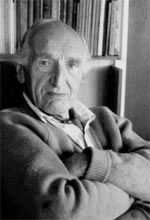

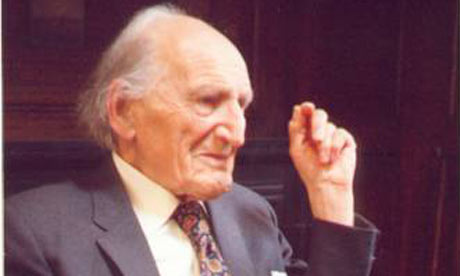

.jpg)
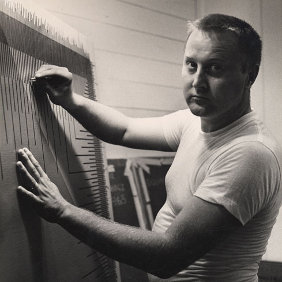
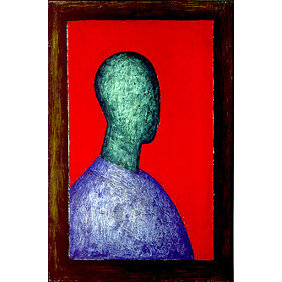
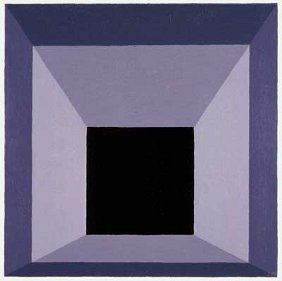
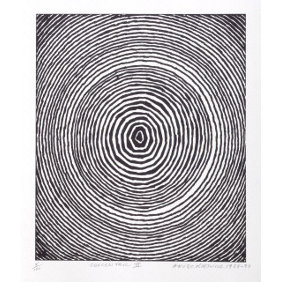
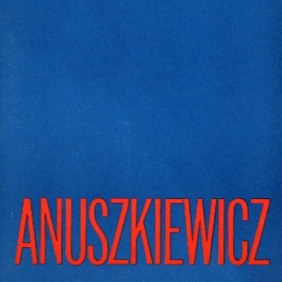

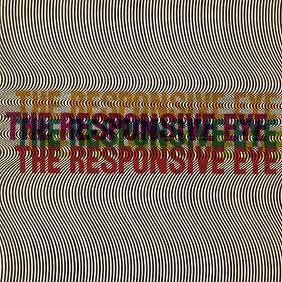






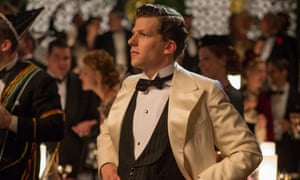


 The Daily Hatch