Category Archives: Uncategorized

OPEN LETTER TO SENATOR Cynthia Lummis of Wyoming, on the NOVEMBER 16, 2022 CONCERNING THE SENATOR’S “YES” VOTE IN SENATE TO  PASS BILL THAT “provides statutory authority for same-sex…marriages,” repealing provisions that define marriage as between a man and a woman! (Greg Koukl message “Paul, Romans and Homosexuality”)

November 17, 2022


Cynthia Lummis of Wyoming,
United States Senate
Washington, D.C. 20510

Dear Senator Cynthia Lummis of Wyoming,

I have written on this before to your fellow Republican Mitt Romney of Utah.

This is an OPEN LETTER TO SENATOR Cynthia Lummis of Wyoming, on the NOVEMBER 16, 2022 CONCERNING THE SENATOR’S “YES” VOTE IN SENATE TO  PASS BILL THAT “provides statutory authority for same-sex…marriages,” repealing provisions that define marriage as between a man and a woman!

I am familiar with your church and their traditional view on marriage. Here is a summary of it:

QUESTION: In light of all the recent publicity about same-sex marriage, where does The Lutheran Church—Missouri Synod stand on the issue?

ANSWER: God gave marriage as a picture of the relationship between Christ and His bride the Church (Eph. 5:32). Homosexual behavior is prohibited in the Old and New Testaments (Lev. 18:22, 24, 20:13; 1 Cor. 6:9–20; 1 Tim. 1:10) as contrary to the Creator’s design (Rom. 1:26–27).

The LCMS affirms that such behavior is “intrinsically sinful” and that, “on the basis of Scripture, marriage [is] the lifelong union of one man and one woman (Gen. 2:2-24; Matt. 19:5-6)” (2004 Res. 3-05A).

It has also urged its members “to give a public witness from Scripture against the social acceptance and legal recognition of homosexual ‘marriage’ ” (2004 Res. 3-05A).

At the same time, the Synod firmly believes “the redeeming love of Christ, which rescues humanity from sin, death, and the power of Satan, is offered to all through repentance and faith in Christ, regardless of the nature of their sinfulness” (1992 Res. 3-12A).

—-

Your church’s view is the view the Bible takes and I want to say that I am glad you belong to a Bible affirming church that respects the truth about what the Bible says about homosexuality. Maybe you don’t fully understand fully what the Bible says about homosexuality and that is why you voted the way you did on November 16th?

 I heard Greg Koukl talk on this subject and he did a great job. Especially notice the section entitled, “Natural Desire or Natural Function?”

The first chapter of Paul’s letter to the Romans contains what most readers consider the Bible’s clearest condemnation of same-sex relations.  Recent scholarship reads the same text and finds just the opposite.  Who is right?

Paul, Romans and Homosexuality

 by Greg Koukl

      To most readers, the first chapter of Paul’s letter to the Romans contains the Bible’s clearest condemnation of same-sex relations–both male and female.  Recent scholarship, though, reads the same text and finds just the opposite–that homosexuality is innate and therefore normal, moral, and biblical.

Reconstructing Romans

In Romans, Paul seems to use homosexuality as indicative of man’s deep seated rebellion against God and God’s proper condemnation of man.  New interpretations cast a different light on the passage.

Paul, the religious Jew, is looking across the Mediterranean at life in the capital of Graeco-Roman culture.  Homosexuality in itself is not the focus of condemnation.  Rather, Paul’s opprobrium falls upon paganism’s refusal to acknowledge the true God.

It’s also possible Paul did not understand the physiological basis of genuine homosexuality.  John Boswell, professor of history at Yale, is among those who differ with the classical interpretation.  In Christianity, Social Tolerance, and Homosexualityhe writes:

The persons Paul condemns are manifestly not homosexual:  what he derogates are homosexual acts committed by apparently heterosexual persons….It is not clear that Paul distinguished in his thoughts or writings between gay persons (in the sense of permanent sexual preference) and heterosexuals who simply engaged in periodic homosexual behavior.  It is in fact unlikely that many Jews of his day recognized such a distinction, but it is quite apparent that–whether or not he was aware of their existence–Paul did not discuss gay persons but only homosexual acts committed by heterosexual persons.[1]  [emphasis in the original]

Paul is speaking to those who violate their natural sexual orientation, Boswell contends, those who go against their own natural desire:  “‘Nature’ in Romans 1:26, then, should be understood as the personal nature of the pagans in question.”[2]  [emphasis in the original]

Since a homosexual’s natural desire is for the same sex, this verse doesn’t apply to him.  He has not chosen to set aside heterosexuality for homosexuality; the orientation he was born with is homosexual.  Demanding that he forsake his “sin” and become heterosexual is actually the kind of violation of one’s nature Paul condemns here.

Romans 1:18-27

Both views can’t be correct.  Only a close look at the text itself will give us the answer.  The details of this passage show why these new interpretations are impossible:[3]

For the wrath of God is revealed from heaven against all ungodliness and unrighteousness of men, who suppress the truth in unrighteousness, because that which is known about God is evident within them; for God made it evident to them.

For since the creation of the world His invisible attributes, His eternal power and divine nature, have been clearly seen, being understood through what has been made, so that they are without excuse.  For even though they knew God, they did not honor Him as God, or give thanks; but they became futile in their speculations, and their foolish heart was darkened.  Professing to be wise, they became fools, and exchanged the glory of the incorruptible God for an image in the form of corruptible man and of birds and four-footed animals and crawling creatures.

Therefore, God gave them over in the lusts of their hearts to impurity, that their bodies might be dishonored among them.  For they exchanged the truth of God for a lie, and worshipped and served the creature rather than the Creator, who is blessed forever. Amen.

For this reason God gave them over to degrading passions; for their women exchanged the natural function for that which is unnatural, and in the same way also the men abandoned the natural function of the woman and burned in their desire toward one another, men with men committing indecent acts and receiving in their own persons the due penalty of their error.

Let me start by making two observations.  First, this is about God being mad:  “For the wrath of God [orge] is revealed from heaven against all ungodliness and unrighteousness of men….”

Second, there is a specific progression that leads to this “orgy” of anger.  Men “suppress the truth in unrighteousness” (v. 18).  They exchanged “the truth of God for a lie, and worshipped and served the creature rather than the Creator” (v. 25).  Next, “God gave them over in the lusts of their hearts to impurity…” (v. 24).  They “exchanged the natural [sexual] function for that which is unnatural (v. 26).  Therefore, the wrath of God rightly falls on them (v. 18); they are without excuse (v. 20).

This text is a crystal clear condemnation of homosexuality by the Apostle Paul in the middle of his most brilliant discourse on general revelation.  Paul is not speaking to a localized aberration of pedophilia or temple prostitution that’s part of life in the capital of Graeco-Roman culture.  He is talking about a universal condition of man.

Regarding the same-sex behavior itself, here are the specific words Paul uses:  a lust of the heart, an impurity and dishonoring to the body (v. 24); a degrading passion that’s unnatural (v. 29); an indecent act and an error (v. 27); not proper and the product of a depraved mind (v. 28).

There’s only one way the clear sense of this passage can be missed:  if someone is in total revolt against God.  According to Paul, homosexual behavior is evidence of active, persistent rebellion against one’s Creator.  Verse 32 shows it’s rooted in direct, willful, aggressive sedition against God–true of all so-called Christians who are defending their own homosexuality.  God’s response is explicit:  “They are without excuse” (v. 20).

Born Gay?

What if one’s “natural” desire is for the same sex, though.  What if his homosexuality is part of his physical constitution?  There are four different reasons this is a bad argument.  The first three are compelling; the fourth is unassailable.

First, this rejoinder assumes there is such a thing as innate homosexuality.  The scientific data is far from conclusive, though.  Contrary to the hasty claims of the press, there is no definitive evidence that homosexuality is determined by physiological factors (see “Just Doing What Comes Naturally,” Clear Thinking, Spring, 1997).

There’s a second problem.  If all who have a desire for the same sex do so “naturally,” then to whom does this verse apply?  If everybody is only following their natural sexual desires, then which particular individuals fall under this ban, those who are not aroused by their own gender, but have sex anyway?  Generally, for men at least, if there is no arousal, there is no sex.  And if there is arousal, according to Boswell et al, then the passion must be natural.

Third, this interpretation introduces a whole new concept–constitutional homosexuality–that is entirely foreign to the text.  Boswell himself admits that it was “in fact unlikely that many Jews of [Paul’s] day recognized such a distinction,” and that possibly even Paul himself was in the dark.

If Paul did not understand genuine homosexuality, though, then how can one say he excepted constitutional homosexuals when he wrote that they “exchanged the natural function for that which is unnatural”?  This argument self-destructs.

Further, if Paul spoke only to those violating their personal sexual orientation, then wouldn’t he also warn that some men burned unnaturally towards women, and some women towards men?  Wouldn’t Paul warn against both types of violation–heterosexuals committing indecent acts with members of the same sex, and homosexuals committing indecent acts with members of the opposite sex?

What in the text allows us to distinguish between constitutional homosexuals and others?  Only one word:  “natural.”  A close look at this word and what it modifies, though, leads to the most devastating critique of all.

Natural Desire or Natural Function?

Paul was not unclear about what he meant by “natural.”  Homosexuals do not abandon natural desires; they abandon natural functions:  “For this reason God gave them over to degrading passions; for their women exchanged the natural function for that which is unnatural, and in the same way also the men abandoned the natural function of the woman and burned in their desire toward one another…” (1:26-27)

The Greek word kreesis, translated “function” in this text, is used only these two times in the New Testament, but is found frequently in other literature of the time.  According to the standard Greek language reference A Greek/English Lexicon of the New Testament and Other  Early Christian Literature,[4] the word means “use, relations, function, especially of sexual intercourse.”

Paul is not talking about natural desires here, but natural functions.  He is not talking about what one wants sexually, but how one is built to operatesexually.  The body is built to function in a specific way.  Men were not built to function sexually with men, but with women.

This conclusion becomes unmistakable when one notes what men abandon in verse 27, according to Paul.  The modern argument depends on the text teaching that men abandoned their own natural desire for woman and burned toward one another.  Men whose natural desire was for other men would then be exempted from Paul’s condemnation.  Paul says nothing of the kind, though.

Paul says men forsake not their own natural desire (their constitutional make-up), but rather the “natural function of the woman..”  They abandoned the female, who was built by God to be man’s sexual compliment.

The error has nothing to do with anything in the male’s own constitution that he’s denying.  It is in the rejection of the proper sexual companion God has made for him–a woman:  “The men abandoned the natural function of the woman and burned in their desire toward one another, men with men committing indecent acts….” (v. 27)

Natural desires go with natural functions.  The passion that exchanges the natural function of sex between a man and a woman for the unnatural function of sex between a   man and a man is what Paul calls a degrading passion.

Jesus clarified the natural, normal relationship:  “Have you not read that He who created them from the beginning made them male and female and said ‘For this cause a man shall leave his father and mother and shall cleave to his wife and the two shall become one flesh [sexual intercourse].’?”  (Matthew 19:4-5)

Homosexual desire is unnatural because it causes a man to abandon the natural sexual compliment God has ordained for him:  a woman.  That was Paul’s view.  If it was Paul’s view recorded in the inspired text, then it is God’s view.  And if it is God’s view, it should be ours if we call ourselves Christian.


[1]John Boswell, Christianity, Social Tolerance, and Homosexuality(Chicago:  University of Chicago Press, 1980), p. 109.

[2]Ibid., p. 111.

[3]Citations are from the New American Standard Bible, copyright 1977, The Lockman Foundation.

[4]Bauer, Arndt and Gingrich (University of Chicago Press).

I want to object to your recent vote on November to do away with traditional marriage special position in our laws!!! Take a look at this letter I wrote to President Obama that applies to you!!!

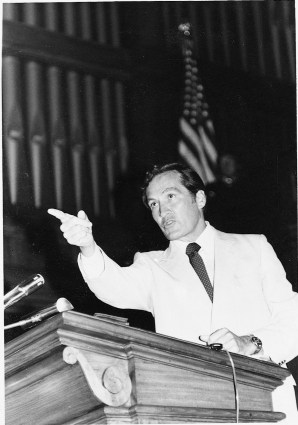
Francis Schaeffer

Francis Schaeffer.jpg

December 28, 2020

Office of Barack and Michelle Obama
P.O. Box 91000
Washington, DC 20066

Dear President Obama,

I wrote you over 700 letters while you were President and I mailed them to the White House and also published them on my blog http://www.thedailyhatch.org .I received several letters back from your staff and I wanted to thank you for those letters. 

There are several issues raised in your book that I would like to discuss with you such as the minimum wage law, the liberal press, the cause of 2007 financial meltdown, and especially your pro-choice (what I call pro-abortion) view which I strongly object to on both religious and scientific grounds, Two of the most impressive things in your book were your dedication to both the National Prayer Breakfast (which spoke at 8 times and your many visits to the sides of wounded warriors!!

I have been reading your autobiography A PROMISED LAND and I have been enjoying it. 

Let me make a few comments on it, and here is the first quote of yours I want to comment on:

On page 286 you talk about speaking at the 2009 National Prayer Breakfast and in fact you spoke at 2 of those in 2009 and one each February you were President!! Let me quote from one of those speeches of yours below!

                                 June 19, 2009
REMARKS BY THE PRESIDENT
AT THE ESPERANZA NATIONAL HISPANIC PRAYER BREAKFAST
J.W. Marriott
Washington, D.C: “At a time when there’s no shortage of challenges to occupy our time, it’s even more important to step back, and to give thanks, and to seek guidance from each other — but most importantly, from God. That’s what we’ve come here to do.”

ARE YOU LOOKING FOR GUIDANCE FROM GOD’S WORD OR FROM OTHER SOURCES LIKE LIBERAL THEOLOGIANS DO?

As a Christian I accept that the Bible is the word of God and inerrant. I understand that you take a much more liberal view of the Bible. Your church denomination includes very liberal theologians and Paul Tillich is probably the most prominent in the past. 

Schaeffer went on to analyze how neo-orthodoxy ultimately gives way to radical mysticism:

Karl Barth opened the door to the existentialistic leap in theology… He has been followed by many more, men like Reinhold Niebuhr, Paul Tillich, Bishop John Robinson, Alan Richardson and all the new theologians. They may differ in details, but their struggle is still the same—it is the struggle of modern man who has given up [rationality]. As far as the theologians are concerned … their new system is not open to verification, it must simply be believed.10

There is evidence that points to the fact that the Bible is historically true as Schaeffer pointed out in episode 5 of WHATEVER HAPPENED TO THE HUMAN RACEThere is a basis then for faith in Christ alone for our eternal hope. This link shows how to do that.

You want some evidence that indicates that the Bible is true? Here is a good place to start and that is taking a closer look at the archaeology of the Old Testament times. Is the Bible historically accurate? Here are some of the posts I have done in the past on the subject: 1. The Babylonian Chronicleof Nebuchadnezzars Siege of Jerusalem, 2. Hezekiah’s Siloam Tunnel Inscription. 3. Taylor Prism (Sennacherib Hexagonal Prism), 4. Biblical Cities Attested Archaeologically. 5. The Discovery of the Hittites, 6.Shishak Smiting His Captives, 7. Moabite Stone, 8. Black Obelisk of Shalmaneser III9A Verification of places in Gospel of John and Book of Acts., 9B Discovery of Ebla Tablets10. Cyrus Cylinder11. Puru “The lot of Yahali” 9th Century B.C.E.12. The Uzziah Tablet Inscription13. The Pilate Inscription14. Caiaphas Ossuary14 B Pontius Pilate Part 214c. Three greatest American Archaeologists moved to accept Bible’s accuracy through archaeology.


A fine message below
in which John MacArthur reminds us:

As Francis Schaeffer warned nearly thirty years ago in The God Who Is There, the church is following the irrationality of secular philosophy. Consequently, reckless faith has overrun the evangelical community. Many are discarding doctrine in favor of personal experience.

The War Against Reason
by John MacArthur
True discernment has suffered a horrible setback in the past few decades because reason itself has been under attack within the church. As Francis Schaeffer warned nearly thirty years ago in The God Who Is There, the church is following the irrationality of secular philosophy. Consequently, reckless faith has overrun the evangelical community. Many are discarding doctrine in favor of personal experience. Others say they are willing to disregard crucial biblical distinctives in order to achieve external unity among all professing Christians. True Christianity marked by intelligent, biblical faith seems to be declining even among the most conservative evangelicals.THE ABANDONMENT OF OBJECTIVE TRUTHThe visible church in our generation has become astonishingly tolerant of aberrant teaching and outlandish ideas—and frighteningly intolerant of sound teaching. The popular evangelical conception of “truth” has become almost completely subjective. Truth is viewed as fluid, always relative, never absolute. To suggest that any objective criterion might be used to distinguish truth from error is to be egregiously out of step with the spirit of the age. In some circles, Scripture itself has been ruled out as a reliable test of truth. After all, the Bible can be interpreted in so many different ways—who can say which interpretation is right? And many believe there is truth beyond the Bible.All this relativity has had disastrous effects on the typical Christian’s ability to discern truth from error, right from wrong, good from evil. The plainest teachings of the Bible are being questioned among people who declare themselves believers in the Bible. For example, some Christians are no longer certain whether homosexuality should be classed as a sin. Others argue that the feminist agenda is compatible with biblical Christianity. “Christian” television, radio, books, and magazines serve up a preposterous smorgasbord of ideas from the merely capricious to the downright dangerous—and the average Christian is woefully ill-equipped to sort out the lies from the truth.Even to suggest that a sorting between lies and truth is necessary is viewed by many as perilously intolerant. There is a notion abroad that any dispute over doctrine is inherently evil. Concern for orthodoxy is regarded as incompatible with Christian unity. Doctrine itself is labeled divisive and those who make doctrine an issue are branded uncharitable. No one is permitted to criticize anyone else’s beliefs, no matter how unbiblical those beliefs seem to be. A recent article in Christianity Today exemplifies the trend. The article, titled “Hunting for Heresy,” profiled two well-known Christian leaders who had “come under withering attack for controversial writings.”1One is a popular speaker on the college lecture circuit and a bestselling author. He wrote a book in which he encouraged homosexuals to establish permanent live-together relationships (albeit celibate ones). He suggests the evangelical community suffers from “homophobia.” He is convinced that permanent living arrangements between homosexuals are the only alternative to loneliness for people he believes are “born with a homosexual orientation.” This man’s wife has published an article in a homosexual magazine in which she enthusiastically affirms” monogamous sexual relationships between homosexuals. The speaker-author says he has a “very, very strong” disagreement with his wife’s approval of homosexual sex, but his own view seems to allow homosexuals to engage in other kinds of physical intimacy short of actual intercourse.The other Christian leader profiled in the Christianity Today article is a woman who, with her husband, is a featured speaker for a popular, nationally-syndicated radio and television ministry. Their ministry is not a weird offshoot from some fringe cult, but an established, well-respected mainstay from the evangelical heartland. She also serves as chairperson of one of the largest evangelical student organizations in the world. This woman has written a book in which she chronicles some rather peculiar spiritual experiences. She dedicates the book to her male alter ego, an imaginary person named “Eddie Bishop” who romances her in her dreams. This woman says she also has visions of “the Christ child that is within” her. He appears to her as a drooling, emaciated, barefoot “idiot child” in a torn undershirt—”its head totally bald and lolled to one side.” The woman has engaged the services of a Catholic nun who serves as her “spiritual director,” helping to interpret her dreams and fantasies. The book mingles mysticism, Jungian psychology, out-of-body experiences, feminist ideas, subjective religious experience, and this woman’s romantic fantasies into an extraordinary amalgam. The book is frankly so bizarre that it is disturbing to read.The remarkable thing about the Christianity Today article is that the story was not written to expose the aberrant ideas being taught by these two leading evangelicals. Instead, what the magazine’s editors deemed newsworthy was the fact that these people were under attack for their views.In the world of modern evangelicalism, it is allowable to advocate the most unconventional, unbiblical doctrines—as long as you afford everyone else the same privilege. About the only thing that is taboo nowadays is the intolerance of those who dare to point out others’ errors. Anyone today who is bold enough to suggest that someone else’s ideas or doctrines are unsound or unbiblical is dismissed at once as contentious, divisive, unloving, or unchristian. It is all right toespouse any view you wish, but it is not all right to criticize another person’s views—no matter how patently unbiblical those views may be.When tolerance is valued over truth, the cause of truth always suffers. Church history shows this to be so. Only when the people of God have mounted a hardy defense of truth and sound doctrine has the church flourished and grown strong. The Reformation, the Puritan era, and the Great Awakenings are all examples of this. The times of decline in the history of the church have always been marked by an undue emphasis on tolerance—which leads inevitably to carelessness, worldliness, doctrinal compromise, and great confusion in the church.ADRIFT ON A SEA OF SUBJECTIVITYThat the church would lose her moorings in this particular age, however, poses greater dangers than ever. For in the past hundred years or so, the world has changed in a dramatic and very frightening way. People no longer look at truth the way they used to. In fact, we live under a prevailing philosophy that has become hostile to the very idea of absolute truth.From the beginning of recorded history until late last century, virtually all human philosophy assumed the necessity of absolute truth. Truth was universally understood as that which is true, not false; factual, not erroneous; correct, not incorrect; moral, not immoral; just, not unjust; right, not wrong. Practically all philosophers since the time of Plato assumed the objectivity of truth. Philosophy itself was a quest for the highest understanding of truth. Such a pursuit was presumed to be possible, even necessary, because truth was understood to be the same for every person. This did not mean that everyone agreed what truth was, of course. But virtually all agreed that whatever was true was true for everyone.That all changed in the nineteenth century with the birth of existentialism. Existentialism defies precise definition, but it includes the concept that the highest truth is subjective (having its source in the individual’s mind) rather than objective (something that actually exists outside the individual). Existentialism elevates individual experience and personal choice, minimizing or ruling out absolute standards of truth, goodness, morality, and such things. We might accurately characterize existentialism as the abandonment of objectivity. Existentialism is inherently anti-intellectual, against reason, irrational.Danish philosopher Søren Kierkegaard first used the term “existential.” Kierkegaard’s life and philosophy revolved around his experiences with Christianity. Christian ideas and biblical terminology reverberate in many of his writings. He wrote much about faith and certainly regarded himself as a Christian. Many of his ideas began as a legitimate reaction against the stale formalism of the Danish Lutheran state church. He was rightly offended at the barren ritualism of the church, properly outraged that people who had no love for God called themselves Christians just because they happened to be born in a “Christian” nation.But in his reaction against the lifeless state church, Kierkegaard set up a false antithesis. He decided that objectivity and truth were incompatible. To counter the passionless ritualism and lifeless doctrinal formulas he saw in Danish Lutheranism, Kierkegaard devised an approach to religion that was pure passion, altogether subjective. Faith, he suggested, means the rejection of reason and the exaltation of feeling and personal experience. It was Kierkegaard who coined the expression “leap of faith.” Faith to him was an irrational experience, above all a personal choice. He recorded these words in his journal on August 1, 1835: “The thing is to find a truth which is true for me, to find the idea for which I can live and die.”2Clearly, Kierkegaard had already rejected as inherently worthless the belief that truth is objective. His journal continues with these words:What would be the use of discovering so-called objective truth …. What good would it do me if truth stood before me, cold and naked, not caring whether I recognized her or not, and producing in me a shudder of fear rather than a trusting devotion? … I am left standing like a man who has rented a house and gathered all the furniture and household things together, but has not yet found the beloved with whom to share the joys and sorrows of his life…. It is this divine side of man, his inward action, which means everything—not a mass of [objective] information.3Having repudiated the objectivity of truth, Kierkegaard was left longing for an existential experience, which he believed would bring him a sense of personal fulfillment. He stood on the precipice, preparing to make his leap of faith. Ultimately, the idea he chose to live and die for was Christianity, but it was a characteristically subjective brand of Christianity that he embraced.Though Kierkegaard was virtually unknown during his lifetime, his writings have endured and have deeply influenced all subsequent philosophy. His idea of “truth that is true for me” infiltrated popular thought and set the tone for our generations radical rejection of all objective standards.Kierkegaard knew how to make irrationalism sound profound. “God does not exist; He is eternal,” he wrote. He believed Christianity was full of “existential paradoxes,” which he regarded as actual contradictions, proof that truth is irrational.Using the example of Abraham’s willingness to sacrifice Isaac (Gen. 22:1-19), Kierkegaard suggested that God called Abraham to violate moral law in slaying his son. For Kierkegaard, Abraham’s willingness to “suspend” his ethical convictions epitomized the leap of faith that is demanded of everyone. Kierkegaard believed the incident proved that “the single individual [Abraham] is higher than the universal [moral law].”4 Building on that conclusion, the Danish philosopher offered this observation: “Abraham represents faith…. He acts by virtue of the absurd, for it is precisely [by virtue of] the absurd that he as the single individual is higher than the universal.”5 “[I] cannot understand Abraham,” Kierkegaard declared, “even though in a certain demented sense I admire him more than all others.”6It is not difficult to see how such thinking thrusts all truth into the realm of pure subjectivity—even to the point of absurdity or dementia. Everything becomes relative. Absolutes dematerialize. The difference between truth and nonsense becomes meaningless. All that matters is personal experience.And one person’s experience is as valid as another’s—even if everyone’s experiences lead to contradictory conceptions of truth. “Truth that is true for me” might be different from someone else’s truth. In fact, our beliefs might be obviously contradictory, yet another person’s “truth” in no way invalidates mine. Because “truth”is authenticated by personal experience, its only relevance is for the individual who makes the leap of faith. That is existentialism.Existentialism caught on in a big way in secular philosophy. Friedrich Nietzsche, for example, also rejected reason and emphasized the will of the individual. Nietzsche probably knew nothing of Kierkegaard’s works, but their ideas paralleled at the key points. Unlike Kierkegaard, however, Nietzsche never made the leap of faith to Christianity. Instead, he leapt to the conclusion that God is dead. The truth that was “true for him,” it seems, turned out to be the opposite of the truth Kierkegaard chose. But their epistemology (the way they arrived at their ideas) was exactly the same.Later existentialists, such as Martin Heidegger and Jean-Paul Sartre, refined Kierkegaard’s ideas while following the atheism of Nietzsche. Heidegger and Sartre both believed that reason is futile and life basically meaningless. Those ideas have been a powerful force in twentieth-century thought. As the world continues to grow more atheistic, more secular, and more irrational, it helps to understand that it is being propelled in that direction by strong existentialist influences.EXISTENTIALISM INVADES THE CHURCH But don’t get the idea that existentialism’s influence is limited to the secular world. From the moment Kierkegaard wedded existentialist ideas with Christianity, neo-orthodox theology was the inevitable outcome.Neo-orthodoxy is the term used to identify an existentialist variety of Christianity. Because it denies the essential objective basis of truth—the absolute truth and authority of Scripture—neo-orthodoxy must be understood as pseudo-Christianity. Its heyday came in the middle of the twentieth century with the writings of Karl Barth, Emil Brunner, Paul Tillich, and Reinhold Niebuhr. Those men echoed the language and the thinking of Kierkegaard, speaking of the primacy of “personal authenticity,” while downplaying or denying the significance of objective truth. Barth, the father of neo-orthodoxy, explicitly acknowledged his debt to Kierkegaard.7Neo-orthodoxy’s attitude toward Scripture is a microcosm of the entire existentialist philosophy: the Bible itself is not objectively the Word of God, but it becomes the Word of God when it speaks to me individually. In neo-orthodoxy, that same subjectivism is imposed on all the doctrines of historic Christianity. Familiar terms are used, but are redefined or employed in a way that is purposely vague—not to convey objective meaning, but to communicate a subjective symbolism. After all, any “truth” theological terms convey is unique to the person who exercises faith. What the Bible means becomes unimportant. What it means to me is the relevant issue. All of this resoundingly echoes Kierkegaard’s concept of “truth that is true for me.”Thus while neo-orthodox theologians often sound as if they are affirming traditional beliefs, their actual system differs radically from the historic understanding of the Christian faith. By denying the objectivity of truth, they relegate all theology to the realm of subjective relativism. It is a theology perfectly suited for the age in which we live.And that is precisely why it is so deadly.Francis Schaeffer’s 1968 work The God Who Is There included a perceptive analysis of Kierkegaard’s influence on modern thought and modern theology.8 Schaeffer named the boundary between rationality and irrationality “the line of despair.” He noted that existentialism pushed secular thought below the line of despair sometime in the nineteenth century. Religious neo-orthodoxy was simply a johnny-come-lately response of theologians who were jumping on the existentialist bandwagon, following secular art, music, and general culture: “Neo-orthodoxy gave no new answer. What existential philosophy had already said in secular language, it now said in theological language…. [With the advent of neo-orthodoxy,] theology too has gone below the line of despair.”9Schaeffer went on to analyze how neo-orthodoxy ultimately gives way to radical mysticism:Karl Barth opened the door to the existentialistic leap in theology… He has been followed by many more, men like Reinhold Niebuhr, Paul Tillich, Bishop John Robinson, Alan Richardson and all the new theologians. They may differ in details, but their struggle is still the same—it is the struggle of modern man who has given up [rationality]. As far as the theologians are concerned … their new system is not open to verification, it must simply be believed.10Such a system, Schaeffer points out, has no integrity. Those who espouse it cannot live with the repercussions of their own illogic. “In practice a man cannot totally reject [rationality], however much his system leads him to it, unless he experiences … some form of mental breakdown.” Thus people have been forced to an even deeper level of despair: “a level of mysticism with nothing there.”11MYSTICISM: IRRATIONALITY GONE TO SEEDMysticism is the idea that spiritual reality is found by looking inward. Mysticism is perfectly suited for religious existentialism; indeed, it is its inevitable consequence. The mystic disdains rational understanding and seeks truth instead through the feelings, the imagination, personal visions, inner voices, private illumination, or other purely subjective means. Objective truth becomes practically superfluous. Mystical experiences are therefore self-authenticating; that is, they are not subject to any form of objective verification. They are unique to the person who experiences them. Since they do not arise from or depend upon any rational process, they are invulnerable to any refutation by rational means.Arthur L. Johnson writes,The experience convinces the mystic in such a way, and to such a degree, that lie simply cannot doubt its value and the correctness of what he believes it “says.”…In its crudest form this position says that believing something to be so makes it so. The idea is that ultimate reality is purely mental; therefore one is able to create whatever reality one wishes. Thus the mystic “creates” truth through his experience. In a less extreme form, the view seems to be that there are “alternate realities,” one as real as another, and that these “break in upon” the mystic in his experiences. Whatever form is taken, the criterion of truth is again a purely private and subjective experience that provides no means of verification and no safeguard against error. Nevertheless, it is seen by the mystic as being above question by others.The practical result of all this is that it is nearly impossible to reason with any convinced mystic. Such people are generally beyond the reach of reason.12Mysticism is therefore antithetical to discernment. It is an extreme form of reckless faith.Mysticism is the great melting pot into which neo-orthodoxy, the charismatic movement, anti-intellectual evangelicals, and even some segments of Roman Catholicism have been synthesized. It has produced movements like the Third Wave (a neo-charismatic movement with excessive emphasis on signs, wonders, and personal prophecies); Renovaré (an organization that blends teachings from monasticism, ancient Catholic mysticism, Eastern religion, and other mystical traditions); the spiritual warfare movement (which seeks to engage demonic powers in direct confrontation); and the modern prophecy movement (which encourages believers to seek private, extrabiblical revelation directly ftom God). The influx of mysticism has also opened evangelicalism to New-Age concepts like subliminal thought- control, inner healing, communication with angels, channeling, dream analysis, positive confession, and a host of other therapies andpractices coming directly from occult and Eastern religions. The face of evangelicalism has changed so dramatically in the past twenty years that what is called evangelicalism today is beginning to resemble what used to be called neo-orthodoxy. If anything, some segments of contemporary evangelicalism are even more subjective in their approach to truth than neo-orthodoxy ever was.It could be argued that evangelicalism never successfully resisted neo-orthodoxy. Twenty years ago evangelicals took a heroic stand against neo-orthodox influences on the issue of biblical inerrancy. But whatever victory was gained in that battle is now being sacrificed on the altar of mysticism. Mysticism renders biblical inerrancy irrelevant. After all, if the highest truth is subjective and comes from within us, then it doesn’t ultimately matter if the specifics of Scripture are true or not. If the content of faith is not the real issue, what does it really matter if the Bible has errors or not?In other words, neo-orthodoxy attacked the objective inspiration of Scripture. Evangelical mysticism attacks the objective interpretation of Scripture. The practical effect is the same. By embracing existential relativism, evangelicals are forfeiting the very riches they fought so hard to protect. If we can gain meaningful guidance from characters who appear in our fantasies, why should we bother ourselves with what the Bible says? If we are going to disregard or even reject the biblical verdict against homosexuality, what difference does it make if the historical and factual matter revealed in Scripture is accurate or inaccurate? If personal prophecies, visions, dreams, and angelic beings are available to give us up-to-the-minute spiritual direction—”fresh revelation” as it is often called—who cares if Scripture is without error in the whole or in the parts?Mysticism further nullifies Scripture by pointing people away from the sure Word of God as the only reliable object of faith. Warning of the dangers of mysticism, Schaeffer wrote,Probably the best way to describe this concept of modern theology is to say that it is faith in faith, rather than faith directed to an object which is actually there…. A modern man cannot talk about the object of his faith, only about the faith itself. So he can discuss the existence of his faith and its “size” as it exists against all reason, but that is all. Modern man’s faith turns inward…. Faith is introverted, because it has no certain object … it is rationally not open to discussion. This position, I would suggest, is actually a greater despair and darkness than the position of those modern men who commit suicide.13The faith of mysticism is an illusion. “Truth that is true for me” is irrelevant to anyone else, because it lacks any objective basis. Ultimately, therefore, existential faith is impotent to lift anyone above the level of despair. All it can do is seek more experiences and more feelings. Multitudes are trapped in the desperate cycle of feeding off one experience while zealously seeking the next. Such people have no real concept of truth; they just believe. Theirs is a reckless faith.MEANWHILE, AT THE OTHER END OF THE SPECTRUM…Mysticism, however, is not the only form of reckless faith that threatens the contemporary church. A new movement has been gaining strength lately. Evangelicals are leaving the fold and moving into Eastern Orthodoxy, Roman Catholicism, and liturgical high-church Protestantism. Rejecting the ever-changing subjectivism of a free- wheeling existential Protestantism, they seek a religion with historical roots. Turned off by the shallow silliness that has overrun the evangelical movement, they desire a more magisterial approach. Perhaps sensing the dangers of a religion that points people inward, they choose instead a religion that emphasizes external ceremonies and dogmatic hierarchical authority.I listened to the taped testimony of one of these converts to Roman Catholicism, a former Protestant minister. He said he had graduated with highest honors from a leading Protestant seminary. He told his audience that as a student he was rabidly anti-Catholic and fully committed to Protestant Reformed doctrine (although he refuted this himself by admitting he had already rejected the crucial doctrine of justification by faith). After college he began to read Roman Catholic writings and found himself drawn to Catholic theology and liturgy. He described his initial resistance to the doctrines of purgatory, the perpetual virginity of Mary, transubstantiation, and prayers to Mary and the saints. All of those doctrines are easily disproved by the Bible.14 But this man—acknowledging that he could find no warrant anywhere in Scripture for praying to Mary—nevertheless completely changed his outlook on such matters after he tried praying the rosary and received an answer to a very specific prayer. He concluded that it must have been Mary who answered his prayer and immediately began praying regularly to her. Ultimately, he decided the Bible alone was not a sufficient rule of faith for believers, and he put his faith in papal authority and church tradition.That man’s leap of faith may not have been of the existential variety, but it was a blind leap nonetheless. He chose the other extreme of reckless faith, the kind that makes extrabiblical religious tradition the object of one’s faith.This kind of faith is reckless because it subjugates the written Word of God to oral tradition, church authority, or some other human criterion. It is an uncritical trust in an earthly religious authority—the pope, tradition, a self-styled prophet like David Koresh, or whatever. Such faith rarely jettisons Scripture altogether—but by forcing God’s Word into the mold of religious tradition, it invalidates the Word of God and renders it of no effect (cf. Matt. 15:6).The man whose taped testimony I heard is now an apologist for the Roman Catholic Church. He speaks to Catholic congregations and tells them how to counter biblical arguments against Catholicism. At the end of his testimony tape, he deals briefly with the official Catholic attitude toward Scripture. He is eager to assure his listeners that the modern Roman Catholic Church has no objection if Catholic people want to read Scripture for themselves. Even personal Bible study is all right, he says—but then hastens to add that it is not necessary to go overboard. “A verse or two a day is enough.” This man, a seminary graduate, surely should be aware that a comment like that seriously understates the importance of the written Word of God. We are commanded to meditate on Scripture day and night (Josh. 1:8; Ps. 1:2). We are to let it fill our hearts at all times (Deut. 6:6-9). We must study it diligently and handle it rightly (2 Tim. 2:15). The Bible alone is able to give us the wisdom that leads to salvation, then adequately equip us for every good work (2 Tim. 3:15-17).Discernment depends on a knowledge of Scripture. Those who are content to listen gullibly to some voice of human authority rather than hearing God’s Word and letting it speak for itself cannot be discerning. Theirs is a reckless, irrational faith.We identified the inward-looking extreme of reckless faith as mysticism. We could call this other variety rote tradition. In Isaiah 29:13, that is precisely how God Himself characterized it: “This people their lip service, but draw near with their words and honor Me with their lip service, but they remove their hearts far from Me, and their reverence for Me consists of tradition learned by rote” (emphasis added).Scripture has nothing but condemnation for rote tradition. Barren religious ritual, sacerdotal formalism, or liturgy out of a book are not the same as worship. Real worship, like faith, must engage the mind. Jesus said, “The true worshipers … worship the Father in spirit and truth; for such people the Father seeks to be His worshipers” (John 4:23).Did you realize that rote tradition was the very error for which Jesus condemned the Pharisees? He told them,“Rightly did Isaiah prophesy of you hypocrites, as it is written, ‘This people honors Me with their lips, but their heart is far away from Me. But in vain do they worship Me. teaching as doctrines the precepts of men.’ Neglecting the commandment of God, you hold to the tradition of men.”He was also saying to them, “You nicely set aside the commandment of God in order to keep your tradition” (Mark 7:6-9).Rote tradition is not unlike mysticism in that it also bypasses the mind. Paul said this of the Jews who were so absorbed in their empty religious traditions:I bear them witness that they have a zeal for God, but not in accordance with knowledge. For not knowing about God’s righteousness, and seeking to establish their own, they did not subject themselves to the righteousness of God. For Christ is the end of the law for righteousness to everyone who believes (Rom. 10:2-4).Their problem was not a lack of zeal. It was not that they were short on enthusiasm, emotionally flat, or slothful about religious observances. The issue was that the zeal they displayed was rote tradition, “not in accordance with knowledge.” They were not sufficiently discerning, and therefore their faith itself was deficient.Paul is specific in stating that their ignorance lay in trying to establish their own righteousness rather than submitting to the righteousness of God. This passage comes at the culmination of Paul’s doctrinal discussion in Romans. In context it is very clear that he was talking about the doctrine ofjustification by faith. He had thoroughly expounded this subject beginning in chapter 3. He said we are “justified as a gift by His grace through the redemption which is in Christ Jesus” (3:24). Justification is “by faith apart from works of the Law” (v.28). “God reckons righteousness apart from works” (Rom. 4:6).But instead of seeking the perfect righteousness of Christ, which God reckons to those who believe, the unbelieving Jews had set out to try to establish a righteousness of their own through works. That is where rote tradition always leads. It is a religion of works. Thus the ritualistic, unbelieving Pharisees are an exact parallel to Roman Catholicism, Eastern Orthodoxy, and most forms of ritual-laden Protestantism. All of them deny justification by faith.If the Pharisees or their followers had used the Scriptures as their standard of truth rather than rabbinical tradition, they would have known that God justifies sinners by faith. Repeatedly, Jesus said things to them like “Did you never read in the Scriptures . . . ?” (Matt. 21:42); “You are mistaken, not understanding the Scriptures, or the power of God” (22:29); and, “Are you the teacher of Israel, and do not understand these things?” (John 3:10). What He continually chided them for was their ignorance of the Scriptures. They had set rote tradition in place of the written Word of God (Matt. 15:6), and they were condemned for it.Contrast the way Luke commended the Bereans for their noblemindedness: “For they received the word [the New Testament gospel from the apostles] with great eagerness, examining the Scriptures [the Old Testament books] daily, to see whether these things were so” (Acts 17:1 1). What made the Bereans worthy of commendation? Their eagerness to be discerning. They rightly refused to blindly accept anyone’s teaching (even that of the apostles) without clear warrant from God’s Word.Spiritual discernment is, I believe, the only antidote to the existentialism of our age. Until’Christians regain the will to test everything by the rule of Scripture, reject what is false, and hold fast to what is true, the church will struggle and falter, and our testimony to a world in sin will be impaired.But if the church will rise up and stand for the truth of God’s Word against all the lies of this evil world, then we will begin to see the power of truth that sets people free (John 8:32).Endnotes1. John W. Kennedy, “Hunting for Heresy,” Christianity Today (16 May 1994).2. Robert Bretall, cd., A Kierkegaard Anthology (Princeton, N. J.: Princeton University Press, 1946), 5 (emphasis in original).3. Ibid.4. Søren Kierkegaard, Fear and Trembling, Howard V. Hong and Edna H. Hong, trans. (Princeton, N. J.: Princeton University Press, 1983), 55.5. Ibid.6. Ibid., 57.7. Karl Barth, The Epistle to the Romans, Edwyn C. Hoskyns, trans. (London: Oxford University Press, 1933). Barth cites Kierkegaard repeatedly in this, one of his earliest works.8. Francis Schaeffer, The God Who Is There, in The Complete Works of Francis A. Schaeffer, Volume I (Wheaton, Ill.: Crossway Books, 1982).9. Ibid., 53.10. Ibid., 55.11. Ibid., 58.12. Arthur L. Johnson, Faith Misguided: Exposing the Dangers of Mysticism (Chicago: Moody Press, 1988), 31-32.13. Schaeffer, 64-65, emphasis added.14. Purgatory: Luke 23:42-43 and 2 Cor. 5:8 indicate that believers go immediately to be with Christ at death. Perpetual Virginity of Mary: Matt. 1:25 states that Joseph kept Mary a virgin only until Jesus’ birth, and John 2:12 and Acts 1:14 reveal that Jesus had brothers. Transubstantiation: Heb. 7:27 and 10:12 teach that Christ made one sacrifice for sins forever; there is no need for the daily sacrifice of the Mass. Prayers to Mary and the saints: prayers, adoration, and spiritual veneration offered to anyone but God is expressly forbidden by the first commandment and elsewhere throughout Scripture (Ex. 20:3; Matt. 4:10; Acts 10:25-26; Rev. 19:10; Rev. 22:8-9).Excerpt from Reckless Faith: When the Church Loses Its Will to Discern, © 1994 by John MacArthur.We do pray this article has blessed you in some way.  Our prayer is that you will use this message to better understand what is happening in our churches today.Blessings,
Robert Wise

Sincerely,

Everette Hatcher III, 13900 Cottontail Lane, Alexander, AR 72002, ph 501-920-5733 everettehatcher@haltingarkansasliberalswithtruth

END OF LETTER TO PRESIDENT OBAMA!!!

The United States Senate voted November 16, 2022 to advance the so-called Respect for Marriage Act.

HR 8404, which passed the House of Representatives in July, “provides statutory authority for same-sex…marriages,” repealing provisions that define marriage as between a man and a woman. YOU VOTED YES!!!!

Senator I bet don’t like to be compared to President Obama but why did you vote like he would have done on this vote!!!!

Sincerely,

Everette Hatcher III, 13900 Cottontail Lane, Alexander, AR 72002, everettehatcher@gmail.com,

Related posts:

Open letter to President Obama (Part 293) (Founding Fathers’ view on Christianity, Elbridge Gerry of MA)

April 10, 2013 – 7:02 am

President Obama c/o The White House 1600 Pennsylvania Avenue NW Washington, DC 20500 Dear Mr. President, I know that you receive 20,000 letters a day and that you actually read 10 of them every day. I really do respect you for trying to get a pulse on what is going on out here. There have […]By Everette Hatcher III | Posted in David BartonFounding FathersPresident Obama | Edit |Comments (0)

The Founding Fathers views concerning Jesus, Christianity and the Bible (Part 5, John Hancock)

May 8, 2012 – 1:48 am

There have been many articles written by evangelicals like me who fear that our founding fathers would not recognize our country today because secular humanism has rid our nation of spiritual roots. I am deeply troubled by the secular agenda of those who are at war with religion in our public life. Lillian Kwon quoted somebody […]By Everette Hatcher III | Posted in David BartonFounding Fathers | Edit | Comments (0)

The Founding Fathers views concerning Jesus, Christianity and the Bible (Part 4, Elbridge Gerry)

May 7, 2012 – 1:46 am

There have been many articles written by evangelicals like me who fear that our founding fathers would not recognize our country today because secular humanism has rid our nation of spiritual roots. I am deeply troubled by the secular agenda of those who are at war with religion in our public life. Lillian Kwon quoted somebody […]By Everette Hatcher III | Posted in David BartonFounding Fathers | Edit | Comments (0)

The Founding Fathers views concerning Jesus, Christianity and the Bible (Part 3, Samuel Adams)

May 4, 2012 – 1:45 am

There have been many articles written by evangelicals like me who fear that our founding fathers would not recognize our country today because secular humanism has rid our nation of spiritual roots. I am deeply troubled by the secular agenda of those who are at war with religion in our public life. Lillian Kwon quoted somebody […]By Everette Hatcher III | Posted in David BartonFounding Fathers | Edit | Comments (0)

The Founding Fathers views concerning Jesus, Christianity and the Bible (Part 2, John Quincy Adams)

May 3, 2012 – 1:42 am

There have been many articles written by evangelicals like me who fear that our founding fathers would not recognize our country today because secular humanism has rid our nation of spiritual roots. I am deeply troubled by the secular agenda of those who are at war with religion in our public life. Lillian Kwon quoted somebody […]By Everette Hatcher III | Posted in David BartonFounding Fathers | Edit | Comments (0)

The Founding Fathers views concerning Jesus, Christianity and the Bible (Part 1, John Adams)

May 2, 2012 – 1:13 am

There have been many articles written by evangelicals like me who fear that our founding fathers would not recognize our country today because secular humanism has rid our nation of spiritual roots. I am deeply troubled by the secular agenda of those who are at war with religion in our public life. Lillian Kwon quoted somebody […]By Everette Hatcher III | Posted in Founding Fathers | Edit | Comments (0)

President Obama and the Founding Fathers

May 8, 2013 – 9:20 am

President Obama Speaks at The Ohio State University Commencement Ceremony Published on May 5, 2013 President Obama delivers the commencement address at The Ohio State University. May 5, 2013. You can learn a lot about what President Obama thinks the founding fathers were all about from his recent speech at Ohio State. May 7, 2013, […]By Everette Hatcher III | Posted in Founding FathersPresident Obama | Edit | Comments (0)

Francis Schaeffer’s own words concerning the founding fathers and their belief in inalienable rights

December 5, 2012 – 12:38 am

Dr. C. Everett Koop with Bill Graham. Francis Schaeffer: “Whatever Happened to the Human Race” (Episode 4) THE BASIS FOR HUMAN DIGNITY Published on Oct 7, 2012 by AdamMetropolis The 45 minute video above is from the film series created from Francis Schaeffer’s book “Whatever Happened to the Human Race?” with Dr. C. Everett Koop. This […]By Everette Hatcher III | Posted in Founding FathersFrancis SchaefferProlife | Edit |Comments (1)

David Barton: In their words, did the Founding Fathers put their faith in Christ? (Part 4)

May 30, 2012 – 1:35 am

America’s Founding Fathers Deist or Christian? – David Barton 4/6 There have been many articles written by evangelicals like me who fear that our founding fathers would not recognize our country today because secular humanism has rid our nation of spiritual roots. I am deeply troubled by the secular agenda of those who are at […]By Everette Hatcher III | Posted in David BartonFounding Fathers | Tagged governor of connecticutjohn witherspoonjonathan trumbull | Edit | Comments (1)

Were the founding fathers christian?

May 23, 2012 – 7:04 am

3 Of 5 / The Bible’s Influence In America / American Heritage Series / David Barton There were 55 gentlemen who put together the constitution and their church affliation is of public record. Greg Koukl notes: Members of the Constitutional Convention, the most influential group of men shaping the political foundations of our nation, were […]By Everette Hatcher III | Posted in Founding Fathers | Edit | Comments (0)

John Quincy Adams a founding father?

June 29, 2011 – 3:58 pm

I do  not think that John Quincy Adams was a founding father in the same sense that his  father was. However, I do think he was involved in the  early days of our government working with many of the founding fathers. Michele Bachmann got into another history-related tussle on ABC’s “Good  Morning America” today, standing […]By Everette Hatcher III | Posted in David BartonFounding Fathers | Edit | Comments (0)

“Sanctity of Life Saturday” Taking on Ark Times Bloggers on various issues Part E “Moral absolutes and abortion” Francis Schaeffer Quotes part 5(includes the film SLAUGHTER OF THE INNOCENTS) (editorial cartoon)

July 6, 2013 – 1:26 am

I have gone back and forth and back and forth with many liberals on the Arkansas Times Blog on many issues such as abortion, human rights, welfare, poverty, gun control  and issues dealing with popular culture. Here is another exchange I had with them a while back. My username at the Ark Times Blog is Saline […]By Everette Hatcher III | Posted in Arkansas TimesFrancis SchaefferProlife | Edit |Comments (0)

Article from Adrian Rogers, “Bring back the glory”

June 11, 2013 – 12:34 am

I truly believe that many of the problems we have today in the USA are due to the advancement of humanism in the last few decades in our society. Ronald Reagan appointed the evangelical Dr. C. Everett Koop to the position of Surgeon General in his administration. He partnered with Dr. Francis Schaeffer in making the […]By Everette Hatcher III | Posted in Adrian RogersFrancis Schaeffer | Edit | Comments (0)

“Schaeffer Sundays” Francis Schaeffer’s own words concerning the possibility that minorities may be mistreated under 51% rule

June 9, 2013 – 1:21 am

Francis Schaeffer: “Whatever Happened to the Human Race” (Episode 4) THE BASIS FOR HUMAN DIGNITY Published on Oct 7, 2012 by AdamMetropolis ____________ The 45 minute video above is from the film series created from Francis Schaeffer’s book “Whatever Happened to the Human Race?” with Dr. C. Everett Koop. This book  really helped develop my political […]By Everette Hatcher III | Posted in Francis Schaeffer | Edit | Comments (0)

—-

OPEN LETTER TO SENATOR Mitt Romney of Utah on the NOVEMBER 16, 2022 CONCERNING THE SENATOR’S “YES” VOTE IN SENATE TO  PASS BILL THAT “provides statutory authority for same-sex…” repealing provisions that define marriage as between a man and a woman!

November 16, 2022

The Honorable Mitt Romney of Utah
United States Senate
Washington, D.C. 20510

Dear Senator Romney,

You are voting like you are still the Governor of Massachusetts instead of Senator from Utah!!!!! (If things keep going like this maybe you be welcomed back to Massachusetts!)

I want to object to your recent vote on November to do away with traditional marriage special position in our laws!!! Take a look at this letter I wrote to President Obama that applies to you!!!

Francis Schaeffer

Francis Schaeffer.jpg

December 28, 2020

Office of Barack and Michelle Obama
P.O. Box 91000
Washington, DC 20066

Dear President Obama,

I wrote you over 700 letters while you were President and I mailed them to the White House and also published them on my blog http://www.thedailyhatch.org .I received several letters back from your staff and I wanted to thank you for those letters. 

There are several issues raised in your book that I would like to discuss with you such as the minimum wage law, the liberal press, the cause of 2007 financial meltdown, and especially your pro-choice (what I call pro-abortion) view which I strongly object to on both religious and scientific grounds, Two of the most impressive things in your book were your dedication to both the National Prayer Breakfast (which spoke at 8 times and your many visits to the sides of wounded warriors!!

I have been reading your autobiography A PROMISED LAND and I have been enjoying it. 

Let me make a few comments on it, and here is the first quote of yours I want to comment on:

On page 286 you talk about speaking at the 2009 National Prayer Breakfast and in fact you spoke at 2 of those in 2009 and one each February you were President!! Let me quote from one of those speeches of yours below!

                                 June 19, 2009
REMARKS BY THE PRESIDENT
AT THE ESPERANZA NATIONAL HISPANIC PRAYER BREAKFAST
J.W. Marriott
Washington, D.C: “At a time when there’s no shortage of challenges to occupy our time, it’s even more important to step back, and to give thanks, and to seek guidance from each other — but most importantly, from God. That’s what we’ve come here to do.”

ARE YOU LOOKING FOR GUIDANCE FROM GOD’S WORD OR FROM OTHER SOURCES LIKE LIBERAL THEOLOGIANS DO?

As a Christian I accept that the Bible is the word of God and inerrant. I understand that you take a much more liberal view of the Bible. Your church denomination includes very liberal theologians and Paul Tillich is probably the most prominent in the past. 

Schaeffer went on to analyze how neo-orthodoxy ultimately gives way to radical mysticism:

Karl Barth opened the door to the existentialistic leap in theology… He has been followed by many more, men like Reinhold Niebuhr, Paul Tillich, Bishop John Robinson, Alan Richardson and all the new theologians. They may differ in details, but their struggle is still the same—it is the struggle of modern man who has given up [rationality]. As far as the theologians are concerned … their new system is not open to verification, it must simply be believed.10

There is evidence that points to the fact that the Bible is historically true as Schaeffer pointed out in episode 5 of WHATEVER HAPPENED TO THE HUMAN RACEThere is a basis then for faith in Christ alone for our eternal hope. This link shows how to do that.

You want some evidence that indicates that the Bible is true? Here is a good place to start and that is taking a closer look at the archaeology of the Old Testament times. Is the Bible historically accurate? Here are some of the posts I have done in the past on the subject: 1. The Babylonian Chronicleof Nebuchadnezzars Siege of Jerusalem, 2. Hezekiah’s Siloam Tunnel Inscription. 3. Taylor Prism (Sennacherib Hexagonal Prism), 4. Biblical Cities Attested Archaeologically. 5. The Discovery of the Hittites, 6.Shishak Smiting His Captives, 7. Moabite Stone, 8. Black Obelisk of Shalmaneser III9A Verification of places in Gospel of John and Book of Acts., 9B Discovery of Ebla Tablets10. Cyrus Cylinder11. Puru “The lot of Yahali” 9th Century B.C.E.12. The Uzziah Tablet Inscription13. The Pilate Inscription14. Caiaphas Ossuary14 B Pontius Pilate Part 214c. Three greatest American Archaeologists moved to accept Bible’s accuracy through archaeology.


A fine message below
in which John MacArthur reminds us:

As Francis Schaeffer warned nearly thirty years ago in The God Who Is There, the church is following the irrationality of secular philosophy. Consequently, reckless faith has overrun the evangelical community. Many are discarding doctrine in favor of personal experience.

The War Against Reason
by John MacArthur
True discernment has suffered a horrible setback in the past few decades because reason itself has been under attack within the church. As Francis Schaeffer warned nearly thirty years ago in The God Who Is There, the church is following the irrationality of secular philosophy. Consequently, reckless faith has overrun the evangelical community. Many are discarding doctrine in favor of personal experience. Others say they are willing to disregard crucial biblical distinctives in order to achieve external unity among all professing Christians. True Christianity marked by intelligent, biblical faith seems to be declining even among the most conservative evangelicals.THE ABANDONMENT OF OBJECTIVE TRUTHThe visible church in our generation has become astonishingly tolerant of aberrant teaching and outlandish ideas—and frighteningly intolerant of sound teaching. The popular evangelical conception of “truth” has become almost completely subjective. Truth is viewed as fluid, always relative, never absolute. To suggest that any objective criterion might be used to distinguish truth from error is to be egregiously out of step with the spirit of the age. In some circles, Scripture itself has been ruled out as a reliable test of truth. After all, the Bible can be interpreted in so many different ways—who can say which interpretation is right? And many believe there is truth beyond the Bible.All this relativity has had disastrous effects on the typical Christian’s ability to discern truth from error, right from wrong, good from evil. The plainest teachings of the Bible are being questioned among people who declare themselves believers in the Bible. For example, some Christians are no longer certain whether homosexuality should be classed as a sin. Others argue that the feminist agenda is compatible with biblical Christianity. “Christian” television, radio, books, and magazines serve up a preposterous smorgasbord of ideas from the merely capricious to the downright dangerous—and the average Christian is woefully ill-equipped to sort out the lies from the truth.Even to suggest that a sorting between lies and truth is necessary is viewed by many as perilously intolerant. There is a notion abroad that any dispute over doctrine is inherently evil. Concern for orthodoxy is regarded as incompatible with Christian unity. Doctrine itself is labeled divisive and those who make doctrine an issue are branded uncharitable. No one is permitted to criticize anyone else’s beliefs, no matter how unbiblical those beliefs seem to be. A recent article in Christianity Today exemplifies the trend. The article, titled “Hunting for Heresy,” profiled two well-known Christian leaders who had “come under withering attack for controversial writings.”1One is a popular speaker on the college lecture circuit and a bestselling author. He wrote a book in which he encouraged homosexuals to establish permanent live-together relationships (albeit celibate ones). He suggests the evangelical community suffers from “homophobia.” He is convinced that permanent living arrangements between homosexuals are the only alternative to loneliness for people he believes are “born with a homosexual orientation.” This man’s wife has published an article in a homosexual magazine in which she enthusiastically affirms” monogamous sexual relationships between homosexuals. The speaker-author says he has a “very, very strong” disagreement with his wife’s approval of homosexual sex, but his own view seems to allow homosexuals to engage in other kinds of physical intimacy short of actual intercourse.The other Christian leader profiled in the Christianity Today article is a woman who, with her husband, is a featured speaker for a popular, nationally-syndicated radio and television ministry. Their ministry is not a weird offshoot from some fringe cult, but an established, well-respected mainstay from the evangelical heartland. She also serves as chairperson of one of the largest evangelical student organizations in the world. This woman has written a book in which she chronicles some rather peculiar spiritual experiences. She dedicates the book to her male alter ego, an imaginary person named “Eddie Bishop” who romances her in her dreams. This woman says she also has visions of “the Christ child that is within” her. He appears to her as a drooling, emaciated, barefoot “idiot child” in a torn undershirt—”its head totally bald and lolled to one side.” The woman has engaged the services of a Catholic nun who serves as her “spiritual director,” helping to interpret her dreams and fantasies. The book mingles mysticism, Jungian psychology, out-of-body experiences, feminist ideas, subjective religious experience, and this woman’s romantic fantasies into an extraordinary amalgam. The book is frankly so bizarre that it is disturbing to read.The remarkable thing about the Christianity Today article is that the story was not written to expose the aberrant ideas being taught by these two leading evangelicals. Instead, what the magazine’s editors deemed newsworthy was the fact that these people were under attack for their views.In the world of modern evangelicalism, it is allowable to advocate the most unconventional, unbiblical doctrines—as long as you afford everyone else the same privilege. About the only thing that is taboo nowadays is the intolerance of those who dare to point out others’ errors. Anyone today who is bold enough to suggest that someone else’s ideas or doctrines are unsound or unbiblical is dismissed at once as contentious, divisive, unloving, or unchristian. It is all right toespouse any view you wish, but it is not all right to criticize another person’s views—no matter how patently unbiblical those views may be.When tolerance is valued over truth, the cause of truth always suffers. Church history shows this to be so. Only when the people of God have mounted a hardy defense of truth and sound doctrine has the church flourished and grown strong. The Reformation, the Puritan era, and the Great Awakenings are all examples of this. The times of decline in the history of the church have always been marked by an undue emphasis on tolerance—which leads inevitably to carelessness, worldliness, doctrinal compromise, and great confusion in the church.ADRIFT ON A SEA OF SUBJECTIVITYThat the church would lose her moorings in this particular age, however, poses greater dangers than ever. For in the past hundred years or so, the world has changed in a dramatic and very frightening way. People no longer look at truth the way they used to. In fact, we live under a prevailing philosophy that has become hostile to the very idea of absolute truth.From the beginning of recorded history until late last century, virtually all human philosophy assumed the necessity of absolute truth. Truth was universally understood as that which is true, not false; factual, not erroneous; correct, not incorrect; moral, not immoral; just, not unjust; right, not wrong. Practically all philosophers since the time of Plato assumed the objectivity of truth. Philosophy itself was a quest for the highest understanding of truth. Such a pursuit was presumed to be possible, even necessary, because truth was understood to be the same for every person. This did not mean that everyone agreed what truth was, of course. But virtually all agreed that whatever was true was true for everyone.That all changed in the nineteenth century with the birth of existentialism. Existentialism defies precise definition, but it includes the concept that the highest truth is subjective (having its source in the individual’s mind) rather than objective (something that actually exists outside the individual). Existentialism elevates individual experience and personal choice, minimizing or ruling out absolute standards of truth, goodness, morality, and such things. We might accurately characterize existentialism as the abandonment of objectivity. Existentialism is inherently anti-intellectual, against reason, irrational.Danish philosopher Søren Kierkegaard first used the term “existential.” Kierkegaard’s life and philosophy revolved around his experiences with Christianity. Christian ideas and biblical terminology reverberate in many of his writings. He wrote much about faith and certainly regarded himself as a Christian. Many of his ideas began as a legitimate reaction against the stale formalism of the Danish Lutheran state church. He was rightly offended at the barren ritualism of the church, properly outraged that people who had no love for God called themselves Christians just because they happened to be born in a “Christian” nation.But in his reaction against the lifeless state church, Kierkegaard set up a false antithesis. He decided that objectivity and truth were incompatible. To counter the passionless ritualism and lifeless doctrinal formulas he saw in Danish Lutheranism, Kierkegaard devised an approach to religion that was pure passion, altogether subjective. Faith, he suggested, means the rejection of reason and the exaltation of feeling and personal experience. It was Kierkegaard who coined the expression “leap of faith.” Faith to him was an irrational experience, above all a personal choice. He recorded these words in his journal on August 1, 1835: “The thing is to find a truth which is true for me, to find the idea for which I can live and die.”2Clearly, Kierkegaard had already rejected as inherently worthless the belief that truth is objective. His journal continues with these words:What would be the use of discovering so-called objective truth …. What good would it do me if truth stood before me, cold and naked, not caring whether I recognized her or not, and producing in me a shudder of fear rather than a trusting devotion? … I am left standing like a man who has rented a house and gathered all the furniture and household things together, but has not yet found the beloved with whom to share the joys and sorrows of his life…. It is this divine side of man, his inward action, which means everything—not a mass of [objective] information.3Having repudiated the objectivity of truth, Kierkegaard was left longing for an existential experience, which he believed would bring him a sense of personal fulfillment. He stood on the precipice, preparing to make his leap of faith. Ultimately, the idea he chose to live and die for was Christianity, but it was a characteristically subjective brand of Christianity that he embraced.Though Kierkegaard was virtually unknown during his lifetime, his writings have endured and have deeply influenced all subsequent philosophy. His idea of “truth that is true for me” infiltrated popular thought and set the tone for our generations radical rejection of all objective standards.Kierkegaard knew how to make irrationalism sound profound. “God does not exist; He is eternal,” he wrote. He believed Christianity was full of “existential paradoxes,” which he regarded as actual contradictions, proof that truth is irrational.Using the example of Abraham’s willingness to sacrifice Isaac (Gen. 22:1-19), Kierkegaard suggested that God called Abraham to violate moral law in slaying his son. For Kierkegaard, Abraham’s willingness to “suspend” his ethical convictions epitomized the leap of faith that is demanded of everyone. Kierkegaard believed the incident proved that “the single individual [Abraham] is higher than the universal [moral law].”4 Building on that conclusion, the Danish philosopher offered this observation: “Abraham represents faith…. He acts by virtue of the absurd, for it is precisely [by virtue of] the absurd that he as the single individual is higher than the universal.”5 “[I] cannot understand Abraham,” Kierkegaard declared, “even though in a certain demented sense I admire him more than all others.”6It is not difficult to see how such thinking thrusts all truth into the realm of pure subjectivity—even to the point of absurdity or dementia. Everything becomes relative. Absolutes dematerialize. The difference between truth and nonsense becomes meaningless. All that matters is personal experience.And one person’s experience is as valid as another’s—even if everyone’s experiences lead to contradictory conceptions of truth. “Truth that is true for me” might be different from someone else’s truth. In fact, our beliefs might be obviously contradictory, yet another person’s “truth” in no way invalidates mine. Because “truth”is authenticated by personal experience, its only relevance is for the individual who makes the leap of faith. That is existentialism.Existentialism caught on in a big way in secular philosophy. Friedrich Nietzsche, for example, also rejected reason and emphasized the will of the individual. Nietzsche probably knew nothing of Kierkegaard’s works, but their ideas paralleled at the key points. Unlike Kierkegaard, however, Nietzsche never made the leap of faith to Christianity. Instead, he leapt to the conclusion that God is dead. The truth that was “true for him,” it seems, turned out to be the opposite of the truth Kierkegaard chose. But their epistemology (the way they arrived at their ideas) was exactly the same.Later existentialists, such as Martin Heidegger and Jean-Paul Sartre, refined Kierkegaard’s ideas while following the atheism of Nietzsche. Heidegger and Sartre both believed that reason is futile and life basically meaningless. Those ideas have been a powerful force in twentieth-century thought. As the world continues to grow more atheistic, more secular, and more irrational, it helps to understand that it is being propelled in that direction by strong existentialist influences.EXISTENTIALISM INVADES THE CHURCH But don’t get the idea that existentialism’s influence is limited to the secular world. From the moment Kierkegaard wedded existentialist ideas with Christianity, neo-orthodox theology was the inevitable outcome.Neo-orthodoxy is the term used to identify an existentialist variety of Christianity. Because it denies the essential objective basis of truth—the absolute truth and authority of Scripture—neo-orthodoxy must be understood as pseudo-Christianity. Its heyday came in the middle of the twentieth century with the writings of Karl Barth, Emil Brunner, Paul Tillich, and Reinhold Niebuhr. Those men echoed the language and the thinking of Kierkegaard, speaking of the primacy of “personal authenticity,” while downplaying or denying the significance of objective truth. Barth, the father of neo-orthodoxy, explicitly acknowledged his debt to Kierkegaard.7Neo-orthodoxy’s attitude toward Scripture is a microcosm of the entire existentialist philosophy: the Bible itself is not objectively the Word of God, but it becomes the Word of God when it speaks to me individually. In neo-orthodoxy, that same subjectivism is imposed on all the doctrines of historic Christianity. Familiar terms are used, but are redefined or employed in a way that is purposely vague—not to convey objective meaning, but to communicate a subjective symbolism. After all, any “truth” theological terms convey is unique to the person who exercises faith. What the Bible means becomes unimportant. What it means to me is the relevant issue. All of this resoundingly echoes Kierkegaard’s concept of “truth that is true for me.”Thus while neo-orthodox theologians often sound as if they are affirming traditional beliefs, their actual system differs radically from the historic understanding of the Christian faith. By denying the objectivity of truth, they relegate all theology to the realm of subjective relativism. It is a theology perfectly suited for the age in which we live.And that is precisely why it is so deadly.Francis Schaeffer’s 1968 work The God Who Is There included a perceptive analysis of Kierkegaard’s influence on modern thought and modern theology.8 Schaeffer named the boundary between rationality and irrationality “the line of despair.” He noted that existentialism pushed secular thought below the line of despair sometime in the nineteenth century. Religious neo-orthodoxy was simply a johnny-come-lately response of theologians who were jumping on the existentialist bandwagon, following secular art, music, and general culture: “Neo-orthodoxy gave no new answer. What existential philosophy had already said in secular language, it now said in theological language…. [With the advent of neo-orthodoxy,] theology too has gone below the line of despair.”9Schaeffer went on to analyze how neo-orthodoxy ultimately gives way to radical mysticism:Karl Barth opened the door to the existentialistic leap in theology… He has been followed by many more, men like Reinhold Niebuhr, Paul Tillich, Bishop John Robinson, Alan Richardson and all the new theologians. They may differ in details, but their struggle is still the same—it is the struggle of modern man who has given up [rationality]. As far as the theologians are concerned … their new system is not open to verification, it must simply be believed.10Such a system, Schaeffer points out, has no integrity. Those who espouse it cannot live with the repercussions of their own illogic. “In practice a man cannot totally reject [rationality], however much his system leads him to it, unless he experiences … some form of mental breakdown.” Thus people have been forced to an even deeper level of despair: “a level of mysticism with nothing there.”11MYSTICISM: IRRATIONALITY GONE TO SEEDMysticism is the idea that spiritual reality is found by looking inward. Mysticism is perfectly suited for religious existentialism; indeed, it is its inevitable consequence. The mystic disdains rational understanding and seeks truth instead through the feelings, the imagination, personal visions, inner voices, private illumination, or other purely subjective means. Objective truth becomes practically superfluous. Mystical experiences are therefore self-authenticating; that is, they are not subject to any form of objective verification. They are unique to the person who experiences them. Since they do not arise from or depend upon any rational process, they are invulnerable to any refutation by rational means.Arthur L. Johnson writes,The experience convinces the mystic in such a way, and to such a degree, that lie simply cannot doubt its value and the correctness of what he believes it “says.”…In its crudest form this position says that believing something to be so makes it so. The idea is that ultimate reality is purely mental; therefore one is able to create whatever reality one wishes. Thus the mystic “creates” truth through his experience. In a less extreme form, the view seems to be that there are “alternate realities,” one as real as another, and that these “break in upon” the mystic in his experiences. Whatever form is taken, the criterion of truth is again a purely private and subjective experience that provides no means of verification and no safeguard against error. Nevertheless, it is seen by the mystic as being above question by others.The practical result of all this is that it is nearly impossible to reason with any convinced mystic. Such people are generally beyond the reach of reason.12Mysticism is therefore antithetical to discernment. It is an extreme form of reckless faith.Mysticism is the great melting pot into which neo-orthodoxy, the charismatic movement, anti-intellectual evangelicals, and even some segments of Roman Catholicism have been synthesized. It has produced movements like the Third Wave (a neo-charismatic movement with excessive emphasis on signs, wonders, and personal prophecies); Renovaré (an organization that blends teachings from monasticism, ancient Catholic mysticism, Eastern religion, and other mystical traditions); the spiritual warfare movement (which seeks to engage demonic powers in direct confrontation); and the modern prophecy movement (which encourages believers to seek private, extrabiblical revelation directly ftom God). The influx of mysticism has also opened evangelicalism to New-Age concepts like subliminal thought- control, inner healing, communication with angels, channeling, dream analysis, positive confession, and a host of other therapies andpractices coming directly from occult and Eastern religions. The face of evangelicalism has changed so dramatically in the past twenty years that what is called evangelicalism today is beginning to resemble what used to be called neo-orthodoxy. If anything, some segments of contemporary evangelicalism are even more subjective in their approach to truth than neo-orthodoxy ever was.It could be argued that evangelicalism never successfully resisted neo-orthodoxy. Twenty years ago evangelicals took a heroic stand against neo-orthodox influences on the issue of biblical inerrancy. But whatever victory was gained in that battle is now being sacrificed on the altar of mysticism. Mysticism renders biblical inerrancy irrelevant. After all, if the highest truth is subjective and comes from within us, then it doesn’t ultimately matter if the specifics of Scripture are true or not. If the content of faith is not the real issue, what does it really matter if the Bible has errors or not?In other words, neo-orthodoxy attacked the objective inspiration of Scripture. Evangelical mysticism attacks the objective interpretation of Scripture. The practical effect is the same. By embracing existential relativism, evangelicals are forfeiting the very riches they fought so hard to protect. If we can gain meaningful guidance from characters who appear in our fantasies, why should we bother ourselves with what the Bible says? If we are going to disregard or even reject the biblical verdict against homosexuality, what difference does it make if the historical and factual matter revealed in Scripture is accurate or inaccurate? If personal prophecies, visions, dreams, and angelic beings are available to give us up-to-the-minute spiritual direction—”fresh revelation” as it is often called—who cares if Scripture is without error in the whole or in the parts?Mysticism further nullifies Scripture by pointing people away from the sure Word of God as the only reliable object of faith. Warning of the dangers of mysticism, Schaeffer wrote,Probably the best way to describe this concept of modern theology is to say that it is faith in faith, rather than faith directed to an object which is actually there…. A modern man cannot talk about the object of his faith, only about the faith itself. So he can discuss the existence of his faith and its “size” as it exists against all reason, but that is all. Modern man’s faith turns inward…. Faith is introverted, because it has no certain object … it is rationally not open to discussion. This position, I would suggest, is actually a greater despair and darkness than the position of those modern men who commit suicide.13The faith of mysticism is an illusion. “Truth that is true for me” is irrelevant to anyone else, because it lacks any objective basis. Ultimately, therefore, existential faith is impotent to lift anyone above the level of despair. All it can do is seek more experiences and more feelings. Multitudes are trapped in the desperate cycle of feeding off one experience while zealously seeking the next. Such people have no real concept of truth; they just believe. Theirs is a reckless faith.MEANWHILE, AT THE OTHER END OF THE SPECTRUM…Mysticism, however, is not the only form of reckless faith that threatens the contemporary church. A new movement has been gaining strength lately. Evangelicals are leaving the fold and moving into Eastern Orthodoxy, Roman Catholicism, and liturgical high-church Protestantism. Rejecting the ever-changing subjectivism of a free- wheeling existential Protestantism, they seek a religion with historical roots. Turned off by the shallow silliness that has overrun the evangelical movement, they desire a more magisterial approach. Perhaps sensing the dangers of a religion that points people inward, they choose instead a religion that emphasizes external ceremonies and dogmatic hierarchical authority.I listened to the taped testimony of one of these converts to Roman Catholicism, a former Protestant minister. He said he had graduated with highest honors from a leading Protestant seminary. He told his audience that as a student he was rabidly anti-Catholic and fully committed to Protestant Reformed doctrine (although he refuted this himself by admitting he had already rejected the crucial doctrine of justification by faith). After college he began to read Roman Catholic writings and found himself drawn to Catholic theology and liturgy. He described his initial resistance to the doctrines of purgatory, the perpetual virginity of Mary, transubstantiation, and prayers to Mary and the saints. All of those doctrines are easily disproved by the Bible.14 But this man—acknowledging that he could find no warrant anywhere in Scripture for praying to Mary—nevertheless completely changed his outlook on such matters after he tried praying the rosary and received an answer to a very specific prayer. He concluded that it must have been Mary who answered his prayer and immediately began praying regularly to her. Ultimately, he decided the Bible alone was not a sufficient rule of faith for believers, and he put his faith in papal authority and church tradition.That man’s leap of faith may not have been of the existential variety, but it was a blind leap nonetheless. He chose the other extreme of reckless faith, the kind that makes extrabiblical religious tradition the object of one’s faith.This kind of faith is reckless because it subjugates the written Word of God to oral tradition, church authority, or some other human criterion. It is an uncritical trust in an earthly religious authority—the pope, tradition, a self-styled prophet like David Koresh, or whatever. Such faith rarely jettisons Scripture altogether—but by forcing God’s Word into the mold of religious tradition, it invalidates the Word of God and renders it of no effect (cf. Matt. 15:6).The man whose taped testimony I heard is now an apologist for the Roman Catholic Church. He speaks to Catholic congregations and tells them how to counter biblical arguments against Catholicism. At the end of his testimony tape, he deals briefly with the official Catholic attitude toward Scripture. He is eager to assure his listeners that the modern Roman Catholic Church has no objection if Catholic people want to read Scripture for themselves. Even personal Bible study is all right, he says—but then hastens to add that it is not necessary to go overboard. “A verse or two a day is enough.” This man, a seminary graduate, surely should be aware that a comment like that seriously understates the importance of the written Word of God. We are commanded to meditate on Scripture day and night (Josh. 1:8; Ps. 1:2). We are to let it fill our hearts at all times (Deut. 6:6-9). We must study it diligently and handle it rightly (2 Tim. 2:15). The Bible alone is able to give us the wisdom that leads to salvation, then adequately equip us for every good work (2 Tim. 3:15-17).Discernment depends on a knowledge of Scripture. Those who are content to listen gullibly to some voice of human authority rather than hearing God’s Word and letting it speak for itself cannot be discerning. Theirs is a reckless, irrational faith.We identified the inward-looking extreme of reckless faith as mysticism. We could call this other variety rote tradition. In Isaiah 29:13, that is precisely how God Himself characterized it: “This people their lip service, but draw near with their words and honor Me with their lip service, but they remove their hearts far from Me, and their reverence for Me consists of tradition learned by rote” (emphasis added).Scripture has nothing but condemnation for rote tradition. Barren religious ritual, sacerdotal formalism, or liturgy out of a book are not the same as worship. Real worship, like faith, must engage the mind. Jesus said, “The true worshipers … worship the Father in spirit and truth; for such people the Father seeks to be His worshipers” (John 4:23).Did you realize that rote tradition was the very error for which Jesus condemned the Pharisees? He told them,“Rightly did Isaiah prophesy of you hypocrites, as it is written, ‘This people honors Me with their lips, but their heart is far away from Me. But in vain do they worship Me. teaching as doctrines the precepts of men.’ Neglecting the commandment of God, you hold to the tradition of men.”He was also saying to them, “You nicely set aside the commandment of God in order to keep your tradition” (Mark 7:6-9).Rote tradition is not unlike mysticism in that it also bypasses the mind. Paul said this of the Jews who were so absorbed in their empty religious traditions:I bear them witness that they have a zeal for God, but not in accordance with knowledge. For not knowing about God’s righteousness, and seeking to establish their own, they did not subject themselves to the righteousness of God. For Christ is the end of the law for righteousness to everyone who believes (Rom. 10:2-4).Their problem was not a lack of zeal. It was not that they were short on enthusiasm, emotionally flat, or slothful about religious observances. The issue was that the zeal they displayed was rote tradition, “not in accordance with knowledge.” They were not sufficiently discerning, and therefore their faith itself was deficient.Paul is specific in stating that their ignorance lay in trying to establish their own righteousness rather than submitting to the righteousness of God. This passage comes at the culmination of Paul’s doctrinal discussion in Romans. In context it is very clear that he was talking about the doctrine ofjustification by faith. He had thoroughly expounded this subject beginning in chapter 3. He said we are “justified as a gift by His grace through the redemption which is in Christ Jesus” (3:24). Justification is “by faith apart from works of the Law” (v.28). “God reckons righteousness apart from works” (Rom. 4:6).But instead of seeking the perfect righteousness of Christ, which God reckons to those who believe, the unbelieving Jews had set out to try to establish a righteousness of their own through works. That is where rote tradition always leads. It is a religion of works. Thus the ritualistic, unbelieving Pharisees are an exact parallel to Roman Catholicism, Eastern Orthodoxy, and most forms of ritual-laden Protestantism. All of them deny justification by faith.If the Pharisees or their followers had used the Scriptures as their standard of truth rather than rabbinical tradition, they would have known that God justifies sinners by faith. Repeatedly, Jesus said things to them like “Did you never read in the Scriptures . . . ?” (Matt. 21:42); “You are mistaken, not understanding the Scriptures, or the power of God” (22:29); and, “Are you the teacher of Israel, and do not understand these things?” (John 3:10). What He continually chided them for was their ignorance of the Scriptures. They had set rote tradition in place of the written Word of God (Matt. 15:6), and they were condemned for it.Contrast the way Luke commended the Bereans for their noblemindedness: “For they received the word [the New Testament gospel from the apostles] with great eagerness, examining the Scriptures [the Old Testament books] daily, to see whether these things were so” (Acts 17:1 1). What made the Bereans worthy of commendation? Their eagerness to be discerning. They rightly refused to blindly accept anyone’s teaching (even that of the apostles) without clear warrant from God’s Word.Spiritual discernment is, I believe, the only antidote to the existentialism of our age. Until’Christians regain the will to test everything by the rule of Scripture, reject what is false, and hold fast to what is true, the church will struggle and falter, and our testimony to a world in sin will be impaired.But if the church will rise up and stand for the truth of God’s Word against all the lies of this evil world, then we will begin to see the power of truth that sets people free (John 8:32).Endnotes1. John W. Kennedy, “Hunting for Heresy,” Christianity Today (16 May 1994).2. Robert Bretall, cd., A Kierkegaard Anthology (Princeton, N. J.: Princeton University Press, 1946), 5 (emphasis in original).3. Ibid.4. Søren Kierkegaard, Fear and Trembling, Howard V. Hong and Edna H. Hong, trans. (Princeton, N. J.: Princeton University Press, 1983), 55.5. Ibid.6. Ibid., 57.7. Karl Barth, The Epistle to the Romans, Edwyn C. Hoskyns, trans. (London: Oxford University Press, 1933). Barth cites Kierkegaard repeatedly in this, one of his earliest works.8. Francis Schaeffer, The God Who Is There, in The Complete Works of Francis A. Schaeffer, Volume I (Wheaton, Ill.: Crossway Books, 1982).9. Ibid., 53.10. Ibid., 55.11. Ibid., 58.12. Arthur L. Johnson, Faith Misguided: Exposing the Dangers of Mysticism (Chicago: Moody Press, 1988), 31-32.13. Schaeffer, 64-65, emphasis added.14. Purgatory: Luke 23:42-43 and 2 Cor. 5:8 indicate that believers go immediately to be with Christ at death. Perpetual Virginity of Mary: Matt. 1:25 states that Joseph kept Mary a virgin only until Jesus’ birth, and John 2:12 and Acts 1:14 reveal that Jesus had brothers. Transubstantiation: Heb. 7:27 and 10:12 teach that Christ made one sacrifice for sins forever; there is no need for the daily sacrifice of the Mass. Prayers to Mary and the saints: prayers, adoration, and spiritual veneration offered to anyone but God is expressly forbidden by the first commandment and elsewhere throughout Scripture (Ex. 20:3; Matt. 4:10; Acts 10:25-26; Rev. 19:10; Rev. 22:8-9).Excerpt from Reckless Faith: When the Church Loses Its Will to Discern, © 1994 by John MacArthur.We do pray this article has blessed you in some way.  Our prayer is that you will use this message to better understand what is happening in our churches today.Blessings,
Robert Wise

Sincerely,

Everette Hatcher III, 13900 Cottontail Lane, Alexander, AR 72002, ph 501-920-5733 everettehatcher@haltingarkansasliberalswithtruth

END OF LETTER TO PRESIDENT OBAMA!!!

The United States Senate voted November 16, 2022 to advance the so-called Respect for Marriage Act.

HR 8404, which passed the House of Representatives in July, “provides statutory authority for same-sex…” repealing provisions that define marriage as between a man and a woman. YOU VOTED YES!!!!

Senator I bet don’t like to be compared to President Obama but why did you vote like he would have done on this vote!!!!

Sincerely,

Everette Hatcher III, 13900 Cottontail Lane, Alexander, AR 72002, everettehatcher@gmail.com,

Related posts:

Open letter to President Obama (Part 293) (Founding Fathers’ view on Christianity, Elbridge Gerry of MA)

April 10, 2013 – 7:02 am

President Obama c/o The White House 1600 Pennsylvania Avenue NW Washington, DC 20500 Dear Mr. President, I know that you receive 20,000 letters a day and that you actually read 10 of them every day. I really do respect you for trying to get a pulse on what is going on out here. There have […]By Everette Hatcher III | Posted in David BartonFounding FathersPresident Obama | Edit |Comments (0)

The Founding Fathers views concerning Jesus, Christianity and the Bible (Part 5, John Hancock)

May 8, 2012 – 1:48 am

There have been many articles written by evangelicals like me who fear that our founding fathers would not recognize our country today because secular humanism has rid our nation of spiritual roots. I am deeply troubled by the secular agenda of those who are at war with religion in our public life. Lillian Kwon quoted somebody […]By Everette Hatcher III | Posted in David BartonFounding Fathers | Edit | Comments (0)

The Founding Fathers views concerning Jesus, Christianity and the Bible (Part 4, Elbridge Gerry)

May 7, 2012 – 1:46 am

There have been many articles written by evangelicals like me who fear that our founding fathers would not recognize our country today because secular humanism has rid our nation of spiritual roots. I am deeply troubled by the secular agenda of those who are at war with religion in our public life. Lillian Kwon quoted somebody […]By Everette Hatcher III | Posted in David BartonFounding Fathers | Edit | Comments (0)

The Founding Fathers views concerning Jesus, Christianity and the Bible (Part 3, Samuel Adams)

May 4, 2012 – 1:45 am

There have been many articles written by evangelicals like me who fear that our founding fathers would not recognize our country today because secular humanism has rid our nation of spiritual roots. I am deeply troubled by the secular agenda of those who are at war with religion in our public life. Lillian Kwon quoted somebody […]By Everette Hatcher III | Posted in David BartonFounding Fathers | Edit | Comments (0)

The Founding Fathers views concerning Jesus, Christianity and the Bible (Part 2, John Quincy Adams)

May 3, 2012 – 1:42 am

There have been many articles written by evangelicals like me who fear that our founding fathers would not recognize our country today because secular humanism has rid our nation of spiritual roots. I am deeply troubled by the secular agenda of those who are at war with religion in our public life. Lillian Kwon quoted somebody […]By Everette Hatcher III | Posted in David BartonFounding Fathers | Edit | Comments (0)

The Founding Fathers views concerning Jesus, Christianity and the Bible (Part 1, John Adams)

May 2, 2012 – 1:13 am

There have been many articles written by evangelicals like me who fear that our founding fathers would not recognize our country today because secular humanism has rid our nation of spiritual roots. I am deeply troubled by the secular agenda of those who are at war with religion in our public life. Lillian Kwon quoted somebody […]By Everette Hatcher III | Posted in Founding Fathers | Edit | Comments (0)

President Obama and the Founding Fathers

May 8, 2013 – 9:20 am

President Obama Speaks at The Ohio State University Commencement Ceremony Published on May 5, 2013 President Obama delivers the commencement address at The Ohio State University. May 5, 2013. You can learn a lot about what President Obama thinks the founding fathers were all about from his recent speech at Ohio State. May 7, 2013, […]By Everette Hatcher III | Posted in Founding FathersPresident Obama | Edit | Comments (0)

Francis Schaeffer’s own words concerning the founding fathers and their belief in inalienable rights

December 5, 2012 – 12:38 am

Dr. C. Everett Koop with Bill Graham. Francis Schaeffer: “Whatever Happened to the Human Race” (Episode 4) THE BASIS FOR HUMAN DIGNITY Published on Oct 7, 2012 by AdamMetropolis The 45 minute video above is from the film series created from Francis Schaeffer’s book “Whatever Happened to the Human Race?” with Dr. C. Everett Koop. This […]By Everette Hatcher III | Posted in Founding FathersFrancis SchaefferProlife | Edit |Comments (1)

David Barton: In their words, did the Founding Fathers put their faith in Christ? (Part 4)

May 30, 2012 – 1:35 am

America’s Founding Fathers Deist or Christian? – David Barton 4/6 There have been many articles written by evangelicals like me who fear that our founding fathers would not recognize our country today because secular humanism has rid our nation of spiritual roots. I am deeply troubled by the secular agenda of those who are at […]By Everette Hatcher III | Posted in David BartonFounding Fathers | Tagged governor of connecticutjohn witherspoonjonathan trumbull | Edit | Comments (1)

Were the founding fathers christian?

May 23, 2012 – 7:04 am

3 Of 5 / The Bible’s Influence In America / American Heritage Series / David Barton There were 55 gentlemen who put together the constitution and their church affliation is of public record. Greg Koukl notes: Members of the Constitutional Convention, the most influential group of men shaping the political foundations of our nation, were […]By Everette Hatcher III | Posted in Founding Fathers | Edit | Comments (0)

John Quincy Adams a founding father?

June 29, 2011 – 3:58 pm

I do  not think that John Quincy Adams was a founding father in the same sense that his  father was. However, I do think he was involved in the  early days of our government working with many of the founding fathers. Michele Bachmann got into another history-related tussle on ABC’s “Good  Morning America” today, standing […]By Everette Hatcher III | Posted in David BartonFounding Fathers | Edit | Comments (0)

“Sanctity of Life Saturday” Taking on Ark Times Bloggers on various issues Part E “Moral absolutes and abortion” Francis Schaeffer Quotes part 5(includes the film SLAUGHTER OF THE INNOCENTS) (editorial cartoon)

July 6, 2013 – 1:26 am

I have gone back and forth and back and forth with many liberals on the Arkansas Times Blog on many issues such as abortion, human rights, welfare, poverty, gun control  and issues dealing with popular culture. Here is another exchange I had with them a while back. My username at the Ark Times Blog is Saline […]By Everette Hatcher III | Posted in Arkansas TimesFrancis SchaefferProlife | Edit |Comments (0)

Article from Adrian Rogers, “Bring back the glory”

June 11, 2013 – 12:34 am

I truly believe that many of the problems we have today in the USA are due to the advancement of humanism in the last few decades in our society. Ronald Reagan appointed the evangelical Dr. C. Everett Koop to the position of Surgeon General in his administration. He partnered with Dr. Francis Schaeffer in making the […]By Everette Hatcher III | Posted in Adrian RogersFrancis Schaeffer | Edit | Comments (0)

“Schaeffer Sundays” Francis Schaeffer’s own words concerning the possibility that minorities may be mistreated under 51% rule

June 9, 2013 – 1:21 am

Francis Schaeffer: “Whatever Happened to the Human Race” (Episode 4) THE BASIS FOR HUMAN DIGNITY Published on Oct 7, 2012 by AdamMetropolis ____________ The 45 minute video above is from the film series created from Francis Schaeffer’s book “Whatever Happened to the Human Race?” with Dr. C. Everett Koop. This book  really helped develop my political […]By Everette Hatcher III | Posted in Francis Schaeffer | Edit | Comments (0)

—-

November 16, 2022 READING A PROVERB A DAY (PROVERBS 16) MUSIC MONDAY Bill Elliff on Proverbs 16

Proverbs 16 New Living Translation
https://youtu.be/RHzaBJPnKoA


My favorite verses in chapter 16 are about gossip:

27 Scoundrels create trouble;
    their words are a destructive blaze.

28 A troublemaker plants seeds of strife;
    gossip separates the best of friends.

Proverbs 16New Living Translation

16 We can make our own plans,
    but the Lord gives the right answer.

People may be pure in their own eyes,
    but the Lord examines their motives.

Commit your actions to the Lord,
    and your plans will succeed.

The Lord has made everything for his own purposes,
    even the wicked for a day of disaster.

The Lord detests the proud;
    they will surely be punished.

Unfailing love and faithfulness make atonement for sin.
    By fearing the Lord, people avoid evil.

When people’s lives please the Lord,
    even their enemies are at peace with them.

Better to have little, with godliness,
    than to be rich and dishonest.

We can make our plans,
    but the Lord determines our steps.

10 The king speaks with divine wisdom;
    he must never judge unfairly.

11 The Lord demands accurate scales and balances;
    he sets the standards for fairness.

12 A king detests wrongdoing,
    for his rule is built on justice.

13 The king is pleased with words from righteous lips;
    he loves those who speak honestly.

14 The anger of the king is a deadly threat;
    the wise will try to appease it.

15 When the king smiles, there is life;
    his favor refreshes like a spring rain.

16 How much better to get wisdom than gold,
    and good judgment than silver!

17 The path of the virtuous leads away from evil;
    whoever follows that path is safe.

18 Pride goes before destruction,
    and haughtiness before a fall.

19 Better to live humbly with the poor
    than to share plunder with the proud.

20 Those who listen to instruction will prosper;
    those who trust the Lord will be joyful.

21 The wise are known for their understanding,
    and pleasant words are persuasive.

22 Discretion is a life-giving fountain to those who possess it,
    but discipline is wasted on fools.

23 From a wise mind comes wise speech;
    the words of the wise are persuasive.

24 Kind words are like honey—
    sweet to the soul and healthy for the body.

25 There is a path before each person that seems right,
    but it ends in death.

26 It is good for workers to have an appetite;
    an empty stomach drives them on.

27 Scoundrels create trouble;
    their words are a destructive blaze.

28 A troublemaker plants seeds of strife;
    gossip separates the best of friends.

29 Violent people mislead their companions,
    leading them down a harmful path.

30 With narrowed eyes, people plot evil;
    with a smirk, they plan their mischief.

31 Gray hair is a crown of glory;
    it is gained by living a godly life.

32 Better to be patient than powerful;
    better to have self-control than to conquer a city.

33 We may throw the dice,[a]
    but the Lord determines how they fall.

Proverbs 16

Bill Elliff

THE SIN THAT PREVENTS REVIVAL

June 03, 2016

There is something that is more deadly than your worst enemy, more lethal than poison. And it is on front page display in our nation (and often in our own lives).

Pride is the mother of all sins. The thought that I am the sum of everything…that I made things, achieved things on my own, have a right to honor and recognition, should be thought well of by others…the list goes on and on. 

A WARNING

Trace every sin in your life, and you will quickly see it stems from pride. Proverbs gives a warning about this lethal sin.

Pride goes before destruction, and a haughty spirit before stumbling.”” (Proverbs 16:18)

Watch a proud man: he may know a measure of success for a season, but his pride is always his downfall. Better is a man who recognizes that God is the source of every good and perfect gift and that apart from Him we can do nothing.

Look through human history. Every proud man has fallen. God makes sure that this happens, because God will share His glory with no mere man. God literally resists the proud man (James 4:6), but promises to pour out grace on those who humble themselves under His mighty hand. Humility is the only way that we enter the kingdom (see Matthew 5:3) and the only way that we can approach God.

EXAMINE YOURSELF

We would all do well to stop RIGHT NOW and ask God to reveal the groundwork of pride in our lives. What are we doing, thinking, expecting, longing for because of pride? Where is pride subtly creeping in?

Do you…

  • Think often about what you have done?
  • Feel like you deserve things?
  • Expect recognition and are upset when unrecognized?
  • Become irritated when others are exalted or honored above you?
  • Subtly weave your achievements into the conversation?
  • Overuse the word “I”?
  • Love to tell story in which you are the central figure?
  • Point the conversation back to yourself?
  • Enjoy human praise?
  • Fail to deflect praise back to the One to whom alone it is due?
  • Find yourself quick to anger and unforgiveness (“Who are they to do this to me?”)
  • Are upset with God when you face trials and difficulties?
  • Think you deserve better?
  • Have a strong sense of entitlement?
  • Struggle with a man-fearing, man-pleasing spirit?
  • Are overcome with excessive shyness?
  • Are upset when others are served before you?
  • Have a hard time serving others?
  • Give over attention to your personal appearance?
  • Feel little need to pray? (because you think you can handle things by yourself)
  • See the study of God’s Word as a ritual or duty, but not the constant longing of your life because you know you cannot make it without God?

Quickly admit your sin and confess your pride. Go all the way to the bottom. Nothing else will do. Meet with a trusted friend and ask them to help you honestly point out where pride is evident.

And remember: Humility is the beginning and fountain of both personal and corporate revival. A humble man knows that he is the creature and God is the Creator, and he understands the difference. Confusion over this foundational truth will wreck havoc in your life, your family, your church, and your world.

Adrian Rogers


Go Go’s Our lips are sealed

Green Day “Things I heard Today”

I heard a rumor

https://youtu.be/m-DZQ80vEVI

Blank space by Taylor Swift

Lyrics And music by Hunter Hatcher

And I know, that you know.
Can’t tell a soul. What to do?
And I know, I told you so.
And you know what to do.

https://m.youtube.com/watch?feature=youtu.beu0026amp;v=sAKqNl4abTI

Summary: The tongue is the meanest member in our church. The tongue is a fire and a world of iniquity.


There are people who deliberately, and hellishly, and hurtfully, and hatefully use their tongues to destroy the lives of other people. You may wish to write in your margin Proverbs 16, verses 27 and 28 by this verse, by verse 6. Here’s what that verse says: “An ungodly man diggeth up evil: and in his lips there is a burning fire. A perverse man soweth strife: and a whisperer separateth chief friends” (Proverbs 16:27–28). The fire of the tongue.

Oh, we talked about arsonists a few weeks ago. Are you guilty of using your tongue in a form of arson? So many people who would not think of using vulgar language, so many cultured ladies who sit around drinking pink tea, and discussing flower arrangements, use their two-inch tongue as a fire. They don’t use vulgar language, they just gossip, and snipe, and criticize. The ladies raid society. And, men, how many times we speak about men as gossips, or women as gossips. Some of the worst gossips I’ve ever known are men, and some of them ministers.

I heard about a lady one time who went to the newspaper office to put something in the society column, and she happened to lean up against a wall where there was a freshly printed piece of newsprint, or at least a type, and it printed on the back of her dress. She didn’t know that it had, but it printed on the back of her dress these words: “Daily News.” All day long people were snickering at her, laughing at her, pointing; she knew something was wrong. Finally, when she got home she said to her husband, “Would you please look on the back of my dress, and see if there’s anything there that ought not to be there.” He looked and said, “No, ma’am, nothing at all.”

The tongue is a fire. Morgan Blake, who was a sportswriter for the Atlanta Journal said this: “I am more deadly than the screaming shell from the Howitzer. I win without killing. I tear down homes, break hearts and wreck lives. I travel on the wings of the wind. No innocence is strong enough to intimidate me, no purity is strong enough to daunt me. I have no regard for truth, no respect for justice, no mercy for the defenseless. My victims are as numerous as the sands of the sea, and often as innocent. I never forget and seldom forgive. My name is gossip.”


The tongue is a fire, and it destroys like a hellish arsonist. And, then next James says that the tongue devours like a wild beast. Look in verses 7 and 8: “For every kind of beasts, and of birds, and of serpents, and of things in the sea, is tamed, and hath been tamed of mankind: But the tongue can no man tame…” (James 3:7–8). And, he says here now, the tongue is like a wild, ferocious, untamable beast. It may be very small, it lives in an ivory cage, but it breaks forth, and that boneless tongue can crush and kill and hurt.

Boys and girls sometimes say, “Sticks and stones may break my bones but words can never hurt me.” But, words do hurt, they do hurt. And, all the protestations can’t take it away. The tongue is like a beast that devours. Paul said, and you might jot this scripture down, Galatians chapter 5, verse 15. Paul said this, “But if ye bite and devour one another, take heed that ye be not consumed one of another” (Galatians 5:15). Isn’t that a strange thing to write to Christians? “If you bite and devour one another.” Christian cannibalism—consuming one another like animals, ferocious animals that are biting and destroying. Some people have had terror struck in their hearts by a movie called Jaws. I suggest something more dangerous is a church member that I call “Monster Mouth.” Like a wild beast, the meanest member in the church.

Taking on Ark Times Bloggers on various issues Part I “Old Testament Bible Prophecy” includes the film TRUTH AND HISTORY and article ” Jane Roe became pro-life”

April 12, 2013 – 5:45 am

I have gone back and forth and back and forth with many liberals on the Arkansas Times Blog on many issues such as abortion, human rights, welfare, poverty, gun control  and issues dealing with popular culture. Here is another exchange I had with them a while back. My username at the Ark Times Blog is Saline […]By Everette Hatcher III | Posted in Biblical ArchaeologyFrancis SchaefferProlife | Edit|Comments (0)

John MacArthur on fulfilled prophecy from the Bible Part 2

August 8, 2013 – 1:28 am

I have posted many of the sermons by John MacArthur. He is a great bible teacher and this sermon below is another great message. His series on the Book of Proverbs was outstanding too.  I also have posted several of the visits MacArthur made to Larry King’s Show. One of two most popular posts I […]By Everette Hatcher III | Posted in Adrian RogersCurrent Events | Edit|Comments (0)

John MacArthur on fulfilled prophecy from the Bible Part 1

August 6, 2013 – 1:24 am

I have posted many of the sermons by John MacArthur. He is a great bible teacher and this sermon below is another great message. His series on the Book of Proverbs was outstanding too.  I also have posted several of the visits MacArthur made to Larry King’s Show. One of two most popular posts I […]By Everette Hatcher III | Posted in Adrian RogersCurrent Events |Tagged Bible Prophecyjohn macarthur | Edit|Comments (0)

John MacArthur: Fulfilled prophecy in the Bible? (Ezekiel 26-28 and the story of Tyre, video clips)

April 5, 2012 – 10:39 am

Prophecy–The Biblical Prophesy About Tyre.mp4 Uploaded by TruthIsLife7 on Dec 5, 2010 A short summary of the prophecy about Tyre and it’s precise fulfillment. Go to this link and watch the whole series for the amazing fulfillment from secular sources. http://www.youtube.com/watch?v=qvt4mDZUefo________________ John MacArthur on the amazing fulfilled prophecy on Tyre and how it was fulfilled […]By Everette Hatcher III | Posted in Biblical Archaeology | Edit|Comments (1)

John MacArthur on the Bible and Science (Part 2)

August 1, 2013 – 12:10 am

John MacArthur on the Bible and Science (Part 2) I have posted many of the sermons by John MacArthur. He is a great bible teacher and this sermon below is another great message. His series on the Book of Proverbs was outstanding too.  I also have posted several of the visits MacArthur made to Larry […]By Everette Hatcher III | Posted in Current Events | Edit|Comments (0)

John MacArthur on the Bible and Science (Part 1)

July 30, 2013 – 1:32 am

John MacArthur on the Bible and Science (Part 1) I have posted many of the sermons by John MacArthur. He is a great bible teacher and this sermon below is another great message. His series on the Book of Proverbs was outstanding too.  I also have posted several of the visits MacArthur made to Larry […]By Everette Hatcher III | Posted in Current Events | Edit|Comments (0)

Adrian Rogers: “Why I believe the Bible is true”

July 9, 2013 – 8:38 am

Adrian Rogers – How you can be certain the Bible is the word of God Great article by Adrian Rogers. What evidence is there that the Bible is in fact God’s Word? I want to give you five reasons to affirm the Bible is the Word of God. First, I believe the Bible is the […]By Everette Hatcher III | Posted in Adrian RogersBiblical Archaeology | Edit|Comments (0)

The Old Testament is Filled with Fulfilled Prophecy by Jim Wallace

June 24, 2013 – 9:47 am

Is there any evidence the Bible is true? Articles By PleaseConvinceMe Apologetics Radio The Old Testament is Filled with Fulfilled Prophecy Jim Wallace A Simple Litmus Test There are many ways to verify the reliability of scripture from both internal evidences of transmission and agreement, to external confirmation through archeology and science. But perhaps the […]By Everette Hatcher III | Posted in Biblical ArchaeologyCurrent Events | Edit|Comments (0)

Taking on Ark Times Bloggers on various issues Part M “Old Testament prophecy fulfilled?”Part 3(includes film DEATH BY SOMEONE’S CHOICE)

April 19, 2013 – 1:52 am

  I have gone back and forth and back and forth with many liberals on the Arkansas Times Blog on many issues such as abortion, human rights, welfare, poverty, gun control  and issues dealing with popular culture. Here is another exchange I had with them a while back. My username at the Ark Times Blog is […]By Everette Hatcher III | Posted in Francis SchaefferProlife | Edit|Comments (0)

Evidence for the Bible

March 27, 2013 – 9:43 pm

Here is some very convincing evidence that points to the view that the Bible is historically accurate. Archaeological and External Evidence for the Bible Archeology consistently confirms the Bible! Archaeology and the Old Testament Ebla tablets—discovered in 1970s in Northern Syria. Documents written on clay tablets from around 2300 B.C. demonstrate that personal and place […]By Everette Hatcher III | Posted in Biblical Archaeology | E

Related posts:

John MacArthur on Proverbs (Part 10) Summing up Proverbs study

May 30, 2013 – 1:06 am

Over and over in Proverbs you hear the words “fear the Lord.” In fact, some of he references are Proverbs 1:7, 29; 2:5; 8:13; 9:10;14:26,27; 15:16 and many more. Below is a sermon by John MacArthur from the Book of Luke on 3 reasons we should fear the Lord. (I have posted John MacArthur’s amazing […]By Everette Hatcher III | Posted in Adrian RogersCurrent Events | Edit|Comments (0)

John MacArthur on Proverbs (Part 9) “Love your neighbor”

May 28, 2013 – 1:23 am

Over and over in Proverbs you hear the words “fear the Lord.” In fact, some of he references are Proverbs 1:7, 29; 2:5; 8:13; 9:10;14:26,27; 15:16 and many more. Below is a sermon by John MacArthur from the Book of Luke on 3 reasons we should fear the Lord. (I have posted John MacArthur’s amazing […]By Everette Hatcher III | Posted in Adrian RogersCurrent Events | Edit|Comments (0)

John MacArthur on Proverbs (Part 8) “Manage your money”

May 23, 2013 – 1:35 am

Over and over in Proverbs you hear the words “fear the Lord.” In fact, some of he references are Proverbs 1:7, 29; 2:5; 8:13; 9:10;14:26,27; 15:16 and many more. Below is a sermon by John MacArthur from the Book of Luke on 3 reasons we should fear the Lord. (I have posted John MacArthur’s amazing […]By Everette Hatcher III | Posted in Adrian RogersCurrent Events | Edit|Comments (0)

John MacArthur on Proverbs (Part 7) “Pursue your work”

May 21, 2013 – 1:05 am

Over and over in Proverbs you hear the words “fear the Lord.” In fact, some of he references are Proverbs 1:7, 29; 2:5; 8:13; 9:10;14:26,27; 15:16 and many more. Below is a sermon by John MacArthur from the Book of Luke on 3 reasons we should fear the Lord. (I have posted John MacArthur’s amazing […]By Everette Hatcher III | Posted in Adrian RogersCurrent Events | Edit|Comments (0)

John MacArthur on Proverbs (Part 6) “Enjoy your wife and watch your words”

May 16, 2013 – 1:23 am

Over and over in Proverbs you hear the words “fear the Lord.” In fact, some of he references are Proverbs 1:7, 29; 2:5; 8:13; 9:10;14:26,27; 15:16 and many more. Below is a sermon by John MacArthur from the Book of Luke on 3 reasons we should fear the Lord. (I have posted John MacArthur’s amazing […]By Everette Hatcher III | Posted in Adrian RogersCurrent Events |Tagged Gene BartowJohn Wooden | Edit|Comments (0)

John MacArthur on Proverbs (Part 5) “Control your body”

May 14, 2013 – 1:44 am

Over and over in Proverbs you hear the words “fear the Lord.” In fact, some of he references are Proverbs 1:7, 29; 2:5; 8:13; 9:10;14:26,27; 15:16 and many more. Below is a sermon by John MacArthur from the Book of Luke on 3 reasons we should fear the Lord. (I have posted John MacArthur’s amazing […]By Everette Hatcher III | Posted in Adrian RogersCurrent Events | Edit|Comments (0)

John MacArthur on Proverbs (Part 4) “Bad company corrupts…”

May 9, 2013 – 1:10 am

Over and over in Proverbs you hear the words “fear the Lord.” In fact, some of he references are Proverbs 1:7, 29; 2:5; 8:13; 9:10;14:26,27; 15:16 and many more. Below is a sermon by John MacArthur from the Book of Luke on 3 reasons we should fear the Lord. (I have posted John MacArthur’s amazing […]By Everette Hatcher III | Posted in Adrian RogersCurrent Events | Edit|Comments (0)

John MacArthur on Proverbs (Part 3) “Guard your mind and obey your parents!!”

May 7, 2013 – 1:43 am

Over and over in Proverbs you hear the words “fear the Lord.” In fact, some of he references are Proverbs 1:7, 29; 2:5; 8:13; 9:10;14:26,27; 15:16 and many more. Below is a sermon by John MacArthur from the Book of Luke on 3 reasons we should fear the Lord. It is tough to guard your […]By Everette Hatcher III | Posted in Adrian RogersCurrent Events | Edit|Comments (0)

John MacArthur on Proverbs (Part 2) What does it mean to fear the Lord?

May 2, 2013 – 1:13 am

Over and over in Proverbs you hear the words “fear the Lord.” In fact, some of he references are Proverbs 1:7, 29; 2:5; 8:13; 9:10;14:26,27; 15:16 and many more. Below is a sermon by John MacArthur from the Book of Luke on 3 reasons we should fear the Lord. What does it mean to fear […]By Everette Hatcher III | Posted in Current EventsUncategorized | Edit|Comments (0)

John MacArthur on Proverbs (Part 1) We need to faithfully teach our sons by example and precept

April 30, 2013 – 12:58 am

Over and over in Proverbs you hear the words “fear the Lord.” In fact, some of he references are Proverbs 1:7, 29; 2:5; 8:13; 9:10;14:26,27; 15:16 and many more. Below is a sermon by John MacArthur from the Book of Luke on 3 reasons we should fear the Lord. In today’s lesson John MacArthur talks […]By Everette Hatcher III | Posted in Current Events | Edit|Comments (0)

John MacArthur on Larry King Live Part 4 The Bible on War

February 28, 2013 – 6:30 am

Larry King – Dr. John MacArthur vs. “father” Manning Uploaded on Sep 26, 2011 GotoThisSite.org ___________ I have seen John MacArthur on Larry King Show many times and I thought you would like to see some of these episodes. I have posted several of John MacArthur’s sermons in the past and my favorite is his […]By Everette Hatcher III | Posted in Current Events | Edit|Comments (0)

John MacArthur on Larry King Live Part 3 Who was Jesus?

February 27, 2013 – 6:41 am

Who was Jesus? (Larry King Live with John MacArthur) Published on Jul 17, 2012 http://www.gty.org/video/interviews/I… ___________ I have seen John MacArthur on Larry King Show many times and I thought you would like to see some of these episodes. I have posted several of John MacArthur’s sermons in the past and my favorite is his […]By Everette Hatcher III | Posted in Current Events | Edit|Comments (0)

John MacArthur on Larry King Live Part 2 What Happens After We Die

February 26, 2013 – 7:44 am

  Pt 1 John MacArthur – Larry King Live – What Happens After We Die.wmv.mp4 Uploaded on Feb 25, 2010 What happens after we die? A short series with John Mac Arthur, along with a Roman Catholic Priest, Muslim, Rabbi, spiritualist and an Atheist.. What do you think? There is no greater thought than this…billions […]By Everette Hatcher III | Posted in Current Events | Edit|Comments (0)

John MacArthur on Larry King Live Part 1 God v Science in the schools

February 25, 2013 – 7:25 am

 God vs. Science (Larry King Live with John MacArthur) Uploaded on Apr 10, 2012 http://www.gty.org/video/interviews/2… Every year scientists come up with more evidence that seems to support evolution. Whats a six-day, young-earth creationist to do? How can you support biblical claims that so obviously seem to contradict modern science? ___________ I have seen John MacArthur […]By Everette Hatcher III | Posted in Current Events | Edit|Comments (0)

Adrian Rogers and John MacArthur on wisdom from Proverbs on alcohol

November 15, 2012 – 7:50 am

(My pastor growing up was Adrian Rogers and he died 7 years ago today. He would have been 82 if he was still living. ) I love the Book of Proverbs and every day I read one chapter of Proverbs. Since there are 31 chapters, I start the 1st of ever month and read chapter […]By Everette Hatcher III | Posted in Adrian RogersCurrent Events | Edit|Comments (0)

Abortion and the Campaign for Immorality (Selected Scriptures) John MacArthur

October 16, 2012 – 7:19 am

Abortion and the Campaign for Immorality (Selected Scriptures) John MacArthur Published on Sep 30, 2012 by JohnMacArthurGTY http://www.gty.org/resources/sermons/90-448 What a privilege and joy it is to worship the Lord here at Grace Church. Patricia and I miss it when we’re not here. There’s no place like this. Our hearts are full to overflowing to be […]By Everette Hatcher III | Posted in Current Events | Tagged john macarthur | Edit|Comments (0)

“The very things that God hates… are affirmed as part of the Democratic Party Platform” John MacArthur

October 16, 2012 – 5:05 am

Homosexuality and the Campaign for Immorality (Selected Scriptures) John MacArthur Published on Oct 4, 2012 by JohnMacArthurGTY http://www.gty.org/resources/sermons/90-449 Earlier in the service I read from the first chapter of Romans what is really a very, very shocking portion of Scripture. Just to remind you that Romans chapter 1, verses 18 to 32, describes the wrath […]By Everette Hatcher III | Posted in Current EventsProlife | Tagged john macarthur | Edit|Comments (0)

John MacArthur on Romans 1 and the Democratic Party

October 13, 2012 – 1:57 pm

First is what Romans says: Romans 1:18-32 New American Standard Bible (NASB) Unbelief and Its Consequences 18 For (A)the wrath of God is revealed from heaven against all ungodliness and unrighteousness of men who (B)suppress the truth [a]in unrighteousness, 19 because (C)that which is known about God is evident [b]within them; for God made it evident to […]By Everette Hatcher III | Posted in Current Events | Edit|Comments (0)

John MacArthur: Fulfilled prophecy in the Bible? (Ezekiel 26-28 and the story of Tyre, video clips)

April 5, 2012 – 10:39 am

Prophecy–The Biblical Prophesy About Tyre.mp4 Uploaded by TruthIsLife7 on Dec 5, 2010 A short summary of the prophecy about Tyre and it’s precise fulfillment. Go to this link and watch the whole series for the amazing fulfillment from secular sources. http://www.youtube.com/watch?v=qvt4mDZUefo________________ John MacArthur on the amazing fulfilled prophecy on Tyre and how it was fulfilled […]By Everette Hatcher III | Posted in Biblical Archaeology | Edit|Comments (1)

John McArthur and Adrian Rogers on Proverbs and Alcohol (Eddie Sutton and Ryan Dunn used as examples)

January 17, 2013 – 7:59 am

Same old story it seems. Kentucky pulls out another close victory over the Vols. This is not the only story I am talking about today. Kentucky’s Alex Poythress (22) shoots between Tennessee’s Josh Richardson, left, and Yemi Makanjuola during the first half of an NCAA college basketball game at Rupp Arena in Lexington, Ky., Tuesday, […]By Everette Hatcher III | Posted in Adrian RogersCurrent Events | Edit|Comments (0)

Did God kill someone that I knew? What does I John 5:14-17 mean?

March 1, 2012 – 4:01 pm

1 John 5:14-17 New American Standard Bible (NASB) 14 This is (A)the confidence which we have [a]before Him, that, (B)if we ask anything according to His will, He hears us. 15 And if we know that He hears us in whatever we ask, (C)we know that we have the requests which we have asked from […]By Everette Hatcher III | Posted in Current Events | Edit|

November 15, 2022 READING A PROVERB A DAY (PROVERBS 15) Is It Always Wrong to Be Angry? Adrian Rogers Proverbs 14, 15, 18, 29,

Proverbs 15New Living Translation

15 A gentle answer deflects anger,
    but harsh words make tempers flare.

The tongue of the wise makes knowledge appealing,
    but the mouth of a fool belches out foolishness.

The Lord is watching everywhere,
    keeping his eye on both the evil and the good.

Gentle words are a tree of life;
    a deceitful tongue crushes the spirit.

Only a fool despises a parent’s[a] discipline;
    whoever learns from correction is wise.

There is treasure in the house of the godly,
    but the earnings of the wicked bring trouble.

The lips of the wise give good advice;
    the heart of a fool has none to give.

The Lord detests the sacrifice of the wicked,
    but he delights in the prayers of the upright.

The Lord detests the way of the wicked,
    but he loves those who pursue godliness.

10 Whoever abandons the right path will be severely disciplined;
    whoever hates correction will die.

11 Even Death and Destruction[b] hold no secrets from the Lord.
    How much more does he know the human heart!

12 Mockers hate to be corrected,
    so they stay away from the wise.

13 A glad heart makes a happy face;
    a broken heart crushes the spirit.

14 A wise person is hungry for knowledge,
    while the fool feeds on trash.

15 For the despondent, every day brings trouble;
    for the happy heart, life is a continual feast.

16 Better to have little, with fear for the Lord,
    than to have great treasure and inner turmoil.

17 A bowl of vegetables with someone you love
    is better than steak with someone you hate.

18 A hot-tempered person starts fights;
    a cool-tempered person stops them.

19 A lazy person’s way is blocked with briers,
    but the path of the upright is an open highway.

20 Sensible children bring joy to their father;
    foolish children despise their mother.

21 Foolishness brings joy to those with no sense;
    a sensible person stays on the right path.

22 Plans go wrong for lack of advice;
    many advisers bring success.

23 Everyone enjoys a fitting reply;
    it is wonderful to say the right thing at the right time!

24 The path of life leads upward for the wise;
    they leave the grave[c] behind.

25 The Lord tears down the house of the proud,
    but he protects the property of widows.

26 The Lord detests evil plans,
    but he delights in pure words.

27 Greed brings grief to the whole family,
    but those who hate bribes will live.

28 The heart of the godly thinks carefully before speaking;
    the mouth of the wicked overflows with evil words.

29 The Lord is far from the wicked,
    but he hears the prayers of the righteous.

30 A cheerful look brings joy to the heart;
    good news makes for good health.

31 If you listen to constructive criticism,
    you will be at home among the wise.

32 If you reject discipline, you only harm yourself;
    but if you listen to correction, you grow in understanding.

33 Fear of the Lord teaches wisdom;
    humility precedes honor.

Is It Always Wrong to Be Angry? Proverbs 14, 15, 18, 29,

February 24, 2022 Save Article

PRAY OVER THIS:

“A wrathful man stirs up strife, but he who is slow to anger allays contention.” 

(Proverbs 15:18)

PONDER THIS:

All anger is not bad. Jesus was angry, but He was angry at the right things. The Bible says in Ephesians 4:26, “Be angry, and do not sin.” The Bible warns us to be slow to anger because we do often sin in our anger. (See James 1:19.) Proverbs 14:17 says, “A quick-tempered man acts foolishly.” Proverbs 18:13 says, “He who answers a matter before he hears it, it is folly and shame to him.” Proverbs 29:20 says, “Do you see a man hasty in his words? There is more hope for a fool than for him.” Be slow to anger. The way to control your anger is to control your words. Consider Proverbs 15:1, “A soft answer turns away wrath.” Controlling our anger begins with controlling our speech. One angry word builds the next word and that builds the next word, until it gets worse and worse. We must learn to be slow to speak and slow to anger.

  • What might be an example of righteous anger?
  • How can even righteous anger turn to sin if we are not careful?

PRACTICE THIS:

Make a list of things that you have anger or passion about today. Consider what is of God and what is not. Ask Him to help you let go of any anger that is not honoring to Him.

Related posts:

Seeing Jesus in Proverbs, Ecclesiastes, and Job

July 16, 2013 – 1:28 am

Ecclesiastes 8-10 | Still Searching After All These Years Published on Oct 9, 2012 Calvary Chapel Spring Valley | Sunday Evening | October 7, 2012 | Pastor Derek Neider _______________________ Ecclesiastes 11-12 | Solomon Finds His Way Published on Oct 30, 2012 Calvary Chapel Spring Valley | Sunday Evening | October 28, 2012 | Pastor Derek Neider […]By Everette Hatcher III | Posted in Current Events | Edit | Comments (0)

John MacArthur on Proverbs (Part 10) Summing up Proverbs study

May 30, 2013 – 1:06 am

Over and over in Proverbs you hear the words “fear the Lord.” In fact, some of he references are Proverbs 1:7, 29; 2:5; 8:13; 9:10;14:26,27; 15:16 and many more. Below is a sermon by John MacArthur from the Book of Luke on 3 reasons we should fear the Lord. (I have posted John MacArthur’s amazing […]By Everette Hatcher III | Posted in Adrian RogersCurrent Events | Edit | Comments (0)

John MacArthur on Proverbs (Part 9) “Love your neighbor”

May 28, 2013 – 1:23 am

Over and over in Proverbs you hear the words “fear the Lord.” In fact, some of he references are Proverbs 1:7, 29; 2:5; 8:13; 9:10;14:26,27; 15:16 and many more. Below is a sermon by John MacArthur from the Book of Luke on 3 reasons we should fear the Lord. (I have posted John MacArthur’s amazing […]By Everette Hatcher III | Posted in Adrian RogersCurrent Events | Edit | Comments (0)

John MacArthur on Proverbs (Part 8) “Manage your money”

May 23, 2013 – 1:35 am

Over and over in Proverbs you hear the words “fear the Lord.” In fact, some of he references are Proverbs 1:7, 29; 2:5; 8:13; 9:10;14:26,27; 15:16 and many more. Below is a sermon by John MacArthur from the Book of Luke on 3 reasons we should fear the Lord. (I have posted John MacArthur’s amazing […]By Everette Hatcher III | Posted in Adrian RogersCurrent Events | Edit | Comments (0)

John MacArthur on Proverbs (Part 7) “Pursue your work”

May 21, 2013 – 1:05 am

Over and over in Proverbs you hear the words “fear the Lord.” In fact, some of he references are Proverbs 1:7, 29; 2:5; 8:13; 9:10;14:26,27; 15:16 and many more. Below is a sermon by John MacArthur from the Book of Luke on 3 reasons we should fear the Lord. (I have posted John MacArthur’s amazing […]By Everette Hatcher III | Posted in Adrian RogersCurrent Events | Edit | Comments (0)

John MacArthur on Proverbs (Part 6) “Enjoy your wife and watch your words”

May 16, 2013 – 1:23 am

Over and over in Proverbs you hear the words “fear the Lord.” In fact, some of he references are Proverbs 1:7, 29; 2:5; 8:13; 9:10;14:26,27; 15:16 and many more. Below is a sermon by John MacArthur from the Book of Luke on 3 reasons we should fear the Lord. (I have posted John MacArthur’s amazing […]By Everette Hatcher III | Posted in Adrian RogersCurrent Events | Tagged Gene BartowJohn Wooden | Edit | Comments (0)

John MacArthur on Proverbs (Part 5) “Control your body”

May 14, 2013 – 1:44 am

Over and over in Proverbs you hear the words “fear the Lord.” In fact, some of he references are Proverbs 1:7, 29; 2:5; 8:13; 9:10;14:26,27; 15:16 and many more. Below is a sermon by John MacArthur from the Book of Luke on 3 reasons we should fear the Lord. (I have posted John MacArthur’s amazing […]By Everette Hatcher III | Posted in Adrian RogersCurrent Events | Edit | Comments (0)

John MacArthur on Proverbs (Part 4) “Bad company corrupts…”

May 9, 2013 – 1:10 am

Over and over in Proverbs you hear the words “fear the Lord.” In fact, some of he references are Proverbs 1:7, 29; 2:5; 8:13; 9:10;14:26,27; 15:16 and many more. Below is a sermon by John MacArthur from the Book of Luke on 3 reasons we should fear the Lord. (I have posted John MacArthur’s amazing […]By Everette Hatcher III | Posted in Adrian RogersCurrent Events | Edit | Comments (0)

John MacArthur on Proverbs (Part 3) “Guard your mind and obey your parents!!”

May 7, 2013 – 1:43 am

Over and over in Proverbs you hear the words “fear the Lord.” In fact, some of he references are Proverbs 1:7, 29; 2:5; 8:13; 9:10;14:26,27; 15:16 and many more. Below is a sermon by John MacArthur from the Book of Luke on 3 reasons we should fear the Lord. It is tough to guard your […]By Everette Hatcher III | Posted in Adrian RogersCurrent Events | Edit | Comments (0)

John MacArthur on Proverbs (Part 2) What does it mean to fear the Lord?

May 2, 2013 – 1:13 am

Over and over in Proverbs you hear the words “fear the Lord.” In fact, some of he references are Proverbs 1:7, 29; 2:5; 8:13; 9:10;14:26,27; 15:16 and many more. Below is a sermon by John MacArthur from the Book of Luke on 3 reasons we should fear the Lord. What does it mean to fear […]By Everette Hatcher III | Posted in Current EventsUncategorized | Edit | Comments (0)

The Wisdom of Solomon and the Book of Ecclesiastes

July 8, 2013 – 12:01 am

https://bidding-test.devops.iponweb.net/automattic/dio-passback.html

Ecclesiastes 6-8 | Solomon Turns Over a New Leaf Published on Oct 2, 2012 Calvary Chapel Spring Valley | Sunday Evening | September 30, 2012 | Pastor Derek Neider _____________________ I have written on the Book of Ecclesiastes and the subject of the meaning of our lives on several occasions on this blog. In this series on Ecclesiastes I […]By Everette Hatcher III | Posted in Current Events | Edit | Comments (0)

Why is Solomon so depressed in Ecclesiastes? by Brent Cunningham

July 3, 2013 – 7:00 am

Ecclesiastes 1 Published on Sep 4, 2012 Calvary Chapel Spring Valley | Sunday Evening | September 2, 2012 | Pastor Derek Neider _____________________ I have written on the Book of Ecclesiastes and the subject of the meaning of our lives on several occasions on this blog. In this series on Ecclesiastes I hope to show how […]By Everette Hatcher III | Posted in Current Events | Edit | Comments (0)

Robert Leroe on Ecclesiastes (Mentions Thomas Aquinas, Princess Diana, Mother Teresa, King Solomon, King Rehoboam, Eugene Peterson, Chuck Swindoll, and John Newton.)

June 19, 2013 – 1:30 am

Ecclesiastes 1 Published on Sep 4, 2012 Calvary Chapel Spring Valley | Sunday Evening | September 2, 2012 | Pastor Derek Neider _____________________ I have written on the Book of Ecclesiastes and the subject of the meaning of our lives on several occasions on this blog. In this series on Ecclesiastes I hope to show how […]By Everette Hatcher III | Posted in Current Events | Edit | Comments (0)

Solomon was the author of Ecclesiastes

June 11, 2013 – 1:55 am

Ecclesiastes 8-10 | Still Searching After All These Years Published on Oct 9, 2012 Calvary Chapel Spring Valley | Sunday Evening | October 7, 2012 | Pastor Derek Neider _______________________ Ecclesiastes 11-12 | Solomon Finds His Way Published on Oct 30, 2012 Calvary Chapel Spring Valley | Sunday Evening | October 28, 2012 | Pastor Derek Neider […]By Everette Hatcher III | Posted in Current Events | Edit | Comments (0)

Ecclesiastes: Solomon with Life in the Fast Lane

June 3, 2013 – 1:19 am

Ecclesiastes 6-8 | Solomon Turns Over a New Leaf Published on Oct 2, 2012 Calvary Chapel Spring Valley | Sunday Evening | September 30, 2012 | Pastor Derek Neider _____________________ I have written on the Book of Ecclesiastes and the subject of the meaning of our lives on several occasions on this blog. In this series […]By Everette Hatcher III | Posted in Current Events | Edit | Comments (0)

Ecclesiastes a scathing and self-deprecating attack on hedonism and secular humanism by Solomon

May 31, 2013 – 1:17 am

Ecclesiastes 4-6 | Solomon’s Dissatisfaction Published on Sep 24, 2012 Calvary Chapel Spring Valley | Sunday Evening | September 23, 2012 | Pastor Derek Neider ___________________ I have written on the Book of Ecclesiastes and the subject of the meaning of our lives on several occasions on this blog. In this series on Ecclesiastes I hope […]By Everette Hatcher III | Posted in Current Events | Edit | Comments (0)

Solomon was right in his cynicism–unless……unless there is a God who created us and cares about us

May 22, 2013 – 1:34 am

Ecclesiastes 8-10 | Still Searching After All These Years Published on Oct 9, 2012 Calvary Chapel Spring Valley | Sunday Evening | October 7, 2012 | Pastor Derek Neider _______________________ Ecclesiastes 11-12 | Solomon Finds His Way Published on Oct 30, 2012 Calvary Chapel Spring Valley | Sunday Evening | October 28, 2012 | Pastor Derek Neider […]By Everette Hatcher III | Posted in Current Events | Edit | Comments (0)

The Humanist takes on Solomon and the Book of Ecclesiastes

May 20, 2013 – 1:13 pm

Ecclesiastes 8-10 | Still Searching After All These Years Published on Oct 9, 2012 Calvary Chapel Spring Valley | Sunday Evening | October 7, 2012 | Pastor Derek Neider _______________________ Ecclesiastes 11-12 | Solomon Finds His Way Published on Oct 30, 2012 Calvary Chapel Spring Valley | Sunday Evening | October 28, 2012 | Pastor Derek Neider […]By Everette Hatcher III | Posted in Current Events | Edit | Comments (0)

Tom Brady , Coldplay, Kansas, Solomon and the search for satisfaction (part 3)

December 23, 2011 – 11:12 am

Tom Brady “More than this…” Uploaded by EdenWorshipCenter on Jan 22, 2008 EWC sermon illustration showing a clip from the 2005 Tom Brady 60 minutes interview. _______________________ Tom Brady ESPN Interview Tom Brady has famous wife earned over 76 million dollars last year. However, has Brady found lasting satifaction in his life? It does not […]By Everette Hatcher III | Posted in Current Events | Edit | Comments (0)

Adrian Rogers on gambling

July 18, 2013 – 12:44 am

Adrian Rogers: How to Be a Child of a Happy Mother Published on Nov 13, 2012 Series: Fortifying Your Family (To read along turn on the annotations.) Adrian Rogers looks at the 5th commandment and the relationship of motherhood in the commandment to honor your father and mother, because the faith that doesn’t begin at home, […]By Everette Hatcher III | Posted in Adrian RogersCurrent Events | Edit | Comments (0)

Book of Ecclesiastes

July 17, 2013 – 1:40 am

https://bidding-test.devops.iponweb.net/automattic/dio-passback.html

Ecclesiastes 1 Published on Sep 4, 2012 Calvary Chapel Spring Valley | Sunday Evening | September 2, 2012 | Pastor Derek Neider _____________________ I have written on the Book of Ecclesiastes and the subject of the meaning of our lives on several occasions on this blog. In this series on Ecclesiastes I hope to show how secular humanist man […]By Everette Hatcher III | Posted in Current Events | Edit | Comments (0)

Adrian Rogers: Are fathers necessary?

July 16, 2013 – 12:43 am

Adrian Rogers – How to Cultivate a Marriage Another great article from Adrian Rogers. Are fathers necessary? “Artificial insemination is the ideal method of producing a pregnancy, and a lesbian partner should have the same parenting rights accorded historically to biological fathers.” Quoted from the United Nations Fourth World Conference on Women, summer of 1995. […]By Everette Hatcher III | Posted in Adrian RogersCurrent Events | Edit | Comments (0)

Tom Brady, Coldplay, Kansas, Solomon and the search for satisfaction (part 2)

December 22, 2011 – 11:56 am

Tom Brady “More than this…” Uploaded by EdenWorshipCenter on Jan 22, 2008 EWC sermon illustration showing a clip from the 2005 Tom Brady 60 minutes interview. To Download this video copy the URL to http://www.vixy.net ________________ Obviously from the video clip above, Tom Brady has realized that even though he has won many Super Bowls […]

November 15, 2022 READING A PROVERB A DAY (PROVERBS 15) Bill Elliff on Proverbs 15

Proverbs 15New Living Translation

15 A gentle answer deflects anger,
    but harsh words make tempers flare.

The tongue of the wise makes knowledge appealing,
    but the mouth of a fool belches out foolishness.

The Lord is watching everywhere,
    keeping his eye on both the evil and the good.

Gentle words are a tree of life;
    a deceitful tongue crushes the spirit.

Only a fool despises a parent’s[a] discipline;
    whoever learns from correction is wise.

There is treasure in the house of the godly,
    but the earnings of the wicked bring trouble.

The lips of the wise give good advice;
    the heart of a fool has none to give.

The Lord detests the sacrifice of the wicked,
    but he delights in the prayers of the upright.

The Lord detests the way of the wicked,
    but he loves those who pursue godliness.

10 Whoever abandons the right path will be severely disciplined;
    whoever hates correction will die.

11 Even Death and Destruction[b] hold no secrets from the Lord.
    How much more does he know the human heart!

12 Mockers hate to be corrected,
    so they stay away from the wise.

13 A glad heart makes a happy face;
    a broken heart crushes the spirit.

14 A wise person is hungry for knowledge,
    while the fool feeds on trash.

15 For the despondent, every day brings trouble;
    for the happy heart, life is a continual feast.

16 Better to have little, with fear for the Lord,
    than to have great treasure and inner turmoil.

17 A bowl of vegetables with someone you love
    is better than steak with someone you hate.

18 A hot-tempered person starts fights;
    a cool-tempered person stops them.

19 A lazy person’s way is blocked with briers,
    but the path of the upright is an open highway.

20 Sensible children bring joy to their father;
    foolish children despise their mother.

21 Foolishness brings joy to those with no sense;
    a sensible person stays on the right path.

22 Plans go wrong for lack of advice;
    many advisers bring success.

23 Everyone enjoys a fitting reply;
    it is wonderful to say the right thing at the right time!

24 The path of life leads upward for the wise;
    they leave the grave[c] behind.

25 The Lord tears down the house of the proud,
    but he protects the property of widows.

26 The Lord detests evil plans,
    but he delights in pure words.

27 Greed brings grief to the whole family,
    but those who hate bribes will live.

28 The heart of the godly thinks carefully before speaking;
    the mouth of the wicked overflows with evil words.

29 The Lord is far from the wicked,
    but he hears the prayers of the righteous.

30 A cheerful look brings joy to the heart;
    good news makes for good health.

31 If you listen to constructive criticism,
    you will be at home among the wise.

32 If you reject discipline, you only harm yourself;
    but if you listen to correction, you grow in understanding.

33 Fear of the Lord teaches wisdom;
    humility precedes honor.

Bill Elliff

Proverbs 15 

THE DISCIPLINE THAT HELPS US

May 24, 2019

THE DISCIPLINE THAT HELPS US

He who neglects discipline despises himself, but he who listens to reproof acquires understanding. (Proverbs 15:32)

Years ago my dear pastor friend, Harry Li, said something profound to me. He was asking for prayer that his life would not slip away from living in the fullness of Christ. “I have come to understand,” he said, “the discipline needed to be continually filled with the Holy Spirit.” I instantly resonated with that statement and it plowed through my mind for many days.

24/7

To let God have full control of our lives throughout a common day is unusual for most. It takes an intentional attention to Him that dials us in to His slightest instructions.

Those who are there know the subtleties of His voice so well that a word that is about to come out of their mouths that would grieve Him will be instantly abandoned. They understand His promptings so clearly that they are careful not to quench His Spirit by refusing to go where He desires. These are men and women who are beginning to experience the power of what it means to “pray without ceasing” because they are moving in continual, blessed communion with Jesus all day long.

HELPING OURSELVES

What the wise, inspired writer of Proverbs helps us to see is that such discipline helps us tremendously. If we neglect it we are hurting ourselves where we can least afford it.

There are tight parameters around those who would walk in unceasing communion with Him. Only those who desire it more than any other pleasures will achieve it. They are not allowed to indulge in sideways conversations and activities, wasting time with mindless pursuits.

It is not that they are legalistic, morose monks. In fact, just the opposite. They are filled with Divine, creative spontaneity, radical faith, deep peace, matured understanding, and unceasing joy. They have the best life. They know the blessed freedom of transparency and honesty. The settledness of authenticity inside themselves in God.

But they also understand how easy it is to slide into mere humanistic thinking and living. How quickly we can make a turn that diverts our path from walking by the Spirit to walking by the flesh.

There are some people—perhaps most—who do not want this tight restriction on their daily lives. But those who push through these objections and accept His discipline will find what their deepest soul has always longed to experience.


How to Be the Father of a Wise Child Proverbs 1:1-5, 20-22

1932

We are grateful for the opportunity to provide this transcript produced from a live sermon preached by Adrian Rogers while serving as pastor of Bellevue Baptist Church in Memphis, Tennessee.
This transcript is intended for your personal, non-commercial use.
Note: Though it has been transcribed from a version used for broadcast, it may contain stutters, stammers, and other authentic remarks
as would be common in a live setting.
In order to ensure our ability to be good stewards of Adrian Rogers’ messages, Love Worth Finding has reserved all rights to this content.
Except for your personal, non-commercial use and except for brief quotations in printed reviews, no part of this publication may be reproduced, stored in a retrieval system, or transmitted in any form or by any means —electronic, mechanical, photocopy, recording, or any other— without the prior permission of the publisher.
Copyright ©2021 Love Worth Finding Ministries, Inc. Transcripts are used by permission of the Rogers Family Trust.

HOW TO BE THE FATHER OF A WISE CHILD | PROVERBS 1:1-5, 20-22 | #1932
Take your Bibles and turn if you would to Proverbs chapter 1. Sometimes children are caught up in the mistakes and the pride and the arrogance of their parents. And more than often it’s the pride and the arrogance of the father.
PAGE 2
‘Twas the schooner Hesperus that sailed the wintery sea.
The skipper had taken his little daughter to bear him company.
Blue were her eyes as the fairy flax, her cheeks like the dawn of day.
Her bosom white as the Hawthorne buds that op’ in the month of May.
A skipper stood upon the helm, his pipe was in his mouth.
He watched how the veering flaw did blow the wind now west, now south. Then up spake an old sailor, had sailed the Spanish Main,
“I pray thee, put into yonder port, for I fear a hurricane.
Last night the moon had a golden ring, tonight no moon we see.”
But the skipper blew a whiff from his pipe, and a scornful laugh laughed he. Colder and louder grew the wind, a gale from the northeast.
The snow fell hissing on the brine, and the billows frothed like yeast. “Come hither! Come hither, my little daughter, and do not tremble so,
for I can weather the roughest storm that ever wind did blow.”
And he wrapped her warm in his seaman’s coat against the stinging blast And he cut a rope from a fallen spar and bound her to the mast.
“O father! I hear the church bells ring, O say, what may it be?”
“’Tis a fog bell on a rock-bound coast,” and he steered for the open sea.
“O Father! I hear the sound of guns, O say, what, what may it be?”
“Some ship in distress that cannot live in such an angry sea.”
“O Father! I see a gleaming light, O say, what may it be?”
But the father answered never a word, for a frozen corpse was he.
Lashed to the helm all stiff and stark with his face turned toward the skies. The lantern shown through the gleaming snow on his fixed and glassy eyes. The maiden then bowed her head and prayed that saved she might be;
Copyright ©2021 Love Worth Finding Ministries, Inc. Transcripts are used by permission of the Rogers Family Trust.

HOW TO BE THE FATHER OF A WISE CHILD | PROVERBS 1:1-5, 20-22 | #1932
And she thought of the Christ that still the waves on the lake of Galilee.
And on through the midnight dark and drear, through the whistling sleet and snow,
The vessel swept like a sheeted ghost toward the reef of Norman’s Woe. And ever the fitful gust between, a sound came from the land.
Was the sound of the trampling surf, on the rocks and the hard sea sand. The billows were right beneath her bow, she drifted a dreary wreck,
A whooping billow swept the crew like icicles from her deck.
She struck where the white and fleecy waves looked soft as carded wool. But the cruel rocks, they gored her side like the horns of an angry bull.
Her rattling shrouds all sheathed in ice with a mast went by the board.
She stove and sank like a vessel of glass. “Ho! Ho!” the breakers roared.
At daybreak on the bleak sea-beach, a fisherman stood aghast,
To see the form of a maiden fair lashed close to a drifting mast.
Salt sea frozen on her breast, salt tears in her eyes,
And he watched her hair like the brown seaweed on the billows fall and rise. Such was the wreck of the Hesperus, in the midnight and the snow.
Christ save us all from a death like this on the reef of Norman’s Woe.
There are many children who are going to be shipwrecked because of the pride and the arrogance of their fathers who will not do what they ought to do to guide those children into a safe and secure haven. And they make shipwreck not only of their own lives, but the lives of their children, bound to the mast of their own ignorance.
Listen to God’s Word here, Proverbs chapter 1 verse 1 through 5, “The Proverbs of Solomon, the son of David, king of Israel; to know wisdom and instruction, to perceive the words of understanding; to receive the instruction of wisdom, justice, and judgment and equity.” Now watch specially verse 4, “To give subtlety to the simple and to the young man, knowledge and discretion. A wise man will hear and will increase learning and a man of understanding shall attain unto wise counsel.” And then begin to read with me in verse 20 through 22, “Wisdom crieth without, she uttereth her voice in the streets. She crieth in the chief place of the concourse in the opening of the gates. In the
PAGE 3 Copyright ©2021 Love Worth Finding Ministries, Inc. Transcripts are used by permission of the Rogers Family Trust.

HOW TO BE THE FATHER OF A WISE CHILD | PROVERBS 1:1-5, 20-22 | #1932
city she uttereth her words saying, ‘How long ye simple ones, will ye love simplicity?’ And the scorners delight in their scorning and fools hate knowledge?”
Now if you don’t mind marking your Bible, I want you to take your Bible and I want you to underscore three words in that passage. I want you to underscore in verse 22 the word, simple. And then I want you to underscore the word, scorners, and then I want you to underscore the word, fools. I want to talk to you today about how to be the father of a wise child.
And what you have here in this one verse in Proverbs chapter 1 verse 22 is what I want to call the evolution of a fool. And God have mercy upon the man, the woman, who has a fool for a daughter, a fool for a son.
Children begin as simple. The word simple simply means open. It means naive. The Hebrew word is the word open. It has nothing to do with intellectual ability. We’re not talking about a simpleton. We’re not talking about a person who does not have gray matter. As a matter of fact, a simple child may grow up to be a doctor, a lawyer, an architect, a politician, may even grow up to be a minister; simple, simple. Just simply means plastic mentality, open, naive. So just write the word naive by the word simple.
And then the next word he mentions is the scorner. Now, the scorner’s different from the simple. The simple is more or less innocent. But the scorner, today just write the word smart aleck, smart aleck, or in business write the word cynic. Or in the university you might write the word sophisticate. These are the scornful; the scornful.
But then the next step is the fool, the fool. Now write by the word fool, the word rebel, arrogant, wicked. Again the word fool does not have the idea that a person is lacking in mental ability. He may be very wise to do evil. The word has a moral base. It means without any ability to discern.
Now we are in serious trouble in America. And I’ll tell you what happened in America. In 1962, prayer in public schools was declared unconstitutional. In 1963 in America, Bible reading in the public school was declared unconstitutional. In 1973, the killing of pre-born children was declared to be a right guaranteed by the Constitution. In 1980, the Ten Commandments were deemed to be illegal to be posted on school walls. And one of the reasons why they said so, if a child read those commandments, they said, “He might be tempted to emulate them.” And so, they’re taken down. You see, the secular humanists have proven to be great strategists. They tried to find one segment of life that almost every American child will pass through, that is, education. So they targeted public education to be the Sunday schools for their humanistic philosophy. And in order to do that, they wanted to purge out any vestige of Christian influence.
PAGE 4 Copyright ©2021 Love Worth Finding Ministries, Inc. Transcripts are used by permission of the Rogers Family Trust.

HOW TO BE THE FATHER OF A WISE CHILD | PROVERBS 1:1-5, 20-22 | #1932
So what has happened in the last years? Well, prayer is out, policemen are in. Bibles are out, values clarification is in. The Ten Commandments are out, rape and armed robbery, gang warfare, murder and cheating are in. Instruction that tells us that we were created in the image of God is out, evolution is in. Corporal punishment is out, disrespect and rebellion is in. Traditional values are out and unwed motherhood is in. Abstinence is out and condoms and abortion are in. Learning is out and social engineering is in. History is out and revisionism is in.
And the problem primarily, believe it or not, is with fathers. Arrogant fathers who fail to accept their responsibility. I want to talk to dads today, and I want to tell you how not to be the father of a fool. How to be the father of a wise child.
Now go back to these three categories of persons that we looked at here in verse 22, and let me describe them more carefully and I think you’ll recognize some children that you know. First of all, let’s think of the ignorance of the simple. How is he described? Look if you will in Romans 1 verse 22, “How long ye simple ones will ye love simplicity?” That’s his first mark. He loves his simplicity. He enjoys being a child. He enjoys the carefree life. He doesn’t like any serious thoughts. One teenager said, “I am worried. My Dad slaves away at his job so I won’t have to need for a thing and so I can have a college education. My mom spends every day washing and ironing and picking up my things and looking after me. And she takes care of me when I’m sick.” His friend said, “You’re worried? What are you worried about?” He said, “I’m afraid they might try to escape.” The children just love having everything done for them, the carefree simple life. That’s the life of the simple.


But not only that, he lacks understanding. Go to Proverbs chapter 9. And by the way, we’re going to stay in Proverbs, and so get your Bibles open and keep them in your lap. Proverbs chapter 9 verses 1 through 4, “Wisdom hath builded her house. She hath hewn out her seven pillars. She hath killed her beasts. She hath mingled her wine. She hath also furnished her table. She hath sent forth her maidens. She crieth upon the highest places of the city.” That is, wisdom has prepared a banquet of learning knowledge and truth. And notice to whom the invitation goes, “Whoso is simple, let him turn in hither. As for him that wanteth or needeth understanding.”
Now, a simple person loves his simplicity, he lacks understanding. As I say, one day he may be a lawyer, a banker, or a surgeon, but he lacks spiritual wisdom and spiritual understanding. He just doesn’t know.
Now, because he’s carefree, and because he lacks understanding, he is easily led into error. Turn to Proverbs 14 and look in verse 15. Here’s a key verse about the simple, “The simple believeth every word.” Now just put that down. “The simple believeth every word.” Remember I told you that the Hebrew word for simple means open? He believes every word. That is, he’s easily led. “But the prudent man looketh well to his going.” And so a simple child is easily led.
PAGE 5 Copyright ©2021 Love Worth Finding Ministries, Inc. Transcripts are used by permission of the Rogers Family Trust.

HOW TO BE THE FATHER OF A WISE CHILD | PROVERBS 1:1-5, 20-22 | #1932
Now listen, let me tell you something. It doesn’t mean he doesn’t believe something. He will believe something! He’ll believe anything! He’s an easy target for Madison Avenue. He’s an easy target for MTV, for false religions, for sinful friends. He’s like a sponge. He believes everything. He’s easily led into error because he’s so open.
I heard about a young, simple boy who had some puppies and his mama said, “You have to get rid of all of them but one.” So he was trying to sell the last puppy and he was trying to sell it for $5 and a grown man said, “Son, the reason you can’t sell that puppy is that you didn’t put a high enough price for him and people don’t think he’s worth much.” And so he came back the next day the boy said, “Well sir, I have decided that I am going to sell this puppy for $100.” “Well,” the man said, “Son, I didn’t mean that much. But see if you can do it.” Later on, he saw the man and said, “Sir, I want you to know I sold my puppy.” He said, “Did you get a hundred dollars?” He said, “Indeed I did.” He said, “Well, not exactly.” Said, “I took two $50 cats.”
Now, that’s the simple child. He’s easily led into error. You can trick him. You can flim-flam him. But, he’s living in constant danger. Look at that verse again, chapter 14 verse 15, “The simple believeth every word, but a prudent man looketh well to his going.” Now a child doesn’t do that. He doesn’t look forward; he doesn’t plan for the future. And therefore he’s living in danger.
Look in chapter 22 in verse 3, “A prudent man forseeth the evil, and hideth himself: but the simple pass on and are punished.” What does that mean? That means that if a person were wise and prudent, he would see danger. But the simple child thinks he’s indestructible. They never think about the future. And therefore your child is like a pig being led to the slaughter.
Now that’s the simple for you. He’s careless, he’s carefree, he’s easily led, he thinks he’s indestructible. He has no idea about danger. He just passes on and is punished.
Now, let’s move on and think not only about the simple but think about the scorner. You see, the next step after a person is naive, he becomes, if he’s not led by his dad and his mom, he becomes a smart aleck in school, he’s the cynic in business; he’s the mocker at the university. Now what are his marks? Well, go back again to chapter 1, Proverbs chapter 1 and verse 22 and look at it, “How long ye simple ones will ye love simplicity,” now watch this, “and the scorners,” now watch this, “delight in their scorning?” He delights in his scorning. He gets his jollies out of being a smart aleck. And what a terrible condition this is. It breaks my heart to say it, but most teenagers, older teenagers in America are now scorners. We’ve lost a generation. They are now scorners. They have the devil’s initials carved in their hearts. They have his slimy fingerprints on their minds.
And because he delights in scorning, he defies instruction. Turn to Proverbs chapter 13 and look if you will in verse 1, “A wise son heareth his father’s instruction,
PAGE 6 Copyright ©2021 Love Worth Finding Ministries, Inc. Transcripts are used by permission of the Rogers Family Trust.

HOW TO BE THE FATHER OF A WISE CHILD | PROVERBS 1:1-5, 20-22 | #1932
but a scorner heareth not rebuke.” Boy, underscore that. Dads you need to learn this. “A wise son heareth, hears his father’s instruction, but a scorner heareth not rebuke.” You can always tell a scorner, but you can’t tell him much. He won’t listen. He’ll tune you out. He has ears but he will not hear. And when you talk to him, it’s like pouring water on a rock. It’s like talking to a brick wall.
But not only does he delight in his scorning, not only does he defy instruction, but he literally despises the good and the godly. Look in chapter 15 verse 12, “A scorner loveth not the one that reproveth him; neither will he go unto the wise.” A scorner will never come to his dad and say, “Dad, I need help. Will you help me out?” He’ll never go to his teacher, his pastor, his youth pastor and say, “Will you help me?” Oh no. As a matter of fact, when you try to correct the scorner what’s going to happen is, he is going to look at you and he’s going to say with his eyes, “I hate your guts.” Rebuke a scorner and he will insult you.
Turn to Proverbs chapter 9 and verses 7 and 8. I told you that you were going to be turning a lot, so just do it. Listen to it, “He that reproveth a scorner getteth himself shame and he that rebuketh a wicked man getteth himself a blot. Reprove not a scorner lest he hate thee. Rebuke a wise man and he will love thee.” And so, you just rebuke a scorner and he will fire back at you. You cannot tell him anything. He will shoot off the lip at you.
Now, I pray God that you’ll not raise a scorner. This message may be too late for some people already today.
Now a scorner was once simple, but he became a scorner. And what is going to happen to him is; he’s destined for destruction. Look in Proverbs chapter 13 and verse 1, “A wise son heareth his father’s instruction, but a scorner heareth not rebuke.” We’ve already read that, but now I want you to skip on down to verse 13, “Whoso despiseth the word shall be destroyed.” He won’t listen. And God says he’s destined for destruction. He laughs at you, but he’ll laugh his way right into Hell, and once he’s there he can’t laugh his way out. But there is some hope for the scorner. The scorner’s very hard to reach. But the scorner can be reclaimed.
But now I want you to think about the third category. First we said there was the simple, the naive, the open, the carefree. He becomes then the smart aleck, the scorner if he’s not taught. But then the scorner becomes a fool. Now go back to the text again in Proverbs chapter 1 and look at in verse 22, “How long ye simple ones will ye love simplicity?” The simple one loves his carefree life. And the scorners delight in their scorning. The smart aleck gets his jollies out of his scorning. But now notice, “And fools hate knowledge.” Now here’s the difference. The scorner is insolent, but the fool is immovable.
Now notice what he does. The fool rejects wisdom. He hates wisdom. Look in Proverbs chapter 15 and verse 14, “The heart of him that hath understanding seeketh
PAGE 7 Copyright ©2021 Love Worth Finding Ministries, Inc. Transcripts are used by permission of the Rogers Family Trust.

HOW TO BE THE FATHER OF A WISE CHILD | PROVERBS 1:1-5, 20-22 | #1932
knowledge, but the mouth of fools feedeth on foolishness.” Now, they love foolishness. They literally feed on foolishness.
He literally rejects wisdom and then he ridicules righteousness. Look in Proverbs 14 verse 9, “Fools make a mock at sin.” “Fools make a mock at sin.” That’s the reason that you have these situational comedies that laugh at drunkenness; that laugh at adultery, that mock homosexuality and perversion. They mock at sin. Do you know who does that? Fools. Fools make a mock at sin. That’s what the Bible says. He rejects wisdom, he ridicules righteousness, but he’s not finished yet.
He literally rejoices in iniquity. Proverbs 15 verses 20 and 21, look at that, “A wise son maketh a glad father, but a foolish man despiseth his mother. Folly is a joy to him that is destitute of wisdom.” He, he just actually rejoices in this, this wickedness. His moral sense has been so perverted that he thinks good is evil and evil is good.
You might want to put down on your notes Isaiah chapter 5 and verse 20, “Woe unto them that call evil good and good evil, that put darkness for light and light for darkness, that put bitter for sweet and sweet for bitter.”
Now, what’s going to happen to the fool? The fool’s going to die and go to Hell. Turn to Proverbs chapter 17 and verse 10, “A reproof entereth more into a wise man than a hundred stripes into a fool.” You cannot beat the foolishness out of a child. Don’t even try it. Don’t even try it. Can’t be done. He won’t hear you. He is intransigent. He is fixed. His heart is hardened. His conscience is seared. His mind is defiled. Now if he were wise he could still go wrong. But if he went wrong and God chastised him, then he would repent. Hebrews 12:6, “Whom the Father loves He chastens and scourges every son whom He receiveth.”
King David sinned terribly, but King David was a wise man in spite of his sin. And when God chastised King David, King David repented, and he cried out to God for mercy. Pharaoh was a fool. And when God judged Pharaoh, Pharaoh just hardened his heart more and more and more. And if you have a child and you have raised a fool, and then you think when he’s 18 and 185 pounds that you’re going to give him a whipping, just forget it! All you’re going to do is to make him hate you all the more. A hundred stripes on the back of a fool is not going to do any good. Putting him in prison is not. He needs to be in prison if he commits a crime, but it’s not going to change him. And by the way, the purpose of prisons is not reformation, it’s punishment. But it’s not going to change him. It’s going to make society a little safer.
But you see, God gives us little children, and they’re what we call simple. But if you’re not careful, we have a society that’s going to turn him into a smart aleck. And if he does, if he’s not rescued when he’s become a scorner and a smart aleck, he’s going to become a fool and he’s going to end up in Hell. He won’t even know the difference between right and wrong.
PAGE 8 Copyright ©2021 Love Worth Finding Ministries, Inc. Transcripts are used by permission of the Rogers Family Trust.

HOW TO BE THE FATHER OF A WISE CHILD | PROVERBS 1:1-5, 20-22 | #1932
Well, let’s go back in the few moments that we have left and look at the simple, the naive, the carefree child. What can you do, dads, what can you do, moms, so as not to raise a fool? I want to mention four things.
Number one, you need to expound truth. Go back to Proverbs chapter 1 and look in verses 1 through 4, “The Proverbs of Solomon the son of David, King of Israel, to know wisdom and instruction, to perceive the words of understanding, to receive the instruction of wisdom, justice and judgment and equity, to give subtly to the simple and to the young man knowledge and discretion.” That’s why God gave you the Proverbs. I have four good and godly children, but if I could start over with my children again, I would saturate them in the Proverbs. We read the Proverbs, but I believe I would saturate them in the Proverbs. I would! I would emblazon the Ten Commandments into their consciousness. I would teach them the Beatitudes, that they might learn these simple, basic truths! Expound truth! The battle is for the mind. As the child thinks, so is he.
And who is the major teacher? The major teacher is the father. You read in Deuteronomy chapter 5 where God gave the Ten Commandments, and then in Deuteronomy chapter 6 and verse 2, God says to fathers, “Teach these commandments to your sons and to your grandsons that your family will survive and that your home will endure.”
So you’re going to have to fill in the outline, I’m just going to give you the main points. Number one, expound truth.
Number two, expose sin, expose sin. The simple will learn by example. Turn to Proverbs chapter 19 and verse 15, please. This is a key verse. Now watch this, “Smite a scorner and the simple will beware.” Underscore that. “Smite a scorner and the simple will beware. And reprove one that hath understanding and he will understand knowledge.” Now what does that mean? It means that a child who is carefree and careless, who is simple, needs to see the scorner smitten. He needs to see sin exposed and the fruit of sin, because often he does not see it. Look in Proverbs 21 verse 11, the same thing is taught, “When the scorner is punished, the simple is made wise.” “When the scorner is punished, the simple is made wise.” Now what does that mean? Do you know the worst thing that could happen to your child? Would be for your child to live in such a sinful society as we have and yet for your child not to see the repercussions of sin.
For example, he watches on television and he sees people sleeping together. But he never sees anybody get pregnant. He never sees an abortion. He never sees venereal disease. He never sees the breakup of a home. He doesn’t see that. He doesn’t see the scorner being smitten. He sees the guys in the bass boat hoisting a big can of beer and smacking their lips and slapping each other and hugging each other and giving each other high fives and saying, “It never gets any better than this.” That’s right. It doesn’t even get that good as a matter of fact. It always gets worse
PAGE 9 Copyright ©2021 Love Worth Finding Ministries, Inc. Transcripts are used by permission of the Rogers Family Trust.

HOW TO BE THE FATHER OF A WISE CHILD | PROVERBS 1:1-5, 20-22 | #1932
than that. But, Madison Avenue never shows him a drunkard in the gutter covered with vomit and flies. He doesn’t show the alcoholic with delirium tremens. He doesn’t show a man, a beered-up dad coming home and beating up his kids. Madison Avenue doesn’t do that. You see, they don’t get to see the scorner smitten. Our children today are insulated. They don’t know. That’s the reason that you need to help them to understand. You need to expose sin. Not only expound truth, but expose sin.
If you’re a dad and you’ve got a, a 9, 10, 12, 14 year old, you need to go some Friday and Saturday nights to the emergency room in the hospital about between 11 and 1:00. And let them see these people coming in after having gone through the windshield of an automobile, after having been beered-up. Let them see these people all sliced up and mangled. Take him down to skid row. Take him to the prisons. Let him see this. “Smite the scorner and the simple will learn.” He thinks he’s indestructible. He does not know. You need to pull back the veil.
You know, we have a society today that shrinks from punishing criminals, and that’s the reason why we’re producing more. Let me give you a verse of Scripture. Ecclesiastes chapter 8 verse 11, listen to it, this is a key verse, “Because sentence against an evil work is not executed speedily; therefore, the heart of the sons of men,” that is, your sons, “is fully set in them to do evil.” Let me give it to you again, “Because sentence against an evil work is not executed speedily.” There’s one appeal and then another appeal, and then another appeal and then another appeal.
A boy in the ghetto can see his friends standing on the street comer selling dope. He can see the undercover agent come and arrest him. He’s carried off. He’s kind of smiling as they carry him off. He’s kind of a hero. Two or three days, he’s right back on the same comer selling dope again. Now what does that say in the hearts and minds of others? They say there’s no connection between crime and punishment. Ecclesiastes chapter 8 verse 11, “Because sentence against an evil work is not executed speedily; therefore, the heart of the sons of men is fully set in them to do evil.” What you need to do is expound truth and expose error! Pull away the veil.
Now here’s the third thing, and I’ll get some disagreement about this, but I’m going to say it anyway. Expel scorners. Expound truth. Expose error. And expel scorners. Turn if you will to Proverbs chapter 13 and look with me in verse 20, “He that walketh with wise men shall be wise. But a companion of fools shall be destroyed.” Moms and dads, underscore that. “He that walketh with wise men shall be wise, but a companion of fools shall be destroyed.” Turn to Proverbs 22 and verse 10, “Cast out the scorner and contention shall go out. Yea, strife and reproach shall cease.” Cast out the scorner!
Now every so often we hear that this disruptive child, for his sake, needs to be able to stay there and disrupt everybody else. But that’s not what the Bible teaches. You’re not doing him any good. You’re only feeding his ego and depravity, and you are definitely corrupting those that he is around. The Bible says, “Cast him out.”
PAGE 10 Copyright ©2021 Love Worth Finding Ministries, Inc. Transcripts are used by permission of the Rogers Family Trust.

HOW TO BE THE FATHER OF A WISE CHILD | PROVERBS 1:1-5, 20-22 | #1932
Now listen, do not let your children hang around with scorners and fools. Just don’t do it. You help him select his friends. And that means you may have to be firm and cast out the scorner. Why? Because your child, if your child is naive, if your child is simple, they are going to be susceptible to peer pressure. And as somebody said, “It’s hard to fly with eagles when you’re surrounded with turkeys.” You just let your kids run with turkeys and the Bible says, “A companion of fools will be destroyed.”
Now peer pressure is not bad. It is good if the peers are good. So that’s all the more reason that you need to get the right kids in your home. And that’s all the more reason that you need to make your home the headquarters for happiness. You need to say, “Come in Mary, Susie, Bill, John, Martha, whomever, Michelle, come on into our house. You can have the house. You want to have a party? Have it over here. Boys, you want to raid the refrigerator, go ahead and do it. You want to break down the couch, that’s okay. You want to track the carpet, that’s okay.” Friend, those things are small compared to your children. Let you home be the happiest place on earth. And by the way, boy, when you have them there, you can monitor those friends. And when there’s a scorner, a smart aleck, or a fool, you say, “Son, there’s the sidewalk. Get on it.” That’s right. The Bible says, “Cast out the scorner and contention will cease!”
Joyce and I have always tried to have the right guests in our home and make certain when the guests are there that the children are there. If we’re having important people in our home, what I consider to be important, I don’t mean the high muckety mucks, the rich, the wealthy, and the famous. I’m talking about people who know God and love God and people of character. We want our children at the dinner table to listen to the conversation and enjoy the conversation and participate in the conversation. And friend, the Bible says that, “A companion of fools will be destroyed, but those who are around wise people will be made wise.”
Here’s the last thing, and you’re going to have to fill in the last point. But you need to expound truth. You need to expose sin. You need to expel scorners and you need to express love. You need to express love. Look in Proverbs chapter 3 and verse 12. The Bible says here, “For whom the Lord loveth He correcteth, even as a father the son in whom he delighteth.” Love your children! Delight in them. Be positive! Don’t ever be negative. Words can hurt your children more than an open hand and a slap in the face. Learn to listen to them. Try to see life from their point of view. They’re facing things you never faced.
Be gentle. I have observed dads. I say, why is it that some children just adore and worship their dads almost, and others hate their dads? What is the difference in dads? And there’s one characteristic that I’ve almost found in all true dads whose children love and follow them; those dads are gentle, they’re gentle. And it starts when they’re children.
Can you image what a big, harsh, overbearing dad would do to a little guy? I mean, just imagine walking out of this building this morning, just imagine walking out
PAGE 11 Copyright ©2021 Love Worth Finding Ministries, Inc. Transcripts are used by permission of the Rogers Family Trust.

HOW TO BE THE FATHER OF A WISE CHILD | PROVERBS 1:1-5, 20-22 | #1932
there, out there on the front porch is a guy 17 feet tall. You’re looking in his knee caps. And let’s say he has a voice like thunder. And he begins to talk to you and tell you what to do. My soul! Well, if he’s that big and sounds like that, one thing you sure do hope is that he’s gentle, don’t you? That’s what the children want out of their dad; somebody who’s gentle. Oh, they want a dad they can look up to. They want a dad who’s the strongest, wisest, smartest, fastest, richest, goodest dad. I know goodest is not a word. The best dad in all the world! But they want him to be gentle! Touch them, hug them, show other non-verbal language.
Be transparent. Let them know of your fears, and your joys, and your disappointments, your failures, and your goals. They already know you’re not perfect; they just don’t want you to be a phony.
And then, be available to them. Oh, l wish l had more time for that, but just take it as a priority that you’re going to be available to your child.
You say, “Pastor Rogers, very frankly I’m not adequate for what you’ve just described.” I know you’re not. I’m not adequate. Listen to me, none of us has what it takes to be this kind of a dad or mom. That’s the reason we need Jesus isn’t it? That’s the reason we need the Lord. That’s the reason we’ve got to have Christ in our hearts! Because the Christian life is not difficult, it is impossible. So there’s only one who can do it and that’s Jesus. But He will do it in us and through us if we’ll let Him. So the best thing you can do for your children is to love God will all of your heart. Give your heart to Jesus.
Let’s bow our heads in prayer. Heads are bowed and eyes are closed. If you would like to be saved today, to be a child of God, if you’d like to know that your sin is forgiven, if you would like to know that Heaven is your home, if you would like to have the power and wisdom that Jesus alone can give, I want to help you to invite Christ into your heart and trust Him. Would you pray like this? “Dear Lord, I need You. I need to be saved. I’m a sinner. My sin deserves judgment. But l need mercy, not judgment. I want You to forgive me, God. I want You to cleanse me. I want You to save me. Lord Jesus, You said if I would trust You, You would save me. I trust You right now, right this moment. I don’t ask for a sign. I don’t look for a feeling. I just stand on Your Word, and I receive You now as my Lord and Savior. Come into my heart, forgive my sin, save me Jesus.” Pray that prayer. Pray it. Pray it from your heart. “Save me, Jesus.” Pray it. Ask Him to save you. “Save me, Jesus.” Did you ask Him? By faith, pray this way, “Thank You for saving me, Lord Jesus. I receive it by faith, like a little child. You’re now my Lord and Savior. Give me the courage to make it public. In Your name I pray, Amen.”

November 14, 2022 READING A PROVERB A DAY (PROVERBS 14) Is It Always Wrong to Be Angry? Adrian Rogers Proverbs 14, 15, 18, 29,

Proverbs 14New Living Translation

14 A wise woman builds her home,
    but a foolish woman tears it down with her own hands.

Those who follow the right path fear the Lord;
    those who take the wrong path despise him.

A fool’s proud talk becomes a rod that beats him,
    but the words of the wise keep them safe.

Without oxen a stable stays clean,
    but you need a strong ox for a large harvest.

An honest witness does not lie;
    a false witness breathes lies.

A mocker seeks wisdom and never finds it,
    but knowledge comes easily to those with understanding.

Stay away from fools,
    for you won’t find knowledge on their lips.

The prudent understand where they are going,
    but fools deceive themselves.

Fools make fun of guilt,
    but the godly acknowledge it and seek reconciliation.

10 Each heart knows its own bitterness,
    and no one else can fully share its joy.

11 The house of the wicked will be destroyed,
    but the tent of the godly will flourish.

12 There is a path before each person that seems right,
    but it ends in death.

13 Laughter can conceal a heavy heart,
    but when the laughter ends, the grief remains.

14 Backsliders get what they deserve;
    good people receive their reward.

15 Only simpletons believe everything they’re told!
    The prudent carefully consider their steps.

16 The wise are cautious[a] and avoid danger;
    fools plunge ahead with reckless confidence.

17 Short-tempered people do foolish things,
    and schemers are hated.

18 Simpletons are clothed with foolishness,[b]
    but the prudent are crowned with knowledge.

19 Evil people will bow before good people;
    the wicked will bow at the gates of the godly.

20 The poor are despised even by their neighbors,
    while the rich have many “friends.”

21 It is a sin to belittle one’s neighbor;
    blessed are those who help the poor.

22 If you plan to do evil, you will be lost;
    if you plan to do good, you will receive unfailing love and faithfulness.

23 Work brings profit,
    but mere talk leads to poverty!

24 Wealth is a crown for the wise;
    the effort of fools yields only foolishness.

25 A truthful witness saves lives,
    but a false witness is a traitor.

26 Those who fear the Lord are secure;
    he will be a refuge for their children.

27 Fear of the Lord is a life-giving fountain;
    it offers escape from the snares of death.

28 A growing population is a king’s glory;
    a prince without subjects has nothing.

29 People with understanding control their anger;
    a hot temper shows great foolishness.

30 A peaceful heart leads to a healthy body;
    jealousy is like cancer in the bones.

31 Those who oppress the poor insult their Maker,
    but helping the poor honors him.

32 The wicked are crushed by disaster,
    but the godly have a refuge when they die.

33 Wisdom is enshrined in an understanding heart;
    wisdom is not[c] found among fools.

34 Godliness makes a nation great,
    but sin is a disgrace to any people.

35 A king rejoices in wise servants
    but is angry with those who disgrace him.

Is It Always Wrong to Be Angry? Proverbs 14, 15, 18, 29,

February 24, 2022 Save Article

PRAY OVER THIS:

“A wrathful man stirs up strife, but he who is slow to anger allays contention.” 

(Proverbs 15:18)

PONDER THIS:

All anger is not bad. Jesus was angry, but He was angry at the right things. The Bible says in Ephesians 4:26, “Be angry, and do not sin.” The Bible warns us to be slow to anger because we do often sin in our anger. (See James 1:19.) Proverbs 14:17 says, “A quick-tempered man acts foolishly.” Proverbs 18:13 says, “He who answers a matter before he hears it, it is folly and shame to him.” Proverbs 29:20 says, “Do you see a man hasty in his words? There is more hope for a fool than for him.” Be slow to anger. The way to control your anger is to control your words. Consider Proverbs 15:1, “A soft answer turns away wrath.” Controlling our anger begins with controlling our speech. One angry word builds the next word and that builds the next word, until it gets worse and worse. We must learn to be slow to speak and slow to anger.

  • What might be an example of righteous anger?
  • How can even righteous anger turn to sin if we are not careful?

PRACTICE THIS:

Make a list of things that you have anger or passion about today. Consider what is of God and what is not. Ask Him to help you let go of any anger that is not honoring to Him.

Related posts:

Seeing Jesus in Proverbs, Ecclesiastes, and Job

July 16, 2013 – 1:28 am

Ecclesiastes 8-10 | Still Searching After All These Years Published on Oct 9, 2012 Calvary Chapel Spring Valley | Sunday Evening | October 7, 2012 | Pastor Derek Neider _______________________ Ecclesiastes 11-12 | Solomon Finds His Way Published on Oct 30, 2012 Calvary Chapel Spring Valley | Sunday Evening | October 28, 2012 | Pastor Derek Neider […]By Everette Hatcher III | Posted in Current Events | Edit | Comments (0)

John MacArthur on Proverbs (Part 10) Summing up Proverbs study

May 30, 2013 – 1:06 am

Over and over in Proverbs you hear the words “fear the Lord.” In fact, some of he references are Proverbs 1:7, 29; 2:5; 8:13; 9:10;14:26,27; 15:16 and many more. Below is a sermon by John MacArthur from the Book of Luke on 3 reasons we should fear the Lord. (I have posted John MacArthur’s amazing […]By Everette Hatcher III | Posted in Adrian RogersCurrent Events | Edit | Comments (0)

John MacArthur on Proverbs (Part 9) “Love your neighbor”

May 28, 2013 – 1:23 am

Over and over in Proverbs you hear the words “fear the Lord.” In fact, some of he references are Proverbs 1:7, 29; 2:5; 8:13; 9:10;14:26,27; 15:16 and many more. Below is a sermon by John MacArthur from the Book of Luke on 3 reasons we should fear the Lord. (I have posted John MacArthur’s amazing […]By Everette Hatcher III | Posted in Adrian RogersCurrent Events | Edit | Comments (0)

John MacArthur on Proverbs (Part 8) “Manage your money”

May 23, 2013 – 1:35 am

Over and over in Proverbs you hear the words “fear the Lord.” In fact, some of he references are Proverbs 1:7, 29; 2:5; 8:13; 9:10;14:26,27; 15:16 and many more. Below is a sermon by John MacArthur from the Book of Luke on 3 reasons we should fear the Lord. (I have posted John MacArthur’s amazing […]By Everette Hatcher III | Posted in Adrian RogersCurrent Events | Edit | Comments (0)

John MacArthur on Proverbs (Part 7) “Pursue your work”

May 21, 2013 – 1:05 am

Over and over in Proverbs you hear the words “fear the Lord.” In fact, some of he references are Proverbs 1:7, 29; 2:5; 8:13; 9:10;14:26,27; 15:16 and many more. Below is a sermon by John MacArthur from the Book of Luke on 3 reasons we should fear the Lord. (I have posted John MacArthur’s amazing […]By Everette Hatcher III | Posted in Adrian RogersCurrent Events | Edit | Comments (0)

John MacArthur on Proverbs (Part 6) “Enjoy your wife and watch your words”

May 16, 2013 – 1:23 am

Over and over in Proverbs you hear the words “fear the Lord.” In fact, some of he references are Proverbs 1:7, 29; 2:5; 8:13; 9:10;14:26,27; 15:16 and many more. Below is a sermon by John MacArthur from the Book of Luke on 3 reasons we should fear the Lord. (I have posted John MacArthur’s amazing […]By Everette Hatcher III | Posted in Adrian RogersCurrent Events | Tagged Gene BartowJohn Wooden | Edit | Comments (0)

John MacArthur on Proverbs (Part 5) “Control your body”

May 14, 2013 – 1:44 am

Over and over in Proverbs you hear the words “fear the Lord.” In fact, some of he references are Proverbs 1:7, 29; 2:5; 8:13; 9:10;14:26,27; 15:16 and many more. Below is a sermon by John MacArthur from the Book of Luke on 3 reasons we should fear the Lord. (I have posted John MacArthur’s amazing […]By Everette Hatcher III | Posted in Adrian RogersCurrent Events | Edit | Comments (0)

John MacArthur on Proverbs (Part 4) “Bad company corrupts…”

May 9, 2013 – 1:10 am

Over and over in Proverbs you hear the words “fear the Lord.” In fact, some of he references are Proverbs 1:7, 29; 2:5; 8:13; 9:10;14:26,27; 15:16 and many more. Below is a sermon by John MacArthur from the Book of Luke on 3 reasons we should fear the Lord. (I have posted John MacArthur’s amazing […]By Everette Hatcher III | Posted in Adrian RogersCurrent Events | Edit | Comments (0)

John MacArthur on Proverbs (Part 3) “Guard your mind and obey your parents!!”

May 7, 2013 – 1:43 am

Over and over in Proverbs you hear the words “fear the Lord.” In fact, some of he references are Proverbs 1:7, 29; 2:5; 8:13; 9:10;14:26,27; 15:16 and many more. Below is a sermon by John MacArthur from the Book of Luke on 3 reasons we should fear the Lord. It is tough to guard your […]By Everette Hatcher III | Posted in Adrian RogersCurrent Events | Edit | Comments (0)

John MacArthur on Proverbs (Part 2) What does it mean to fear the Lord?

May 2, 2013 – 1:13 am

Over and over in Proverbs you hear the words “fear the Lord.” In fact, some of he references are Proverbs 1:7, 29; 2:5; 8:13; 9:10;14:26,27; 15:16 and many more. Below is a sermon by John MacArthur from the Book of Luke on 3 reasons we should fear the Lord. What does it mean to fear […]By Everette Hatcher III | Posted in Current EventsUncategorized | Edit | Comments (0)

The Wisdom of Solomon and the Book of Ecclesiastes

July 8, 2013 – 12:01 am

https://bidding-test.devops.iponweb.net/automattic/dio-passback.html

Ecclesiastes 6-8 | Solomon Turns Over a New Leaf Published on Oct 2, 2012 Calvary Chapel Spring Valley | Sunday Evening | September 30, 2012 | Pastor Derek Neider _____________________ I have written on the Book of Ecclesiastes and the subject of the meaning of our lives on several occasions on this blog. In this series on Ecclesiastes I […]By Everette Hatcher III | Posted in Current Events | Edit | Comments (0)

Why is Solomon so depressed in Ecclesiastes? by Brent Cunningham

July 3, 2013 – 7:00 am

Ecclesiastes 1 Published on Sep 4, 2012 Calvary Chapel Spring Valley | Sunday Evening | September 2, 2012 | Pastor Derek Neider _____________________ I have written on the Book of Ecclesiastes and the subject of the meaning of our lives on several occasions on this blog. In this series on Ecclesiastes I hope to show how […]By Everette Hatcher III | Posted in Current Events | Edit | Comments (0)

Robert Leroe on Ecclesiastes (Mentions Thomas Aquinas, Princess Diana, Mother Teresa, King Solomon, King Rehoboam, Eugene Peterson, Chuck Swindoll, and John Newton.)

June 19, 2013 – 1:30 am

Ecclesiastes 1 Published on Sep 4, 2012 Calvary Chapel Spring Valley | Sunday Evening | September 2, 2012 | Pastor Derek Neider _____________________ I have written on the Book of Ecclesiastes and the subject of the meaning of our lives on several occasions on this blog. In this series on Ecclesiastes I hope to show how […]By Everette Hatcher III | Posted in Current Events | Edit | Comments (0)

Solomon was the author of Ecclesiastes

June 11, 2013 – 1:55 am

Ecclesiastes 8-10 | Still Searching After All These Years Published on Oct 9, 2012 Calvary Chapel Spring Valley | Sunday Evening | October 7, 2012 | Pastor Derek Neider _______________________ Ecclesiastes 11-12 | Solomon Finds His Way Published on Oct 30, 2012 Calvary Chapel Spring Valley | Sunday Evening | October 28, 2012 | Pastor Derek Neider […]By Everette Hatcher III | Posted in Current Events | Edit | Comments (0)

Ecclesiastes: Solomon with Life in the Fast Lane

June 3, 2013 – 1:19 am

Ecclesiastes 6-8 | Solomon Turns Over a New Leaf Published on Oct 2, 2012 Calvary Chapel Spring Valley | Sunday Evening | September 30, 2012 | Pastor Derek Neider _____________________ I have written on the Book of Ecclesiastes and the subject of the meaning of our lives on several occasions on this blog. In this series […]By Everette Hatcher III | Posted in Current Events | Edit | Comments (0)

Ecclesiastes a scathing and self-deprecating attack on hedonism and secular humanism by Solomon

May 31, 2013 – 1:17 am

Ecclesiastes 4-6 | Solomon’s Dissatisfaction Published on Sep 24, 2012 Calvary Chapel Spring Valley | Sunday Evening | September 23, 2012 | Pastor Derek Neider ___________________ I have written on the Book of Ecclesiastes and the subject of the meaning of our lives on several occasions on this blog. In this series on Ecclesiastes I hope […]By Everette Hatcher III | Posted in Current Events | Edit | Comments (0)

Solomon was right in his cynicism–unless……unless there is a God who created us and cares about us

May 22, 2013 – 1:34 am

Ecclesiastes 8-10 | Still Searching After All These Years Published on Oct 9, 2012 Calvary Chapel Spring Valley | Sunday Evening | October 7, 2012 | Pastor Derek Neider _______________________ Ecclesiastes 11-12 | Solomon Finds His Way Published on Oct 30, 2012 Calvary Chapel Spring Valley | Sunday Evening | October 28, 2012 | Pastor Derek Neider […]By Everette Hatcher III | Posted in Current Events | Edit | Comments (0)

The Humanist takes on Solomon and the Book of Ecclesiastes

May 20, 2013 – 1:13 pm

Ecclesiastes 8-10 | Still Searching After All These Years Published on Oct 9, 2012 Calvary Chapel Spring Valley | Sunday Evening | October 7, 2012 | Pastor Derek Neider _______________________ Ecclesiastes 11-12 | Solomon Finds His Way Published on Oct 30, 2012 Calvary Chapel Spring Valley | Sunday Evening | October 28, 2012 | Pastor Derek Neider […]By Everette Hatcher III | Posted in Current Events | Edit | Comments (0)

Tom Brady , Coldplay, Kansas, Solomon and the search for satisfaction (part 3)

December 23, 2011 – 11:12 am

Tom Brady “More than this…” Uploaded by EdenWorshipCenter on Jan 22, 2008 EWC sermon illustration showing a clip from the 2005 Tom Brady 60 minutes interview. _______________________ Tom Brady ESPN Interview Tom Brady has famous wife earned over 76 million dollars last year. However, has Brady found lasting satifaction in his life? It does not […]By Everette Hatcher III | Posted in Current Events | Edit | Comments (0)

Adrian Rogers on gambling

July 18, 2013 – 12:44 am

Adrian Rogers: How to Be a Child of a Happy Mother Published on Nov 13, 2012 Series: Fortifying Your Family (To read along turn on the annotations.) Adrian Rogers looks at the 5th commandment and the relationship of motherhood in the commandment to honor your father and mother, because the faith that doesn’t begin at home, […]By Everette Hatcher III | Posted in Adrian RogersCurrent Events | Edit | Comments (0)

Book of Ecclesiastes

July 17, 2013 – 1:40 am

https://bidding-test.devops.iponweb.net/automattic/dio-passback.html

Ecclesiastes 1 Published on Sep 4, 2012 Calvary Chapel Spring Valley | Sunday Evening | September 2, 2012 | Pastor Derek Neider _____________________ I have written on the Book of Ecclesiastes and the subject of the meaning of our lives on several occasions on this blog. In this series on Ecclesiastes I hope to show how secular humanist man […]By Everette Hatcher III | Posted in Current Events | Edit | Comments (0)

Adrian Rogers: Are fathers necessary?

July 16, 2013 – 12:43 am

Adrian Rogers – How to Cultivate a Marriage Another great article from Adrian Rogers. Are fathers necessary? “Artificial insemination is the ideal method of producing a pregnancy, and a lesbian partner should have the same parenting rights accorded historically to biological fathers.” Quoted from the United Nations Fourth World Conference on Women, summer of 1995. […]By Everette Hatcher III | Posted in Adrian RogersCurrent Events | Edit | Comments (0)

Tom Brady, Coldplay, Kansas, Solomon and the search for satisfaction (part 2)

December 22, 2011 – 11:56 am

Tom Brady “More than this…” Uploaded by EdenWorshipCenter on Jan 22, 2008 EWC sermon illustration showing a clip from the 2005 Tom Brady 60 minutes interview. To Download this video copy the URL to http://www.vixy.net ________________ Obviously from the video clip above, Tom Brady has realized that even though he has won many Super Bowls […]

Dan Mitchell article GUN CONTROL HUMOR

Gun Control Humor

I only have two columns this year about gun control humor and it’s already November, so it’s time to pick up the pace.

Our first item today is from the Onion and my leftist friends will appreciate the jab at Texas.

Way back in 2009, I shared some humor about math education in government schools.

Here’s math education for supporters of the 2nd Amendment.

I’ve already shared one example of humor about whether the 2nd Amendment applies to modern weapons.

Our next item takes the other approach.

Our fourth item illustrates the lunacy of gun-free zones.

Per tradition, I’ve saved the best for last.

A leftist asked a Texan for advice on self defense, but didn’t understand the terminology.

P.S. If you want more humor about guns and Texans, click herehere, and here.

Gun Control Humor

It was back in May when I last shared some satire about gun control, so let’s update the collection.

We’ll start with this very important public service announcement about the horrible consequences of drinking and smoking during pregnancy.

Next, we know that Texans have a gun-loving reputation, both nationally and internationally.

Now they’re taking the right to keep and bear arms to the next level.

Our third item is very clever, though won’t be well received by self-described feminists.

I sometimes joke that I’m a lesbian trapped in a man’s body.

Here’s the gun control version of changing one’s identity.

As usual, I’ve saved the best for last.

If I was still doing coronavirus-themed humor, this item would have been very appropriate.

But it also is perfect for mocking gun control.

For what it’s worth, this is both amusing and true.

If you want less crime, make sure there are plenty of law-abiding people with guns.


Gun Control Humor

There are some very serious moralpractical, and constitutionalarguments against gun control.

But I’m a big believer in also using satire to make the case for the 2nd Amendment.

And that’s the purpose of today’s column, which starts with this reminder – as Ron Swanson told us – that bad guys don’t care about laws.

Our second item involves a woman who obviously never studied logic or history.

Makes me wonder if she’s also the woman holding the Trump sign in this column?

Our third item also pokes fun at the logic (or lack thereof) of our leftist friends.

Next, the clever folks at Babylon Bee explain various home-defense strategies for a gun-free world.

Guns are on their way out. And thank goodness! We can’t wait to return to the utopian paradise we lost when guns were invented…Still, once in a great while, you might need to defend yourself against a ne’er-do-well. When those ruffians come kicking your door down, you need to be ready. Here are seven great ways to defend your home against an armed burglar when your guns have all been confiscated.

Here are a few of those options.

Option #3 surely is the best, just as demonstrated in this video.

Yet never forget that there are people who think gun-free zonesare a real answer.

Our next item is for guys, especially libertarian guys.

Reminds me of Barbie for Men.

As usual, I’ve saved the best for last. This meme is a helpful reminder that the Bill of Rights wasn’t limited to the technology of 1787.

By the way, this is an encore appearance for the man and woman in the above meme.

P.S. The full collection of gun control satire is available here.

Communism Humor

I mostly mock socialism, but its authoritarian cousin also is a good target for satire.

So here are some additions to our collection of communism humor.

I’m among the small minority of people who have never watched Game of Thrones, so I don’t know the backstory on these characters, but this meme has a very appropriate message about the nuclear-level naivete needed to believe Marx’s nonsense.

Though maybe the first frame should say “Readers of Teen Vogue.”

Next, we have a contribution from Babylon Bee.

It’s bad news that we’re suffering from a coronavirus that has killed several million people globally, but there’s another virus that has butchered 100 million people.

This next image reminds me of the joke about communism and electricity.

Per my tradition, here’s my favorite item from today’s collection.

I’m always very impressed by the people who are clever enough to create these Venn diagrams, and this one is better than most.

Though I’m tempted to ask who is worse, the soulless Marxist who rambles and can’t be reasoned with, or the people who rationalizeglorify, and justify Marxism?

—-

November 24, 2020

Office of Barack and Michelle Obama
P.O. Box 91000
Washington, DC 20066

Dear President Obama,

I wrote you over 700 letters while you were President and I mailed them to the White House and also published them on my blog http://www.thedailyhatch.org .I received several letters back from your staff and I wanted to thank you for those letters. 

I have been reading your autobiography A PROMISED LAND and I have been enjoying it. 

Let me make a few comments on it, and here is the first quote of yours I want to comment on: Looking back, it’s embarrassing to recognize the degree to which my intellectual curiosity those first two years of college paralleled the interests of various women I was attempting to get to know: Marx and Marcuse so I had something to say to the long-legged socialist who lived in my dorm,”

I noticed you mentioned Herbert Marcuse, and I have read of his influence in Francis Schaeffer’s book How should we then live?:

At Berkeley the Free Speech Movement arose simultaneously with the hippie world of drugs. … but rather a call for the freedom to express any political views on Sproul Plaza. … followed the teaching of Herbert Marcuse (1898-). Marcuse was a German professor of philosophy related to the neo-Marxist.

Bettina Aptheker and Herbert Marcuse  pictured below:

Moral Support: “One Dimensional Man” author Herbert Marcuse accompanies Bettina Aptheker, center, and Angela Davis’ mother, Sallye Davis, to Angela Davis’ 1972 trial in San Jose. Associated Press

_

______________Francis Schaeffer is a hero of mine and I have posted many times in the past using his material. This post below is a result of his material..Communism catches the attention of the young at heart but it has always brought repression wherever it is tried. TrueCommunism has never been tried is something I was told just a few months ago by a well meaning young person who was impressed with the ideas of Karl Marx. I responded that there are only 5 communist countries in the world today and they lack political, economic and religious freedom.WHY DOES COMMUNISM FAIL?Communism has always failed because of its materialist base.  Francis Schaeffer does a great job of showing that in this clip below. Also Schaeffer shows that there were lots of similar things about the basis for both the French and Russia revolutions and he exposes the materialist and humanist basis of both revolutions.

Schaeffer compares communism with French Revolution and Napoleon.

1. Lenin took charge in Russia much as Napoleon took charge in France – when people get desperate enough, they’ll take a dictator.

Other examples: Hitler, Julius Caesar. It could happen again.

2. Communism is very repressive, stifling political and artistic freedom. Even allies have to be coerced. (Poland).

Communists say repression is temporary until utopia can be reached – yet there is no evidence of progress in that direction. Dictatorship appears to be permanent.

3. No ultimate basis for morality (right and wrong) – materialist base of communism is just as humanistic as French. Only have “arbitrary absolutes” no final basis for right and wrong.

How is Christianity different from both French Revolution and Communism?

Contrast N.T. Christianity – very positive government reform and great strides against injustice. (especially under Wesleyan revival).

Bible gives absolutes – standards of right and wrong. It shows the problems and why they exist (man’s fall and rebellion against God).

WHY DOES THE IDEA OF COMMUNISM CATCH THE ATTENTION OF SO MANY IDEALISTIC YOUNG PEOPLE? The reason is very simple. 

In HOW SHOULD WE THEN LIVE? The Rise and Decline of Western Thought and Culture, the late Francis A. Schaeffer wrote:

Materialism, the philosophic base for Marxist-Leninism, gives no basis for the dignity or rights of man.  Where Marxist-Leninism is not in power it attracts and converts by talking much of dignity and rights, but its materialistic base gives no basis for the dignity or rights of man.  Yet is attracts by its constant talk of idealism.

To understand this phenomenon we must understand that Marx reached over to that for which Christianity does give a base–the dignity of man–and took the words as words of his own.  The only understanding of idealistic sounding Marxist-Leninism is that it is (in this sense) a Christian heresy.  Not having the Christian base, until it comes to power it uses the words for which Christianity does give a base.  But wherever Marxist-Leninism has had power, it has at no place in history shown where it has not brought forth oppression.  As soon as they have had the power, the desire of the majority has become a concept without meaning.

Let me share with you the story of Paul Robeson and it demonstrates that he had to lie about how cruel communism was and the killing of his friend Itzik Feffer.

Paul Leroy Robeson (/ˈroʊbsən/ROHB-sən;[2][3] April 9, 1898 – January 23, 1976) was an American bass baritone concert artist and stage and film actor who became famous both for his cultural accomplishments and for his political activism  

Robeson traveled to Moscow in June, and tried to find Itzik Feffer. He let Soviet authorities know that he wanted to see him.[207] Reluctant to lose Robeson as a propagandist for the Soviet Union,[208] the Soviets brought Feffer from prison to him. Feffer told him that Mikhoels had been murdered, and he would be summarily executed.[209] To protect the Soviet Union’s reputation,[210] and to keep the right wing of the United States from gaining the moral high ground, Robeson denied that any persecution existed in the Soviet Union,[211] and kept the meeting secret for the rest of his life, except from his son.[210]

Itzik Feffer (10 September 1900 – 12 August 1952), also Fefer (Yiddish איציק פֿעפֿער, Russian Ицик Фефер, Исаàк Соломòнович Фèфер) was a SovietYiddish poet executed on the Night of the Murdered Poets during Joseph Stalin‘s purges
The American concert singer and actor Paul Robeson met Feffer on 8 July 1943, in New York during a Jewish Anti-Fascist Committee event chaired by Albert Einstein, one of the largest pro-Soviet rallies ever held in the United States. After the rally, Paul Robeson and his wife Eslanda Robeson, befriended Feffer and Mikhoels.  

Itzik Feffer (left), Albert Einstein and Solomon Mikhoels in the United States in 1943.
https://spectator.org/espn-paul-robeson-stalinist-monday-night-football/

DANIEL J. FLYNN tells a few details in this sad story: 
Why Did ESPN Showcase a Stalinist on Monday NightFootball?Stalin Peace Prize laureate Paul Robeson lauded on America’s No. 1 sports network.
 In 1949, Robeson again traveled to the Soviet Union, where he had sent his namesake to school during the 1930s. Robeson had met poet Itzik Feffer and actor Solomon Mikhoels at a Polo Grounds rally of 50,000 people — the largest pro-Soviet event in the history of the United States — that welcomed their Jewish Anti-Fascist Committee in 1943. But by 1949 Stalin wished to kill Jews rather than use them for propaganda purposes. He murdered Mikhoels and later Feffer — but not before Robeson could visit his old friend the poet one last time.  

David Horowitz describes this meeting in Radical Son:

In America, the question “What happened to Itzik Feffer?” entered the currency of political debate. There was talk in intellectual circles that Jews were being killed in a new Soviet purge and that Feffer was one of them. It was to quell such rumors that Robeson asked to see his old friend, but he was told by Soviet officials that he would have to wait. Eventually, he was informed that the poet was vacationing in the Crimea and would see him as soon as he returned. The reality was that Feffer had already been in prison for three years, and his Soviet captors did not want to bring him to Robeson immediately because he had become emaciated from lack of food. While Robeson waited in Moscow, Stalin’s police brought Feffer out of prison, put him the care of doctors, and began fattening him up for the interview. When he looked sufficiently healthy, he was brought to Moscow. The two men met in a room that was under secret surveillance. Feffer knew he could not speak freely. When Robeson asked how he was, he drew his finger nervously across his throat and motioned with his eyes and lips to his American comrade. “They’re going to kill us,” he said. “When you return to America you must speak out and save us.

Instead, Robeson, who later confessed what happened to his son, spoke out in praise of his friends’ murderer.

“Yes, through his deep humanity, by his wise understanding, he leaves us a rich and monumental heritage,” Robeson recalled of Stalin. “Most importantly — he has charted the direction of our present and future struggles. He has pointed the way to peace — to friendly co-existence — to the exchange of mutual scientific and cultural contributions — to the end of war and destruction. How consistently, how patiently, he labored for peace and ever increasing abundance, with what deep kindliness and wisdom. He leaves tens of millions all over the earth bowed in heart-aching grief.”

Sincerely,

Everette Hatcher III, 13900 Cottontail Lane, Alexander, AR 72002, ph 501-920-5733 everettehatcher@gmail.com

Related posts:

Open letter to President Obama (Part 293) (Founding Fathers’ view on Christianity, Elbridge Gerry of MA)

April 10, 2013 – 7:02 am

President Obama c/o The White House 1600 Pennsylvania Avenue NW Washington, DC 20500 Dear Mr. President, I know that you receive 20,000 letters a day and that you actually read 10 of them every day. I really do respect you for trying to get a pulse on what is going on out here. There have […]By Everette Hatcher III | Posted in David BartonFounding FathersPresident Obama | Edit |Comments (0)

The Founding Fathers views concerning Jesus, Christianity and the Bible (Part 5, John Hancock)

May 8, 2012 – 1:48 am

There have been many articles written by evangelicals like me who fear that our founding fathers would not recognize our country today because secular humanism has rid our nation of spiritual roots. I am deeply troubled by the secular agenda of those who are at war with religion in our public life. Lillian Kwon quoted somebody […]By Everette Hatcher III | Posted in David BartonFounding Fathers | Edit | Comments (0)

The Founding Fathers views concerning Jesus, Christianity and the Bible (Part 4, Elbridge Gerry)

May 7, 2012 – 1:46 am

There have been many articles written by evangelicals like me who fear that our founding fathers would not recognize our country today because secular humanism has rid our nation of spiritual roots. I am deeply troubled by the secular agenda of those who are at war with religion in our public life. Lillian Kwon quoted somebody […]By Everette Hatcher III | Posted in David BartonFounding Fathers | Edit | Comments (0)

The Founding Fathers views concerning Jesus, Christianity and the Bible (Part 3, Samuel Adams)

May 4, 2012 – 1:45 am

There have been many articles written by evangelicals like me who fear that our founding fathers would not recognize our country today because secular humanism has rid our nation of spiritual roots. I am deeply troubled by the secular agenda of those who are at war with religion in our public life. Lillian Kwon quoted somebody […]By Everette Hatcher III | Posted in David BartonFounding Fathers | Edit | Comments (0)

The Founding Fathers views concerning Jesus, Christianity and the Bible (Part 2, John Quincy Adams)

May 3, 2012 – 1:42 am

There have been many articles written by evangelicals like me who fear that our founding fathers would not recognize our country today because secular humanism has rid our nation of spiritual roots. I am deeply troubled by the secular agenda of those who are at war with religion in our public life. Lillian Kwon quoted somebody […]By Everette Hatcher III | Posted in David BartonFounding Fathers | Edit | Comments (0)

The Founding Fathers views concerning Jesus, Christianity and the Bible (Part 1, John Adams)

May 2, 2012 – 1:13 am

There have been many articles written by evangelicals like me who fear that our founding fathers would not recognize our country today because secular humanism has rid our nation of spiritual roots. I am deeply troubled by the secular agenda of those who are at war with religion in our public life. Lillian Kwon quoted somebody […]By Everette Hatcher III | Posted in Founding Fathers | Edit | Comments (0)

President Obama and the Founding Fathers

May 8, 2013 – 9:20 am

President Obama Speaks at The Ohio State University Commencement Ceremony Published on May 5, 2013 President Obama delivers the commencement address at The Ohio State University. May 5, 2013. You can learn a lot about what President Obama thinks the founding fathers were all about from his recent speech at Ohio State. May 7, 2013, […]By Everette Hatcher III | Posted in Founding FathersPresident Obama | Edit | Comments (0)

Francis Schaeffer’s own words concerning the founding fathers and their belief in inalienable rights

December 5, 2012 – 12:38 am

Dr. C. Everett Koop with Bill Graham. Francis Schaeffer: “Whatever Happened to the Human Race” (Episode 4) THE BASIS FOR HUMAN DIGNITY Published on Oct 7, 2012 by AdamMetropolis The 45 minute video above is from the film series created from Francis Schaeffer’s book “Whatever Happened to the Human Race?” with Dr. C. Everett Koop. This […]By Everette Hatcher III | Posted in Founding FathersFrancis SchaefferProlife | Edit |Comments (1)

David Barton: In their words, did the Founding Fathers put their faith in Christ? (Part 4)

May 30, 2012 – 1:35 am

America’s Founding Fathers Deist or Christian? – David Barton 4/6 There have been many articles written by evangelicals like me who fear that our founding fathers would not recognize our country today because secular humanism has rid our nation of spiritual roots. I am deeply troubled by the secular agenda of those who are at […]By Everette Hatcher III | Posted in David BartonFounding Fathers | Tagged governor of connecticutjohn witherspoonjonathan trumbull | Edit | Comments (1)

Were the founding fathers christian?

May 23, 2012 – 7:04 am

3 Of 5 / The Bible’s Influence In America / American Heritage Series / David Barton There were 55 gentlemen who put together the constitution and their church affliation is of public record. Greg Koukl notes: Members of the Constitutional Convention, the most influential group of men shaping the political foundations of our nation, were […]By Everette Hatcher III | Posted in Founding Fathers | Edit | Comments (0)

John Quincy Adams a founding father?

June 29, 2011 – 3:58 pm

I do  not think that John Quincy Adams was a founding father in the same sense that his  father was. However, I do think he was involved in the  early days of our government working with many of the founding fathers. Michele Bachmann got into another history-related tussle on ABC’s “Good  Morning America” today, standing […]By Everette Hatcher III | Posted in David BartonFounding Fathers | Edit | Comments (0)

“Sanctity of Life Saturday” Taking on Ark Times Bloggers on various issues Part E “Moral absolutes and abortion” Francis Schaeffer Quotes part 5(includes the film SLAUGHTER OF THE INNOCENTS) (editorial cartoon)

July 6, 2013 – 1:26 am

I have gone back and forth and back and forth with many liberals on the Arkansas Times Blog on many issues such as abortion, human rights, welfare, poverty, gun control  and issues dealing with popular culture. Here is another exchange I had with them a while back. My username at the Ark Times Blog is Saline […]By Everette Hatcher III | Posted in Arkansas TimesFrancis SchaefferProlife | Edit |Comments (0)

Article from Adrian Rogers, “Bring back the glory”

June 11, 2013 – 12:34 am

I truly believe that many of the problems we have today in the USA are due to the advancement of humanism in the last few decades in our society. Ronald Reagan appointed the evangelical Dr. C. Everett Koop to the position of Surgeon General in his administration. He partnered with Dr. Francis Schaeffer in making the […]By Everette Hatcher III | Posted in Adrian RogersFrancis Schaeffer | Edit | Comments (0)

“Schaeffer Sundays” Francis Schaeffer’s own words concerning the possibility that minorities may be mistreated under 51% rule

June 9, 2013 – 1:21 am

Francis Schaeffer: “Whatever Happened to the Human Race” (Episode 4) THE BASIS FOR HUMAN DIGNITY Published on Oct 7, 2012 by AdamMetropolis ____________ The 45 minute video above is from the film series created from Francis Schaeffer’s book “Whatever Happened to the Human Race?” with Dr. C. Everett Koop. This book  really helped develop my political […]By Everette Hatcher III | Posted in Francis Schaeffer | Edit | Comments (0)

—-

November 13, 2022 READING A PROVERB A DAY (PROVERBS 13) Adrian Rogers Fathers Who Teach Their Children to Be Wise Proverbs 1,3, 9, 13, 14, 15, 17, 19, 21, 22, 24


Proverbs 13New Living Translation

13 A wise child accepts a parent’s discipline;[a]
    a mocker refuses to listen to correction.

Wise words will win you a good meal,
    but treacherous people have an appetite for violence.

Those who control their tongue will have a long life;
    opening your mouth can ruin everything.

Lazy people want much but get little,
    but those who work hard will prosper.

The godly hate lies;
    the wicked cause shame and disgrace.

Godliness guards the path of the blameless,
    but the evil are misled by sin.

Some who are poor pretend to be rich;
    others who are rich pretend to be poor.

The rich can pay a ransom for their lives,
    but the poor won’t even get threatened.

The life of the godly is full of light and joy,
    but the light of the wicked will be snuffed out.

10 Pride leads to conflict;
    those who take advice are wise.

11 Wealth from get-rich-quick schemes quickly disappears;
    wealth from hard work grows over time.

12 Hope deferred makes the heart sick,
    but a dream fulfilled is a tree of life.

13 People who despise advice are asking for trouble;
    those who respect a command will succeed.

14 The instruction of the wise is like a life-giving fountain;
    those who accept it avoid the snares of death.

15 A person with good sense is respected;
    a treacherous person is headed for destruction.[b]

16 Wise people think before they act;
    fools don’t—and even brag about their foolishness.

17 An unreliable messenger stumbles into trouble,
    but a reliable messenger brings healing.

18 If you ignore criticism, you will end in poverty and disgrace;
    if you accept correction, you will be honored.

19 It is pleasant to see dreams come true,
    but fools refuse to turn from evil to attain them.

20 Walk with the wise and become wise;
    associate with fools and get in trouble.

21 Trouble chases sinners,
    while blessings reward the righteous.

22 Good people leave an inheritance to their grandchildren,
    but the sinner’s wealth passes to the godly.

23 A poor person’s farm may produce much food,
    but injustice sweeps it all away.

24 Those who spare the rod of discipline hate their children.
    Those who love their children care enough to discipline them.

25 The godly eat to their hearts’ content,
    but the belly of the wicked goes hungry

Adrian Rogers: How to Be the Father of a Wise Child (1932)

Fathers Who Teach Their Children to Be Wise

June 20, 2021 Save Article

Proverbs

Why do some children adore their fathers and others hate them? What’s the difference between fathers? Sometimes children are caught up in the mistakes and mindset of fathers who won’t do what they should to guide those children into a safe, secure haven. The fathers’ own pride and arrogance make shipwreck both of their own lives and their children’s. It doesn’t have to be this way. 

I’ve observed one characteristic in almost all fathers whose children love and follow them. I’ll tell you what it is in a moment. 

The book of Proverbs is a veritable owner’s manual on how to raise a wise child. From the first chapter, it says the proverbs were written, in large part, so we would come… 

…to know wisdom and instruction, to perceive the words of understanding, to receive the instruction of wisdom, justice, judgment, and equity; to give prudence to the simple, to the young man knowledge and discretion—A wise man will hear and increase learning, and a man of understanding will attain wise counsel…. Wisdom calls aloud outside; she raises her voice in the open squares. She cries out in the chief concourses, at the openings of the gates in the city she speaks her words: “How long, you simple [naïve, immature] ones, will you love simplicity? For scorners delight in their scorning, and fools hate knowledge. (Proverbs 1:2-5; 20-22)

Underline three words in this passage: simple, scorners, and fools. A child isn’t born a scorner or a fool. A long road leads to the evolution of a fool. 

Children need your guidance and protection.

They’re easily molded. “Simple” in verse 22 means open and naïve; children’s minds and hearts are plastic—easily shaped, innocent. 

They lack understanding. There comes a time when the child must be guided from innocence into wisdom and maturity.

They can be quickly led into error. A child is an easy target for Hollywood, false religions, and sinful friends. They’re so open, they’ll believe anything. They’re like a sponge. They can be tricked and misled; they’re living in constant danger, sitting ducks for bad influences.

“The simple believes every word…” (Proverbs 24:15). “A prudent man foresees evil and hides himself: but the simple pass on and are punished” (Proverbs 22:3). 

The young tend to think they’re indestructible, not weighing the future, easy to mislead. 

The older child needs godly correction.

Look at the word “scorner.” Little children aren’t scorners yet but heads up, dads: the older children, if not guided by dad and mom, take the next step down—they become the scorners/scoffers. 

They get their jollies from being the smart-alecky kids, the teenage cynics, the mockers at the university. It breaks my heart to say it, but most teenagers in America now are scorners. Scorners can break a parent’s heart.

They defy instruction because “scorners delight in their scorning” (Proverbs 1:22). 
“A wise son heeds his father’s instruction, but a scoffer does not listen to rebuke” (Proverbs 13:1). 

Scorners will fire back at you. (See Proverbs 9:8.) They won’t listen. It’s like talking to a brick wall—they’ll tune you out. “A scoffer does not love one who corrects him, nor will he go to the wise” (Proverbs 15:12).

He’ll never come and say, “Dad, I need help. Will you help me out?” When you try to correct the scorner, he’ll look at you and say with his eyes, “I hate your guts.”

They’re on a track for destruction
“He who despises the Word will be destroyed” (Proverbs 13:13).

If they laugh at the Word of God, they may laugh their way right into Hell. Scorners are very hard to reach, but there is yet hope; they can still be reclaimed.

Catch them before they self-destruct.

First, there was the simple—naïve, open, carefree. But if he’s not taught, he will become a scorner. We all carry that fallen nature. Then the scorner, if not restrained by parents, becomes a person the Bible designates “a fool.” The scorner is insolent, but the fool is immovable—rebellious, arrogant, and wicked. 

A fool will reject wisdom
“And fools hate knowledge” (Proverbs 1:22).

“The heart of him who has understanding seeks knowledge, but the mouth of fools feeds on foolishness” (Proverbs 15:14).

He ridicules righteousness
“Fools mock at sin” (Proverbs 14:9). 

This is why we have sitcoms that laugh at drunkenness, glorify adultery, mock marriage, promote homosexuality and relish perversion. Who does that? Fools. 

He rejoices in iniquity
“Folly is joy to him who is destitute of discernment…” (Proverbs 15:21).

His moral sense is so perverted, he calls good evil and evil good. His heart is hardened, his conscience is seared, and his mind is defiled.

He rejects reproof
God will chasten those who are His own. “For whom the Lord loves, He chastens…” (Hebrews 12:6). But reproof and correction are lost on a fool. “Rebuke is more effective for a wise man than a hundred blows on a fool” (Proverbs 17:10).

Trying to reprove the fool will get you nowhere. Don’t even try. He won’t hear you. He is intransigent. If he were wise, he would repent when God chastised him.

God gives us little children who begin life innocent and open. But if you’re not careful, society will turn them into smart alecks. 

Dad, if they’re not rescued when they become scorners or smart alecks, they’ll become fools. The fool is on the fast track to Hell.

We’re in serious trouble in America. In 1962, prayer in public schools was declared unconstitutional. In 1963, Bible reading in schools was deemed “unconstitutional,” but in 1973 the killing of pre-born children somehow became a Constitutional “right.” Then in 1980, the Ten Commandments had to be removed from where they were posted on school walls because, they said, “The child might be tempted to follow them.” 

Secular humanists have proven to be great strategists. They latched onto the one segment of life almost every child will pass through—public school—and targeted it to become their “Sunday School” for humanist philosophy. To do that, they had to purge any vestige of Christian influence.

In light of this attack on your children, how can you be the father of a wise child and keep from raising a fool?

Dads, with everything in modern culture fighting against you, you must gear up for this battle. 

7 Ways to Be the Father of Wise Children:

1. Expound truth.

Saturate them in the Proverbs. Emblazon the Ten Commandments onto their consciousness. Teach them the Beatitudes, that they might learn these simple, basic truths. It’s your God-given responsibility (See Deuteronomy 6:6-9.) to teach these commandments to your sons, daughters, and grandsons, that your family will survive and your home endure.

The battle is for the mind. As the child thinks, so is he. Get a memorization plan going and make it fun, with rewards when children commit scheduled verses to memory. Get the Word down into their hearts early.

2. Expose sin

The young and innocent will learn by example when they see discipline fall upon the scornerChildren need to see what happens when sin is exposed and consequences are suffered. 

“When the scoffer is punished, the simple is made wise” (Proverbs 21:11). 

The worst thing would be for your child to live in a sinful society where he never sees the repercussions of sin. Our children today are insulated; often they don’t see the result of sin. Help them understand. Don’t just expound truth, but expose sin. Take your child down to skid row. Take him to the prisons. Let him see the end result of bad choices. 

“Strike a scoffer, and the simple will become wary; Rebuke one who has  understanding, and he will discern knowledge” (Proverbs 19:25).

The young think they’re indestructible. You need to pull back the veil.

3. Expel scorners. 

Do not let your children hang around with scorners and fools. Just don’t do it. Help them select their friends. That means you may have to be firm and “cast out the scorner.” Show them the door. Impressionable children will succumb to peer pressure. 

Open up your house to your child’s friends. Make your home the headquarters for fun. And while they’re there, you can monitor those friends. Peer pressure is not bad if the peers are good. If there’s a smart aleck or a fool, say, “Son, there’s the sidewalk.” 

“Cast out the scoffer, and contention will leave; Yes, strife and reproach will cease” (Proverbs 22:10). 

Moms and dads, underline this, a good verse for memorization: 

“He who walks with wise men will be wise, but the companion of fools will be destroyed” (Proverbs 13:20).

4. Express love

Love your children! Delight in them. 

“For whom the Lord loves He corrects, just as a father the son in whom he  delights” (Proverbs 3:12). 

Be positive. Avoid negativism. Words can hurt your children more than a slap in the face. Learn to listen. Try to see life from their point of view. They’re facing things you never faced.

5. Be gentle

This is that one characteristic I mentioned at the beginning, which I’ve seen in all dads whose children love and follow them: They are gentle. That’s what children want out of their dad. Yes, they want a dad they can look up to, who’s the strongest, wisest, smartest, fastest, best dad in the world…but they want him to be gentle! Touch them, hug them, give them non-verbal affection.

6. Be transparent

Let them know your fears, joys, disappointments, failures, and goals. They already know you’re not perfect; they don’t want you to be a phony.

7. Be available

Make it a priority that you’re available to your child.

If you feel inadequate—so do I. None of us has what it takes to be this kind of dad. That’s why we need Jesus.

We’ve got to have Christ in our hearts! The Christian life is not difficult, it’s impossible. Only one who can do it, and that’s Jesus. 

But He will do it, in and through us, if we’ll let Him. The best thing you can do for your children is to love God with all your heart. Give your heart to Jesus.

Related Video Programs

Related posts:

Seeing Jesus in Proverbs, Ecclesiastes, and Job

July 16, 2013 – 1:28 am

Ecclesiastes 8-10 | Still Searching After All These Years Published on Oct 9, 2012 Calvary Chapel Spring Valley | Sunday Evening | October 7, 2012 | Pastor Derek Neider _______________________ Ecclesiastes 11-12 | Solomon Finds His Way Published on Oct 30, 2012 Calvary Chapel Spring Valley | Sunday Evening | October 28, 2012 | Pastor Derek Neider […]By Everette Hatcher III | Posted in Current Events | Edit | Comments (0)

John MacArthur on Proverbs (Part 10) Summing up Proverbs study

May 30, 2013 – 1:06 am

Over and over in Proverbs you hear the words “fear the Lord.” In fact, some of he references are Proverbs 1:7, 29; 2:5; 8:13; 9:10;14:26,27; 15:16 and many more. Below is a sermon by John MacArthur from the Book of Luke on 3 reasons we should fear the Lord. (I have posted John MacArthur’s amazing […]By Everette Hatcher III | Posted in Adrian RogersCurrent Events | Edit | Comments (0)

John MacArthur on Proverbs (Part 9) “Love your neighbor”

May 28, 2013 – 1:23 am

Over and over in Proverbs you hear the words “fear the Lord.” In fact, some of he references are Proverbs 1:7, 29; 2:5; 8:13; 9:10;14:26,27; 15:16 and many more. Below is a sermon by John MacArthur from the Book of Luke on 3 reasons we should fear the Lord. (I have posted John MacArthur’s amazing […]By Everette Hatcher III | Posted in Adrian RogersCurrent Events | Edit | Comments (0)

John MacArthur on Proverbs (Part 8) “Manage your money”

May 23, 2013 – 1:35 am

Over and over in Proverbs you hear the words “fear the Lord.” In fact, some of he references are Proverbs 1:7, 29; 2:5; 8:13; 9:10;14:26,27; 15:16 and many more. Below is a sermon by John MacArthur from the Book of Luke on 3 reasons we should fear the Lord. (I have posted John MacArthur’s amazing […]By Everette Hatcher III | Posted in Adrian RogersCurrent Events | Edit | Comments (0)

John MacArthur on Proverbs (Part 7) “Pursue your work”

May 21, 2013 – 1:05 am

Over and over in Proverbs you hear the words “fear the Lord.” In fact, some of he references are Proverbs 1:7, 29; 2:5; 8:13; 9:10;14:26,27; 15:16 and many more. Below is a sermon by John MacArthur from the Book of Luke on 3 reasons we should fear the Lord. (I have posted John MacArthur’s amazing […]By Everette Hatcher III | Posted in Adrian RogersCurrent Events | Edit | Comments (0)

John MacArthur on Proverbs (Part 6) “Enjoy your wife and watch your words”

May 16, 2013 – 1:23 am

Over and over in Proverbs you hear the words “fear the Lord.” In fact, some of he references are Proverbs 1:7, 29; 2:5; 8:13; 9:10;14:26,27; 15:16 and many more. Below is a sermon by John MacArthur from the Book of Luke on 3 reasons we should fear the Lord. (I have posted John MacArthur’s amazing […]By Everette Hatcher III | Posted in Adrian RogersCurrent Events | Tagged Gene BartowJohn Wooden | Edit | Comments (0)

John MacArthur on Proverbs (Part 5) “Control your body”

May 14, 2013 – 1:44 am

Over and over in Proverbs you hear the words “fear the Lord.” In fact, some of he references are Proverbs 1:7, 29; 2:5; 8:13; 9:10;14:26,27; 15:16 and many more. Below is a sermon by John MacArthur from the Book of Luke on 3 reasons we should fear the Lord. (I have posted John MacArthur’s amazing […]By Everette Hatcher III | Posted in Adrian RogersCurrent Events | Edit | Comments (0)

John MacArthur on Proverbs (Part 4) “Bad company corrupts…”

May 9, 2013 – 1:10 am

Over and over in Proverbs you hear the words “fear the Lord.” In fact, some of he references are Proverbs 1:7, 29; 2:5; 8:13; 9:10;14:26,27; 15:16 and many more. Below is a sermon by John MacArthur from the Book of Luke on 3 reasons we should fear the Lord. (I have posted John MacArthur’s amazing […]By Everette Hatcher III | Posted in Adrian RogersCurrent Events | Edit | Comments (0)

John MacArthur on Proverbs (Part 3) “Guard your mind and obey your parents!!”

May 7, 2013 – 1:43 am

Over and over in Proverbs you hear the words “fear the Lord.” In fact, some of he references are Proverbs 1:7, 29; 2:5; 8:13; 9:10;14:26,27; 15:16 and many more. Below is a sermon by John MacArthur from the Book of Luke on 3 reasons we should fear the Lord. It is tough to guard your […]By Everette Hatcher III | Posted in Adrian RogersCurrent Events | Edit | Comments (0)

John MacArthur on Proverbs (Part 2) What does it mean to fear the Lord?

May 2, 2013 – 1:13 am

Over and over in Proverbs you hear the words “fear the Lord.” In fact, some of he references are Proverbs 1:7, 29; 2:5; 8:13; 9:10;14:26,27; 15:16 and many more. Below is a sermon by John MacArthur from the Book of Luke on 3 reasons we should fear the Lord. What does it mean to fear […]By Everette Hatcher III | Posted in Current EventsUncategorized | Edit | Comments (0)

The Wisdom of Solomon and the Book of Ecclesiastes

July 8, 2013 – 12:01 am

https://bidding-test.devops.iponweb.net/automattic/dio-passback.html

Ecclesiastes 6-8 | Solomon Turns Over a New Leaf Published on Oct 2, 2012 Calvary Chapel Spring Valley | Sunday Evening | September 30, 2012 | Pastor Derek Neider _____________________ I have written on the Book of Ecclesiastes and the subject of the meaning of our lives on several occasions on this blog. In this series on Ecclesiastes I […]By Everette Hatcher III | Posted in Current Events | Edit | Comments (0)

Why is Solomon so depressed in Ecclesiastes? by Brent Cunningham

July 3, 2013 – 7:00 am

Ecclesiastes 1 Published on Sep 4, 2012 Calvary Chapel Spring Valley | Sunday Evening | September 2, 2012 | Pastor Derek Neider _____________________ I have written on the Book of Ecclesiastes and the subject of the meaning of our lives on several occasions on this blog. In this series on Ecclesiastes I hope to show how […]By Everette Hatcher III | Posted in Current Events | Edit | Comments (0)

Robert Leroe on Ecclesiastes (Mentions Thomas Aquinas, Princess Diana, Mother Teresa, King Solomon, King Rehoboam, Eugene Peterson, Chuck Swindoll, and John Newton.)

June 19, 2013 – 1:30 am

Ecclesiastes 1 Published on Sep 4, 2012 Calvary Chapel Spring Valley | Sunday Evening | September 2, 2012 | Pastor Derek Neider _____________________ I have written on the Book of Ecclesiastes and the subject of the meaning of our lives on several occasions on this blog. In this series on Ecclesiastes I hope to show how […]By Everette Hatcher III | Posted in Current Events | Edit | Comments (0)

Solomon was the author of Ecclesiastes

June 11, 2013 – 1:55 am

Ecclesiastes 8-10 | Still Searching After All These Years Published on Oct 9, 2012 Calvary Chapel Spring Valley | Sunday Evening | October 7, 2012 | Pastor Derek Neider _______________________ Ecclesiastes 11-12 | Solomon Finds His Way Published on Oct 30, 2012 Calvary Chapel Spring Valley | Sunday Evening | October 28, 2012 | Pastor Derek Neider […]By Everette Hatcher III | Posted in Current Events | Edit | Comments (0)

Ecclesiastes: Solomon with Life in the Fast Lane

June 3, 2013 – 1:19 am

Ecclesiastes 6-8 | Solomon Turns Over a New Leaf Published on Oct 2, 2012 Calvary Chapel Spring Valley | Sunday Evening | September 30, 2012 | Pastor Derek Neider _____________________ I have written on the Book of Ecclesiastes and the subject of the meaning of our lives on several occasions on this blog. In this series […]By Everette Hatcher III | Posted in Current Events | Edit | Comments (0)

Ecclesiastes a scathing and self-deprecating attack on hedonism and secular humanism by Solomon

May 31, 2013 – 1:17 am

Ecclesiastes 4-6 | Solomon’s Dissatisfaction Published on Sep 24, 2012 Calvary Chapel Spring Valley | Sunday Evening | September 23, 2012 | Pastor Derek Neider ___________________ I have written on the Book of Ecclesiastes and the subject of the meaning of our lives on several occasions on this blog. In this series on Ecclesiastes I hope […]By Everette Hatcher III | Posted in Current Events | Edit | Comments (0)

Solomon was right in his cynicism–unless……unless there is a God who created us and cares about us

May 22, 2013 – 1:34 am

Ecclesiastes 8-10 | Still Searching After All These Years Published on Oct 9, 2012 Calvary Chapel Spring Valley | Sunday Evening | October 7, 2012 | Pastor Derek Neider _______________________ Ecclesiastes 11-12 | Solomon Finds His Way Published on Oct 30, 2012 Calvary Chapel Spring Valley | Sunday Evening | October 28, 2012 | Pastor Derek Neider […]By Everette Hatcher III | Posted in Current Events | Edit | Comments (0)

The Humanist takes on Solomon and the Book of Ecclesiastes

May 20, 2013 – 1:13 pm

Ecclesiastes 8-10 | Still Searching After All These Years Published on Oct 9, 2012 Calvary Chapel Spring Valley | Sunday Evening | October 7, 2012 | Pastor Derek Neider _______________________ Ecclesiastes 11-12 | Solomon Finds His Way Published on Oct 30, 2012 Calvary Chapel Spring Valley | Sunday Evening | October 28, 2012 | Pastor Derek Neider […]By Everette Hatcher III | Posted in Current Events | Edit | Comments (0)

Tom Brady , Coldplay, Kansas, Solomon and the search for satisfaction (part 3)

December 23, 2011 – 11:12 am

Tom Brady “More than this…” Uploaded by EdenWorshipCenter on Jan 22, 2008 EWC sermon illustration showing a clip from the 2005 Tom Brady 60 minutes interview. _______________________ Tom Brady ESPN Interview Tom Brady has famous wife earned over 76 million dollars last year. However, has Brady found lasting satifaction in his life? It does not […]By Everette Hatcher III | Posted in Current Events | Edit | Comments (0)

Adrian Rogers on gambling

July 18, 2013 – 12:44 am

Adrian Rogers: How to Be a Child of a Happy Mother Published on Nov 13, 2012 Series: Fortifying Your Family (To read along turn on the annotations.) Adrian Rogers looks at the 5th commandment and the relationship of motherhood in the commandment to honor your father and mother, because the faith that doesn’t begin at home, […]By Everette Hatcher III | Posted in Adrian RogersCurrent Events | Edit | Comments (0)

Book of Ecclesiastes

July 17, 2013 – 1:40 am

https://bidding-test.devops.iponweb.net/automattic/dio-passback.html

Ecclesiastes 1 Published on Sep 4, 2012 Calvary Chapel Spring Valley | Sunday Evening | September 2, 2012 | Pastor Derek Neider _____________________ I have written on the Book of Ecclesiastes and the subject of the meaning of our lives on several occasions on this blog. In this series on Ecclesiastes I hope to show how secular humanist man […]By Everette Hatcher III | Posted in Current Events | Edit | Comments (0)

Adrian Rogers: Are fathers necessary?

July 16, 2013 – 12:43 am

Adrian Rogers – How to Cultivate a Marriage Another great article from Adrian Rogers. Are fathers necessary? “Artificial insemination is the ideal method of producing a pregnancy, and a lesbian partner should have the same parenting rights accorded historically to biological fathers.” Quoted from the United Nations Fourth World Conference on Women, summer of 1995. […]By Everette Hatcher III | Posted in Adrian RogersCurrent Events | Edit | Comments (0)

Tom Brady, Coldplay, Kansas, Solomon and the search for satisfaction (part 2)

December 22, 2011 – 11:56 am

Tom Brady “More than this…” Uploaded by EdenWorshipCenter on Jan 22, 2008 EWC sermon illustration showing a clip from the 2005 Tom Brady 60 minutes interview. To Download this video copy the URL to http://www.vixy.net ________________ Obviously from the video clip above, Tom Brady has realized that even though he has won many Super Bowls […]

November 12, 2022 READING A PROVERB A DAY (PROVERBS 12) Bill Elliff on Proverbs 12


  Proverbs 12:16: A fool’s anger is known at once, but a prudent man conceals dishonor. 

Proverbs 12New Living Translation

12 To learn, you must love discipline;
    it is stupid to hate correction.

The Lord approves of those who are good,
    but he condemns those who plan wickedness.

Wickedness never brings stability,
    but the godly have deep roots.

A worthy wife is a crown for her husband,
    but a disgraceful woman is like cancer in his bones.

The plans of the godly are just;
    the advice of the wicked is treacherous.

The words of the wicked are like a murderous ambush,
    but the words of the godly save lives.

The wicked die and disappear,
    but the family of the godly stands firm.

A sensible person wins admiration,
    but a warped mind is despised.

Better to be an ordinary person with a servant
    than to be self-important but have no food.

10 The godly care for their animals,
    but the wicked are always cruel.

11 A hard worker has plenty of food,
    but a person who chases fantasies has no sense.

12 Thieves are jealous of each other’s loot,
    but the godly are well rooted and bear their own fruit.

13 The wicked are trapped by their own words,
    but the godly escape such trouble.

14 Wise words bring many benefits,
    and hard work brings rewards.

15 Fools think their own way is right,
    but the wise listen to others.

16 A fool is quick-tempered,
    but a wise person stays calm when insulted.

17 An honest witness tells the truth;
    a false witness tells lies.

18 Some people make cutting remarks,
    but the words of the wise bring healing.

19 Truthful words stand the test of time,
    but lies are soon exposed.

20 Deceit fills hearts that are plotting evil;
    joy fills hearts that are planning peace!

21 No harm comes to the godly,
    but the wicked have their fill of trouble.

22 The Lord detests lying lips,
    but he delights in those who tell the truth.

23 The wise don’t make a show of their knowledge,
    but fools broadcast their foolishness.

24 Work hard and become a leader;
    be lazy and become a slave.

25 Worry weighs a person down;
    an encouraging word cheers a person up.

26 The godly give good advice to their friends;[a]
    the wicked lead them astray.

27 Lazy people don’t even cook the game they catch,
    but the diligent make use of everything they find.

28 The way of the godly leads to life;
    that path does not lead to death.


God’s Miracle Medicine


Proverbs 1, 

20 WAYS TO DEAL WITH A FOOLISH PERSON

November 05, 2019

20 WAYS TO DEAL WITH A FOOLISH PERSON

The writer of Proverbs divides the world into two types of people: wise and foolish. He has much to say about both. A man is made wise by listening to the Lord and living His life in surrender to God’s will and way.

God IS wisdom and the source of all wisdom in this earth. “The fool has said in his heart, ‘There is no God,’” David said. When we reject Him, we reject the process of receiving the wisdom we need. We become foolish, vainly thinking that our mere humanistic thinking is sufficient for life.

And, fools will hurt you. They ruin relationships, cloud decision making, and lead others astray. If you are a man who is seeking wisdom, you will find that dealing with foolish people is a great burden.

I have recently been helping a pastor work through an issue with a very foolish person in his church. This individual is proud and believes their opinion is more important than anyone’s. They are creating strife and discord in the church and there is a very clear unwillingness to submit to godly spiritual leaders. A foolish person, wrapped in religious clothing, is even harder to deal with because they approach others under the guise of spirituality.

Their anger and issues are hard to deal with, which the writer of Proverbs points out. It is a very heavy weight for a leader to bear.

“A stone is heavy and the sand weighty, but the provocation of a fool is heavier than both of them.” (Proverbs 27:4)

Here are twenty instructions from Proverbs about how to recognize and deal with foolish people … some things a wise leader needs to understand.

1. They will not accept instruction

 Proverbs 1:7: The fear of the Lord is the beginning of knowledge; fools despise wisdom and instruction.

2.They will not honor others

 Proverbs 3:35: The wise will inherit honor, but fools display dishonor.

3. They will quickly gossip and slander others

  Proverbs 10:18: He who conceals hatred has lying lips, and he who spreads slander is a fool.

4. They do not have real, spiritual understanding

Proverbs 10:21: The lips of the righteous feed many, but fools die for lack of understanding.

 Proverbs 16:22: Understanding is a fountain of life to one who has it, but the discipline of fools is folly.

5.They always think they’re right and will not listen to nor accept humbly the counsel of others

  Proverbs 12:15: The way of a fool is right in his own eyes, but a wise man is he who listens to counsel.

6. They are quick to anger

  Proverbs 12:16: A fool’s anger is known at once, but a prudent man conceals dishonor. 

  Proverbs 29:11: A fool always loses his temper, but a wise man holds it back.

7. They will always, ultimately display their foolishness. It cannot be hidden for long.

  Proverbs 13:16: Every prudent man acts with knowledge, but a fool displays folly.

8. If you associate with them, it will lead to harm

  Proverbs 13:20: He who walks with wise men will be wise, but the companion of fools will suffer harm.

9. They are deceitful, often not even realizing their deception. They are full of self-deception.

  Proverbs 14:8: The wisdom of the sensible is to understand his way, but the foolishness of fools is deceit.

10. They are arrogant and careless, particularly about walking into evil.

  Proverbs 14:16: A wise man is cautious and turns away from evil, but a fool is arrogant and careless.

11. They are quick to tell everyone what they think, but it’s folly. They have an opinion on everything, that they believe is right.

  Proverbs 15:2: The tongue of the wise makes knowledge acceptable, but the mouth of fools spouts folly.

12. They reject discipline

  Proverbs 15:5: A fool rejects his father’s discipline, but he who regards reproof is sensible.

13. They do not spread real knowledge (although they think they do)

  Proverbs 15:7: The lips of the wise spread knowledge, but the hearts of fools are not so.

14. Don’t give them position or honor

  Proverbs 26:8: Like one who binds a stone in a sling, so is he who gives honor to a fool.

  Proverbs 26:10: Like an archer who wounds everyone, so is he who hires a fool or who hires those who pass by.

15. They will not receive a healthy rebuke (because they always think they’re right)

  Proverbs 17:10: A rebuke goes deeper into one who has understanding than a hundred blows into a fool.

16. They are dangerously protective when you deal with them. They will hurt you to protect their way.

  Proverbs 17:12: Let a man meet a bear robbed of her cubs, rather than a fool in his folly.

17. They don’t want understanding, but they love to tell you what they think.

  Proverbs 18:2: A fool does not delight in understanding, but only in revealing his own mind.

18. They create strife

  Proverbs 18:6: A fool’s lips bring strife, and his mouth calls for blows.

19. They love to quarrel

  Proverbs 20:3: Keeping away from strife is an honor for a man, but any fool will quarrel.

20. It’s useless to try to reason with them

  Proverbs 23:9: Do not speak in the hearing of a fool, for he will despise the wisdom of your words.

  Proverbs 26:4: Do not answer a fool according to his folly, or you will also be like him. 

  Proverbs 26:5: Answer a fool as his folly deserves, that he not be wise in his own eyes.

All of us are foolish at times, and we’re all capable of becoming foolish. Every leader must evaluate first his own life, to see if he is acting or living foolishly. A wise leader pursues God fervently and humbly, which is to pursue wisdom. But also, a wise leader must know how to recognize and deal with foolish people, particularly those who are causing discord, contention, and strife.

Sermon Overview

Scripture Passage: Proverbs 12:25

A heavy heart is the beginning of misery, and we were never meant to carry the load.

A burdened soul breaks the spirit. A broken spirit thins the immunity of the body. The body then begins to wither, and we get ill. In fact, studies have shown that emotions largely contribute to one’s overall state of health. Doctors call it Emotionally Induced Illness (E.I.I.), and it is the idea that physical sickness can be a result of emotional illness.

The entire body is affected by a heavy heart. But God has given us a remedy for the soul, the spirit, and the body. And it is good medicine…Joy!

Not mere laughter, not mere joking, not mere fun and games, but deep, abiding joy is our strongest medicine and greatest weapon. Joy doesn’t depend upon material things or circumstances. It doesn’t depend upon thrills. It comes straight from the heart.

In the Gospel of John, Jesus spoke of the joy in His own heart, and He promised to give us a dose of it; not just some cheap imitation… He wants to give us the real thing. “My joy have I given unto you.” Jesus said, “I want that joy to remain in you.” 

We don’t root our happiness in circumstances, because those can change in an instant and leave us emotionally stranded. We root our joy in Christ alone, who is the same yesterday, today, and forever. (Hebrews 13:8

“Without joy, life is meaningless!” Acclaimed pastor and teacher, Adrian Rogers says, “That joy is found only in Jesus. And we ought to share the secret, the source of our joy —the Lord Jesus Christ.”

Apply it to your life

Joy is something freely given, but it must be received, day by day. Today, seek it out through prayer and in Scripture. Let it be seen in your countenance as you go about your day, and share it with someone else.

This message is a part of this audio series.

November 11, 2022 READING A PROVERB A DAY (PROVERBS 11) Bill Elliff on Proverbs 11


Proverbs 11 New Living Translation

Proverbs 11New Living Translation

11 The Lord detests the use of dishonest scales,
    but he delights in accurate weights.

Pride leads to disgrace,
    but with humility comes wisdom.

Honesty guides good people;
    dishonesty destroys treacherous people.

Riches won’t help on the day of judgment,
    but right living can save you from death.

The godly are directed by honesty;
    the wicked fall beneath their load of sin.

The godliness of good people rescues them;
    the ambition of treacherous people traps them.

When the wicked die, their hopes die with them,
    for they rely on their own feeble strength.

The godly are rescued from trouble,
    and it falls on the wicked instead.

With their words, the godless destroy their friends,
    but knowledge will rescue the righteous.

10 The whole city celebrates when the godly succeed;
    they shout for joy when the wicked die.

11 Upright citizens are good for a city and make it prosper,
    but the talk of the wicked tears it apart.

12 It is foolish to belittle one’s neighbor;
    a sensible person keeps quiet.

13 A gossip goes around telling secrets,
    but those who are trustworthy can keep a confidence.

14 Without wise leadership, a nation falls;
    there is safety in having many advisers.

15 There’s danger in putting up security for a stranger’s debt;
    it’s safer not to guarantee another person’s debt.

16 A gracious woman gains respect,
    but ruthless men gain only wealth.

17 Your kindness will reward you,
    but your cruelty will destroy you.

18 Evil people get rich for the moment,
    but the reward of the godly will last.

19 Godly people find life;
    evil people find death.

20 The Lord detests people with crooked hearts,
    but he delights in those with integrity.

21 Evil people will surely be punished,
    but the children of the godly will go free.

22 A beautiful woman who lacks discretion
    is like a gold ring in a pig’s snout.

23 The godly can look forward to a reward,
    while the wicked can expect only judgment.

24 Give freely and become more wealthy;
    be stingy and lose everything.

25 The generous will prosper;
    those who refresh others will themselves be refreshed.

26 People curse those who hoard their grain,
    but they bless the one who sells in time of need.

27 If you search for good, you will find favor;
    but if you search for evil, it will find you!

28 Trust in your money and down you go!
    But the godly flourish like leaves in spring.

29 Those who bring trouble on their families inherit the wind.
    The fool will be a servant to the wise.

30 The seeds of good deeds become a tree of life;
    a wise person wins friends.[a]

31 If the righteous are rewarded here on earth,
    what will happen to wicked sinners?[b]

Proverbs 11

MAKING DECISIONS GOD’S WAY

March 16, 2019

MAKING DECISIONS GOD'S WAY

Life is a series of decisions. One after another, beginning in childhood, we are called upon to make choices. Some of these are minor and not harmful (“What shirt will I wear today?”), but others are life-altering (“Who will I marry?”). Our life is determined by these decisions. Even seemingly small decisions can determine the trajectory of our lives.

There is a truth for us that is repeated continually in the Bible. One of the means that God uses to help guide us in life is the counsel of godly men and women.

Where there is no guidance the people fall, but in abundance of counselors there is victory. 

(Proverbs 11:14)

MAKING DECISIONS

… is hard. You can either “lean on your own understanding” solely or, “in all your ways acknowledge Him and He will direct your paths” (Prov 3:5-6). In other words, you can try to make that decision yourself or bring God into the equation.

THREE LIGHTS

God does not play games with us. He wants us to know His will more than we want to know it and has everything to gain by helping us make wise, God-honoring decisions.

Therefore, He has given us three wonderful lights to guide us: The Word of God before us, the Spirit of God within us, and the people of God (the church) around us. Every decision should be tested on these anvils:

  • Do I have clear direction from God’s Word? Is there a principle or promise that applies to this decision?
  • Do I have a peace and confidence that the Spirit of God is directing this? An inner sense of rightness, with no hesitation? 
  • Do the godly counselors around me agree or do they have reservations? 

When each of these are aligned, we can have good confidence that we have found the will of God. If, however, one of these is not in sync, there is always cause for hesitation. George Mueller operated by this principle saying, “Continued uncertainty as to a matter is always cause for continued waiting.” God wants us to operate in faith, which is a confidence that we are being led by Him and following His direction. These three lights are designed to bring us to such spiritual confidence.

EVERY STRUCTURE

… that God has designed has this plurality of leadership. The home is designed to be led by a husband and wife in spiritual union and counsel with each other, for instance. We are everywhere counseled in Scripture to make decisions by the aid of wise counselors.

The church is to be led by a plurality of Elders. Such a plurality is to be men who meet the 22 character qualifications in 1 Timothy 3 and Titus 1. I have operated with such a group for the last 20 years at The Summit Church. It is impossible to describe the beauty and protection of this group. According to Biblical direction, we operate as an Elder team in total unanimity. We have never made a decision in 20 years that we were not in complete agreement with and could say, “It seemed good to us, having become of one mind,” and “It seemed good to the Holy Spirit and to us” (Acts 15:25,27). 

Don’t make any important decision in a vacuum! This is not weakness, it is humble strength and godly wisdom to utilize the tools God has put in place to lead you. Your decisions matter to you and all those around you and God has designed a wonderful, accessible way to lead you in this life.

Only The Righteous Have a Secure Future – Proverbs 11:26 – 11:31

Adrian Rogers – Going Through Security

There are certain things when your in a foreign country that you can’t bring back into the United States. Adrian Rogers tells of a time when he was coming back into this country and he was going thru security. Their was a man in front of Adrian Rogers who had some gourmet cheese. The inspector said, “I’m sorry sir, you cannot bring this cheese into this country.” The man and the inspector argued for a few minutes, until finally the man said, ‘oh yes, I am going to bring it into this country you just watch.” Walked to the back of the line and ate the cheese then walked right on thru. They may say we can’t take Jesus into the public schools but as long as He is in us we’re taking Him everywhere we go. (Source Unknown, Lou Nicholes – Missionary/Author).