If Michele Bachmann is feeling threatened by Rick Perry’s imminent entry into the presidential race, she didn’t show it in a Friday morning interview on the “Today” show. Asked about the Texas governor, she skated right by the question and didn’t even say Perry’s name.
“Well, I’ve been in Washington, DC, now going on 5 years, and I’ve been a very consistent challenger to the unconstitutional policies of President Obama and Speaker Pelosi,” Bachmann said, going on to tick off her business and legal credentials.
“I’ve also stood up against my own party. I stood up on principle rather than party,” she added. “I’ve been bringing this voice, this movement into the halls of Congress very successfully.”
It was even less of a Perry-specific answer than she gave in last night’s debate. Unlike some of the other candidates who sought to draw a contrast with the soon-to-be-candidate, Bachmann merely joked, “I think there is room in the race for Governor Perry, Sarah Palin or even, Bret, you too.”
On “Today,” Bachmann also took — and deflected — a question about that now-infamous picture of her on the cover of Newsweek.
She listed all the recent bad news — the stock market, the credit downgrade, casualties in Afghanistan — and said, “That’s not a good week. A magazine photo is not even a factor in all that.”
As for whether she is, in fact, the “Queen of Rage”: “No, not at all. I’m a very happy person, a very optimistic person. … I love people. I really care about where people are at right now with the economy. So I want to focus on making their lives better.”
Senator Mark Pryor wants our ideas on how to cut federal spending. Take a look at this video clip below:
Senator Pryor has asked us to send our ideas to him at cutspending@pryor.senate.gov and I have done so in the past and will continue to do so in the future.
On May 11, 2011, I emailed to this above address and I got this email back from Senator Pryor’s office:
Please note, this is not a monitored email account. Due to the sheer volume of correspondence I receive, I ask that constituents please contact me via my website with any responses or additional concerns. If you would like a specific reply to your message, please visit http://pryor.senate.gov/contact. This system ensures that I will continue to keep Arkansas First by allowing me to better organize the thousands of emails I get from Arkansans each week and ensuring that I have all the information I need to respond to your particular communication in timely manner. I appreciate you writing. I always welcome your input and suggestions. Please do not hesitate to contact me on any issue of concern to you in the future.
I just did. I went to the Senator’s website and sent this below:
The Department of Labor’s budget is dominated by unemployment insurance (UI) costs, which have soared in recent years. The UI system should be reformed because it raises hiring costs, encourages unemployment, and reduces incentives to save. One reform option would be to switch to a UI system based on personal savings accounts, as the nation of Chile has done. Another option would be for the federal government to fully devolve UI to the states.
Aside from UI, the largest spending area in the department is employment and training services for unemployed workers. Taxpayers have been funding these activities since the 1960s, yet the Government Accountability Office says that “little is known about the effectiveness” of the programs. The reality is that federal employment and training programs don’t fill any critical need that private markets don’t already fill in the modern economy. Congress should terminate these programs, including Trade Adjustment Assistance, Job Corps, and other programs under the Workforce Investment Act.
Congress should downsize the Department of Labor’s regulatory activities. The Occupational Safety and Health Administration, the Wage and Hour Division, and other agencies impose a thick web of rules on America’s employers. The main issue is not the federal budget costs of these agencies, but the damage to the economy caused by unneeded regulations such as the federal minimum wage.
Congress should also reform federal labor union laws. The 1932 Norris-LaGuardia Act and the 1935 National Labor Relations Act empower unions with unwarranted privileges such as “collective bargaining,” which is a euphemism for monopoly unionism. These laws are premised on the misguided idea that businesses and workers are enemies with opposite interests. They are also inconsistent with individual rights to freedom of association. Another misguided labor law is the 1931 Davis-Bacon Act, which pushes up the costs of federal construction projects. None of these union laws make sense in today’s economy, and they should be repealed.
The following table shows that devolving unemployment insurance to the states and terminating employment and training programs would reduce federal spending by $143 billion annually. In addition, Congress should cut Department of Labor regulatory activities, but savings from regulatory reforms are not estimated here.
Meantime, another e-mailer, a Democrat in Northwest Arkansas, was highly agitated that Pryor had sounded from press reports like a doctrinaire Republican in this Rotary address, advocating cuts to Social Security and Medicare while extolling a corporate giant like Wal-Mart as a generous federal taxpayer.
Yes, Pryor had told the Rogers Rotarians that we must cut spending and that Social Security and Medicare must sustain their fair share of reductions. But he thinks those can be made without much personal pain.
Brummett’s conclusion is that it is the same good ole boy in Pryor that we have always known. I wonder if that will be good enough for Arkansans since we know that the political climate has changed a lot the last few years here. Will the same political strategy of blaming the Republicans work this time around for Pryor. (In the clip above you see Pryor praising President Obama, will that go well in Arkansas?)
CaptainAmerica is the username for person who commented on Brummett’s article. I agree with CaptainAmerica that the same old Democratic strategies are not working. He points out that people are voting with their feet and going to states run by Republicans where lower taxes encourage business growth. Here is what CaptainAmerica had to say:
For years in this column, you extolled the virtues of the heavily unionized, heavily regulated, high tax states . . . I hope at some point you will address in this column how these states are now losing population in droves, are economically depressed, and are financially bankrupt . . .
Millions of people are, for good reason, abandoning big-government blue states for low-tax red ones. Michael Medved on the demographic shift shaking up the electoral map.
Conservatives yearn for a big, clarifying electoral victory in November 2012, but they’re already winning decisively whenever Americans vote with their feet—or their moving vans.
New Census numbers show citizens fleeing by the millions from liberal states and flocking in comparable numbers to bastions of right-wing sentiment. Call it the Great Political Migration.
Between 2009 and 2010 the five biggest losers in terms of “residents lost to other states” were all prominent redoubts of progressivism: California, New York, Illinois, Michigan, and New Jersey. Meanwhile, the five biggest winners in the relocation sweepstakes are all commonly identified as red states in which Republicans generally dominate local politics: Florida, Texas, North Carolina, Arizona, and Georgia. Expanding the review to a 10-year span, the biggest population gainers (in percentage terms) have been even more conservative than last year’s winners: Nevada, Arizona, Utah, Idaho, and Texas, in that order.
The shift in national demographics has already rearranged the playing field for the upcoming presidential election. States that Barack Obama carried were the biggest losers in the reapportionment that followed the 2010 Census, with New York and Ohio dropping two electoral votes each. Texas, meanwhile, gained a whopping four votes all by its Lone Star lonesome self. Even in the unlikely event that Obama carried exactly the same states he carried in 2008, he’d still win six fewer electoral votes in 2012. Even more tellingly, if the epic Bush-Gore battle of 2000 played out on the new Electoral College map, with the two candidates carrying precisely the states they each won 11 years ago, the result would have been a far more clear-cut GOP victory margin of 33 electoral votes (instead of the five-vote nail-biter recorded in history books).
Hector Mata / AFP-Getty Images
If liberal approaches work so well, why are so many people choosing to pack their bags and desert some of the most big-government states in the union?
Fifty years ago, the United States saw a mass migration from east to west. Today we’re witnessing a comparable migration from left to right.
This significant shift in population not only presents progressives with significant problems in terms of practical politics, but also confronts them with profound ideological challenges.
If liberal approaches work so well, why are so many people choosing to pack their bags and desert some of the most progressive, pro-labor, big-government states in the union?
And if uncompromising conservatism is a cruel, fraudulent disaster, why do small-government, pro-business, low-tax, gun-toting, and churchgoing states draw such a disproportionate number of America’s internal immigrants?
In the emerging presidential campaign, it’s easy to see a version of these questions dominating the debate. Why should anyone choose to endorse liberal, Democratic policies when a single year (2009-10) saw 880,000 residents packing up their belongings to place Barack Obama’s Illinois in their rear-view mirror, while 782,000 new arrivals helped drive the robust economy in Rick Perry’s Texas?
Bill Clinton praises Obama
_______________________
During the bad old days of the Cold War, so many people tried to leave East Germany that the communists built a wall to keep them in. The world rightly took that gesture as evidence of failure and corruption in the Stalinist system.
California can’t raise a wall to prevent people from abandoning the Not-So-Golden State, or somehow deter or return the 2 million who decamped between 2009 and 2010. Doesn’t this overwhelming outflow of residents count as powerful evidence of the failure, corruption, and bankruptcy of the state’s leadership—long dominated by legislative leftists, even under the moderate GOP governorship of Arnold Schwarzenegger? For the first time since statehood in 1850, a new Census brought no increase in California’s representation in Congress (or the Electoral College).
California has become a sad symbol of dysfunctional government at its shabbiest, shadiest, most sclerotic, and irresponsible—an exquisitely painful irony for those of us who recall the Golden State’s onetime position in the national imagination. Not so long ago, the whole nation (or at least its most enterprising and adventurous elements) seemed to envy the state and to embrace the notion of “California Dreamin’.”
My late parents cherished that dream and made the trek from Philadelphia to my dad’s first job (after graduate school on the GI Bill) in San Diego. They loaded a battered, gray ’53 Plymouth with their possessions and their 5-year-old son (me) and drove across the country for a thrilling new life. Growing up in the ’50s and ’60s, nearly everyone we knew seemed recently arrived from somewhere else, thrilled to experience the electric atmosphere of a place that seemed to define America’s bright future.
After my parents’ divorce, my father eventually decided to leave California for a corner of the earth that promised even more excitement and significance—Israel—and he spent the last 19 years of his life in Jerusalem. As for me, I finally persuaded my wife, Diane (a fifth-generation Californian whose ancestors arrived in Gold Rush days), to move our family to Washington state in 1996, and there’s never been a day when I regretted that decision.
To some, this move from one center for liberal lunacy to another progressive outpost made no sense: Seattle offered the lefty politics of California but with considerably less sunshine. But there is one striking difference between these two Pacific Coast states: When it comes to income taxes, California’s top rate recently crested to an appalling 10.3 percent (on top of federal tax burdens, sales tax, property tax, and much more). Washington, on the other hand, imposes no income tax at all, and ongoing growth makes Washington the only blue state (that’s right, the only one) that added a congressional seat in the recent Census.
The impact of state income taxes helps explain the flow of business and families to those states with more hospitable, less-intrusive attitudes toward enterprise. The dollars involved are hardly trivial. California punishes the stinking, selfish, filthy rich by imposing the second-highest rate–9.3 percent—on every dollar an individual earns beyond the obscenely lavish sum of $46,766. New York takes similar aim at privileged plutocrats, with individual tax rates of at least 6.75 percent for any earnings above …$20,000. But if those hard-pressed wage-earners make their way to Nevada or Utah, they’ll pay nothing in state income tax, and revel in their residence in one of eight states that avoid punishing earning and effort. Even in left-tilting Washington, voters in 2010 rejected (by nearly 2 to 1) a state income tax placed on the ballot by Bill Gates Sr.
There are no real political refugees within the United States, and few families move from one state to another to search for more congenial political leadership. Climate, family concerns, and job opportunities are all factors. But the contrasting cultures that state politics help to shape make a big difference in determining which parts of the nation seem more or less promising to potential migrants. With the Gallup poll showing self-described “conservatives” outnumbering self-proclaimed “liberals” by nearly 2 to 1 (41 percent to 21 percent) it’s not surprising that states with pro-business, pro-family attitudes draw disproportionate numbers of new arrivals. At the same time, it makes sense that those states with aggressive, intrusive bureaucracies, high taxes, and relentless experiments in multiculturalism will encourage mass departures.
The millions of resettlers who move their families to more sympathetic venues surely feel motivated by personal considerations more than ideology, but they still play a role in reshaping the nation’s political future. For generations, conservatives tried to convince doubters that their ideas were right in some ultimate, philosophical sense. Now, with countless frustrated families making fresh starts in right-leaning states, they’ve obviously made the case that in the real world, it’s the conservative approach that works.
Senator Mark Pryor wants our ideas on how to cut federal spending. Take a look at this video clip below: Senator Pryor has asked us to send our ideas to him at cutspending@pryor.senate.gov and I have done so in the past and will continue to do so in the future. On May 11, 2011, I […]
Dear Senator Pryor, Why not pass the Balanced Budget Amendment? As you know that federal deficit is at all time high (1.6 trillion deficit with revenues of 2.2 trillion and spending at 3.8 trillion). On my blog http://www.HaltingArkansasLiberalswithTruth.com I took you at your word and sent you over 100 emails with specific spending cut ideas. However, […]
It is my view that if the economy keeps stinking that Republicans will have a field day in November of 2012. However, the same principle holds true that challengers to Democrats will be very successful in Democratic primaries. In Arkansas many have longed for another Clinton in the White House. Could it happen? It is my […]
The Washington Examiner’s Byron York, on the receiving end of some blowback for asking Michele Bachmann a question about what being “submissive” to her husband would mean in office, defended the line on “Fox and Friends,” POLITICO’s Jennifer Epstein says:
“Well, it’s always great to be the most popular guy in the room for a while. This is a serious and legitimate question about something she has said and believe me, if she progresses very far in the campaign process, she would have been asked this question. And I personally thought she handled it very well. It was like a very human moment for her. she had been asked earlier about it by “Newsweek”, she said simply, i’ll be the decision maker. but this, I think, gave us a much better glimpse into Michelle Bachmann.”
UPDATE: POLITICO’s Molly Ball points out that Bachmann was also asked about York’s question this morning on the “Today” show, and gave a similar answer to what she delivered in the debate. However, she incorrectly said Chris Wallace – asker of the now-famous “Are you a flake?” question – was the one who posed the query.
With a 12-paragraph statement that came in longer than Newt Gingrich’s, Rep. Ron Paul registers his (unsurprising) disapproval of the debt-ceiling deal, a quarter of which is below:
“While it is good to see serious debate about our debt crisis, I cannot support the reported deal on raising the nation’s debt ceiling. I have never voted to raise the debt ceiling, and I never will.
“This deal will reportedly cut spending by only slightly over $900 billion over 10 years. But we will have a $1.6 trillion deficit after this year alone, meaning those meager cuts will do nothing to solve our unsustainable spending problem. In fact, this bill will never balance the budget. Instead, it will add untold trillions of dollars to our deficit. This also assumes the cuts are real cuts and not the same old Washington smoke and mirrors game of spending less than originally projected so you can claim the difference as a ‘cut’.”
“The plan also calls for the formation of a deficit commission, which will accomplish nothing outside of providing Congress and the White House with another way to abdicate responsibility. In my many years of public service, there have been commissions on everything from Social Security to energy policy, yet not one solution has been produced out of these commissions.”
Senator Mark Pryor wants our ideas on how to cut federal spending. Take a look at this video clip below:
Senator Pryor has asked us to send our ideas to him at cutspending@pryor.senate.gov and I have done so in the past and will continue to do so in the future.
On May 11, 2011, I emailed to this above address and I got this email back from Senator Pryor’s office:
Please note, this is not a monitored email account. Due to the sheer volume of correspondence I receive, I ask that constituents please contact me via my website with any responses or additional concerns. If you would like a specific reply to your message, please visit http://pryor.senate.gov/contact. This system ensures that I will continue to keep Arkansas First by allowing me to better organize the thousands of emails I get from Arkansans each week and ensuring that I have all the information I need to respond to your particular communication in timely manner. I appreciate you writing. I always welcome your input and suggestions. Please do not hesitate to contact me on any issue of concern to you in the future.
I just did. I went to the Senator’s website and sent this below:
Department of Transportation
Proposed Spending Cuts
by Chris Edwards
June 2010
Most Department of Transportation activities are properly the responsibility of state and local governments and the private sector. There are few advantages in funding infrastructure such as highways and airports from Washington, but there are many disadvantages. Federal involvement results in political misallocation of resources, bureaucratic mismanagement, and costly one-size-fits-all regulations imposed on the states.
The Federal Highway Administration should be eliminated. Taxpayers and highway users would be better off if federal highway spending and gasoline taxes were ended. State governments could more efficiently plan their highway systems without federal intervention. The states should look to the private sector for help in funding and operating highways, and they ought to move forward with innovations such as expressways with electronic tolling.
The Federal Transit Administration should be eliminated. Federal transit subsidies have caused local governments to make inefficient transportation choices. Federal aid favors rail systems, which are more expensive and less flexible than bus systems. The removal of federal subsidies and related regulations would spur local governments to discover more cost-effective transportation solutions, such as opening transit markets to private operators.
Air traffic control should be removed from the federal budget, and the ATC system should be set up as a stand-alone and self-funded agency or private company. Many nations have moved towards such a commercialized ATC structure, and the results have been very positive with regard to efficiency and safety. Canada’s reform in the 1990s to create a private nonprofit ATC corporation is a good model for the United States to follow. U.S. ATC is currently overseen by the Federal Aviation Administration, which has serious funding problems and a poor record on implementing new technologies. Moving to a Canadian-style ATC system would help solve these problems and allow our aviation infrastructure to meet rising aviation demand.
Amtrak has provided second-rate rail service for decades, while consuming almost $40 billion in federal subsidies. It has a poor on-time record, and its infrastructure is in bad shape. As a government agency, it is hamstrung in its decisionmaking regarding routes, workforce polices, capital investment, and other aspects of business. Amtrak should be privatized to give it the management flexibility it needs to operate in a more efficient and competitive manner.
The table shows that federal taxpayers would save about $85 billion annually by closing down the agencies and programs listed. The department would retain its current activities regarding highway safety, aviation safety, and some other regulatory functions. Those functions could be reformed as well, but the most important thing is to end federal subsidies for transportation activities that would be better handled by the states and private sector. America should take heed of the market-based reforms being implemented abroad, and pursue similar solutions to its transportation challenges.
Republican presidential hopeful Jon Huntsman took a swipe at his rivals and warned his party against rejecting science in an interview that will air Sunday.
“I think there’s a serious problem. The minute that the Republican Party becomes the party — the anti-science party — we have a huge problem,” the former US ambassador to China told ABC television’s “This Week.”
Earlier this week, Texas Governor Rick Perry, also running for the nomination, called man-made climate change a “theory that has not yet been proven.”
He added that “there are a substantial number of scientists who have manipulated data so that they will have dollars rolling into their projects.”
Shortly after Perry’s comments, Huntsman, who has been lagging in the polls, scored big on Twitter when he wrote: “To be clear, I believe in evolution and trust scientists on global warming. Call me crazy.”
At least 3,600 people on the micro-blogging site ‘retweeted” Huntsman’s claim over the next 24 hours, making it the most repeated comment by a Republican White House hopeful in 2012, according to the 140elect.com website.
Huntsman told ABC that if Republicans opt for a stance that “runs counter to what 98 of 100 climate scientists have said,” they will find themselves “on the wrong side of science and, therefore, in a losing position.”
Despite his impressive resume as a successful Utah governor and Obama’s well regarded ambassador to China, Huntsman has yet to catch fire with Republican primary voters looking for a standard-bearer in the November 2012 elections.
Huntsman has drawn considerable media attention, but has been polling inside the margin of error in most surveys.
I wrote a blog post after Reynolds died at this linkLink
(Burt Reynolds interview at 14 min mark)
If you want to see Burt Reynolds living in Arkansas then you will have to watch the film White Lightning which was filmed in Benton, Arkansas. I put a few clips below and if you are familiar with Benton you will recognize many of the streets during the chases. Also there is one scene at I-30 Speedway.
(L-R) Burt Reynolds, Dean Martin, Shirley MacLaine, Sammy Davis, Jr., and Frank Sinatra in “Cannonball Run II.”20th Century Fox
News article from Florida about foreclosure action against actor Burt Reynolds for debt on a Florida mansion says legal papers were sent to Reynolds’ home in Little Rock. However, Ark. Business found,that address apparently was for Reynolds’ Arkansas accountant, Young and Associates, to whom his property tax bill was mailed for several years through 2009 (the tab was about $40,000 in 2010 local property taxes on a home appraised at $2.4 million, down from $2.9 million.)
I saw him having lunch with Billy Bob Thornton one day in July but I just figured he was in town for a show, or business or something. I had no idea he had a residence here.
Burton Leon Reynolds aka Burt Reynolds has a listing as a director and active officer in Clematis Films, Inc. and Clematis Productions, Inc., with locations in North Little Rock, AR and Tequesta, FL…a Lenore Haas is also listed with dealings in those companies….I also know that YEARS ago…the mid to late 70’s he had a physician in Little Rock.
This is so strange but my wife said last night she thought she saw Burt Reynolds in downtown LR yesterday. Now comes this story. So maybe she did.
Posted by Dan
Funniest Joke Show #01 Act 05 Real People Joke F Dr Jess Moody Pastor
Published on Oct 3, 2012
Jess Moody, a pastor, tells a joke about Burt Reynolds. Burt wanted to hunt, but they could only go to one land. The landowner doesn’t like Jess, but when he got there he was excited to see him and asked him to kill his mule since it was ill. He plays a trick on Burt and tells him it went bad and kills the mule in front of him. Burt kills two of his cows and they run.
_____________________
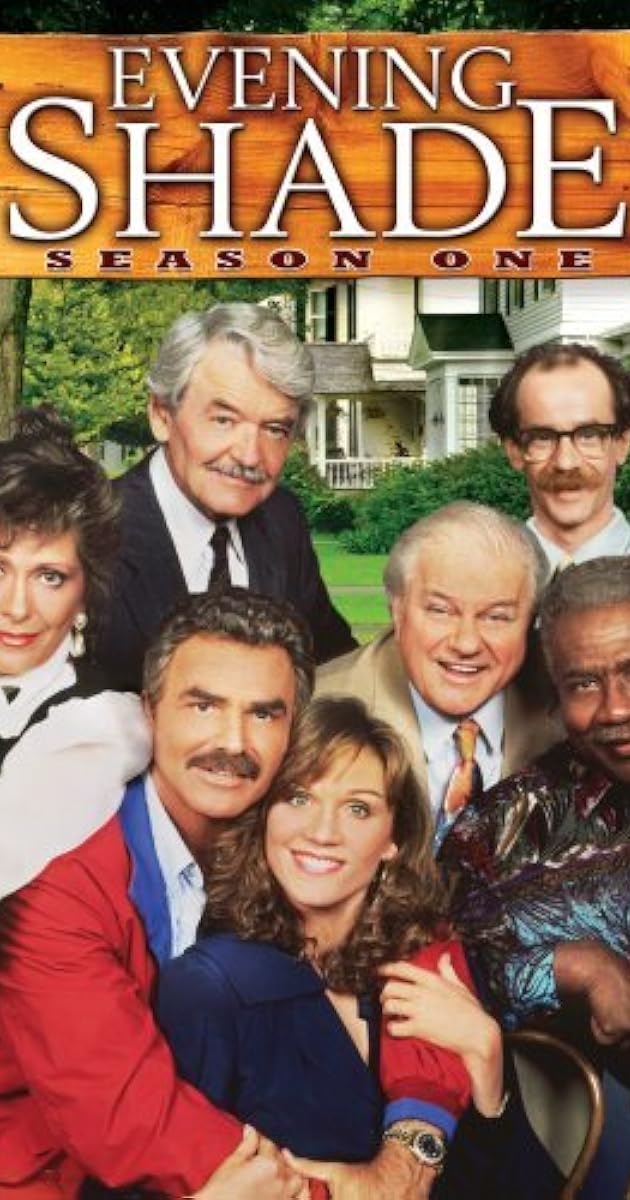
Remember the tv series “Evening Shade” that ran from 1990 to 1994? A friend told me that Reynolds was very impressed with the neighborhood in the Heights on Edgehill Road. He was told the prices of several of the homes back in 1994 and he was amazed the prices were all under 10 million. He said the homes in Beverly Hills were 5 times as much. Maybe he bought one of those “inexpensive houses?” Not likely though. The reason the papers in Florida were sent to Arkansas is because the accounting firm that handles some of his business is in Little Rock as Max pointed out earlier. He still lives in Beverly Hills according to reports I got off the internet.
Nancy Reagan with Dinah Shore and Burt Reynolds in the Blue Room during a state dinner for Premier Zhao Ziyang of the Peoples Republic of China. 1/10/84.
I remember going down to the Robinson Center in Little Rock back around 1995 to see “An evening with Burt Reynolds.” It was very enjoyable as Reynolds told stories about his life. One story I found very funny was the night that Frank Sinatra took Reynolds out to a restaurant. Dinah Shore was a longtime friend of Sinatra and he always wanted to protect her. He had a talk with Reynolds and he wanted to know Reynolds intentions.
Before the evening started, Reynolds told Dinah that he was not going to stay out late with Sinatra and he was going to leave after he got his “Sinatra story.” Well, Sinatra was served in a private room in the back of his favorite restaurant and there was a server who was nervous and he spilled some soup at Sinatra’s table. The owner came out and fired the server on the spot. Sinatra responded, “Everytime I come back here in the future, I better see this particular server working here or I will never come back again.”
Reynolds got up from the table and started to leave. Sinatra said, “Where are you going?” Reynolds said he was leaving because he told Dinah he would be back as soon as he got a “Sinatra story” and now he had one.
President Reagan and Nancy Reagan attending “All Star Tribute to Dutch Reagan” at NBC Studios(from left to right sitting) Colleen Reagan, Neil Reagan, Maureen Reagan, President, Nancy Reagan, Dennis Revell. (From left to right standing) Emmanuel Lewis, Charlton Heston, Ben Vereen, Monty Hall, Frank Sinatra, Burt Reynolds, Dean Martin, Eydie Gorme, Vin Scully, Steve Lawrence, last 2 unidentified. Burbank, California 12/1/85.
Origins of the Universe (Kalam Cosmological Argument) (Paul Kurtz vs Norman Geisler)
Published on Jun 6, 2012
Norm Geisler argues via Kalam Cosmological Argument for the origins of the universe with the Second Law of Thermodynamics. No matter how much evidence Geisler gave, Paul Kurtz refused to fully acknowledge the implications of it, while NEVER giving evidence for his own interpretation of the universe’s beginning.
I personally know of many atheists who are very fine moral people who have a wonderful marriage and a great family life. I could go on and name a bunch of names.
John Brummett in his article, “Irony abounds as religion arises,”August 16, 2011, Arkansas News Bureau wonders why atheists would want to advertise their unbelief because they should be want to be left alone. However, this shows a misunderstanding of the longing that we all have to find a meaning and purpose for our lives. Even atheists have this desire deep down. To avoid acknowledging God’s existence they have to come up with reasons that God does not exist. One of the most popular is that God would not allow evil to exist. Below you will see that the agnostic Vincent Bugliosi has done just that.
Debate: Christianity vs Secular Humanism (8 of 14)
In the Epilogue to Outrage, Bugliosi bears his soul and the struggle he has had with justifying God’s goodness with the presence of evil in the world and God’s “inaction” in the trial in allowing a murderer to go free:
When tragedies like the murders of Nicole and Ron occur, they get one to thinking about the notion of God. Nicole was only thirty-five, Ron just twenty-five, both outgoing, friendly, well-liked young people who had a zest for life. How does God, if there is a God, permit such a horrendous and terrible act to occur, along with countless other unspeakable atrocities committed by man against his fellow-man throughout history? And how could God–all-good and all-just, according to Christian theology—permit the person who murdered Ron and Nicole to go free, holding up a Bible in his hand at that? When Judge Ito’s clerk, Deidre Robertson, read the jury’s not-guilty verdict, Nicole’s mother whispered, “God, where are you?”[8]
I have an article below that really does a great job responding to that.
Debate: Christianity vs Secular Humanism (9 of 14)
Their thinking is that either God is not powerful enough to prevent evil or else God is not good. He is often blamed for tragedy. “Where was God when I went through this, or when that happened.” God is blamed for natural disasters, Even my insurance company describes them as “acts of God.” How to handle this one- (O.N.E.) a. Origin of evil— man’s choice- God created a perfect world… b. Nature of God—He forgives, I John 1:9—He uses tragedy to bring us to Himself, C.S. Lewis, “God whispers to us in our pleasures, speaks in our conscience, but shouts in our pains: it is His megaphone to arouse a deaf world.” c. End of it all—Bible teaches that God will one day put an end to all evil, and pain and death. “God will wipe away every tear from their eyes; there shall be no more death, nor sorrow, nor crying. There shall be no more pain, for the former things have passed away” (Rev. 21:4).As Christians we have this hope of Heaven and eternity. Share how it has made a tremendous difference in your life and that you know for sure that when you die you are going to spend eternity in Heaven. Ask the person, “May I ask you a question? Do you have this hope? Do you know for certain that when you die you are going to Heaven, or is that something you would say you’re still working on?”How could a loving God send people to Hell? (O.N.E.) a. Origin of hell—never intended for people. Created for Satan and his demons. Jesus said, “Depart from Me, you cursed, into everlasting fire prepared for the devil and his angels” (Matt 25:41). Man chooses to sin and ignore God. The penalty is death (eternal separation from God) and, yes, Hell. But God doesn’t send anyone to Hell, we choose it by refusing or ignoring God in attitude and action. b. Nature of God—“ God is not willing that any should perish, but that all should come to repentance” (2 Peter 3:9). He is so loving that He sent His own Son to die and pay the penalty for our sin so that we could avoid Hell and have the assurance of Heaven. No one in Hell will be able to blame God. He doesn’t send people there, it’s our own choice. We must choose to repent, to stop ignoring God in attitude and action, accepting His salvation and yielding to His leadership.c. End of it all—Bible teaches that God will one day put an end to all evil, pain, death, and penalty of Hell. “God will wipe away every tear from their eyes; there shall be no more death, nor sorrow, nor crying. There shall be no more pain, for the former things have passed away” (Rev. 21:4).As Christians , we need not worry about Hell. The Bible says, “these things have been written . . . so that you may know you have eternal life” (1 John 5:13). I have complete confidence that when I die, I’m going to Heaven. May I ask you a question?
Iowa Rep. Steve King, a congressional ally of Michele Bachmann who hasn’t endorsed her but is generally encouraging of her, takes issue with Rick Perry’s form of entry to the 2012 contest in a National Review Online interview:
“If he had picked any other day in the entire calendar, it would have helped him more in Iowa,” King tells National Review Online. “It’s clear that [Perry] selected the date and time to do his utmost to compete directly with the Iowa straw poll. If he wanted to be in the race here …. all he had to do was enter in the race here. He could have been on the ballot if he had just said so.”
There has been clear consternation in some Republican circles in Iowa over the path Perry has chosen, with a split opinion on whether it will hurt him long-term. Some believe the damage will be done, while others think he can prove loyalty to the caucuses if he works hard in Iowa.
King, meanwhile, also sets the bar for a strong Paul performance:
“The Ron Paul network here is stronger than I think the media has reported,” King observes. “He’s been working in thes tate a long time. He has a core of loyal followers. If there is no expectation that Ron Paul will do well in the straw poll, that’ll be a surprise.”


 Hector Mata / AFP-Getty Images