Overview
Eight Types of Farm Subsidy
Six Reasons to Repeal Farm Subsidies
The U.S. Department of Agriculture distributes between $10 billion and $30 billion in cash subsidies to farmers and owners of farmland each year..1 The particular amount depends on market prices for crops, the level of disaster payments, and other factors. More than 90 percent of agriculture subsidies go to farmers of five crops—wheat, corn, soybeans, rice, and cotton.2 More than 800,000 farmers and landowners receive subsidies, but the payments are heavily tilted toward the largest producers.3
In addition to routine cash subsidies, the USDA provides subsidized crop insurance, marketing support, and other services to farm businesses. The USDA also performs extensive agricultural research and collects statistical data for the industry. These indirect subsidies and services cost taxpayers about $5 billion each year, putting total farm support at between $15 billion and $35 billion annually.
Agriculture has long attracted federal government support. One of the first subsidy programs for agriculture was the Morrill Act of 1862, which established the land-grant colleges. That was followed by the Hatch Act of 1887, which funded agricultural research, and by the Smith-Lever Act of 1914, which funded agricultural education. In 1916, the Federal Farm Loan Act created cooperative “land banks” to provide loans to farmers. That developed into today’s Farm Credit System, which is a 50-state network of financial cooperatives with assets of $90 billion.
Nonetheless, federal subsidies to agriculture were still quite small going into the 1920s. The USDA was focused on producing statistics, funding research, and responding to problems such as pest infestations. But calls for direct subsidies to farmers began to intensify, and in 1929 the Agricultural Marketing Act created the Federal Farm Board, which tried to raise commodity prices by stockpiling production. After spending $500 million, this first major farm boondoggle was abolished in 1933.
A large array of farm subsidies were enacted during the 1930s, beginning with the Agricultural Adjustment Act of 1933. New Deal programs included commodity price supports and production controls, marketing orders to limit competition, import barriers, and crop insurance. The particular features of farm programs have changed over the past seven decades, but the central planning philosophy behind them has not. While many other industries have been deregulated, agricultural policies remain stuck in the past, despite the high costs and ongoing economic damage.
Between the 1940s and the 1980s, Congress occasionally considered farm reforms, usually when commodity prices were high, but then it reverted to subsidy increases when market conditions were less favorable.4 In the 1980s, the Reagan administration proposed major cuts to farm subsidies, but farm finances were in bad shape at the time, which prompted Congress to increase farm support, not reduce it.
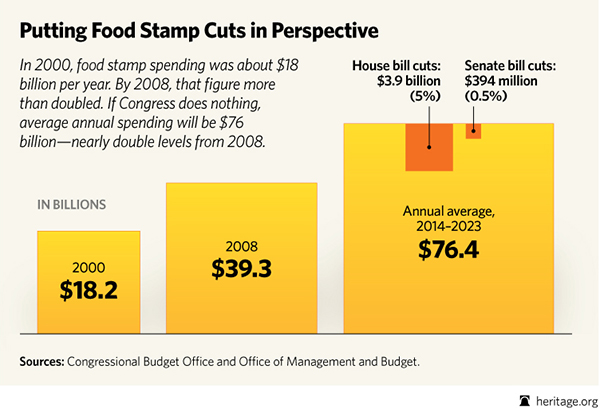
Agriculture subsidies have never made economic sense, but since the 1930s farmers have resisted reductions to subsidies, and they have generally held sway in Congress. While farmers represent a smaller share of the population today than in the 1930s, the farm lobby is as strong as ever. One reason is that farm-state legislators have co-opted the support of urban legislators, who seek increased subsidies in agriculture bills for programs such as food stamps. Legislators in favor of environmental subsidies have also been co-opted as supporters of farm bills. As a result, many legislators have an interest in increasing the USDA’s budget, but few come to the defense of taxpayers who foot the bills.
In 1996, Congress finally enacted some pro-market agriculture reforms under the “Freedom to Farm” law. The law allowed farmers greater flexibility in their planting decisions and moved toward greater reliance on market supply and demand. However, the law did not end up cutting farm subsidies, as Congress expanded support in a series of large supplemental farm bills in the late 1990s. When the 1996 law was passed, subsidies were expected to cost $47 billion in total from 1996 to 2002, but ended up costing $121 billion.5
Sadly, federal farm policies have been a long-standing rip off of American taxpayers, which continues into the 21st century. In 2002, Congress and the George W. Bush administration agreed to farm legislation that partly reversed the reforms of 1996. The 2002 law increased projected subsidy payments by 74 percent over 10 years.6 It added new crops to the subsidy rolls, and it created a new price-guarantee scheme called the “countercyclical” program.
In 2008, Congress overrode a presidential veto to enact farm legislation that extended existing supports and created new subsidy programs. The legislation added a “permanent disaster” program for areas often hit by adverse conditions, and it added a revenue protection program designed to lock in 2008’s high commodity prices. It also aided producers of specialty crops, such as fruits and vegetables, with various new programs.
The 2008 farm bill added a new sugar-to-ethanol program under which the government buys excess imported sugar that might put downward pressure on inflated domestic sugar prices. The program defends domestic sugar growers’ 85 percent of the U.S. sugar market, and it provides for the government to sell excess sugar, at a loss if need be, to ethanol producers.
The extensive federal welfare system for farm businesses is costly to taxpayers and it creates distortions in the economy. Subsidies induce farmers to overproduce, which pushes down prices and creates political demands for further subsidies. Subsidies inflate land prices in rural America. And the flow of subsidies from Washington hinders farmers from innovating, cutting costs, diversifying their land use, and taking the actions needed to prosper in a competitive global economy.
The distortions caused by federal farm policies have long been recognized. In 1932, a member of Congress noted that the Agriculture Department spent “hundreds of millions a year to stimulate the production of farm products by every method, from irrigating waste lands to loaning and even giving money to the farmers, and simultaneously advising them that there is no adequate market for their crops, and that they should restrict production.”7The folly is the same seven decades later, except that subsidies have increased from “hundreds of millions” to tens of billions of dollars.
1. Farm Subsidies Redistribute Wealth. Farm subsidies transfer the earnings of taxpayers to a small group of fairly well-off farm businesses and landowners. USDA figures show that the average income of farm households has been consistently higher than the average of all U.S. households. In 2007, the average income of farm households was $86,223, or 28 percent higher than the $67,609 average of all U.S. households.19 When large-scale federal farm subsidies began in the 1930s, farm incomes were only half the national average.
Although policymakers love to discuss the plight of the small farmer, the bulk of federal farm subsidies goes to the largest farms.20 For example, the largest 10 percent of recipients have received 72 percent of all subsidy payments in recent years.21 Numerous large corporations and even some wealthy celebrities receive farm subsidies because they are the owners of farmland. It is landowners, not tenant farmers or farm workers, who benefit from subsidies. And one does not even have to be the owner of farmland to receive subsidies: Since 2000 the USDA has paid $1.3 billion in farm subsidies to people who own land that is no longer used for farming.22
2. Farm Subsidies Damage the Economy. The extent of federal micromanagement of the agriculture sector is probably unique in American industry. In most industries, market prices balance supply and demand, profit levels signal investment opportunities, market downturns lead to cost cutting, and entrepreneurs innovate to provide better products at lower prices. All of those market mechanisms are blunted or nonexistent in government-controlled agriculture markets. As a result, federal agricultural policies produce substantial “deadweight losses” and reduced U.S. incomes.
Farm programs result in overproduction, overuse of marginal farmland, and land price inflation, which results from subsidies being capitalized into land values. Subsidy programs create less efficient planting, induce excess borrowing by farmers, cause insufficient attention to cost control, and result in less market innovation. And policies often work against the claimed goals of Congress. As an example, while members of Congress say that they support small farms, owners of large farms receive the largest subsidies, which has given them the financing they need to purchase smaller farms.23
In 2006 the Congressional Budget Office reviewed major studies that examined the repeal of U.S. and foreign agricultural subsidies and trade barriers.24 The CBO found that all the studies they reviewed showed that both the U.S. and global economies would gain from the repeal of subsidies and trade barriers.
3. Farm Programs Are Prone to Scandal. Like most federal subsidy programs, farm programs are subject to bureaucratic inefficiencies, recipient fraud, and congressional pork-barrel politics. The Government Accountability Office found that as much as half a billion dollars in farm subsidies are paid improperly or fraudulently each year.25 Farmers create complex legal structures to get around legal subsidy limits.26 And many farmers decide not to pay back their USDA loans: in 2001 the GAO found that more than $2 billion in farm loans were delinquent.27
Congress and the USDA distribute payments for farm emergencies carelessly. Disaster payments often go to farmers who have no need for them, and in many cases have not even asked for them.28 To receive benefits, some farmers claim to have experienced damage even when they haven’t.
A powdered milk scandal in 2003 illustrates the USDA’s bureaucratic ineptitude. That year, the government decided to give some of its massive stockpile of powdered milk to cattle ranchers for feed after a drought. But much of the milk ended up being illegally diverted to other uses, which allowed speculators to earn large profits at taxpayers’ expense.29
Perhaps the biggest scandal with regard to farm subsidies is that congressional agriculture committees are loaded with members who are active farmers and farmland owners. Those members have a direct financial stake whenever Congress votes to increase subsidies, which is an obvious conflict of interest.
4. Farm Subsidies Damage U.S. Trade Relations. Global stability and U.S. security are enhanced when less developed countries achieve stronger economic growth. America can further that end by encouraging the reduction of trade barriers. However, U.S. and European farm subsidies and agricultural import barriers are a serious hurdle to making progress in global trade agreements. U.S. sugar protections, for example, benefit only a very small group of U.S. growers but are blocking broader free trade within the Americas.
The World Trade Organization estimates that even a one-third drop in all tariffs around the world would boost global output by $686 billion, including $164 billion for the United States.30 Trade liberalization would boost the exports of U.S. goods that are competitive on world markets, including many agricultural products, but U.S. farm subsidies and protections stand in the way of that goal.
5. Farm Programs Damage the Environment. Federal farm policies are thought to damage the natural environmental in numerous ways. Subsidy programs can cause overproduction, which draws marginal farmland into active production. Similarly, trade barriers induce agriculture production on land that is less naturally productive. As a result, marginal lands that might otherwise be used for parks or forests are locked into farm use because farm subsidy payments get capitalized into higher prices for land.
Subsidies are also thought to induce excessive use of fertilizers and pesticides. Producers in regions that have better soils and climates tend to use less fertilizers and pesticides than do producers in less favorable climates, who can only afford to farm in the poor locations because of subsidies. An excessive use of chemicals can contaminate lakes, rivers, and other water systems.
Florida sugar provides a good example. Large areas of wetlands have been converted to cane sugar production because of artificially high domestic sugar prices. Unfortunately, the phosphorous in fertilizers used by sugar farmers has caused substantial damage to the Everglades. Farming, like any industry, can cause negative environmental effects, but it is misguided for federal policies to exacerbate those problems.
Federal subsidies for irrigation have also been a cause of environmental concerns. The Bureau of Reclamation runs a vast water empire in the western United States, which sells water to farmers at a fraction of the market cost. The resulting overuse could lead to a water crisis as the West’s population continues to rise.31 The solution is to move water into the free market and allow prices to rise to efficient and environmentally sound levels.
6. Agriculture Would Thrive without Subsidies. It is normal for people to fear economic change, but many industries have been radically reformed in recent decades with positive results, including the airline, trucking, telecommunications, and energy industries. If farm subsidies were ended, and agriculture markets deregulated and open to entrepreneurs, farming would change—different crops would be planted, land usage would change, and some farms would go bankrupt. But a stronger and more innovative industry would likely emerge having greater resilience to shocks and downturns.
Interestingly, producers of most U.S. agricultural commodities do not receive regular subsidies from the federal government. In fact, commodities that are eligible for federal subsidies account for 36 percent of U.S. farm production, while commodities that generally survive without subsidies, including meats, poultry, fruits, and vegetables, account for 64 percent of production.32 And, of course, most other U.S. industries prosper without the sort of government coddling that farmers receive.
Another point to consider is that farm households are much more diversified today and better able to deal with market fluctuations. Many farm households these days earn the bulk of their income from nonfarm sources, which creates financial stability. USDA figures show that only 38 percent of farm households consider farming their primary occupation33
Some USDA programs provide useful commercial services such as insurance. The USDA says that its insurance services are “market-based,” but if that were true, there would be no need for subsidies and the services ought to be privatized. After all, most U.S. industries pay for their own commercial services. Also, financial markets offer a wide range of tools, such as hedging and forward contracting, which can help farmers survive cycles in markets without government subsidies.
An interesting example of farmers prospering without subsidies is in New Zealand.34 That nation ended its farm subsidies in 1984, which was a bold stroke because the country is four times more dependent on farming than is the United States. The changes were initially met with fierce resistance, but New Zealand farm productivity, profitability, and output have soared since the reforms.35 New Zealand’s farmers have cut costs, diversified their land use, sought nonfarm income, and developed niche markets such as kiwifruit.
Today, data from the Organization for Economic Cooperation and Development show that farm subsidies in New Zealand represent just 1 percent of the value of farm production, which compares to 11 percent in the United States.36 New Zealand’s main farm organization argues that the nation’s experience “thoroughly debunked the myth that the farming sector cannot prosper without government subsidies.”37 That myth needs to be debunked in the United States as well.
1 Budget of the United States Government: FY2010, Historical Tables, Table 3.2. This is spending on budget function 351, which peaked at $33 billion in 2000..
2 Chris Edwards and Tad DeHaven, “Farm Subsidies at Record Levels As Congress Considers New Farm Bill,” Cato Institute Briefing Paper no. 70, October 18, 2001..
4 David Orden, Robert Paarlberg, and Terry Roe,
Policy Reform in American Agriculture(Chicago: University of Chicago Press, 1999)..
5 Congressional Budget Office estimates cited in David Orden, Robert Paarlberg, and Terry Roe, Policy Reform In American Agriculture, 1999, pp. 152, 164..
6 Budget of the United States Government: FY2006, p. 61.
7 James M. Beck,
Our Wonderland of Bureaucracy (New York: Macmillan, 1932), p. viii.
8 Dan Morgan, Gilbert M. Gaul, and Sarah Cohen, “Farm Program Pays $1.3 Billion to People Who Don’t Farm,”
Washington Post, July 2, 2006, p. A1.
9 Dan Morgan, Sarah Cohen, and Gilbert M. Gaul, “Growers Reap Benefits Even in Good Years,”
Washington Post, July 3, 2006, p. A1.
10 U.S. Department of Agriculture, “Structure and Finances of U.S. Farms: Family Farm Report 2007,” Economic Information Bulletin no. 24, June 2007.
12 Gilbert M. Gaul, Dan Morgan, and Sarah Cohen, “Crop Insurers Piling Up Record Profits,”
Washington Post, October 16, 2006, p. 1.
14 Dan Morgan and Gilbert M. Gaul, “Big Profits From Crop Insurance Criticized,”
Washington Post, May 4, 2007, p. A4..
15 Gilbert M. Gaul, Dan Morgan, and Sarah Cohen, “No Drought Required for Federal Drought Aid,”
Washington Post, July 18, 2006, p. A1.
16 Gilbert M. Gaul, Dan Morgan, and Sarah Cohen, “Aid Is a Bumper Crop for Farmers,”
Washington Post, October 15, 2006, p. A1.
21 Environmental Working Group, Farm Subsidy Database,
www.ewg.org/farm. This is a nine-year average, 1995 to 2003..
22 Dan Morgan, Gilbert M. Gaul, and Sarah Cohen, “Farm Program Pays $1.3 Billion to People Who Don’t Farm,”
Washington Post, July 2, 2006, p. A1.
23 Gilbert M. Gaul, Sarah Cohen, and Dan Morgan, “Federal Subsidies Turn Farms Into Big Business,”
Washington Post, December 21, 2006, p. A1.
24 Congressional Budget Office, “Agricultural Trade Liberalization,” November 20, 2006.
25 Brian Faler, “Farm Subsidy Rules Called Too Vague; Money Going to Undeserving, GAO Says,”
Washington Post, July 1, 2004, p. A21.
26 Gilbert M. Gaul, “Too Big for Disaster Aid, Farmer Chooses to Divide and Conquer,”
Washington Post, October 15, 2006, p. A1.
27 Government Accountability Office, “Farm Loan Programs: Improvements in the Loan Portfolio but Continued Monitoring Needed,” GAO-01-732T, May 16, 2001, p. 1.
28 Gilbert M. Gaul, Dan Morgan, and Sarah Cohen, “No Drought Required for Federal Drought Aid,”
Washington Post, July 18, 2006, p. A1. See also Gilbert M. Gaul, Dan Morgan, and Sarah Cohen, “Aid is a Bumper Crop for Farmers,”
Washington Post, October 15, 2006, p. A.
29 Gilbert M. Gaul, Sarah Cohen, and Dan Morgan, “Aid to Ranchers Was Diverted for Big Profits,”
Washington Post, July 19, 2006, p. A1.
30 Drusilla Brown, Alan Deardorff, and Robert Stern, “Multilateral, Regional and Bilateral Trade Policy Options for the United States,” World Economy 26, no. 6 (June 2003): 810.
31 Jim Carlton, “Is Water Too Cheap?”
Wall Street Journal, March 17, 2004, p. B1.
32 Geoffrey S. Becker, “Farm Community Programs: A Short Primer,” Congressional Research Service, March 19, 2001.
33 Mitchell Morehart, James Ryan, and Robert Green, “Farm Income and Finance: The Importance of Government Payments,” Agricultural Outlook Forum 2001, U.S. Department of Agriculture, February 22, 2001, p. 17.
34 Chris Edwards and Tad DeHaven, “Save the Farms—End the Subsidies,” op-ed,
Washington Post, March 3, 2002.
35 Vaudine England, “Shorn of Subsidies, New Zealand Farmers Thrive,”
International Herald Tribune, July 2, 2005.
36 Organization for Economic Cooperation and Development, “Agriculture Policies in OECD Countries: Monitoring and Evaluation 2007,” October 2007.
37 Quoted in Chris Edwards and Tad DeHaven, “Save the Farms—End the Subsidies,” op-ed,
Washington Post, March 3, 2002.












 The Daily Hatch