The Department of Agriculture provides an array of subsidies for farmers and imposes extensive regulations on agricultural markets. It operates the food stamp and school lunch programs, and it administers numerous subsidy programs for rural parts of the nation. The Forest Service is also within the Department of Agriculture.
The department spent around $150 billion in 2013, or almost $1,300 for every U.S. household. It operates about 240 subsidy programs and employs 93,000 workers in about 7,000 offices across the country.
______________________
The federal government should eliminate the food stamp program or at least hand it over the states!!!!!!
The Department of Agriculture spends over $150 billion dollars per year on various programs related to agriculture and food. It spends tens of billions on farm subsidies that largely go to growers of just a few crops: wheat, corn, soybeans, rice, and cotton. Beyond this, it subsidizes food through the federal food stamp program, which is rife with waste and corruption. It also regulates many agricultural products, most notably milk and sugar, setting minimum prices which artificially keep food prices high for consumers.
The federal government has little reason to be engaging in any of these activities, which should be left to the states in the case of food stamps, or eliminated entirely in the case of regulations or subsidies. This could save taxpayers $140 billion per year. To that end we’ve created a short video which makes these and other points, which you can watch below:
____________ Americans know that we must have work requirements for food stamps!!!! Americans Support Stronger Work Requirements for Food Stamps Rachel Sheffield October 30, 2013 at 12:02 pm Newscom Nearly three-quarters of Americans believe that the food stamps program should include stronger work requirements, according to the October Food Demand Survey (FooDS) out of Oklahoma […]
The Dysfunction in Washington is Republicans and Democrats that are unwilling to cut spending in order to vote for more programs (Democrats want more food stamps etc but Republicans vote for their pet programs and wars too like No Child Left Behind Act, the Iraq war, the prescription drug entitlement, and the TARP bailout). If […]
We don’t need to recruit people to be on food stamps but kick people off!!! Seven Reasons to Reform Food Stamps T. Elliot Gaiser July 4, 2013 at 12:00 pm Newscom Food stamps were a popular topic of conversation last month as Congress debated the farm bill. This decades-old Great Society program is in much […]
If the increase in food stamps was just because of the recession then why did the spending go from $19.8 billion in 2000 to $37.9 billion in 2007? The Facts about Food Stamps Everyone Should Hear Rachel Sheffield and T. Elliot Gaiser May 27, 2013 at 12:00 pm (7) Newscom A recent US News & […]
Welfare Can And Must Be Reformed Uploaded on Jun 29, 2010 If America does not get welfare reform under control, it will bankrupt America. But the Heritage Foundation’s Robert Rector has a five-step plan to reform welfare while protecting our most vulnerable. __________________________ We got to slow down the growth of Food Stamps. One […]
We have too many people getting dependent on food stamps. WSJ: Food Stamp Rolls Remain High Despite Economic Improvement Rachel Sheffield April 4, 2013 at 2:30 pm Newscom The Wall Street Journal (WSJ) reported last week that even with improvements in the economy, food stamp participation rates have reached all-time highs. Since 2008, enrollment has […]
Eight Reasons Why Big Government Hurts Economic Growth __________________ We got to cut spending and we must first start with food stamp program and we need some Senators that are willing to make the tough cuts. Food Stamp Republicans Posted by Chris Edwards Newt Gingrich had fun calling President Obama the “food stamp president,” but […]
Milton Friedman’s negative income tax explained by Friedman in 1968: We need to cut back on the Food Stamp program and not try to increase it. What really upsets me is that when the government gets involved in welfare there is a welfare trap created for those who become dependent on the program. Once they […]
Welfare Can And Must Be Reformed Uploaded by HeritageFoundation on Jun 29, 2010 If America does not get welfare reform under control, it will bankrupt America. But the Heritage Foundation’s Robert Rector has a five-step plan to reform welfare while protecting our most vulnerable. __________________________ If welfare increases as much as it has in the […]
The food stamp bill would be more costly than the Obama Stimulus!!!!! Farm Bills Would Cost More Than Obama Stimulus Daren Bakst October 28, 2013 at 3:56 pm The House and Senate are considering farm bill legislation this week whose costs should raise red flags for all Americans. In fact, the House and Senate versions […]
After reaching an agreement to spend nearly $45 billion more in 2014 than allowed under the sequestration spending caps, Congress still needs to pass the now over $1 trillion discretionary spending bill into law. As congressional appropriators are adding the final touches to the omnibus bill expected the week of January 6, they would be wise to eliminate any and all of the following 10 programs:
The U.S. Department of Housing and Urban Development Community Development Block Grant (CDBG) program Savings[1]: $3.1 billion[2]
The CDBG program duplicates other federal housing and economic development programs, and has deviated from its original purpose of providing housing assistance and economic development to low-income communities. Instead, the grants have been diverted to wasteful parochial projects, which include funding a pet-shampoo company and issuing risky business loans. Congress should eliminate the CDBG program and devolve the activities it funds to the states.[3]
The Department of Education competitive grant programs under the Elementary and Secondary Education Act (ESEA) Savings: $2 billion
The bulk of spending authorized under No Child Left Behind (NCLB) comes via formula grant programs such as Title I (funding for low-income school districts). However, there are numerous niche competitive grant programs, which have multiplied as federal government intervention into education has grown over the decades. These programs—of which there are roughly 60—range from federal art education programs and “Ready-to-Learn Television” to “Smaller Learning Communities.” Most recently, the Race to the Top program gave preference for grant applications to those states that agreed to adopt national education standards and tests, an area regarded by tradition and law as a state and local matter. Many competitive grant programs under NCLB are duplicative or ineffective, and should be terminated. Congress should eliminate the majority of these competitive grant programs.
Job Corps Savings: $1.6 billion
Job Corps is a residential job-training program that seeks to serve disadvantaged youths ages 16 to 24, and has an abysmal record.[4] Numerous studies have found Job Corps to be ineffective at substantially increasing participants’ wages and moving them into full-time employment. Even worse, as The Heritage Foundation’s David Muhlhausen testified before the House Ways and Means Subcommittee on Human Resources on July 17, 2013, Job Corps has been shown to have negative effects. Based on a multisite experimental evaluation, Job Corps participants were less likely to earn a high school diploma than non-participants in a control group. Participants in the program also worked fewer weeks and worked fewer hours per week than similar teens and tweens in the control group.[5]
U.S. Department of Agriculture Food for Peace Title II grants Savings: $1.5 billion
Food for Peace Title II grants make up the largest part of the federal food aid budget. The legal requirements binding the program make it inefficient and unnecessarily costly. Food must be purchased in the U.S. and then shipped across oceans in U.S.-flagged vessels, adding unnecessary logistical challenges to already-higher costs. In 2013, the Obama Administration proposed shifting the funding from the U.S. Department of Agriculture (USDA) Food for Peace program to the U.S. Agency for International Development (USAID), and reducing purchase and shipping restrictions. Congress should eliminate the purchase and shipping restrictions; Congress should also eliminate USDA funding for the program and require USAID to support the program with existing development funding.[6]
The Department of Transportation’s Transportation Alternatives Program (TAP) Savings: $800 million[7]
The Transportation Alternatives Program (TAP) funds bicycle paths, sidewalks and nature paths, community preservation and landscaping, despite the fact that such projects are purely local matters. Therefore they should be funded using local funds, by those who will benefit from the infrastructure. Federal funding for the TAP program comes from federal gas tax dollars deposited into the Highway Trust Fund—money that is intended for highway and bridge programs that benefit the motorists who pay the gas tax that funds the program. If the states and localities were responsible for managing and funding TAP activities, they would be free to spend money on projects that they value and, because they bear the full costs, would have an incentive to avoid funding low-value projects when higher-value priorities exist. Congress should eliminate this program and focus federal transportation dollars on national projects.[8]
The U.S. Department of Agriculture Conservation Technical Assistance program Savings: $730 million[9]
The Natural Resources Conservation Service (NRCS) runs a costly technical-assistance program to help landowners maintain private land, enhance recreational opportunities for landowners, and improve the aesthetic character of private land. Private landowners are the best stewards of their land without government assistance, and can seek out private solutions if technical assistance is necessary. Taxpayers should not be forced to subsidize advice on how private landowners can best use their land or improve its visual appearance. The Ryan–Murray budget authorizes the NRCS to collect up to $150 per conservation plan to cover some of the costs provided to recipients of the technical assistance. If these user fees were employed to offset the taxpayer funding of technical assistance, rather than to increase discretionary spending in other areas, they would be a sound way to lessen the burden on taxpayers. Better yet, Congress should eliminate all funding for the program.
The Department of Transportation Essential Air Service (EAS) program Savings: $200 million[10]
Following airline deregulation in 1978, Congress started subsidizing commercial flights in rural communities through the supposedly temporary Essential Air Service (EAS) program. Over three decades later, federal taxpayers are still funding these subsidies through the program. It is not federal taxpayers’ responsibility to subsidize the flights of rural passengers who opt for air travel when cheaper or unsubsidized travel alternatives, such as ferries, are often available. Any subsidies for these flights should come from the local or state level, which are benefitting from the service—not from the federal government.
The Department of Energy’s Advanced Manufacturing Program Savings: $120 million
The Department of Energy’s Advanced Manufacturing Program subsidizes activities leading to greater energy efficiency in American manufacturing processes with the goal of helping American manufacturers better compete globally. Manufacturers are well aware that energy represents a significant input cost, and face sufficient incentives to find ways to lower costs and gain a competitive advantage. American manufacturers will make energy-efficiency upgrades if they consider available technology promising, worth the risk, and the best use of their investment dollars. Congress should eliminate all funding for this corporate welfare program.[11]
The Rural Business Program Account Savings: $100 million
The Rural Business Program Account deals with business and industry-guaranteed loans and rural business enterprise grants. Private capital will find its way to worthy rural investments. The federal government should not play venture capitalist with taxpayer money, including trying to serve allegedly underserved areas. Private actors will serve the area if it makes sound business sense. Congress should eliminate all funding for the Rural Business Program Account.
All State Department funding for the United Nations Population Fund (UNFPA) Savings: $35 million
The United Nations Population Fund (UNFPA) faces continued allegations that it has been complicit in China’s coercive one-child policy, which is often enforced through forced abortions and forced sterilizations.[12] Development assistance is in many cases better provided on a decentralized, private level with stakeholders demanding transparency and seeking the best ways to assist populations in need. Congress has previously deniedfunding for UNFPA, or stipulated that no funds shall be spent in China. Congress should eliminate all funding for UNFPA.
Total Savings: $10.2 Billion. These savings represent merely a small subset of program eliminations[13] and spending cuts[14] that are necessary to cut the government down to size. First and foremost, Congress should not boost the budget from the current, extended FY 2013, appropriation level of $988 billion to above $1 trillion, and instead should reduce the budget to below the FY 2014 sequestration spending level of $967 billion—as House appropriators accomplished in their spending bills.[15] The House appropriations bill also moved in the right direction in four of the mentioned areas: (1) cutting funding for the USDA international food aid program, (2) prohibiting funding for Race to the Top and other competitive education grants, (3) cutting funding for community development block grants, (4) and prohibiting funding for UNFPA.
Yet more effective than reducing funds temporarily is to eliminate programs that are better suited for management at a state, local, or private level permanently. Doing so would save American taxpayers money in the long run and reduce the size and scope of the federal government—saving even more money, and reducing federal intervention in local government and market functions.
—Romina Boccia is the Grover M. Hermann Fellow in Federal Budgetary Affairs in the Thomas A. Roe Institute for Economic Policy Studies at The Heritage Foundation.
[5] David B. Muhlhausen, “Evaluating Federal Social Programs: Finding Out What Works and What Does Not,” testimony before the Subcommittee on Human Resources, Committee on Ways and Means, U.S. House of Representatives, July 17, 2013, http://waysandmeans.house.gov/uploadedfiles/david_muhlhausen_testimony_071713.pdf (accessed December 31, 2013).
[9] Megan Stubbs, “Agricultural Conservation: A Guide to Programs,” Congressional Research Service, February 5, 2013, http://www.fas.org/sgp/crs/misc/R40763.pdf (accessed December 31, 2013).
______________ If you want to cut government waste then stop allowing people to get addicted to government programs!!!! November 3, 2013 1:07PM Lindbeck’s Law: The Self-Destructive Nature of Expanding Government Benefits By Alan Reynolds Share Relevant foresight from Swedish economist Assar Lindbeck, “Hazardous Welfare State Dynamics,” American Economic Review, May 1995: The basic dilemma of […]
We got to shutdown government waste now!!! October 2, 2013 11:16AM Shutdown Could Shut Down Waste By Chris Edwards Share A benefit of the government shutdown may be that it slows the stream of waste and bad behavior flowing from the federal bureaucracy. Catching up on my reading, I noticed these items in just the […]
(Emailed to White House on 3-15-13.) President Obama c/o The White House 1600 Pennsylvania Avenue NW Washington, DC 20500 Dear Mr. President, I know that you receive 20,000 letters a day and that you actually read 10 of them every day. I really do respect you for trying to get a pulse on what is […]
(Emailed to White House on 3-15-13.) President Obama c/o The White House 1600 Pennsylvania Avenue NW Washington, DC 20500 Dear Mr. President, I know that you receive 20,000 letters a day and that you actually read 10 of them every day. I really do respect you for trying to get a pulse on what is […]
(Emailed to White House on 3-15-13.) President Obama c/o The White House 1600 Pennsylvania Avenue NW Washington, DC 20500 Dear Mr. President, I know that you receive 20,000 letters a day and that you actually read 10 of them every day. I really do respect you for trying to get a pulse on what is […]
(Emailed to White House on 3-15-13.) President Obama c/o The White House 1600 Pennsylvania Avenue NW Washington, DC 20500 Dear Mr. President, I know that you receive 20,000 letters a day and that you actually read 10 of them every day. I really do respect you for trying to get a pulse on what is […]
(Emailed to White House on 3-15-13.) President Obama c/o The White House 1600 Pennsylvania Avenue NW Washington, DC 20500 Dear Mr. President, I know that you receive 20,000 letters a day and that you actually read 10 of them every day. I really do respect you for trying to get a pulse on what is […]
(Emailed to White House on 3-15-13.) President Obama c/o The White House 1600 Pennsylvania Avenue NW Washington, DC 20500 Dear Mr. President, I know that you receive 20,000 letters a day and that you actually read 10 of them every day. I really do respect you for trying to get a pulse on what is […]
We need to stop wasteful government spending by privatizing the post office!! Postal Service Won’t Shut Down but Will Default on Its Debt James Gattuso October 1, 2013 at 9:30 am Newscom The U.S. Postal Service (USPS) defaulted on its debt last night. No, it has nothing to do with the partial shutdown of the […]
I wish President Obama would try to cut spending instead of increasing spending and our debt. Two Very Good GSA Waste Cartoons April 21, 2012 by Dan Mitchell One of my first blog posts back in 2009 featured a column about the Social Security Administration squandering $750,000 on a “conference” at a fancy golf resort in […]
Follow the day-to-day office life of a federal agency trying desperately to spend their way to a bigger budget.
_________________________
Many people know that the federal government is very bad about wasting money and here is another illustration of where they waste it. Why are we paying deceased farmers?
A new report from the Government Accountability Office says that although the USDA has gotten better at not paying out farm subsidies to dead farmers, it’s still forking out millions of dollars to the dearly taxpayer-dependent departed:
…GAO did a data review for fiscal year 2008 to April 2012, and estimates that [the USDA’s Natural Resources Conservation Service] $10.6 million payments on behalf of 1,103 deceased individuals 1 year or more after their death. Some of these payments may have been proper, but NRCS cannot be certain because it neither identifies which of its payments were made to deceased individuals, nor reviews each of these payments.
…GAO matched every policyholder’s Social Security number in [the USDA’s Risk Management Agency’s] crop insurance subsidy and administrative allowance data for crop insurance years 2008 to 2012 with SSA’s master list of deceased individuals and found that $22 million in subsidies and allowances may have been provided on behalf of an estimated 3,434 program policyholders 2 or more years after death. Many of these subsidies and allowances may have been proper, but without reviewing each subsidy and allowance made on behalf of deceased individuals, RMA cannot be certain that these subsidies and allowances are proper.
Galling as it is, the volume of handouts going to the deceased is trivial compared to the amount (around $20 billion annually) going to the living. So let’s keep in mind that the real outrage continues to be the very existence of these reverse Robin Hood agriculture subsidy programs. Dead or alive, theft is theft.
We don’t need to recruit people to be on food stamps but kick people off!!! Seven Reasons to Reform Food Stamps T. Elliot Gaiser July 4, 2013 at 12:00 pm Newscom Food stamps were a popular topic of conversation last month as Congress debated the farm bill. This decades-old Great Society program is in much […]
If the increase in food stamps was just because of the recession then why did the spending go from $19.8 billion in 2000 to $37.9 billion in 2007? The Facts about Food Stamps Everyone Should Hear Rachel Sheffield and T. Elliot Gaiser May 27, 2013 at 12:00 pm (7) Newscom A recent US News & […]
Welfare Can And Must Be Reformed Uploaded on Jun 29, 2010 If America does not get welfare reform under control, it will bankrupt America. But the Heritage Foundation’s Robert Rector has a five-step plan to reform welfare while protecting our most vulnerable. __________________________ We got to slow down the growth of Food Stamps. One […]
Eight Reasons Why Big Government Hurts Economic Growth __________________ We got to cut spending and we must first start with food stamp program and we need some Senators that are willing to make the tough cuts. Food Stamp Republicans Posted by Chris Edwards Newt Gingrich had fun calling President Obama the “food stamp president,” but […]
Milton Friedman’s negative income tax explained by Friedman in 1968: We need to cut back on the Food Stamp program and not try to increase it. What really upsets me is that when the government gets involved in welfare there is a welfare trap created for those who become dependent on the program. Once they […]
Welfare Can And Must Be Reformed Uploaded by HeritageFoundation on Jun 29, 2010 If America does not get welfare reform under control, it will bankrupt America. But the Heritage Foundation’s Robert Rector has a five-step plan to reform welfare while protecting our most vulnerable. __________________________ If welfare increases as much as it has in the […]
Lawmakers need to encourage self-sufficiency and work through food assistance programs and not laziness. 101 Million Americans Received Food Aid Last Year T. Elliot Gaiser July 18, 2013 at 5:35 pm Newscom Nearly one-third of Americans received government-funded food aid in 2012, according to a new report from the U.S. Department of Agriculture (USDA). As […]
Why can’t we cut the Food Stamp budget? Should Food Stamps Be in Farm Bill? Congressman Seeks to Split Legislation Kelsey Harris June 17, 2013 at 10:38 pm Bill Clark/Roll Call Photos/Newscom Representative Marlin Stutzman (R-IN), a fourth-generation farmer, is asking his House colleagues to separate the food stamp program from the “farm” bill. Stutzman […]
The sad fact is that Food stamp spending has doubled under the Obama Administration. A Bumper Crop of Food Stamps Amy Payne May 21, 2013 at 7:01 am Tweet this Where do food stamps come from? They come from taxpayers—certainly not from family farms. Yet the “farm” bill, a recurring subsidy-fest in Congress, is actually […]
I am glad that my state of Arkansas is not the leader in food stamps!!! Mirror, Mirror, on the Wall, Which State Has the Highest Food Stamp Usage of All? March 19, 2013 by Dan Mitchell The food stamp program seems to be a breeding ground of waste, fraud, and abuse. Some of the horror stories […]
Or, from the perspective of the big banks, they got a very good return on their campaign contributions (read Kevin Williamson if you want to get upset about this disgusting form of cronyism).
Well, as Yogi Berra might say, it’s deja vu all over again.
Except now the fat cats lining up at the Treasury door are the big health insurance corporate titans. They got in bed with the White House to push Obamacare and now they’re worried about losing money now that it’s becoming more apparent that the American version of government-run healthcare doesn’t work any better than the British version.
…there’s a Plan B. It’s a government bailout. Administration officials can’t say it for political reasons. And they don’t have to say it because it’s already in the Affordable Care Act, buried deep. First, Section 1341, the “reinsurance” fund collected from insurers and self-insuring employers at a nifty $63 a head. (Who do you think the cost is passed on to?) This yields about $20 billion over three years to cover losses. Then there is Section 1342, the “risk corridor” provision that mandates a major taxpayer payout covering up to 80 percent of insurance-company losses.
At this point, you may be wondering why there’s bailout language buried in the Obamacare legislation.
The simple answer is that politicians always love to accumulate power, and the insurance industry probably lobbied very hard to get this back-door access to our money.
But maybe the White House knew that Obamacare would be unstable and they needed a bailout option to keep the system from totally unraveling. Particularly when it seems that the Obama Administration is arbitrarily changing the system every other day.
First, it postponed the employer mandate. Then it exempted from the individual mandate people whose policies were canceled (by Obamacare). And for those who did join the exchanges, Health and Human Services Secretary Kathleen Sebeliusis “strongly encouraging” insurers — during the “transition” — to cover doctors and drugs not included in their clients’ plans. The insurers were stunned. Told to give free coverage. Deprived of their best customers. Forced to offer stripped-down “catastrophic” plans to people age 30 and over (contrary to the law). These dictates, complained an insurance industry spokesman, could“destabilize” the insurance market.
So what does all this mean? It’s not good news for Big Insurance.
Shrinking revenues and rising costs could bring on the “death spiral” — an unbalanced patient pool forcing huge premium increases (to restore revenue) that would further unbalance the patient pool as the young and healthy drop out. End result? Insolvency — before which the insurance companies will pull out of Obamacare. Solution? A huge government bailout. It’s Obamacare’s escape hatch. And — surprise, surprise — it’s already baked into the law.
This sounds depressing, but Krauthammer suggests that there could be a way of derailing a bailout before it begins.
…the GOP needs to act. Obamacare is a Rube Goldberg machine with hundreds of moving parts. Without viable insurance companies doing the work, it falls apart. No bailout, no Obamacare. Such a bill would be overwhelmingly popular because Americans hate fat-cat bailouts of any kind. Why should their tax dollars be spent not only saving giant insurers but also rescuing this unworkable, unbalanced, unstable, unpopular money-pit of a health-care scheme? …Do you really think vulnerable Democrats up for reelection will vote for a bailout? And who better to slay Obamacare than a Democratic Senate — liberalism repudiating its most important creation of the last 50 years. Want to be even bolder? Attach the anti-bailout bill to the debt ceiling. That and nothing else. Dare the president to stand up and say: “I’m willing to let the country default in order to preserve a massive bailout for insurance companies.” …Who can argue with no bailout? Let the Senate Democrats decide: Support the bailout and lose the Senate. Or oppose the bailout and bury Obamacare.
I hope his political judgement is correct, though I suspect the statists (and their echo chamber in the media) would portray any effort to amend the debt limit as a sore-loser attack on Obamacare.
But if it’s a simple no-bailout message, perhaps that would be sufficiently popular to overcome the political establishment. As Krauthammer points out, the legislation could be very simple: “Sections 1341 and 1342 of the Affordable Care Act are hereby repealed.”
Let’s close today’s post with some good Obamacare cartoons. We’ll start with Eric Allie’s amusing look at how the White House is measuring success.
Nice gimmick, huh? You pass a law that destroys people’s existing insurance policies, then you claim victory when some of them sign up for more expensive Obamacare insurance.
Next we have Nate Beeler welcoming the new year.
Chip Bok’s cartoon is somewhat optimistic in that he’s suggesting that Obamacare may unravel.
And Gary Varvel mocks the moving goalposts of Obamacare.
Lisa Benson congratulates the President for winning Politifact’s Lie of the Year Award.
Michael Ramirez hints that the President may not be in a position to enjoy his multi-million dollar Hawaiian vacation.
Last but not least, Scott Stantis warns us that Obamacare violates the Hippocratic Oath about doing no harm.
P.S. Under no circumstances should you feel sorry for the insurance companies. As I noted the other day, they endorsed Obamacare and actively lobbied for its passage. They deserve every bad thing that might happen to them.
P.P.S. It’s hard to find much humor in this situation, but perhaps this funny “bailout application” could be updated to make it easier for big insurance companies to rape and pillage taxpayers.
________ Obamacare is so dumb that you just have to laugh!!! Some Partially Serious Thanksgiving Humor November 28, 2013 by Dan Mitchell Tim Carney of the Washington Examiner is a must-read columnist and expert on the pervasive corruption in Washington. He’s also an insightful commentator on why freedom and morality go hand in hand, which suggests […]
Open letter to President Obama (Part 469) (Emailed to White House on 5-4-13.) President Obama c/o The White House 1600 Pennsylvania Avenue NW Washington, DC 20500 Dear Mr. President, I know that you receive 20,000 letters a day and that you actually read 10 of them every day. I really do respect you for trying to get […]
______ We need to repeal Obamacare and get away from third-party payer system and get a genuine free market!!!! The Continuing Obamacare Disaster November 11, 2013 by Dan Mitchell You know things are going poorly for the Obama White House when even the New York Times is writing about the “third world experience” of Obamacare. Heck, […]
________ I have written about this before and I have even emailed the White House about it. Today we have some very good news!!! Supreme Court to Hear Challenges to Obamacare Anti-Conscience Mandate Elizabeth Slattery and Sarah Torre November 26, 2013 at 2:12 pm (0) Today, the Supreme Court announced that it will take up […]
(Emailed to White House on 3-20-13.) President Obama c/o The White House 1600 Pennsylvania Avenue NW Washington, DC 20500 Dear Mr. President, I know that you receive 20,000 letters a day and that you actually read 10 of them every day. I really do respect you for trying to get a pulse on what is […]
(Emailed to White House on 1-14-13.) President Obama c/o The White House 1600 Pennsylvania Avenue NW Washington, DC 20500 Dear Mr. President, I know that you receive 20,000 letters a day and that you actually read 10 of them every day. I really do respect you for trying to get a pulse on what […]
We got to cut the size of government and Obamacare is the best place to cut!!!! A Funny Look at How Obamacare Screws Young People August 30, 2013 by Dan Mitchell During the big-spending Bush years, economic and fiscal people inside the Administration often would sympathize with my complaints about bad policy, but say that […]
I have put up lots of cartoons from Dan Mitchell’s blog before and they have got lots of hits before. Many of them have dealt with the economy, eternal unemployment benefits, socialism, Greece, welfare state or on gun control. Mitt Romney is probably the most liberal candidate the Republicans ever ran for President. Maybe it is good […]
Obamacare is a tragedy about to happen so why not just laugh!!! Obamanomics, as Captured by Cartoonists August 22, 2013 by Dan Mitchell As evidenced by my political cartoon contest, I’m a big fan of that form of satire. And if I’m looking at cartoons specifically about statist economic policy, my favorites include Chuck Asay’s […]
_________ Is Obama acting like a dictator with his recent actions regarding the Obamacare Program? The Arbitrary Diktats of Generalissimo Obama August 16, 2013 by Dan Mitchell There’s an old joke that the definition of quandary is when your mother-in-law drives off a cliff in your new car. But since I’m not married, I can’t use […]
Dec 2013 Budget Deal:Federal spending has fallen for two straight years for the first time since the end of the Korean War because of Sequestration so why change it?
In terms of cutting government spending, the Budget Control Act’s spending caps and sequestration have been an unparalleled success story in recent years. And yet, the House of Representatives voted last Thursday to weaken the caps in 2014 and 2015 for a $63 billion increase in the discretionary budget.
Sequestration has been an effective tool to do what Congress for too long failed to do—cut spending. Federal spending has fallen for two straight years for the first time since the end of the Korean War—a remarkable feat with Democratic control over the White House and Senate. As TheWall Street Journalput it, “A testament to the success of the [sequestration] caps is that nearly every Democrat and spending lobby in Washington is desperate to get rid of them.”
Concerns that sequestration would decimate vital government functions were largely exaggerated. After the President sounded the alarm over the supposed budget “meat cleaver” earlier this year, The Washington Postreported that the vast majority of the President’s doomsday predictions never came to pass. Federal agencies (with the help of Congress) were for the most part able to cope with the $85 billion in cuts by prioritizing their budgets.
Worries that sequestration would hurt the economy were also overblown. As Moody’s remarked, the U.S. economy “has demonstrated a degree of resilience to major reductions in the growth of government spending.” Moreover, research shows that reductions in government spending free resources in the economy for investment and job creation, thus spurring economic growth in the long-run.
Although the across-the-board nature of sequestration has its flaws, it would be a mistake to eliminate this spending restraint in exchange for more spending and revenue and hollow promises of future restraint.
The indiscriminate cuts fall disproportionately on defense spending compared to other discretionary programs. Lawmakers could better prioritize spending within the budget caps to protect core constitutional functions such as defense. Additionally, sequestration reduces projected spending by a mere 2.5 percent over the decade it is in effect.
Its biggest shortcoming, however, is that it is the wrong instrument to reduce the growth in entitlement programs—the main drivers of growing deficits and debt. Reforming Medicare, Social Security, and health-related spending such as Medicaid—which account for 45 percent of government spending—will be critical in devising any fiscally responsible budget in the future.
Despite its imperfections, sequestration works. It has been the one policy out of Washington that has cut spending. The recent Ryan–Murray budget does Americans a disservice by weakening the sequestration spending caps in exchange for spending and revenue increases today and mostly promises of savings in a distant future that may never materialize. The deal also takes pressure off Congress to push for more important entitlement reforms. If Congress is serious about reducing spending and debt, keeping sequestration in place is the better option for now.
Michael Sargent is currently a member of the Young Leaders Program at The Heritage Foundation. For more information on interning at Heritage, pleaseclick here.
House, Senate Budget chairs reach deal to preempt another gov t shutdown Paul Ryan has been fighting for sequestration for years(1 yr ago) _____________________________ THE NEW BUDGET DEAL OF DEC 2013 IS: Promises of fictitious spending now instead of real spending caps!!! 3 Things You Need to Know About the Congressional Budget Deal Romina Boccia […]
House, Senate Budget chairs reach deal to preempt another gov t shutdown Paul Ryan has been fighting for sequestration for years(1 yr ago) _____________________________ We got to cut spending increases like the Sequester was doing in order to control government spending!!! The budget deal is a huge Republican cave-in Republicans in Congress have put in […]
____ I POURED MY HEART OUT IN AN EMAIL TO SENATOR BOOZMAN THE OTHER DAY AND THEN SENT THAT EMAIL TO 30 SENATORS AND REPRESENTATIVES ALL OVER THE USA!!! HERE I GO AGAIN. This is very much the same case as raising the debt ceiling in my view. It seems that the Republicans keep allowing […]
______ If you really want to cut the growth of government spending then keep the sequester in place!!! December 9, 2013 11:01AM Budget Deal: A Dangerous Precedent By Chris Edwards Share Republican and Democratic negotiators are expected to agree to a budget deal this week setting spending levels for 2014. The Washington Post says that […]
________________________ Senator John Boozman, 320 Hart Senate Office Building Washington, DC 20510 Phone: (202) 224-4843 Fax: (202) 228-1371 Dear Senator Boozman, I want to thank you for taking the time out of your busy day to respond to my earlier letter to you on this same subject. I have always TRIED TO CONTACT THE REPRESENTATIVES AND SENATORS ABOUT THEIR RESPONSIBILITY […]
The Sequester actually did help control the growth of government and hopefully we can cut deeper this time around!!! Government Shutdown Jokes…and the Sick Joke of Obama’s Shutdown Strategy October 8, 2013 by Dan Mitchell Even though it’s an uphill battle, I’m glad there are some lawmakers willing to fight Obamacare. They realize a hard battle […]
What Can Washington Politicians Learn From America’s Moms? Published on Apr 2, 2013 We asked folks what Washington politicians can learn from America’s moms ___________________ We need deeper cuts than the Sequester!!! Below are some very funny cartoons from Dan Mitchell’s blog on the Sequester. Sequestration “Meat Cleaver” Is Really a Scalpel Danny Huizinga July 26, […]
When Governments Cut Spending Uploaded on Sep 28, 2011 Do governments ever cut spending? According to Dr. Stephen Davies, there are historical examples of government spending cuts in Canada, New Zealand, Sweden, and America. In these cases, despite popular belief, the government spending cuts did not cause economic stagnation. In fact, the spending cuts often […]
If you blame the Sequester for blaming job growth then you don’t have a good grasp on economics. The Overlooked Jobs Tragedy April 9, 2013 by Dan Mitchell When the monthly job numbers are released, most people focus on the unemployment rate. On many occasions, I’ve cited that number, usually to point out that the unemployment […]
I have put up lots of cartoons from Dan Mitchell’s blog before and they have got lots of hits before. Many of them have dealt with the economy, eternal unemployment benefits, socialism, Greece, welfare state or on gun control. Sequester was not so bad after all. Since the Sequester Has Been in Place for More than One […]
I have put up lots of cartoons from Dan Mitchell’s blog before and they have got lots of hits before. Many of them have dealt with the economy, eternal unemployment benefits, socialism, Greece, welfare state or on gun control. As Humorously Explained by Henry Payne, the World Amazingly Didn’t End When Uncle Sam Got Put on a […]
Nobel Laureate Dr. Milton Friedman discusses the principles of Ronald Reagan during this talk for students at Young America’s Foundation’s 25th annual National Conservative Student Conference
_______________
Passing the Balanced Budget Amendment would be what the founding fathers would have wanted. Look at what my favorite economist once said.
“The amendment is very much in the spirit of the first 10 amendments — the Bill of Rights. Their purpose was to limit the government in order to free the people. Similarly, the purpose of the balanced-budget-and-tax-limitation amendment is to limit the government in order to free the people — this time from excessive taxation.”
“The balanced budget amendment has good aspects, but it is simply not good enough in dealing with fundamental constitutional change for our country.” And thus with that 23-word statement in 1997, Democrat Sen. Robert Torricelli of New Jersey sunk conservative spirits. No longer did the U.S. Senate have the two-thirds it needed to enshrine a fundamental principle of governing into the highest law of the land: that politicians should pay for what they spend.
Controversial, I know. Pfft.
Due to Democrat Torricelli’s jellyfish backbone, the 1997 Balanced Budget Amendment fell one vote short of hitting the needed threshold, which was the same margin of failure as just one year before. And liberals couldnt have been happier. Their penchant for obligating the taxpayers of tomorrow to pay for the spending binges of today remained unbroken.
Not that the dissenting senators worded their objections that way. Nope. To Vermont’s incorrigible leftist Sen. Patrick Leahy, inserting a mechanism into the Constitution that would enable our government’s books to mirror the realities American businesses and families face daily was “bumper sticker politics” and “sloganeering.” The way toward rectifying Uncle Sam’s balance sheet was, according to Leahy, “political courage,” not tinkering with the Constitution. Thirty-three of Leahy’s Democratic colleagues agreed.
Mind-Boggling Debt
Of course, by “political courage,” Leahy didnt mean reforming our insolvent entitlement systems or abolishing many of the improvident, senseless, and unconstitutional government bureaucracies and programs in existence. Nah. He meant tax increases on the rich. You know the drill, people.
Prescience, however, is not a valued commodity in Washington, D.C., as lawmakers pursue policies that are in the best interest of their reelection, not of the republic.
When the balanced budget amendment failed in 1997, the federal deficit stood at just $22 billion and the national debt hovered around 5.5 trillion — meager compared with today’s obscene figures, where we have a deficit topping $1.6 trillion this year alone accompanied by a mind-boggling debt of $14 trillion and growing.
To put our debt in perspective, Kobe Bryant makes $25 million playing for the Los Angeles Lakers. Any guesses on how many seasons Kobe would have to play in order to pay off today’s national debt? How about a whopping 560,000. That’s chilling, and quite frankly, incomprehensible.
Heck, we’ve run deficits in 54 of the last 60 years, as the National Taxpayer Union points out. That’s a figure that would make Keynes himself blink.
Ironically, Leahy was on the right track when he spoke of the need for political courage. This country desperately needs it, but it must manifest itself in the form of politicians who will defend the property rights of all Americans as opposed to the current lawmaking that treats this nation’s treasury as a personal ATM card.
The brute political courage we need is for politicians to plug Congress’s desire to ransack the appropriations process to engineer winners and losers in the marketplace and thus perpetuate a class of constituents whose inspiration to vote is driven by keeping the government gravy train on a track straight to their bank accounts.
Thanks to the midterm elections, the time for real political courage is now: The balanced budget amendment is making a comeback thanks to one veteran and one freshman senator.
“The people are calling for it. They are clamoring for it. They’re demanding it,” said newly elected Utah Sen. Mike Lee, who has 19 of his colleagues, including Jim DeMint and Rand Paul, rallying in support of his balanced budget amendment. “The American people overwhelmingly demand it, and if members of Congress value their jobs, they are going to vote for it,” he told Human Events in an exclusive interview.
Lee’s a Tea Party faithful who believes his job boils down to this bare-bones task: produce a government in the original mold of the Constitution, which is to say, one whose legislative reach is restricted and clearly defined. In other words, a federal government that looks absolutely nothing like what we have today.
Opportune Time Needed
Lee is so intent on getting a vote on his balanced budget amendment that he’s ready to filibuster the vote on whether or not to raise the debt ceiling as a tactical move.
“I can tell you that there are a lot of people who will not even consider it [a vote on the debt limit] without a balanced budget amendment first being proposed by Congress,” he said emphatically.
That’s certainly one approach — to hold the Senate hostage until real, austere statutory spending limits are adopted.
Utah’s senior Sen. Orrin Hatch doesnt see it that way. He’s looking for a vote on his balanced budget amendment too, but at a time believed to be the most opportune for passage. He hasn’t set firm timetables or made any strict demands.
“You have to have a bipartisan vote. You have to have a President that does care, and you have to have a setting in time where people can’t do anything but vote for it,” Hatch explained. “Right now, I don’t think we have that.”
If youre keeping score, the two senators from Utah both have competing balanced budget amendments floating around the Senate. In some ways, these jockeying amendments are a reflection of the Tea Party being a big kid on the block within the GOP.
Hatch, though, has been in the Senate for more than three decades, and is confident that he can get a balanced budget amendment through, which is why he’s taking a softer tone and insisting on waiting for the best moment to accomplish that.
And there’s something to be said for Hatch’s, well, “political,” approach. He’s shepherded the balanced budget amendment since 1982, when it was approved in the Senate, but torpedoed in the House by then-Speaker Tip O’Neill. And, as noted above, Hatch came painstakingly close twice in the Senate, both in 1996 and 1997.
“It’s every bit as difficult now, but it’s important that we bring it up and that we make all the strides we can,” he said.
The long-serving senator has 32 co-sponsors for his bill, including Chuck Grassley of Iowa, who is the ranking member on the Judiciary Committee.
When it comes down to it, both Hatch and Lee’s amendments have the same goal: ending profligate spending. In fact, as Nobel Laureate James Buchanan said, “The balanced budget norm is ultimately based on the acceptance of the classic principles of public finance, meaning that politicians shouldn’t spend more than they are willing to generate in tax revenues, except during periods of extreme and temporary emergency.”
Wait, why is this concept controversial again? Because it handcuffs Big Government believers from exerting influence over our personal decision making, thats why.
Courts Involved
There are notable differences between the balanced budget amendments of Hatch and Lee, which we lay out in detail in the accompanying chart. While Mike Lee would restrict government spending to 18% of the gross domestic product (GDP), Hatch’s limits the figure to 20%. The 40-year average of tax receipts to GDP is around 18%, and Hatch knows this to be the case, but, to quote him, “If you get it too low, then you lose any chance with the Democrats.” And that, right there, encapsulates the internal friction the GOP will face with this budding Tea Party caucus going head-to-head with those who are willing to work with Democrats to deliver a final product.
But there’s more: Hatch’s proposal allows a simple majority vote to waive the balanced budget requirement when there’s a declaration of war or a designated military conflict, whereas Lee’s amendment provides no such exception. His threshold is much higher — a two-thirds vote.
When aren’t we in a military conflict? Lee quips.
There are also differences in the enforcement mechanism. Lee would grant standing in federal court to members of Congress if flagrant violations of the amendment occur. Hatch doesnt want the courts anywhere near enforcement, believing that public pressure placed on politicians instead provides the best form of accountability. Plus, “Who wants the courts doing it?” asked Hatch, alluding to their predilection toward activism.
Lee himself acknowledges that court intervention would be rare, but that the mere possibility that it could occur would add some additional incentive to Congress to make sure that it stays within their restrictions.
So far, so good.
But procedurally, how would our gargantuan budget ever get balanced? We’re dealing with trillions of dollars here, after all, a highly complex web of arithmetic. Congress must make a good-faith effort, say Hatch and Lee, to use the best possible projections of spending and receipts. Even with the accurate projections, economic conditions change throughout the year that may inhibit the Feds’ budget from being balanced, such as underestimating costs, which happens more frequently than not these days. If such a scenario plays out, and a fiscal year does end with a deficit, such spending cuts can be incorporated into the next fiscal year’s budget and make up the difference on the back end. Under both plans, by the way, two-thirds of Congress would be needed to raise taxes, so it would be more likely than not that the budget would be balanced by spending cuts, not tax increases.
Hey, were all game for that.
Naturally, getting a balanced budget amendment adopted as part of the Constitution will not be an easy feat. And not because of the numerical hurdles and multiple steps needed to get any amendment through the Constitution (the process should be difficult). It’s because Democrats will kick and scream over the severe cuts to spending that would ensue after the adoption of a balanced budget amendment.
Heck, Senate Majority Leader Harry Reid and his left-wing posse went apoplectic at a proposed spending reduction of $61 billion over the next seven months, calling it “extreme” and “draconian.” Just $61 billion. Thats it. To realize just how absurd such objections were, $61 billion is only a one-third of the money needed to cover the interest payments for U.S. bondholders this year alone.
Imagine when formal debate begins on the need to cut trillions in spending to rein in our deficit? Democrats may cut off their right arms in protest.
“This is exhibit A for why we need a balanced budget amendment,” responded Lee. “Politicians have reached the conclusion that they are the bad guys unless they say ‘yes’ to more spending, and it’s in light of that aspect of human nature that particularly tends to affect politicians, and that’s why we need a constitutional amendment.”
Unified GOP Caucus
“If this is going to get passed in the next two years,” says Hatch, “President Obama will have to step to the plate. Ultimately you’ll need presidential leadership because everybody knows that you’re not going to get spending under control until we take on entitlements as well. You cannot do it without presidential leadership.”
Remider: There’s always new presidential leadership come 2012. Well, we hope so anyway.
In the end, expect the GOP to have a unified caucus on a merger of the Hatch and Lee balanced budget amendments. It’s hard enough (almost impossible) to get one through when Democrats are in control of the Senate and the presidency, so the Republicans will need a unified front like they’ve had in the past.
A balanced budget amendment restricts the power of lawmakers, and that’s why the left despises it, and will work vigorously to defeat it. Get ready.
In the end, it is exactly what the Constitution needs. And esteemed economist Milton Friedman identified why two decades ago.
Said Friedman: “The amendment is very much in the spirit of the first 10 amendments — the Bill of Rights. Their purpose was to limit the government in order to free the people. Similarly, the purpose of the balanced-budget-and-tax-limitation amendment is to limit the government in order to free the people — this time from excessive taxation.”
If we cannot cut the Welfare State under these distressing economic conditions, then we’ll never do it. Now’s the time.
Does Government Have a Revenue or Spending Problem?
People say the government has a debt problem. Debt is caused by deficits, which is the difference between what the government collects in tax revenue and the amount of government spending. Every time the government runs a deficit, the government debt increases. So what’s to blame: too much spending, or too little tax revenue? Economics professor Antony Davies examines the data and concludes that the root cause of the debt is too much government spending.
____________
We got to starve the beast and not increase taxes.
The statist agenda of ever-growing government requires more money going to Washington, which is why I think that proponents of limited government should do everything they can to block tax increases.
He would never admit it, but Obama seems to agree, which is why he is dogmatically fixated on doing everything he can to seduce Republicans into supporting higher taxes.
But he miscalculated in thinking that the fiscal cliff tax hike somehow meant that he had permanently neutered the GOP, and he definitely goofed when he tried to use the sequester as a weapon to bully Republicans into another tax hike.
The first months of President Obama’s second term are being built around a simple premise: No caving. …Obama is in an ultra-assertive mood, practically daring Republicans to defy his wishes. …Obama’s attitude is more akin to that of a general leading his forces into battle, confident that he can decimate the enemy. …On the sequester, for instance, Obama did little more than pay lip-service to the idea of a last-minute compromise to avert the package of cuts.
Well, Republicans did “defy his wishes” and it’s the worst possible outcome for the President. The growth of spending is being slowed and taxes are not going up.
Democrats on Capitol Hill also thought that the fiscal cliff tax hike would be a precedent for lots of future tax hikes. As reported by Politico, their analysis was misguided.
Democrats toasted the New Year’s fiscal cliff deal with the belief that they had set a crucial new precedent: Tax hikes would be part of any future deficit reduction package. Two months later, the champagne buzz is wearing off. …the exuberance expressed by many Democrats at the beginning of the year was misplaced. Efforts to avert the sequester never achieved liftoff, and Democrats are realizing that new tax revenues are off the table for the immediate future. …“We’ve tried everything we can,” Senate Majority Leader Harry Reid (D-Nev.) told reporters Thursday. “They will not budge on anything dealing with revenue.”
Nine months ago, Barack Obama likened his Republican opposition to an illness. If he could just defeat Mitt Romney, Obama said, then the illness might subside. “I believe that if we’re successful in this election — when we’re successful in this election — that the fever may break,” Obama told a fundraiser in Minneapolis last June. After Obama won re-election, there was extensive discussion among his supporters about whether the Republican “fever” would, in fact, break.
But this strategy appears to have boomeranged. Byron thinks that the White House is now in a weak position.
There was little speculation about whether something quite different might happen: Would determined GOP opposition break Obama’s fever? That is, could Republicans weaken the president’s resolve to defeat the GOP and further raise taxes? That appears to be what has occurred, at least for the moment. …Friday morning, Obama seemed resigned to the possibility that he cannot win the further tax increases he seeks, and that after enlisting his entire administration in a campaign to frighten Americans about sequestration, the cuts have become a reality that he has to acknowledge.
While I’m glad the President goofed, I’m not under any illusion that winning a battle is the same thing as winning a war.
It’s quite possible that the modest sequester savings will be undone as part of the “continuing resolution” legislation to fund the federal government between March 27 and the rest of the fiscal year.
There will also be a debt limit fight later in the Spring, which will give proponents of bigger government another bite at the apple (though it’s a double-edged sword since advocates of limited government also can use the debt limit as a vehicle for reform).
And the President obviously won’t give up on his campaign for higher taxes. I worry that he’ll trick gullible GOPers into a tax hike at some point, either as part of a Trojan Horse tax reform or as part of a budget summit that produces something like Bowles-Simposon, a package of real tax hikes and illusory entitlement reforms.
But we can fight those battles down the road. Today, let’s enjoy the sweet smell of victory.
_______________________
Thank you so much for your time. I know how valuable it is. I also appreciate the fine family that you have and your commitment as a father and a husband.
Sincerely,
Everette Hatcher III, 13900 Cottontail Lane, Alexander, AR 72002, ph 501-920-5733, lowcostsqueegees@yahoo.com
Should Congress approve the budget compromise?(Includes
Romina Boccia of the Heritage Foundation)
Published on Dec 11, 2013
Avoiding provisions that sharply divide the two parties, budget negotiators reached a deal to fund the government for two years. Kwame Holman reports on reaction to the deal. Judy Woodruff talks to Steven Rattner of Willett Advisors, Douglas Holtz-Eakin of the American Action Forum and Romina Boccia of the Heritage Foundation.
Dec 2013 Budget Deal: Chris Edwards, “How could a deal composed of spending and revenue increases possibly be the right direction when the government is already far too large?”
In the Wall Street Journal, Peggy Noonan calls the Ryan-Murray budget deal a “step in the right direction,” which echoes a claim by Rep. Paul Ryan. She says the deal “goes in the right general direction, not the wrong one.”
But how could a deal composed of spending and revenue increases possibly be the right direction when the government is already far too large? Noonan points to savings from “a little entitlement reform” that will “compound in the outyears.” She seems to be referring to planned health care provider cuts in 2022 and 2023, but those tiny trims are purely smoke and mirrors.
Noonan says “the deal breaks the caps for discretionary spending but fortunately leaves most of the sequester intact.” But that is not true for 2014, which is the only year that matters in a discretionary spending deal since appropriations is an annual process. Indeed, this deal proves that Congress can’t be trusted on caps or other sorts of promises for future discretionary spending restraint.
Before this deal, 2014 discretionary spending was to be sequestered $20 billion and capped at $967 billion. I had thought that GOP leaders would perhaps agree to put aside the $20 billion cut in exchange for some actual entitlement reforms. But the deal hikes 2014 spending to $1.012 trillion, or $45 billion above the current law amount. That’s not “moderate progress” as Noonan says, but a total GOP cave-in.
Noonan calls the deal a “confidence-building measure” that could “encourage both parties toward bigger agreements, such as tax reform.” In fact, approval of this tax-and-spending deal will blow the trust of fiscal conservatives that GOP leaders could negotiate any reasonable deal with Democrats on bigger issues such as tax reform. Rather than build confidence, this deal will undermine the confidence of conservative voters that Republican leaders are on their side. Sadly, this deal shows that today’s GOP leaders would probably be taken to the cleaners by the Democrats on a major tax or entitlement reform deal.
Other observations on this bad deal are here and here.
House, Senate Budget chairs reach deal to preempt another gov t shutdown Paul Ryan has been fighting for sequestration for years(1 yr ago) _____________________________ THE NEW BUDGET DEAL OF DEC 2013 IS: Promises of fictitious spending now instead of real spending caps!!! 3 Things You Need to Know About the Congressional Budget Deal Romina Boccia […]
House, Senate Budget chairs reach deal to preempt another gov t shutdown Paul Ryan has been fighting for sequestration for years(1 yr ago) _____________________________ We got to cut spending increases like the Sequester was doing in order to control government spending!!! The budget deal is a huge Republican cave-in Republicans in Congress have put in […]
____ I POURED MY HEART OUT IN AN EMAIL TO SENATOR BOOZMAN THE OTHER DAY AND THEN SENT THAT EMAIL TO 30 SENATORS AND REPRESENTATIVES ALL OVER THE USA!!! HERE I GO AGAIN. This is very much the same case as raising the debt ceiling in my view. It seems that the Republicans keep allowing […]
______ If you really want to cut the growth of government spending then keep the sequester in place!!! December 9, 2013 11:01AM Budget Deal: A Dangerous Precedent By Chris Edwards Share Republican and Democratic negotiators are expected to agree to a budget deal this week setting spending levels for 2014. The Washington Post says that […]
________________________ Senator John Boozman, 320 Hart Senate Office Building Washington, DC 20510 Phone: (202) 224-4843 Fax: (202) 228-1371 Dear Senator Boozman, I want to thank you for taking the time out of your busy day to respond to my earlier letter to you on this same subject. I have always TRIED TO CONTACT THE REPRESENTATIVES AND SENATORS ABOUT THEIR RESPONSIBILITY […]
The Sequester actually did help control the growth of government and hopefully we can cut deeper this time around!!! Government Shutdown Jokes…and the Sick Joke of Obama’s Shutdown Strategy October 8, 2013 by Dan Mitchell Even though it’s an uphill battle, I’m glad there are some lawmakers willing to fight Obamacare. They realize a hard battle […]
What Can Washington Politicians Learn From America’s Moms? Published on Apr 2, 2013 We asked folks what Washington politicians can learn from America’s moms ___________________ We need deeper cuts than the Sequester!!! Below are some very funny cartoons from Dan Mitchell’s blog on the Sequester. Sequestration “Meat Cleaver” Is Really a Scalpel Danny Huizinga July 26, […]
When Governments Cut Spending Uploaded on Sep 28, 2011 Do governments ever cut spending? According to Dr. Stephen Davies, there are historical examples of government spending cuts in Canada, New Zealand, Sweden, and America. In these cases, despite popular belief, the government spending cuts did not cause economic stagnation. In fact, the spending cuts often […]
If you blame the Sequester for blaming job growth then you don’t have a good grasp on economics. The Overlooked Jobs Tragedy April 9, 2013 by Dan Mitchell When the monthly job numbers are released, most people focus on the unemployment rate. On many occasions, I’ve cited that number, usually to point out that the unemployment […]
I have put up lots of cartoons from Dan Mitchell’s blog before and they have got lots of hits before. Many of them have dealt with the economy, eternal unemployment benefits, socialism, Greece, welfare state or on gun control. Sequester was not so bad after all. Since the Sequester Has Been in Place for More than One […]
I have put up lots of cartoons from Dan Mitchell’s blog before and they have got lots of hits before. Many of them have dealt with the economy, eternal unemployment benefits, socialism, Greece, welfare state or on gun control. As Humorously Explained by Henry Payne, the World Amazingly Didn’t End When Uncle Sam Got Put on a […]
If we don’t have entitlement reform soon then we will see the programs go bankrupt in the next couple of decades. Here is a first step that we can take below. Watch this great video below:
Social Security vs. Private Retirement
Is Social Security a good retirement plan? Economics professor Antony Davies shows that Americans stand to earn significantly less and assume more risk with Social Security than other investment options. According to Davies, taxpayers would be better off both in terms of financial security and return on investment by investing their money privately. Social security is extremely expensive, soon to be insolvent, and doesn’t even offer taxpayers the most bang for their buck. For those reasons, Prof. Davies argues that it is time for the government to phase out Social Security. Davies’ solution: the government should honor its obligations to current retirees while giving Americans the freedom to invest their money as they see fit.
Abstract: Between 1988 and 2011, the amount of the U.S. population that receives assistance from the federal government grew by 62 percent. That means that more than 41 percent of the U.S. population is enrolled in at least one federal assistance program. To make matters worse, per capita expenditures on recipients are rising as well. In 2010, over 70 percent of all federal spending went to dependence-creating programs. That growth is unsustainable, as baby boomers are now retiring every day and their entitlements cost more each year. The publicly held federal debt will exceed 100 percent of GDP in 2024. Such a high level of debt always hurts an economy—and the people who live in it. The time for Congress to reform dependence-creating government programs is now.
The number of people receiving benefits from the federal government in the United States has grown from under 94 million people in 2000 to more than 128 million people in 2011. That means that 41.3 percent of the U.S. population is now on a federal government program. The 128 million is an estimate based on the recently released March 2011 U.S. Census Bureau Current Population Survey (CPS), which, due to the survey methodology, most likely undercounts the actual number.
Heritage Foundation calculations using the March 2011 CPS found the number of people who receive assistance from at least one federal program to be 128.8 million. Using the Census Bureau number for the U.S. population in July 2011, which was 311,591,917, at least 41.34 percent are federal government program beneficiaries.[1] While very few Americans would deny that the federal government should play a role in aiding those in need, this number doubtless qualifies as far too large, indicating that taxpayer dollars are going to those not in need as well.
Many of those who receive benefits from the federal government could live well without them, so they do not count as truly dependent on the federal government.[2] Warren Buffett is the beneficiary of a federal program—Social Security—but, since he does not rely on that income for his livelihood, he should not be considered dependent on government programs. Others depend on the programs for nearly all of their income, housing, health care, food, and other needs and so fall under the classification of truly dependent on the government. Still others are somewhere in between, depending on government financing for, say, college, but little else. Consequently, it is important to note that stating that 128.8 million people receive benefits from a government program does not mean that all of them are dependent on the government.
The Numbers
In the CPS, the Census Bureau surveys thousands of U.S. citizens and non-citizens living in the U.S. in randomly drawn monthly phone surveys. Together, the roughly 60,000 households surveyed are a representative cross section of the U.S. population. While the CPS is conducted each month, the March survey has the most detailed questions. Only the March CPS survey format contains a sufficient level of detail to count federal government program participants.
The responses to the March 2011 CPS have now been released, and these individual responses were sorted for this report. All of the data were examined for responses by individuals who answered affirmatively that they were receiving benefits at the time of the survey. Based on their responses, Heritage created a new dataset from those who responded that they receive financial or in-kind benefits from at least one government program. By counting the individuals in that dataset, and using a weight assigned by the Census Bureau to each individual, the weighted number of people who depend on government programs was found.
The new dataset of people on government programs can then be further sorted to find out how many people say they are on a particular program. Here are some of the resulting numbers:
128,818,142 people are enrolled in at least one government program.
48,580,105 people are on Medicaid.
35,770,301 people receive their retirement income from Social Security.
43,834,566 people are on Medicare.
39,030,579 people are living in a household where at least one person accepts food stamps.
6,984,783 people are living in subsidized rental housing.
2,047,149 people are receiving a higher-education subsidy.
It is important to note that the above categories overlap; for example an individual may receive both subsidized rental housing and food stamps. The total number—128,818,142 people on at least one government program does not double count individuals, however.
The 128,818,142 figure for people enrolled in at least one program is surely an undercount: The CPS responses are well known to undercount those receiving Medicaid, Medicare, Social Security, State Children’s Health Insurance, higher-education support, and Temporary Assistance for Needy Families.[3]
The undercount in higher-education subsidies may be the most important, because recipients of education subsidies are generally younger and not likely to be enrolled in other programs. Sorting the March 2011 CPS data shows that, of the two million people in the survey who responded that they receive higher-education subsidies, fewer than one half of 1 percent relied on Social Security retirement income; only 1.5 percent were also on Medicare; and only 16 percent received food stamps. The 2 million people who stated they receive higher-education subsidies are assuredly much fewer than the actual number, since the number of people receiving Pell Grants alone in 2011 was 9.7 million.[4] It is not known why the undercount in education subsidies is so large, but it is likely related to the weights the CPS uses to represent college students. Therefore, even counting only Pell Grant recipients would add millions to the lowball estimate of 128.8 million total people who receive assistance from a government program.
Housing subsidies are also most likely undercounted. According to the March 2011 CPS, only 6,984,783 individuals live in subsidized rental housing. Other government data puts the number at 4,952,191 households in 2010, not individuals.[5] Again, the weights used in the survey may contribute to the shortfall.
Growth in Number of People on Government Programs Over Time
The rate of growth in the number of people who are enrolled in a federal program far outpaces general population growth. (See chart.) In fact, an analysis of the March2011 CPS responses going back to 1988 reveals that the number in March 2011 (128,818,142) is 62 percent higher than it was in March 1988 (79,592,924). Meanwhile, the U.S. population has grown only 27 percent since that year. In other words, the number of people who are enrolled in at least one federal program has grown more than two times faster than has the U.S. population. That growth is unsustainable as baby boomers are now retiring every day, and their entitlements cost more each year. The publicly held federal debt will exceed 100 percent of gross domestic product (GDP) by 2024.[6] Such a high level of debt always slows an economy.[7] One need look no further than the current situations in Greece, Italy, or Spain to see what high levels of national debt do to a country’s economic health. The European Union now faces a recession because of the debt its members owe. Shrinking economies are bad for everyone who lives in them, but they especially hurt the young, who have much higher rates of unemployment than older workers.[8] Shrinking economies make it even harder for young workers to find jobs. Their very futures are the ones in peril because of that debt.
While the number of people on a federal program has grown too fast, the average amount spent per capita has greatly outpaced even that level. (See chart.) The Heritage Foundation’s Index of Dependence on Government has been released annually since 2002. It tracks the amount of money that is spent on federal-assistance programs.[9] The data is in constant 2005 dollars, meaning that the amount spent increases or decreases due to government policies, not inflation. Between 1988 and 2011, spending on dependence-creating federal government programs has increased 180 percent.[10] versus “only” a 62 percent increase in the number of people who are enrolled in federal government programs, and a 27 percent increase in the population. Not only are more people enrolled in government programs than ever before, but more U.S. taxpayer dollars are being spent on each recipient every year.
What the Numbers Mean
What these alarming numbers mean is that a large proportion of the people in the United States have two kinds of income: (1) money that they or their family have earned, and (2) money transferred to them from U.S. taxpayers through the vehicle of a federal government program. Those consuming the second kind count for over 128.8 million individuals—41.3 percent of the population. According to Wall Street Journal research, when counting the number of people who live in a household where at least one person is on a government program, the dangerous tipping point of half of all Americans is nearly reached.[11] at 49.1 percent.
If one person in a household receives federal assistance, it is often the case that all members of that household do. This is certainly the case for food stamps: If a family shares meals and one of the relatives accepts food stamps, all members of that household are using those food stamps for part of their food.[12] If one person in a household receives a rent subsidy, everyone who lives in the home is a recipient.
The Clock is Ticking
The time to reform dependence-creating government programs is now. In 2010, over 70 percent of all federal spending went to dependence-creating programs.[13] It went to subsidize the living expenses of over 128.8 million individuals in the U.S. in 2011, which was more than 41 percent of the U.S. population. When the percentage of those living in a household where at least one person is subsidized is calculated, the number tops 49 percent. The problem is too much government subsidizing, and too much transfer of wealth from taxpayers to those who pay fewer and fewer taxes. After all, government does not create wealth by spreading it around.
Congress would do well to remember that there are no free subsidies and benefits. The government today is borrowing from future taxpayers to pay the current government program enrollees. The game will soon be up as debt approaches 100 percent of GDP. The United States should not owe 100 percent of all the goods and services produced in a year to its debtors. It is time for across-the-board entitlement reform so that the red inkdoes not drown America’s babies as they grow older and seek out their vision of the American dream. It is time for elected officials to restore America’s future for kids today who deserve to live in the great land of opportunity that America has been for the generations that came before them—instead of being bound to pay off a mountain of debt that they had no part in creating and that they should not have to face.[14]
—Patrick D. Tyrrell is Research Coordinator in the Center for Data Analysis, and William W. Beach is Director of the Center for Data Analysis, and Lazof Family Fellow in Economics, at The Heritage Foundation.
___________________
Thank you so much for your time. I know how valuable it is. I also appreciate the fine family that you have and your commitment as a father and a husband.
Sincerely,
Everette Hatcher III, 13900 Cottontail Lane, Alexander, AR 72002, ph 501-920-5733, lowcostsqueegees@yahoo.com
Why do I keep writing and email Senator Pryor suggestions on how to cut our budget? I gave him hundreds of ideas about how to cut spending and as far as I can tell he has taken none of my suggestions. You can find some of my suggestions here, here, here, here, here, here, here, here, here, here, here, here, here, here, here, here, here, here, here, here, and here, and they all were emailed to him. In fact, I have written 13 posts pointing out reasons why I believe Senator Pryor’s re-election attempt will be unsuccessful. HERE I GO AGAIN WITH ANOTHER EMAIL I JUST SENT TO SENATOR PRYOR!!!
Dear Senator Pryor,
Why not pass the Balanced Budget amendment? As you know that federal deficit is at all time high (1.6 trillion deficit with revenues of 2.2 trillion and spending at 3.8 trillion).
On my blog www.thedailyhatch.org . I took you at your word and sent you over 100 emails with specific spending cut ideas. (Actually there were over 160 emails with specific spending cut suggestions.) However, I did not see any of them in the recent debt deal that Congress adopted although you did respond to me several times. Now I am trying another approach. Every week from now on I will send you an email explaining different reasons why we need the Balanced Budget Amendment. It will appear on my blog on “Thirsty Thursday” because the government is always thirsty for more money to spend. Today I actually have included a great article below from the Heritage Foundation concerning an area of our federal budget that needs to be cut down to size. The funny thing about the Sequester and the 2.4% of cuts in future increases is that President Obama set these up and then he acted like the sky was falling in as the cartoons indicate in the newspapers.
IF YOU TRULY WANT TO CUT THE BUDGET AND BALANCE THE BUDGET THEN SUBMIT THESE POTENTIAL BUDGET CUTS PRESENTED BELOW!!
___________
States should vote down federal spending on farm bill and return more control to states!!!!
Some say here in Arkansas that we have to do whatever it takes to support Riceland Foods, but in other states they try to protect federal government handouts to their biggest companies. We need politicians to stop looking out for just their states selfishness wants and vote for what is good for the country. It is in the best interest of all 50 states that we cut back on excessive federal spending and return more dollars to the local states for them to spend. Ronald Reagan rightly pointed out that the founding fathers favored more local control and a more limited federal government for good reason.
Congress is considering the renewal of massive agriculture subsidies that proponents characterize as a crucial “safety net” for struggling family farms. In fact, most of the taxpayer support is actually pocketed by the well-to-do, including former President Jimmy Carter, the current Secretary of the U.S. Department of Agriculture (USDA), and the families of members currently serving on the House and Senate Agriculture Committees.
Subsidies flowing to the likes of Carter, USDA Secretary Tom Vilsack, and other relatively wealthy farm owners demonstrate just how incoherent the subsidy regime has become. New legislation in both the House and the Senate would eliminate some long-standing “direct” payments, but both bills would also establish new, potentially more costly revenue and price “protections.”
Despite record-high farm income and record-low debt, farm-state politicians and agriculture lobbyists insist that taxpayers continue to forfeit their earnings to highly successful agricultural enterprises such as Carter’s Farms, Inc., of Plains, Georgia. According to government data compiled by the Environmental Working Group (EWG), the farm owned by former President Carter and his family collected $272,288 in subsidy payments from 1995 through 2012.
During that same period, Vilsack received $82,874 in USDA benefits for his 592-acre farm in Davis County, Iowa. And USDA Under Secretary Michael T. Scuse owns 20.8 percent of a farm in New Castle County, Delaware, upon which taxpayers have lavished $1,051,107 from 1995 through 2012.
There are no farms in Manhattan, but residents there have collected subsidies totaling nearly $9 million in the past seven years. Recipients also include Mark F. Rockefeller ($356,018) and David Rockefeller ($591,057). Yes, the Rockefeller family (Standard Oil, Chase Manhattan Bank, etc.).
Over on the West Coast, in Beverly Hills 90210, the estate of comedian Jack Benny has collected $18,120 for a farm in Madera County, California, while $142,933 was paid to Mary Ann Mobley (Miss America of 1959) for a farm in Madison County, Mississippi.
These examples are not exceptions but the norm. The USDA’s Economic Research Service reports that two-thirds of the farms with income exceeding $1 million annually received government payments averaging $54,745 in 2011. Meanwhile, just 27 percent of farms with income of less than $100,000 received payments—averaging just $4,420 in 2011.
The top recipient of subsidies in the EWG data base is Riceland Foods, Inc., self-described as “the world’s largest miller and marketer of rice.” It collected $554,343,039 between 1995 and 2012. According to news reports, Riceland reported sales of $1.16 billion during 2011–2012, the fifth consecutive year of billion-plus revenues for the company.
The subsidies collected by large enterprises make it more difficult for small farms to stay in business. The flow of free dollars to big farms increases demand for farmland, which, in turn, raises the price of property. Smaller players and newcomers are priced out or left to compete in niche markets.
Members of Congress and their families routinely collect subsidies as well. For example, Lynda L. Lucas, the wife of House Agriculture Committee chairman Frank Lucas (R–OK), collected $40,613 in payments for their farm in Roger Mills County, Oklahoma. (Lucas has served on the Agriculture Committee since he was first elected in 1994. He became chairman in 2011. Lynda Lucas has received four payments between 1999 and 2003, a fifth in 2007, a sixth in 2011, and a seventh in 2012.)
Likewise, the Iowa family farm of Senator Charles Grassley (R–IA) has collected $955,192 in taxpayer subsidies from 1995 through 2012. (Grassley served on the Agriculture Committee since 1992. The Grassley farm has received payments each year from 1995 to 2012, according to the EWG.)
The payments have proved irresistible even to environmental groups that openly criticize the impact of subsidies on land use. For example, the Nature Conservancy accumulated a whopping $4,795,786 from 1995 through 2012 despite its own findings that such payments promote the conversion of natural habitat to cropland—threatening wildlife in the process. The National Audubon Society collected $932,801 from 1995 through 2012, according to the EWG.
Serious reform is obviously needed, and the time for an overhaul is ripe. The USDA forecasts that net farm income will reach $128.2 billion this year, the highest level in four decades. At the same time, farmers’ debt levels have dropped to historic lows. This means agriculture is well insulated against the risks associated with commodity production, including adverse weather and economic fluctuations.
There are a host of nongovernmental methods with which farmers can manage risk, including futures contracts and hedging, crop diversification, credit reserves, and private insurance. Given the enormous burdens already shouldered by taxpayers, there is no justification for robbing millions of middle-class Peters to subsidize Jimmy, Tom, David, and all the other hugely successful owners of farmland.
_______________
The Balanced Budget Amendment is the only thing I can think of that would force Washington to cut spending. We have only a handful of balanced budgets in the last 60 years, so obviously what we are doing is not working. We are passing along this debt to the next generation. YOUR APPROACH HAS BEEN TO REJECT THE BALANCED BUDGET “BECAUSE WE SHOULD CUT THE BUDGET OURSELF,” WELL THEN HERE IS YOUR CHANCE!!!! SUBMIT THESE CUTS!!!!
Thank you for this opportunity to share my ideas with you.
Congress needs to remove subsidies from the farm bill, not expand them Farm Bill Wastes More Taxpayer Money on Green Subsidies Nicolas Loris May 13, 2013 at 11:27 am Design Pics / Dave Reede/Dave Reede/Newscom Slapping the word rural in front of a bunch of green subsidies does not mean they’re not subsidies. But that’s […]
If the increase in food stamps was just because of the recession then why did the spending go from $19.8 billion in 2000 to $37.9 billion in 2007? The Facts about Food Stamps Everyone Should Hear Rachel Sheffield and T. Elliot Gaiser May 27, 2013 at 12:00 pm (7) Newscom A recent US News & […]
The sad fact is that Food stamp spending has doubled under the Obama Administration. A Bumper Crop of Food Stamps Amy Payne May 21, 2013 at 7:01 am Tweet this Where do food stamps come from? They come from taxpayers—certainly not from family farms. Yet the “farm” bill, a recurring subsidy-fest in Congress, is actually […]
Agriculture: Downsizing The Federal Government Uploaded on Dec 19, 2008 Agriculture is easily the most distorted sector, with high tariffs and, in developed countries at least, large amounts of government subsidies through price supports and direct payments. On the other hand, developing countries, who have a comparative advantage in these products, cannot afford to subsidize […]
I am glad that my state of Arkansas is not the leader in food stamps!!! Mirror, Mirror, on the Wall, Which State Has the Highest Food Stamp Usage of All? March 19, 2013 by Dan Mitchell The food stamp program seems to be a breeding ground of waste, fraud, and abuse. Some of the horror stories […]
Government Must Cut Spending Uploaded by HeritageFoundation on Dec 2, 2010 The government can cut roughly $343 billion from the federal budget and they can do so immediately. __________ President Obama c/o The White House 1600 Pennsylvania Avenue NW Washington, DC 20500 Dear Mr. President, I know that you receive 20,000 letters a day […]
_________________ President Ronald Reagan wisely said: “The federal government has taken too much tax money from the people, too much authority from the states, and too much liberty with the Constitution.” You would think that the Republicans who talk so much of cutting spending would try to get a plan that cuts spending 3 […]
I recently wrote an open letter to Congressman Rick Crawford and I put it on his facebook page. I personally do not have a facebook page so I used my son Wilson’s facebook page and here is what Congressman Crawford said: Wilson- I agree with you that we have a spending problem and not […]
The problem with the debt ceiling is very clear to me. We need to get serious about cutting federal spending. I am so upset about it that I have emailed over 100 emails to Senator Pryor concerning specific spending suggestions. I get emails from back from Senator Pryor like the one below. This means that […]
Senator Pryor asks for Spending Cut Suggestions! Here are a few!(Part 164) Senator Mark Pryor wants our ideas on how to cut federal spending. Take a look at this video clip below: Senator Pryor has asked us to send our ideas to him at cutspending@pryor.senate.gov and I have done so in the past and will continue to […]
Senator Pryor asks for Spending Cut Suggestions! Here are a few!(Part 163) Senator Mark Pryor wants our ideas on how to cut federal spending. Take a look at this video clip below: Senator Pryor has asked us to send our ideas to him at cutspending@pryor.senate.gov and I have done so in the past and will continue to […]
Senator Pryor asks for Spending Cut Suggestions! Here are a few!(Part 162) Senator Mark Pryor wants our ideas on how to cut federal spending. Take a look at this video clip below: Senator Pryor has asked us to send our ideas to him at cutspending@pryor.senate.gov and I have done so in the past and will continue to […]
Three very good video tours below from Senator Mark Pryor. Published on Jun 13, 2012 by SenatorPryor Episode 1: Arkansans in the Capitol Published on Jul 9, 2012 by SenatorPryor Episode 2: The Crypt and the Old Supreme Court Published on Aug 20, 2012 by SenatorPryor Episode 3: The Senate Chamber If you want to […]
Senator Pryor asks for Spending Cut Suggestions! Here are a few!(Part 161) Senator Mark Pryor wants our ideas on how to cut federal spending. Take a look at this video clip below: Senator Pryor has asked us to send our ideas to him at cutspending@pryor.senate.gov and I have done so in the past and will continue to […]
Senator Mark Pryor wants our ideas on how to cut federal spending and I sent them to him but he didn’t take any of my suggestions. However, he did take time to get back to me today, but I am not too impressed with Senator Pryor’s response. I gave him hundreds of ideas about how […]
Senator Pryor asks for Spending Cut Suggestions! Here are a few!(Part 160) Senator Mark Pryor wants our ideas on how to cut federal spending. Take a look at this video clip below: Senator Pryor has asked us to send our ideas to him at cutspending@pryor.senate.gov and I have done so in the past and will continue to […]
Senator Pryor asks for Spending Cut Suggestions! Here are a few!(Part 159) Senator Mark Pryor wants our ideas on how to cut federal spending. Take a look at this video clip below: Senator Pryor has asked us to send our ideas to him at cutspending@pryor.senate.gov and I have done so in the past and will continue to […]
Senator Mark Pryor wants our ideas on how to cut federal spending. Take a look at this video clip below: Senator Pryor has asked us to send our ideas to him at cutspending@pryor.senate.gov and I have done so in the past and will continue to do so in the future. On May 11, 2011, I emailed to […]
Office of the Majority Whip | Balanced Budget Amendment Video In 1995, Congress nearly passed a constitutional amendment mandating a balanced budget. The Balanced Budget Amendment would have forced the federal government to live within its means. This Balanced Budget Amendment failed by one vote. 16 years later, Congress has the chance to get it […]
Sadly Senator Pryor has voted against the Balanced Budget Amendment over and over in his long time in the Senate. Senator Pryor: “There are a lot of people who think a balanced-budget amendment solves all the fiscal problems. I completely disagree.” (Peter Urban, Pryor Tilts Balanced Budget, Southwest Times Record, 11/17/11) Dear Senator Pryor, Why […]
Mark Levin and Senator Hatch discuss the balanced budget amendment and it’s importance. Uploaded by loveconstitution on Jan 28, 2011 Mark Levin interviews Senator Hatch 1/27/2011 about the balanced budget amendment. Mark is very excited about the balanced budget amendment being proposed by Senator Orin Hatch and John Cornyn and he discusses the amendment with […]
Dr. Jay Barth with Hendrix College comments on our latest poll results on Arkansas politics (clip from Talkbusiness) Talk Business reported today in the article “Poll Shows Beebe Strength, Pryor Shaky,” the following: A new Talk Business-Hendrix College Poll shows Gov. Mike Beebe (D) maintaining his high job approval rating, while Sen. Mark Pryor (D) […]
U.S. Sen. Mark Pryor at the 2009 Democratic Party Jefferson Jackson Dinner, Arkansas’s largest annual political event. Mark Pryor is up for re-election to the Senate in 2014. It is my opinion that the only reason he did not have an opponent in 2008 was because the Republicans in Arkansas did not want to go […]
Michael Tanner, a senior fellow at the CATO institute, explains that the rate of return on social security will be much lower for todays youth. Steve Brawner wrote in his article “Tiptoeing toward the third rail,” (Arkansas News Bureau, Jan 9,): Social Security has long been considered the “third rail” for American politicians, meaning it’s […]
HALT:HaltingArkansasLiberalswithTruth.com CBS — October 19, 2010 — New York Times’ Jeff Zeleny talks to Jan Crawford about the state of Democrats in the South… Are they a dying species? In the article “Southern Democrat much closer to extinction after GOP wave,” (Washington Times, Nov 4, 2010), Ben Evans notes: After this week’s elections, the […]
HALT:HaltingArkansasLiberalswithTruth.com Roland Martin appears on Rick’s List with Rick Sanchez and the Best Political Team on television (Candy Crowley, John King, Jeffery Toobin, Ed Rollins, Gloria Borger and Victoria Toensing) to discuss day two of the Elena Kagan Supreme Court confirmation hearings. During the analysis, Senator Graham and Elena Kagan had an interesting exchange over […]


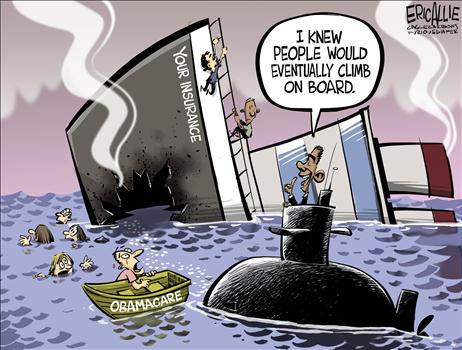


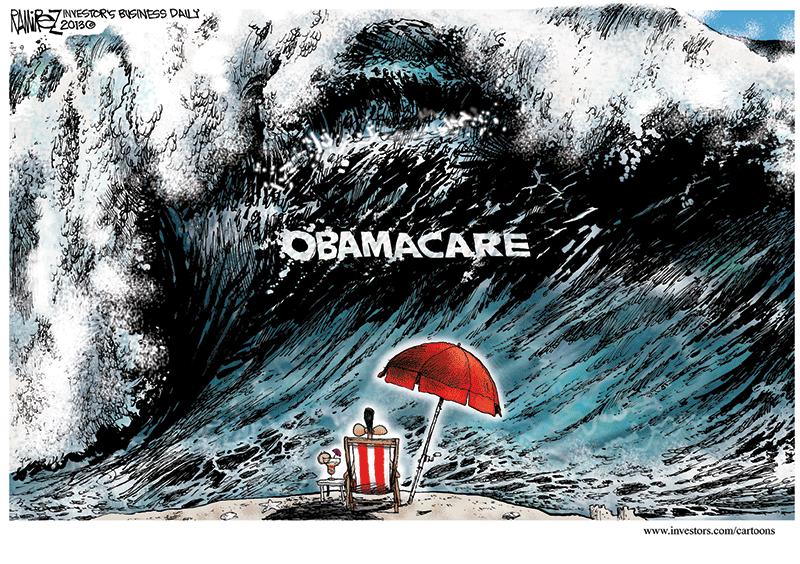

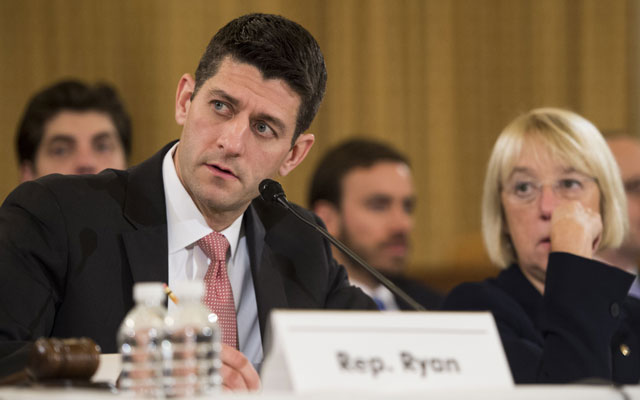
 To put our debt in perspective, Kobe Bryant makes $25 million playing for the Los Angeles Lakers. Any guesses on how many seasons Kobe would have to play in order to pay off today’s national debt? How about a whopping 560,000. That’s chilling, and quite frankly, incomprehensible.
 Utah’s senior Sen. Orrin Hatch doesnt see it that way. He’s looking for a vote on his balanced budget amendment too, but at a time believed to be the most opportune for passage. He hasn’t set firm timetables or made any strict demands.
 “If this is going to get passed in the next two years,” says Hatch, “President Obama will have to step to the plate. Ultimately you’ll need presidential leadership because everybody knows that you’re not going to get spending under control until we take on entitlements as well. You cannot do it without presidential leadership.”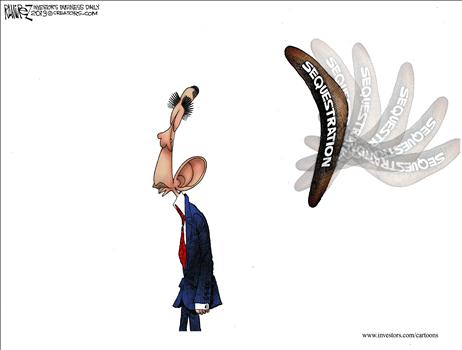
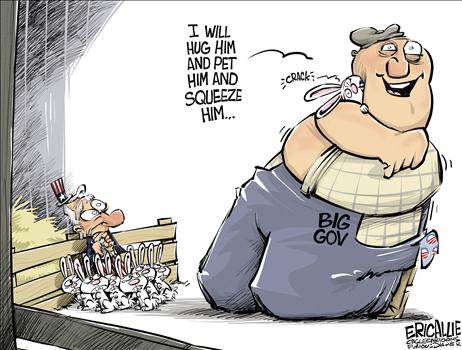





 The Daily Hatch