Category Archives: Prolife

Francis Schaeffer’s wife Edith passes away on Easter weekend 2013 Part 17 (includes pro-life editorial cartoon)

The Francis and Edith Schaeffer Story Pt.1 – Today’s Christian Videos

The Francis and Edith Schaeffer Story – Part 3 of 3

Francis Schaeffer: “Whatever Happened to the Human Race” (Episode 1) ABORTION OF THE HUMAN RACE

Published on Oct 6, 2012 by

________________

Picture of Francis Schaeffer and his wife Edith from the 1930′s above. I was sad to read about Edith passing away on Easter weekend in 2013. I wanted to pass along this fine article below.

When I think of Edith Schaeffer then I think of L’Abri. Here is an article from Wikipedia on L’Abri:

L’Abri

Chalet Les Melezes at Swiss L’Abri

L’Abri (French for “the Shelter”) is an evangelical Christian organization founded by Francis Schaeffer and his wife Edith in Huémoz-sur-Ollon, Switzerland on June 5, 1955. They opened their alpine home as a ministry to curious travellers and as a forum to discuss philosophical and religious beliefs.

Development of L’Abri

Schaeffer became an evangelical Christian as a teenager. In 1947, Francis and Edith moved to Switzerland to work as missionaries for the Independent Board for Presbyterian Foreign Missions (IBPFM) in Europe.[1][2] Following a spiritual crisis in 1951,[1] and disagreements with theologians such as Carl McIntire, Schaeffer and his wife left IBPFM in 1955, to pursue their dream of working with young people.[3] They moved to Huémoz, where they established L’Abri, without assurance that it would be successful.[4] Word-of-mouth soon led to an increasing stream of visitors, with one period in the summer of 1956 averaging 31 visitors per week.[5] International distribution of tapes of Schaeffer’s lectures also helped to raise awareness of Schaeffer’s work.[6]

As it grew, the L’Abri organization came to own and operate several buildings in Huémoz.[7] It came to include four kinds of people: short-term guests; students, who divided their time between study and communal work; workers, who participated in discussions and the work of hospitality; and members, who were part of the decision-making process.[7]

Schaeffer died in 1984,[8] but the ministry he founded has continued to grow. Now, L’Abri has operations in a number of different countries, each staffed by workers who encourage visitors to study and consider their religious and philosophical beliefs. As of 2011, L’Abri has residential “Study Centres” in the United States (Minnesota and Massachusetts), Canada, South Korea, Australia, the United Kingdom, the Netherlands, and Sweden, as well as the original centre in Switzerland. It also has non-residential “Resource Centres”, run by friends of the organisation, in Brazil and Germany.[8][9]

↑Jump back a section

Mode of operation

A L’Abri centre is not a retreat, a commune, or a seminary, although it incorporates elements of all of these. Visitors are referred to as students, and personal study remains central to L’Abri’s work, but there are no fixed “classes” or courses. Rather students (who may spend any time from one day to a whole “term,” usually 2–3 months, at L’Abri) meet regularly with a member of staff to discuss the issues they wish to study, and are recommended resources from L’Abri’s library of books and of recorded lectures and talks by L’Abri staff and others. A student’s day is divided into “study time” and “work time.” During “work time,” a student will help with the necessary activities of the community—-cooking meals, cleaning, maintenance etc. This division is based on Schaeffer’s constant emphasis that Christianity, and the work of L’Abri, were not only intellectual but had to incorporate all of life, and that a demonstration of “Christian Community” was as central to L’Abri’s work as the intellectual demonstration that he believed could be made of the reasonableness and truthfulness of Christian belief.[citation needed]

The importance of Schaeffer’s belief in the relevance of Christianity to all of life can be seen in many aspects of L’Abri. Even so, some articles have suggested there is less of an emphasis on serving philosophical skeptics and more of an emphasis on serving disaffected evangelicals. In a recent article on the group, Molly Worthen suggests that students today come with very different questions, and that they tend to look at the politicized evangelical faith that Schaeffer helped create with suspicion.[10]

The L’Abri day revolves around communal meals, often used as an opportunity for formal open discussion, and students are encouraged to pursue interests in art, music and literature.[11]

Apart from Francis and Edith Schaeffer and their children, several notable Evangelical authors have been influenced by working with L’Abri.[12] Such former staff include Os Guinness,[13]Hans Rookmaaker,[14]Greg Laughery,[15] and Wade Bradshaw,[16]

The L’Abri study center in Rochester, Minnesota also organizes bi-annual “L’Abri Conferences” in the USA and Canada at which L’Abri staff from across the world and other speakers supportive of the vision of L’Abri speak and lead seminars on a wide range of topics.[17]

In 2005, a conference was held in St. Louis, Missouri to celebrate the 50th anniversary of the organization, and over 1,000 attendees were present to hear speakers such as Os Guinness, Harold O. J. Brown, and Chuck Colson.[18]

↑Jump back a section

Notes

  1. ^ a b Burson and Walls, p. 40.
  2. ^ Hankins, p. 28.
  3. ^ Hankins, p. 51.
  4. ^ Hankins, p. 56.
  5. ^ Hankins, p. 57.
  6. ^ Hankins, p. 59.
  7. ^ a b Hankins, p. 58.
  8. ^ a b Burson and Walls, p. 14.
  9. ^ L’Abri Fellowship International web site.
  10. ^ Worthen
  11. ^ Creegan, Nicola Hoggard, and Pohl, Christine D. (2005), Living on the Boundaries: Evangelical women, feminism, and the theological academy, InterVarsity Press, ISBN 0-8308-2665-3, p. 14.
  12. ^ Hankins, p. 63.
  13. ^ Marsh, Charles (2006), The Beloved Community: How Faith Shapes Social Justice from the Civil Rights Movement to Today, Basic Books, ISBN 0-465-04416-6, p. 139.
  14. ^ Burson and Walls, p. 47.
  15. ^ Smith, James K. A. (2009), Desiring the Kingdom: Worship, Worldview, and Cultural Formation, Baker Academic, ISBN 0-8010-3577-5, p. 14.
  16. ^ Duin, Julia (2009), Quitting Church: Why the Faithful are Fleeing and What to Do about It, Baker Books, ISBN 0-8010-7227-1, p. 48.
  17. ^ L’Abri conference web site.
  18. ^ Hankins, p. x.

↑Jump back a section

General references

↑Jump back a section

Last modified on 8 November 2012, at 14:45

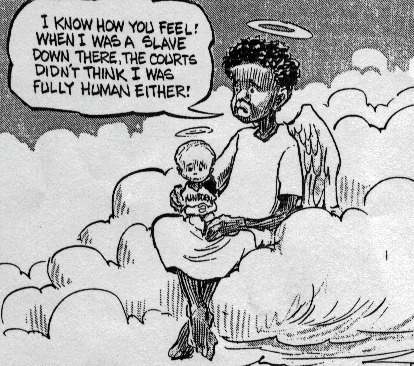
Here is an editorial cartoon about abortion.

Sad 😦

(Francis did a great job in his film series “How Should we then live?” in looking at how humanism has affected art and culture in the Western World in the last 2000 years. My favorite episodes include his study of the Renaissance, the Revolutionary age, the age of Nonreason, and the age of Fragmentation.)

Related posts:

Francis Schaeffer’s “How should we then live?” Video and outline of episode 10 “Final Choices” (Schaeffer Sundays)

E P I S O D E 1 0   Dr. Francis Schaeffer – Episode X – Final Choices 27 min FINAL CHOICES I. Authoritarianism the Only Humanistic Social Option One man or an elite giving authoritative arbitrary absolutes. A. Society is sole absolute in absence of other absolutes. B. But society has to be […]

Francis Schaeffer’s “How should we then live?” Video and outline of episode 9 “The Age of Personal Peace and Affluence” (Schaeffer Sundays)

E P I S O D E 9 Dr. Francis Schaeffer – Episode IX – The Age of Personal Peace and Affluence 27 min T h e Age of Personal Peace and Afflunce I. By the Early 1960s People Were Bombarded From Every Side by Modern Man’s Humanistic Thought II. Modern Form of Humanistic Thought Leads […]

Francis Schaeffer’s “How should we then live?” Video and outline of episode 8 “The Age of Fragmentation” (Schaeffer Sundays)

E P I S O D E 8 Dr. Francis Schaeffer – Episode VIII – The Age of Fragmentation 27 min I saw this film series in 1979 and it had a major impact on me. T h e Age of FRAGMENTATION I. Art As a Vehicle Of Modern Thought A. Impressionism (Monet, Renoir, Pissarro, Sisley, […]

Francis Schaeffer’s “How should we then live?” Video and outline of episode 7 “The Age of Non-Reason” (Schaeffer Sundays)

E P I S O D E 7 Dr. Francis Schaeffer – Episode VII – The Age of Non Reason I am thrilled to get this film series with you. I saw it first in 1979 and it had such a big impact on me. Today’s episode is where we see modern humanist man act […]

Francis Schaeffer’s “How should we then live?” Video and outline of episode 6 “The Scientific Age” (Schaeffer Sundays)

E P I S O D E 6 How Should We Then Live 6#1 Uploaded by NoMirrorHDDHrorriMoN on Oct 3, 2011 How Should We Then Live? Episode 6 of 12 ________ I am sharing with you a film series that I saw in 1979. In this film Francis Schaeffer asserted that was a shift in […]

Francis Schaeffer’s “How should we then live?” Video and outline of episode 5 “The Revolutionary Age” (Schaeffer Sundays)

E P I S O D E 5 How Should We Then Live? Episode 5: The Revolutionary Age I was impacted by this film series by Francis Schaeffer back in the 1970′s and I wanted to share it with you. Francis Schaeffer noted, “Reformation Did Not Bring Perfection. But gradually on basis of biblical teaching there […]

Francis Schaeffer’s “How should we then live?” Video and outline of episode 4 “The Reformation” (Schaeffer Sundays)

Dr. Francis Schaeffer – Episode IV – The Reformation 27 min I was impacted by this film series by Francis Schaeffer back in the 1970′s and I wanted to share it with you. Schaeffer makes three key points concerning the Reformation: “1. Erasmian Christian humanism rejected by Farel. 2. Bible gives needed answers not only as to […]

“Schaeffer Sundays” Francis Schaeffer’s “How should we then live?” Video and outline of episode 3 “The Renaissance”

Francis Schaeffer’s “How should we then live?” Video and outline of episode 3 “The Renaissance” Francis Schaeffer: “How Should We Then Live?” (Episode 3) THE RENAISSANCE I was impacted by this film series by Francis Schaeffer back in the 1970′s and I wanted to share it with you. Schaeffer really shows why we have so […]

Francis Schaeffer’s “How should we then live?” Video and outline of episode 2 “The Middle Ages” (Schaeffer Sundays)

  Francis Schaeffer: “How Should We Then Live?” (Episode 2) THE MIDDLE AGES I was impacted by this film series by Francis Schaeffer back in the 1970′s and I wanted to share it with you. Schaeffer points out that during this time period unfortunately we have the “Church’s deviation from early church’s teaching in regard […]

Francis Schaeffer’s “How should we then live?” Video and outline of episode 1 “The Roman Age” (Schaeffer Sundays)

Francis Schaeffer: “How Should We Then Live?” (Episode 1) THE ROMAN AGE   Today I am starting a series that really had a big impact on my life back in the 1970′s when I first saw it. There are ten parts and today is the first. Francis Schaeffer takes a look at Rome and why […]

Taking on Ark Times Bloggers on various issues Part T “Abortion is a dirty business” (includes video “Truth and History” and editorial cartoon)

I have gone back and forth and back and forth with many liberals on the Arkansas Times Blog on many issues such as abortion, human rights, welfare, poverty, gun control  and issues dealing with popular culture. Here is another exchange I had with them a while back. My username at the Ark Times Blog is Saline Republican.The abortion doctor Bernard Nathanson left the abortion business because he realized that unborn babies could feel pain. It is truly a dirty business.On 3-5-13 on the Arkansas Times Blog I posted:I am glad to see more people on this blog are taking the pro-life view. The other day I read these words on here:
“It is a great poverty to kill an unborn child so you may live as you wish.” ~ Mother Teresa of Calcutta, India
People have to decide if their selfishness is worth taking a life.Is there any consideration of these unborn babies? I have put an editorial cartoon that shows 9/11 and compares it to what is happening to the unborn.

https://thedailyhatch.org/2013/03/05/more-a…

I wanted to pass along a portion of the excellent article “Bernard Nathanson: A Life Transformed by the Truth about Abortion.” (Feb 11, 2011)

LifeNews.com Note: Robert P. George is McCormick Professor of Jurisprudence and Director of the James Madison Program in American Ideals and Institutions at Princeton University. He is a member of the President’s Council on Bioethics and previously served on the United States Commission on Civil Rights. This article previously appeared in Public Discourse:

Within a year after Roe v. Wade, however, Nathanson began to have moral doubts about the cause to which he had been so single-mindedly devoted. In a widely noticed 1974 essay in the prestigious New England Journal of Medicine, he revealed his growing doubts about the “pro-choice” dogma that abortion was merely the removal of an “undifferentiated mass of cells,” and not the killing of a developing human being. Referring to abortions that he had supervised or performed, he confessed to an “increasing certainty that I had in fact presided over 60,000 deaths.”

Still, he was not ready to abandon support for legal abortion. It was, he continued to insist, necessary to prevent the bad consequences of illegal abortions. But he was moving from viewing abortion itself as a legitimate solution to a woman’s personal problem, to seeing it as an evil that should be discouraged, even if for practical reasons it had to be tolerated. Over the next several years, while continuing to perform abortions for what he regarded as legitimate “health” reasons, Nathanson would be moved still further toward the pro-life position by the emergence of new technologies, especially fetoscopy and ultrasound, that made it increasingly difficult, and finally impossible, to deny that abortion is the deliberate killing of a unique human being–a child in the womb.

On 3-5-13 on the Arkansas Times Blog the person going by the username “DeathByInches”  posted:

Don’t you all worry your beautiful minds. Somewhere in this house I have a recipe Ma gave me for my birthday years ago. It’s handwritten in pencil on a yellowing scrap of paper. I assume it came from one of our old whore houses down by the river here in Fort Baptist.

It’s a recipe for a toxic douche designed to kill all those wiggling spermies in hopes of not ever having to have a coat hanger shoved up tender working va-jay-jays and remember….back then coat hangers were made of wood. Splinters! Ack!

I’m still thinking about the old movie Spartacus…..if we all opened abortion clinics in our kitchens ain’t no one could put us all out of business and trying to police the whole state…__________

This reminds me of this editorial cartoon about abortion with Harry Ried in it.

I truly believe that many of the problems we have today in the USA are due to the advancement of humanism in the last few decades in our society. Ronald Reagan appointed the evangelical Dr. C. Everett Koop to the position of Surgeon General in his administration. He partnered with Dr. Francis Schaeffer in making the video below. It is very valuable information for Christians to have.  Actually I have included a video below that includes comments from him on this subject.___________

Francis Schaeffer: “Whatever Happened to the Human Race” (Episode 5) TRUTH AND HISTORY

Published on Oct 7, 2012 by

I really appreciated Schaeffer because of his influence on the pro-life movement.

Francis Schaeffer: The Last Great Modern Theologian
Next Wave ^ | December, 1999 | David Hopkins 

Posted on Sun Feb 02 2003 17:58:56 GMT-0600 (Central Standard Time) by unspun

Francis Schaeffer:
The Last Great Modern Theologian
(and the reason why I have a goatee!)
 by David Hopkins
accessdavid@hotmail.com
http://www.monkhouse.org/david
Images taken from www.rationalpi.com/theshelter

Francis Schaeffer Francis Schaeffer

Standing at the melting point

The reader may wonder why I would write an article about the “last great modern theologian” in a publication that so proudly dedicates itself to post-modern thought and inquiry. In truth, we should not be so arrogant about what the modern legacy has left to us.

The contributions of faithful disciples and scholars from previous generations can be of great worth.

I would go so far to say even a book review of Augustine?s The City of God or Aquinas?s Summa Theologica would fit nicely into what we are trying to accomplish at Next-Wave. The goal is to re-communicate the worth of our Christian tradition and experience to a postmodern culture. However, the work of Francis Schaeffer is so recent; it is questionably whether his thoughts even need to be re-communicated to a new culture.

I would like to persuade that Francis Schaeffer (1912-1984) stands at the melting point of the modern and postmodern discussion. In some ways, every “modern” theologian after him is increasingly out of date. And any “postmodern” theologian ahead of him was unfortunately out of place in discussing issues of spiritual importance. Why? Schaeffer was deeply concerned with a shift in epistemology (how we know what we know). He observed the shift during the 1960s. While he never labeled it as such, this shift is what we now call postmodernism. (Note: This term was already in existence when discussing art, architecture, philosophy, and literature; theology really didn?t jump into the discussion until postmodern thought proliferated in the 1980s, 3 years after Jean-Francois Lyotard?s The Postmodern Condition.)

Francis Schaeffer is the last of the modern theologians, but not the first of the postmodern theologians. He still strongly argued for rationalism in apologetics. By this, I mean Francis Schaeffer believed one had to be converted to the appropriate set of presuppositions, namely the law of non-contradiction (“A” cannot be “non-A”), first, in order to believe and experience the God of Christianity. The Bible is viewed as a propositional argument from God to His people, which can only be accepted by the correct presuppositional vantage point. Francis Schaeffer also was skeptical of the increase of Platonism in culture (identified with mysticism) and leaned more towards an Aristotelian view of reality (identified with rationalism). These ideas mark a clear modern thought pattern.

Despite his modern view, Schaeffer offers us many insights in ministering to any culture of believers. And a thorough study of his work would benefit any believer greatly.

Schaeffer explains How I met Francis Schaeffer When I first came to college, I experienced a massive faith crisis. Raised in a consumer friendly, experience crazed society, I doubted the reasonableness of the Christian system. My understanding of God did not find a home in rationality. I could not give my life to a system, just because someone told me if I say a prayer– God would come down from distant Heaven and have coffee with me (metaphorically speaking, of course).
I needed answers. I read Josh McDowell?s More than a Carpenter and C.S. Lewis?s Mere Christianity. Both of these inspirational works satisfied my craving for common sense soundness? until I became a student of philosophy. Anyone who has studied philosophy knows that “common sense soundness” does not go very far. I needed more. I needed philosophical answers. Sorry, but Lewis and McDowell just do not cut it against thinkers like Nietzsche, Sartre, Schopenhauer, Russell, Husserl, and Heidegger. These philosophic heavy weights are playing different games and speaking a different language. Francis Schaeffer, however, knew the language; and I am convinced he could stand toe to toe with any of them.My campus minister Keith Boone introduced me to the work of Francis Schaeffer. He encouraged me to read the trilogy: The God Who Is ThereEscape From Reason, and He Is There And He Is Not Silent. These three books outline the basic premise of any arguments he would develop in later books. Schaeffer was culturally, philosophically, and scripturally informed. He wrote with compassion and fire. I often stayed up late in the night reading and pondering his ideas. Each sentence blowing my mind and causing me to re-evaluate my own hidden agendas for Christianity. He moved me to understand a deeper and truer Gospel than what I had known before.And in my own postmodern superficiality, I will admit, I also liked him because he just looked cool.Francis Schaeffer has the image of an eccentric academic freak. I really resonated with that– call it my personal image goal. Yes, he is the reason why I grew a goatee. (I can hear my friends, who know me too well, laughing out loud.)All of his writings exist to prove a basic, and yet radical point, God is really there. He?s not just a concept or an idea. He really exists. But not only that, God is speaking to us. Schaeffer believed humankind was created with dignity and is still formed in the “image of God.” We all have worth and value which is innate with our standing in the universe. We are not just specks of dust on a larger speck of dust circling the sun. From this point, true restoration can take place in the souls of men and women.Francis Schaeffer wrote to provide intellectual healing to a world in transition. He realized the old models were fading. There are some points we should observe in communicating Schaeffer?s timeless message to postmodernism.Francis Schaeffer was concerned with being relevant to his timeFrancis Schaeffer wrote because he saw the ideas of logical positivism and existentialism being introduced into popular culture in dangerous ways, displacing God from our understanding. Schaeffer noted in his article “How I Have Come to Write My Books” (Inter-Varsity Press 1974): “In my reading of philosophy, I saw that there were innumerable problems that nobody was giving answers for? the Bible, it struck me, dealt with man?s problems in a sweeping, all-encompassing thrust.” Schaeffer knew these philosophic problems affect the everyday life of believers. These ideas have a flow of influence from philosophy to art to music to general culture. Schaeffer wrote to get ahead of the ideas to positively affect general culture, replacing deceptive philosophy with the answers of scripture.Schaeffer?s goal was not to become “modern,” but to minister to the modern person. Likewise, in an ever-changing society, we should be careful not to adopt postmodernism, but instead, give eternal hope to those people lost in the disparity of postmodernism. “Relevancy” has become a popular sell-word for churches nowadays. But this word has to imply more than just using movie clips in a sermon. Relevancy strikes to the heart of how we think and live.Francis Schaeffer addresses the issue of a shift in epistemologyEpistemology may not be everyone?s favorite topic of discussion, but for Schaeffer this issue was of utmost importance. He recognized if our thinking is off, everything else will surely to follow. Schaeffer observed a shift in epistemology which involved a false belief that God is simply a concept or theory. We take an unfortunate existential “leap of faith” which is not rooted in the direct experience of God. We do not see God working in daily life. Schaeffer cited Thomas Aquinas (1225-1274) as the initial cause of this trend. According to Schaeffer, Aquinas separated nature from grace in theology. The spiritual world and the earthly world became separated. The earthly world became what was “real” and the spiritual world was the “hypothetical.”Today we still encounter in the consequences of this shift, especially when referring to a secular versus spiritual society. We create a Christian sub-world that was never meant to exist. Instead of being in the world, we live the hypothetical faith world. We fail to realize that everything is spiritual. Everything is bathed in God?s touch and presence. “For you created all things, and by your will they were created and have their being.” (Revelation 4:11, quoted at the beginning of Schaeffer?s The God Who Is There.) Schaeffer hoped to give his readers understanding of a world in direct connection with a God who is really present.

Art and culture mattered to Francis Schaeffer

Francis Schaeffer was deeply concerned with how art impacted our thoughts and actions. In the trilogy, Schaeffer displays a thorough knowledge of art history. He shows how art has developed along a theme of separation between nature and grace. Schaeffer also is well versed on the contemporary arts, musicians, and filmmakers. He carefully analyzes these influences. Interesting footnote: He was quite possibly the first theologian to intelligently evaluate the punk revolution in Europe.

Schaeffer wrote passionately about the Christian?s ability to worship God through art. In the day of the great evangelical preachers, when such a strong emphasis was placed on teaching, Schaeffer ideas of art as worship reflected the wisdom of the ancients and were simultaneously revolutionary. Schaeffer?s book How Should We Then Live gives a good overview on his ideas about art.

Among postmodern pilgrims everywhere, the subject of art and worship is a very popular topic of conversation. Francis Schaeffer introduces this idea to a new generation of disciples, an invaluable resource to any community interested in created art with meaning and transcendence.

L?Abri: An example of the “community apologetic”

When Francis Schaeffer and his wife Edith moved to Switzerland, they decided to open their house to any believers traveling through. These travelers could come for healing, conversation, instruction, and service. They re-named their home L?Abri, French for “the Shelter.” People from all over came to be part of this transit community. Remember my campus minister Keith Boone?

L?Abri expanded to a number of branches throughout the world. Even today, L?Abri receives people. His wife Edith wrote the book L?Abri telling of this community?s development.

Francis Schaeffer did not just live as a hermit scholar. He worked daily with people, and frequently strangers, sharing with them God?s message of peace at L?Abri. He believed strongly that community is the place where God speaks. Not only that, but community is its own apologetic for the Gospel. People can live together in meaningful relationships, sharing, working together with the Spirit?s power.

What is community? How do we “get” it? Schaeffer?s L?Abri was a Christian response to the hippy communes that sought desperately to have community and meaning. L?Abri can also illustrate our own need to re-define church and the gathering of the saints. L?Abri was not just a Sunday morning institution. We need to carefully evaluate the condition of our own local churches from a programmatic institution to a community of believers.

The lasting impact of “The Last Great Modern Theologian”

In my opinion, Francis Schaeffer is the last of the relevant and the truly great modern theologians. He stood at the melting point between modern and postmodern. While he never addresses postmodernism, Schaeffer?s influence will be long lasting in the postmodern culture we minister in. A culture that looks longingly for heroes and role models, beyond the celebrities and pop stars.

This past summer I worked at a camp in Glen Rose, Texas. On the first day, I met a boy named “Schaeffer.” He wore a Cowboys cap to cover his blonde matted hair and his big grin revealed two missing teeth. As he was making his bunk, trying to smooth out the sheets while standing on the bed (a difficult task no doubt), I commented to his mother about Francis Schaeffer. She smiled and said, “I know about Francis, we named our son after him. Francis really influenced my husband and me, when we first met.” Imagine that? Schaeffer was my favorite camper for that week. Maybe it was his grin, maybe there is just something in a name.

For more information on Francis Schaeffer:

I believe “The Shelter” www.rationalpi/theshelter.com is the best Schaeffer site on the Internet. The site contains weekly quotes, a list of books and articles, biography, photos, and links. The Shelter also has an email list, which I am a part of. If you sign up, every week they send a Schaeffer quote, plus some links on web from all areas of interest.

 Click here to respond to this article.
[^ Back to top]
DAVID HOPKINS  is program director at the Wesleyan Campus Ministry in the small college town of Commerce, Texas. David attends the university there as an English/Philosophy major.  After completing his undergraduate work, David plans to go to Fuller Theological Seminary.  He eventually hopes to be involved in Church planting and development.  David was raised in the Methodist tradition; however, he currently is part of the Axxess Community at Pantego Bible Church [www.axxess.org].  David Hopkins
Related posts:

Francis Schaeffer’s prayer for us in USA

 Francis Schaeffer: “Whatever Happened to the Human Race” (Episode 1) ABORTION OF THE HUMAN RACE Published on Oct 6, 2012 by AdamMetropolis The 45 minute video above is from the film series created from Francis Schaeffer’s book “Whatever Happened to the Human Race?” with Dr. C. Everett Koop. This book  really helped develop my political views […]

Francis Schaeffer’s “How should we then live?” Video and outline of episode 10 “Final Choices” (Schaeffer Sundays)

E P I S O D E 1 0   Dr. Francis Schaeffer – Episode X – Final Choices 27 min FINAL CHOICES I. Authoritarianism the Only Humanistic Social Option One man or an elite giving authoritative arbitrary absolutes. A. Society is sole absolute in absence of other absolutes. B. But society has to be […]

Francis Schaeffer’s “How should we then live?” Video and outline of episode 9 “The Age of Personal Peace and Affluence” (Schaeffer Sundays)

E P I S O D E 9 Dr. Francis Schaeffer – Episode IX – The Age of Personal Peace and Affluence 27 min T h e Age of Personal Peace and Afflunce I. By the Early 1960s People Were Bombarded From Every Side by Modern Man’s Humanistic Thought II. Modern Form of Humanistic Thought Leads […]

Francis Schaeffer’s “How should we then live?” Video and outline of episode 8 “The Age of Fragmentation” (Schaeffer Sundays)

E P I S O D E 8 Dr. Francis Schaeffer – Episode VIII – The Age of Fragmentation 27 min I saw this film series in 1979 and it had a major impact on me. T h e Age of FRAGMENTATION I. Art As a Vehicle Of Modern Thought A. Impressionism (Monet, Renoir, Pissarro, Sisley, […]

Francis Schaeffer’s “How should we then live?” Video and outline of episode 7 “The Age of Non-Reason” (Schaeffer Sundays)

E P I S O D E 7 Dr. Francis Schaeffer – Episode VII – The Age of Non Reason I am thrilled to get this film series with you. I saw it first in 1979 and it had such a big impact on me. Today’s episode is where we see modern humanist man act […]

Francis Schaeffer’s “How should we then live?” Video and outline of episode 6 “The Scientific Age” (Schaeffer Sundays)

E P I S O D E 6 How Should We Then Live 6#1 Uploaded by NoMirrorHDDHrorriMoN on Oct 3, 2011 How Should We Then Live? Episode 6 of 12 ________ I am sharing with you a film series that I saw in 1979. In this film Francis Schaeffer asserted that was a shift in […]

Francis Schaeffer’s “How should we then live?” Video and outline of episode 5 “The Revolutionary Age” (Schaeffer Sundays)

E P I S O D E 5 How Should We Then Live? Episode 5: The Revolutionary Age I was impacted by this film series by Francis Schaeffer back in the 1970′s and I wanted to share it with you. Francis Schaeffer noted, “Reformation Did Not Bring Perfection. But gradually on basis of biblical teaching there […]

Francis Schaeffer’s “How should we then live?” Video and outline of episode 4 “The Reformation” (Schaeffer Sundays)

Dr. Francis Schaeffer – Episode IV – The Reformation 27 min I was impacted by this film series by Francis Schaeffer back in the 1970′s and I wanted to share it with you. Schaeffer makes three key points concerning the Reformation: “1. Erasmian Christian humanism rejected by Farel. 2. Bible gives needed answers not only as to […]

“Schaeffer Sundays” Francis Schaeffer’s “How should we then live?” Video and outline of episode 3 “The Renaissance”

Francis Schaeffer’s “How should we then live?” Video and outline of episode 3 “The Renaissance” Francis Schaeffer: “How Should We Then Live?” (Episode 3) THE RENAISSANCE I was impacted by this film series by Francis Schaeffer back in the 1970′s and I wanted to share it with you. Schaeffer really shows why we have so […]

Francis Schaeffer’s “How should we then live?” Video and outline of episode 2 “The Middle Ages” (Schaeffer Sundays)

  Francis Schaeffer: “How Should We Then Live?” (Episode 2) THE MIDDLE AGES I was impacted by this film series by Francis Schaeffer back in the 1970′s and I wanted to share it with you. Schaeffer points out that during this time period unfortunately we have the “Church’s deviation from early church’s teaching in regard […]

Francis Schaeffer’s “How should we then live?” Video and outline of episode 1 “The Roman Age” (Schaeffer Sundays)

Francis Schaeffer: “How Should We Then Live?” (Episode 1) THE ROMAN AGE   Today I am starting a series that really had a big impact on my life back in the 1970′s when I first saw it. There are ten parts and today is the first. Francis Schaeffer takes a look at Rome and why […]

Francis Schaeffer: “Whatever Happened to the Human Race” (Episode 5) TRUTH AND HISTORY

Francis Schaeffer: “Whatever Happened to the Human Race” (Episode 5) TRUTH AND HISTORY Published on Oct 7, 2012 by AdamMetropolis This crucial series is narrated by the late Dr. Francis Schaeffer and former Surgeon General Dr. C. Everett Koop. Today, choices are being made that undermine human rights at their most basic level. Practices once […]

Francis Schaeffer: “Whatever Happened to the Human Race” (Episode 4) THE BASIS FOR HUMAN DIGNITY

The opening song at the beginning of this episode is very insightful. Francis Schaeffer: “Whatever Happened to the Human Race” (Episode 4) THE BASIS FOR HUMAN DIGNITY Published on Oct 7, 2012 by AdamMetropolis This crucial series is narrated by the late Dr. Francis Schaeffer and former Surgeon General Dr. C. Everett Koop. Today, choices […]

Francis Schaeffer: “Whatever Happened to the Human Race” (Episode 3) DEATH BY SOMEONE’S CHOICE

Francis Schaeffer: “Whatever Happened to the Human Race” (Episode 3) DEATH BY SOMEONE’S CHOICE Published on Oct 6, 2012 by AdamMetropolis This crucial series is narrated by the late Dr. Francis Schaeffer and former Surgeon General Dr. C. Everett Koop. Today, choices are being made that undermine human rights at their most basic level. Practices […]

Francis Schaeffer: “Whatever Happened to the Human Race?” (Episode 2) SLAUGHTER OF THE INNOCENTS

Francis Schaeffer: “Whatever Happened to the Human Race?” (Episode 2) SLAUGHTER OF THE INNOCENTS Published on Oct 6, 2012 by AdamMetropolis This crucial series is narrated by the late Dr. Francis Schaeffer and former Surgeon General Dr. C. Everett Koop. Today, choices are being made that undermine human rights at their most basic level. Practices […]

Francis Schaeffer: “Whatever Happened to the Human Race” (Episode 1) ABORTION OF THE HUMAN RACE

It is not possible to know where the pro-life evangelicals are coming from unless you look at the work of the person who inspired them the most. That person was Francis Schaeffer.  I do care about economic issues but the pro-life issue is the most important to me. Several years ago Adrian Rogers (past president of […]

The following essay explores the role that Francis Schaeffer played in the rise of the pro-life movement. It examines the place of How Should We Then Live?, Whatever Happened to the Human Race?, and A Christian Manifesto in that process.

This essay below is worth the read. Schaeffer, Francis – “Francis Schaeffer and the Pro-Life Movement” [How Should We Then Live?, Whatever Happened to the Human Race?, A Christian Manifesto] Editor note: <p> </p> [The following essay explores the role that Francis Schaeffer played in the rise of the pro-life movement.  It examines the place of […]

Who was Francis Schaeffer? by Udo Middelmann

Great article on Schaeffer. Who was Dr. Francis A. Schaeffer? By Francis Schaeffer The unique contribution of Dr. Francis Schaeffer on a whole generation was the ability to communicate the truth of historic Biblical Christianity in a way that combined intellectual integrity with practical, loving care. This grew out of his extensive understanding of the Bible […]

.

Francis Schaeffer’s wife Edith passes away on Easter weekend 2013 Part 16 (includes pro-life editorial cartoon)

The Francis and Edith Schaeffer Story Pt.1 – Today’s Christian Videos

The Francis and Edith Schaeffer Story – Part 3 of 3

Francis Schaeffer: “Whatever Happened to the Human Race” (Episode 1) ABORTION OF THE HUMAN RACE

Published on Oct 6, 2012 by

________________

Picture of Francis Schaeffer and his wife Edith from the 1930′s above. I was sad to read about Edith passing away on Easter weekend in 2013. I wanted to pass along this fine article below.

Wife of Late Pastor, Author, Abortion Opponent Francis Schaeffer Passes Into Eternity

March 30, 2013 | Filed under: Featured,Life & Society,World | By:

Edith Schaeffer, wife of the late Francis Schaeffer, a reknown pastor, author, abortion opponent and founder of the L’Abri conference center in Switzerland passed away today. She was 98.

Schaeffer was born into missionary life in China. She met her husband Francis in the 1930′s at a Christian event in Germantown, Pennsylvania. Later, the two founded the Christian conference center L’Abri in Switzerland, where Edith often tended to meals for the guests. It is stated that she tended a sizable vegetable garden in an effort to have sufficient food for those visiting.

Her husband Francis was a prolific writer and often denounced the secular humanism that he saw permeating society.

“Why has our society changed?” he once asked. “The answer is clear — the consensus of our society no longer rests upon a Christian basis, but upon a humanistic one. Humanism is man putting himself at the center of all things, rather than the creator God.”

Francis also released two films,  How Should We Then Live?: The Rise and Decline of Western Thought and Culture and Whatever Happened to the Human Race?, the first of which chronicled the history of the Church from the early Church to current times. The second film addressed the issues of abortion and euthanasia, which Schaeffer strongly opposed.

Francis Schaeffer died in 1984 of lymphoma, and was said to be influential in the lives of many Christian leaders during his time.

The Schaeffer’s son, Frank, wrote a tribute to his mother this morning, which was published in The Huffington Post. Frank, who departed from his parent’s beliefs a number of years ago, had remained in touch with his mother.

“My mother Edith Schaeffer died today. … She has just gone to be with the Lord, as she would put it,” he wrote. “She died at home which was her wish.”

He included in his list of warm memories of his mother “[being] in the garden at dawn weeding and watering her wonderful flowers and vegetables,” “taking impractical detours to look at something lovely” and “praying out loud over meals long — so long — at the table, as she forgot that for the rest of us prayer was mostly a ritual, though for her it was an endless conversation with the eternal.”

Frank also stated that his mother expressed a “horror at the ‘harshness’ … of so many evangelical religious people and the way they treated ‘the lost’ and [would declare], ‘No wonder no one wants to be a Christian if that’s how we treat people!’”

Edith Schaeffer, in addition to caring for her husband and children, and helping run L’Abri, was also a prolific author. Her books included The Hidden Art of Homemaking: Creative Ideas for Enriching Everyday Life, What is a Family and 10 Things Parents Must Teach Their Children.

L’Abri continues to this day, and has expanded to several countries, including in the United States, with facilities in both Massachusetts and Minnesota.

President Obama’s own words put in a pro-life poster:

(Francis did a great job in his film series “How Should we then live?” in looking at how humanism has affected art and culture in the Western World in the last 2000 years. My favorite episodes include his study of the Renaissance, the Revolutionary age, the age of Nonreason, and the age of Fragmentation.)

Related posts:

Francis Schaeffer’s “How should we then live?” Video and outline of episode 10 “Final Choices” (Schaeffer Sundays)

E P I S O D E 1 0   Dr. Francis Schaeffer – Episode X – Final Choices 27 min FINAL CHOICES I. Authoritarianism the Only Humanistic Social Option One man or an elite giving authoritative arbitrary absolutes. A. Society is sole absolute in absence of other absolutes. B. But society has to be […]

Francis Schaeffer’s “How should we then live?” Video and outline of episode 9 “The Age of Personal Peace and Affluence” (Schaeffer Sundays)

E P I S O D E 9 Dr. Francis Schaeffer – Episode IX – The Age of Personal Peace and Affluence 27 min T h e Age of Personal Peace and Afflunce I. By the Early 1960s People Were Bombarded From Every Side by Modern Man’s Humanistic Thought II. Modern Form of Humanistic Thought Leads […]

Francis Schaeffer’s “How should we then live?” Video and outline of episode 8 “The Age of Fragmentation” (Schaeffer Sundays)

E P I S O D E 8 Dr. Francis Schaeffer – Episode VIII – The Age of Fragmentation 27 min I saw this film series in 1979 and it had a major impact on me. T h e Age of FRAGMENTATION I. Art As a Vehicle Of Modern Thought A. Impressionism (Monet, Renoir, Pissarro, Sisley, […]

Francis Schaeffer’s “How should we then live?” Video and outline of episode 7 “The Age of Non-Reason” (Schaeffer Sundays)

E P I S O D E 7 Dr. Francis Schaeffer – Episode VII – The Age of Non Reason I am thrilled to get this film series with you. I saw it first in 1979 and it had such a big impact on me. Today’s episode is where we see modern humanist man act […]

Francis Schaeffer’s “How should we then live?” Video and outline of episode 6 “The Scientific Age” (Schaeffer Sundays)

E P I S O D E 6 How Should We Then Live 6#1 Uploaded by NoMirrorHDDHrorriMoN on Oct 3, 2011 How Should We Then Live? Episode 6 of 12 ________ I am sharing with you a film series that I saw in 1979. In this film Francis Schaeffer asserted that was a shift in […]

Francis Schaeffer’s “How should we then live?” Video and outline of episode 5 “The Revolutionary Age” (Schaeffer Sundays)

E P I S O D E 5 How Should We Then Live? Episode 5: The Revolutionary Age I was impacted by this film series by Francis Schaeffer back in the 1970′s and I wanted to share it with you. Francis Schaeffer noted, “Reformation Did Not Bring Perfection. But gradually on basis of biblical teaching there […]

Francis Schaeffer’s “How should we then live?” Video and outline of episode 4 “The Reformation” (Schaeffer Sundays)

Dr. Francis Schaeffer – Episode IV – The Reformation 27 min I was impacted by this film series by Francis Schaeffer back in the 1970′s and I wanted to share it with you. Schaeffer makes three key points concerning the Reformation: “1. Erasmian Christian humanism rejected by Farel. 2. Bible gives needed answers not only as to […]

“Schaeffer Sundays” Francis Schaeffer’s “How should we then live?” Video and outline of episode 3 “The Renaissance”

Francis Schaeffer’s “How should we then live?” Video and outline of episode 3 “The Renaissance” Francis Schaeffer: “How Should We Then Live?” (Episode 3) THE RENAISSANCE I was impacted by this film series by Francis Schaeffer back in the 1970′s and I wanted to share it with you. Schaeffer really shows why we have so […]

Francis Schaeffer’s “How should we then live?” Video and outline of episode 2 “The Middle Ages” (Schaeffer Sundays)

  Francis Schaeffer: “How Should We Then Live?” (Episode 2) THE MIDDLE AGES I was impacted by this film series by Francis Schaeffer back in the 1970′s and I wanted to share it with you. Schaeffer points out that during this time period unfortunately we have the “Church’s deviation from early church’s teaching in regard […]

Francis Schaeffer’s “How should we then live?” Video and outline of episode 1 “The Roman Age” (Schaeffer Sundays)

Francis Schaeffer: “How Should We Then Live?” (Episode 1) THE ROMAN AGE   Today I am starting a series that really had a big impact on my life back in the 1970′s when I first saw it. There are ten parts and today is the first. Francis Schaeffer takes a look at Rome and why […]

Francis Schaeffer’s wife Edith passes away on Easter weekend 2013 Part 15 (includes pro-life editorial cartoon and article by from Udo Middelmann)

The Francis and Edith Schaeffer Story Pt.1 – Today’s Christian Videos

The Francis and Edith Schaeffer Story – Part 3 of 3

Francis Schaeffer: “Whatever Happened to the Human Race” (Episode 1) ABORTION OF THE HUMAN RACE

Published on Oct 6, 2012 by

________________

Picture of Francis Schaeffer and his wife Edith from the 1930′s above. I was sad to read about Edith passing away on Easter weekend in 2013. I wanted to pass along this fine article below.

Sunday, March 31, 2013

Edith Schaeffer, RIP

(from Udo Middelmann)
Edith Rachel Merritt Seville Schaeffer died on March 30, 2013 in her home in Gryon, Switzerland, where she had moved 13 years ago to be surrounded by memories, her music, her son’s paintings and the detailed care organized daily by her daughter Deborah Middelmann. She was born on November 3, 1914 as the third daughter of Dr. George Hugh and Jessie Maude Seville in Wenchau, China, where her parents ran a school for girls and taught the Bible in Mandarin.
Edith Schaeffer marked her life with the expression of rich ideas, often rebellious against the staid and superficial life she saw among Christians. The oldest sister became a communist in New York of the 30ies, the second eloped.  Edith Seville married Francis August Schaeffer in 1935 and in no way was she the typical pastor’s or missionary wife. She turned her active mind to work with her husband, teaching first seminary wives to think and to question, to create and make of life something of integrity, as her husband so wanted her to do.
To put her husband through 3 years of seminary she tailored men’s suits, made ball room gowns and wedding dresses for private clients. From whole cow skins she made belts sold in New York stores. With very little money she prepared tasteful and varied meals. She painted a fresco on the ceiling of the vestibule in the little church her husband pastored in Grove City, while he attached a steeple to it with the elders’ help. They lectured together and encouraged many to use their minds to understand what they believed and how to respond to the intellectual and cultural ideas around them. Together they travelled and taught in churches and university halls from Finland to Portugal, helping people understand Christianity as the truth of the universe, not a personal faith, and pointing out the cultural and philosophical pitfalls in everyone’s way.
She lived her life as a work of art, an exhibition of true significance and a portrait of a generous, stunning and creative personality. She always sought ways to draw on life’s opportunities to show that human beings are made for the enrichment of everyone’s life, for the encouragement of people. This was a central part of the work she and her husband engaged in from the very start of their life together. She was in all things generous. When books provided royalties she used all of it to give her four children and their families annual reunions for the cousins to know each other.
When she left the work of L’Abri after her husband’s death she started the Francis A Schaeffer Foundation with Udo and Deborah Middelmann to safeguard his papers and the ideas that underline their life, to make them available for a wider audience. She found people interesting anywhere, engaged in conversation and so met the most amazing individuals. She talked, for instance, with the author Andre Aciman, standing in line for tickets to Carnegie Hall in NY and found out that he had had our village doctor, Dr. Gandur, as his pediatrician in Alexandria, Egypt. He was so grateful to be in touch through her with his old doctor.
She enjoyed people in the streets, in airplanes and over the phone, wherever she found them or when they could reach her. She stayed up nights to help someone out of their distress or need. With much imagination she served her meals with stunning decorations made from twigs and moss, field flowers and stones. Duncan from Kenya once remarked: “This is the first place where I see the beauty of the truth of the Bible consistently carried over into all areas of life.”
After the death of her husband in 1984 Edith Schaeffer added a whole new chapter to her life. She continued to write books, lectured widely and returned twice to her place of birth in China. She investigated the making the Baby Grand Piano she had received as a gift at the Steinway factory in New York and presented “Forever Music” in a concert at Alice Tully Hall in New York with the Guarneri Quartet. Through Franz Mohr, the chief piano voicer at Steinway she came to know musicians like Rostropovich, the pianists Horowitz and Rudoph Serkin, the Cellists YoYo Ma and Ya Ya Ling, and also the guitarist Christopher Parkening. She organized concerts and elaborate receptions for musicians and friends in her home in Rochester, MN. When she met B. B. King at the International Jazz Festival in Montreux he gave her his pass to the evening’s concert. Once on vacations on the island of Elba, Sonny Rollins noticed her beauty and rhythm in the audience as she danced during his concert, came off the stage and danced with her.
Today she “slipped into the nearer presence of Jesus”, her Lord, from whom she awaits the promised resurrection to continue her life on earth and to dance once again with a body restored to wholeness.
If you wish to honor Edith Schaeffer’s life you can support her intense commitment to the work of the Francis Schaeffer Foundation, Jermintin 3, CH -1882 Gryon, Switzerland

I was saved at 25 out of a life of debauchery, perversion, and rebellion. As a revolutionary and active organizing communist, I was Damascus roaded.
The Bible became my only truth, and the Schaeffers taught me how to live it with my gifts and calling.
One quote, in particular, from Edith changed my life forever. To wit, “We may live in a pluralistic society, but we do not live in a pluralistic universe.”

Easter 2013 will forever be remembered with her passing.

_____________

Planned Parenthood is the leading abortion provider in the USA and this editorial cartoon touches on this:

(Francis did a great job in his film series “How Should we then live?” in looking at how humanism has affected art and culture in the Western World in the last 2000 years. My favorite episodes include his study of the Renaissance, the Revolutionary age, the age of Nonreason, and the age of Fragmentation.)

Related posts:

Francis Schaeffer’s “How should we then live?” Video and outline of episode 10 “Final Choices” (Schaeffer Sundays)

E P I S O D E 1 0   Dr. Francis Schaeffer – Episode X – Final Choices 27 min FINAL CHOICES I. Authoritarianism the Only Humanistic Social Option One man or an elite giving authoritative arbitrary absolutes. A. Society is sole absolute in absence of other absolutes. B. But society has to be […]

Francis Schaeffer’s “How should we then live?” Video and outline of episode 9 “The Age of Personal Peace and Affluence” (Schaeffer Sundays)

E P I S O D E 9 Dr. Francis Schaeffer – Episode IX – The Age of Personal Peace and Affluence 27 min T h e Age of Personal Peace and Afflunce I. By the Early 1960s People Were Bombarded From Every Side by Modern Man’s Humanistic Thought II. Modern Form of Humanistic Thought Leads […]

Francis Schaeffer’s “How should we then live?” Video and outline of episode 8 “The Age of Fragmentation” (Schaeffer Sundays)

E P I S O D E 8 Dr. Francis Schaeffer – Episode VIII – The Age of Fragmentation 27 min I saw this film series in 1979 and it had a major impact on me. T h e Age of FRAGMENTATION I. Art As a Vehicle Of Modern Thought A. Impressionism (Monet, Renoir, Pissarro, Sisley, […]

Francis Schaeffer’s “How should we then live?” Video and outline of episode 7 “The Age of Non-Reason” (Schaeffer Sundays)

E P I S O D E 7 Dr. Francis Schaeffer – Episode VII – The Age of Non Reason I am thrilled to get this film series with you. I saw it first in 1979 and it had such a big impact on me. Today’s episode is where we see modern humanist man act […]

Francis Schaeffer’s “How should we then live?” Video and outline of episode 6 “The Scientific Age” (Schaeffer Sundays)

E P I S O D E 6 How Should We Then Live 6#1 Uploaded by NoMirrorHDDHrorriMoN on Oct 3, 2011 How Should We Then Live? Episode 6 of 12 ________ I am sharing with you a film series that I saw in 1979. In this film Francis Schaeffer asserted that was a shift in […]

Francis Schaeffer’s “How should we then live?” Video and outline of episode 5 “The Revolutionary Age” (Schaeffer Sundays)

E P I S O D E 5 How Should We Then Live? Episode 5: The Revolutionary Age I was impacted by this film series by Francis Schaeffer back in the 1970′s and I wanted to share it with you. Francis Schaeffer noted, “Reformation Did Not Bring Perfection. But gradually on basis of biblical teaching there […]

Francis Schaeffer’s “How should we then live?” Video and outline of episode 4 “The Reformation” (Schaeffer Sundays)

Dr. Francis Schaeffer – Episode IV – The Reformation 27 min I was impacted by this film series by Francis Schaeffer back in the 1970′s and I wanted to share it with you. Schaeffer makes three key points concerning the Reformation: “1. Erasmian Christian humanism rejected by Farel. 2. Bible gives needed answers not only as to […]

“Schaeffer Sundays” Francis Schaeffer’s “How should we then live?” Video and outline of episode 3 “The Renaissance”

Francis Schaeffer’s “How should we then live?” Video and outline of episode 3 “The Renaissance” Francis Schaeffer: “How Should We Then Live?” (Episode 3) THE RENAISSANCE I was impacted by this film series by Francis Schaeffer back in the 1970′s and I wanted to share it with you. Schaeffer really shows why we have so […]

Francis Schaeffer’s “How should we then live?” Video and outline of episode 2 “The Middle Ages” (Schaeffer Sundays)

  Francis Schaeffer: “How Should We Then Live?” (Episode 2) THE MIDDLE AGES I was impacted by this film series by Francis Schaeffer back in the 1970′s and I wanted to share it with you. Schaeffer points out that during this time period unfortunately we have the “Church’s deviation from early church’s teaching in regard […]

Francis Schaeffer’s “How should we then live?” Video and outline of episode 1 “The Roman Age” (Schaeffer Sundays)

Francis Schaeffer: “How Should We Then Live?” (Episode 1) THE ROMAN AGE   Today I am starting a series that really had a big impact on my life back in the 1970′s when I first saw it. There are ten parts and today is the first. Francis Schaeffer takes a look at Rome and why […]

Taking on Ark Times Bloggers on various issues Part S “Who gave the unborn the inalienable right to life?” (includes video “Slaughter of the Innocents” and an editorial cartoon)

I have gone back and forth and back and forth with many liberals on the Arkansas Times Blog on many issues such as abortion, human rights, welfare, poverty, gun control  and issues dealing with popular culture. Here is another exchange I had with them a while back. My username at the Ark Times Blog is Saline Republican.

On 3-4-13 Elwood the liberal blogger on the Ark Times Blog asserted:

>>he looked at the 1973 ruling in some detail. He talked about the decline of absolutes in American law, and how this decision was completely arbitrary.<

Just to pull you out the rainbow cloud for brief moment of time
there have never been “absolutes” in American law. Once you experience the game of law you realize for every rule there’s an exception or an overrule. Slaves were absolutely property until they weren’t. Corporations were limited purpose organizations until they weren’t.

Absolutes are for belief systems like religion. In religions it doesn’t matter how absolute you want to be because it’s (1)made up and (2) strictly based upon faith, not knowledge.

I responded:

Elwood asserted, “Absolutes are for belief systems like religion. In religions it doesn’t matter how absolute you want to be because it’s (1)made up and (2) strictly based upon faith, not knowledge.”

Elwood says this belongs in religion but what did our Founding fathers mean by the phrase “certain inalienable rights?”

Francis Schaeffer noted, “Think of this great flaming phrase: “certain inalienable rights.” Who gives the rights? The state? Then they are not inalienable because the state can change them and take them away. Where do the rights come from? [Jefferson and others] understood that they were founding the country upon the concept that goes back into the Judeo-Christian thinking that there is Someone there who gave the inalienable rights.”

You have to have a lawgiver and the God of the Bible is the lawgiver that the Founding Fathers recognized.

Schaeffer notes where we are today, “Humanism, man beginning only from himself, had destroyed the old basis of values, and could find no way to generate with certainty any new values. In the resulting vacuum the impoverished values of personal peace and affluence had come to stand supreme.”

Elwood you can try as you hard as you can but you can’t answer my simple questions I posed about morality questions because you have no absolute basis of revealed truth to justify your morality decisions. Olphart was brave enough to answer the questions but made no attempt to give a reasonable and rational explanation for why murder is wrong.

Schaeffer sums up the secular humanist’s problem when he observed, “But if I live in a world of nonabsolutes and would fight social injustice on the mood of the moment, how can I establish what social justice is? What criterion do I have to distinguish between right and wrong so that I can know what I should be fighting? Is it not possible that I could in fact acquiesce in evil and stamp out good? The word love cannot tell me how to discern, for within the humanistic framework love can have no defined meaning.”

 ____________

I truly believe that many of the problems we have today in the USA are due to the advancement of humanism in the last few decades in our society. Ronald Reagan appointed the evangelical Dr. C. Everett Koop to the position of Surgeon General in his administration. He partnered with Dr. Francis Schaeffer in making the video below. It is very valuable information for Christians to have.  Actually I have included a video below that includes comments from him on this subject.

In the film series “WHATEVER HAPPENED TO THE HUMAN RACE?” the arguments are presented  against abortion (Episode 1),  infanticide (Episode 2),   euthenasia (Episode 3), and then there is a discussion of the Christian versus Humanist worldview concerning the issue of “the basis for human dignity” in Episode 4 and then in the last episode a close look at the truth claims of the Bible

Much more could be said if we had time. There are other biblical arguments against abortion. There is mounting evidence that many women who choose abortion suffer severe long-term emotional and physical problems.

I want to conclude by suggesting some action points. Some of these are things that every Christian can and should do. Others are things that only some will be called to do. But at some level, all of us need to come to the defense of unborn children.

(1) We can pray about the situation. It is ultimately a spiritual battle (Eph. 6:10-12). Pray for pro-life judges to receive Senate confirmation, especially to the Supreme Court. Pray for the horrors of abortion to become obvious to our self-centered culture. Pray for Christians to get involved in the pro-life cause.

(2) We can vote for pro-life candidates. Don’t vote for pro-abortion candidates. You ask, “Are you a one-issue voter?” I grant that being pro-life does not qualify a person as a good political leader. But being pro-abortion should disqualify anyone from public office. For example, if a candidate said, “I believe that black people should not hold public office,” that one issue should disqualify the candidate from office. Why doesn’t favoring killing babies disqualify a candidate? The person who favors abortion is an immoral person!

(3) We can write our legislators and the newspaper to support the pro-life cause. Hold them accountable!

(4) We can support the pro-life cause with our money and time. Godly women are needed to counsel young women with problem pregnancies, so that they choose life for their babies. Godly families that are able should consider taking in such young women and helping them carry their babies to term. There are many ways to get involved.

(5) Our church should discipline any members who advocate abortion, perform abortions, or obtain abortions in disobedience to being counseled about God’s truth on the matter. It is a national tragedy that two of our former Presidents, Jimmy Carter and Bill Clinton, both claimed to be Southern Baptists, but were pro-abortion. Their churches should have disciplined them publicly.

In conclusion, I want to speak to any who may already have had an abortion or who may have urged someone else to have an abortion. Perhaps you did it in ignorance, but now you realize that you committed a serious sin in God’s sight. The great news of God’s Word is that “Christ Jesus came into the world to save sinners” (1 Tim. 1:15). The apostle Paul, who persecuted the church and was responsible for the deaths of many innocent people, wrote that, and then claimed, “among whom I am foremost of all.” Paul found God’s forgiveness and mercy at the cross. No matter how great your guilt, if you will turn from your sin and trust Jesus Christ as the one who bore your sin on the cross, God will pardon all of your sin and credit the righteousness of Jesus to your account (Rom. 4:4-5).

Francis Schaeffer and his wife Edith pictured below.

Francis Schaeffer: “Whatever Happened to the Human Race?” (Episode 2) SLAUGHTER OF THE INNOCENTS

Published on Oct 6, 2012 by

___________

Here is an editorial cartoon on the sensitive issue of abortion:

Related posts:

Francis Schaeffer’s prayer for us in USA

 Francis Schaeffer: “Whatever Happened to the Human Race” (Episode 1) ABORTION OF THE HUMAN RACE Published on Oct 6, 2012 by AdamMetropolis The 45 minute video above is from the film series created from Francis Schaeffer’s book “Whatever Happened to the Human Race?” with Dr. C. Everett Koop. This book  really helped develop my political views […]


Francis Schaeffer’s “How should we then live?” Video and outline of episode 10 “Final Choices” (Schaeffer Sundays)

E P I S O D E 1 0   Dr. Francis Schaeffer – Episode X – Final Choices 27 min FINAL CHOICES I. Authoritarianism the Only Humanistic Social Option One man or an elite giving authoritative arbitrary absolutes. A. Society is sole absolute in absence of other absolutes. B. But society has to be […]

Francis Schaeffer’s “How should we then live?” Video and outline of episode 9 “The Age of Personal Peace and Affluence” (Schaeffer Sundays)

E P I S O D E 9 Dr. Francis Schaeffer – Episode IX – The Age of Personal Peace and Affluence 27 min T h e Age of Personal Peace and Afflunce I. By the Early 1960s People Were Bombarded From Every Side by Modern Man’s Humanistic Thought II. Modern Form of Humanistic Thought Leads […]

Francis Schaeffer’s “How should we then live?” Video and outline of episode 8 “The Age of Fragmentation” (Schaeffer Sundays)

E P I S O D E 8 Dr. Francis Schaeffer – Episode VIII – The Age of Fragmentation 27 min I saw this film series in 1979 and it had a major impact on me. T h e Age of FRAGMENTATION I. Art As a Vehicle Of Modern Thought A. Impressionism (Monet, Renoir, Pissarro, Sisley, […]

Francis Schaeffer’s “How should we then live?” Video and outline of episode 7 “The Age of Non-Reason” (Schaeffer Sundays)

E P I S O D E 7 Dr. Francis Schaeffer – Episode VII – The Age of Non Reason I am thrilled to get this film series with you. I saw it first in 1979 and it had such a big impact on me. Today’s episode is where we see modern humanist man act […]

Francis Schaeffer’s “How should we then live?” Video and outline of episode 6 “The Scientific Age” (Schaeffer Sundays)

E P I S O D E 6 How Should We Then Live 6#1 Uploaded by NoMirrorHDDHrorriMoN on Oct 3, 2011 How Should We Then Live? Episode 6 of 12 ________ I am sharing with you a film series that I saw in 1979. In this film Francis Schaeffer asserted that was a shift in […]

Francis Schaeffer’s “How should we then live?” Video and outline of episode 5 “The Revolutionary Age” (Schaeffer Sundays)

E P I S O D E 5 How Should We Then Live? Episode 5: The Revolutionary Age I was impacted by this film series by Francis Schaeffer back in the 1970′s and I wanted to share it with you. Francis Schaeffer noted, “Reformation Did Not Bring Perfection. But gradually on basis of biblical teaching there […]

Francis Schaeffer’s “How should we then live?” Video and outline of episode 4 “The Reformation” (Schaeffer Sundays)

Dr. Francis Schaeffer – Episode IV – The Reformation 27 min I was impacted by this film series by Francis Schaeffer back in the 1970′s and I wanted to share it with you. Schaeffer makes three key points concerning the Reformation: “1. Erasmian Christian humanism rejected by Farel. 2. Bible gives needed answers not only as to […]

“Schaeffer Sundays” Francis Schaeffer’s “How should we then live?” Video and outline of episode 3 “The Renaissance”

Francis Schaeffer’s “How should we then live?” Video and outline of episode 3 “The Renaissance” Francis Schaeffer: “How Should We Then Live?” (Episode 3) THE RENAISSANCE I was impacted by this film series by Francis Schaeffer back in the 1970′s and I wanted to share it with you. Schaeffer really shows why we have so […]

Francis Schaeffer’s “How should we then live?” Video and outline of episode 2 “The Middle Ages” (Schaeffer Sundays)

  Francis Schaeffer: “How Should We Then Live?” (Episode 2) THE MIDDLE AGES I was impacted by this film series by Francis Schaeffer back in the 1970′s and I wanted to share it with you. Schaeffer points out that during this time period unfortunately we have the “Church’s deviation from early church’s teaching in regard […]

Francis Schaeffer’s “How should we then live?” Video and outline of episode 1 “The Roman Age” (Schaeffer Sundays)

Francis Schaeffer: “How Should We Then Live?” (Episode 1) THE ROMAN AGE   Today I am starting a series that really had a big impact on my life back in the 1970′s when I first saw it. There are ten parts and today is the first. Francis Schaeffer takes a look at Rome and why […]

Francis Schaeffer: “Whatever Happened to the Human Race” (Episode 5) TRUTH AND HISTORY

Francis Schaeffer: “Whatever Happened to the Human Race” (Episode 5) TRUTH AND HISTORY Published on Oct 7, 2012 by AdamMetropolis This crucial series is narrated by the late Dr. Francis Schaeffer and former Surgeon General Dr. C. Everett Koop. Today, choices are being made that undermine human rights at their most basic level. Practices once […]

Francis Schaeffer: “Whatever Happened to the Human Race” (Episode 4) THE BASIS FOR HUMAN DIGNITY

The opening song at the beginning of this episode is very insightful. Francis Schaeffer: “Whatever Happened to the Human Race” (Episode 4) THE BASIS FOR HUMAN DIGNITY Published on Oct 7, 2012 by AdamMetropolis This crucial series is narrated by the late Dr. Francis Schaeffer and former Surgeon General Dr. C. Everett Koop. Today, choices […]

Francis Schaeffer: “Whatever Happened to the Human Race” (Episode 3) DEATH BY SOMEONE’S CHOICE

Francis Schaeffer: “Whatever Happened to the Human Race” (Episode 3) DEATH BY SOMEONE’S CHOICE Published on Oct 6, 2012 by AdamMetropolis This crucial series is narrated by the late Dr. Francis Schaeffer and former Surgeon General Dr. C. Everett Koop. Today, choices are being made that undermine human rights at their most basic level. Practices […]

Francis Schaeffer: “Whatever Happened to the Human Race?” (Episode 2) SLAUGHTER OF THE INNOCENTS

Francis Schaeffer: “Whatever Happened to the Human Race?” (Episode 2) SLAUGHTER OF THE INNOCENTS Published on Oct 6, 2012 by AdamMetropolis This crucial series is narrated by the late Dr. Francis Schaeffer and former Surgeon General Dr. C. Everett Koop. Today, choices are being made that undermine human rights at their most basic level. Practices […]


Francis Schaeffer: “Whatever Happened to the Human Race” (Episode 1) ABORTION OF THE HUMAN RACE

It is not possible to know where the pro-life evangelicals are coming from unless you look at the work of the person who inspired them the most. That person was Francis Schaeffer.  I do care about economic issues but the pro-life issue is the most important to me. Several years ago Adrian Rogers (past president of […]

The following essay explores the role that Francis Schaeffer played in the rise of the pro-life movement. It examines the place of How Should We Then Live?, Whatever Happened to the Human Race?, and A Christian Manifesto in that process.

This essay below is worth the read. Schaeffer, Francis – “Francis Schaeffer and the Pro-Life Movement” [How Should We Then Live?, Whatever Happened to the Human Race?, A Christian Manifesto] Editor note: <p> </p> [The following essay explores the role that Francis Schaeffer played in the rise of the pro-life movement.  It examines the place of […]

Who was Francis Schaeffer? by Udo Middelmann

Great article on Schaeffer. Who was Dr. Francis A. Schaeffer? By Francis Schaeffer The unique contribution of Dr. Francis Schaeffer on a whole generation was the ability to communicate the truth of historic Biblical Christianity in a way that combined intellectual integrity with practical, loving care. This grew out of his extensive understanding of the Bible […]


Francis Schaeffer’s wife Edith passes away on Easter weekend 2013 Part 14 (includes pro-life editorial cartoon)

The Francis and Edith Schaeffer Story Pt.1 – Today’s Christian Videos

The Francis and Edith Schaeffer Story – Part 3 of 3

Francis Schaeffer: “Whatever Happened to the Human Race” (Episode 1) ABORTION OF THE HUMAN RACE

Published on Oct 6, 2012 by

________________

Picture of Francis Schaeffer and his wife Edith from the 1930′s above. I was sad to read about Edith passing away on Easter weekend in 2013. I wanted to pass along this fine article below.

In Memory of Edith Schaeffer (1914-2013)

Francis and Edith Schaeffer are now together in paradise with their Lord and Savior, Jesus.  Edith died today and you can read the details here: Edith Schaeffer 1914-2013.

Francis and Edith Schaeffer

Pastor John Stoos of Church of the King Sacramento had the following to say,
“As most of you know, her husband Francis had a tremendous influence on my life as a young Christian and I have benefited from his discipleship down through these many years.  The writings and teaching of Edith were especially important and dear to my wife Linda!  We are now blessed to see her influence in the second and third generations of our family.  We miss them both very much and yet rejoice that they are now together with their Lord in paradise!”
Her work will continue to bless generation after generation of Christians who, like her, find shelter (French: l’abri) in the Lord.
Francis and Edith Schaeffer
I’ve posted a few quotes that you should share around on your blog, Twitter, Facebook, and in conversations to memorialize the life of a true Proverbs 31 woman.
Tradition as the Best Gift:

“There is something about saying, ‘We always do this,’ which helps keep the years together. Time is such an elusive thing that if we keep on meaning to do something interesting, but never do it, year would follow year with no special thoughtfulness being expressed in making gifts, surprises, charming table settings, and familiar, favorite food. Tradition is a good gift intended to guard the best gifts.”
The Homemaker:
“There needs to be a homemaker exercising some measure of skill, imagination, creativity, desire to fulfill needs and give pleasure to others in the family. How precious a thing is the human family. It it not worth some sacrifice in time, energy, safety, discomfort, work? Does anything come forth without work?”

From What is Family?

Made In the Image of God

“A Christian, who realizes he has been made in the image of the Creator God and is therefore meant to be creative on a finite level, should certainly have more understanding of his responsibility to treat God’s creation with sensitivity, and should develop his talents to do something to beautify his little spot on the earth’s surface.”

From The Hidden Art of Homemaking

On Prayer:

“We need to remind ourselves that although prayer is a very personal and private communication with God, pouring out our repentance and sorrow for sin, it is also to be a constant connection with God, an unbroken communication, a means of receiving assurance as to how to go on in this next hour in our work, and our means of receiving guidance. Prayer is also to be our means of receiving sufficient grace and strength to do what we are being guided to do. This reality is to be handed to the next generation, not to end when we die.”

From The Life Of Prayer

On Marriage:

“There is a mystical oneness God has made possible in the sexual relationship which belongs not to promiscuousness, but to a continuity in marriage, because it parallels the eternal oneness we have when we are united with the Lord.”

From A Celebration Of Marriage

God’s Children:

“God does not promise to treat each of his children the same in this life. God does not say that each one of his children will have the same pattern of living or follow the same plan. God is a God of diversity. God can make trees—but among the trees are hundreds of kinds of trees. God can make apples trees, but among the apples on that tree no two look identically alike. God is able to make snowflakes, and make each snowflake differently. God has a different plan for each of his children—but it all fits together.”

From Everyone Can Know: Family Devotions from the Gospel of Luke

Dr. Koop said, “We live in a schizophrenic society” and that makes me think of this cartoon:

(Francis did a great job in his film series “How Should we then live?” in looking at how humanism has affected art and culture in the Western World in the last 2000 years. My favorite episodes include his study of the Renaissance, the Revolutionary age, the age of Nonreason, and the age of Fragmentation.)

Related posts:

Francis Schaeffer’s “How should we then live?” Video and outline of episode 10 “Final Choices” (Schaeffer Sundays)

E P I S O D E 1 0   Dr. Francis Schaeffer – Episode X – Final Choices 27 min FINAL CHOICES I. Authoritarianism the Only Humanistic Social Option One man or an elite giving authoritative arbitrary absolutes. A. Society is sole absolute in absence of other absolutes. B. But society has to be […]

Francis Schaeffer’s “How should we then live?” Video and outline of episode 9 “The Age of Personal Peace and Affluence” (Schaeffer Sundays)

E P I S O D E 9 Dr. Francis Schaeffer – Episode IX – The Age of Personal Peace and Affluence 27 min T h e Age of Personal Peace and Afflunce I. By the Early 1960s People Were Bombarded From Every Side by Modern Man’s Humanistic Thought II. Modern Form of Humanistic Thought Leads […]

Francis Schaeffer’s “How should we then live?” Video and outline of episode 8 “The Age of Fragmentation” (Schaeffer Sundays)

E P I S O D E 8 Dr. Francis Schaeffer – Episode VIII – The Age of Fragmentation 27 min I saw this film series in 1979 and it had a major impact on me. T h e Age of FRAGMENTATION I. Art As a Vehicle Of Modern Thought A. Impressionism (Monet, Renoir, Pissarro, Sisley, […]

Francis Schaeffer’s “How should we then live?” Video and outline of episode 7 “The Age of Non-Reason” (Schaeffer Sundays)

E P I S O D E 7 Dr. Francis Schaeffer – Episode VII – The Age of Non Reason I am thrilled to get this film series with you. I saw it first in 1979 and it had such a big impact on me. Today’s episode is where we see modern humanist man act […]

Francis Schaeffer’s “How should we then live?” Video and outline of episode 6 “The Scientific Age” (Schaeffer Sundays)

E P I S O D E 6 How Should We Then Live 6#1 Uploaded by NoMirrorHDDHrorriMoN on Oct 3, 2011 How Should We Then Live? Episode 6 of 12 ________ I am sharing with you a film series that I saw in 1979. In this film Francis Schaeffer asserted that was a shift in […]

Francis Schaeffer’s “How should we then live?” Video and outline of episode 5 “The Revolutionary Age” (Schaeffer Sundays)

E P I S O D E 5 How Should We Then Live? Episode 5: The Revolutionary Age I was impacted by this film series by Francis Schaeffer back in the 1970′s and I wanted to share it with you. Francis Schaeffer noted, “Reformation Did Not Bring Perfection. But gradually on basis of biblical teaching there […]

Francis Schaeffer’s “How should we then live?” Video and outline of episode 4 “The Reformation” (Schaeffer Sundays)

Dr. Francis Schaeffer – Episode IV – The Reformation 27 min I was impacted by this film series by Francis Schaeffer back in the 1970′s and I wanted to share it with you. Schaeffer makes three key points concerning the Reformation: “1. Erasmian Christian humanism rejected by Farel. 2. Bible gives needed answers not only as to […]

“Schaeffer Sundays” Francis Schaeffer’s “How should we then live?” Video and outline of episode 3 “The Renaissance”

Francis Schaeffer’s “How should we then live?” Video and outline of episode 3 “The Renaissance” Francis Schaeffer: “How Should We Then Live?” (Episode 3) THE RENAISSANCE I was impacted by this film series by Francis Schaeffer back in the 1970′s and I wanted to share it with you. Schaeffer really shows why we have so […]

Francis Schaeffer’s “How should we then live?” Video and outline of episode 2 “The Middle Ages” (Schaeffer Sundays)

  Francis Schaeffer: “How Should We Then Live?” (Episode 2) THE MIDDLE AGES I was impacted by this film series by Francis Schaeffer back in the 1970′s and I wanted to share it with you. Schaeffer points out that during this time period unfortunately we have the “Church’s deviation from early church’s teaching in regard […]

Francis Schaeffer’s “How should we then live?” Video and outline of episode 1 “The Roman Age” (Schaeffer Sundays)

Francis Schaeffer: “How Should We Then Live?” (Episode 1) THE ROMAN AGE   Today I am starting a series that really had a big impact on my life back in the 1970′s when I first saw it. There are ten parts and today is the first. Francis Schaeffer takes a look at Rome and why […]

Francis Schaeffer’s wife Edith passes away on Easter weekend 2013 Part 13 (includes pro-life editorial cartoon)

The Francis and Edith Schaeffer Story Pt.1 – Today’s Christian Videos

The Francis and Edith Schaeffer Story – Part 3 of 3

Francis Schaeffer: “Whatever Happened to the Human Race” (Episode 1) ABORTION OF THE HUMAN RACE

Published on Oct 6, 2012 by

________________

Picture of Francis Schaeffer and his wife Edith from the 1930′s above. I was sad to read about Edith passing away on Easter weekend in 2013. I wanted to pass along this fine article below.

From Daniel Silliman’s blog.

Edith Schaeffer, 1914 – 2013

Edith Schaeffer has died at the age of 98.
Schaeffer co-founded L’Abri with her husband Francis, and was a monumental figure in late twentieth century American evangelicalism. She taught that homemaking and hospitality were important Christian ministries, and that art and beauty should have a cherished place in contemporary Christian life. According to Schaeffer, God was creative and brought beauty into the world and Christian women, through feminine service to their families, could do the same.
Tim Challies, pastor of a Baptist Church in Toronto, writes a brief history of L’Abri, and Schaeffer’s role in that work:

In 1948 the Independent Board for Presbyterian Foreign Missions sent the Schaeffers to Switzerland as missionaries. In 1955, after identifying significant disagreements with IBPFM and subsequently withdrawing from that organization, they decided to simply open up their home and make it available as a place to demonstrate God’s love and provide a forum for discussing God and the meaning of life. They called it L’Abri after the French word for “shelter.” By the mid-1950’s up to 30 people each week were visiting.

Edith had an integral role in maintaining the home and mentoring those who visited. She wrote or co-wrote twenty books, including Affliction, a book on suffering, and the autobiographical The Tapestry: the Life and Times of Francis and Edith Schaeffer, each of which received the Gold Medallion Award from the Evangelical Christian Publishers Association (in 1979 and 1982 respectively).

Os Guinness once called Schaeffer “the secret of L’Abri.”

World Magazine explains that for Schaeffer, Christianity could be expressed through hospitality, since “hospitality meant a real love for strangers, and having time for them when she didn’t have time for them: ‘Sit at our dinner table, have a meal with us, sleep in our beds, under our roof.'”

Schaeffer’s son, Frank, who has been very critical of his parents, notably in a book titled, Sex, Mom and God, writes that his mother was a paradox, embodying both the best and worst of Christian fundamentalism:

I trust my mother’s hope-filled view of death because of the way Mom lived her life. Mom first introduced me to a non-retributive loving Lord who did not come to “die for us” to “satisfy” an angry God but came as a friend who ended all cycles of retribution and violence. Mom made this introduction to Jesus through her life example.

Mom was a wonderful paradox: an evangelical conservative fundamentalist who treated people as if she was an all-forgiving progressive liberal of the most tolerant variety.

Mom’s daily life was a rebuke and contradiction to people who see everything as black and white. Liberals and secularists alike who make smug disparaging declarations about “all those evangelicals” would see their fondest prejudices founder upon the reality of my mother’s compassion, cultural literacy and loving energy.

For a sense of Schaeffer’s impact on evangelical women, one only has to look at the many reader reviews of her work on Goodreads and Amazon.com.

Of her book, The Hidden Art of Homemaking, for example:

  • I read this book when I was a young wife 26 years ago and it still inspires me today. All of Edith Schaeffer’s books have had a huge impact on my life. Expressing beauty everyday where ever you are is one of her ideas that I think about all the time.
  • it’s light, but inspiring, and makes you feel like cleaning up at home, baking a loaf of bread, and inviting friends over for coffee and conversation.
  • My pastor’s wife gave this book to me when I graduated from high school, w-a-y back in 1974. I’ve read quite a few books about homemaking since then, but this one is timeless. It remains, hands-down, the best book on home arts that I’ve ever read. Filling a home with beauty does not require a lot of money, it requires a lot of love. Edith knows how to stimulate creativity by sharing examples from her own life such as creating makeshift furniture, feeding people, filling a home with music, welcoming guests, incorporating art in the home, caring for a sick family member.
  • When I first picked up this book, I wasn’t to excited to begin reading… But as soon as I cracked the cover, I was hooked. And not only that, but I found myself being inspired to use my talents to enrich myself and others. Even though I’m not really ‘artistic’ I was encouraged to use whatever talents I have to their fullest extent and enjoy the process.
  • She was my mentor by books…. If your husband brings someone home unexpectedly for dinner and all you can do is dump tuna on a plate in the shape of a can, she has help for you.
At the end of her life, Schaeffer lived with her daughter and son-in-law in a small southern Swiss village called Gryon.

Here is another great pro-life editorial cartoon:

(Francis did a great job in his film series “How Should we then live?” in looking at how humanism has affected art and culture in the Western World in the last 2000 years. My favorite episodes include his study of the Renaissance, the Revolutionary age, the age of Nonreason, and the age of Fragmentation.)

Related posts:

Francis Schaeffer’s “How should we then live?” Video and outline of episode 10 “Final Choices” (Schaeffer Sundays)

E P I S O D E 1 0   Dr. Francis Schaeffer – Episode X – Final Choices 27 min FINAL CHOICES I. Authoritarianism the Only Humanistic Social Option One man or an elite giving authoritative arbitrary absolutes. A. Society is sole absolute in absence of other absolutes. B. But society has to be […]

Francis Schaeffer’s “How should we then live?” Video and outline of episode 9 “The Age of Personal Peace and Affluence” (Schaeffer Sundays)

E P I S O D E 9 Dr. Francis Schaeffer – Episode IX – The Age of Personal Peace and Affluence 27 min T h e Age of Personal Peace and Afflunce I. By the Early 1960s People Were Bombarded From Every Side by Modern Man’s Humanistic Thought II. Modern Form of Humanistic Thought Leads […]

Francis Schaeffer’s “How should we then live?” Video and outline of episode 8 “The Age of Fragmentation” (Schaeffer Sundays)

E P I S O D E 8 Dr. Francis Schaeffer – Episode VIII – The Age of Fragmentation 27 min I saw this film series in 1979 and it had a major impact on me. T h e Age of FRAGMENTATION I. Art As a Vehicle Of Modern Thought A. Impressionism (Monet, Renoir, Pissarro, Sisley, […]

Francis Schaeffer’s “How should we then live?” Video and outline of episode 7 “The Age of Non-Reason” (Schaeffer Sundays)

E P I S O D E 7 Dr. Francis Schaeffer – Episode VII – The Age of Non Reason I am thrilled to get this film series with you. I saw it first in 1979 and it had such a big impact on me. Today’s episode is where we see modern humanist man act […]

Francis Schaeffer’s “How should we then live?” Video and outline of episode 6 “The Scientific Age” (Schaeffer Sundays)

E P I S O D E 6 How Should We Then Live 6#1 Uploaded by NoMirrorHDDHrorriMoN on Oct 3, 2011 How Should We Then Live? Episode 6 of 12 ________ I am sharing with you a film series that I saw in 1979. In this film Francis Schaeffer asserted that was a shift in […]

Francis Schaeffer’s “How should we then live?” Video and outline of episode 5 “The Revolutionary Age” (Schaeffer Sundays)

E P I S O D E 5 How Should We Then Live? Episode 5: The Revolutionary Age I was impacted by this film series by Francis Schaeffer back in the 1970′s and I wanted to share it with you. Francis Schaeffer noted, “Reformation Did Not Bring Perfection. But gradually on basis of biblical teaching there […]

Francis Schaeffer’s “How should we then live?” Video and outline of episode 4 “The Reformation” (Schaeffer Sundays)

Dr. Francis Schaeffer – Episode IV – The Reformation 27 min I was impacted by this film series by Francis Schaeffer back in the 1970′s and I wanted to share it with you. Schaeffer makes three key points concerning the Reformation: “1. Erasmian Christian humanism rejected by Farel. 2. Bible gives needed answers not only as to […]

“Schaeffer Sundays” Francis Schaeffer’s “How should we then live?” Video and outline of episode 3 “The Renaissance”

Francis Schaeffer’s “How should we then live?” Video and outline of episode 3 “The Renaissance” Francis Schaeffer: “How Should We Then Live?” (Episode 3) THE RENAISSANCE I was impacted by this film series by Francis Schaeffer back in the 1970′s and I wanted to share it with you. Schaeffer really shows why we have so […]

Francis Schaeffer’s “How should we then live?” Video and outline of episode 2 “The Middle Ages” (Schaeffer Sundays)

  Francis Schaeffer: “How Should We Then Live?” (Episode 2) THE MIDDLE AGES I was impacted by this film series by Francis Schaeffer back in the 1970′s and I wanted to share it with you. Schaeffer points out that during this time period unfortunately we have the “Church’s deviation from early church’s teaching in regard […]

Francis Schaeffer’s “How should we then live?” Video and outline of episode 1 “The Roman Age” (Schaeffer Sundays)

Francis Schaeffer: “How Should We Then Live?” (Episode 1) THE ROMAN AGE   Today I am starting a series that really had a big impact on my life back in the 1970′s when I first saw it. There are ten parts and today is the first. Francis Schaeffer takes a look at Rome and why […]

“Sanctity of Life Saturday” Remembering Dr. C. Everett Koop with pictures and quotes Part 4 (funny editorial cartoon too)

Newsmaker Interview with Surgeon General C. Everett Koop

Published on Feb 25, 2013

The PBS NewsHour interviewed former Surgeon General, Dr. C. Everett Koop, on the anniversary of the first surgeon general’s report on smoking. Jim Lehrer interviewed Koop for a newsmaker conversation for the The MacNeil/Lehrer NewsHour from the surgeon general’s office in Washington on Jan. 11, 1989. Koop died Monday at the age of 96.

Dr. Koop

Gary Brookings of the Richmond Times Dispatch did a very funny editorial cartoon about the time in 1988 when Dr. C. Everett Koop sent the unapproved mail  piece out to millions of homes about AIDS. There were many such cartoons at the time since everyone knew Dr. Koop got the mail piece out the door before anyone in the Reagan Administration had a chance to stop it. I have shared some cartoons of Dr. Koop before and some are funnier than others.

On 2-25-13 we lost a great man when we lost Dr. C. Everett Koop. I have written over and over the last few years quoting Dr. C. Everett Koop and his good friend Francis Schaeffer. They both came together for the first time in 1973 when Dr. Koop operated on Schaeffer’s daughter and as a result they became close friends. That led to their involvement together in the book and film series “WHATEVER HAPPENED TO THE HUMAN RACE?” in 1979.

In the film series “WHATEVER HAPPENED TO THE HUMAN RACE?” the arguments are presented  against abortion (Episode 1),  infanticide (Episode 2),   euthenasia (Episode 3), and then there is a discussion of the Christian versus Humanist worldview concerning the issue of “the basis for human dignity” in Episode 4 and then in the last episode a close look at the truth claims of the Bible.

In this 1979 film series they dealt with the big social issues and predicted what social problems we have in the future because of humanism. For instance, they knew that the Jack Kevorkians of the world would be coming down the pike. They predicted that there was a slippery slope from abortion to infanticide to youth euthanasia brought on by the materialistic worldview.

Dr. C Everett Koop on Babies Born Alive after Abortions

Posted on September 1, 2012 by Tech

From the book Whatever Happened to the Human Race? by Francis Shaeffer and Doctor C. Everett Koop (former U.S. Surgeon General) Crossway Books, Westchester, Illinois.

“Of 607 second trimester abortions done at Mt. Sinai Hospital in Hartford, Connecticut, 45 resulted in live births. Although a fetus may live only a few hours, it must be pronounced dead by a physician, must receive both a birth and death certificate, and is sent to a funeral director for burial or cremation. A more expedient solution is offered in the publication of The International Correspondence Society of Obstetrics and Gynecologists (Nov 1974)

“At the time of delivery it has been our policy to wrap the fetus in a towel. The fetus is then moved into another room while our attention is turned to the care of the gravida (the mother) … Once we are sure her condition is stable, the fetus is evaluated. Almost invariably, all signs of life have ceased.”

“Hysterotomy gives the fetus the best chance for survival, but it is allowed to die through neglect or sometimes killed by direct act. In 1977 a Boston jury found Dr. Kenneth Edelin guilty of manslaughter for killing the fetus of this type of abortion. Dr. William J. Waddill, Jr., an obstetrician in California, was indicted and tried in 1977 for allegedly strangling to death a baby born alive following a saline abortion. The trial resulted in a hung jury when the judge introduced new thoughts on the California definition of death. The former mother-to-be sued for $17 million on grounds that she was not adequately informed of the possible outcome of the abortion.

“In 1977 the medical staff at Hollywood’s Memorial Hospital (Florida) protested, “We’ve had preemies that have lived that were less developed than some of the abortions were.”

(normal size jpg)(high resolution jpg) High resolution version (7,145,028 Bytes)

Description:
Item is a photocopy.
Number of Image Pages:
1 (268,583 Bytes)
Date:
1988
Creator:
Brookings, Gary
Richmond Times Dispatch
Publisher:
Richmond Times Dispatch
Rights:
Reproduced with permission of Gary Brookings, Richmond Times Dispatch.
Exhibit Category:
AIDS, the Surgeon General, and the Politics of Public Health
Unique Identifier:
QQBBPJ
Document Type:
Cartoons (humorous images)
Language:
English
Format:
image/jpeg
image/tif
Physical Condition:
Good
Metadata Last Modified Date:
2003-05-15

Dr. C. Everett Koop is pictured above.

Francis Schaeffer: “Whatever Happened to the Human Race” (Episode 1) ABORTION OF THE HUMAN RACE

Published on Oct 6, 2012 by

Dr. C. Everett Koop with Ronald Reagan. Dr. Koop was delayed in his confirmation by Ted Kennedy because of his film Whatever Happened to the Human Race?

Related posts:

Open letter to President Obama (Part 232 B) Dr. C. Everett Koop and Reagan pictured together

Dr. C. Everett Koop with Ronald Reagan. Dr. Koop was delayed in his confirmation by Ted Kennedy because of his film Whatever Happened to the Human Race? President Obama c/o The White House 1600 Pennsylvania Avenue NW Washington, DC 20500 Dear Mr. President, I know that you receive 20,000 letters a day and that you […]

“Sanctity of Life Saturday” Francis Schaeffer and Dr. C. Everett Koop asked Reagan to issue pro-life proclamation in 1983 (includes video ABORTION OF THE HUMAN RACE)

In the film series “WHATEVER HAPPENED TO THE HUMAN RACE?” the arguments are presented  against abortion (Episode 1),  infanticide (Episode 2),   euthenasia (Episode 3), and then there is a discussion of the Christian versus Humanist worldview concerning the issue of “the basis for human dignity” in Episode 4 and then in the last episode a close […]

Dr. C. Everett Koop on abortion’s 1973 Roe v. Wade impact on child abuse

Dr. C. Everett Koop with Ronald Reagan. Dr. Koop was delayed in his confirmation by Ted Kennedy because of his film Whatever Happened to the Human Race? Watch the film below starting at the 19 minute mark and that will lead into a powerful question from Dr. C. Everett Koop. This 1979 film is WHATEVER […]

Open letter to President Obama (Part 221 B) Dr. C. Everett Koop and Francis Schaeffer rightly called abortion “the watershed issue of our era”

 Dr. Koop was delayed in his confirmation by Ted Kennedy because of his film Whatever Happened to the Human Race? Francis Schaeffer February 21, 1982 (Part 1) Uploaded by DeBunker7 on Feb 21, 2008 READ THIS FIRST: In decline of all civilizations we first see a war against the freedom of ideas. Discussion is limited […]

Francis Schaeffer and C. Everette Koop on the Hippocratic oath (March for Life January 20, 2013)

Dr. C. Everett Koop was appointed to the Reagan administration but was held up in the Senate in his confirmation hearings by Ted Kennedy because of his work in pro-life causes. I was thinking about the March for Life that is coming up on Jan 20, 2013  and that is why I posted this today […]

Ronald Wilson Reagan pictured with Dr. C. Everett Koop

High resolution version (11,426,583 Bytes) Description: The photograph is signed by President Ronald Reagan with the inscription “To Chick Koop, With Best Wishes.” Chick, from chicken coop, was the nickname Koop gained will attending Dartmouth College in the mid-1930s. Koop maintained a cordial relationship with President Reagan, despite his disappointment over Reagan’s refusal to address […]

Francis Schaeffer and C. Everett Koop were prophetic (jh29)

Francis Schaeffer and C. Everett Koop were prophetic (jh29) What Ever Happened to the Human Race? I recently heard this Breakpoint Commentary by Chuck Colson and it just reminded me of how prophetic Francis Schaeffer and C. Everett Koop were in the late 1970′s with their book and film series “Whatever happened to the human […]

Should Michele Bachmann be punished for taking pro-life views from Schaeffer and Koop? (March for Life January 20, 2013)

  Dr. C. Everett Koop I was thinking about the March for Life that is coming up on Jan 20, 2013  and that is why I posted this today Secular leaps of faith 39 Comments Written by Janie B. Cheaney August 15, 2011, 2:17 PM I’m willing to cut Ryan Lizza some slack. His profile […]

“Schaeffer Sundays” Francis Schaeffer’s own words concerning humanism and its bad results

Francis Schaeffer: “Whatever Happened to the Human Race?” (Episode 2) SLAUGHTER OF THE INNOCENTS Published on Oct 6, 2012 by AdamMetropolis The 45 minute video above is from the film series created from Francis Schaeffer’s book “Whatever Happened to the Human Race?” with Dr. C. Everett Koop. This book  really helped develop my political views concerning […]

“Sanctity of Life Saturday”:Derek Melleby’s review of the book “Francis Schaeffer: An Authentic Life” (includes film THE BASIS FOR HUMAN DIGNITY)

  I truly believe that many of the problems we have today in the USA are due to the advancement of humanism in the last few decades in our society. Ronald Reagan appointed the evangelical Dr. C. Everett Koop to the position of Surgeon General in his administration. He partnered with Dr. Francis Schaeffer in making […]

Taking on Ark Times bloggers about abortion on the 40th anniversary date of Roe v. Wade (Part 5) “Slavery issue compared to rights of unborn child”

The best pro-life film I have ever seen below by Francis Schaeffer and Dr. C. Everett Koop “Whatever happened to the human race?” Over the years I have taken on the Ark Times liberal bloggers over and over and over concerning the issue of abortion. I asked over and over again for one liberal blogger […]

Taking on Ark Times bloggers about abortion on the 40th anniversary date of Roe v. Wade (Part 4) “How do pro-lifers react to the movie THE CIDER HOUSE RULES?”

Francis Schaeffer pictured above._________ The best pro-life film I have ever seen below by Francis Schaeffer and Dr. C. Everett Koop “Whatever happened to the human race?” Over the years I have taken on the Ark Times liberal bloggers over and over and over concerning the issue of abortion. I asked over and over again […]

Taking on Ark Times bloggers about abortion on the 40th anniversary date of Roe v. Wade (Part 3) “What should be the punishment for abortion doctors?”

The best pro-life film I have ever seen below by Francis Schaeffer and Dr. C. Everett Koop “Whatever happened to the human race?” On 1-24-13 I took on the child abuse argument put forth by Ark Times Blogger “Deathbyinches,” and the day before I pointed out that because the unborn baby has all the genetic code […]

Taking on Ark Times bloggers about abortion on the 40th anniversary date of Roe v. Wade (Part 2) “The pro-abortion child abuse argument destroyed here”

PHOTO BY STATON BREIDENTHAL from Pro-life march in Little Rock on 1-20-13. Tim Tebow on pro-life super bowl commercial. Over the years I have taken on the Ark Times liberal bloggers over and over and over concerning the issue of abortion. Here is another encounter below. On January 22, 2013 (on the 40th anniversary of the […]

Taking on Ark Times bloggers about abortion on the 40th anniversary date of Roe v. Wade (Part 6) For many pro-abortionists ” …the problem is not determining when actual human life begins, but when the value of that life begins to out weigh other considerations”

The best pro-life film I have ever seen below by Francis Schaeffer and Dr. C. Everett Koop “Whatever happened to the human race?” Francis Schaeffer pictured above._________ The 45 minute video above is from the film series created from Francis Schaeffer’s book “Whatever Happened to the Human Race?” with Dr. C. Everett Koop. This book  really […]

Taking on Ark Times bloggers about abortion on the 40th anniversary date of Roe v. Wade (Part 7) “Poverty not good reason for abortion, why not give up for adoption?”

Dr Richard Land discusses abortion and slavery – 10/14/2004 – part 3 The best pro-life film I have ever seen below by Francis Schaeffer and Dr. C. Everett Koop “Whatever happened to the human race?” Over the years I have taken on the Ark Times liberal bloggers over and over and over concerning the issue […]

Taking on Ark Times bloggers about abortion on the 40th anniversary date of Roe v. Wade (Part 1)

Dr Richard Land discusses abortion and slavery – 10/14/2004 – part 3 The best pro-life film I have ever seen below by Francis Schaeffer and Dr. C. Everett Koop “Whatever happened to the human race?” Over the years I have taken on the Ark Times liberal bloggers over and over and over concerning the issue […]

Paul Greenberg became pro-life because we are all “endowed with certain unalienable rights”

On January 20, 2013 I heard Paul Greenberg talk about the words of Thomas Jefferson that we are all “endowed with certain unalienable rights” and the most important one is the right to life. He mentioned this also in this speech below from 2011: Paul Greenberg Dinner Speech 2011 Fall 2011 Issue Some of you […]

How Pulitzer Prize-winning Paul Greenberg, one of the most respected and honored commentators in America, changed his mind about abortion and endorses now the pro-life view

It is not possible to know where the pro-life evangelicals are coming from unless you look at the work of the person who inspired them the most. That person was Francis Schaeffer.  I do care about economic issues but the pro-life issue is the most important to me. Several years ago Adrian Rogers (past president of […]

Francis Schaeffer’s wife Edith passes away on Easter weekend 2013 Part 12 (includes pro-life editorial cartoon)

The Francis and Edith Schaeffer Story Pt.1 – Today’s Christian Videos

The Francis and Edith Schaeffer Story – Part 3 of 3

Francis Schaeffer: “Whatever Happened to the Human Race” (Episode 1) ABORTION OF THE HUMAN RACE

Published on Oct 6, 2012 by

________________

Picture of Francis Schaeffer and his wife Edith from the 1930′s above. I was sad to read about Edith passing away on Easter weekend in 2013. I wanted to pass along this fine article below.

The Legacy of Edith and Francis Schaeffer

30 Saturday Mar 2013

Posted by in News

1 Comment

20130330-170740.jpg

By Mark Tooley @markdtooley

Edith Schaeffer, widow of the late great evangelical thinker Francis Schaeffer, and herself an intellect and formidable writer, has died, just short of age 99. Francis, who died in 1984, intellectually fathered modern conservative evangelical cultural and political activism. She was the daughter of missionaries in China, her mother having survived the Boxer Rebellion.

Francis and Edith met in 1932 at a liberal Presbyterian church outside Philadelphia, where a Unitarian was lecturing against Christ’s deity and the Bible’s authority. At that time, much of Mainline Protestantism had liberalized. At age 18, Edith was braced for debate in defense of the faith. But Francis, two years older, rose first, explaining his own transformative faith in Jesus Christ. They launched a more than 50 year partnership and marriage that was globally influential, much of it from Switzerland, where they founded l’Abri fellowship, and where she died.

In a column that was atypically moving while also more typically snide, the Schaeffer’s chronically peeved son, Franky, who has publicly excoriated his parents and their beliefs for years, honored his mother’s unfailing love while pronouncing her marriage “disastrous.” She likely disagreed.

The Schaeffers first contended against Presbyterian liberalism. After World War II, he rallied evangelicals, then very much on the cultural sidelines, against the seductively ascendant neo-orthodoxy of Karl Barth. Later the Schaeffers set themselves toward creating an alternative evangelical theological framework for renewing Western culture. Many of the Religious Right’s early leaders were deeply influenced by his call to combative yet loving advocacy for what came to be called family values. Abortion was a chief cause for the Schaeffers.

Ten years ago it was widely popular among liberal elites to warn against impending theocracy, with Schaeffer having been the original godfather. Now it’s trendy to declare religious conservatism dead and almost gone, with supposedly everybody and their grandmother anxious to bless same sex marriage and all of postmodernism’s moral ambiguity and underlying intolerance.

Interestingly our new era no longer so much requires vigorous defense of Christian doctrine like Christ’s deity, which brought the Schaeffers together. The sterile certitudes of liberal Protestantism have intellectually and demographically collapsed. Postmodernism embraces transcendence and the supernatural. But it rejects absolute truth claims (except incoherently in defense of a faux “diversity”).

So the Schaeffers won some battles and momentarily lost some others. But she no doubt was pleased by the explosive growth of Christianity in China, where as an old woman she visited the old mission station of her childhood, and throughout the global south. He would be saddened but unsurprised by the West’s current cultural malaise, yet no less delighted by global Christianity’s surge, to which he contributed at least indirectly by his long, unfashionable defense of orthodox faith. I myself, like many others, read their books appreciatively and impressionably as a young man, when their themes were provocative and bracing. May God bless their memory.

thought on “The Legacy of Edith and Francis Schaeffer”

  1. Seeing that cover reminded me of what an icon Schaeffer was to our generation of evangelicals. Something about that balding head, his bulbous nose, and his famous knickers, just seemed like the spiritual mentor we all needed, the wise old uncle whose face showed both serenity and a sorrow at the fallen state of the world God created good, also the courage to fight back against the evil in that world. I hope Schaeffer is already home with God and not aware of what his scapegrace son has done to trash his parents’ memory and all they stood for. We need more Francis Schaeffers, deep thinkers, people who know that ideas have consequences, that Christian thought and Christian feeling are both essential to the life of faith. Maybe the “communion of saints” will give us an opportunity to fellowship with Schaeffer in a deeper way.

    ______________

The film “Whatever happened to the human race?” did a great job of comparing the dehumanizing efforts of the slave owners and those of today’s abortion advocates. Here is  a great cartoon that makes the same comparison:

(Francis did a great job in his film series “How Should we then live?” in looking at how humanism has affected art and culture in the Western World in the last 2000 years. My favorite episodes include his study of the Renaissance, the Revolutionary age, the age of Nonreason, and the age of Fragmentation.)

Related posts:

Francis Schaeffer’s “How should we then live?” Video and outline of episode 10 “Final Choices” (Schaeffer Sundays)

E P I S O D E 1 0   Dr. Francis Schaeffer – Episode X – Final Choices 27 min FINAL CHOICES I. Authoritarianism the Only Humanistic Social Option One man or an elite giving authoritative arbitrary absolutes. A. Society is sole absolute in absence of other absolutes. B. But society has to be […]

Francis Schaeffer’s “How should we then live?” Video and outline of episode 9 “The Age of Personal Peace and Affluence” (Schaeffer Sundays)

E P I S O D E 9 Dr. Francis Schaeffer – Episode IX – The Age of Personal Peace and Affluence 27 min T h e Age of Personal Peace and Afflunce I. By the Early 1960s People Were Bombarded From Every Side by Modern Man’s Humanistic Thought II. Modern Form of Humanistic Thought Leads […]

Francis Schaeffer’s “How should we then live?” Video and outline of episode 8 “The Age of Fragmentation” (Schaeffer Sundays)

E P I S O D E 8 Dr. Francis Schaeffer – Episode VIII – The Age of Fragmentation 27 min I saw this film series in 1979 and it had a major impact on me. T h e Age of FRAGMENTATION I. Art As a Vehicle Of Modern Thought A. Impressionism (Monet, Renoir, Pissarro, Sisley, […]

Francis Schaeffer’s “How should we then live?” Video and outline of episode 7 “The Age of Non-Reason” (Schaeffer Sundays)

E P I S O D E 7 Dr. Francis Schaeffer – Episode VII – The Age of Non Reason I am thrilled to get this film series with you. I saw it first in 1979 and it had such a big impact on me. Today’s episode is where we see modern humanist man act […]

Francis Schaeffer’s “How should we then live?” Video and outline of episode 6 “The Scientific Age” (Schaeffer Sundays)

E P I S O D E 6 How Should We Then Live 6#1 Uploaded by NoMirrorHDDHrorriMoN on Oct 3, 2011 How Should We Then Live? Episode 6 of 12 ________ I am sharing with you a film series that I saw in 1979. In this film Francis Schaeffer asserted that was a shift in […]

Francis Schaeffer’s “How should we then live?” Video and outline of episode 5 “The Revolutionary Age” (Schaeffer Sundays)

E P I S O D E 5 How Should We Then Live? Episode 5: The Revolutionary Age I was impacted by this film series by Francis Schaeffer back in the 1970′s and I wanted to share it with you. Francis Schaeffer noted, “Reformation Did Not Bring Perfection. But gradually on basis of biblical teaching there […]

Francis Schaeffer’s “How should we then live?” Video and outline of episode 4 “The Reformation” (Schaeffer Sundays)

Dr. Francis Schaeffer – Episode IV – The Reformation 27 min I was impacted by this film series by Francis Schaeffer back in the 1970′s and I wanted to share it with you. Schaeffer makes three key points concerning the Reformation: “1. Erasmian Christian humanism rejected by Farel. 2. Bible gives needed answers not only as to […]

“Schaeffer Sundays” Francis Schaeffer’s “How should we then live?” Video and outline of episode 3 “The Renaissance”

Francis Schaeffer’s “How should we then live?” Video and outline of episode 3 “The Renaissance” Francis Schaeffer: “How Should We Then Live?” (Episode 3) THE RENAISSANCE I was impacted by this film series by Francis Schaeffer back in the 1970′s and I wanted to share it with you. Schaeffer really shows why we have so […]

Francis Schaeffer’s “How should we then live?” Video and outline of episode 2 “The Middle Ages” (Schaeffer Sundays)

  Francis Schaeffer: “How Should We Then Live?” (Episode 2) THE MIDDLE AGES I was impacted by this film series by Francis Schaeffer back in the 1970′s and I wanted to share it with you. Schaeffer points out that during this time period unfortunately we have the “Church’s deviation from early church’s teaching in regard […]

Francis Schaeffer’s “How should we then live?” Video and outline of episode 1 “The Roman Age” (Schaeffer Sundays)

Francis Schaeffer: “How Should We Then Live?” (Episode 1) THE ROMAN AGE   Today I am starting a series that really had a big impact on my life back in the 1970′s when I first saw it. There are ten parts and today is the first. Francis Schaeffer takes a look at Rome and why […]

Taking on Ark Times Bloggers on various issues Part R “What’s wrong with Roe v. Wade decision?” (includes video “Truth and History” and editorial cartoon)

I have gone back and forth and back and forth with many liberals on the Arkansas Times Blog on many issues such as abortion, human rights, welfare, poverty, gun control  and issues dealing with popular culture. Here is another exchange I had with them a while back. My username at the Ark Times Blog is Saline Republican.

On 3-4-13 on the Ark Times Blog the person using the username Blake Rutherford’s Pink Bowtie was pleased that Governor Beebe of Arkansas vetoed a pro-life bill. He noted, “Proud of our Governor today. Will our next governor show such courage?”

I responded:

Bill Muehlenberg rightly noted concerning Francis Schaeffer’s view of Roe v Wade:

In his earlier 1976 volume, How Should We Then Live (and the 10-part film series that went with it), he looked at the 1973 ruling in some detail. He talked about the decline of absolutes in American law, and how this decision was completely arbitrary. First, it was medically arbitrary, denying the clear understanding of biology and science.

Second, it was legally arbitrary, “disregarding the intent of the Thirteenth and Fourteenth Amendments of the Constitution.” And third, it was at “complete variance with the past Christian consensus. In the pagan Roman Empire, abortion was freely practiced, but Christians took a stand against it. In 314 the Council of Ancyra barred from the taking of the Lord’s Supper for ten years all who procured abortions or made drugs to further abortions.”

If this arbitrary law is accepted by “most modern people, bred with the concept of no absolutes but rather relativity, why wouldn’t arbitrary absolutes in regard to such matters as authoritarian limitations on freedom be equally accepted as long as they were thought to be sociologically helpful? We are left to sociological law without any certainty of limitation.”

Yes he certainly got that right. It was a prophetic insight into where things would lead, and we have certainly arrived, with euthanasia legalised in various places, and academics arguing for the acceptability of infanticide. Indeed, he made the warning quite clear back then: “The door is open. In regard to the fetus, the courts have arbitrarily separated ‘aliveness’ from ‘personhood,’ and if this is so, why not arbitrarily do the same with the aged? So the steps move along, and euthanasia may well become increasingly acceptable.”

In 1979 his book and film series, Whatever Happened to the Human Race?, co-authored with C. Everett Koop, appeared. It looked at the issues of abortion, infanticide, and euthanasia, and sounded a clear alarm for evangelicals to wake up to their social responsibilities. It also argued that abortion rights logically lead to euthanasia and infanticide rights.

_______________________

In the film series “WHATEVER HAPPENED TO THE HUMAN RACE?” the arguments are presented  against abortion (Episode 1),  infanticide (Episode 2),   euthenasia (Episode 3), and then there is a discussion of the Christian versus Humanist worldview concerning the issue of “the basis for human dignity” in Episode 4 and then in the last episode a close look at the truth claims of the Bible.

I truly believe that many of the problems we have today in the USA are due to the advancement of humanism in the last few decades in our society. Ronald Reagan appointed the evangelical Dr. C. Everett Koop to the position of Surgeon General in his administration. He partnered with Dr. Francis Schaeffer in making the video below. It is very valuable information for Christians to have.  Actually I have included a video below that includes comments from him on this subject.

___________

Francis Schaeffer: “Whatever Happened to the Human Race” (Episode 5) TRUTH AND HISTORY

Published on Oct 7, 2012 by

Compassionate Engagement, Part 5: Schaeffer’s Political Activism

By Derek Brown on January 12, 2012

Part 1    Part 2    Part 3    Part 4

Up to this point in his life, Schaeffer had remained aloof to political activity.  He would become convinced, however, that political involvement was the only logical step given his theory that the decline of Western thought and morality was due to departure from biblical presuppositions (Hankins, 175).  Schaeffer was especially alarmed by the legalizing of abortion, stating that such legalization was arbitrary, both legally and medically; further governmental authoritarianism would be the consequence if Christians did not resist the trend represented by Roe v. Wade.

All of this effort against abortion aimed directly at secular humanism.  Secular humanism, Schaeffer was convinced, was antithetically opposed to biblical Christianity, and, if allowed to take root, could usher in a situation where a few elite policy writers would fill the vacuum left by the disappearance of transcendent absolutes with arbitrary rules and regulations (Hankins, 177-180),  Against this very real threat of authoritarianism Christians had to fight.

Schaeffer’s effort against abortion expressed itself in another film and book, co-authored with C. Everett Koop, entitled, What Ever Happened to the Human Race.  In both the book and the film, Schaeffer argued that the disappearance of a Christian base in the West had led the adoption of a humanist foundation; the remedy was the reestablishment of the Christian base that had been lost in the twentieth century as a result of the ideas of the Enlightenment that had spread throughout the culture (Hankins, 188).  As the book and the film graphically describe the process of abortion, Schaeffer observed that clear phrases like “ending a pregnancy” were only a disguise for what was actually occurring; namely the killing of a human being (Hankins, 181).

Schaeffer and Koop’s endeavor to startle sleeping evangelicals into action apparently worked.  Prior to 1980, very few Protestant denominations sought involvement in the abortion problem, considering it a problem with which the Roman Catholic Church had taken issue.  In 1980 the Southern Baptist Convention (SBC), for example, established pro-life resolutions aimed at stopping abortions.  Key leaders within the SBC had read Schaeffer and testified to Schaeffer’s influence on this vital issue.  According to Hankins, “[Schaeffer’s] push against abortion certainly helped fuel the evangelical pro-life movement” (Hankins, 182).

Schaeffer followed What Ever Happened to the Human Race with A Christian Manifesto.  Schaeffer’s burden in the latter book was to help Christians understand their relationship to the government, law, and civil disobedience.  Like the books that had come before, Manifesto was a book of worldviews.  In introducing his plea for Christians to stand against secular humanism, Schaeffer began his argument by noting how pietism—that form of Christianity that emphasizes the experiential component of the faith—had served to divorce facts and ideas from the realm of experience and thus relegated Christianity to the sphere of the private and subjective.  This unfortunate consequence of pietism, Schaeffer argued, allowed secular humanism to develop a strong foothold; Christians were to stand against development by seeing Christianity not merely as an experience, but as a worldview that makes sense of all reality (Hankins, 196-197).

In regards to the question of civil disobedience, Schaeffer believed it was the responsibility of Christians to resist the state when officeholders became tyrannical, although the general demeanor of Christians should be one of submission.  Schaeffer was also reluctant to advocate the use of force—even on the issue of abortion.  Legislative action, sit-ins, political pressure, and quiet demonstrations should be the primary way in which Christians should seek to influence the government and the change of laws (Hankins, 208).

Schaeffer wielded significant influence in the political realm, just as he had previously in the area of Christian apologetics and evangelical engagement with culture—the latter area undoubtedly related to his political involvement as well.  According to Colin Duriez, Schaeffer’s three books, How Shall We Then Live, Whatever Happened to the Human Race, and A Christian Manifesto,

…substantially helped created a new Evangelical Right in America.  Certainly, joining the pro-life lobby identified Schaeffer with America’s Religious Right, which was able to exercise considerable political clout during the Reagan era (Duriez, 191).

Schaeffer would continue his labors despite the fact that two years earlier (in 1978) he had been diagnosed with cancer.  With treatment, Schaeffer’s cancer retreated into remission for a season, while he continued to write and speak at various venues around the United States and spend time at L’Abri.  On May 15, 1984, however, only two years after publishing a five volume set of his complete works, Francis Schaeffer died at his home in Rochester, Minnesota.

Next: Conclusion: Schaeffer’s Lasting Influrence

____________

Here is a editorial cartoon that looks at the issue of abortion in light of President Obama’s popular political campaign slogan:

________________

Related posts: