I have a four-part series (here, here, here, and here) about the conceptual downsides of Joe Biden’s class-warfare approach to tax policy.
Now it’s time to focus on the component parts of his agenda. Today’s column will review his plan for a big increase in the corporate tax rate. But since I’ve written about corporate tax rates over and over and over again, we’re going to approach this issue is a new way.
I’m going to share five visuals that (hopefully) make a compelling case why higher tax rates on companies would be a big mistake.
Visual #1
One thing every student should learn from an introductory economics class is that corporations don’t actually pay tax. Instead, businesses collect taxes that are actually borne by workers, consumers, and investors.
There’s lots of debate in the profession, of course, about which group bears what share of the tax. But there’s universal agreement that higher taxes lead to less investment, which leads to less productivity, which leads to lower pay.
Here’s a depiction of the relationship of corporate taxes and worker pay.
asdf
Visual #2
The previous image explains the theory. Now it’s time for some evidence.
Here’s a look at how much faster wages have grown in countries with low corporate tax rates compared to nations with high corporate tax rates.
Biden, for reasons beyond my comprehension, wants America on the red line.
It’s very bad news that Biden wants a big increase in the corporate tax rate, but let’s not forget that the IRS double-taxes corporate income (i.e., that same income is subject to a second layer of tax when shareholders receive dividends).
The combined effect, as shown in this visual, is that the United States will have the dubious honor of having the highest effective corporate tax rate in the entire developed world.
The economic damage of higher corporate tax rates means that there is less taxable income (i.e., we need to remember the Laffer Curve).
Will the damage be so extensive, causing taxable income to fall so much, that the IRS collects less revenue with a higher tax rate?
We’ll learn the answer to that question over time, but we have some very strong evidence from the IMF that lower corporate tax rates don’t lead to less revenue. As you can see from this chart, revenues held steady as tax rates plummeted over the past few decades.
In other words, lower rates led to enough additional economic activity that governments have collected just as much money with lower tax rates. But now Biden wants to run this experiment in reverse.
It’s possible the government will collect more revenue, of course, but only at a very high cost to workers, consumers, and shareholders.
Those pictures probably tell you everything you need to know about this issue.
But let’s add some more analysis. The Wall Street Journalopined today on Biden’s class-warfare agenda. Here are some of the key passages from the editorial.
The bill for President Biden’s agenda is coming due, starting with Wednesday’s proposal for the largest corporate tax increase in decades. …Mr. Biden’s corporate increase amounts to the restoration of the Obama-era corporate tax burden, only much more so. …Mr. Biden wants to raise the corporate rate back up to 28%, but that’s the least of his proposals. He also wants to add penalties that would make inversions punitive, and he’d impose a global minimum corporate tax of 21%. This would shoot the tax burden on U.S. companies back toward the top of the developed world list. …The larger Biden goal is to end global tax competition… “The United States can lead the world to end the race to the bottom on corporate tax rates,” says the White House fact sheet. Mr. Biden says he wants “other countries to adopt strong minimum taxes on corporations” so nations like Ireland can no longer compete for capital with lower tax rates. This has long been the dream of the French and Germans, working through the Organization for Economic Cooperation and Development. …All of this is in addition to the looming Biden tax increases on dividends, capital gains and other investment income. …Mr. Biden’s corporate tax increases will hit the middle class hard—in the value of their 401(k)s, the size of their pay packets, and what they pay for goods and services.
Amen.
Let’s conclude with some gallows humor.
This meme shows how some of our leftist friends will celebrate if the tax increase is imposed.
Free-market economics meets free-market policies at The Heritage Foundation’s Tenth Anniversary dinner in 1983. Nobel Laureate Milton Friedman and his wife Rose with President Ronald Reagan and Heritage President Ed Feulner.
Since the passing of Milton Friedman who was my favorite economist, I have been reading the works of Daniel Mitchell and he quotes Milton Friedman a lot, and you can reach Dan’s website here.
Mitchell in February 2011.
Wikipedia noted concerning Dan:
Mitchell’s career as an economist began in the United States Senate, working for Oregon Senator Bob Packwood and the Senate Finance Committee. He also served on the transition team of President-Elect Bush and Vice President-Elect Quayle in 1988. In 1990, he began work at the Heritage Foundation. At Heritage, Mitchell worked on tax policy issues and began advocating for income tax reform.[1]
In 2007, Mitchell left the Heritage Foundation, and joined the Cato Institute as a Senior Fellow. Mitchell continues to work in tax policy, and deals with issues such as the flat tax and international tax competition.[2]
In addition to his Cato Institute responsibilities, Mitchell co-founded the Center for Freedom and Prosperity, an organization formed to protect international tax competition.[1]
January 27, 2021
President Biden, c/o The White House 1600 Pennsylvania Avenue NW Washington, DC 20500
What did we learn from the Laffer Curve in the 1980’s? Lowering top tax rate from 70% to 28% from 1980 to 1988 and those earning over $200,000 paid 99 billion in taxes instead of 19 billion!!!!
This means teaching folks on the left that tax policy affects incentives to earn and report taxable income. As such, I try to explain, this means it is wrong to assume a simplistic linear relationship between tax rates and tax revenue. If you double tax rates, for instance,you won’t double tax revenue.
But it also means teaching folks on the right that it is wildly wrong to claim that “all tax cuts pay for themselves” or that “tax increases always mean less revenue.” Those results occur in rare circumstances, but thereal lesson of the Laffer Curveis that some types of tax policy changes will result in changes to taxable income, and those shifts in taxable income will partially offset the impact of changes in tax rates.
However, even though both sides may need some education, it seems that the folks on the left are harder to teach – probably because the Laffer Curve is more of a threat to their core beliefs.
If you explain to a conservative politician that a goofy tax cut (such as a new loophole to help housing) won’t boost the economy and that the static revenue estimate from the bureaucrats at the Joint Committee on Taxation is probably right, they usually understand.
But liberal politicians get very agitated if you tell them that higher marginal tax rates on investors, entrepreneurs, and small business owners probably won’t generate much tax revenue because of incentives (and ability) to reduce taxable income.
To be fair, though, some folks on the left are open to real-world evidence. And thisIRS data from the 1980s is particularly effectiveat helping them understand the high cost of class-warfare taxation.
There’s lots of data here, but pay close attention to the columns on the right and see how much income tax was collected from the rich in 1980, when the top tax rate was 70 percent, and how much was collected from the rich in 1988, when the top tax rate was 28 percent.
The key takeaway is that the IRS collected fives times as much income tax from the rich when the tax rate was far lower. This isn’t just an example of the Laffer Curve. It’s the Laffer Curve on steroids and it’s one of those rare examples of a tax cut paying for itself.
Folks on the right, however, should be careful about over-interpreting this data. There were lots of factors that presumably helped generate these results, including inflation, population growth, and some of Reagan’s other policies. So we don’t know whether the lower tax rates on the rich caused revenues to double, triple, or quadruple. Ask five economists and you’ll get nine answers.
But we do know that the rich paid much more when the tax rate was much lower.
This is an important lesson because Obama wants to run this experiment in reverse. He hasn’t proposed to push the top tax rate up to 70 percent, thank goodness, but the combined effect of his class-warfare policies would mean a substantial increase in marginal tax rates.
To broaden the understanding of the Laffer Curve, share these three videos with your friends and colleagues.
This first video explains the theory of the Laffer Curve.
The Laffer Curve, Part I: Understanding the Theory
Uploaded onJan 28, 2008
The Laffer Curve charts a relationship between tax rates and tax revenue. While the theory behind the Laffer Curve is widely accepted, the concept has become very controversial because politicians on both sides of the debate exaggerate. This video shows the middle ground between those who claim “all tax cuts pay for themselves” and those who claim tax policy has no impact on economic performance. This video, focusing on the theory of the Laffer Curve, is Part I of a three-part series. Part II reviews evidence of Laffer-Curve responses. Part III discusses how the revenue-estimating process in Washington can be improved. For more information please visit the Center for Freedom and Prosperity’s web site: http://www.freedomandprosperity.org
This second video reviews some of the real-world evidence.
The Laffer Curve, Part II: Reviewing the Evidence
Uploaded onFeb 24, 2008
This video reviews real-world evidence showing that changes in marginal tax rates can have a significant impact on taxable income, thus leading to substantial amounts of revenue feedback. In a few cases, tax-rate reductions even “pay for themselves,” though the key lesson is the more modest point that pro-growth changes in tax policy will have a positive impact on economic performance and that good tax cuts therefore do not “cost” the government much in terms of foregone tax revenue.
This video is second installment of a three-part series. Part I reviews theoretical relationship between tax rates, taxable income, and tax revenue. Part III discusses how the revenue-estimating process in Washington can be improved. For more information please visit the Center for Freedom and Prosperity’s web site: http://www.freedomandprosperity.org.
___________________
And this video exposes the biased an inaccurate “static scoring” of the Joint Committee on Taxation.
The Laffer Curve, Part III: Dynamic Scoring
Uploaded onMay 28, 2008
A video by CF&P Foundation that builds on the discussion of theory in Part I and evidence in Part II, this concluding video in the series on the Laffer Curve explains how the Joint Committee on Taxation’s revenue-estimating process is based on the absurd theory that changes in tax policy – even dramatic reforms such as a flat tax – do not effect economic growth. In other words, the current system assumes the Laffer Curve does not exist. Because of congressional budget rules, this leads to a bias for tax increases and against tax cuts. The video explains that “static scoring” should be replaced with “dynamic scoring” so that lawmakers will have more accurate information when making decisions about tax policy. For more information please visit the Center for Freedom and Prosperity’s web site: http://www.freedomandprosperity.org.
Thank you so much for your time. I know how valuable it is. I also appreciate the fine family that you have and your commitment as a father and a husband.
Sincerely,
Everette Hatcher III, 13900 Cottontail Lane, Alexander, AR 72002, ph 501-920-5733,
Related posts:
Milton Friedman’s Free to Choose (1980), episode 3 – Anatomy of a Crisis. part 1
Milton Friedman The Power of the Market 5-5 How can we have personal freedom without economic freedom? That is why I don’t understand why socialists who value individual freedoms want to take away our economic freedoms. I wanted to share this info below with you from Milton Friedman who has influenced me greatly over the […]
Milton Friedman The Power of the Market 4-5 How can we have personal freedom without economic freedom? That is why I don’t understand why socialists who value individual freedoms want to take away our economic freedoms. I wanted to share this info below with you from Milton Friedman who has influenced me greatly over the […]
Milton Friedman The Power of the Market 3-5 How can we have personal freedom without economic freedom? That is why I don’t understand why socialists who value individual freedoms want to take away our economic freedoms. I wanted to share this info below with you from Milton Friedman who has influenced me greatly over the […]
Milton Friedman The Power of the Market 2-5 How can we have personal freedom without economic freedom? That is why I don’t understand why socialists who value individual freedoms want to take away our economic freedoms. I wanted to share this info below with you from Milton Friedman who has influenced me greatly over the […]
Milton Friedman The Power of the Market 1-5 How can we have personal freedom without economic freedom? That is why I don’t understand why socialists who value individual freedoms want to take away our economic freedoms. I wanted to share this info below with you from Milton Friedman who has influenced me greatly over the […]
President Obama c/o The White House 1600 Pennsylvania Avenue NW Washington, DC 20500 Dear Mr. President, I know that you receive 20,000 letters a day and that you actually read 10 of them every day. I really do respect you for trying to get a pulse on what is going on out here. The way […]
Dan Mitchell does a great job explaining the Laffer Curve President Obama c/o The White House 1600 Pennsylvania Avenue NW Washington, DC 20500 Dear Mr. President, I know that you receive 20,000 letters a day and that you actually read 10 of them every day. I really do respect you for trying to get a […]
I have put up lots of cartoons from Dan Mitchell’s blog before and they have got lots of hits before. Many of them have dealt with the economy, eternal unemployment benefits, socialism, Greece, welfare state or on gun control. Today’s cartoon deals with the Laffer curve. Revenge of the Laffer Curve…Again and Again and Again March 27, 2013 […]
Class Warfare just don’t pay it seems. Why can’t we learn from other countries’ mistakes? Class Warfare Tax Policy Causes Portugal to Crash on the Laffer Curve, but Will Obama Learn from this Mistake? December 31, 2012 by Dan Mitchell Back in mid-2010, I wrote that Portugal was going to exacerbate its fiscal problems by raising […]
The Laffer Curve – Explained Uploaded by Eddie Stannard on Nov 14, 2011 This video explains the relationship between tax rates, taxable income, and tax revenue. The key lesson is that the Laffer Curve is not an all-or-nothing proposition, where we have to choose between the exaggerated claim that “all tax cuts pay for themselves” […]
I enjoyed this article below because it demonstrates that the Laffer Curve has been working for almost 100 years now when it is put to the test in the USA. I actually got to hear Arthur Laffer speak in person in 1981 and he told us in advance what was going to happen the 1980′s […]
I got to hear Arthur Laffer speak back in 1981 and he predicted what would happen in the next few years with the Reagan tax cuts and he was right with every prediction. The Laffer Curve Wreaks Havoc in the United Kingdom July 1, 2012 by Dan Mitchell Back in 2010, I excoriated the new […]
Raising taxes will not work. Liberals act like the Laffer Curve does not exist. The Laffer Curve Shows that Tax Increases Are a Very Bad Idea – even if They Generate More Tax Revenue April 10, 2012 by Dan Mitchell The Laffer Curve is a graphical representation of the relationship between tax rates, tax revenue, and […]
(This letter was emailed to White House on 11-21-11.) President Obama c/o The White House 1600 Pennsylvania Avenue NW Washington, DC 20500 Dear Mr. President, I know that you receive 20,000 letters a day and that you actually read 10 of them every day. I really do respect you for trying to get a pulse […]
Will Rogers has a great quote that I love. He noted, “Lord, the money we do spend on Government and it’s not one bit better than the government we got for one-third the money twenty years ago”(Paula McSpadden Love, The Will Rogers Book, (1972) p. 20.) Dan Mitchell praises Calvin Coolidge for keeping the federal government small. […]
Multitrillion-dollar spending program would reverse Reagan-era tacit understanding that public sector is less efficient than the private in allocating resources
WASHINGTON—President Biden envisions long-term federal spending claiming its biggest share of the American economy in decades. He wants to pay for that program in part by charging the highest-earning Americans the biggest tax rates they’ve faced in years.
The Biden economic team’s ambitions go beyond size to scope. The centerpiece of their program—a multitrillion-dollar proposal to be rolled out starting Wednesday, less than a month after a $1.9 trillion stimulus—seeks to give Washington a new commercial role in matters ranging from charging stations for electric vehicles to child care, and more responsibility for underwriting education, incomes and higher-paying jobs.
It all marks a major turning point for economic policy. The gamble underlying the agenda is a belief that government can be a primary driver for growth. It’s an attempt to recalibrate assumptions that have shaped economic policy of both parties since the 1980s: that the public sector is inherently less efficient than the private, and bureaucrats should generally defer to markets.
The administration’s sweeping plans reflect a calculation that “the risk of doing too little outweighs the risk of doing too much,” said White House National Economic Council Director Brian Deese. “We’re going to be unapologetic about that,” he said. “Government must be a powerful force for good in the lives of Americans.”
The pandemic and lockdown measures that followed have become a Rorschach test for the new economic debate. Former President Donald Trumpargued that the booming economy of 2019 and early 2020 was proof his tax-cutting, deregulating agenda was the best for spurring broadly shared prosperity, and he portrayed the coronavirus and lockdowns as a temporary disruption. The Biden team sees the pandemic as exposing myriad flaws and fragilities that liberals had long identified in the economy, masked by prosperity.
Mr. Biden himself casts his program as a throwback to Lyndon B. Johnson’s 1960s Great Society and Franklin D. Roosevelt’s 1930s New Deal. “This is the first time we’ve been able to, since the Johnson administration and maybe even before that, to begin to change the paradigm,” he said at a White House event in mid-March. Mr. Biden recently spoke with a group of prominent American historians, and his aides have studied FDR’s presidency as they plan his economic agenda.
Mr. Biden’s big plans raise big questions, and big risks. He faces an uphill battle to win over a narrowly divided Congress, with solid Republican opposition plus hesitancy among Democratic moderates who blanch at higher taxes and more spending following nearly $5 trillion in coronavirus relief outlays over the past year.
Conservative-tilting courts, increasingly skeptical of executive authority, might block some of his initiatives. Already, a coalition of Republican state attorneys general has sued to challenge some provisions of the stimulus program and some of his executive orders.
Some economists consider the latest spending plan an overkill response to the temporary, albeit severe, hit from the pandemic and lockdowns. They call recent stirrings in the bond market a warning that the vast increase in government spending and borrowing might prompt a return to the high-inflation/high-interest-rate stagnation of the late 1970s and early 1980s—conditions that fed the long-lasting backlash to expansive FDR-LBJ policies in the first place.
“They’re creating too much demand when it’s not needed. When demand runs away from supply, you get inflation,” said Kevin Hassett, a former Trump chief economic adviser now at Stanford University’s Hoover Institution. “The laws of economics can’t be repealed,” he said.
The Biden agenda rests on the notion those laws have evolved. “There appear to have been a broad-based set of structural changes that have had a very significant effect on how the economy works,” Treasury Secretary Janet Yellen said. “There are a lot of ways in which I think our understanding of the economy has shifted.”
She cited persistently low interest rates and low inflation, defying many conventional forecasts, as reasons to feel more relaxed than before about federal borrowing and low unemployment rates. Ms. Yellen says there’s little sign inflation is in danger of escalating, and is confident that if it does, the Federal Reserve has the tools to contain it.
The administration’s policies are rooted in economic research focused on perceived free-market flaws, much of it conducted and funded by young, left-leaning economists and activists now scattered throughout the administration. Much of the Biden economic agenda is built around the conclusion that climate change in particular is a private-sector breakdown requiring extensive government intervention.
Before joining the Biden Council of Economic Advisers, Heather Boushey ran the Washington Center for Equitable Growth, a think tank devoted to persuading economists and policy makers to take action reducing income inequality. To her and many of her colleagues, the pandemic validates their studies on market failures.
“We’ve talked about inequality—it seems like an abstract concept, but in 2020, this notion of the K-shaped economy became so real,” Ms. Boushey said. She was referring to a recovery where the fortunes of upper-income families—able to keep their jobs, work from home and enjoy gains in their stock portfolios—rose like the letter’s upward-sloping part, while lower-income families were unable to keep jobs in hard-hit service industries such as restaurants.
Plans for selling the administration proposals lean heavily on fears of losing out to China’s model of state-driven capitalism, a concern that resonates across the political spectrum. “China is out-investing us by a long shot, because their plan is to own that future,” Mr. Biden said recently in previewing his program.
In a Wednesday speech in Pittsburgh, the president is preparing to unveil the first part of an economic proposal that would cost $3 trillion or more over 10 years and might be split into multiple pieces of legislation, with more coming in April. The first measure will focus on infrastructure, climate change, domestic manufacturing and research and development. Mr. Biden will find ways to pay for the full cost of the first measure, the White House has said. The second measure will center on child care, healthcare and education.
‘There are a lot of ways in which I think our understanding of the economy has shifted,’ said Treasury Secretary Janet Yellen.
PHOTO: DREW ANGERER/GETTY IMAGES
The multipart package would include higher taxes on corporations, upper-income households and investors. It will call for huge investments in infrastructure and climate programs and provide for universal prekindergarten and tuition-free community college, people familiar with the plan said.
Most Republicans are expected to oppose it, and the president’s advisers are already discussing options for continuing to move some of his proposals without GOP support, including through the process known as budget reconciliation.
Mike Donilon, one of Mr. Biden’s closest advisers, acknowledged the challenges but argued the public supports action. “I don’t think the country is in much mood for relentless obstructionism,” he said.
Critics of big-government projects have long argued that bureaucrats are less skilled than market forces in allocating resources. “What they’re trying to do is re-establish government as a major positive force in the economy, and I believe government is a massive negative force” in it, said Stephen Moore, a former Trump economic adviser. “There really is a micromanagement of the economy from the left.”
Presidents of both parties, hesitant to micromanage, have long steered away from anything smacking of an industrial policy that attempts to bolster specific industries. Biden aides are more willing to target and support certain industries such as the health and high-tech sectors. “We are committed to using the levers of government to encourage more domestic production,” Mr. Deese said.
President Biden held notes on infrastructure while speaking during a news conference in the East Room of the White House on March 25.
PHOTO: OLIVER CONTRERAS/PRESS POOL
The president’s budget and regulatory proposals could disrupt major industries, boosting renewable-energy companies over fossil-fuel firms and expanding markets for emerging technologies. Business groups and Republicans warn that new regulations could stifle growth.
Mr. Biden’s stimulus bill added to federal debt that had already hit peacetime records under Mr. Trump. Mr. Biden has said his full agenda will ultimately be aimed at curbing government borrowing, through tax increases and savings in medical spending.
That will be a challenge. Federal debt, which reached 100% of gross domestic product last fiscal year for the first time since 1946, is expected to rise to a record 107% of economic output by 2031, according to the Congressional Budget Office, fueling concerns that future generations will get stuck with the bill. Fed Chairman Jerome Powell said in March that the federal government can manage its debt at current levels, but policy makers should seek to slow its growth once the economy is stronger.
The long-dominant paradigm Mr. Biden and aides want to change is one widely branded neoliberalism, framed by Ronald Reagan, who declared in his 1981 inaugural address that “government is not the solution to our problem; government is the problem.” He ushered in an era of tax cuts, deregulation and federal programs increasingly designed to work through market forces. That was followed by two of the longest expansions in American history, in the 1980s and the 1990s.
Ronald Reagan speaking at his inauguration on Jan. 20, 1981.
PHOTO: AGENCE FRANCE-PRESSE/GETTY IMAGES
While Democrats controlled the White House for nearly half the time since then, their policies often were constrained by the core Reagan principles, in the view of many progressives. Bill Clinton tried to juggle liberal goals with a focus on balancing the budget, expanding free trade, and deregulating the financial sector. Barack Obama created a new government health program, but to the chagrin of the left, worked through private insurers. His 2009 program to fight the recession was constrained by fears of big deficits.
“For decades now, people have talked about economics as running against government, ignoring how much we need government to be able to build out opportunities,” said Massachusetts Democratic Sen. Elizabeth Warren, who, as an Obama adviser, often tangled with his aides over how aggressively to rein in Wall Street and support homeowners slammed by the 2008-2009 financial crisis.
A confluence of forces since the turn of the century has shaken support for the market-oriented economic model. A sharp increase in income and wealth inequality, combined with longtime wage stagnation that ended just before the pandemic hit, raised questions about how broadly prosperity gets shared absent government intervention. The swift loss of manufacturing jobs undermined support for free trade. China’s success and Wall Street’s collapse in the financial crisis further sowed doubts about free markets.
Those trends animated critics on the left, fueling the 2016 presidential campaigns of self-proclaimed Democratic Socialist Sen. Bernie Sanders of Vermont and the rise to prominence of his allies such as New York Rep. Alexandria Ocasio-Cortez.
Republicans, too, have faced internal challenges to the party’s free-market orientation. Mr. Trump won the presidency in part by attacking bipartisan support for globalization. In office, he launched a trade war with China, regularly criticized big business and intervened to force domestic investments and pressure companies to relocate manufacturing to the U.S. and cut prices of drugs.
“Some establishment Republicans are too willing to do nothing at all with government. They see an all-natural, organic market having its way,” said Missouri GOP Sen. Josh Hawley. Mr. Hawley, a Trump supporter and possible presidential contender, has called for tougher antitrust laws to break up big tech companies and co-sponsored a bill last year with Mr. Sanders to give households $1,200 direct payments.
The first-term senator voted against the latest stimulus bill and opposes many of Mr. Biden’s policies, but he also says that “old-style conservatives have been too quick to wave away policies to strengthen American workers and promote competition rather than monopolies.”
Trends such as wealth disparities and wage stagnation animated the presidential candidacy of Sen. Bernie Sanders of Vermont, seen here speaking at a rally in Manchester, N.H., in August 2015.
PHOTO: RICK FRIEDMAN/CORBIS/GETTY IMAGES
While many of those urging an economic rethink are relatively new voices in the debate, some pillars of the establishment have evolved, including former senior economic aides in the Clinton and George W. Bush administrations. Another Washington veteran whose positions have changed: Joe Biden.
Elected to the Senate in 1972 at age 29, Mr. Biden ousted a Republican incumbent in part by casting himself as more attuned to the needs of the middle class, a theme that became a through-line of his career. He has long espoused the importance of unions, small businesses and a strong working class.
Mr. Biden juggled those causes with a belief in the need to curb government spending and cut taxes. He voted for Mr. Reagan’s historic 1981 tax cuts and backed spending ceilings for most agencies through the 1980s and a balanced-budget constitutional amendment in the 1990s. He regularly floated the idea of limiting Social Security and Medicare.
“For years, a lot of us subscribed to the notion that Milton Friedman warned us about,” that government would harm the economy if it didn’t take a light-touch approach to business, said former Connecticut Democratic Sen. Chris Dodd, a longtime Biden friend, referring to the economist who helped define the small-government neoliberal philosophy.
As Mr. Obama’s vice president during the financial crisis, Mr. Biden walked a tightrope between pushing for spending, especially on infrastructure, and taking the lead in negotiating with Republicans to limit the extent of government expansion. Toward the end of his term, the persistently slow recovery prompted the vice president and his aides to launch a study of wage stagnation, income inequality and ways the government could steer business to do more for workers. That work planted the seeds for his current program.
Joe Biden was first elected to the Senate from Delaware in 1972 after a campaign in which he cast himself as attuned to the needs of the working class.
PHOTO: HENRY GRIFFIN/ASSOCIATED PRESS
Mr. Biden started his 2019 presidential bid determined to lay out more of a big-government agenda than recent Democrats had espoused. But much of the primary field had moved even farther left. He emerged once again as the fiscal scold warning of excessive spending.
The arrival of the pandemic and the killing of George Floyd marked a turning point for Mr. Biden, according to his advisers, bringing into focus what his aides describe as his longstanding desire to “go big.”
Mr. Biden tapped his longtime friend and successor as Delaware senator, Ted Kaufman, to run the transition, and in helping assemble the economic team, Mr. Kaufman said his team focused on people steeped in new economic thinking and steered away from business executives.
“I looked at people who had internalized what Joe Biden’s policy was about, and Joe Biden’s policy was not about taking care of Wall Street or people making over $400,000 a year,” Mr. Kaufman said.
The middle ranks of the administration are filled with academics and activists who have spent the past few years honing a framework for progressive economic policy-making. In March 2019, many of them gathered at a Washington conference called “Bold v. Old.” A panel on toughening antitrust enforcement was led by Jennifer Harris, an official with the Hewlett Foundation—a philanthropy created by one of the founders of Hewlett-PackardCo. —overseeing a program funding researchers seeking to replace the neoliberal paradigm. She was joined by Lina Khan, a young law professor known for laying out the case for breaking upAmazon.com Inc., and Sabeel Rahman, president of Demos, a progressive think tank.
Ms. Harris has joined the Biden National Economic Council. Ms. Khan has been nominated to the Federal Trade Commission. Mr. Rahman works at the Office of Management and Budget.
President Biden at his first press conference as president on March 25.
PHOTO: OLIVER CONTRERAS/PRESS POOL
A change in the Biden approach to economics is a re-evaluation of the costs of government action, which his team says have receded or always been exaggerated. And on the other side of the equation: an assertion that the cost of inaction is greater than previously estimated.
Progressive economists have generated rafts of research, often contested by conservatives, challenging the links between higher tax rates and lower economic activity. “The evidence suggests that the impact of marginal tax rates on labor supply is not as big as we may have once feared,” said Cecilia Rouse, chair of the Council of Economic Advisers.
SHARE YOUR THOUGHTS
Does the government try to do too much or not enough? Join the conversation below.
Liberal academics have produced studies examining the costs to the economy’s productive capacity from inequality and long-term unemployment, work invoked by the Biden team to justify spending big and fast to try to return to full employment as soon as next year. Some critics, including former Clinton and Obama economic adviser Lawrence Summers, have said that spending too aggressively to drive down unemployment could backfire, possibly prompting the Fed to raise interest rates and trigger a recession.
This more relaxed view of previous economic limits has freed the Biden team to plan on a grand scale. They designed a two-step strategy that began with the $1.9 trillion coronavirus relief package, which provided $1,400 direct payments to many Americans, extended a $300 weekly jobless-aid supplement, expanded the child tax credit to provide periodic payments and dropped requirements that recipients work.
That was a symbolically significant shift from the Clinton-era move to tie welfare to work and a nod to the burgeoning progressive demands for a no-strings-attached guaranteed government income floor, at least for families with children.
Biden aides are also preparing an aggressive plan of new regulations and enforcement that can be implemented without Congress.
“The president campaigned on concerns about big tech, about labor market competition, about making sure small businesses can compete with the bigger guys,” Mr. Ramamurti said. “The president has a clear agenda there.”
It appears that only a fraction of the spending proposed in a new $3 trillion to $4 trillion bill would go toward an already too-expansive definition of infrastructure. Pictured: Engineers discuss the progress of an infrastructure construction project. (Photo: Sornranison Prakittrakoon/ Moment/Getty Images)
The media were flooded Monday with news that the Biden administration is working on a colossal new $3 trillion to $4 trillion spending plan.
While full details are not available yet, the plan appears to be another left-wing grab bag of big-government proposals. Rather than stimulating the economy, it would stimulate bigger government while funneling unprecedented amounts of power and money through the hands of politicians in Washington.
All this comes on the heels of President Joe Biden signing into law on March 11 a badly flawed $1.9 trillion legislative package that was originally marketed as a COVID-19 response, but which was more focused on left-wing pet causes, such as bailouts for union pension plans and unnecessary handouts for state governments.
Just a day later, House Speaker Nancy Pelosi, D-Calif., released a statement calling for bipartisan work on legislation that would focus on infrastructure. While there were good reasons to question how beneficial or “bipartisan” such legislation would be, there was at least a chance of finding some across-the-aisle support.
Want to keep up with the 24/7 news cycle? Want to know the most important stories of the day for conservatives? Need news you can trust? Subscribe to The Daily Signal’s email newsletter. Learn more >>
But the potential for bipartisanship was quickly scuttled by news of the latest multitrillion-dollar plan.
It would be bad enough if the latest plan was just a big-spending infrastructure package. However, it appears that only a fraction of the new spending would go toward an already too-expansive definition of infrastructure.
Instead, most of the new spending and tax subsidies would go toward expanding the welfare state, including “free” tuition for community colleges, “free” child care, and other handouts that lack right-of-center support.
This would likely be the largest expansion of the federal government since the “Great Society” of the 1960s, even eclipsing Obamacare in scope.
Reports indicate that Democrats might attempt to split the plan into two bills—one focused on social spending that passes narrowly along party lines, the other focused on actual infrastructure aimed at winning bipartisan support.
However, it’s clear that the $3 trillion-plus total price tag is already souring prospects for bipartisan infrastructure legislation.
House Republicans boycotted the annual Ways and Means Committee “Member’s Day” hearing on Tuesday in the wake of news reports on the plan, since they indicated that Democrats have already made up their minds to pursue as much spending as possible through the legislative procedure known as reconciliation.
Coincidentally, two respected nonpartisan groups released reports this week that show why Biden and Pelosi should pause their aggressive agenda.
First, the Congressional Budget Office published a paper demonstrating what would happen if a sustained increase in federal spending were coupled with big tax increases to pay for the spending.
While the analysis points to different long-term effects from different types of taxes, any tax-and-spend approach would lead to reductions in economic growth and personal income that are larger than the size of the tax hikes.
For example, the analysis found that having 10% more federal government would mean a 12% to 19% reduction in personal consumption.
And that’s a conservative estimate. Most estimates show tax hikes shrink the economy by two to three times more than the revenues they raise.
That doesn’t mean Congress could escape the consequences of a continued spending spree by simply adding to the national debt. The CBO paper cautions that that would not only impose significant costs and divert resources away from the private sector, but it also would be unsustainable and increase the risk of a devastating financial crisis.
Along the same lines, the Government Accountability Office released a sobering reporton the nation’s poor financial health.
Now that Congress has passed a combined total of $6 trillion in legislation in the aftermath of the COVID-19 pandemic (more than $48,000 per household), it must quickly address the unsustainable growth of major benefit programs, such as Social Security, Medicare, and Medicaid.
Even before the pandemic struck, these programs were on a path to bankruptcy. Addressing these shortfalls in a way that is fair to both current retirees and future generations who will have to foot the bill is one of the greatest policy challenges facing the nation.
Unfortunately, Washington is exacerbating the problem by adding excessively to the national debt and potentially stunting economic growth with higher taxes.
While the Biden administration has repeatedly claimed that it will only seek to raise taxes on the wealthy, a government of the size that it’s seeking would require amounts of money that can only be generated through steep across-the-board tax increases on middle-class Americans.
Regardless of whether those taxes are levied tomorrow or in a few years, they would be an inevitable part of expanding the size and scope of the federal government.
Rather than continuing down the path of centralized power and socialism, lawmakers should recognize the costs associated with endless federal spending and chart a course toward financial responsibility and prosperity.
If they don’t, it will be the public’s duty to hold them accountable.
Have an opinion about this article? To sound off, please email letters@DailySignal.com and we will consider publishing your remarks in our regular “We Hear You” feature.
—
March 31, 2021
President Biden c/o The White House
1600 Pennsylvania Avenue NW
Washington, DC 20500
Dear Mr. President,
Please explain to me if you ever do plan to balance the budget while you are President? I have written these things below about you and I really do think that you don’t want to cut spending in order to balance the budget. It seems you ever are daring the Congress to stop you from spending more.
“The credit of the United States ‘is not a bargaining chip,’ Obama said on 1-14-13. However, President Obama keeps getting our country’s credit rating downgraded as he raises the debt ceiling higher and higher!!!!
Washington Could Learn a Lot from a Drug Addict
Just spend more, don’t know how to cut!!! Really!!! That is not living in the real world is it?
Making more dependent on government is not the way to go!!
Why is our government in over 16 trillion dollars in debt? There are many reasons for this but the biggest reason is people say “Let’s spend someone else’s money to solve our problems.” Liberals like Max Brantley have talked this way for years. Brantley will say that conservatives are being harsh when they don’t want the government out encouraging people to be dependent on the government. The Obama adminstration has even promoted a plan for young people to follow like Julia the Moocher.
Imagine standing a baby carrot up next to the 25-story Stephens building in Little Rock. That gives you a picture of the impact on the national debt that federal spending in Arkansas on Medicaid expansion would have, while here at home expansion would give coverage to more than 200,000 of our neediest citizens, create jobs, and save money for the state.
Here’s the thing: while more than a billion dollars a year in federal spending would represent a big-time stimulus for Arkansas, it’s not even a drop in the bucket when it comes to the national debt.
Currently, the national debt is around $16.4 trillion. In fiscal year 2015, the federal government would spend somewhere in the neighborhood of $1.2 billion to fund Medicaid expansion in Arkansas if we say yes. That’s about 1/13,700th of the debt.
It’s hard to get a handle on numbers that big, so to put that in perspective, let’s get back to the baby carrot. Imagine that the height of the Stephens building (365 feet) is the $16 trillion national debt. That $1.2 billion would be the length of a ladybug. Of course, we’re not just talking about one year if we expand. Between now and 2021, the federal government projects to contribute around $10 billion. The federal debt is projected to be around $25 trillion by then, so we’re talking about 1/2,500th of the debt. Compared to the Stephens building? That’s a baby carrot.
______________
Here is how it will all end if everyone feels they should be allowed to have their “baby carrot.”
How sad it is that liberals just don’t get this reality.
While living in Europe in the 1760s, Franklin observed: “in different countries … the more public provisions were made for the poor, the less they provided for themselves, and of course became poorer. And, on the contrary, the less was done for them, the more they did for themselves, and became richer.”
Alexander Fraser Tytler, Lord Woodhouselee(15 October 1747 – 5 January 1813) was a Scottish lawyer, writer, and professor. Tytler was also a historian, and he noted, “A democracy cannot exist as a permanent form of government. It can only exist until the majority discovers it can vote itself largess out of the public treasury. After that, the majority always votes for the candidate promising the most benefits with the result the democracy collapses because of the loose fiscal policy ensuing, always to be followed by a dictatorship, then a monarchy.”
[Jefferson affirms that the main purpose of society is to enable human beings to keep the fruits of their labor.— TGW]
To take from one, because it is thought that his own industry and that of his fathers has acquired too much, in order to spare to others, who, or whose fathers have not exercised equal industry and skill, is to violate arbitrarily the first principle of association, “the guarantee to every one of a free exercise of his industry, and the fruits acquired by it.” If the overgrown wealth of an individual be deemed dangerous to the State, the best corrective is the law of equal inheritance to all in equal degree; and the better, as this enforces a law of nature, while extra taxation violates it.
[From Writings of Thomas Jefferson, ed. Albert E. Bergh (Washington: Thomas Jefferson Memorial Association, 1904), 14:466.]
_______
Jefferson pointed out that to take from the rich and give to the poor through government is just wrong. Franklin knew the poor would have a better path upward without government welfare coming their way. Milton Friedman’s negative income tax is the best method for doing that and by taking away all welfare programs and letting them go to the churches for charity.
_____________
_________
Thank you so much for your time. I know how valuable it is. I also appreciate the fine family that you have and your commitment as a father and a husband.
Sincerely,
Everette Hatcher III, 13900 Cottontail Lane, Alexander, AR 72002, ph 501-920-5733
We got to act fast and get off this path of socialism. Morning Bell: Welfare Spending Shattering All-Time Highs Robert Rector and Amy Payne October 18, 2012 at 9:03 am It’s been a pretty big year for welfare—and a new report shows welfare is bigger than ever. The Obama Administration turned a giant spotlight […]
We need to cut Food Stamp program and not extend it. However, it seems that people tell the taxpayers back home they are going to Washington and cut government spending but once they get up there they just fall in line with everyone else that keeps spending our money. I am glad that at least […]
Government Must Cut Spending Uploaded by HeritageFoundation on Dec 2, 2010 The government can cut roughly $343 billion from the federal budget and they can do so immediately. __________ Liberals argue that the poor need more welfare programs, but I have always argued that these programs enslave the poor to the government. Food Stamps Growth […]
Milton Friedman – The Negative Income Tax Published on May 11, 2012 by LibertyPen In this 1968 interview, Milton Friedman explained the negative income tax, a proposal that at minimum would save taxpayers the 72 percent of our current welfare budget spent on administration. http://www.LibertyPen.com Source: Firing Line with William F Buckley Jr. ________________ Milton […]
Dan Mitchell Commenting on Obama’s Failure to Propose a Fiscal Plan Published on Aug 16, 2012 by danmitchellcato No description available. ___________ After the Welfare State Posted by David Boaz Cato senior fellow Tom G. Palmer, who is lecturing about freedom in Slovenia and Tbilisi this week, asked me to post this announcement of his […]
Is President Obama gutting the welfare reform that Bill Clinton signed into law? Morning Bell: Obama Denies Gutting Welfare Reform Amy Payne August 8, 2012 at 9:15 am The Obama Administration came out swinging against its critics on welfare reform yesterday, with Press Secretary Jay Carney saying the charge that the Administration gutted the successful […]
Thomas Sowell – Welfare Welfare reform was working so good. Why did we have to abandon it? Look at this article from 2003. The Continuing Good News About Welfare Reform By Robert Rector and Patrick Fagan, Ph.D. February 6, 2003 Six years ago, President Bill Clinton signed legislation overhauling part of the nation’s welfare system. […]
Uploaded by ForaTv on May 29, 2009 Complete video at: http://fora.tv/2009/05/18/James_Bartholomew_The_Welfare_State_Were_In Author James Bartholomew argues that welfare benefits actually increase government handouts by ‘ruining’ ambition. He compares welfare to a humane mousetrap. —– Welfare reform was working so good. Why did we have to abandon it? Look at this article from 2003. In the controversial […]
Thomas Sowell If the welfare reform law was successful then why change it? Wasn’t Bill Clinton the president that signed into law? Obama Guts Welfare Reform Robert Rector and Kiki Bradley July 12, 2012 at 4:10 pm Today, the Obama Department of Health and Human Services (HHS) released an official policy directive rewriting the welfare […]
I have been writing President Obama letters and have not received a personal response yet. (He reads 10 letters a day personally and responds to each of them.) However, I did receive a form letter in the form of an email on July 10, 2012. I don’t know which letter of mine generated this response so I have […]
My response is easy. I care about results rather than rhetoric. And while GOP politicians often pay lip service to the principles of limited government,they usually increase spending even faster than Democrats.
This is bad news because it means the burden of government expands when Republicans are in charge.
And, as Gary Abernathy points out in a column for the Washington Post, Republicans then don’t have the moral authority to complain when Democrats engage in spending binges.
President Biden is proposing another $3 trillion in spending… There are objections, but none that can be taken seriously. …Republicans had lost their standing as the party of fiscal responsibility when most of them succumbed to the political virus of covid fever and rubber-stamped around $4 trillion in “covid relief,”… With Trump out and Biden in, Republicans suddenly pretended that their 2020 spending spree happened in some alternate universe.But the GOP’s united opposition to Biden’s $1.9 trillion package won’t wash off the stench of the hypocrisy. …I noted a year ago that we had crossed the Rubicon, that our longtime flirtation with socialism had become a permanent relationship. Congratulations, Bernie Sanders. The GOP won’t become irrelevant because of its association with Trump, as some predict. It will diminish because it is bizarrely opposing now that which it helped make palatable just last year. Fiscal responsibility is dead, and Republicans helped bury it. Put the shovels away, there’s no digging it up now.
For what it’s worth, I hope genuine fiscal responsibility isn’t dead.
Maybe it’s been hibernating ever since Reagan left office (like Pepperidge Farm, I’m old enough to remember those wonderful years).
Subsequent Republican presidents liked to copy Reagan’s rhetoric, but they definitely didn’t copy his policies.
Spending restraint was hibernating during the presidency of George H.W. Bush.
Spending restraint also was hibernating during the presidency of George W. Bush.
And spending restraint was hibernating during the presidency of Donald Trump.
I’m not the only one to notice GOP hypocrisy.
Here are some excerpts from a 2019 column in the Washington Post by Fareed Zakaria.
In what Republicans used to call the core of their agenda — limited government — Trump has been profoundly unconservative. …Trump has now added more than $88 billion in taxes in the form of tariffs, according to the right-leaning Tax Foundation. (Despite what the president says, tariffs are taxes on foreign goods paid by U.S. consumers.) This has had the effect of reducing gross domestic product and denting the wages of Americans.…For decades, conservatives including Margaret Thatcher and Ronald Reagan preached to the world the virtues of free trade. But perhaps even more, they believed in the idea that governments should not pick winners and losers in the economy… Yet the Trump administration…behaved like a Central Planning Agency, granting exemptions on tariffs to favored companies and industries, while refusing them to others. …In true Soviet style, lobbyists, lawyers and corporate executives now line up to petition government officials for these treasured waivers, which are granted in an opaque process… On the core issue that used to define the GOP — economics — the party’s agenda today is state planning and crony capitalism.
Zakaria is right about Republicans going along with most of Trump’s bad policies (as illustrated by this cartoon strip).*
The bottom line is that Republicans would be much more effective arguing against Biden’s spending orgy had they also argued for spending restraint when Trump was in the White House.
If they make the wrong choice (anything other than Reaganism), Margaret Thatcher has already warned us about the consequences.
*To be fair, Republicans also went along with Trump’s good policies. It’s just unfortunate that spending restraint wasn’t one of them.
—-
March 31, 2021
President Biden c/o The White House
1600 Pennsylvania Avenue NW
Washington, DC 20500
Dear Mr. President,
Please explain to me if you ever do plan to balance the budget while you are President? I have written these things below about you and I really do think that you don’t want to cut spending in order to balance the budget. It seems you ever are daring the Congress to stop you from spending more.
“The credit of the United States ‘is not a bargaining chip,’ Obama said on 1-14-13. However, President Obama keeps getting our country’s credit rating downgraded as he raises the debt ceiling higher and higher!!!!
Washington Could Learn a Lot from a Drug Addict
Just spend more, don’t know how to cut!!! Really!!! That is not living in the real world is it?
Making more dependent on government is not the way to go!!
Why is our government in over 16 trillion dollars in debt? There are many reasons for this but the biggest reason is people say “Let’s spend someone else’s money to solve our problems.” Liberals like Max Brantley have talked this way for years. Brantley will say that conservatives are being harsh when they don’t want the government out encouraging people to be dependent on the government. The Obama adminstration has even promoted a plan for young people to follow like Julia the Moocher.
Imagine standing a baby carrot up next to the 25-story Stephens building in Little Rock. That gives you a picture of the impact on the national debt that federal spending in Arkansas on Medicaid expansion would have, while here at home expansion would give coverage to more than 200,000 of our neediest citizens, create jobs, and save money for the state.
Here’s the thing: while more than a billion dollars a year in federal spending would represent a big-time stimulus for Arkansas, it’s not even a drop in the bucket when it comes to the national debt.
Currently, the national debt is around $16.4 trillion. In fiscal year 2015, the federal government would spend somewhere in the neighborhood of $1.2 billion to fund Medicaid expansion in Arkansas if we say yes. That’s about 1/13,700th of the debt.
It’s hard to get a handle on numbers that big, so to put that in perspective, let’s get back to the baby carrot. Imagine that the height of the Stephens building (365 feet) is the $16 trillion national debt. That $1.2 billion would be the length of a ladybug. Of course, we’re not just talking about one year if we expand. Between now and 2021, the federal government projects to contribute around $10 billion. The federal debt is projected to be around $25 trillion by then, so we’re talking about 1/2,500th of the debt. Compared to the Stephens building? That’s a baby carrot.
______________
Here is how it will all end if everyone feels they should be allowed to have their “baby carrot.”
How sad it is that liberals just don’t get this reality.
While living in Europe in the 1760s, Franklin observed: “in different countries … the more public provisions were made for the poor, the less they provided for themselves, and of course became poorer. And, on the contrary, the less was done for them, the more they did for themselves, and became richer.”
Alexander Fraser Tytler, Lord Woodhouselee(15 October 1747 – 5 January 1813) was a Scottish lawyer, writer, and professor. Tytler was also a historian, and he noted, “A democracy cannot exist as a permanent form of government. It can only exist until the majority discovers it can vote itself largess out of the public treasury. After that, the majority always votes for the candidate promising the most benefits with the result the democracy collapses because of the loose fiscal policy ensuing, always to be followed by a dictatorship, then a monarchy.”
[Jefferson affirms that the main purpose of society is to enable human beings to keep the fruits of their labor.— TGW]
To take from one, because it is thought that his own industry and that of his fathers has acquired too much, in order to spare to others, who, or whose fathers have not exercised equal industry and skill, is to violate arbitrarily the first principle of association, “the guarantee to every one of a free exercise of his industry, and the fruits acquired by it.” If the overgrown wealth of an individual be deemed dangerous to the State, the best corrective is the law of equal inheritance to all in equal degree; and the better, as this enforces a law of nature, while extra taxation violates it.
[From Writings of Thomas Jefferson, ed. Albert E. Bergh (Washington: Thomas Jefferson Memorial Association, 1904), 14:466.]
_______
Jefferson pointed out that to take from the rich and give to the poor through government is just wrong. Franklin knew the poor would have a better path upward without government welfare coming their way. Milton Friedman’s negative income tax is the best method for doing that and by taking away all welfare programs and letting them go to the churches for charity.
_____________
_________
Thank you so much for your time. I know how valuable it is. I also appreciate the fine family that you have and your commitment as a father and a husband.
Sincerely,
Everette Hatcher III, 13900 Cottontail Lane, Alexander, AR 72002, ph 501-920-5733
We got to act fast and get off this path of socialism. Morning Bell: Welfare Spending Shattering All-Time Highs Robert Rector and Amy Payne October 18, 2012 at 9:03 am It’s been a pretty big year for welfare—and a new report shows welfare is bigger than ever. The Obama Administration turned a giant spotlight […]
We need to cut Food Stamp program and not extend it. However, it seems that people tell the taxpayers back home they are going to Washington and cut government spending but once they get up there they just fall in line with everyone else that keeps spending our money. I am glad that at least […]
Government Must Cut Spending Uploaded by HeritageFoundation on Dec 2, 2010 The government can cut roughly $343 billion from the federal budget and they can do so immediately. __________ Liberals argue that the poor need more welfare programs, but I have always argued that these programs enslave the poor to the government. Food Stamps Growth […]
Milton Friedman – The Negative Income Tax Published on May 11, 2012 by LibertyPen In this 1968 interview, Milton Friedman explained the negative income tax, a proposal that at minimum would save taxpayers the 72 percent of our current welfare budget spent on administration. http://www.LibertyPen.com Source: Firing Line with William F Buckley Jr. ________________ Milton […]
Dan Mitchell Commenting on Obama’s Failure to Propose a Fiscal Plan Published on Aug 16, 2012 by danmitchellcato No description available. ___________ After the Welfare State Posted by David Boaz Cato senior fellow Tom G. Palmer, who is lecturing about freedom in Slovenia and Tbilisi this week, asked me to post this announcement of his […]
Is President Obama gutting the welfare reform that Bill Clinton signed into law? Morning Bell: Obama Denies Gutting Welfare Reform Amy Payne August 8, 2012 at 9:15 am The Obama Administration came out swinging against its critics on welfare reform yesterday, with Press Secretary Jay Carney saying the charge that the Administration gutted the successful […]
Thomas Sowell – Welfare Welfare reform was working so good. Why did we have to abandon it? Look at this article from 2003. The Continuing Good News About Welfare Reform By Robert Rector and Patrick Fagan, Ph.D. February 6, 2003 Six years ago, President Bill Clinton signed legislation overhauling part of the nation’s welfare system. […]
Uploaded by ForaTv on May 29, 2009 Complete video at: http://fora.tv/2009/05/18/James_Bartholomew_The_Welfare_State_Were_In Author James Bartholomew argues that welfare benefits actually increase government handouts by ‘ruining’ ambition. He compares welfare to a humane mousetrap. —– Welfare reform was working so good. Why did we have to abandon it? Look at this article from 2003. In the controversial […]
Thomas Sowell If the welfare reform law was successful then why change it? Wasn’t Bill Clinton the president that signed into law? Obama Guts Welfare Reform Robert Rector and Kiki Bradley July 12, 2012 at 4:10 pm Today, the Obama Department of Health and Human Services (HHS) released an official policy directive rewriting the welfare […]
I have been writing President Obama letters and have not received a personal response yet. (He reads 10 letters a day personally and responds to each of them.) However, I did receive a form letter in the form of an email on July 10, 2012. I don’t know which letter of mine generated this response so I have […]
The problem is much bigger than the humorous/irritating example discussed above.
In a column for the Foundation for Economic Education, Brad Polumbo shares some big-picture data on how politicians have squandered our money.
Whenever the government spends money, a significant portion is lost to bureaucracy, waste, and fraud. But the…unprecedented scope of federal spending in response to the COVID-19 pandemic—an astounding $6 trillion total—has led to truly unthinkable levels of fraud. Indeed, a new report shows that the feds potentially lost $200 billion in unemployment fraud alone.…More than $200 billion of unemployment benefits distributed in the pandemic may have been pocketed by thieves… To put that $200 billion figure in context, it is equivalent to $1,400 lost to fraud per federal taxpayer. (There goes your stimmy check!) Or, comparing it to the $37 billion the federal government spent on vaccine and treatment development, it’s more than five times more lost to fraud than went to arguably the most crucial COVID initiative of all. That’s just scratching the surface. According to the American Enterprise Institute, “unemployment fraud” now ranks as the 4th biggest federal COVID expenditure out of more than 17 different categories.
If you’re a taxpayer, hundreds of billions of dollars in fraud sounds like a bad outcome.
But if you’re a Keynesian economist, it’s not a problem. All they care about is having the government borrow and spend a bunch of money. They think that making government biggerautomatically generates benefit for the economy, even if the money goes to thieves and crooks.
I’m not joking. This is why people like Paul Krugman said a fake attack by space aliens would be good for the economy because Washington would spend a bunch of money in response.
And it’s why Nancy Pelosi actually said the economy benefits if we subsidize joblessness.
Waiving PAYGO on $1.9T ‘Stimulus’ Is Reckless. There Are Better Ways to Go.
Rep. John Yarmuth, D-Ky., seen here July 10, 2019, is calling for pretending that the deficit-financed spending spree for special interests in the $1.9 trillion so-called American Rescue Plan never occurred for PAYGO purposes. (Photo: Bill Clark/CQ-Roll Call/Getty Images)
President Joe Biden’s $1.9 trillion “American Rescue Plan” was passed under the guise of responding to COVID-19. In reality, less than 10% of the bill was for public health.
The massive “stimulus” package was stuffed with partisan special-interest payoffs for liberal priorities and other wasteful spending.
Significantly, the law will spend nearly $1.9 trillion without a plan to pay for it. That means that, unless Congress passes new laws with equal or greater reductions in spending by the end of the year, statutory pay-as-you-go (aka “PAYGO”) enforcement will kick in.
The basic premise of statutory PAYGO is straightforward. In the words of former President Barack Obama, who championed the policy and signed it into law, it tells Congress: “You can’t spend a dollar unless you cut a dollar elsewhere.”
Want to keep up with the 24/7 news cycle? Want to know the most important stories of the day for conservatives? Need news you can trust? Subscribe to The Daily Signal’s email newsletter. Learn more >>
If, over the course of a year, laws are enacted that are projected to increase the deficit, statutory PAYGO requires that deficit increase to be paid for by automatic spending reductions (known as sequestration) over the next several years.
However, most spending accounts and programs are exempt from sequestration.
The law has fairly significant flaws, and it would be better to replace it with a more robust fiscal rule that more effectively restrains excessive spending. Politicians of both parties have abused loopholes, adding higher spending without paying for it.
The Congressional Budget Office estimated that because of the large amount of spending in the stimulus law, statutory PAYGO would require a sequestration order to reduce spending by $381 billion next January.
That actually exceeds the total amount of the spending accounts that are subject to sequestration because most major programs are exempted or are capped.
Now that Democrats have enacted their $1.9 trillion spending binge, they do not want to pay for it.
Rep. John Yarmuth, D-Ky., chairman of the House Budget Committee, has introduced a bill that would declare that the stimulus bill “shall not be counted” on the PAYGO scorecard. In effect, it would attempt to pretend that the deficit-financed spending spree for special interests never occurred.
The bill is pitched as a “legislative fix to avert sequestration.” It isn’t a “fix.” It is fiscal recklessness.
Yarmuth said, “If Republicans play political games and don’t do their jobs, Medicare and the seniors that depend on it will pay the price.”
Of course, nothing could be further from the truth.
Not a single Republican voted for the stimulus. The limited reductions in Medicare spending as a result of the Democrats’ overspending would be enforced by the terms of Obama’s statutory PAYGO law and carried out by Biden’s director of the Office of Management and Budget.
Members of Congress who voted against the irresponsible $1.9 trillion spending bill should not feel pressured to excuse that fiscal recklessness by voting to waive statutory PAYGO enforcement. Simply waiving it retroactively would be just as irresponsible as the spending bill itself.
The potential of sequestration does, however, present an opportunity to implement much-needed fiscal responsibility in a more thoughtful way.
There are a number of smart policy alternatives to achieve spending reductions of equal or greater amounts of savings over time than would the blunt instrument of a sequestration order:
The Heritage Foundation’s “Blueprint for a Responsible Post-COVID-19 Budget” and “Blueprint for Balance” both provide a menu of policy options to eliminate programs that do not carry out proper constitutional powers, and to cut waste and achieve better results for the taxpayers.
It’s vital that policymakers start to turn the tide against overspending. Even before the outbreak of COVID-19, the federal budget was on an unsustainable path due to the growth of spending outpacing the growth of the economy.
The CBO’s “Long-Term Budget Outlook” showsthat even though tax revenues are projected to rise above normal historical levels, spending will continue to grow out of control.
The national debt has skyrocketed to $28 trillion, about $225,000 per American household. The public debt is already at its highest level relative to the national economy since World War II, but unlike the postwar period when spending fell back to more normal levels, spending and debt are projected to only continue rising.
The CBO says that the current fiscal trajectory would “reduce business investment and slow the growth of economic output,” and would “increase the risk of a fiscal crisis.” But more important are the negative consequences of government that grow too large and burdensome for families and communities.
When the federal government grows beyond its proper limits, and spends and taxes too much, it stifles prosperity, infringes on liberty, and makes it more difficult to live the American dream.
Given all that is at stake, pretending the $1.9 trillion spending bill never happened and retroactively waiving statutory PAYGO enforcement would be beyond irresponsible. However, Congress can and should take advantage of the opportunity to implement thoughtful fiscal responsibility.
Have an opinion about this article? To sound off, please email letters@DailySignal.com and we will consider publishing your remarks in our regular “We Hear You” feature.
—
March 31, 2021
President Biden c/o The White House
1600 Pennsylvania Avenue NW
Washington, DC 20500
Dear Mr. President,
Please explain to me if you ever do plan to balance the budget while you are President? I have written these things below about you and I really do think that you don’t want to cut spending in order to balance the budget. It seems you ever are daring the Congress to stop you from spending more.
“The credit of the United States ‘is not a bargaining chip,’ Obama said on 1-14-13. However, President Obama keeps getting our country’s credit rating downgraded as he raises the debt ceiling higher and higher!!!!
Washington Could Learn a Lot from a Drug Addict
Just spend more, don’t know how to cut!!! Really!!! That is not living in the real world is it?
Making more dependent on government is not the way to go!!
Why is our government in over 16 trillion dollars in debt? There are many reasons for this but the biggest reason is people say “Let’s spend someone else’s money to solve our problems.” Liberals like Max Brantley have talked this way for years. Brantley will say that conservatives are being harsh when they don’t want the government out encouraging people to be dependent on the government. The Obama adminstration has even promoted a plan for young people to follow like Julia the Moocher.
Imagine standing a baby carrot up next to the 25-story Stephens building in Little Rock. That gives you a picture of the impact on the national debt that federal spending in Arkansas on Medicaid expansion would have, while here at home expansion would give coverage to more than 200,000 of our neediest citizens, create jobs, and save money for the state.
Here’s the thing: while more than a billion dollars a year in federal spending would represent a big-time stimulus for Arkansas, it’s not even a drop in the bucket when it comes to the national debt.
Currently, the national debt is around $16.4 trillion. In fiscal year 2015, the federal government would spend somewhere in the neighborhood of $1.2 billion to fund Medicaid expansion in Arkansas if we say yes. That’s about 1/13,700th of the debt.
It’s hard to get a handle on numbers that big, so to put that in perspective, let’s get back to the baby carrot. Imagine that the height of the Stephens building (365 feet) is the $16 trillion national debt. That $1.2 billion would be the length of a ladybug. Of course, we’re not just talking about one year if we expand. Between now and 2021, the federal government projects to contribute around $10 billion. The federal debt is projected to be around $25 trillion by then, so we’re talking about 1/2,500th of the debt. Compared to the Stephens building? That’s a baby carrot.
______________
Here is how it will all end if everyone feels they should be allowed to have their “baby carrot.”
How sad it is that liberals just don’t get this reality.
While living in Europe in the 1760s, Franklin observed: “in different countries … the more public provisions were made for the poor, the less they provided for themselves, and of course became poorer. And, on the contrary, the less was done for them, the more they did for themselves, and became richer.”
Alexander Fraser Tytler, Lord Woodhouselee(15 October 1747 – 5 January 1813) was a Scottish lawyer, writer, and professor. Tytler was also a historian, and he noted, “A democracy cannot exist as a permanent form of government. It can only exist until the majority discovers it can vote itself largess out of the public treasury. After that, the majority always votes for the candidate promising the most benefits with the result the democracy collapses because of the loose fiscal policy ensuing, always to be followed by a dictatorship, then a monarchy.”
[Jefferson affirms that the main purpose of society is to enable human beings to keep the fruits of their labor.— TGW]
To take from one, because it is thought that his own industry and that of his fathers has acquired too much, in order to spare to others, who, or whose fathers have not exercised equal industry and skill, is to violate arbitrarily the first principle of association, “the guarantee to every one of a free exercise of his industry, and the fruits acquired by it.” If the overgrown wealth of an individual be deemed dangerous to the State, the best corrective is the law of equal inheritance to all in equal degree; and the better, as this enforces a law of nature, while extra taxation violates it.
[From Writings of Thomas Jefferson, ed. Albert E. Bergh (Washington: Thomas Jefferson Memorial Association, 1904), 14:466.]
_______
Jefferson pointed out that to take from the rich and give to the poor through government is just wrong. Franklin knew the poor would have a better path upward without government welfare coming their way. Milton Friedman’s negative income tax is the best method for doing that and by taking away all welfare programs and letting them go to the churches for charity.
_____________
_________
Thank you so much for your time. I know how valuable it is. I also appreciate the fine family that you have and your commitment as a father and a husband.
Sincerely,
Everette Hatcher III, 13900 Cottontail Lane, Alexander, AR 72002, ph 501-920-5733
We got to act fast and get off this path of socialism. Morning Bell: Welfare Spending Shattering All-Time Highs Robert Rector and Amy Payne October 18, 2012 at 9:03 am It’s been a pretty big year for welfare—and a new report shows welfare is bigger than ever. The Obama Administration turned a giant spotlight […]
We need to cut Food Stamp program and not extend it. However, it seems that people tell the taxpayers back home they are going to Washington and cut government spending but once they get up there they just fall in line with everyone else that keeps spending our money. I am glad that at least […]
Government Must Cut Spending Uploaded by HeritageFoundation on Dec 2, 2010 The government can cut roughly $343 billion from the federal budget and they can do so immediately. __________ Liberals argue that the poor need more welfare programs, but I have always argued that these programs enslave the poor to the government. Food Stamps Growth […]
Milton Friedman – The Negative Income Tax Published on May 11, 2012 by LibertyPen In this 1968 interview, Milton Friedman explained the negative income tax, a proposal that at minimum would save taxpayers the 72 percent of our current welfare budget spent on administration. http://www.LibertyPen.com Source: Firing Line with William F Buckley Jr. ________________ Milton […]
Dan Mitchell Commenting on Obama’s Failure to Propose a Fiscal Plan Published on Aug 16, 2012 by danmitchellcato No description available. ___________ After the Welfare State Posted by David Boaz Cato senior fellow Tom G. Palmer, who is lecturing about freedom in Slovenia and Tbilisi this week, asked me to post this announcement of his […]
Is President Obama gutting the welfare reform that Bill Clinton signed into law? Morning Bell: Obama Denies Gutting Welfare Reform Amy Payne August 8, 2012 at 9:15 am The Obama Administration came out swinging against its critics on welfare reform yesterday, with Press Secretary Jay Carney saying the charge that the Administration gutted the successful […]
Thomas Sowell – Welfare Welfare reform was working so good. Why did we have to abandon it? Look at this article from 2003. The Continuing Good News About Welfare Reform By Robert Rector and Patrick Fagan, Ph.D. February 6, 2003 Six years ago, President Bill Clinton signed legislation overhauling part of the nation’s welfare system. […]
Uploaded by ForaTv on May 29, 2009 Complete video at: http://fora.tv/2009/05/18/James_Bartholomew_The_Welfare_State_Were_In Author James Bartholomew argues that welfare benefits actually increase government handouts by ‘ruining’ ambition. He compares welfare to a humane mousetrap. —– Welfare reform was working so good. Why did we have to abandon it? Look at this article from 2003. In the controversial […]
Thomas Sowell If the welfare reform law was successful then why change it? Wasn’t Bill Clinton the president that signed into law? Obama Guts Welfare Reform Robert Rector and Kiki Bradley July 12, 2012 at 4:10 pm Today, the Obama Department of Health and Human Services (HHS) released an official policy directive rewriting the welfare […]
I have been writing President Obama letters and have not received a personal response yet. (He reads 10 letters a day personally and responds to each of them.) However, I did receive a form letter in the form of an email on July 10, 2012. I don’t know which letter of mine generated this response so I have […]
It appears that only a fraction of the spending proposed in a new $3 trillion to $4 trillion bill would go toward an already too-expansive definition of infrastructure. Pictured: Engineers discuss the progress of an infrastructure construction project. (Photo: Sornranison Prakittrakoon/ Moment/Getty Images)
The media were flooded Monday with news that the Biden administration is working on a colossal new $3 trillion to $4 trillion spending plan.
While full details are not available yet, the plan appears to be another left-wing grab bag of big-government proposals. Rather than stimulating the economy, it would stimulate bigger government while funneling unprecedented amounts of power and money through the hands of politicians in Washington.
All this comes on the heels of President Joe Biden signing into law on March 11 a badly flawed $1.9 trillion legislative package that was originally marketed as a COVID-19 response, but which was more focused on left-wing pet causes, such as bailouts for union pension plans and unnecessary handouts for state governments.
Just a day later, House Speaker Nancy Pelosi, D-Calif., released a statement calling for bipartisan work on legislation that would focus on infrastructure. While there were good reasons to question how beneficial or “bipartisan” such legislation would be, there was at least a chance of finding some across-the-aisle support.
Want to keep up with the 24/7 news cycle? Want to know the most important stories of the day for conservatives? Need news you can trust? Subscribe to The Daily Signal’s email newsletter. Learn more >>
But the potential for bipartisanship was quickly scuttled by news of the latest multitrillion-dollar plan.
It would be bad enough if the latest plan was just a big-spending infrastructure package. However, it appears that only a fraction of the new spending would go toward an already too-expansive definition of infrastructure.
Instead, most of the new spending and tax subsidies would go toward expanding the welfare state, including “free” tuition for community colleges, “free” child care, and other handouts that lack right-of-center support.
This would likely be the largest expansion of the federal government since the “Great Society” of the 1960s, even eclipsing Obamacare in scope.
Reports indicate that Democrats might attempt to split the plan into two bills—one focused on social spending that passes narrowly along party lines, the other focused on actual infrastructure aimed at winning bipartisan support.
However, it’s clear that the $3 trillion-plus total price tag is already souring prospects for bipartisan infrastructure legislation.
House Republicans boycotted the annual Ways and Means Committee “Member’s Day” hearing on Tuesday in the wake of news reports on the plan, since they indicated that Democrats have already made up their minds to pursue as much spending as possible through the legislative procedure known as reconciliation.
Coincidentally, two respected nonpartisan groups released reports this week that show why Biden and Pelosi should pause their aggressive agenda.
First, the Congressional Budget Office published a paper demonstrating what would happen if a sustained increase in federal spending were coupled with big tax increases to pay for the spending.
While the analysis points to different long-term effects from different types of taxes, any tax-and-spend approach would lead to reductions in economic growth and personal income that are larger than the size of the tax hikes.
For example, the analysis found that having 10% more federal government would mean a 12% to 19% reduction in personal consumption.
And that’s a conservative estimate. Most estimates show tax hikes shrink the economy by two to three times more than the revenues they raise.
That doesn’t mean Congress could escape the consequences of a continued spending spree by simply adding to the national debt. The CBO paper cautions that that would not only impose significant costs and divert resources away from the private sector, but it also would be unsustainable and increase the risk of a devastating financial crisis.
Along the same lines, the Government Accountability Office released a sobering reporton the nation’s poor financial health.
Now that Congress has passed a combined total of $6 trillion in legislation in the aftermath of the COVID-19 pandemic (more than $48,000 per household), it must quickly address the unsustainable growth of major benefit programs, such as Social Security, Medicare, and Medicaid.
Even before the pandemic struck, these programs were on a path to bankruptcy. Addressing these shortfalls in a way that is fair to both current retirees and future generations who will have to foot the bill is one of the greatest policy challenges facing the nation.
Unfortunately, Washington is exacerbating the problem by adding excessively to the national debt and potentially stunting economic growth with higher taxes.
While the Biden administration has repeatedly claimed that it will only seek to raise taxes on the wealthy, a government of the size that it’s seeking would require amounts of money that can only be generated through steep across-the-board tax increases on middle-class Americans.
Regardless of whether those taxes are levied tomorrow or in a few years, they would be an inevitable part of expanding the size and scope of the federal government.
Rather than continuing down the path of centralized power and socialism, lawmakers should recognize the costs associated with endless federal spending and chart a course toward financial responsibility and prosperity.
If they don’t, it will be the public’s duty to hold them accountable.
Have an opinion about this article? To sound off, please email letters@DailySignal.com and we will consider publishing your remarks in our regular “We Hear You” feature.
—
March 31, 2021
President Biden c/o The White House
1600 Pennsylvania Avenue NW
Washington, DC 20500
Dear Mr. President,
Please explain to me if you ever do plan to balance the budget while you are President? I have written these things below about you and I really do think that you don’t want to cut spending in order to balance the budget. It seems you ever are daring the Congress to stop you from spending more.
“The credit of the United States ‘is not a bargaining chip,’ Obama said on 1-14-13. However, President Obama keeps getting our country’s credit rating downgraded as he raises the debt ceiling higher and higher!!!!
Washington Could Learn a Lot from a Drug Addict
Just spend more, don’t know how to cut!!! Really!!! That is not living in the real world is it?
Making more dependent on government is not the way to go!!
Why is our government in over 16 trillion dollars in debt? There are many reasons for this but the biggest reason is people say “Let’s spend someone else’s money to solve our problems.” Liberals like Max Brantley have talked this way for years. Brantley will say that conservatives are being harsh when they don’t want the government out encouraging people to be dependent on the government. The Obama adminstration has even promoted a plan for young people to follow like Julia the Moocher.
Imagine standing a baby carrot up next to the 25-story Stephens building in Little Rock. That gives you a picture of the impact on the national debt that federal spending in Arkansas on Medicaid expansion would have, while here at home expansion would give coverage to more than 200,000 of our neediest citizens, create jobs, and save money for the state.
Here’s the thing: while more than a billion dollars a year in federal spending would represent a big-time stimulus for Arkansas, it’s not even a drop in the bucket when it comes to the national debt.
Currently, the national debt is around $16.4 trillion. In fiscal year 2015, the federal government would spend somewhere in the neighborhood of $1.2 billion to fund Medicaid expansion in Arkansas if we say yes. That’s about 1/13,700th of the debt.
It’s hard to get a handle on numbers that big, so to put that in perspective, let’s get back to the baby carrot. Imagine that the height of the Stephens building (365 feet) is the $16 trillion national debt. That $1.2 billion would be the length of a ladybug. Of course, we’re not just talking about one year if we expand. Between now and 2021, the federal government projects to contribute around $10 billion. The federal debt is projected to be around $25 trillion by then, so we’re talking about 1/2,500th of the debt. Compared to the Stephens building? That’s a baby carrot.
______________
Here is how it will all end if everyone feels they should be allowed to have their “baby carrot.”
How sad it is that liberals just don’t get this reality.
While living in Europe in the 1760s, Franklin observed: “in different countries … the more public provisions were made for the poor, the less they provided for themselves, and of course became poorer. And, on the contrary, the less was done for them, the more they did for themselves, and became richer.”
Alexander Fraser Tytler, Lord Woodhouselee(15 October 1747 – 5 January 1813) was a Scottish lawyer, writer, and professor. Tytler was also a historian, and he noted, “A democracy cannot exist as a permanent form of government. It can only exist until the majority discovers it can vote itself largess out of the public treasury. After that, the majority always votes for the candidate promising the most benefits with the result the democracy collapses because of the loose fiscal policy ensuing, always to be followed by a dictatorship, then a monarchy.”
[Jefferson affirms that the main purpose of society is to enable human beings to keep the fruits of their labor.— TGW]
To take from one, because it is thought that his own industry and that of his fathers has acquired too much, in order to spare to others, who, or whose fathers have not exercised equal industry and skill, is to violate arbitrarily the first principle of association, “the guarantee to every one of a free exercise of his industry, and the fruits acquired by it.” If the overgrown wealth of an individual be deemed dangerous to the State, the best corrective is the law of equal inheritance to all in equal degree; and the better, as this enforces a law of nature, while extra taxation violates it.
[From Writings of Thomas Jefferson, ed. Albert E. Bergh (Washington: Thomas Jefferson Memorial Association, 1904), 14:466.]
_______
Jefferson pointed out that to take from the rich and give to the poor through government is just wrong. Franklin knew the poor would have a better path upward without government welfare coming their way. Milton Friedman’s negative income tax is the best method for doing that and by taking away all welfare programs and letting them go to the churches for charity.
_____________
_________
Thank you so much for your time. I know how valuable it is. I also appreciate the fine family that you have and your commitment as a father and a husband.
Sincerely,
Everette Hatcher III, 13900 Cottontail Lane, Alexander, AR 72002, ph 501-920-5733
We got to act fast and get off this path of socialism. Morning Bell: Welfare Spending Shattering All-Time Highs Robert Rector and Amy Payne October 18, 2012 at 9:03 am It’s been a pretty big year for welfare—and a new report shows welfare is bigger than ever. The Obama Administration turned a giant spotlight […]
We need to cut Food Stamp program and not extend it. However, it seems that people tell the taxpayers back home they are going to Washington and cut government spending but once they get up there they just fall in line with everyone else that keeps spending our money. I am glad that at least […]
Government Must Cut Spending Uploaded by HeritageFoundation on Dec 2, 2010 The government can cut roughly $343 billion from the federal budget and they can do so immediately. __________ Liberals argue that the poor need more welfare programs, but I have always argued that these programs enslave the poor to the government. Food Stamps Growth […]
Milton Friedman – The Negative Income Tax Published on May 11, 2012 by LibertyPen In this 1968 interview, Milton Friedman explained the negative income tax, a proposal that at minimum would save taxpayers the 72 percent of our current welfare budget spent on administration. http://www.LibertyPen.com Source: Firing Line with William F Buckley Jr. ________________ Milton […]
Dan Mitchell Commenting on Obama’s Failure to Propose a Fiscal Plan Published on Aug 16, 2012 by danmitchellcato No description available. ___________ After the Welfare State Posted by David Boaz Cato senior fellow Tom G. Palmer, who is lecturing about freedom in Slovenia and Tbilisi this week, asked me to post this announcement of his […]
Is President Obama gutting the welfare reform that Bill Clinton signed into law? Morning Bell: Obama Denies Gutting Welfare Reform Amy Payne August 8, 2012 at 9:15 am The Obama Administration came out swinging against its critics on welfare reform yesterday, with Press Secretary Jay Carney saying the charge that the Administration gutted the successful […]
Thomas Sowell – Welfare Welfare reform was working so good. Why did we have to abandon it? Look at this article from 2003. The Continuing Good News About Welfare Reform By Robert Rector and Patrick Fagan, Ph.D. February 6, 2003 Six years ago, President Bill Clinton signed legislation overhauling part of the nation’s welfare system. […]
Uploaded by ForaTv on May 29, 2009 Complete video at: http://fora.tv/2009/05/18/James_Bartholomew_The_Welfare_State_Were_In Author James Bartholomew argues that welfare benefits actually increase government handouts by ‘ruining’ ambition. He compares welfare to a humane mousetrap. —– Welfare reform was working so good. Why did we have to abandon it? Look at this article from 2003. In the controversial […]
Thomas Sowell If the welfare reform law was successful then why change it? Wasn’t Bill Clinton the president that signed into law? Obama Guts Welfare Reform Robert Rector and Kiki Bradley July 12, 2012 at 4:10 pm Today, the Obama Department of Health and Human Services (HHS) released an official policy directive rewriting the welfare […]
I have been writing President Obama letters and have not received a personal response yet. (He reads 10 letters a day personally and responds to each of them.) However, I did receive a form letter in the form of an email on July 10, 2012. I don’t know which letter of mine generated this response so I have […]
That’s true if you look at average levels of consumption in different nations, but the most compelling data is the fact that lower-income people in the United States generally enjoy living standards that are equal to or even higher than those for middle-class people in most European countries.
A bigger burden of government is not just a theoretical concern. President Biden has already pushed through a $1.9 trillion spending bill that includes some temporary provisions – such as per-child handouts – that, if made permanent, could add several trillion dollars to the burden of government spending.
And the White House has signaled support for $3 trillion of additional spending for items such as infrastructure, green energy, and other boondoggles.
So what will it mean for America if our medium-sized welfare state morphs into a European-style large welfare state?
The answer to that question is rather unpleasant, at least if some new research from the Congressional Budget Office is any indication. The study, authored by Jaeger Nelson and Kerk Phillips, considers the impact on growth based on six different scenarios (based on how much the spending burden increases and what taxes are increased).
If permanent spending is financed by new or increased taxes, then those taxes influence people’s decisions about how much to work and save. Those decisions then affect how much the economy produces and businesses invest and, ultimately, how much people can consume. Different types of taxes have different economic effects. Taxes on labor income reduce after-tax wages, so they reduce the return on each additional hour worked. …Higher taxes on capital income, such as dividends and capital gains, lower the average after-tax rate of return on private wealth holdings (or the return on investment), which reduces the incentive to save and invest and leads to reductions in saving, investment, and the capital stock. …we compare the effects of raising additional revenues through three illustrative tax policies: a flat tax on labor income, a flat tax on all income (including both labor and capital income), and a progressive tax on all income. The additional revenues generated by these policies are in addition to the revenues raised by taxes that already exist and are used to finance two specific increases in government spending. The two increases in government spending are set to 5 percent and 10 percent of GDP in 2020.
Here are some of the key results, as illustrated by the chart.
The least-worst result (the blue line) is a decline in GDP of about 3 percent, and that happens if the spending burden expand by 5-percentage points of GDP and is financed by a flat tax.
The worst-worst result (dashed red line) is a staggering decline in GDP of about 10 percent, and that happens if the spending burden climbs by 10-percentage points and is financed by a progressive tax.
Here’s some additional analysis, including a description of why progressive taxes impose the most damage.
This paper shows that flat labor and flat income tax policies have similar effects on output; labor taxes reduce the labor supply more, and income taxes reduce the capital stock more. For all three policies, the decline in income contracts the tax base considerably over time. As a result, to continuously generate enough revenues to finance the increase in government spending in each year, tax rates must steadily increase over time to account for the decline in the tax base. Moreover, labor and capital taxes put upward pressure on interest rates by reducing the capital-to-labor ratio over time… The largest declines in economic activity among the financing methods considered occur with the progressive tax on all income. Those declines occur because high-productivity workers reduce their hours worked and because higher taxes on asset income reduce the incentive to save and invest relatively more than under the two flat taxes.
There’s lots of additional information in the study, but I definitely want to draw attention to Table 4 because it shows that lower-income people will suffer big reductions in living standards if there’s an increase in the burden of government spending (circled in red).
What makes these results especially remarkable is that the authors only look at the damage caused by higher taxes.
Yet we know from other research that the economy also will suffer because of the higher spending burden. This is because of the various ways that growth is reduced when resources are diverted from the productive sector to the government.
For background, here’s a video on the theoretical reasons why government spending hinders growth.
—
—
—
P.S. The CBO study also points out that financing new spending with a value-added tax wouldn’t avert economic damage.
…by reducing the cost of time spent not working for pay relative to other goods, a consumption tax could reduce hours worked through a channel like that of a tax on labor.
While I freely self-identify as a libertarian, I don’t think of myself as a philosophical ideologue.
Instead, I’m someone who likes digging into data to determine the impact of government policy. And because I’ve repeatedly noticed that more government almost always leads to worse outcomes, I’ve become a practical ideologue.
In other words, when looking at at an issue, I now have a default assumption that government is going to be the problem, not the solution.
I think more people will share my viewpoint if they peruse this chart from Mark Perry.
It shows changes in prices for selected goods and services over the past 21 years, and the inescapable conclusion (as I noted when writing about the 2014 version of his chart) is that we get higher relative prices in sectors where there’s the most government intervention.
By contrast, we see falling relative prices (and sometimes falling absolute prices!) in sectors where there is little or no government intervention.
Here’s some of Mark’s description of what we can learn from his chart.
I’ve updated the chart above with price changes through the end of last year. During the most recent 21-year period from January 2000 to December 2020, the CPI for All Items increased by 54.6% and the chart displays the relative price increases over that time period for 14 selected consumer goods and services, and for average hourly wages.…Various observations that have been made about the huge divergence in price patterns over the last several decades… The greater (lower) the degree of government involvement in the provision of a good or service the greater (lower) the price increases (decreases) over time, e.g., hospital and medical costs, college tuition, childcare with both large degrees of government funding/regulation and large price increases vs. software, electronics, toys, cars and clothing with both relatively less government funding/regulation and falling prices.
We find that prices have skyrocketed in areas of the healthcare sector where government plays a big role, especially hospital care.
By contrast, prices have been steady (or even falling!) in areas of the healthcare sector where competitive markets are allowed to operate, most notably for cosmetic procedures.
It’s almost as if it makes sense to have a default assumption that government is the problem rather than the solution.
P.S. While the data in Mark’s chart tell a depressing story about the harmful effect of government intervention, he shares one bit of good news in his article.
The annual increase in college tuition and fees of only 1.4% last year was the smallest annual increase in the history of the CPI for college tuition and fees going back to 1978, and the only annual increase ever below 2%. That increase is far below the average annual increase in college tuition of nearly 7% over the last 42 years. So perhaps the “higher education bubble” is finally starting to show signs of deflating?
1. You spend your own money on yourself.
2. You spend your own money on someone else.
3. You spend someone else’s money on yourself.
4. You spend someone else’s money on someone else.
You can spend your own money on yourself. When you do that, why then you really watch out what you’re doing, and you try to get the most for your money.
You can spend your own money on somebody else. For example, I buy a birthday present for someone. Well, then I’m not so careful about the content of the present, but I’m very careful about the cost.
I can spend somebody else’s money on myself. And if I spend somebody else’s money on myself, then I’m sure going to have a good lunch!
I can spend somebody else’s money on somebody else. And if I spend somebody else’s money on somebody else, I’m not concerned about how much it is, and I’m not concerned about what I get.
Jason Fried wrote this on Mar 03 2010 There are43 comments.
About Jason Fried
Jason co-founded 37signals back in 1999. He also co-authored REWORK, the New York Times bestselling book on running a “right-sized” business. Co-founded, co-authored… Can he do anything on his own?
And I don’t like Obamacare because it further enriches and empowers Washington’s political class.
But I also like being honest and that means I’m willing to acknowledge that there’s one small part of Obamacare that will have a positive impact.
More specifically, the so-called Cadillac tax on expensive employer-provided health plans will slightly reduce the distortion in the tax code that encourages over-insurance and exacerbates the healthcare system’s pervasive third-party payer problem.
Indeed, we’re seeing some signs of this already, even though the tax preference isn’t capped until 2018. Here are some excerpts from a story published by Fox News, starting with a description of the law.
…companies desperate to avoid a 40 percent ObamaCare “Cadillac tax” are finding ways to shift the costs to workers. The so-called “Cadillac tax,” now four years away, will affect health plans that spend more than $10,200 per worker. “The excise tax, when it hits in 2018, will affect both employers and employees,”said Brian Marcotte, president of the National Business Group on Health.
Allow me to make an important correction before sharing other parts of the story.
Companies aren’t shifting costs to workers. The money currently spent on health insurance policies is part of total employee compensation.
Think of it this way. If a company hires you for a salary of $50,000 and also includes a $10,000 health insurance policy, what’s your total compensation?
If you give an answer other than $60,000, you’re either very bad at math or you have the logic skills of a politician.
So the story should have stated that the Cadillac tax is merely making workers more aware of costs that already exist.
Thanks for letting me vent. Now back to our main point, which is that the Cadillac tax discourages overinsurance, and this is already leading to some positive changes in the marketplace.
Employees will get incentives to reduce costs through such arrangements as wellness programs, including losing weight or stopping smoking. Meanwhile, employers are shifting workers into plans with higher deductibles, just as ObamaCare does in the health care exchanges, and using health savings accounts to help defray the costs.
I’m particularly happy that employers and employees are shifting to plans with higher deductibles. As I’ve explained before, health insurance should cover large, unanticipated costs, such as the onset of cancer or getting injured in a car wreck.
But it shouldn’t cover annual checkups, elective surgery, and other routine and/or predictable expenses.
And we have one other bit of good news. The tax isn’t going to raise nearly as much money as the politicians wanted!
The “Cadillac tax” was originally intended to take effect sooner, but unions and other groups convinced officials to delay it until 2018, reducing the anticipated income from $137 billion to $80 billion over ten years. But many analysts predict it will be far less than that. Henry Aaron of the Brookings Institution said, “before then, it’s expected that most of the businesses that offer that form of insurance will back off and make the insurance less generous, so the tax won’t bite.” …if employers are able to avoid it and less than expected is collected, ObamaCare could fall tens of billions short in paying for itself as promised.
I should hasten to add, by the way, that I’m glad that Obamacare isn’t paying for itself since that simply means lots of taxes to accompany all the additional spending.
I’d be even happier, of course, if we could figure out how to get rid of all the spending as well.
Just in case folks are thinking I’ve gone soft, let’s close today’s post with some humor directed at the rest of Obamacare.
The Affordable Care Act, in its brief time on this earth, has endured its share of storm and stress. The bungled rollout of the federal online interface cost proponents lots of political capital. There have been high-wire legal challenges to surmount. While public approval of the law’s ends remains steadily high, the popularity of the law itself is often recorded as lacking. There have been uneasy periods for Obamacare’s chief proponents as they’ve waited for enrollment milestones to be reached and rate-hike hysteria to be put to bed. (There’s recent news on that front, actually.) And as the law promises so much, over such a long time frame, there will be more uneasy periods to endure for the lawmakers who put their stamp on the reform.
But the simple fact is that some lawmakers voted for Obamacare and some voted against it, and there’s only so far any of them can run from their decision. That’s why I’ve had the occasion to talk about “the Obamacare bet.” The bill’s opponents have largely settled on a claim: The law is going to fail and their admonitions against it will be proven wise and correct. The bill’s supporters should go ahead and stake the opposite claim. Many of those who supported the bill, however, have been reluctant to go “all in” on the decision they made. Especially among those who voted for the law and have since found themselves in a tough electoral race.
Today, however, comes a change. As Greg Sargent reports over at The Plum Line, Sen. Mark Pryor (D-Ark.) — currently in a tough re-election race against his Republican opponent, Rep. Tom Cotton — is up with a new ad in which he heralds his yes vote on the Affordable Care Act. You can watch the spot and read the transcript below. While Pryor doesn’t exactly go “all in,” he lays more of his chips on the felt.
DAVID: When Mark was diagnosed with cancer, we thought we might lose him.
MARK: My family and my faith helped me through the rough times.
DAVID: But you know what? Mark’s insurance company didn’t want to pay for the treatment that ultimately saved his life.
MARK: No one should be fighting an insurance company while you’re fighting for your life. That’s why I helped pass a law that prevents insurance companies from canceling your policy if you get sick or denying coverage for pre-existing conditions.
(David, by the way, is Mark’s dad as well as a former senator from and governor of Arkansas.)
Now Mark Pryor’s ad could have been a bit bolder. You’ll note that nowhere does he say the words “Obamacare” or “Affordable Care Act,” just that he “pass[ed] a law.” Of course, he does make mention of the law’s most popular features — it prevents people from getting kicked off plans when the time comes to avail themselves of their coverage, and it ends the practice of denying coverage for pre-existing conditions. It’s hard to imagine voters tolerating a return to the status quo ante, which is one of the reasons that it’s been so devilish for the law’s opponents to craft an alternative.
Pryor may have buried the lead in this ad, in fact. As Gallup reported earlier this month, Arkansas leads “all other states in the sharpest reductions in their uninsured rate among adult residents since the healthcare law’s requirement to have insurance took effect at the beginning of the year.”
Republicans will undoubtedly cast this as an acknowledgment that their attacks on Pryor over the law are working and could no longer be ignored. They’ll argue Pryor is, in desperation, using his faith and personal experience as a shield against those attacks. But this misses what’s really going on here. This ad is actually coming at a point where there are signs the anti-Obamacare fires are cooling somewhat. GOP advertising against the law has fallen off sharply, and is surprisingly low in Arkansas.
This is correct. As Bloomberg News’ Heidi Pryzbyla reported earlier this week, Republicans have cut way back on on ads that attack Obamacare, in “a sign that the party’s favorite attack against Democrats is losing its punch.” Pryzbyla continues:
The shift — also taking place in competitive states such as Arkansas and Louisiana — shows Republicans are easing off their strategy of criticizing Democrats over the Affordable Care Act now that many Americans are benefiting from the law and the measure is unlikely to be repealed.
“The Republican Party is realizing you can’t really hang your hat on it,” said Andrew Taylor, a political science professor at North Carolina State University. “It just isn’t the kind of issue it was.”
There is a good reason for this shift. As Matt Yglesias pointed out back in June, the “phony Obamacare debate” — the one that broadly alleged that death panels existed, that the fubar launch of the federal website was the law’s death knell, that enrollment numbers would be way off target — has run its course, leaving only the most fundamental debate of all:
[Obamacare] is a large-scale effort to improve living standards for people in the bottom half of the income distribution by giving them additional economic resources. One of America’s political parties doesn’t like that idea in any non-health context and they don’t like it for health care either. They think the money it costs to provide those subsidies should be taken away, and it should be given to high-income households in the form of tax cuts.
This is an excellent and important policy debate to have. One of the great ideological issues not just of our time and place, but of democratic politics across eras and countries. Should economic resources be distributed more equally or less equally?
Since Yglesias wrote that piece, we’ve seen a brief return to the “phony” debate, thanks to a pair of judges on the D.C. Circuit appeals court, who issued a ruling in the Halbig v. Burwell case contending that (to quote Simon Maloy in Salon) “a single poorly worded snippet of the Affordable Care Act invalidates subsidies for people who purchased health coverage through the federal exchanges.” As Maloy inventively points out, this is a hilariously bad-faith argument to make, akin to George Costanza’s “Moops” argument in “Seinfeld”:
Beyond that, however, we are ultimately left with the discussion that Yglesias mentions as the real underlying debate: whether it is right and proper to redistribute money from the top to the bottom so that those on the lower rungs of the economic ladder can live and work longer without going into catastrophic debt.
This argument’s signature virtue is that — unlike all the “death panels” and doom-saying — it is, legitimately, a good-faith argument. Which may cause one to wonder: Why has it taken so long to burn off all the bad-faith arguments and get down to the real bone of contention? I’d posit that arguing that poor people aren’t morally fit enough to deserve health insurance lacks a certain salability outside the Ayn Rand set.
With that in mind, you might think it’s strange that so many of Obamacare’s proponents have seemed reluctant to take “the Obamacare bet.” I agree! It’s strange. From my perspective, the die has long been cast, so lawmakers who affirmed the bill with their vote may as well own it. Pryor’s ad suggests that perhaps those lawmakers long deemed to be vulnerable due to their votes on the Affordable Care Act may be coming around to this position.
None of this should cause you to expect some sort of sea change in the overall fundamentals of the 2014 election. The GOP is still in great shape for the midterms, and they may even discover that they don’t need an anti-Obamacare blitz to win in November. But that’s really just an even better reason for vulnerable lawmakers who supported the Affordable Care Act to put some sustained ballyhoo behind their decision to vote for the law. Win or lose, may as well remind people where you stood. Pryor’s effort is a lot bolder than most.
___________ Halbig, King and ObamaCare (Michael F. Cannon) Published on Jul 22, 2014 Two federal circuit courts have now ruled on ObamaCare’s health insurance exchanges and have arrived at different conclusions. Michael Cannon, one of the chief architects of this legal challenge, explains what the rulings mean and what’s in store for the future health […]
Arkansas’ own Nick Horton featured on Dan Mitchell’s blog!!! Below is the best video I have ever seen on Obamacare’s lies about Medicaid!!!! An Under-Appreciated Victory over Obamacare July 14, 2014 by Dan Mitchell Let’s enjoy some semi-good news today. We’ve discussed many times why Obamacare is bad news, whether we’re looking at it from […]
_______________ Obamacare increased government spending by expanding Medicaid and big subsidies for private insurance and it will bankrupt country eventually!!! The Hidden Economic Damage of Obamacare June 25, 2014 by Dan Mitchell Obamacare resulted in big increases in the fiscal burden of government (ironically, it would be even worse if Obama hadn’t unilaterally suspended parts of […]
________ Obamacare will explode the budget and we must eliminate it!!! Obamacare is Bad News for Your Wallet Today and Worse News for Your Wallet Tomorrow July 8, 2014 by Dan Mitchell I wrote a few weeks ago about the hidden economic damage of Obamacare, particularly the harm to the job market. Today, let’s get further […]
_________ Obama keeps putting off Obamacare like he was a king!!!! Some of the cartoons below point this out. Dan Mitchell always has great posts about the issues that I care about and he does a good job of picking out editorial cartoons that are very funny too. I really do miss Milton Friedman but […]
________ Will Republicans defeat Obamacare in Arkansas? February 21, 2014 4:24PM Spending Restraint in Arkansas By Nicole Kaeding Share For the fourth day in a row, the Arkansas House of Representatives has refused to approve the yearly appropriation for its Medicaid program, dubbed the “private-option.” If the legislature continues this refusal and reverses its […]
Open letter to President Obama (Part 520) (Emailed to White House on 5-3-13.) President Obama c/o The White House 1600 Pennsylvania Avenue NW Washington, DC 20500 Dear Mr. President, I know that you receive 20,000 letters a day and that you actually read 10 of them every day. I really do respect you for trying to get […]
__________ Obama just made the 18th executive branch’s unilateral change to Obamacare but who will challenge him on it? Obamacare and the Corruption of the Rule of Law February 11, 2014 by Dan Mitchell We’ve reached the stage where Obamacare is the punchline to a bad joke. The law has been a disaster, both for the economy […]
____________ Obamacare Death Panels Kills Jobs more often than people!!! Crying about Obamacare, but also Laughing at Obamacare February 8, 2014 by Dan Mitchell I asked back in September whether all the bad news about Obamacare meant it was time to feel sorry for President Obama and other statists. Some people apparently didn’t realize I was […]
Open letter to President Obama (Part 514) (Emailed to White House on 4-15-13.) President Obama c/o The White House 1600 Pennsylvania Avenue NW Washington, DC 20500 Dear Mr. President, I know that you receive 20,000 letters a day and that you actually read 10 of them every day. I really do respect you for trying to get […]
If someone writes and talks about poverty, I generally assume that they care about poor people. They may have good ideas for helping the poor, or they may have bad ideas. But I usually don’t doubt their sincerity.
But when someone writes and talks about inequality, I worry that they don’t really care about the less fortunate and that they’re instead motivated by envy, resentment, and jealousy of rich people.
And this concern probably applies to a couple of law professors, Michael Heller of Columbia and James Salzman of UCLA. They recently wrote a column for the Washington Post on how the government should grab more money from the private sector when rich people die.
They seem particularly agitated that states such as South Dakota have strong asset-protection laws that limit the reach of the death tax.
Income inequality has widened. One…way to tackle the problem. Instead of focusing only on taxing wealth accumulation, we can address the hidden flip side — wealth transmission. …The place to start is South Dakota… The state has created…wealth-sheltering tools including the aptly named “dynasty trust.” …Congress can…plug holes in our leaky estate tax system. One step would be to tax trusts at the passage of each generation and limit generation-skipping tax-exempt trusts. A bigger step would be to ensure that appreciated stocks…are taxed… Better still, let’s start anew. Ditch the existing estate tax and replace it with an inheritance tax
There’s nothing remarkable in their proposals. Just a typical collection of tax-the-rich schemes one might expect from a couple of academics.
But I can’t resist commenting on their article because of two inadvertent admissions.
First, we have a passage that reveals a twisted sense of morality. They apparently think it’s a “heist” if people keep their own money.
America’s ultra-wealthy have pulled off a brilliantly designed heist, with a string of South Dakota governors as accomplices.
For all intents and purposes, the law professors are making an amazing claim that it’s stealing if you don’t meekly surrender your money to politicians.
Second, the law professors make the mistake of trying to be economists. They want readers to think the national economy suffers if money stays in the private sector.
Nearly no one in South Dakota complains, because the harm falls on the national economy… We all suffer high and hidden costs…getting less in government services. …South Dakota locks away resources that could spark entrepreneurial innovation.
According to their analysis, a nation such as Singapore must be very poor while a country such as Greece must be very rich.
Milton Friedman’s Free to Choose – Ep.4 (1/7) – From Cradle to Grave
January 21, 2021
President Biden c/o The White House
1600 Pennsylvania Avenue NW
Washington, DC 20500
Dear Mr. President,
With the national debt increasing faster than ever we must make the hard decisions to balance the budget now. If we wait another decade to balance the budget then we will surely risk our economic collapse.
The first step is to remove all welfare programs and replace them with the negative income tax program that Milton Friedman first suggested.
Milton Friedman points out that though many government welfare programs are well intentioned, they tend to have pernicious side effects. In Dr. Friedman’s view, perhaps the most serious shortcoming of governmental welfare activities is their tendency to strip away individual independence and dignity. This is because bureaucrats in welfare agencies are placed in positions of tremendous power over welfare recipients, exercising great influence over their lives. In addition, welfare programs tend to be self-perpetuating because they destroy work incentives. Dr. Friedman suggests a negative income tax as a way of helping the poor. The government would pay money to people falling below a certain income level. As they obtained jobs and earned money, they would continue to receive some payments from the government until their outside income reached a certain ceiling. This system would make people better off who sought work and earned income.
Here is a transcript of a portion of the “Free to Choose” program called “From Cradle to Grave” (program #4 in the 10 part series):
Friedman: After the 2nd World War, New York City authorities retained rent control supposedly to help their poorer citizens. The intentions were good. This in the Bronx was one result.
By the 50′s the same authorities were taxing their citizens. Including those who lived in the Bronx and other devastated areas beyond the East River to subsidize public housing. Another idea with good intentions yet poor people are paying for this, subsidized apartments for the well-to-do. When government at city or federal level spends our money to help us, strange things happen.
The idea that government had to protect us came to be accepted during the terrible years of the Depression. Capitalism was said to have failed. And politicians were looking for a new approach.
Franklin Delano Roosevelt was a candidate for the presidency. He was governor of New York State. At the governor’s mansion in Albany, he met repeatedly with friends and colleagues to try to find some way out of the Depression. The problems of the day were to be solved by government action and government spending. The measures that FDR and his associates discussed here derived from a long line of past experience. Some of the roots of these measures go back to Bismark’s Germany at the end of the 19th Century. The first modern state to institute old age pensions and other similar measures on the part of government. In the early 20th Century Great Britain followed suit under Lloyd George and Churchill. It too instituted old age pensions and similar plans.
These precursors of the modern welfare state had little effect on practice in the United States. But they did have a very great effect on the intellectuals on the campus like those who gathered here with FDR. The people who met here had little personal experience of the horrors of the Depression but they were confident that they had the solution. In their long discussions as they sat around this fireplace trying to design programs to meet the problems raised by the worst Depression in the history of the United States, they quite naturally drew upon the ideas that were prevalent at the time. The intellectual climate had become one in which it was taken for granted that government had to play a major role in solving the problems in providing what came later to be called Security from Cradle to Grave.
Roosevelt’s first priority after his election was to deal with massive unemployment. A Public Works program was started. The government financed projects to build highways, bridges and dams. The National Recovery Administration was set up to revitalize industry. Roosevelt wanted to see America move into a new era. The Social Security Act was passed and other measures followed. Unemployment benefits, welfare payments, distribution of surplus food. With these measures, of course, came rules, regulations and red tape as familiar today as they were novel then. The government bureaucracy began to grow and it’s been growing ever since.
This is just a small part of the Social Security empire today. Their headquarters in Baltimore has 16 rooms this size. All these people are dispensing our money with the best possible intentions. But at what cost?
In the 50 years since the Albany meetings, we have given government more and more control over our lives and our income. In New York State alone, these government buildings house 11,000 bureaucrats. Administering government programs that cost New York taxpayers 22 billion dollars. At the federal level, the Department of Health, Education and Welfare alone has a budget larger than any government in the world except only Russia and the United States.
Yet these government measures often do not help the people they are supposed to. Richard Brown’s daughter, Helema, needs constant medical attention. She has a throat defect and has to be connected to a breathing machine so that she’ll survive the nights. It’s expensive treatment and you might expect the family to qualify for a Medicaid grant.
Richard Brown: No, I don’t get it, cause I’m not eligible for it. I make a few dollars too much and the salary that I make I can’t afford to really live and to save anything is out of the question. And I mean, I live, we live from payday to payday. I mean literally from payday to payday.
Friedman: His struggle isn’t made any easier by the fact that Mr. Brown knows that if he gave up his job as an orderly at the Harlem Hospital, he would qualify for a government handout. And he’d be better off financially.
Hospital Worker: Mr. Brown, do me a favor please? There is a section patient.
Friedman: It’s a terrible pressure on him. But he is proud of the work that he does here and he’s strong enough to resist the pressure.
Richard Brown: I’m Mr. Brown. Your fully dilated and I’m here to take you to the delivery. Try not to push, please. We want to have a nice sterile delivery.
Friedman: Mr. Brown has found out the hard way that welfare programs destroy an individual’s independence.
Richard Brown: We’ve considered welfare. We went to see, to apply for welfare but, we were told that we were only eligible for $5.00 a month. And, to receive this $5.00 we would have to cash in our son’s savings bonds. And that’s not even worth it. I don’t believe in something for nothing anyway.
Mrs. Brown: I think a lot of people are capable of working and are willing to work, but it’s just the way it is set up. It, the mother and the children are better off if the husband isn’t working or if the husband isn’t there. And this breaks up so many poor families.
Friedman: One of the saddest things is that many of the children whose parents are on welfare will in their turn end up in the welfare trap when they grow up. In this public housing project in the Bronx, New York, 3/4′s of the families are now receiving welfare payments.
Well Mr. Brown wanted to keep away from this kind of thing for a very good reason. The people who get on welfare lose their human independence and feeling of dignity. They become subject to the dictates and whims of their welfare supervisor who can tell them whether they can live here or there, whether they may put in a telephone, what they may do with their lives. They are treated like children, not like responsible adults and they are trapped in the system. Maybe a job comes up which looks better than welfare but they are afraid to take it because if they lose it after a few months it maybe six months or nine months before they can get back onto welfare. And as a result, this becomes a self-perpetuating cycle rather than simply a temporary state of affairs.
Things have gone even further elsewhere. This is a huge mistake. A public housing project in Manchester, England.
Well we’re 3,000 miles away from the Bronx here but you’d never know it just by looking around. It looks as if we are at the same place. It’s the same kind of flats, the same kind of massive housing units, decrepit even though they were only built 7 or 8 years ago. Vandalism, graffiti, the same feeling about the place. Of people who don’t have a great deal of drive and energy because somebody else is taking care of their day to day needs because the state has deprived them of an incentive to find jobs to become responsible people to be the real support for themselves and their families.
_______________
Thank you so much for your time. I know how valuable it is. I also appreciate the fine family that you have and your commitment as a father and a husband.
Sincerely,
Everette Hatcher III, 13900 Cottontail Lane, Alexander, AR 72002, ph 501-920-5733
Washington is lecturing us about eating too much when they are spending addicts!!!! Let’s Fix the Real Obesity Problem in Washington May 11, 2013 by Dan Mitchell Whenever someone proposes that we need more intervention from the federal government, I always go to the Constitution and check Article I, Section VIII. This is because I’m old fashioned and […]
You want a suggestion on how to cut the government then start at HUD. I would prefer to eliminate all of it. Here are Dan Mitchell’s thoughts below: Sequestration’s Impact on HUD: Just 358 More Days and Mission Accomplished March 12, 2013 by Dan Mitchell As part of my “Question of the Week” series, I had […]
Coldplay Max Masters – Part 7 of 7 Chris Martin revealed in his interview with Howard Stern that he was rasied an evangelical Christian but he has left the church. I believe that many words that he puts in his songs today are generated from the deep seated Christian beliefs from his childhood that find […]
Real Time with Bill Maher March 16 2012 – Alexandra Pelosi Interviews Welfare Recipients in NYC Published on Mar 18, 2012 by vclubscenedotcom Real Time with Bill Maher March 16 2012 – Alexandra Pelosi Interviews Welfare Recipients __________ President Obama c/o The White House 1600 Pennsylvania Avenue NW Washington, DC 20500 Dear Mr. President, I […]
Real Time with Bill Maher March 16 2012 – Alexandra Pelosi Interviews Welfare Recipients in NYC Published on Mar 18, 2012 by vclubscenedotcom Real Time with Bill Maher March 16 2012 – Alexandra Pelosi Interviews Welfare Recipients __________ Liberals like the idea of the welfare state while conservatives suggest charity through private organizations serve the […]
Washington Could Learn a Lot from a Drug Addict What kind of intervention does Congress need to get it to spend with its spending addiction? Back in 1982 Reagan was promised $3 in cuts for every $1 in tax increases but the cuts never came. In 1990 Bush was promised 2 for 1 but they […]
Republican Presidential Debate In New Hampshire pt.4 Rep. Ron Paul, R-Texas gestures as he answers a question as former Massachusetts Gov. Mitt Romney, left, and former Minnesota Gov. Tim Pawlenty, listen during the first New Hampshire Republican presidential debate at St. Anselm College in Manchester, N.H., Monday, June 13, 2011. (AP Photo/Jim Cole) KING: Welcome […]
Senator Mark Pryor wants our ideas on how to cut federal spending. Take a look at this video clip below: Senator Pryor has asked us to send our ideas to him at cutspending@pryor.senate.gov and I have done so (at 4:04 pm CST on April 7th, 2011, and will continue to do so in the […]
I found this article very interesting. The Kennedy-Reagan Truth vs. the Obama Delusion by Jim Denney In his book The New Reagan Revolution, Michael Reagan examined six great economic crossroads of the 20th and 21st centuries. These six critical junctures in the history of the United States serve as economic laboratories to test two contrasting economic […]
HALT:HaltingArkansasLiberalswithTruth.com This video clip gives 6 reasons why the Capital Gains Tax should be abolished Ernest Dumas in his article “Tax work not wealth,” (Arkansas Times, Nov 25, 2010) asserts, “The (capital gains) tax rate was raised in 1976 under President Gerald Ford and economic growth accelerated. President Jimmy Carter cut the top rate from 39 […]
As progressives push hard for Democrats to eliminate the legislative filibuster after gaining control of the Senate, House and the presidency, many Democratic senators are distancing themselves from a letter they signed in 2017 backing the procedure.
Sens. Susan Collins, R-Maine, and Chris Coons, D-Del., led a letter in 2017 that asked Republican Leader Mitch McConnell, R-Ky., and Democratic Leader Chuck Schumer, D-N.Y., to preserve the legislative filibuster. As it’s existed for decades, the filibuster requires 60 votes in order to end debate on a bill and proceed to a final vote.
“We are writing to urge you to support our efforts to preserve existing rules, practices, and traditions” on the filibuster, the letter said.
Besides Collins and Coons, 59 other senators joined on the letter. Of that group, 27 Democratic signatories still hold federal elected office. Twenty-six still hold their Senate seats, and Vice President Harris assumed her new job on Jan. 20, vacating her former California Senate seat.
Sen. Chris Coons, D-Del., speaks as the Senate Judiciary Committee hears from legal experts on the final day of the confirmation hearing for Supreme Court nominee Amy Coney Barrett, on Capitol Hill in Washington, Thursday, Oct. 15, 2020. Coons has softened his support for the legislative filibuster in recent years after leading an effort to protect it in 2017. (AP Photo/J. Scott Applewhite)
But now, the momentum among Senate Democrats is for either full abolition of the filibuster or significantly weakening it. President Biden endorsed the latter idea Tuesday, announcing his support for a “talking filibuster.”
“I don’t think that you have to eliminate the filibuster, you have to do it what it used to be when I first got to the Senate back in the old days,” Biden told ABC. “You had to stand up and command the floor, you had to keep talking.”
The legislative filibuster has been a 60-vote threshold for what is called a “cloture vote” — or a vote to end debate on a bill — meaning that any 41 senators could prevent a bill from getting to a final vote. If there are not 60 votes, the bill cannot proceed.
The “talking filibuster” — as it was most recently seriously articulated by Sen. Jeff Merkley, D-Ore., in 2012 — would allow 41 senators to prevent a final vote by talking incessantly, around-the-clock, on the Senate floor. But once those senators stop talking, the threshold for a cloture vote is lowered to 51.
Harris’ office confirmed to Fox News Wednesday that she is now aligned with Biden on the filibuster issue. She’d previously taken an even more hostile position to the filibuster, saying she would fully “get rid” of it “to pass a Green New Deal” at a CNN town hall in 2019.
The legislative filibuster has been a 60-vote threshold for what is called a “cloture vote” — or a vote to end debate on a bill — meaning that any 41 senators could prevent a bill from getting to a final vote. If there are not 60 votes, the bill cannot proceed.
The “talking filibuster” — as it was most recently seriously articulated by Sen. Jeff Merkley, D-Ore., in 2012 — would allow 41 senators to prevent a final vote by talking incessantly, around-the-clock, on the Senate floor. But once those senators stop talking, the threshold for a cloture vote is lowered to 51.
Harris’ office confirmed to Fox News Wednesday that she is now aligned with Biden on the filibuster issue. She’d previously taken an even more hostile position to the filibuster, saying she would fully “get rid” of it “to pass a Green New Deal” at a CNN town hall in 2019.
Coons, who led the 2017 letter along with Collins, has also distanced himself from his previous stance.
Vice President Kamala Harris attends a ceremonial swearing-in for Sen. Patrick Leahy, D-Vt., as President Pro Tempore of the Senate on Capitol Hill in Washington, Thursday, Feb. 4, 2021. Harris has changed her stance on the legislative filibuster since signing a letter in 2017 backing it. (Michael Reynolds/Pool via AP) (AP)
“I’m going to try my hardest, first, to work across the aisle,” he said in September when asked about ending the filibuster. “Then, if, tragically, Republicans don’t change the tune or their behavior at all, I would.”
Fox News reached out to all of the other 26 Democratic signatories of the 2017 letter, and they all either distanced themselves from that position or did not respond to Fox News’ inquiry.
“Less than four years ago, when Donald Trump was President and Mitch McConnell was the Majority Leader, 61 Senators, including more than 25 Democrats, signed their names in opposition to any efforts that would curtail the filibuster,” a GOP aide told Fox News. “Other than the occupant of the White House, and the balance of power in the Senate, what’s changed?”
“I’m interested in getting results for the American people, and I hope we will find common ground to advance key priorities,” Sen. Tim Kaine. D-Va., said in a statement. “If Republicans try to use arcane rules to block us from getting results for the American people, then we’ll have a conversation at that time.”
Added Sen. Mark Warner, D-Va: “I am still hopeful that the Senate can work together in a bipartisan way to address the enormous challenges facing the country. But when it comes to fundamental issues like protecting Americans from draconian efforts attacking their constitutional right to vote, it would be a mistake to take any option off the table.”
“Senator Stabenow understands the urgency of passing important legislation, including voting rights, and thinks it warrants a discussion about the filibuster if Republicans refuse to work across the aisle,” Robyn Bryan, a spokesperson for Sen. Debbie Stabenow, D-Mich., said.
FILE – In this Oct. 26, 2018, file photo, Sen.Bob Casey, D-Pa., speaks to reporters in the studio of KDKA-TV in Pittsburgh. Casey has reversed his stance on the legislative filibuster since signing a 2017 letter in support of it. (AP Photo/Gene J. Puskar, File)
Representatives for Sen. Bob Casey, D-Pa., pointed to recent comments he made on MSNBC.
“Yes, absolutely,” Casey said when asked if he would support a “talking filibuster” or something similar. “Major changes to the filibuster for someone like me would not have been on the agenda even a few years ago. But the Senate does not work like it used to.”
“I hope any Democratic senator who’s not currently in support of changing the rules or altering them substantially, I hope they would change their minds,” Casey added.
Representatives for Sen. Angus King, I-Vt., who caucuses with Democrats, meanwhile, references a Bangor Daily News editorial that said King was completely against the filibuster in 2012 but now believes it’s helpful in stopping bad legislation. It said, however, that King is open to “modifications” similar to a talking filibuster.
The senators who did not respond to questions on their 2017 support of the filibuster were Sens. Joe Manchin. D-W.Va.; Patrick Leahy, D-Vt.; Amy Klobuchar, D-Minn.; Jeanne Shaheen, D-N.H.; Michael Bennet, D-Colo.; Martin Heinrich, D-N.M.; Sherrod Brown, D-Ohio; Dianne Feinstein, D-Calif.; Kirsten Gillibrand, D-N.Y.; Brian Schatz, D-Hawaii; Cory Booker, D-N.J.; Maria Cantwell, D-Wash.; Maize Hirono, D-Hawaii; John Tester, D-Mont.; Tom Carper, D-Del.; Maggie Hassan, D-N.H.; Tammy Duckworth, D-Ill.; Jack Reed, D-R-I.; Ed Markey, D-Mass.; Sheldon Whitehouse, D-R.I.; and Bob Menendez, D-N.J.
Some of these senators, however, have addressed the filibuster in other recent comments.
Sen. Dianne Feinstein, D-Calif., on Wednesday was asked if she supported changing the filibuster threshold by CNN and said she is still opposed to the idea. “Not at this time,” Feinstein said.
Sen. Mazie Hirono, D-Hawaii, speaks to reporters on Capitol Hill in Washington, Thursday, Jan. 30, 2020, during the impeachment trial of President Donald Trump on charges of abuse of power and obstruction of Congress. Hirono has changed her opinion on the legislative filibuster since signing a 2017 letter supporting it. (AP Photo/Julio Cortez)
Sen. Maize Hirono, D-Hawaii, meanwhile said last week she is already for getting rid of the current 60-vote threshold and thinks other Democrats will sign on soon.
“If Mitch McConnell continues to be totally an obstructionist, and he wants to use the 60 votes to stymie everything that President Biden wants to do and that we Democrats want to do that will actually help people,” Hirono said, “then I think the recognition will be among the Democrats that we’re gonna need to.”
The most recent talk about either removing or significantly weakening the filibuster was spurred by comments from Manchin that appeared to indicate he would be open to a talking filibuster. He said filibustering a bill should be more “painful” for a minority.
Manchin appeared to walk back any talk of a talking filibuster on Wednesday, however.
“You know where my position is,” he said. “There’s no little bit of this and a little bit — there’s no little bit here. You either protect the Senate, you protect the institution and you protect democracy or you don’t.”
Manchin and Sen. Kyrsten Sinema, D-Ariz., both committed to supporting the current form of the filibuster earlier this year. Sinema was not in the Senate in 2017.
Senate Minority Mitch McConnell, R-Ky., said their comments gave him the reassurance he needed to drop a demand that Senate Majority Leader Chuck Schumer, D-N.Y., put filibuster protections into the Senate’s organizing resolution.
But with Manchin seeming to flake at least in the eyes of some, other Democrats are beginning to push harder for filibuster changes.
Sen. Dick Durbin, D-Ill., speaks during the confirmation hearing for Supreme Court nominee Amy Coney Barrett, before the Senate Judiciary Committee, Wednesday, Oct. 14, 2020, on Capitol Hill in Washington. Durbin was not among those who signed a 2017 letter supporting the legislative filibuster. This week he gave a Senate floor speech supporting a version of a talking filibuster, which would weaken the precedent in its current form. (AP Photo/Susan Walsh, Pool)
“Today, nearly 65 years after Strom Thurmond’s marathon defense of Jim Crow, the filibuster is still making a mockery of American democracy. The filibuster is still being misused by some Senators to block legislation urgently needed and supported by strong majorities of the American people,” Senate Majority Whip Dick Durbin, D-Ill., said Monday.
He added: “I have been long open to changing the Senate’s rules to restore the ‘standing filibuster.’ If a Senator insists on blocking the will of the Senate, he [or she] should have to pay some minimal price of being present. No more phoning it in.”
Republicans, meanwhile, are warning that Democrats will regret it if they kneecap the filibuster.
“The legislative filibuster defines the Senate as the world’s greatest deliberative body. It would be tragic if it were removed,” Sen. Susan Collins, R-Maine, said recently. “And I believe the Democrats would rue the day eventually should they pursue that route.”
McConnell, meanwhile, was more explicit in his threats.
“So let me say this very clearly for all 99 of my colleagues. Nobody serving in this chamber can even begin to imagine what a completely scorched-earth Senate would look like,” he said on the Senate floor Tuesday. “I want our colleagues to imagine a world where every single task, every one of them, requires a physical quorum.”
Nevertheless, Schumer has refused to take getting rid of the filibuster off the table as Democrats aim to pass more major progressive bills with their razor-thin majorities in the House and Senate.
“Failure is not an option, everything is on the table,” Schumer told reporters Wednesday.
Fox News’ Jason Donner and Sally Persons contributed to this report
President Biden’s push to spend another $1.9 trillion on economic relief is surreal given that government budgets are vastly ballooned already. Total federal, state, and local government spending soared from $6.8 trillion in 2019 to $8.8 trillion in 2020. That is $68,000 in government spending for every household in the nation.
We have already imposed $6 trillion in new debt on future taxpayers in just two years. More spending would be reckless and extremely unfair as young people will have their own costs and crises to deal with down the road. Vaccinate people, repeal shutdown mandates, and the economy will recover by itself. That’s what market economies do. The government has already spent far too much.
The chart shows federal, state, and local government spending, with estimates for 2020 and 2021. It includes the almost $900 billion in relief spending passed in December, but does not include Biden’s proposed $1.9 trillion in new aid. If Biden’s plan passes, spending will easily top $9 trillion in 2021. Data are for federal fiscal years.
The patterns of spending and revenues in the current downturn differ from the Great Recession a decade ago. Back then, state‐local government revenues dipped and federal revenues plunged. In the current downturn, overall government revenues are fairly stable.
During the Great Recession, total government spending rose about $1 trillion, and then flatlined for a few years before rising again. This time, spending jumped about $2 trillion.
Even without a Biden stimulus bill, spending will be about $8.2 trillion in 2021, up $1.4 trillion from 2019. Even if one believes that deficit spending helps the economy, there will already be about $2.6 trillion of it in 2021 without a Biden bill.
Data Notes
The data for 2005 to 2019 are from Table 14.1 and 14.2 here. Federal spending and revenues for 2020 are here. For 2021 federal spending, I assumed CBO’s baseline plus $875 billion from the December aid bill. For federal revenues, I assumed 2021 will be the same as 2020. State and local spending and revenues for 2020 are calculated from BEA quarterly data in Table 3.3 here, and 2021 is assumed to be the same.
—
Republican presidents besides Reagan have done a bad job of slowing the growth of spending.
President Obama wrote in his autobiography on page 415 in A PROMISED LAND:
There was a reason I told Valerie, why Republicans tended to do the opposite—why Ronald Reagan could preside over huge increases in the federal budget, and federal workforce and still be lionized by the GOP faithful as the guy who successfully shrank the federal government.
Take a look at Daniel Mitchell analysis of Presidents’ spending restraints!!!
—
Spending Restraint, Part I: Lessons from Ronald Reagan and Bill Clinton
Ronald Reagan and Bill Clinton both reduced the relative burden of government, largely because they were able to restrain the growth of domestic spending. The mini-documentary from the Center for Freedom and Prosperity uses data from the Historical Tables of the Budget to show how Reagan and Clinton succeeded and compares their record to the fiscal profligacy of the Bush-Obama years.
___________________
Ronald Reagan was my hero and he did slow the growth of federal spending. In this post I did want to admit that Republicans have spent way too much in the past too, but we do have some spending cut heroes too. I have a lot of respect for Tea Party heroes like Tim Huelskamp and Justin Amash who are willing to propose deep spending cuts so we can eventually balance our budget.
John Brummett wrote in the online addition of the Arkansas Democrat-Gazette on May 30, 2012:
Obama did indeed run up the deficit with a stimulus measure to keep the economy from collapsing as he entered office…But in regard to budgets that he actually has proposed as president, beginning with the one for the fiscal year starting nearly a year after his election, Obama has raised spending at a slower rate than Clinton…
Republicans simply are more effective than Democrats at declaring a simple untruth loudly and repetitively through a pliable and powerful echo chamber of talk radio and cable news, thus embedding that untruth beneath the superficial consciousness of people otherwise disengaged.
__________
Now the truth of the matter is that Obama has spent around 25% of GDP when Clinton and most of the other presidents spent 20% or less. This fact allow disproves Brummett’s assertions listed above, but I will admit the Republicans have been guilty of spending too much also.
Dan Mitchell of the Cato Institute sets the record straight concerning the Republican’s spending which has been excessive too at times:
In a post last week, I explained that Obama has been a big spender, but noted his profligacy is disguised because TARP outlays caused a spike in spending during Bush’s last fiscal year (FY2009, which began October 1, 2008). Meanwhile, repayments from banks in subsequent years count as “negative spending,” further hiding the underlying trend in outlays.
When you strip away those one-time factors, it turns out that Obama has allowed domestic spending to increase at the fastest rate since Richard Nixon.
President George W. Bush, for instance, scores below both Clinton and Jimmy Carter, regardless of whether defense outlays are included in the calculations. That’s not a fiscally conservative record, even if you’re grading on a generous curve.
Here’s a simple suggestion for Mitt Romney: Admit that the Democrats have a point. Right before the Memorial Day weekend, Washington was consumed by a debate over how much Barack Obama has spent as president, and it looks like it’s picking up again. …all of these numbers are a sideshow: Republicans in Washington helped create the problem, and Romney should concede the point. Focused on fighting a war, Bush — never a tightwad to begin with — handed the keys to the Treasury to Tom DeLay and Denny Hastert, and they spent enough money to burn a wet mule. On Bush’s watch, education spending more than doubled, the government enacted the biggest expansion in entitlements since the Great Society (Medicare Part D), and we created a vast new government agency (the Department of Homeland Security). …Nearly every problem with spending and debt associated with the Bush years was made far worse under Obama. The man campaigned as an outsider who was going to change course before we went over a fiscal cliff. Instead, when he got behind the wheel, as it were, he hit the gas instead of the brakes — and yet has the temerity to claim that all of the forward momentum is Bush’s fault. …Romney is under no obligation to defend the Republican performance during the Bush years. Indeed, if he’s serious about fixing what’s wrong with Washington, he has an obligation not to defend it. This is an argument that the Tea Party — which famously dealt Obama’s party a shellacking in 2010 — and independents alike are entirely open to. Voters don’t want a president to rein in runaway Democratic spending; they want one to rein in runaway Washington spending.
Jonah’s point about “fixing what’s wrong with Washington” is not a throwaway line. Romney has pledged to voters that he won’t raise taxes. He also has promised to bring the burden of federal spending down to 20 percent of GDP by the end of a first term.
But even those modest commitments will be difficult to achieve if he isn’t willing to gain credibility with the American people by admitting that Republicans helped create the fiscal mess in Washington. Especially since today’s GOP leaders in the House and Senate were all in office last decade and voted for Bush’s wasteful spending.
It actually doesn’t even take much to move fiscal policy in the right direction. All that’s required is to restrain spending so that is grows more slowly than the private sector (with the kind of humility you only find in Washington, I call this “Mitchell’s Golden Rule“). The entitlement reforms in the Ryan budget would be a good start, along with some much-needed pruning of discretionary spending.
Thanks to globalization (as opposed to globalism), jobs and investment are now very mobile. This means the costs of bad policy are higher than ever before, and it also means the benefits of good policy are higher than ever before.
Today, let’s narrow our focus and look at business tax competitiveness. This is an area where the United States traditionally has lagged, both because we used to have one of the world’s highest corporate tax rates and because onerous tax rules put U.S.-based companies at an added disadvantage.
The Tax Foundation calculated the combined tax rate on business income (including the double tax on dividends) for various developed nations.
As you can see, America will have the most onerous tax regime if Biden is successful.
What if we look only at the corporate tax rate? And what if we consider every jurisdiction in the world?
Professor Robert McGee pulled together all the numbers and ranked nations from #1 to #223.
The United States currently is in the bottom half, which isn’t good since we’re below average. But you can see from these two tables that Biden will drop America to the bottom 10 percent.
Needless to say, it’s not good to rank below France.
But let’s think of the glass as being 1/10th full rather than 9/10ths empty. At least the U.S. beats Venezuela!
The bottom line is that it will not be good news if Biden’s plan is enacted.
P.S. From Professor McGee’s study, here are the jurisdictions tied for 1st place.
P.P.S. Needless to say, politicians from high-tax nations resent the 15 jurisdictions that don’t have a corporate income tax.
Indeed, that’s why many of those politicians are pushing the “global minimum tax” that I wrote about yesterday.
Those politicians basically want to turn back the clock and reverse the progress depicted in this set of charts from the Tax Foundation.
President Biden c/o The White House
1600 Pennsylvania Avenue NW
Washington, DC 20500
Dear Mr. President,
Is our country learning from history? California keeps raising their taxes on the wealthy and people keep moving from California to Texas. What does our federal government do? They also have been raising taxes on the wealthy lately. Take a look at this excellent video below and then read a great article by Dan Mitchell of the Cato Institute on what is happening in California right now.
Will Higher Tax Rates Balance the Budget?
Published on Apr 11, 2012
As the U.S. debt and deficit grows, some politicians and economist have called for higher tax rates in order to balance the budget. The question becomes: when the government raises taxes, does it actually collect a larger portion of the US economy?
Professor Antony Davies examines 50 years of economic data and finds that regardless of tax rates, the percentage of GDP that the government collects has remained relatively constant. In other words, no matter how high government sets tax rates, the government gets about the same portion. According to Davies, if we’re concerned about balancing the budget, we should worry less about raising tax revenue and more about growing the economy. The recipe for growth? Lower tax rates and a simplified tax code.
Like most people, I’m a sucker for a heartwarming story around the holidays.
Sometimes, you get that nice feeling when good things happen to good people, like you find at the end of a classic movie like “It’s a Wonderful Life.”
But since I’m a bit of a curmudgeon, I also feel all warm and fuzzy when bad things happen to bad people.
That’s why I always smile when I read stories about taxpayers moving across borders, thus preventing greedy tax-hiking politicians from collecting more revenue.
I smile because I envision the moment when some budget geek tells these sleazy politicians that projected revenues aren’t materializing and they don’t have more money to spend.
So I wish I could be a fly on the wall when this moment of truth happens to California politicians. They convinced voters in the state to enact Prop 30, a huge tax increase targeting those evil, awful, bad rich people.
Governor Brown and his fellow kleptocrats in Sacramento doubtlessly are salivating at the thought of more money to waste.
But notwithstanding a satirical suggestion from Walter Williams, there aren’t guard towers and barbed-wire fences surrounding the state. Productive people can leave, and that’s happening every day. And they take their taxable income with them.
Usually in ways that don’t attract attention. But sometimes a bunch of them leave at the same times, and that is newsworthy. Here’s an example of that happening, as reported by the San Francisco Chronicle.
Chevron Corp. will move up to 800 jobs – about a quarter of its current headquarters staff – from the Bay Area to Houston over the next two years but will remain based in San Ramon, the oil company told employees Thursday. …The company already employs far more people in Houston – about 9,000 full-time employees and contractors – than it does in San Ramon.
We don’t know a lot of details, but these were positions at the company’s headquarters and they were “technical positions dealing with information and advanced energy technologies…tied to Chevron’s worldwide oil exploration and production business.”
Let’s assume these highly skilled employees earn an average of $250,000. I imagine that’s a low-ball estimate, but this is just for purposes of a thought experiment. Now multiply that average salary by 800 workers and you get $200 million of income.
And every penny of that $200 million no longer will be subject to tax by the kleptocrats in the state’s capital.
What’s happening in a big way with Chevron is happening in small ways every single day with investors, entrepreneurs, small business owners, and other “rich’ people.
That’s good for the people escaping. And it also will warm my heart when California’s despicable politicians discover next year that there’s an “unexpected” revenue shortfall.
Thank you so much for your time. I know how valuable it is. I also appreciate the fine family that you have and your commitment as a father and a husband.
Sincerely,
Everette Hatcher III, 13900 Cottontail Lane, Alexander, AR 72002, ph 501-920-5733
(Emailed to White House on 12-21-12.) President Obama c/o The White House 1600 Pennsylvania Avenue NW Washington, DC 20500 Dear Mr. President, I know that you receive 20,000 letters a day and that you actually read 10 of them every day. I really do respect you for trying to get a pulse on […]
(Emailed to White House on 12-21-12.) President Obama c/o The White House 1600 Pennsylvania Avenue NW Washington, DC 20500 Dear Mr. President, I know that you receive 20,000 letters a day and that you actually read 10 of them every day. I really do respect you for trying to get a pulse on what is […]
(Emailed to White House on 12-21-12) President Obama c/o The White House 1600 Pennsylvania Avenue NW Washington, DC 20500 Dear Mr. President, I know that you receive 20,000 letters a day and that you actually read 10 of them every day. I really do respect you for trying to get a pulse on what is […]
The federal government has a spending problem and Milton Friedman came up with the negative income tax to help poor people get out of the welfare trap. It seems that the government screws up about everything. Then why is President Obama wanting more taxes? _______________ Milton Friedman – The Negative Income Tax Published on […]
I was sad to read that the Speaker John Boehner has been involved in punishing tea party republicans. Actually I have written letters to several of these same tea party heroes telling them that I have emailed Boehner encouraging him to listen to them. Rep. David Schweikert (R-AZ),Justin Amash (R-MI), and Tim Huelskamp (R-KS). have been contacted […]
Michael Tanner of the Cato Institute in his article, “Hitting the Ceiling,” National Review Online, March 7, 2012 noted: After all, despite all the sturm und drang about spending cuts as part of last year’s debt-ceiling deal, federal spending not only increased from 2011 to 2012, it rose faster than inflation and population growth combined. […]
Michael Tanner of the Cato Institute in his article, “Hitting the Ceiling,” National Review Online, March 7, 2012 noted: After all, despite all the sturm und drang about spending cuts as part of last year’s debt-ceiling deal, federal spending not only increased from 2011 to 2012, it rose faster than inflation and population growth combined. […]
Some of the heroes are Mo Brooks, Martha Roby, Jeff Flake, Trent Franks, Duncan Hunter, Tom Mcclintock, Devin Nunes, Scott Tipton, Bill Posey, Steve Southerland and those others below in the following posts. THEY VOTED AGAINST THE DEBT CEILING INCREASE IN 2011 AND WE NEED THAT TYPE OF LEADERSHIP NOW SINCE PRESIDENT OBAMA HAS BEEN […]
I hated to see that Allen West may be on the way out. ABC News reported: Nov 7, 2012 7:20am What Happened to the Tea Party (and the Blue Dogs?) Some of the Republican Party‘s most controversial House members are clinging to narrow leads in races where only a few votes are left to count. […]
Rep Himes and Rep Schweikert Discuss the Debt and Budget Deal Michael Tanner of the Cato Institute in his article, “Hitting the Ceiling,” National Review Online, March 7, 2012 noted: After all, despite all the sturm und drang about spending cuts as part of last year’s debt-ceiling deal, federal spending not only increased from 2011 […]
Rep. John Yarmuth, D-Ky., seen here July 10, 2019, is calling for pretending that the deficit-financed spending spree for special interests in the $1.9 trillion so-called American Rescue Plan never occurred for PAYGO purposes. (Photo: Bill Clark/CQ-Roll Call/Getty Images)
President Joe Biden’s $1.9 trillion “American Rescue Plan” was passed under the guise of responding to COVID-19. In reality, less than 10% of the bill was for public health.
The massive “stimulus” package was stuffed with partisan special-interest payoffs for liberal priorities and other wasteful spending.
Significantly, the law will spend nearly $1.9 trillion without a plan to pay for it. That means that, unless Congress passes new laws with equal or greater reductions in spending by the end of the year, statutory pay-as-you-go (aka “PAYGO”) enforcement will kick in.
The basic premise of statutory PAYGO is straightforward. In the words of former President Barack Obama, who championed the policy and signed it into law, it tells Congress: “You can’t spend a dollar unless you cut a dollar elsewhere.”
Want to keep up with the 24/7 news cycle? Want to know the most important stories of the day for conservatives? Need news you can trust? Subscribe to The Daily Signal’s email newsletter. Learn more >>
If, over the course of a year, laws are enacted that are projected to increase the deficit, statutory PAYGO requires that deficit increase to be paid for by automatic spending reductions (known as sequestration) over the next several years.
However, most spending accounts and programs are exempt from sequestration.
The law has fairly significant flaws, and it would be better to replace it with a more robust fiscal rule that more effectively restrains excessive spending. Politicians of both parties have abused loopholes, adding higher spending without paying for it.
The Congressional Budget Office estimated that because of the large amount of spending in the stimulus law, statutory PAYGO would require a sequestration order to reduce spending by $381 billion next January.
That actually exceeds the total amount of the spending accounts that are subject to sequestration because most major programs are exempted or are capped.
Now that Democrats have enacted their $1.9 trillion spending binge, they do not want to pay for it.
Rep. John Yarmuth, D-Ky., chairman of the House Budget Committee, has introduced a bill that would declare that the stimulus bill “shall not be counted” on the PAYGO scorecard. In effect, it would attempt to pretend that the deficit-financed spending spree for special interests never occurred.
The bill is pitched as a “legislative fix to avert sequestration.” It isn’t a “fix.” It is fiscal recklessness.
Yarmuth said, “If Republicans play political games and don’t do their jobs, Medicare and the seniors that depend on it will pay the price.”
Of course, nothing could be further from the truth.
Not a single Republican voted for the stimulus. The limited reductions in Medicare spending as a result of the Democrats’ overspending would be enforced by the terms of Obama’s statutory PAYGO law and carried out by Biden’s director of the Office of Management and Budget.
Members of Congress who voted against the irresponsible $1.9 trillion spending bill should not feel pressured to excuse that fiscal recklessness by voting to waive statutory PAYGO enforcement. Simply waiving it retroactively would be just as irresponsible as the spending bill itself.
The potential of sequestration does, however, present an opportunity to implement much-needed fiscal responsibility in a more thoughtful way.
There are a number of smart policy alternatives to achieve spending reductions of equal or greater amounts of savings over time than would the blunt instrument of a sequestration order:
The Heritage Foundation’s “Blueprint for a Responsible Post-COVID-19 Budget” and “Blueprint for Balance” both provide a menu of policy options to eliminate programs that do not carry out proper constitutional powers, and to cut waste and achieve better results for the taxpayers.
It’s vital that policymakers start to turn the tide against overspending. Even before the outbreak of COVID-19, the federal budget was on an unsustainable path due to the growth of spending outpacing the growth of the economy.
The CBO’s “Long-Term Budget Outlook” showsthat even though tax revenues are projected to rise above normal historical levels, spending will continue to grow out of control.
The national debt has skyrocketed to $28 trillion, about $225,000 per American household. The public debt is already at its highest level relative to the national economy since World War II, but unlike the postwar period when spending fell back to more normal levels, spending and debt are projected to only continue rising.
The CBO says that the current fiscal trajectory would “reduce business investment and slow the growth of economic output,” and would “increase the risk of a fiscal crisis.” But more important are the negative consequences of government that grow too large and burdensome for families and communities.
When the federal government grows beyond its proper limits, and spends and taxes too much, it stifles prosperity, infringes on liberty, and makes it more difficult to live the American dream.
Given all that is at stake, pretending the $1.9 trillion spending bill never happened and retroactively waiving statutory PAYGO enforcement would be beyond irresponsible. However, Congress can and should take advantage of the opportunity to implement thoughtful fiscal responsibility.
Have an opinion about this article? To sound off, please email letters@DailySignal.com and we will consider publishing your remarks in our regular “We Hear You” feature.
—
March 31, 2021
President Biden c/o The White House
1600 Pennsylvania Avenue NW
Washington, DC 20500
Dear Mr. President,
Please explain to me if you ever do plan to balance the budget while you are President? I have written these things below about you and I really do think that you don’t want to cut spending in order to balance the budget. It seems you ever are daring the Congress to stop you from spending more.
“The credit of the United States ‘is not a bargaining chip,’ Obama said on 1-14-13. However, President Obama keeps getting our country’s credit rating downgraded as he raises the debt ceiling higher and higher!!!!
Washington Could Learn a Lot from a Drug Addict
Just spend more, don’t know how to cut!!! Really!!! That is not living in the real world is it?
Making more dependent on government is not the way to go!!
Why is our government in over 16 trillion dollars in debt? There are many reasons for this but the biggest reason is people say “Let’s spend someone else’s money to solve our problems.” Liberals like Max Brantley have talked this way for years. Brantley will say that conservatives are being harsh when they don’t want the government out encouraging people to be dependent on the government. The Obama adminstration has even promoted a plan for young people to follow like Julia the Moocher.
Imagine standing a baby carrot up next to the 25-story Stephens building in Little Rock. That gives you a picture of the impact on the national debt that federal spending in Arkansas on Medicaid expansion would have, while here at home expansion would give coverage to more than 200,000 of our neediest citizens, create jobs, and save money for the state.
Here’s the thing: while more than a billion dollars a year in federal spending would represent a big-time stimulus for Arkansas, it’s not even a drop in the bucket when it comes to the national debt.
Currently, the national debt is around $16.4 trillion. In fiscal year 2015, the federal government would spend somewhere in the neighborhood of $1.2 billion to fund Medicaid expansion in Arkansas if we say yes. That’s about 1/13,700th of the debt.
It’s hard to get a handle on numbers that big, so to put that in perspective, let’s get back to the baby carrot. Imagine that the height of the Stephens building (365 feet) is the $16 trillion national debt. That $1.2 billion would be the length of a ladybug. Of course, we’re not just talking about one year if we expand. Between now and 2021, the federal government projects to contribute around $10 billion. The federal debt is projected to be around $25 trillion by then, so we’re talking about 1/2,500th of the debt. Compared to the Stephens building? That’s a baby carrot.
______________
Here is how it will all end if everyone feels they should be allowed to have their “baby carrot.”
How sad it is that liberals just don’t get this reality.
While living in Europe in the 1760s, Franklin observed: “in different countries … the more public provisions were made for the poor, the less they provided for themselves, and of course became poorer. And, on the contrary, the less was done for them, the more they did for themselves, and became richer.”
Alexander Fraser Tytler, Lord Woodhouselee(15 October 1747 – 5 January 1813) was a Scottish lawyer, writer, and professor. Tytler was also a historian, and he noted, “A democracy cannot exist as a permanent form of government. It can only exist until the majority discovers it can vote itself largess out of the public treasury. After that, the majority always votes for the candidate promising the most benefits with the result the democracy collapses because of the loose fiscal policy ensuing, always to be followed by a dictatorship, then a monarchy.”
[Jefferson affirms that the main purpose of society is to enable human beings to keep the fruits of their labor.— TGW]
To take from one, because it is thought that his own industry and that of his fathers has acquired too much, in order to spare to others, who, or whose fathers have not exercised equal industry and skill, is to violate arbitrarily the first principle of association, “the guarantee to every one of a free exercise of his industry, and the fruits acquired by it.” If the overgrown wealth of an individual be deemed dangerous to the State, the best corrective is the law of equal inheritance to all in equal degree; and the better, as this enforces a law of nature, while extra taxation violates it.
[From Writings of Thomas Jefferson, ed. Albert E. Bergh (Washington: Thomas Jefferson Memorial Association, 1904), 14:466.]
_______
Jefferson pointed out that to take from the rich and give to the poor through government is just wrong. Franklin knew the poor would have a better path upward without government welfare coming their way. Milton Friedman’s negative income tax is the best method for doing that and by taking away all welfare programs and letting them go to the churches for charity.
_____________
_________
Thank you so much for your time. I know how valuable it is. I also appreciate the fine family that you have and your commitment as a father and a husband.
Sincerely,
Everette Hatcher III, 13900 Cottontail Lane, Alexander, AR 72002, ph 501-920-5733
We got to act fast and get off this path of socialism. Morning Bell: Welfare Spending Shattering All-Time Highs Robert Rector and Amy Payne October 18, 2012 at 9:03 am It’s been a pretty big year for welfare—and a new report shows welfare is bigger than ever. The Obama Administration turned a giant spotlight […]
We need to cut Food Stamp program and not extend it. However, it seems that people tell the taxpayers back home they are going to Washington and cut government spending but once they get up there they just fall in line with everyone else that keeps spending our money. I am glad that at least […]
Government Must Cut Spending Uploaded by HeritageFoundation on Dec 2, 2010 The government can cut roughly $343 billion from the federal budget and they can do so immediately. __________ Liberals argue that the poor need more welfare programs, but I have always argued that these programs enslave the poor to the government. Food Stamps Growth […]
Milton Friedman – The Negative Income Tax Published on May 11, 2012 by LibertyPen In this 1968 interview, Milton Friedman explained the negative income tax, a proposal that at minimum would save taxpayers the 72 percent of our current welfare budget spent on administration. http://www.LibertyPen.com Source: Firing Line with William F Buckley Jr. ________________ Milton […]
Dan Mitchell Commenting on Obama’s Failure to Propose a Fiscal Plan Published on Aug 16, 2012 by danmitchellcato No description available. ___________ After the Welfare State Posted by David Boaz Cato senior fellow Tom G. Palmer, who is lecturing about freedom in Slovenia and Tbilisi this week, asked me to post this announcement of his […]
Is President Obama gutting the welfare reform that Bill Clinton signed into law? Morning Bell: Obama Denies Gutting Welfare Reform Amy Payne August 8, 2012 at 9:15 am The Obama Administration came out swinging against its critics on welfare reform yesterday, with Press Secretary Jay Carney saying the charge that the Administration gutted the successful […]
Thomas Sowell – Welfare Welfare reform was working so good. Why did we have to abandon it? Look at this article from 2003. The Continuing Good News About Welfare Reform By Robert Rector and Patrick Fagan, Ph.D. February 6, 2003 Six years ago, President Bill Clinton signed legislation overhauling part of the nation’s welfare system. […]
Uploaded by ForaTv on May 29, 2009 Complete video at: http://fora.tv/2009/05/18/James_Bartholomew_The_Welfare_State_Were_In Author James Bartholomew argues that welfare benefits actually increase government handouts by ‘ruining’ ambition. He compares welfare to a humane mousetrap. —– Welfare reform was working so good. Why did we have to abandon it? Look at this article from 2003. In the controversial […]
Thomas Sowell If the welfare reform law was successful then why change it? Wasn’t Bill Clinton the president that signed into law? Obama Guts Welfare Reform Robert Rector and Kiki Bradley July 12, 2012 at 4:10 pm Today, the Obama Department of Health and Human Services (HHS) released an official policy directive rewriting the welfare […]
I have been writing President Obama letters and have not received a personal response yet. (He reads 10 letters a day personally and responds to each of them.) However, I did receive a form letter in the form of an email on July 10, 2012. I don’t know which letter of mine generated this response so I have […]

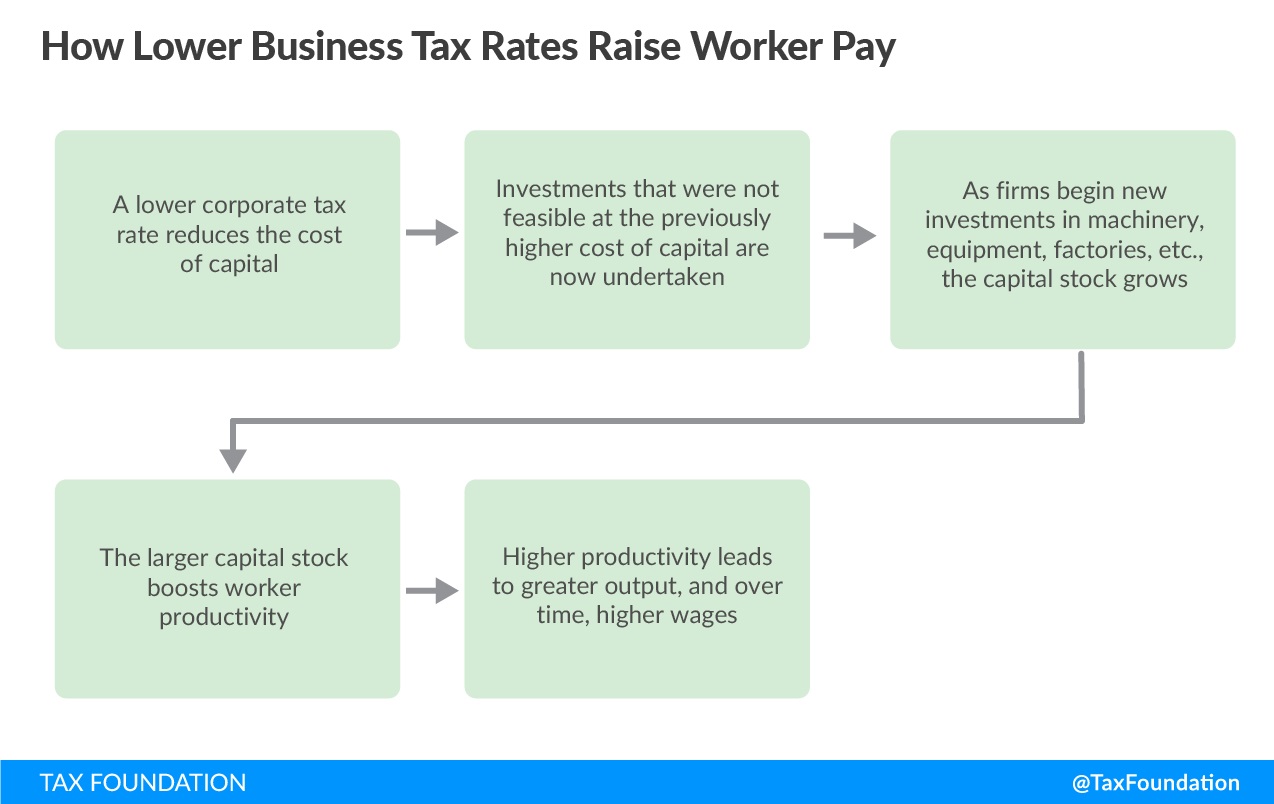

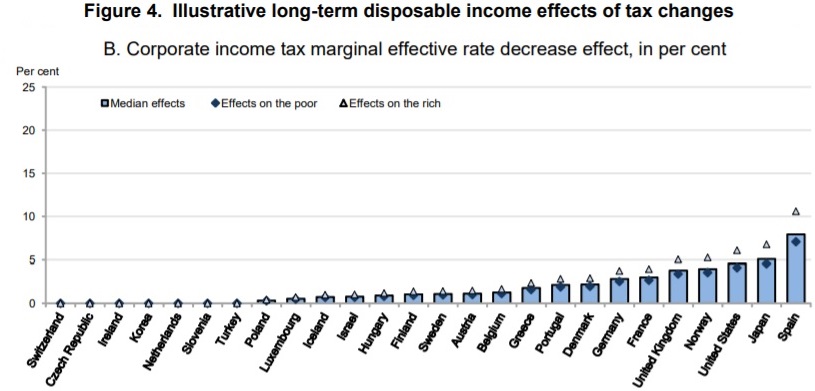
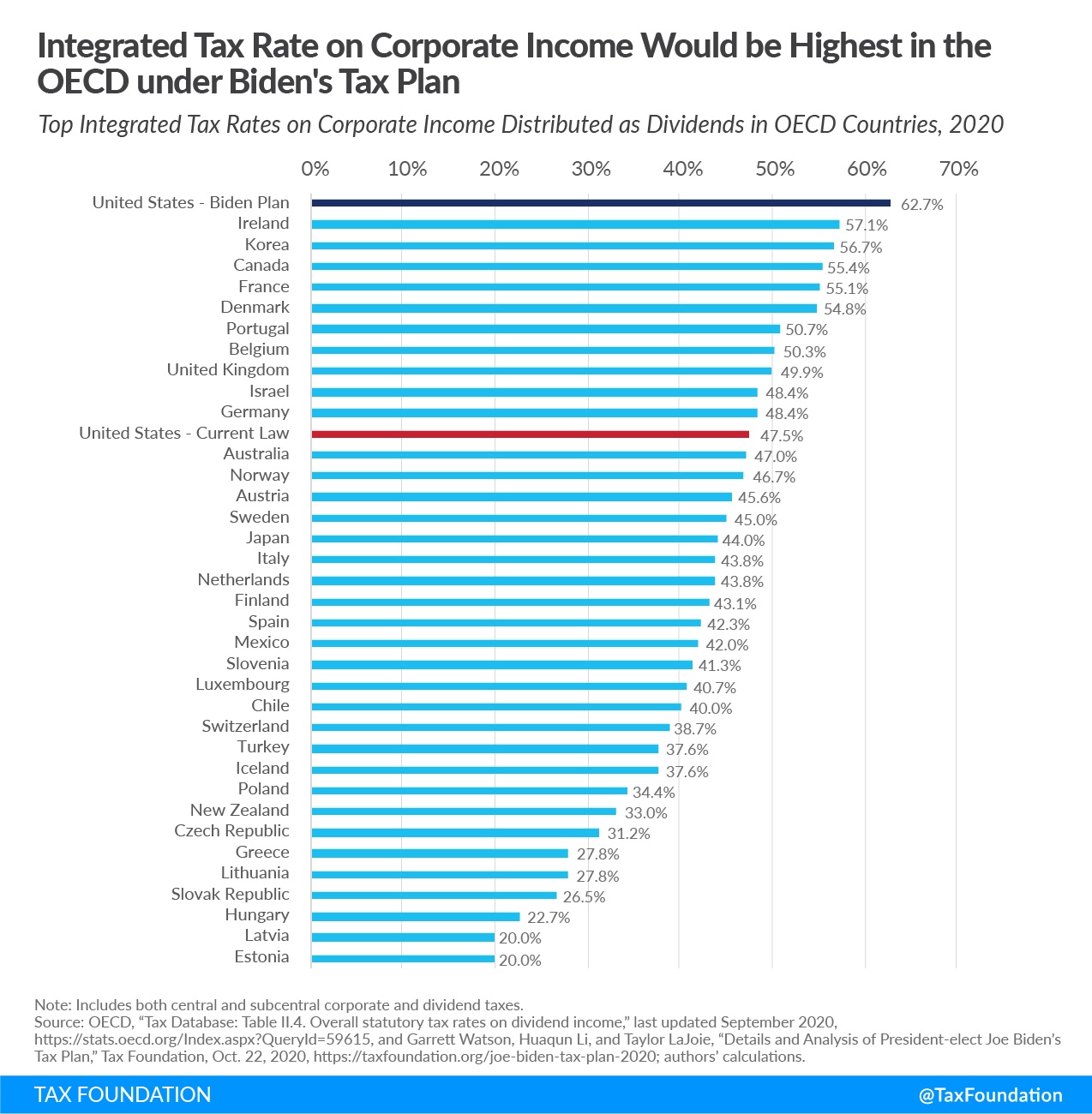
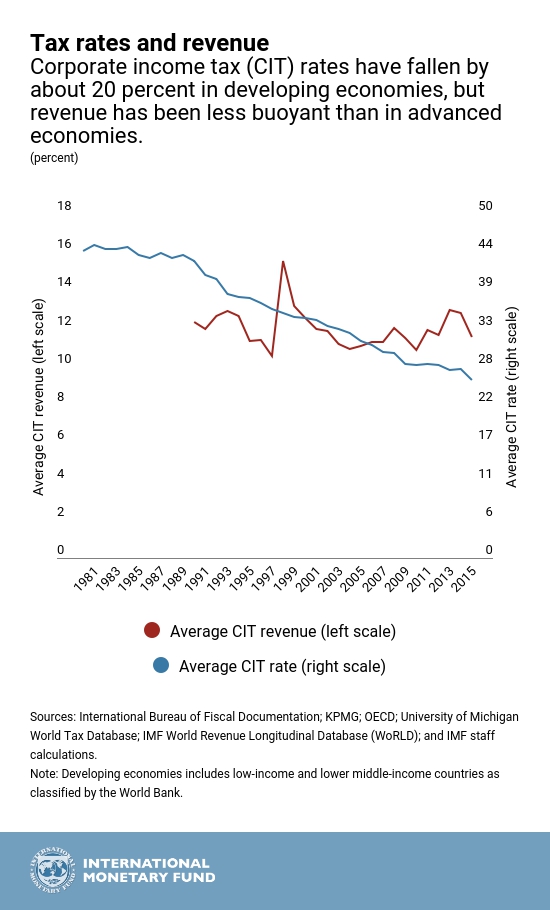
This would shoot the tax burden on U.S. companies back toward the top of the developed world list. …The larger Biden goal is to end global tax competition… “The United States can lead the world to end the race to the bottom on corporate tax rates,” says the White House fact sheet. Mr. Biden says he wants “other countries to adopt strong minimum taxes on corporations” so nations like Ireland can no longer compete for capital with lower tax rates. This has long been the dream of the French and Germans, working through the Organization for Economic Cooperation and Development. …All of this is in addition to the looming Biden tax increases on dividends, capital gains and other investment income. …Mr. Biden’s corporate tax increases will hit the middle class hard—in the value of their 401(k)s, the size of their pay packets, and what they pay for goods and services.
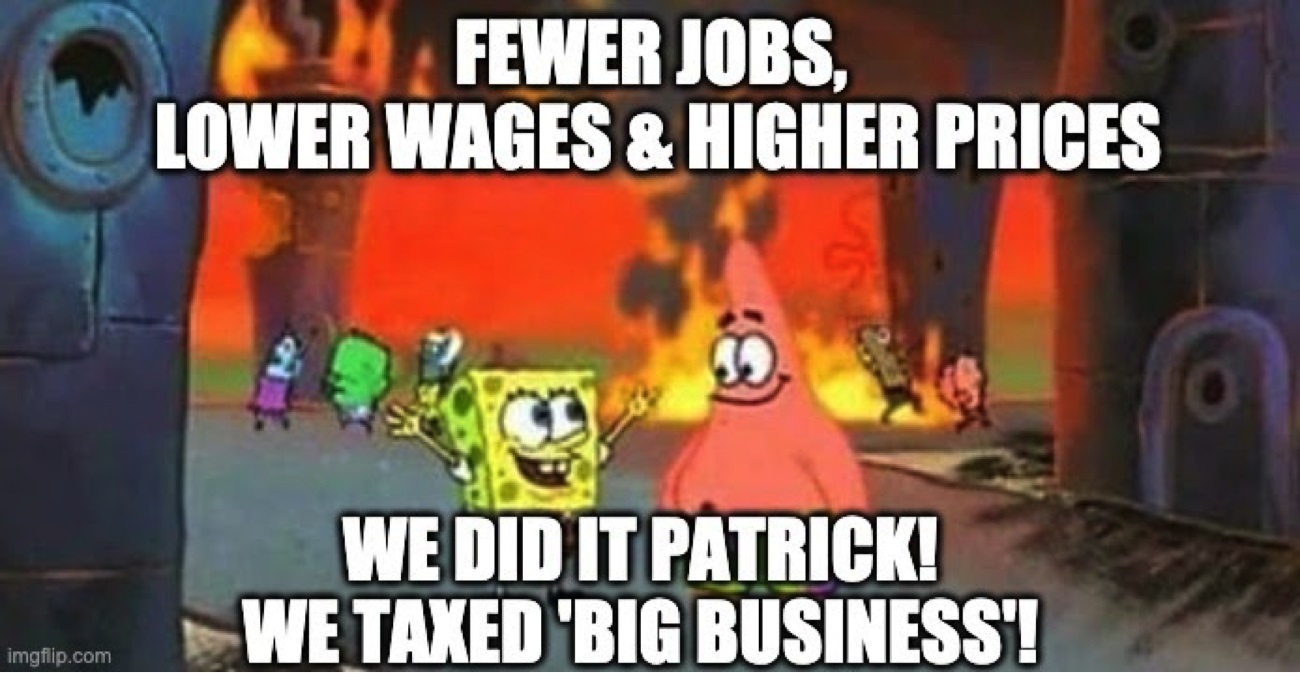


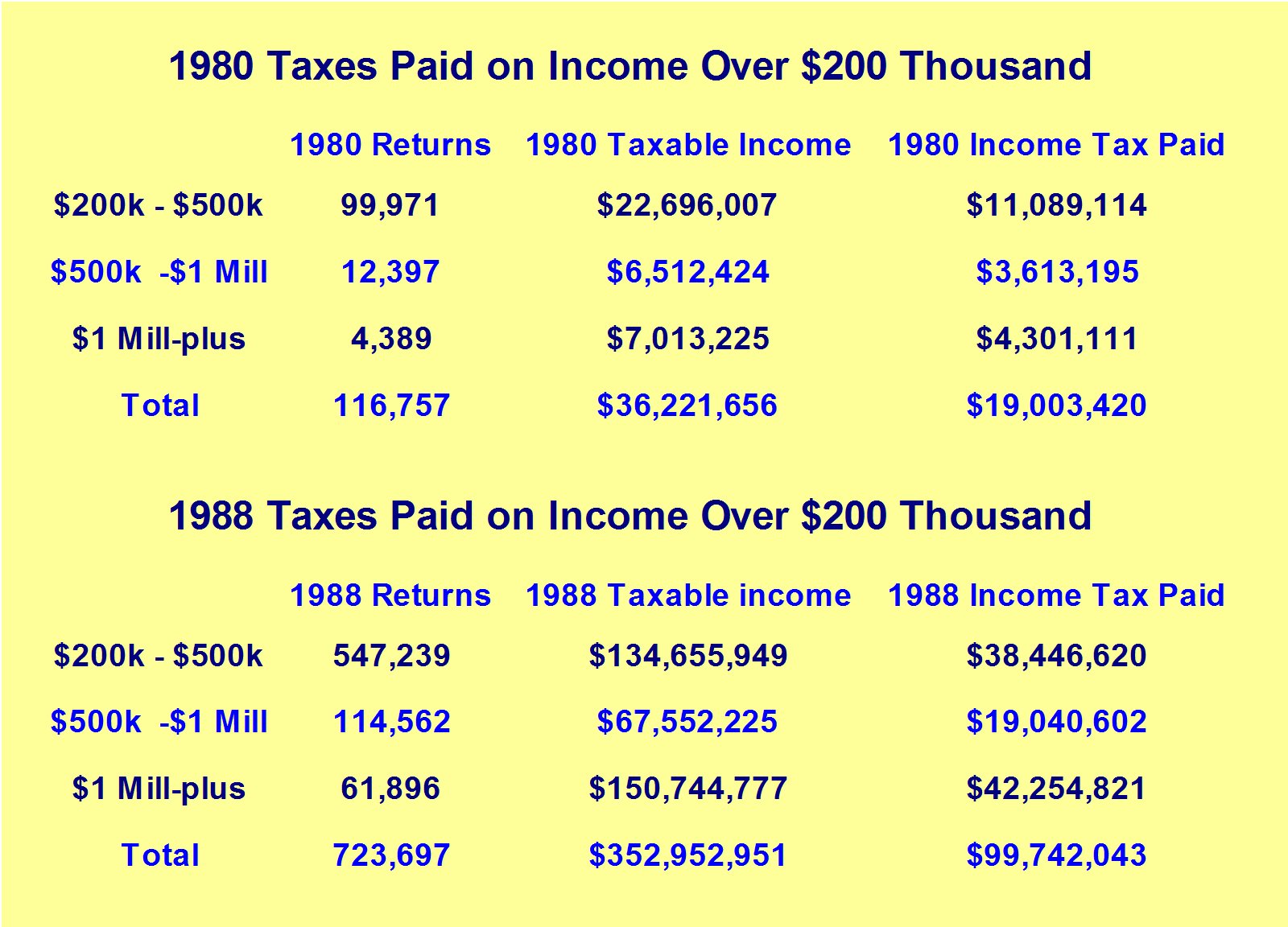





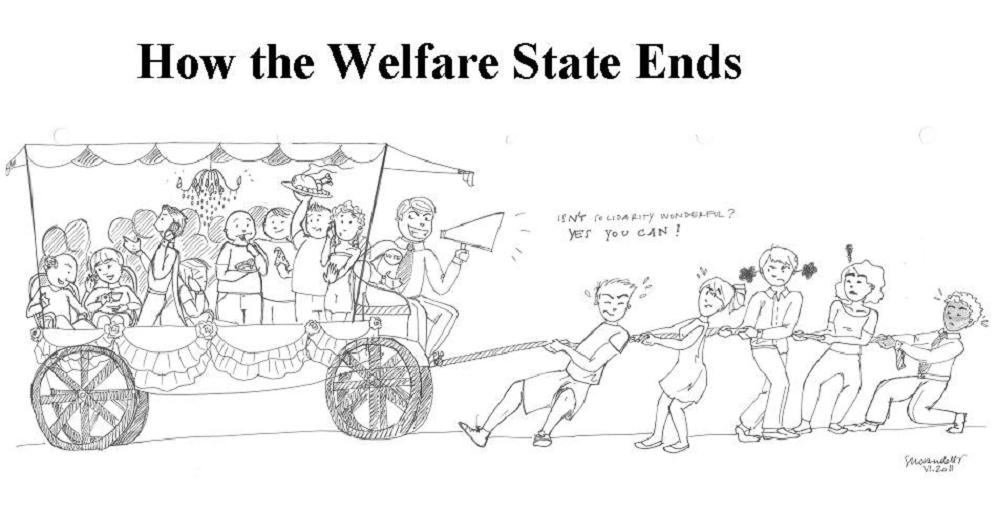




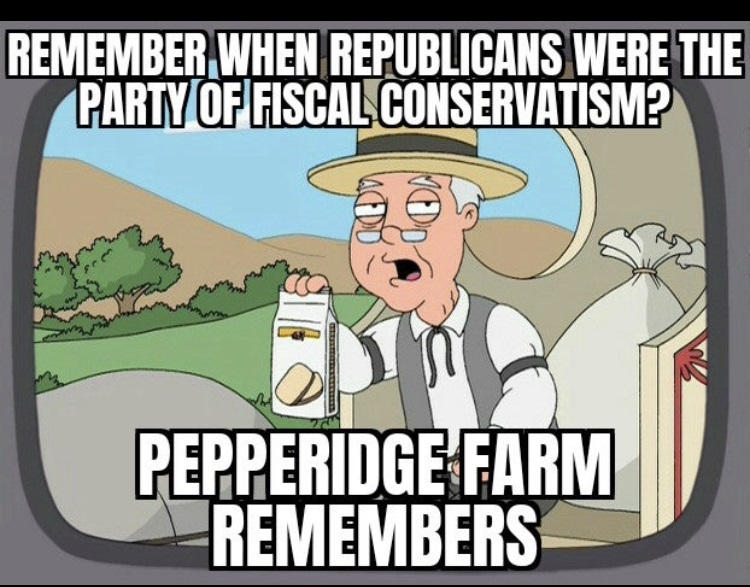

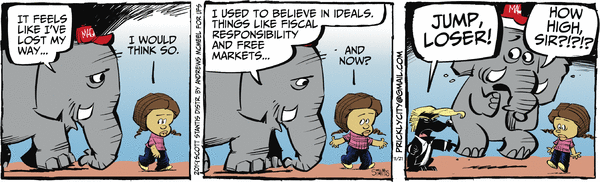


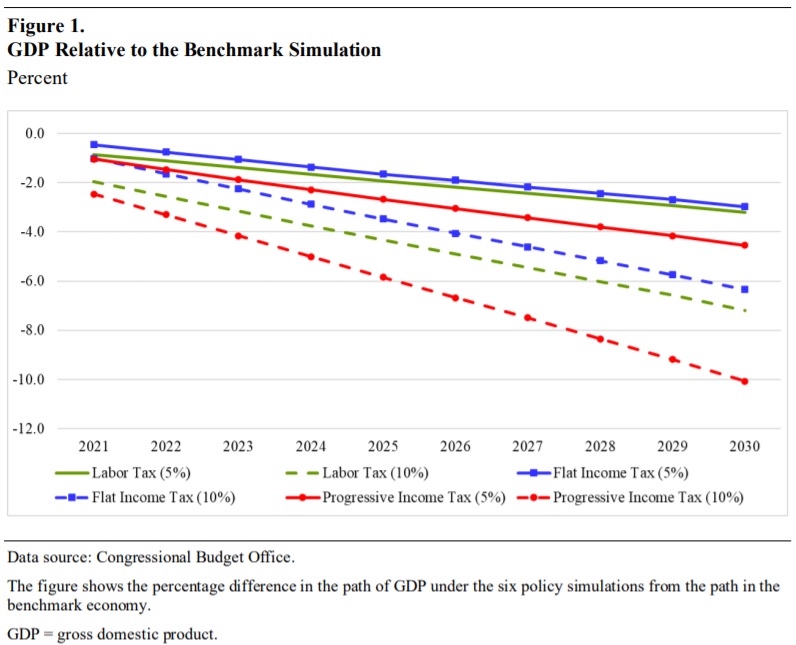
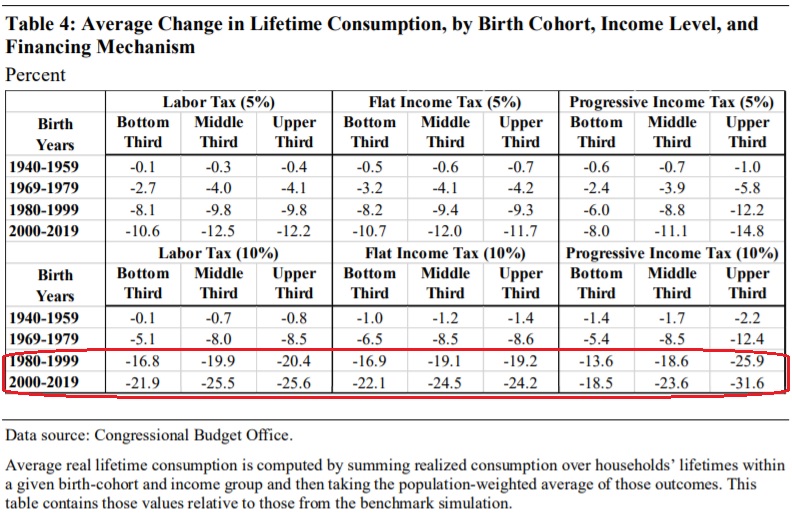
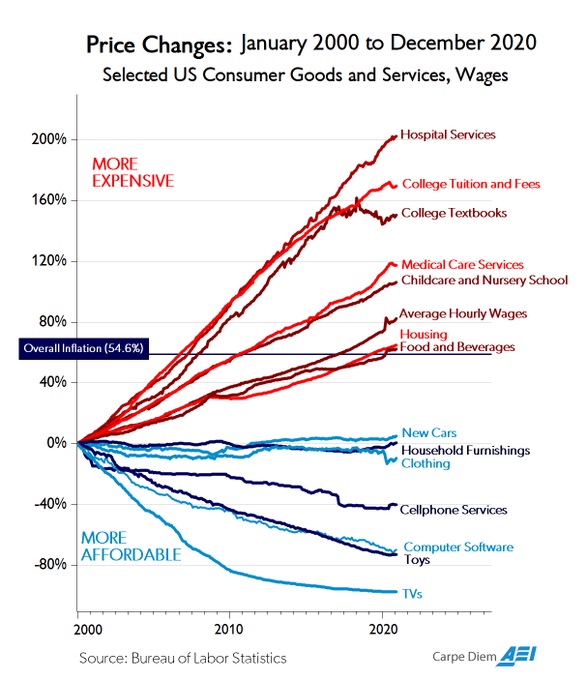


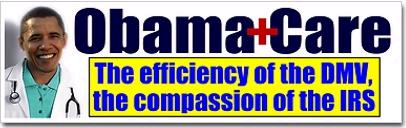




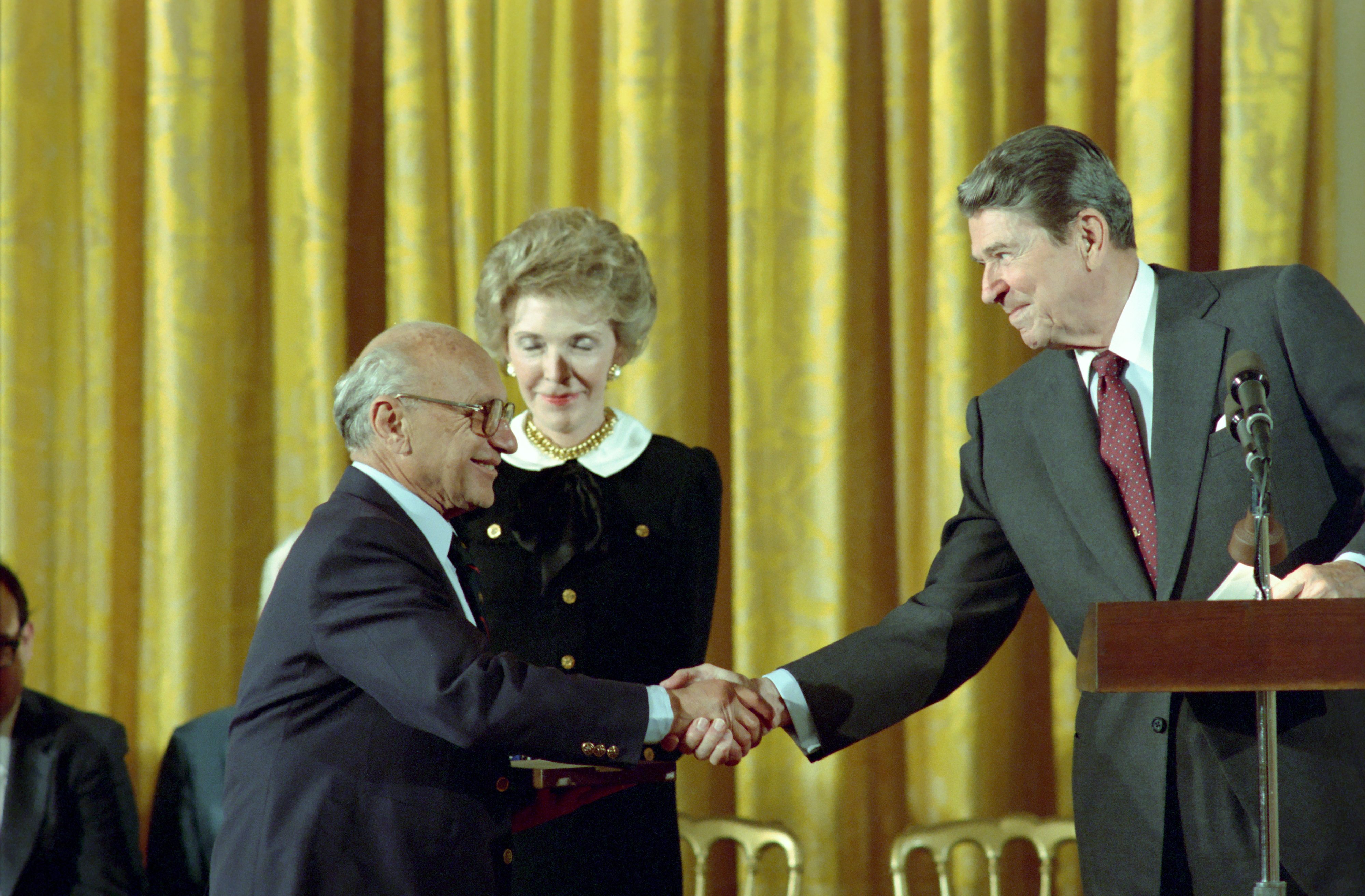

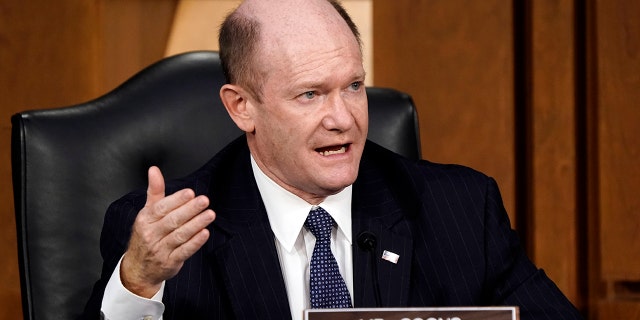
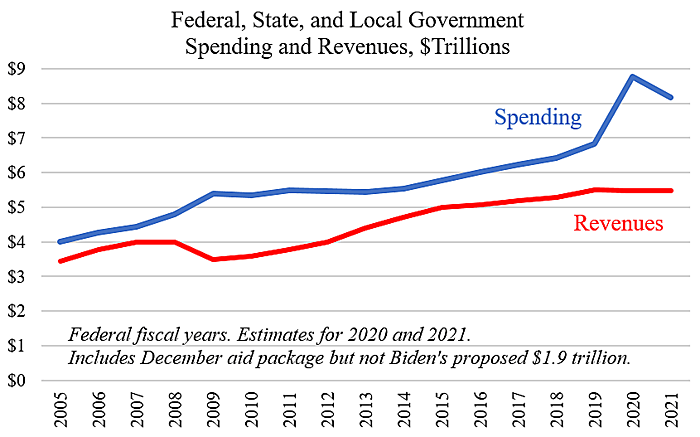


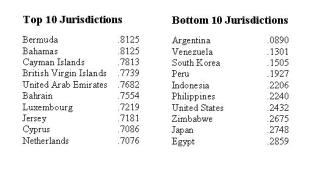
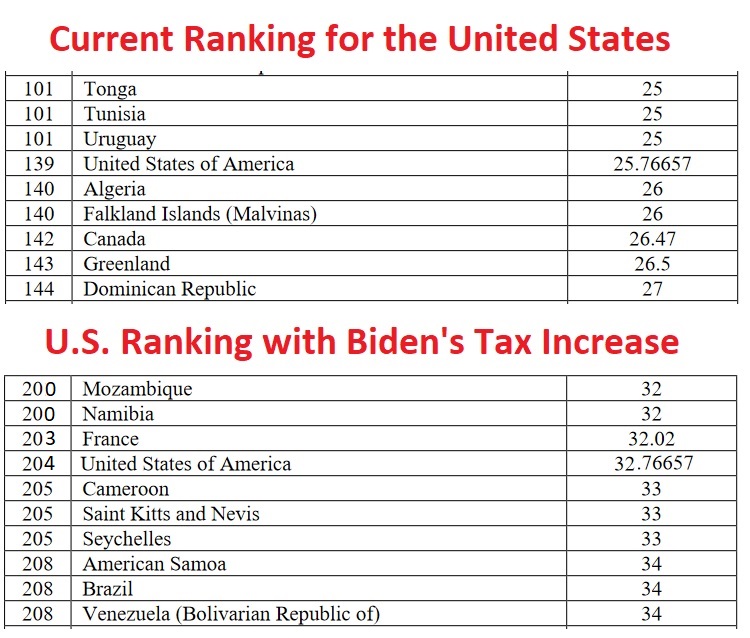
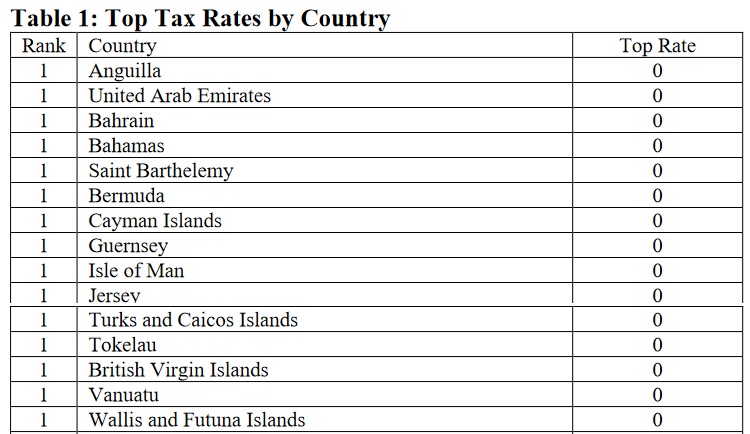
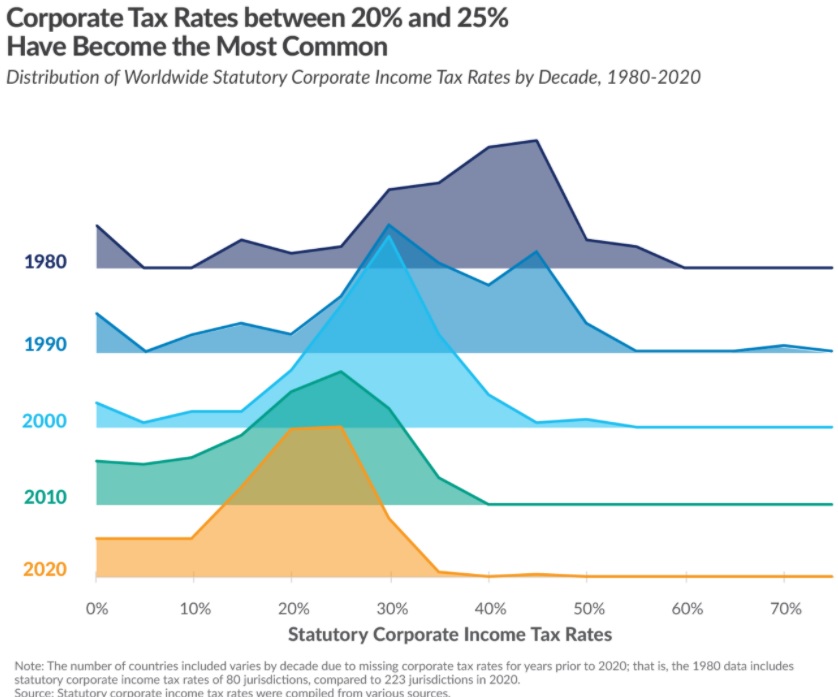


 The Daily Hatch
Jason Fried wrote this on Mar 03 2010 There are 43 comments.