I have an old-fashioned belief that it’s important to be truthful when analyzing public policy. I criticize Republicans when they’re wrong and I criticize Democrats when they’re wrong. And I also praise politicians from bothparties in those rare moments when they do good things.
I explained that the Federal Reserve was the culprit. America’s central bank panicked during the pandemic and dramatically increased its balance sheet. In simpler terms, they created a huge amount of new money in the economy.
And they continued with that flawed policy even after it became apparent the world wasn’t coming to an end.
The good news is that inflation is now coming down. Catherine Rampell of the Washington Post wants Joe Biden to get the credit. But she explains that he deserves credit for something he didn’t do rather than any of his policies. Here are some excerpts from her column.
…what do Democrats say is moderating price growth…? The White House credits “Bidenomics.” What that means is unclear; administration officials tout vague platitudes about “building the economy from the middle out and bottom up,” as well asbig, recently passed industrial policies… But if you instead define Bidenomics as “respecting Federal Reserve independence and not interfering with Fed decisions even when they’re unpopular,” then sure: Great job, Bidenomics! …The president has been terrific at staying out of the Fed’s way, something presidents don’t always do.
I don’t always agree with Ms. Rampell, but I think this analysis is correct.
The Fed made a mess with bad monetary policy and only the Fed can fix that mistake. Biden, as Rampell noted, “has been terrific at staying out of the Fed’s way.”
If you want to understand the economics of why inflation is beginning to abate, this chart from the St. Louis Federal Reserve provides the answer. Simply stated, the Fed finally has started to withdraw some of the excess money it dumped into the economy.
By the way, while the Fed is finally doing the right thing, the central bank does not deserve praise. The nation could have avoided the pain of inflation if the Fed hadn’t started the boom-bust cycle in the first place.
This past article below from Dan Mitchell tells the story of Ronald Reagan’s successful strategy against inflation. I had a front row seat since I got to read the book and see the film FREE TO CHOOSE by Milton Friedman in 1980 who Reagan agreed with on this issue and I have included below the episode on inflation!
He also restored America’s national defenses and reoriented foreign policy, both of which led to the collapse of the Soviet Empire, a stupendous achievement that makes Reagan worthy of Mount Rushmore.
But he also has another great achievement, one that doesn’t receive nearly the level of appreciation that it deserves. President Reagan demolished the economic cancer of inflation.
Even Paul Krugman has acknowledged that reining in double-digit inflation was a major positive achievement. Because of his anti-Reagan bias, though, he wants to deny the Gipper any credit.
Robert Samuelson, in a column for the Washington Post, corrects the historical record.
Krugman recently wrote acolumnarguing that the decline of double-digit inflation in the 1980s was the decade’s big economic event, not the cuts in tax rates usually touted by conservatives. Actually, I agree with Krugman on this. But then he asserted that Ronald Reagan had almost nothing to do with it. That’s historically incorrect. Reagan was crucial. …Krugman’s error is so glaring.
Samuelson first provides the historical context.
For those too young to remember, here’s background. From 1960 to 1980, inflation — the general rise of retail prices —marched relentlessly upward. It went from 1.4 percent in 1960 to 5.9 percent in 1969 to 13.3 percent in 1979. The higher it rose, the more unpopular it became. …Worse, government seemed powerless to defeat it. Presidents deployed complex wage and price controls and guidelines. They didn’t work. The Federal Reserve — custodian of credit policies — veered between easy money and tight money, striving both to subdue inflation and to maintain “full employment” (taken as a 4 percent to 5 percent unemployment rate). It achieved neither. From the late 1960s to the early 1980s, there werefour recessions. Inflation became a monster, destabilizing the economy.
The column then explains that there was a dramatic turnaround in the early 1980s, as Fed Chairman Paul Volcker adopted a tight-money policy and inflation was squeezed out of the system much faster than almost anybody thought was possible.
But Krugman wants his readers to think that Reagan played no role in this dramatic and positive development.
Samuelson says this is nonsense. Vanquishing inflation would have been impossible without Reagan’s involvement.
What Reagan provided was political protection. The Fed’s previous failures to stifle inflation reflected its unwillingness to maintain tight-money policies long enough… Successive presidents preferred a different approach: the wage-price policies built on the pleasing (but unrealistic) premise that these could quell inflation without jeopardizing full employment. Reagan rejected this futile path. As the gruesome social costs of Volcker’s policies mounted — the monthly unemployment rate would ultimately rise to a post-World War II high of10.8 percent— Reagan’s approval ratings plunged. In May 1981, they were at 68 percent; by January 1983, 35 percent. Still, he supported the Fed. …It’s doubtful that any other plausible presidential candidate, Republican or Democrat, would have been so forbearing.
What’s the bottom line?
What Volcker and Reagan accomplished was an economic and political triumph. Economically, ending double-digit inflation set the stage for a quarter-century of near-automatic expansion… Politically, Reagan and Volcker showed that leaders can take actions that, though initially painful and unpopular, served the country’s long-term interests. …There was no explicit bargain between them. They had what I’ve called a “compact of conviction.”
By the way, Krugman then put forth a rather lame response to Samuelson, including the rather amazing claim that “[t]he 1980s were a triumph of Keynesian economics.”
As preached and practiced since the 1960s, Keynesian economics promised to stabilize the economy at levels of low inflation and high employment. By the early 1980s, this vision was in tatters, and many economists were fatalistic about controlling high inflation. Maybe it could be contained. It couldn’t be eliminated, because the social costs (high unemployment, lost output) would be too great. …This was a clever rationale for tolerating high inflation, and the Volcker-Reagan monetary onslaught demolished it. High inflation was not an intrinsic condition of wealthy democracies. It was the product of bad economic policies. This was the 1980s’ true lesson, not the contrived triumph of Keynesianism.
If anything, Samuelson is being too kind.
One of the key tenets of Keynesian economics is that there’s a tradeoff between inflation and unemployment (the so-called Phillips Curve).
Yet in the 1970s we had rising inflation and rising unemployment.
While in the 1980s, we had falling inflation and falling unemployment.
But if you’re Paul Krugman and you already have a very long list of mistakes (see here, here, here, here,here,here,here, here, andherefor a few examples), then why not go for the gold and try to give Keynes credit for the supply-side boom of the 1980s
P.S. Since today’s topic is Reagan, it’s a good opportunity to share my favorite poll of the past five years.
P.P.S. Here are some great videos of Reagan in action. And here’s one more if you need another Reagan fix.
Milton Friedman’s FREE TO CHOOSE “How to cure inflation” Transcript and Video (60 Minutes)
In 1980 I read the book FREE TO CHOOSE by Milton Friedman and it really enlightened me a tremendous amount. I suggest checking out these episodes and transcripts of Milton Friedman’s film series FREE TO CHOOSE: “The Failure of Socialism” and “What is wrong with our schools?” and “Created Equal” and From Cradle to Grave, and – Power of the Market.“If we could just stop the printing presses, we would stop inflation,” Milton Friedman says in “How to Cure Inflation” from the Free To Choose series. Now as then, there is only one cause of inflation, and that is when governments print too much money. Milton explains why it is that politicians like inflation, and why wage and price controls are not solutions to the problem.
http://www.freetochoosemedia.org/freetochoose/detail_ftc1980_transcript.php?page=9While many people have a fairly good grasp of what inflation is, few really understand its fundamental cause. There are many popular scapegoats: labor unions, big business, spendthrift consumers, greed, and international forces. Dr. Friedman explains that the actual cause is a government that has exclusive control of the money supply. Friedman says that the solution to inflation is well known among those who have the power to stop it: simply slow down the rate at which new money is printed. But government is one of the primary beneficiaries of inflation. By inflating the currency, tax revenues rise as families are pushed into higher income tax brackets. Thus, inflation transfers wealth and resources from the private to the public sector. In short, inflation is attractive to government because it is a way of increasing taxes without having to pass new legislation to raise tax rates. Inflation is in fact taxation without representation. Wage and price controls are not the cure for inflation because they treat only the symptom (rising prices) and not the disease (monetary expansion). History records that such controls do not work; instead, they have perverse effects on both prices and economic growth and undermine the fundamental productivity of the economy. There is only one cure for inflation: slow the printing presses. But the cure produces the painful side effects of a temporary increase in unemployment and reduced economic growth. It takes considerable political courage to undergo the cure. Friedman cites the example of Japan, which successfully underwent the cure in the mid-seventies but took five years to squeeze inflation out of the system. Inflation is a social disease that has the potential for destroying a free society if it is unchecked. Prolonged inflation undermines belief in the basic equity of the free market system because it tends to destroy the link between effort and reward. And it tears the social fabric because it divides society into winners and losers and sets group against group.(Taxation without representation: Getting knocked up to higher tax brackets because of inflation pt 1)http://www.youtube.com/watch?v=b1dTWDNKH3c
Volume 9 – How to Cure Inflation
Transcript:
Friedman: The Sierra Nevada’s in California 10,000 feet above sea level, in the winter temperatures drop to 40 below zero, in the summer the place bakes in the thin mountain air. In this unlikely spot the town of Body sprang up. In its day Body was filled with prostitutes, drunkards and gamblers part of a colorful history of the American West.
A century ago, this was a town of 10,000 people. What brought them here? Gold. If this were real gold, people would be scrambling for it. The series of gold strikes throughout the West brought people from all over the world, all kinds of people. They came here for one purpose and one purpose only, to strike it rich, quick. But in the process, they built towns, cities, in places where nobody would otherwise have dreamed of building a city. Gold built these cities and when the gold was exhausted, the cities collapsed and became ghost towns. Many of the people who came here ended up the way they began, broke and unhappy. But a few struck it rich. For them, gold was real wealth. But was it for the world as a whole. People couldn’t eat the gold, they couldn’t wear the gold, they couldn’t live in houses made of gold. Because there was more gold, they had to pay a little more gold to buy goods and services. The prices of things in terms of gold went up.
At tremendous cost, at sacrifice of lives, people dug gold out of the bowels of the earth. What happened to that gold? Eventually, at long last, it was transported to distant places only to be buried again under the ground. This time in the vaults of banks throughout the world. There is hardly anything that hasn’t been used for money; rock salt in Ethiopia, brass rings in West Africa, Calgary shells in Uganda, even a toy cannon. Anything can be used as money. Crocodile money in Malaysia, absurd isn’t it?
That beleaguered minority of the population that still smokes may recognize this stuff as the raw material from which their cigarettes are made. But in the early days of the colonies, long before the U.S. was established, this was money. It was the common money of Virginia, Maryland and the Carolinas. It was used for all sorts of things. The legislature voted that it could be used legally to pay taxes. It was used to buy food, clothing and housing. Indeed, one of the most interesting sites was to see the husky young fellows at that time, lug 100 pounds of it down to the docks to pay the costs of the passage of the beauteous young ladies who had come over from England to be their brides.
Now you know how money is. There’s a tendency for it to grow, for more and more of it to be produced and that’s what happened with this tobacco. As more tobacco was produced, there was more money. And as always when there’s more money, prices went up. Inflation. Indeed, at the very end of the process, prices were 40 times as high in terms of tobacco as they had been at the beginning of the process. And as always when inflation occurs, people complained. And as always, the legislature tried to do something. And as always, to very little avail. They prohibited certain classes of people from growing tobacco. They tried to reduce the total amount of tobacco grown, they required people to destroy part of their tobacco. But it did no good. Finally, many people took it into their own hands and they went around destroying other people’s tobacco fields. That was too much. Then they passed a law making it a capital offense, punishable by death, to destroy somebody else’s tobacco. Grecian’s Law, one of the oldest laws in economics, was well illustrated. That law says that cheap money drives out dear money and so it was with tobacco. Anybody who had a debt to pay, of course, tried to pay it in the worst quality of tobacco he had. He saved the good tobacco to sell overseas for hard money. The result was that bad money drove out good money.
Finally, almost a century after they had started using tobacco as money, they established warehouses in which tobacco was deposited in barrels, certified by an inspector according to his views as to it’s quality and quantity. And they issued warehouse certificates which people gave from one to another to pay for the bills that they accumulated.
These pieces of green printed paper are today’s counterparts of those tobacco certificates. Except that they bear no relation to any commodity. In this program I want to take you to Britain to see how inflation weakens the social fabric of society. Then to Tokyo, where the Japanese have the courage to cure inflation. To Berlin, where there is a lesson to be learned from the West Germans and how so called cures are often worse than the disease. And to Washington where our government keeps these machines working overtime. And I am going to show you how inflation can be cured.
The fact is that most people enjoy the early stages of the inflationary process. Britain, in the swinging 60’s, there was plenty of money around, business was brisk, jobs were plentiful and prices had not yet taken off. Everybody seemed happy at first. But by the early 70’s, as the good times rolled along, prices started to rise more and more rapidly. Soon, some of these people are going to lose their jobs. The party was coming to an end.
The story is much the same in the U.S. Only the process started a little later. We’ve had one inflationary party after another. Yet we still can’t seem to avoid them. How come?
Before every election our representatives would like to make us think we are getting a tax break. When they are able to do it, while at the same time actually raising our taxes because of a bit of magic they have in their kit bag. That magic is inflation. They reduced the tax rates but the taxes we have to pay go up because we are automatically shoved into higher brackets by the effective inflation. A neat trick. Taxation without representation.
_________________________________________
Pt 2 Many a political leader has been tempted to turn to wage and price controls despite their repeated failure in practice. On this subject they never seem to learn. But some lessons may be learned. That happened to British P
Bob Crawford: The more I work, it seems like the more they take off me. I know if I work an extra day or two extra days, what they take in federal income tax alone is almost doubled because apparently it puts you in a higher income tax bracket and it takes more off you.
Friedman: Bob Crawford lives with his wife and three children in a suburb of Pittsburgh. They’re a fairly average American family.
Mrs. Crawford: Don’t slam the door Daphne. Okay. Alright. What are you doing? Making your favorite dish.
Friedman: We went to the Crawford’s home after he had spent a couple of days working out his federal and state income taxes for the year. For our benefit, he tried to estimate all the other taxes he had paid as well. In the end, though, he didn’t discover much that would surprise anybody.
Bob Crawford: Inflation is going up, everything is getting more expensive. No matter what you do, as soon as you walk out of the house, everything went up. Your gas bills keep going up, electric bills, your gasoline, you can name a thousand things that are going up. Everything is going sky high. Your food. My wife goes to the grocery store. We used to live on say, $60 or $50 every two weeks just for our basic food. Now it’s $80 or $90 every two weeks. Things are just going out of sight as far as expense to live on. Like I say it’s getting tough. It seems like every month it gets worse and worse. And I don’t know where it’s going to end. At the end of the day that I spend nearly $6,000 of my earnings on taxes. That leaves me with a total of $12,000 to live on. It might seem like a lot of money, but five, six years ago I was earning $12,000.
Friedman: How does taxation without representation really effect how much the Crawford family has left to spend after it’s paid its income taxes. Well in 1972 Bob Crawford earned $12,000. Some of that income was not subject to income tax. After paying income tax on the rest he had this much left to spend. Six years later he was earning $18,000 a year. By 1978 the amount free from tax was larger. But he was now in a higher tax bracket so his taxes went up by a larger percentage than his income. However, those dollars weren’t worth anything like as much. Even his wages, let alone his income after taxes, hadn’t kept up with inflation. His buying power was lower than before. That is taxation without representation in practice.
Unnamed Individual: We have with us today you brothers that are sitting here today that were with us on that committee and I’d like to tell you….
Friedman: There are many traditional scapegoats blamed for inflation. How often have you heard inflation blamed on labor unions for pushing up wages. Workers, of course, don’t agree.
Unnamed Individual: But fellows this is not true. This is subterfuge. This is a myth. Your wage rates are not creating inflation.
Friedman: And he’s right. Higher wages are mostly a result of inflation rather than a cause of it. Indeed, the impression that unions cause inflation arises partly because union wages are slow to react to inflation and then there is pressure to catch up.
Worker: On a day to day basis, try to represent our own numbers. But that in fact is not the case. Not only can we not play catch up, we can’t even maintain a wage rate commensurate with the cost of living that’s gone up in this country.
Friedman: Another scapegoat for inflation is the cost of goods coming from abroad. Inflation, we’re told, is imported. Higher prices abroad driving up prices at home. It’s another way government can blame someone else for inflation. But this argument, too, is wrong. The prices of imports and the countries from which they come are not in terms of dollars, they are in terms of lira or yen or other foreign currencies. What happens to their prices in dollars depends on exchange rates which in turn reflect inflation in the United States.
Since 1973 some governments have had a field day blaming the Arabs for inflation. But if high oil prices were the cause of inflation, how is it that inflation has been less here in Germany, a country that must import every drop of oil and gas that it uses on the roads and in industry, then for example it is in the U.S. which produces half of its own oil. Japan has no oil of its own at all. Yet at the very time the Arabs were quadrupling oil prices, the Japanese people were bringing inflation down from 30 to less than 5% a year. The fallacy is to confuse particular prices like the price of oil, with prices in general. Back at home, President Nixon understood this.
Nixon: “Now here’s what I will not do. I will not take this nation down the road of wage and price controls however politically expedient that may seem. The pros of rationing may seem like an easy way out, but they are really an easy way in for more trouble. To the explosion that follows when you try to clamp a lid on a rising head of steam without turning down the fire under the pot, wage and price controls only postpone the day of reckoning. And in so doing, they rob every American of a very important part of his freedom.
Friedman: Now listen to this:
Nixon: “The time has come for decisive action. Action that will break the vicious circle of spiraling prices and costs. I am today ordering a freeze on all prices and wages throughout the United States for a period of 90 days. In addition, I call upon corporations to extend the wage price freeze to all dividends.”
Friedman: Many a political leader has been tempted to turn to wage and price controls despite their repeated failure in practice. On this subject they never seem to learn. But some lessons may be learned. That happened to British Prime Minister James Callahan who finally discovered that a very different economic myth was wrong. He told the Labor Party Conference about it in 1976.
James Callahan: “We used to think that you could use, spend your way out of a recession and increase employment by cutting taxes and boosting government spending. I tell you in all candor that option no longer exists. It only works on each occasion since the war by injecting a bigger dose of inflation into the economy followed by a higher level of unemployment as the next step. That’s the history of the last 20 years.”
Friedman: Well, it’s one thing to say it. One reason why inflation does so much harm is because it effects different groups differently. Some benefit and of course they attribute that to their own cleverness. Some are hurt, but of course they attribute that to the evil actions of other people. And the whole problem is made far worse by the false cures which government adopts, particularly wage and price control.
The garbage collectors in London felt justifiably aggrieved because their wages had not been permitted to keep pace with the cost of living. They struck, hurting not the people who impose the controls, but their friends and neighbors who had to live with mounting piles of rat infested garbage. Hospital attendants felt justifiably aggrieved because their wages had not been permitted to keep up with the cost of living. They struck, hurting not the people who impose the controls, but cancer patients who were turned out of hospital beds. The attendants behaved as a group in a way they never would have behaved as individuals. One group is set against another group. The social fabric of society is torn apart inflicting scars that it will take decades to heal and all to no avail because wage and price controls, far from being a cure for inflation, only make inflation worse.
Within the memory of most of our political leaders, there’s one vivid example of how economic ruin can be magnified by controls. And the classic demonstration of what to do when it happens.
_______________________________________________
(Wage and Price Controls don’t work)
Inflation is just like alcoholism. In both cases when you start drinking or when you start printing too much money, the good effects come first. The bad effects only come later.
That’s why in both cases there is a strong temptation to overdo it. To drink too much and to print too much money. When it comes to the cure, it’s the other way around. When you stop drinking or when you stop printing money, the bad effects come first and the good effects only come later.
Pt 3
Germany, 1945, a devastated country. A nation defeated in war. The new governing body was the Allied Control Commission, representing the United States, Britain, France and the Soviet Union. They imposed strict controls on practically every aspect of life including wages and prices. Along with the effects of war, the results were tragic. The basic economic order of the country began to collapse. Money lost its value. People reverted to primitive barter where they used cameras, fountain pens, cigarettes, whiskey as money. That was less than 40 years ago.
This is Germany as we know it today. Transformed into a place a lot of people would like to live in. How did they achieve their miraculous recovery? What did they know that we don’t know?
Early one Sunday morning, it was June 20, 1948, the German Minister of Economics, Ludwig Earhardt, a professional economist, simultaneously introduced a new currency, today’s Deutsche Mark, and in one fell swoop, abolished almost all controls on prices and wages. Why did he do it on a Sunday morning? It wasn’t as you might suppose because the Stock Markets were closed on that day, it was, as he loved to confess, because the offices of the American, the British, and the French occupation authorities were closed that day. He was sure that if he had done it when they open they would have countermanded the order. It worked like a charm. Within days, the shops were full of goods. Within months, the German economy was humming along at full steam. Economists weren’t surprised at the results, after all, that’s what a price system is for. But to the rest of the world it seemed an economic miracle that a defeated and devastated country could in little more than a decade become the strongest economy on the continent of Europe.
In a sense this city, West Berlin, is something of a unique economic test tube. Set as it is deep in Communist East Germany. Two fundamentally different economic systems collide here in Europe. Ours and theirs, separated by political philosophies, definitions of freedom and a steel and concrete wall.
To digress from inflation, economic freedom does not stand alone. It is part of a wider order. I wanted to show you how much difference it makes by letting you see how the people live on the other side of that Berlin Wall. But the East German authorities wouldn’t let us. The people over there speak the same language as the people over here. They have the same culture. They have the same for bearers. They are the same people. Yet you don’t need me to tell you how differently they live. There is one simple explanation. The political system over there cannot tolerate economic freedom. The political system over here could not exist without it.
But political freedom cannot be preserved unless inflation is kept in bounds. That’s the responsibility of government which has a monopoly over places like this. The reason we have inflation in the United States or for that matter anywhere in the world is because these pieces of paper and the accompanying book entry or their counterparts in other nations are growing more rapidly than the quantity of goods and services produced. The truth is inflation is made in one place and in one place only. Here in Washington. This is the only place were there are presses like this that turn out these pieces of paper we call money. This is the place where the power resides to determine how rapidly the amount of money shall increase.
What happened to all that noise? That’s what would happen to inflation if we stop letting the amount of money grow so rapidly. This is not a new idea. It’s not a new cure. It’s not a new problem. It’s happened over and over again in history. Sometimes inflation has been cured this way on purpose. Sometimes it’s happened by accident. During the Civil War the North, late in the Civil War, overran the place in the South where the printing presses were sitting up, where the pieces of paper were being turned out. Prior to that point, the South had a very rapid inflation. If my memory serves me right, something like 4% a month. It took the Confederacy something over two weeks to find a new place where they could set up their printing presses and start them going again. During that two week period, inflation came to a halt. After the two week period, when the presses started running again, inflation started up again. It’s that clear, that straightforward. More recently, there’s another dramatic example of the only effective way to deal with rampant inflation.
In 1973, Japanese housewives going to market were faced with an unpleasant fact. The cash in their purses seemed to be losing its value. Prices were starting to sore as the awful story of inflation began to unfold once again. The Japanese government knew what to do. What’s more, they were prepared to do it. When it was all over, economists were able to record precisely what had happened. In 1971 the quantity of money started to grow more rapidly. As always happens, inflation wasn’t affected for a time. But by late 1972 it started to respond. In early 73 the government reacted. It started to cut monetary growth. But inflation continued to soar for a time. The delayed reaction made 1973 a very tough year of recession. Inflation tumbled only when the government demonstrated its determination to keep monetary growth in check. It took five years to squeeze inflation out of the system. Japan attained relative stability. Unfortunately, there’s no way to avoid the difficult road the Japanese had to follow before they could have both low inflation and a healthy economy. First they had to live through a recession until slow monetary growth had its delayed effect on inflation.
Inflation is just like alcoholism. In both cases when you start drinking or when you start printing too much money, the good effects come first. The bad effects only come later.
That’s why in both cases there is a strong temptation to overdo it. To drink too much and to print too much money. When it comes to the cure, it’s the other way around. When you stop drinking or when you stop printing money, the bad effects come first and the good effects only come later. That’s why it’s so hard to persist with the cure. In the United States, four times in the 20 years after 1957, we undertook the cure. But each time we lacked the will to continue. As a result, we had all the bad effects and none of the good effects. Japan on the other hand, by sticking to a policy of slowing down the printing presses for five years, was by 1978 able to reap all the benefits, low inflation and a recovering economy. But there is nothing special about Japan. Every country that has had the courage to persist in a policy of slow monetary growth has been able to cure inflation and at the same time achieve a healthy economy.
___________________________________
Pt 4
The job of the Federal Reserve is not to run government spending; it’s not to run government taxation. The job of the Federal Reserve is to control the money supply and I believe, frankly, I have always believed as you know, that these are excuses and not reasons for the performance.
DISCUSSION
Participants: Robert McKenzie, Moderator; Milton Friedman; Congressman Clarence J. Brown; William M. Martin, Chairman of Federal Reserve 1951_1970; Beryl W. Sprinkel, Executive Vice President, Harris Bank, Chicago; Otmar Emminger, President, Ieutsche Bundesbank, Frankfurt West Germany
MCKENZIE: And here at the Harper Library of the University of Chicago, our distinguished guests have their own ideas, too. So, lets join them now.
BROWN: If you could control the money supply, you can certainly cut back or control the rate of inflation. I’d have to say that that prescription is a little bit easier to write than it is to fill. I think there are some other ways to do it and I would relate the money supply __ I think inflation is a measure of the relationship between money and the goods and services that money is meant to cover. And so if you can stimulate the goods, the production of goods and services, it’s helpful. It’s a little tougher to control the money supply, although I think it can be done, than just saying that you should control it, because we’ve got the growth of credit cards, which is a form of money; created, in effect, by the free enterprise system. It isn’t all just printed in Washington, but that may sound too defensive. I think he was right in saying that the inflation is Washington based.
MCKENZIE: Mr. Martin, nobody has been in the firing line longer than you, 17 years head of the Fed. Could you briefly comment on that and we’ll go around the group.
MARTIN: I want to say 19 years.
(Laughter)
MARTIN: I wouldn’t be out here if it weren’t for Milton Friedman, today. He came down and gave us advice from time to time.
FRIEDMAN: You’ve never taken it.
(Laughter)
MCKENZIE: He’s going to do some interviewing later, I warn you.
MARTIN: And I’m rather glad we didn’t take it __
(Laughter)
MARTIN: __ all the time.
SPRINKEL: In your 19 years as Chairman of the Federal Reserve, Bill, the average growth in the money supply was 3.1 percent per year. The inflation rate was 2.2 percent. Since you left, the money supply has exactly doubled. The inflation rate is average over 7 percent, and, of course, in recent times the money supply has been growing in double-digit territory as has our inflation rate.
EMMINGER: May I, first of all, confirm two facts which have been so vividly brought out in the film of Professor Friedman; namely, that at the basis of the relatively good performance of Western Germany were really two events. One, the establishment of a new sound money which we try to preserve sound afterwards. And, secondly, the jump overnight into a free market economy without any controls over prices and wages. These are the two fundamental facts. We have tried to preserve monetary stability by just trying to follow this prescription of Professor Friedman; namely, monetary discipline. Keeping monetary growth relatively moderate. I must, however, warn you it’s not so easy as it looks. If you just say, governments have to have the courage to persist in that course.
FRIEDMAN: Nobody does disagree with the proposition that excessive growth in money supply is an essential element in the inflationary process and that the real problem is not what to do, but how to have the courage and the will to do it. And I want to go and start, if I may, on that subject; because I think that’s what we ought to explore. Why is it we haven’t had the courage and don’t, and under what circumstances will we? And I want to start with Bill Martin because his experience is a very interesting experience. His 19 years was divided into different periods. In the first period, that average that Beryl Sprinkel spoke about, averaged two very different periods. An early period of very slow growth and slow inflation; a later period of what at the time was regarded as creeping inflation __ now we’d be delighted to get back to it. People don’t remember that at the time that Mr. Nixon introduced price and wage controls in 1971 to control an outrageous inflation, the rate of inflation was four-and-a-half percent per year. Today we’d regard that as a major achievement; but the part of the period when you were Chairman, was a period when the inflation rate was starting to creep up and money growth rate was also creeping up. Now if I go from your period, you were eloquent in your statements to the public, to the press, to everyone, about the evils of inflation, and about the determination on the Federal Reserve not to be the architect of inflation. Your successor, Arthur Burns, was just as eloquent. Made exactly the same kinds of statements as effectively, and again over and over again said the Federal Reserve will not be the architect of inflation. His successor, Mr. G. William Miller, made the same speeches, and the same statements, and the same protestations. His successor, Paul Volcker, he is making the same statements. Now my question to you is: Why is it that there has been such a striking difference between the excellent pronouncements of all Chairmen of the Fed, therefore it’s not personal on you. You have a lot of company, unfortunately for the country. Why is it that there has been such a wide diversion between the excellent pronouncements on the one hand and what I regard as a very poor performance on the other?
MARTIN: Because monetary policy is not the only element. Fiscal policy is equally important.
FRIEDMAN: You’re shifting the buck to the Treasury.
MARTIN: Yes.
FRIEDMAN: To the Congress. We’ll get to Mr. Brown, don’t worry.
MARTIN: Yeah, that’s right.
(Laughter)
MARTIN: The relationship of fiscal policy to monetary policy is one of the important things.
MCKENZIE: Would you remind us, the general audience, when you say “fiscal policy”, what you mean in distinction to “monetary policy”?
MARTIN: Well, taxation.
MCKENZIE: Yeah.
MARTIN: The raising revenue.
FRIEDMAN: And spending.
MARTIN: And spending.
FRIEDMAN: And deficits.
MARTIN: And deficits, yes, exactly. And I think that you have to realize that when I’ve talked for a long time about the independence of the Federal Reserve. That’s independence within the government, not independence of the government. And I’ve worked consistently with the Treasury to try to see that the government is financed. Now this gets back to spending. The government says they’re gonna spend a certain amount, and then it turns out they don’t spend that amount. It doubles.
FRIEDMAN: The job of the Federal Reserve is not to run government spending; it’s not to run government taxation. The job of the Federal Reserve is to control the money supply and I believe, frankly, I have always believed as you know, that these are excuses and not reasons for the performance.
MARTIN: Well that’s where you and I differ, because I think we would be irresponsible if we didn’t take into account the needs and what the government is saying and doing. I think if we just went on our own, irresponsibly, I say it on this, because I was in the Treasury before I came to this __
FRIEDMAN: I know. I know.
MARTIN: __ go to the Fed; and I know the other side of the picture. I think we’d be rightly condemned by the American people and by the electorate.
FRIEDMAN: Every central bank in this world, including the German Central Bank, including the Federal Reserve System, has the technical capacity to make the money supply do over a period of two or three or four months, not daily, but over a period, has the technical capacity to control it.
(Several people talking at once.)
FRIEDMAN: I cannot explain the kind of excessive money creation that has occurred, in terms of the technical incapacity of the Federal Reserve System or of the German Central Bank, or of the Bank of England, or any other central bank in the world.
EMMINGER: I wouldn’t say technically we are incapable of doing that, although we have never succeeded in controlling the money supply month that way. But I would say we can, technically, control it half yearly, from one half-year period to the next and that would be sufficient __
FRIEDMAN: That would be sufficient.
EMMINGER: __ for controlling inflation. But however I __
VOICE OFF SCREEN: It doesn’t move.
FRIEDMAN: I’m an economic scientist, and I’m trying to observe phenomena, and I observe that every Federal Reserve Chairman says one thing and does another. I don’t mean he does, the system does.
MCKENZIE: Yeah. How different is your setup in Germany? You’ve heard this problem of governments getting committed to spending and the Fed having, one way or the other, to accommodate itself to it. Now what’s your position on this very interesting problem?
EMMINGER: We are very independent of the government, from the government, but, on the other hand, we are an advisor of the government. Also on the budget deficits and they would not easily go before Parliament with a deficit which much of it is openly criticized and disapproved by the same bank. Why because we have a tradition in our country that we can also publicly criticize the government on his account. And second, as if happened in our case too, the government goes beyond what is tolerable for the sake of moral equilibrium. We have let it come through in the capital markets. That is to say they have enough interest rates that has drawn public criticism and that has had some effect on their attitude.
_________________________________________
Pt 5
I think that is a very important point that Dr. Emminger just made because there is not a one-to-one relationship between government deficits and what happens to the money supply at all. The pressure on the Federal Reserve comes indirectly. It comes because large government deficits, if they are financed in the general capital market, will drive up interest rates and then we have the right patents in Congress and their successors pressuring the Federal Reserve to enter in and finance the deficit by printing money as a way of supposedly holding down interest rates. Now before I turn to Mr. Brown and ask him that, I just want to make one point which is very important. The Federal Reserve’s activities in trying to hold down interest rates have put us in a position where we have the highest interest rates in history. It’s another example of how, of the difference between the announced intentions of a policy, and the actual results. But now I want to come to Clarence Brown and ask him, shift the buck to him, and put him on the hot seat for a bit. The government spending has been going up rapidly, Republican administration or Democratic administration. This is a nonpartisan issue, it doesn’t matter. Government deficits have been going up rapidly. Republican administration or Democratic administration. Why is it that here again you have the difference between pronouncements and performance? There is no Congressman, no Senator, who will come out and say, “I am in favor of inflation.” There is not a single one who will say, “I am in favor of big deficits.” They’ll all say we want to balance the budget, we want to hold down spending, we want an economical government. How do you explain the difference between performance and talk on the side of Congress?
BROWN:
FRIEDMAN: I think that is a very important point that Dr. Emminger just made because there is not a one-to-one relationship between government deficits and what happens to the money supply at all. The pressure on the Federal Reserve comes indirectly. It comes because large government deficits, if they are financed in the general capital market, will drive up interest rates and then we have the right patents in Congress and their successors pressuring the Federal Reserve to enter in and finance the deficit by printing money as a way of supposedly holding down interest rates. Now before I turn to Mr. Brown and ask him that, I just want to make one point which is very important. The Federal Reserve’s activities in trying to hold down interest rates have put us in a position where we have the highest interest rates in history. It’s another example of how, of the difference between the announced intentions of a policy, and the actual results. But now I want to come to Clarence Brown and ask him, shift the buck to him, and put him on the hot seat for a bit. The government spending has been going up rapidly, Republican administration or Democratic administration. This is a nonpartisan issue, it doesn’t matter. Government deficits have been going up rapidly. Republican administration or Democratic administration. Why is it that here again you have the difference between pronouncements and performance? There is no Congressman, no Senator, who will come out and say, “I am in favor of inflation.” There is not a single one who will say, “I am in favor of big deficits.” They’ll all say we want to balance the budget, we want to hold down spending, we want an economical government. How do you explain the difference between performance and talk on the side of Congress?
BROWN: Well, first I think we have to make one point. I’m not so much with the government as I am against it.
FRIEDMAN: I understand.
BROWN: As you know, I’m a minority member of Congress.
FRIEDMAN: Again, I’m not __ I’m not directing this at you personally.
BROWN: I understand, of course; and while the administrations, as you’ve mentioned, Republican and Democratic administrations, have both been responsible for increases in spending, at least in terms of their recommendations. It is the Congress and only the Congress that appropriates the funds and determines what the taxes are. The President has no authority to do that and so one must lay it at the feet of the U.S. Congress. Now, I guess we’d have to concede that it’s a little bit more fun to give away things than it is to withhold them. And this is the reason that the Congress responds to a general public that says, “I want you to cut everybody else’s program but the one in which I am most particularly interested. Save money, but incidentally, my wife is taking care of the orphanages and so lets try to help the orphanages,” or whatever it is. Let me try to make a point, if I can, however, on what I think is a new spirit moving within the Congress and that is that inflation, as a national affliction, is beginning to have an impact on the political psychology of many Americans. Now the Germans, the Japanese and others have had this terrific postwar inflation. The Germans have been through it twice, after World War I and World War II, and it’s a part of their national psyche. But we are affected in this country by the depression. Our whole tax structure is built on the depression. The idea of the tax structure in the past has been to get the money out of the mattress where it went after the banks failed in this country and jobs were lost, and out of the woodshed or the tin box in the back yard, get it out of there and put it into circulation. Get it moving, get things going. And one of the ways to do that was to encourage inflation. Because if you held on to it, the money would depreciate; and the other way was to tax it away from people and let the government spend it. Now there’s a reaction to that and people are beginning to say, “Wait just a minute. We’re not afflicted as much as we were by depression. We’re now afflicted by inflation, and we’d like for you to get it under control.” Now you can do that in another way and that without reducing the money supply radically. I think the Joint Economic Committee has recommended that we do it gradually. But the way that you can do it is to reduce taxes and the impact of government, that is the weight of government and increase private savings so that the private savings can finance some of the debt that you have.
FRIEDMAN: There is no way you can do it without reducing, in my opinion, the rate of monetary growth. And I, recognizing the facts, even though they ought not to be that way, I wonder whether you can reduce the rate of monetary growth unless Congress actually does reduce government spending as well as government taxes.
BROWN: The problem is that every time we use demand management, we get into a kind of an iron maiden kind of situation. We twist this way and one of the spikes grabs us here, so we twist that way and a spike over here gets us. And every recession has had higher basic unemployment rates than the previous recession in the last several years and every inflation has had higher inflation. We’ve got to get that tilt out of the society.
MCKENZIE: Wouldn’t it be fair to say, though, that a fundamental difference is the Germans are more deeply fearful of a return to inflation, having had the horrifying experience between the wars, especially. We tend to be more afraid of recession turning into depression.
EMMINGER: I think there is something in it and in particular in Germany the government would have to fear very much in their electoral prospects if they went into such an election period with a high inflation rate. But there is another important difference.
MARTIN: We fear unemployment more than inflation it seems.
EMMINGER: You fear unemployment, but unemployment is feared with us, too, but inflation is just as much feared. But there is another difference; namely, once you have got into that escalating inflation, every time the base, the plateau is higher, it’s extremely difficult to get out of it. You must avoid getting into that, now that’s very cheap advice from me because you are now.
(Laughing)
EMMINGER: But we had, for the last fifteen, twenty years, always studied foreign experiences, and told ourselves we never must get into this vicious circle. Once you are in, it takes a long time to get out of it. That is what I am preaching now, that we should avoid at all costs to get again into this vicious circle as we had it already in ’73_’74. It took us, also, four years to get out of it, although we were only at eight percent inflation. Four years to get down to three percent. So you __
MCKENZIE: Those were __ yes.
EMMINGER: You have, I think, the question of whether you can do if in a gradualist way over many, many years, or whether you don’t need a sort of shock treatment.
____________________________________
her we go into a period of still higher unemployment later on and have it to do all over again. That’s the only choice we face. And when the public at large recognizes that, they will then elect people to Congress, and a President to office who is committed to less government spending and to less government printing of money and until that happens we will not cure inflation
Pt 6
SPRINKEL: The film said it took the Japanese _ what _ four years?
FRIEDMAN: Five years.
SPRINKEL: Five years. But one of my greatest concerns is that we haven’t suffered enough yet. Most of the nations that have finally got their inflations __
BROWN: Bad election speech.
SPRINKEL: __ well, I’m not running for office, Clarence.
(Laughter)
SPRINKEL: Most countries that finally got their inflation under control had 20, 30 percent or worse inflation. Germany had much worse and the public supports them. We live in a Democracy, and we’re getting constituencies that gain from inflation. You look at people that own real estate, they’ve done very well.
MCKENZIE: Yes.
SPRINKEL: And how can we get there without going through even more pain, and I doubt that we will.
FRIEDMAN: If you ask who are the constituencies that have benefited most from inflation there are no doubt, it is the homeowners.
SPRINKEL: Yes.
FRIEDMAN: But it’s also the __ it’s also the Congressmen who have been able to vote higher spending without having to vote higher taxes. They have in fact __
BROWN: That’s right.
FRIEDMAN: __ Congress has in fact voted for inflation. But you have never had a Congressman on record to that effect. It’s the government civil servants who have their own salaries are indexed and tied to inflation. They have a retirement benefit, a retirement pension that’s tied to inflation. They qualify, a large fraction of them, for Social Security as well, which is tied to inflation. So that the beneficial __
BROWN: Labor contracts that are indexed and many pricing things that are tied to it.
FRIEDMAN: But the one thing that isn’t tied to inflation and here I want to come back and ask why Congress has been so __ so bad in this area, is our taxes. It has been impossible to get Congress to index the tax system so that you don’t have the present effect where every one percent increase in inflation pushes people up into higher brackets and forces them to pay higher taxes.
BROWN: Well, as you know, I’m an advocate of that.
FRIEDMAN: I know you are.
MCKENZIE: Some countries do that, of course.
FRIEDMAN: Oh, of course.
MCKENZIE: Canada does that. Indexes the __
BROWN: And I went up to Canada on a little weekend seminar program on indexing and came back an advocate of indexing because I found out that the people who are delighted with indexing are the taxpayers.
FRIEDMAN: Absolutely.
BROWN: Because as the inflation rate goes up their tax level either maintains at the same level or goes down. The people who are least __ well, the people who are very unhappy with it are the people who have to plan government spending because it is reducing the amount of money that the government has rather than watching it go up by ten or twelve billion. You get a little dividend to spend in this country, the bureaucrats do every year, but the politicians are unhappy with it too, as Dr. Friedman points out because, you see, politicians don’t get to vote a tax reduction, it happens automatically.
MCKENZIE: Yeah.
BROWN: And so you can’t go back and in a praiseworthy way tell your constituents that I am for you, I voted a tax reduction. And I think we ought to be able to index the tax system so that tax reduction is automatic, rather than have what we’ve had in the past, and that is an automatic increase in the taxes. And the politicians say, “Well, we’re sorry about inflation, but __”.
FRIEDMAN: You’re right and I want to __ I want to go and make a very different point. I sit here and berate you and you as government officials, and so on, but I understand very well that the real culprits are not the politicians, are not the central bankers, but it’s I and my fellow citizens. I always say to people when I talk about this, “If you want to know who’s responsible for inflation, look in the mirror.” It’s not because of the way you spend you money. Inflation doesn’t arise because you got consumers who are spendthrifts; they’ve always been spendthrifts. It doesn’t arise because you’ve got businessmen who are greedy. They’ve always been greedy. Inflation arises because we as citizens have been asking you as politicians to perform an impossible task. We’ve been asking you to spend somebody else’s money on us, but not to spend our money on anybody else.
BROWN: You don’t want us to cut back those dollars for education, right?
FRIEDMAN: Right. And, therefore, __ well, no, I do.
MCKENZIE: We’ve already had a program on that.
FRIEDMAN: We’ve already had a program on that and there’s no viewer of these programs who will be in any doubt about my position on that. But the public at large has not and this is where we come to the political will that Dr. Emminger quite properly talked about. It is __ everybody talks against inflation, but what he means is that he wants the prices of the things he sells to go up and the prices of the things he buys to go down. But, sooner or later, we come to the point where it will be politically profitable to end inflation. This is the point that __
SPRINKEL: Yes.
FRIEDMAN: __ I think you were making.
SPRINKEL: The suffering idea.
FRIEDMAN: Where do you think the __ you know, what do you think the rate of inflation has to be and judged by the experience of other countries before we will be in that position and when do you think that will happen?
SPRINKEL: Well, the evidence says it’s got to be over 20 percent. Now you would think we could learn from others rather than have to repeat mistakes.
FRIEDMAN: Apparently nobody can learn from history.
SPRINKEL: But at the present time we’re going toward higher and not lower inflation.
MCKENZIE: You said earlier, if you want to see who causes inflation look in the mirror.
FRIEDMAN: Right.
MCKENZIE: Now, for everybody watching and taking part in this, there must be some moral to that. What does need __ what has to be the change of attitude of the man in the mirror you’re looking at before we can effectively implement what you call a tough policy that takes courage?
FRIEDMAN: I think that the man in the mirror has to come to recognize that inflation is the most destructive disease known to modern society. There is nothing which will destroy a society so thoroughly and so fully as letting inflation run riot. He must come to recognize that he doesn’t have any good choices. That there are no easy answers. That once you get in this situation where the economy is sick of this insidious disease, there’s gonna be no miracle drug which will enable them to be well tomorrow. That the only choices he has, do I go through a tough period for four or five years of relatively high unemployment, relatively low growth or do I try to push it off by taking some more of the hair of the dog that bit me and get around it now at the cost of still higher unemployment, as Clarence Brown said, later on. The only choice this country faces, is whether we have temporary unemployment for a short period, as a side effect of curling inflation or whether we go into a period of still higher unemployment later on and have it to do all over again. That’s the only choice we face. And when the public at large recognizes that, they will then elect people to Congress, and a President to office who is committed to less government spending and to less government printing of money and until that happens we will not cure inflation.
____________________________________
FRIEDMAN: And therefore the crucial thing is to cut down total government spending from the point of view of inflation. From the point of view of productivity, some of the other measures you were talking about are far more important.
BROWN
Pt 7
BROWN: But, Dr. Friedman, let me __
(Applause)
BROWN: Let me differ with you to this extent. I think it is important that at the time you are trying to get inflation out of the economy that you also give the man in the street, the common man, the opportunity to have a little bit more of his own resources to spend. And if you can reduce his taxes at that time and then reduce government in that process, you give him his money to spend rather than having to yield up all that money to government. If you cut his taxes in a way to encourage it, to putting that money into savings, you can encourage the additional savings in a private sense to finance the debt that you have to carry, and you can also encourage the stimulation of growth in the society, that is the investment into the capital improvements of modernization of plant, make the U.S. more competitive with other countries. And we can try to do it without as much painful unemployment as we can get by with. Don’t you think that has some merit?
FRIEDMAN: The only way __ I am all in favor, as you know, of cutting government spending. I am all in favor of getting rid of the counterproductive government regulation that reduces productivity and disrupts investment. But __
BROWN: And we do that, we can cut taxes some, can we not?
FRIEDMAN: We should __ taxes __ but you are introducing a confusion that has confused the American people. And that is the confusion between spending and taxes. The real tax on the American people is not what you label taxes. It’s total spending. If Congress spends fifty billion dollars more than it takes in, if government spends fifty billion dollars, who do you suppose pays that fifty billion dollars?
BROWN: Of course, of course.
FRIEDMAN: The Arab Sheiks aren’t paying it. Santa Claus isn’t paying it. The Tooth Fairy isn’t paying it. You and I as taxpayers are paying it indirectly through hidden taxation.
MCKENZIE: Your view __
FRIEDMAN: And therefore the crucial thing is to cut down total government spending from the point of view of inflation. From the point of view of productivity, some of the other measures you were talking about are far more important.
BROWN: But if you concede that inflation and taxes are both part and parcel of the same thing, and if you cut spending __
FRIEDMAN: They’re not part and parcel of the same thing.
BROWN: If you cut spending you __ well, but, you take the money from them in one way or another. The average citizen.
FRIEDMAN: Absolutely.
BROWN: To finance the growth of government.
FRIEDMAN: That’s right.
BROWN: So if you cut back the size of government, you can cut both their inflation and their taxes.
FRIEDMAN: That’s right.
BROWN: If you __
FRIEDMAN: I am all in favor of that.
BROWN: All right.
FRIEDMAN: All I am saying is don’t kid yourself into thinking that there is some painless way to do it. There just is not.
BROWN: One other way is productivity. If you can __ if you can increase production, then the impact of inflation is less because you have more goods chasing __
FRIEDMAN: Absolutely, but you have to have a sense of proportion. From the point of view of the real income of the American people, nothing is more important than increasing productivity. But from the point of view of inflation, it’s a bit actor. It would be a miracle if we could raise our productivity from three to five percent a year, that would reduce inflation by two percent.
BROWN: No question, it won’t happen overnight, but it’s part of the __ it’s part of a long range squeezing out of inflation.
FRIEDMAN: There is only one way to ease the __ in my opinion there is only one way to ease the pains of curing inflation and that way is not available. That way is to make it credible to the American people that you are really going to follow the policy you say you’re going to follow. Unfortunately I don’t see any way we can do that.
(Several people talking at once.)
EMMINGER: Professor Friedman, that’s exactly the point which I wanted to illustrate by our own experience. We also had to squeeze out inflation and there was a painful time of one-and-a-half years, but after that we had a continuous lowering of the inflation rate with a slow upward movement in the economy since 1975. Year by year inflation went down and we had a moderate growth rate which has led us now to full employment.
FRIEDMAN: That’s what __
EMMINGER: So you can shorten this period by just this credibility and by a consensus you must have, also with the trade unions, with the whole population that they acknowledge that policy and also play their part in it. Then the pains will be much less.
SPRINKEL: You see in our case, expectations are that inflation’s going to get worse because it always has. This means we must disappoint in a very painful way those expectations and it’s likely to take longer, at least the first time around. Now our real problem has not been that we haven’t tried. We have tried and brought inflation down. Our real problem was, we didn’t stick to it. And then you have it all to do over.
BROWN: Well I would __ I would concede that psychology plays a great, perhaps even the major part, but I do believe that if you have private savings stimulated by your tax system, rather than discouraged by your tax system, you can finance some of that public debt by private savings rather than by inflation and the result will be to ease to some degree the paint of that heavy unemployment that you seem to suggest is the only way to deal with the problem.
FRIEDMAN: The talk is fine, but the problem is that it’s used to evade the key issue: How do you make it credible to the public that you are really going to stick to a policy? Four times we’ve tried it and four times we’ve stopped before we’ve run the course.
(Several people talking at once.)
MCKENZIE: There we leave the matter for tonight, and next week’s concluding program in this series is not to be missed.
Milton Friedman The Power of the Market 1-5 How can we have personal freedom without economic freedom? That is why I don’t understand why socialists who value individual freedoms want to take away our economic freedoms. I wanted to share this info below with you from Milton Friedman who has influenced me greatly over the […]
Milton Friedman: Free To Choose – The Failure Of Socialism With Ronald Reagan (Full) Published on Mar 19, 2012 by NoNationalityNeeded Milton Friedman’s writings affected me greatly when I first discovered them and I wanted to share with you. We must not head down the path of socialism like Greece has done. Abstract: Ronald Reagan […]
Worse still, America’s depression was to become worldwide because of what lies behind these doors. This is the vault of the Federal Reserve Bank of New York. Inside is the largest horde of gold in the world. Because the world was on a gold standard in 1929, these vaults, where the U.S. gold was stored, […]
George Eccles: Well, then we called all our employees together. And we told them to be at the bank at their place at 8:00 a.m. and just act as if nothing was happening, just have a smile on their face, if they could, and me too. And we have four savings windows and we […]
Milton Friedman’s Free to Choose (1980), episode 3 – Anatomy of a Crisis. part 1 FREE TO CHOOSE: Anatomy of Crisis Friedman Delancy Street in New York’s lower east side, hardly one of the city’s best known sites, yet what happened in this street nearly 50 years ago continues to effect all of us today. […]
Friedman Friday” Free to Choose by Milton Friedman: Episode “What is wrong with our schools?” (Part 3 of transcript and video) Here is the video clip and transcript of the film series FREE TO CHOOSE episode “What is wrong with our schools?” Part 3 of 6. Volume 6 – What’s Wrong with our Schools Transcript: If it […]
Here is the video clip and transcript of the film series FREE TO CHOOSE episode “What is wrong with our schools?” Part 2 of 6. Volume 6 – What’s Wrong with our Schools Transcript: Groups of concerned parents and teachers decided to do something about it. They used private funds to take over empty stores and they […]
Here is the video clip and transcript of the film series FREE TO CHOOSE episode “What is wrong with our schools?” Part 1 of 6. Volume 6 – What’s Wrong with our Schools Transcript: Friedman: These youngsters are beginning another day at one of America’s public schools, Hyde Park High School in Boston. What happens when […]
Friedman Friday” Free to Choose by Milton Friedman: Episode “Created Equal” (Part 3 of transcript and video) Liberals like President Obama want to shoot for an equality of outcome. That system does not work. In fact, our free society allows for the closest gap between the wealthy and the poor. Unlike other countries where free enterprise and other […]
Free to Choose by Milton Friedman: Episode “Created Equal” (Part 2 of transcript and video) Liberals like President Obama want to shoot for an equality of outcome. That system does not work. In fact, our free society allows for the closest gap between the wealthy and the poor. Unlike other countries where free enterprise and other freedoms are […]
Milton Friedman and Ronald Reagan Liberals like President Obama (and John Brummett) want to shoot for an equality of outcome. That system does not work. In fact, our free society allows for the closest gap between the wealthy and the poor. Unlike other countries where free enterprise and other freedoms are not present. This is a seven part series. […]
I am currently going through his film series “Free to Choose” which is one the most powerful film series I have ever seen. PART 3 OF 7 Worse still, America’s depression was to become worldwide because of what lies behind these doors. This is the vault of the Federal Reserve Bank of New York. Inside […]
I am currently going through his film series “Free to Choose” which is one the most powerful film series I have ever seen. For the past 7 years Maureen Ramsey has had to buy food and clothes for her family out of a government handout. For the whole of that time, her husband, Steve, hasn’t […]
Friedman Friday:(“Free to Choose” episode 4 – From Cradle to Grave, Part 1 of 7) Volume 4 – From Cradle to Grave Abstract: Since the Depression years of the 1930s, there has been almost continuous expansion of governmental efforts to provide for people’s welfare. First, there was a tremendous expansion of public works. The Social Security Act […]
_________________________ Pt3 Nowadays there’s a considerable amount of traffic at this border. People cross a little more freely than they use to. Many people from Hong Kong trade in China and the market has helped bring the two countries closer together, but the barriers between them are still very real. On this side […]
Aside from its harbor, the only other important resource of Hong Kong is people __ over 4_ million of them. Like America a century ago, Hong Kong in the past few decades has been a haven for people who sought the freedom to make the most of their own abilities. Many of them are […]
“FREE TO CHOOSE” 1: The Power of the Market (Milton Friedman) Free to Choose ^ | 1980 | Milton Friedman Posted on Monday, July 17, 2006 4:20:46 PM by Choose Ye This Day FREE TO CHOOSE: The Power of the Market Friedman: Once all of this was a swamp, covered with forest. The Canarce Indians […]
Milton Friedman: Free To Choose – The Failure Of Socialism With Ronald Reagan (Full) Published on Mar 19, 2012 by NoNationalityNeeded Milton Friedman’s writings affected me greatly when I first discovered them and I wanted to share with you. We must not head down the path of socialism like Greece has done. Abstract: Ronald Reagan […]
“Our goal is to have a system in which every family in the U.S. will be able to choose for itself the school to which its children go,” the Nobel Prize-winning economist Milton Friedman stated in 2003. “We are far from that ultimate result. If we had that, a system of free choice, we would also have a system of competition, innovation, which would change the character of education.”
Last week, Arizona lawmakers moved us much closer to that ultimate result. Legislators in that state, which already had some of the most robust school choice policies in the US, passed the country’s first universal education savings account bill, extending education choice to all K-12 students.
The education savings accounts, or Empowerment Scholarship Accounts as they are known in Arizona, had previously been available to certain Arizona students who met specific criteria, including special needs students and children in active-duty military families. This new bill, which the Governor Doug Ducey is expected to sign, extends education choice to all school-age children throughout Arizona.
Every family will now have access to 90 percent of the state-allocated per pupil education dollars, or about $7,000 per student, to use toward approved education-related resources, including private school tuition, tutors, curriculum materials, online learning programs, and more.
“Arizona is now the gold standard for school choice,” Corey DeAngelis, senior fellow at the American Federation for Children, told me this week. “Every other state should follow Arizona’s lead and fund students instead of systems. Education funding is meant for educating children, not for protecting a particular institution. School choice is the only way to truly secure parental rights in education.”
Several states have introduced or expanded school choice policies over the past couple of years, enabling taxpayer funding of education to go directly to students rather than bureaucratic school systems. In this week’s LiberatED podcast episode, I spoke with one education entrepreneur, Michelle McCartney, whose homeschool resource center is an approved vendor for New Hampshire’s Education Freedom Accounts, an education savings account program for income-eligible students that was implemented last year.
While McCartney sees a fully private, free market in education as the ideal circumstance, she recognizes that education choice policies are an important first step toward expanding education options for more families, and reducing government involvement in the education sector.
“If it was up to me we wouldn’t pay any money to the government and school would be entirely privatized,” said McCartney. “That’s how I believe it should be, but it’s not. So I think we can all sit here and have discussions about what would be the ideal circumstance, but I think sometimes we’ve got to roll with what we have, and if we can get any of that money back to the families I think that’s an important first step.”
Indeed, Milton Friedman also saw school choice policies such as vouchers as a first step in education reform, not a final one. Friedman popularized the idea of school choice policies, specifically universal school vouchers, in his 1955 paper, “The Role of Government in Education,” and elaborated on his views over the following decades up until his death in 2006 at the age of 94.
Friedman and his economist wife Rose wrote in their influential book, Free To Choose: “We regard the voucher plan as a partial solution because it affects neither the financing of schooling nor the compulsory attendance laws. We favor going much farther.”
While Arizona’s new legislation now makes it the forerunner in education choice policies across the country, West Virginia is close behind and begins to address compulsory attendance. Lawmakers there recently passed legislation that loosens state compulsory school attendance laws for participants in learning pods and microschools, two emerging, decentralized K-12 learning models that are gaining popularity across the country. West Virginia also passed an education savings account program last year, known as the Hope Scholarship, that extends education choice to nearly all K-12 students.
The education disruption over the past two years has re-energized parents and taxpayers alike. They are demanding more options beyond an assigned district school, embracing innovative learning models, and loosening the government grip on education. As Friedman envisioned, a choice-based system of education weakens the government monopoly on schooling and sparks innovation and competition to ultimately “change the character of education.”
We are seeing that change occur right before our eyes.
Listen to the weekly LiberatED Podcast on Apple, Spotify, Google, and Stitcher, and sign up for Kerry’s weekly LiberatED email newsletter to stay up-to-date on educational news and trends from a free-market perspective.
As our new School Choice Timeline shows, calls for public funding to follow students to a variety of educational options date back centuries. However, Nobel Prize‐winning economist Milton Friedman is often considered the father of the modern school choice movement.
In a 1955 essay, The Role of Government in Education, Friedman acknowledged some justifications for government mandates and funding when it comes to education. However, he said it’s difficult to justify government administration of education. He suggested governments could provide parents with vouchers worth a specified maximum sum per child per year to be spent on “approved” educational services.
Friedman would return to this idea repeatedly over the years in his writings and his popular Free to Choose television series. But he did more than just write and talk about his idea. In 1996, he and his wife Rose, who was also a noted economist, started the Milton and Rose D. Friedman Foundation for Educational Choice. Their original plan included the eventual removal of their name from the foundation, which happened in 2016; the organization is now known as EdChoice and is the go‐to source for up‐to‐date information on school choice in America.
Milton Friedman had a remarkable life. He was born in Brooklyn in 1912 to parents who emigrated to the U.S. from eastern Europe. His father died during his senior year in high school, leaving his mother and older sisters to support the family. He managed to attend Rutgers University through a combination of scholarships and various jobs. After earning a degree in economics, he was awarded a scholarship to pursue a graduate degree at the University of Chicago, where he met his future wife, Rose. The Friedmans had two children, a son and a daughter.
Friedman’s list of accomplishments is astonishingly long. In addition to his 1976 Nobel Prize for Economic Science, he was awarded the Presidential Medal of Freedom and the National Medal of Science in 1988. He was a Senior Research Fellow at Stanford University’s Hoover Institution from 1977 to 2006, a distinguished economics professor at the University of Chicago from 1946 to 1976, and a researcher at the National Bureau of Economic Research from 1937 to 1981. He was a prolific writer of newspaper and magazine columns, essays, and books.
Milton Friedman’s focus on education choice made perfect sense in light of his other work. He had a consistent focus on preserving and expanding individual freedom. He saw parental control and the ability to choose the environment that worked best for individual children as essential to a quality education. His 1962 book Capitalism and Freedom included chapters on economic and political freedom, trade, fiscal policy, occupational licenses, and poverty, along with his earlier essay on the role of government in education.
In 1980, Milton and Rose released Free to Choose, a discussion of economics and freedom, as a book and a television series. One segment/chapter asked, “What’s Wrong with Our Schools?” and then explained the importance of parents being able to choose what works for their individual children.
When the Friedman Foundation was launched, there were five education choice programs in the U.S. with fewer than 10,000 students participating. Today, according to EdChoice, there are 74 programs in 32 states, Washington, D.C., and Puerto Rico, with 670,000 students participating.
While there is a long and deep history of individuals and organizations calling for various forms of school choice, it is clear that Milton Friedman played an enormous role in its advance in the U.S. He helped lay the intellectual groundwork for the programs in place today, and his relatable writings and videos helped explain his ideas to parents, policymakers, and thought leaders. As we celebrate National School Choice Week—and Cato’s new School Choice Timeline—it’s a great time to commemorate Milton Friedman’s important contributions to the movement.
Now Utah has joined the club, with Governor Spencer Cox approving a new law that will give families greater freedom to choose the best educational options for their children.
Here are some details from Marjorie Cortez, reporting for the Deseret News.
The Utah Senate gave final passage to legislation that will provide $8,000 scholarships to qualifying families for private schools and other private education options…The bill passed by a two-thirds margin in each legislative house, which means it cannot be challenged by referendum. …The bill creates the Utah Fits All Scholarship, which can then be used for education expenses like curriculum, textbooks, education, software, tutoring services, micro-school teacher salaries and private school tuition.
…the Utah Education Association…opposed HB215… The bill was also opposed by the Utah State Board of Education, Utah PTA, school superintendents, business administrators and school boards. The Alliance for a Better Utah was pointed in its reaction… “Conservative lawmakers just robbed our neighborhood schools of $42 million. Private school vouchers have been and continue to be opposed by Utahns but these lawmakers are instead pursuing a national agenda to ‘destroy public education.’
The Wall Street Journalopined on this great development.
School choice is gaining momentum across the country, and this week Utah joined Iowa in advancing the education reform cause. …Utah’s bill, which the Senate passed Thursday, 20-8, makes ESAs of $8,000 available to every student. There’s no income cap on families who can apply, though lower-income families receive preference and the program is capped at $42 million. The funds can be used for private school tuition, home-schooling expenses, tutoring, and more.
But the best part of the editorial is the look at other states that may be poised to expand educational freedom.
About a dozen other state legislatures have introduced bills to create new ESA programs, and several want to expand the ones they have. In Florida a Republican proposal would extend the state’s already robust scholarship programs to any student in the state. The bill would remove income limits that are currently in place for families who want to apply, though lower-income applicants would receive priority. …South Carolina legislators are mulling a new ESA program for lower-income students. In Indiana, a Senate bill would make state ESAs available to more students. An Ohio bill would remove an income cap and other eligibility rules for the state’s school vouchers. Two Oklahoma Senate bills propose new ESA programs… ESA bills are in some stage of moving in Nebraska, New Hampshire, Texas and Virginia.
Let’s hope there is more progress.
School choice is a win-win for both students and taxpayers.
P.S. Here’s a must-see chart showing how more and more money for the government school monopoly has produced zero benefit.
P.P.P.S. Getting rid of the Department of Education would be a good idea, but the battle for school choice is largely going to be won and lost on the state and local level.
America’s public education system is failing. We’re spending more money on education but not getting better results for our children.
That’s because the machine that runs the K-12 education system isn’t designed to produce better schools. It’s designed to produce more money for unions and more donations for politicians.
For decades, teachers’ unions have been among our nation’s largest political donors. As Reason Foundation’s Lisa Snell has noted, the National Education Association (NEA) alone spent $40 million on the 2010 election cycle (source: http://reason.org/news/printer/big-education-and-big-labor-electio). As the country’s largest teachers union, the NEA is only one cog in the infernal machine that robs parents of their tax dollars and students of their futures.
Students, teachers, parents, and hardworking Americans are all victims of this political machine–a system that takes money out of taxpayers’ wallets and gives it to union bosses, who put it in the pockets of politicians.
No one did more to advance the cause of school vouchers than Milton and Rose Friedman. Friedman made it clear in his film series “Free to Choose” how sad he was that young people who live in the inner cities did not have good education opportunities available to them.
I have posted often about the voucher system and how it would solve our education problems. What we are doing now is not working. Milton Friedman’s idea of implementing school vouchers was hatched about 50 years ago.
Poor families are most affected by this lack of choice. As Friedman noted, “There is no respect in which inhabitants of a low-income neighborhood are so disadvantaged as in the kind of schooling they can get for their children.” It is a sad statement quantified by data on low levels of academic achievement and attainment. Take a look at this article below.
Reading scores on the SAT for the high school class of 2012 reached a four-decade low, putting a punctuation mark on a gradual decline in the ability of college-bound teens to read passages and answer questions about sentence structure, vocabulary and meaning on the college entrance exam.
The decline over the decades has been significant. The average reading (verbal) score is down 34 points since 1972. Sadly, the historically low SAT scores are only the latest marker of decline. Graduation rates have been stagnant since the 1970s, reading and math achievement has been virtually flat over the same time period, and American students still rank in the middle of the pack compared to their international peers.
On the heels of the news about the SAT score decline, President Obama filmed a segment with NBC’s Education Nation earlier today. The President notably praised the concept of charter schools and pay for performance for teachers.
But those grains of reform were dwarfed by his support of the status quo. During the course of the interview, President Obama suggested hiring 100,000 new math and science teachers and spending more money on preschool. He also stated that No Child Left Behind had good intentions but was “under-resourced.”
Efforts by the federal government to intervene in preschool, most notably through Head Start, have failed—despite a $160 billion in spending on the program since 1965. And No Child Left Behind is far from “under-resourced.” The $25 billion, 600-page law has been on the receiving end of significant new spending every decade since the original law was first passed nearly half a century ago.
President Obama was also pressed on the issue of education unions by host Savannah Guthrie:
Some people think, President Obama gets so much support from the teachers’ unions, he can’t possibly have an honest conversation about what they’re doing right or wrong. Can you really say that teachers’ unions aren’t slowing the pace of reform?
President Obama responded: “You know, I just really get frustrated when I hear teacher-bashing as evidence of reform.”
Criticizing education unions for standing in the way of reform should not be conflated with criticizing teachers, as the President does in the interview. The unions have blocked reforms such as performance pay and charter schools (which the President supports), have opposed alternative teacher certification that would help mid-career professionals enter the classroom, and have consistently fought the implementation of school choice options for children.
If we ever hope to move the needle on student achievement—or see SAT scores turn in the right direction again—we’ll need to implement many of those exact reforms, particularly school choice.
And as he has in the past, President Obama stated that his Administration wants to “use evidenced-based approaches and find out what works.” We know what works: giving families choices when it comes to finding schools that best meet their children’s needs. Instead of continuing to call for more spending and more Washington intervention in education, let’s try something new: choice and freedom.
I ran across this very interesting article about Milton Friedman from 2002: Friedman: Market offers poor better learningBy Tamara Henry, USA TODAY By Doug Mills, AP President Bush honors influential economist Milton Friedman for his 90th birthday earlier this month. About an economist Name:Milton FriedmanAge: 90Background: Winner of the 1976 Nobel Prize for economic science; […]
Milton Friedman videos and transcripts Part 11 On my blog http://www.thedailyhatch.org I have an extensive list of posts that have both videos and transcripts of MiltonFriedman’s interviews and speeches. Here below is just small list of those and more can be accessed by clicking on “Milton Friedman” on the side of this page or searching […]
Milton Friedman videos and transcripts Part 10 On my blog http://www.thedailyhatch.org I have an extensive list of posts that have both videos and transcripts of MiltonFriedman’s interviews and speeches. Here below is just small list of those and more can be accessed by clicking on “Milton Friedman” on the side of this page or searching […]
Milton Friedman videos and transcripts Part 9 On my blog http://www.thedailyhatch.org I have an extensive list of posts that have both videos and transcripts of MiltonFriedman’s interviews and speeches. Here below is just small list of those and more can be accessed by clicking on “Milton Friedman” on the side of this page or searching […]
Biography Part 2 In 1977, when I reached the age of 65, I retired from teaching at the University of Chicago. At the invitation of Glenn Campbell, Director of the Hoover Institution at Stanford University, I shifted my scholarly work to Hoover where I remain a Senior Research Fellow. We moved to San Francisco, purchasing […]
Milton Friedman at Hillsdale College 2006 July 2006 Free to Choose: A Conversation with Milton Friedman Milton Friedman Economist Milton Friedman is a senior research fellow at the Hoover Institution at Stanford University and a professor emeritus of economics at the University of Chicago, where he taught from 1946-1976. Dr. Friedman received the Nobel Memorial […]
Milton Friedman videos and transcripts Part 8 On my blog http://www.thedailyhatch.org I have an extensive list of posts that have both videos and transcripts of MiltonFriedman’s interviews and speeches. Here below is just small list of those and more can be accessed by clicking on “Milton Friedman” on the side of this page or searching […]
Testing Milton Friedman – Preview Uploaded by FreeToChooseNetwork on Feb 21, 2012 2012 is the 100th anniversary of Milton Friedman’s birth. His work and ideas continue to make the world a better place. As part of Milton Friedman’s Century, a revival of the ideas featured in the landmark television series Free To Choose are being […]
Charlie Rose interview of Milton Friedman My favorite economist: Milton Friedman : A Great Champion of Liberty by V. Sundaram Milton Friedman, the Nobel Prize-winning economist who advocated an unfettered free market and had the ear of three US Presidents – Nixon, Ford and Reagan – died last Thursday (16 November, 2006 ) in San Francisco […]
Free or Equal?: Johan Norberg Updates Milton & Rose Friedman’s Free to Choose I got this below from Reason Magazine: Swedish economist Johan Norberg is the host of the new documentary Free or Equal, which retraces and updates the 1980 classic Free to Choose, featuring Milton and Rose Friedman. Like the Friedmans, Norberg travels the globe […]
I must say that I have lots of respect for Reason Magazine and for their admiration of Milton Friedman. However, I do disagree with one phrase below. At the end of this post I will tell you what sentence it is. Uploaded by ReasonTV on Jul 28, 2011 There’s no way to appreciate fully the […]
Milton Friedman on Hayek’s “Road to Serfdom” 1994 Interview 1 of 2 Uploaded by PenguinProseMedia on Oct 25, 2011 Says Federal Reserve should be abolished, criticizes Keynes. One of Friedman’s best interviews, discussion spans Friedman’s career and his view of numerous political figures and public policy issues. ___________________ Two Lucky People by Milton and Rose Friedman […]
What a great man Milton Friedman was. The Legacy of Milton Friedman November 18, 2006 Alexander Tabarrok Great economist by day and crusading public intellectual by night, Milton Friedman was my hero. Friedman’s contributions to economics are profound, the permanent income hypothesis, the resurrection of the quantity theory of money, and his magnum opus with […]
Milton Friedman videos and transcripts Part 7 On my blog http://www.thedailyhatch.org I have an extensive list of posts that have both videos and transcripts of MiltonFriedman’s interviews and speeches. Here below is just small list of those and more can be accessed by clicking on “Milton Friedman” on the side of this page or searching […]
Below is a discussion from Milton Friedman on Bill Clinton and Ronald Reagan. February 10, 1999 | Recorded on February 10, 1999 audio, video, and blogs » uncommon knowledge PRESIDENTIAL REPORT CARD: Milton Friedman on the State of the Union with guest Milton Friedman Milton Friedman, Senior Research Fellow, Hoover Institution and Nobel Laureate in […]
Milton Friedman and Chile – The Power of Choice Uploaded by FreeToChooseNetwork on May 13, 2011 In this excerpt from Free To Choose Network’s “The Power of Choice (2006)”, we set the record straight on Milton Friedman’s dealings with Chile — including training the Chicago Boys and his meeting with Augusto Pinochet. Was the tremendous […]
The Swiss have opportunities to engage in direct democracy, and over and over and over again they make sensible choices.
And it just happened again. Voters in Geneva were just asked whether they wanted to increase the Canton’s wealth tax.
Bastian Benrath of Bloomberg reported on the conclusive rejection of the class-warfare scheme.
Geneva voters rejected a “solidarity” tax hike for the richest 1% living in Switzerland’s second-largest city. The measure failed with 55.12% of people voting against, according to final government results published on Sunday. The plan to temporarily lift the wealth tax from 1% to 1.5% for individuals with assets worth more than 3 million francs ($3.4 million) -— proposed by a coalition of leftist lawmakers, unions and activists…Business groups had also warned that the city’s richest inhabitants might move to neighboring states with lower rates. This had happened in Norway, where a wealth-tax increase to between 1% and 1.1% — notably lower than that proposed in Geneva — spurred millionaires to leave the country. Cantonal wealth-tax data show more than 19,000 of Geneva’s about 500,000 inhabitants reach the millionaire threshold. A smaller number, somewhere between 4,200 and 10,000, would have been affected by the proposal.
By the way, it’s not just Geneva voters that reject class warfare. The entire nation overwhelmingly voted against class-warfare proposals in 2010 and 2021.
Nonetheless, the French-speaking part of Switzerland leans to the left (at least by Swiss standards), so I was relieved that the people of Geneva made the right choice.
Please explain to me if you ever do plan to balance the budget while you are President? I have written these things below about you and I really do think that you don’t want to cut spending in order to balance the budget. It seems you ever are daring the Congress to stop you from spending more.
“The credit of the United States ‘is not a bargaining chip,’ Obama said on 1-14-13. However, President Obama keeps getting our country’s credit rating downgraded as he raises the debt ceiling higher and higher!!!!
Washington Could Learn a Lot from a Drug Addict
Just spend more, don’t know how to cut!!! Really!!! That is not living in the real world is it?
Making more dependent on government is not the way to go!!
Why is our government in over 16 trillion dollars in debt? There are many reasons for this but the biggest reason is people say “Let’s spend someone else’s money to solve our problems.” Liberals like Max Brantley have talked this way for years. Brantley will say that conservatives are being harsh when they don’t want the government out encouraging people to be dependent on the government. The Obama adminstration has even promoted a plan for young people to follow like Julia the Moocher.
Imagine standing a baby carrot up next to the 25-story Stephens building in Little Rock. That gives you a picture of the impact on the national debt that federal spending in Arkansas on Medicaid expansion would have, while here at home expansion would give coverage to more than 200,000 of our neediest citizens, create jobs, and save money for the state.
Here’s the thing: while more than a billion dollars a year in federal spending would represent a big-time stimulus for Arkansas, it’s not even a drop in the bucket when it comes to the national debt.
Currently, the national debt is around $16.4 trillion. In fiscal year 2015, the federal government would spend somewhere in the neighborhood of $1.2 billion to fund Medicaid expansion in Arkansas if we say yes. That’s about 1/13,700th of the debt.
It’s hard to get a handle on numbers that big, so to put that in perspective, let’s get back to the baby carrot. Imagine that the height of the Stephens building (365 feet) is the $16 trillion national debt. That $1.2 billion would be the length of a ladybug. Of course, we’re not just talking about one year if we expand. Between now and 2021, the federal government projects to contribute around $10 billion. The federal debt is projected to be around $25 trillion by then, so we’re talking about 1/2,500th of the debt. Compared to the Stephens building? That’s a baby carrot.
______________
Here is how it will all end if everyone feels they should be allowed to have their “baby carrot.”
How sad it is that liberals just don’t get this reality.
While living in Europe in the 1760s, Franklin observed: “in different countries … the more public provisions were made for the poor, the less they provided for themselves, and of course became poorer. And, on the contrary, the less was done for them, the more they did for themselves, and became richer.”
Alexander Fraser Tytler, Lord Woodhouselee(15 October 1747 – 5 January 1813) was a Scottish lawyer, writer, and professor. Tytler was also a historian, and he noted, “A democracy cannot exist as a permanent form of government. It can only exist until the majority discovers it can vote itself largess out of the public treasury. After that, the majority always votes for the candidate promising the most benefits with the result the democracy collapses because of the loose fiscal policy ensuing, always to be followed by a dictatorship, then a monarchy.”
[Jefferson affirms that the main purpose of society is to enable human beings to keep the fruits of their labor.— TGW]
To take from one, because it is thought that his own industry and that of his fathers has acquired too much, in order to spare to others, who, or whose fathers have not exercised equal industry and skill, is to violate arbitrarily the first principle of association, “the guarantee to every one of a free exercise of his industry, and the fruits acquired by it.” If the overgrown wealth of an individual be deemed dangerous to the State, the best corrective is the law of equal inheritance to all in equal degree; and the better, as this enforces a law of nature, while extra taxation violates it.
[From Writings of Thomas Jefferson, ed. Albert E. Bergh (Washington: Thomas Jefferson Memorial Association, 1904), 14:466.]
_______
Jefferson pointed out that to take from the rich and give to the poor through government is just wrong. Franklin knew the poor would have a better path upward without government welfare coming their way. Milton Friedman’s negative income tax is the best method for doing that and by taking away all welfare programs and letting them go to the churches for charity.
_____________
_________
Thank you so much for your time. I know how valuable it is. I also appreciate the fine family that you have and your commitment as a father and a husband.
Sincerely,
Everette Hatcher III, 13900 Cottontail Lane, Alexander, AR 72002, ph 501-920-5733, lowcostsqueegees@yahoo.com
We got to act fast and get off this path of socialism. Morning Bell: Welfare Spending Shattering All-Time Highs Robert Rector and Amy Payne October 18, 2012 at 9:03 am It’s been a pretty big year for welfare—and a new report shows welfare is bigger than ever. The Obama Administration turned a giant spotlight […]
We need to cut Food Stamp program and not extend it. However, it seems that people tell the taxpayers back home they are going to Washington and cut government spending but once they get up there they just fall in line with everyone else that keeps spending our money. I am glad that at least […]
Government Must Cut Spending Uploaded by HeritageFoundation on Dec 2, 2010 The government can cut roughly $343 billion from the federal budget and they can do so immediately. __________ Liberals argue that the poor need more welfare programs, but I have always argued that these programs enslave the poor to the government. Food Stamps Growth […]
Milton Friedman – The Negative Income Tax Published on May 11, 2012 by LibertyPen In this 1968 interview, Milton Friedman explained the negative income tax, a proposal that at minimum would save taxpayers the 72 percent of our current welfare budget spent on administration. http://www.LibertyPen.com Source: Firing Line with William F Buckley Jr. ________________ Milton […]
Dan Mitchell Commenting on Obama’s Failure to Propose a Fiscal Plan Published on Aug 16, 2012 by danmitchellcato No description available. ___________ After the Welfare State Posted by David Boaz Cato senior fellow Tom G. Palmer, who is lecturing about freedom in Slovenia and Tbilisi this week, asked me to post this announcement of his […]
Is President Obama gutting the welfare reform that Bill Clinton signed into law? Morning Bell: Obama Denies Gutting Welfare Reform Amy Payne August 8, 2012 at 9:15 am The Obama Administration came out swinging against its critics on welfare reform yesterday, with Press Secretary Jay Carney saying the charge that the Administration gutted the successful […]
Thomas Sowell – Welfare Welfare reform was working so good. Why did we have to abandon it? Look at this article from 2003. The Continuing Good News About Welfare Reform By Robert Rector and Patrick Fagan, Ph.D. February 6, 2003 Six years ago, President Bill Clinton signed legislation overhauling part of the nation’s welfare system. […]
Uploaded by ForaTv on May 29, 2009 Complete video at: http://fora.tv/2009/05/18/James_Bartholomew_The_Welfare_State_Were_In Author James Bartholomew argues that welfare benefits actually increase government handouts by ‘ruining’ ambition. He compares welfare to a humane mousetrap. —– Welfare reform was working so good. Why did we have to abandon it? Look at this article from 2003. In the controversial […]
Thomas Sowell If the welfare reform law was successful then why change it? Wasn’t Bill Clinton the president that signed into law? Obama Guts Welfare Reform Robert Rector and Kiki Bradley July 12, 2012 at 4:10 pm Today, the Obama Department of Health and Human Services (HHS) released an official policy directive rewriting the welfare […]
I have been writing President Obama letters and have not received a personal response yet. (He reads 10 letters a day personally and responds to each of them.) However, I did receive a form letter in the form of an email on July 10, 2012. I don’t know which letter of mine generated this response so I have […]
But I usually include an all-important caveat that profits are only good if earned in a competitive marketplace.
At the risk of understatement, I get angry when big companies get money because of special favors from government. That’s because goodies from politicians and bureaucrats unavoidably come at the expense of consumers, taxpayers, and small businesses.
Sadly, there are many examples of big business and big government being in bed together.
Now we can add to the list. In a column for the Washington Examiner, Tim Carney shines a light on a new case study of big business using big government to thwart choice and innovation.
He starts by describing a development in the air travel industry that most people would see as a good thing.
SkyWest is a small air carrier that operates flights for some of the big airlines. They want to branch into a new field: operating regularly scheduled flights on small planes from private terminals. JSX Air is one company that already offers this product.Legally known as a “public charter” or “scheduled charter” operator, JSX flies small planes out of private terminals, but at fares far closer to commercial coach than to private air travel. …The main advantage is a more reasonable boarding process — particularly, no TSA security theater. …it also allows you to bring on your own snacks, drinks, and jars of local marmalade — all of which our Transportation Security Agency has deemed too dangerous to fly.
But not everyone approves.
The massive legacy airlines hate this, because it is a competitor who is more much pleasant to fly, operating at about the same costs. Thus the airlines and their pilot union are trying to get Uncle Sam to clamp down on public charters.
And what are their arguments?
The unions have hired revolving-door former congressman Peter DeFazio as their lobbyist, opposing this license. Their argument includes attacking the business model already used by JSX. …Their main argument is that SkyWest and JSX would be allowed to use veteran pilots who are over 65 — which is the mandatory retirement age for pilots of larger aircraft. Also, pilots who don’t yet have 1,500 flying time are allowed to captain smaller planes but not large planes, and so SkyWest could use these slightly greener pilots, too. The pilots and the airlines will make safety arguments against the expansion of public charters, but these fall short. Already rich people can fly without TSA screening out of private terminals, and already rich people can charter jets with 66-year-old pilots or captains with only 10,000 miles. So the big airlines’ argument amounts to: This is safe enough for rich people, but not for our potential customers.
Is it possible that it is marginally more dangerous to fly on a plane with an older pilot or a pilot with fewer than 1,500 hours of flying time?
I have no idea, but I think consumers, shareholders, Boards of Directors, and insurance companies should be the ones driving the decision, not bureaucrats, politicians, lobbyists, or rival companies.
Tim identifies the real issue.
The anti-SkyWest and anti-JSX campaign is really about using the government to outlaw competition.
President Biden c/o The White House
1600 Pennsylvania Avenue NW
Washington, DC 20500
Dear Mr. President,
Please explain to me if you ever do plan to balance the budget while you are President? I have written these things below about you and I really do think that you don’t want to cut spending in order to balance the budget. It seems you ever are daring the Congress to stop you from spending more.
“The credit of the United States ‘is not a bargaining chip,’ Obama said on 1-14-13. However, President Obama keeps getting our country’s credit rating downgraded as he raises the debt ceiling higher and higher!!!!
Washington Could Learn a Lot from a Drug Addict
Just spend more, don’t know how to cut!!! Really!!! That is not living in the real world is it?
Making more dependent on government is not the way to go!!
Why is our government in over 16 trillion dollars in debt? There are many reasons for this but the biggest reason is people say “Let’s spend someone else’s money to solve our problems.” Liberals like Max Brantley have talked this way for years. Brantley will say that conservatives are being harsh when they don’t want the government out encouraging people to be dependent on the government. The Obama adminstration has even promoted a plan for young people to follow like Julia the Moocher.
Imagine standing a baby carrot up next to the 25-story Stephens building in Little Rock. That gives you a picture of the impact on the national debt that federal spending in Arkansas on Medicaid expansion would have, while here at home expansion would give coverage to more than 200,000 of our neediest citizens, create jobs, and save money for the state.
Here’s the thing: while more than a billion dollars a year in federal spending would represent a big-time stimulus for Arkansas, it’s not even a drop in the bucket when it comes to the national debt.
Currently, the national debt is around $16.4 trillion. In fiscal year 2015, the federal government would spend somewhere in the neighborhood of $1.2 billion to fund Medicaid expansion in Arkansas if we say yes. That’s about 1/13,700th of the debt.
It’s hard to get a handle on numbers that big, so to put that in perspective, let’s get back to the baby carrot. Imagine that the height of the Stephens building (365 feet) is the $16 trillion national debt. That $1.2 billion would be the length of a ladybug. Of course, we’re not just talking about one year if we expand. Between now and 2021, the federal government projects to contribute around $10 billion. The federal debt is projected to be around $25 trillion by then, so we’re talking about 1/2,500th of the debt. Compared to the Stephens building? That’s a baby carrot.
______________
Here is how it will all end if everyone feels they should be allowed to have their “baby carrot.”
How sad it is that liberals just don’t get this reality.
While living in Europe in the 1760s, Franklin observed: “in different countries … the more public provisions were made for the poor, the less they provided for themselves, and of course became poorer. And, on the contrary, the less was done for them, the more they did for themselves, and became richer.”
Alexander Fraser Tytler, Lord Woodhouselee(15 October 1747 – 5 January 1813) was a Scottish lawyer, writer, and professor. Tytler was also a historian, and he noted, “A democracy cannot exist as a permanent form of government. It can only exist until the majority discovers it can vote itself largess out of the public treasury. After that, the majority always votes for the candidate promising the most benefits with the result the democracy collapses because of the loose fiscal policy ensuing, always to be followed by a dictatorship, then a monarchy.”
[Jefferson affirms that the main purpose of society is to enable human beings to keep the fruits of their labor.— TGW]
To take from one, because it is thought that his own industry and that of his fathers has acquired too much, in order to spare to others, who, or whose fathers have not exercised equal industry and skill, is to violate arbitrarily the first principle of association, “the guarantee to every one of a free exercise of his industry, and the fruits acquired by it.” If the overgrown wealth of an individual be deemed dangerous to the State, the best corrective is the law of equal inheritance to all in equal degree; and the better, as this enforces a law of nature, while extra taxation violates it.
[From Writings of Thomas Jefferson, ed. Albert E. Bergh (Washington: Thomas Jefferson Memorial Association, 1904), 14:466.]
_______
Jefferson pointed out that to take from the rich and give to the poor through government is just wrong. Franklin knew the poor would have a better path upward without government welfare coming their way. Milton Friedman’s negative income tax is the best method for doing that and by taking away all welfare programs and letting them go to the churches for charity.
_____________
_________
Thank you so much for your time. I know how valuable it is. I also appreciate the fine family that you have and your commitment as a father and a husband.
Sincerely,
Everette Hatcher III, 13900 Cottontail Lane, Alexander, AR 72002, ph 501-920-5733
We got to act fast and get off this path of socialism. Morning Bell: Welfare Spending Shattering All-Time Highs Robert Rector and Amy Payne October 18, 2012 at 9:03 am It’s been a pretty big year for welfare—and a new report shows welfare is bigger than ever. The Obama Administration turned a giant spotlight […]
We need to cut Food Stamp program and not extend it. However, it seems that people tell the taxpayers back home they are going to Washington and cut government spending but once they get up there they just fall in line with everyone else that keeps spending our money. I am glad that at least […]
Government Must Cut Spending Uploaded by HeritageFoundation on Dec 2, 2010 The government can cut roughly $343 billion from the federal budget and they can do so immediately. __________ Liberals argue that the poor need more welfare programs, but I have always argued that these programs enslave the poor to the government. Food Stamps Growth […]
Milton Friedman – The Negative Income Tax Published on May 11, 2012 by LibertyPen In this 1968 interview, Milton Friedman explained the negative income tax, a proposal that at minimum would save taxpayers the 72 percent of our current welfare budget spent on administration. http://www.LibertyPen.com Source: Firing Line with William F Buckley Jr. ________________ Milton […]
Dan Mitchell Commenting on Obama’s Failure to Propose a Fiscal Plan Published on Aug 16, 2012 by danmitchellcato No description available. ___________ After the Welfare State Posted by David Boaz Cato senior fellow Tom G. Palmer, who is lecturing about freedom in Slovenia and Tbilisi this week, asked me to post this announcement of his […]
Is President Obama gutting the welfare reform that Bill Clinton signed into law? Morning Bell: Obama Denies Gutting Welfare Reform Amy Payne August 8, 2012 at 9:15 am The Obama Administration came out swinging against its critics on welfare reform yesterday, with Press Secretary Jay Carney saying the charge that the Administration gutted the successful […]
Thomas Sowell – Welfare Welfare reform was working so good. Why did we have to abandon it? Look at this article from 2003. The Continuing Good News About Welfare Reform By Robert Rector and Patrick Fagan, Ph.D. February 6, 2003 Six years ago, President Bill Clinton signed legislation overhauling part of the nation’s welfare system. […]
Uploaded by ForaTv on May 29, 2009 Complete video at: http://fora.tv/2009/05/18/James_Bartholomew_The_Welfare_State_Were_In Author James Bartholomew argues that welfare benefits actually increase government handouts by ‘ruining’ ambition. He compares welfare to a humane mousetrap. —– Welfare reform was working so good. Why did we have to abandon it? Look at this article from 2003. In the controversial […]
Thomas Sowell If the welfare reform law was successful then why change it? Wasn’t Bill Clinton the president that signed into law? Obama Guts Welfare Reform Robert Rector and Kiki Bradley July 12, 2012 at 4:10 pm Today, the Obama Department of Health and Human Services (HHS) released an official policy directive rewriting the welfare […]
I have been writing President Obama letters and have not received a personal response yet. (He reads 10 letters a day personally and responds to each of them.) However, I did receive a form letter in the form of an email on July 10, 2012. I don’t know which letter of mine generated this response so I have […]
In 1980 I read the book FREE TO CHOOSE by Milton Friedman and it really enlightened me a tremendous amount. I suggest checking out these episodes and transcripts of Milton Friedman’s film series FREE TO CHOOSE: “The Failure of Socialism” and “What is wrong with our schools?” and “Created Equal” and From Cradle to Grave, and – Power of the Market.“If we could just stop the printing presses, we would stop inflation,” Milton Friedman says in “How to Cure Inflation” from the Free To Choose series. Now as then, there is only one cause of inflation, and that is when governments print too much money. Milton explains why it is that politicians like inflation, and why wage and price controls are not solutions to the problem.
In this episode Friedman talks about taxation without representation: Getting knocked up to higher tax brackets because of inflation!!!!
How reckless and irresponsible? Check out this chart showing the Fed’s balance sheet, which is a good way of showing changes in monetary policy. As you can see, the Fed dramatically shifted to an easy-money policy when the pandemic began.
At the risk of stating the obvious, we got inflation because the Fed flooded the economy with money.
By the way, I have never criticized the Fed for panicking when the pandemic began. Many people feared the economy would totally freeze up.
The Fed does deserve criticism, however, for continuing with an easy-money policy in the last half of 2020 and all through 2021. It was obvious at that point that the world was not going to collapse.
Here are five additional comments:
Since the big mistakes were made starting in 2020, before Biden was elected or inaugurated, he doesn’t deserve blame (except to the extent that – like Trump – he supported the Fed’s bad policy).
I am becoming more sympathetic to the argument that the Fed’s bad policy is motivated by “fiscal dominance.”
Fortunately, I don’t think anyone at the Fed is crazy enough to believe in “modern monetary theory.”
It is silly to blame inflation on “corporate greed” or “corporate profits” unless you bizarrely think that companies became greedy profit-maximizers in 2022 and didn’t care about money in the preceding years.
I’ll close by pointing out that the title of this column ends with a question mark. That’s because the underlying CNNstory isn’t really about the causes of inflation. Instead, the story references a studyshowing how businesses operate in a high-inflation environment.
So perhaps CNN is only guilty of a sloppily worded tweet (sort of like NBC being guilty of sloppinesswhen doing a poll on causes of inflation and not including the Federal Reserve as one of the potential answers).
P.S. If you have the time and interest, here’s a 40-minute video explaining the Federal Reserve’s track record of bad monetary policy.
P.P.S. If you’re constrained for time, I recommend this five-minute video on alternatives to the Federal Reserve and this six-minute video on how people can protect themselves from bad monetary policy.
While many people have a fairly good grasp of what inflation is, few really understand its fundamental cause. There are many popular scapegoats: labor unions, big business, spendthrift consumers, greed, and international forces. Dr. Friedman explains that the actual cause is a government that has exclusive control of the money supply. Friedman says that the solution to inflation is well known among those who have the power to stop it: simply slow down the rate at which new money is printed. But government is one of the primary beneficiaries of inflation. By inflating the currency, tax revenues rise as families are pushed into higher income tax brackets. Thus, inflation transfers wealth and resources from the private to the public sector. In short, inflation is attractive to government because it is a way of increasing taxes without having to pass new legislation to raise tax rates. Inflation is in fact taxation without representation. Wage and price controls are not the cure for inflation because they treat only the symptom (rising prices) and not the disease (monetary expansion). History records that such controls do not work; instead, they have perverse effects on both prices and economic growth and undermine the fundamental productivity of the economy. There is only one cure for inflation: slow the printing presses. But the cure produces the painful side effects of a temporary increase in unemployment and reduced economic growth. It takes considerable political courage to undergo the cure. Friedman cites the example of Japan, which successfully underwent the cure in the mid-seventies but took five years to squeeze inflation out of the system. Inflation is a social disease that has the potential for destroying a free society if it is unchecked. Prolonged inflation undermines belief in the basic equity of the free market system because it tends to destroy the link between effort and reward. And it tears the social fabric because it divides society into winners and losers and sets group against group.http://www.youtube.com/watch?v=b1dTWDNKH3c
Volume 9 – How to Cure Inflation
Transcript:
Friedman: The Sierra Nevada’s in California 10,000 feet above sea level, in the winter temperatures drop to 40 below zero, in the summer the place bakes in the thin mountain air. In this unlikely spot the town of Body sprang up. In its day Body was filled with prostitutes, drunkards and gamblers part of a colorful history of the American West.
A century ago, this was a town of 10,000 people. What brought them here? Gold. If this were real gold, people would be scrambling for it. The series of gold strikes throughout the West brought people from all over the world, all kinds of people. They came here for one purpose and one purpose only, to strike it rich, quick. But in the process, they built towns, cities, in places where nobody would otherwise have dreamed of building a city. Gold built these cities and when the gold was exhausted, the cities collapsed and became ghost towns. Many of the people who came here ended up the way they began, broke and unhappy. But a few struck it rich. For them, gold was real wealth. But was it for the world as a whole. People couldn’t eat the gold, they couldn’t wear the gold, they couldn’t live in houses made of gold. Because there was more gold, they had to pay a little more gold to buy goods and services. The prices of things in terms of gold went up.
At tremendous cost, at sacrifice of lives, people dug gold out of the bowels of the earth. What happened to that gold? Eventually, at long last, it was transported to distant places only to be buried again under the ground. This time in the vaults of banks throughout the world. There is hardly anything that hasn’t been used for money; rock salt in Ethiopia, brass rings in West Africa, Calgary shells in Uganda, even a toy cannon. Anything can be used as money. Crocodile money in Malaysia, absurd isn’t it?
That beleaguered minority of the population that still smokes may recognize this stuff as the raw material from which their cigarettes are made. But in the early days of the colonies, long before the U.S. was established, this was money. It was the common money of Virginia, Maryland and the Carolinas. It was used for all sorts of things. The legislature voted that it could be used legally to pay taxes. It was used to buy food, clothing and housing. Indeed, one of the most interesting sites was to see the husky young fellows at that time, lug 100 pounds of it down to the docks to pay the costs of the passage of the beauteous young ladies who had come over from England to be their brides.
Now you know how money is. There’s a tendency for it to grow, for more and more of it to be produced and that’s what happened with this tobacco. As more tobacco was produced, there was more money. And as always when there’s more money, prices went up. Inflation. Indeed, at the very end of the process, prices were 40 times as high in terms of tobacco as they had been at the beginning of the process. And as always when inflation occurs, people complained. And as always, the legislature tried to do something. And as always, to very little avail. They prohibited certain classes of people from growing tobacco. They tried to reduce the total amount of tobacco grown, they required people to destroy part of their tobacco. But it did no good. Finally, many people took it into their own hands and they went around destroying other people’s tobacco fields. That was too much. Then they passed a law making it a capital offense, punishable by death, to destroy somebody else’s tobacco. Grecian’s Law, one of the oldest laws in economics, was well illustrated. That law says that cheap money drives out dear money and so it was with tobacco. Anybody who had a debt to pay, of course, tried to pay it in the worst quality of tobacco he had. He saved the good tobacco to sell overseas for hard money. The result was that bad money drove out good money.
Finally, almost a century after they had started using tobacco as money, they established warehouses in which tobacco was deposited in barrels, certified by an inspector according to his views as to it’s quality and quantity. And they issued warehouse certificates which people gave from one to another to pay for the bills that they accumulated.
These pieces of green printed paper are today’s counterparts of those tobacco certificates. Except that they bear no relation to any commodity. In this program I want to take you to Britain to see how inflation weakens the social fabric of society. Then to Tokyo, where the Japanese have the courage to cure inflation. To Berlin, where there is a lesson to be learned from the West Germans and how so called cures are often worse than the disease. And to Washington where our government keeps these machines working overtime. And I am going to show you how inflation can be cured.
The fact is that most people enjoy the early stages of the inflationary process. Britain, in the swinging 60’s, there was plenty of money around, business was brisk, jobs were plentiful and prices had not yet taken off. Everybody seemed happy at first. But by the early 70’s, as the good times rolled along, prices started to rise more and more rapidly. Soon, some of these people are going to lose their jobs. The party was coming to an end.
The story is much the same in the U.S. Only the process started a little later. We’ve had one inflationary party after another. Yet we still can’t seem to avoid them. How come?
Before every election our representatives would like to make us think we are getting a tax break. When they are able to do it, while at the same time actually raising our taxes because of a bit of magic they have in their kit bag. That magic is inflation. They reduced the tax rates but the taxes we have to pay go up because we are automatically shoved into higher brackets by the effective inflation. A neat trick. Taxation without representation.
Milton Friedman The Power of the Market 1-5 How can we have personal freedom without economic freedom? That is why I don’t understand why socialists who value individual freedoms want to take away our economic freedoms. I wanted to share this info below with you from Milton Friedman who has influenced me greatly over the […]
Milton Friedman: Free To Choose – The Failure Of Socialism With Ronald Reagan (Full) Published on Mar 19, 2012 by NoNationalityNeeded Milton Friedman’s writings affected me greatly when I first discovered them and I wanted to share with you. We must not head down the path of socialism like Greece has done. Abstract: Ronald Reagan […]
Worse still, America’s depression was to become worldwide because of what lies behind these doors. This is the vault of the Federal Reserve Bank of New York. Inside is the largest horde of gold in the world. Because the world was on a gold standard in 1929, these vaults, where the U.S. gold was stored, […]
George Eccles: Well, then we called all our employees together. And we told them to be at the bank at their place at 8:00 a.m. and just act as if nothing was happening, just have a smile on their face, if they could, and me too. And we have four savings windows and we […]
Milton Friedman’s Free to Choose (1980), episode 3 – Anatomy of a Crisis. part 1 FREE TO CHOOSE: Anatomy of Crisis Friedman Delancy Street in New York’s lower east side, hardly one of the city’s best known sites, yet what happened in this street nearly 50 years ago continues to effect all of us today. […]
Friedman Friday” Free to Choose by Milton Friedman: Episode “What is wrong with our schools?” (Part 3 of transcript and video) Here is the video clip and transcript of the film series FREE TO CHOOSE episode “What is wrong with our schools?” Part 3 of 6. Volume 6 – What’s Wrong with our Schools Transcript: If it […]
Here is the video clip and transcript of the film series FREE TO CHOOSE episode “What is wrong with our schools?” Part 2 of 6. Volume 6 – What’s Wrong with our Schools Transcript: Groups of concerned parents and teachers decided to do something about it. They used private funds to take over empty stores and they […]
Here is the video clip and transcript of the film series FREE TO CHOOSE episode “What is wrong with our schools?” Part 1 of 6. Volume 6 – What’s Wrong with our Schools Transcript: Friedman: These youngsters are beginning another day at one of America’s public schools, Hyde Park High School in Boston. What happens when […]
Friedman Friday” Free to Choose by Milton Friedman: Episode “Created Equal” (Part 3 of transcript and video) Liberals like President Obama want to shoot for an equality of outcome. That system does not work. In fact, our free society allows for the closest gap between the wealthy and the poor. Unlike other countries where free enterprise and other […]
Free to Choose by Milton Friedman: Episode “Created Equal” (Part 2 of transcript and video) Liberals like President Obama want to shoot for an equality of outcome. That system does not work. In fact, our free society allows for the closest gap between the wealthy and the poor. Unlike other countries where free enterprise and other freedoms are […]
Milton Friedman and Ronald Reagan Liberals like President Obama (and John Brummett) want to shoot for an equality of outcome. That system does not work. In fact, our free society allows for the closest gap between the wealthy and the poor. Unlike other countries where free enterprise and other freedoms are not present. This is a seven part series. […]
I am currently going through his film series “Free to Choose” which is one the most powerful film series I have ever seen. PART 3 OF 7 Worse still, America’s depression was to become worldwide because of what lies behind these doors. This is the vault of the Federal Reserve Bank of New York. Inside […]
I am currently going through his film series “Free to Choose” which is one the most powerful film series I have ever seen. For the past 7 years Maureen Ramsey has had to buy food and clothes for her family out of a government handout. For the whole of that time, her husband, Steve, hasn’t […]
Friedman Friday:(“Free to Choose” episode 4 – From Cradle to Grave, Part 1 of 7) Volume 4 – From Cradle to Grave Abstract: Since the Depression years of the 1930s, there has been almost continuous expansion of governmental efforts to provide for people’s welfare. First, there was a tremendous expansion of public works. The Social Security Act […]
_________________________ Pt3 Nowadays there’s a considerable amount of traffic at this border. People cross a little more freely than they use to. Many people from Hong Kong trade in China and the market has helped bring the two countries closer together, but the barriers between them are still very real. On this side […]
Aside from its harbor, the only other important resource of Hong Kong is people __ over 4_ million of them. Like America a century ago, Hong Kong in the past few decades has been a haven for people who sought the freedom to make the most of their own abilities. Many of them are […]
“FREE TO CHOOSE” 1: The Power of the Market (Milton Friedman) Free to Choose ^ | 1980 | Milton Friedman Posted on Monday, July 17, 2006 4:20:46 PM by Choose Ye This Day FREE TO CHOOSE: The Power of the Market Friedman: Once all of this was a swamp, covered with forest. The Canarce Indians […]
Milton Friedman: Free To Choose – The Failure Of Socialism With Ronald Reagan (Full) Published on Mar 19, 2012 by NoNationalityNeeded Milton Friedman’s writings affected me greatly when I first discovered them and I wanted to share with you. We must not head down the path of socialism like Greece has done. Abstract: Ronald Reagan […]
Somewhere, the late Milton Friedman is beaming. The godfather of school choice and all-around genius had a vision in 1955 to extricate the government from administering education by giving parents vouchers that they could use for specified educational services.
It took a while to get off the ground, but today Friedman’s plan is flying high. According to EdChoice (formerly the Friedman Foundation for Educational Choice), 32 states, Washington, D.C., and Puerto Rico have some form of private school choice law in place.
At the same time that parental freedom is advancing, the naysayers are having conniptions. In The New Republic, David Marques fumes about the just completed National School Choice Week, referring to it as “that annual right-wing P.R. campaign to defund public schools that pretends to really just care about the children.”
His fulmination is loaded with all the usual bogus tropes – that private schools are “unaccountable” and “unregulated,” and that the goal of National School Choice Week is to “gut public education, destroy teachers’ unions, and enrich unregulated private education companies.”
Not to be outdone, former teacher and uber-grinch Peter Greene wrote a blog post in which he summarizes the move to parental choice in his final paragraph. “It’s all about the three D’s—disrupt, defund, and dismantle. Call the voucher system whatever you would like, but it is about reducing education from a public good and shared societal responsibility to a simple consumer good.”
In Oklahoma, Duncan school superintendent Tom Deighan said supporters of taxpayer-funded school choice aim to “dismantle all public schools.”
The belly-achers also insist that not only will school choice kill the government-run variety, but they also claim that choice is racist, and will lead to significant societal intolerance.
But study after study shows that the government monopolists are dead wrong. Researcher Greg Forster looked at 34 studies on the effects of school choice on government-run schools, and found that in 32, school choice improves academic outcomes in public schools affected by the program, while one saw no visible difference, and just one found a negative impact.
The prophets of gloom also claim that rural areas would be devastated by school choice measures. But in fact, rural families benefit from school choice like everyone else. When parents are given a choice, new private education providers emerge to meet demand.
Florida is a good case in point. Ron Matus, Director of Policy and Public Affairs at Florida’s Step Up For Students, explains, “Rural families in Florida are getting the best of both worlds. The overwhelming majority still choose traditional public schools, which in many cases have ably helped anchor rural communities. (Sixteen of the 30 rural districts earned A or B grades from the state this year; the rest earned C’s.) At the same time, families who need something different are able to access it.”
Perhaps the best endorsement for educational freedom of all comes from public school teachers. A survey released in 2016 by Education Next found that “no less than 20% of teachers with school-age children, but only 13% of non-teachers, have sent one or more of their children to private school.” And not surprisingly, 42% of teachers who don’t send their kids to a traditional public school back vouchers, compared to only 23% of the teachers who send their children to traditional public schools.
These results are similar to a 2004 Fordham Institute study that looked at 50 American cities and found that 21.5% of urban school teachers send their kids to private schools, while 17.5% of non-teachers do. Digging a little deeper, we learn that the disparity is considerably greater for larger urban areas. In Philadelphia, 44% of public school teachers’ kids attend a private school, Chicago 39%, San Francisco-Oakland 34%, and in New York City, 33%.
The new year bodes well for educational freedom. In Iowa, Gov. Kim Reynolds just signed the Students First Act, whereby parents can control the portion of education dollars the state appropriates, approximately $7,600 annually. The legislation sets some caps for the first two years but removes them in 2025-26, making the educational savings account (ESA) program available to anyone. (ESAs allow parents to receive a deposit of public funds into a government-authorized savings account with restricted, but multiple uses. Those funds can cover private school tuition and fees, online learning programs, private tutoring, community college costs, higher education expenses, and other approved customized learning services and materials.)
In Utah, Gov. Spencer Cox has just signed a law creating an ESA for all children in the state. Students are eligible to receive $8,000 per year for qualified education expenses, including private school tuition, therapies, tutors, and curriculum.
Additionally, just a month into the new year, ten states are gearing up to add choice programs or increase their existing ones. Idaho lawmakers are expected to introduce a bill to create a universal ESA in the state. In Florida, a Republican proposal would extend the state’s already extensive choice programs to any student in the state.
While educational freedom is typically a red state phenomenon, this could change. Democratic Pennsylvania Attorney General Josh Shapiro was elected governor after campaigning hard for school choice. Also, Illinois Democrat J.D. Pritzker supported his state’s tax credit scholarship program during his campaign.
Do you go to the government-run supermarket near your home to feed your family? Of course not. You find a local, privately-run store with the food you want at the best price. Just imagine if the government forced you to buy food from that awful government market down the street that sold contaminated meat, overripe fruit, and moldy bread, and was staffed by incompetent store employees.
We have had universal grocery choice forever. It is now time to implement educational freedom for all.
As our new School Choice Timeline shows, calls for public funding to follow students to a variety of educational options date back centuries. However, Nobel Prize‐winning economist Milton Friedman is often considered the father of the modern school choice movement.
In a 1955 essay, The Role of Government in Education, Friedman acknowledged some justifications for government mandates and funding when it comes to education. However, he said it’s difficult to justify government administration of education. He suggested governments could provide parents with vouchers worth a specified maximum sum per child per year to be spent on “approved” educational services.
Friedman would return to this idea repeatedly over the years in his writings and his popular Free to Choose television series. But he did more than just write and talk about his idea. In 1996, he and his wife Rose, who was also a noted economist, started the Milton and Rose D. Friedman Foundation for Educational Choice. Their original plan included the eventual removal of their name from the foundation, which happened in 2016; the organization is now known as EdChoice and is the go‐to source for up‐to‐date information on school choice in America.
Milton Friedman had a remarkable life. He was born in Brooklyn in 1912 to parents who emigrated to the U.S. from eastern Europe. His father died during his senior year in high school, leaving his mother and older sisters to support the family. He managed to attend Rutgers University through a combination of scholarships and various jobs. After earning a degree in economics, he was awarded a scholarship to pursue a graduate degree at the University of Chicago, where he met his future wife, Rose. The Friedmans had two children, a son and a daughter.
Friedman’s list of accomplishments is astonishingly long. In addition to his 1976 Nobel Prize for Economic Science, he was awarded the Presidential Medal of Freedom and the National Medal of Science in 1988. He was a Senior Research Fellow at Stanford University’s Hoover Institution from 1977 to 2006, a distinguished economics professor at the University of Chicago from 1946 to 1976, and a researcher at the National Bureau of Economic Research from 1937 to 1981. He was a prolific writer of newspaper and magazine columns, essays, and books.
Milton Friedman’s focus on education choice made perfect sense in light of his other work. He had a consistent focus on preserving and expanding individual freedom. He saw parental control and the ability to choose the environment that worked best for individual children as essential to a quality education. His 1962 book Capitalism and Freedom included chapters on economic and political freedom, trade, fiscal policy, occupational licenses, and poverty, along with his earlier essay on the role of government in education.
In 1980, Milton and Rose released Free to Choose, a discussion of economics and freedom, as a book and a television series. One segment/chapter asked, “What’s Wrong with Our Schools?” and then explained the importance of parents being able to choose what works for their individual children.
When the Friedman Foundation was launched, there were five education choice programs in the U.S. with fewer than 10,000 students participating. Today, according to EdChoice, there are 74 programs in 32 states, Washington, D.C., and Puerto Rico, with 670,000 students participating.
While there is a long and deep history of individuals and organizations calling for various forms of school choice, it is clear that Milton Friedman played an enormous role in its advance in the U.S. He helped lay the intellectual groundwork for the programs in place today, and his relatable writings and videos helped explain his ideas to parents, policymakers, and thought leaders. As we celebrate National School Choice Week—and Cato’s new School Choice Timeline—it’s a great time to commemorate Milton Friedman’s important contributions to the movement.
Now Utah has joined the club, with Governor Spencer Cox approving a new law that will give families greater freedom to choose the best educational options for their children.
Here are some details from Marjorie Cortez, reporting for the Deseret News.
The Utah Senate gave final passage to legislation that will provide $8,000 scholarships to qualifying families for private schools and other private education options…The bill passed by a two-thirds margin in each legislative house, which means it cannot be challenged by referendum. …The bill creates the Utah Fits All Scholarship, which can then be used for education expenses like curriculum, textbooks, education, software, tutoring services, micro-school teacher salaries and private school tuition.
…the Utah Education Association…opposed HB215… The bill was also opposed by the Utah State Board of Education, Utah PTA, school superintendents, business administrators and school boards. The Alliance for a Better Utah was pointed in its reaction… “Conservative lawmakers just robbed our neighborhood schools of $42 million. Private school vouchers have been and continue to be opposed by Utahns but these lawmakers are instead pursuing a national agenda to ‘destroy public education.’
The Wall Street Journalopined on this great development.
School choice is gaining momentum across the country, and this week Utah joined Iowa in advancing the education reform cause. …Utah’s bill, which the Senate passed Thursday, 20-8, makes ESAs of $8,000 available to every student. There’s no income cap on families who can apply, though lower-income families receive preference and the program is capped at $42 million. The funds can be used for private school tuition, home-schooling expenses, tutoring, and more.
But the best part of the editorial is the look at other states that may be poised to expand educational freedom.
About a dozen other state legislatures have introduced bills to create new ESA programs, and several want to expand the ones they have. In Florida a Republican proposal would extend the state’s already robust scholarship programs to any student in the state. The bill would remove income limits that are currently in place for families who want to apply, though lower-income applicants would receive priority. …South Carolina legislators are mulling a new ESA program for lower-income students. In Indiana, a Senate bill would make state ESAs available to more students. An Ohio bill would remove an income cap and other eligibility rules for the state’s school vouchers. Two Oklahoma Senate bills propose new ESA programs… ESA bills are in some stage of moving in Nebraska, New Hampshire, Texas and Virginia.
Let’s hope there is more progress.
School choice is a win-win for both students and taxpayers.
P.S. Here’s a must-see chart showing how more and more money for the government school monopoly has produced zero benefit.
P.P.P.S. Getting rid of the Department of Education would be a good idea, but the battle for school choice is largely going to be won and lost on the state and local level.
America’s public education system is failing. We’re spending more money on education but not getting better results for our children.
That’s because the machine that runs the K-12 education system isn’t designed to produce better schools. It’s designed to produce more money for unions and more donations for politicians.
For decades, teachers’ unions have been among our nation’s largest political donors. As Reason Foundation’s Lisa Snell has noted, the National Education Association (NEA) alone spent $40 million on the 2010 election cycle (source: http://reason.org/news/printer/big-education-and-big-labor-electio). As the country’s largest teachers union, the NEA is only one cog in the infernal machine that robs parents of their tax dollars and students of their futures.
Students, teachers, parents, and hardworking Americans are all victims of this political machine–a system that takes money out of taxpayers’ wallets and gives it to union bosses, who put it in the pockets of politicians.
No one did more to advance the cause of school vouchers than Milton and Rose Friedman. Friedman made it clear in his film series “Free to Choose” how sad he was that young people who live in the inner cities did not have good education opportunities available to them.
I have posted often about the voucher system and how it would solve our education problems. What we are doing now is not working. Milton Friedman’s idea of implementing school vouchers was hatched about 50 years ago.
Poor families are most affected by this lack of choice. As Friedman noted, “There is no respect in which inhabitants of a low-income neighborhood are so disadvantaged as in the kind of schooling they can get for their children.” It is a sad statement quantified by data on low levels of academic achievement and attainment. Take a look at this article below.
Reading scores on the SAT for the high school class of 2012 reached a four-decade low, putting a punctuation mark on a gradual decline in the ability of college-bound teens to read passages and answer questions about sentence structure, vocabulary and meaning on the college entrance exam.
The decline over the decades has been significant. The average reading (verbal) score is down 34 points since 1972. Sadly, the historically low SAT scores are only the latest marker of decline. Graduation rates have been stagnant since the 1970s, reading and math achievement has been virtually flat over the same time period, and American students still rank in the middle of the pack compared to their international peers.
On the heels of the news about the SAT score decline, President Obama filmed a segment with NBC’s Education Nation earlier today. The President notably praised the concept of charter schools and pay for performance for teachers.
But those grains of reform were dwarfed by his support of the status quo. During the course of the interview, President Obama suggested hiring 100,000 new math and science teachers and spending more money on preschool. He also stated that No Child Left Behind had good intentions but was “under-resourced.”
Efforts by the federal government to intervene in preschool, most notably through Head Start, have failed—despite a $160 billion in spending on the program since 1965. And No Child Left Behind is far from “under-resourced.” The $25 billion, 600-page law has been on the receiving end of significant new spending every decade since the original law was first passed nearly half a century ago.
President Obama was also pressed on the issue of education unions by host Savannah Guthrie:
Some people think, President Obama gets so much support from the teachers’ unions, he can’t possibly have an honest conversation about what they’re doing right or wrong. Can you really say that teachers’ unions aren’t slowing the pace of reform?
President Obama responded: “You know, I just really get frustrated when I hear teacher-bashing as evidence of reform.”
Criticizing education unions for standing in the way of reform should not be conflated with criticizing teachers, as the President does in the interview. The unions have blocked reforms such as performance pay and charter schools (which the President supports), have opposed alternative teacher certification that would help mid-career professionals enter the classroom, and have consistently fought the implementation of school choice options for children.
If we ever hope to move the needle on student achievement—or see SAT scores turn in the right direction again—we’ll need to implement many of those exact reforms, particularly school choice.
And as he has in the past, President Obama stated that his Administration wants to “use evidenced-based approaches and find out what works.” We know what works: giving families choices when it comes to finding schools that best meet their children’s needs. Instead of continuing to call for more spending and more Washington intervention in education, let’s try something new: choice and freedom.
I ran across this very interesting article about Milton Friedman from 2002: Friedman: Market offers poor better learningBy Tamara Henry, USA TODAY By Doug Mills, AP President Bush honors influential economist Milton Friedman for his 90th birthday earlier this month. About an economist Name:Milton FriedmanAge: 90Background: Winner of the 1976 Nobel Prize for economic science; […]
Milton Friedman videos and transcripts Part 11 On my blog http://www.thedailyhatch.org I have an extensive list of posts that have both videos and transcripts of MiltonFriedman’s interviews and speeches. Here below is just small list of those and more can be accessed by clicking on “Milton Friedman” on the side of this page or searching […]
Milton Friedman videos and transcripts Part 10 On my blog http://www.thedailyhatch.org I have an extensive list of posts that have both videos and transcripts of MiltonFriedman’s interviews and speeches. Here below is just small list of those and more can be accessed by clicking on “Milton Friedman” on the side of this page or searching […]
Milton Friedman videos and transcripts Part 9 On my blog http://www.thedailyhatch.org I have an extensive list of posts that have both videos and transcripts of MiltonFriedman’s interviews and speeches. Here below is just small list of those and more can be accessed by clicking on “Milton Friedman” on the side of this page or searching […]
Biography Part 2 In 1977, when I reached the age of 65, I retired from teaching at the University of Chicago. At the invitation of Glenn Campbell, Director of the Hoover Institution at Stanford University, I shifted my scholarly work to Hoover where I remain a Senior Research Fellow. We moved to San Francisco, purchasing […]
Milton Friedman at Hillsdale College 2006 July 2006 Free to Choose: A Conversation with Milton Friedman Milton Friedman Economist Milton Friedman is a senior research fellow at the Hoover Institution at Stanford University and a professor emeritus of economics at the University of Chicago, where he taught from 1946-1976. Dr. Friedman received the Nobel Memorial […]
Milton Friedman videos and transcripts Part 8 On my blog http://www.thedailyhatch.org I have an extensive list of posts that have both videos and transcripts of MiltonFriedman’s interviews and speeches. Here below is just small list of those and more can be accessed by clicking on “Milton Friedman” on the side of this page or searching […]
Testing Milton Friedman – Preview Uploaded by FreeToChooseNetwork on Feb 21, 2012 2012 is the 100th anniversary of Milton Friedman’s birth. His work and ideas continue to make the world a better place. As part of Milton Friedman’s Century, a revival of the ideas featured in the landmark television series Free To Choose are being […]
Charlie Rose interview of Milton Friedman My favorite economist: Milton Friedman : A Great Champion of Liberty by V. Sundaram Milton Friedman, the Nobel Prize-winning economist who advocated an unfettered free market and had the ear of three US Presidents – Nixon, Ford and Reagan – died last Thursday (16 November, 2006 ) in San Francisco […]
Free or Equal?: Johan Norberg Updates Milton & Rose Friedman’s Free to Choose I got this below from Reason Magazine: Swedish economist Johan Norberg is the host of the new documentary Free or Equal, which retraces and updates the 1980 classic Free to Choose, featuring Milton and Rose Friedman. Like the Friedmans, Norberg travels the globe […]
I must say that I have lots of respect for Reason Magazine and for their admiration of Milton Friedman. However, I do disagree with one phrase below. At the end of this post I will tell you what sentence it is. Uploaded by ReasonTV on Jul 28, 2011 There’s no way to appreciate fully the […]
Milton Friedman on Hayek’s “Road to Serfdom” 1994 Interview 1 of 2 Uploaded by PenguinProseMedia on Oct 25, 2011 Says Federal Reserve should be abolished, criticizes Keynes. One of Friedman’s best interviews, discussion spans Friedman’s career and his view of numerous political figures and public policy issues. ___________________ Two Lucky People by Milton and Rose Friedman […]
What a great man Milton Friedman was. The Legacy of Milton Friedman November 18, 2006 Alexander Tabarrok Great economist by day and crusading public intellectual by night, Milton Friedman was my hero. Friedman’s contributions to economics are profound, the permanent income hypothesis, the resurrection of the quantity theory of money, and his magnum opus with […]
Milton Friedman videos and transcripts Part 7 On my blog http://www.thedailyhatch.org I have an extensive list of posts that have both videos and transcripts of MiltonFriedman’s interviews and speeches. Here below is just small list of those and more can be accessed by clicking on “Milton Friedman” on the side of this page or searching […]
Below is a discussion from Milton Friedman on Bill Clinton and Ronald Reagan. February 10, 1999 | Recorded on February 10, 1999 audio, video, and blogs » uncommon knowledge PRESIDENTIAL REPORT CARD: Milton Friedman on the State of the Union with guest Milton Friedman Milton Friedman, Senior Research Fellow, Hoover Institution and Nobel Laureate in […]
Milton Friedman and Chile – The Power of Choice Uploaded by FreeToChooseNetwork on May 13, 2011 In this excerpt from Free To Choose Network’s “The Power of Choice (2006)”, we set the record straight on Milton Friedman’s dealings with Chile — including training the Chicago Boys and his meeting with Augusto Pinochet. Was the tremendous […]
Regarding the debt ceiling, the hysterical headlinesabout default and an economic apocalypse are silly because the Treasury Department surely will “prioritize” if Republicans and Democrats don’t reach an agreement.
I wasn’t intending to write about this topic, but it’s getting a lot of attention now that the deadline is approaching.
If you want to understand the real issue, there is an excellent column in the Wall Street Journal by former Senator Phil Gramm and his long-time aide, Mike Solon.
They explain that the fight is between House Republicans, who want domestic discretionary spending to grow at a slower rate and Democrats in the Senate and White House who want it to grow at a faster rate.
Here’s some of what they wrote.
Of the $5 trillion of stimulus payments between 2020 and 2022, some $362 billion has yet to be spent. The House debt-limit bill proposes to claw back $30 billion—or some 8% of the unspent balance. Only in Mr. Biden’s White House and Mr. Schumer’s Senate Democratic Caucus could such a modest proposal be considered extreme. …The most recent CBO estimate projects that fiscal 2024 discretionary spending will clock in at $1.864 trillion—a 10% real increase from the pre-pandemic estimate. …This growth in nondefense discretionary spending is the post-pandemic bow wave that Mr. McCarthy’s debt-limit plan seeks to mitigate. Even if the House GOP’s proposed reductions in discretionary-spending growth took effect, total discretionary spending would still be 2.4% more in inflation-adjusted dollars than the CBO’s 2020 projection for fiscal 2024. …A clean debt-ceiling hike would give us more government spending, and the House GOP’s proposal would allow more private spending. Only in Washington is that a hard choice.
But a slower increase is better than a faster increase. And I reckon any support for fiscal restraint by Republicans is welcome after the reckless profligacy of the Trump years.
It’s not a perfect analogy since people presumably prefer cash to in-kind handouts, but the vertical bars basically represent living standards for any given level of income that is earned (on the horizontal axis).
Needless to say, there’s not much reason to earn more income when living standards don’t improve. May as well stay home and good off rather than work hard and produce.
This is why income redistribution is so destructive, not just to taxpayers, but also to the people who get trapped into dependency. Which is exactly the point made in this video.
Milton Friedman’s Free to Choose – Ep.4 (1/7) – From Cradle to Grave President Obama c/o The White House 1600 Pennsylvania Avenue NW Washington, DC 20500 Dear Mr. President, I know that you receive 20,000 letters a day and that you actually read 10 of them every day. I really do respect you for […]
Testing Milton Friedman – Preview Uploaded by FreeToChooseNetwork on Feb 21, 2012 2012 is the 100th anniversary of Milton Friedman’s birth. His work and ideas continue to make the world a better place. As part of Milton Friedman’s Century, a revival of the ideas featured in the landmark television series Free To Choose are being […]
Eight Reasons Why Big Government Hurts Economic Growth We got to cut these welfare programs before everyone stops working and wants to get the free stuff. The Bible says if you don’t work then you should not eat. It also says that churches should help the poor but it doesn’t say that the government should […]
Johan Norberg – Free or Equal – Free to Choose 30 years later 2/5 Published on Jun 10, 2012 by BasicEconomics In 1980 economist and Nobel laureate Milton Friedman inspired market reform in the West and revolutions in the East with his celebrated television series “Free To Choose.” Thirty years later, in this one-hour documentary, […]
I ran across this very interesting article about Milton Friedman from 2002: Friedman: Market offers poor better learningBy Tamara Henry, USA TODAY By Doug Mills, AP President Bush honors influential economist Milton Friedman for his 90th birthday earlier this month. About an economist Name:Milton FriedmanAge: 90Background: Winner of the 1976 Nobel Prize for economic science; […]
Below is a discussion from Milton Friedman on Bill Clinton and Ronald Reagan. February 10, 1999 | Recorded on February 10, 1999 audio, video, and blogs » uncommon knowledge PRESIDENTIAL REPORT CARD: Milton Friedman on the State of the Union with guest Milton Friedman Milton Friedman, Senior Research Fellow, Hoover Institution and Nobel Laureate in […]
Milton Friedman came up with the idea of eliminating all welfare programs and putting in a negative income tax that would eliminate the welfare trap. However, our federal government just doesn’t listen to reason. Obama Ends Welfare Reform as We Know It, Calls for $12.7 Trillion in New Welfare Spending Robert Rector July 17, 2012 […]
December 06, 2011 03:54 PM Milton Friedman Explains The Negative Income Tax – 1968 0 comments By Gordonskene enlarge Milton Friedman and friends.DOWNLOADS: 36 PLAYS: 35 Embed The age-old question of Taxes. In the early 1960′s Economist Milton Friedman adopted an idea hatched in England in the 1950′s regarding a Negative Income Tax, to […]
In the last few years the number of people receiving Food Stamps has skyrocketed. President Obama has not cut any federal welfare programs but has increased them, and he has used class warfare over and over the last few months and according to him equality at the finish line is the equality that we should […]
Testing Milton Friedman – Preview Uploaded by FreeToChooseNetwork on Feb 21, 2012 2012 is the 100th anniversary of Milton Friedman’s birth. His work and ideas continue to make the world a better place. As part of Milton Friedman’s Century, a revival of the ideas featured in the landmark television series Free To Choose are being […]
Assuming one agrees with those common-sense observations, the Tholos Foundation’s just-released Trade Barriers Index is a great source of data about which countries are pro-trade and anti-trade.
As you can see, Singapore has the fewest trade barriers (a lower score is good), followed by New Zealand. By contrast, India is in last place with the most trade barriers, followed by Russia.
Sadly, the United States ranks a lowly 65 out of 88 countries that were included in the report.
The Index is filled with data, so it is a treasure trove for wonks.
The part I like best, which is excerpted below, notes that pro-trade nations produce a disproportionate share of global economic output.
The 88 countries in the 2023 TBI house 72 percent of the world’s population. In the freest range, those with a score reaching between 2.5 and 3.0 or lower, only 6 countries with a combined population of 207 million, or 2.6 percent of the world’s people, enjoy the most barrier-free-trade and they produce 11 percent of the world’s GDP… In the mostly-free range, with a score between 3 and 3.5, reside 395 million people or 5 percent of the world’s population in 16 countries where they produce 14 percent of world GDP.In the next range, between 3.5 and 4.0 on the TBI, 7 percent of the world’s population produces 12 percent of global GDP. In the middle range between 4.0 and 4.5, productivity gets a boost due to the inclusion of the United States; in this range 650 million people reside and produce 28 percent of GDP. Then the inefficiencies of trade restrictions start to take a large toll. In the next 4.5 to 5.0 range, nearly 2 trillion people live, 24 percent of the world’s population, but they contribute only 22 percent of GDP. Then in the 5.0 to 5.5 range, in six countries, 8 percent of the world’s people reside and they produce a dismal 3 percent of world GDP. Lastly, in the 5.5 to 6.0 range 20 percent of the world’s population reside in 2 countries, India and Russia, where they produce 5 percent of world GDP.
Let’s close with a comparison of the United States and Singapore.
In every single category, Singapore does better. But the biggest gap is in non-tariff barriers.
Needless to say, both Trump and Biden have contributed to America’s unimpressive score.
P.S. You’ll notice that trade balances are not part of the Trade Barriers Index. That’s because the authors understand trade deficits are irrelevant (or even a positive sign if a nations is attracting a lot of foreign investment).
If you don’t have a spare seven minutes to watch the video, it addresses three specific points.
Does cross-border trade destroy manufacturing jobs?
Did liberalizing trade with China take American jobs?
Does trade make us vulnerable because of supply chains?
Plenty of good material, but I also would have challenged protectionists to provide a successful example of protectionism. Today or in the past.
Did protectionism work for Herbert Hoover – or anyone else – in the 1930s?
Did protectionism work for Juan Peron in Argentina in the 1940s and 1950s?
Is protectionism working for India’s economy in the 21st century?
Did protectionism work for Donald Trump between 2017 and 2020?
The answer is no in every single case. So it is no surprise that scholarly research (see here, here, here, here, here, here, here, here, and here) shows that free trade is a better approach if a nation wants more jobs and higher income.
But protectionists make one accurate point. While free trade increases overall employment, that does not mean every worker in every industry benefits.
In his New York Timescolumn, Peter Coy explores this topic.
The skepticism about free markets…has gotten only stronger…only 44 percent of Republican voters…viewed free trade mainly as an opportunity for growth through increased exports. …the standard Econ 101 argument for free trade… First, assert that trade increases prosperity by allowing each country to specialize in what it’s best at. …Second, acknowledge that not everyone wins from free trade… Third, state that this problem can be easily solved: Everyone in society can be made better off if the winners share some of their gains with the losers. …In reality, the winners from trade rarely share much of their gains with the losers. The losers remain losers, and they often vote for candidates who put up tariff walls. …the free traders have failed to deliver on their promises to make free trade and open markets work for all.
A reasonably fair article, but I don’t think “free traders have failed” for reasons I explained in one of my videos from earlier this year.
–
If you don’t want to spend three minutes watching the video, I explain that all trade destroys jobs. And that includes trade within a nation.
Millions of jobs get destroyed every year, in part because new technology, new competitors, and new innovations.
That’s bad news for many people, but it’s also the process that creates even more new jobs.
And it’s the process that has made all of us so much richer than our ancestors. And that includes the ancestors of people who lost jobs because of domestic or international trade.
The pandemic has shocked every sector of the economy. Trade restrictions enacted by the Trump administration and maintained by President Biden have rippled through the U.S. economy but have particularly impacted U.S. ports. The pandemic highlighted that American ports have broader efficiency problems and could use some serious policy and management reforms.
On the west coast in particular, ship congestion has caused severe delays, wreaking havoc on the supply chain. While factories and ports in Asia are working 24/7 to supply American consumers with valuable goods, U.S. ports have been open for far fewer hours because labor union contractsdictate the hourly terms. However, after months of backlog, the ports of Los Angeles (LA) and Long Beach (LB) are finally switching to 24/7 shifts to move goods more quickly.
As a result of these union contracts, government offices are also not open 24/7. The ports of LA and LB account for almost half of all U.S. imports. The Customs and Border Protection (CBP) officials who must clear and admit goods do not work nights or weekends. These limits create additional pressure to have goods shipped to the United States during a prohibitive time frame, or leave ships idling around the ports until they can get in. The latter is the most common response. Recently, ships have been waiting an average of 12.5 days to enter the LA port. Ship idling has caused other problems too. Orange County, CA was affected by an oil spill that is suspected to have been caused by a pipeline hit with idling ship anchors. These differences in operating hours have caused huge ports efficiency losses that are felt across the country.
While it is positive that retailers, couriers, and the International Longshore and Warehouse Union (ILWU) are making changes to run ports more efficiently, permanent trade policy changes would help ease America’s coastal shipping problems.
The best policy would be to unilaterally remove tariffs by the United States. Simply eliminating tariffs would reduce an administrative burden both for traders and CBP officials. Duty‐free trade would increase imports and exports but all other things equal, the freed‐up CBP resources would help to move goods more swiftly through the ports.
However, a few smaller reforms could be implemented now that would considerably help the efficiency of U.S. ports. Removing Section 232 tariffs on steel and aluminum imports could temper the current domestic scarcity of some transportation‐related goods, including chassis (the frame of a vehicle that holds containers). Thesematerials are vital inputs for such products and the Section 232 tariffs are affecting American manufacturers’ ability to meet domestic demand. Eliminating duties and tariffs on transportation‐related goods, including the 221 percent antidumping and countervailing (AD/CVD) duties and 25 percent Section 301 tariffs on Chinese chassis, could help increase the U.S. supply of chassis. While some freighters are paying the higher prices for Chinese chassis, the supply of transportation is still constrained, which has resulted in higher sticker prices on consumer goods.
As LA and LB move to 24/7 shifts, CBP offices should also be open 24/7. Given the sheer volume of trade these two ports process, it would seem sensible to make staffing 24/7 a permanent change at these ports, and at others depending on trade volumes.
Reforming the Jones Act could also help. All freight moved between U.S. ports mustuseU.S.-built, -crewed, and -flagged ships. As a result, traders circumvent these regulations by using alternative modes like trucks and trains. It would be prudent to reform the Jones Act to allow ships not in compliance with the Jones Act to pick up shipments in one U.S. port and unload at another. This would reduce pressure on inland transit that is currently being impacted by the aforementioned tariffs.
These bottlenecks have provided insight into the problems that exist at U.S. ports and with coastal shipping more broadly. Improvements in trade policy have a role to play and policymakers would be remiss not to consider permanent changes that would be beneficial now and could preempt pressures during future economic shocks.
Milton Friedman – Free Trade vs. Protectionism
Free to Choose Part 2: The Tyranny of Control (Featuring Milton Friedman
Larry Elder rebuts candidate’s ‘they’re taking our jobs’ claim
Published: 02/03/2016 at 6:39 PM
One of Donald Trump’s talking points and biggest applause lines is how “they” – Japan, China and Mexico – are “beating us in trade” and are “taking our jobs.” He proposes tariffs, for example, on Chinese goods in retaliation for that country’s alleged “cheating.”
To someone who is out of work in an industry where foreign workers do what he or she once did, Trump-like protectionism sounds appealing. But Trump actually proposes punishing the American consumer. As economist Milton Friedman says, protectionism discriminates against low prices.
It is certainly true that many countries prop up or subsidize companies or even whole industries by providing capital or special privileges. This allows them to produce goods and services “below cost” – or at prices below what a competitor could charge and still make a profit. But doing so also means that taxes in that country, which could have gone to a more productive use, are squandered to keep a company in business that otherwise wouldn’t exist or would have gone out of business. This means consumers in other countries with which the “cheater” country trades can buy those imported goods at a cheaper price.
Trump proposes to retaliate by placing tariffs on those imported goods. But this prevents American consumers from benefiting from the “cheater” country’s folly of propping up companies that would not survive but for the taxes spent to keep it alive. Why compound the stupidity?
Another justification for this kind of protectionism is that a foreign country “exploits” America through the use of “slave labor” which, as to wages, causes a “race to the bottom.” Certainly forced labor, as when “blood diamonds” are mined by workers with guns pointed to their heads, is criminal and immoral. But free laborers offering to work for less money than others is how poor countries become wealthier – by allowing other countries to buy goods more cheaply.
NAFTA, the North American Free Trade Agreement, established in 1994, has become exhibit A on how “we lose” on trade. After all, many American jobs have been “outsourced” to Mexico. But that looks at but one side of the ledger. That an American pays less for certain things frees up capital to spend on something or on someone else. A machinist sees his job “shipped to Mexico,” but the planner or analyst hired by a company with the “savings” might not see the direct relationship between free trade and the fact that he or she has this new job. When NAFTA was debated, businessman and presidential candidate Ross Perot predicted “a giant sucking sound” as jobs and incomes would be lost to Mexico.
The American Enterprise Institute writes: “It is an article of faith among protectionists that NAFTA harmed American workers. … The justification may be that NAFTA went into force at the beginning of 1994 and the U.S. trade balance with Canada and Mexico, two of our top partners, then deteriorated.
“But the American job market improved as these trade deficits grew. Unemployment fell more than two points from the beginning of 1994 through the middle of 2000. Already high labor force participation edged higher to its all-time record by early 2000. Manufacturing employment rose until mid-1998 and was above its pre-NAFTA level until April 2001. Manufacturing wages rose. The strength in the American job market from 1994 to 1999 is not due primarily to NAFTA, but it is plain that the job market, including manufacturing, strengthened after NAFTA.”
Trump is also schizophrenic on this issue. On the one hand, he opposes illegal immigration, which most often is an economic decision where, for example, a poor, unskilled worker from Mexico sneaks into America to make money. On the other hand, Trump deems it unfair and a form of “cheating” if an American company relocates to or builds a factory in Mexico to take advantage of that unskilled Mexican worker’s willingness to work for less.
If Trump were talking about the excessive taxes or regulations that induce American companies to leave the U.S. or to put factories in foreign countries, that would be one thing. The U.S. general top marginal corporate income tax rate is the highest in the industrialized world – and, worldwide, is only exceeded by Chad and the United Arab Emirates. Unnecessary regulations also increase the cost of doing business stateside. But this is not Trump’s argument.
About free trade, the father of modern economics, Adam Smith, in 1776 wrote in “The Wealth of Nations”: “In every country it always is and must be in the interest of the great body of the people to buy whatever they want of those who sell it cheapest. The proposition is so very manifest that it seems ridiculous to take any pains to prove it; nor could it ever have been called in question had not the interested sophistry of merchants and manufacturers confounded the common sense of mankind. Their interest is, in this respect, directly opposite to that of the great body of the people.”
Milton Friedman’s FREE TO CHOOSE “The Tyranny of Control” Transcript and Video (60 Minutes) In 1980 I read the book FREE TO CHOOSE by Milton Friedman and it really enlightened me a tremendous amount. I suggest checking out these episodes and transcripts of Milton Friedman’s film series FREE TO CHOOSE: “The Failure of Socialism” and […]
In 1980 I read the book FREE TO CHOOSE by Milton Friedman and it really enlightened me a tremendous amount. I suggest checking out these episodes and transcripts of Milton Friedman’s film series FREE TO CHOOSE: “The Failure of Socialism” and “What is wrong with our schools?” and “Created Equal” and From Cradle to Grave, […]
In 1980 I read the book FREE TO CHOOSE by Milton Friedman and it really enlightened me a tremendous amount. I suggest checking out these episodes and transcripts of Milton Friedman’s film series FREE TO CHOOSE: “The Failure of Socialism” and “What is wrong with our schools?” and “Created Equal” and From Cradle to Grave, […]
In 1980 I read the book FREE TO CHOOSE by Milton Friedman and it really enlightened me a tremendous amount. I suggest checking out these episodes and transcripts of Milton Friedman’s film series FREE TO CHOOSE: “The Failure of Socialism” and “What is wrong with our schools?” and “Created Equal” and From Cradle to Grave, […]
In 1980 I read the book FREE TO CHOOSE by Milton Friedman and it really enlightened me a tremendous amount. I suggest checking out these episodes and transcripts of Milton Friedman’s film series FREE TO CHOOSE: “The Failure of Socialism” and “What is wrong with our schools?” and “Created Equal” and From Cradle to Grave, […]
In 1980 I read the book FREE TO CHOOSE by Milton Friedman and it really enlightened me a tremendous amount. I suggest checking out these episodes and transcripts of Milton Friedman’s film series FREE TO CHOOSE: “The Failure of Socialism” and “What is wrong with our schools?” and “Created Equal” and From Cradle to Grave, […]
In 1980 I read the book FREE TO CHOOSE by Milton Friedman and it really enlightened me a tremendous amount. I suggest checking out these episodes and transcripts of Milton Friedman’s film series FREE TO CHOOSE: “The Failure of Socialism” and “What is wrong with our schools?” and “Created Equal” and From Cradle to Grave, […]
In 1980 I read the book FREE TO CHOOSE by Milton Friedman and it really enlightened me a tremendous amount. I suggest checking out these episodes and transcripts of Milton Friedman’s film series FREE TO CHOOSE: “The Failure of Socialism” and “What is wrong with our schools?” and “Created Equal” and From Cradle to Grave, […]
Open letter to President Obama (Part 654) (Emailed to White House on July 22, 2013) President Obama c/o The White House 1600 Pennsylvania Avenue NW Washington, DC 20500 Dear Mr. President, I know that you receive 20,000 letters a day and that you actually read 10 of them every day. I really do respect you […]
Open letter to President Obama (Part 650) (Emailed to White House on July 22, 2013) President Obama c/o The White House 1600 Pennsylvania Avenue NW Washington, DC 20500 Dear Mr. President, I know that you receive 20,000 letters a day and that you actually read 10 of them every day. I really do respect you […]
The country became famous for its system of personal retirement accounts,but there were many other reforms that liberalized the economy. Everything from free trade to privatization.
In 2022, the pendulum swung back to the right as voters overwhelmingly rejected a left-wing constitution.
Now, in 2023, the right enjoyed another big victory in yesterday’s election for a Constitutional Council.
In a report for Bloomberg, Matthew Malinowski and Valentina Fuentes explain what just happened.
Chile’s political right dealt a crushing blow to the government of President Gabriel Boric that will undermine the young leader’s progressive agenda…right-wing candidates won 33 seats Sunday in a Constitutional Council in charge of drafting a new charter.This is above the three-fifths majority needed to push through articles at will… Left-wing contenders obtained 17 spots… A prior attempt to rewrite the charter was overwhelmingly rejected in a September referendum out of concern it went to far to the left, overhauling the foundations of Chile’s free-market economy…and weakening political checks and balances. …The election serves as a harsh reality check for Boric’s left-wing administration as it seeks to revive its progressive agenda, including plans to increase taxes on the rich.
I started today’s column by noting that Chile was interesting for fans of economic freedom and then shifted to explaining why it was an interesting country for fans of political drama.
Let’s close by revisiting the implications for economic policy.
The obvious good news is that there presumably no longer is any danger that Chile will be saddled with a leftist constitution (filled with “rights” to other people’s money).
But I’m more interested in whether yesterday’s election results indicate a rebirth in support for free enterprise.
The shift toward free markets, which began in the mid-1970s, was especially beneficial for the less fortunate (see here, here, and here).
But it’s quite common for critics to assert that Chile is a bad example because many of the reforms were enacted by General Augusto Pinochet, a dictator who seized power in 1973. And some of those critics also attack Milton Friedman for urging Pinochet to liberalize the economy and reduce the burden of government.
Are these critics right?
To answer that question, I very much recommend the following cartoon strip by Peter Bagge. Published by Reason, it accurately depicts the efforts of reformers to get good reforms from a bad government.
It starts in 1973, with a group of Chilean economists, known as the “Chicago Boys,” who wanted free markets.
In 1975, they invited Milton Friedman to help make the case for economic reform.
This 1982 strip shows some of the controversies that materialized.
But by the time we got to the 21st century, everything Friedman said turned out to be true.
First, I’ll be able to share it with people who want to delegitimize Chile’s transition to a market-oriented democracy (ranked #14 according to the most-recent edition of Economic Freedom of the World). Simply stated, it was bad that Chile had a dictatorship, but it was good that the dictatorship allowed pro-market reforms (particularly when compared to the alternative of a dictatorship with no reforms). And it was great that Chile became a democracy (a process presumably aided by mass prosperity).
Second, we should encourage engagement with distasteful governments. I certainly don’t endorse China’s government or Russia’s government, but I’ve advised government officials from both nations. Heck, I would even give advice to Cuba’s government or North Korea’s government (not that I’m expecting to be asked). My goal is to promote more liberty and it would make me very happy if I could have just a tiny fraction of Friedman’s influence in pursuing that goal.
P.S. Here’s Milton Friedman discussing his role in Chile.
P.P.S. While I disagree, it’s easy to understand why some people try to delegitimize Chile’s reforms by linking them to Pinochet. What baffles me are the folks who try to argue that the reforms were a failure. See, for instance, Prof. Dani Rodrik and the New York Times.
José Niño is a graduate student based in Santiago, Chile. A citizen of the world, he has lived in Venezuela, Colombia, and the United States. He is currently an international research analyst with the Acton Circle of Chile. Follow@JoseAlNino.
EspañolThe power of ideas to help shape political movements has been grossly underestimated over the years. In truth, some of the largest political transformations in human history have come from ideas that were developed in the secluded confines of an intellectual’s home or in obscure academic institutes. Regardless of the origins, ideas can snowball into powerful vehicles of social change.+
As Friedrich Hayek noted in one of his most powerful works, Intellectuals and Socialism,the triumph of socialist ideas can largely be attributed to the ideas first put forward by various intellectuals. They began with relatively well-off intellectuals and then made their way to “second-hand dealers” — journalists, scientists, doctors, teachers, ministers, lecturers, radio commentators, fiction writers, cartoonists, and artists — who then spread those ideas to the masses.+
Intellectuals like Milton Friedman took it upon themselves to reverse this trend and create an environment that was more favorable to free markets. Steadfast in his beliefs in the power of ideas, Friedman knew that big changes usually start out in small venues.+
It was in Chile where Friedman’s vision was first implemented on a large scale. The results were nothing short of spectacular, as Chile was able to escape a veritable economic collapse and experience an unprecedented boom.+
Chile’s economic success was no mere coincidence; it was the product of ideas that Milton Friedman put forward in the 1950s. To understand how such a radical change was brought about, one must first look at the origins of the Chicago Boys, the group of Chilean economists that played a pivotal role in the transformation of Chile’s economy during the 1970s and 1980s.+
The Chicago Boys
Under the tutelage of the United States Agency for International Development (USAID), the University of Chicago signed a modest agreement with the Pontifical Catholic University of Chile in the 1950s to provide a group of Chilean students training in economics.+
In exchange, the University of Chicago would send four faculty members to help the Catholic University build up their economics department. Of these four faculty members, Arnold Harberger would serve as the Chicago Boys’ principal mentor.+
What at first looked liked just another exchange program between universities would play a substantial role in Chile’s economic rise.+
A Country Mired By Statism
At the start of this program, Chile’s economy was in the doldrums. Another victim of Raúl Prebisch’s Import Substitution Industrialization (ISI) policy, Chile had a very loose central banking policy, featured 15 different exchange rates, heavy tariffs, and a number of import and export controls. Subsequent governments maintained the same neo-mercantilist structure up until the 1970s.+
During this era of economic malaise, the Chicago Boys constructed El Ladrillo(The Brick), a text primarily shaped by economist Sergio de Castro which advocated for economic liberalization in all sectors of the Chilean economy. Sadly, this text was largely ignored at that time.+
It wasn’t until the presidency of Salvador Allende that the Chicago Boys’ talents would be desperately needed.+
On the Road to Cuba 2.0
Though democratically elected by a narrow margin in 1970, Salvador Allende was determined to turn Chile into the next Cuba by undermining all of its democratic institutions. Through price controls, arbitrary expropriations, and lax monetary policy, Allende put the Chilean economy on the verge of collapse. By 1973, inflation reached 606 percent and per capita GDP dropped 7.14 percent.+
Under the command of General Augusto Pinochet, the military deposed Allende’s government. Despite this tumultuous change, the military ruler did not have a clear economic vision for Chile.+
Enter Milton Friedman
Milton Friedman’s visit to Chile in March 1975 proved to be quite fateful. Friedman was on a week-long lecture tour for various think thanks. Eventually, Friedman sat down with the general himself for 45 minutes. Right off the bat, Friedman recognized that Pinochet had very little knowledge of economics. After their meeting, Friedman sent Pinochet a letter with a list of policy recommendations.+
Friedman was blunt is his diagnosis of Chile’s economy: for the country to recover, it had to truly embrace free-market measures.+
Ideas Put in Action
Cooler heads prevailed and Pinochet let the Chicago School disciples occupy various posts in the military government. In April 1975, El Plan de Recuperación Económica (The Economic Recovery Plan) was implemented. Soon Chile curbed its inflation, opened up its markets, privatized state-owned industries, and cut government spending. By the 1990s, Chile was experiencing the largest economic boom in its history.+
A principled libertarian, Friedman criticized Pinochet’s repressive political measures. Friedman understood that economic and political freedoms are not mutually exclusive. The principles laid in Friedman’s book Capitalism and Freedom inspired José Piñera, a notable Chilean reformer, to become a part of Chile’s classical liberal revolution.+
Like Friedman, Piñera understood the link between economic and political freedom. This motivated him to help ratify the Chilean Constitution of 1980. The most classically liberal constitution in Latin America’s history, it established the transition towards free elections and Chile’s return to democracy.+
Additionally, Piñera was the architect of Chile’s private social security system that empowered millions of workers and has fostered the growth of an ownership society. This model has been exported to dozens of countries abroad and has served as a market-based alternative to government-run pension systems.+
The “Chilean Miracle” represented the first major triumph against communism during the Cold War. Chile’s classical-liberal revolution subsequently inspired the Thatcher Revolution of 1979 and the Reagan Revolution of 1980. These ideas had resounding effects all over the globe and marked the beginning of the end for Soviet-style models of economic organization.+
There is still much work to do, as the illegitimate children of Marxist and Keynesian thought still run loose these days throughout Latin America. But one thing is absolutely certain: an idea whose time has come is unstoppable.+
RIP Milton Friedman
Milton Friedman is the short one!!!
Milton Friedman’s Free to Choose (1980), episode 3 – Anatomy of a Crisis. part 1
Milton Friedman The Power of the Market 5-5 How can we have personal freedom without economic freedom? That is why I don’t understand why socialists who value individual freedoms want to take away our economic freedoms. I wanted to share this info below with you from Milton Friedman who has influenced me greatly over the […]
Libertarians and others are often torn about school choice. They may wish to see the government schooling monopoly weakened, but they may resist supporting choice mechanisms, like vouchers and education savings accounts, because they don’t go far enough. Indeed, most current choice programs continue to rely on taxpayer funding of education and don’t address the underlying compulsory nature of elementary and secondary schooling.
Skeptics may also have legitimate fears that taxpayer-funded education choice programs will lead to over-regulation of previously independent and parochial schooling options, making all schooling mirror compulsory mass schooling, with no substantive variation.
Friedman Challenged Compulsory Schooling Laws
Milton Friedman had these same concerns. The Nobel prize-winning economist is widely considered to be the one to popularize the idea of vouchers and school choice beginning with his 1955 paper, “The Role of Government in Education.” His vision continues to be realized through the important work of EdChoice, formerly the Friedman Foundation for Education Choice, that Friedman and his economist wife, Rose, founded in 1996.
July 31 is Milton Friedman’s birthday. He died in 2006 at the age of 94, but his ideas continue to have an impact, particularly in education policy.
Friedman saw vouchers and other choice programs as half-measures. He recognized the larger problems of taxpayer funding and compulsion, but saw vouchers as an important starting point in allowing parents to regain control of their children’s education. In their popular book, Free To Choose, first published in 1980, the Friedmans wrote:
We regard the voucher plan as a partial solution because it affects neither the financing of schooling nor the compulsory attendance laws. We favor going much farther. (p.161)
They continued:
The compulsory attendance laws are the justification for government control over the standards of private schools. But it is far from clear that there is any justification for the compulsory attendance laws themselves. (p. 162)
The Friedmans admitted that their “own views on this have changed over time,” as they realized that “compulsory attendance at schools is not necessary to achieve that minimum standard of literacy and knowledge,” and that “schooling was well-nigh universal in the United States before either compulsory attendance or government financing of schooling existed. Like most laws, compulsory attendance laws have costs as well as benefits. We no longer believe the benefits justify the costs.” (pp. 162-3)
Still, they felt that vouchers would be the essential starting point toward chipping away at monopoly mass schooling by putting parents back in charge. School choice, in other words, would be a necessary but not sufficient policy approach toward addressing the underlying issue of government control of education.
Vouchers as a First Step
In their book, the Friedmans presented the potential outcomes of their proposed voucher plan, which would give parents access to some or all of the average per-pupil expenditures of a child enrolled in public school. They believed that vouchers would help create a more competitive education market, encouraging education entrepreneurship. They felt that parents would be more empowered with greater control over their children’s education and have a stronger desire to contribute some of their own money toward education. They asserted that in many places “the public school has fostered residential stratification, by tying the kind and cost of schooling to residential location” and suggested that voucher programs would lead to increased integration and heterogeneity. (pp. 166-7)
To the critics who said, and still say, that school choice programs would destroy the public schools, the Friedmans replied that these critics fail to
explain why, if the public school system is doing such a splendid job, it needs to fear competition from nongovernmental, competitive schools or, if it isn’t, why anyone should object to its “destruction.” (p. 170)
What I appreciate most about the Friedmans discussion of vouchers and the promise of school choice is their unrelenting support of parents. They believed that parents, not government bureaucrats and intellectuals, know what is best for their children’s education and well-being and are fully capable of choosing wisely for their children—when they have the opportunity to do so.
They wrote:
Parents generally have both greater interest in their children’s schooling and more intimate knowledge of their capacities and needs than anyone else. Social reformers, and educational reformers in particular, often self-righteously take for granted that parents, especially those who are poor and have little education themselves, have little interest in their children’s education and no competence to choose for them. That is a gratuitous insult. Such parents have frequently had limited opportunity to choose. However, U.S. history has demonstrated that, given the opportunity, they have often been willing to sacrifice a great deal, and have done so wisely, for their children’s welfare. (p. 160).
Today, school voucher programs exist in 15 states plus the District of Columbia. These programs have consistently shown that when parents are given the choice to opt-out of an assigned district school, many will take advantage of the opportunity. In Washington, D.C., low-income parents who win a voucher lottery send their children to private schools.
The most recent three-year federal evaluation of voucher program participants found that while student academic achievement was comparable to achievement for non-voucher students remaining in public schools, there were statistically significant improvements in other important areas. For instance, voucher participants had lower rates of chronic absenteeism than the control groups, as well as higher student satisfaction scores. There were also tremendous cost-savings.
In Wisconsin, the Milwaukee Parental Choice Program has served over 28,000 low-income students attending 129 participating private schools.
According to Corey DeAngelis, Director of School Choice at the Reason Foundation and a prolific researcher on the topic, the recent analysis of the D.C. voucher program “reveals that private schools produce the same academic outcomes for only a third of the cost of the public schools. In other words, school choice is a great investment.”
In Wisconsin, the Milwaukee Parental Choice Program was created in 1990 and is the nation’s oldest voucher program. It currently serves over 28,000 low-income students attending 129 participating private schools. Like the D.C. voucher program, data on test scores of Milwaukee voucher students show similar results to public school students, but non-academic results are promising.
Increased Access and Decreased Crime
Recent research found voucher recipients had lower crime rates and lower incidences of unplanned pregnancies in young adulthood. On his birthday, let’s celebrate Milton Friedman’s vision of enabling parents, not government, to be in control of a child’s education.According to Howard Fuller, an education professor at Marquette University, founder of the Black Alliance for Educational Options, and one of the developers of the Milwaukee voucher program, the key is parent empowerment—particularly for low-income minority families.
In an interview with NPR, Fuller said: “What I’m saying to you is that there are thousands of black children whose lives are much better today because of the Milwaukee parental choice program,” he says.
“They were able to access better schools than they would have without a voucher.”
Putting parents back in charge of their child’s education through school choice measures was Milton Friedman’s goal. It was not his ultimate goal, as it would not fully address the funding and compulsion components of government schooling; but it was, and remains, an important first step. As the Friedmans wrote in Free To Choose:
The strong American tradition of voluntary action has provided many excellent examples that demonstrate what can be done when parents have greater choice. (p. 159).
On his birthday, let’s celebrate Milton Friedman’s vision of enabling parents, not government, to be in control of a child’s education.
Kerry McDonald is a Senior Education Fellow at FEE and host of the weekly LiberatED podcast. She is also the author of Unschooled: Raising Curious, Well-Educated Children Outside the Conventional Classroom (Chicago Review Press, 2019), an adjunct scholar at the Cato Institute, education policy fellow at State Policy Network, and a regular Forbes contributor. Kerry has a B.A. in economics from Bowdoin College and an M.Ed. in education policy from Harvard University. She lives in Cambridge, Massachusetts with her husband and four children. You can sign up for her weekly email newsletter here.
–
Celebrating School Choice? Thank Milton Friedman, too
by Dr. Robert Luebke
Director of the Center for Effective Education, John Locke Foundation
January 25, 2021
In the 1950s, a young Milton Friedman argued that free market principles of consumer choice and competition were needed to remedy the nonresponsive and monopolistic system that controlled and delivered public education
Friedman’s work provided the intellectual foundations of the modern school-choice movement
If Friedman were alive today and came to North Carolina, he’d see school choice flourishing
In the decades after the American Revolution, parents were the drivers of how and where their children were educated. Parents could choose from private schools, tutors, and home schools as ways to educate children. In the mid-1840s, Massachusetts became the first state to lead a push for state-controlled and -funded public education. A century later, the rise of the Progressive Era saw government gain control over how schools were financed, administered, and regulated.
Along with these changes came a weakening in the ability of parents to control their child’s education. Of course, if parents didn’t like their child’s school or didn’t think it was a good fit, they could choose a private school — if they could afford it. If not, children were forced to attend the local public school, whether parents liked it or not.
In the mid-1950s, a young economist at the University of Chicago laid out a case for the role of government in education for its citizens in an article given the unassuming title of The Role of Government in Education. In it Milton Friedman acknowledged there is a case for government subsidizing public education, but not for government administering the schools. Friedman believed increased centralization and government control of public schools had led to less freedom and efficiency in education and a decline in quality. For government not only to finance education, but also largely to deliver education services was an arrangement Friedman considered unnatural as well as unjustified.
In his article Friedman argued that free market principles of consumer choice and competition were needed to remedy the nonresponsive and monopolistic system that controlled and delivered public education.
Friedman sought nothing less than to upend how American education was financed and administered. Instead of government deciding how and where children are educated, government would provide vouchers to parents for education or educational services at approved schools.
Friedman believed giving parents the power to “vote with their feet” would force monopolistic public-school systems to be responsive to parental concerns. He also was convinced that the use of vouchers would infuse competition among schools and encourage them to innovate and be more effective, qualities conspicuously absent from most public-school systems. Moreover, Friedman also thought it critical to separate the funding of education from the delivery of education services.
Six and a half decades later, it’s not difficult to see how “The Role of Government in Education” provided the intellectual foundations of the modern school-choice movement. People don’t always hear what they need to hear, so Friedman’s article went largely unnoticed outside the policy world. Those seeds took time to grow.
In 1989, Wisconsin become the first state to put Friedman’s ideas into practice when it approved a statewide voucher program that allowed low-income students to use vouchers to pay tuition at a private school. In 2013, North Carolina approved the Opportunity Scholarship Program, a similar program that today provides over 14,000 students with scholarships of up to $4,200 to help pay tuition at a local private school.
School choice today
If Milton Friedman were alive today and came to North Carolina, he’d see school choice flourishing. Today parents can choose from a variety of public and private school-choice programs. They include public options such as charter or magnet schools as well as private options such as the Opportunity Scholarship Program or the Special Education Scholarship Grants for Children with Disabilities.
Regarding charter schools, the table below shows that the number of students enrolled in charter schools has increased dramatically from over 38,000 in 2010 to over 117,000 today. Enrollment in private schools in the Tar Heel state saw modest growth over the last 10 years, while the number of home schoolers increased by 83 percent.
Over the past decade, while the average daily membership (ADM) enrollment in traditional public schools increased by just one half of one percent, the school-choice population in North Carolina expanded by 71 percent. Today over 370,000 students attend charter, private, and home schools and have access to a better education. Ten years ago, only 13 percent of students were enrolled in choice schools. Today nearly 80 percent of students still attend traditional public schools, but the number of students enrolled in choice schools has increased to almost 21 percent, up significantly from ten years ago.
K-12 Enrollment in North Carolina, by Type of School, 2010 and 2020
Schools
2010 Enrollment
2020 Enrollment
Change, 2010–20
Traditional Public Schools (ADM)
1,402,269
1,409,391
0.5%
Charter Schools
38,449
117,264
204.9%
Home Schools
81,509
149,173
83.0%
Private Schools
96,421
103,959
7.8%
Total, Choice Schools
216,379
370,396
71.2%
Schools
2010 Enrollment
2020 Enrollment
Percentage Point Change
Percentage of Students in Traditional Public Schools
86.7%
79.2%
–7.5
Percentage of Students in
Choice Schools
13.3%
20.8%
+7.5
Source: Highlights of the North Carolina Public School Budget, Statistical Profile of North Carolina Public Schools, and North Carolina Office of Non-Public Education (for specific years).
Friedman’s legacy
Friedman’s ideas have helped to fuel an education revolution in North Carolina and across the country. Choice empowers parents to make educational decisions, challenges monopolies, and calls out bureaucracies. Choice expands personal freedom but also highlights that accountability comes in different forms. In so doing, choice has helped to shift the public discussion of education from a focus on how much money is spent to how well money is spent.
Let’s be clear: Milton Friedman got it right. Choice benefits students, families, schools, and our communities. Today school choice continues to thrive because it empowers parents and students and enriches our communities. That’s not to say there haven’t been mistakes and growing pains. Nevertheless, having choices in education is far preferable. Choice recognizes what too many of our public schools ignore: children are different and learn differently.
If we are really concerned that our children receive a quality education, we must allow parents and children to access appropriate educational opportunities. As more and more families are empowered to make these choices, we should thank Milton Friedman for laying the intellectual groundwork for many of the school choice programs we enjoy today.
As our new School Choice Timeline shows, calls for public funding to follow students to a variety of educational options date back centuries. However, Nobel Prize‐winning economist Milton Friedman is often considered the father of the modern school choice movement.
In a 1955 essay, The Role of Government in Education, Friedman acknowledged some justifications for government mandates and funding when it comes to education. However, he said it’s difficult to justify government administration of education. He suggested governments could provide parents with vouchers worth a specified maximum sum per child per year to be spent on “approved” educational services.
Friedman would return to this idea repeatedly over the years in his writings and his popular Free to Choose television series. But he did more than just write and talk about his idea. In 1996, he and his wife Rose, who was also a noted economist, started the Milton and Rose D. Friedman Foundation for Educational Choice. Their original plan included the eventual removal of their name from the foundation, which happened in 2016; the organization is now known as EdChoice and is the go‐to source for up‐to‐date information on school choice in America.
Milton Friedman had a remarkable life. He was born in Brooklyn in 1912 to parents who emigrated to the U.S. from eastern Europe. His father died during his senior year in high school, leaving his mother and older sisters to support the family. He managed to attend Rutgers University through a combination of scholarships and various jobs. After earning a degree in economics, he was awarded a scholarship to pursue a graduate degree at the University of Chicago, where he met his future wife, Rose. The Friedmans had two children, a son and a daughter.
Friedman’s list of accomplishments is astonishingly long. In addition to his 1976 Nobel Prize for Economic Science, he was awarded the Presidential Medal of Freedom and the National Medal of Science in 1988. He was a Senior Research Fellow at Stanford University’s Hoover Institution from 1977 to 2006, a distinguished economics professor at the University of Chicago from 1946 to 1976, and a researcher at the National Bureau of Economic Research from 1937 to 1981. He was a prolific writer of newspaper and magazine columns, essays, and books.
Milton Friedman’s focus on education choice made perfect sense in light of his other work. He had a consistent focus on preserving and expanding individual freedom. He saw parental control and the ability to choose the environment that worked best for individual children as essential to a quality education. His 1962 book Capitalism and Freedom included chapters on economic and political freedom, trade, fiscal policy, occupational licenses, and poverty, along with his earlier essay on the role of government in education.
In 1980, Milton and Rose released Free to Choose, a discussion of economics and freedom, as a book and a television series. One segment/chapter asked, “What’s Wrong with Our Schools?” and then explained the importance of parents being able to choose what works for their individual children.
When the Friedman Foundation was launched, there were five education choice programs in the U.S. with fewer than 10,000 students participating. Today, according to EdChoice, there are 74 programs in 32 states, Washington, D.C., and Puerto Rico, with 670,000 students participating.
While there is a long and deep history of individuals and organizations calling for various forms of school choice, it is clear that Milton Friedman played an enormous role in its advance in the U.S. He helped lay the intellectual groundwork for the programs in place today, and his relatable writings and videos helped explain his ideas to parents, policymakers, and thought leaders. As we celebrate National School Choice Week—and Cato’s new School Choice Timeline—it’s a great time to commemorate Milton Friedman’s important contributions to the movement.
Now Utah has joined the club, with Governor Spencer Cox approving a new law that will give families greater freedom to choose the best educational options for their children.
Here are some details from Marjorie Cortez, reporting for the Deseret News.
The Utah Senate gave final passage to legislation that will provide $8,000 scholarships to qualifying families for private schools and other private education options…The bill passed by a two-thirds margin in each legislative house, which means it cannot be challenged by referendum. …The bill creates the Utah Fits All Scholarship, which can then be used for education expenses like curriculum, textbooks, education, software, tutoring services, micro-school teacher salaries and private school tuition.
…the Utah Education Association…opposed HB215… The bill was also opposed by the Utah State Board of Education, Utah PTA, school superintendents, business administrators and school boards. The Alliance for a Better Utah was pointed in its reaction… “Conservative lawmakers just robbed our neighborhood schools of $42 million. Private school vouchers have been and continue to be opposed by Utahns but these lawmakers are instead pursuing a national agenda to ‘destroy public education.’
The Wall Street Journalopined on this great development.
School choice is gaining momentum across the country, and this week Utah joined Iowa in advancing the education reform cause. …Utah’s bill, which the Senate passed Thursday, 20-8, makes ESAs of $8,000 available to every student. There’s no income cap on families who can apply, though lower-income families receive preference and the program is capped at $42 million. The funds can be used for private school tuition, home-schooling expenses, tutoring, and more.
But the best part of the editorial is the look at other states that may be poised to expand educational freedom.
About a dozen other state legislatures have introduced bills to create new ESA programs, and several want to expand the ones they have. In Florida a Republican proposal would extend the state’s already robust scholarship programs to any student in the state. The bill would remove income limits that are currently in place for families who want to apply, though lower-income applicants would receive priority. …South Carolina legislators are mulling a new ESA program for lower-income students. In Indiana, a Senate bill would make state ESAs available to more students. An Ohio bill would remove an income cap and other eligibility rules for the state’s school vouchers. Two Oklahoma Senate bills propose new ESA programs… ESA bills are in some stage of moving in Nebraska, New Hampshire, Texas and Virginia.
Let’s hope there is more progress.
School choice is a win-win for both students and taxpayers.
P.S. Here’s a must-see chart showing how more and more money for the government school monopoly has produced zero benefit.
P.P.P.S. Getting rid of the Department of Education would be a good idea, but the battle for school choice is largely going to be won and lost on the state and local level.
America’s public education system is failing. We’re spending more money on education but not getting better results for our children.
That’s because the machine that runs the K-12 education system isn’t designed to produce better schools. It’s designed to produce more money for unions and more donations for politicians.
For decades, teachers’ unions have been among our nation’s largest political donors. As Reason Foundation’s Lisa Snell has noted, the National Education Association (NEA) alone spent $40 million on the 2010 election cycle (source: http://reason.org/news/printer/big-education-and-big-labor-electio). As the country’s largest teachers union, the NEA is only one cog in the infernal machine that robs parents of their tax dollars and students of their futures.
Students, teachers, parents, and hardworking Americans are all victims of this political machine–a system that takes money out of taxpayers’ wallets and gives it to union bosses, who put it in the pockets of politicians.
No one did more to advance the cause of school vouchers than Milton and Rose Friedman. Friedman made it clear in his film series “Free to Choose” how sad he was that young people who live in the inner cities did not have good education opportunities available to them.
I have posted often about the voucher system and how it would solve our education problems. What we are doing now is not working. Milton Friedman’s idea of implementing school vouchers was hatched about 50 years ago.
Poor families are most affected by this lack of choice. As Friedman noted, “There is no respect in which inhabitants of a low-income neighborhood are so disadvantaged as in the kind of schooling they can get for their children.” It is a sad statement quantified by data on low levels of academic achievement and attainment. Take a look at this article below.
Reading scores on the SAT for the high school class of 2012 reached a four-decade low, putting a punctuation mark on a gradual decline in the ability of college-bound teens to read passages and answer questions about sentence structure, vocabulary and meaning on the college entrance exam.
The decline over the decades has been significant. The average reading (verbal) score is down 34 points since 1972. Sadly, the historically low SAT scores are only the latest marker of decline. Graduation rates have been stagnant since the 1970s, reading and math achievement has been virtually flat over the same time period, and American students still rank in the middle of the pack compared to their international peers.
On the heels of the news about the SAT score decline, President Obama filmed a segment with NBC’s Education Nation earlier today. The President notably praised the concept of charter schools and pay for performance for teachers.
But those grains of reform were dwarfed by his support of the status quo. During the course of the interview, President Obama suggested hiring 100,000 new math and science teachers and spending more money on preschool. He also stated that No Child Left Behind had good intentions but was “under-resourced.”
Efforts by the federal government to intervene in preschool, most notably through Head Start, have failed—despite a $160 billion in spending on the program since 1965. And No Child Left Behind is far from “under-resourced.” The $25 billion, 600-page law has been on the receiving end of significant new spending every decade since the original law was first passed nearly half a century ago.
President Obama was also pressed on the issue of education unions by host Savannah Guthrie:
Some people think, President Obama gets so much support from the teachers’ unions, he can’t possibly have an honest conversation about what they’re doing right or wrong. Can you really say that teachers’ unions aren’t slowing the pace of reform?
President Obama responded: “You know, I just really get frustrated when I hear teacher-bashing as evidence of reform.”
Criticizing education unions for standing in the way of reform should not be conflated with criticizing teachers, as the President does in the interview. The unions have blocked reforms such as performance pay and charter schools (which the President supports), have opposed alternative teacher certification that would help mid-career professionals enter the classroom, and have consistently fought the implementation of school choice options for children.
If we ever hope to move the needle on student achievement—or see SAT scores turn in the right direction again—we’ll need to implement many of those exact reforms, particularly school choice.
And as he has in the past, President Obama stated that his Administration wants to “use evidenced-based approaches and find out what works.” We know what works: giving families choices when it comes to finding schools that best meet their children’s needs. Instead of continuing to call for more spending and more Washington intervention in education, let’s try something new: choice and freedom.
I ran across this very interesting article about Milton Friedman from 2002: Friedman: Market offers poor better learningBy Tamara Henry, USA TODAY By Doug Mills, AP President Bush honors influential economist Milton Friedman for his 90th birthday earlier this month. About an economist Name:Milton FriedmanAge: 90Background: Winner of the 1976 Nobel Prize for economic science; […]
Milton Friedman videos and transcripts Part 11 On my blog http://www.thedailyhatch.org I have an extensive list of posts that have both videos and transcripts of MiltonFriedman’s interviews and speeches. Here below is just small list of those and more can be accessed by clicking on “Milton Friedman” on the side of this page or searching […]
Milton Friedman videos and transcripts Part 10 On my blog http://www.thedailyhatch.org I have an extensive list of posts that have both videos and transcripts of MiltonFriedman’s interviews and speeches. Here below is just small list of those and more can be accessed by clicking on “Milton Friedman” on the side of this page or searching […]
Milton Friedman videos and transcripts Part 9 On my blog http://www.thedailyhatch.org I have an extensive list of posts that have both videos and transcripts of MiltonFriedman’s interviews and speeches. Here below is just small list of those and more can be accessed by clicking on “Milton Friedman” on the side of this page or searching […]
Biography Part 2 In 1977, when I reached the age of 65, I retired from teaching at the University of Chicago. At the invitation of Glenn Campbell, Director of the Hoover Institution at Stanford University, I shifted my scholarly work to Hoover where I remain a Senior Research Fellow. We moved to San Francisco, purchasing […]
Milton Friedman at Hillsdale College 2006 July 2006 Free to Choose: A Conversation with Milton Friedman Milton Friedman Economist Milton Friedman is a senior research fellow at the Hoover Institution at Stanford University and a professor emeritus of economics at the University of Chicago, where he taught from 1946-1976. Dr. Friedman received the Nobel Memorial […]
Milton Friedman videos and transcripts Part 8 On my blog http://www.thedailyhatch.org I have an extensive list of posts that have both videos and transcripts of MiltonFriedman’s interviews and speeches. Here below is just small list of those and more can be accessed by clicking on “Milton Friedman” on the side of this page or searching […]
Testing Milton Friedman – Preview Uploaded by FreeToChooseNetwork on Feb 21, 2012 2012 is the 100th anniversary of Milton Friedman’s birth. His work and ideas continue to make the world a better place. As part of Milton Friedman’s Century, a revival of the ideas featured in the landmark television series Free To Choose are being […]
Charlie Rose interview of Milton Friedman My favorite economist: Milton Friedman : A Great Champion of Liberty by V. Sundaram Milton Friedman, the Nobel Prize-winning economist who advocated an unfettered free market and had the ear of three US Presidents – Nixon, Ford and Reagan – died last Thursday (16 November, 2006 ) in San Francisco […]
Free or Equal?: Johan Norberg Updates Milton & Rose Friedman’s Free to Choose I got this below from Reason Magazine: Swedish economist Johan Norberg is the host of the new documentary Free or Equal, which retraces and updates the 1980 classic Free to Choose, featuring Milton and Rose Friedman. Like the Friedmans, Norberg travels the globe […]
I must say that I have lots of respect for Reason Magazine and for their admiration of Milton Friedman. However, I do disagree with one phrase below. At the end of this post I will tell you what sentence it is. Uploaded by ReasonTV on Jul 28, 2011 There’s no way to appreciate fully the […]
Milton Friedman on Hayek’s “Road to Serfdom” 1994 Interview 1 of 2 Uploaded by PenguinProseMedia on Oct 25, 2011 Says Federal Reserve should be abolished, criticizes Keynes. One of Friedman’s best interviews, discussion spans Friedman’s career and his view of numerous political figures and public policy issues. ___________________ Two Lucky People by Milton and Rose Friedman […]
What a great man Milton Friedman was. The Legacy of Milton Friedman November 18, 2006 Alexander Tabarrok Great economist by day and crusading public intellectual by night, Milton Friedman was my hero. Friedman’s contributions to economics are profound, the permanent income hypothesis, the resurrection of the quantity theory of money, and his magnum opus with […]
Milton Friedman videos and transcripts Part 7 On my blog http://www.thedailyhatch.org I have an extensive list of posts that have both videos and transcripts of MiltonFriedman’s interviews and speeches. Here below is just small list of those and more can be accessed by clicking on “Milton Friedman” on the side of this page or searching […]
Below is a discussion from Milton Friedman on Bill Clinton and Ronald Reagan. February 10, 1999 | Recorded on February 10, 1999 audio, video, and blogs » uncommon knowledge PRESIDENTIAL REPORT CARD: Milton Friedman on the State of the Union with guest Milton Friedman Milton Friedman, Senior Research Fellow, Hoover Institution and Nobel Laureate in […]
Milton Friedman and Chile – The Power of Choice Uploaded by FreeToChooseNetwork on May 13, 2011 In this excerpt from Free To Choose Network’s “The Power of Choice (2006)”, we set the record straight on Milton Friedman’s dealings with Chile — including training the Chicago Boys and his meeting with Augusto Pinochet. Was the tremendous […]

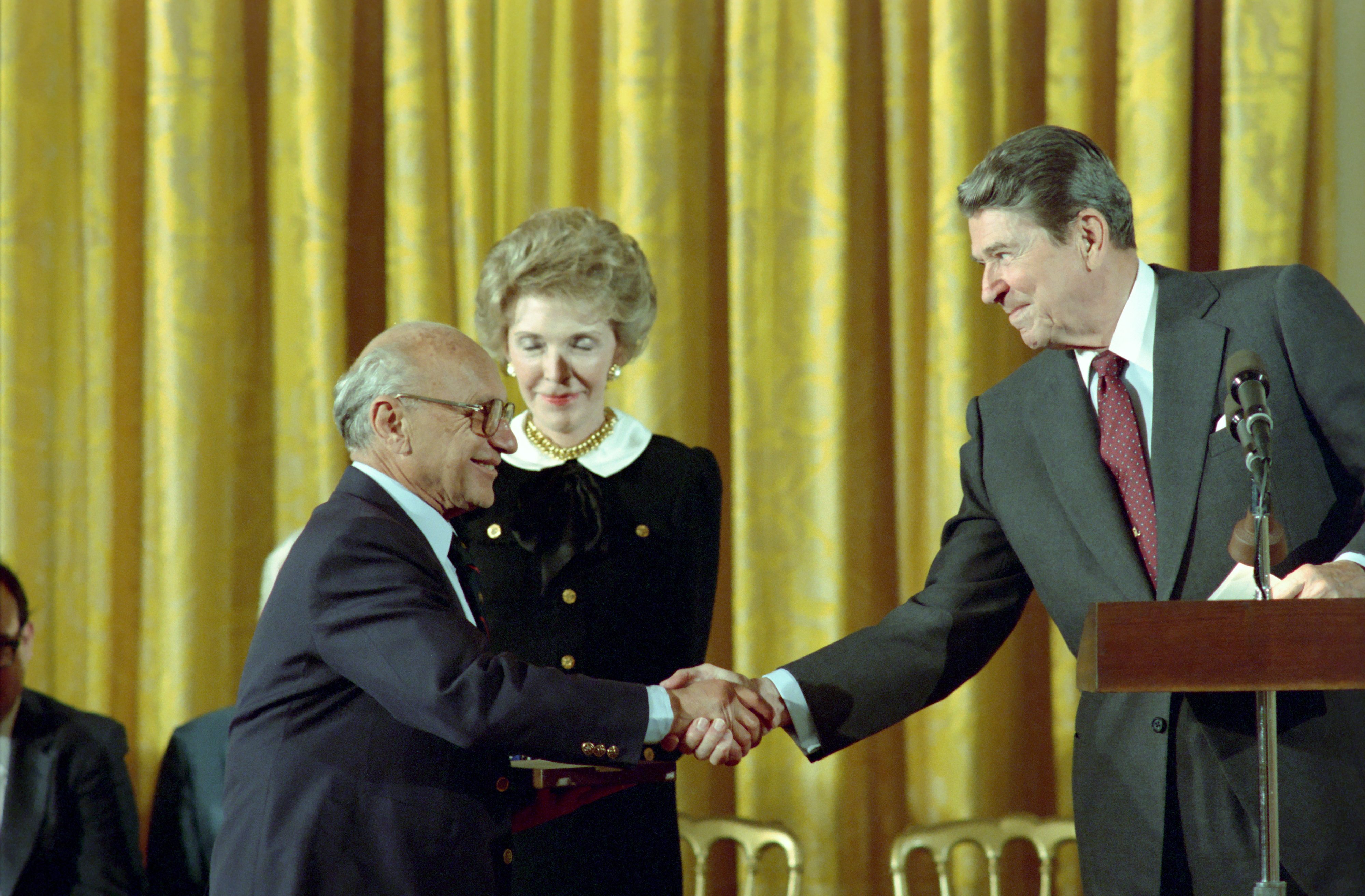
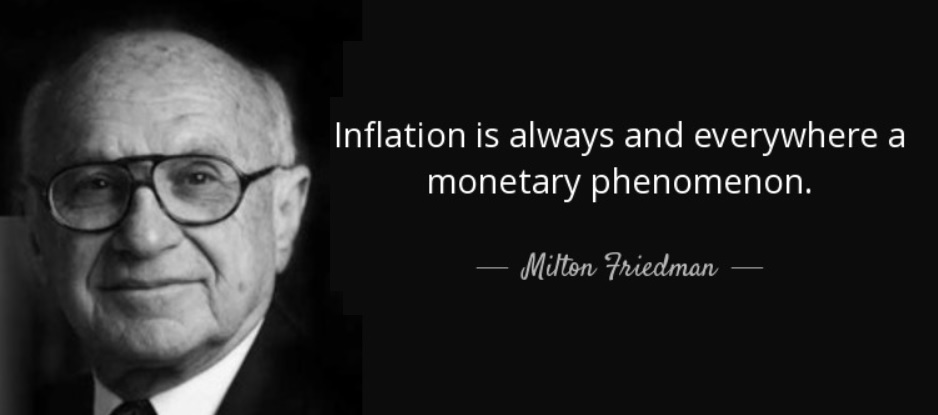
about “building the economy from the middle out and bottom up,” as well as big, recently passed industrial policies… But if you instead define Bidenomics as “respecting Federal Reserve independence and not interfering with Fed decisions even when they’re unpopular,” then sure: Great job, Bidenomics! …The president has been terrific at staying out of the Fed’s way, something presidents don’t always do.
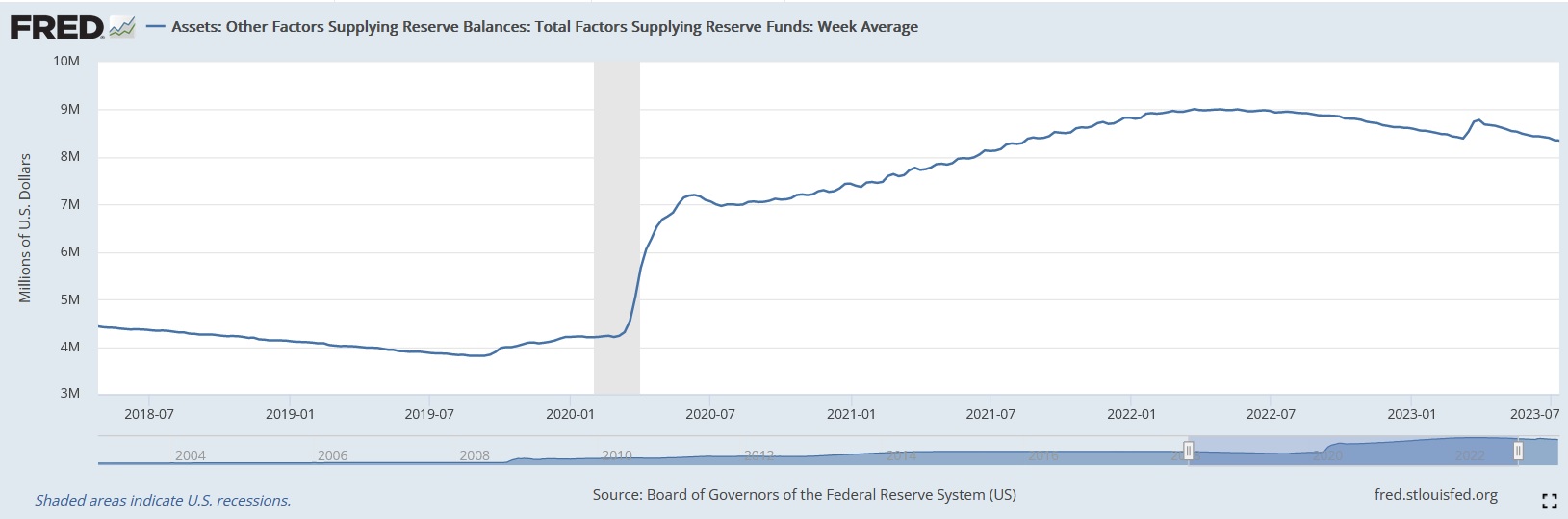
 He also restored America’s national defenses and reoriented foreign policy, both of which led to the collapse of the Soviet Empire, a stupendous achievement that makes Reagan worthy of Mount Rushmore.
 (the so-called Phillips Curve).


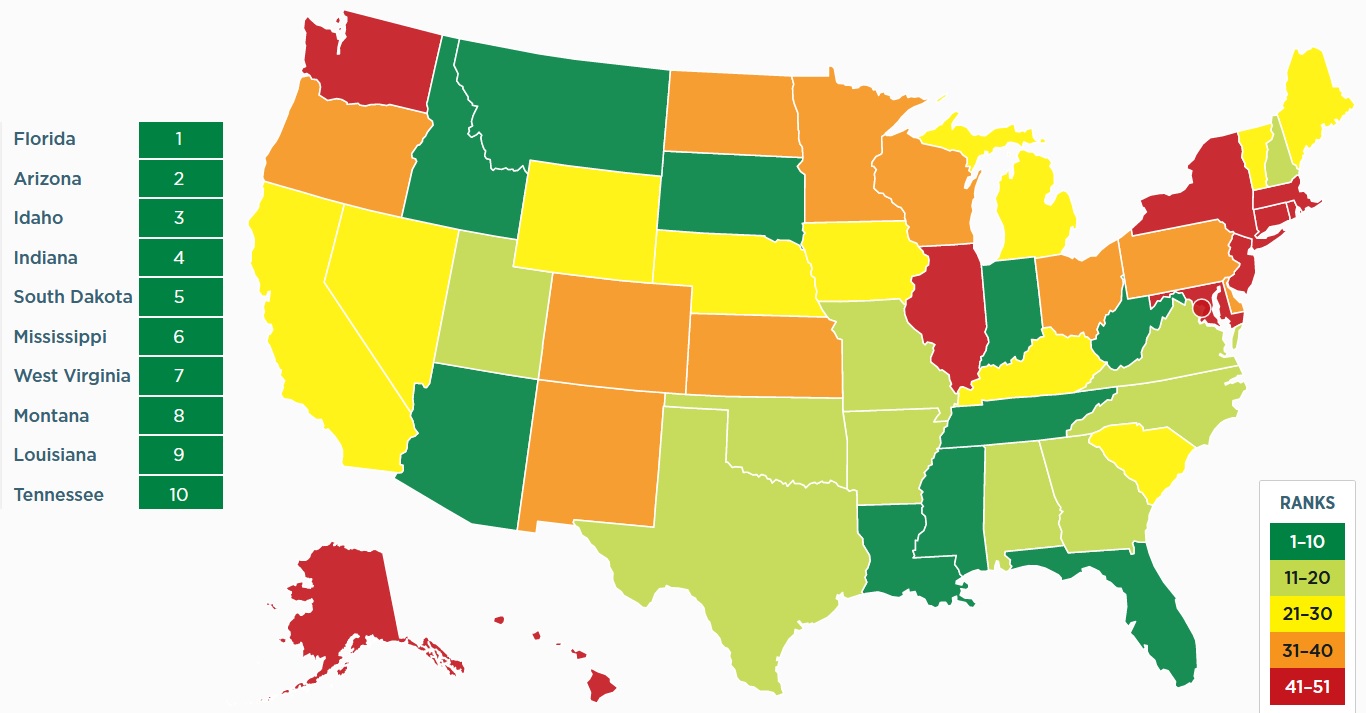

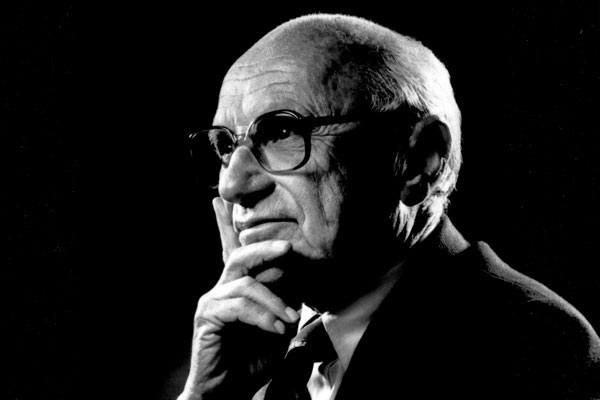

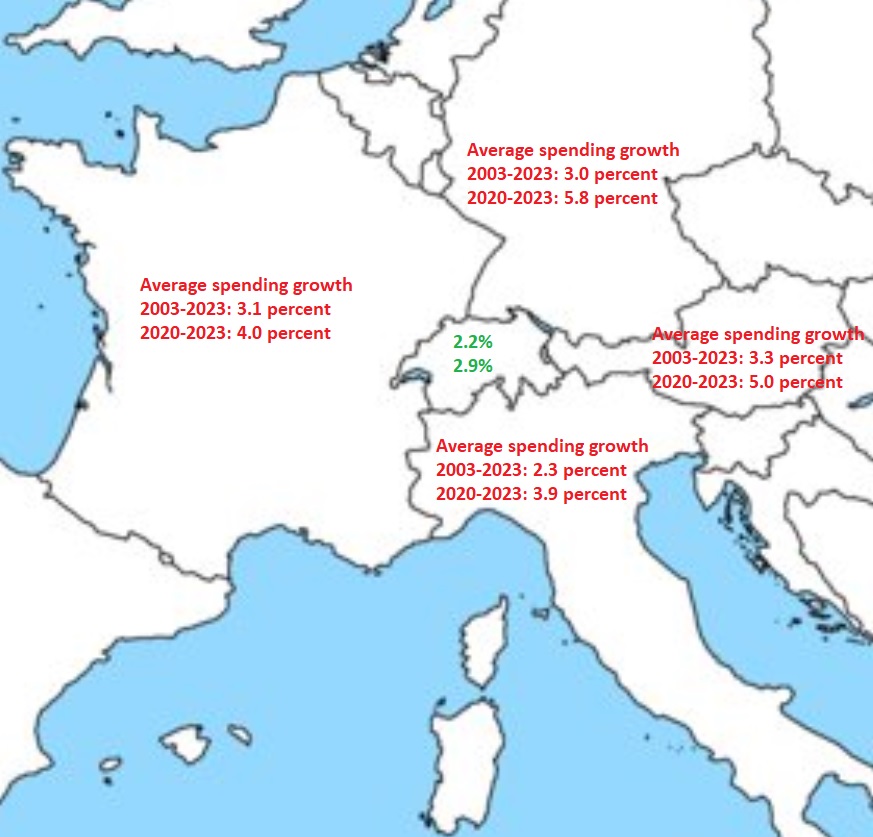


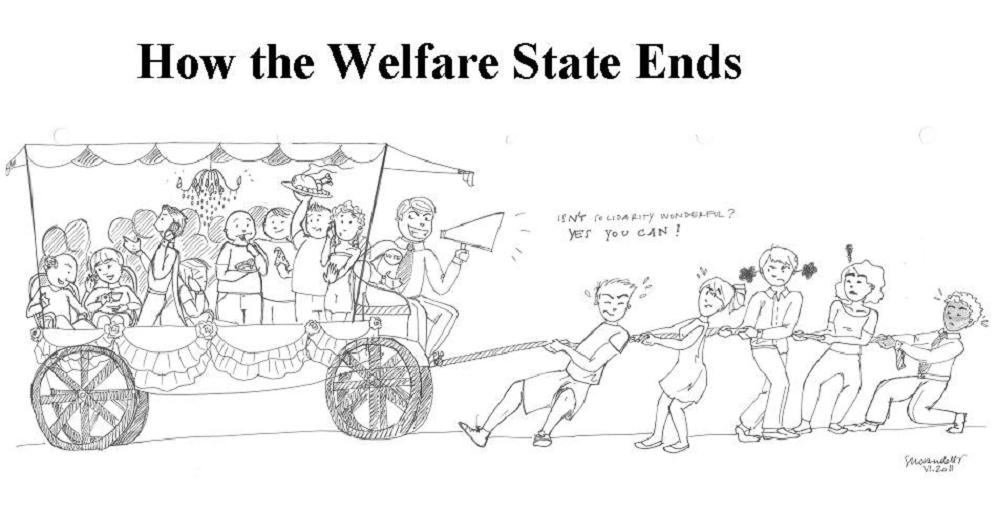




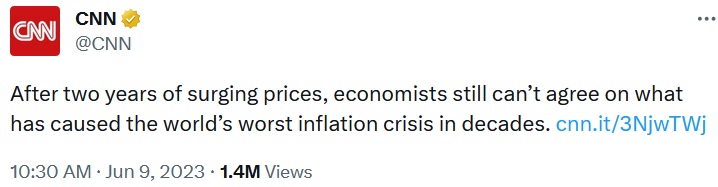
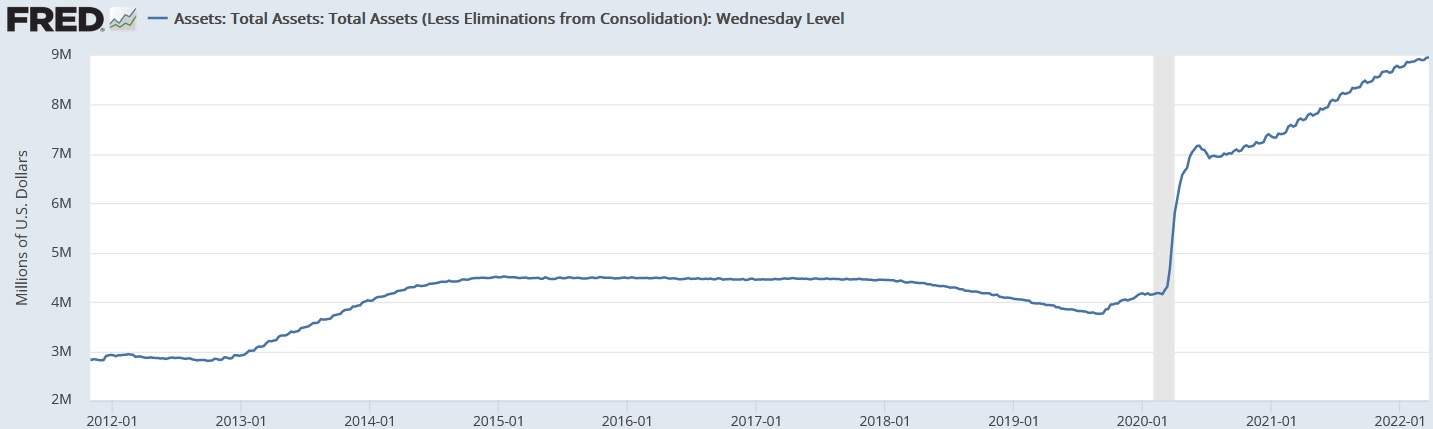

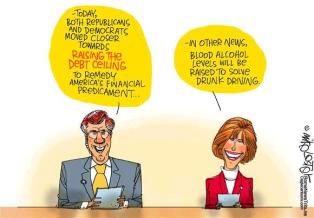

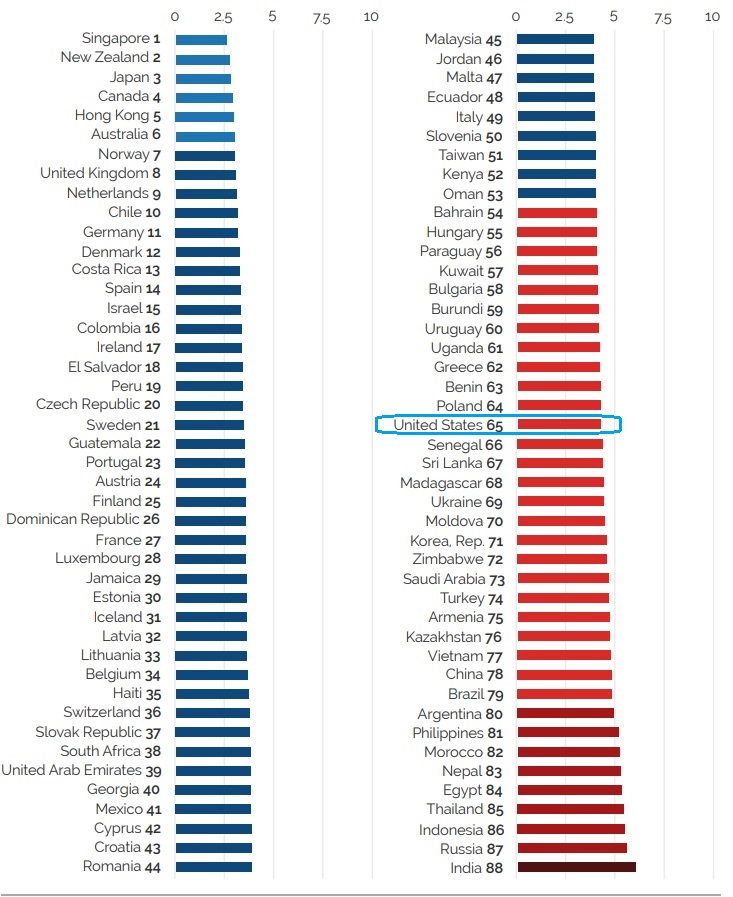
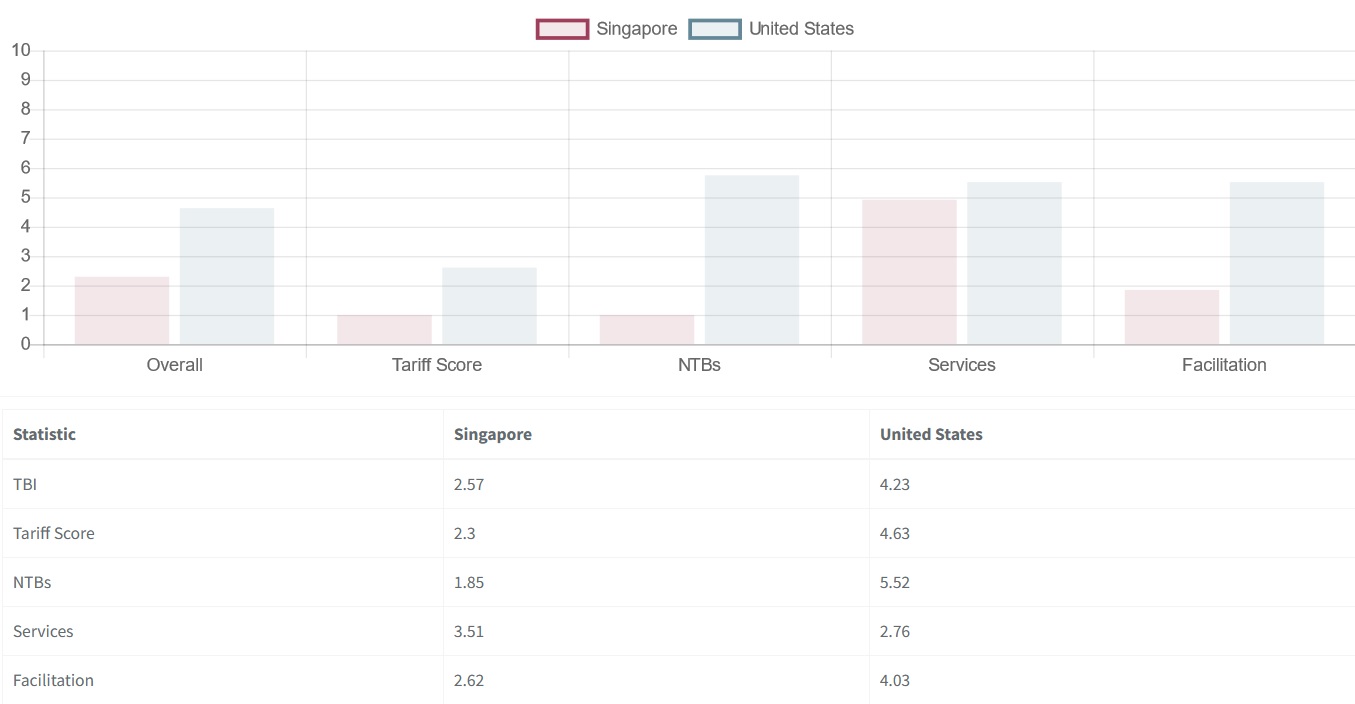


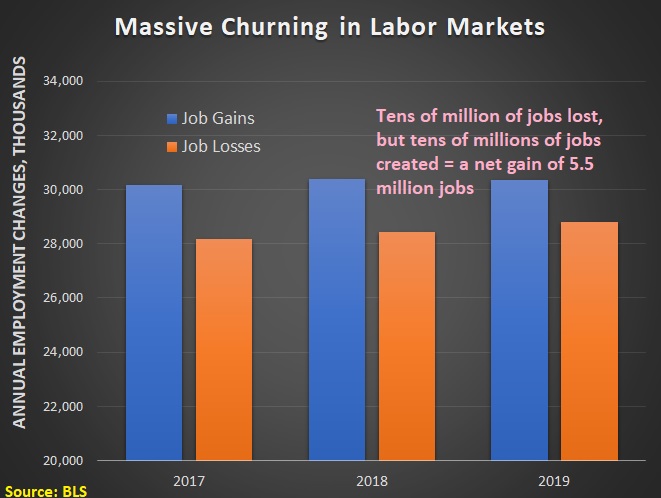
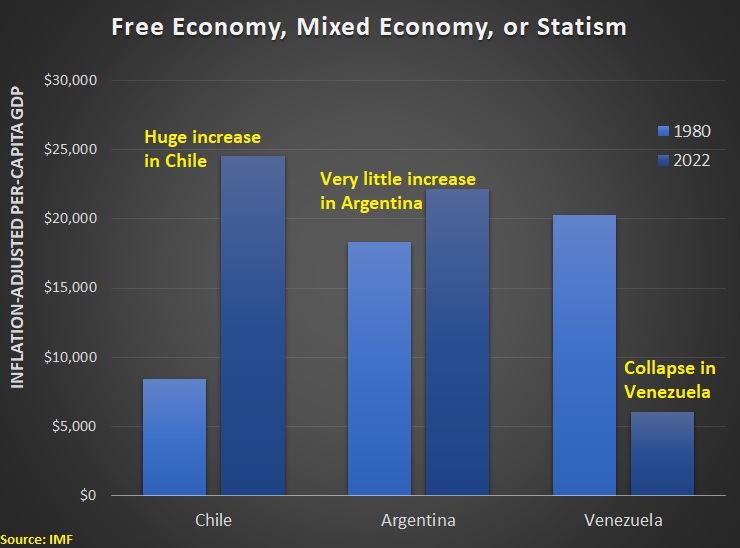

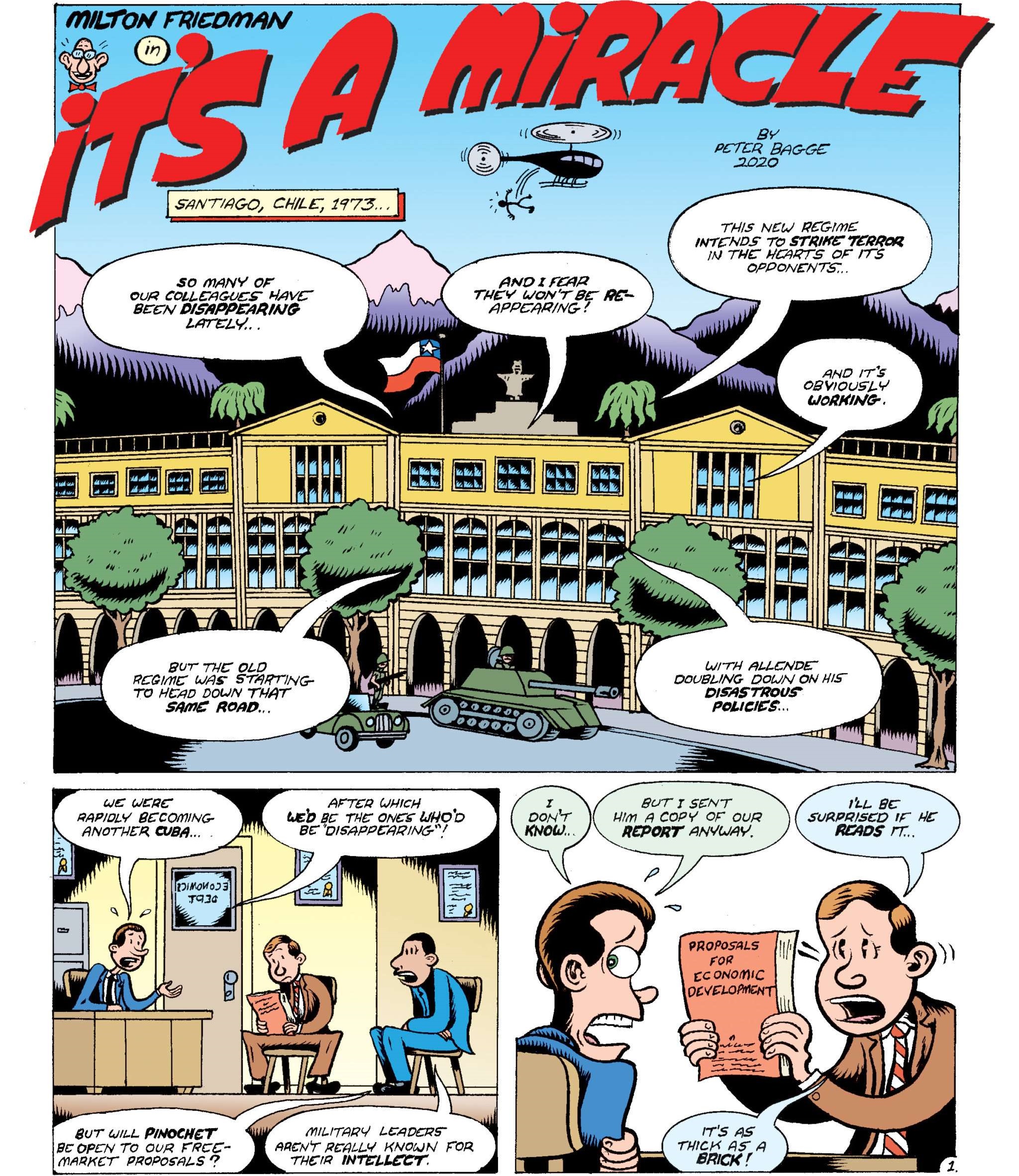
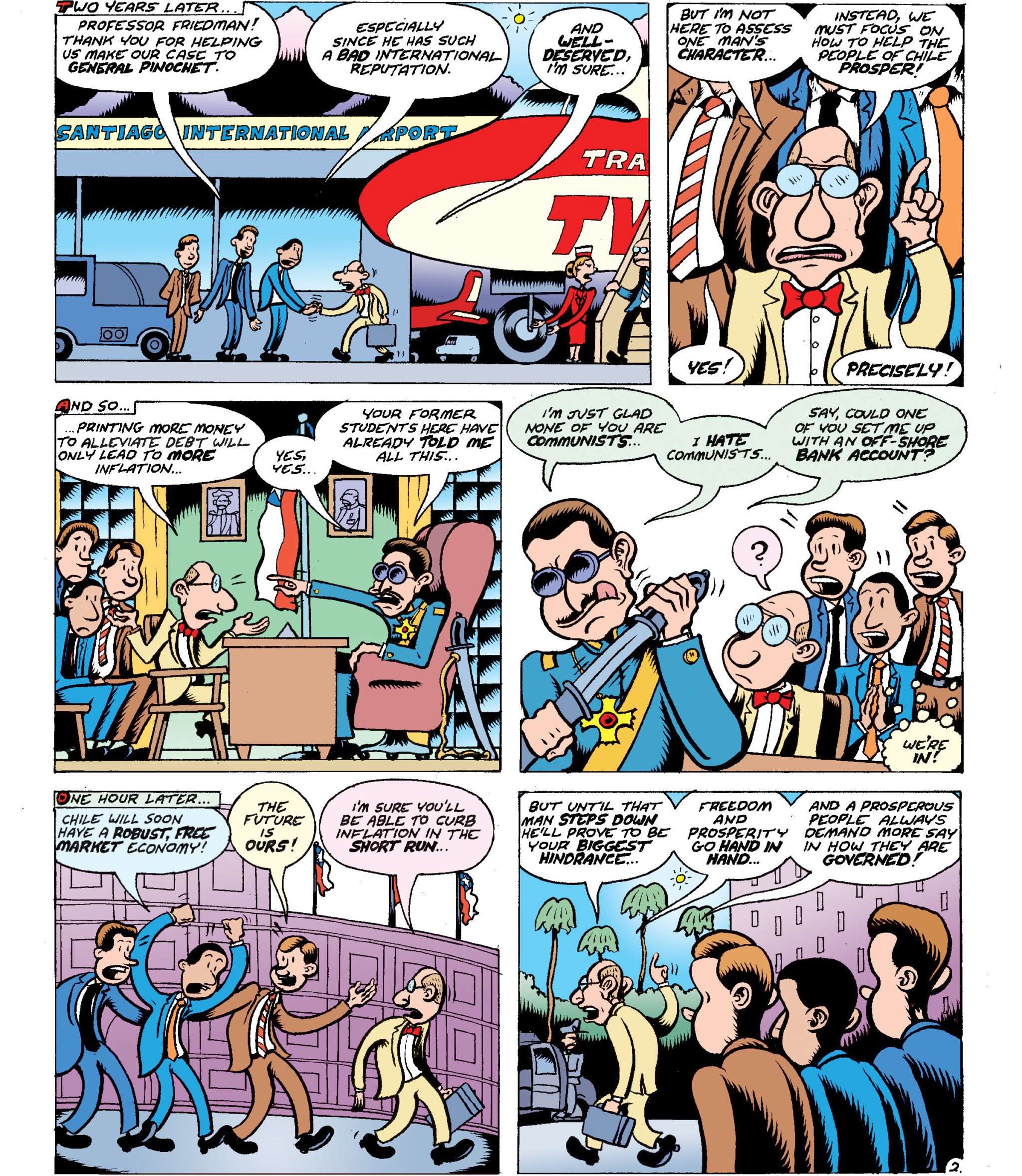
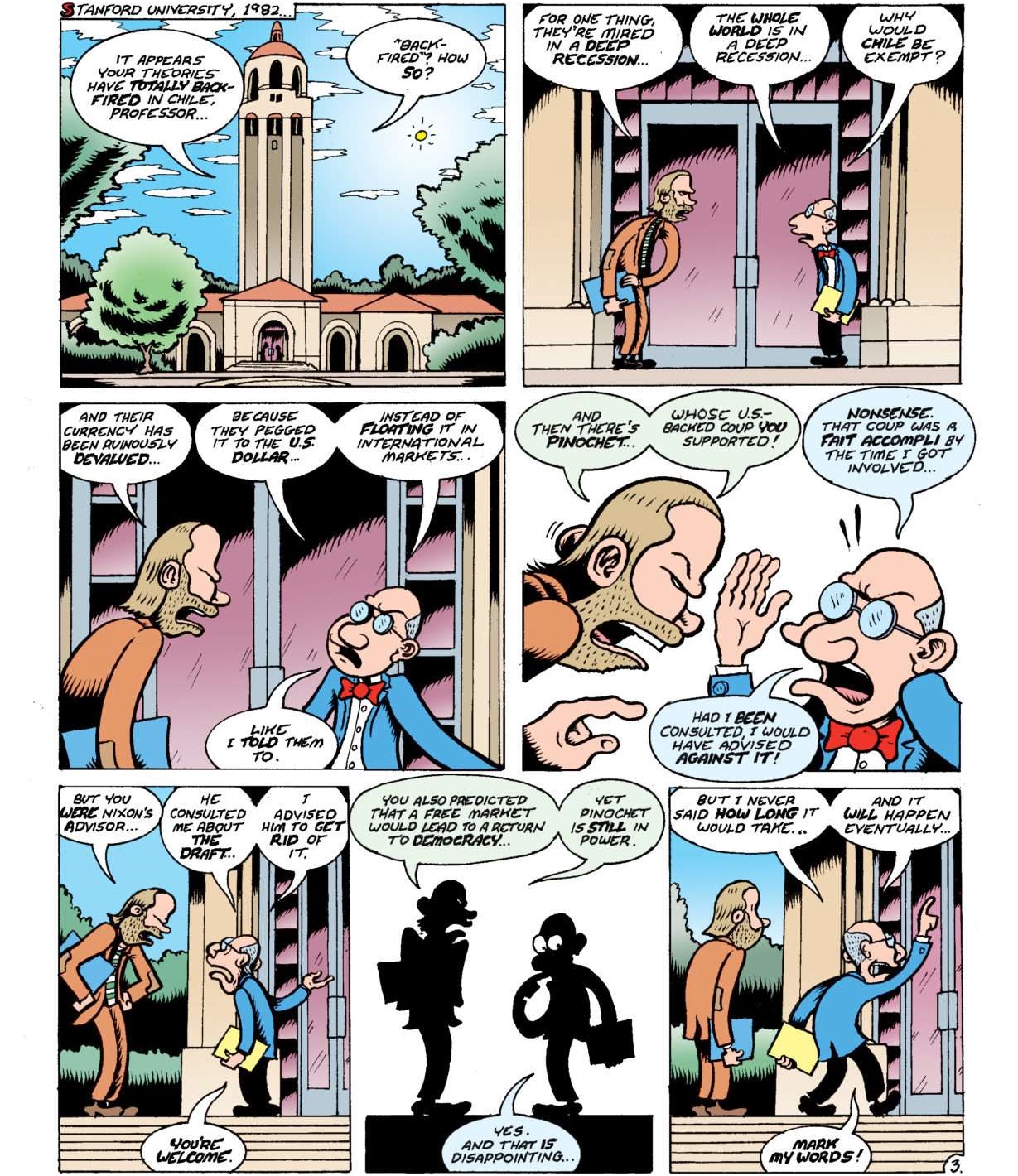
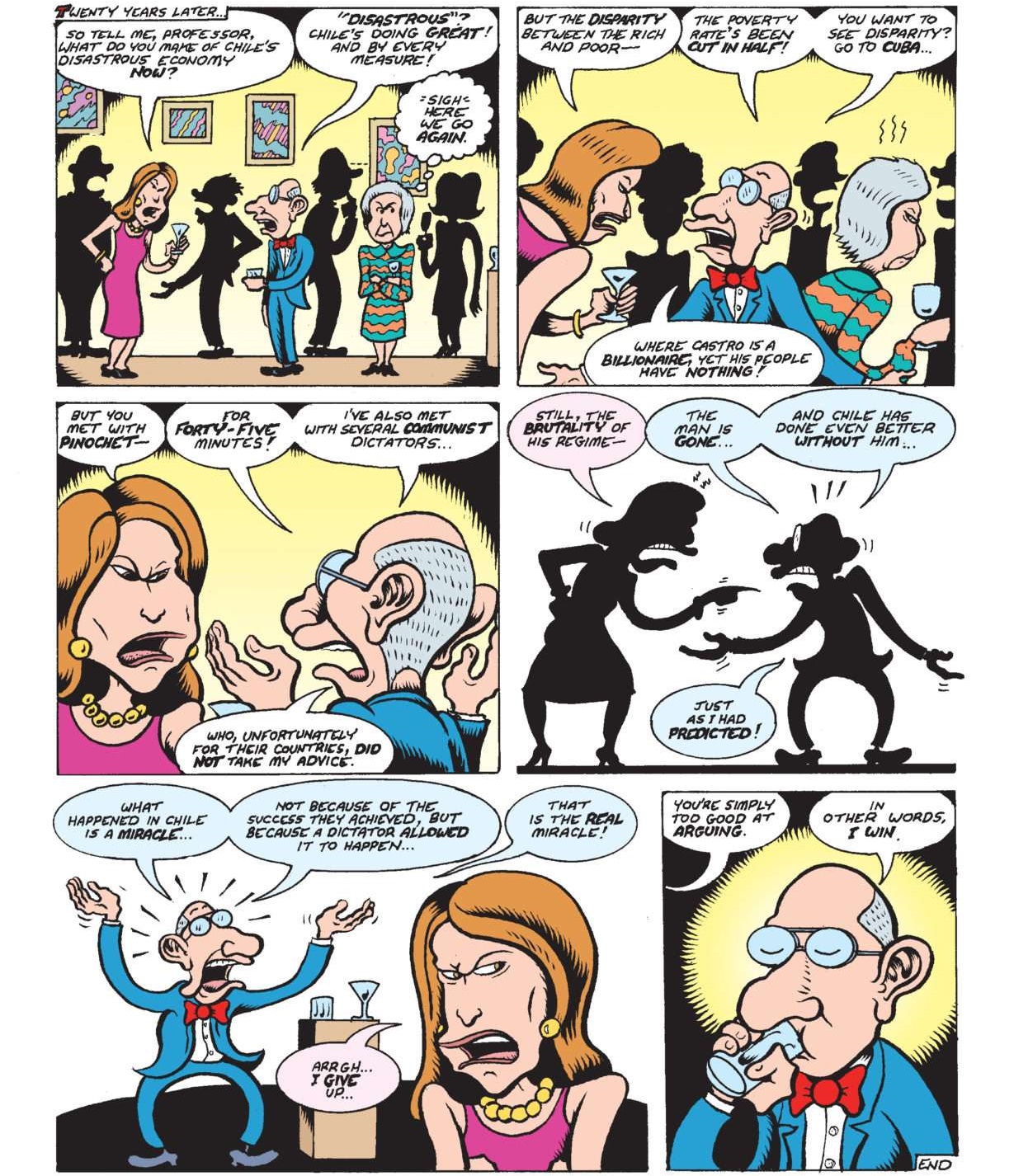


 The Daily Hatch
.jpg)