Today, here’s what I said about the left’s mistaken views on inequality.
—
The fundamental problem is that I think some of our friends on the left are primarily motivated by disdain for the rich.
Indeed, their envy and resentment is so strong that they’re happy to support policies that hurt the poor, so long as the rich suffer a disproportionate amount of harm.
Consider this sarcastic visual.
I hope this visual greatly exaggerates the problem, but I’ve previously shared substantive research suggesting that the folks on the left are fixated on punishing success.
That agenda does not produce good results.
In a thorough article for Reason, David Henderson of the Hoover Institution explores the issues of poverty and inequality.
Most of what is framed as a problem of inequality is better conceived as either a problem of poverty or a problem of unjustly acquired wealth. …It’s important to distinguish the concepts of inequality and poverty. …Many people who worry about income inequality want to tax higher-income people more. Given what economists know about the harmful effects from raising already high marginal tax rates even higher, tax increases could certainly reduce measured inequality—because they would cause higher-income people to reduce their taxable income by working less, by taking more pay in the form of untaxed fringe benefits, or by investing more in municipal bonds, whose interest is not taxable by the feds. Of course, none of this would make lower-income people better off. Indeed, to the extent that higher taxes discourage capital accumulation, they slow the growth of worker productivity. One of the main ways to increase worker productivity is to increase the amount of capital per worker. With a slower growth rate of capital, worker productivity will grow more slowly—and so will real wages. This makes lower-income people worse off than they would have been.
Henderson uses Lydon Johnson as an example of how some people use government favoritism to line their pockets.
But he wisely notes that any inequality that arises from “unjustly acquired wealth” is a symptom of the real problem of cronyism.
Great wealth, meanwhile, is a problem only to the extent that it is unjustly extracted. Government favoritism to politically powerful people may increase income and wealth inequality, as it did in the case of Lyndon Johnson and his wife. But it is the government favoritism, not inequality per se, that is the true problem.
As a quick aside, Lyndon Johnson almost certainly ranks as one of America’s worst presidents (along with failures such as Hoover, Roosevelt, Nixon, and Wilson).
And, having read Henderson’s article, I now have an additional reason to despise LBJ.
Indeed, I sometimes think this theorem is a good way of discerning who is a good person and who is a bad person.
Regarding the latter, we should recognize that some people are simply misguided. These are the folks who actually think that there’s a fixed amount of income and wealth, so they mistakenly believe that if someone like Bill Gates gets rich, the rest of us somehow lose.
Smart folks on the left know that’s not true, so I give them credit for that, but I also think they are reprehensible for being motivated by a desire to hurt the rich, even when that means the rest of us suffer as well.
P.P.P.S. For more wonky readers, I suggest this data and this data about China and this data about the world.
—-
Milton Friedman in his series “Free to Choose” used a pencil as a simple example to should have the “invisible hand” of the freemarket works (phrase originally used by Adam Smith).
“Milton Friedman is a scholar of first rank whose original contributions to economic science have made him one of the greatest thinkers in modern history.” —President Ronald Reagan
“How grateful I have been over the years for the cogency of Friedman’s ideas which have influenced me. Cherishers of freedom will be indebted to him for generations to come.” —Alan Greenspan, former Chairman, Federal Reserve System
“Right at this moment there are people all over the land, I could put dots on the map, who are trying to prove Milton wrong. At some point, somebody else is trying to prove he’s right That’s what I call influence.” —Paul Samuelson, Nobel Laureate in Economic Science
“Friedman’s influence reaches far beyond the academic community and the world of economics. Rather than lock himself in an ivory tower, he has joined the fray to fight for the survival of this great country of ours.” —William E. Simon, former Secretary of the Treasury
“Milton Friedman is the most original social thinker of the era.” —John Kenneth Galbraith, former Professor of Economics, Harvard University
Perhaps Friedman’s greatest success began in 1979 when he and his wife Rose authored the book, Free to Choose, based on the famous ten-part TV series for PBS by the same title. Both the TV program and the book were drawn from an earlier series of lectures presented by Friedman. Because it aired during a period of critical economic distress during the Carter Administration and in the aftermath of the Vietnam War, Watergate scandal, and Richard Nixon’s resignation as President, the program is widely regarded as being a major factor in shifting American public opinion toward appreciating the need to dismantle government largess. The series was shown in England, Japan, Italy, Australia, Germany, Canada, and many other countries, and the book was translated for distribution around the world, selling more than one million copies.
__________
No other issue is more misunderstood today than equality. President Obama has used class warfare over and over the last few months and according to him equality at the finish line is the equality that we should all be talking about. However, socialism has never worked and it has always killed incentive to produce more. Milton Friedman expressed the conversative’s best and I am glad that I had the chance to be studying his work for over 30 years now.
In 1980 when I first sat down and read the book “Free to Choose” I was involved in Ronald Reagan’s campaign for president and excited about the race. Milton Friedman’s books and film series really helped form my conservative views. Take a look at one of my favorite films of his:
Created Equal [1/7]. Milton Friedman’s Free to Choose (1980)
In this program, Milton Friedman visits India, the U.S., and Britain, examining the question of equality. He points out that our society traditionally has embraced two kinds of equality: equality before God and equality of opportunity. The first of these implies that human beings enjoy a certain dignity simply because they are members of the human community. The second suggests societies should allow the talents and inclinations of individuals to unfold, free from arbitrary barriers. Both of these concepts of equality are consistent with the goal of personal freedom.
In recent years, there has been growing support for a third type of equality, which Dr. Friedman calls “equality of outcome.” This concept of equality assumes that justice demands a more equal distribution of the economic fruits of society. While admitting the good intentions of those supporting the idea of equality of outcome, Dr. Friedman points out that government policies undertaken in support of this objective are inconsistent with the ideal of personal freedom. Advocates of equality of outcome typically argue that consumers must be protected by government from the insensitivities of the free market place.
Dr. Friedman demonstrates that in countries where governments have pursued the goal of equality of outcome, the differences in wealth and well being between the top and the bottom are actually much greater than in countries that have relied on free markets to coordinate economic activity. Indeed, says Dr. Friedman, it is the ordinary citizen who benefits most from the free market system. Dr. Friedman concludes that any society that puts equality ahead of freedom will end up with neither. But the society that puts freedom before equality will end up with both greater freedom and great equality.
Friedman: From the Victorian novelists to modern reformers, a favorite device to stir our emotions is to contrast extremes of wealth and of poverty. We are expected to conclude that the rich are responsible for the deprivations of the poor __ that they are rich at the expense of the poor.
Whether it is in the slums of New Delhi or in the affluence of Las Vegas, it simply isn’t fair that there should be any losers. Life is unfair __ there is nothing fair about one man being born blind and another man being born with sight. There is nothing fair about one man being born of a wealthy parent and one of an indigenous parent. There is nothing fair about Mohammed Ali having been born with a skill that enables him to make millions of dollars one night. There is nothing fair about Marleena Detrich having great legs that we all want to watch. There is nothing fair about any of that. But on the other hand, don’t you think a lot of people who like to look at Marleena Detrich’s legs benefited from nature’s unfairness in producing a Marleena Detrich. What kind of a world would it be if everybody was an absolute identical duplicate of anybody else. You might as well destroy the whole world and just keep one specimen left for a museum. In the same way, it’s unfair that Muhammed Ali should be a great fighter and should be able to earn millions. But would it not be even more unfair to the people who like to watch him if you said that in the pursuit of some abstract idea of equality we’re not going to let Muhammed Ali get more for one nights fight than the lowest man on the totem pole can get for a days unskilled work on the docks. You can do that but the result of that would be to deny people the opportunity to watch Mohammad Ali. I doubt very much he would be willing to subject himself to the kind of fights he’s gone through if he were to get the pay of an unskilled docker.
This beautiful estate, its manicured lawns, its trees, its shrubs, was built by men and women who were taken by force in Africa and sold as slaves in America. These kitchen gardens were planted and tended by them to furnish food for themselves and their master, Thomas Jefferson, the Squire of Monticello. It was Jefferson who wrote these words: We hold these truths to be self-evident that all men are created equal. That they are endowed by their creator with certain inalienable rights, that among these are life, liberty and the pursuit of happiness. These words penned by Thomas Jefferson at the age of 33 when he wrote the Declaration of Independence, have served to define a basic ideal of the United States throughout its history.
Much of our history has revolved about the definition and redefinition of the concept of equality, about the intent to translate it into practice. What did Thomas Jefferson mean by the words all men are created equal? He surely did not mean that they were equal and/or identical in what they could do and what they believed. After all, he was himself a most remarkable person. At the age of 26, he designed this beautiful house of Monticello, supervised its construction and indeed is said to have worked on it with his own hands. He was an inventor, a scholar, an author, a statesman, governor of Virginia, President of the United States, minister to France, he helped shape and create the United States. What he meant by the word “equal” can be seen in the phrase “endowed by their creator”. To Thomas Jefferson, all men are equal in the eyes of God. They all must be treated as individuals who have each separately a right to life, liberty and the pursuit of happiness.
Of course, practice did not conform to the ideals. In Jefferson’s life or in ours as a nation, he agonized repeatedly during his lifetime about the conflict between the institution of slavery and the fine words of the declaration. Yet, during his whole life, he was a slave owner.
This is the City Palace in Jaipur, the capitol of the Indian state of Rajasthan, is just one of the elegant houses that were built here 150 years ago by the prince who ruled this land. There are no more princes, no more Maharajas in India today. All titles were swept away by the government of India in its quest for equality. But as you can see, there are still some people here who live a very privileged life. The descendants of the Maharajas financed this kind of life partly by using other palaces as hotels for tourists __ tourists who come to India to see how the other half lives. This side of India, the exotic glamorous side, is still very real. Everywhere in the world there are gross inequalities of income and wealth. They offend most of us.
A myth has grown up that free market capitalism increases such inequalities, that the rich benefit at the expense of the poor. Nothing could be further from the truth. Wherever the free market has been permitted to operate, the ordinary man has been able to attain levels of living never dreamed of before. Nowhere is the gap between rich and poor. Nowhere are the rich richer and the poor poorer than in those societies that do not permit the free market to operate, whether they be feudal societies where status determines position, or modern, centrally-planned economies where access to government determines position.
Central planning was introduced in India in considerable part in the name of equality. The tragedy is that after 30 years, it is hard to see any significant improvement in the lot of the ordinary person.
Liberals like President Obama want to shoot for an equality of outcome. That system does not work. In fact, our free society allows for the closest gap between the wealthy and the poor. Unlike other countries where free enterprise and other freedoms are not present. This is a seven part series. Created Equal [7/7]. Milton Friedman’s Free to Choose […]
Milton Friedman’s solution to limiting poverty Liberals like Michael Cook just don’t get it. They should listen to Milton Friedman (who is quoted in this video below concerning the best way to limit poverty). New Video Shows the War on Poverty Is a Failure Posted by Daniel J. Mitchell The Center for Freedom and Prosperity has […]
Liberals like President Obama want to shoot for an equality of outcome. That system does not work. In fact, our free society allows for the closest gap between the wealthy and the poor. Unlike other countries where free enterprise and other freedoms are not present. This is a seven part series. Created Equal [6/7]. Milton Friedman’s Free to Choose […]
Liberals like President Obama want to shoot for an equality of outcome. That system does not work. In fact, our free society allows for the closest gap between the wealthy and the poor. Unlike other countries where free enterprise and other freedoms are not present. This is a seven part series. Created Equal [5/7]. Milton Friedman’s Free to Choose […]
Republican debate Oct 18, 2011 (last part) with video clips and transcript Below are video clips and the transcript. pt 5 pt 6 pt 7 COOPER: We’re going to move on to an issue very important here in the state of Nevada and throughout the West. We have a question from the hall. QUESTION: Yeah, […]
Uploaded by YAFTV on Aug 19, 2009 Nobel Laureate Dr. Milton Friedman discusses the principles of Ronald Reagan during this talk for students at Young America’s Foundation’s 25th annual National Conservative Student Conference MILTON FRIEDMAN ON RONALD REAGAN In Friday’s WSJ, Milton Friedman reflectedon Ronald Reagan’s legacy. (The link should work for a few more […]
Liberals like President Obama want to shoot for an equality of outcome. That system does not work. In fact, our free society allows for the closest gap between the wealthy and the poor. Unlike other countries where free enterprise and other freedoms are not present. This is a seven part series. Created Equal [4/7]. Milton Friedman’s Free to Choose […]
Friedman Friday” Free to Choose by Milton Friedman: Episode “Created Equal” (Part 3 of transcript and video) Liberals like President Obama want to shoot for an equality of outcome. That system does not work. In fact, our free society allows for the closest gap between the wealthy and the poor. Unlike other countries where free enterprise and other […]
Free to Choose by Milton Friedman: Episode “Created Equal” (Part 2 of transcript and video) Liberals like President Obama want to shoot for an equality of outcome. That system does not work. In fact, our free society allows for the closest gap between the wealthy and the poor. Unlike other countries where free enterprise and other freedoms are […]
Milton Friedman and Ronald Reagan Liberals like President Obama (and John Brummett) want to shoot for an equality of outcome. That system does not work. In fact, our free society allows for the closest gap between the wealthy and the poor. Unlike other countries where free enterprise and other freedoms are not present. This is a seven part series. […]
I have written about 66 heroes of mine in the House of Representatives that voted “no” on the Obama/Biden debt ceiling increase request in 2011. I believe we must have representatives that will vote to restore our freedom and that means voting to cut spending and lower taxes like the Patriots of long ago wanted. Today the Tea Party represented my views the most closely. Lord knows I have written a lot about that in the past. . I have praised over and over and over the 66 House Republicans that voted no on that before. If they did not raise the debt ceiling then we would have a balanced budget instantly. I agree that the Tea Party has made a difference and I have personally posted 49 posts on my blog on different Tea Party heroes of mine.
THIS BRINGS ME TO ONE OF MY BIGGEST ECONOMIC HEROES AND IT IS THE LATE MILTON FRIEDMAN. Friedman had such revolutionary policies such as eliminating welfare and instituting the negative income tax and putting in school vouchers.
The problem in Washington is not lack of revenue but our lack of spending restraint. This video below makes that point.
Milton Friedman did not favor free immigration with existing welfare state in USA
Milton Friedman – Illegal Immigration – PT 2
Uploaded on Dec 18, 2009
(2 of 2) Professor Friedman fields a question on the dynamics of illegal immigration
The Heritage Foundation has issued the following statement in response to Senator Marco Rubio’s (R-FL) comments about our new study on the cost of amnesty.
Senator Rubio’s family story is a testament to the American Dream. His parents’ ability to scrimp and save and sacrifice for their children is something in which we all take pride. The story of the Rubios, in fact, makes the point we make with our study. They represent the immigration model that worked for America for centuries and one we need to get back to.
Senator Rubio’s parents came here in 1956, almost a decade before the introduction of the Great Society programs that laid the foundation of the modern welfare state. Over the following four and a half decades, our government has added layer upon layer of government involvement in our lives, creating a dependency that undermines self-respect and self-reliance.
That dependency has been devastating to our society; it has shattered communities, families, and individuals. It is now threatening the American Dream. This is true for all—native and immigrant alike, lawful or unlawful. We do not blame immigrants for being entrapped by that system; we blame the people who created that system. We especially blame people who now seek to expand it.
This is why Heritage has been leading the fight on the need to recreate upward mobility for low-income and middle-income Americans. The current welfare and entitlement systems lower opportunity and make it all but impossible for people to climb the ladder of success.
Heritage has worked with Senator Rubio on numerous issues, and we admire him. He is right: Our study is “an argument for welfare reform and entitlement reform.” He cannot pretend, however, that this already herculean task will be made easier after we have added millions of new people to a failing entitlement system. The time to fix it is now. We are ready to work with him and any man and woman of either party who realizes the urgency of our plight.
As Milton Friedman, the Nobel Prize-winning economist, once said:
It is one thing to have free immigration to jobs. It is another thing to have free immigration to welfare. You cannot have both. If you have a welfare state, if you have a state in which a resident is promised certain minimum level of income or a minimum subsistence regardless of whether he works or not produces it or not. Well then it really is an impossibility.
Thank you so much for your time. I know how valuable it is. I also appreciate the fine family that you have and your commitment as a father and a husband.
Sincerely,
Everette Hatcher III, 13900 Cottontail Lane, Alexander, AR 72002, ph 501-920-5733,
I like Milton Friedman’s comments on this issue of immigration and Ron Paul and Dan Mitchell do well on the issue too. Question of the Week: What’s Your Take on the Immigration Debate? April 7, 2013 by Dan Mitchell A reader from overseas wonders about my views on immigration, particularly amnesty. I confess that this is one of […]
Two very wise men below: Milton Friedman – Illegal Immigration – PT 1 (1 of 2) Professor Friedman looks at the dynamics of illegal immigration. See part two:http://www.youtube.com/watch?v=NfU9Fqah-f4http://Libertypen.com_______________________________________ Back in 1980 I read the book “Free to Choose” by Milton and Rose Friedman. I noticed that Milton made it clear both in […]
Part 5 Milton Friedman: I do not believe it’s proper to put the situation in terms of industrialist versus government. On the contrary, one of the reasons why I am in favor of less government is because when you have more government industrialists take it over, and the two together form a coalition against the ordinary […]
Where the USA’s economic success come from? An Amazing Story of Economic Success May 5, 2013 by Dan Mitchell I’ve written before about the remarkable vitality of Hong Kong and Singapore, two jurisdictions that deserve praise for small government and free markets. Pretending to be a jet-setter in Monaco I have also praised Switzerland because of policies such as genuine federalism […]
Why are despicable people sometimes subsidized by taxpayers? Are You Happy that Your Tax Dollars Subsidized the Tsarnaev Family? April 28, 2013 by Dan Mitchell The bad news is that there are despicable and evil people seeking to kill innocents. The worse news is that some of these pathetic excuses for protoplasm are subsidized by […]
Obama is up to his old tricks again and here comes the White House’s political motivated chicanery with the FAA Privatization Is the Best Response to the FAA’s Deliberate Attempt to Inconvenience Air Passengers April 24, 2013 by Dan Mitchell In an interview with Neil Cavuto earlier this month, I mocked proponents of big government for […]
Sad case indeed. Immigration, Terrorism, and Welfare Tourism April 24, 2013 by Dan Mitchell So we’ve now learned that the Boston Marathon terrorists were welfare bums. Why am I not surprised? “Thanks for the handouts, suckers!” Heck, it was only a couple of days ago that I announced the Moocher Hall of Fame and included terrorists from theUnited Kingdom and Australia (and […]
President Obama is from Illinois and he is running our nation like the politicians of Illinois run their state with lots of wasteful spending and too many high taxes. It’s Tax Freedom Day, So Congratulations (if You Don’t Live in New York, California, New Jersey, Illinois, etc) April 18, 2013 by Dan Mitchell It’s time to celebrate. […]
The IRS agents are as well thought of as Zacchaeus who was the tax collector that only Jesus was nice to. Here is a fine article by Dan Mitchell of the Cato Institute. Some Good Cartoons if You’re Suffering from Post-Tax Return Traumatic Stress Disorder April 16, 2013 by Dan Mitchell For the past 30 or so […]
Sad that the government wastes so much of our money and it wants more from us under President Obama. An Aggravating Reminder of Government Waste on Tax Day April 15, 2013 by Dan Mitchell Remember the Spending Quiz from 2010, which asked people to guess whether absurd examples of government waste were true or false? Well, […]
“On the day I die, I’d like to have taught a class,” my dad told one of his best friends, Thomas Sowell. (Photo: The Heritage Foundation)
In the late 1980s, when telemarketing was at it is peak, a company called our home during dinner. I picked up the phone and handed it to my dad. This is what we heard him say:
“I’m not interested.”
“No. No, thank you.”
“Well … I’m not ever going to die.”
The left is actively working to undermine the integrity of our elections. Read the plan to stop them now. Learn more now >>
And then he hung up. My mom and I looked at each other, and then him, with looks of incredulity. He explained that it was a company selling life insurance.
For a long time, I believed just that—that he was not going to die. That he would be here dropping knowledge on me, my family, and the rest of the world forever.
I have always understood my father to be a teacher, a college professor. And, at the core of it, that’s what he was: a teacher. And he loved being one.
So, why, in the days that followed my father’s death have things felt surreal?
I’ve spoken about my dad to reporters from The New York Times, The Washington Post, and The Wall Street Journal. I’ve spoken to one of the greatest minds and prolific writers this country has to offer: Thomas Sowell. I’ve heard from Supreme Court Justice Clarence Thomas, real estate developer Harlan Crow, and businessman Charles Koch. I’ve read hundreds of tweets, posts, and emails from his students, politicians, educators, philanthropists, authors, and reporters.
You might intuit that hearing from all these people demonstrates that maybe Dr. Walter E. Williams wasn’t just a professor. That maybe, because of his profound effect on so many people, he was something more.
I would argue that the essence of my father was that of an educator. In fact, many years ago, my dad told Sowell, “On the day I die, I’d like to have taught a class.” Teaching was his passion. It was his gift. It was, second only to his family, his greatest love.
Some of the obituaries I have read have called my dad a giant. He was. Literally. He stood at 6 foot, 5 inches tall. My mom and I used to joke that it was always easy to find Dad in a crowd: We just needed to look up.
An athlete well into his 70s, he took advantage of his stature and long limbs and played tennis and basketball, but his favorite activity was cycling. My mom would pack him snacks the night before, and he would set out for a 30- to 50-mile ride around 5 a.m. (when she and I were still sound asleep).
I think that he enjoyed the time alone with his thoughts and his bike. Often, after a ride, he would shower and get straight to work on his syndicated column or his classwork for the week—clearheaded and ready to go.
Not only, however, was he physically a giant but he was an intellectual giant. In his lifetime, he wrote 10 books, hundreds of articles, book reviews, scholarly journal articles, and more than a thousand weekly columns. And, while proud of his accomplishments, with every book, he’d tell me, “I still don’t think I’ll catch up to Tom [Sowell] … he writes with both hands.”
He also gave hundreds of lectures around the world—Johannesburg, Cambridge, London, Tokyo, Hong Kong, and many more nationally. Additionally, you could find him on TV and radio. He called these venues his “big classroom.”
Economics is a challenging and abstract discipline that includes sophisticated analysis and calculus. But my dad had a supernatural ability to break down complex ideas and make them digestible for everyone.
As a father, he was also a teacher. My dad taught me that hard work eclipses talent or natural gifts every day of the week and twice on Sunday. He taught me how to drive like a Philadelphia cabbie and how to parallel park in a space equal to the length of my vehicle. He taught me that the best time to look for a job is when you already have one and that opportunities are often masked as disappointments.
He taught me that play is necessary, but that it’s more fun when your work is finished. He taught me to love my life and the people in it. He taught me to drink the wine and not to save it for a special occasion. And he taught me that family is always my safe place to land.
When my dad was in Philadelphia and not with us in D.C., he would call me and ask, “How’s my baby?” I would tell him, “I’m just fine, Dad,” knowing full well that he was asking about my son. They shared a special bond, and it pains me greatly to know that they only shared six years together.
We will all miss Dr. Walter Edward Williams. But I’d like to think that through his dedication to his teaching, the reach of his students, and profound effect he had on so many that, maybe, his statement to the life insurance salesman was true.
Conservative author and economist Walter Williams has died, ending the illustrious career of one of liberty’s fiercest yet most soft-spoken advocates.
He was 84.
Many conservatives know Williams from his years of subbing for talk radio host Rush Limbaugh. Others know Williams from his appearances on the 10-part 1980 PBS television series Free to Choose, featuring Nobel Prize-winning economist Milton Friedman.
Williams “was the author of over 150 publications which have appeared in scholarly journals,” Economic Policy Journal recalls in its memoriam. His work appeared in Economic Inquiry, American Economic Review, Georgia Law Review, Journal of Labor Economics, Social Science Quarterly, and Cornell Journal of Law and Public Policy and popular publications such as Newsweek, Ideas on Liberty, National Review, Reader’s Digest, Cato Journal, andPolicy Review.
The man also wrote ten books: America: A Minority Viewpoint, The State Against Blacks, All It Takes Is Guts, South Africa’s War Against Capitalism, Do the Right Thing: The People’s Economist Speaks, More Liberty Means Less Government, Liberty vs. the Tyranny of Socialism, Up From The Projects: An Autobiography, Race and Economics: How Much Can Be Blamed On Discrimination?, and American Contempt for Liberty.
To his friends, Williams, who was born both poor and fatherless in Philadelphia and spent much of his childhood in public housing projects, was known as an uncompromising lover of liberty.
“Walter liked smoking and he also hated the TSA,” economist David Henderson recalled this week after learning of Williams’s death. “Some years ago, the combination of no-smoking [regulations] on planes and intrusive groping by the TSA caused him to vow never to fly by commercial airline again. When he received offers to give speeches that were far enough away that driving was infeasible, he negotiated for a private airplane to take him there.”
John J. Miller likewise recalls in National Review the time that Williams’s exerted his independence and fought racial prejudice after being drafted into the U.S. Army in 1959 to fight in Korea.
“Although the military had desegregated, he bristled at institutional prejudice — and demonstrated his willingness to challenge racial orthodoxy,” Miller wrote in 2011. “He complained constantly about discrimination, even writing a letter about it to his commander-in-chief, President Kennedy.”
“When he stepped off the plane for a posting in Korea,” Miller continues, “he was told to fill out a paper with personal information. In the box for his race, he claimed to be white. ‘No, you’re not,’ said a warrant officer who reviewed the form. ‘Yes, I am,’ replied Williams, who knew perfectly well that he couldn’t pass for a white guy. Williams explained his choice to the officer: ‘If I checked off ‘Negro,’ I’d get the worst job over here.”
Williams’s first assignment ended up being a relatively easy one, far away from the front lines.
But as he was known for his sharp mind, he was also known for his keen wit, his dry sense of humor, and his kindness.
Personally, however, Williams will be remembered best as the soft-spoken conservative economist who frequently clowned on his late wife, Connie, who died in 2007.
As Marymount University economics professor Brian Hollar recalled after her death, “Professor Williams used to make a lot of jokes in class about making his wife shovel snow, how much he spoiled her, used her bad behavior for illustrating downward-sloping demand curves, etc. You could always tell through his teasing that he loved her deeply.”
Indeed, the Connie anecdotes were indicative not only of Williams’s dry sense of humor, and they acted not only as excellent examples to explain complex economic theories, but they displayed well his humanity. The stories always revealed his clear and deep love for his wife of 47 years.
He will be missed. Rest in peace, Walter Williams
Dr. Walter Williams Highlights from – Testing Milton Friedman
Milton Friedman PBS Free to Choose 1980 Vol 8 of 10 Who Protects the Worker
Walter E Williams – A Discussion About Fairness & Redistribution
Testing Milton Friedman: Equality of Opportunity – Full Video
I’ve been fortunate to know Walter Williams ever since I began my Ph.D. studies at George Mason University in the mid-1980s. He is a very good economist, but his real value is as a public intellectual.
He also has a remarkable personal story, which he tells in his new autobiography,Up from the Projects. I’ve read the book and urge you to do the same. It’s very interesting and, like his columns, crisply written.
To get a flavor for Walter’s strong principles and blunt opinions, watch this video from Reason TV. I won’t spoil things, but the last couple of minutes are quite sobering.
Walter Williams: Up From the Projects
I suppose a personal story might be appropriate at this point. My ex also was at George Mason University, and she was Walter’s research assistant. Walter would give multiple-choice tests to students taking his entry-level classes and she was responsible for grading them by sending them through a machine that would “click” for every wrong answer. For almost every student, it sounded like a machine gun was going off. Suffice to say, Walter’s classes were not easy.
So while I’m glad to say he’s my friend, I’m also happy I never took one of his classes.
Milton Friedman’s FREE TO CHOOSE “The Tyranny of Control” Transcript and Video (60 Minutes) In 1980 I read the book FREE TO CHOOSE by Milton Friedman and it really enlightened me a tremendous amount. I suggest checking out these episodes and transcripts of Milton Friedman’s film series FREE TO CHOOSE: “The Failure of Socialism” and […]
In 1980 I read the book FREE TO CHOOSE by Milton Friedman and it really enlightened me a tremendous amount. I suggest checking out these episodes and transcripts of Milton Friedman’s film series FREE TO CHOOSE: “The Failure of Socialism” and “What is wrong with our schools?” and “Created Equal” and From Cradle to Grave, […]
In 1980 I read the book FREE TO CHOOSE by Milton Friedman and it really enlightened me a tremendous amount. I suggest checking out these episodes and transcripts of Milton Friedman’s film series FREE TO CHOOSE: “The Failure of Socialism” and “What is wrong with our schools?” and “Created Equal” and From Cradle to Grave, […]
In 1980 I read the book FREE TO CHOOSE by Milton Friedman and it really enlightened me a tremendous amount. I suggest checking out these episodes and transcripts of Milton Friedman’s film series FREE TO CHOOSE: “The Failure of Socialism” and “What is wrong with our schools?” and “Created Equal” and From Cradle to Grave, […]
In 1980 I read the book FREE TO CHOOSE by Milton Friedman and it really enlightened me a tremendous amount. I suggest checking out these episodes and transcripts of Milton Friedman’s film series FREE TO CHOOSE: “The Failure of Socialism” and “What is wrong with our schools?” and “Created Equal” and From Cradle to Grave, […]
In 1980 I read the book FREE TO CHOOSE by Milton Friedman and it really enlightened me a tremendous amount. I suggest checking out these episodes and transcripts of Milton Friedman’s film series FREE TO CHOOSE: “The Failure of Socialism” and “What is wrong with our schools?” and “Created Equal” and From Cradle to Grave, […]
In 1980 I read the book FREE TO CHOOSE by Milton Friedman and it really enlightened me a tremendous amount. I suggest checking out these episodes and transcripts of Milton Friedman’s film series FREE TO CHOOSE: “The Failure of Socialism” and “What is wrong with our schools?” and “Created Equal” and From Cradle to Grave, […]
In 1980 I read the book FREE TO CHOOSE by Milton Friedman and it really enlightened me a tremendous amount. I suggest checking out these episodes and transcripts of Milton Friedman’s film series FREE TO CHOOSE: “The Failure of Socialism” and “What is wrong with our schools?” and “Created Equal” and From Cradle to Grave, […]
Open letter to President Obama (Part 654) (Emailed to White House on July 22, 2013) President Obama c/o The White House 1600 Pennsylvania Avenue NW Washington, DC 20500 Dear Mr. President, I know that you receive 20,000 letters a day and that you actually read 10 of them every day. I really do respect you […]
Open letter to President Obama (Part 650) (Emailed to White House on July 22, 2013) President Obama c/o The White House 1600 Pennsylvania Avenue NW Washington, DC 20500 Dear Mr. President, I know that you receive 20,000 letters a day and that you actually read 10 of them every day. I really do respect you […]
Free-market economics meets free-market policies at The Heritage Foundation’s Tenth Anniversary dinner in 1983. Nobel Laureate Milton Friedman and his wife Rose with President Ronald Reagan and Heritage President Ed Feulner.
Since the passing of Milton Friedman who was my favorite economist, I have been reading the works of Daniel Mitchell and he quotes Milton Friedman a lot, and you can reach Dan’s website here.
Mitchell in February 2011.
Wikipedia noted concerning Dan:
Mitchell’s career as an economist began in the United States Senate, working for Oregon Senator Bob Packwood and the Senate Finance Committee. He also served on the transition team of President-Elect Bush and Vice President-Elect Quayle in 1988. In 1990, he began work at the Heritage Foundation. At Heritage, Mitchell worked on tax policy issues and began advocating for income tax reform.[1]
In 2007, Mitchell left the Heritage Foundation, and joined the Cato Institute as a Senior Fellow. Mitchell continues to work in tax policy, and deals with issues such as the flat tax and international tax competition.[2]
In addition to his Cato Institute responsibilities, Mitchell co-founded the Center for Freedom and Prosperity, an organization formed to protect international tax competition.[1]
February 22, 2021
President Biden c/o The White House 1600 Pennsylvania Avenue NW Washington, DC 20500
I have written about 66 heroes of mine in the House of Representatives that voted “no” on the Obama/Biden debt ceiling increase request in 2011. I believe we must have representatives that will vote to restore our freedom and that means voting to cut spending and lower taxes like the Patriots of long ago wanted. Today the Tea Party represented my views the most closely. Lord knows I have written a lot about that in the past. . I have praised over and over and over the 66 House Republicans that voted no on that before. If they did not raise the debt ceiling then we would have a balanced budget instantly. I agree that the Tea Party has made a difference and I have personally posted 49 posts on my blog on different Tea Party heroes of mine.
THIS BRINGS ME TO ONE OF MY BIGGEST ECONOMIC HEROES AND IT IS THE LATE MILTON FRIEDMAN. Friedman had such revolutionary policies such as eliminating welfare and instituting the negative income tax and putting in school vouchers.
The problem in Washington is not lack of revenue but our lack of spending restraint. This video below makes that point.
My great fear is that the “social capital” of self reliance in America will slowly disappear and that the United States will turn into a European-style welfare state.
Well, this Glenn McCoy cartoon has a similar theme.
The only thing I would change is that the rat would become a “pro-government voter” or “left-wing voter” instead of an “Obama voter.” Just like I wasn’t satisfied with an otherwise very good Chuck Asay cartoon showing the struggle between producers and moochers.
That’s for two reasons. First, I’m not partisan. My goal is to spread a message of liberty, not encourage people to vote for or against any candidate.
But I’m getting wonky. Enjoy the cartoon and feel free to share it widely.
Eight Reasons Why Big Government Hurts Economic Growth
Uploaded on Aug 17, 2009
This Center for Freedom and Prosperity Foundation video analyzes how excessive government spending undermines economic performance. While acknowledging that a very modest level of government spending on things such as “public goods” can facilitate growth, the video outlines eight different ways that that big government hinders prosperity. This video focuses on theory and will be augmented by a second video looking at the empirical evidence favoring smaller government.
Thank you so much for your time. I know how valuable it is. I also appreciate the fine family that you have and your commitment as a father and a husband.
Sincerely,
Everette Hatcher III, 13900 Cottontail Lane, Alexander, AR 72002, ph 501-920-5733,
If the increase in food stamps was just because of the recession then why did the spending go from $19.8 billion in 2000 to $37.9 billion in 2007? The Facts about Food Stamps Everyone Should Hear Rachel Sheffield and T. Elliot Gaiser May 27, 2013 at 12:00 pm (7) Newscom A recent US News & […]
Welfare Can And Must Be Reformed Uploaded on Jun 29, 2010 If America does not get welfare reform under control, it will bankrupt America. But the Heritage Foundation’s Robert Rector has a five-step plan to reform welfare while protecting our most vulnerable. __________________________ We got to slow down the growth of Food Stamps. One […]
Eight Reasons Why Big Government Hurts Economic Growth __________________ We got to cut spending and we must first start with food stamp program and we need some Senators that are willing to make the tough cuts. Food Stamp Republicans Posted by Chris Edwards Newt Gingrich had fun calling President Obama the “food stamp president,” but […]
Milton Friedman’s negative income tax explained by Friedman in 1968: We need to cut back on the Food Stamp program and not try to increase it. What really upsets me is that when the government gets involved in welfare there is a welfare trap created for those who become dependent on the program. Once they […]
Welfare Can And Must Be Reformed Uploaded by HeritageFoundation on Jun 29, 2010 If America does not get welfare reform under control, it will bankrupt America. But the Heritage Foundation’s Robert Rector has a five-step plan to reform welfare while protecting our most vulnerable. __________________________ If welfare increases as much as it has in the […]
The sad fact is that Food stamp spending has doubled under the Obama Administration. A Bumper Crop of Food Stamps Amy Payne May 21, 2013 at 7:01 am Tweet this Where do food stamps come from? They come from taxpayers—certainly not from family farms. Yet the “farm” bill, a recurring subsidy-fest in Congress, is actually […]
I am glad that my state of Arkansas is not the leader in food stamps!!! Mirror, Mirror, on the Wall, Which State Has the Highest Food Stamp Usage of All? March 19, 2013 by Dan Mitchell The food stamp program seems to be a breeding ground of waste, fraud, and abuse. Some of the horror stories […]
Government Must Cut Spending Uploaded by HeritageFoundation on Dec 2, 2010 The government can cut roughly $343 billion from the federal budget and they can do so immediately. __________ We are becoming a country filled with people that dependent on the federal government when we should be growing our economy by lowering taxes and putting […]
Uploaded by oversightandreform on Mar 6, 2012 Learn More at http://oversight.house.gov The Oversight Committee is examining reports of food stamp merchants previously disqualified who continue to defraud the program. According to a Scripps Howard News Service report, food stamp fraud costs taxpayers hundreds of millions every year. Watch the Oversight hearing live tomorrow at 930 […]
The best way to destroy the welfare trap is to put in Milton Friedman’s negative income tax. A Picture of How Redistribution Programs Trap the Less Fortunate in Lives of Dependency I wrote last year about the way in which welfare programs lead to very high implicit marginal tax rates on low-income people. More specifically, they […]
December 06, 2011 03:54 PM Milton Friedman Explains The Negative Income Tax – 1968 0 comments By Gordonskene enlarge Milton Friedman and friends.DOWNLOADS: 36 PLAYS: 35 Embed The age-old question of Taxes. In the early 1960′s Economist Milton Friedman adopted an idea hatched in England in the 1950′s regarding a Negative Income Tax, to […]
Why are despicable people sometimes subsidized by taxpayers? Are You Happy that Your Tax Dollars Subsidized the Tsarnaev Family? April 28, 2013 by Dan Mitchell The bad news is that there are despicable and evil people seeking to kill innocents. The worse news is that some of these pathetic excuses for protoplasm are subsidized by […]
Testing Milton Friedman – Preview Uploaded by FreeToChooseNetwork on Feb 21, 2012 2012 is the 100th anniversary of Milton Friedman’s birth. His work and ideas continue to make the world a better place. As part of Milton Friedman’s Century, a revival of the ideas featured in the landmark television series Free To Choose are being […]
I ran across this very interesting article about Milton Friedman from 2002: Friedman: Market offers poor better learningBy Tamara Henry, USA TODAY By Doug Mills, AP President Bush honors influential economist Milton Friedman for his 90th birthday earlier this month. About an economist Name:Milton FriedmanAge: 90Background: Winner of the 1976 Nobel Prize for economic science; […]
Testing Milton Friedman – Preview Uploaded by FreeToChooseNetwork on Feb 21, 2012 2012 is the 100th anniversary of Milton Friedman’s birth. His work and ideas continue to make the world a better place. As part of Milton Friedman’s Century, a revival of the ideas featured in the landmark television series Free To Choose are being […]
What a great man Milton Friedman was. The Legacy of Milton Friedman November 18, 2006 Alexander Tabarrok Great economist by day and crusading public intellectual by night, Milton Friedman was my hero. Friedman’s contributions to economics are profound, the permanent income hypothesis, the resurrection of the quantity theory of money, and his magnum opus with […]
Below is a discussion from Milton Friedman on Bill Clinton and Ronald Reagan. February 10, 1999 | Recorded on February 10, 1999 audio, video, and blogs » uncommon knowledge PRESIDENTIAL REPORT CARD: Milton Friedman on the State of the Union with guest Milton Friedman Milton Friedman, Senior Research Fellow, Hoover Institution and Nobel Laureate in […]
Below is a discussion from Milton Friedman on Bill Clinton and Ronald Reagan. February 10, 1999 | Recorded on February 10, 1999 audio, video, and blogs » uncommon knowledge PRESIDENTIAL REPORT CARD: Milton Friedman on the State of the Union with guest Milton Friedman Milton Friedman, Senior Research Fellow, Hoover Institution and Nobel Laureate in […]
Back in 2015, just five years ago, it seemed like entitlement reform might happen.
Republicans in the House and Senate voted for budgets based on much-needed changes to Medicare and Medicaid. That was only a symbolic step with Obama in the White House, to be sure, but the presumption was that actual reform would be possible if Republicans controlled both the White House and Congress after the 2016 election.
The good news is that the GOP did wind up in control of Washington.
The bad news is that Donald Trump was in the White House.
Given his unfortunate views on government spending, that killed entitlement reform for the past four years.
And now Biden will be in the White House, and he wants to expand those programs, so that presumably kills reform for the next four years.
But does that change the fact that the programs should be reformed?
In a column for National Review, Fred Bauer asserts that Republicans should give up on trying to control big government.
Republicans…risk being lured toward a pivot back to 2010s-style austerity politics during the Biden administration, with a renewed focus on the federal deficit and entitlement reform. …Trying to push party-line entitlement reform has backfired on the GOP again and again in the recent past. George W. Bush’s 2005 Social Security–privatization proposal kneecapped his second term from the start. In 2012, Republicans got bogged down defending their position on Medicare reform… retreating to austerity politics could cost Republicans a chance to promote other kinds of reforms that would strengthen workers and families: fixing the medical marketplace (by reducing cartelization, revising medical licensing, etc.), passing a 21st-century infrastructure program, trying to secure a strategic industrial base, enacting smarter regulation of Big Tech that addresses market concerns and serves the public welfare, offering Americans family tax credits, and so on.
Also writing for National Review, Yuval Levin of the American Enterprise Institute explains that we have no choice but to grapple with entitlements.
The Republican Party has styled itself the party of fiscal restraint for the better part of a century… But there hasn’t been much action, or much willingness to expend political capital or make some painful deals to achieve a meaningful change in the trajectory of the government’s finances. …the willful blindness of the Trump era…means the underlying fiscal problems have grown worse… the costs of fiscal irresponsibility have more to do with constraints on future growth… Fiscal reform will need to involve changes to these programs.
Levin even suggests that entitlement reform is so important that it might be worth ceding ground in other areas.
Republicans should be willing to make bargains that involve leaving discretionary spending untouched, or even on a path of modest growth, if that allows for some reforms of entitlements. They should also be willing to contemplate tax increases and reforms that move the burden of federal revenue upward on the income scale, provided such changes do not unduly undermine growth.
My two cents is that Levin is right and Bauer is wrong.
To be sure, I don’t agree with everything Levin wrote (it’s theoretically possible to make a tax increase acceptable, for instance, but that won’t happen in the real world). But at least he recognizes the long-run spending outlook is so dour that entitlement reform is absolutely necessary.
Bauer, by contrast, argues that we should throw in the towel because reform is politically difficult.
I think he misreads the evidence.
Regarding Social Security, Bush got elected twice while supporting personal accounts, but the issue never went anywhere in his second term in large part because the White House never proposed a plan.Moreover, the public continued to be supportive of the idea of personal accounts, even after Bush left office.
Likewise, I think Bauer is wrong on Medicare and Medicaid. Republicans easily maintained control of the House in 2012, 2014 and 2016, notwithstanding Democratic attacks that they wanted to “push granny off a cliff.” And they still control the Senate after years of similar attacks.
But even if Bauer was right about the politics, he’s wrong about policy.
The bottom line is that entitlement reform is the patriotic thing to do.
——
Milton Friedman’s FREE TO CHOOSE “How to Stay Free,” Transcript and Video (60 Minutes)
In 1980 I read the book FREE TO CHOOSE by Milton Friedman and it really enlightened me a tremendous amount. I suggest checking out these episodes and transcripts of Milton Friedman’s film series FREE TO CHOOSE: “The Failure of Socialism” and “The Anatomy of a Crisis” and “What is wrong with our schools?” and “Created Equal” and From Cradle to Grave, and – Power of the Market. In this episode “How to Stay Free” Friedman makes the statement “What we need is widespread public recognition that the central government should be limited to its basic functions: defending the nation against foreign enemies, preserving order at home, and mediating our disputes. We must come to recognize that voluntary cooperation through the market and in other ways is a far better way to solve our problems than turning them over to the government.”
— On Mon, 12/6/10, Everette Hatcher <lowcostsqueegees@yahoo.com>wrote:
From: Everette Hatcher <lowcostsqueegees@yahoo.com>
Subject: Vol 10 How to stay Free,Videos and Transcript Free to Choose
To:
Date: Monday, December 6, 2010, 8:50 AM
The Great Depression of the 1930s changed the public philosophy regarding the appropriate role of government in American life. Before the Depression, government was not assumed to have special responsibilities for individual or business welfare. The severity of the economic tragedy of the 1930s resulted in a dramatic change in public attitudes. Many believed the Depression represented a “failure of capitalism.” Because of this alleged failure, government has ever since been expanding its power and the scope of its control. Government growth has resulted in waste, inefficiency, and a loss of personal freedom. Intended to serve the interests of the people, many governmental programs have been revealed to serve primarily the interests of the bureaucrats. Many government programs serve at cross purposes. For example, different agencies attempt, on the one hand, to discourage use of tobacco as potentially dangerous to good health and, on the other hand, to encourage production of tobacco through subsidies to tobacco farmers. The list of government inconsistencies and inefficiencies goes on and on. Dr. Friedman, however, says that there is reason for optimism. Today, he notes, the public is better informed about these matters and is increasingly willing to take a stand against further unnecessary expansion of government services. He suggests the most fruitful approach is to remove discretionary budget power from the government. Friedman favors passage of a Constitutional amendment limiting the government’s budget and forcing government to work within that budget. But this is only the first step. As Dr. Friedman points out, “What we need is widespread public recognition that the central government should be limited to its basic functions: defending the nation against foreign enemies, preserving order at home, and mediating our disputes. We must come to recognize that voluntary cooperation through the market and in other ways is a far better way to solve our problems than turning them over to the government.”
_____________________________________________
Milton Friedman makes the point: “If power were really concentrated in monolithic in a few hands, it would be hopeless to reform the system. But because it’s fragmented, because it’s split up, we can see how much waste there is, we can see how inefficient it is, how the left hand seldom knows what the right hand is doing.” IN OTHER WORDS A DICTATOR IS NOT RUNNING THE GOVERNMENT WE HAVE A CHANCE TO CHANGE WHAT IS GOING ON!!!
Volume 10 – How to Stay Free
Transcript:
Friedman: Every day hundreds of people flock to the capital in Washington, D.C. attracted only by power. That power has accumulated here over the past 50 years at the seat of government of the most powerful nation on Earth.
Worker: How do you do? Glad to meet you. How are you? How’s it going? What are you talking about? Guns?
Warren Richardson: Hello, this is Warren Richardson. Oh Mary, yes, what’s on your mind?
Friedman: Warren Richardson makes his living by knowing who has power and influence to trade.
Warren Richardson: I’ll be waiting for you.
Friedman: He’s a lobbyist.
Warren Richardson: Thanks a lot. Bye.
Unidentified Member of the House: The official administration position on this bill, however, is that its consideration would be premature in view of the President’s….
Friedman: He trades with people like these. Members of the House Committee on Agriculture. They make some of the laws and regulations that among other things, control the food we eat. They are elected officials who have the power to spend billions of dollars of our tax money.
Mr. Baldus: It’s all of page two. It takes all of page three.
Friedman: Naturally, lots of people would like to get their hands on that money.
Mr. Baldus: That’s the kind of stuff that ought never go into the statute books. And I think anybody who’s practicing justice court knows it.
Unidentified Member of the House: Bill, the way you get common sense administration is by having common sense administrators. And it seems like there’s more common sense administration in agriculture.
Michael Masterson (Congressional Aide): Access is all important and how you gain access. It used to be there were only a few hundred lobbyists in this town, now we record up to 15,000 lobbyists plus ancillary personnel, secretaries, receptionists and typists and the researchers that go with that. They are calling upon all the law firms imaginable. So there is a tremendous support base out there for the lobbying effort.
Friedman: You don’t have to walk these corridors for very long before you begin to realize that the concentration of power in the hands of a few people, however well intentioned, is a real threat to the freedom of the individual. Of course, Warren Richardson doesn’t see it that way. Over the years he’s successfully lobbied for special interest groups in energy, environment, wages and prices. Today he’s arguing the case for another special interest. The National Action Committee on Labor Law Reform, hoping to swing influence his way.
Warren Richardson: When the bill goes overboard in terms…much, much too far.
Friedman:There’s hardly a time when the corridors of Congressional Office buildings are not peppered with people waiting for their chance to see and influence the elected man at the center of power.
Unidentified Member of the House: Within that legislation for funds for communities of 50,000 and under, the goals of the existing law and certain statutory paperwork requirements are often very unrealistic for smaller communities.
Friedman: The deals made here effect all of us and sometimes in ways we don’t like. But don’t blame the people making the deals. They’re just pursuing their own self-interest which may be as narrow as making a buck or as broad as trying to reform the world. We, the citizens, are to blame because we’ve handed over much of our lives of personal decision making to government. And we now find that was government does severely limits our freedom.
The leather and wood paneled official offices of a Congressman in Washington, D.C. It’s the mecca of those who try for behind the scenes influence. Weaving his way between special interest groups can be tough for a politician. To stay in office he needs votes. To get votes he often has to make deals.
Unidentified Politician: The chances of our party regaining the White House. Republicans. If the President sends the policies to the public …..
Friedman: It’s frequently a frustrating business.
Michael Masterson: When you have people who are coming in not for purposes of debate and dialogue and discussion on something, but merely they demand their special interest or their single issue concern. That’s where it becomes extremely difficult because there might be an equal number on the opposite side of the coin.
Friedman: Every time I come to Washington I’m impressed all over again with how much power is concentrated in this city. But we must understand the character of that power. It is not monolithic power in a few hands like the way it is in countries like the Soviet Union or Red China. It is fragmented into lots of little bits and pieces and with every special group around the country trying to get its hand on whatever bits and pieces it can. The result is that there’s hardly an issue in which you won’t find government on both sides. For example, in one of these massive buildings spread, scattering all through this town filled to the bursting with government employees, so of them are sitting around trying to figure out how to spend our money to discourage us from smoking cigarettes. In another of the massive building, maybe far away from the first, some other employees, equally dedicated, equally hardworking, are sitting around figuring out how to spend our money to subsidize farmers to grow more tobacco. In one building they’re figuring out how to hold down prices, in another building they’ve got schemes for raising prices. The prices the farmers receive or import prices or keeping out cheap foreign goods. We set up an enormous Department of Energy with 20,000 employees to encourage us to save energy. We set up an enormous Department of Environmental Protection to figure out ways to get cleaner air involving our using more energy.
Now, many of these effects cancel out but that doesn’t mean that these programs don’t do a great deal of harm and that there aren’t some very bad things about it. One thing you can be sure of, the costs don’t cancel out, they add together. Each of these programs spends money taken from our pockets that we could be using to buy goods and services to meet our separate needs. All of these programs use very able, very skilled people who could be doing productive things. They, all of them, grind out rules, regulations, red tape, forms to fill-in. I doubt that there’s a person in this country who doesn’t violate one or another of those rules or regulations or laws everyday. Not because he wants to or intends to, but simply because it’s impossible for anybody to know what they all are. Those are the bad things. But there’s something good about this fragmentation of power too. And that is, that it enables us to do something about it.
If power were really concentrated in monolithic in a few hands, it would be hopeless to reform the system. But because it’s fragmented, because it’s split up, we can see how much waste there is, we can see how inefficient it is, how the left hand seldom knows what the right hand is doing.
It wasn’t always like this. The armies of bureaucrats administering our lives making our decisions spending our money, all supposedly for our good. Our nation was founded with something fundamentally different in mind.
___________________________________________
In this episode Milton Friedman makes the point, “From regarding government as a threat to our freedom, we have come more and more to regard government as a benefactor from which all good things flow. We have assigned increasing tasks of great importance to government. We have turned over to government a larger and larger fraction of our income to be spent on our behalf and the results are plain for all the same they are disappointing.”
Pt 2
Almost 200 years ago a remarkable group of men gathered in this room to write a Constitution for the new nation that they had helped to create a few years earlier. They were a wise and learned group of people. They had learned the lesson of history. The great danger to freedom is the concentration of power, especially in the hands of a government. They were determined to protect the citizens of the new United States of America from that danger. And they crafted their Constitution with that in mind. That Constitution has served us well. It has enabled us to preserve our freedom for close on to 200 years. But in the past 50 years, we have been forgetting the lesson that these wise men knew so well. From regarding government as a threat to our freedom, we have come more and more to regard government as a benefactor from which all good things flow. We have assigned increasing tasks of great importance to government. We have turned over to government a larger and larger fraction of our income to be spent on our behalf and the results are plain for all the same they are disappointing. The great expectations have not been achieved and our freedoms have suffered in the process.
Where did it all go wrong? Government began to take an increasing part in our personal affairs nearly 50 years ago. It was 1933, at the lowest point of the worst depression in history. The idea took root that capitalism had failed and that failure was responsible for the human and economic tragedy. In the early 30’s, Franklin Delano Roosevelt and his advisors met here to devise programs to meet the problems of the depression. Their answer was to give central government more power. Out of that beginning came today’s welfare state.
This Empire State Plaza in Albany, NY is a fine example of the difference between public political power and private economic power. It was constructed while Nelson Rockefeller was Governor of the state of New York. The Rockefeller family has spent millions of its private money on good causes. It has endowed universities like my own, at the University of Chicago, financed medical research, reconstructed Williamsburg, yet not all the private money of the Rockefeller family gave them anything like the amount of power that Nelson Rockefeller was able to have as Governor of the State of New York. He constructed monuments like this all over the state, using every expedient he could think of to finance them. When he left office, taxes per persons in New York State were higher than in any other state in the country excepting only Alaska. And there was a monumental debt besides. So much so, that his successor, who had the reputation as a Democratic congressman of being a big spender, had to use his inaugural speech to preach the virtues of austerity and to say the time of wine and roses is over.
Look at this skyline. It’s Chicago and I think it’s very beautiful. Much of it is less than 20 years old. Those tall buildings were built by private enterprise for use by private enterprise. Not by government for use by government bureaucrats. These are productive monuments, not a burden on the taxpayer, a burden that has almost bankrupted New York City. The irony is that for the most part it was good intentions that led us to where we are today, a nation governed by bureaucratic empires. I wonder whether when they built this building, they realized that it was going to come out looking like a fortress. From modest beginnings in 1953, the Department of Health, Education and Welfare has grown into a veritable empire. Only a small part of its total staff is housed in this headquarters building, a mere 2,000 bureaucrats. Its budget is the third largest budget in the whole world exceeded only by the entire budget of the United States and of the Soviet Union. It employs directly 150,000 full time people and the empire it rules employs another million. More than one out of every 100 people in the U.S. works in the HEW empire.
As we have seen in this series, the Department of Health, Education and Welfare is spending increasing amounts of our money each year on health. One effect is simply to raise the fees and prices for medical and hospital services without a corresponding improvement in the quality of medical care that we receive. It is controlling more and more of the food and drugs we buy. In the process, discouraging the development and preventing the marketing of new drugs that could be saving tens of thousands of lives a year. In the field of education the sums being spent are skyrocketing. Yet by common consent, the quality of education is declining. More and more money is being spent and increasingly rigid controls imposed to promote racial integration. Yet our society is becoming more fragmented. In the field of welfare, billions of dollars are being spent each year, yet at a time when the standard of life of the average American is higher than it has ever been in history, the number of people on welfare roles is growing. Social Security, the budget is colossal, yet it is in deep financial trouble. The young complain and with considerable justice about the high taxes they must pay and those taxes are needed to finance the benefits that are going to the old, yet the old complain and also with justice that it is difficult for them to maintain the standard of life that they were led to expect. A system that was enacted to make sure that the old never became objects of charity sees an increasing number of our older folk on the welfare roles. By its own accounting, HEW in one year lost through fraud, abuse and waste and amount of money that would have built well over 100,000 houses costing $50,000 a piece. Little wondered that those initials are increasing coming to stand for “How to encourage waste.”
Martin Anderson: We found in some cities that upwards of 20_25% of all the people currently receiving welfare are either totally ineligible for welfare or are receiving more than they should be receiving. And it appears in looking into this that the main reason for this is not the welfare laws themselves, but the way they are administered. They are administered in a very lax and loose manner. One of the most famous cases, in fact it just happened last week, they arrested a woman in southern California, they referred to her as the Welfare Queen. And over the past six or seven years she has received $300,000 in welfare payments. Which of course is on an after tax basis, so if you put her on a before tax basis, it might be equivalent to over a million dollars in before tax income. And, she and her husband were living in a nice $170,000 home, nice cars, and she used a very simple technique. She just used alias, used false names, and signed up to get countless different welfare agencies and departments and drove around and collected her checks.
Friedman: Something had to be done about this scandalous state of affairs. What better bureaucratic decision than to set up a special department crammed with computers and civil servants all dedicated to tracking down waste using taxpayers money, of course, in the process. $27.5 million in the first year.
When there is a high rate of taxation then you have people cheating on their taxes and you can see that in England today.
Pt 3
As Adam Smith wrote over 200 years ago, in the economic market people who intend to serve only their own private interests are led by an invisible hand to serve public interests where there was no part of their intention to promote. In the political market, there is an invisible hand operating as well. But unfortunately it operates in the opposite direction. People who intend only to serve the public interest are led by an invisible hand to serve private interests that was not part of their intention to promote. The reason is simple, as we have seen in case after case, the general interest is diffused among millions and millions of people with special interest its concentrated. When reformers get a measure through they go on to their next crusade leaving no one behind to protect the public interest. But they do leave behind some money and some power and the special interests that can benefit from that money and from that power are quick to gain it at the expense of most of the rest of us. By now, after 50 years of experience, it is clear that it doesn’t really matter who lives in that house. Government will continue to grow so long as the rest of us believe that the way to solve our problems is to turn them over to government.
Yet there are many people who want to solve their own problems, who want to use their own skills and energy and resources. We found such a person here in southern California.
John McCalm, a fireman, was planning his retirement. He decided to fulfill his life’s ambition, he built his own house with his own hands. He bought a site with a magnificent view, cleared the ground and realized that he was the first man who ever cultivated this land. It made him feel good. He pulled a trailer on to the edge of his plot and moved in with his wife to live there while they worked on the house. He made his own adobe bricks, he planted avocado trees, learned about carpentry and plumbing. It was going well when one day a local official arrived with a warning. It was alright to build a house he said, but it was against regulations to live in the trailer any longer. The McCalms thought that the rules were bureaucratic and foolish and they resented them. They decided to leave the trailer exactly where it was and defy the authorities.
Pat Brennan became something of a celebrity in 1978 because she was delivering mail in competition with the United States Post Office. With her husband she set up business in a basement in Rochester, NY. Soon it was thriving. They charged less than the post office and they guaranteed delivery the same day of parcels and letters in downtown Rochester. There is no doubt now that they were breaking the law as it stood. The post office took them to court. The case against them was simply that they should not be handling letters. The Brennan’s decided to fight and local businessmen provided the financial backing.
Pat Brennan: I think there’s going to be a quiet revolt and perhaps we’re the beginning of it. That you see people bucking the bureaucrats where years ago you wouldn’t dream of doing that because you’d be squelched. Now, with tax revolts and with what we’re doing, people are deciding that their fates are their own and not up to somebody in Washington who has no interest in them whatsoever. So, it’s not a question of anarchy, but it’s a questions of people rethinking the power of the bureaucrats and rejecting it.
Friedman: The Brennan customers were clear about one thing. After all, the Brennan’s service was cheaper than the regular mail.
Thomas O’Donaghue (storekeeper): We’re not sure that they have done anything illegal and I’d like to know more about this and I hope that this gets further into the courts than it has already. And someone will listen to their appeal because when we use the Brennan’s we know for a fact that same day delivery is going to be happening day after day after day, whereas with the other guy, you’re not sure and you’re sure what kind of shape it’s going to get there in. So I am behind the Brennan’s 100% and anything I can do to help them, I will.
Pat Brennan: Well, the questions of freedom comes up in any kind of a business. Whether you have the right to pursue it and the right to decide what you are going to do. There is also the question of the freedom of the consumers to utilize the service that they find is inexpensive and far superior. And according to the federal government and the body of laws called the Private Express Statutes, I don’t have a freedom to start a business and the consumer does not have the freedom to use it. Which seems very strange in a country like this that the entire context of the country is based on freedom and free enterprise.
Friedman: The post office won the case. It went all the way to the State Supreme Court and the Brennan’s were closed down. Put out of the business of delivering mail.
What we’ve been looking at is a natural human reaction to the attempt by other people to control your life when you think it’s none of their business. The first reaction is resentment. The second is to attempt to get around it. And finally there comes a decline in respect for law in general. There’s nothing especially American about this. It happens all over the world whenever some people try to control other people. For example, take a look at what’s happening to the British.
For most of the past century Britain was known throughout the world for the respect which its citizens gave to the law, but no longer. Graham Turner (Author “Business in Britain) Nothing is perfect that we have become in the course of the last ten or fifteen years, a nation of fiddlers. How do they do it? They do it in a colossal variety of ways. Lets take it right at the lowest level. Take a small grocer in a country area, say Devon. Very small turnover. How does he make money? He finds out that by buying through regular wholesalers he’s always got to use invoices. But if he goes to the cash and carry and buys his goods from there, and the profit margin on those goods can be untaxed because the tax inspector simply don’t know he’s had those goods. That’s the way he does it. Then if you take it to the top end, if you take a company director, well there’s all kinds of ways they can do it. They buy their food through the company, they have their holidays on the company, the put their wives as company directors even though they never visit the factory. They build their houses on the company by a very simple device of building a factory at the same time as a house, it goes absolutely right through the range from the ordinary person, the ordinary working class person, doing quite menial jobs right to the top end, businessmen, senior politicians, members of the Cabinet, members of the Shadow Cabinet, they all do it. I think almost everybody now feels the tax system is basically unfair. And, everybody who can tries to find a way around that tax system. Now, once that happens, once there is a consensus that the tax system is unfair, the country in effect becomes a kind of conspiracy. And everybody helps each other to fiddle. You’ve no difficulty fiddling in this country because other people actually want to help you. Now 15 years ago that would have been quite different. People would have said, hey, you know, this is not quite as it should be. So that’s the first reason. A very high level of taxation. But I think personally there’s another fact that comes into it. And that is that over the years we’ve had a huge growth in bureaucracy, government expenditure, cotton wool, if you like, to protect people from the slings and arrow of ordinary life, you know, health service, all kinds of benefits of one sort or another. And I think this comes into the consciousness of people almost a sort of new factor feeling that things don’t quite have the value that they did that money is not a thing of value, if your short you get it from some government body or other
_________________________________________
In this episode Milton Friedman makes the point:
“It will be no easy task to cut government down to size. Today in country after country the strongest special interest has become the entrenched bureaucracy. Whether at the national or at the local level. In addition, each of us gets special benefits from one or another governmental program. The temptation is to try to cut down government at someone else’s expense while retaining our own special privileges. That was a stalemate.”
Ep. 10 – How to Stay Free [4/7]. Milton Friedman’s Free to Choose (1980)
Friedman: Criminal tax evasion in Britain, laws and regulations defied in the U.S. It’s nothing to celebrate. The hopeful thing is that throughout the free world the public is coming to recognize the dangers of big government and is taking steps to control it. But it will be no easy task to cut government down to size. Today in country after country the strongest special interest has become the entrenched bureaucracy. Whether at the national or at the local level. In addition, each of us gets special benefits from one or another governmental program. The temptation is to try to cut down government at someone else’s expense while retaining our own special privileges. That was a stalemate. The right approach is to tackle head on the explosive growth in government spending. Lets give the government a budget the way each of us has a budget. A movement in this direction is already underway in the U.S. with the many proposals for Constitutional Amendments limiting government spending. Several states have already adopted such an amendment. There is strong pressure for a similar amendment at the federal level. Those amendments would force government to operate within a strict budget. Each special interest would have to compete with other special interests for a larger share of a fixed pie instead of all of them being able to join forces at the expense of the taxpayer.
This is an important step, but it is only a first step. No piece of paper by itself can solve our problems for us.
What we need is widespread public recognition that the central government should be limited to its basic functions. Defending the nation against foreign enemies. Preserving order at home. Mediating our dispute. We must come to recognize that voluntary cooperation through the market and in other ways is a far better way to solve our problem than turning them over to the government.
This is where much of the future strength of the United States lies. In places like Utuma, Iowa where ordinary hardworking American people live. People of all economic levels live in Utuma, but there are no extremes of either wealth or poverty. All are part of a community. Each part of which depends on the others for a stable and happy life worth living. This is a kind of community that formed the character of democratic America.
We began this series by stressing two ideas, the idea of human freedom as embodied in Thomas Jefferson’s Declaration of Independence, the idea of economic freedom as embodied in Adam Smith’s Wealth of Nations. Those two ideas working together, came to their greatest fruition here in the heartland of America. But the basic character of the society that they created has been changing as a result of the rise of another set of ideas.
We have forgotten the basic truth that the founders of this country knew so well. That the greatest threat to human freedom is a concentration of power whether in the hands of government or anyone else. Throughout the Western world, more and more of us are coming to recognize the dangers of an over-governed society. But it will take more than a recognition of danger. Freedom is not the natural state of mankind. It is a rare and wonderful achievement. It will take an understanding of what freedom is, of where the dangers to freedom come from. It will take the courage to act on that understanding if we are not only to preserve the freedoms that we have, but to realize the full potential of a truly free society.
Lawrence E. Spivak: Milton, all through your discussions, you hammer away at two things, the theories of Adam Smith on the free market and of Thomas Jefferson on central power. One thing that troubled me a little bit about your discussions is that it seemed to me that you are little bit the way psychoanalysts used to talk about Freud. That you believe they had given us the word and that even thought 200 years have gone by, it was still in the world, that circumstances had not changed the meaning anyway. Are you that fixed about their ideas?
Friedman: There’s a great difference between principles and the application of principles. The application of a principle has to take account of circumstances. But the principles that explain how it is that an automobile operates, are no different from the principles that explain how a horse and buggy operated or how a bow and arrow operated. The principles that Adam Smith enunciated, the philosophy that Thomas Jefferson enunciated, are every bit as valid today as they were then. But the circumstances are different and therefore the applications in many cases are very different. In addition, there has been a great deal of work and study and scholarly activity that has gone on since then. We know a great deal more about the way in which an economy works than Adam Smith knew. He was wrong in many individual details of his theory but his overall vision, his conception of how it was that without any central body planning it, millions of people could coordinate their activities in a way that was mutually beneficial to all of them. That central concept is every bit as valid today as it was then, and indeed, we have more reason to be confident in it now than he had because we’ve had 200 years more experience to observe how it works.
Lawrence E. Spivak: Let’s go back to Jefferson. You say cut the functions of central government to the basic functions advocated by Jefferson which was what? Defense against foreign enemies, preserve order at home, and mediate our disputes. Now, can we do that in the complicated, the complex world we live in today, without getting into very serious trouble.
Friedman: Suppose we look at the activities of government in the complex world of today. And ask to what extent has the growth of government arisen because of those complexities? And the answer is, very little indeed. What is the area of government that has grown most rapidly? The taking of money from some people and the giving of it to others. The transfer area. HEW, a budget 1_1/2 times as large as a whole defense budget. That’s the area where government has grown. Now, in that area, the way in which technology has entered has not been by making certain functions of government necessary, but by making it possible for government to do things they couldn’t have done before. Without the modern computers, without modern methods of communication and transportation, it would be utterly impossible to administer the kind of big government we have now. So I would say that the relation between technology and government has been that technology has made possible big government in many areas, but it’s not required it.
________________________________
In this episode Milton Friedman makes the point, “There was no widespread public demand for Social Security programs… it had to be sold to the American people primarily by the group of reformers, intellectuals, new dealers, the people associated with FDR. The Social Security is one of the most misleading programs. It has been sold as an insurance program. It’s not an insurance program. It’s a program which combines a bad tax, a flat tax on wages up to a maximum with a very inequitable and uneven system of giving benefits under which some people get much, some people get little.”
Pt 5
Lawrence E. Spivak: I know, I believe, I say I know, I think I know, but I’ll say I believe that you felt, you blame the government for the Great Depression of 1929 through 1933 and of course, you had to blame FDR for all he did, but most people feel that he saved this free economy of ours.
Friedman: Given the catastrophe of the Great Depression, there is no doubt in my mind that emergency government measures were necessary. The government had made a mess. Not FDR’s government, it was the government that preceded him. Although it was mainly the Federal Reserve System which really wasn’t subject to election. But once FDR came in he did two very different kinds of things.
Lawrence E. Spivak: Well, had the government made a mess by what it did or but by what it didn’t do.
Friedman: By what it did. By it’s monetary policies which forced and produced a sharp decline in the total quantity of money. It was a mismanagement of the monetary apparatus. If there had been no federal reserve system, in my opinion, there would not have been a Great Depression at that time. But given that the depression had occurred, and it was a catastrophe of almost unimaginable kind, I do not fault at all, indeed on the contrary I commend Roosevelt for some of emergency measures he took. They obviously weren’t of the best, but they were emergency measures and you had an emergency you had to deal with. And the emergency measure such as relief programs, even the WPA which was a make work program, these served a very important function. He also served a very important function by giving people confidence in themselves. His great speech about the only thing we have to fear is fear itself was certainly a very important element in restoring confidence to the public at large. But he went much beyond that, he also started to change, under public pressure, the kind of government system we had. If you go beyond the emergency measures to the, what he regarded as reform measures, things like NRA and AAA, which were declared unconstitutional, but then from there on to the Social Security system, to the …
Lawrence E. Spivak: Take the Social Security System for a minute. The people wanted that, they wanted that protection. They were frightened, they wanted welfare.
Friedman: Not at all.
Lawrence E. Spivak: When you said pressure, who, pressure from whom?
Friedman: Pressure from people who were expressing what they thought the public ought to have. There was no widespread public demand for Social Security programs. The demands…….
Lawrence E. Spivak: No demand for welfare with 13 million people …….
Friedman: There was a demand for welfare and assistance I was separating out the emergency measures from the permanent measures. Social Security in the first 10 years of its existence, helped almost no one. It only took in money. Very few people qualified for benefits. It wasn’t an emergency measure. It was a long term measure. And it had to be sold to the American people primarily by the group of reformers, intellectuals, new dealers, the people associated with FDR. The Social Security is one of the most misleading programs. It has been sold as an insurance program. It’s not an insurance program. It’s a program which combines a bad tax, a flat tax on wages up to a maximum with a very inequitable and uneven system of giving benefits under which some people get much, some people get little. So that Social Security….
Lawrence E. Spivak: Would you now abolish Social Security?
Friedman: I would not go back on any of the commitments that the government has made. But I would certainly reform Social Security in a way that would end in its ultimate elimination.
Lawrence E. Spivak: If you’re not afraid then of the free market under any circumstances, where cooperation which you find necessary which you believe all to come, fails to come, where competition becomes so fierce and becomes very frequently corrupt and where, all where it becomes stupid. Take for example what’s happening in today’s market, the conglomerates. Which have been seizing up all sorts of, we happen to live in a hotel that’s run by a conglomerate. Why should ITT, for example, run a hotel and how are you going to stop that.
Friedman: Well in the first place, once again,
Lawrence E. Spivak: Without government, without…..
Friedman: Once again, it’s government measures that have promoted the conglomerates. The only major reason we have conglomerates is because they are a very effective way to get around a whole batch of tax legislation. Let me ask a different question. Who is more effected by government regulations, by government controls?
Lawrence E Spivak: I thought I was supposed to ask the questions. But I was warned that you might turn these on me.
Friedman: Well tell me, whose more effected the big fellow who can deal with it or that have a separated department to handle the red tape, or the poor fellow?
Lawrence E. Spivak: The big fellow can always take care of himself under any system.
Friedman: Right, and therefore he’ll want a system which gives the big fellow the least advantage. And the system under which he can get government to help him out, gives him the most advantage, not the least. You say am I afraid of greed, of lack of cooperation. Of course. But we always have to compare the real with the real. What are the real alternatives? And if we look at the record of history, if we go back to the 19th century which everybody always points to as the era of the robber baron who strode around the land and ground the poor under his heel, what do we find? The greatest outpouring of voluntary charitable activity in the history of the world. This University, this University of Chicago is an example. It was founded by contributions by John D. Rockefeller and other people. The colleges and universities throughout the Midwest. If you go back and ask when was the Red Cross founded, when was the Salvation Army founded, when were the Boy Scouts founded, you’ll discover all of that came during the 19th century in the era of unregulated rapacious capitalism.
Lawrence E. Spivak: I’d like to go back for a minute to the question of conglomerates. Granted that what you say that the government policies concentration on central government if you will, or whatever you want to call it, are responsible for the growth of conglomerates. What would we, what should we do about them now? Government try to undue them? Or should anybody try to undue them?
Friedman: No.
Lawrence E. Spivak: Or should you just let them fail?
Friedman: You should let them fail, of course. I am strongly opposed to government bailing any of them out. You should let them fail. The best things you can do in my opinion, are first to have complete free trade so you can have conglomerates in other countries compete with conglomerates in this country. We may have only two or three automobile companies, but there’s Toyota, there’s Volkswagen, competition from abroad is effective. But in the second place…
Lawrence E. Spivak: When do you say complete free trade you mean all over the world?
Friedman: No sir. I mean the U.S. all by itself unilaterally should eliminate all trade barriers. We would be better off if all the countries did the same.
Lawrence E. Spivak: What do you think would happen if we just did it though?
Friedman: I think we’d be very much better off and a lot others would then follow our example. That’s what happened in the 19th Century when Great Britain in 1846 completed removed, unilaterally, all trade barriers so that…..
Lawrence E. Spivak: You don’t think this country would be flooded with goods of all kinds from all over the world, maybe cheaper in that we wouldn’t have great unemployment in this country?
Friedman: What would the people who sold us goods do with their money? They’d get dollars, what would they do with the dollars? Eat them. If they want to send us goods and take dollars in return, we’re delighted to have them. No. That’s not a problem as long as you have a free exchange rate. Because we cannot export without importing, we cannot import without exporting. You would not have a reduction in employment, what you’d have would be a different pattern of employment. You’d have more employment in export industries and less employment in those industries that compete with import. But go back to conglomerates, Larry for a moment. I just want to ask a very different kind of a question. Conglomerates are not very attractive, I would much rather have a lot of small enterprises. But there’s all the difference in the world between a private conglomerate and a government conglomerate. In general, the government conglomerate can get money from you without your agreeing to give it to him. You and I pay for Amtrak and for the postal deficit whether we use the services of Amtrak or the postal deficit or not. I don’t pay your conglomerate unless I rent one of their apartments. I get something for my money. So bad as private conglomerates are, they’re less bad than one of the alternatives.
_____________________________________________
Milton Friedman in this episode makes this point, ” If you compare the conditions of people in a place like Singapore with the conditions of people in a place like Red China, or for that matter, Indonesia, you will see that the economic freedom is a very important component of total freedom”
Pt 6
Lawrence E. Spivak: Milton, suppose I agree with almost everything you say and say it would be wonderful if we … starting from scratch
Friedman:….If you agree with everything I say, you are a unique human being.
Lawrence E. Spivak: I don’t say I do agree, but I said suppose I agree for the sake of argument. We can’t start from scratch. How do we undo what we have done? How would you undo it, not me?
Friedman: That’s the hardest problem and I agree that is the real question. How do we get from where we are to where we want to go? And we can’t get there overnight, we cannot get there by simply eliminating the things that should not have been done. As in the case of Social Security, we have it. And we’ve got to live up to our obligations. So we do have to develop a series of policies which will enable us gradually to move from where we are to where we want to be. The first and most important step in my opinion, is to stop moving in the wrong direction.
Lawrence E. Spivak: Milton, you said a few minutes ago that throughout the free world, the public is coming to recognize the danger of big government and is taking steps to control it. But how with the example of what freedom does before them, how do you explain the new countries that have been coming up, all going in the direction of dictatorship?
Friedman: The climate, the intellectual climate of opinion has an enormous influence on what happens and the popular intellectual attitude within the free countries for the poor countries has been that they have to have centralized government. And that has served the interests of small elite groups within those countries. In one backward country after another what has happened is they’ve gotten their freedom supposedly from colonial rule, you’ve had a small elite take over and they have run that country for their own benefit and at the expense of the poor. It’s a tragedy of the modern era. Change the climate of opinion in the major countries. As the climate of opinion is changing, as the philosophy, the attitude what’s being taught at the universities is different, and you will see that these other countries, these backward countries will follow it and there are, there is some evidence that way. If you look at the countries where the backward countries which are doing best for themselves, they are places like Hong Kong, like Singapore, like Taiwan, like Korea, they’re not free countries in our sense of the term but they have much larger elements of freedom. Much greater scope for individual initiative. Many other countries of the world which have gone much further in the Communist centralized controlled direction.
Lawrence E. Spivak: How, for example, Singapore in Taiwan, have had you say very free economies. Now how do there economies, remain free but their politics and their human freedom is still curtailed. And as I understand in many cases, rather severely curtailed. They don’t have any of the freedoms we have. Press, religion,
Friedman: Economic freedom is a necessary condition for a human, all humans, but it is not a sufficient condition. You can have an economy that is largely free with large elements of restrictions. For example, let me take the American experience before the Civil War. We had a mixture of a largely free economy, with a segment of the population, the slaves, held in the condition of involuntary servitude. But even where you don’t have complete political freedom in the case of a Singapore or a Taiwan, human beings are much freer than they are in those societies where there is no economic freedom either. If you compare the conditions of people in a place like Singapore with the conditions of people in a place like Red China, or for that matter, Indonesia, you will see that the economic freedom is a very important component of total freedom. It’s not something different, it’s not something separate. Economic freedom is part of total freedom and for most people it’s the most important part. Freedom doesn’t mean very much to a starving man. And if a free society could not help the starving man, it would be very difficult for, to remain free very long. That’s why the ability of a free society to improve the lot of the ordinary person is a very, very necessary condition for its remaining free but it’s not the fundamental reason why I want a free society. I want a free society for the human and ethically and moral values that you stressed as pertaining to freedom. Freedom really rests, the value of freedom.
Lawrence E. Spivak: But suppose the moral values mean a lot to me. But, again, as I say, they mean nothing to the man who is hungry. It means absolutely nothing to him. What are you going to…. well do you think it does mean something to him.
Friedman: No. At first I think it means something to many of them. Of course, many men have died for their moral values, have put those moral values much above life itself. But I, you and I are citizens of a free society, will not stand the sight of…
Lawrence E. Spivak: … Well let me put it a different way, suppose you turn and you made a speech to all the people on welfare and you said to them, look there are, freedom is much more important than the welfare money that you are getting. Their ethical concepts, their spiritual things about the, men have died for this things. What if you told them all that and then said and we’re going to withdraw welfare now. What do you think would happen now?
Friedman: Would tell them something else. I would tell them.
Lawrence E. Spivak: I know also what you’d do.
Friedman: I tell them both what I would do and what I would tell them. I would tell them welfare has been corrupting you. Look at what it is doing to you. Look at what it’s doing to your children. You would be far better off in every respect….
Lawrence E. Spivak: But suppose they said to you, I don’t see that at all. Without that welfare we’d be in an awful mess.
Friedman: Your wrong, you wouldn’t be in an awful mess, but I understand your feeling and I do not propose to withdraw assistance from you like that all at once. I think it would be intolerable to throw the millions of people who are now depending on welfare on to the streets. We’ve got to go gradually from here to there. That’s why I proposed a negative income tax as a transitional device. That it would enable us to give help to people who really need help while not at the same time having the kind of mess we have now where most of the benefits go to people who are not but look at the way in which the welfare system has been corrupting the very fabric of our society. We have put people in a trap which is of no part of your own making. I don’t blame them, but they’ve been put in a trap where we are inducing them to become dependents, to become children, not to become independent human beings. The virtue and the desire of freedom is for what people can do with their freedom. Freedom is not an individual value, it’s a social value. A Robinson Caruso on an island, freedom is a meaningless concept to him.
_______________________
Milton Friedman says this in the following episode:
I believe that there is a strong enough component of freedom in our society that we will be able to preserve it, that we’re going to turn this trend back, that we are going to cut government down to size, we’re going to lay the ground work for a resurgence for a, a flowering, of that diversity which has been the real product of our free society.
___________________________________________
Pt 7
Lawrence E. Spivak: Milton, how bad is the state of freedom in this country today?
Friedman: It’s a mixed bag. In some areas we have more freedom than we’ve ever had before. In some other areas our freedom has been drastically reduced. Our freedom to spend our own money as we want has been cut sharply. Our freedom to go into whatever occupation we want has been reduced sharply. Our freedom to have various businesses has been reduced sharply. And these restrictions in our economic freedoms have carried over to restrictions on the freedom with which we speak and we talk, the activities we carry on, our attitudes toward governmental officials and all the rest. In those areas, our freedoms have been very seriously restricted.
Lawrence E. Spivak: What about your yourself? You as an individual and we really have to do with, deal with millions of hundreds, two hundred million, two hundred twenty million individuals. What about you? What freedom do you think you’ve lost?
Friedman: Well, I have been a very fortunate individual. I always have…
Lawrence E. Spivak: That sounds like a cop out.
Friedman: No, it’s not a cop out because I’m going to add to it. I’ve always said about the only people who have effective freedom of speech these days in the United States are tenured professors at private universities who are on the verge of retirement or have retired. And that’s been my situation in these recent years. Consider the freedom of, for example, a professor of medicine at any one of our great institutions. He’s almost certainly having his research financed by the Federal Government. Don’t you suppose he’d think two or three times before he gave a lecture on the evils of socialized medicine? Or consider one of my colleagues at the University who happens to be getting grants of money from the National Science Foundation. Do you think he really feels free to speak out on the issue of whether government ought to be financing such research. Of course, you ought not to have freedom without costs. But the costs ought to be reasonable. They ought not to be disproportionate, there’s no businessmen in this country today who can speak out. Why is it, why is it that the businessmen today are so mealy-mouthed in what they say? There are very few of them who are willing to come out and say openly what they believe. Why?
Lawrence E. Spivak: About what?
Friedman: About anything. Take for example the recent attempts by President Carter to impose voluntary wage and price controls. There’s hardly a businessman in this country who doesn’t think it’s terrible. There are only about two or three businessmen who have had the courage to stand up and say something about that. But again, as I say, go to my academic colleagues. Many of them feel as I do that government is devoting altogether too much money. That there’s been altogether too much subsidization of state universities and colleges all along the line. Yet very few of them are willing to speak out.
Lawrence E. Spivak: What about the generation that doesn’t know what freedom is as you knew it, and therefore, doesn’t mind so much what has happened. Just takes for granted what he’s living under now.
Friedman: I think that’s a very real problem. I think we’re living on our inheritance. We have inherited a philosophy and a set of attitudes and they tend to be eroded. People get accustomed to what they know. There’s an enormous tear in the status quote and most people, most of the time, accept the circumstances that are around them. There’s a natural human drive for freedom which always expresses itself. But, its stronger or weaker and I think a great danger in continuing along the path that we’ve been going on is that we will lose still more of our inheritance, still more of our basic values of our basic beliefs in freedom and that we will have still less protest as more and more freedoms are taken away. The real value of freedom is that it provides diversity and diversity is in turn the real protection of freedom. People who like to live in small cities, can live in small cities. People who like the impersonality of the metropolis can live in a metropolis. We have loyalties to our churches, we have loyalties to our universities, to our schools, to our clubs, to our cities, to our states. It’s this diversity. That fact that there isn’t a monolithic conformity imposed on us, that is, the source of protection for our freedom and also the fruit of freedom. It’s because freedom protects diversity, allows, you will remember the phrase when Mao said he was going to allow a 100 flowers to bloom. But of course he didn’t. As soon as people spoke out and 100 flowers bloomed, he cut them off. But it’s the blooming of many flowers, the fact that you have all of these different expressions of people’s individuality and produces the great achievements of civilization and that provides the great hope a protection of our freedom.
Lawrence E. Spivak: Why are you saying that there are pockets of freedom still existing in the countries?
Friedman: As I said before, the picture’s a mixed bag. In certain respects we have more freedom than we’ve ever had, but in other respects we’ve had very much less freedom. Of course there are great pockets of freedom, this is predominantly still a free country. We must not confuse the trend with the situation. We have been moving away from freedom. Our freedom is in jeopardy but by no means has been completely destroyed. I believe that there is a strong enough component of freedom in our society that we will be able to preserve it, that we’re going to turn this trend back, that we are going to cut government down to size, we’re going to lay the ground work for a resurgence for a, a flowering, of that diversity which has been the real product of our free society.
Milton Friedman The Power of the Market 1-5 How can we have personal freedom without economic freedom? That is why I don’t understand why socialists who value individual freedoms want to take away our economic freedoms. I wanted to share this info below with you from Milton Friedman who has influenced me greatly over the […]
Milton Friedman: Free To Choose – The Failure Of Socialism With Ronald Reagan (Full) Published on Mar 19, 2012 by NoNationalityNeeded Milton Friedman’s writings affected me greatly when I first discovered them and I wanted to share with you. We must not head down the path of socialism like Greece has done. Abstract: Ronald Reagan […]
Worse still, America’s depression was to become worldwide because of what lies behind these doors. This is the vault of the Federal Reserve Bank of New York. Inside is the largest horde of gold in the world. Because the world was on a gold standard in 1929, these vaults, where the U.S. gold was stored, […]
George Eccles: Well, then we called all our employees together. And we told them to be at the bank at their place at 8:00 a.m. and just act as if nothing was happening, just have a smile on their face, if they could, and me too. And we have four savings windows and we […]
Milton Friedman’s Free to Choose (1980), episode 3 – Anatomy of a Crisis. part 1 FREE TO CHOOSE: Anatomy of Crisis Friedman Delancy Street in New York’s lower east side, hardly one of the city’s best known sites, yet what happened in this street nearly 50 years ago continues to effect all of us today. […]
Friedman Friday” Free to Choose by Milton Friedman: Episode “What is wrong with our schools?” (Part 3 of transcript and video) Here is the video clip and transcript of the film series FREE TO CHOOSE episode “What is wrong with our schools?” Part 3 of 6. Volume 6 – What’s Wrong with our Schools Transcript: If it […]
Here is the video clip and transcript of the film series FREE TO CHOOSE episode “What is wrong with our schools?” Part 2 of 6. Volume 6 – What’s Wrong with our Schools Transcript: Groups of concerned parents and teachers decided to do something about it. They used private funds to take over empty stores and they […]
Here is the video clip and transcript of the film series FREE TO CHOOSE episode “What is wrong with our schools?” Part 1 of 6. Volume 6 – What’s Wrong with our Schools Transcript: Friedman: These youngsters are beginning another day at one of America’s public schools, Hyde Park High School in Boston. What happens when […]
Friedman Friday” Free to Choose by Milton Friedman: Episode “Created Equal” (Part 3 of transcript and video) Liberals like President Obama want to shoot for an equality of outcome. That system does not work. In fact, our free society allows for the closest gap between the wealthy and the poor. Unlike other countries where free enterprise and other […]
Free to Choose by Milton Friedman: Episode “Created Equal” (Part 2 of transcript and video) Liberals like President Obama want to shoot for an equality of outcome. That system does not work. In fact, our free society allows for the closest gap between the wealthy and the poor. Unlike other countries where free enterprise and other freedoms are […]
Milton Friedman and Ronald Reagan Liberals like President Obama (and John Brummett) want to shoot for an equality of outcome. That system does not work. In fact, our free society allows for the closest gap between the wealthy and the poor. Unlike other countries where free enterprise and other freedoms are not present. This is a seven part series. […]
I am currently going through his film series “Free to Choose” which is one the most powerful film series I have ever seen. PART 3 OF 7 Worse still, America’s depression was to become worldwide because of what lies behind these doors. This is the vault of the Federal Reserve Bank of New York. Inside […]
I am currently going through his film series “Free to Choose” which is one the most powerful film series I have ever seen. For the past 7 years Maureen Ramsey has had to buy food and clothes for her family out of a government handout. For the whole of that time, her husband, Steve, hasn’t […]
Friedman Friday:(“Free to Choose” episode 4 – From Cradle to Grave, Part 1 of 7) Volume 4 – From Cradle to Grave Abstract: Since the Depression years of the 1930s, there has been almost continuous expansion of governmental efforts to provide for people’s welfare. First, there was a tremendous expansion of public works. The Social Security Act […]
_________________________ Pt3 Nowadays there’s a considerable amount of traffic at this border. People cross a little more freely than they use to. Many people from Hong Kong trade in China and the market has helped bring the two countries closer together, but the barriers between them are still very real. On this side […]
Aside from its harbor, the only other important resource of Hong Kong is people __ over 4_ million of them. Like America a century ago, Hong Kong in the past few decades has been a haven for people who sought the freedom to make the most of their own abilities. Many of them are […]
“FREE TO CHOOSE” 1: The Power of the Market (Milton Friedman) Free to Choose ^ | 1980 | Milton Friedman Posted on Monday, July 17, 2006 4:20:46 PM by Choose Ye This Day FREE TO CHOOSE: The Power of the Market Friedman: Once all of this was a swamp, covered with forest. The Canarce Indians […]
Milton Friedman: Free To Choose – The Failure Of Socialism With Ronald Reagan (Full) Published on Mar 19, 2012 by NoNationalityNeeded Milton Friedman’s writings affected me greatly when I first discovered them and I wanted to share with you. We must not head down the path of socialism like Greece has done. Abstract: Ronald Reagan […]
Free-market economics meets free-market policies at The Heritage Foundation’s Tenth Anniversary dinner in 1983. Nobel Laureate Milton Friedman and his wife Rose with President Ronald Reagan and Heritage President Ed Feulner.
Since the passing of Milton Friedman who was my favorite economist, I have been reading the works of Daniel Mitchell and he quotes Milton Friedman a lot, and you can reach Dan’s website here.
Mitchell in February 2011.
Wikipedia noted concerning Dan:
Mitchell’s career as an economist began in the United States Senate, working for Oregon Senator Bob Packwood and the Senate Finance Committee. He also served on the transition team of President-Elect Bush and Vice President-Elect Quayle in 1988. In 1990, he began work at the Heritage Foundation. At Heritage, Mitchell worked on tax policy issues and began advocating for income tax reform.[1]
In 2007, Mitchell left the Heritage Foundation, and joined the Cato Institute as a Senior Fellow. Mitchell continues to work in tax policy, and deals with issues such as the flat tax and international tax competition.[2]
In addition to his Cato Institute responsibilities, Mitchell co-founded the Center for Freedom and Prosperity, an organization formed to protect international tax competition.[1]
February 21, 2021
President Biden c/o The White House 1600 Pennsylvania Avenue NW Washington, DC 20500
I have written about 66 heroes of mine in the House of Representatives that voted “no” on the Obama/Biden debt ceiling increase request in 2011. I believe we must have representatives that will vote to restore our freedom and that means voting to cut spending and lower taxes like the Patriots of long ago wanted. Today the Tea Party represented my views the most closely. Lord knows I have written a lot about that in the past. . I have praised over and over and over the 66 House Republicans that voted no on that before. If they did not raise the debt ceiling then we would have a balanced budget instantly. I agree that the Tea Party has made a difference and I have personally posted 49 posts on my blog on different Tea Party heroes of mine.
THIS BRINGS ME TO ONE OF MY BIGGEST ECONOMIC HEROES AND IT IS THE LATE MILTON FRIEDMAN. Friedman had such revolutionary policies such as eliminating welfare and instituting the negative income tax and putting in school vouchers.
The problem in Washington is not lack of revenue but our lack of spending restraint. This video below makes that point.
We got to put in school choice because the current underperforming schools are built on the backs of our nation’s most vulnerable children.
Should there be a separation of school and profit? Many opponents of education reform seem to think so.
Case in point, ablog postat theWashington Postyesterday decried “outside forces that want to make big profits on the backs of our nation’s most vulnerable children.” Setting aside that the vast majority of private schools are nonprofit, the author apparently misses the fact that parentschooseto send their kids to these schools. (Does it make sense to complain that other businesses are profiting “on the backs” of their paying customers?) In order to persuade parents to switch to private schools, they must offer parents something that the free-to-attend government schools do not. Even when a school choice program covers the full cost of private school tuition, the parents would merely be financially indifferent. To motivate parents to choose something other than the default government school option, private schools still must offer something better.
Moreover, it is absurd to think that profit—in the sense of financial gain—is limited only to the for-profit sector. Do teachers, principals, and other school staff from janitors to bus drivers “profit” from their salaries or wages? What of the profits made by the corporations that publish the textbooks that students read? Or construct school buildings? Or manufacture desks, whiteboards, pens, pencils, and playgrounds? Whether government- or privately-run, nearly every adult involved in the formal education process is earning a “profit” short of the parents who volunteer to chaperone the high school dance.
Those who denounce “profits” in education simply don’t understand the role of profits in a market. Perhaps they are confused because in the government-run education system with which they are familiar, there is little connection between financial gain and meeting the needs of students. In a competitive market, by contrast, profits (and, just as importantly, losses) provide valuable information. As explained in Herbert Walberg and Joseph Bast’s excellent book, Education and Capitalism: How Overcoming Our Fear of Markets and Economics Can Improve America’s Schools(which is celebrating its10thanniversary):
In a capitalist economy, profits are the reward earned by firms that maximize the quality of services and goods, minimize overhead and bureaucracy, motivate their workers to achieve high and consistent levels of productivity, and avoid unnecessary expenditures. Successful firms sell better, cheaper, or betterandcheaper products and services than do other firms. Customers notice, and business gradually shifts from inefficient to efficient firms. […]
Low-performing government schools don’t gradually lose customers and face the threat of closure, the way an inefficiently run business does. As a result, there is little urgency for reform. Their assets do not move from the control of those who have misused them into the hands of others who could do a better job. (Pages 98-9)
In our existing education system, only the financially well-off can afford to live in the expensive districts with high-performing government schools or to pay for private schooling. Without school choice programs, low-income families are locked out of these markets. Instead, their only option is the local, assigned, government school. If I blogged for WaPo, I might say that theseunderperforming schoolsare built on “the backs of our nation’s most vulnerable children.”
Thank you so much for your time. I know how valuable it is. I also appreciate the fine family that you have and your commitment as a father and a husband.
Sincerely,
Everette Hatcher III, 13900 Cottontail Lane, Alexander, AR 72002, ph 501-920-5733,
The Machine: The Truth Behind Teachers Unions Published on Sep 4, 2012 by ReasonTV America’s public education system is failing. We’re spending more money on education but not getting better results for our children. That’s because the machine that runs the K-12 education system isn’t designed to produce better schools. It’s designed to produce more […]
Public schools need more competition and vouchers is the answer. Related posts: Powerful Evidence for School Choice April 22, 2013 by Dan Mitchell I expressed pessimism a few days ago about the possibility of replacing the corrupt internal revenue code with a flat tax. Either now or in the future. But that’s an exception to my […]
John Brummett in his article, “A new civil rights struggle in Little Rock?” Arkansas News Burea, August 25, 2011, asserted the main role vouchers should have is “providing new models for regular public schools to emulate, not about replacing regular public schools.” The Heritage Foundation cares nothing about saving the public schools. If the public […]
Milton Friedman on School Vouchers _______________ Just the facts Mam. APRIL 18, 2013 5:17PM School Choice Works By JASON BEDRICK SHARE The evidence is in: school choice works. Yesterday, the Friedman Foundation for Educational Choice released their third edition of their report “A Win-Win Solution: The Empirical Evidence on School Choice.” The report provides a literature […]
Milton Friedman – Public Schools / Voucher System Published on May 9, 2012 by BasicEconomics The Machine: The Truth Behind Teachers Unions Published on Sep 4, 2012 by ReasonTV America’s public education system is failing. We’re spending more money on education but not getting better results for our children. That’s because the machine that runs […]
(This letter was mailed before Oct 25, 2012.) President Obama c/o The White House 1600 Pennsylvania Avenue NW Washington, DC 20500 Dear Mr. President, I know that you receive 20,000 letters a day and that you actually read 10 of them every day. I really do respect you for trying to get a pulse on […]
The Machine: The Truth Behind Teachers Unions Published on Sep 4, 2012 by ReasonTV America’s public education system is failing. We’re spending more money on education but not getting better results for our children. That’s because the machine that runs the K-12 education system isn’t designed to produce better schools. It’s designed to produce more […]
Everywhere school vouchers have been tried they have been met with great success. Why do you think President Obama got rid of them in Washington D.C.? It was a political disaster for him because the school unions had always opposed them and their success made Obama’s allies look bad. In 1980 when I first sat […]
Milton Friedman – Public Schools / Voucher System (Q&A) Part 2 Published on May 7, 2012 by BasicEconomics __________ Max Brantley of the Arkansas Times Blog is always critical of the voucher system but has he taken a closer look at what has been going on in the public schools the last few decades with […]
Everywhere school vouchers have been tried they have been met with great success. Why do you think President Obama got rid of them in Washington D.C.? It was a political disaster for him because the school unions had always opposed them and their success made Obama’s allies look bad. In 1980 when I first sat […]
Free-market economics meets free-market policies at The Heritage Foundation’s Tenth Anniversary dinner in 1983. Nobel Laureate Milton Friedman and his wife Rose with President Ronald Reagan and Heritage President Ed Feulner.
Since the passing of Milton Friedman who was my favorite economist, I have been reading the works of Daniel Mitchell and he quotes Milton Friedman a lot, and you can reach Dan’s website here.
Mitchell in February 2011.
Wikipedia noted concerning Dan:
Mitchell’s career as an economist began in the United States Senate, working for Oregon Senator Bob Packwood and the Senate Finance Committee. He also served on the transition team of President-Elect Bush and Vice President-Elect Quayle in 1988. In 1990, he began work at the Heritage Foundation. At Heritage, Mitchell worked on tax policy issues and began advocating for income tax reform.[1]
In 2007, Mitchell left the Heritage Foundation, and joined the Cato Institute as a Senior Fellow. Mitchell continues to work in tax policy, and deals with issues such as the flat tax and international tax competition.[2]
In addition to his Cato Institute responsibilities, Mitchell co-founded the Center for Freedom and Prosperity, an organization formed to protect international tax competition.[1]
February 19, 2021
President Biden, c/o The White House 1600 Pennsylvania Avenue NW Washington, DC 20500
I have written about 66 heroes of mine in the House of Representatives that voted “no” on the Obama/Biden debt ceiling increase request in 2011. I believe we must have representatives that will vote to restore our freedom and that means voting to cut spending and lower taxes like the Patriots of long ago wanted. Today the Tea Party represented my views the most closely. Lord knows I have written a lot about that in the past. . I have praised over and over and over the 66 House Republicans that voted no on that before. If they did not raise the debt ceiling then we would have a balanced budget instantly. I agree that the Tea Party has made a difference and I have personally posted 49 posts on my blog on different Tea Party heroes of mine.
THIS BRINGS ME TO ONE OF MY BIGGEST ECONOMIC HEROES AND IT IS THE LATE MILTON FRIEDMAN. Friedman had such revolutionary policies such as eliminating welfare and instituting the negative income tax and putting in school vouchers.
The problem in Washington is not lack of revenue but our lack of spending restraint. This video below makes that point.
A reader from overseas wonders about my views on immigration, particularly amnesty.
I confess that this is one of those issues where I’m conflicted.
On the general topic of immigration, I think the United States has benefited in the past – and can benefit in the future – from newcomers. And I express that position in this interview for Fox Business News.
But the real issue, which isn’t addressed in the interview, is magnitude. I assume almost nobody wants zero immigration. On the other hand, I also assume that very few people favor totally open borders.
So where do we draw the line? I think we should welcome lots of immigration, particularly people with skills, education, and money. This is the approach that is used to varying degrees by nations such as Australia, Canada, and Switzerland, andI wrote favorably about a similar proposalby Congressman Jared Polis, a Democrat from Colorado.
And I think substantial numbers of low-skilled people who want to work also should be welcome, but I don’t think everybody in the world who wants to come to America should have that right. I haven’t met more than a tiny handful of folks who disagree withWalter Williams’ assertionthat, “not…everyone on the planet had a right to live in the U.S.”
Particularly since politicians have redistribution systems that can lure people into a life of dependency. Which is presumably why Milton Friedman warned,to the dismay of some other libertarians, “You cannot simultaneously have free immigration and a welfare state.”
Even theWall Street Journal, which is a leading voice for both increased immigration and amnesty for existing illegals, alsois concernedthat a growing welfare state could attract immigrants for the wrong reasons.
Speaking of amnesty, I suppose I should answer the question of how I would deal with people who are in the country illegally? And my response probably depends whether I answer with my heart or my head.
My heart tells me to give these people the benefit of the doubt. Every illegal I’ve met seems to be a good person. And I know if I lived someplace like Mexico, Somalia, or Honduras, I almost certainly would want to improve my family’s position by getting to America, legally or illegally.
On the other hand, I believe in the rule of law and I’m a bit uncomfortable rewarding those who jumped the line at the expense of those who followed the rules.
And to be perfectly honest, I also worry about the political implications of any policy that increases the number of people who – on net – will vote for redistribution. I could do without the partisan implications, but this Chuck Asay cartoon captures my concerns.
I also think that people respond to incentives. Another round of amnesty almost surely will encourage further illegal immigration. Putting myself in the position of a poor person in the developing world, I would logically conclude that it would just be a matter of time, so I would sneak across the border in order to take advantage of that future amnesty.
That doesn’t strike me as a good approach. Far better to figure out how to genuinely reform the system.
By the way, a senior staffer on Capitol Hill floated to me the idea of a new status that enables illegals to stay in the country, but bars them from citizenship unless they get in line and follow the rules. I’m definitely not familiar with the fault lines on these issues, but perhaps that could be a good compromise.
And it goes without saying that I want the strictest possible limits on access to welfare programs and other government handouts for immigrants, regardless of their status.
So, like everybody else, I want border security and some form of legalization as part of a new system that brings people to America for the right reason. See, I’m the epitome of reasonableness.
Back in 1980 I read the book “Free to Choose” by Milton and Rose Friedman. I noticed that Milton made it clear both in the book and in the film series of the same name that immigration was good for America in the past. However, since the USA changed to a welfare state, we could no longer have a tremendous amount of legal immigration because it was overload the welfare state!!!!
Milton Friedman in a lecture at Stanford asserted:
“I’ve always been amused by a kind of a paradox. Suppose you go around and ask people: ‘The United States before 1914, as you know, had completely free immigration. Anybody could get in a boat and come to these shores and if landed at Ellis Island he was an immigrant. Was that a good thing or a bad thing?”
You will find that hardly a soul who will say that it was a bad thing. Almost everybody will say it was a good thing. ‘But what about today? Do you think we should have free immigration?’ ‘Oh, no,’ they’ll say, ‘We couldn’t possibly have free immigration today. Why, that would flood us with immigrants from India, and God knows where. We’d be driven down to a bare subsistence level.’
What’s the difference? How can people be so inconsistent? Why is it that free immigration was a good thing before 1914 and free immigration is a bad thing today? Well, there is a sense in which that answer is right. There’s a sense in which free immigration, in the same sense as we had it before 1914 is not possible today. Why not?
Because it is one thing to have free immigration to jobs. It is another thing to have free immigration to welfare. And you cannot have both. If you have a welfare state, if you have a state in which every resident is promises a certain minimal level of income, or a minimum level of subsistence, regardless of whether he works or not, produces it or not. Then it really is an impossible thing.
I was perplexed at the time that Friedman’s ideology had to take a backseat to the real world that liberals had taken over!!! That is exactly the case here.
Milton Friedman – Illegal Immigration – PT 2
(2 of 2) Professor Friedman fields a question on the dynamics of illegal immigration.http://LibertyPen.com
Paul considers it a “boondoggle” for the U.S. to spend much money policing other countries’ borders (such as theIraq–Syriaborder) while leaving its own borders porous and unpatrolled;[32]he argues the U.S.–Mexico border can be crossed by anyone, including potential terrorists.[52]During theCold War, he supported Reagan’sStrategic Defense Initiative,[53]intended to replace the “strategic offense” doctrine ofmutual assured destructionwith strategic defense.
Paul believesillegal alienstake a toll onwelfareand Social Security and would end such benefits, concerned that uncontrolled immigration makes the U.S. a magnet for illegal aliens, increases welfare payments, and exacerbates the strain on an already highly unbalanced federal budget.[54]
Paul believes that illegal immigrants should not be given an “unfair advantage” under law.[55]He has advocated for a “coherent immigration policy”, and has spoken strongly againstamnestyfor illegal aliens because he believes it undermines therule of law, grantspardonsto lawbreakers,[56]andsubsidizesmore illegal immigration.[57]Paul voted for theSecure Fence Act of 2006, authorizing an additional 700 miles (1100 kilometers) of double-layered fencing between the U.S. and Mexico mainly because he wanted enforcement of the law and opposed amnesty, not because he supported the construction of a border fence.[58]
Paul believes thatmandated hospital emergency treatment for illegal aliensshould be ceased and that assistance from charities should instead be sought because there should be no federal mandates on providing health care for illegal aliens.[58]
Paul also believes children born in the U.S. to illegal aliens should not be granted automaticbirthright citizenship.[59]He has called for a new Constitutional amendment to revisefourteenth amendmentprinciples and “end automatic birthright citizenship”,[60]and believes that welfare issues are directly tied to the illegal immigration problem.[61]
Thank you so much for your time. I know how valuable it is. I also appreciate the fine family that you have and your commitment as a father and a husband.
Sincerely,
Everette Hatcher III, 13900 Cottontail Lane, Alexander, AR 72002, ph 501-920-5733,
We should lower federal taxes because jobs are going to states like Texas that have low taxes. What Can We Learn by Comparing the Employment Situation in Texas vs. California? April 3, 2013 by Dan Mitchell One of the great things about federalism, above and beyond the fact that it both constrains the power of governments […]
Third-Party Payer is the Biggest Economic Problem With America’s Health Care System Published on Jul 10, 2012 This mini-documentary from the Center for Freedom and Prosperity Foundation explains that “third-party payer” is the main problem with America’s health care system. This is why undoing Obamacare, while desirable, is just a small first step if we […]
I have put up lots of cartoons from Dan Mitchell’s blog before and they have got lots of hits before. Many of them have dealt with the economy, eternal unemployment benefits, socialism, Greece, welfare state or on gun control. The funniest cartoon is the one with “Nurse Sebelius” stuffing the huge capsule down the kid’s throat!!! Obamacare […]
I have put up lots of cartoons from Dan Mitchell’s blog before and they have got lots of hits before. Many of them have dealt with the sequester, economy, eternal unemployment benefits, socialism, minimum wage laws, tax increases, social security, high taxes in California, Obamacare, Greece, welfare state or on gun control. President Obama’s favorite state must be California because […]
You want a suggestion on how to cut the government then start at HUD. I would prefer to eliminate all of it. Here are Dan Mitchell’s thoughts below: Sequestration’s Impact on HUD: Just 358 More Days and Mission Accomplished March 12, 2013 by Dan Mitchell As part of my “Question of the Week” series, I had […]
I read that President Obama in his meetings with the Republicans would not even say that a balanced budget was a goal. According to the budget presented by the Democratic Senate he is in agreement with their approach. Cartoonists have taken the opportunity to poke fun at that below. I have put up lots of cartoons […]
I have put up lots of cartoons from Dan Mitchell’s blog before and they have got lots of hits before. Many of them have dealt with the sequester, economy, eternal unemployment benefits, socialism, minimum wage laws, tax increases, social security, high taxes in California, Obamacare, Greece, welfare state or on gun control. Here is another one. This Cartoon Does […]
I have put up lots of cartoons from Dan Mitchell’s blog before and they have got lots of hits before. Many of them have dealt with the economy, eternal unemployment benefits, socialism, Greece, welfare state or on gun control. The Perverse Unintended Consequences of Anti-Discrimination Laws February 23, 2013 by Dan Mitchell I recently wrote about the pinheads […]
I have taken the time to write President Obama on this issue of gun control several times and have even got a letter back from the White House on it. Plus a friend of mine by the name of Charlie Collins has even put forth bills in the Arkansas State House of Representatives concerning […]
I have put up lots of cartoons from Dan Mitchell’s blog before and they have got lots of hits before. Many of them have dealt with the economy, eternal unemployment benefits, socialism, Greece, welfare state or on gun control. As Humorously Explained by Henry Payne, the World Amazingly Didn’t End When Uncle Sam Got Put on a […]
Raphael Warnock: (35:05)
If you want to know who informs me and my sense of how we engage as people in the economic system you need look no further than Matthew 25, I’m a Matthew 25 Christian, that’s what I am. I was hungry and you fed me, I was thirsty and you gave me something to drink. I was sick and you visited me. Love your neighbor, and for me that means you don’t get rid of your neighbors healthcare particularly in the middle of a pandemic.
If you are in favor of building a wall on America’s southern border, will you go to hell? It seems some within the evangelical community believe that.
There appears to be a growing movement among evangelicals to embrace a leftist interpretation of the Bible when it comes to “progressive” issues like immigration reform. This is clearly the case with a new video, titled “I was a stranger.” It features various Christian women reading Matthew 25:31-46, where Jesus speaks of the separation of the sheep and the goats.
The video was produced by World Relief, in partnership with the National Immigration Forum, an organization funded by globalist George Soros. According to the Capital Research Center, World Relief is a “refugee contractor” that is paid taxpayer dollars to re-settle refugees and asylum-seekers inside the U.S. The CRC documents how foundations and other nonprofits often raise money for charitable causes but then use it to “get involved in politics and advocacy, often in ways that donors never intended and would find abhorrent.”
According to the CRC, these groups, including World Relief, discuss issues like immigration and the plight of refugees “in terms of pure altruism, generosity, and welcoming the stranger.” But World Relief and others fail to mention in their fundraising efforts that, “by generously welcoming strangers to our land, [World Relief] can receive bountiful subsidies of tax dollars that underwrite hefty salaries for persons who claim to act only from the most selfless motives.”
As I have already dealt with a biblical approach to the immigration issue here, let me get to the actual issue that led to this blog:
The World Relief video promotes an unbiblical view of salvation as works-based, rather than as based on faith in Jesus Christ.
The clear message of Matthew 25:31-46, according to the video and leftist evangelicals, is that people who do not feed the hungry, give water to the thirsty, clothe the naked, visit those who are sick or in prison, and especially welcome immigrants and refugees to America are going to hell. Why? They argue that, because Jesus lives in the suffering people of the world, if you do not care for these people, you’re not caring for Jesus. The result is an eternity in flame-filled torment.
Burn in hell, conservative Christian
If you think I am exaggerating, I’ll let the leftists speak for themselves. Shane Claiborne, a Christian social activist who is co-director of Red Letter Christians, said about this passage: “the goats who did not care for the poor, hungry, homeless, imprisoned are sent off to endure an agony akin to that experienced by the ones that they neglected on this earth…We build up walls to keep immigrants from entering our country…And the more walls and gates and fences we have, the closer we are to hell.”
In a screed against President Donald Trump and those who supported him in the 2016 election, Jim Wallis, founder of Sojourners, wrote about Matthew 25 and said this: “In this text, Jesus is literally saying to us: How you treat the most vulnerable is how you treat me. He is saying I will know how much you love me by how you respond — or don’t respond to them.”
How should Christians respond to the “vulnerable”? Wallis says we should (1) act to “block and obstruct” the deportation of illegal immigrants; (2) hold accountable all efforts to promote “racial policing” by law enforcement; and (3) resist efforts to restrict immigration from Muslim countries – even from nations that have no way of sifting out jihadists.
Micah Bales, a Bible teacher who was formerly an organizer with the radical Occupy movement, blogged about Matthew 25 on the Red Letter Christian site: “When Jesus judges the world, according to this passage, he won’t care what you think about him.” Instead, all that will matter is how we answer questions like, “Did you care for the stranger?” Turning to the issue of Syrian refugees after Trump was elected, Bales stunningly insisted: “If we turn our backs on the Syrian refugees, we reject as irrelevant the claims of Jesus. We deny the truthfulness of the Bible. We renounce the Christian faith altogether…Let me be clear: You cannot ignore these refugees and be a follower of Jesus in any real sense.”
Charity = heaven?
I’ve seen leftist evangelical tripe before, so I’m not shocked the video exists (or that Claiborne, Wallis, and their ilk blog about it). Instead, I am stunned that some of the women in the “I was a stranger” video are well-known, otherwise conservative evangelicals who should know better. I’m talking about Bible teacher Beth Moore, author Joni Eareckson Tada, and Kay Warren, wife of Saddleback Church pastor and author Rick Warren.
These evangelicals are twisting Matthew 25 and doing nothing less than endangering the very gospel they claim to uphold. Does Beth Moore actually believe that Christians are going to hell if they don’t feed the hungry, clothe the naked, or if they try to limit illegal immigration into America? Does Kay Warren?
Hear me, please: true Christians absolutely will care for suffering people in this world. I believe that is what the Bible teaches. Where we find those in need, loving our neighbor means helping the person in the ditch (Luke 10:30-37). I will even go so far as to insist that our actions toward needy and suffering Christians can indicate whether or not we ourselves are actually in the faith (James 2:14-17; 1 John 3:17).
But Matthew 25 does not link a generalized ethic of charity work to the eternal destiny of those who claim to be Christian.
The Day of Destiny
So what does Matthew 25:31-46 actually teach? Let’s start with the judgment and work backward. We see two groups of people, designated by the symbols of sheep and goats, which hear the declaration of their eternal destinies. The sheep are “the righteous” (vv. 37, 46) and “blessed of My Father” (vs. 34); the goats are called “accursed ones” (vs. 41). Where does each group end up? The sheep “inherit the kingdom” (vs. 34) and are granted “eternal life” (vs. 46); the goats are sent “into the eternal fire” (vs. 41) and “eternal punishment” (vs. 46).
This is obviously serious stuff, so the follow-up question is clearly of eternal importance: What are the criteria for the separation? Upon what bases are some people designated righteous and others accursed?
How did they treat Jesus?
First, the basis for determining the eternal destiny of the sheep and goats is how people treated Jesus Christ. The line of separation is Jesus Himself, and the teaching in Matthew 25 clearly focuses on Him.
Jesus mentions the following categories of general and basic need, although it’s probably not exhaustive:
“I was hungry” (vv. 35, 42) – Did they feed Him?
“I was thirsty” (vv. 35, 42) – Did they give Him a drink?
“I was a stranger” (vv. 35, 43) – Did they invite Him in?
“I was naked” (vv. 36, 43) – Did they clothe Him?
“I was sick” and “in prison” (vv. 36, 43) – Did they visit Him?
Both groups (sheep and goats) are surprised at this standard, although there is no indication that these 2 groups were surprised concerning their eternal destinies. The standard is how they treated Jesus, but both groups question the King in identical fashion: “When did we see You” in need?
When did we see Jesus?
Let’s remember that the answer to this question is of eternal importance – people enter the kingdom of heaven or the torment of hell based on it.
To the righteous – the sheep – Jesus says this: “Truly I say to you, to the extent that you did it to one of these brothers of Mine, even the least of them, you did it to Me” (vs. 40). People have the opportunity to help Jesus when they help “these brothers of Mine.” If they help, Jesus welcomes them into the kingdom.
To the wicked – the goats – He makes a similar pronouncement, except it is the negative side of the coin. Jesus says, “Truly I say to you, to the extent that you did not do it to one of the least of these, you did not do it to Me” (vs. 45). People refuse to help Jesus when they do not help “one of the least of these.” Because they are unhelpful, they are banished to hell.
Who are these people that need help? Jesus clearly identifies them as “these brothers of Mine, even the least of them.” Leftist evangelicals claim that these people are all needy individuals.
How did you treat Christians?
They are wrong. There is nothing imprecise about Jesus’s words in this passage. These are His disciples – Christians – especially those engaged in doing kingdom work. Earlier in this very same gospel, Jesus was speaking to a large group of people, and he was told His mother and brothers were standing outside, wanting to speak with Him (Matthew 12:46-50). Matthew recounts His response:
“But Jesus answered the one who was telling Him and said, ‘Who is My mother and who are My brothers?’ And stretching out His hand toward His disciples, He said, ‘Behold My mother and My brothers! For whoever does the will of My Father who is in heaven, he is my brother and my sister and mother’” (vv. 48-50).
There it is – “His disciples.” His brothers are those who do “the will of My Father who is in heaven.” His brothers are Christians. The brothers of Jesus are notevery person on the face of the planet – although they are nevertheless precious to God. Every person on earth is made in His image, but not every person is a son or daughter. Those who have repented of their sins and put their trust in Jesus are children of God. The unrepentant are “illegitimate children” (Hebrews 12:8). If they are not children of God by faith, then they are not the brothers and sisters of Jesus Christ (Hebrews 2:10-12).
Does this make sense in the context of Matthew 25? Absolutely. There is a consistent message in the New Testament that the way people treat His disciples, as they go about preaching the gospel, reflects how they are actually treating Jesus:
“The one who listens to you listens to Me, and the one who rejects you rejects Me; and he who rejects Me rejects the One who sent Me” (Luke 10:16; cf. Matthew 10:25, 40; John 13:20).
This explains the surprise of both the sheep and the goats in Matthew 25. That people will go to heaven for receiving Jesus Christ would not surprise the sheep; that people would go to hell for rejecting Jesus Christ would not surprise the goats. However, the fact that eternal destiny is determined, in part, by how Christians are treated – that would be surprising.
Remember, there are other parables in which this theme is played out. In Matthew 22:1-14, a king (representing God the Father) invited people to a wedding feast. But the messengers were mistreated and even killed. This was interpreted as an act of intolerable disdain for the one who sent the messengers – the king himself. (See also Matthew 21:33-41.)
In Matthew 25, what does the phrase, “even the least of these,” mean? Simply this: Not everyone who loves and serves Jesus is an apostle. God even cares about the obscure saints. For those who hurt or disregard them when they are in need, those unbelievers are in for a rude awakening on the day of judgment.
The bitter fruit of fear
It is not an exaggeration to say that the leftist misinterpretation of Matthew 25 undermines the gospel message of salvation by faith alone. According to them, if people go to hell for not feeding the poor, then the opposite must also be true – people go to heaven if they do. Even people who are not Christians would be welcomed into heaven based on their good works. On the basis of Matthew 25, I’m not sure how you could avoid this conclusion.
Ask yourself this: How many hungry people must I feed in order to be considered among the sheep? How many must I clothe? How many must I visit in the hospital? In addressing World Relief’s self-serving video – and teachers like Beth Moore who promoted it – how many illegal immigrants must I be in favor of letting into America in order to fulfill charity to “the stranger”?
Does this leftist interpretation of Matthew 25 create fear in your heart or promote a desire to do good to all because of gratefulness for one’s salvation? I think it is clear: Fear is the bitter fruit of a doctrine of salvation by works because there is never any assurance or peace.
I don’t expect a whole lot from evangelicals named Claiborne or Wallis. They are twisting this passage in order to push political agendas, like amnesty for illegal aliens. But well-known Bible teachers like Beth Moore should know better – and they should be ashamed.
—-
Milton Friedman’s Free to Choose – Ep.4 (1/7) – From Cradle to Grave
January 21, 2021
President Biden c/o The White House
1600 Pennsylvania Avenue NW
Washington, DC 20500
Dear Mr. President,
With the national debt increasing faster than ever we must make the hard decisions to balance the budget now. If we wait another decade to balance the budget then we will surely risk our economic collapse.
The first step is to remove all welfare programs and replace them with the negative income tax program that Milton Friedman first suggested.
Milton Friedman points out that though many government welfare programs are well intentioned, they tend to have pernicious side effects. In Dr. Friedman’s view, perhaps the most serious shortcoming of governmental welfare activities is their tendency to strip away individual independence and dignity. This is because bureaucrats in welfare agencies are placed in positions of tremendous power over welfare recipients, exercising great influence over their lives. In addition, welfare programs tend to be self-perpetuating because they destroy work incentives. Dr. Friedman suggests a negative income tax as a way of helping the poor. The government would pay money to people falling below a certain income level. As they obtained jobs and earned money, they would continue to receive some payments from the government until their outside income reached a certain ceiling. This system would make people better off who sought work and earned income.
Here is a transcript of a portion of the “Free to Choose” program called “From Cradle to Grave” (program #4 in the 10 part series):
Friedman: After the 2nd World War, New York City authorities retained rent control supposedly to help their poorer citizens. The intentions were good. This in the Bronx was one result.
By the 50′s the same authorities were taxing their citizens. Including those who lived in the Bronx and other devastated areas beyond the East River to subsidize public housing. Another idea with good intentions yet poor people are paying for this, subsidized apartments for the well-to-do. When government at city or federal level spends our money to help us, strange things happen.
The idea that government had to protect us came to be accepted during the terrible years of the Depression. Capitalism was said to have failed. And politicians were looking for a new approach.
Franklin Delano Roosevelt was a candidate for the presidency. He was governor of New York State. At the governor’s mansion in Albany, he met repeatedly with friends and colleagues to try to find some way out of the Depression. The problems of the day were to be solved by government action and government spending. The measures that FDR and his associates discussed here derived from a long line of past experience. Some of the roots of these measures go back to Bismark’s Germany at the end of the 19th Century. The first modern state to institute old age pensions and other similar measures on the part of government. In the early 20th Century Great Britain followed suit under Lloyd George and Churchill. It too instituted old age pensions and similar plans.
These precursors of the modern welfare state had little effect on practice in the United States. But they did have a very great effect on the intellectuals on the campus like those who gathered here with FDR. The people who met here had little personal experience of the horrors of the Depression but they were confident that they had the solution. In their long discussions as they sat around this fireplace trying to design programs to meet the problems raised by the worst Depression in the history of the United States, they quite naturally drew upon the ideas that were prevalent at the time. The intellectual climate had become one in which it was taken for granted that government had to play a major role in solving the problems in providing what came later to be called Security from Cradle to Grave.
Roosevelt’s first priority after his election was to deal with massive unemployment. A Public Works program was started. The government financed projects to build highways, bridges and dams. The National Recovery Administration was set up to revitalize industry. Roosevelt wanted to see America move into a new era. The Social Security Act was passed and other measures followed. Unemployment benefits, welfare payments, distribution of surplus food. With these measures, of course, came rules, regulations and red tape as familiar today as they were novel then. The government bureaucracy began to grow and it’s been growing ever since.
This is just a small part of the Social Security empire today. Their headquarters in Baltimore has 16 rooms this size. All these people are dispensing our money with the best possible intentions. But at what cost?
In the 50 years since the Albany meetings, we have given government more and more control over our lives and our income. In New York State alone, these government buildings house 11,000 bureaucrats. Administering government programs that cost New York taxpayers 22 billion dollars. At the federal level, the Department of Health, Education and Welfare alone has a budget larger than any government in the world except only Russia and the United States.
Yet these government measures often do not help the people they are supposed to. Richard Brown’s daughter, Helema, needs constant medical attention. She has a throat defect and has to be connected to a breathing machine so that she’ll survive the nights. It’s expensive treatment and you might expect the family to qualify for a Medicaid grant.
Richard Brown: No, I don’t get it, cause I’m not eligible for it. I make a few dollars too much and the salary that I make I can’t afford to really live and to save anything is out of the question. And I mean, I live, we live from payday to payday. I mean literally from payday to payday.
Friedman: His struggle isn’t made any easier by the fact that Mr. Brown knows that if he gave up his job as an orderly at the Harlem Hospital, he would qualify for a government handout. And he’d be better off financially.
Hospital Worker: Mr. Brown, do me a favor please? There is a section patient.
Friedman: It’s a terrible pressure on him. But he is proud of the work that he does here and he’s strong enough to resist the pressure.
Richard Brown: I’m Mr. Brown. Your fully dilated and I’m here to take you to the delivery. Try not to push, please. We want to have a nice sterile delivery.
Friedman: Mr. Brown has found out the hard way that welfare programs destroy an individual’s independence.
Richard Brown: We’ve considered welfare. We went to see, to apply for welfare but, we were told that we were only eligible for $5.00 a month. And, to receive this $5.00 we would have to cash in our son’s savings bonds. And that’s not even worth it. I don’t believe in something for nothing anyway.
Mrs. Brown: I think a lot of people are capable of working and are willing to work, but it’s just the way it is set up. It, the mother and the children are better off if the husband isn’t working or if the husband isn’t there. And this breaks up so many poor families.
Friedman: One of the saddest things is that many of the children whose parents are on welfare will in their turn end up in the welfare trap when they grow up. In this public housing project in the Bronx, New York, 3/4′s of the families are now receiving welfare payments.
Well Mr. Brown wanted to keep away from this kind of thing for a very good reason. The people who get on welfare lose their human independence and feeling of dignity. They become subject to the dictates and whims of their welfare supervisor who can tell them whether they can live here or there, whether they may put in a telephone, what they may do with their lives. They are treated like children, not like responsible adults and they are trapped in the system. Maybe a job comes up which looks better than welfare but they are afraid to take it because if they lose it after a few months it maybe six months or nine months before they can get back onto welfare. And as a result, this becomes a self-perpetuating cycle rather than simply a temporary state of affairs.
Things have gone even further elsewhere. This is a huge mistake. A public housing project in Manchester, England.
Well we’re 3,000 miles away from the Bronx here but you’d never know it just by looking around. It looks as if we are at the same place. It’s the same kind of flats, the same kind of massive housing units, decrepit even though they were only built 7 or 8 years ago. Vandalism, graffiti, the same feeling about the place. Of people who don’t have a great deal of drive and energy because somebody else is taking care of their day to day needs because the state has deprived them of an incentive to find jobs to become responsible people to be the real support for themselves and their families.
_______________
Thank you so much for your time. I know how valuable it is. I also appreciate the fine family that you have and your commitment as a father and a husband.
Sincerely,
Everette Hatcher III, 13900 Cottontail Lane, Alexander, AR 72002, ph 501-920-5733
Washington is lecturing us about eating too much when they are spending addicts!!!! Let’s Fix the Real Obesity Problem in Washington May 11, 2013 by Dan Mitchell Whenever someone proposes that we need more intervention from the federal government, I always go to the Constitution and check Article I, Section VIII. This is because I’m old fashioned and […]
You want a suggestion on how to cut the government then start at HUD. I would prefer to eliminate all of it. Here are Dan Mitchell’s thoughts below: Sequestration’s Impact on HUD: Just 358 More Days and Mission Accomplished March 12, 2013 by Dan Mitchell As part of my “Question of the Week” series, I had […]
Coldplay Max Masters – Part 7 of 7 Chris Martin revealed in his interview with Howard Stern that he was rasied an evangelical Christian but he has left the church. I believe that many words that he puts in his songs today are generated from the deep seated Christian beliefs from his childhood that find […]
Real Time with Bill Maher March 16 2012 – Alexandra Pelosi Interviews Welfare Recipients in NYC Published on Mar 18, 2012 by vclubscenedotcom Real Time with Bill Maher March 16 2012 – Alexandra Pelosi Interviews Welfare Recipients __________ President Obama c/o The White House 1600 Pennsylvania Avenue NW Washington, DC 20500 Dear Mr. President, I […]
Real Time with Bill Maher March 16 2012 – Alexandra Pelosi Interviews Welfare Recipients in NYC Published on Mar 18, 2012 by vclubscenedotcom Real Time with Bill Maher March 16 2012 – Alexandra Pelosi Interviews Welfare Recipients __________ Liberals like the idea of the welfare state while conservatives suggest charity through private organizations serve the […]
Washington Could Learn a Lot from a Drug Addict What kind of intervention does Congress need to get it to spend with its spending addiction? Back in 1982 Reagan was promised $3 in cuts for every $1 in tax increases but the cuts never came. In 1990 Bush was promised 2 for 1 but they […]
Republican Presidential Debate In New Hampshire pt.4 Rep. Ron Paul, R-Texas gestures as he answers a question as former Massachusetts Gov. Mitt Romney, left, and former Minnesota Gov. Tim Pawlenty, listen during the first New Hampshire Republican presidential debate at St. Anselm College in Manchester, N.H., Monday, June 13, 2011. (AP Photo/Jim Cole) KING: Welcome […]
Senator Mark Pryor wants our ideas on how to cut federal spending. Take a look at this video clip below: Senator Pryor has asked us to send our ideas to him at cutspending@pryor.senate.gov and I have done so (at 4:04 pm CST on April 7th, 2011, and will continue to do so in the […]
I found this article very interesting. The Kennedy-Reagan Truth vs. the Obama Delusion by Jim Denney In his book The New Reagan Revolution, Michael Reagan examined six great economic crossroads of the 20th and 21st centuries. These six critical junctures in the history of the United States serve as economic laboratories to test two contrasting economic […]
HALT:HaltingArkansasLiberalswithTruth.com This video clip gives 6 reasons why the Capital Gains Tax should be abolished Ernest Dumas in his article “Tax work not wealth,” (Arkansas Times, Nov 25, 2010) asserts, “The (capital gains) tax rate was raised in 1976 under President Gerald Ford and economic growth accelerated. President Jimmy Carter cut the top rate from 39 […]
I have written about 66 heroes of mine in the House of Representatives that voted “no” on the Obama/Biden debt ceiling increase request in 2011. I believe we must have representatives that will vote to restore our freedom and that means voting to cut spending and lower taxes like the Patriots of long ago wanted. Today the Tea Party represented my views the most closely. Lord knows I have written a lot about that in the past. . I have praised over and over and over the 66 House Republicans that voted no on that before. If they did not raise the debt ceiling then we would have a balanced budget instantly. I agree that the Tea Party has made a difference and I have personally posted 49 posts on my blog on different Tea Party heroes of mine.
THIS BRINGS ME TO ONE OF MY BIGGEST ECONOMIC HEROES AND IT IS THE LATE MILTON FRIEDMAN. Friedman had such revolutionary policies such as eliminating welfare and instituting the negative income tax and putting in school vouchers.
The problem in Washington is not lack of revenue but our lack of spending restraint. This video below makes that point.
Very few government programs can claim a positive return on taxpayer investment. The D.C. Opportunity Scholarship Program (DCOSP) is one of them.
Launched in 2004, the DCOSP provides scholarships of approximately $8,500 for K–8 students or $12,000 for high school students from low-income families to attend private schools of their choice.
According to a congressionally mandated evaluation of the DCOSP, 82 percent of students who received a voucher and used it to attend private school graduated from high school. That’s a 21 percentage point difference between voucher users and the control group that did not use the vouchers to attend private school. Just 70 percent of those students graduated. Roughly 60 percent of students in D.C. Public Schools graduate high school.
University of Arkansas researchers Patrick Wolf and Michael Q. McShane cite the study in National Review Online:
Multiplying the number of additional graduates by the value of a high-school diploma yields a total benefit of over $183 million.… [T]he DCOSP cost taxpayers $70 million, so dividing the benefits by the cost yields an overall benefit-to-cost ratio of 2.62, or $2.62 for every dollar that was spent.
In other words, there is a 162 percent return on each taxpayer dollar invested in the program.
Wolf and McShane also note that the increase of high school graduates yields a decrease in crime, which means lower costs for the criminal justice system. These savings, combined with the increased tax revenue made on the increased income, adds $87,000 to government coffers per high school graduate over the nine years of the DCOSP’s existence.
In their study, Wolf and McShane found that “combining the increased income and financial benefits of longevity and quality of life, a high-school diploma is worth almost $350,000 to an individual.” DCOSP is not only fiscally beneficial, but it also yields more responsible, productive, and happier citizens.
Heritage Foundation policy analyst Jason Richwine found similar results from DCOSP graduates. In a 2010 Heritage report, “D.C. Voucher Students: Higher Graduation Rates and Other Positive Outcomes,” Richwine reports that the DCOSP yields an increase in parental satisfaction, school safety, and graduation rates.
The American dream of opportunity is alive in the DCOSP, showing that freedom through school choice opens the door to a more successful future for the nation’s students.
Brittany Corona is currently a member of the Young Leaders Program at The Heritage Foundation. For more information on interning at Heritage, pleaseclick here.
Thank you so much for your time. I know how valuable it is. I also appreciate the fine family that you have and your commitment as a father and a husband.
Sincerely,
Everette Hatcher III, 13900 Cottontail Lane, Alexander, AR 72002, ph 501-920-5733,
Sixty Six who resisted “Sugar-coated Satan Sandwich” Debt Deal (Part 49) This post today is a part of a series I am doing on the 66 Republican Tea Party favorites that resisted eating the “Sugar-coated Satan Sandwich” Debt Deal. Actually that name did not originate from a representative who agrees with the Tea Party, but […]
Sixty Six who resisted “Sugar-coated Satan Sandwich” Debt Deal (Part 48) This post today is a part of a series I am doing on the 66 Republican Tea Party favorites that resisted eating the “Sugar-coated Satan Sandwich” Debt Deal. Actually that name did not originate from a representative who agrees with the Tea Party, but […]
Sixty Six who resisted “Sugar-coated Satan Sandwich” Debt Deal (Part 47) This post today is a part of a series I am doing on the 66 Republican Tea Party favorites that resisted eating the “Sugar-coated Satan Sandwich” Debt Deal. Actually that name did not originate from a representative who agrees with the Tea Party, but […]
Sixty Six who resisted “Sugar-coated Satan Sandwich” Debt Deal (Part 46) This post today is a part of a series I am doing on the 66 Republican Tea Party favorites that resisted eating the “Sugar-coated Satan Sandwich” Debt Deal. Actually that name did not originate from a representative who agrees with the Tea Party, […]
Sixty Six who resisted “Sugar-coated Satan Sandwich” Debt Deal (Part 45) This post today is a part of a series I am doing on the 66 Republican Tea Party favorites that resisted eating the “Sugar-coated Satan Sandwich” Debt Deal. Actually that name did not originate from a representative who agrees with the Tea Party, but […]
Sixty Six who resisted “Sugar-coated Satan Sandwich” Debt Deal (Part 44) This post today is a part of a series I am doing on the 66 Republican Tea Party favorites that resisted eating the “Sugar-coated Satan Sandwich” Debt Deal. Actually that name did not originate from a representative who agrees with the Tea Party, but […]
Sixty Six who resisted “Sugar-coated Satan Sandwich” Debt Deal (Part 43) This post today is a part of a series I am doing on the 66 Republican Tea Party favorites that resisted eating the “Sugar-coated Satan Sandwich” Debt Deal. Actually that name did not originate from a representative who agrees with the Tea Party, but […]
Sixty Six who resisted “Sugar-coated Satan Sandwich” Debt Deal (Part 42) This post today is a part of a series I am doing on the 66 Republican Tea Party favorites that resisted eating the “Sugar-coated Satan Sandwich” Debt Deal. Actually that name did not originate from a representative who agrees with the Tea Party, but […]
Sixty Six who resisted “Sugar-coated Satan Sandwich” Debt Deal (Part 41) This post today is a part of a series I am doing on the 66 Republican Tea Party favorites that resisted eating the “Sugar-coated Satan Sandwich” Debt Deal. Actually that name did not originate from a representative who agrees with the Tea Party, but […]
Sixty Six who resisted “Sugar-coated Satan Sandwich” Debt Deal (Part 40) This post today is a part of a series I am doing on the 66 Republican Tea Party favorites that resisted eating the “Sugar-coated Satan Sandwich” Debt Deal. Actually that name did not originate from a representative who agrees with the Tea Party, but […]
Sixty Six who resisted “Sugar-coated Satan Sandwich” Debt Deal (Part 39) This post today is a part of a series I am doing on the 66 Republican Tea Party favorites that resisted eating the “Sugar-coated Satan Sandwich” Debt Deal. Actually that name did not originate from a representative who agrees with the Tea Party, but […]
Sixty Six who resisted “Sugar-coated Satan Sandwich” Debt Deal (Part 38) This post today is a part of a series I am doing on the 66 Republican Tea Party favorites that resisted eating the “Sugar-coated Satan Sandwich” Debt Deal. Actually that name did not originate from a representative who agrees with the Tea Party, but […]
Sixty Six who resisted “Sugar-coated Satan Sandwich” Debt Deal (Part 37) This post today is a part of a series I am doing on the 66 Republican Tea Party favorites that resisted eating the “Sugar-coated Satan Sandwich” Debt Deal. Actually that name did not originate from a representative who agrees with the Tea Party, but […]
Sixty Six who resisted “Sugar-coated Satan Sandwich” Debt Deal (Part 36) This post today is a part of a series I am doing on the 66 Republican Tea Party favorites that resisted eating the “Sugar-coated Satan Sandwich” Debt Deal. Actually that name did not originate from a representative who agrees with the Tea Party, but […]
Sixty Six who resisted “Sugar-coated Satan Sandwich” Debt Deal (Part 35) This post today is a part of a series I am doing on the 66 Republican Tea Party favorites that resisted eating the “Sugar-coated Satan Sandwich” Debt Deal. Actually that name did not originate from a representative who agrees with the Tea Party, but […]
Sixty Six who resisted “Sugar-coated Satan Sandwich” Debt Deal (Part 34) This post today is a part of a series I am doing on the 66 Republican Tea Party favorites that resisted eating the “Sugar-coated Satan Sandwich” Debt Deal. Actually that name did not originate from a representative who agrees with the Tea Party, but […]
Sixty Six who resisted “Sugar-coated Satan Sandwich” Debt Deal (Part 33) This post today is a part of a series I am doing on the 66 Republican Tea Party favorites that resisted eating the “Sugar-coated Satan Sandwich” Debt Deal. Actually that name did not originate from a representative who agrees with the Tea Party, but […]
Sixty Six who resisted “Sugar-coated Satan Sandwich” Debt Deal (Part 32) This post today is a part of a series I am doing on the 66 Republican Tea Party favorites that resisted eating the “Sugar-coated Satan Sandwich” Debt Deal. Actually that name did not originate from a representative who agrees with the Tea Party, but […]
Congressmen Tim Huelskamp on the debt ceiling Sixty Six who resisted “Sugar-coated Satan Sandwich” Debt Deal (Part 31) This post today is a part of a series I am doing on the 66 Republican Tea Party favorites that resisted eating the “Sugar-coated Satan Sandwich” Debt Deal. Actually that name did not originate from a representative […]
Sixty Six who resisted “Sugar-coated Satan Sandwich” Debt Deal (Part 30) This post today is a part of a series I am doing on the 66 Republican Tea Party favorites that resisted eating the “Sugar-coated Satan Sandwich” Debt Deal. Actually that name did not originate from a representative who agrees with the Tea Party, but […]
Sixty Six who resisted “Sugar-coated Satan Sandwich” Debt Deal (Part 29) This post today is a part of a series I am doing on the 66 Republican Tea Party favorites that resisted eating the “Sugar-coated Satan Sandwich” Debt Deal. Actually that name did not originate from a representative who agrees with the Tea Party, but […]
The Sixty Six who resisted “Sugar-coated Satan Sandwich” Debt Deal (Part 28) This post today is a part of a series I am doing on the 66 Republican Tea Party favorites that resisted eating the “Sugar-coated Satan Sandwich” Debt Deal. Actually that name did not originate from a representative who agrees with the Tea Party, […]
The Sixty Six who resisted “Sugar-coated Satan Sandwich” Debt Deal (Part 27) This post today is a part of a series I am doing on the 66 Republican Tea Party favorites that resisted eating the “Sugar-coated Satan Sandwich” Debt Deal. Actually that name did not originate from a representative who agrees with the Tea Party, […]
The Sixty Six who resisted “Sugar-coated Satan Sandwich” Debt Deal (Part 26) This post today is a part of a series I am doing on the 66 Republican Tea Party favorites that resisted eating the “Sugar-coated Satan Sandwich” Debt Deal. Actually that name did not originate from a representative who agrees with the Tea Party, […]
Uploaded by RepJoeWalsh on Jun 14, 2011 Our country’s debt continues to grow — it’s eating away at the American Dream. We need to make real cuts now. We need Cut, Cap, and Balance. The Sixty Six who resisted “Sugar-coated Satan Sandwich” Debt Deal (Part 25) This post today is a part of a series […]
The Sixty Six who resisted “Sugar-coated Satan Sandwich” Debt Deal (Part 24) This post today is a part of a series I am doing on the 66 Republican Tea Party favorites that resisted eating the “Sugar-coated Satan Sandwich” Debt Deal. Actually that name did not originate from a representative who agrees with the Tea Party, […]
The Sixty Six who resisted “Sugar-coated Satan Sandwich” Debt Deal (Part 23) This post today is a part of a series I am doing on the 66 Republican Tea Party favorites that resisted eating the “Sugar-coated Satan Sandwich” Debt Deal. Actually that name did not originate from a representative who agrees with the Tea Party, […]
The Sixty Six who resisted “Sugar-coated Satan Sandwich” Debt Deal (Part 22) This post today is a part of a series I am doing on the 66 Republican Tea Party favorites that resisted eating the “Sugar-coated Satan Sandwich” Debt Deal. Actually that name did not originate from a representative who agrees with the Tea Party, […]
The Sixty Six who resisted “Sugar-coated Satan Sandwich” Debt Deal (Part 21) This post today is a part of a series I am doing on the 66 Republican Tea Party favorites that resisted eating the “Sugar-coated Satan Sandwich” Debt Deal. Actually that name did not originate from a representative who agrees with the Tea Party, […]
The Sixty Six who resisted “Sugar-coated Satan Sandwich” Debt Deal (Part 20) This post today is a part of a series I am doing on the 66 Republican Tea Party favorites that resisted eating the “Sugar-coated Satan Sandwich” Debt Deal. Actually that name did not originate from a representative who agrees with the Tea Party, […]
The Sixty Six who resisted “Sugar-coated Satan Sandwich” Debt Deal (Part 19) This post today is a part of a series I am doing on the 66 Republican Tea Party favorites that resisted eating the “Sugar-coated Satan Sandwich” Debt Deal. Actually that name did not originate from a representative who agrees with the Tea Party, […]
The Sixty Six who resisted “Sugar-coated Satan Sandwich” Debt Deal (Part 18) This post today is a part of a series I am doing on the 66 Republican Tea Party favorites that resisted eating the “Sugar-coated Satan Sandwich” Debt Deal. Actually that name did not originate from a representative who agrees with the Tea Party, […]
The Sixty Six who resisted “Sugar-coated Satan Sandwich” Debt Deal (Part 17) This post today is a part of a series I am doing on the 66 Republican Tea Party favorites that resisted eating the “Sugar-coated Satan Sandwich” Debt Deal. Actually that name did not originate from a representative who agrees with the Tea Party, […]
The Sixty Six who resisted “Sugar-coated Satan Sandwich” Debt Deal (Part 16) This post today is a part of a series I am doing on the 66 Republican Tea Party favorites that resisted eating the “Sugar-coated Satan Sandwich” Debt Deal. Actually that name did not originate from a representative who agrees with the Tea Party, […]
Sen Obama in 2006 Against Raising Debt Ceiling The Sixty Six who resisted “Sugar-coated Satan Sandwich” Debt Deal (Part 15) This post today is a part of a series I am doing on the 66 Republican Tea Party favorites that resisted eating the “Sugar-coated Satan Sandwich” Debt Deal. Actually that name did not originate from […]
Joe Biden said Thursday that paying more in taxes is the patriotic thing to do for wealthier Americans. …Biden said: “It’s time to be patriotic … time to jump in, time to be part of the deal, time to help get America out of the rut.”
I’m not sure how America’s Founding Fathers would have reacted to that statement, but I suspect that Washington, Jefferson, Franklin, Mason, and Paine would have had a different perspective.
But I’m not surprised that the Socialist candidate for President in France has the same mentality (and I’m referring to the official candidate of the Socialist Party, not the socialist currently running the country). Here’s a blurb from the BBC.
The Socialist favourite in France’s presidential election, Francois Hollande, has said top earners should pay 75% of their income in tax. …Mr Hollande himself renewed his call on Tuesday, saying the 75% rate on people earning more than one million euros a year was “a patriotic act”. …”It is patriotic to agree to pay a supplementary tax to get the country back on its feet.”
Isn’t this wonderful that politicians of different nationalities and from different continents can be united in the idea that it is “patriotic” to give the world’s least competent people more money?
Given their overt statism, I’ve mostly focused on the misguided policies being advocated by Bernie Sanders and Elizabeth Warren.
But that doesn’t mean Joe Biden’s platform is reasonable or moderate.
Ezra Klein of Vox unabashedly states that the former Vice President’s policies are “far to Obama’s left.”
This is an issue where folks on both ends of the spectrum agree.
In a column for the right-leaning American Spectator, George Neumayr also says Biden is not a moderate.
Biden likes to feed the mythology that he is still a moderate. …This is, after all, a pol who giddily whispered in Barack Obama’s ear that a massive government takeover of health care “was a big f—ing deal,”…and now pronouncing Obamacare only a baby step toward a more progressive future. It can’t be repeated enough that “Climate Change” Joe doesn’t give a damn about the ruinous consequences of extreme environmentalism for Rust Belt industries. His Climate Change plans read like something Al Gore might have scribbled to him in a note. …On issue after issue, Biden is taking hardline liberal stances. …“I have the most progressive record of anybody running.” …He is far more comfortable on the Ellen show than on the streets of Scranton. He has given up Amtrak for private jets, and, like his lobbyist brother and grifter son, has cashed in on his last name.
If you want policy details, the Wall Street Journalopined on his fiscal plan.
Mr. Biden has previously promised to spend $1.7 trillion over 10 years on a Green New Deal, $750 billion on health care, and $750 billion on higher education. To pay for it all, he’s set out $3.4 trillion in tax increases. This is more aggressive, for the record, than Hillary Clinton’s proposed tax increases in 2016, which totaled $1.4 trillion, per an analysis at the time from the left-of-center Tax Policy Center. In 2008 Barack Obama pledged to raise taxes on the rich while cutting them on net by $2.9 trillion. Twice as many tax increases as the last presidential nominee: That’s now the “moderate” Democratic position. …raising the top rate for residents of all states. …a huge increase on today’s top capital-gains rate of 23.8%… This would put rates on long-term capital gains at their highest since the 1970s. …Raise the corporate tax rate to 28% from 21%. This would…vault the U.S. corporate rate back to near the top in the developed world. …the bottom line is big tax increases on people, capital and businesses. There’s nothing pro-growth in the mix.
And the ever-rigorous Peter Suderman of Reason wrote about Biden’s statist agenda.
Biden released a proposal to raise a slew of new taxes, mostly on corporations and high earners. He would increase tax rates on capital gains, increase the tax rate for households earning more than $510,000 annually, double the minimum tax rate for multinational corporations,impose a minimum tax on large companies whose tax filings don’t show them paying a certain percentage of their earnings, and undo many of the tax cuts included in the 2017 tax law. …as The New York Times reports, Biden’s proposed tax hikes are more than double what Hillary Clinton called for during the 2016 campaign. …Hillary Clinton…pushed the party gently to the left. Four years later, before the campaign is even over, the party’s supposed moderates are proposing double or even quadruple the new taxes she proposed.
The former Veep isn’t just a fan of higher taxes and more spending.
Joe Biden says he is 100% in favor of banning plastic bags in the U.S. …let’s take a quick walk through the facts about single-use plastic bags at the retail level. …the plastic bags typically handed out by retailers make up only 0.6% of visible litter. Or put another way, for every 1,000 pieces of litter, only six are plastic bags. …They make up less than 1% of landfills by weight… 90% of the plastic bags found at sea streamed in from eight rivers in Asia and two in Africa. Only about 1% of all plastic in the ocean is from America. …Thicker plastic bags have to be used at least 11 times before they yield any environmental benefits. This is much longer than their typical lifespans. …Though it might seem almost innocuous, Biden’s support for a bag ban is symptom of a greater sickness in the Democratic Party. It craves unfettered political power.
Here are some excerpts from a Peter Schweizer column in the New York Post.
Political figures have long used their families to route power and benefits for their own self-enrichment. …one particular politician — Joe Biden — emerges as the king of the sweetheart deal, with no less than five family members benefiting from his largesse, favorable access and powerful position for commercial gain. …Joe Biden’s younger brother, James, has been an integral part of the family political machine…HillStone announced that James Biden would be joining the firm as an executive vice president. James appeared to have little or no background in housing construction, but…the firm was starting negotiations to win a massive contract in war-torn Iraq. Six months later, the firm announced a contract to build 100,000 homes. …A group of minority partners, including James Biden, stood to split about $735 million. …With the election of his father as vice president, Hunter Biden launched businesses fused to his father’s power that led him to lucrative deals with a rogue’s gallery of governments and oligarchs around the world. …Hunter’s involvement with an entity called Burnham Financial Group…Burnham became the center of a federal investigation involving a $60 million fraud scheme against one of the poorest Indian tribes in America, the Oglala Sioux. …the firm relied on his father’s name and political status as a means of both recruiting pension money into the scheme.
I only excerpted sections about Biden’s brother and son. You should read the entire article.
And even the left-leaning U.K.-based Guardian has the same perspective on Biden’s oleaginous behavior.
Biden has a big corruption problem and it makes him a weak candidate. …I can already hear the howls: But look at Trump! Trump is 1,000 times worse! You don’t need to convince me. …But here’s the thing: nominating a candidate like Biden will make it far more difficult to defeat Trump. It will allow Trump to muddy the water, to once again pretend he is the one “draining the swamp”, running against Washington culture. …With Biden, we are basically handing Trump a whataboutism playbook. …his record represents the transactional, grossly corrupt culture in Washington that long precedes Trump.
I’ll close by simply sharing some objective data about Biden’s voting behavior when he was a Senator.
According to the National Taxpayers Union, he finished his time on Capitol Hill with eleven-consecutive “F” scores (hey, at least he was consistent!).
And he also was the only Senator who got a lifetime rating of zero from the Club for Growth.
Though if you want to be generous, his lifetime rating was actually 0.025 percent.
Regardless, that was still worse than Barack Obama, Bernie Sanders, and Elizabeth Warren.
But I doubt anyone cares about that. Let’s instead look at what happened last night (and, in some cases, what is still happening).
President
It appears that Biden will prevail in the battle for the White House when the dust settles, but you can see from this Washington Post map that the race was much closer than most people expected (Pennsylvania is expected to shift to Biden as mail-in votes are counted, and perhaps Georgia as well).
If that’s the final result, here are two obvious takeaways based on where a president has a lot of unilateral power.
Other policy areas generally require agreement between the executive branch and the legislative branch, so we can’t know the impact of a Biden presidency without perusing congressional results.
Senate
In my humble opinion, the big news of the night is that Republicans appear to have retained control of the Senate.
If true, that means some left-wing goals are now very unlikely.
There won’t be any court packing. There won’t be any serious effort to increase the number of Democratic senators by granting statehood to Washington, DC, and Puerto Rico.
But let’s focus on the economic issues. Here are some quick takeaways.
There will be another “stimulus,” but it won’t be nearly as profligate as would have been the case if Democrats had total control of Congress and the White House.
There won’t be any serious effort for forced unionization in right-to-work states.
The corporate tax rate will stay 21 percent (the best fiscal achievement of Trump’s presidency).
House of Representatives
It appears that Republicans will gain seats, which is contrary to all expectations.
That being said, there’s zero possibility of a GOP takeover, so Nancy Pelosi will remain in charge.
Ballot Initiatives
I wrote two weeks ago about this election’s six most important ballot initiatives.
The great news is that taxpayers scored a big victory by defeating the effort to get rid of the flat tax in Illinois an replace it with a so-called progressive tax. Winning that battle probably won’t rescue the Prairie State, but at least it will slow down its march to bankruptcy.
The other five battles mostly were decided correctly – at least based on the latest vote margins.
California voters rejected an initiative that would allow the state to engage in racial discrimination.
The California initiative to weaken limits on property taxes is trailing.
The Colorado initiative to lower the state’s flat tax appears prevailed.
The Colorado initiative to strengthen TABOR (the state’s spending cap) is leading.
The one clear piece of bad news is that an Arizona initiative to impose a big increase in the top income tax rate appears likely to prevail.
What’s the future for Trump and Trumpism?
Regular readers know I want the GOP to be the Party of Reaganrather than the Party of Trump.
So I will be very interested to see whether Trump’s apparent defeat means Republicans go back to (at least pretending to favor) conventional small-government conservatism.
That will have the be the topic of a future column.
A Silver Lining for Republicans
The party controlling the White House usually loses mid-term elections. For recent examples, Democrats won the House in 2018 and there were big victories for the GOP in 2010 and 2014during the Obama years.
In all likelihood, Republicans will now do much better in the 2022 midterm election with Biden in the White House instead of Trump.
A Silver Lining for Taxpayers
It’s not something that can be quantified, but congressional Republicans will now become much better on spending issues. They’ll no longer face pressure to go along with Trump’s profligacy and they’ll have a partisan incentive to oppose Biden’s profligate agenda.
P.S. Whether you’re happy or sad about the election results, remember that it’s always appropriate to laugh at the clowns and crooks in Washington.
President Reagan, Nancy Reagan, Tom Selleck, Dudley Moore, Lucille Ball at a Tribute to Bob Hope’s 80th birthday at the Kennedy Center. 5/20/83.
Below is a fine article and video from Dan Mitchell.
(R Row, from front to rear) Milton Friedman, George Shultz, Pres. Ronald Reagan, Arthur Burns, William Simon and Walter Wriston & unknown at a meeting of White House economic
But that video is only six minutes long, so I only skim the surface. For those of you who feel that you’re missing out, you can listen to me pontificate on public policy and growth for more than sixty minutes in this video of a class I taught at the Citadel in South Carolina (and if you’re a glutton for punishment, there’s also nearly an hour of Q&A).
Cato Institute Senior Fellow Daniel J. Mitchell
Published on Apr 2, 2012
Cato Institute Senior Fellow Daniel J. Mitchell speaks to cadets economics and conservatism. This is the 10th lecture in the seminar series titled “The Conservative Intellectual Tradition in America.”
_______________
There are two points that are worth some additional attention.
1. In my discussion of regulation, I mention that health and safety rules can actually cause needless deaths by undermining economic performance. Ielaborated on this topic when I waded into the election-season debateabout whether Obama supporters were right to accuse Romney of causing a worker’s premature death.
2. In my discussion of deficits and debt, I criticize the Congressional Budget Office for assuming that government fiscal balance is the key determinant of economic growth. And since CBO assumes you maximize growth by somehow having large surpluses, the bureaucrats actually argue that higher taxes are good for growth andtheir analysis implies that the growth-maximizing tax rate is 100 percent.
P.S. If you prefer much shorter doses of Dan Mitchell, you can watch myone-minute videos on tax reformthat were produced by the Heartland Institute.
What did we learn from the Laffer Curve in the 1980′s? Lowering top tax rate from 70% to 28% from 1980 to 1988 and those earning over $200,000 paid 99 billion in taxes instead of 19 billion!!!! A Lesson on the Laffer Curve for Barack Obama November 6, 2011 by Dan Mitchell One of my frustrating missions […]
Will Rogers has a great quote that I love. He noted, “Lord, the money we do spend on Government and it’s not one bit better than the government we got for one-third the money twenty years ago”(Paula McSpadden Love, The Will Rogers Book, (1972) p. 20.) Dan Mitchell praises Calvin Coolidge for keeping the federal government small. […]
President Obama c/o The White House 1600 Pennsylvania Avenue NW Washington, DC 20500 Dear Mr. President, I know that you receive 20,000 letters a day and that you actually read 10 of them every day. I really do respect you for trying to get a pulse on what is going on out here. The way […]
Dan Mitchell does a great job explaining the Laffer Curve President Obama c/o The White House 1600 Pennsylvania Avenue NW Washington, DC 20500 Dear Mr. President, I know that you receive 20,000 letters a day and that you actually read 10 of them every day. I really do respect you for trying to get a […]
I have put up lots of cartoons from Dan Mitchell’s blog before and they have got lots of hits before. Many of them have dealt with the economy, eternal unemployment benefits, socialism, Greece, welfare state or on gun control. Today’s cartoon deals with the Laffer curve. Revenge of the Laffer Curve…Again and Again and Again March 27, 2013 […]
Class Warfare just don’t pay it seems. Why can’t we learn from other countries’ mistakes? Class Warfare Tax Policy Causes Portugal to Crash on the Laffer Curve, but Will Obama Learn from this Mistake? December 31, 2012 by Dan Mitchell Back in mid-2010, I wrote that Portugal was going to exacerbate its fiscal problems by raising […]
The Laffer Curve – Explained Uploaded by Eddie Stannard on Nov 14, 2011 This video explains the relationship between tax rates, taxable income, and tax revenue. The key lesson is that the Laffer Curve is not an all-or-nothing proposition, where we have to choose between the exaggerated claim that “all tax cuts pay for themselves” […]
I enjoyed this article below because it demonstrates that the Laffer Curve has been working for almost 100 years now when it is put to the test in the USA. I actually got to hear Arthur Laffer speak in person in 1981 and he told us in advance what was going to happen the 1980′s […]
I got to hear Arthur Laffer speak back in 1981 and he predicted what would happen in the next few years with the Reagan tax cuts and he was right with every prediction. The Laffer Curve Wreaks Havoc in the United Kingdom July 1, 2012 by Dan Mitchell Back in 2010, I excoriated the new […]
Raising taxes will not work. Liberals act like the Laffer Curve does not exist. The Laffer Curve Shows that Tax Increases Are a Very Bad Idea – even if They Generate More Tax Revenue April 10, 2012 by Dan Mitchell The Laffer Curve is a graphical representation of the relationship between tax rates, tax revenue, and […]


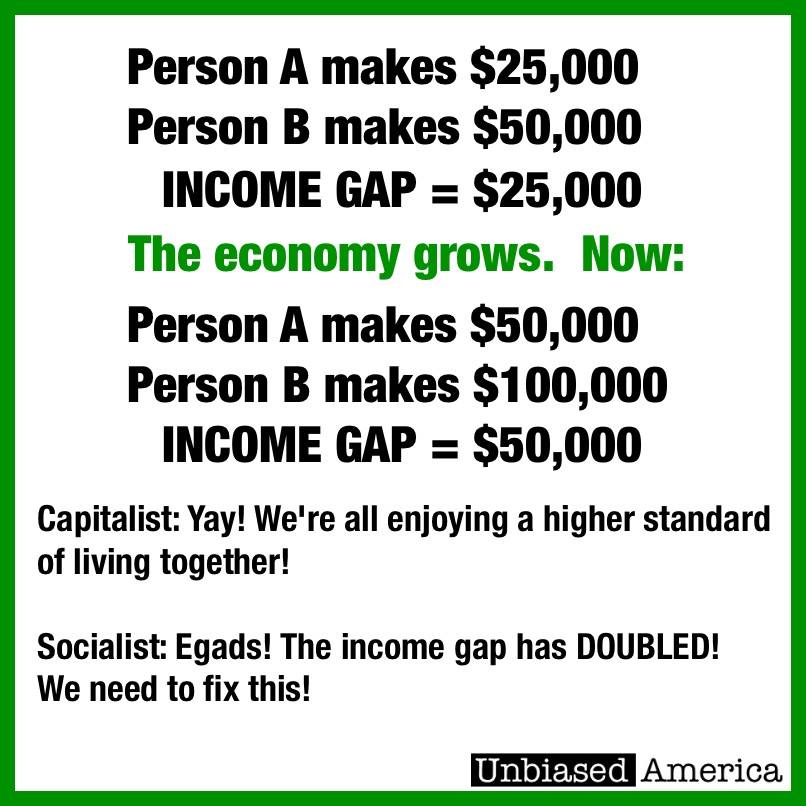
Given what economists know about the harmful effects from raising already high marginal tax rates even higher, tax increases could certainly reduce measured inequality—because they would cause higher-income people to reduce their taxable income by working less, by taking more pay in the form of untaxed fringe benefits, or by investing more in municipal bonds, whose interest is not taxable by the feds. Of course, none of this would make lower-income people better off. Indeed, to the extent that higher taxes discourage capital accumulation, they slow the growth of worker productivity. One of the main ways to increase worker productivity is to increase the amount of capital per worker. With a slower growth rate of capital, worker productivity will grow more slowly—and so will real wages. This makes lower-income people worse off than they would have been.

 I’ll close by recycling my Eighth Theorem of Government, which is simply another way of expressing my oft-made point that we should try to improve life for the poor rather than worsen life for the rich.
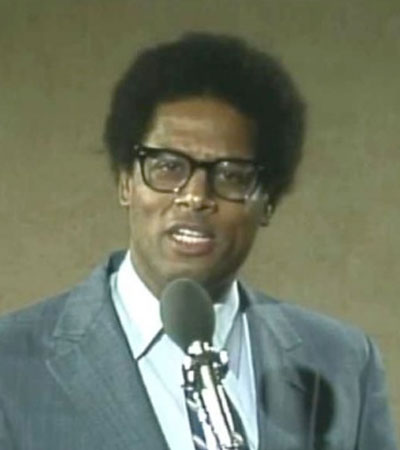


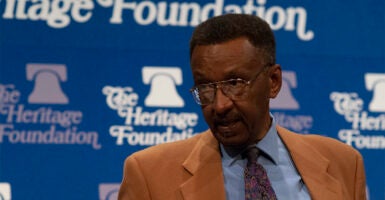


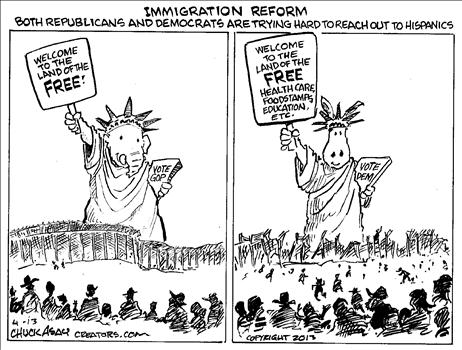

 ED VITAGLIANOEXECUTIVE VICE-PRESIDENT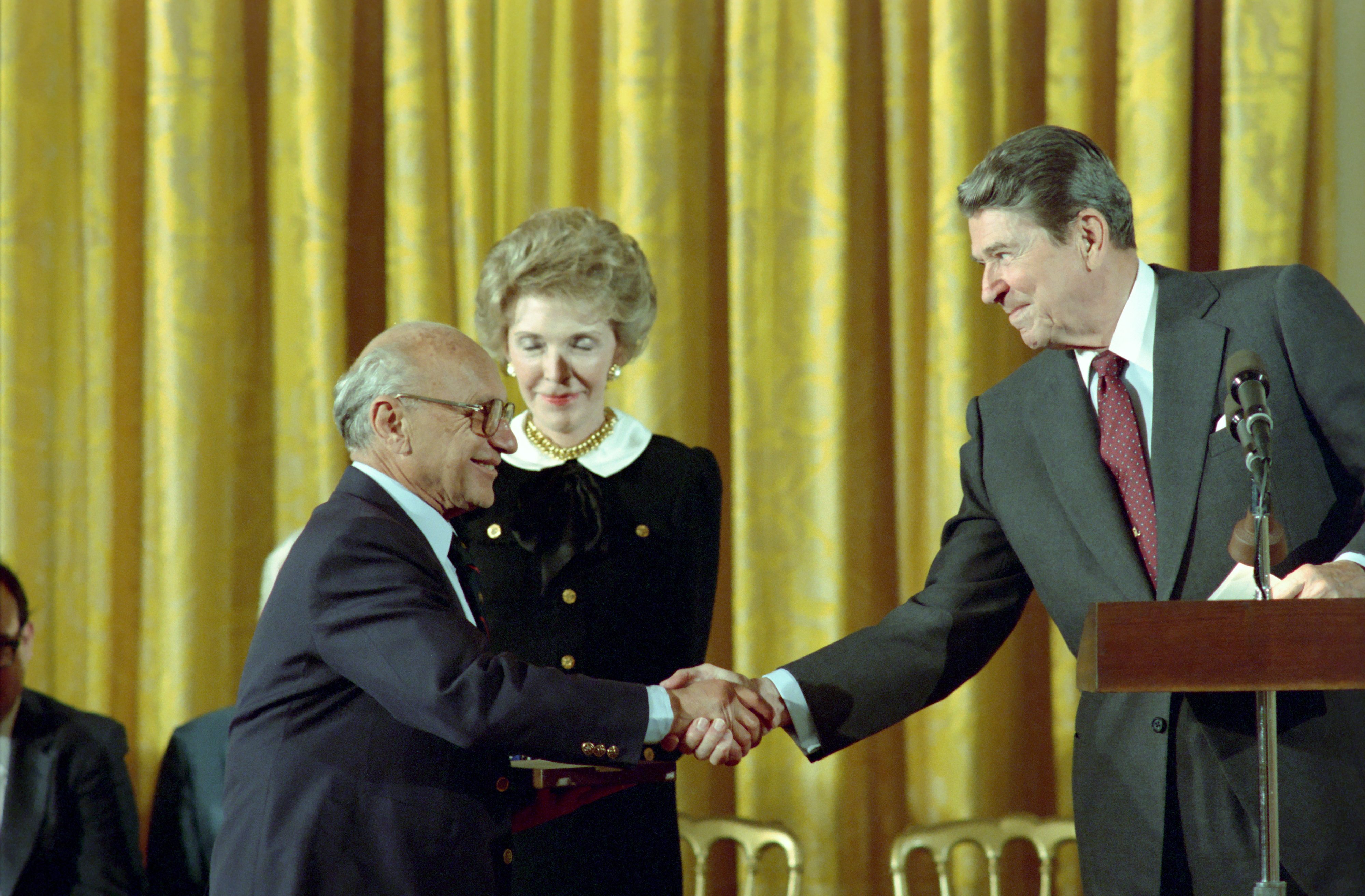
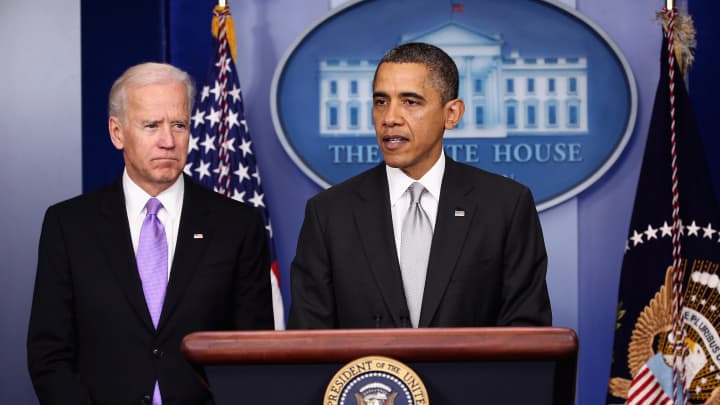


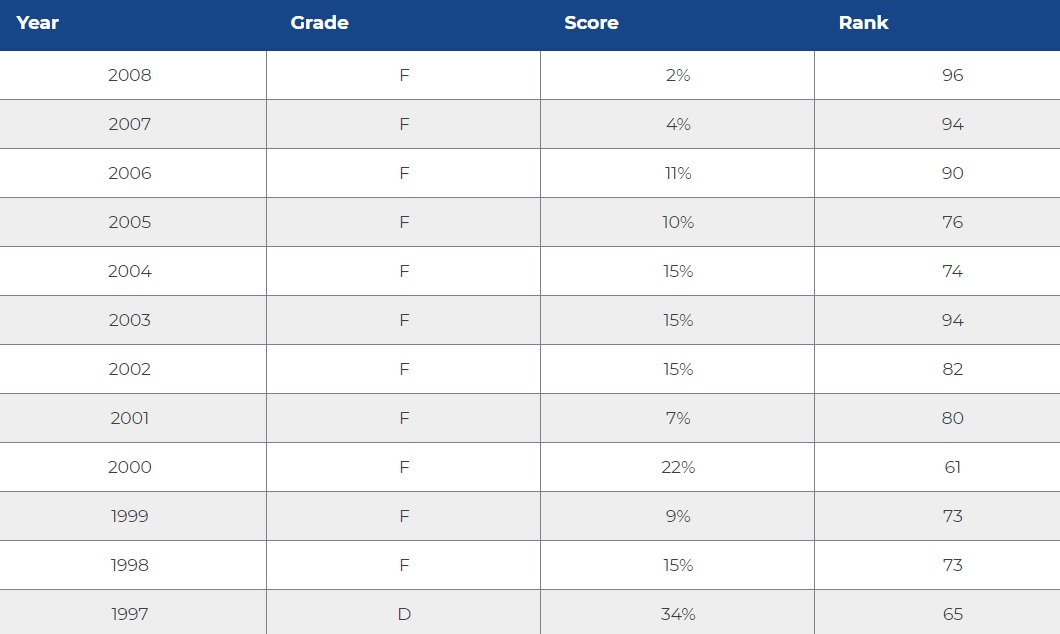
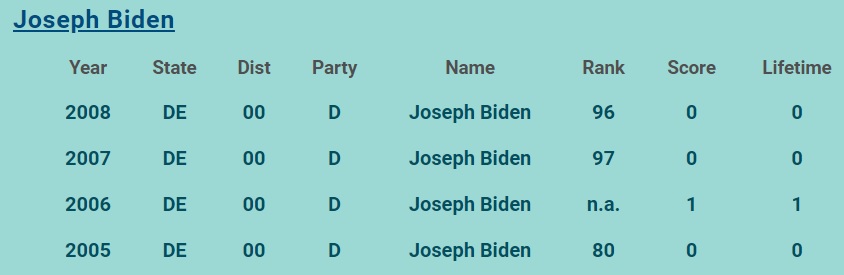


 The Daily Hatch